California in the 1950s was booming. People poured in from across the country, and cars became the backbone of daily life. From Los Angeles neighborhoods to rural stretches of highway, the roads filled fast — and so did the accident reports.
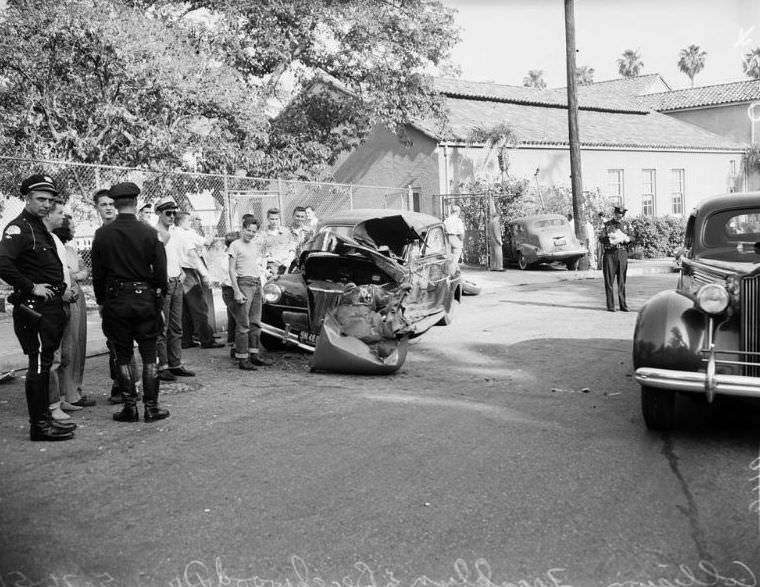
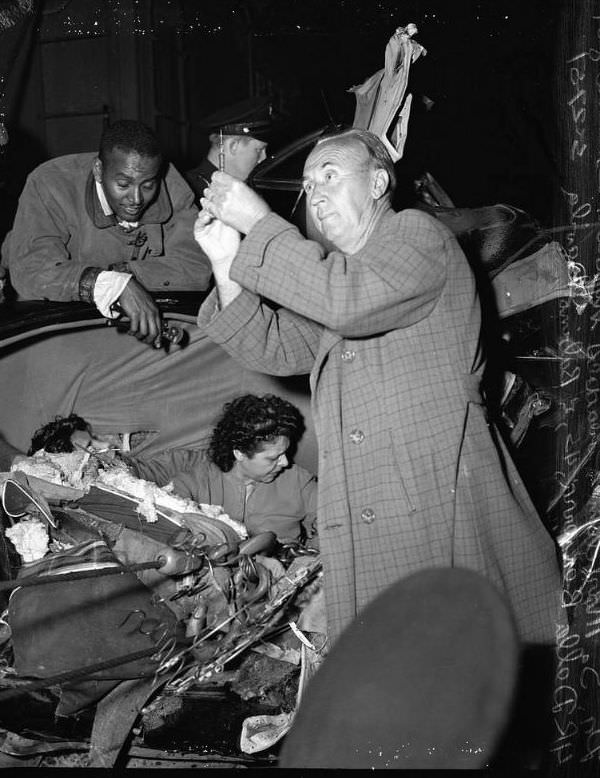
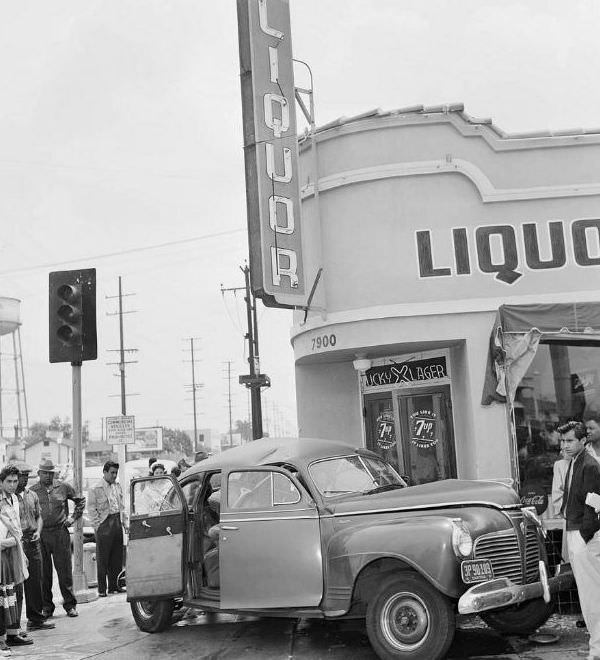
The cars of that decade were built for style, not survival. Chrome trim, long hoods, and sweeping tail fins made them eye-catching, but inside it was a different story. Most cars left the factory without seat belts. Dashboards were solid metal. Steering columns pointed straight at the driver’s chest. In a frontal collision, the results were often catastrophic. Door latches frequently failed on impact, and safety glass was not standard in every window, leaving passengers exposed to sharp, flying debris.
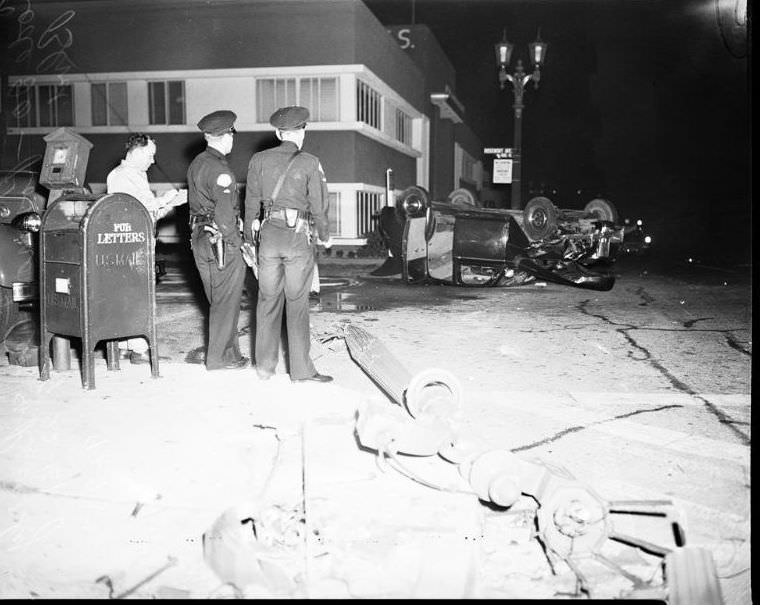
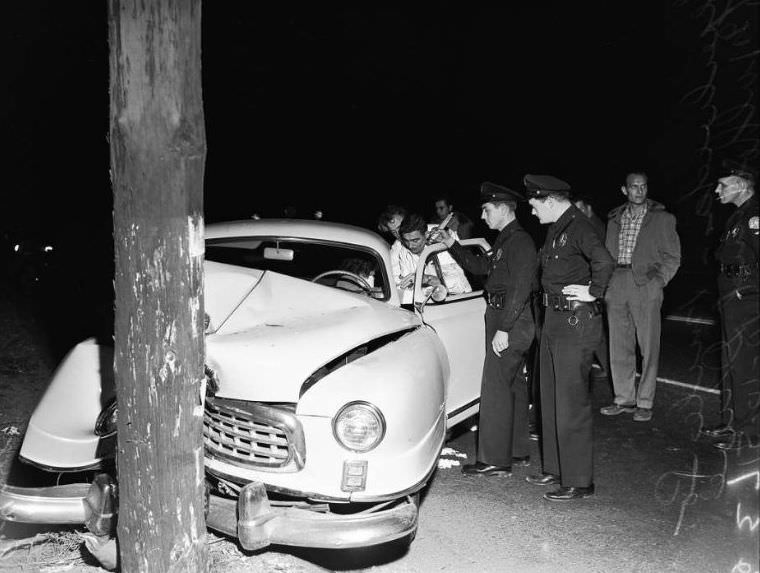
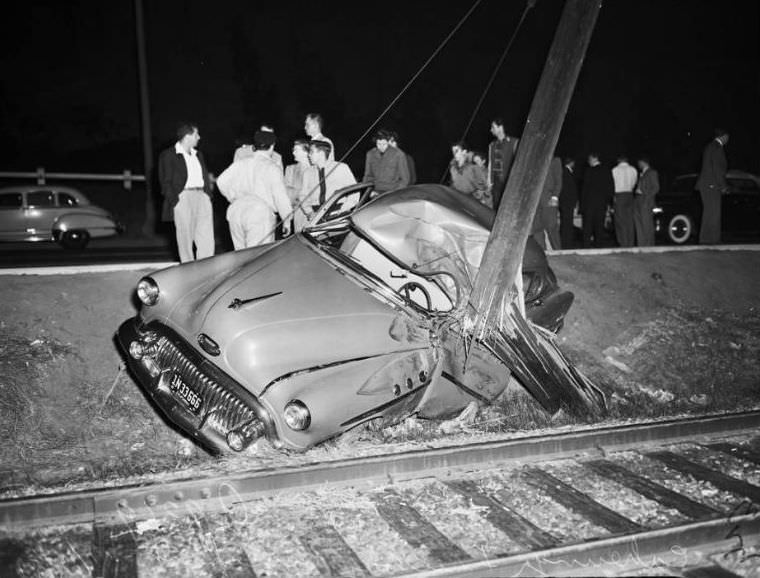
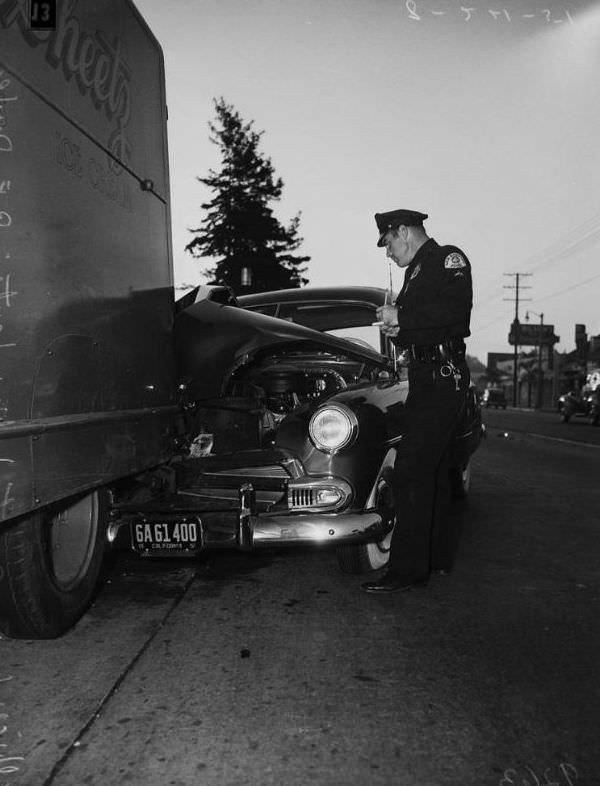
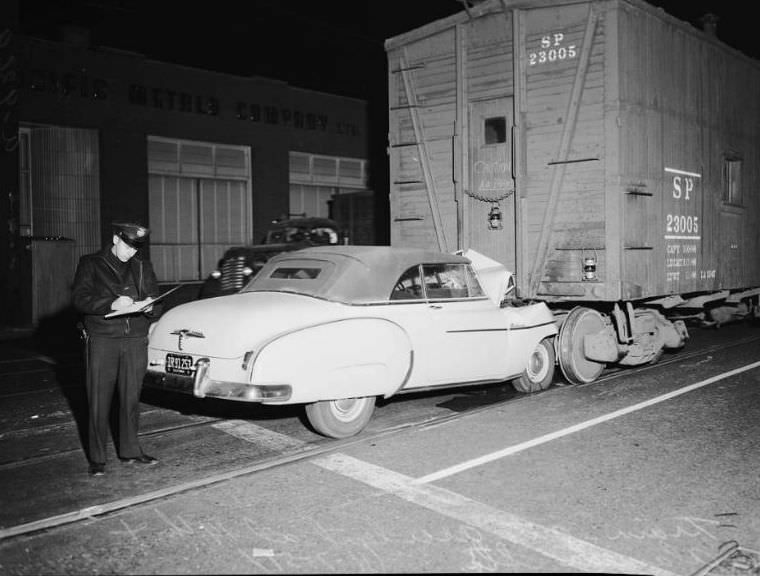
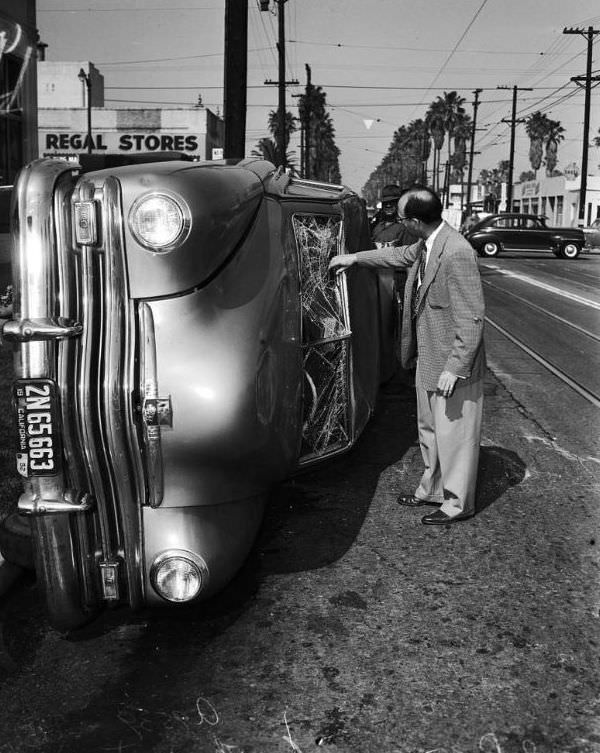
Los Angeles streets saw collisions at nearly every type of intersection. Busy commercial boulevards like Ventura, Beverly, and Sepulveda were common crash sites. Not all accidents involved just two cars — some pulled in utility poles, parked trucks, and even Pacific Electric rail lines.
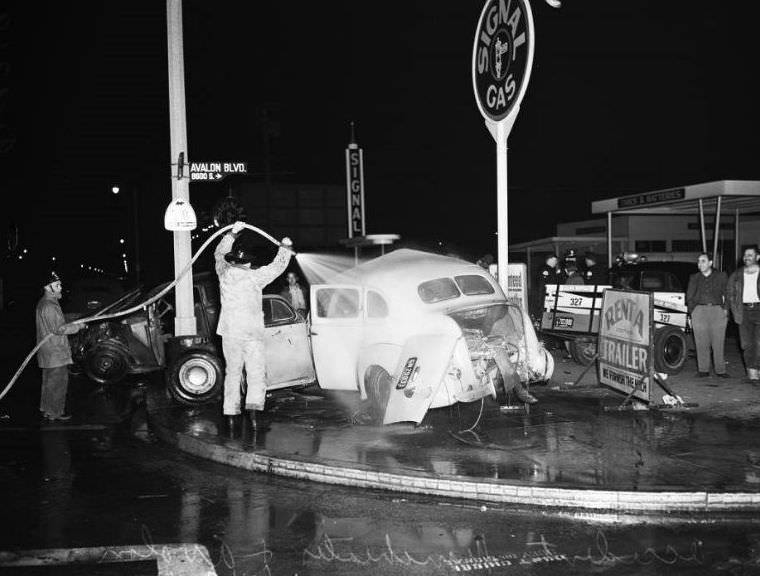
When fuel was involved, the danger multiplied. Firefighters were called to douse vehicles with water to stop fires from starting before they could spread to nearby structures or other cars. A gasoline truck collision could threaten an entire block.
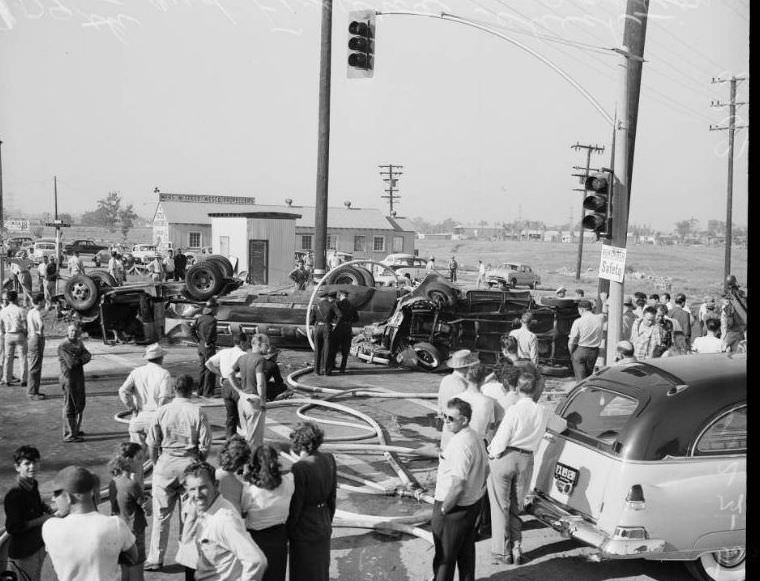
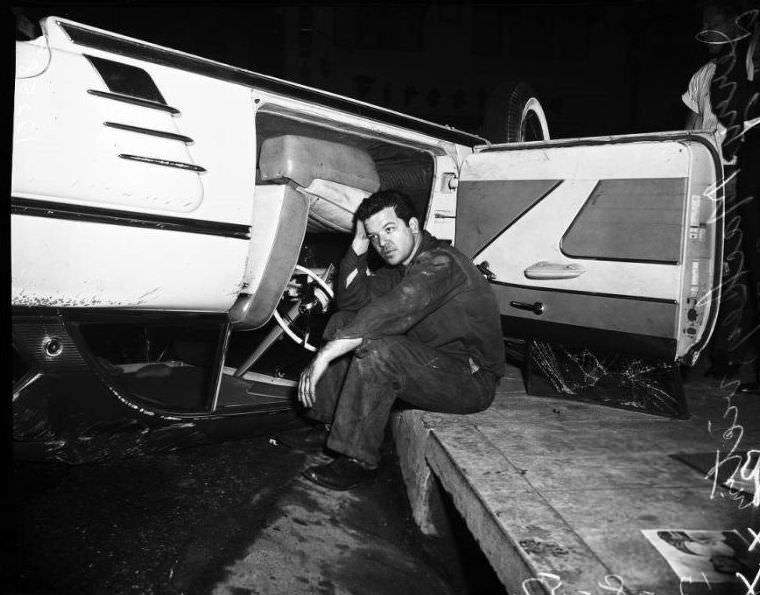
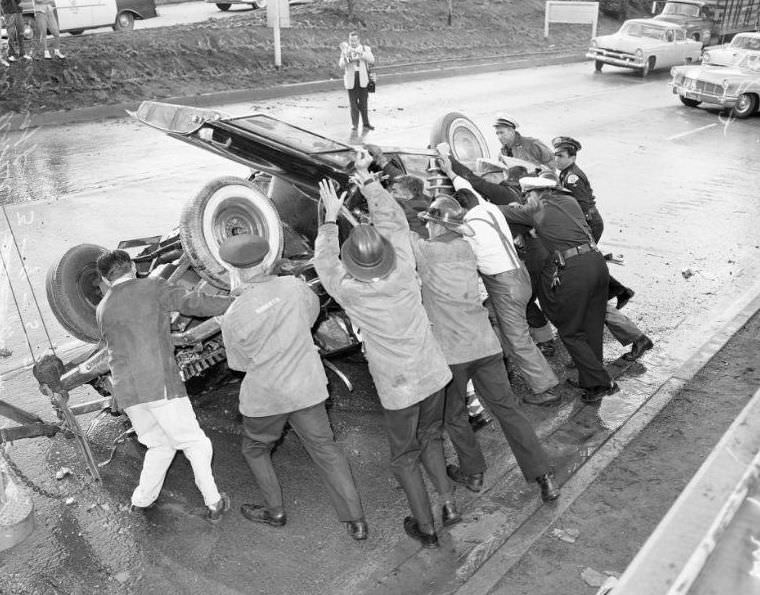
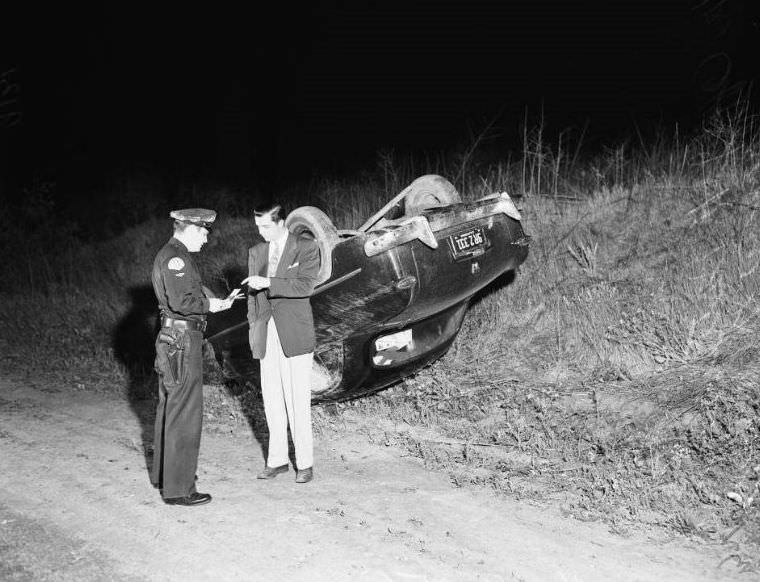
Rollovers were another frequent and deadly outcome. Without structural reinforcement in the roof or pillars, an overturned car offered very little protection for the people inside.
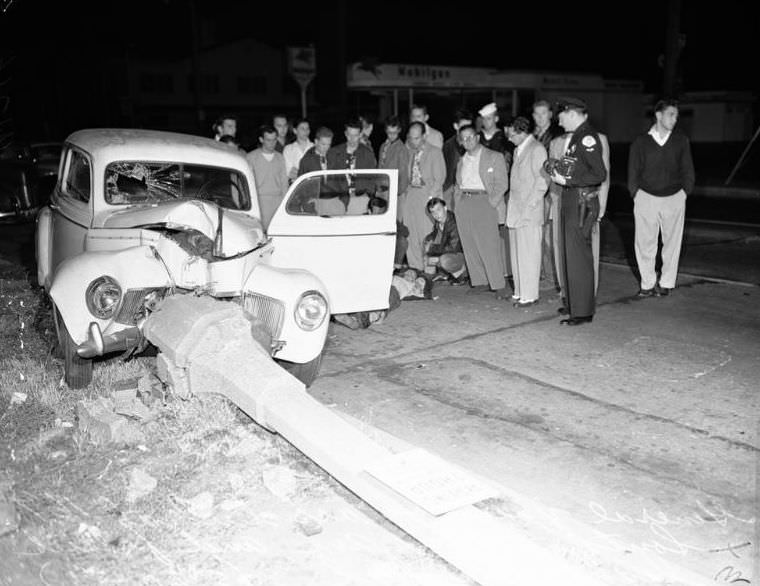
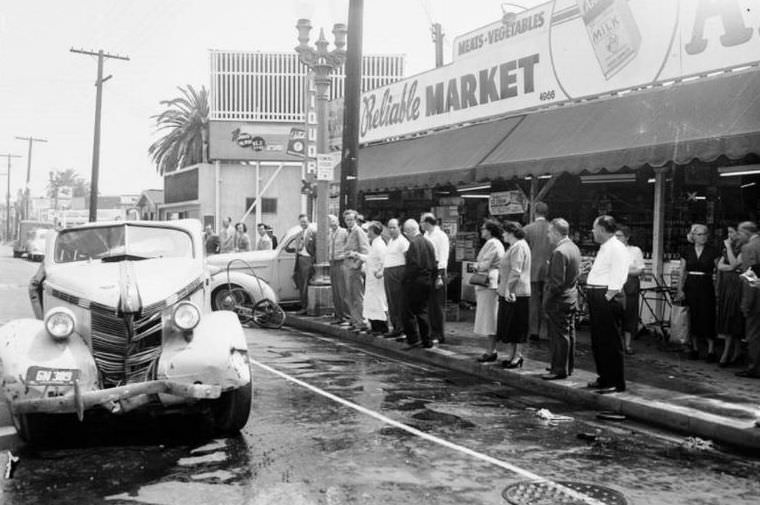
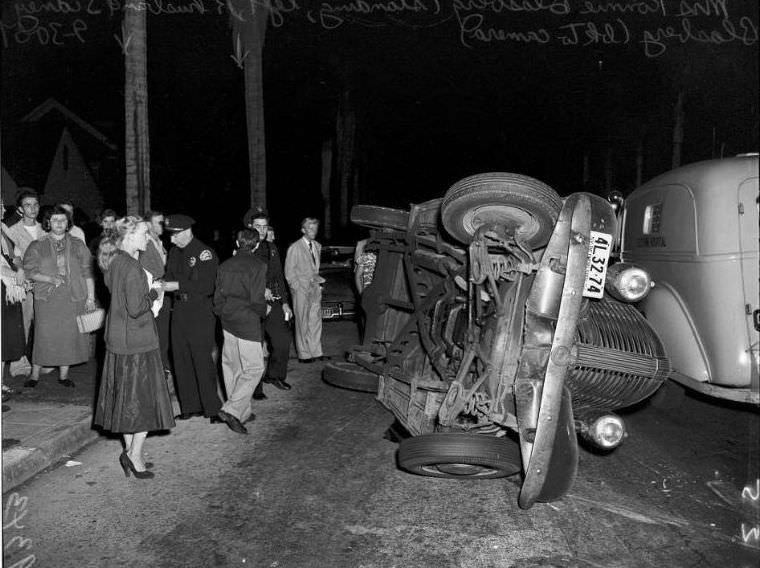
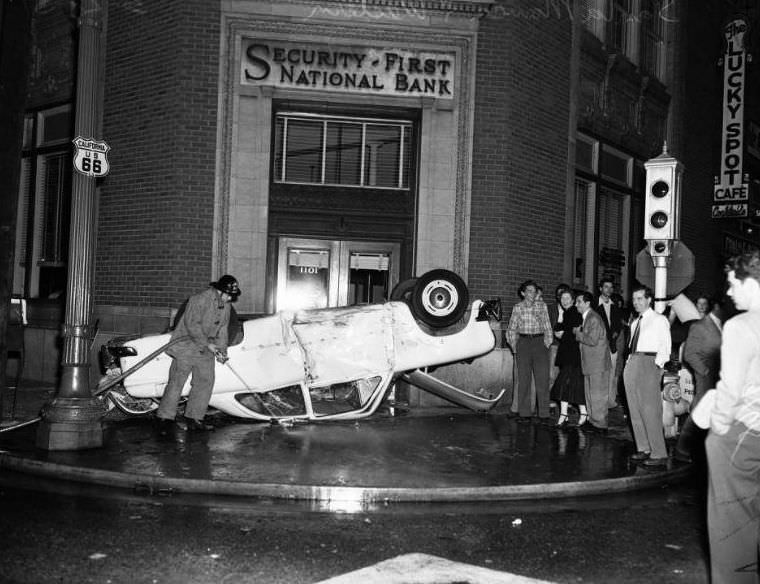
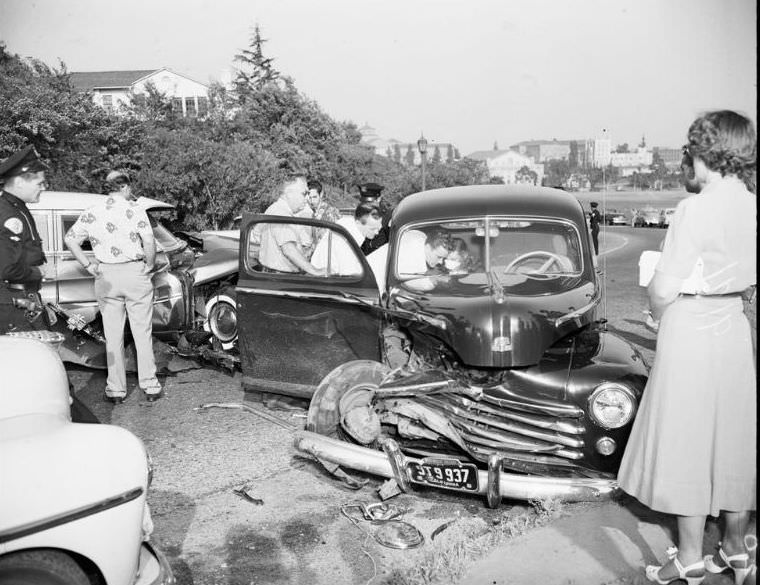
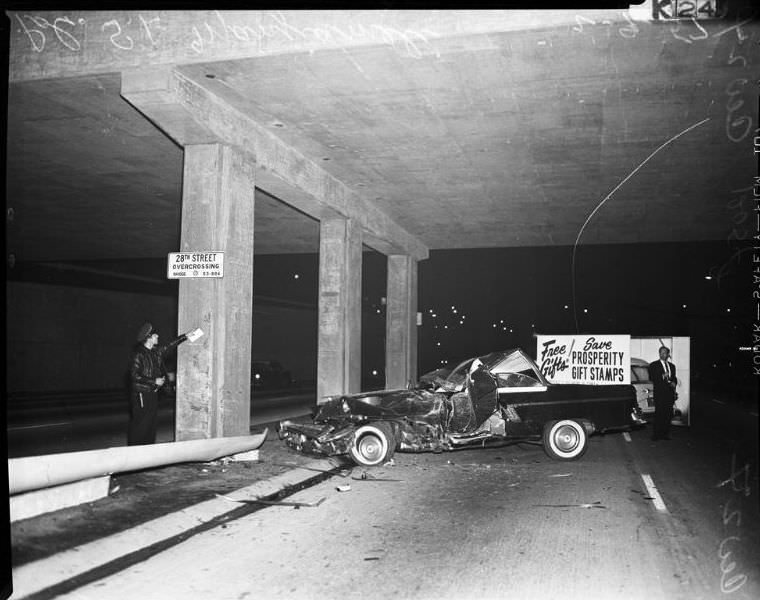
California’s road network was expanding rapidly, but construction hadn’t caught up with the volume of traffic. Entrance and exit ramps were short and poorly designed. Road shoulders were often narrow or absent entirely. Signage wasn’t standardized, and traffic engineering was still a developing field. Faster, more powerful cars were traveling roads that simply weren’t built to handle them.
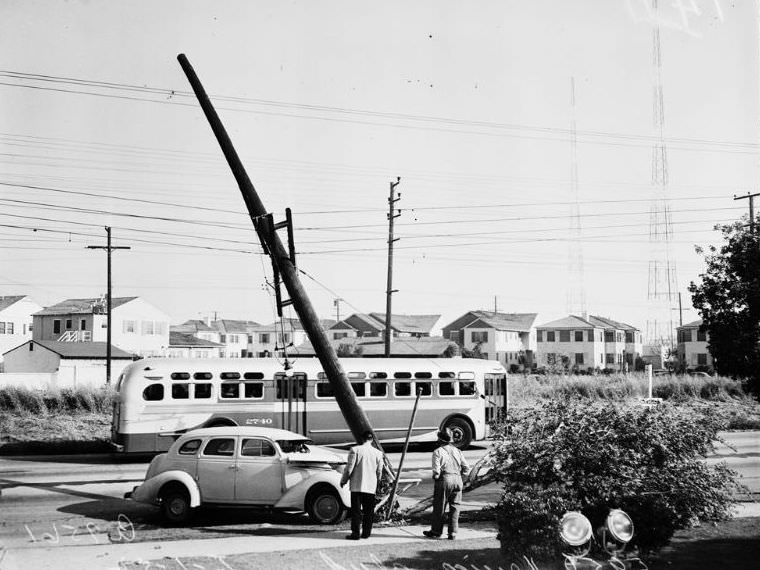
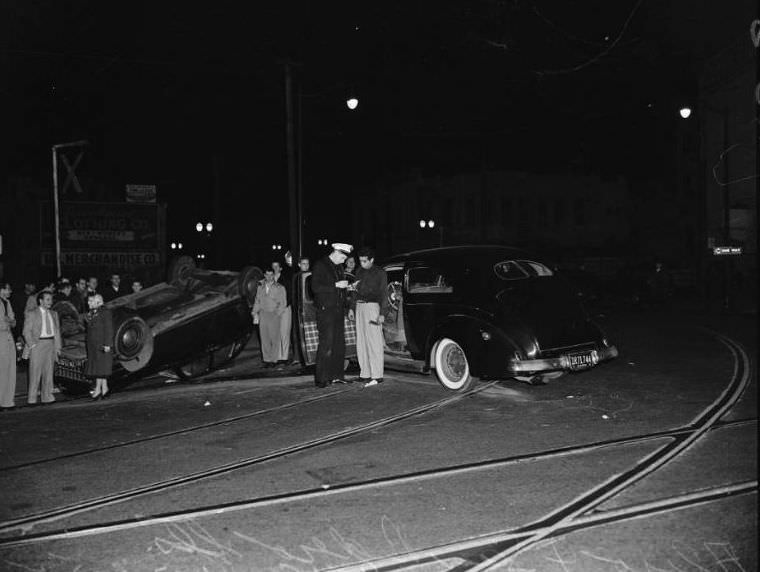
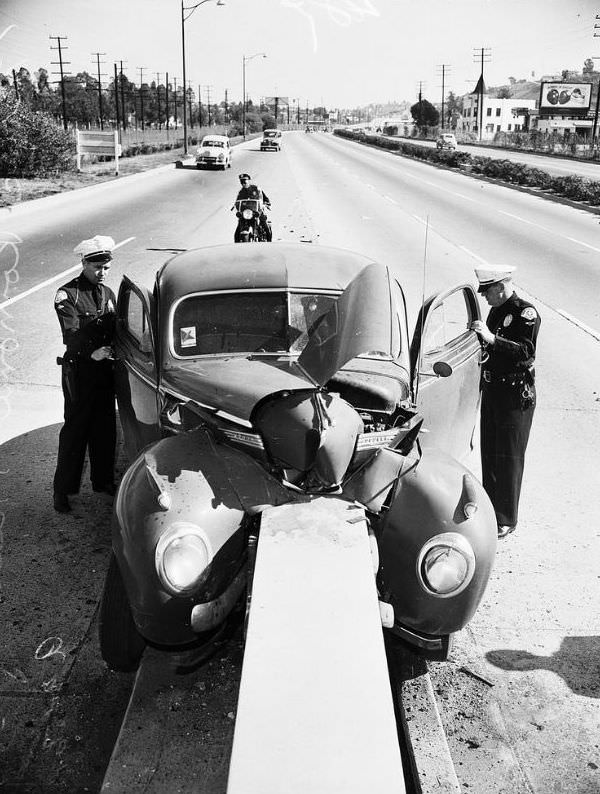
Hot rods added another layer of risk. These modified vehicles, popular with younger drivers, were built for speed and often pushed far beyond what the streets could safely handle. A chain-reaction crash involving multiple hot rods at a single intersection showed how quickly one bad decision could spiral.
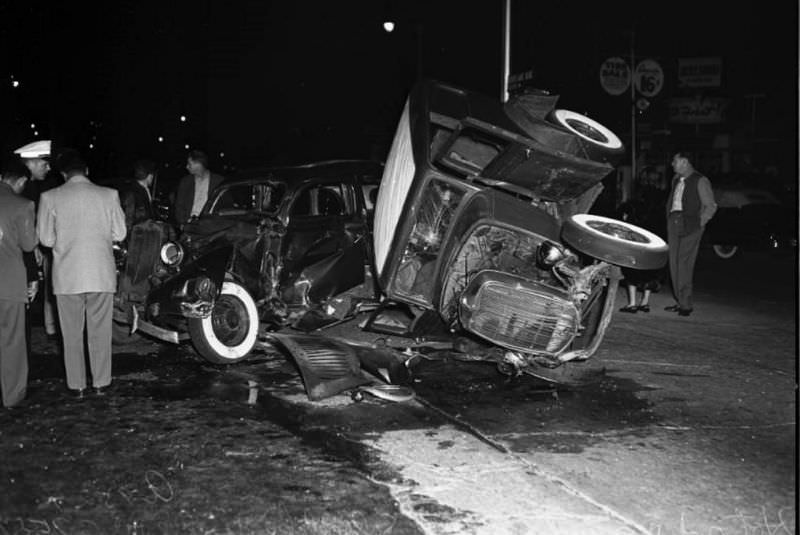
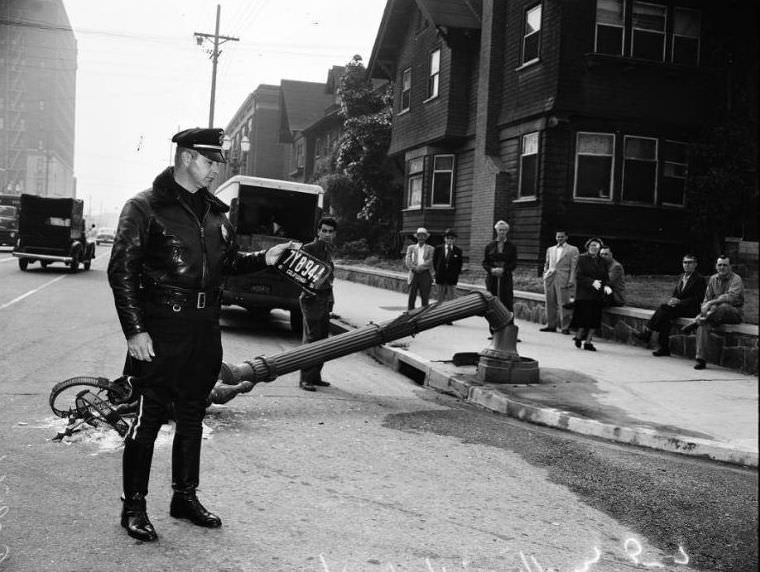
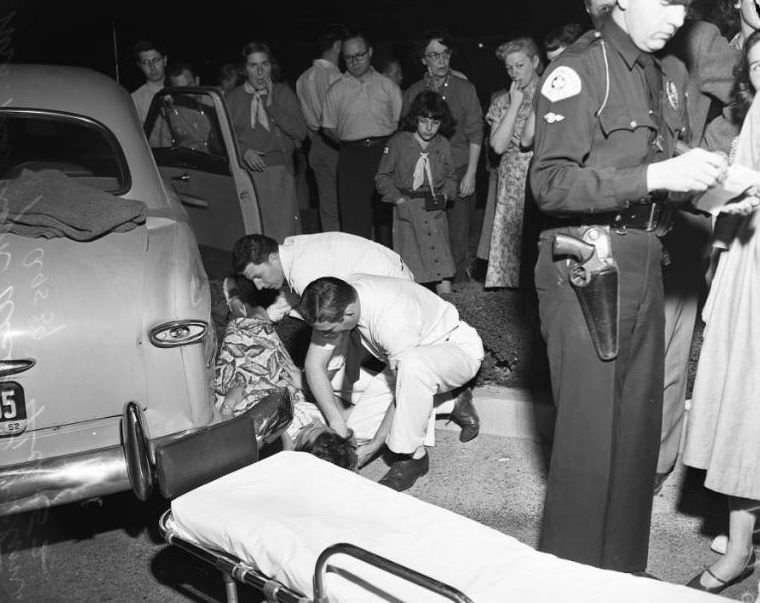
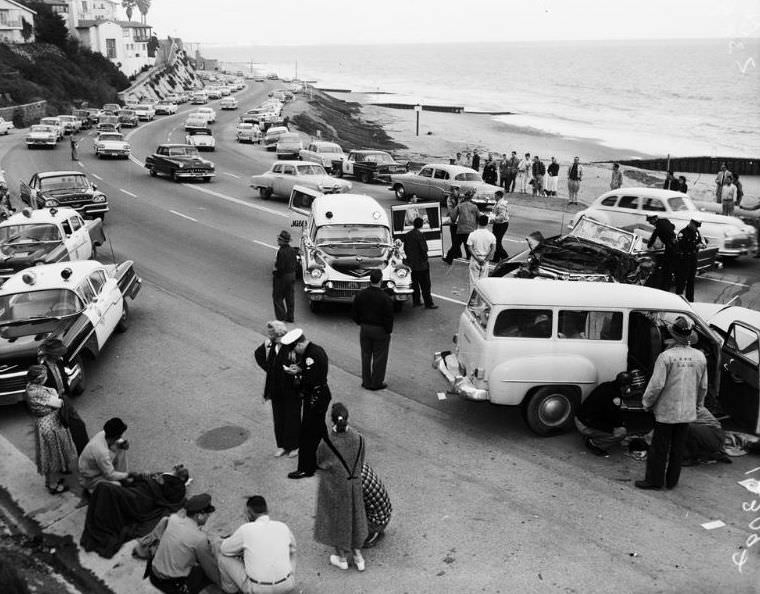
Emergency response was slower and less organized than today. Ambulances were fewer in number, and paramedic training was not yet standardized across California. Police officers were typically first on the scene. They managed traffic, assessed injuries, and coordinated the removal of wrecked vehicles — often with limited equipment and no specialized tow trucks on standby. In rural or outlying areas, getting an injured person to a hospital could take a very long time.
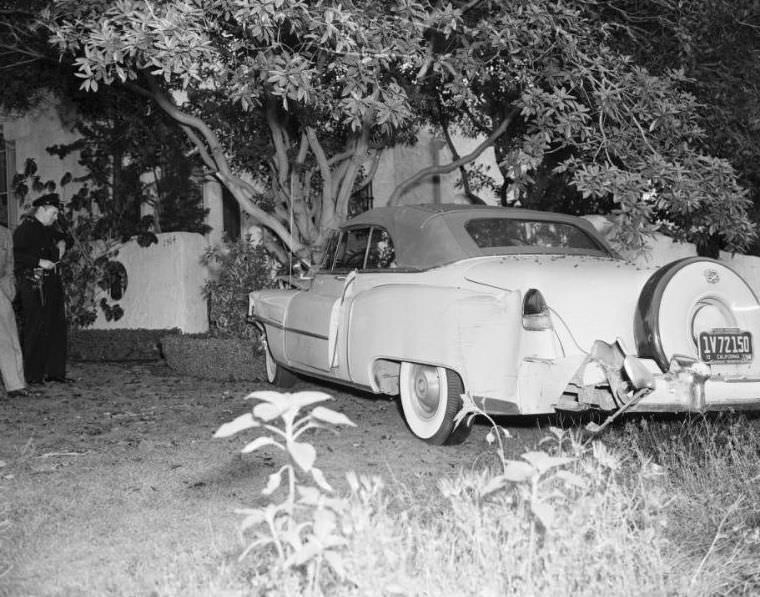
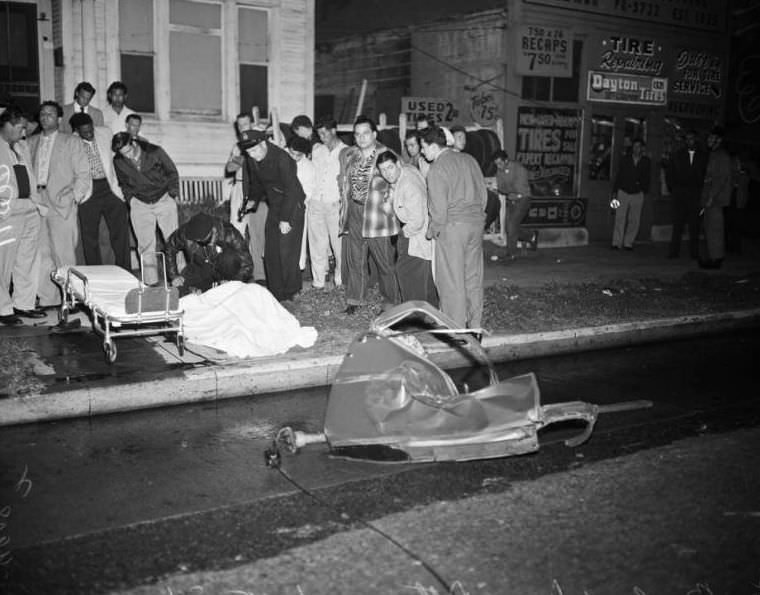
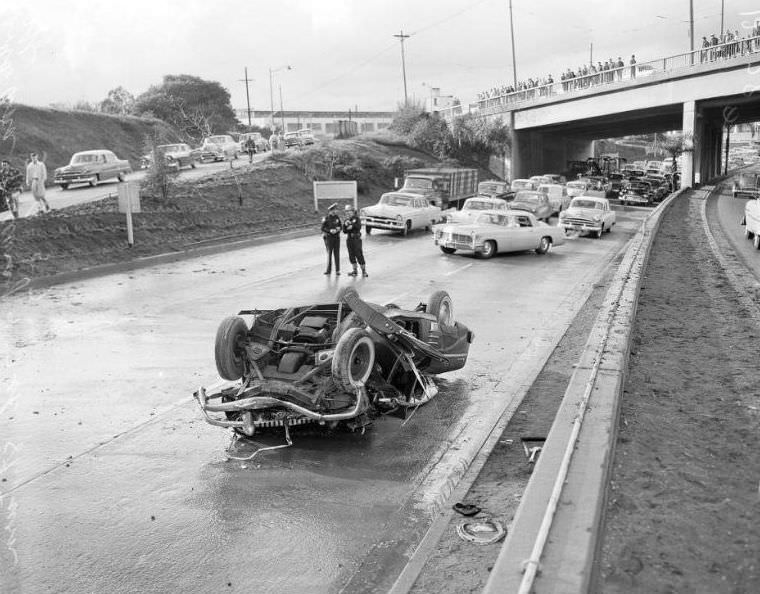
Multi-car pileups became increasingly common as freeway construction progressed. The Pasadena Freeway, one of the oldest in the country, saw serious crashes where vehicles piled into one another near bridge structures and off-ramps not designed for modern traffic speeds.
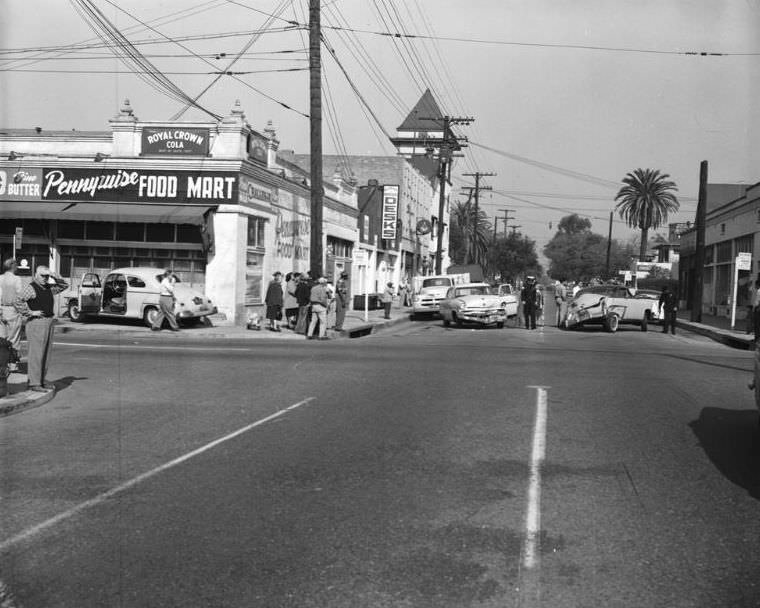
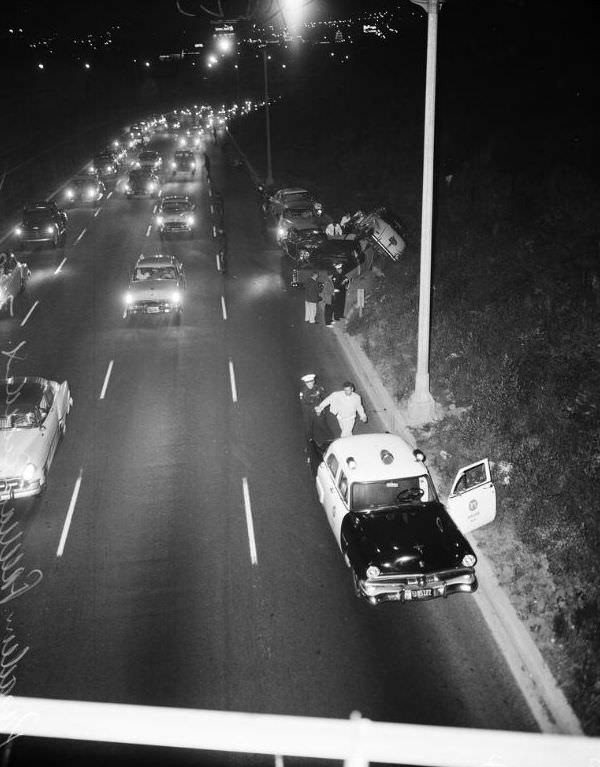
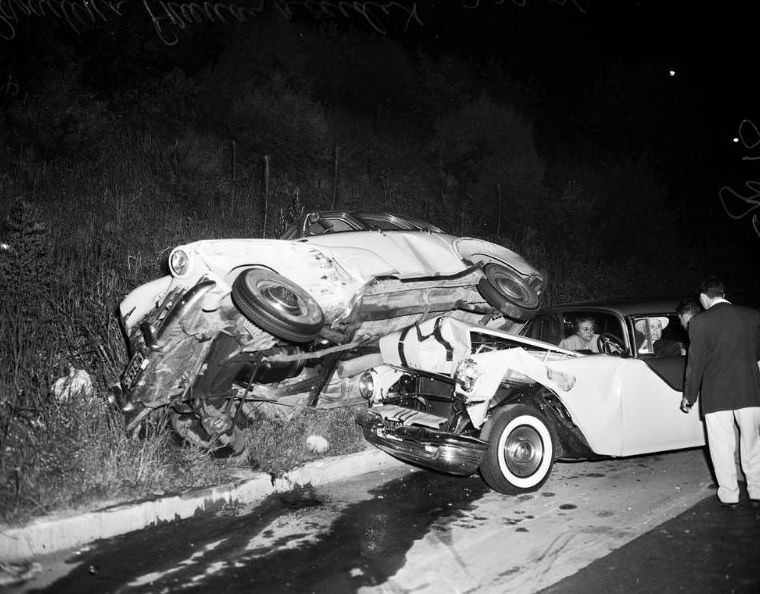
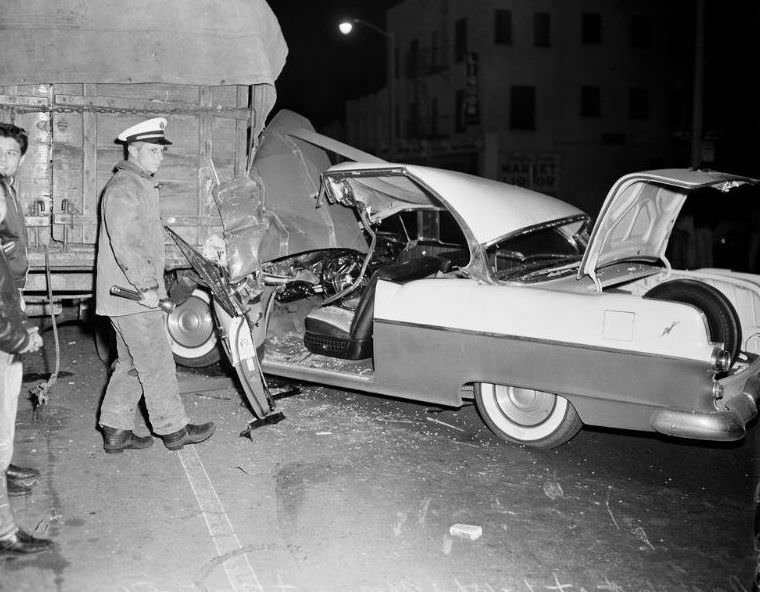
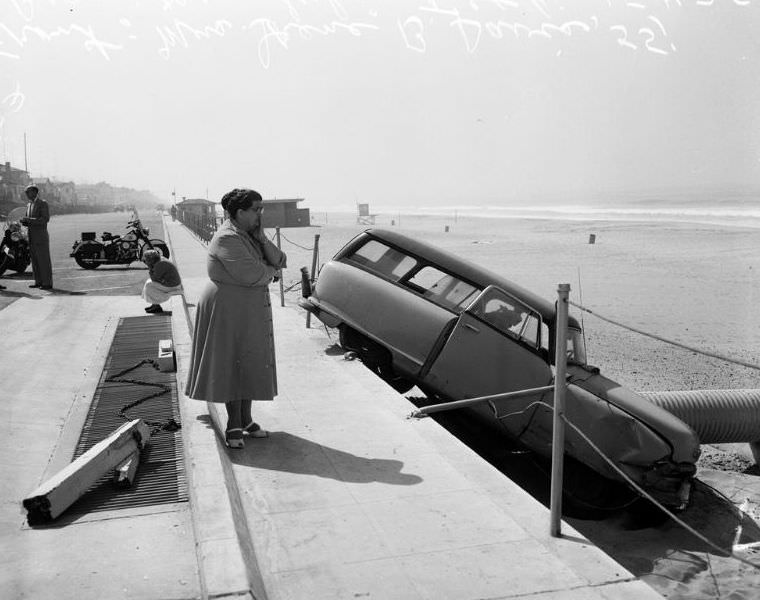
By the late 1950s, crashes were happening across the full width of Southern California — from Manhattan Beach to the Santa Ana Freeway, from the San Bernardino Road to Pacific Coast Highway. Each photograph from this era captures the blunt reality of what happened when heavy steel met concrete, curbs, poles, and other vehicles with nothing to slow the force of impact.