In 1911, most cars had four wheels. That was simply the standard. But Milton Reeves — an inventor from Indiana already well known for running the Reeves Pulley Company, which manufactured parts for industrial machinery — had a different idea. He looked at the cars of his day and decided four wheels weren’t enough. His solution was as bold as it was unusual: build a car with eight.
Roads in the early 1910s were rough, uneven, and nothing like the paved surfaces drivers use today. A long drive could rattle passengers badly and destroy tires within a short distance. Reeves believed the root of both problems was simple — too much weight concentrated on too few wheels. Spread the load across more contact points, he reasoned, and the ride would smooth out while tires lasted far longer.
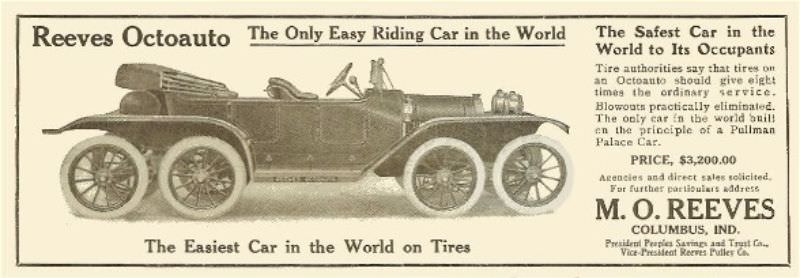
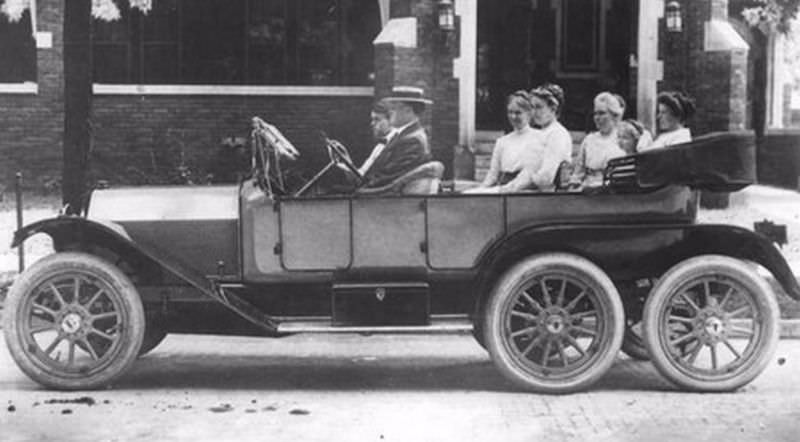
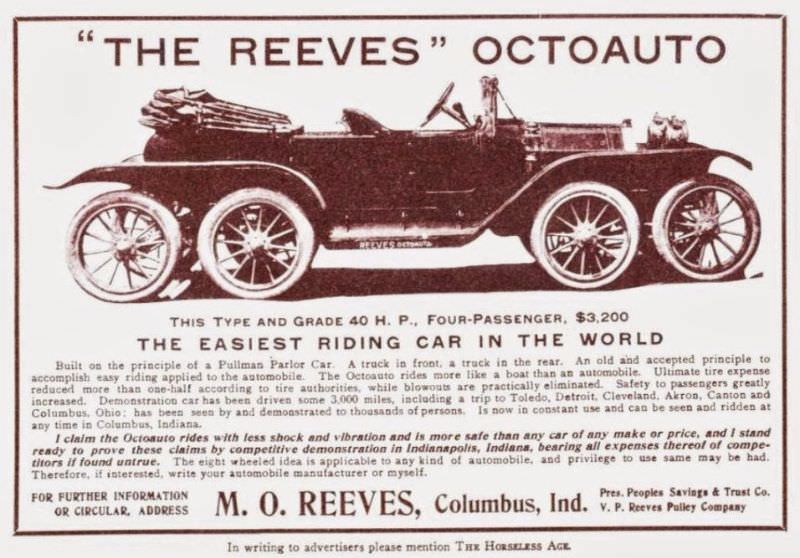
To test this theory, Reeves took a 1910 Overland — a standard production car — and modified it heavily. He added four extra wheels, bringing the total to eight. Two sets of wheels ran along each side of the vehicle, lined up one behind the other like a row of small train wheels beneath the body. The result was a car that stretched over 20 feet in length, longer than many modern pickup trucks. He called it the Reeves Octo-Auto, using the Latin prefix “octo” for eight.
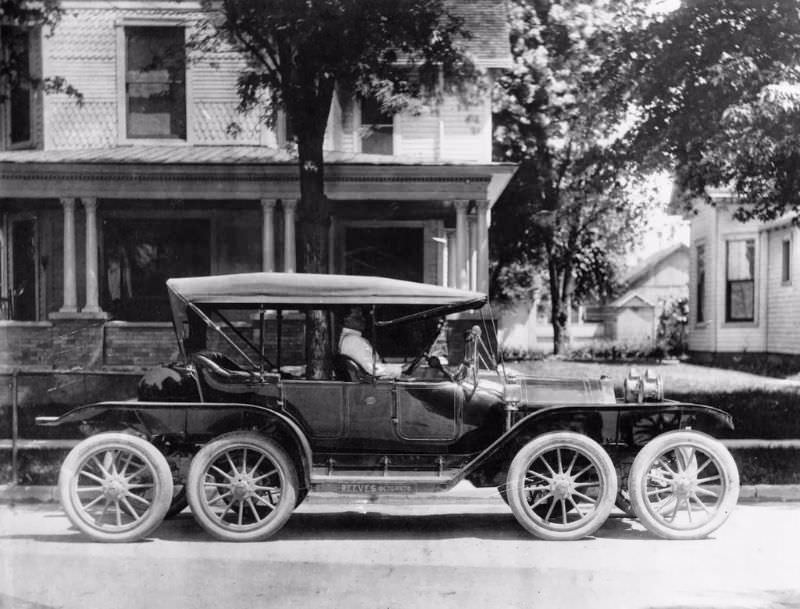
The Octo-Auto ran on a 40-horsepower engine, which was a solid output for a passenger car in 1911. It seated four people and came with a price tag of $3,200. For comparison, a Ford Model T touring car at the same time sold for roughly $700 to $800. The Octo-Auto cost four times as much, firmly placing it in the luxury category and out of reach for the average buyer.
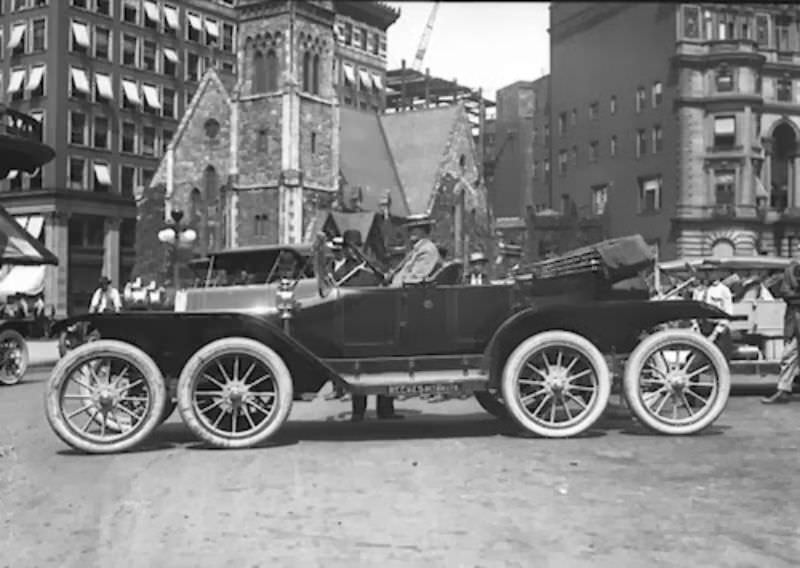
Reeves promoted the car’s safety features just as strongly as its comfort. He argued that if one tire blew out — a common problem in that era — the surrounding wheels would hold the car steady, preventing a sudden drop or loss of control. Magazine advertisements leaned hard into these claims. The ads declared the Octo-Auto was “The Only Easy Riding Car In The World,” “The Safest Car In The World To Its Occupants,” and “The Easiest Car In The World On Tires.”
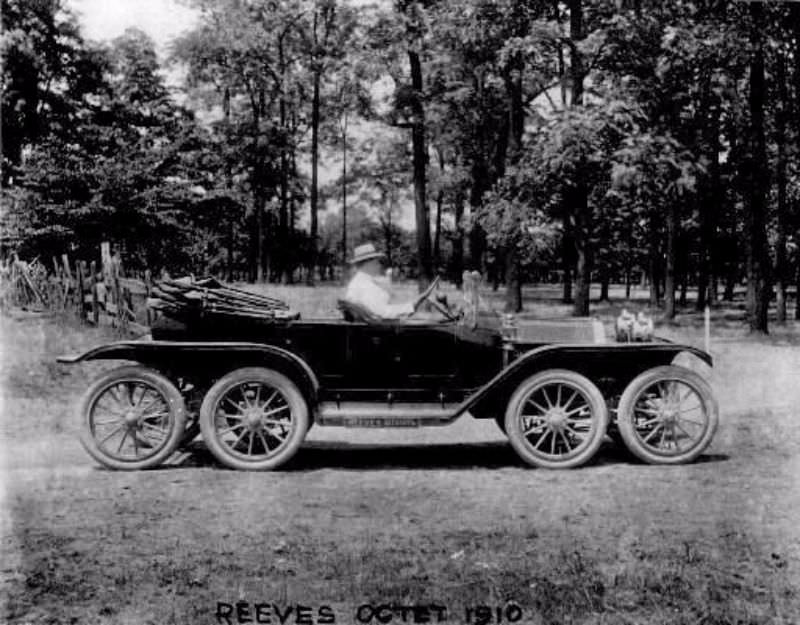
The car attracted genuine praise from at least one well-known figure. Elbert Hubbard, a prominent American writer and editor, rode in the Octo-Auto and published positive remarks about it. He agreed with Reeves that the ride was notably smooth and commented on the vehicle’s durability. His endorsement gave the unusual machine a degree of credibility at a time when public skepticism was high.
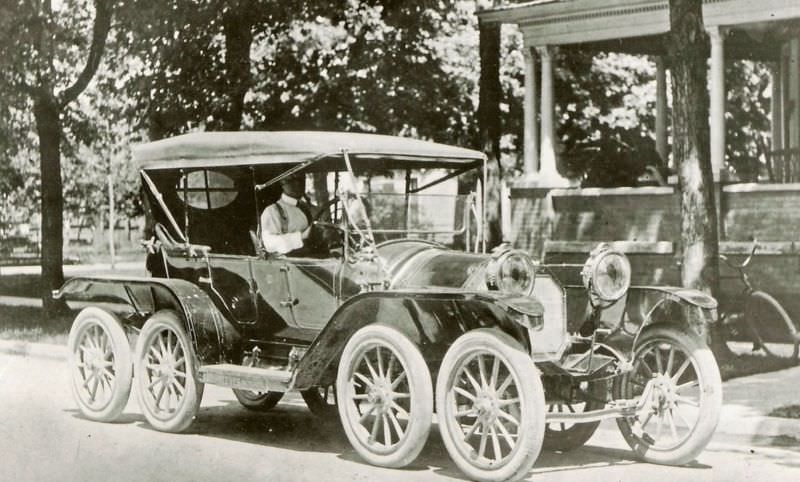
Not everyone was so generous. Decades later, TIME Magazine named the Octo-Auto one of the ugliest cars ever produced. Its extreme length and the visual oddity of four wheels lined up on each side made it look unlike anything else on the road — and not in a way that most people found appealing. In 1911, it turned heads. In hindsight, it became a symbol of design excess.
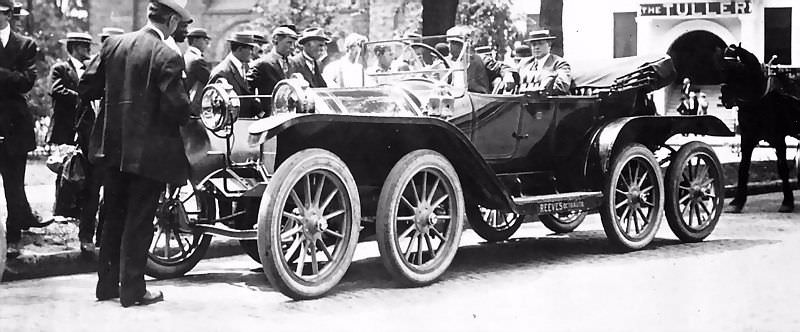
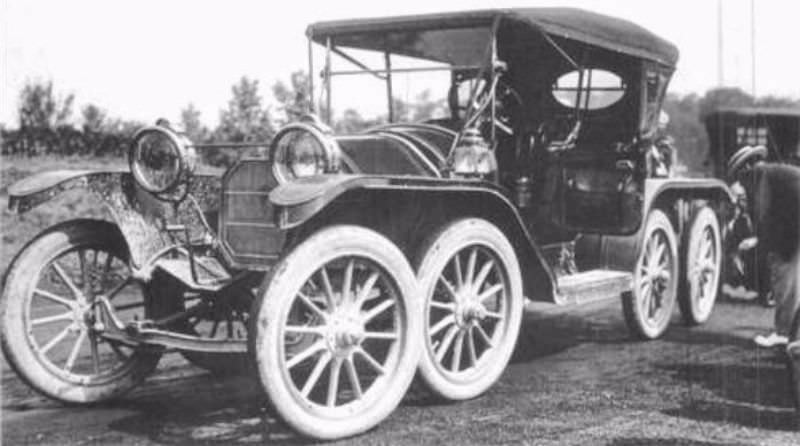
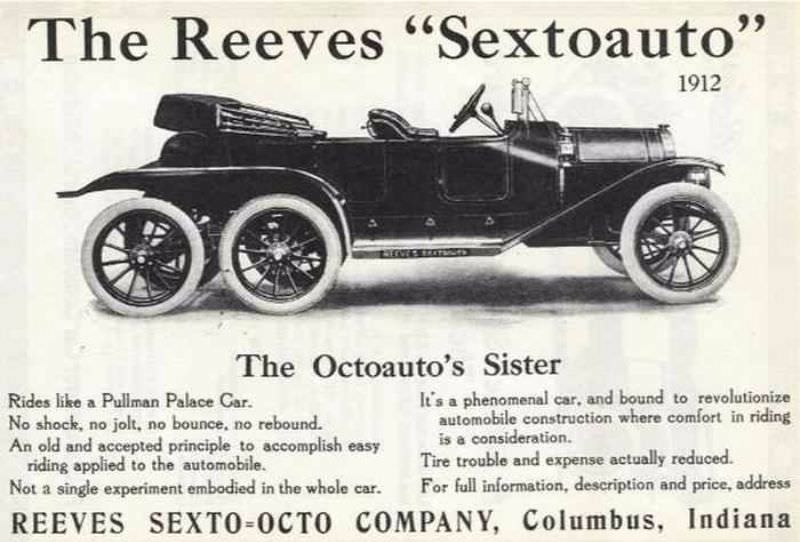
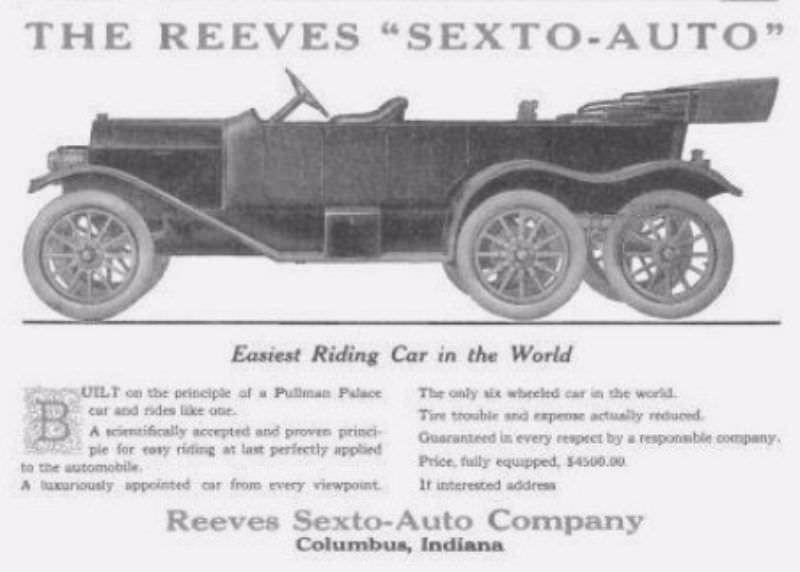
Reeves didn’t stop at eight wheels. His company was called the Reeves Sexto-Octo Company — “sexto” meaning six — which signals that a six-wheeled version was always part of the plan. The Sexto-Auto followed the Octo-Auto and used a similar multi-axle concept, most likely with four wheels grouped at the rear and a standard two-wheel front axle. It was a slightly simplified take on the same core idea.
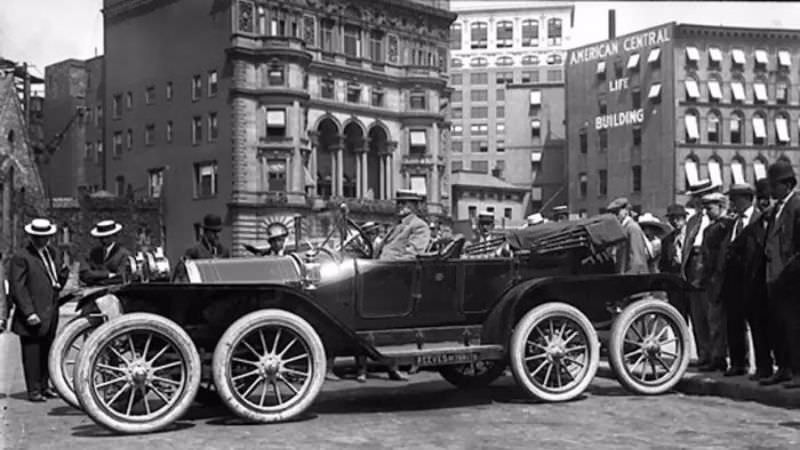
The Sexto-Auto retained the fundamental argument behind the Octo-Auto — more wheels mean less load per tire and a smoother ride — while reducing the mechanical complexity and potentially the cost. Both vehicles were experimental in nature, and neither entered large-scale production. Only a handful of each were ever built.
Behind the scenes, the multi-wheel car project was tied directly to the Reeves Pulley Company’s manufacturing operations. The company ran an engine division that supplied power units for these automotive experiments. By 1914, Reeves decided to sell off that division. It was eventually purchased by the Cummings Machine Company of Minster, Ohio, in 1918 — marking the end of Reeves’ direct involvement in engine production.
While other manufacturers of the period were working on better suspension systems or more reliable tire compounds to address the same road problems, Reeves took a completely different path. Adding more wheels was a mechanical rather than an engineering refinement — it didn’t improve the underlying technology, it simply added more of it. The approach was inventive, but it also made the vehicle larger, heavier, more complex, and far more expensive to build and buy.
In 2011, exactly one hundred years after the Octo-Auto first appeared, the automotive website Hemmings published an April Fools’ Day article titled “World celebrates the centennial of the Octo-Auto.” The tongue-in-cheek tribute showed that this strange eight-wheeled machine had never fully disappeared from public memory. It remains one of the most distinctive examples of just how wide open early automobile design really was — a period when inventors like Milton Reeves felt free to question everything, even the number of wheels under a car.