
Hicksville is a hamlet and census-designated place within the Town of Oyster Bay in Nassau County, on Long Island, New York. Its story begins in 1834, when Valentine Hicks — son-in-law of Quaker abolitionist preacher Elias Hicks — purchased land in the area and transformed it into a station stop on the Long Island Railroad by 1837. That station later became a depot for the Heinz Company, handling produce like cucumbers. When a blight wiped out the cucumber crops, local farmers turned to growing potatoes instead.
After World War II, Hicksville grew rapidly from a quiet rural stop into a bustling suburb of New York City. By the 1960s, it was a fully formed community with a lively commercial corridor along Broadway. The photos below — taken in 1966 and 1967 — capture the hamlet’s streets, shops, and buildings at a specific moment in time, offering a rare street-level look at mid-century Long Island.
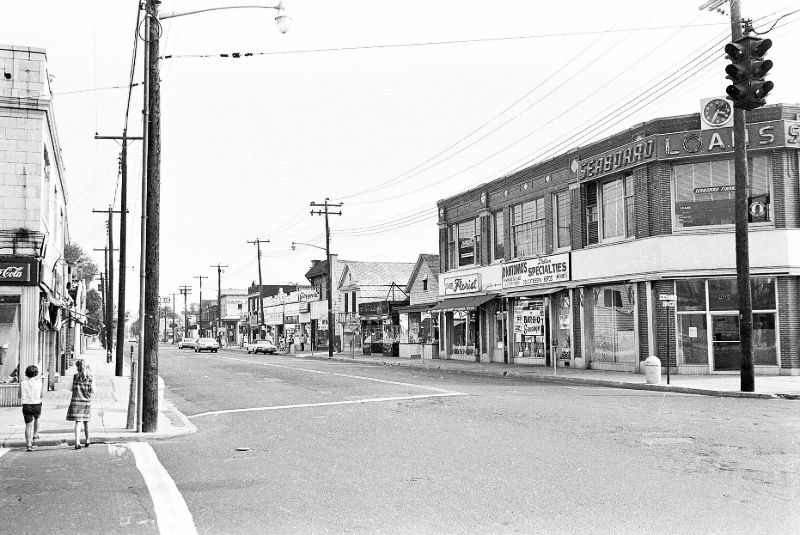
Broadway was the commercial heart of Hicksville, and its sidewalks in the mid-1960s were lined with locally owned shops and businesses. Henry Huettner’s Department Store, built in 1918, stood as one of the older anchors on the street. These weren’t chain stores — they were family-run operations that had served the community for decades.
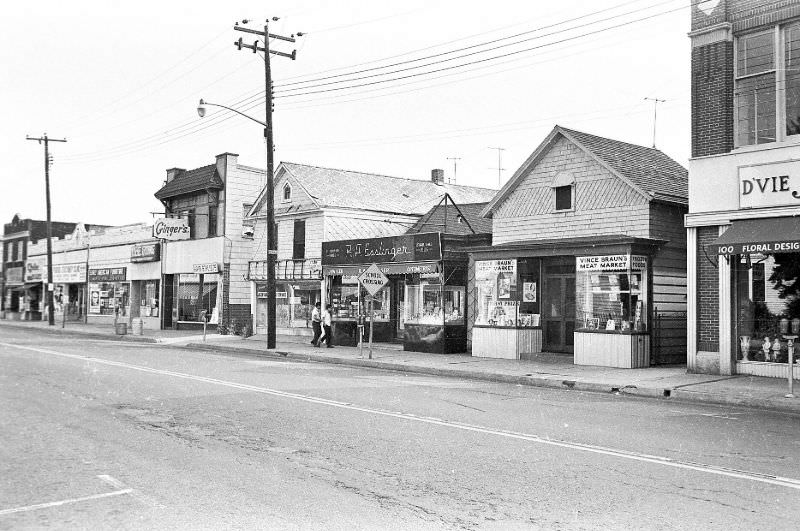
The block between West Nicholai Street and West Marie Street on Broadway held a dense stretch of storefronts typical of postwar suburban commercial strips. Buildings sat close to the sidewalk, and signage competed for attention at street level. This was where residents did their everyday shopping.
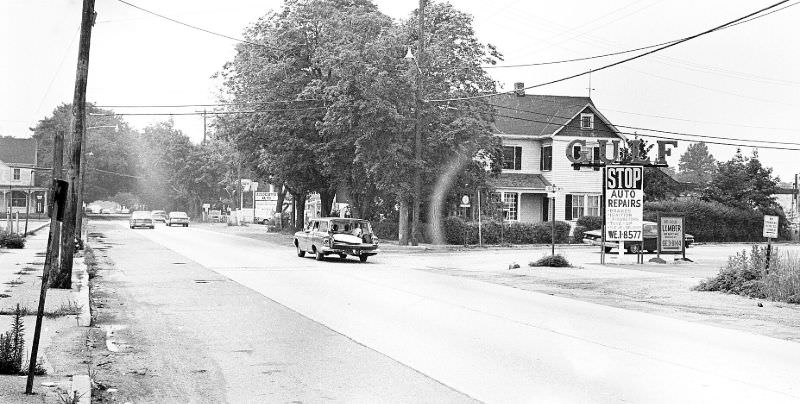
The Kasten family was a well-established name in Hicksville’s commercial history. Their store appeared at multiple locations across the hamlet, and the Kasten house stood nearby on Newbridge Road at Duffy Avenue. The family’s presence dated back to the late 19th century, making them one of the area’s longest-running merchant families.
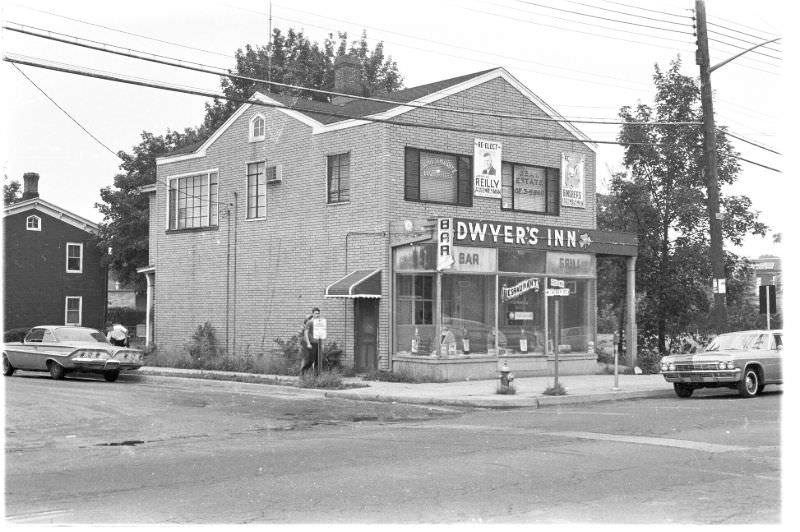
Dwyer’s Inn at the northwest corner of Broadway and West Cherry Street had a long history behind it. In 1902, the same building operated as the Windsor Hotel. By the 1960s it had taken on a new name and a new era of clientele, but the structure itself was a living piece of the hamlet’s older commercial past.
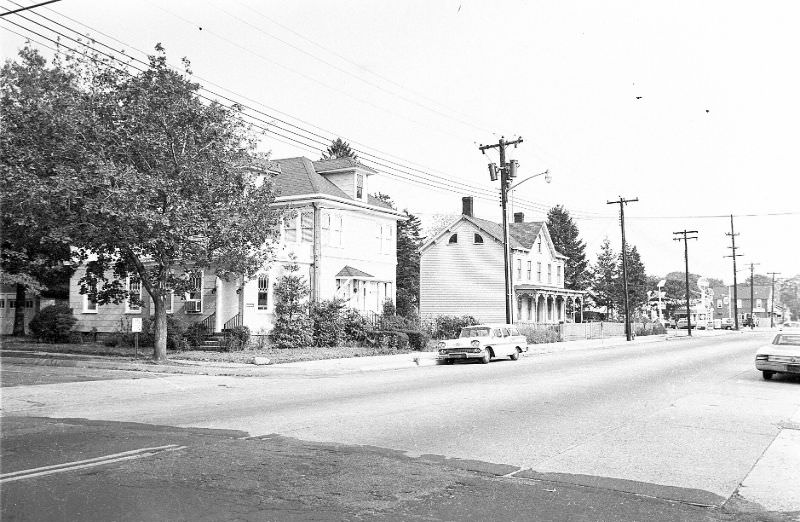
The southeast corner of East Carl Street and Broadway presented a typical mid-1960s suburban streetscape — a mix of retail storefronts with large display windows and modest signage. Corners like this one served as visual anchors for the surrounding blocks.
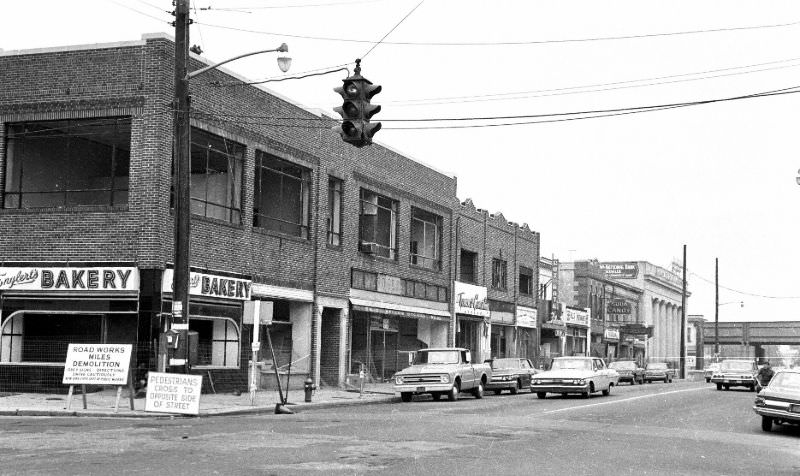
The stretch of Broadway between West Marie Street and the railroad overpass was packed with small, specialized shops in 1967. Englert’s Bakery, the Sweet Shop, Roger’s Variety Store, Cut Rate Drugs, an Italian Grocery, a Luncheonette, a Delicatessen, and Sausmer’s Hardware all occupied this single block. This kind of concentrated local retail was standard in communities built up around rail commuter lines.
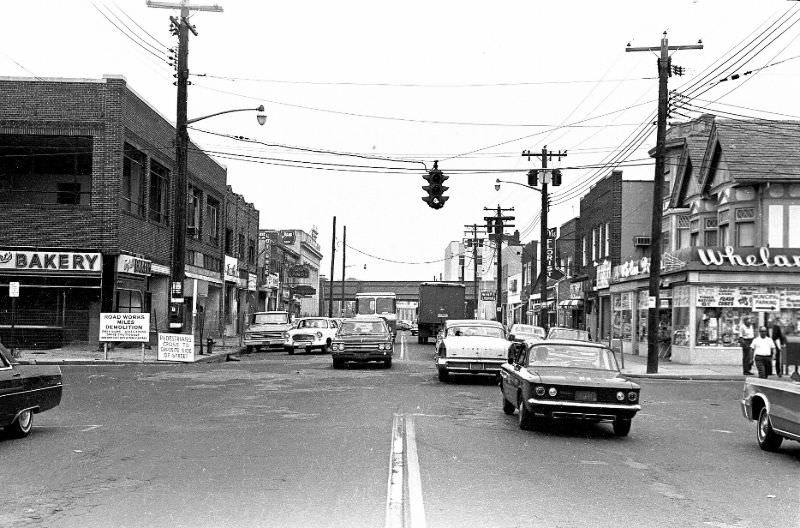
Looking north along Broadway from Marie Street, the commercial strip extended well into the distance. The street was wide enough for angled or parallel parking, and storefronts stretched in both directions from this central intersection. Marie Street was one of the key cross-streets that divided Broadway’s commercial blocks.
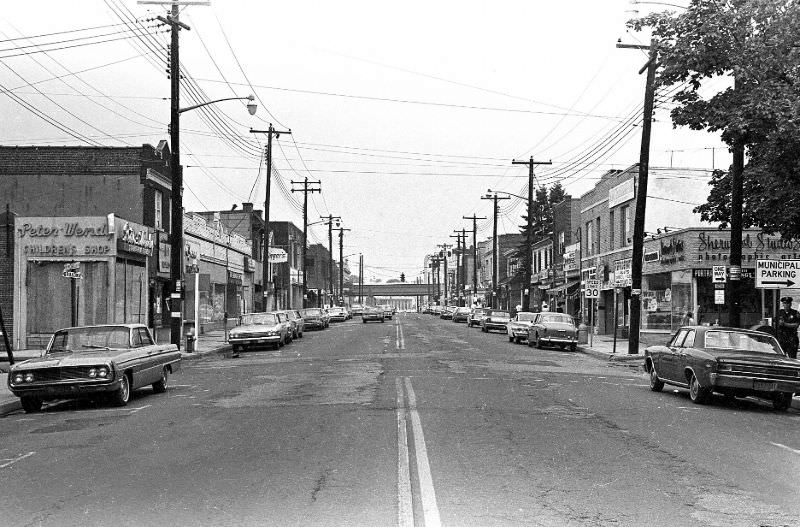
From Nicholai Street, the northward view of Broadway showed a continuous line of two- and three-story buildings. Street-level shops occupied the ground floors, and upper floors often held offices or apartments. The scale was human — nothing towered, and everything felt accessible from the sidewalk.
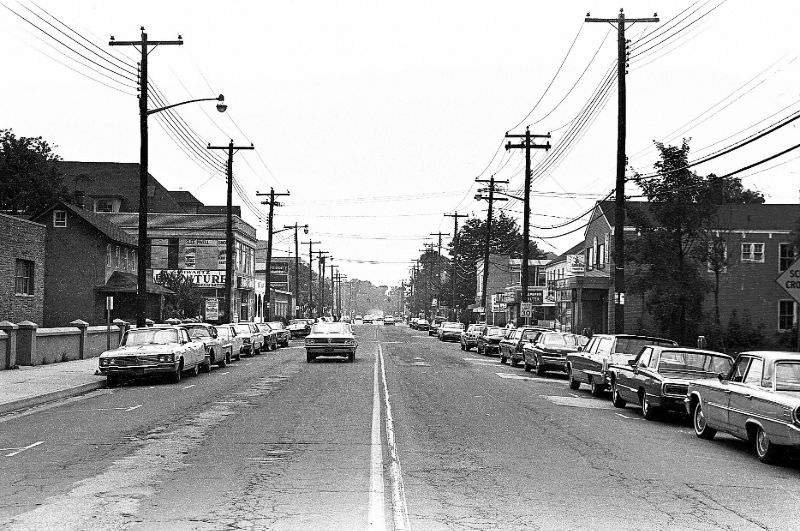
Between Nicholai Street and Cherry Street, Broadway offered an interesting contrast — St. Ignatius on the left and Dwyer’s tavern on the right. The church and the tavern facing each other across the same corridor was a common feature of older American main streets, and Hicksville was no exception.
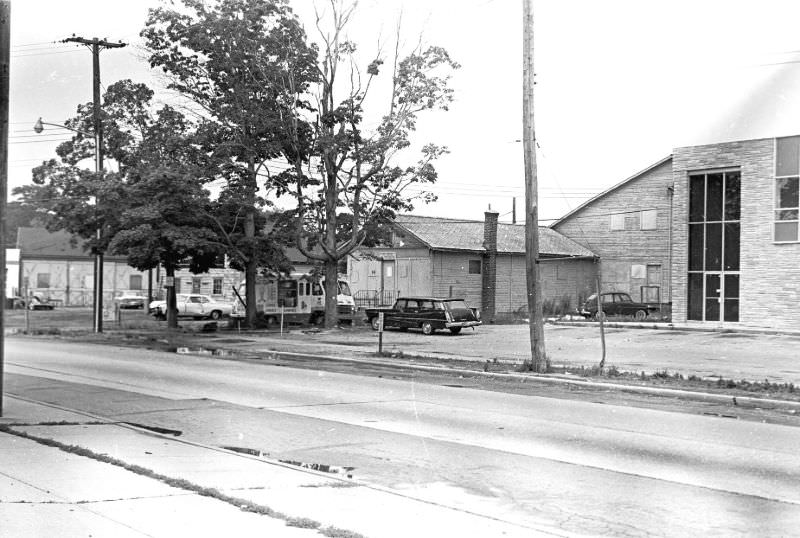
Newbridge Road, later renamed Nelson Avenue, marked one of the residential edges of Hicksville’s commercial core. Streets like this one connected the Broadway shopping district to the wider neighborhood grid that had developed rapidly after World War II.
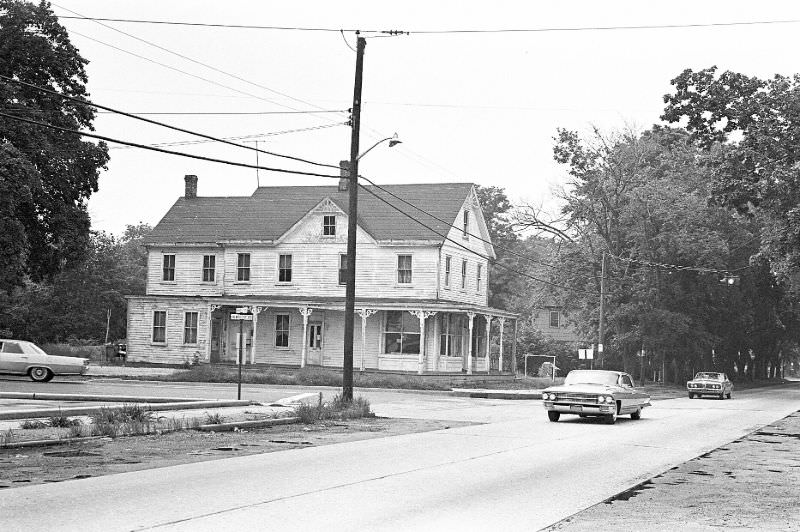
The Kasten Family Store on the south side of West Marie Street was built by Frederick William Johan Kasten and opened in 1895. By the time this photograph was taken in 1967, the building had been serving Hicksville residents for over seven decades. Few commercial structures in the hamlet carried that kind of uninterrupted family history.
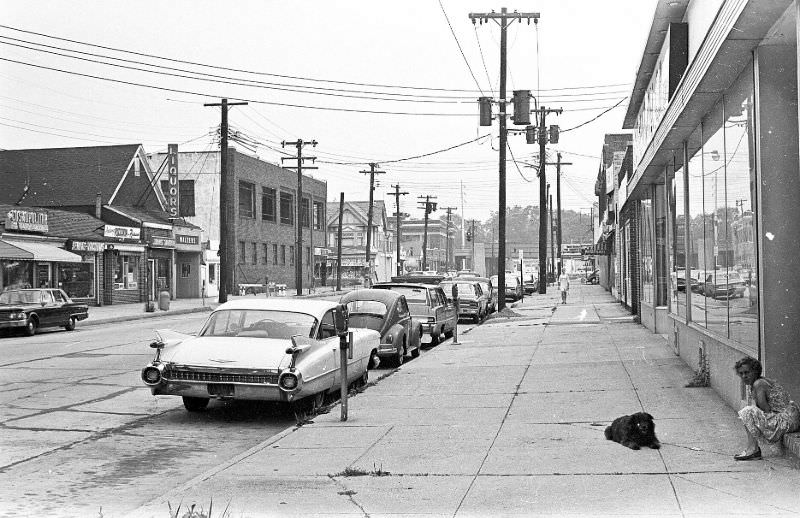
West Marie Street between Broadway and Jerusalem Avenue was a transitional zone — part residential, part commercial. Looking east from the middle of this block, Broadway’s storefronts came into view at the end of the street, grounding the neighborhood in its commercial center.
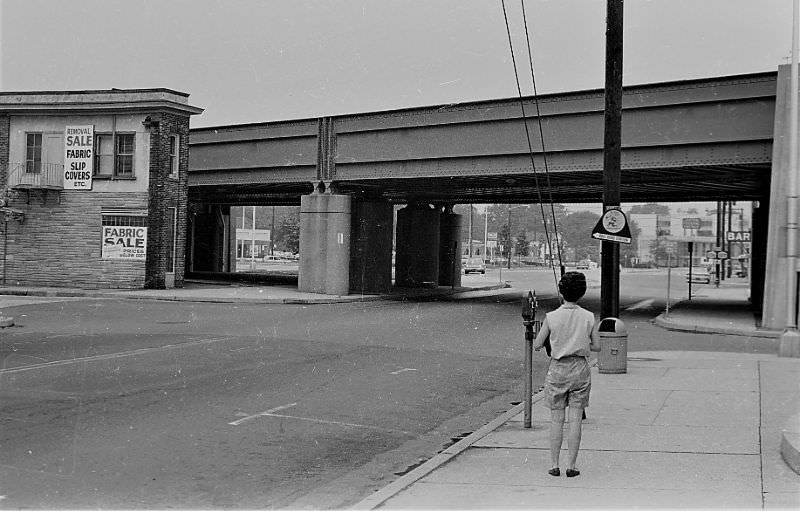
The railroad overpass gave a broader perspective on Broadway’s northward stretch. The Long Island Railroad had been central to Hicksville’s identity since 1837, and the overpass was a daily reminder of how closely the hamlet’s development was tied to rail access. Commuters passed through this corridor every day heading to and from New York City.
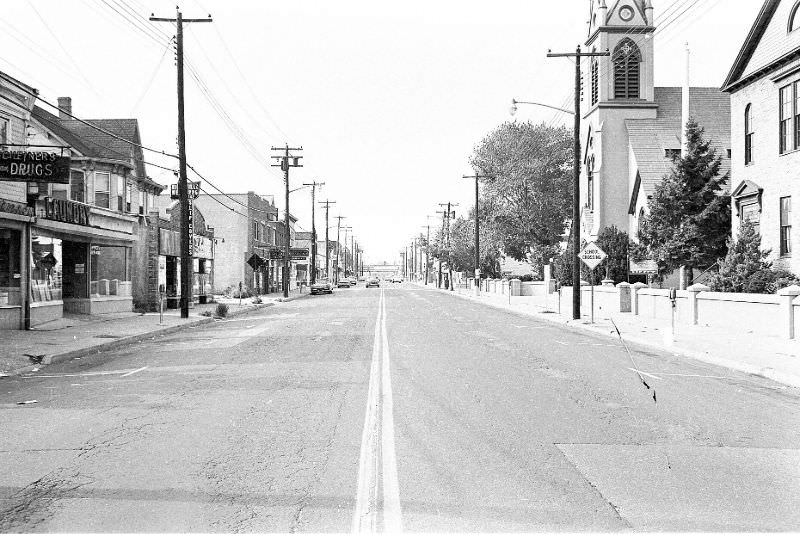
Scheiner’s Drug Store was one of the independently owned pharmacies that anchored Broadway’s retail mix. Drugstores like Scheiner’s weren’t just places to fill prescriptions — they typically included soda fountains and served as informal community gathering spots throughout the mid-20th century.
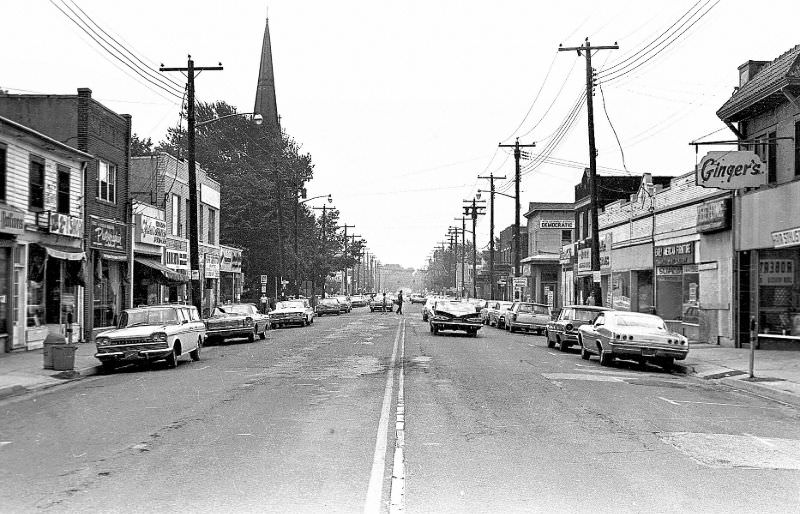
The block between Marie Street and Nicholai Street, viewed from the south-facing direction, showed the layered texture of Broadway’s development. Buildings of different heights and ages sat side by side, reflecting decades of gradual commercial growth rather than any single planned development.
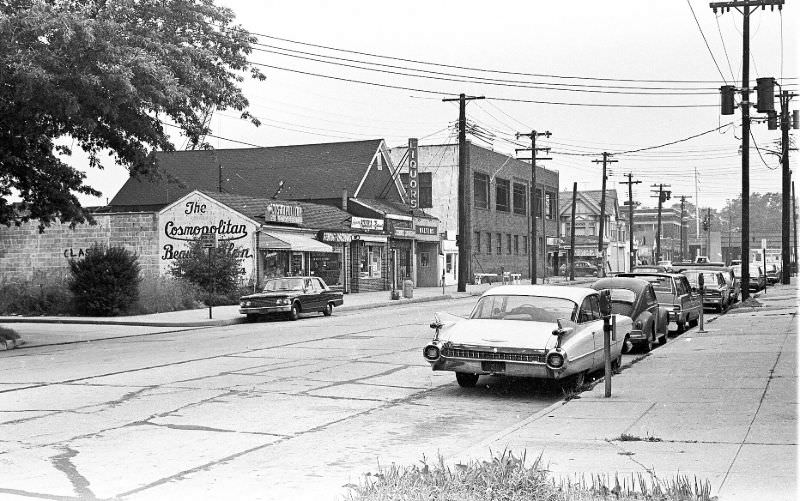
West Marie Street offered a direct sightline toward Broadway, with the firehouse visible to the right in the background. Fire stations were a fixture in Long Island hamlets, and in Hicksville they were often staffed by volunteer departments that had been active since the 19th century.
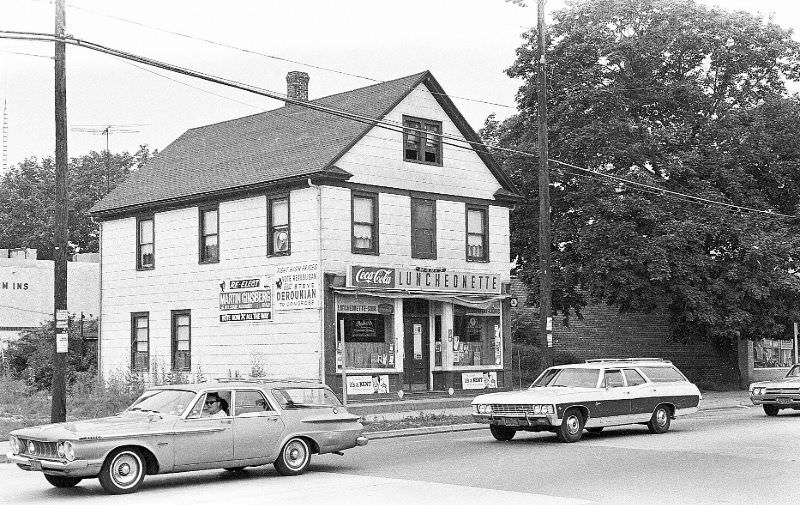
Mary’s Luncheonette occupied the center of this frame, flanked by a private residence set back from the street and the edge of the old Goldman Brothers Store. The coexistence of homes and businesses on the same block was a hallmark of Hicksville’s organic growth pattern — zoning boundaries were loose, and commercial life crept into residential areas naturally.
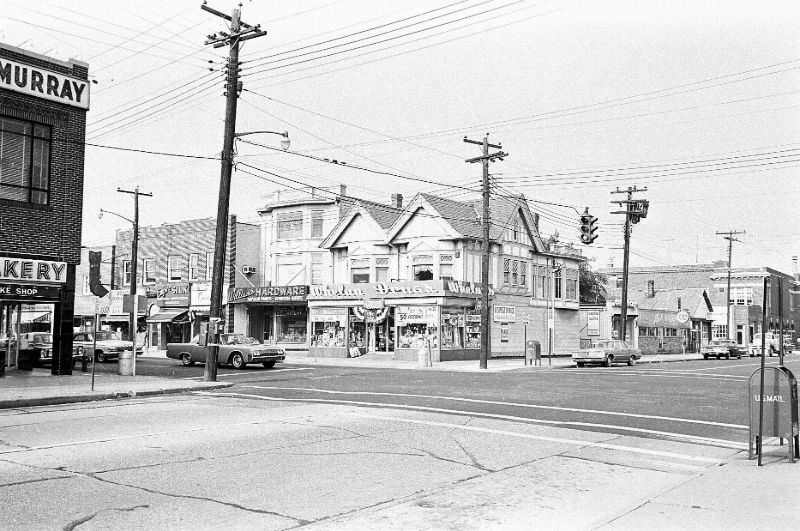
The northeast corner of Broadway and East Marie Street was one of Hicksville’s busiest intersections. Marie Street cut east-west across Broadway at a central point in the commercial district, making this corner a natural meeting point for foot traffic from multiple directions.
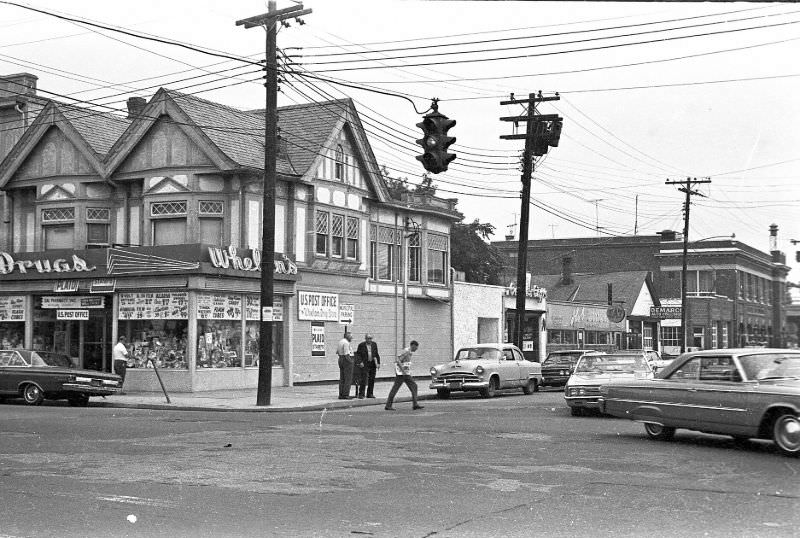
A second angle of the Northeast corner of East Marie Street and Broadway captured the density of storefront activity at this key intersection. Ground-floor retail and upper-floor space defined the building style here, consistent with the rest of Broadway’s commercial character.
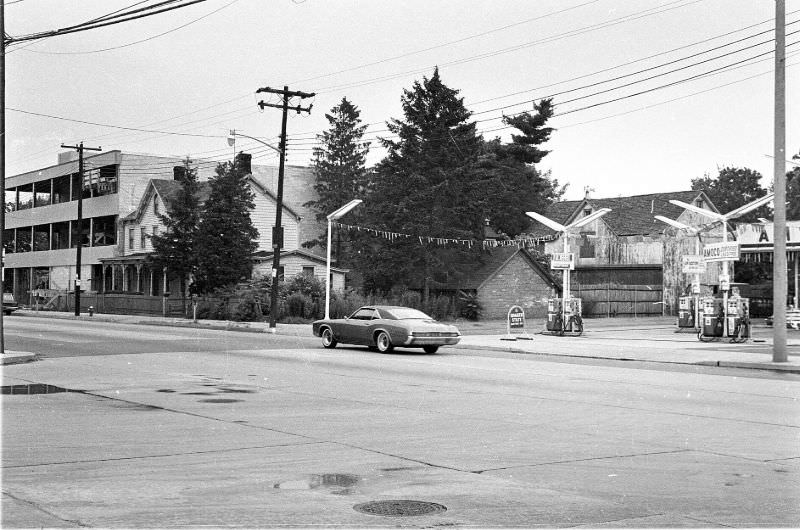
Old Country Road was one of the major thoroughfares crossing through Hicksville, and its intersection with Broadway marked the northern edge of the main commercial zone. This corner connected the hamlet to the broader Long Island road network that had expanded dramatically during the postwar years.
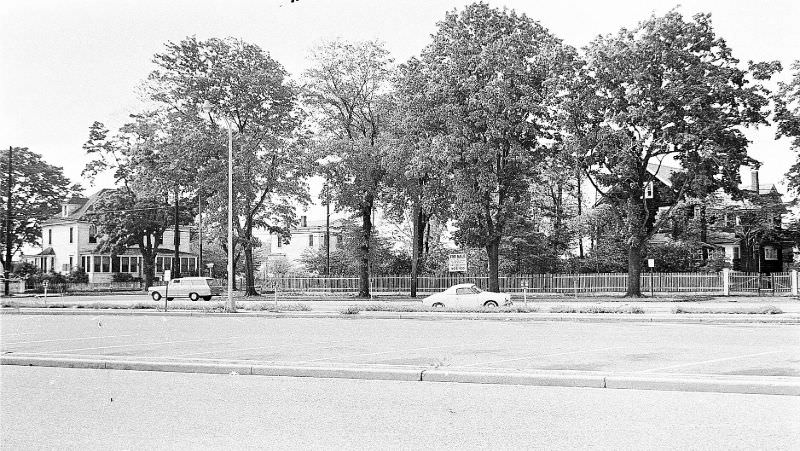
At the corner of West Marie Street and Jerusalem Avenue stood Johanna Taliaferro’s home on the north side of the block. Homes like this one sat at the edge of the commercial district, where the retail energy of Broadway gave way to quieter residential streets.
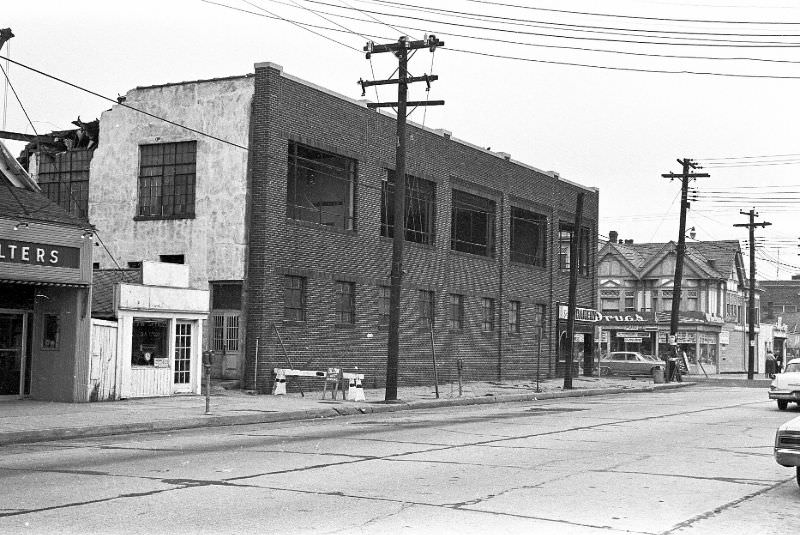
Walter’s Liquor Store occupied the northwest corner of Broadway and West Marie Street, directly across from the northeast corner visible to the right of the frame. Liquor stores were common anchor tenants on mid-century suburban main streets, and Walter’s was a well-known name in Hicksville’s commercial landscape.
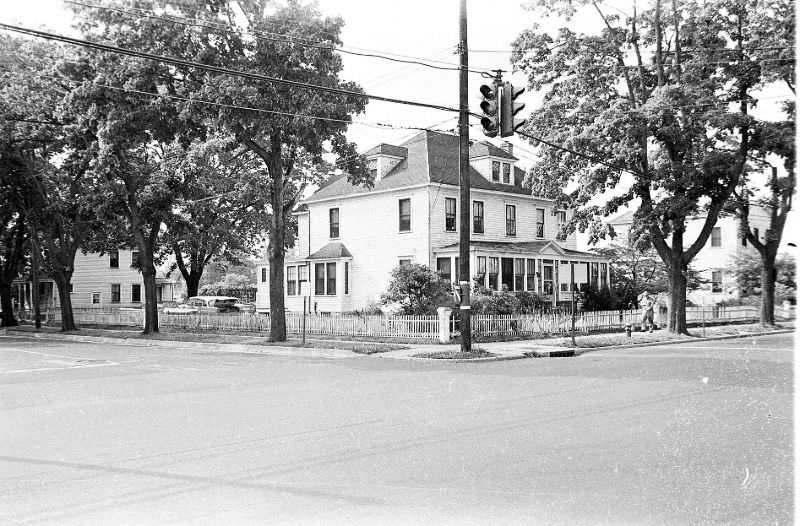
The northwest corner of West Marie Street and Jerusalem Avenue sat a few blocks west of Broadway, at the edge of the commercial district. By this point, the streetscape had shifted from dense retail to a quieter mix of homes and small neighborhood businesses.
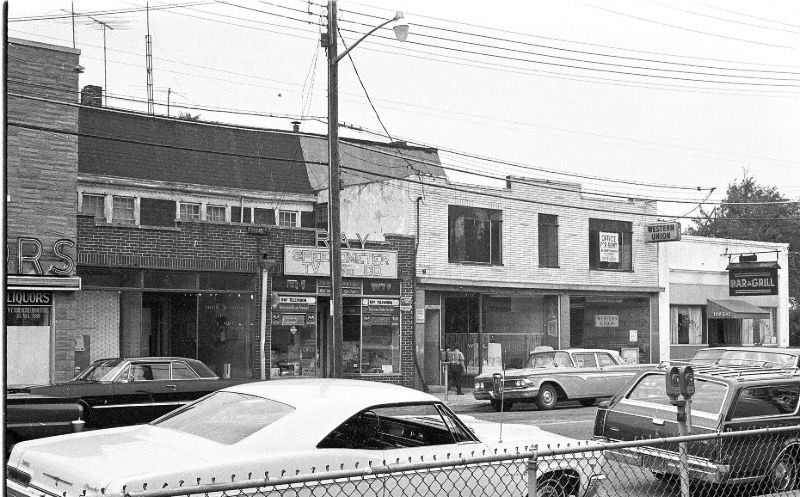
West Carl Street intersected Broadway at one of the less-photographed corners of the commercial district. The partial building visible at the left edge of this frame hints at the compressed, continuous development that characterized Broadway’s blocks — there were very few gaps between buildings.
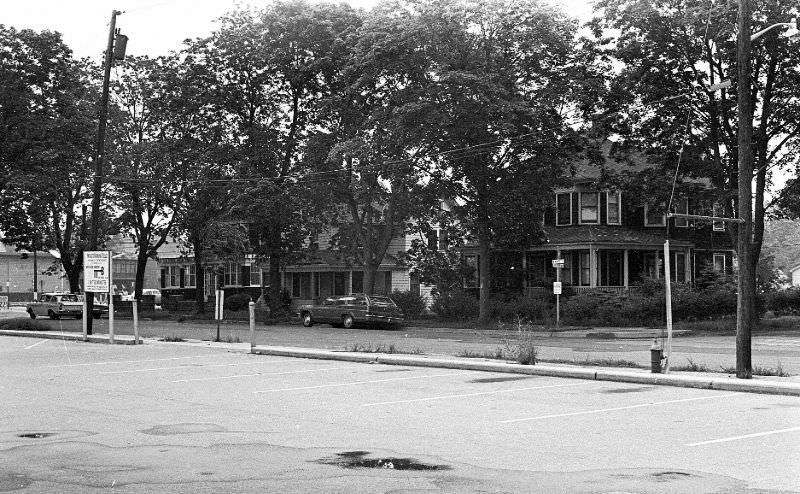
The south side of West Marie Street between Jerusalem Avenue and Division Avenue was a quieter stretch than the Broadway-facing blocks. Smaller structures and modest storefronts defined this part of the street, which served the immediate neighborhood rather than the broader commercial district.
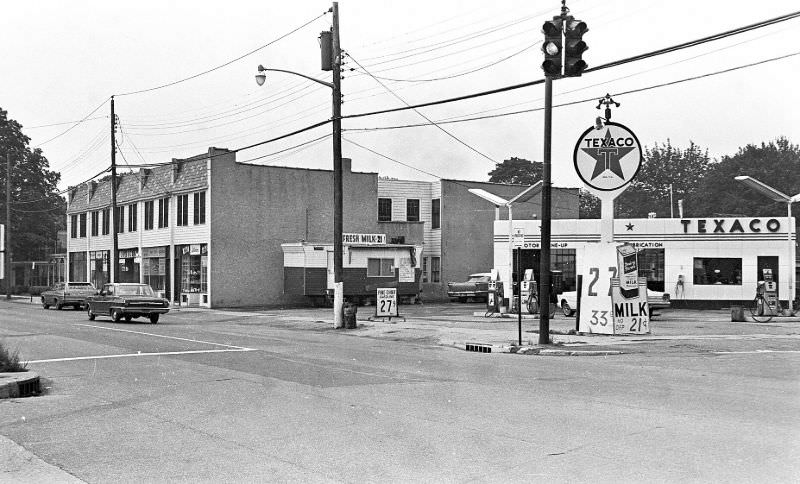
The apartment house on the southwest corner of Jerusalem Avenue and West Marie Street stood on land that had once been the house lot of William Simonson in 1907. By 1967, a multi-unit building had replaced the original home — a pattern repeated all over Hicksville as the postwar population boom pushed demand for denser housing.
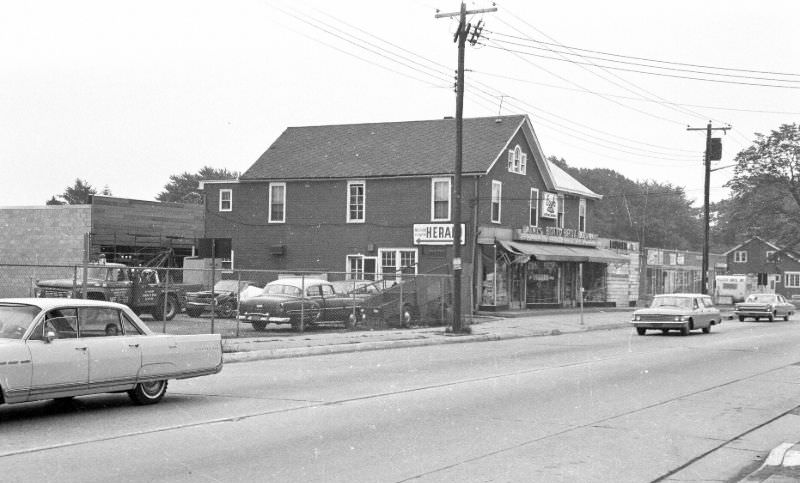
Bob and Irv Botto ran the hardware store at the center of this block. Hardware stores like the Bottos’ were essential to a growing suburban community — Hicksville in the 1960s was full of homeowners doing repairs and renovations on the tract houses that had gone up in the late 1940s and 1950s.
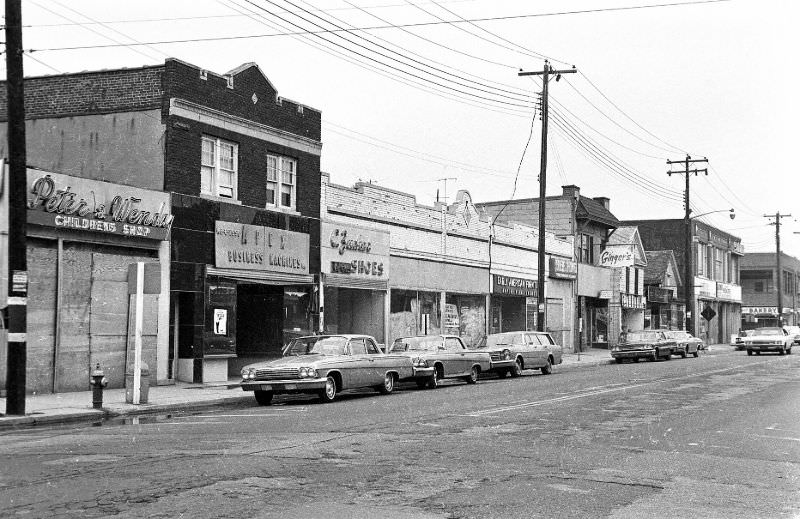
The west side of Broadway between West Nicholai Street and West Marie Street was one of the denser commercial stretches in the hamlet. Storefronts ran continuously along the block, and the mix of businesses reflected the full range of daily needs — food, hardware, clothing, and services.
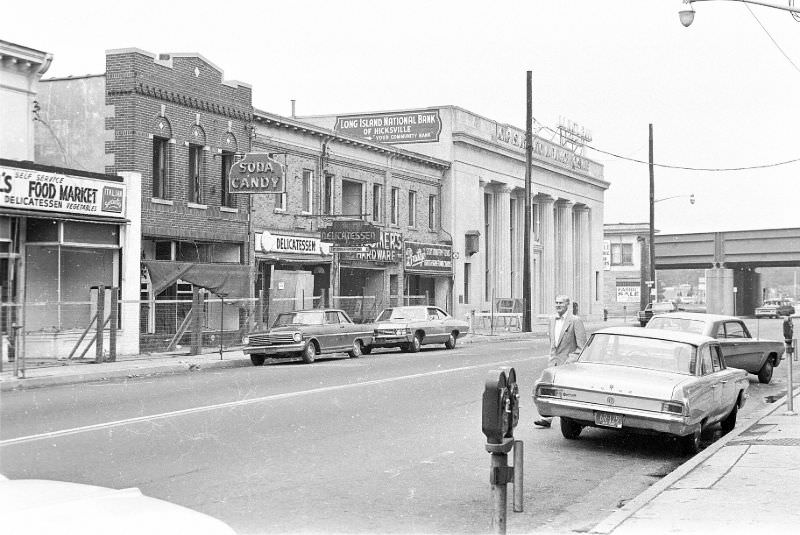
Looking north along the west side of Broadway from just below Marie Street, the commercial corridor stretched ahead with parked cars lining the curb and pedestrians moving along the sidewalk. This view captures the scale and rhythm of the street as it functioned in daily life — practical, active, and locally rooted.
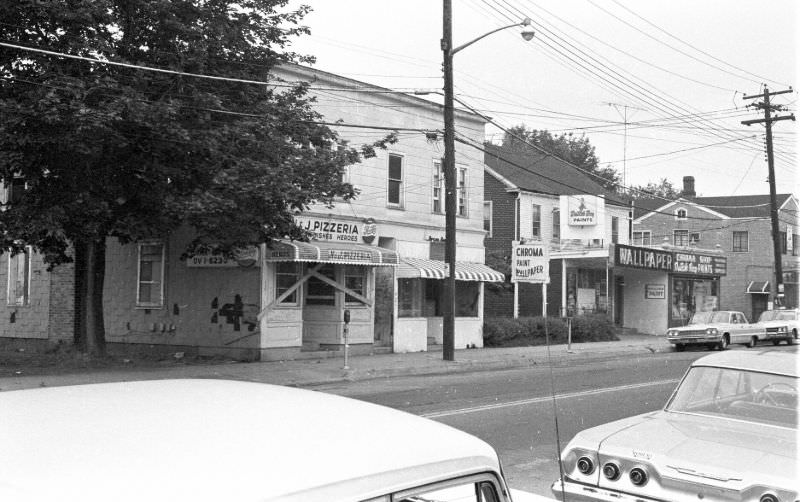
Dwyer’s Inn appeared again on the west side of Broadway, visible to the right of the frame. The building’s presence in multiple photographs from 1966 and 1967 reflects its central role in the neighborhood. At the 2010 census, Hicksville’s population stood at 41,547 — a far cry from the small farm community that Valentine Hicks had helped establish over a century earlier.





That’s how it looked when Billy Joel was growing up. Pretty cool. Thanks for sharing
If i had the chance to choose where i grew up in the 60s I’d choose hicksville all over again. I was 10 in 1967. Grew up on w.nicholai st. 1 block north of old country rd.
you probably saw the town at such an exciting time.
Yes it was. There was so many changes going on in the world but @ 10 yrs old you didnt really understand any of that and Hicksville was such a quiet peaceful safe haven growing up. I’d love to go back in time!
Criminal how much it has changed. Will be unrecognizable in 50 more years.
Get over it. Change is inevitable.
It was almost like a culture shock! I moved to Maine to recapture some of that old small town charm.
The world doesn’t change, people do. Enough said.
Went to old country rd. School & hicksville high school grsd. 1975
Visited 7 years ago. Horrendous changes. I loved Hicksville growup. Not now. Totally different town.
That’s tough. Going back and seeing how much it’s changed can really hit hard.
When you first walk into the Hicksville library there is an amazing map of old Hicksville. Can’t remember the year but the tracks weren’t elevated yet.
New documentary on billy Joel is pure fire