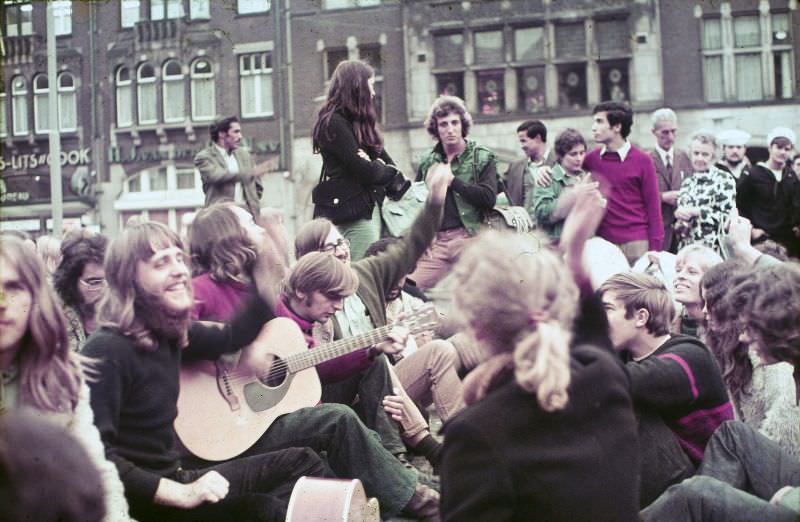
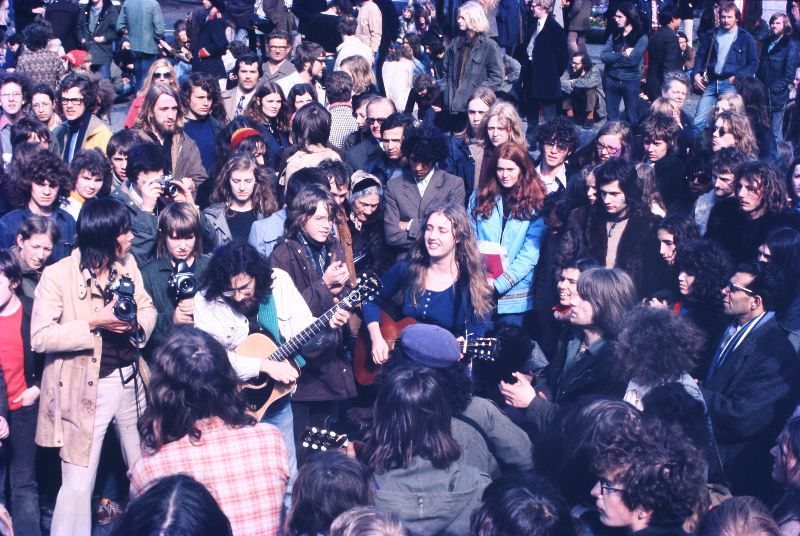
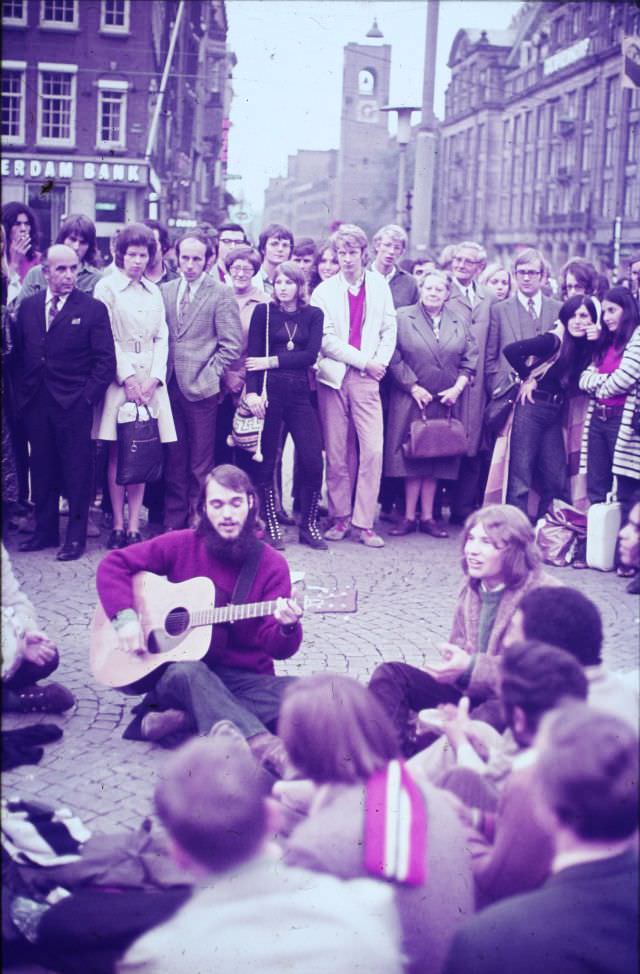
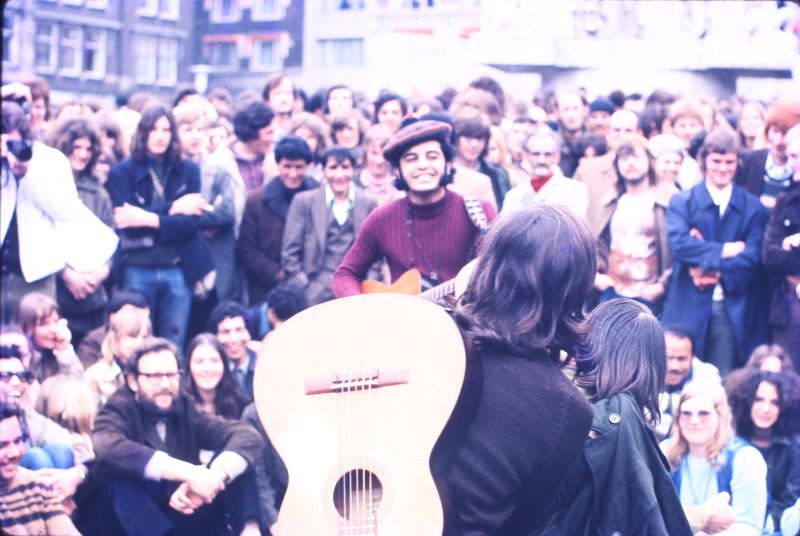
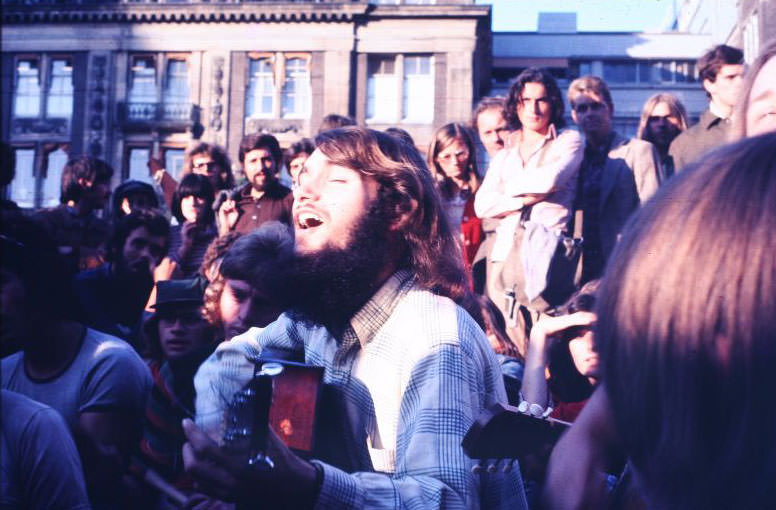
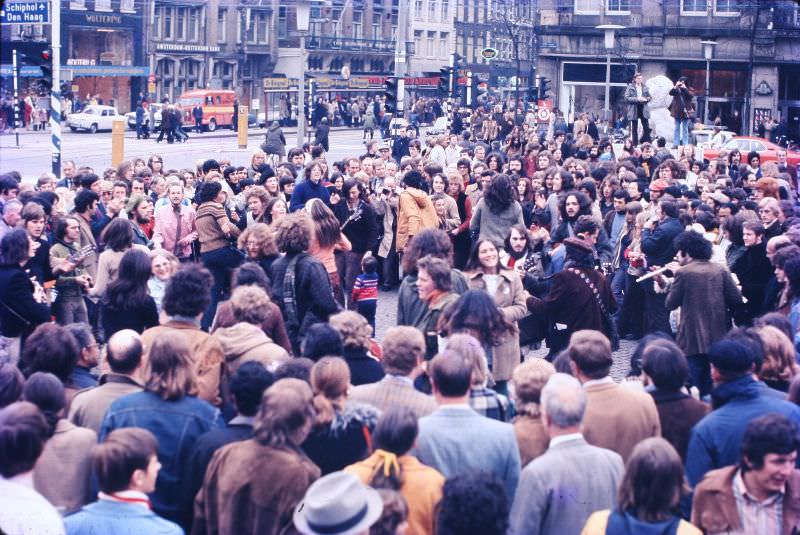
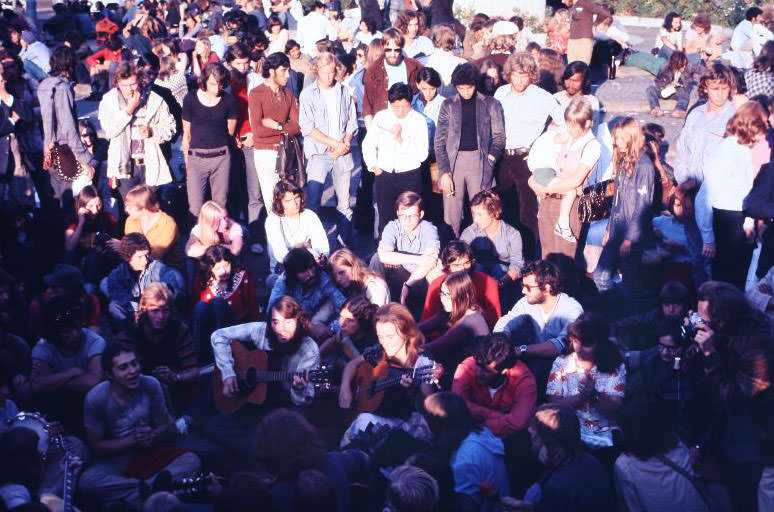
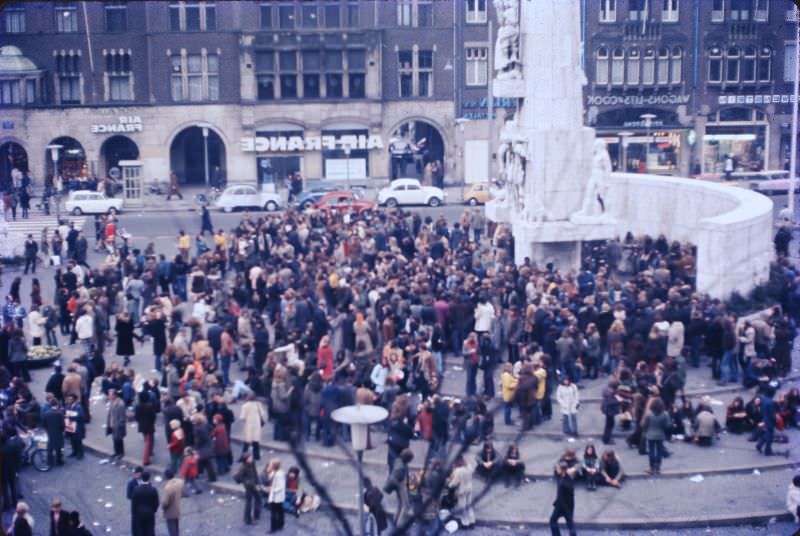
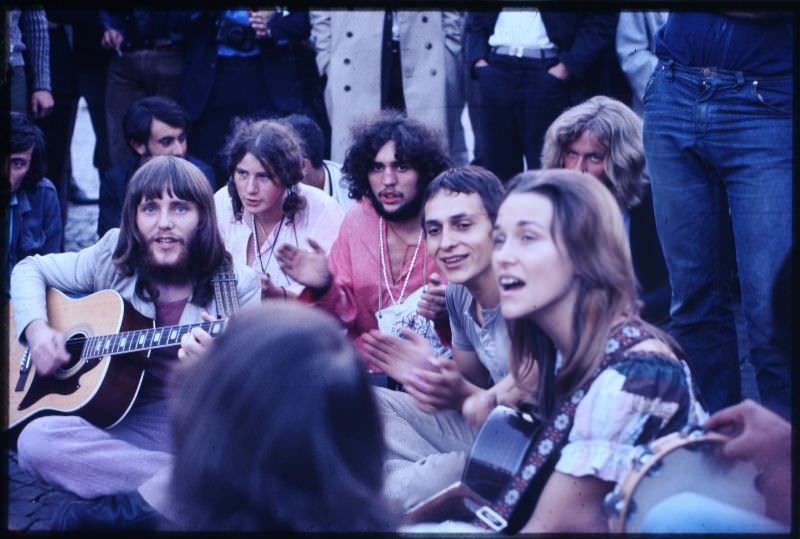
By the 1970s, Dam Square had become the beating heart of Amsterdam’s youth scene. Young people from across the city — and from countries far beyond the Netherlands — made it their gathering place. Hippies, artists, political activists, and musicians all claimed space on the same cobblestones, turning the square into a living, breathing expression of a generation in motion.
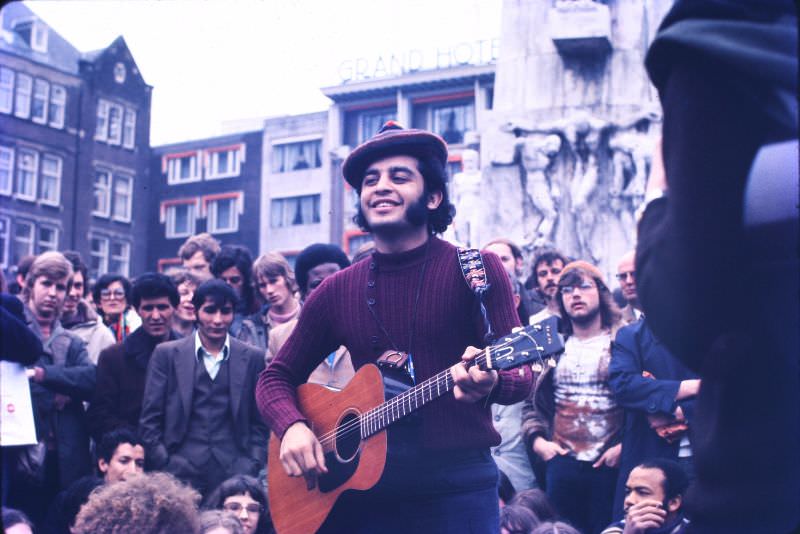
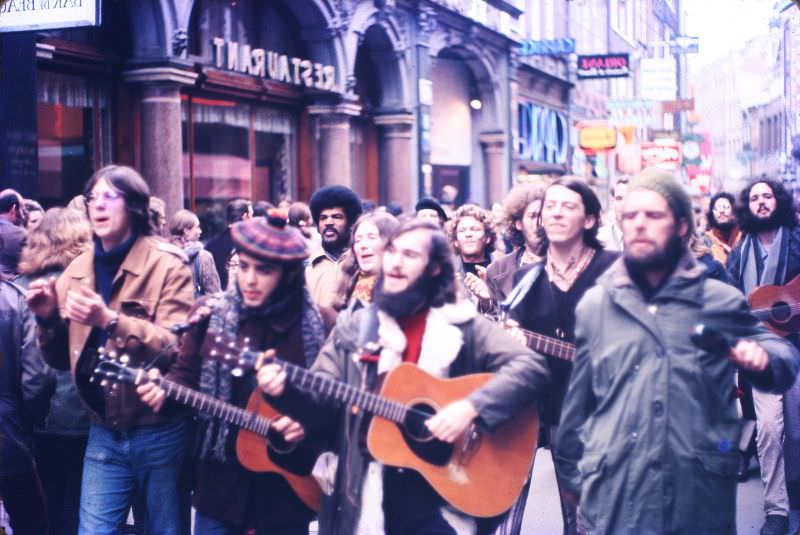
The fashion on the square told you everything about the people wearing it. Colorful, layered clothing mixed with beads, scarves, wide-brimmed hats, and long, unkempt hair. There was no single uniform — the whole point was that there wasn’t one. Personal style was a statement, a quiet refusal to blend into the mainstream world just outside the square’s edges.
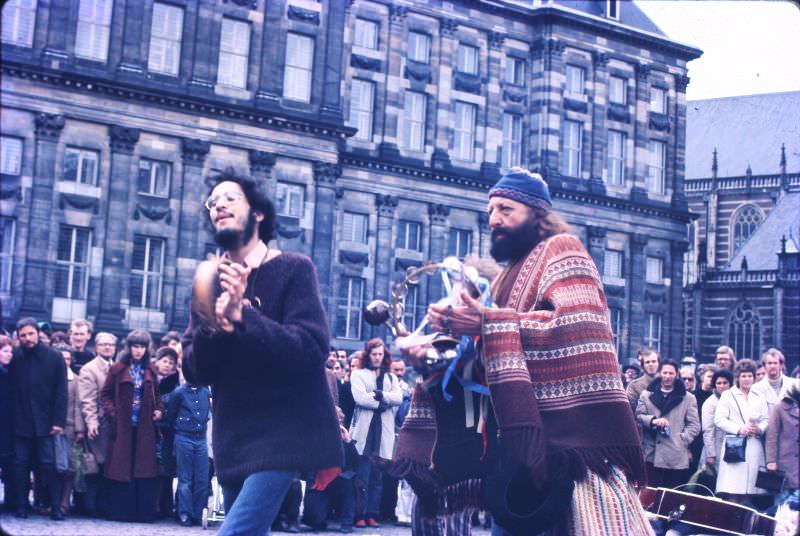
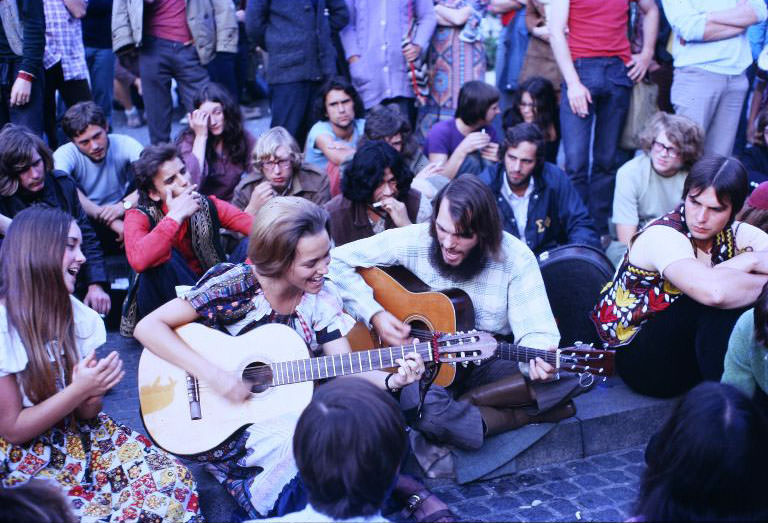
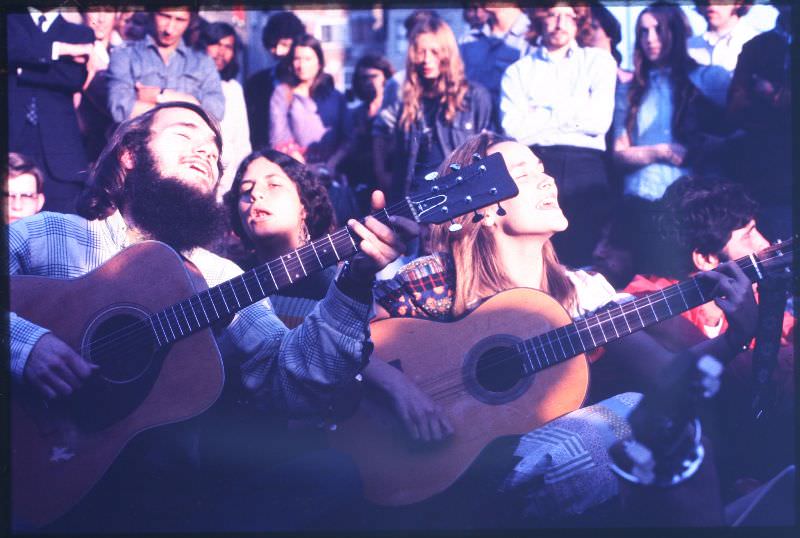
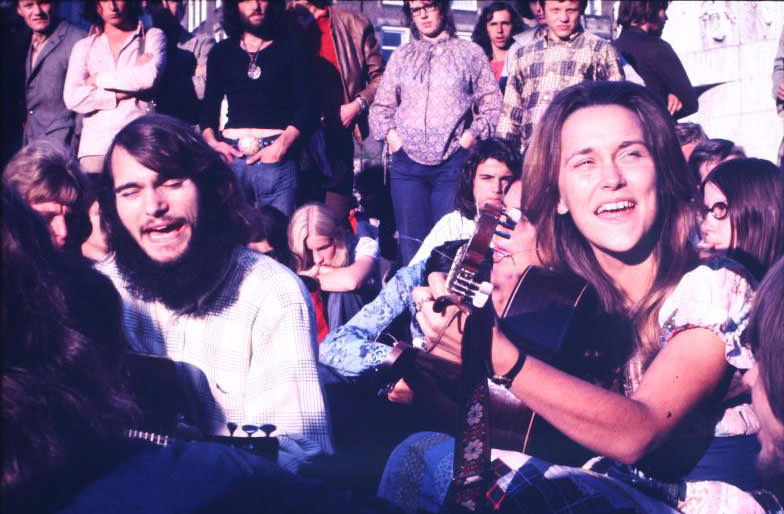
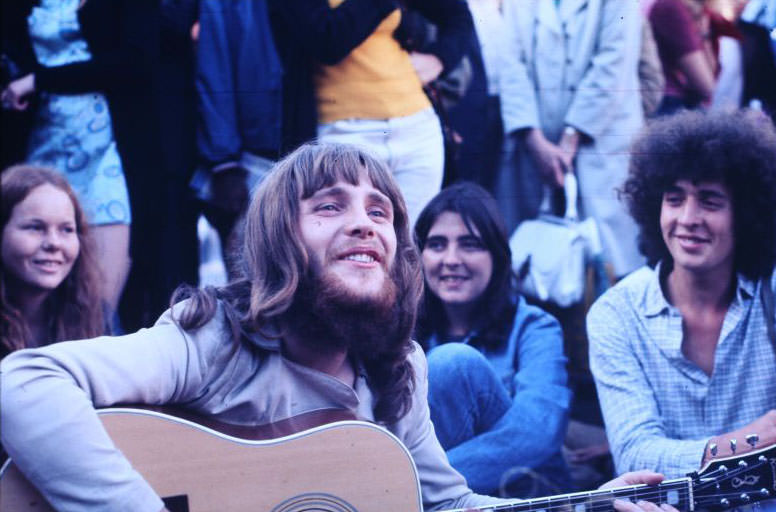
Street musicians were a constant presence. They played guitars, flutes, and hand drums at all hours, drawing crowds that would stop, sit, and stay for far longer than they planned. The music wasn’t organized or scheduled — it just happened, spontaneously, as part of daily life on the square.
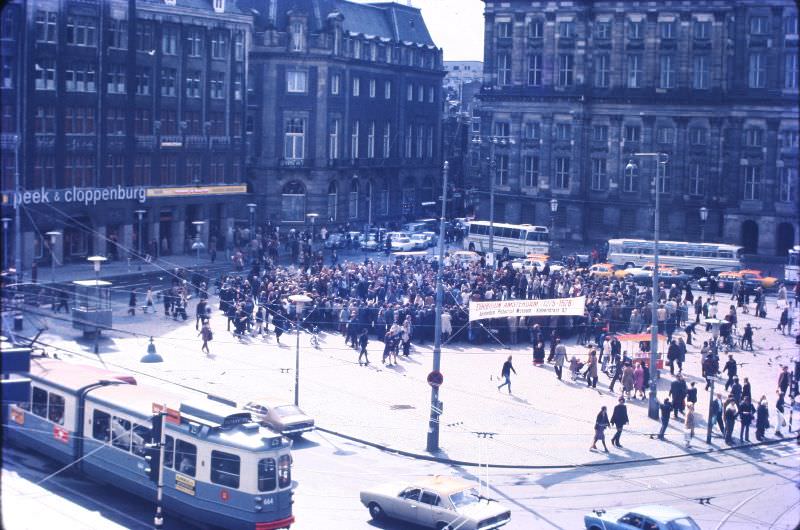
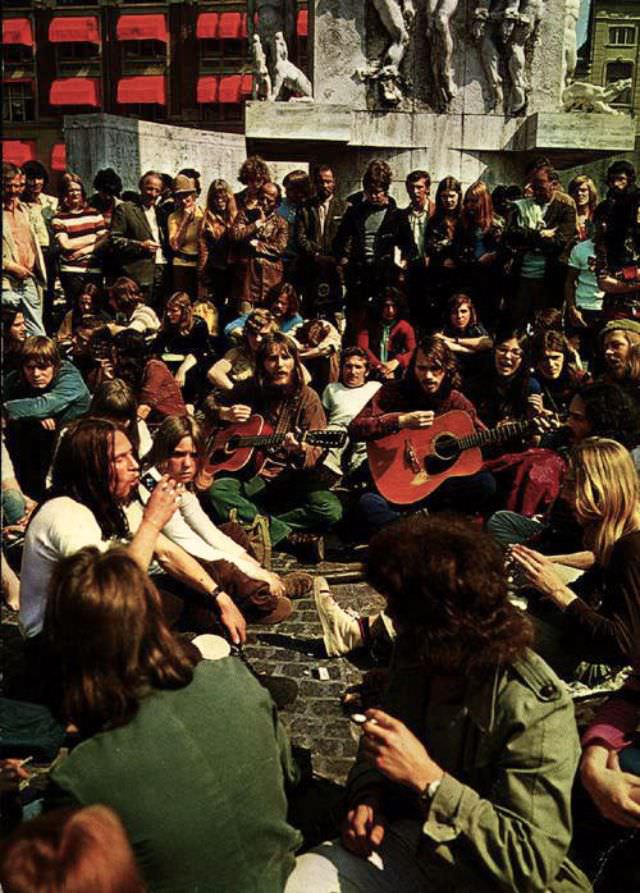
Groups formed and dissolved throughout the day. Some people debated politics. Others sketched, painted, or passed around handmade zines. The square functioned as an open-air forum where ideas moved freely between strangers who, within minutes, became part of the same conversation.
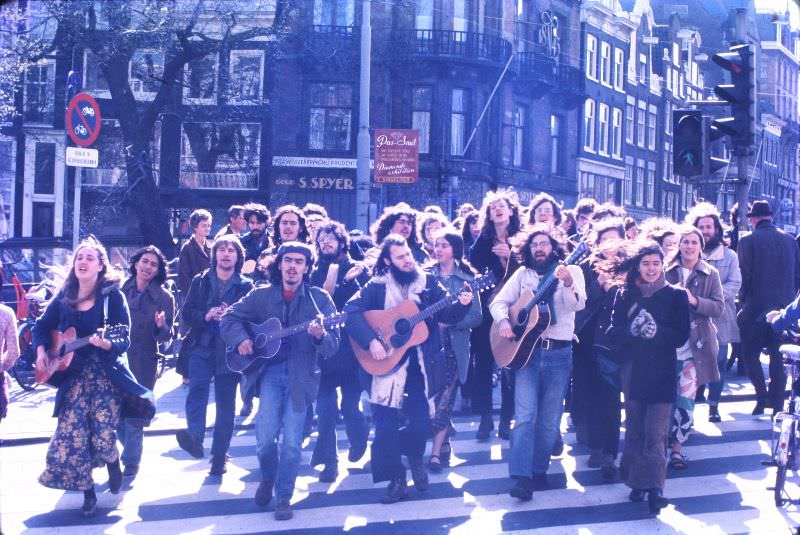
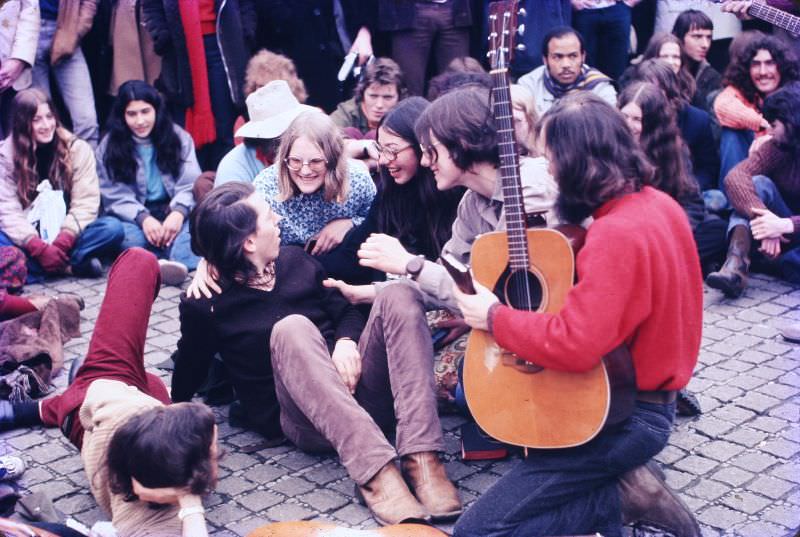
Amsterdam’s broader culture in this period made Dam Square possible. The city had already seen the Provo movement of the 1960s — a group of young anarchists who staged theatrical protests and challenged authority in the streets. That spirit carried into the 1970s, giving the square’s regulars a sense of political awareness alongside their creativity.
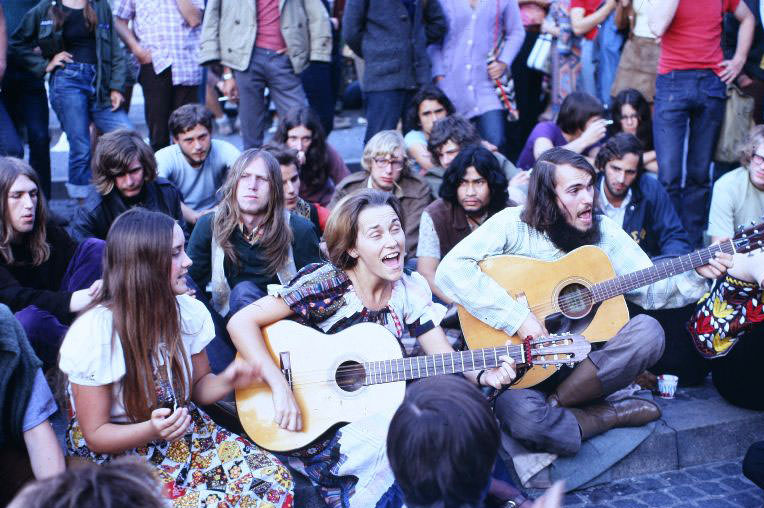
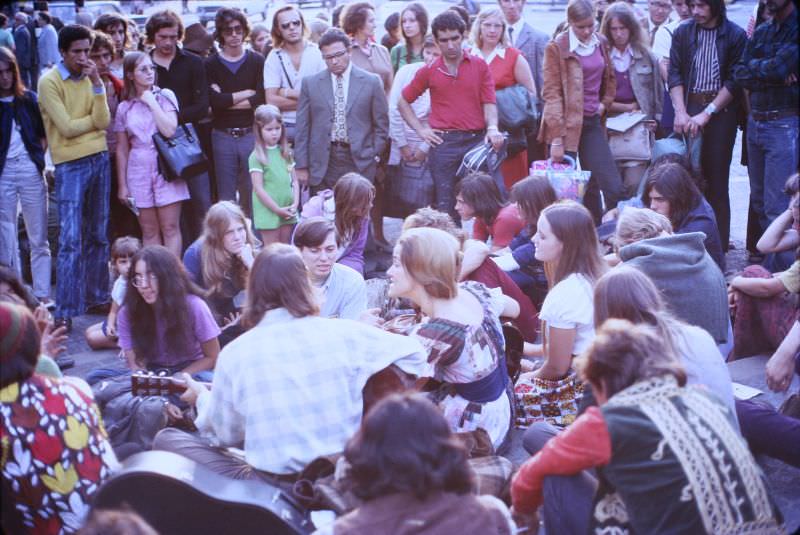
Not everyone who came to the square was Dutch. Travelers from across Europe, the United States, and beyond made it a stop on their journeys. The square had a reputation that spread through word of mouth and the pages of counterculture guides. For many young people, it was a destination in itself.
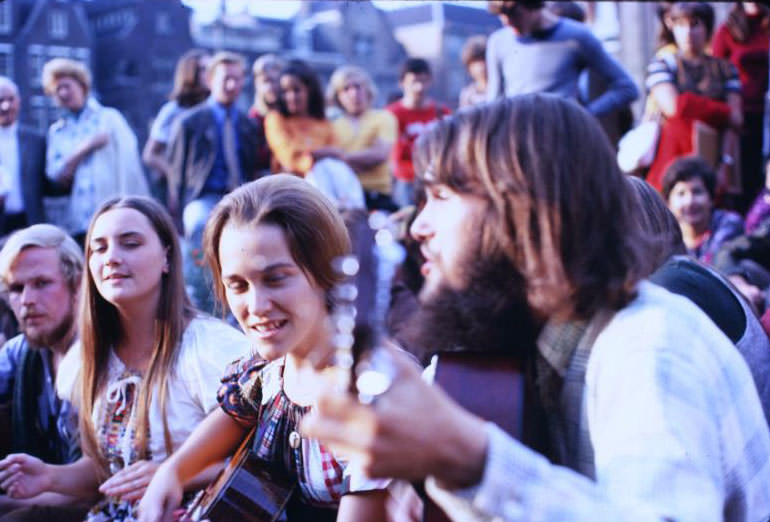
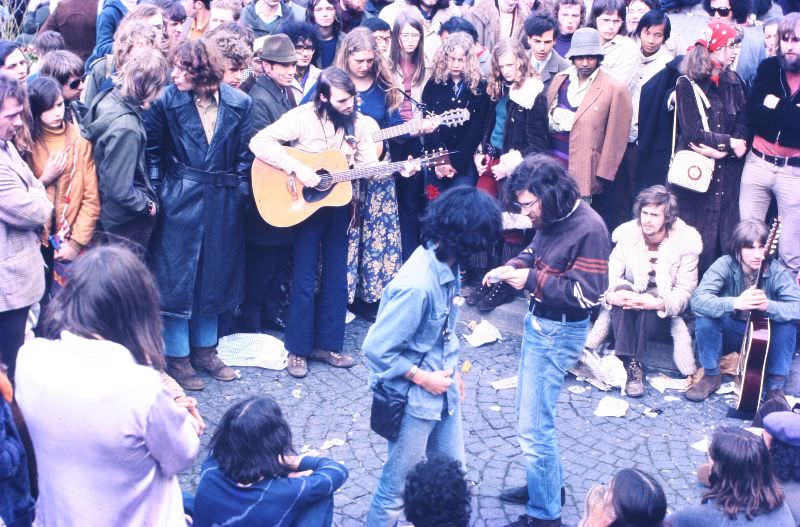
Sleeping on or near the square was common. Some visitors stayed for days, using the National Monument — the tall white obelisk at the center — as a landmark to meet up with friends. The monument, built to honor Dutch victims of World War II, became surrounded by the very generation that grew up in the peace that followed.
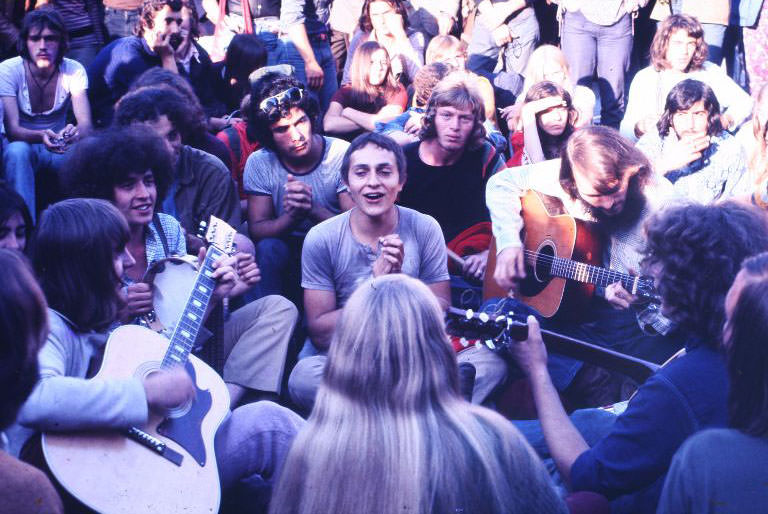
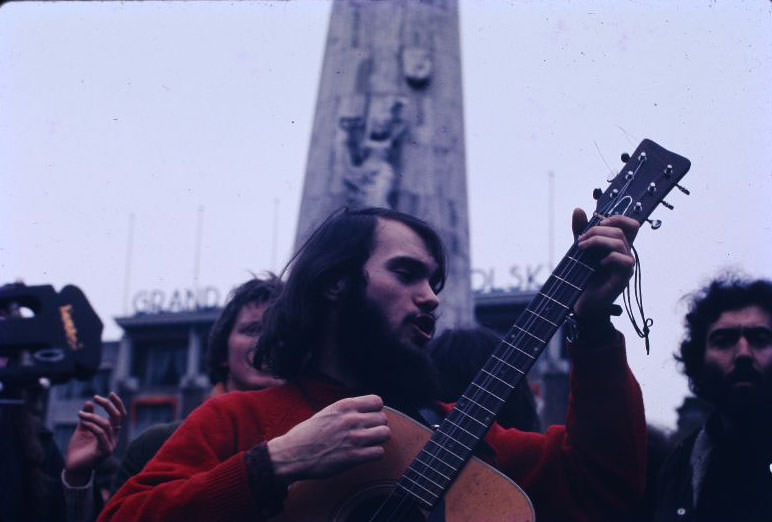
The crowd on any given day was a cross-section of the era. Older locals sometimes watched with curiosity, sometimes with frustration. City authorities occasionally moved people along, but the square always filled back up. It was too central, too open, and too symbolically loaded to be reclaimed for anything more orderly.
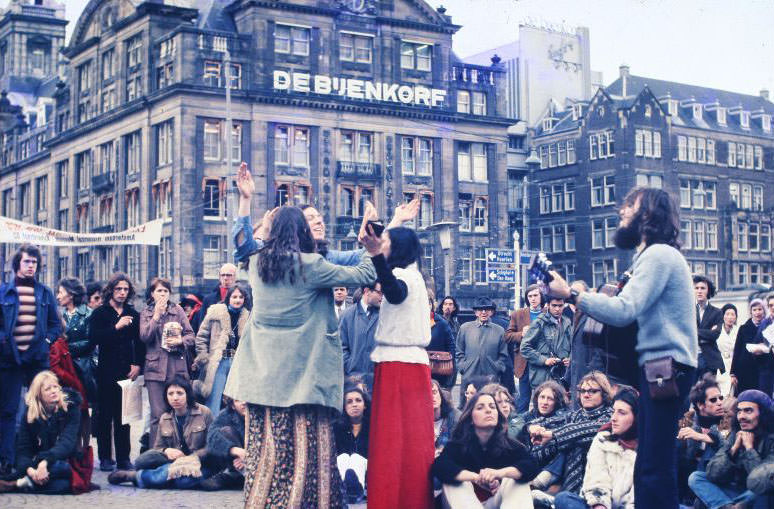
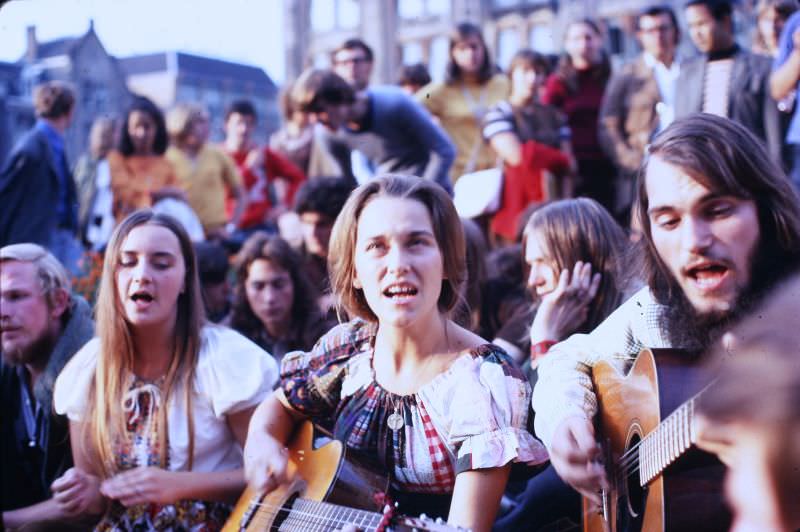
Art showed up in every corner of the square. Chalk drawings appeared on the pavement. Handmade signs announced protests or celebrations. People wore their own paintings on cloth, or carried instruments strapped across their backs like a declaration.
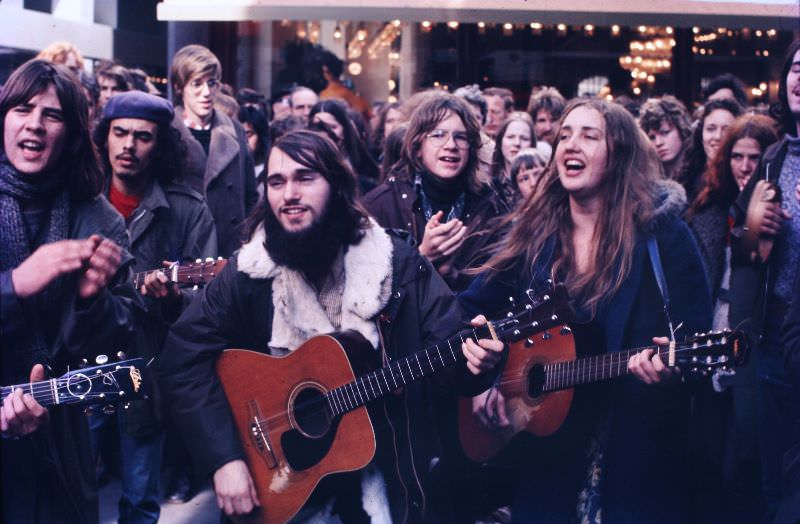
The activism at Dam Square wasn’t abstract. Anti-war demonstrations, particularly against the Vietnam War, drew vocal crowds. Flyers circulated. Speakers addressed anyone willing to listen. The square gave activists a stage with a built-in audience — thousands of people passing through every day.
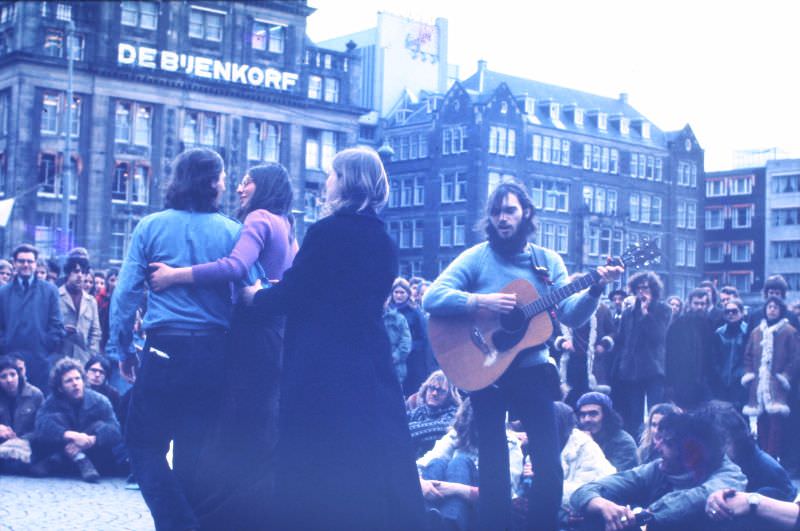
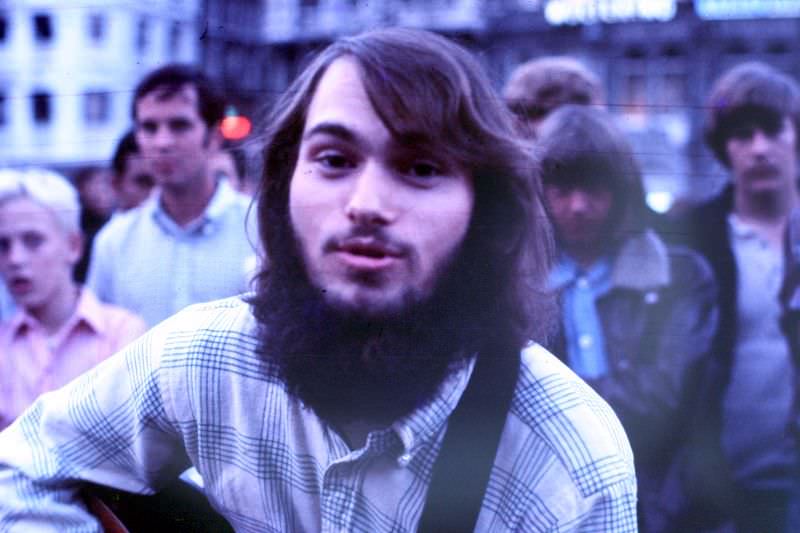
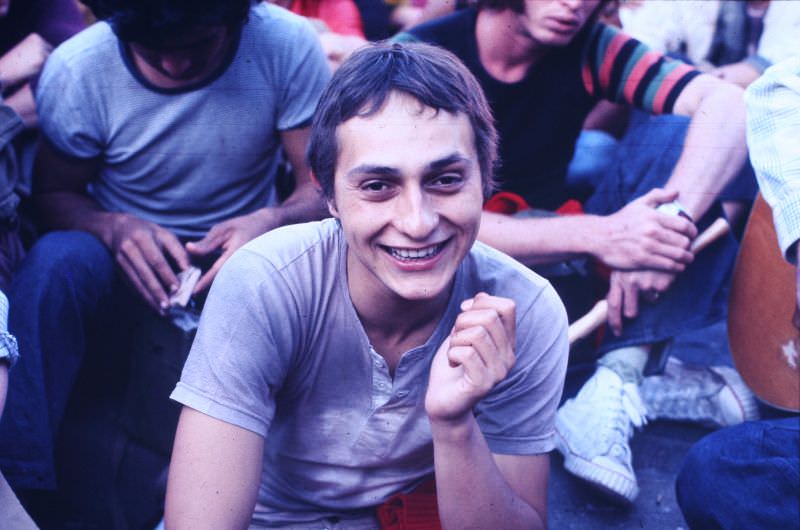
Photographers documented the scene extensively. The images they captured show faces that are relaxed, expressive, and fully present — people who had chosen to be exactly where they were. The square was not a backdrop for their lives. For many, it was the main event.