When World War II ended, Dallas didn’t slow down — it accelerated. The city’s population stood at 434,462 in 1950, and that number was just the starting point for a decade that would transform Dallas into one of the most important cities in the American South. Construction cranes became a permanent fixture on the skyline. New roads cut through the landscape. Banks, department stores, and office towers rose block by block. These photographs capture a city in full motion, building toward something larger than itself.
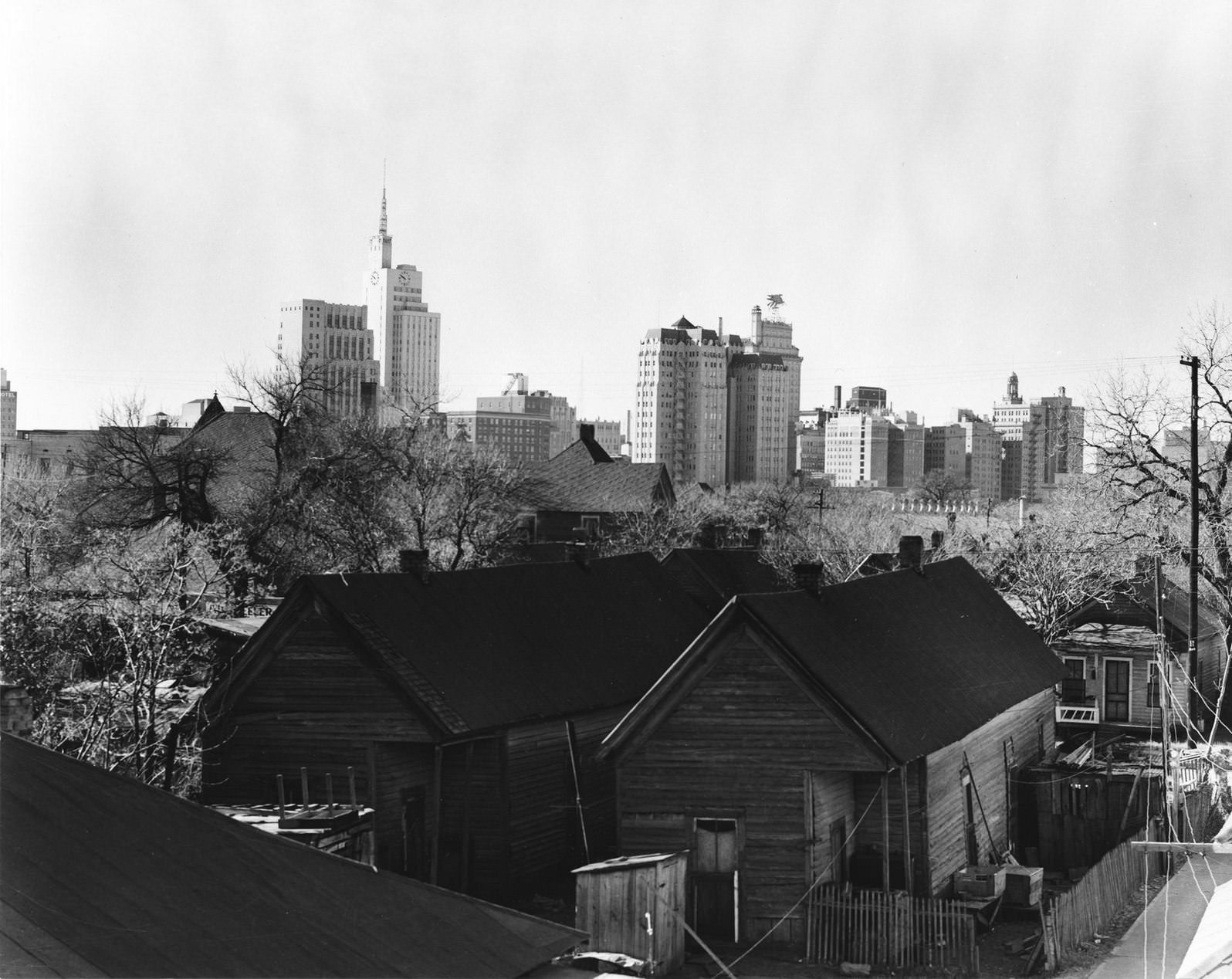
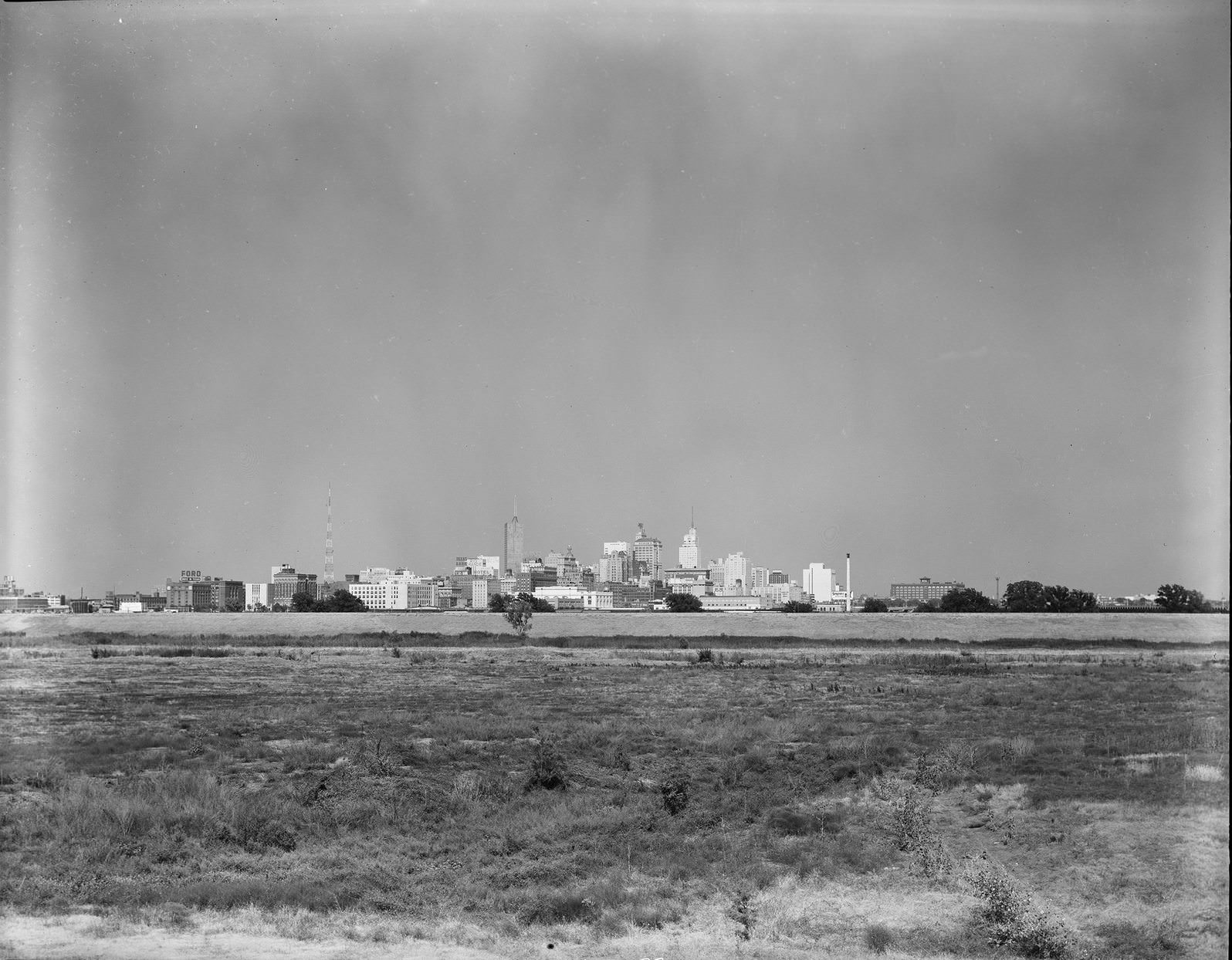
Skyline of downtown Dallas, Texas from the backyards of tenement houses, 1950
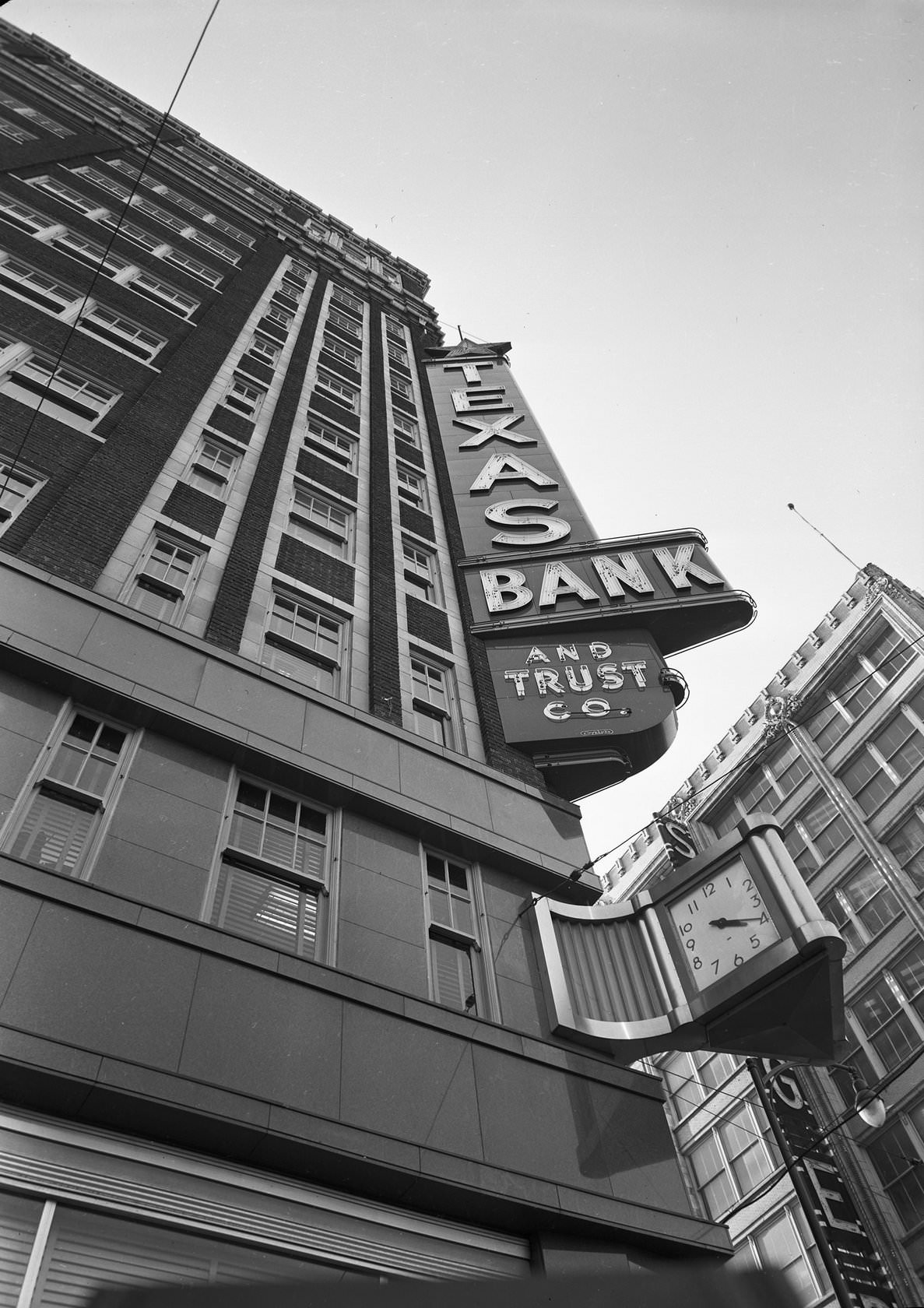
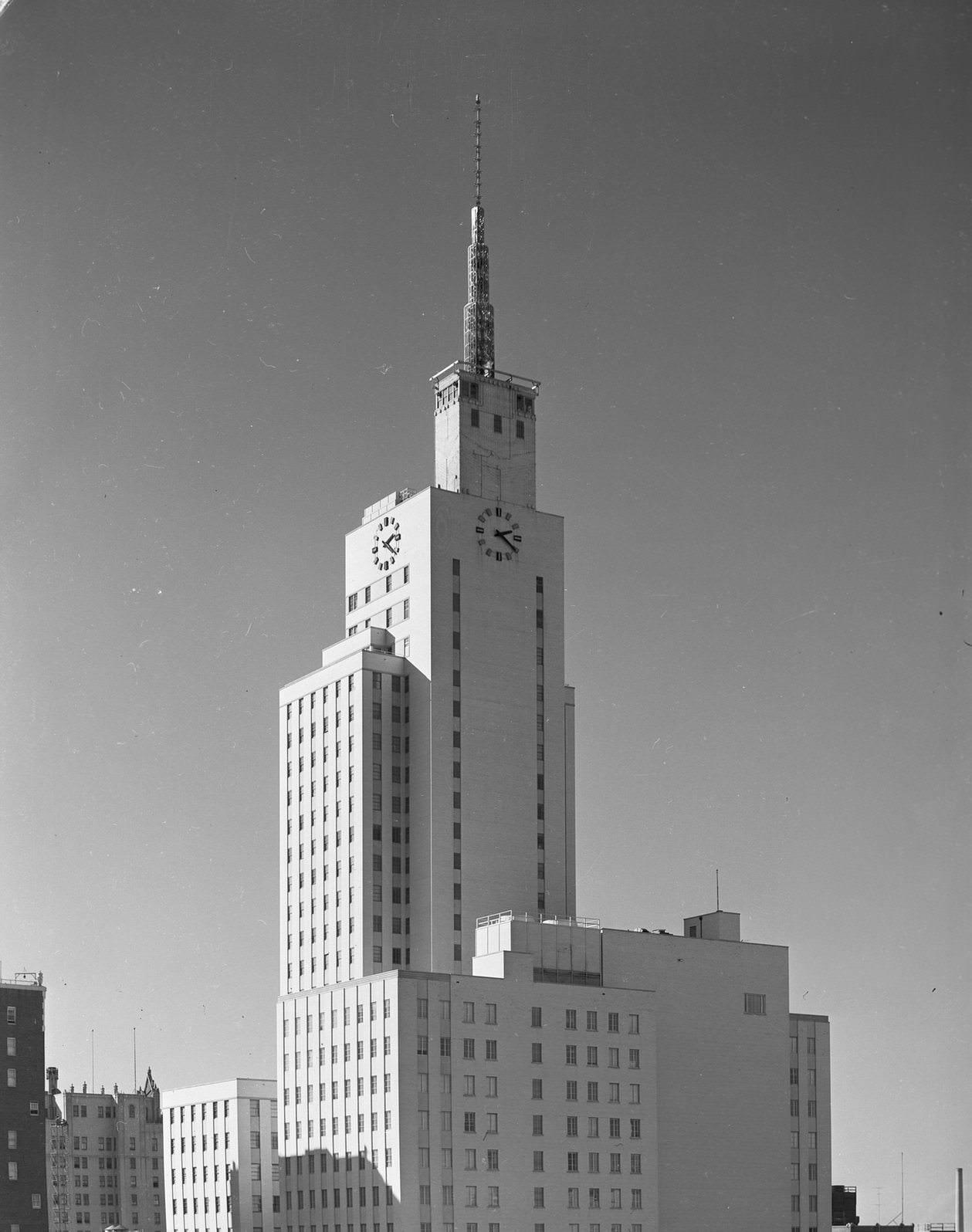
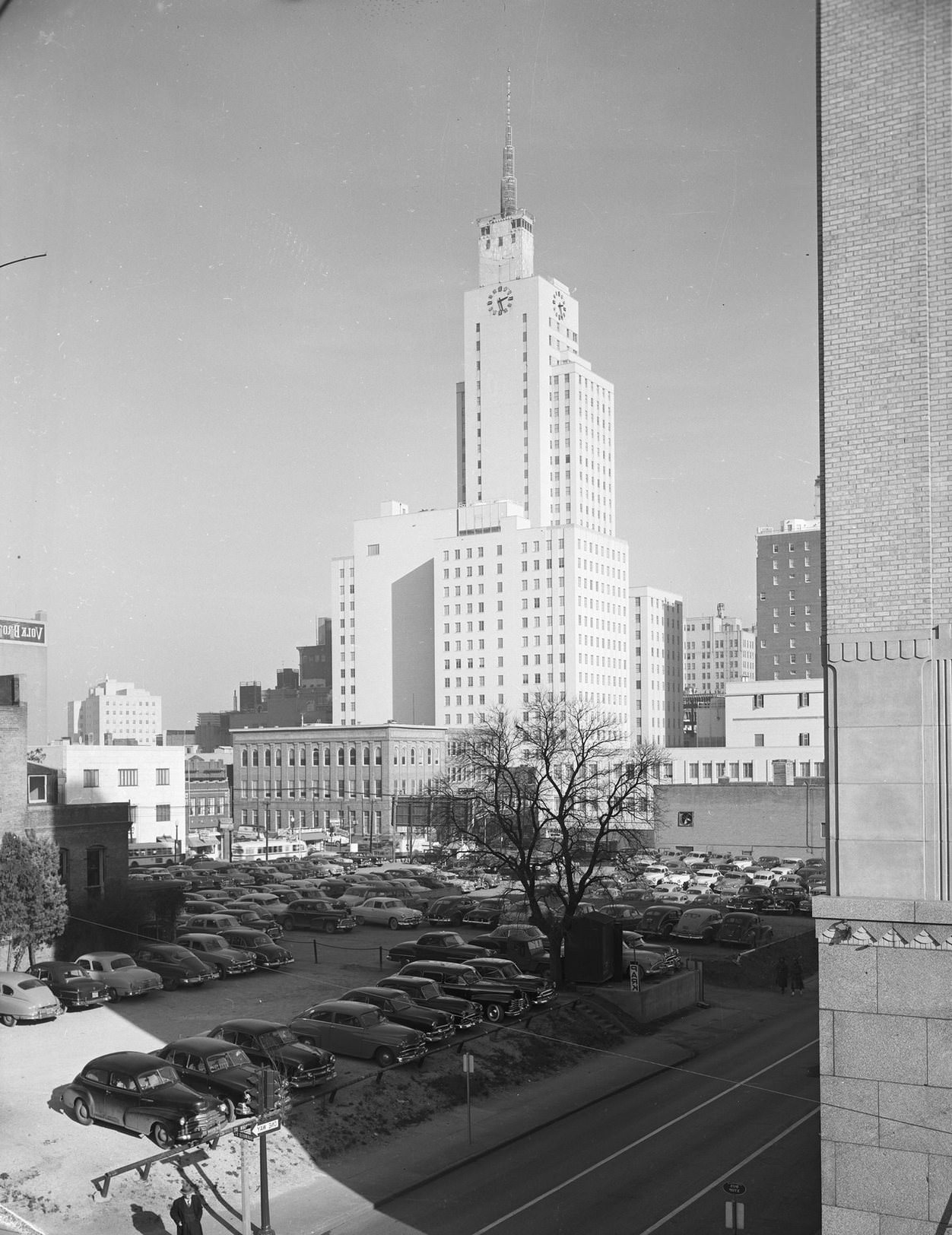
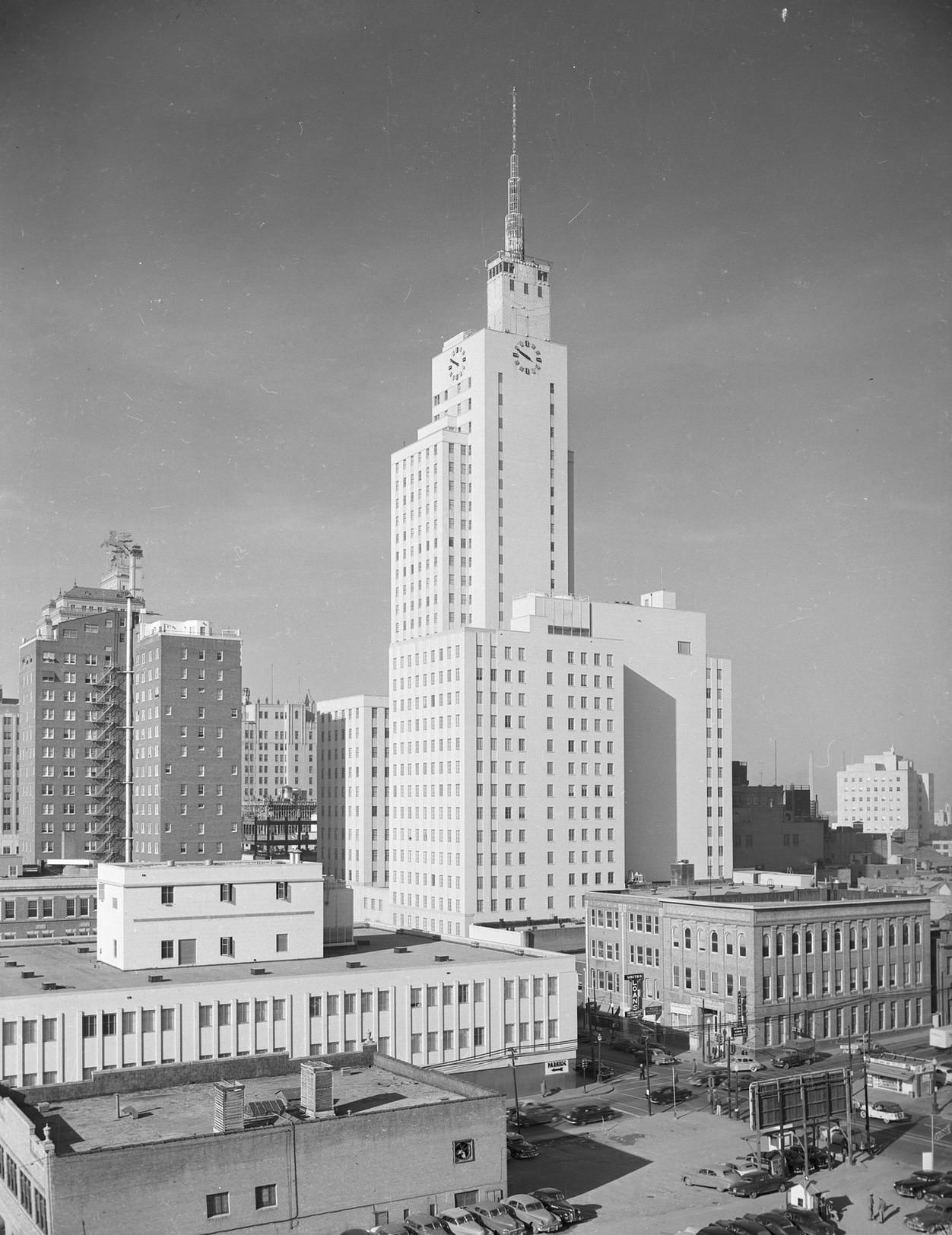
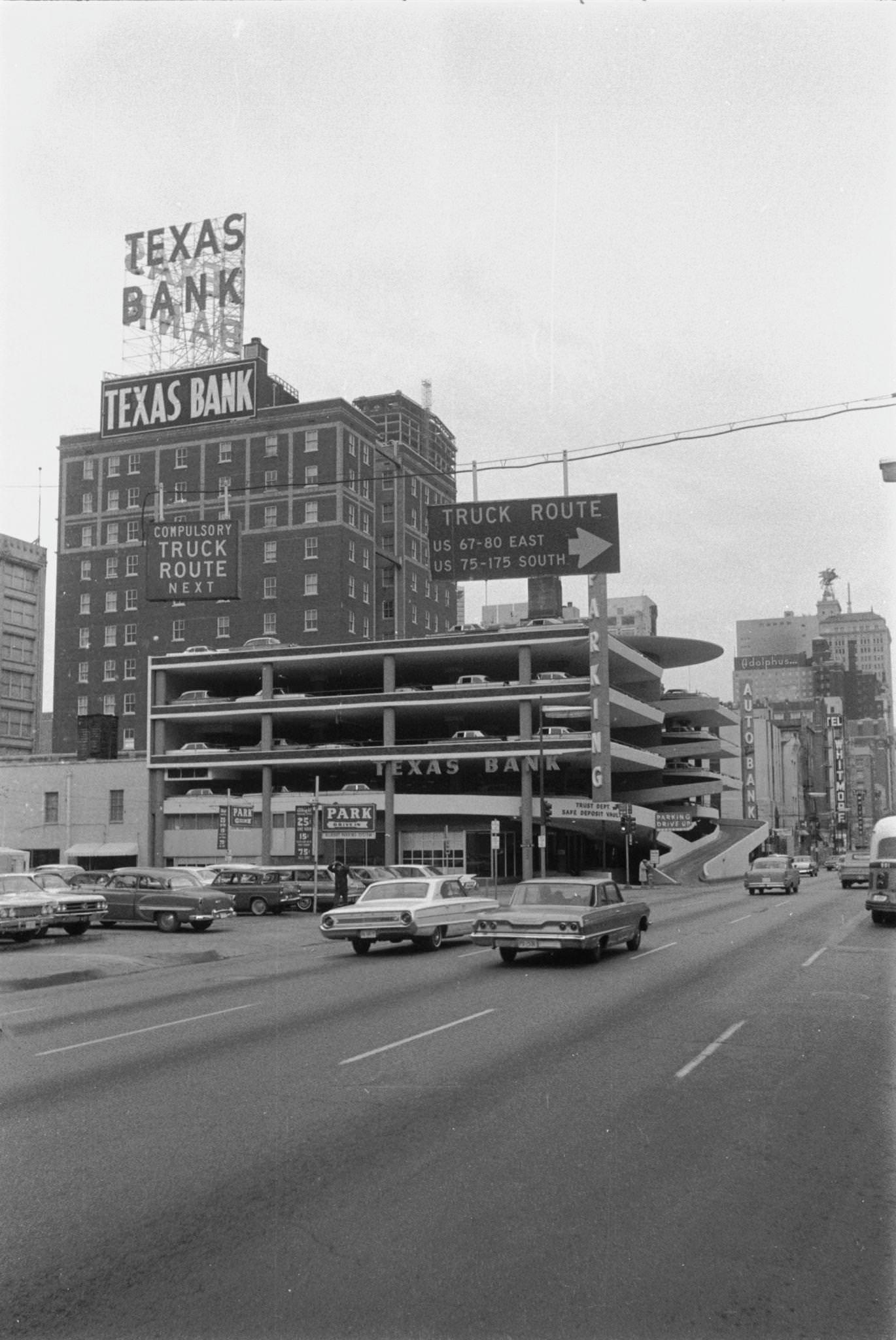
At the start of the decade, downtown Dallas was already a dense cluster of commercial buildings, banks, and busy streets. The Texas Bank and Trust Company building stood as one of the defining structures of the financial district, while institutions like the Mercantile National Bank and the Republic Bank anchored the city’s economic identity.
Texas Bank and Trust Company building, downtown Dallas, 1952
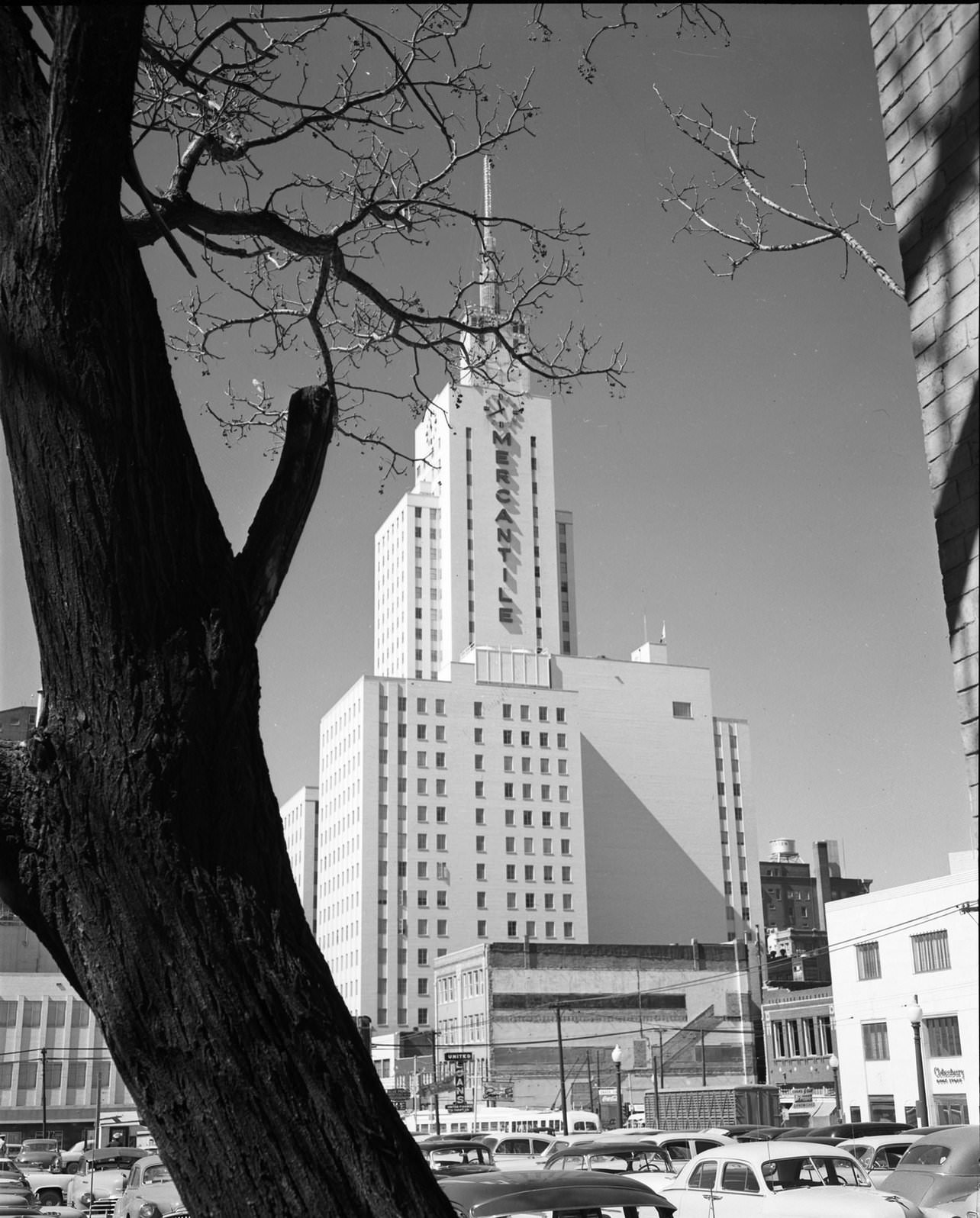
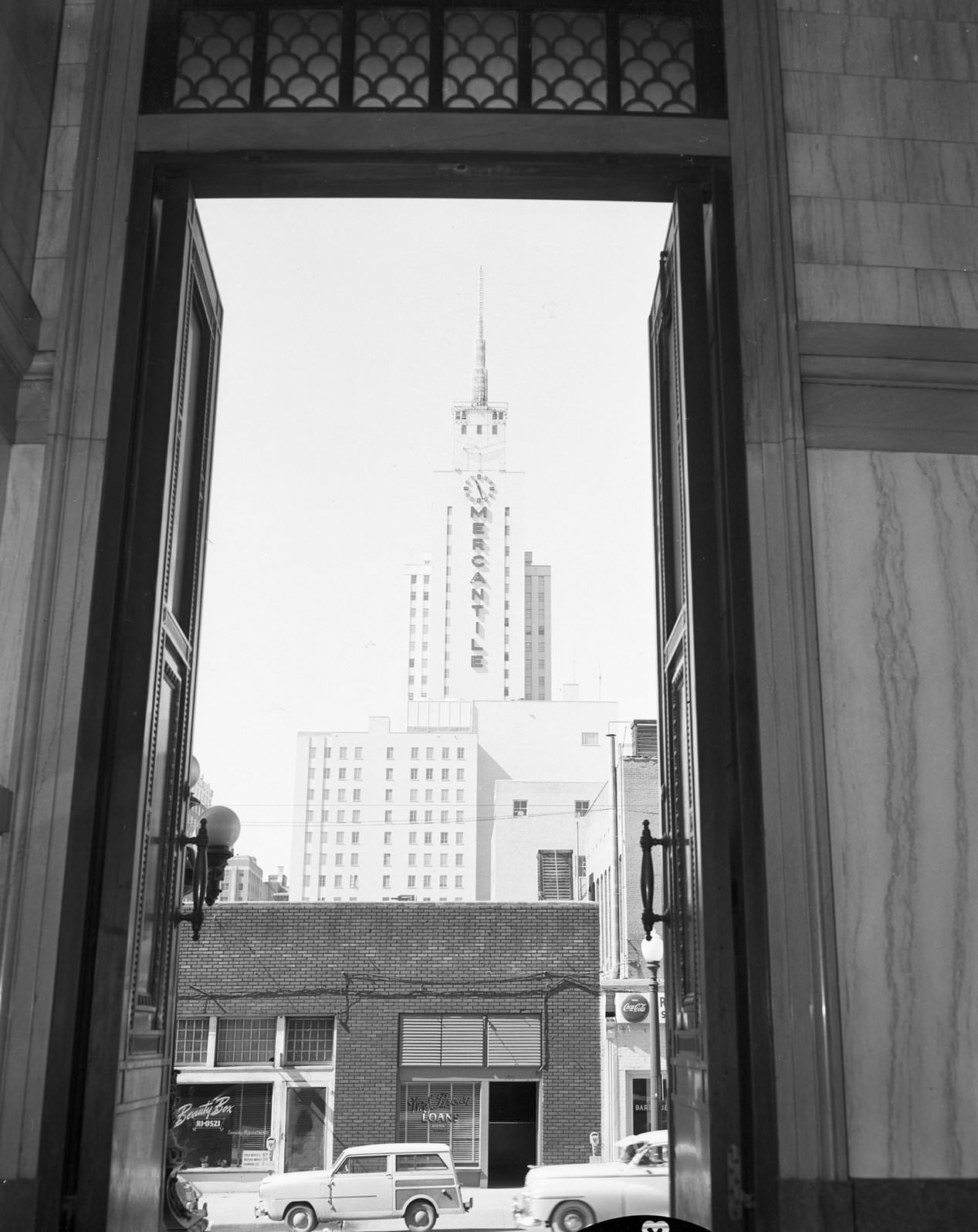
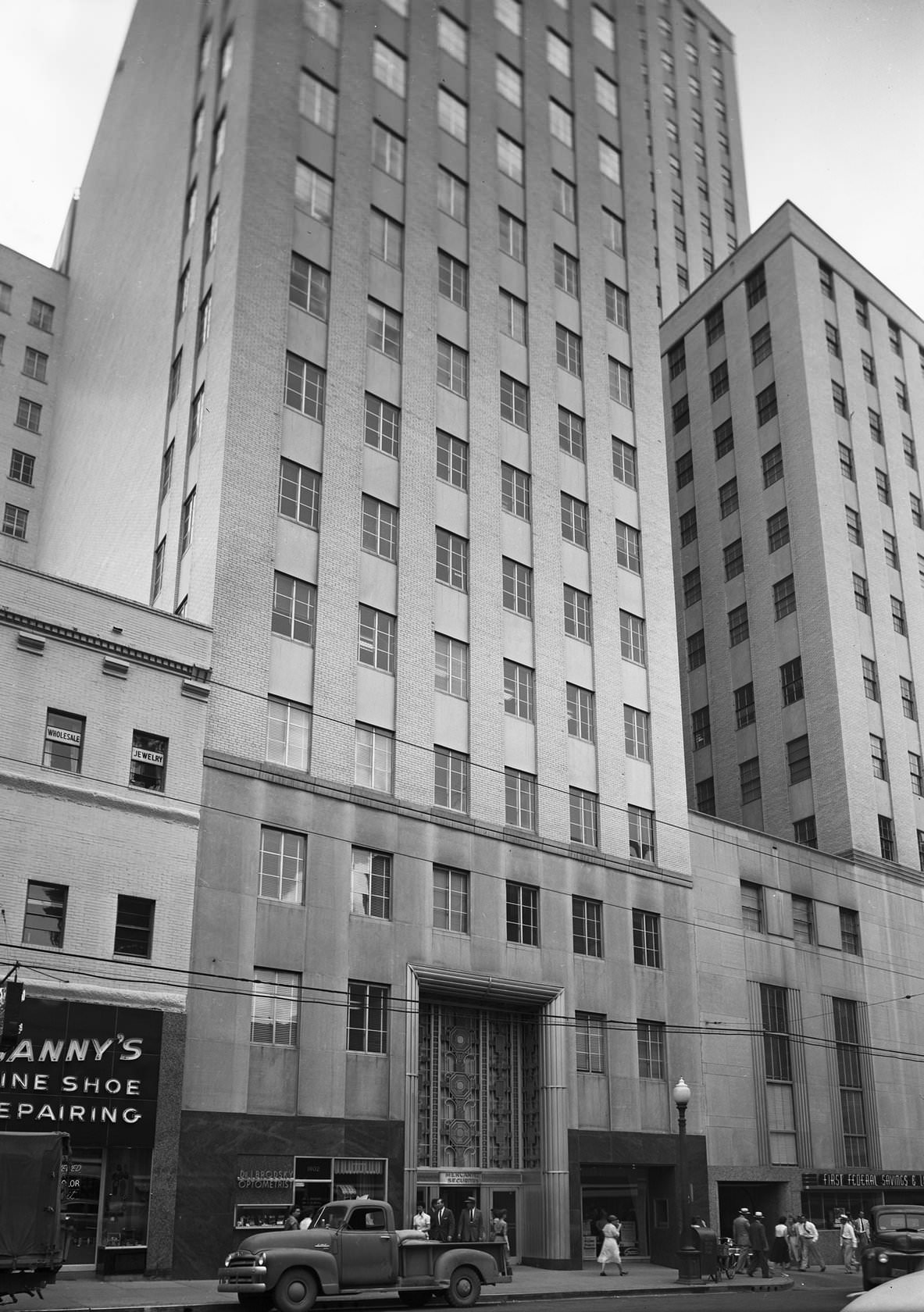
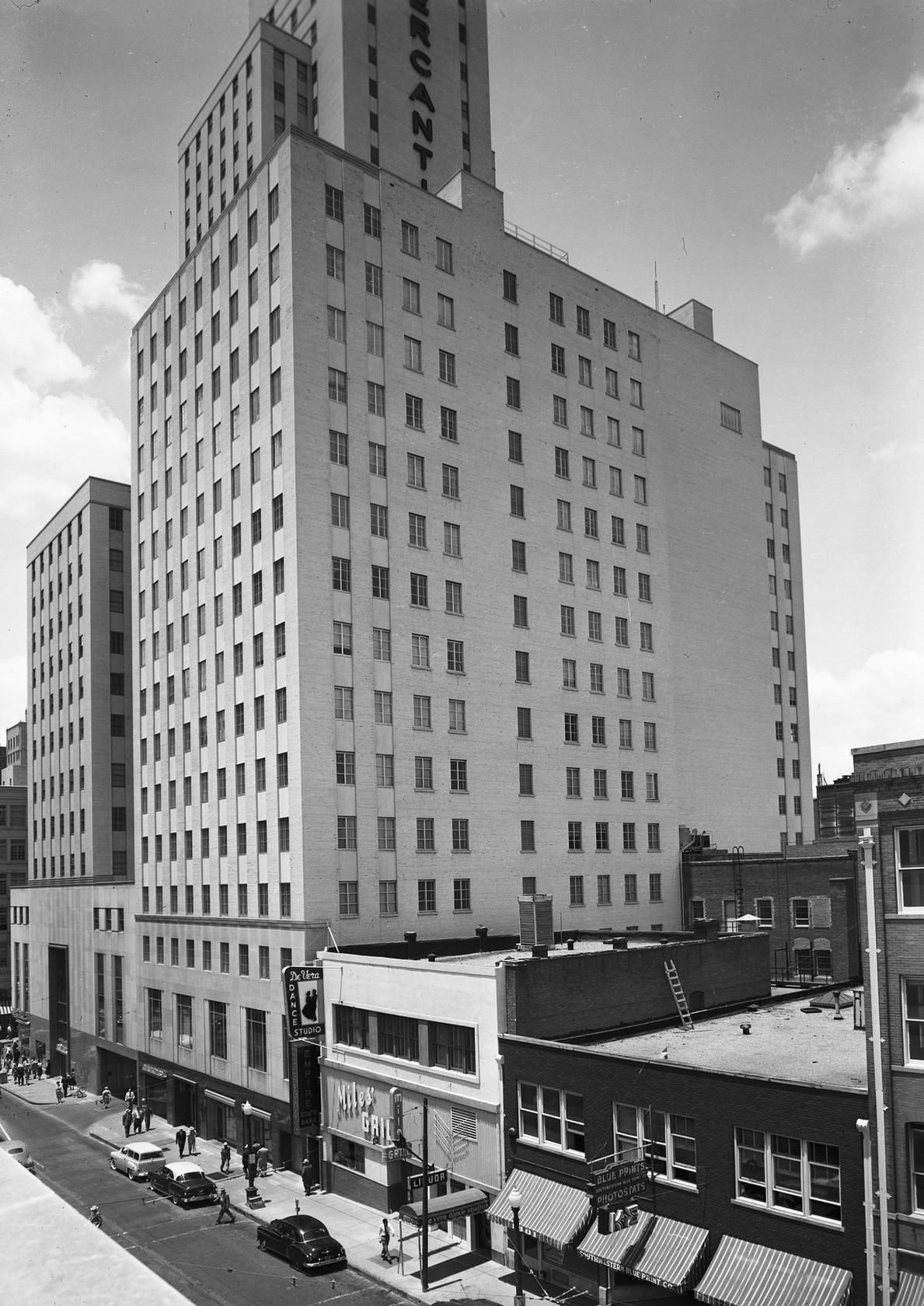
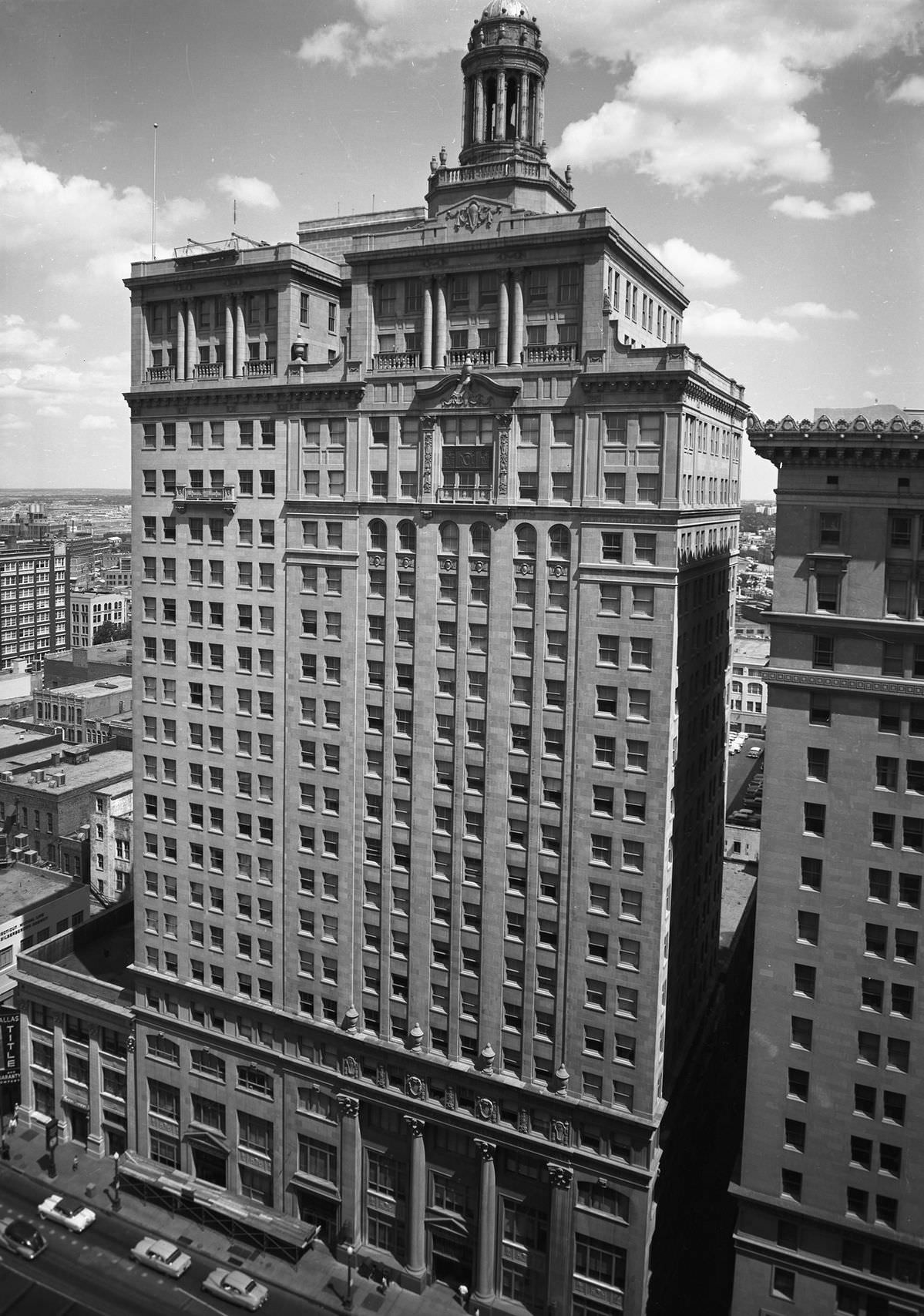
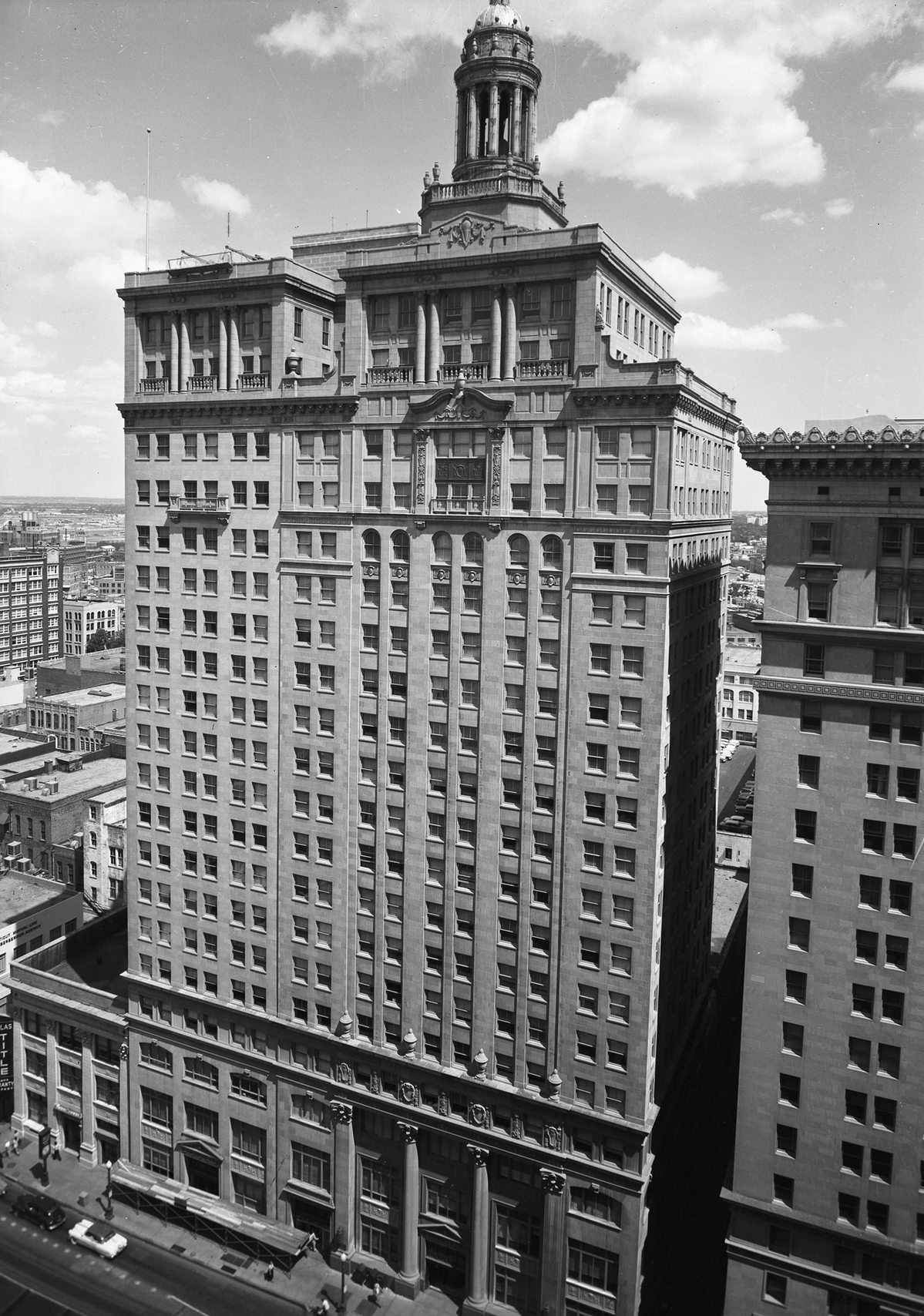
Mercantile National Bank building, downtown Dallas, Texas, 1953
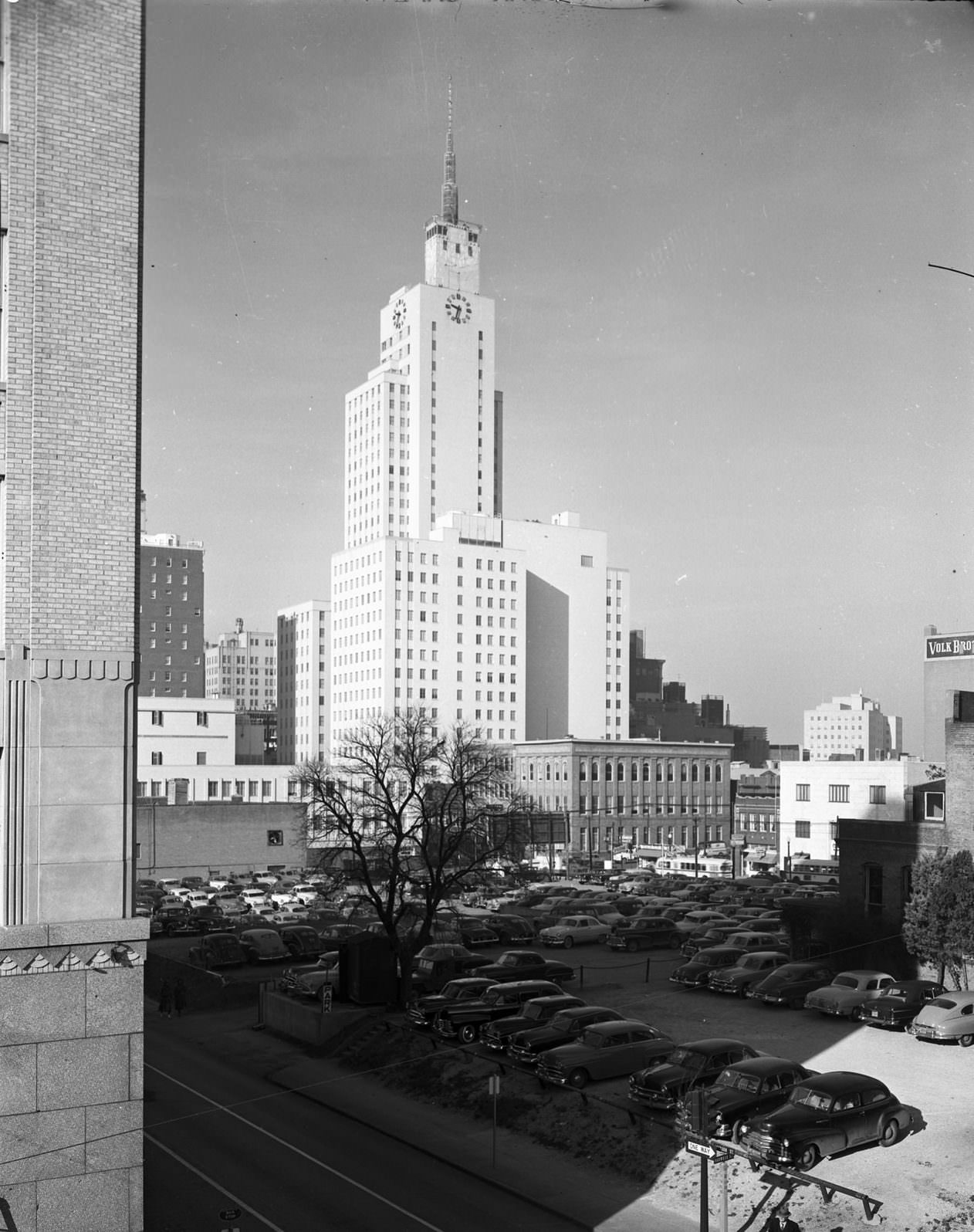
Mercantile National Bank building, downtown Dallas, Texas, 1951
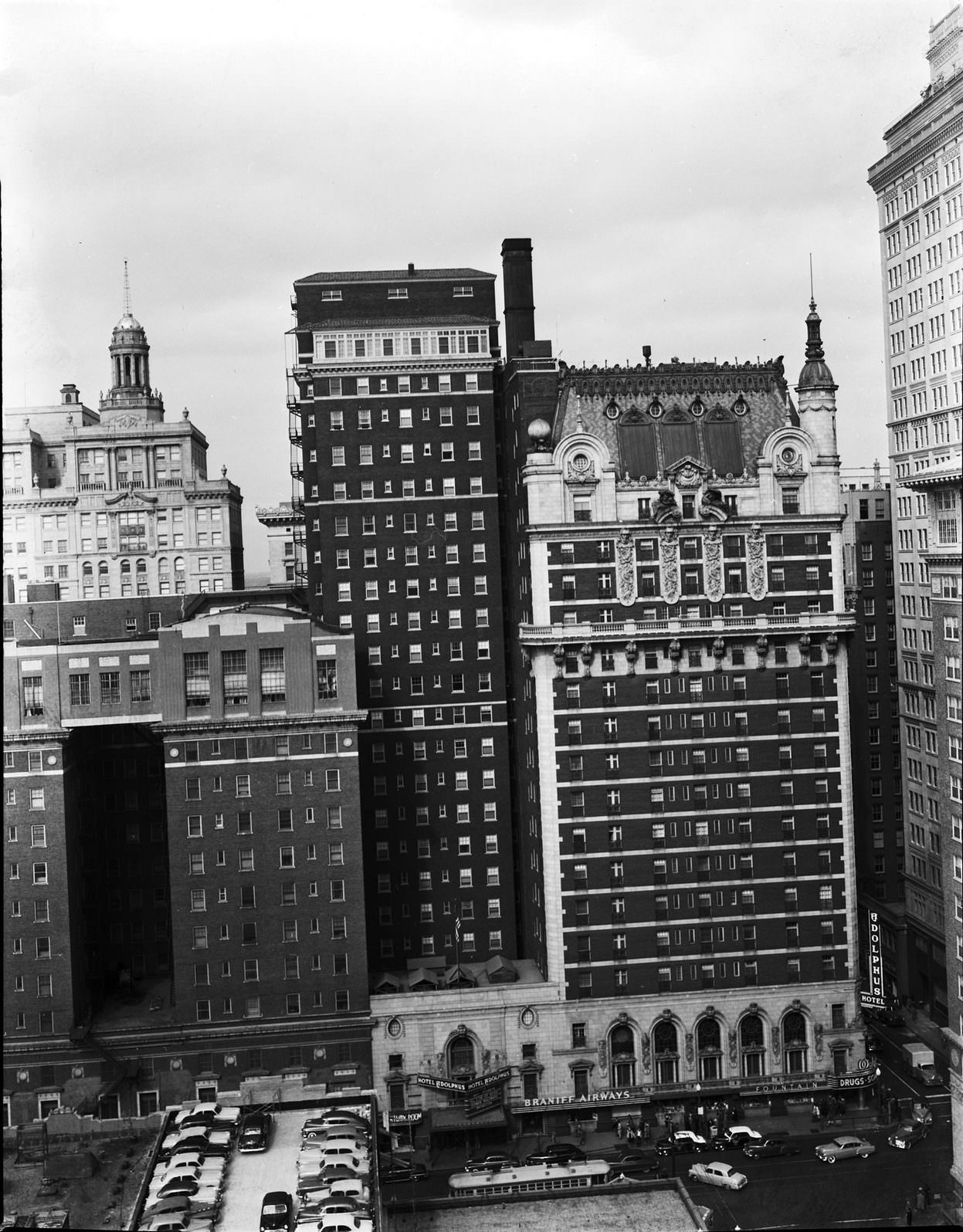
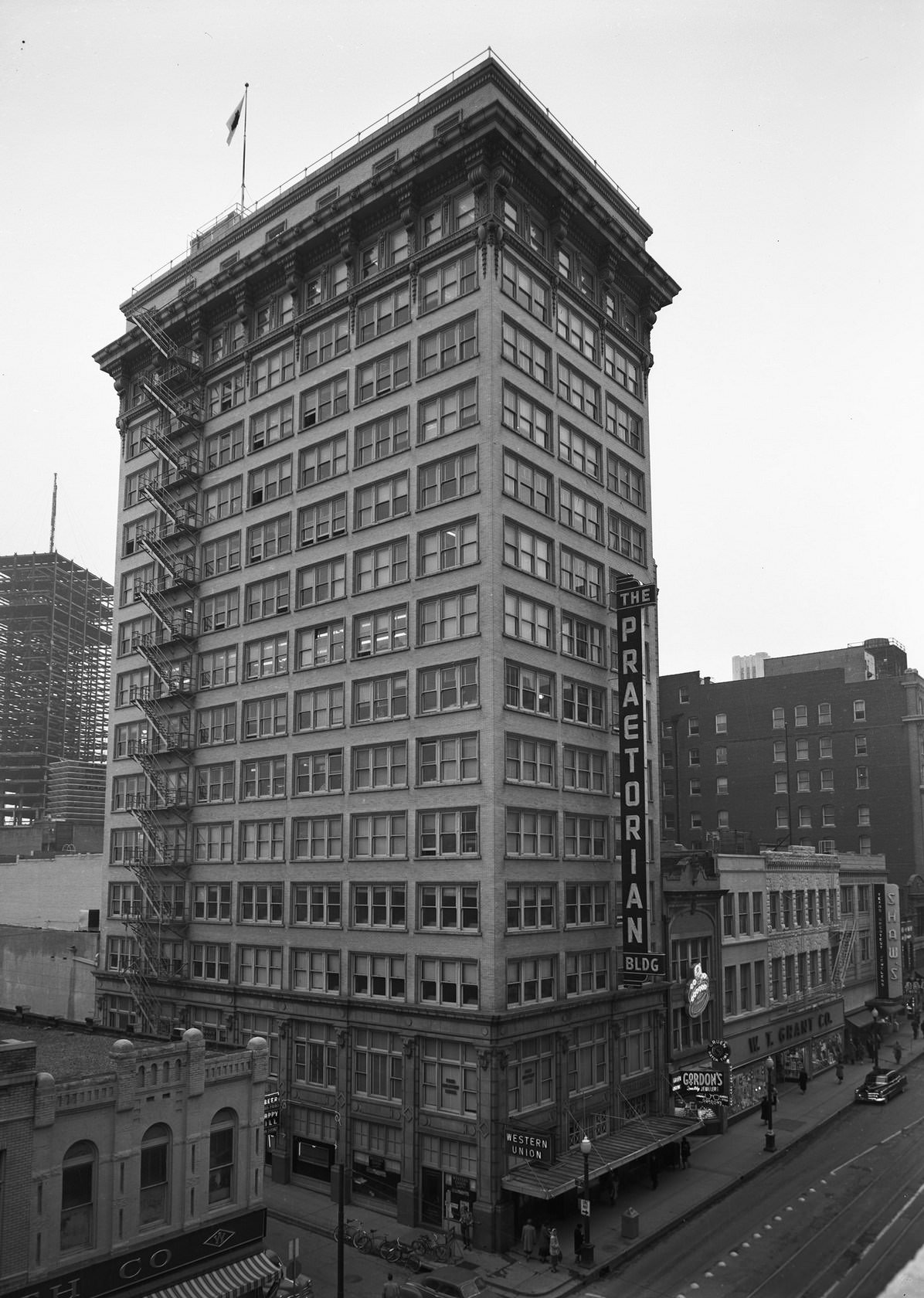
The Adolphus Hotel, one of the city’s most recognized landmarks, underwent construction work in the early part of the decade. Just a few blocks away, the Praetorian Building remained a fixture of downtown, its stone façade a reminder of an earlier era of Dallas architecture standing alongside newer towers going up all around it.
Construction on the Adolphus Hotel, downtown Dallas, Texas, 1951
Construction on the Adolphus Hotel, downtown Dallas, Texas, 1951
Adolphus Hotel, downtown Dallas, Texas, 1950
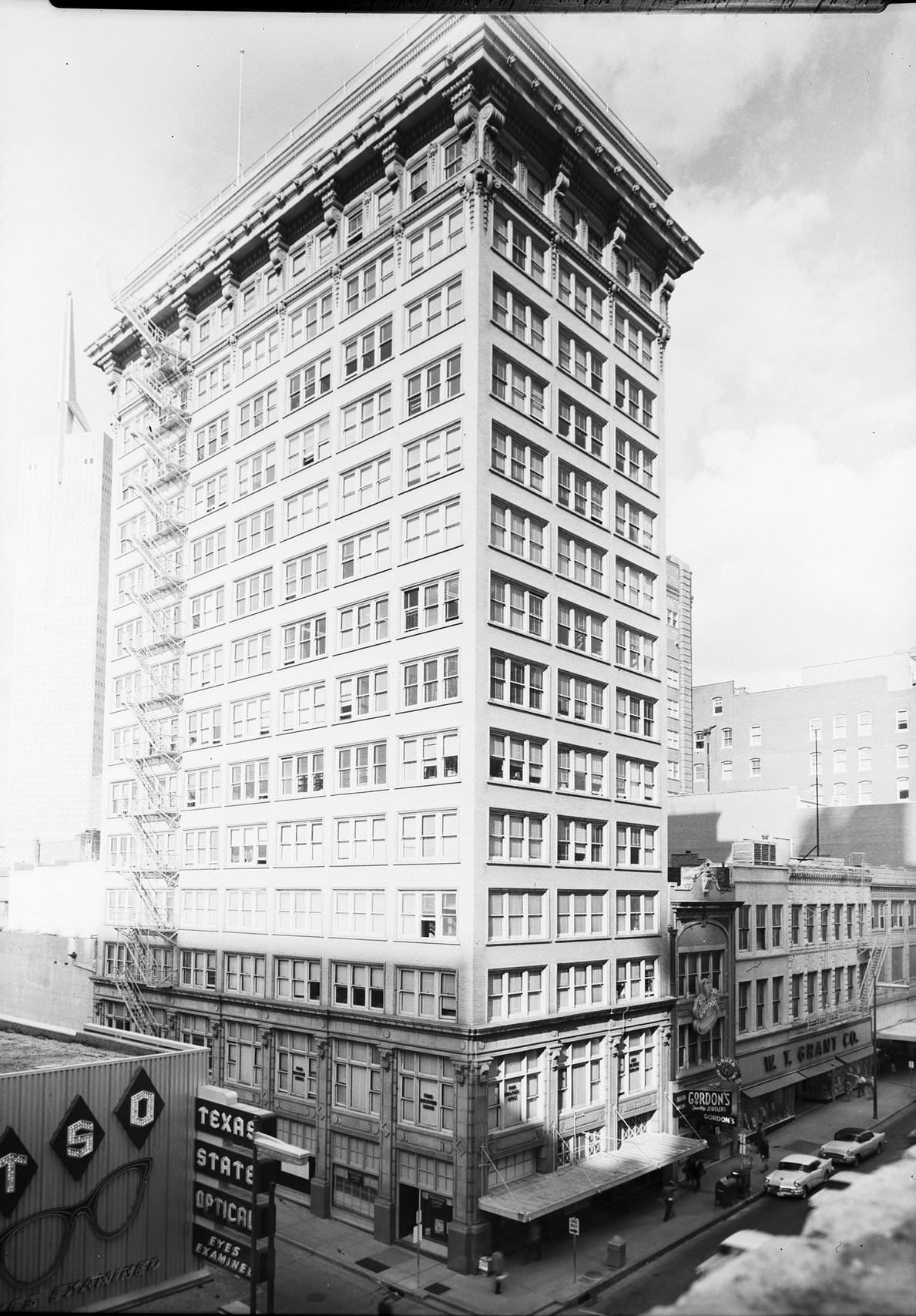
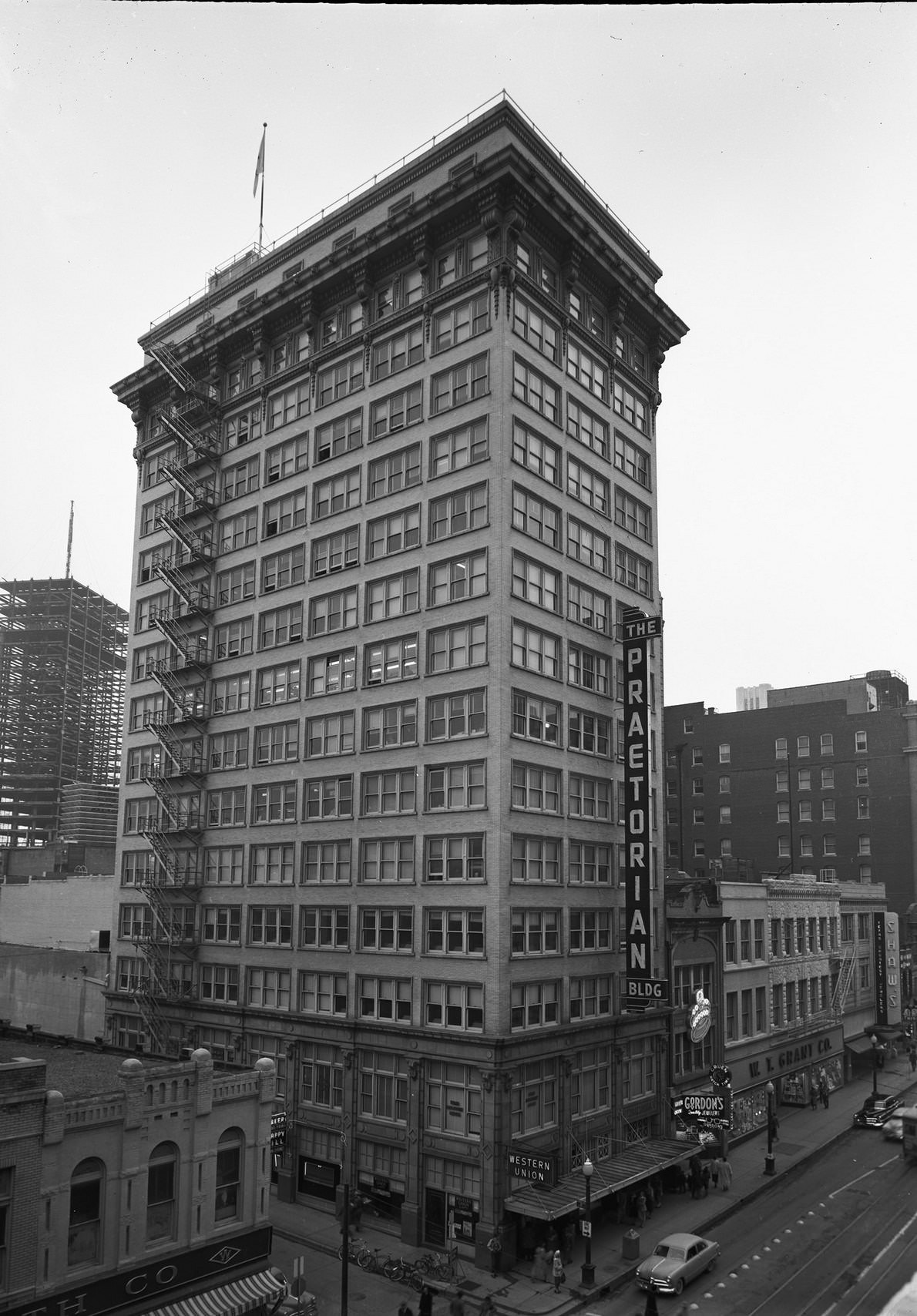
Praetorian Building, downtown Dallas, Texas, 1953
Praetorian Building, downtown Dallas, Texas, 1958
Praetorian Building, downtown Dallas, Texas,1953
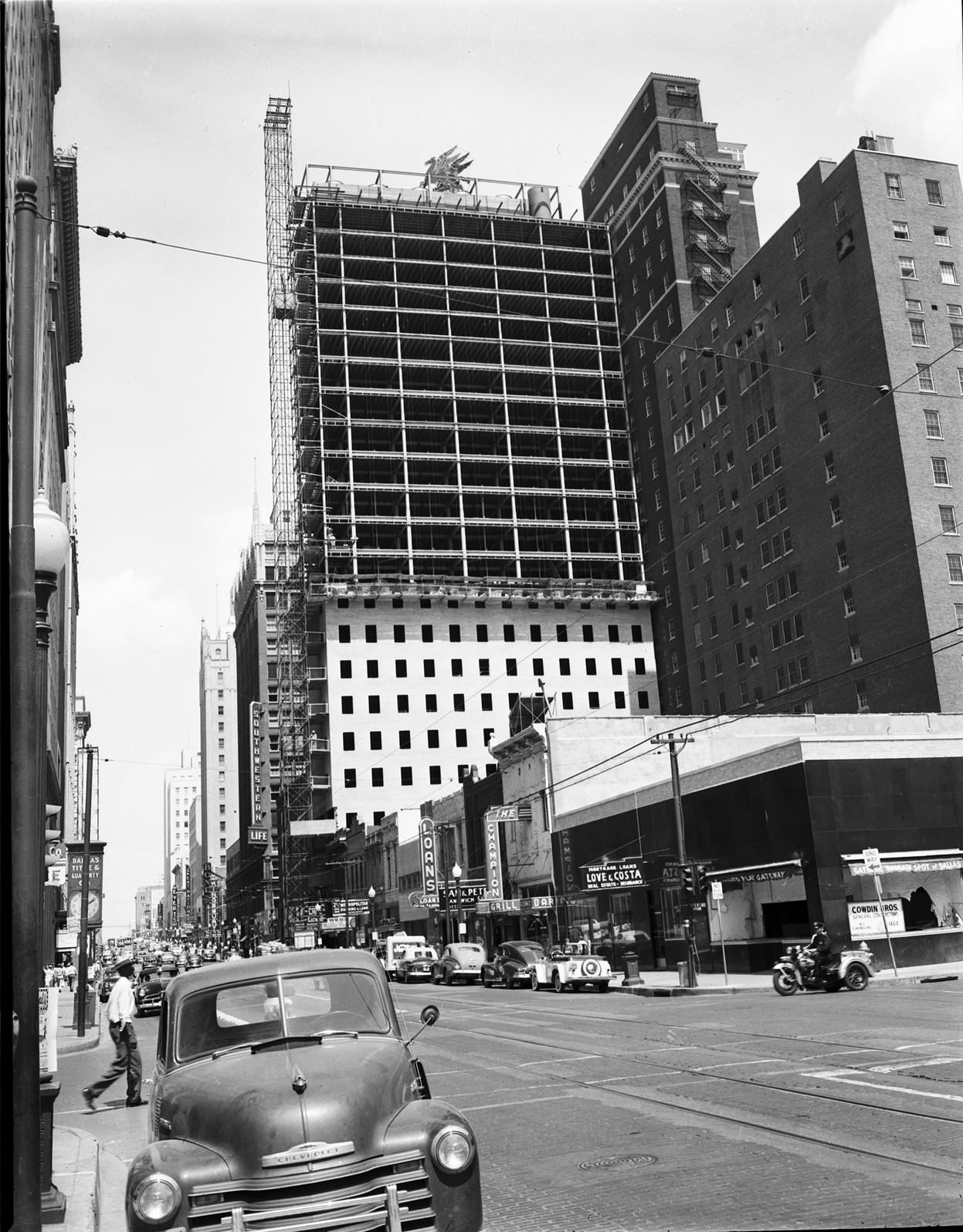
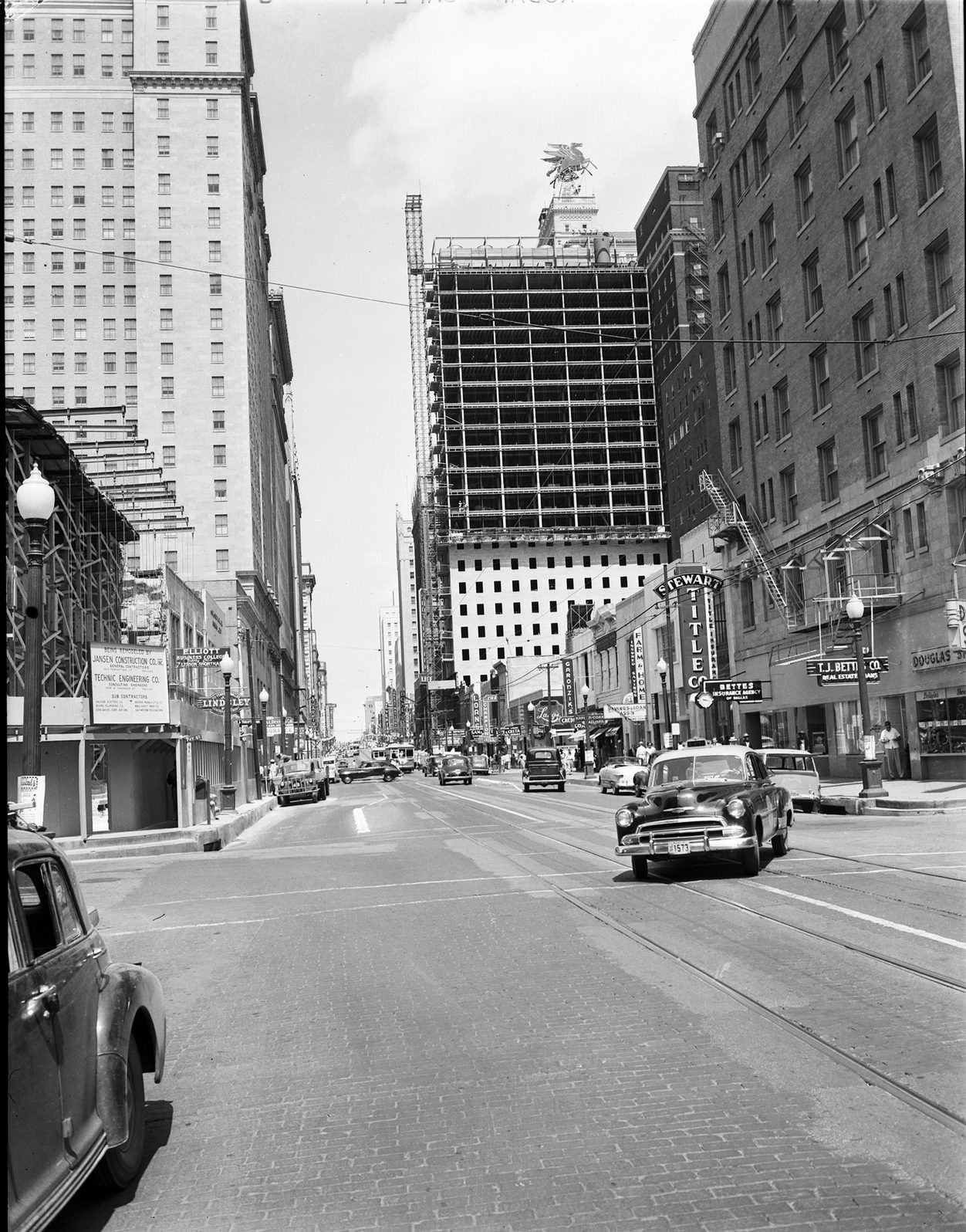
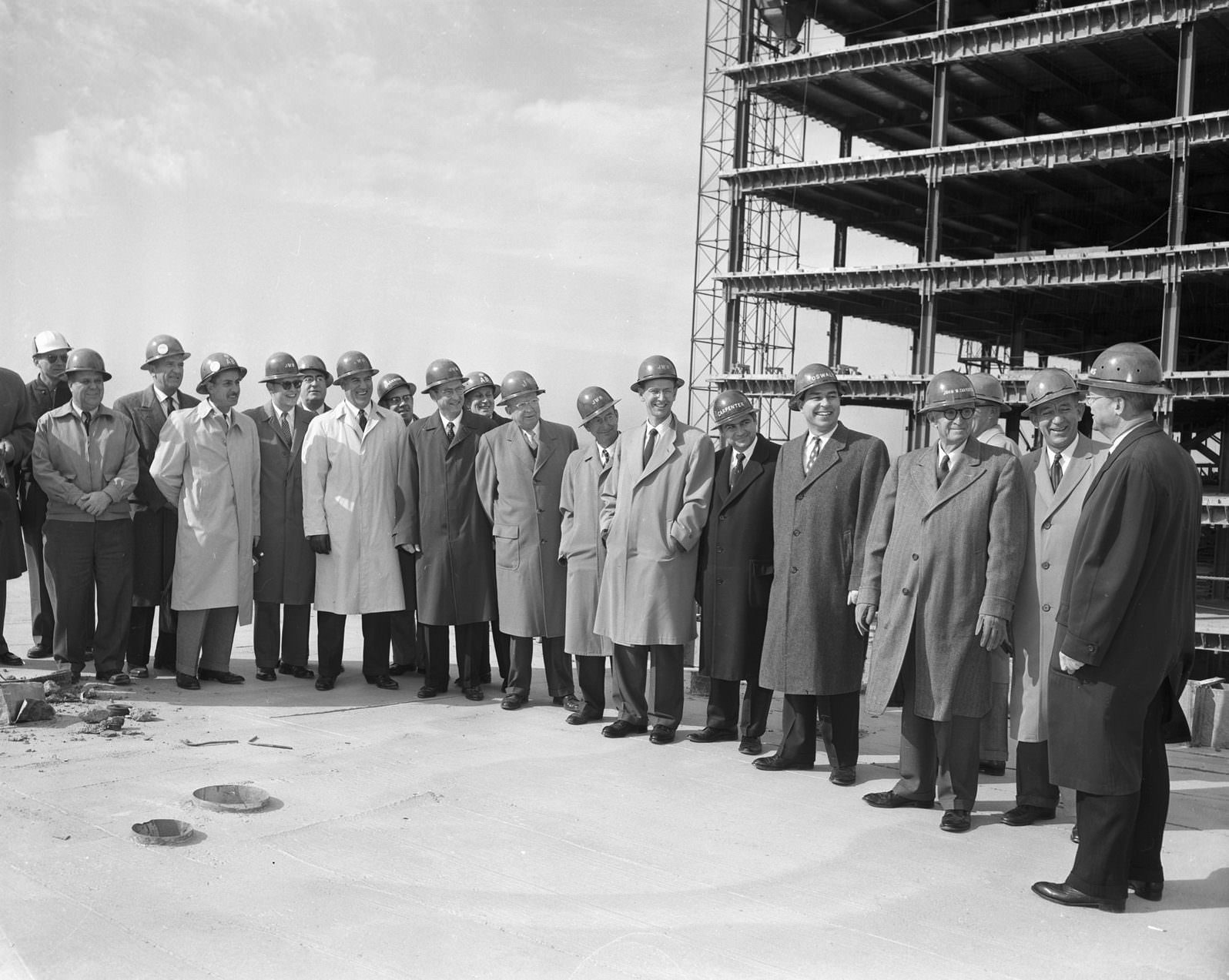
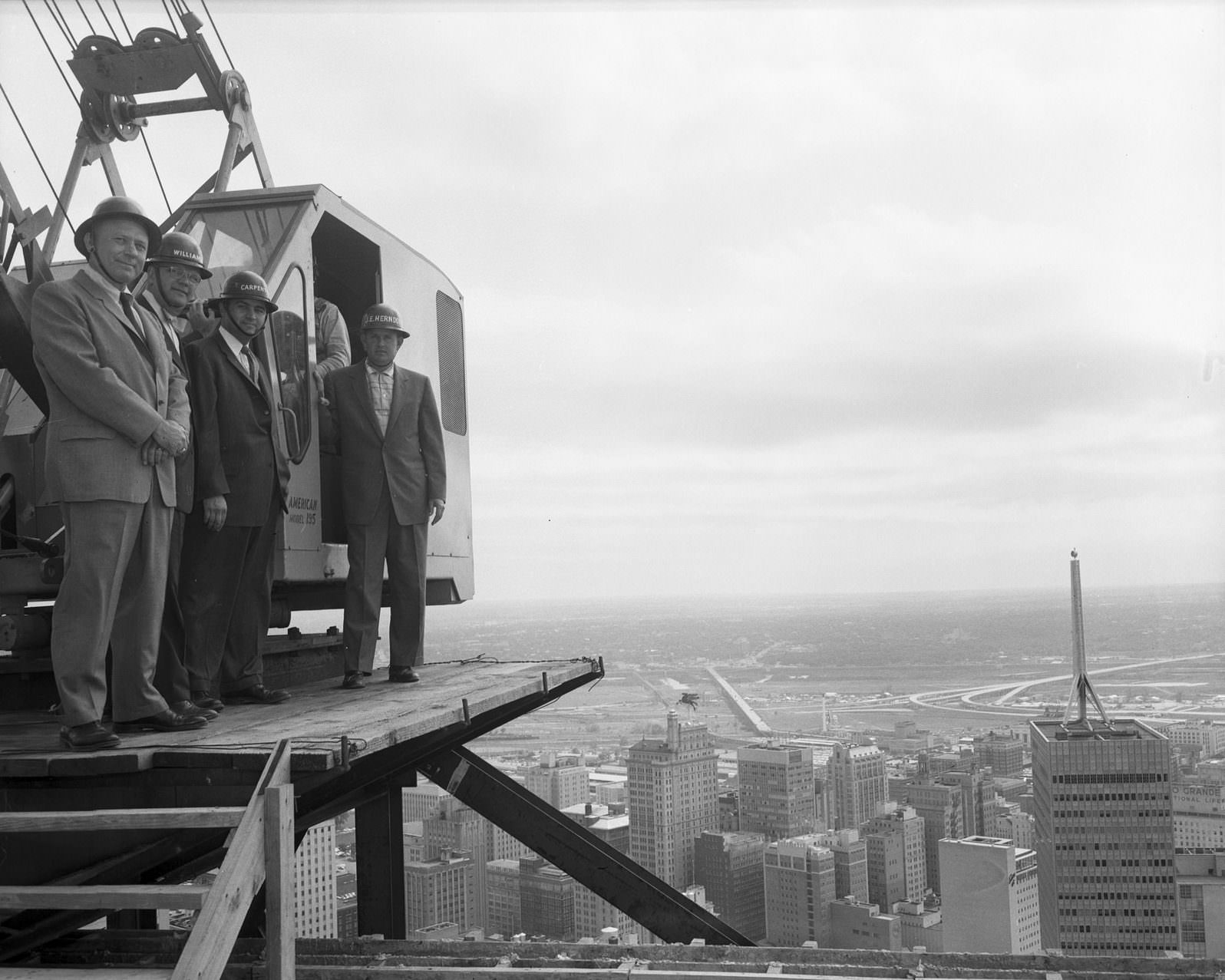
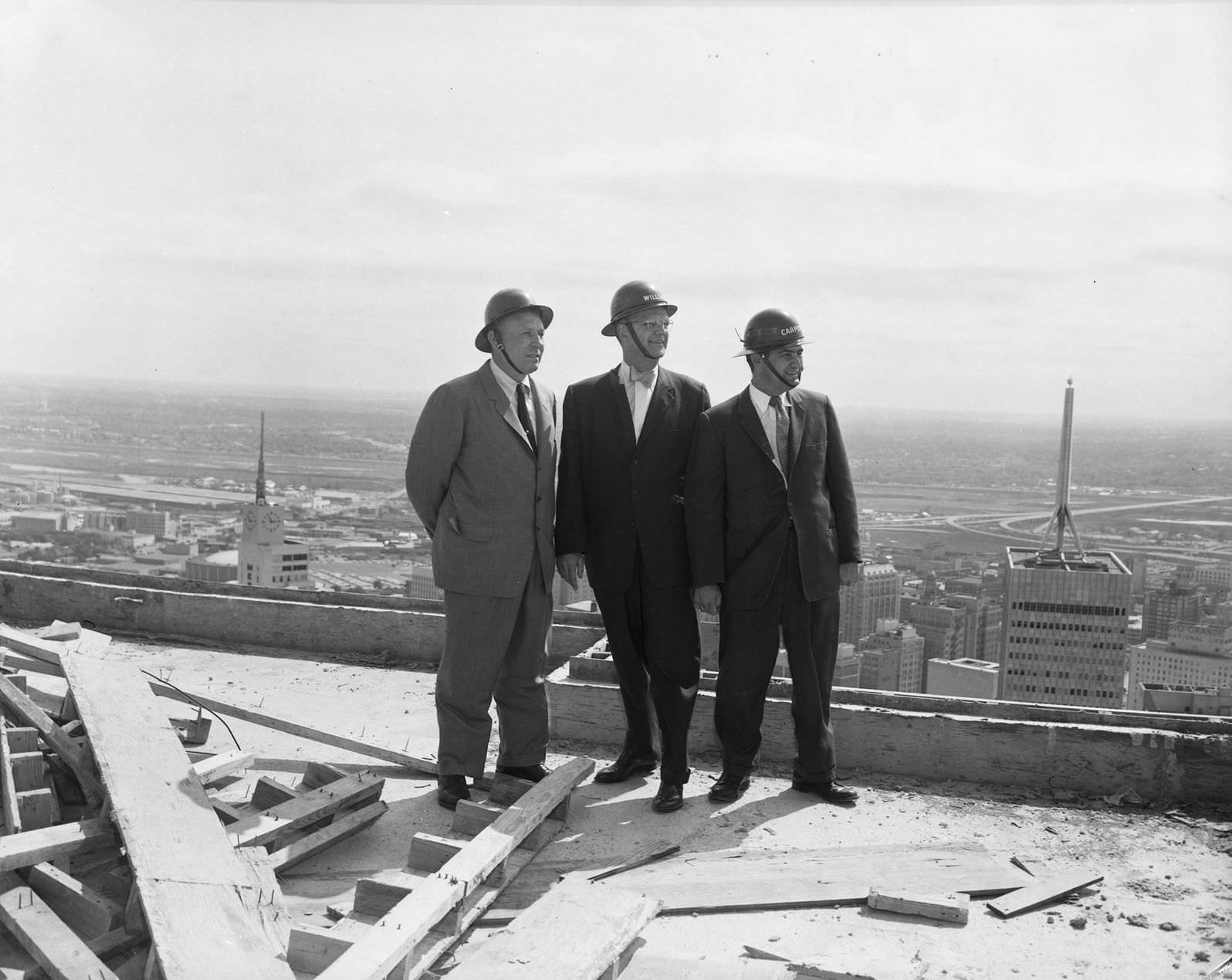
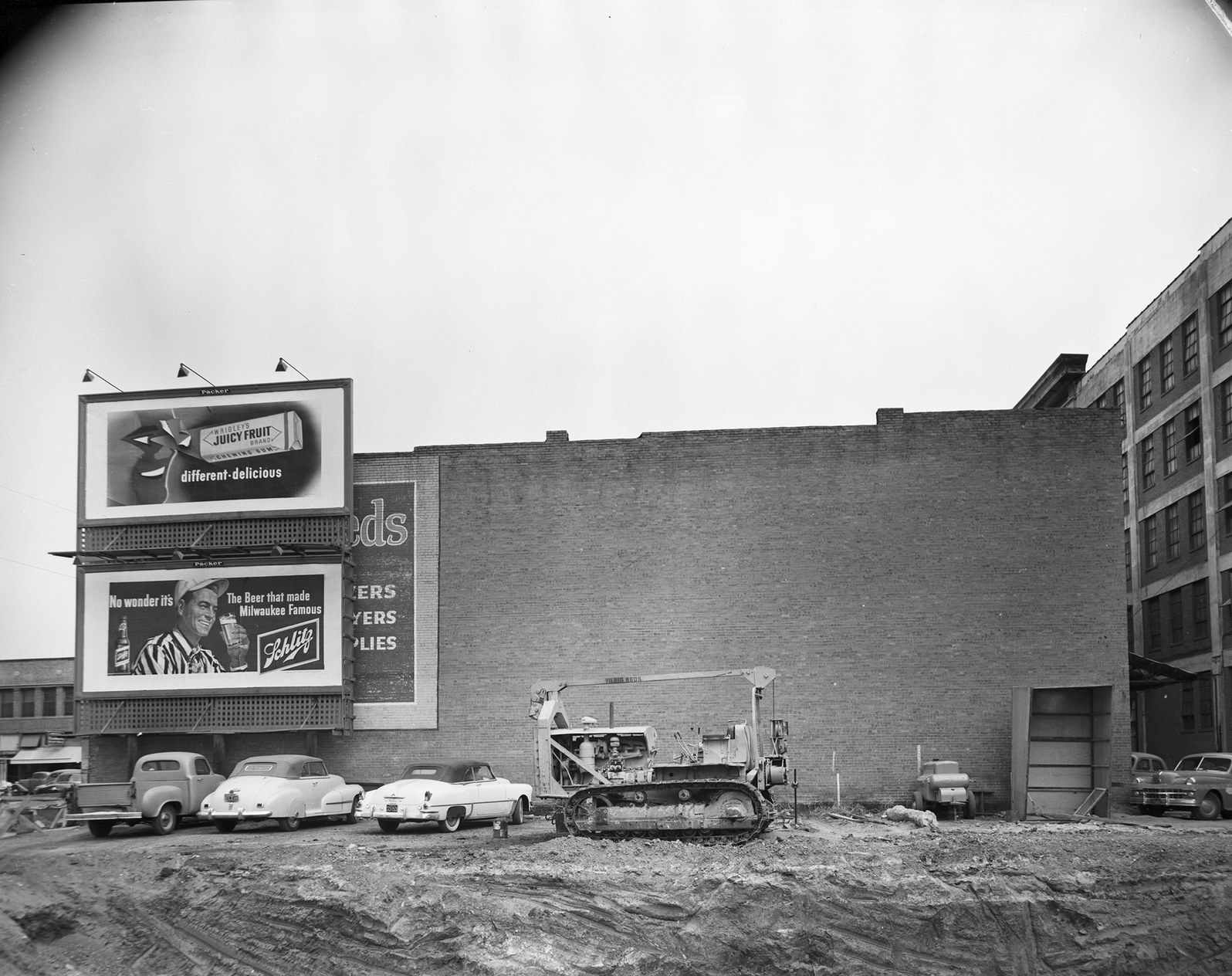
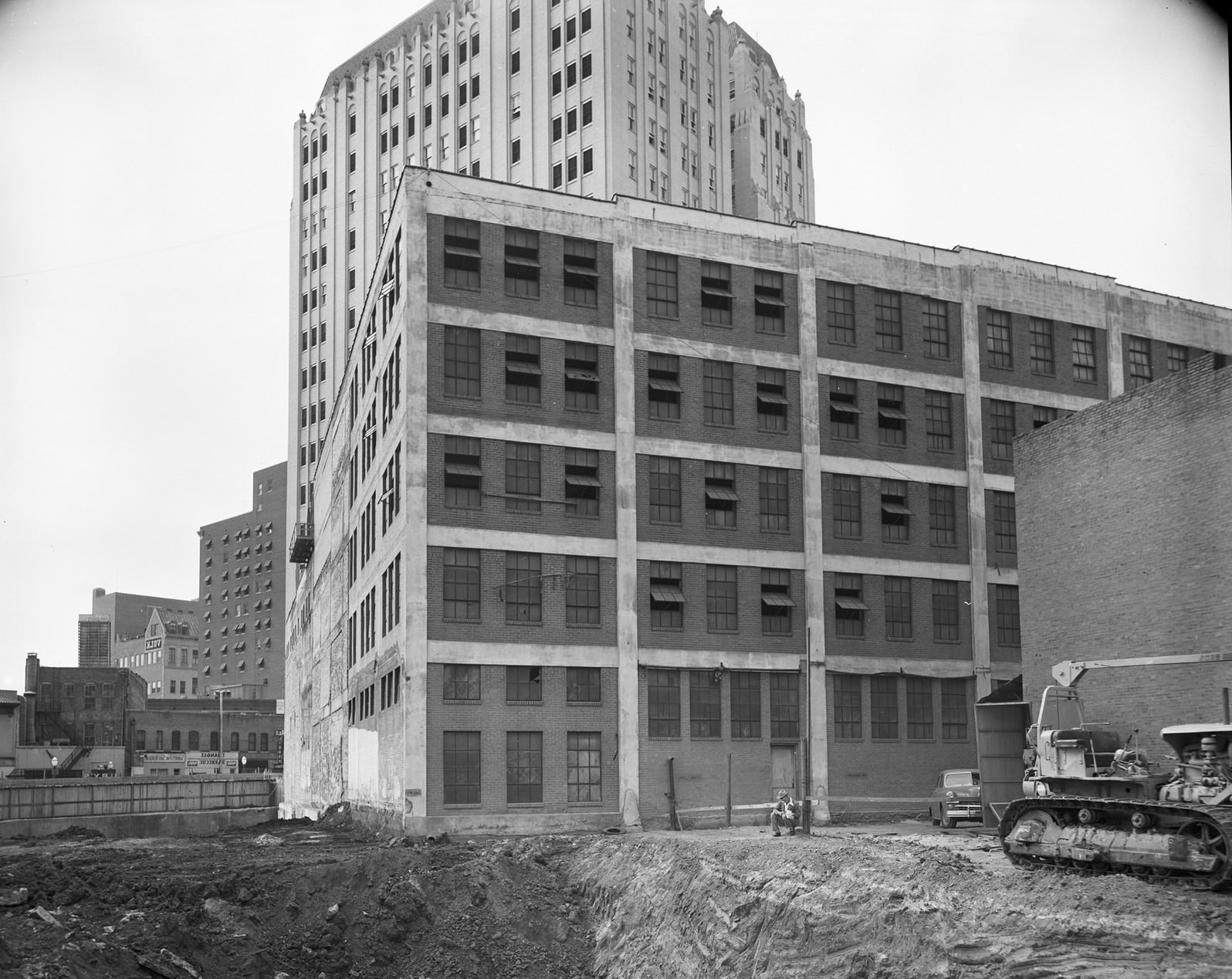
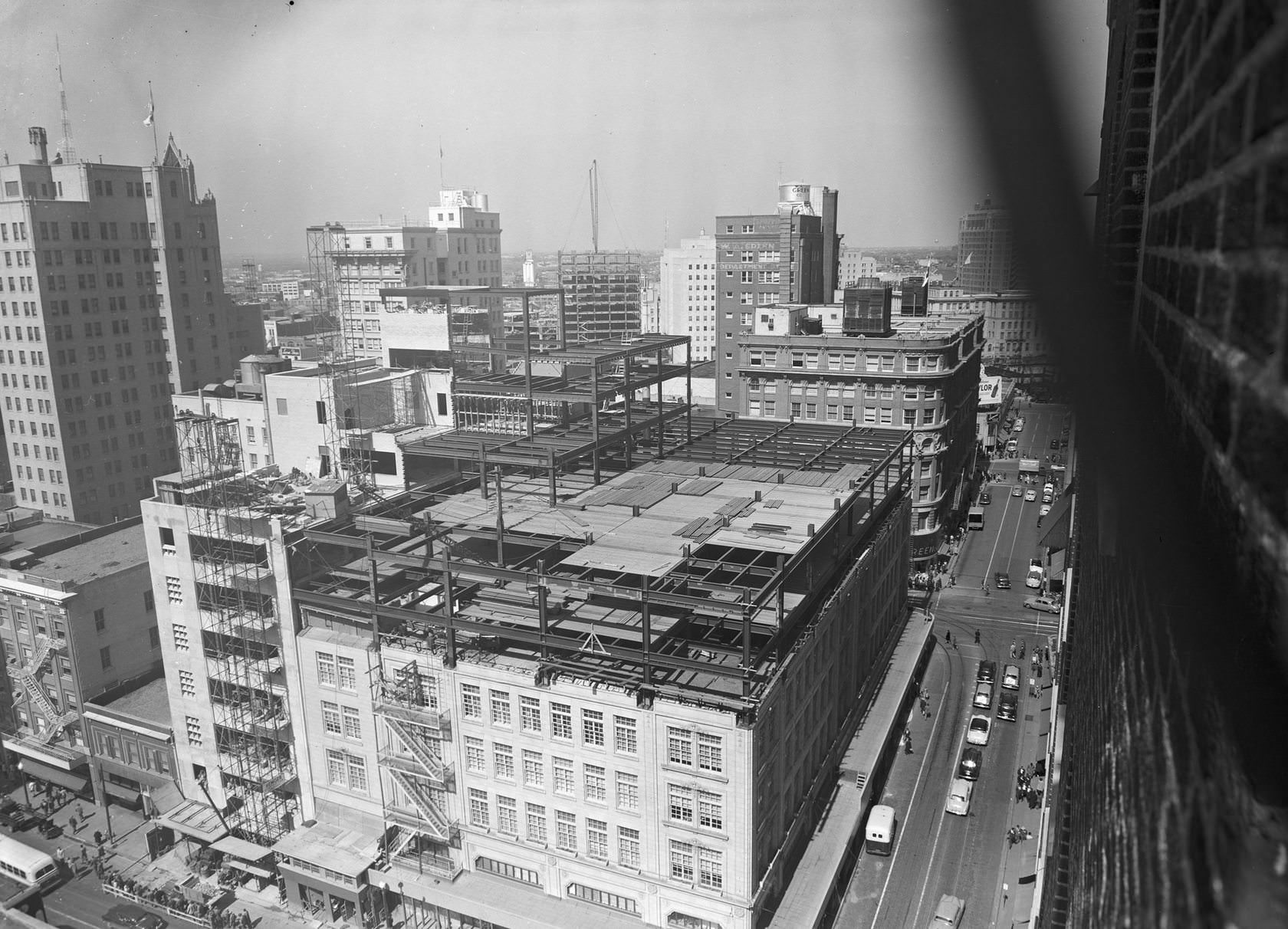
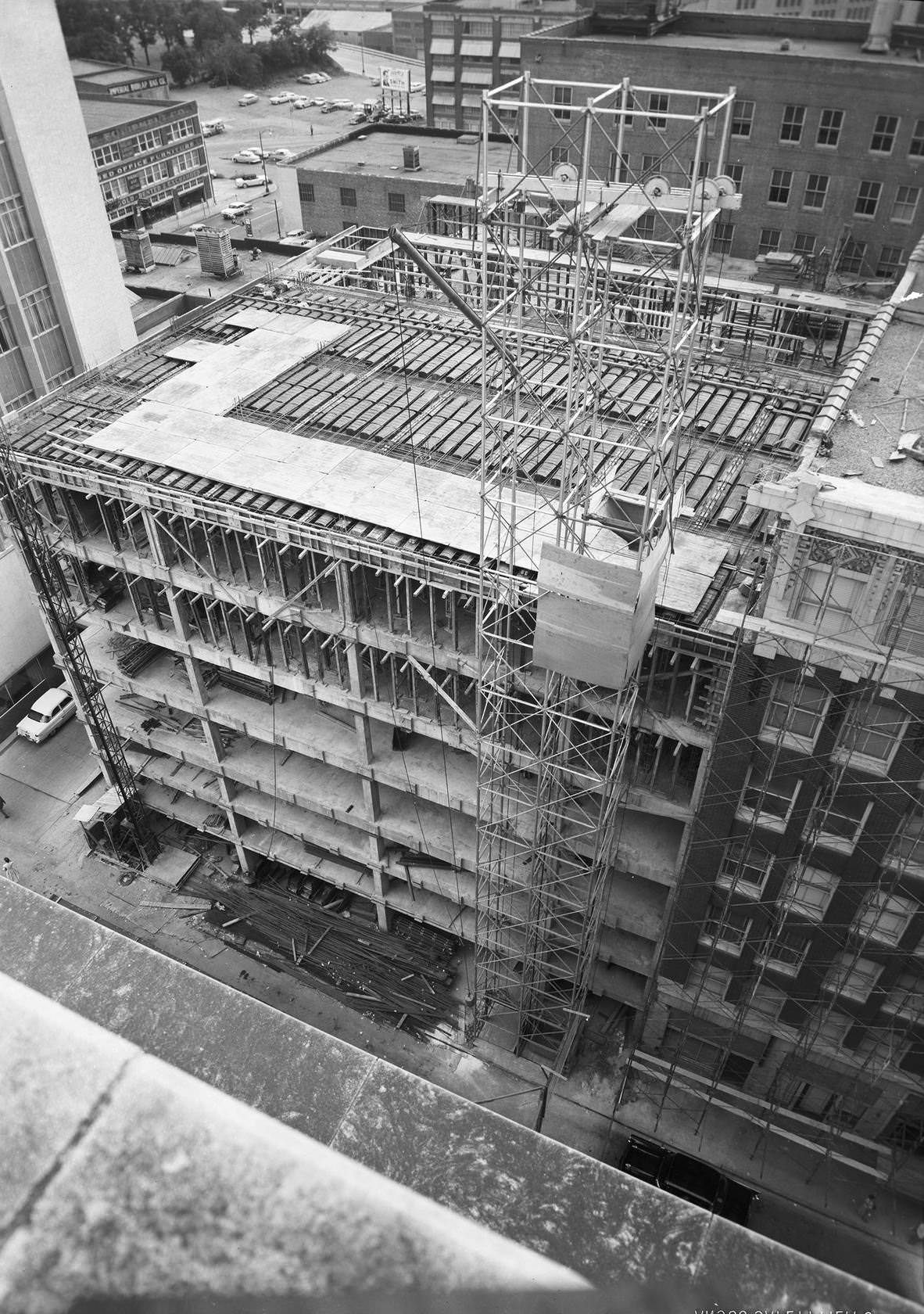
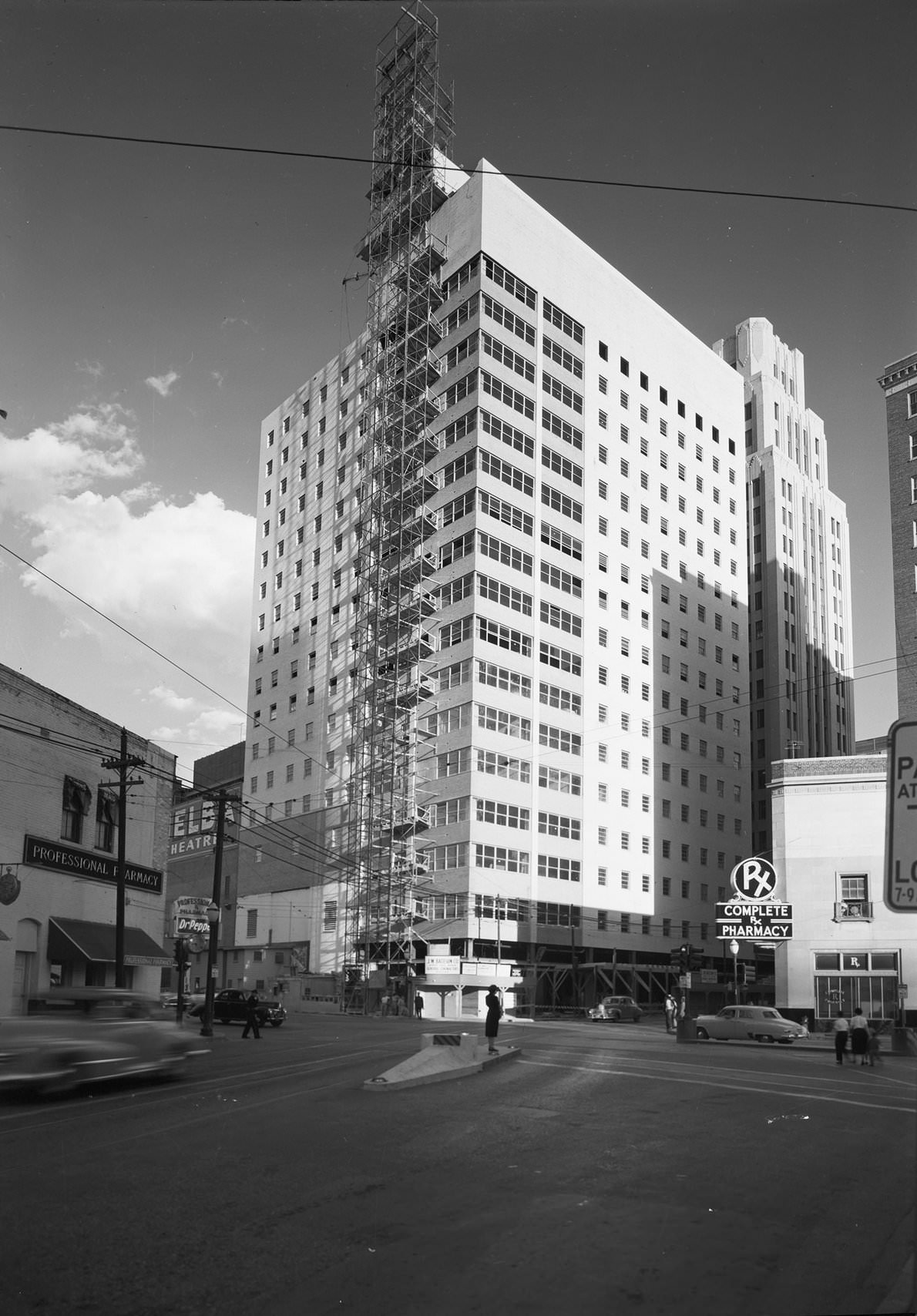
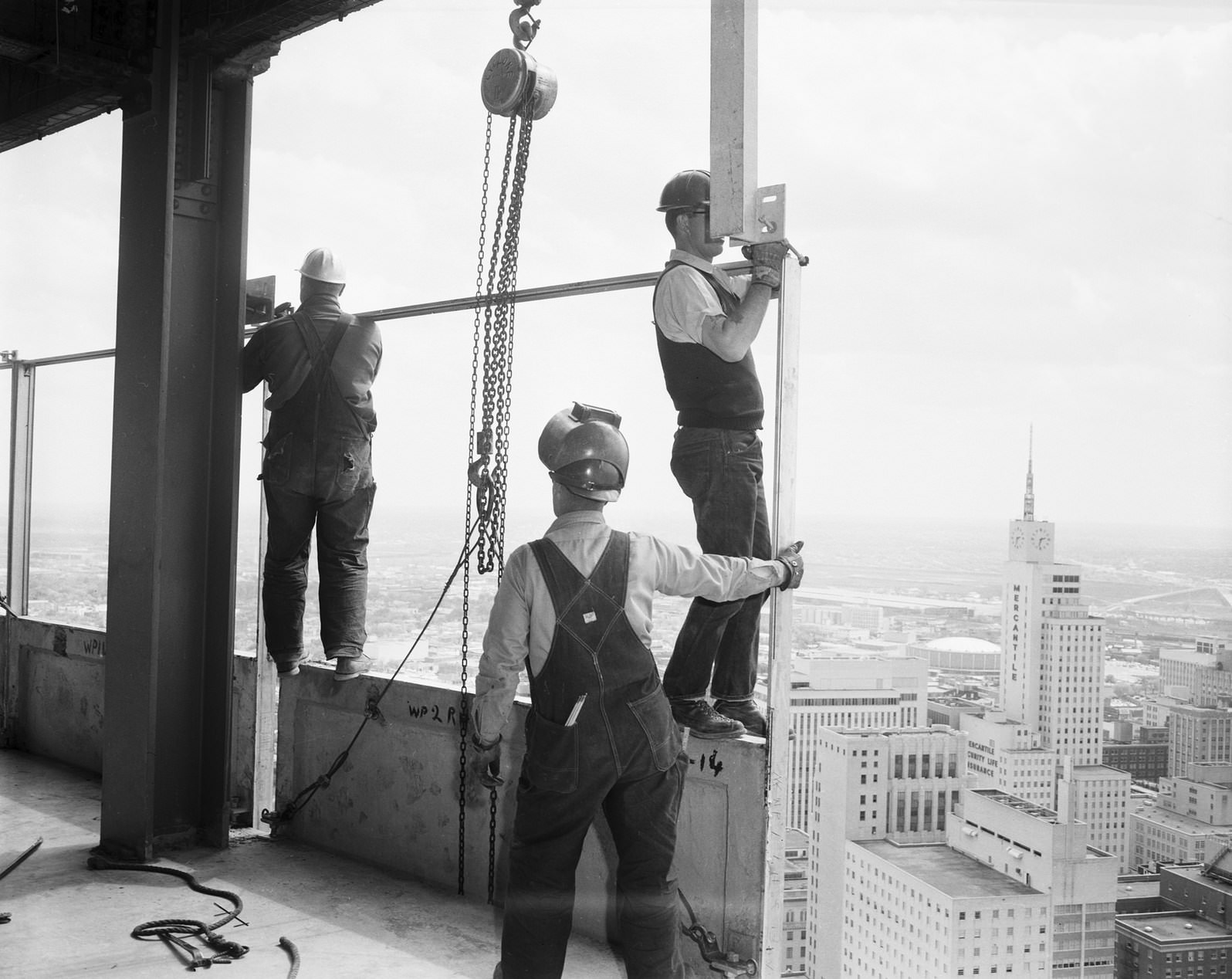
Construction activity in downtown Dallas during the early 1950s was relentless. Building sites were being cleared and steel frameworks were rising all across the central business district. Workers in hard hats were a common sight, operating cranes and laying foundations for structures that would define the city’s next chapter.
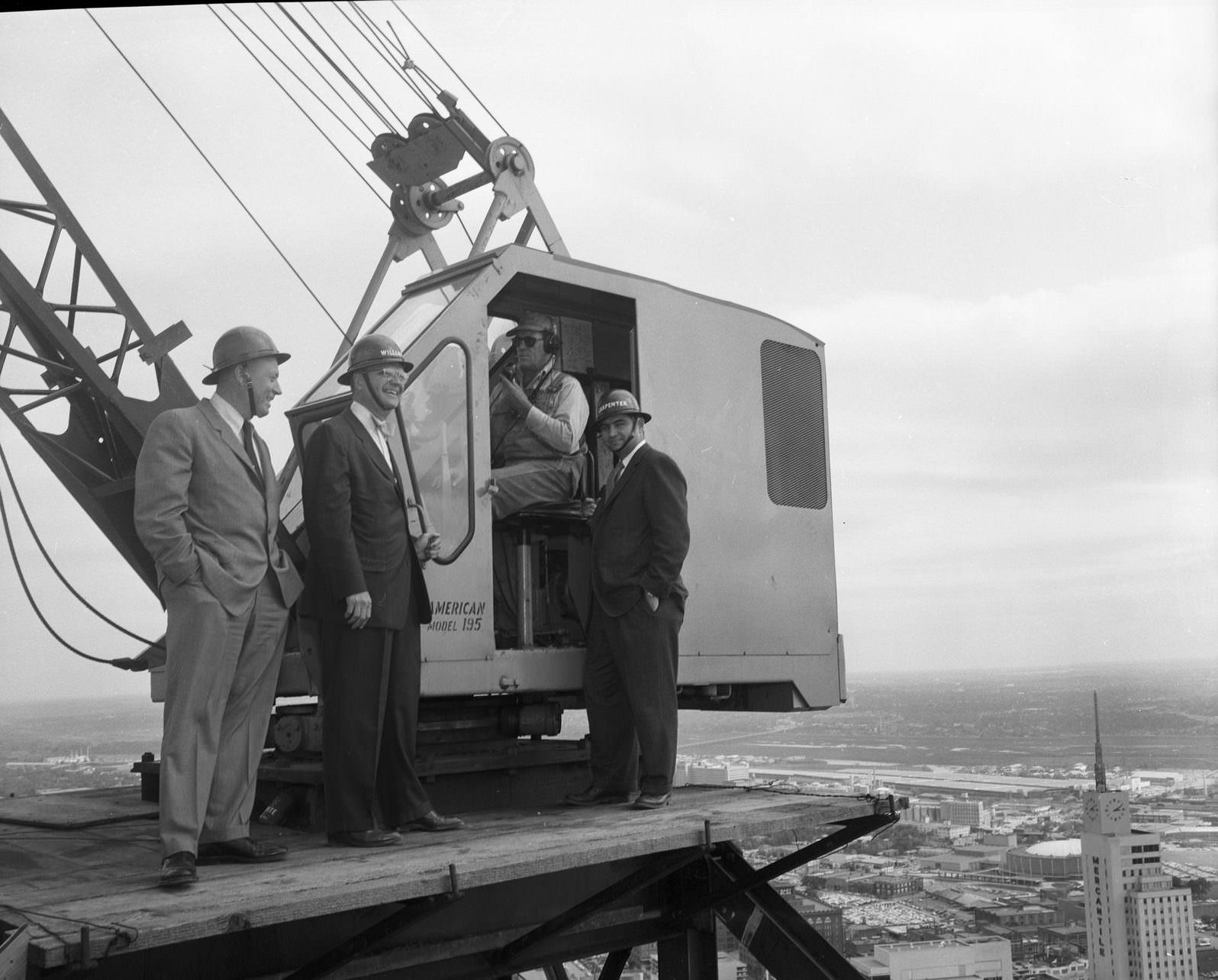
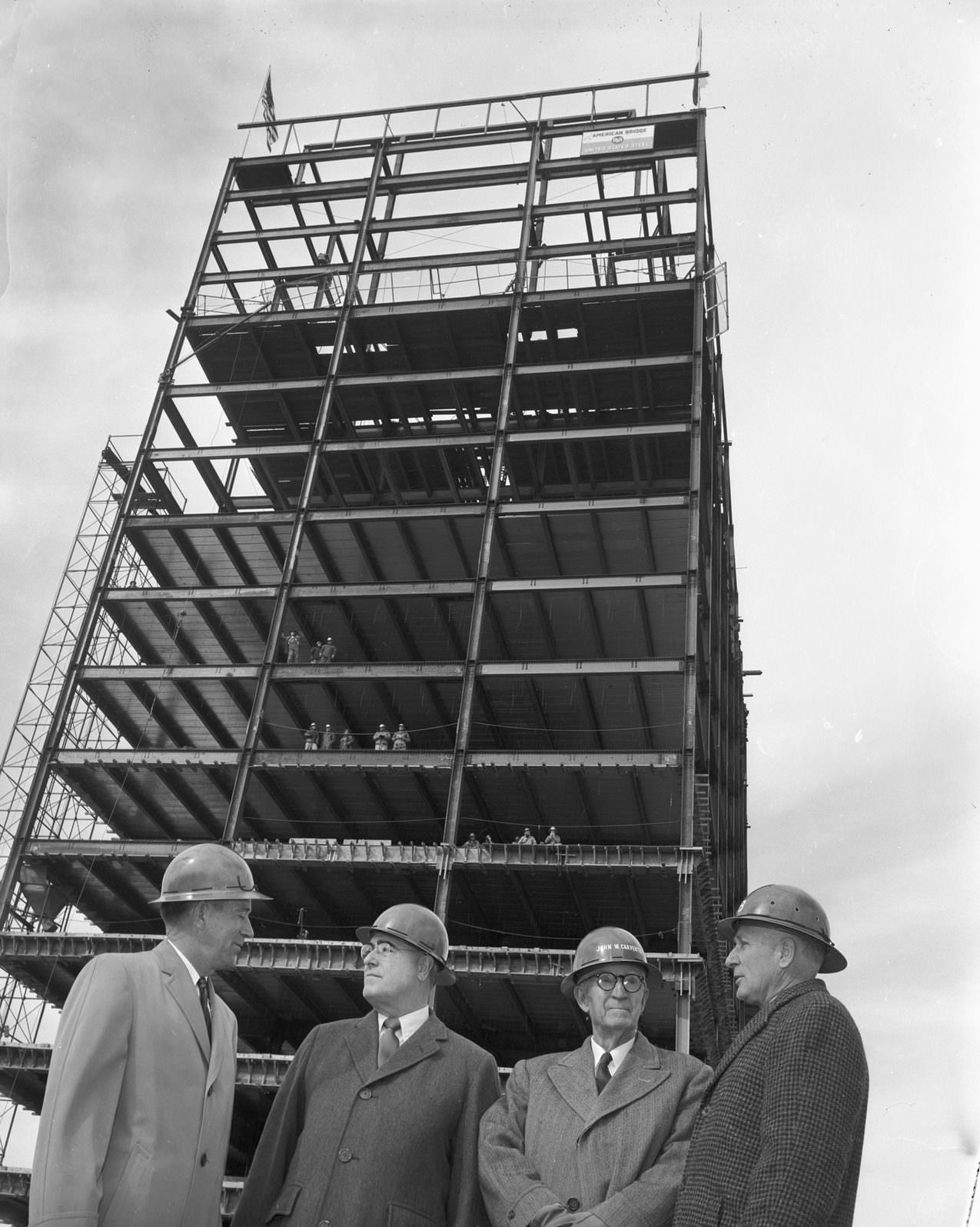
Building under construction, downtown Dallas, 1950Building under construction, downtown Dallas, 1950 There are four men standing next to each other. Each of them are wearing a safety helmet.Building under construction, downtown Dallas, 1950Building under construction, downtown Dallas, 1950Building under construction, downtown Dallas, 1950Downtown Dallas, preparing building site for construction, 1950Downtown Dallas, preparing building site for construction, 1950Downtown Dallas, preparing building site for construction, 1950Multiple office buildings under construction, downtown Dallas, Texas, 1952
Reserve Life Insurance building under construction, downtown Dallas, Texas, 1950
Corrigan Towers under construction, Texas, 1952
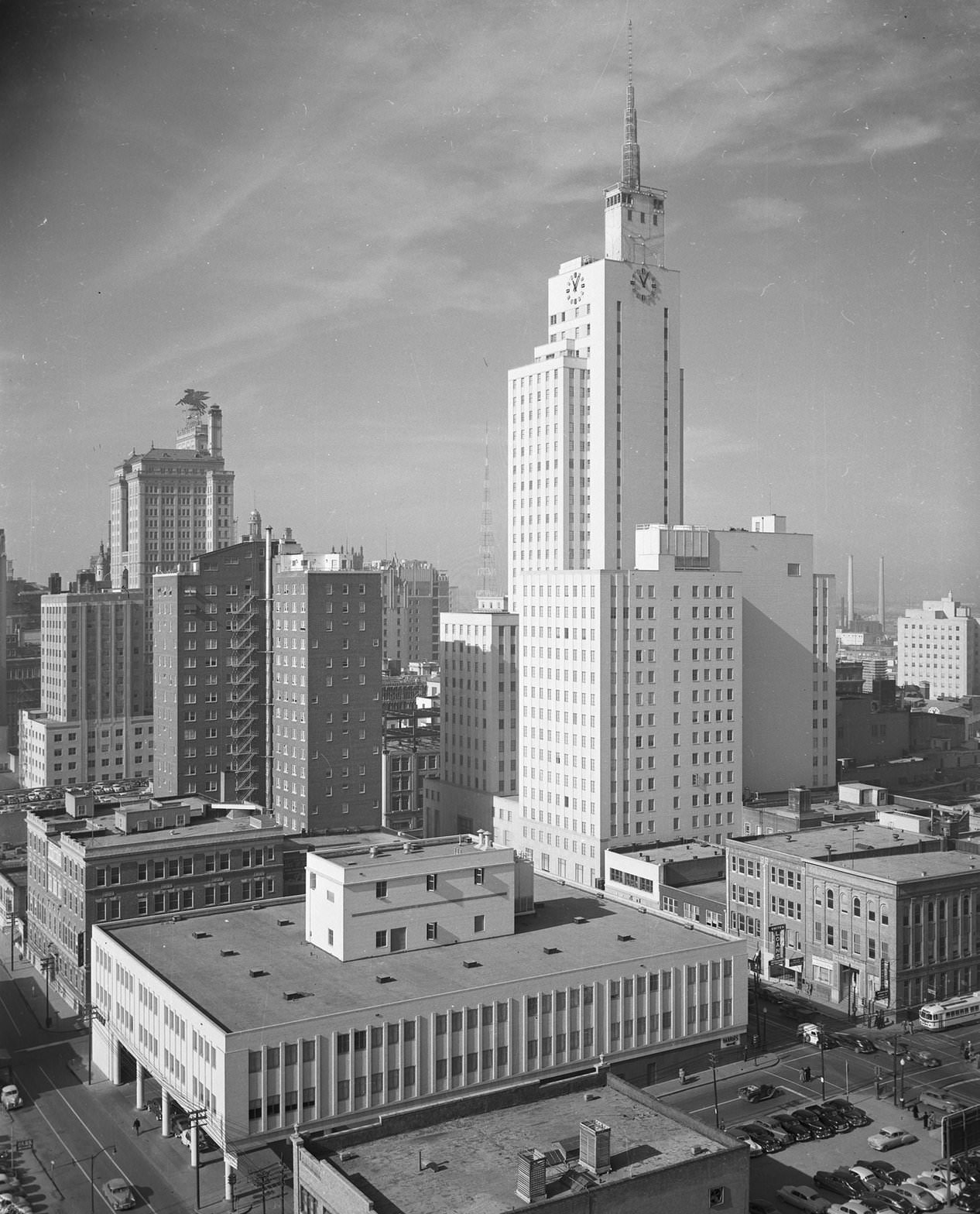
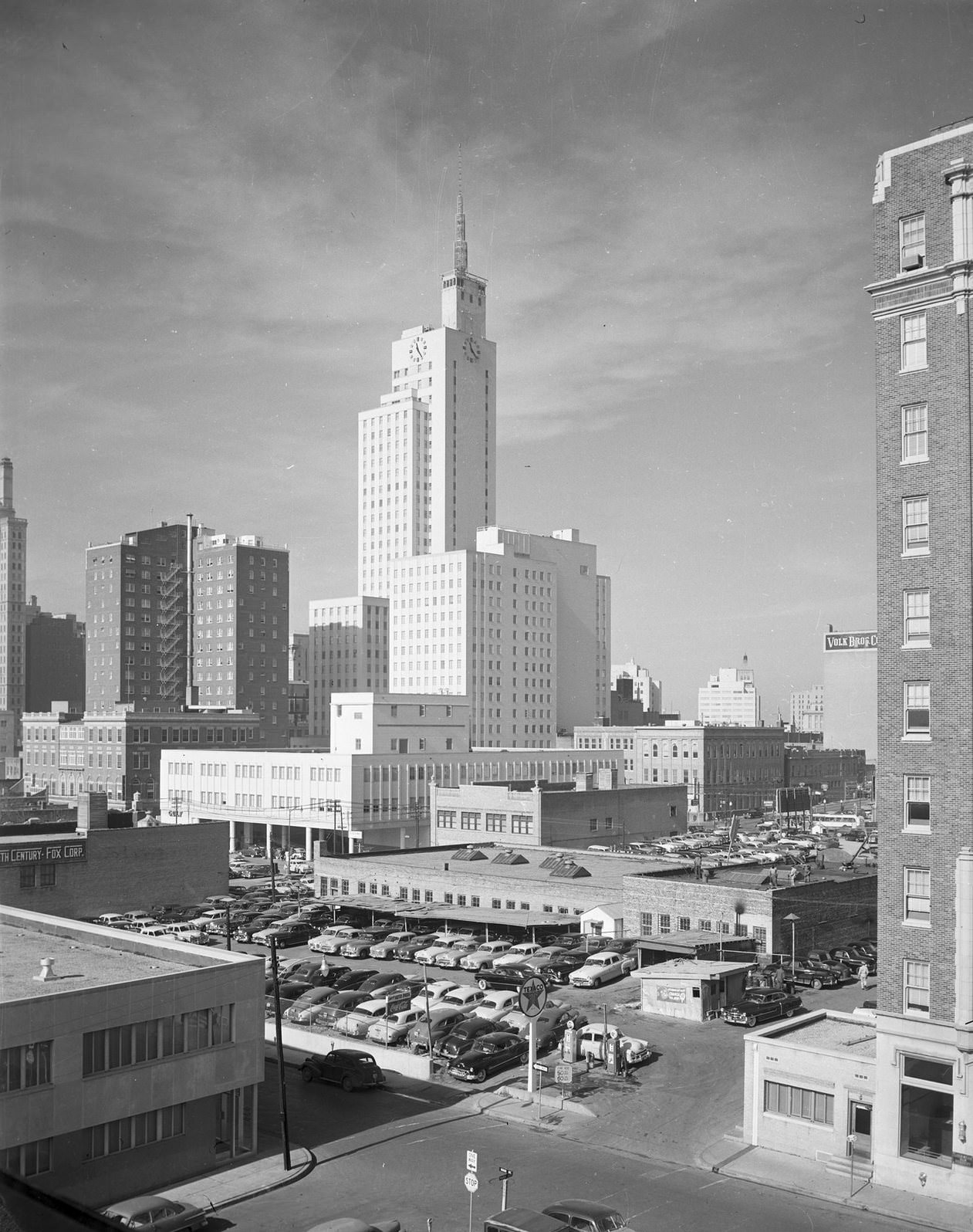
The Mercantile Building was one of the most photographed structures in downtown Dallas throughout the decade. It appeared in images from multiple angles and years, reflecting its importance as a commercial and visual centerpiece of the city. The Mercantile Securities Building, the Mercantile National Bank, and the broader Mercantile complex all helped establish Dallas as a serious financial hub in the postwar South.
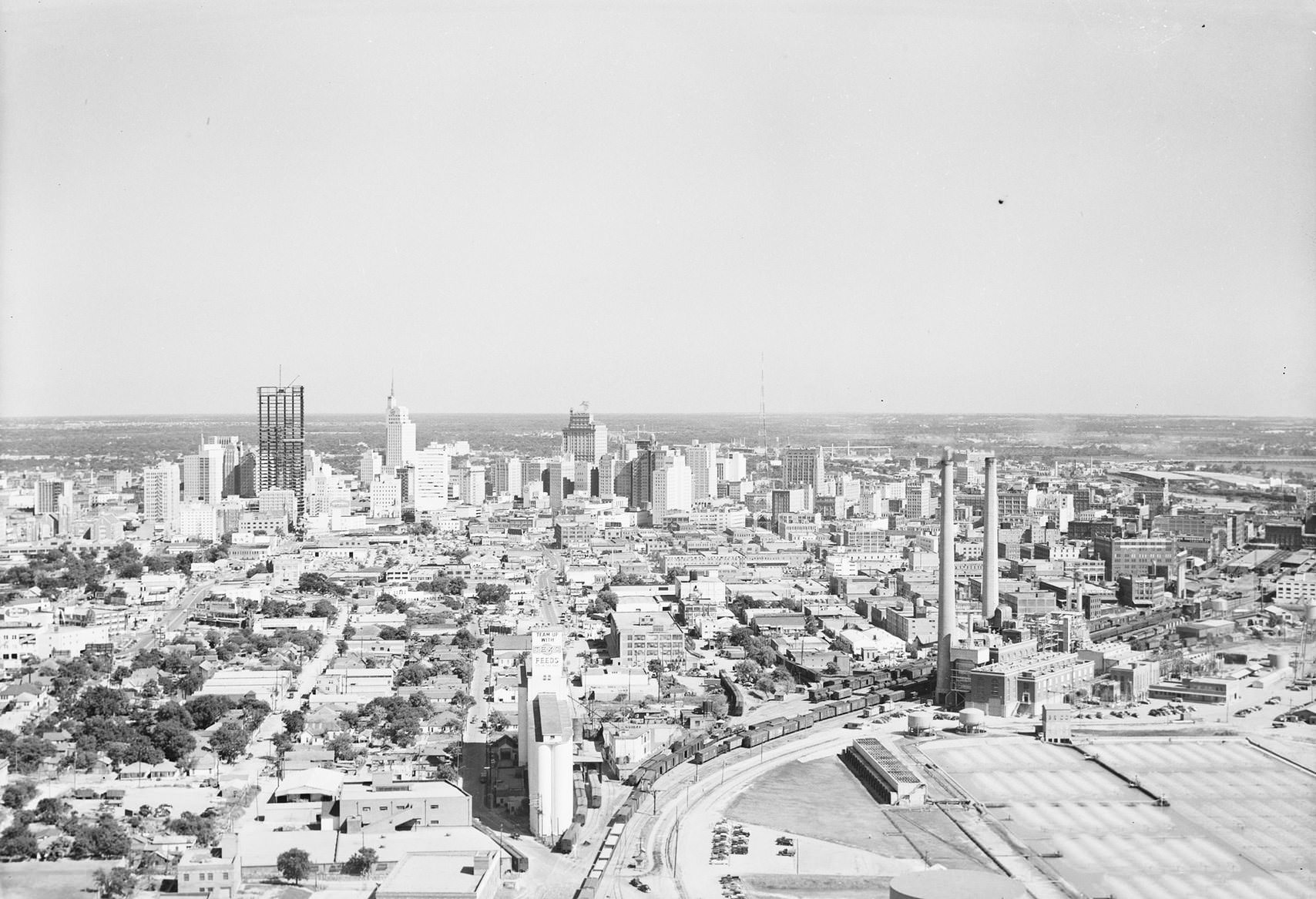
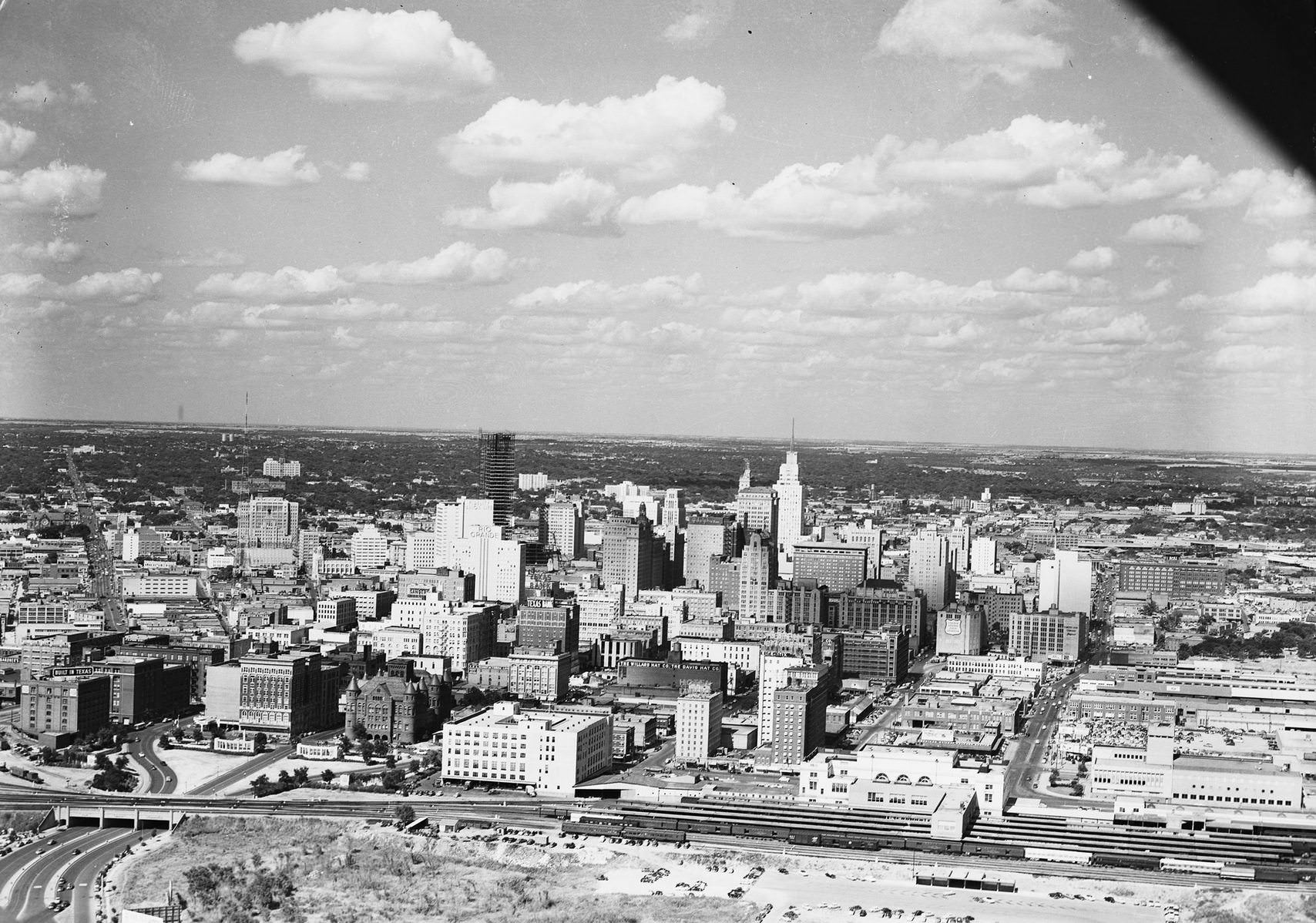
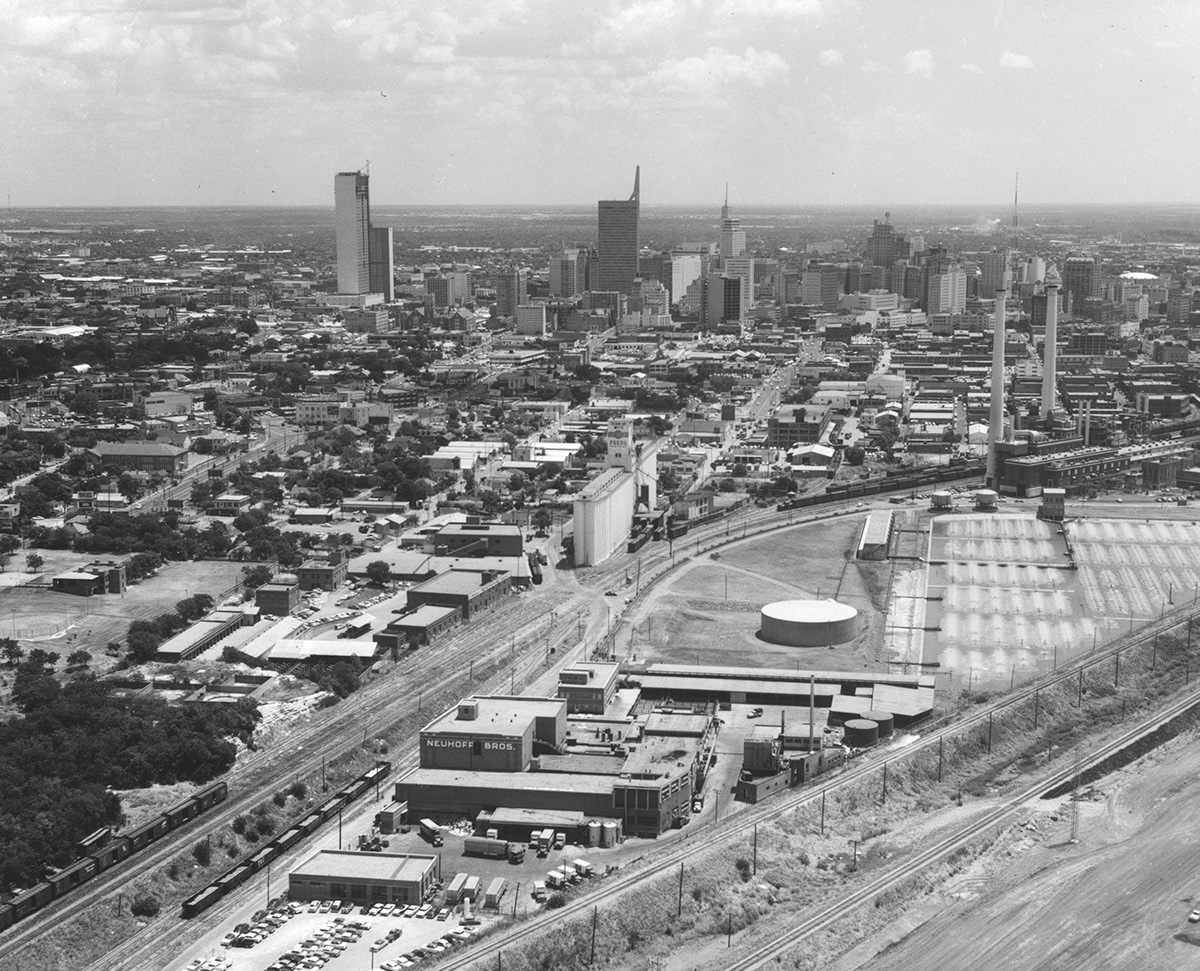
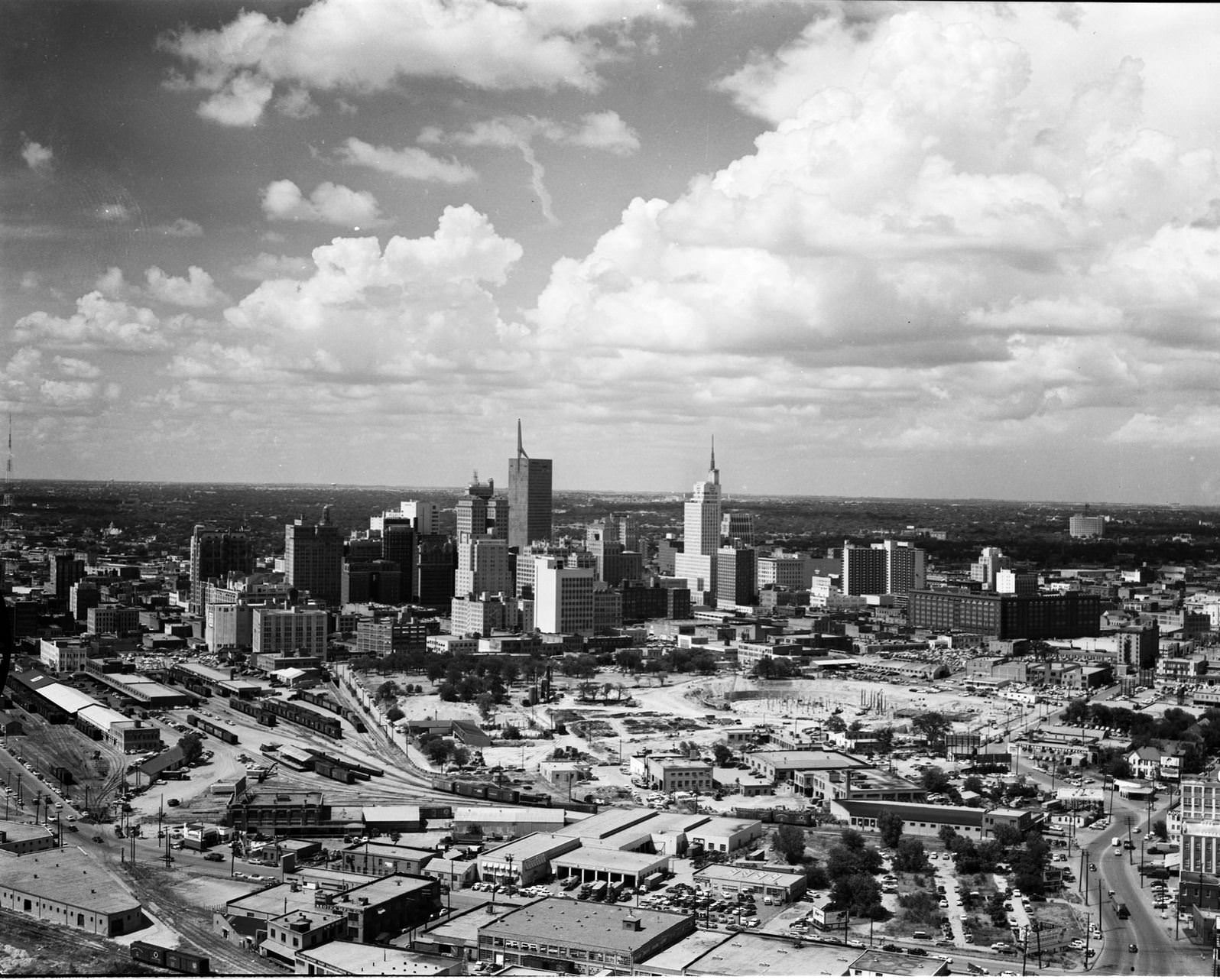
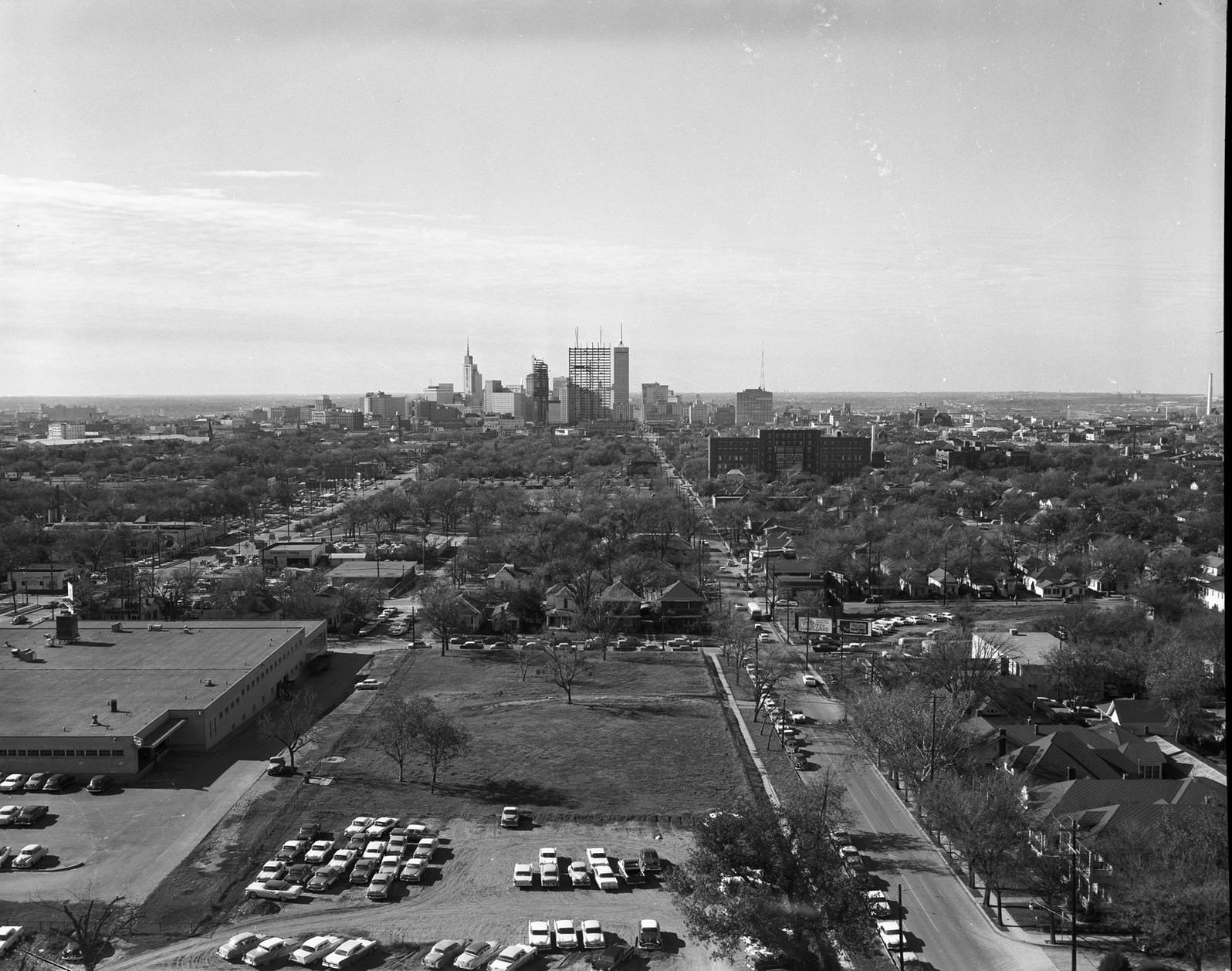
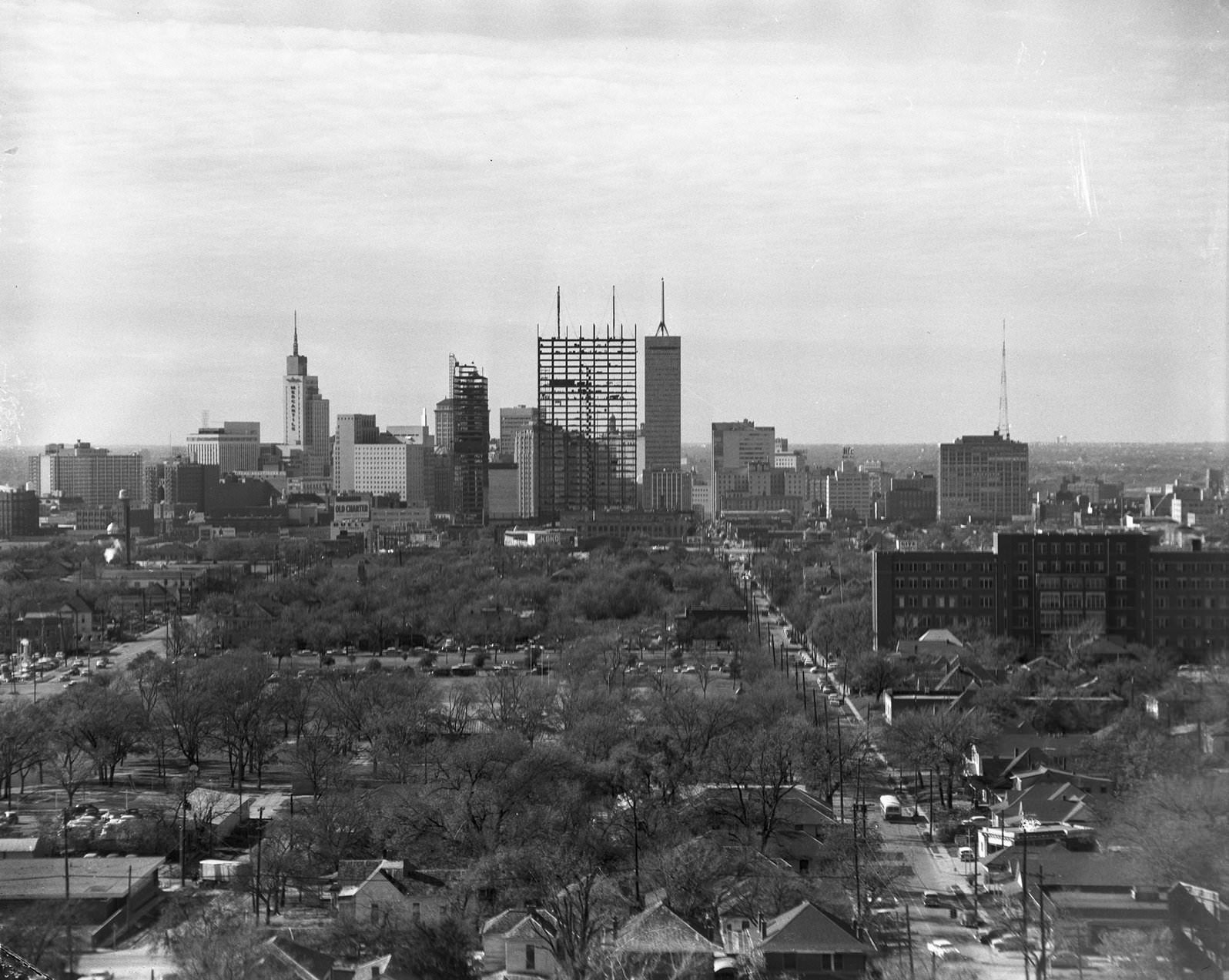
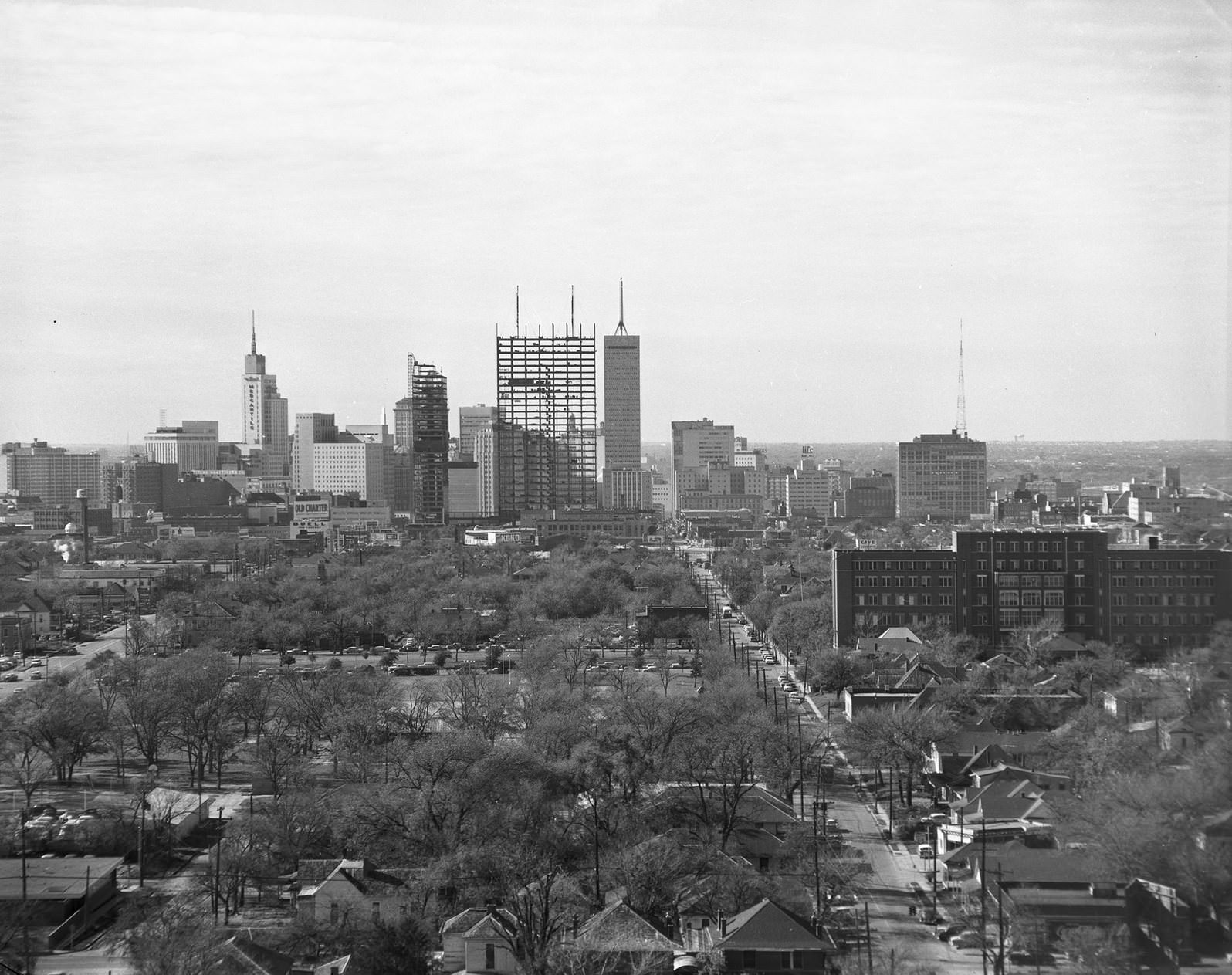
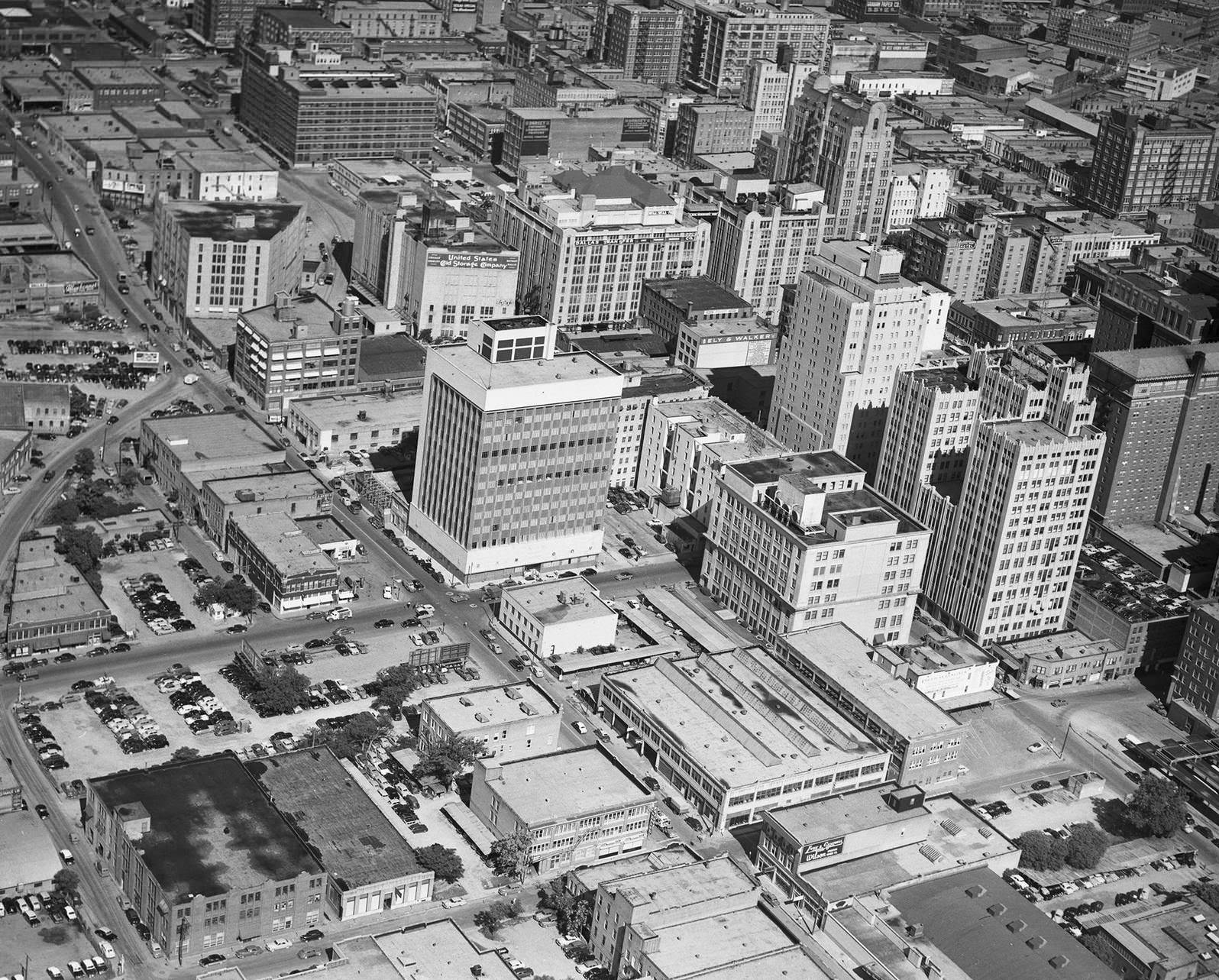
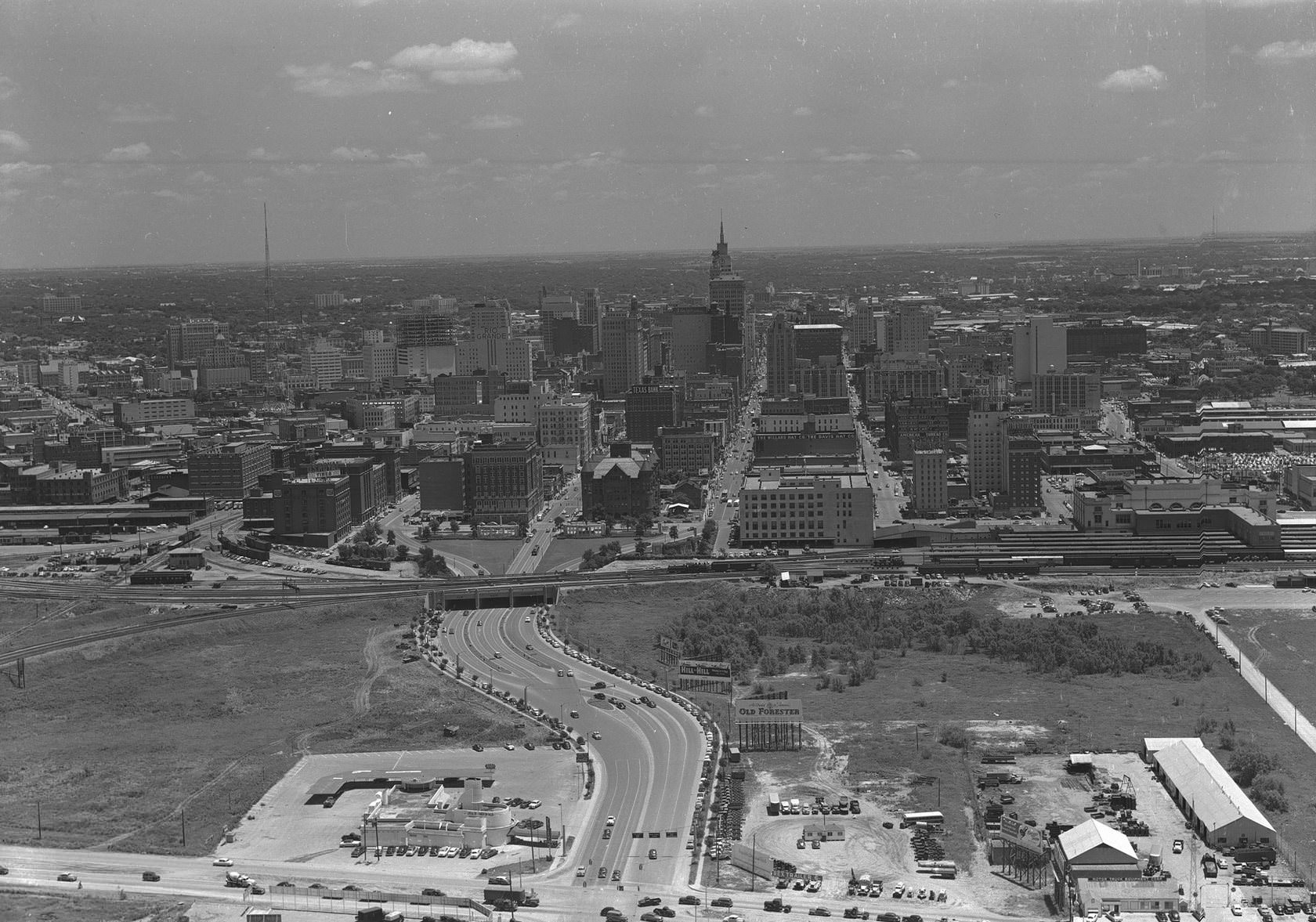
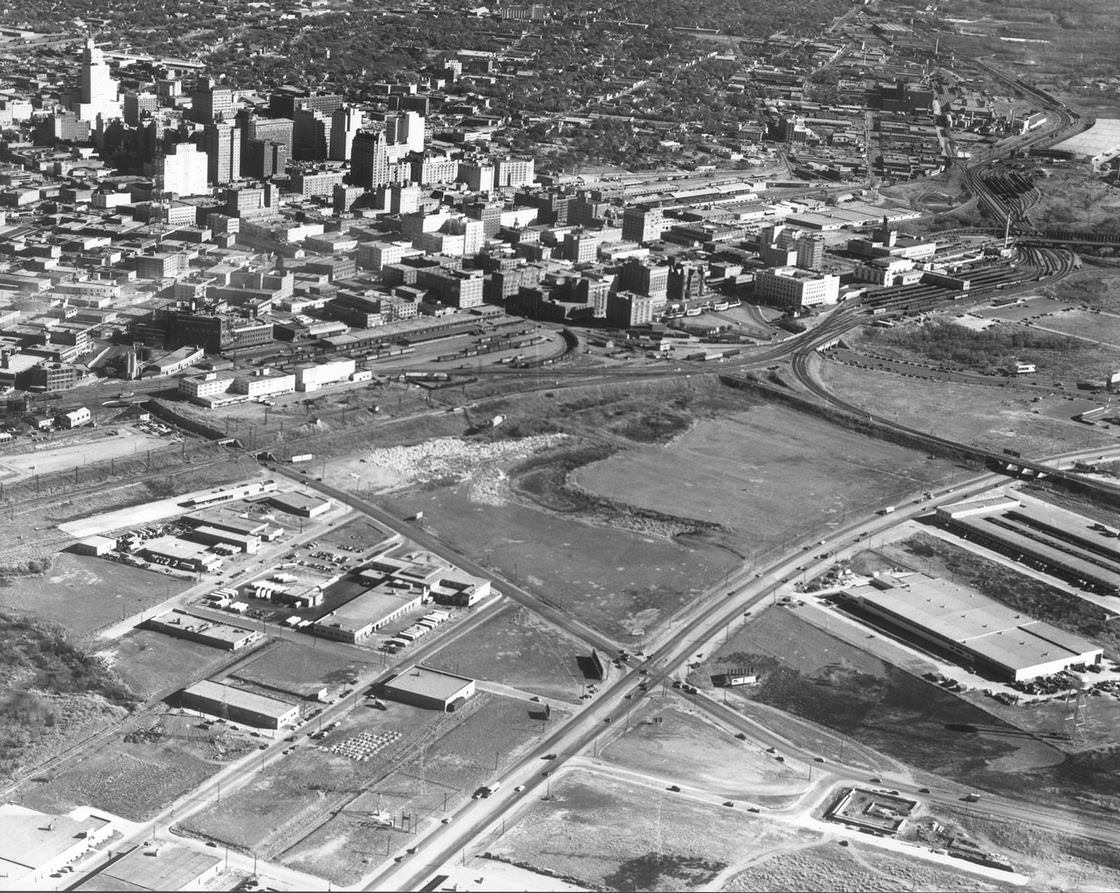
The downtown skyline changed noticeably between 1950 and 1959. Aerial photographs from the early part of the decade show a compact core of mid-rise buildings. By the late 1950s, new towers were pushing the skyline higher, and construction cranes were visible in virtually every wide-angle shot of the city center.
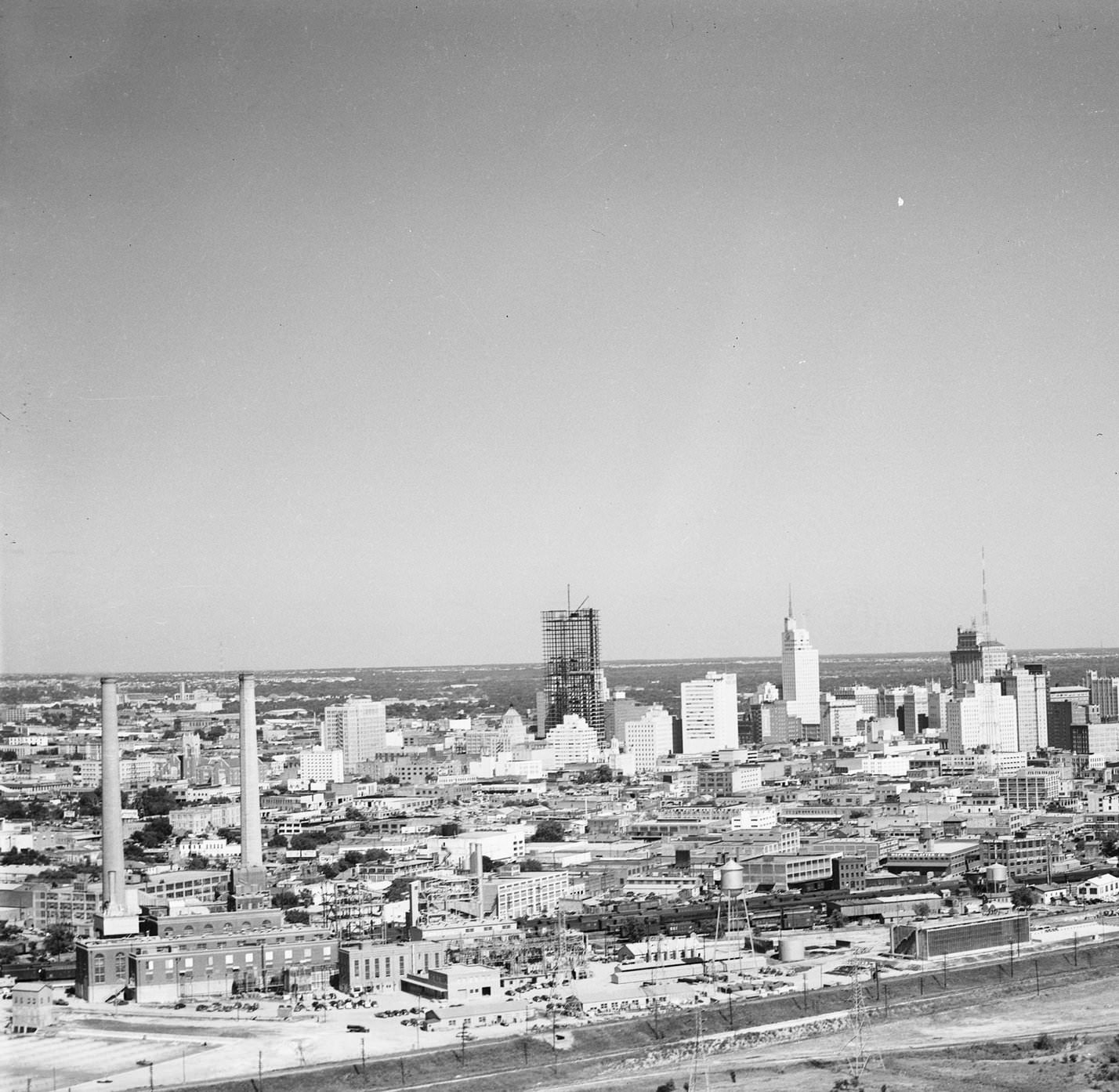
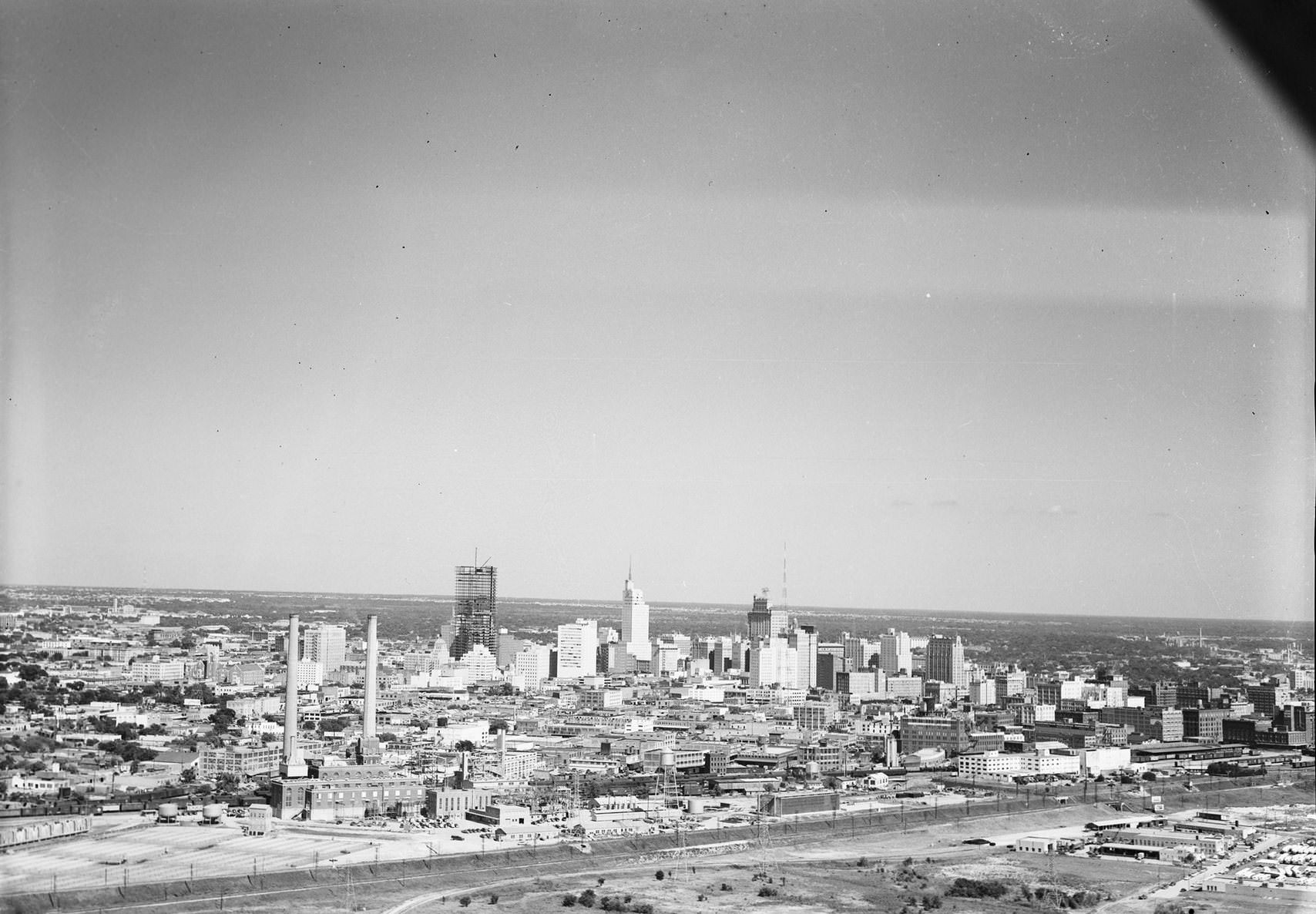
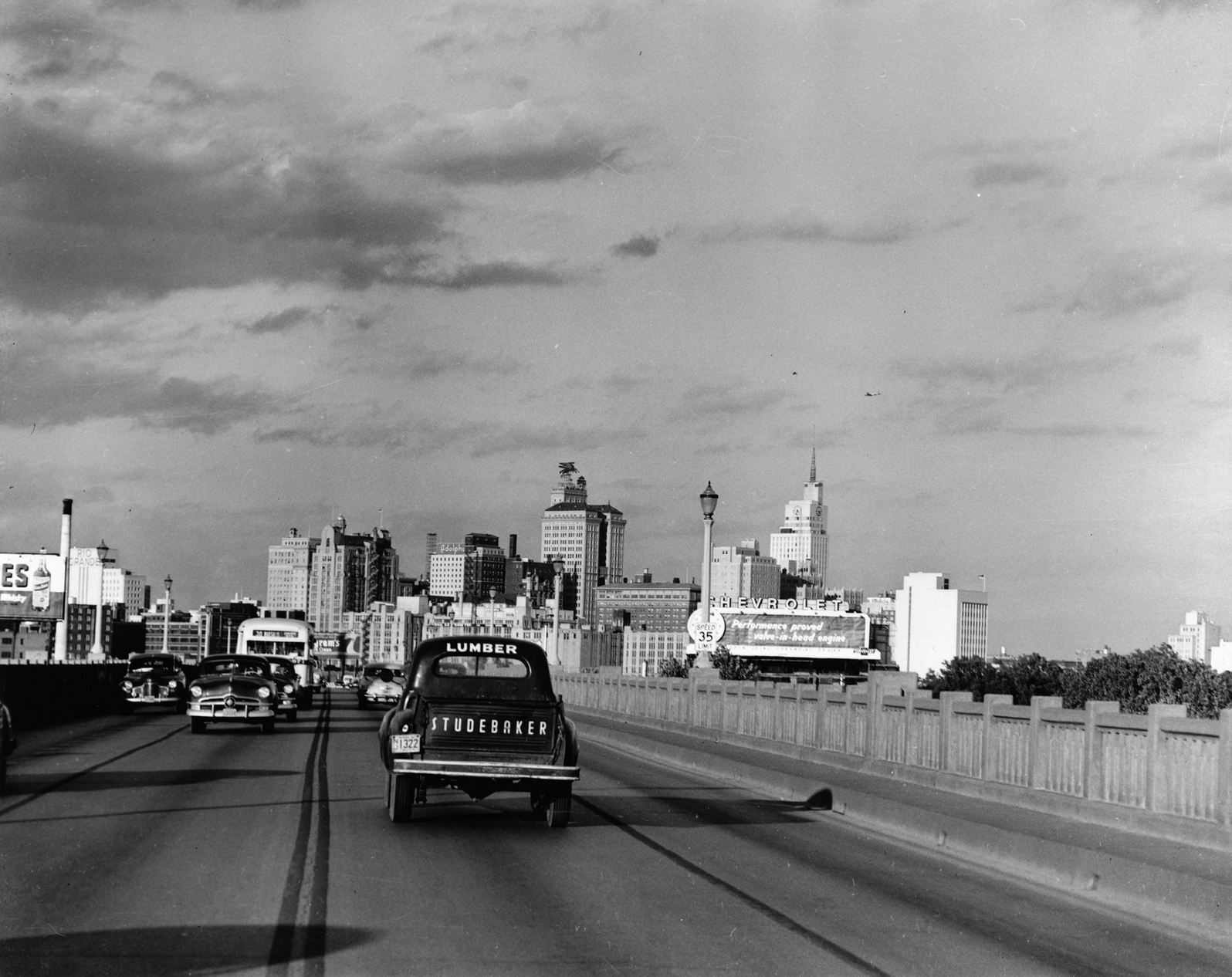
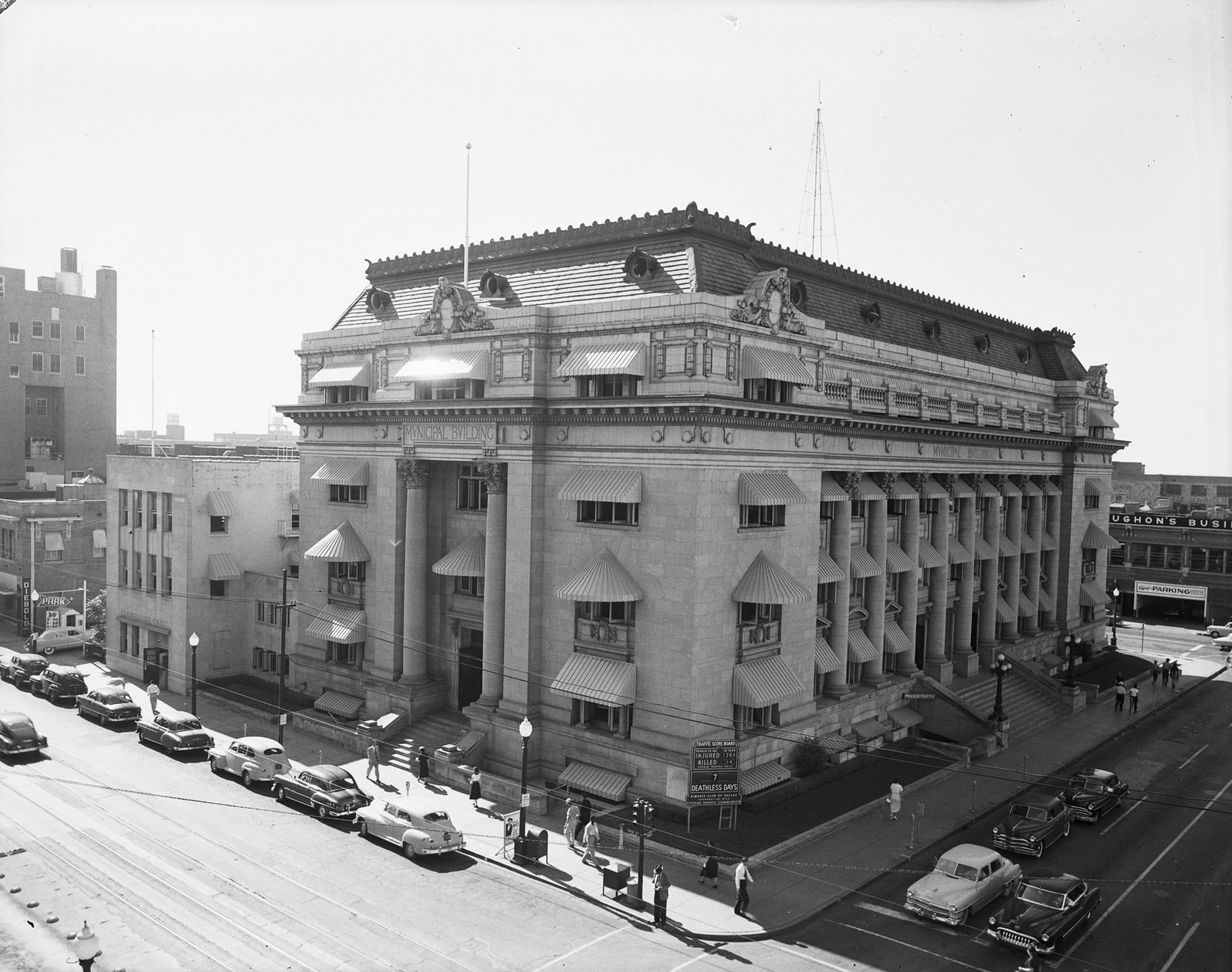
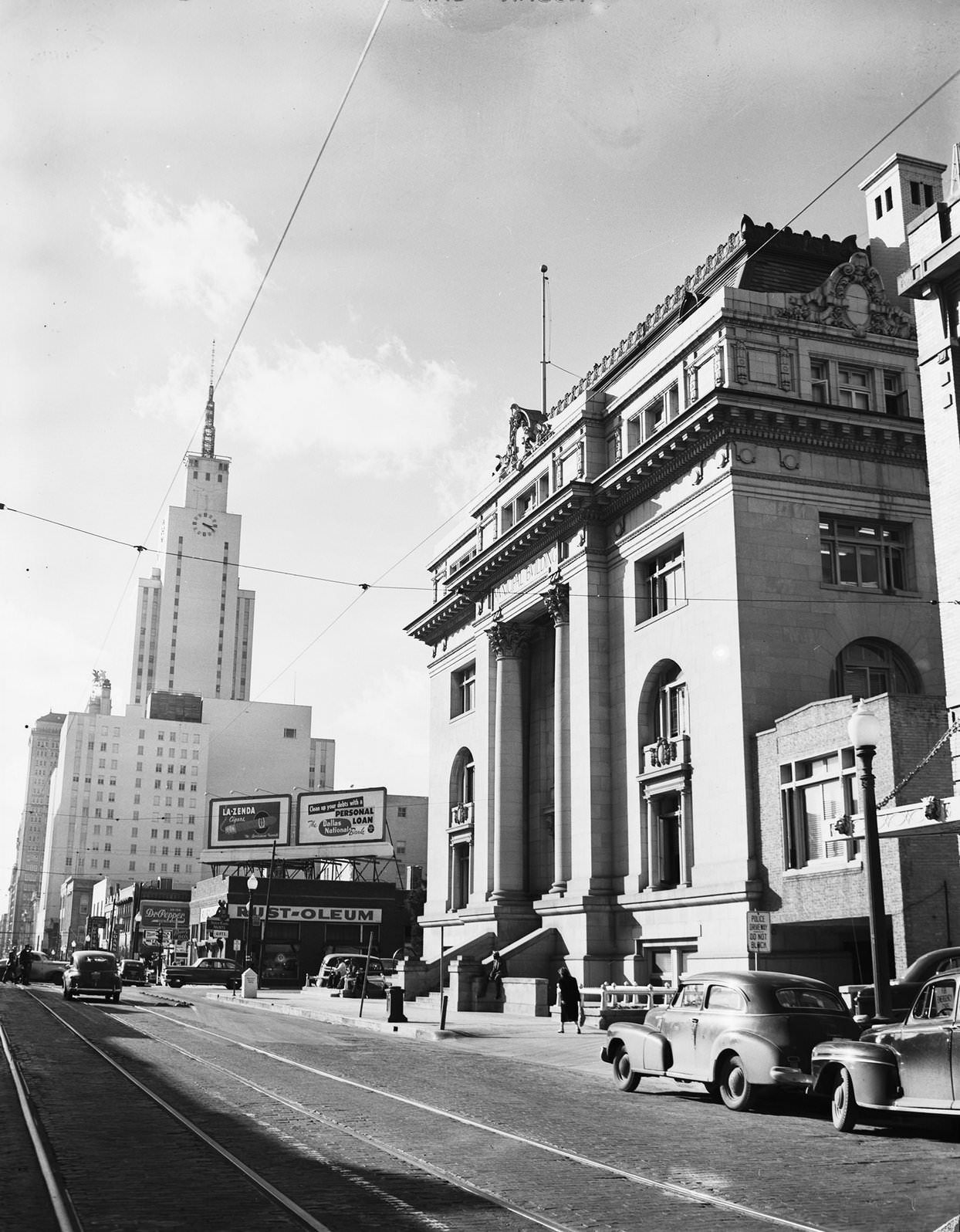
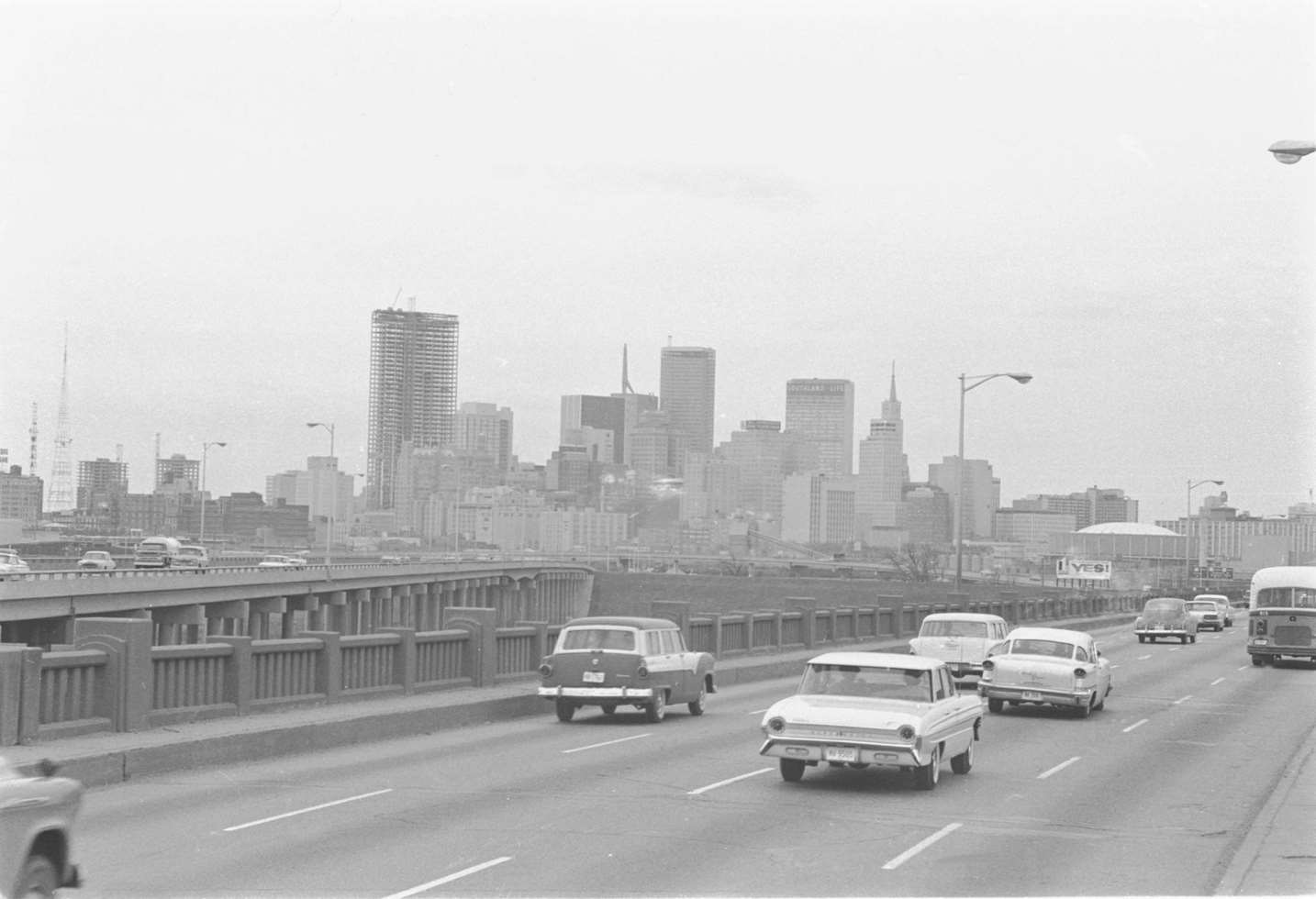
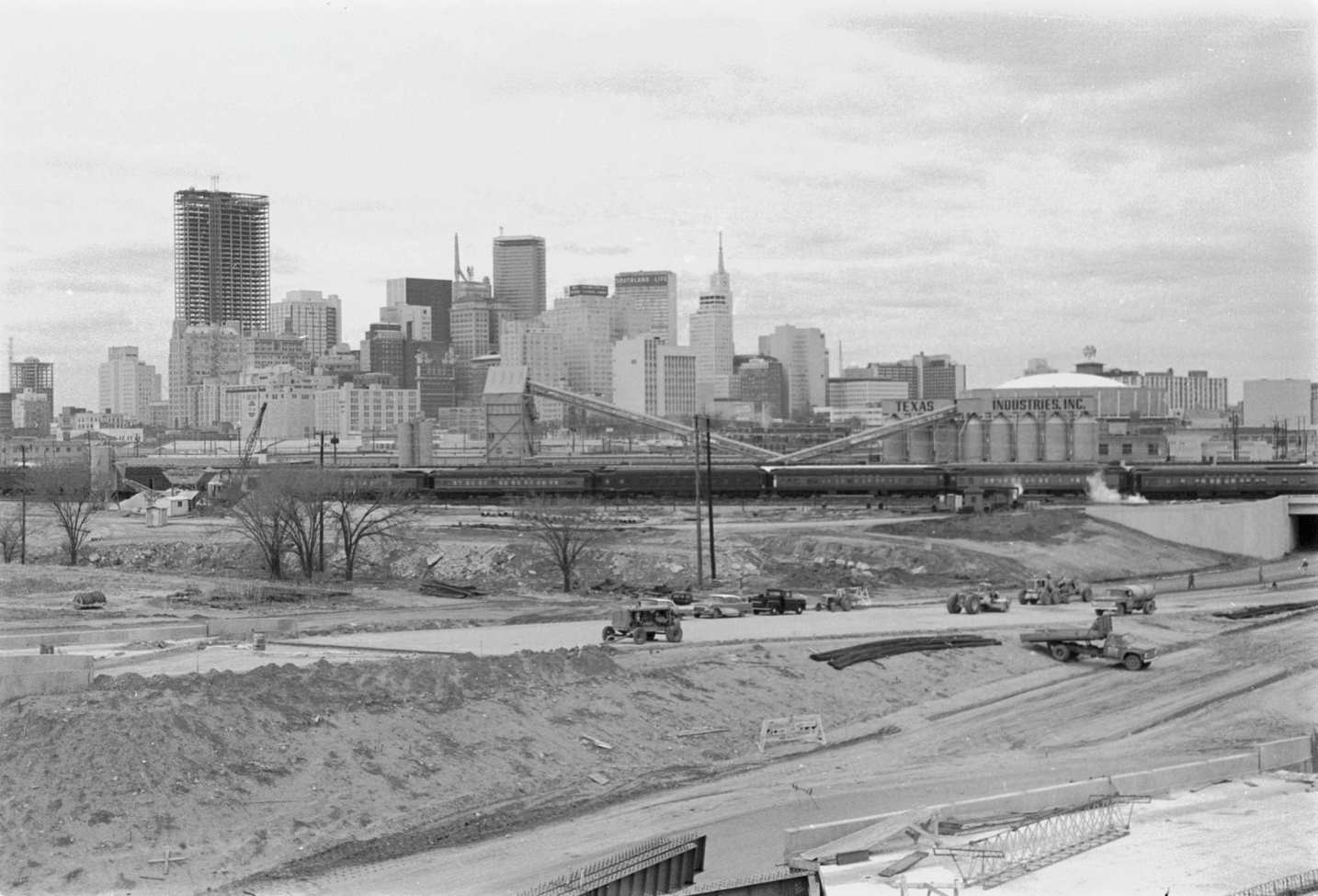
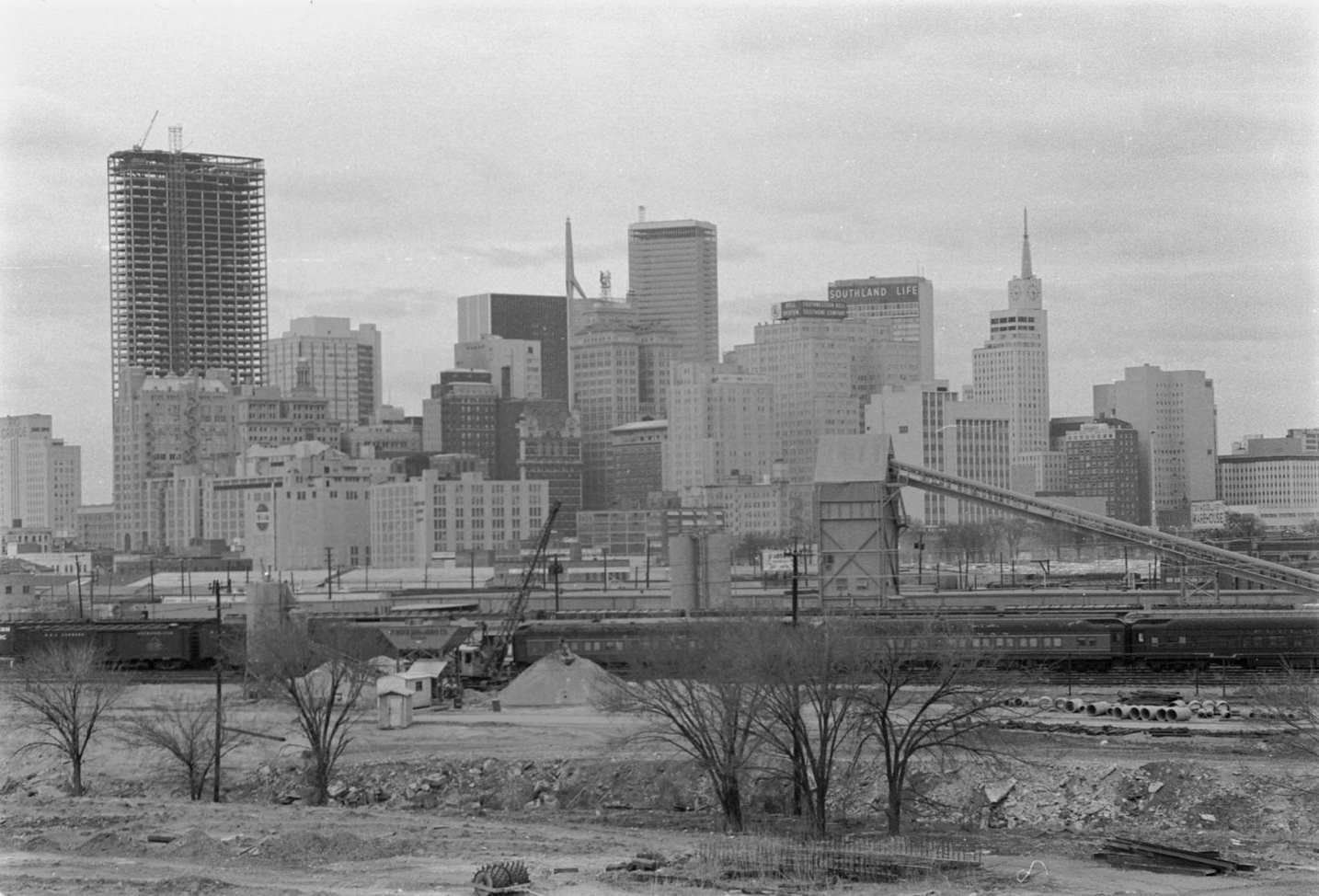
Aerial view, downtown Dallas, Texas, 1953Aerial view, downtown Dallas, Texas, 1953Aerial view, downtown Dallas, Texas, 1953Aerial view, downtown Dallas, Texas, 1953Dallas downtown skyline from Commerce Street bridge with Studebaker truck in foreground, 1951Skyline of Dallas,Texas, 1955Dallas, Texas skyline, Victory Park area, 1953Skyline of Downtown Dallas, Texas, 1953Dallas, Texas skyline, Victory Park area, 1958Downtown Dallas with city hall building, 1952Downtown Dallas with city hall building, 1950Skyline view of downtown Dallas, Texas looking north from the southside, showing a railroad yard in the foreground, 1955Cars on the highway in front of Dallas, 1959Dallas skyline with construction site, 1959Dallas skyline with construction site, 1959
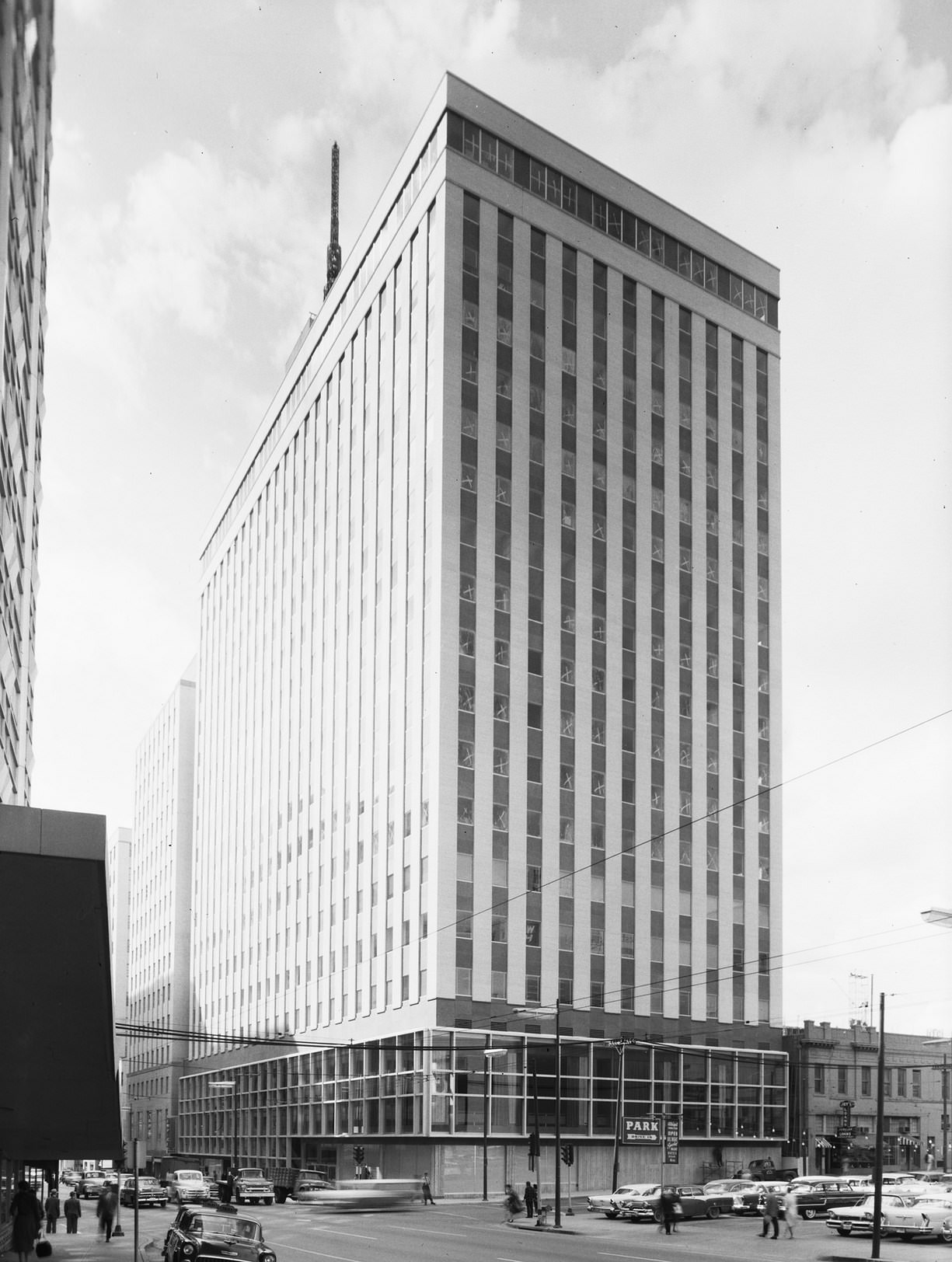
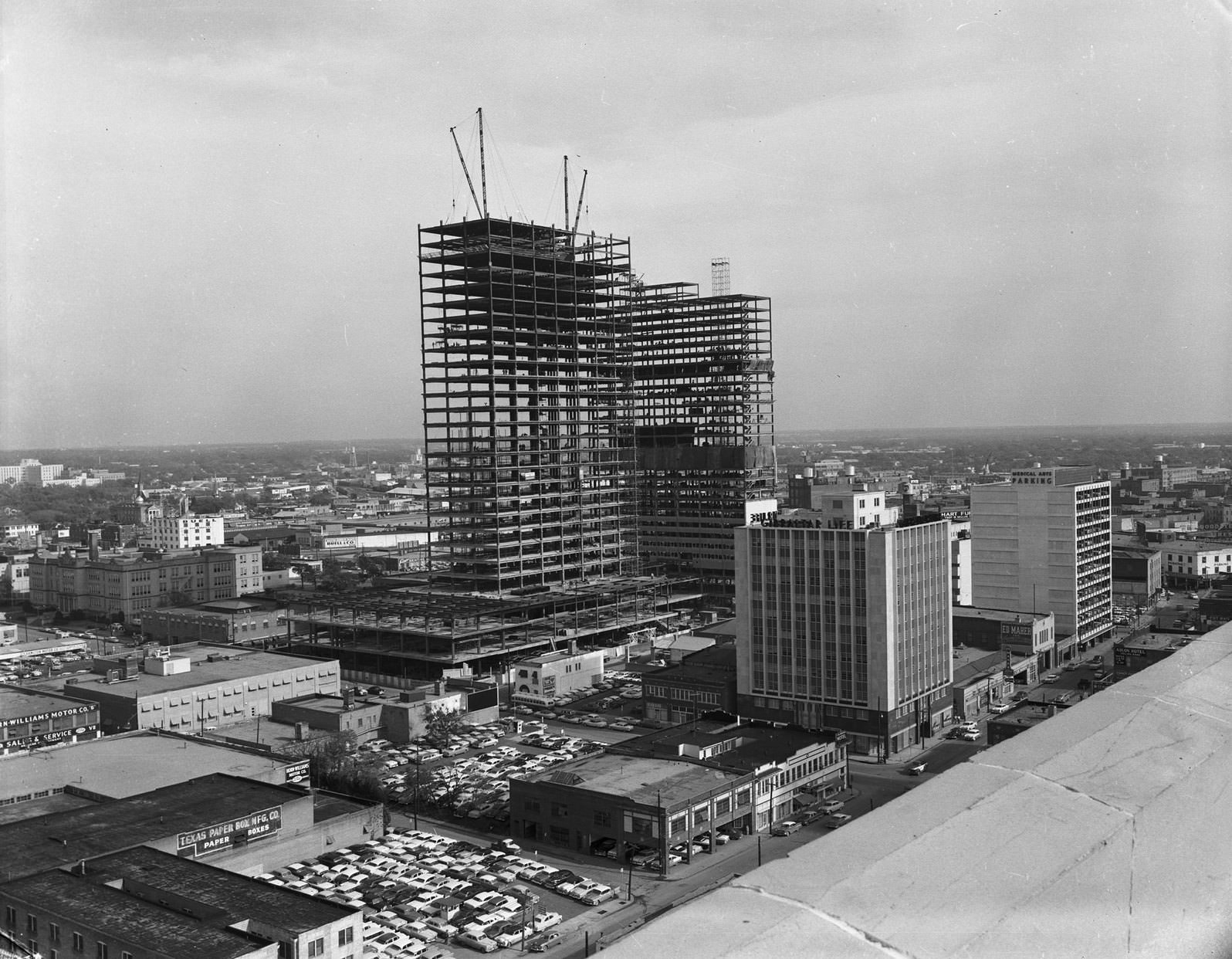
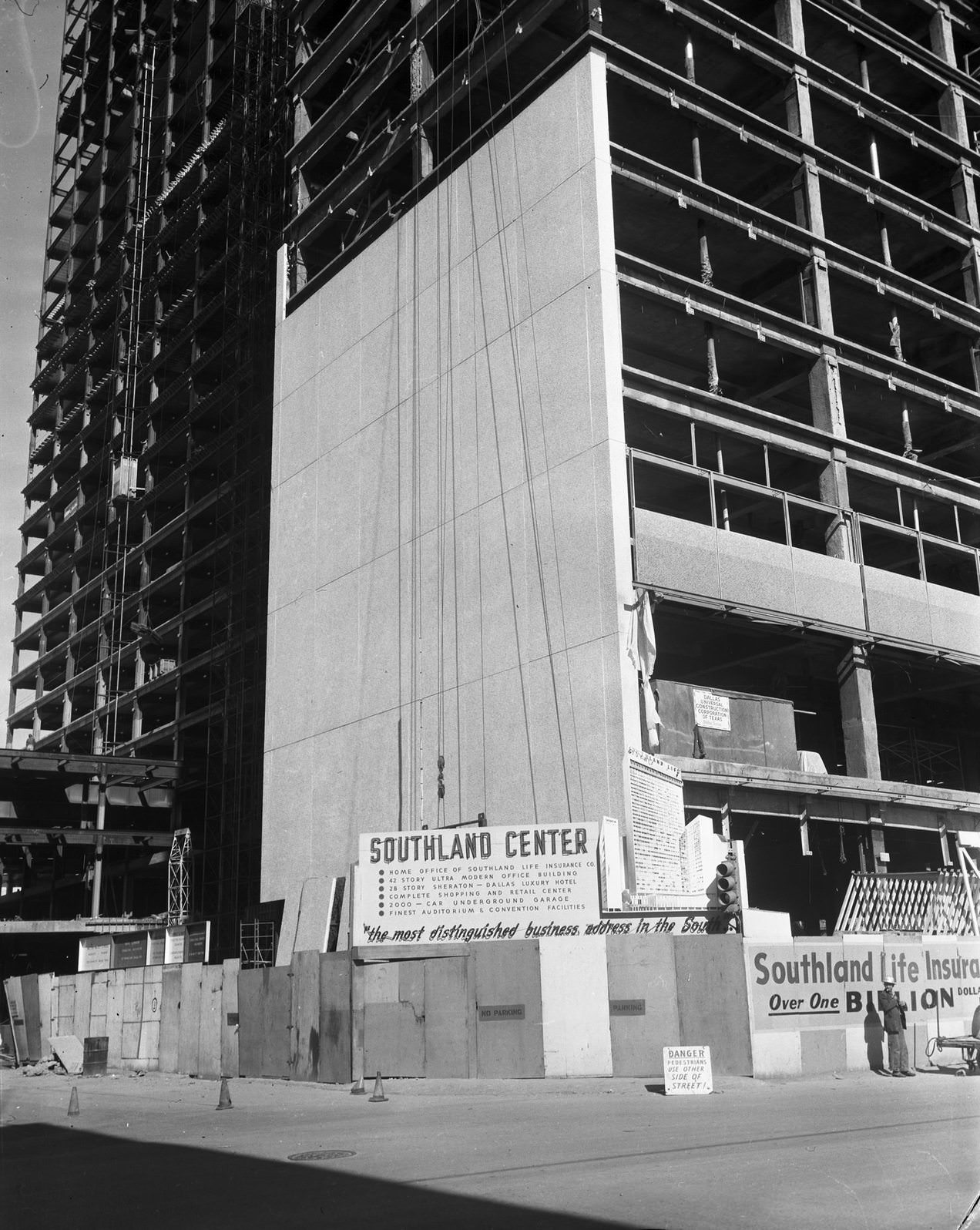
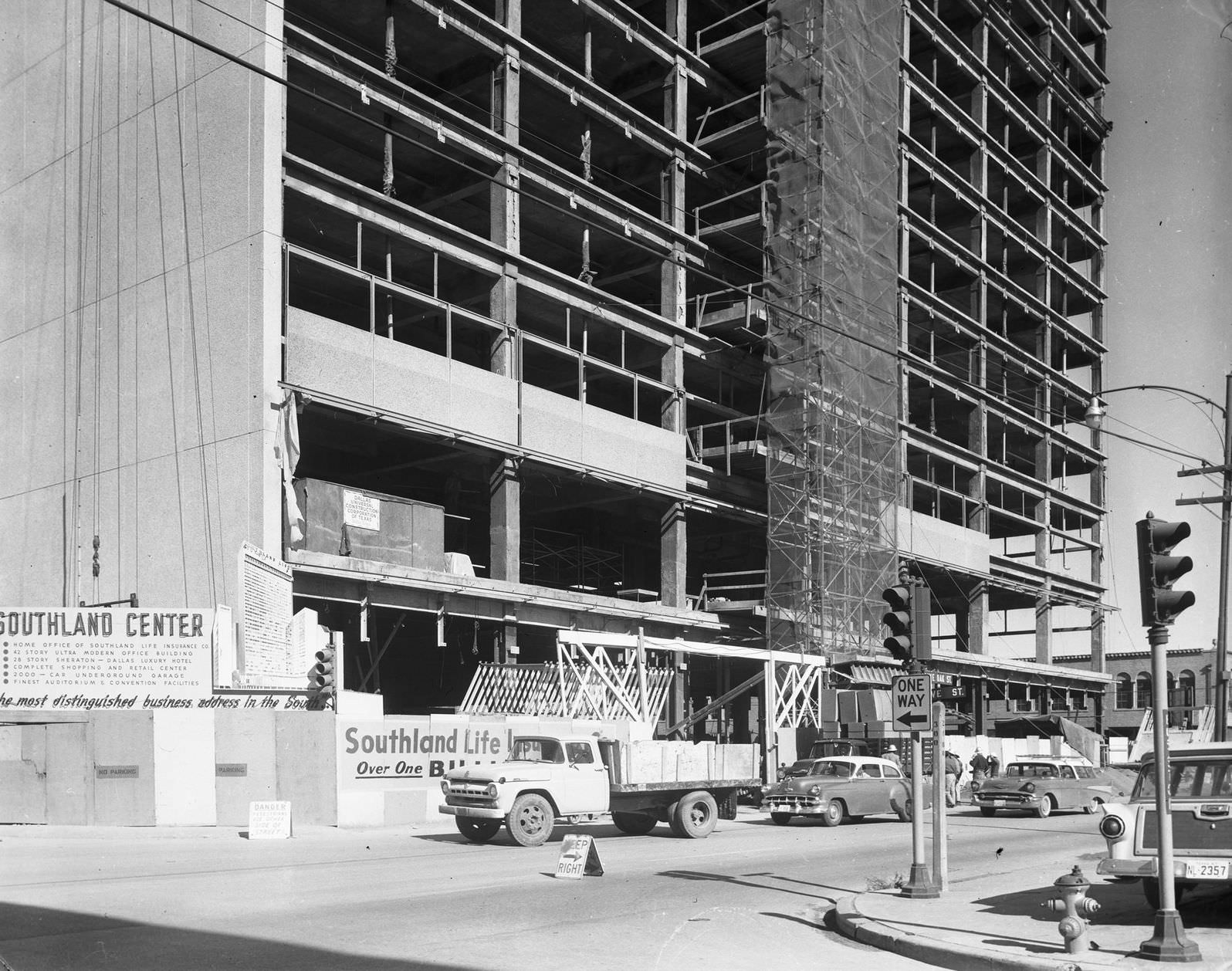
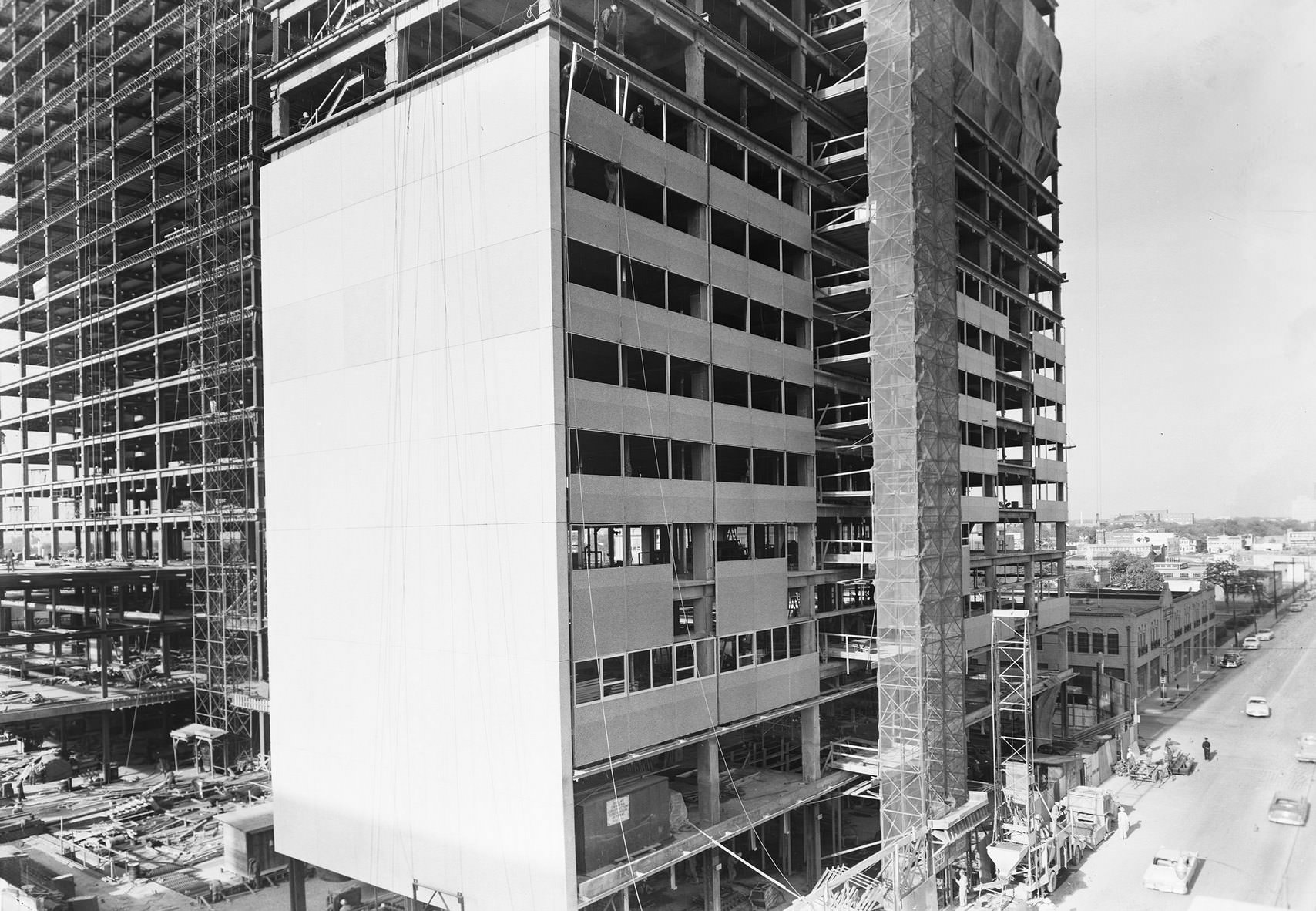
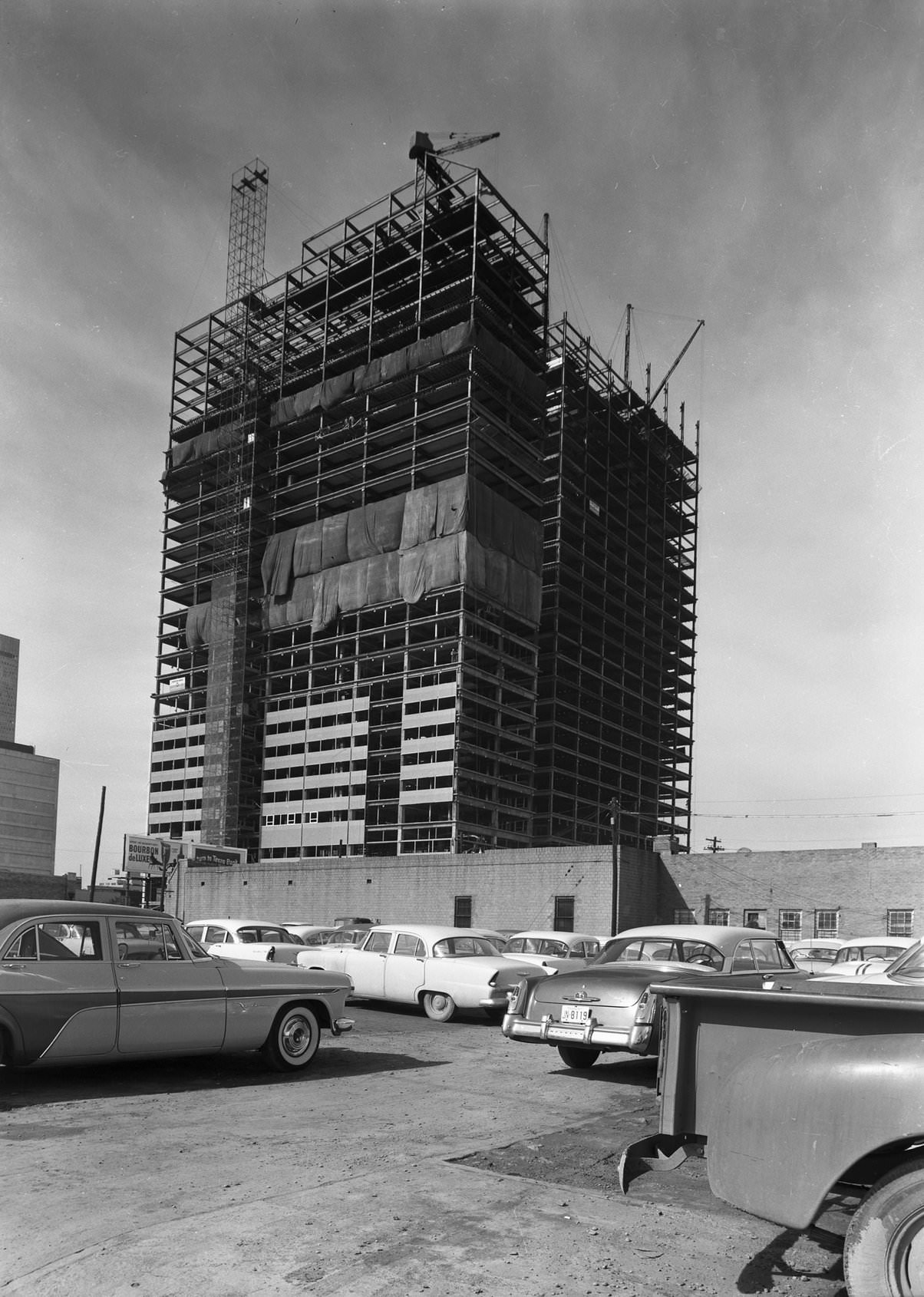
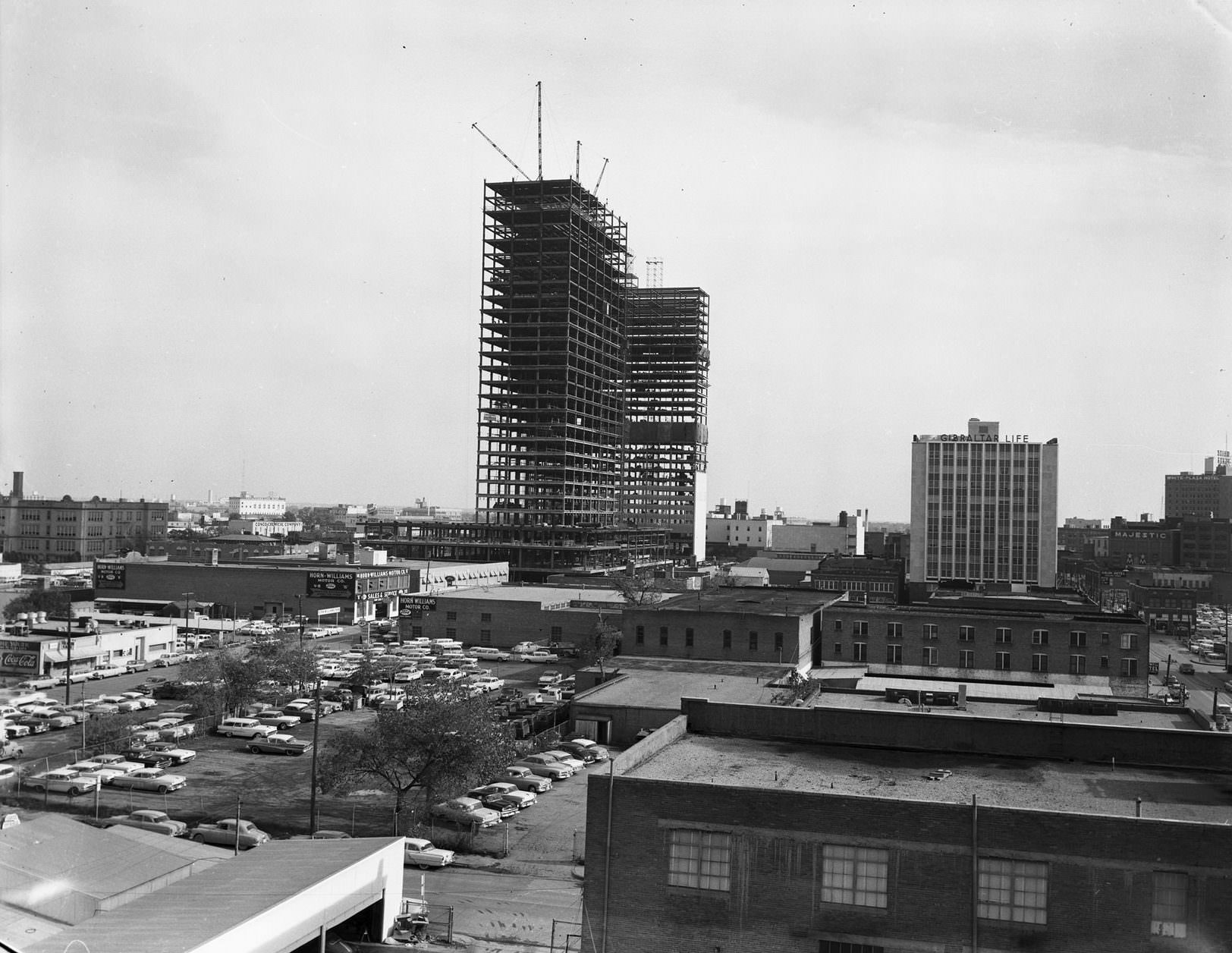
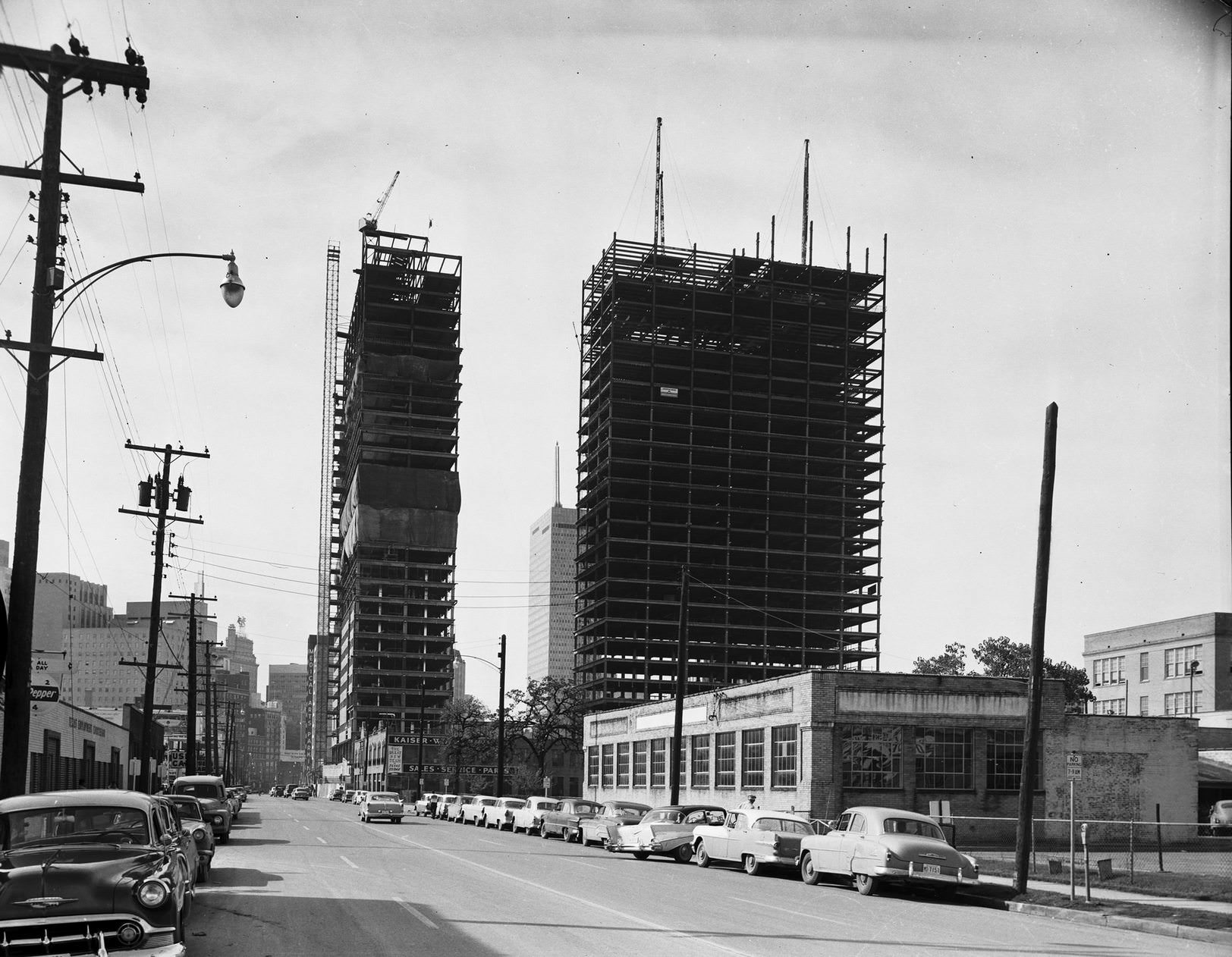
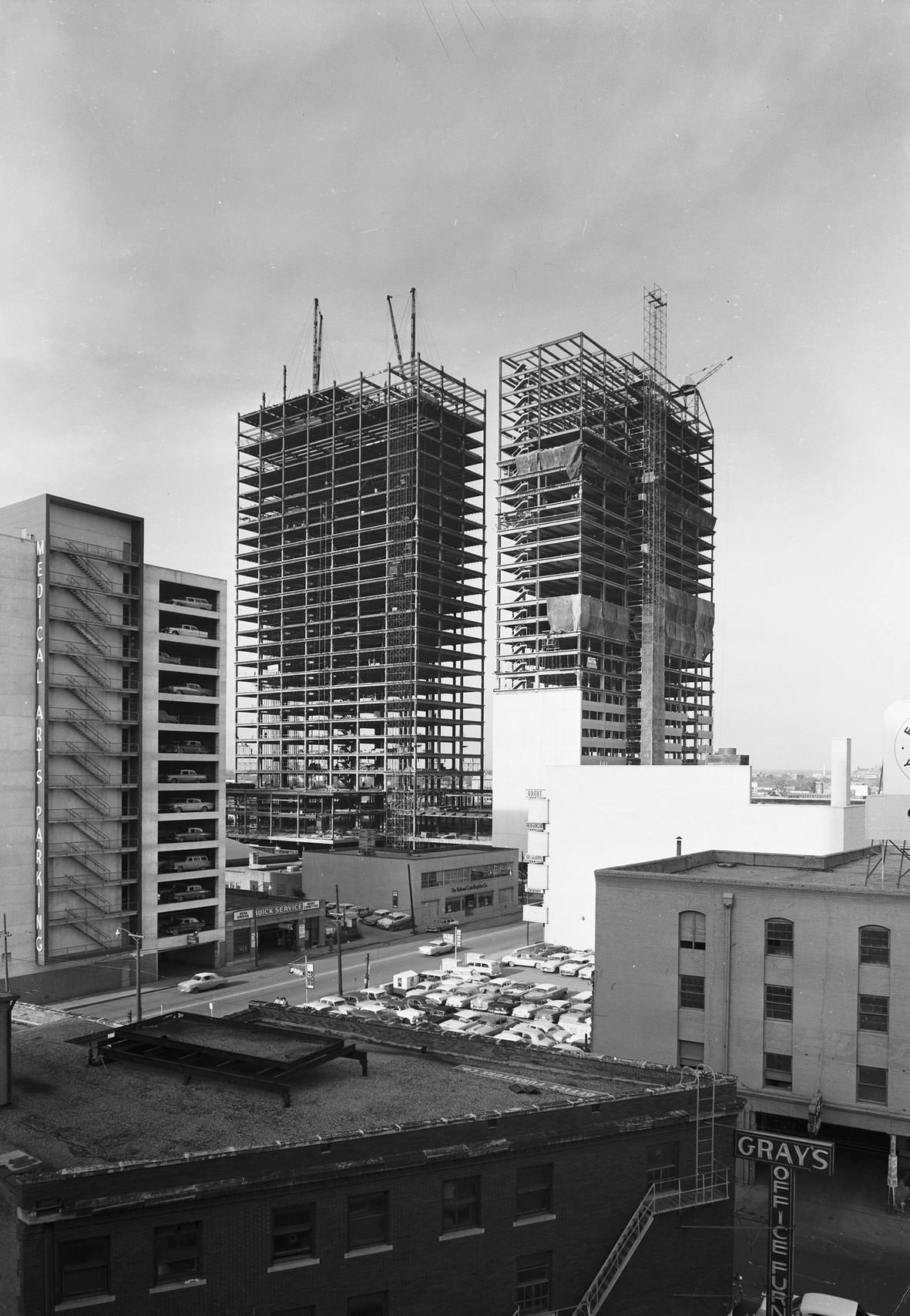
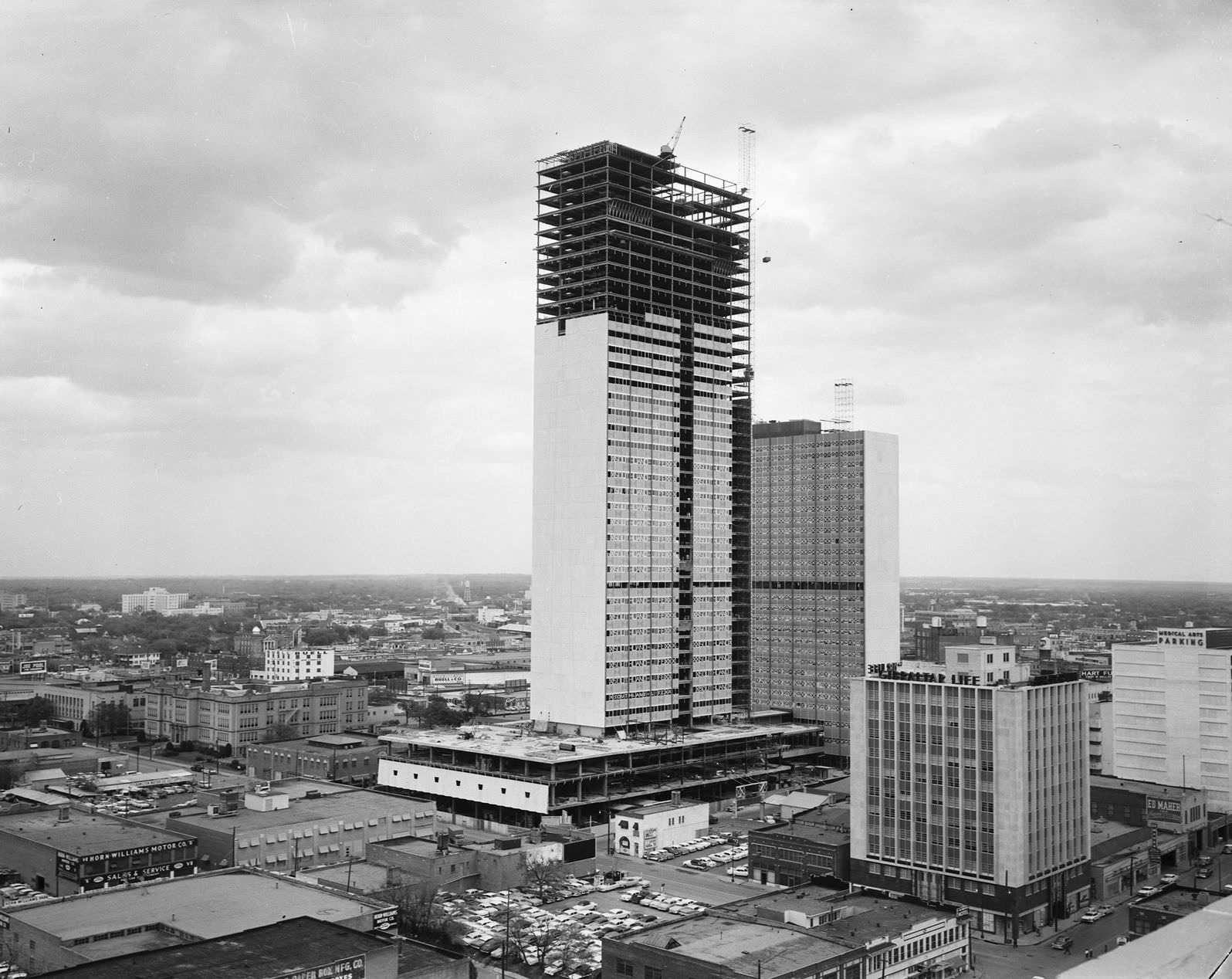
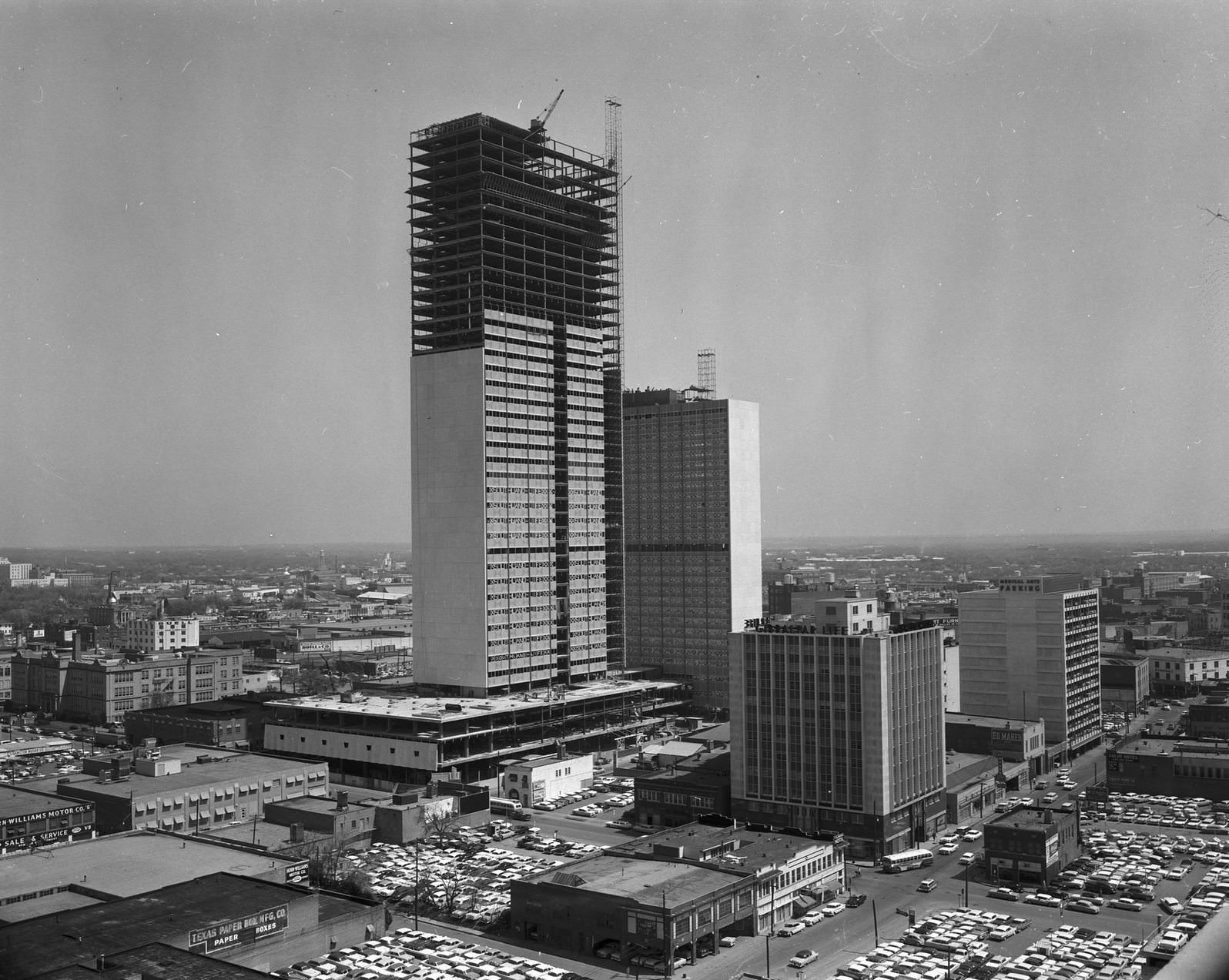
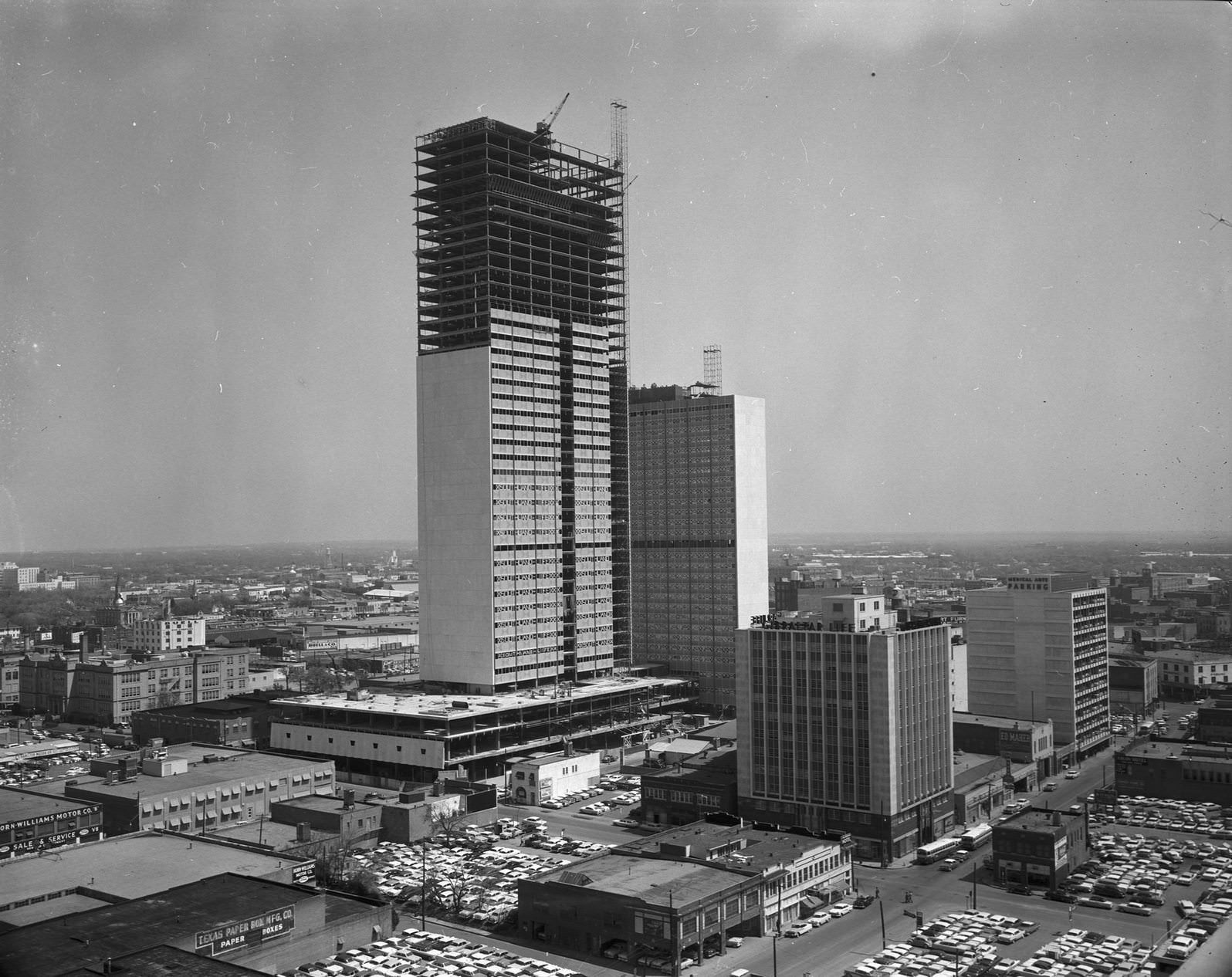
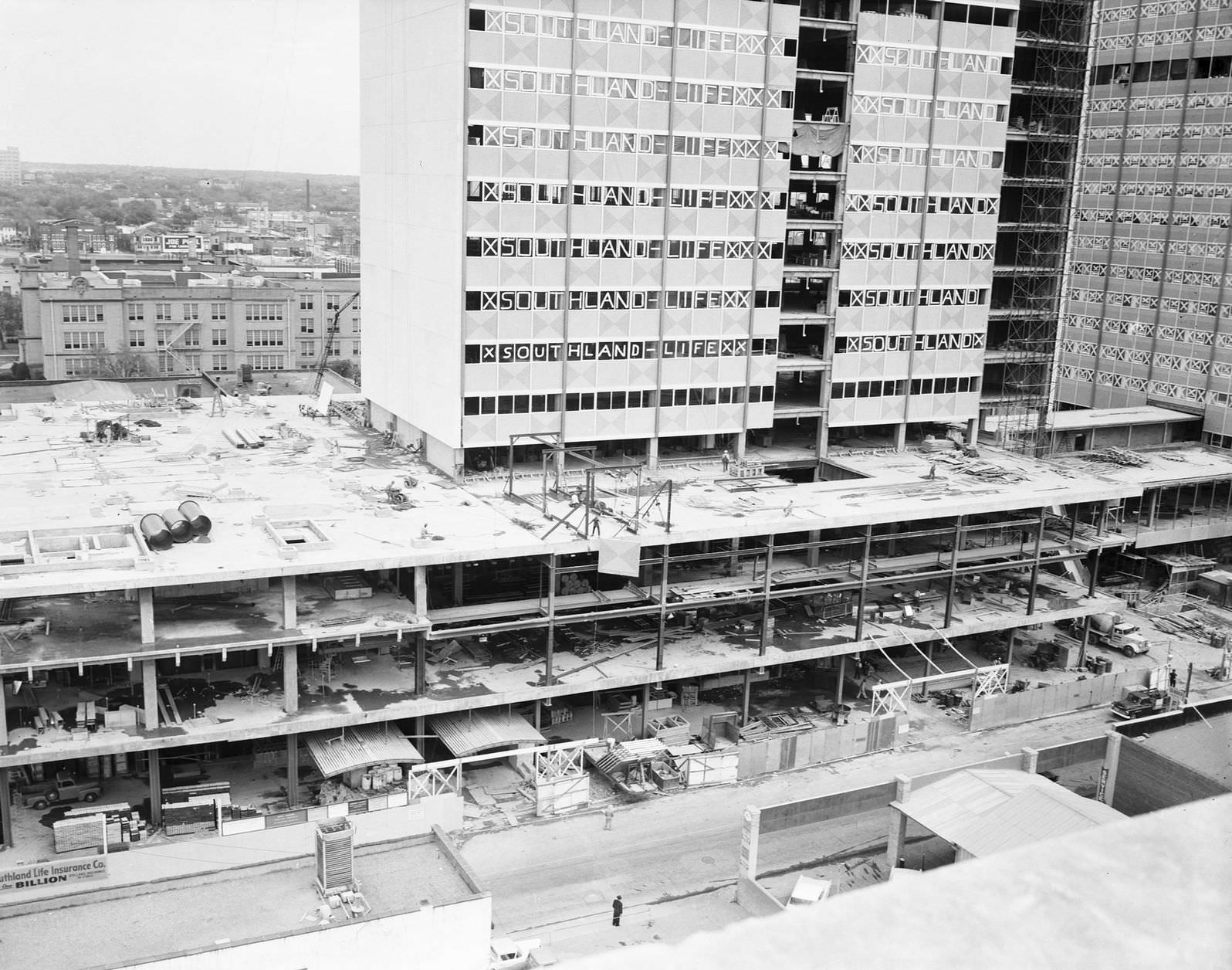
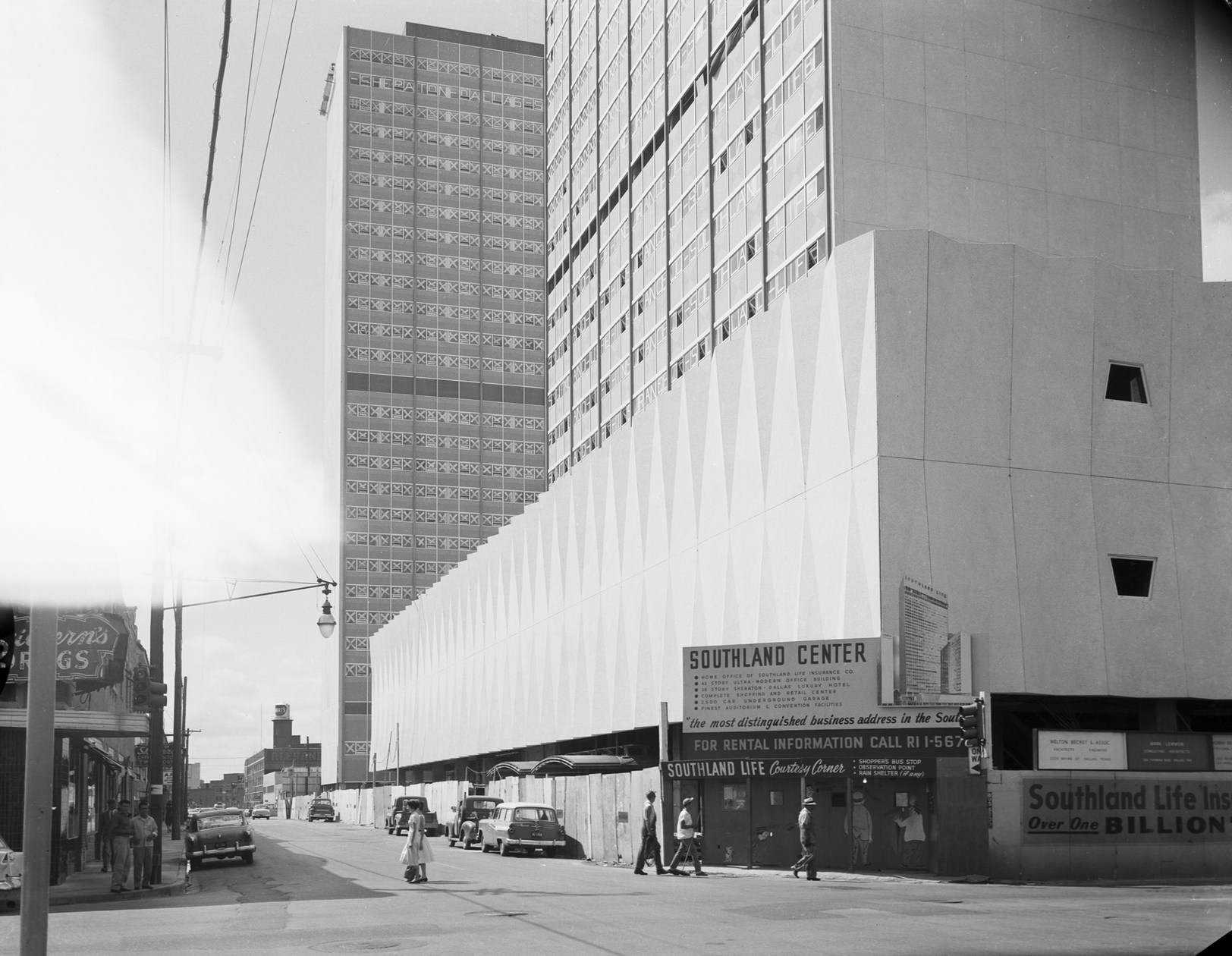
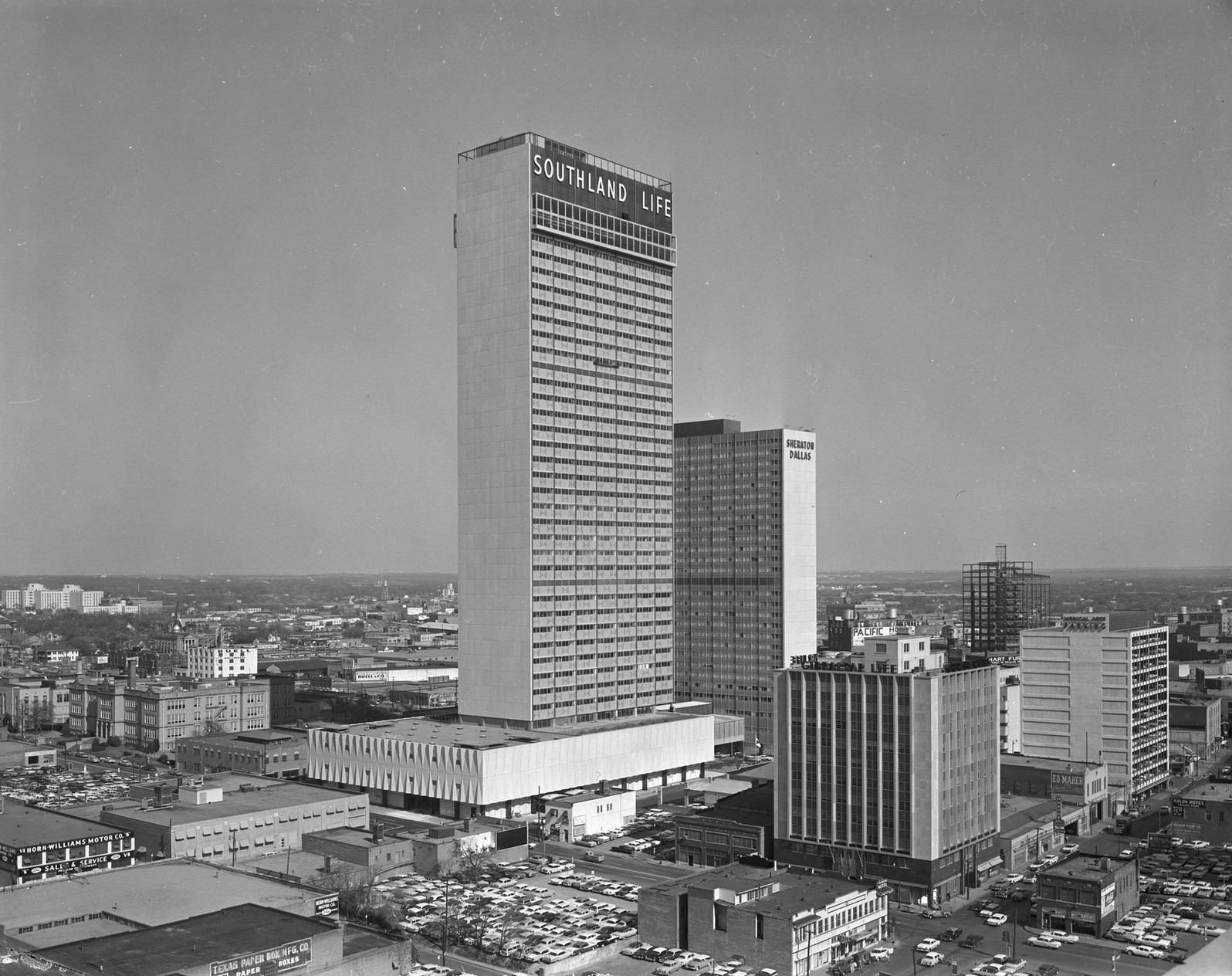
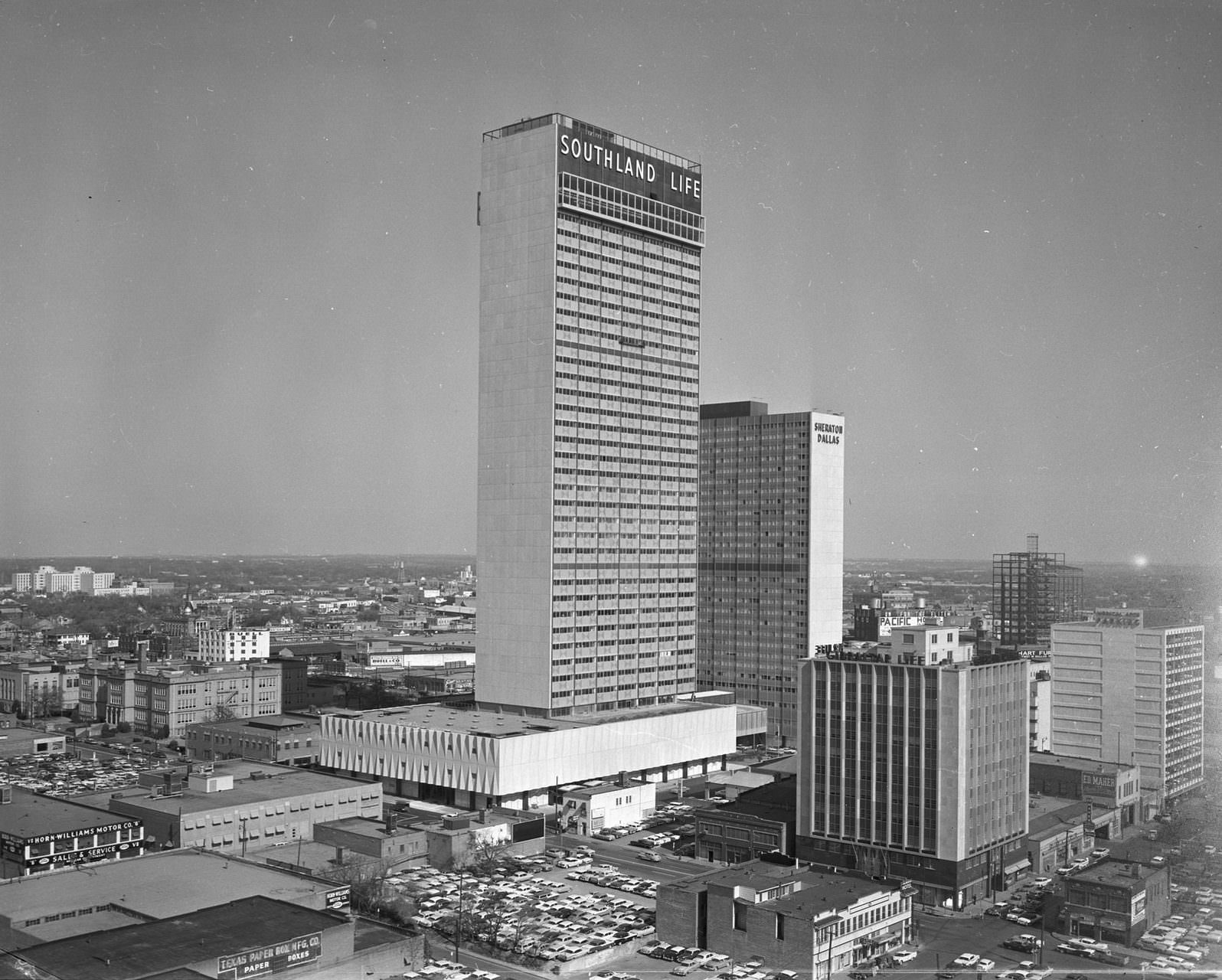
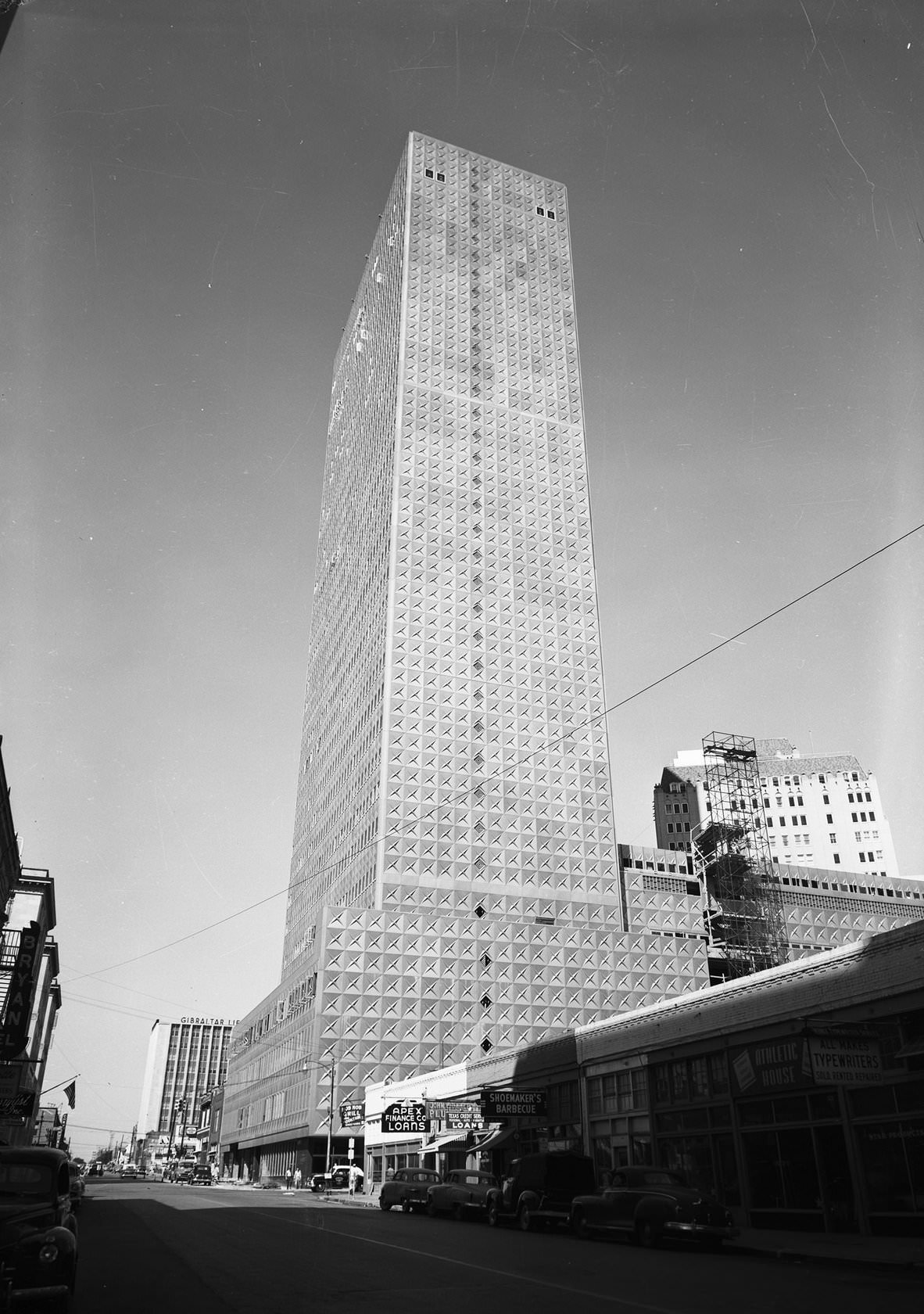
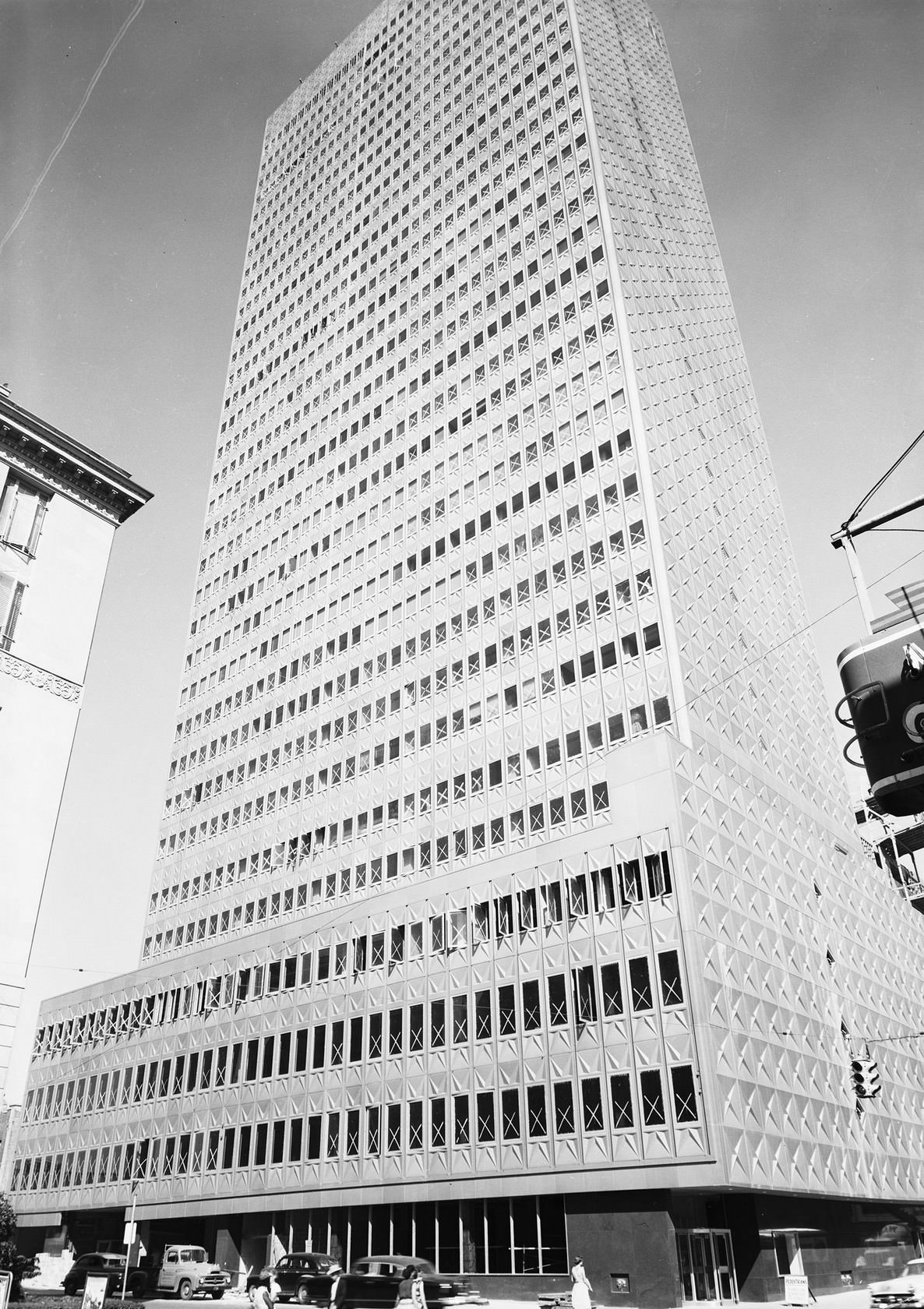
One of the decade’s most significant construction projects was the Southland Center. When it was dedicated in 1959, it became the tallest building west of the Mississippi River. Construction on the site began in 1957 and drew photographers from multiple angles over the course of two years. The sheer scale of the project was visible from the air and street level alike.
Aerial view of the Southland Center under construction, downtown Dallas, Texas, 1957Southland Center under construction, downtown Dallas, Texas, 1957Southland Center under construction, Dallas, 1957Southland Center under construction, downtown Dallas, Texas, 1957Southland Center under construction, downtown Dallas, Texas, 1957Southland Center under construction, downtown Dallas, Texas, 1957Southland Center under construction, downtown Dallas, Texas, 1957Southland Center under construction, 1957Southland Center under construction, 1957Southland Center under construction, downtown Dallas, Texas, 1957Southland Center under construction, downtown Dallas, Texas, 1957
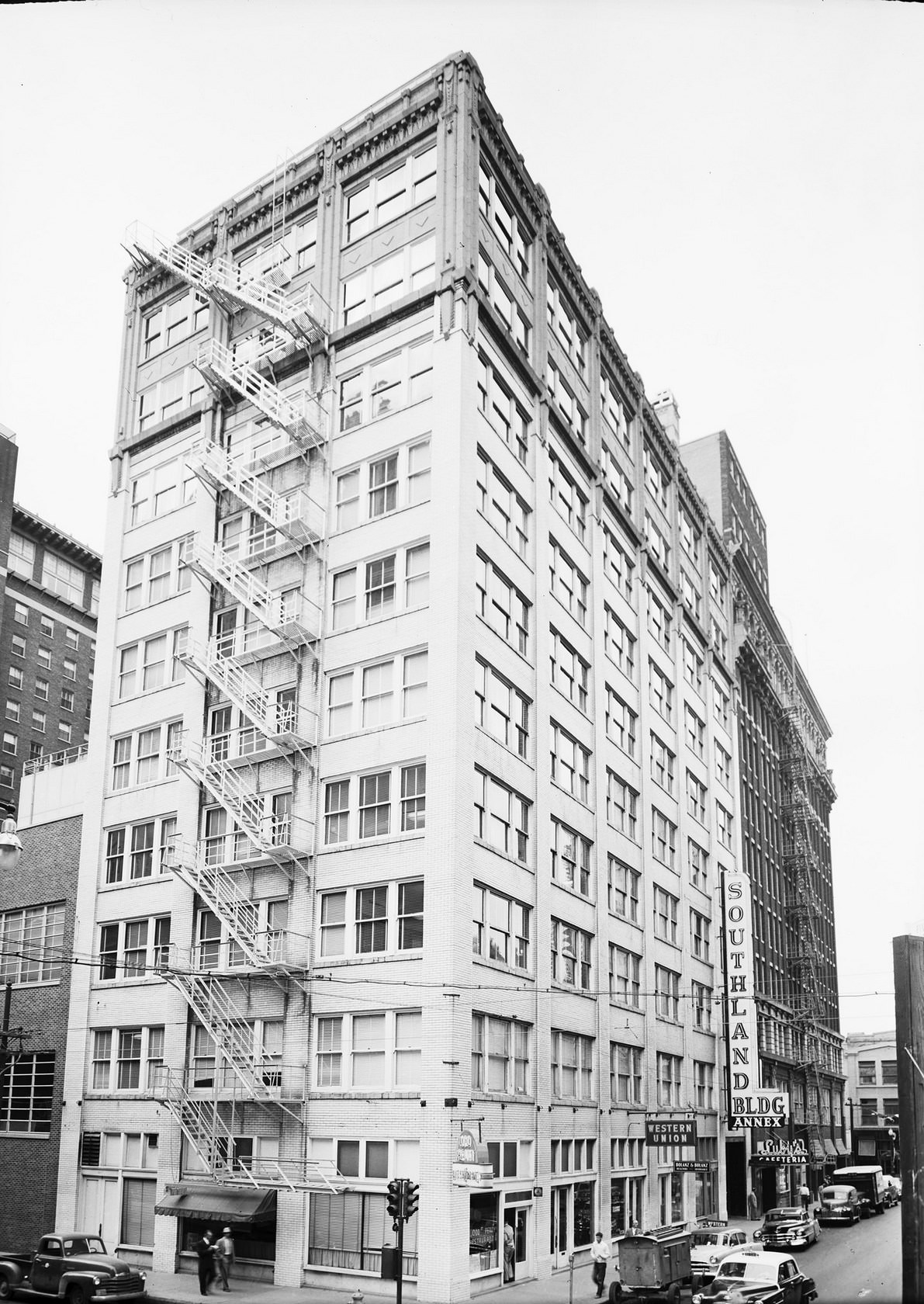
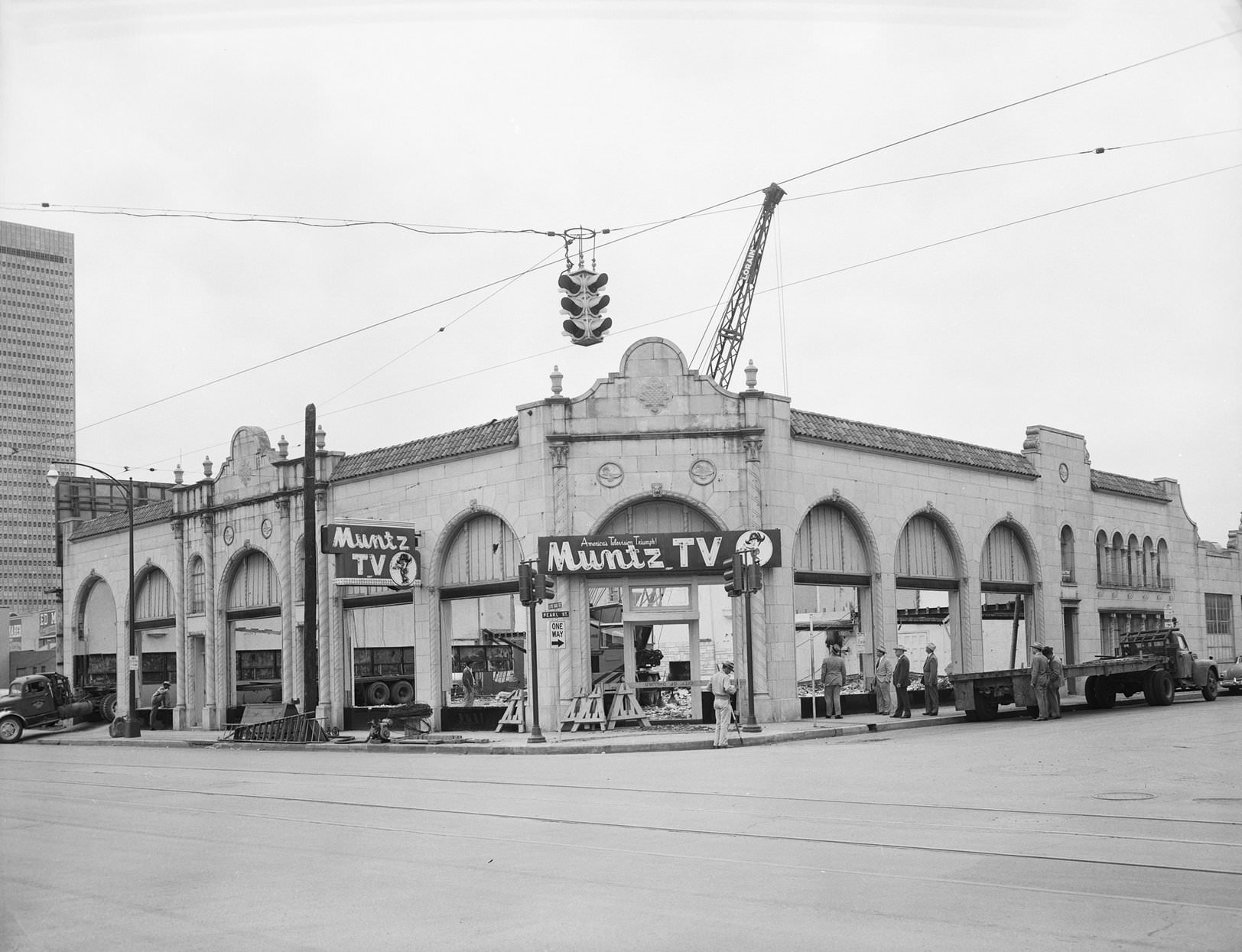
Alongside the Southland Center, the Southland Life building and the adjacent Sheraton Hotel were also going up in the late 1950s, collectively reshaping a significant section of downtown. The Southland Building Annex and the earlier Southland Life and Sheraton Hotel building plans showed that the project had been years in the making.
Southland Life building, Dallas, 1958Southland Life and Sheraton Hotel buildings under construction, downtown Dallas, 1958Southland Life and Sheraton Hotel buildings under construction, downtown Dallas, 1958Southland Life building, Dallas, 1958Southland Life building, Dallas, 1958Southland Life building, Dallas, 1957Southland Life and Sheraton Hotel buildings, downtown Dallas, 1954Southland Life and Sheraton Hotel Buildings, 1950Southland Building Annex, downtown Dallas, Texas, 1953Muntz TV building, Dallas. New site of Southland Life Insurance Company, 1954
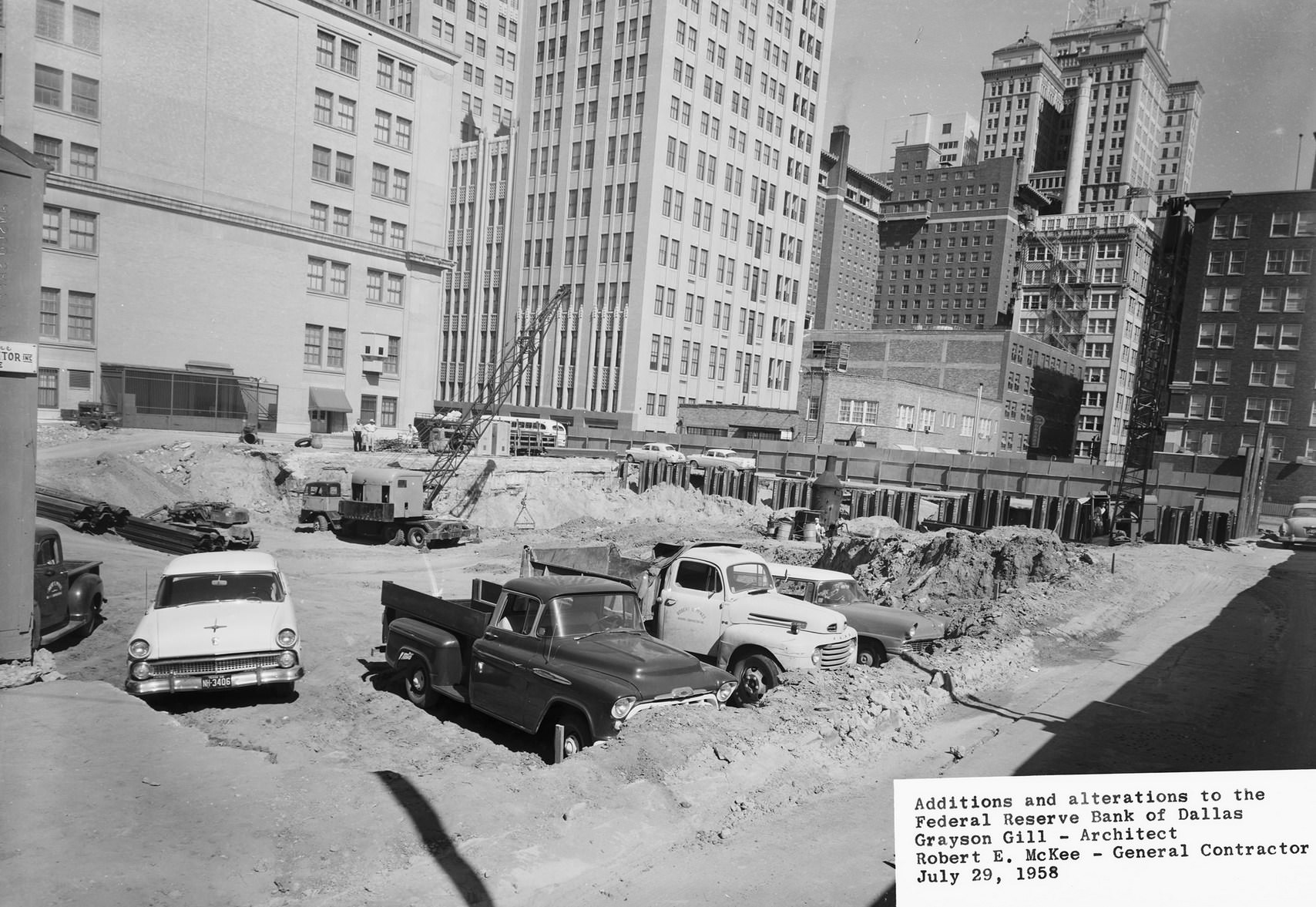
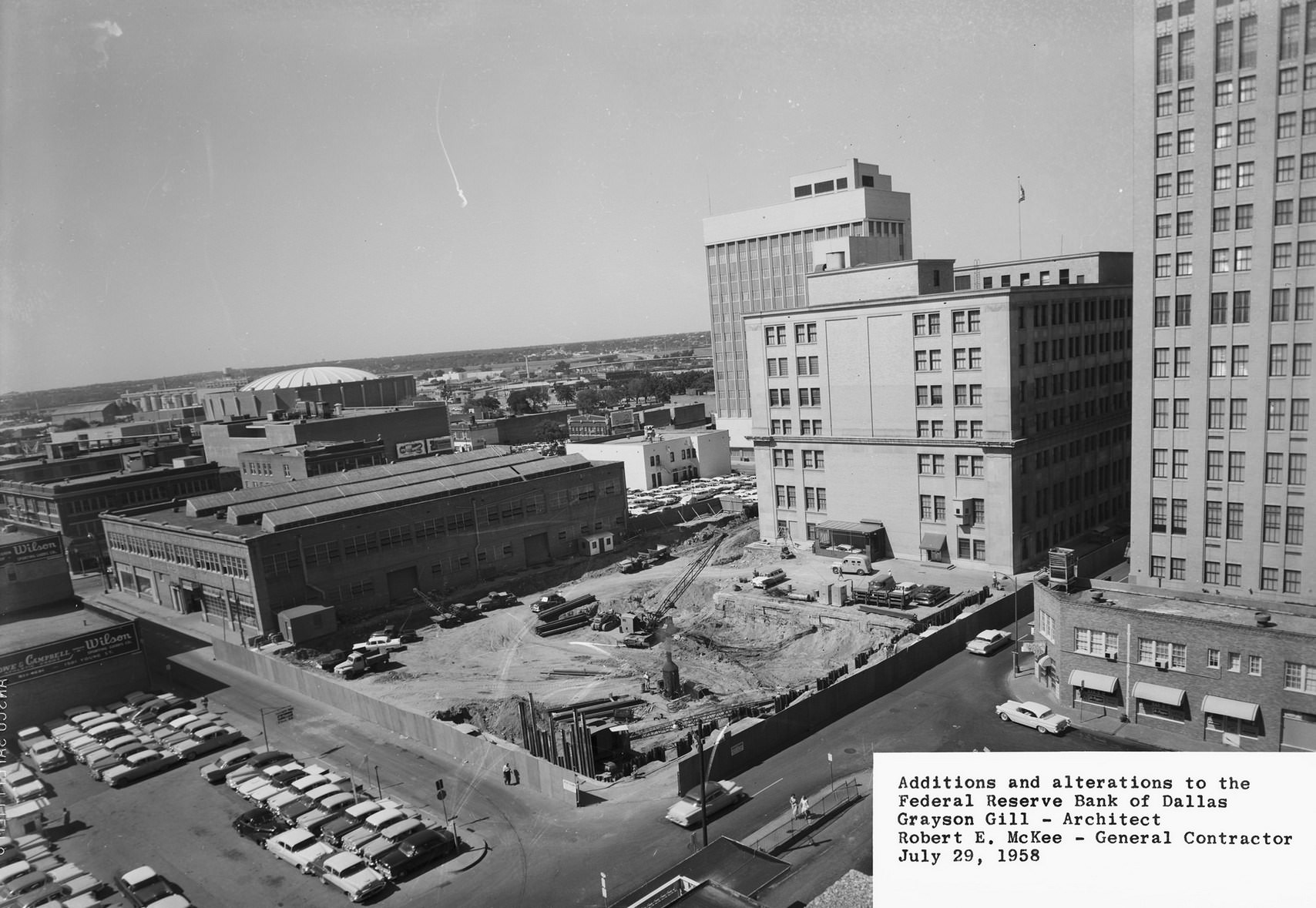
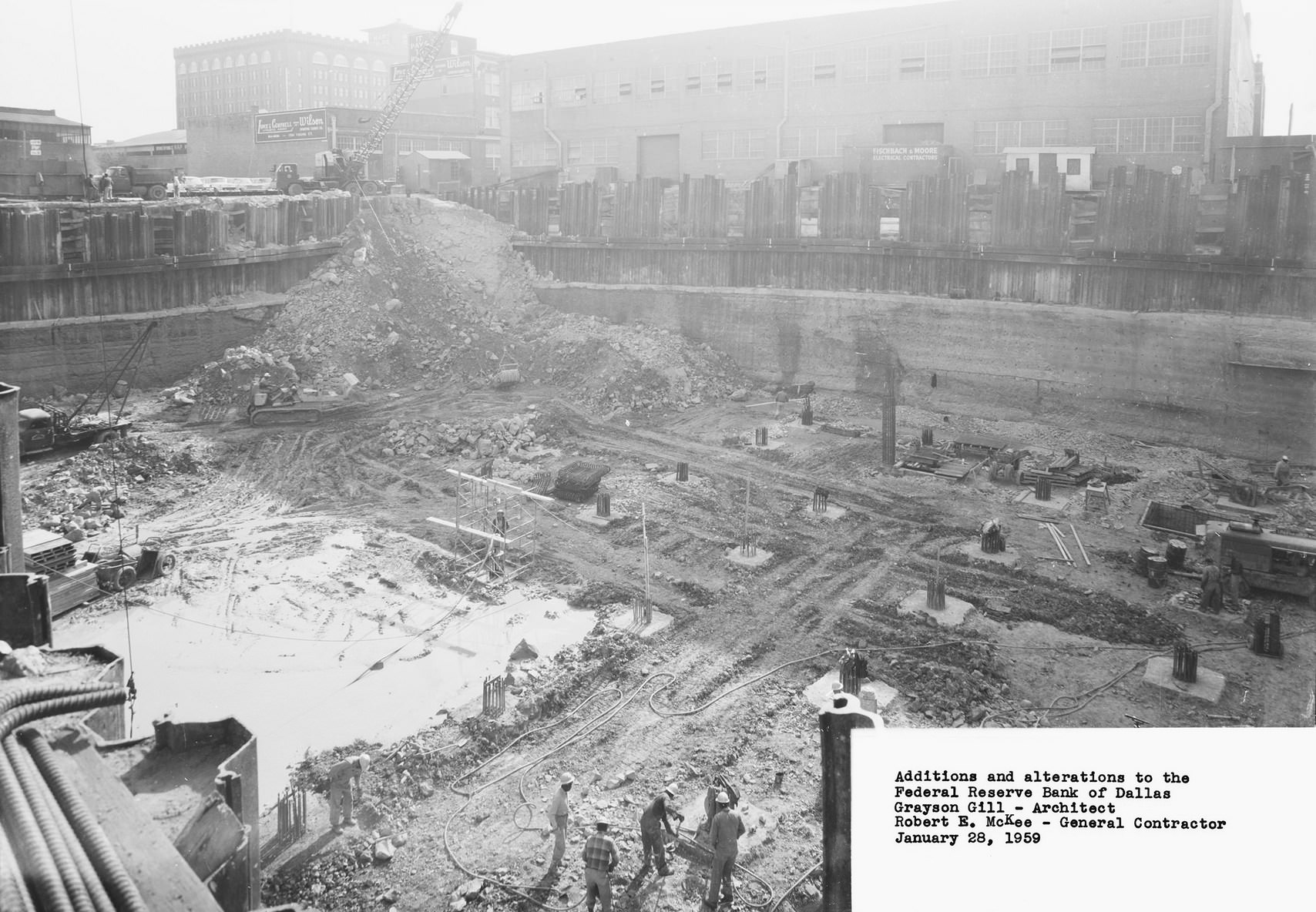
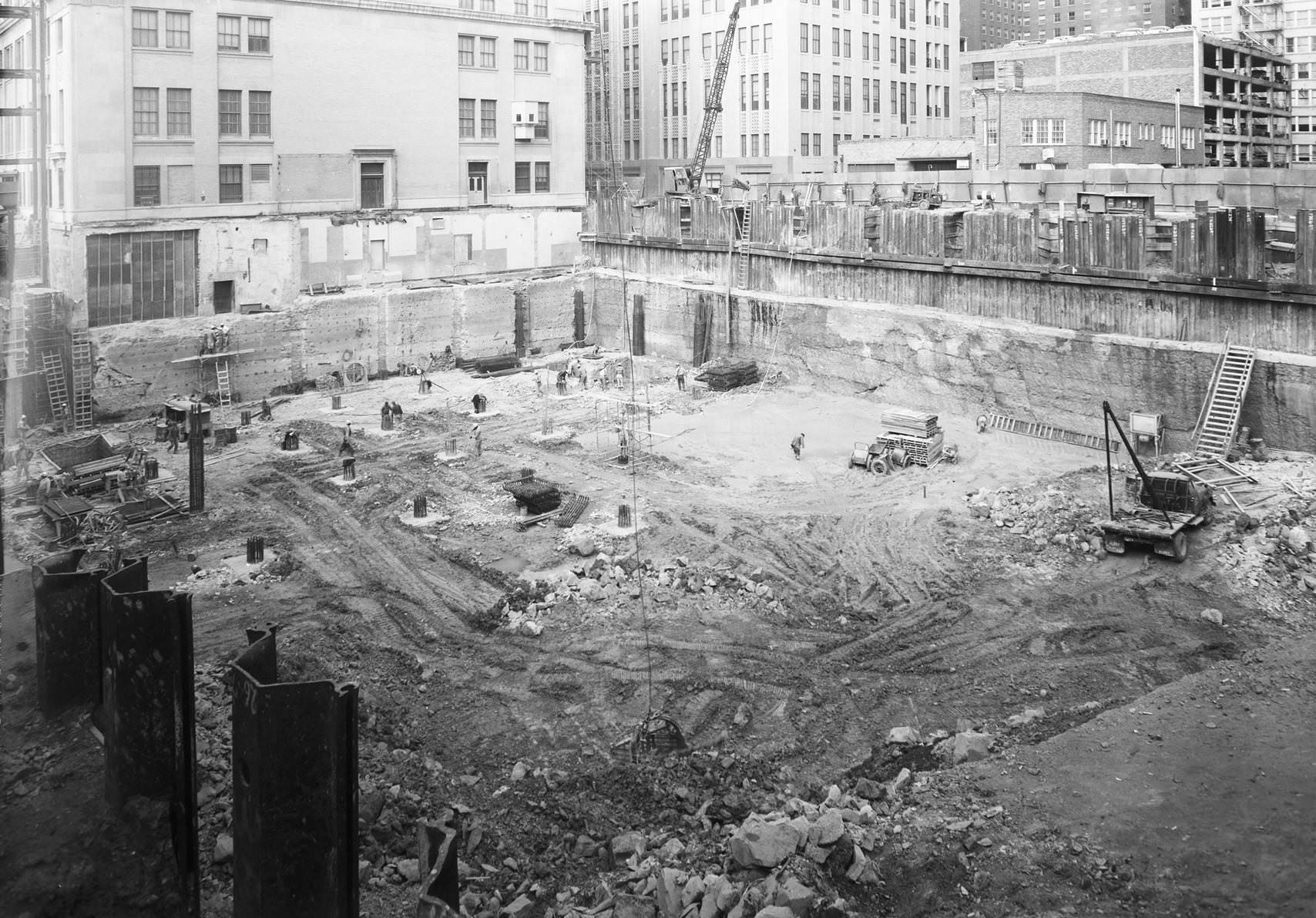
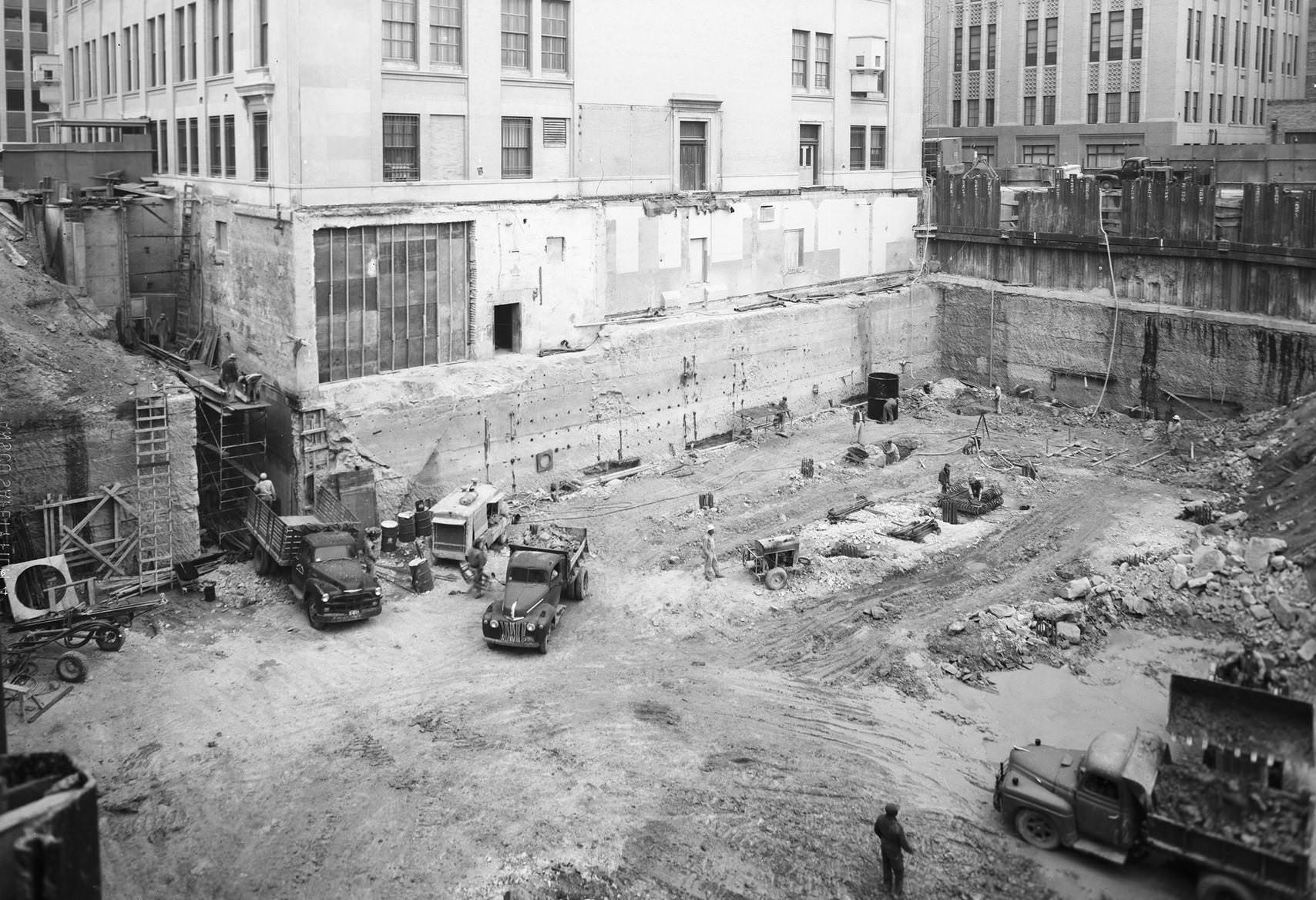
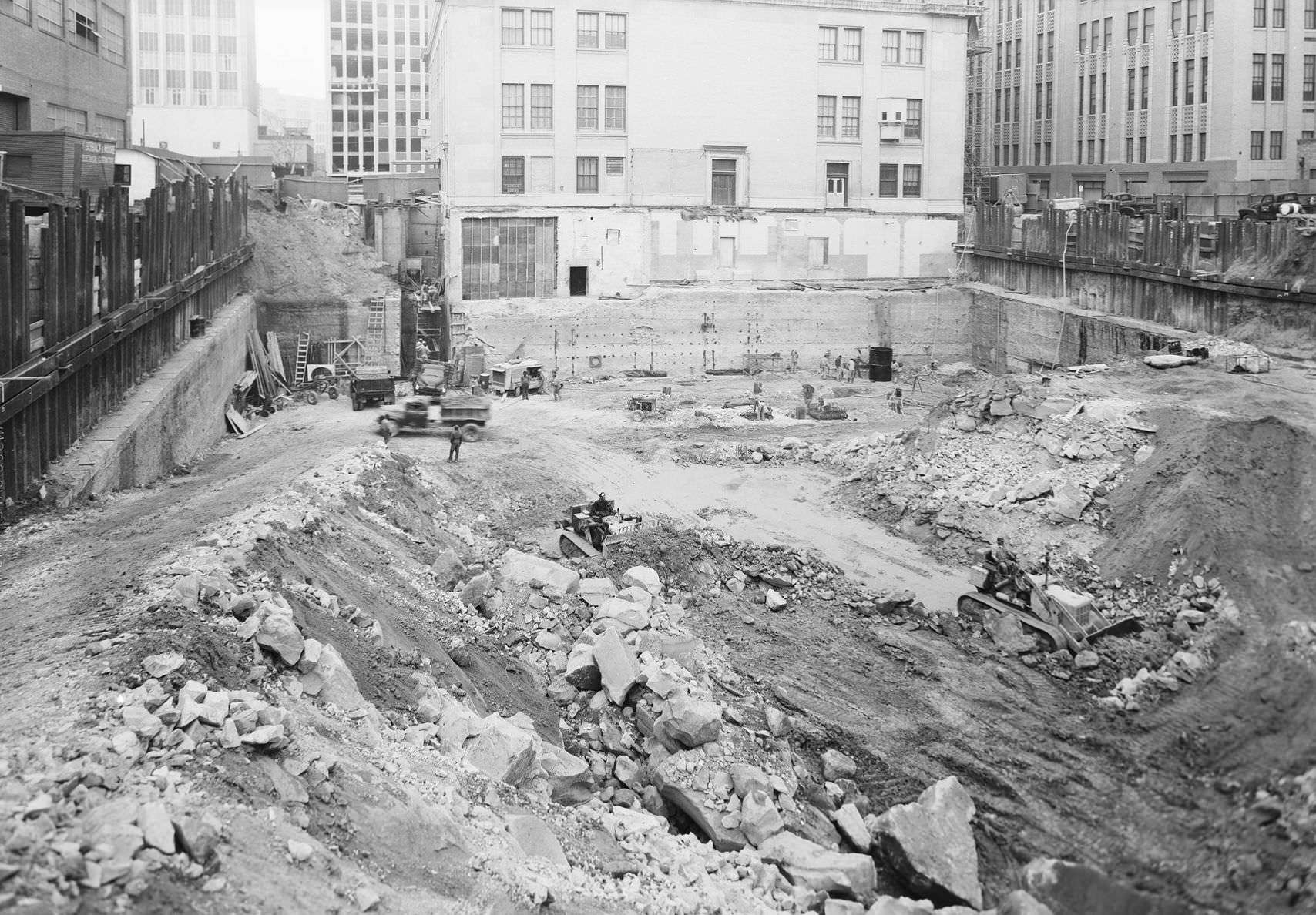
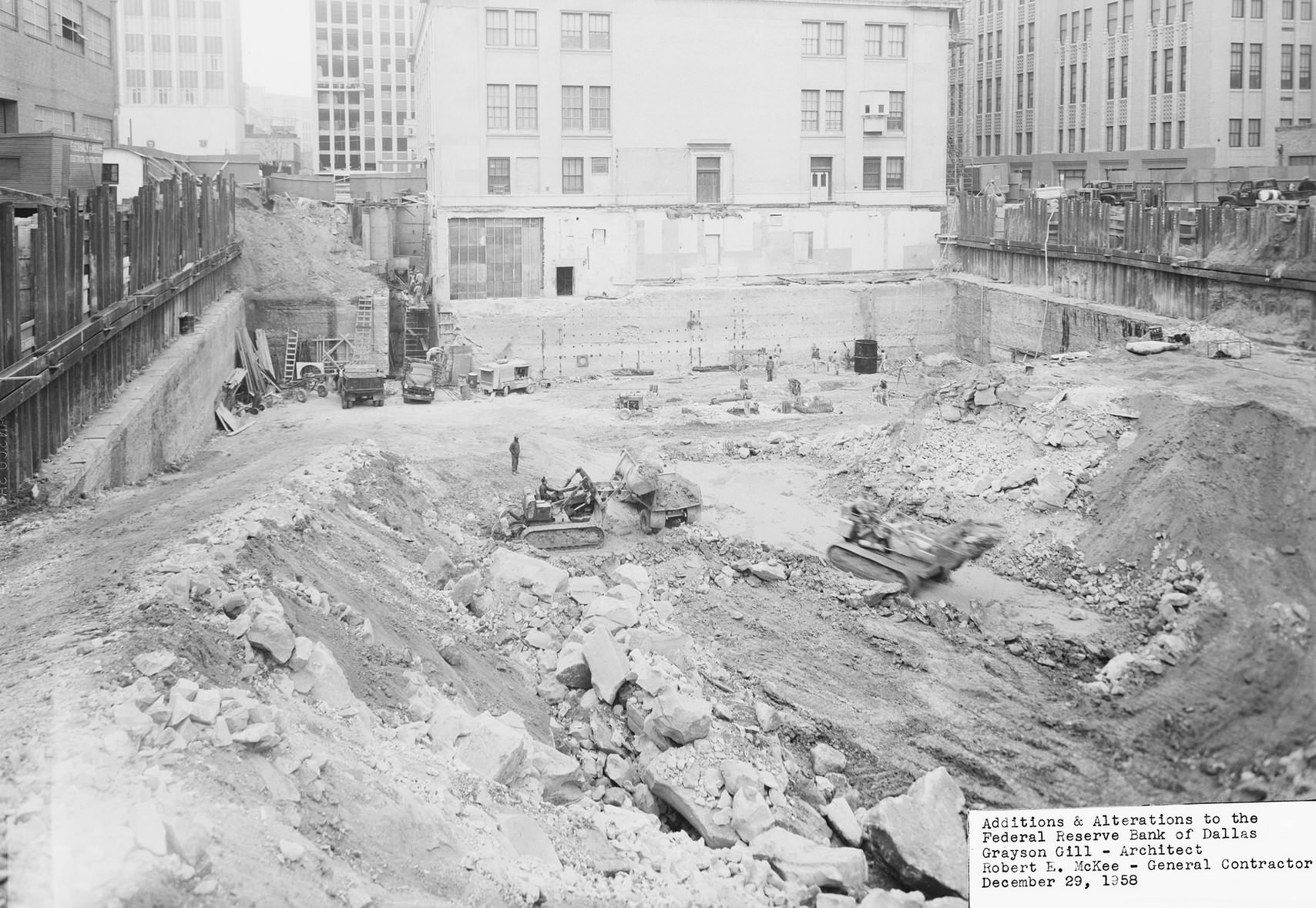
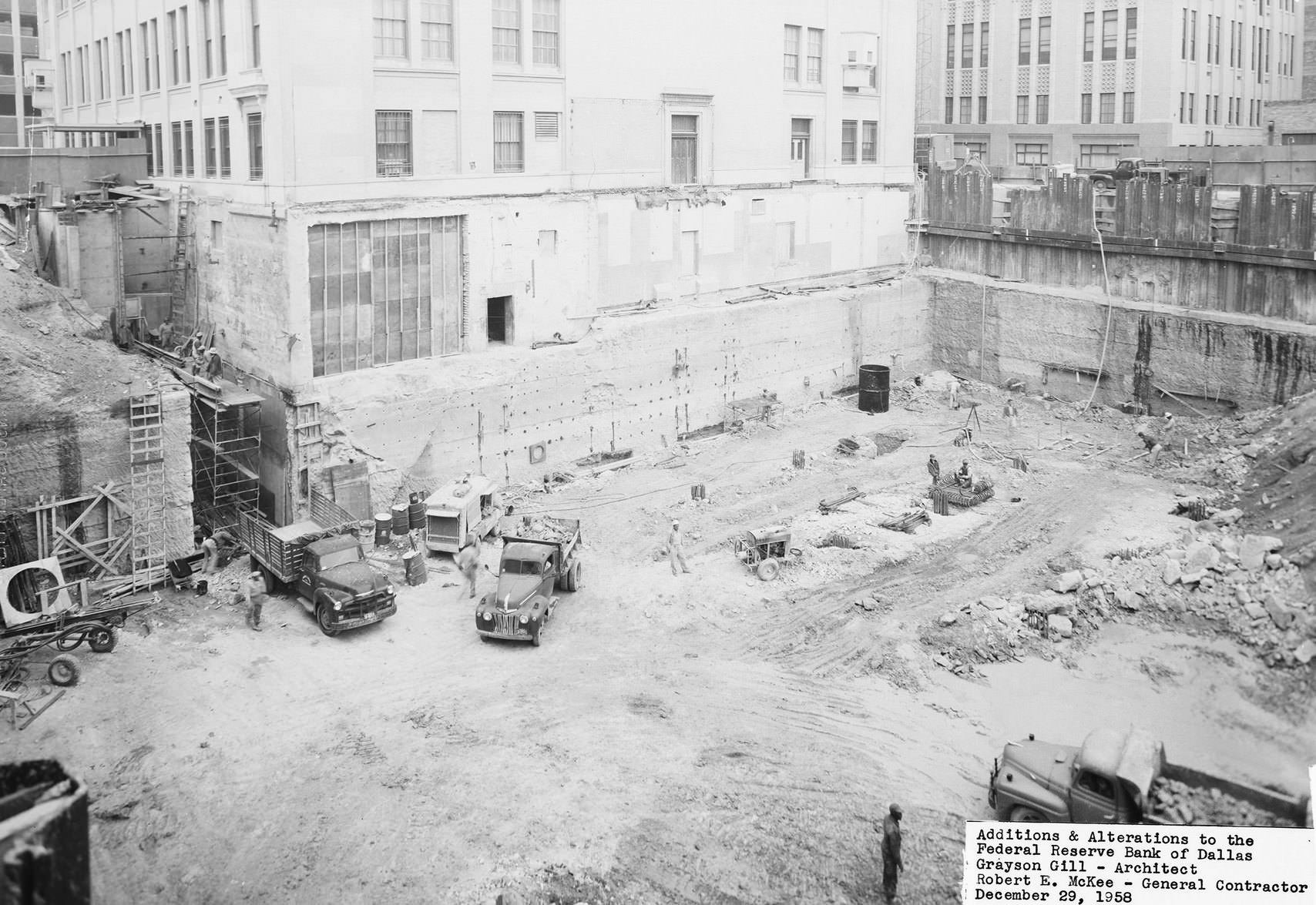
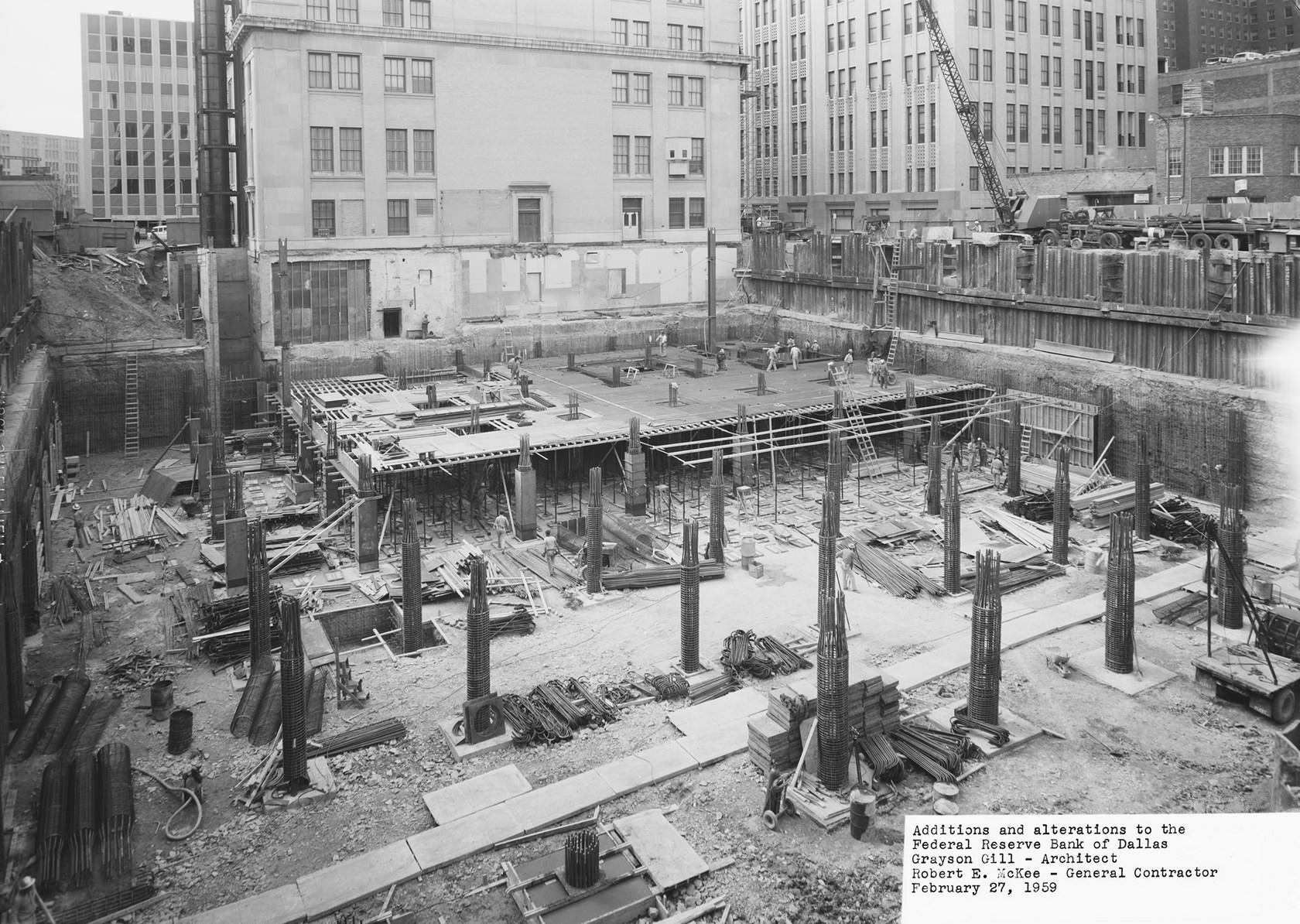
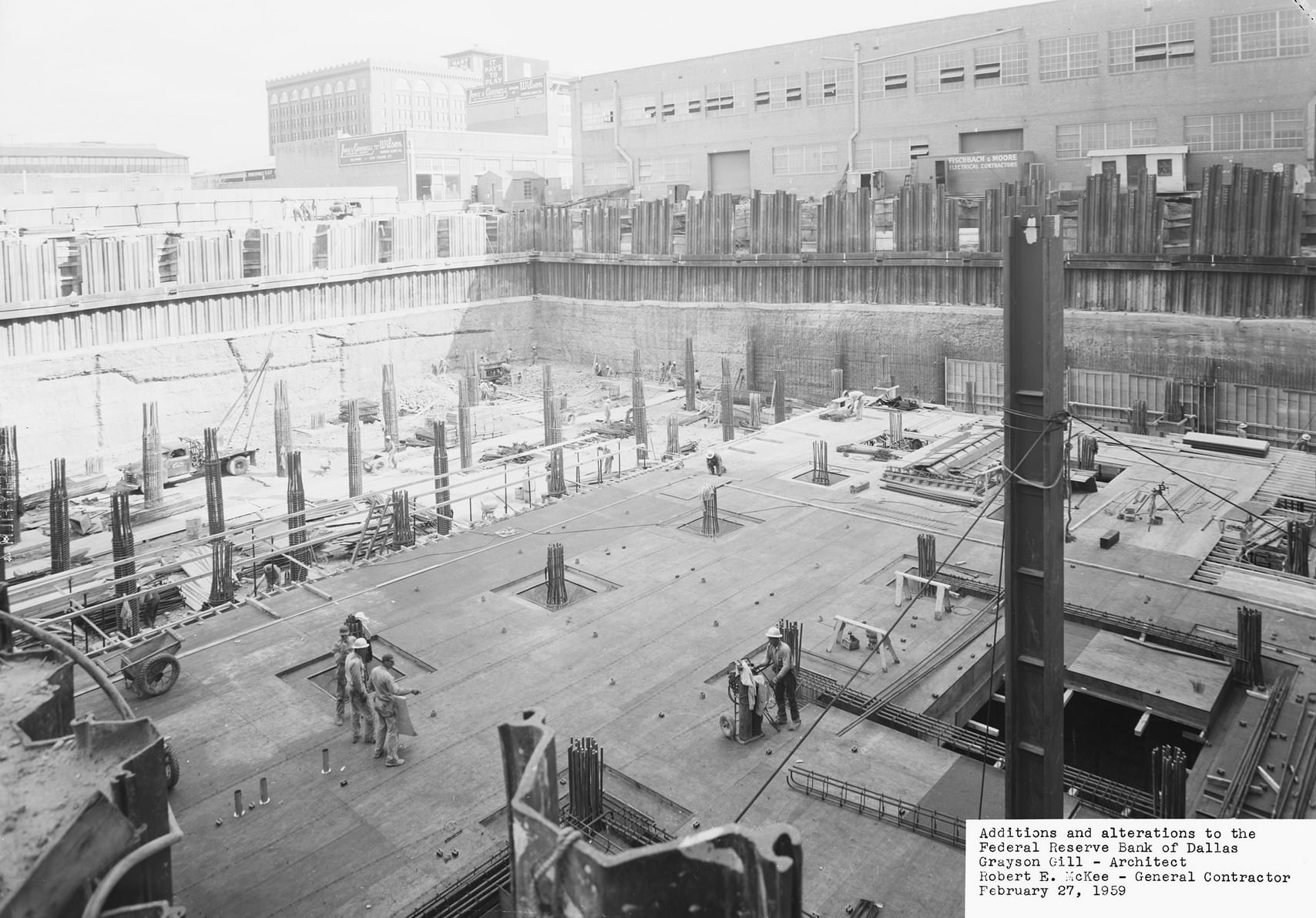
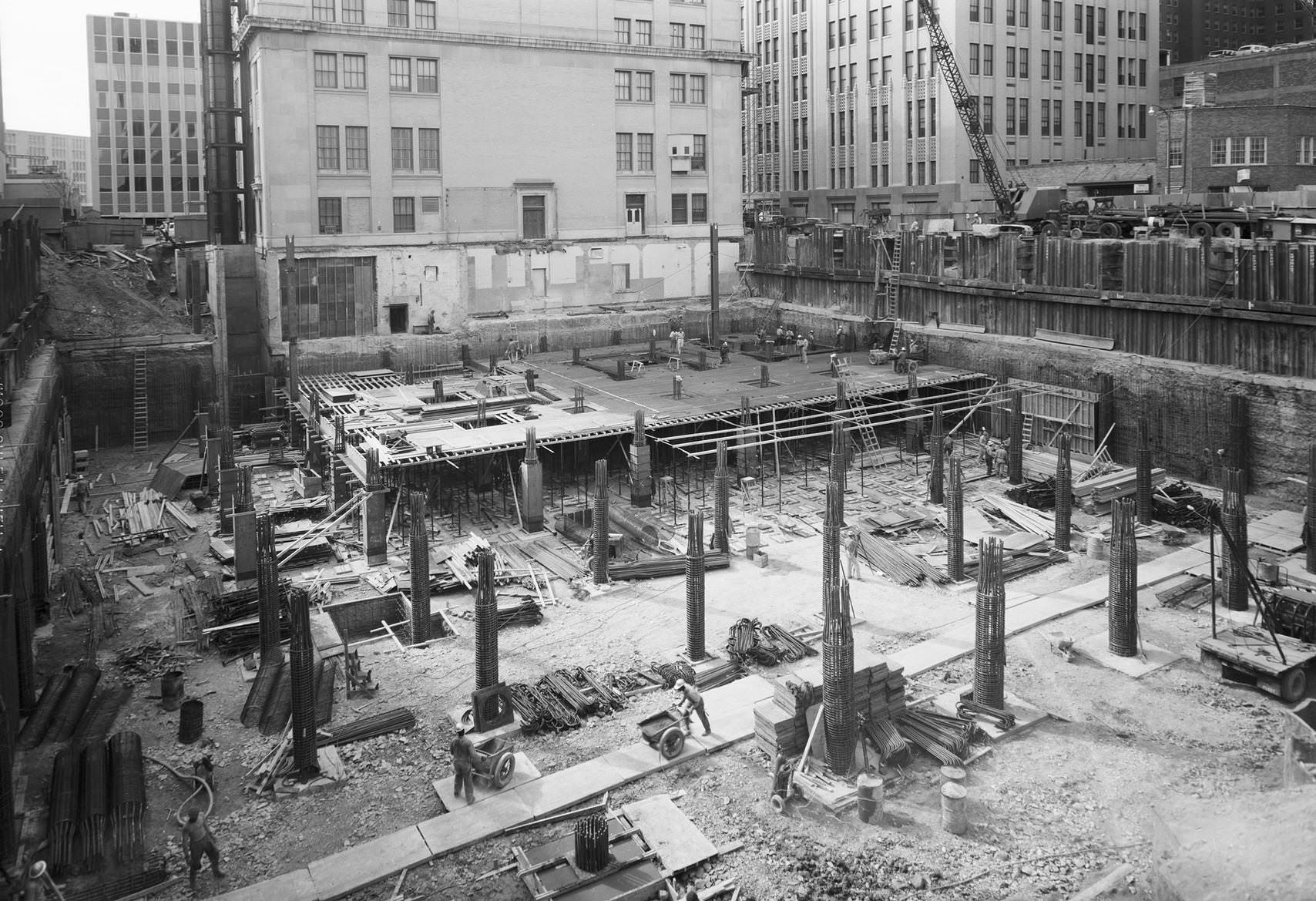
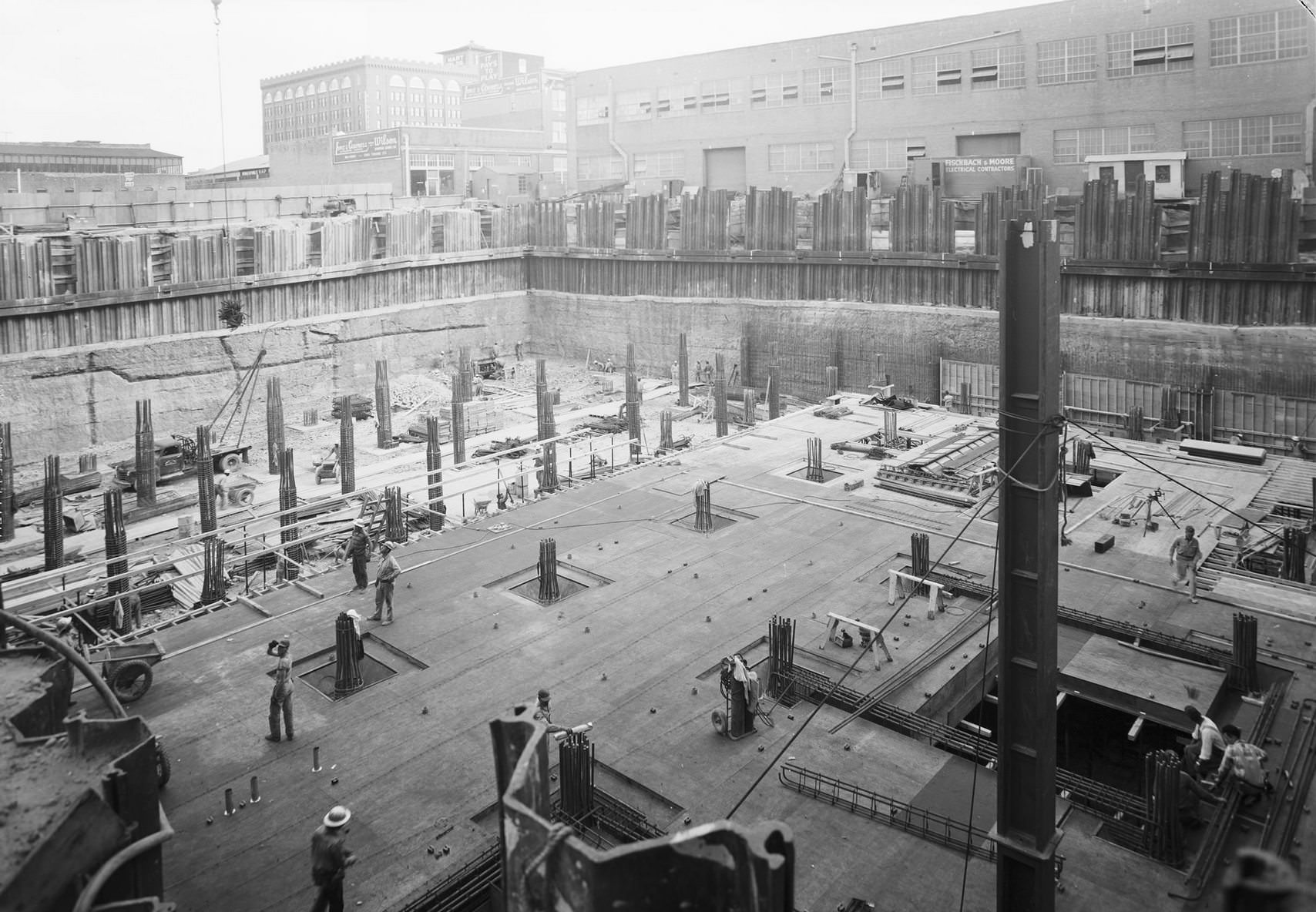
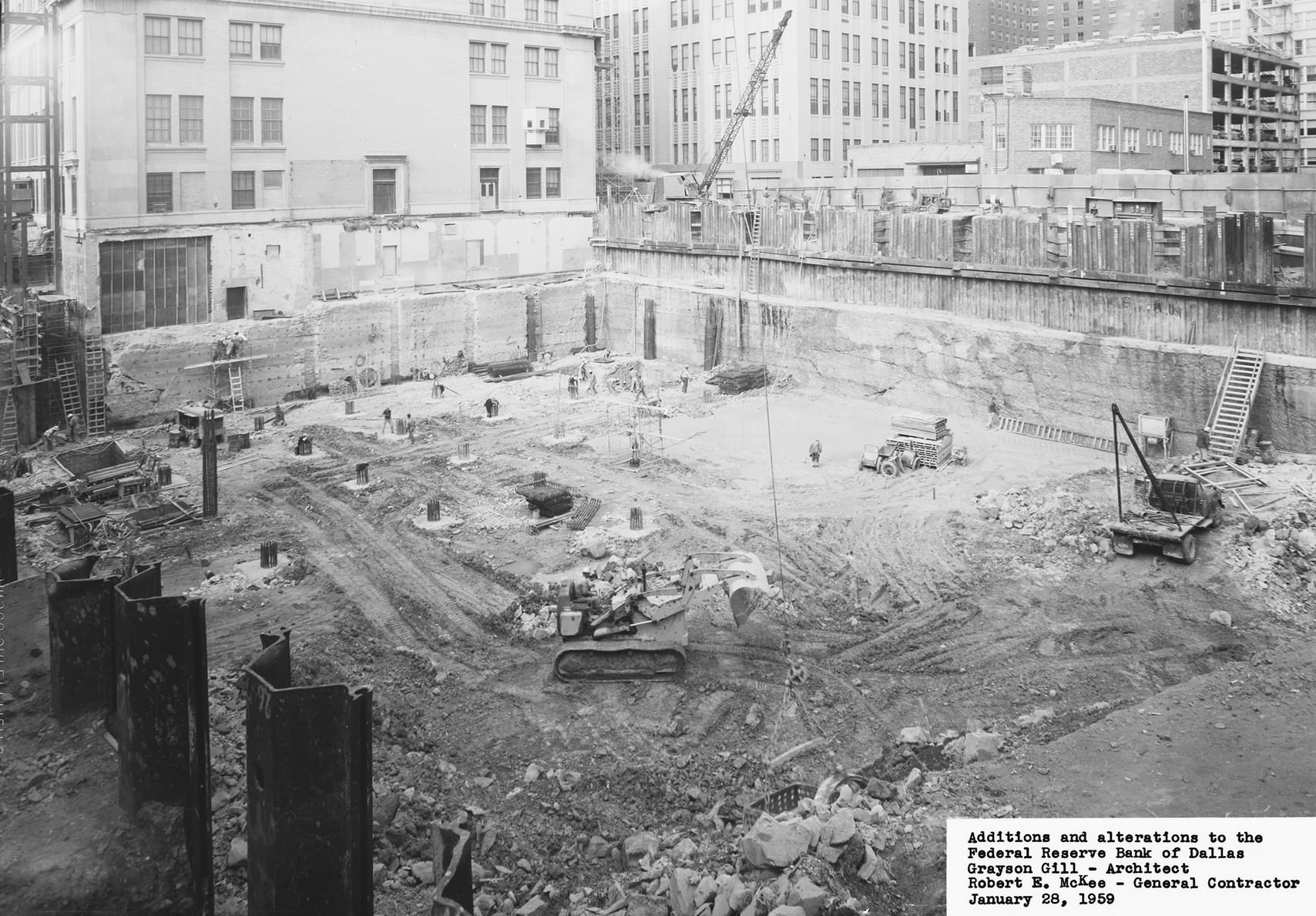
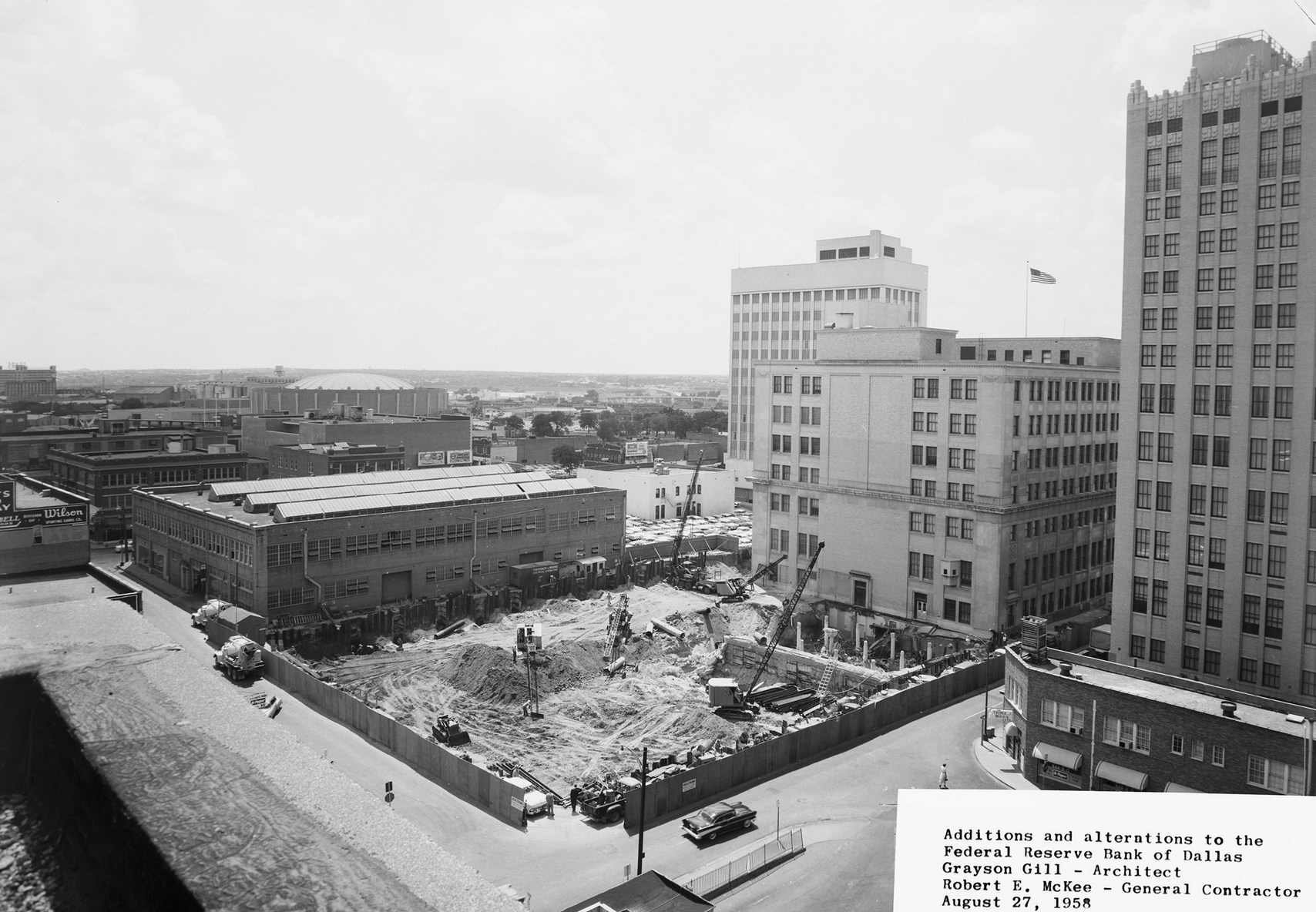
The Federal Reserve Bank of Dallas was another major construction project that marked the city’s growing financial stature. Work on an addition to the building stretched across the late 1950s into 1959, documented in a series of photographs that tracked the project’s progress from the ground up.
Federal Reserve Bank of Dallas, addition construction, downtown Dallas, Texas, 1958Federal Reserve Bank of Dallas, addition construction, downtown Dallas, Texas, 958Federal Reserve Bank of Dallas, addition construction, downtown Dallas, Texas, 1959Federal Reserve Bank of Dallas, addition construction, downtown Dallas, Texas, 1959Federal Reserve Bank of Dallas, addition construction, downtown Dallas, Texas, 1958Federal Reserve Bank of Dallas, addition construction, downtown Dallas, Texas, 1958Federal Reserve Bank of Dallas, addition construction, downtown Dallas, Texas, 1958Federal Reserve Bank of Dallas, addition construction, downtown Dallas, Texas, 1958Federal Reserve Bank of Dallas, addition construction, downtown Dallas, Texas, 1959Federal Reserve Bank of Dallas, addition construction, downtown Dallas, Texas, 1959Federal Reserve Bank of Dallas, addition construction, downtown Dallas, Texas, 1959Federal Reserve Bank of Dallas, addition construction, downtown Dallas, Texas, 1959Federal Reserve Bank of Dallas, addition construction, downtown Dallas, Texas, 1959Federal Reserve Bank of Dallas, addition construction, downtown Dallas, Texas, 1958
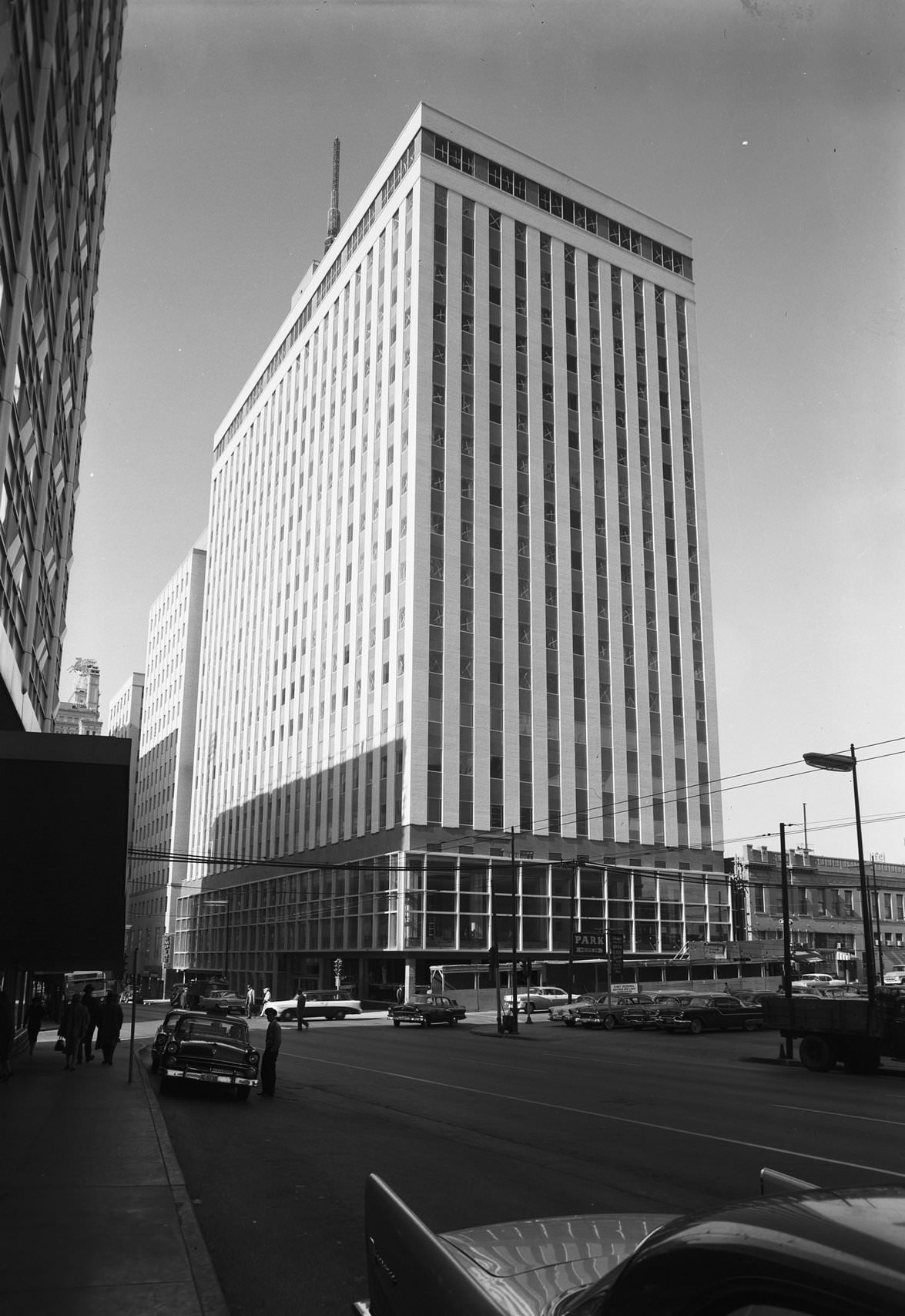
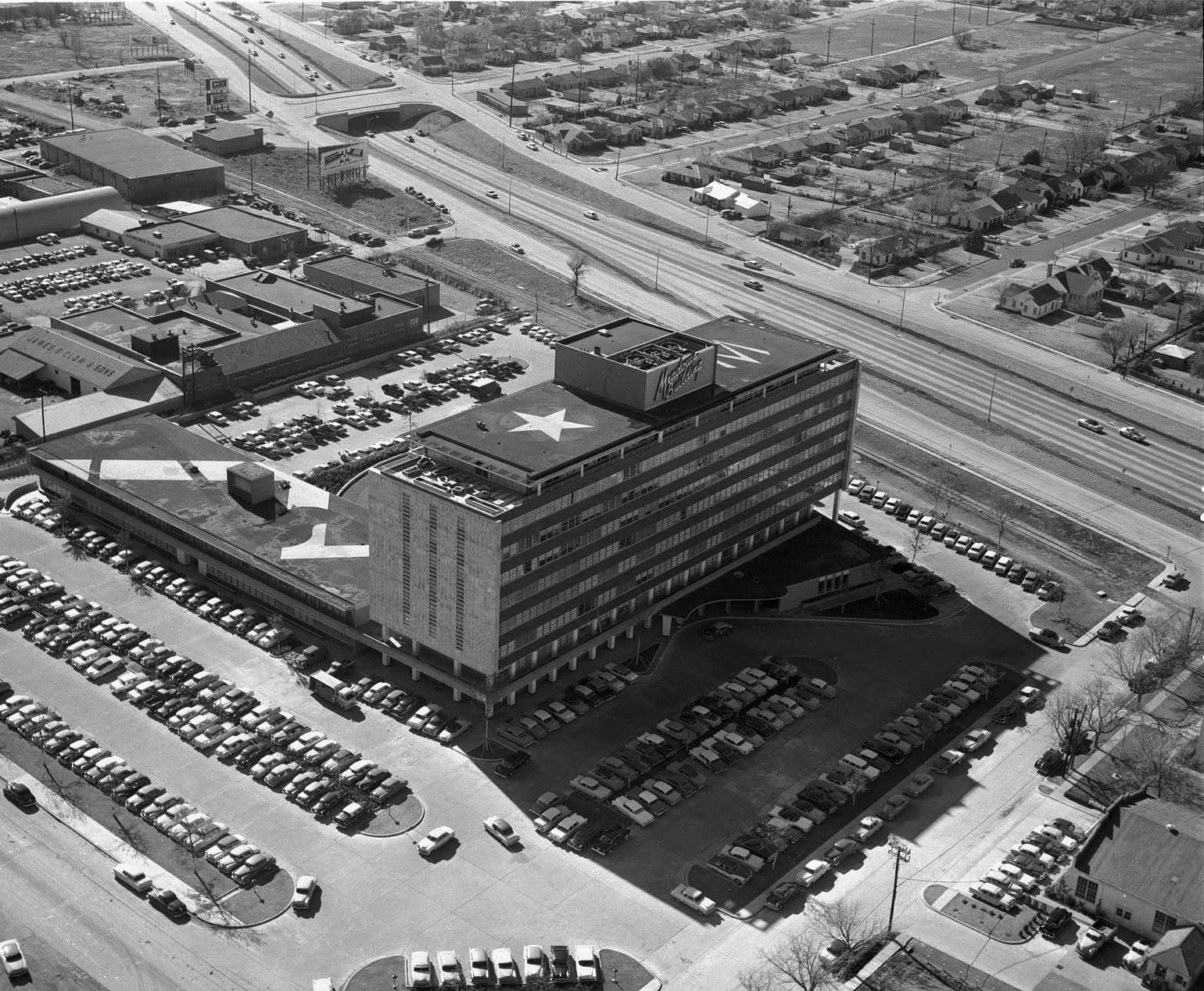
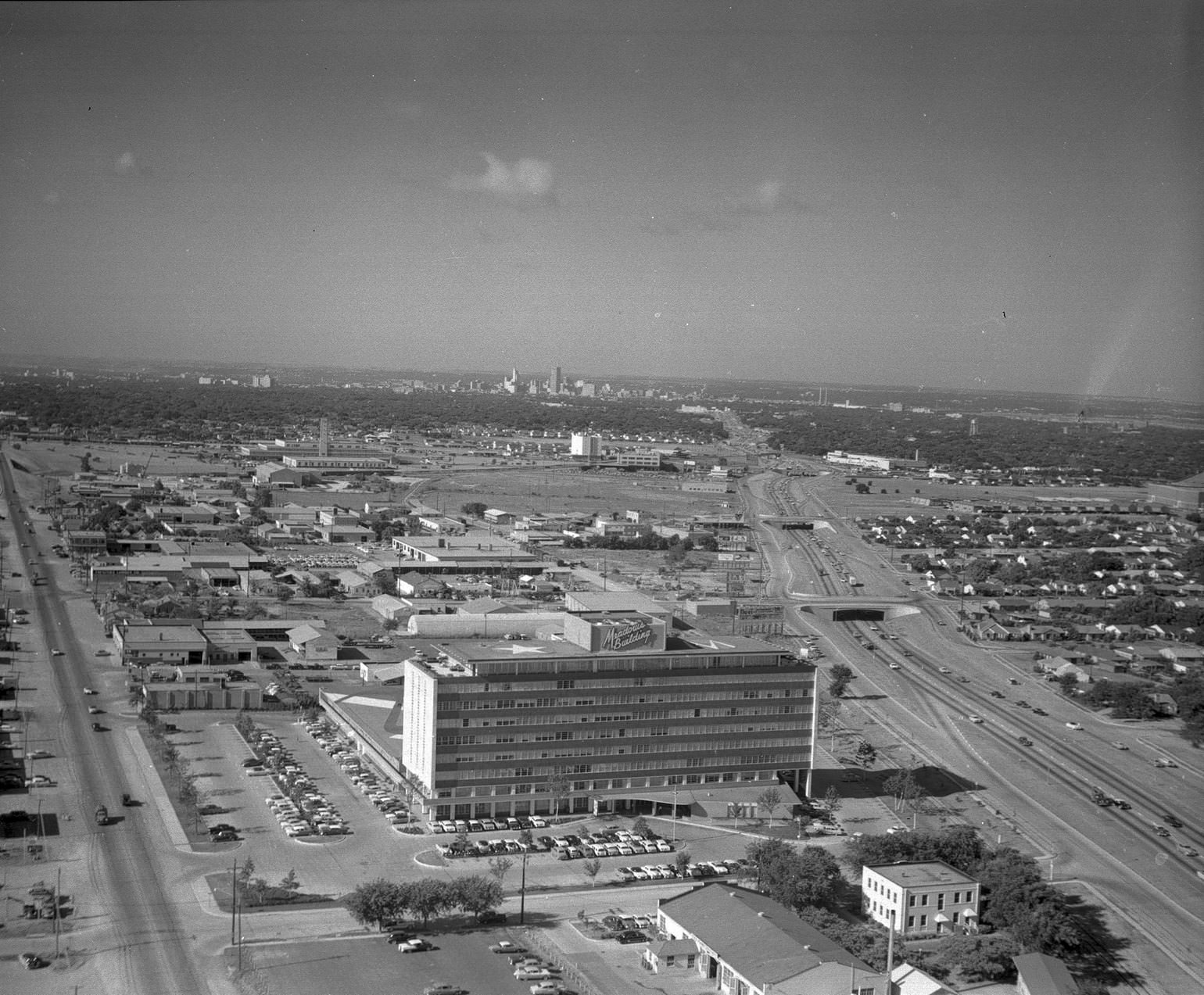
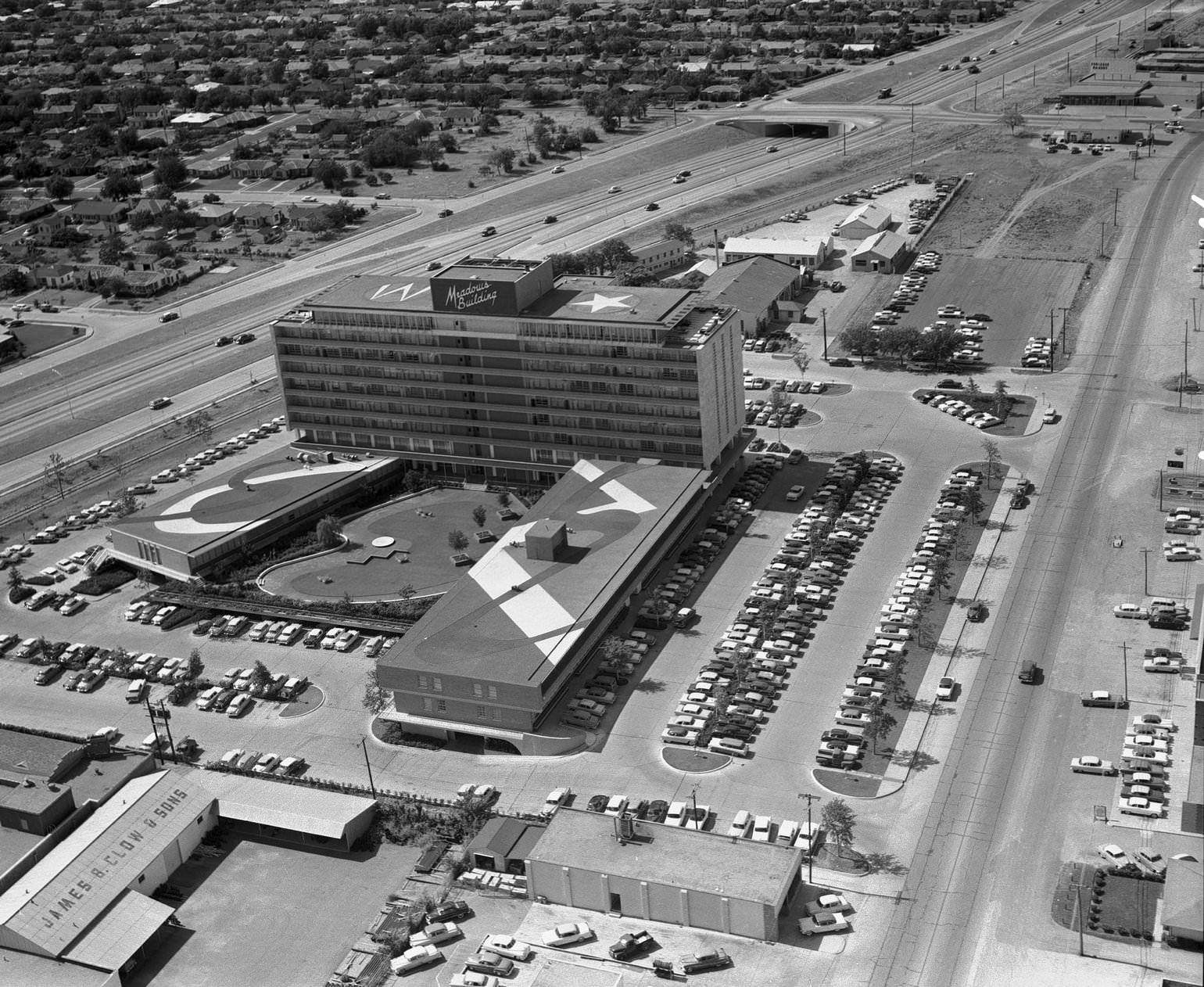
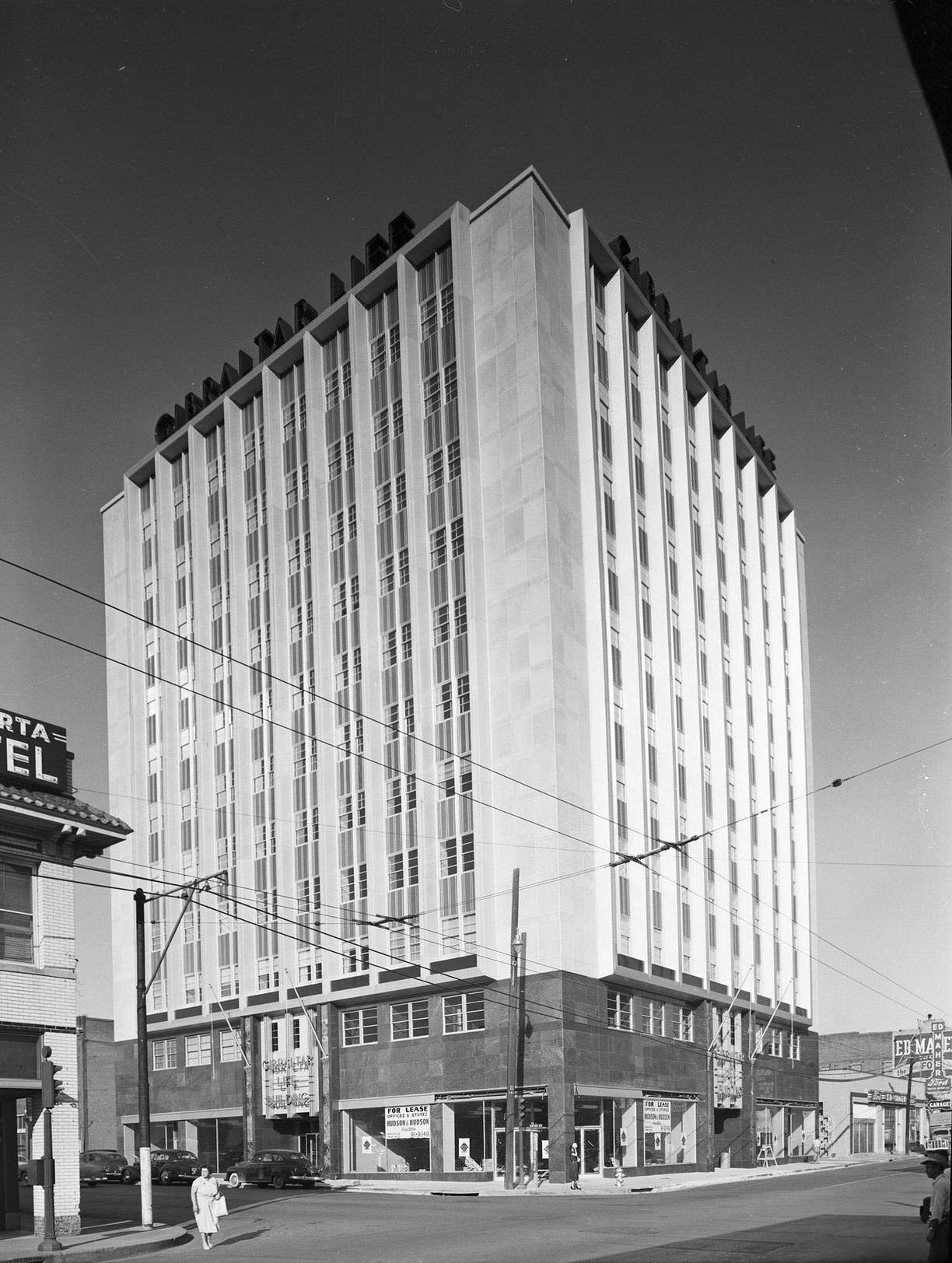
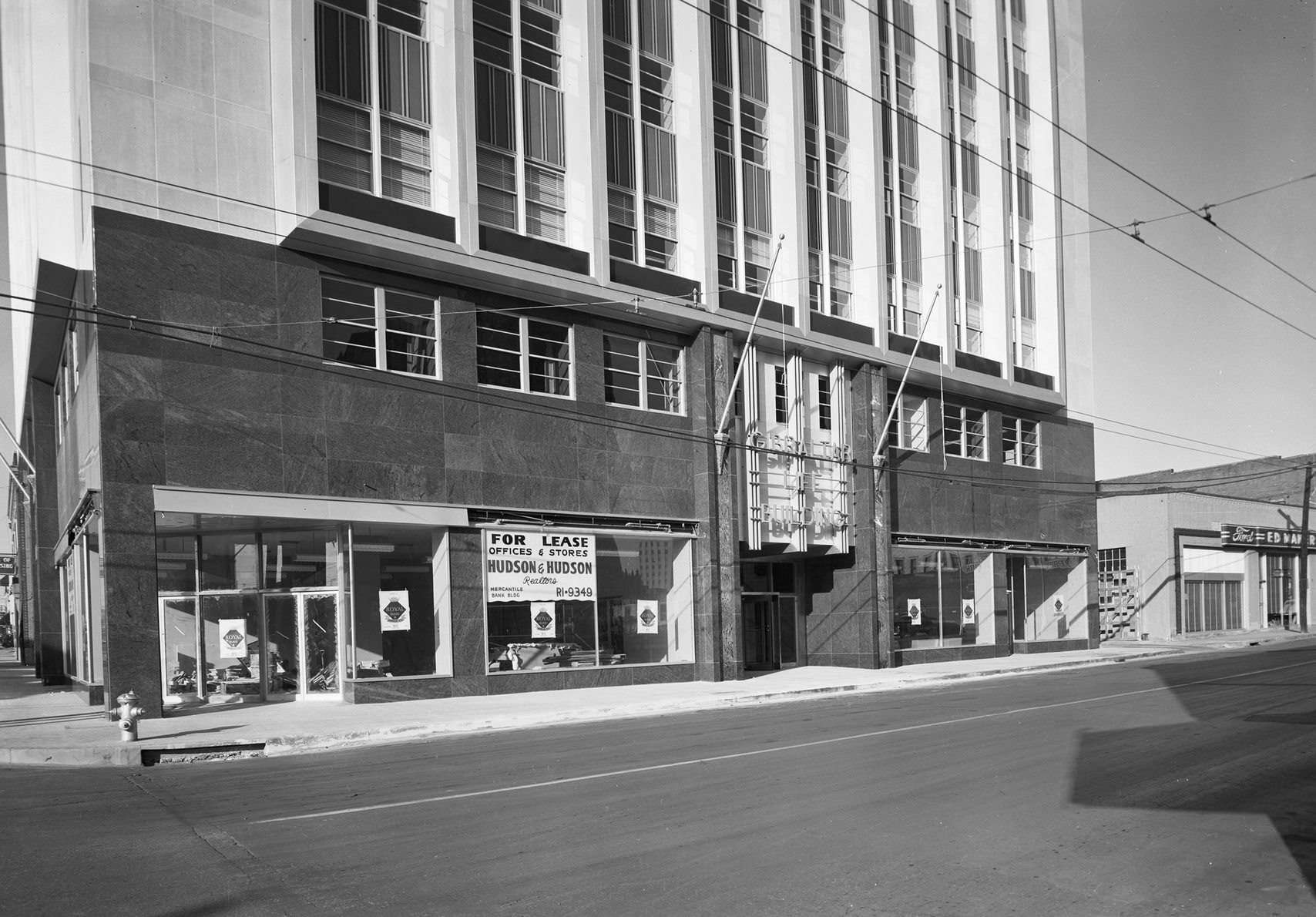
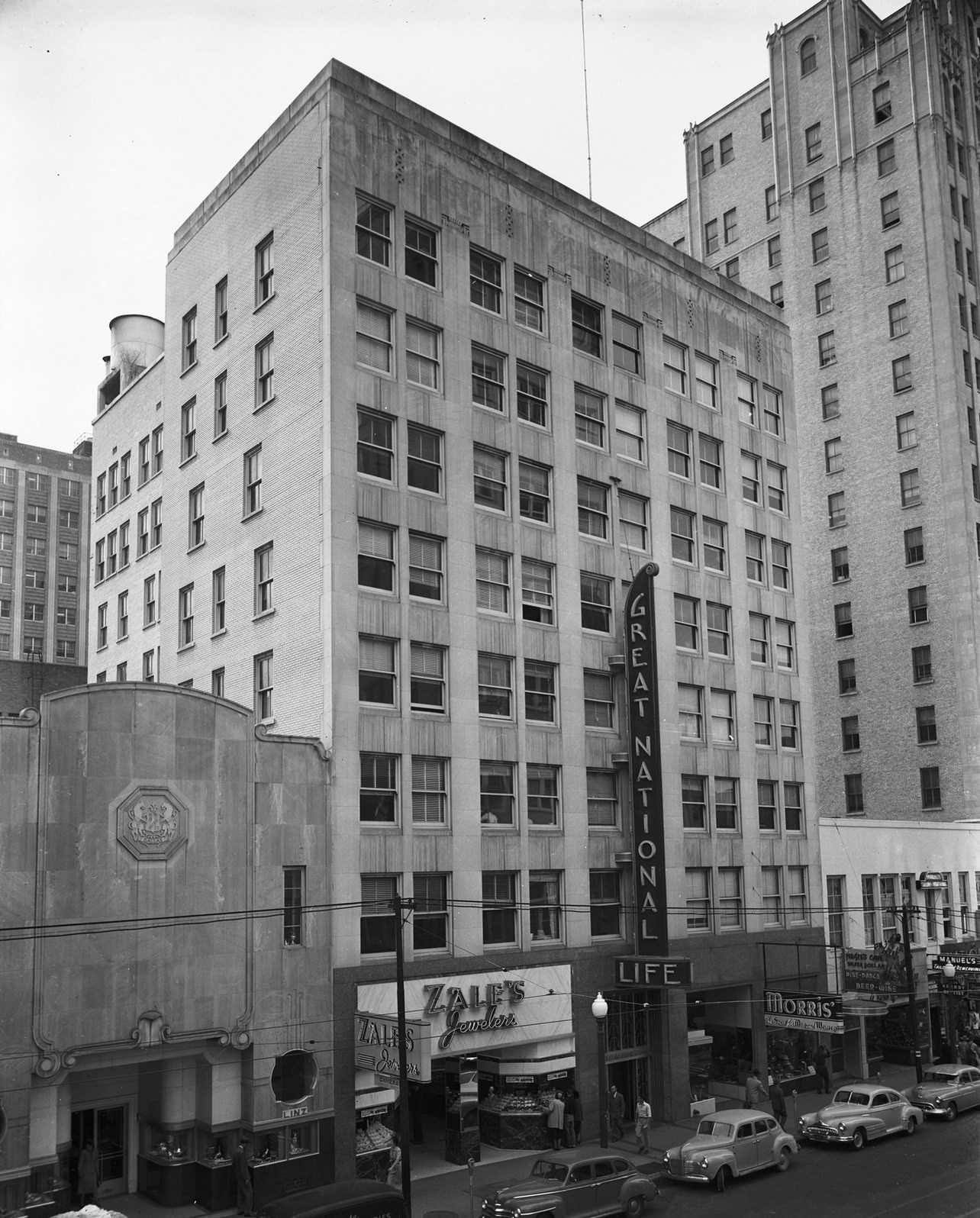
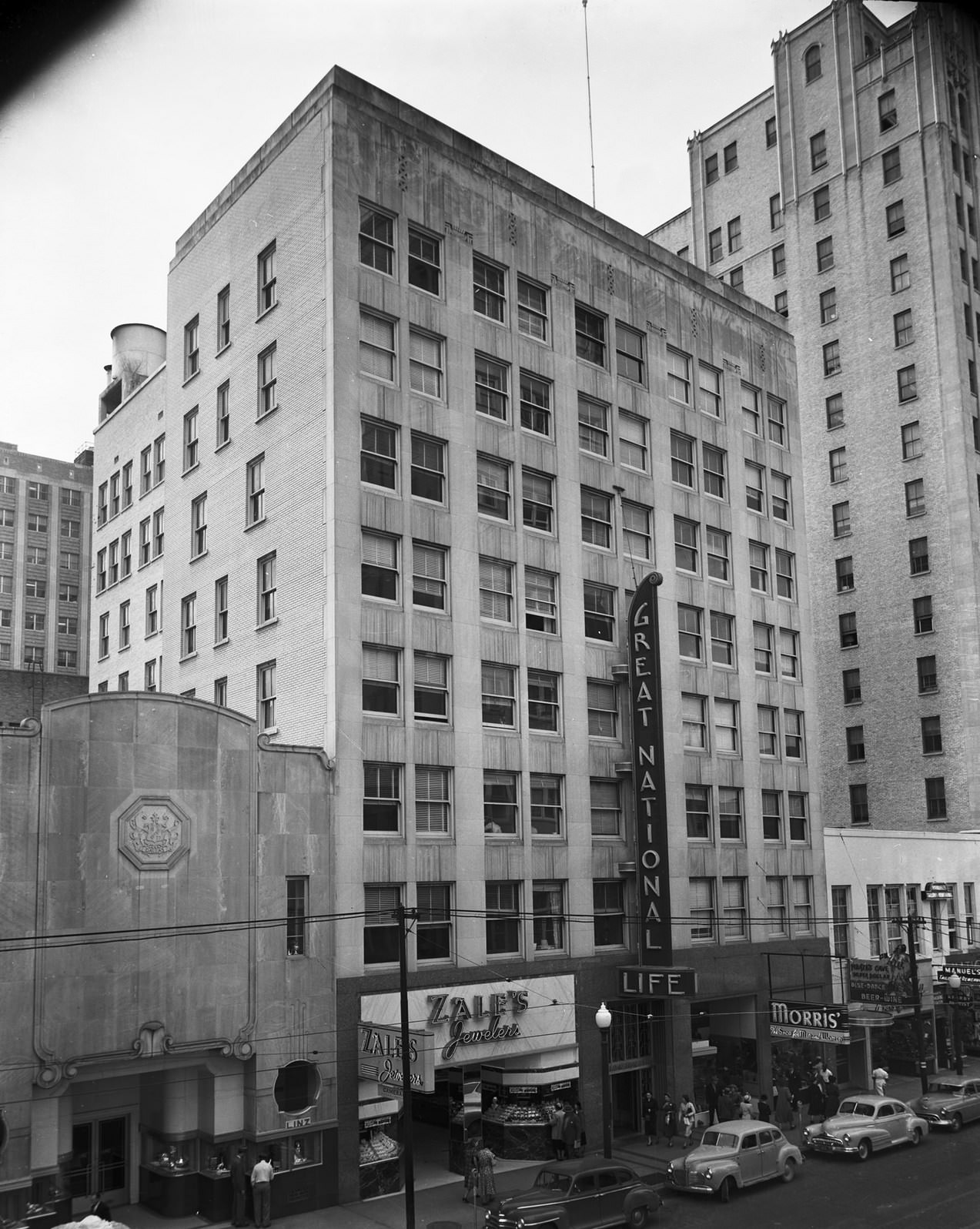
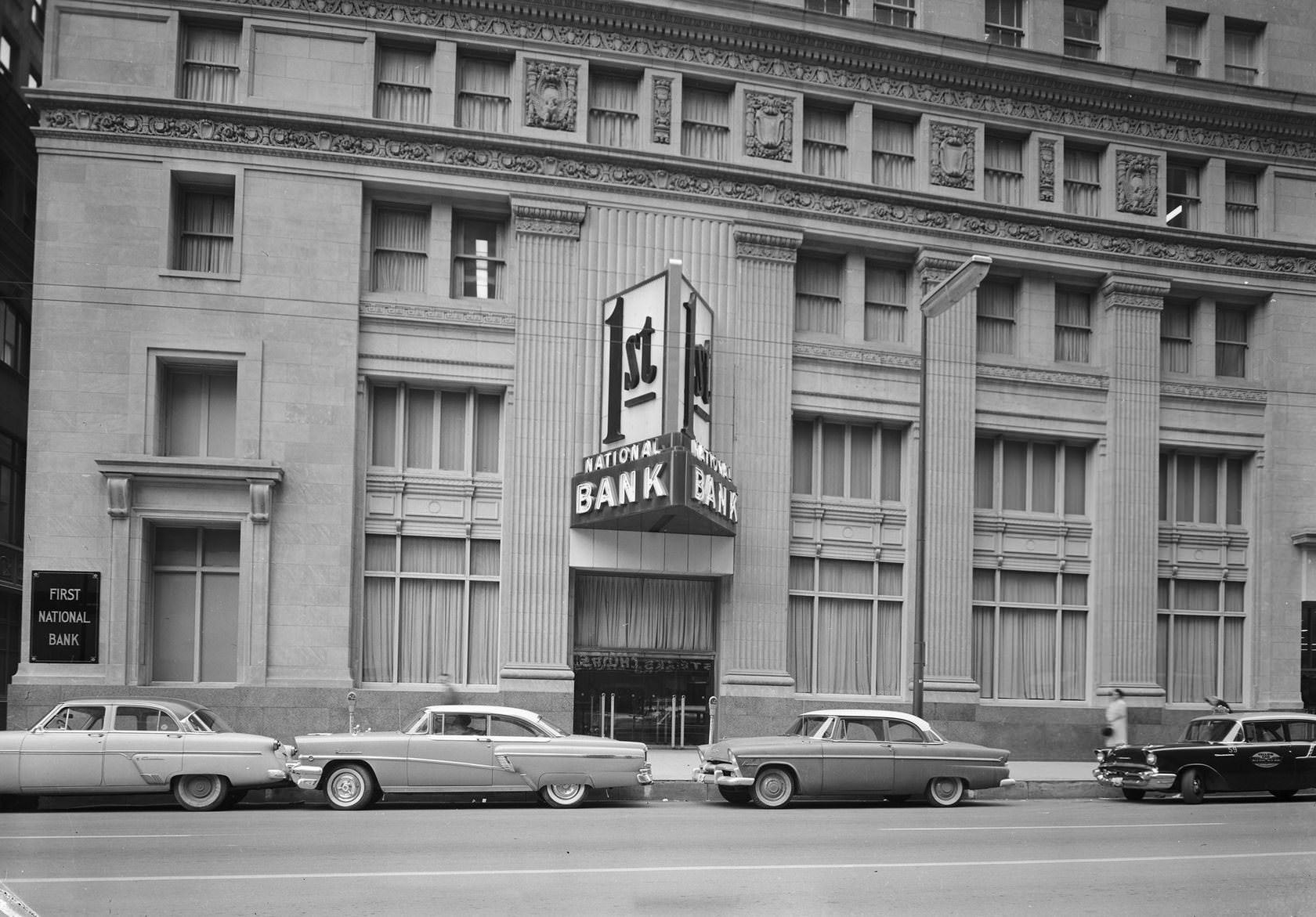
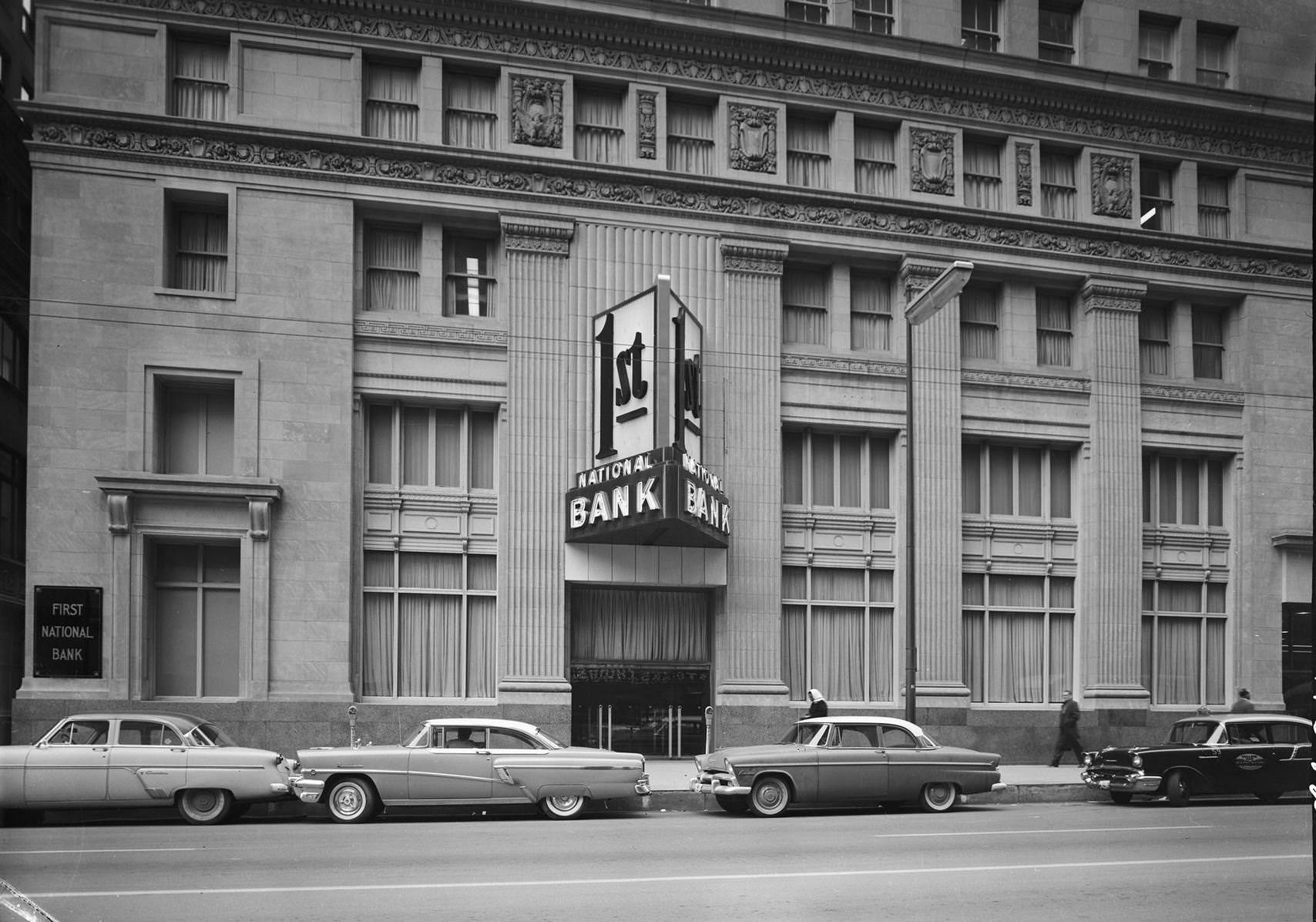
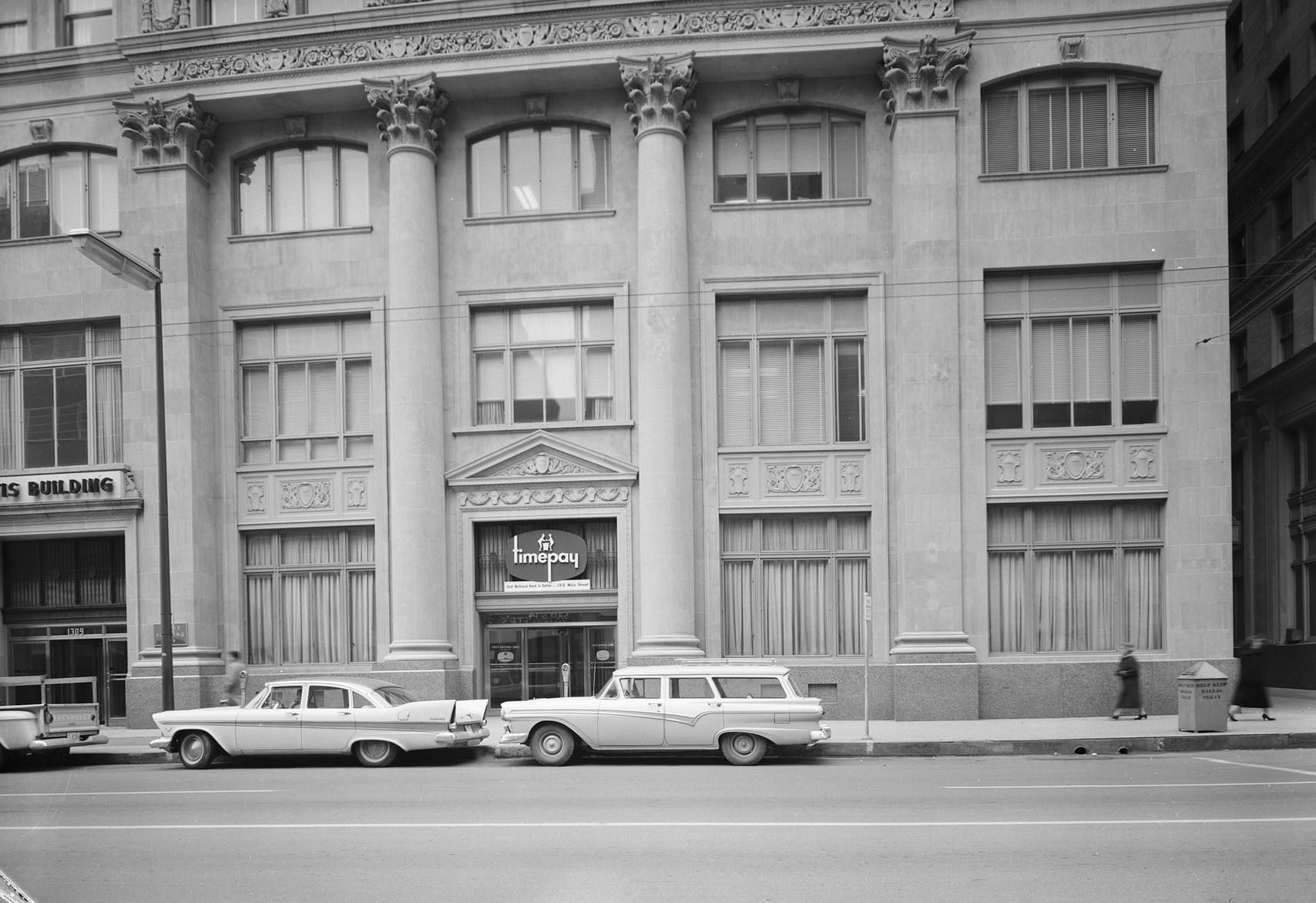
Other significant buildings downtown included the Meadows Building, photographed both from street level in 1952 and from the air in 1956. The Gibralter Life building, the Great National Life building, the First National Bank with its drive-through service, and the Employers Casualty Building all contributed to a downtown district that was rapidly modernizing.
Meadows Building, Dallas, 1952The Meadows building and Mockingbird Lane, 1957Aerial view of the Meadows building, Dallas, 1956Aerial view of the Meadows building in downtown Dallas, 1956Gibralter Life building under construction, downtown Dallas, Texas, 1953Gibralter Life building ground floor, downtown Dallas, Texas, 1953
Great National Life building, downtown Dallas, Texas, 1950
Great National Life building, downtown Dallas, Texas, 1950s
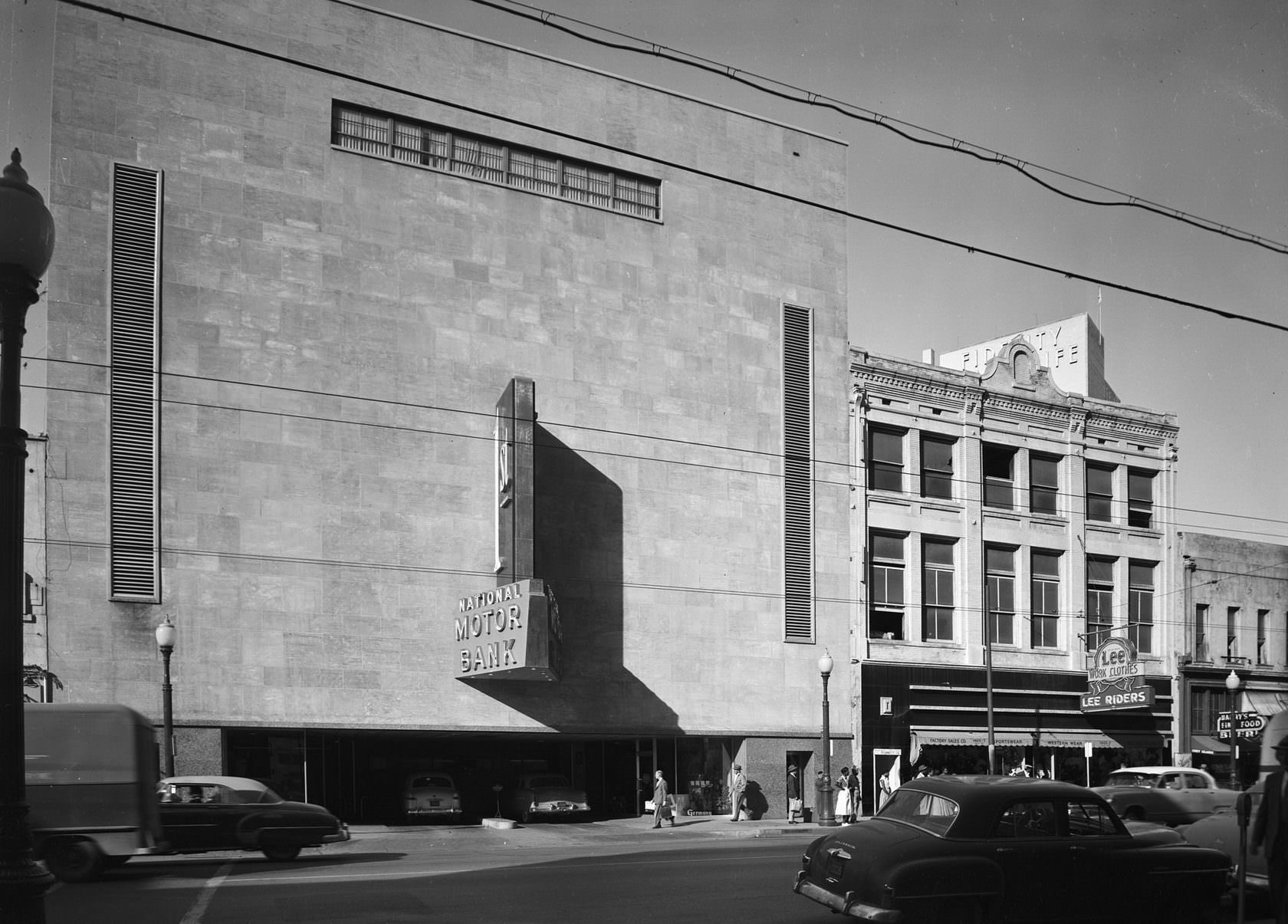
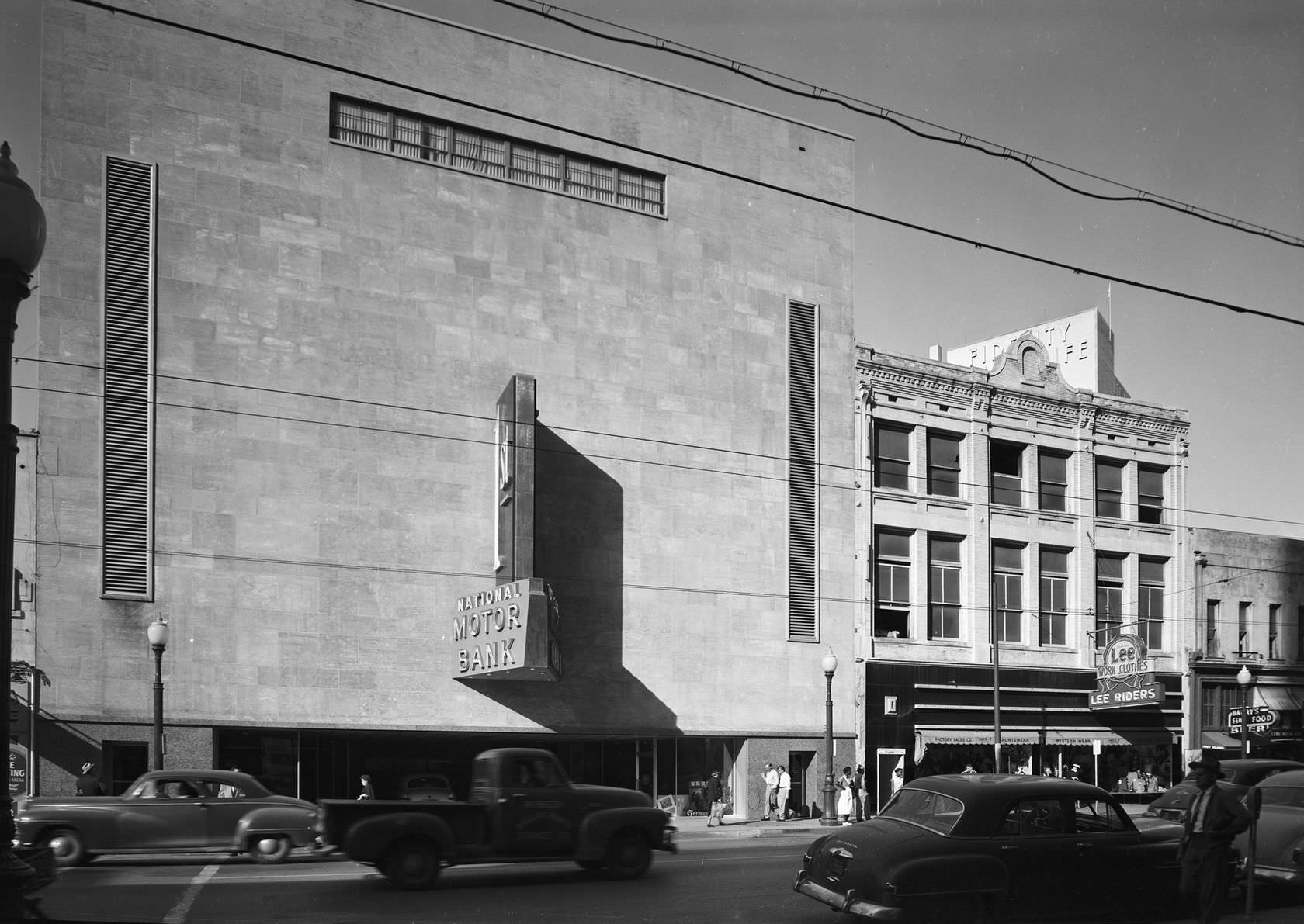
First National Bank building drive thru, downtown Dallas, Texas, 1954First National Bank building drive thru, downtown Dallas, Texas, 1954First National Bank building, downtown, 1958First National Bank building, downtown Dallas, Texas, 1958First National Bank building, downtown Dallas, Texas, 1958Employers Casualty Building in Downtown Dallas, Texas, 1950
Republic Bank building, downtown Dallas, Texas, 1954
Republic Bank building, downtown Dallas, Texas, 1954
Office building, downtown Dallas, Texas, 1954
Office building, downtown Dallas, Texas, 1954
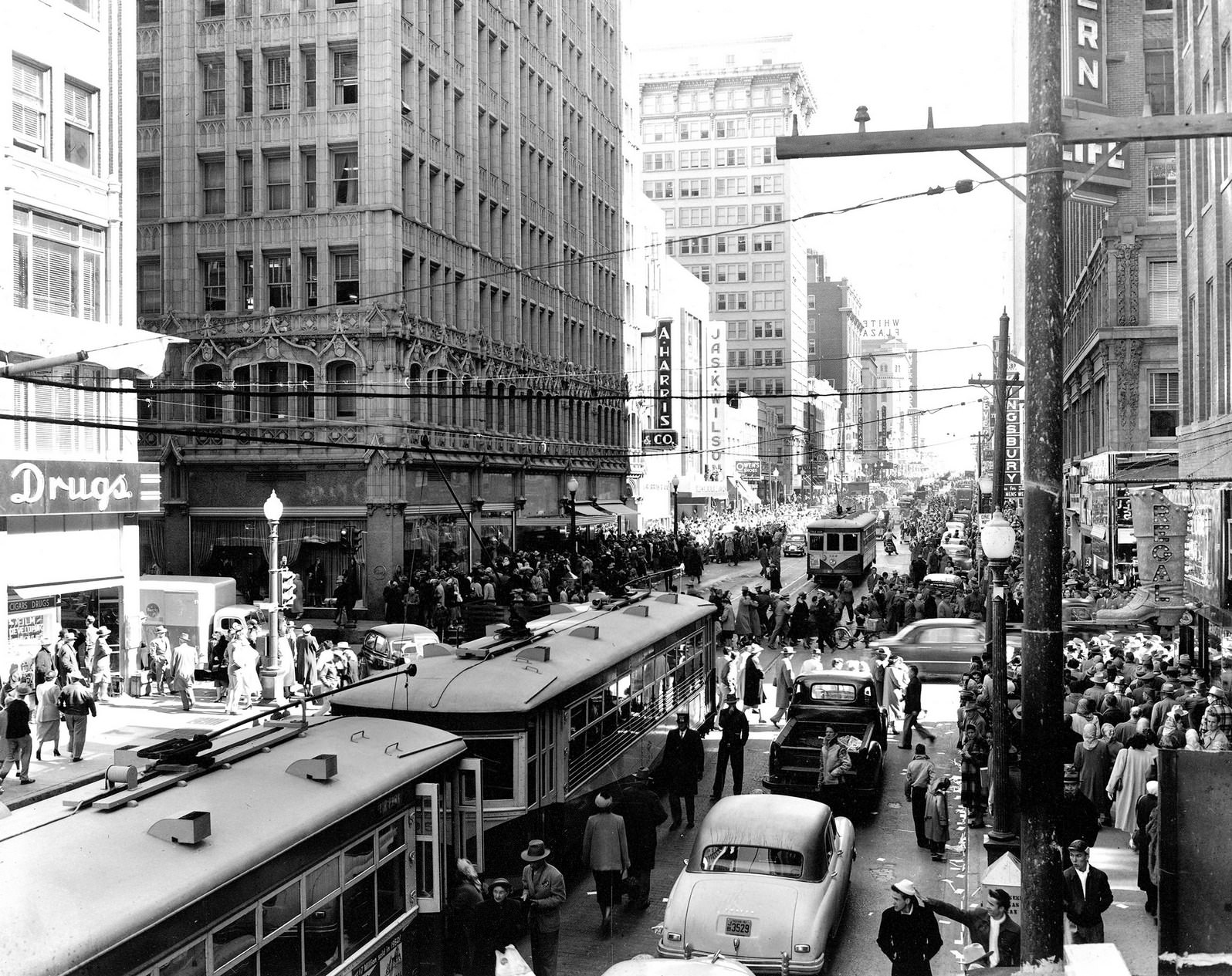
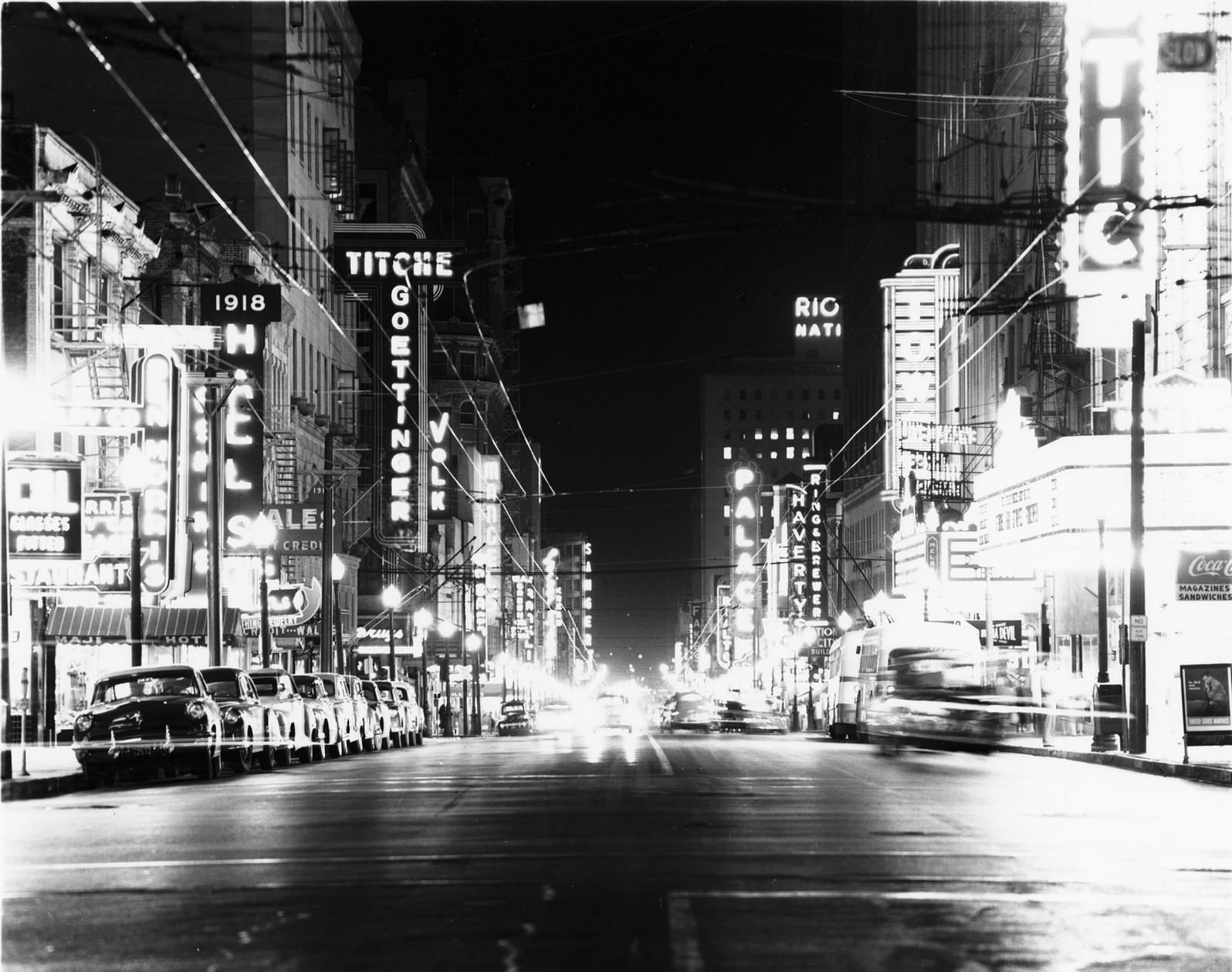
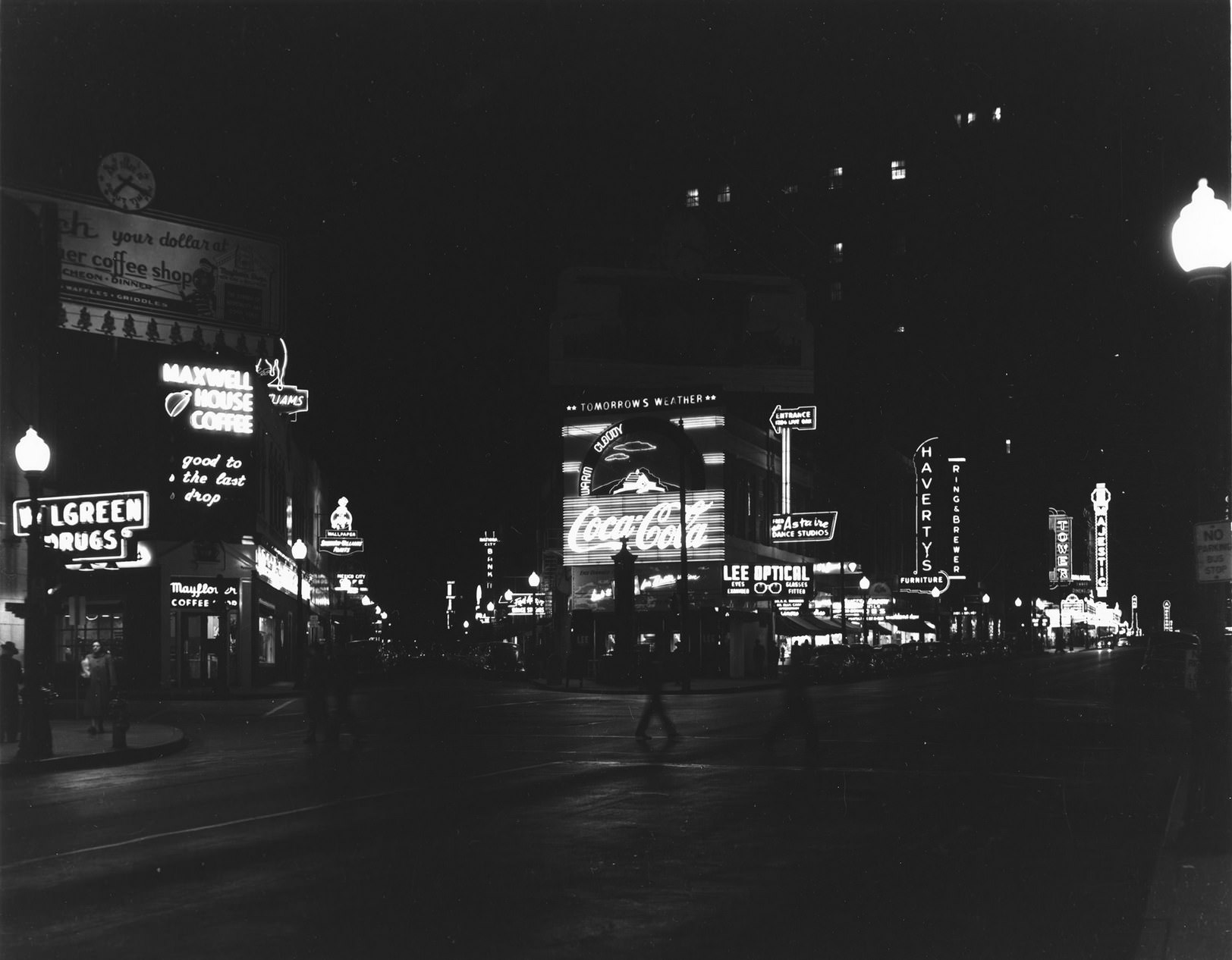
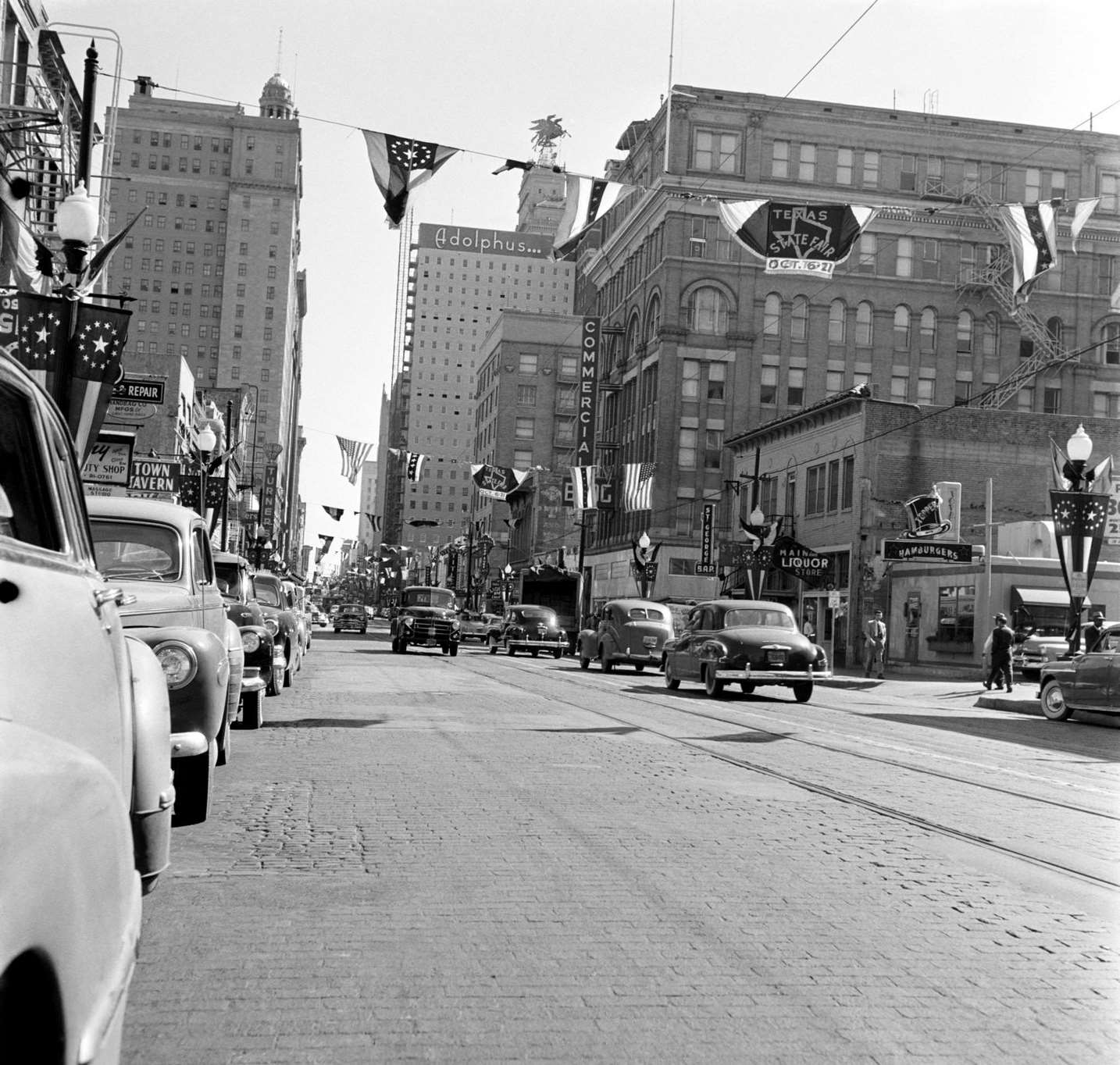
Street-level life in downtown Dallas in the 1950s mixed commerce with daily routine. Main Street and Akard Street were lined with shops and offices. The intersection at Central and Lover’s Lane showed the city’s expanding street grid. At night, neon signs lit up Elm Street, where Walgreen Drugs, the Mayflower Coffeeshop, and the Mexico City Café drew late-evening crowds.
Main Street and Akard Street, 1951Night street scene, downtown Dallas, Texas, 1953Night street scene, downtown Dallas, Texas, 1953Street scene in Dallas in 1950s
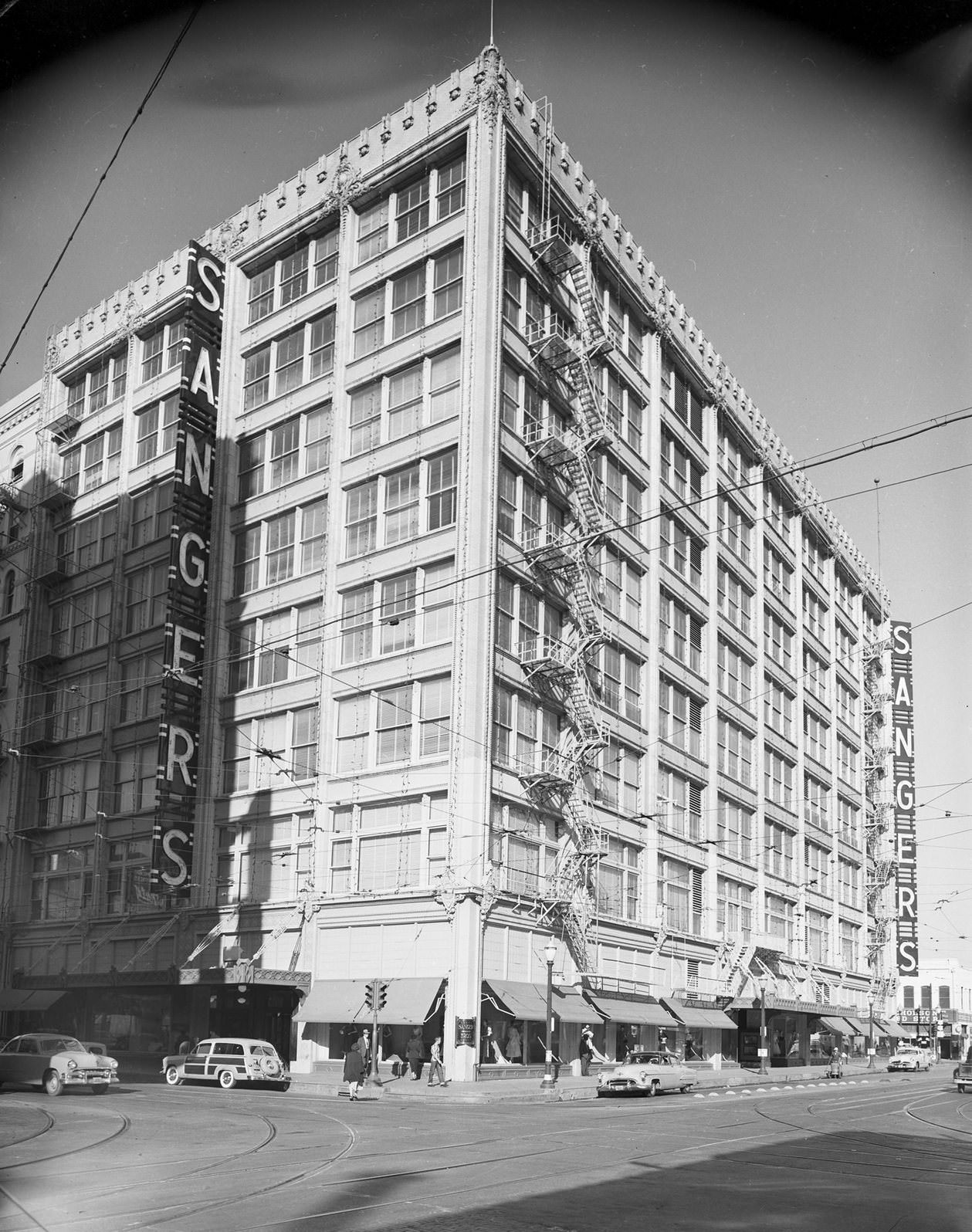
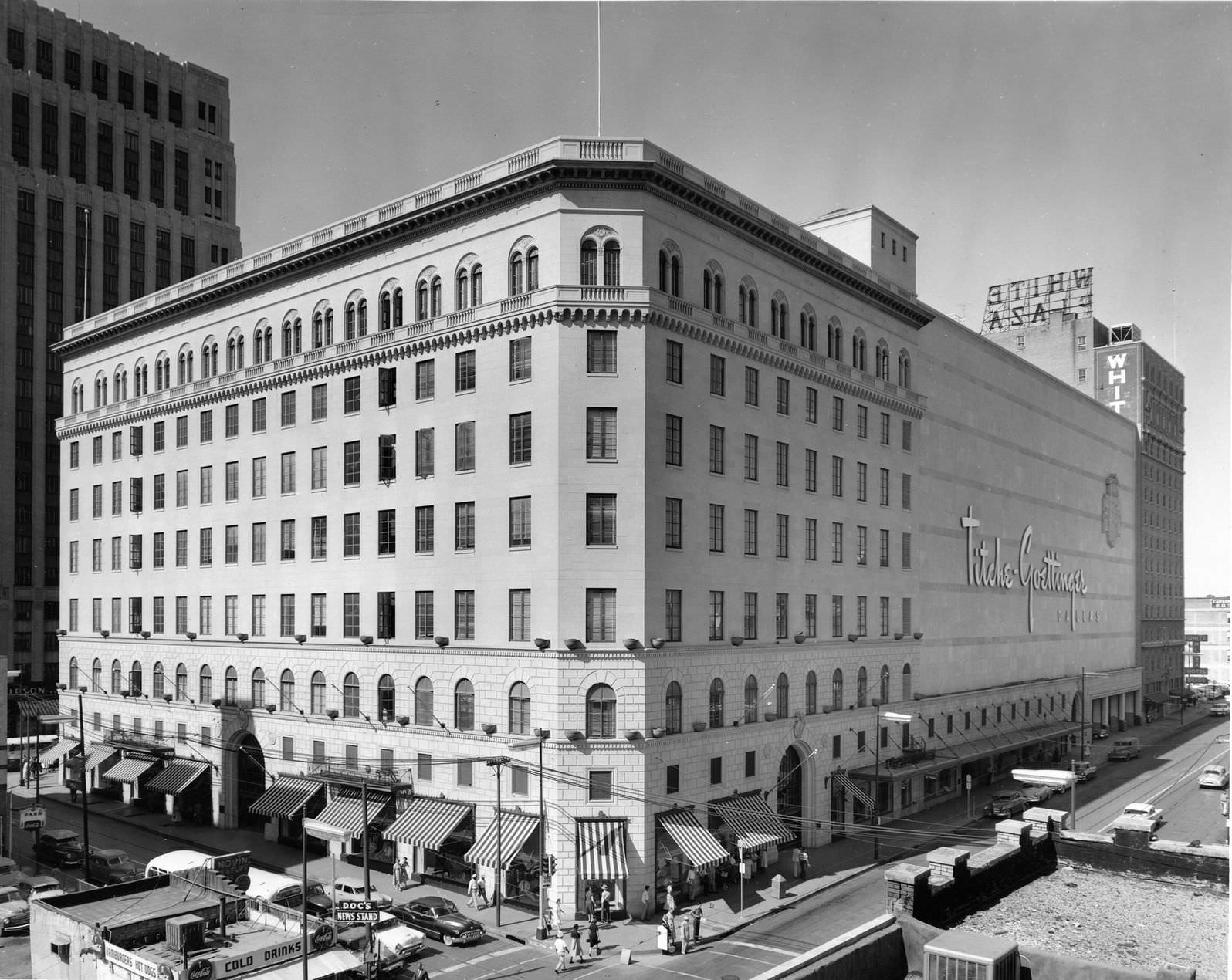
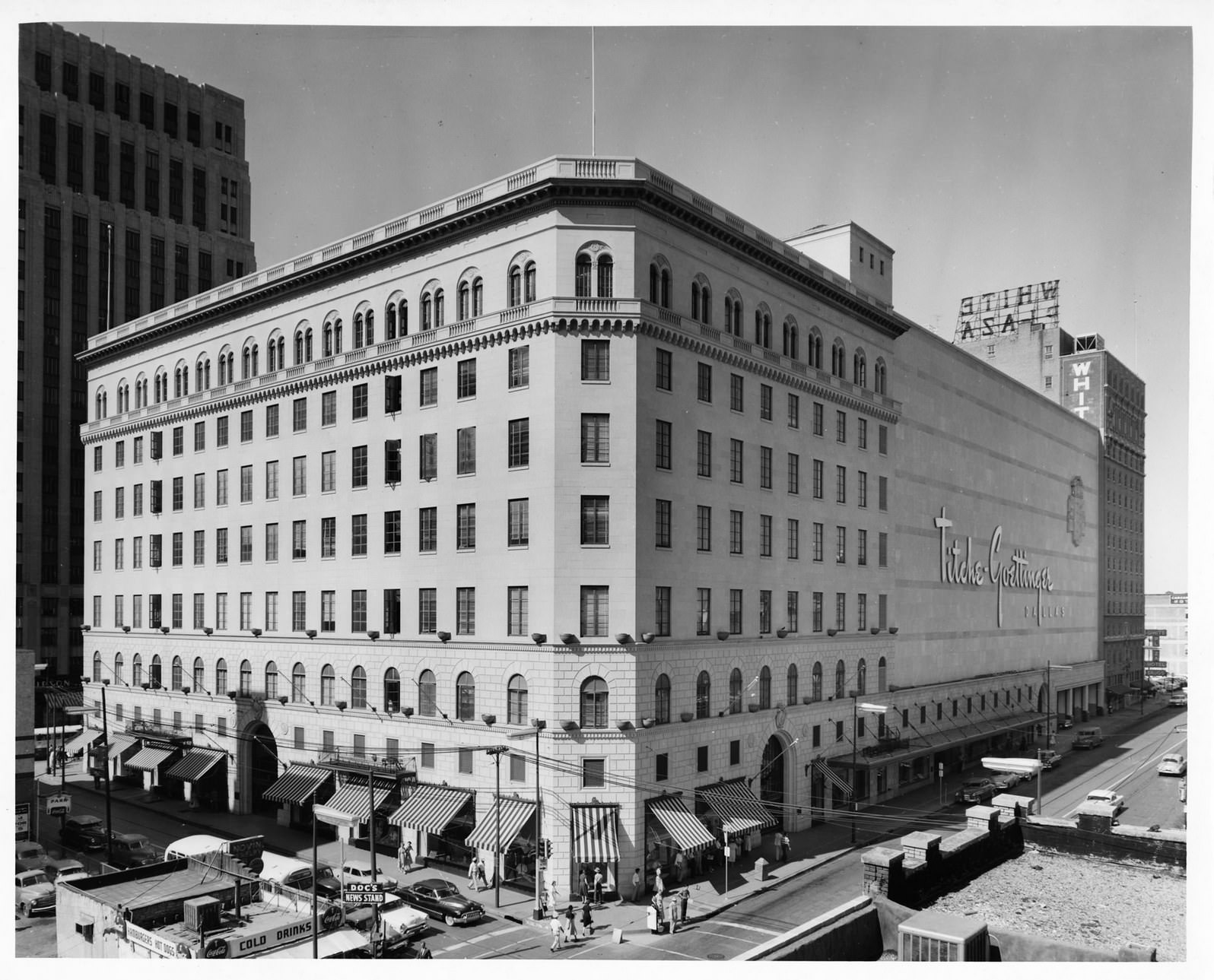
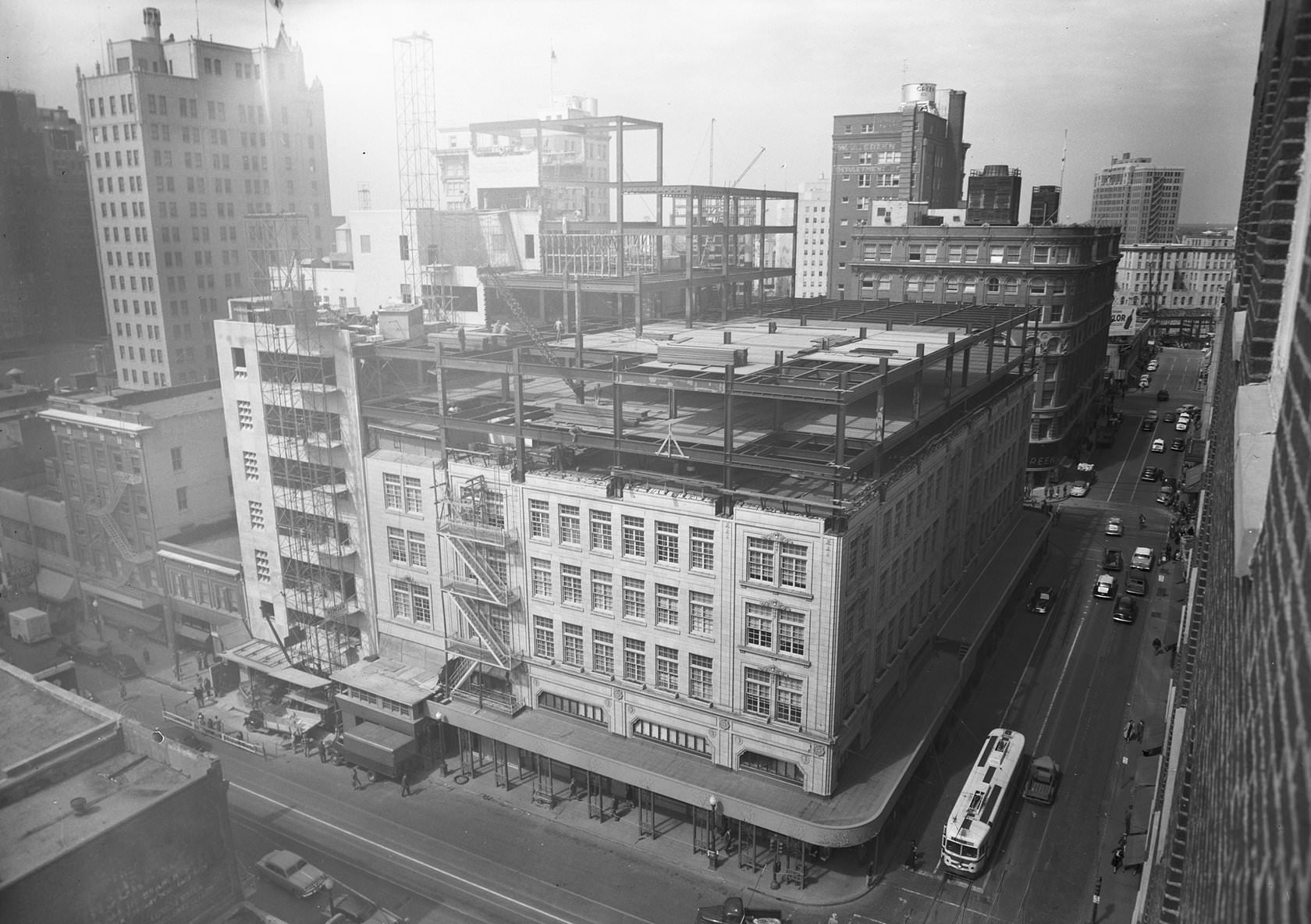
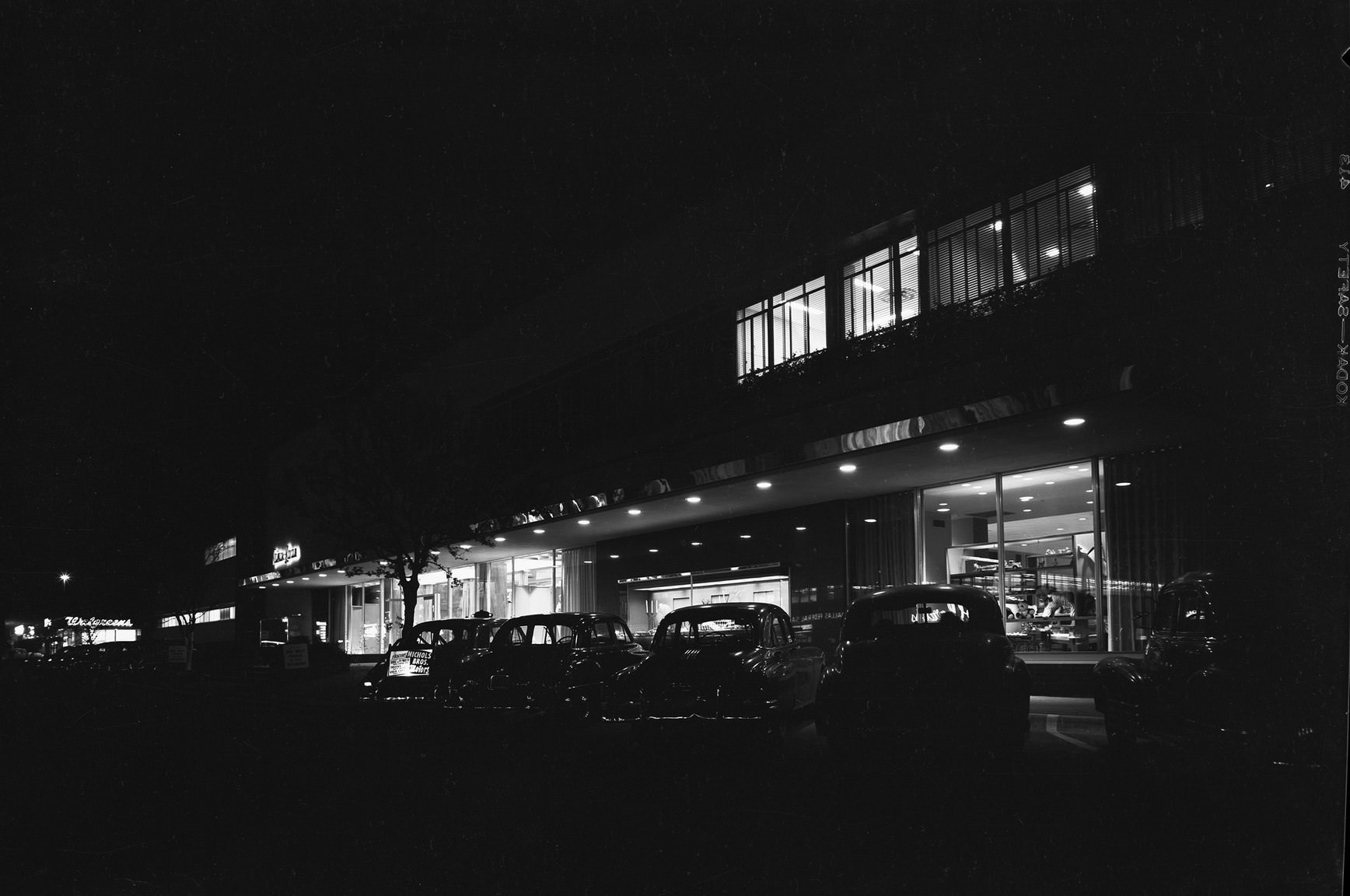
Shopping was a major part of Dallas life in the 1950s. Sanger’s Department Store and Titche-Goettinger were downtown retail destinations. Neiman Marcus, which had already built a national reputation for luxury, expanded its downtown presence with a new building that was under construction in 1952. At night, the illuminated Neiman Marcus storefront stood out along the downtown streetscape.
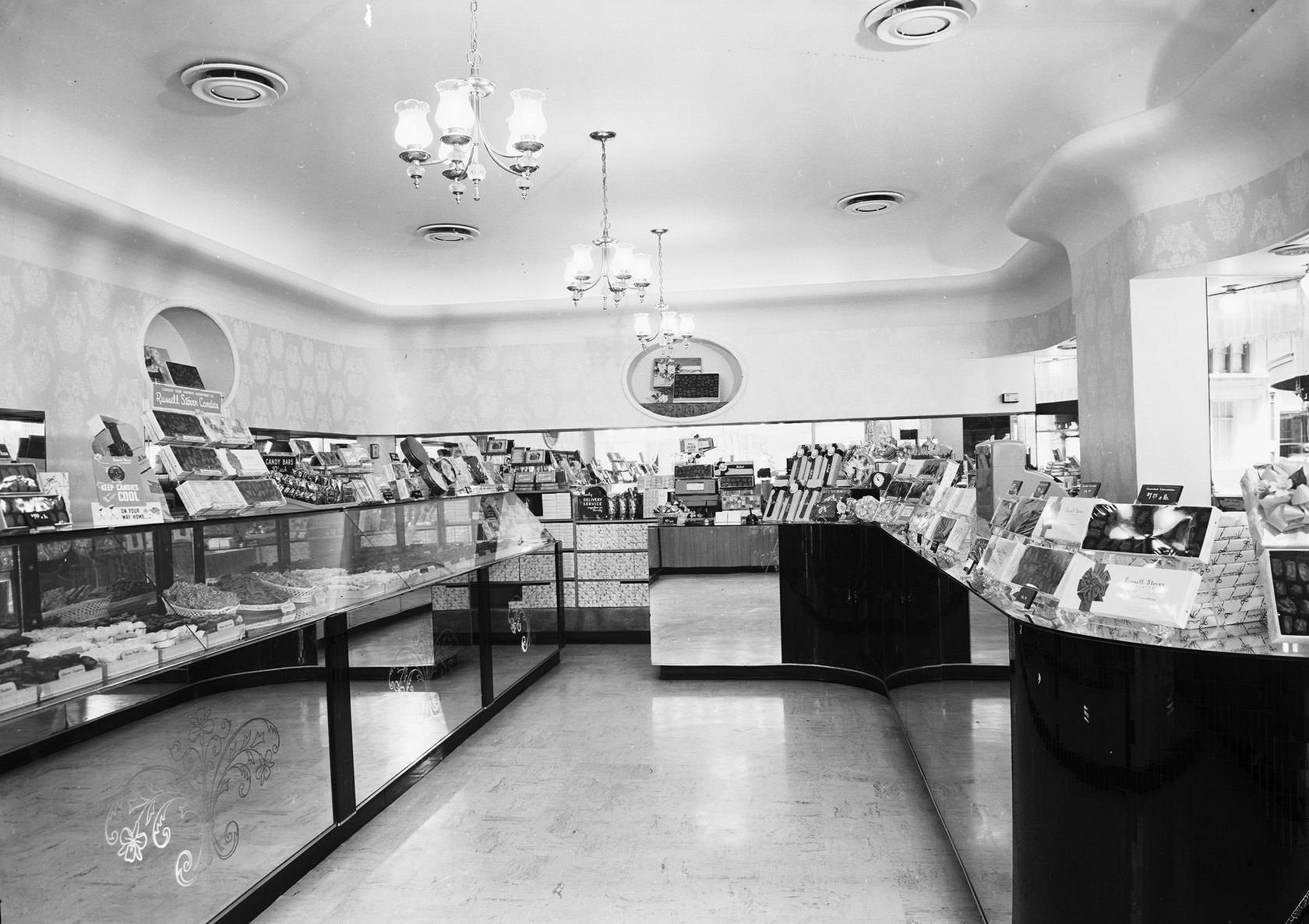
Sanger’s Department Store, downtown Dallas, 1950Titche-Goettinger Department Store, 1950Titche-Goettinger Department Store, 1950Neiman Marcus building under construction, downtown Dallas, Texas, 1952Neiman Marcus’ store at night, downtown Dallas, Texas, 1952Russell Stover Candies shop, interior, located at Main and Akard streets, Dallas, Texas, 1954
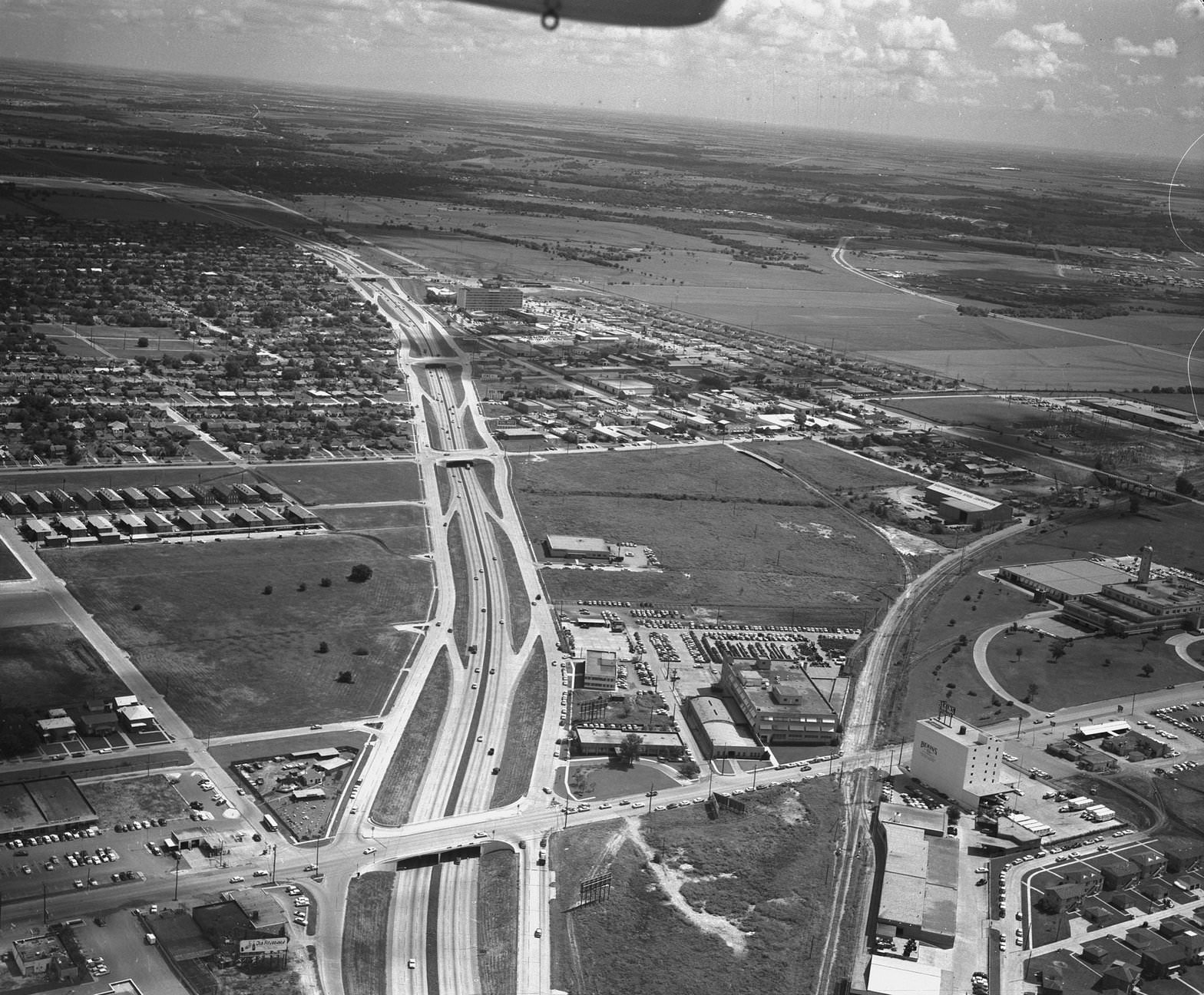
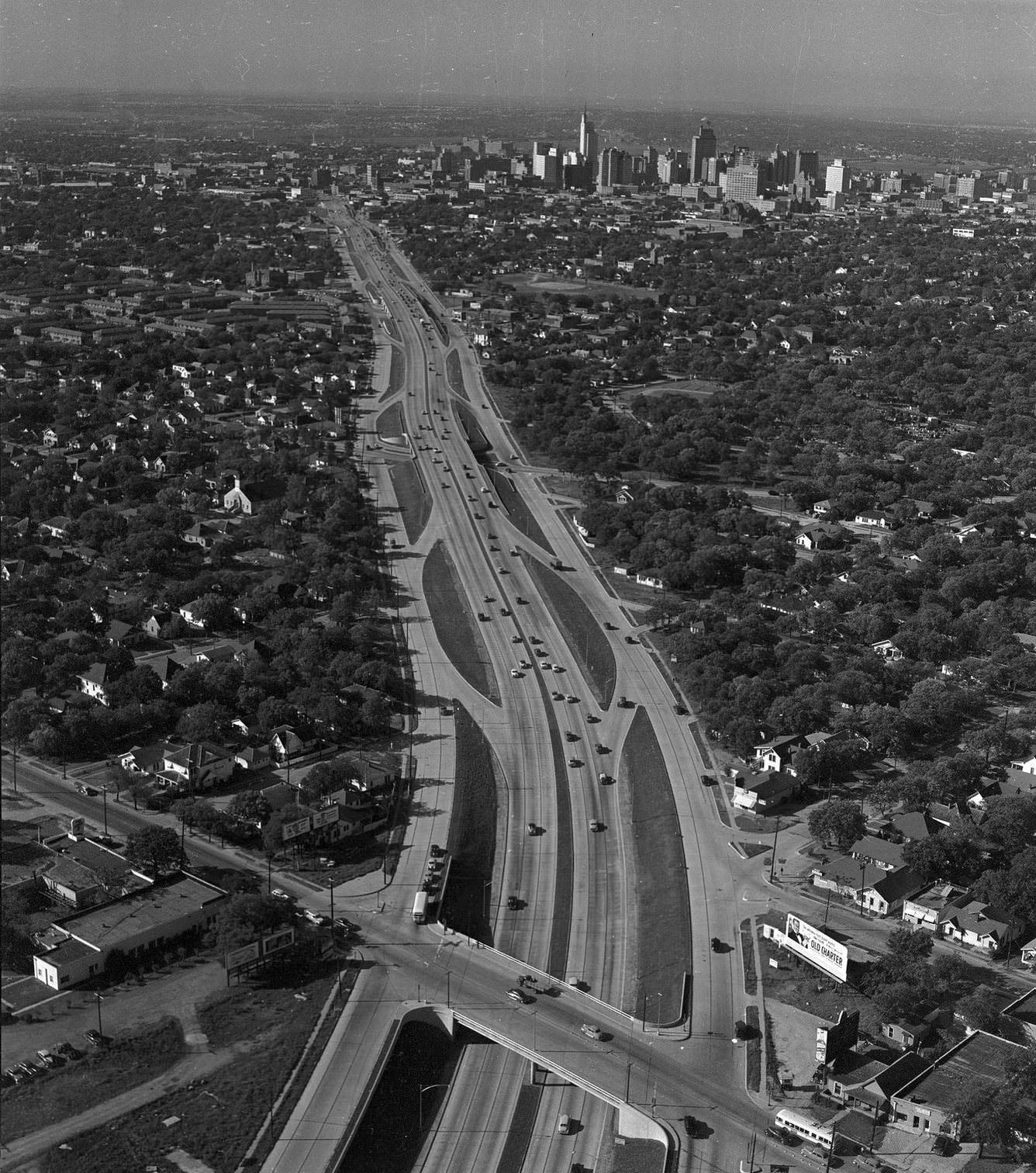
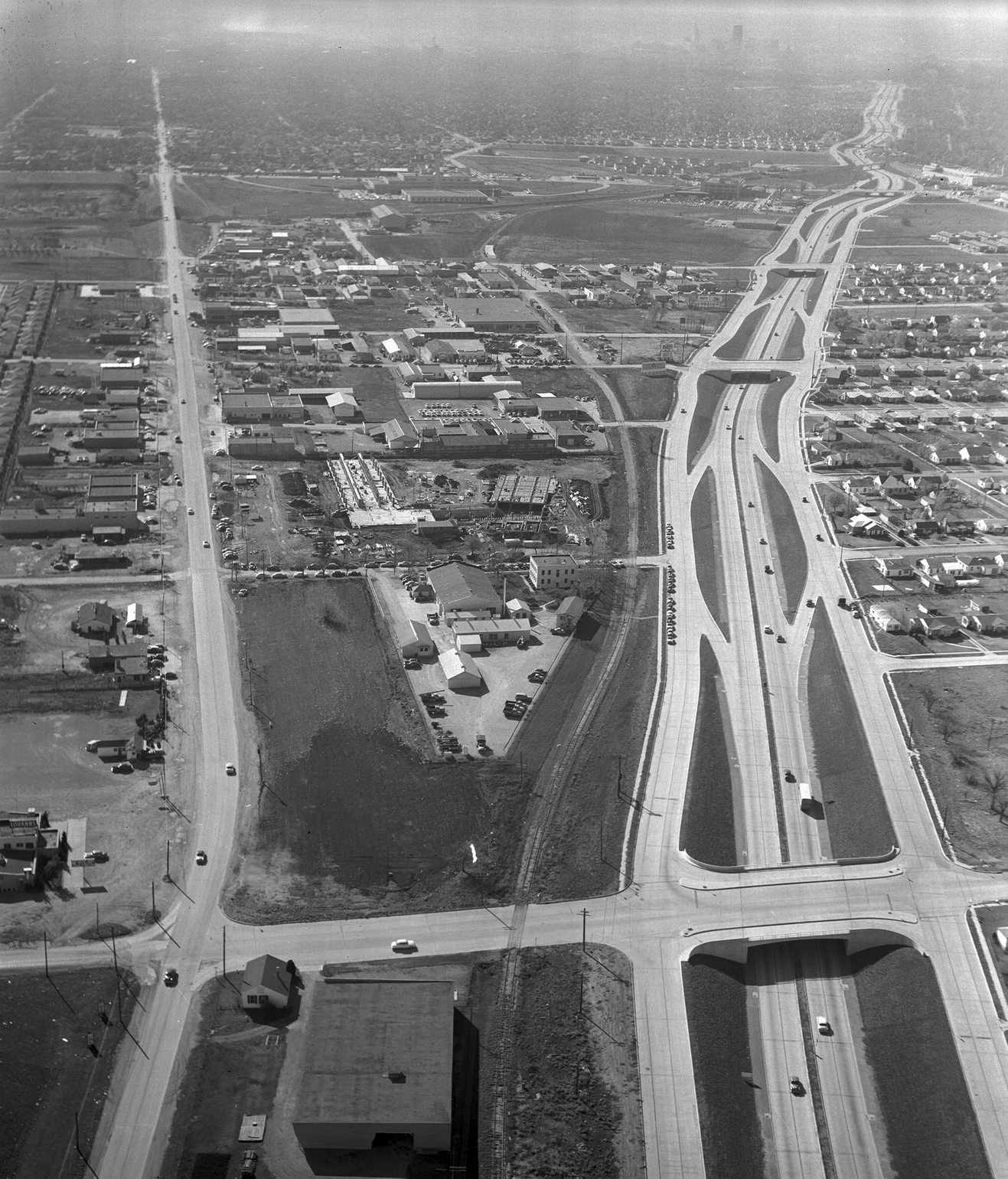
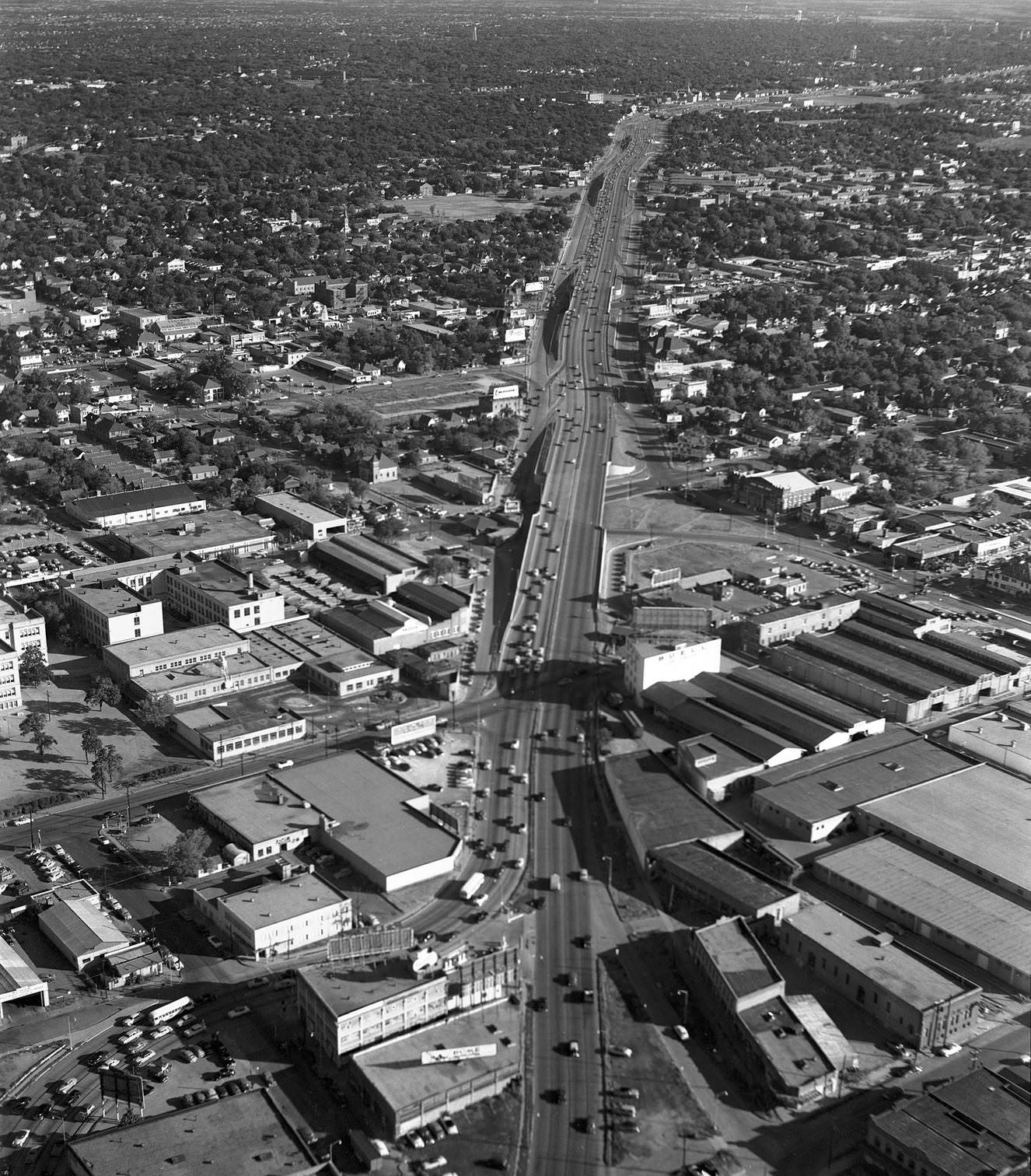
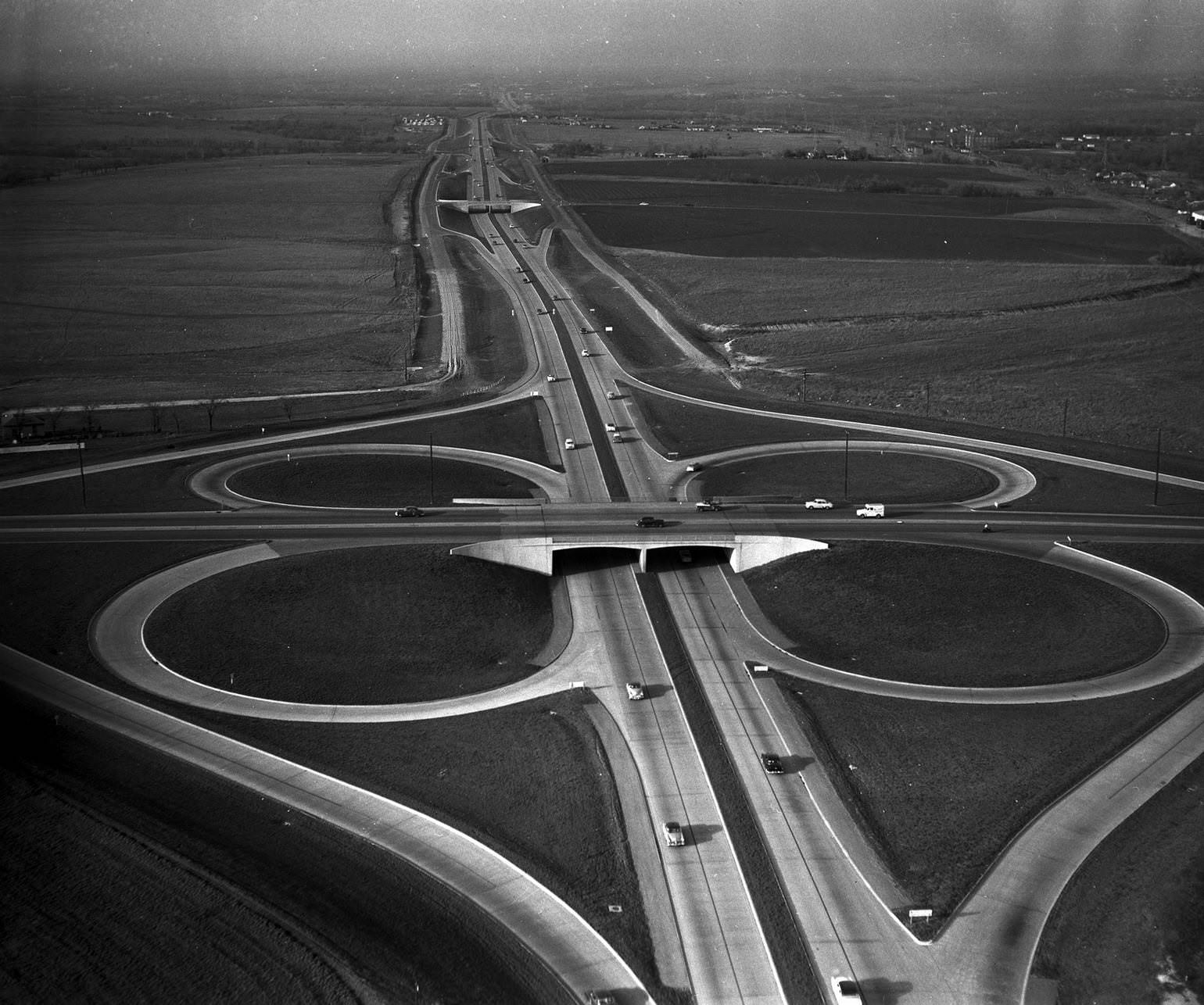
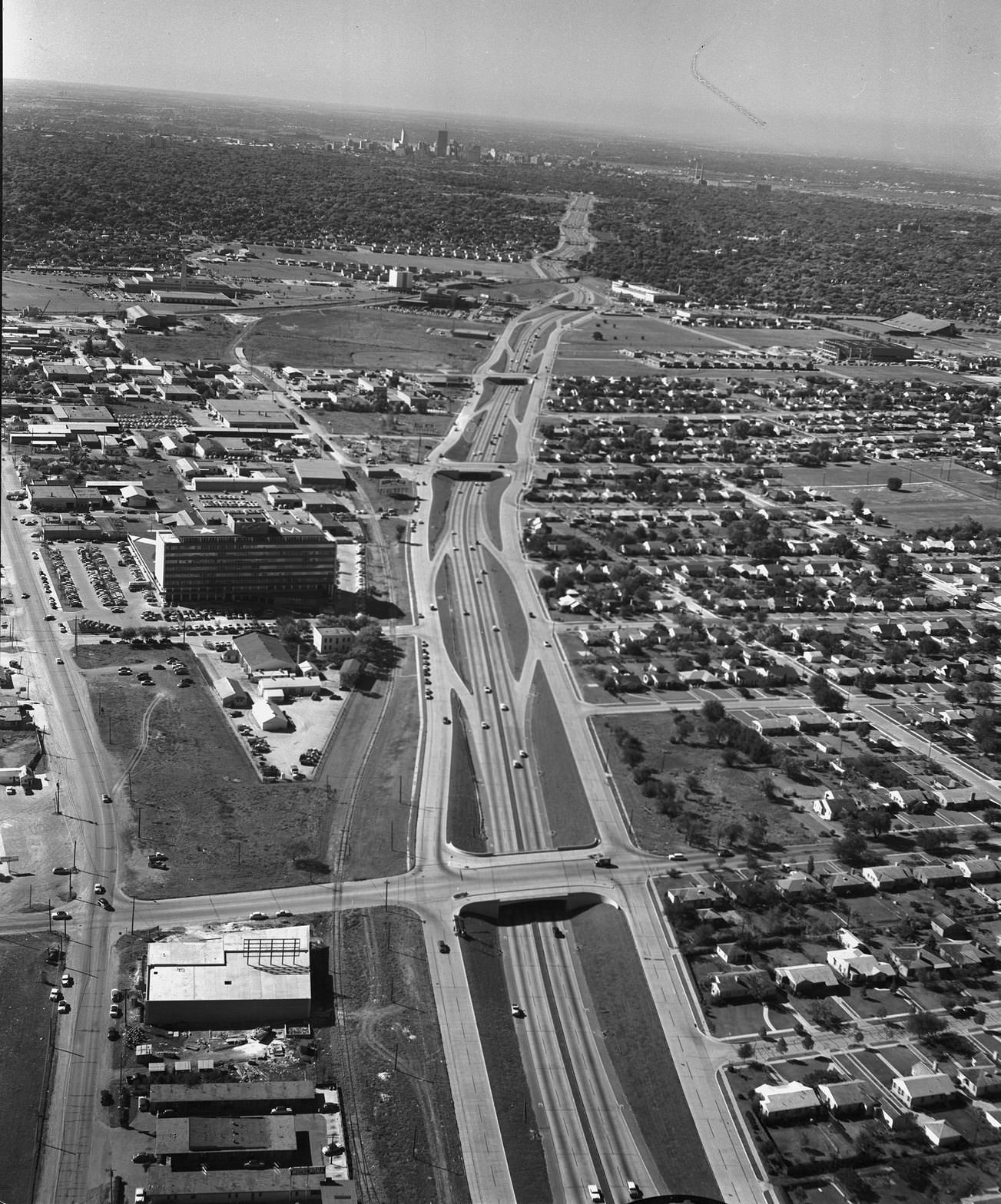
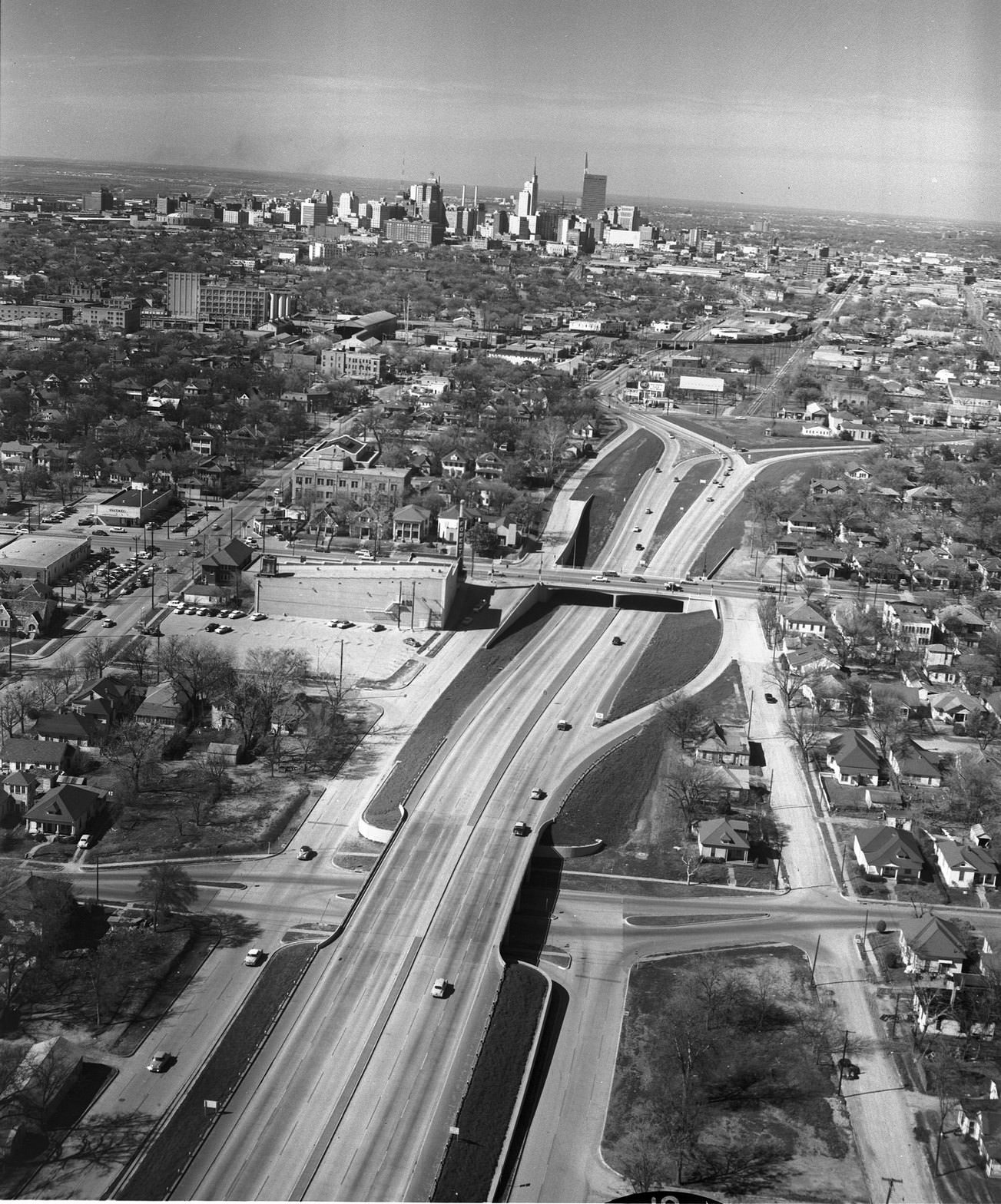
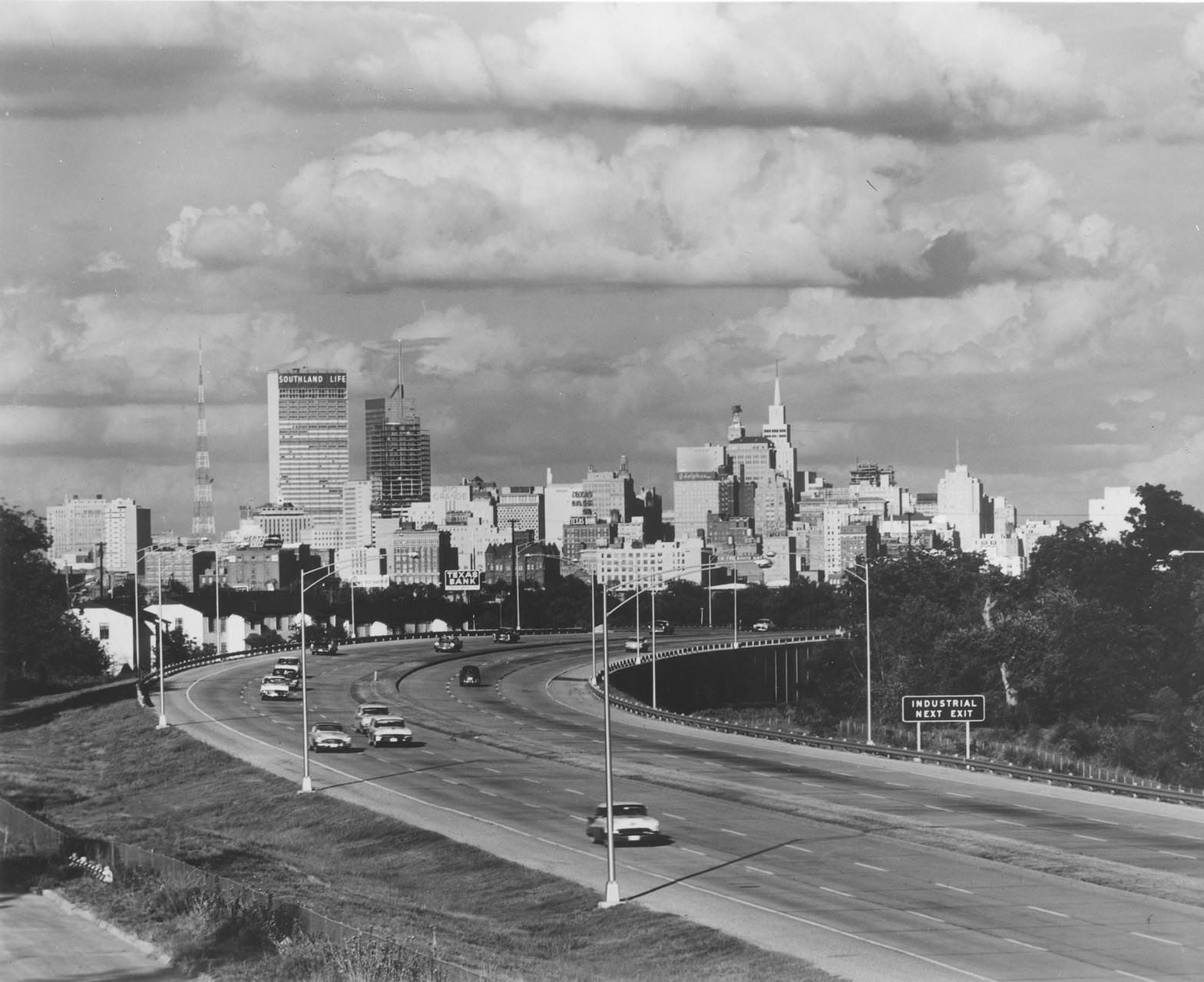
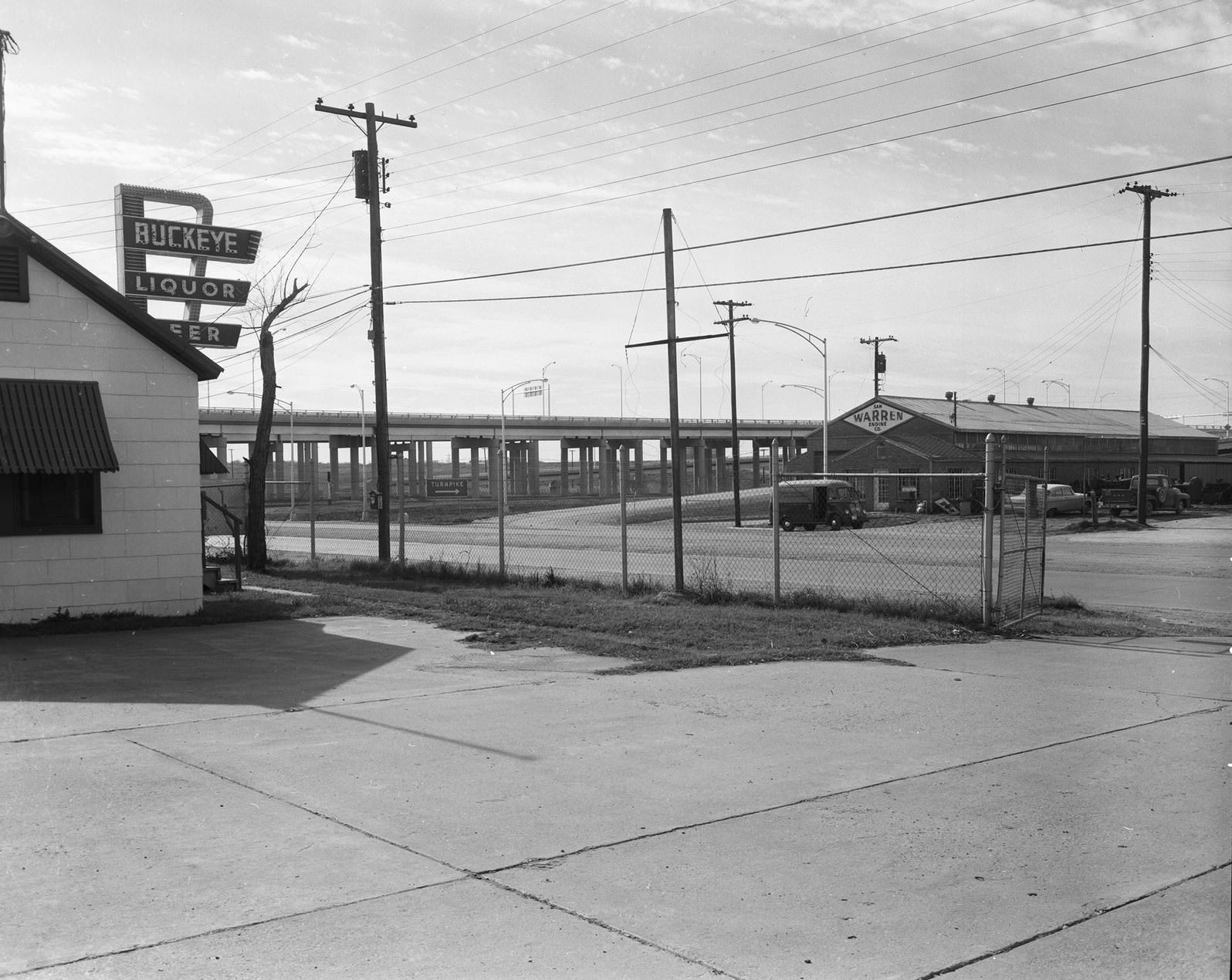
The city’s road network expanded significantly during the decade. Central Expressway, also known as Highway 75, ran through Dallas and was photographed repeatedly between 1952 and 1957. The cloverleaf interchange near Northwest Highway captured in 1954 was a modern engineering feature that signaled the city’s embrace of the automobile age. The I-30 turnpike entered downtown Dallas from the west, and the Dallas-Fort Worth Turnpike provided a direct connection between the two cities.
Central Expressway, Dallas, Texas, 1952Central and Lover’s Lane, Dallas, Texas, 1953Central Expressway, Dallas, Texas, 953Central Expressway (Highway 75) with cloverleaf near Northwest highway, Dallas, 1954
Central Expressway and Lover’s Lane, Dallas, Texas, 1955
Central Expressway, south leg, Martin Luther King Boulevard, 1957
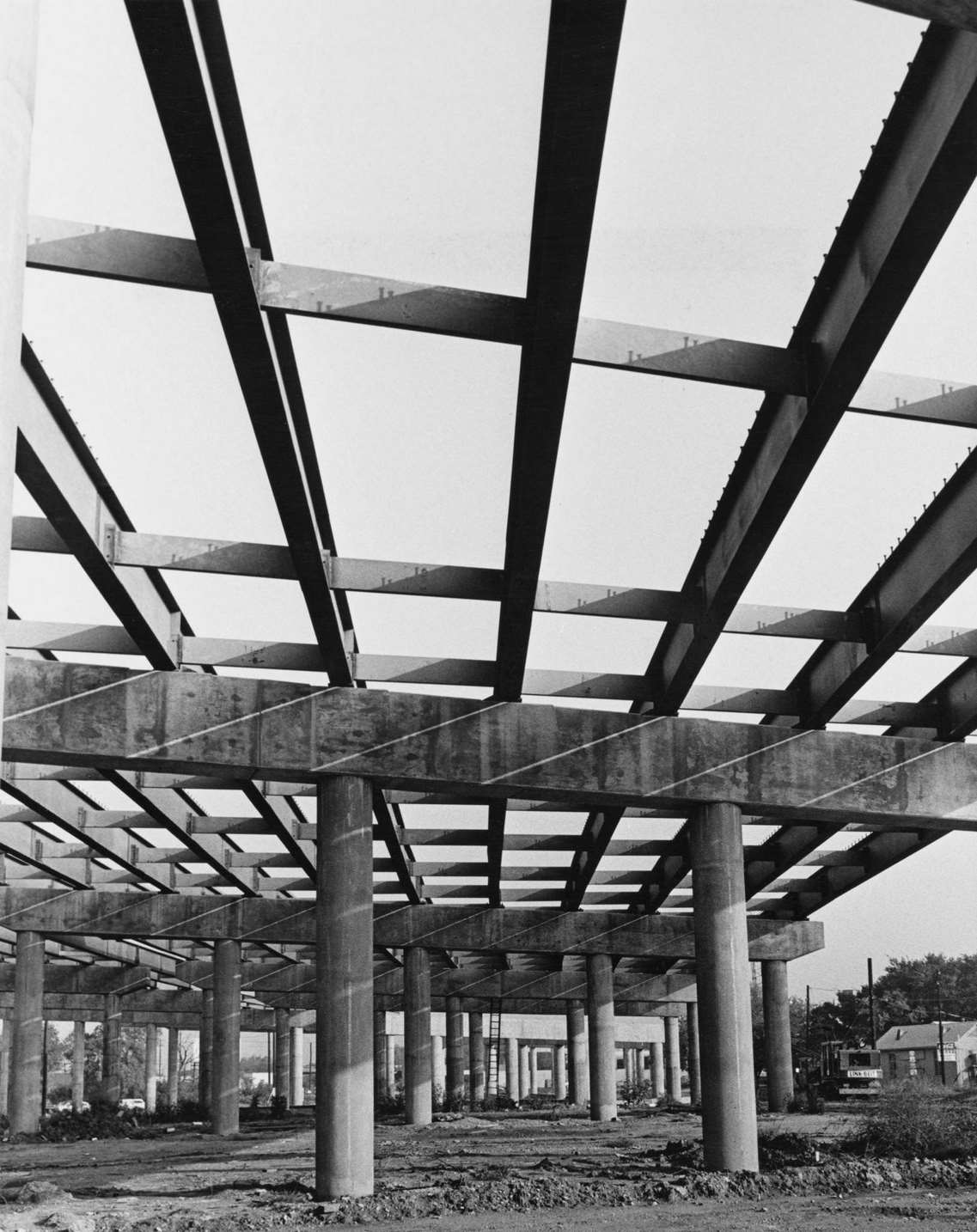
I-30 turnpike entering downtown Dallas, 1955Entrance to westbound Dallas-Fort Worth Turnpike from Industrial Boulevard, Dallas, Texas, 1958Underpass from Industrial Boulevard, Dallas, Texas, 1952View up through the uncompleted steel framework of a bridge or road flyover, raised on reinforced concrete pillars, under construction in Dallas, Texas, 1955.
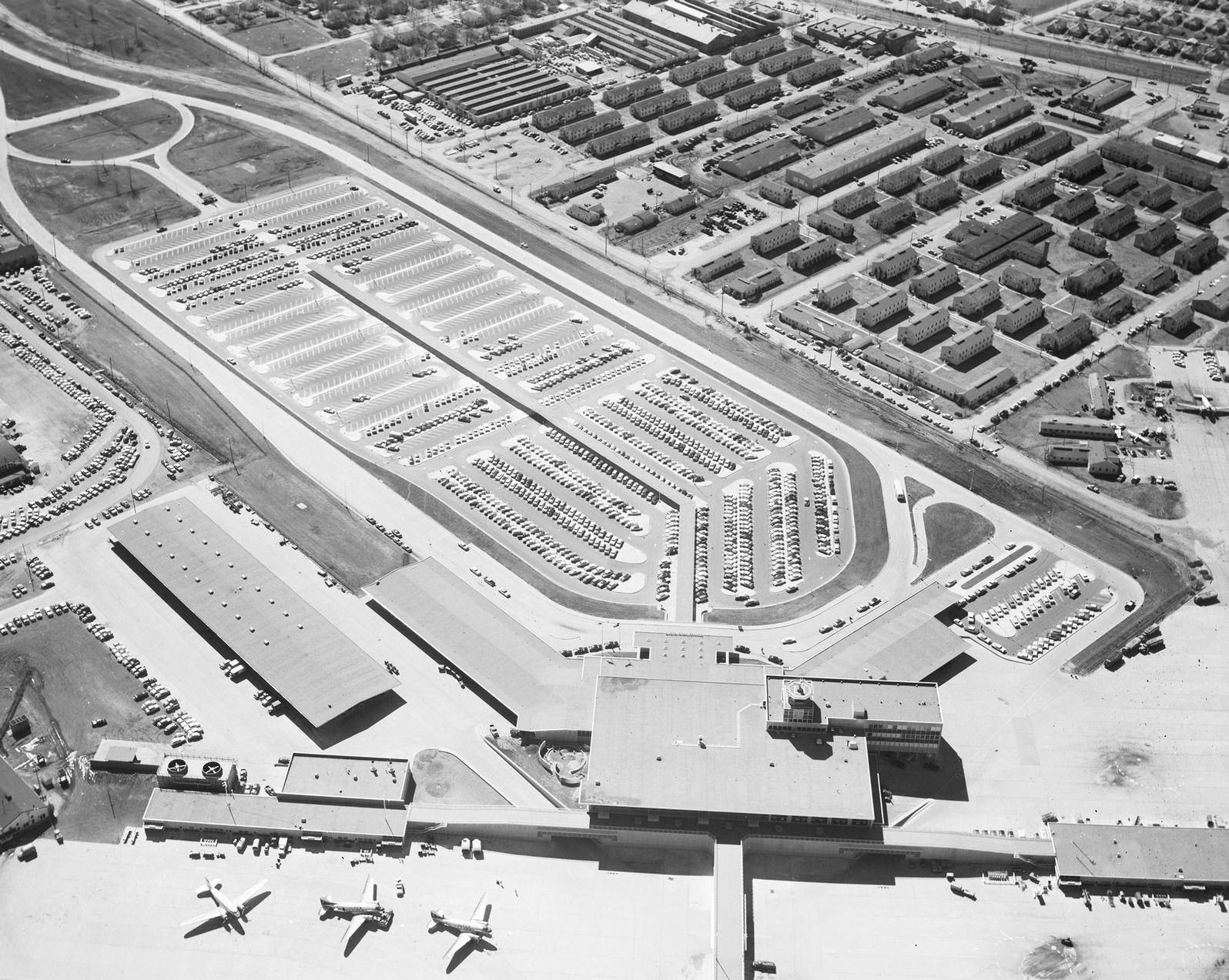
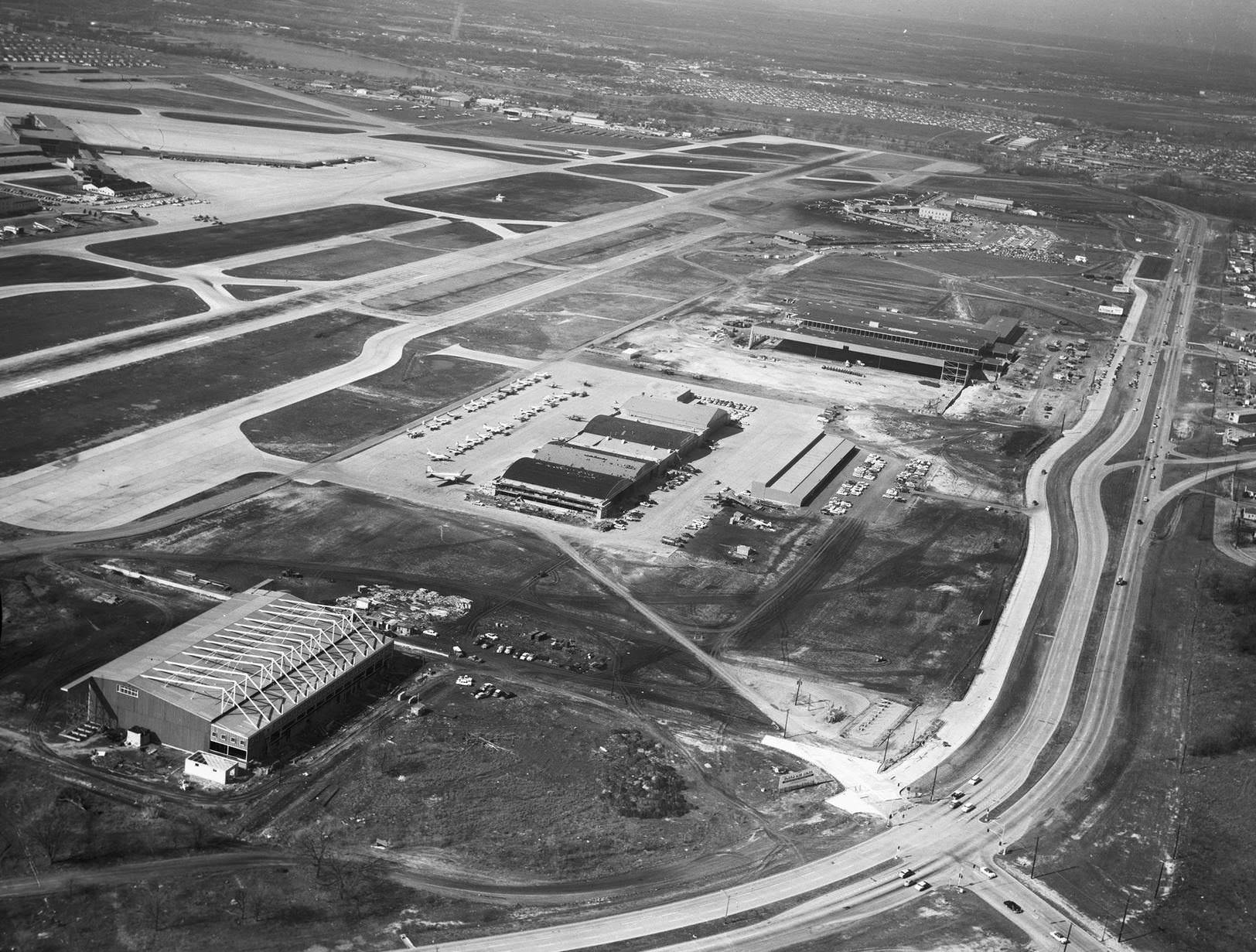
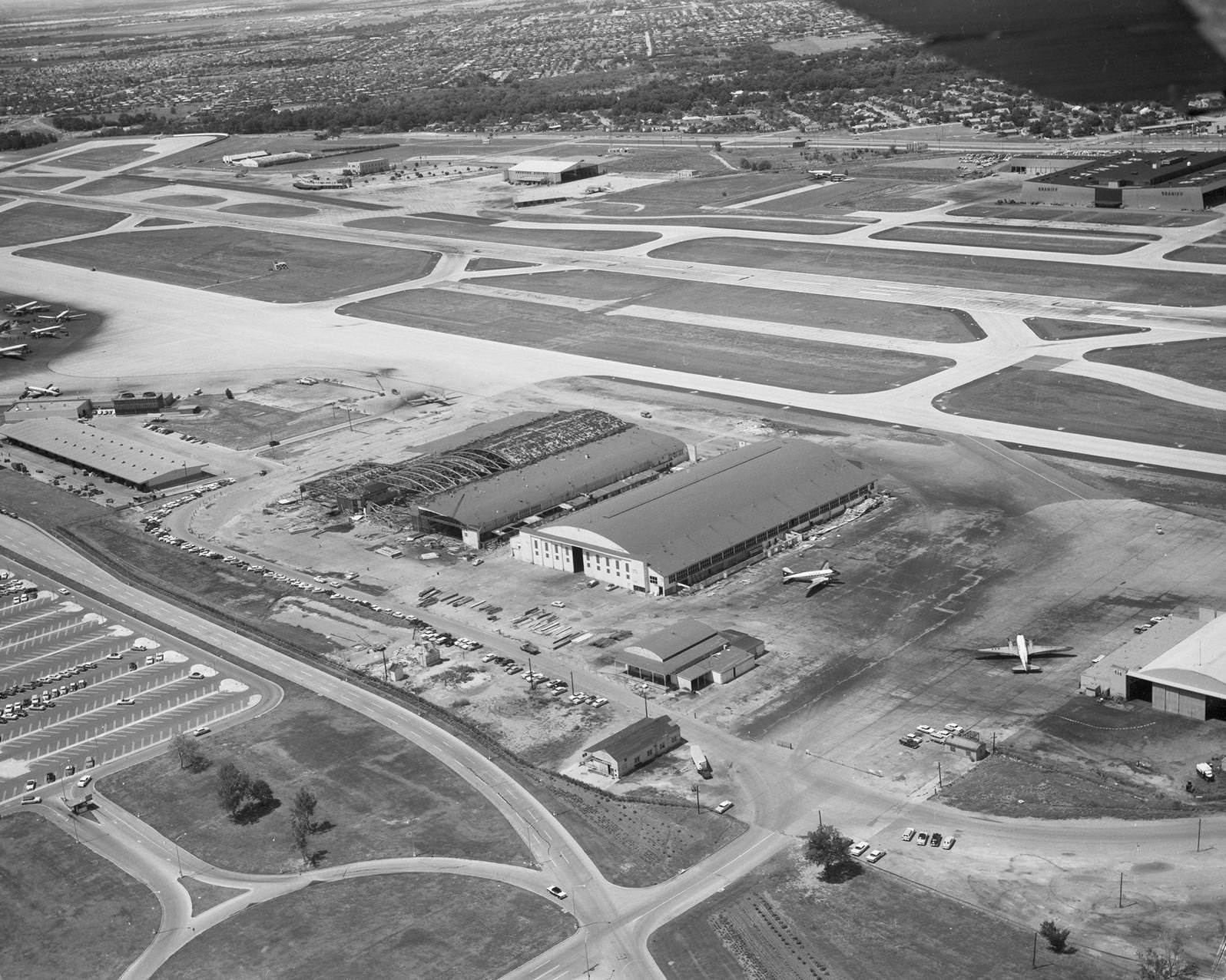
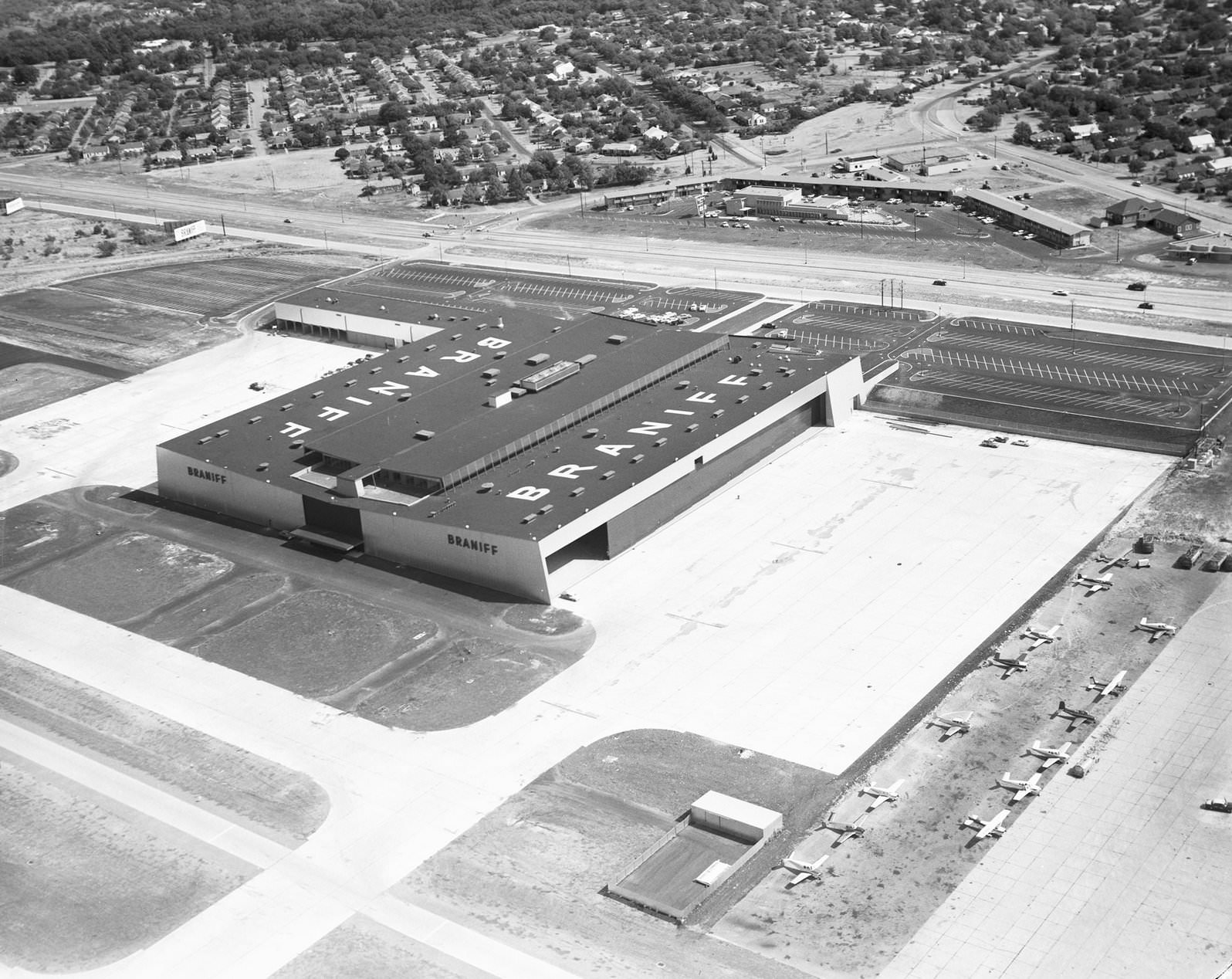
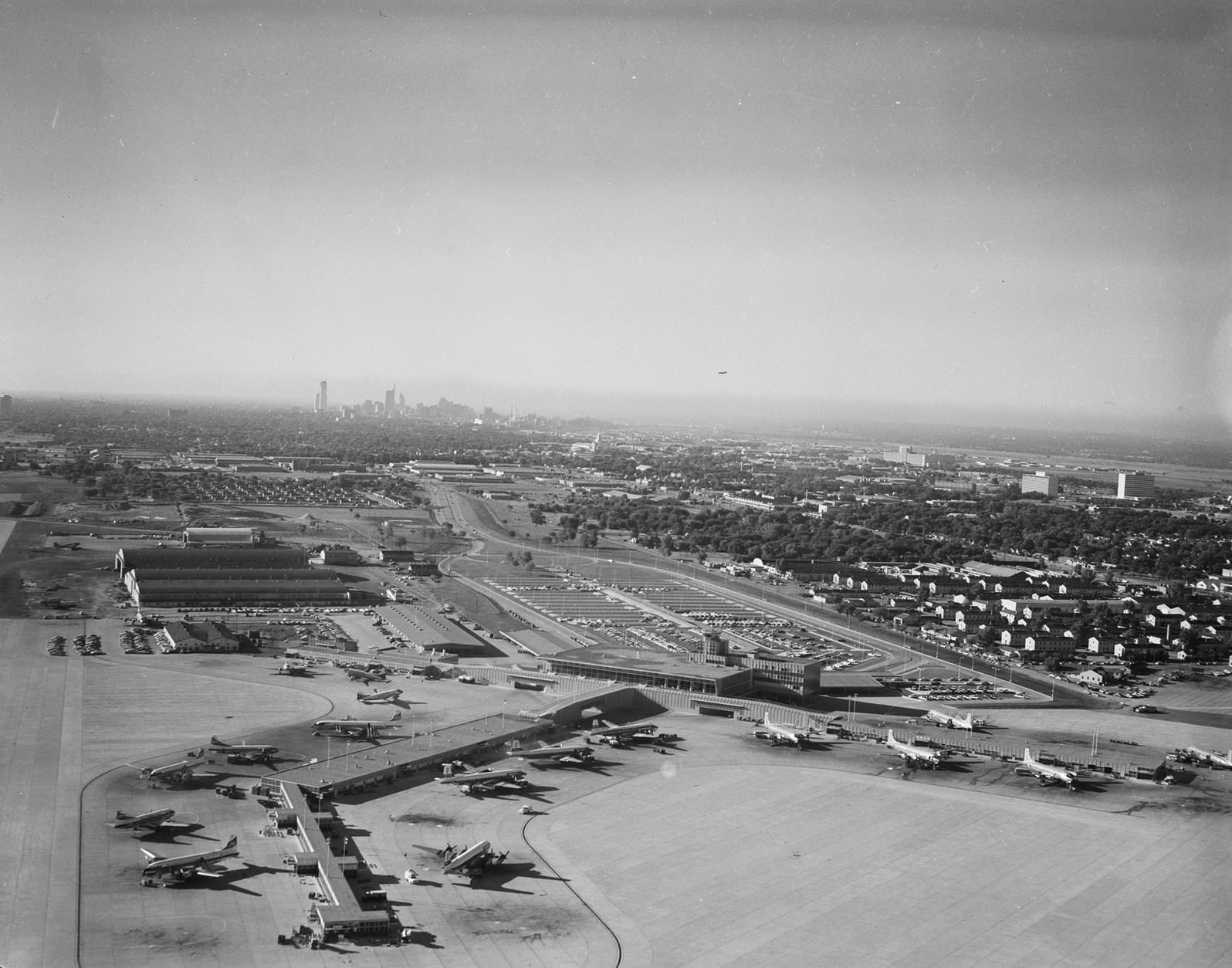
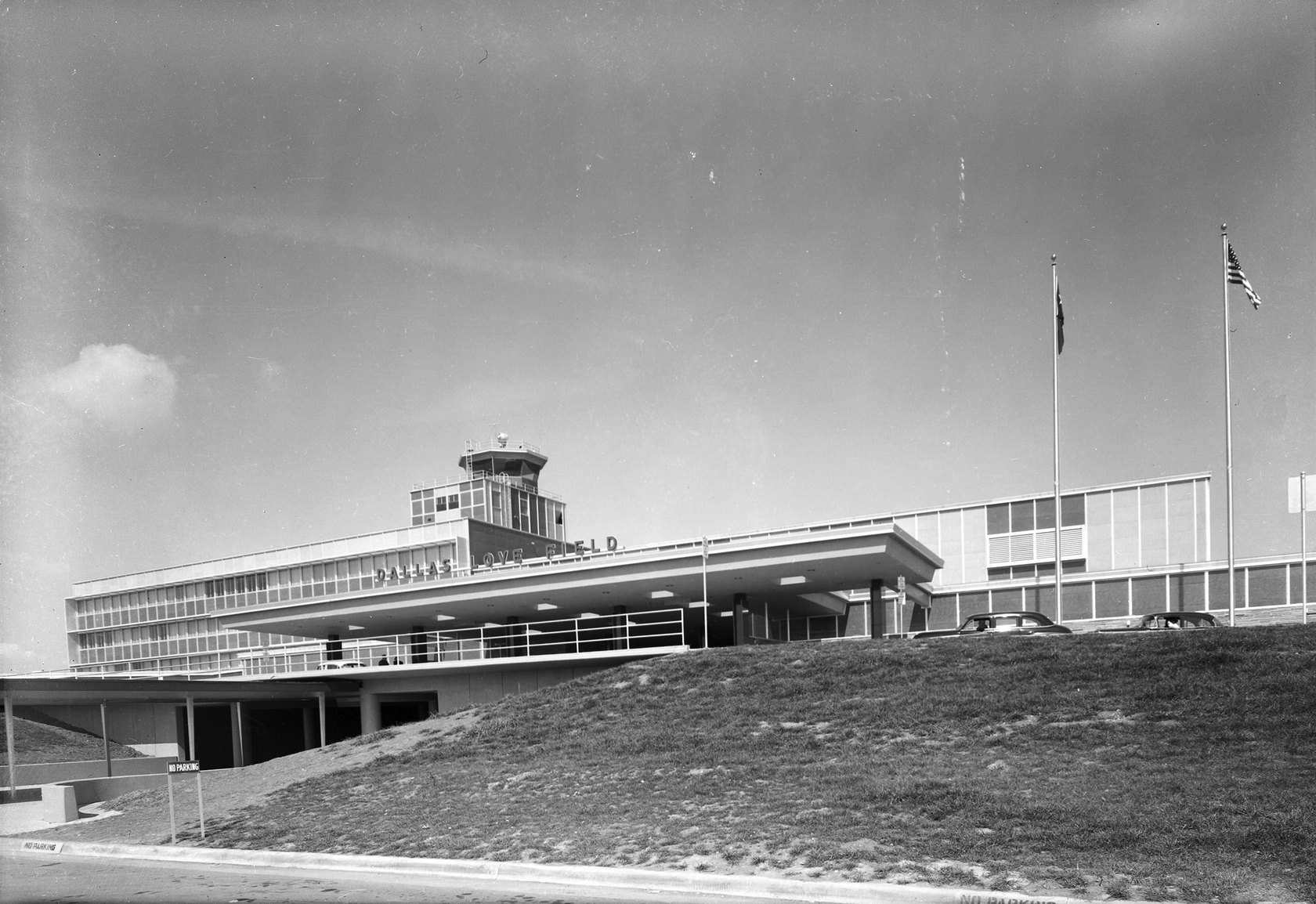
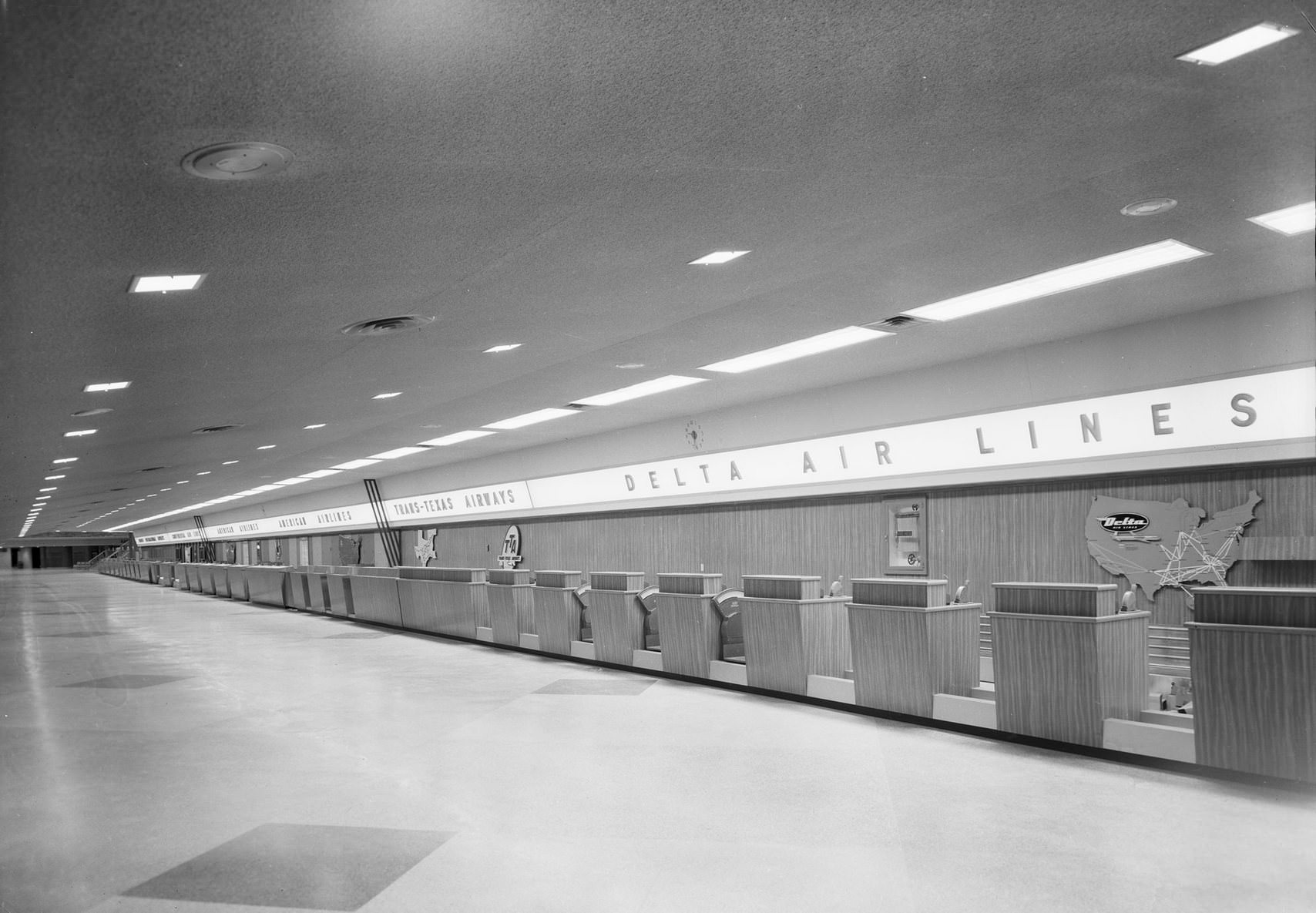
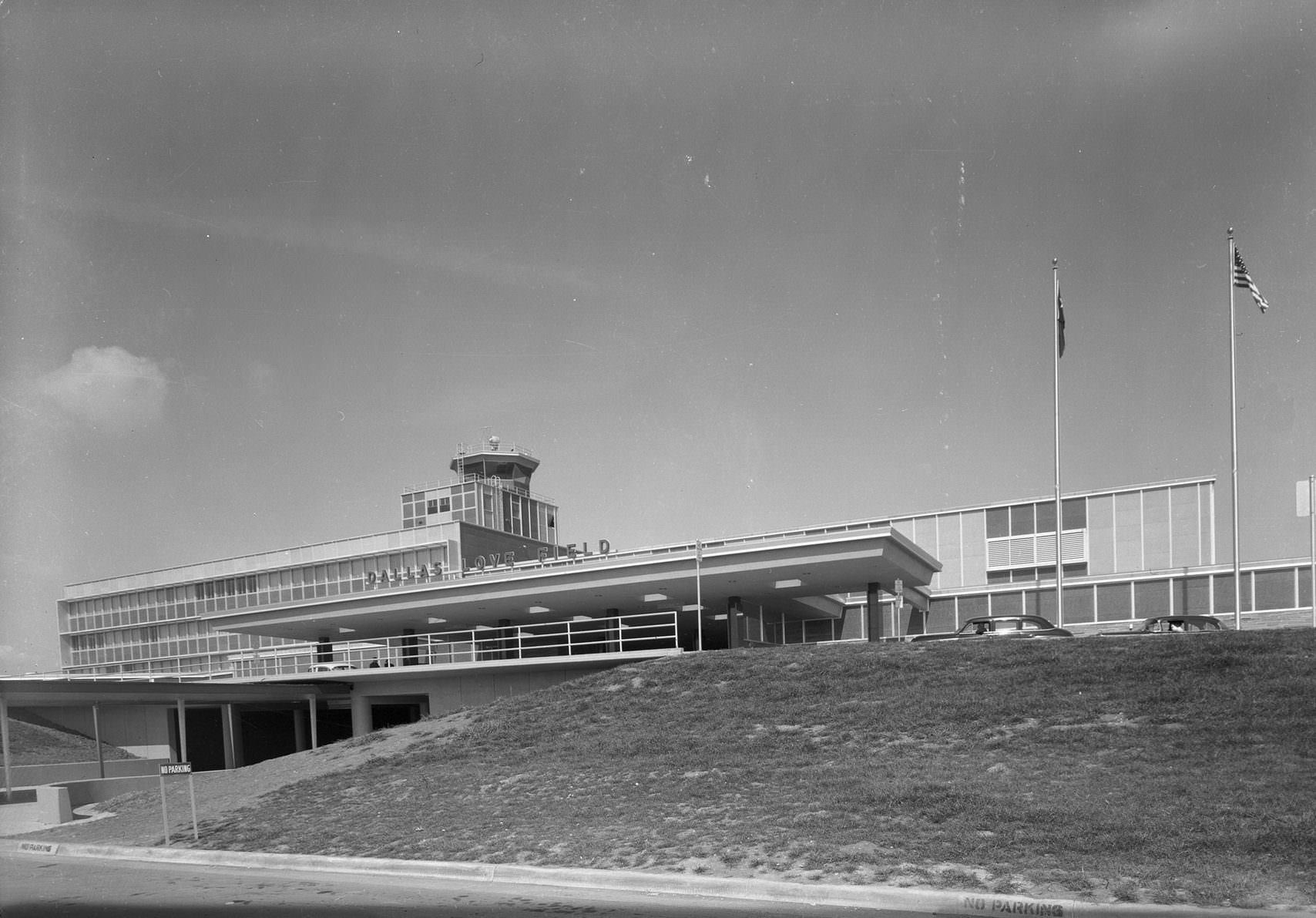
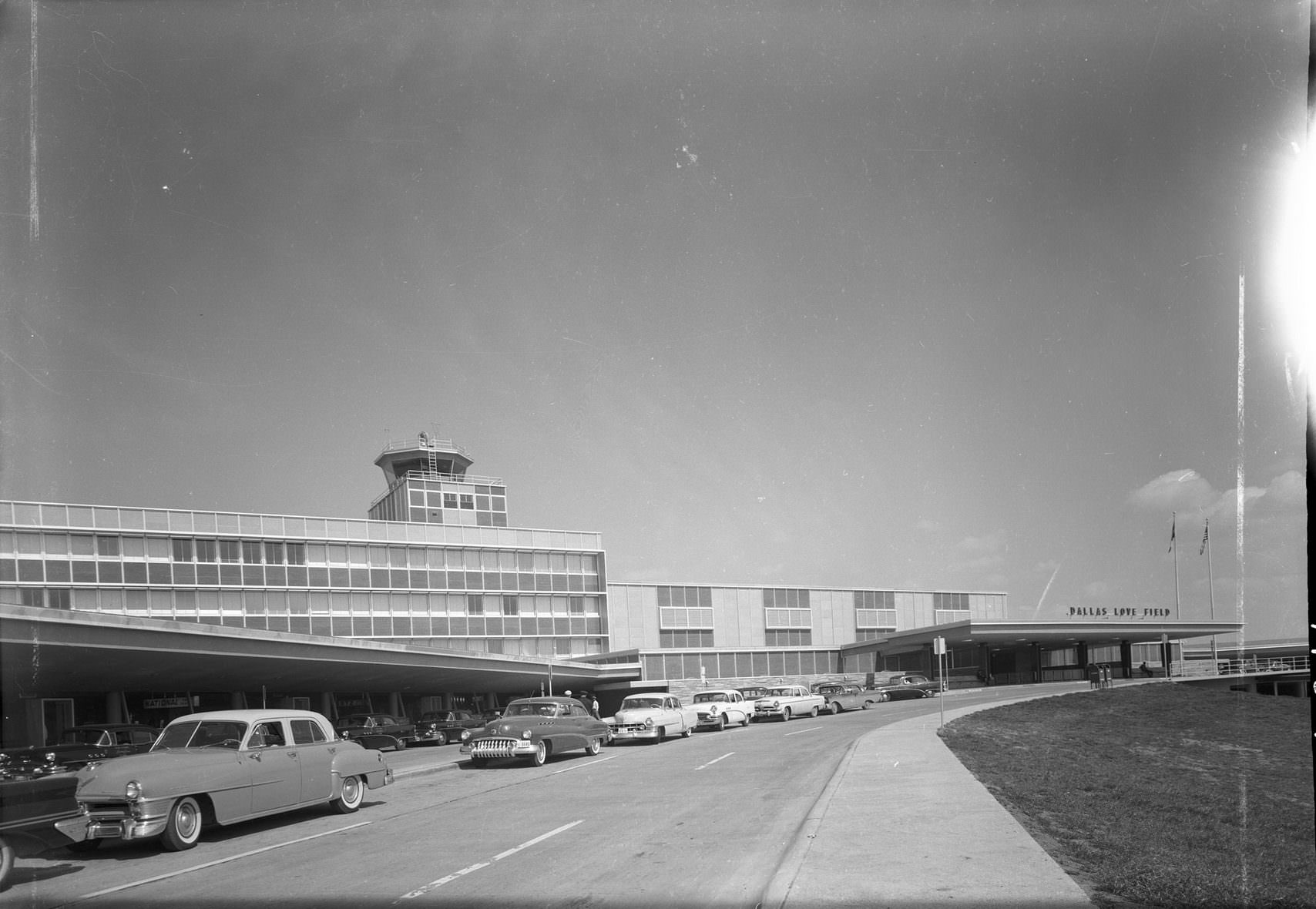
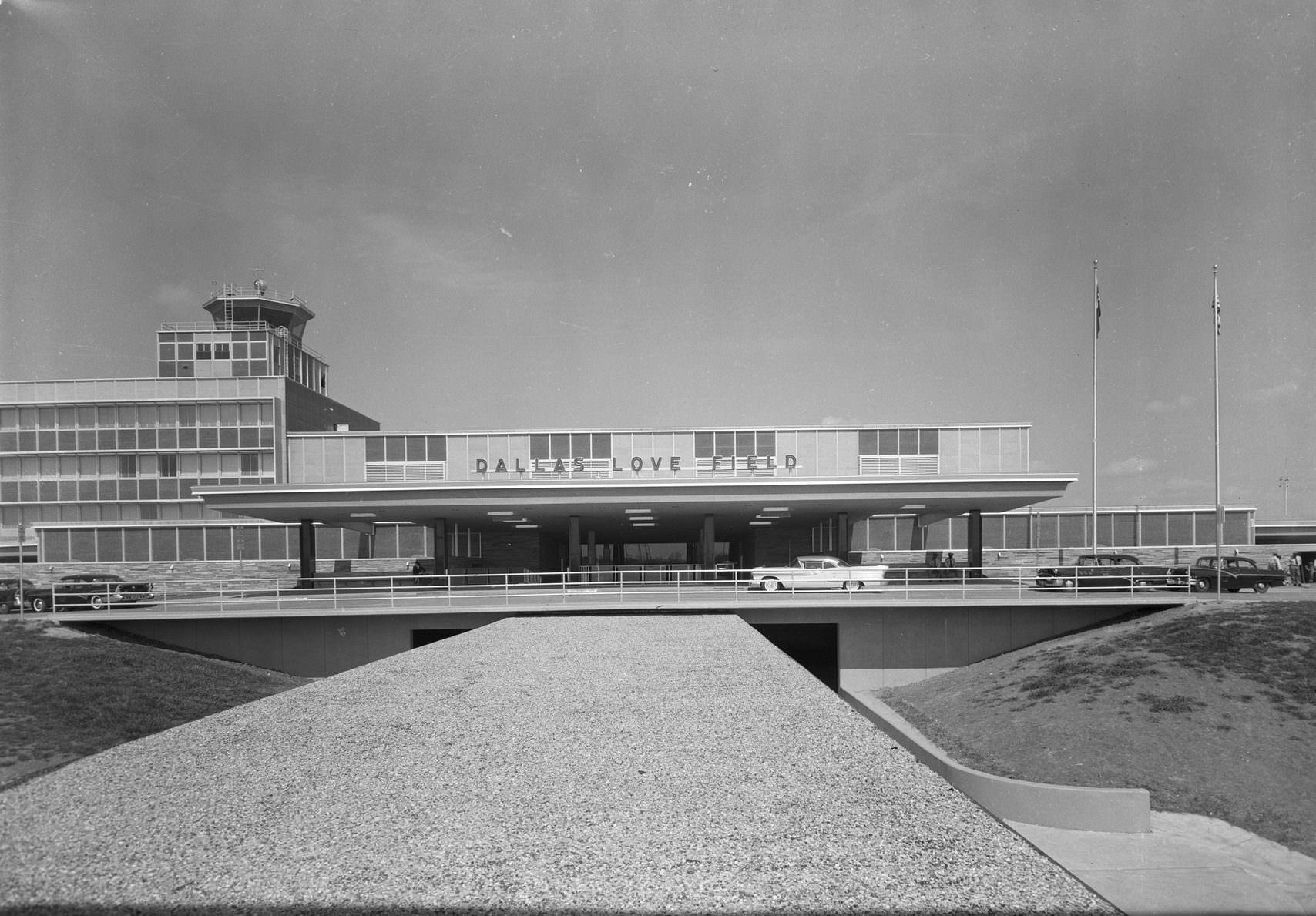
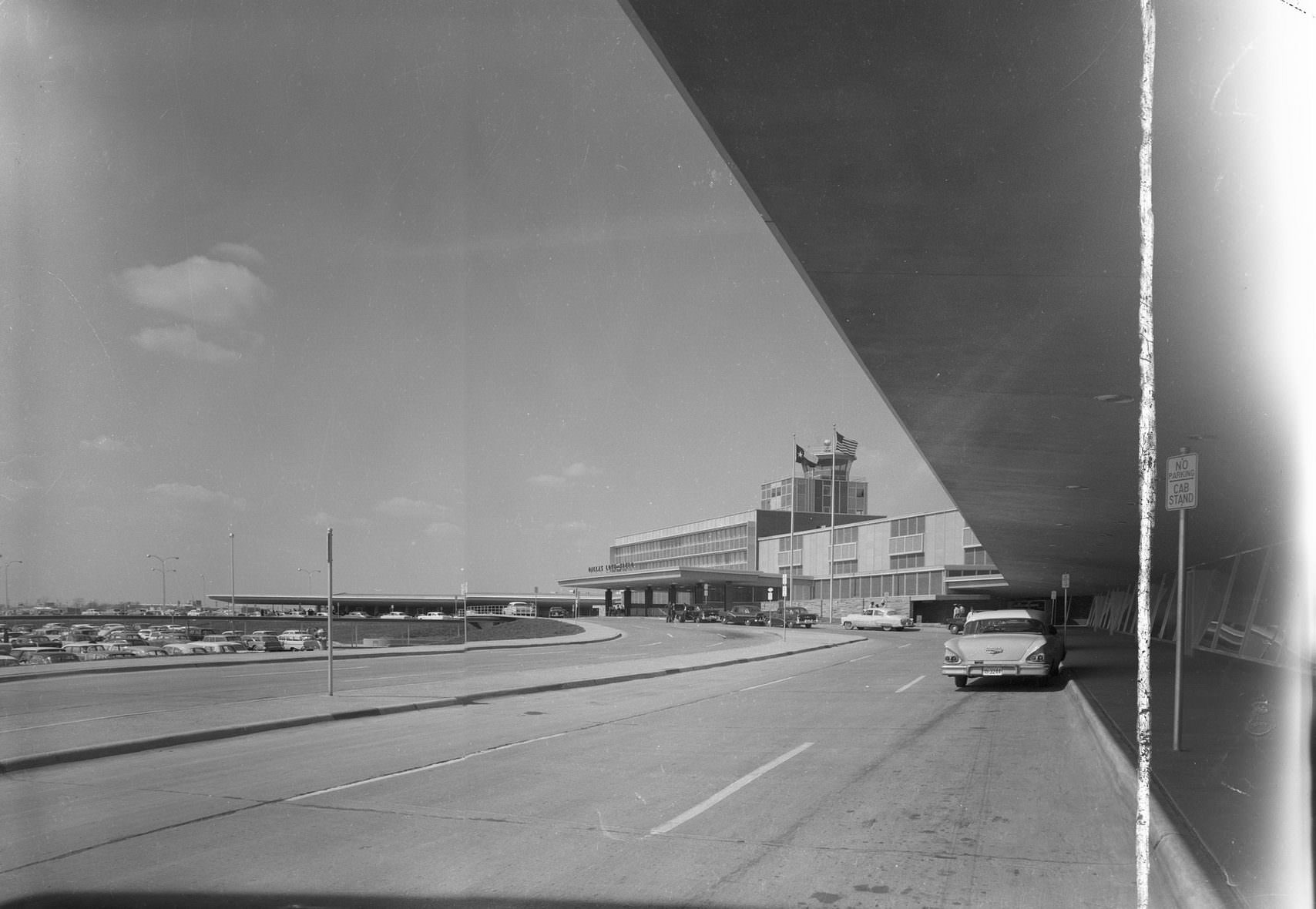
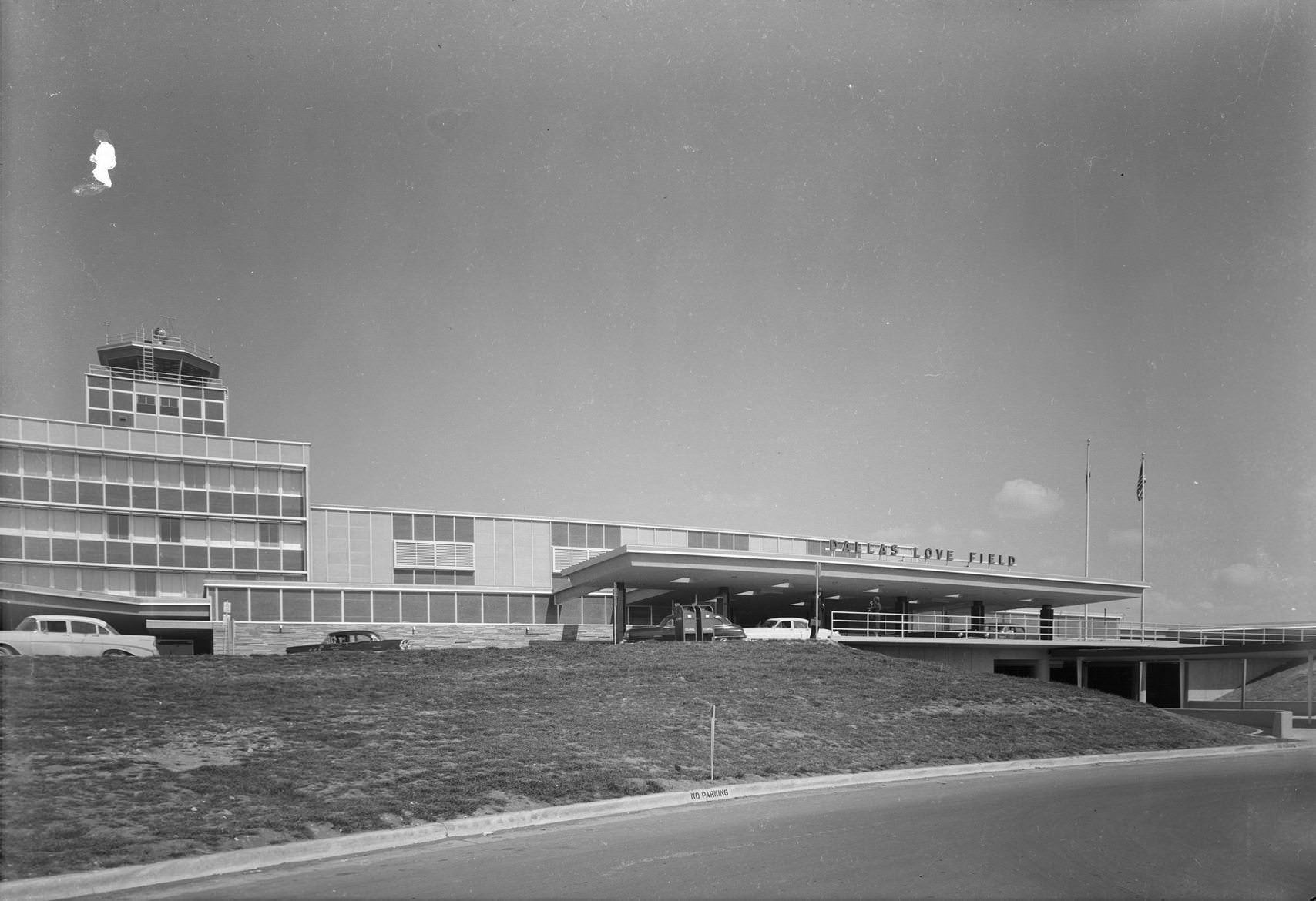
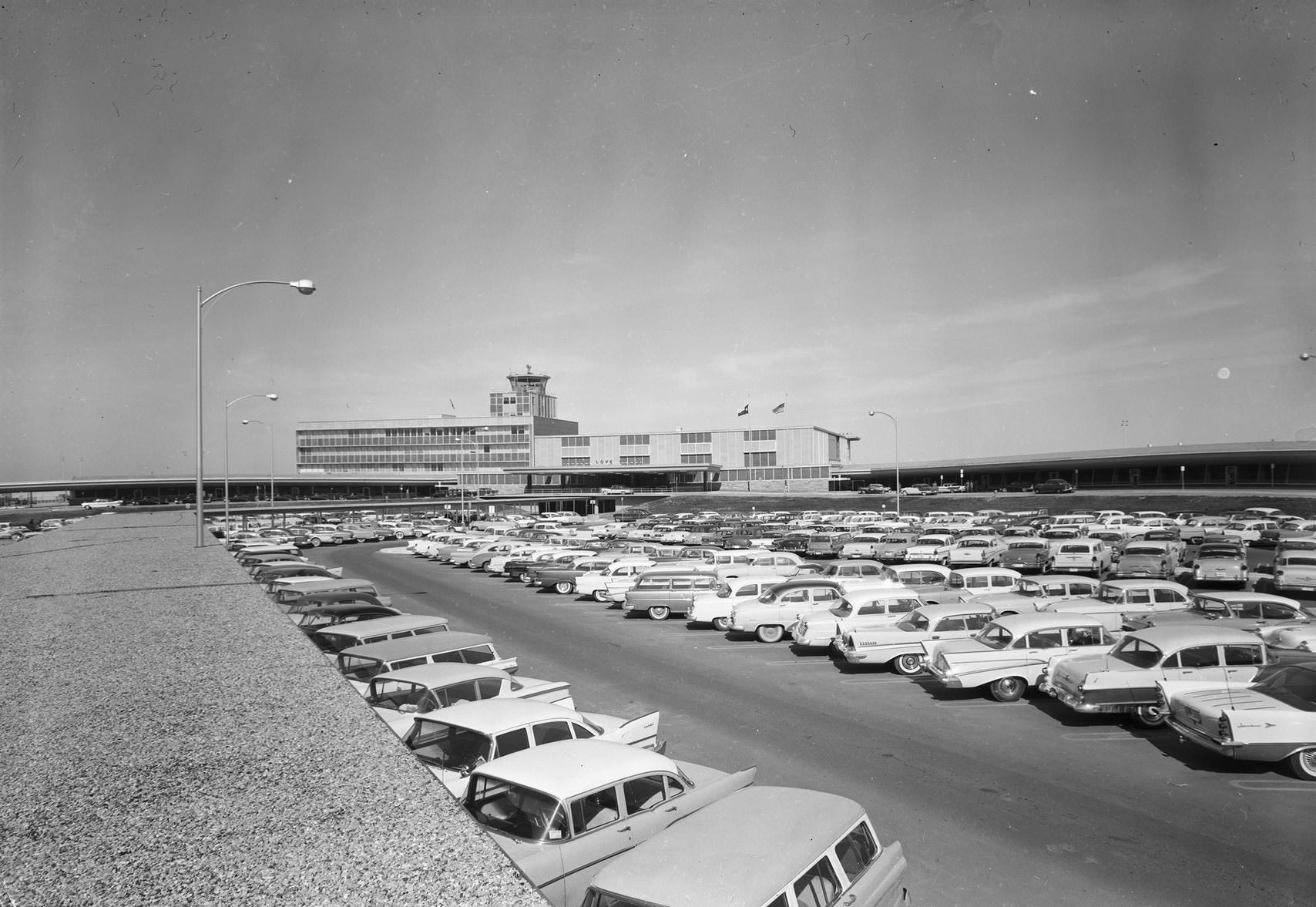
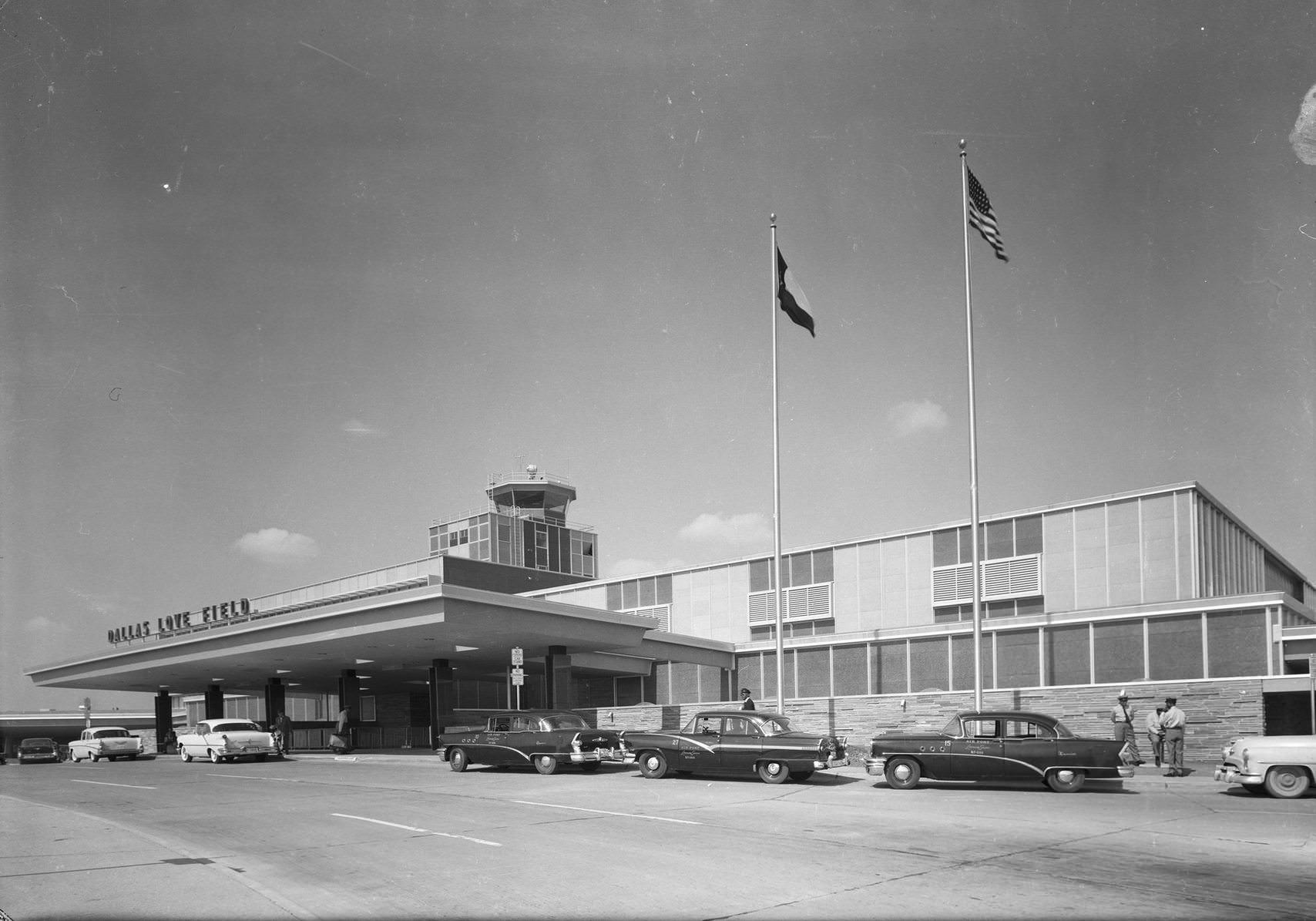
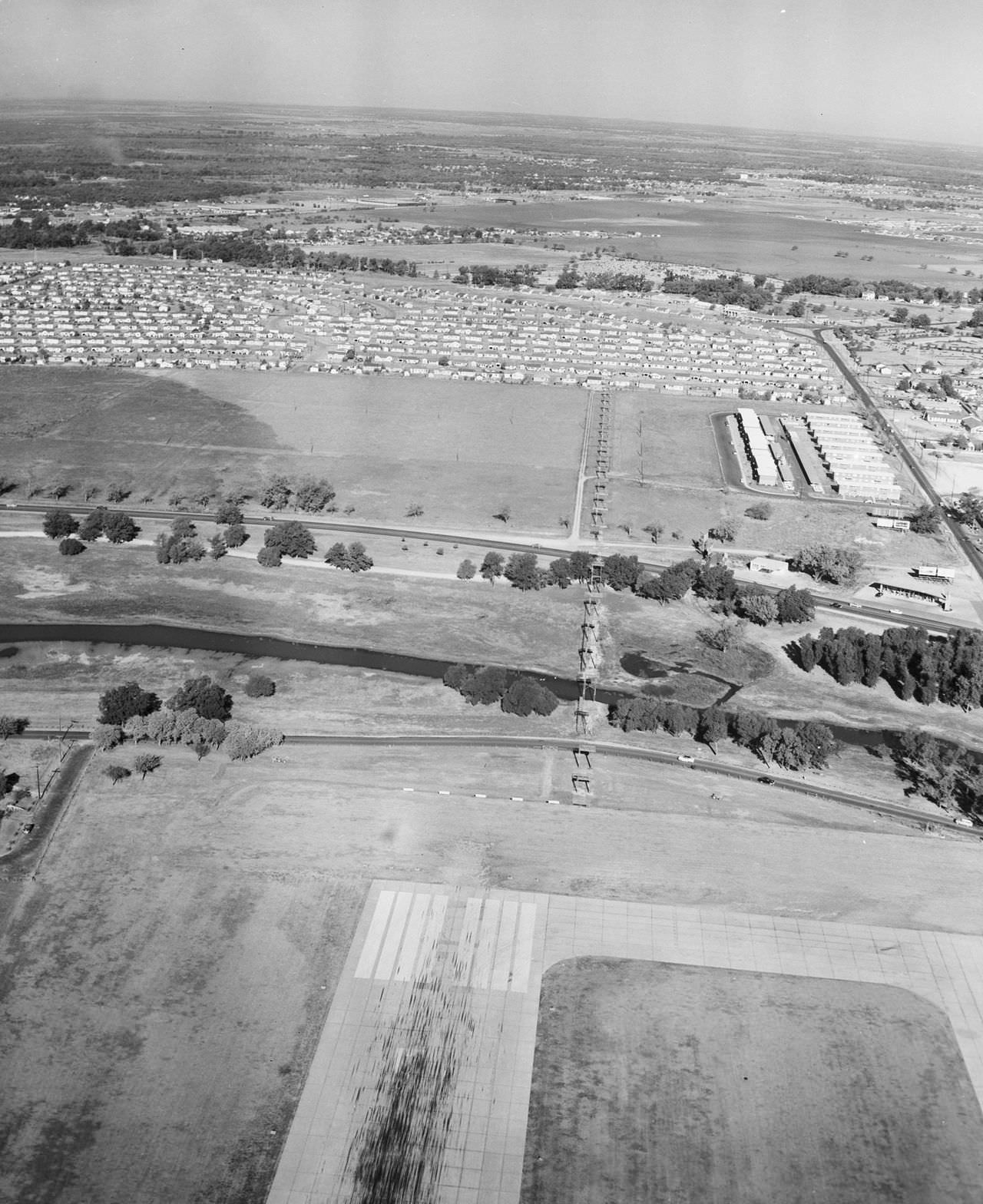
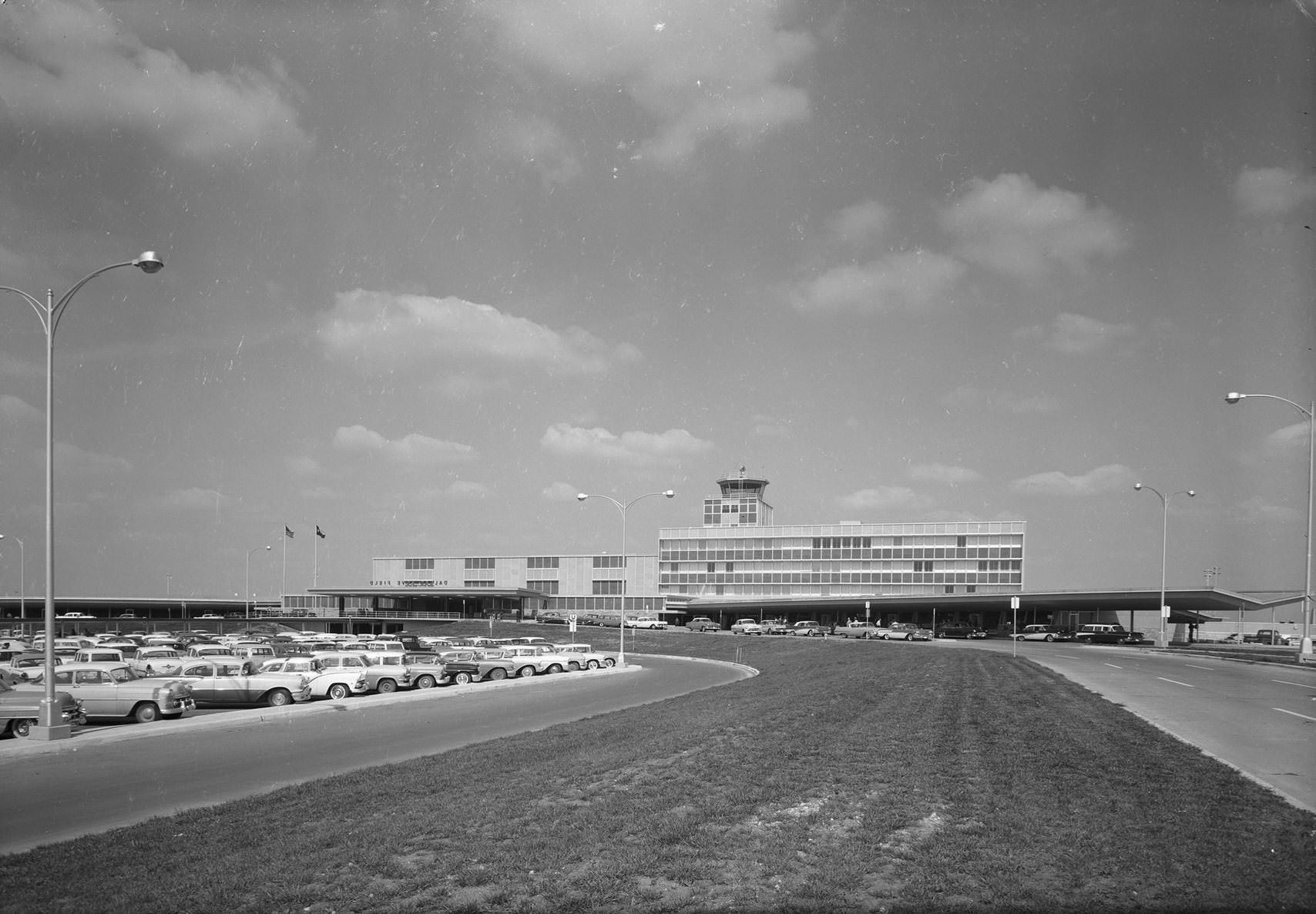
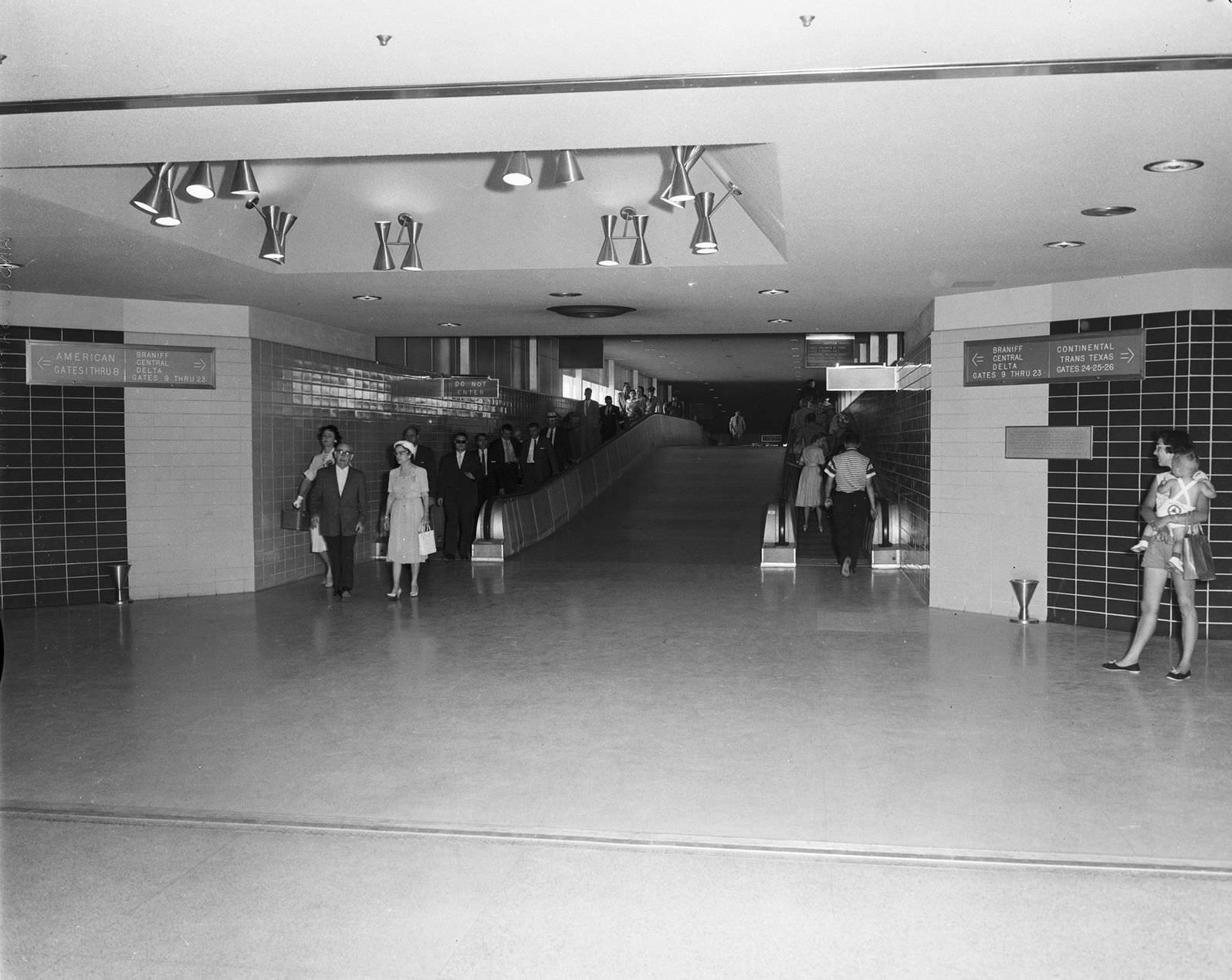
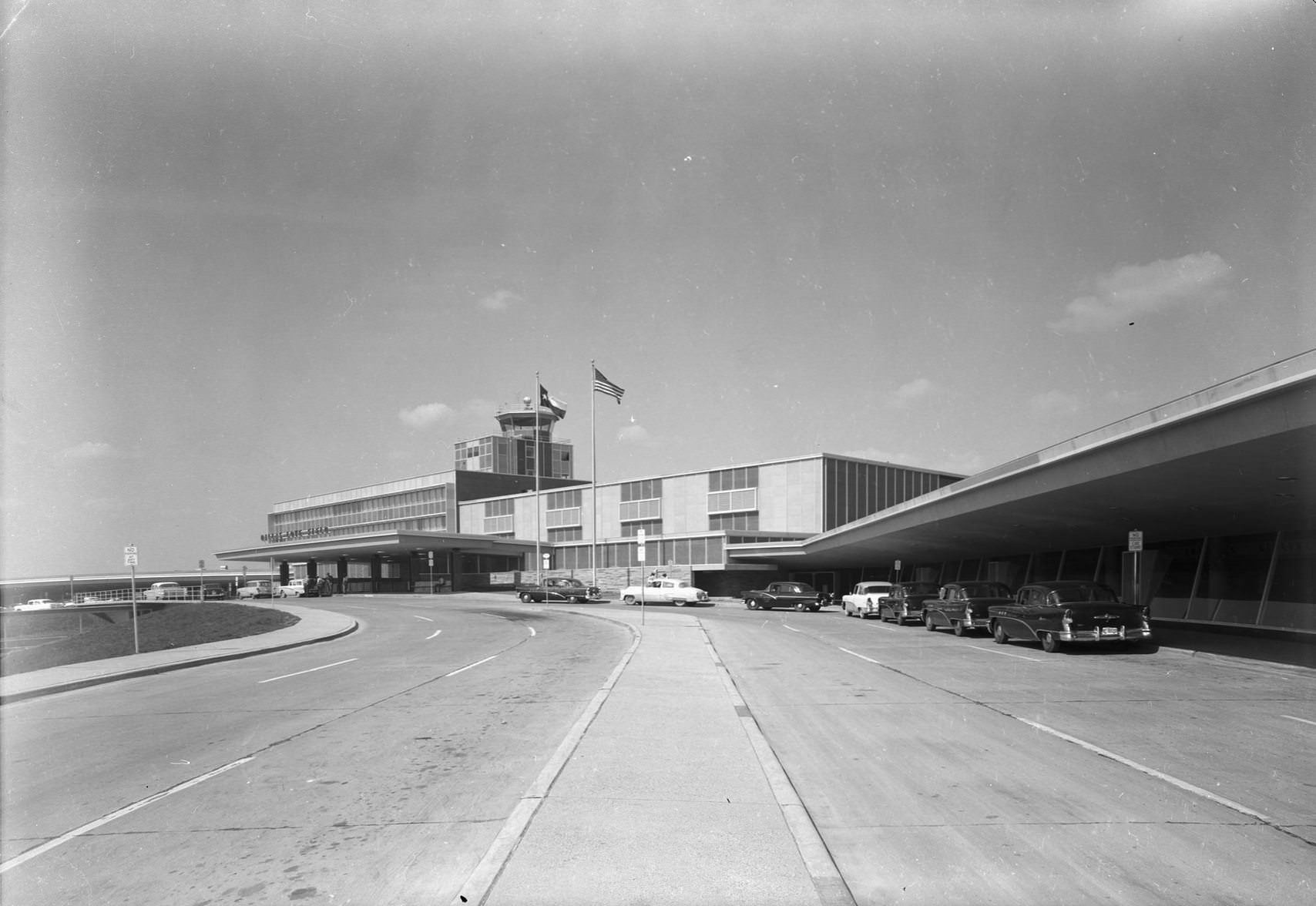
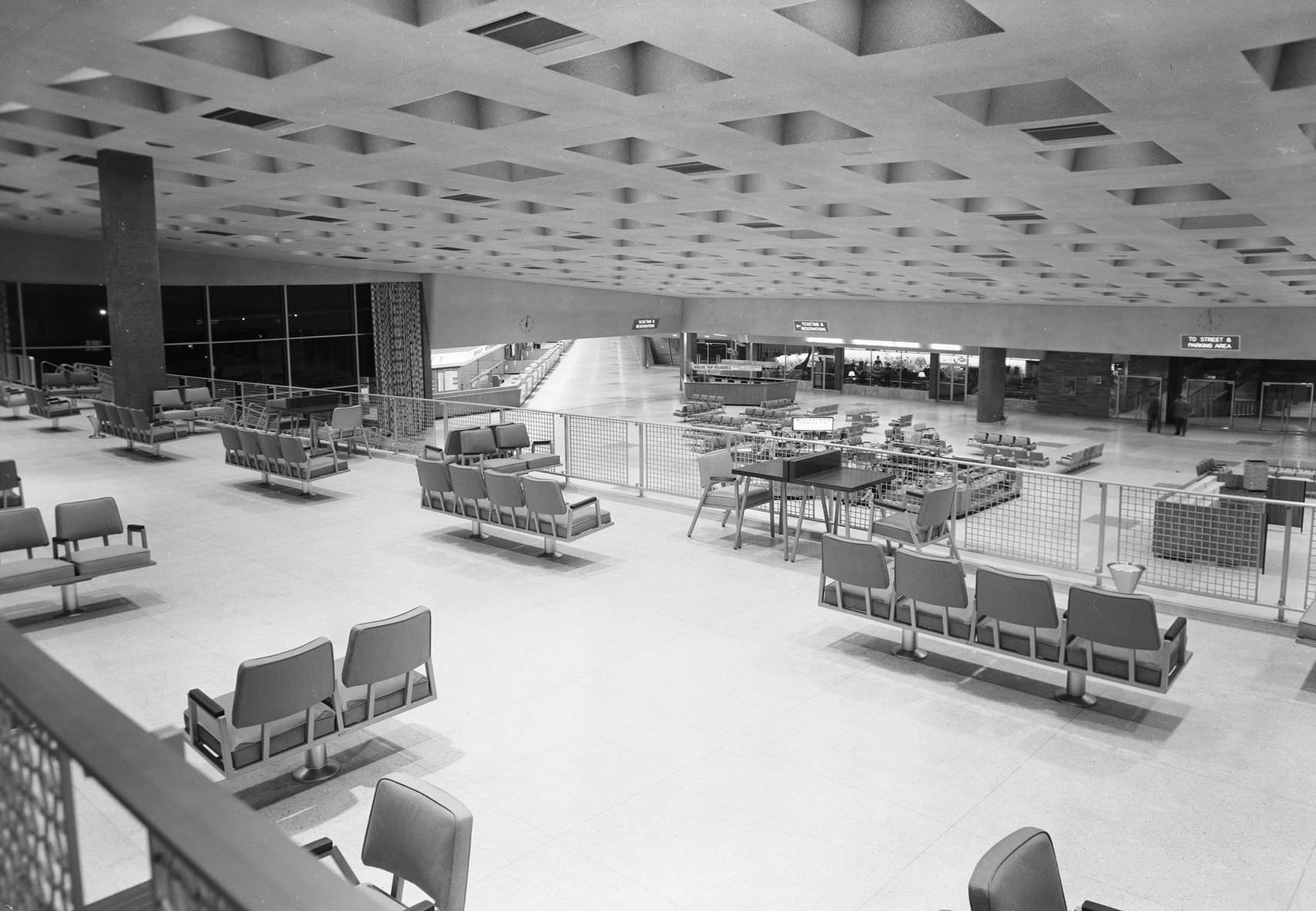
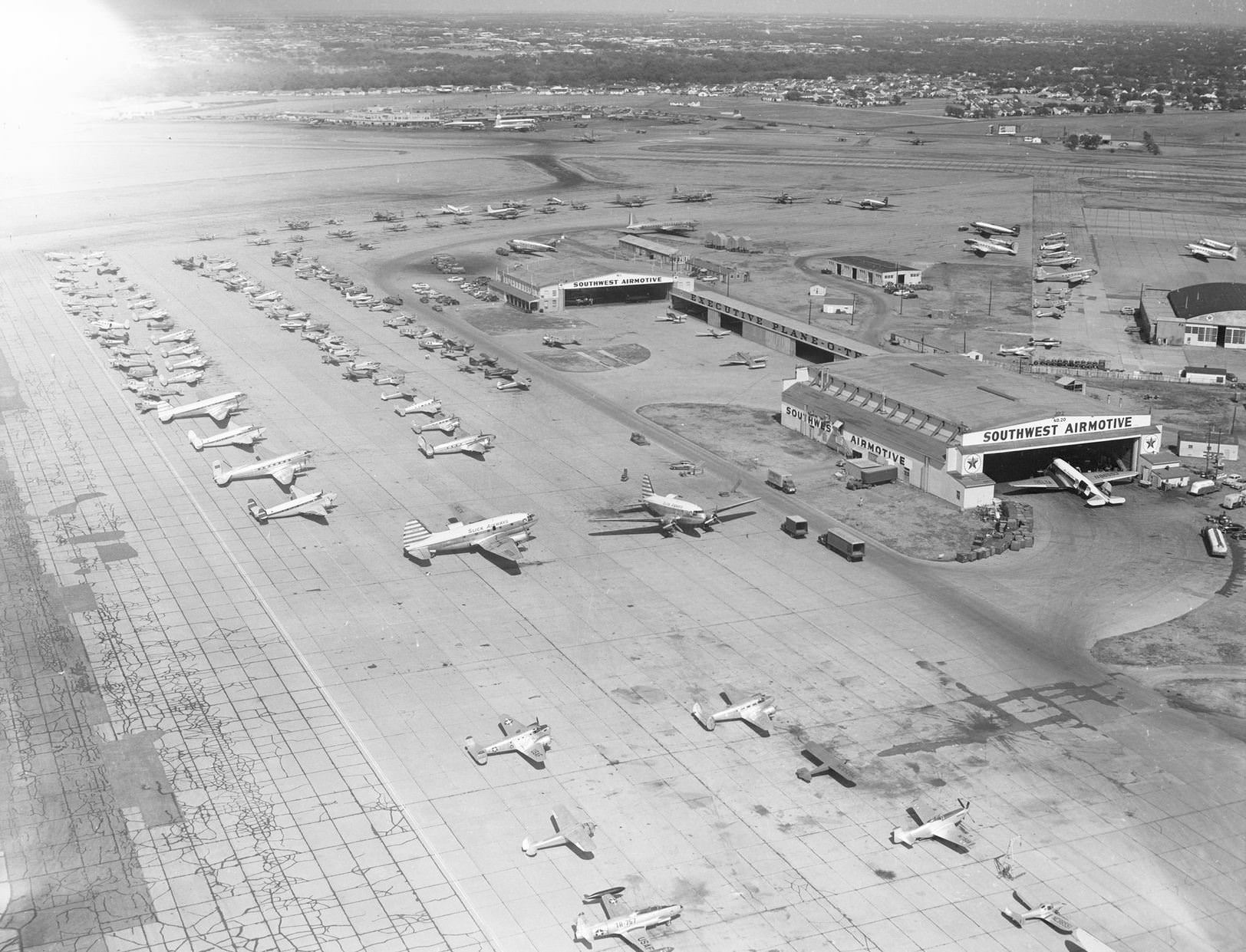
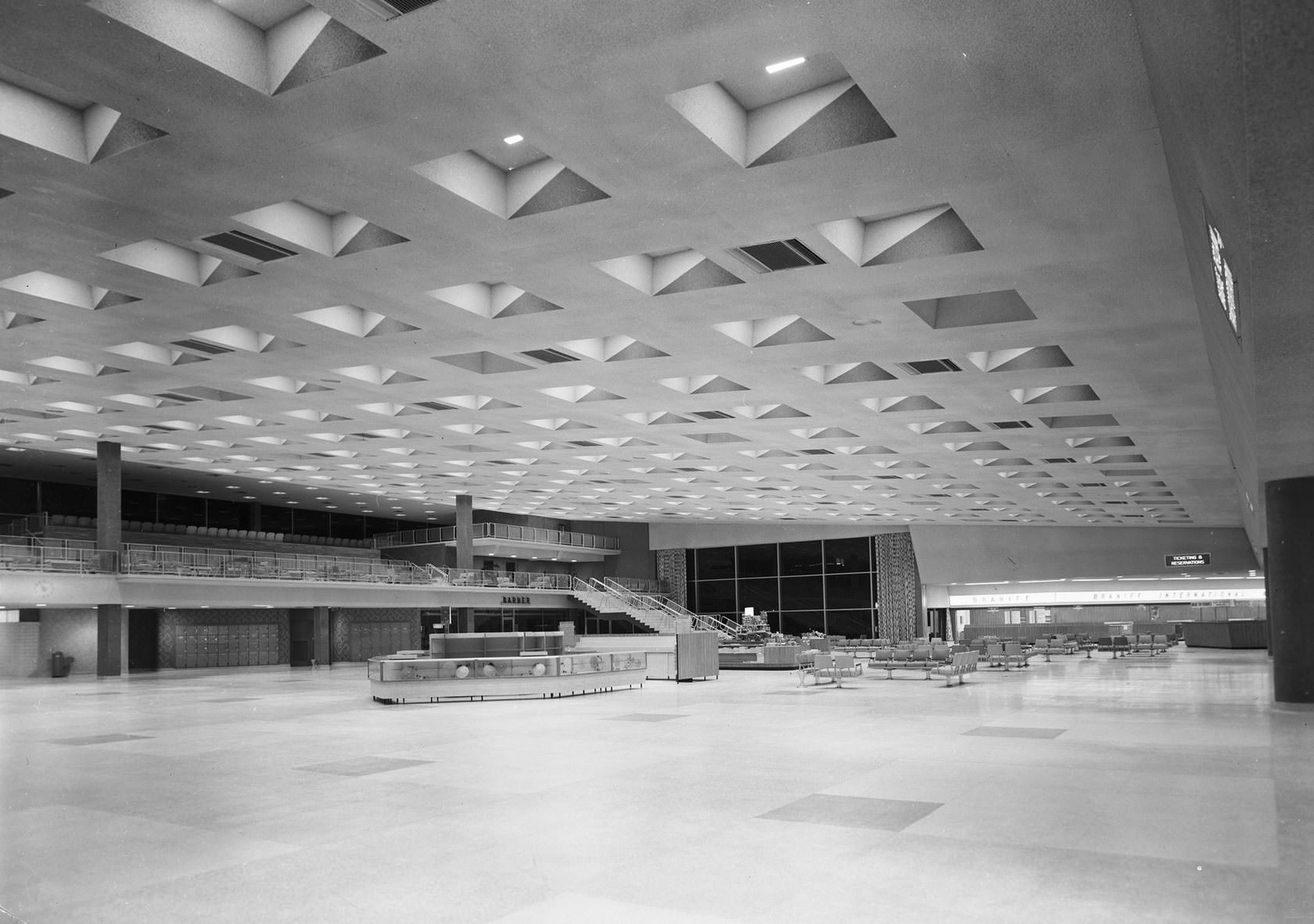
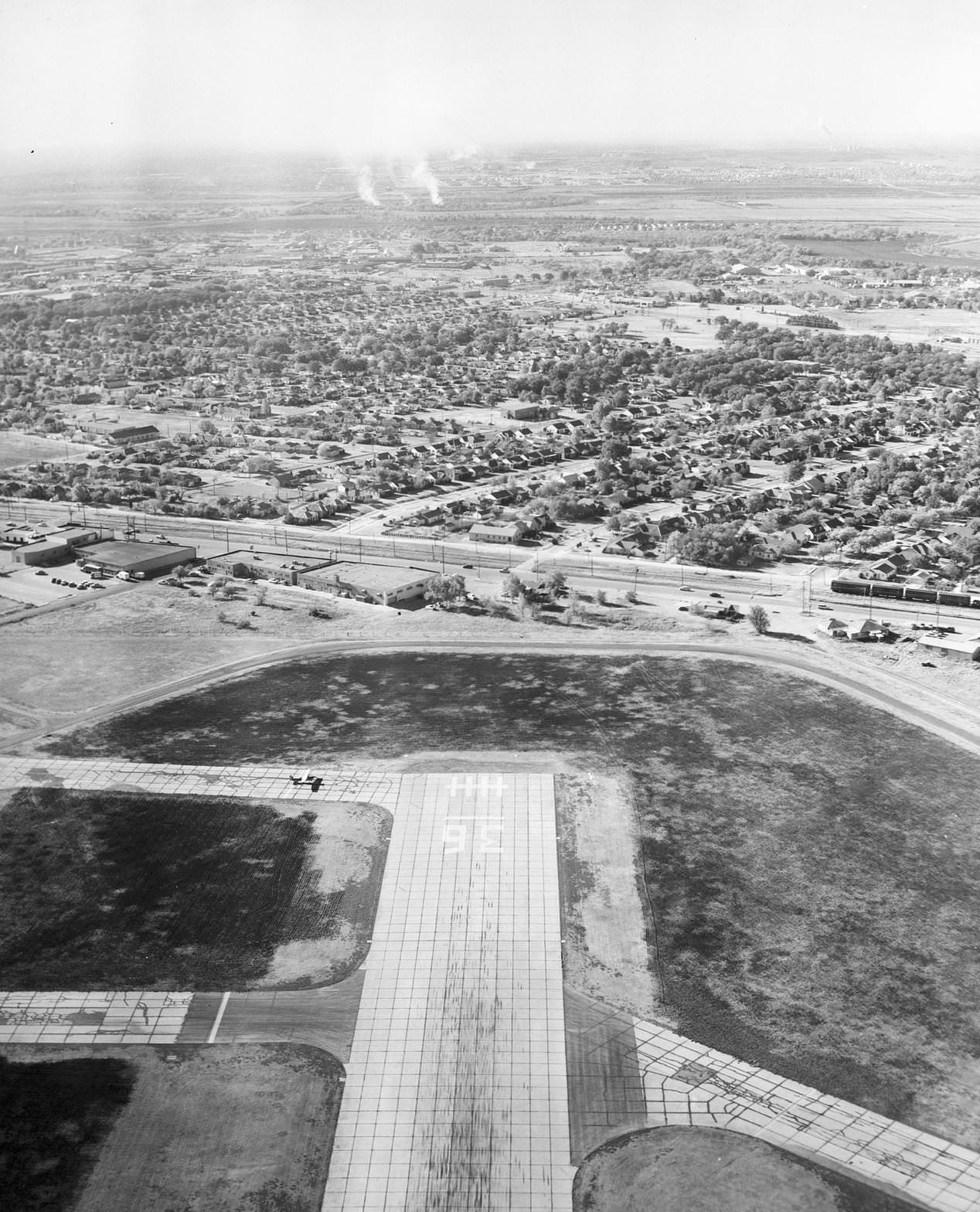
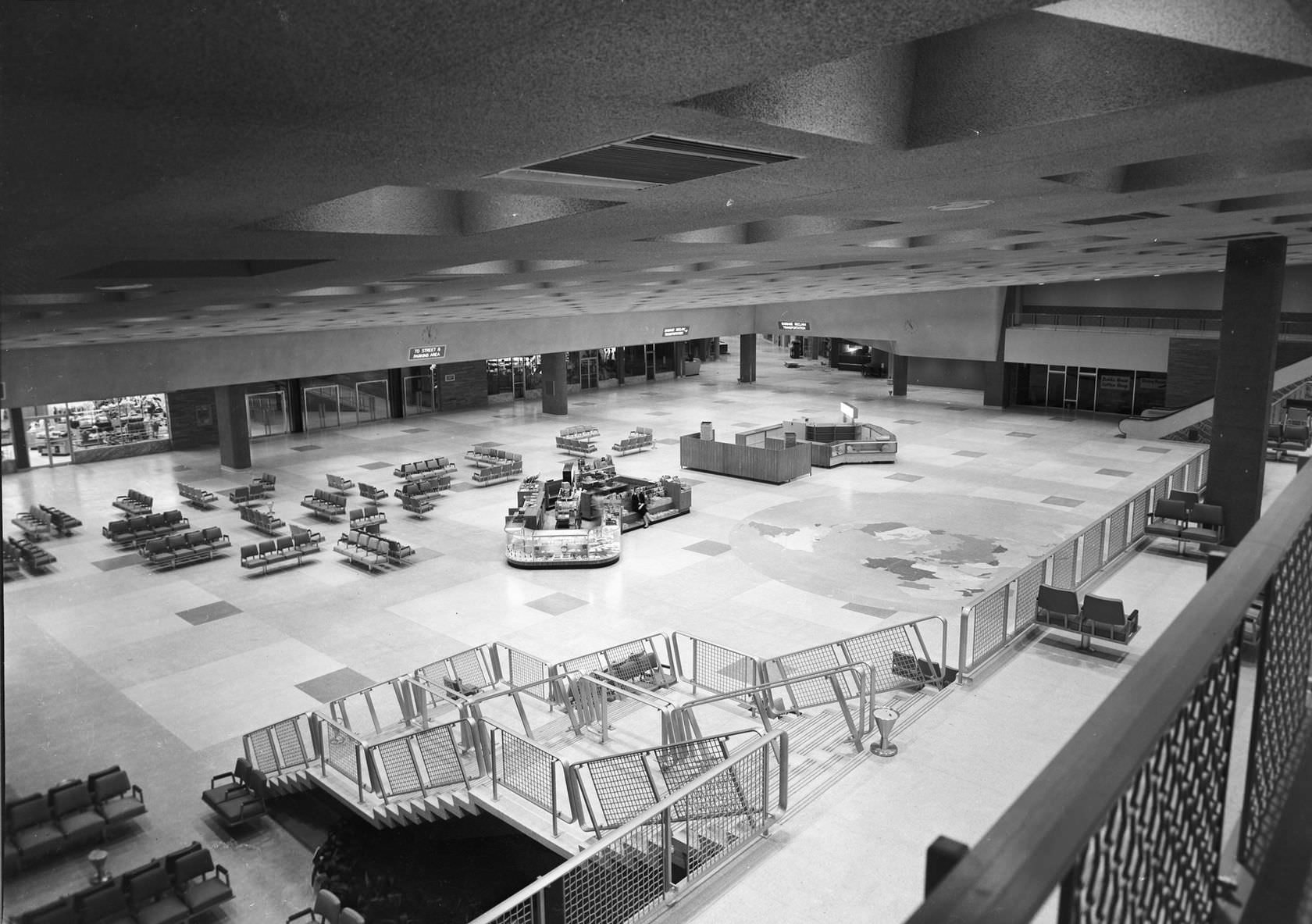
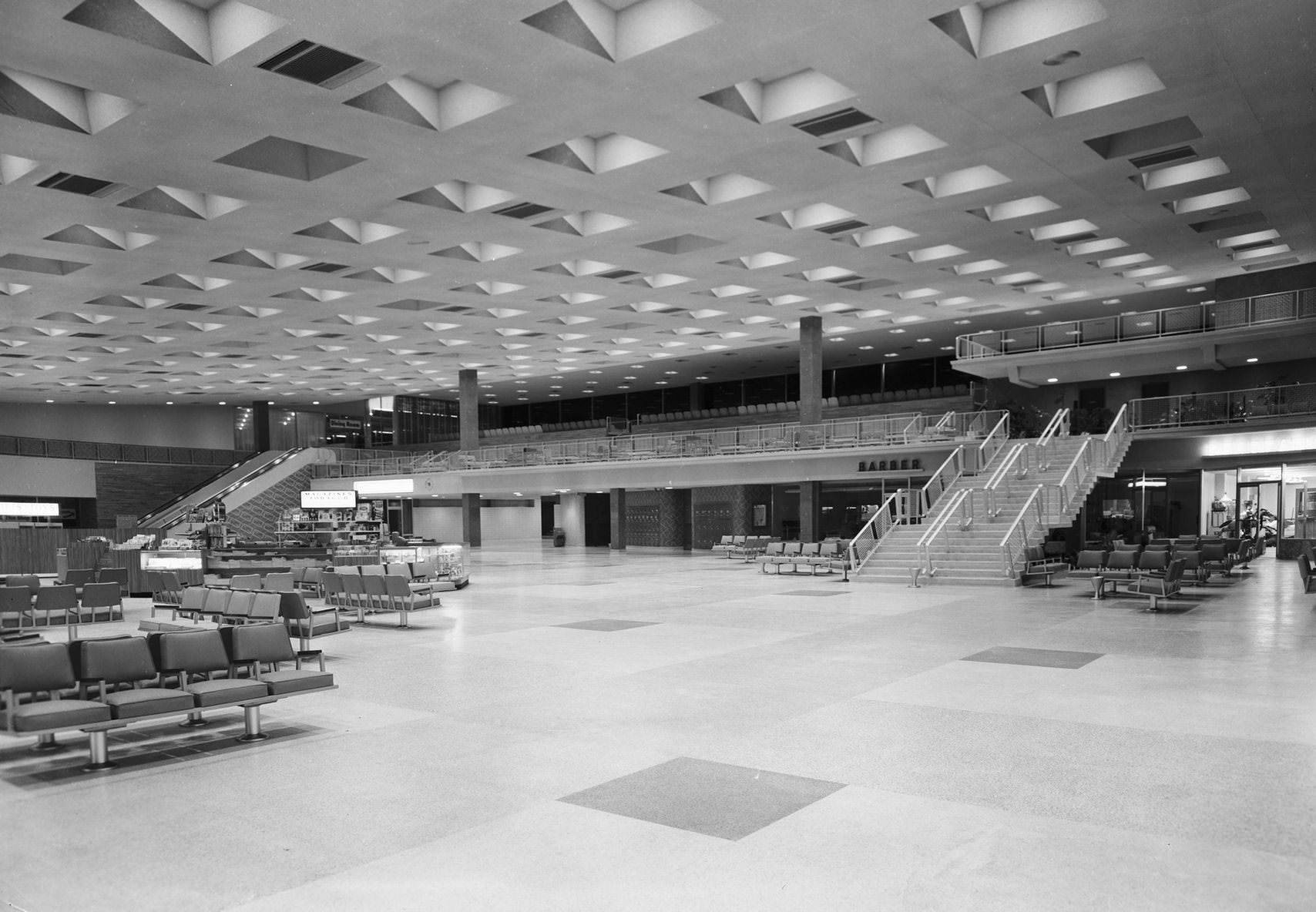
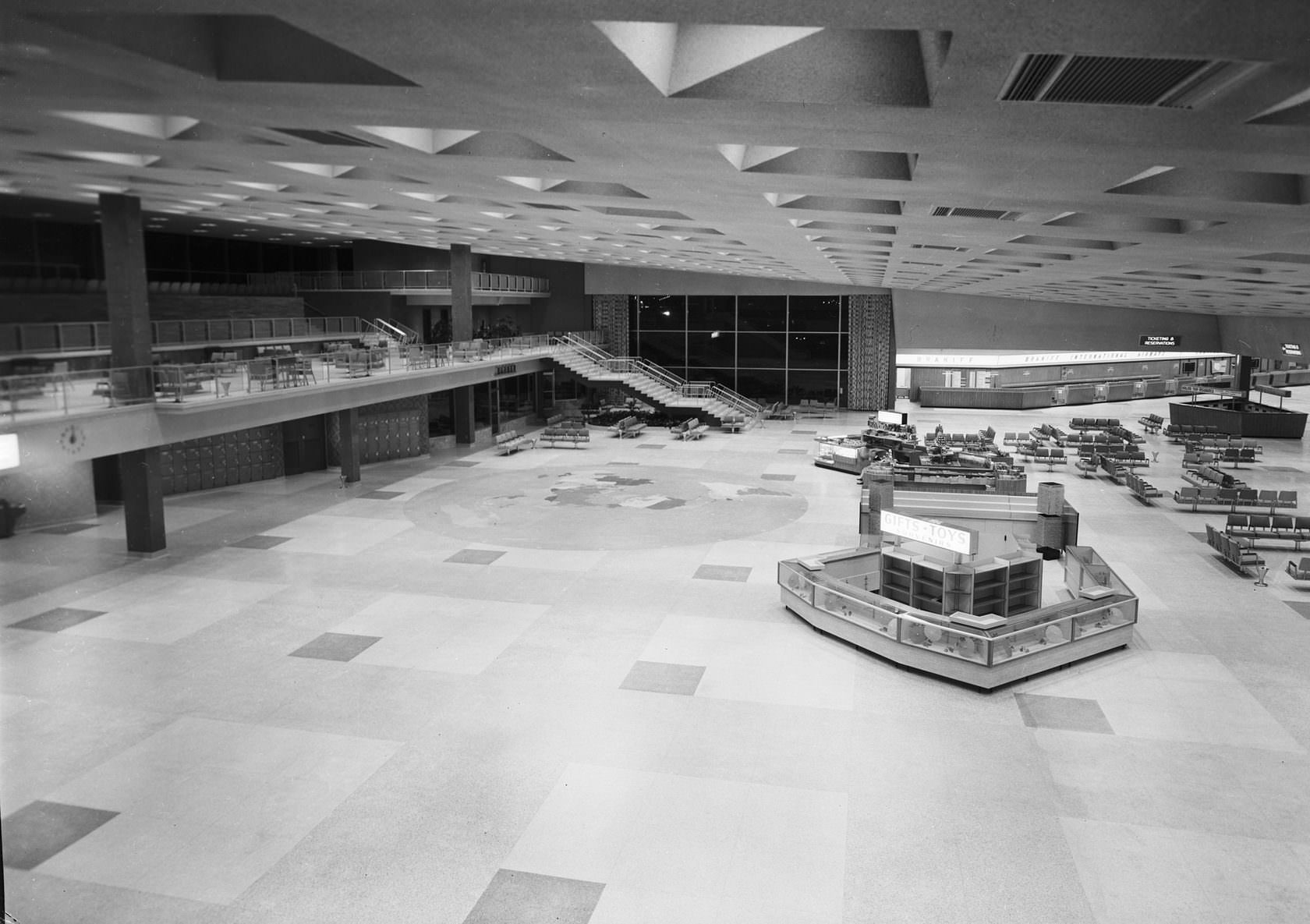
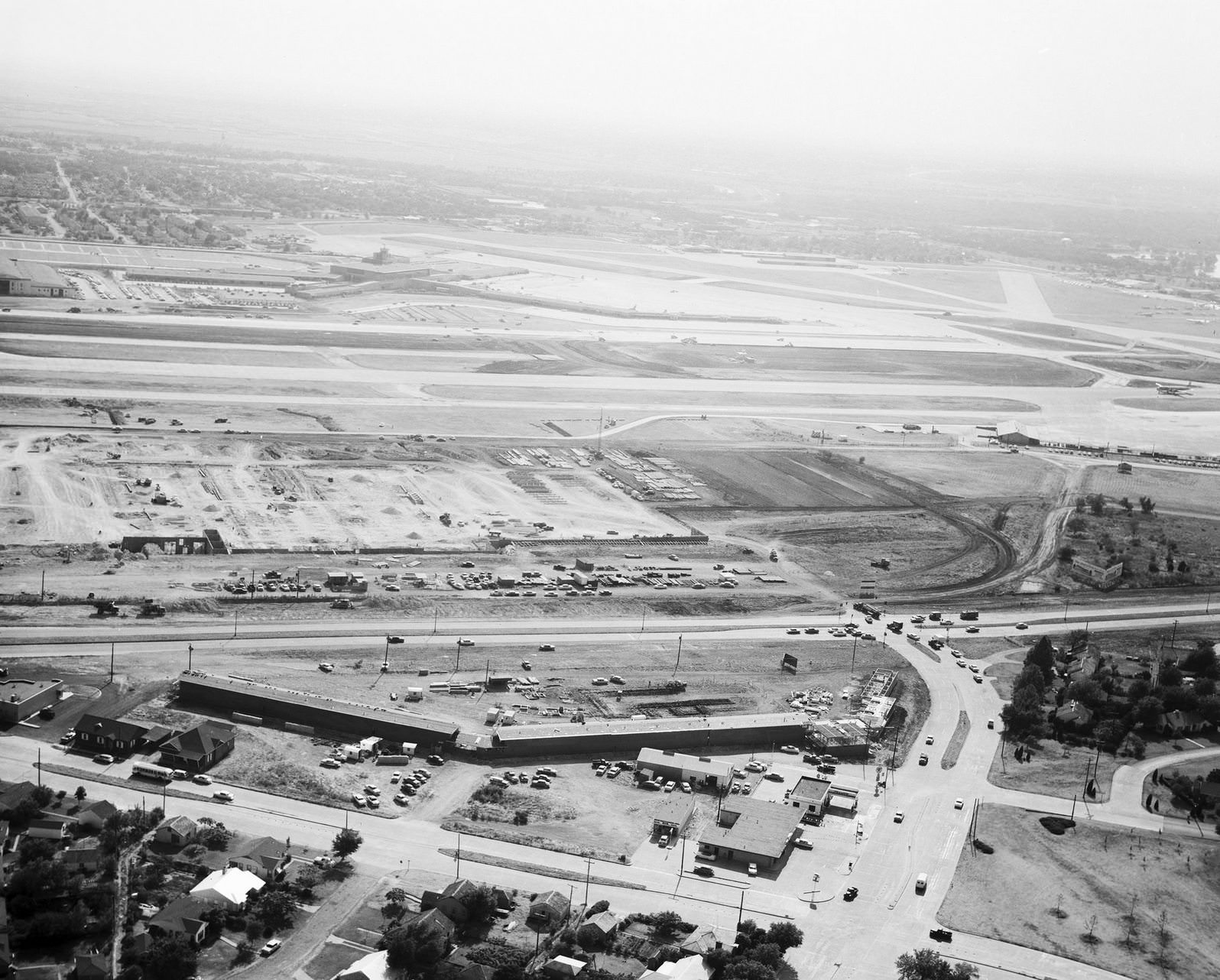
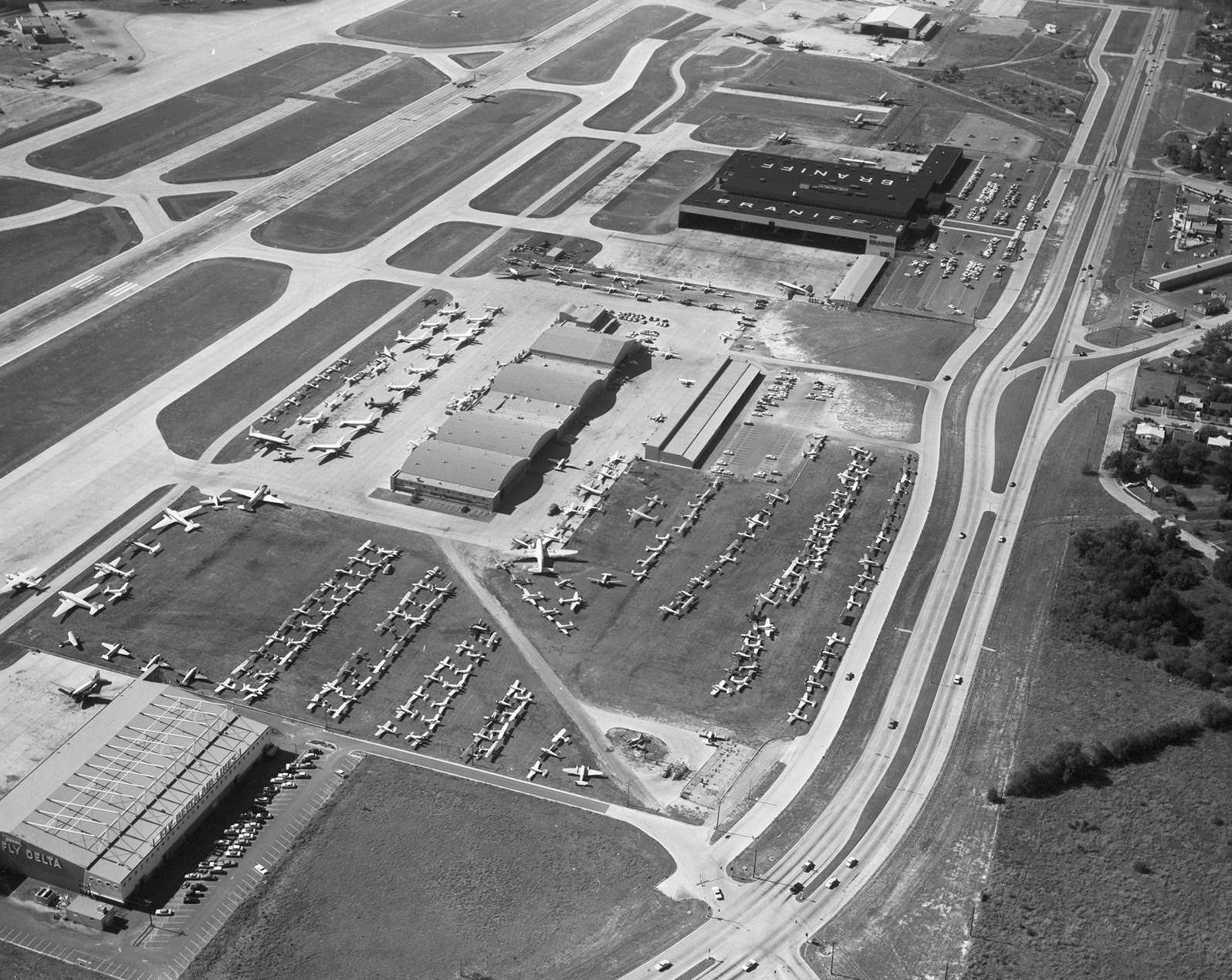
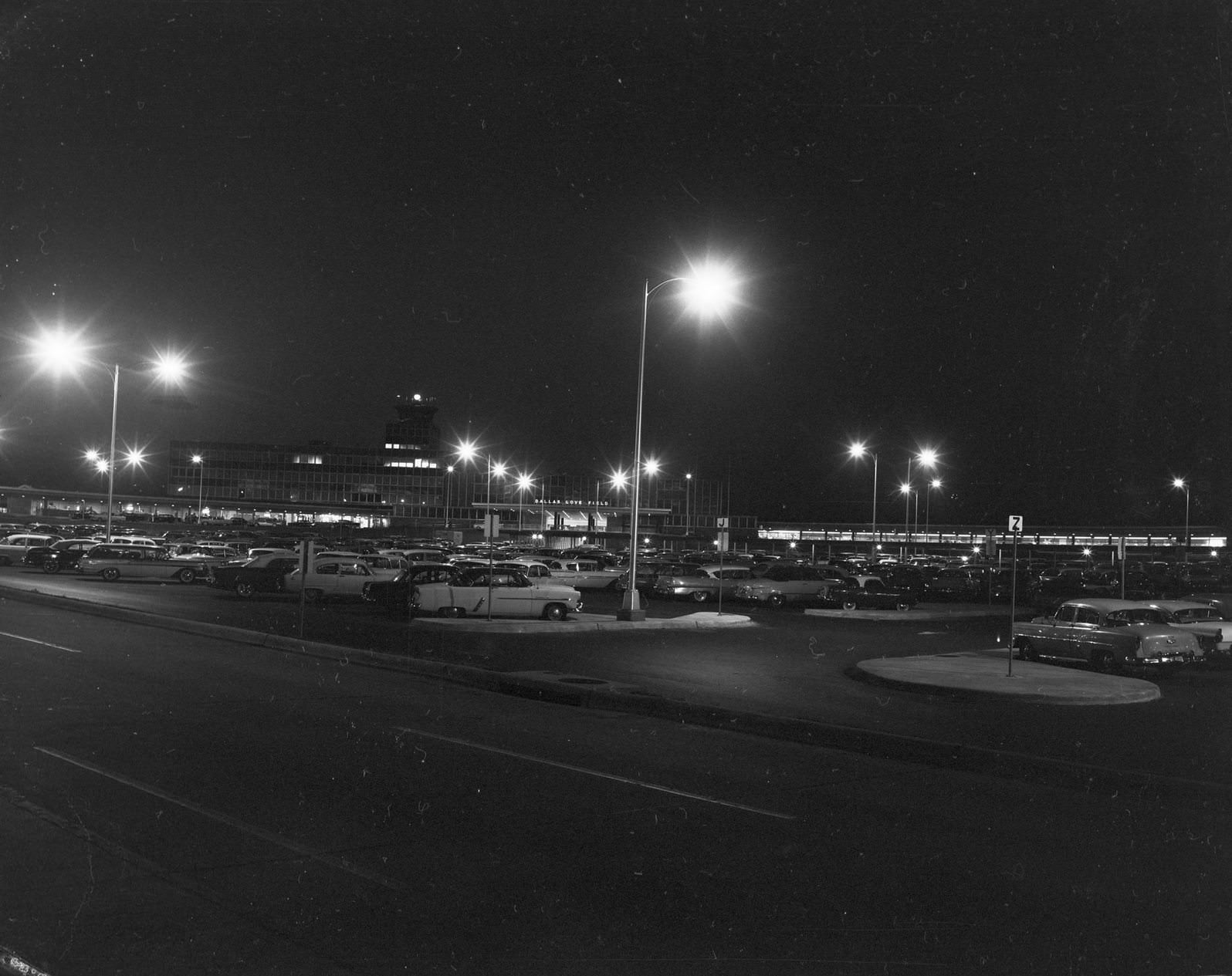
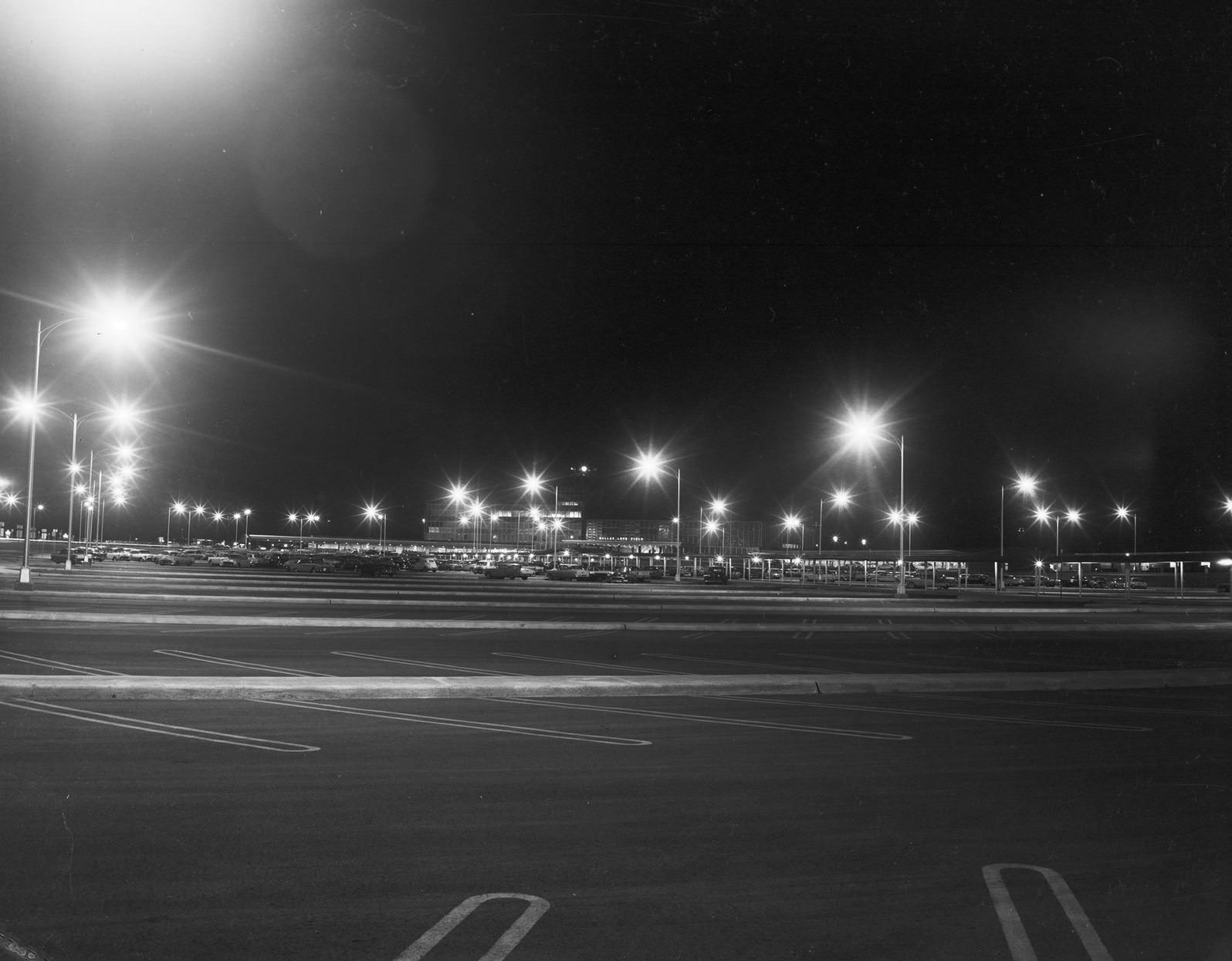
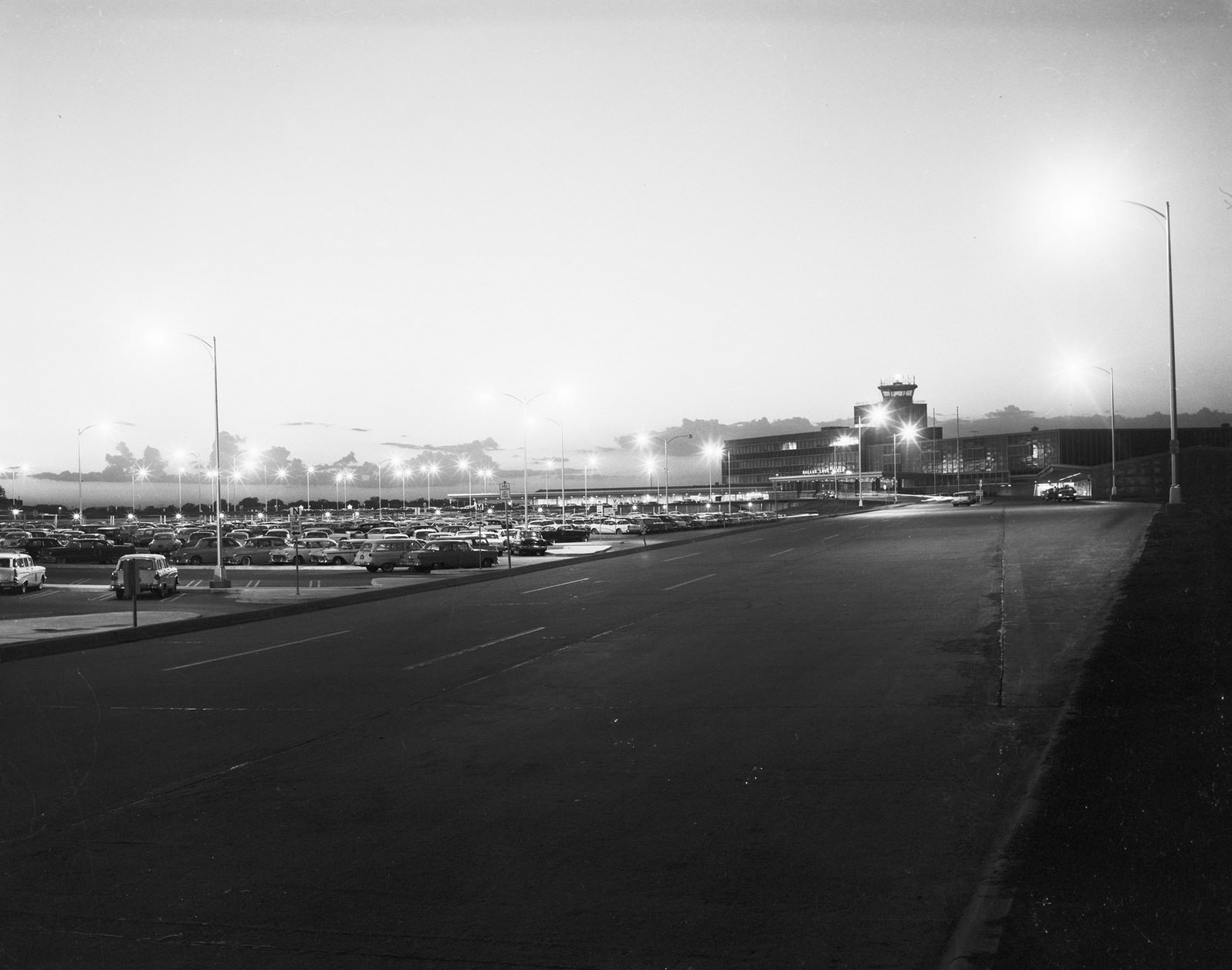
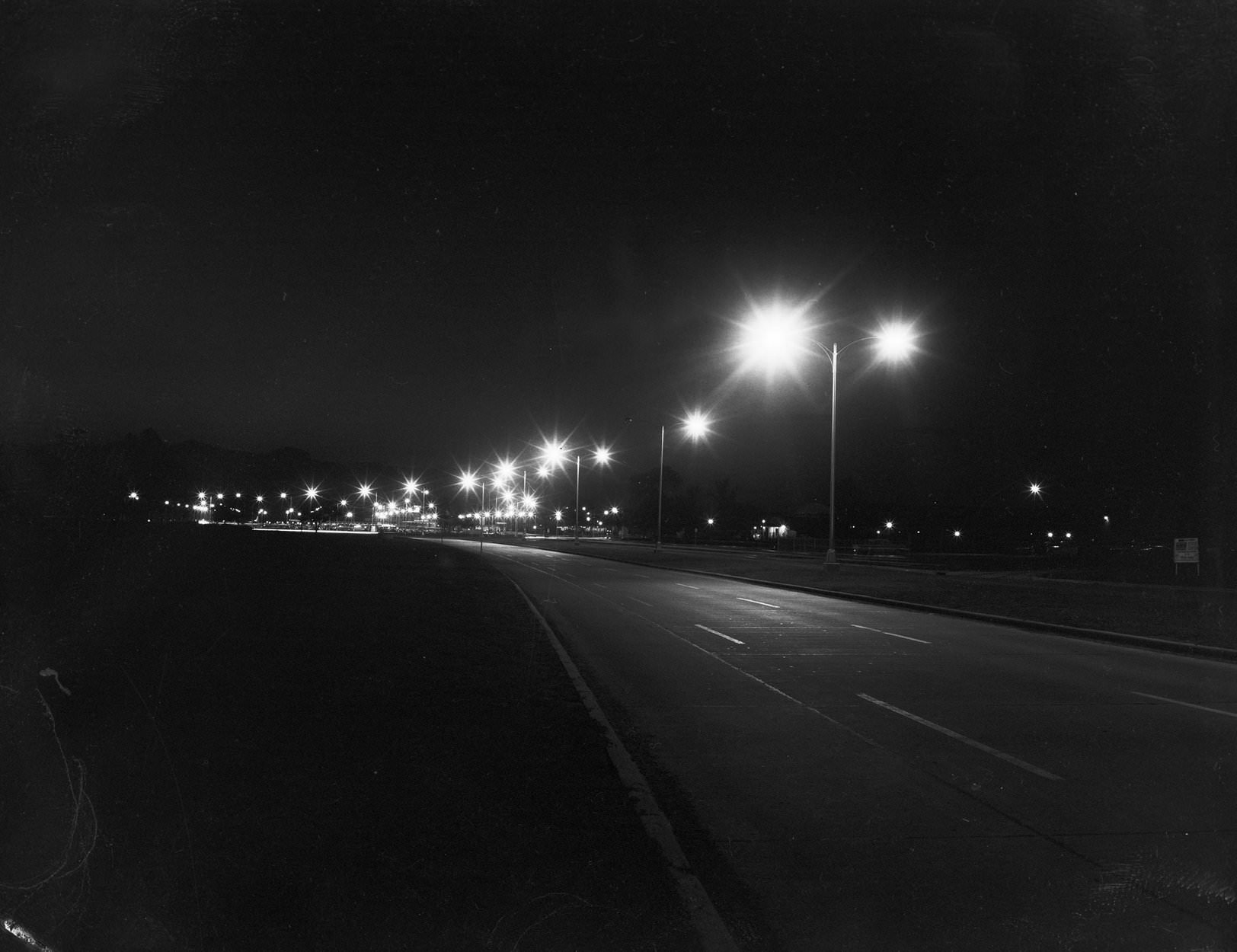
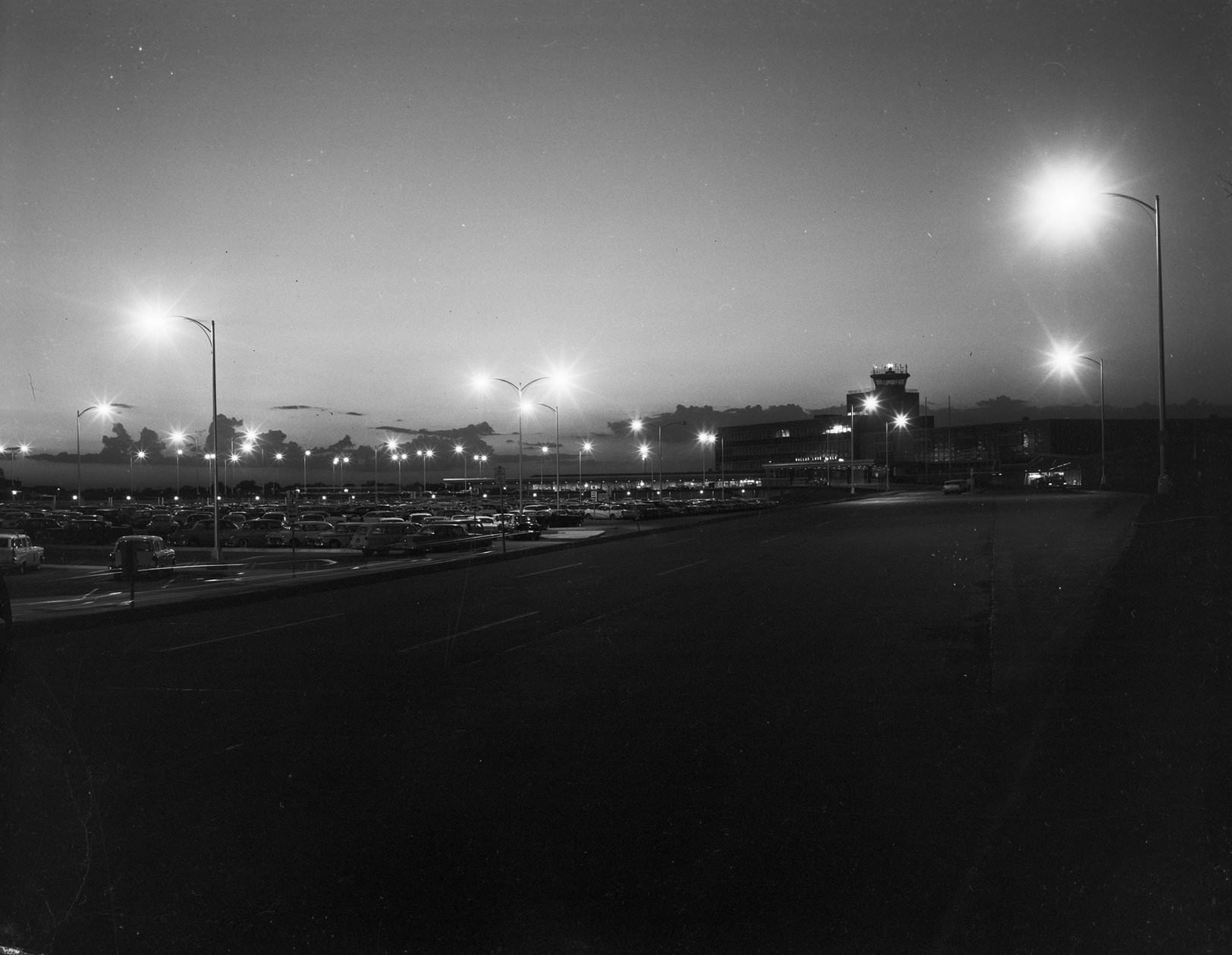
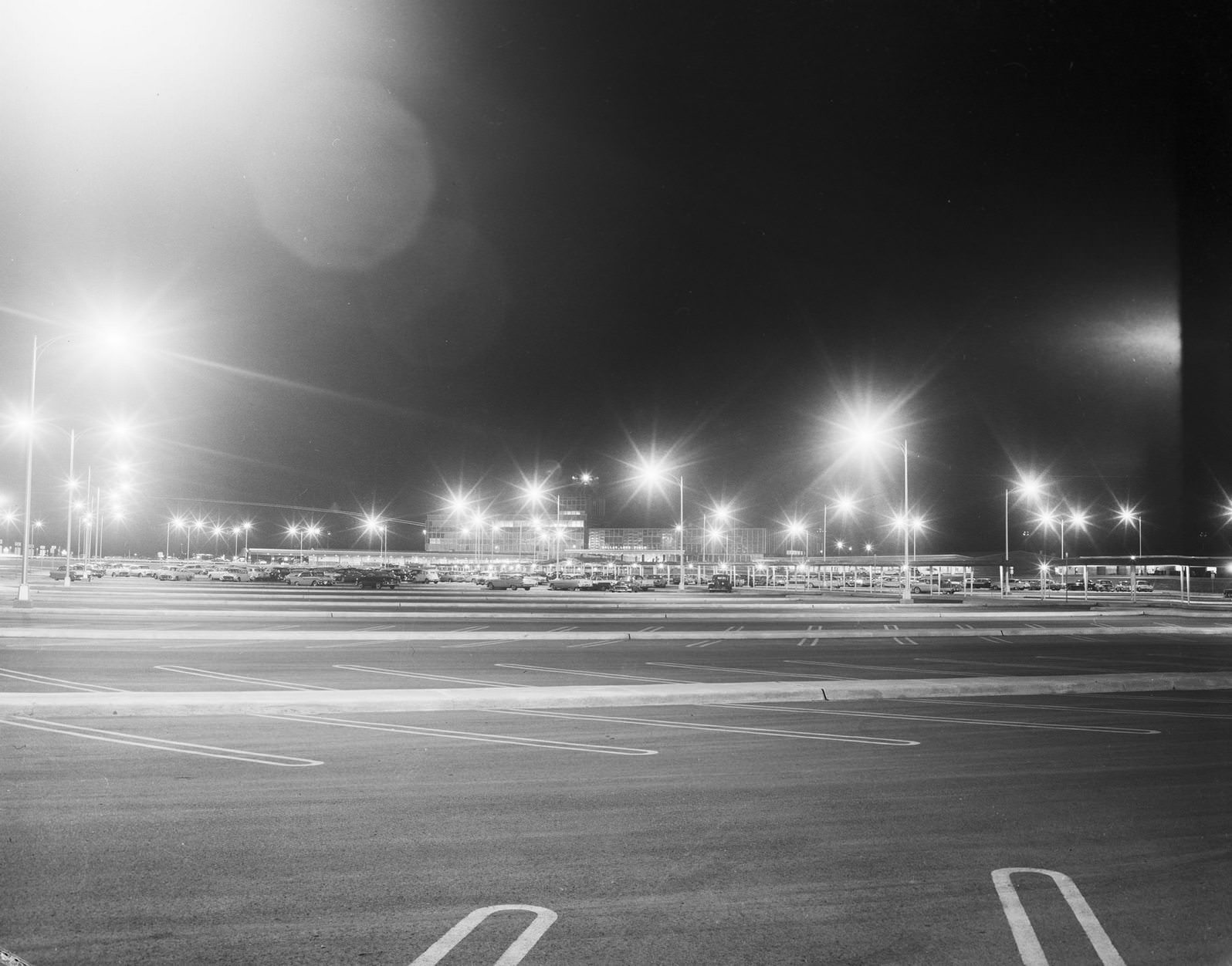
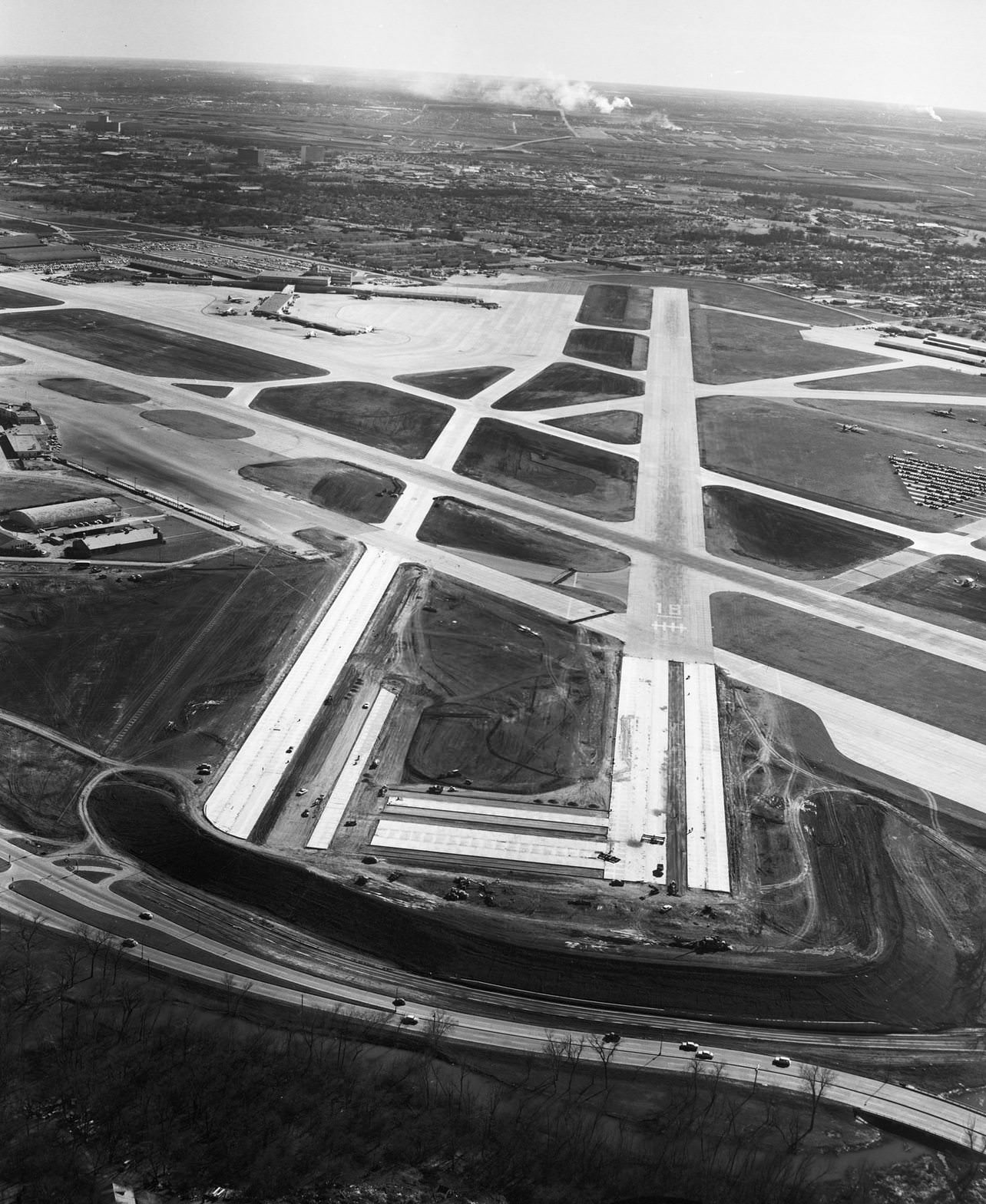
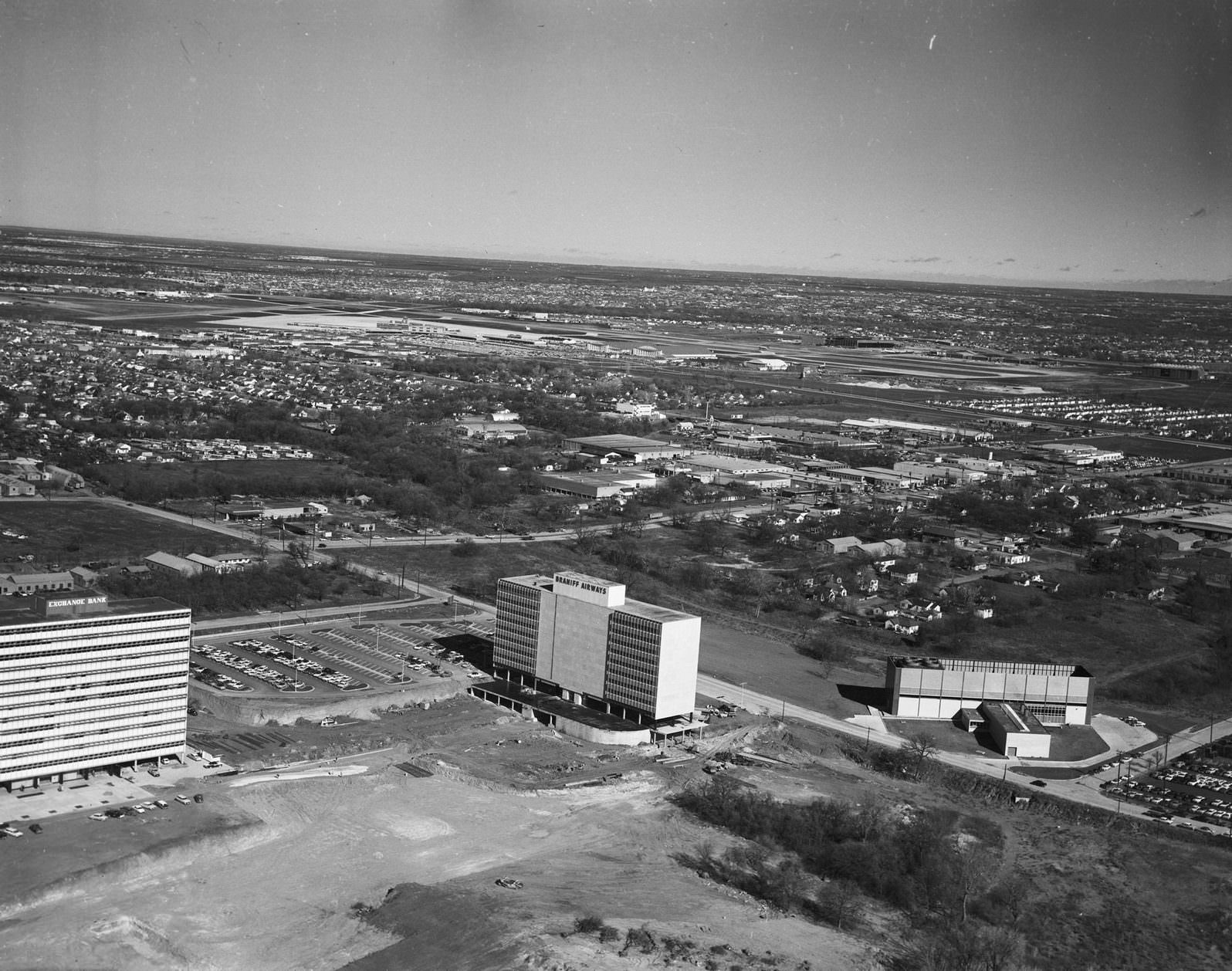
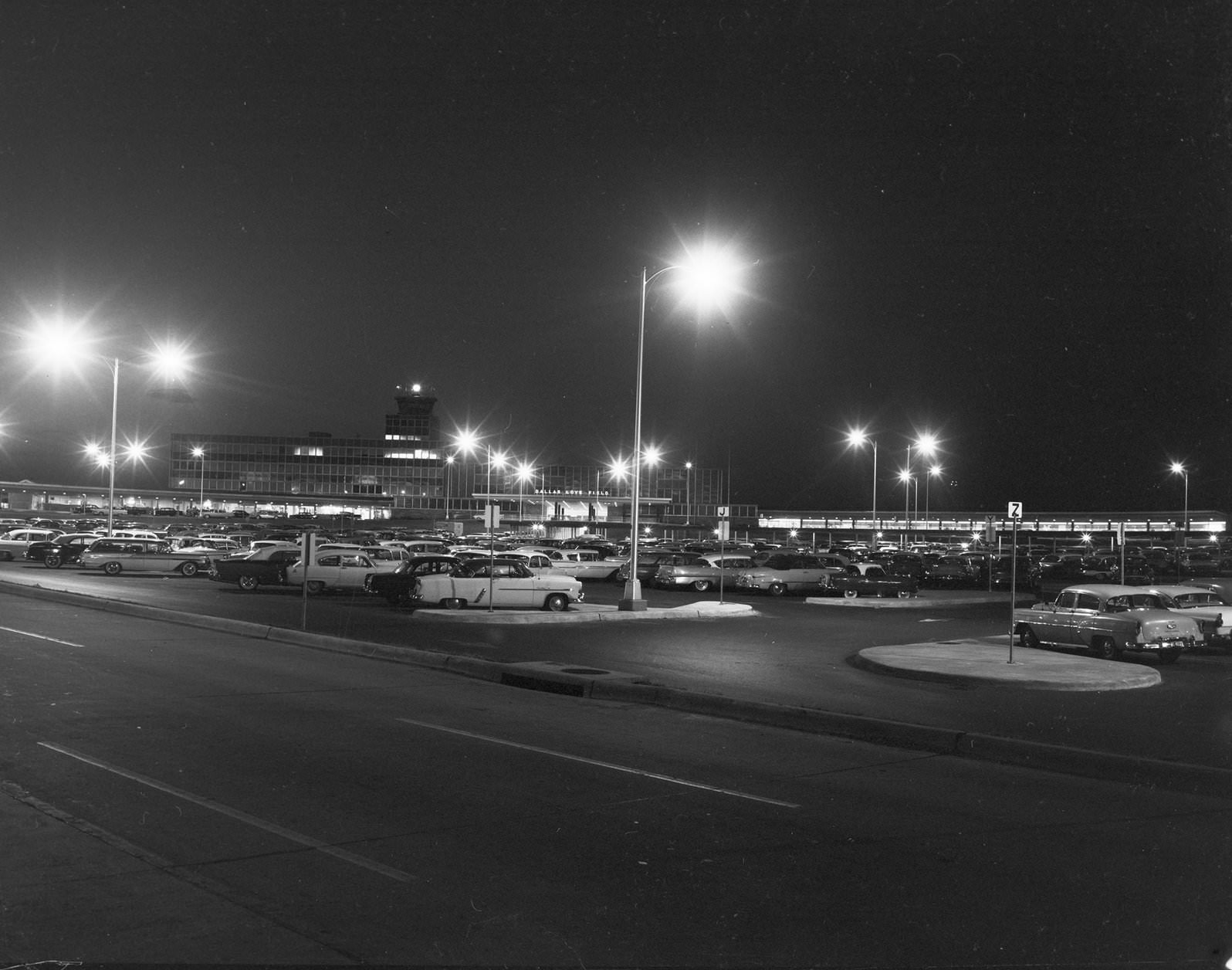
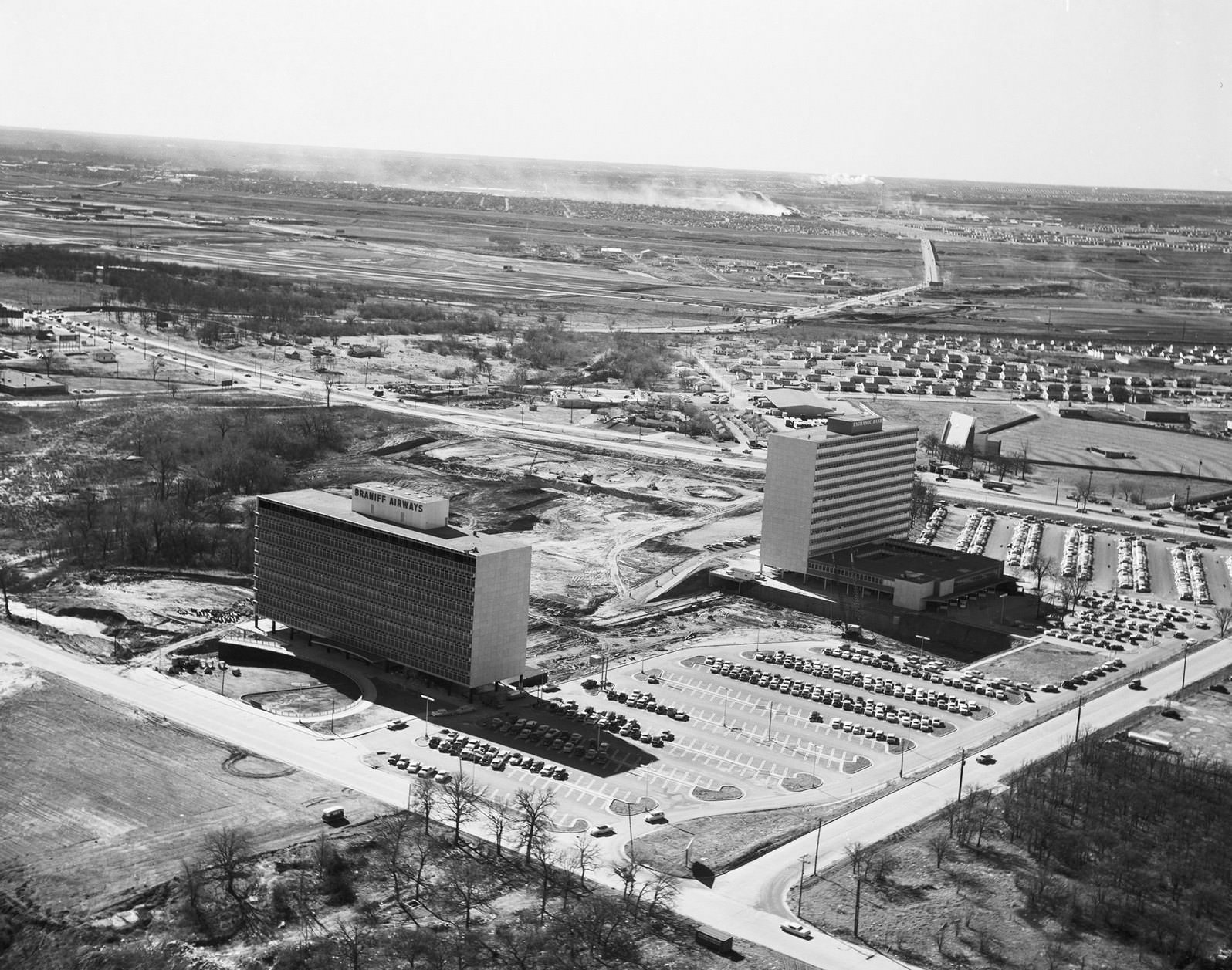
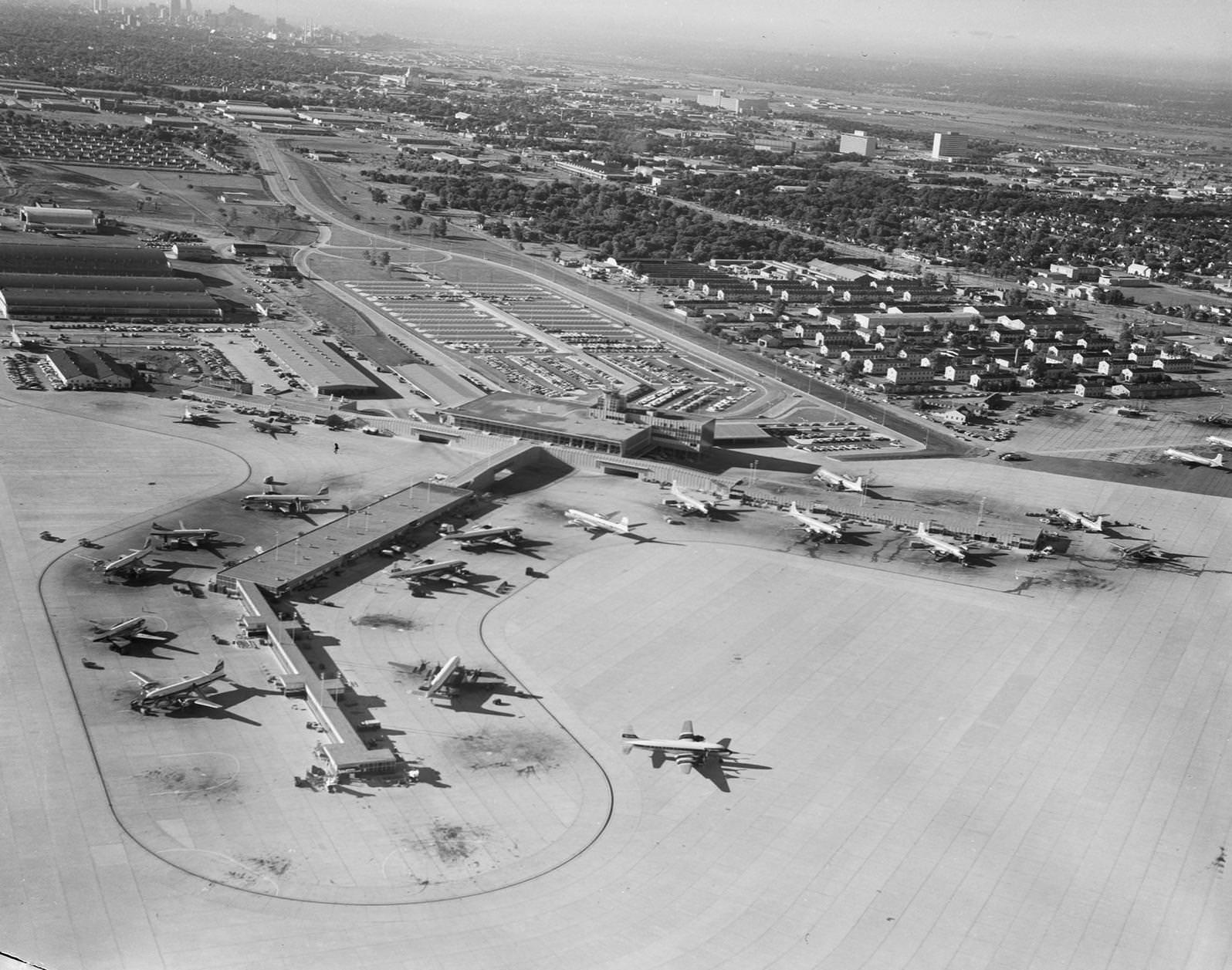
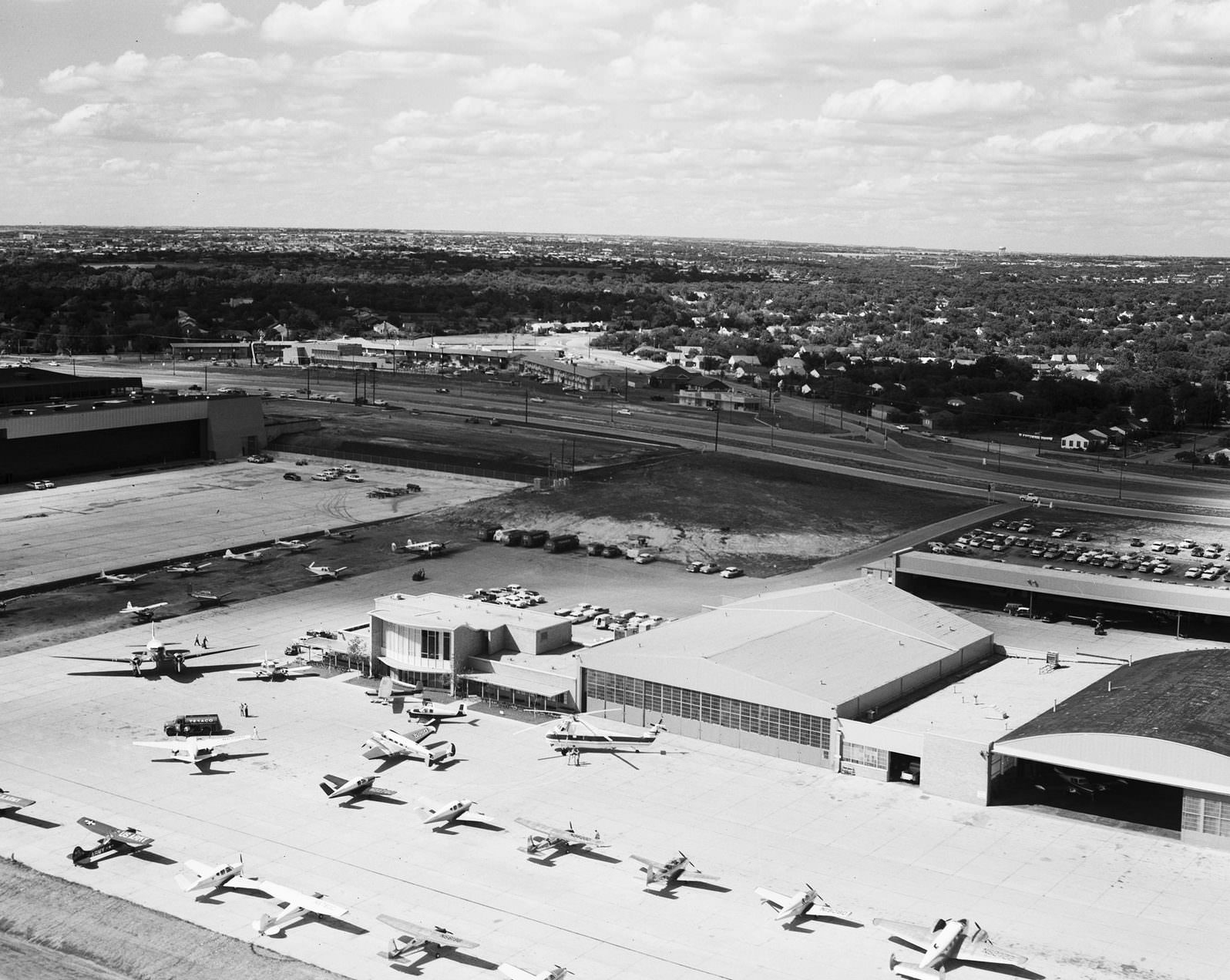
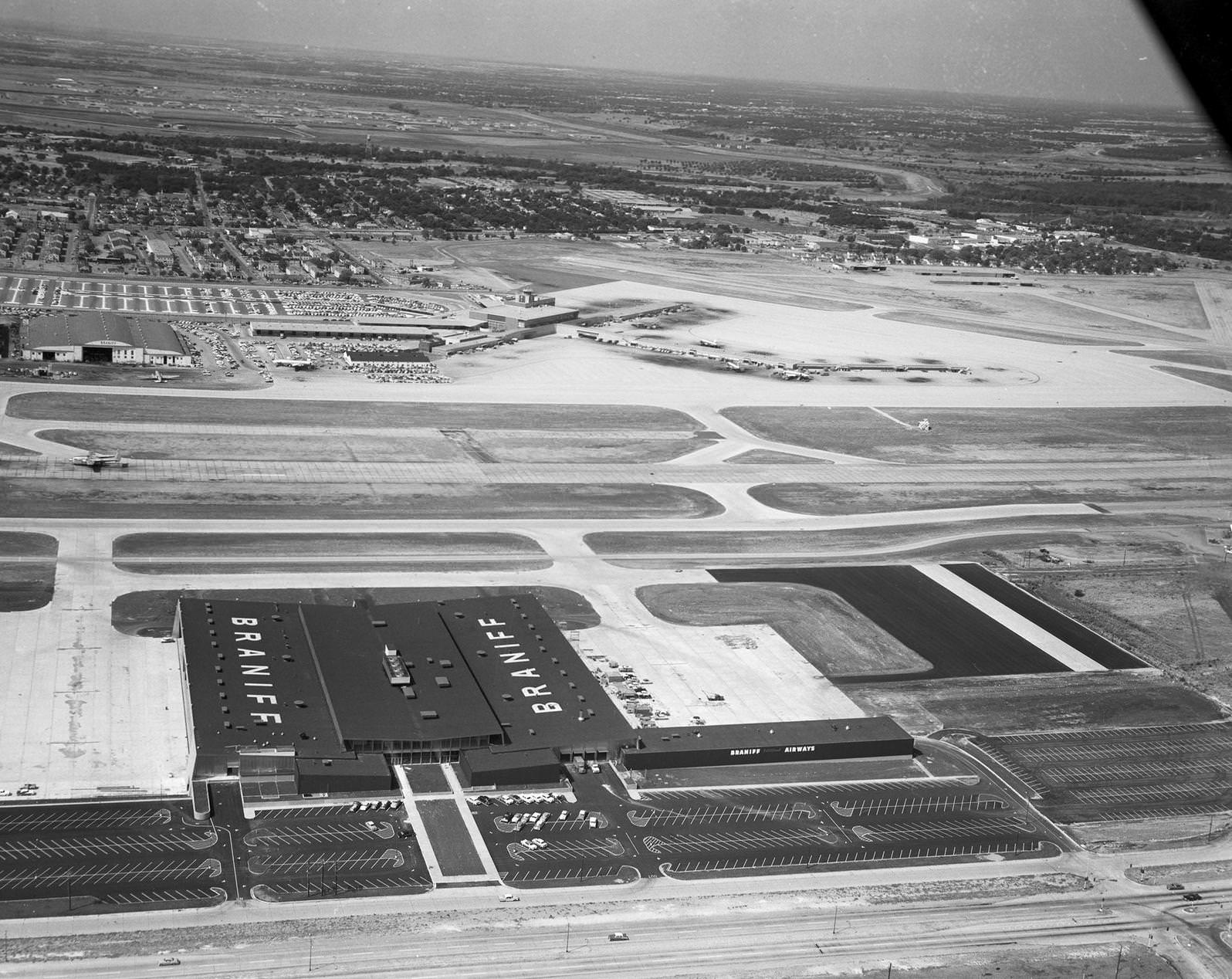
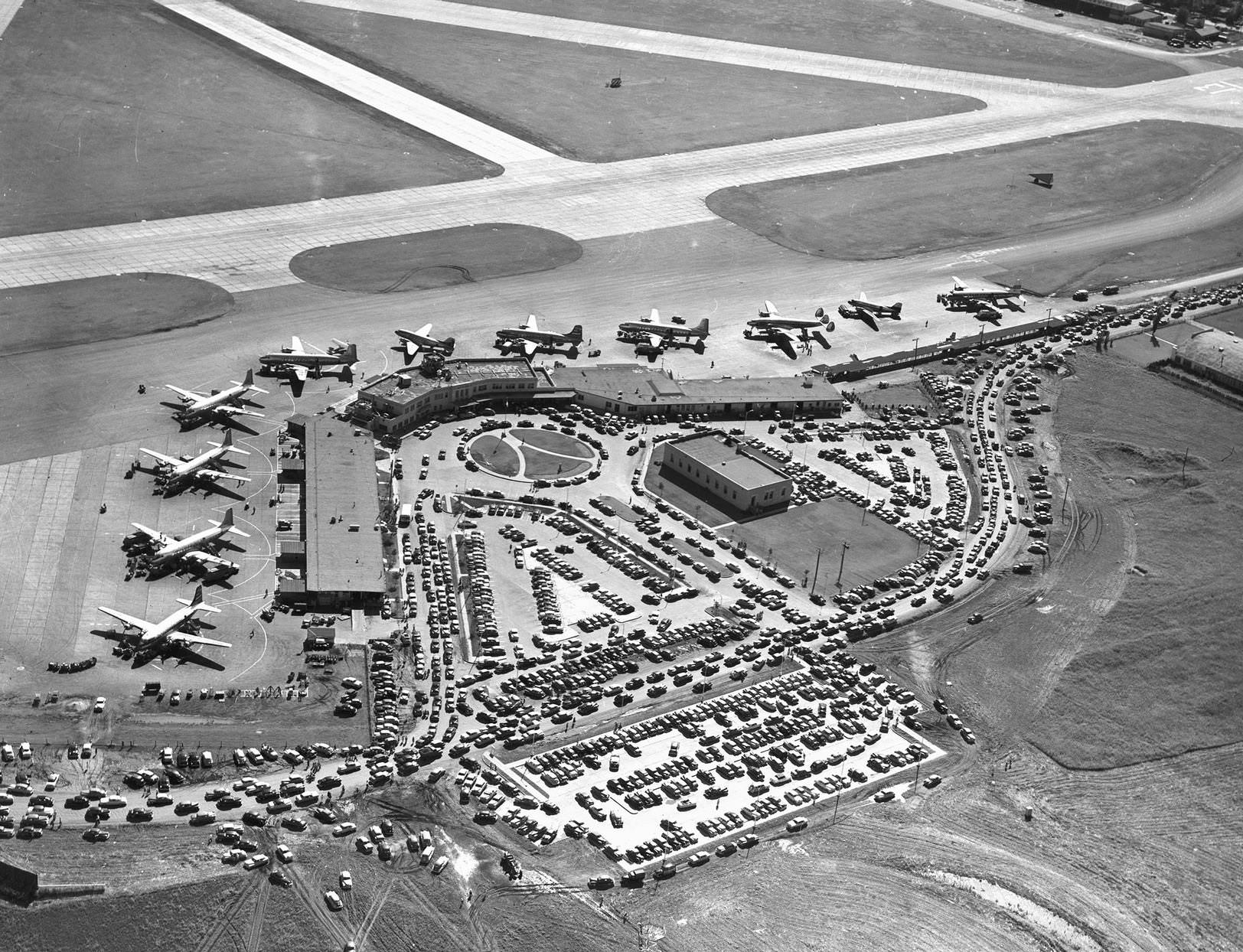
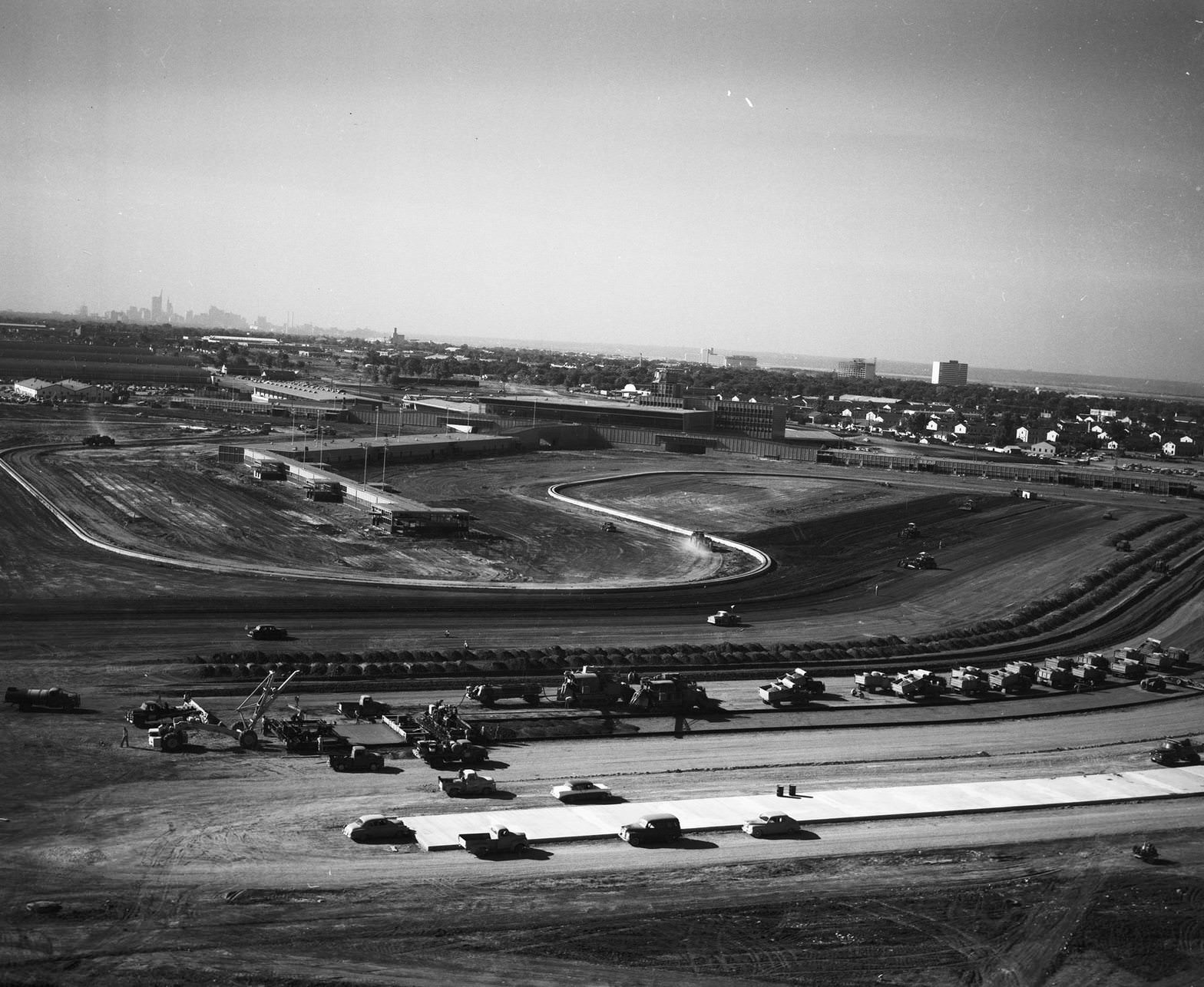
Dallas Love Field served as the city’s main airport throughout the 1950s, and the volume of photographs taken there reflects how central it was to Dallas life. The airport underwent expansion during the decade, with a new terminal exterior photographed in 1958. Airlines including Braniff and Delta operated from Love Field, and the Braniff hangar was a recognizable structure on the Lemmon Avenue side of the airfield.
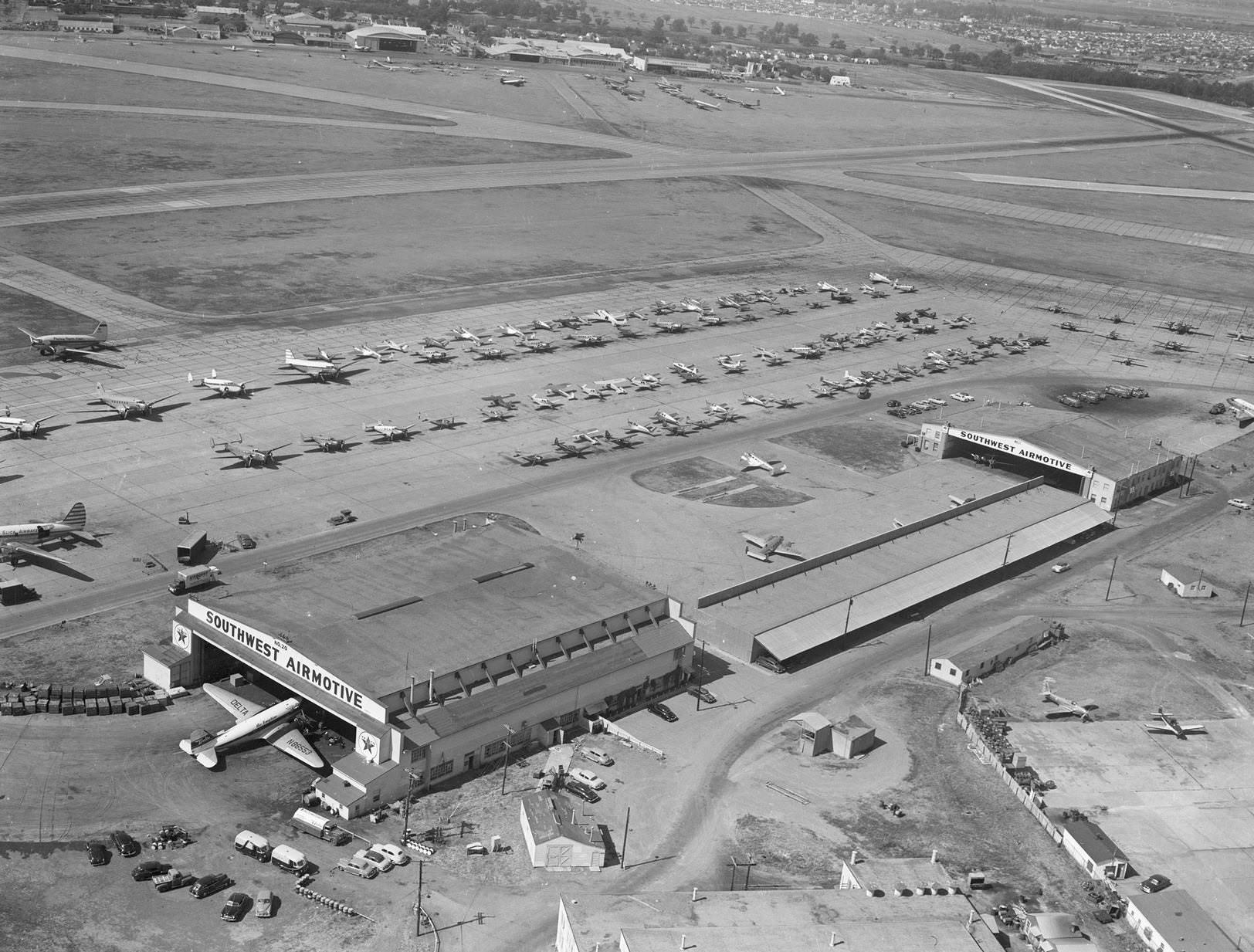
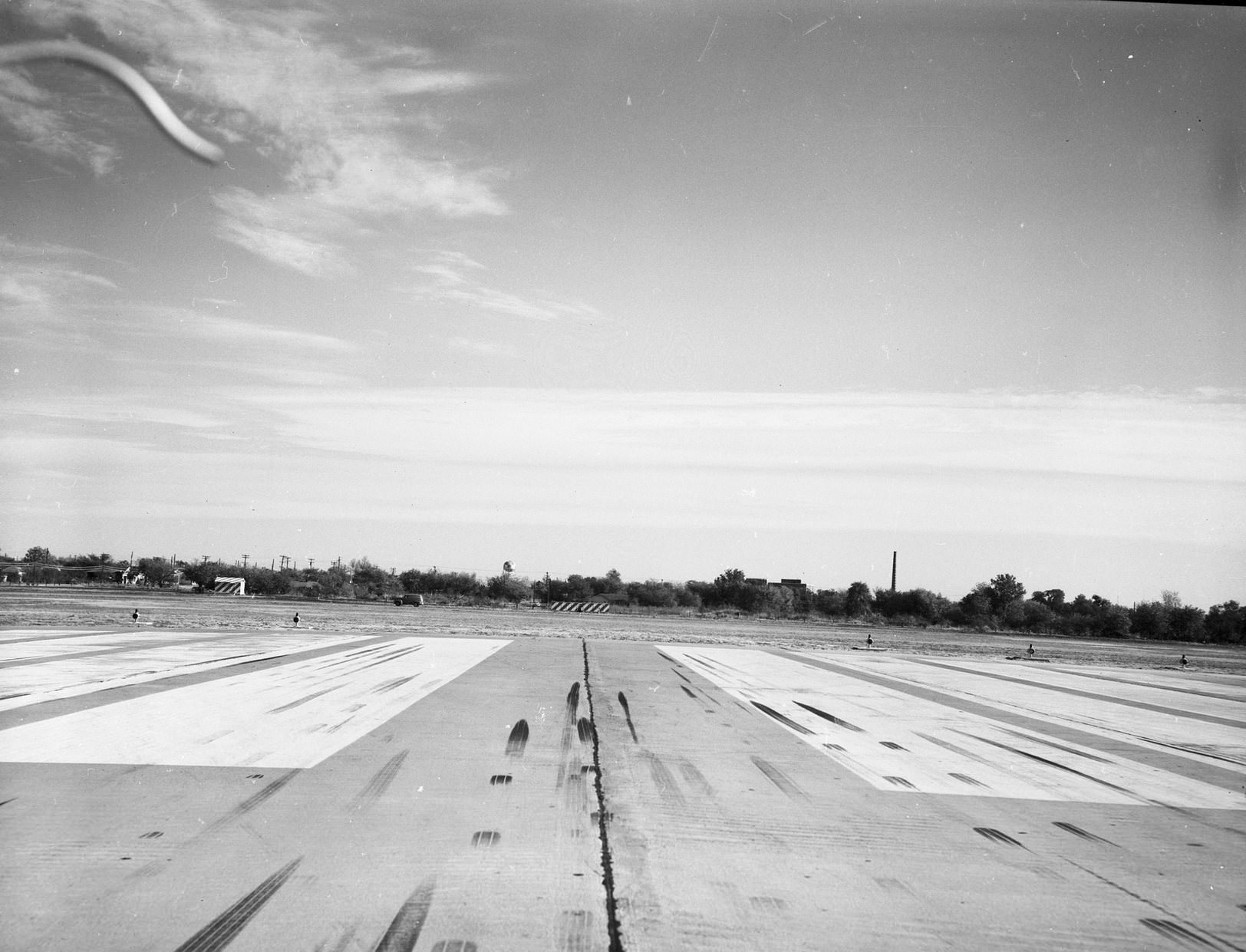
Aerial view of Dallas Love Field Administration Building featuring parking area, 1950sHanger Row Love Field on the Lemmon Ave side, Dallas, 1950sAerial of Dallas Love Field, 1950sBraniff Hanger at Love Field, Dallas, 1950sDallas Love Field,1950. There are airplanes parked on the parking lot. There are a lot of buildings on the background.Dallas’ Love Field terminal exterior, 1958Delta ticket counters at Dallas Love Field, Texas, 1958Dallas Love Field, 1958Dallas Love Field, 1958Dallas Love Field, 1958Dallas Love Field, 1958Love Field, aerial view, Dallas, Texas, 1952Love Field, exterior, Dallas, Texas, 1958Love Field, exterior, Dallas, Texas, 1958Love Field, exterior, Dallas, Texas, 1958Dallas Love Field, Dallas, Texas, 1955Dallas Love Field, 1955Love Field, exterior, Dallas, Texas, 1958Love Field, interior, Dallas, Texas, 1958Love Field, exterior, Dallas, Texas, 1958Love Field, interior, Dallas, Texas, 1958Love Field, aerial view, Dallas, Texas, 1952Love Field, interior, Dallas, Texas, 1958Dallas Love Field, Dallas, Texas, 1955Love Field, interior, Dallas, Texas, 1958Love Field, interior, Dallas, Texas, 1958Love Field, interior, Dallas, Texas, 1958Love Field, Dallas, 1950Aerial of Southwest Airmotive at Dallas Love Field, 1950Dallas Love Field at night, 1950. There are lampposts with the lights on. There are automobiles parked on the parking lot.Dallas Love Field at night, 1950Dallas Love Field at night, 1950Dallas Love Field at night, 1950. There are lampposts with the lights on, on the side of the streetDallas Love Field at night, 1950Dallas Love Field at night, 1950Runway at Love Field, Dallas, 1950Braniff Airways and Exchange Bank buildings with Dallas Love Field, 1950Dallas Love Field at night, 1950Braniff Airways and Exchange Bank buildings with Dallas Love Field, 1950Dallas Love Field, 1950Southwest Airmotive at Love Field, Dallas, 1950Braniff Hanger at Love Field, Dallas, 1950An aerial photograph featuring the Dallas Love Field in Dallas, Texas, 1950Dallas Love Field under construction, Dallas, 1950
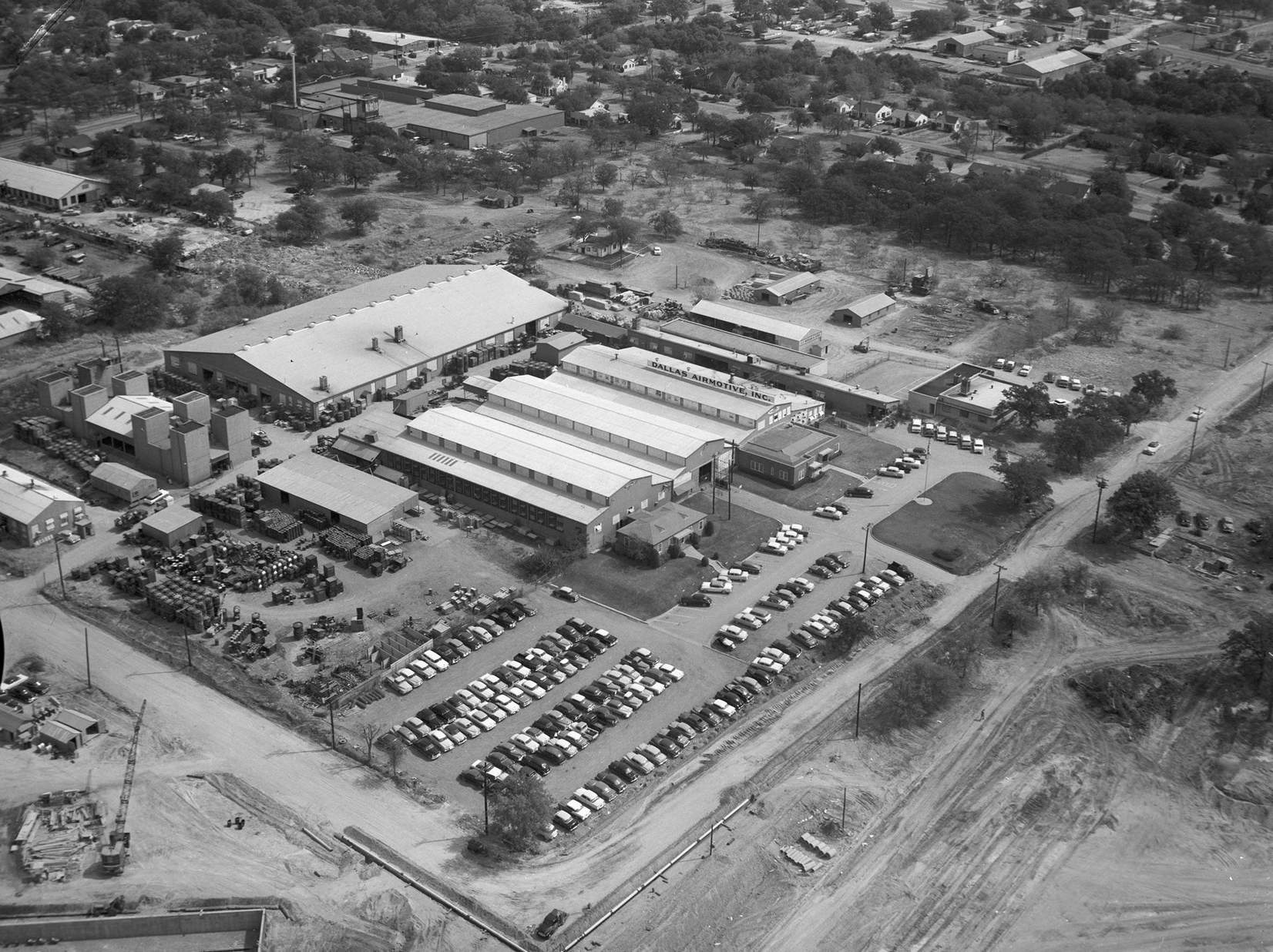
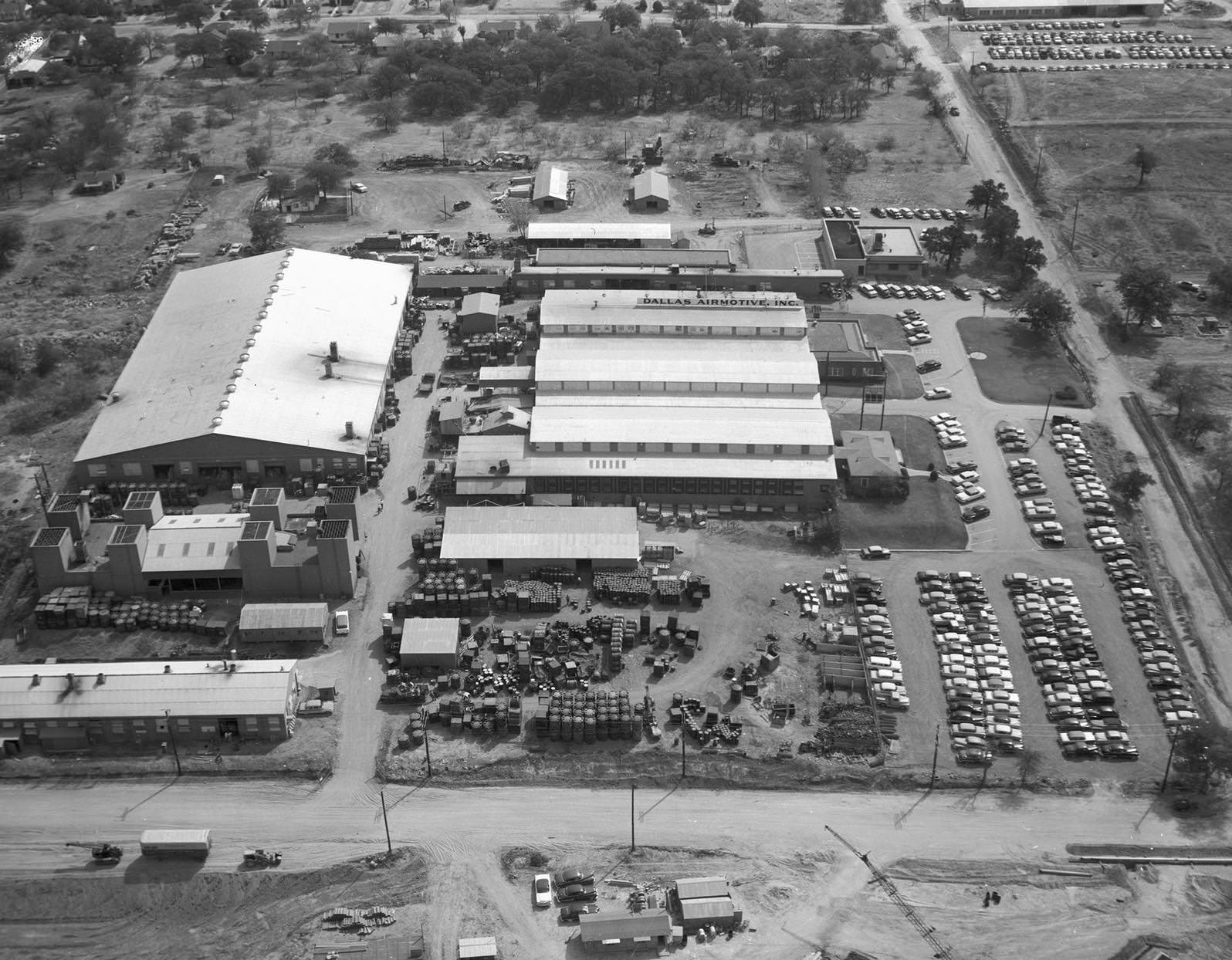
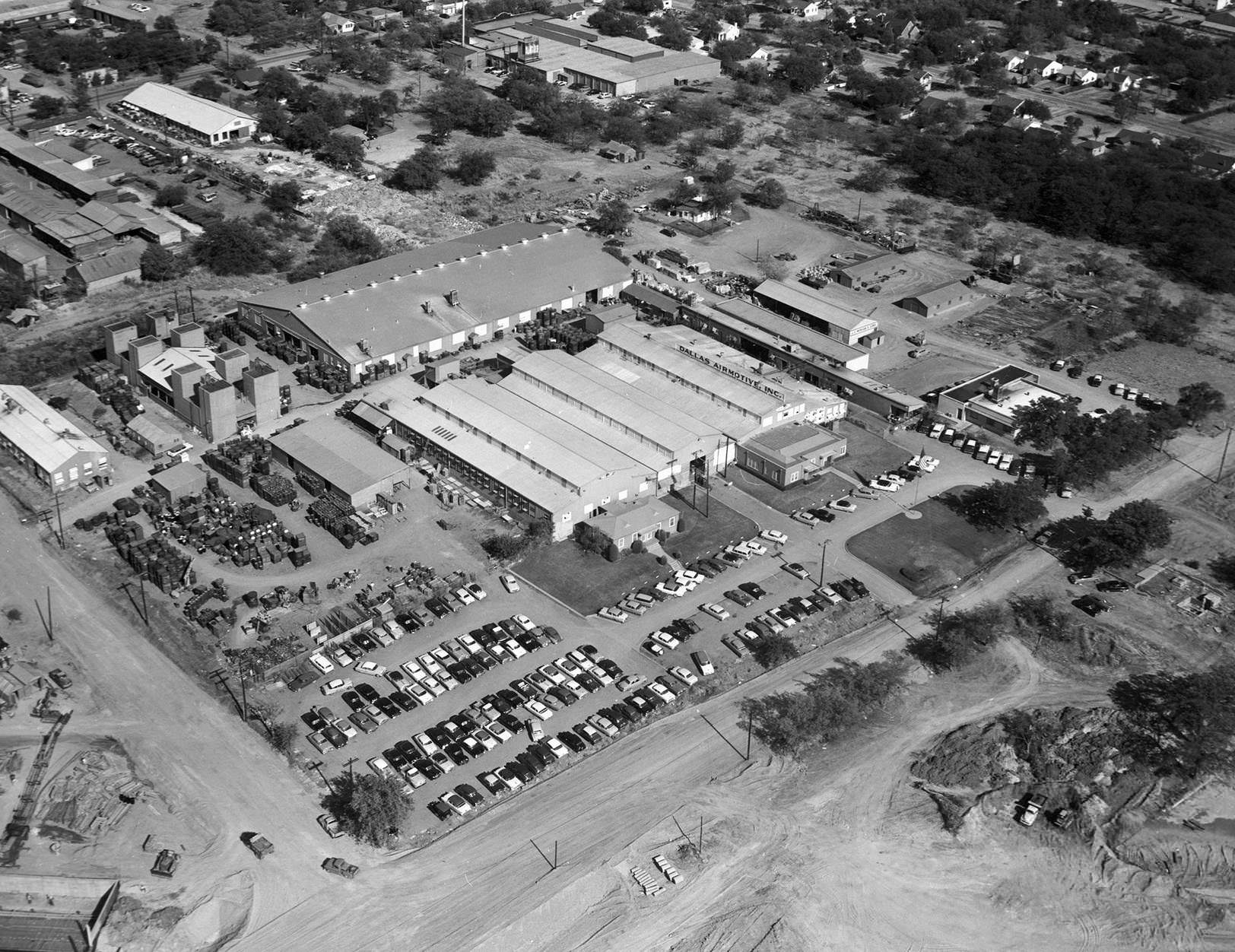
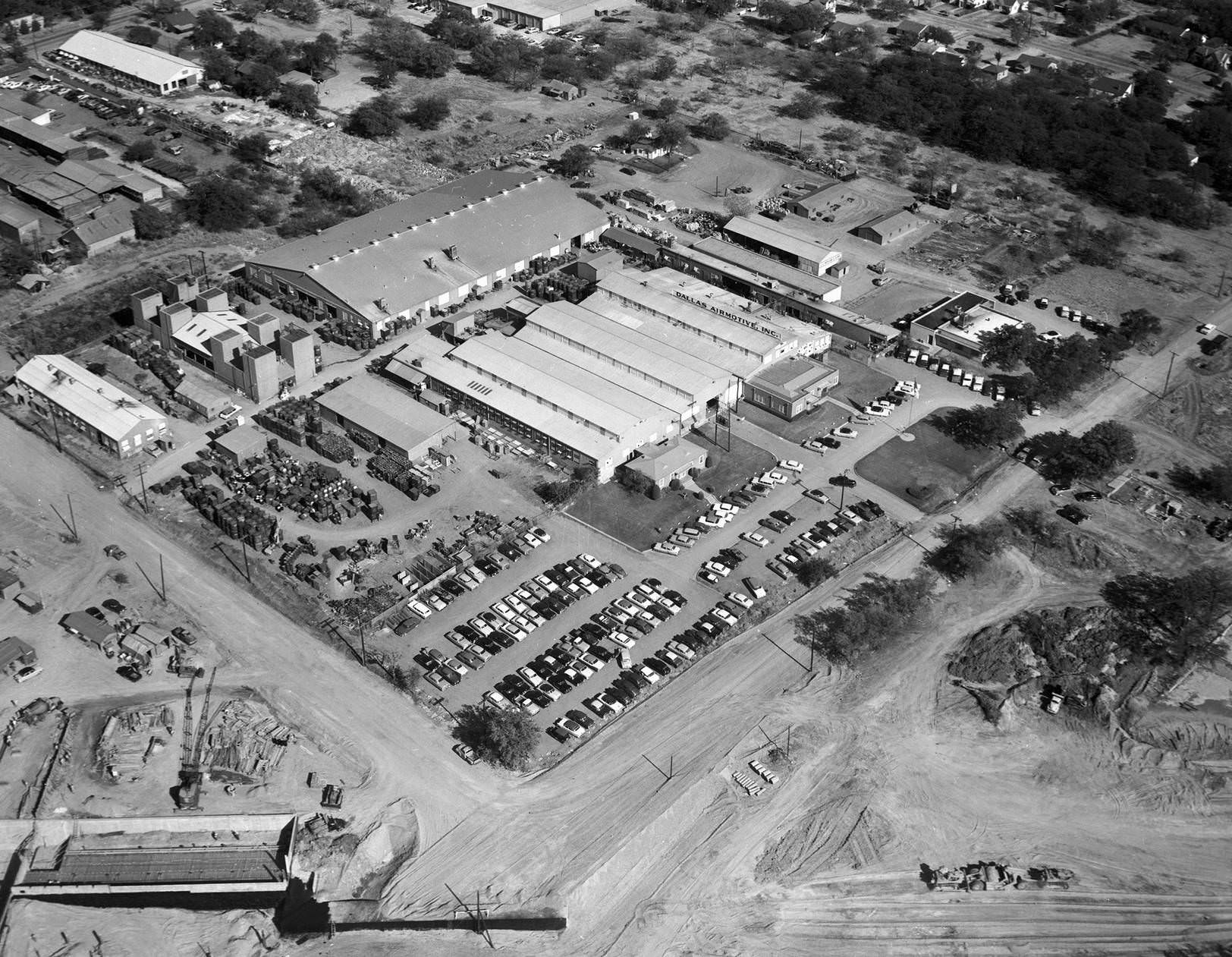
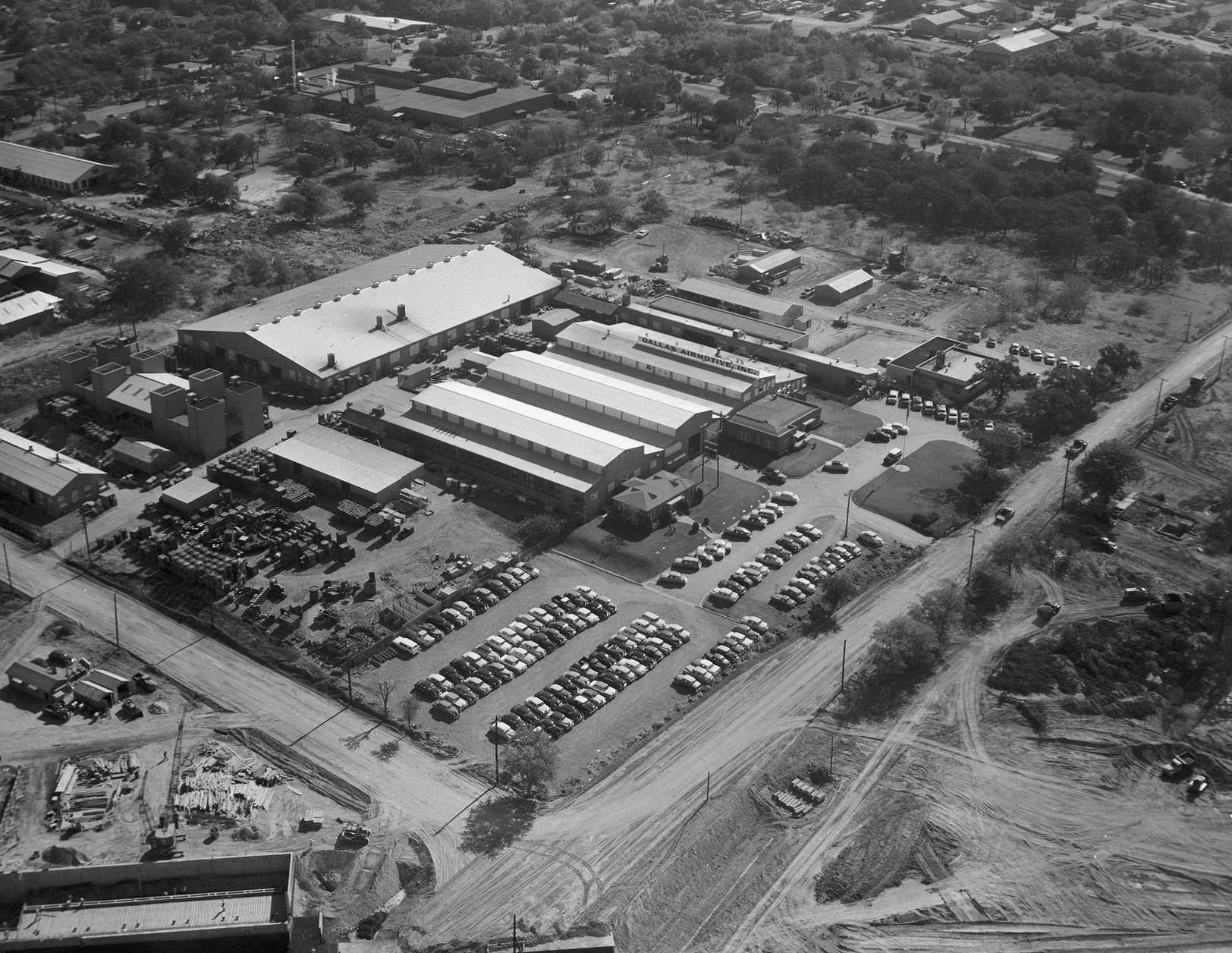
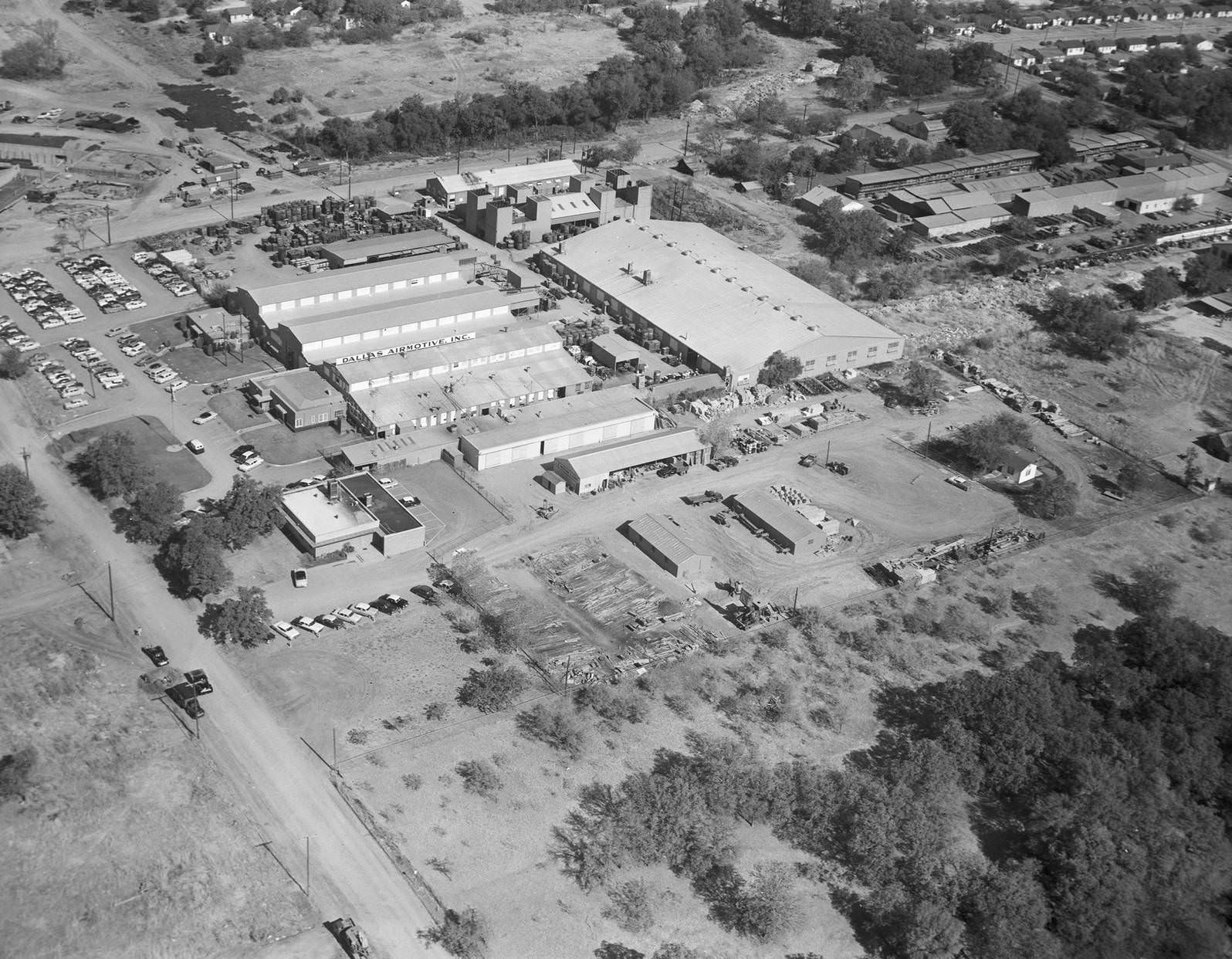
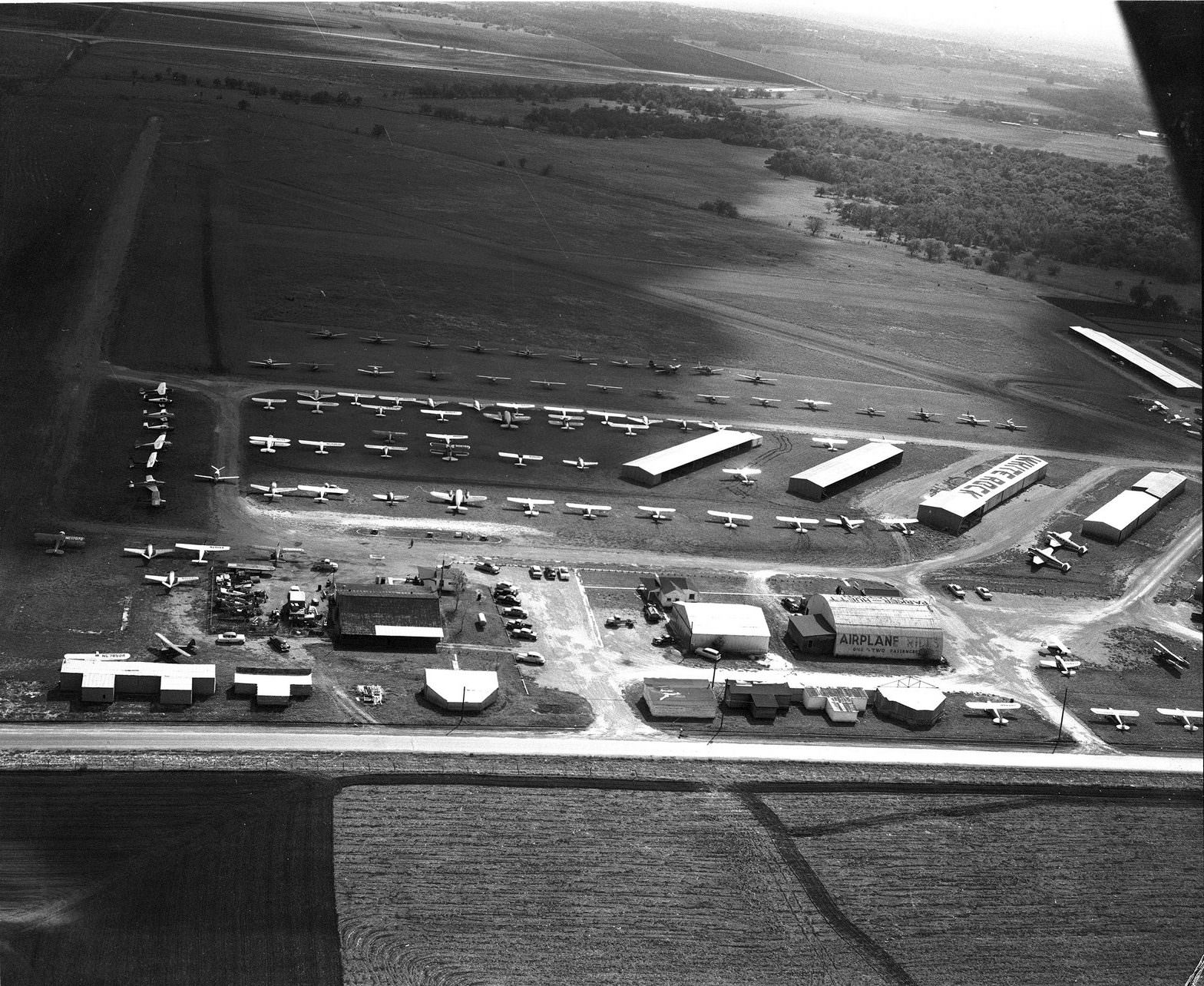
The city’s aviation industry extended well beyond the passenger terminal. Dallas Airmotive, Incorporated operated a large factory that maintained and repaired aircraft engines. Southwest Airmotive also had a repair facility at Love Field, visible in aerial photographs with rows of aircraft parked along the tarmac. White Rock Airport served as a smaller general aviation field on the city’s east side.
Dallas Airmotive, Incorporated factory, 1956Aerial view of Dallas Airmotive, Incorporated factory and its parking lot, 1956Dallas Airmotive, Incorporated factory, 1956Dallas Airmotive, Incorporated factory, 1956Dallas Airmotive, Incorporated factory, 1956Dallas Airmotive, Incorporated factory, 1956Aerial view of White Rock Airport, Dallas, 1954
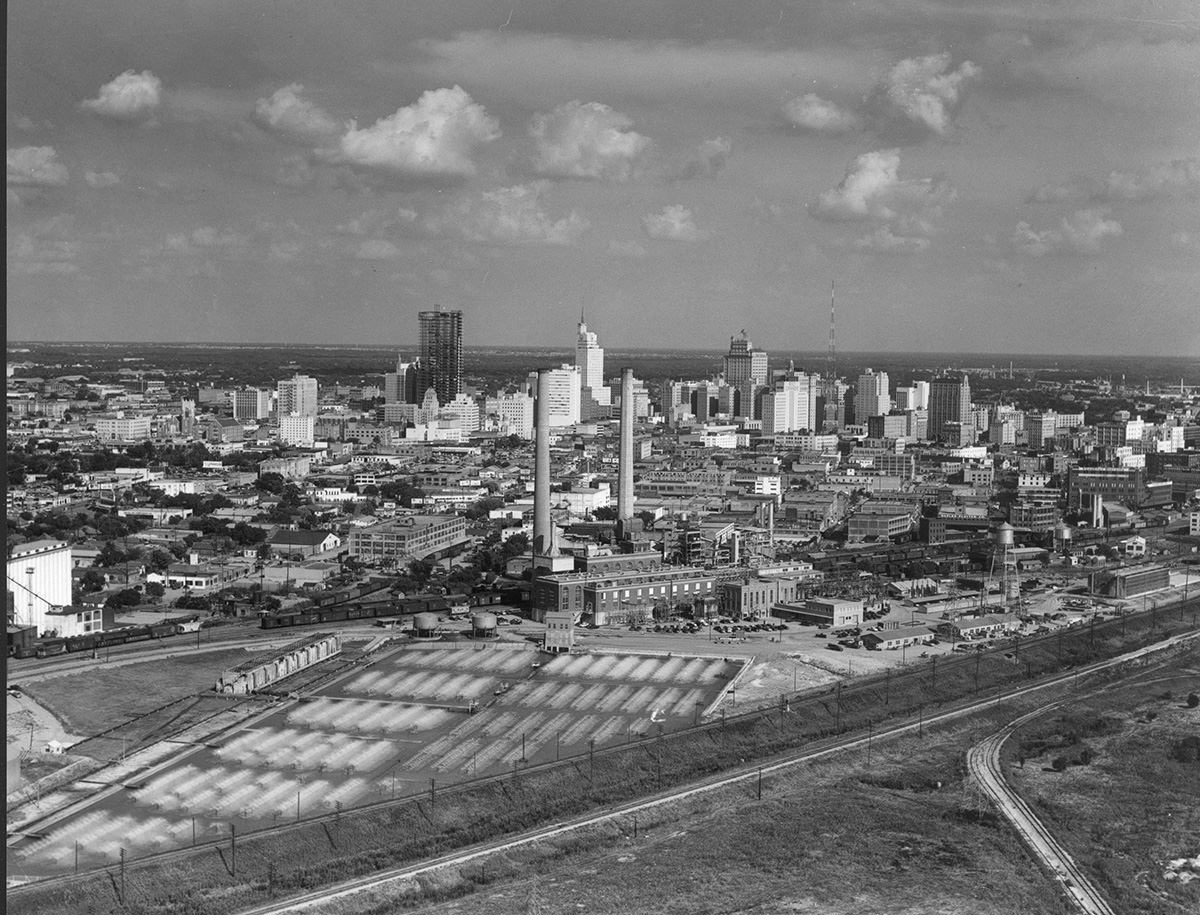
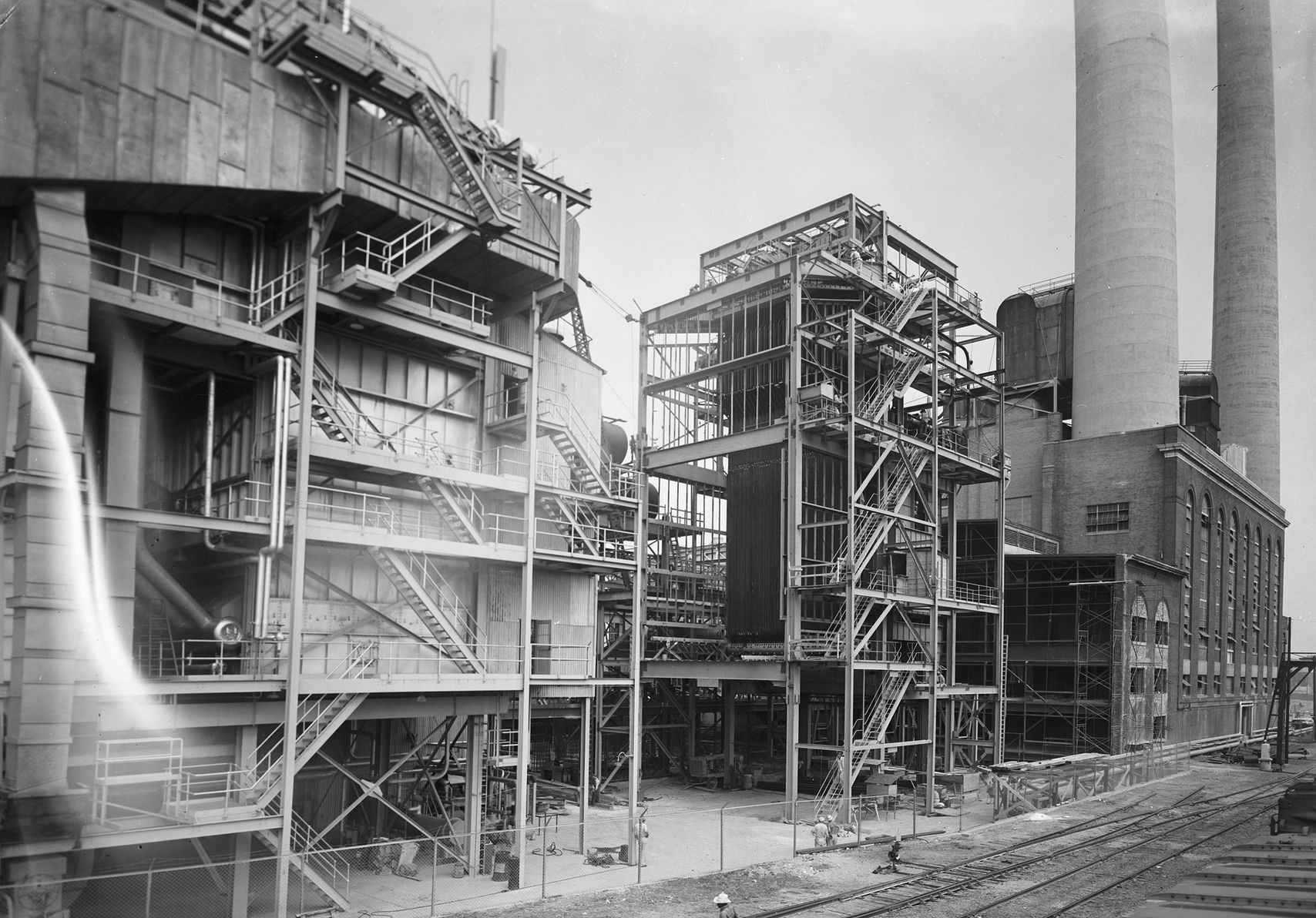
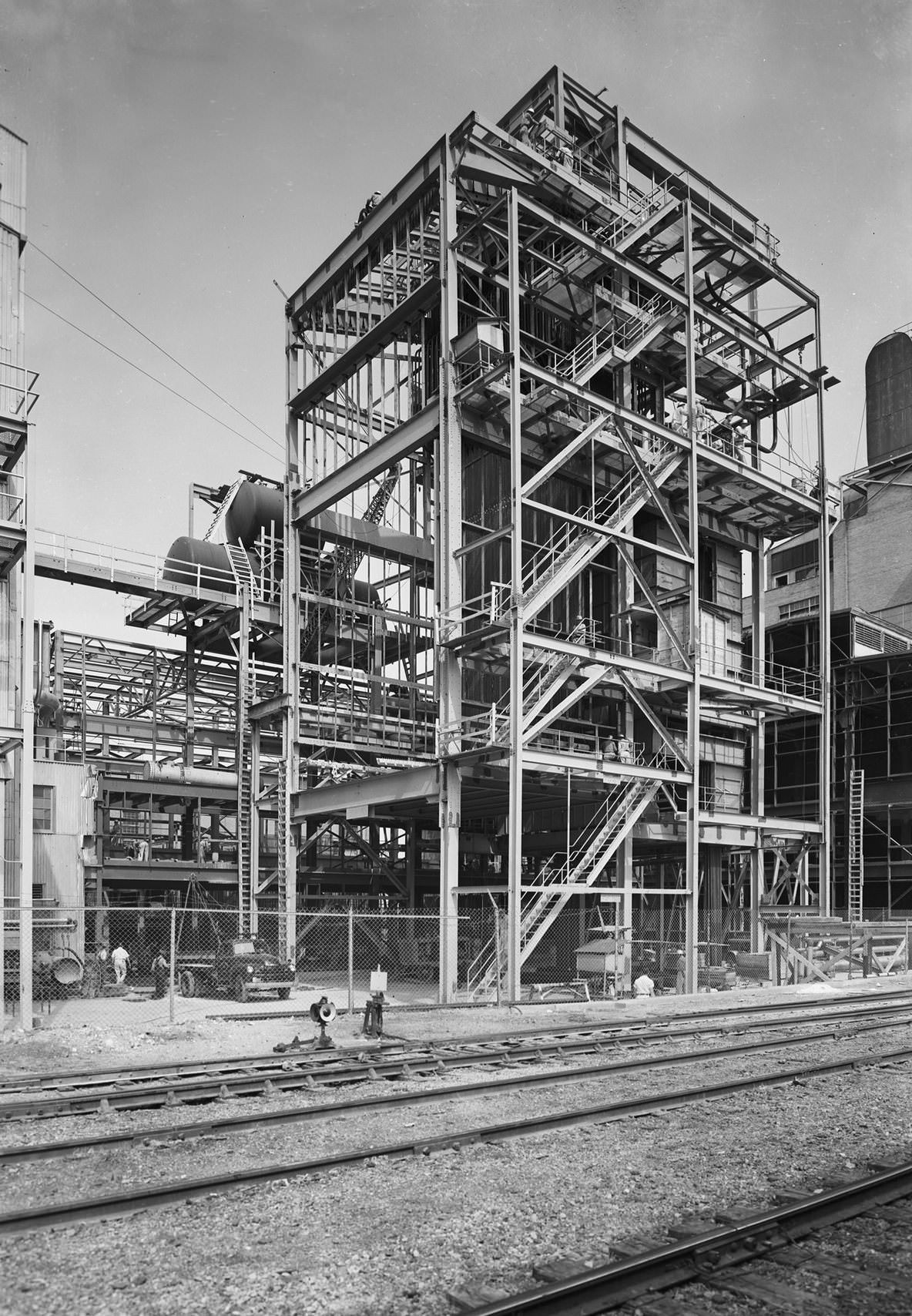
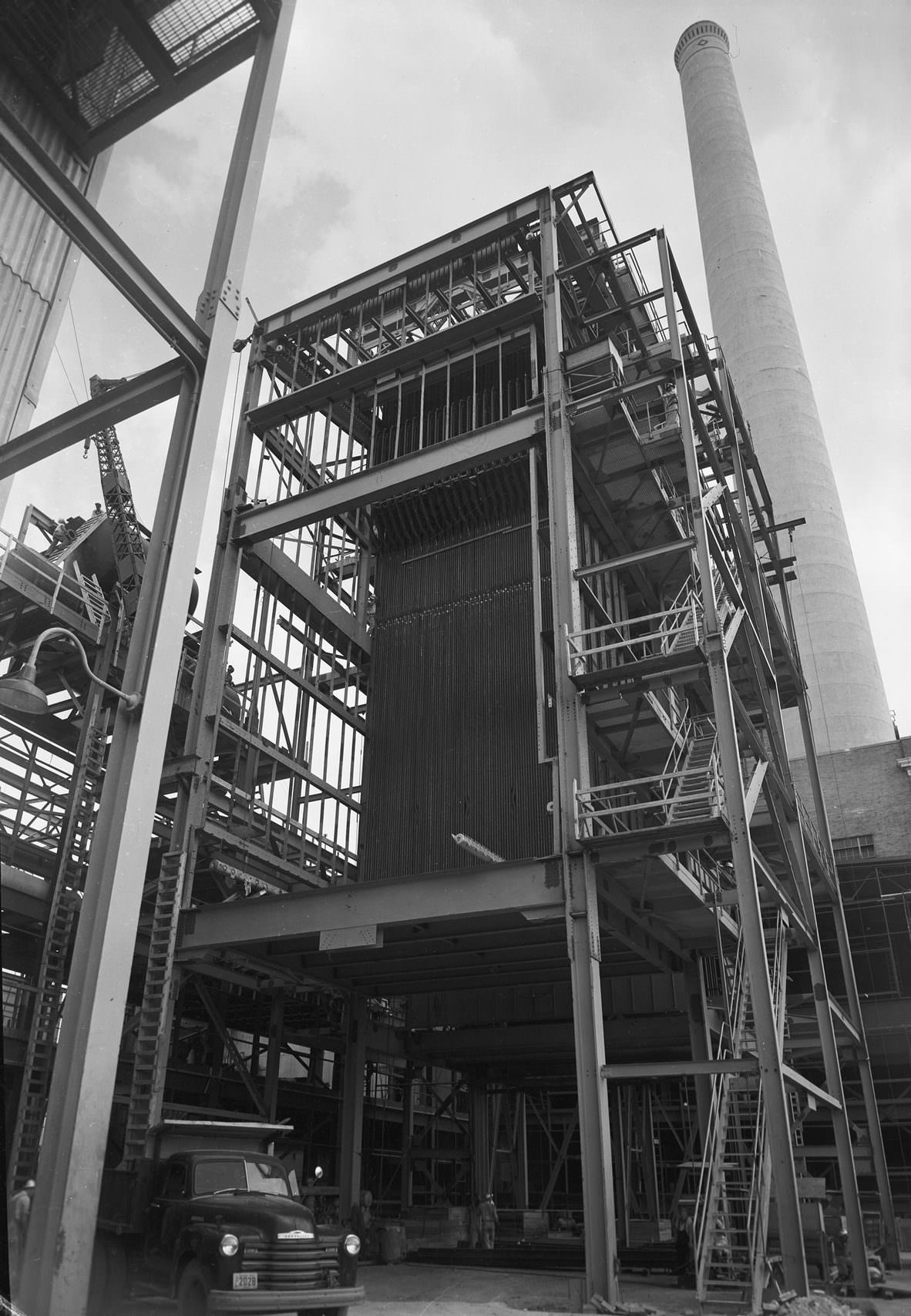
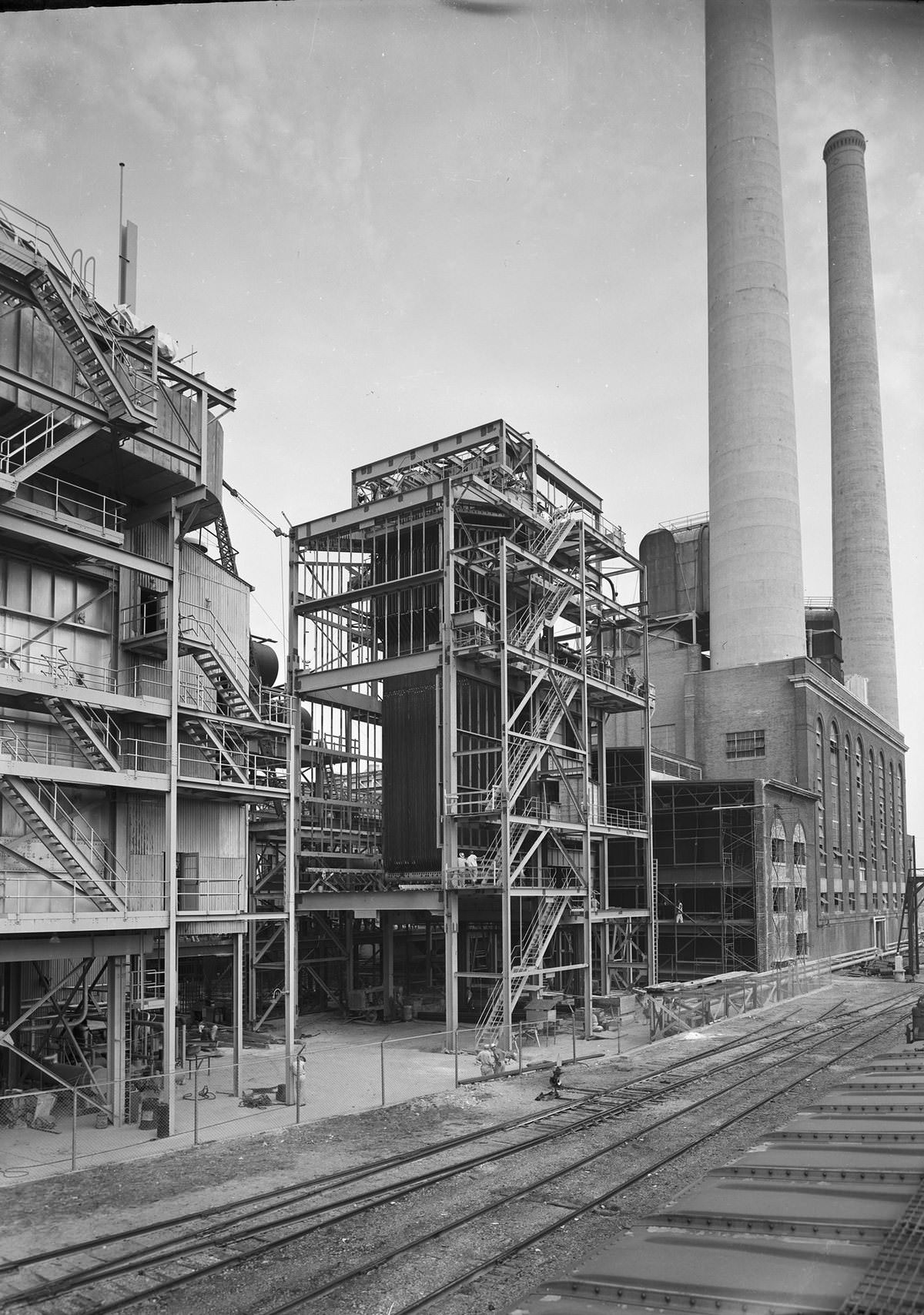
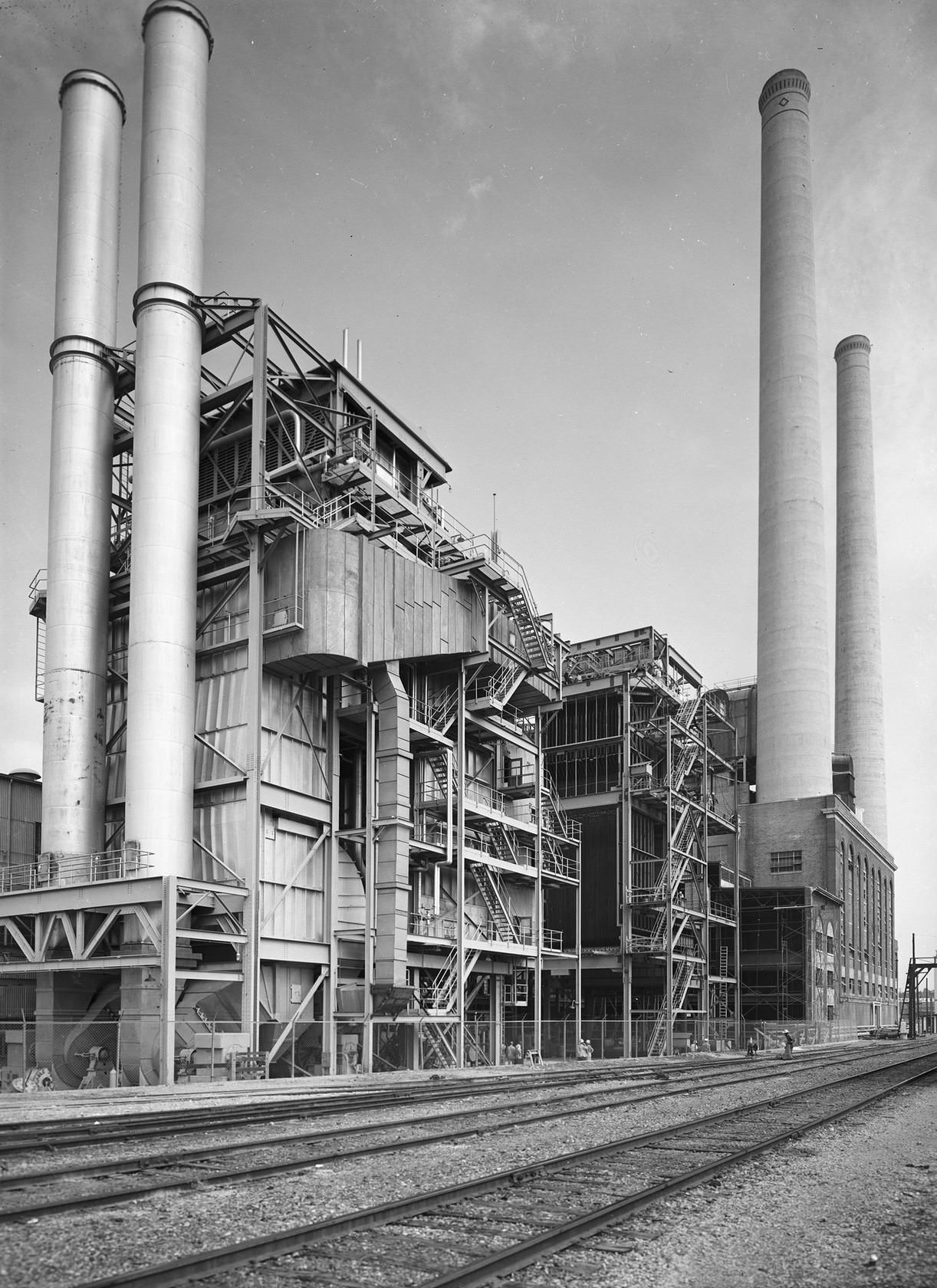
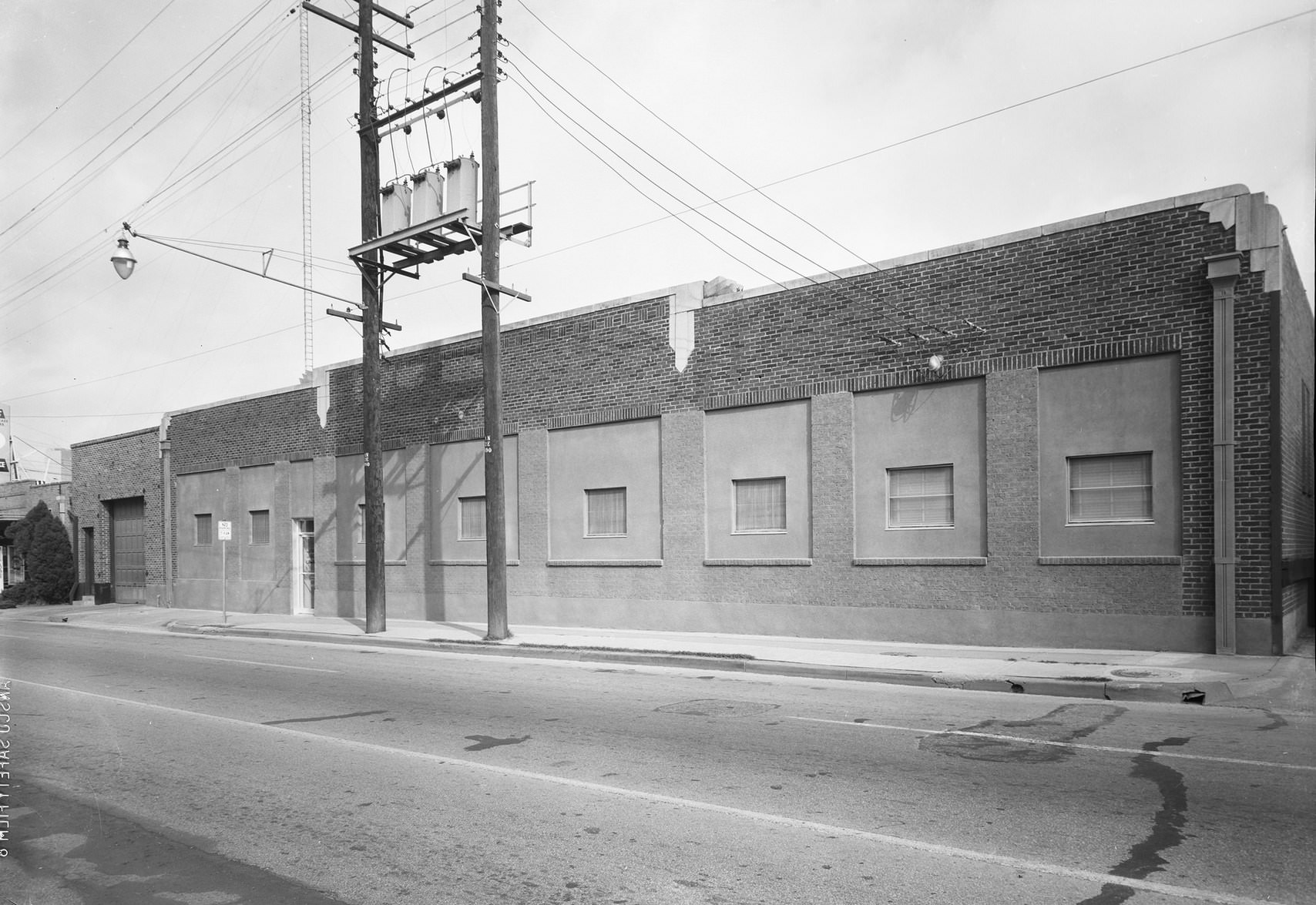
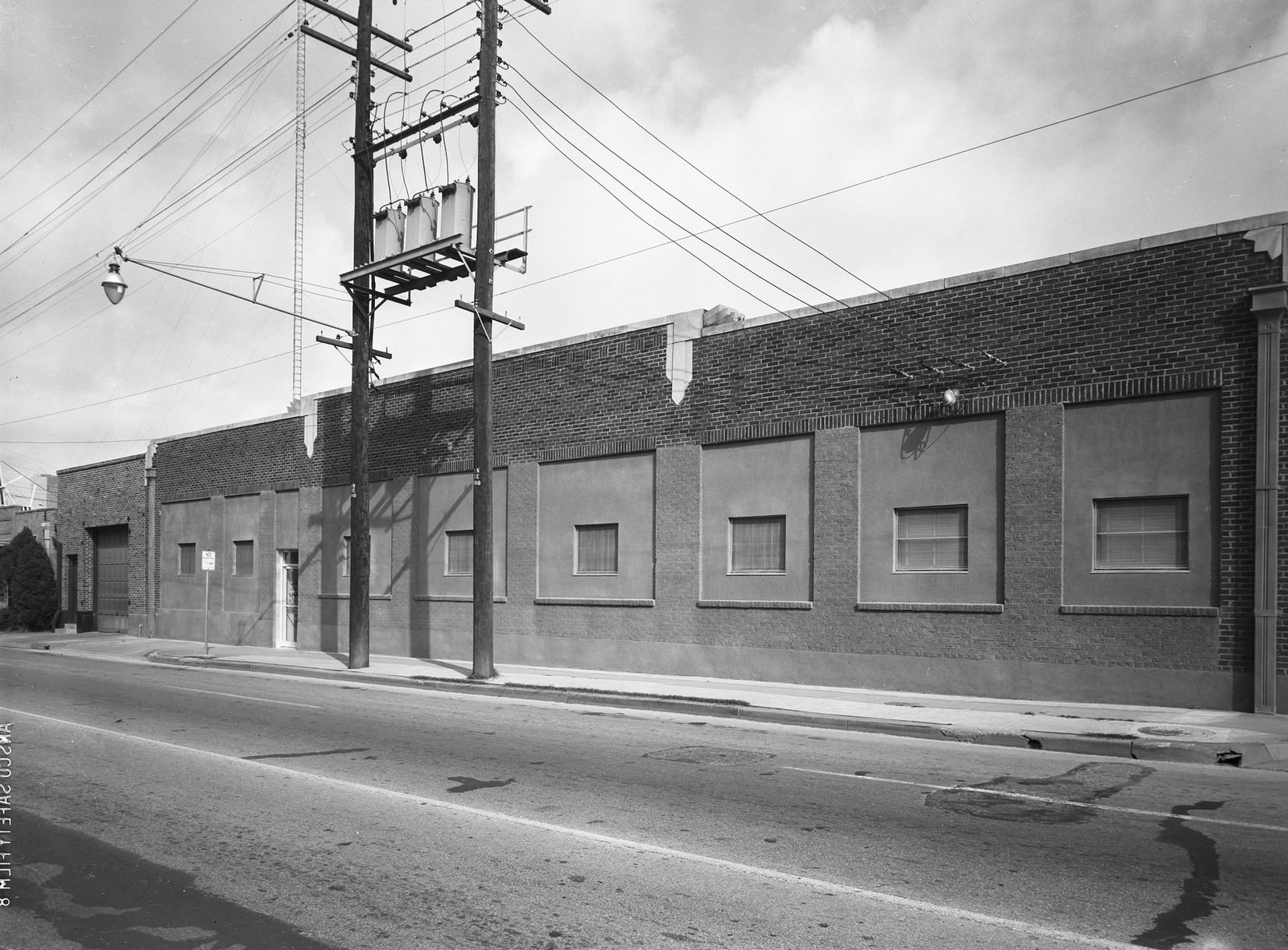
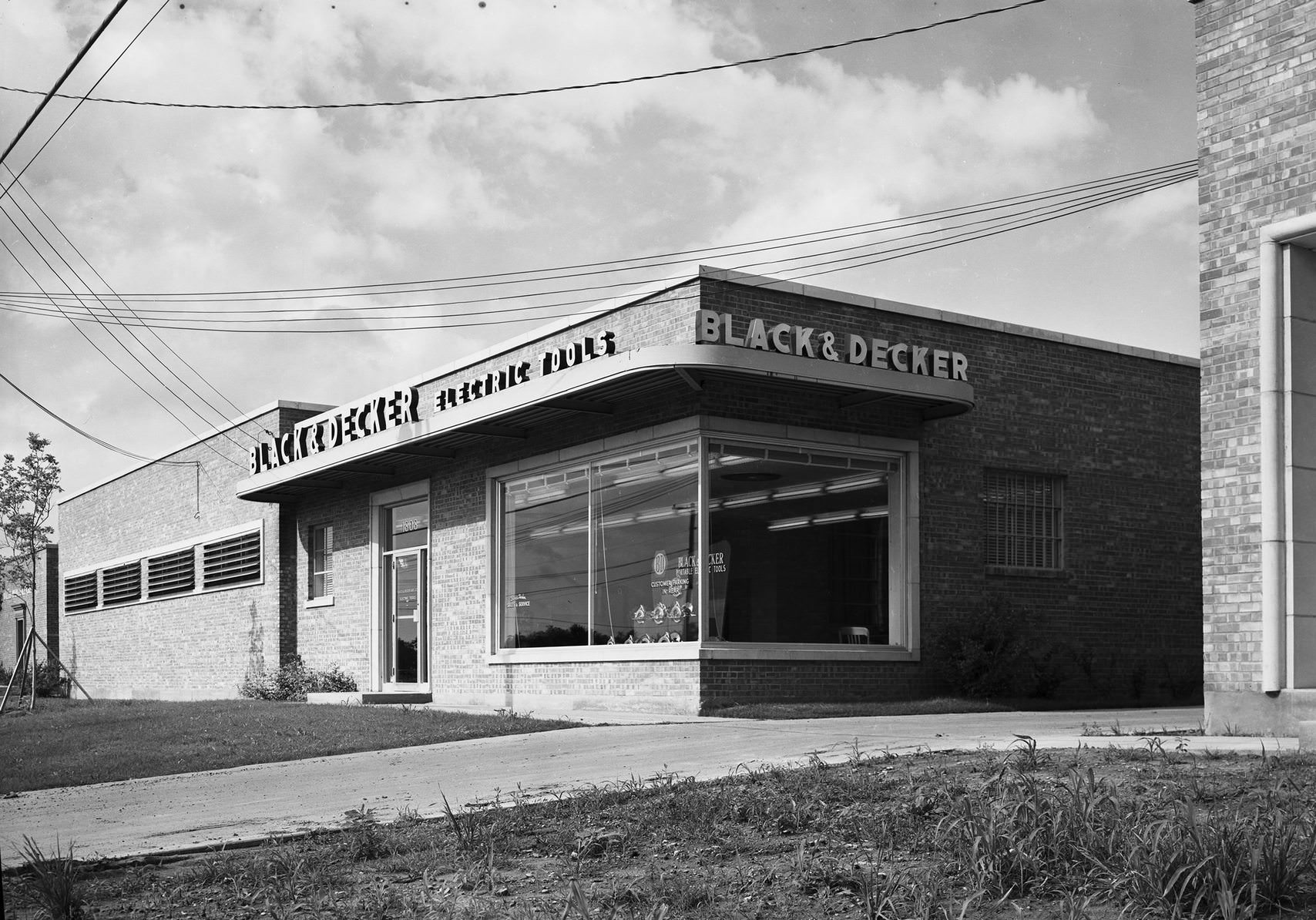
Dallas’s industrial side was visible along Industrial Boulevard and in the areas surrounding downtown. The power plant near downtown, which sat beside a railroad line, supplied electricity to the growing city. The National Biscuit Company operated a large facility in Dallas, and the Black & Decker building in the Oak Lawn industrial area represented the kind of manufacturing activity that employed a large share of the workforce.
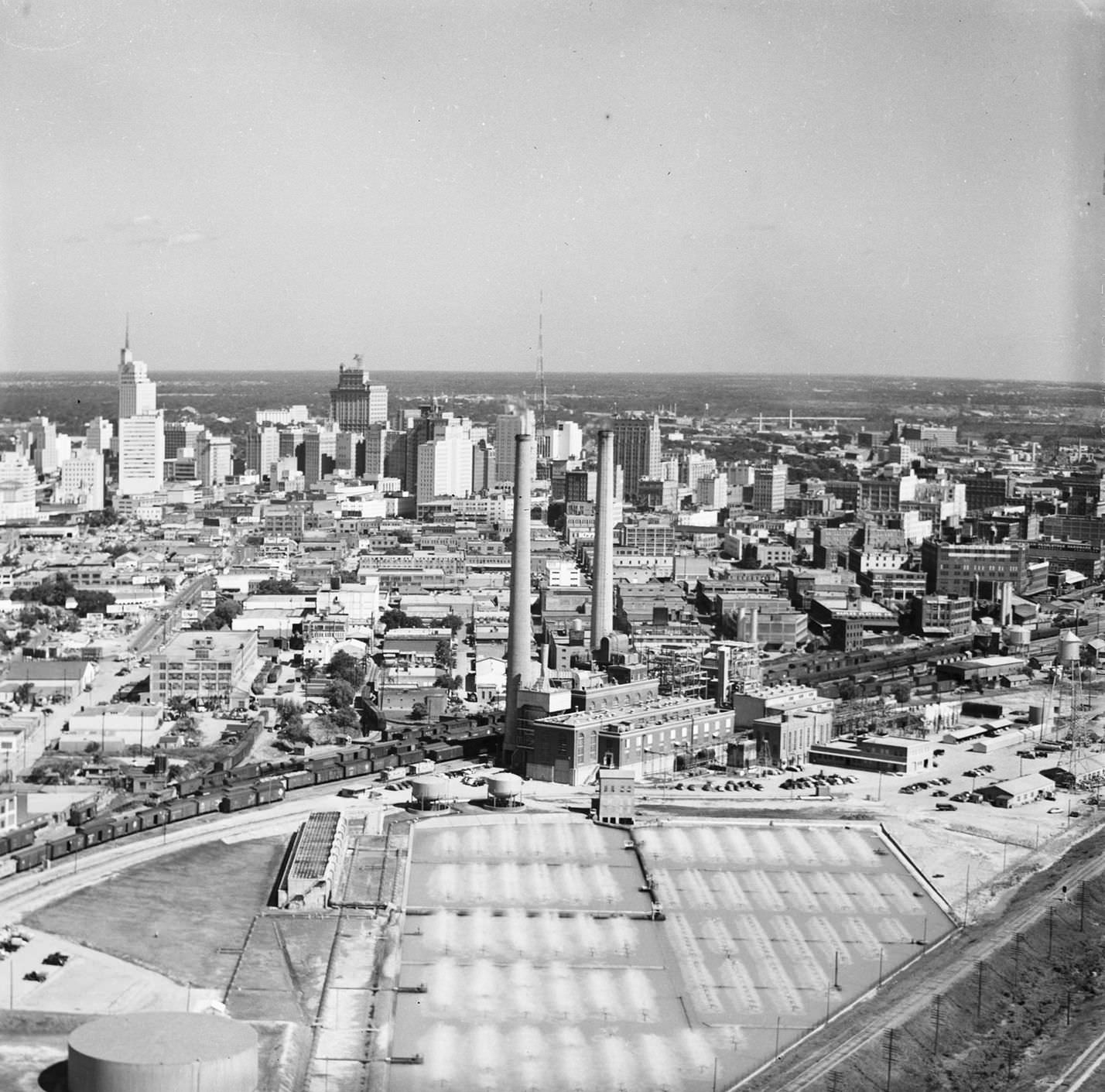
The industrial area near downtown Dallas, Texas, 1951Power plant, downtown Dallas, Texas, 1953. The picture shows a view from outside the power plant in downtown Dallas. There is a railroad next to the plant.
Power plant, downtown Dallas, Texas, 1953
Power plant, downtown Dallas, Texas, 1953
Power plant, downtown Dallas, Texas, 1953
Power plant, downtown Dallas, Texas, 1952
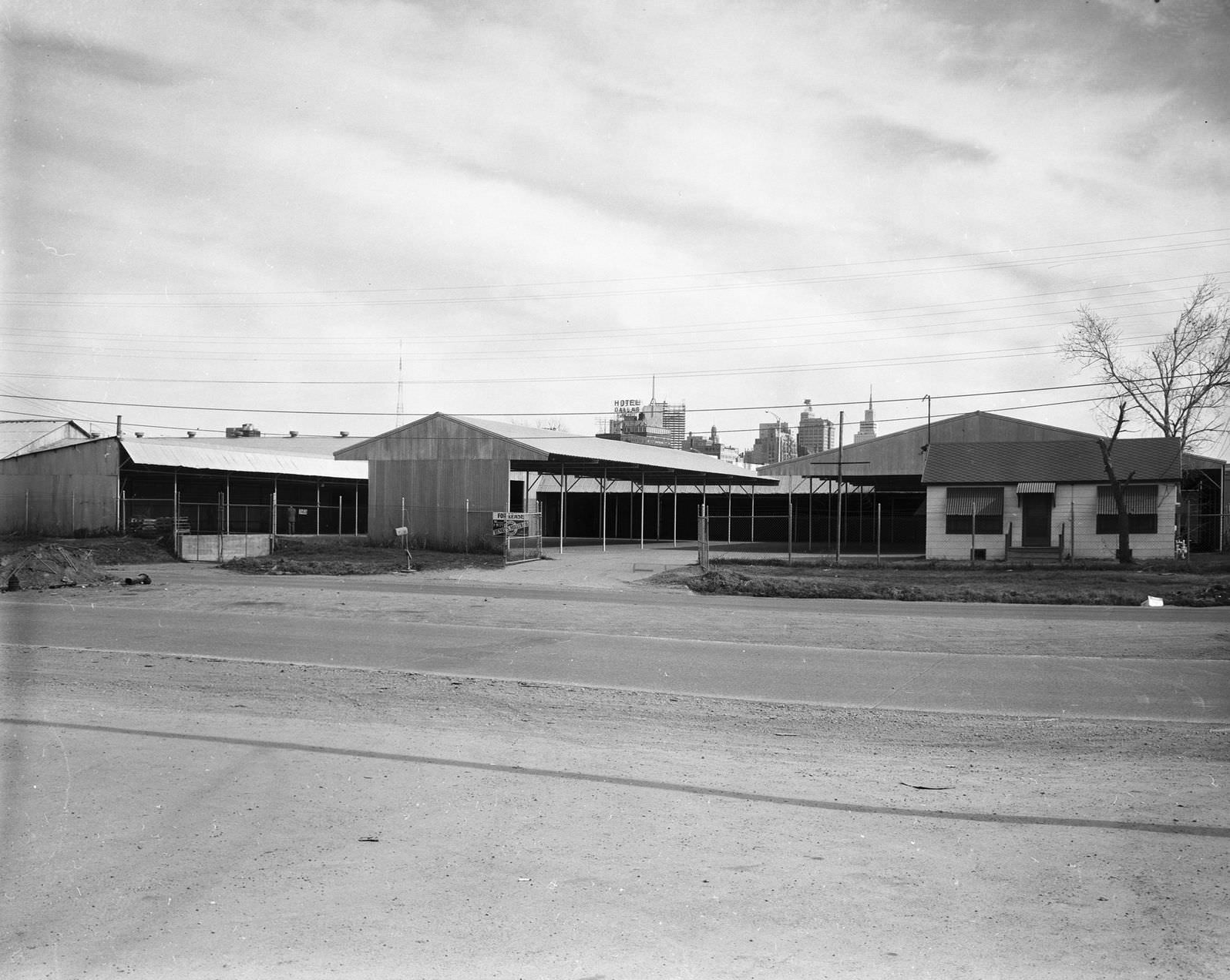
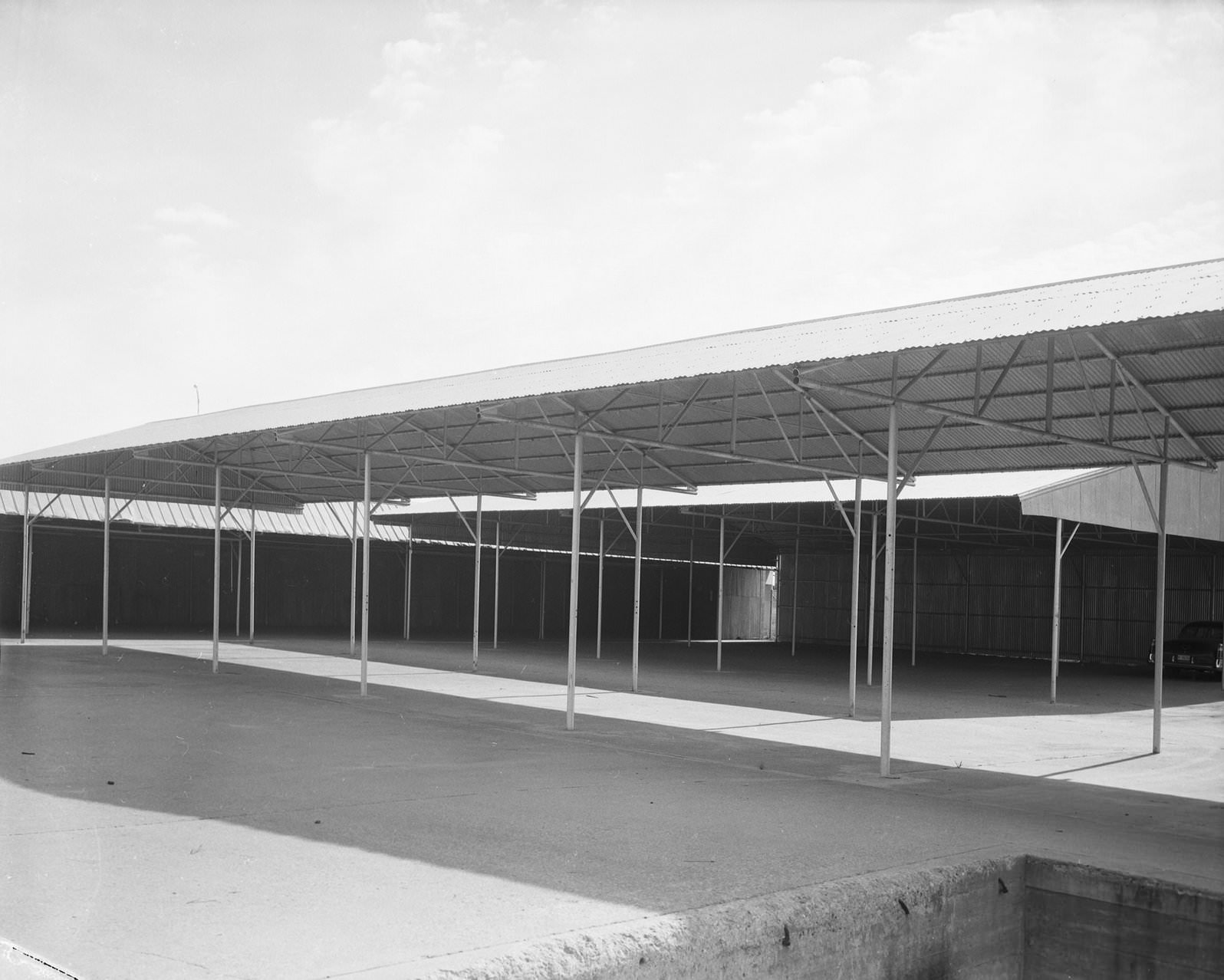
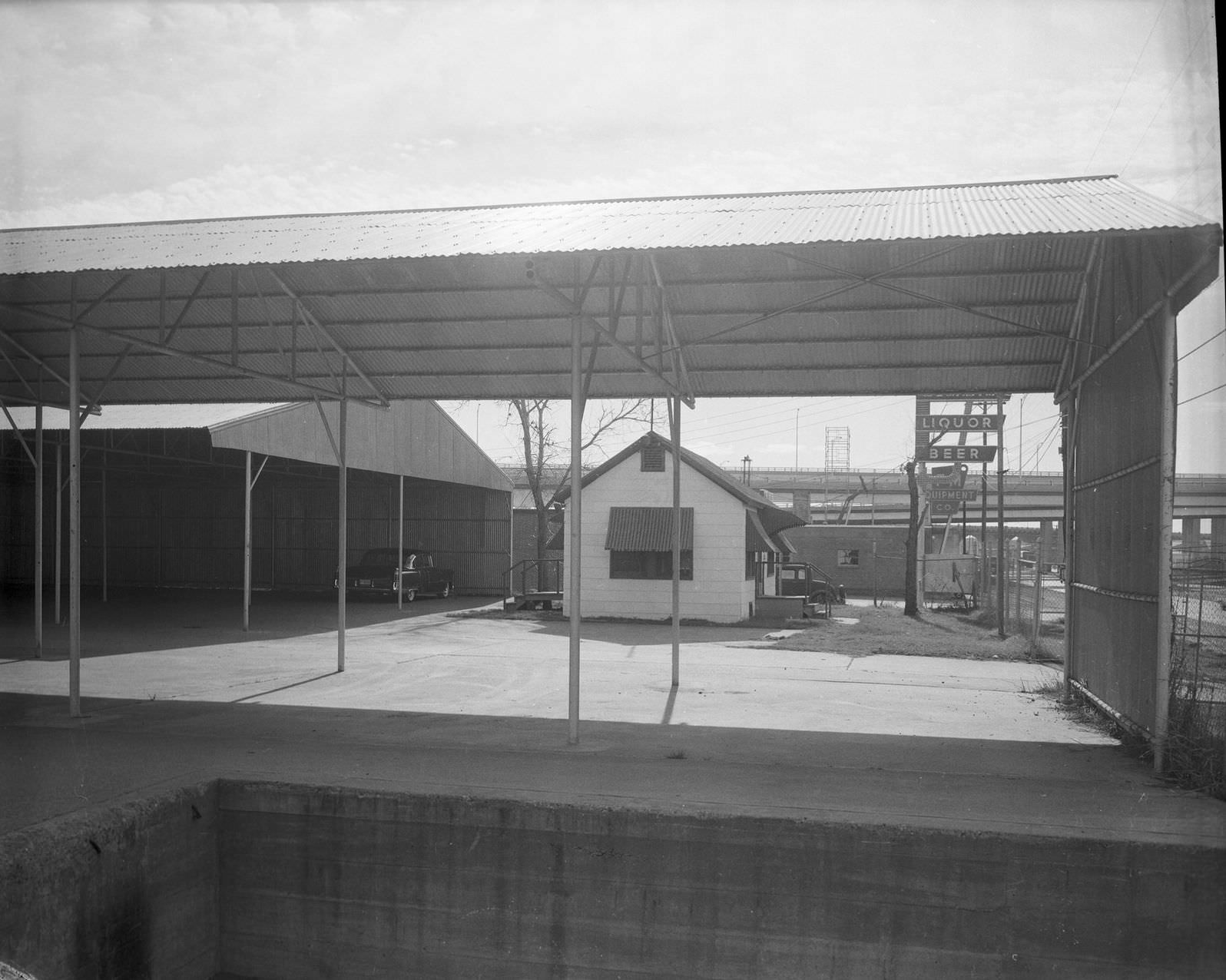
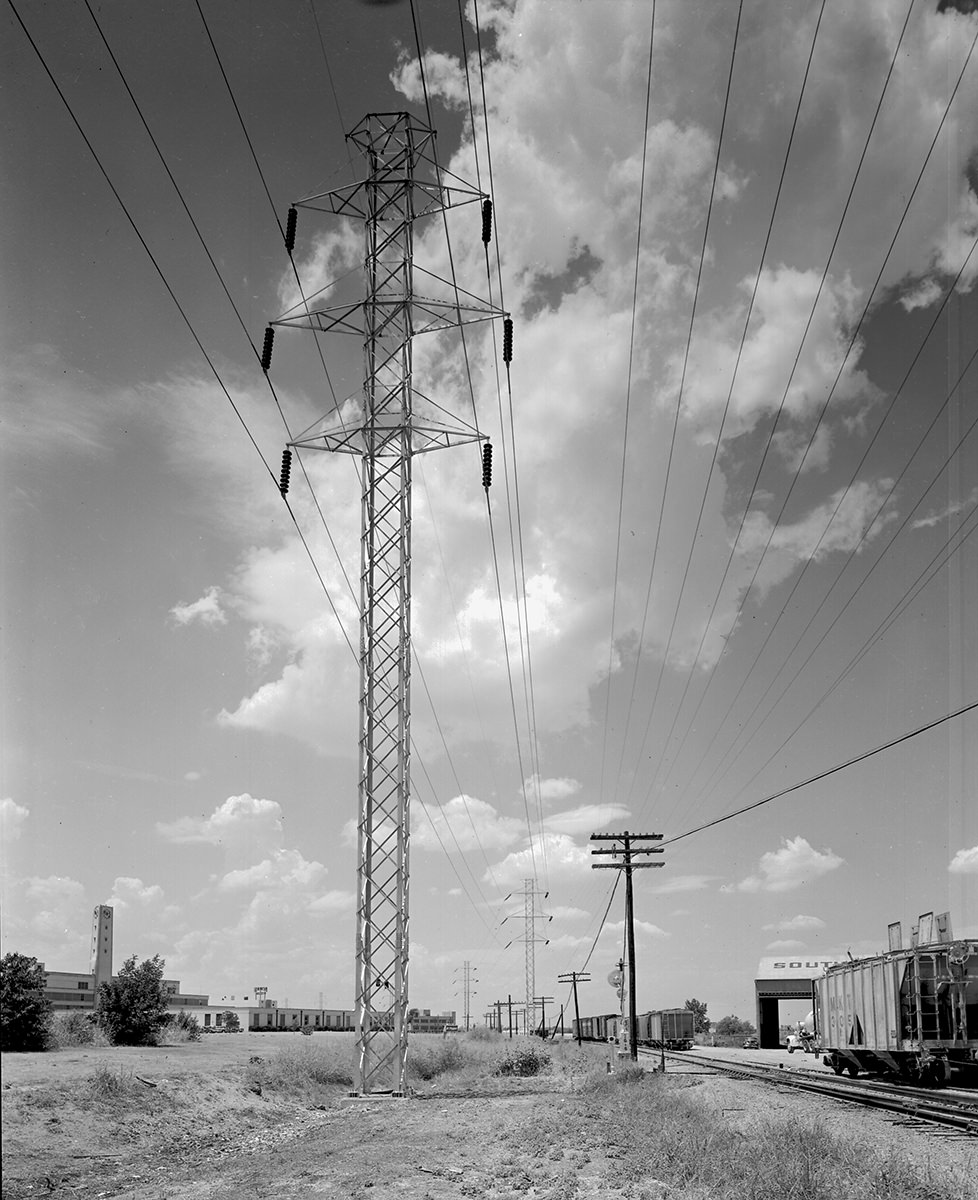
Shed building, Industrial Boulevard, Dallas, Texas, 1958Shed building, Industrial Boulevard, Dallas, Texas, 1958Shed building, Industrial Boulevard, Dallas, Texas, 1958National Biscuit Company building, Dallas, Texas, 1958National Biscuit Company building, Dallas, Texas, 1958Black & Decker building, Oak Lawn industrial area, Dallas, Texas, 1954Dallas electric line towers, 1956
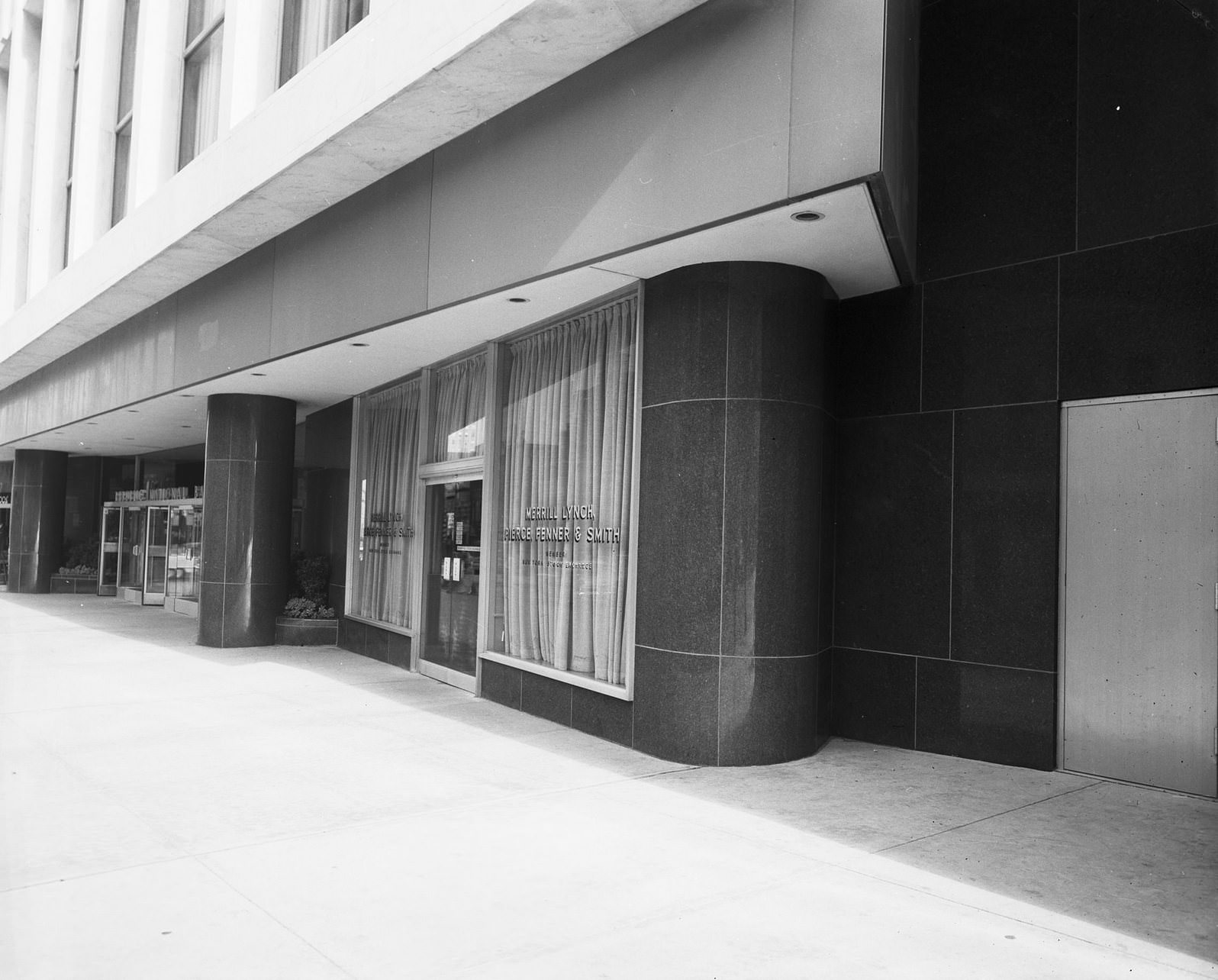
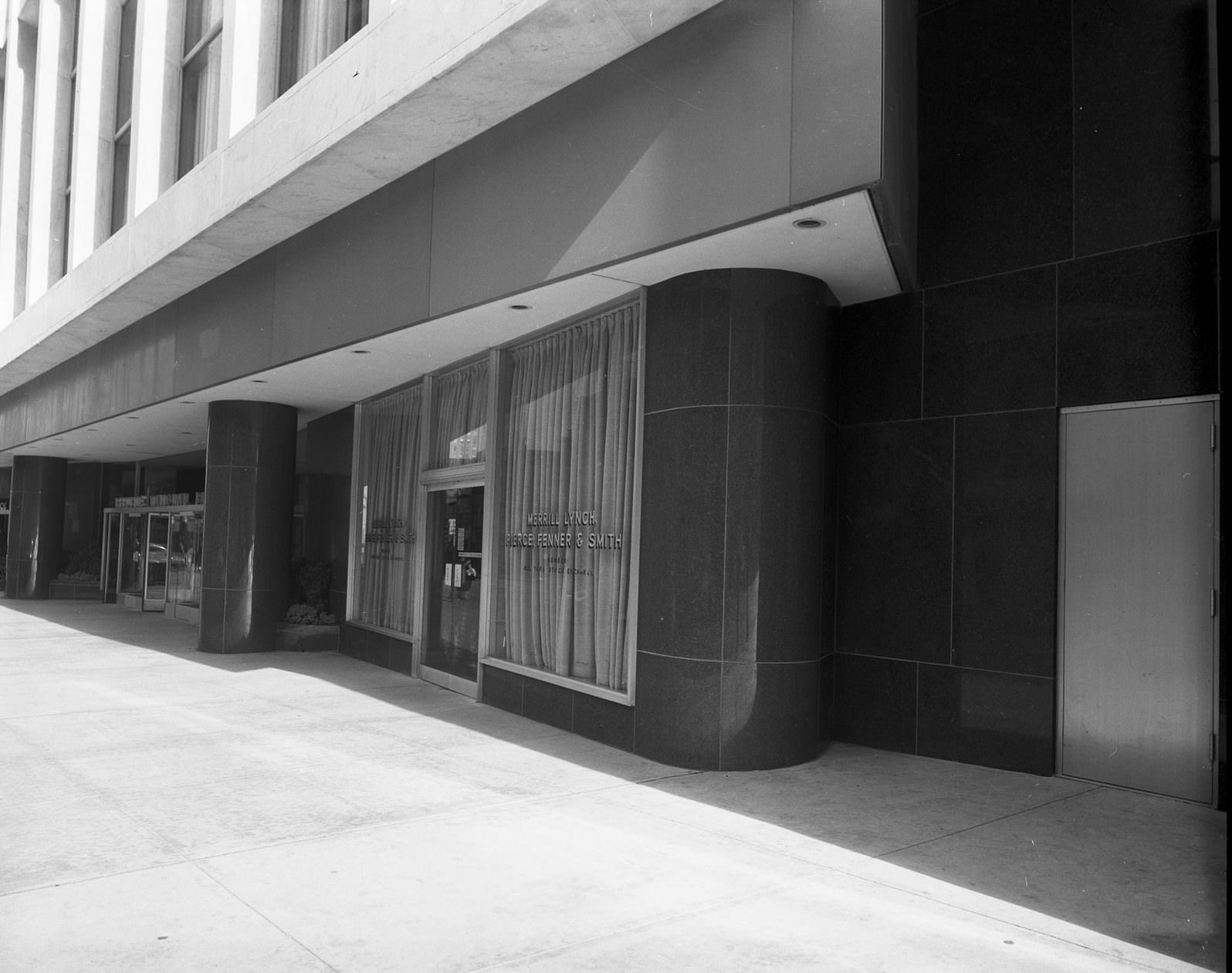
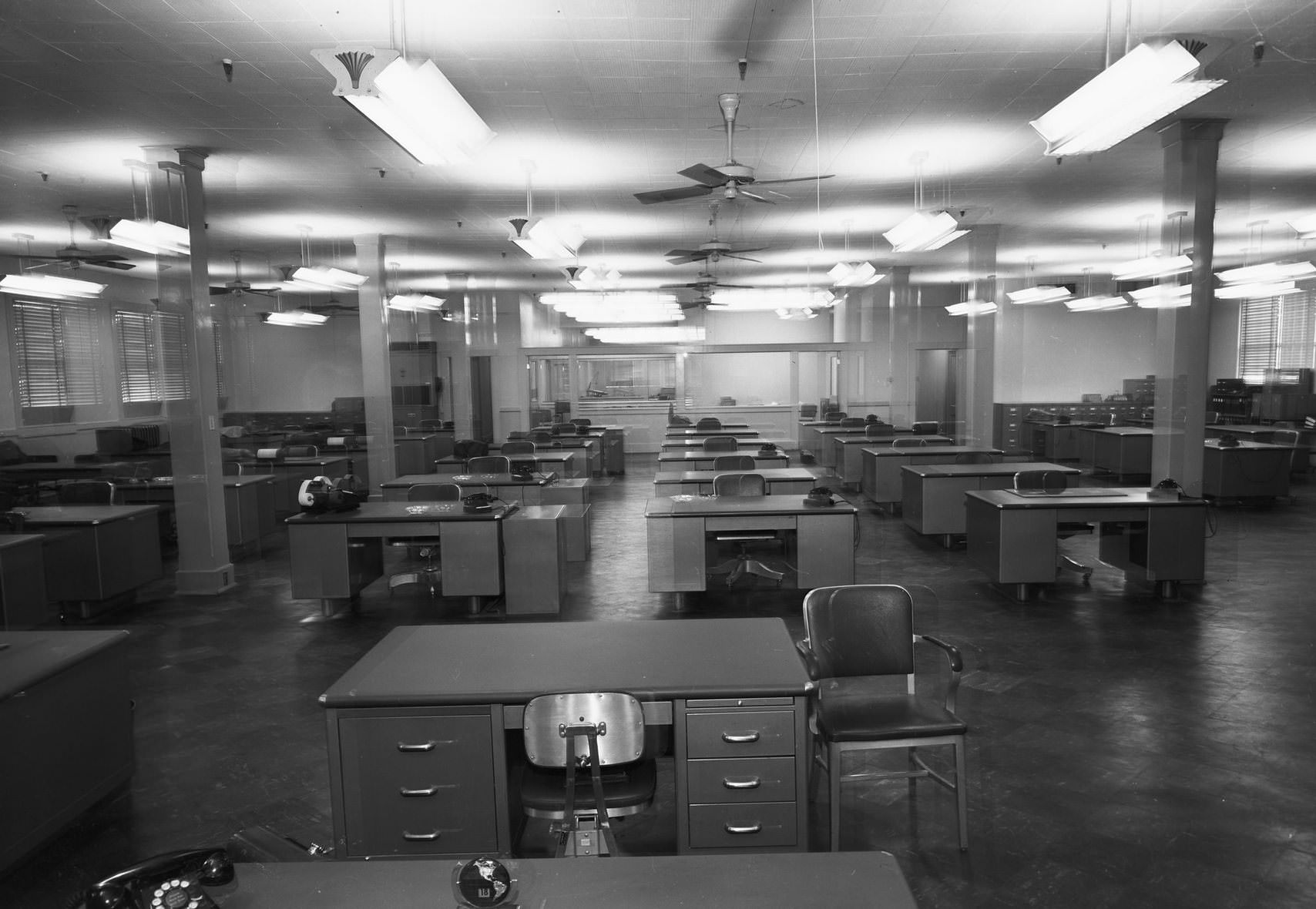
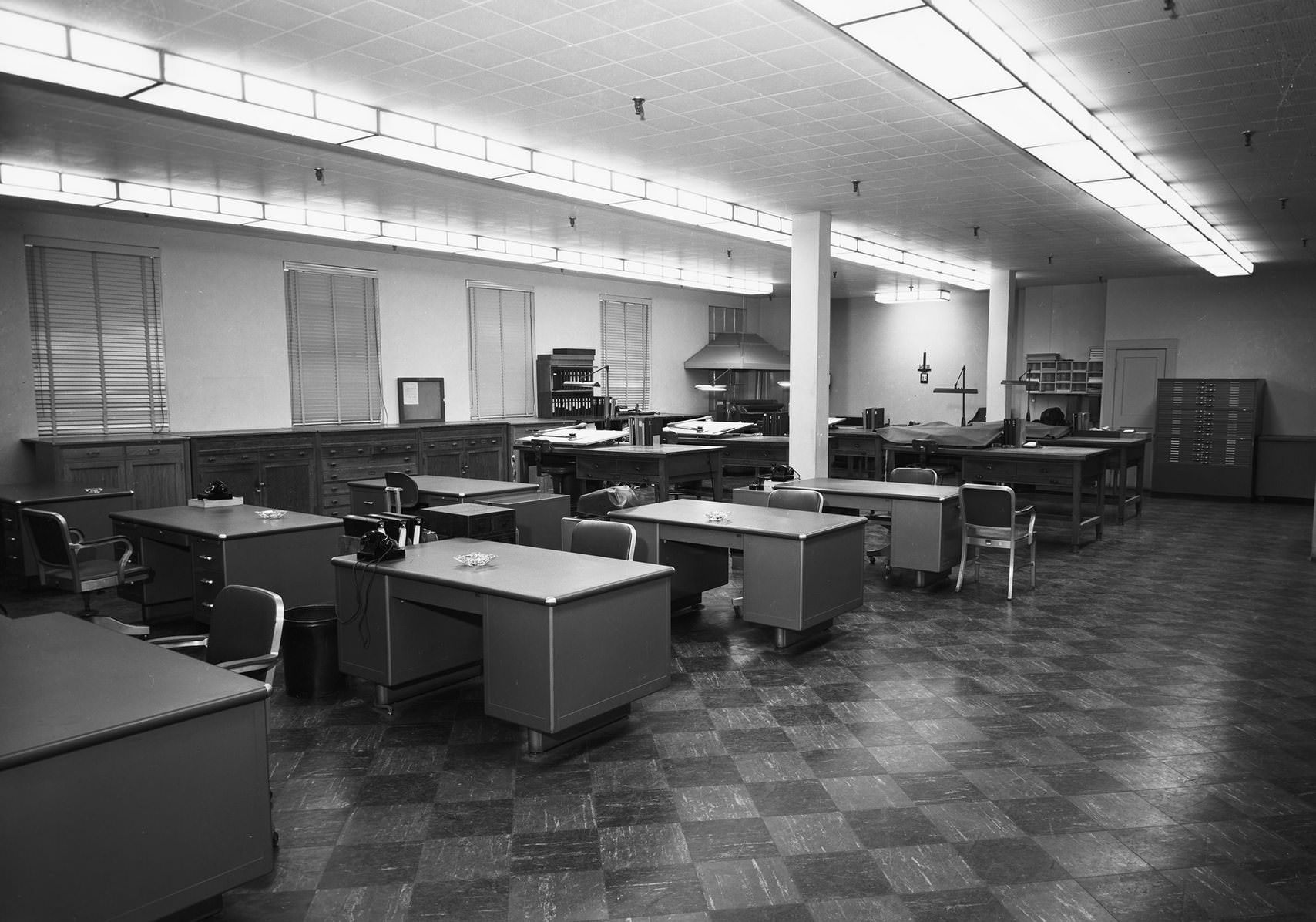
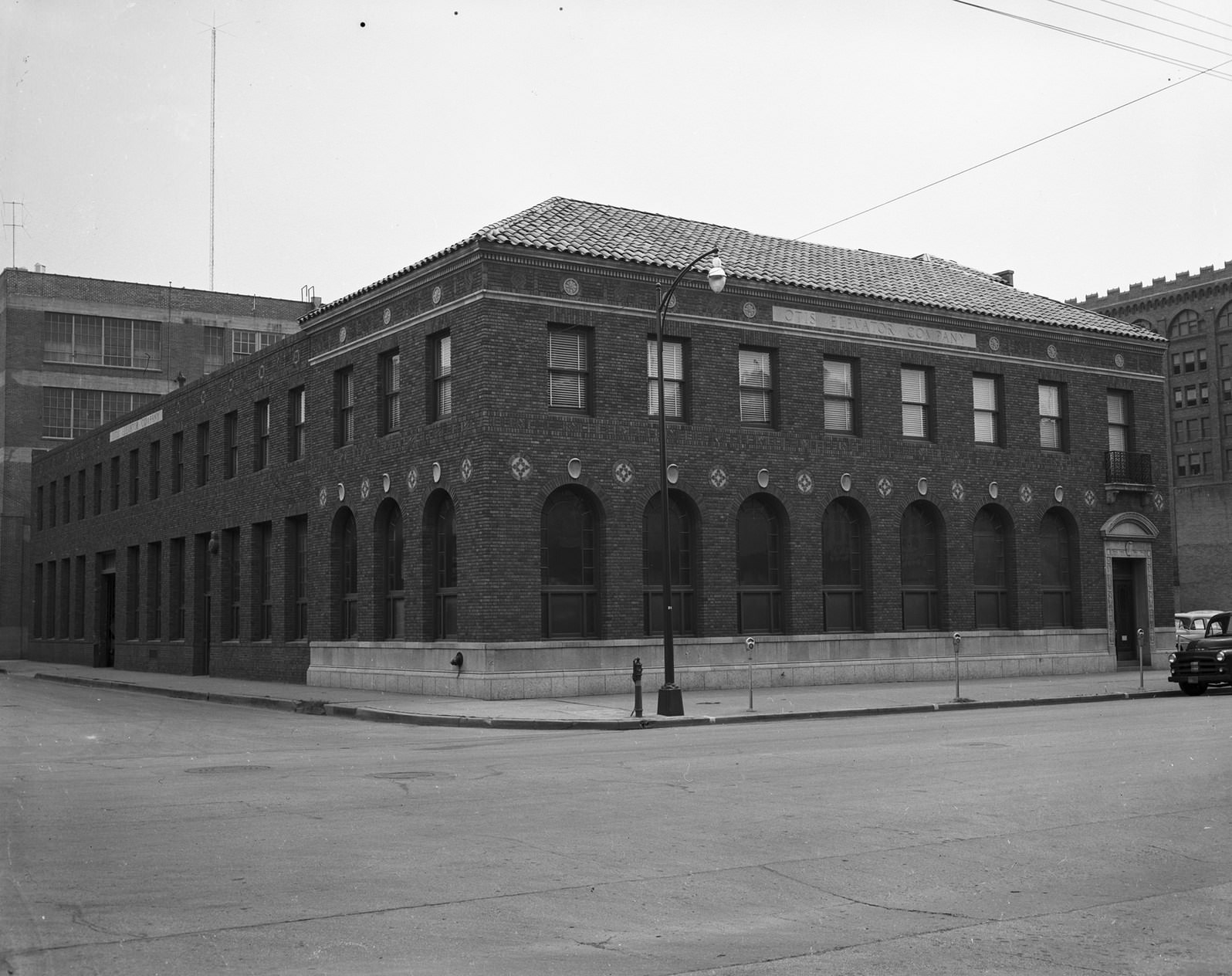
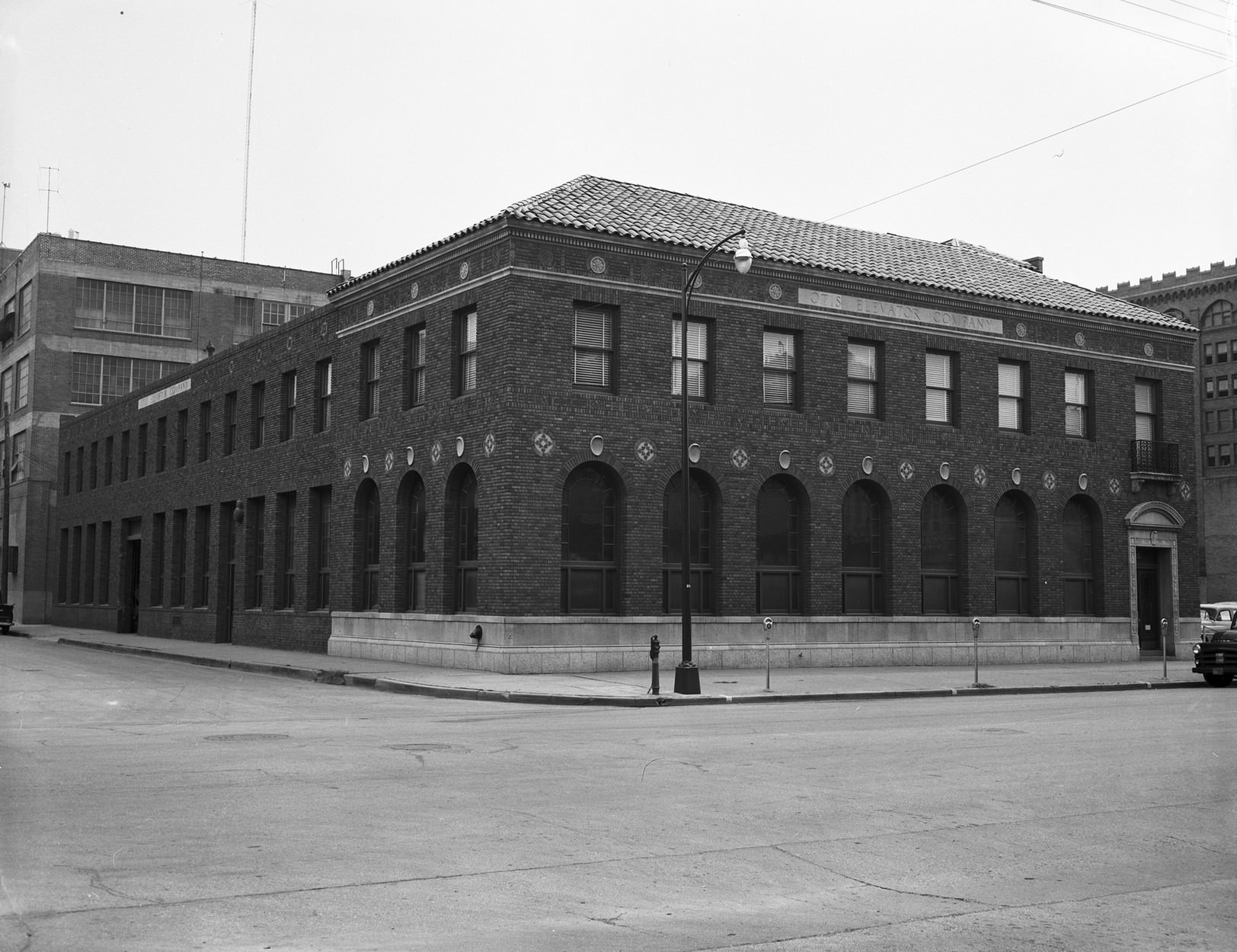
In 1957, developers Trammell Crow and John M. Stemmons opened the Dallas Market Center, which would grow into one of the world’s largest wholesale trade complexes. The Decorative Center, photographed in 1957, was part of this broader push to make Dallas the hub of wholesale commerce for the region. Financial services firms like Merrill Lynch, Pierce, Fenner and Smith maintained offices in the heart of the city, and the Otis Elevator Company operated a building that served the construction boom directly.
Exterior Of Decorative Center, Dallas, Texas, 1957Offices of Merrill Lynch, Pierce, Fenner and Smith, downtown Dallas, Texas, 1950sOffices of Merrill Lynch, Pierce, Fenner and Smith, downtown Dallas, Texas, 950Otis Elevator Company building interior, Dallas, Texas, 1953Otis Elevator Company building interior, Dallas, Texas, 1953Otis Elevator Company building, Dallas, Texas, 1953Otis Elevator Company building, Dallas, Texas, 1953
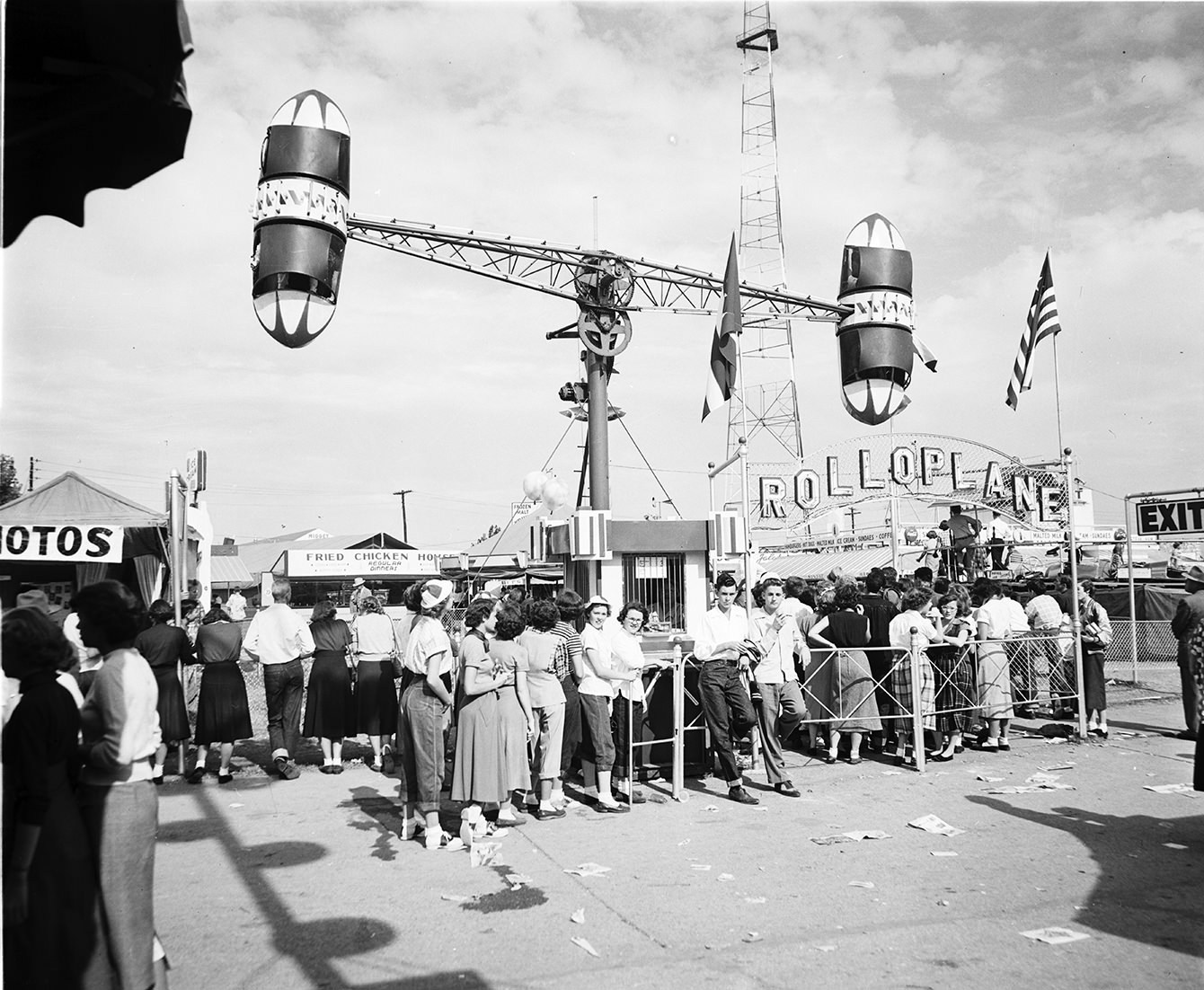
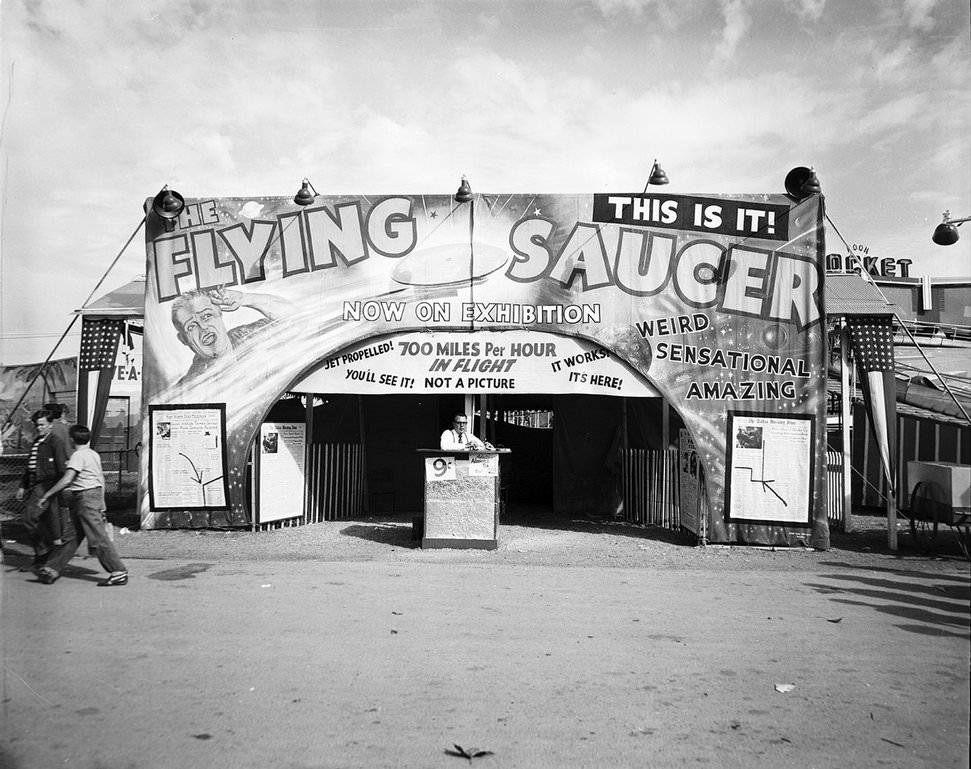
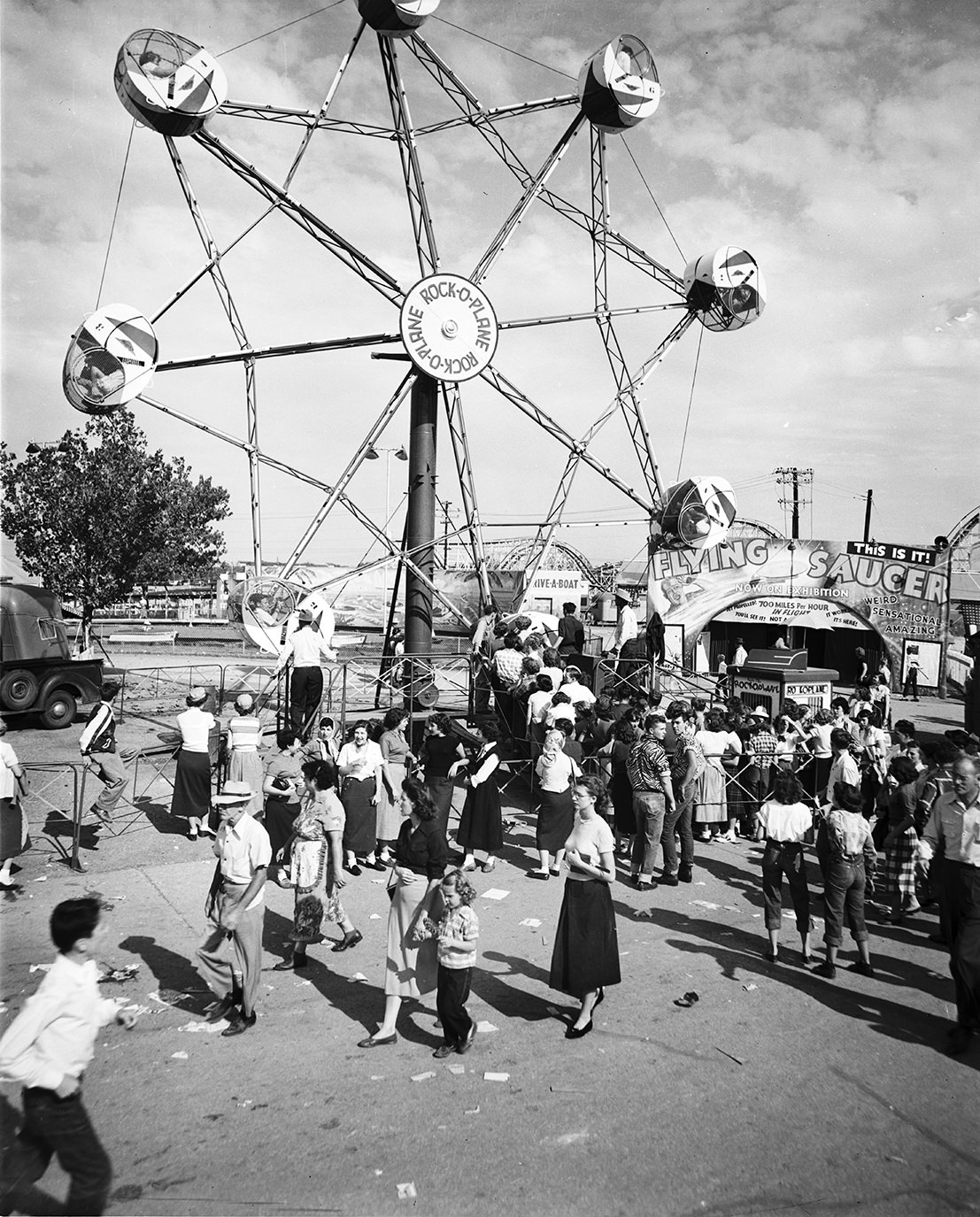
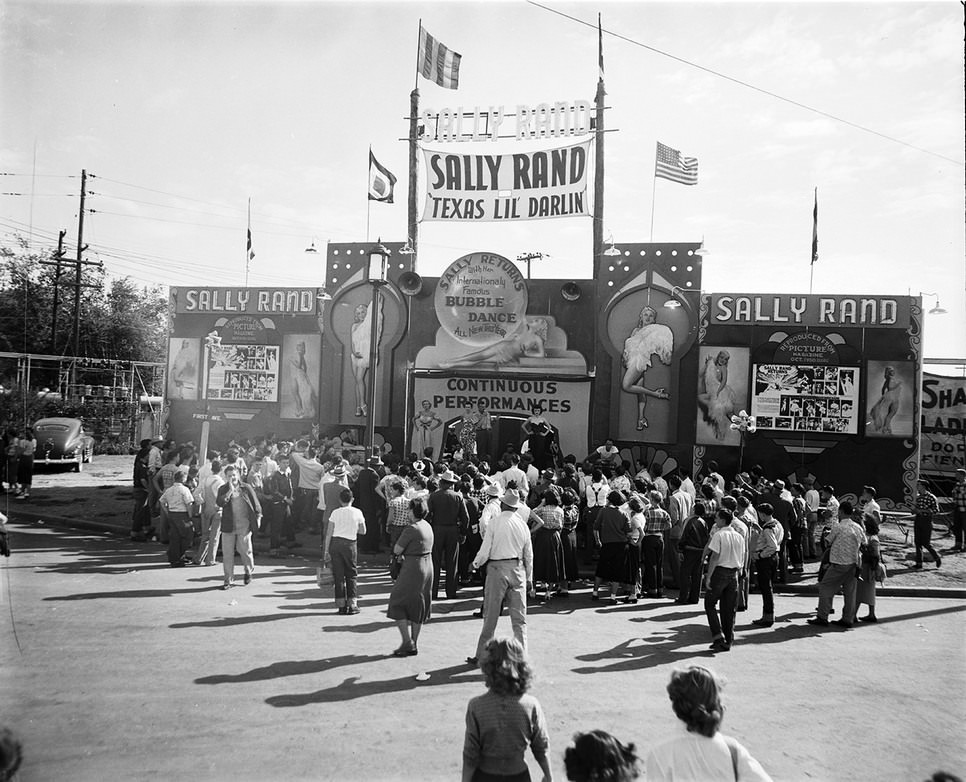
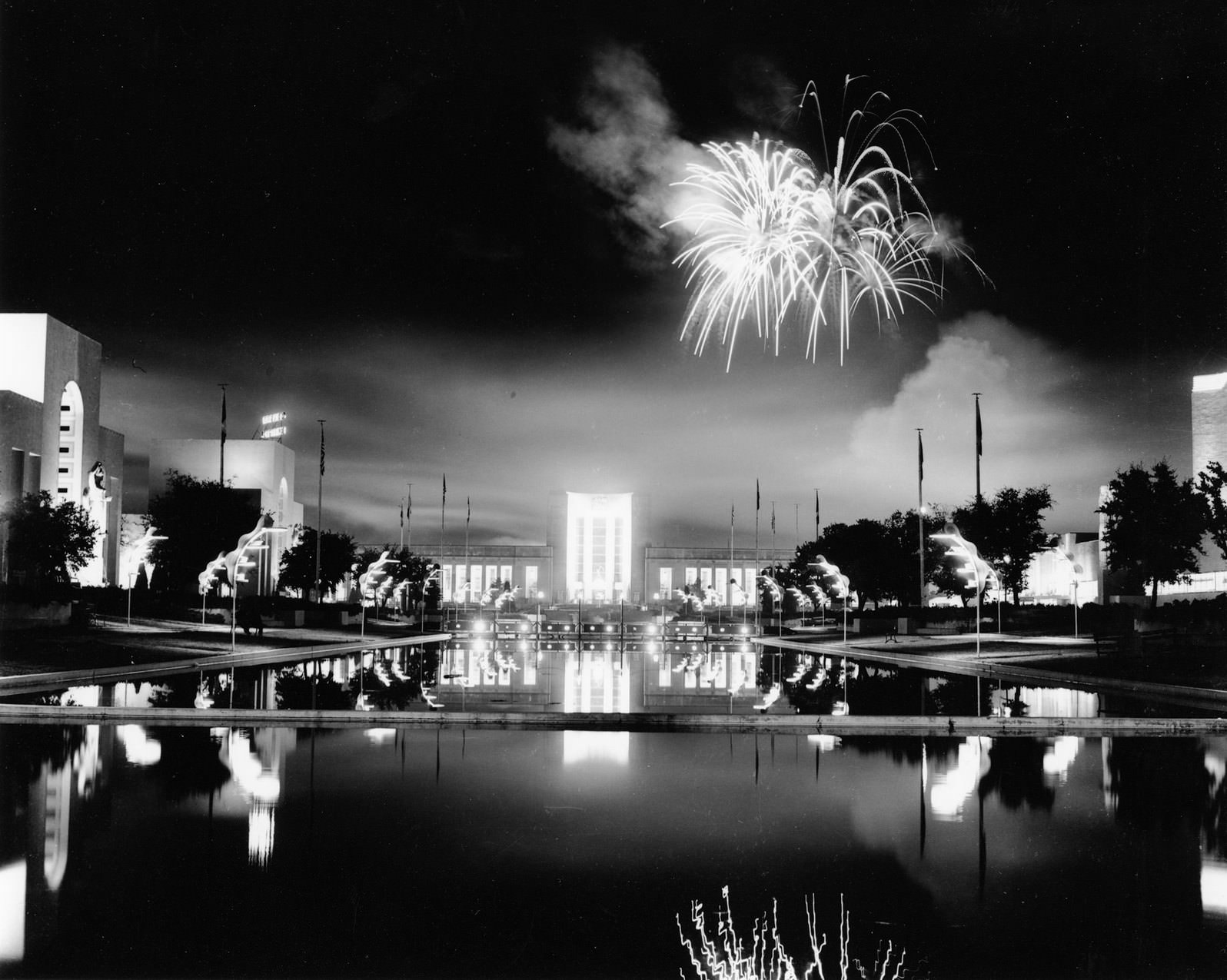
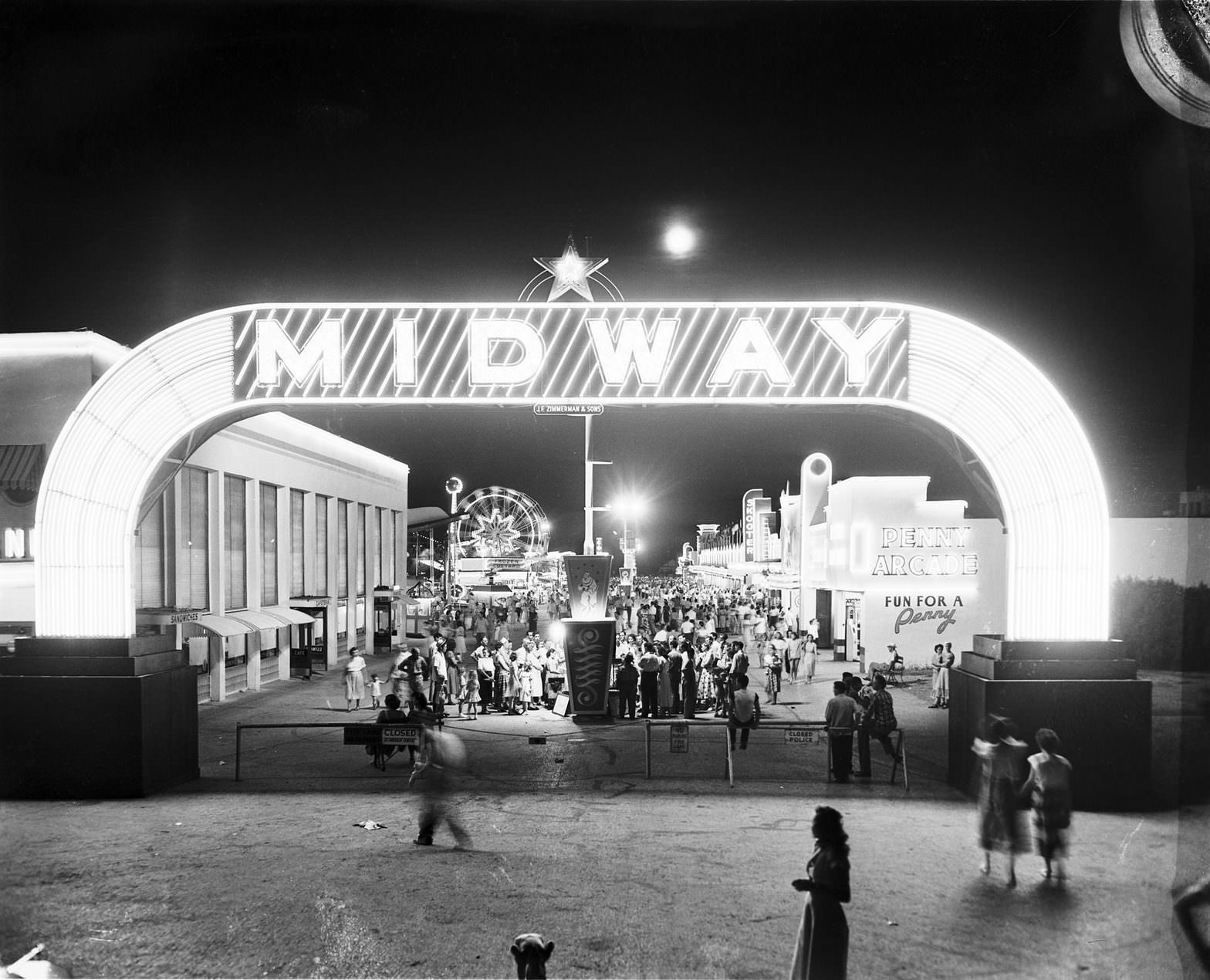
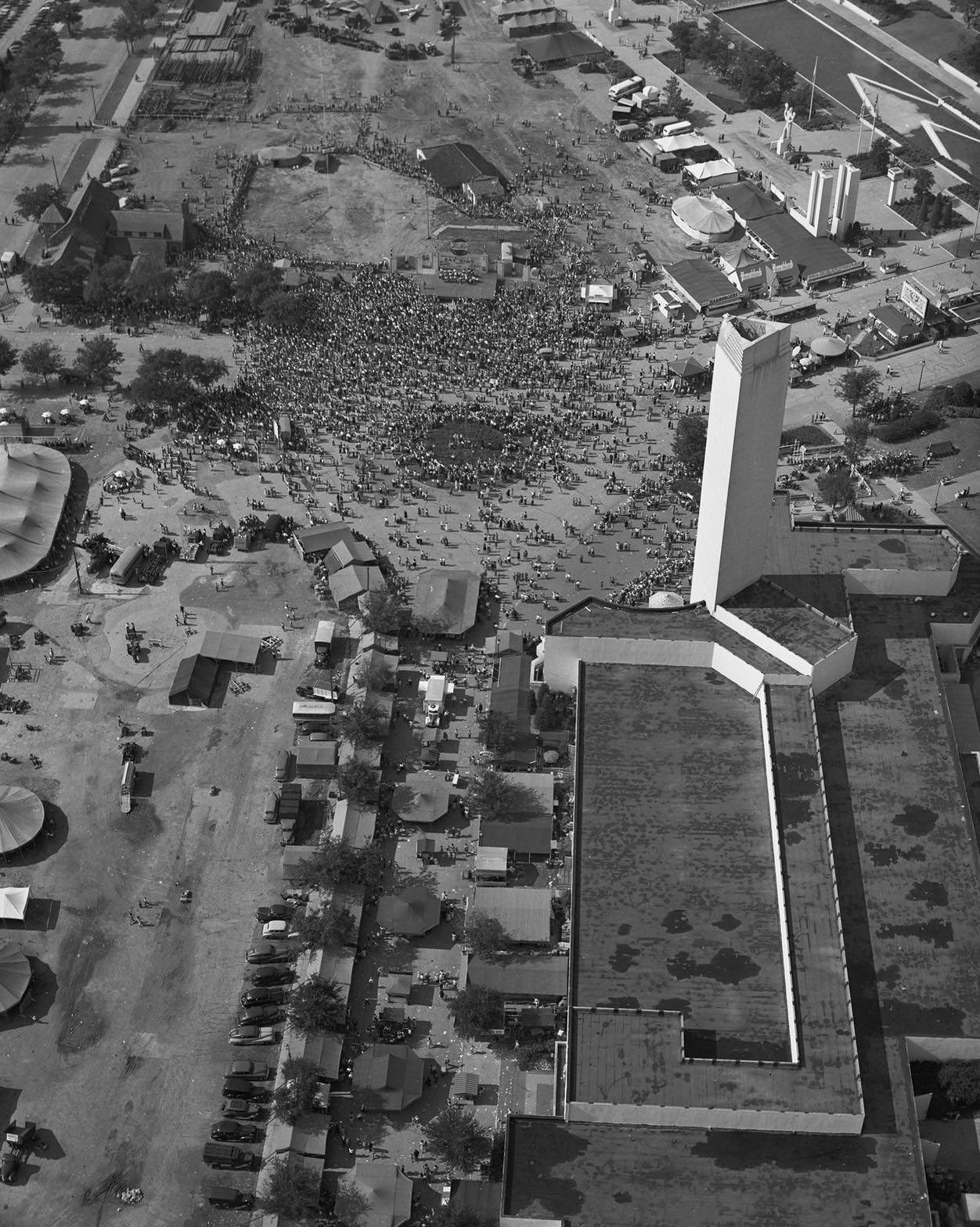
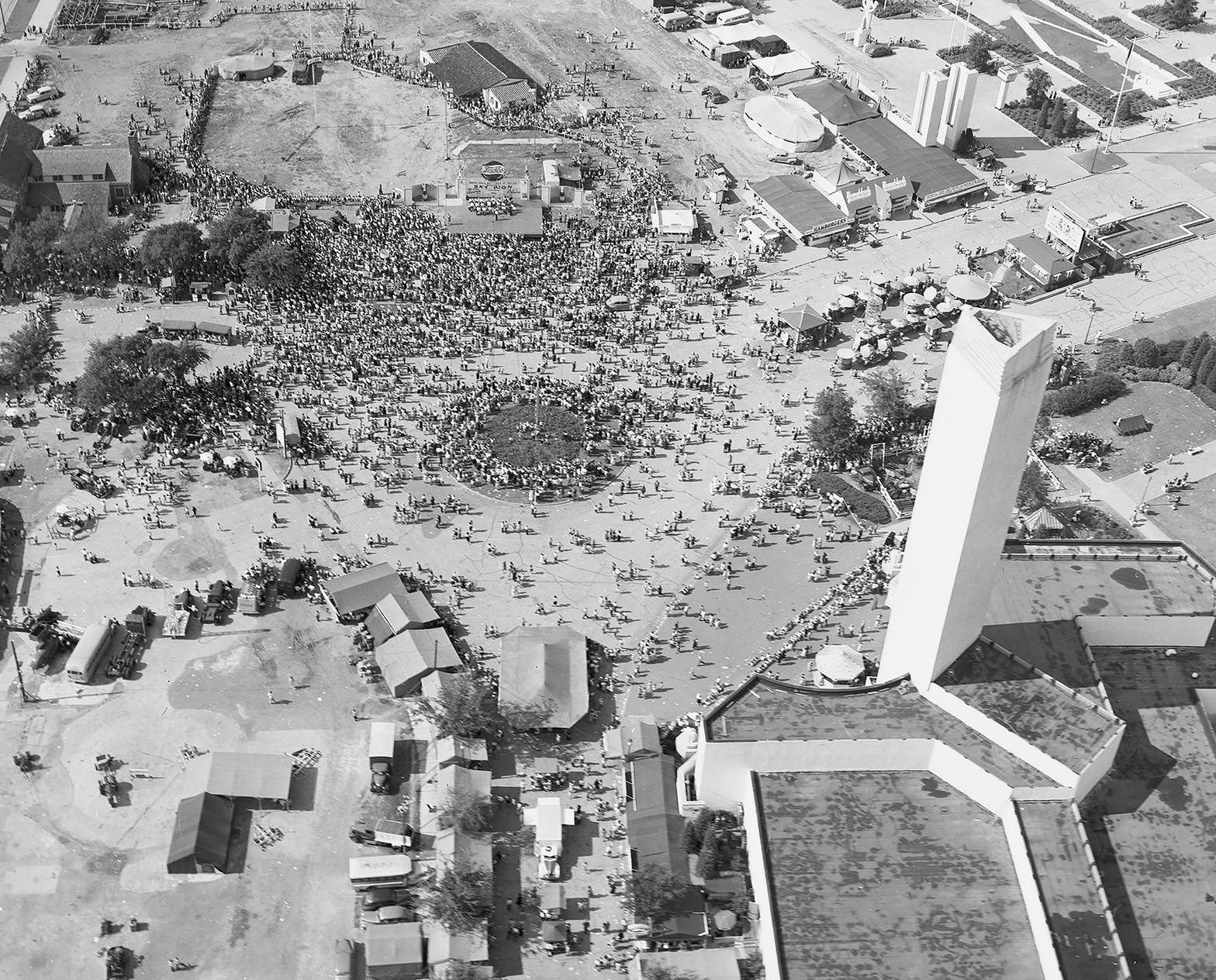
Entertainment and leisure were woven into Dallas life throughout the 1950s. The State Fair of Texas at Fair Park drew massive crowds each fall. The Midway featured rides like the Roloplane, the Rock-O-Plane, and a show called The Flying Saucer. The Sally Rand Texas Lil’ Darlin’ show was another Midway attraction. At night, the Fair Park Midway entrance blazed with lights, and fireworks over the Esplanade made for a spectacular display.
State Fair of Texas Midway ride “Roloplane”, 1950State Fair of Texas show “The Flying Saucer”, 1950Rock-O-Plane ride at State Fair of Texas, 1950State Fair of Texas Midway show “Sally Rand Texas Lil’ Darlin'”, Dallas, 1950Fair Park Esplanade with fireworks in sky at night during Texas State Fair, Dallas, Texas, 1950Fair Park Midway entrance at night, Dallas, Texas, 1950Aerial photograph of trapeze artists performing at Fair Park, Dallas, Texas, 1950Aerial photograph of trapeze artists performing at Fair Park, Dallas, Texas, 1950
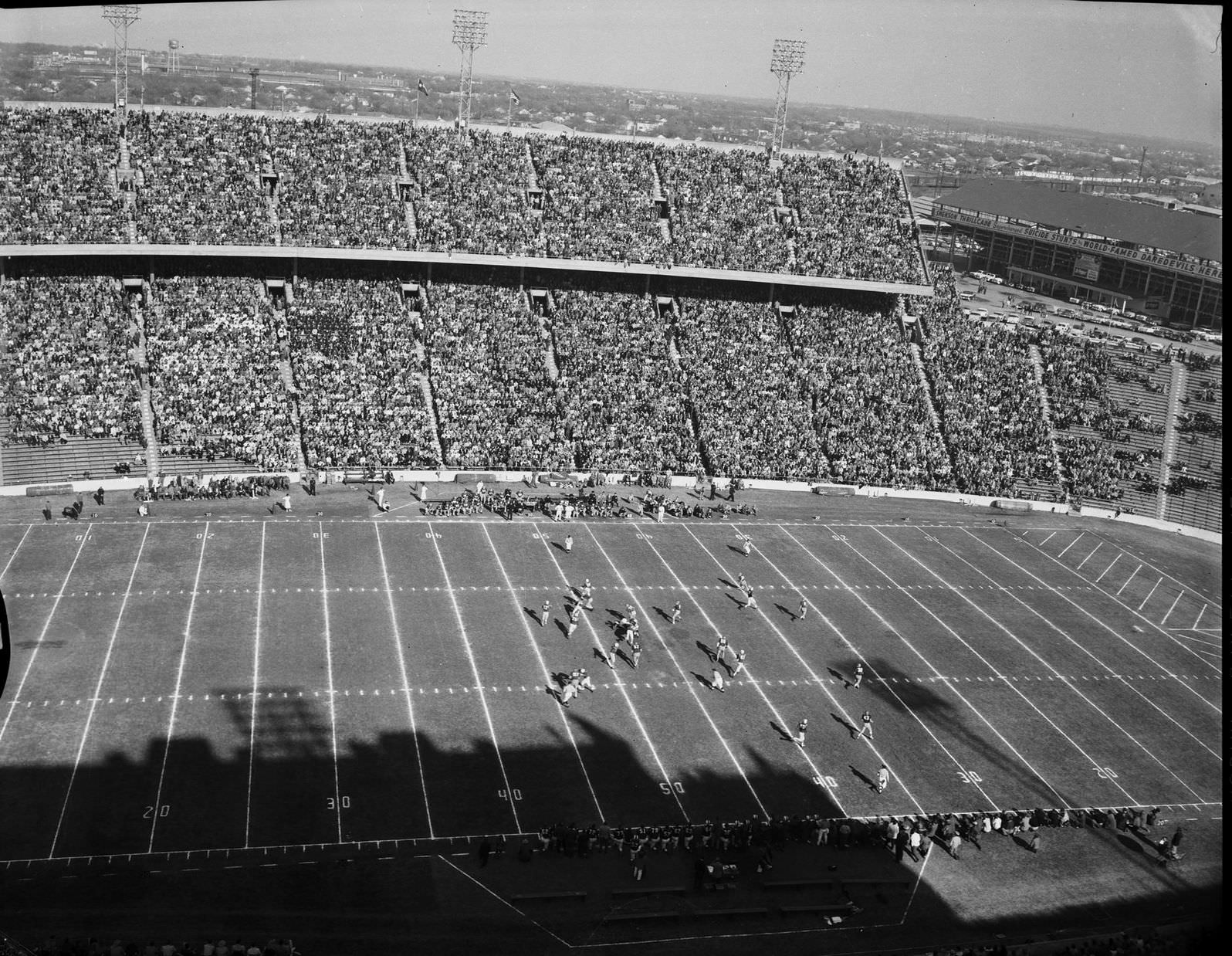
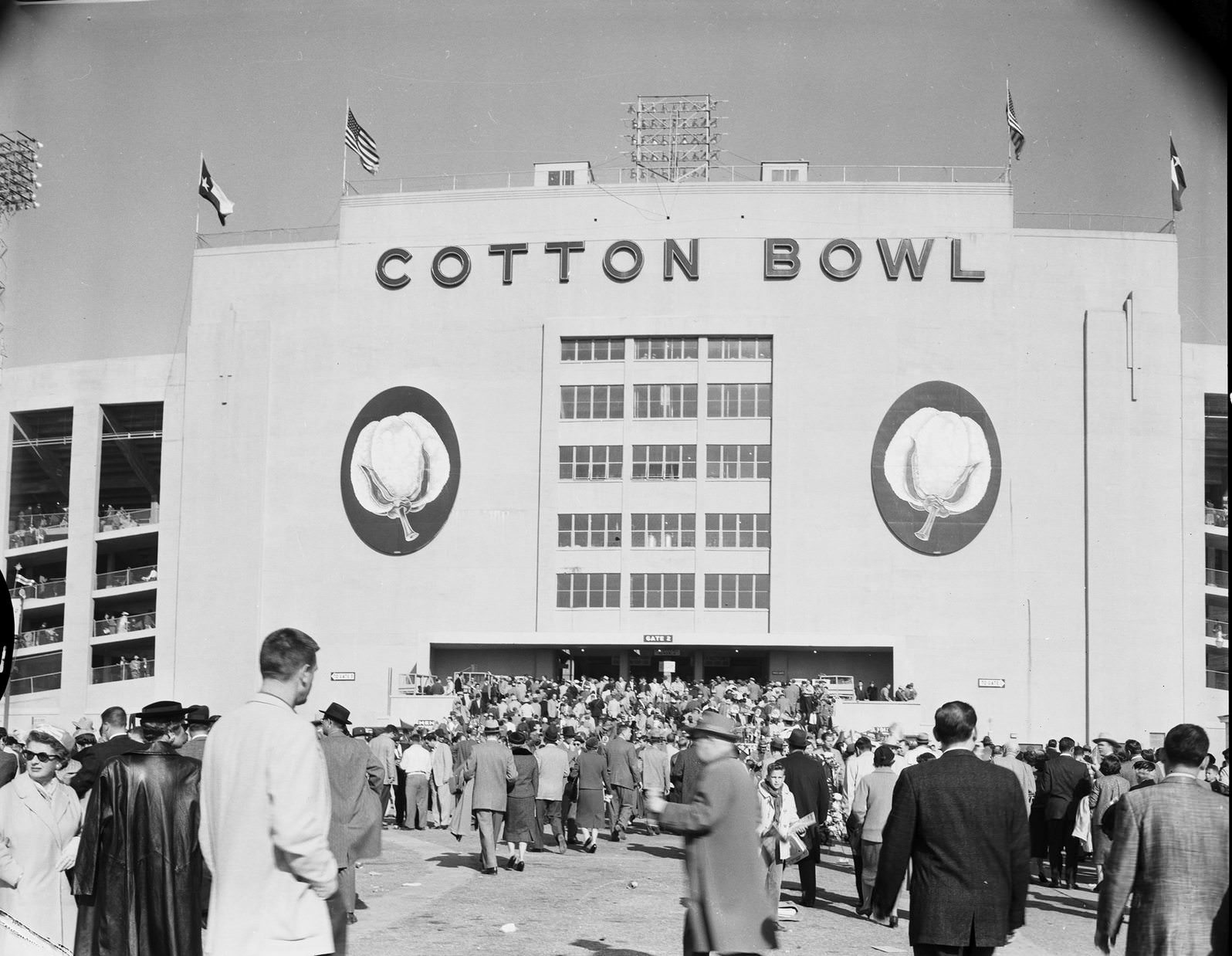
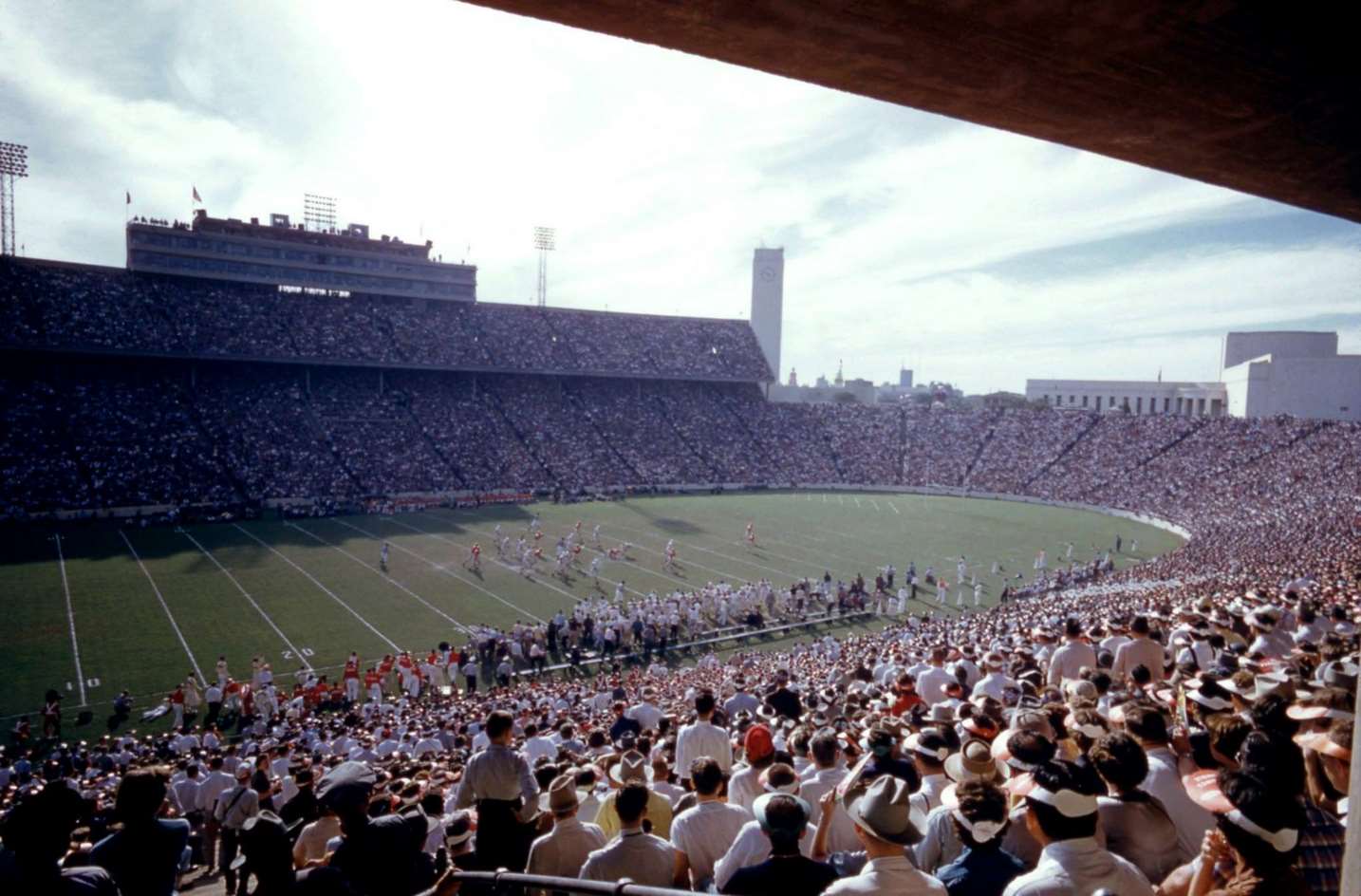
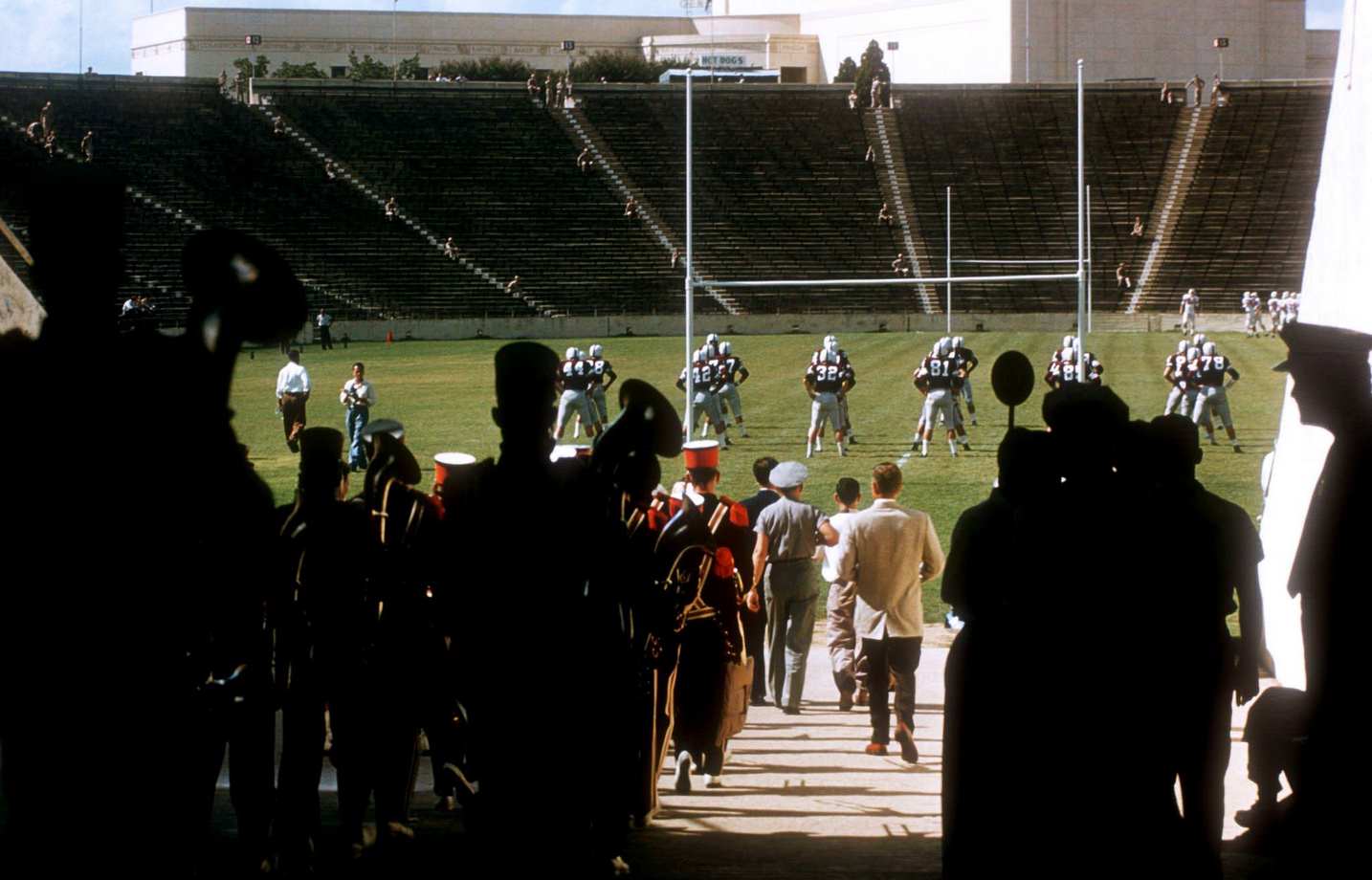
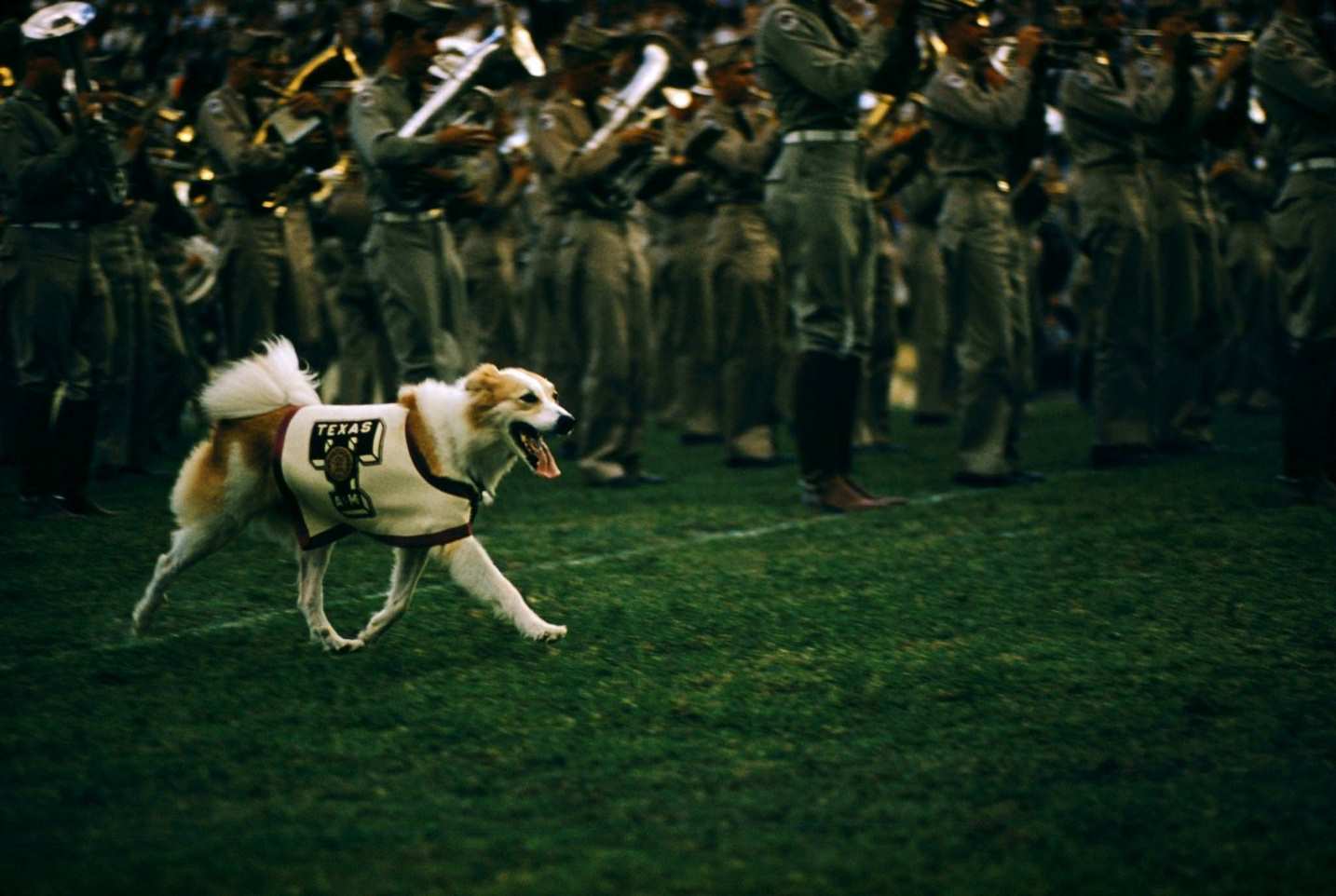
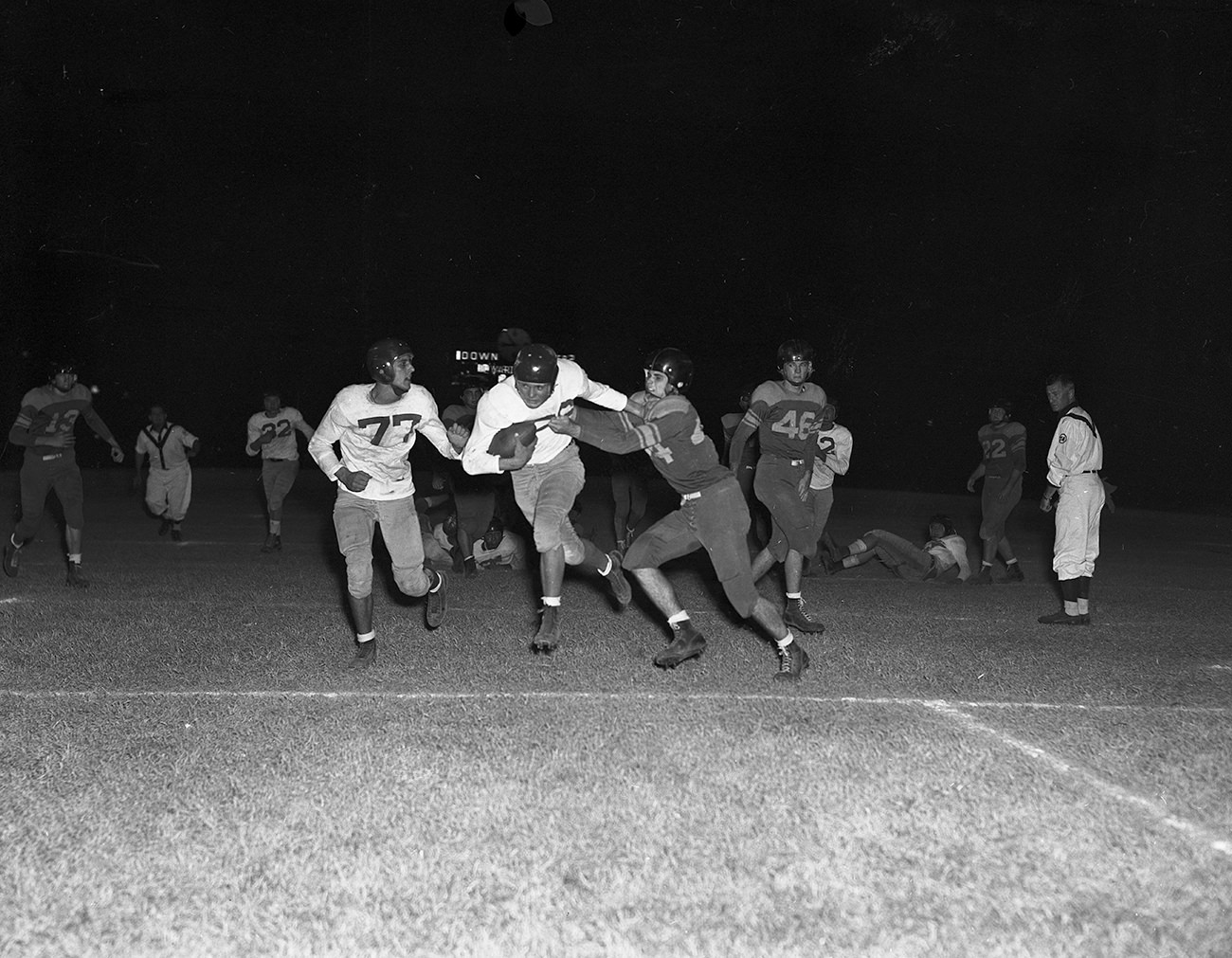
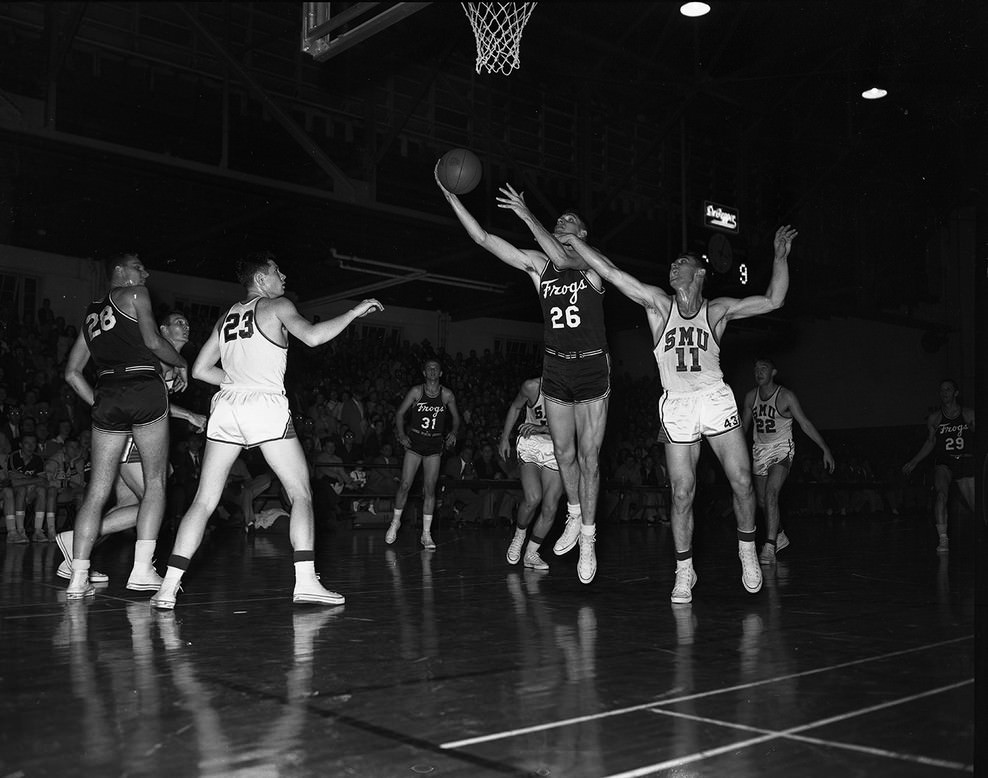
The Cotton Bowl at Fair Park hosted some of the most high-profile football games in the country. The Red River Rivalry between the Oklahoma Sooners and the Texas Longhorns on October 8, 1955, drew enormous crowds, with fans filling the stands and streaming in from the parking areas outside. In 1957, the Cotton Bowl hosted a game between the number-two-ranked Texas A&M Aggies and the Maryland Terrapins, with the band marching onto the field as players stretched before kickoff. High school football was also fiercely followed — a 1950 game between Arlington Heights and Sunset saw Jerry Rose of Sunset take a pass from Joe Boring and fight across the goal line for the Bison’s second touchdown against Arlington Heights.
Cotton Bowl, Dallas, Texas, 1950Cotton Bowl, Dallas, Texas, 1950General view as fans walk outside of the stadium before the Red River Rivalry Game between the #3 ranked Oklahoma Sooners and Texas Longhorns on October 8, 1955 at the Cotton Bowl in Dallas, Texas.General view as fans look on during the Red River Rivalry between the #3 ranked Oklahoma Sooners and Texas Longhorns on October 8, 1955 at the Cotton Bowl in Dallas, Texas.Maryland Terrapins v Texas A&M Aggies, 1957Maryland Terrapins v Texas A&M Aggies, 1957Arlington Heights vs Sunset Football, 1950TCU vs. SMU, 1953
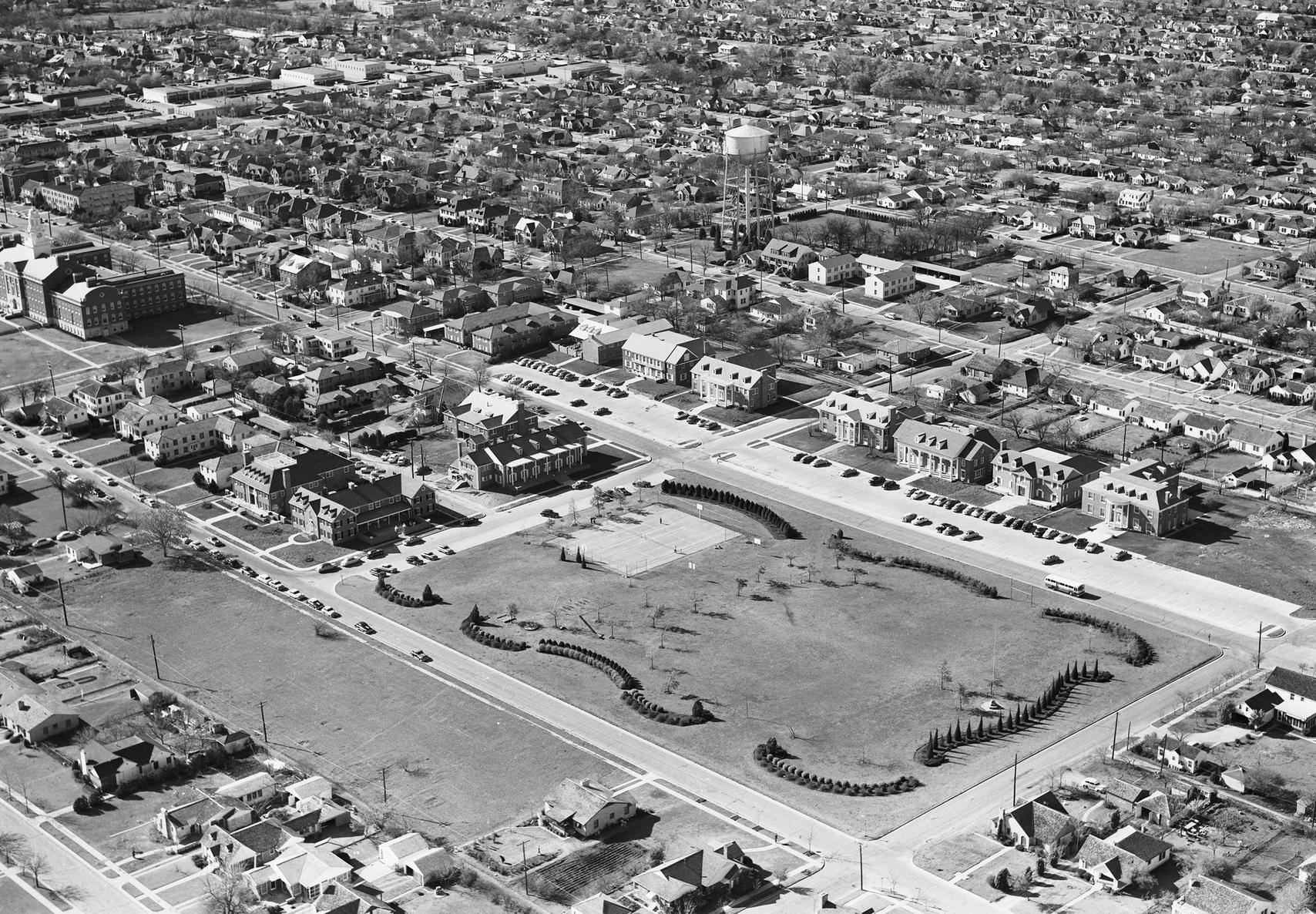
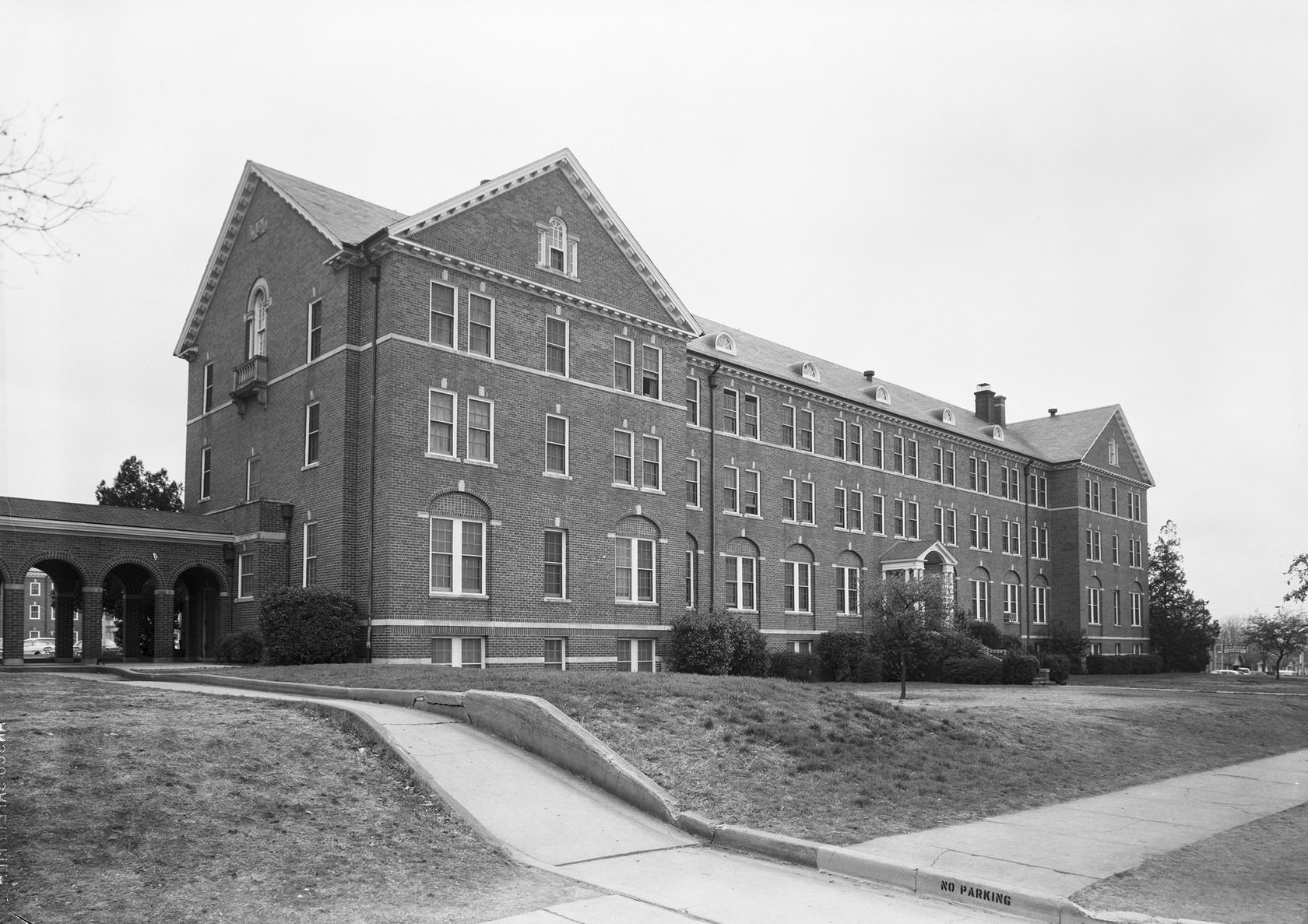
College life in Dallas revolved significantly around Southern Methodist University, which expanded its campus facilities through the decade. Aerial photographs from 1952 showed the fraternity and sorority houses lining the campus grounds. By 1958, new dormitories had been added to accommodate a growing student body. The Hockaday School, one of the city’s prominent private institutions, was photographed in 1950 as well.
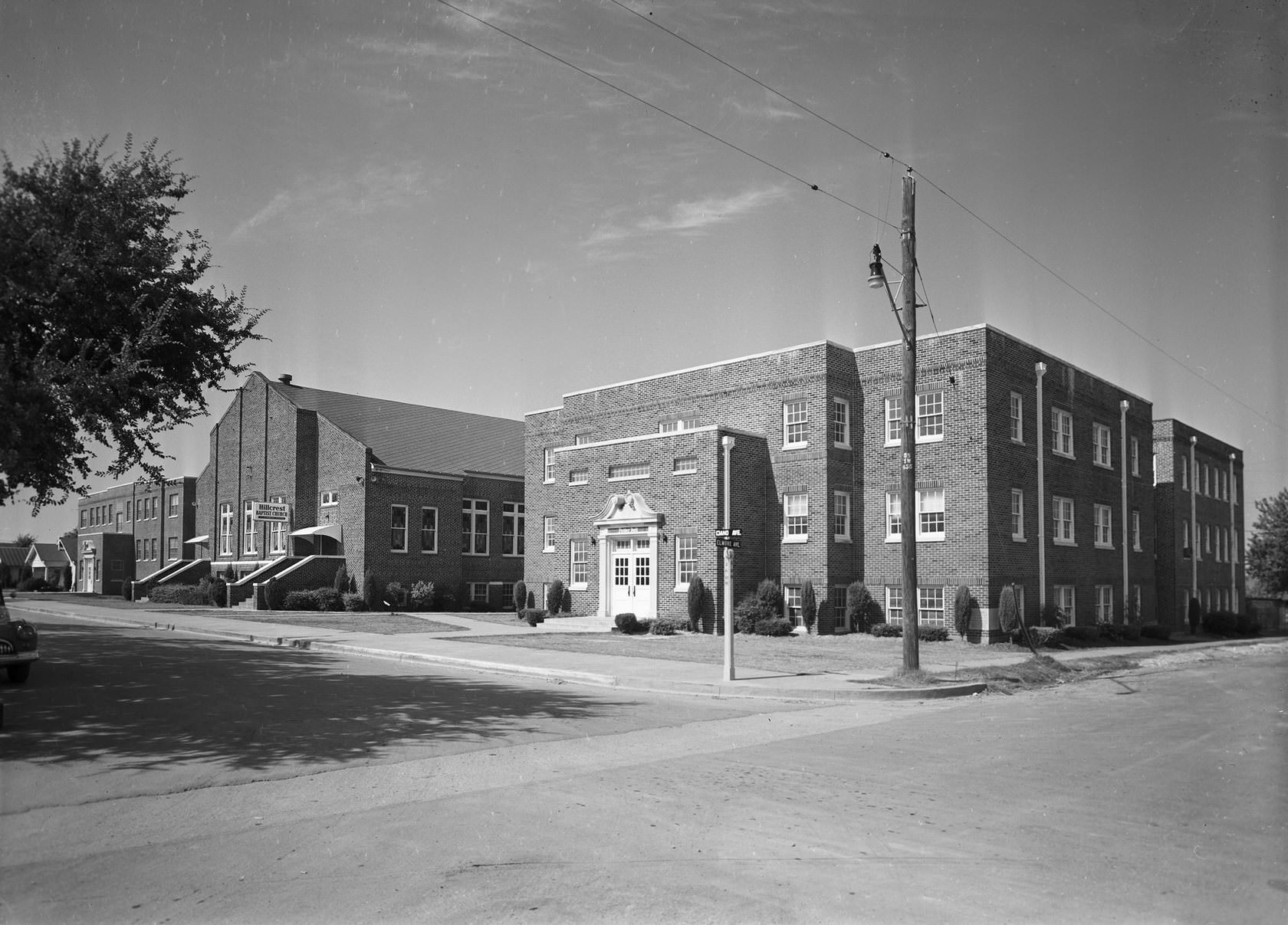
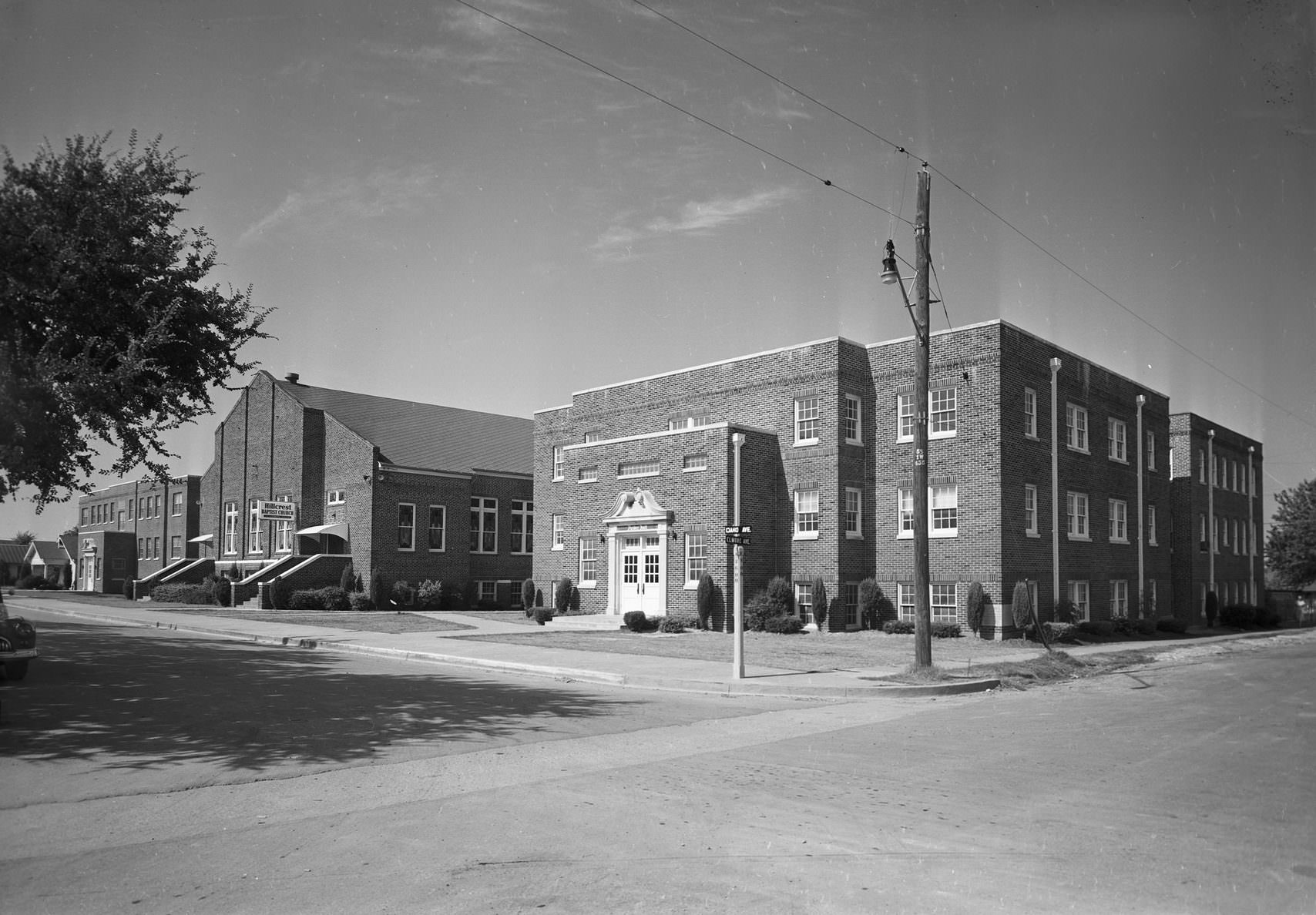
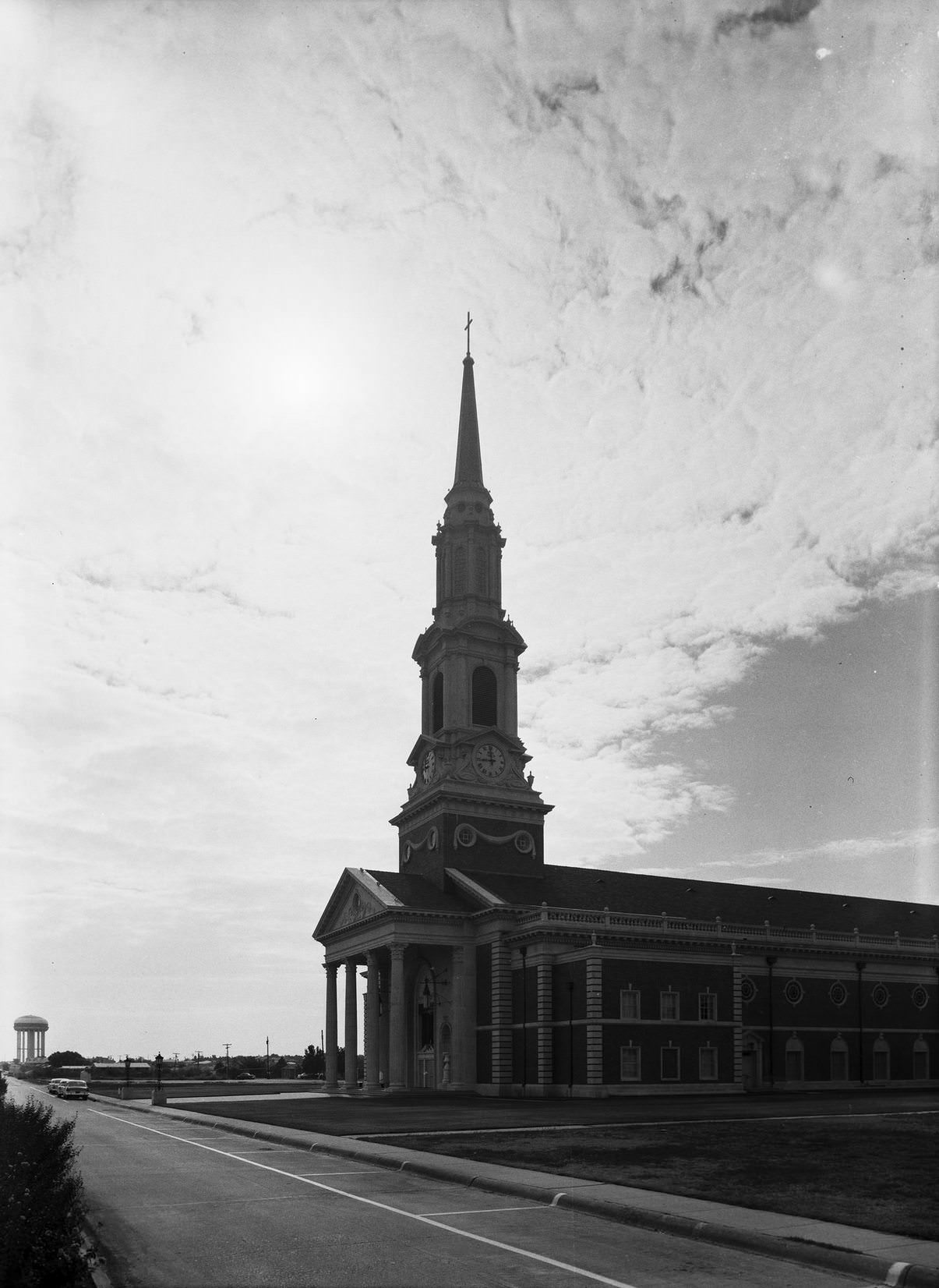
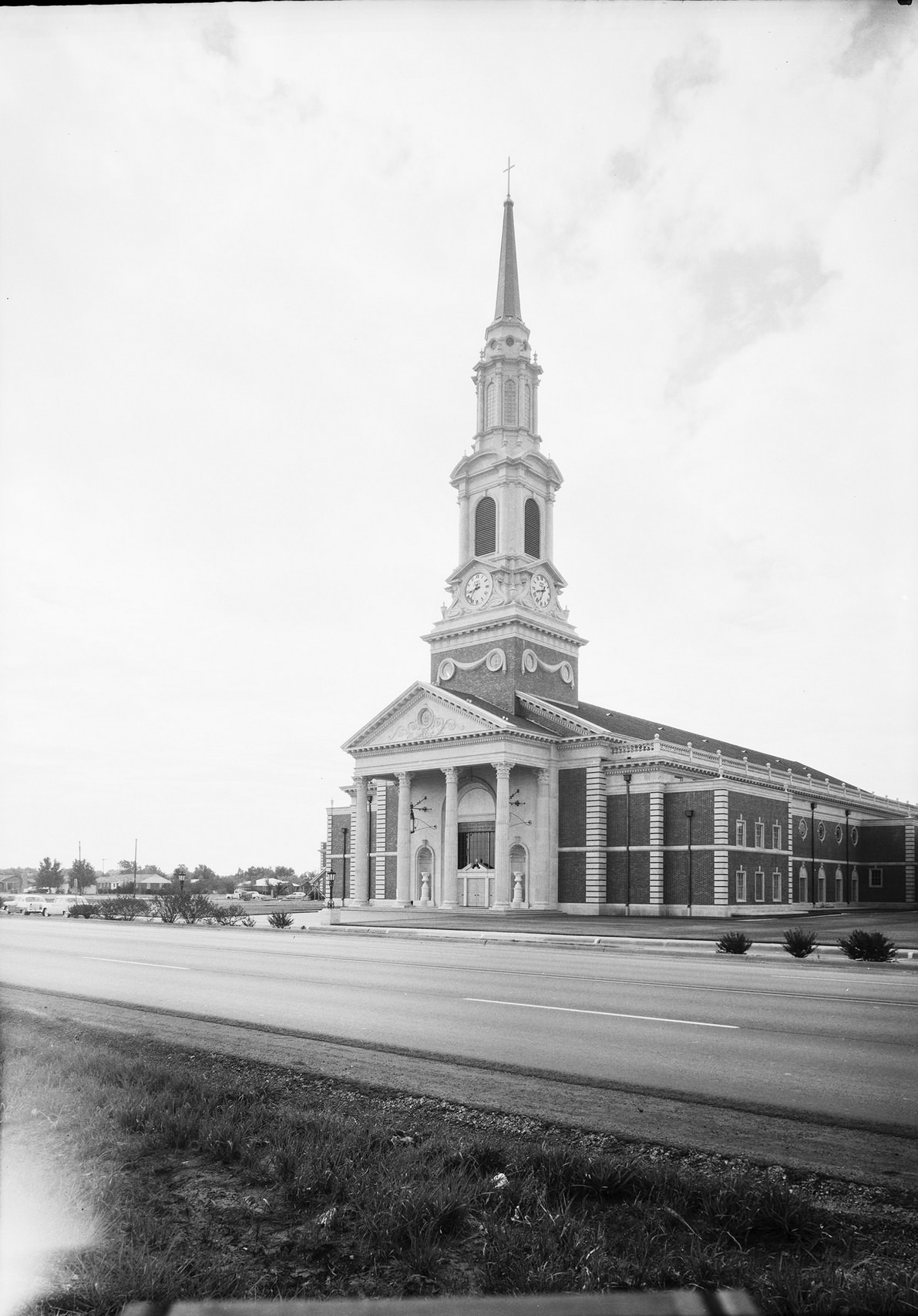
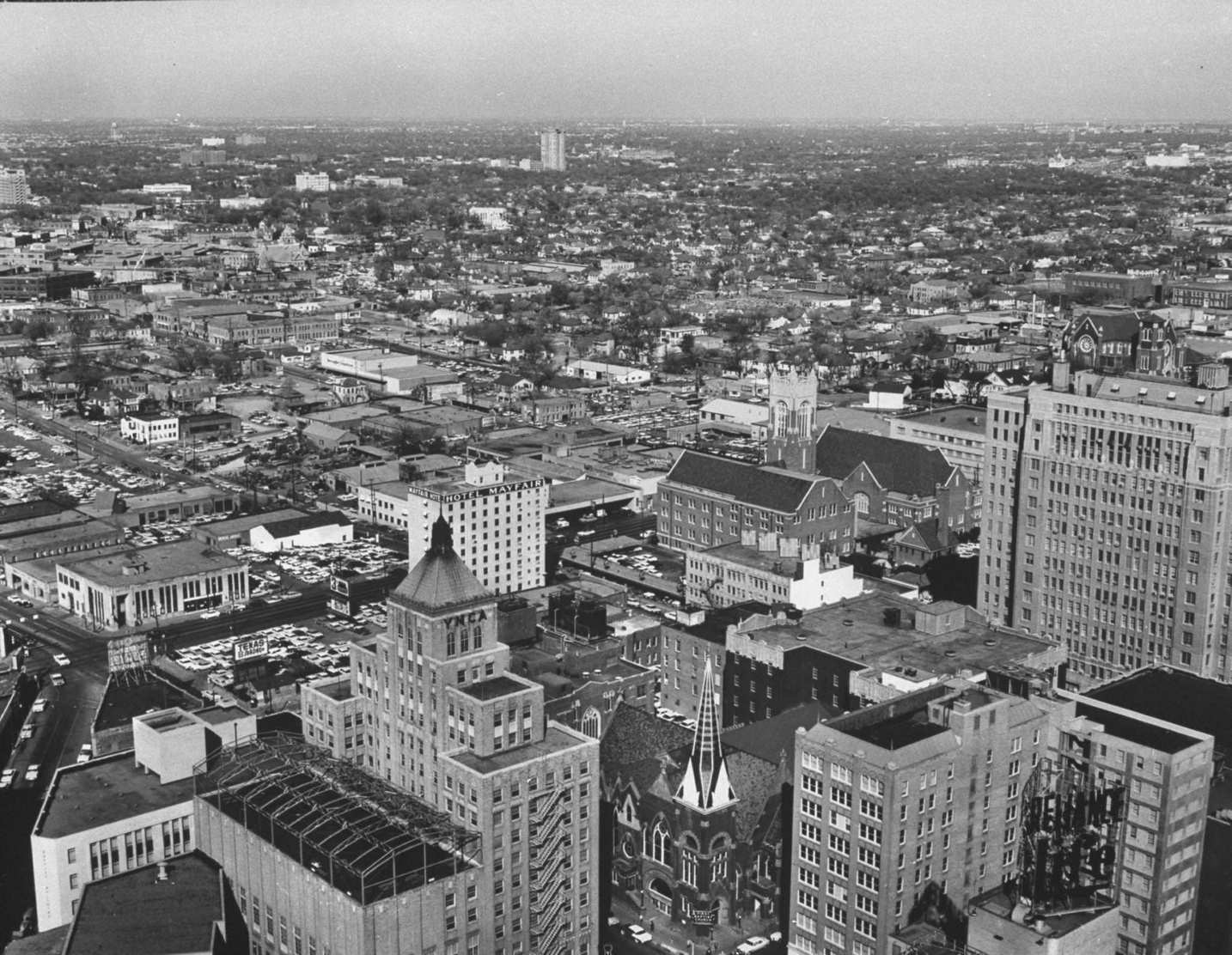
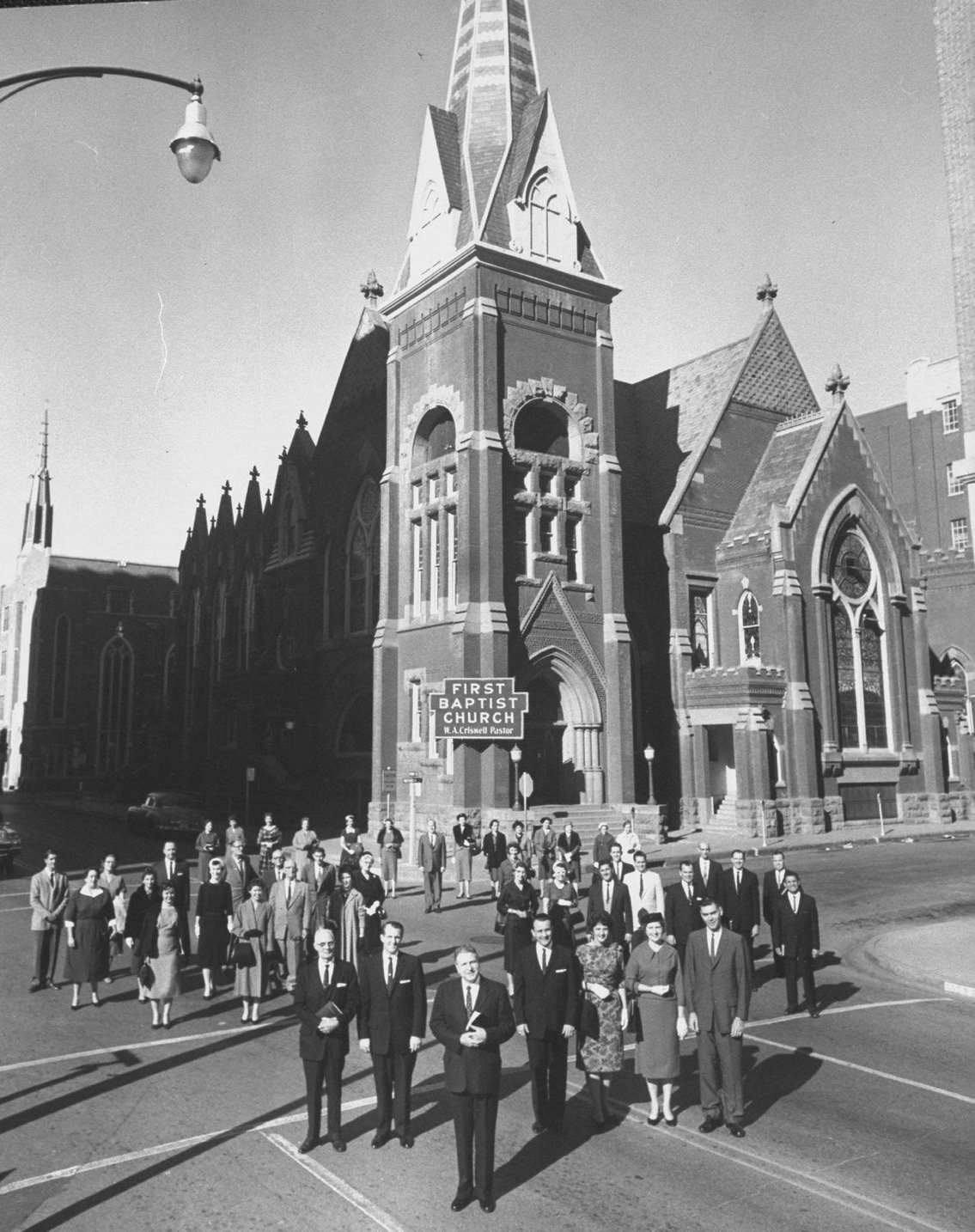
Religious institutions were an integral part of the Dallas community. Hillcrest Baptist Church and Park Cities Baptist Church were both photographed in the 1950s, the latter located at 3933 Northwest Parkway. An aerial view of a Baptist church complex showed the scale of these congregations, and the First Baptist Church was documented with its pastor and lay members.
Park Cities Baptist Church, 3933 Northwest Parkway, Dallas, Texas, 1958
Park Cities Baptist Church, 3933 Northwest Parkway, Dallas, Texas, 1958
Aerial view of Baptist church, 1950sFirst Baptist Church with Pastor and lay, 1950s
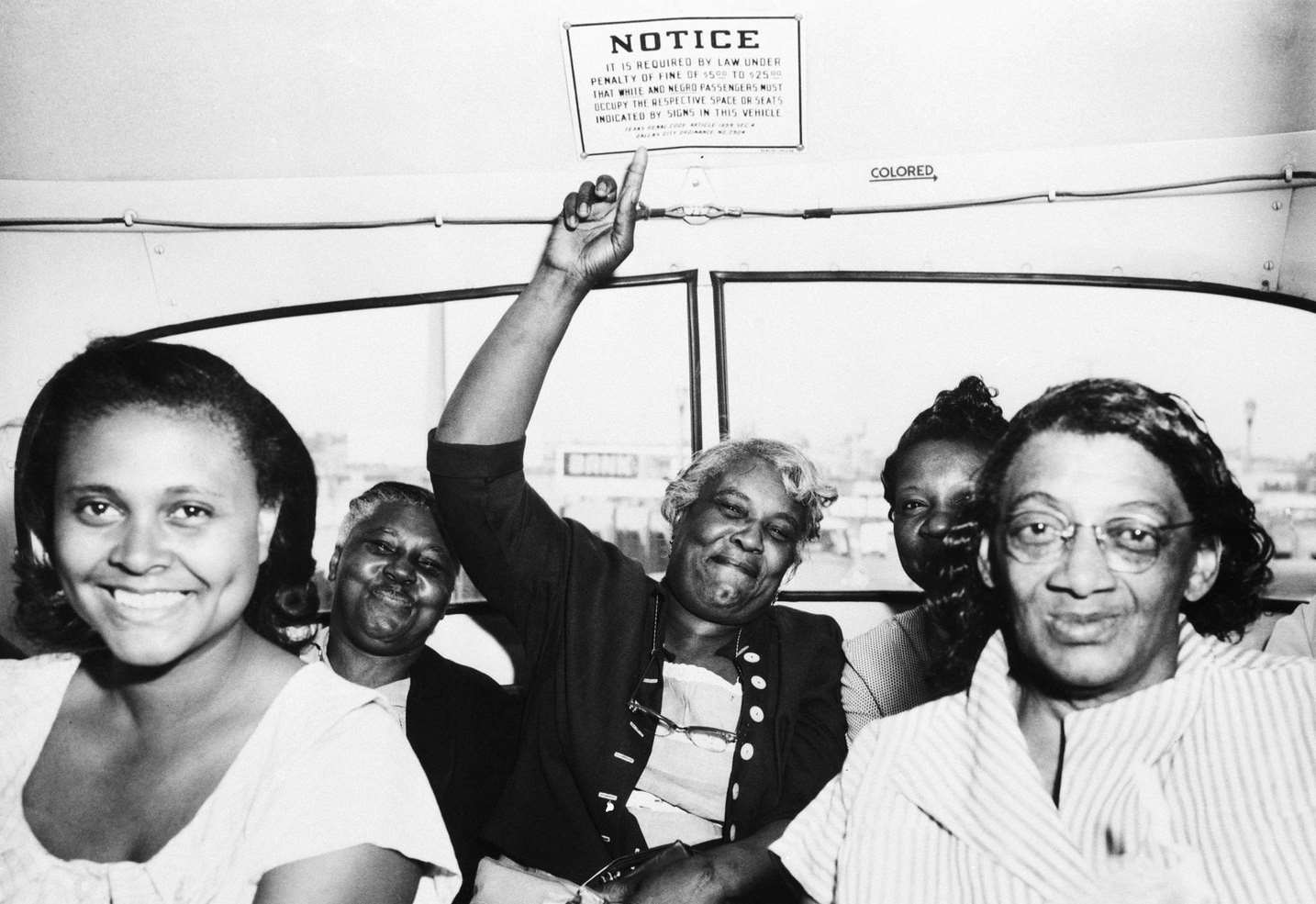
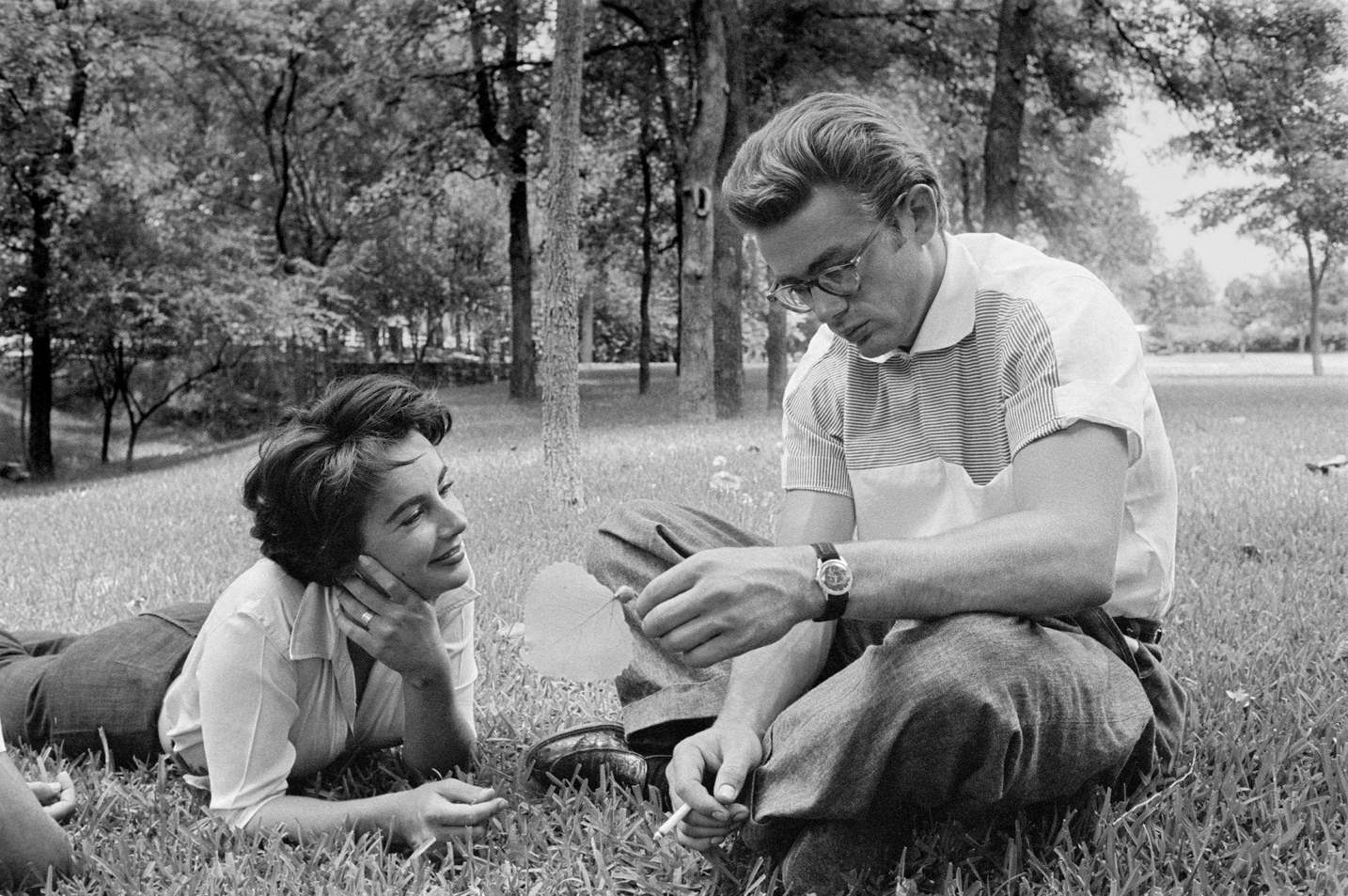
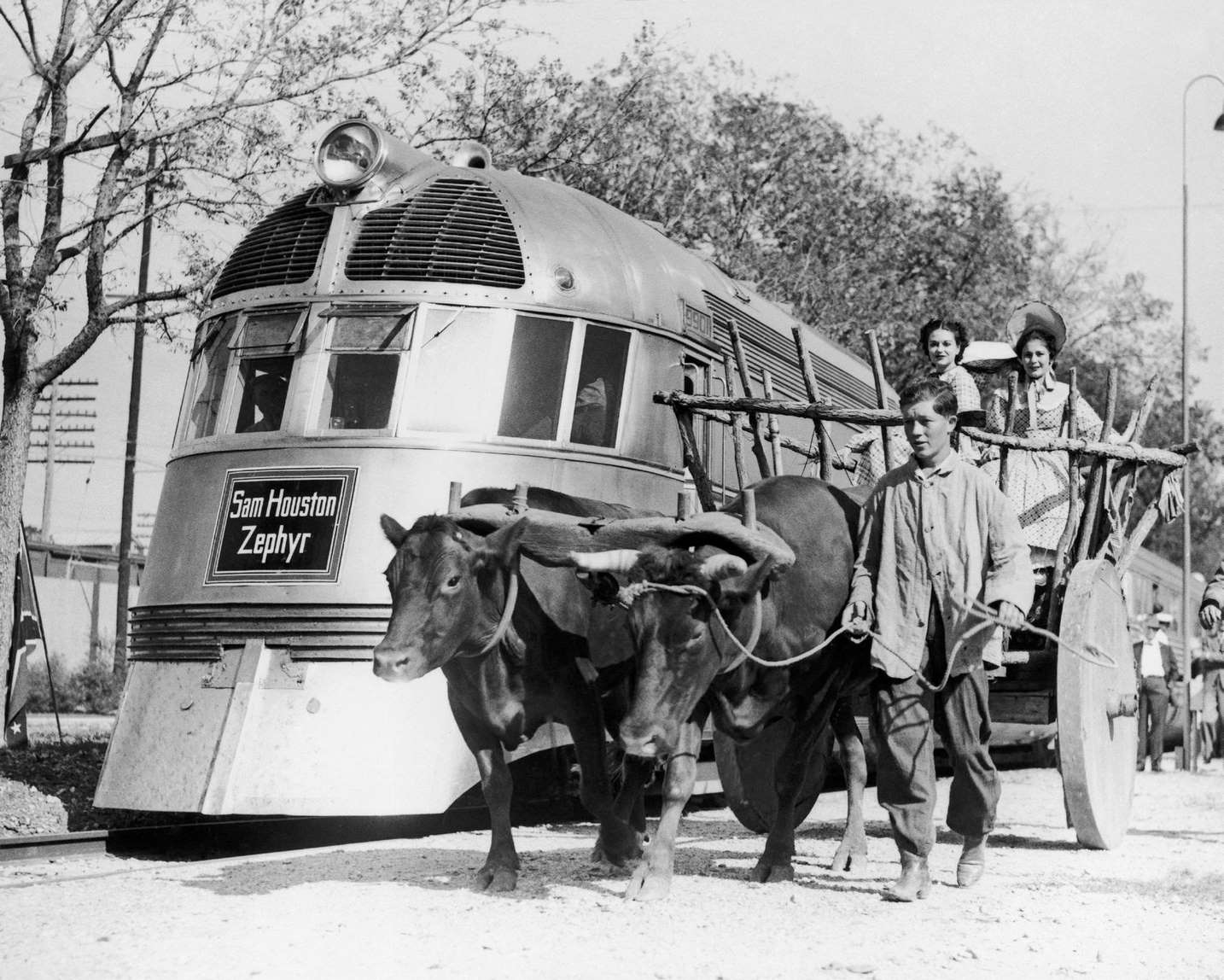
In April 1956, Dallas Transit Company removed segregation signs from all of its buses following a Supreme Court ruling that banned segregation on public transportation within a state. A photograph from that date shows a passenger pointing at one of the removed signs. That same year, James Dean and Elizabeth Taylor were filmed in scenes related to the production of “Giant,” which touched on Texas culture and race. The Sam Houston Zephyr, a streamlined passenger train, passed through Dallas in 1956 as well, a reminder that rail travel still connected the city to the wider country.
A passenger points to one of the segregation signs removed from all Dallas Transit Company buses, following a Supreme Court ruling banning segregation on all public transportation within a state, 25th April 1956.James Dean And Liz Taylor During The Filming of “Giant”, 1955The Train “Sam Houston Zephyr” in Dallas, 1956
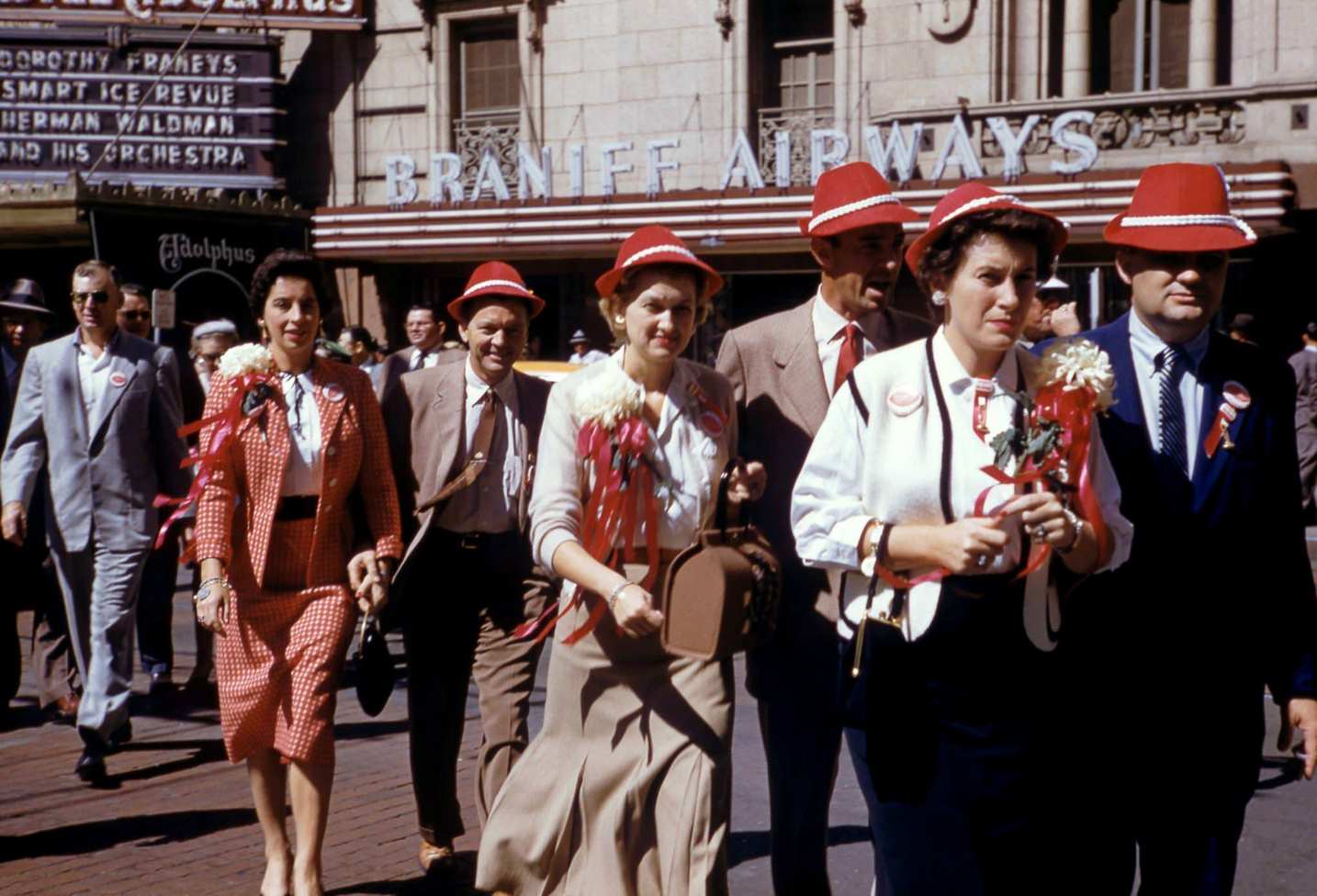
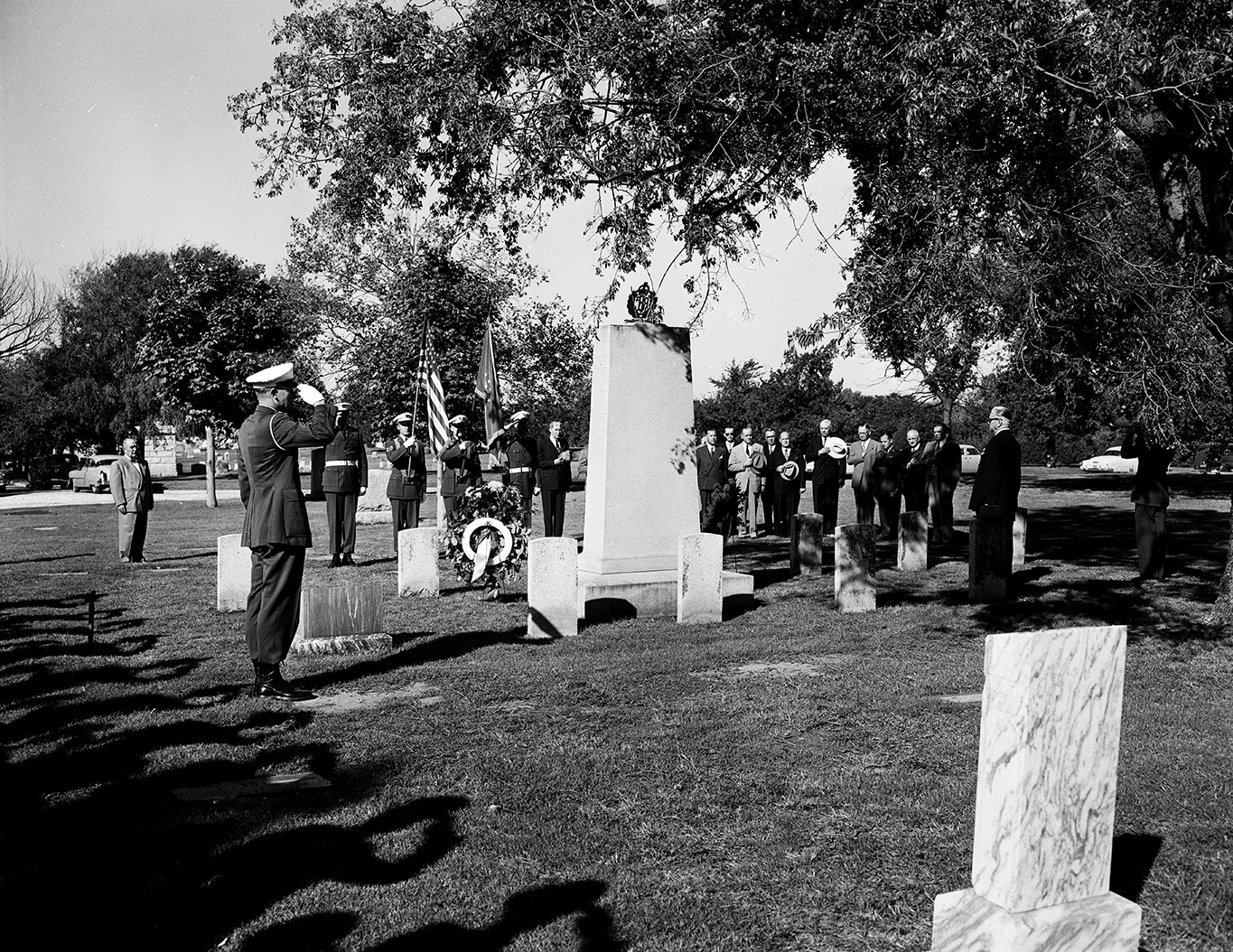
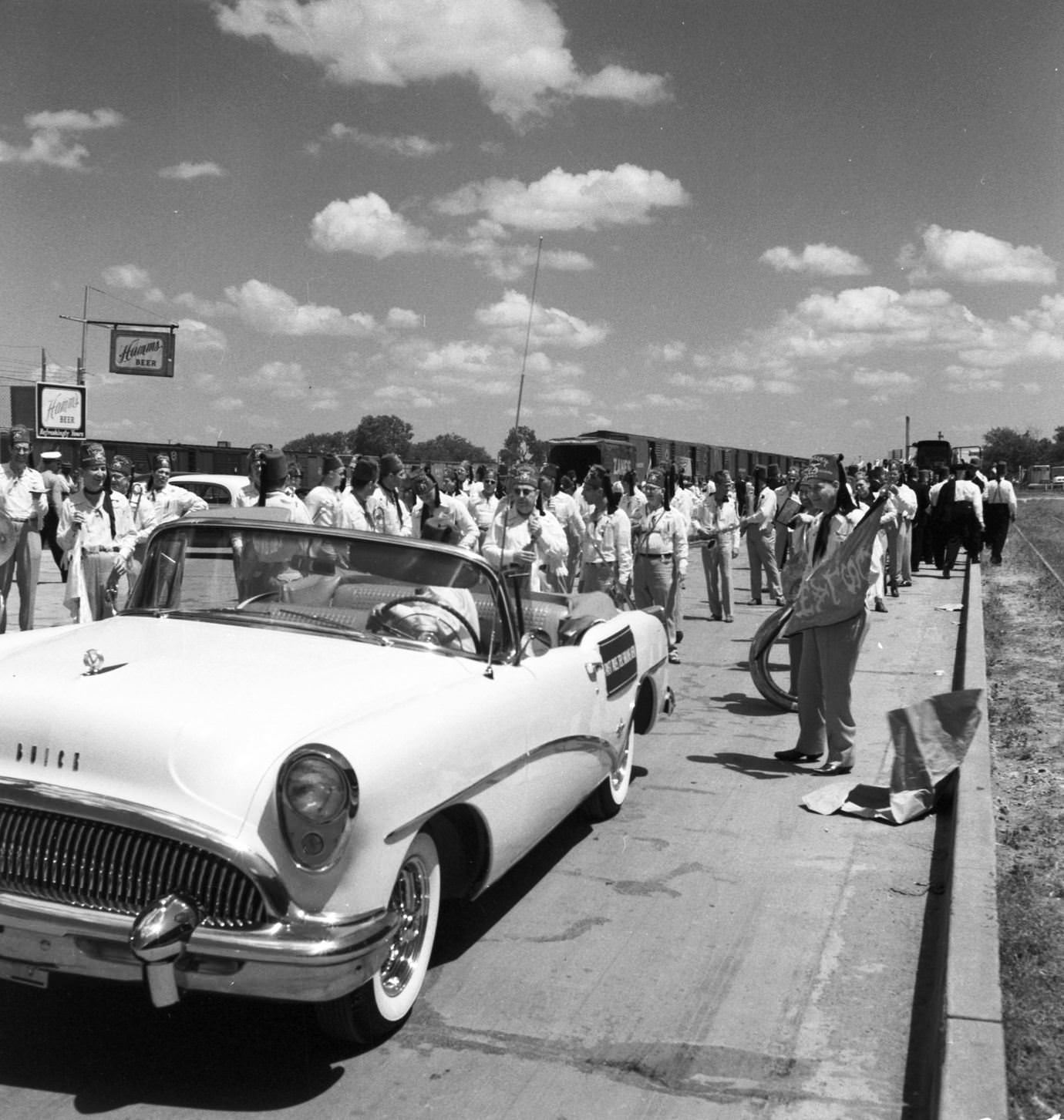
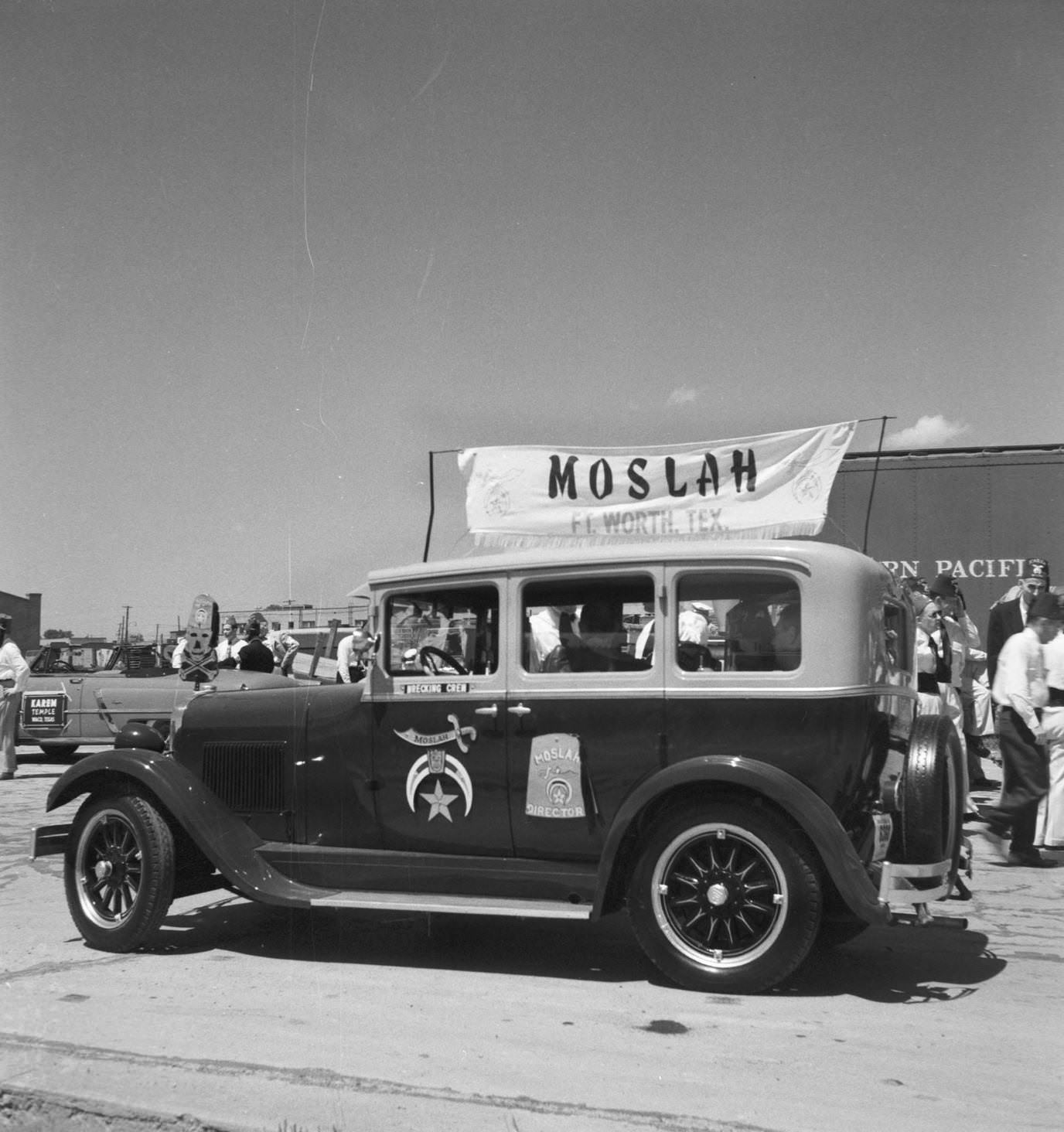
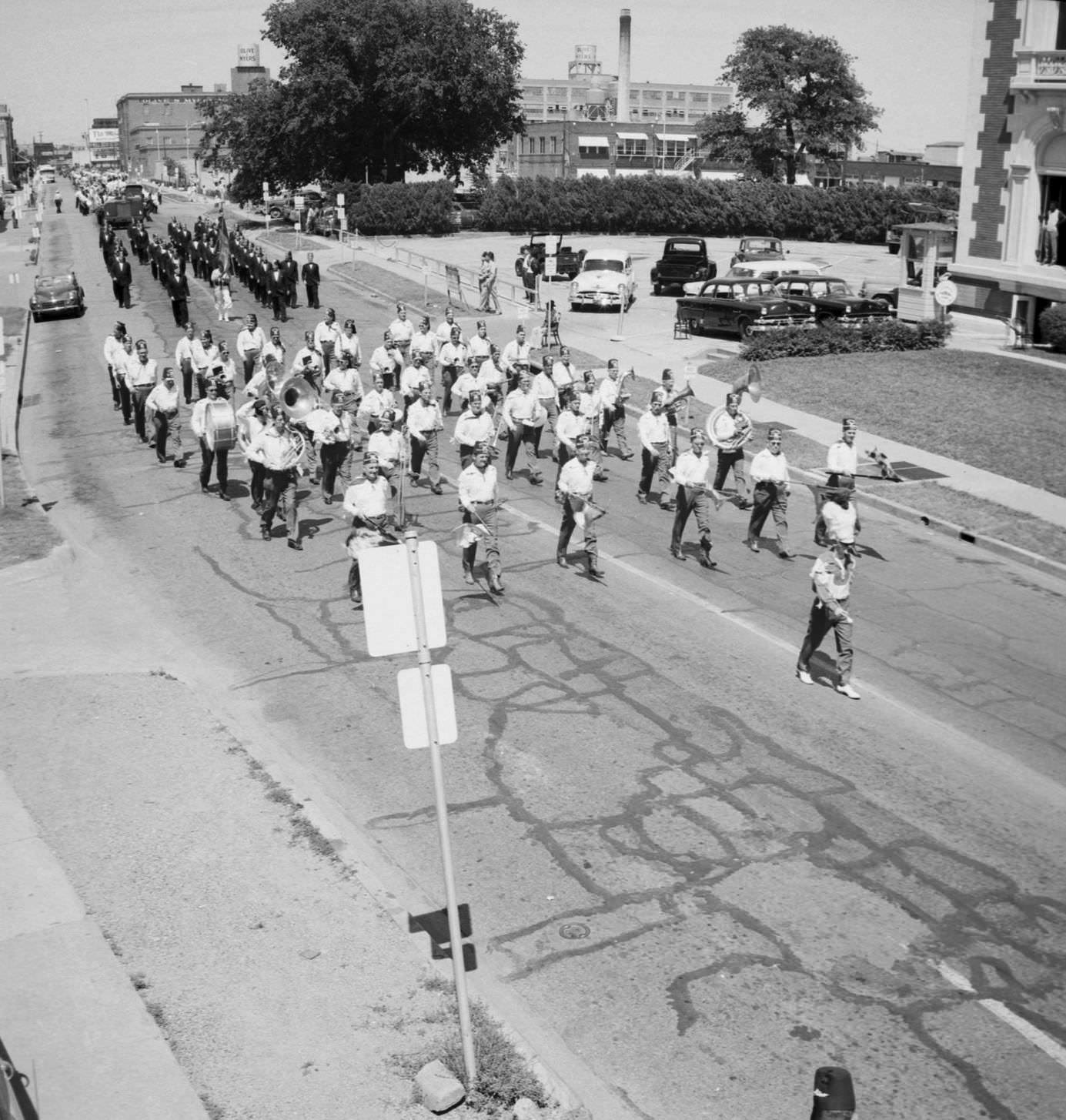
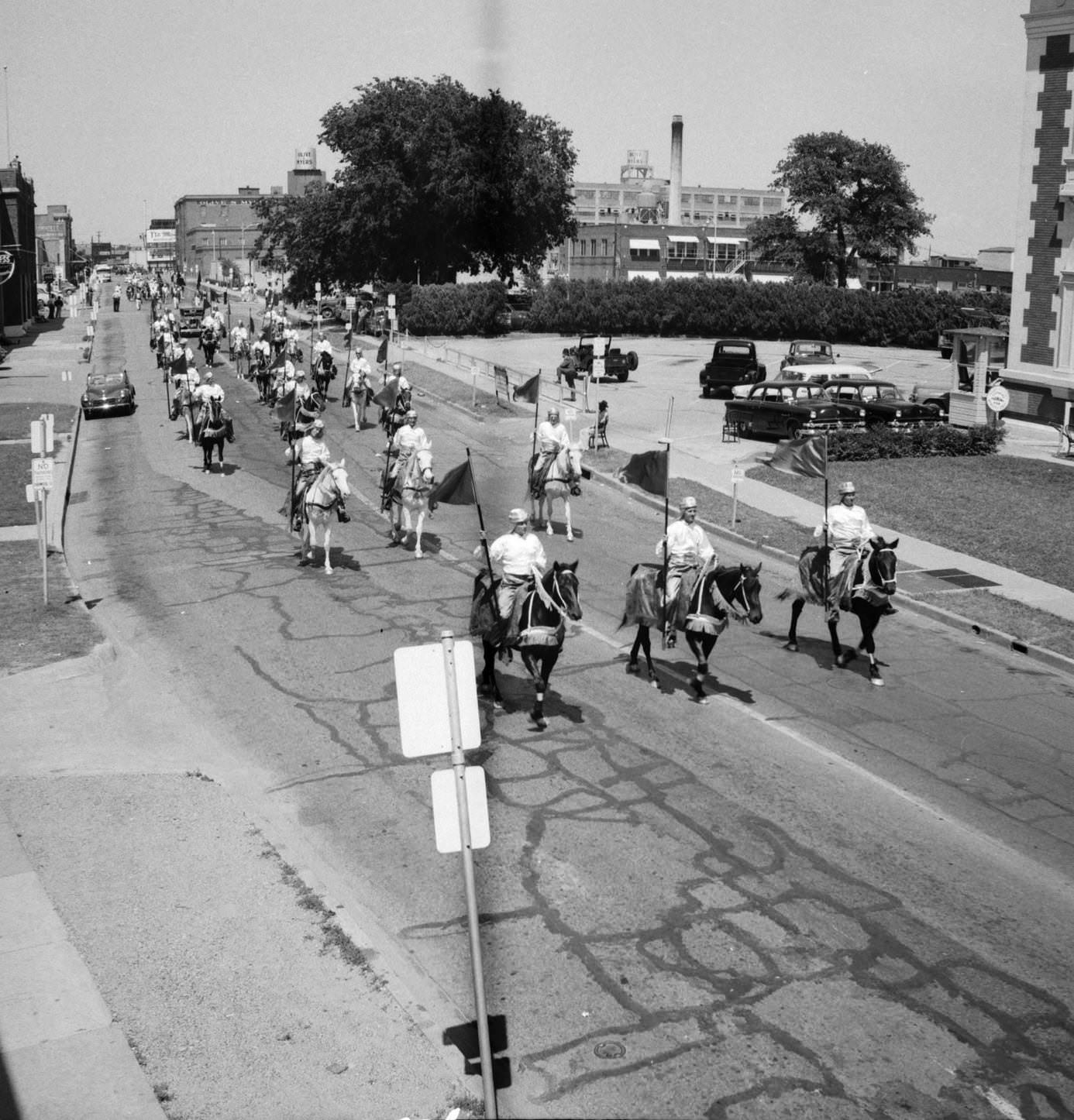
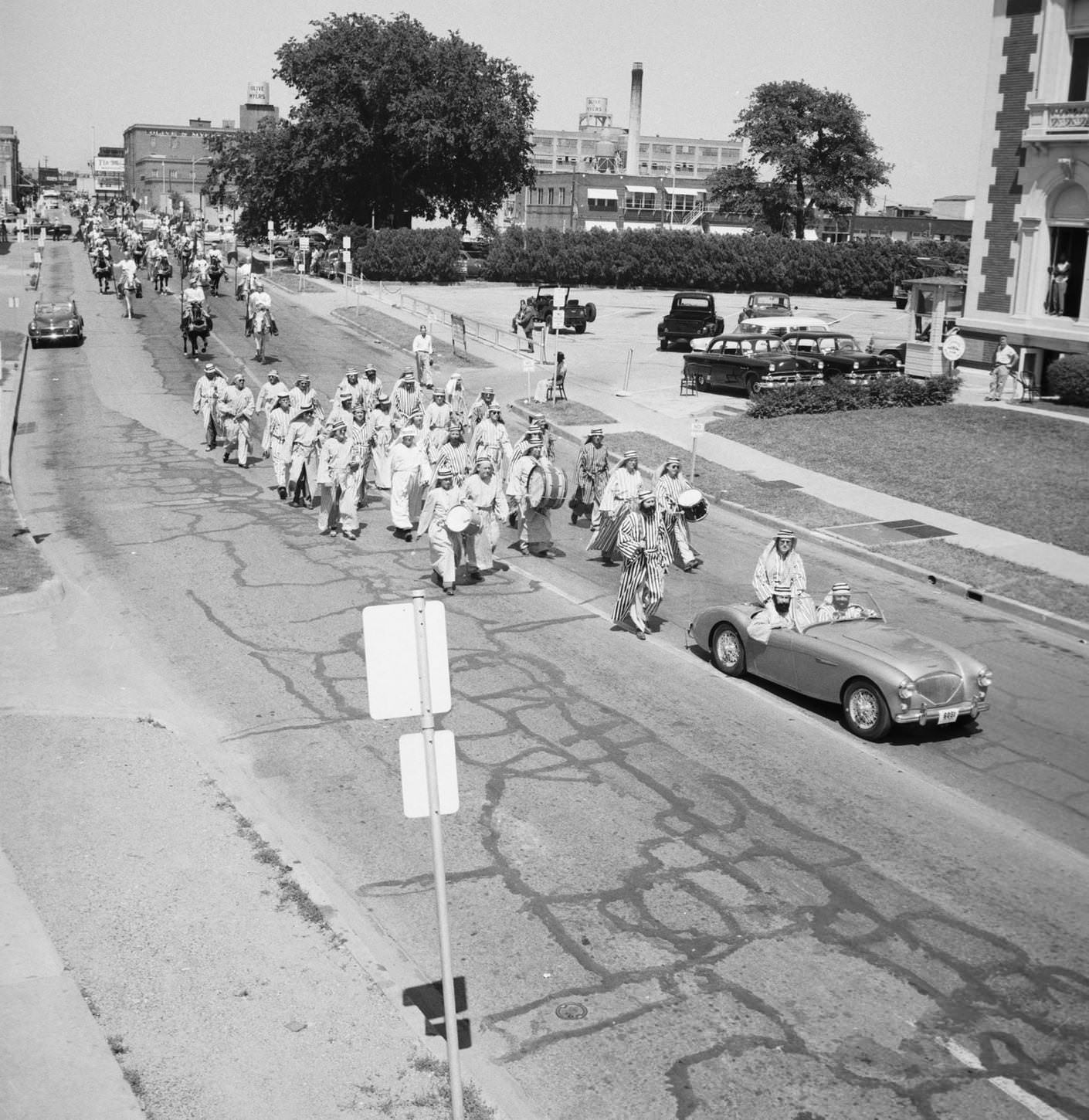
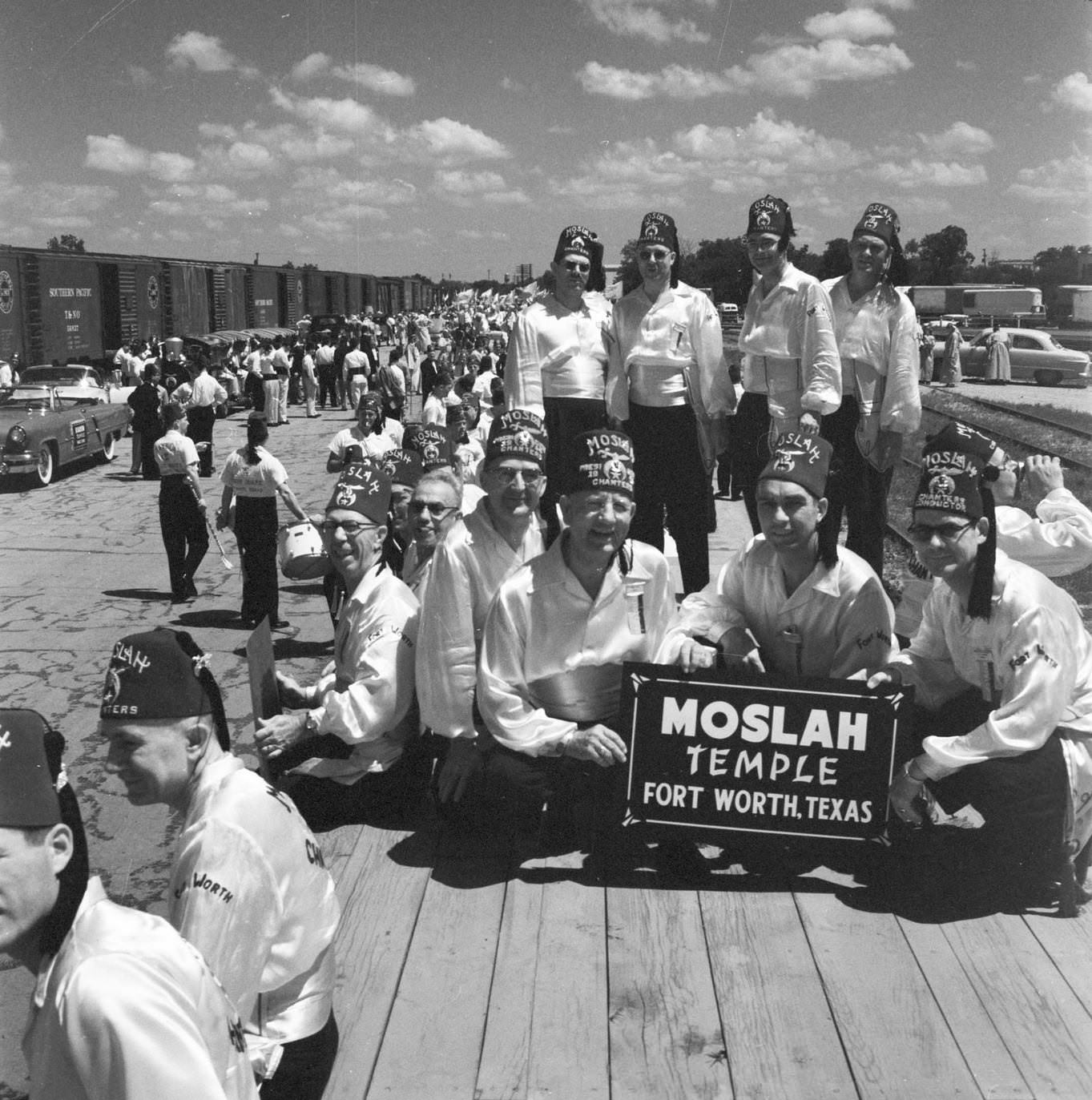
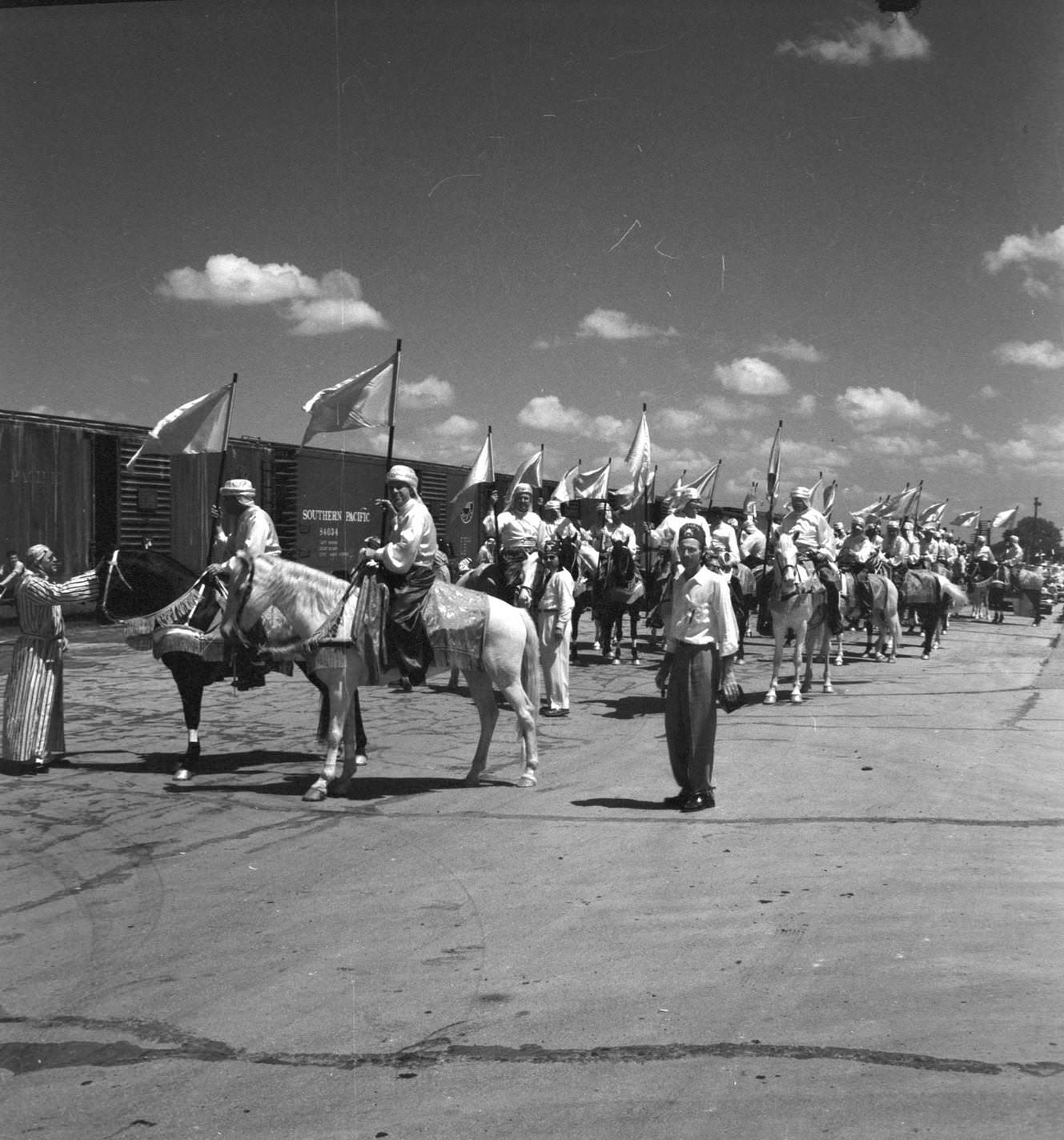
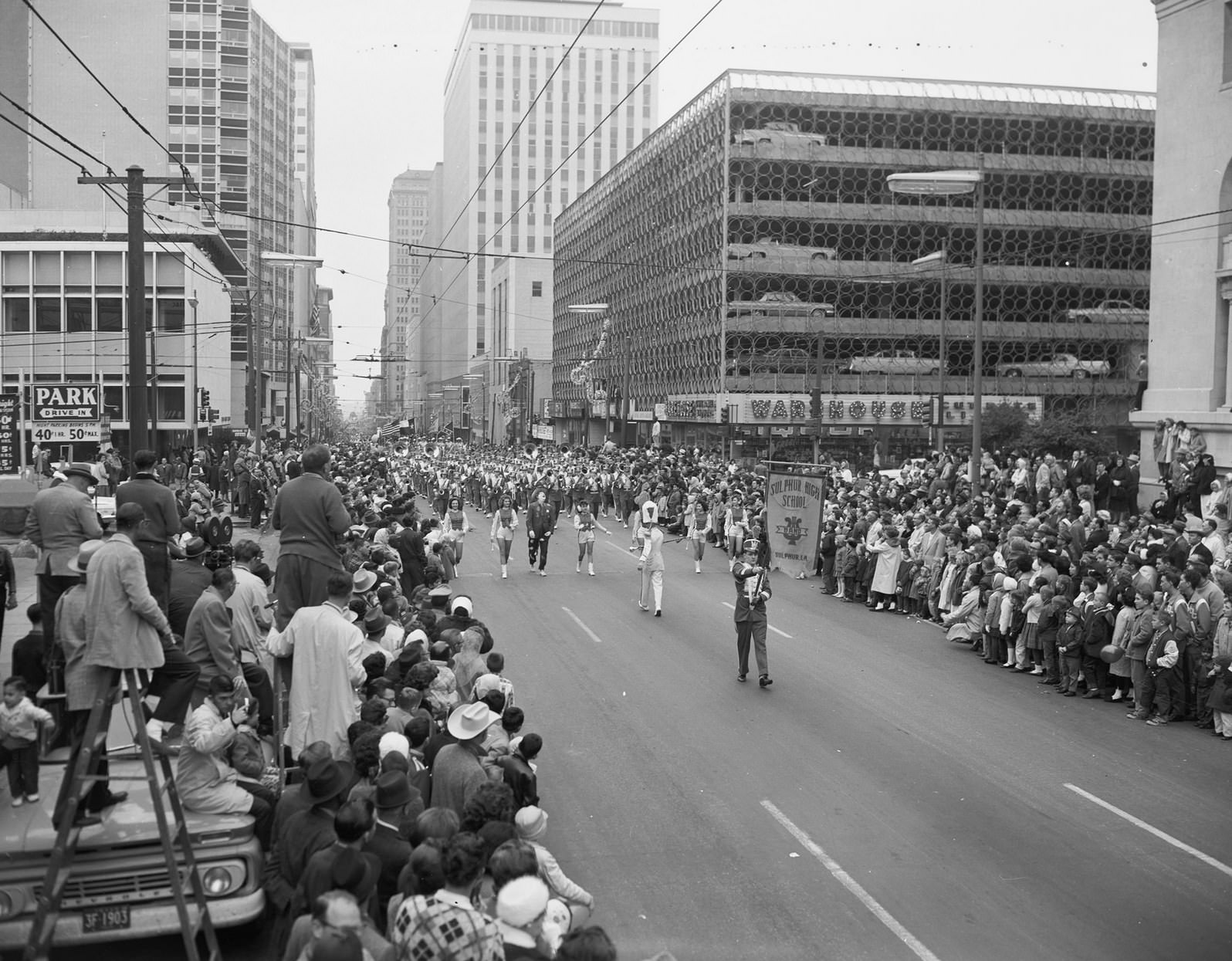
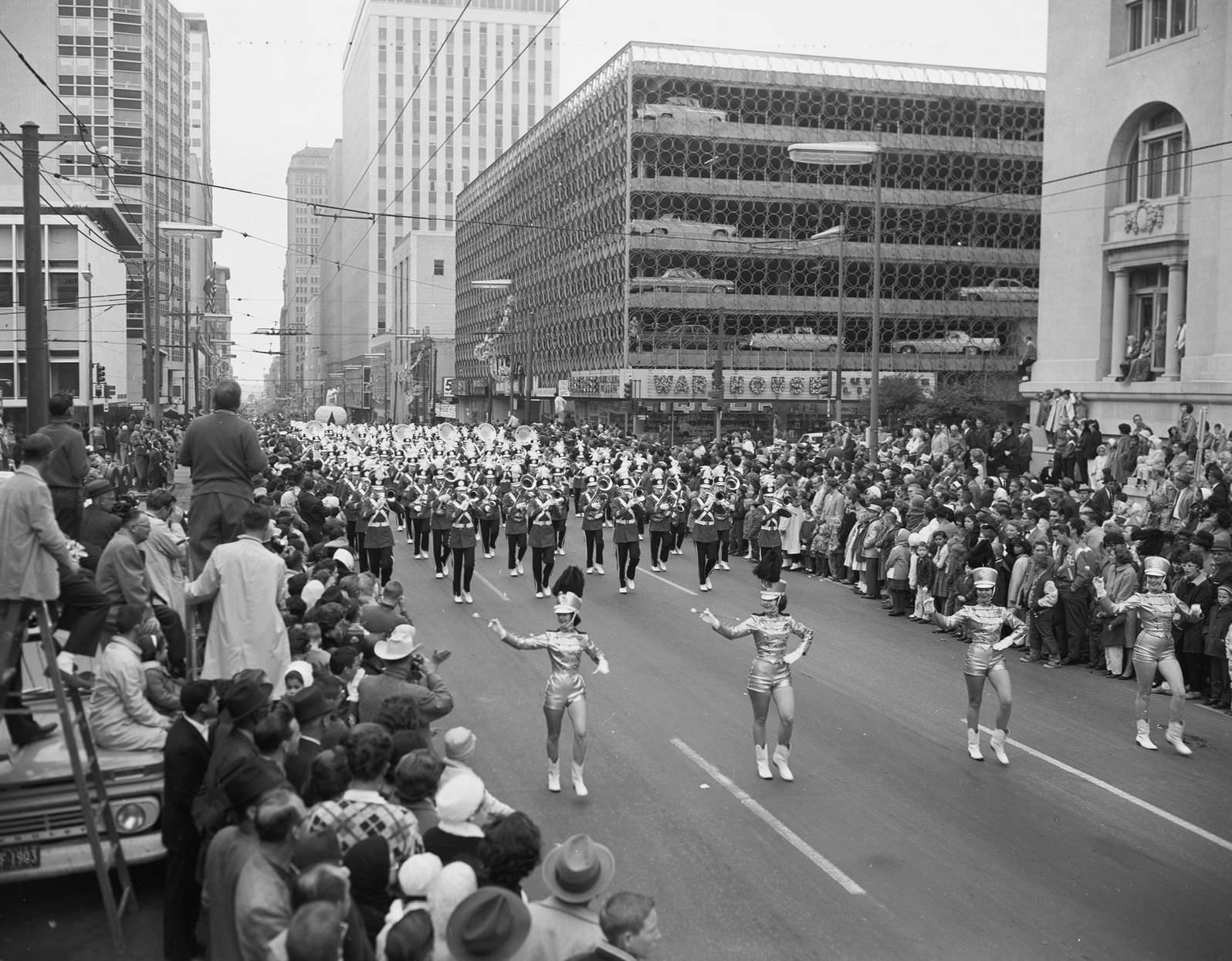
Community life in Dallas took many forms in the 1950s. The All State Shriners held their meeting in Dallas in 1954, and the resulting parade through downtown drew large crowds and multiple photographers. The Cotton Bowl parade in 1952 was another major public event. The city also held a ceremony at Greenwood Cemetery in 1953, where a color guard from Carswell Air Force Base and civilian participants stood at attention as silver taps played a tribute to 11 Canadian fliers of World War I who had died while in training in Dallas.
Gone But Not forgotten, 1953Parade at All State Shriners meeting in Dallas, 1954Parade at All State Shriners meeting in Dallas, 1954Parade at All State Shriners meeting in Dallas, 1954Parade at All State Shriners meeting in Dallas, 1954Parade at All State Shriners meeting in Dallas, 1954Parade at All State Shriners meeting in Dallas, 1954Parade at All State Shriners meeting in Dallas, 1954Cotton Bowl parade, downtown Dallas, 1952Cotton Bowl parade, downtown Dallas, 1952
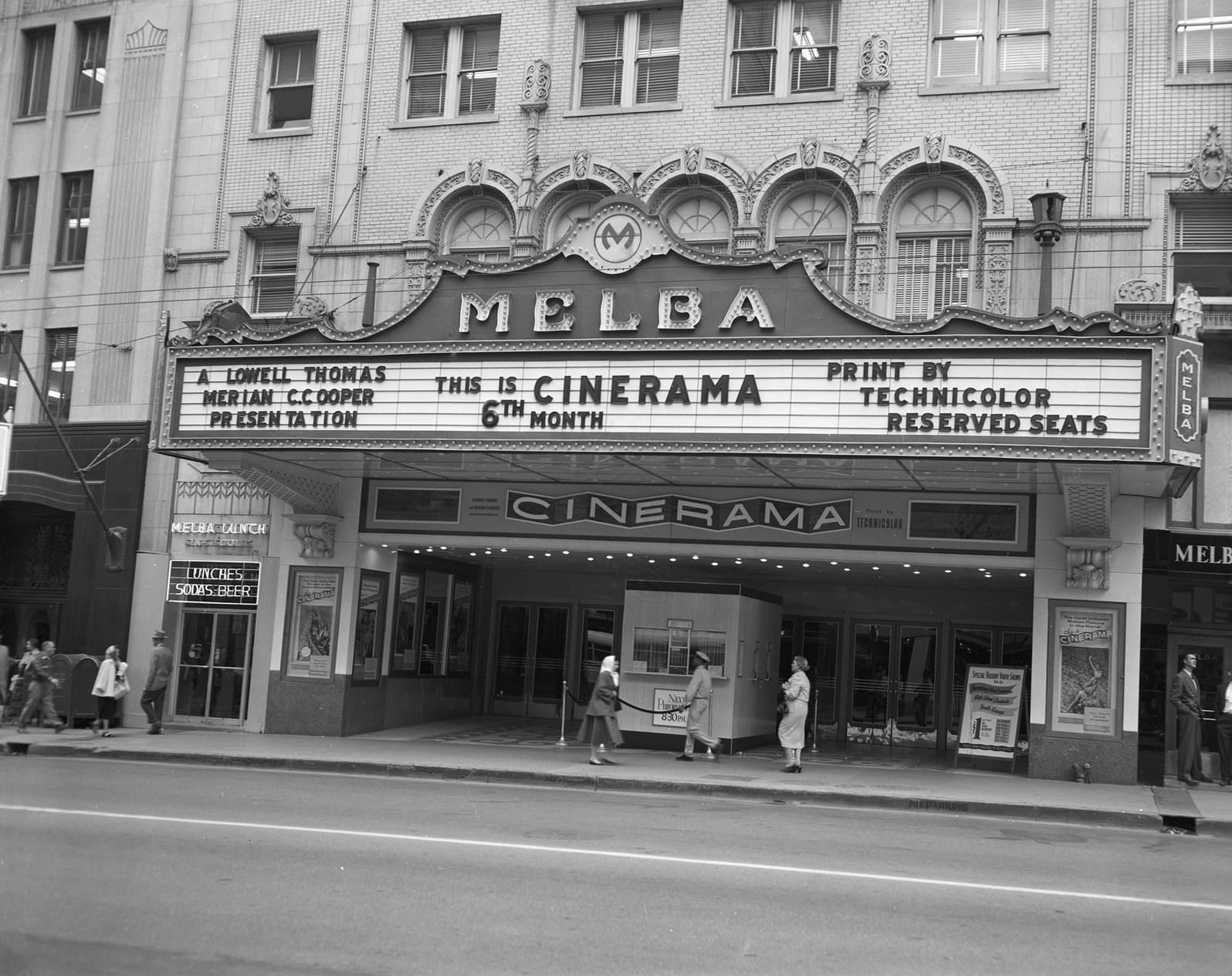
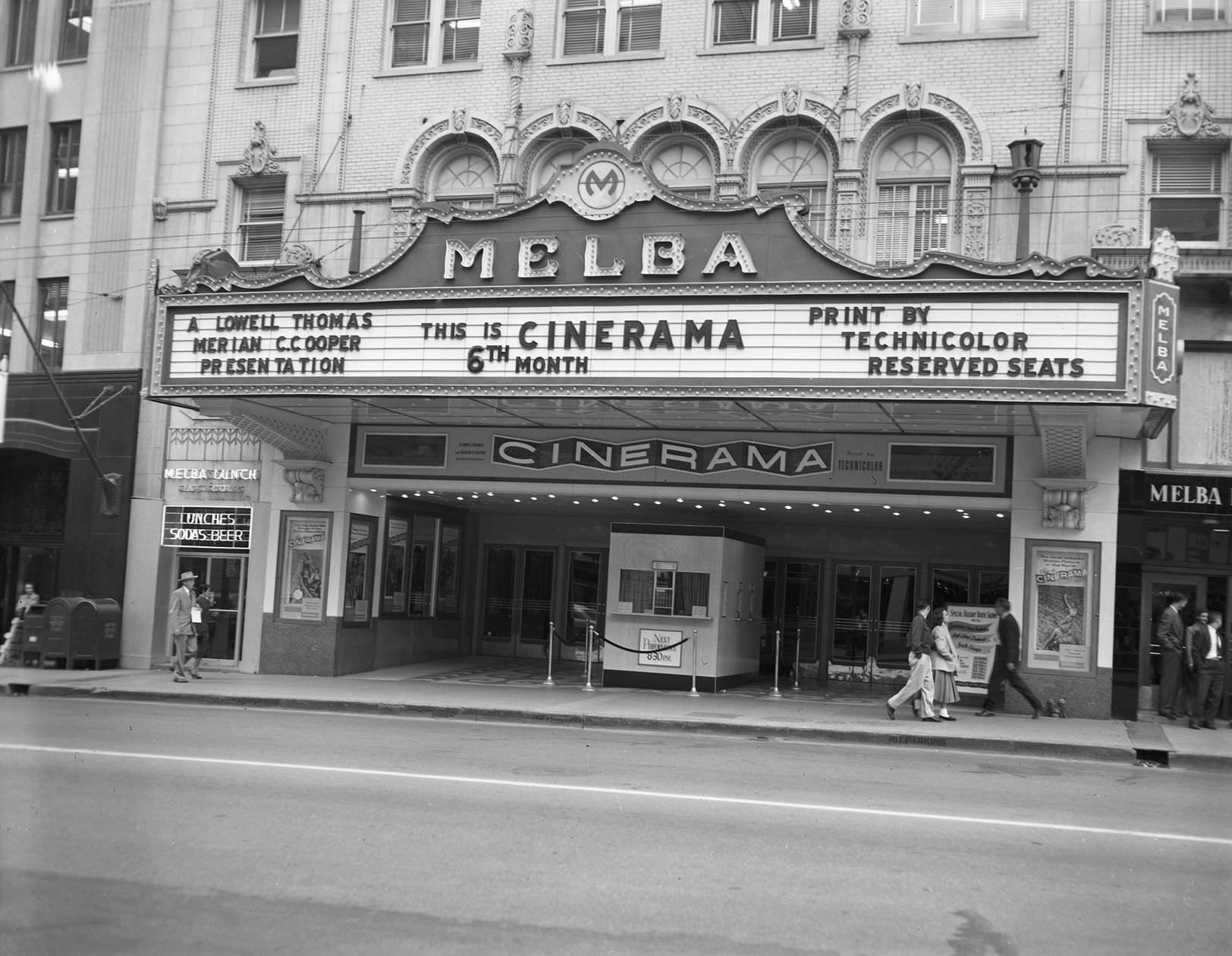
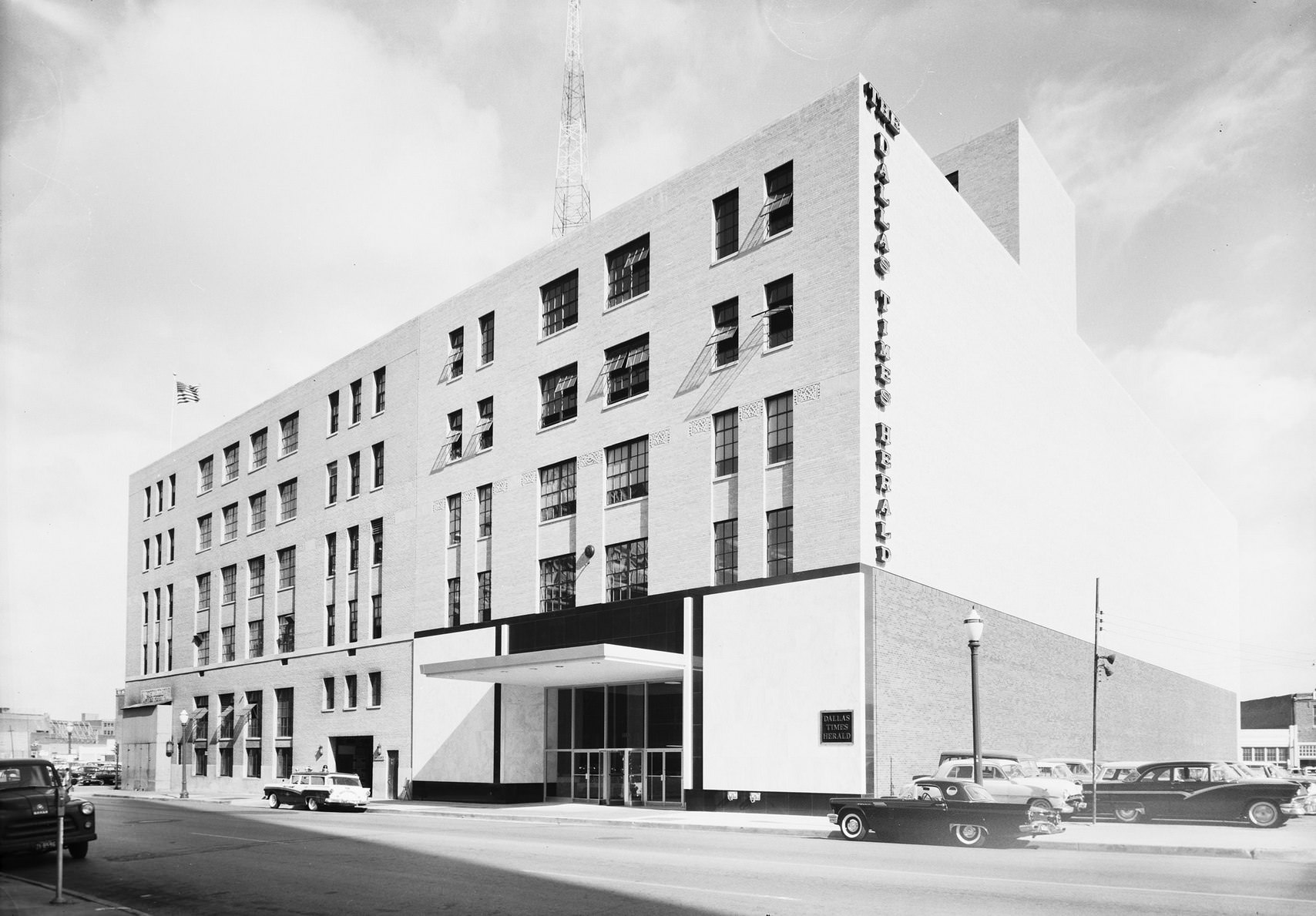
The movie theater scene downtown included the Melba Theatre at 1311 Elm Street, which was later renamed the Capri Theatre. These neighborhood theaters were a staple of Dallas social life. The Dallas Times Herald building on the other side of downtown served as the editorial and printing hub for one of the city’s two major daily newspapers. The Dallas Museum of Fine Arts, photographed in 1950, stood at Fair Park as the city’s primary public art institution.
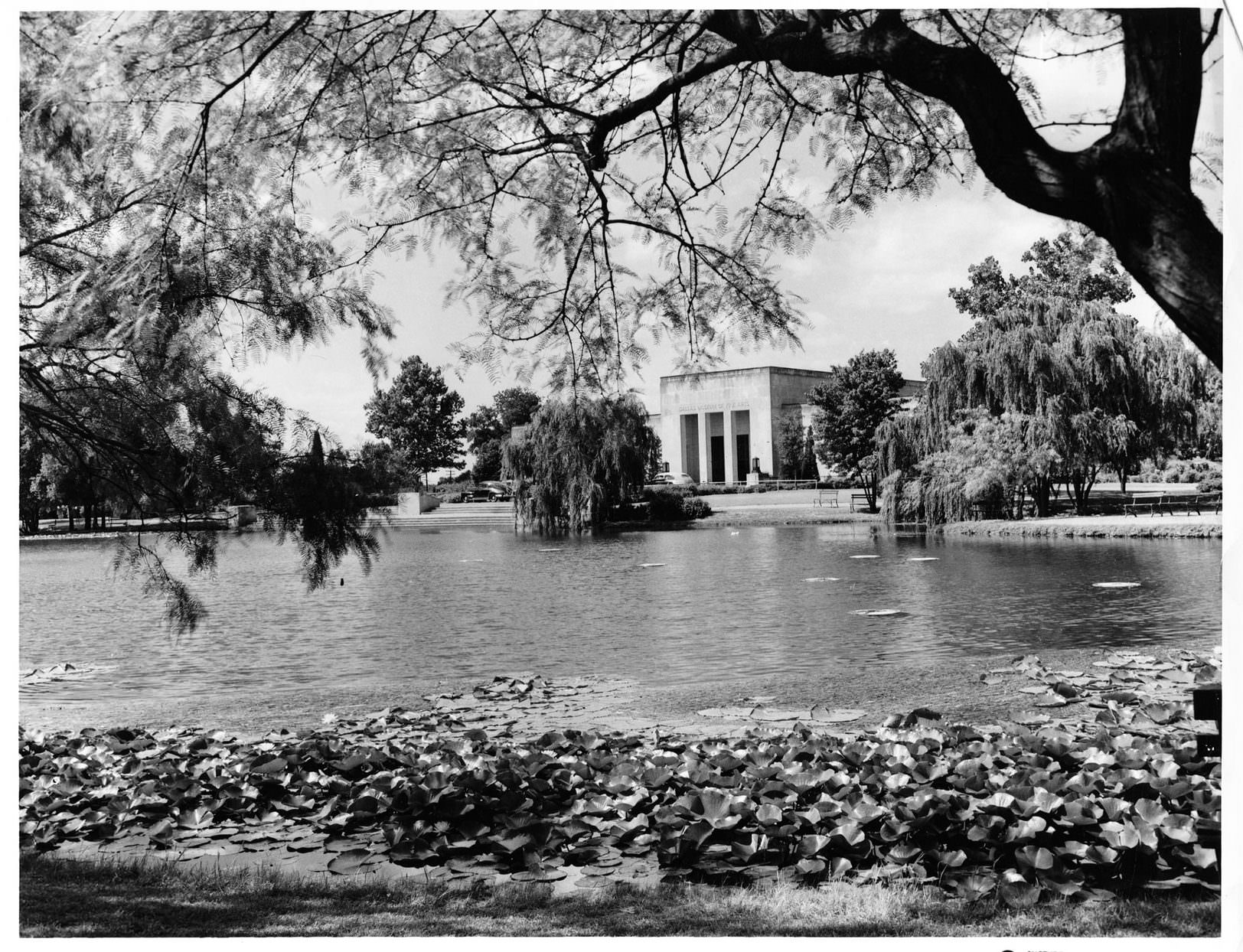
Melba Theatre, later named Capri Theatre, 1311 Elm Street, downtown Dallas, 1951Melba Theatre, later named Capri Theatre, 1311 Elm Street, downtown Dallas, 1951Dallas Times Herald building, downtown Dallas, Texas, 1958Dallas Museum of Fine Arts, 1950
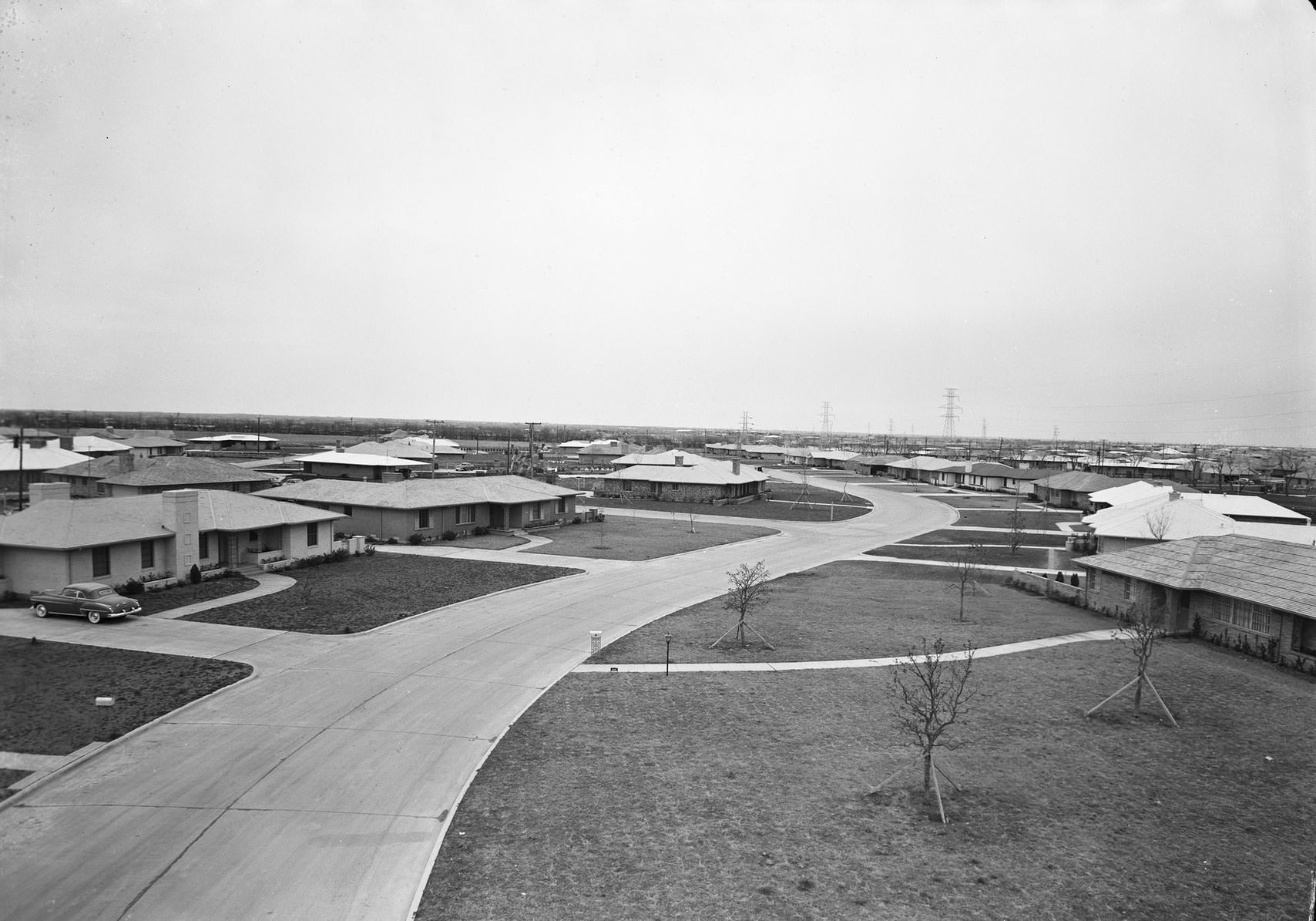
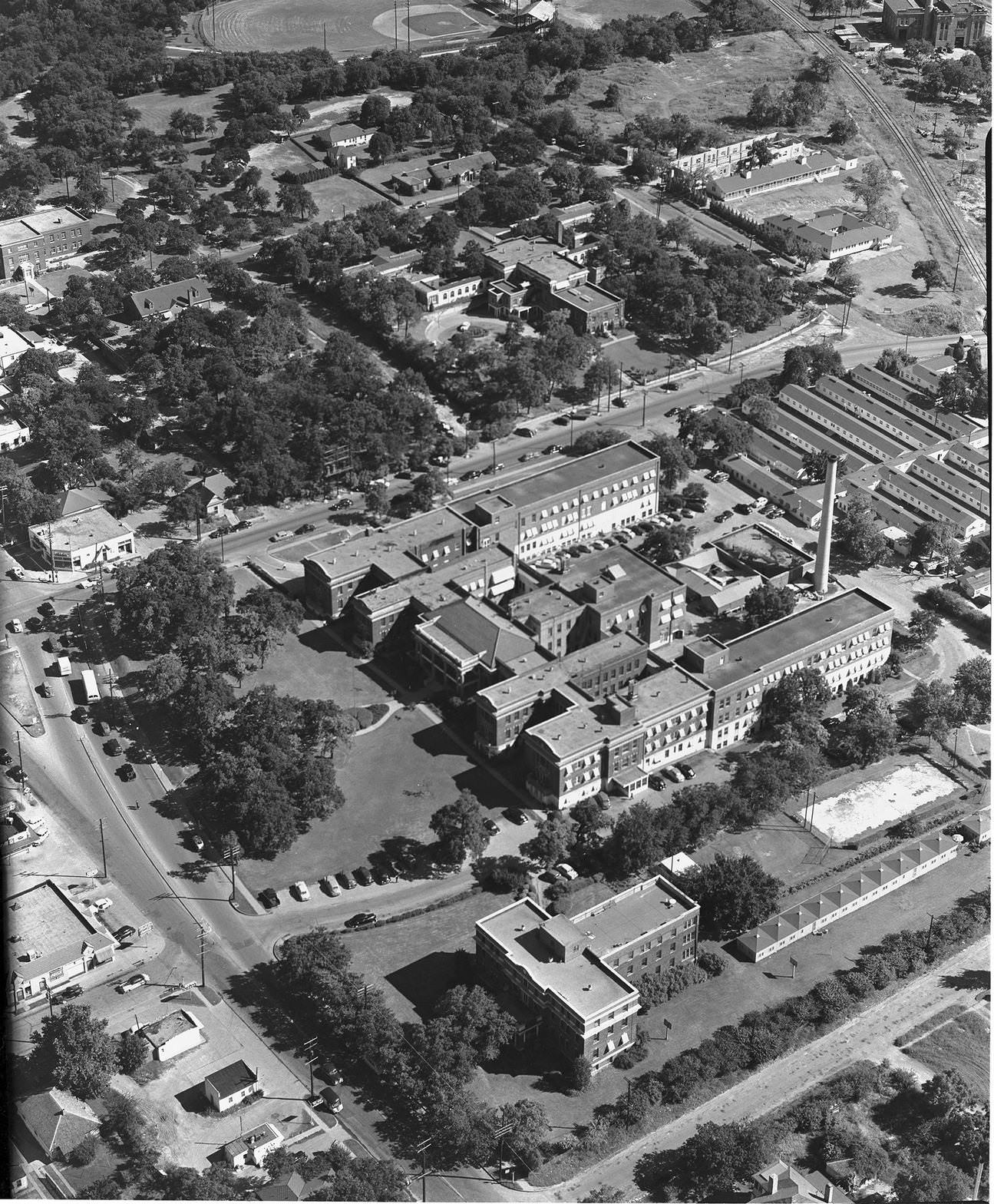
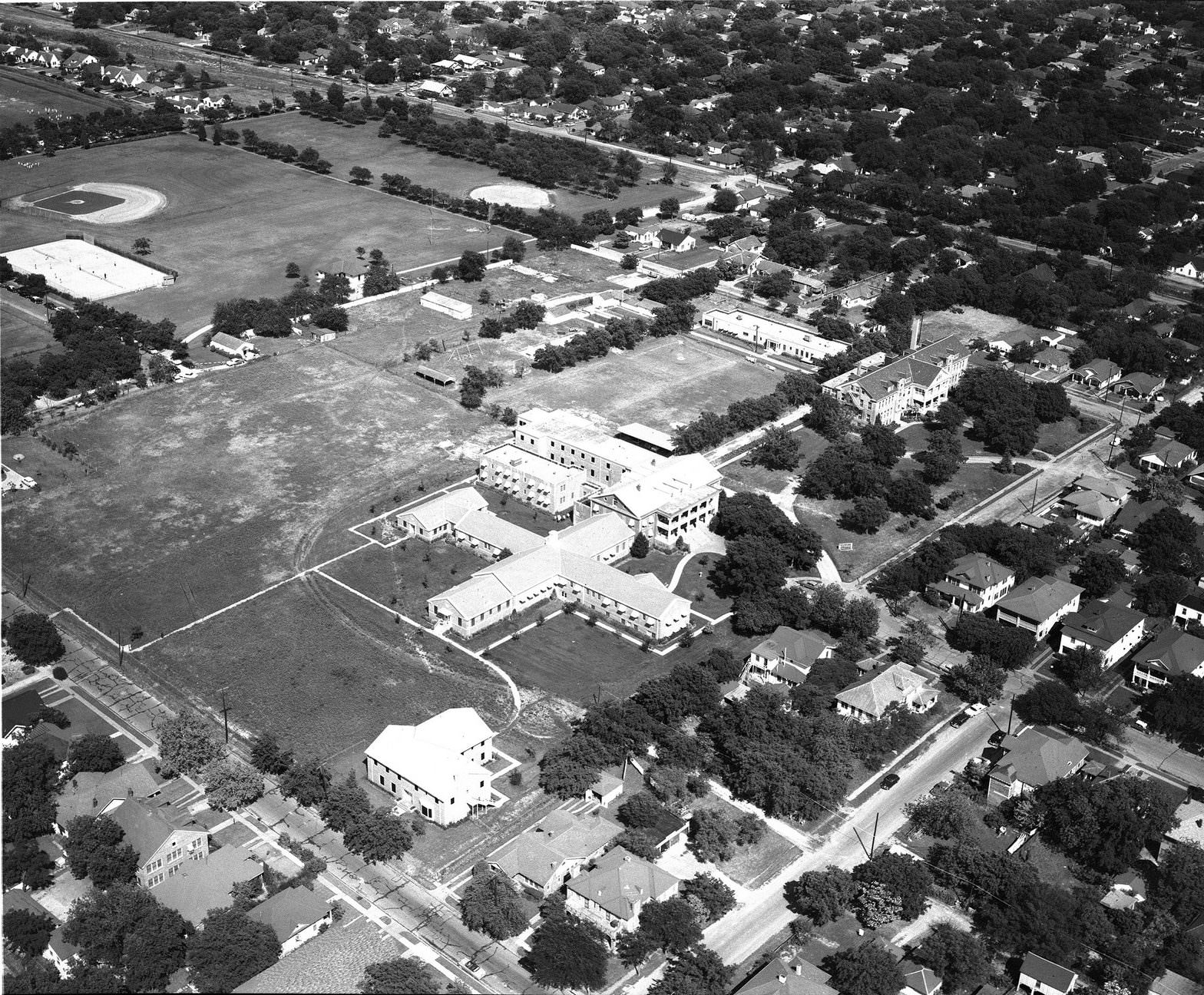
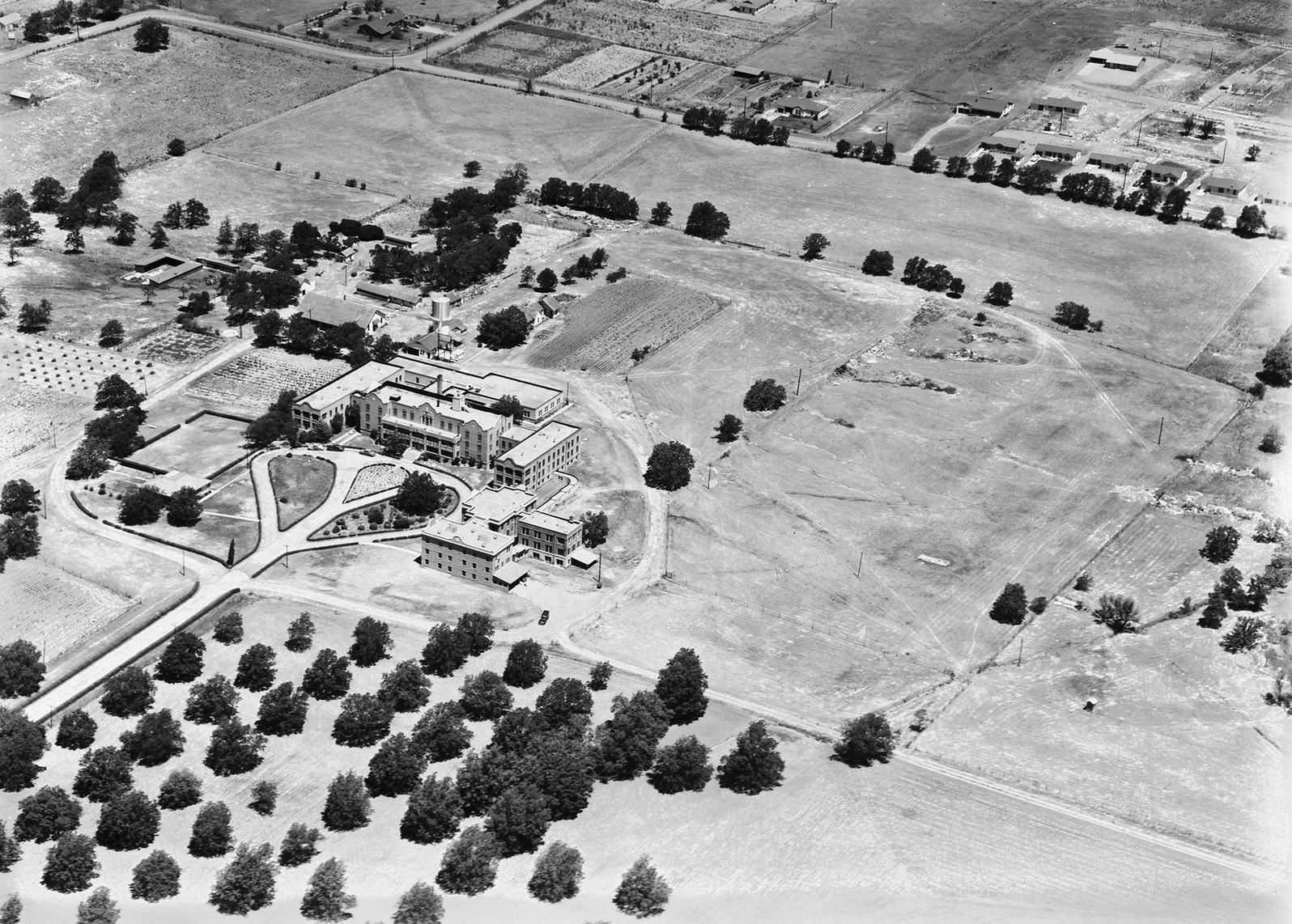
Residential neighborhoods expanded alongside the commercial core. The Wynnewood subdivision in the Oak Cliff area featured ranch-style homes lining curving streets in 1954, with driveways and sidewalks giving the neighborhood a planned, orderly feel. Parkland Hospital served the city’s medical needs, and the Juliette Fowler Homes on Abrams Road provided care for those in need. The Buckner Orphan’s Home was another established institution serving Dallas residents in the early 1950s.
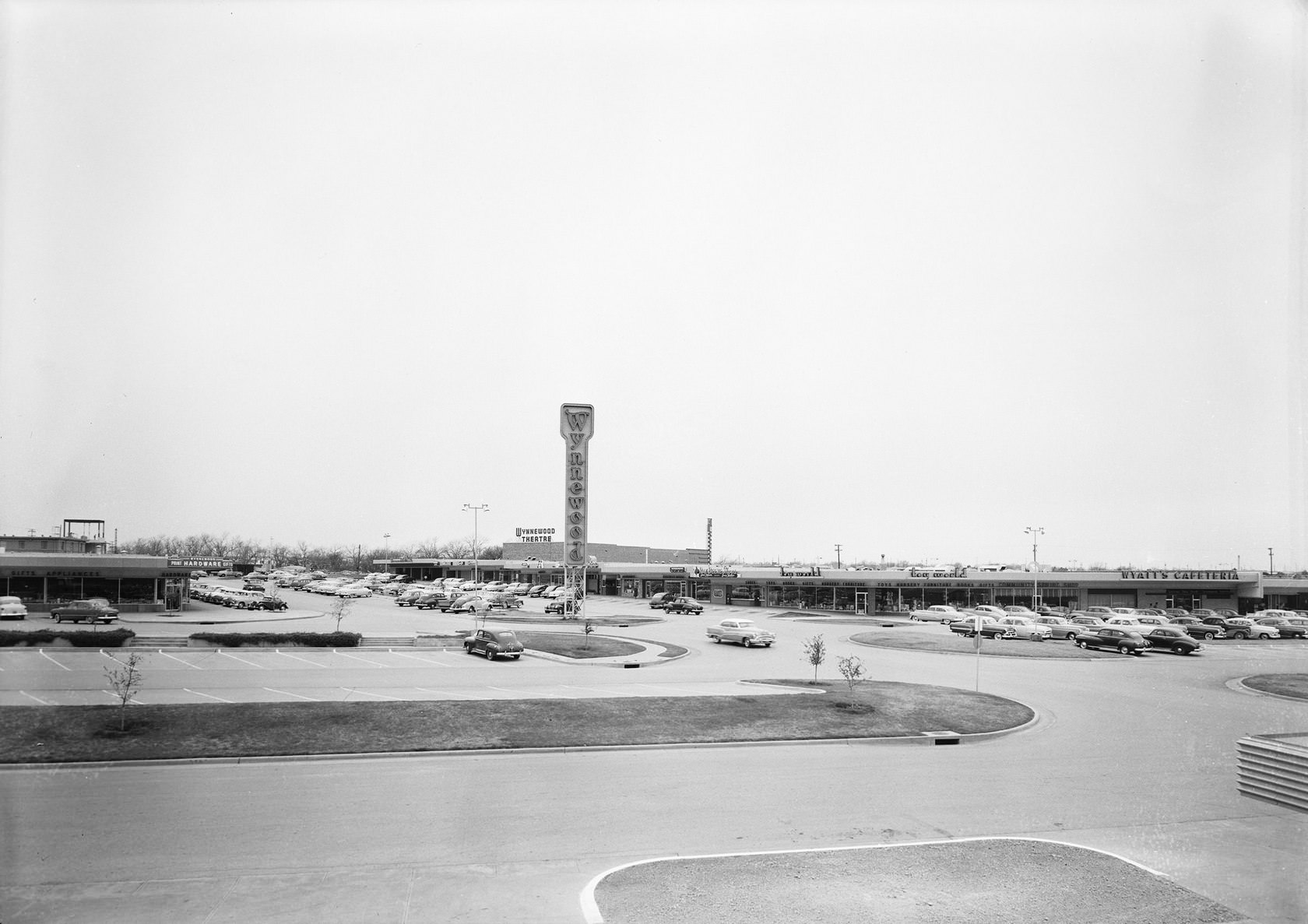
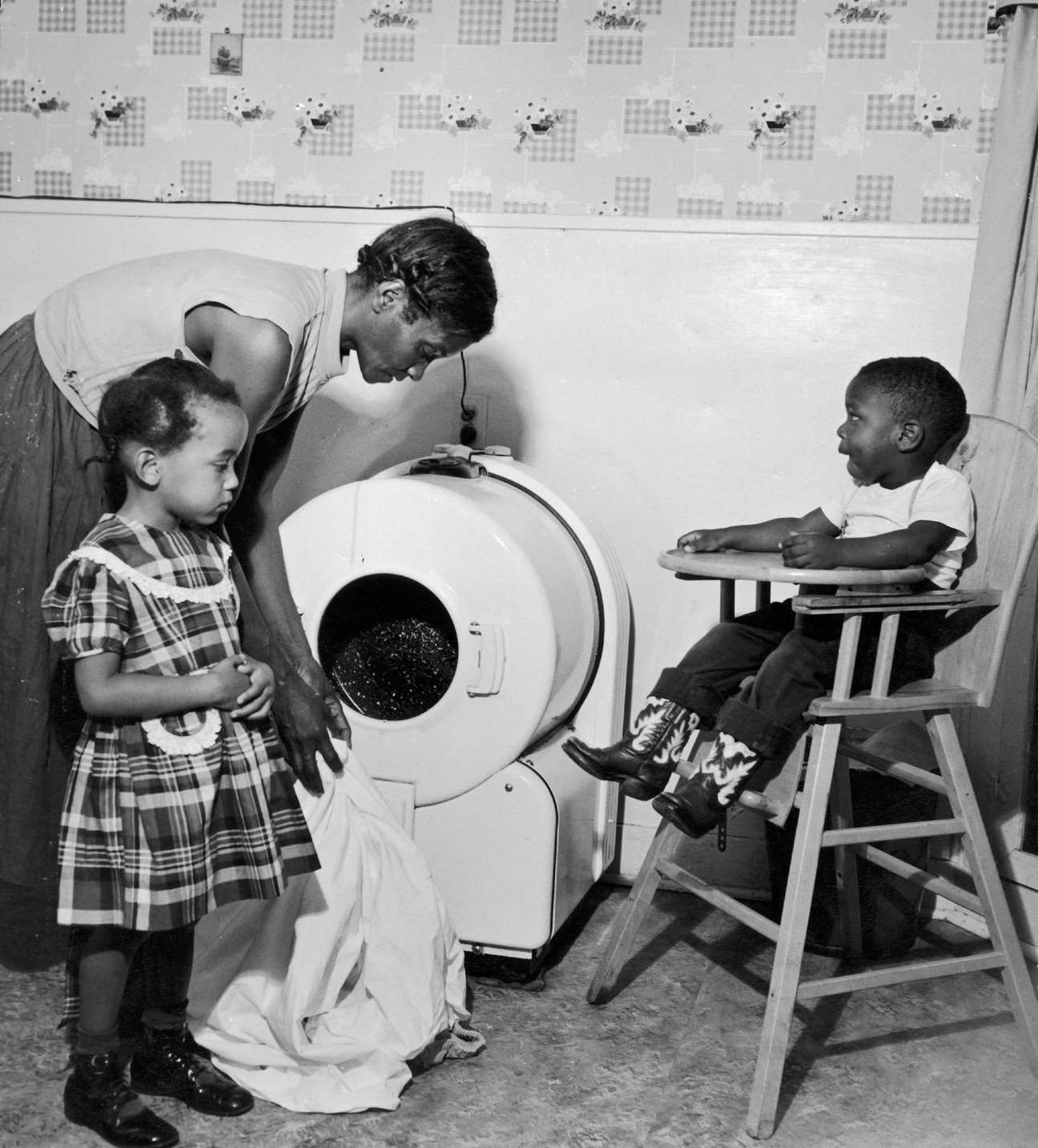
Ranch style homes, residential street, possibly Wynnewood subdivision, Oak Cliff area, Dallas, Texas, 1954Wynnewood Village, Oak Cliff area, Dallas, Texas, 1954Aerial view of Parkland Hospital, 1950Juilette Fowler Homes, 1234 Abrams Rd., Dallas, 1957Buckner Orphan’s Home, Dallas, Texas, 1952A mother washes clothes in the presence of her children in Dallas, Texas, 1950
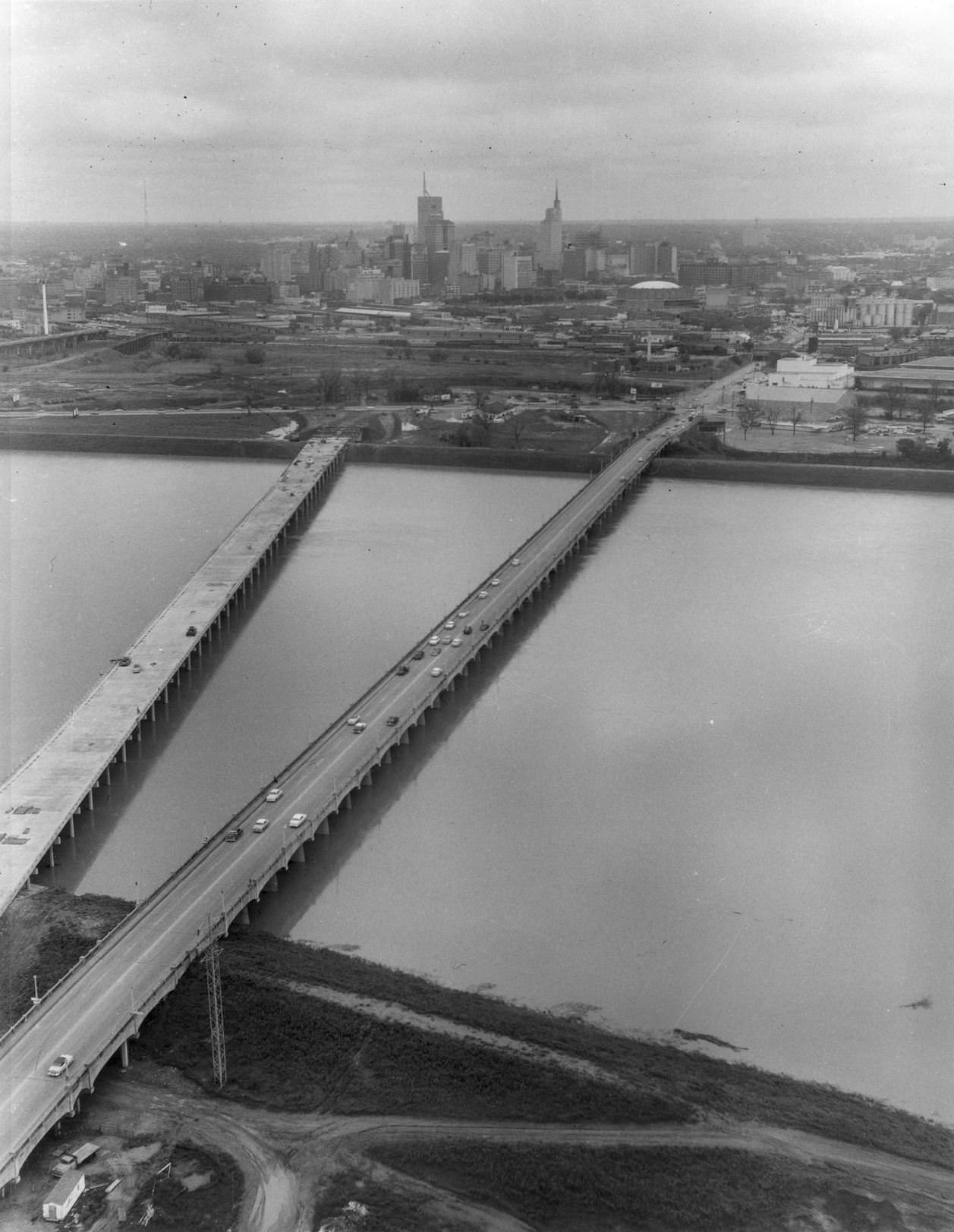
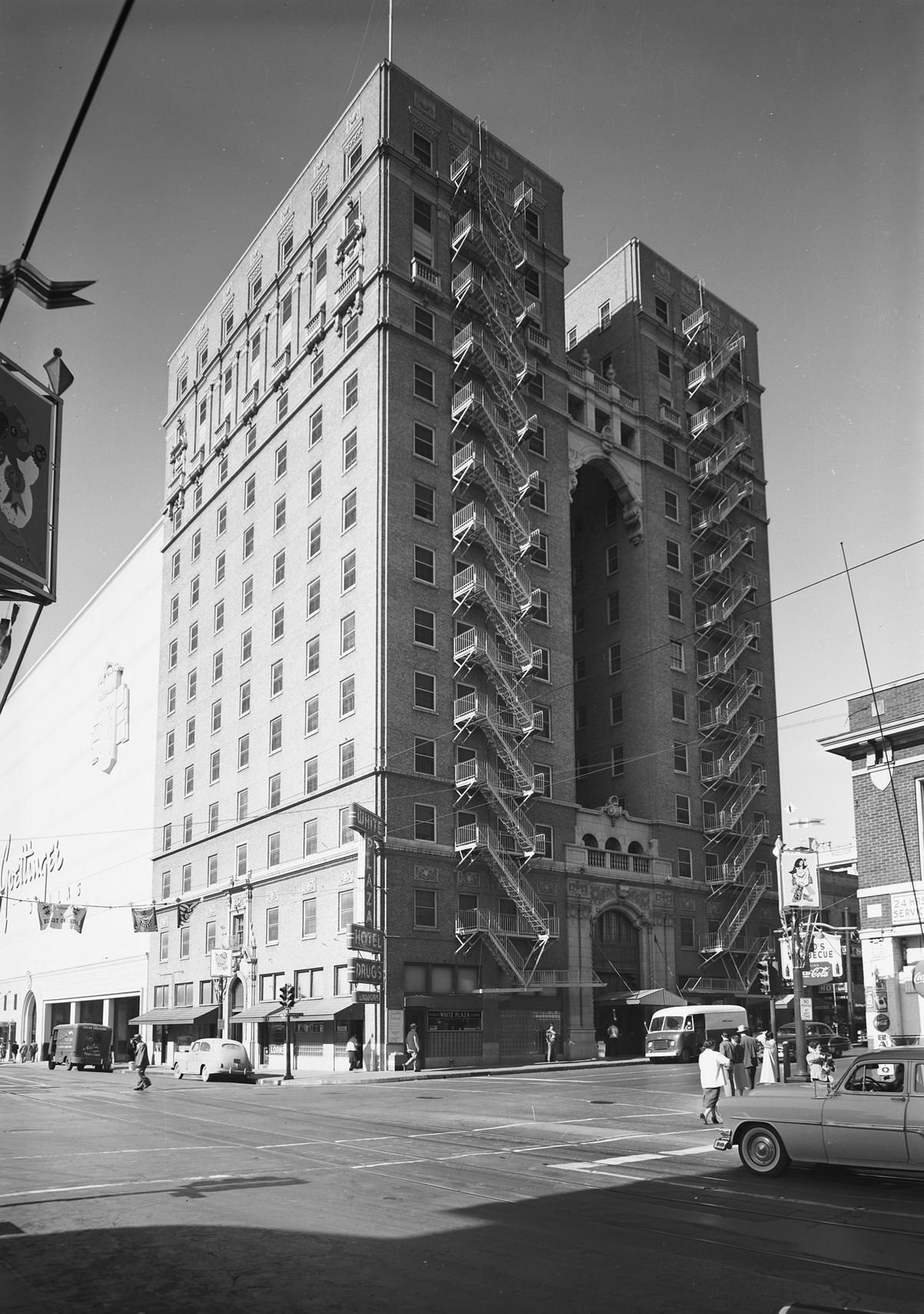
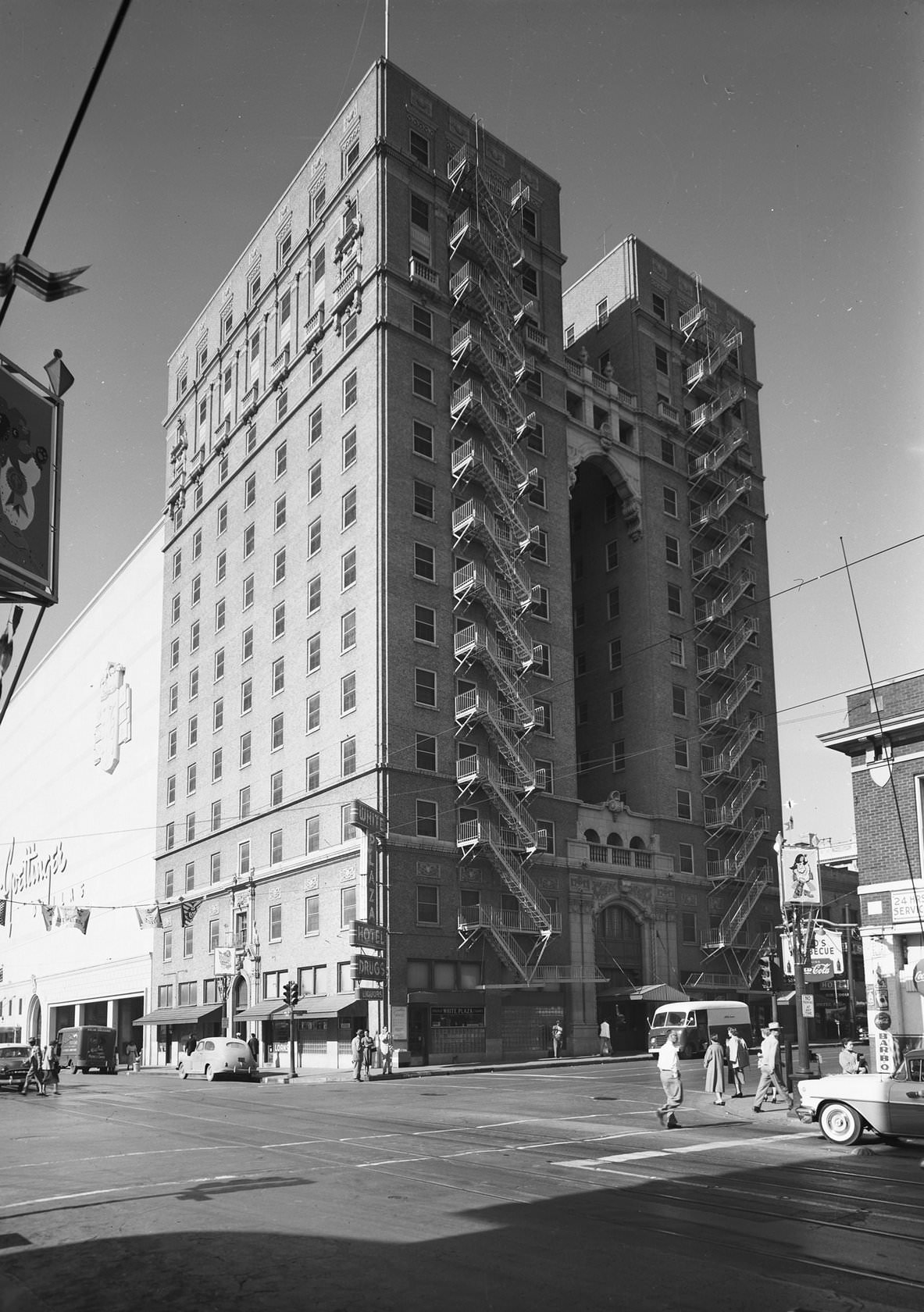
Dallas also dealt with the forces of nature during the decade. In 1957, the Trinity River flooded and two bridges leading into downtown were submerged. Photographs from that event show the water rising around the bridge structures, a stark reminder of how vulnerable even a fast-growing city remained to the elements. The White Plaza Hotel and other downtown establishments continued operating through the decade’s changes, their facades photographed in 1954 as part of the ongoing documentary record of a city in transformation.
Two bridges over flooded Trinity River into downtown Dallas, 1957
White Plaza Hotel, downtown Dallas, Texas, 1954
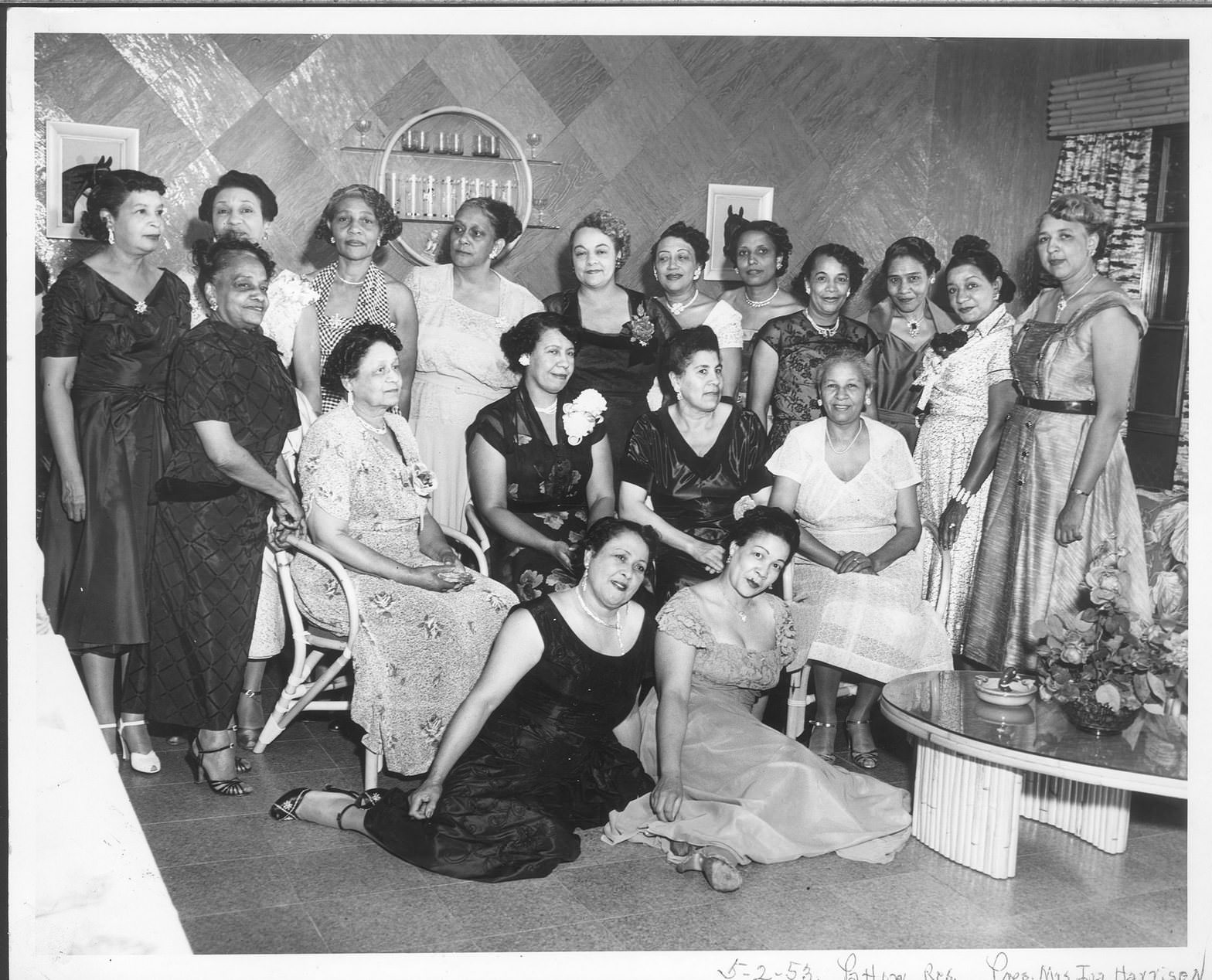
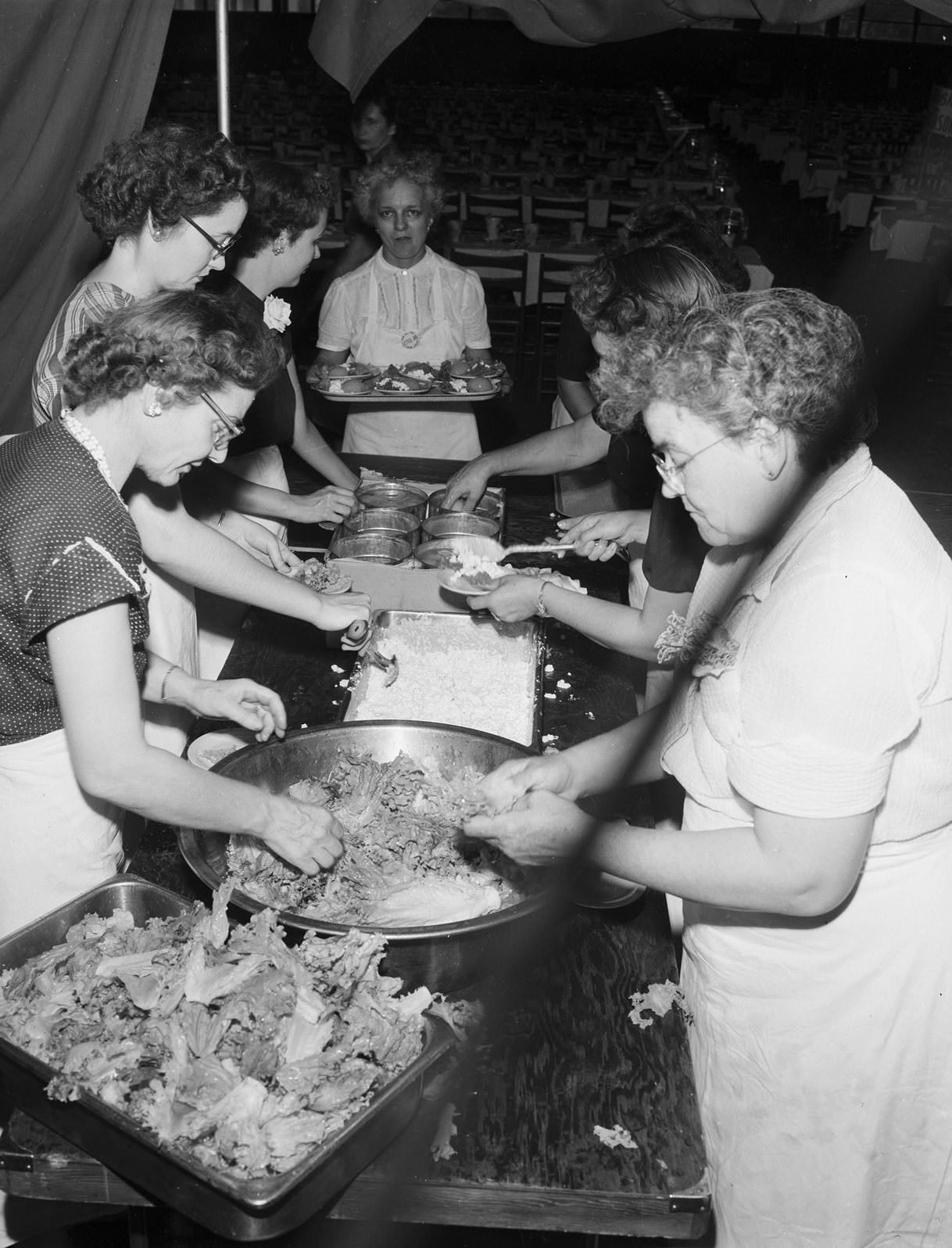
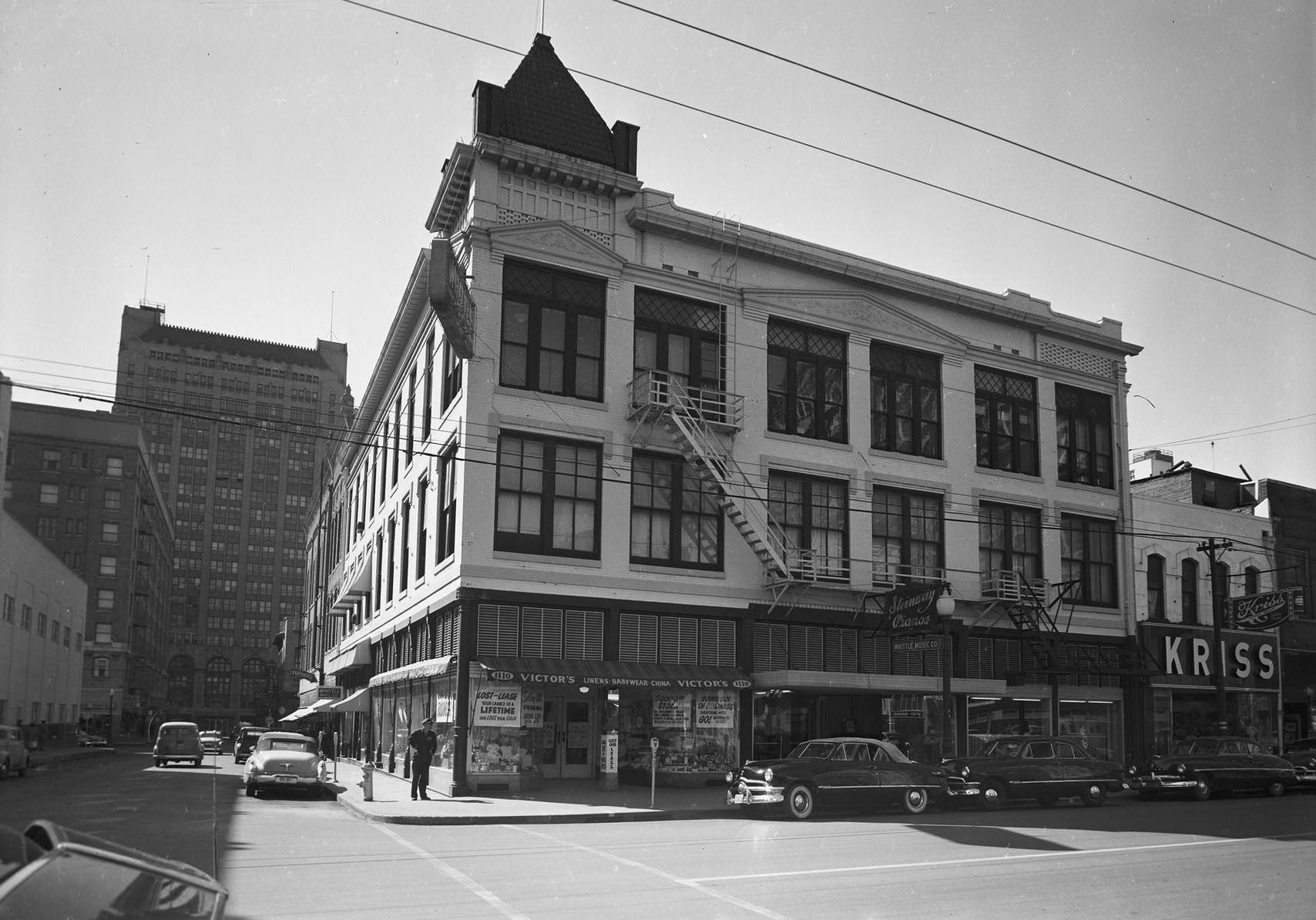
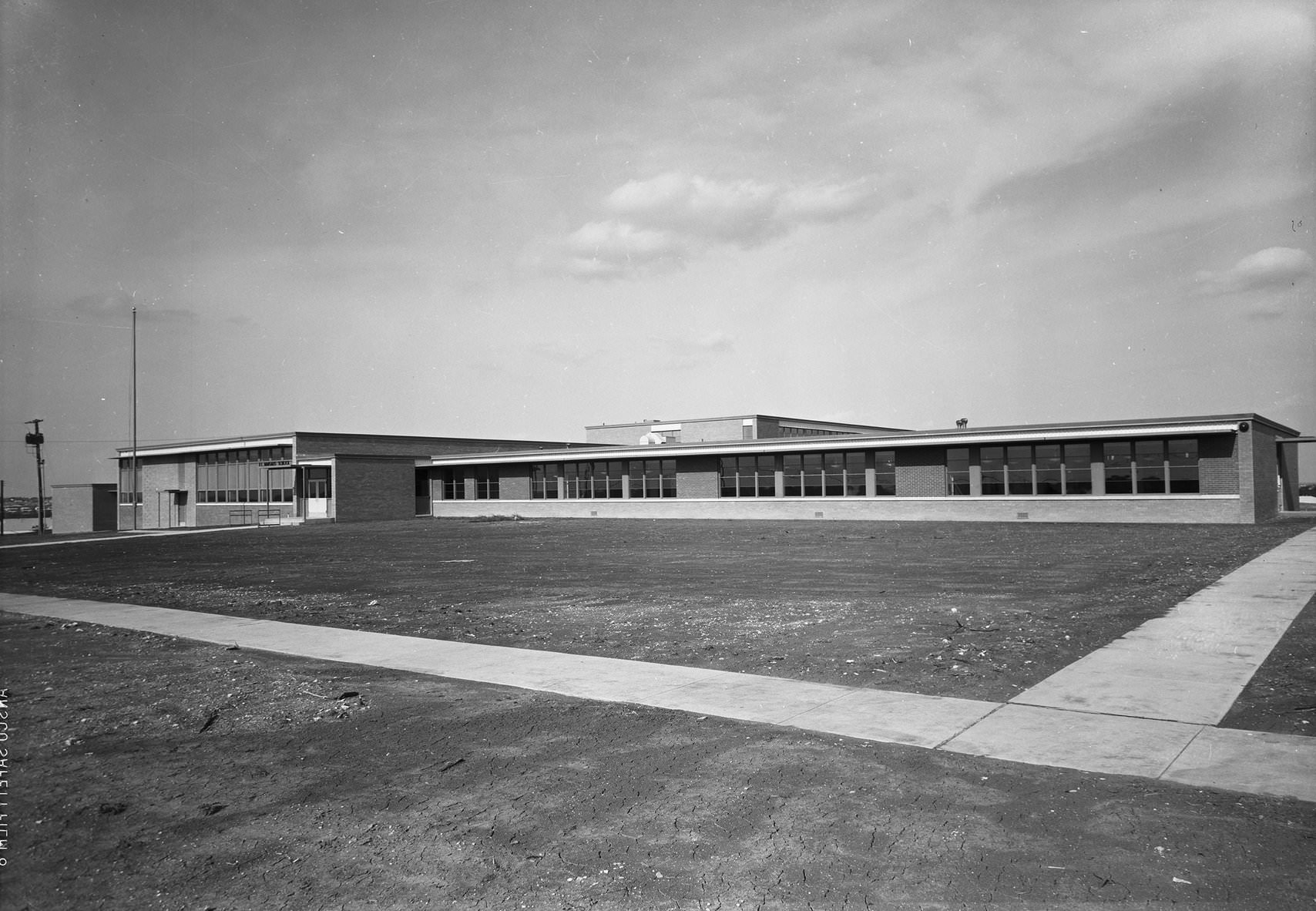
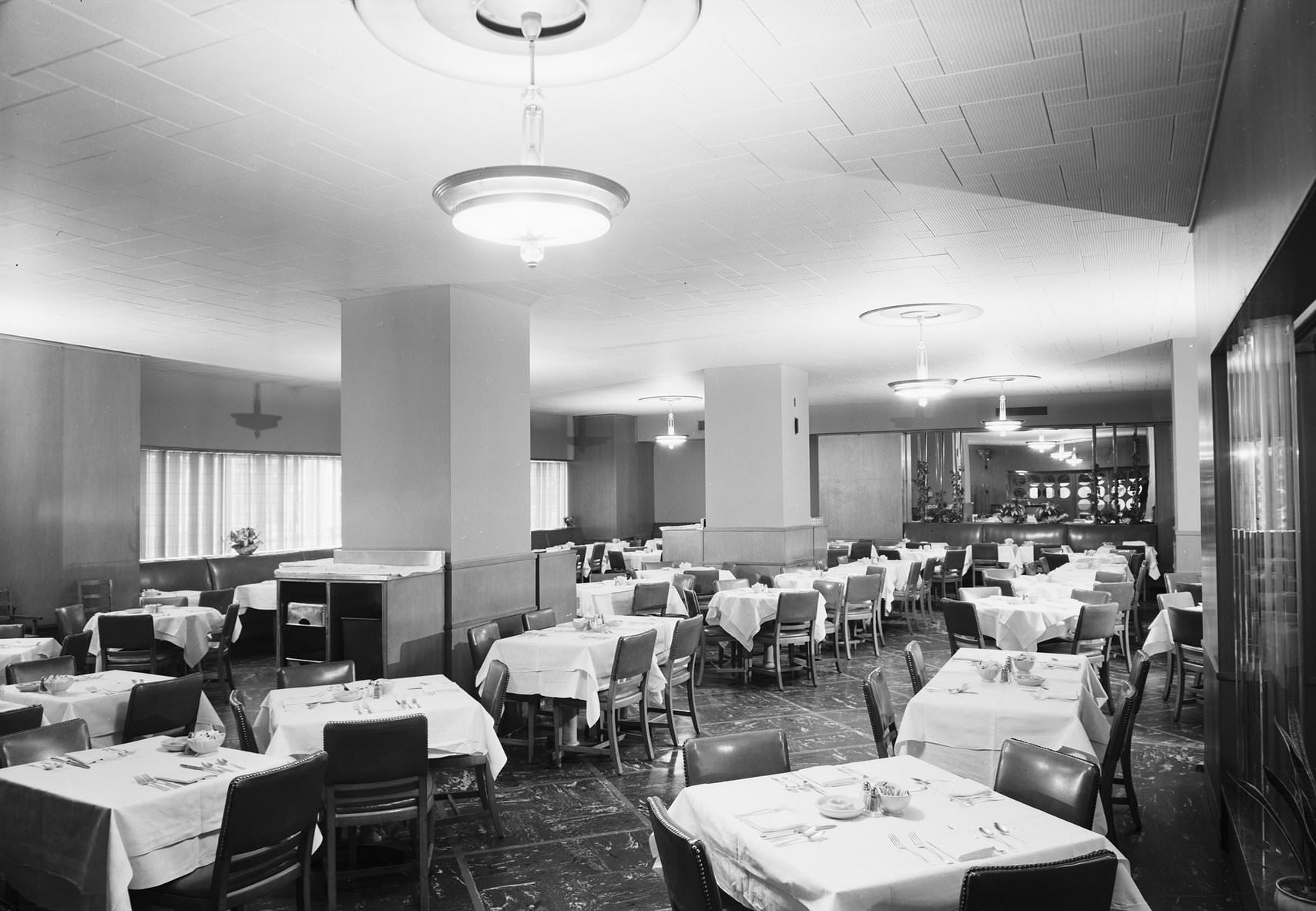
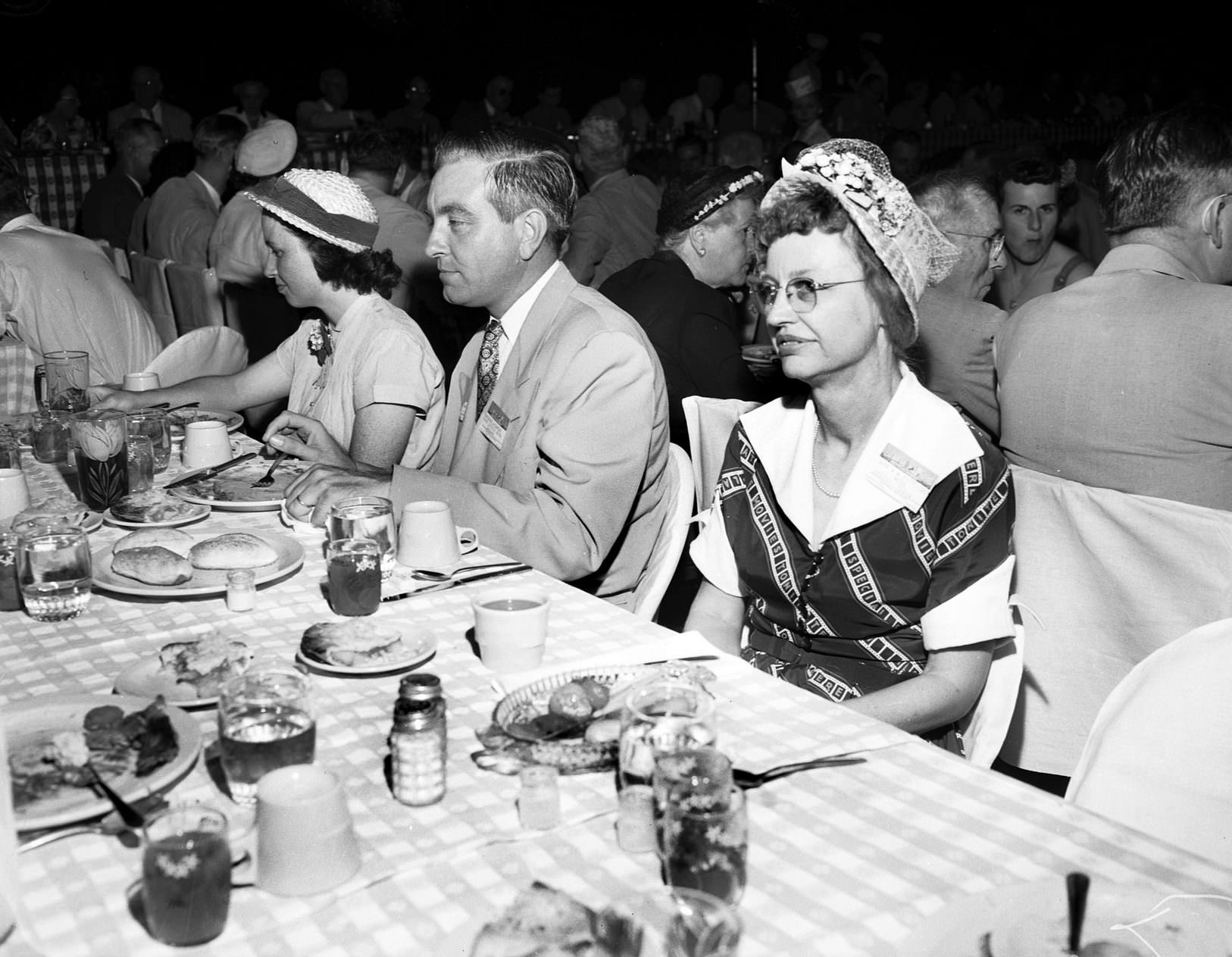
White Plaza Hotel, downtown Dallas, Texas, 1954John “Preacher” Hays and an Unidentified Woman, 1954Priscilla Art Club, 1953Banquet at Dallas, Texas, 1952Whittle Music Company retail building, downtown Dallas, Texas, 1952T.L. Marsalis School building under construction. Dallas, Texas, 1958Restaurant interior, 1958Texas Press Association, Texas, 1950Car park in Dallas, 1959
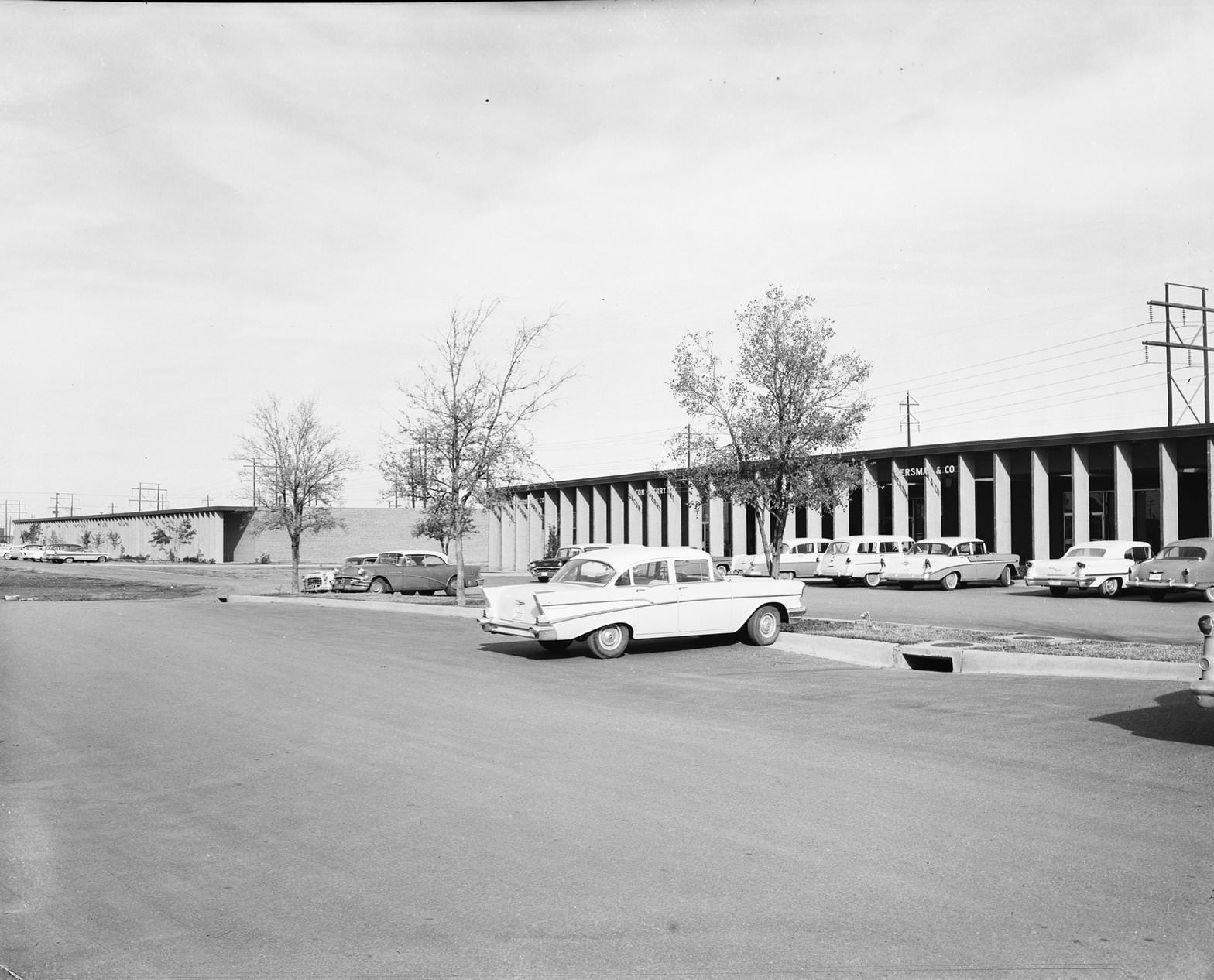
Putting aside the racism, segregation, misogyny, homophobia, and other harmful aspects of the 1950s, it was during this time that many of our cities began to fully embrace the automobile. The 40s and 50s were a time when several of our people-oriented cities transformed into car-centric cities. This transformation brought about a loss of community, as people don’t have as many spontaneous interactions with others on the streets. Hence, it’s understandable to feel nostalgic for some of the positive aspects. That said, nostalgia without acknowledging all the negatives of the era is dangerous






Back in the day, drug dealers were far more audacious.
The idea of feeling nostalgic for the 1950s strikes me as quite peculiar.
Putting aside the racism, segregation, misogyny, homophobia, and other harmful aspects of the 1950s, it was during this time that many of our cities began to fully embrace the automobile. The 40s and 50s were a time when several of our people-oriented cities transformed into car-centric cities. This transformation brought about a loss of community, as people don’t have as many spontaneous interactions with others on the streets. Hence, it’s understandable to feel nostalgic for some of the positive aspects. That said, nostalgia without acknowledging all the negatives of the era is dangerous
Goddsmn that’s dense
Needs more surface parking lots and urban freeways