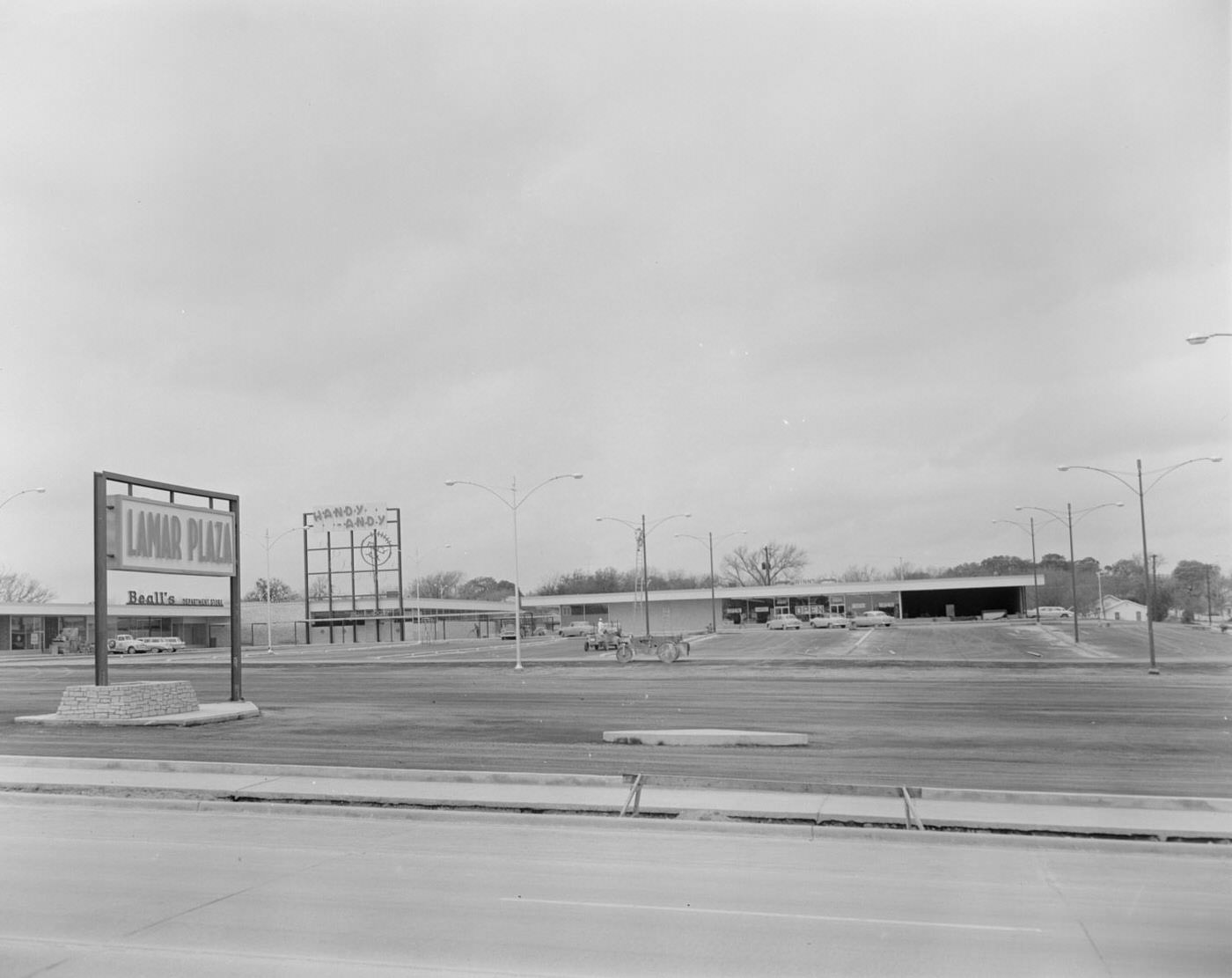
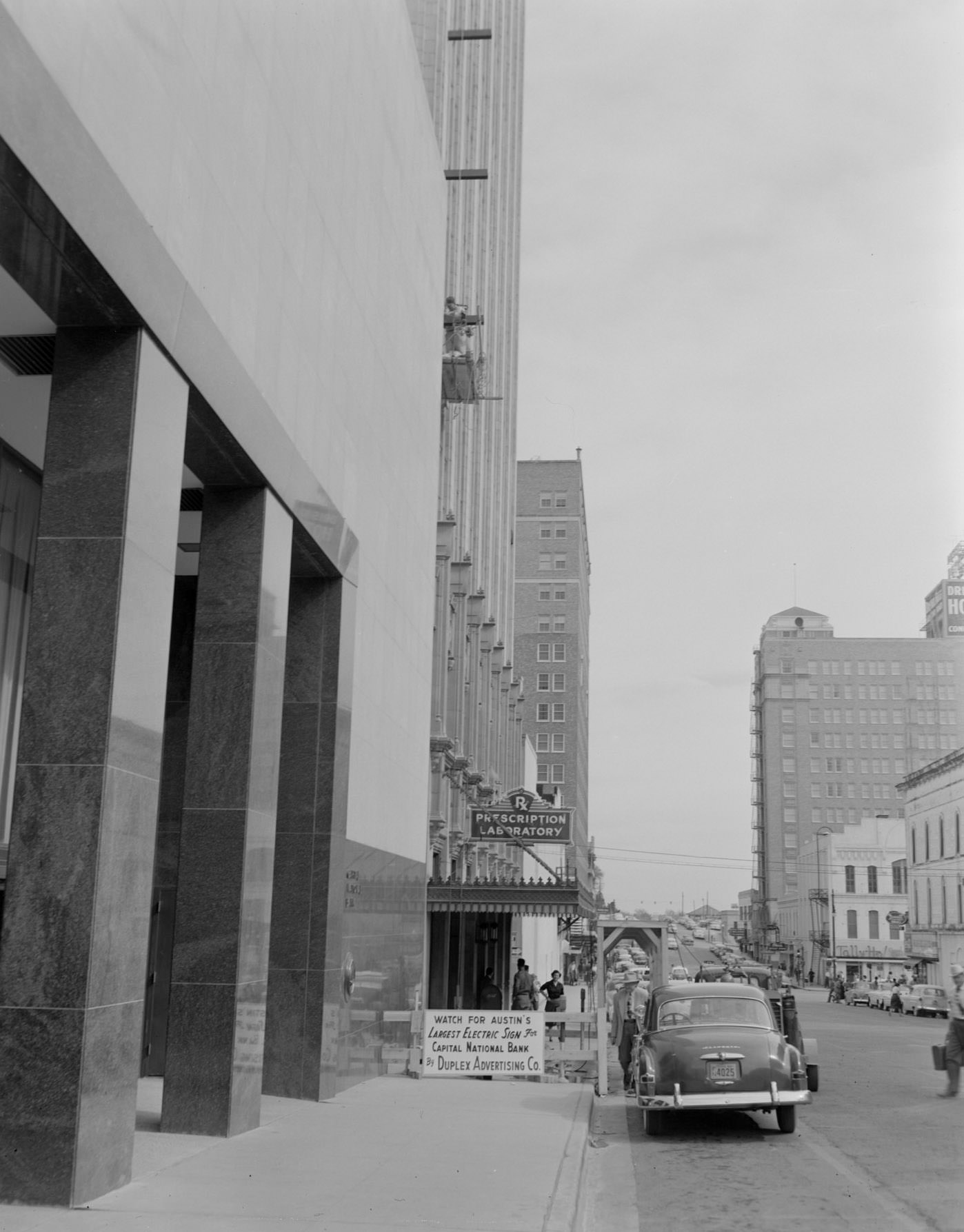
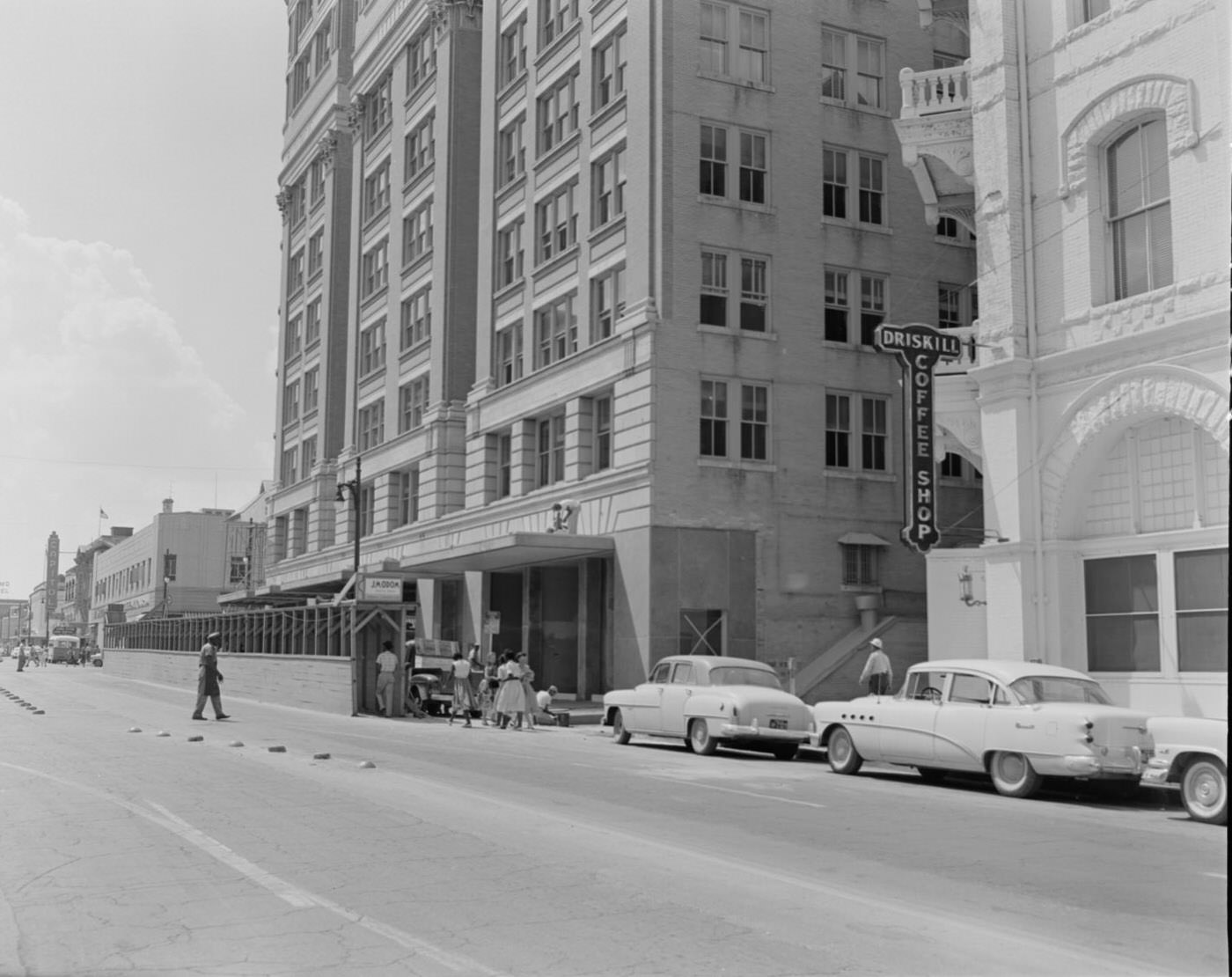
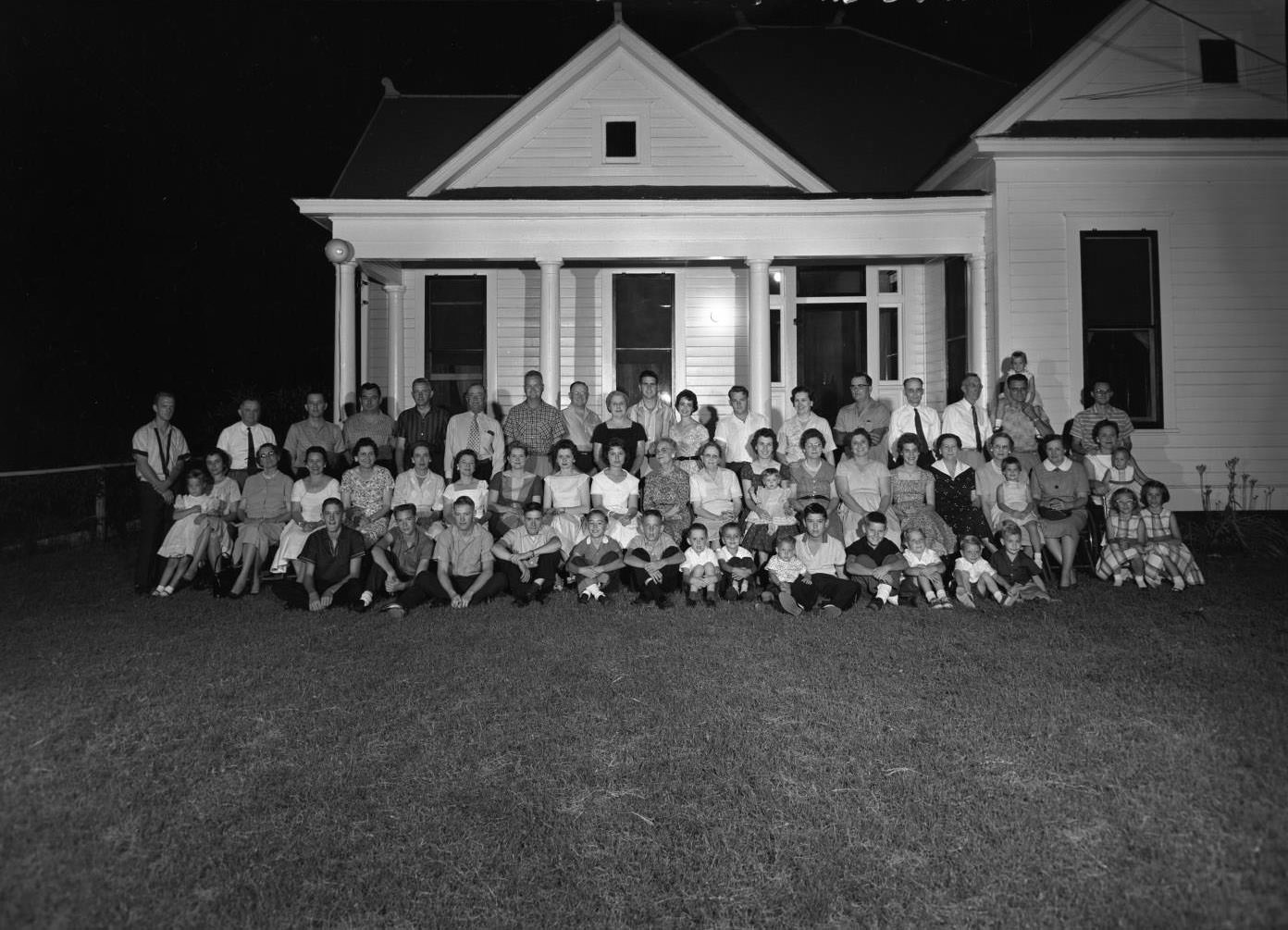
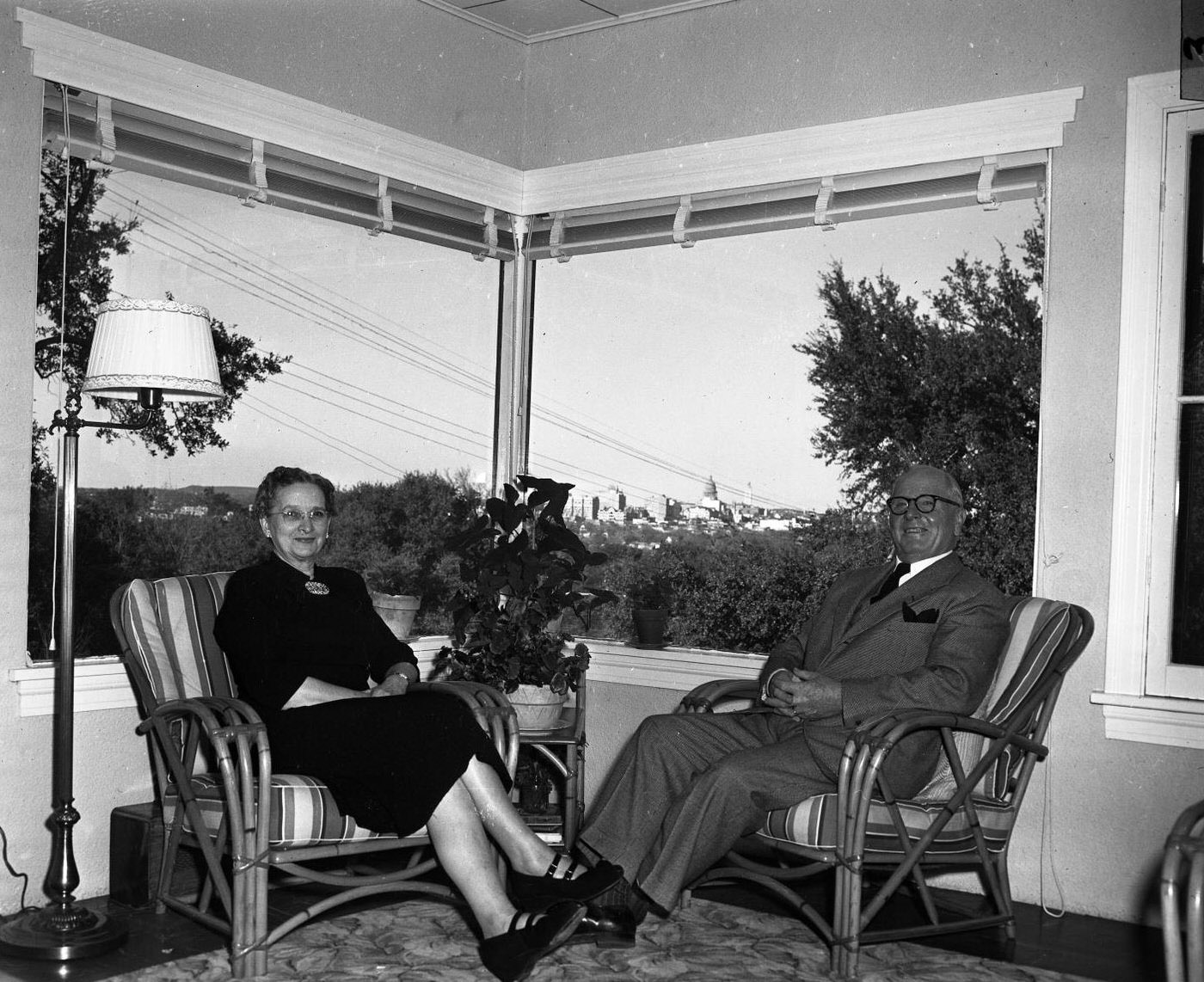
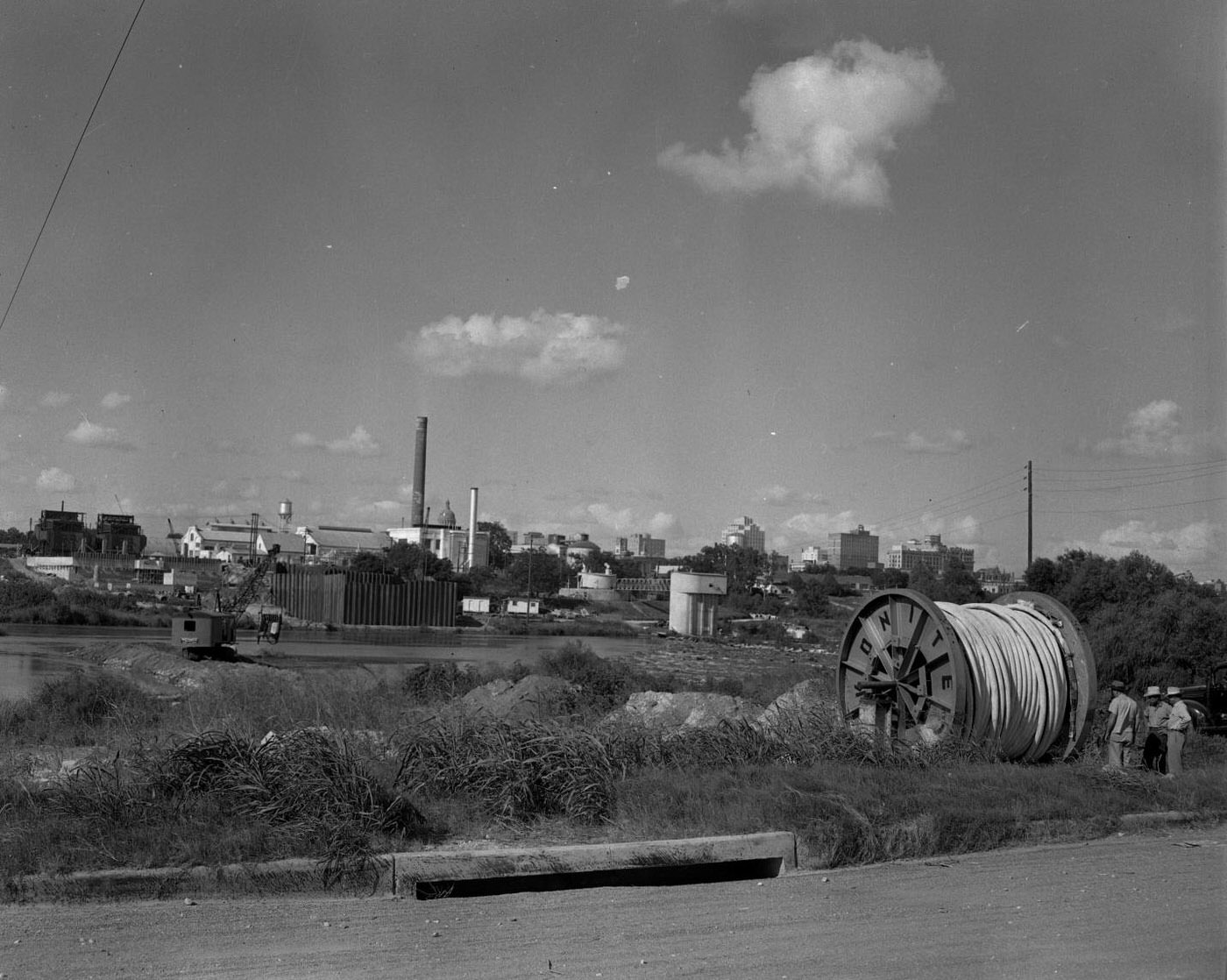
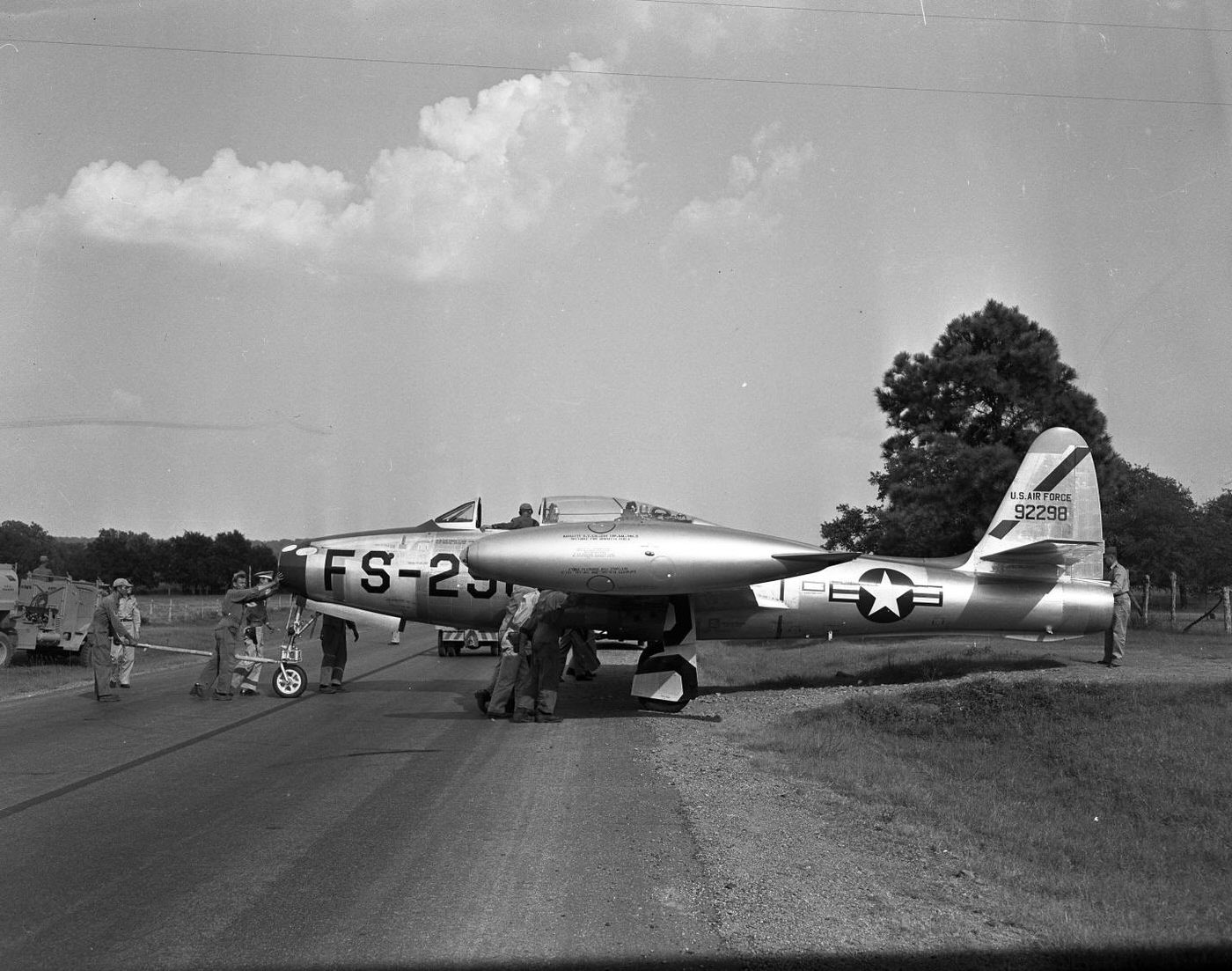
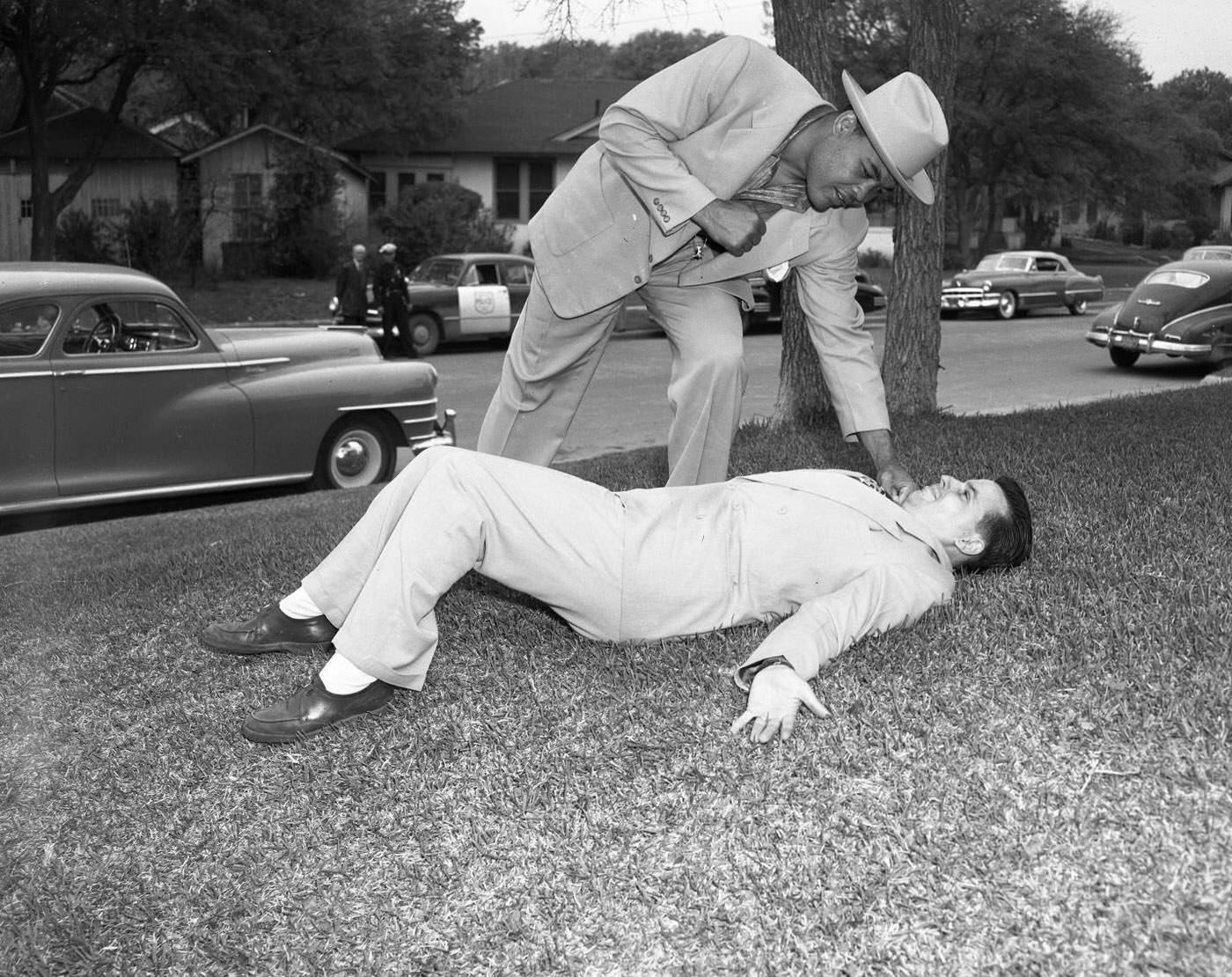
Austin in the 1950s was a city on the move. The post-World War II years brought a surge of energy — new families, new buildings, new roads, and a growing sense of possibility. These photographs capture that decade in sharp detail, pulling everyday moments out of the past and placing them right in front of you. From corner stores to capitol steps, from farm fields to football fields, this collection shows what life in Austin actually looked like during one of America’s most transformative decades.
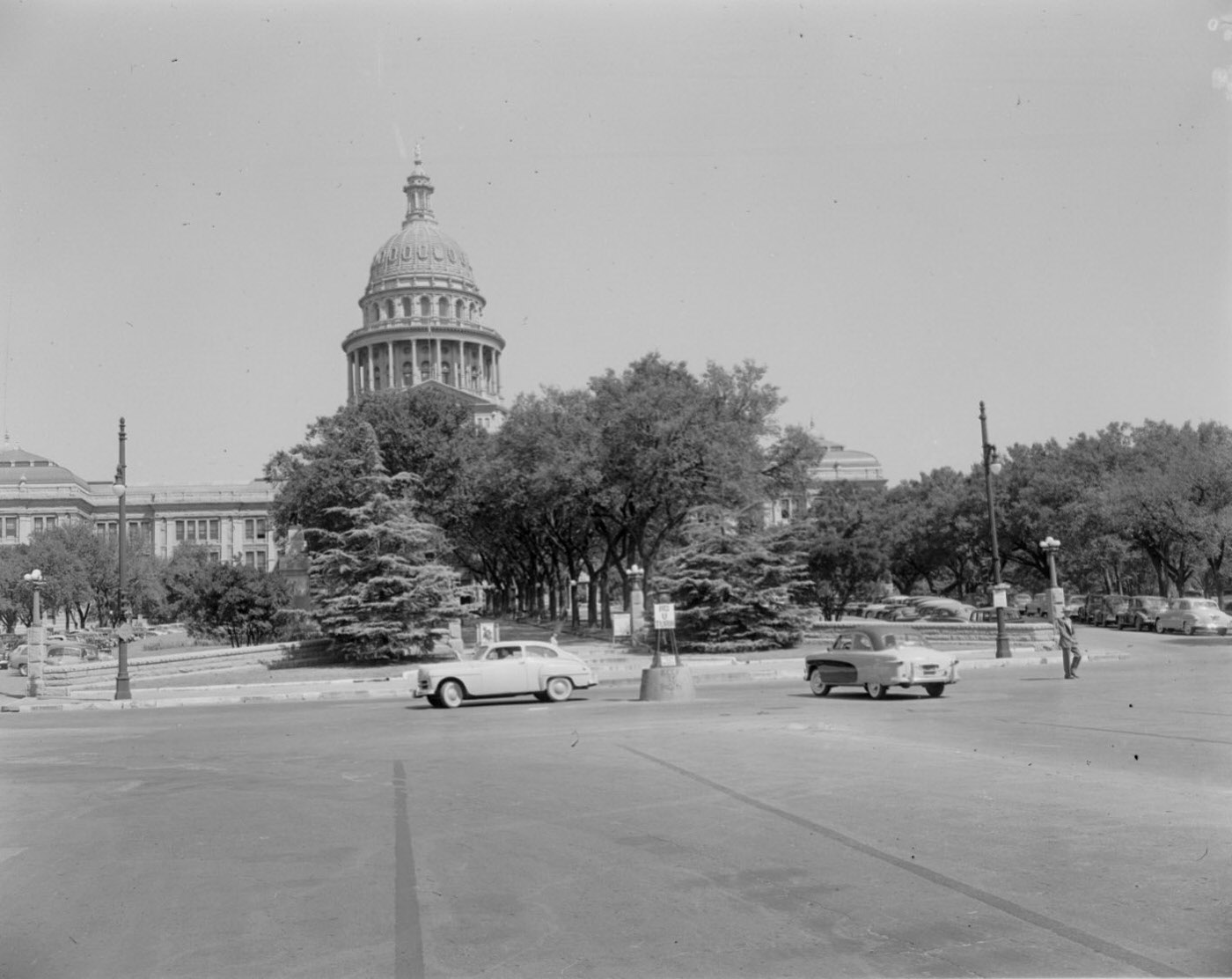
The Texas State Capitol was a constant presence in Austin life during the 1950s. It served as the backdrop for some of the decade’s most memorable public events. In 1951, General Douglas MacArthur — recently relieved of his command in Korea by President Truman — made a stop at the Capitol during a nationwide tour that drew enormous crowds.
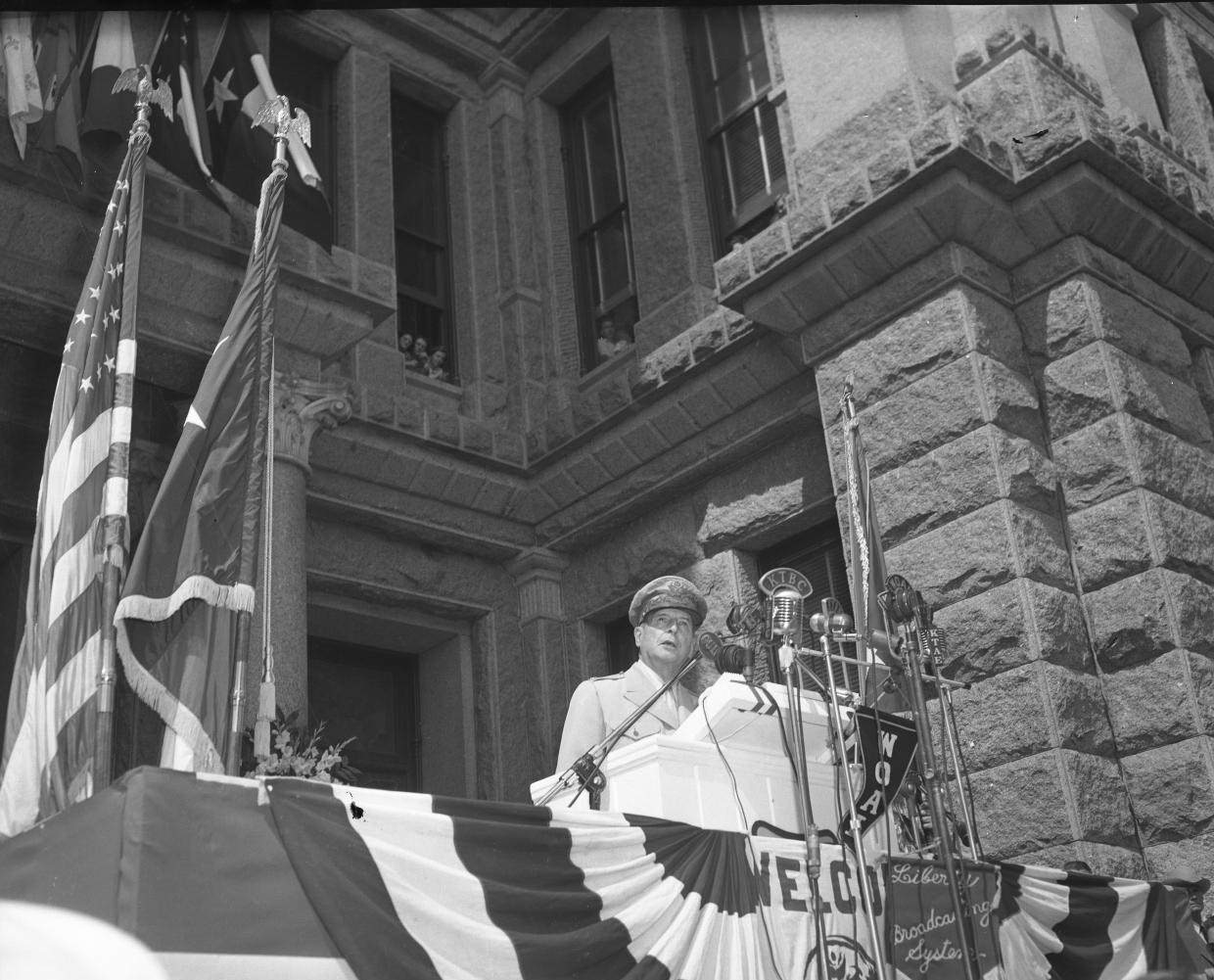
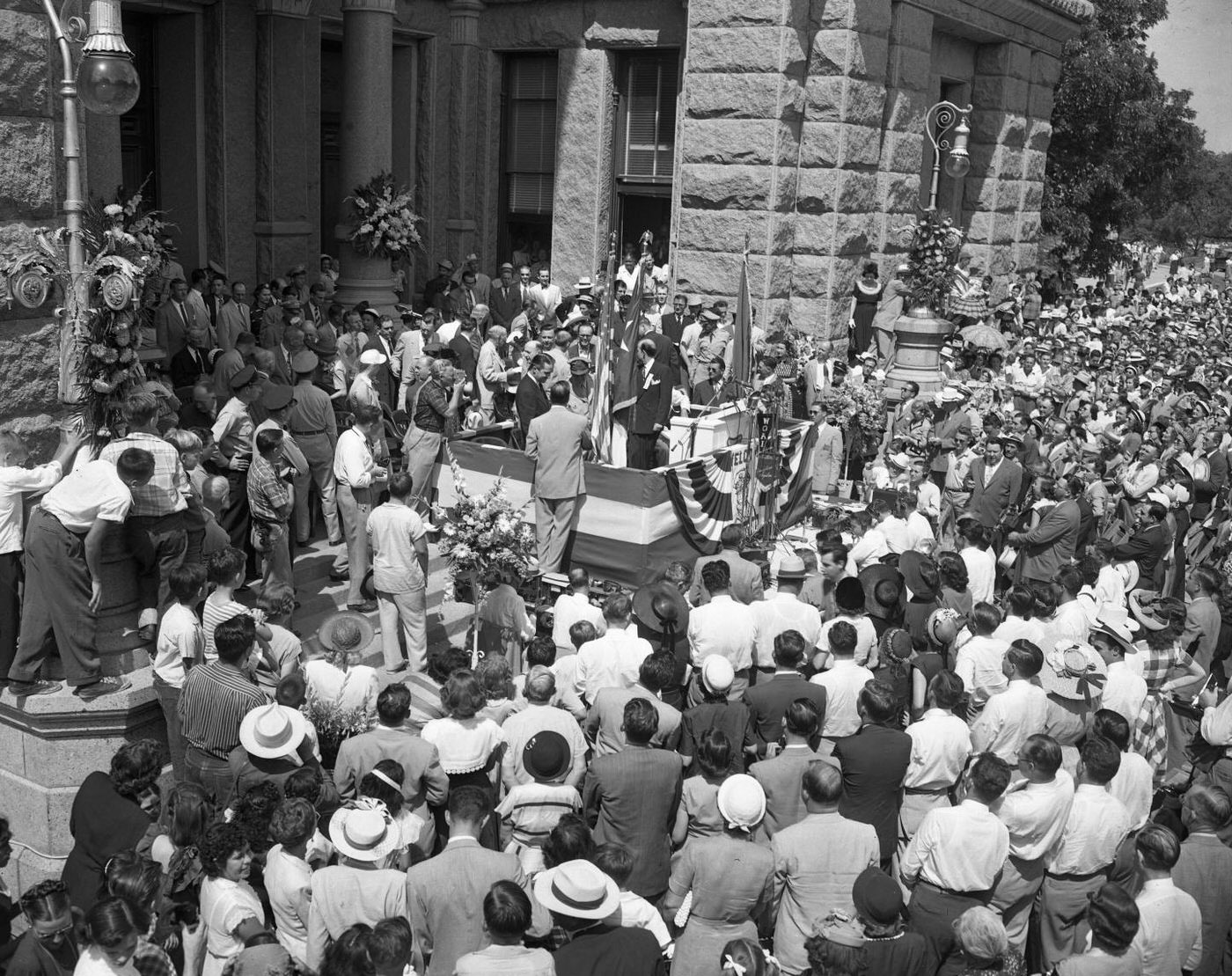
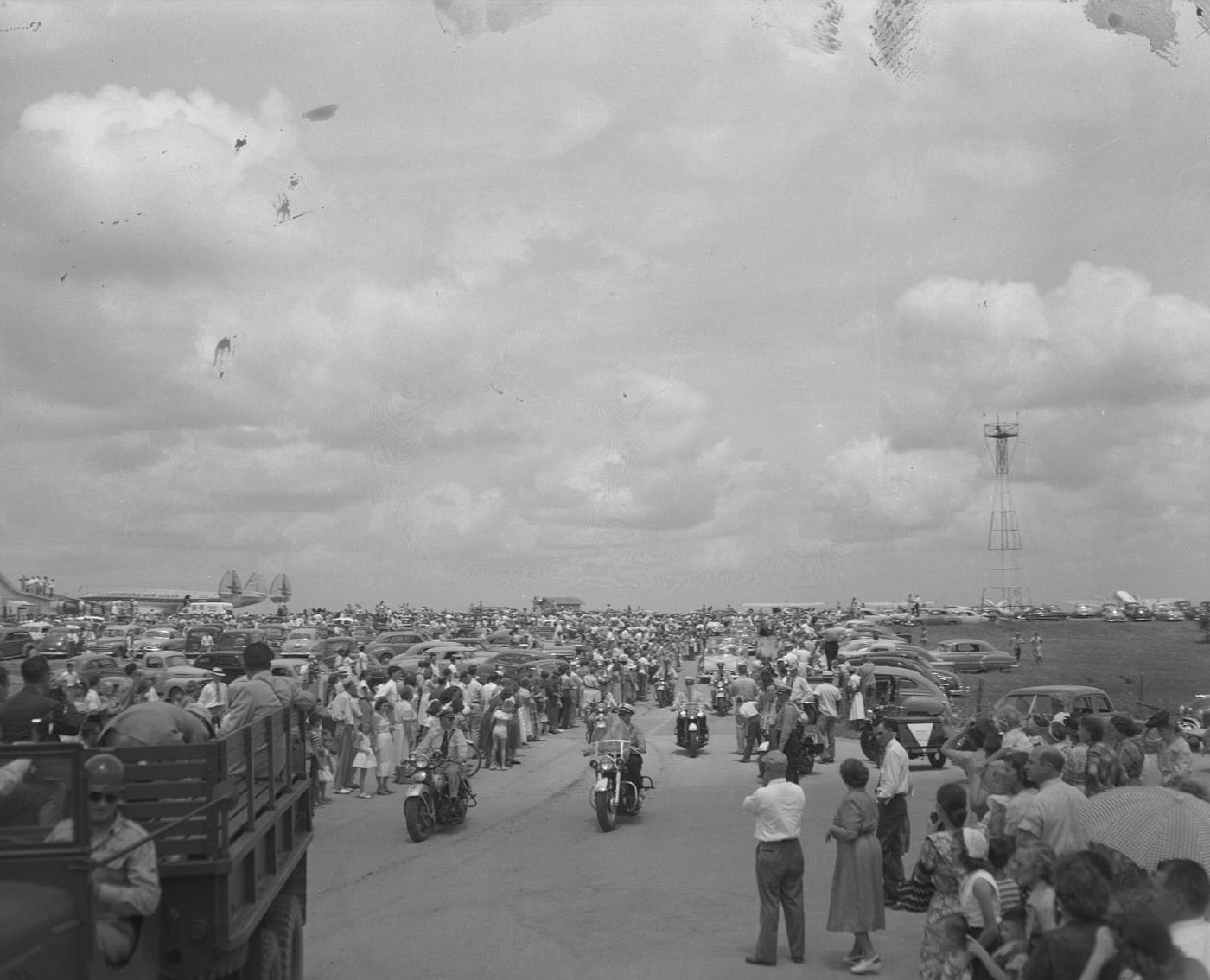
Thousands turned out to see MacArthur in person. The event even included a parachute demonstration that drew eyes to the sky above the Capitol grounds.
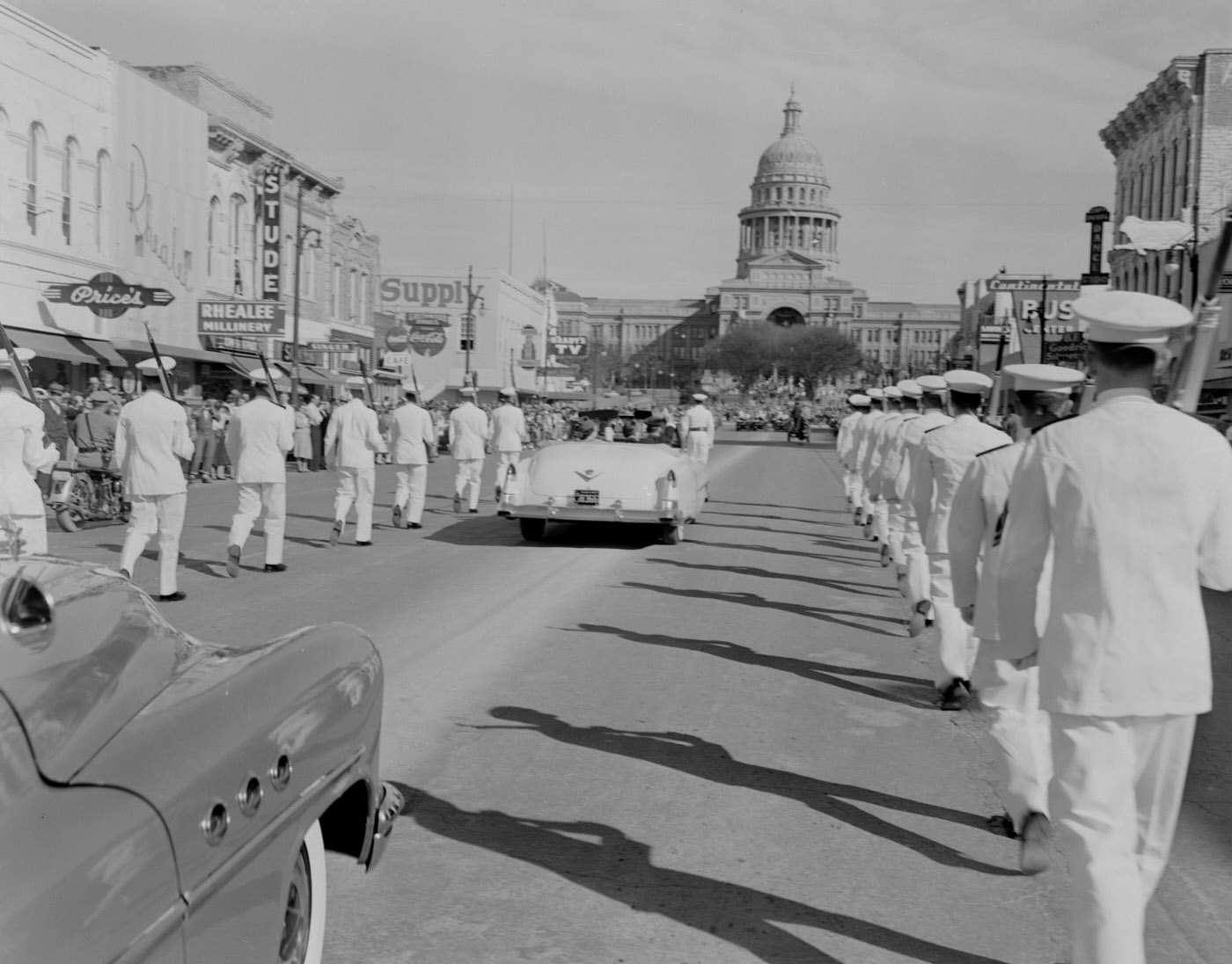
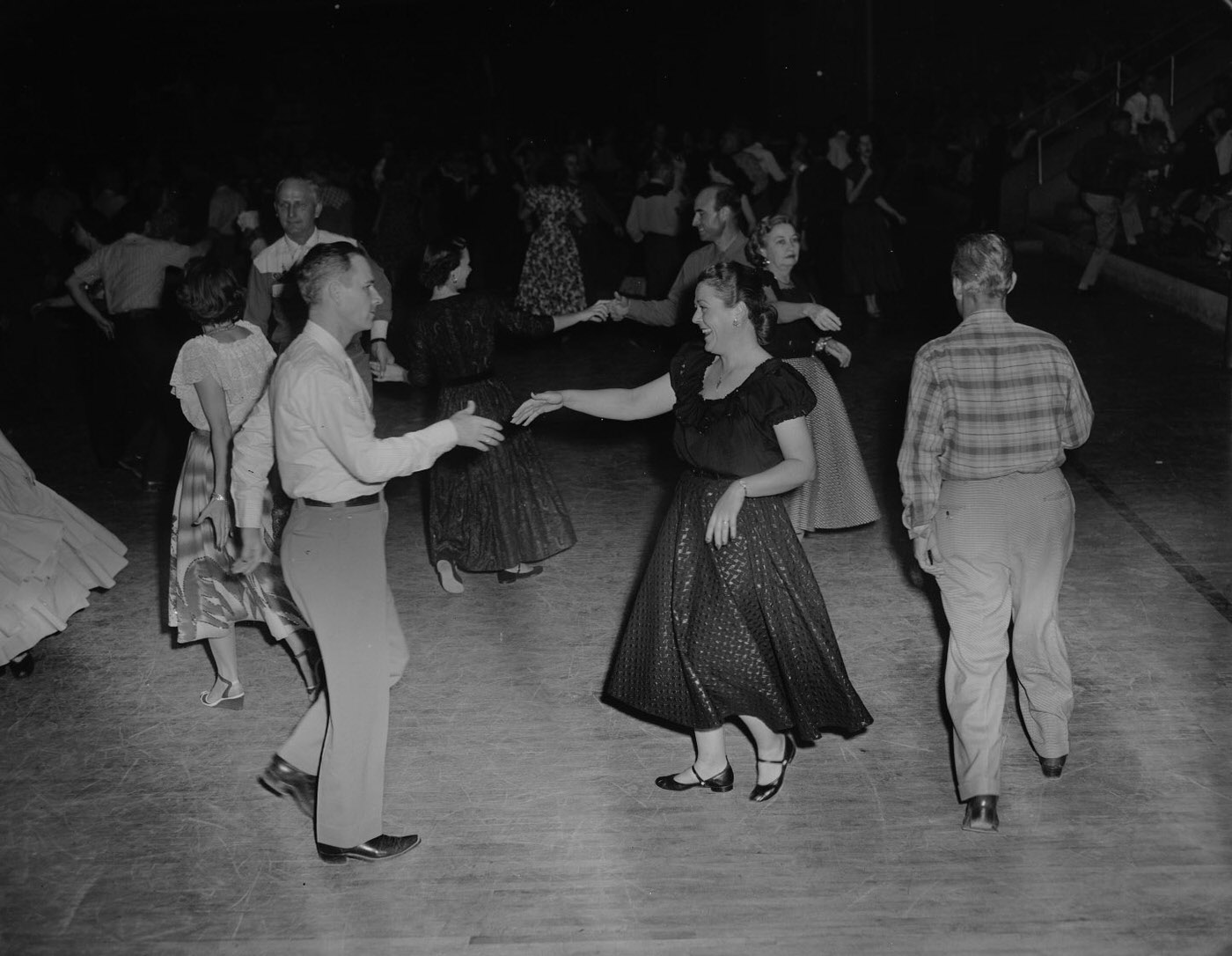
Political pageantry was a regular feature of Austin life throughout the decade. In 1953, Governor Allan Shivers was inaugurated with a full parade in front of the Capitol, complete with military units and celebration dances that stretched into the evening.
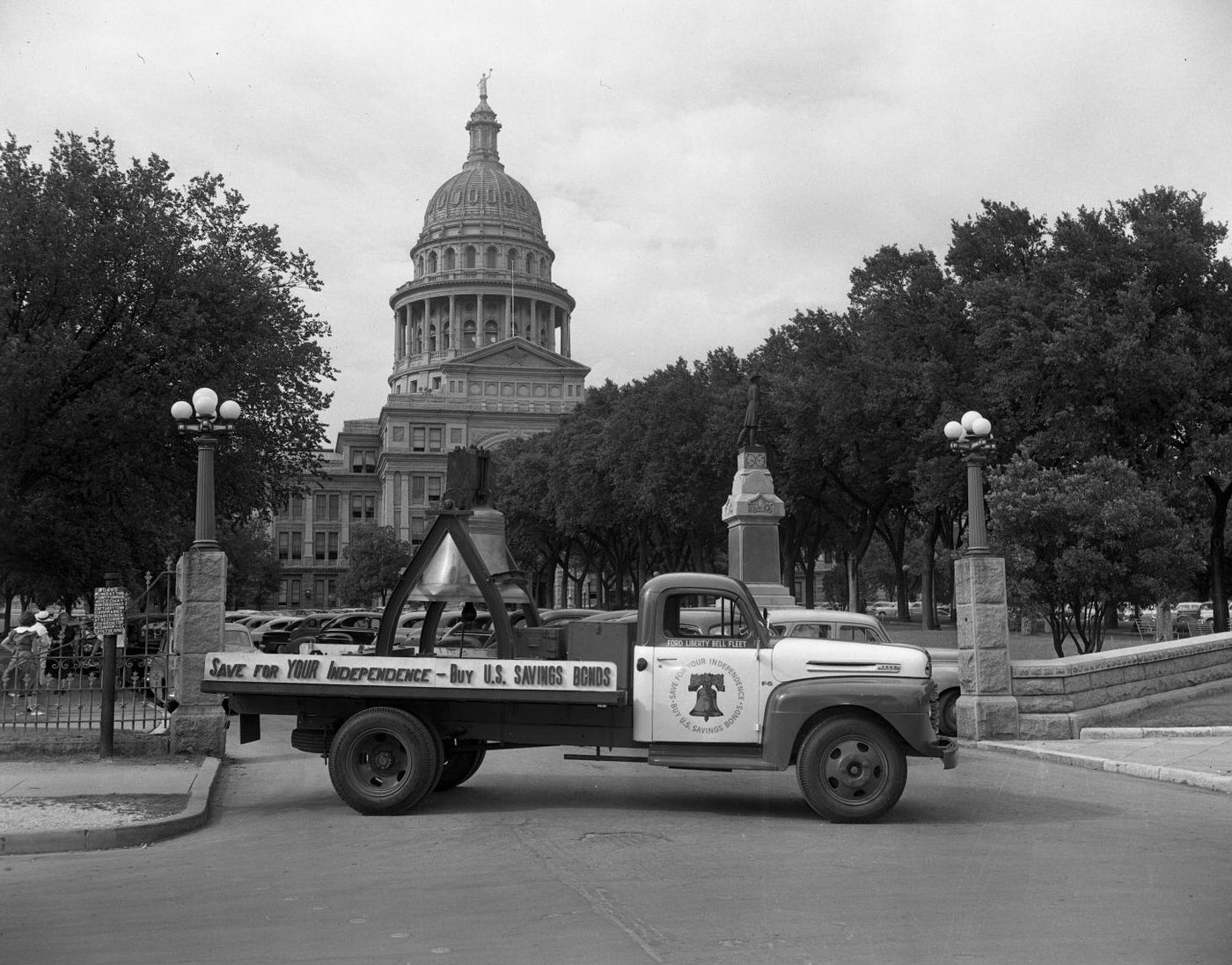
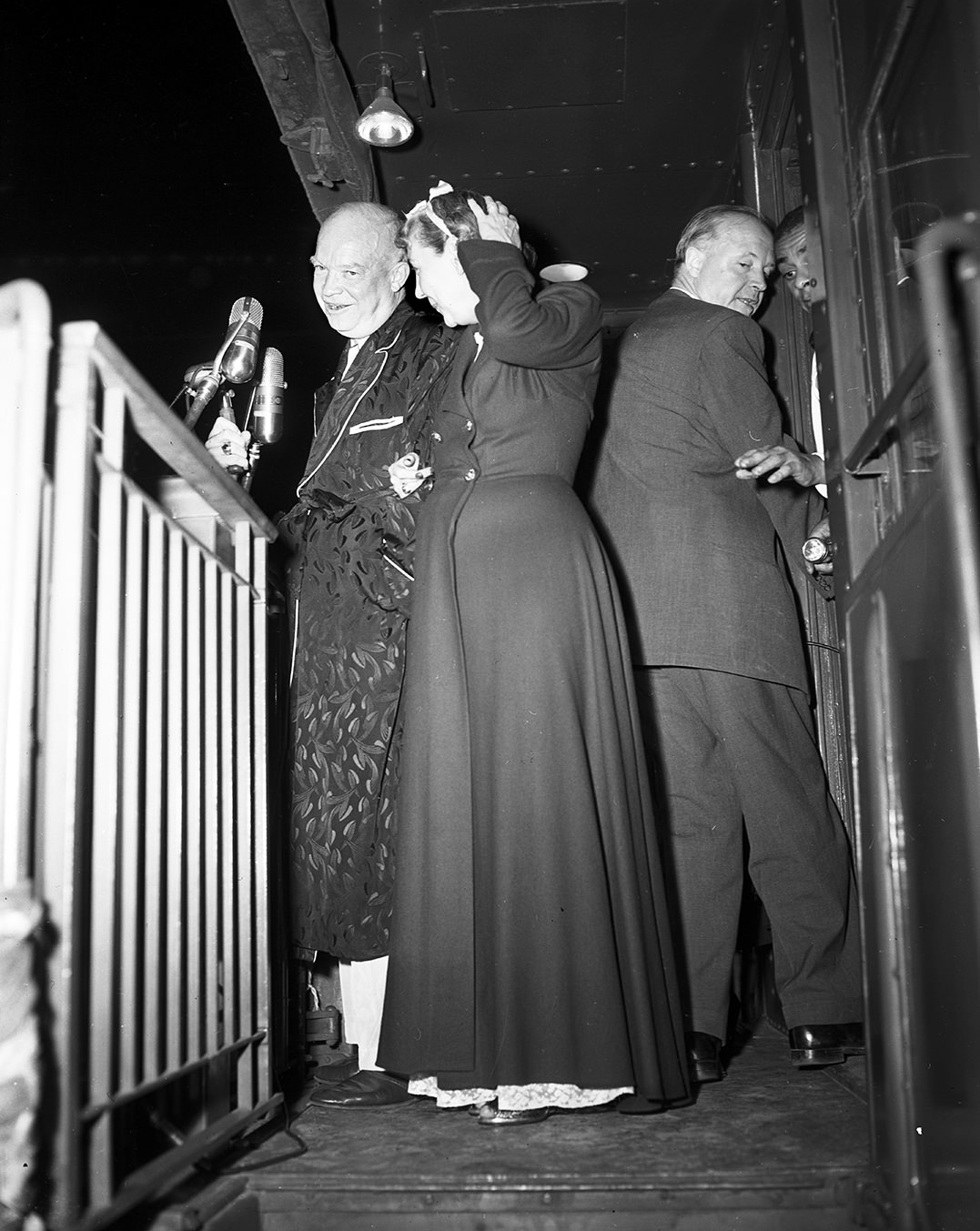
The Capitol also drew national attention in 1950 when the Liberty Bell made a public appearance on its grounds, and again in 1952 when Dwight D. Eisenhower made an early morning campaign stop in Austin before winning the presidency that November.
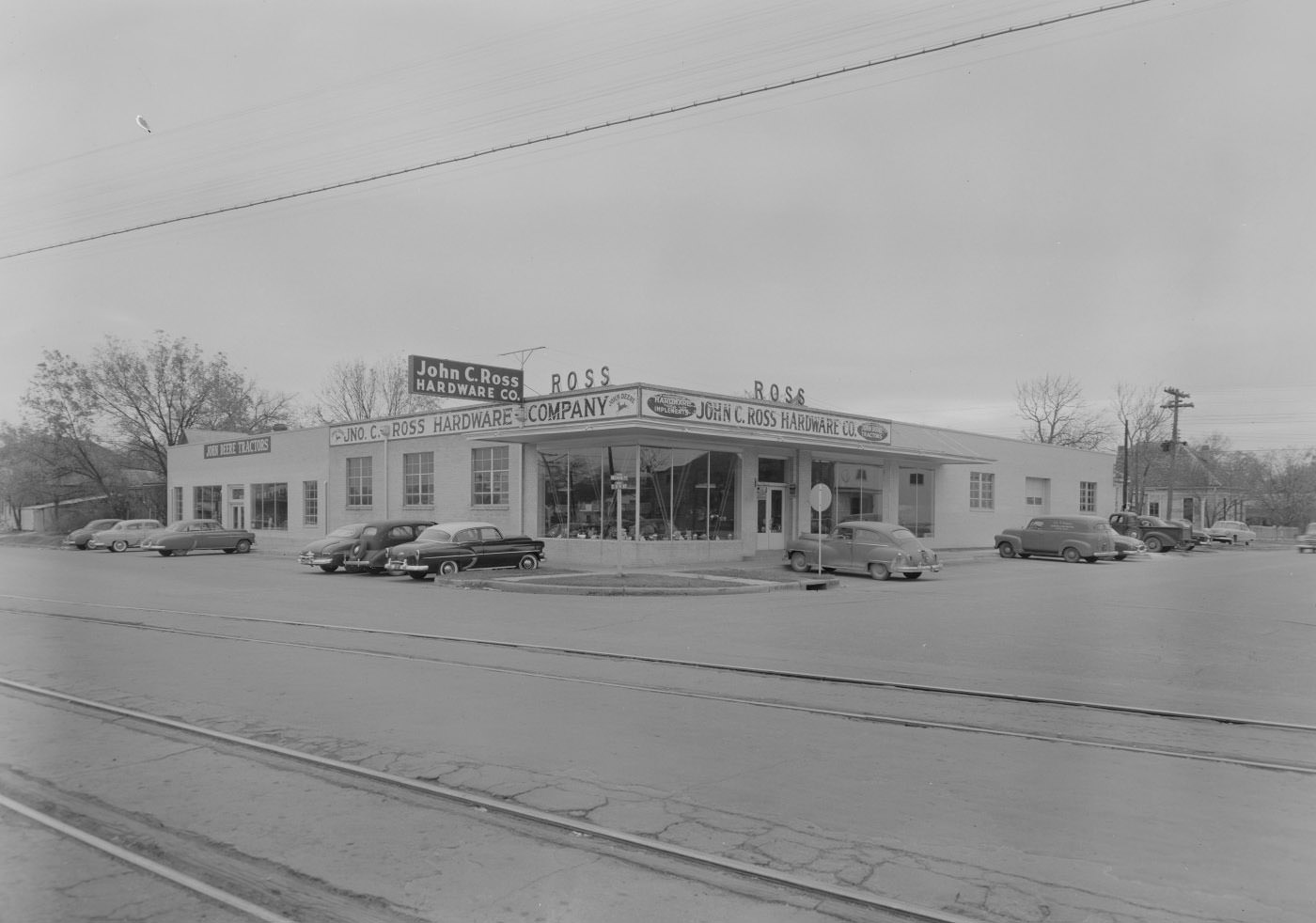
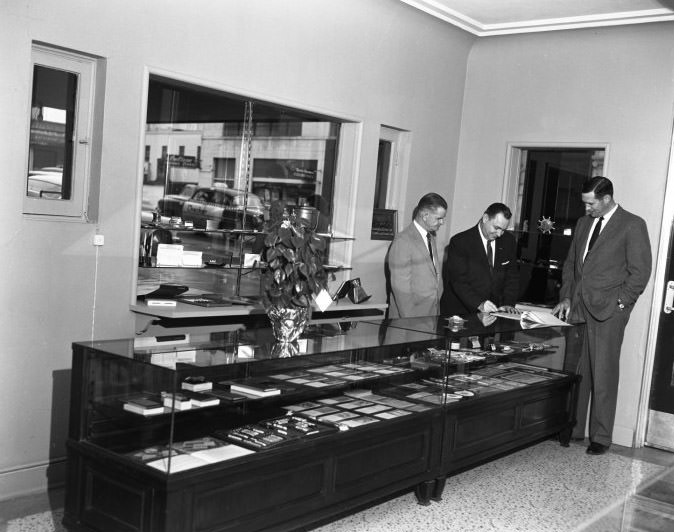
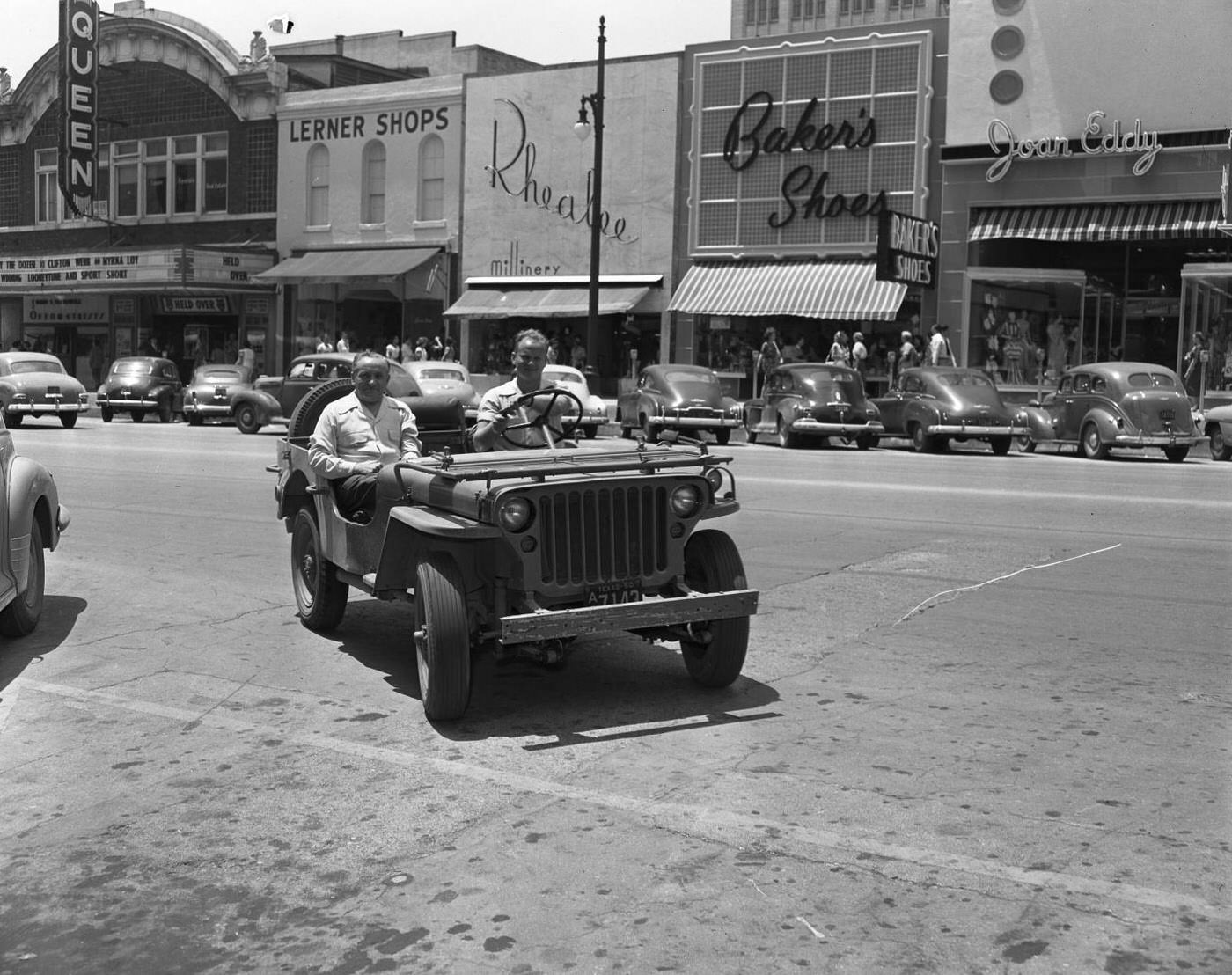
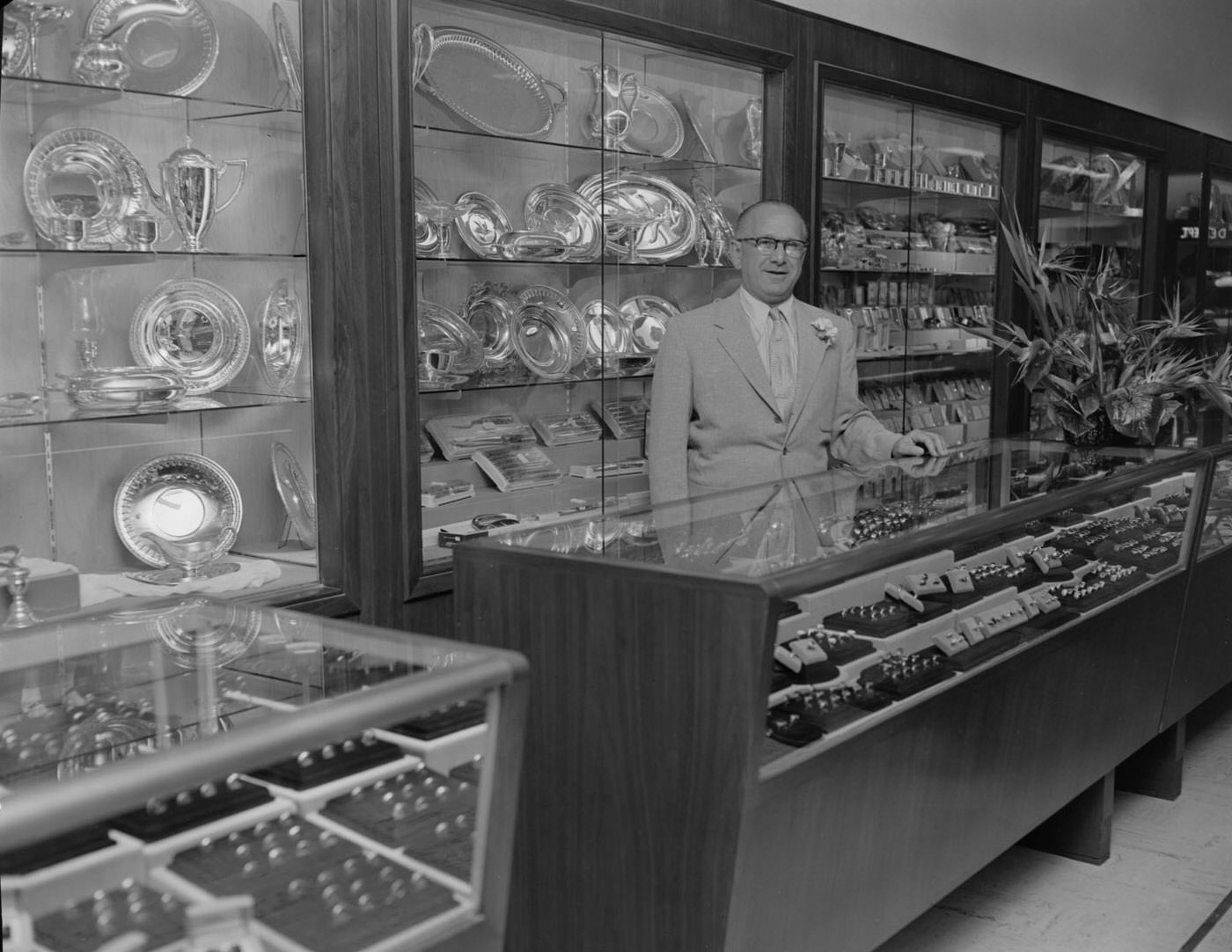
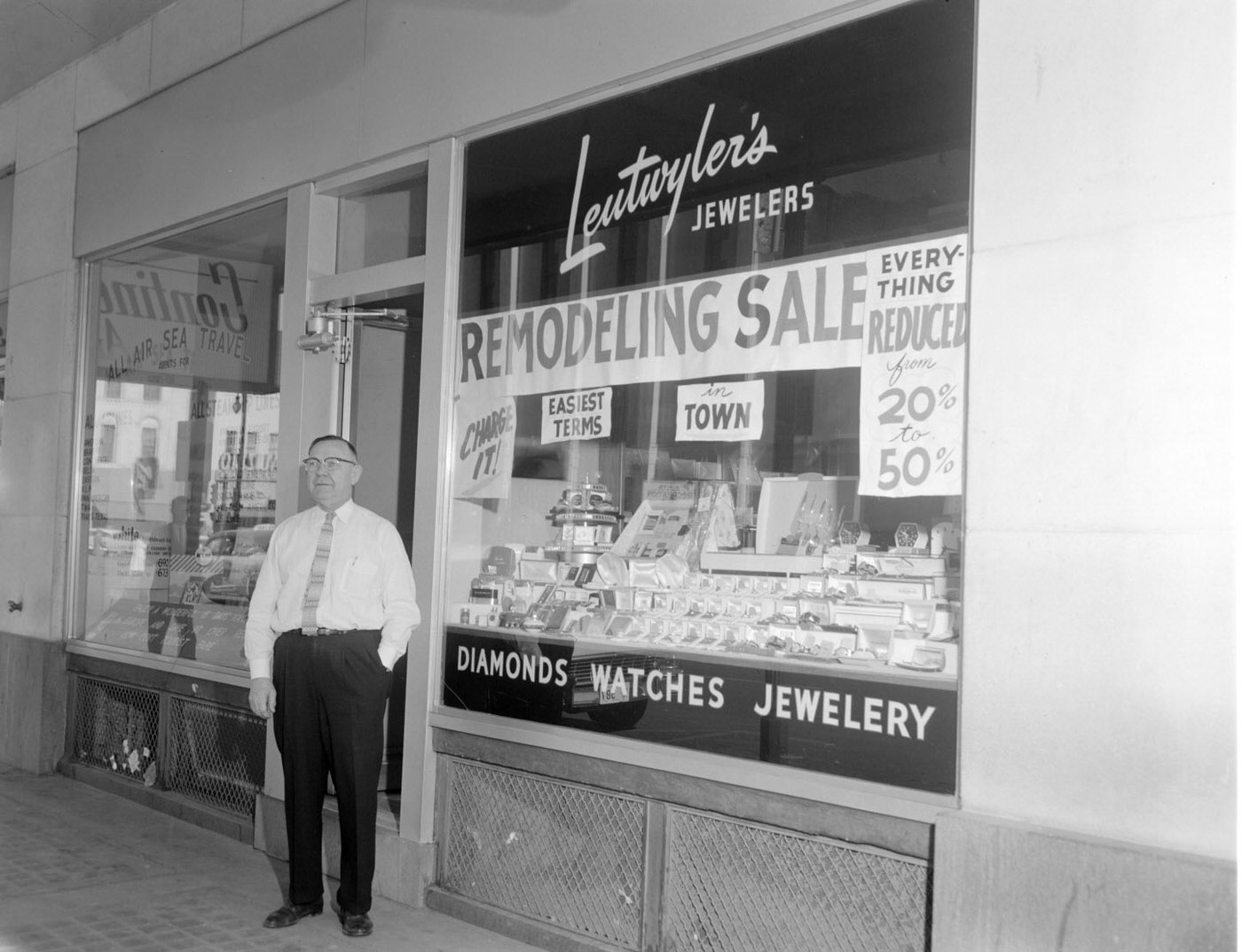
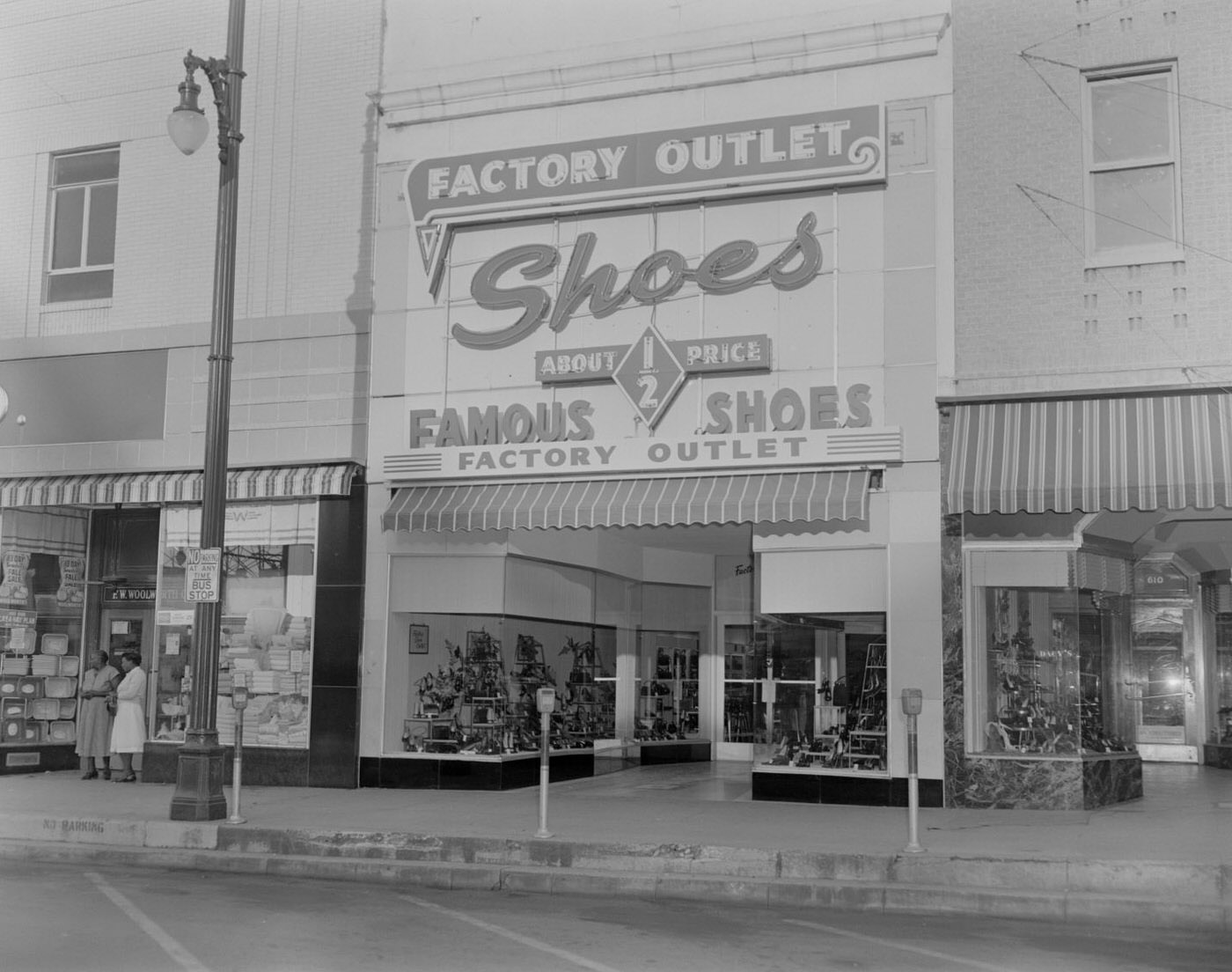
Downtown Austin’s streets were lined with the kinds of local businesses that defined the era. Hardware stores, jewelers, shoe shops, and candy counters were all part of the daily rhythm. Lammes Candy Store drew customers to its counter in 1951, while Zales Jewelers and Mr. Leutwyler’s jewelry shop gave Austinites their pick of fine goods.

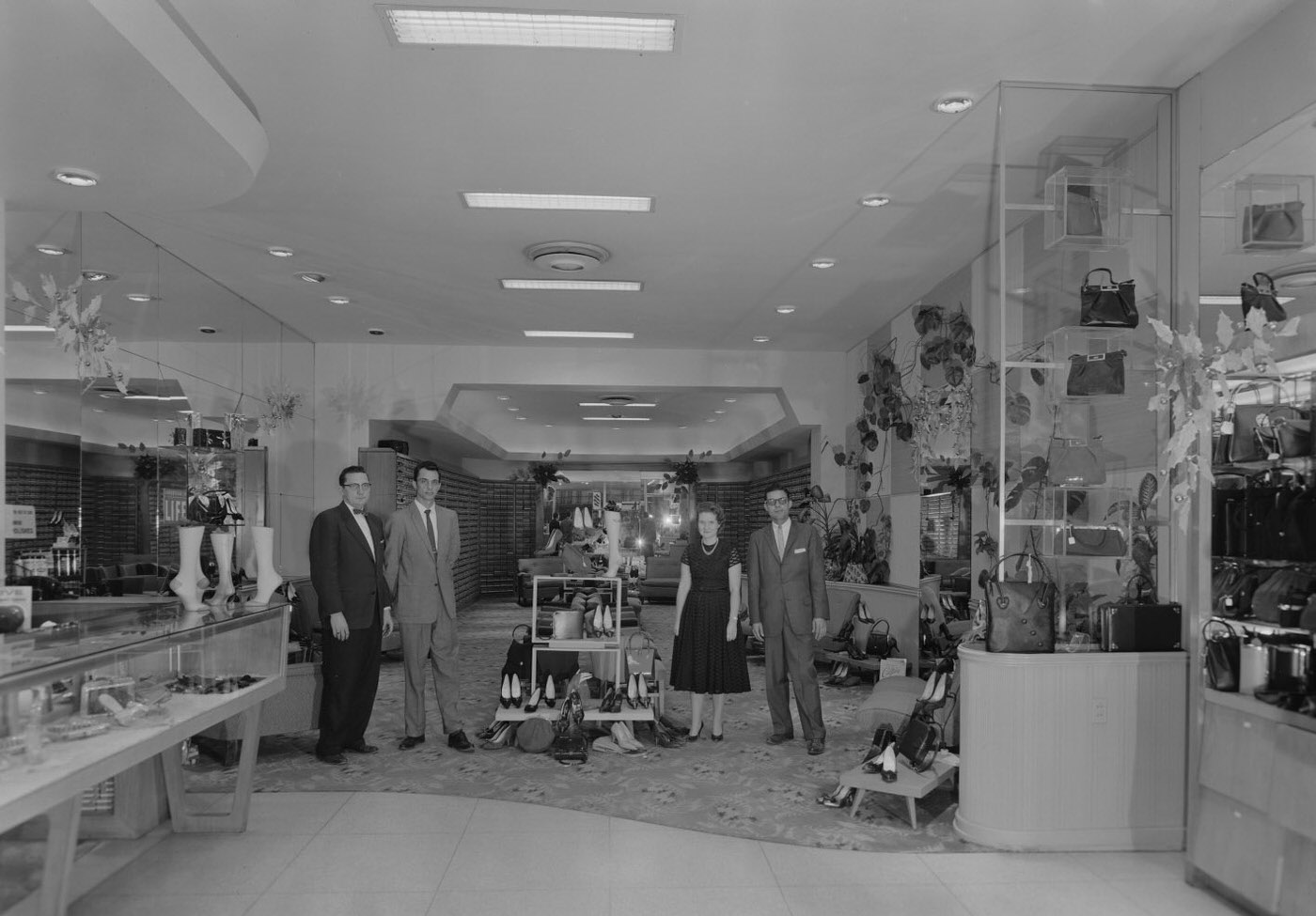
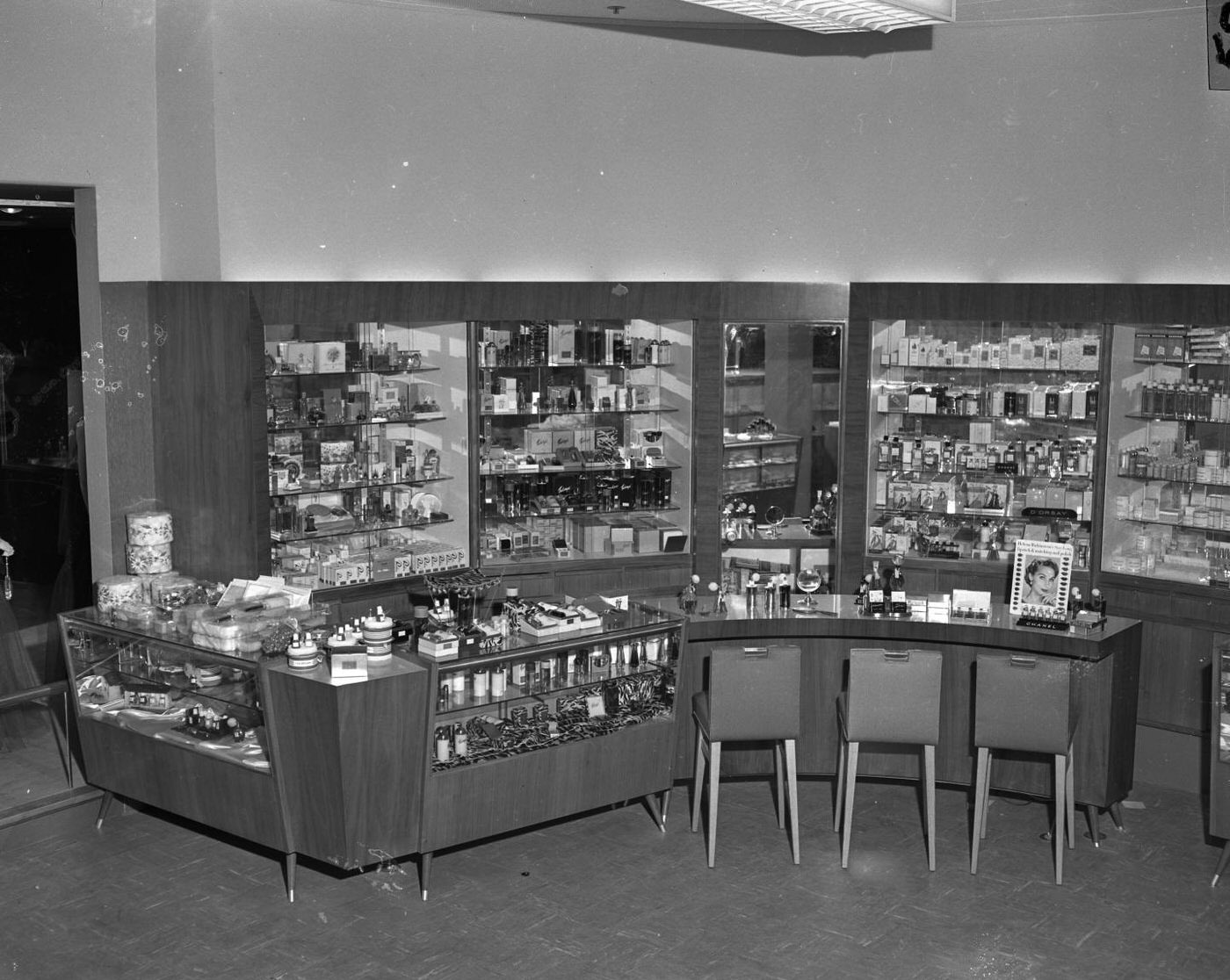
Fashion was a serious matter in 1950s Austin. Men wore suits and slacks with button-up shirts for everyday business, and women dressed in skirts and dresses. Stores like The Vogue Shop and Yarings cosmetics counter catered to shoppers who took their appearance seriously, whether heading to work, church, or a social event.
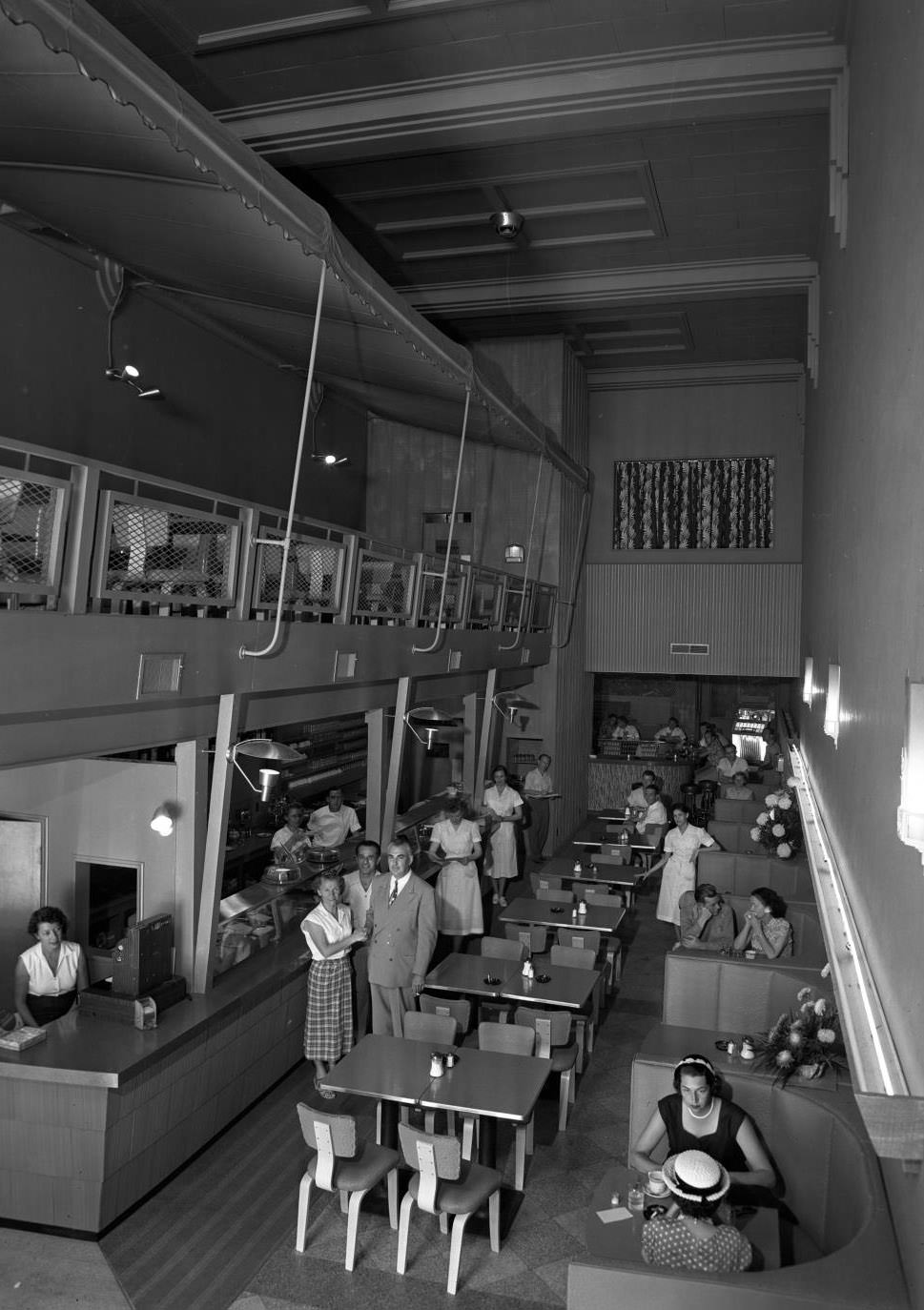
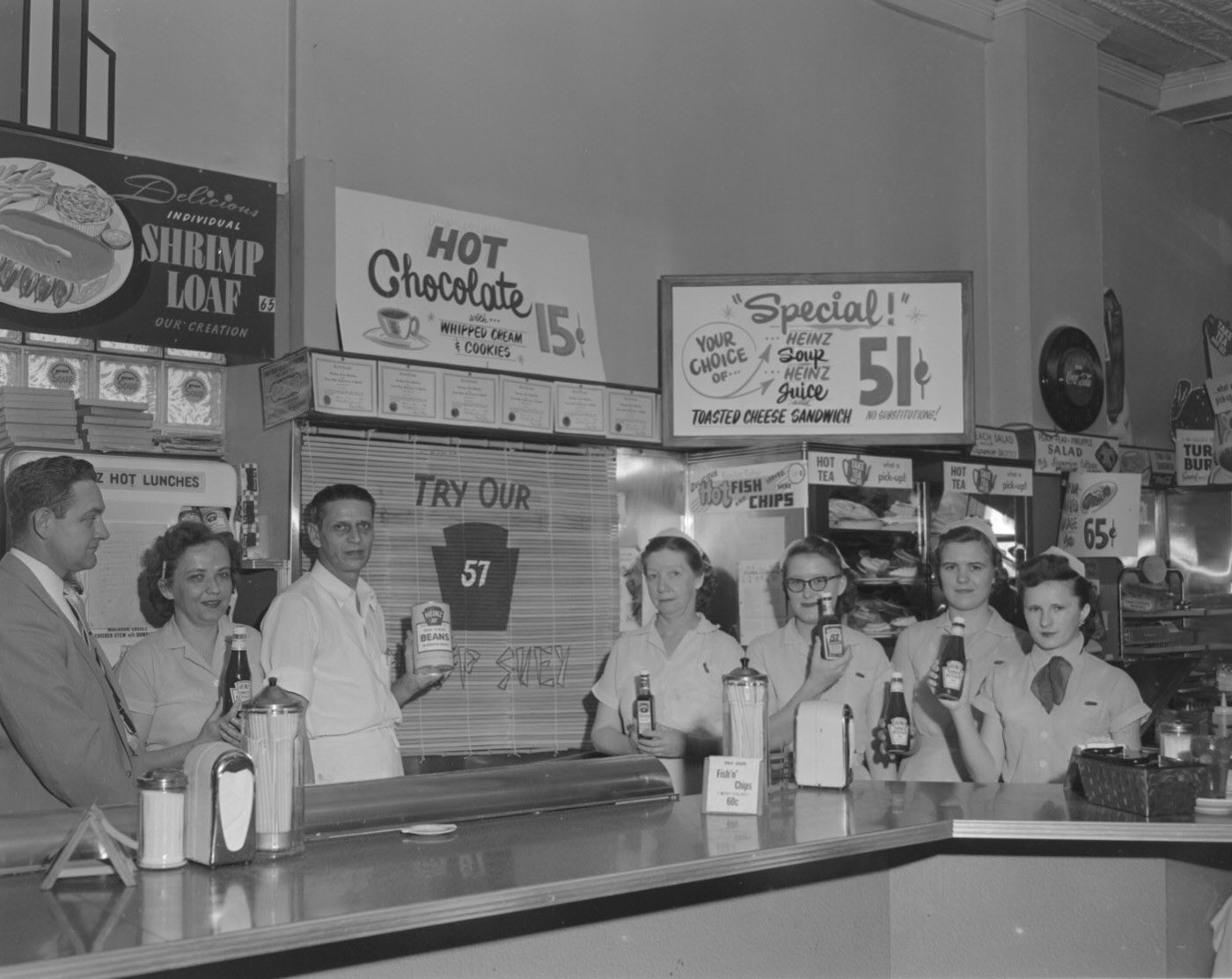
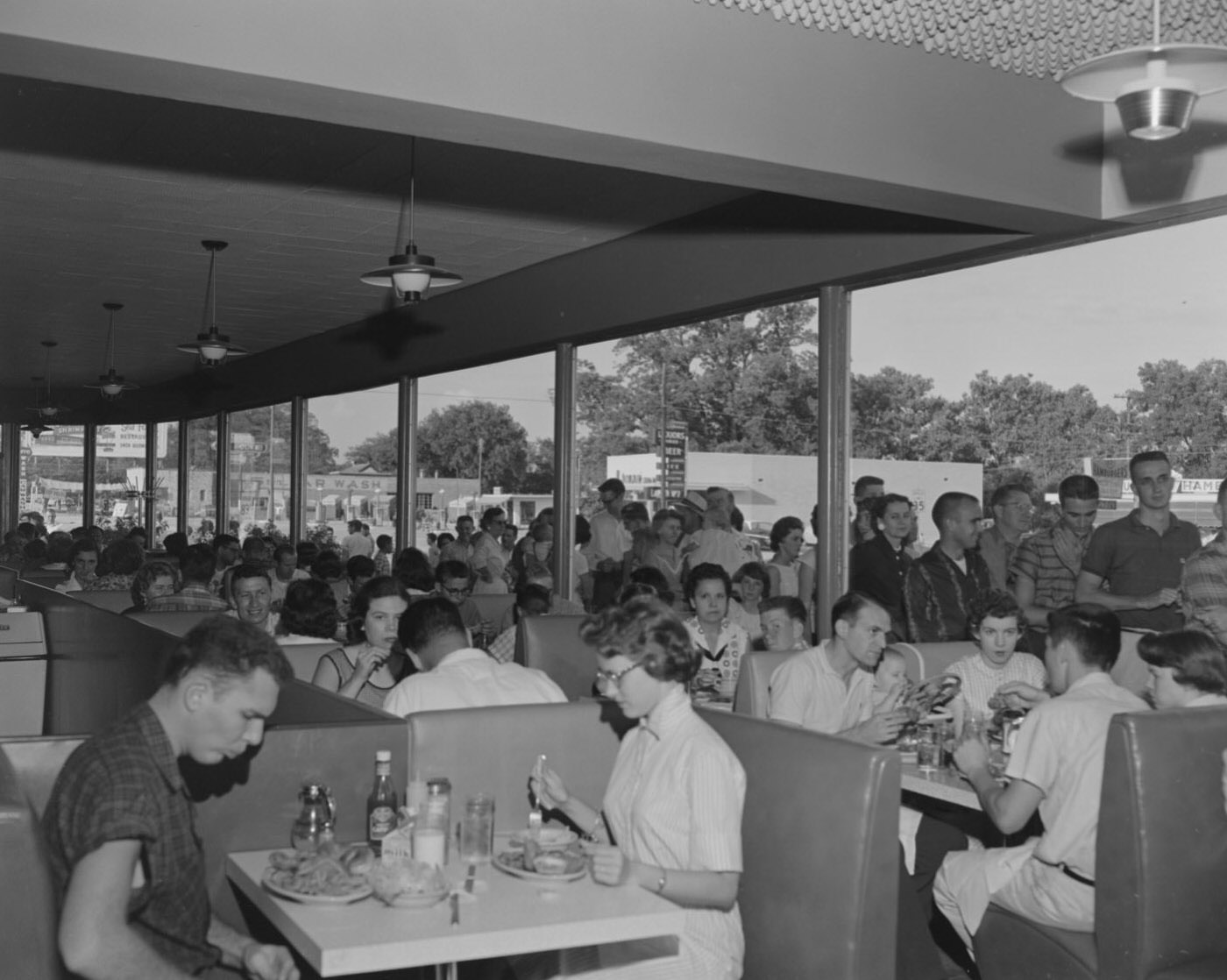
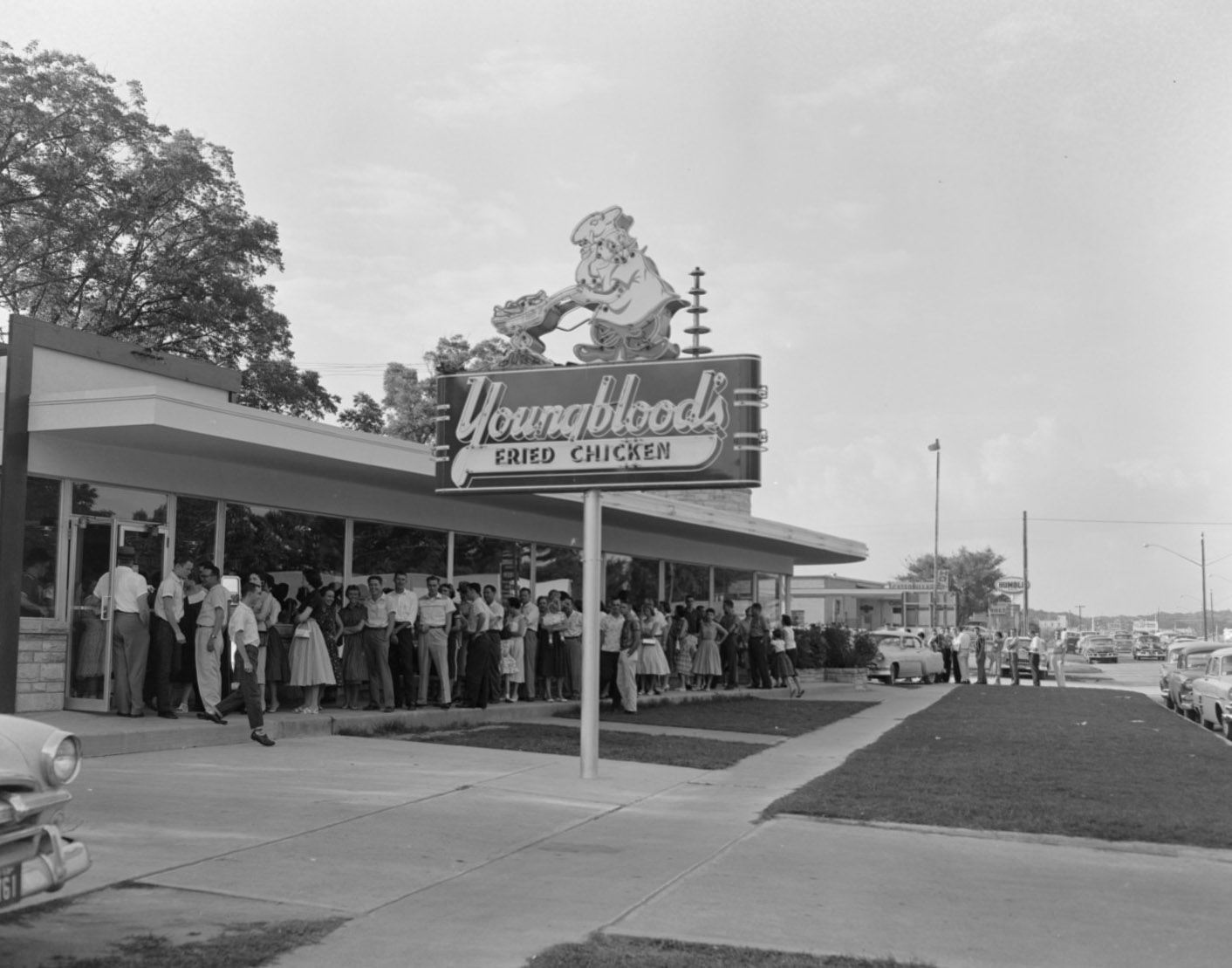
Eating out in Austin during the 1950s ranged from quick stops at hamburger counters to full sit-down meals. Youngblood’s Fried Chicken on South Lamar Street was a popular destination for families in 1958, with customers lining up both inside and out. The 2-J Hamburgers stand drew its own loyal queues, and the Shorthorn Bar-B-Q gave Austinites their fill of smoked meat.
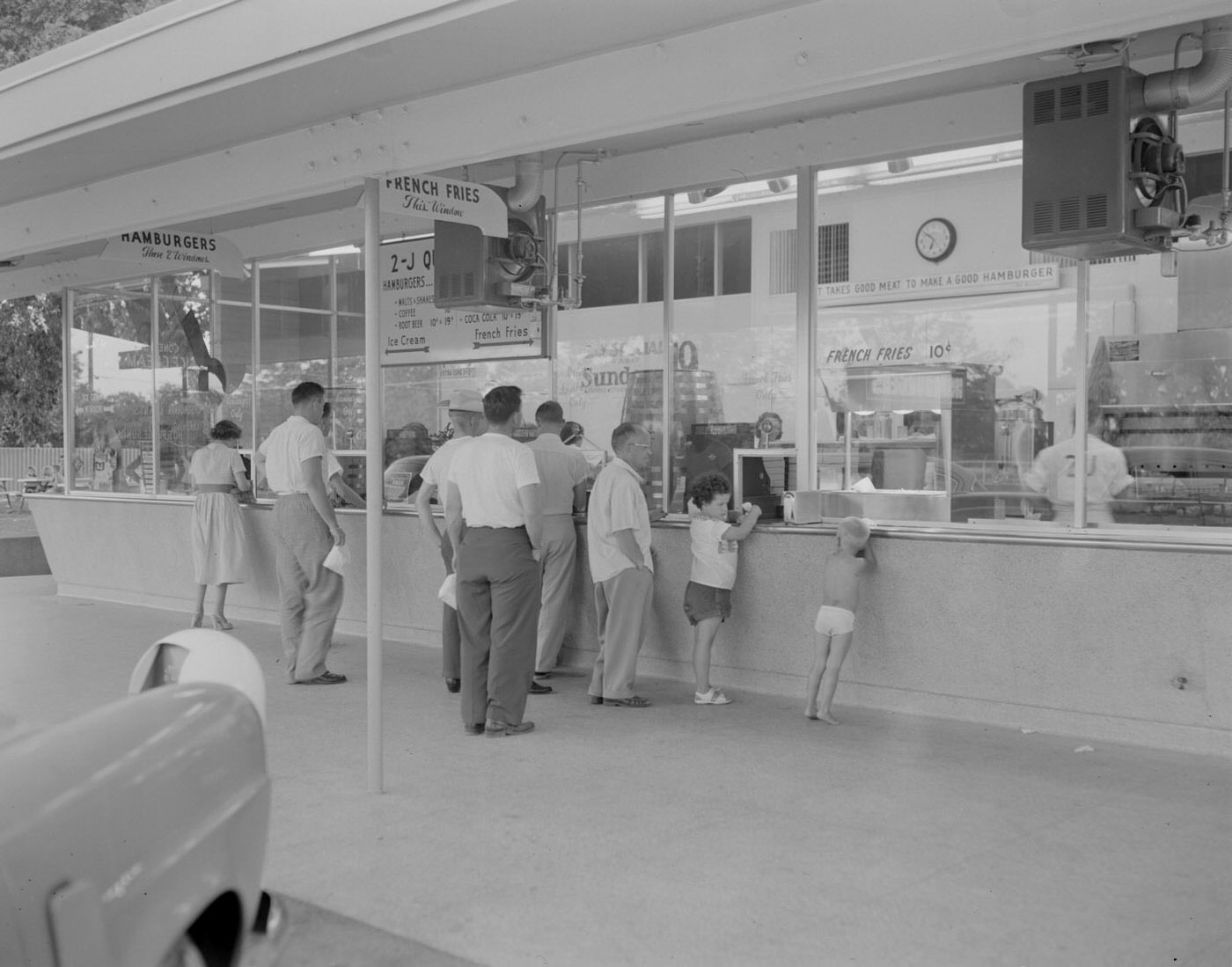
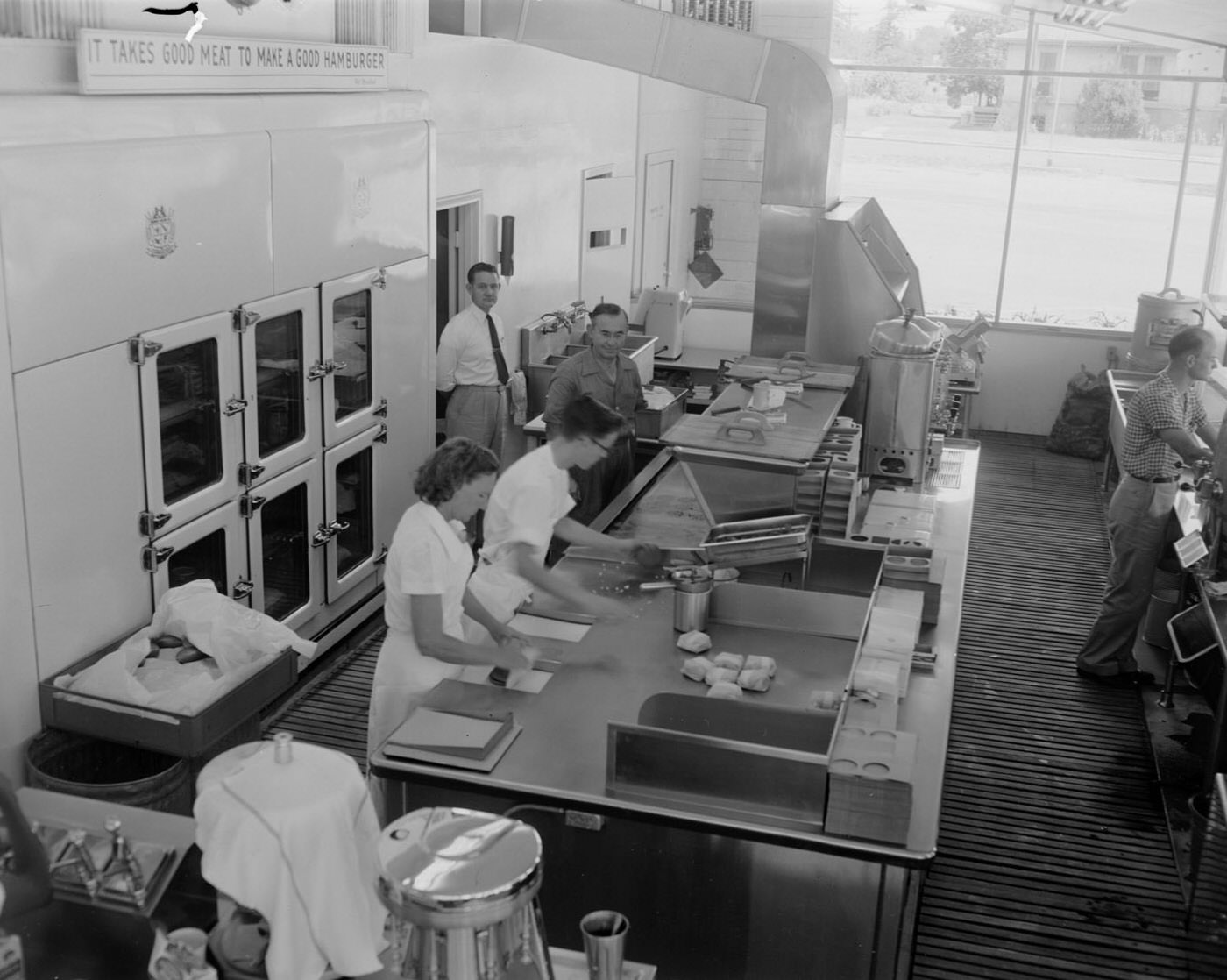
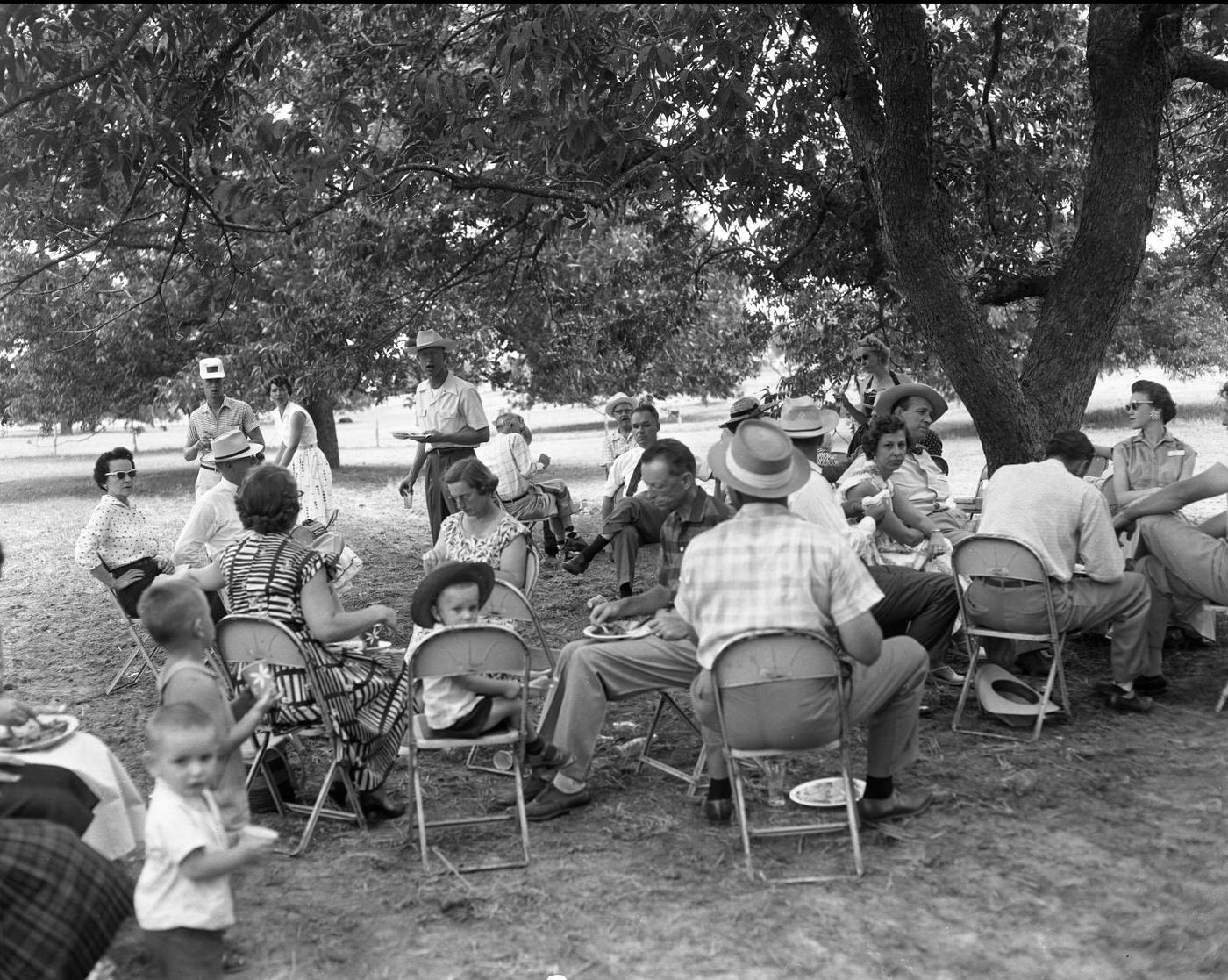
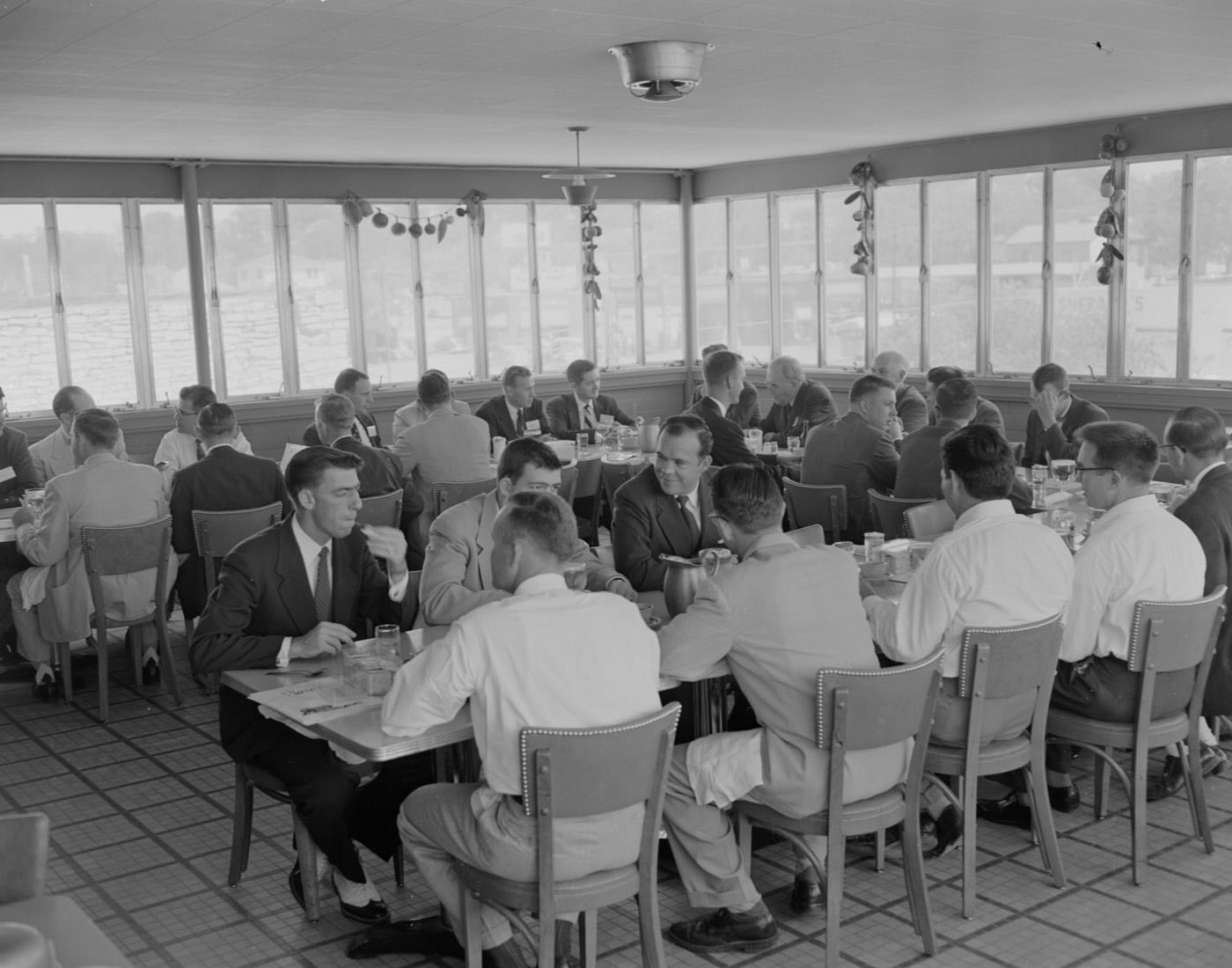
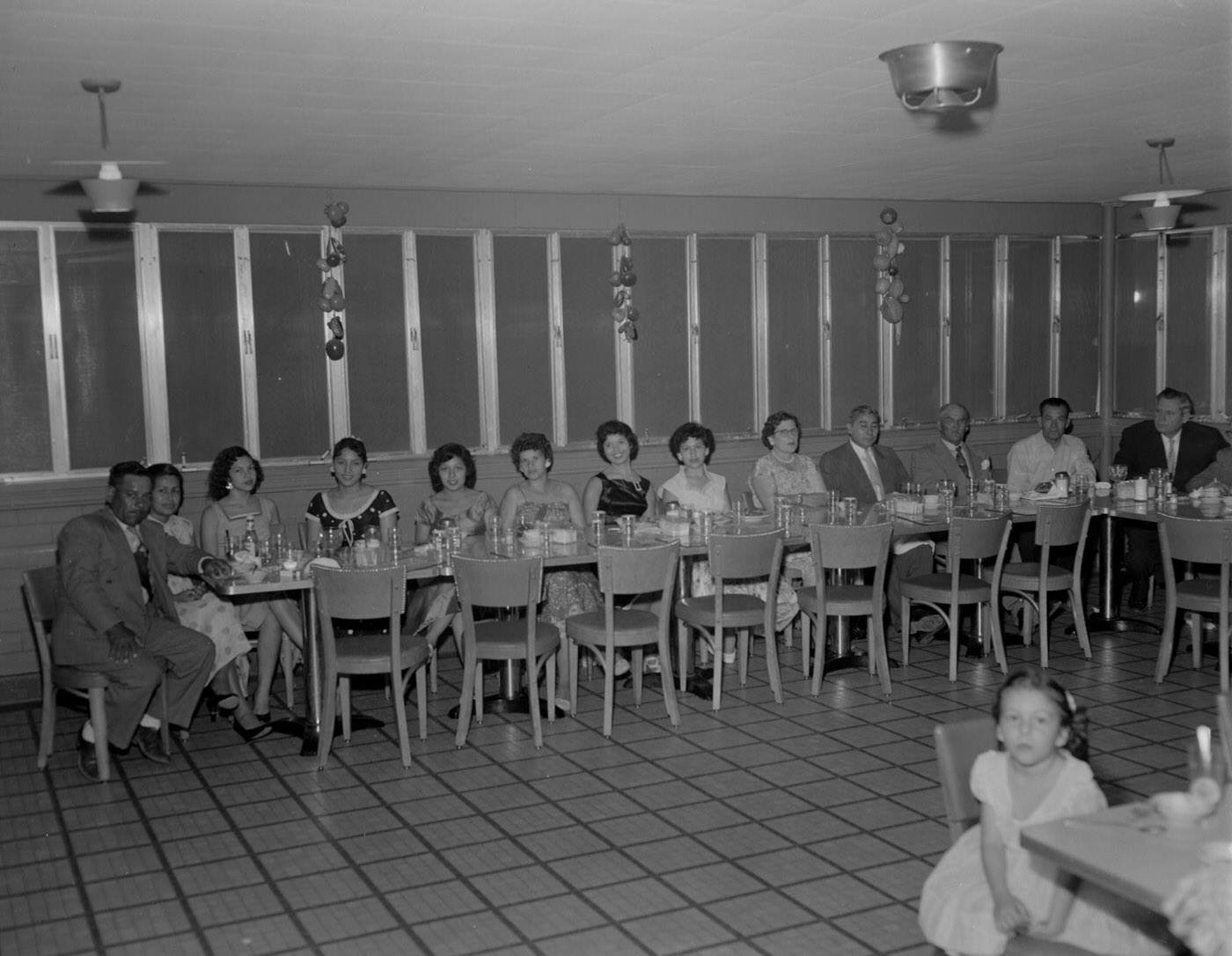
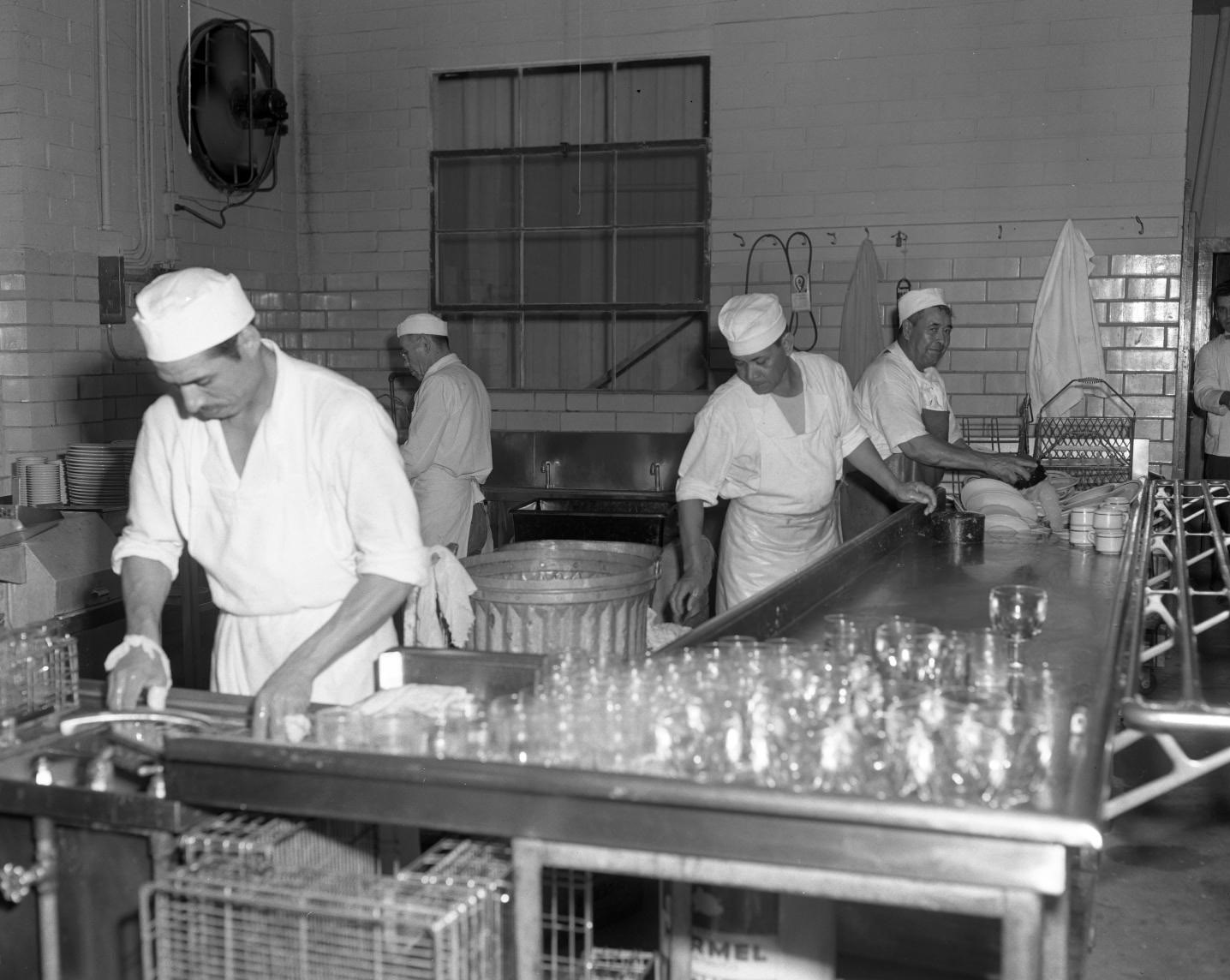
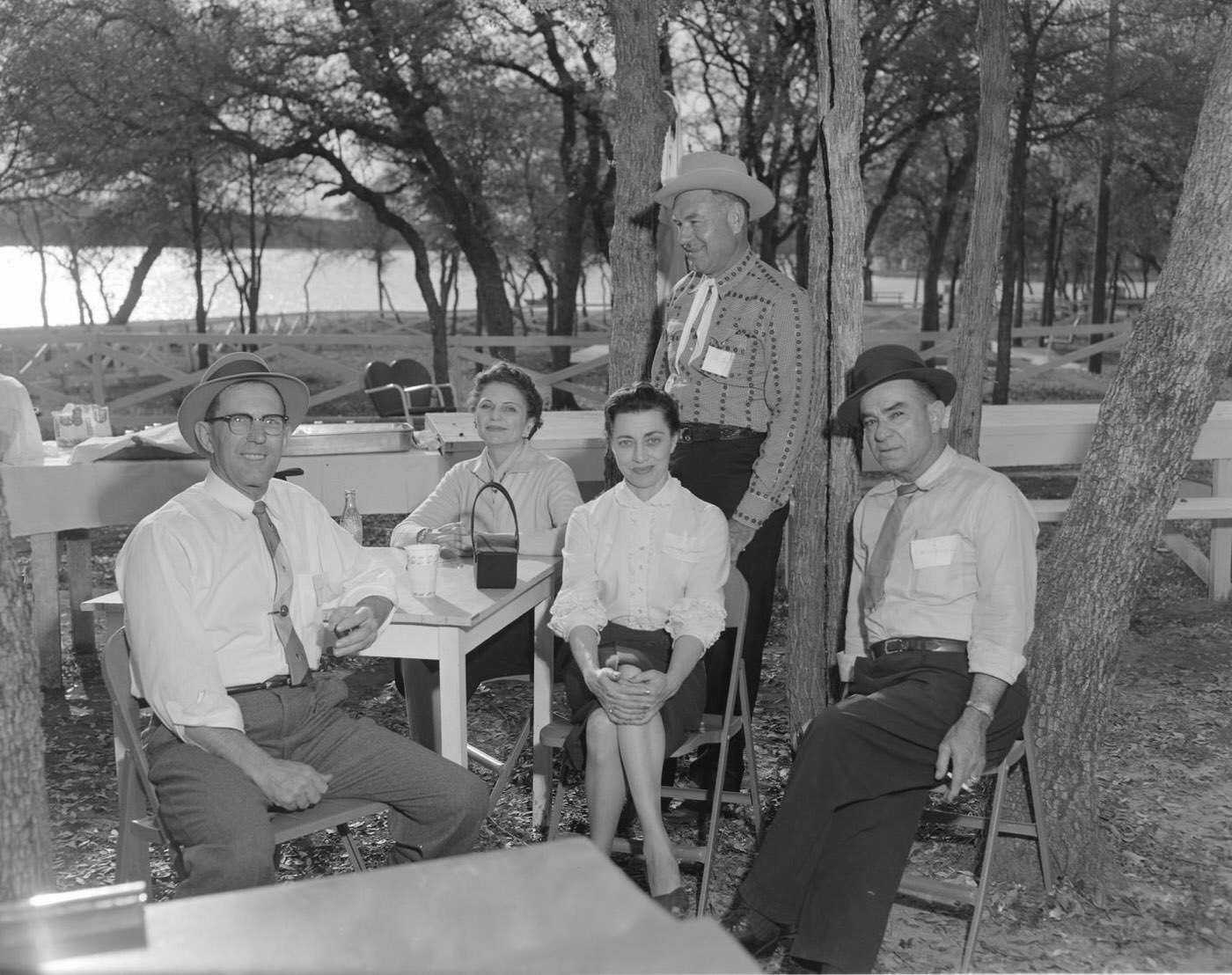
Mexican food had a firm place on Austin’s dining landscape as well. El Mats Mexican Restaurant hosted group dinners in 1956, and El Matamoros kept its kitchen running with a hardworking dishwashing crew in 1957. Outdoor barbecues were equally popular — the Lago Vista Open House BBQ in 1958 drew guests who sat outside to share a meal surrounded by the Texas Hill Country.
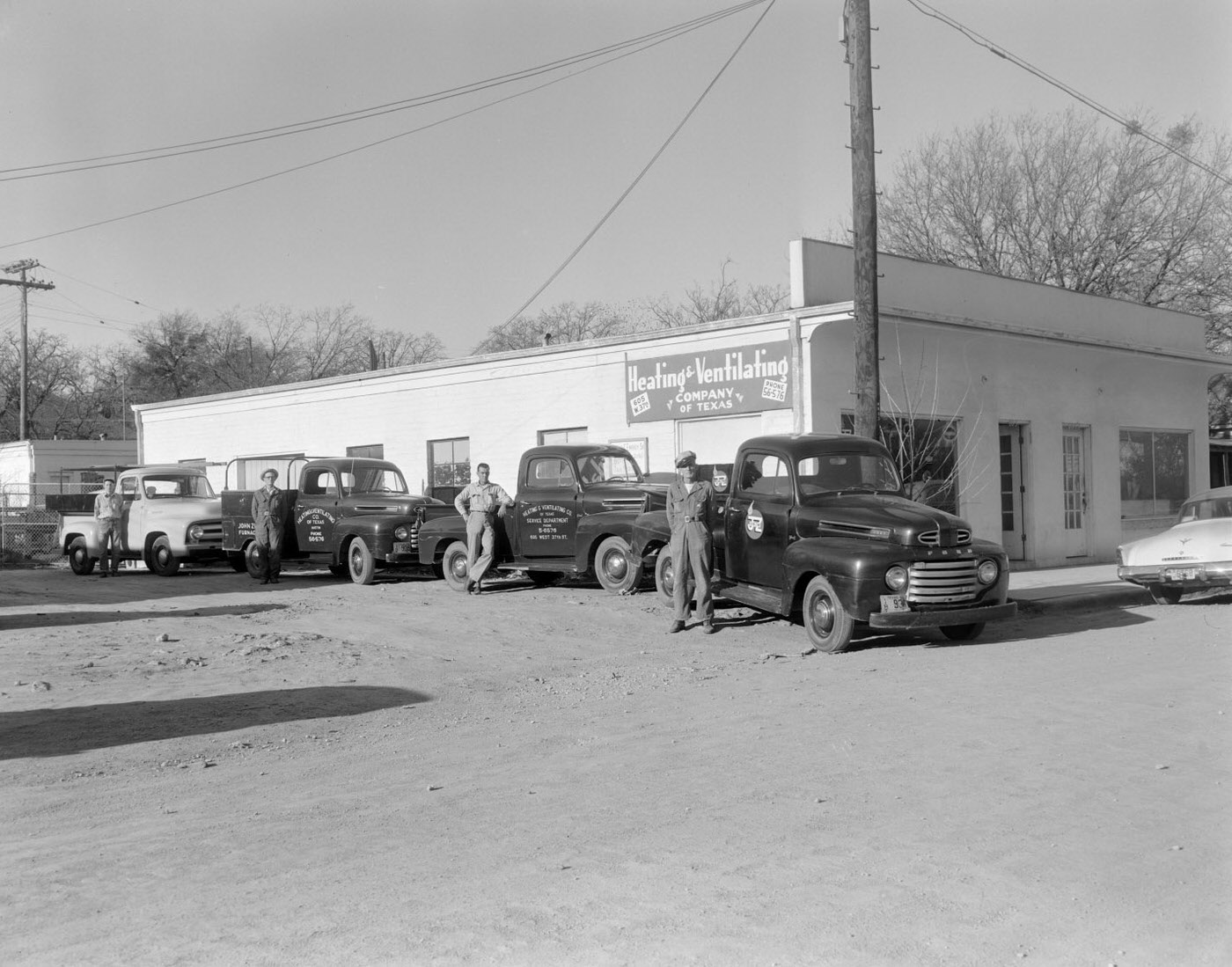
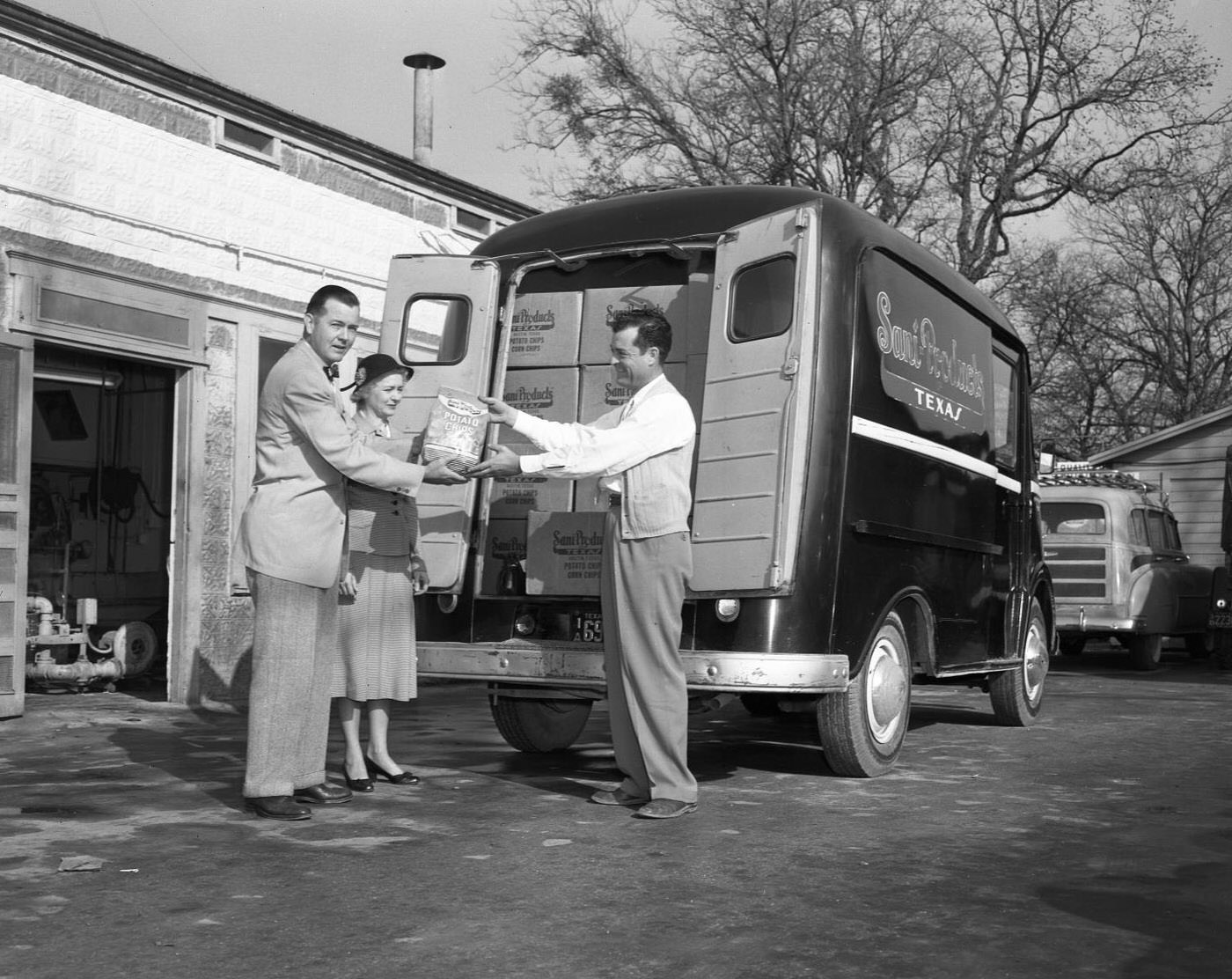
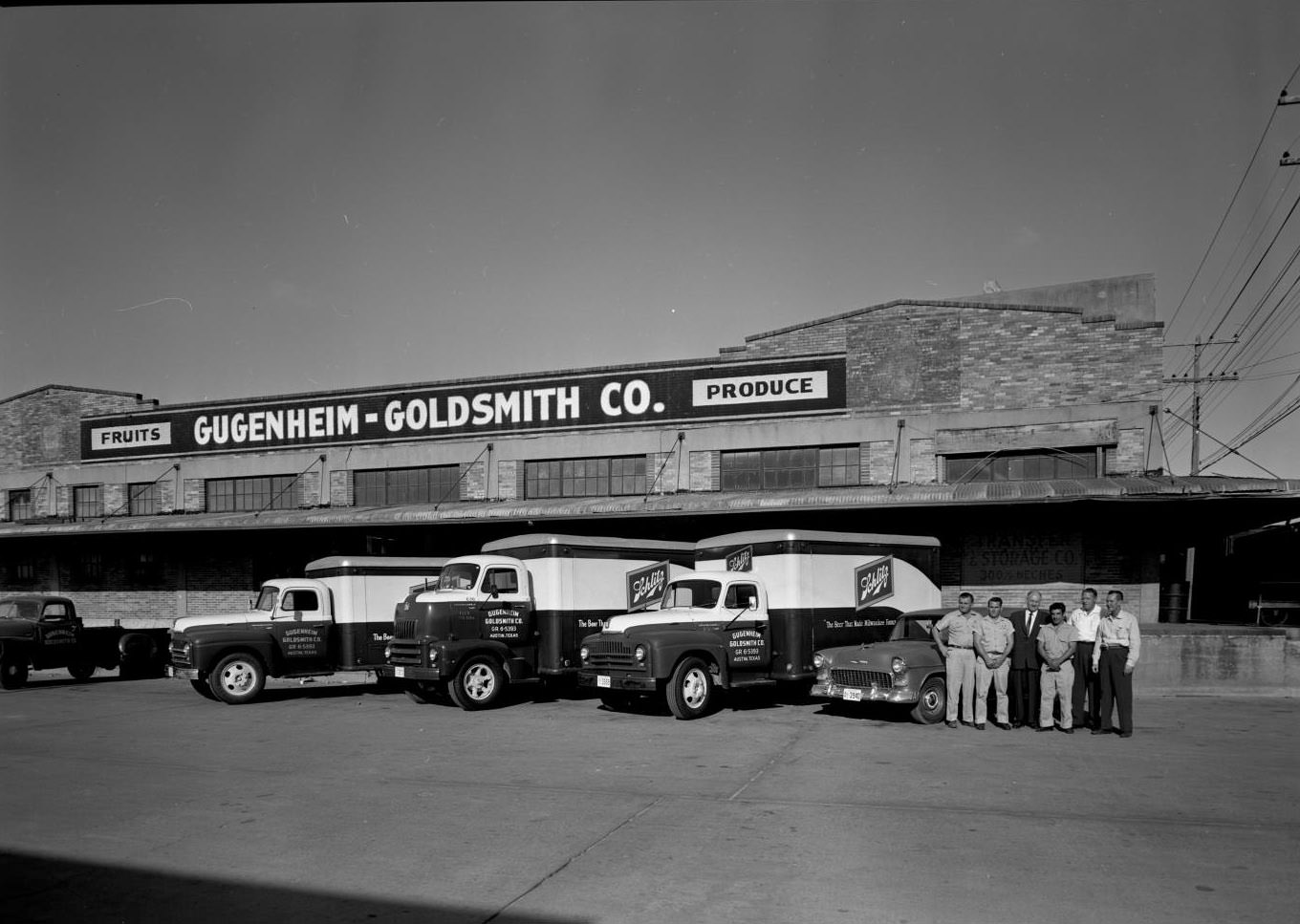
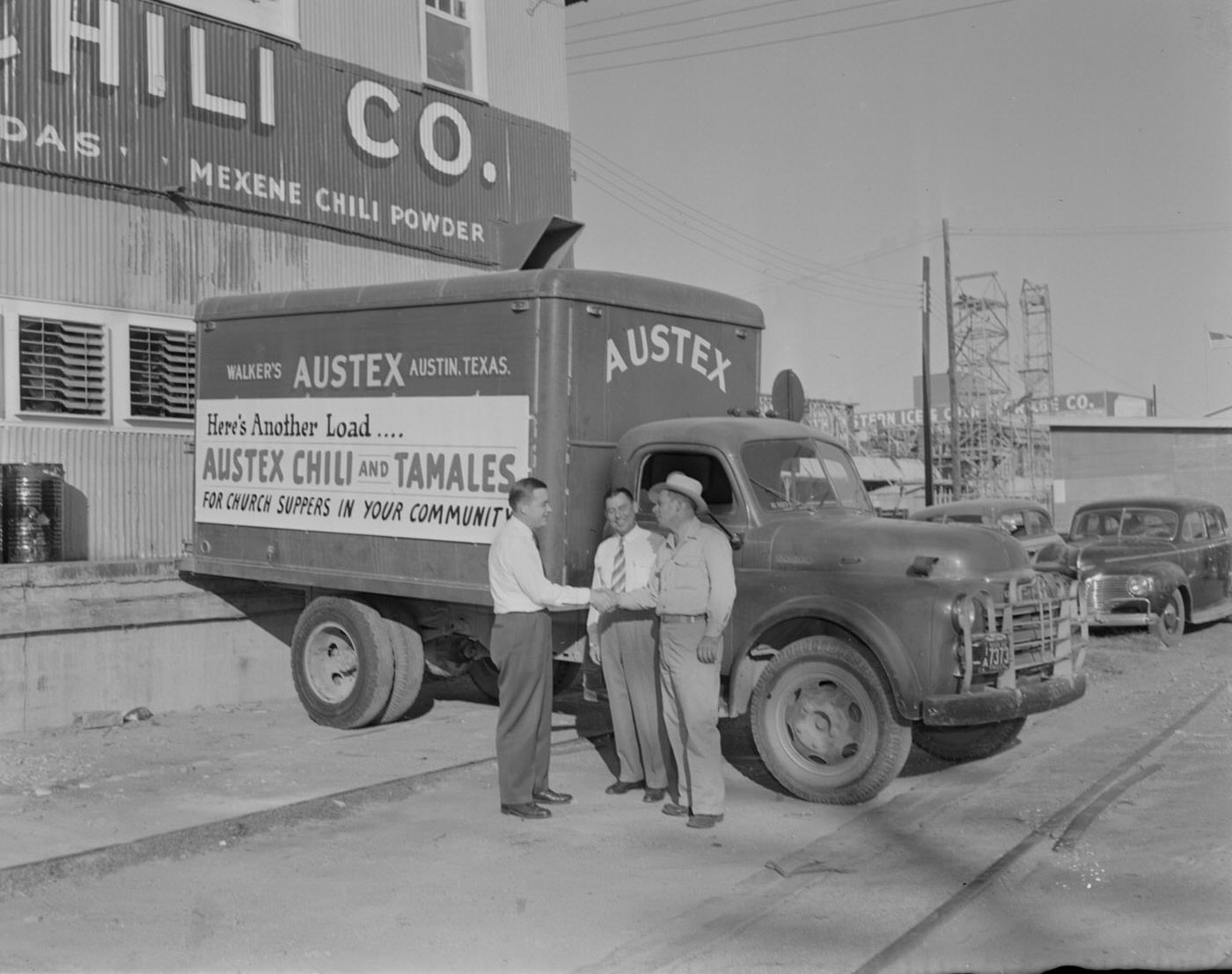
Grocery shopping in the 1950s was not the single-store experience it is today. Families sourced their food from multiple places — produce companies, local markets, and specialty suppliers. The Gugenheim-Goldsmith Produce Company operated a full fleet of trucks in 1957, and Walker’s Austex Chili Company was already a recognizable local brand by 1952.
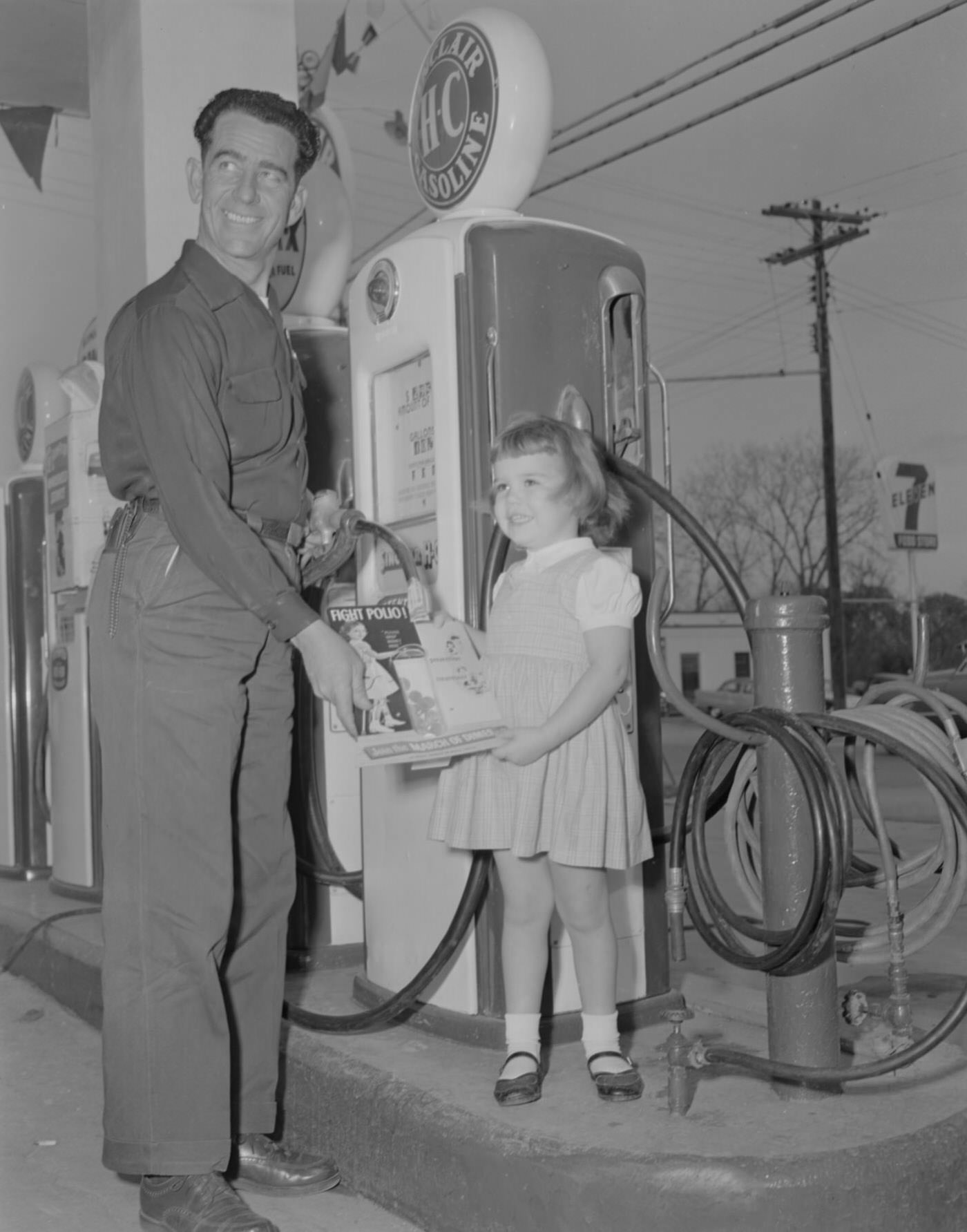
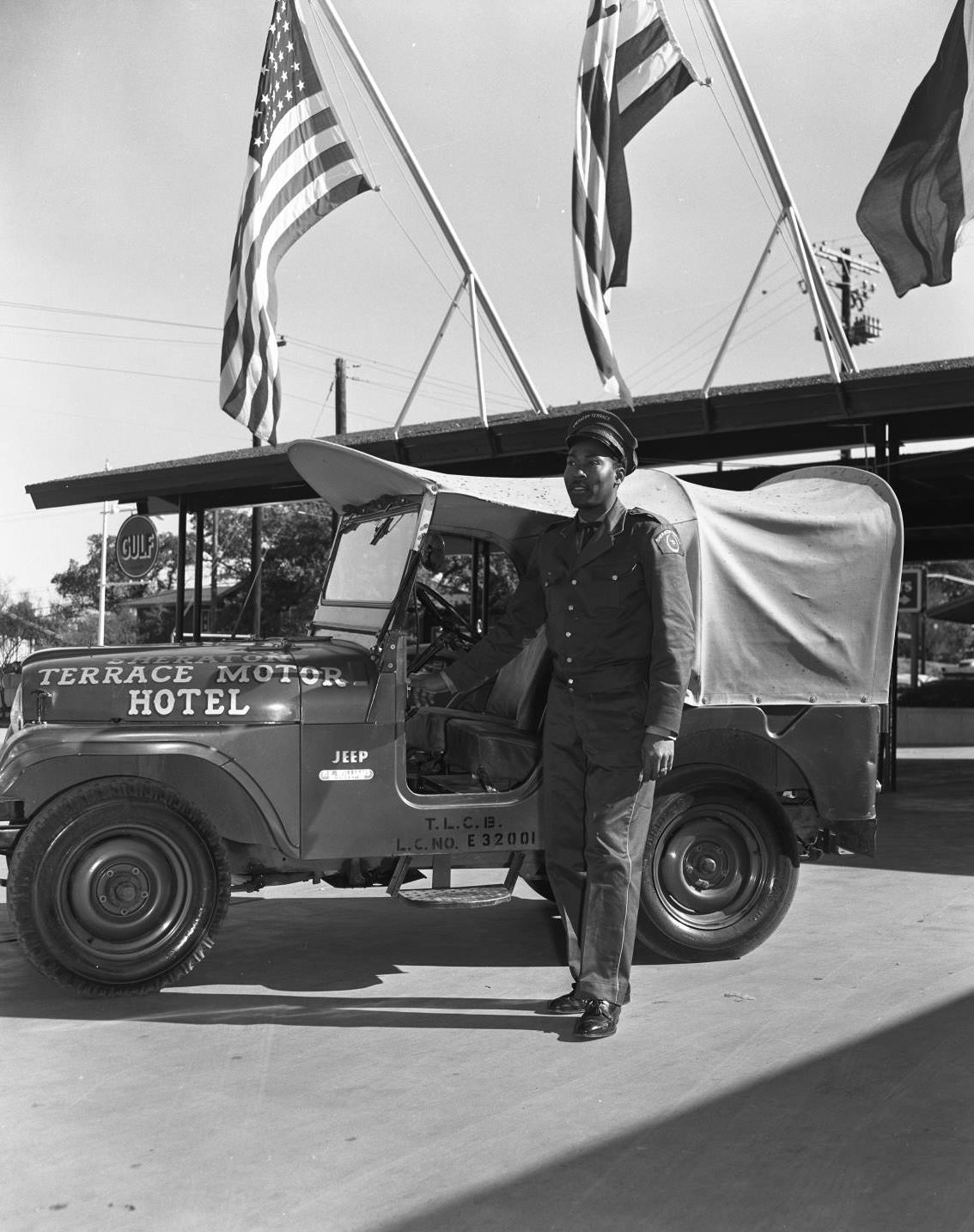
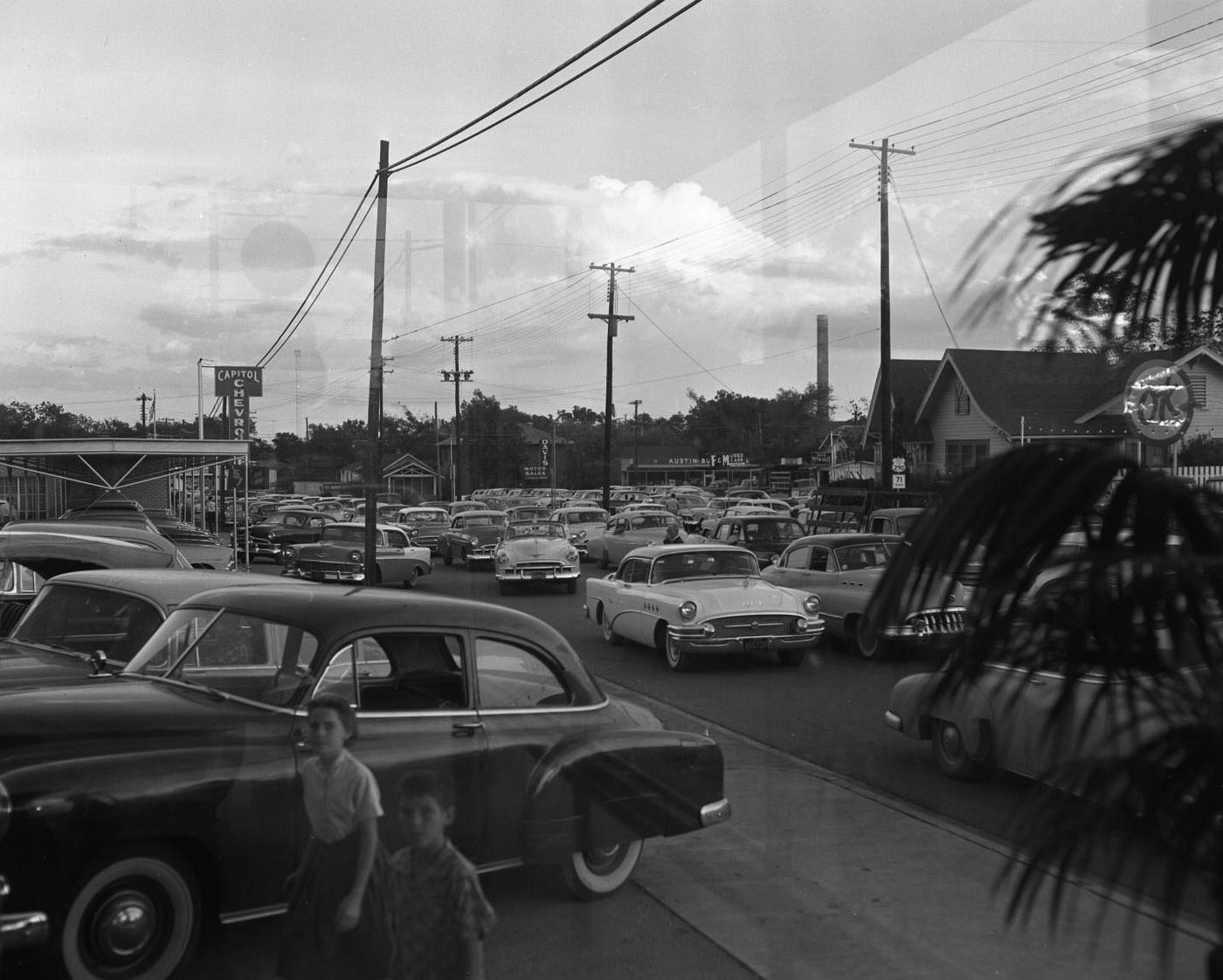
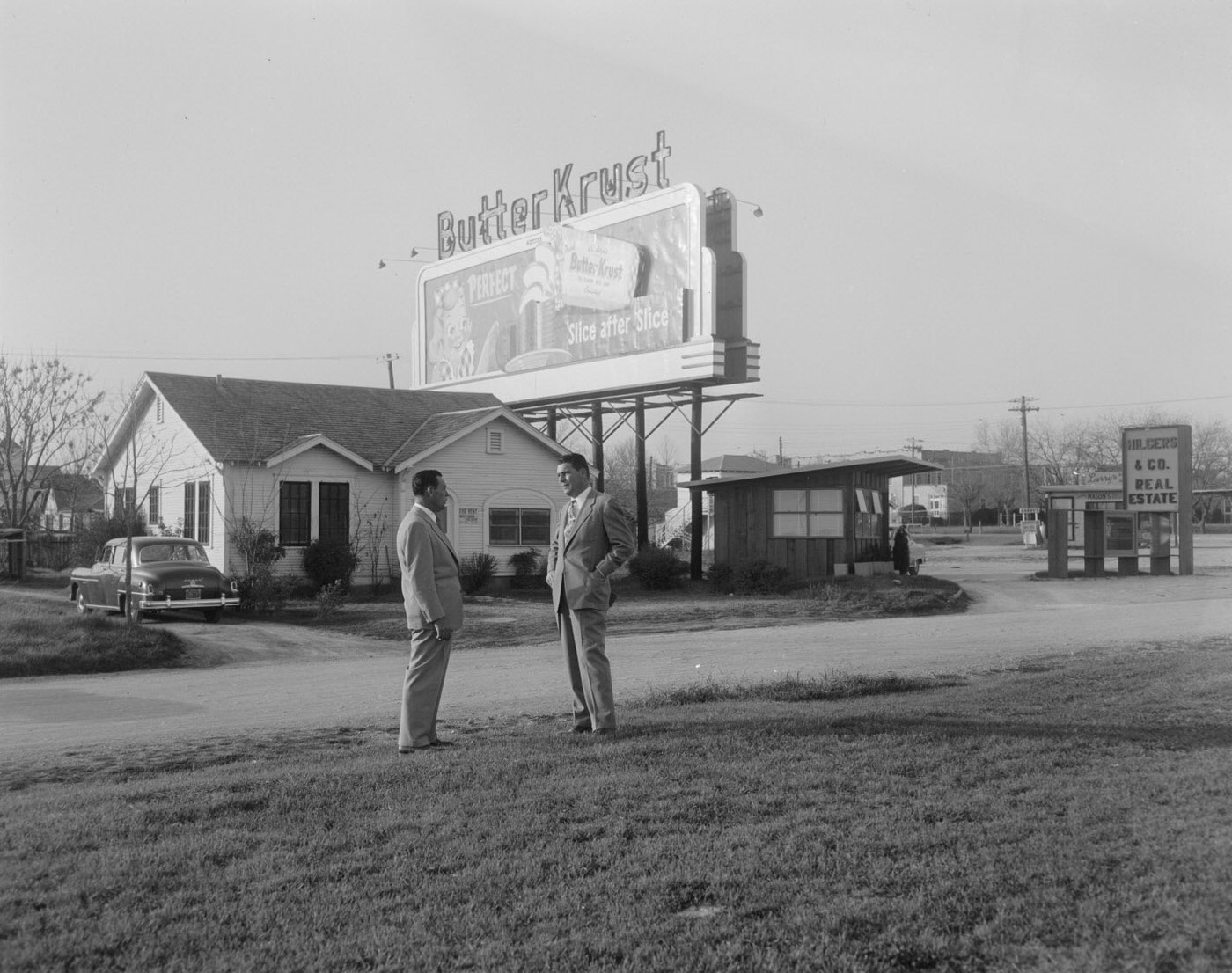
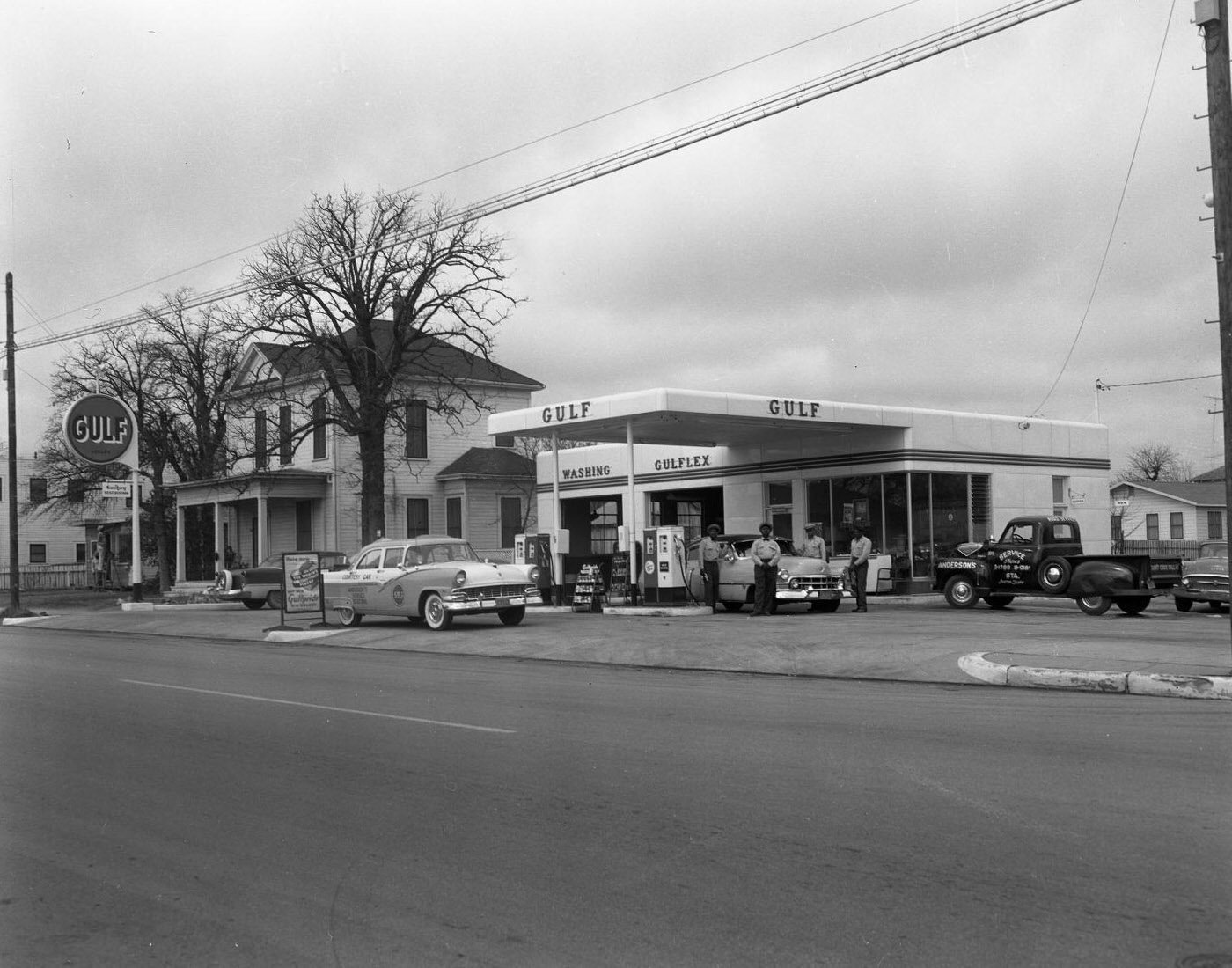
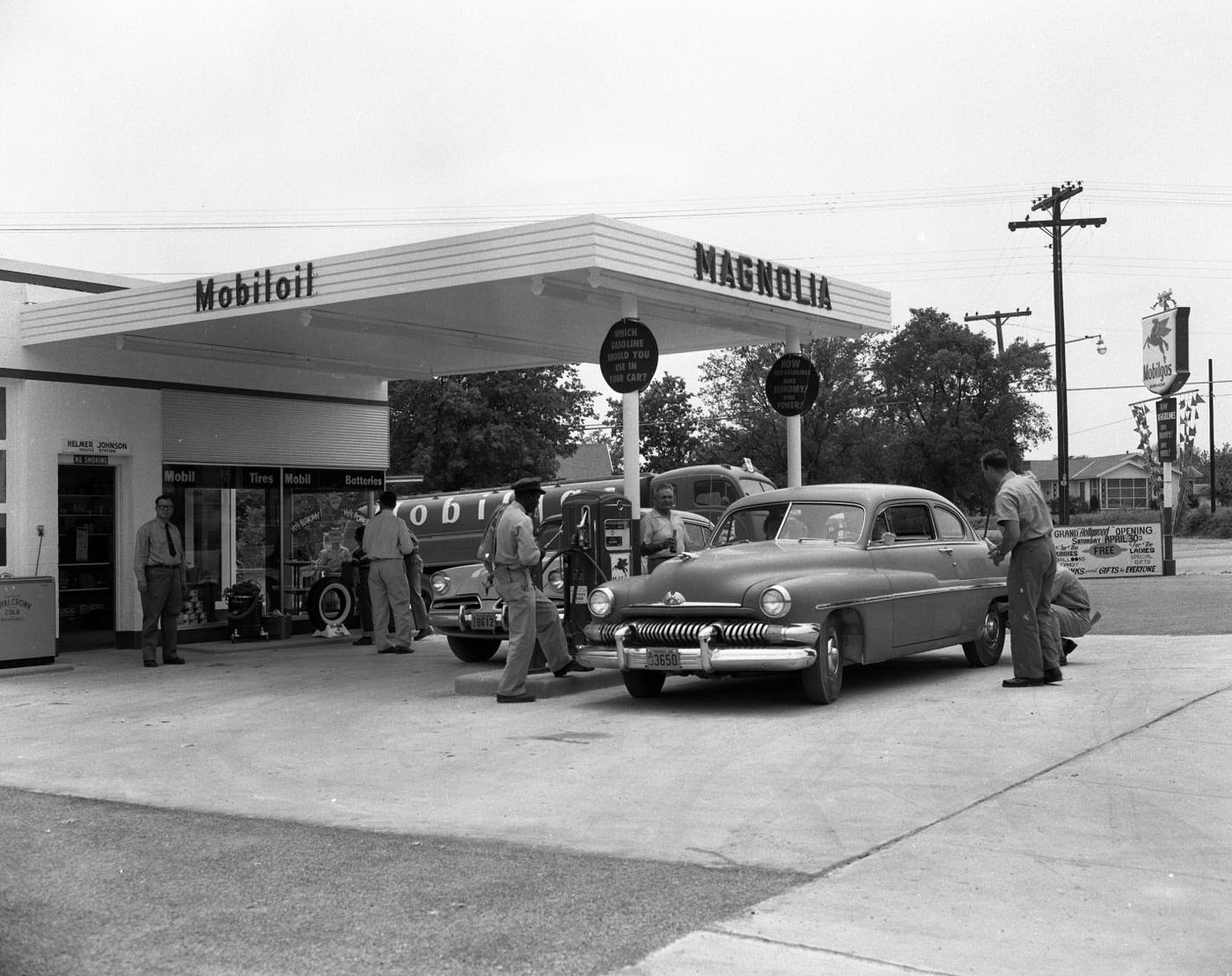
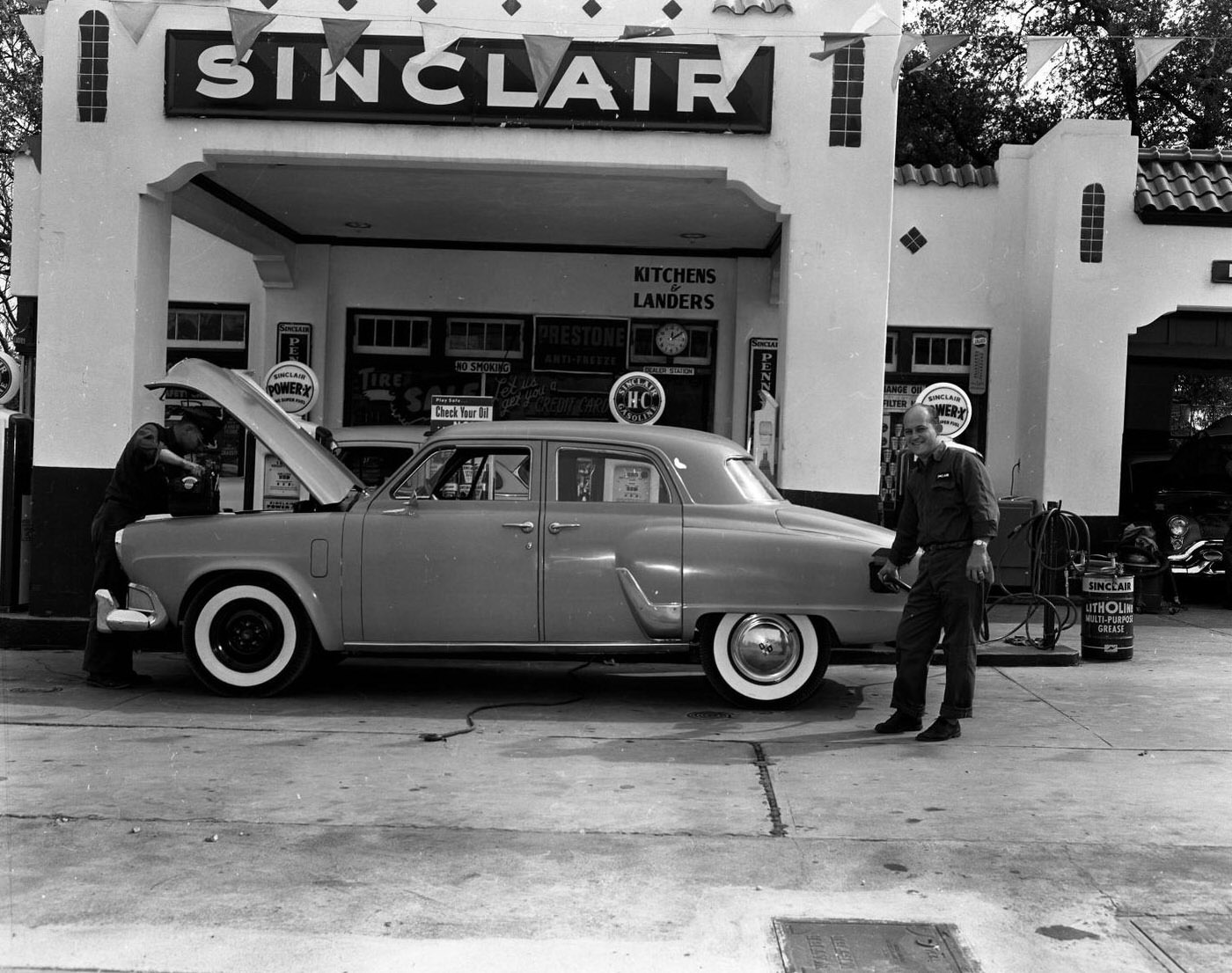
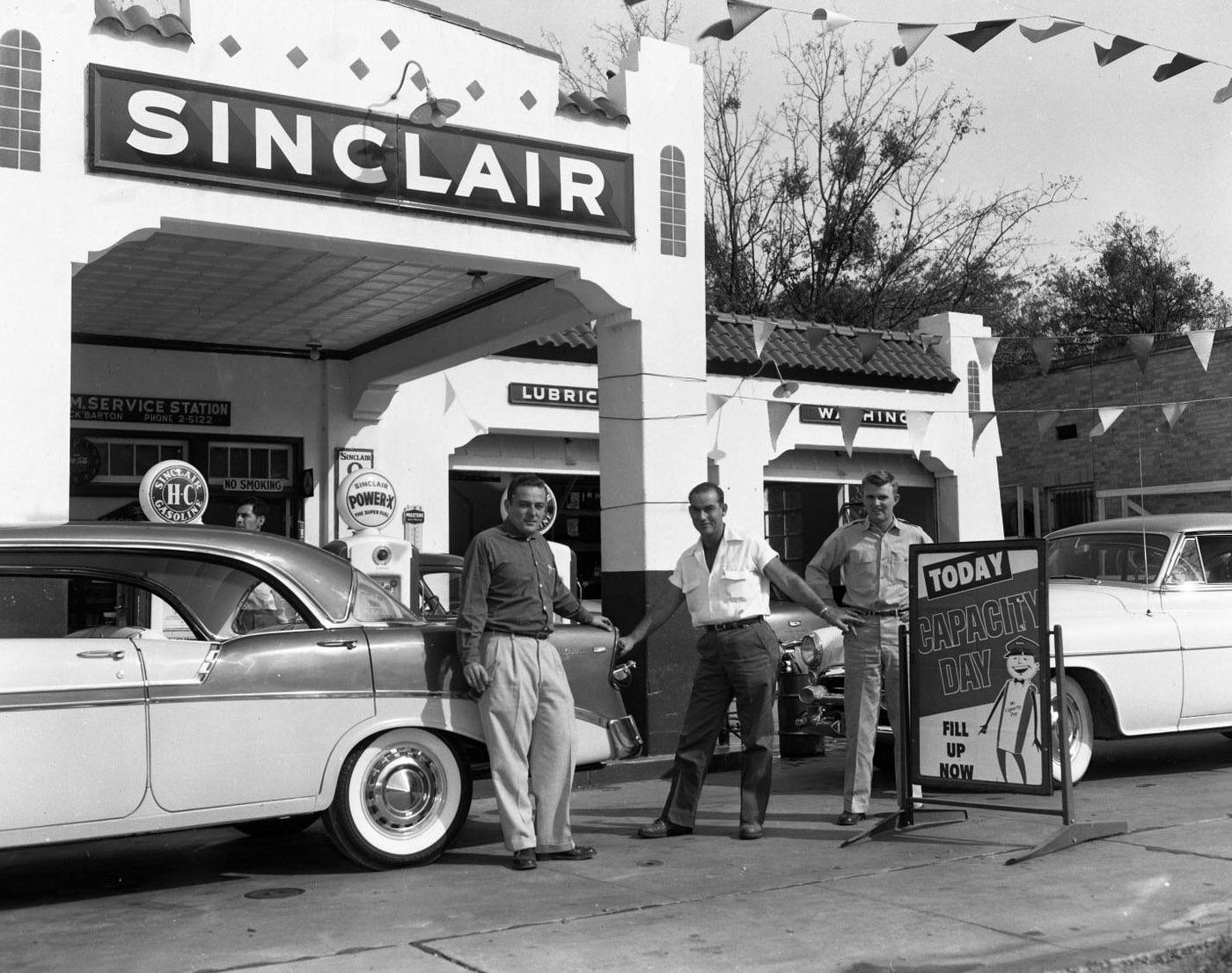
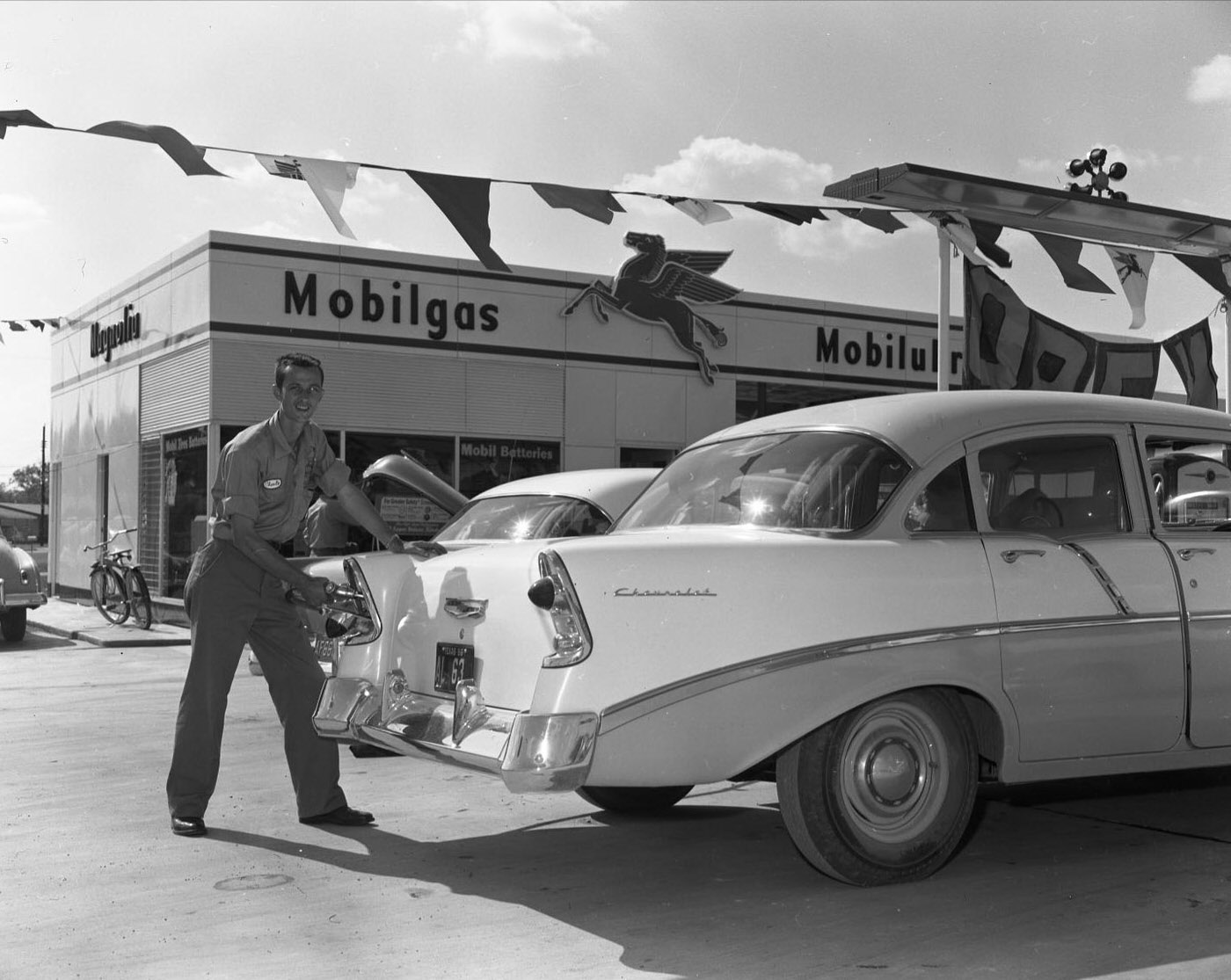
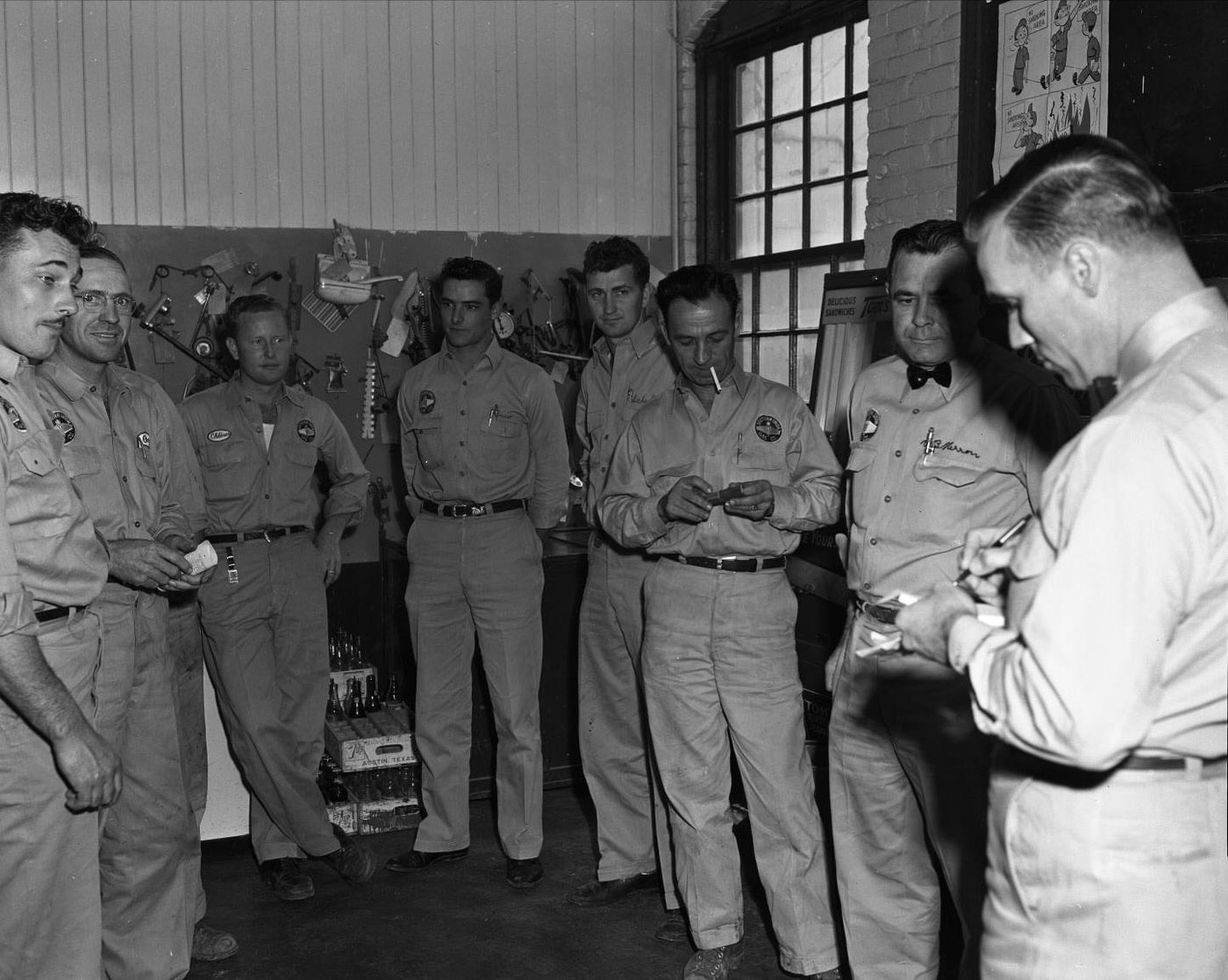
The car was central to Austin life in the 1950s. Families aspired to own one, and the city’s service stations were busy operations staffed with uniformed attendants. Anderson’s Gulf Service Station, Sinclair stations, and the grand opening of a Magnolia Mobil Service Station in 1955 all reflect how deeply car culture had taken hold.
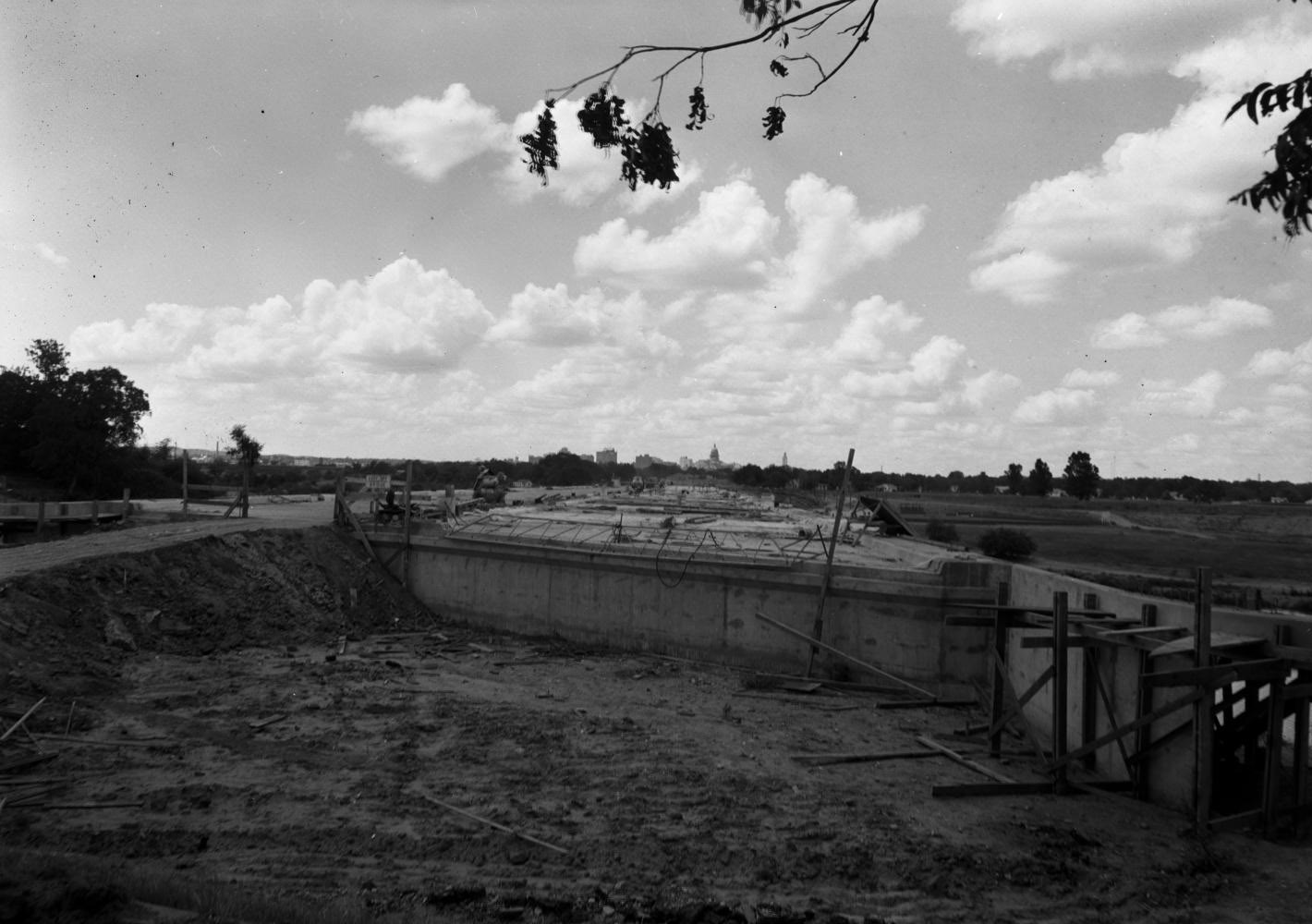
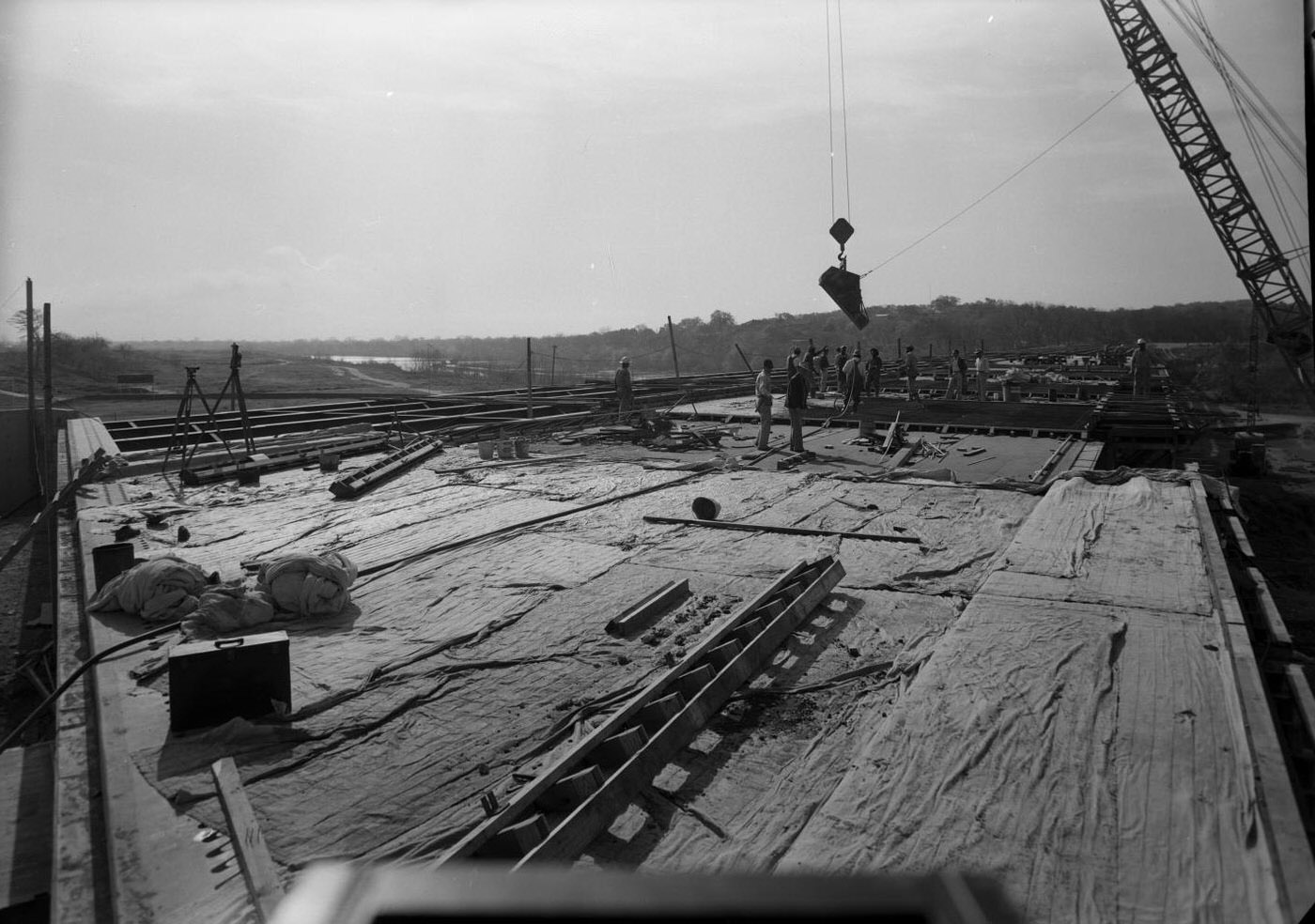
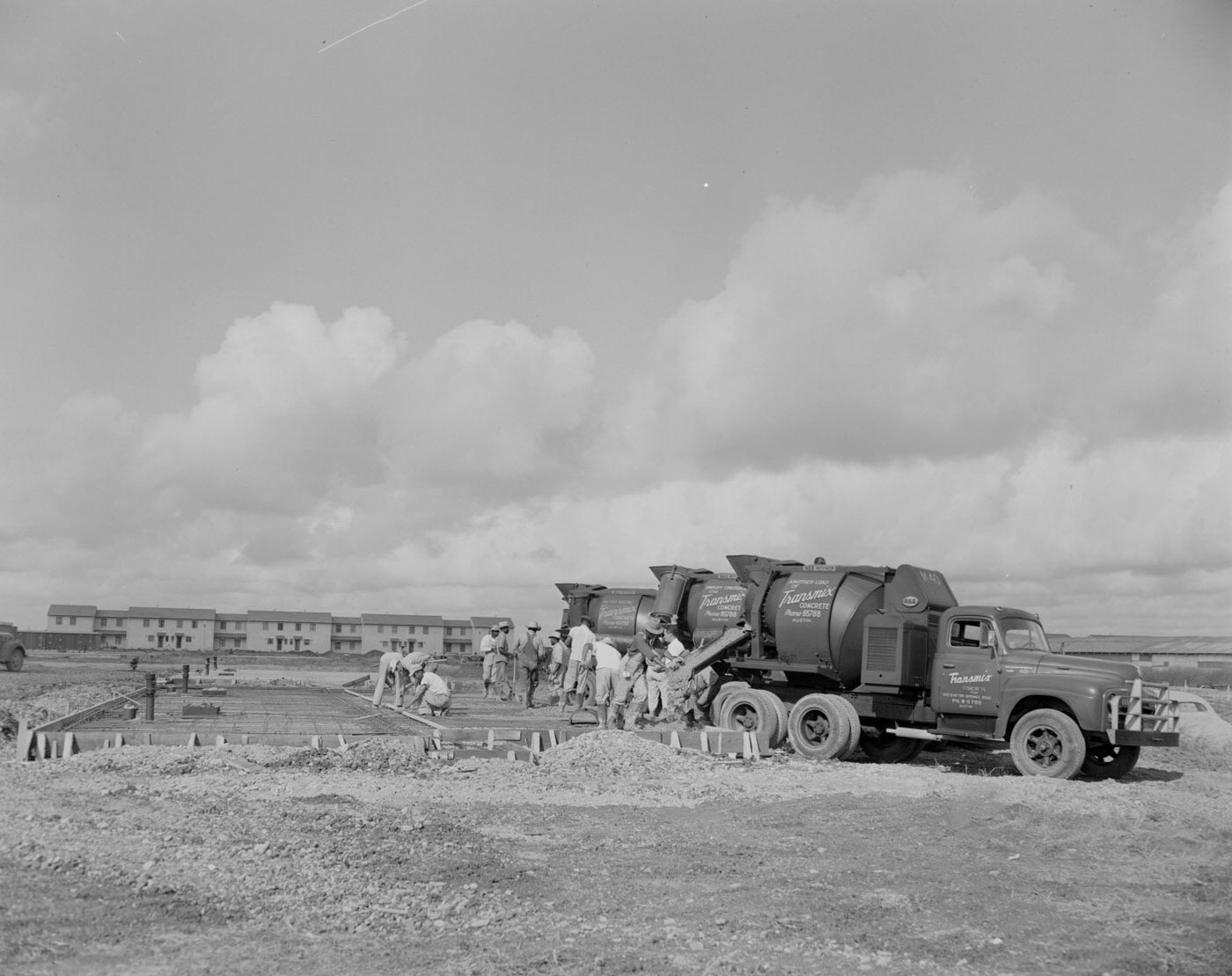
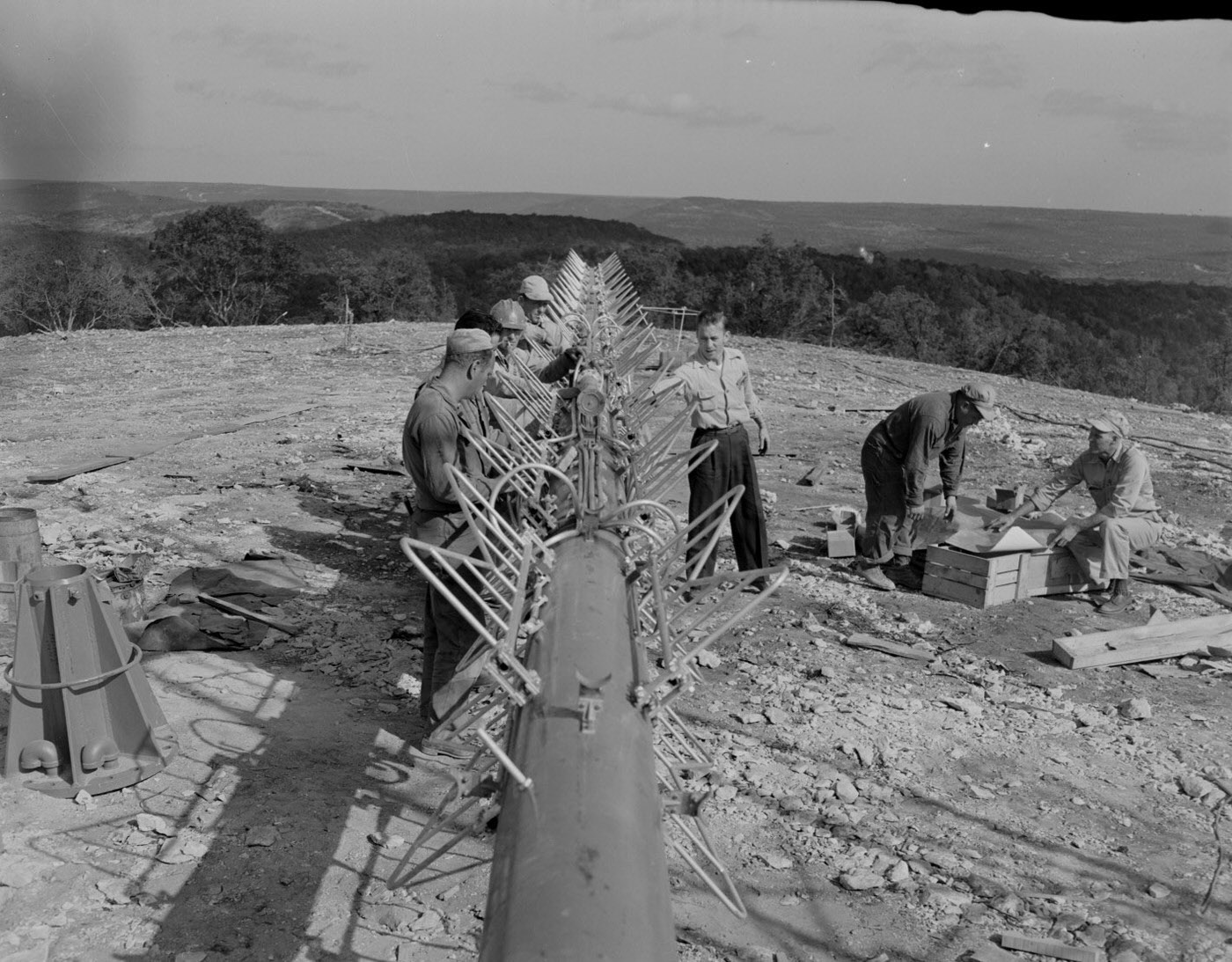
To accommodate a growing city and its cars, Austin’s infrastructure was being rebuilt from the ground up. Interstate Highway 35 was under active construction in 1954, with bridge work underway and crews reshaping the landscape. Workers also poured cement across the city, and a TV broadcast tower went up in 1952 — a sign that the media landscape was changing just as fast as the roads.
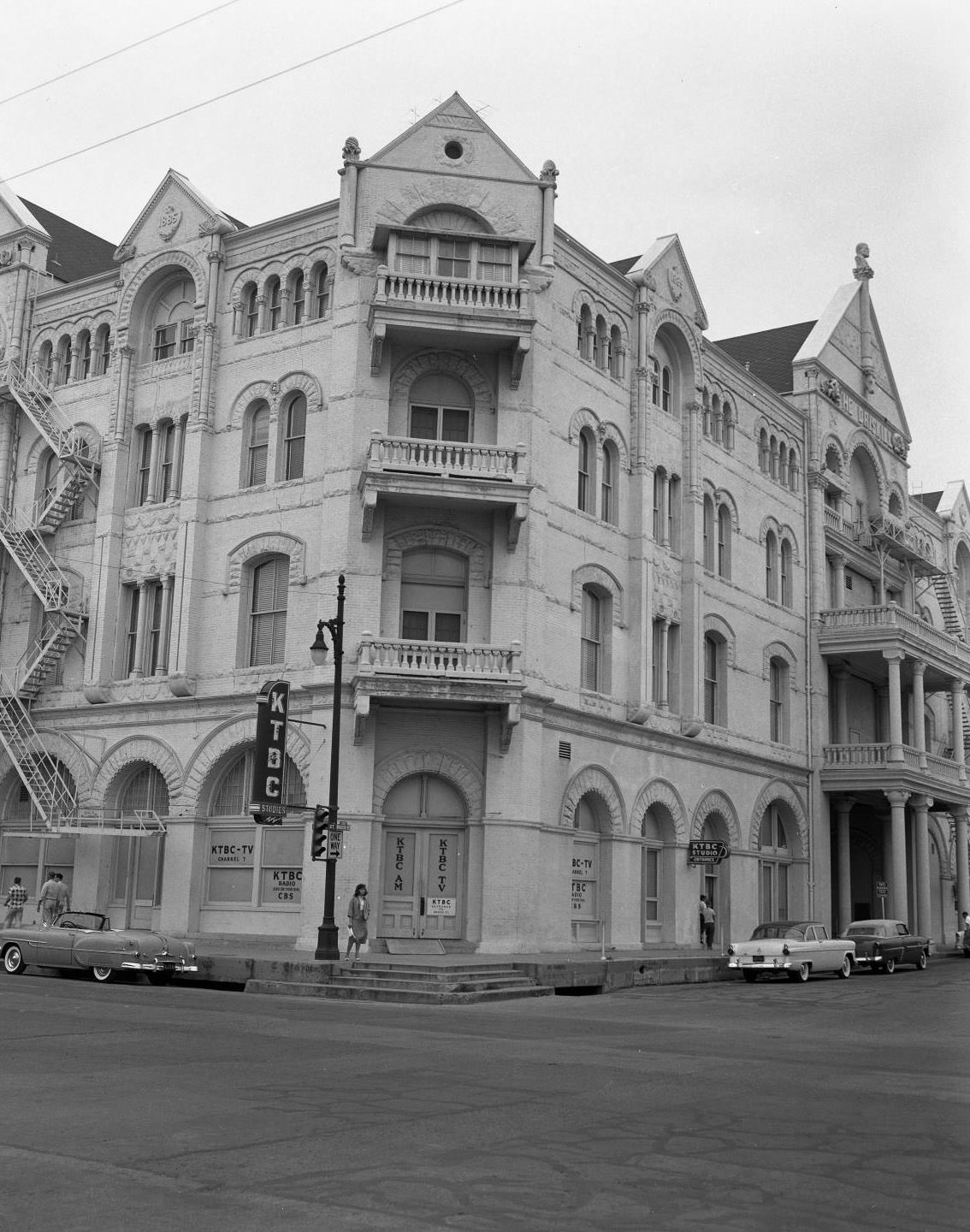
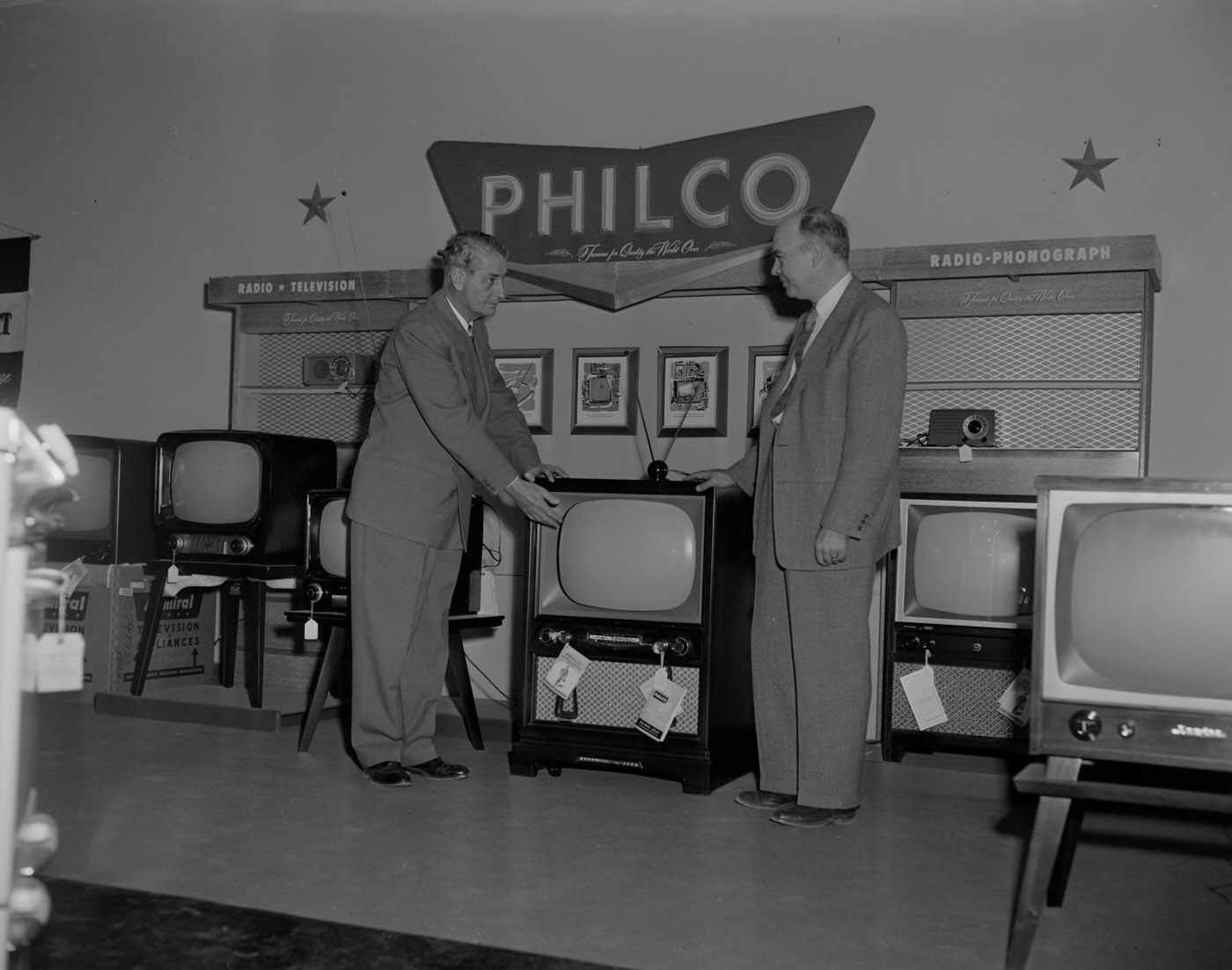
Television was arriving in Austin in a serious way. KTBC-TV, which operated out of the Driskill Hotel, was one of the city’s first stations and was closely tied to the Johnson family. By 1954, TV showrooms were drawing curious customers eager to buy their first set. Shows broadcast nationally were quickly becoming common topics of conversation across the city.
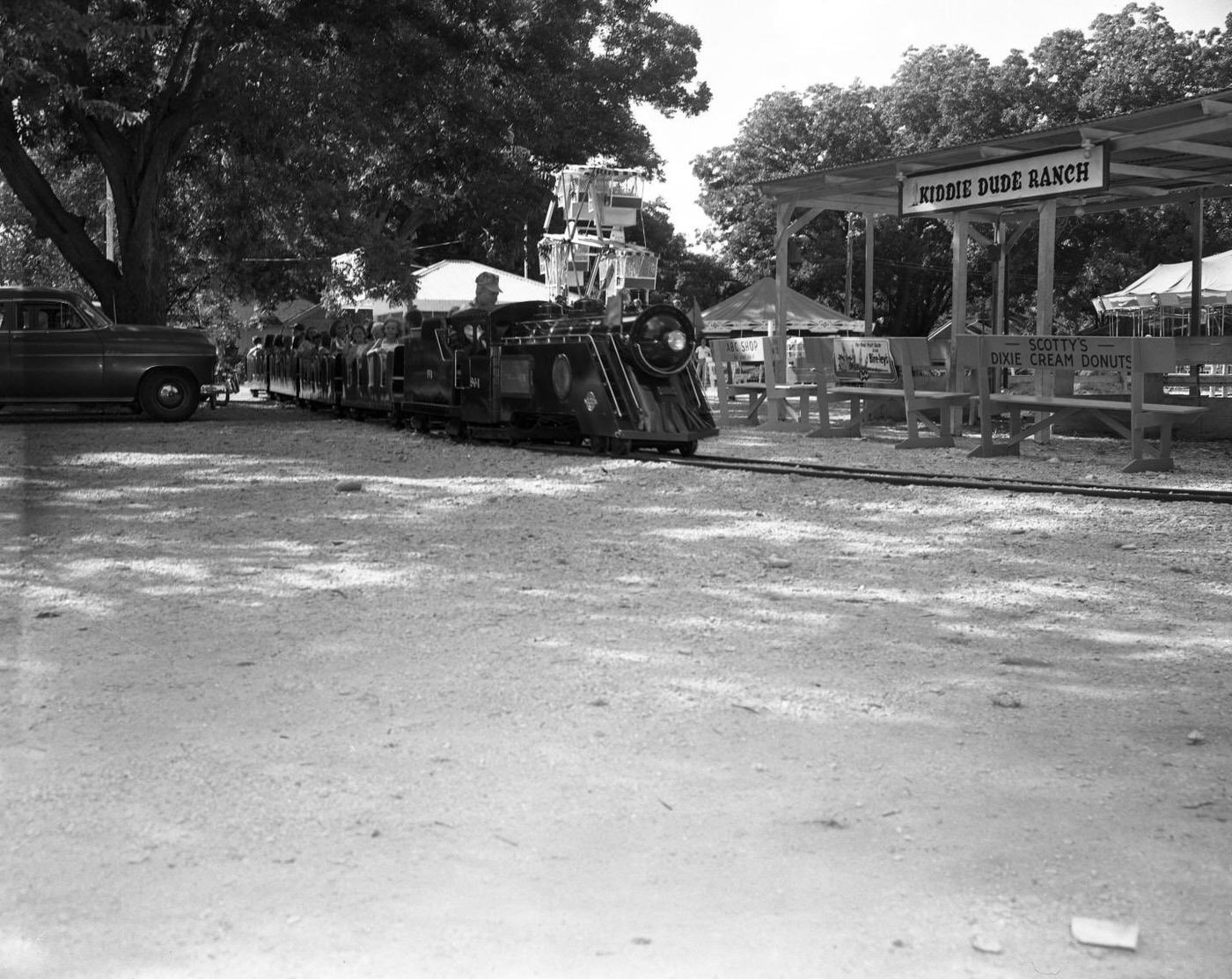
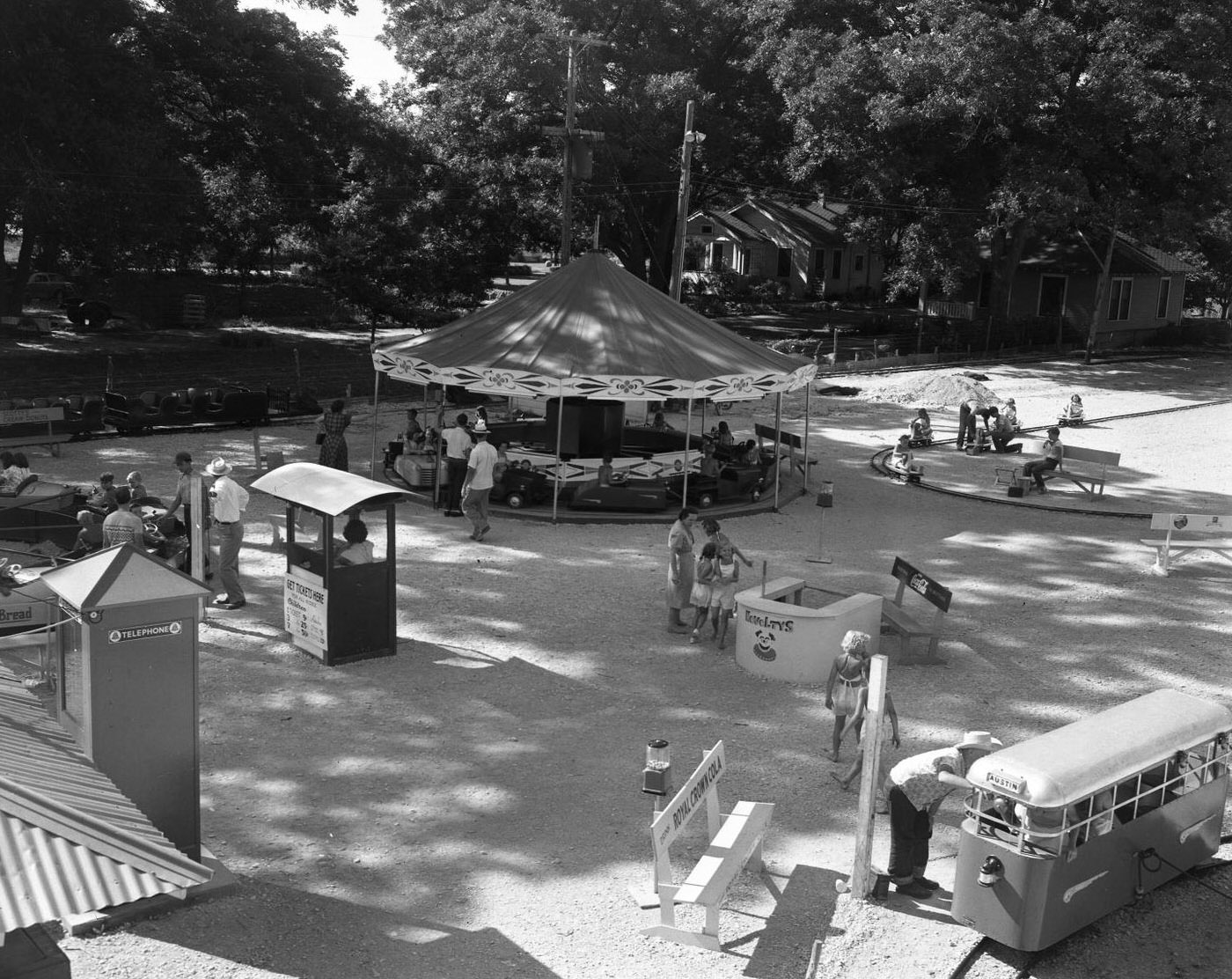
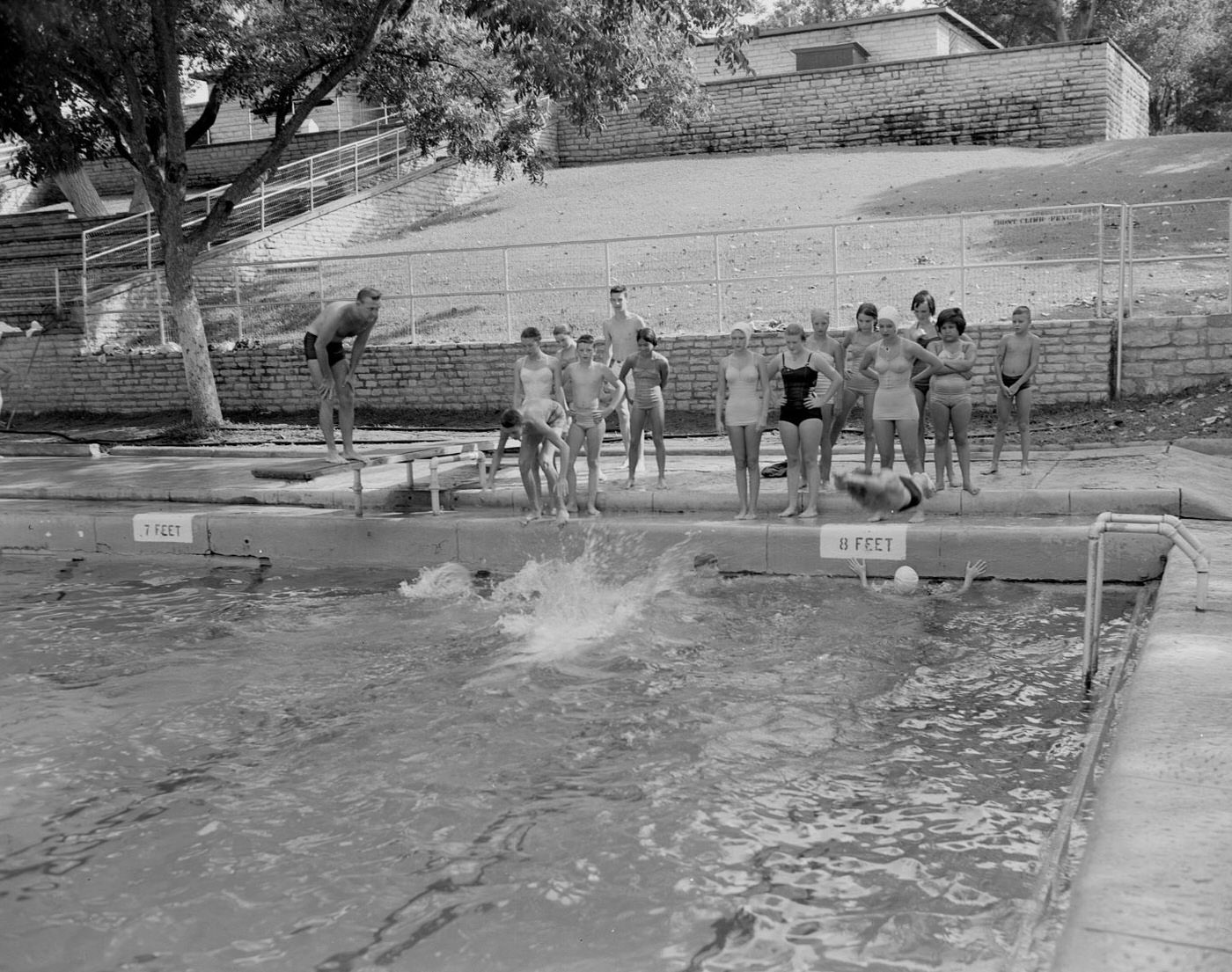
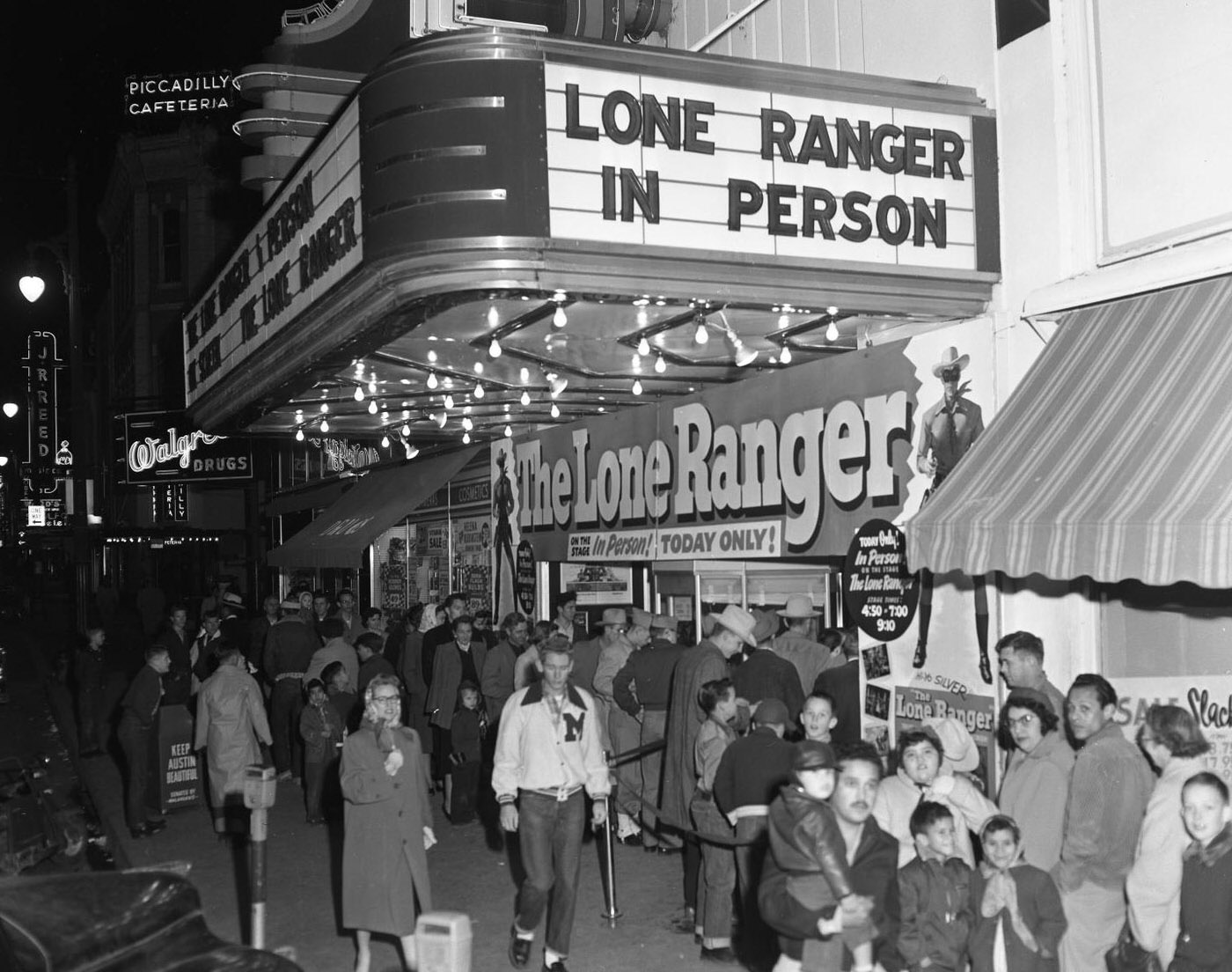
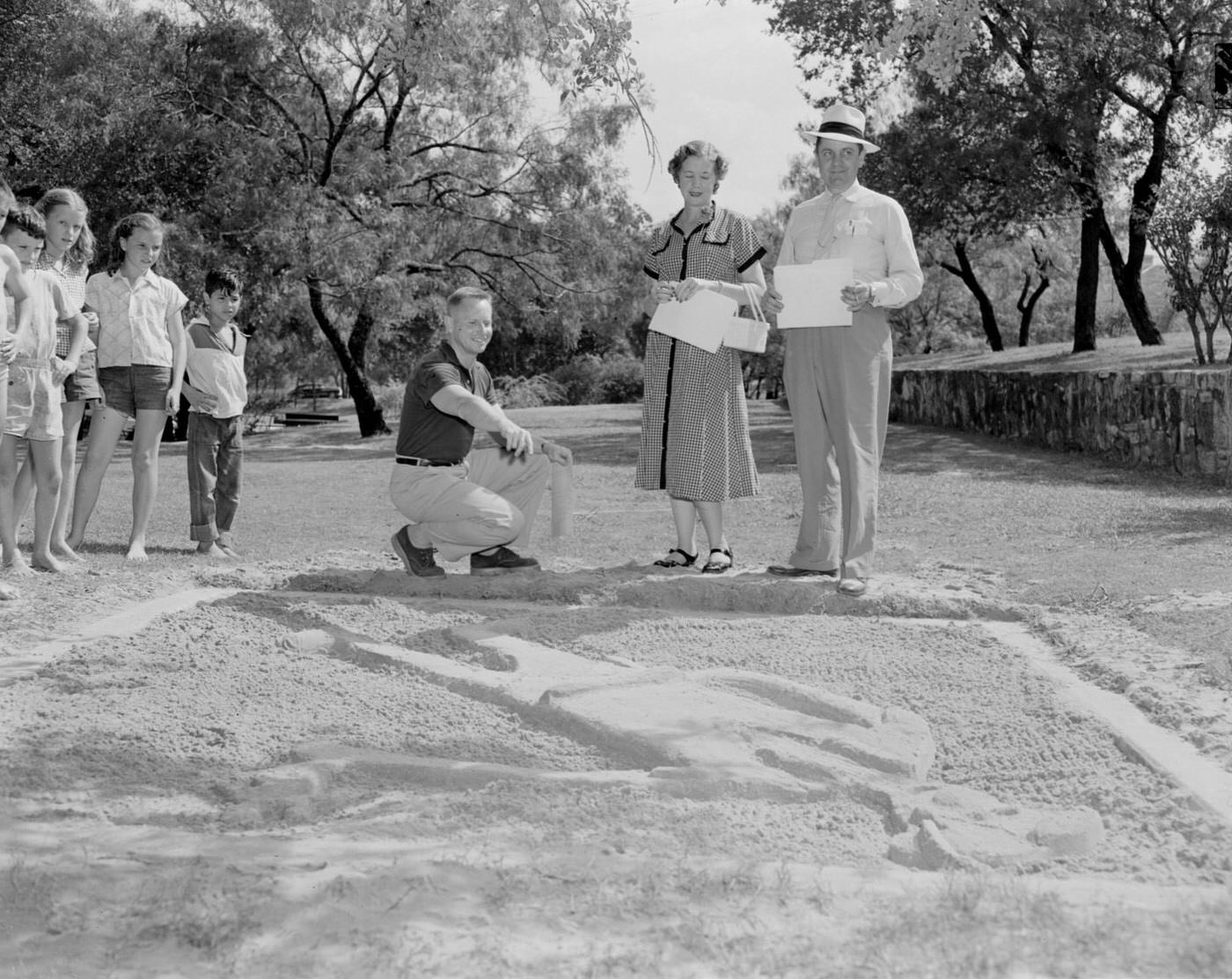
Entertainment for children took many forms beyond the television screen. Kiddieland Park offered rides including a kiddie dude ranch and a miniature train, drawing families from across the city. Deep Eddy Pool was a summer gathering place, and children took part in events like sand art competitions. Clayton Moore, the actor who played the Lone Ranger on TV, drew long lines of young fans when he visited Austin in 1956.
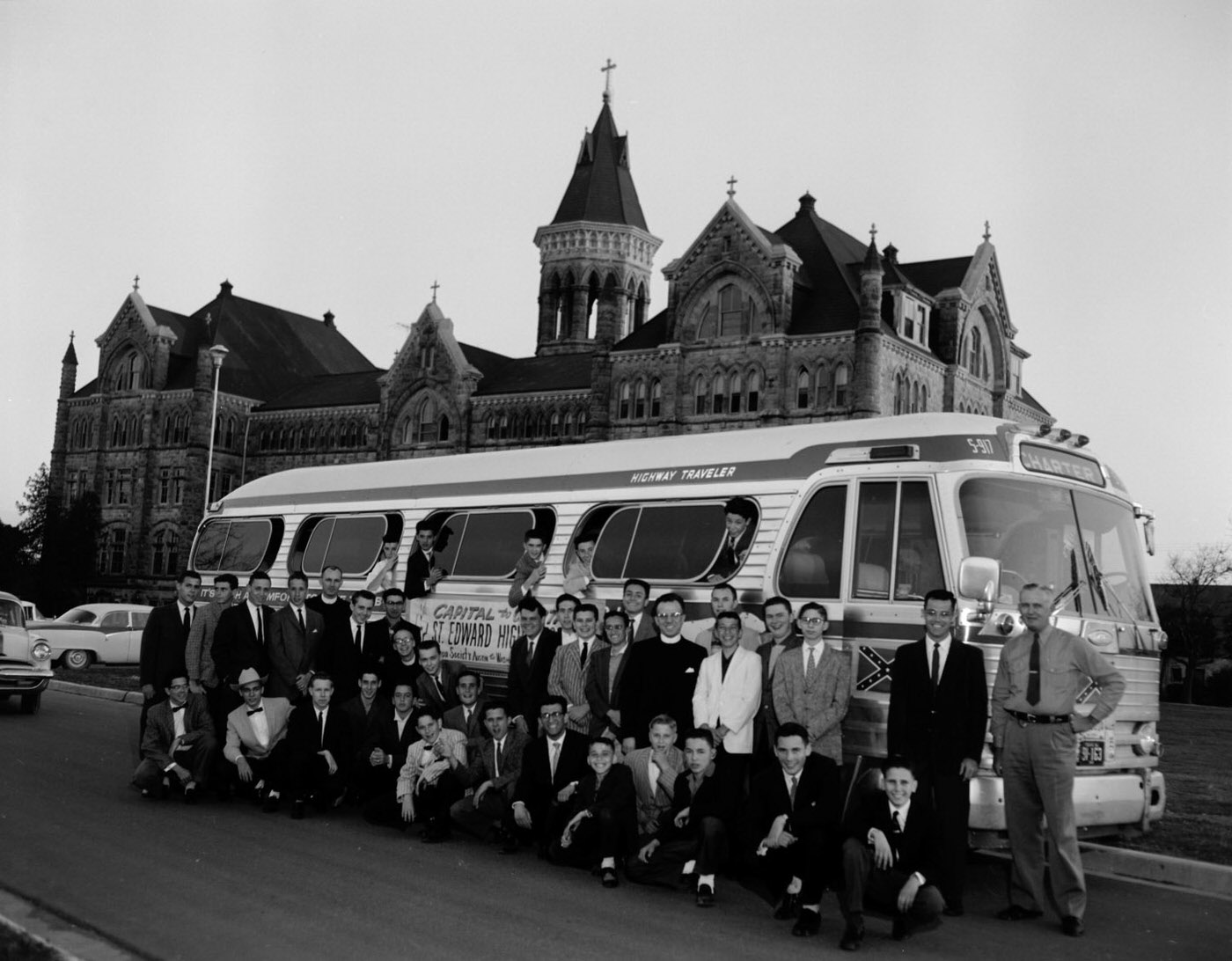
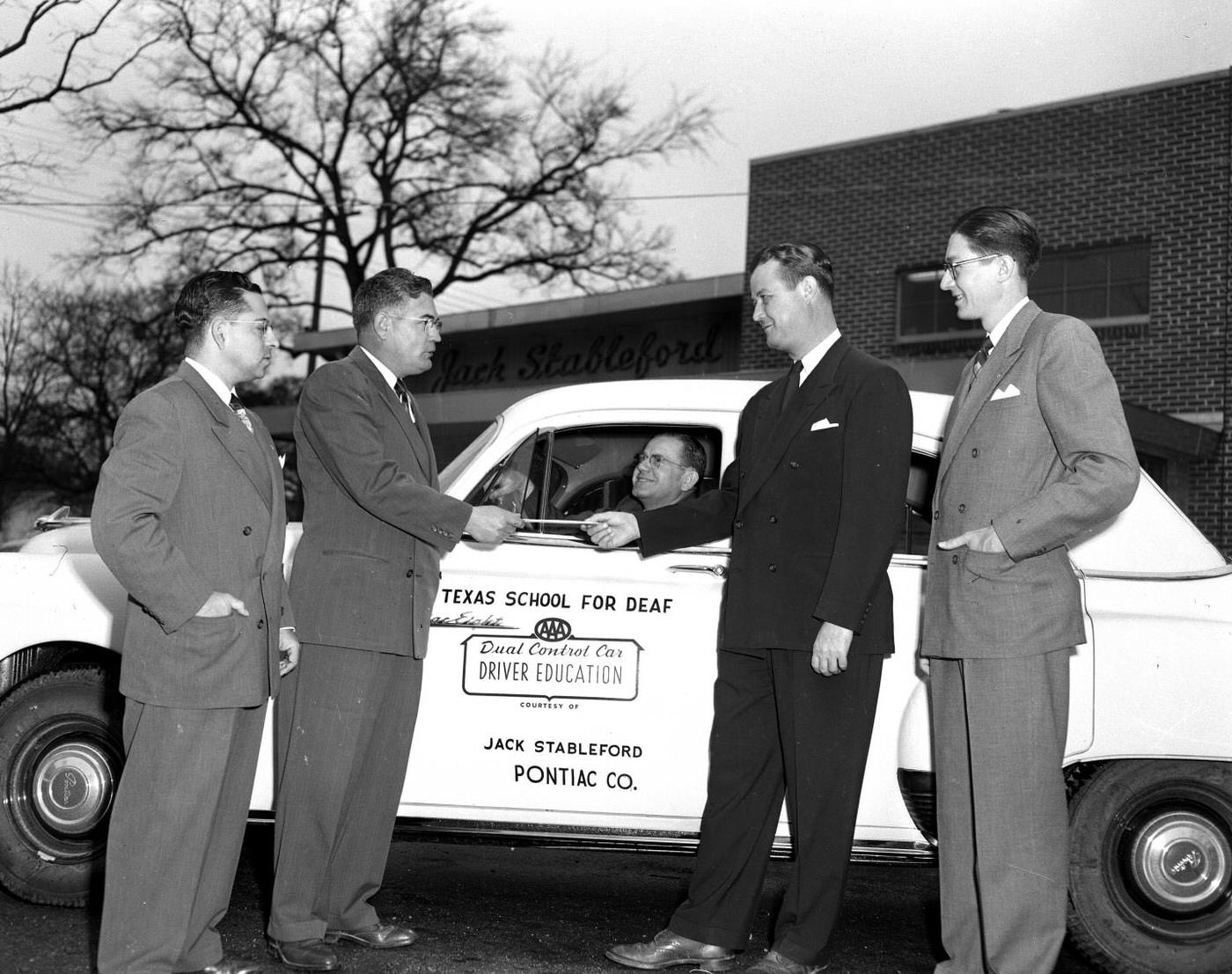
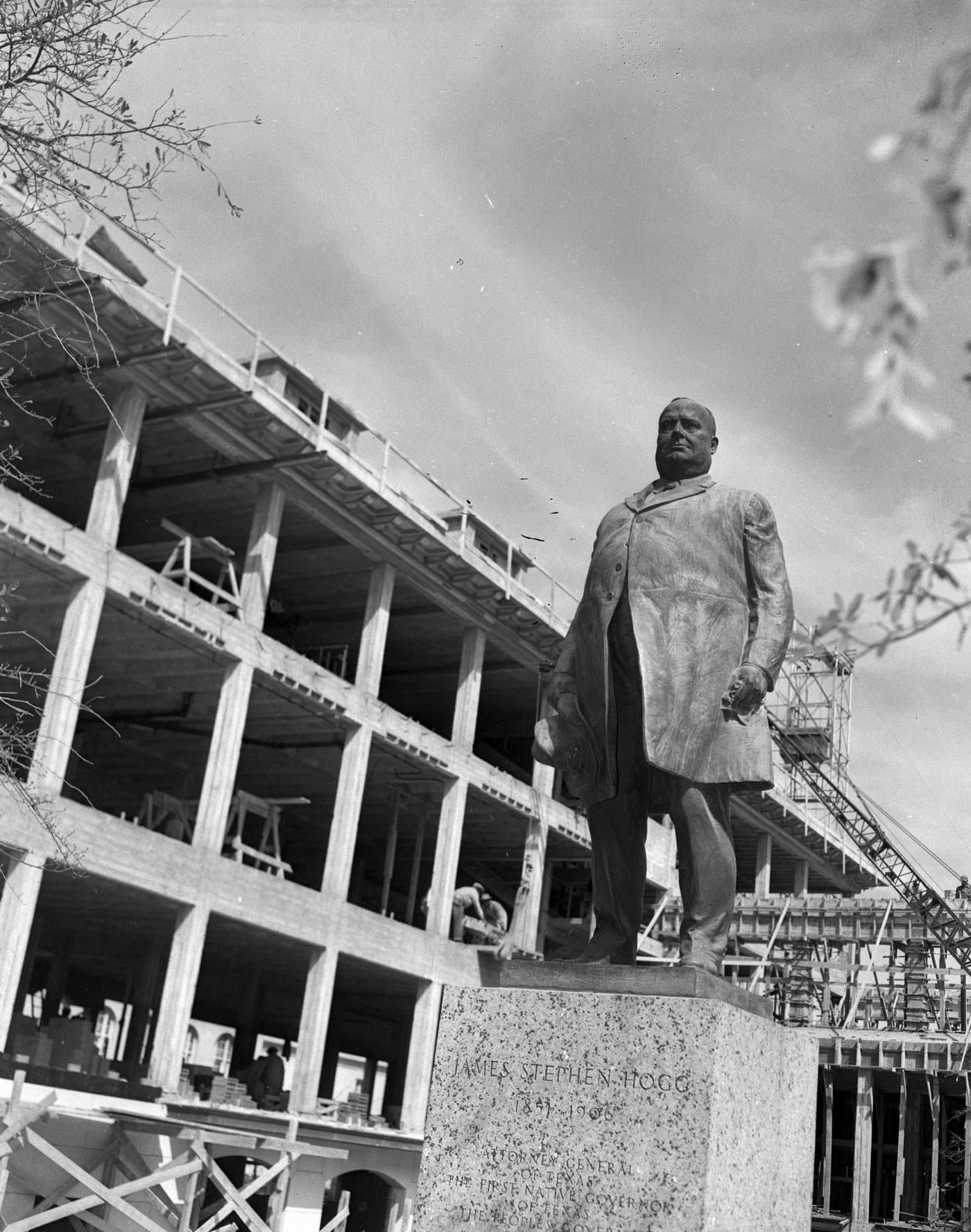
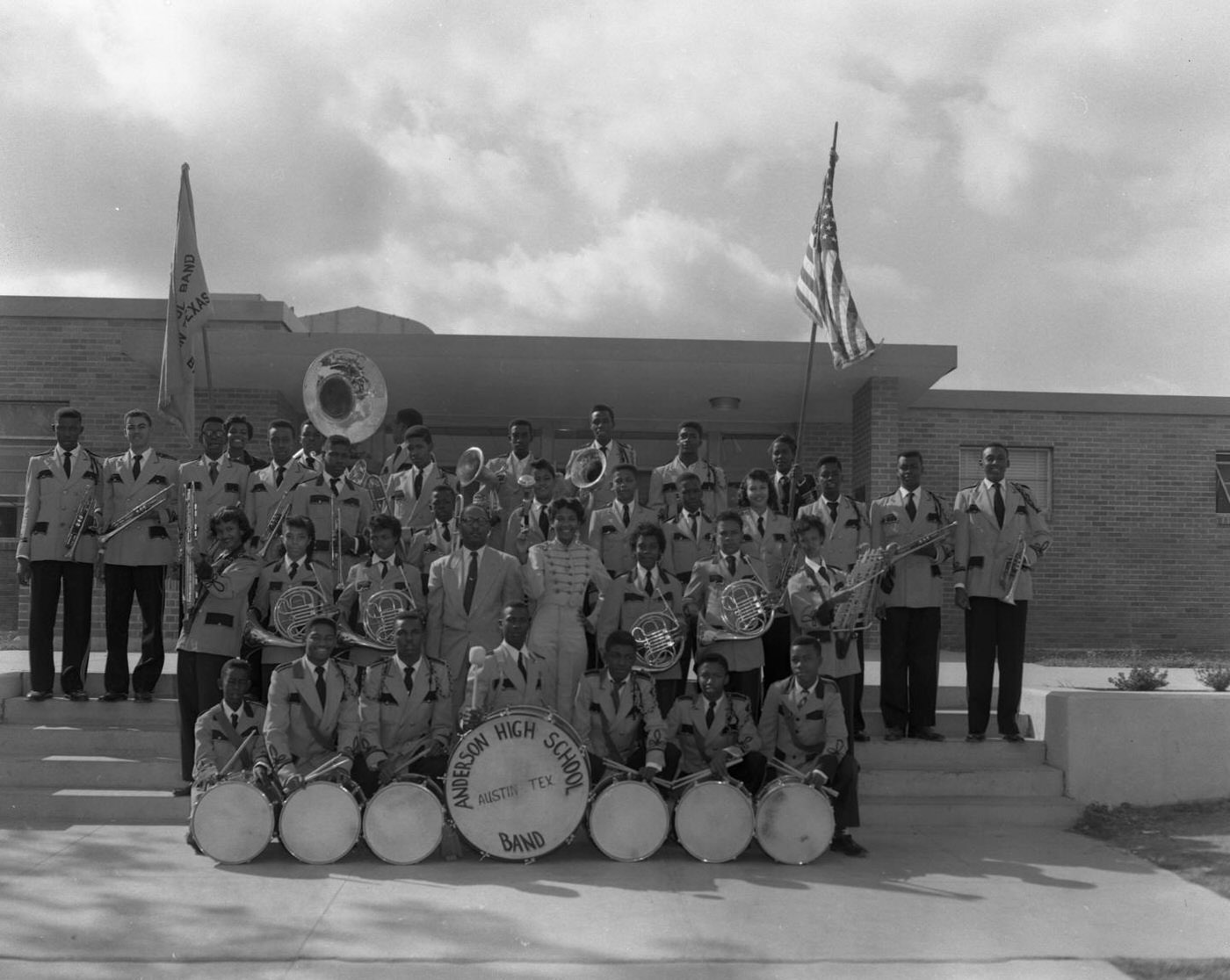
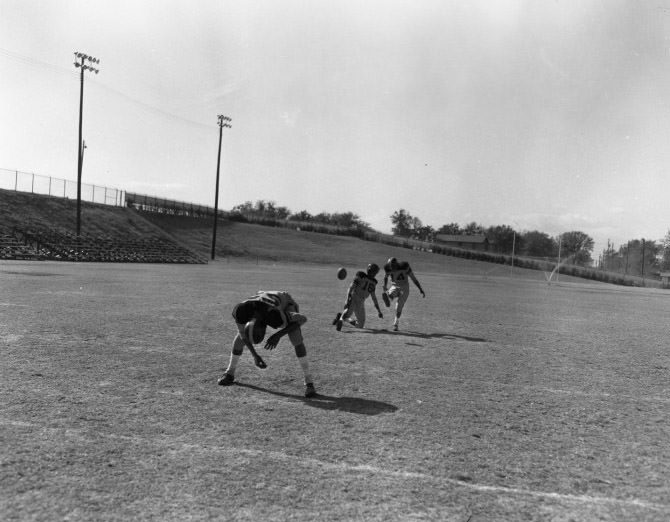
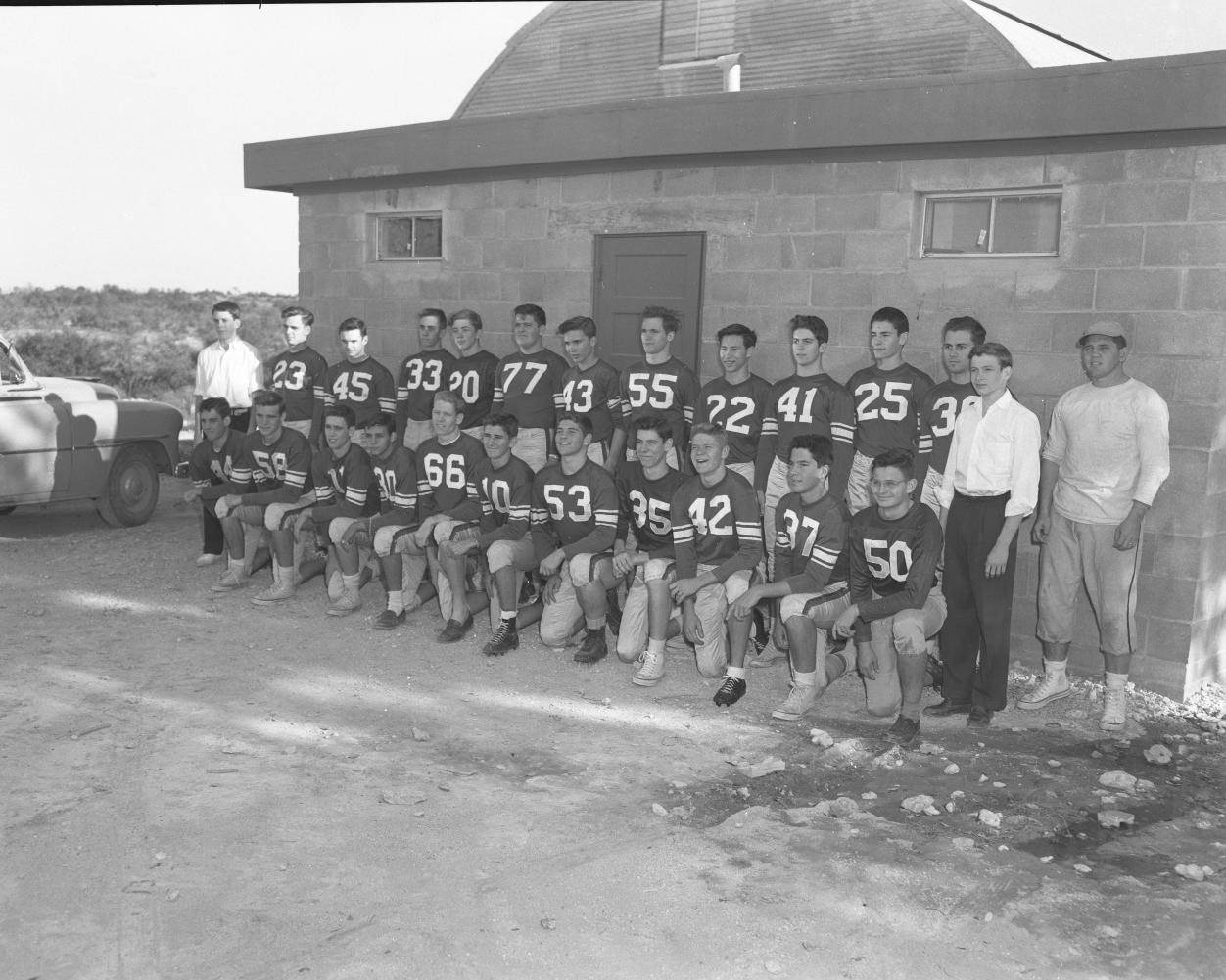
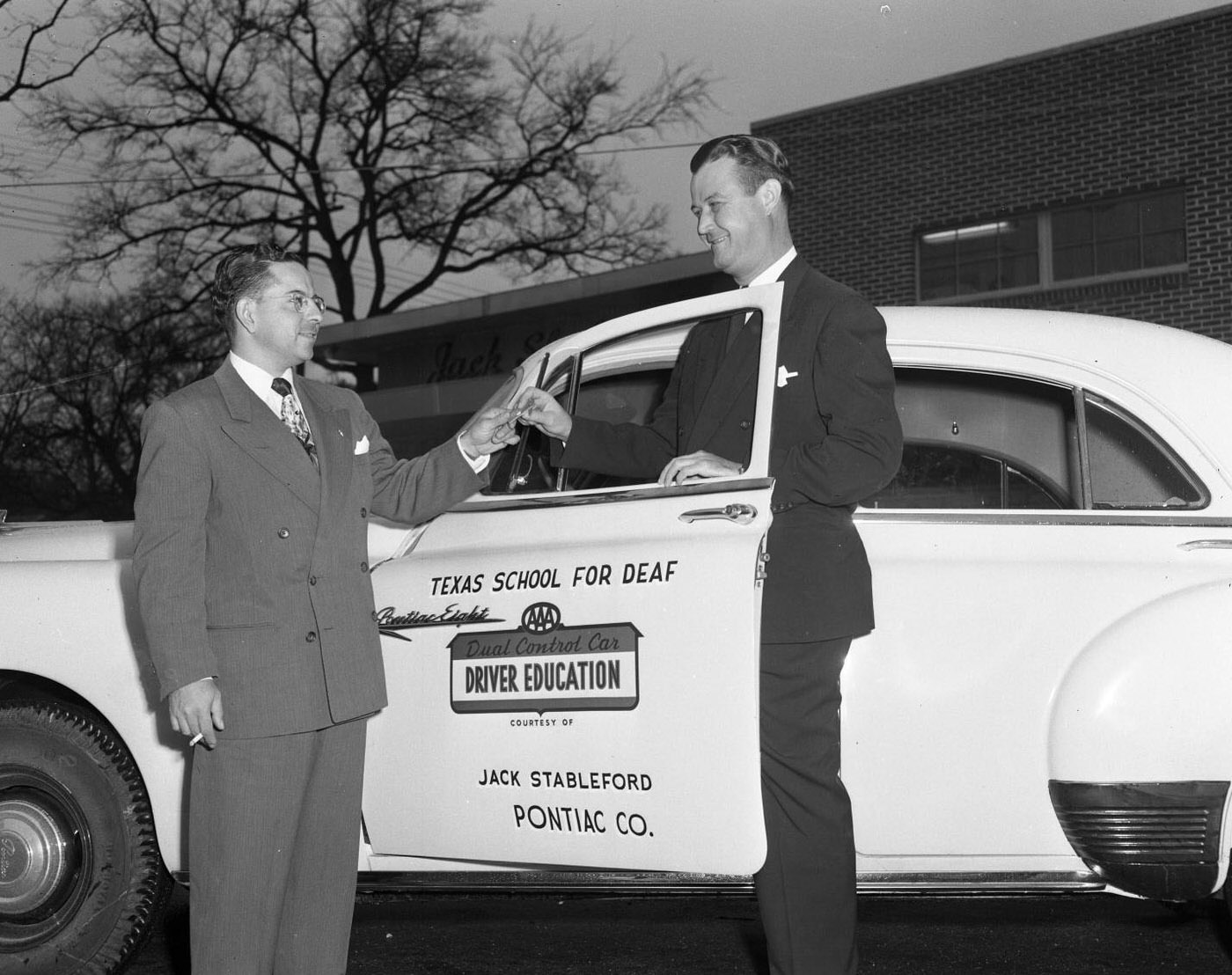
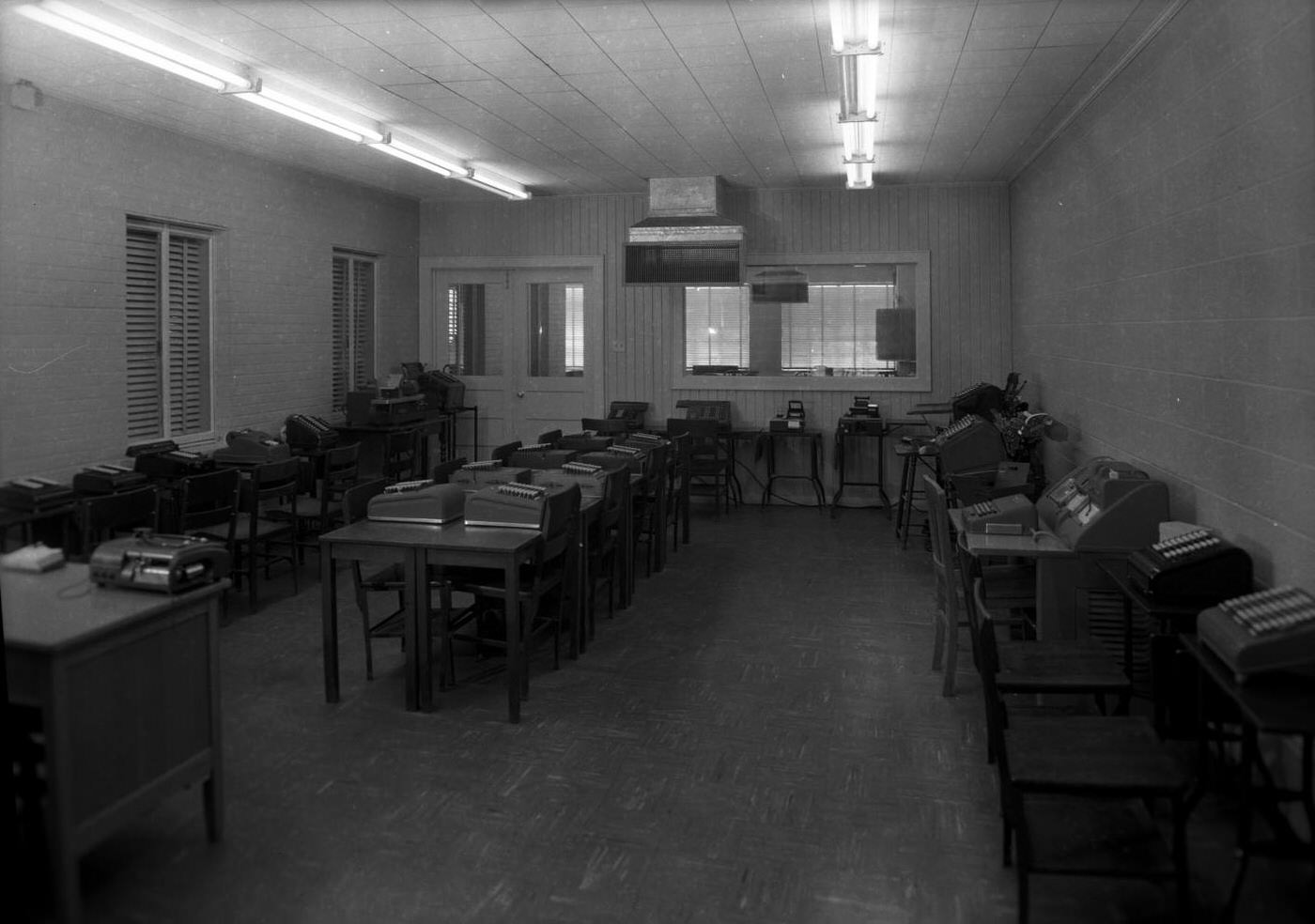
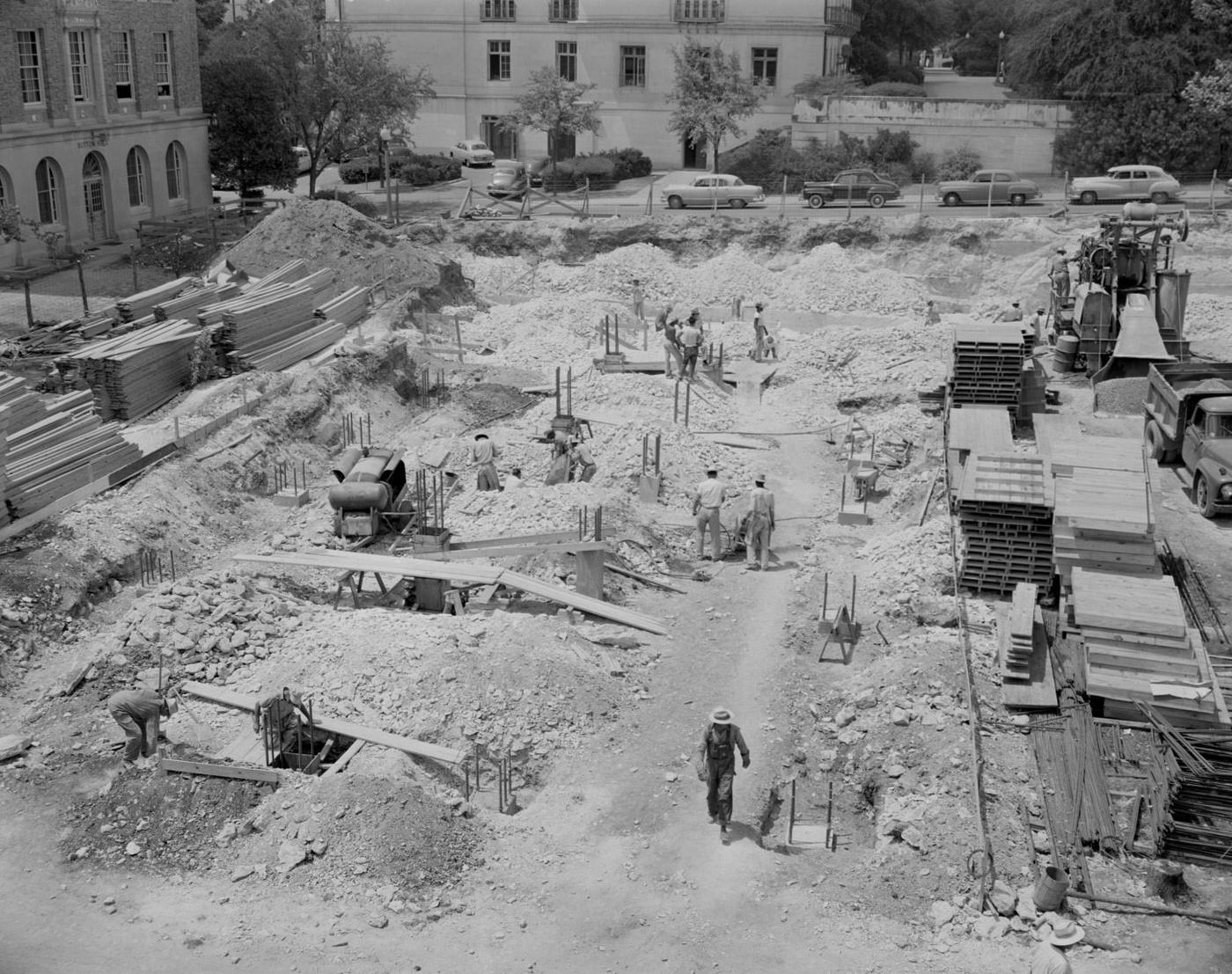
Schools were central to Austin’s community identity. Anderson High School fielded football teams and a full marching band, while St. Stephens fielded its own football squad. The Texas School for the Deaf ran a driver education program complete with a dual-control car. Nixon-Clay Commercial College trained students in business skills, and the University of Texas continued to expand its campus with active construction in 1954.
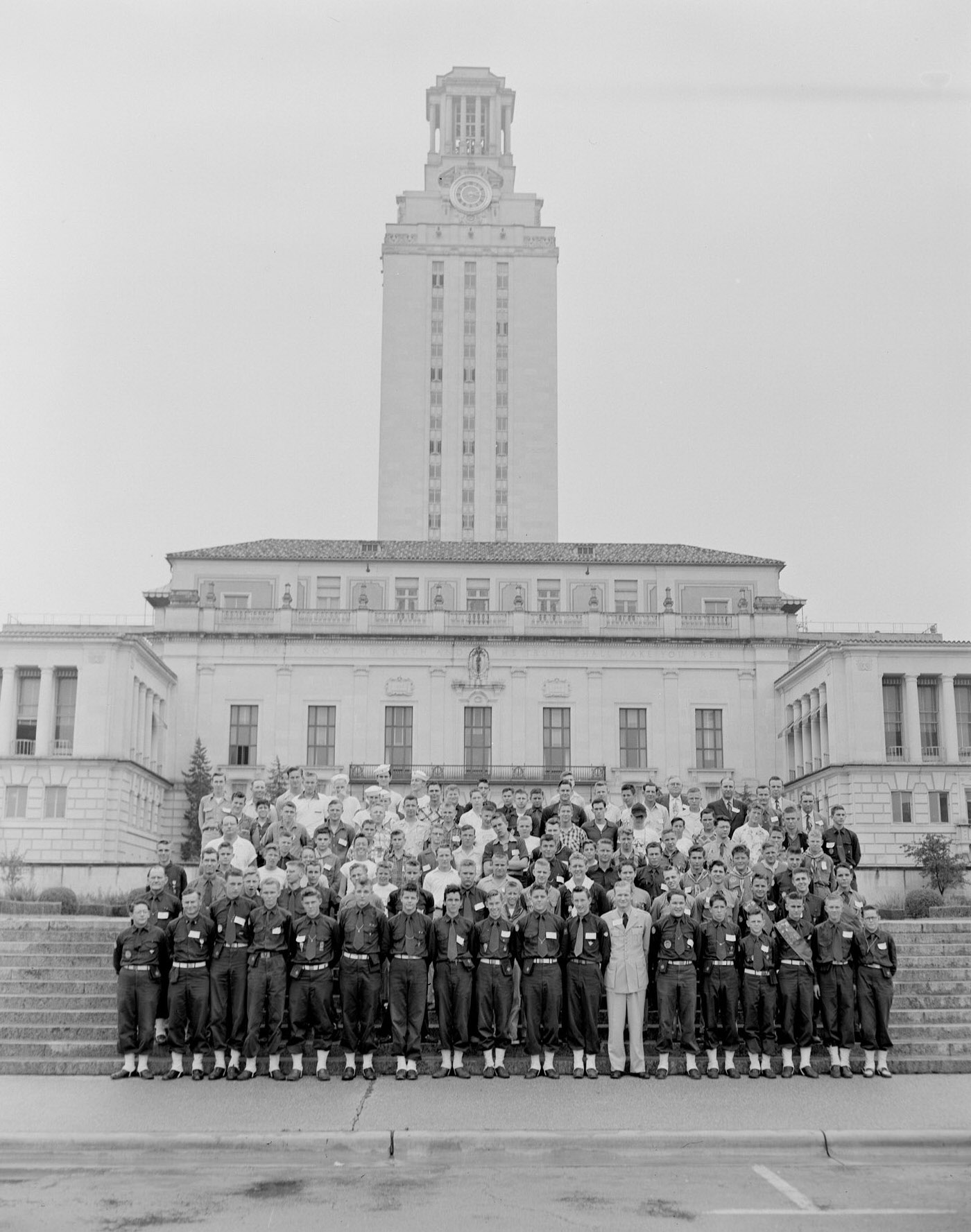
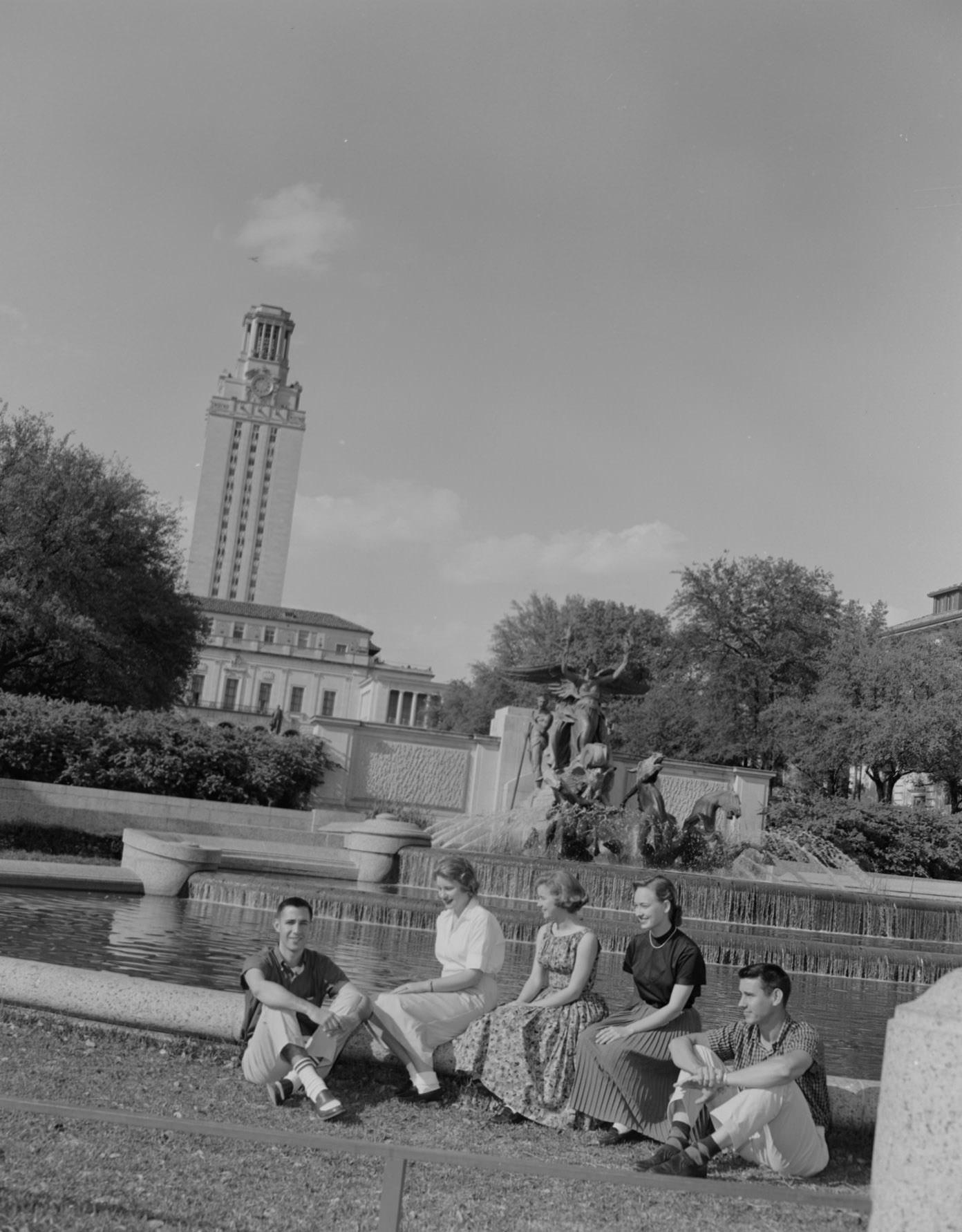
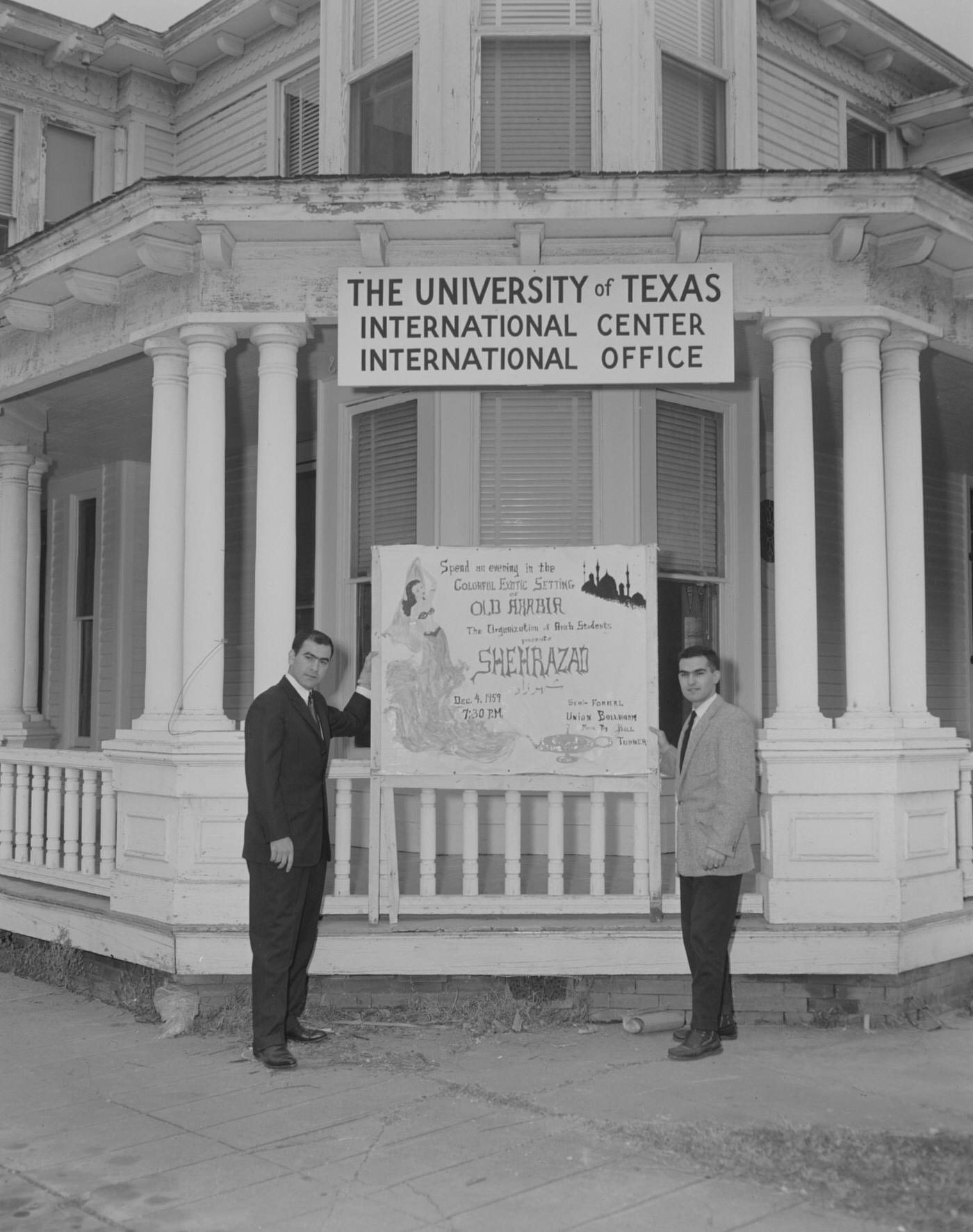
University of Texas students and staff were a visible part of Austin’s daily life. Young men posed in front of the UT Tower in 1953, students gathered around the campus fountain in 1958, and international students at the UT International Center organized cultural events that reflected a growing diversity on campus.
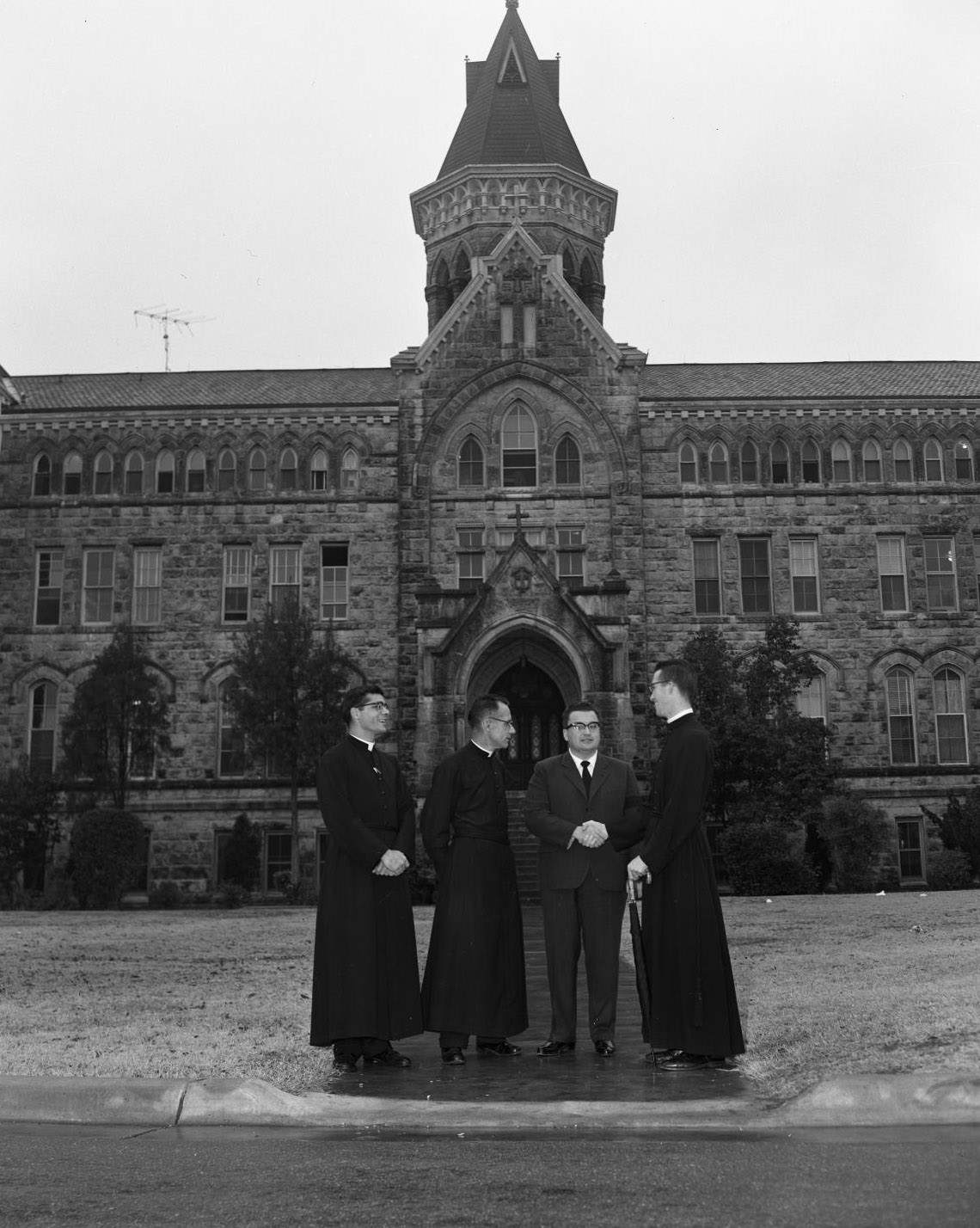
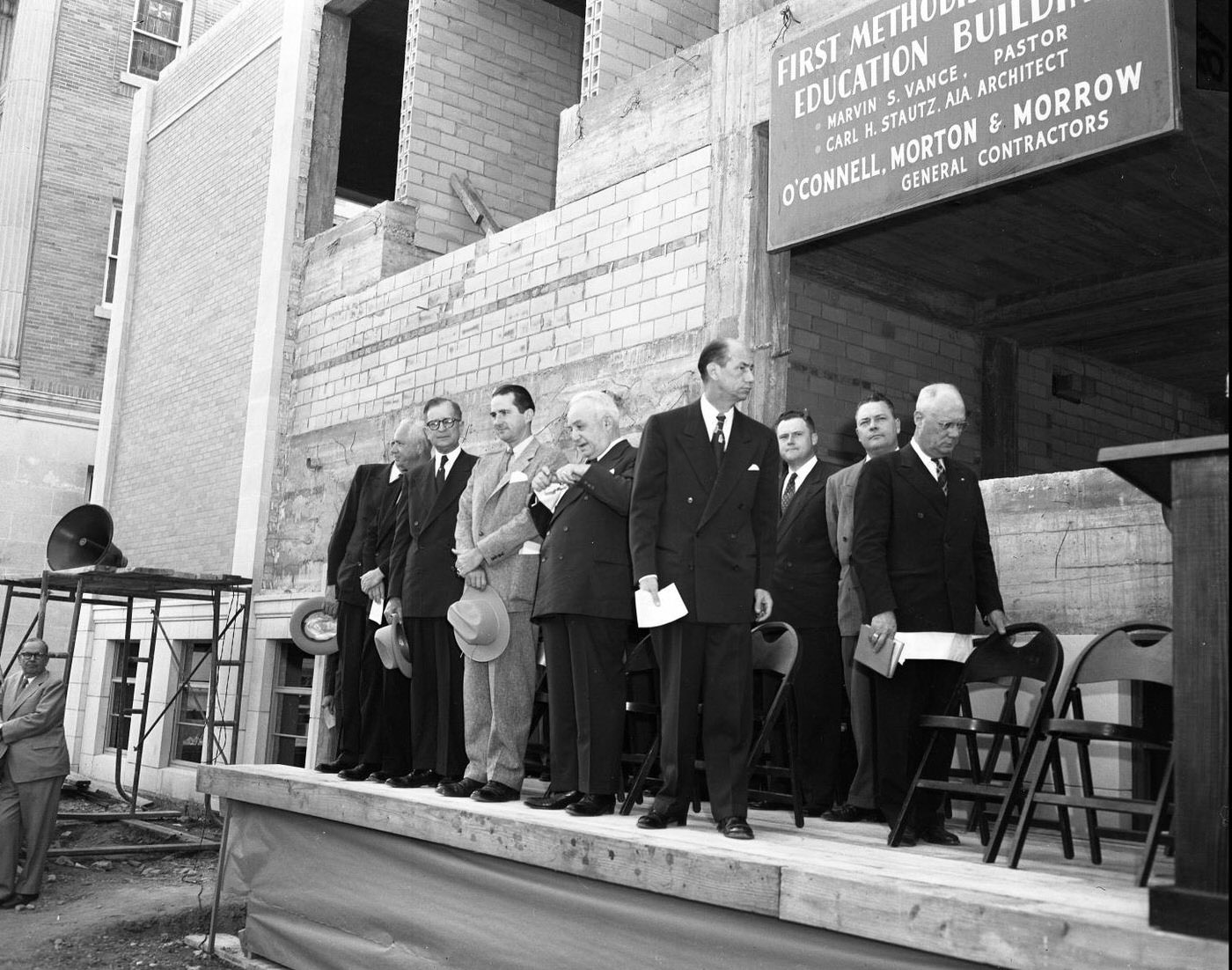
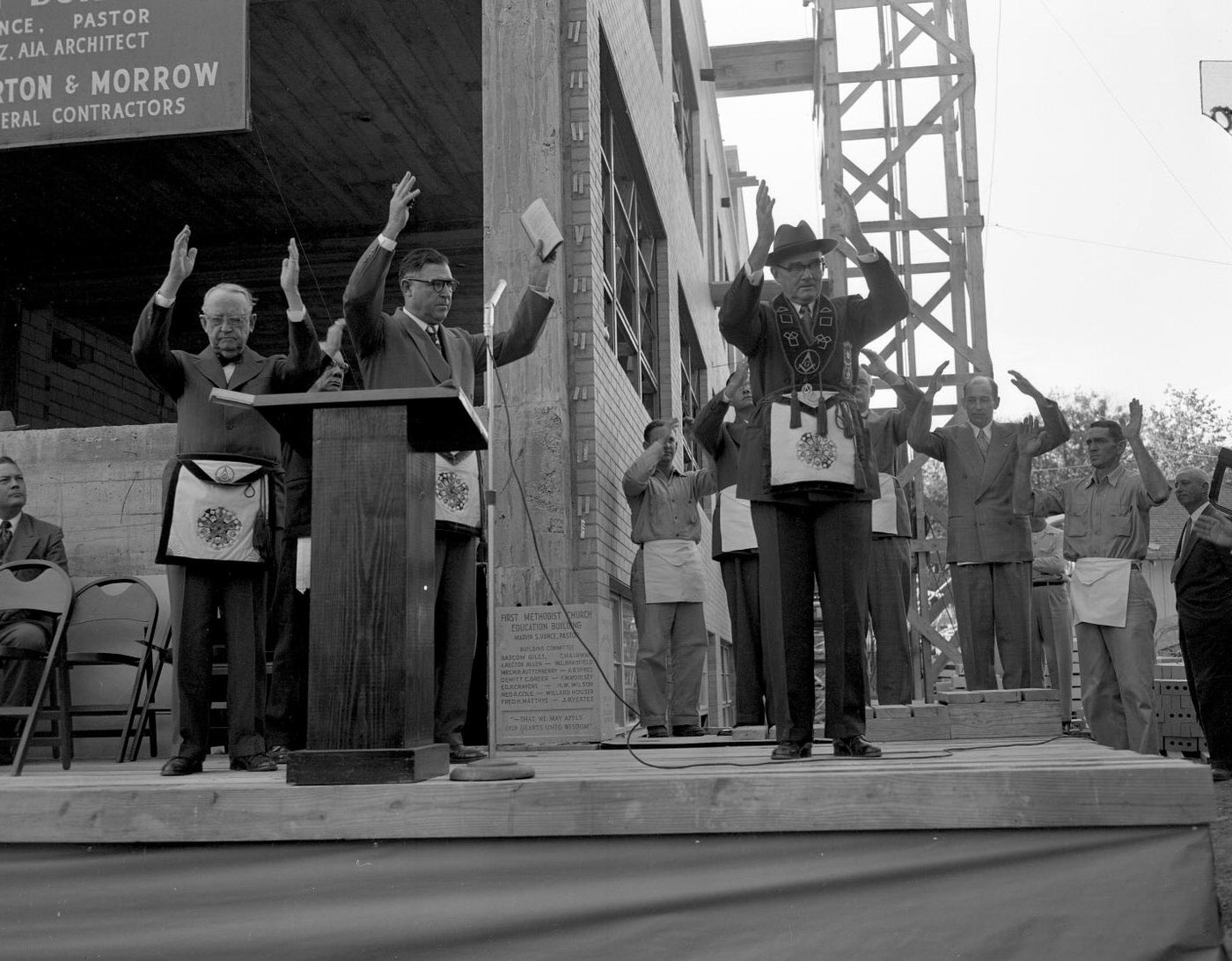
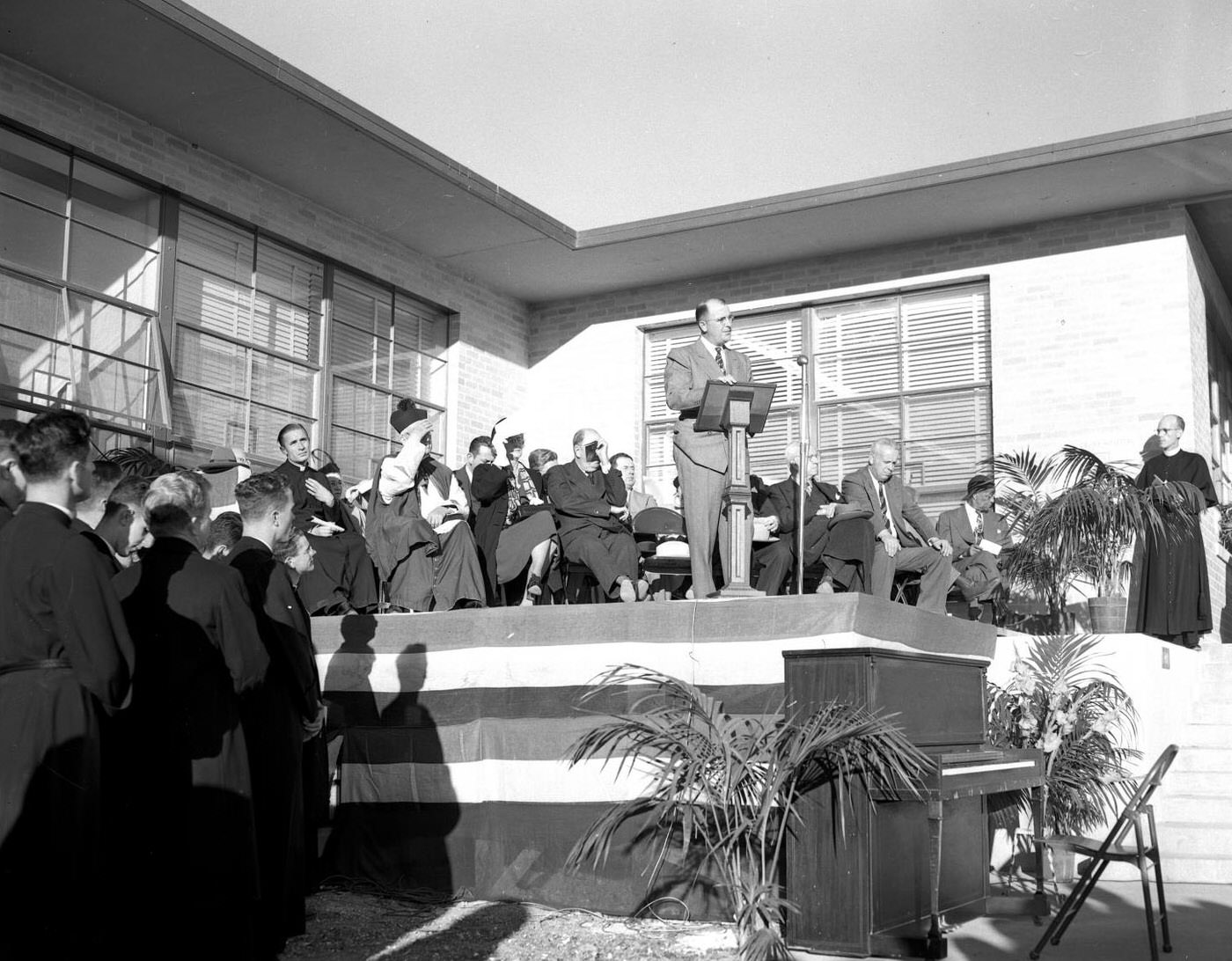
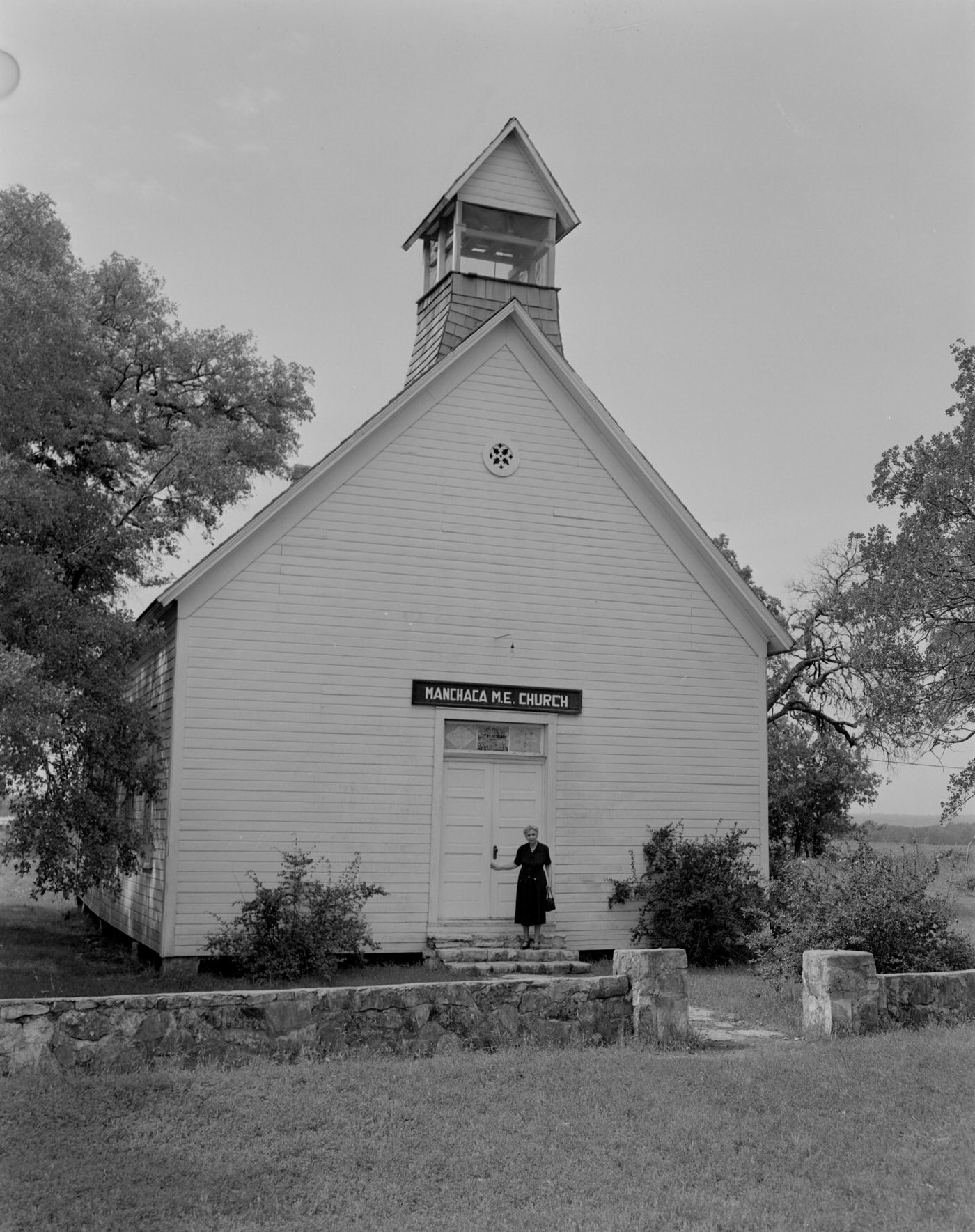
Austin’s religious communities were active and growing. The First United Methodist Church held a cornerstone ceremony in 1952, drawing a crowd to witness the formal laying of a stone in the new building. Holy Cross Hospital held its own dedication ceremony in 1951, marking a major addition to the city’s medical infrastructure. The Manchaca Methodist Church also served its congregation through the decade.
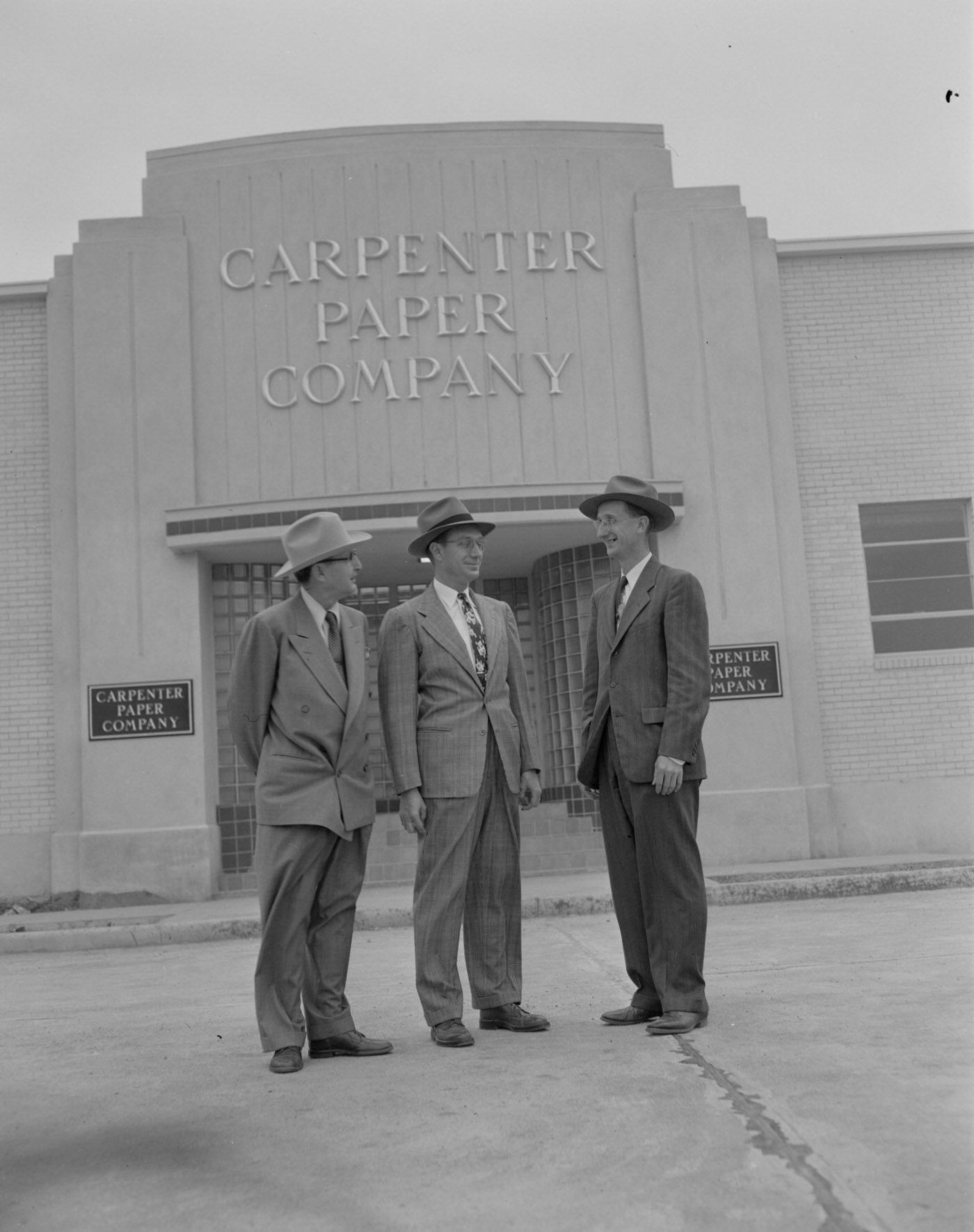
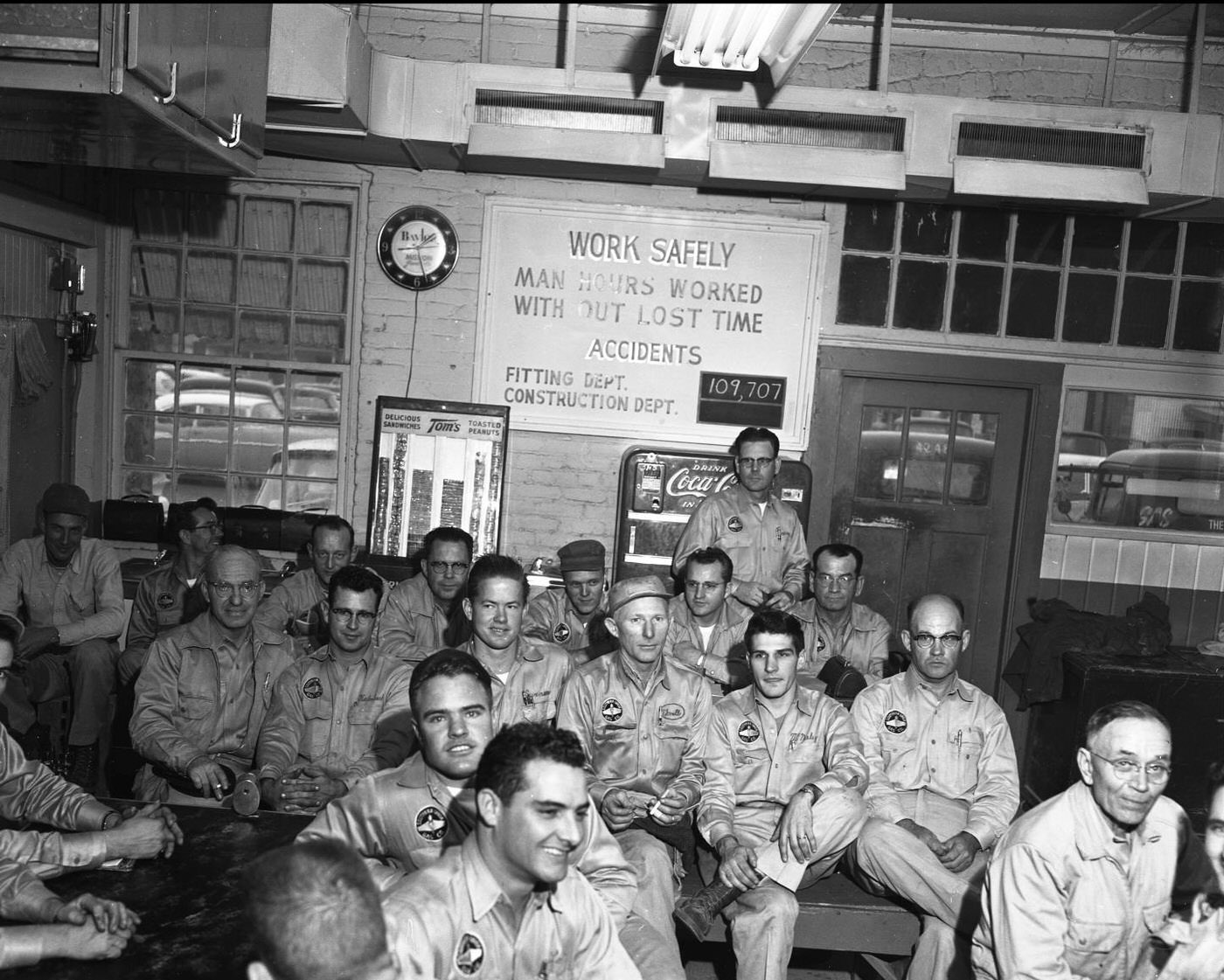
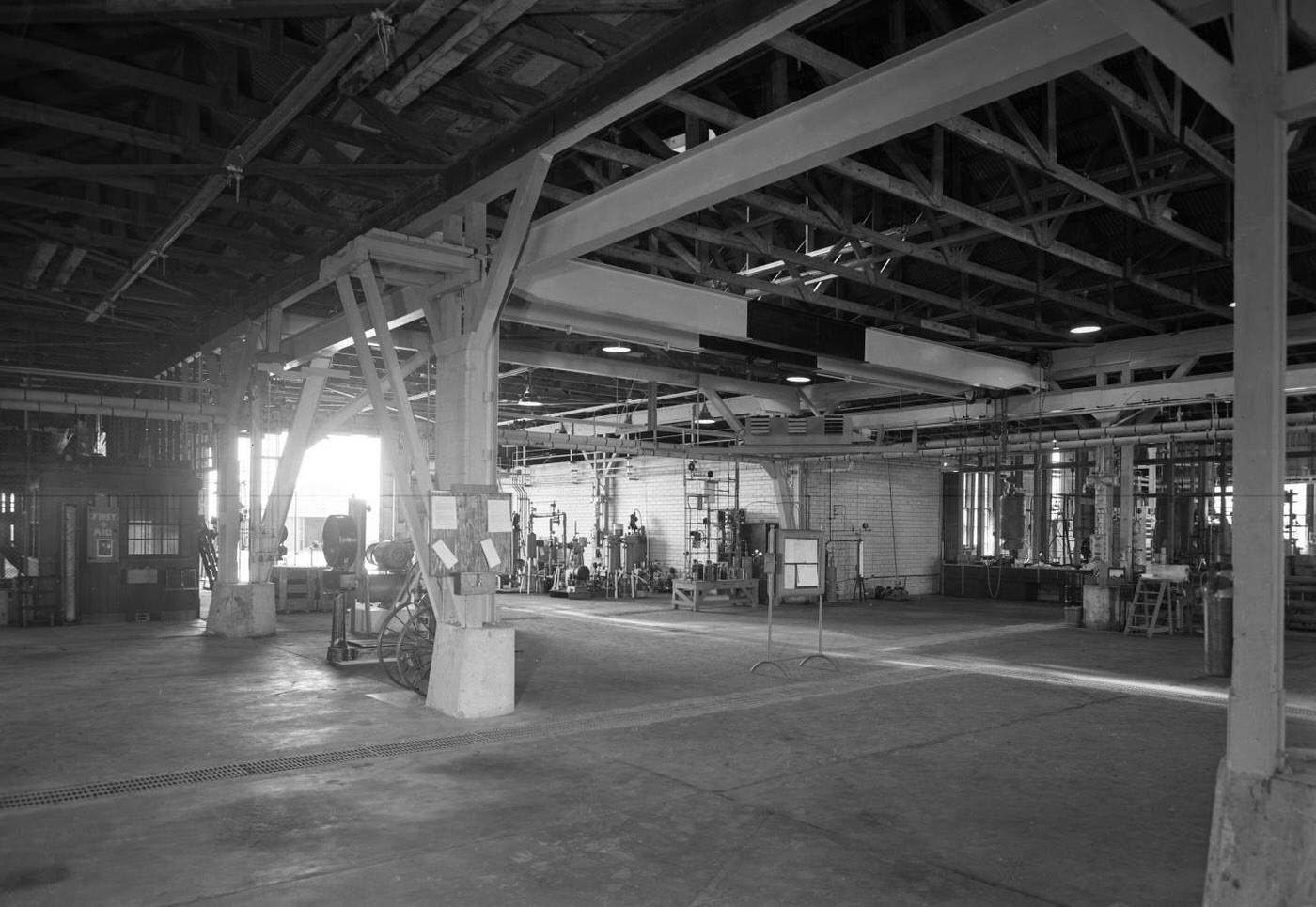
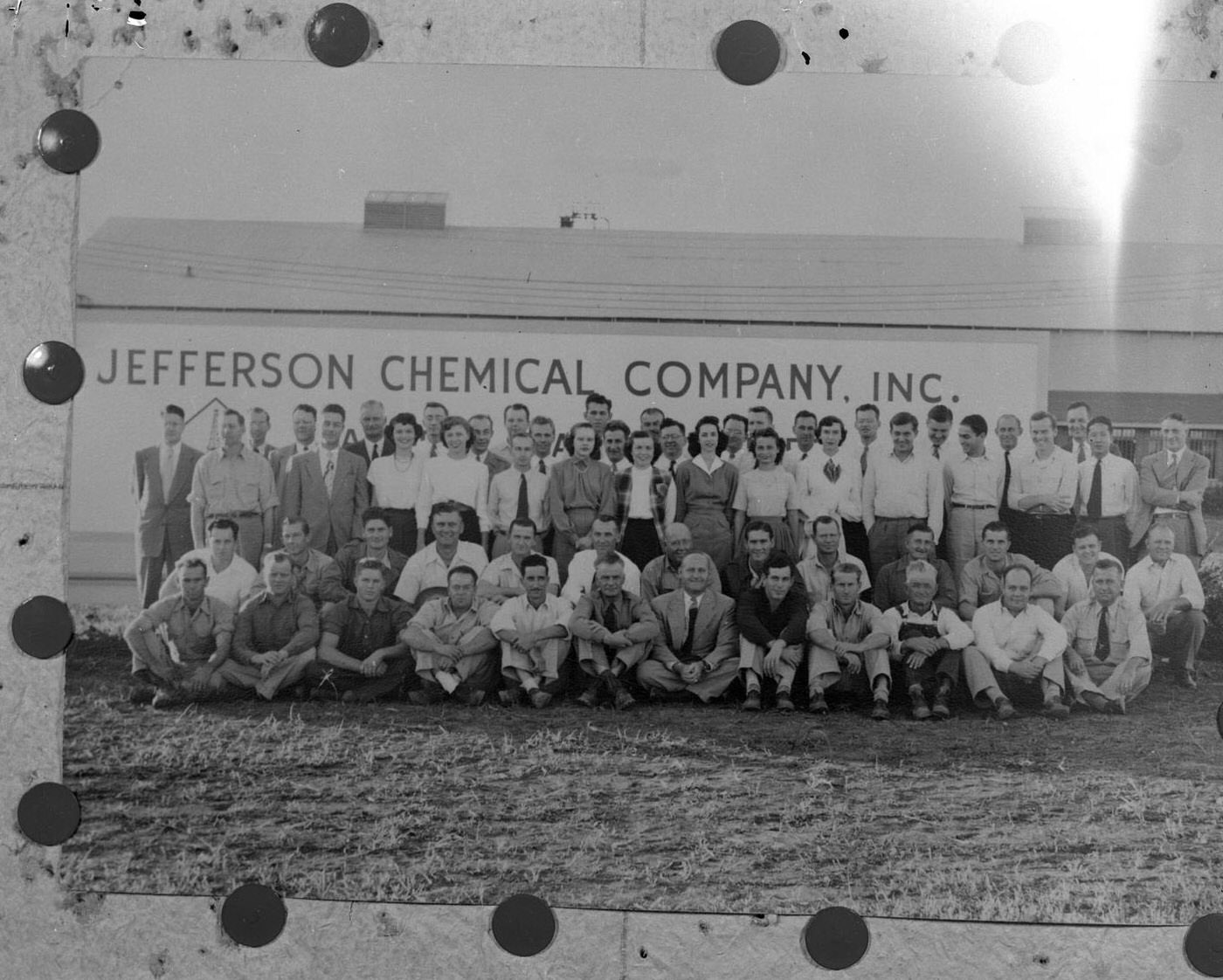
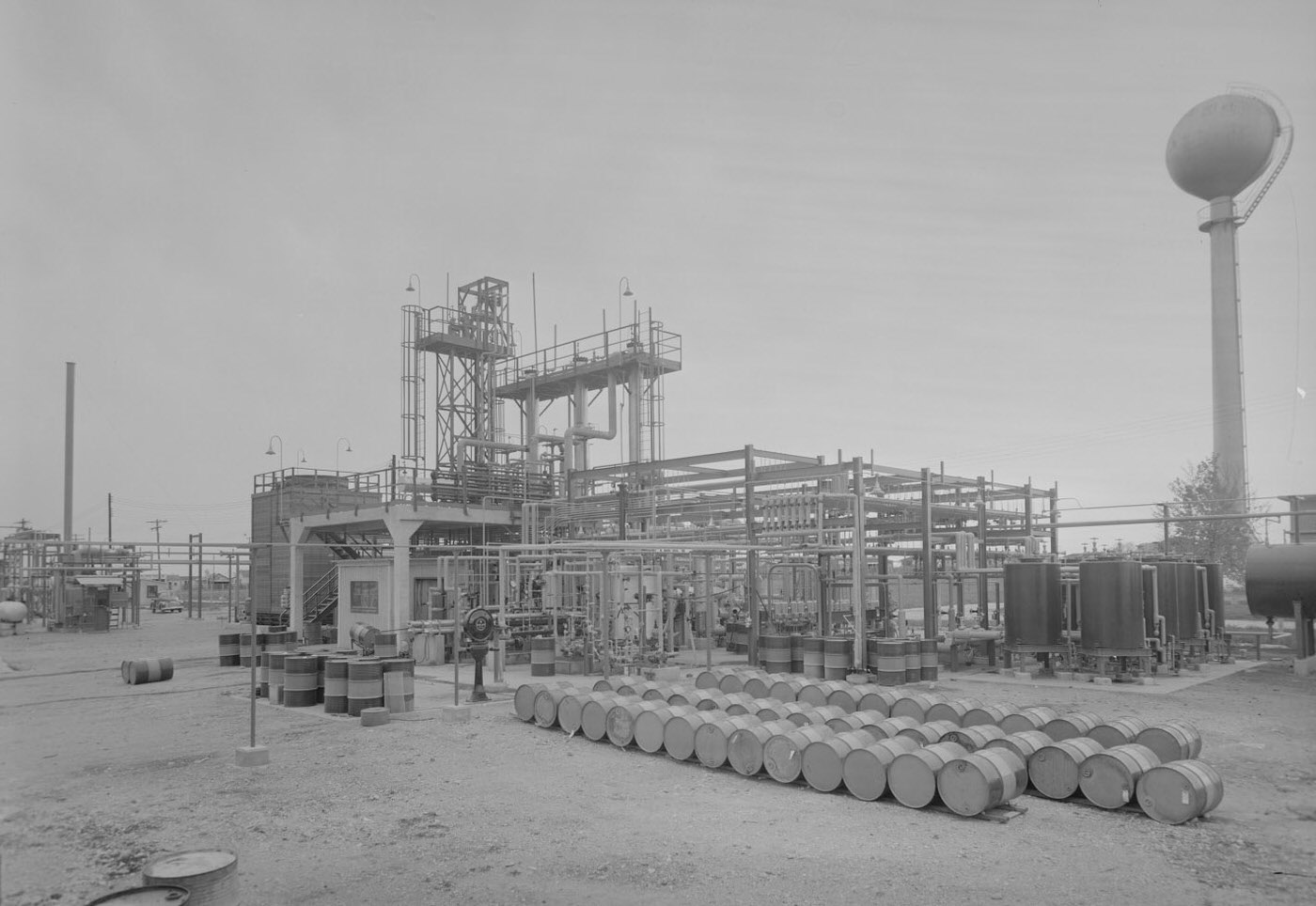
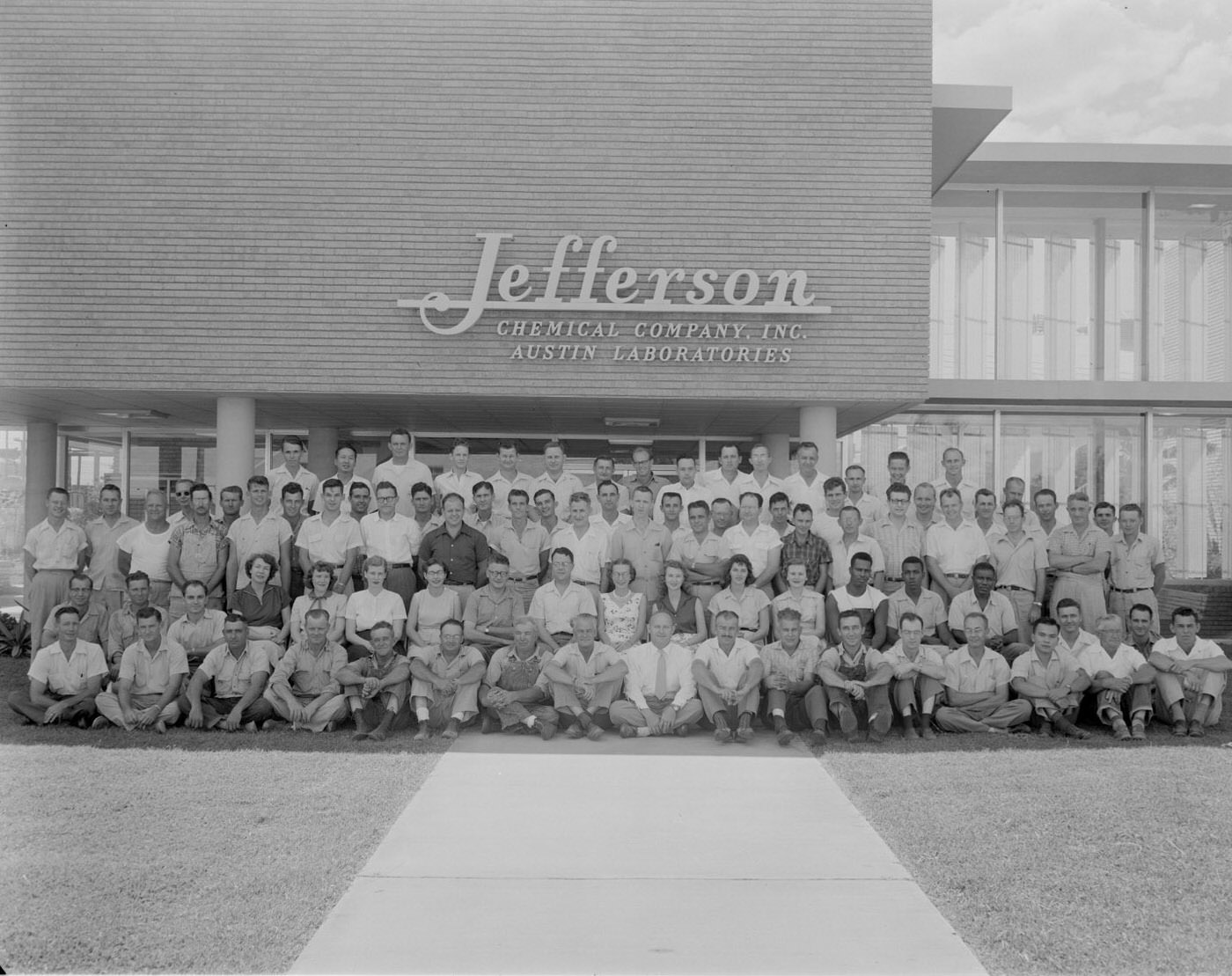
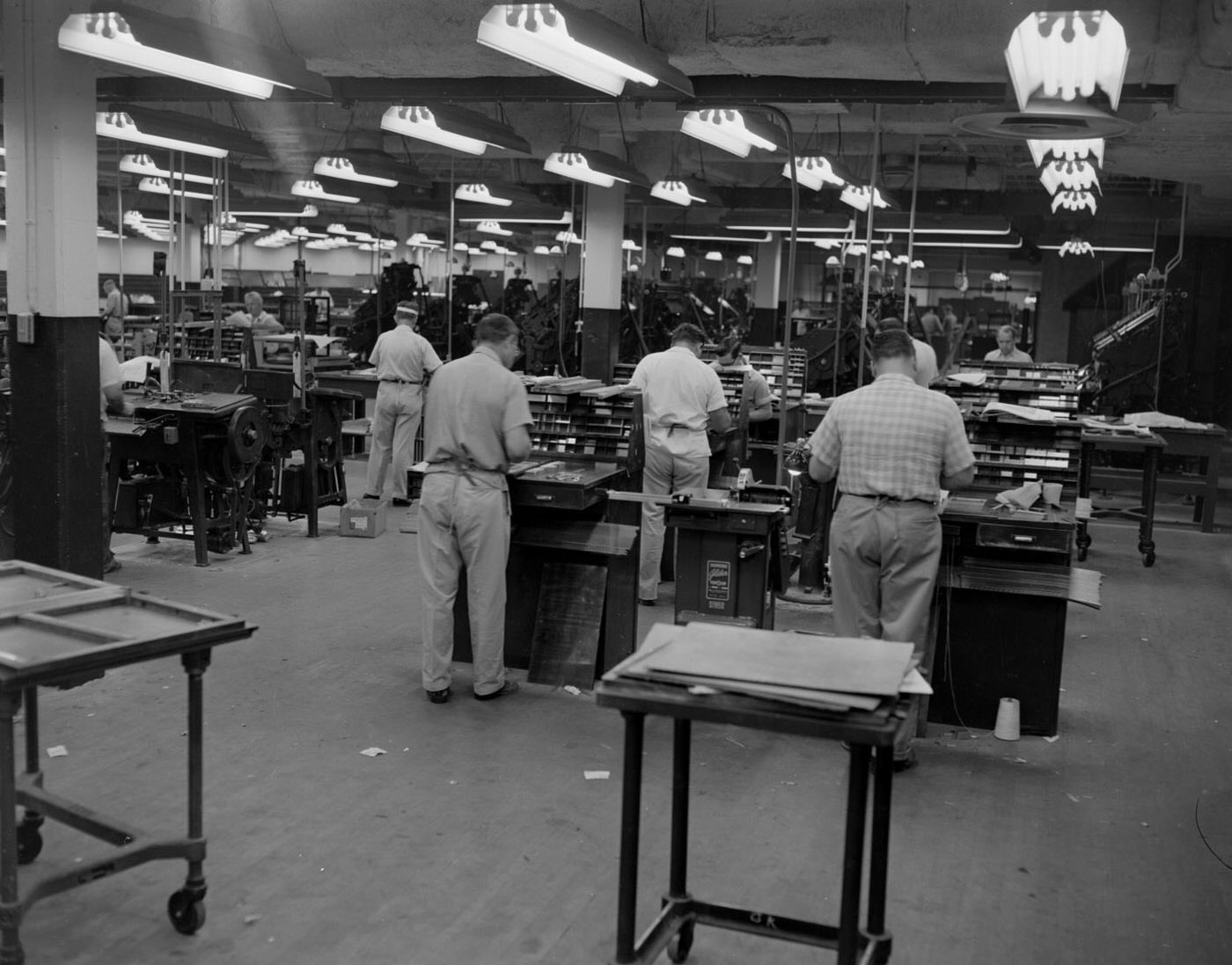
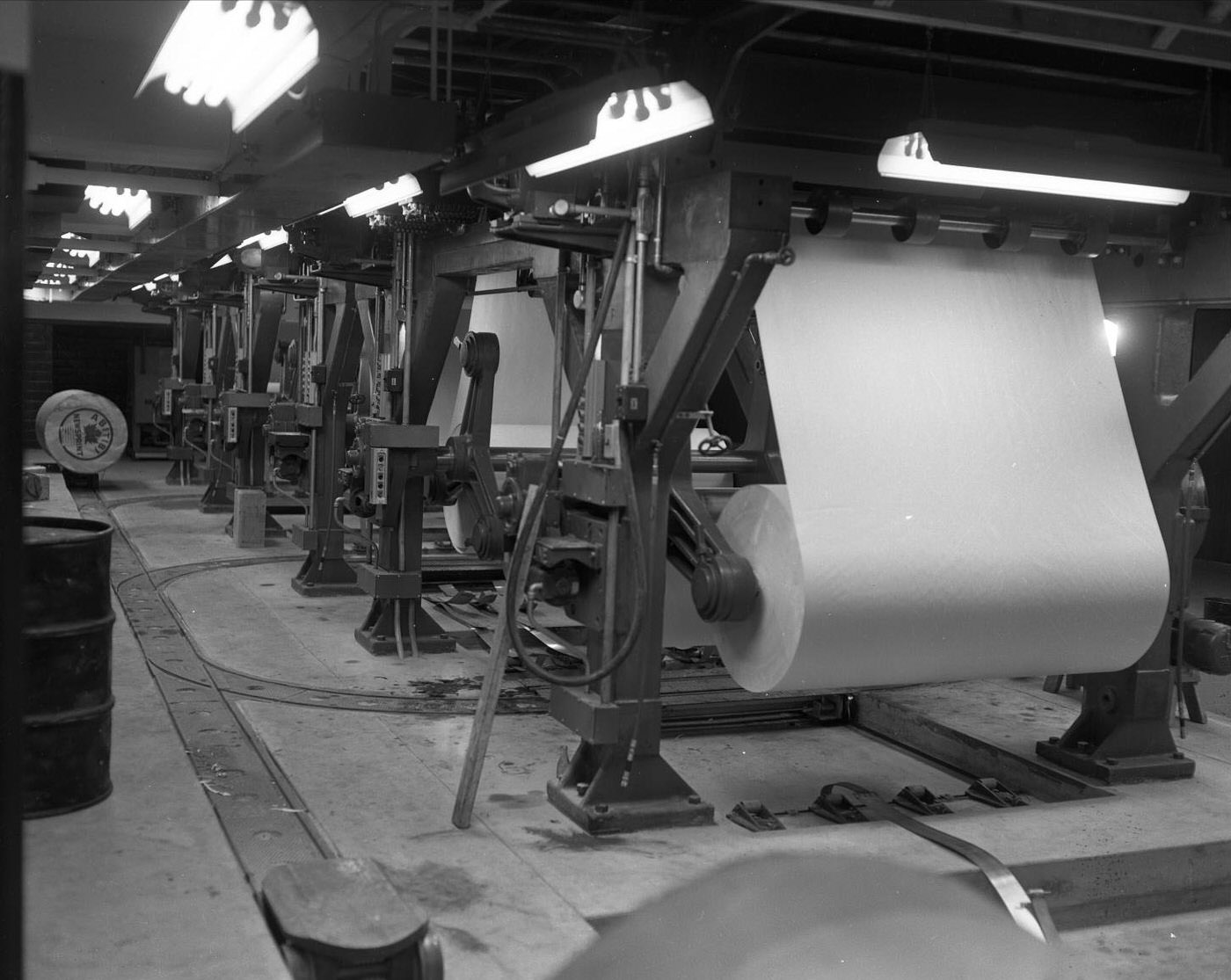
Austin’s industries in the 1950s ranged from chemical manufacturing to paper distribution. Jefferson Chemical Company employed a large workforce and operated a sprawling plant that was photographed multiple times throughout the decade. The Austin American-Statesman ran a busy construction shop and stored enormous rolls of newsprint to feed its presses.
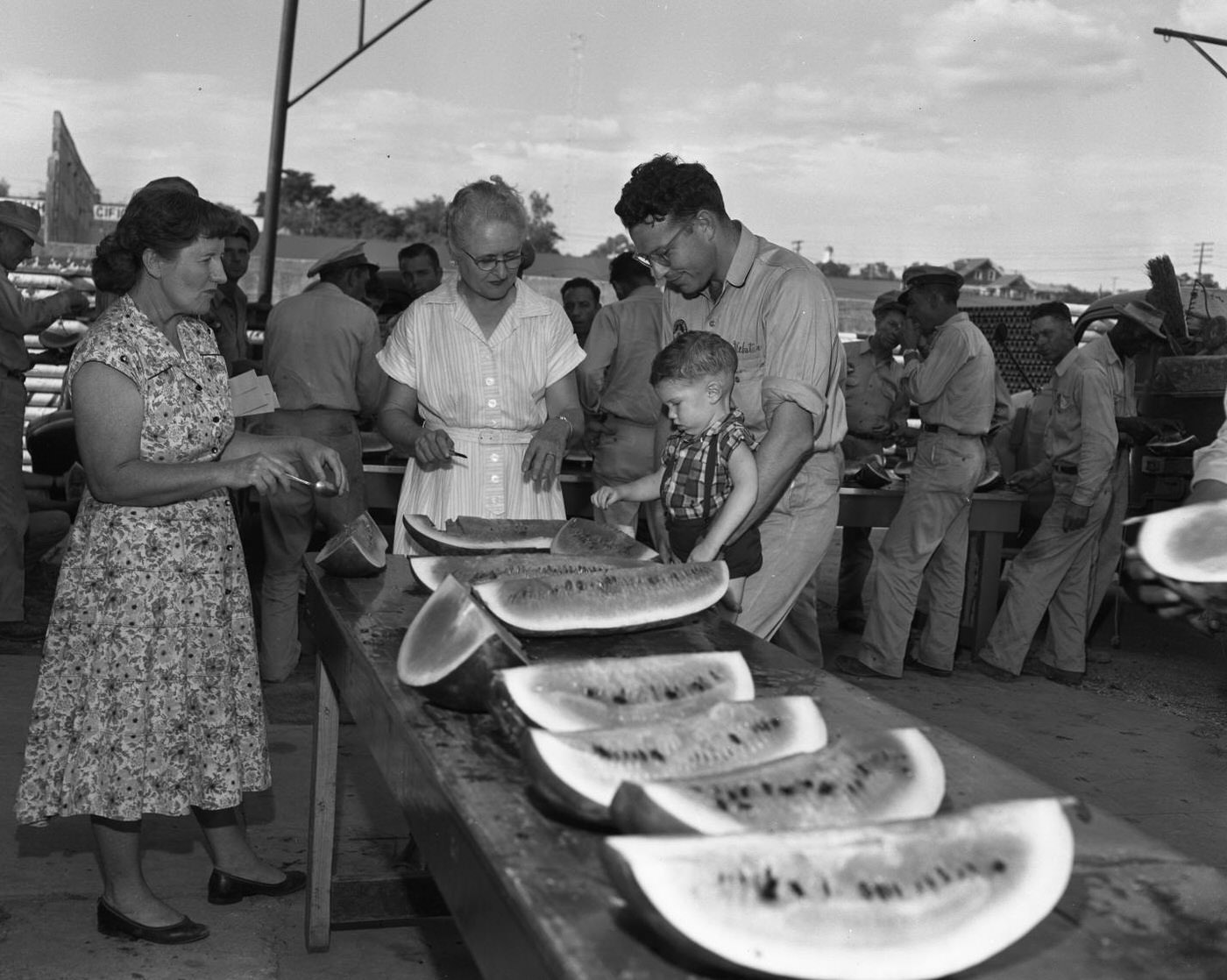
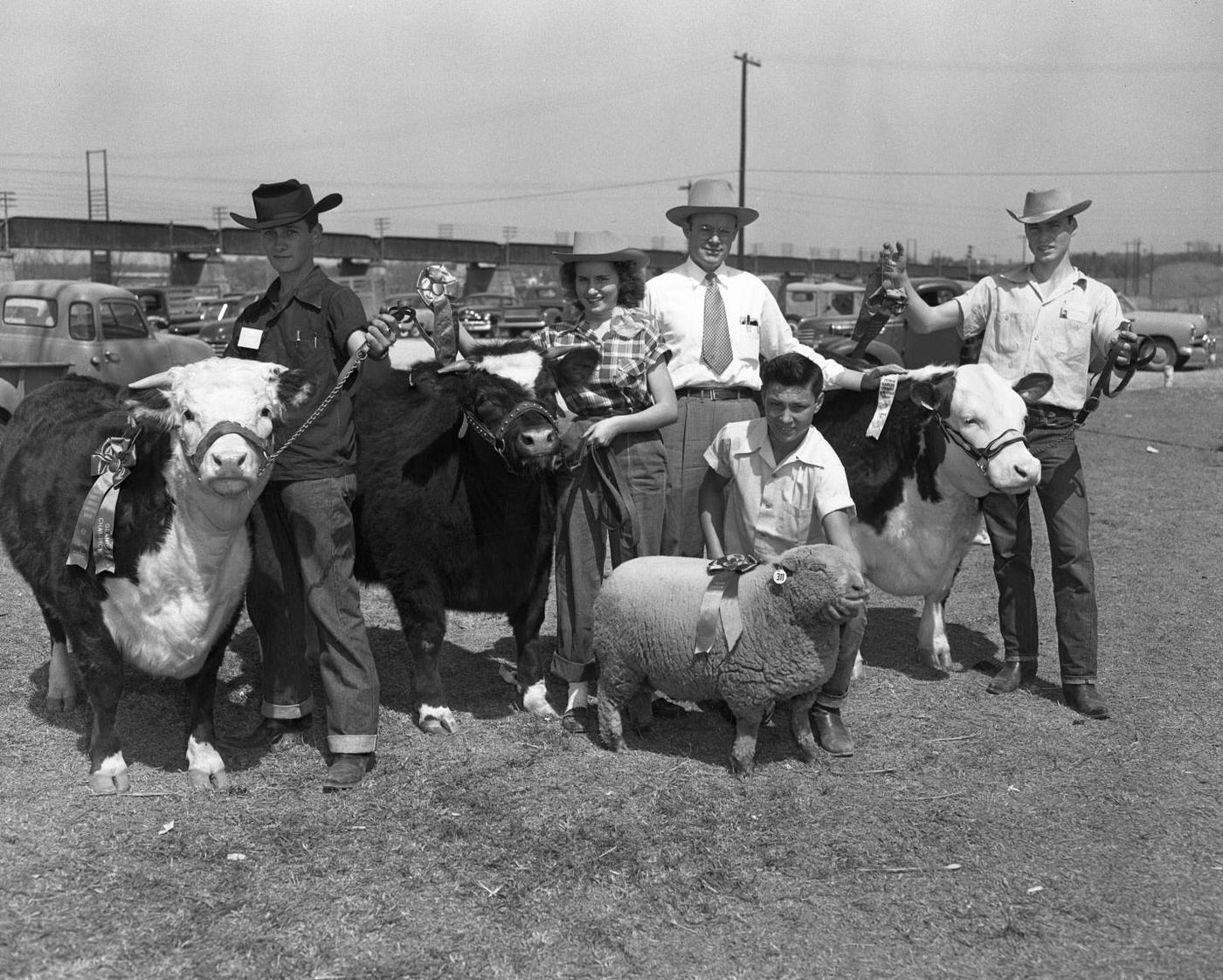
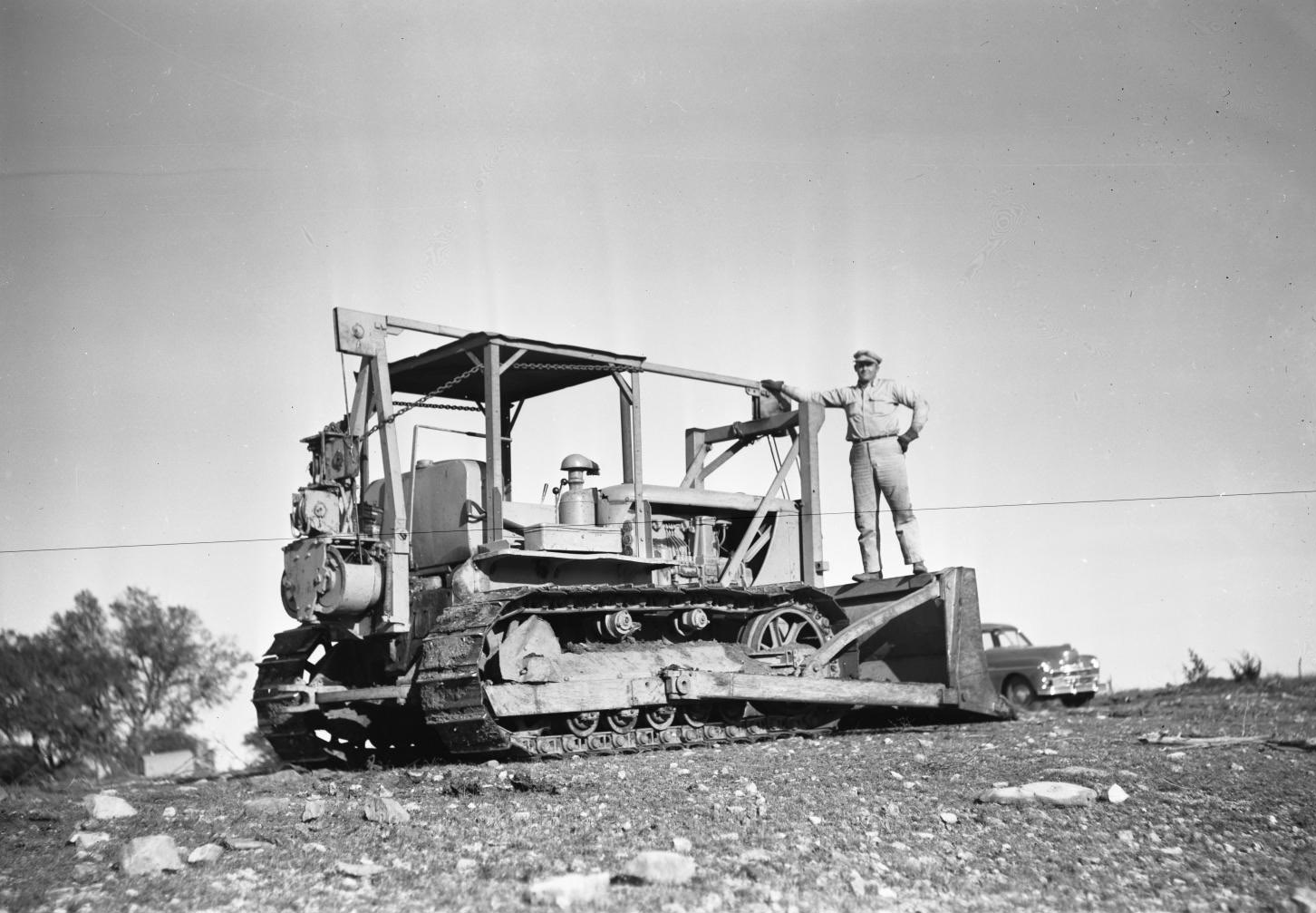
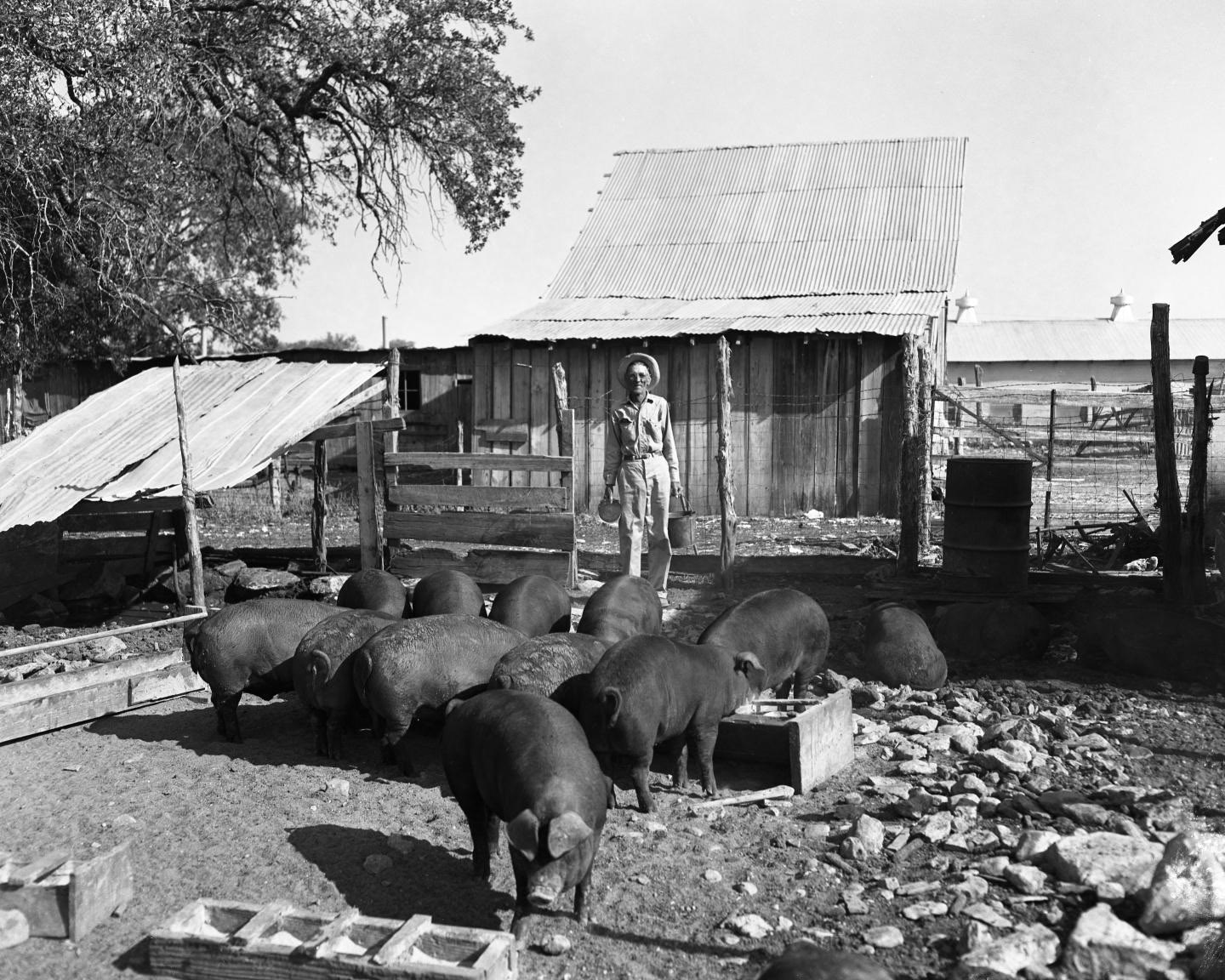
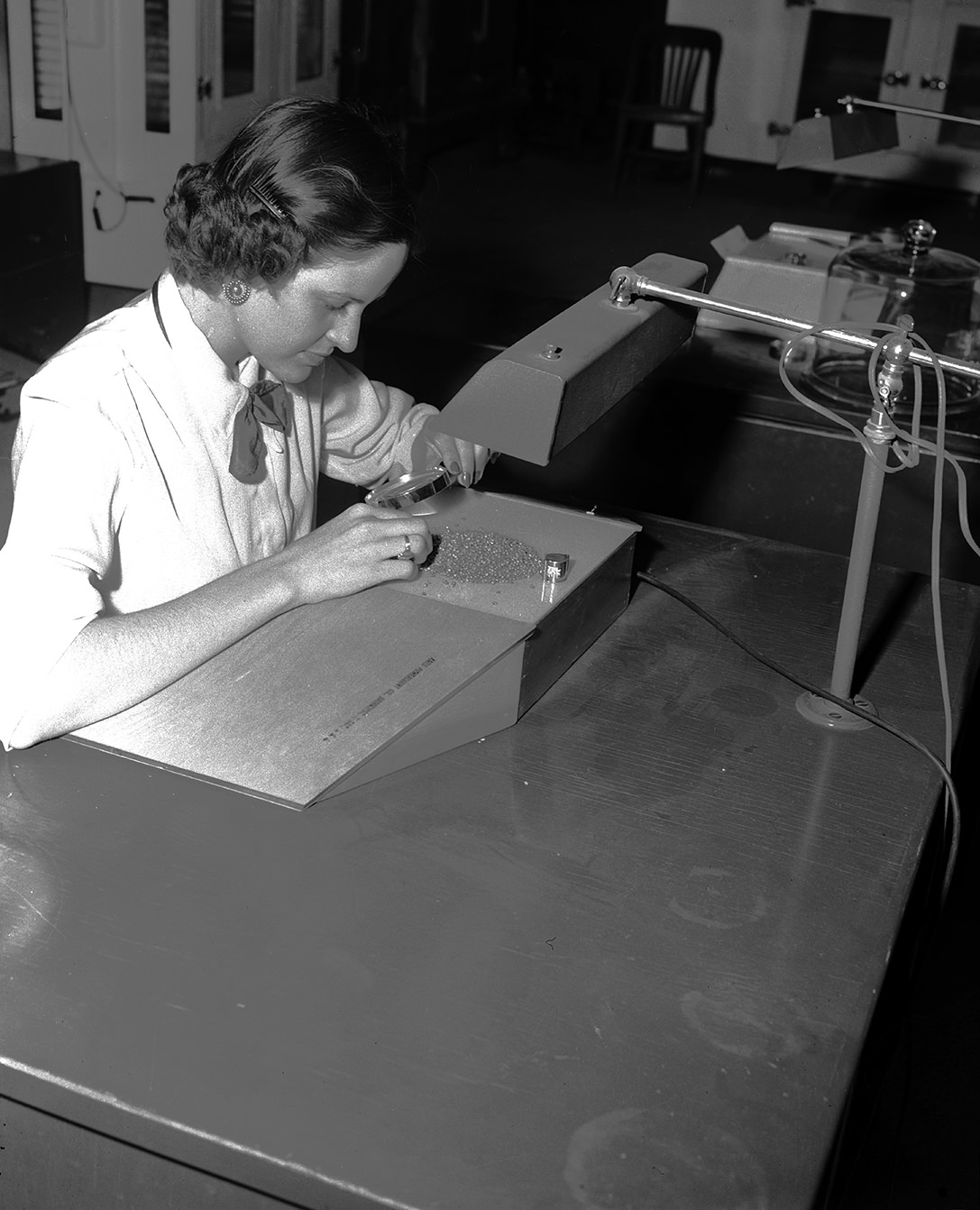
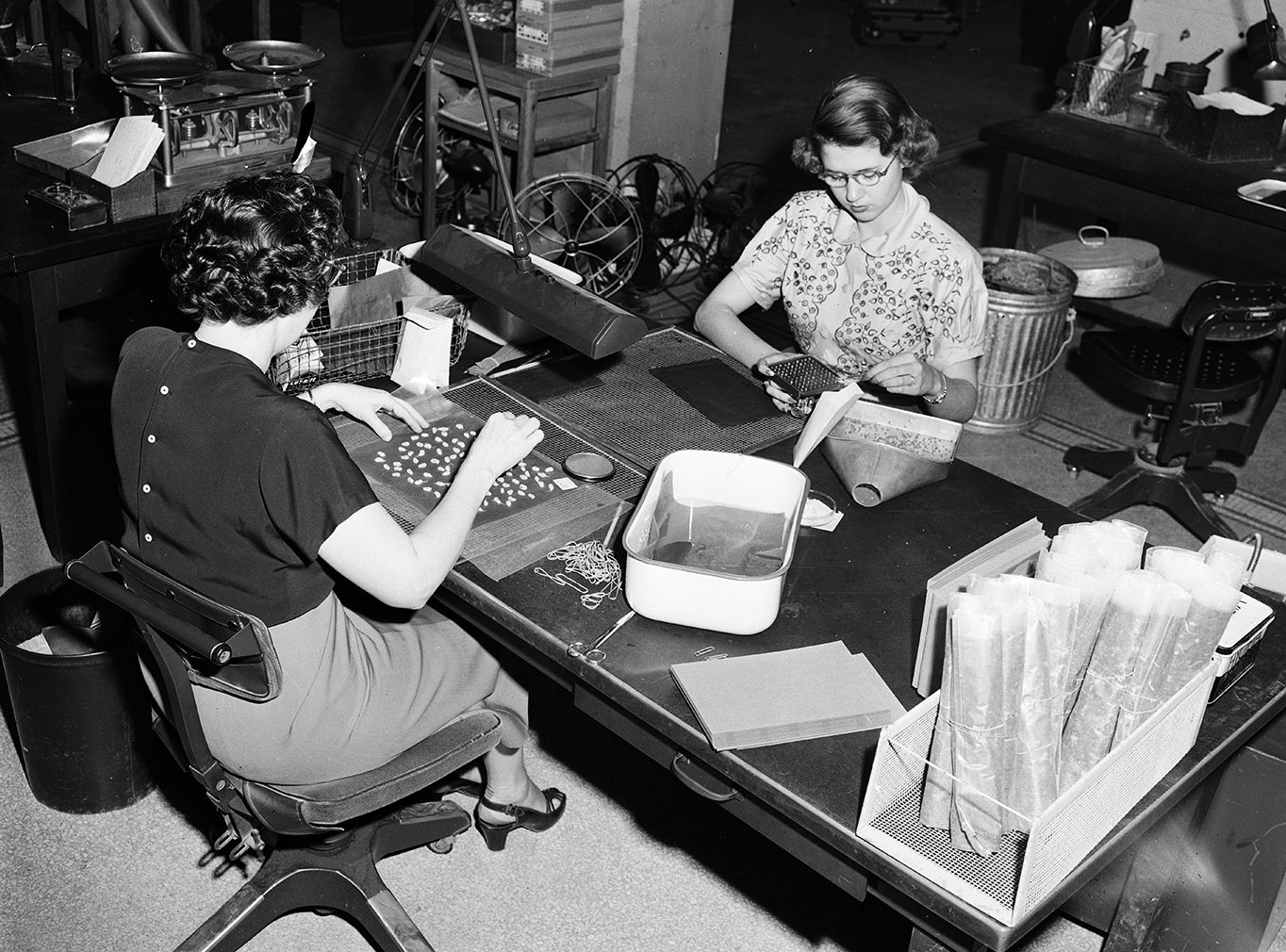
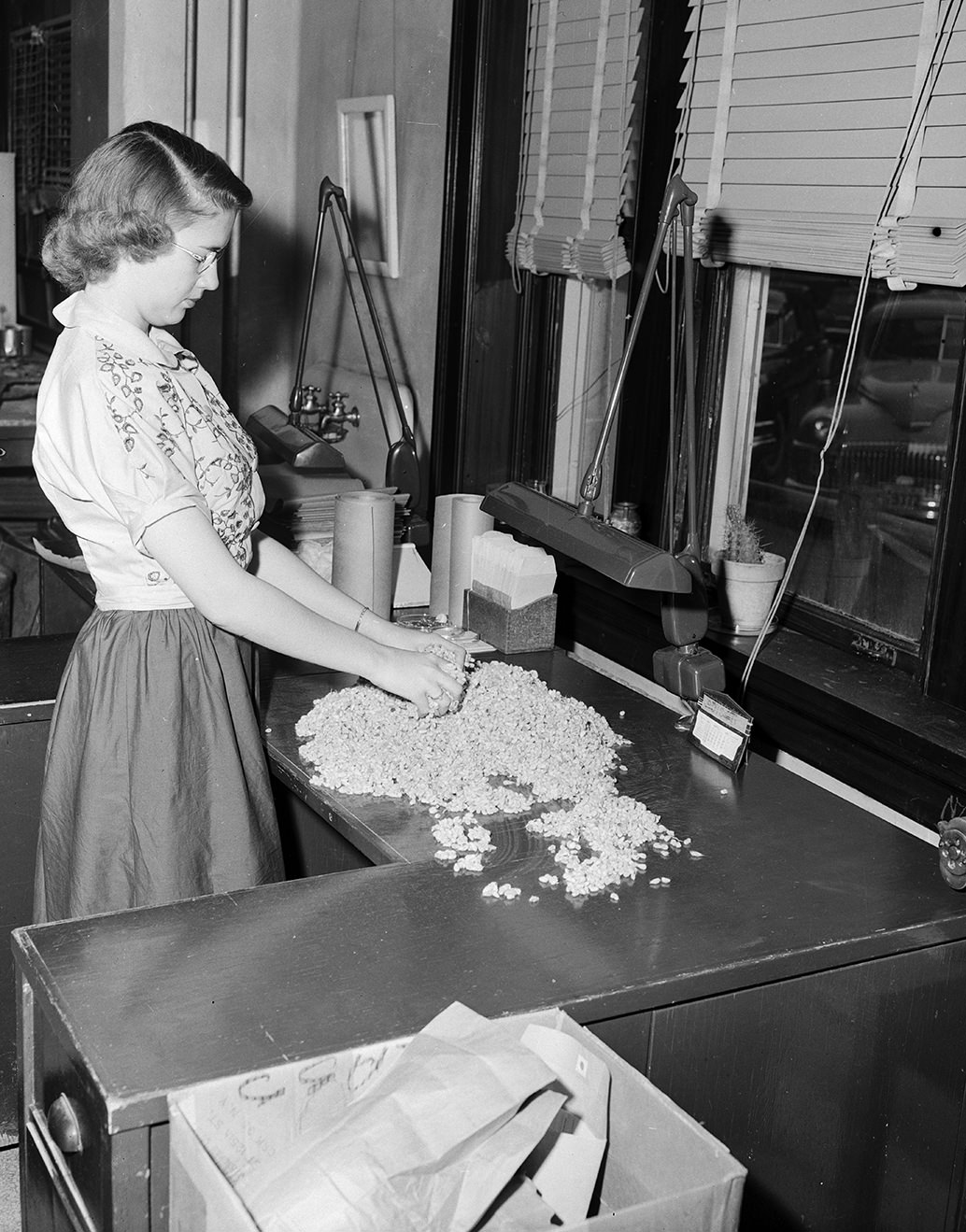
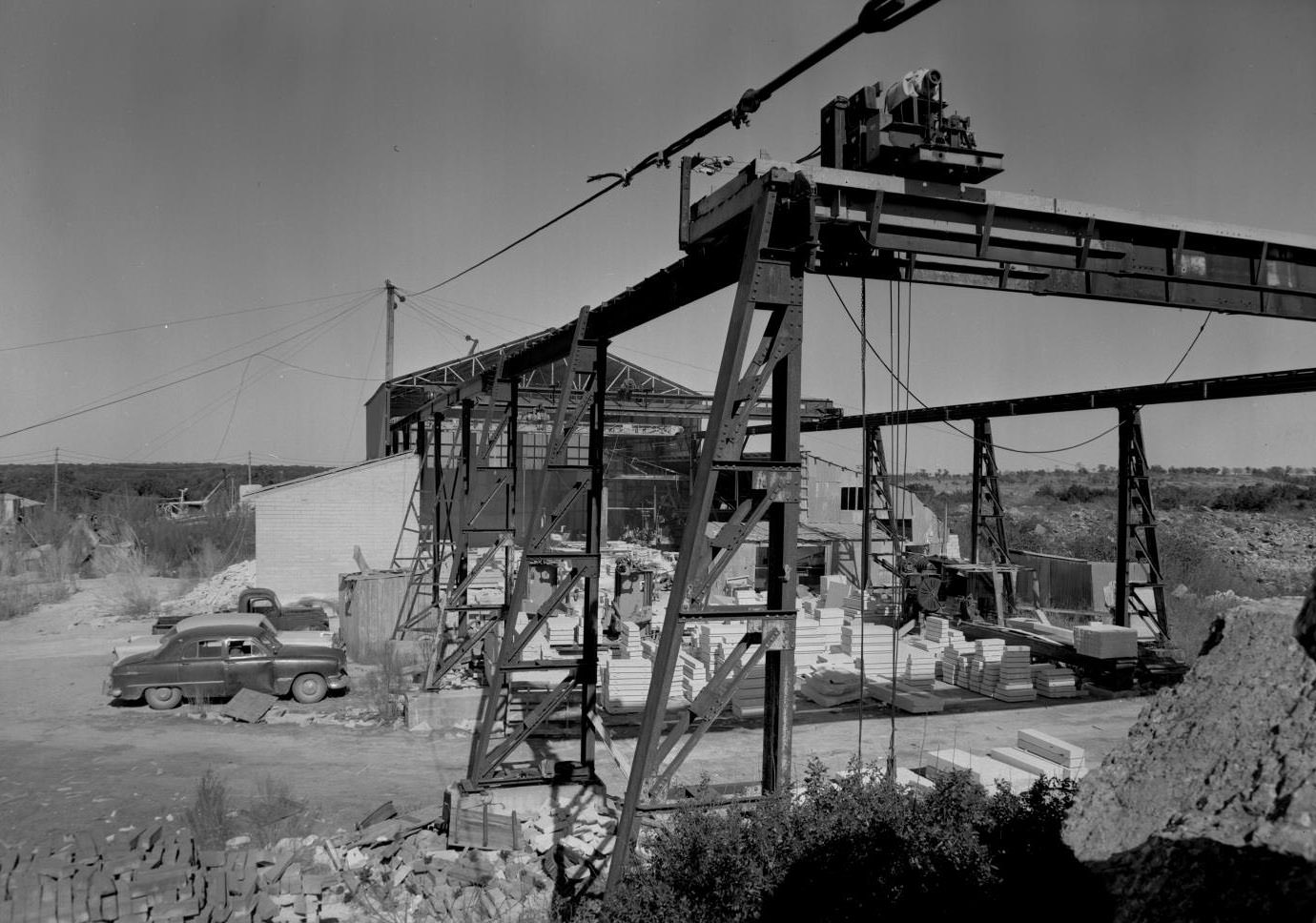
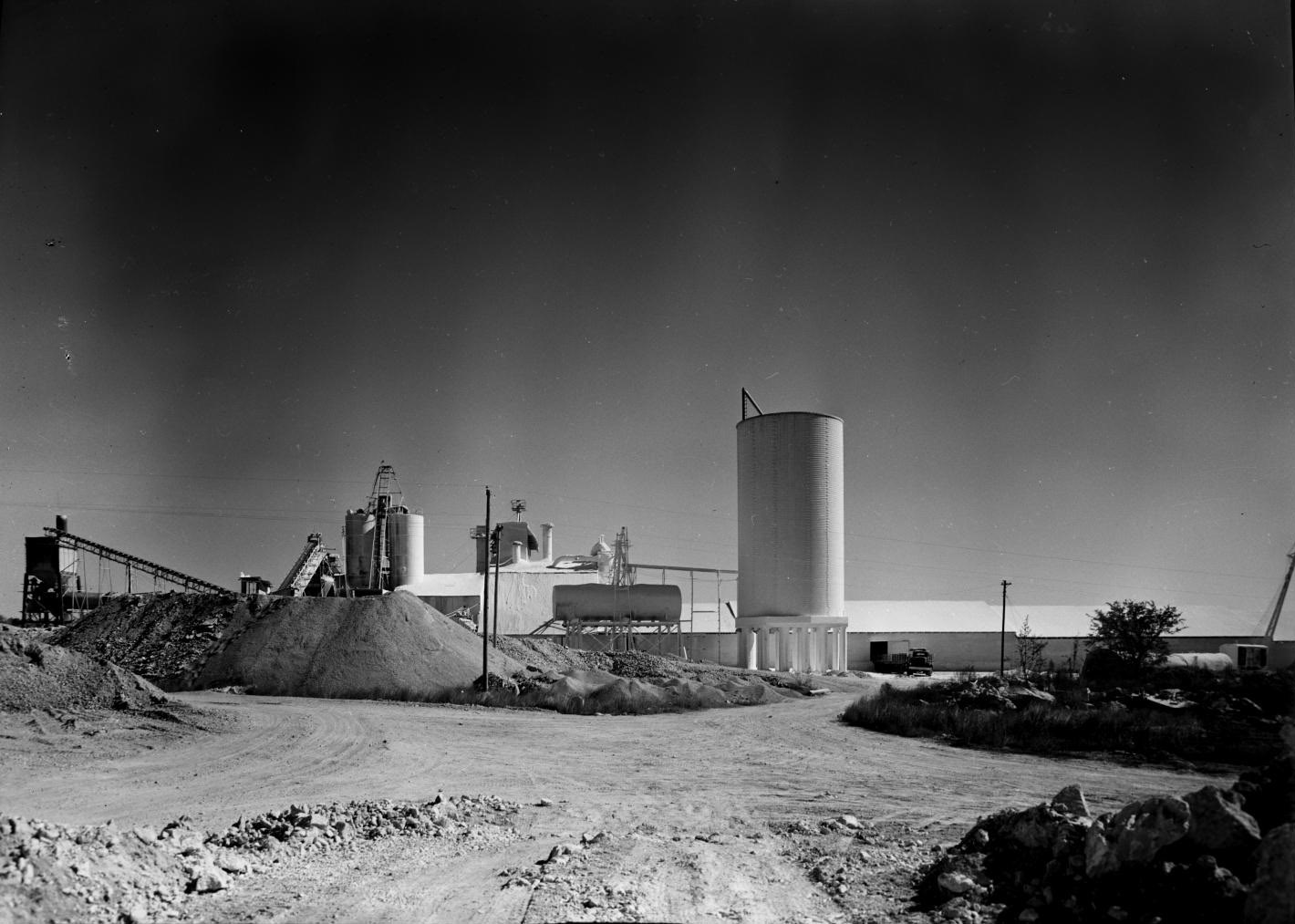
Agriculture remained deeply woven into the fabric of Austin and the surrounding region. Farmers posed with their livestock in 1951, Maurice Asher fed his pigs in 1956, and a man worked a tractor in an open field in 1950. The State Agriculture Department laboratory conducted careful seed purity testing and preparation throughout 1951. The Leander Limestone Corporation operated heavy processing equipment just outside the city by 1959.
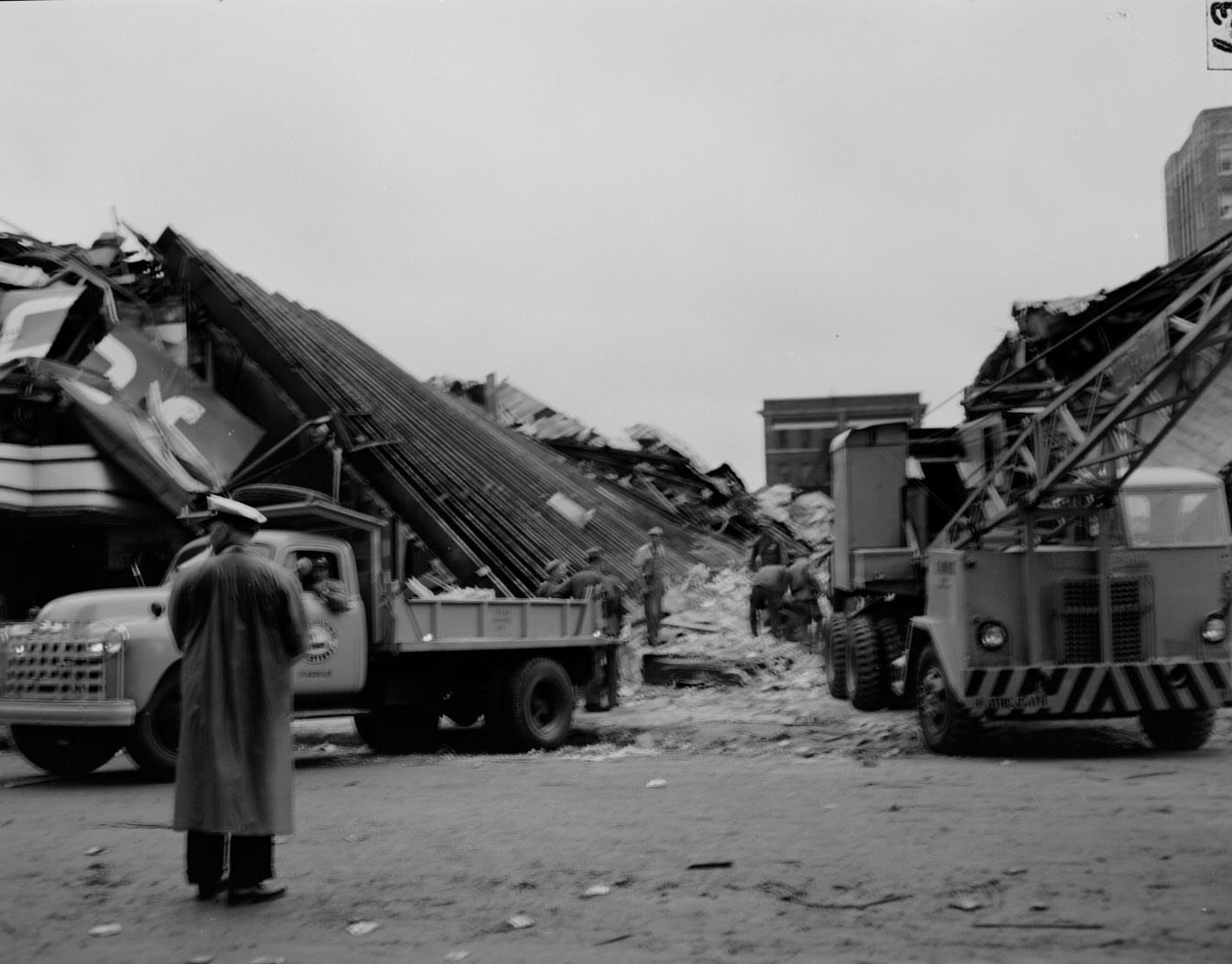
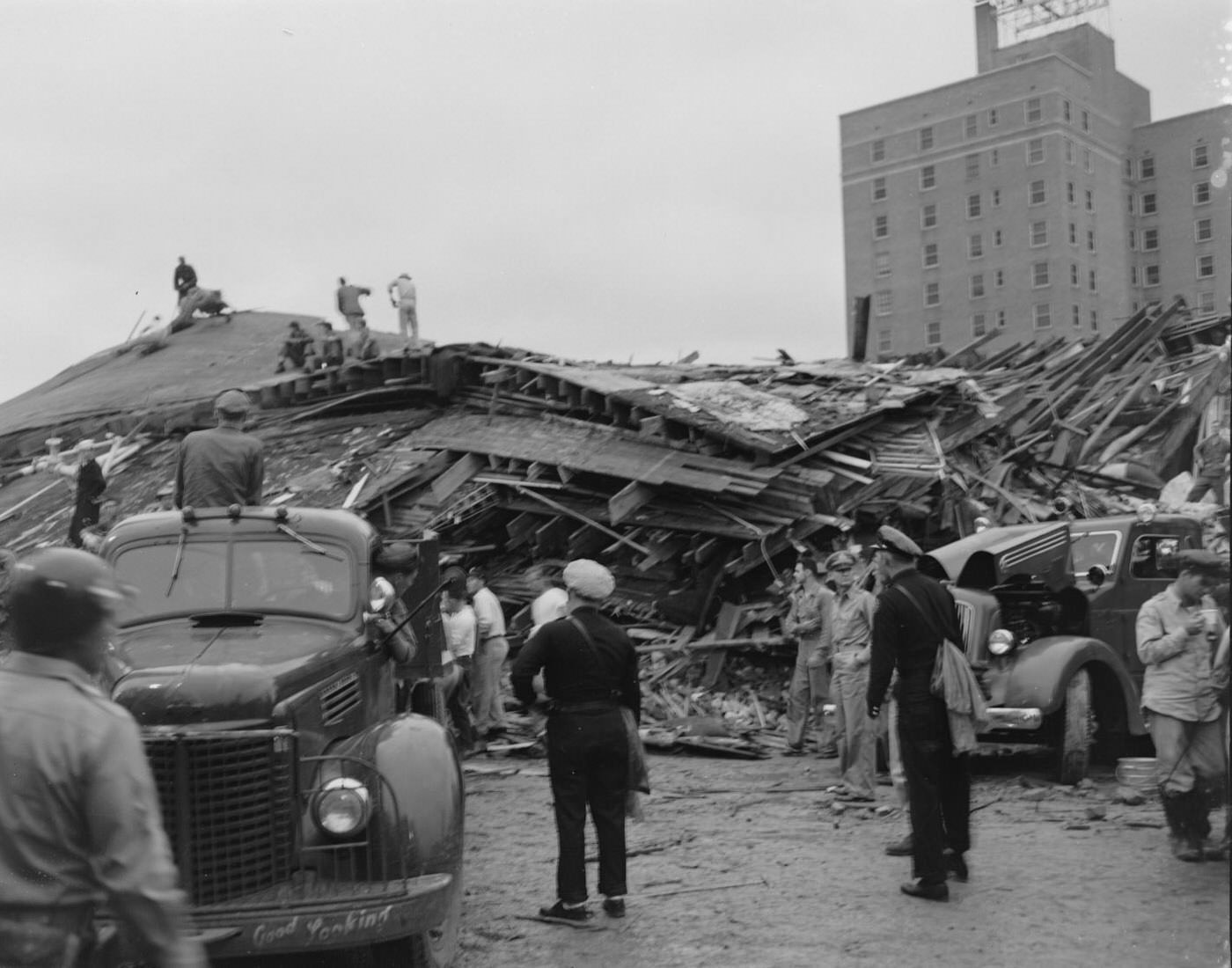
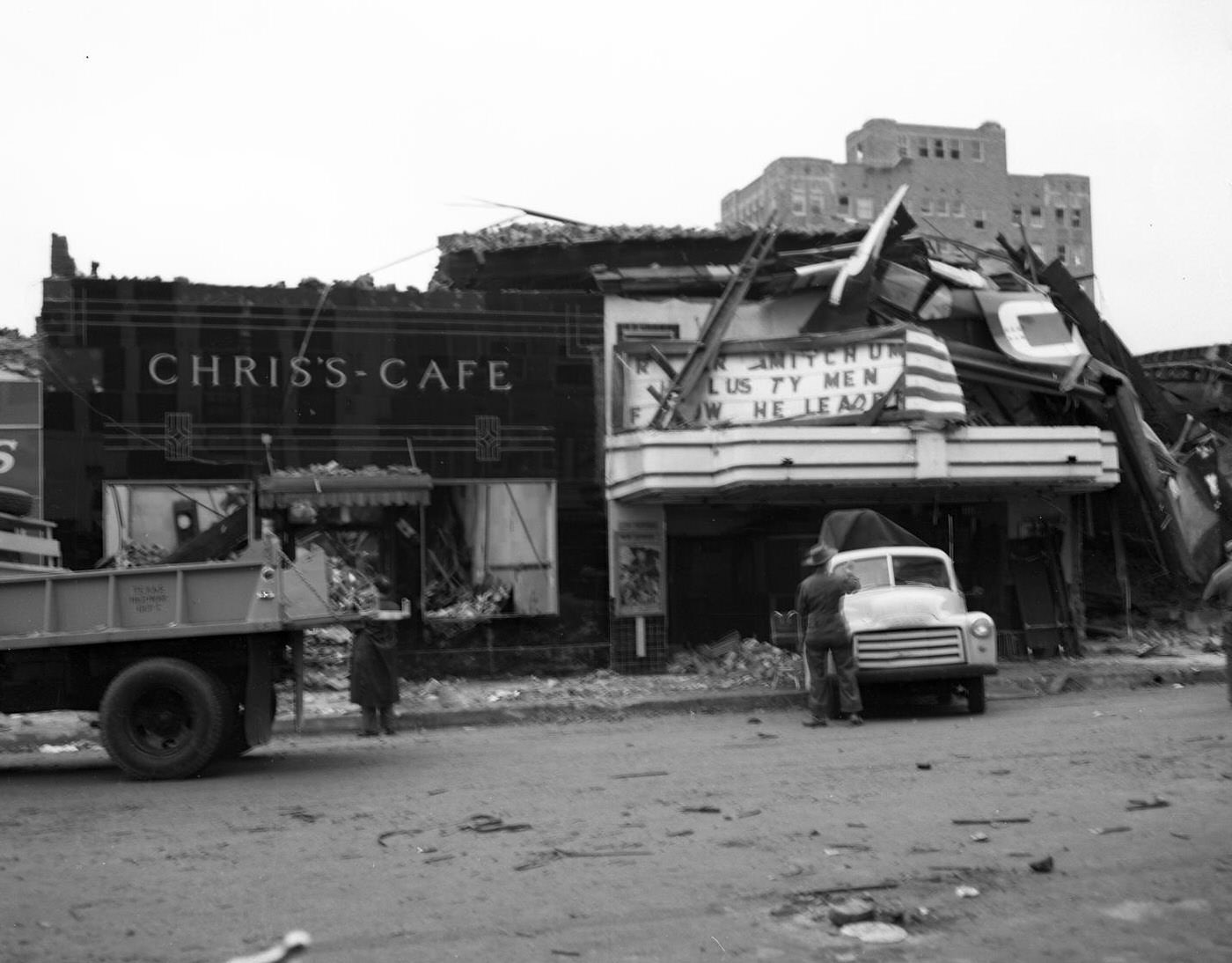
The decade was not without its tragedies. On May 11, 1953, a massive tornado tore through Waco — just 100 miles north of Austin — killing 114 people and injuring hundreds more. It remains one of the deadliest tornadoes in Texas history. The destruction of buildings like the R.T. Dennis Building was total, and photographs taken in the immediate aftermath show the full scale of the disaster.
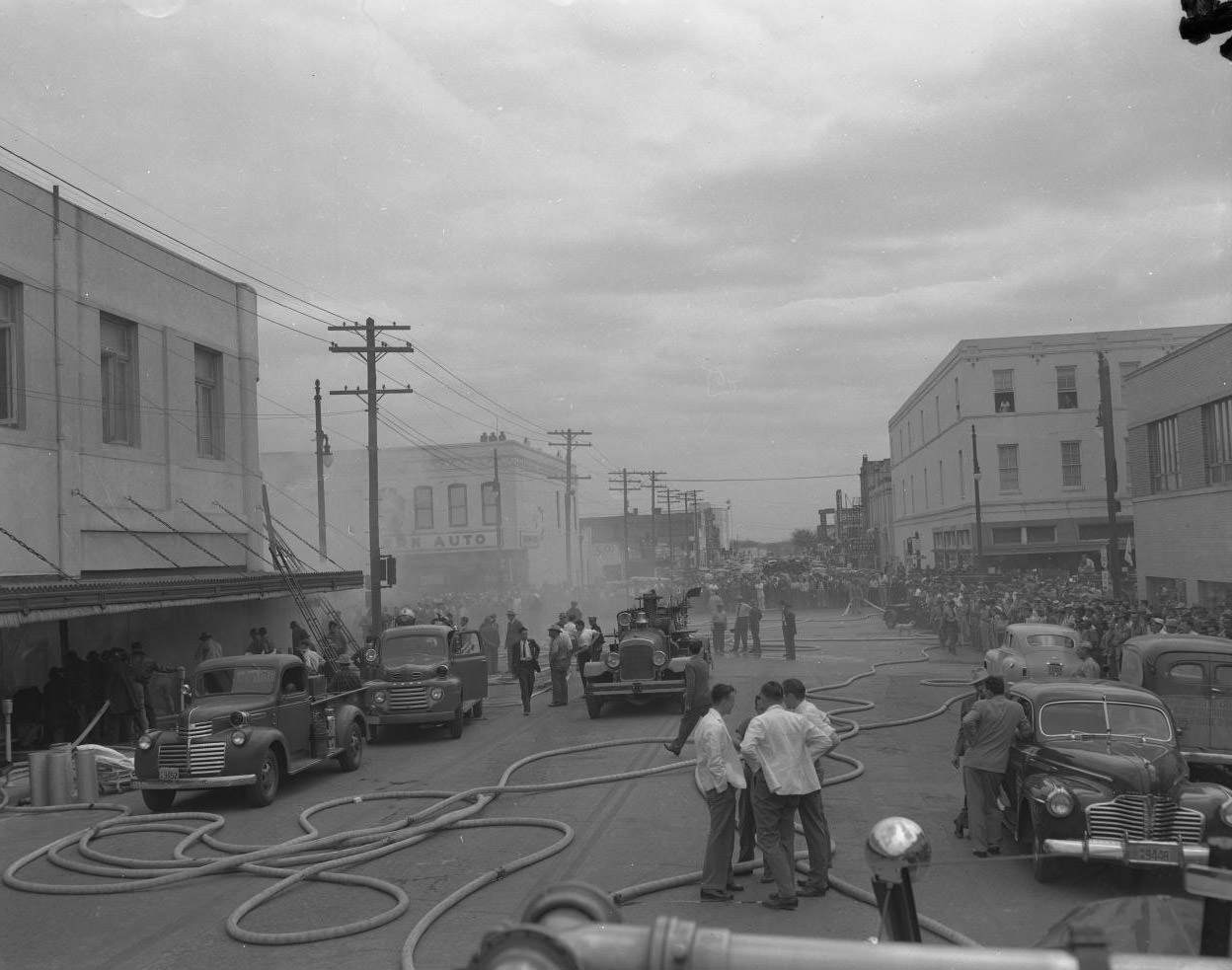
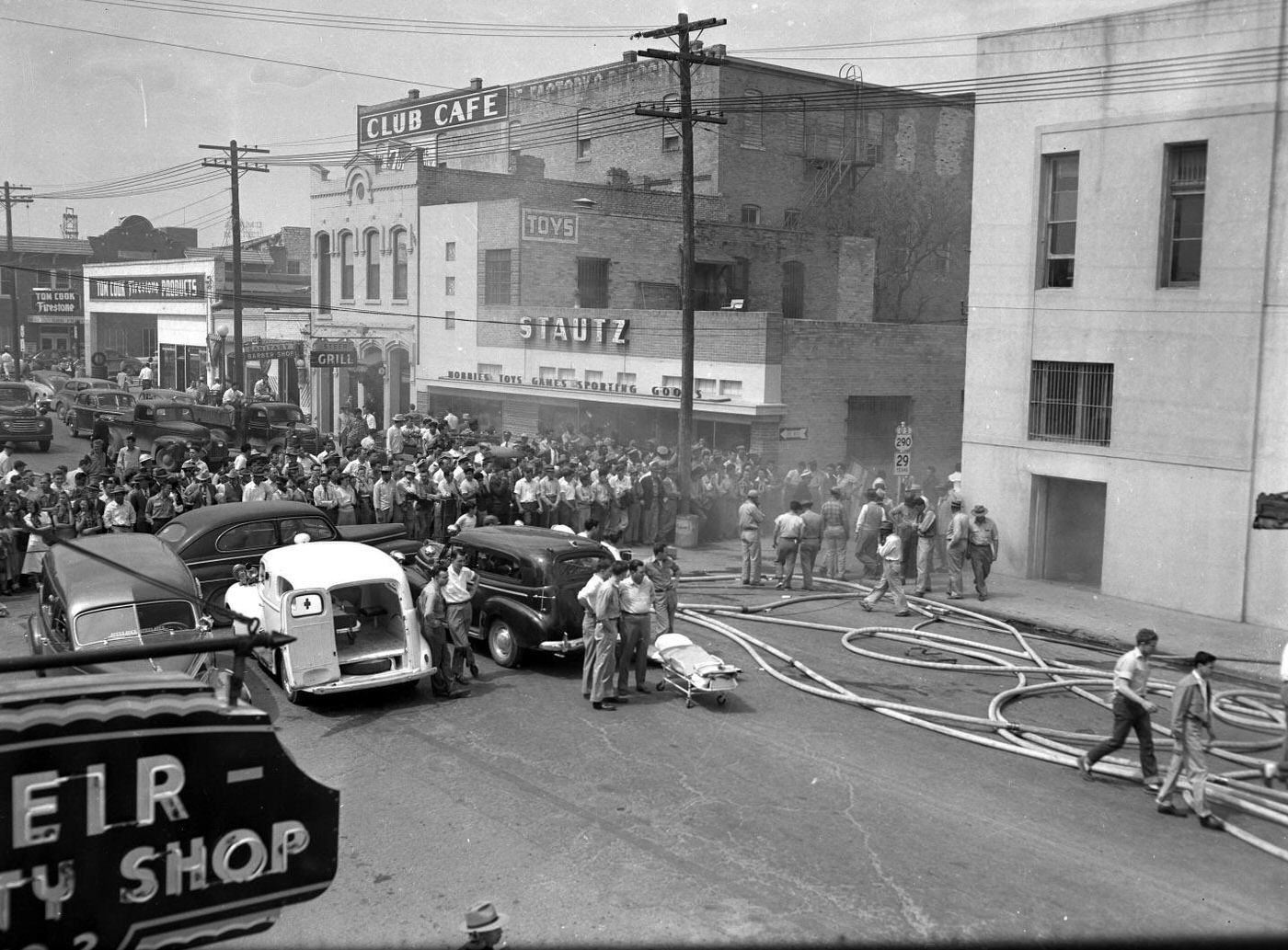
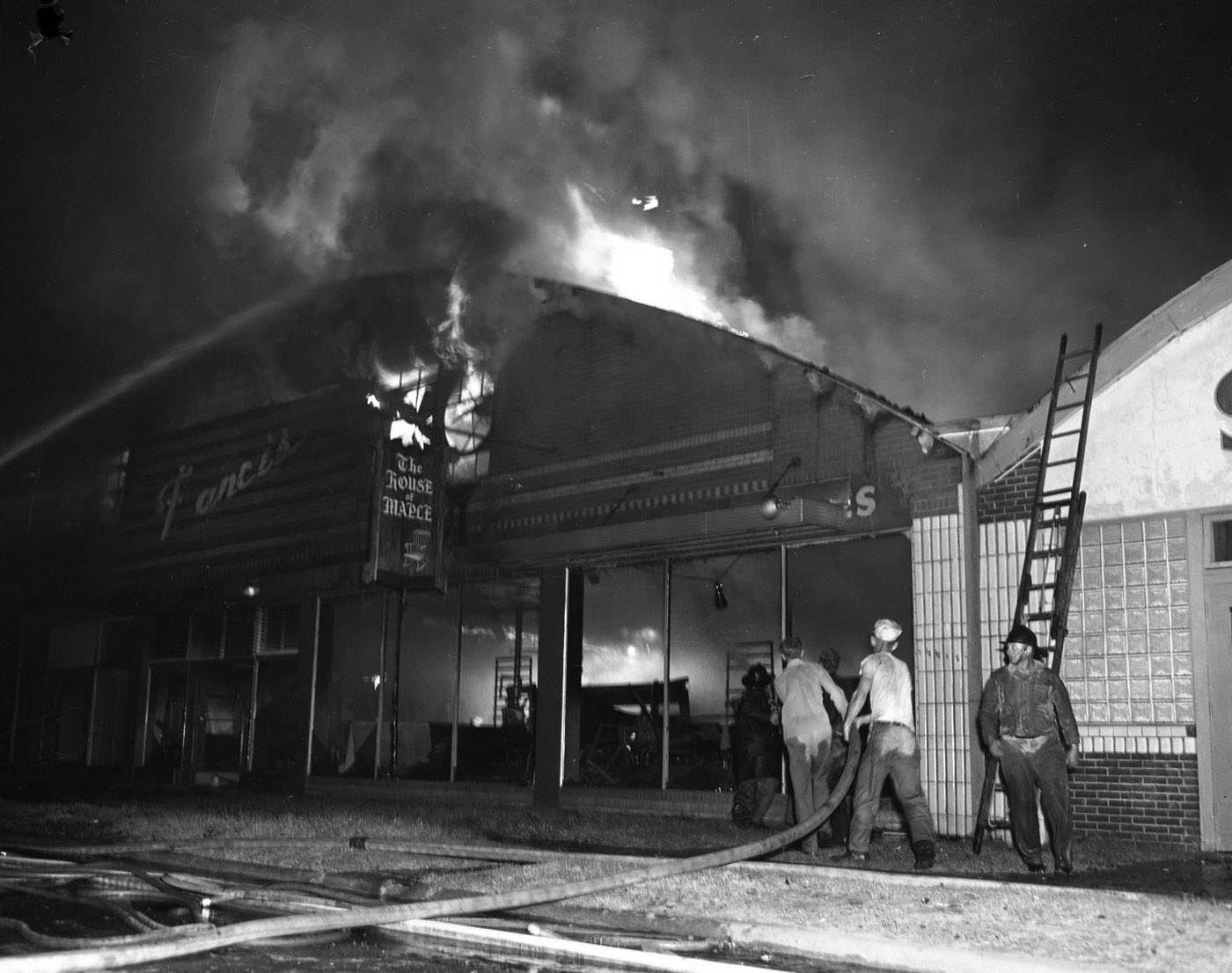
Fire was also a recurring threat in the city. The T.H. Williams & Co. building burned in 1950 with fire trucks struggling to contain the blaze and crowds gathering at a distance to watch. The Francis Furniture Building was damaged by fire in 1953. These events were covered by local press and remain documented in photographs that show Austin firefighters at work.
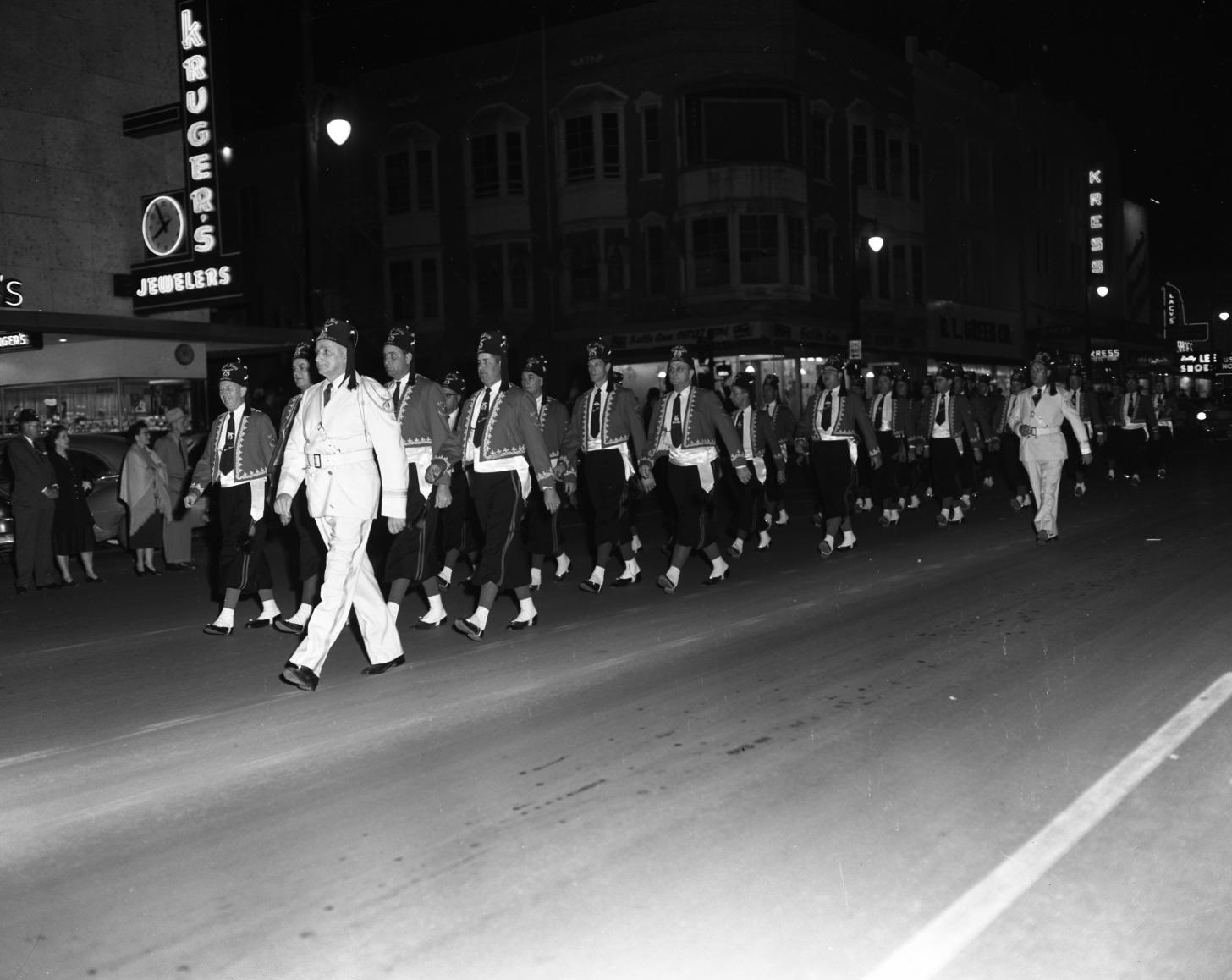
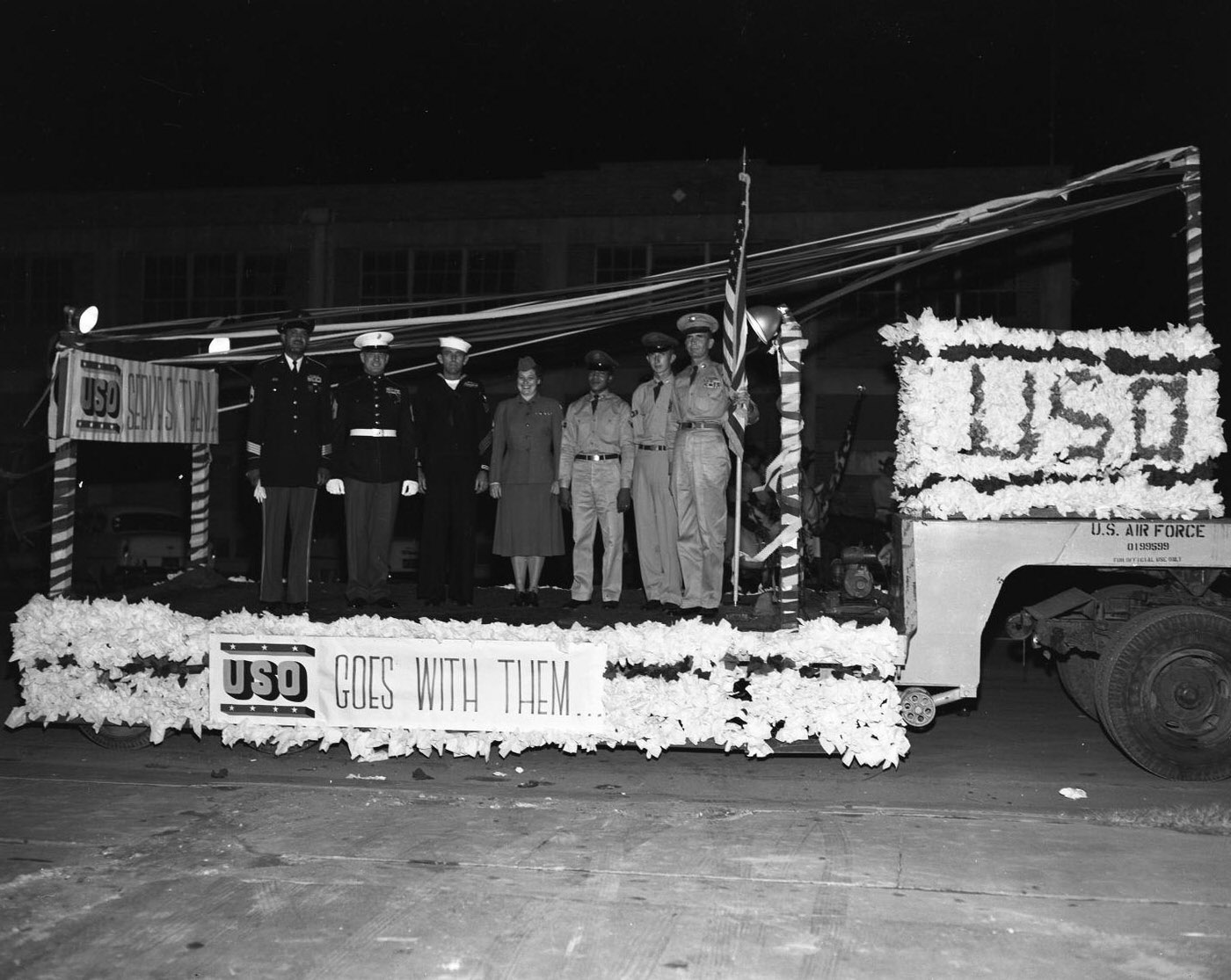
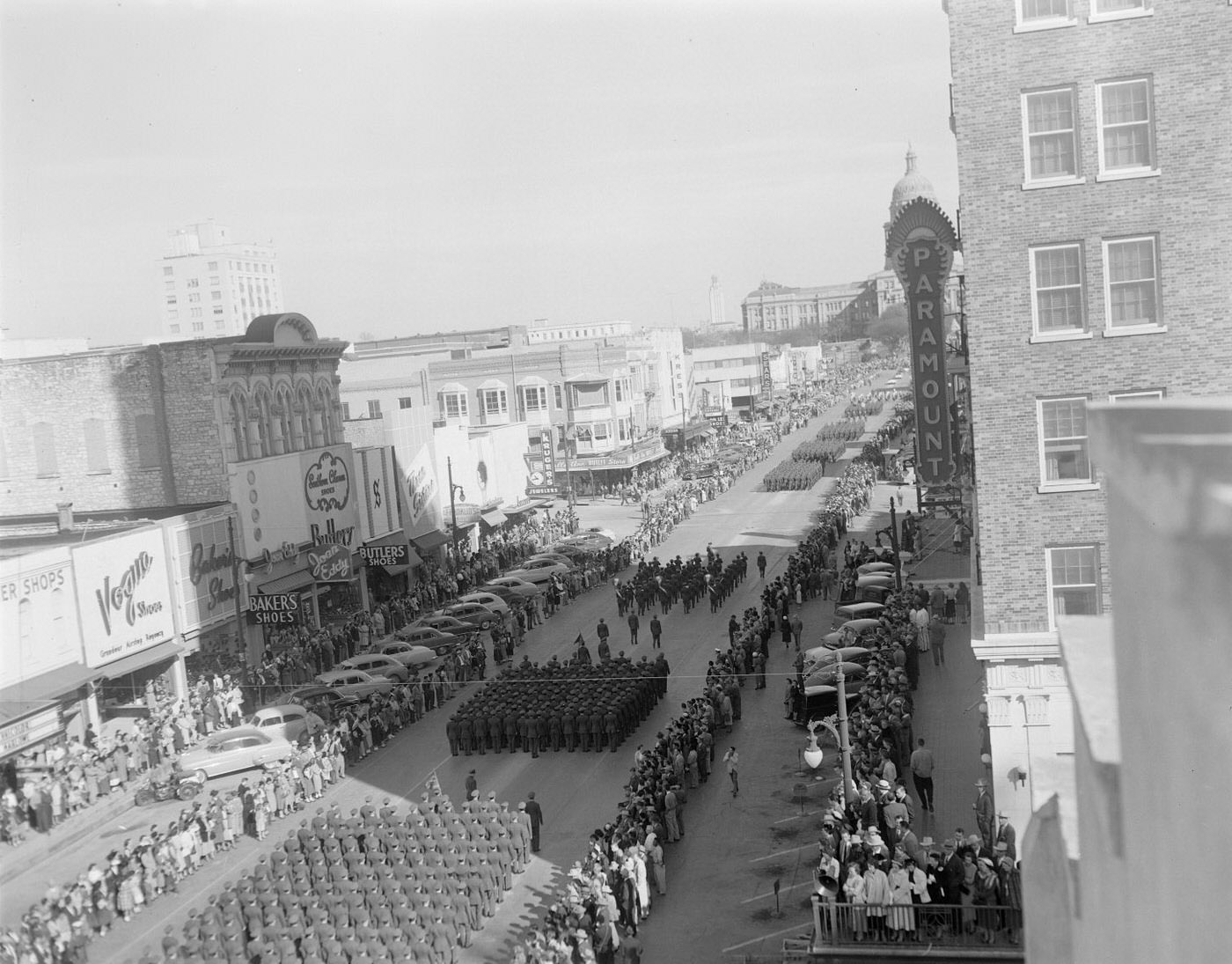
Parades were a frequent feature of Austin’s public life, drawing crowds for causes ranging from charity to military ceremony. The United Fund Parade of 1956 featured military personnel on a USO float, while Shriners marched through Austin’s streets in the same year. A military parade in 1953 passed directly in front of the Texas State Capitol.
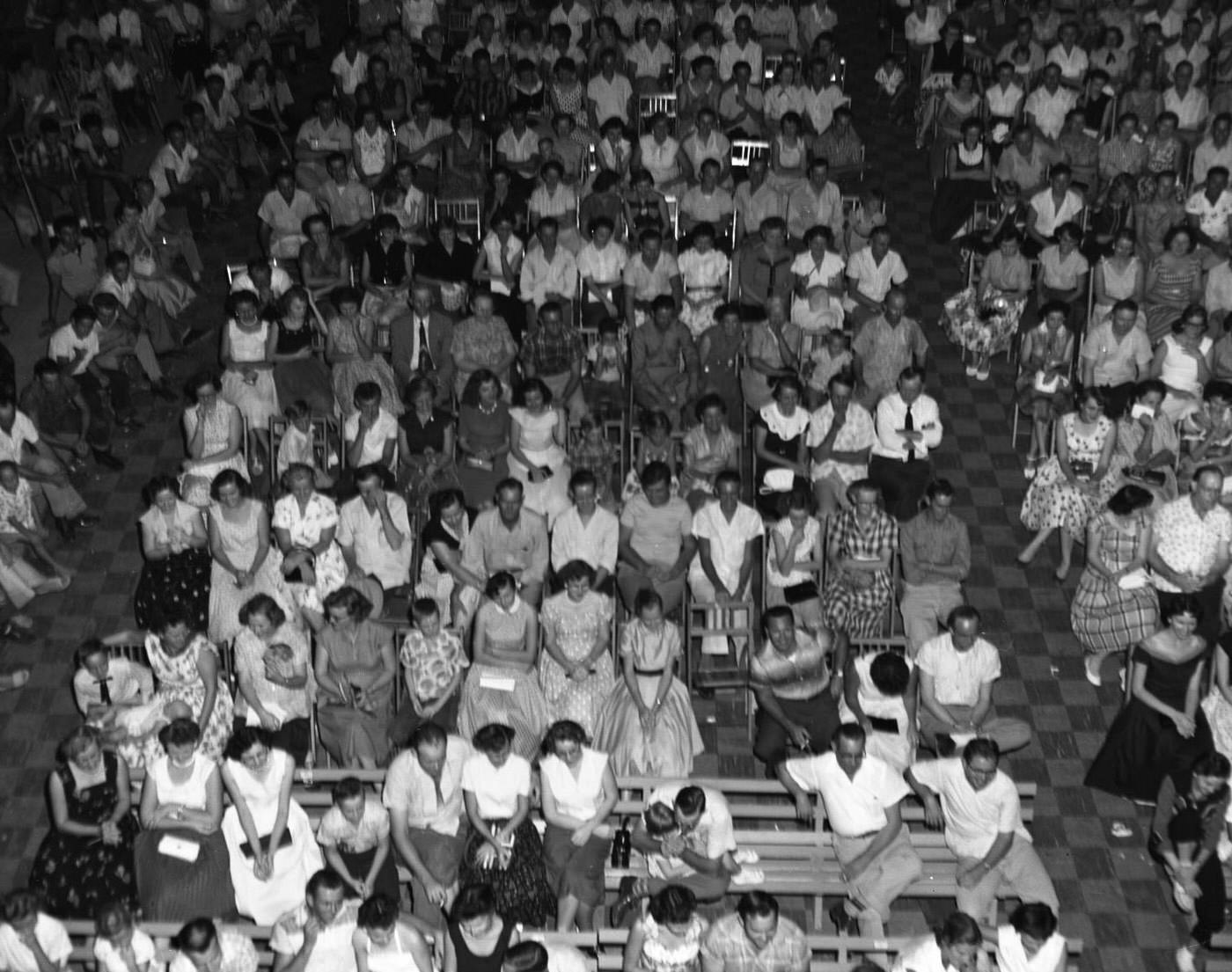
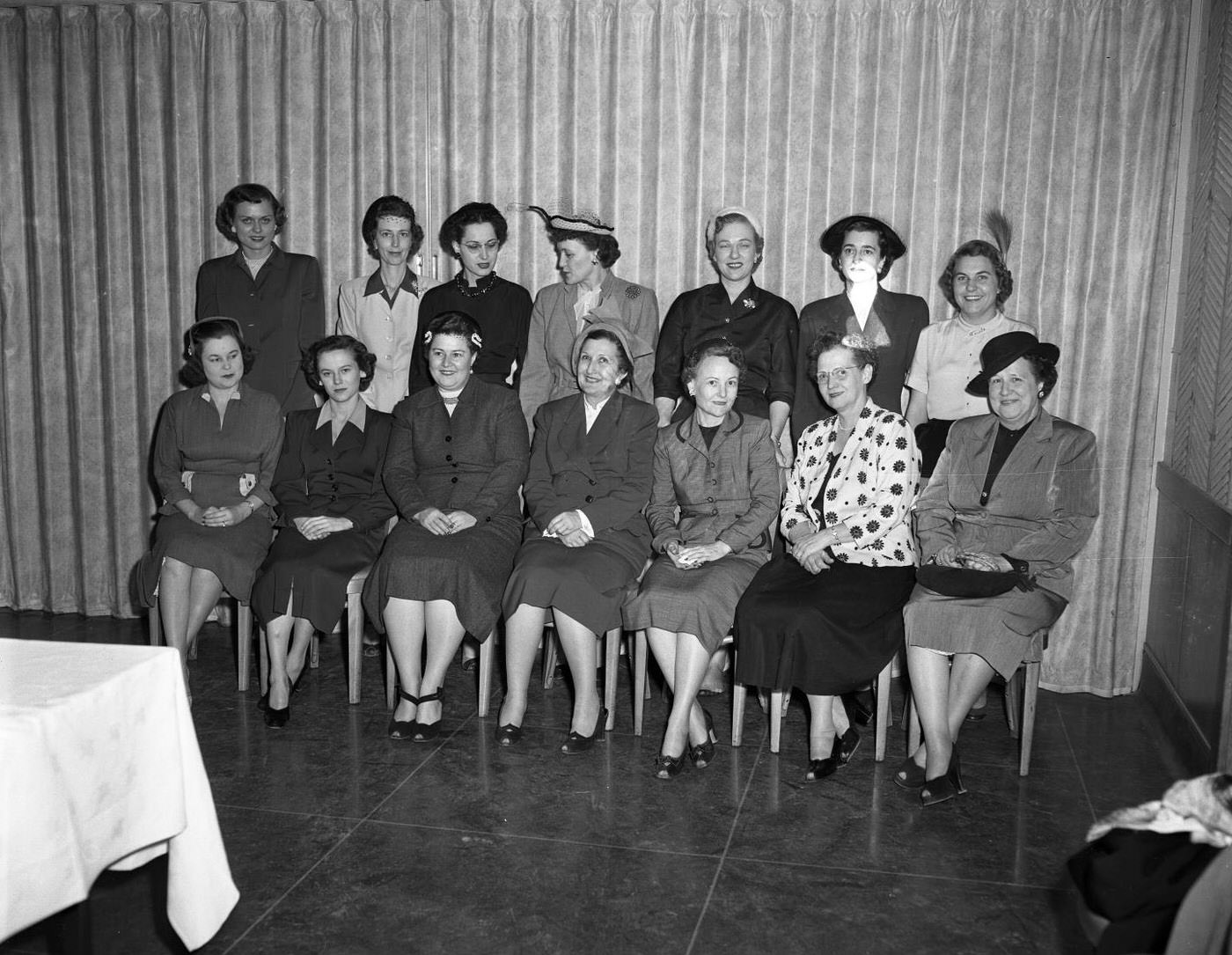
Live music and entertainment events drew big crowds to Austin’s venues. The Louisiana Hayride show packed the Sportscenter in 1955, bringing country music fans together in one room. Austin’s social clubs and civic organizations were equally active — the Y.W.C.A. celebrated its 40th anniversary in 1954, the YMCA hosted community gatherings, and the Desk and Derrick Club posed for a group photo in 1952.
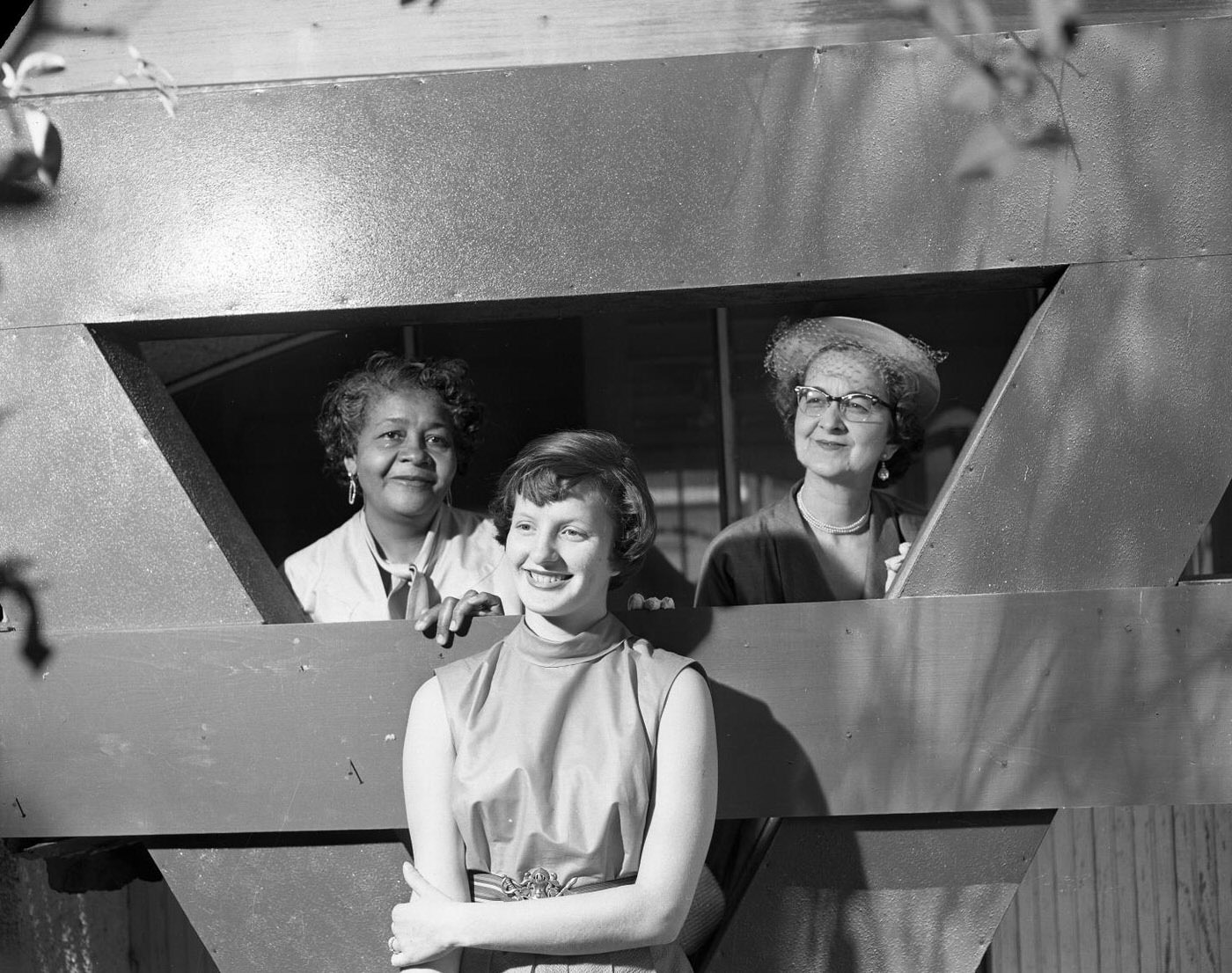
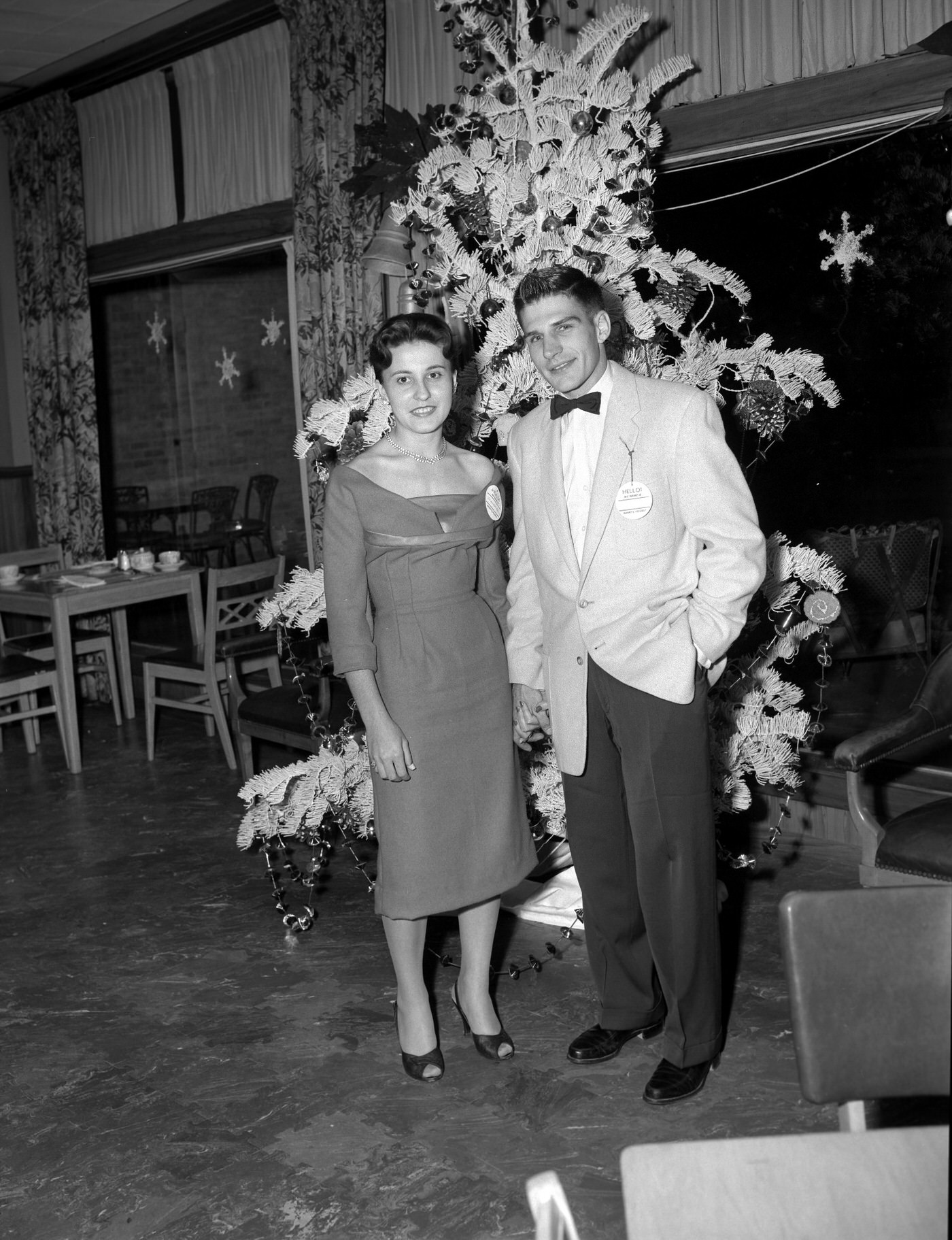
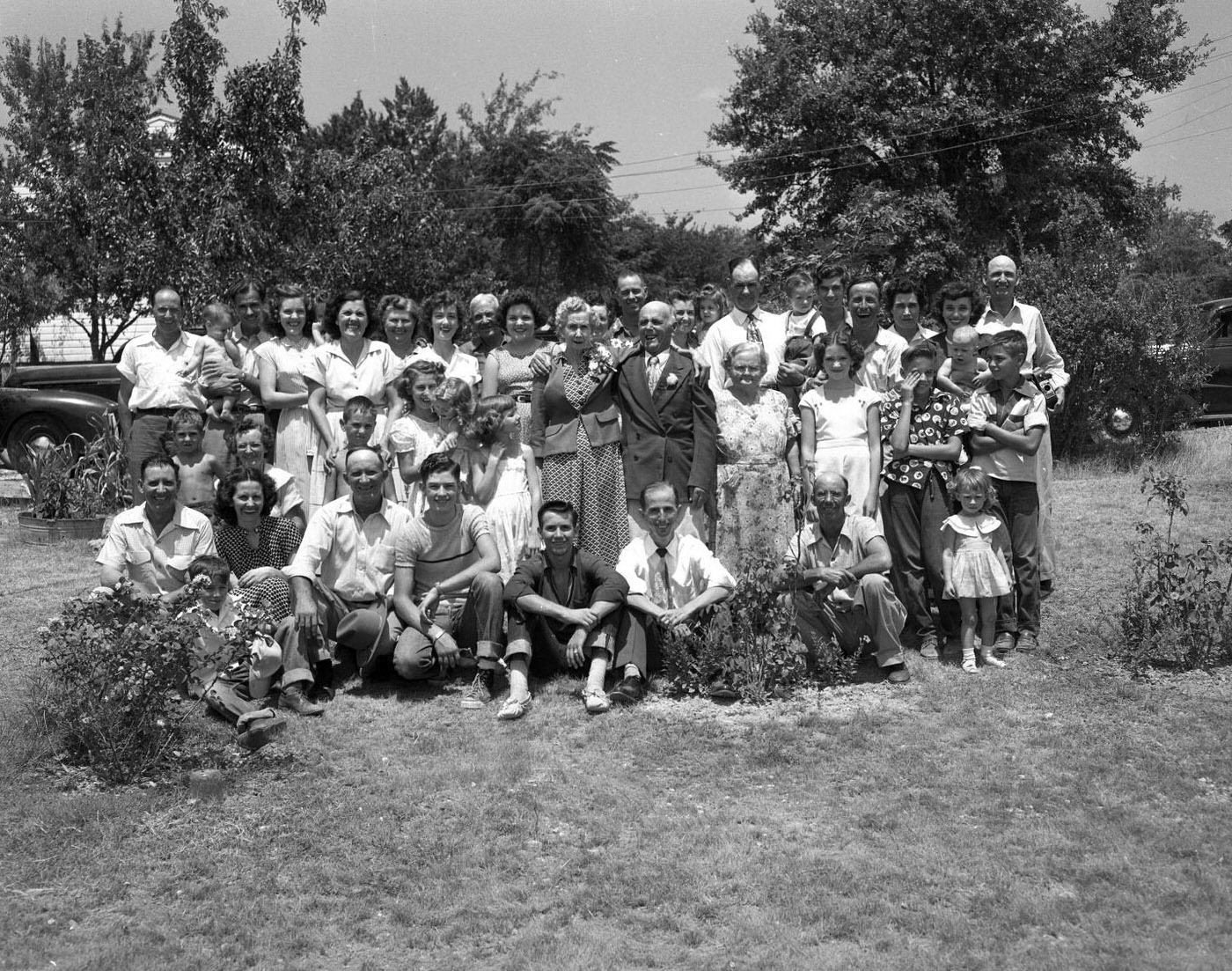
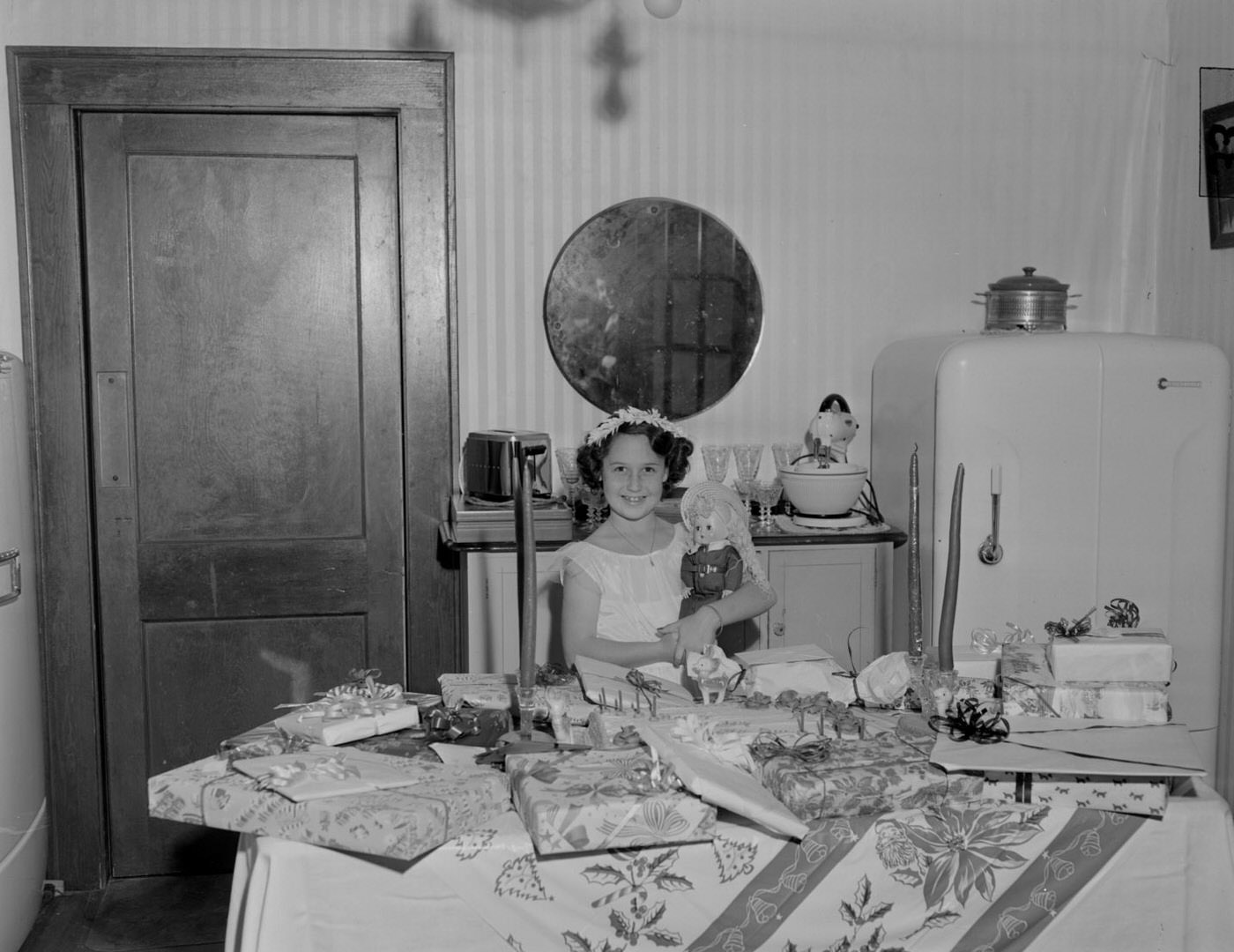
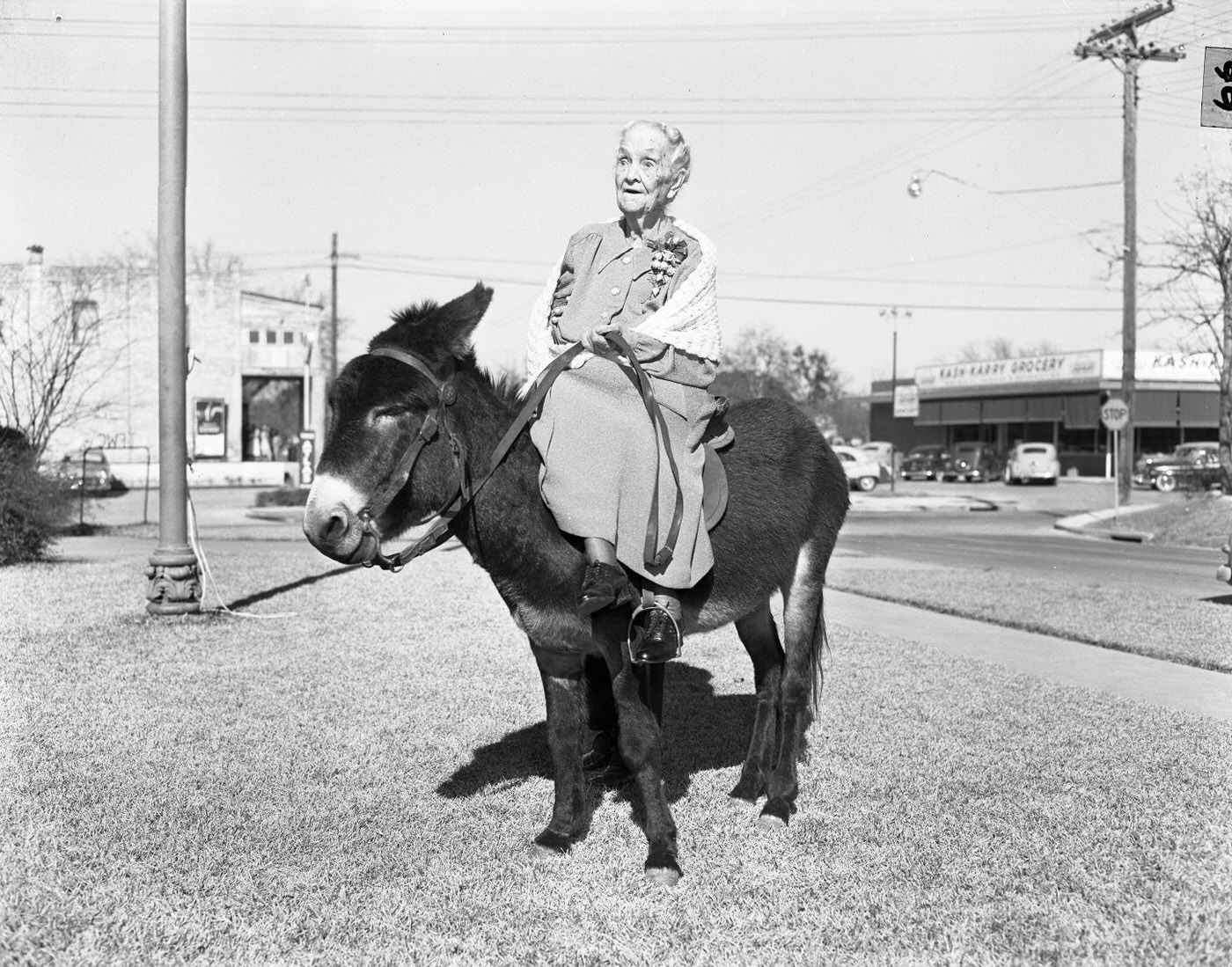
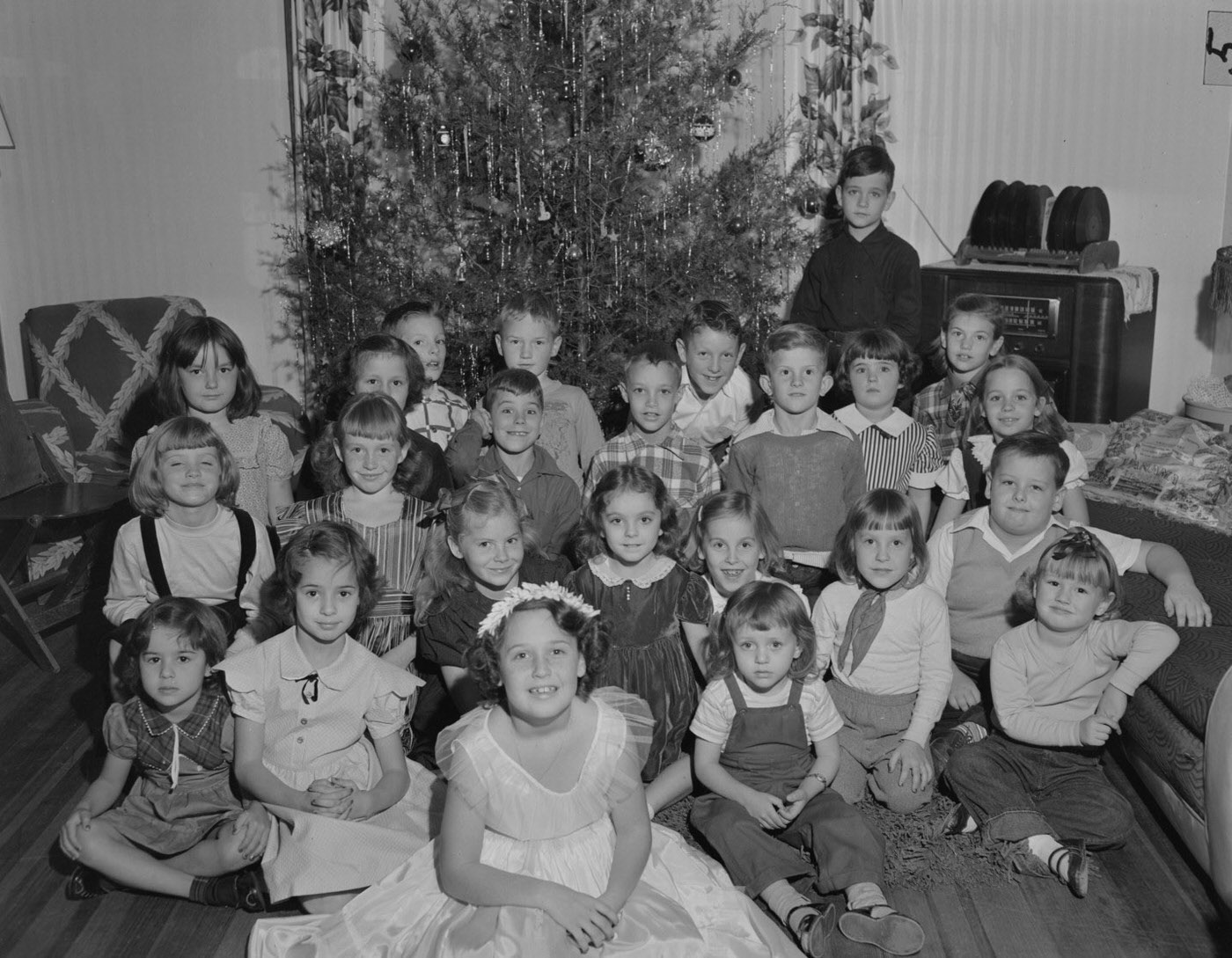
Family milestones were captured in photographs throughout the decade. The Holden family marked their 50th wedding anniversary in 1951. A young girl posed with her doll and birthday presents that same year. Molly Wynn celebrated her 100th birthday in 1952 — seated on a donkey. Children celebrated birthdays near Christmas trees in 1958, mixing the two occasions in the warmth of a Texas winter.
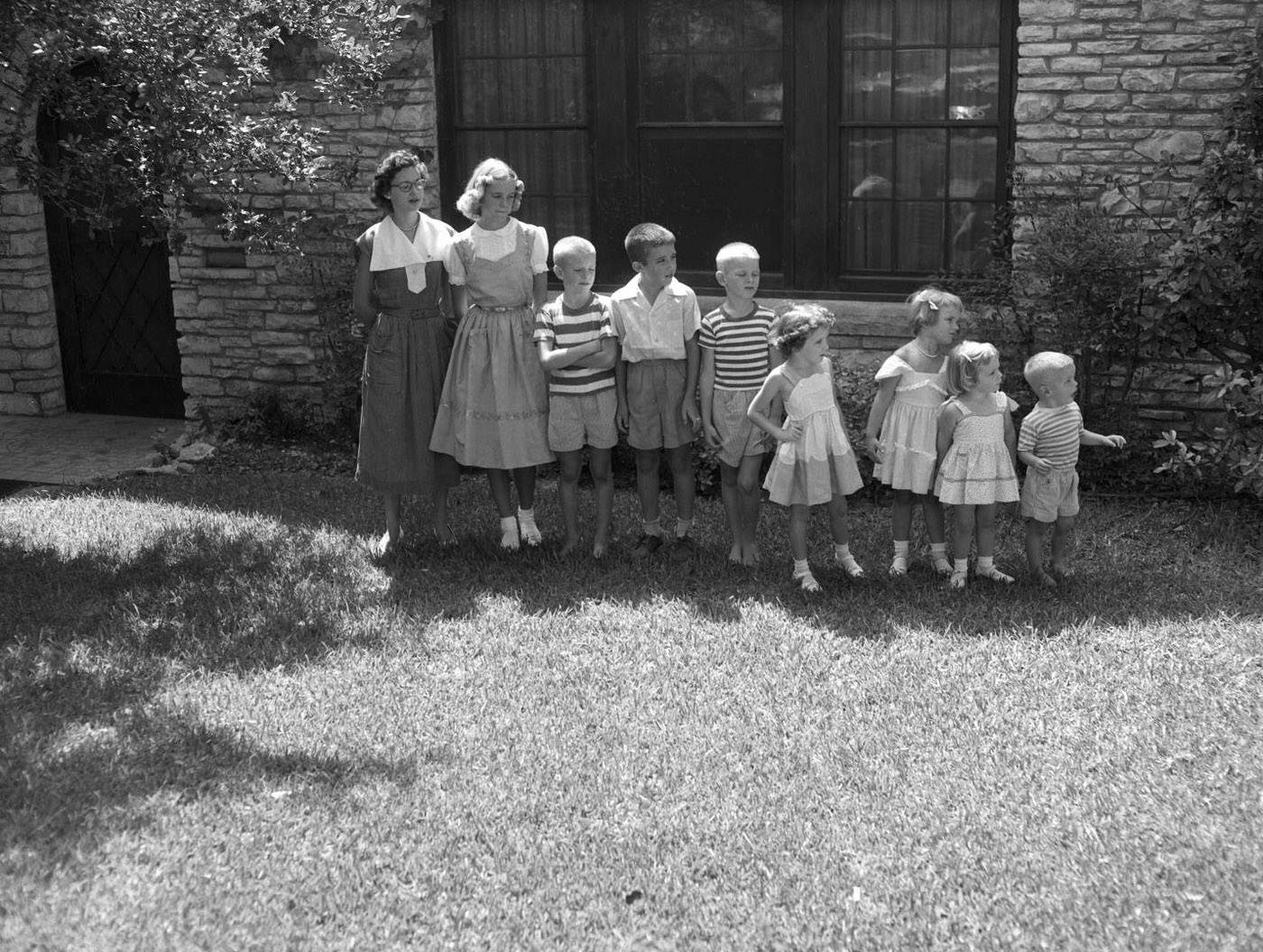
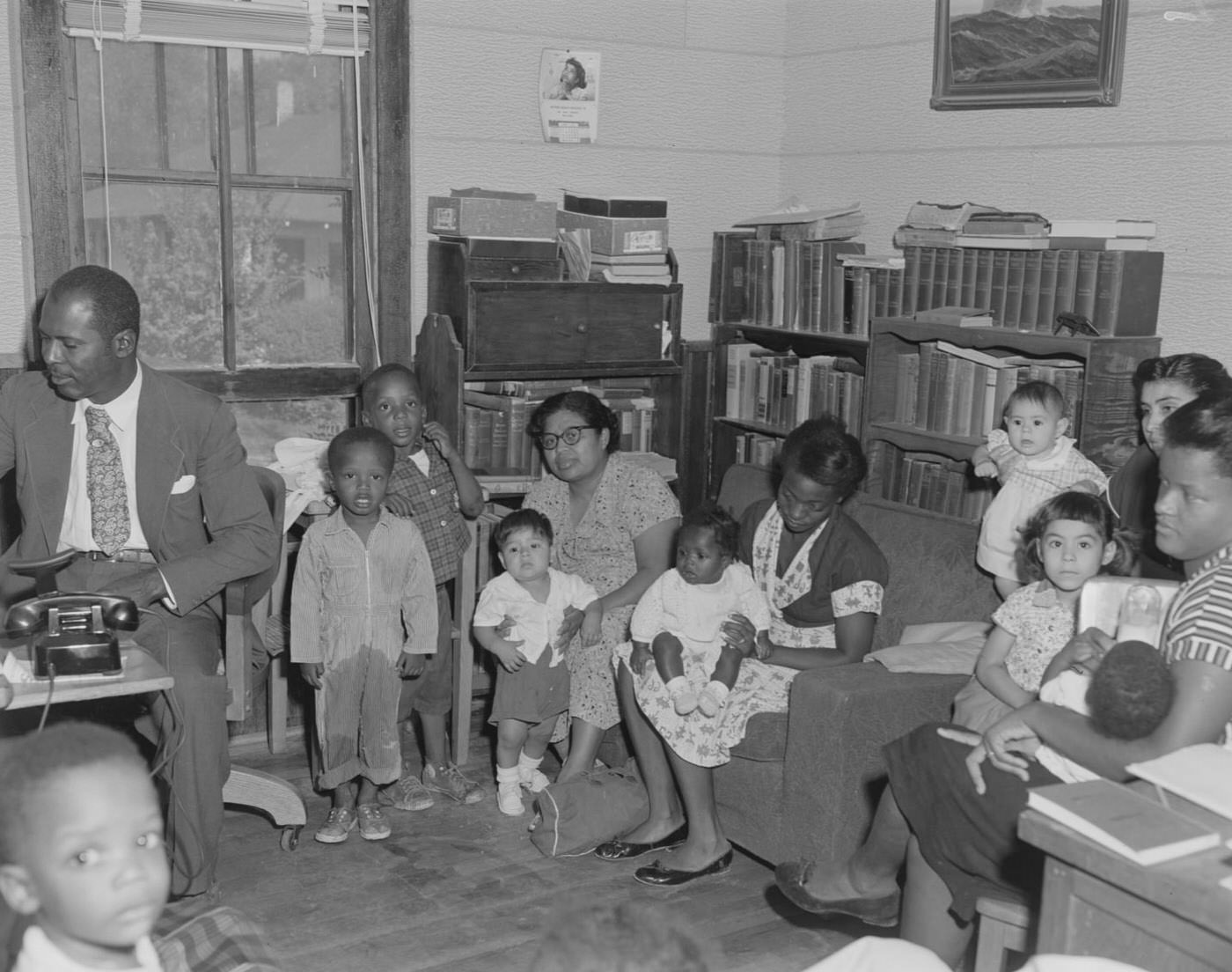
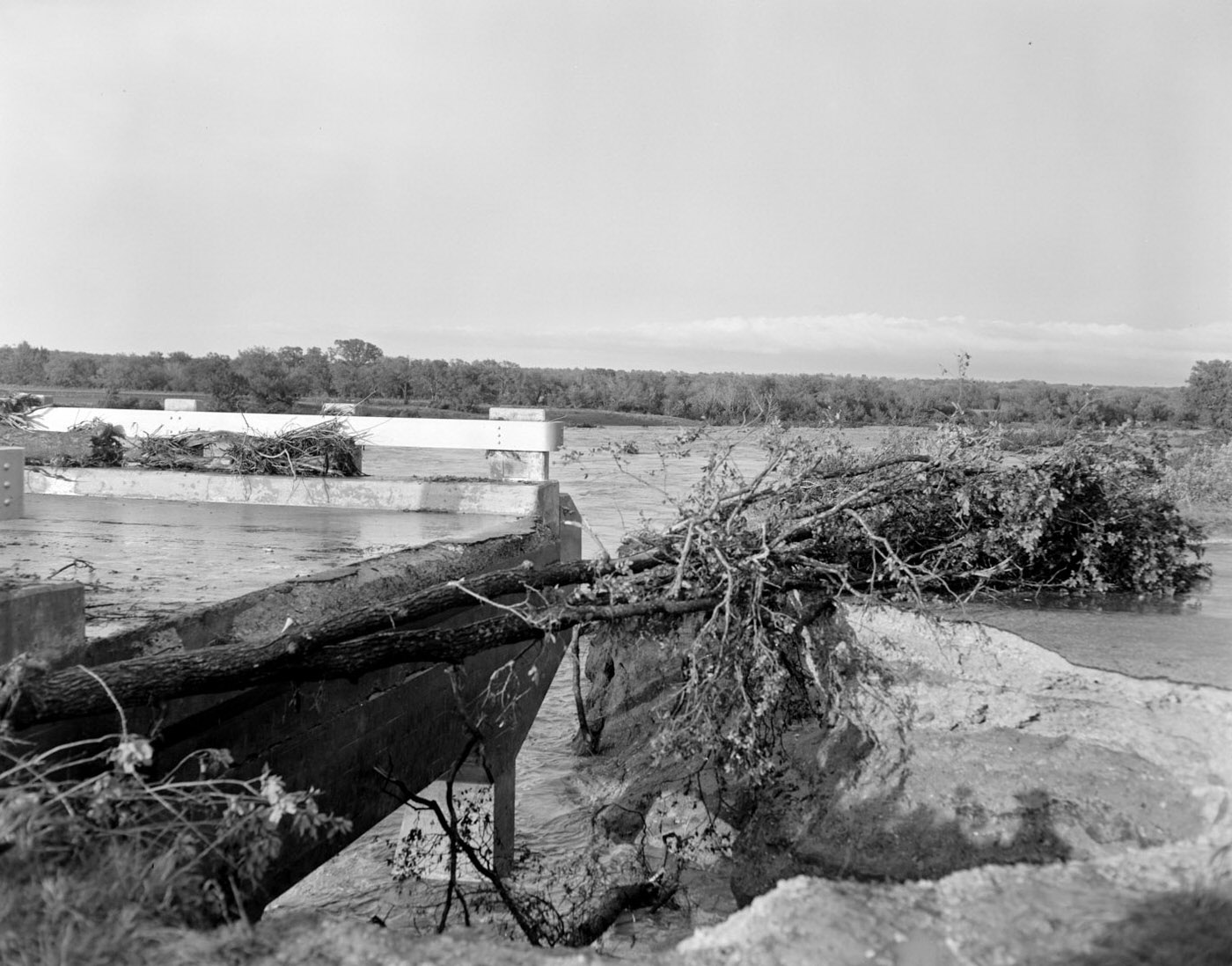
Community gatherings of all kinds are visible throughout this collection. Neighbors came together at picnics, church events, and civic meetings. A community center gathering in 1957 brought families with infants together under one roof. The San Gabriel Flood of 1957 left its mark on the region, and photographs from the aftermath document the damage left behind.
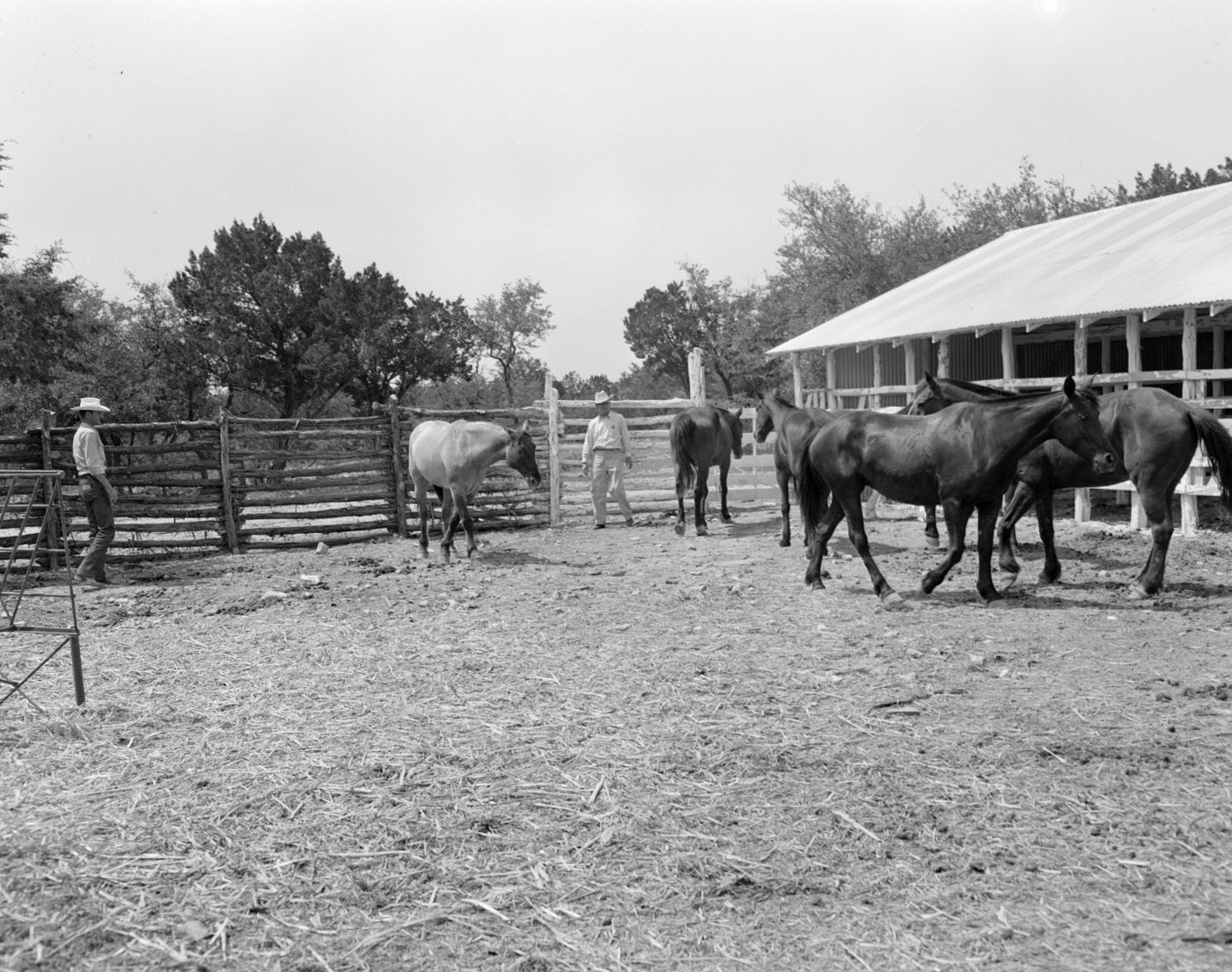
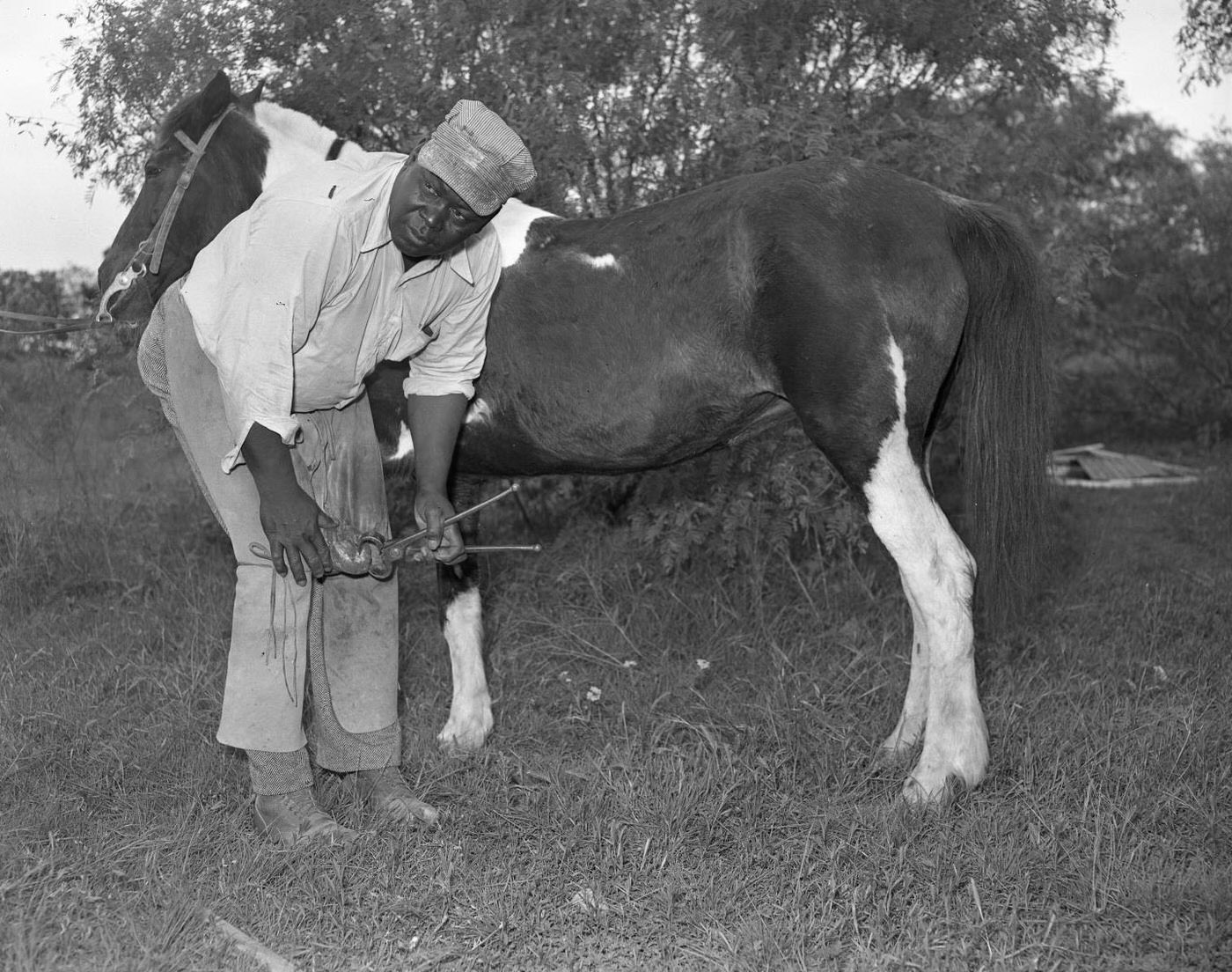
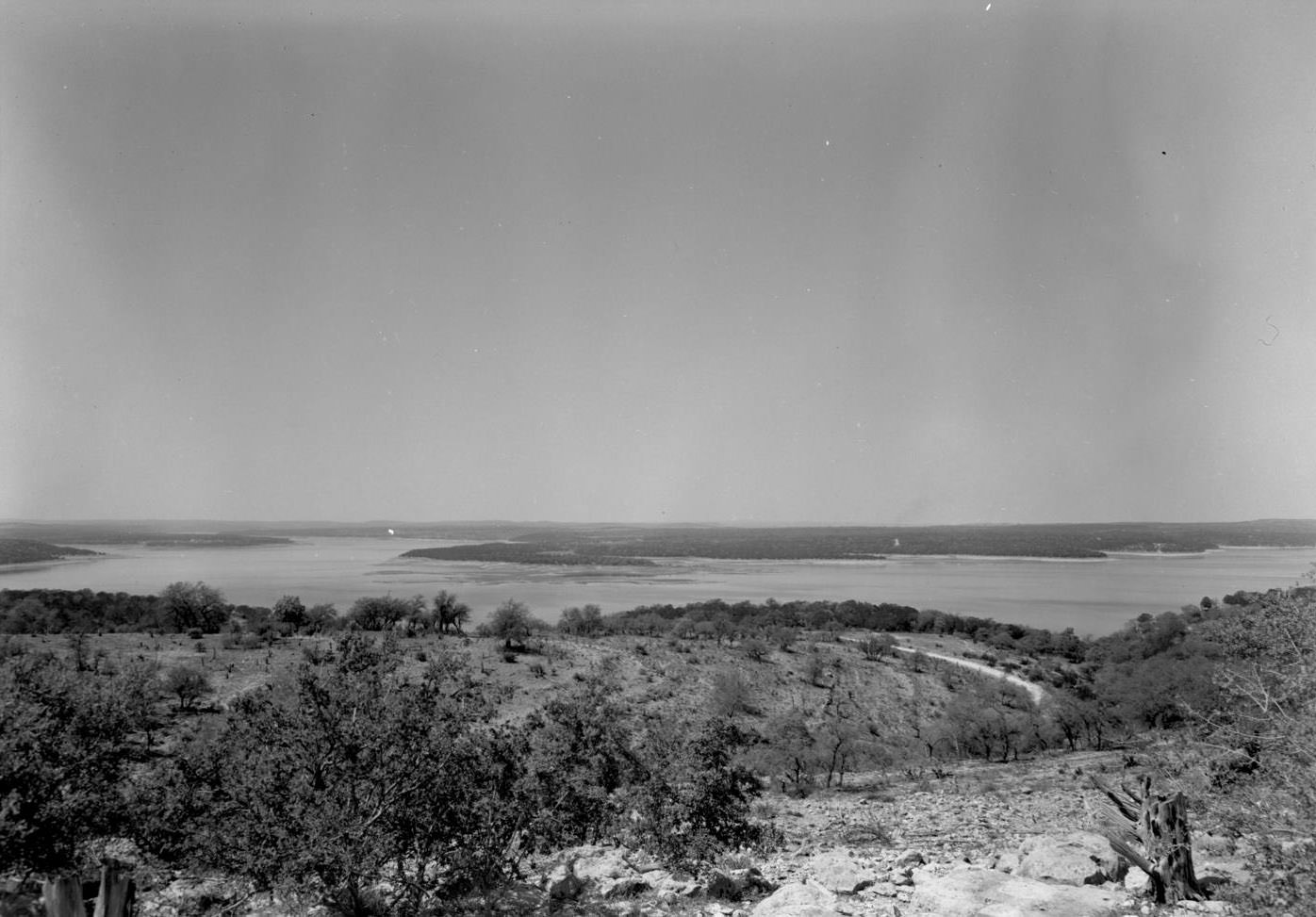
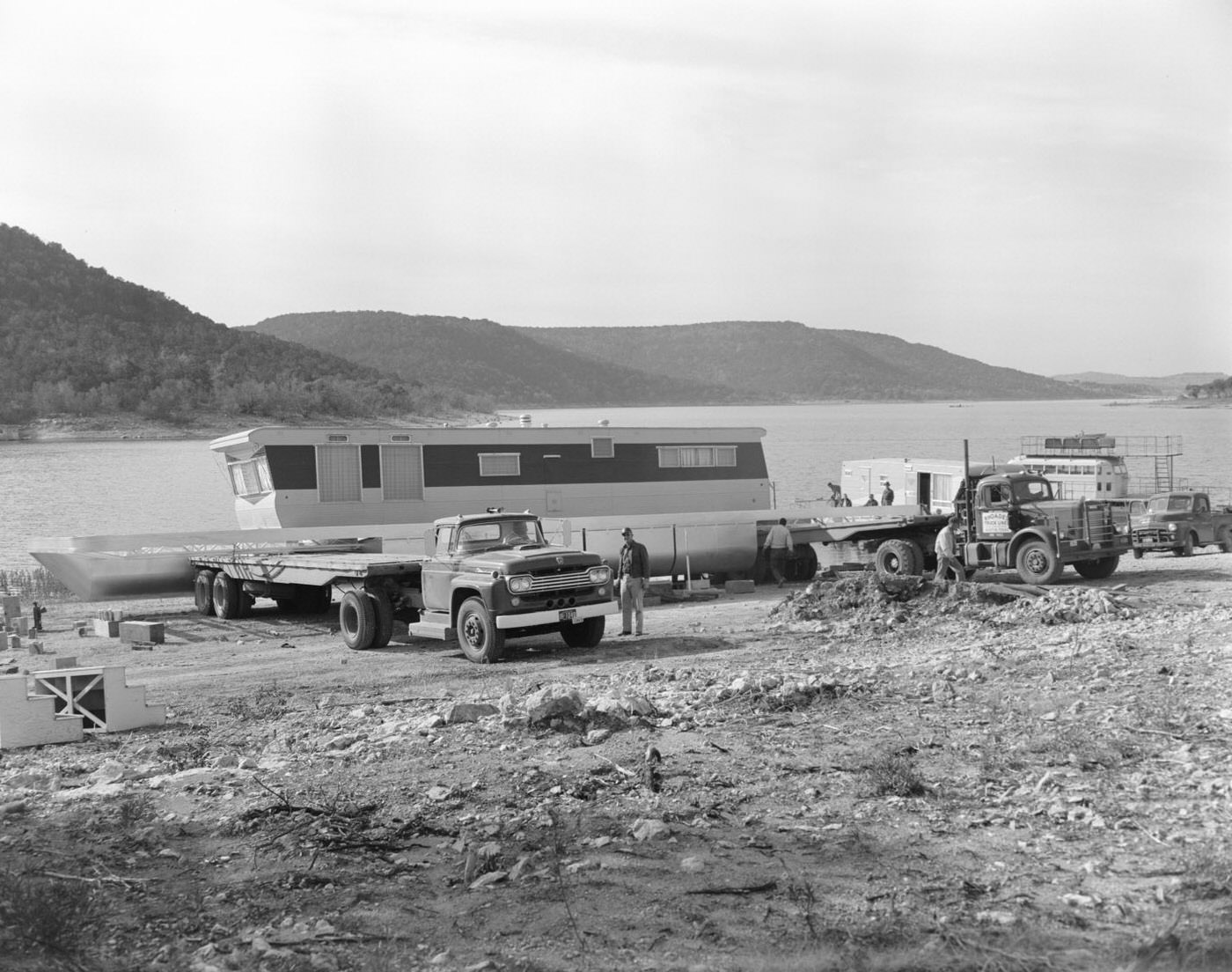
Austin’s ranch and rodeo culture stayed alive throughout the 1950s. Men worked with horses at the Bar K Ranch corral in 1953, and a farrier was photographed shoeing a horse in 1950. Lake Travis offered scenic outdoor recreation, and by 1958 a houseboat was being launched into its waters.
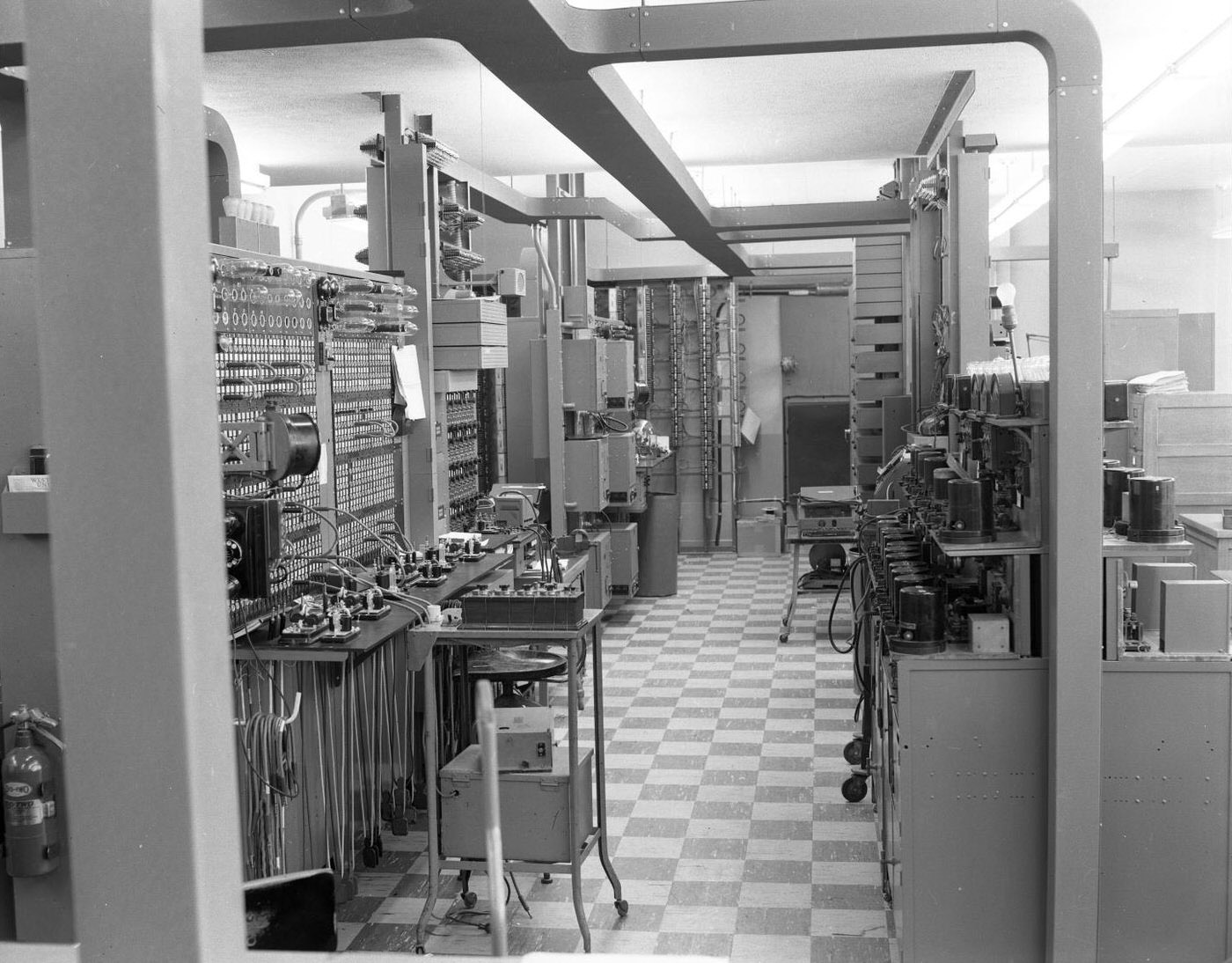
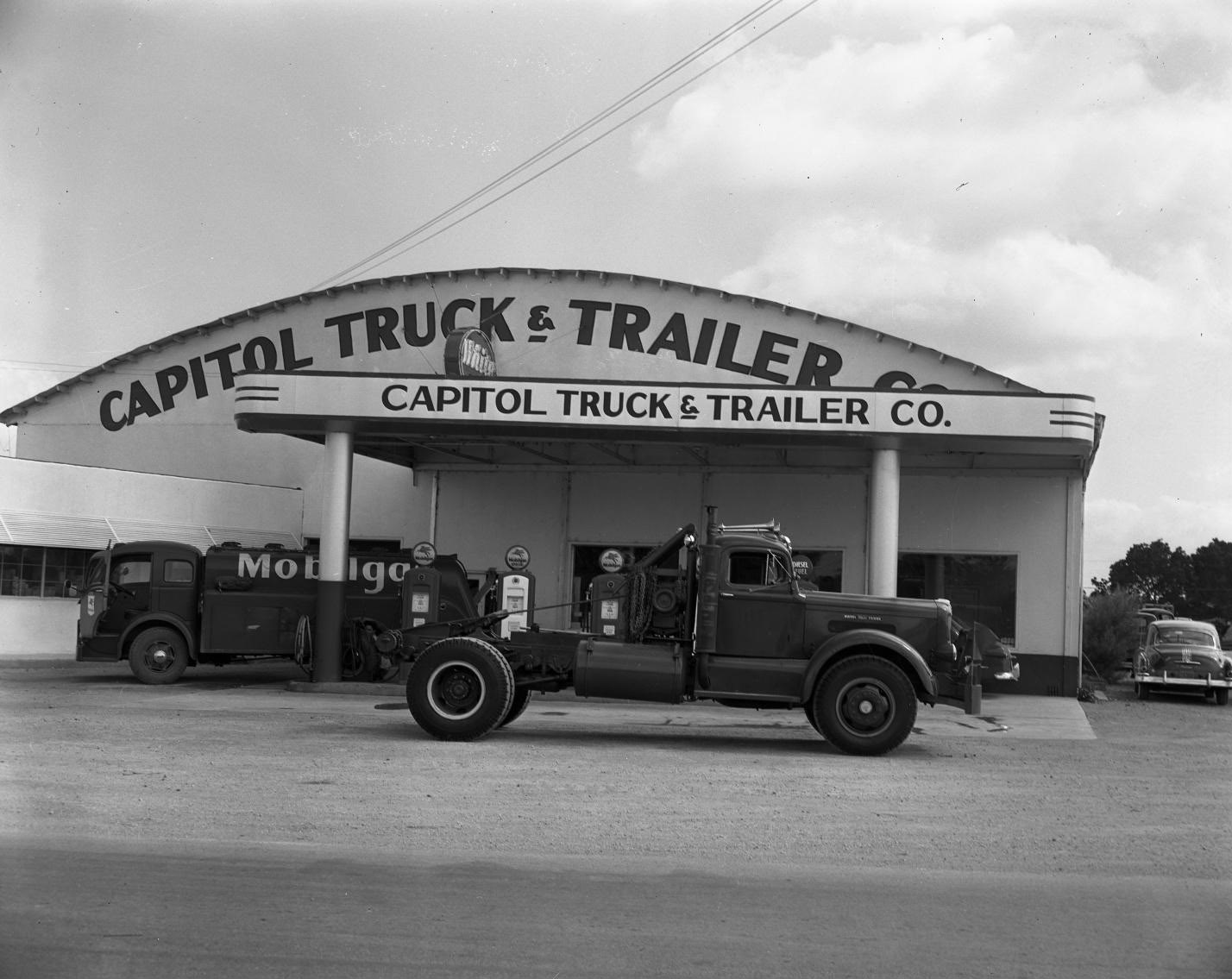
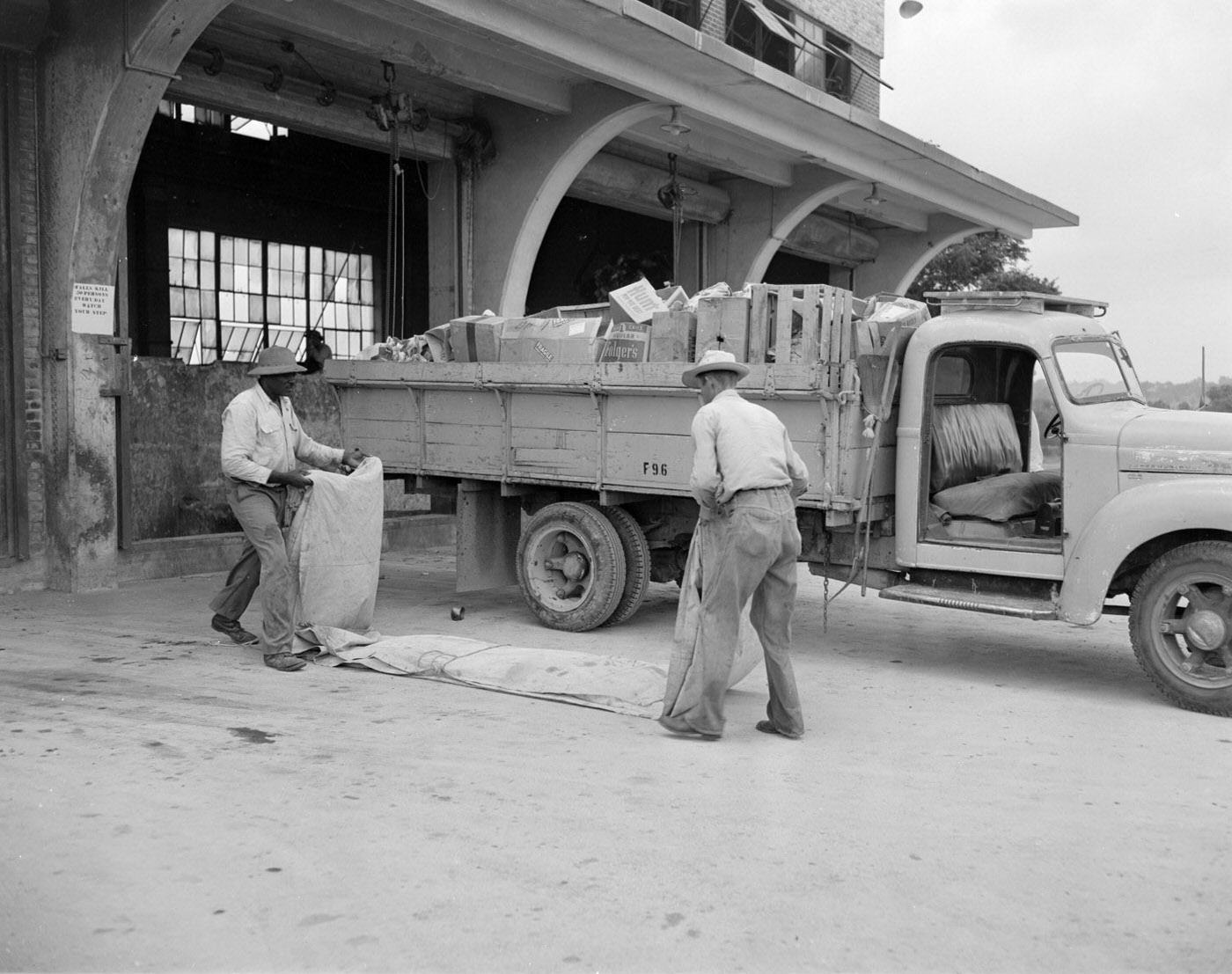
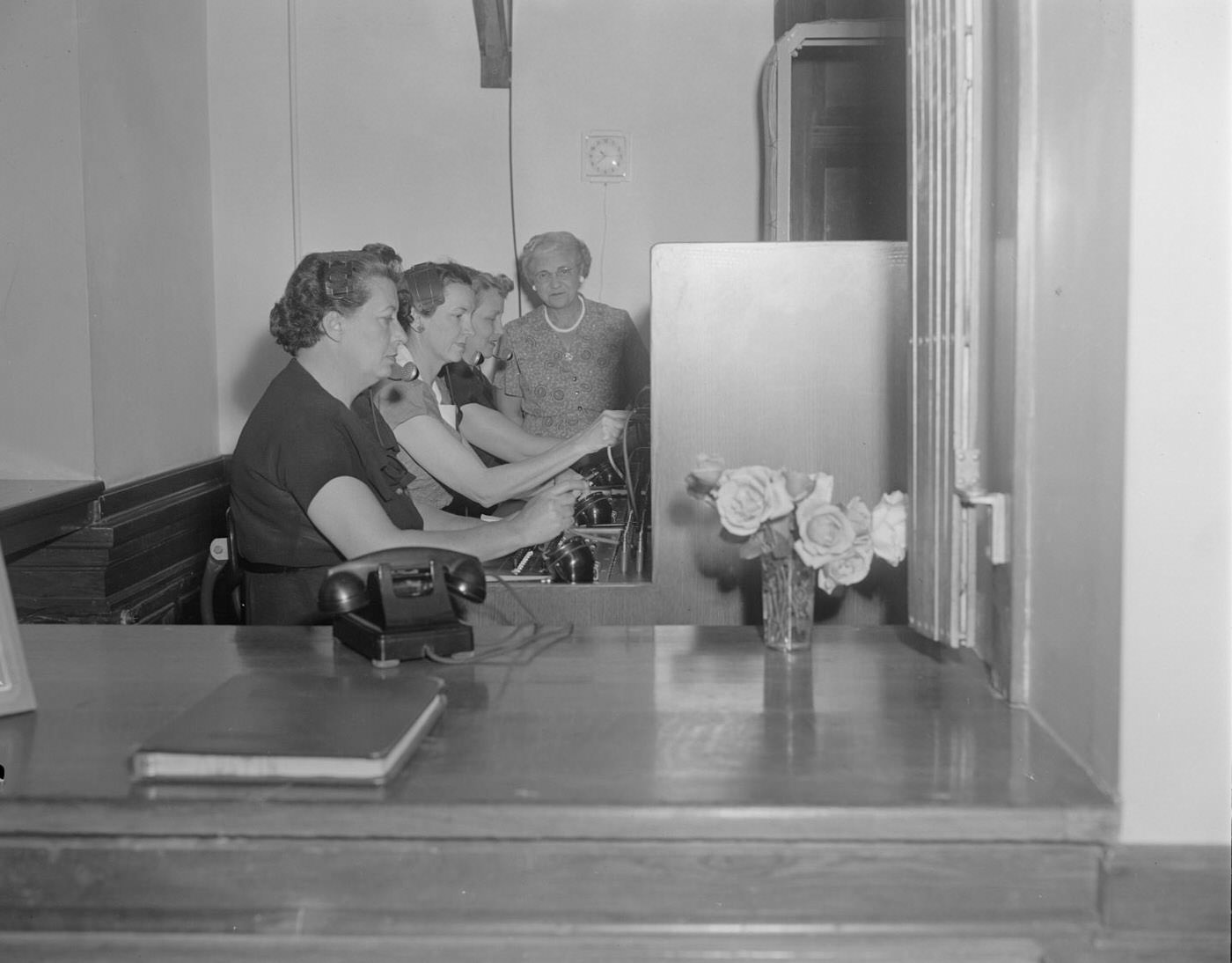
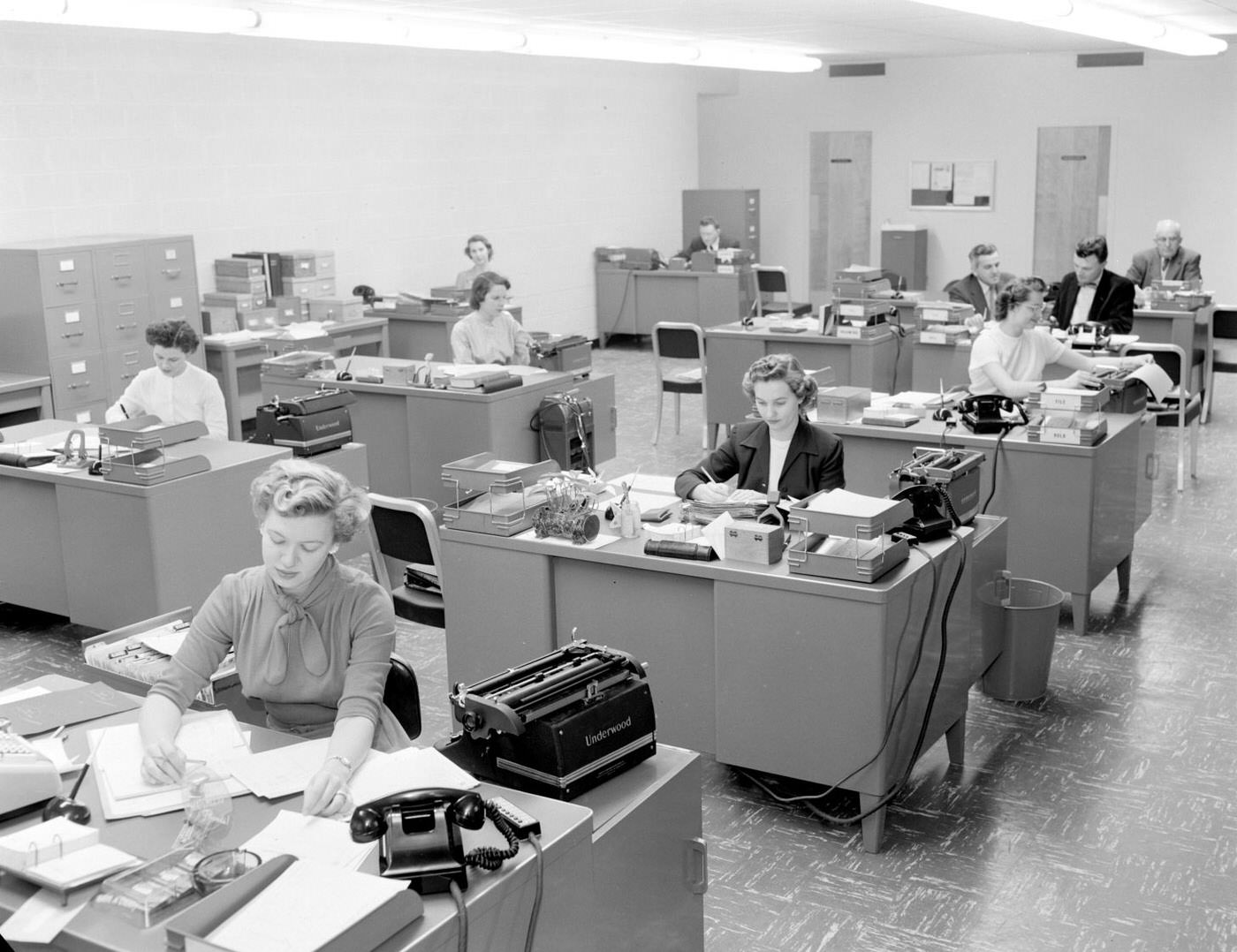
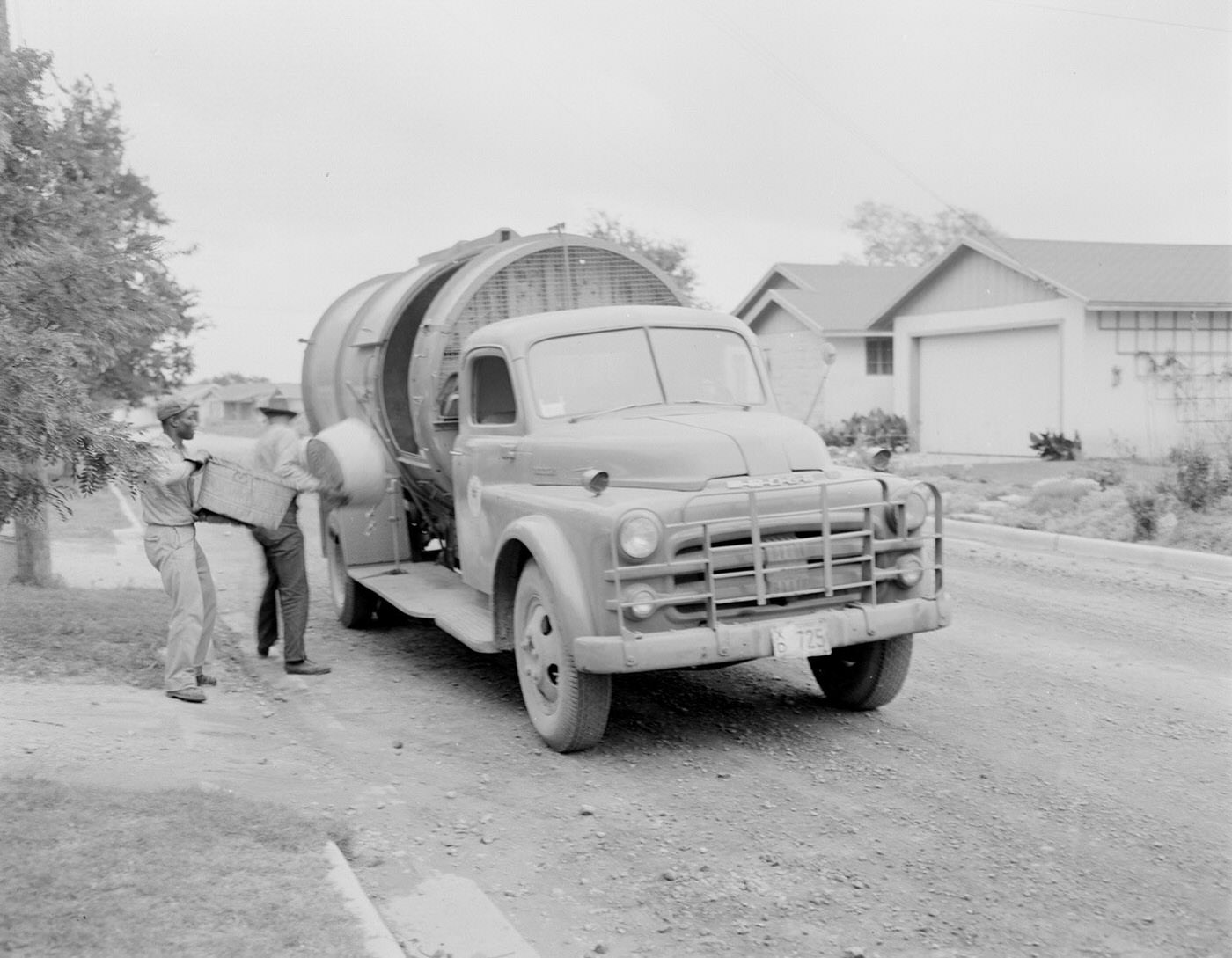
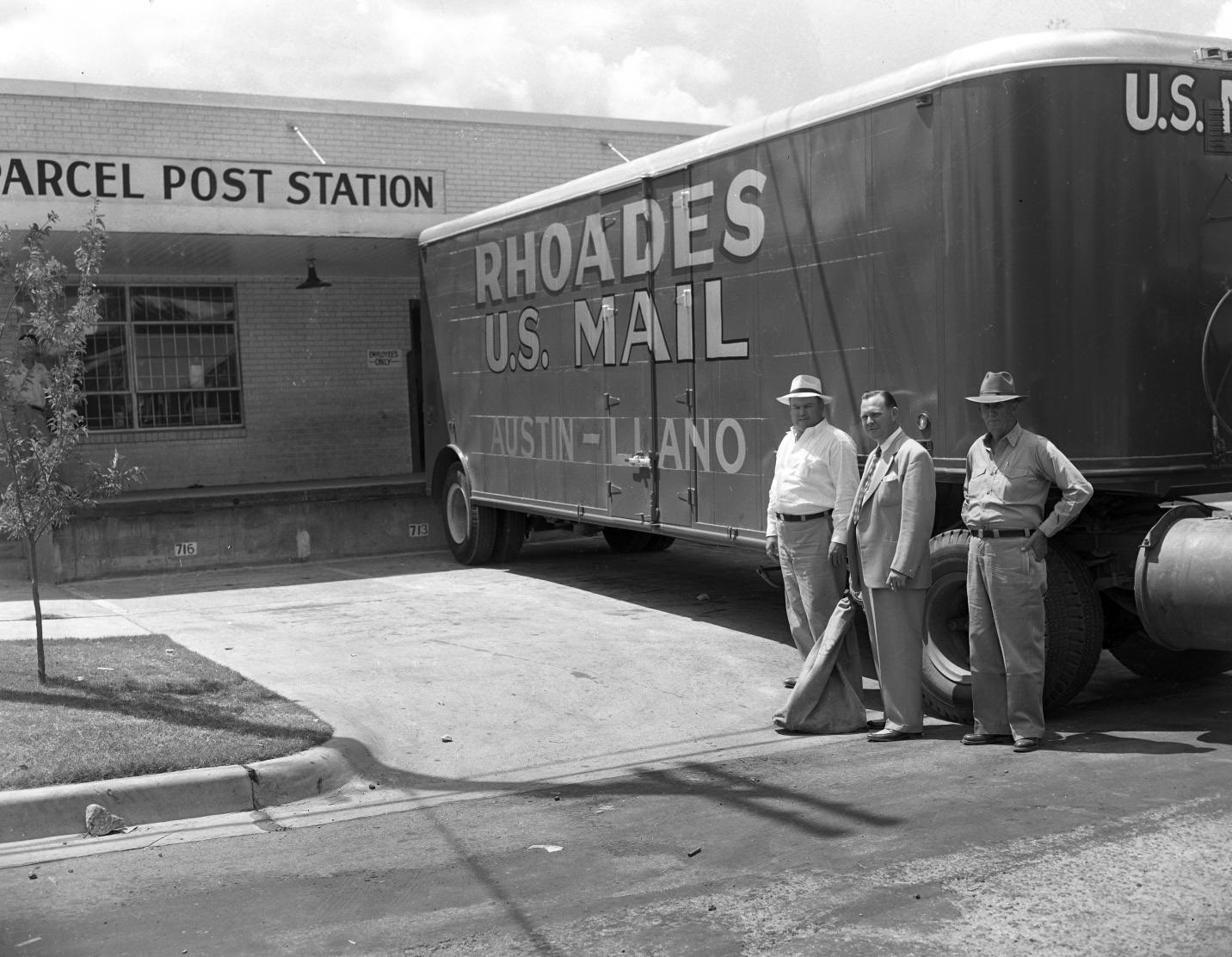
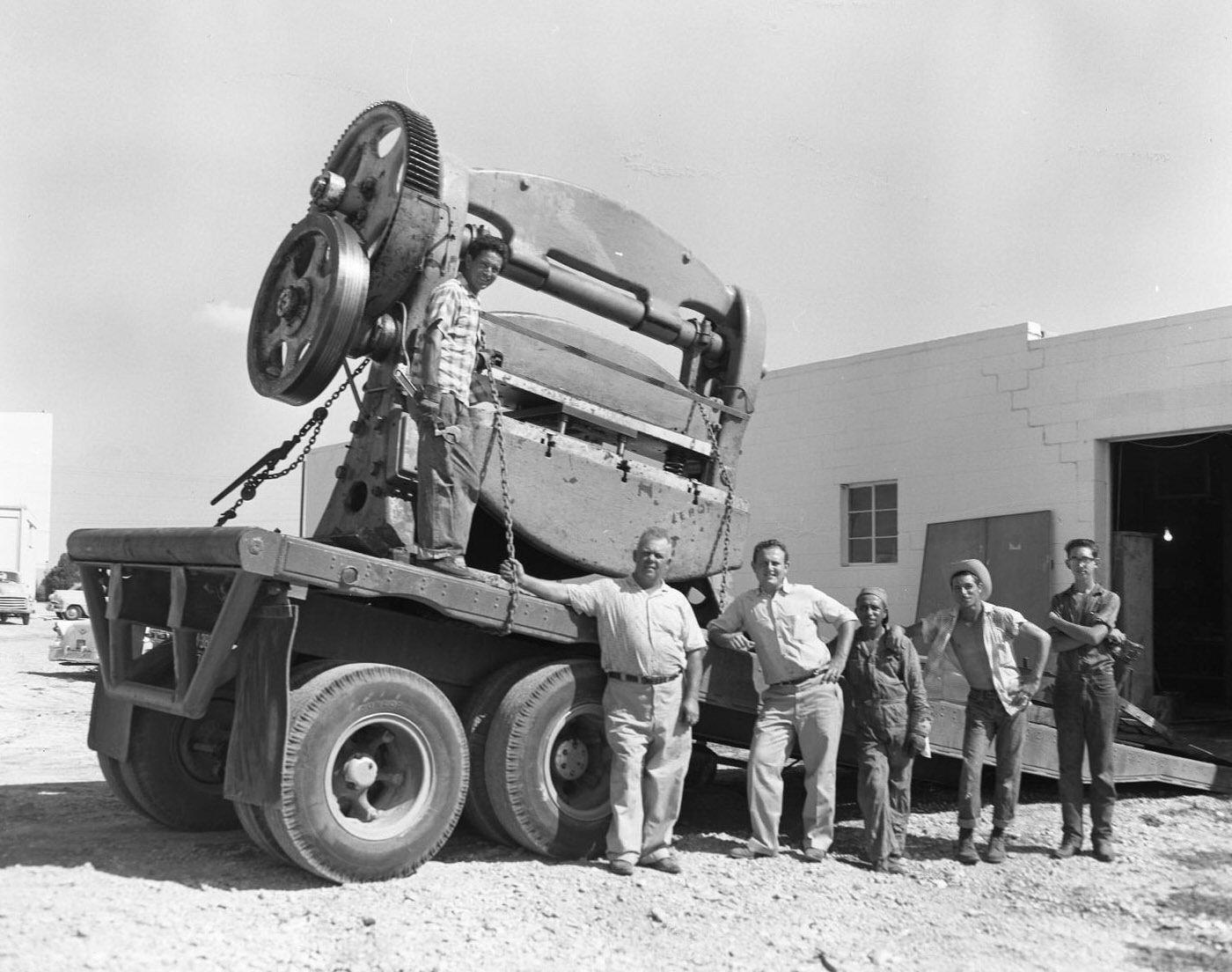
The working life of Austin’s residents was documented across dozens of trades and industries. Women operated phone switchboards in 1951. Office workers at the Texas Employees Insurance Association filled their desks in 1955. Sanitation workers emptied containers into trucks in 1953. Trucking companies like Rhoades Transfer & Storage and Rhodes Truck Lines employed large crews and kept the city supplied.
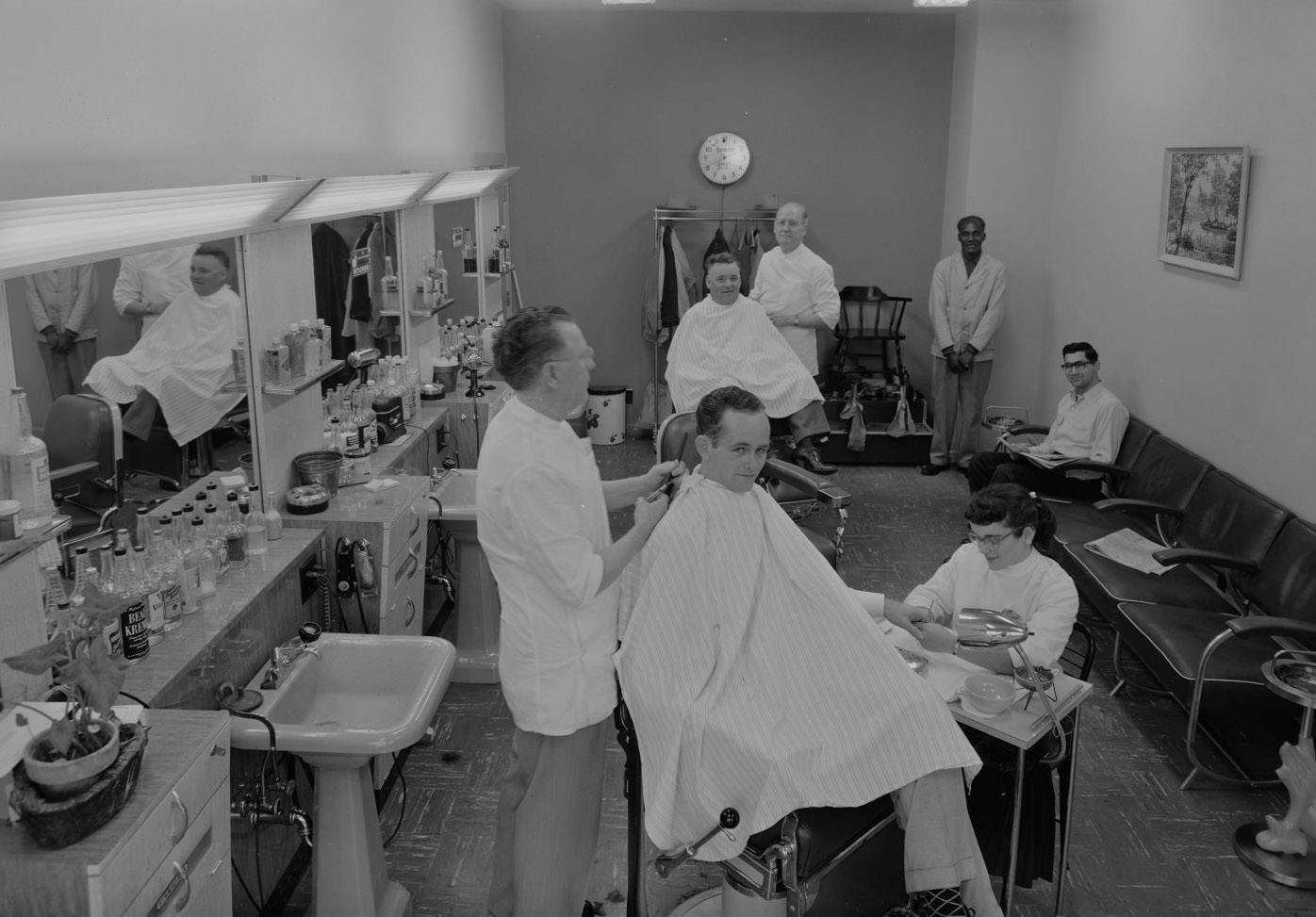
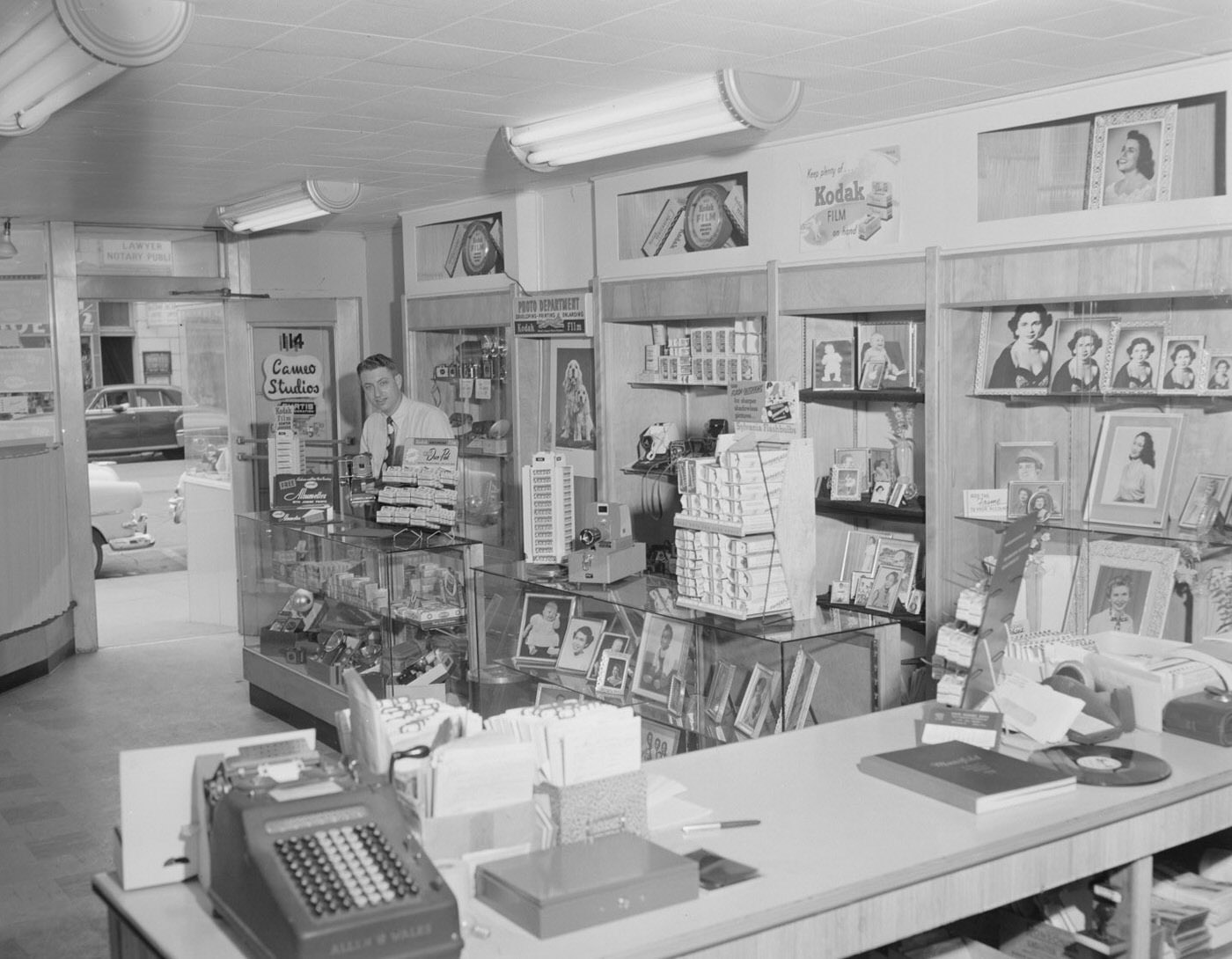
The barber shop was a neighborhood institution in 1950s Austin. Tillman’s Barber Shop, photographed in 1955, offered a familiar interior that men across the city would have recognized — waiting chairs, mirrors, and the smell of shaving cream. Photography studios like Cameo Studios captured portraits of Austin families and businesspeople, preserving faces that now look back at us from across seven decades.
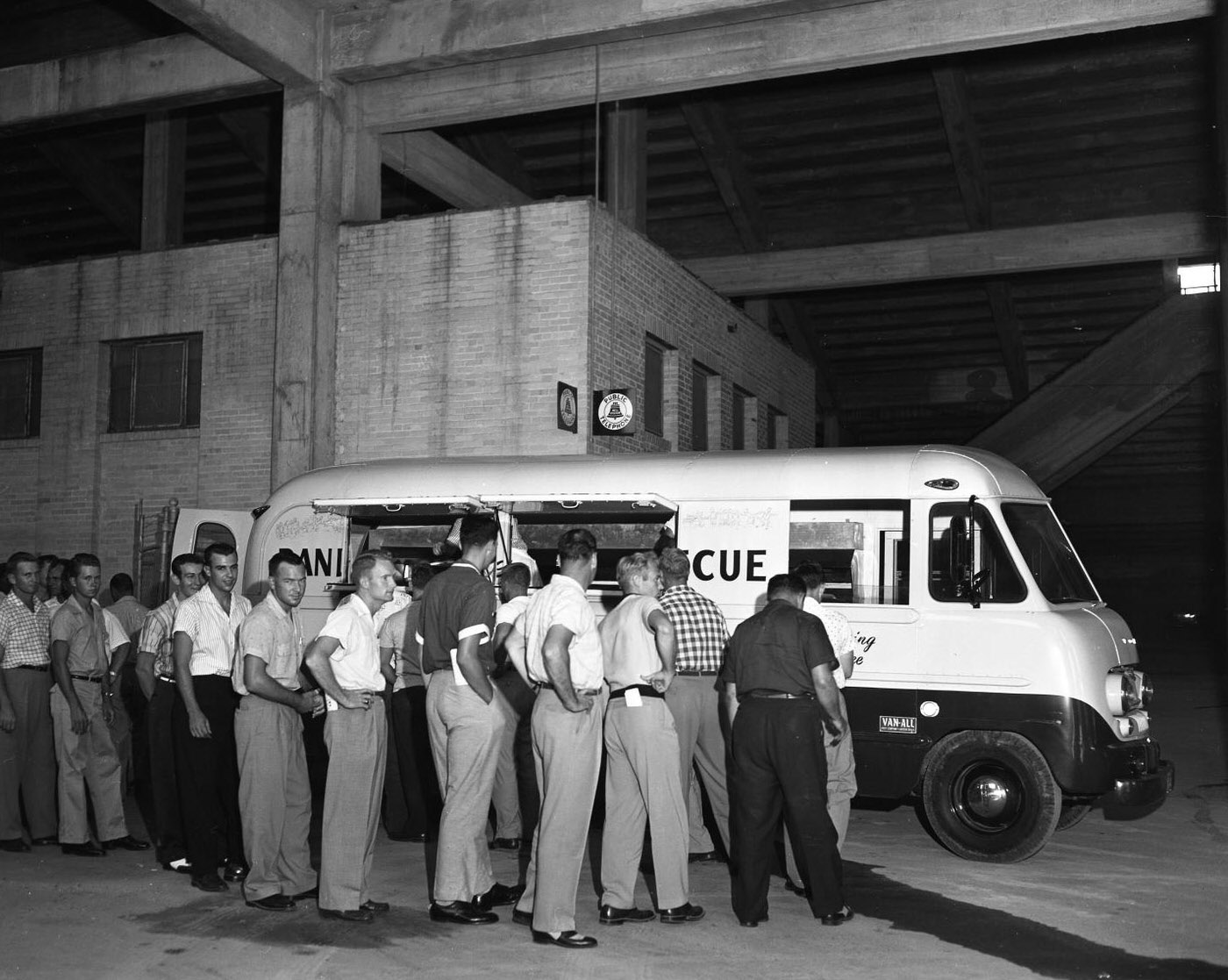
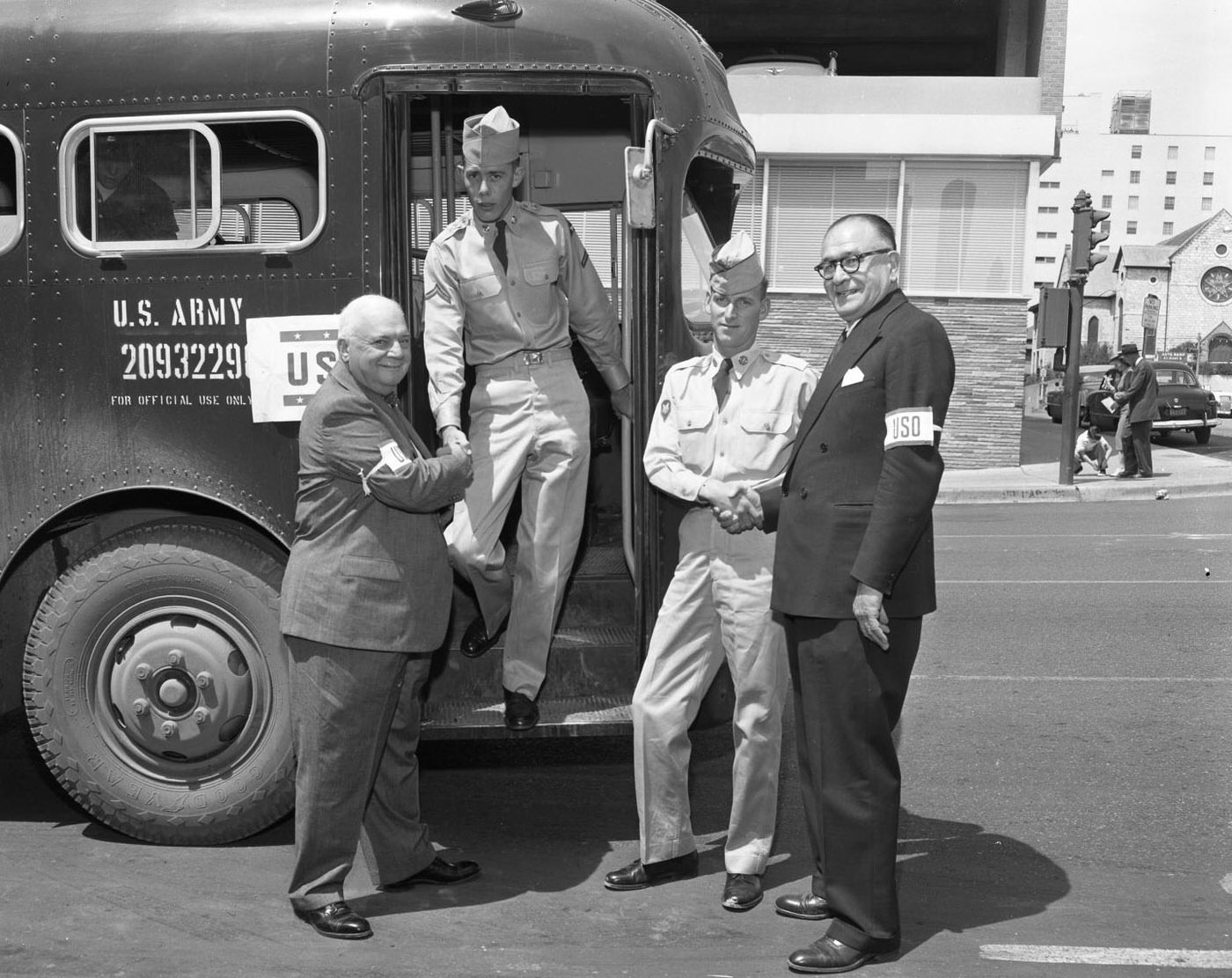
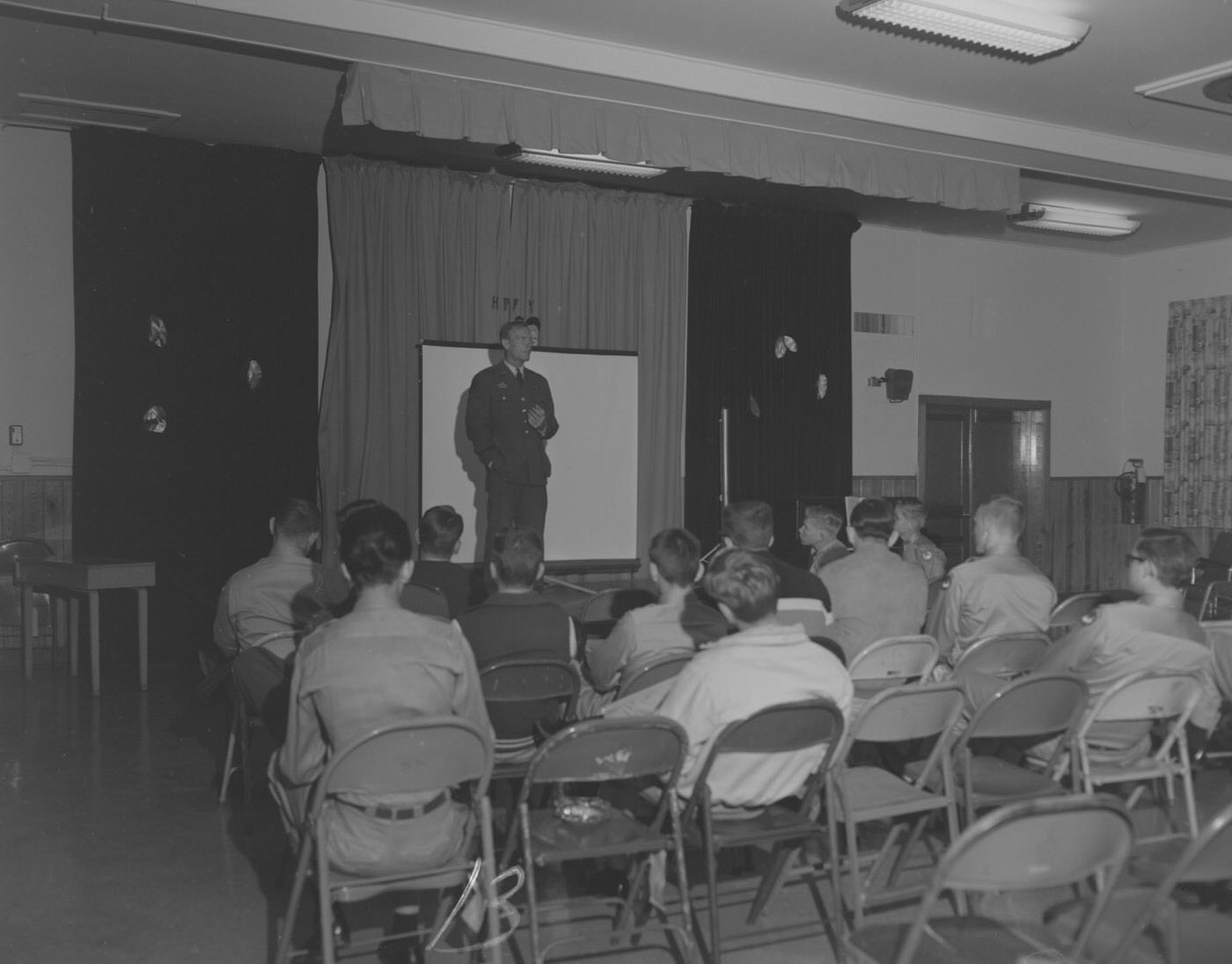
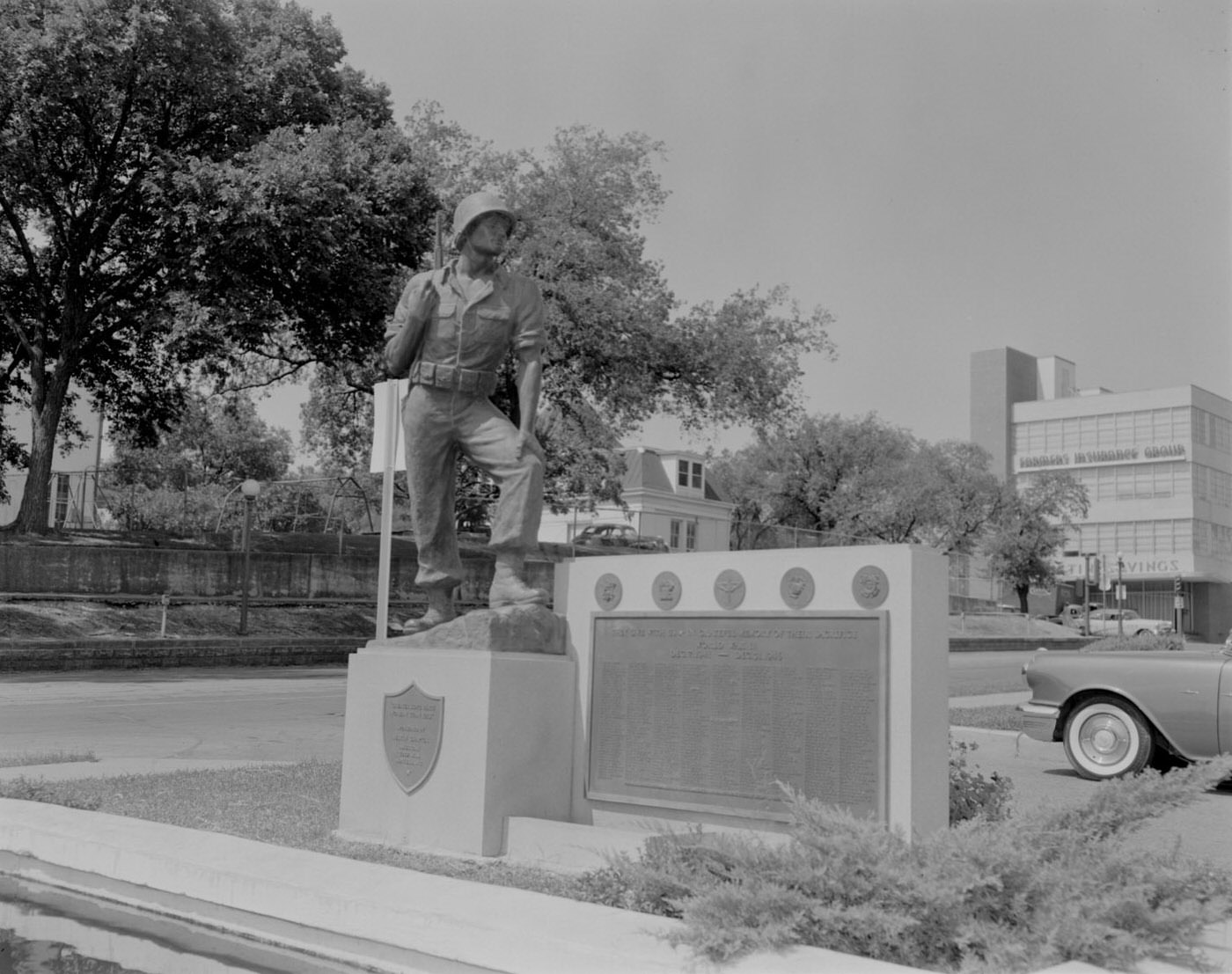
Austin’s military and veteran community remained visible throughout the decade. Soldiers disembarked from U.S. Army buses in 1956, military presentations were held for seated troops, and the World War II Memorial stood as a permanent marker of sacrifice. A group of servicemen posed for a portrait in 1955, representing the many veterans who had returned to build new lives in Austin after the war.
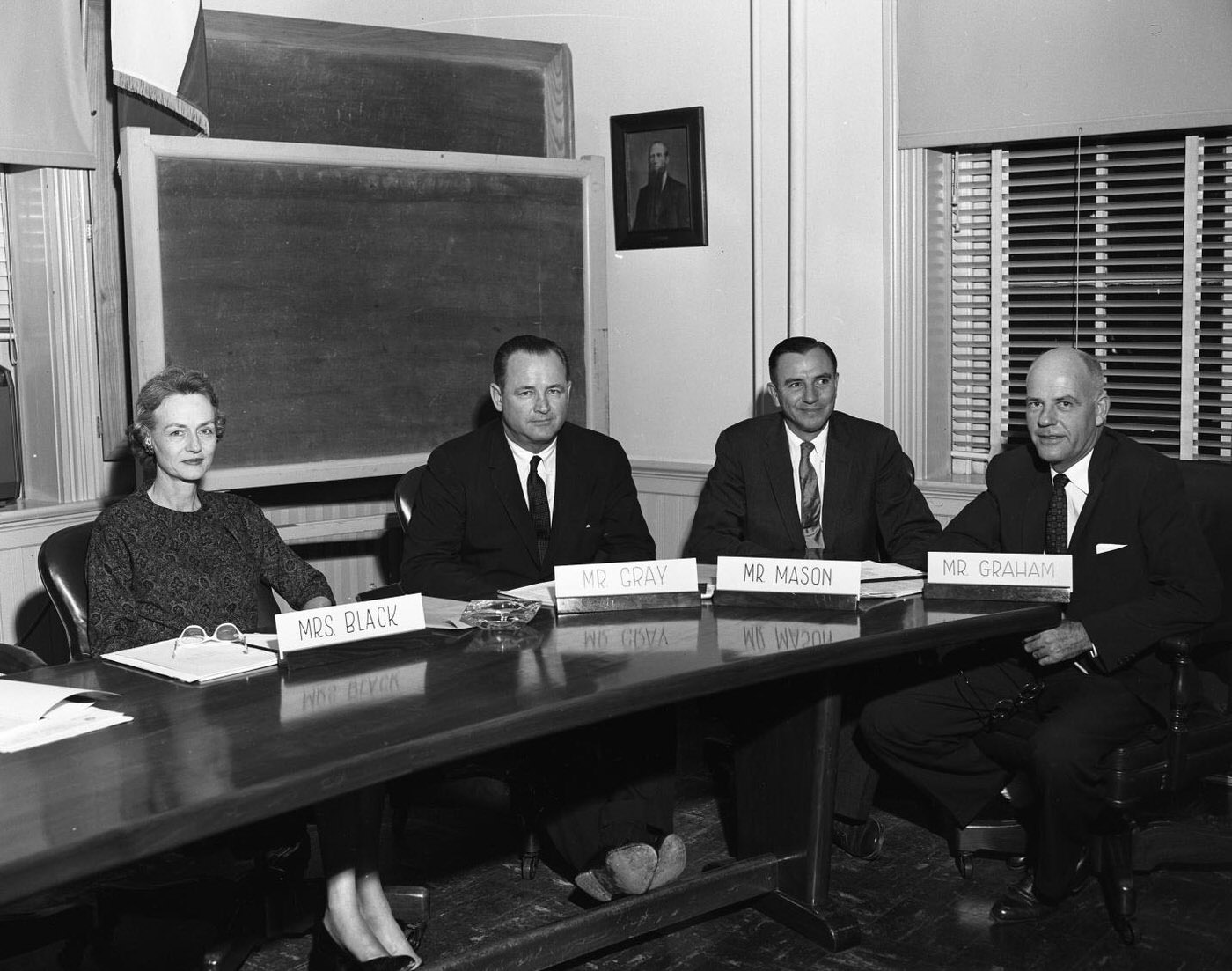
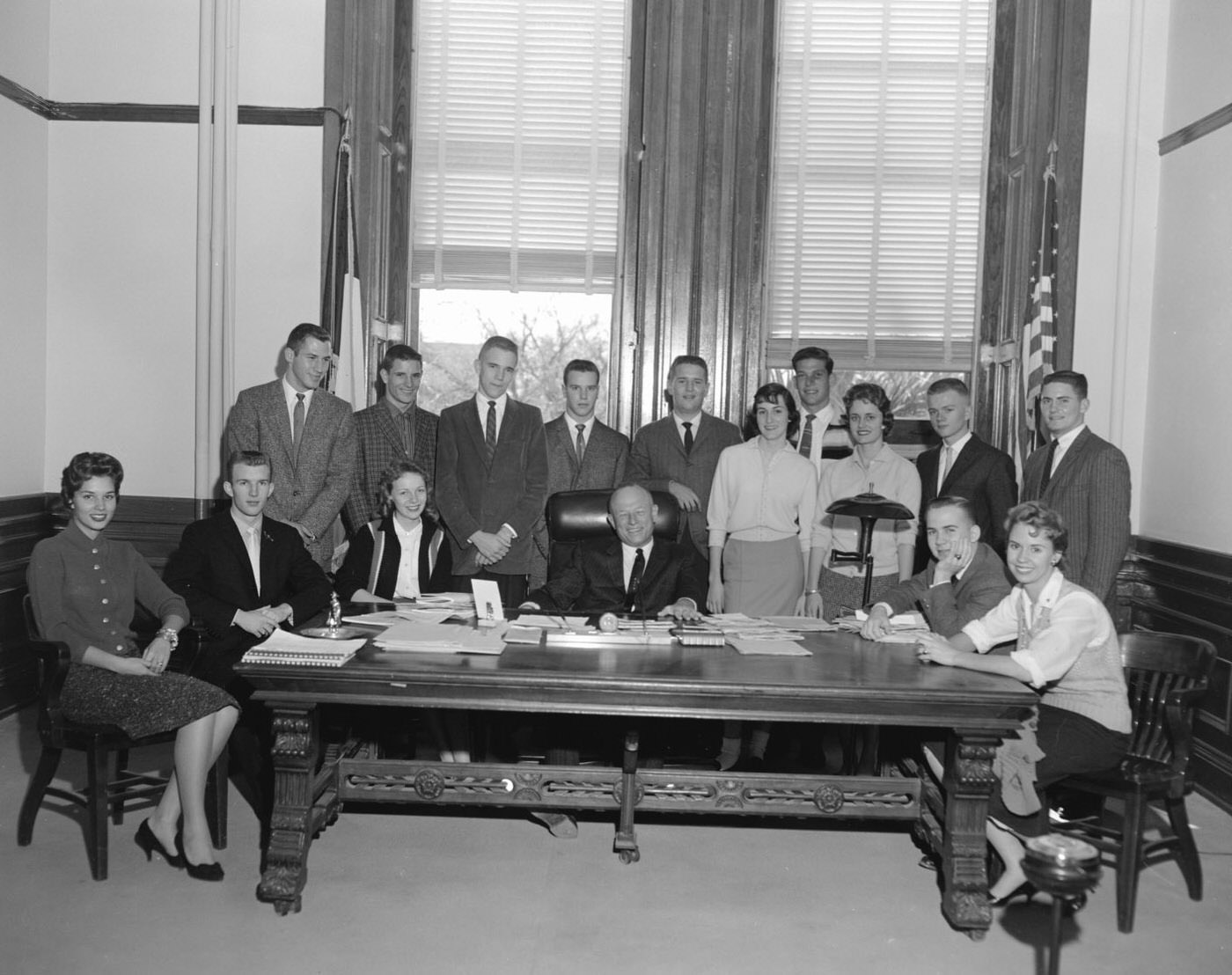
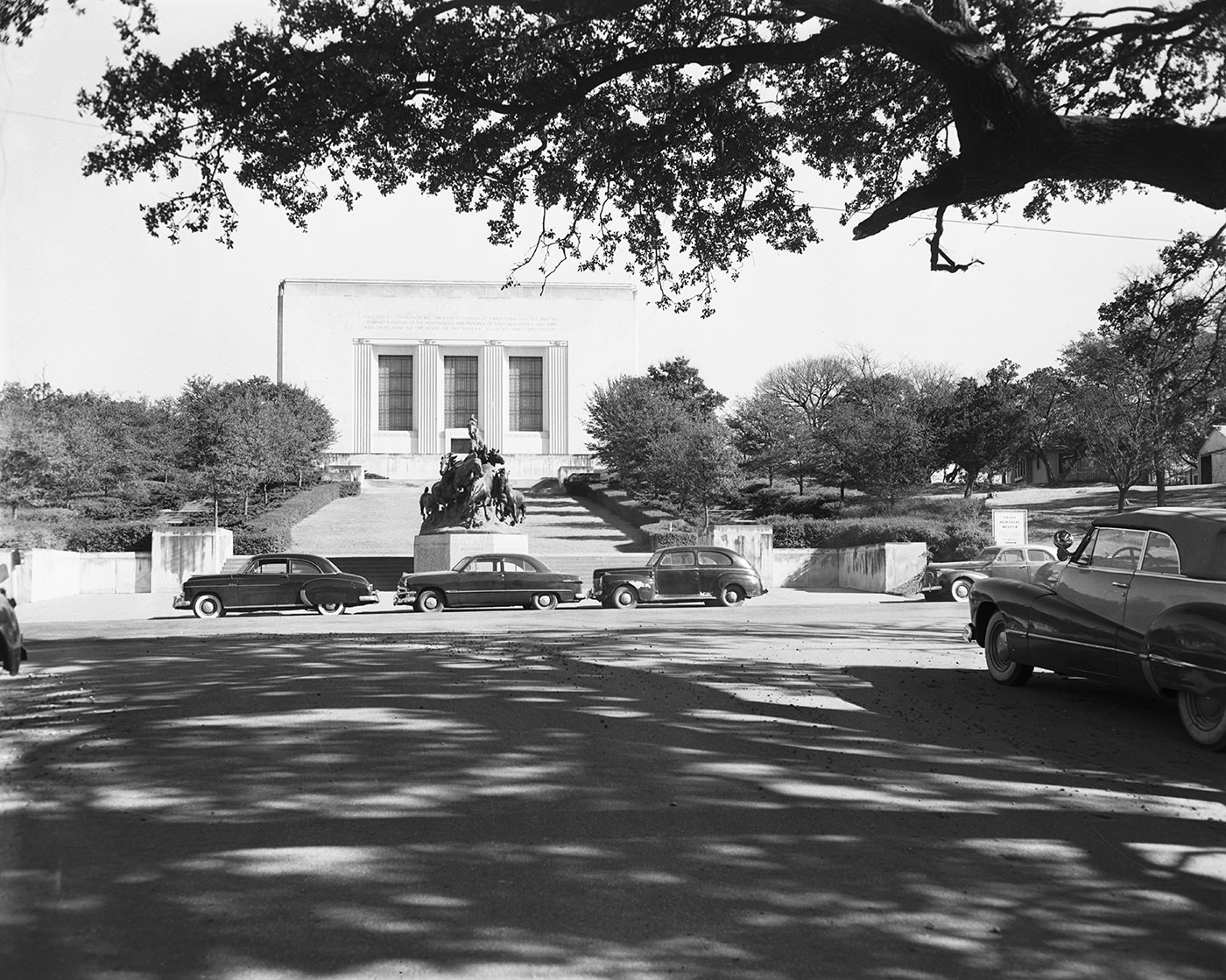
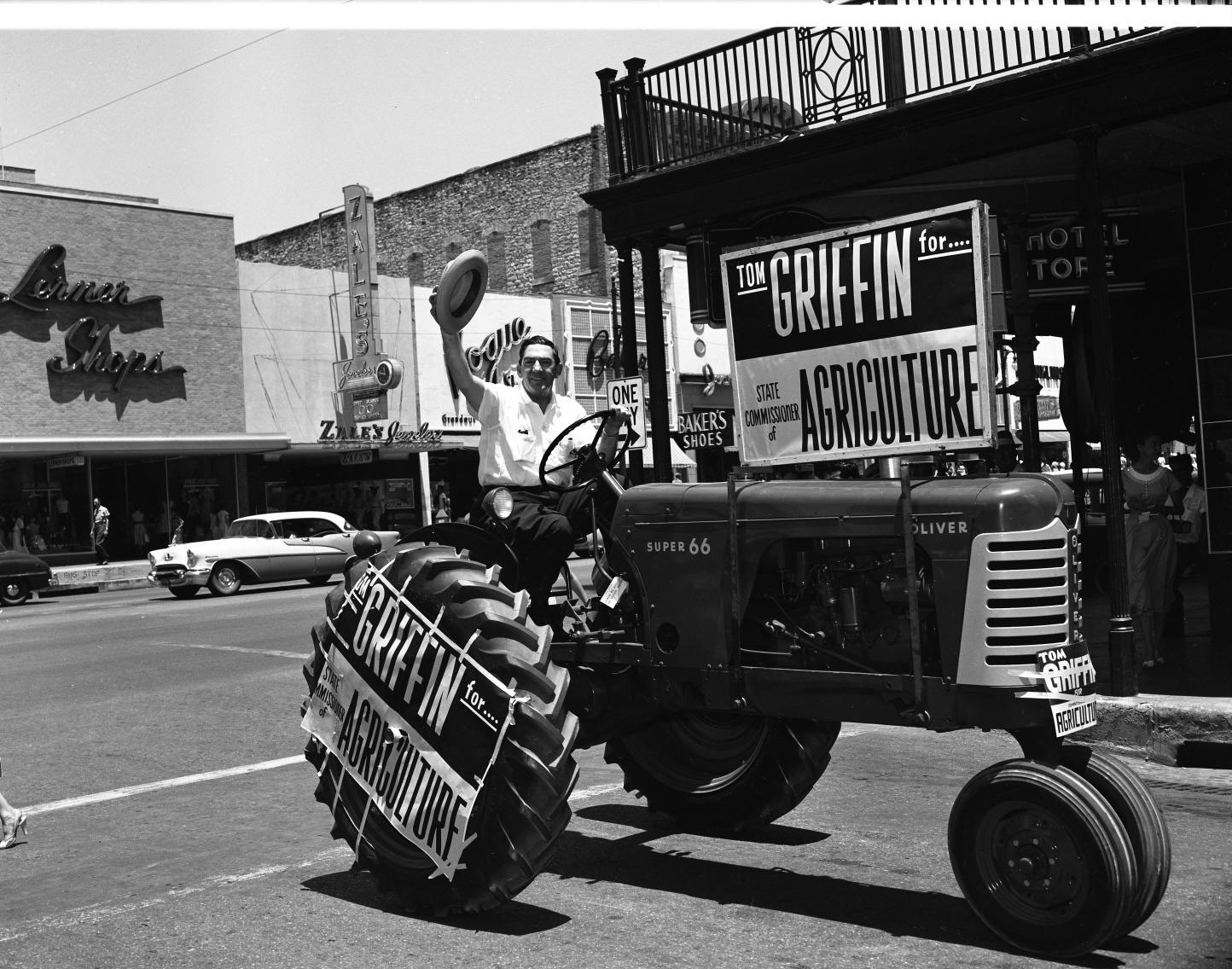
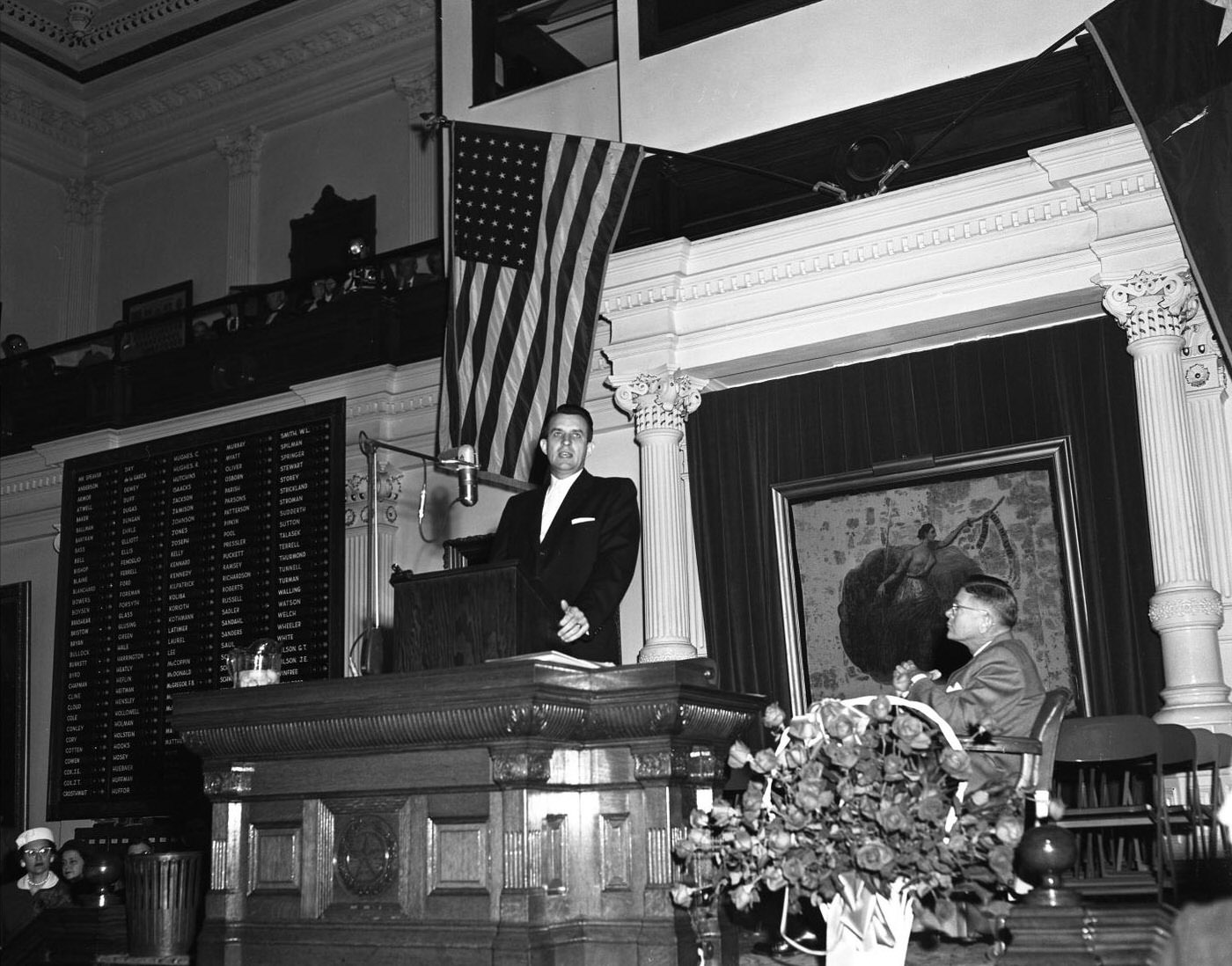
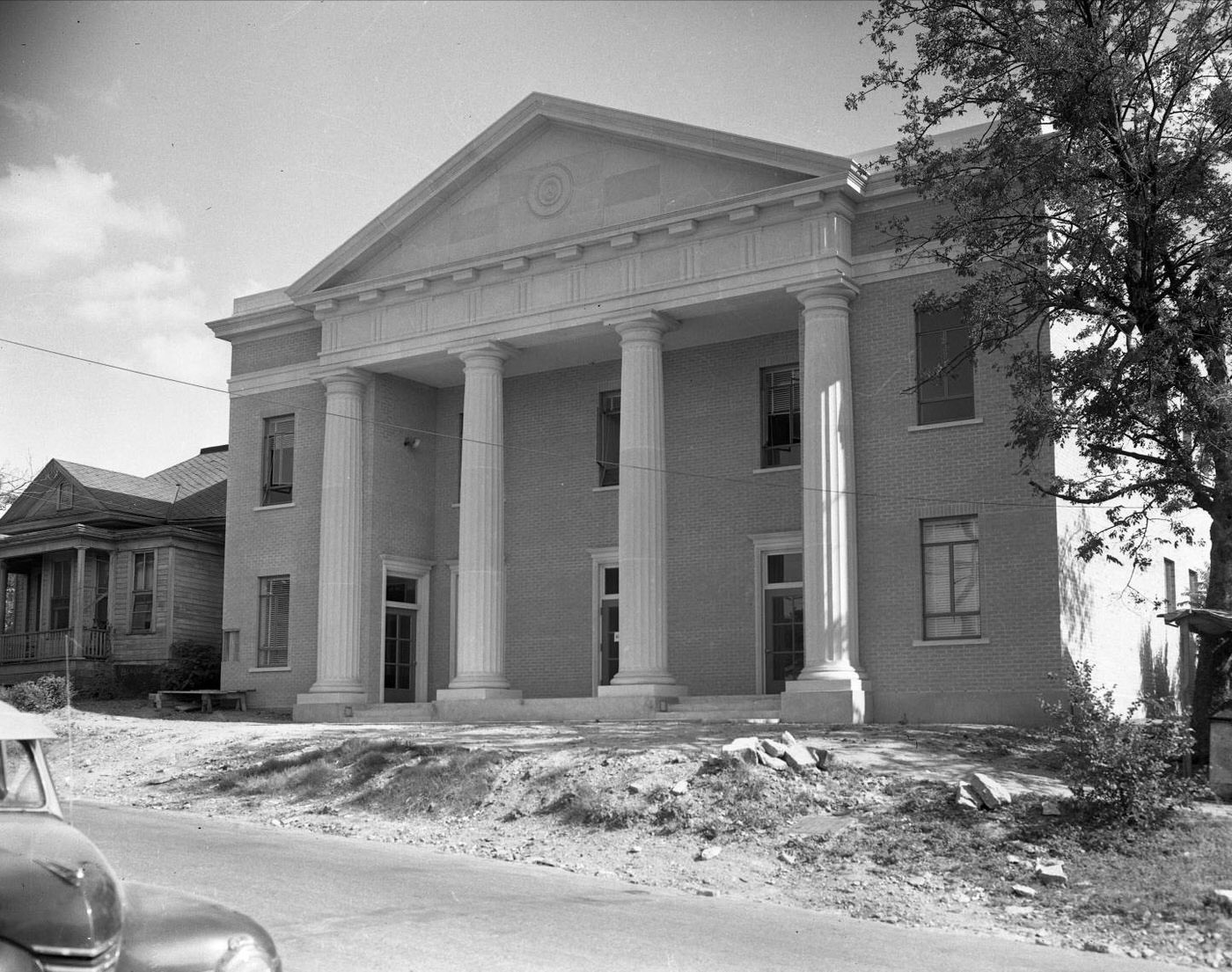
Civic and cultural institutions rounded out Austin’s identity during the decade. The Texas Memorial Museum stood as a permanent landmark by 1951. Political figures like Tom Griffin campaigned for statewide office in 1955, and Tom Reavley delivered his opening address at the state legislature in 1957. The Masonic Temple stood as a long-established fixture of Austin’s civic architecture.
By the end of the 1950s, Austin had grown in nearly every direction — physically, economically, and culturally. New roads, new schools, new businesses, and a swelling population had reshaped what had been a relatively small state capital into a city with clear ambition. These photographs do not simply record what buildings looked like or how people dressed. They show a city in the middle of becoming something larger than it had ever been before.