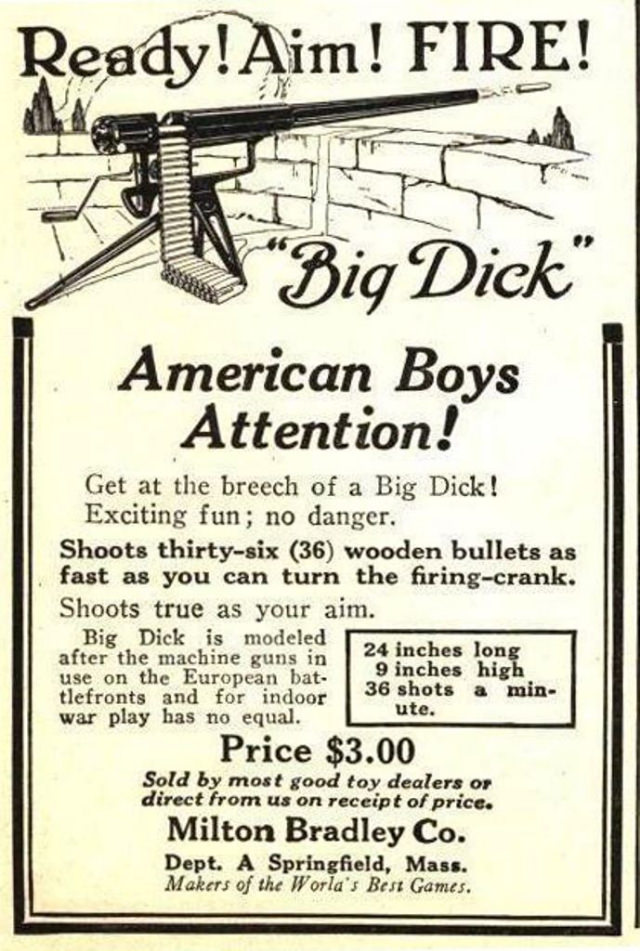
In 1915, Milton Bradley released one of the most unusual toys of the 20th century: the “Big Dick” Machine Gun. The United States had not yet entered World War I, but the war was everywhere — in newspapers, in conversations, and apparently, on the living room floor.
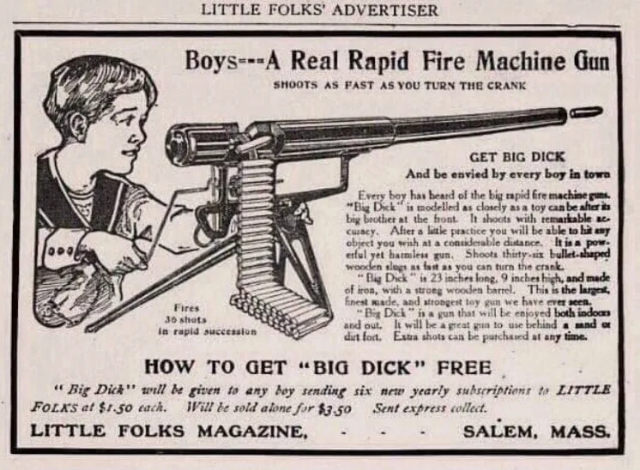
The toy was built to look the part. It featured a smooth-bore wooden barrel, a sturdy iron tripod, and a canvas ammunition belt — all faithful nods to the real machine guns soldiers were using overseas. It came loaded with 36 wooden bullet-shaped slugs ready to fire.
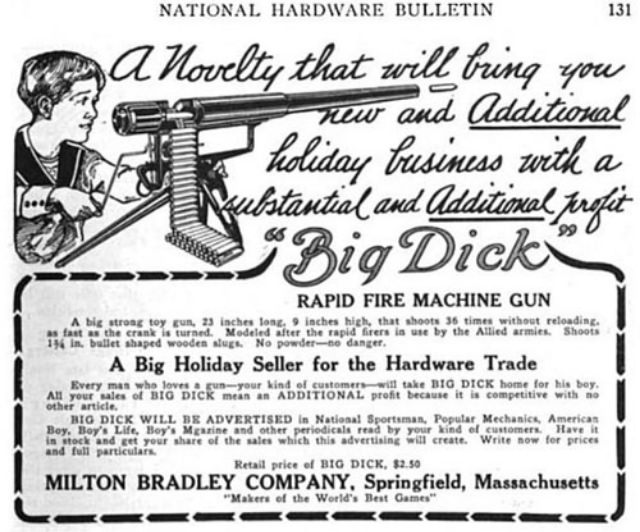
When the ammo ran out, boys could buy 25 replacement rounds for just 25 cents. The toy operated on a spring-action mechanism — no gunpowder, no metal cartridges, just enough punch to send a wooden slug flying across a room. It was designed for safe indoor play, even if its inspiration came from anything but a safe place.
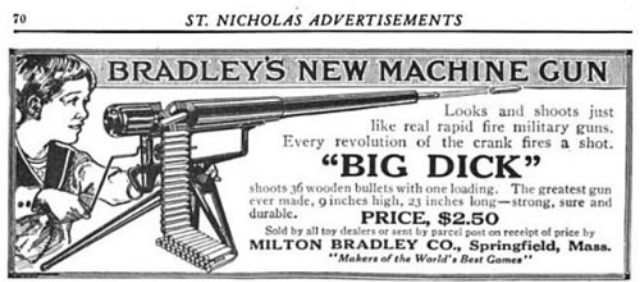
By 1914, machine guns had fundamentally changed how wars were fought. Germany alone fielded 12,000 machine guns during World War I. At the Battle of the Somme in 1916, those weapons cut down thousands of British soldiers in a single day. The technology was lethal, efficient, and widely covered in the press — and it fascinated the public, children included.
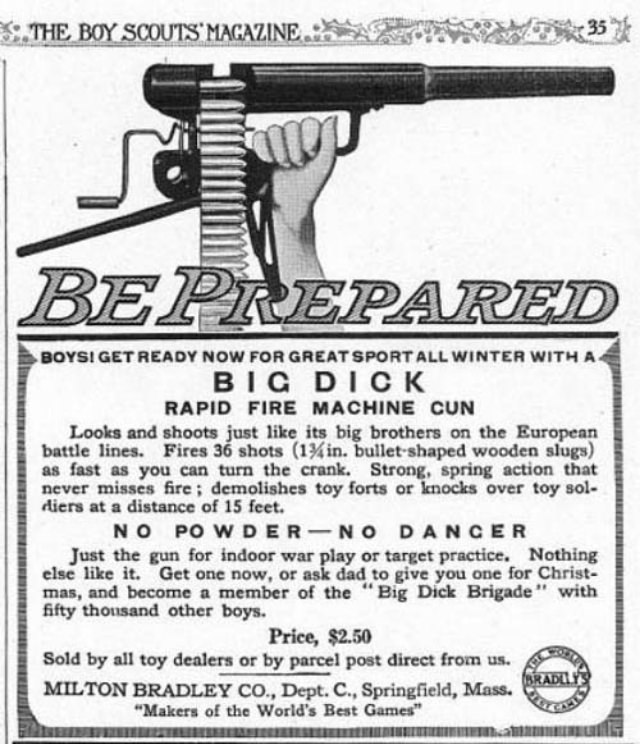
Milton Bradley recognized that children naturally mimicked the world around them. Boys who heard about frontline heroes in the news wanted to recreate those scenes at home. The “Big Dick” gave them a tangible way to do exactly that. Toy guns were nothing new, but a spring-loaded machine gun with a tripod and a canvas belt was a serious step up from a simple cap pistol. It was marketed directly at boys, and it sold. The toy stands as a clear snapshot of how deeply the war had embedded itself into everyday American life — even in the playrooms of families who hadn’t yet sent anyone to fight.