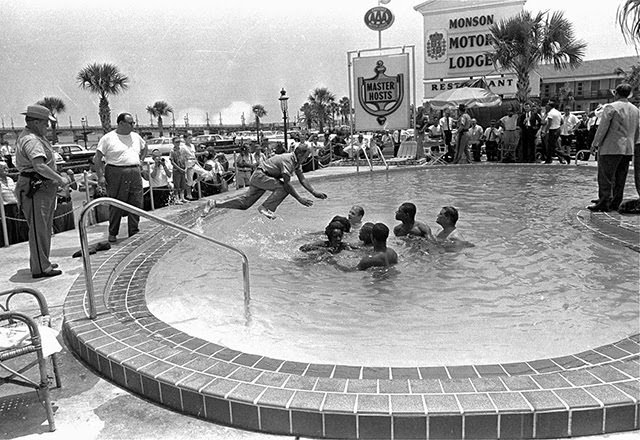
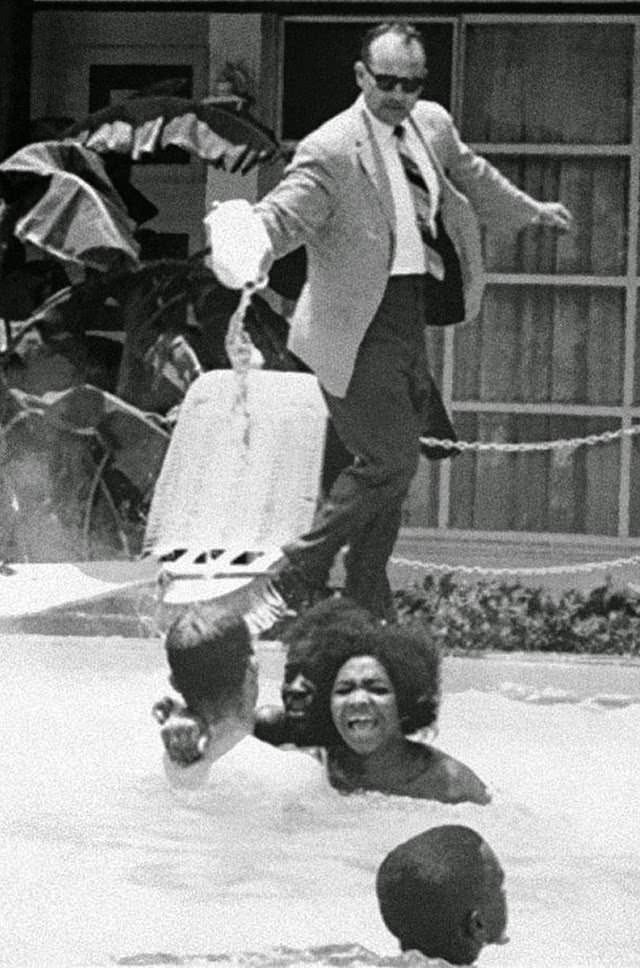
On the afternoon of June 18, 1964, a group of Black and white swimmers climbed into the pool at the Monson Motor Lodge in St. Augustine, Florida. It was a direct, deliberate challenge to the motel’s whites-only swimming policy. Within minutes, the man standing at the pool’s edge — motel manager Jimmy Brock — tilted a large white bottle over the water and poured muriatic acid into the pool. Cameras were watching. The photos that came out of that afternoon would travel across the globe the next morning and reach the desk of President Lyndon B. Johnson.
St. Augustine was no ordinary Southern city in 1964. Known as the “Ancient City,” it was preparing to celebrate its 400th anniversary — a milestone its leaders hoped would attract national attention. But beneath that image, the city was one of the most racially volatile places in the South. Dr. Martin Luther King, Jr. described St. Augustine as the most lawless place he had ever encountered. The local Ku Klux Klan was aggressive, and local law enforcement frequently looked the other way when violence was directed at Black residents. The combination made it a pressure cooker, and civil rights organizers knew it was the right place to force the issue.
Dr. King arrived in St. Augustine in the spring of 1964 to push for the desegregation of public businesses. The strategy his organization used was deliberate: “fill the jails.” By peacefully entering whites-only establishments, protesters could get arrested, generate headlines, and push the federal government toward action. On June 11, 1964, King himself was arrested for trespassing at the Monson Motor Lodge’s segregated restaurant after being denied service. That arrest set the stage for what would unfold at the pool a week later.
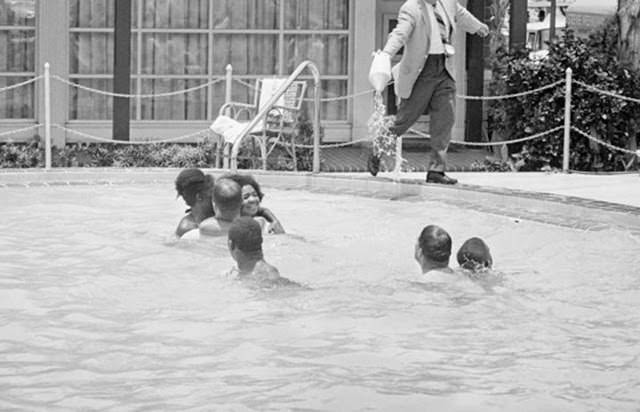
The swim-in was not a spontaneous act. It was carefully planned to exploit a legal gap in the segregation laws. Under the rules of the time, hotel guests were allowed to invite visitors to use the pool. A group of white activists who supported the movement checked into the Monson Motor Lodge as paying guests. They then invited their Black friends to join them for a swim — technically within the bounds of the motel’s own guest policies. On the afternoon of June 18, as a larger group of protesters marched toward the motel from the street, several individuals broke off and jumped into the pool. Two rabbis were among those who entered the water alongside five Black demonstrators.
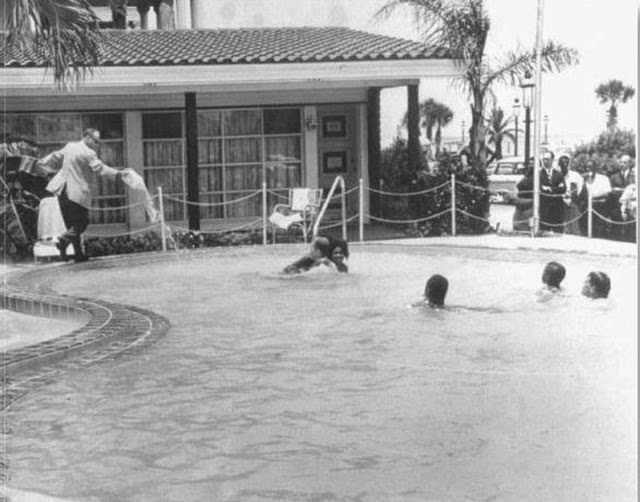
When Brock saw the integrated group in the water, he did not call the police and wait. He grabbed a bottle of muriatic acid — a common pool maintenance chemical used to balance pH levels — and poured it directly into the pool while shouting that he was “cleaning the pool.” Muriatic acid is another name for hydrochloric acid (HCl). In the large volume of pool water, a single bottle posed little actual chemical danger. But the word “acid” alone was enough to cause panic. Swimmers screamed. The terror on their faces was real, driven not by chemical burns but by the fear of what acid could do. Brock’s intent was clear: use fear as a weapon to clear his pool.
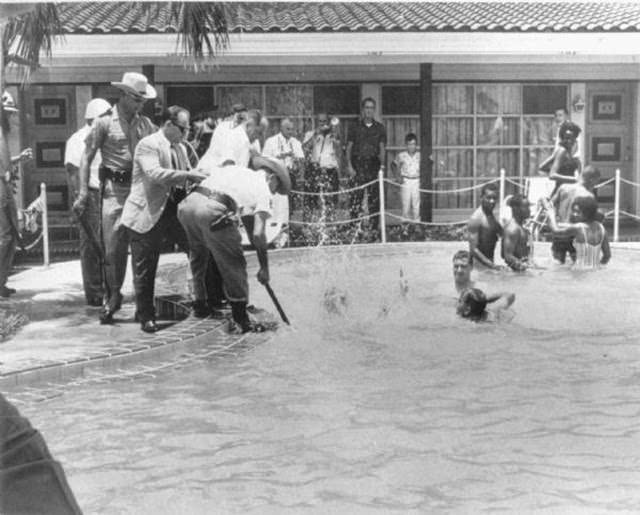
One swimmer refused to be moved by the intimidation. Understanding that one bottle of acid diluted in thousands of gallons of water was largely harmless, he dipped his hand into the pool and drank from it — a composed, calculated act meant to show the others around him that the water was safe. It stopped the panic cold. The swimmers held their position. The standoff ended not when the acid took effect, but when an off-duty police officer jumped into the pool fully clothed to physically drag the swimmers out and place them under arrest. Martin Luther King watched from across the street as demonstrators were hauled away.
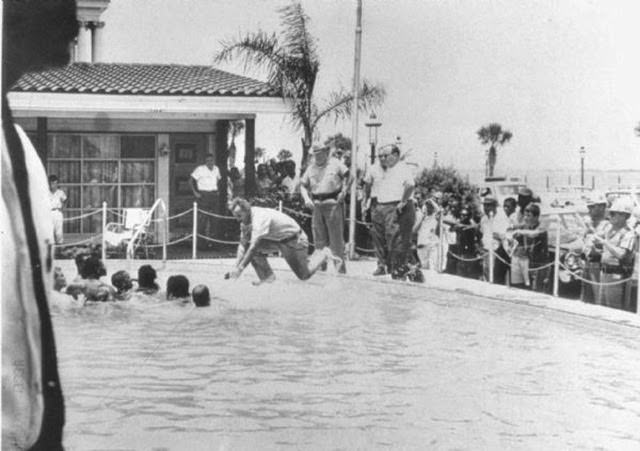
The charges brought against the protesters were trespassing and disorderly conduct. In the years following the incident, some people in St. Augustine remembered Jimmy Brock not as an aggressor but as a businessman caught in a politically charged situation, defending his property the only way he felt he could.
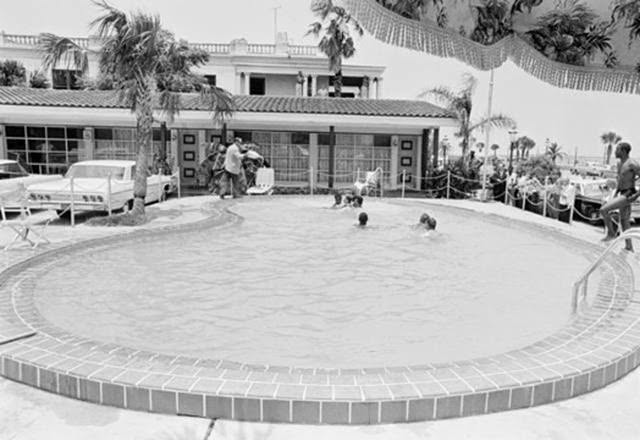
That view, however, did not define how the rest of the world received the photographs. The image of Brock pouring acid into the pool ran on front pages of newspapers across the United States and internationally the following morning. It arrived at an especially critical moment. In Washington, D.C., the U.S. Senate was locked in an 83-day filibuster against the Civil Rights Act. The legal debate had been running in the abstract — arguments about states’ rights, property rights, and the limits of federal authority. The Monson Motor Lodge photo cut through all of that. It showed, in a single frame, what segregation actually looked like: a white man treating Black people as contaminants in a pool of water.
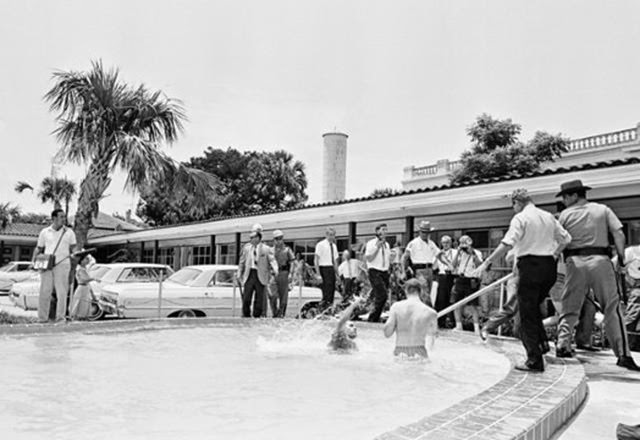
President Johnson saw the photograph and was reportedly appalled. The image gave the Civil Rights Act the moral weight it needed to push through. Arrests continued at the Monson Motor Lodge in the days that followed, with protesters dragged from the pool and led away by police as news cameras documented every moment.
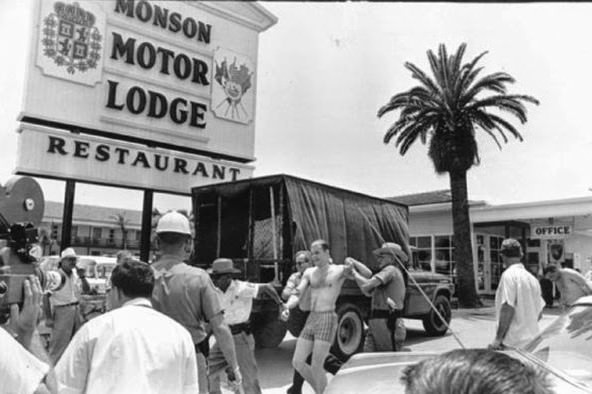
The confrontations at the Monson Motor Lodge were not limited to the pool. Earlier protests had targeted the motel’s restaurant directly. Rev. Lavert Taylor led a group of 30 demonstrators who sought service at the segregated restaurant. Brock locked the doors and sat in his office waiting for police. All 30 were arrested. The pattern was the same each time: protesters entered, Brock or his staff refused service, police arrived, and demonstrators were taken away.
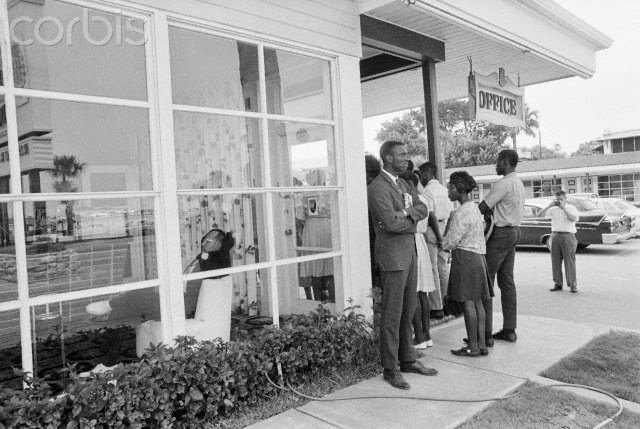
Less than three weeks after the swim-in, on July 2, 1964, President Johnson signed the Civil Rights Act into law. The Act made it illegal to discriminate in public accommodations on the basis of race, color, religion, or national origin. The Monson Motor Lodge protests — and the photographs they produced — had placed the reality of segregation in front of every reader, lawmaker, and world leader who saw them. What happened in that pool on June 18 was not a footnote. It was evidence.