One month after the Japanese attack on Pearl Harbor, the United States was bracing for more. The mainland felt exposed, and military planners were running through scenarios that most Americans had never considered — including a chemical attack on American soil. On January 7, 1942, that fear drove two men from Ohio to Washington D.C. for a meeting that would produce one of the most unusual objects in the history of modern warfare.
T.W. Smith Jr., owner of the Sun Rubber Company, and his lead designer Dietrich Rempel traveled to meet with Major General William N. Porter, Chief of the Chemical Warfare Service. They brought with them a proposal for a gas mask built specifically for children between eighteen months and four years old. The military already knew standard adult masks were useless on small faces — too large to seal properly, too heavy to wear comfortably, and frightening enough to trigger panic on sight.
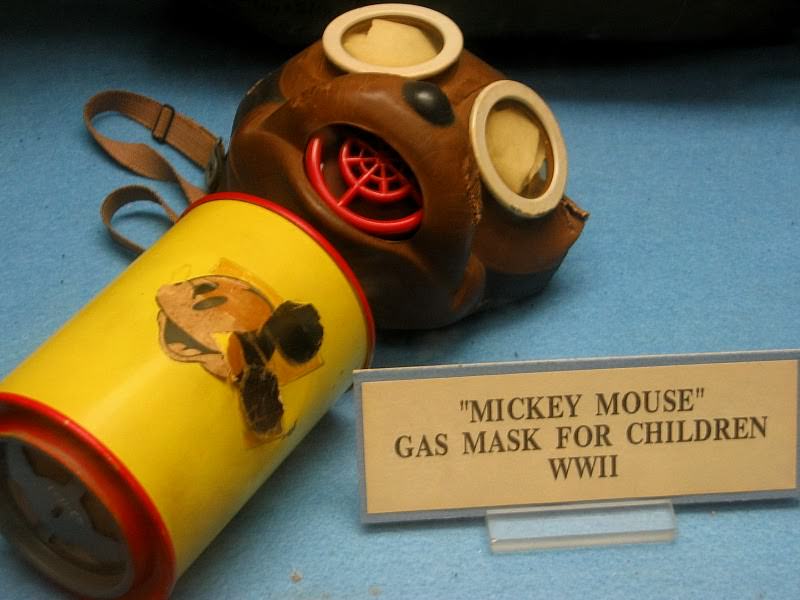
That last problem was the most dangerous one. During World War I, gas masks had become symbols of terror. Military planners knew from experience that a panicking child would rip a mask off their face. In a real chemical attack, that reaction meant death. Smith and Rempel’s solution was to make the mask into a toy — something a child would want to wear rather than tear away.
Walt Disney agreed to let the project use Mickey Mouse’s likeness at no charge to the government. The design team at the Sun Rubber Company’s factory in Barberton, Ohio, spent several weeks refining the mold. The finished mask was a single piece of molded rubber shaped to look exactly like Mickey’s face. His round ears were molded as floppy rubber attachments on top of the head. The large circular glass lenses served as the character’s iconic eyes and gave the child a wide field of vision.
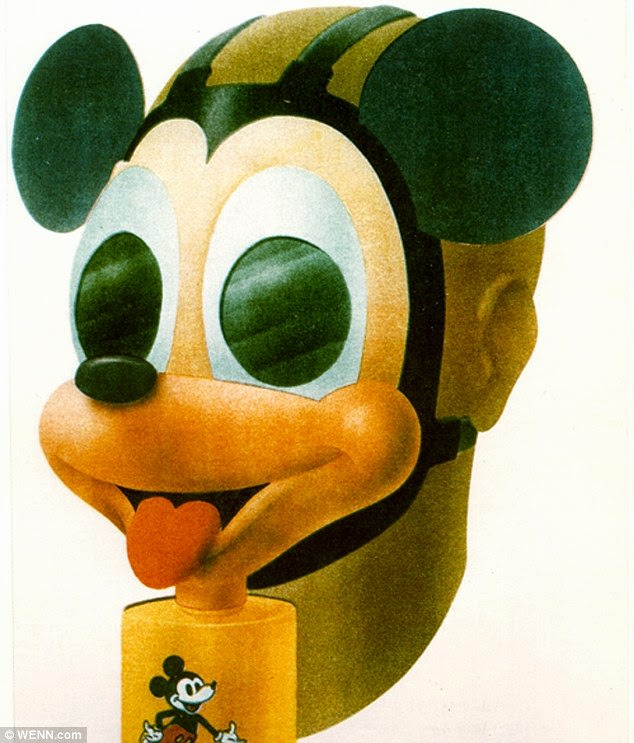
The technical details behind the playful exterior were serious. The air filter and exhale valves were built into the protruding snout of the character, keeping them hidden from view while remaining fully functional. Inside the mask, a soft rubber flange pressed against the child’s skin to block any contaminated air from leaking in. Elastic webbing straps allowed a parent or teacher to adjust the fit quickly. The goal was a mask a child could wear for several hours without fighting it.
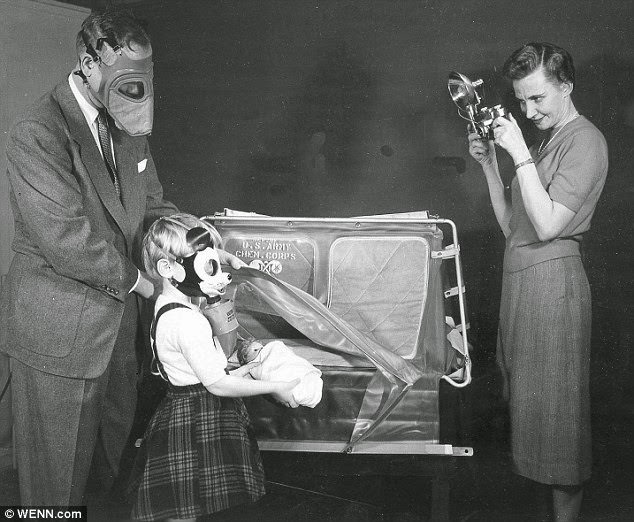
Civil defense officials planned to run regular drills where children would put on their “Mickey faces” as part of a game. By treating the mask as a costume, planners believed children would associate it with fun rather than danger. This was a deliberate psychological strategy. In a chemical attack, survivability depends entirely on keeping the airway sealed until the gas clears or a person reaches safety. Getting a child to keep the mask on was the entire battle.
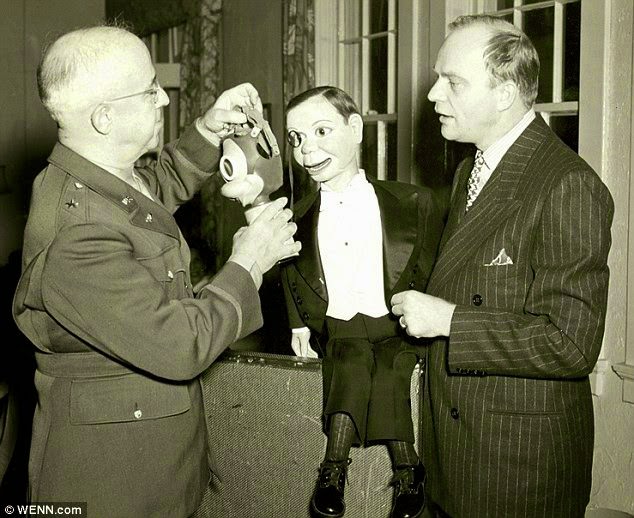
Major General Porter approved a trial run of 1,000 masks after reviewing the sample. The Sun Rubber Company was well-equipped for the job. Before the war, the Barberton factory had produced rubber balls, dolls, and teething rings, meaning the specialized machinery for complex rubber molds was already on-site. The factory floor was reorganized to handle the assembly of the glass eyepieces and the insertion of chemical filters into the rubber snouts. Those filters contained activated charcoal treated to neutralize multiple types of poison gas, including mustard gas and phosgene.
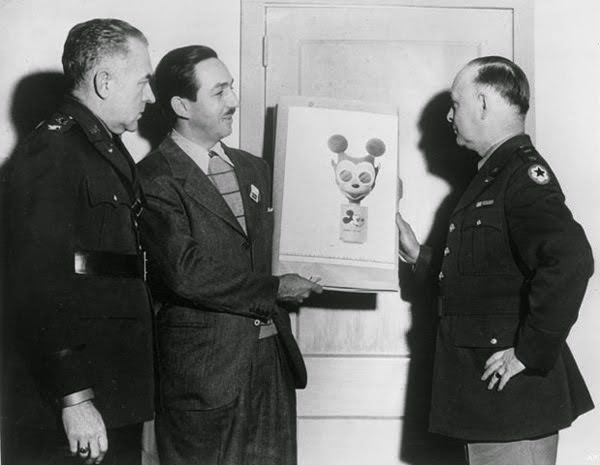
Every mask was tested for leaks before leaving the factory. The initial 1,000 units went to the Chemical Warfare Service for field testing, where children were placed in simulated environments to measure how long they would tolerate wearing the device. The military’s larger plan included a full line of character-themed masks. A Donald Duck design was drafted for older children. Disney artists and Rempel’s team discussed a range of characters so children could pick a favorite, making long drills less tedious.
The program ran into a hard obstacle: rubber. By early 1942, Japan had seized control of the major rubber plantations across Southeast Asia, and the United States was facing a severe shortage. The War Production Board was rationing all rubber for combat essentials — Jeep tires, tank treads, infantry boots. Each Mickey Mouse mask consumed roughly the same amount of rubber as several pairs of soldier’s boots. Distribution had been planned for high-risk coastal cities including New York, San Francisco, and Los Angeles, where civil defense wardens were prepared to hand masks out to families with young children. That plan stalled as the rubber shortage deepened.
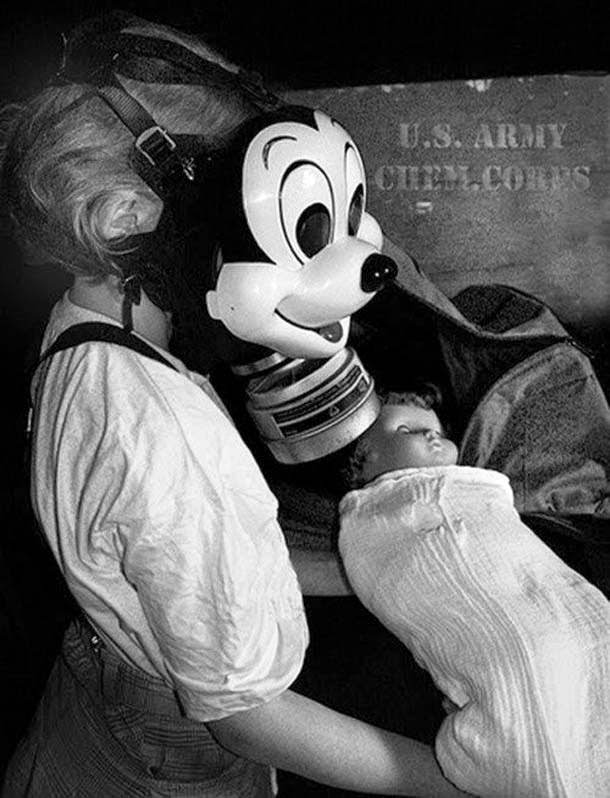
As 1942 progressed, the intelligence picture shifted. Better Allied control over the Atlantic and Pacific made a large-scale chemical attack on the American coast increasingly unlikely. The sheer logistics of an enemy navy delivering enough gas to reach inland civilian populations was enormous. With the threat downgraded and rubber too scarce to spare, the military slowed production and chose to store the existing masks rather than distribute them. The Sun Rubber Company completed its initial orders and moved on to other war contracts, including rubber components for Navy equipment and parts for adult military gas masks. A few thousand Mickey Mouse masks were eventually produced for civil defense displays and specialized units. Not a single one was ever used in a real emergency.