
Bellevue, Washington looked nothing like the city it is today. In the 1940s, it was a quiet farming community sitting on the eastern shore of Lake Washington, surrounded by fields, timber, and small storefronts. What changed everything was a bridge — and a war.
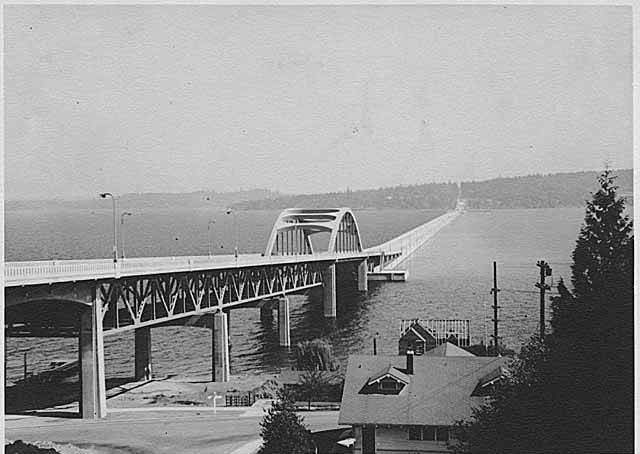
Lake Washington’s first floating bridge opened in 1940, connecting Seattle to the largely rural Eastside. Before that, the easiest way to reach Bellevue was by lake steamer. Early settlers had arrived around 1864, and for decades the area built its identity around logging, then farming. The region became especially well known for its strawberries. The bridge snapped all of that open. Suddenly, Bellevue was accessible, and it didn’t stay quiet for long.
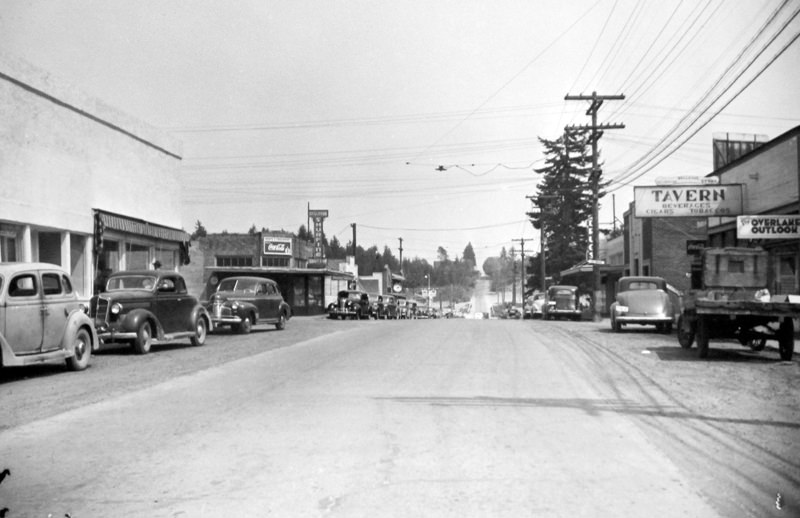
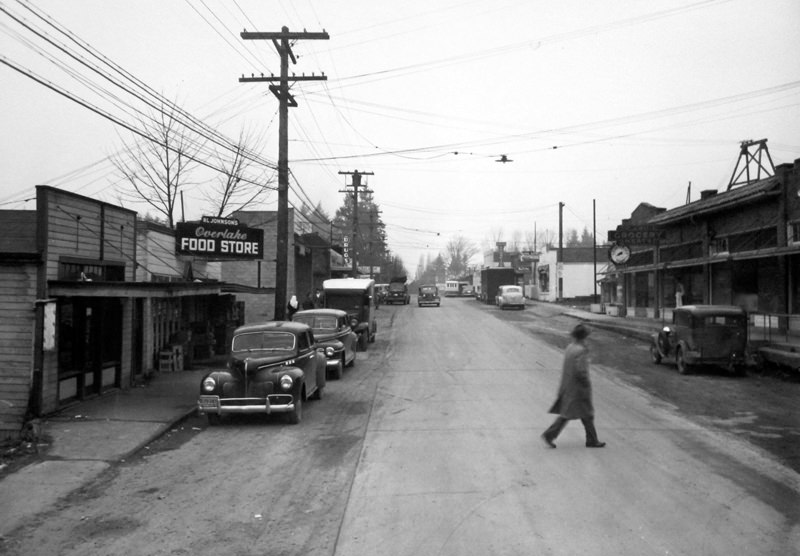
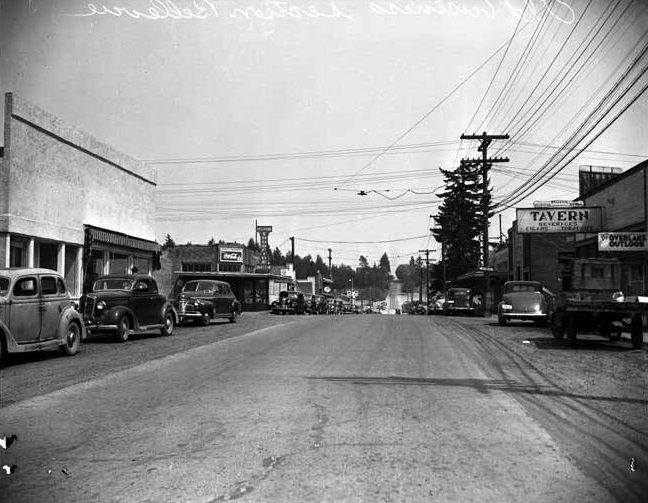
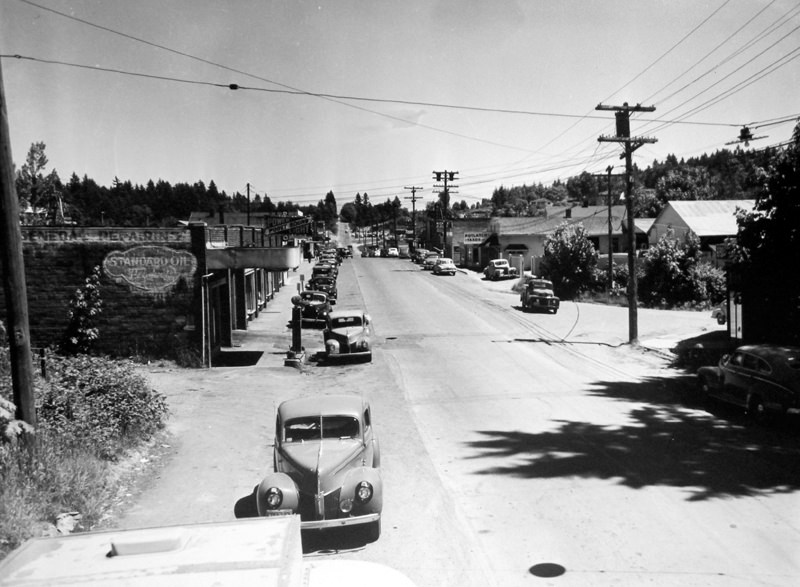
Main Street in the mid-1940s was a modest strip of small businesses, unpaved lots, and wooden storefronts. These photos from May 1946 capture the town at a turning point — still small, but buzzing with early signs of growth.
One of the darker chapters tied to Bellevue’s transformation involves the Japanese American farming community. A large share of the agricultural workers in the area were of Japanese ancestry. Following the outbreak of World War II, they were forcibly removed and sent to internment camps. The annual Strawberry Festival, a beloved local tradition, was canceled in 1942 as a direct result. It would not be revived for 45 years. The forced removal also freed up significant amounts of farmland, which was then made available for development — land that would later become the foundation of downtown Bellevue.
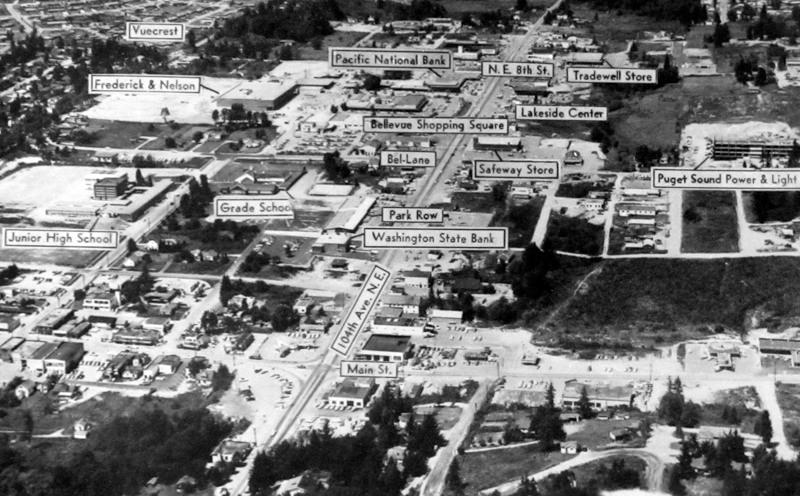
After the war ended, the GI Bill — formally known as the Servicemen’s Readjustment Act of 1944 — sent a wave of returning soldiers into the housing market. Congress allocated $13 billion for veterans, covering medical care, education, and vocational training. Crucially, the bill offered government-guaranteed, low-interest home loans with no down payment required. New suburban developments spread rapidly across western Washington. Bellevue, with its cheap land and fresh bridge access, was perfectly positioned to absorb that growth.
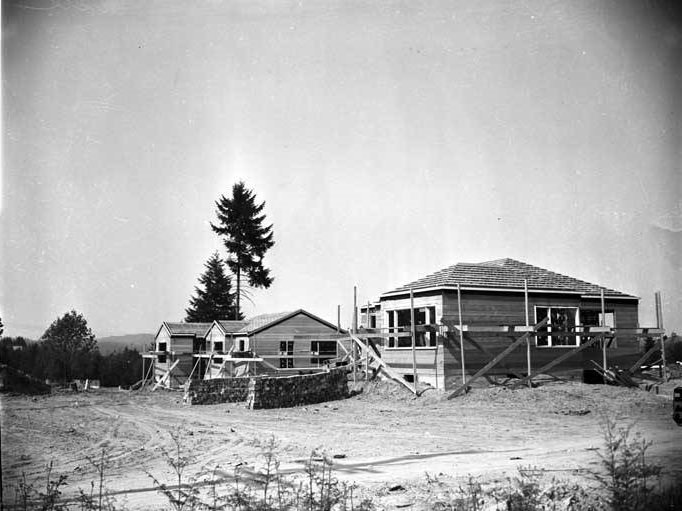
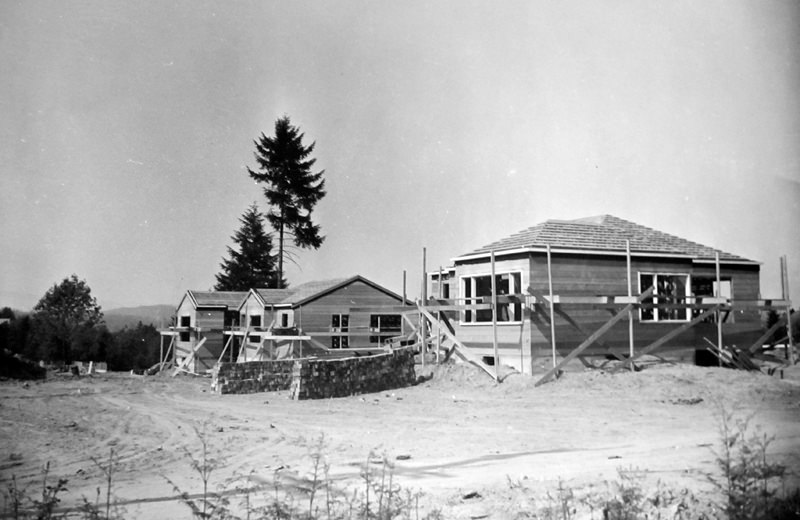
The Bellevue Chamber of Commerce actively advertised the area to attract new residents. New subdivisions rose along the highway at Eastgate, Newport Hills, and Lake Hills — all offering affordable homes to veterans and their growing families. The town that had been defined by fields and small farms was now defined by construction crews and freshly poured concrete.
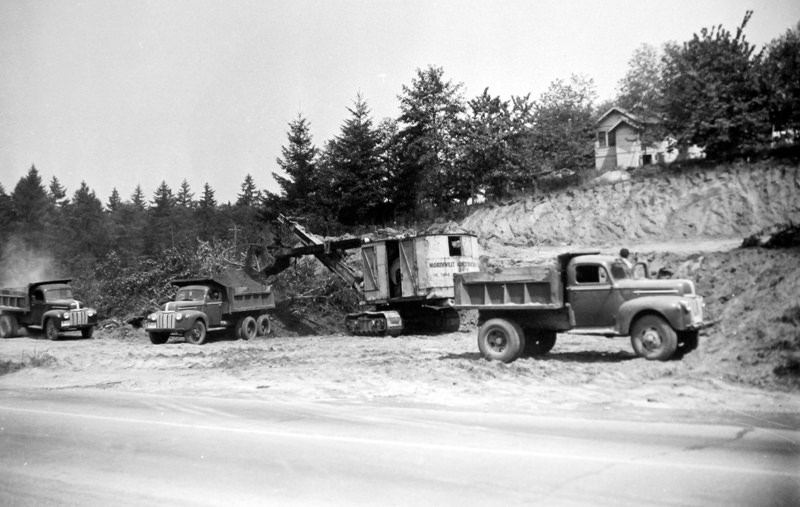
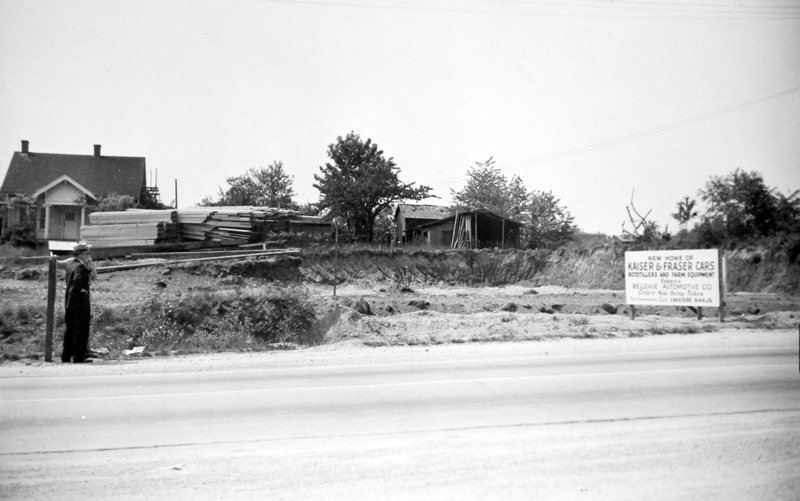
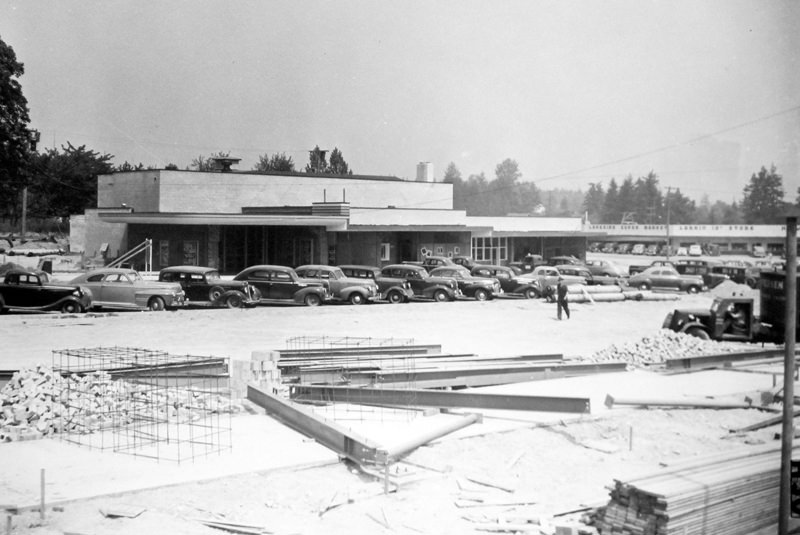
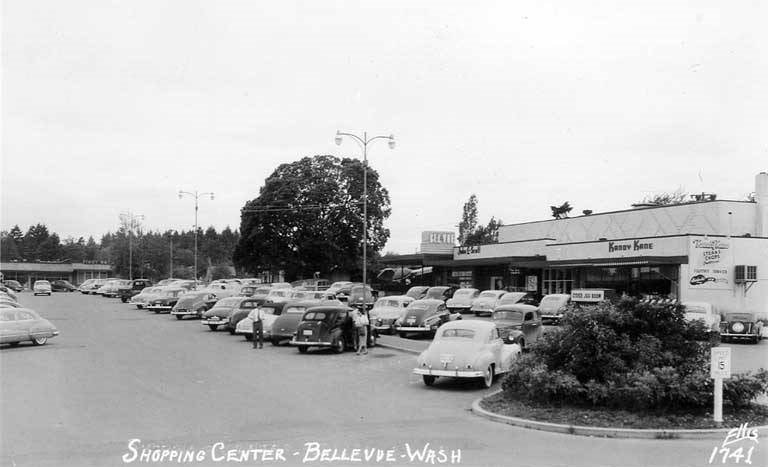
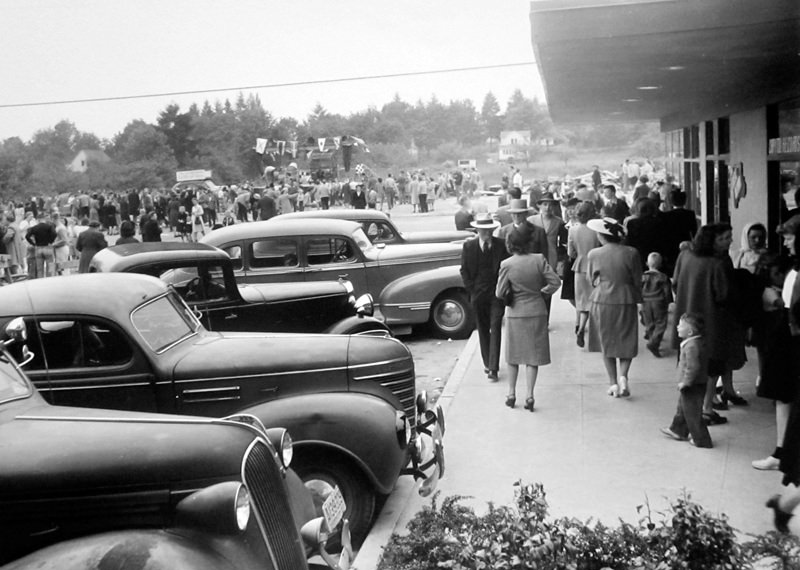
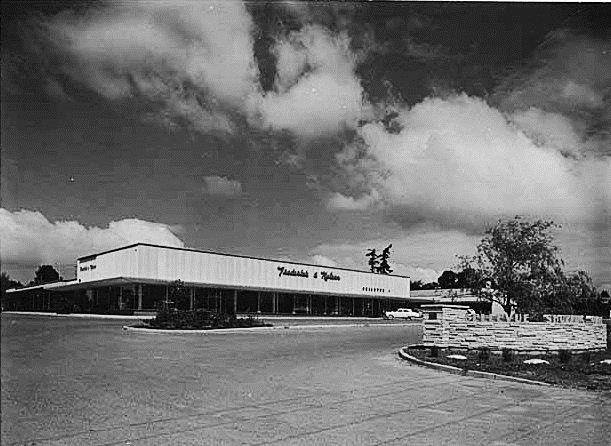
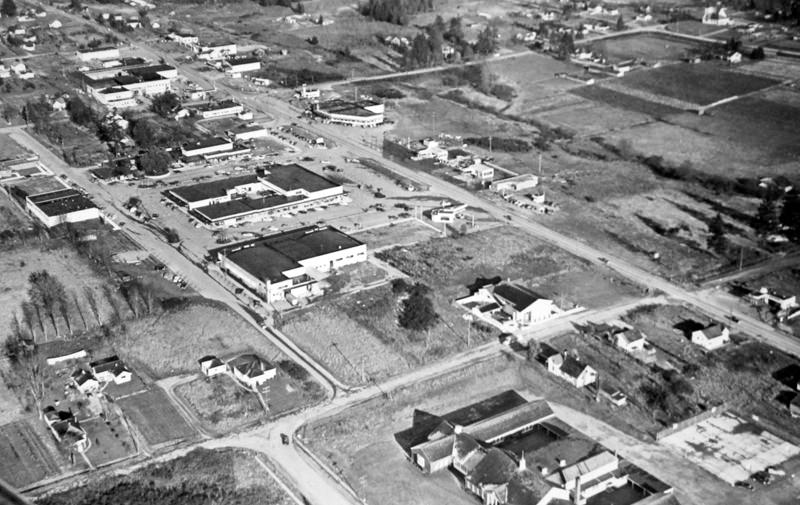
Commercial development followed close behind. The Bellevue Shopping Center began taking shape in 1946, complete with the Bel-Vue Theater. By 1947, the shopping square was drawing visitors with its parking lot, retail shops, and restaurants like the Kandy Kane. By Christmas of 1949, Bellevue Square had grown into a recognizable retail hub.
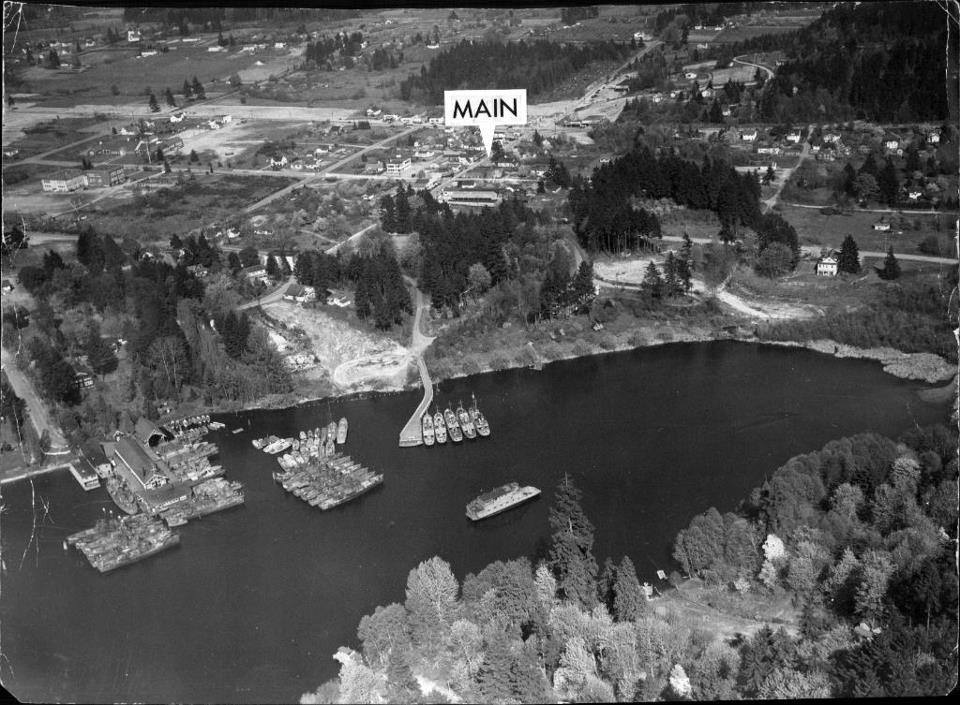
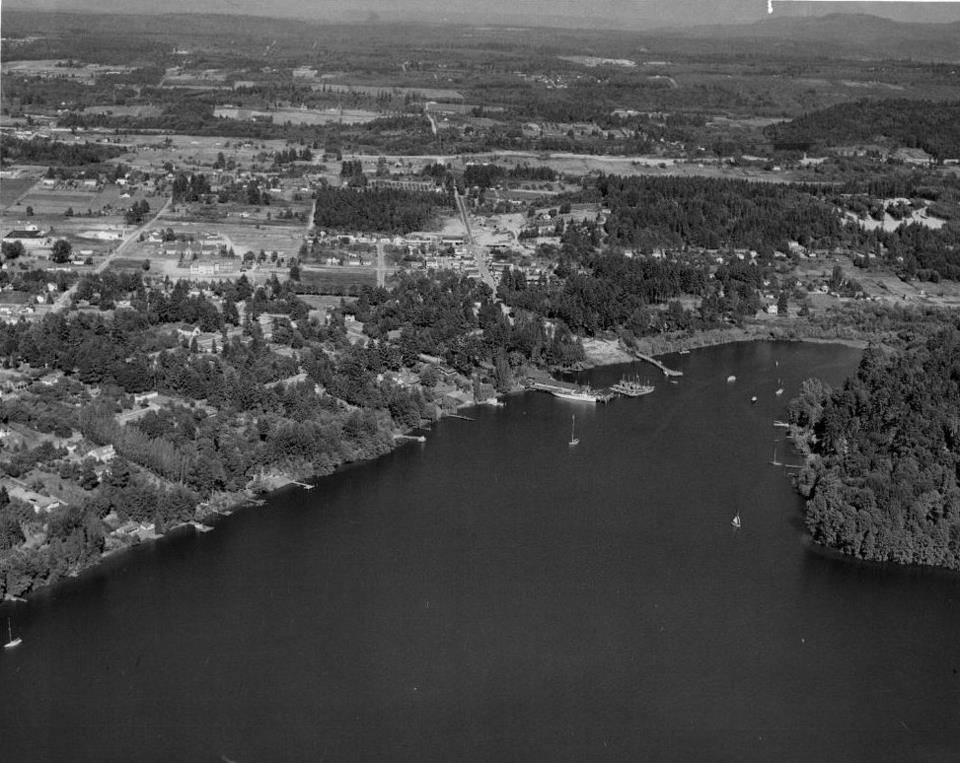
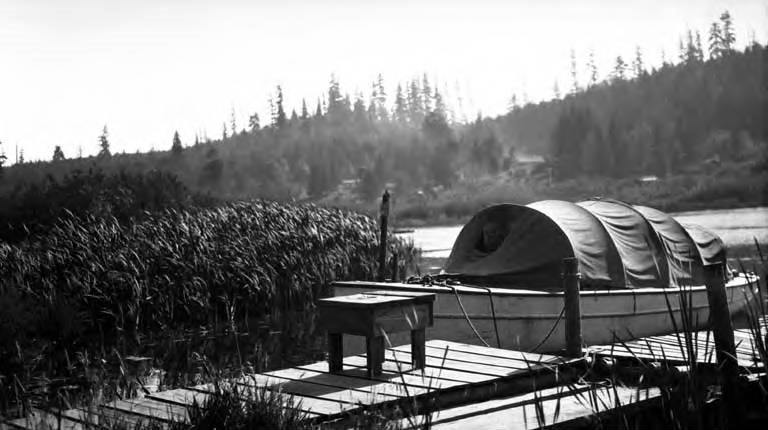
Meydenbauer Bay offered a window into a quieter, older Bellevue. These aerial and ground-level shots from 1944 and 1948 show the bay before the shoreline filled with development. The water was calm, the surrounding land mostly open.
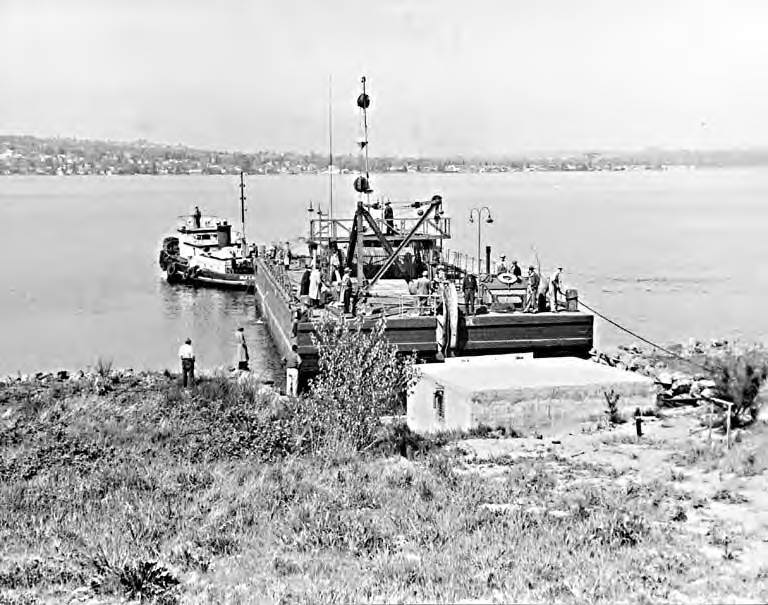
Infrastructure kept pace with population. A telephone cable was laid across Lake Washington between Bellevue and Seattle using a barge called the TELEPHONE II, physically connecting the two sides of the lake in yet another way.
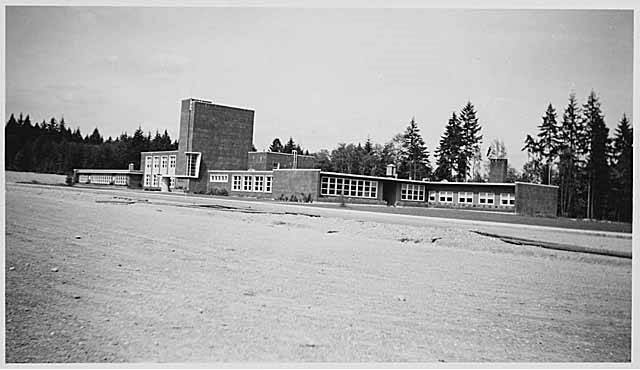
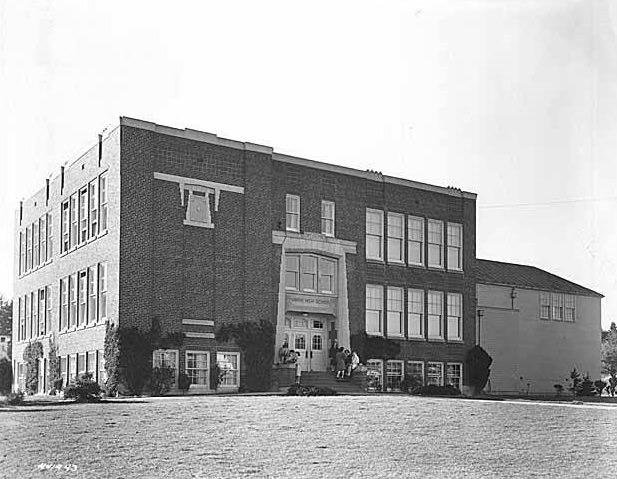
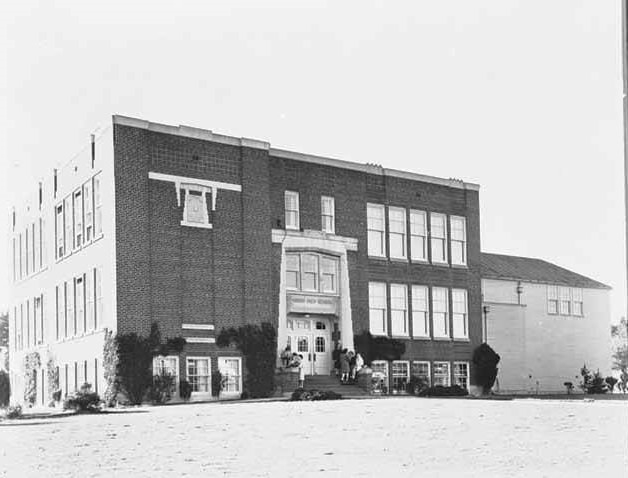
Schools were a big part of Bellevue’s postwar expansion. In 1949, new high schools and several elementary schools were built along a hillcrest southeast of downtown. A community college was also established. These weren’t just buildings — they were the backbone of a town preparing to grow up.
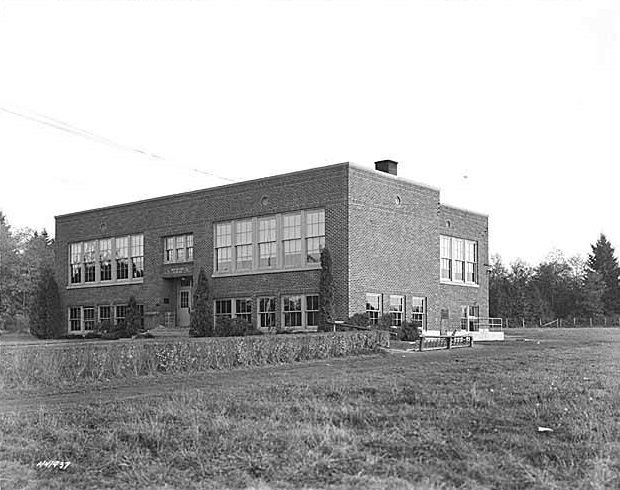
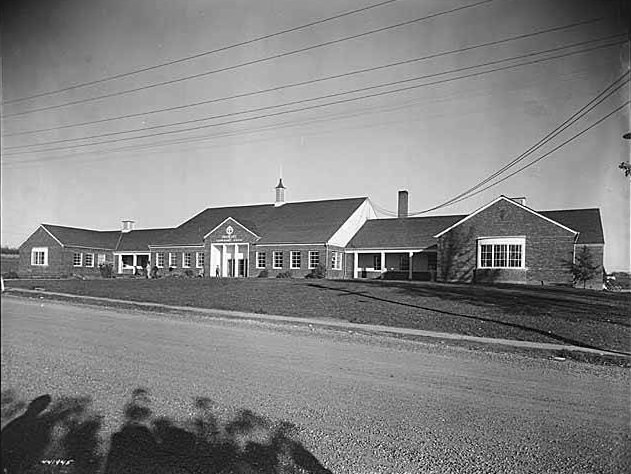
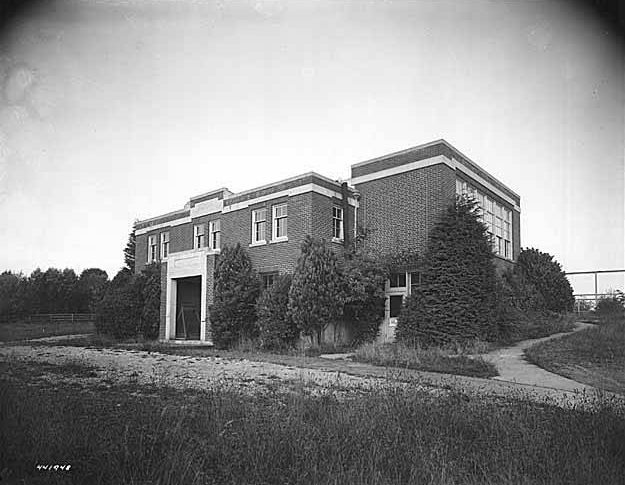
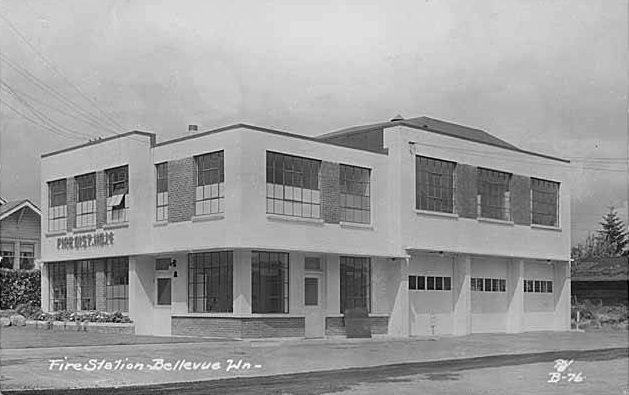
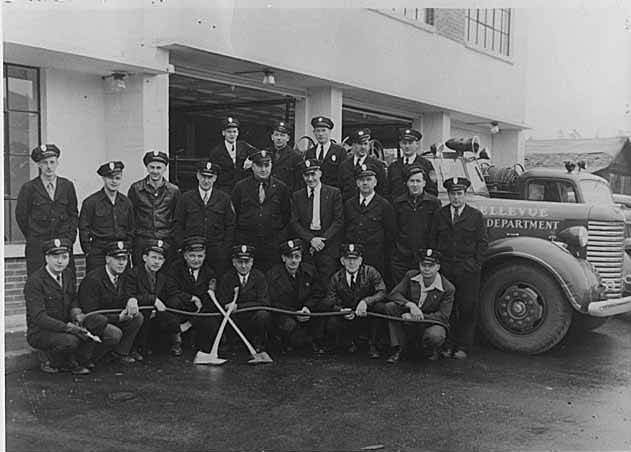
Public services grew alongside the schools. The Bellevue Public Library served residents as early as 1944. A fire station on 102nd Avenue NE — still standing as of 2003, later converted into a restaurant and other businesses — opened by 1947. These photos show the firefighters and their truck stationed there in June of that year.
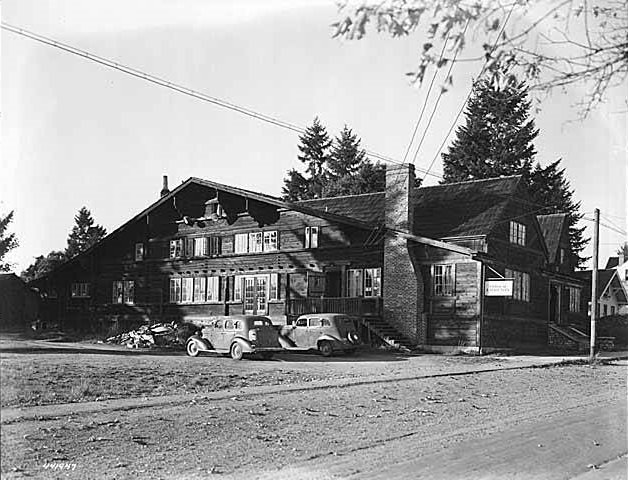
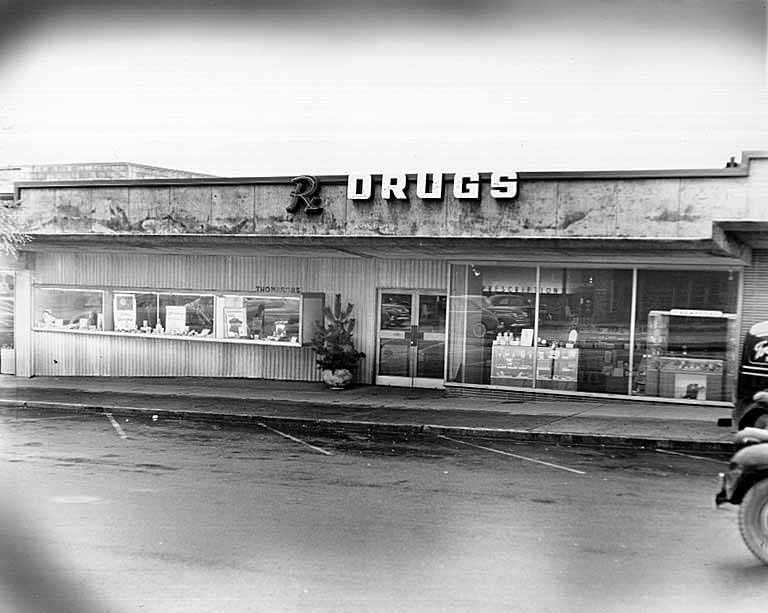
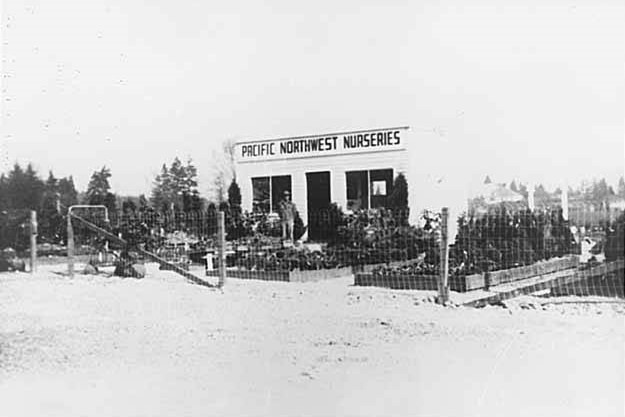
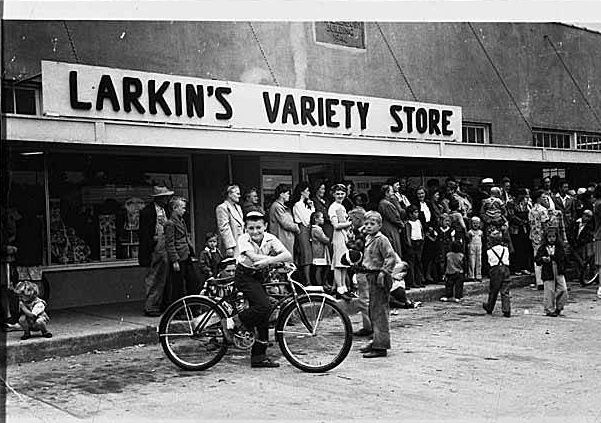
Everyday commerce was simple but essential. Thompson’s Drugs, a local pharmacy, stood as a fixture of the community in 1947. Pacific Northwest Nurseries served the still-active gardening and agricultural side of Bellevue as late as 1945. Larkin’s Variety Store in nearby Redmond rounded out the small-town retail scene.
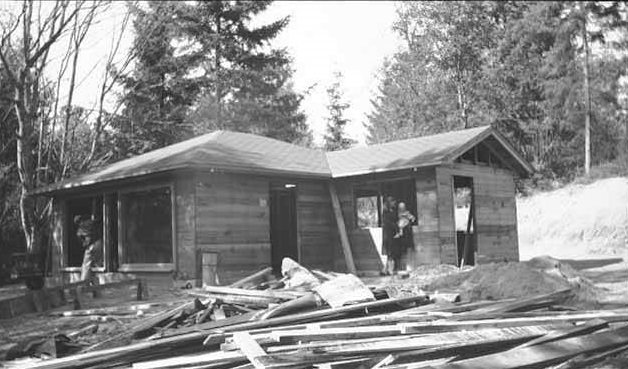
Some of the most telling glimpses of 1940s Bellevue come from the homes themselves. The Fenwick house on Lake Washington Boulevard was built during wartime, when materials were scarce. It started as a garage. A man named Jim Godsey sourced used building materials for the project, and two bedroom windows came directly from the Overlake Golf Course. The Smith house — photographed in 1943 — sat on a corner that would eventually become part of the Bellevue Square parking area in the 1980s.
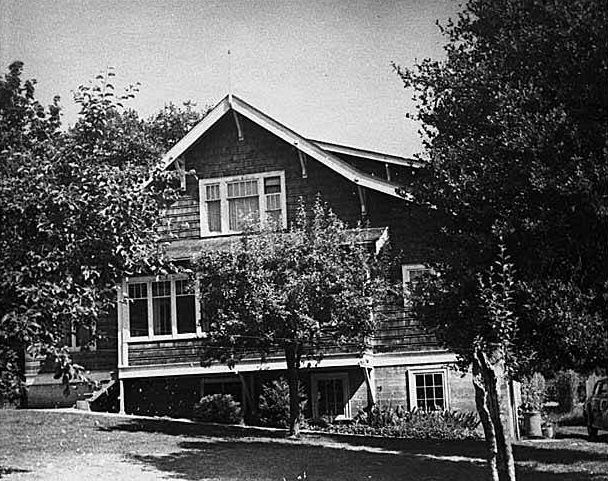
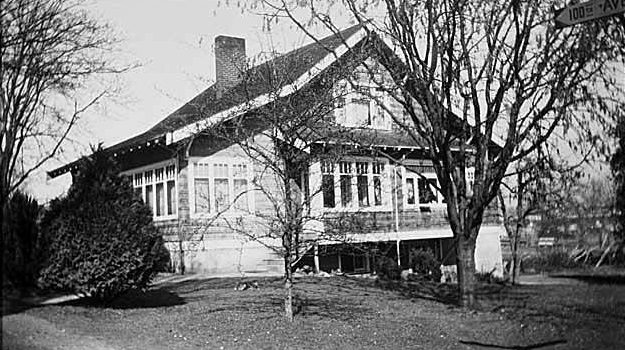
The Day residence, photographed in 1944 both from the outside and inside, represents the domestic character of Bellevue at the time — modest, practical, and tied to the landscape around it.
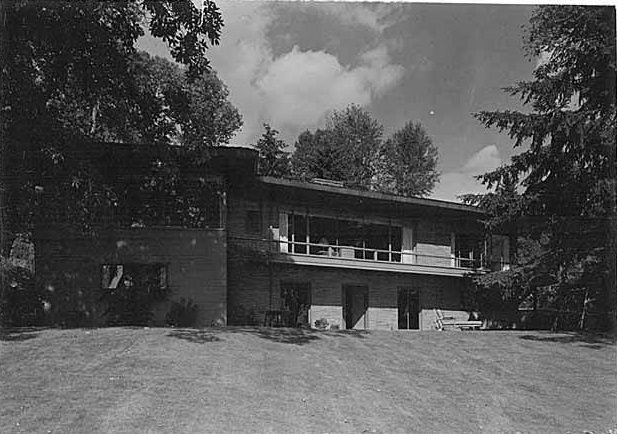
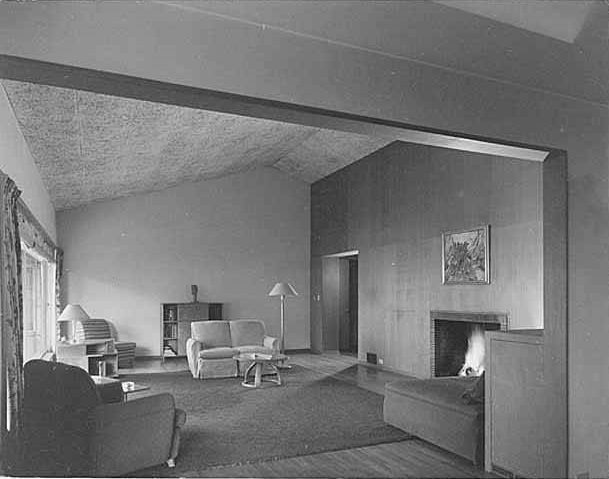
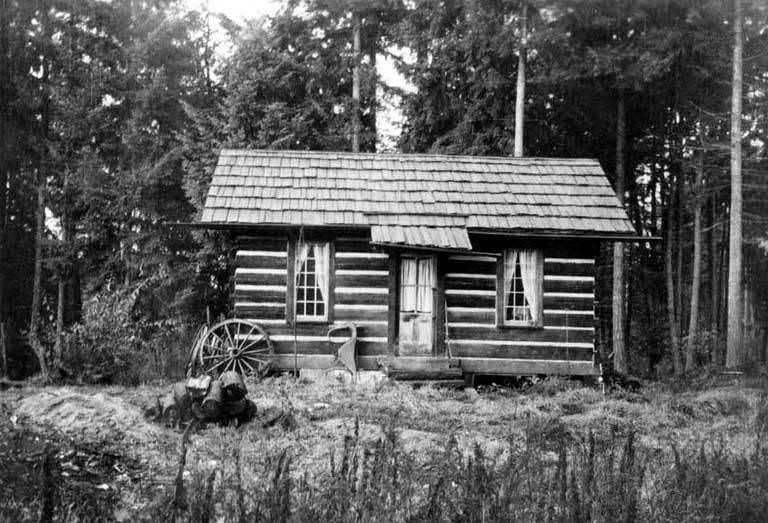
Some of Bellevue’s oldest roots are captured in the 1940 photograph of the Burrows family log cabin in the area then known as Killarney. Albert Burrows, a Civil War veteran, had claimed a 160-acre lakefront homestead there after being guided to the site by a neighbor named George Miller in 1883. Miller had homesteaded the nearby Beaux Arts area and was looking for other families to settle close enough to form a school. Burrows built the original cabin, later replaced it with a more substantial house, served in the 1894 state legislature, and died of bronchitis in 1896. By 1940, his cabin still stood — a physical link to the very beginning of the community.





Pic #3 is the HS still in the same location? I knew a lady who grew up in Bellevue when it was a farmland/countryside. She said with all of the new construction it pains her to go back and see how much the deforestation etc.
Bellevue Square.. the history of the land developer there is interesting
Turns out Kemper Freeman Jr is the descendant of Confederate soldiers (the Freeman brothers) who fled the South and formed gossip newspapers … and got kicked out of town(S) ..
https://update-our-city-425.blogspot.com/p/civil-war-1890.html