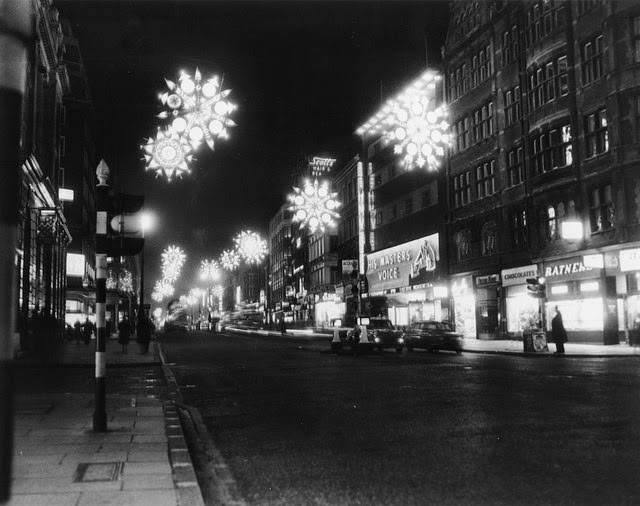
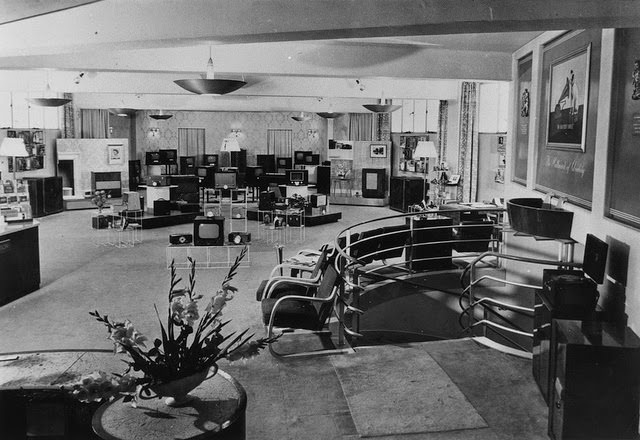
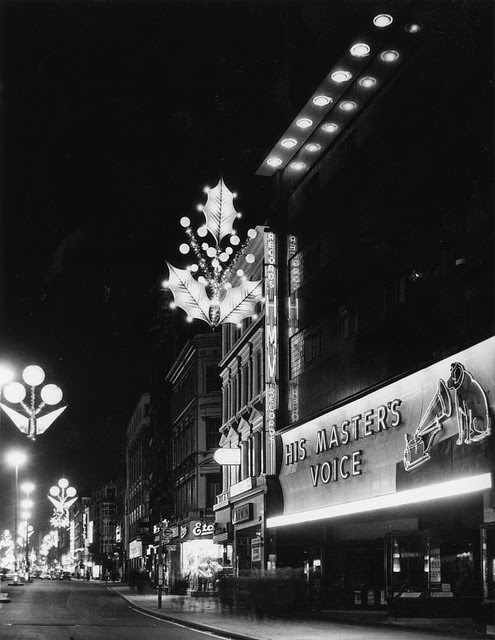
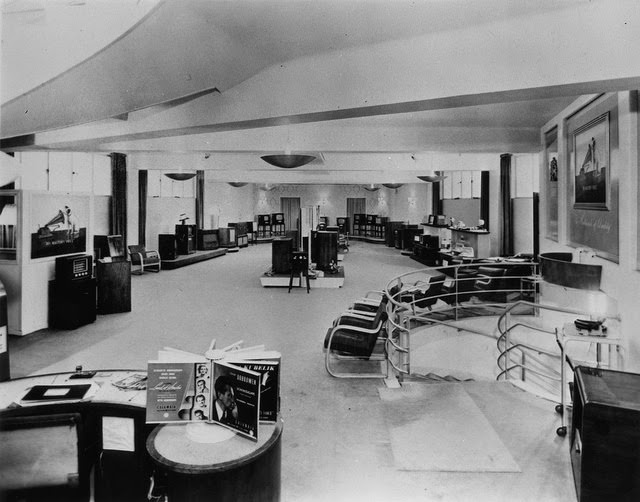
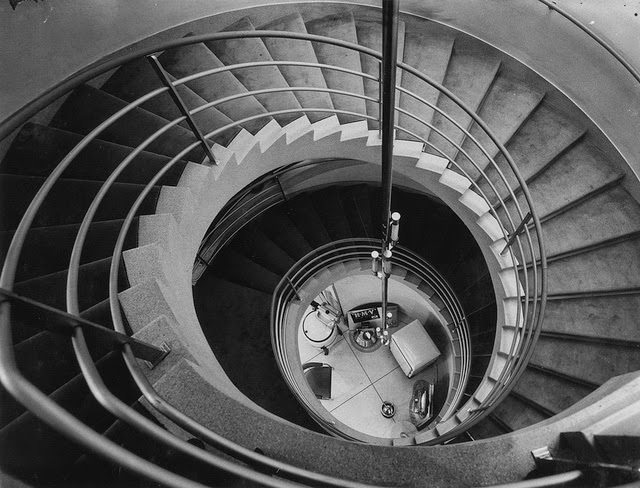
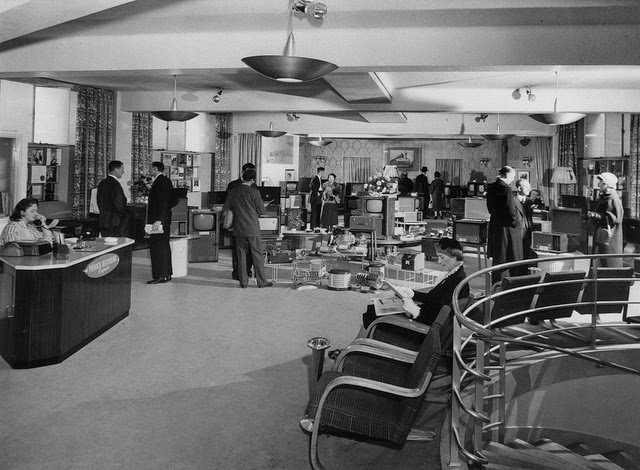
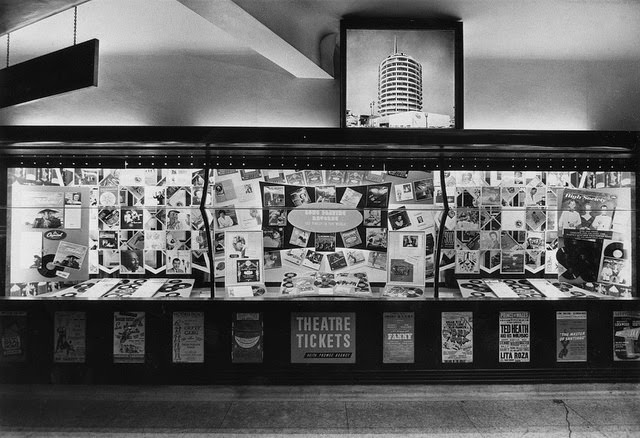
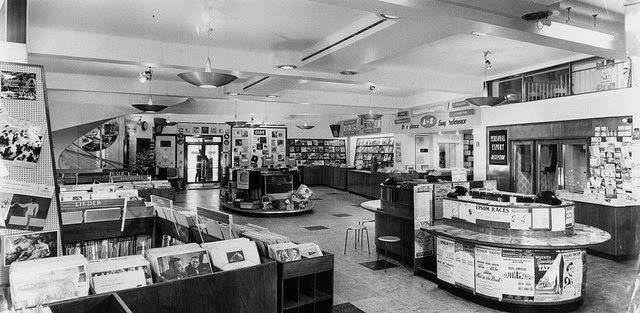
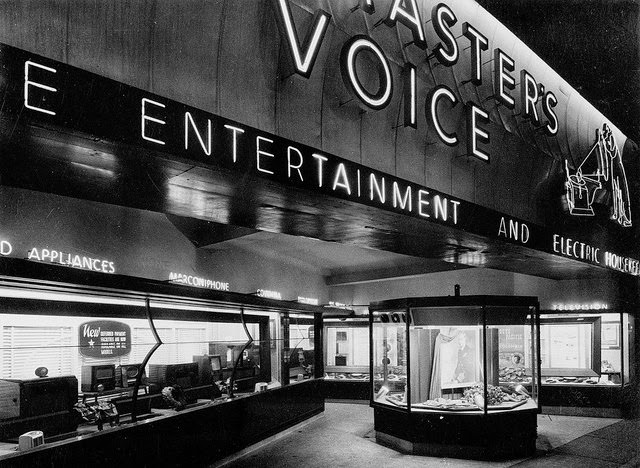
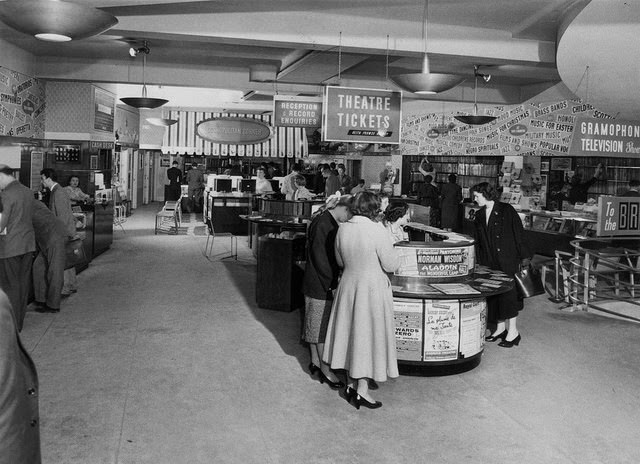
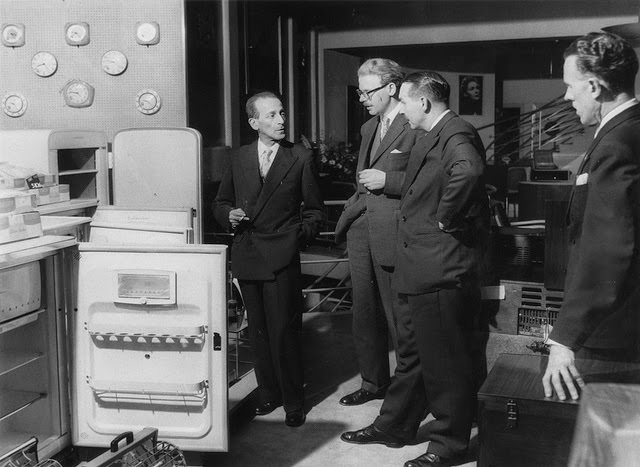
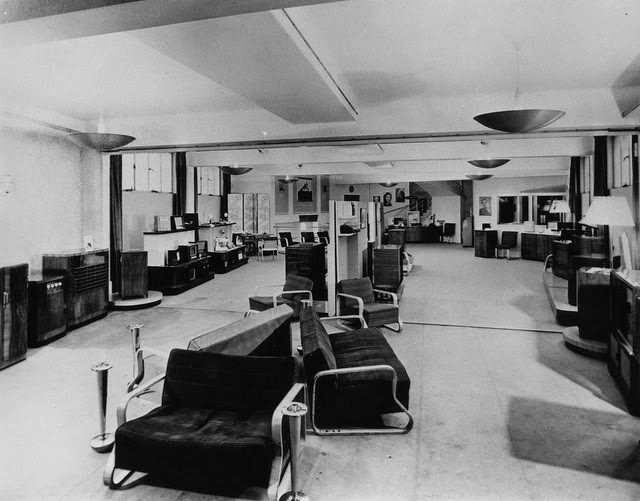
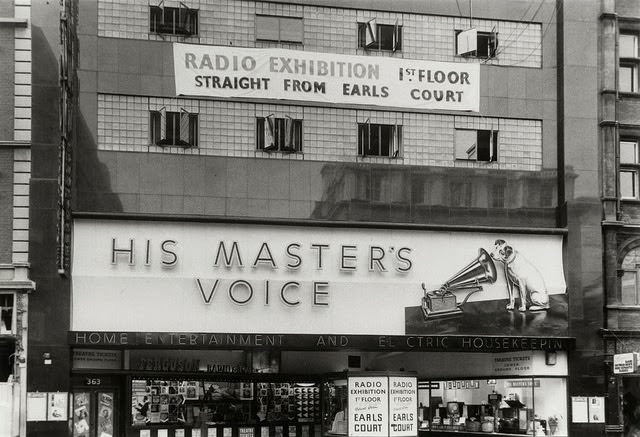
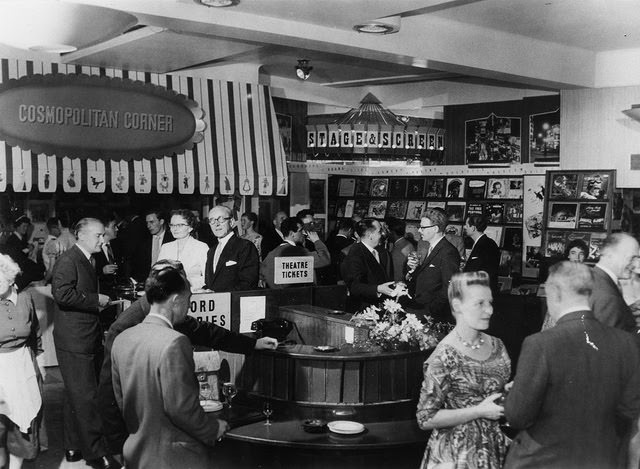
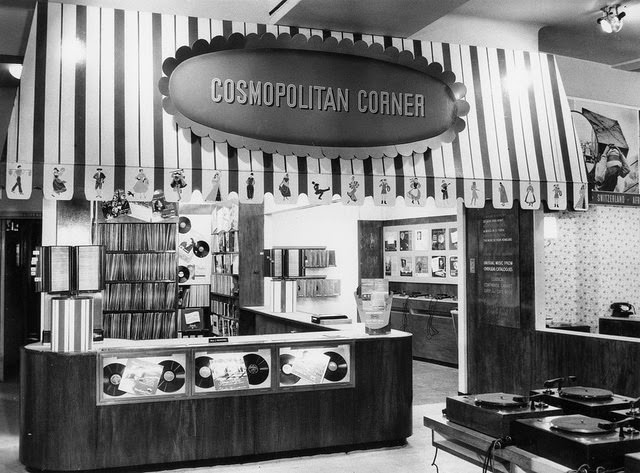
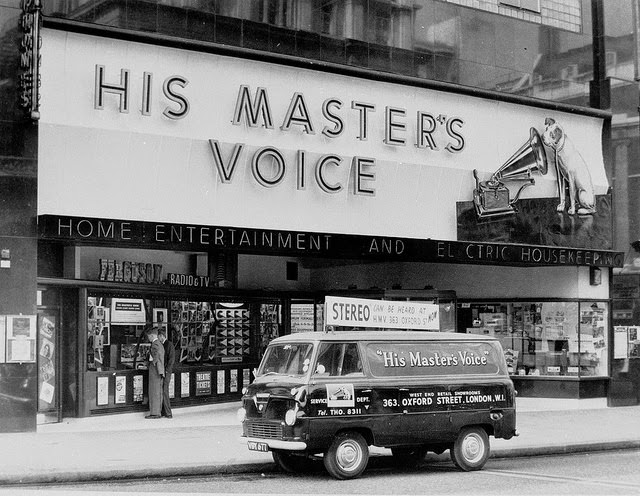
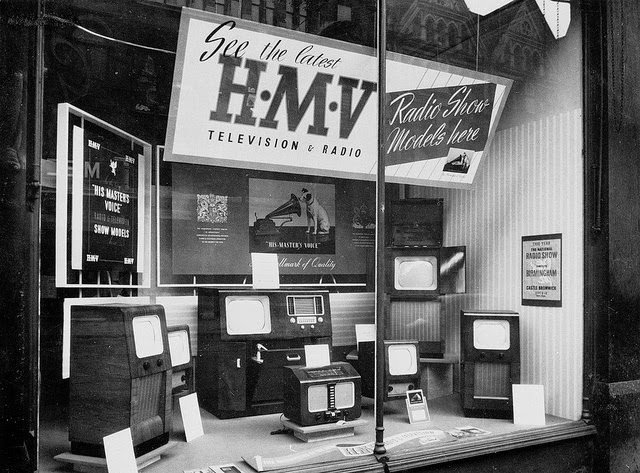
The HMV store at 363 Oxford Street served as the retail center for the Electric and Musical Industries (EMI) empire. A massive neon sign hung above the entrance, displaying the famous “His Master’s Voice” logo. This image of Nipper the dog staring into a gramophone horn signaled to shoppers that they had arrived at the most important music store in London. The building itself was grand, designed to look more like a department store than a simple shop. Large glass windows showcased the latest record players, radiograms, and television sets, drawing in pedestrians from the busy pavement.
The Listening Booth Experience
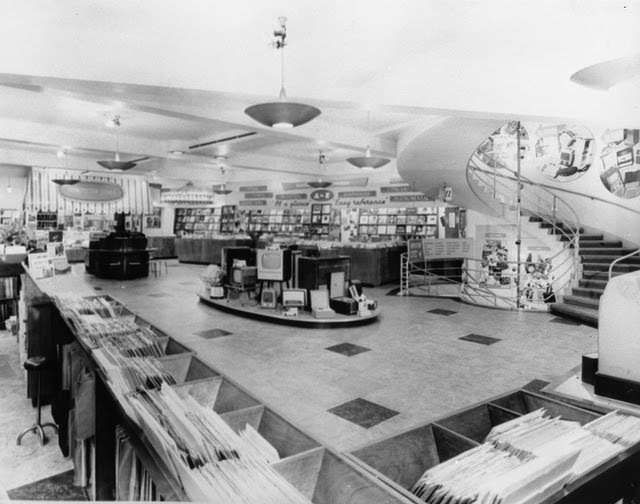
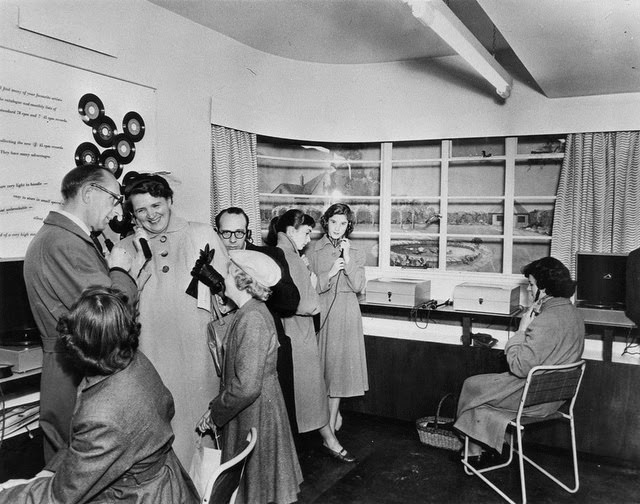
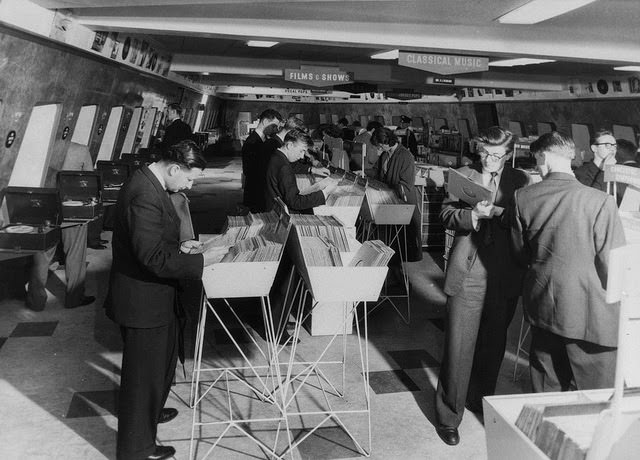
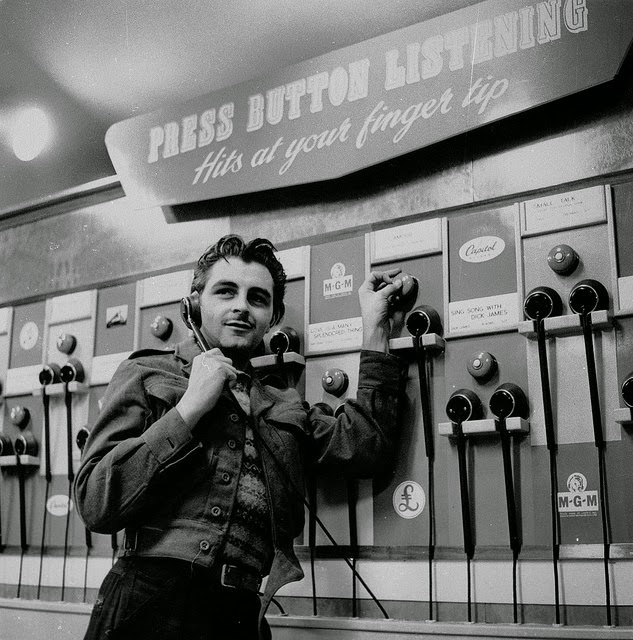
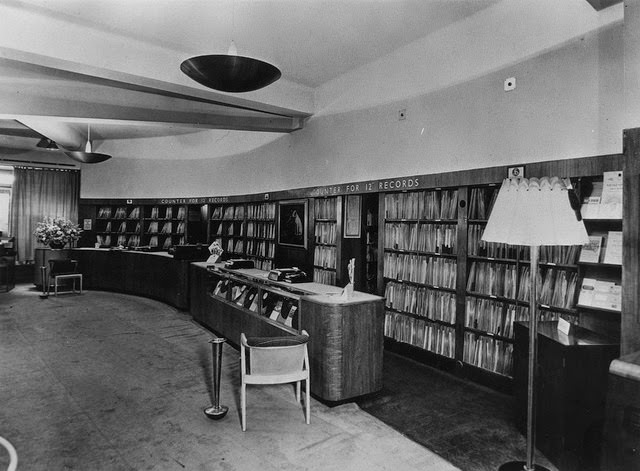
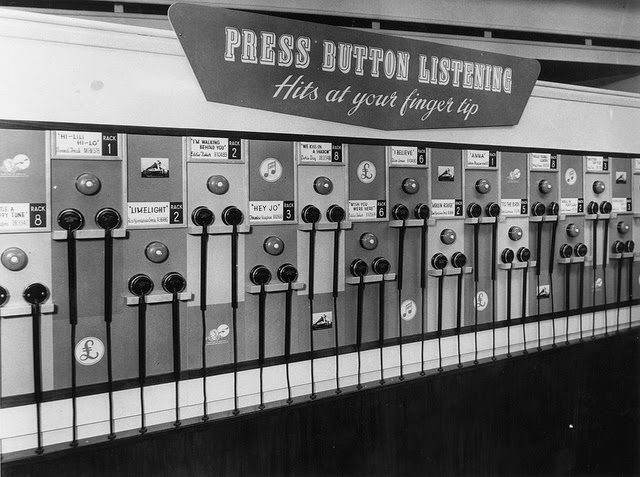
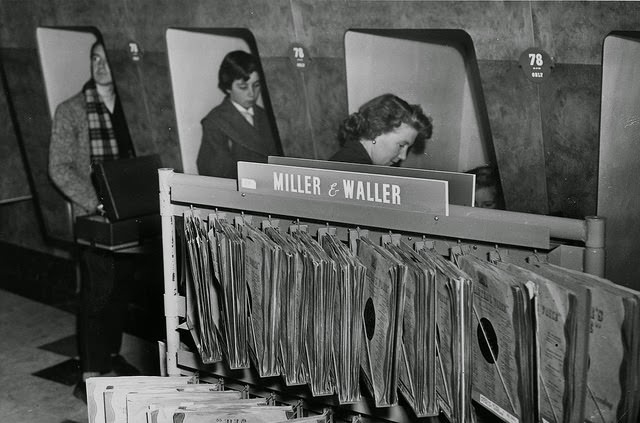
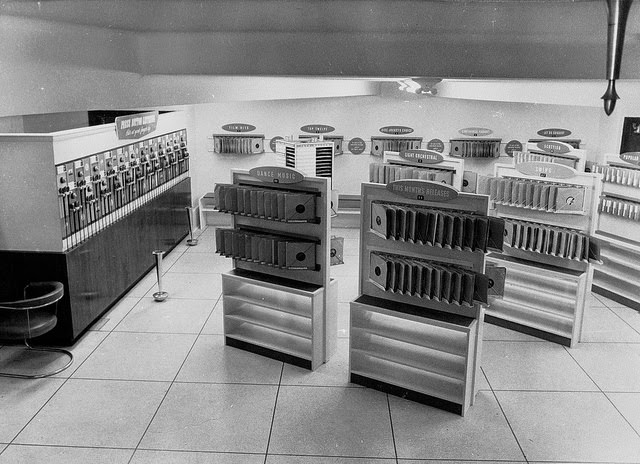
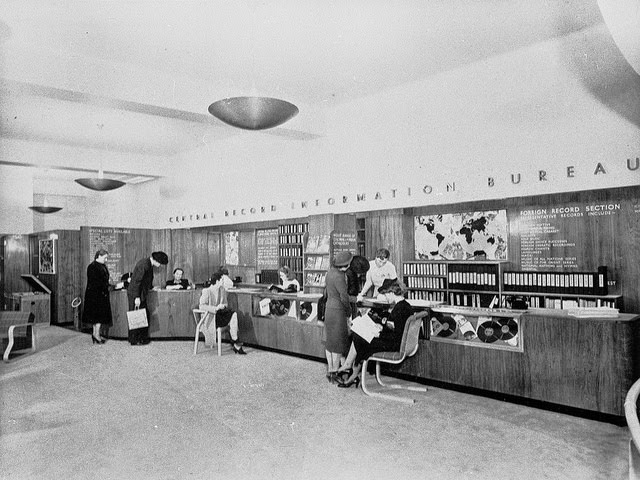
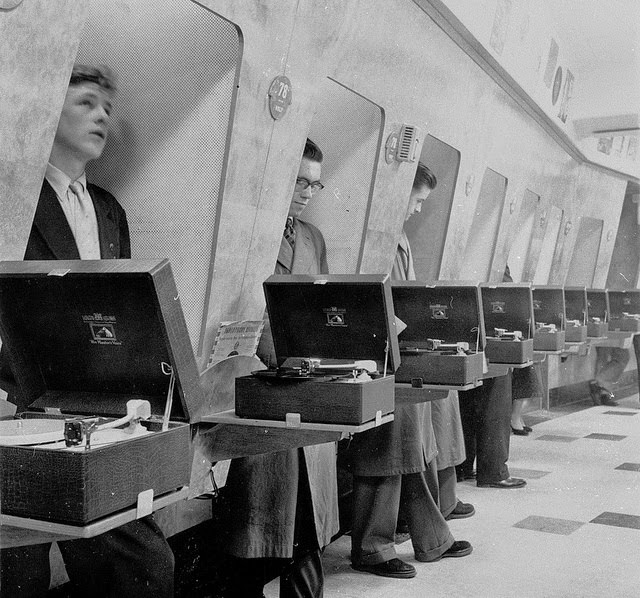
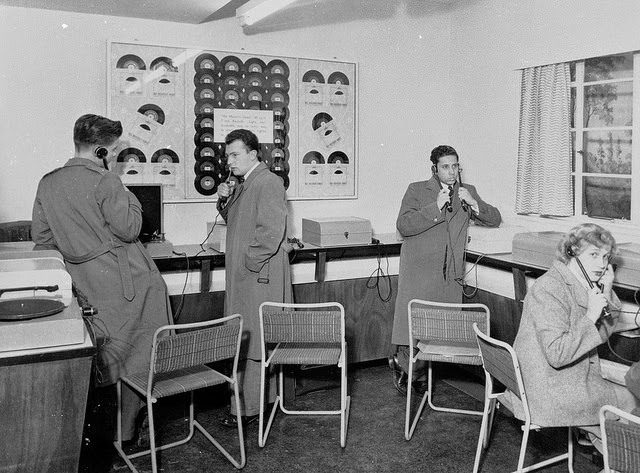
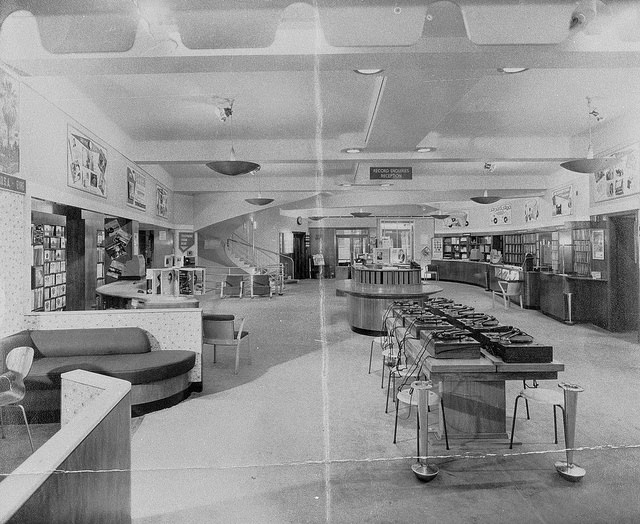
The most popular feature of the store in the 1950s was the row of soundproof listening booths. Customers selected a record from the counter and took it into a small, private cubicle to audition it before buying. These booths contained a turntable and headphones or small speakers. Teenagers and music fans spent hours here, testing the latest releases without any pressure to purchase immediately. This system turned record shopping into a social event where friends gathered to hear new music together. On Saturdays, the queue for a booth often stretched through the shop floor.
Read more
A Shift in Formats
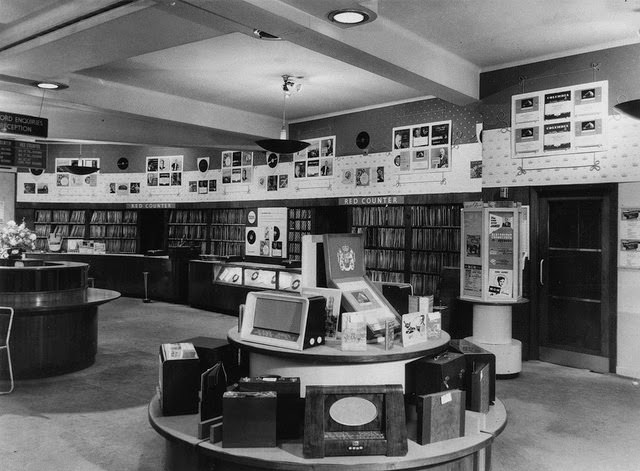
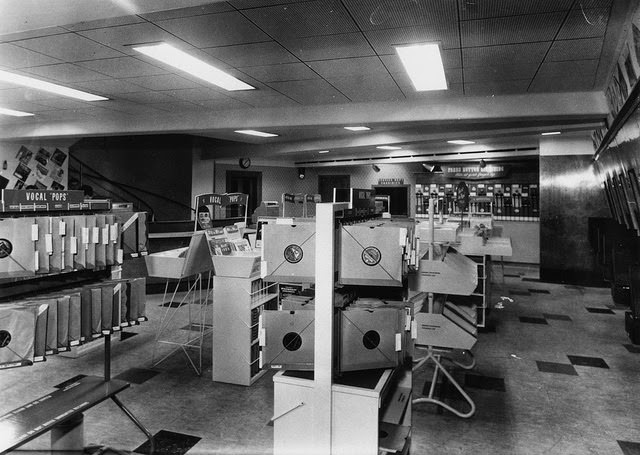
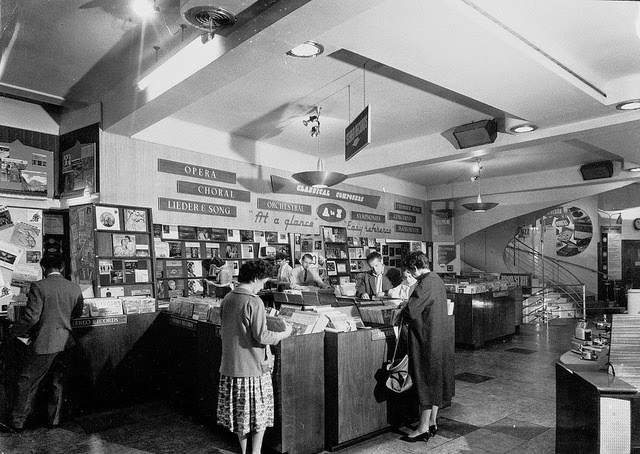
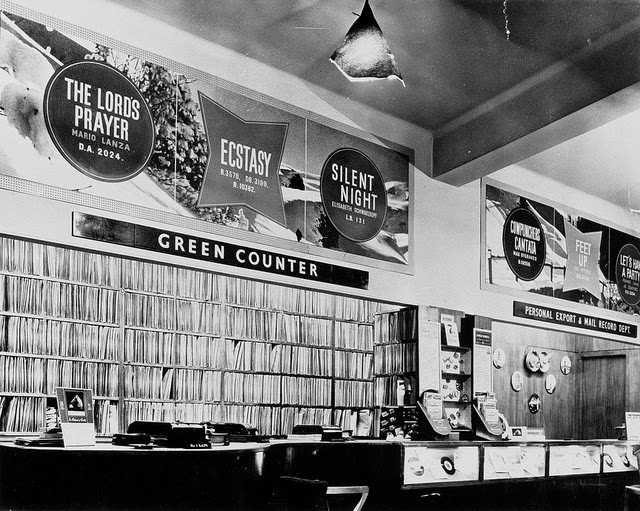
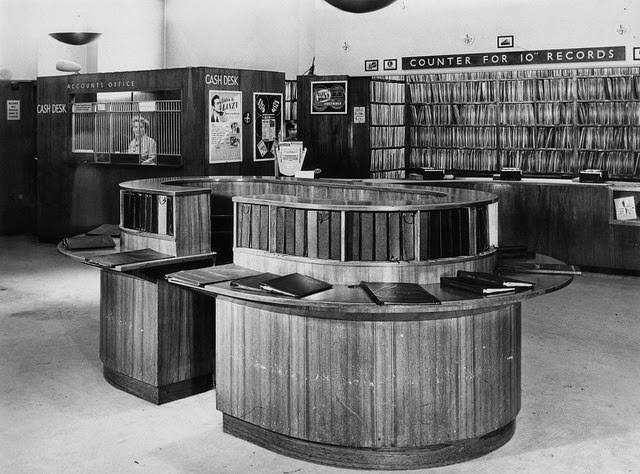
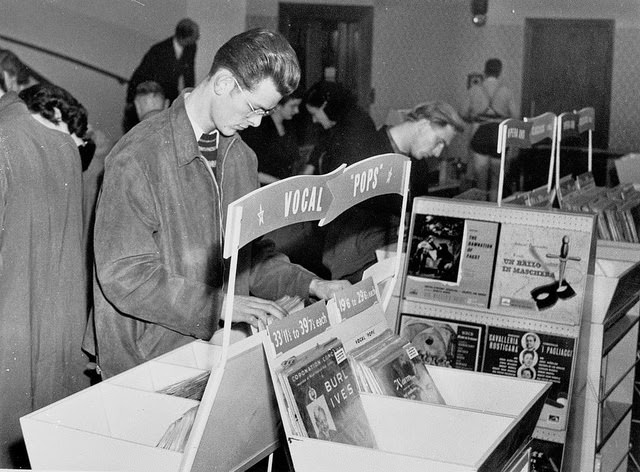
The 1950s marked a drastic change in the physical products sold at HMV. At the start of the decade, heavy and brittle shellac 78 rpm discs dominated the shelves. As the years progressed, the store reorganized its stock to feature the new vinyl formats: the 33 rpm Long Player (LP) and the smaller 45 rpm single. The introduction of the 45 rpm record in the mid-50s revolutionized the layout. These smaller, unbreakable discs required less space, allowing the store to display more titles and creating the first “browser” bins where customers flipped through covers.
The Personal Recording Studio
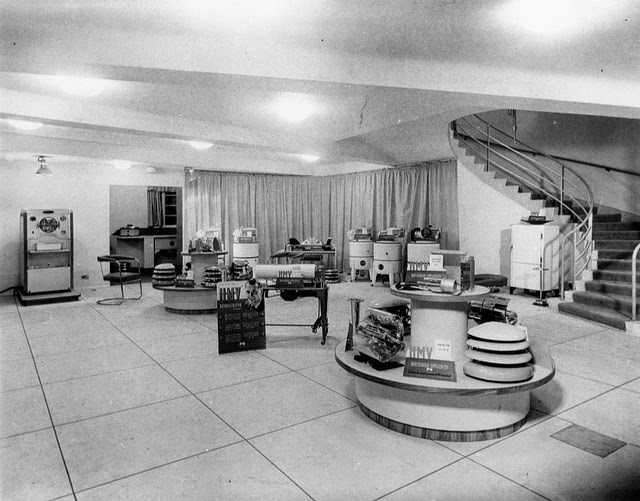
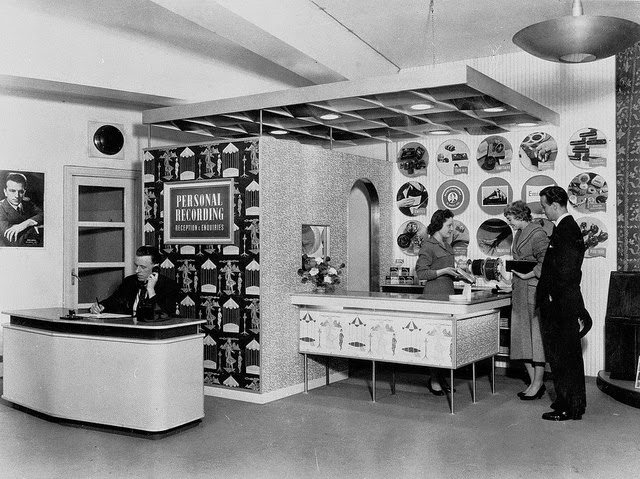
On the upper floor, HMV offered a unique service known as the Personal Recording Studio. Anyone could walk in and pay a fee to record their own voice onto a lacquer disc. Visitors used this service to send audio messages to family members living abroad or to record amateur musical performances. A store engineer operated the cutting lathe while the customer spoke or sang into a microphone. The finished disc was ready within minutes, packaged in a special HMV envelope, and ready to be played on any standard gramophone.