
Tattooing is one of the oldest art forms in human history. The earliest known tattooed human remains belong to Ötzi the Iceman, whose body dates between 3370 and 3100 BC. Tattoos have been found on mummies across multiple cultures and continents, proving this practice stretches back thousands of years before modern civilization had much to say about it.
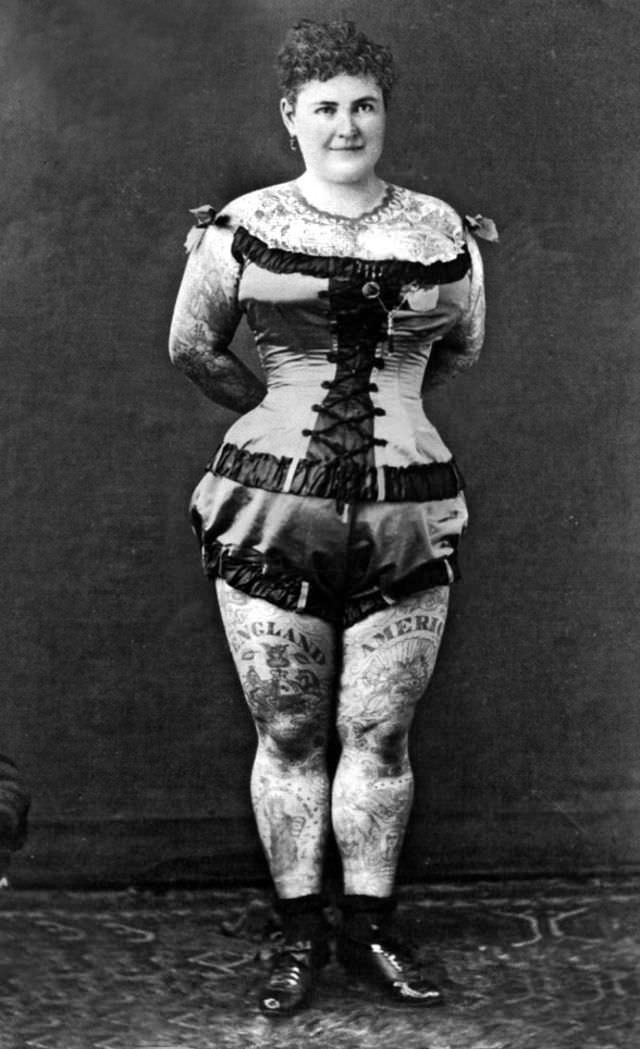
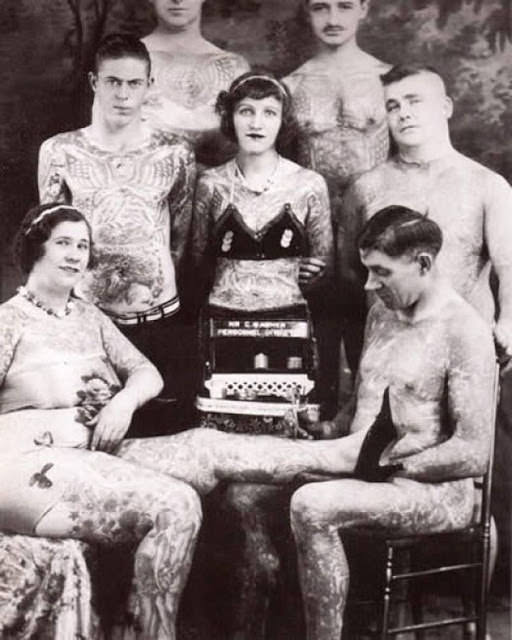
By the late 19th century in the West, tattoos had slipped firmly into the margins of polite society. For women especially, getting inked was considered outrageous — something associated with circus performers, sideshow acts, and working-class rebels. Tattooed ladies became a genuine attraction at fairs and exhibitions, drawing crowds who paid to stare at their decorated skin. The first documented professional tattoo artist in the United States was Martin Hildebrandt, who set up shop in New York City during the 1800s and built a clientele that included Civil War soldiers on both sides of the conflict.
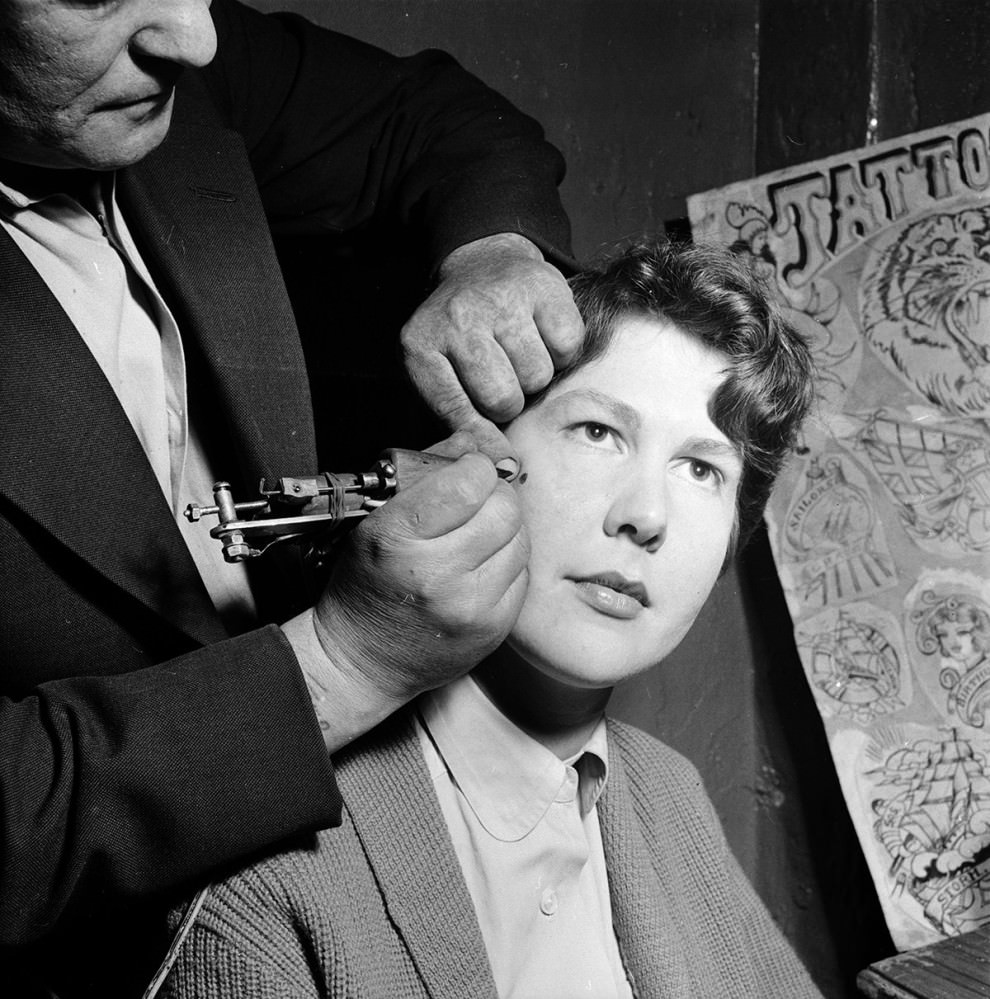
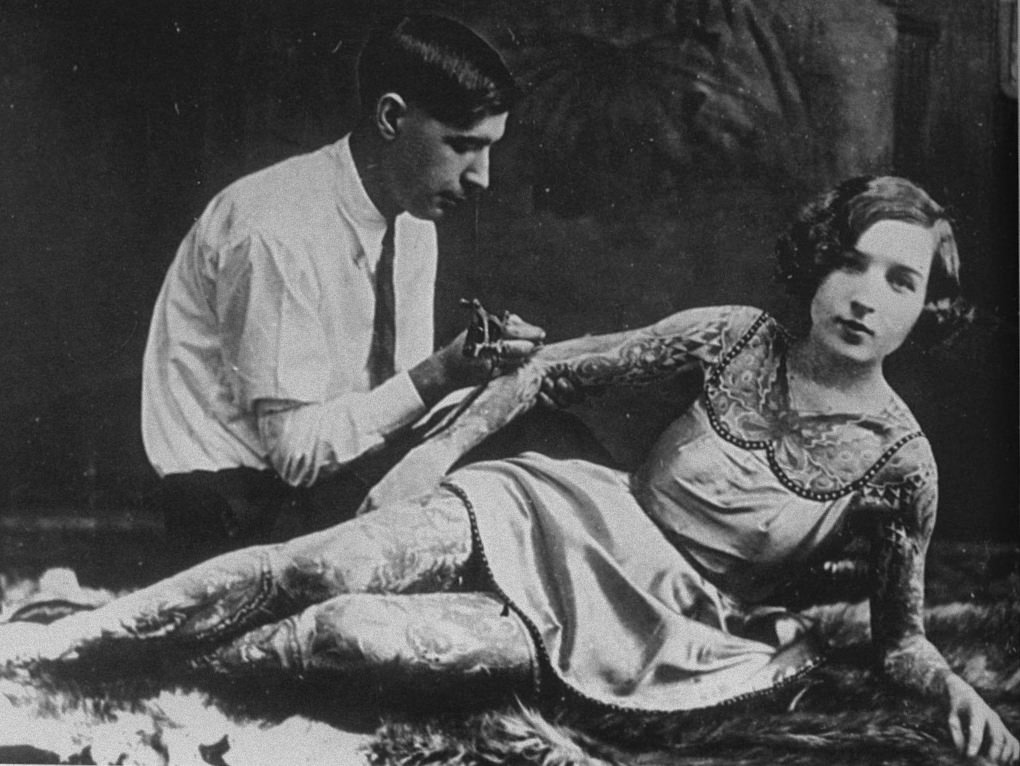
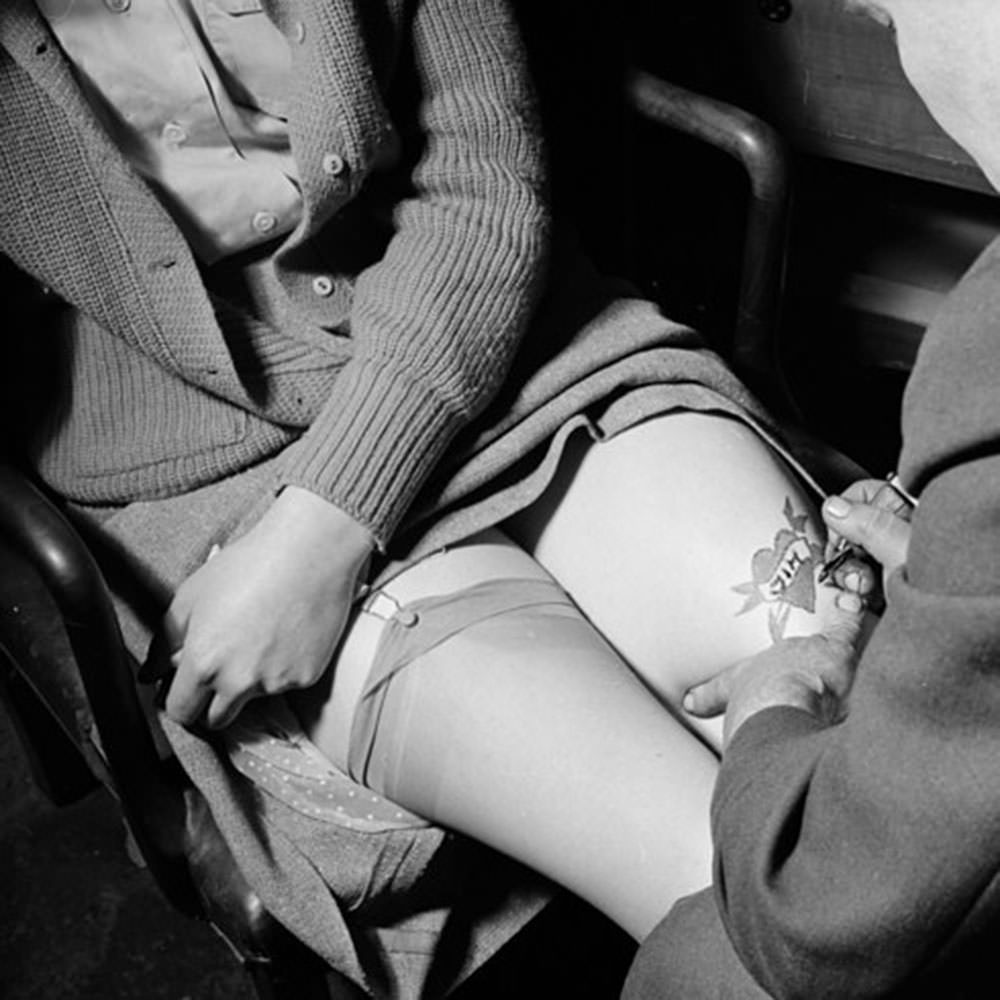
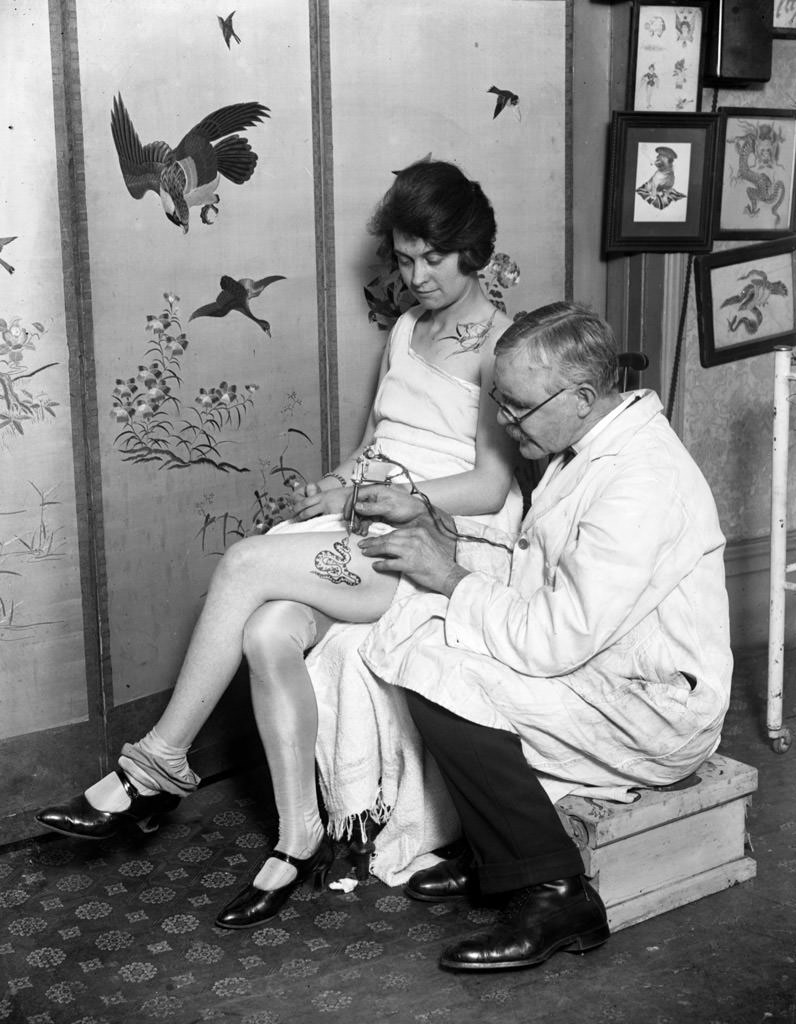
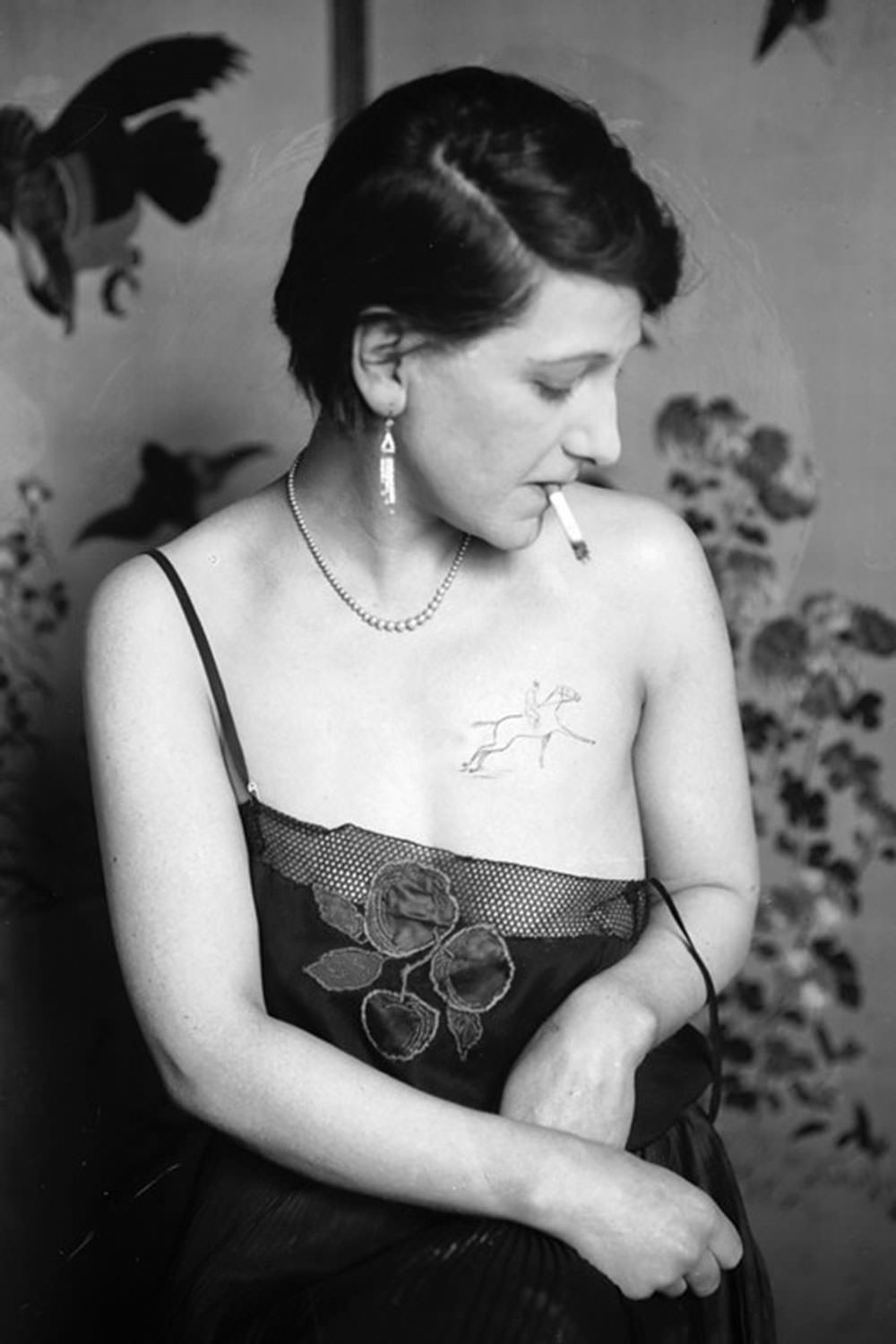
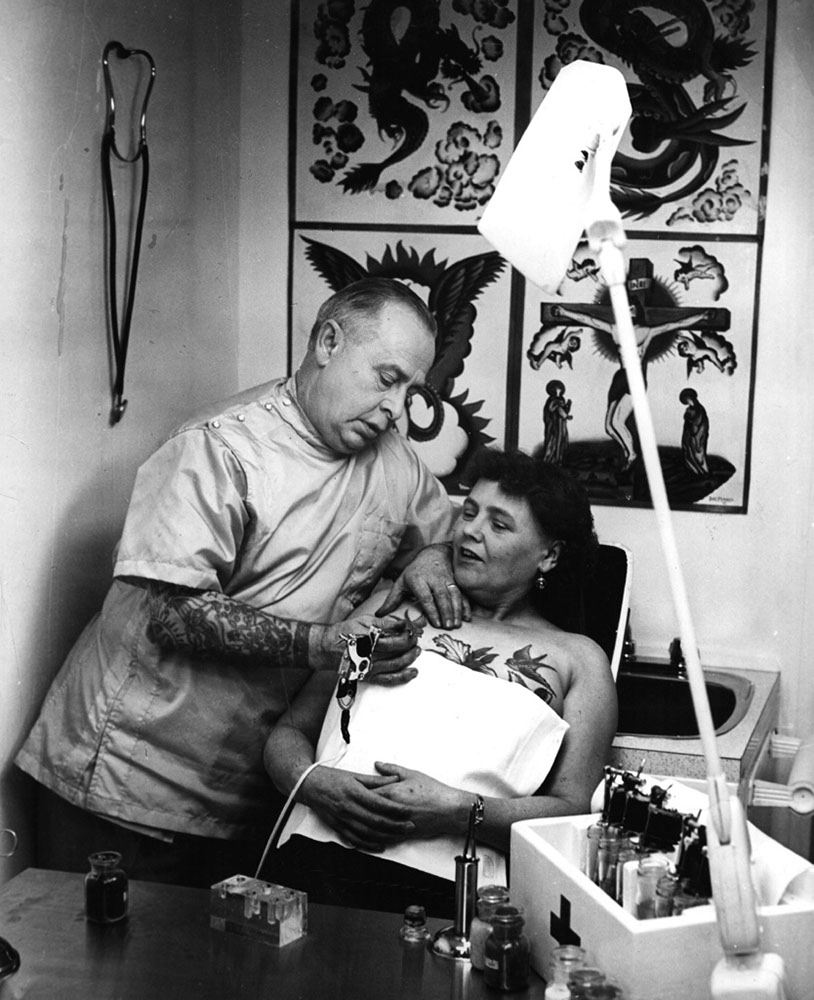
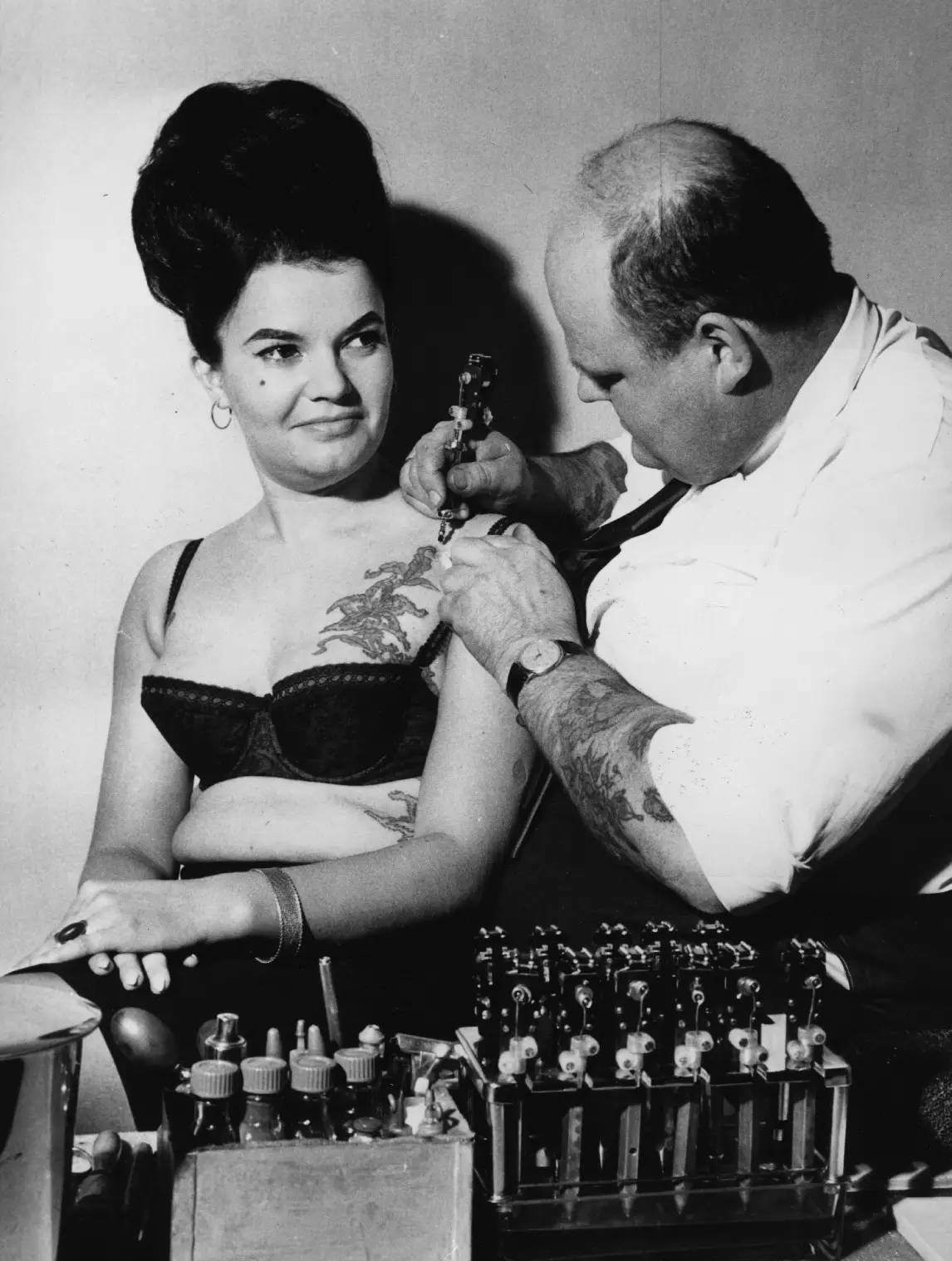
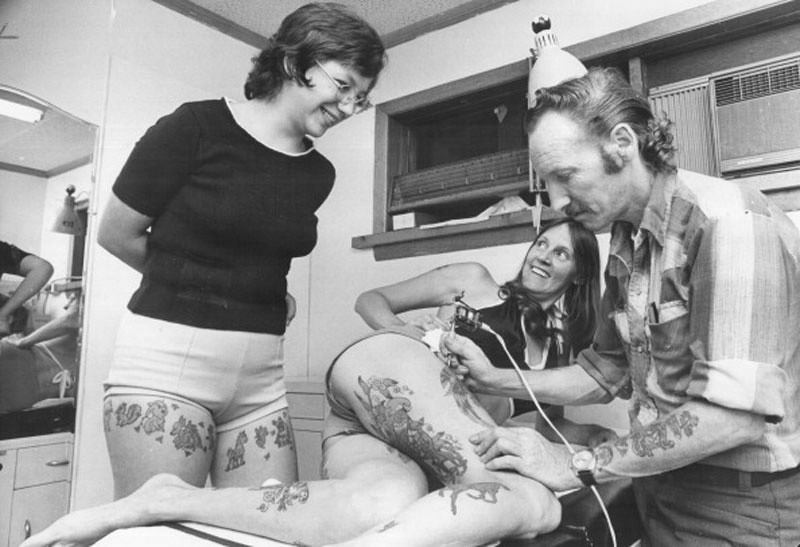
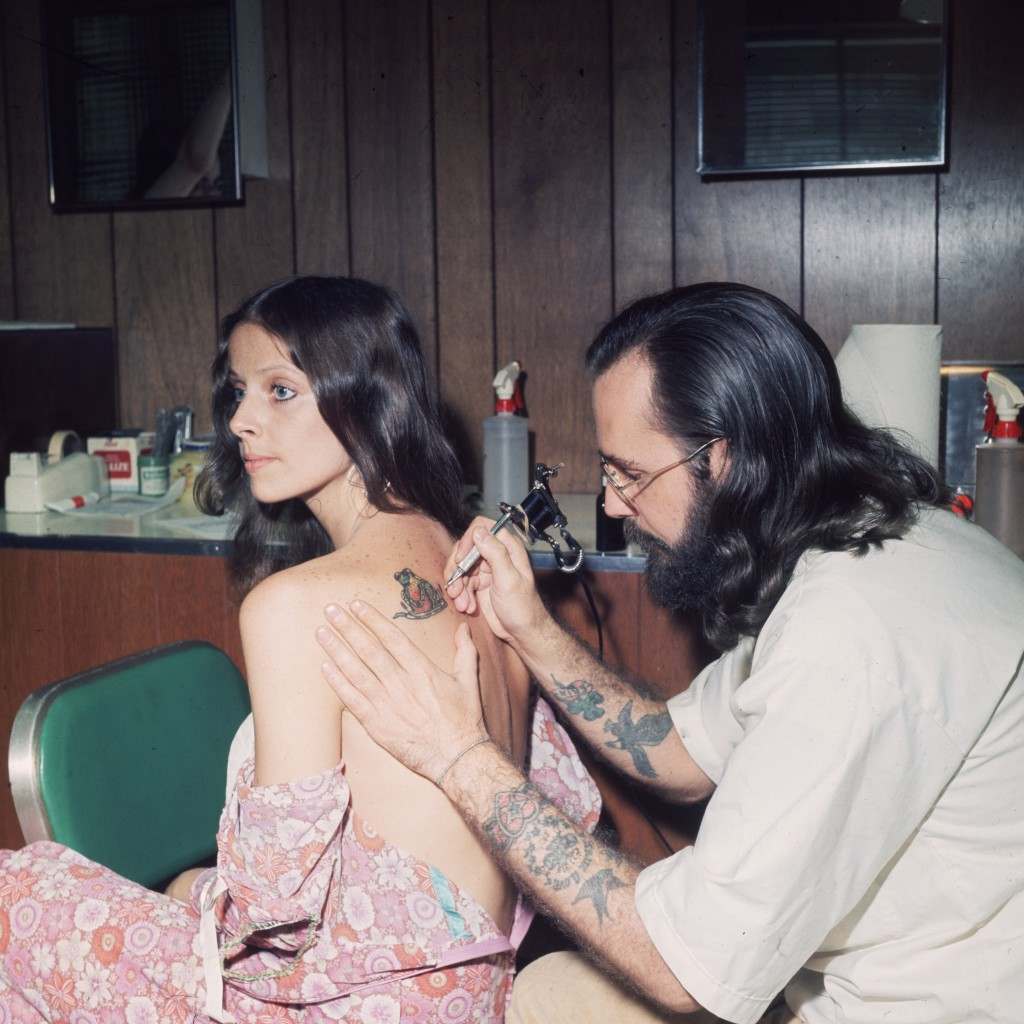
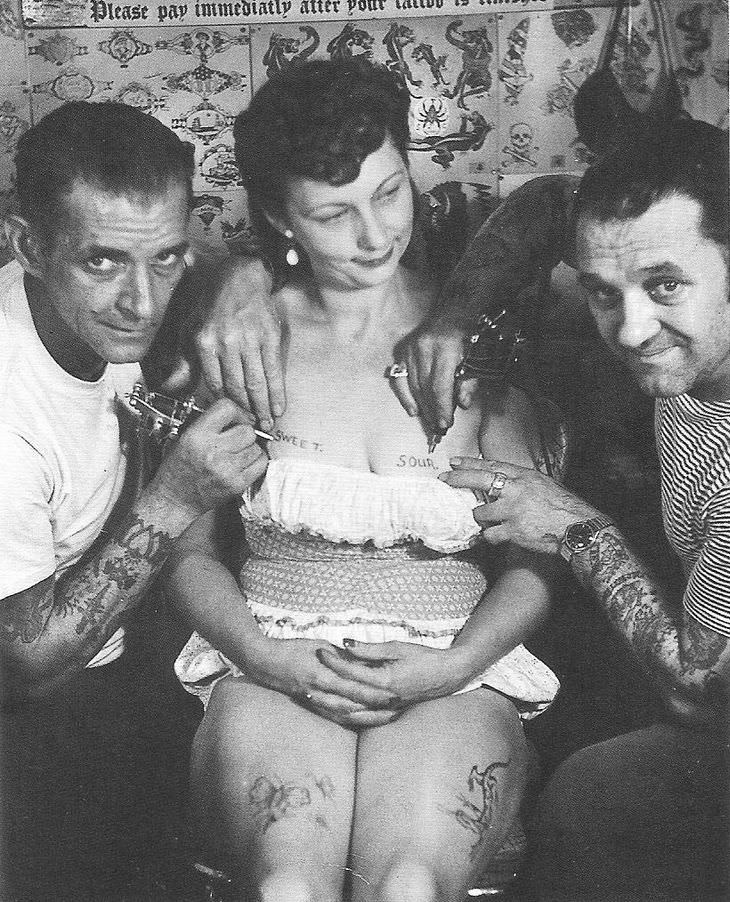
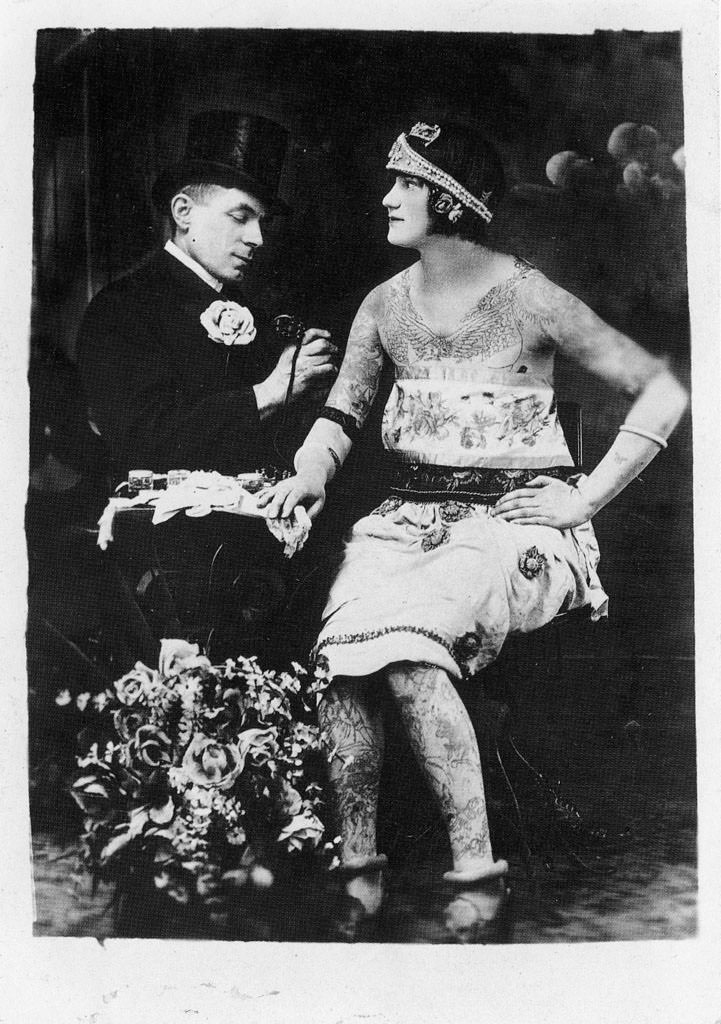
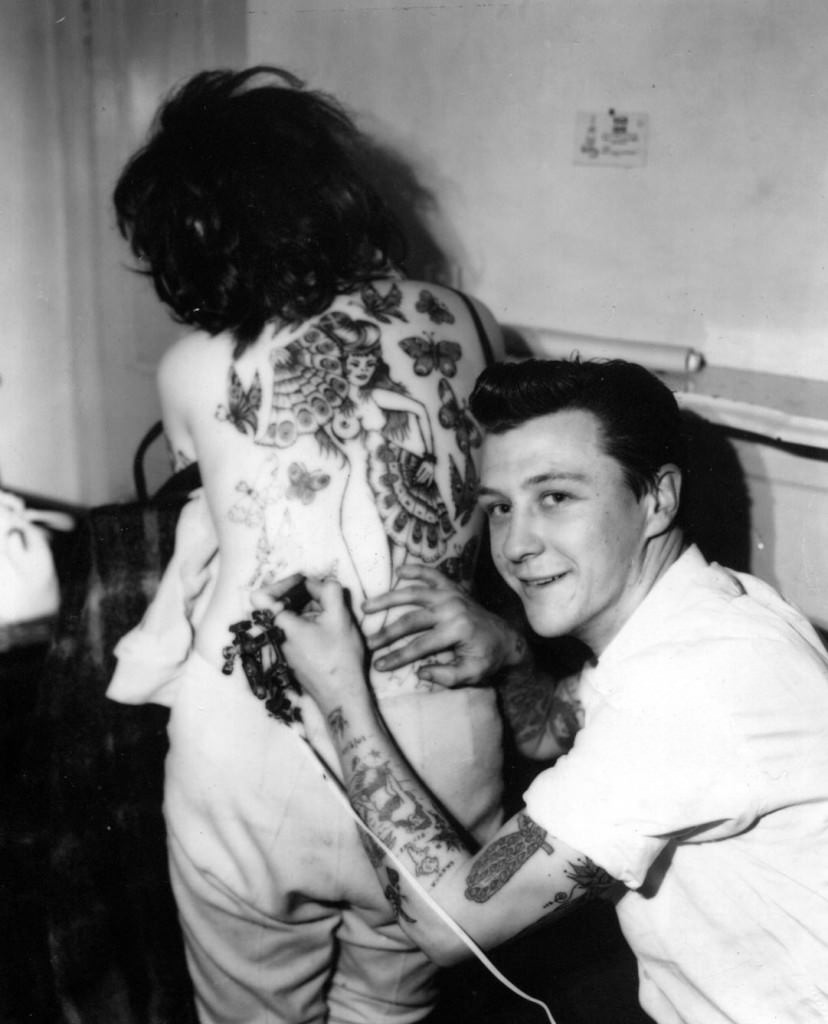
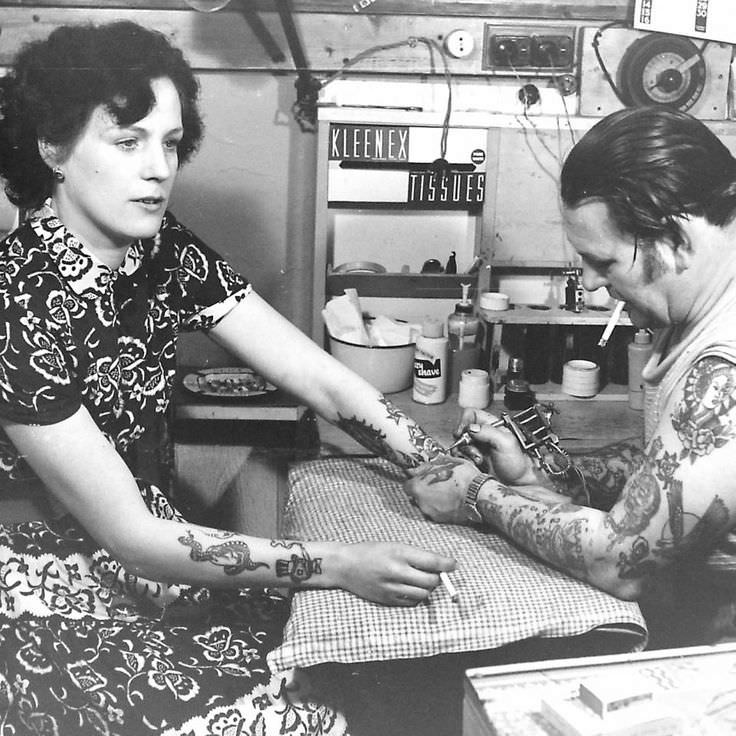
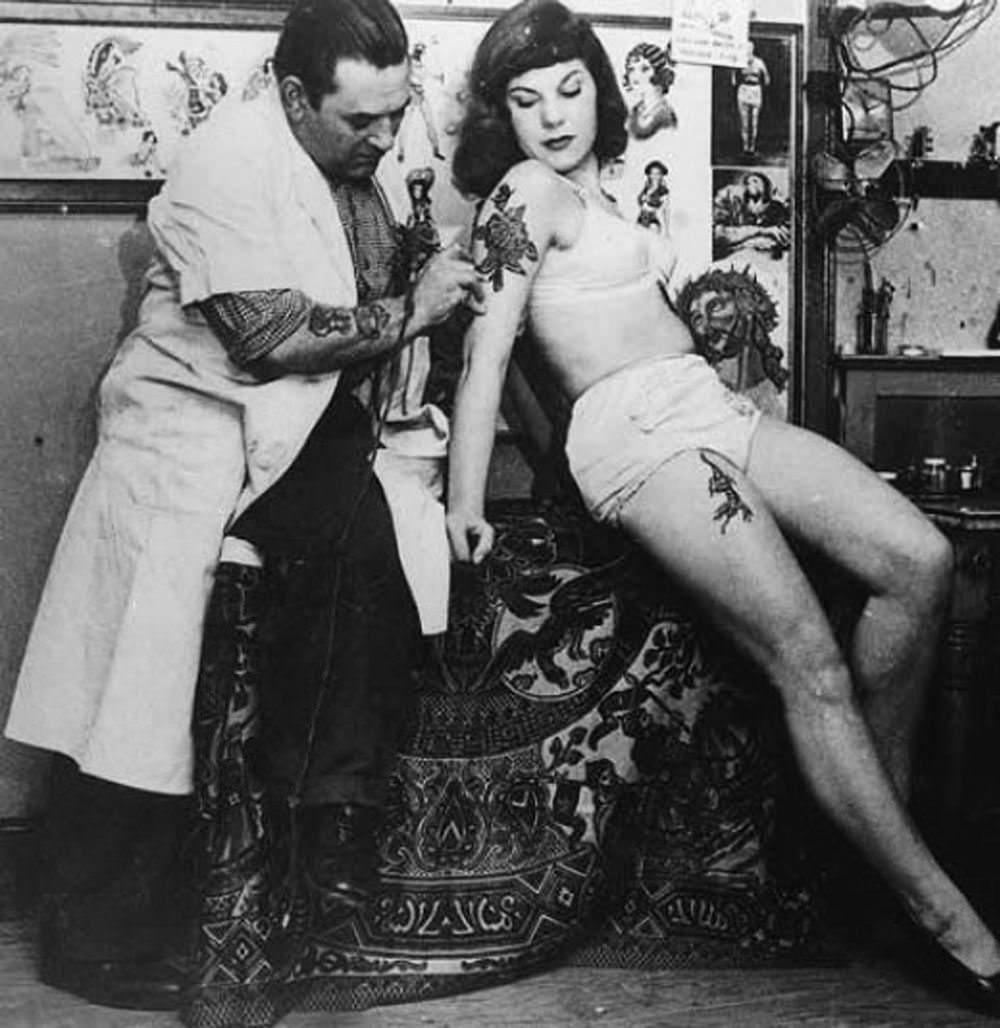
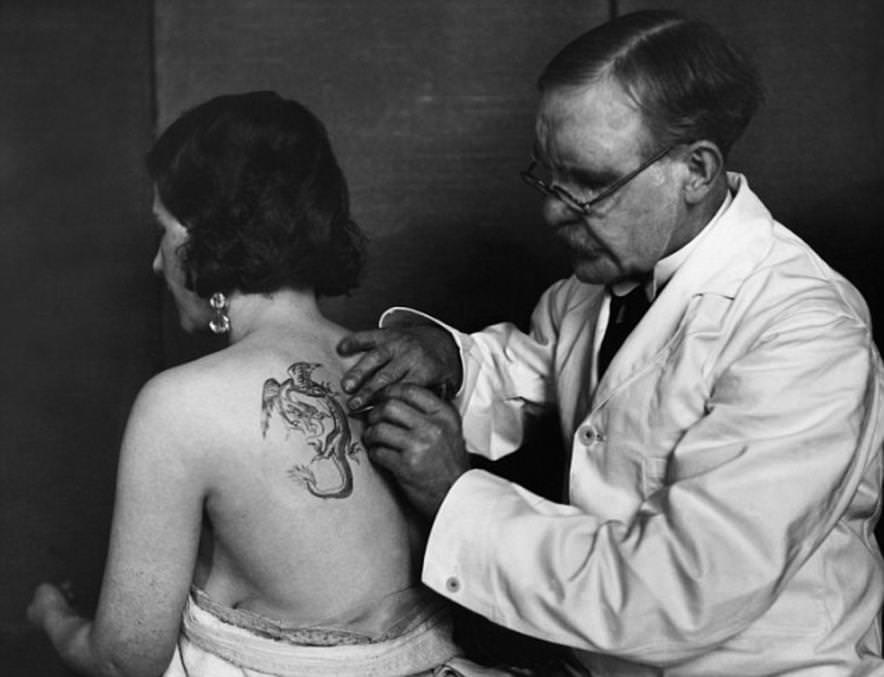
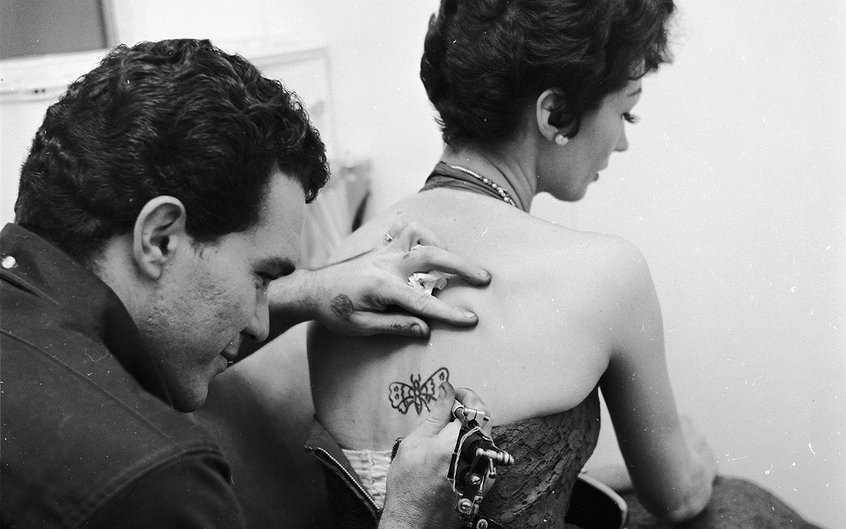
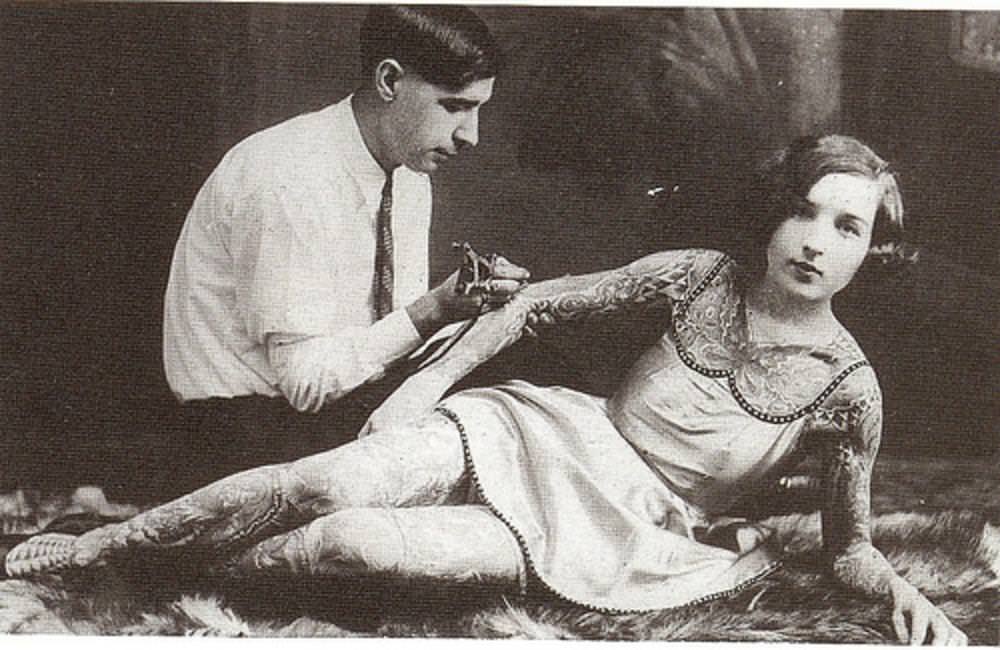
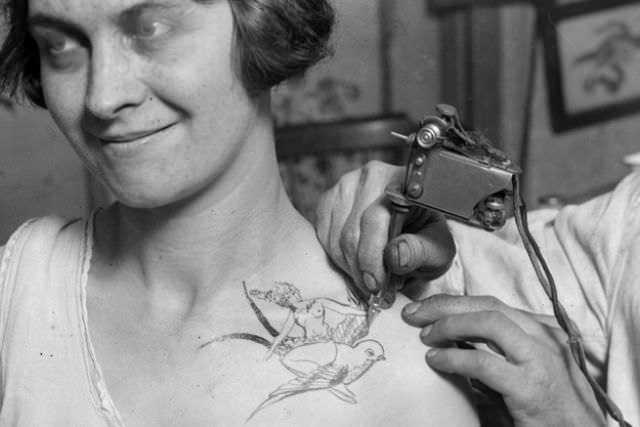
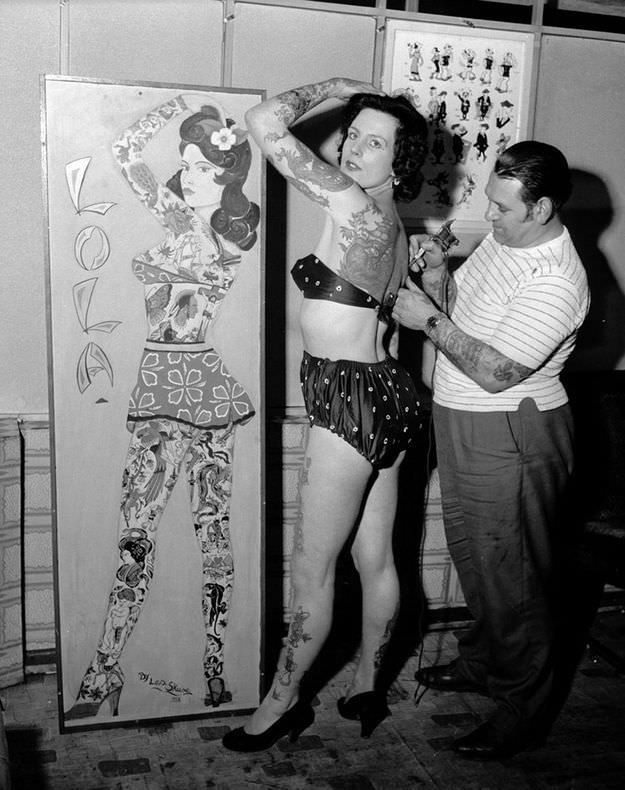
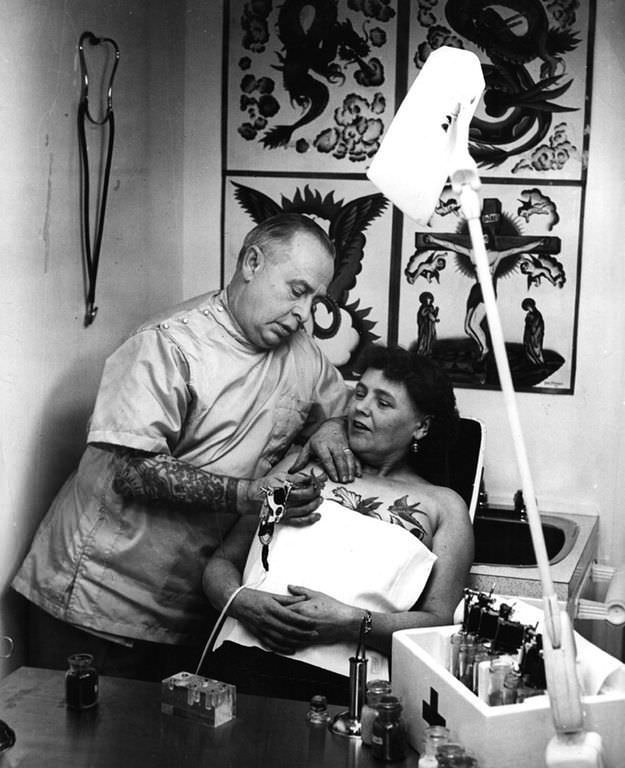
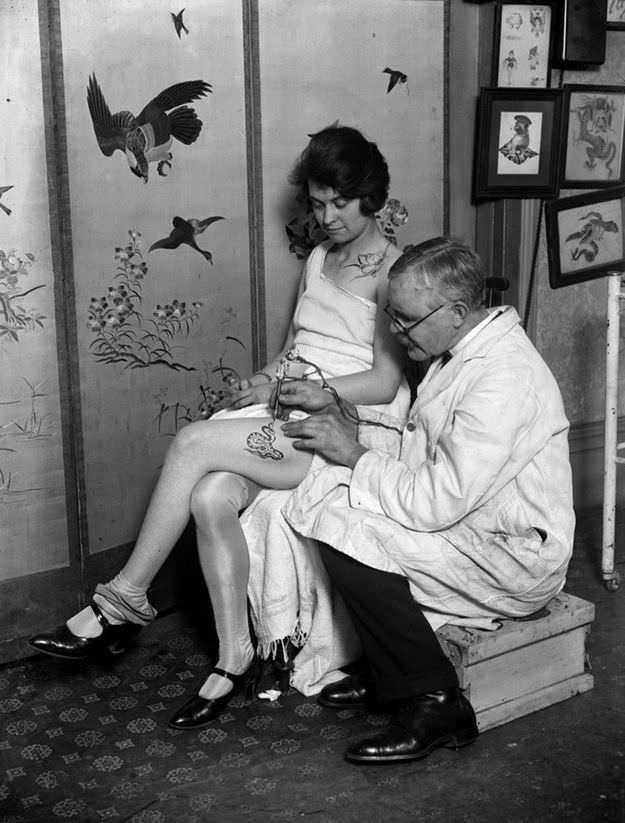
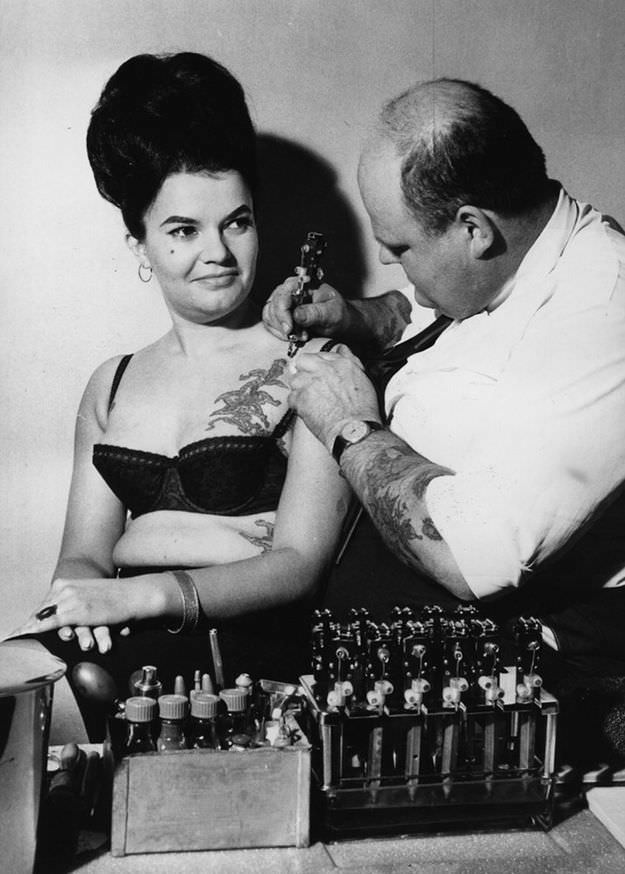
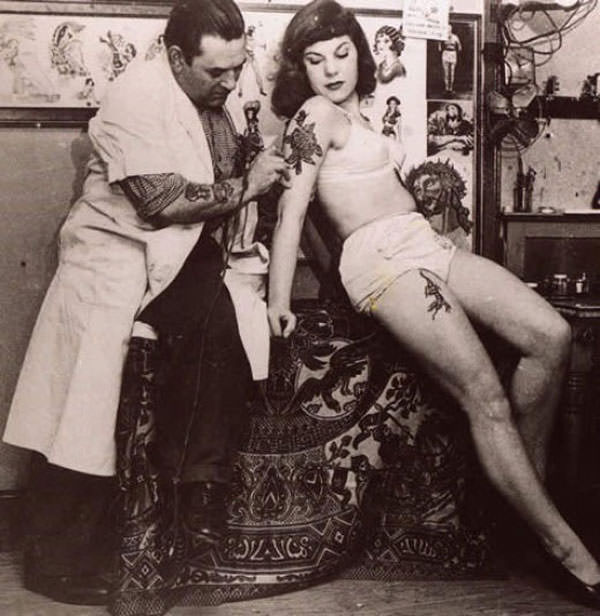
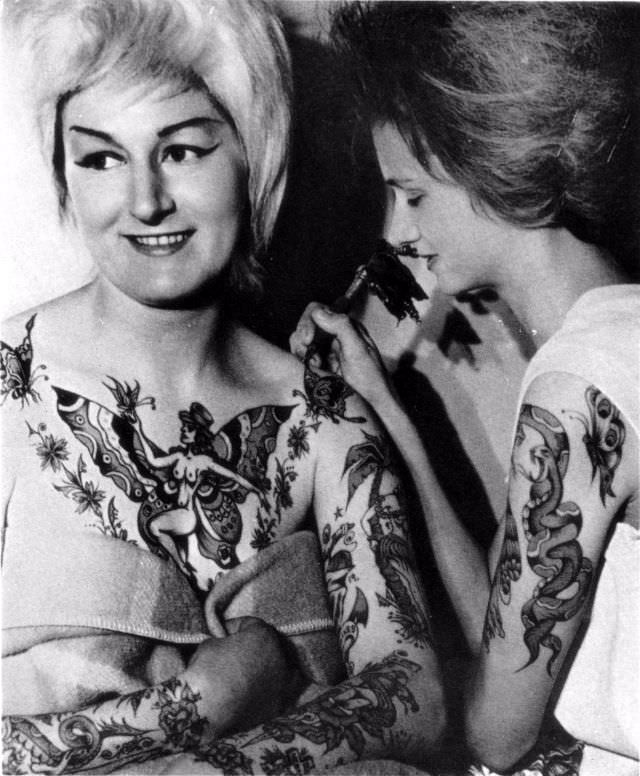
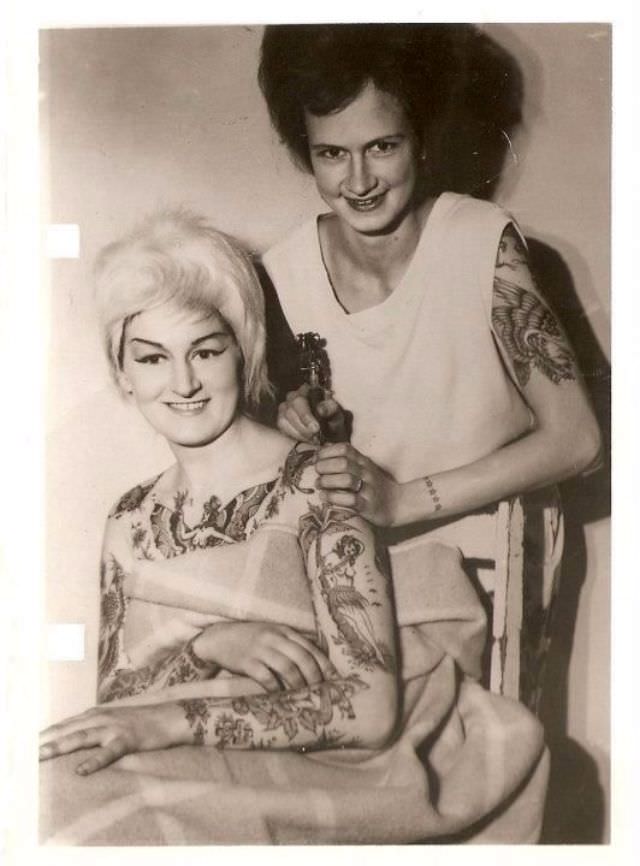
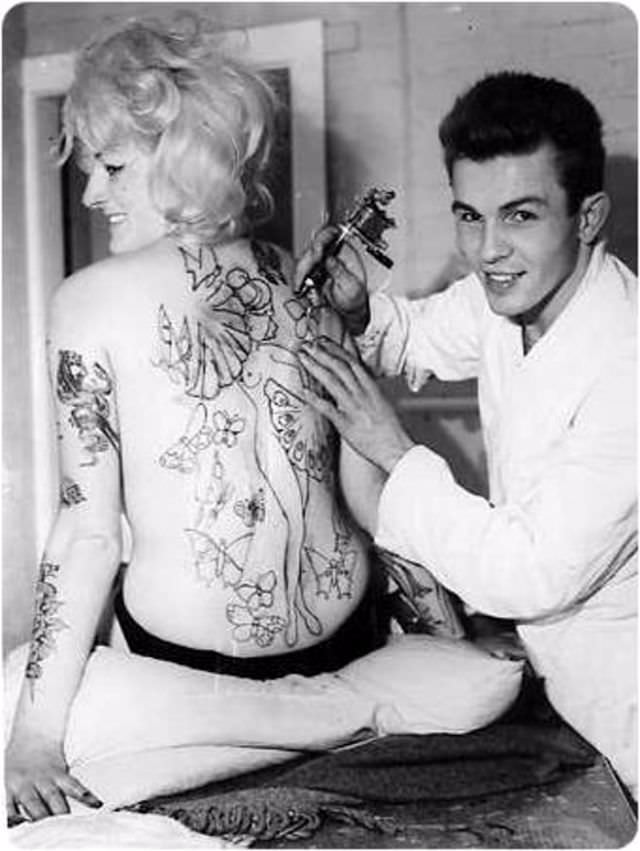
Despite the social stigma, some women didn’t care what anyone thought. Long before tattoos became a fixture in mainstream culture, these women sat down in the artist’s chair and got inked. The photos below document that quiet act of defiance — women from the early 1900s through the 1970s, getting tattooed decades before it became a trend. Some went for small, delicate designs. Others committed to full back pieces and elaborate body art. All of them did it when doing so meant standing out in the most controversial way possible.
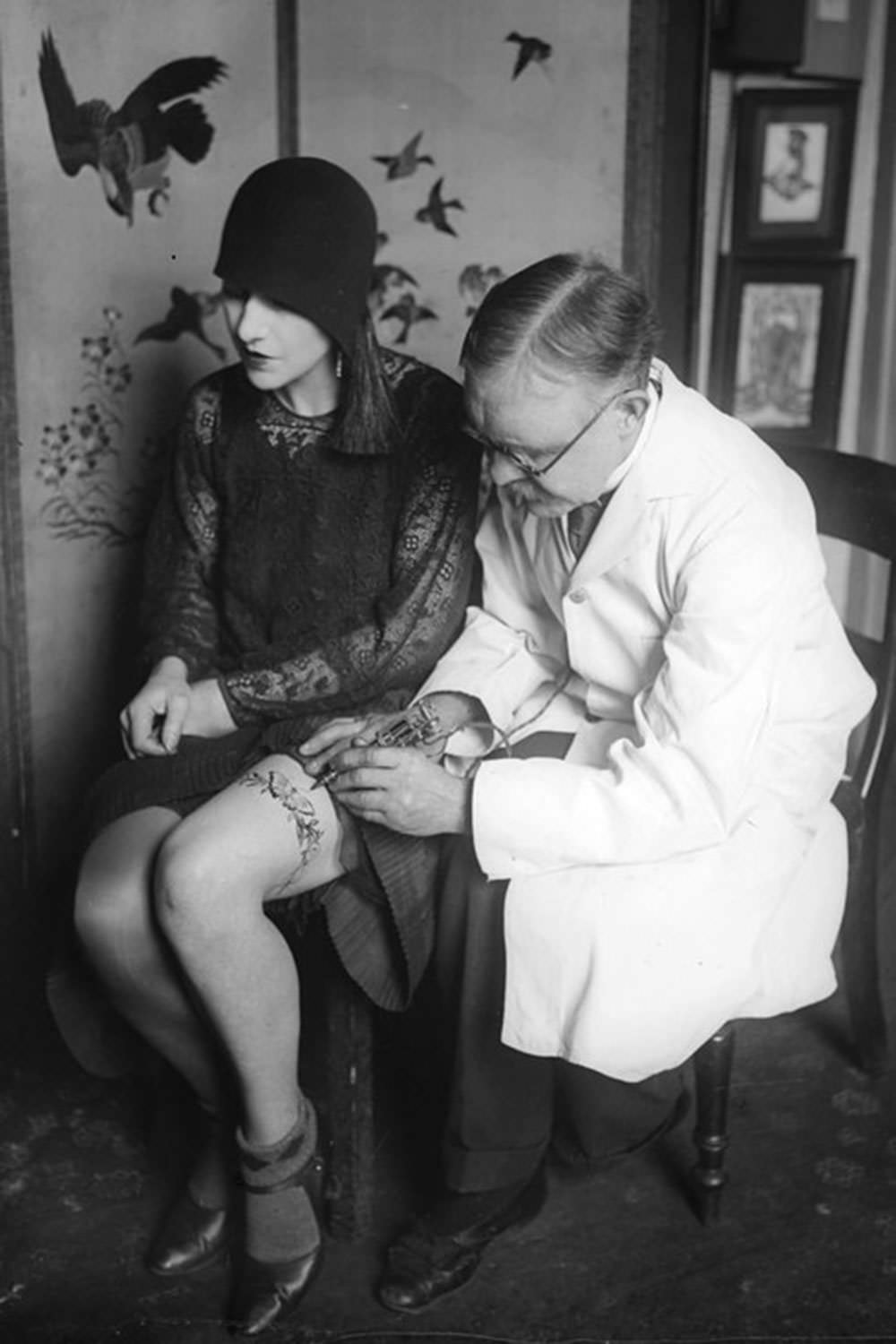
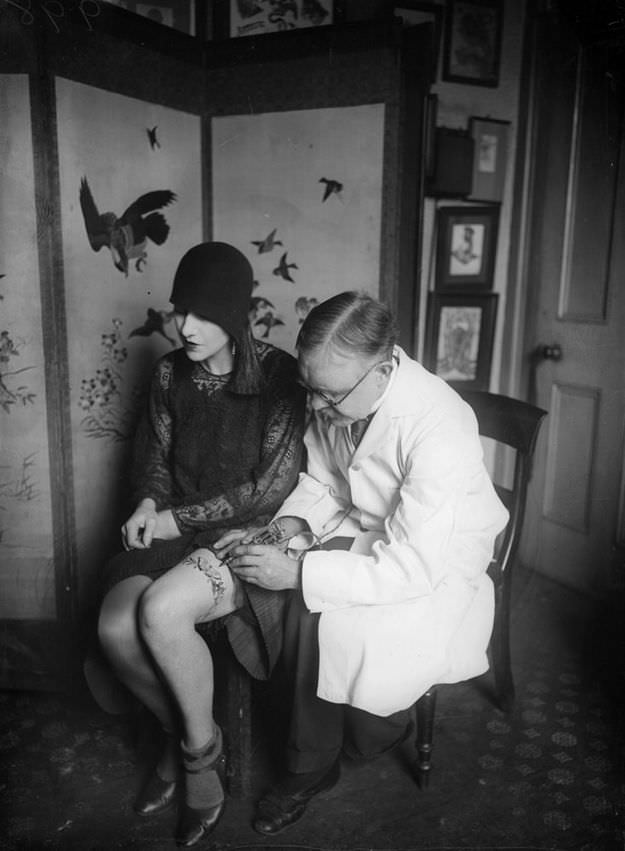
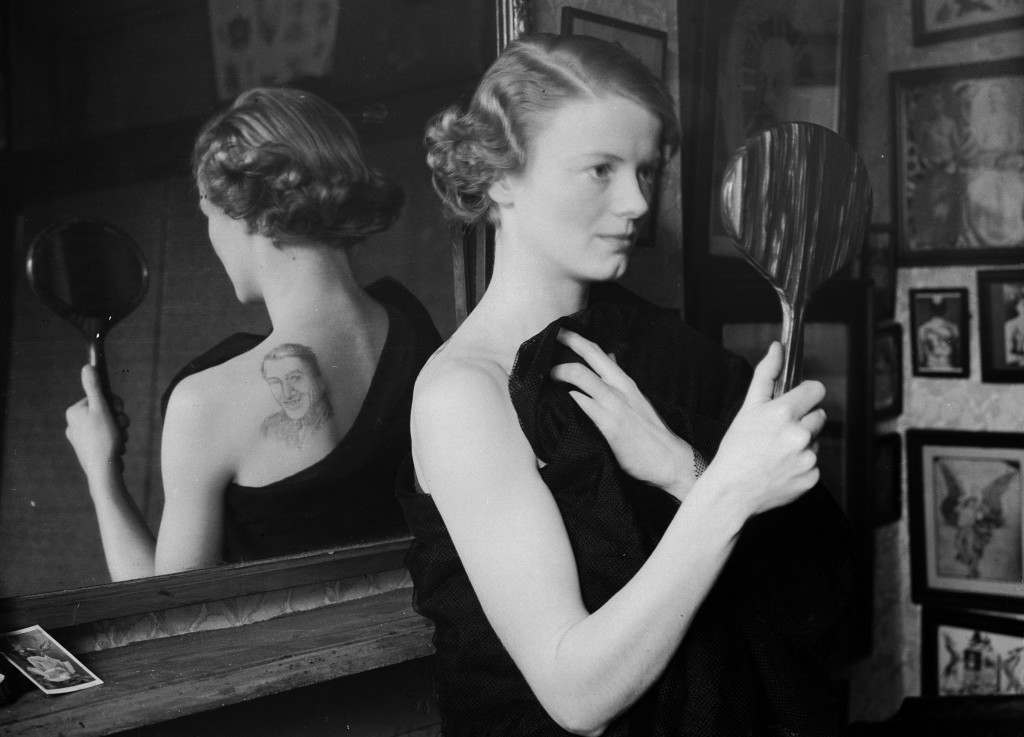
One of the most prominent names in early tattooing was George Burchett, a London-based artist who became known as the “King of Tattooists.” Burchett worked on clients throughout the 1920s and 1930s, and several of the women who visited his shop made it into the photographic record. One client had a detailed snake tattooed onto her thigh in 1928. Another used a mirror to admire a portrait of film star Gary Cooper that Burchett had inked across her back in 1936. These weren’t impulsive decisions — full back pieces and thigh tattoos took time, money, and commitment.
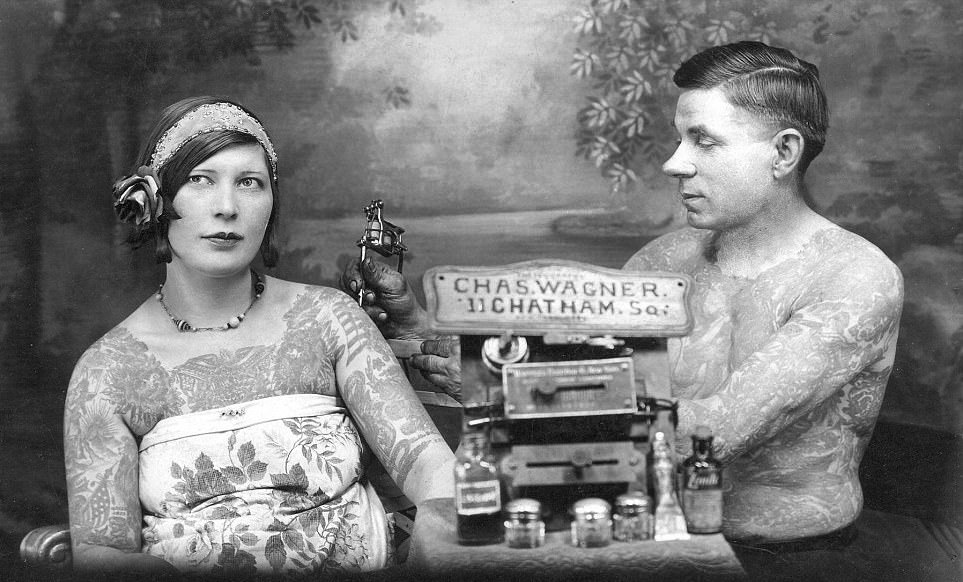
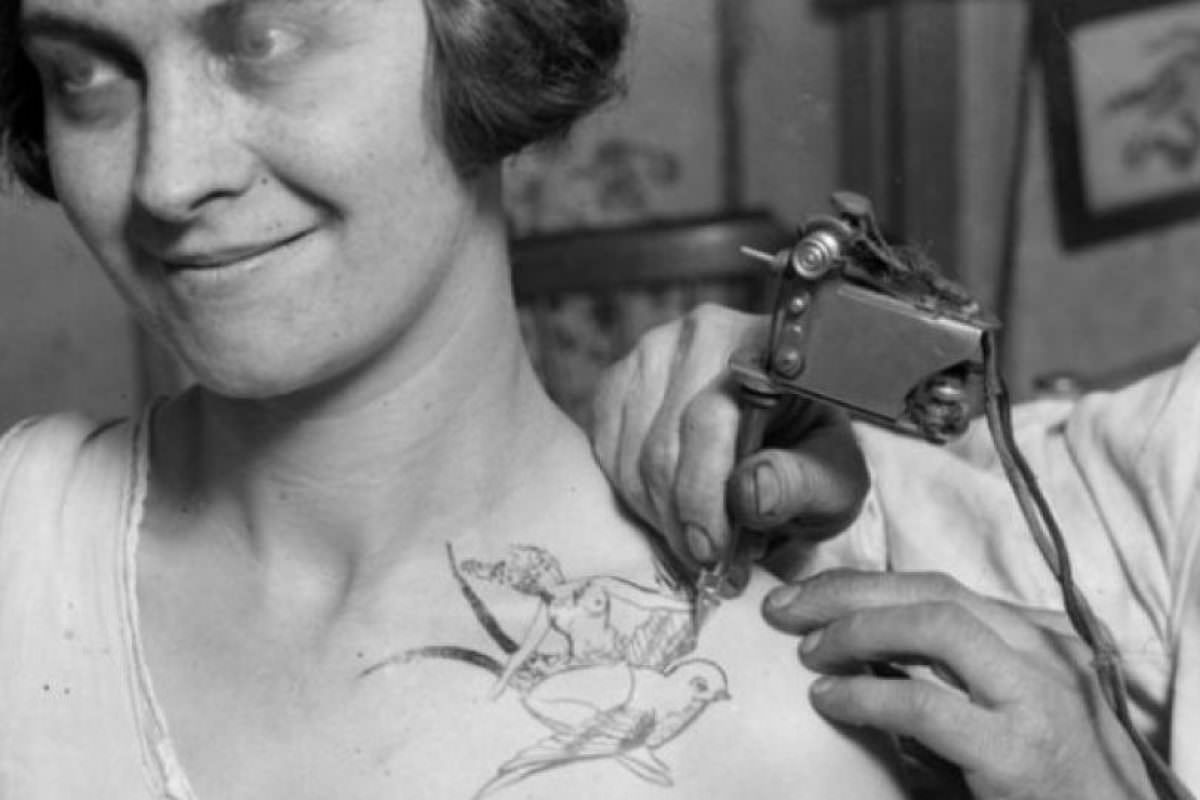
Across the Atlantic, Charlie Wagner was leaving his own mark on American tattoo history. Wagner operated out of the Bowery in New York City and is credited with helping to modernize the electric tattoo machine. Women came through his shop as well, and photographs from the 1920s show female clients sitting calmly as Wagner worked. His legacy helped shape the American traditional tattoo style that still influences artists today.
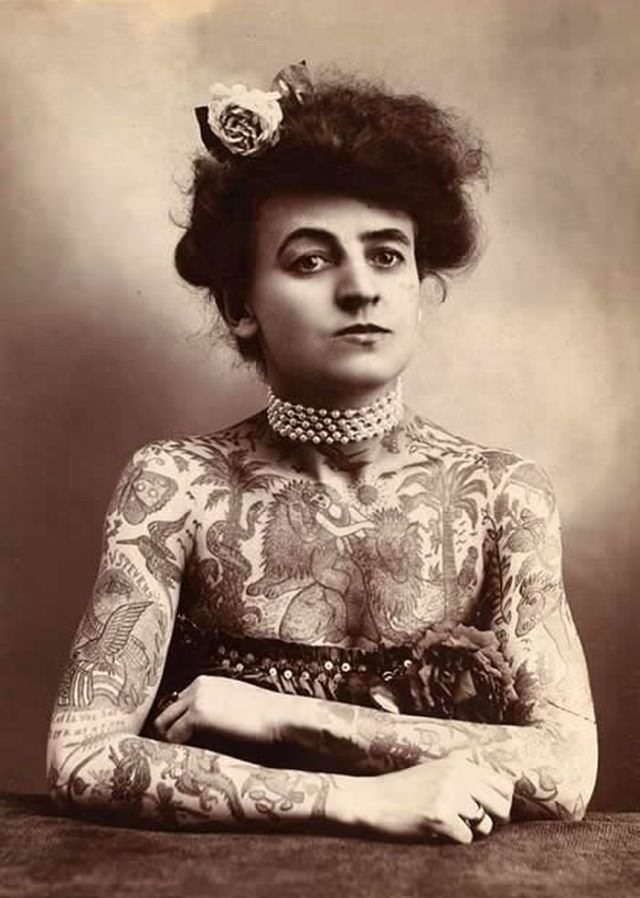
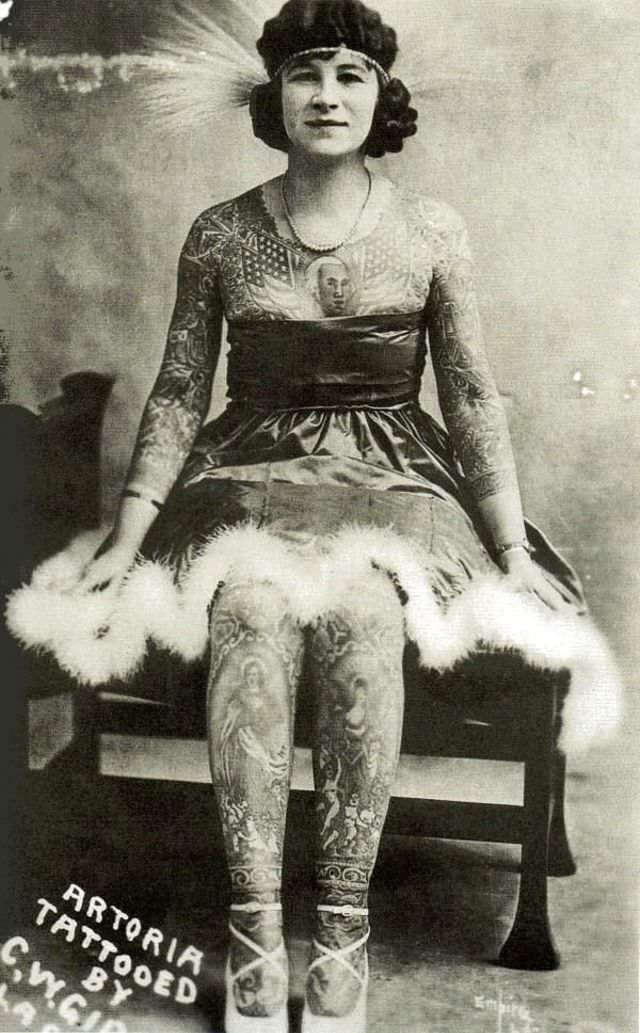
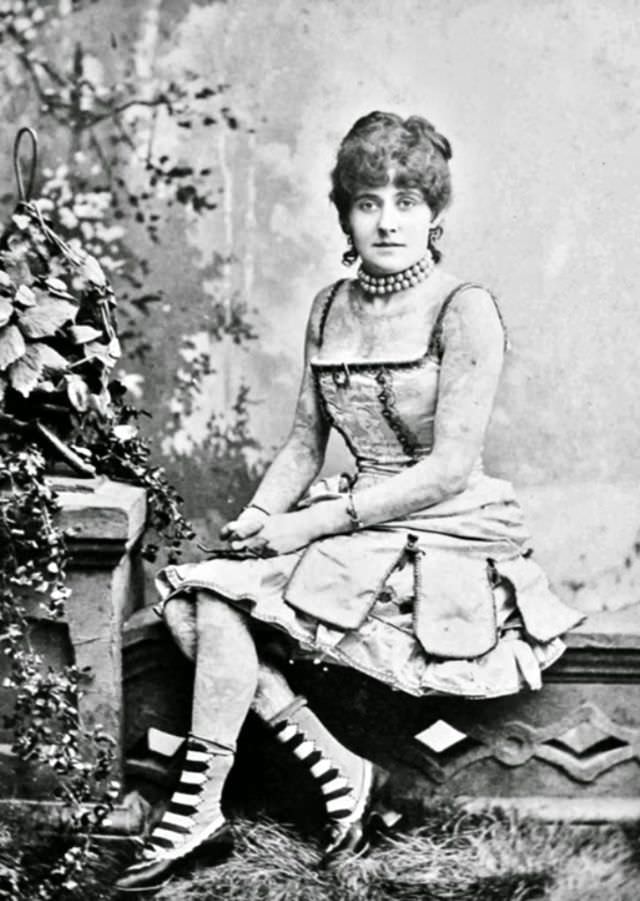
Not all early tattoo subjects were anonymous. Maude Wagner, photographed in 1908, is widely recognized as one of the first known female tattoo artists in the United States. She learned the craft from her husband, Gus Wagner, and the two performed together in circus settings. Artoria Gibbons, photographed in the 1920s, was another famous tattooed performer who covered most of her body in elaborate designs and made a career exhibiting her skin at fairs across America.
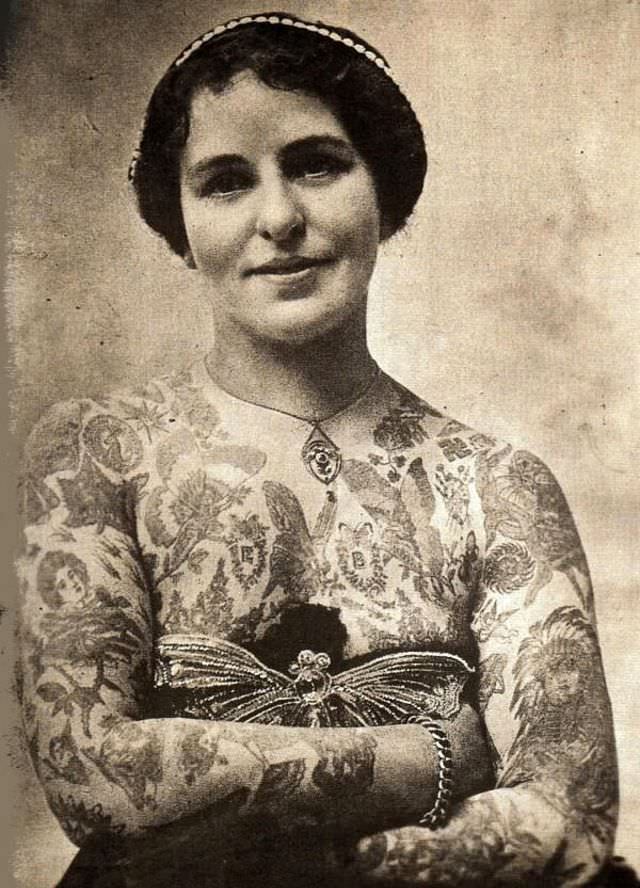
Emma de Burgh was another well-known tattooed woman from the early 1900s. She appeared in circus exhibitions and was heavily tattooed at a time when that was genuinely shocking to the average person. Her photographs show a woman fully at ease with her decorated body, looking directly at the camera without apology.
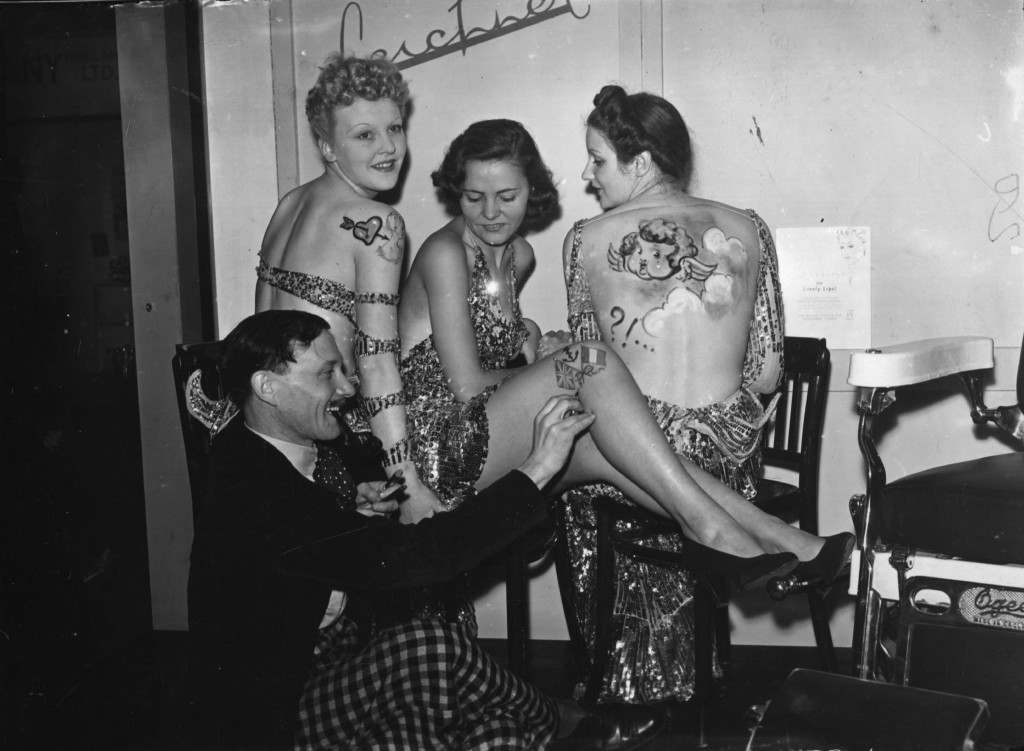
The 1930s brought more women into tattoo shops, even outside the sideshow circuit. A 1938 event at the Hair and Beauty Fair in Olympia, London, featured an artist creating elaborate skin designs on models — treating the body itself as an accessory for evening wear. That same decade, tattooed butterfly garter designs were worn by women doing the Charleston on dance floors across Europe and America.
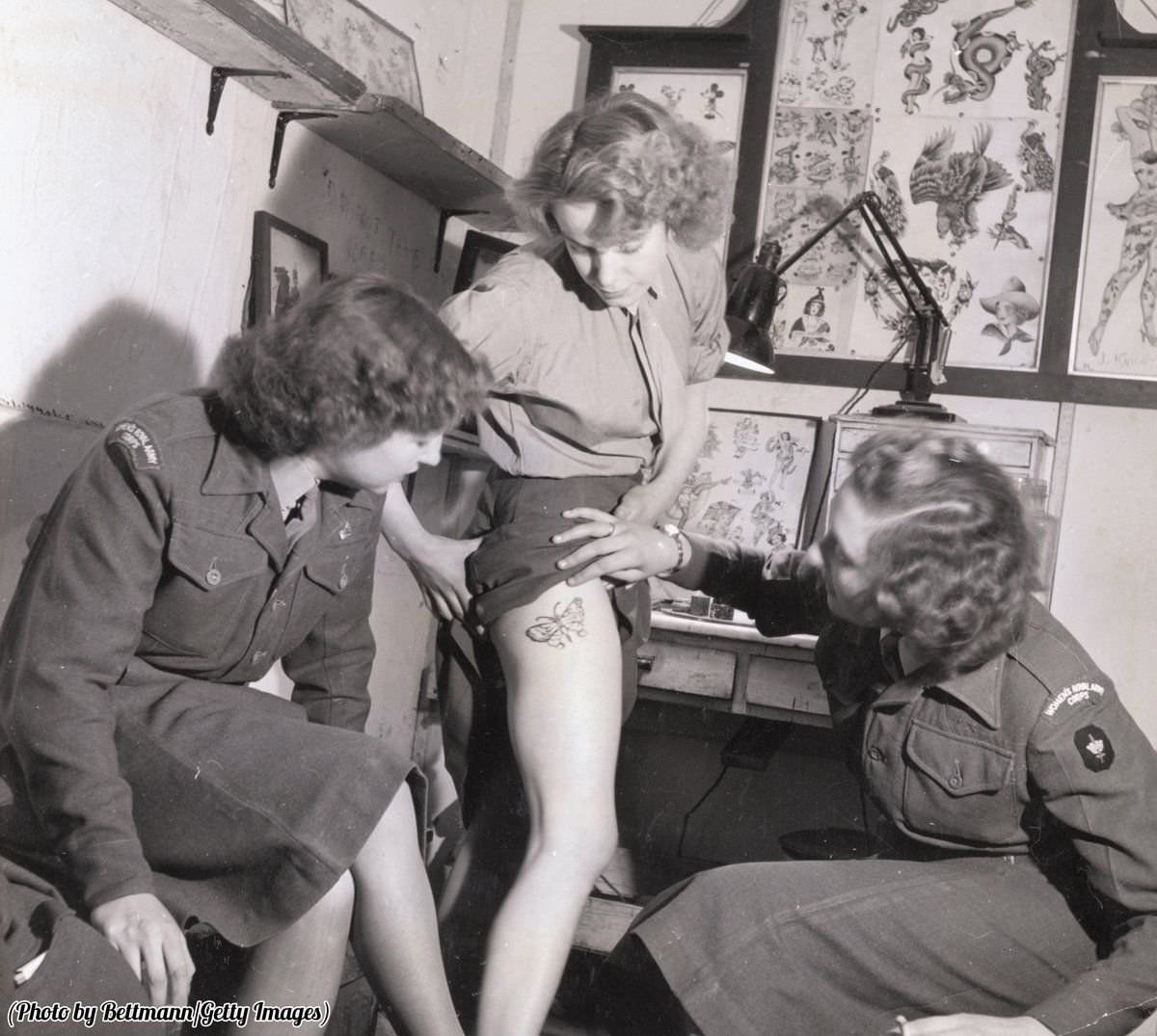
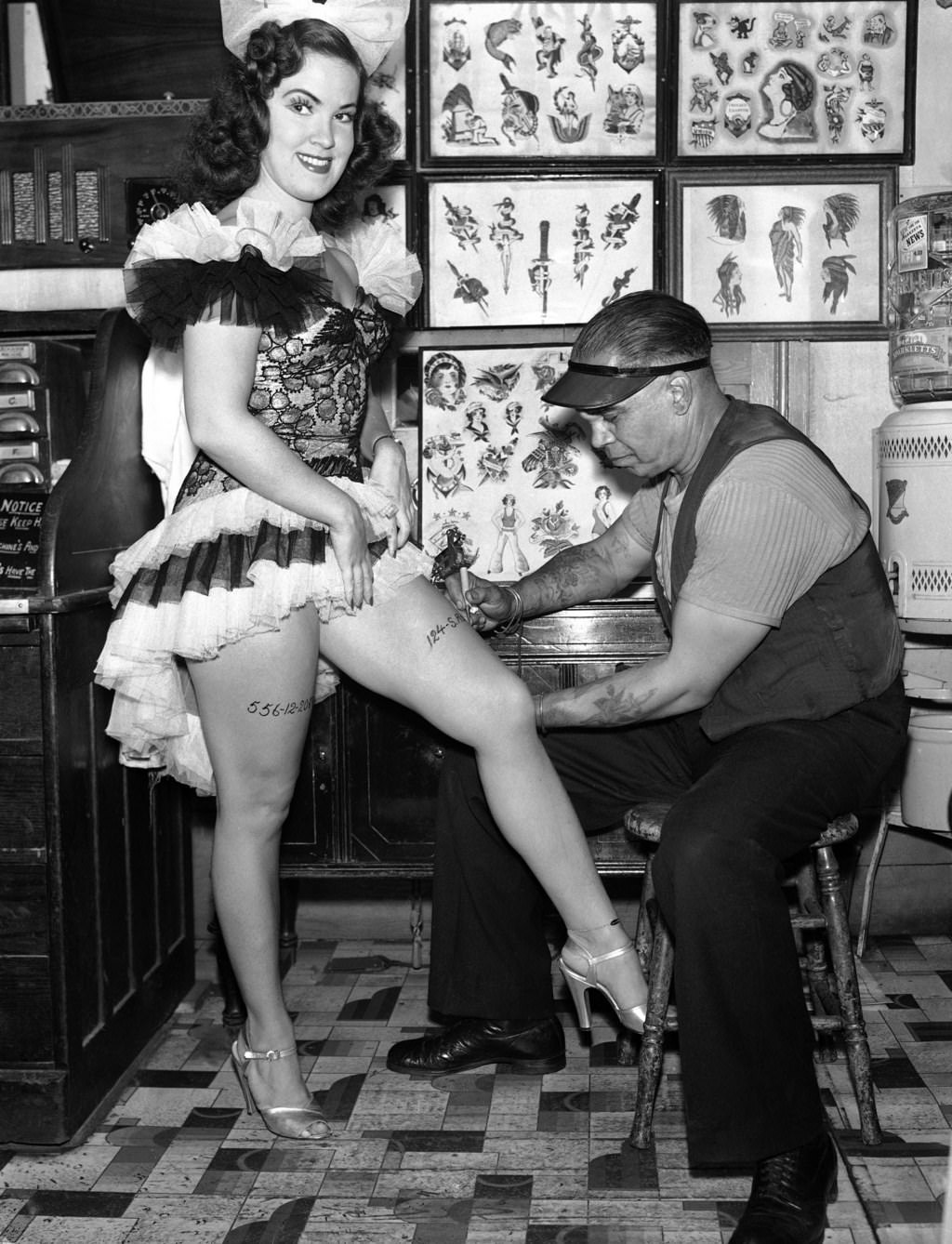
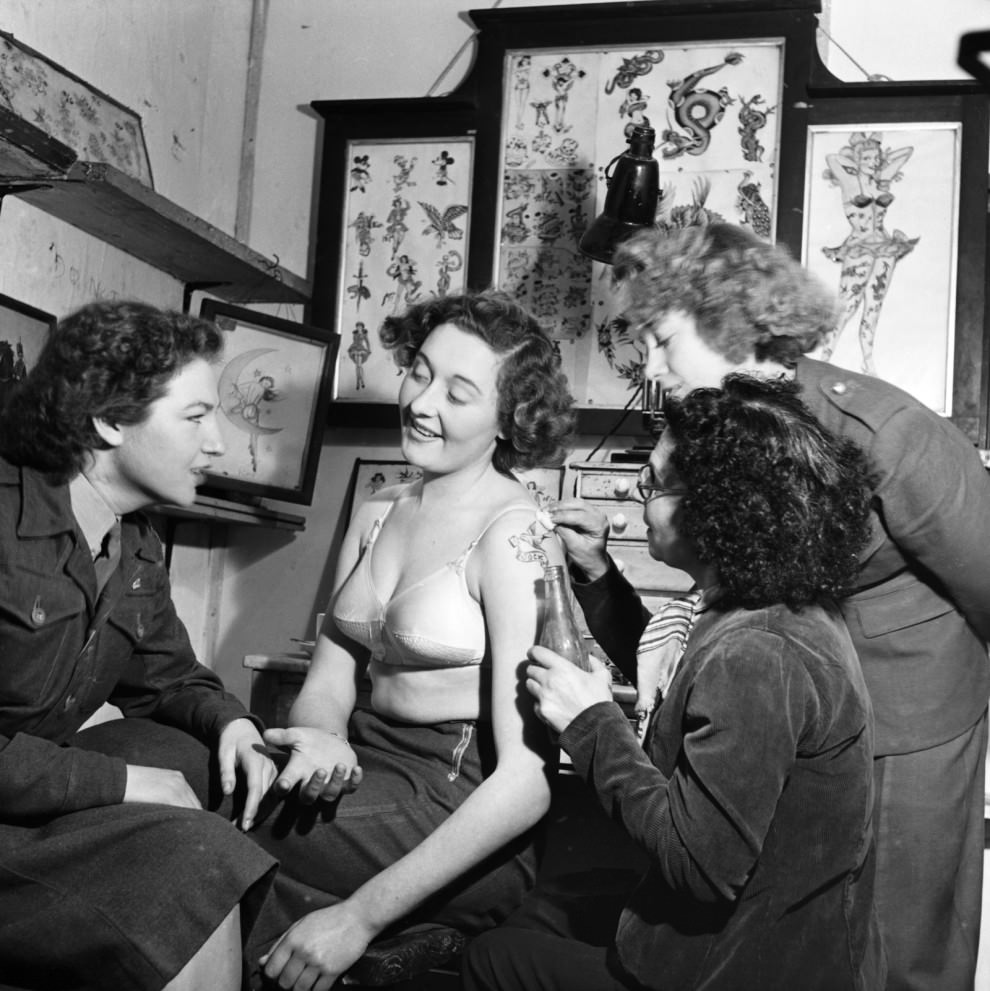
During World War II, tattoos appeared in unexpected places. A member of the Women’s Royal Army Corps was photographed showing off a new leg tattoo to fellow enlistees during the war. In 1942, Doris Sherrel had her social security number tattooed by Jack Julian — a practical, permanent record-keeping choice that was unusual even by the standards of the day.
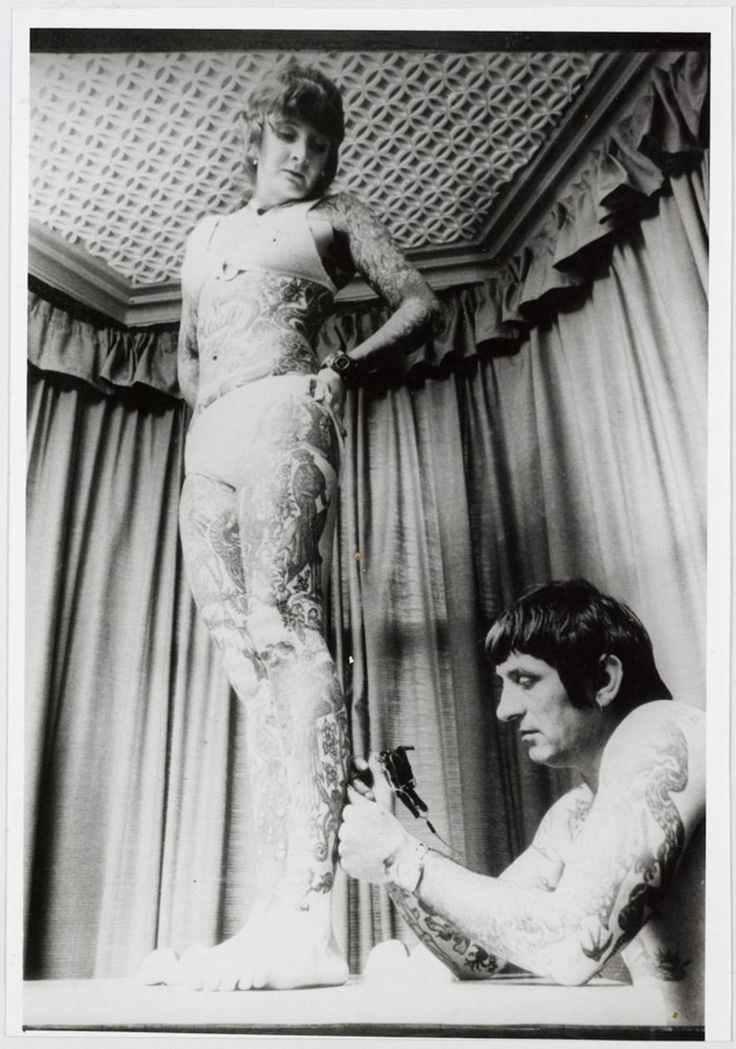
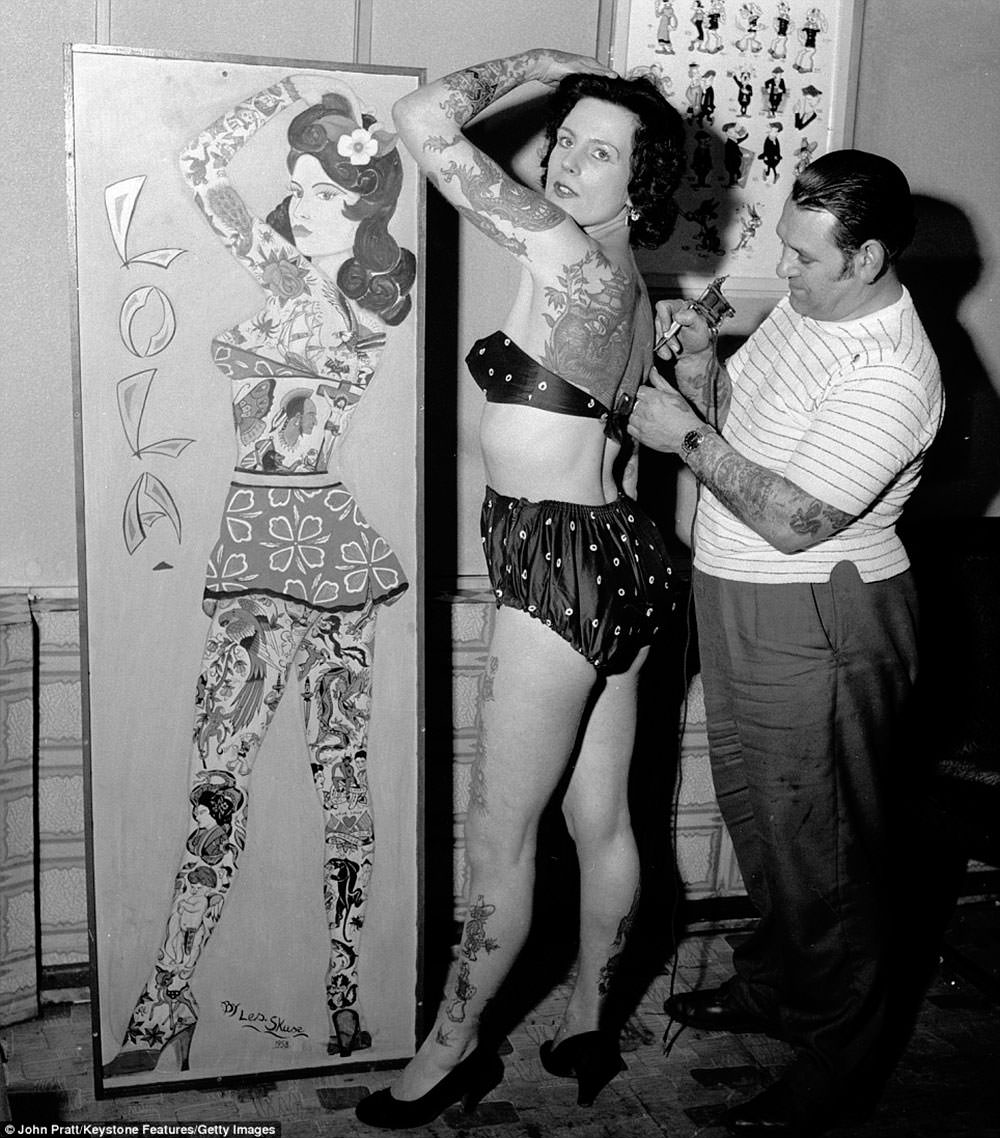
By the 1950s and 1960s, tattoo studios were more established, and artists like Les Skuse in Bristol were building serious reputations. Skuse worked on large, complex pieces — including a sprawling Japanese scene across the back of one female client in 1960. His work on Pam Nash, a celebrated tattooed woman of the era, resulted in a full Japanese garden scene across her back that earned her recognition as a tattooing champion.
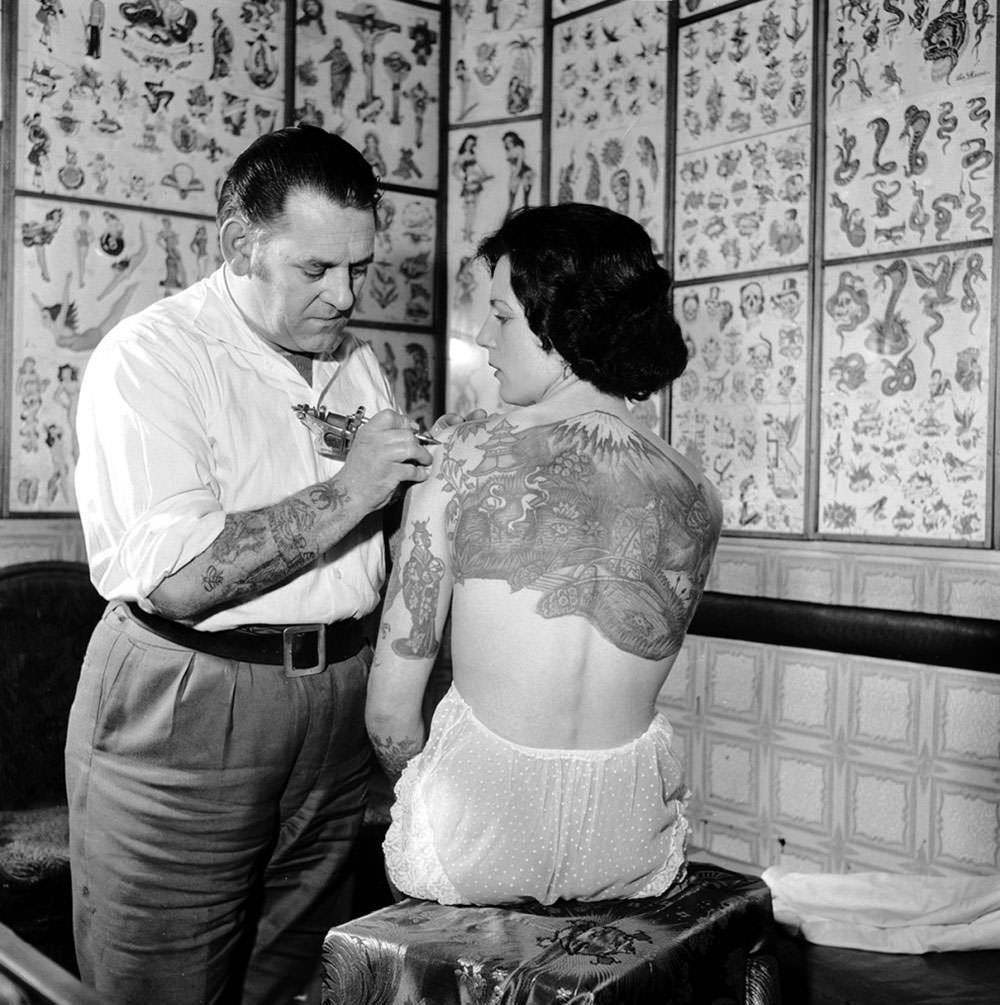
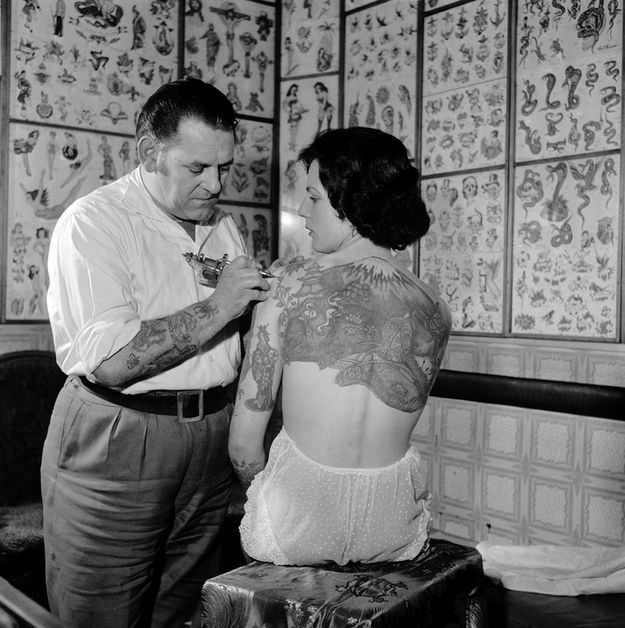
Janet “Rusty” Skuse — closely associated with the same Bristol tattoo scene — was honored by Guinness World Records as Britain’s most tattooed woman for over 20 years. Her record stood as a testament to just how committed some women were to the art form long before it reached the mainstream.
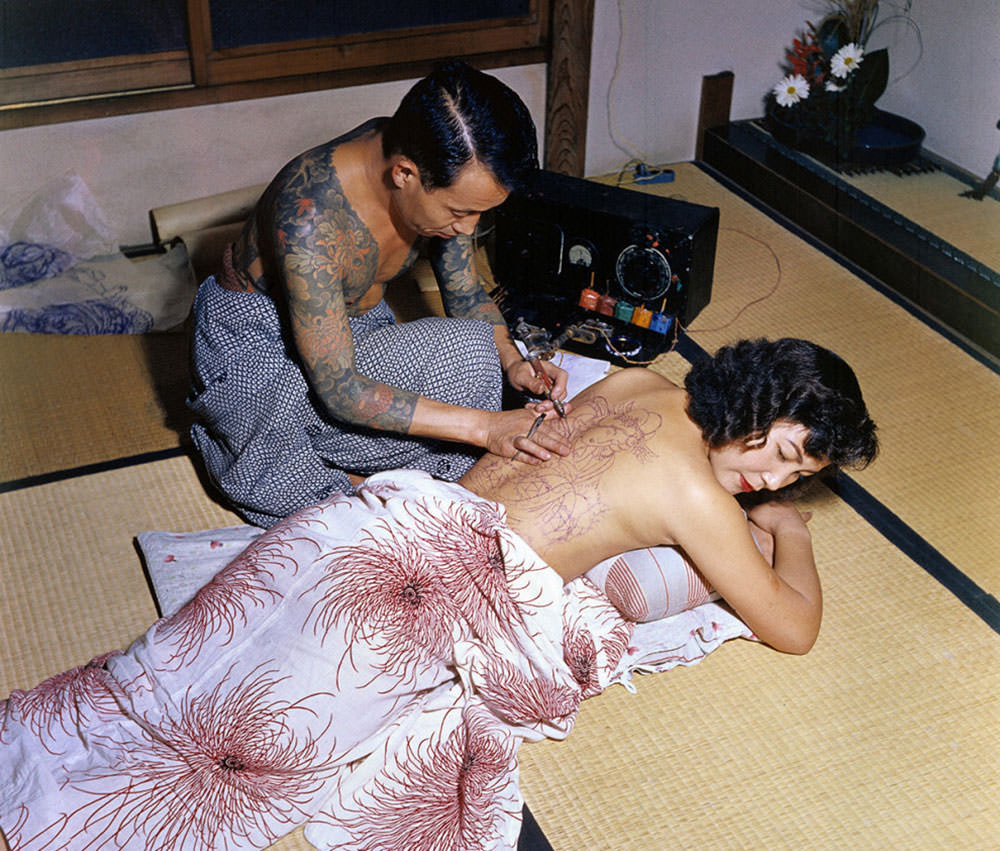
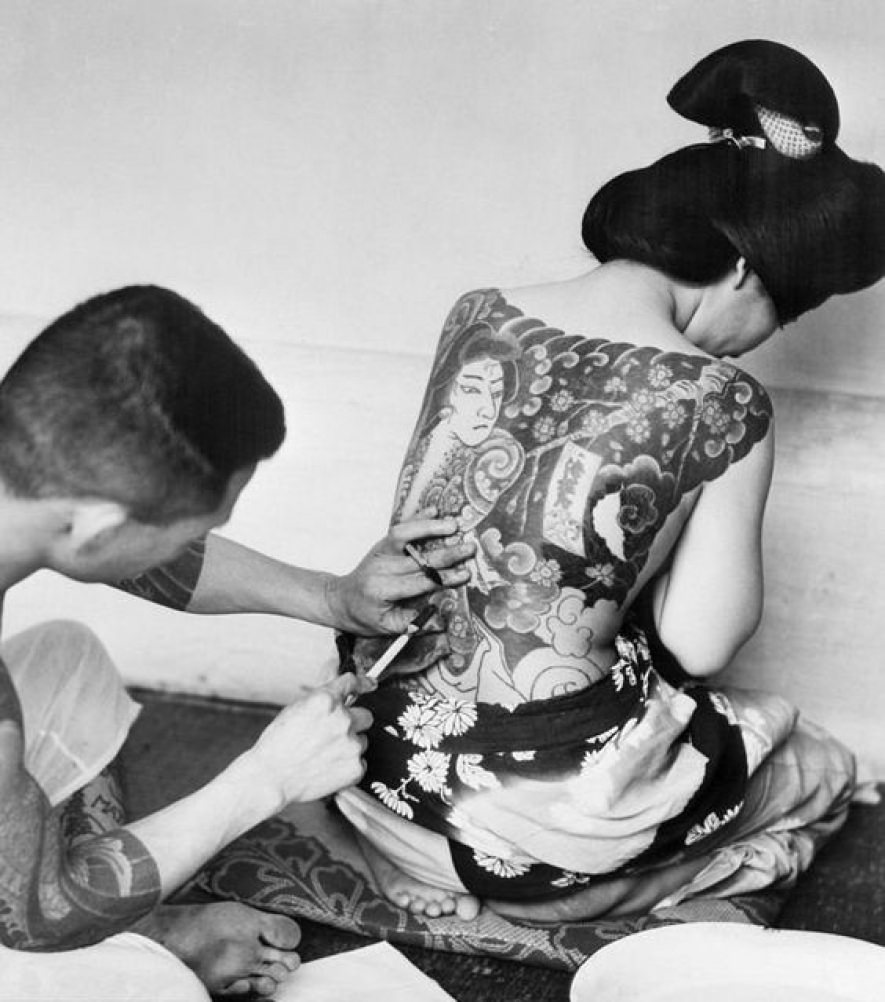
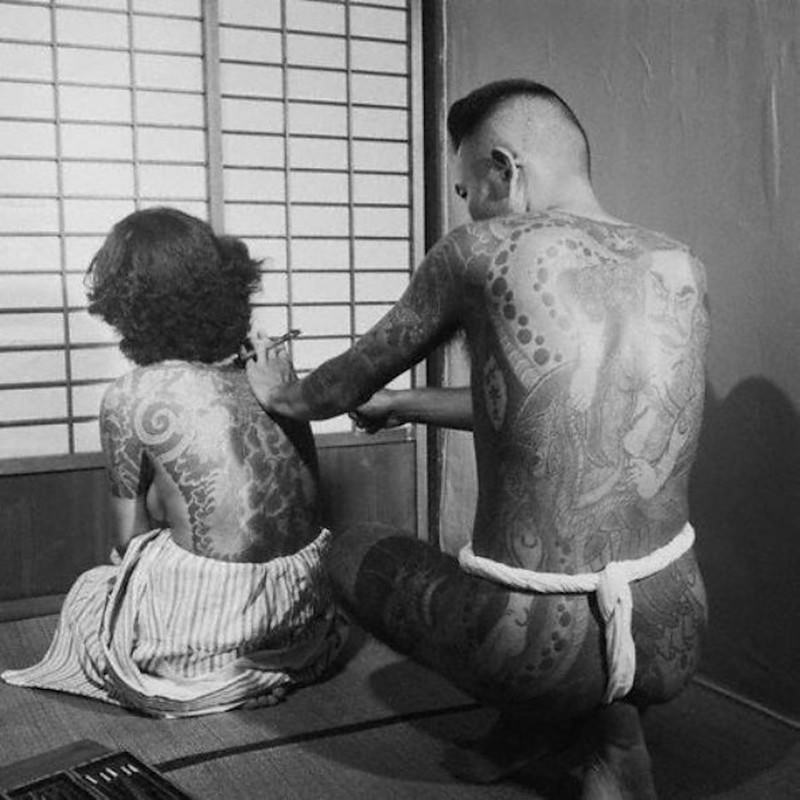
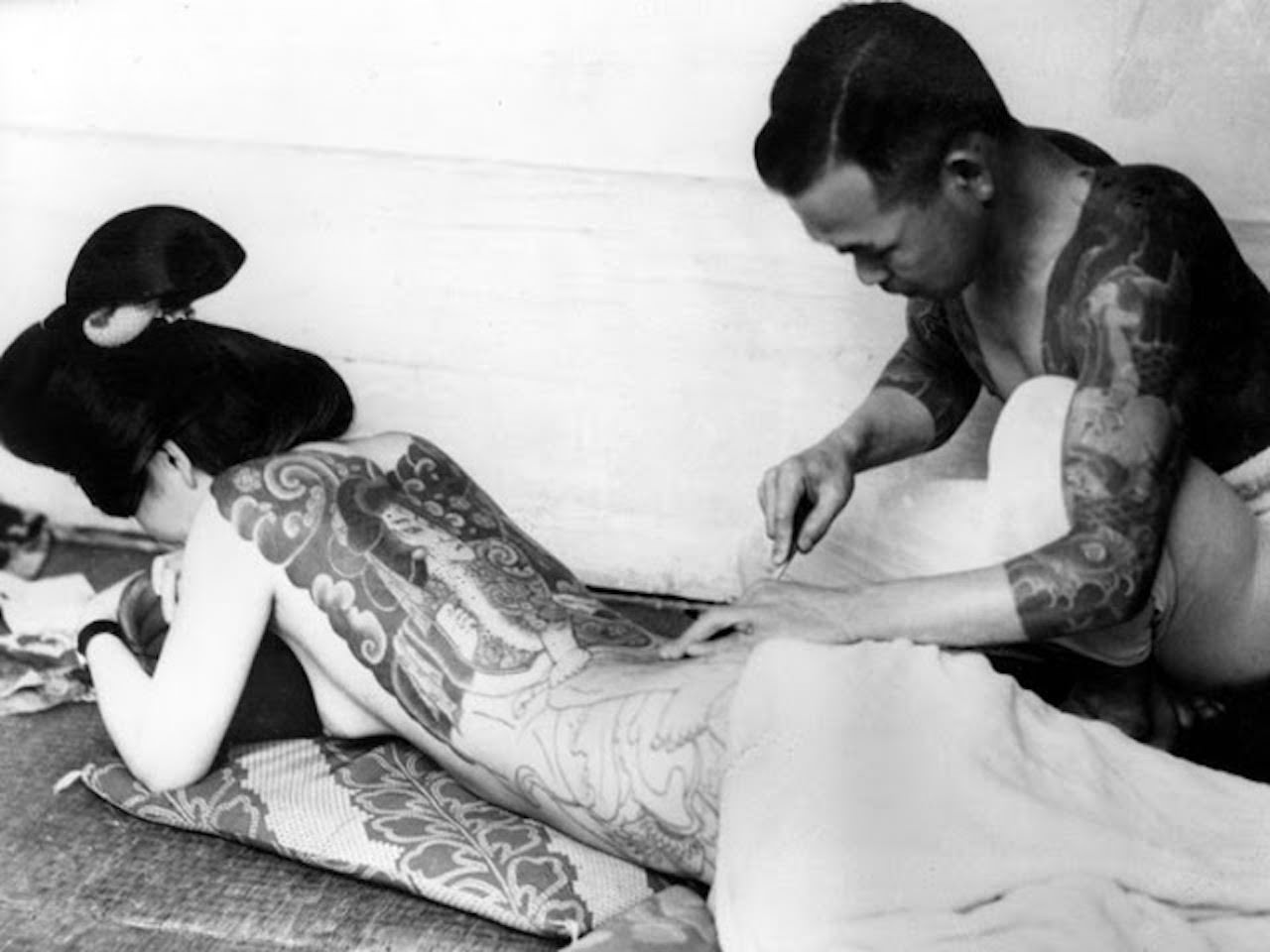
Japanese tattooing had its own rich tradition, and photographs from the 1930s and 1950s show Japanese artists working on female clients with the same level of detail and artistry applied to their male counterparts. The designs were large and intricate — traditional motifs covering the back and legs in bold, flowing compositions.
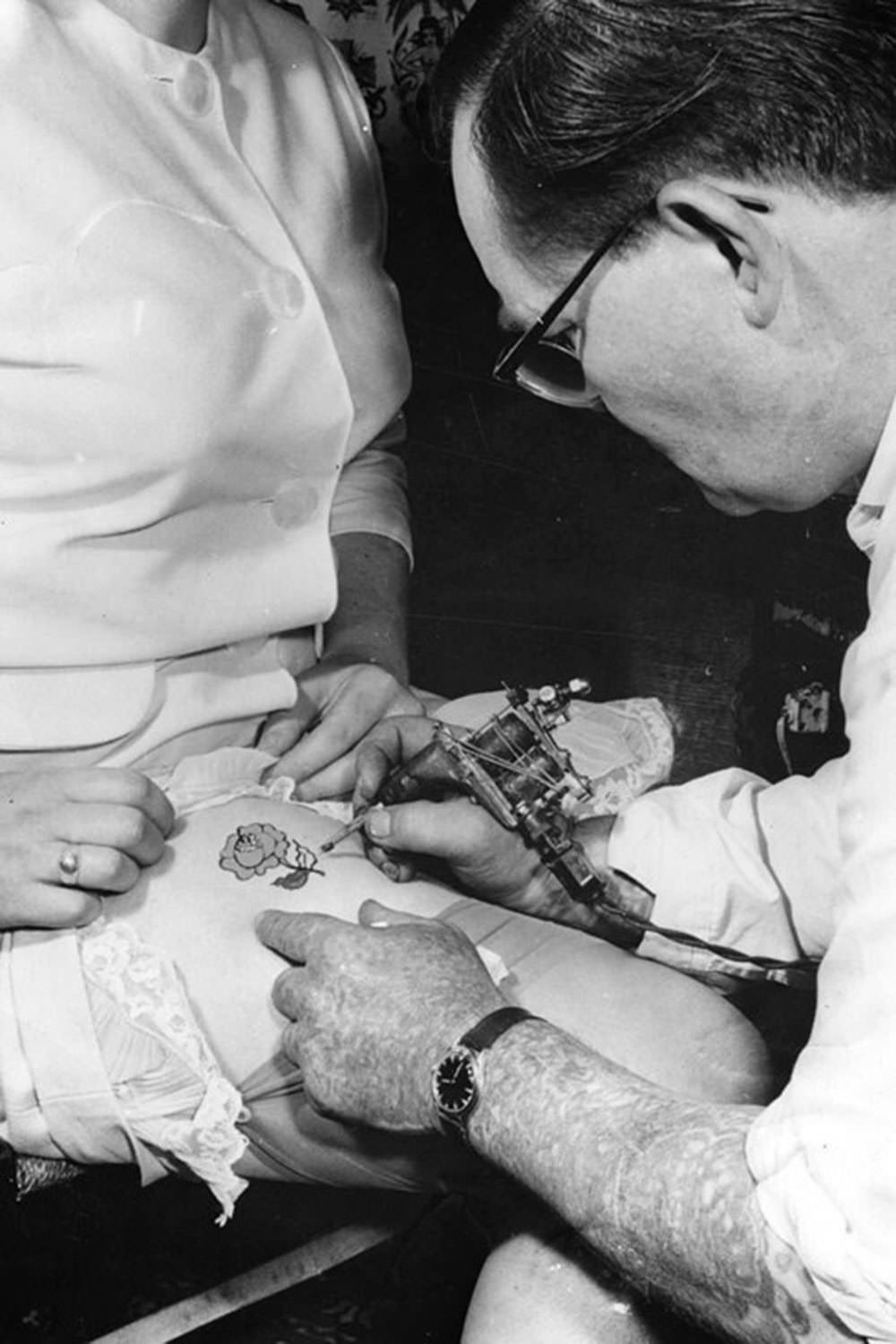
Edith Burchett, photographed in the 1920s, rounds out a remarkable group of women who wore their tattoos openly and publicly. Whether they were circus performers, military women, film fans, or simply individuals who wanted a rose on their thigh, these women shared a willingness to mark their bodies permanently at a time when society strongly discouraged it.
Here is a look at the rest of these remarkable women and the artists who inked them — a rare photographic record of a time when getting a tattoo as a woman was anything but ordinary.





Now it’s cool and rebellious not to have tattoos.
It is amazing that now maintaining ink free skin is the counter culture.
A big part of it being rebellious was that these are women. This paints a huge picture of our history. Some of these comments are sad. It was rebellious. Notice how they are only white women? Women didn’t even have the right to vote in 1920. Open your own bank account? 1974. I mean the list goes on.
Now my point… I have a lot of tattoos and I’m a woman and I have faced workplace discrimination. It’s 100 years later. I mean I guess the jokes about not having tattoos are surface level but this post is so much more than that.
Is it cool though.