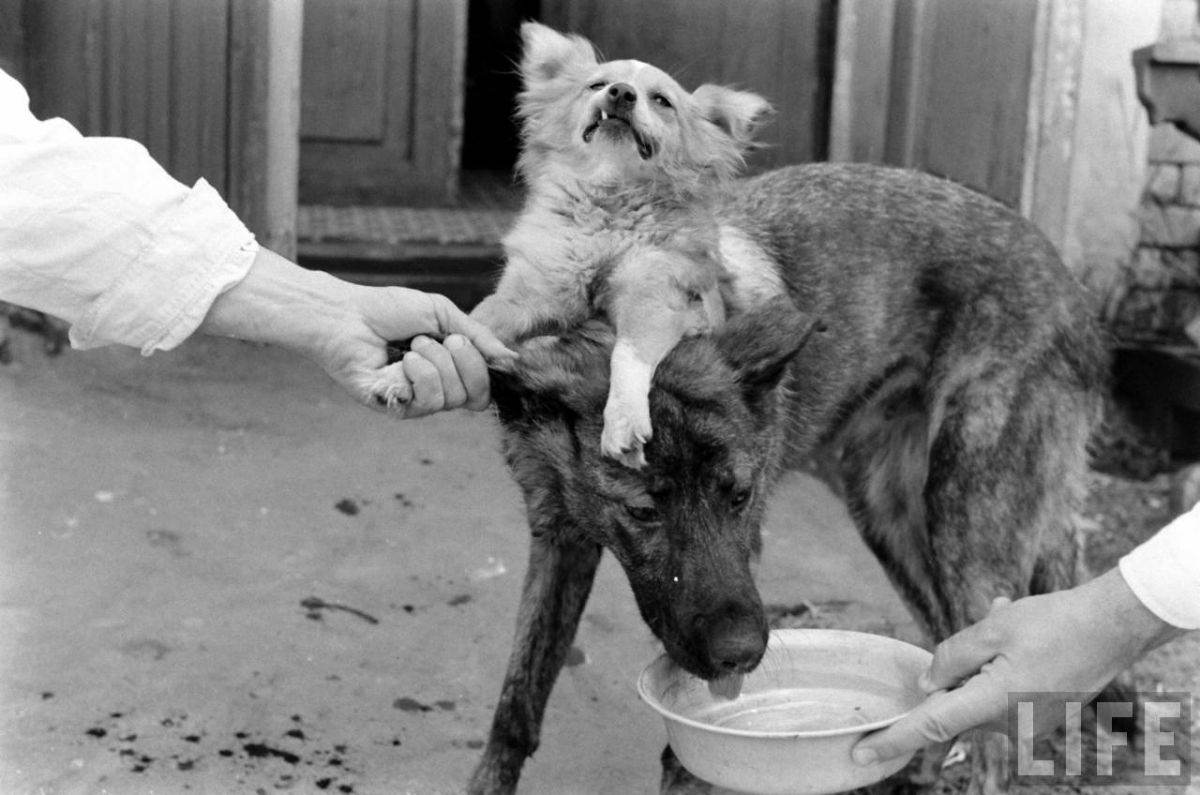
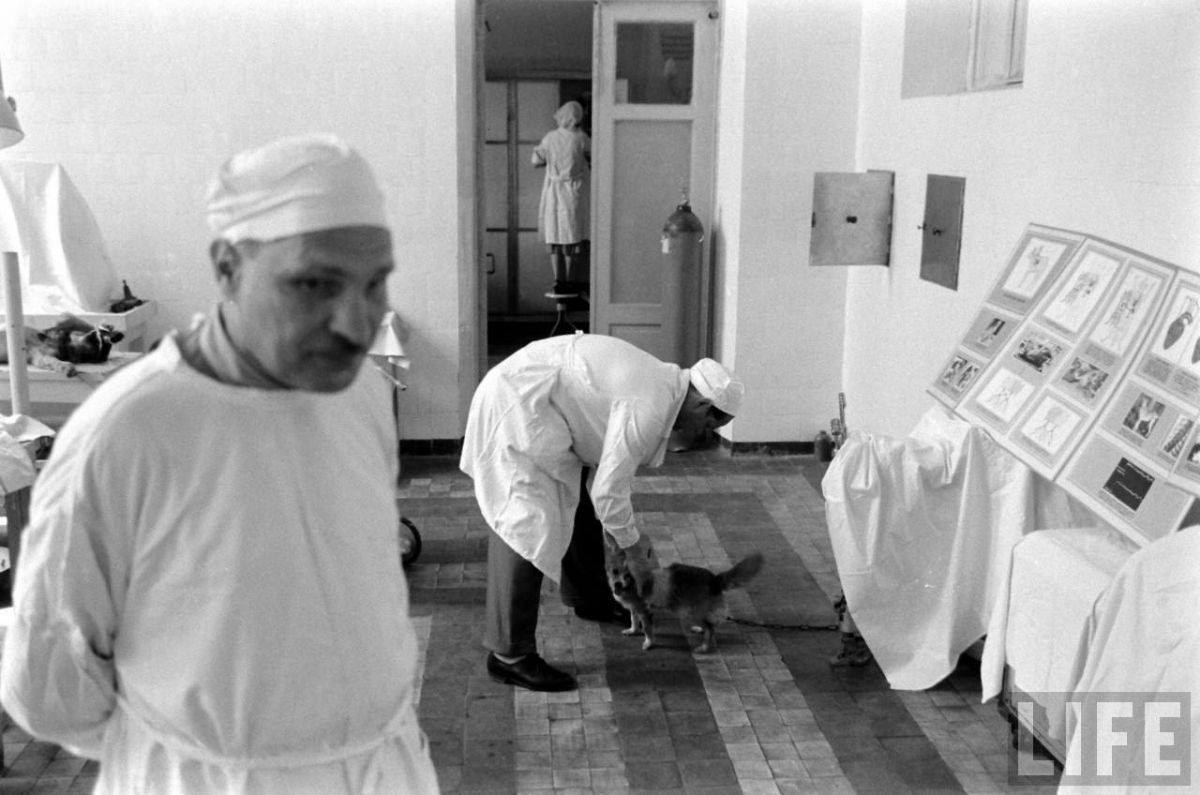
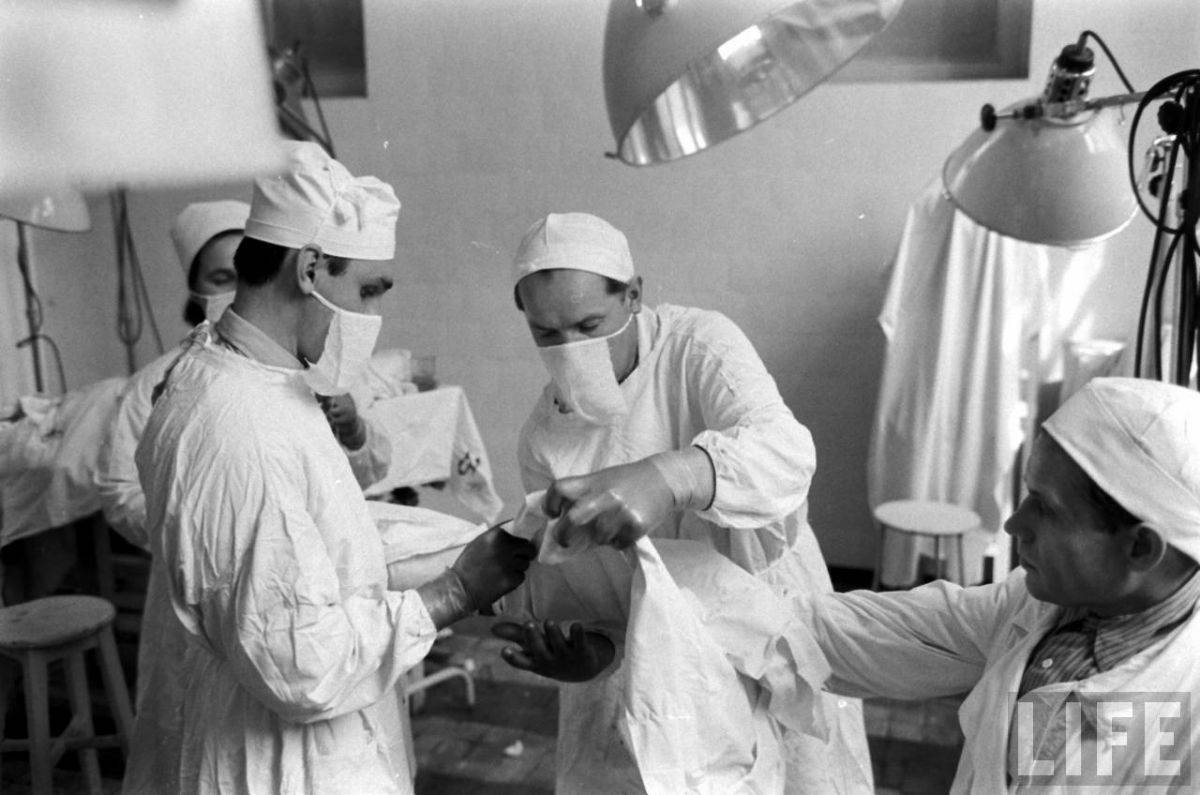
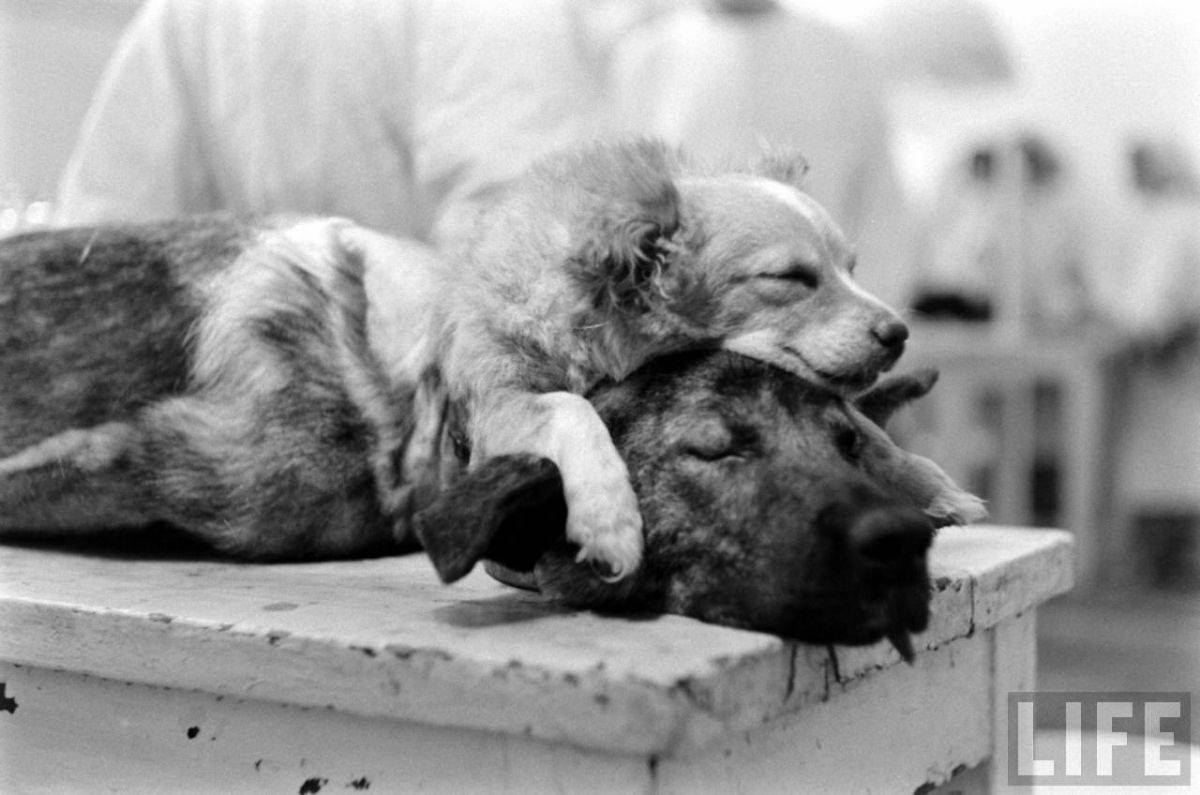
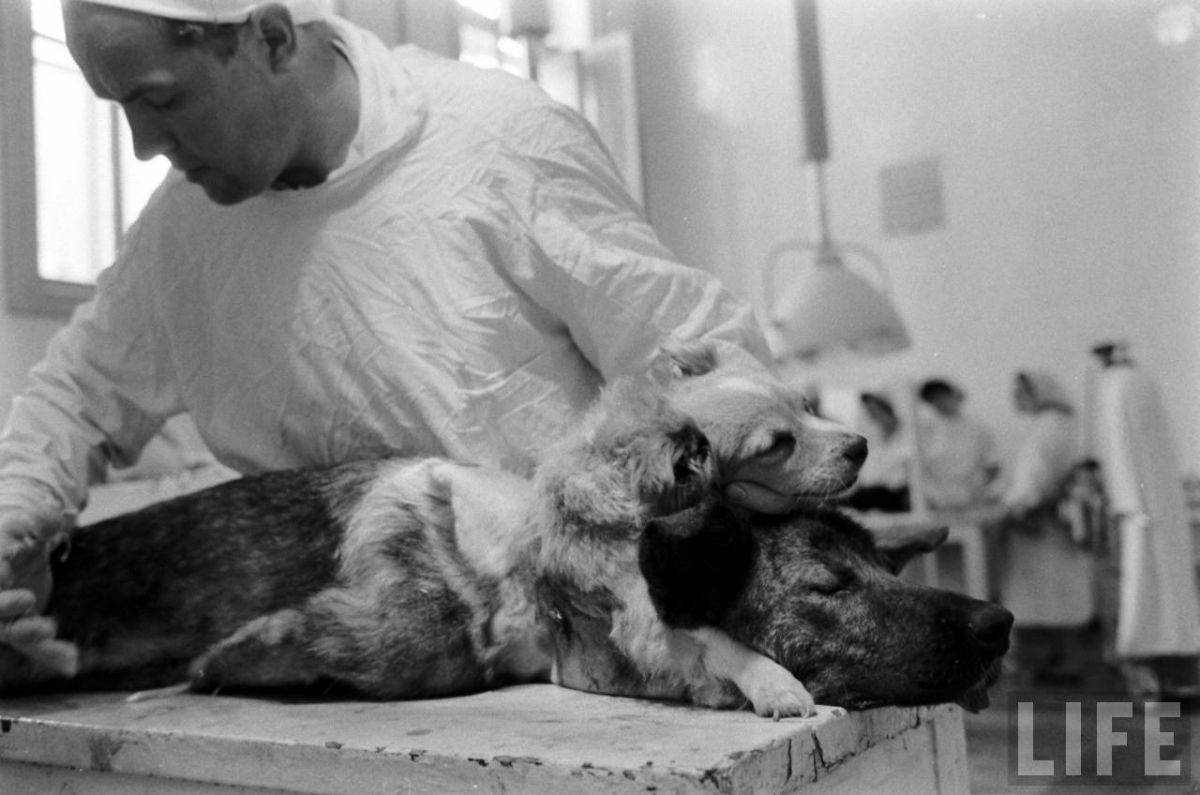
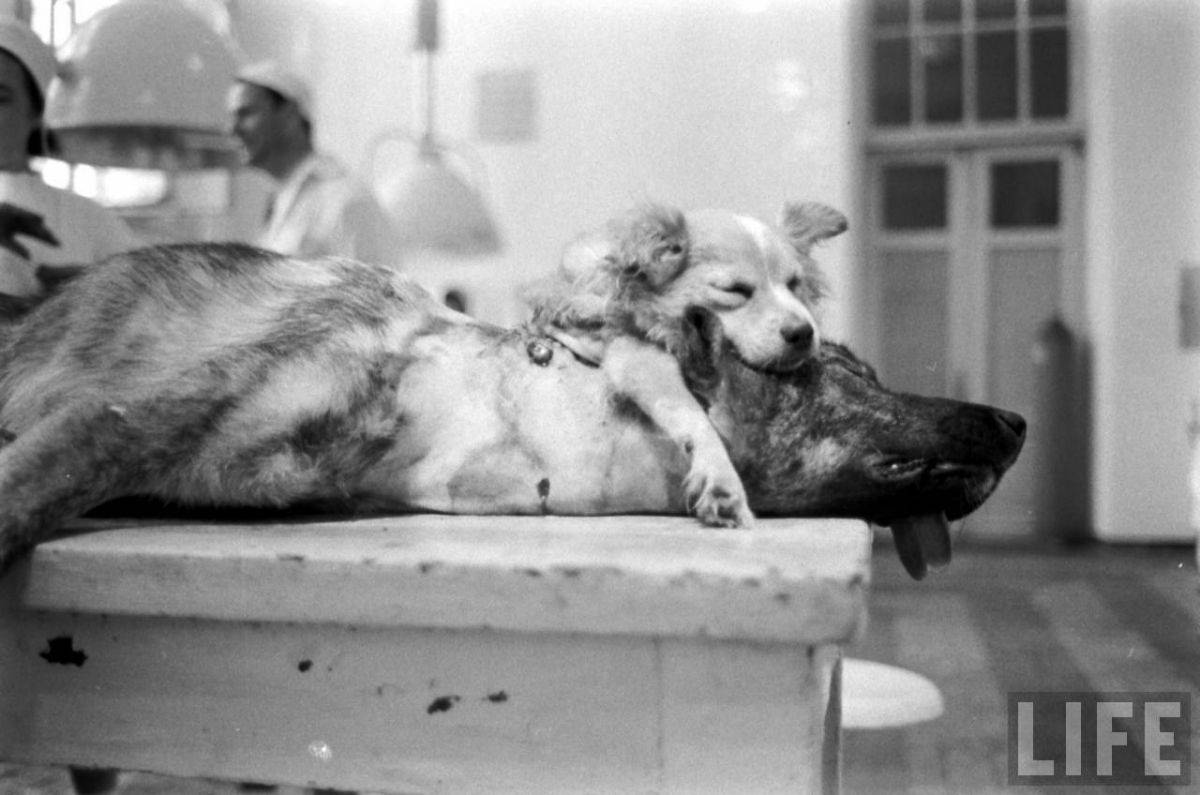
In 1959, Soviet scientist Vladimir Demikhov carried out one of the most shocking surgical experiments ever documented. He grafted the upper body of a small dog onto the neck of a larger one, creating a two-headed animal that could move, react, and function — at least for a few days. What made this particular experiment different from his earlier attempts was that LIFE magazine sent a team to document the entire procedure. For the first time, the world could see exactly what was happening inside a Soviet laboratory.
Demikhov was no stranger to radical surgery. He had first performed this type of procedure in 1954, five years before the LIFE magazine visit. Over his career, he conducted around 20 such experiments on dogs. Most of the animals lived for about a week. One pair survived for 29 days. The majority died from tissue rejection — a process where the recipient’s immune system identifies the grafted tissue as foreign and attacks it. At the time, there were no reliable drugs to stop this from happening.
The two dogs used in the 1959 experiment had very different backgrounds. The small dog, Shavka, was nine years old. The large dog, Brodyaga, was twelve and had been picked up off the streets by a dog catcher. Brodyaga, whose name roughly translates to “stray” or “wanderer,” would become the host body. Shavka’s upper body — her head, neck, and front legs — would be attached to Brodyaga’s neck.
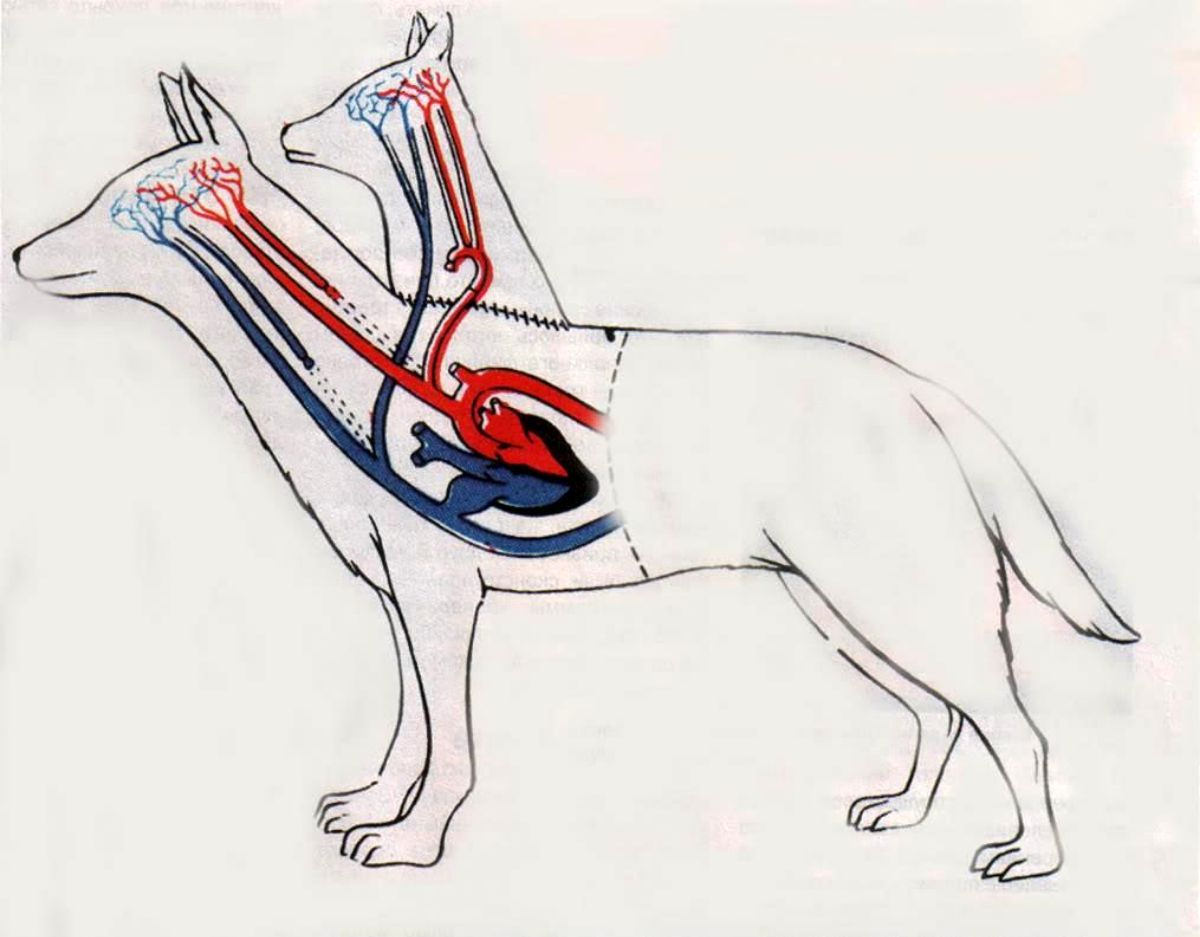
Before the surgery began, both dogs were anesthetized. The surgical team shaved the areas to be cut: Brodyaga’s neck and Shavka’s midsection. Demikhov and his team made an incision into Brodyaga’s neck, exposing the jugular vein, the aorta, and the cervical vertebrae. These were the structures that would need to connect to Shavka’s circulatory system.
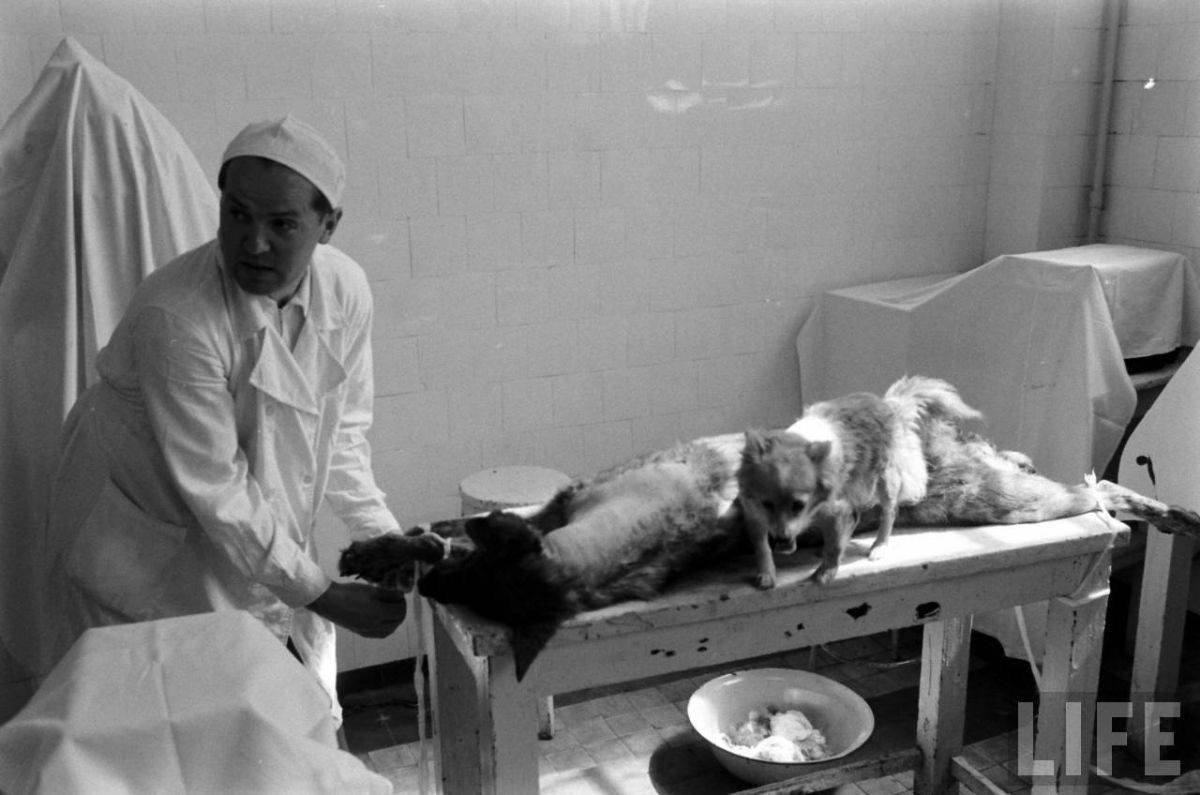
The procedure on Shavka was methodical and precise. Working layer by layer through her midsection, the surgical team connected her small blood vessels to Brodyaga’s. Shavka’s spine was severed just behind her shoulders, and her lower body was removed entirely. Her trachea and main blood vessels were then linked to Brodyaga’s lungs. In the final step, Shavka’s own heart and lungs were removed. From that point on, Brodyaga’s heart would pump blood through both of their bodies.
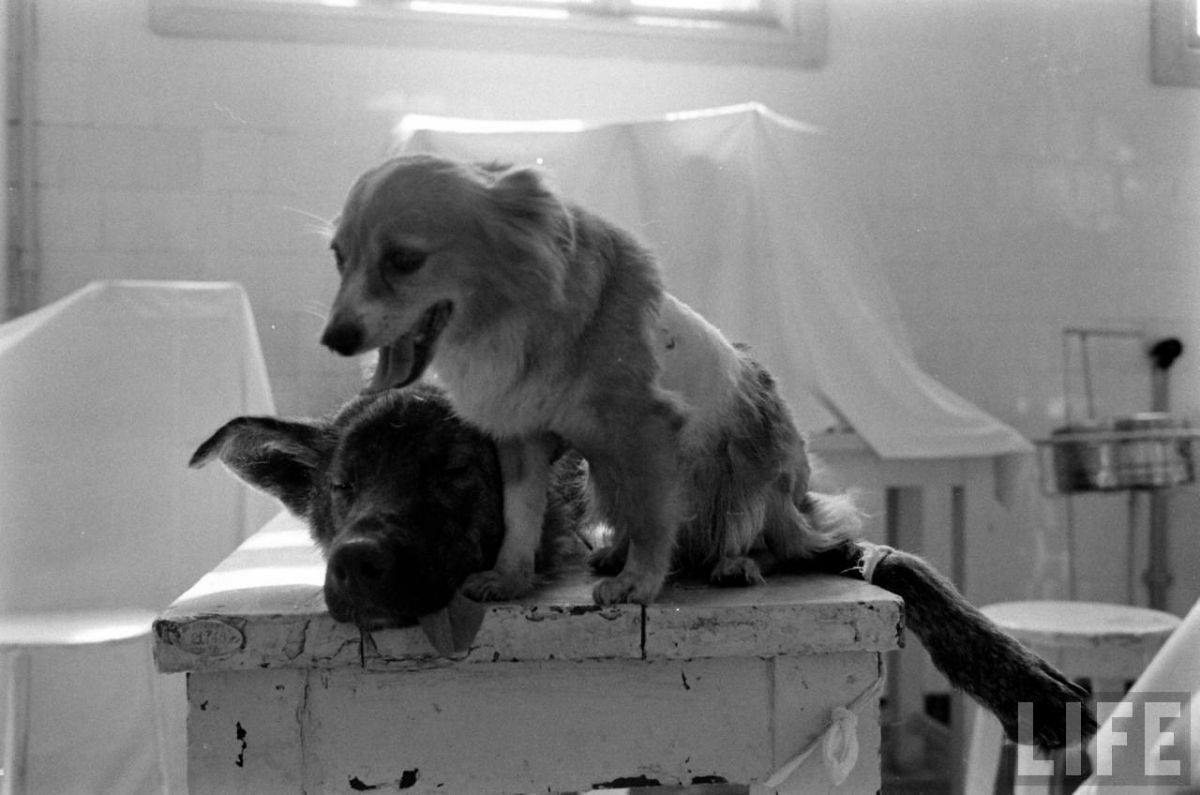
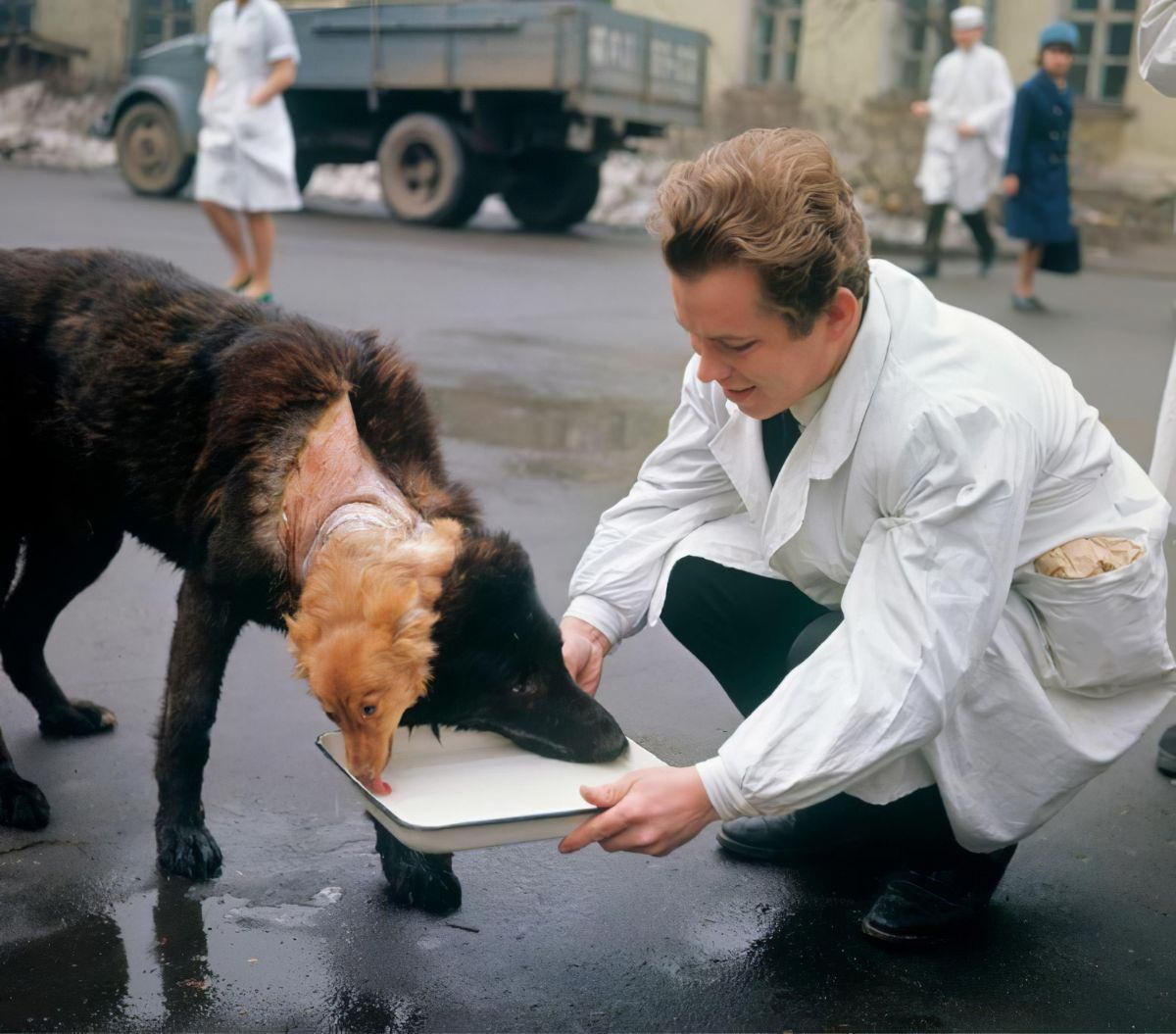
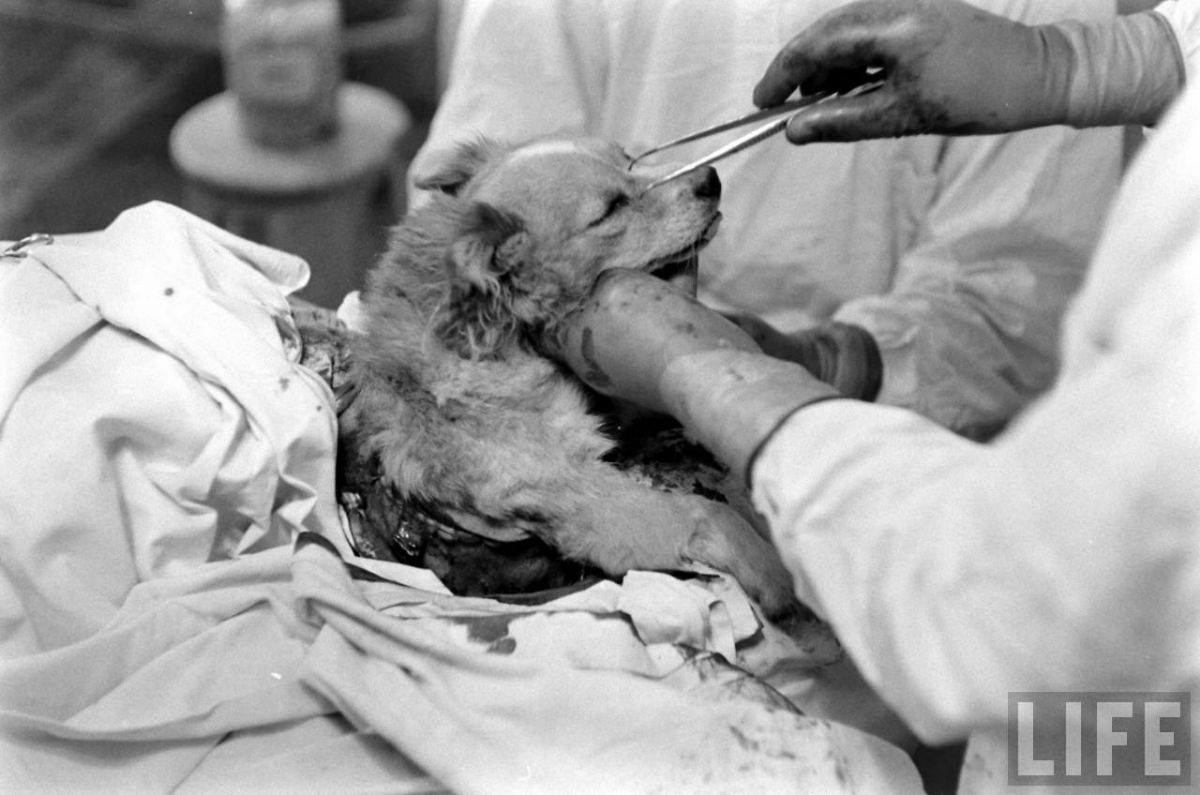
One detail stood out as particularly unusual even within this already extreme procedure. Shavka’s esophagus was not connected to Brodyaga’s stomach. It remained open, hanging outside their bodies. This meant that when Brodyaga lapped water from a bowl, the liquid ran down Shavka’s esophagus and out of her neck. Shavka received all of her nutrients and oxygen through Brodyaga’s bloodstream, not through eating or drinking on her own.
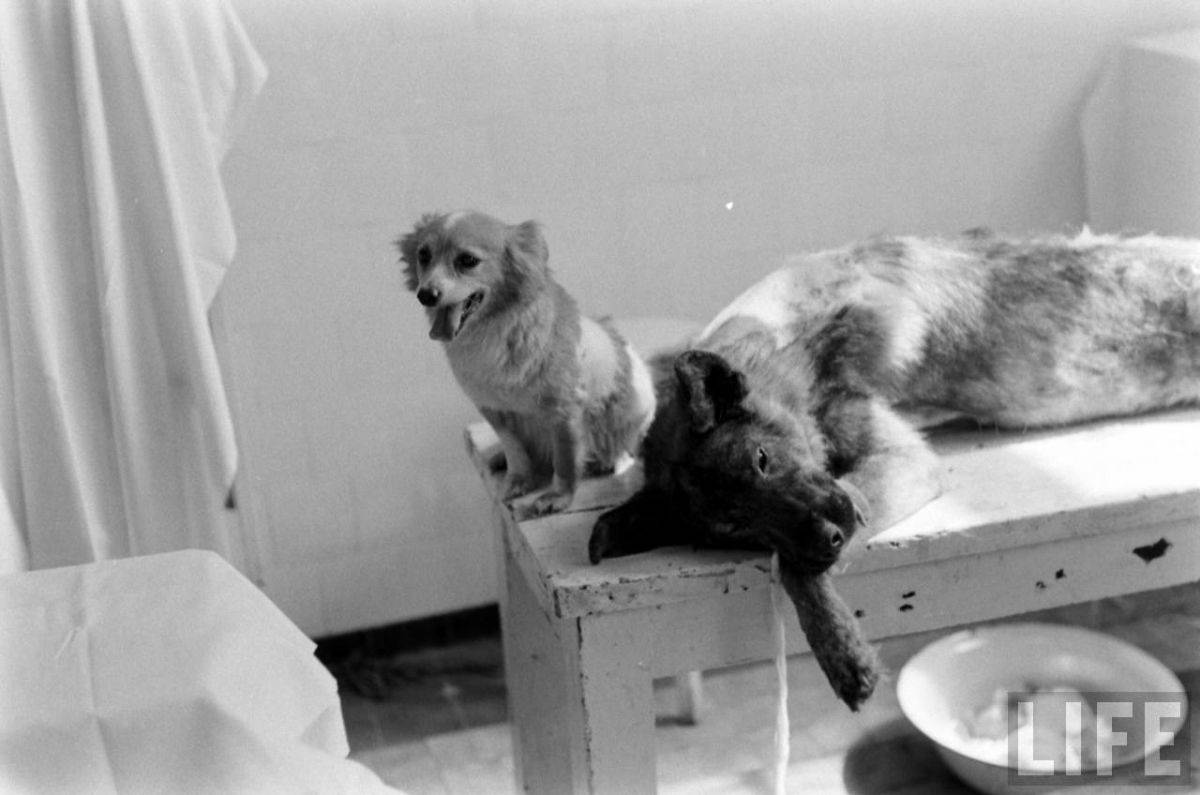
Both dogs regained consciousness after the surgery and were able to move. Brodyaga walked around the yard while Shavka’s head moved independently on his neck. The two animals did not always cooperate. Shavka bit Brodyaga’s ear on multiple occasions as he moved them around. Each head retained its own awareness and responded to its surroundings separately.
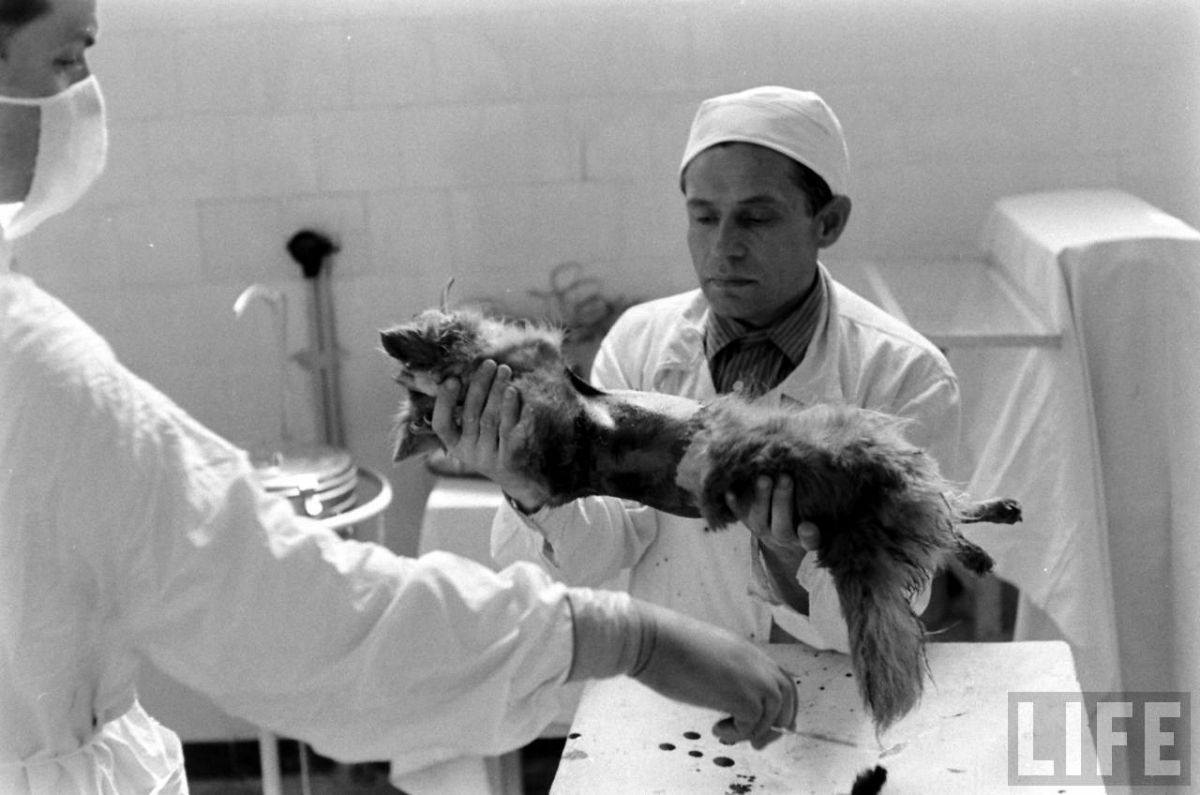
Despite the fact that both dogs were alert and mobile after the operation, Brodyaga and Shavka died four days after surgery. The cause of death was compression of the neck veins — the vessels became constricted, cutting off blood flow. This was the same fundamental problem Demikhov faced across many of his experiments. Even when the surgery itself went well, keeping the grafted tissue alive long-term proved to be an enormous challenge.
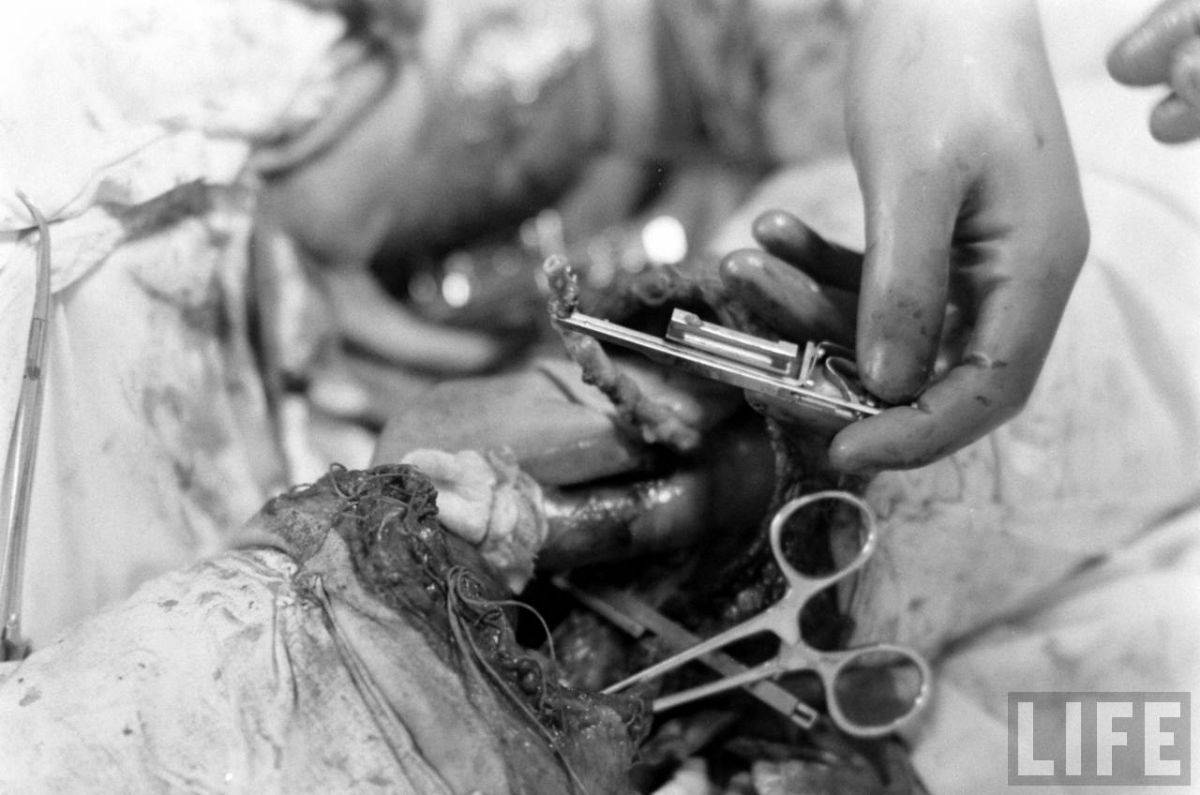
Tissue rejection was the most common cause of death across all 20 of Demikhov’s two-headed dog experiments. The immune system of the host dog would eventually recognize the grafted tissue as belonging to a different individual and begin destroying it. Today, patients who receive organ transplants are given immunosuppressive drugs that lower the immune system’s response and reduce the risk of rejection. These drugs did not exist in a practical, reliable form during Demikhov’s time.

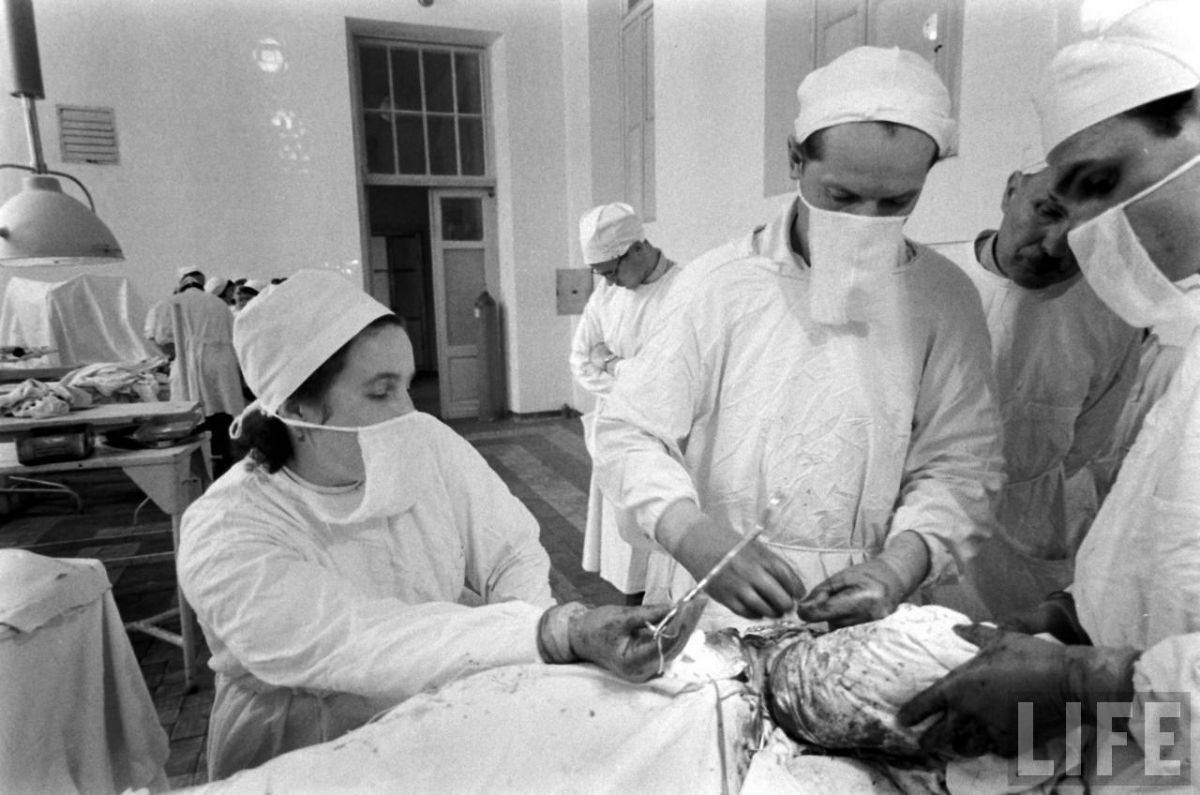
The two-headed dog experiments were not the only radical surgery Demikhov performed. His broader body of work included heart transplants, lung transplants, and combined heart-lung transplants — nearly all conducted on dogs. He developed techniques and gathered data that surgeons around the world would later build upon when performing transplants in human patients. South African surgeon Christiaan Barnard, who performed the world’s first human heart transplant in 1967, visited Demikhov’s lab twice and credited him as a major influence.
Demikhov’s two-headed dog experiments have since been discussed in the context of human head transplantation. Some researchers and surgeons have argued that grafting a human head onto a donor body is a surgical possibility — specifically as a potential option for people who are quadriplegic and have no function in their own body below the neck. The core challenges remain the same ones Demikhov encountered: immune rejection, vascular connection, and — in the human case — spinal cord reconnection, which no surgeon has yet achieved.
The experiments carried out in Demikhov’s laboratory were a product of a scientific era when animal testing was the primary method for exploring the boundaries of surgery. Dogs were used extensively because their cardiovascular systems share enough similarities with humans to make the results medically relevant. Across his career, Demikhov used hundreds of animals to test procedures that had never been attempted before.
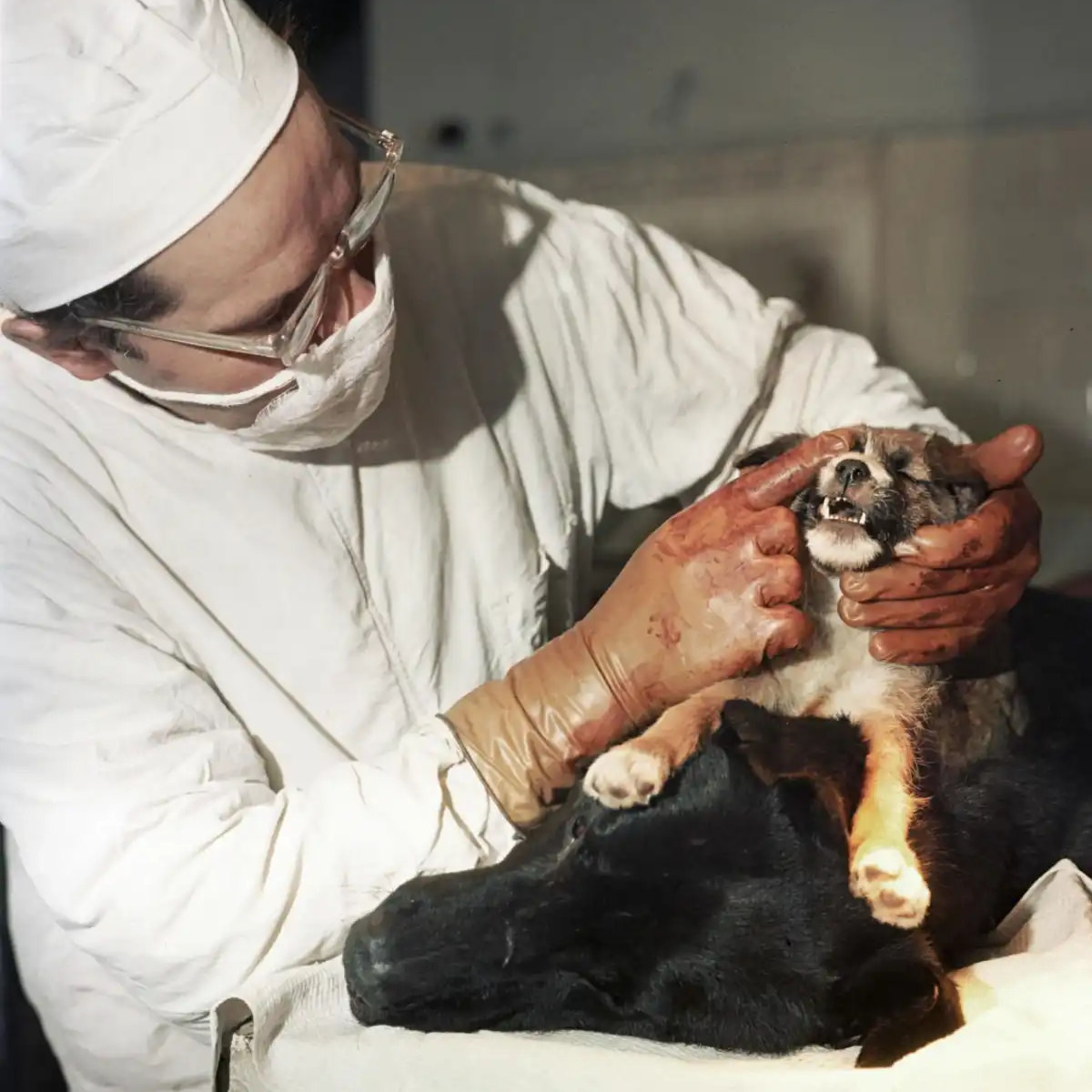
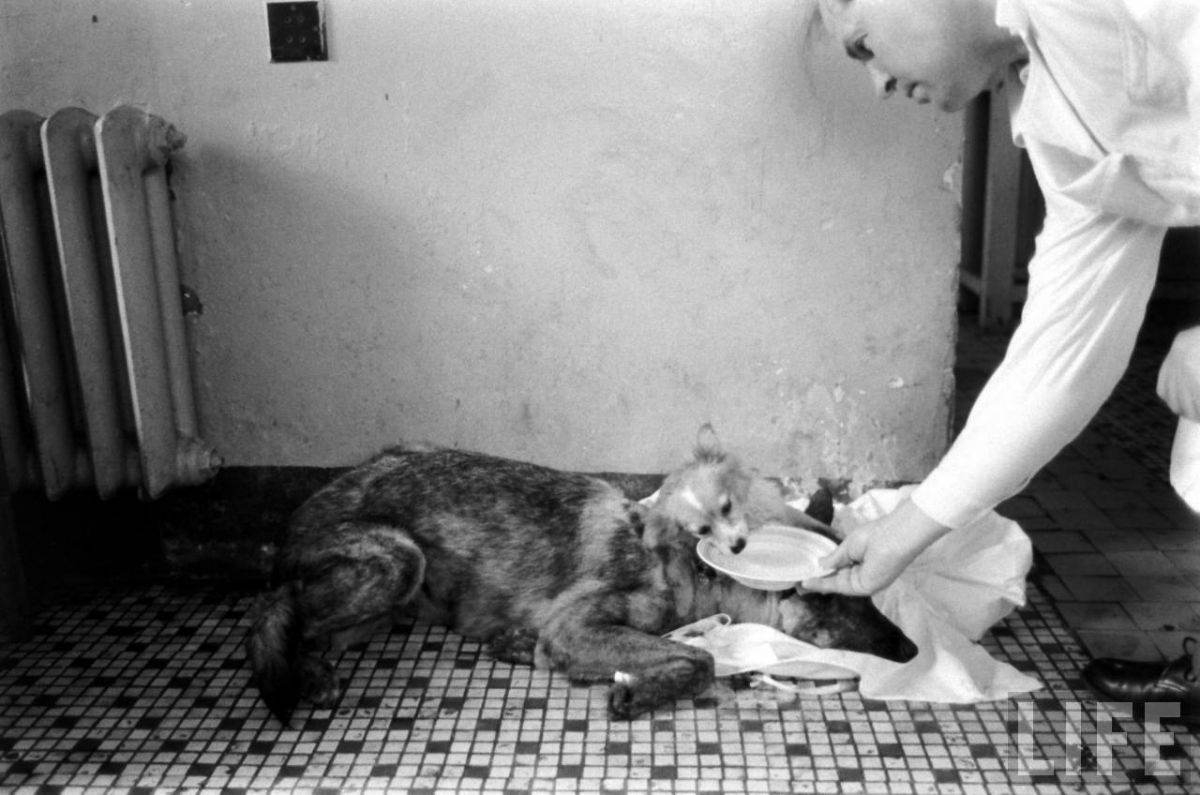
The 1959 LIFE magazine documentation brought Demikhov’s work to a global audience that had previously known nothing about it. The photographs taken during and after the procedure showed both dogs alert, with Shavka’s head visibly attached to Brodyaga’s neck, both sets of eyes open. The images were stark and unsettling, and they sparked debate far outside the Soviet Union about the ethics and limits of experimental surgery.
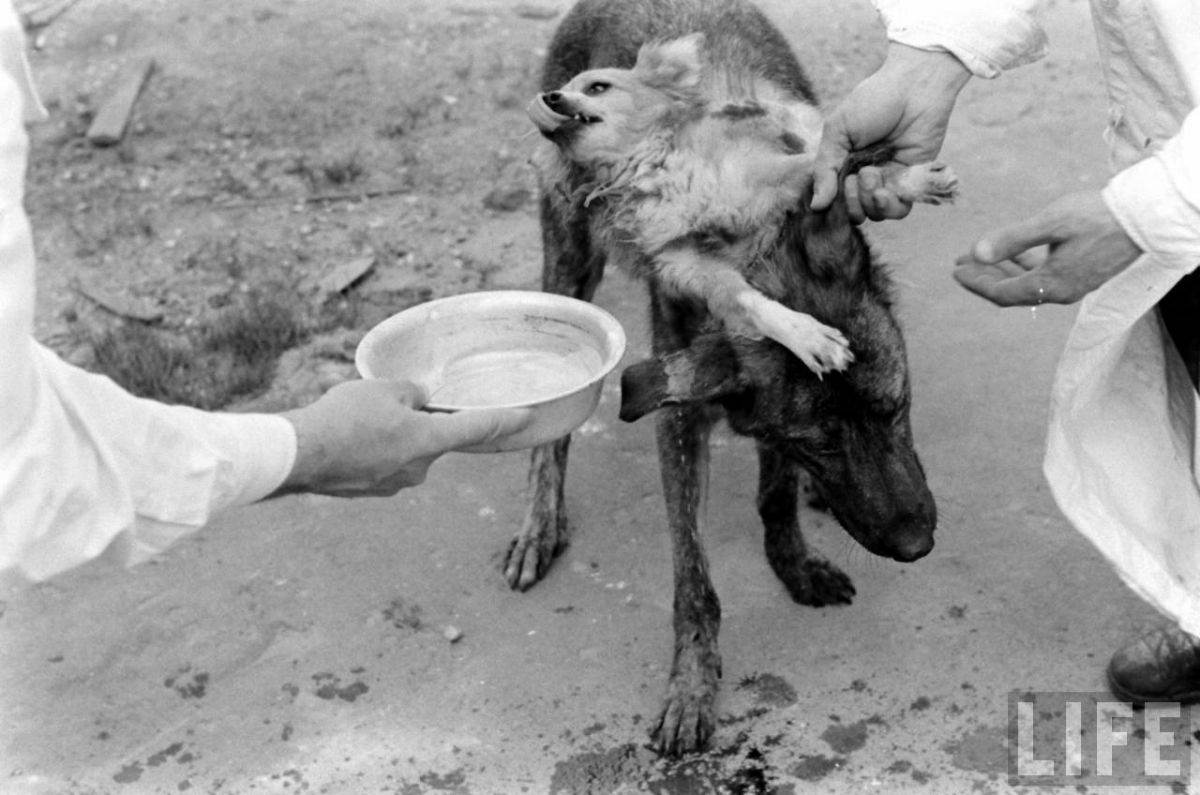
Vladimir Demikhov operated in a field where no established rulebook existed. The surgeries he performed on dogs — including the two-headed experiments — gave the medical world a map of what the circulatory system could withstand and how transplanted organs could be connected to a new host. The two-headed dog experiment, as disturbing as it appeared to outside observers, was a direct extension of that larger mission: to find out how far surgical science could go and what the body could survive.