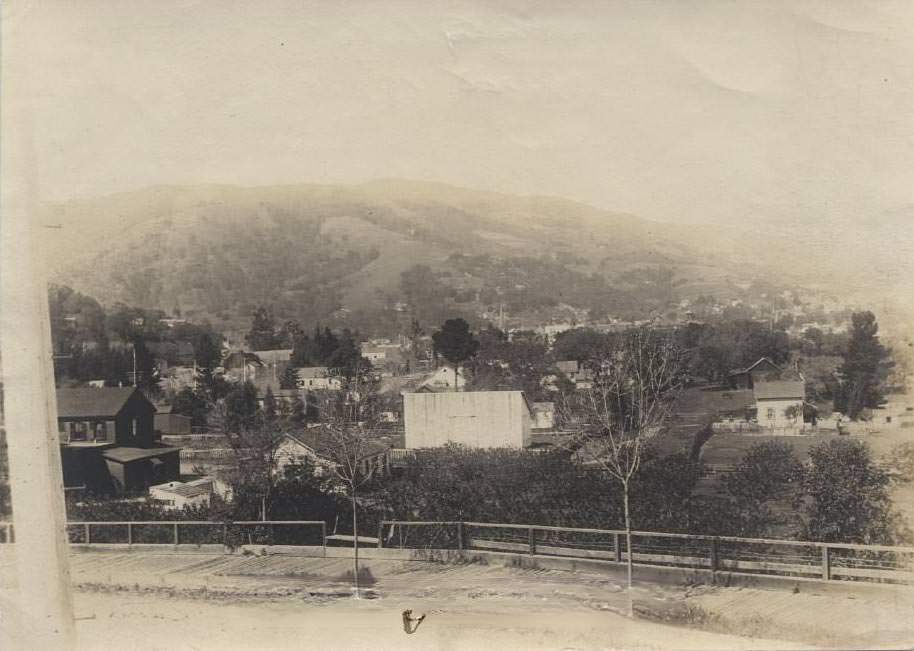
At the turn of the 20th century, San Jose was a city of about 21,000 people surrounded by orchards and open farmland. It was the agricultural and commercial heart of the Santa Clara Valley, built around finance, retail, manufacturing, and services. The streets were a mix of horse-drawn carriages, early electric streetcars, and the occasional automobile just starting to appear on the scene. Grand hotels, churches, schools, and civic buildings lined the downtown blocks, giving the city a polish that surprised many visitors expecting a rural outpost.
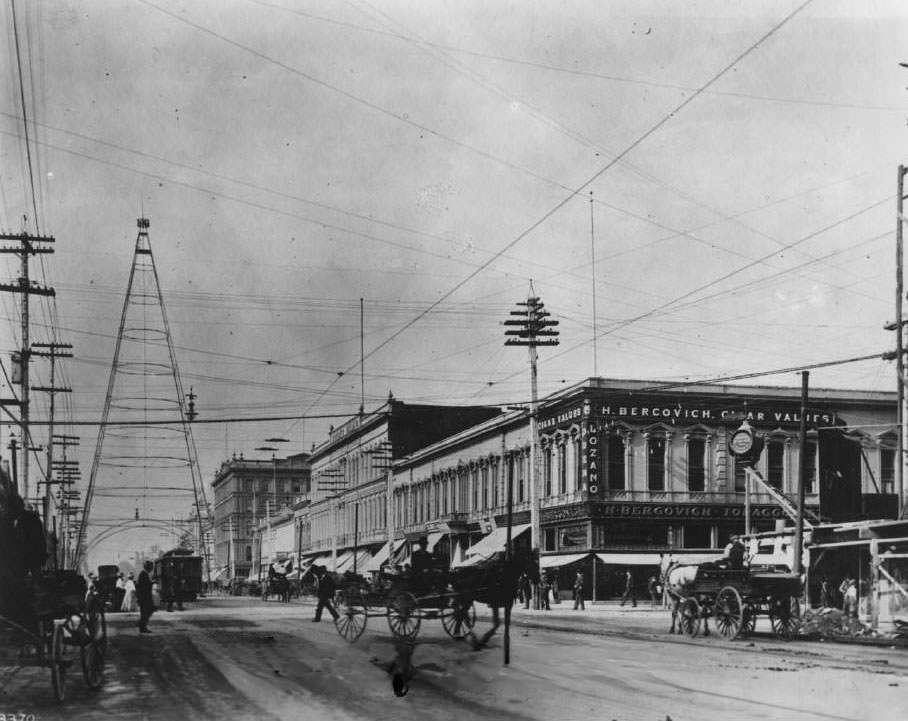
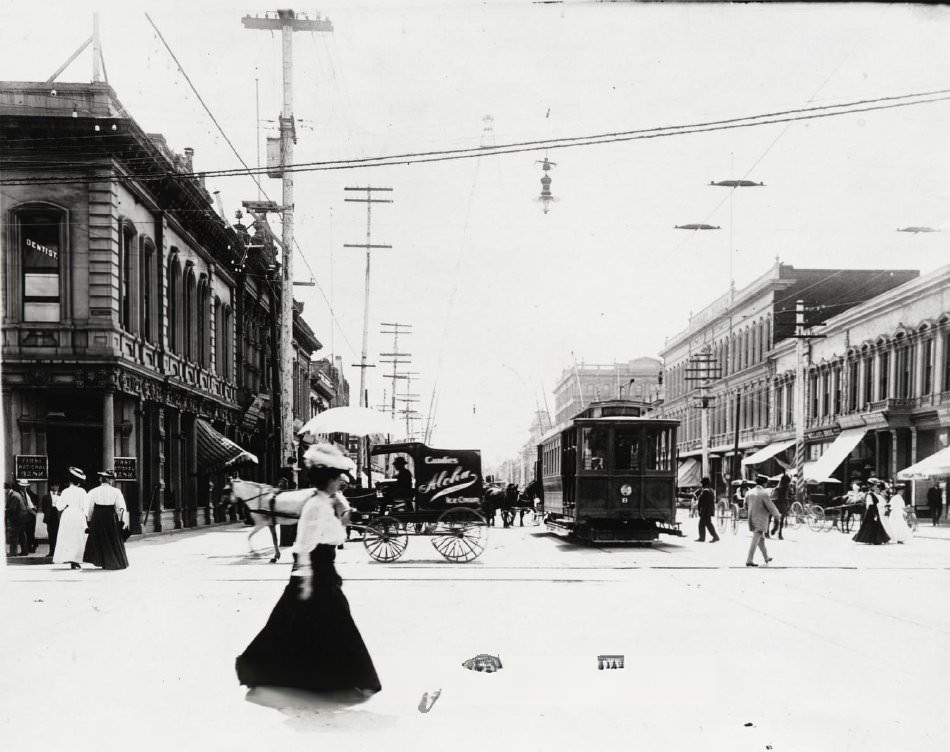
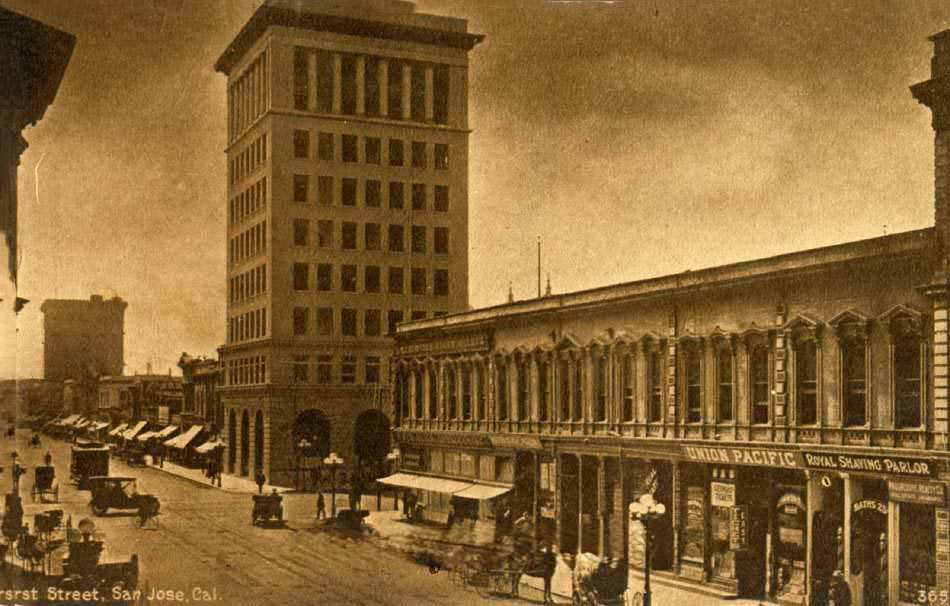
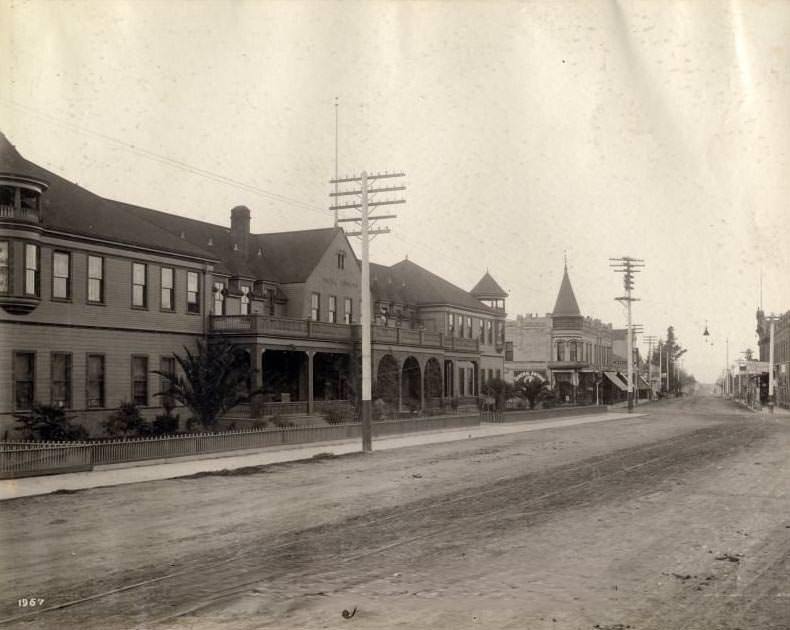
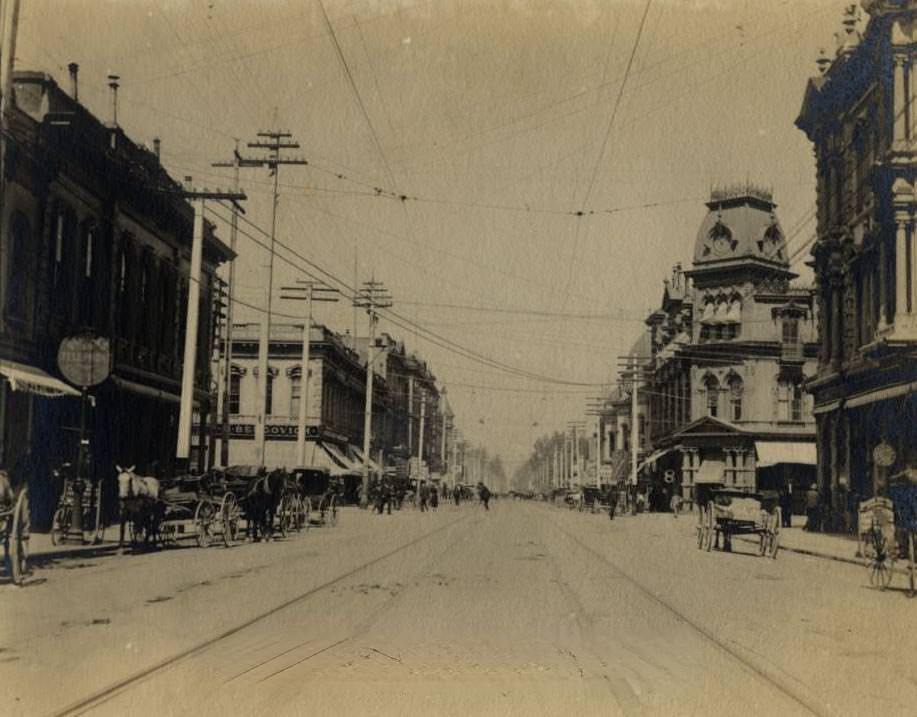
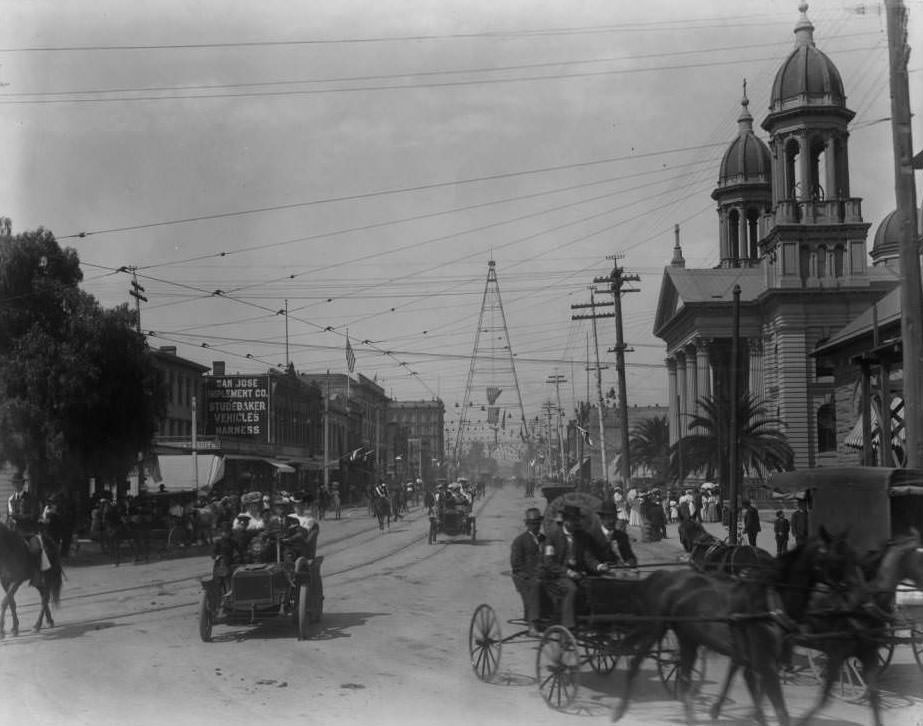
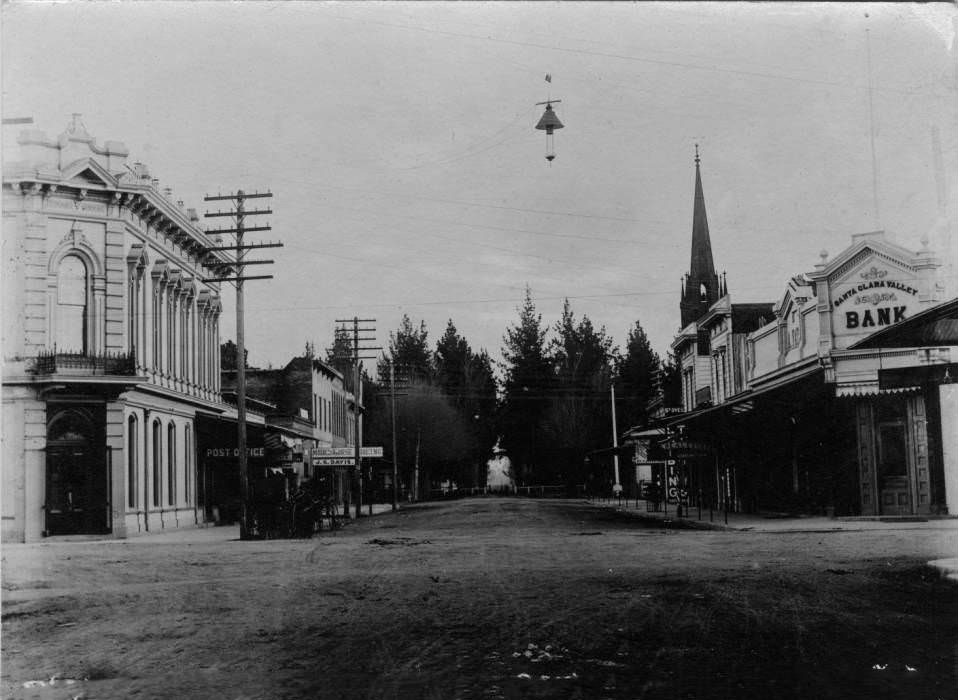
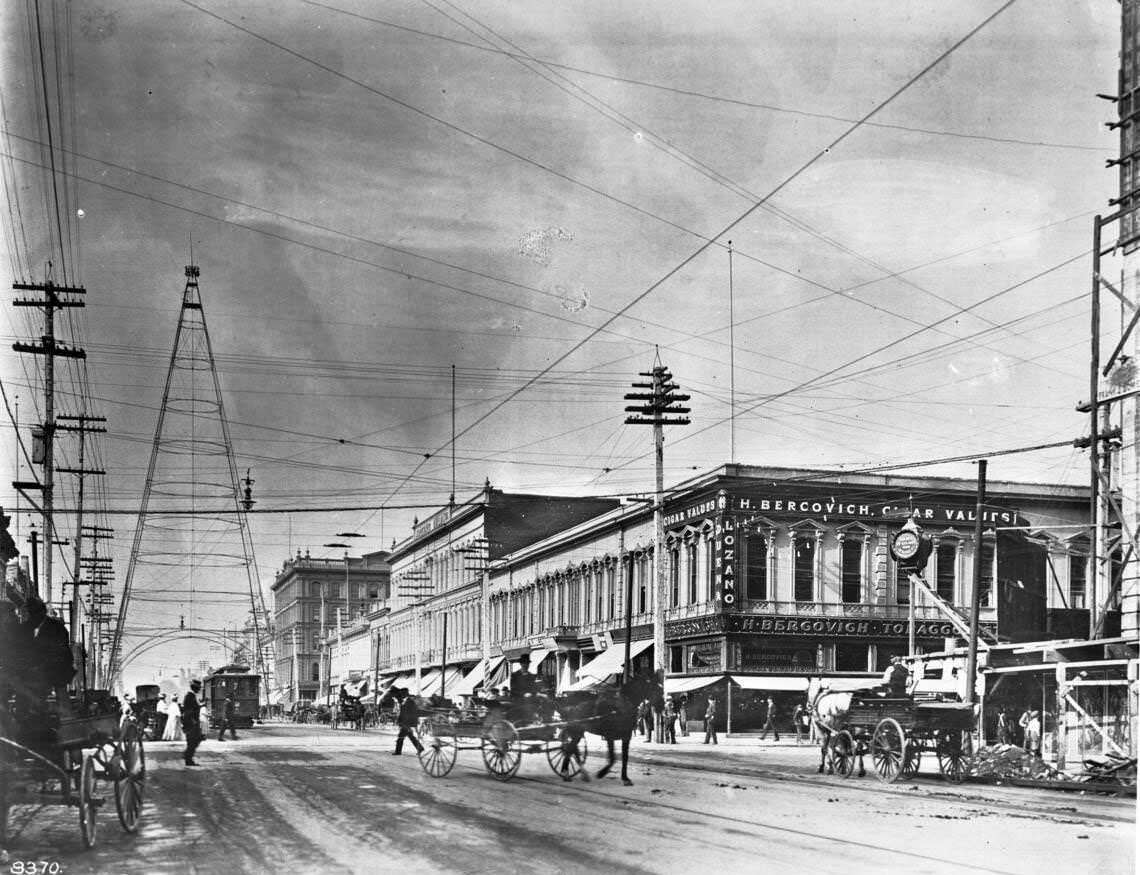
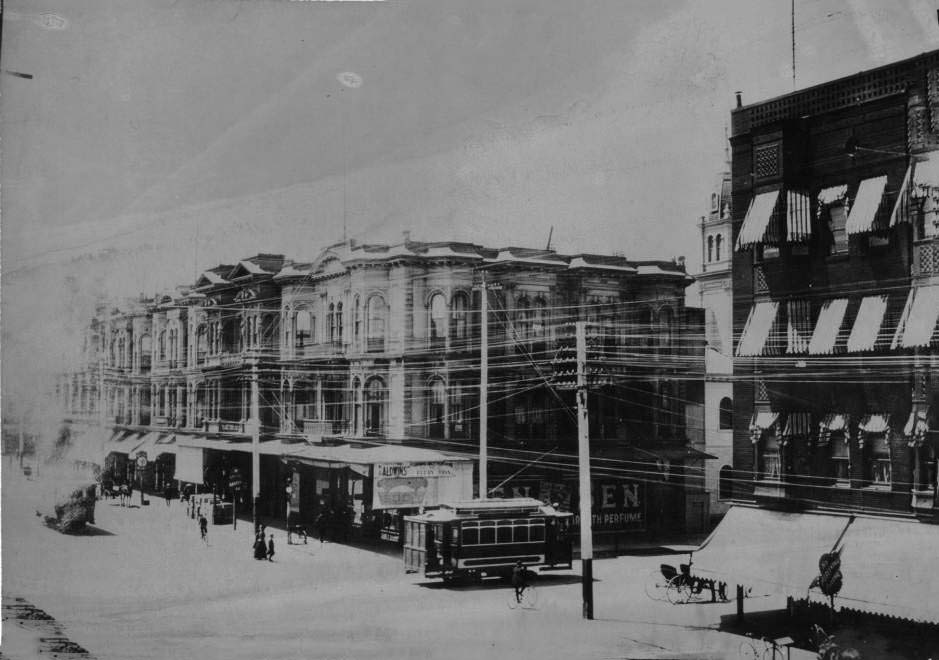
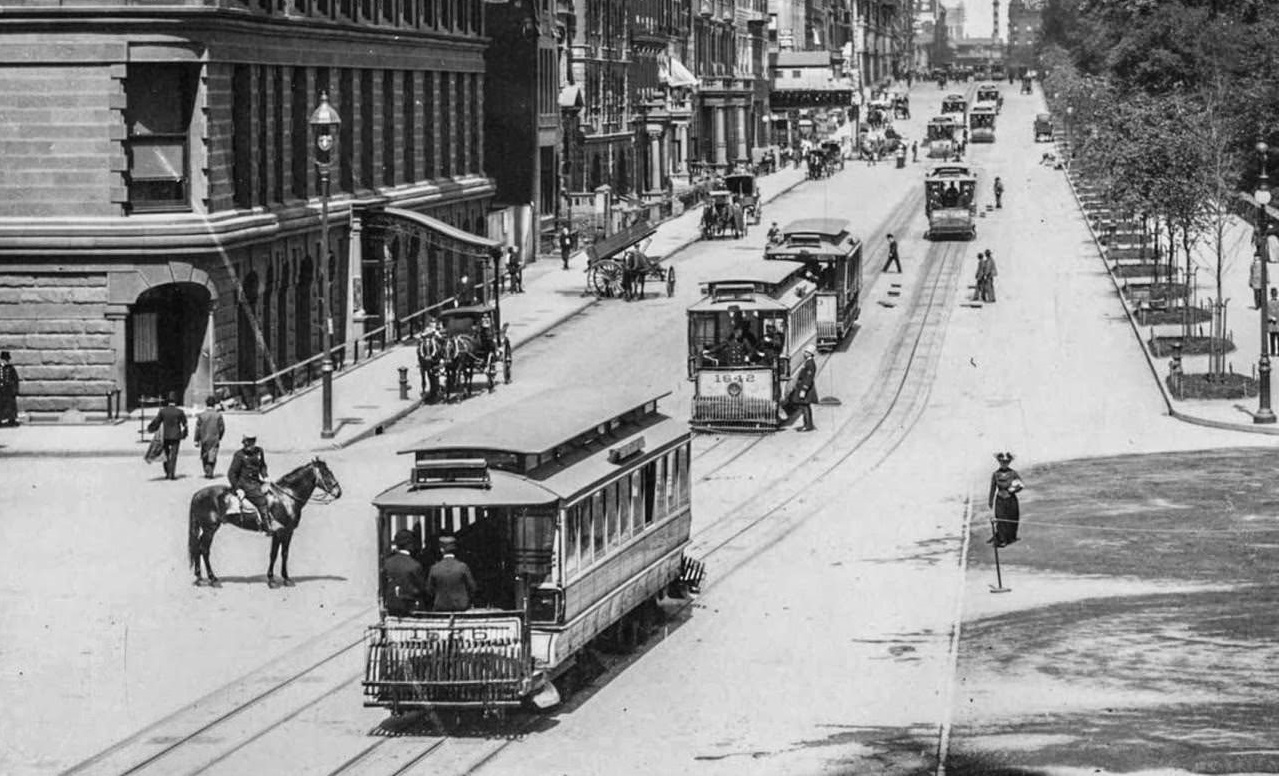
Santa Clara Street, San Jose, 1905
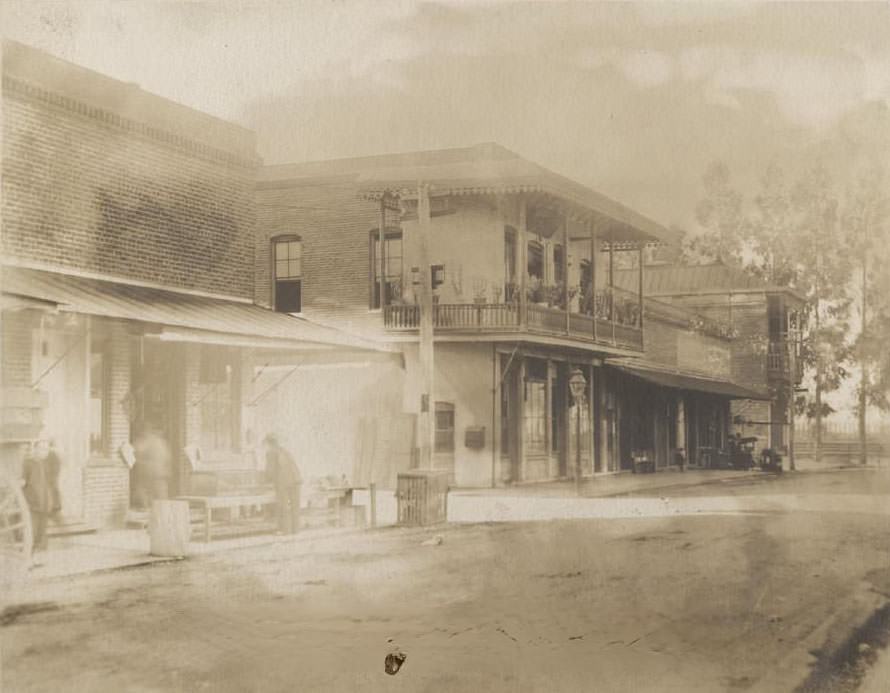
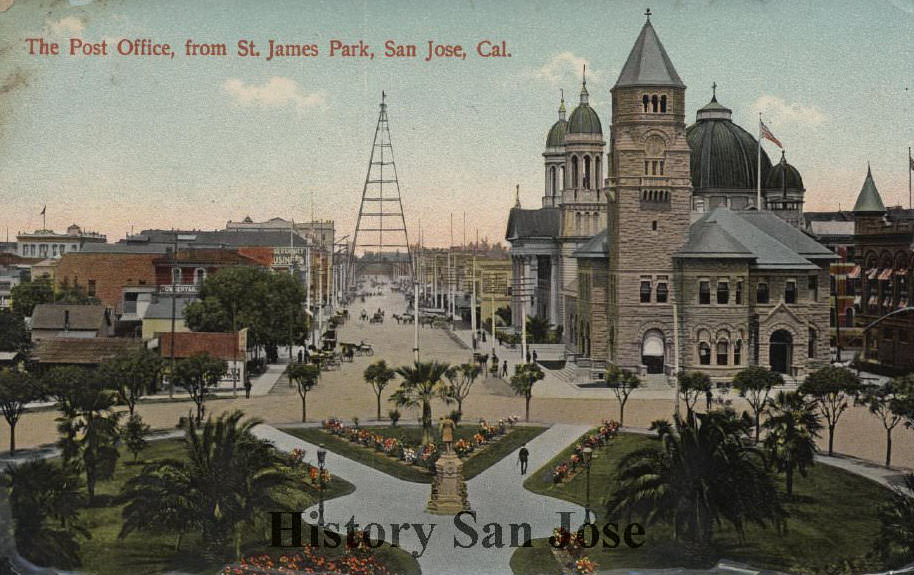
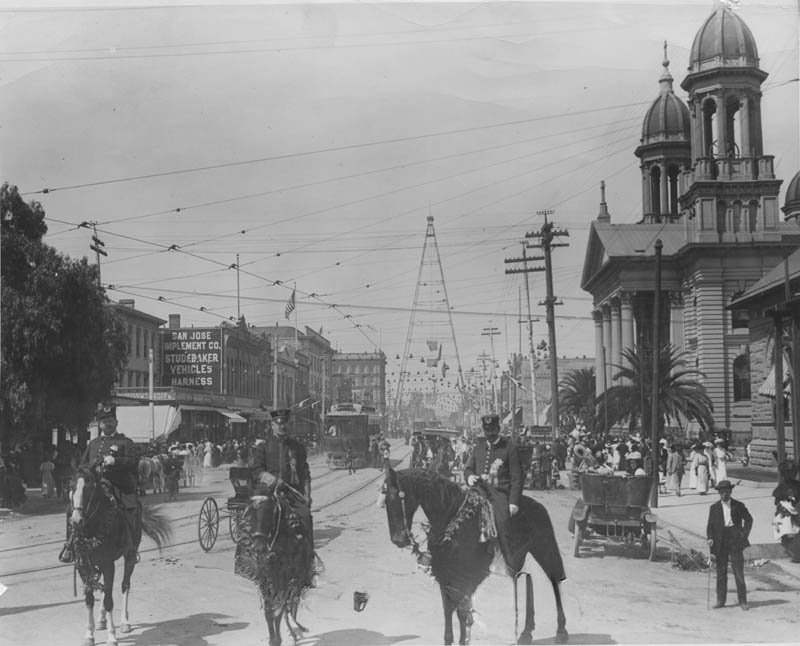
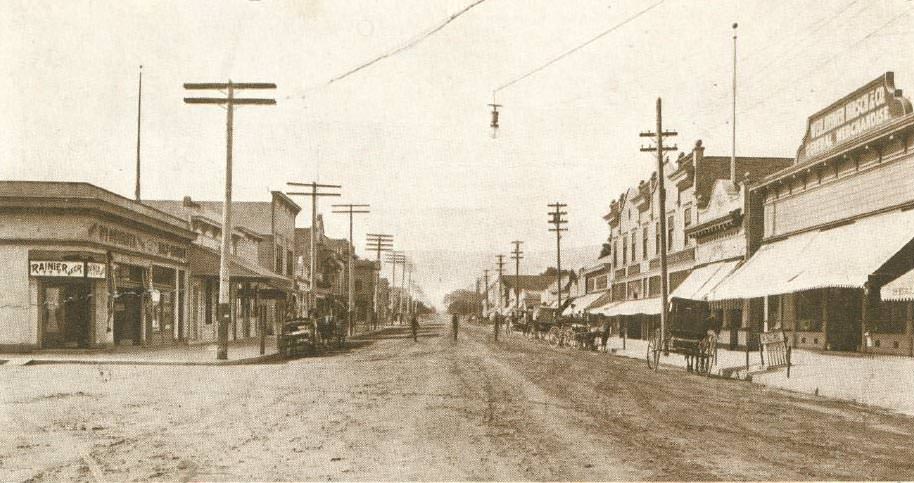
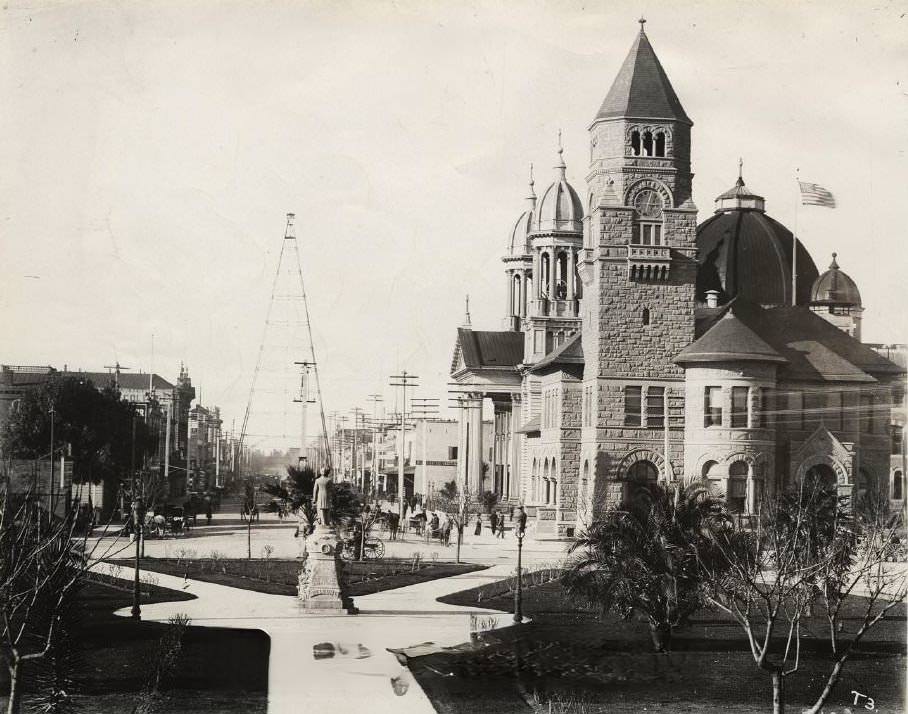
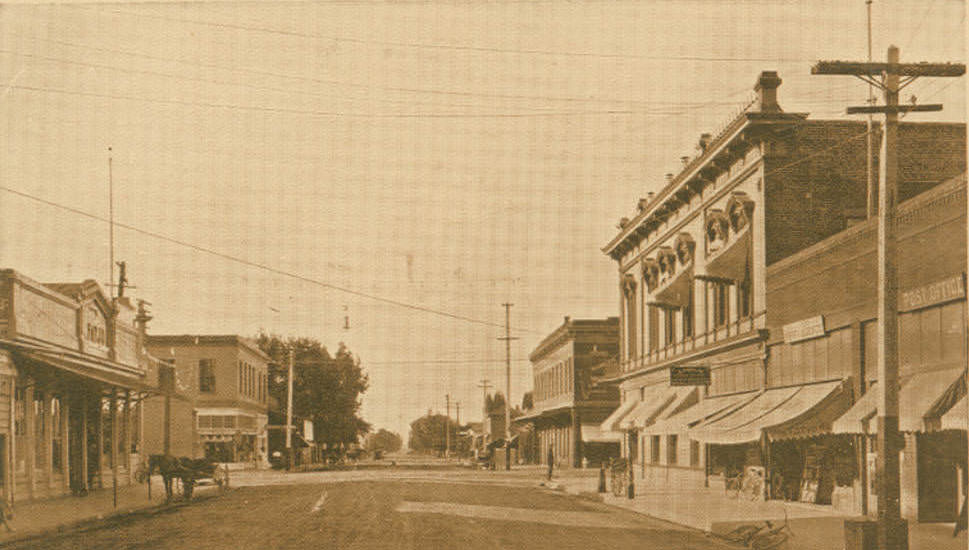
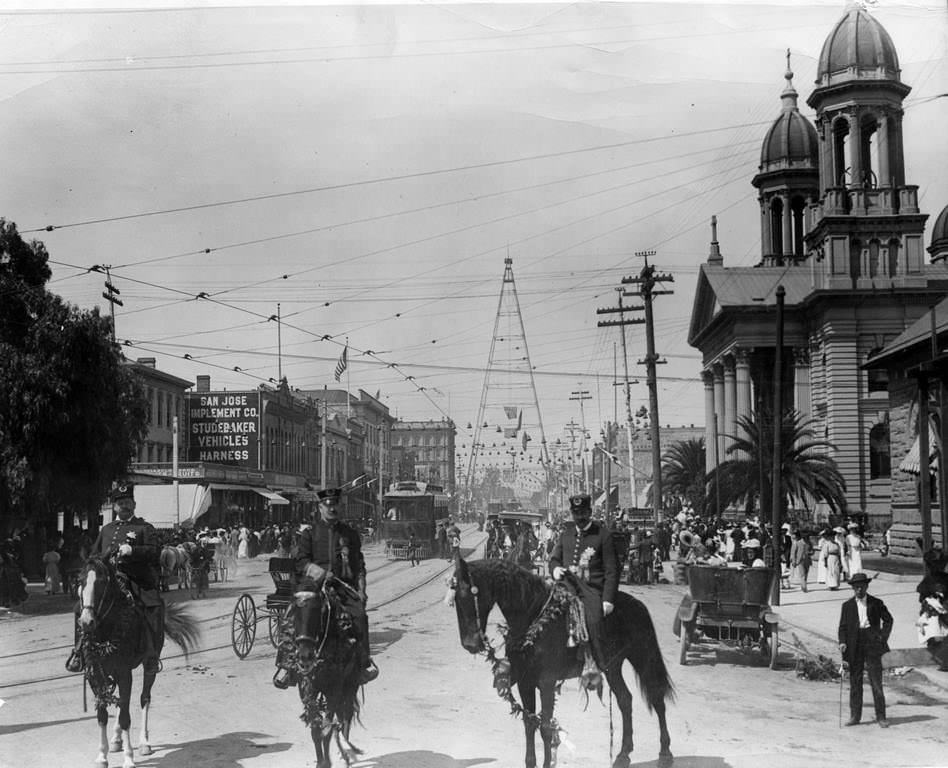
Santa Clara Street was one of the city’s main commercial corridors, lined with storefronts, hotels, and the tracks of the electric streetcar system. In 1881, the city erected a 237-foot electric light tower at the intersection of Market and Santa Clara Streets — a landmark that stood until 1915. Wooden streetcars rolled through the downtown grid, and by the 1920s they would be replaced by newer Birney cars. But in these early years, the city still had the feel of a place finding its footing between its agricultural roots and modern ambitions.
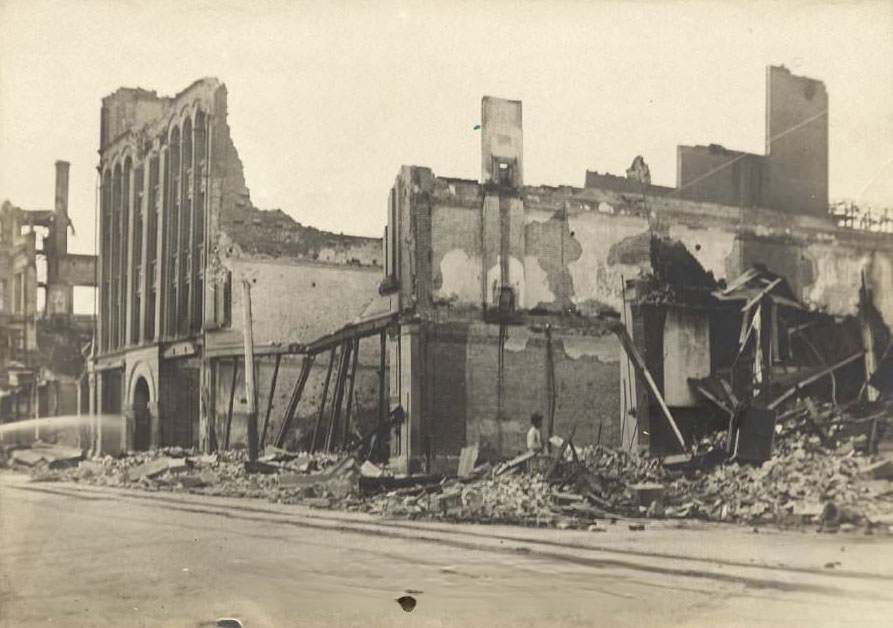
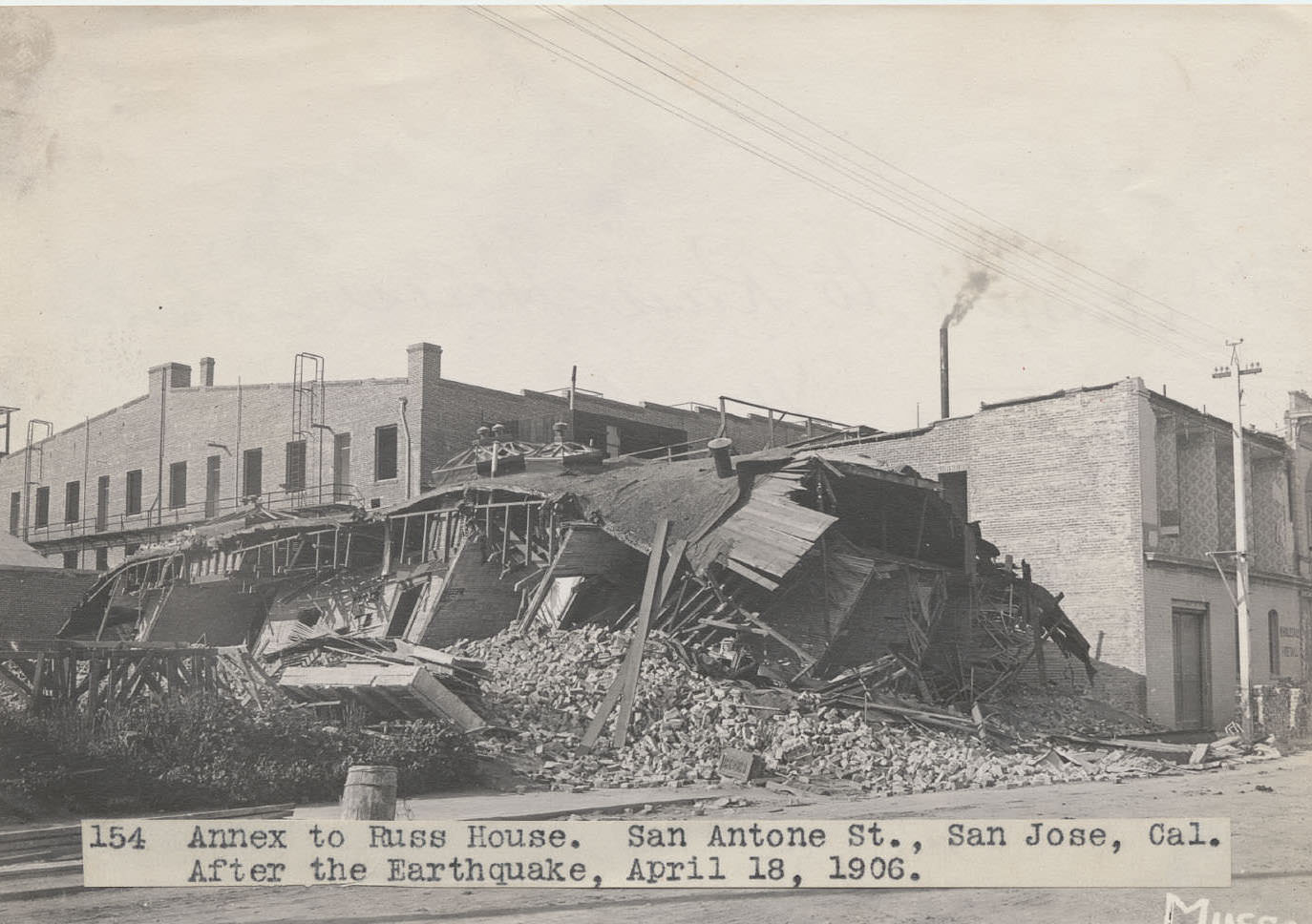
San Fernando & Second Street, San Jose, 1906Annex to Russ House, San Jose, 19062nd Street, 1906
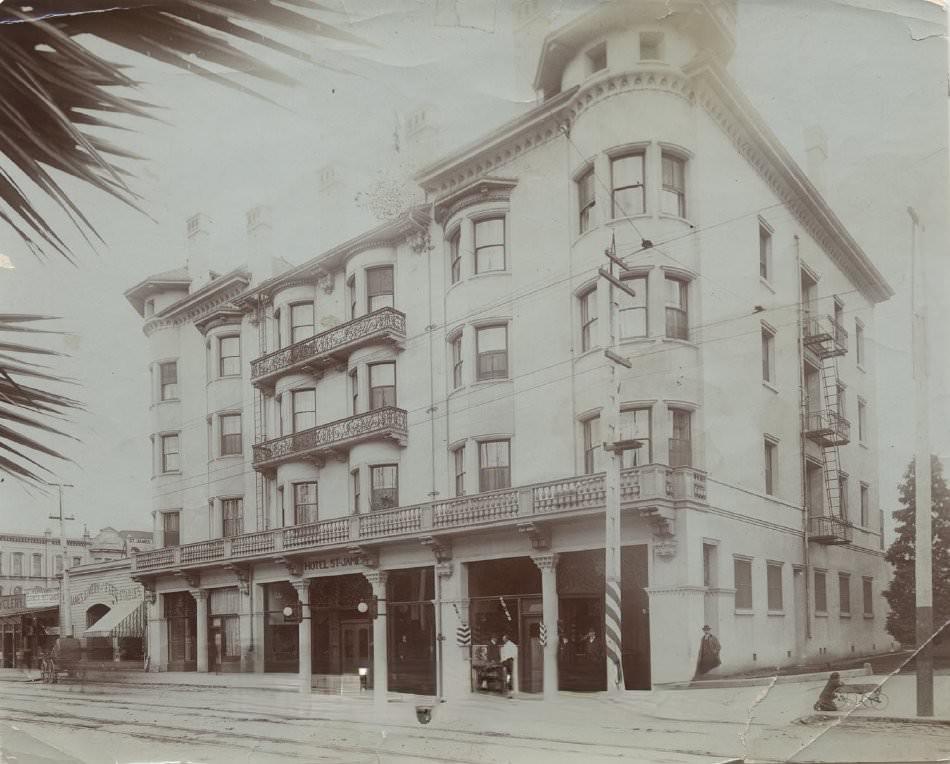
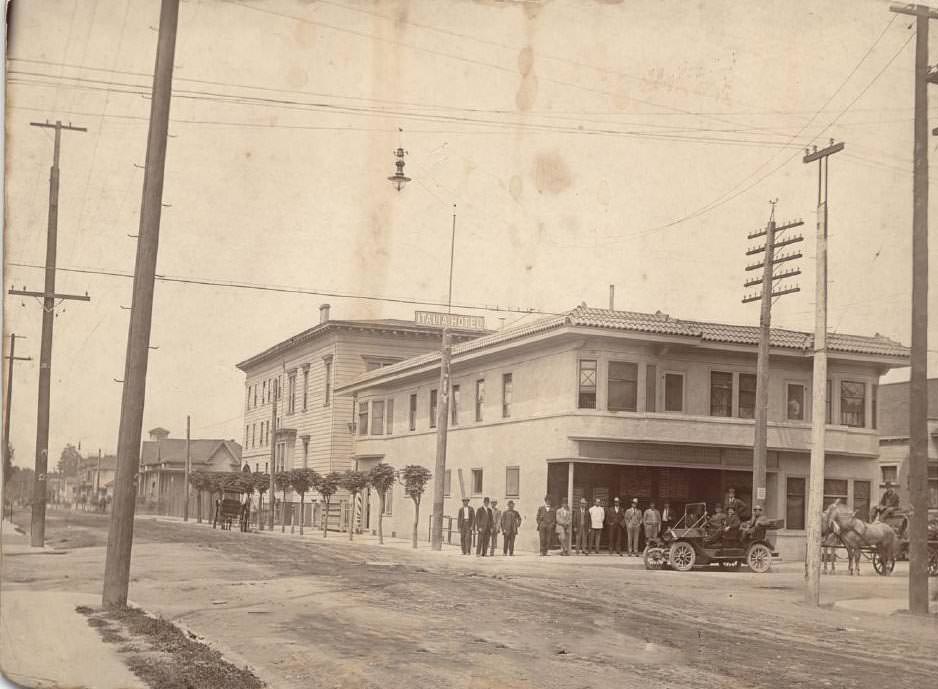
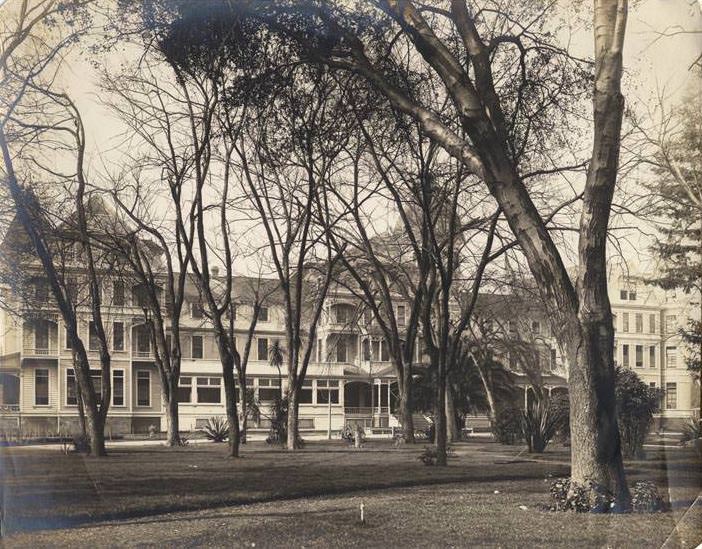
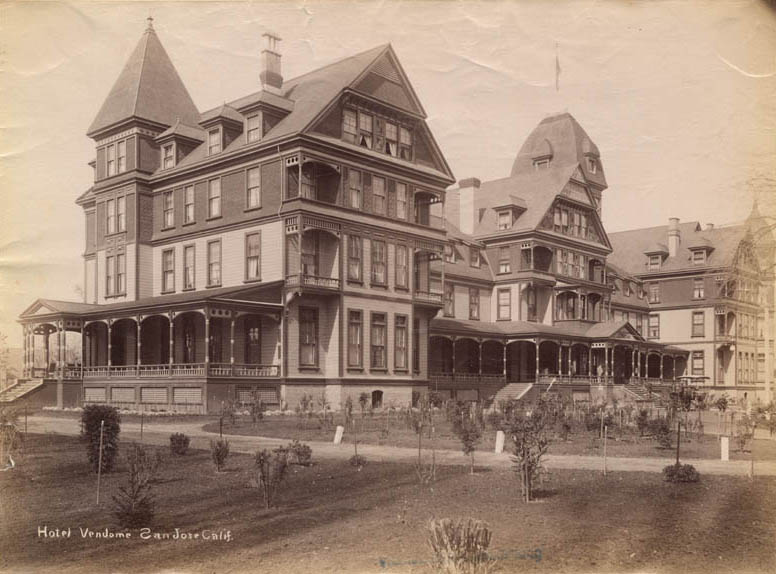
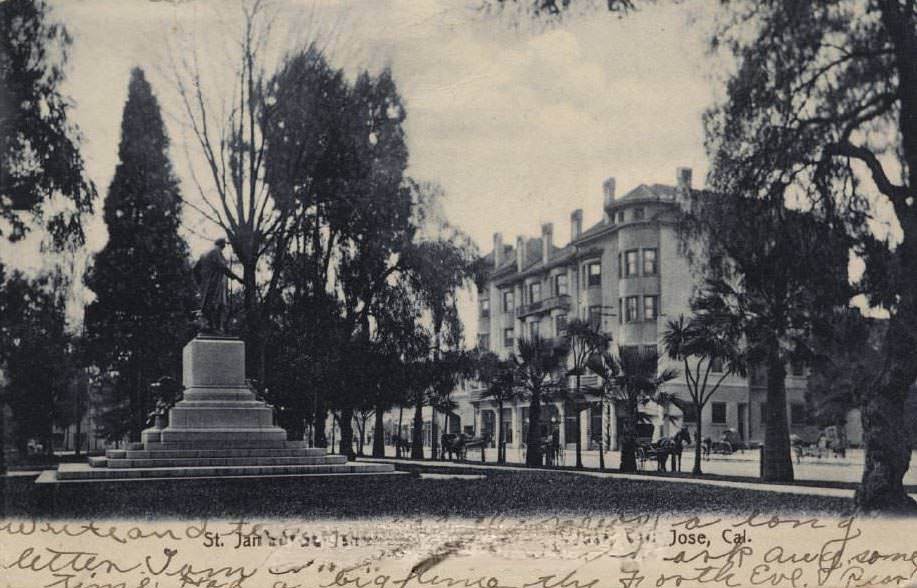
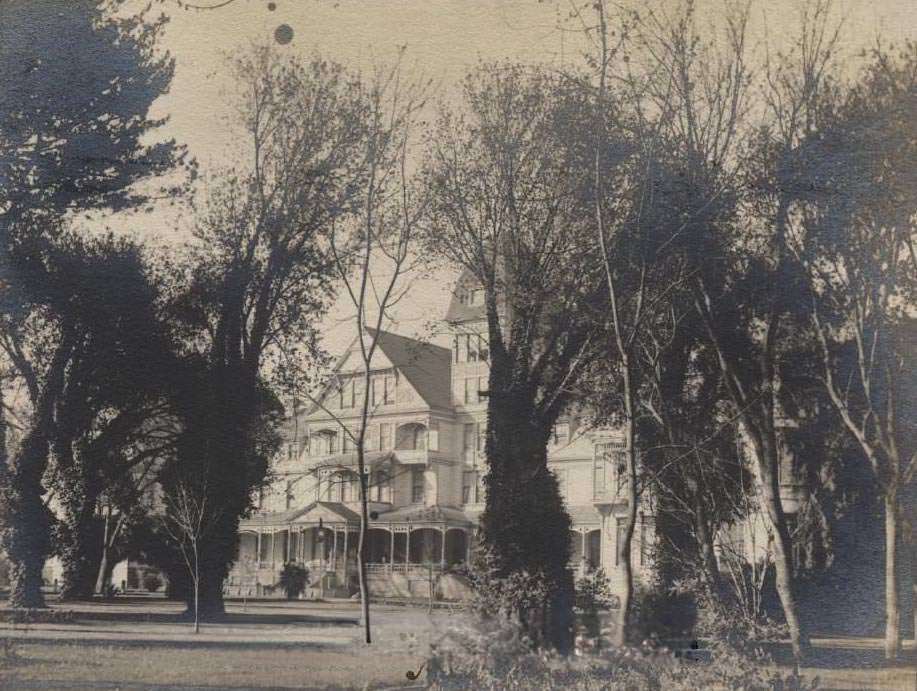
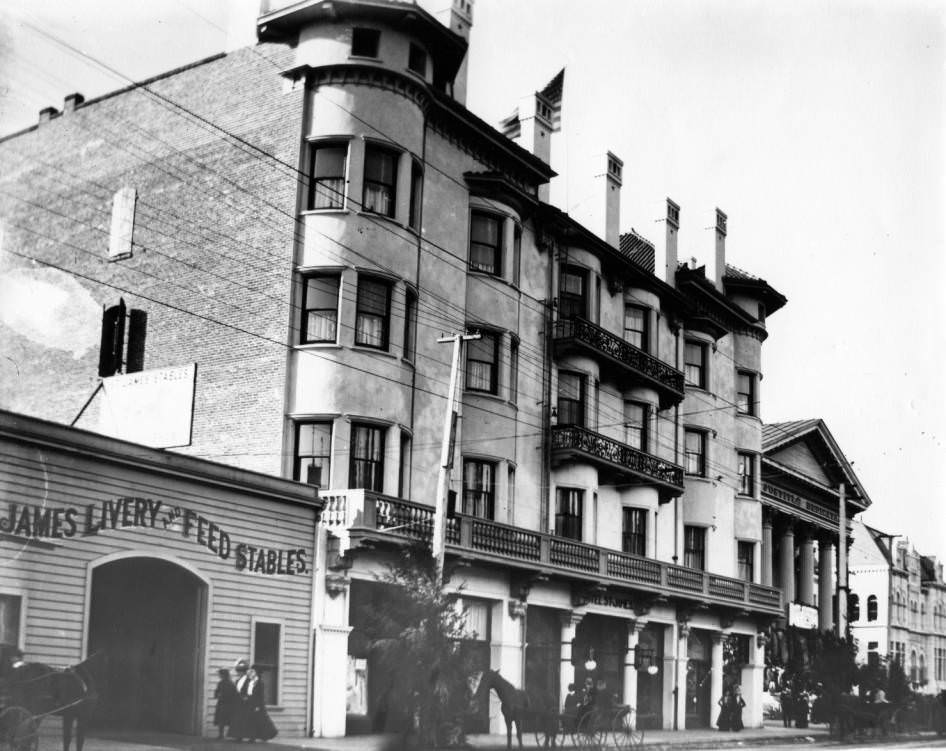
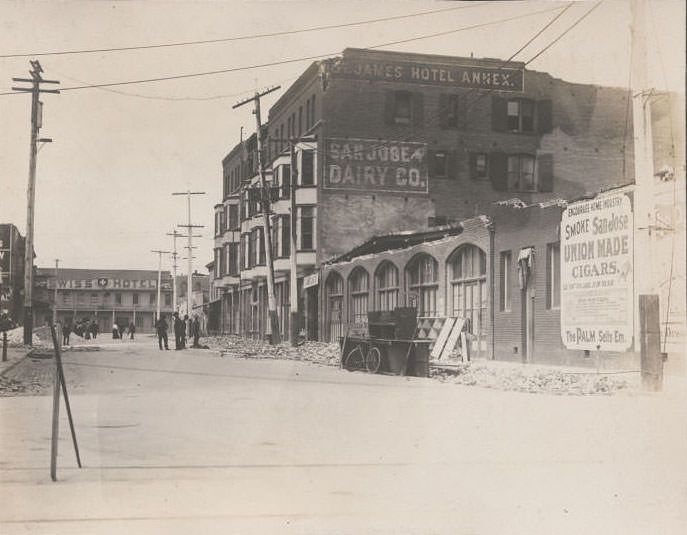
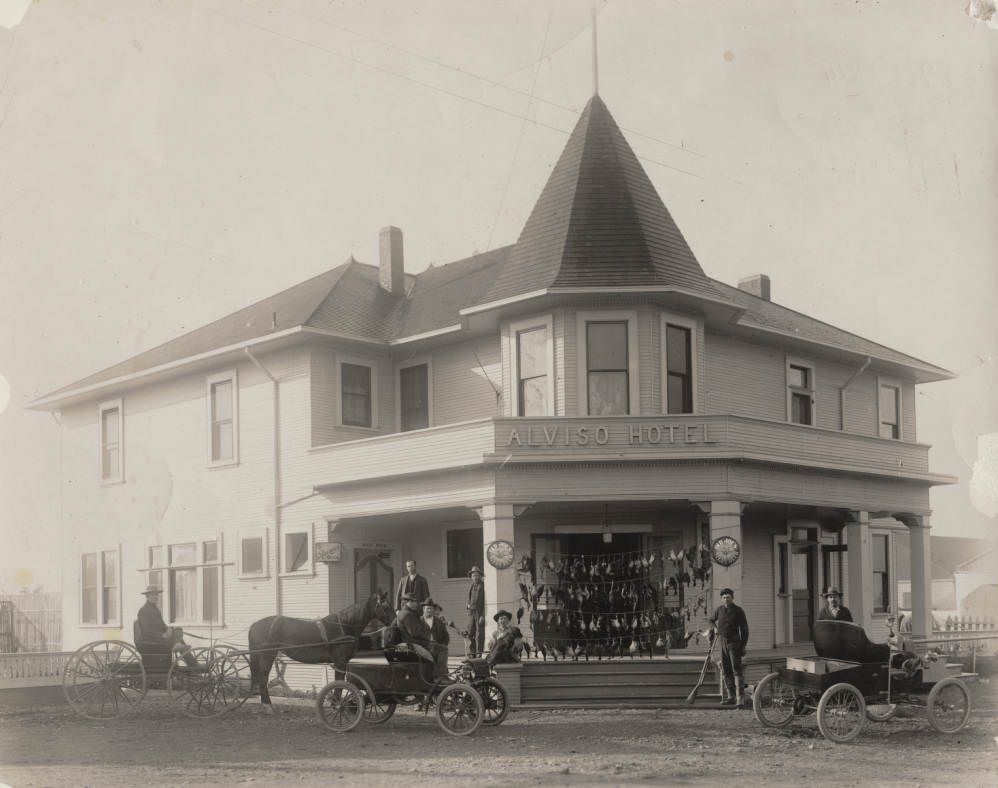
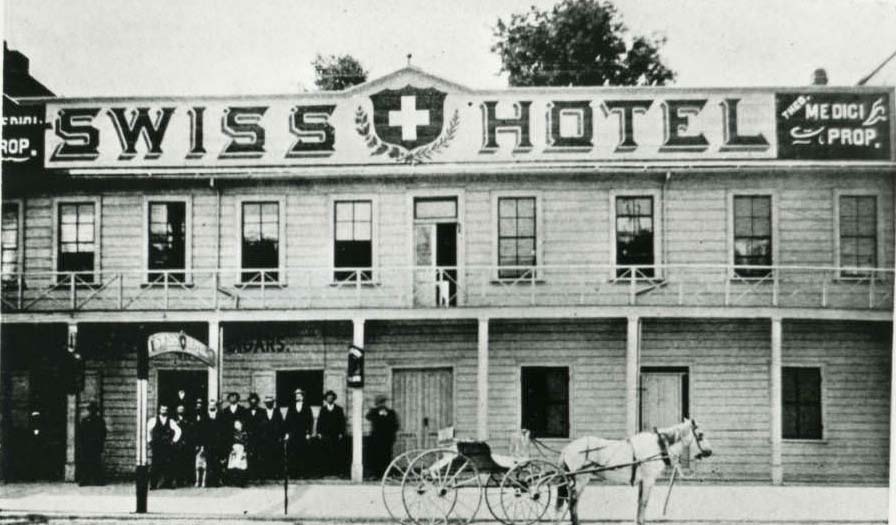
Hotels played a central role in the city’s social and commercial life. The Hotel Vendome, opened in 1889, stood on First Street near Empire. It was a three-story redwood structure featuring three towers and expansive grounds with gardens and a circular drive. The Saint James Hotel, opposite St. James Park on North First Street, was another landmark. It was flanked by livery stables and the Santa Clara County Courthouse, giving that corner of the city a distinctly civic character. The Italia Hotel and the Swiss Hotel — established in 1855 — added to the variety of lodging options available across downtown.
Photo from the Von Dorsten family album. Chinatown, San Jose, 1906Trinity Episcopal Church, 1902San Jose High School, 1903
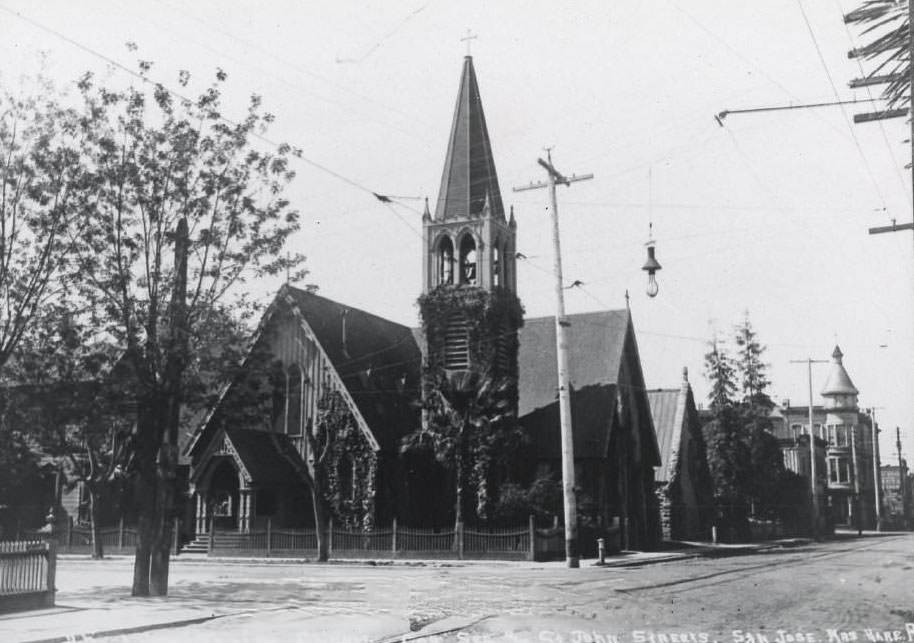
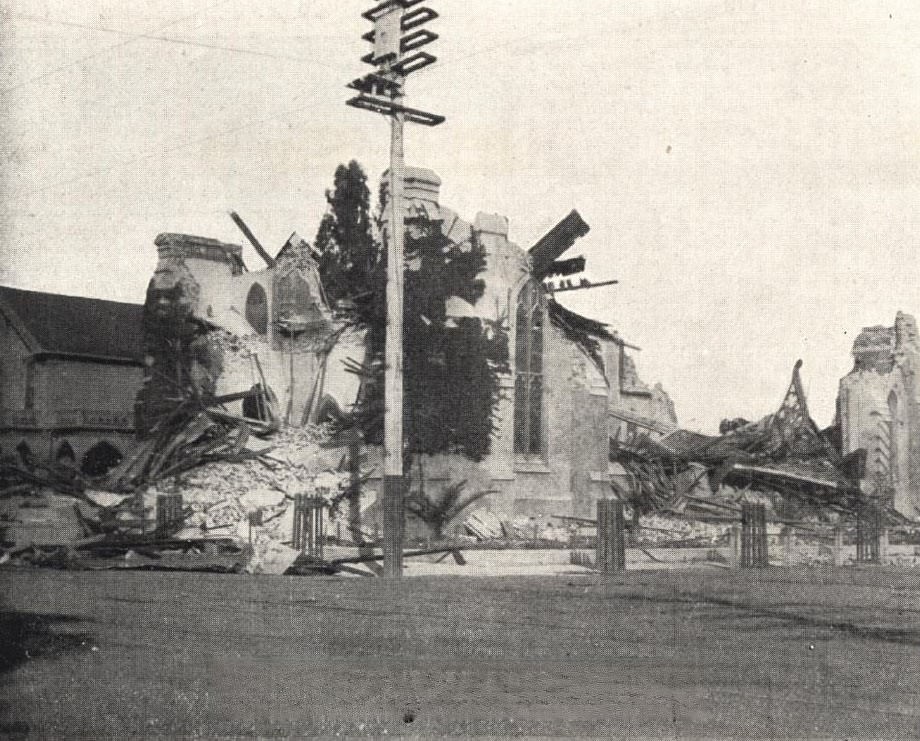
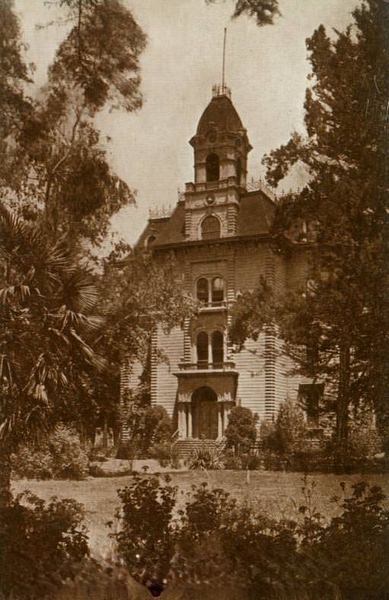
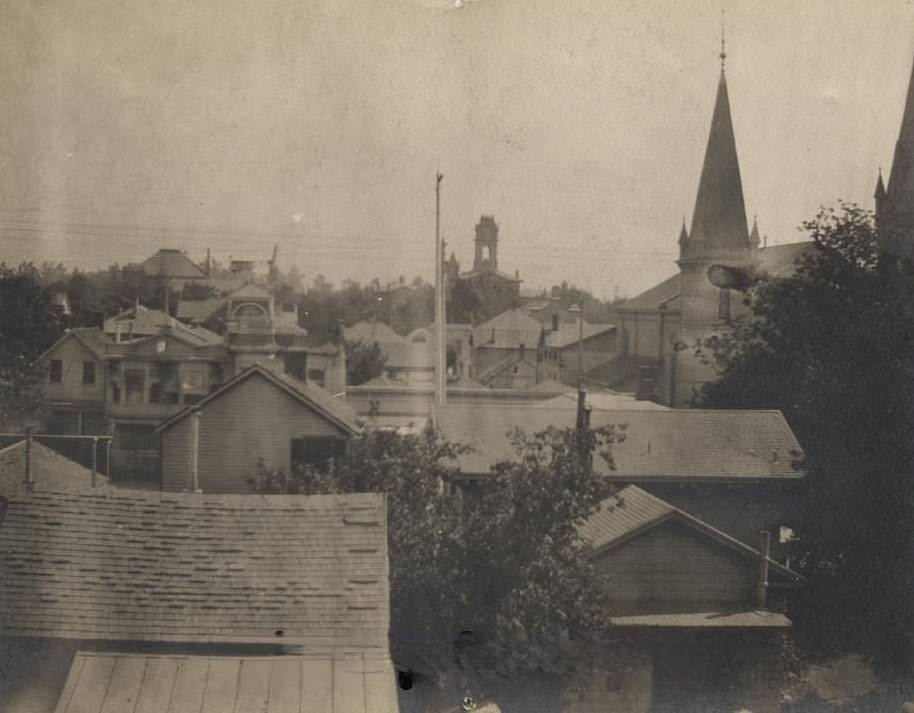
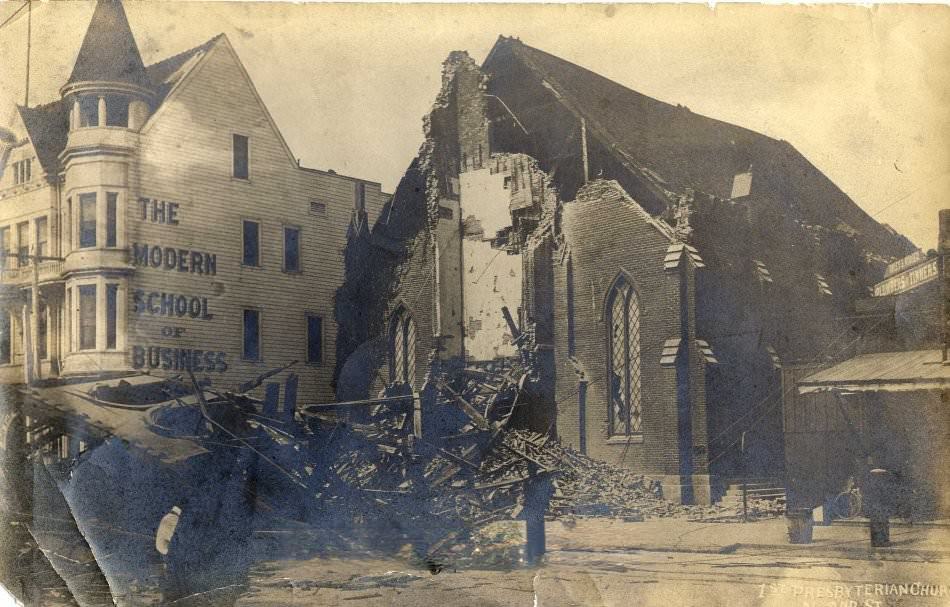
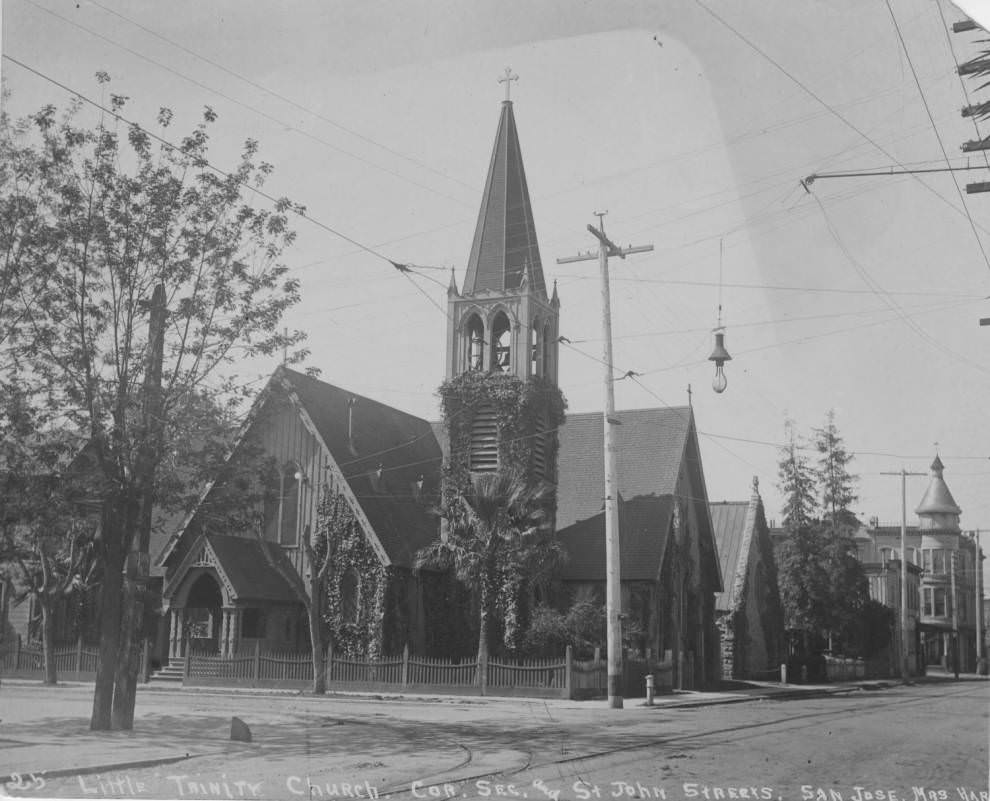
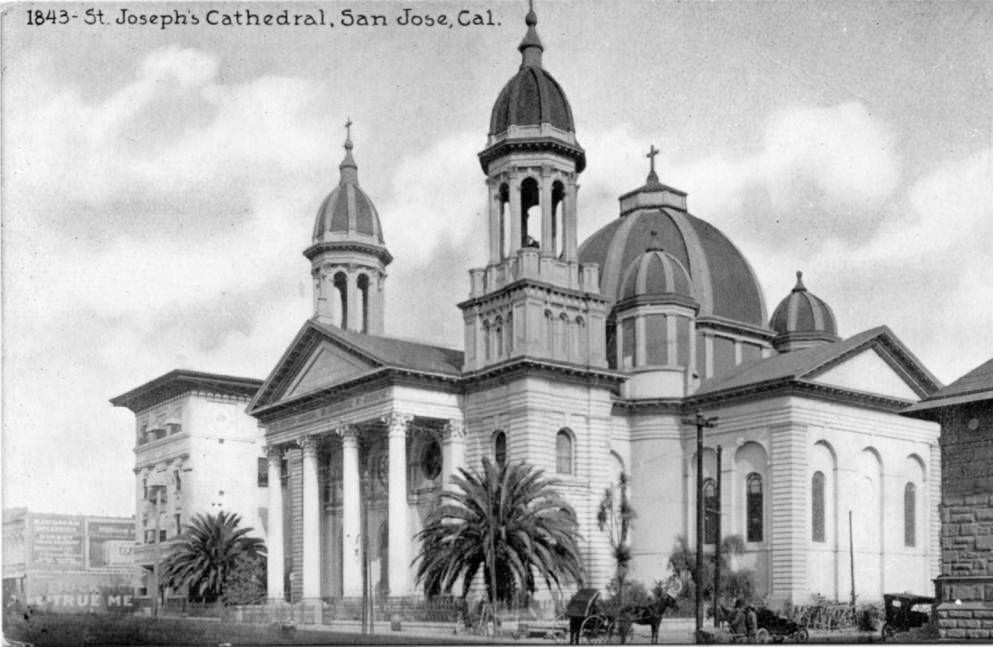
The city’s churches were among its most recognizable structures. St. Joseph’s Cathedral had stood on the same site since 1803, with the current building dedicated in 1877. Trinity Episcopal Church rose behind a wall of climbing plants, its steeple visible above the canopy of trees. The First Presbyterian Church stood with its castle-like entrance and stained glass windows along the North Second Street corridor. These buildings weren’t just places of worship — they were anchors of neighborhood identity in a city still building itself block by block.
Unique Theatre, 1906Saint James Hotel, San Jose, 1900Church at San Jose, 1906
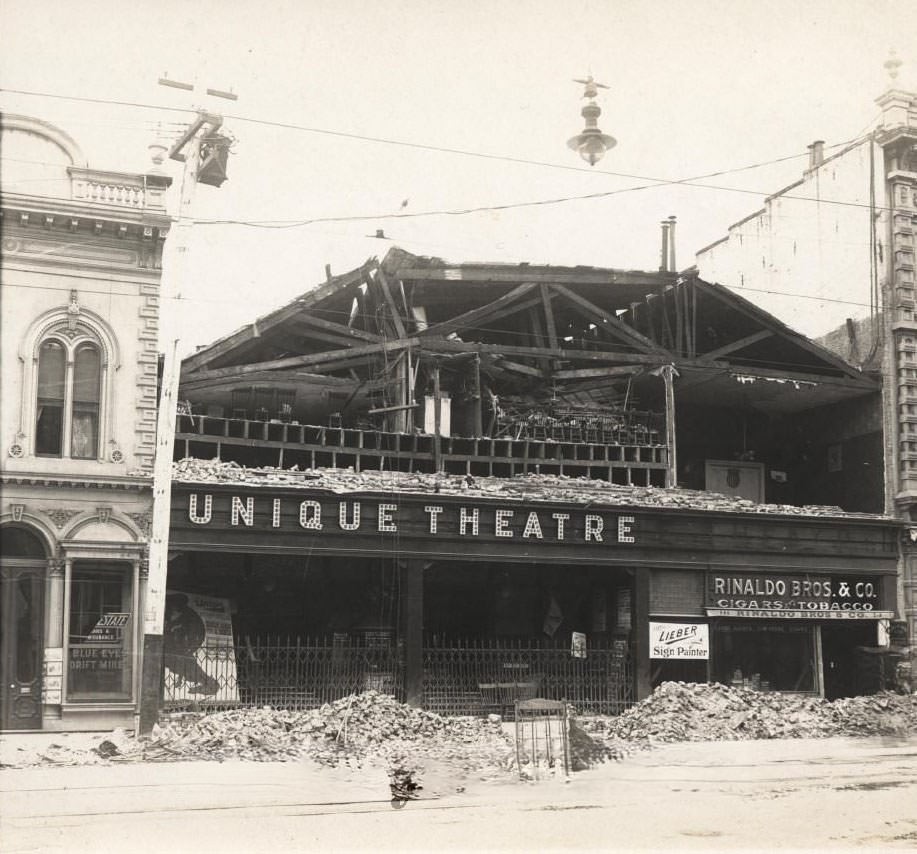
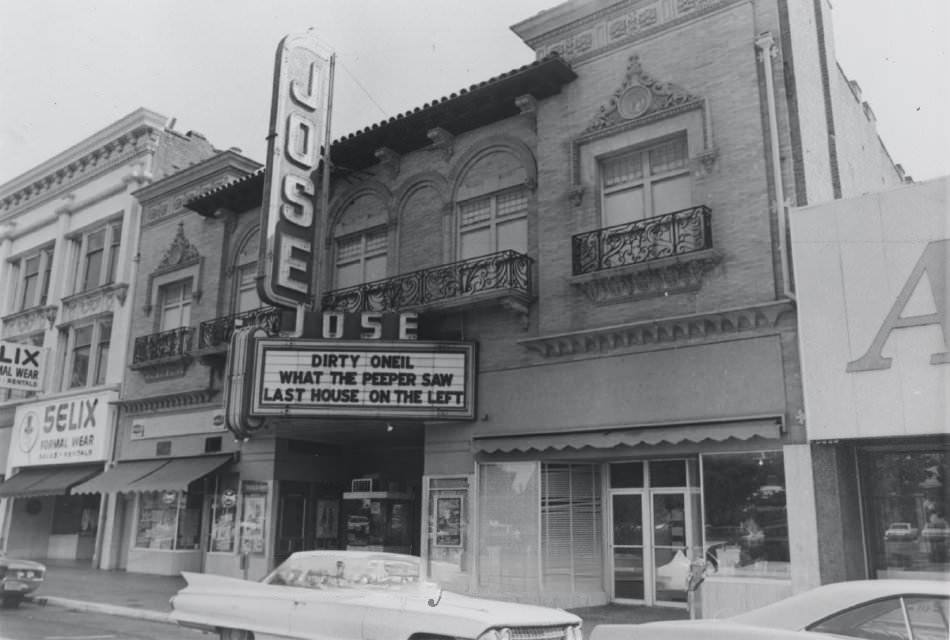
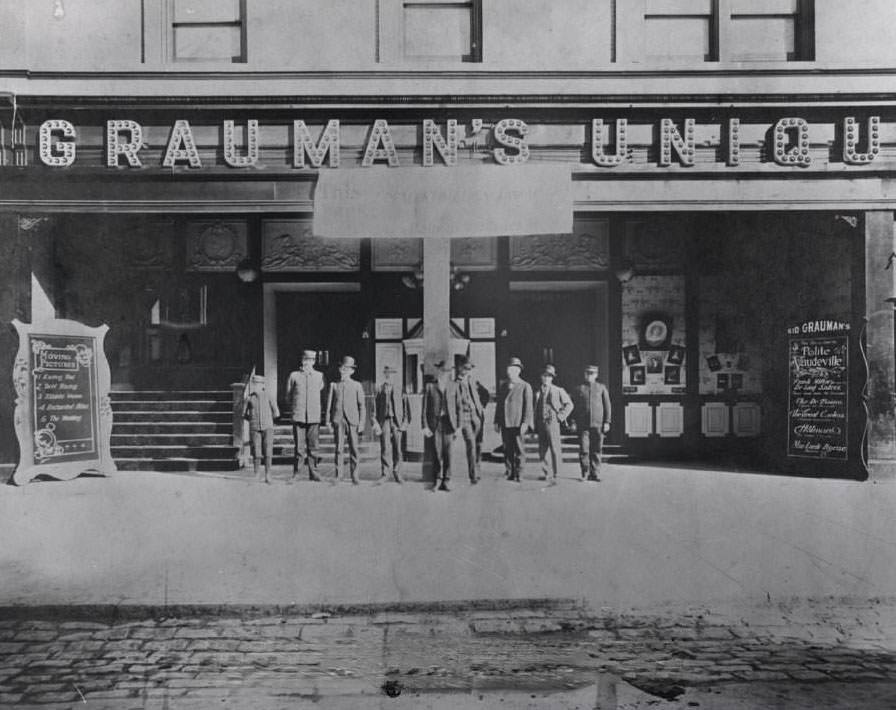
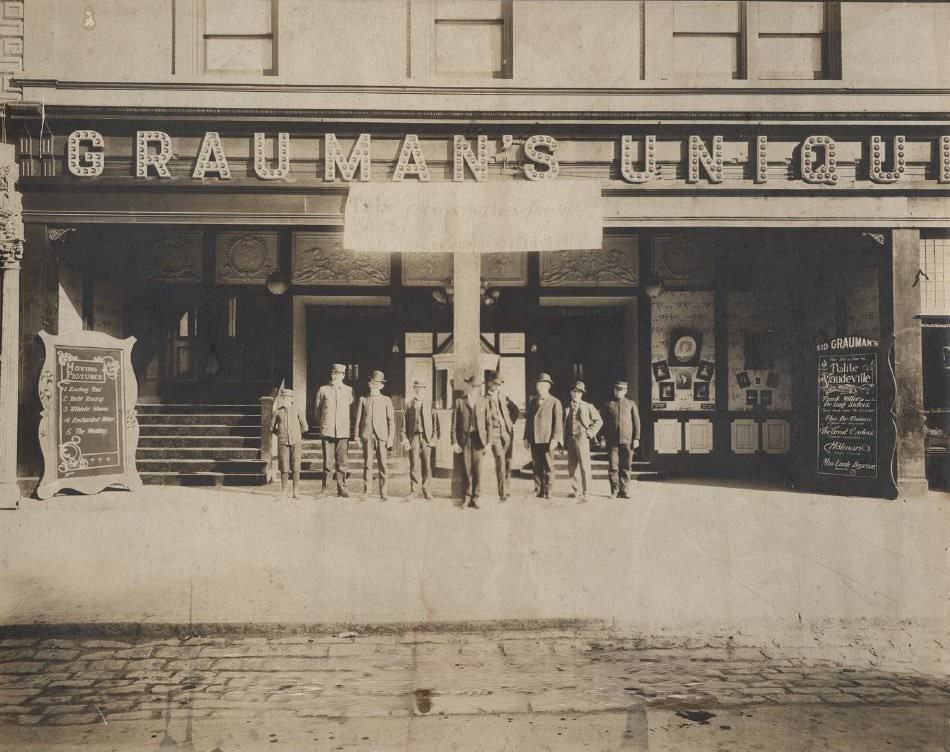
Entertainment was a growing part of city life. Sid Grauman opened the Unique Theatre at 20 East Santa Clara Street in 1903, offering moving pictures and vaudeville performances. Staff and performers posed proudly in front of its façade, with sign boards advertising shows to passersby. The T&D Theatre and the Lyric Theater on Second Street added more options. The Jose Theatre, built in 1904 at 64 South Second Street for Monterey investor David Jacks, would become the oldest theater still operating in the city.
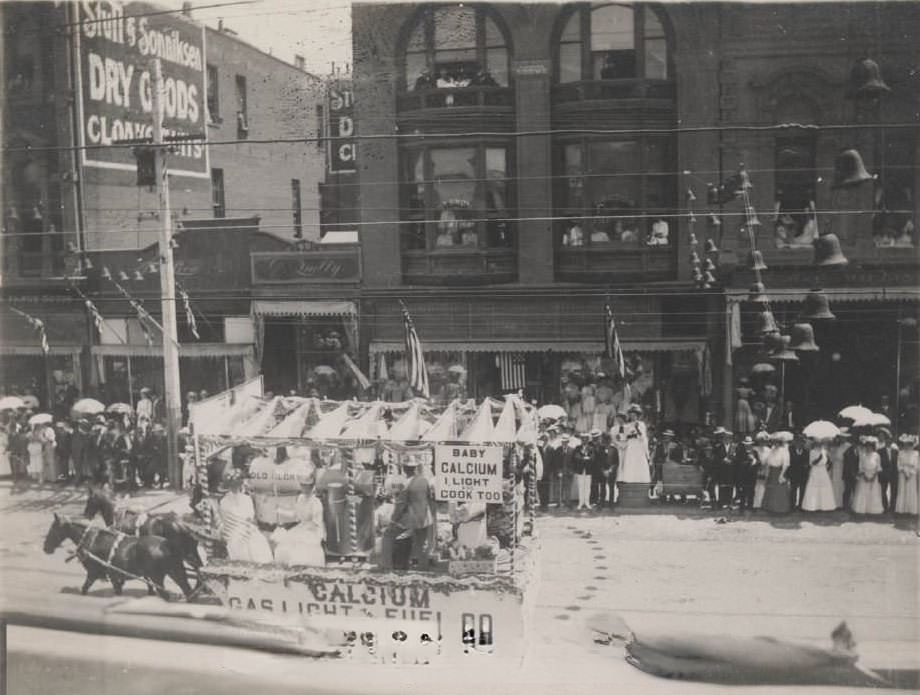
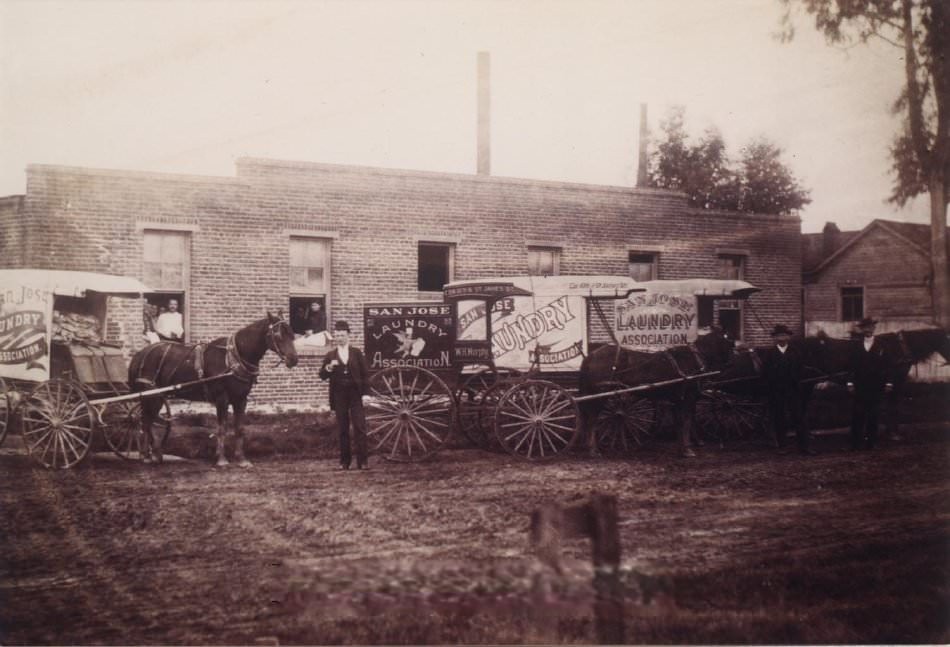
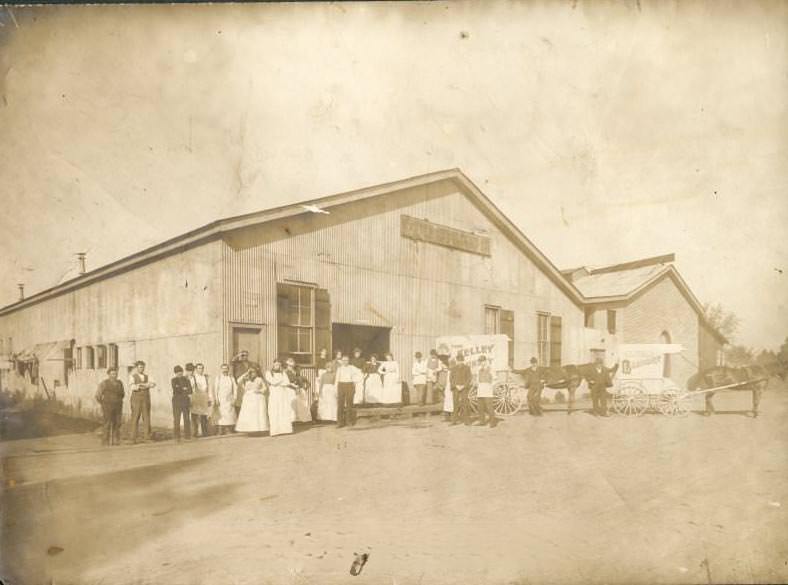
Horse drawn delivery trucks in front of San Jose Laundry Association Works, 1905Photo from Von Dorsten family album. Company B leaving San Jose for Spanish American war, 1906San Jose Parade with a float by Gas Light & Fuel Co, 1907
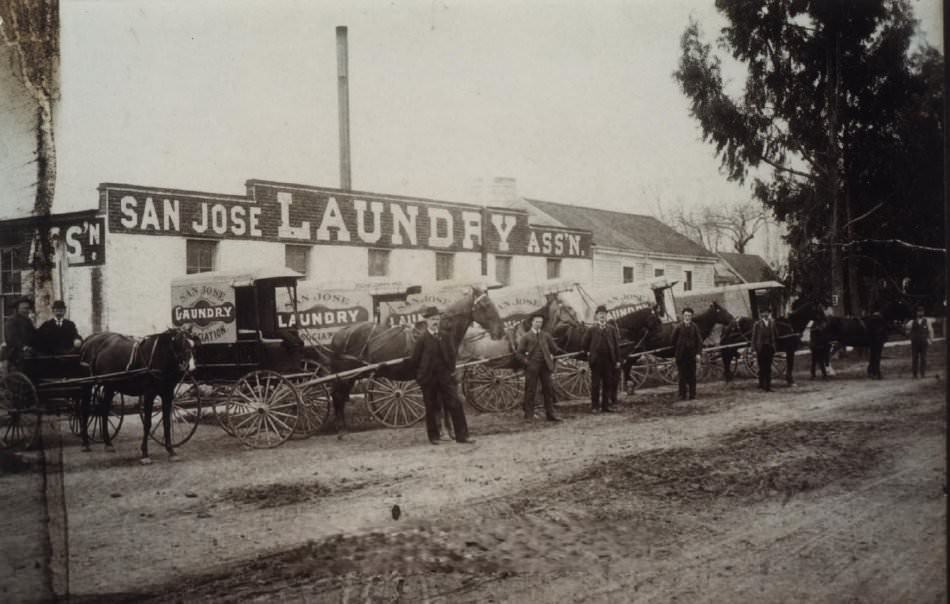
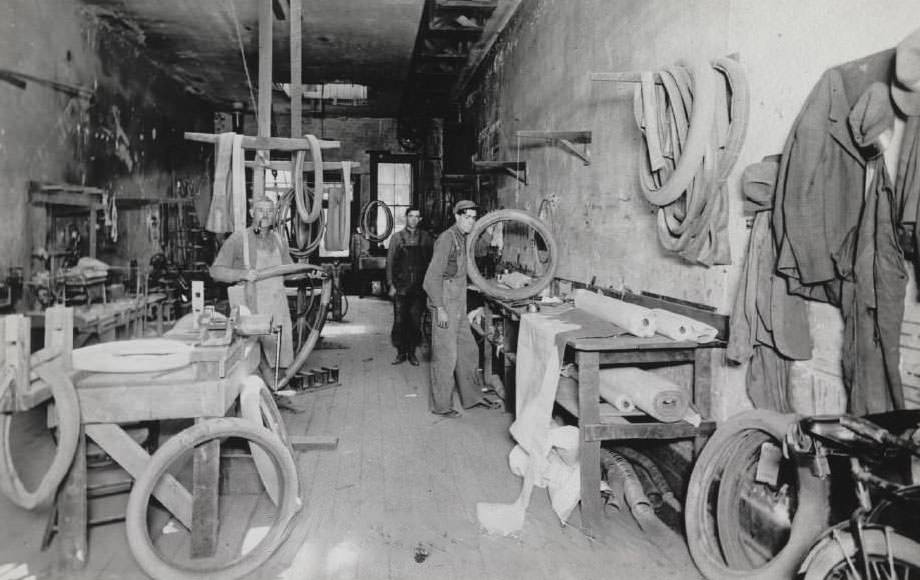
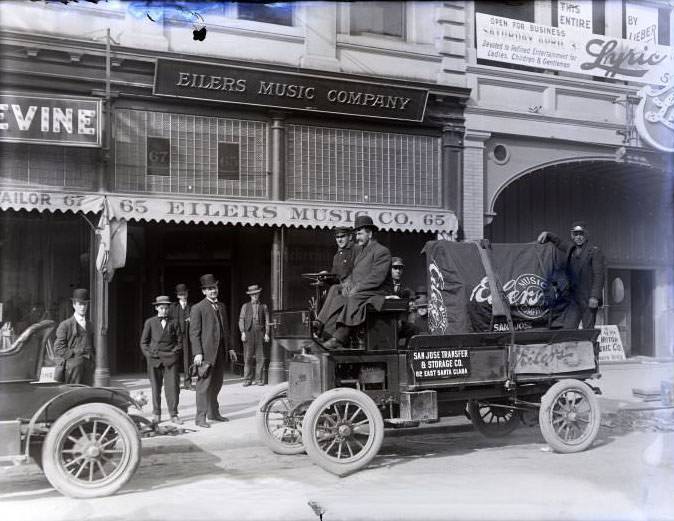
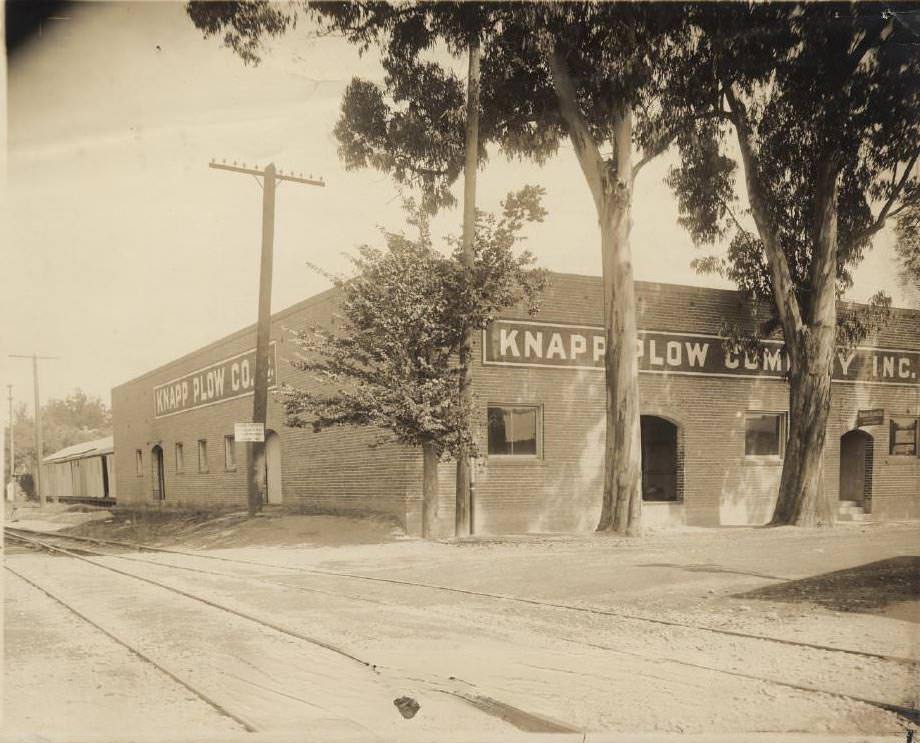
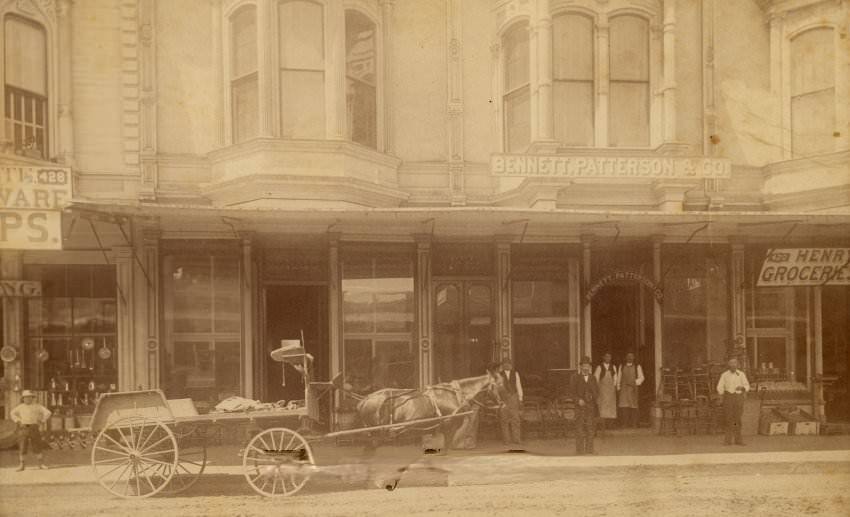
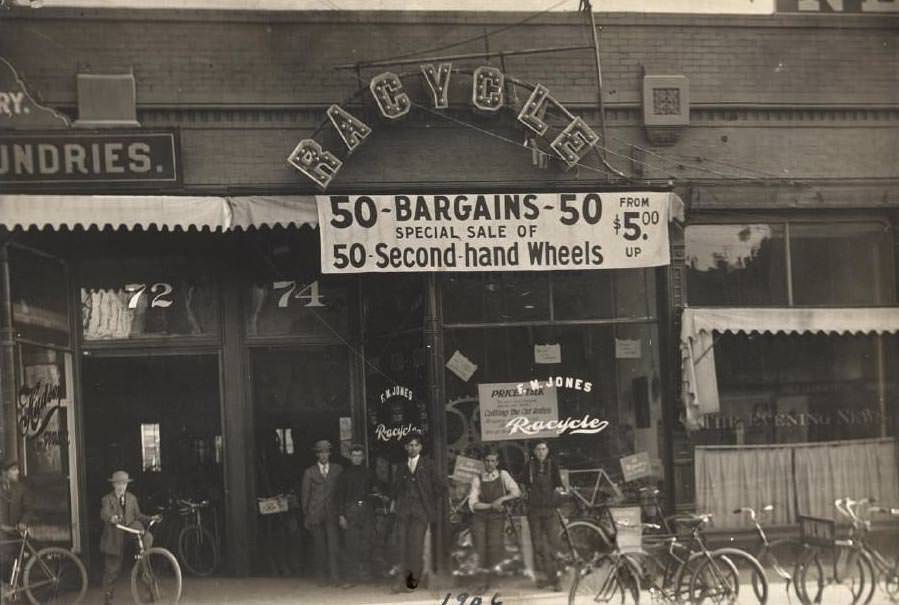
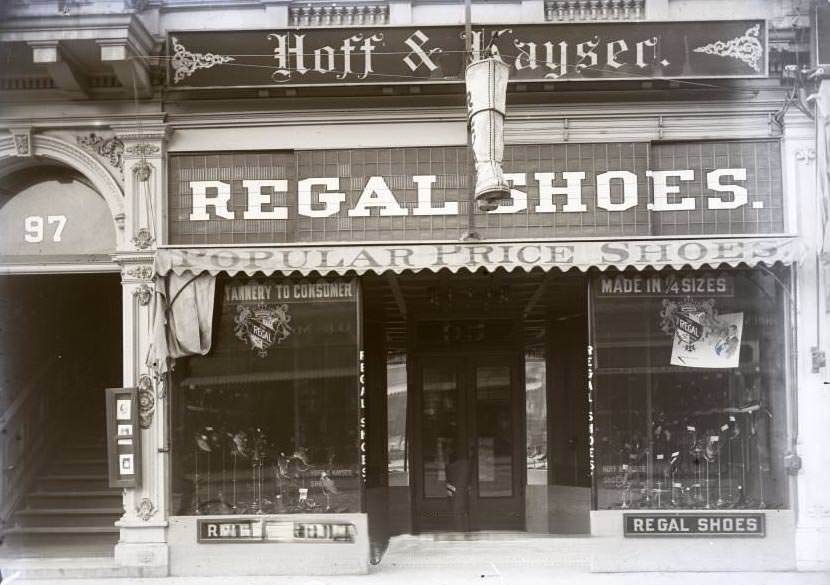
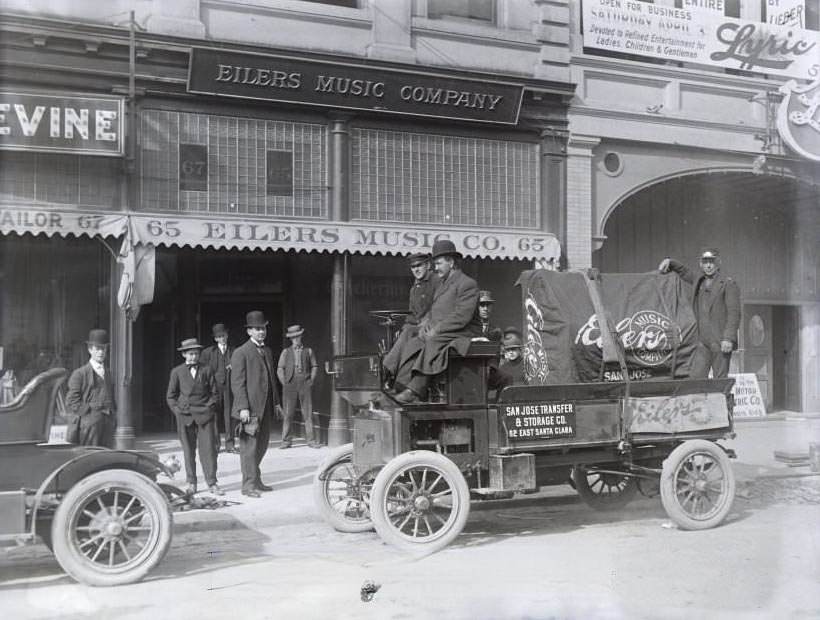
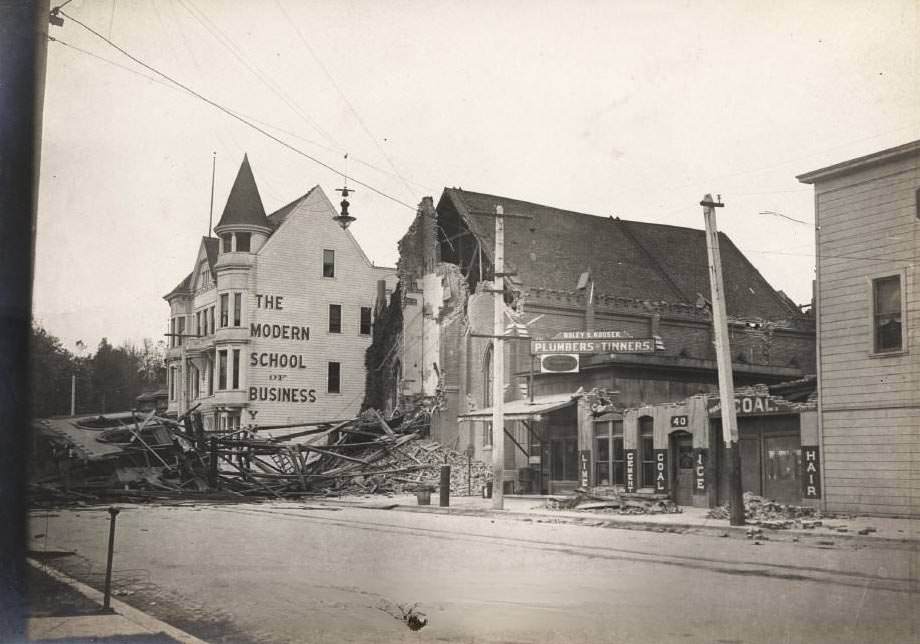
Commerce moved on the backs of horses. The San Jose Laundry Association operated a fleet of horse-drawn delivery trucks from its facility at the corner of Tenth and Saint James Streets. The Kelley Laundry, the San Jose Transfer and Storage Company, and the San Jose Rubber Works — run by the Bean family — were among the working businesses that kept the city humming. Eilers Music Company on Second Street shared the block with the Lyric Theater, while Regal Shoes, the Knapp Plow Company, and the Modern School of Business at 72–78 North Second Street filled out the commercial landscape.
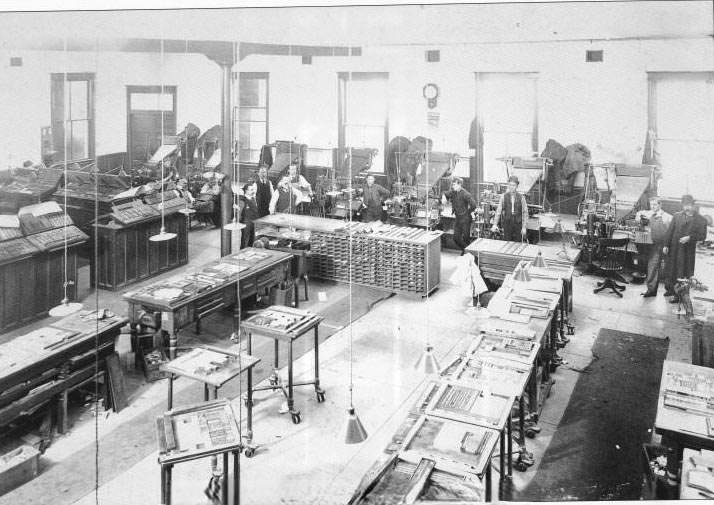
Street scene at T&D Theatre, San Jose, 1900sSan Jose Rubber Works interior. Left to right Jack Bean, Herb Bean, Charlie Bean, 1905Eilers Music Co., with San Jose Transfer truck, 1900s
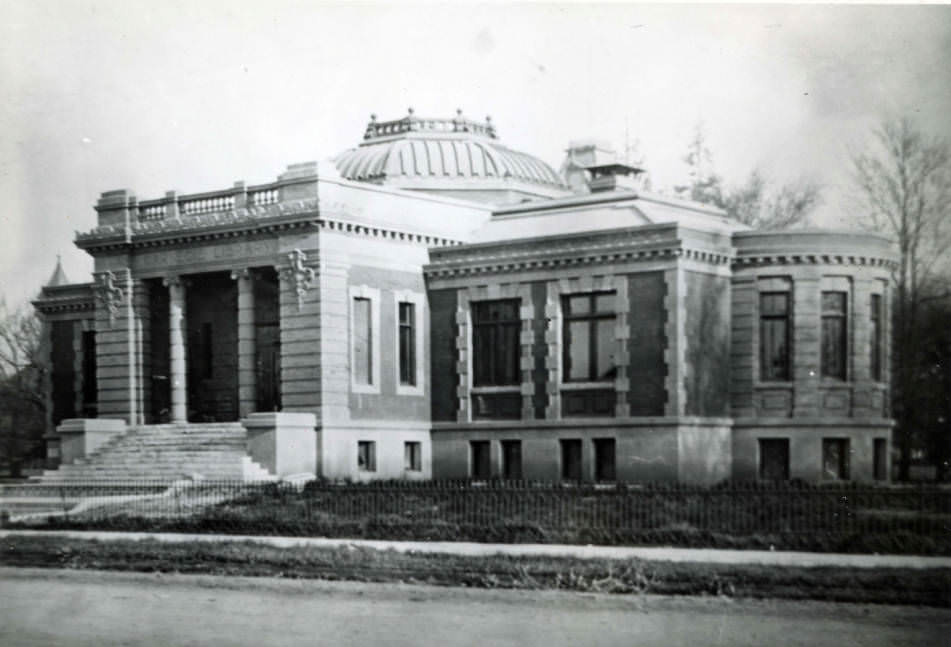
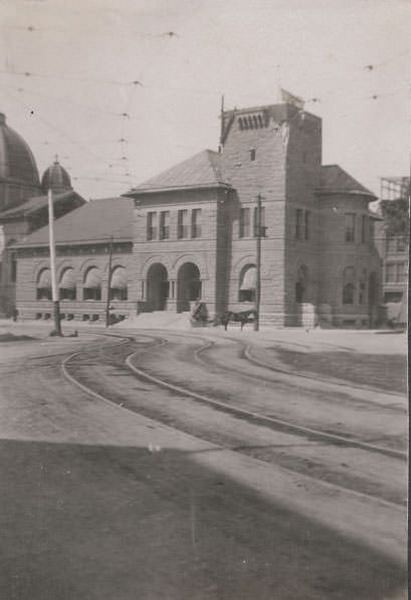
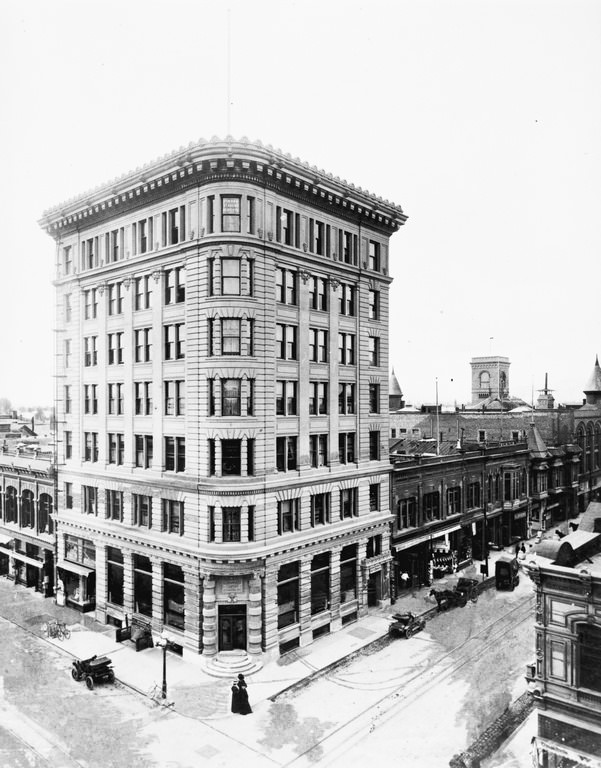
Public institutions were expanding rapidly in this decade. The Carnegie Building of the San Jose Public Library opened on June 6, 1903, at the southeast corner of San Fernando and Fourth Streets. Designed by architect William Binder in the Classical Revival style, its cornerstone had been laid on February 17, 1902. By 1908 the building was already overcrowded. The city’s first bank building of note was the Bank of San Jose, a five-story structure with a clock tower at a prominent downtown corner. The Garden City Bank building, which opened in 1908 on the southwest corner of First and San Fernando, was considered the first skyscraper in San Jose — a steel-framed building that later became the site of the city’s first radio station, KQW.
San Jose Laundry Association trucks in front of the laundry works about 1906. Corner of Tenth and Saint James Streets.Oldest theater still in business in San Jose is the Jose, at 64 South Second Street built in 1904 for Monterey investor David Jacks.Downtown San Jose, 1908
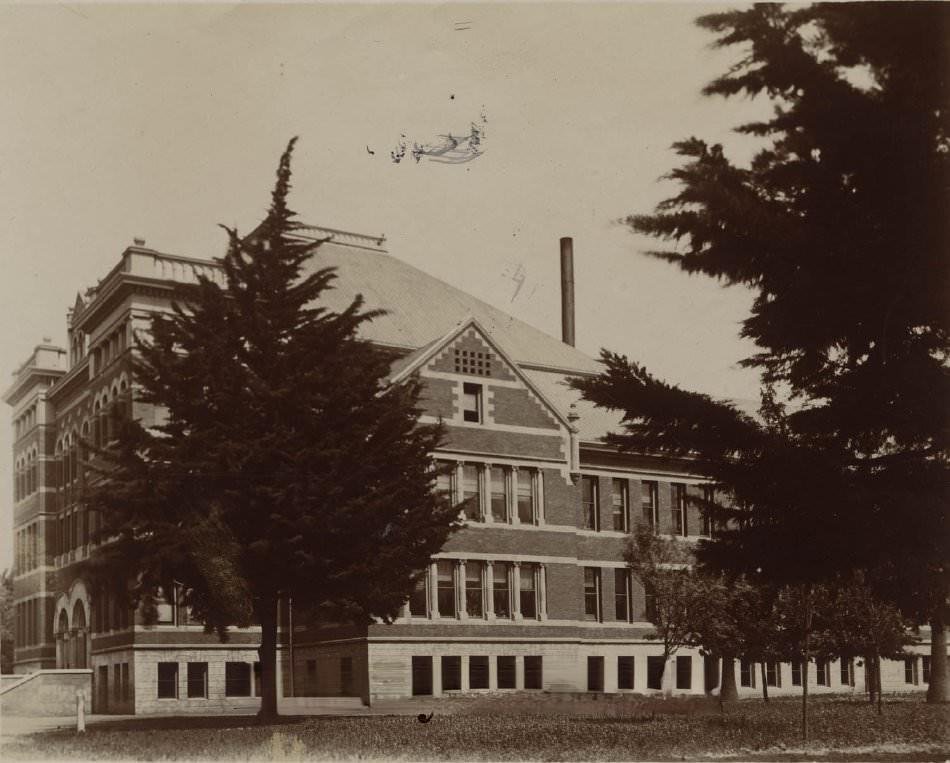
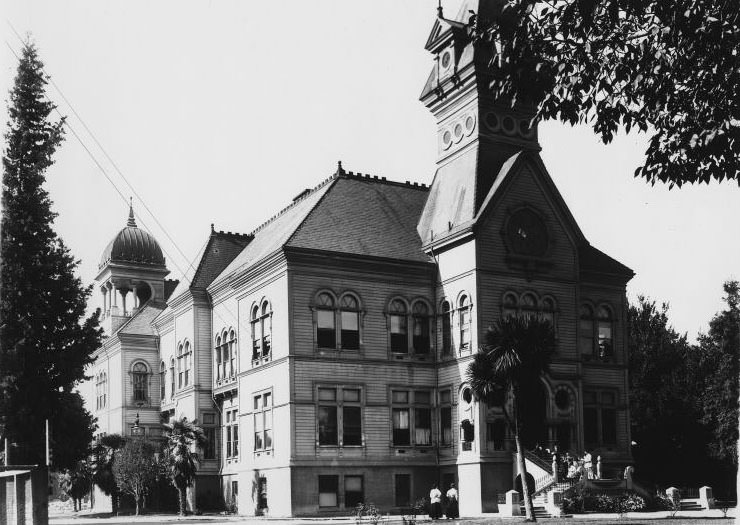
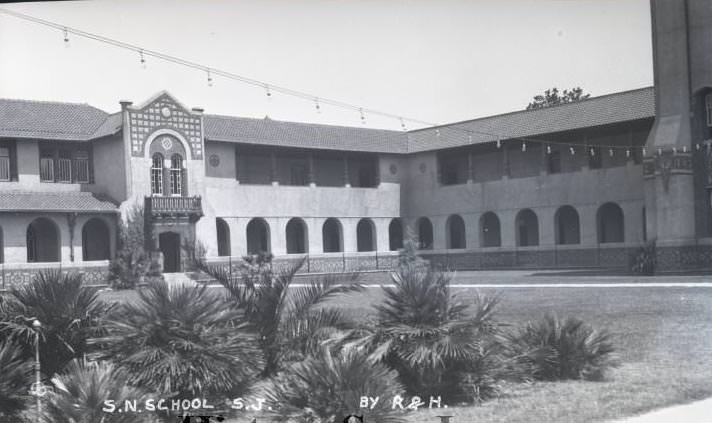
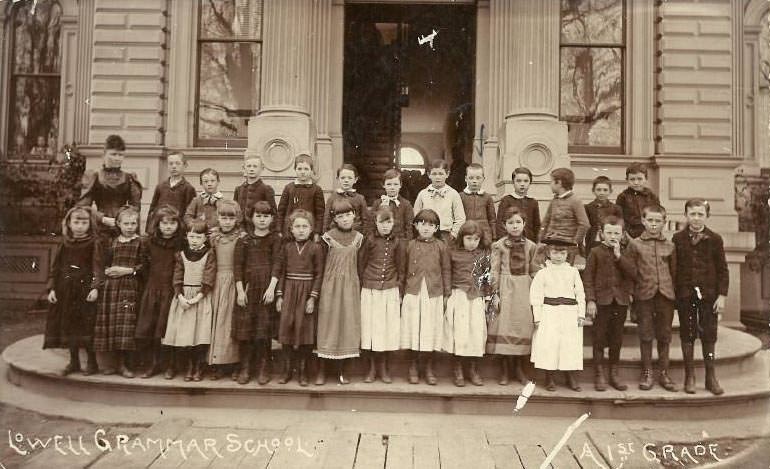
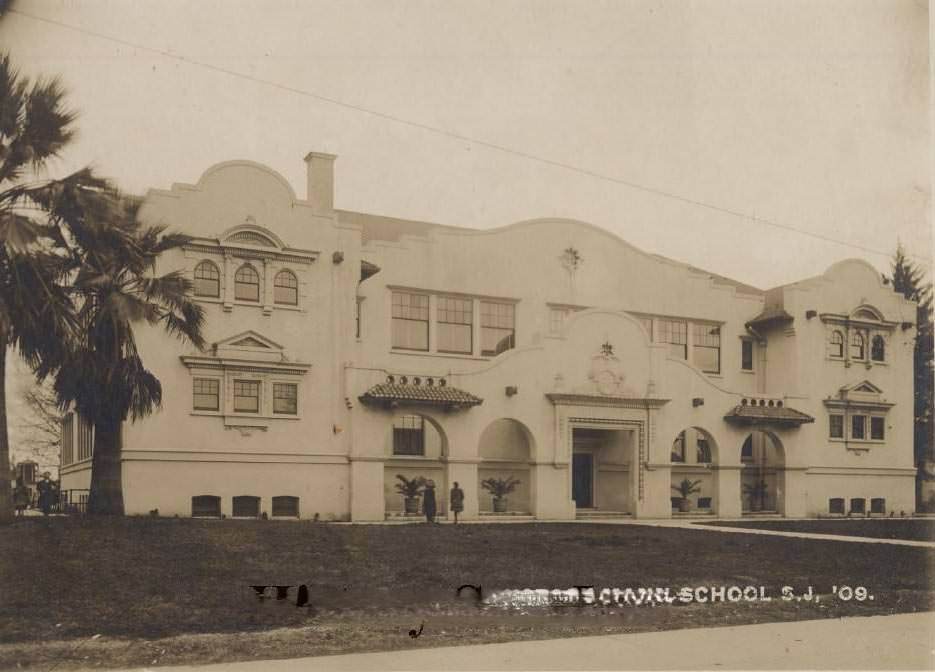
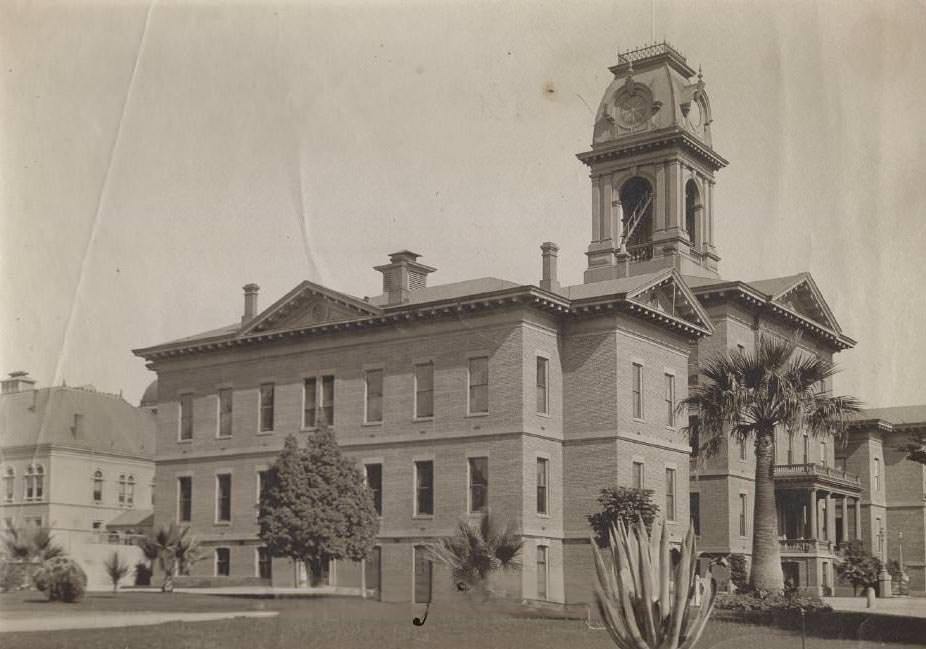
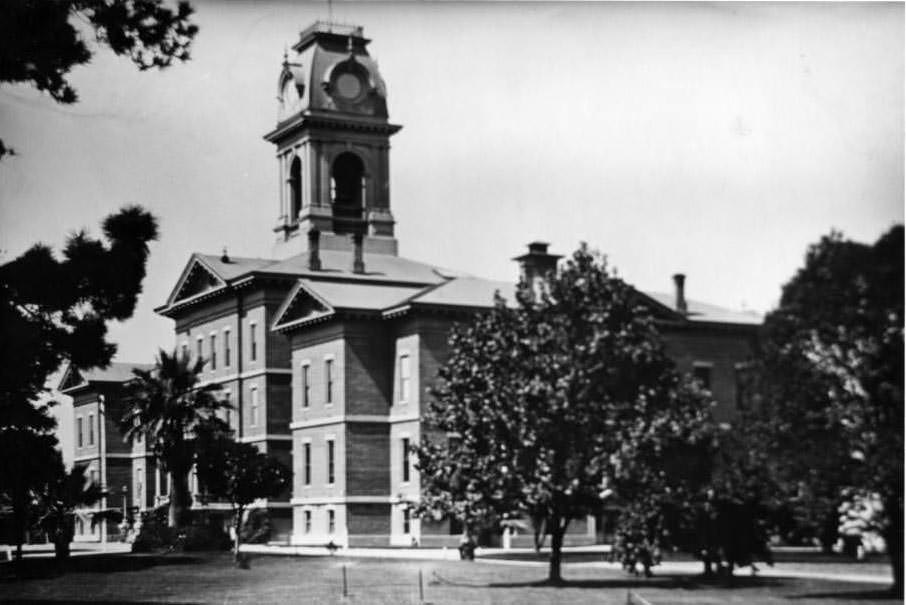
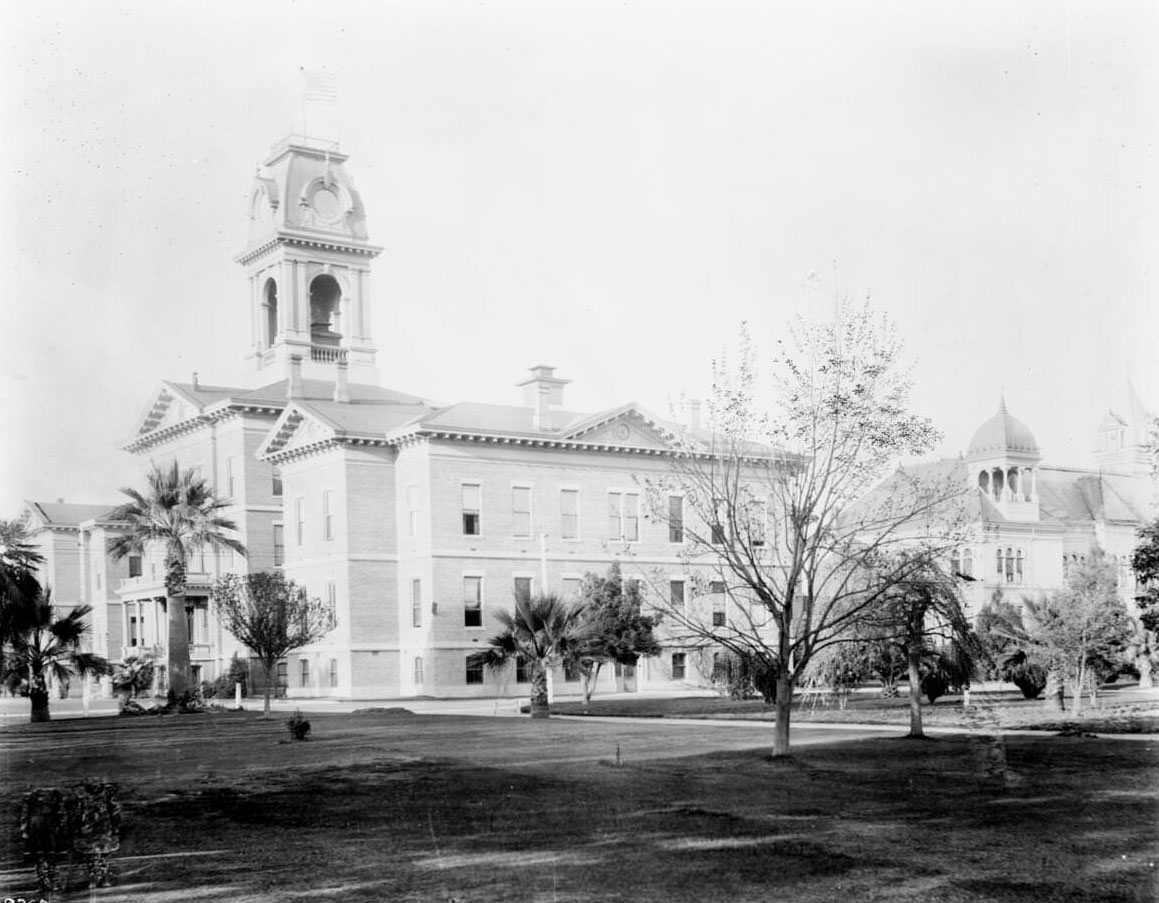
Education was a priority. San Jose High School’s original three-story stone and brick structure had served students for eight years before 1906. The San Jose State Normal School — later San Jose State University — occupied a substantial brick building constructed in 1881 to replace one lost to fire. The school held a library on its first floor, and a bell tower rose above its roofline. Lowell Grammar School, Grant Grammar School, Longfellow Grammar School, Berryessa School, Horace Mann School, and the Oak Grove School — then on Downer Avenue, now Blossom Hill Road — were spread across the city and surrounding communities. The University of the Pacific’s West Hall stood on Emory Street near Elm.
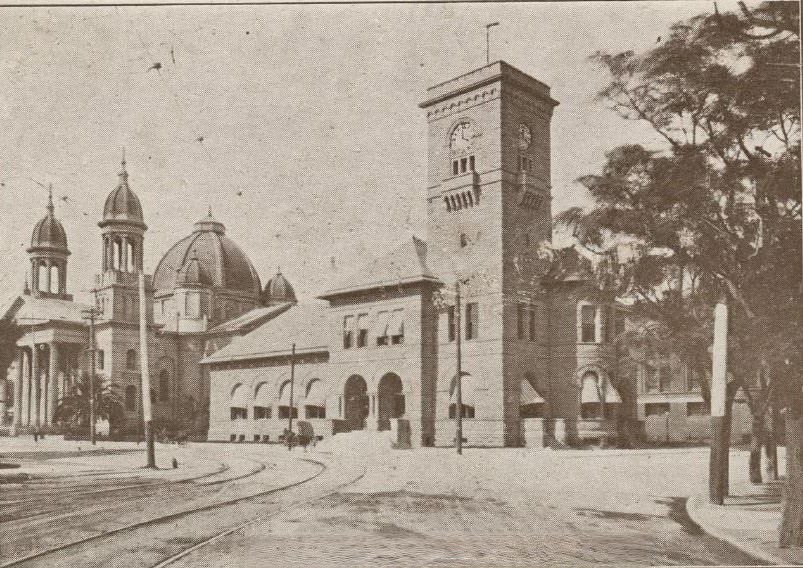
Second San Jose State Normal School building, 1900The Post Office, from St. James Park, San Jose, 1907Market and San Fernando On margins Post Office, San Jose, 1908
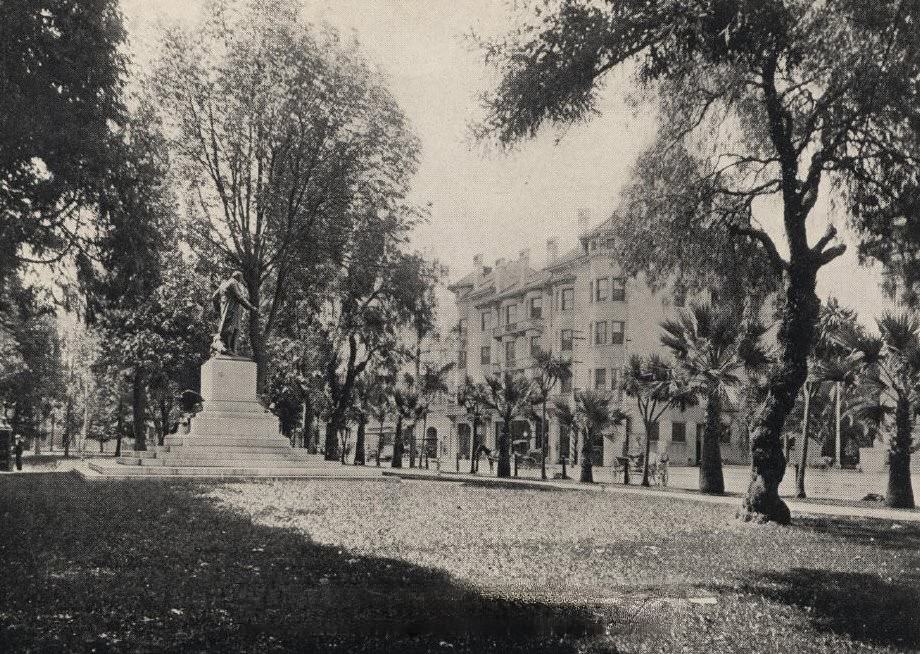
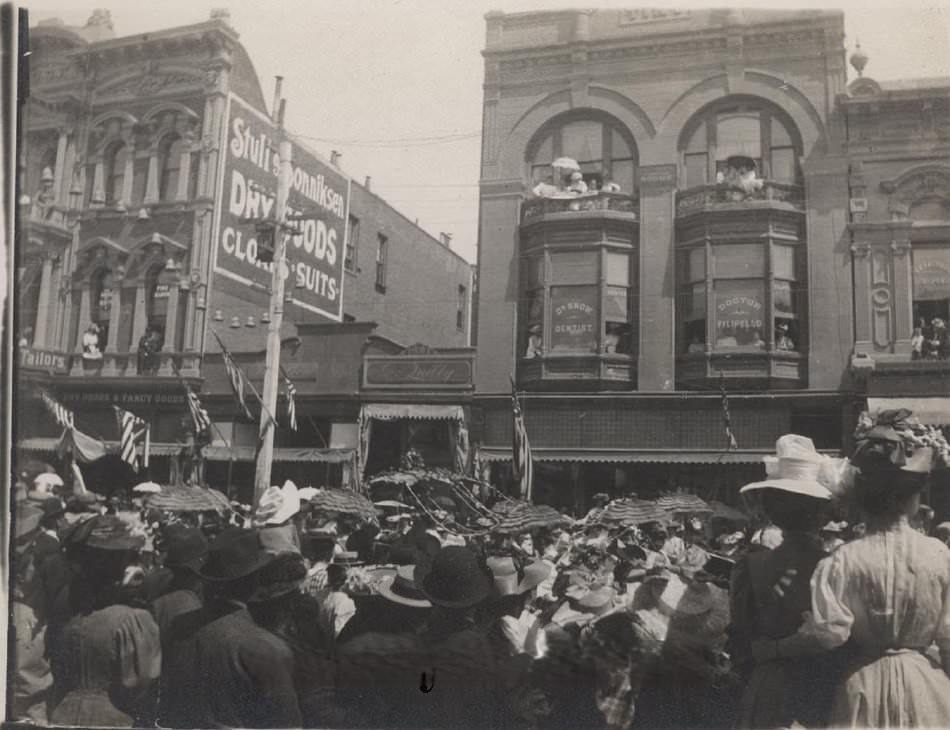
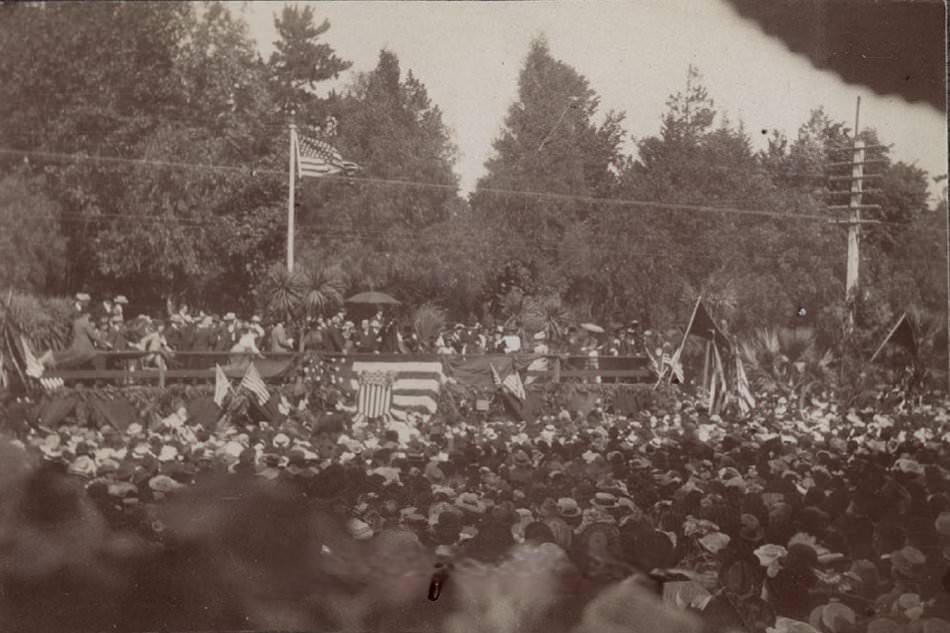
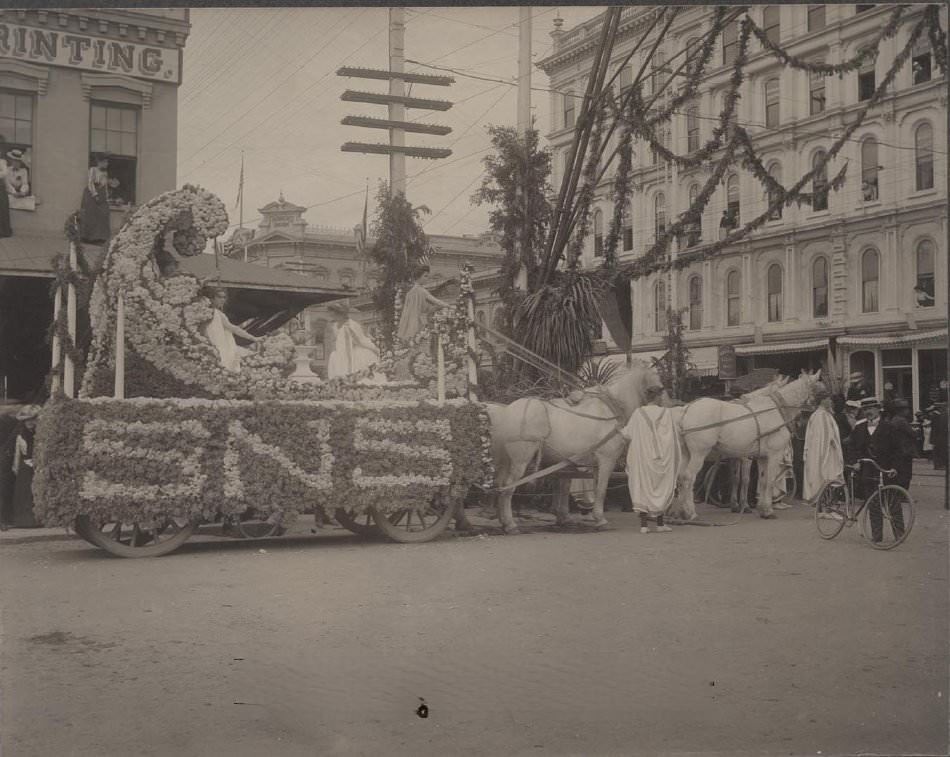
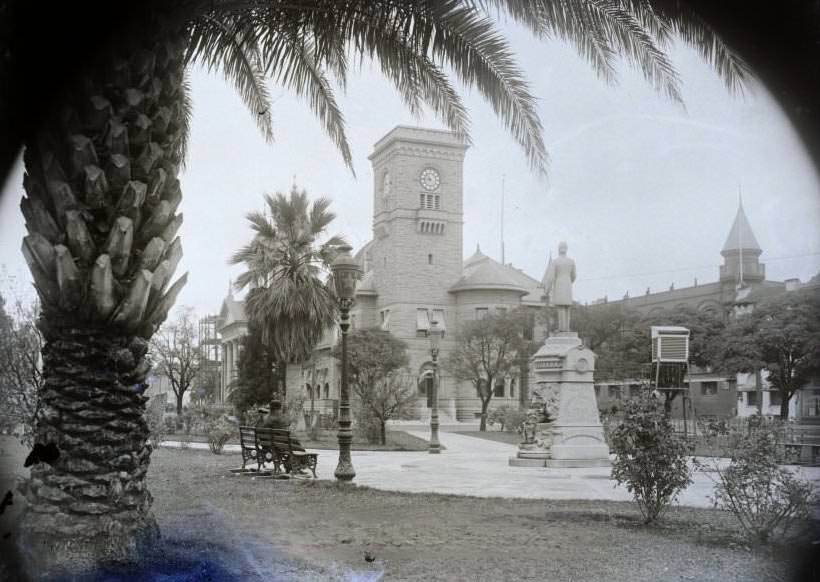
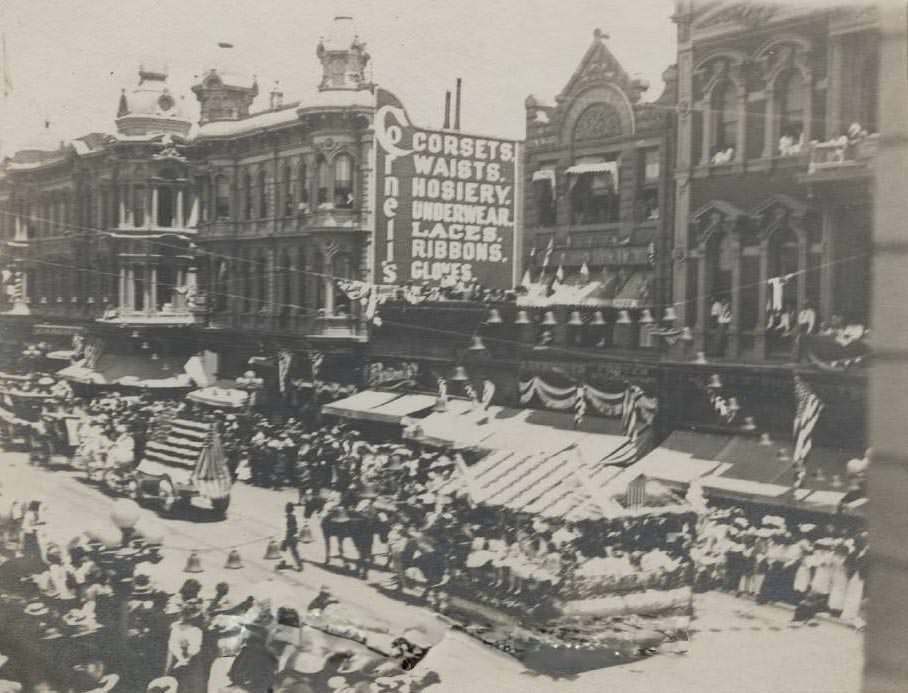
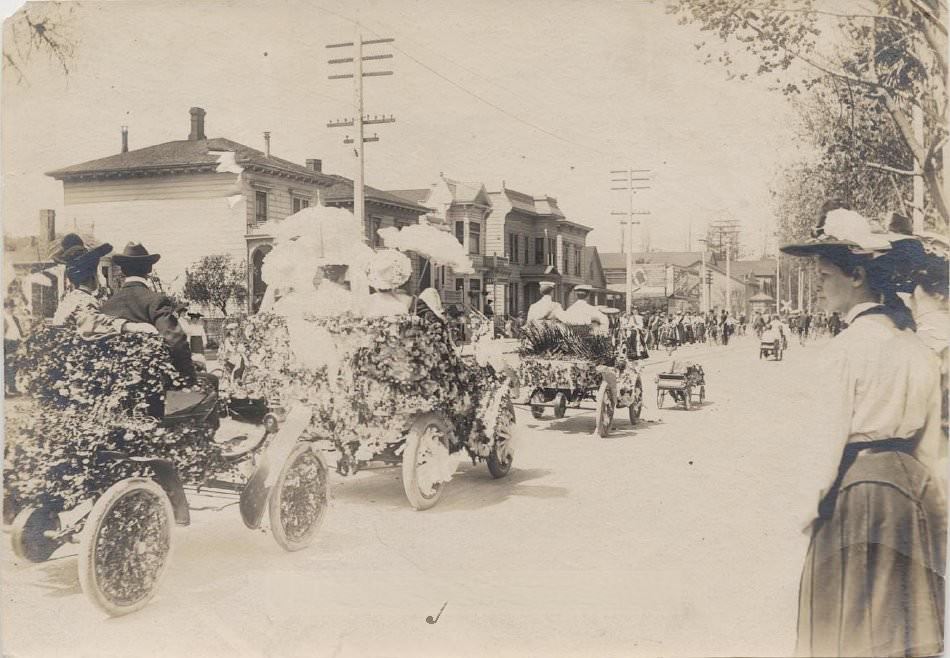
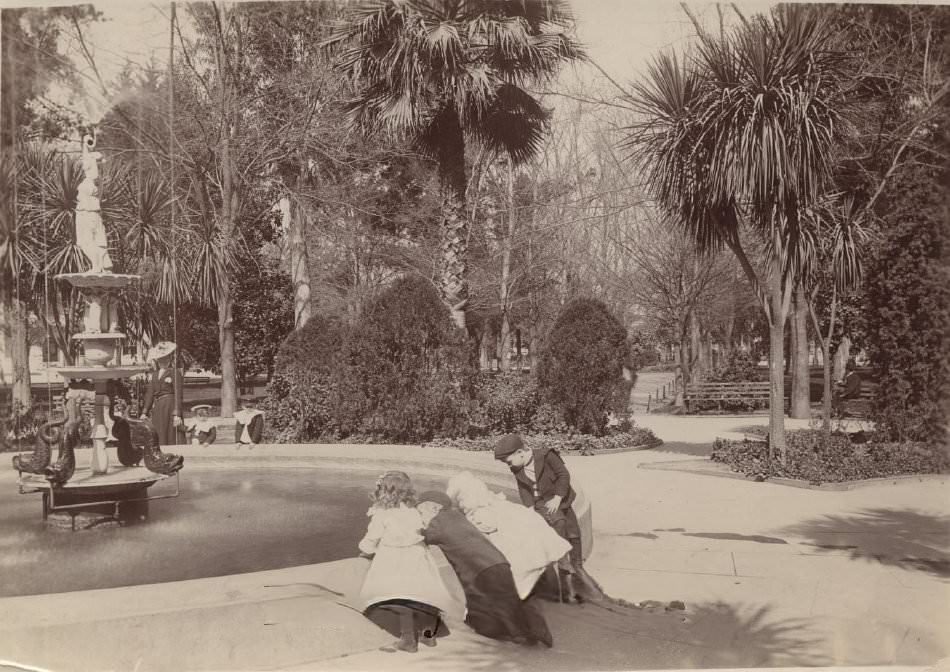
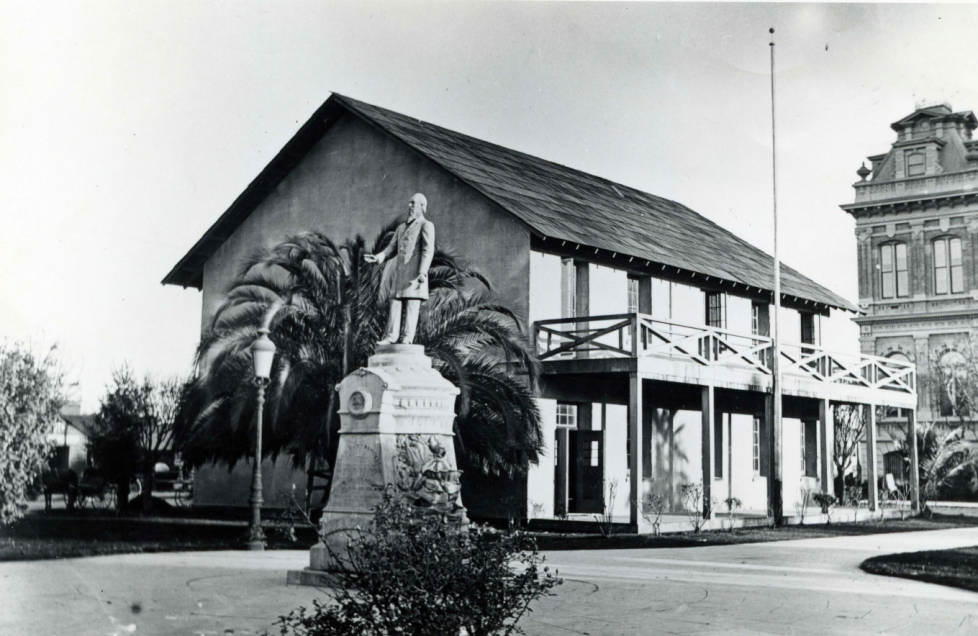
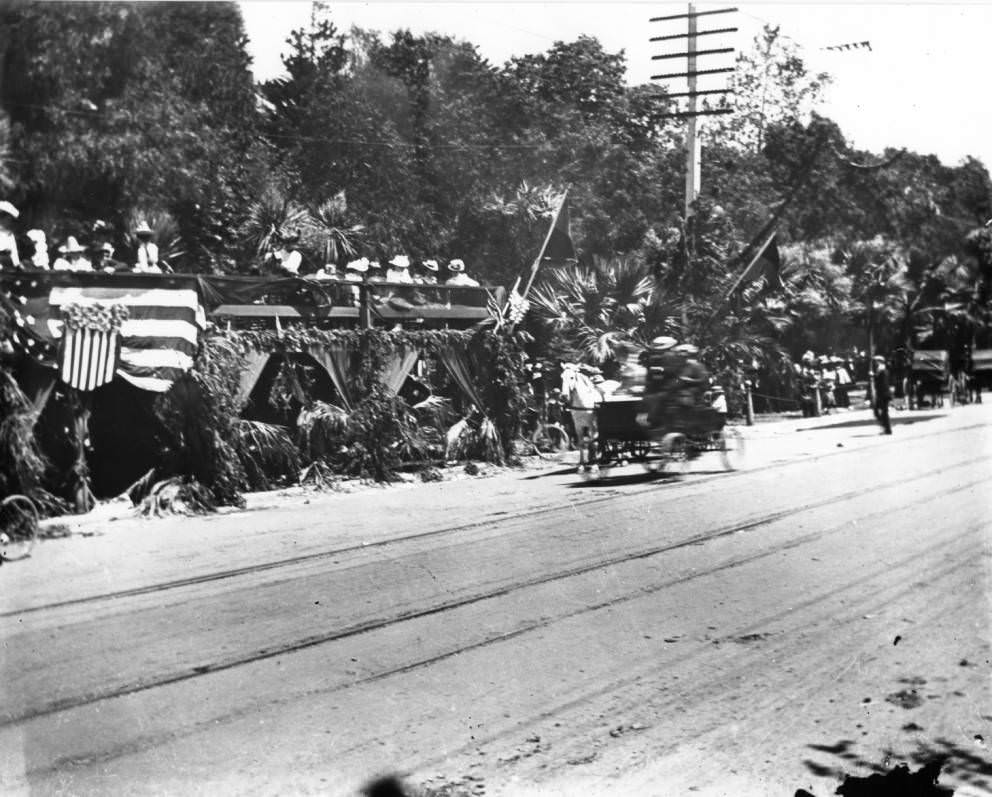
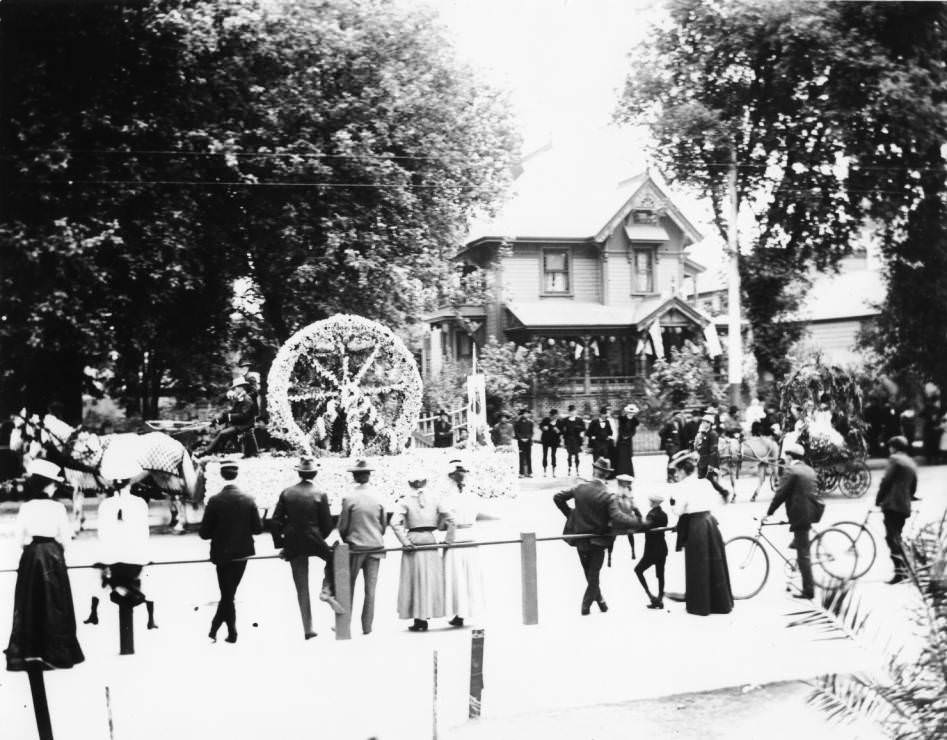
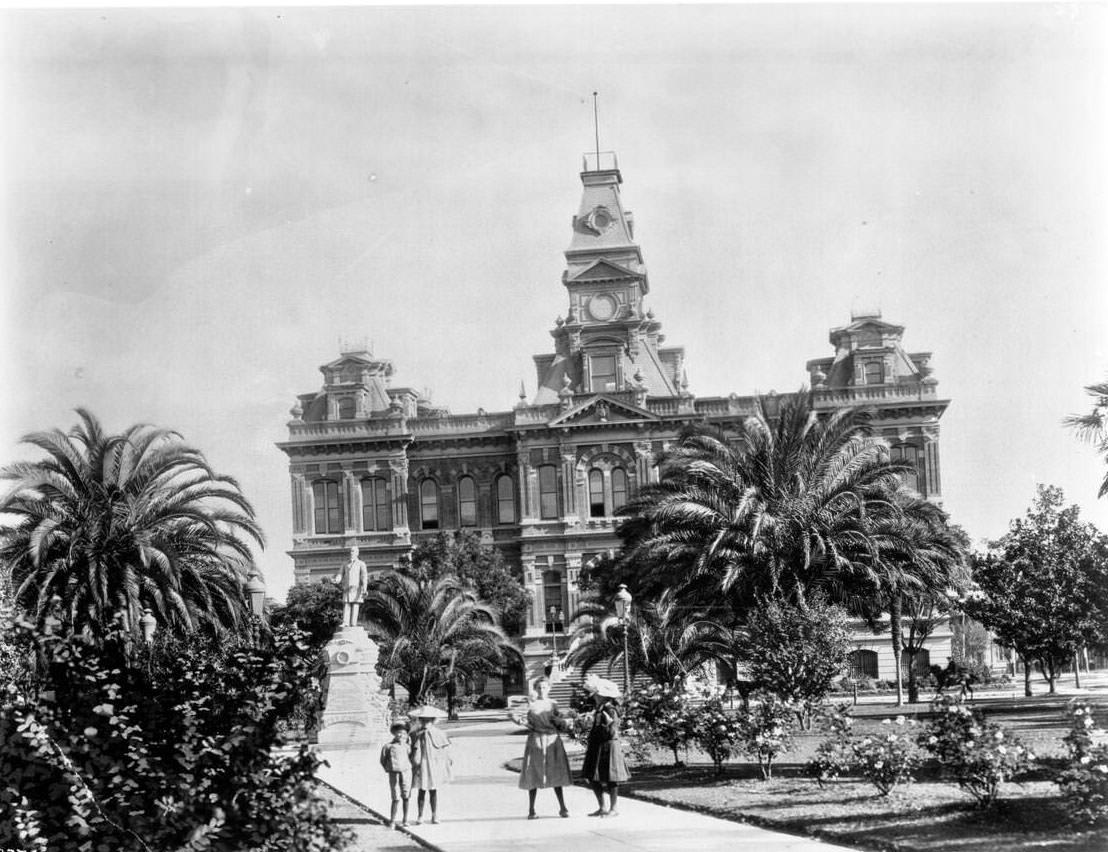
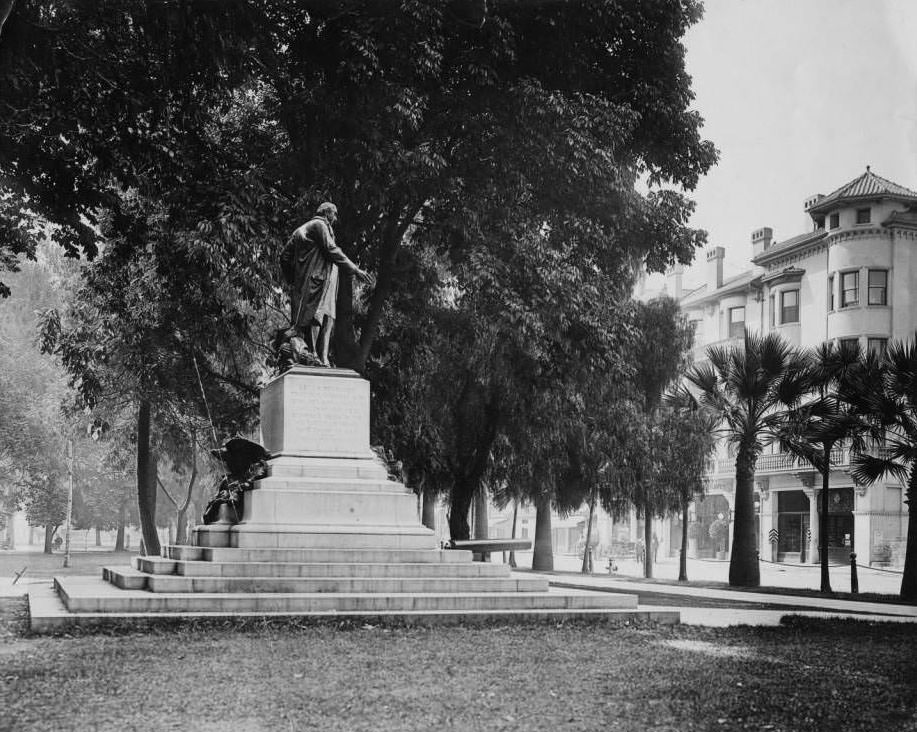
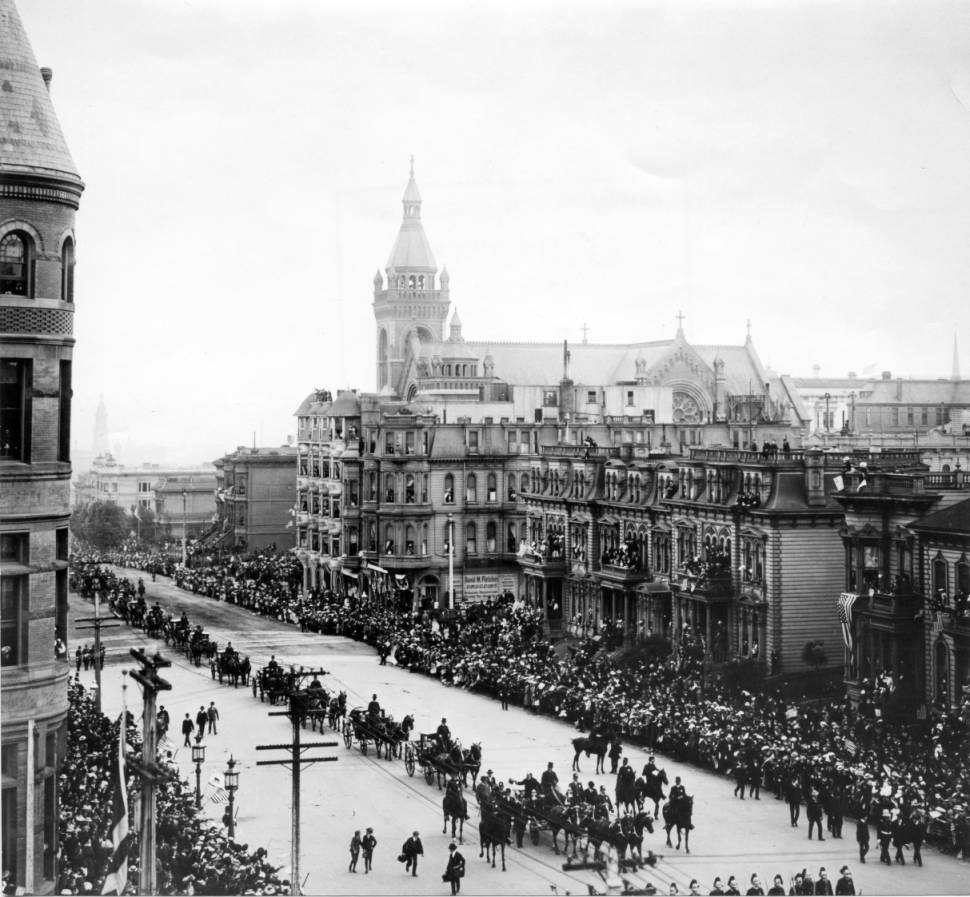
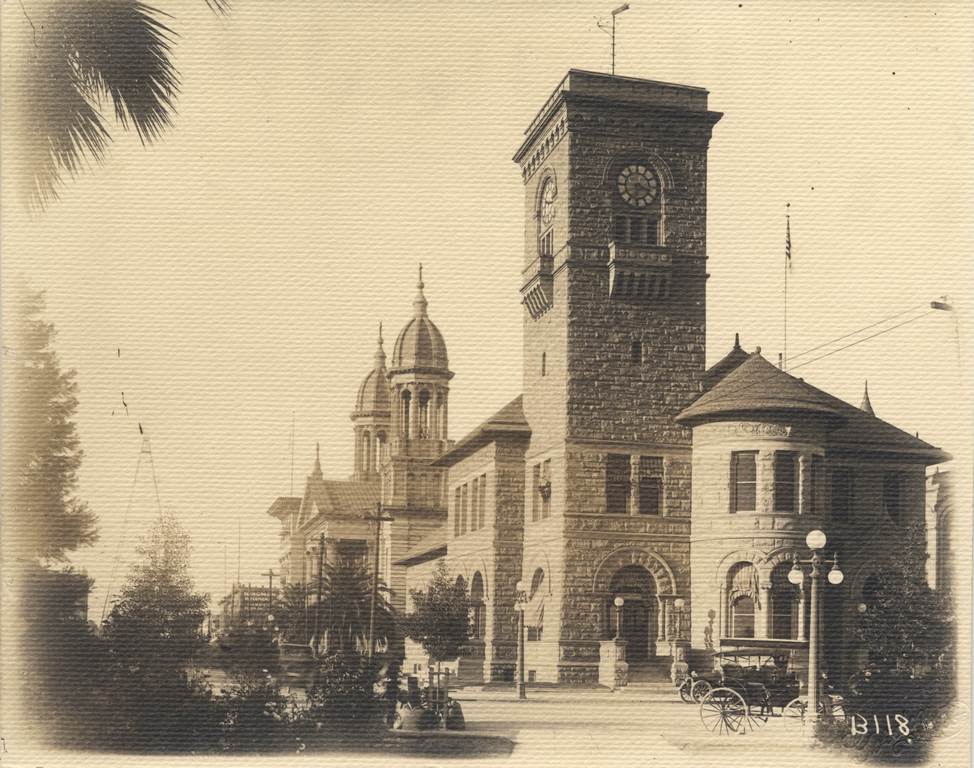
St. James Park was the civic heart of downtown. It featured a circular path, manicured gardens, palm trees, and a prominent fountain where children gathered. The McKinley Monument stood in the park, dedicated after President William McKinley visited San Jose in 1901. The Rose Carnival that welcomed McKinley filled the streets with elaborately decorated horse-drawn floats, spectators packed onto balconies and second-story windows to watch the procession roll past. The Saint James Hotel, the Santa Clara County Courthouse, and the Hall of Justice surrounded the park, creating a concentrated civic core that gave the city a sense of permanence and civic pride.
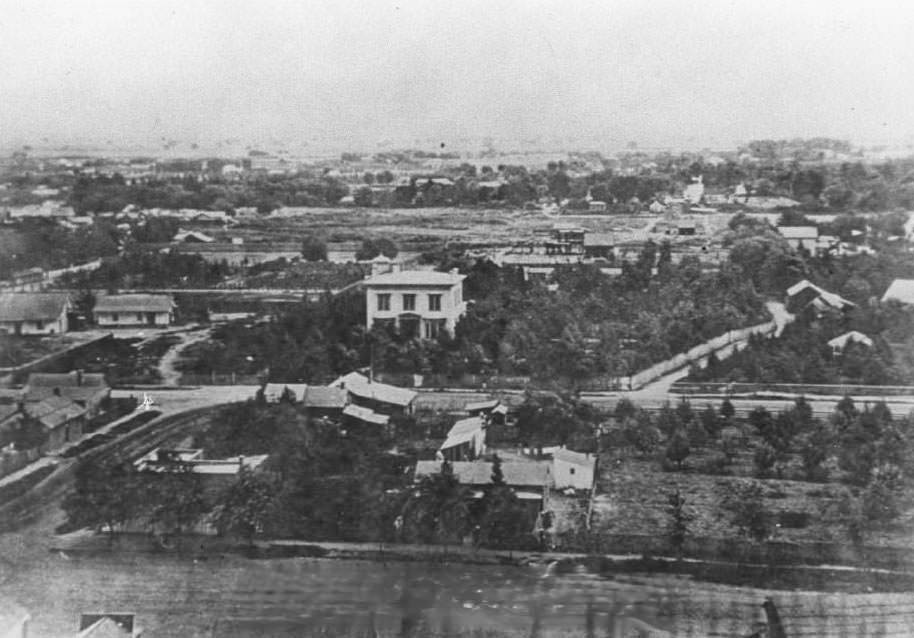
Grauman’s Unique Theater, San Jose, 1904San Jose showing adobe structures and Fallon House, 1900Men in front of Grauman’s Unique Theatre, 1904
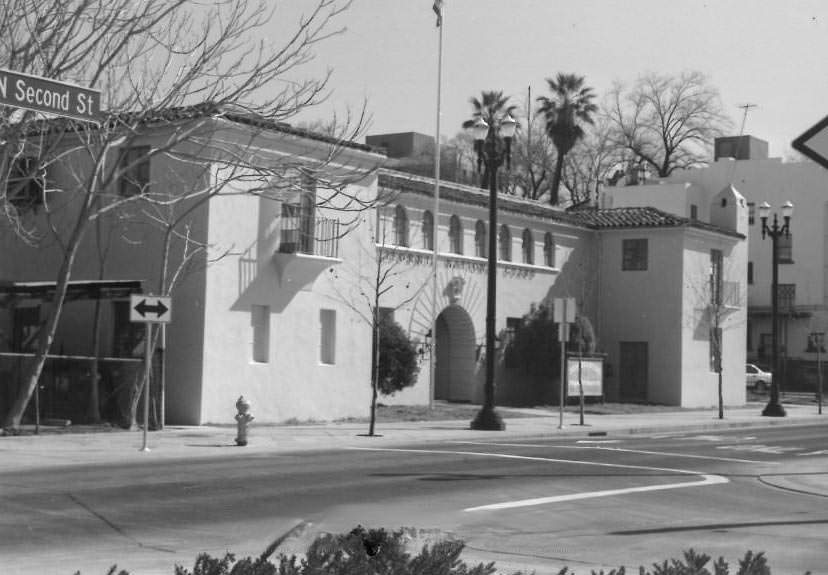
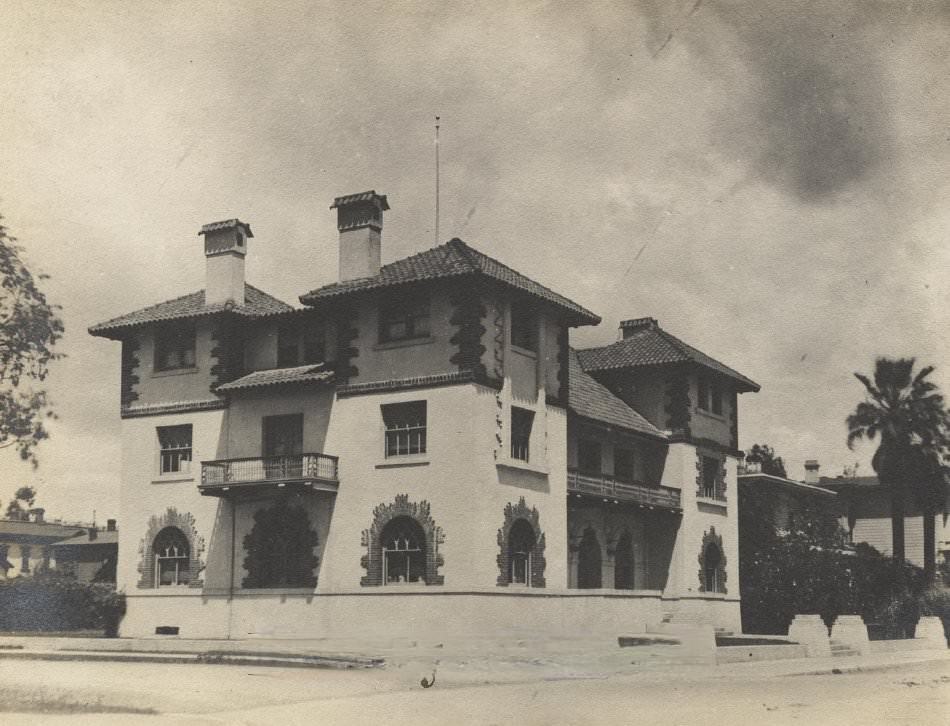
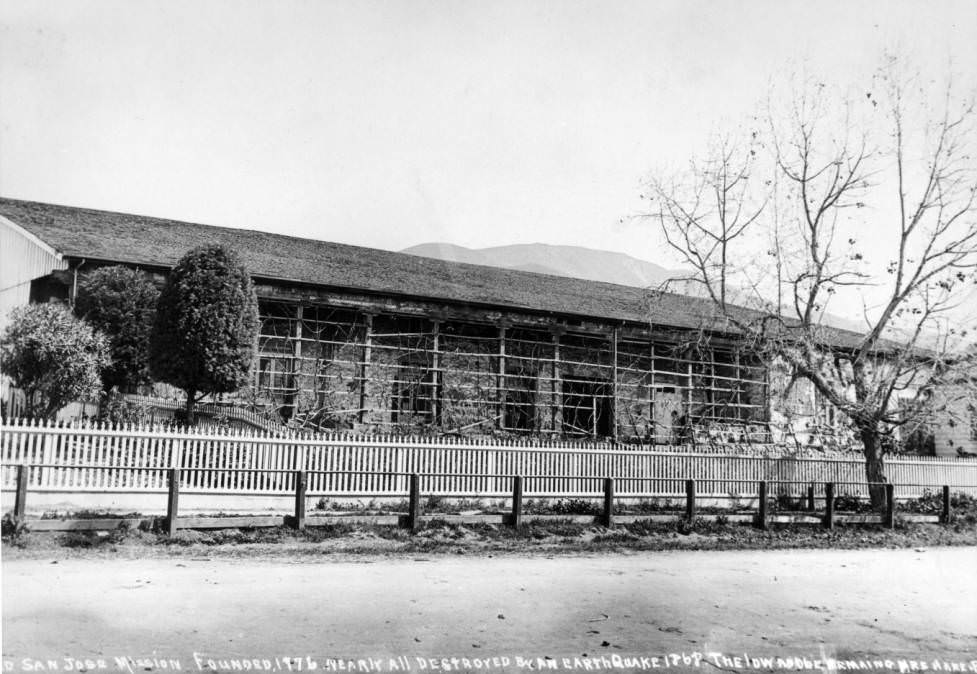
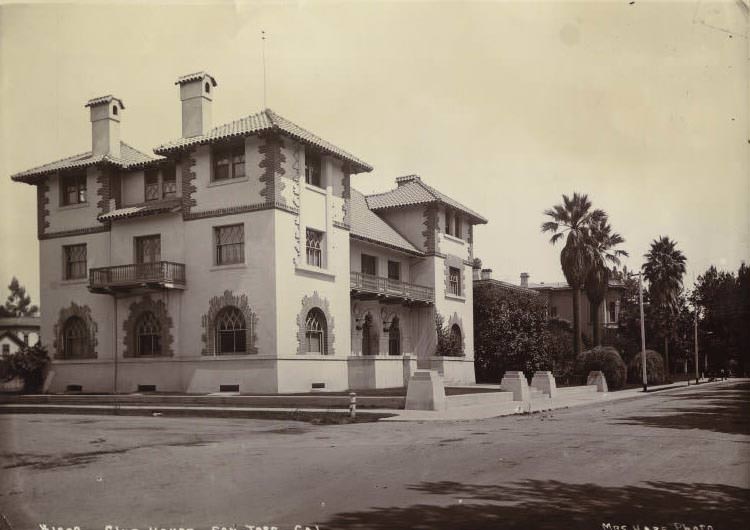
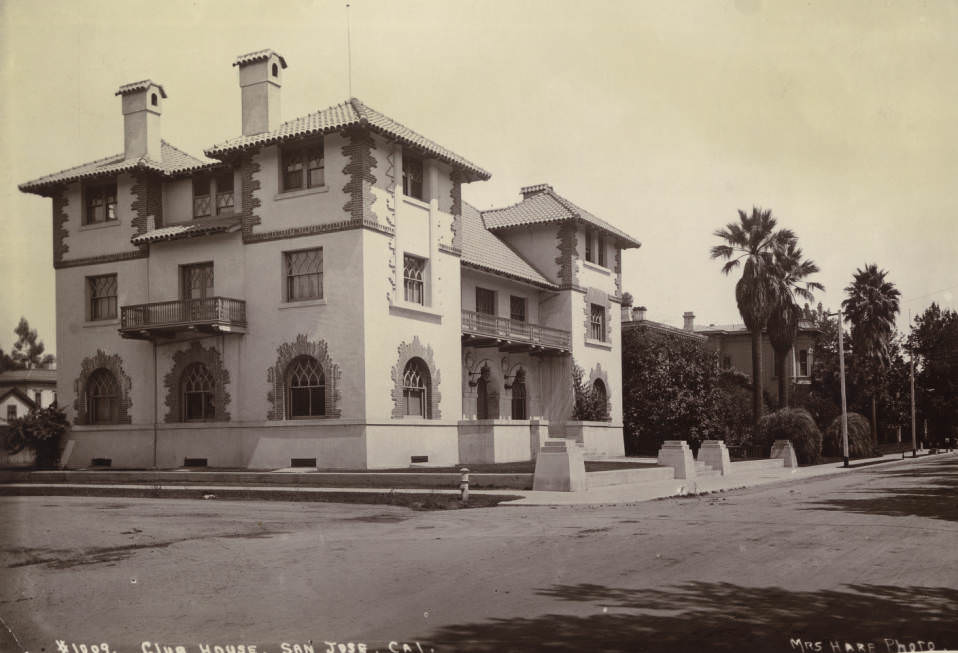
Photographed from the roof of the courthouse looking west, the city in 1900 still showed at least six adobe buildings alongside newer structures. The Fallon House stood at the center of that view — a reminder of San Jose’s earlier California history. The Naglee House, home of Brigadier General Henry Morris Naglee, still stood at Fourteenth and San Fernando Streets, surrounded by the orchards and vineyard he had planted after purchasing the land in 1858. The Sainte Claire Club, an exclusive men’s club founded in 1888, operated from a Mission Revival-style clubhouse built in 1893 at the corner of North Second and Saint James Streets.
San Jose Normal School quadrangle, 1905San Jose Hospital ground-breaking, 1900sLowell Grammar School First Grade, 1900s
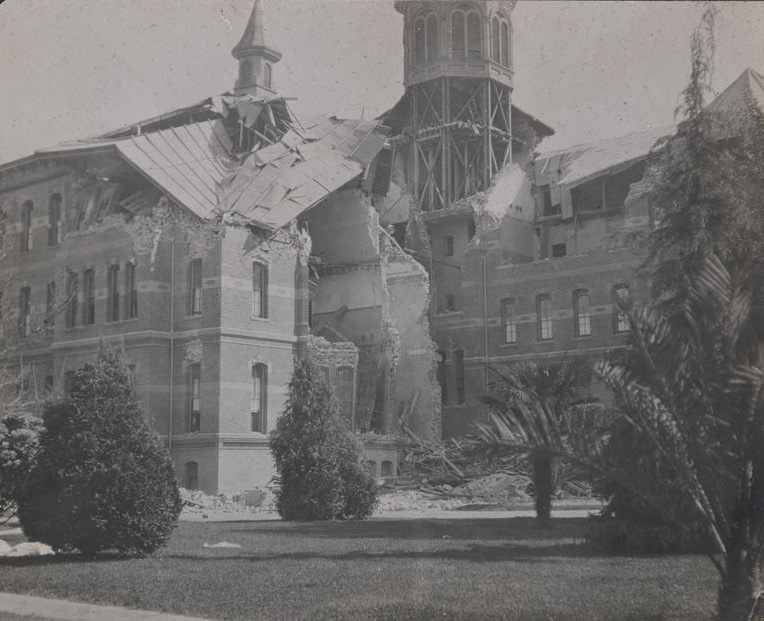
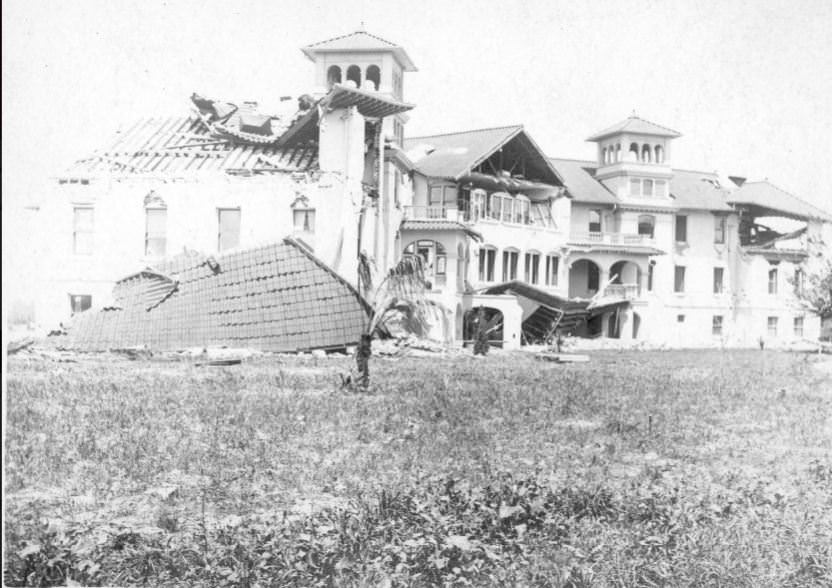
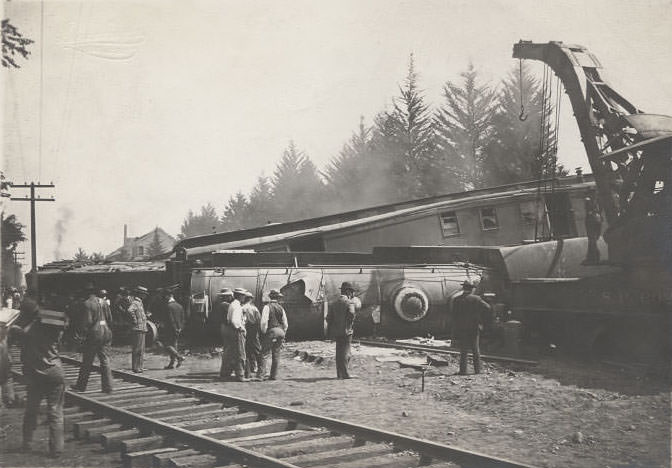
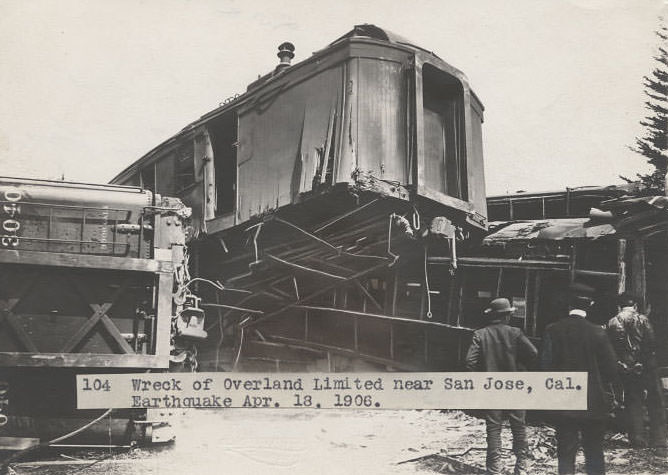
Then came April 18, 1906. The great earthquake struck early in the morning and tore through the Santa Clara Valley with devastating force. San Jose, though smaller and more spread out than San Francisco, suffered serious destruction. Over 100 people were killed when the walls and roof of the all-brick Agnews Asylum — later known as Agnews State Hospital — collapsed. The institution housed patients who had no means of escape as the structure folded around them. In total, 101 patients and 11 staff members died in the collapse.
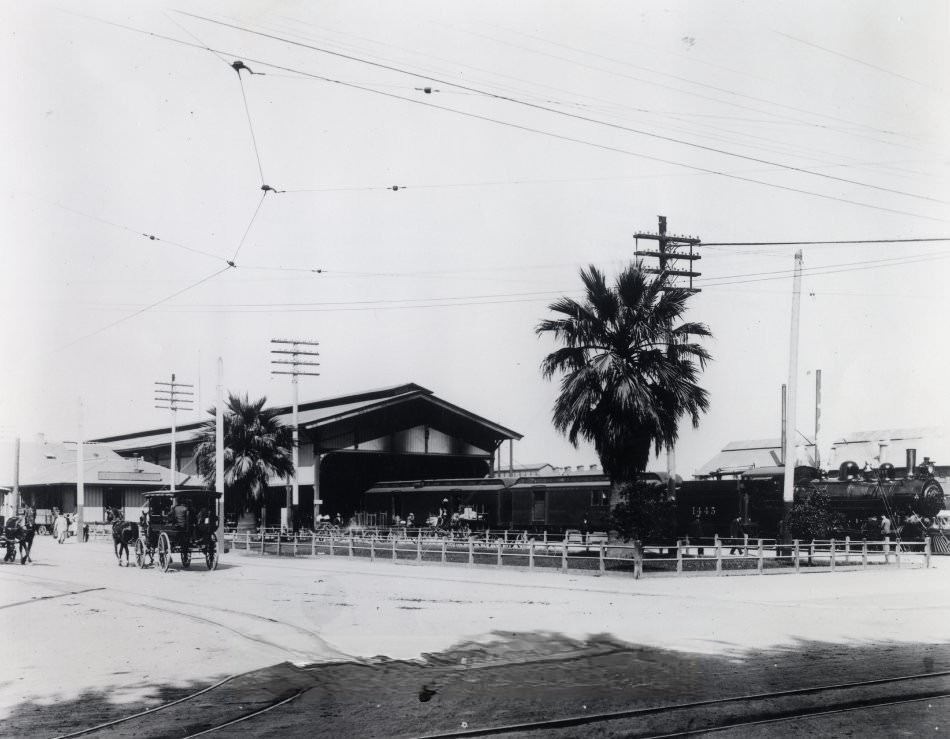
Market Street Station, San Jose, 1907The Italia Hotel, San Jose, 1900Knapp Plow Company offices located in downtown San Jose, 1900s
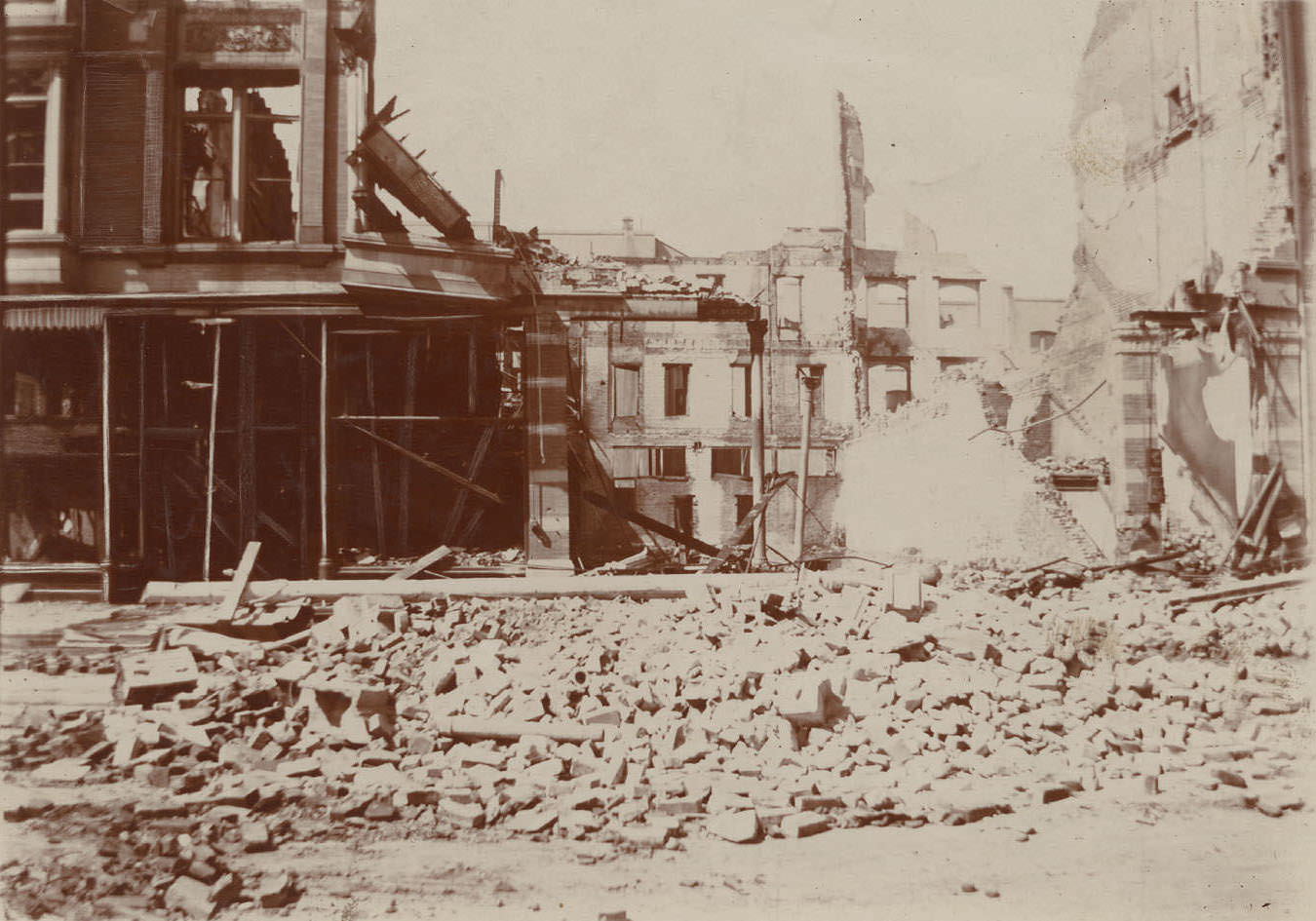
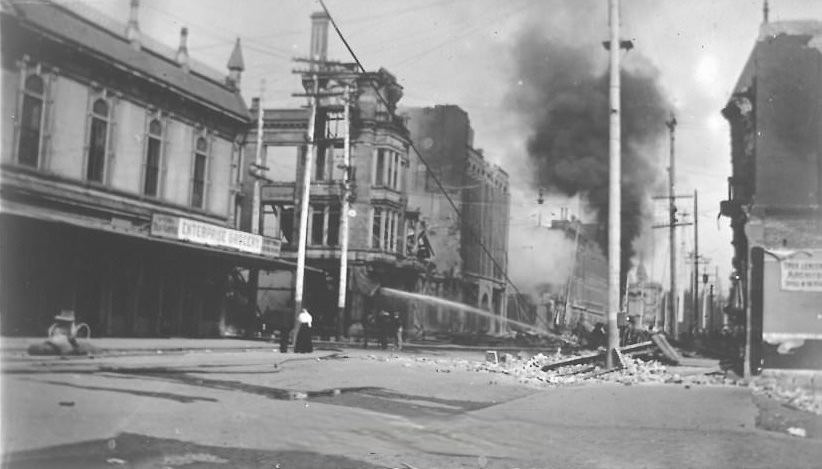
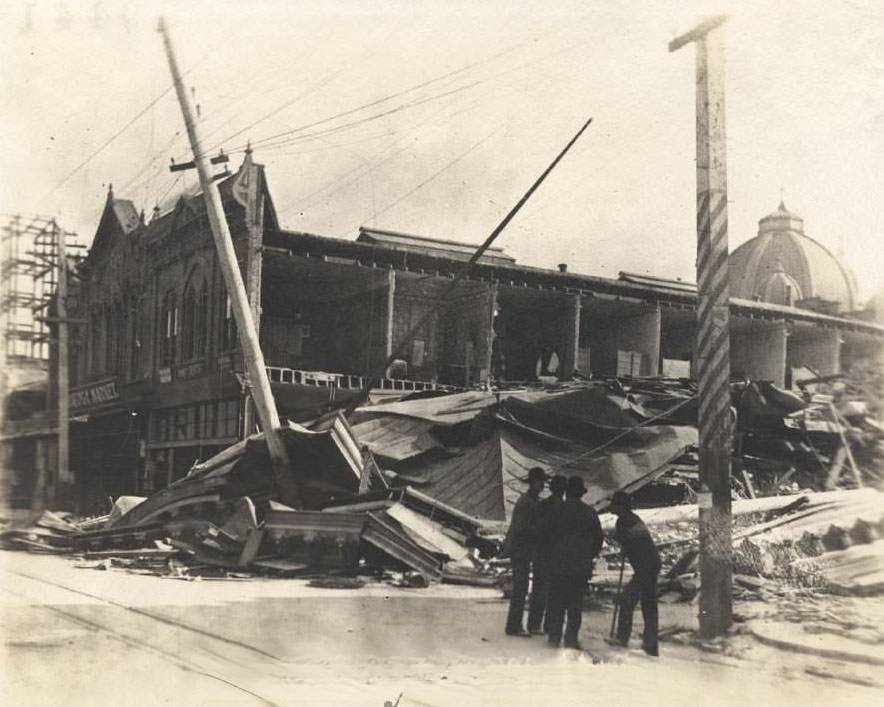
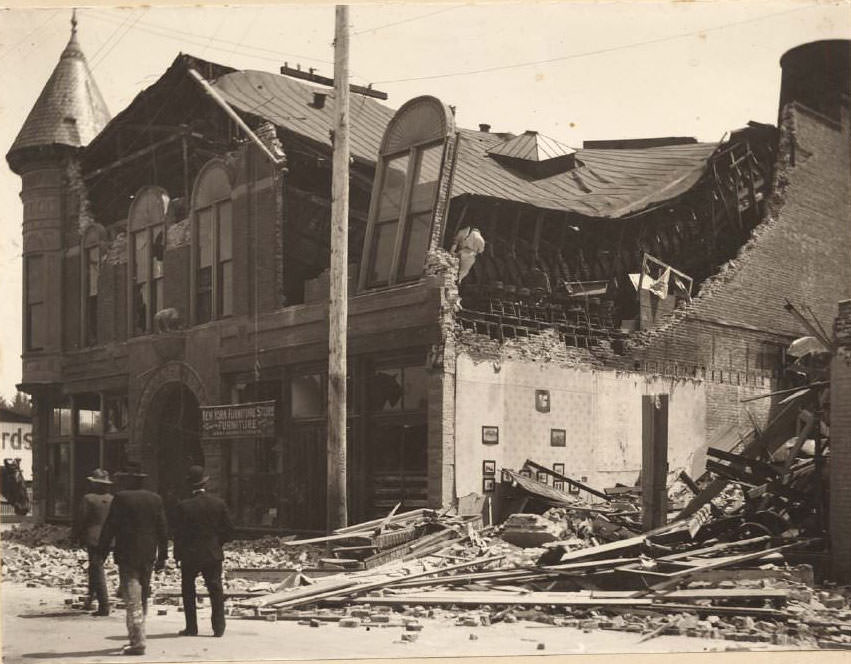
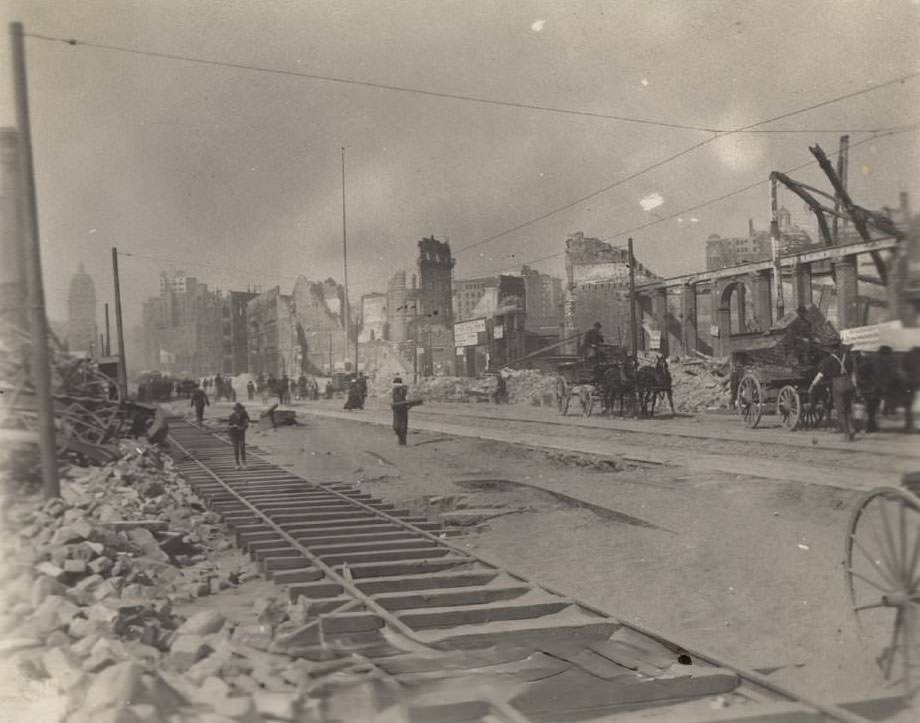
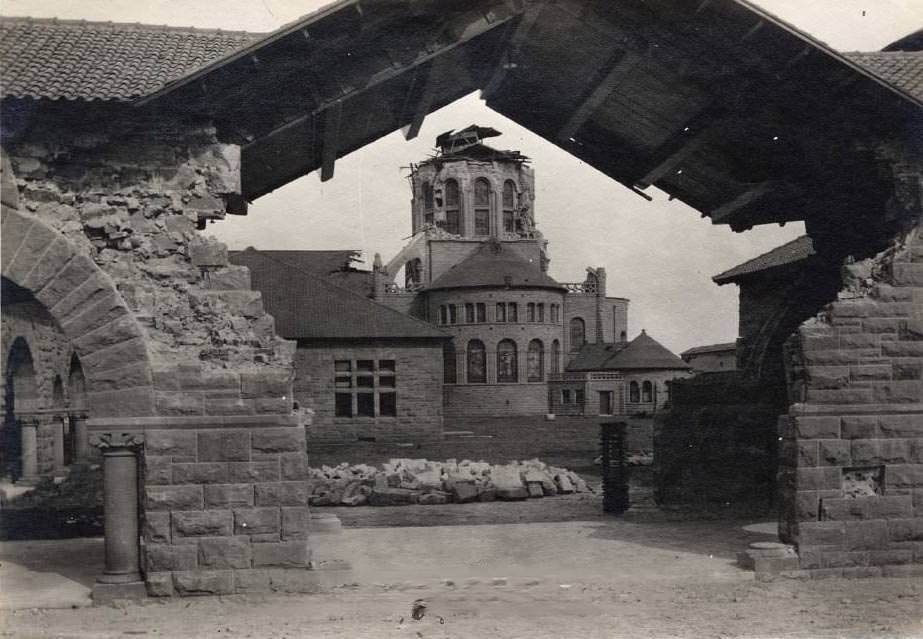
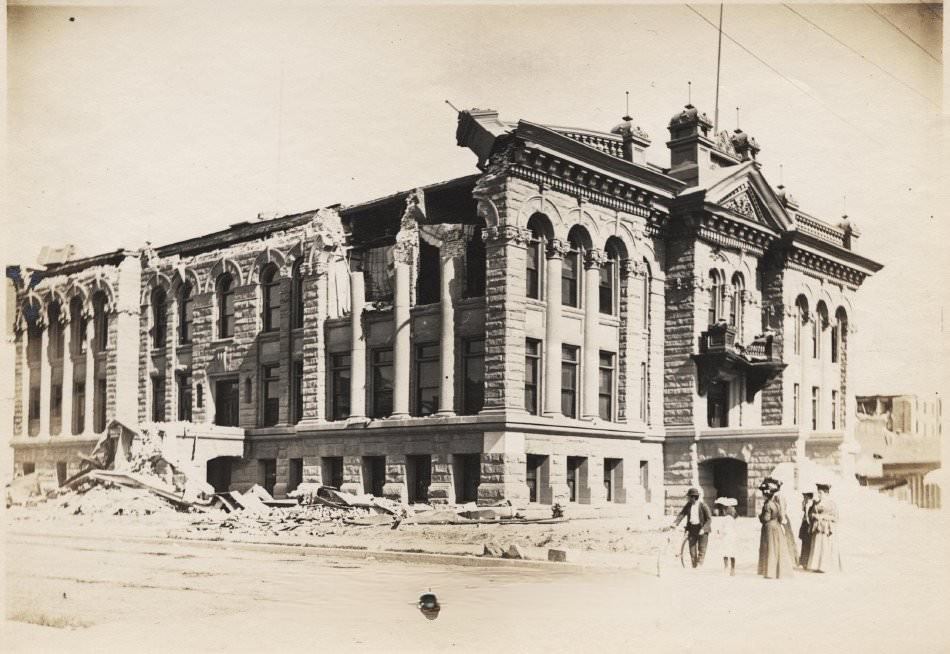
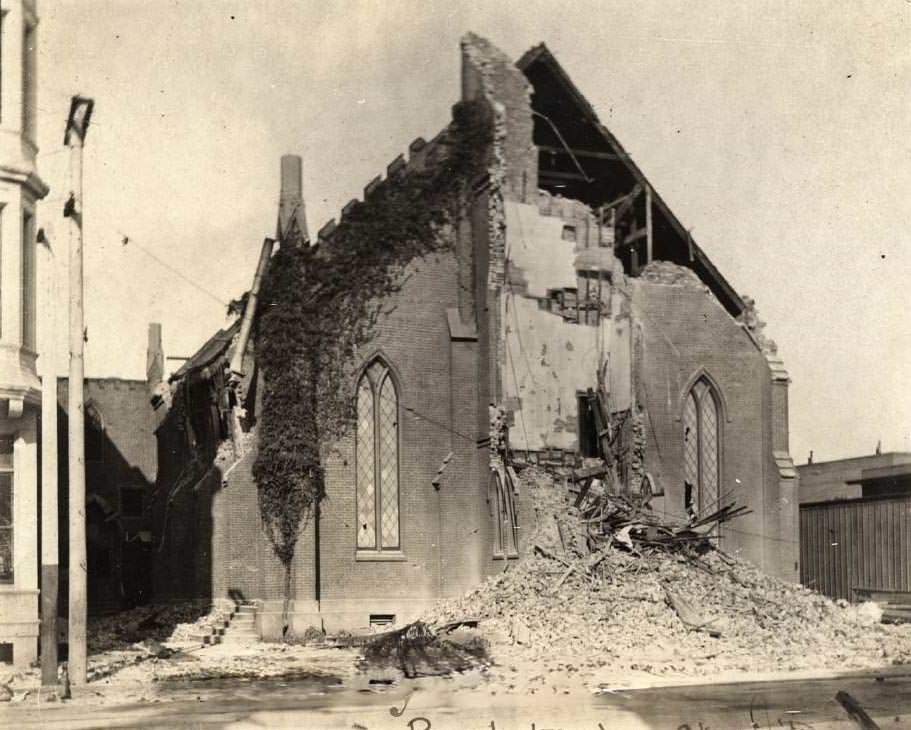
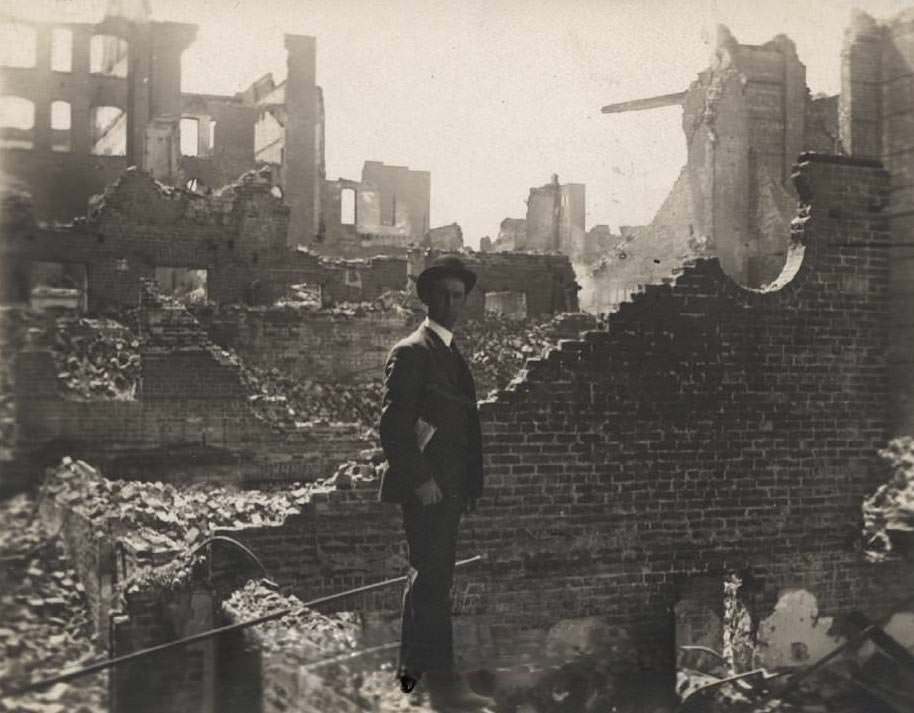
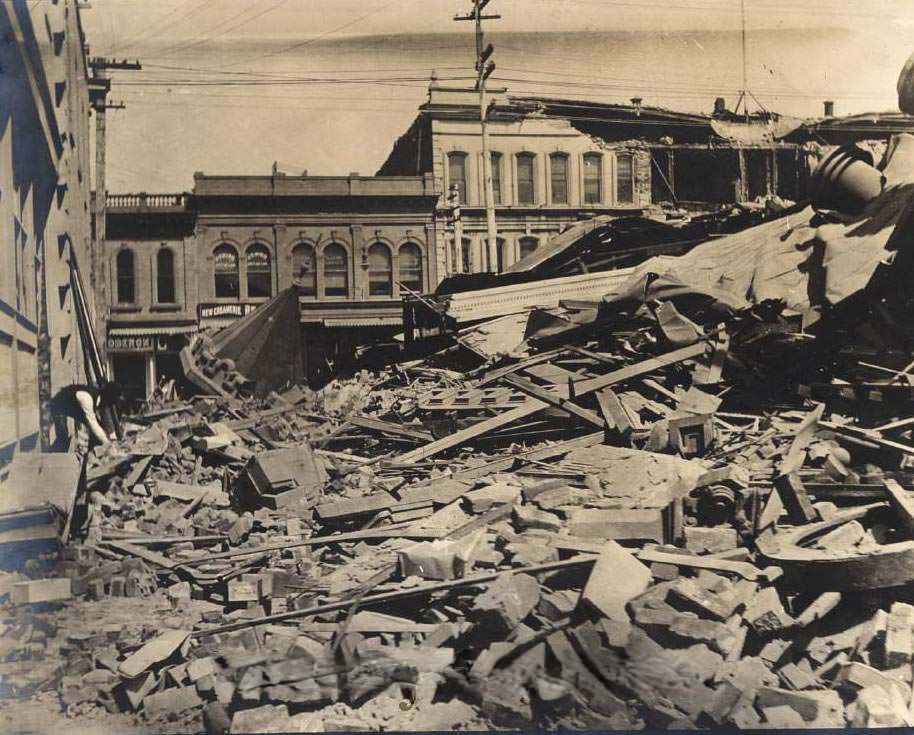
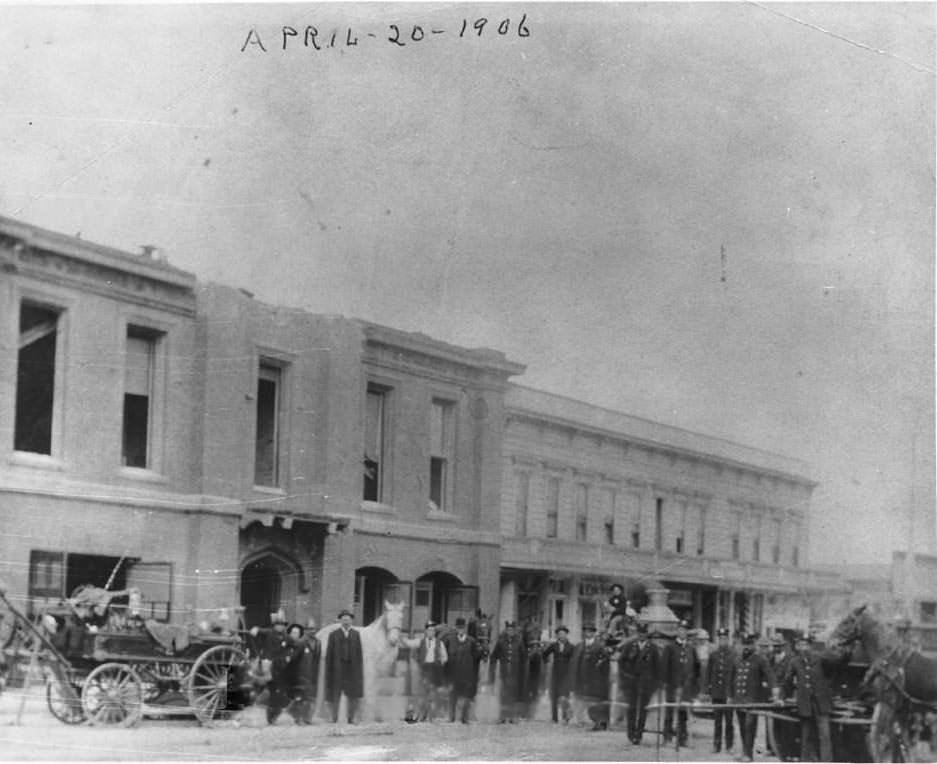
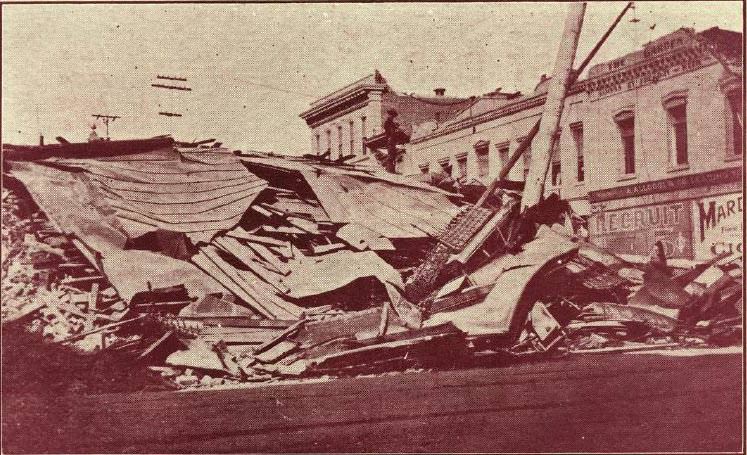
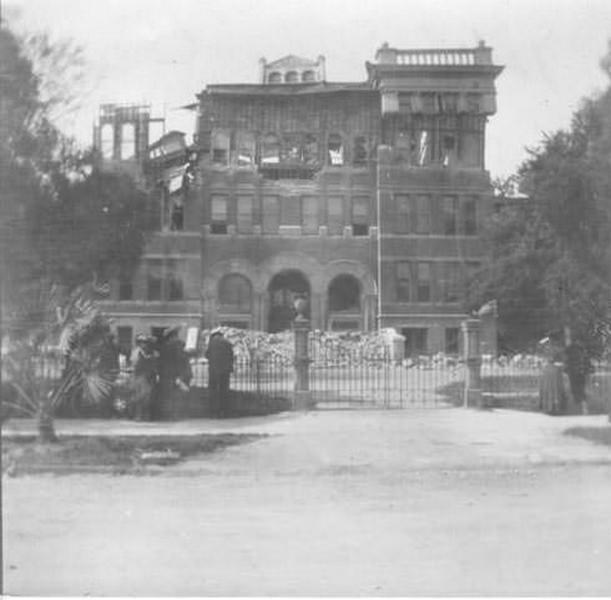
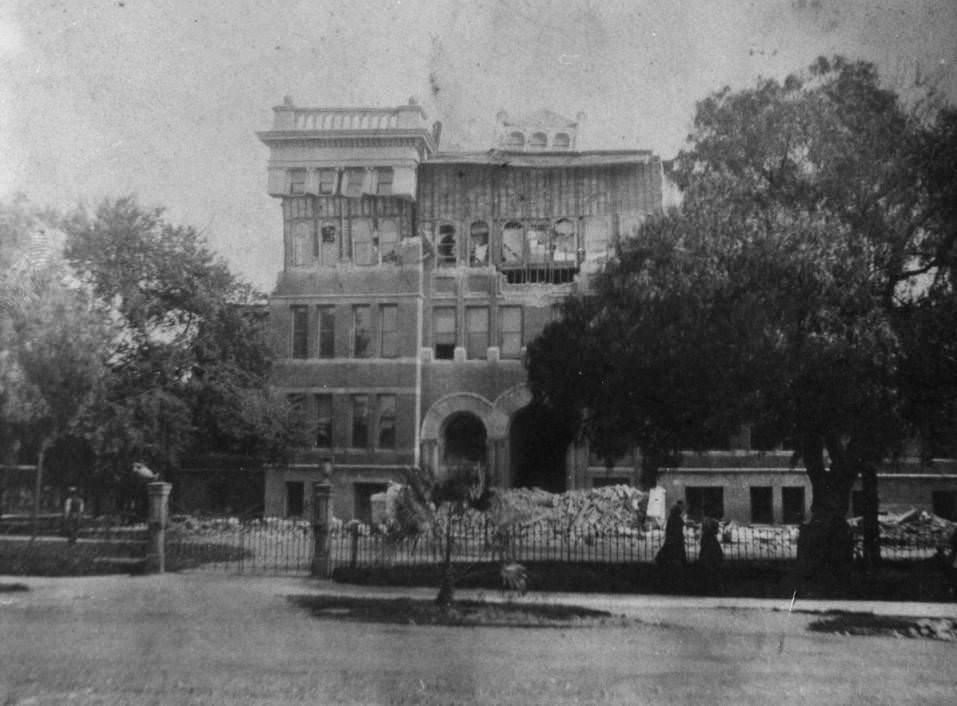
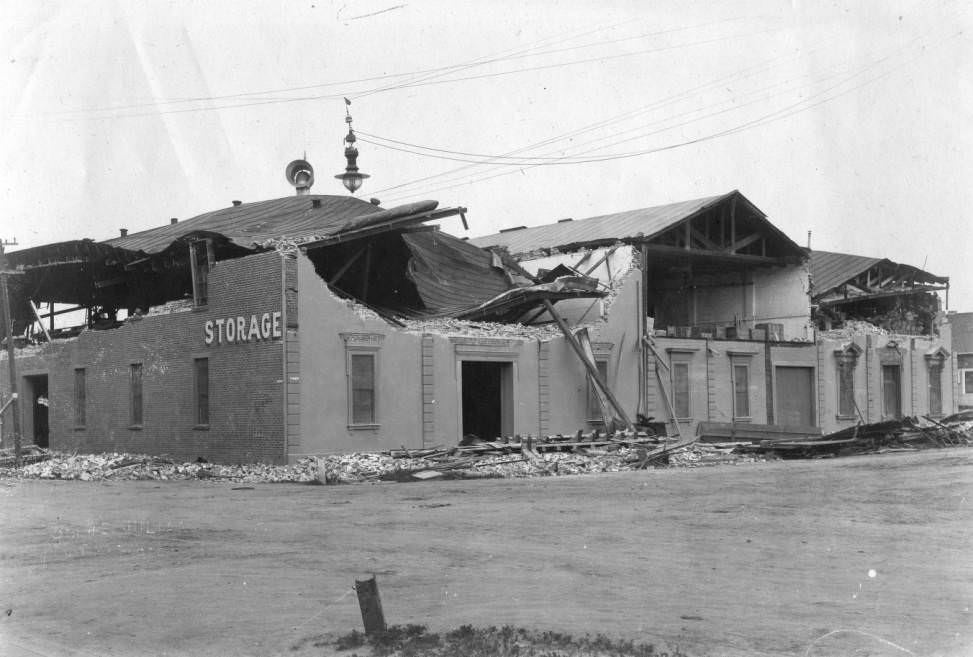
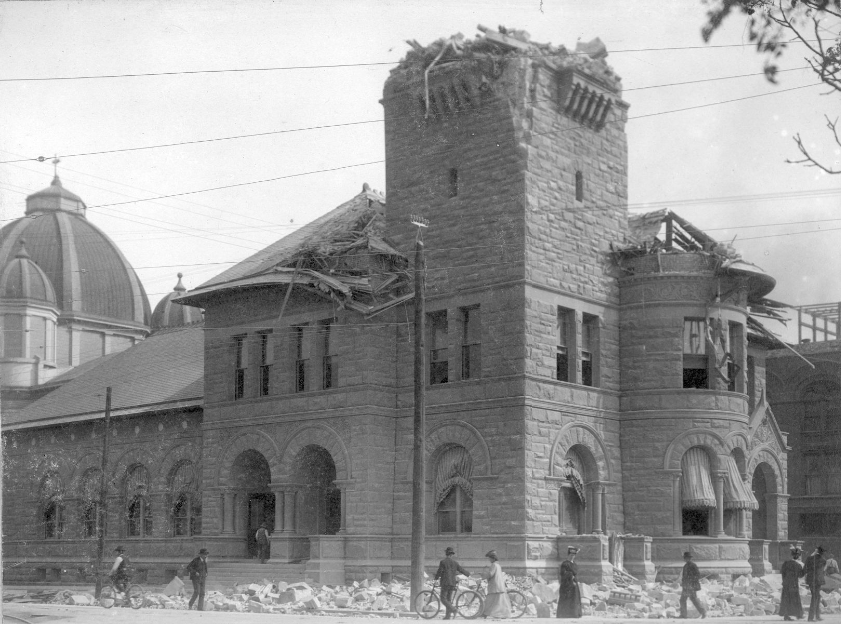
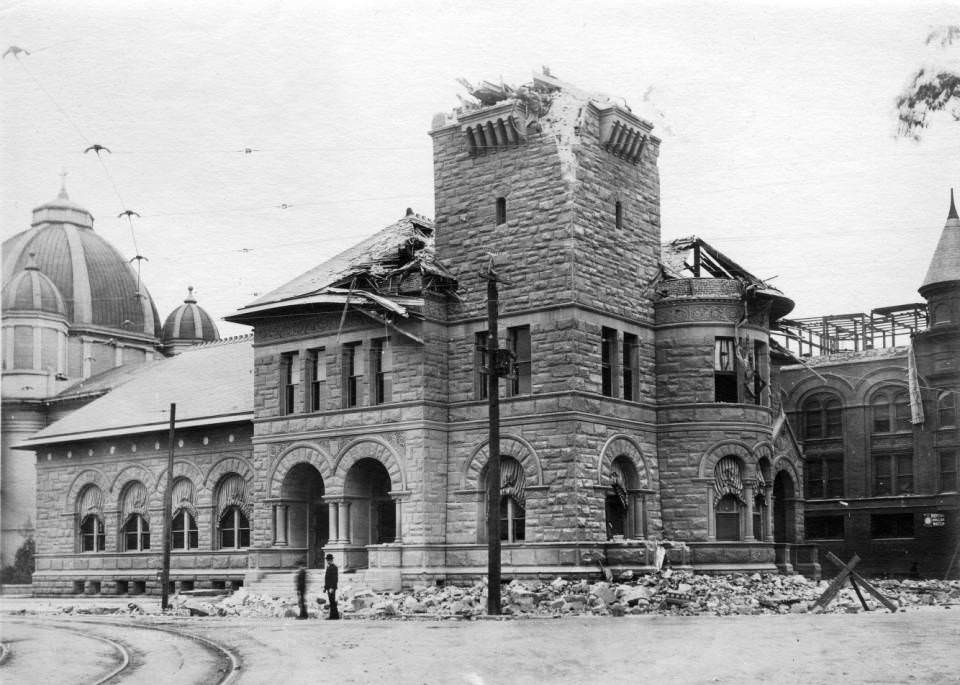
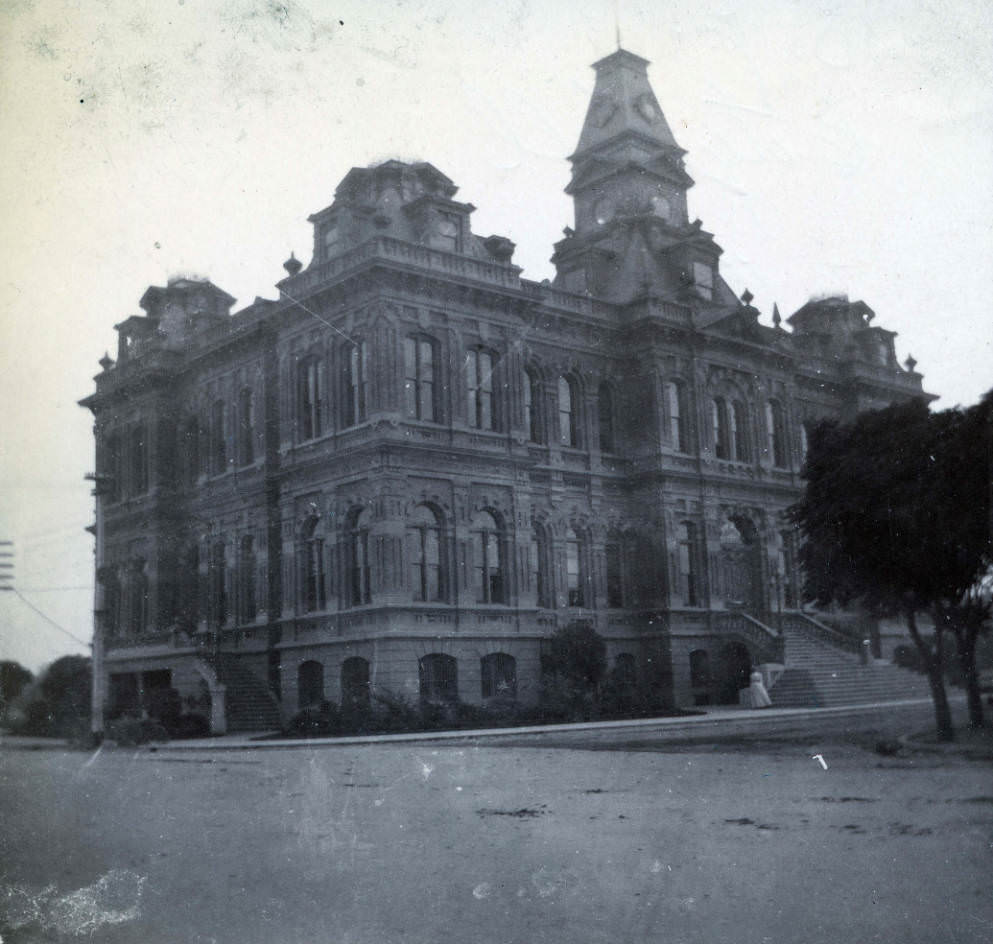
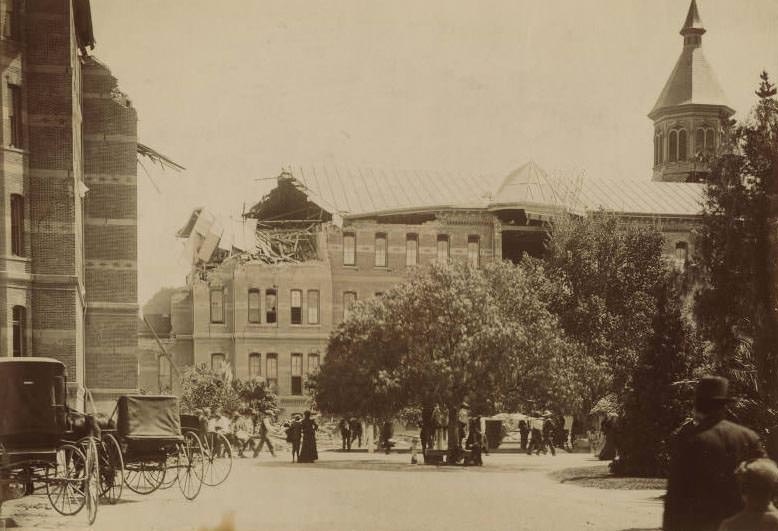
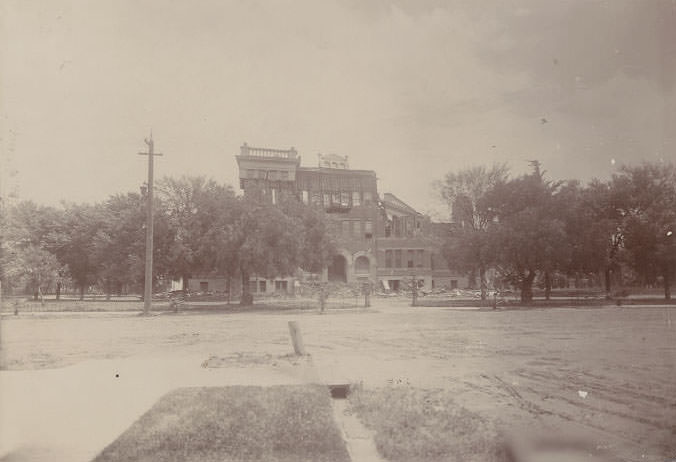
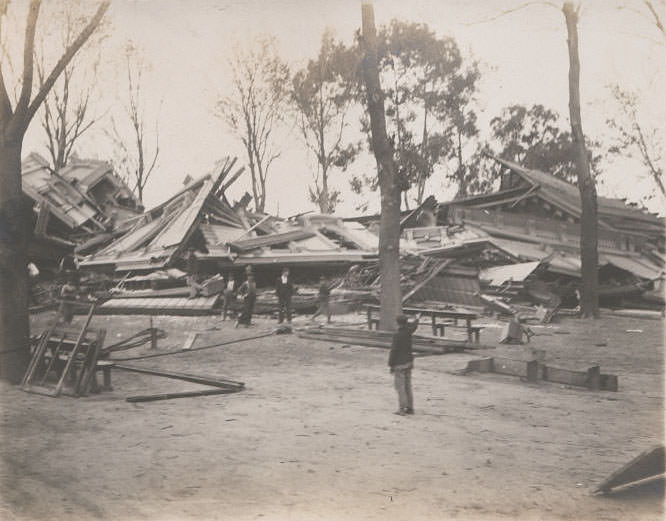
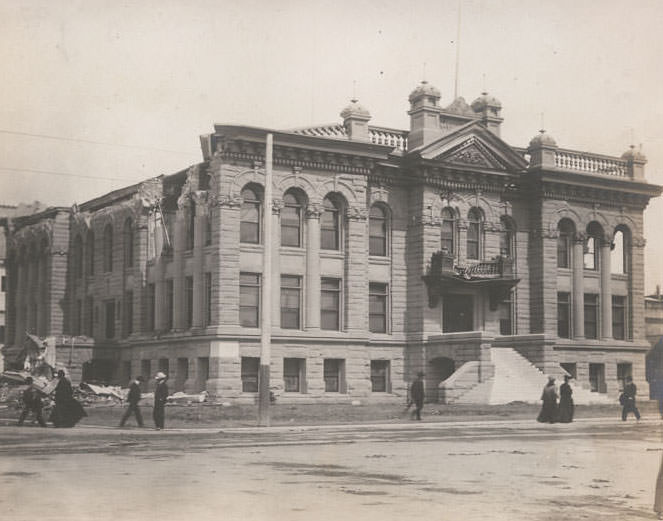
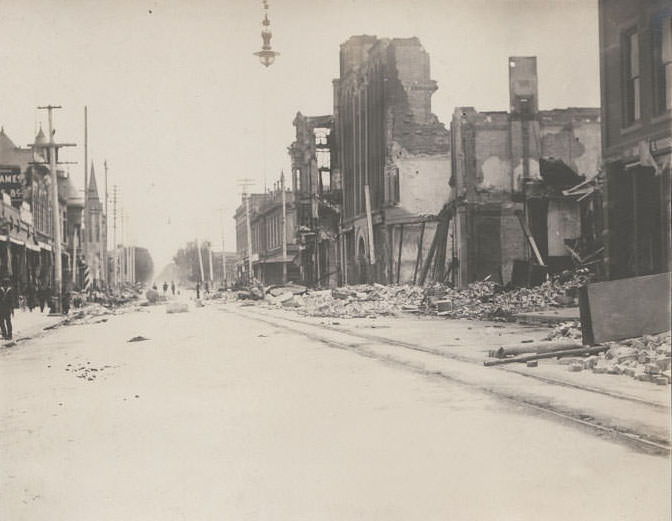
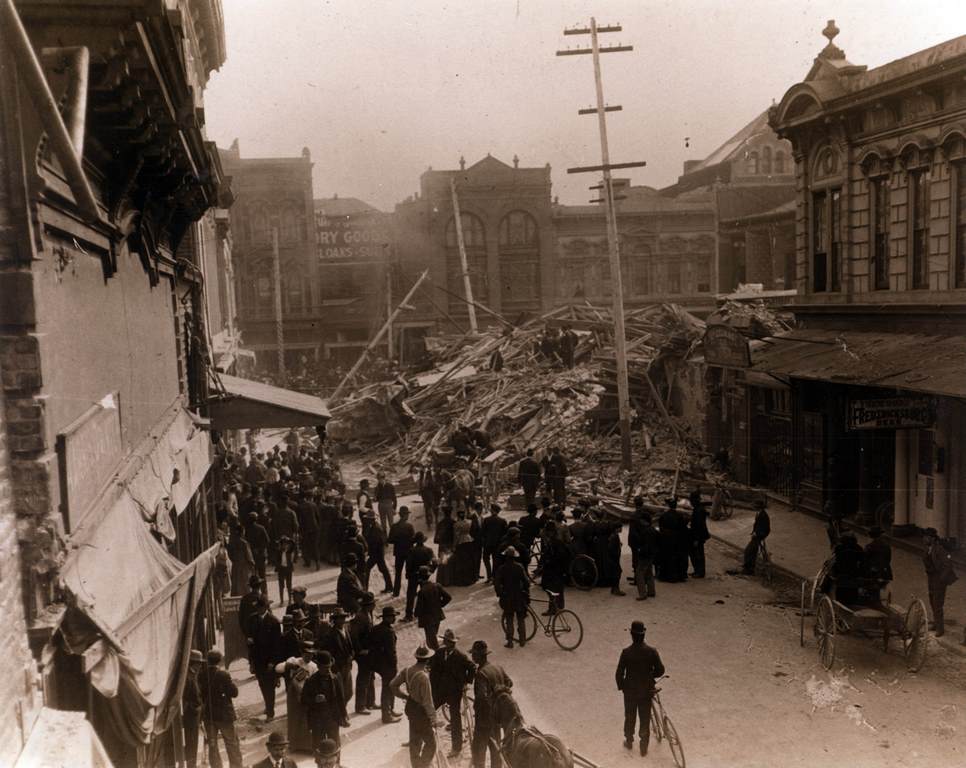
San Jose High School’s three-story stone and brick building also collapsed in the earthquake. The San Jose State Normal School building, constructed of brick in 1881, was so badly damaged it was subsequently demolished. The Hall of Justice, the Main Fire Station, Grant Grammar School, the Presbyterian Church, and the Phelan Building all sustained severe damage. Post Street was torn apart. The Unique Theatre was irreparably damaged. Across downtown, brick facades crumbled onto sidewalks and rubble piled into the streets.
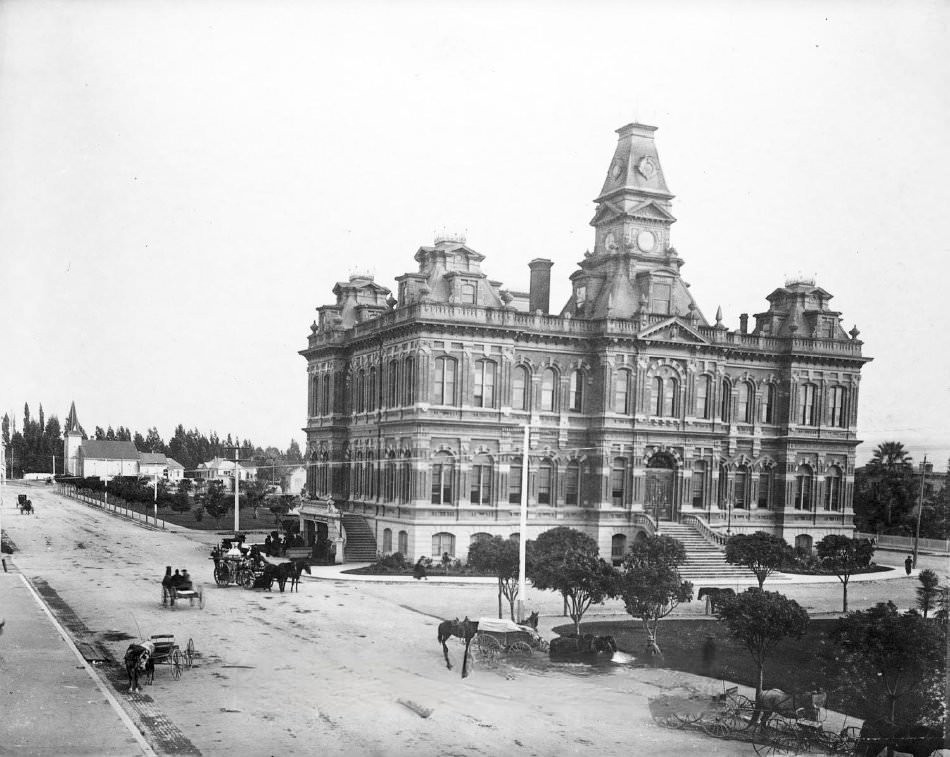
City Hall, San Jose, 1901Hotel Vendome, San Jose, 1900sLetcher Garage on North First Street, San Jose, California, 1905
Recovery began almost immediately. Rail tracks were cleared, debris was hauled away, and rebuilding started within weeks. The San Jose State Normal School was replaced with a reinforced concrete structure that opened in September 1910, its main entrance facing Fourth Street through three arched gates. San Jose High School was rebuilt and opened in 1908 — a central building flanked by twin bell towers, housing administrative offices and an auditorium, with separate classroom wings on either side. Longfellow Grammar School was also constructed to replace its destroyed predecessor, standing at 275 Terraine Street near North San Pedro and West Julian Streets.
House on North San Pedro Street, 1900sRuins of Agnews Insane Asylum, San Jose, 1906Enterprise Grocery and Theodore Lenzen Offices, 1906
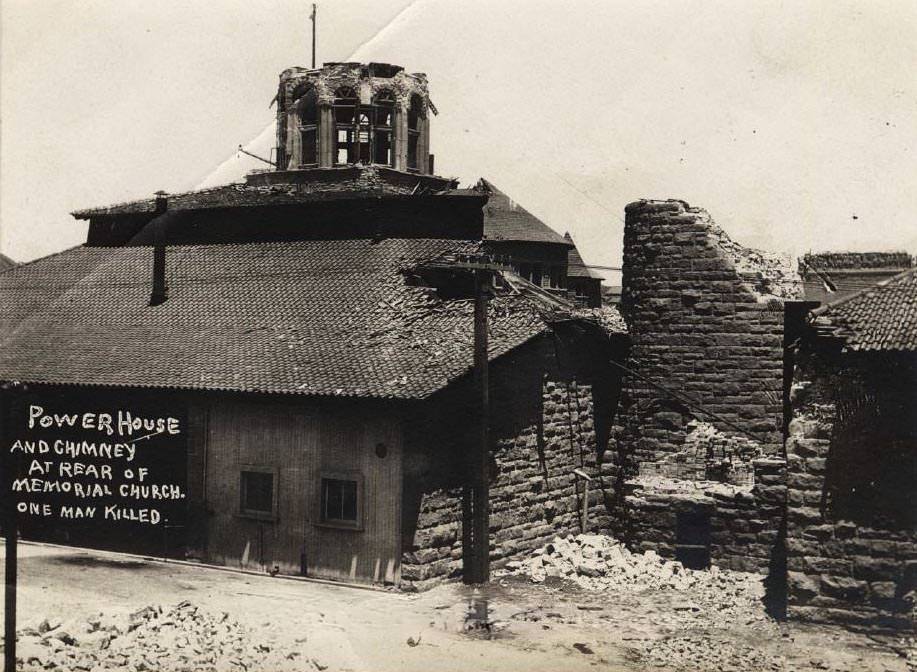
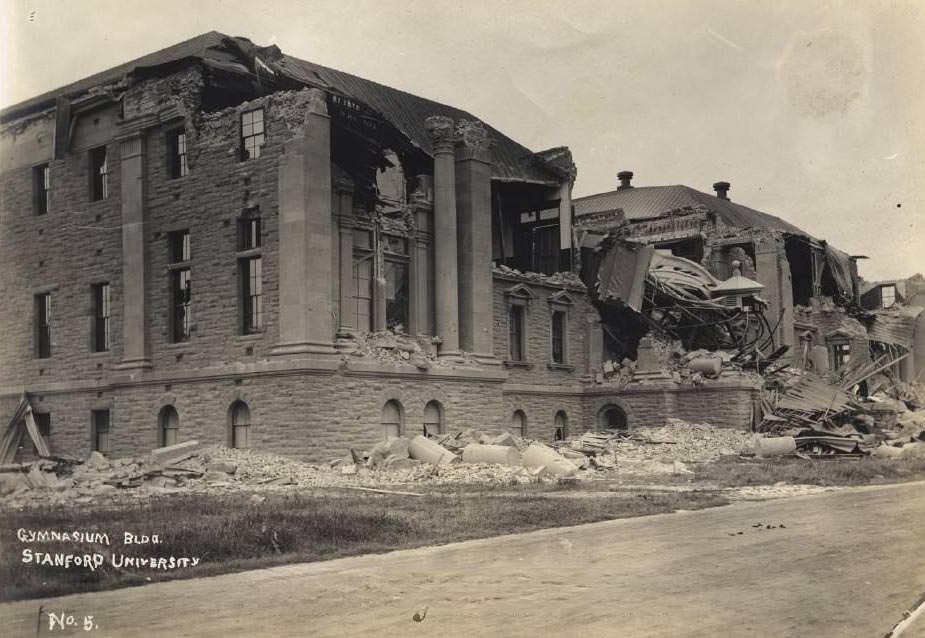
The earthquake also struck Stanford University hard. The campus gymnasium, powerhouse, and other structures were damaged or destroyed. By contrast, the more spread-out layout of buildings across the San Jose area had reduced the risk of the kind of fire that consumed much of San Francisco following the quake — where buildings were packed tightly together on the peninsula, fire spread rapidly; in San Jose the distances between structures offered some protection.
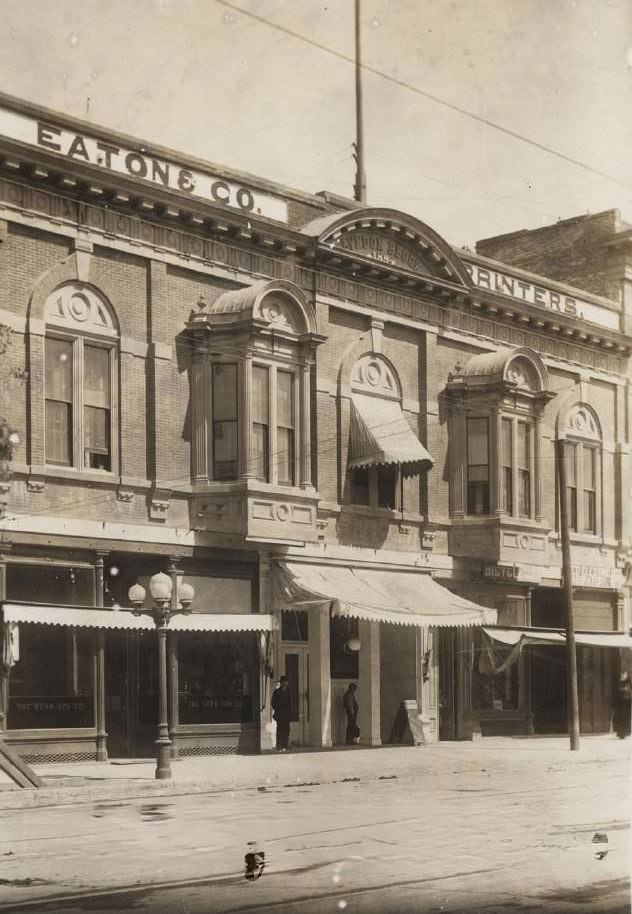
Hotel St. James, San Jose, California, 1904Market Street, San Jose, 1907Lyndon Block-Eaton and Eaton Printing Company 173 West Santa Clara Street San Jose, 1908
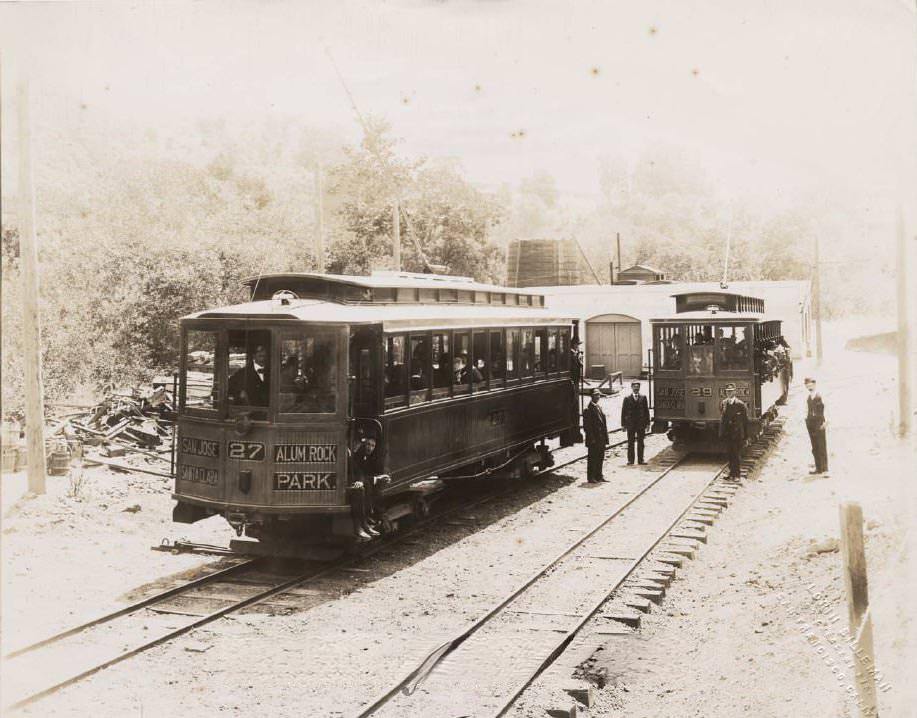
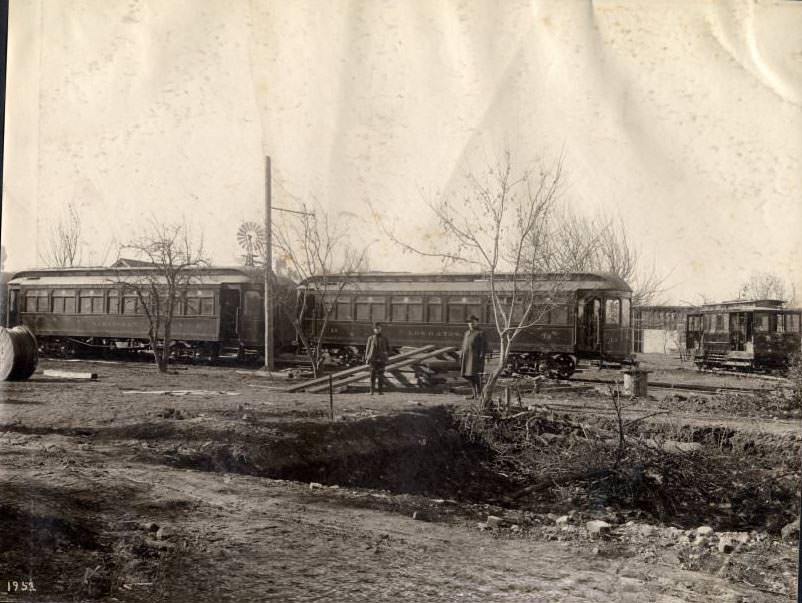
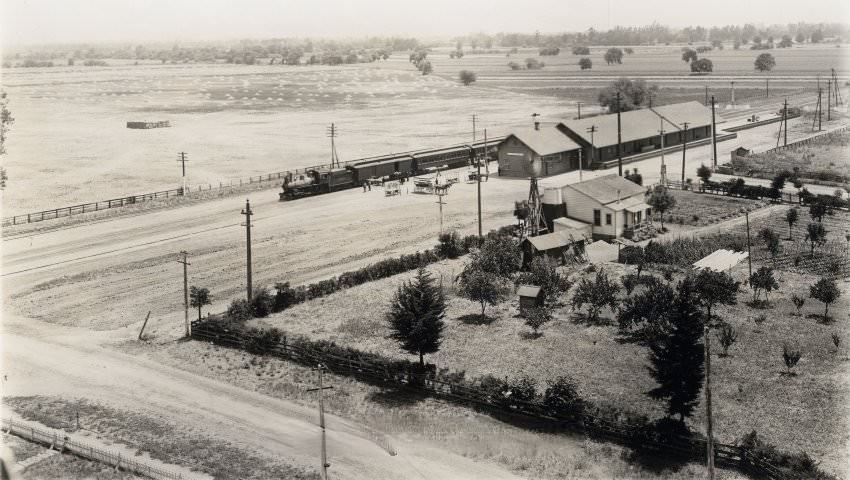
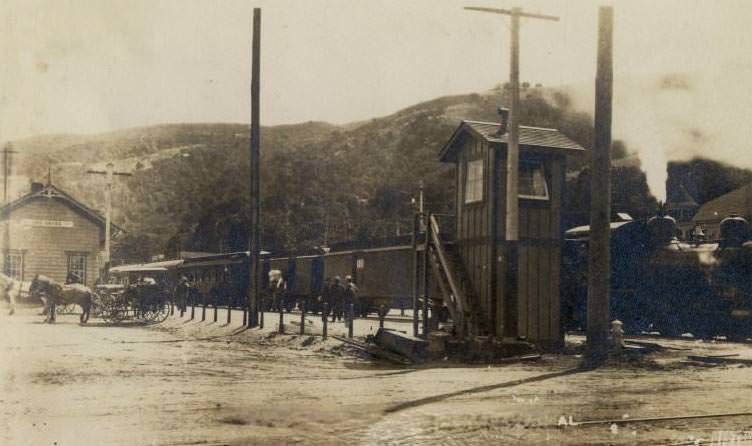
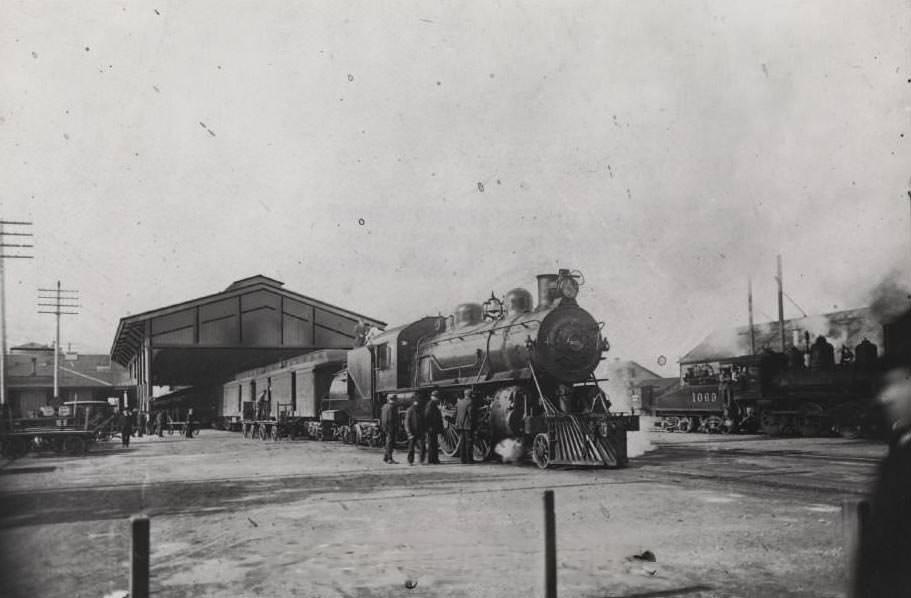
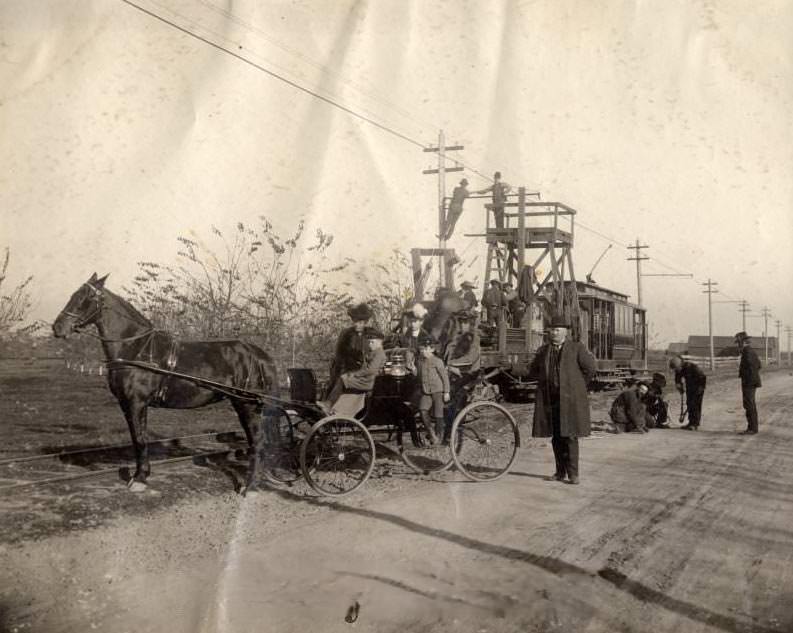
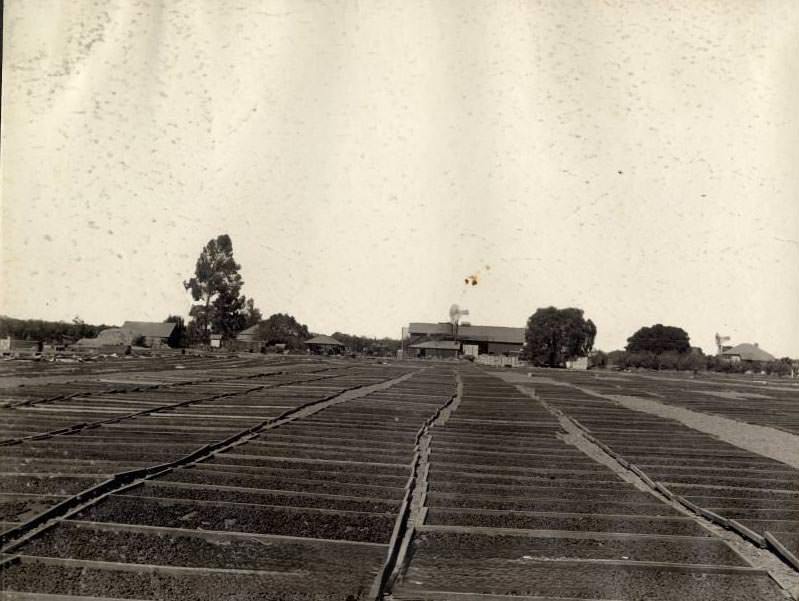
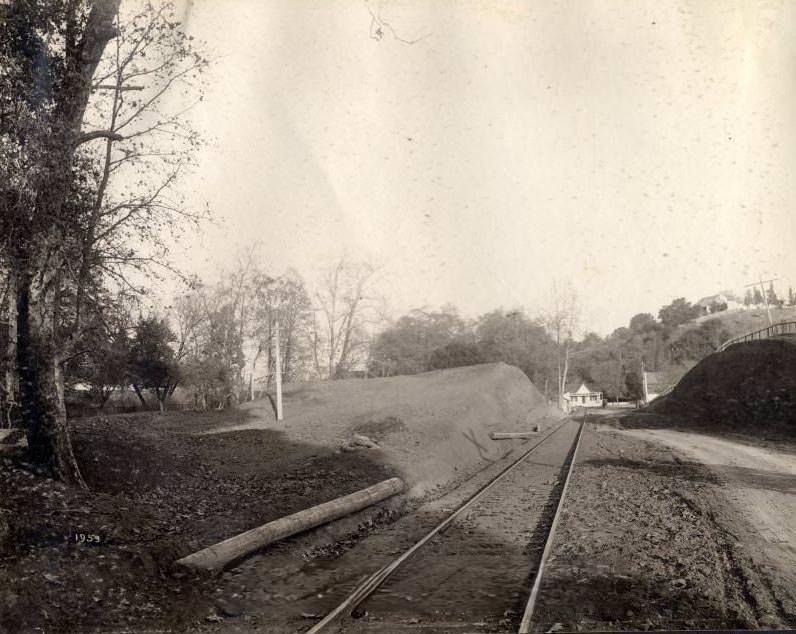
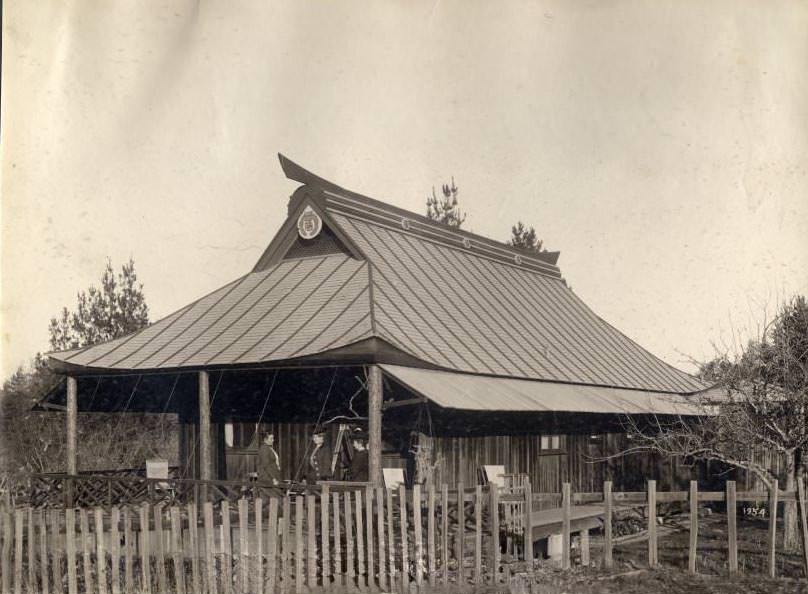
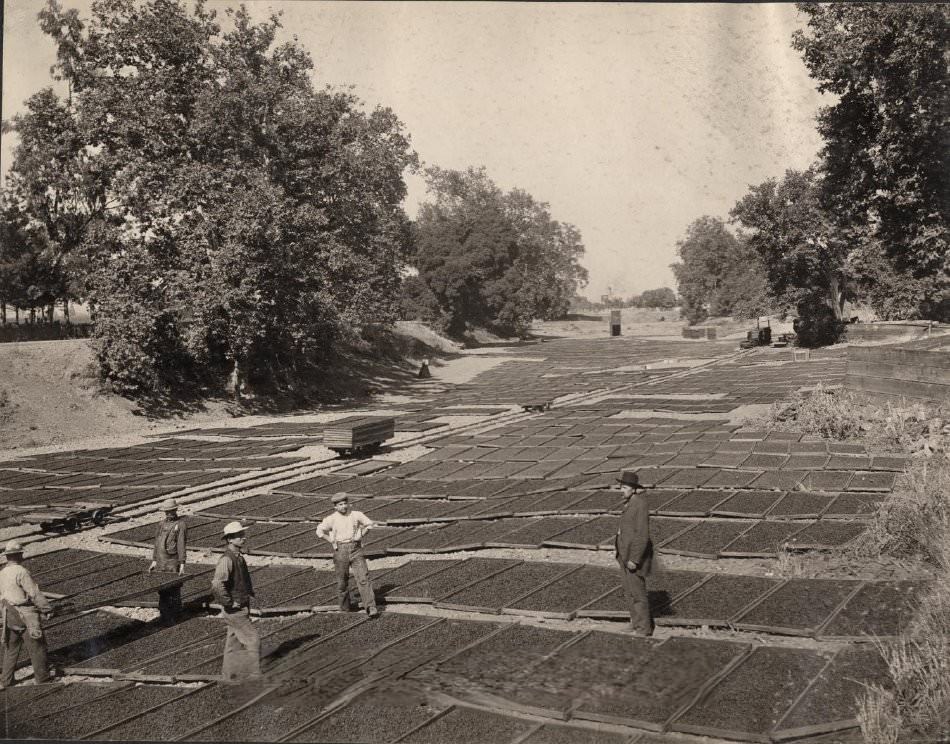
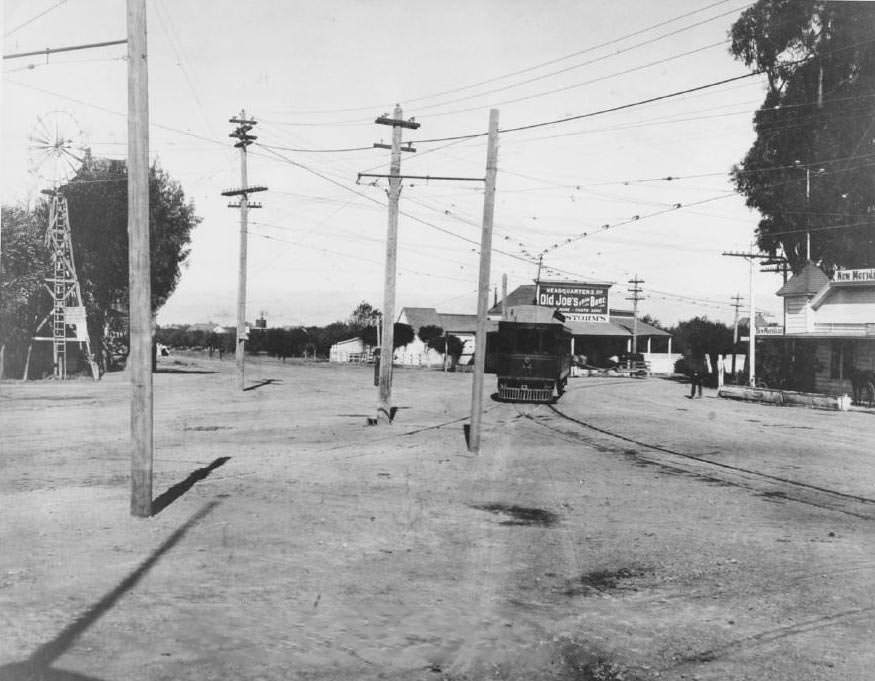
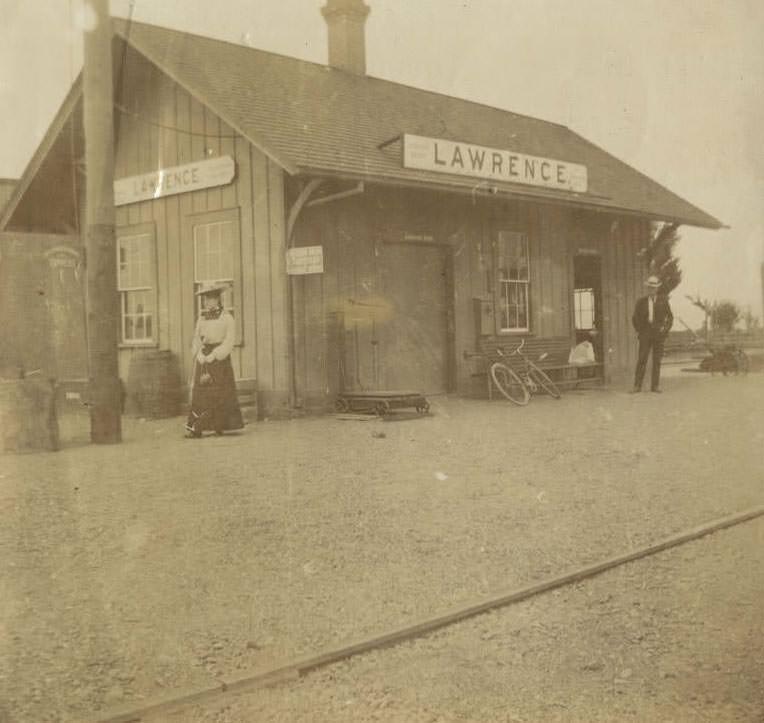
Transportation was transforming the region. The San Jose and Los Gatos Interurban Railroad connected communities across the valley, with workmen laying track through agricultural land as early as 1903. Passengers rode new electric rail cars between towns, passing drying grounds where prune crops were laid out under the sun, farmhouses, and the Japanese cottage at Nippon Mura along the line. The Alum Rock Steam Railroad offered a separate route to Alum Rock Park, where mineral springs and a paved road through tree-lined paths drew visitors on weekends.
Parade, South First Street, July 4, 1907Horse-drawn cart outside Bennett, Patterson & Co. furniture store, 1900F. M. Jones Bicycle Store, San Jose, 1906
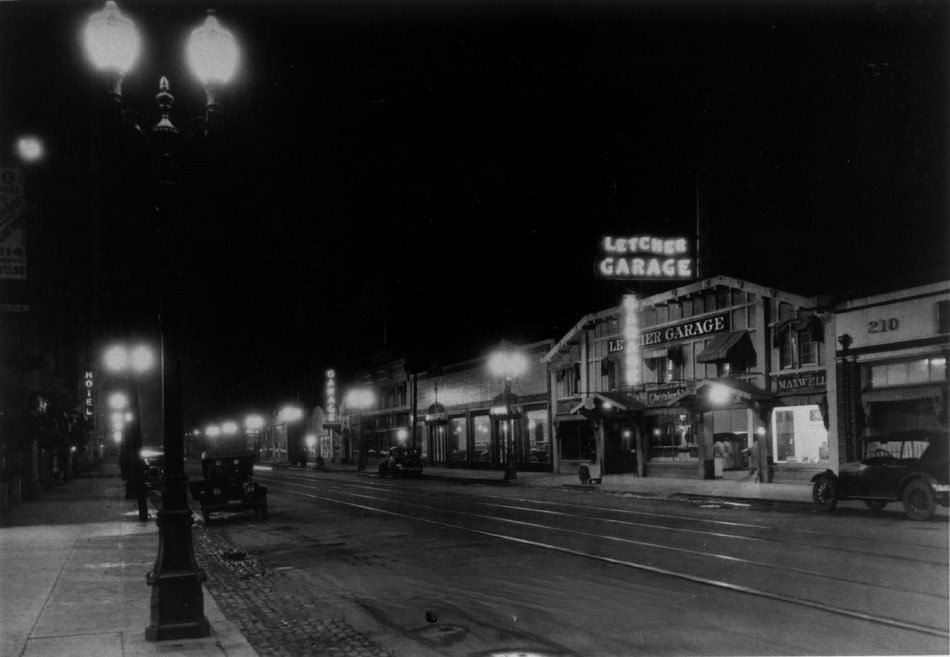
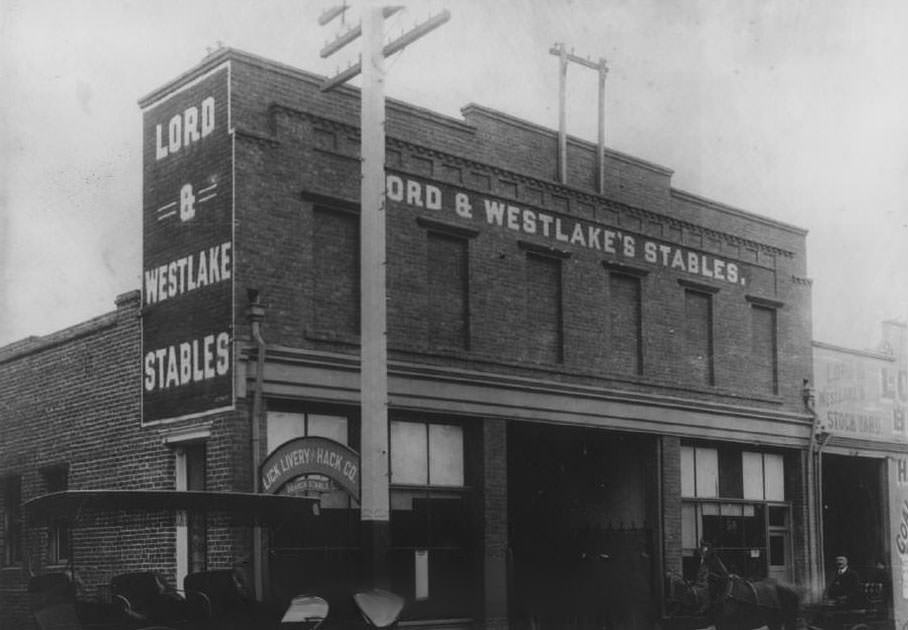
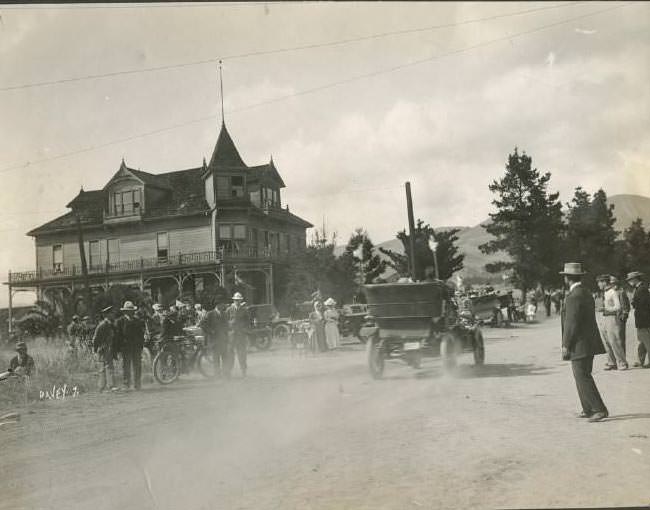
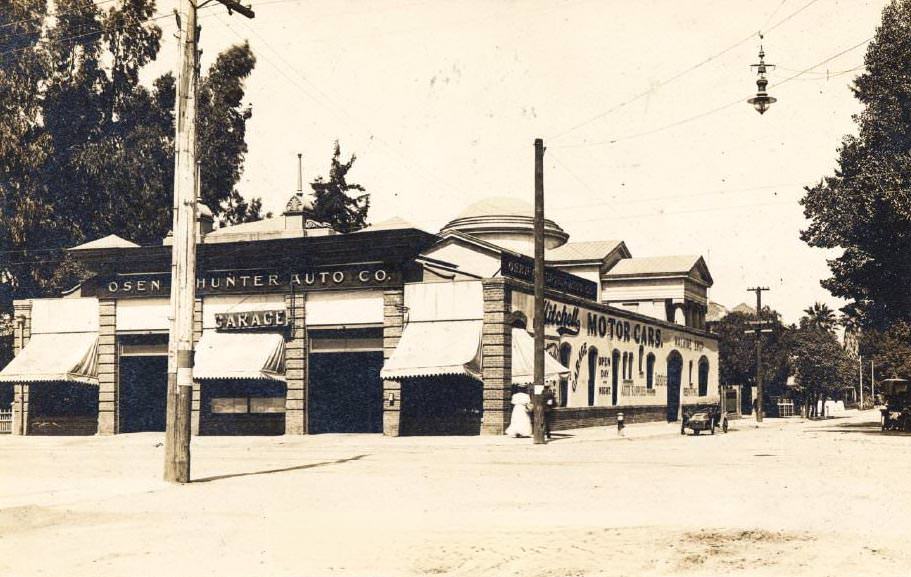
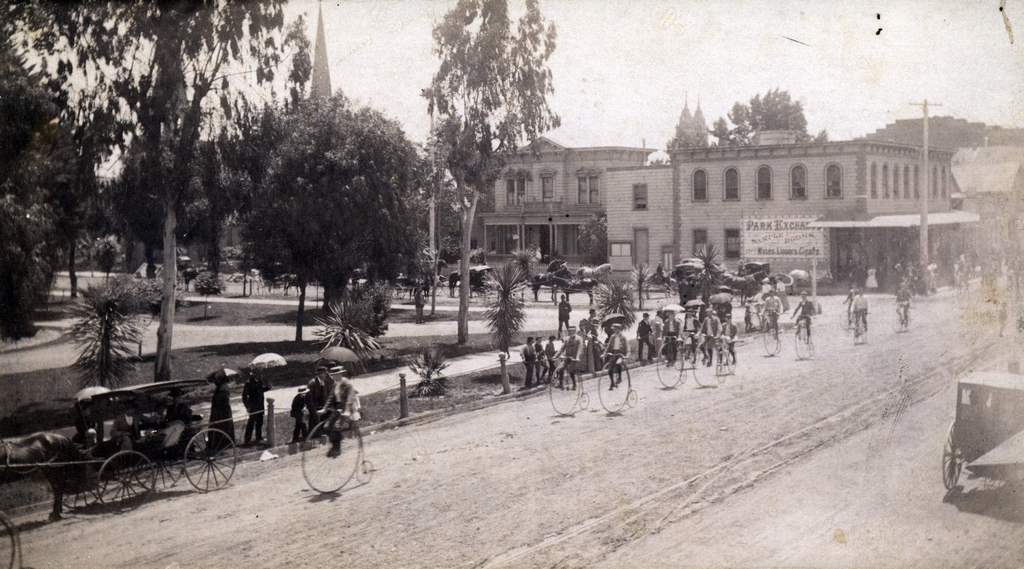
Bicycles and early automobiles shared the streets with horses throughout the decade. The Letcher Garage on North First Street was already operating by 1905, catering to the growing number of car owners. By 1908, Osen Hunter Auto Company had opened at First and Saint James Street. The automobile industry’s rise was felt in the livery trade as well — Jacobi Poulsen operated the Peacock Livery Stable at 59 North San Pedro Street from around 1908, but by 1913 he sold off all his stock at public auction as automobiles made horse-drawn carriage service economically unviable.
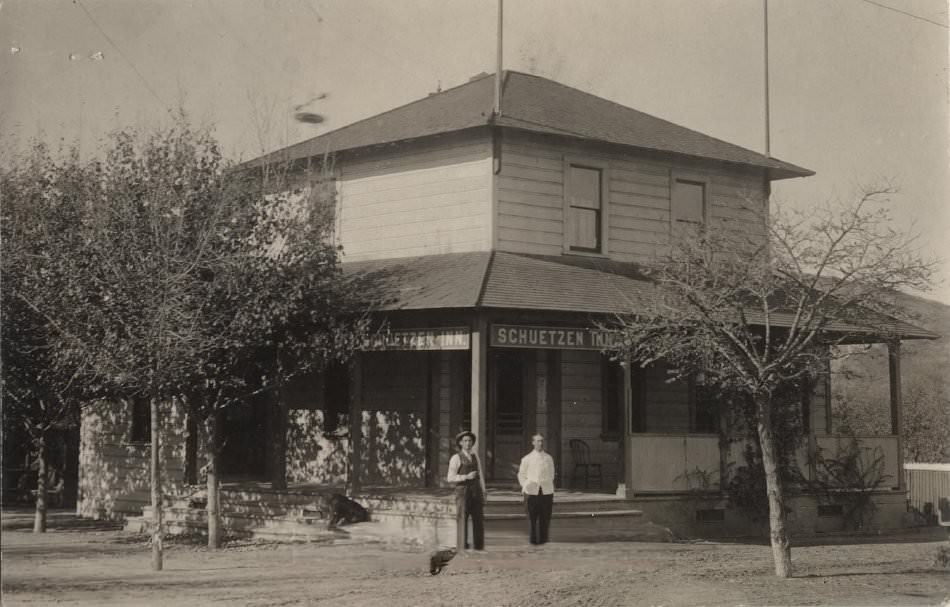
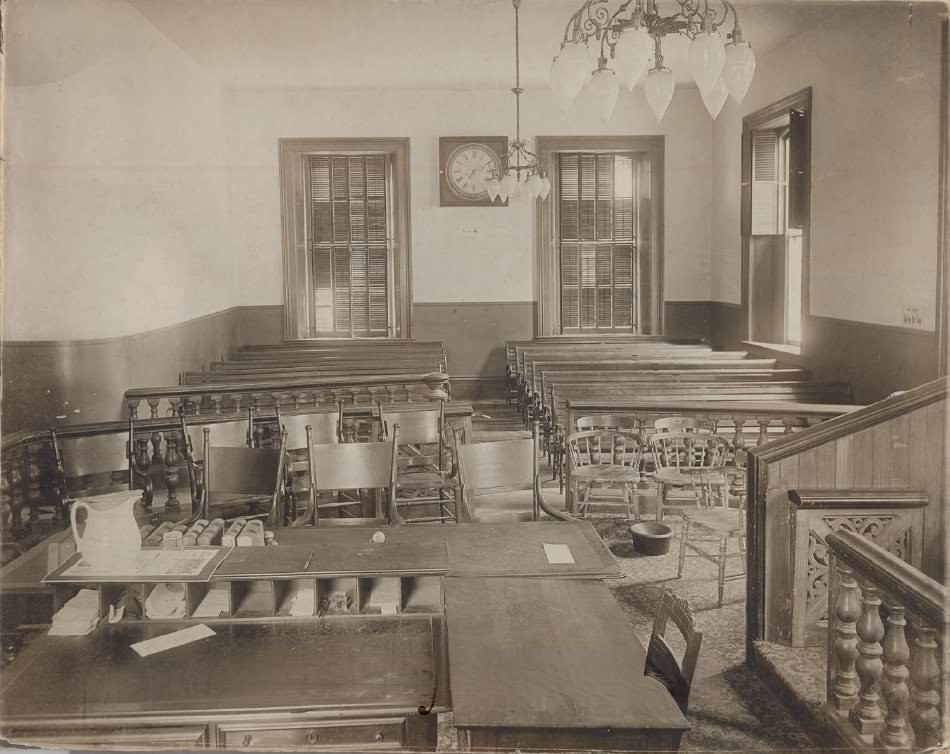
President McKinley in St. James Park, 1901Schuetzen Inn, Monterey Road, 1908Police Court, San Jose, 1905
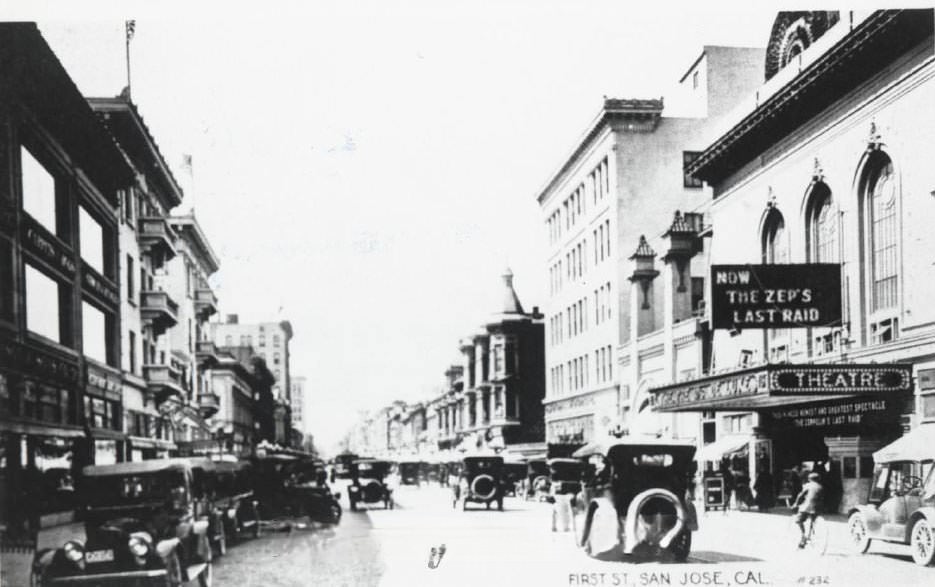
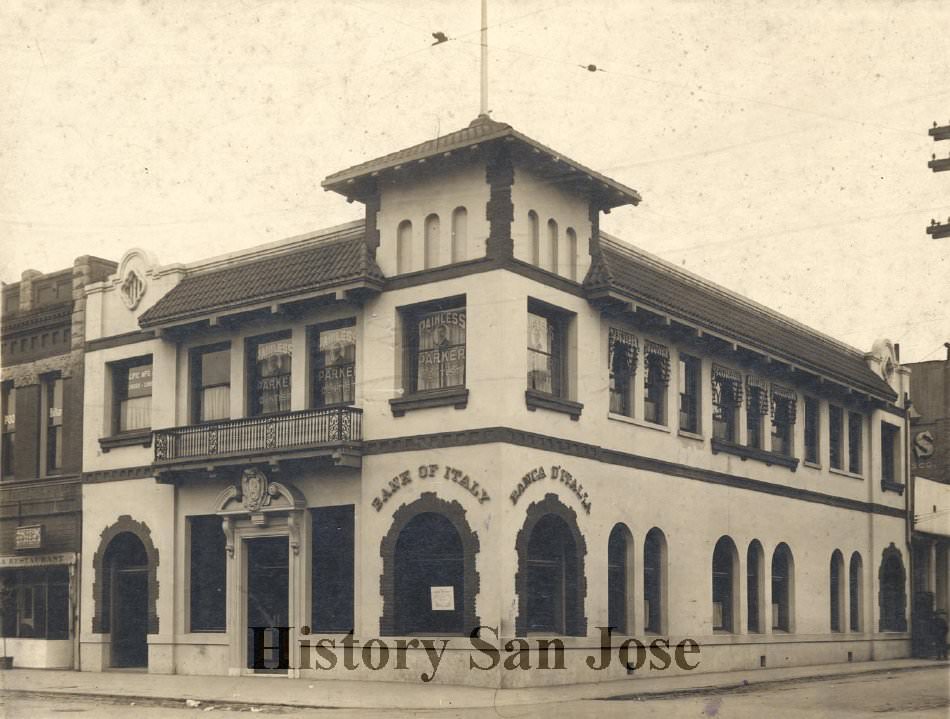
On First Street in 1908, the view looking south from Post Street showed a city in full commercial stride — wagons and carriages crowding the road, pedestrians on the sidewalks, a streetcar running down the center tracks, and the Garden City Bank building rising above the intersection. The AP Giannini branch of the Bank of Italy opened on San Jose’s streets in 1907, part of Giannini’s expanding banking network that would eventually become Bank of America. Charles Herrold founded the first commercial radio station in San Jose in 1909, operating from the Garden City Bank building.
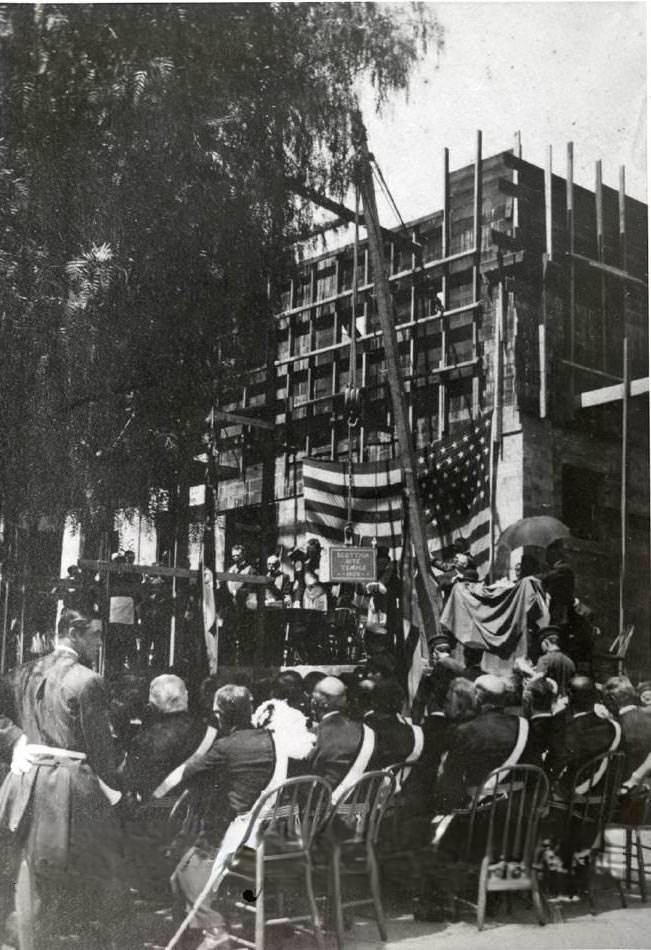
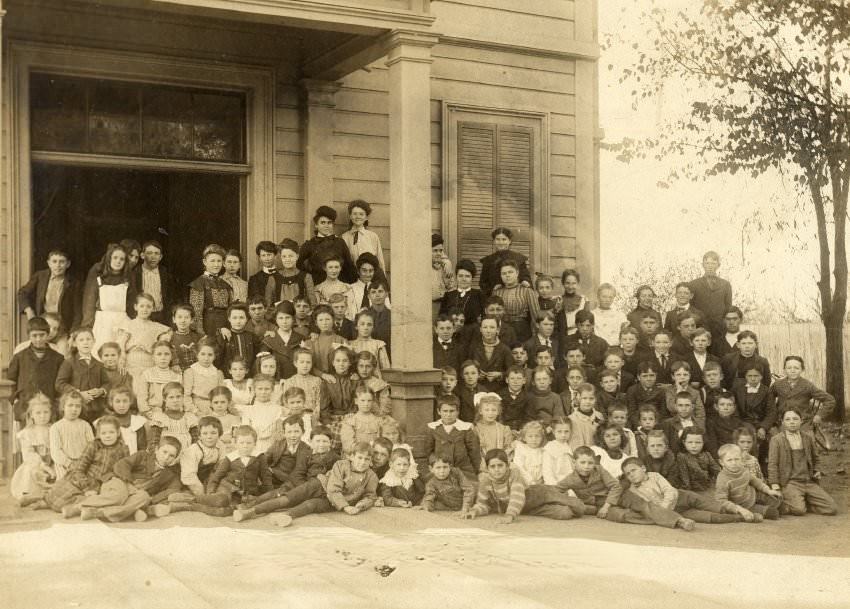
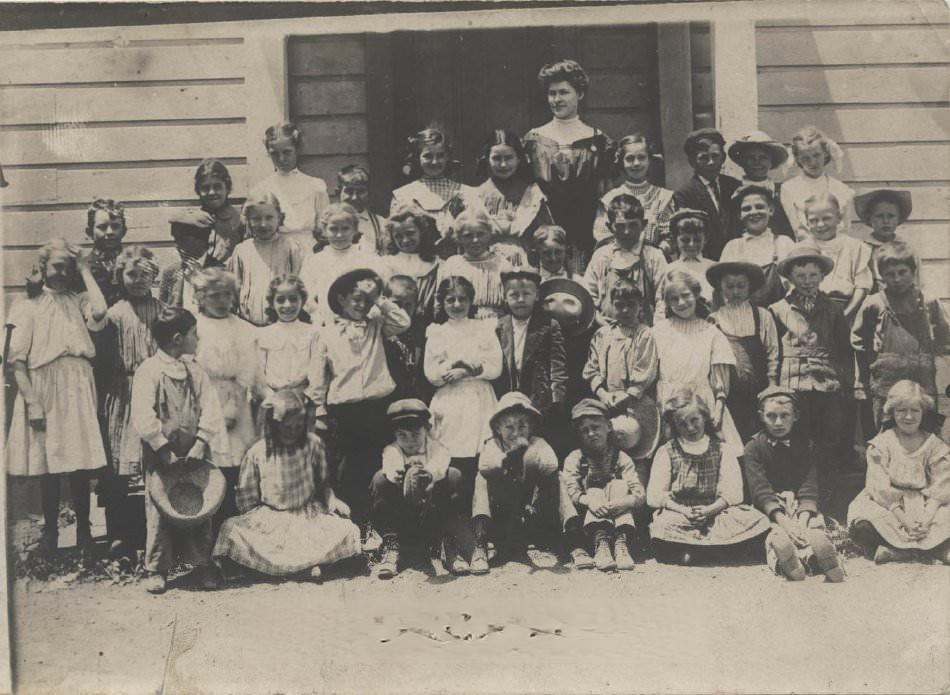
Scottish Rite Temple – Cornerstone Ceremony, San Jose, 1909Berryessa School group posed in front of school building, 1906One of the Mercury News downtown locations, or one of its predecessor newspapers, 1900s
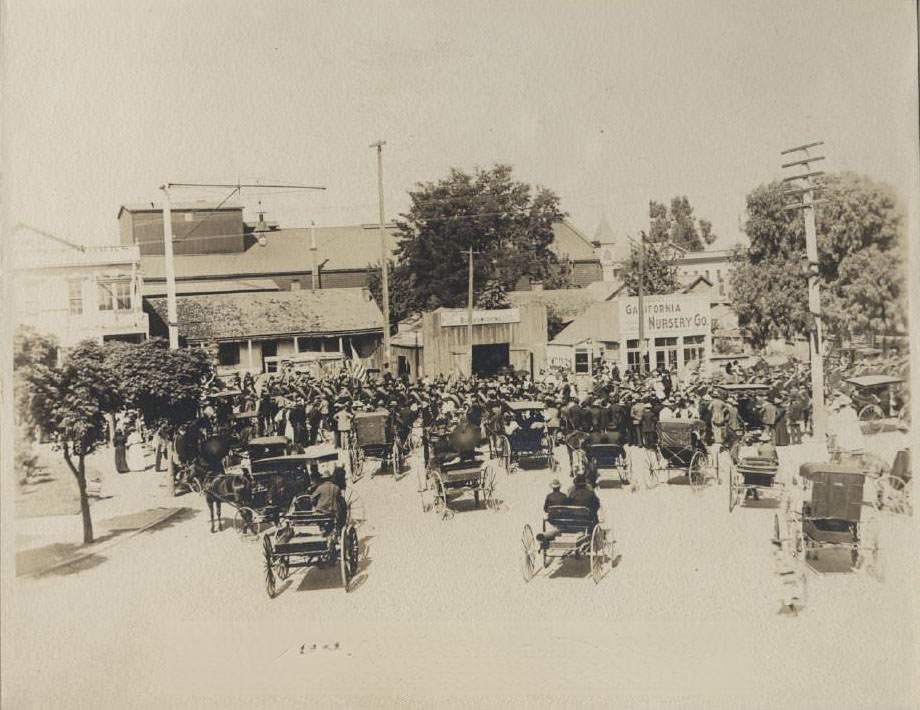
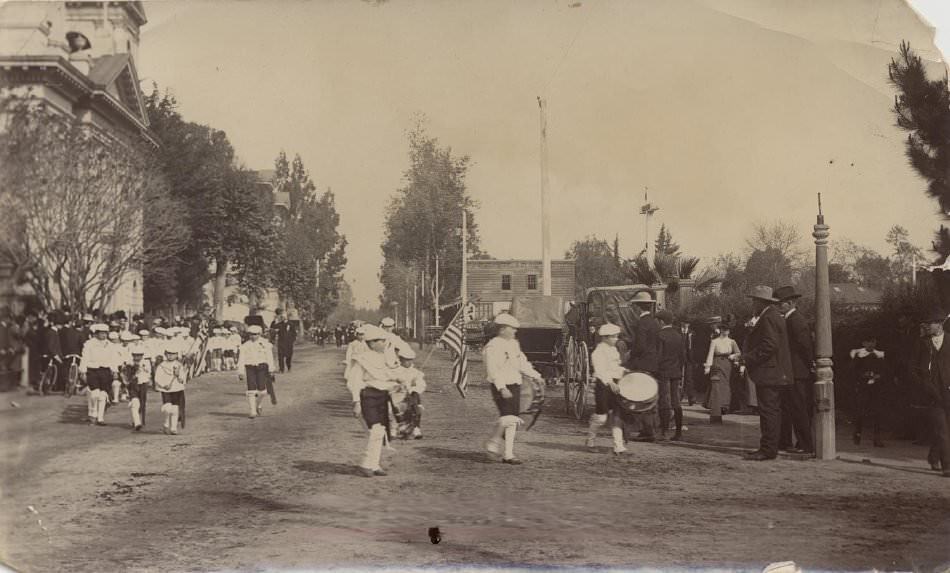
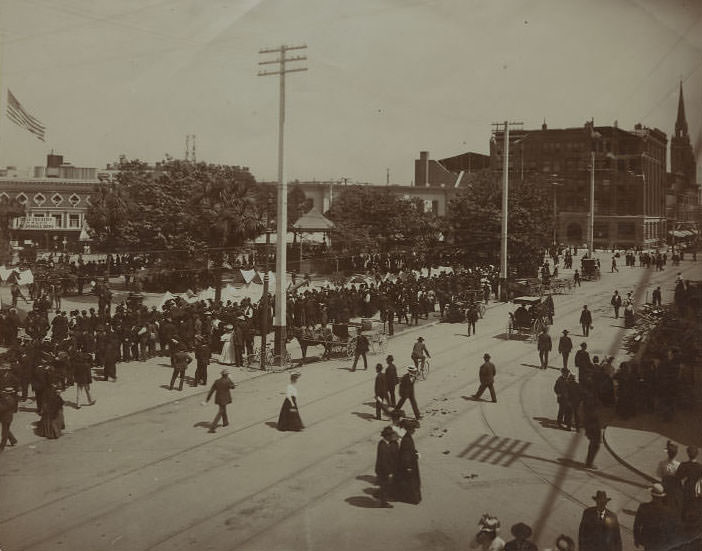
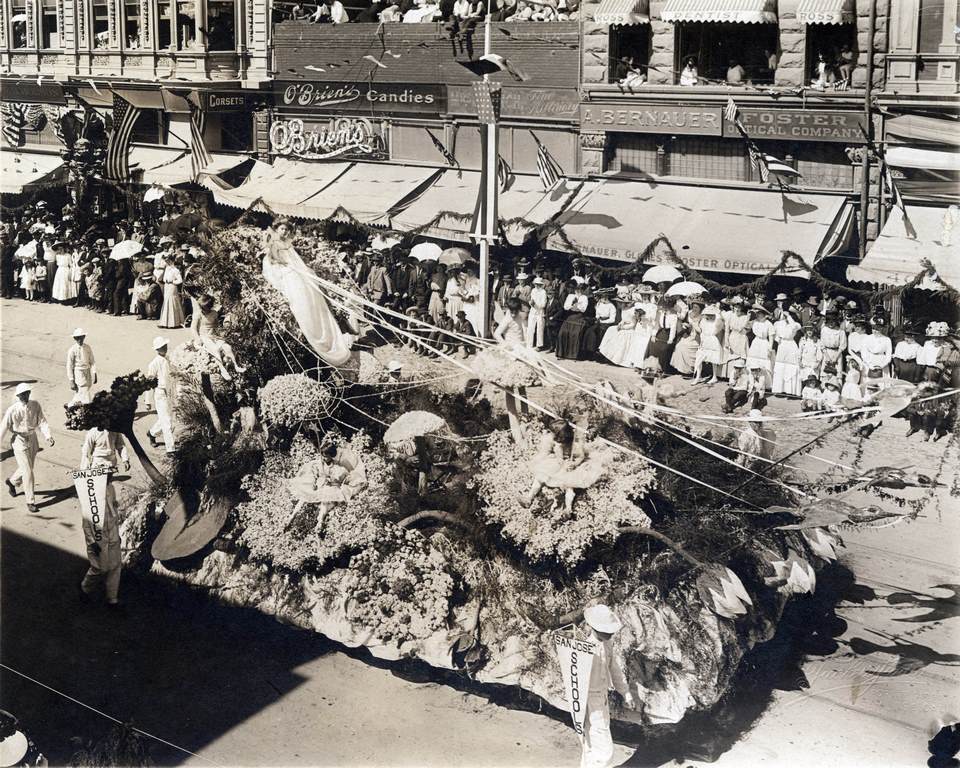
Parades were a fixture of San Jose public life. The Fourth of July brought crowds to South First Street. The Native Daughters of the Golden West marched in the 1907 Admissions Day parade, women on horseback and in carriages rolling south on Market Street near Post, with Tillie Brohaska — a well-known local pianist — riding in the lead carriage. The Rose Carnival drew elaborate floats from the San Jose Schools, the Gas Light and Fuel Company, and the State Normal School. Boys marched with drums. The city turned out for every occasion.
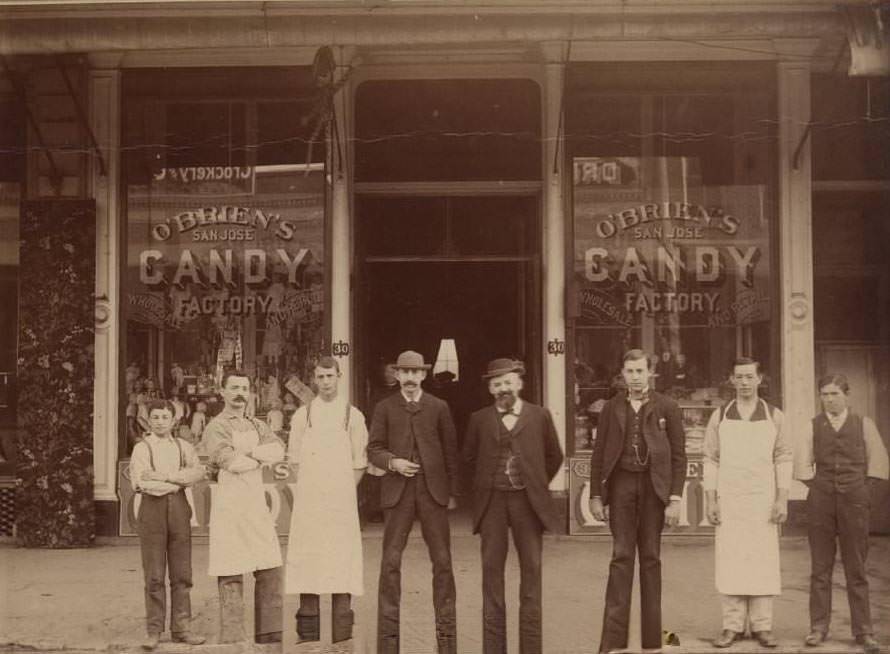
West Hall, University of the Pacific, San Jose, 1908O’Brien’s Candy Factory, Wholesale and Retail, located at 30 South First Street, 1900sPasetta family home, San Jose, 1905
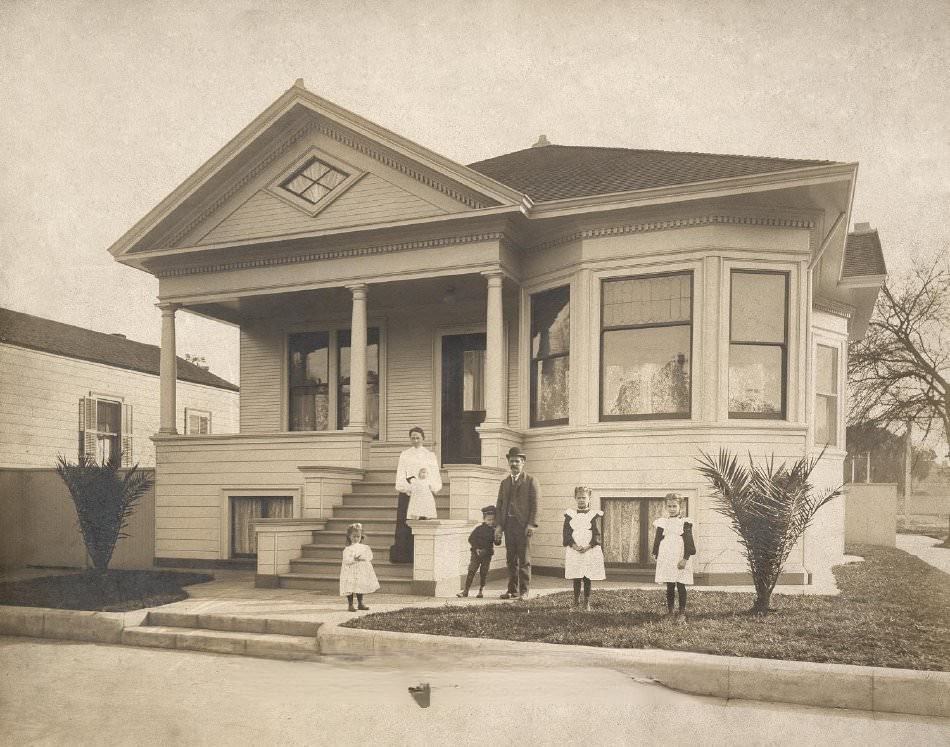
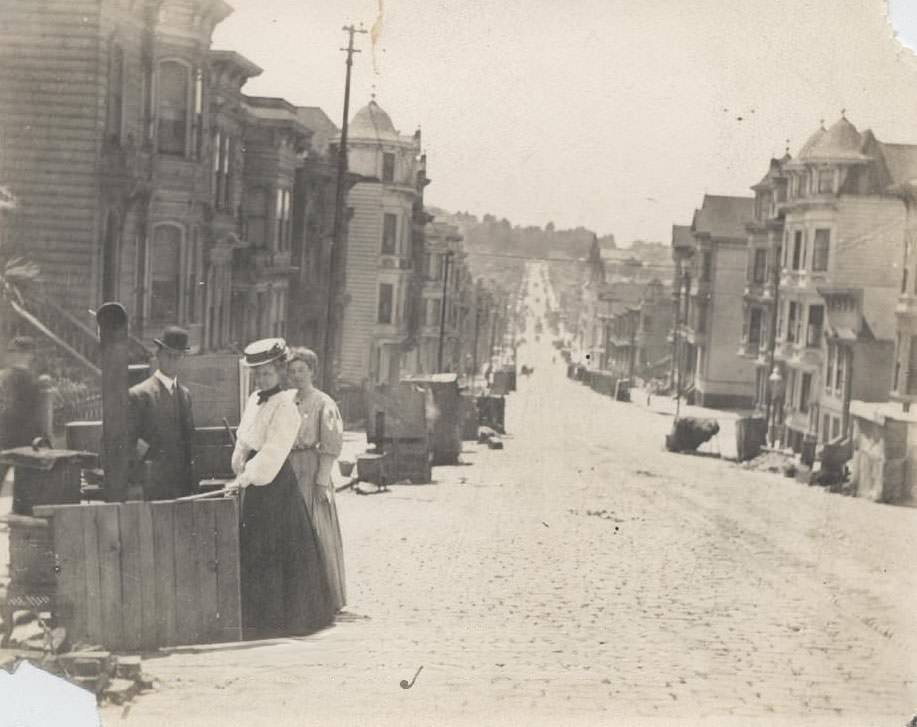
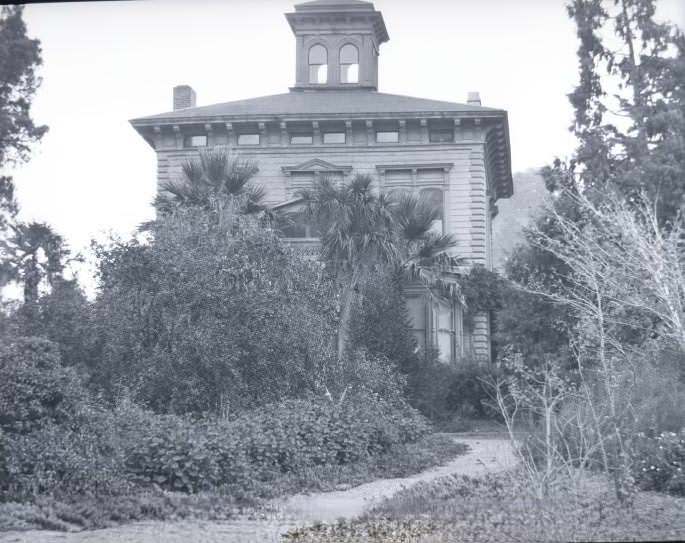
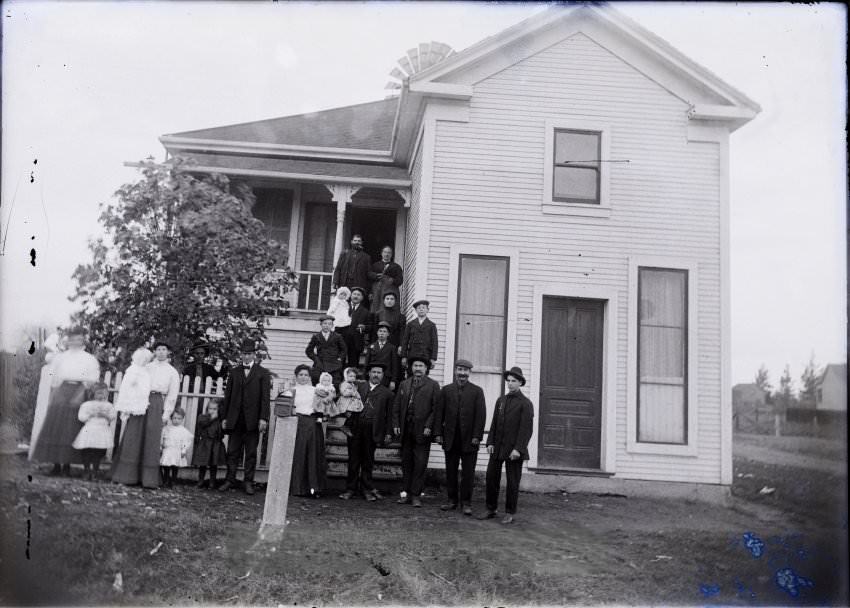
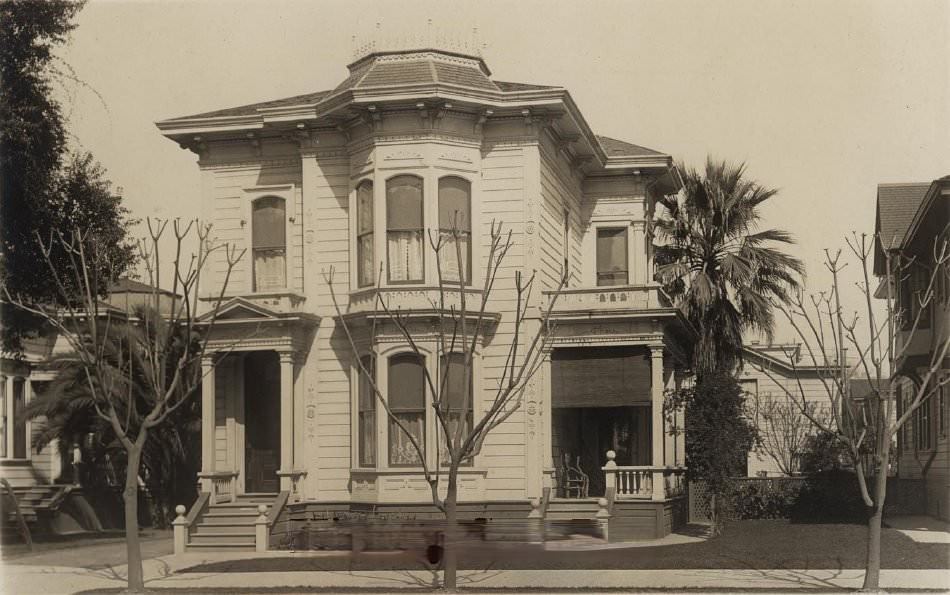
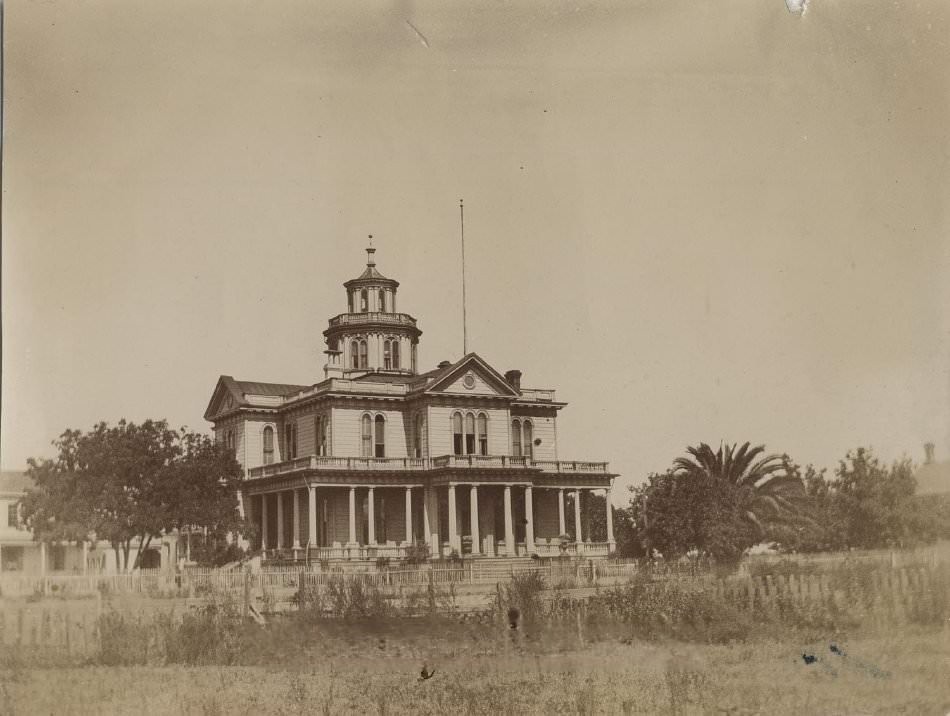
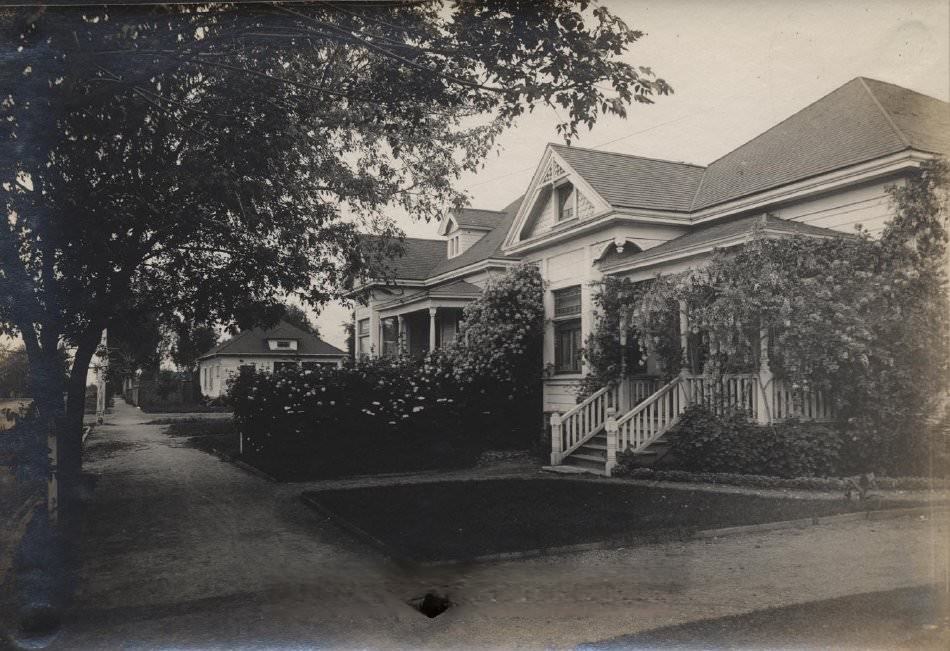
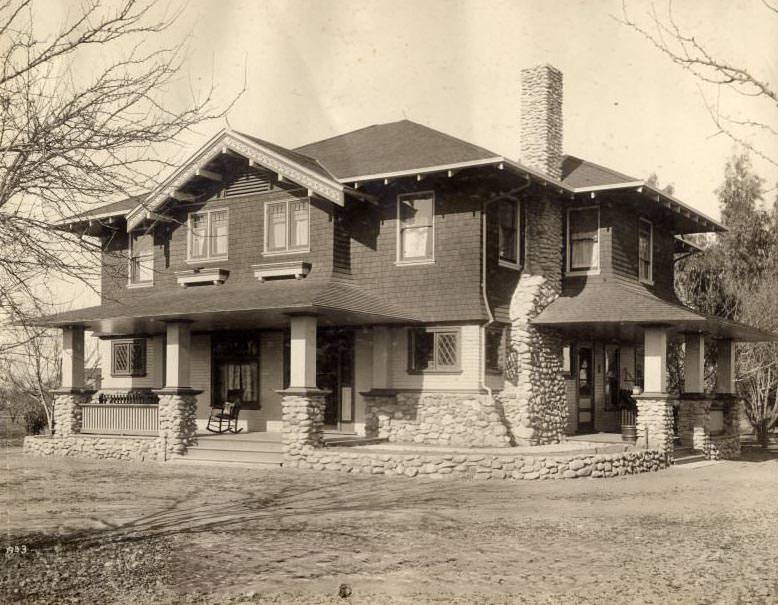
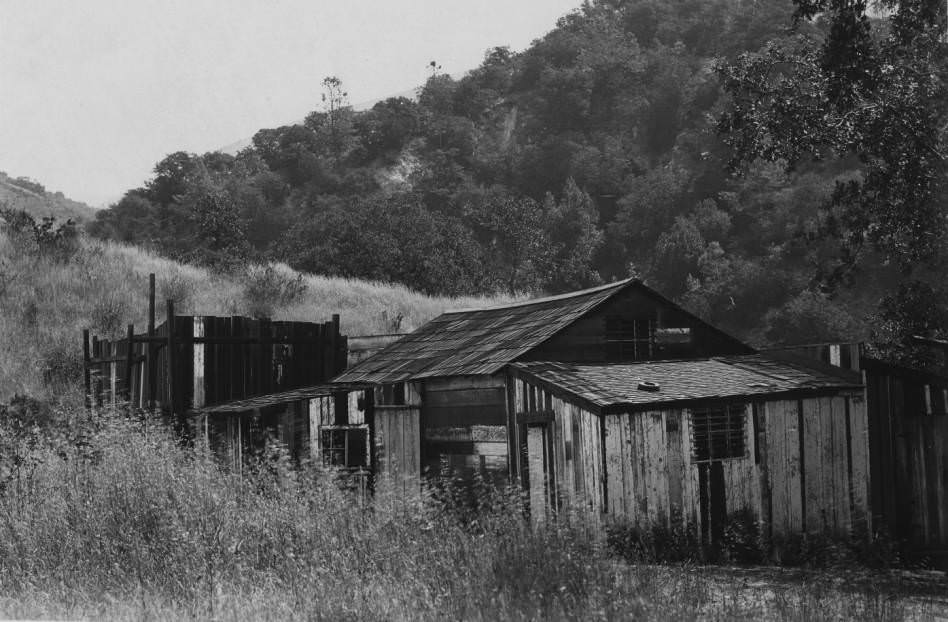
Residential San Jose ranged from modest clapboard homes and farmhouses to grand Victorian houses with wraparound porches, rose-covered walls, and carriage steps at the front path. The Asa Adams House, the Charles Doerr Home at 226 South Second Street, and the David Umbarger House were among the larger private residences photographed in this era. The Hare family home at 1075 Madison Street and the Pasetta family home represented the comfortable middle-class households that filled the neighborhoods beyond the commercial core. Adobe structures were still standing in parts of the city as late as 1900.
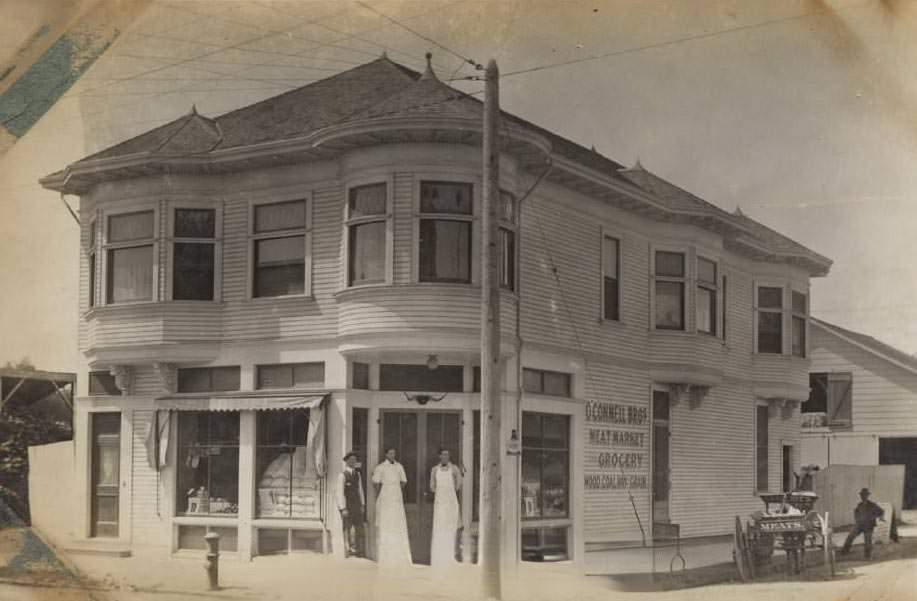
O’Connell Brothers Meat Market & Grocery, San Jose, 1908Two cars of Alum Rock Steam Railroad at Alum Rock Park, San Jose, 1900sThe original Oak Grove School was located on Downer Avenue near Snell. Downer is now Blossom Hill Road in San Jose, 1908
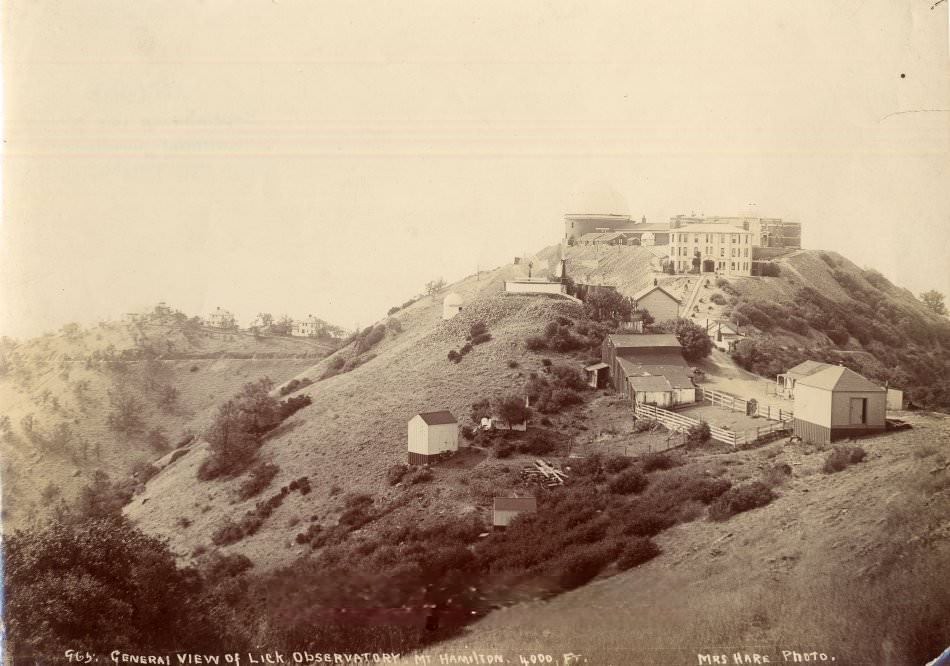
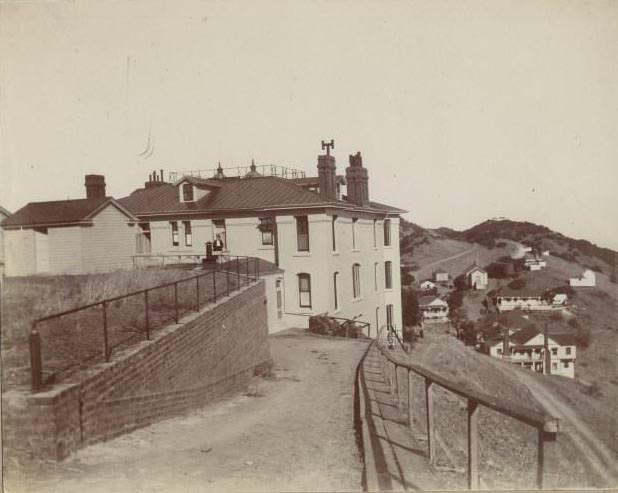
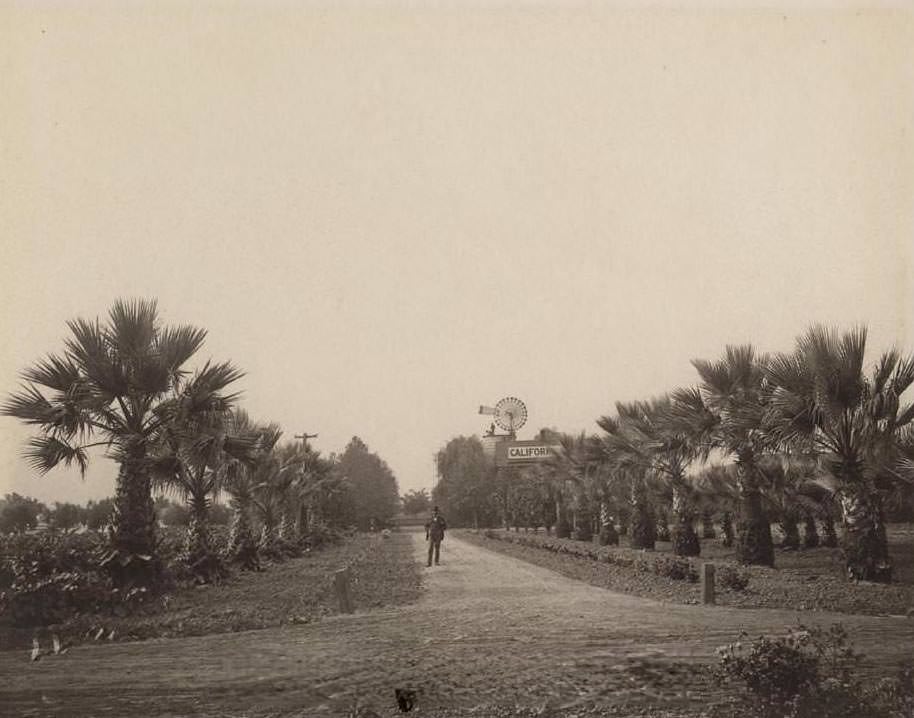
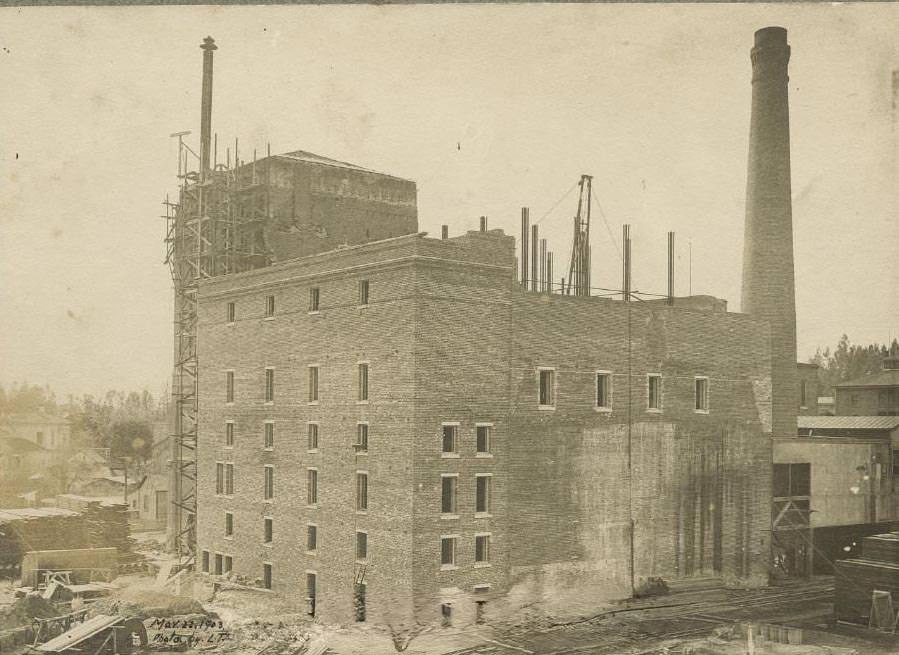
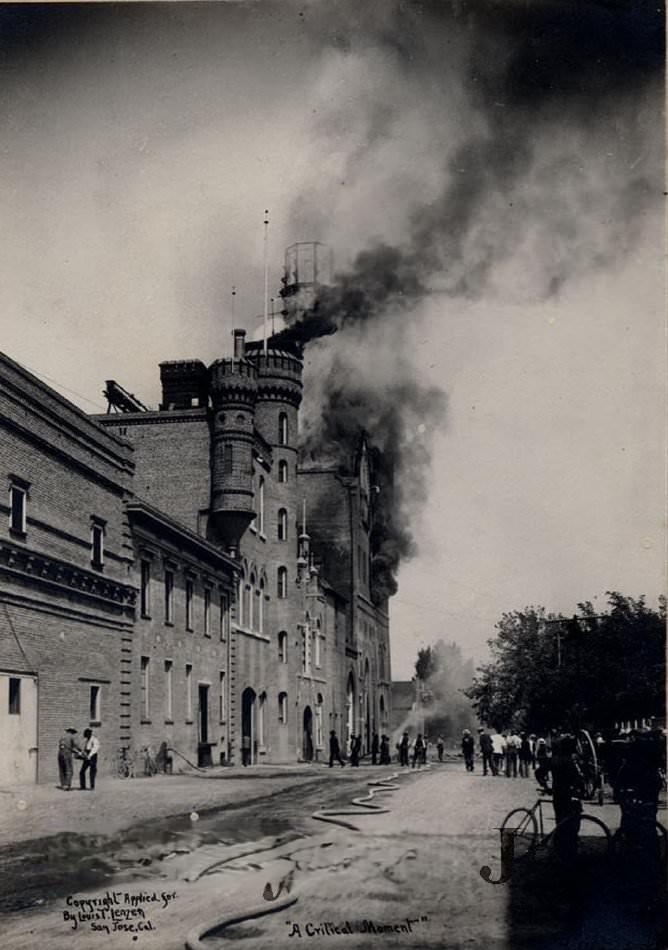
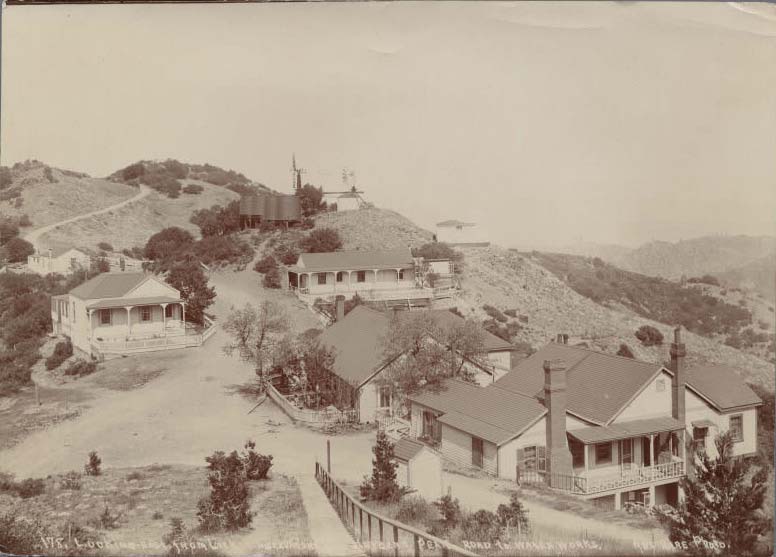
The Lick Observatory on top of Mount Hamilton watched over the valley from above. The California Nursery at Niles and the prune-drying grounds that stretched across the valley floor were reminders that agriculture remained the foundation of the regional economy. The Fredericksburg Brewery and Malt House — rebuilt after a fire in 1902 — anchored the local brewing industry. P. H. Sullivan’s saloon at 65 Post Street, the Palm Restaurant on Market Street, and O’Brien’s Candy Factory at 30 South First Street were among the dozens of businesses that served a city full of working people.
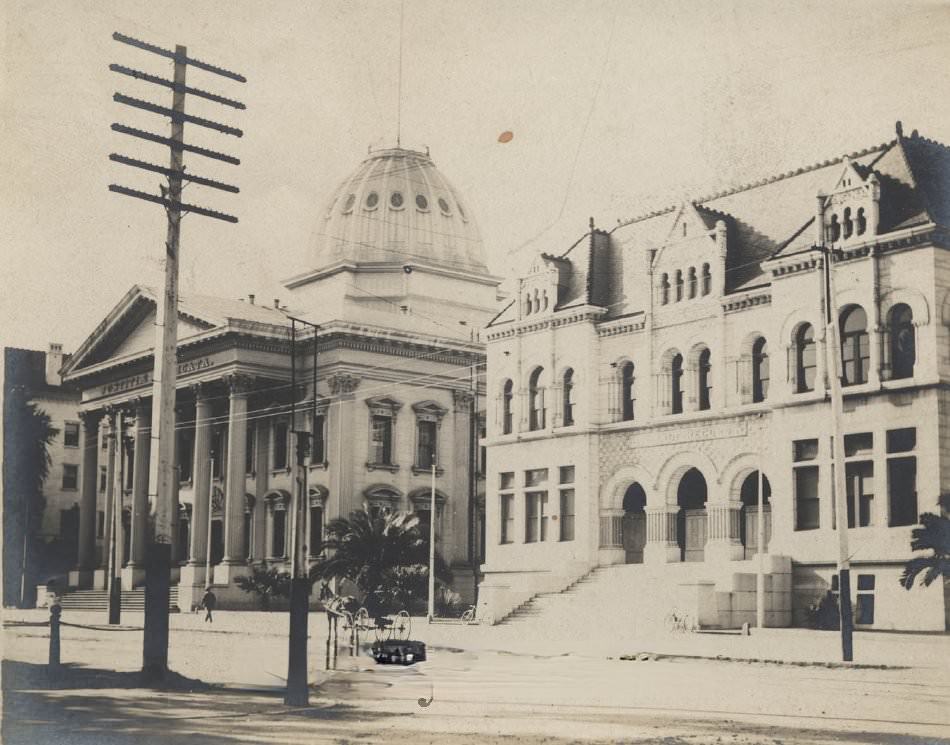
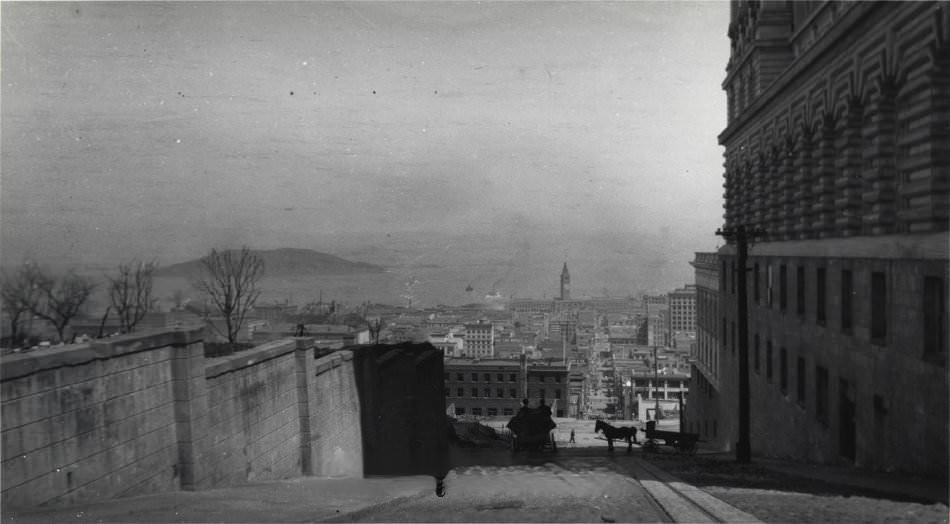
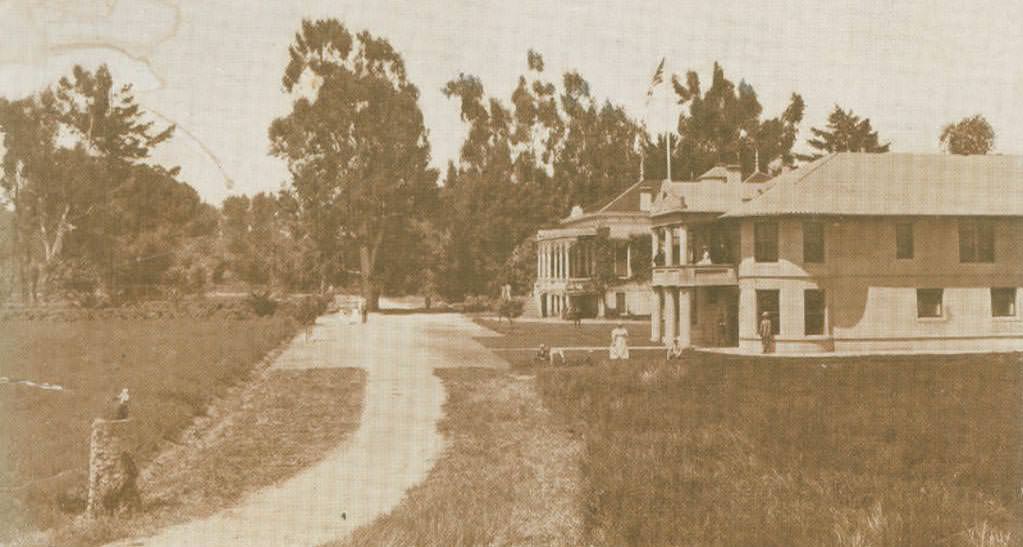
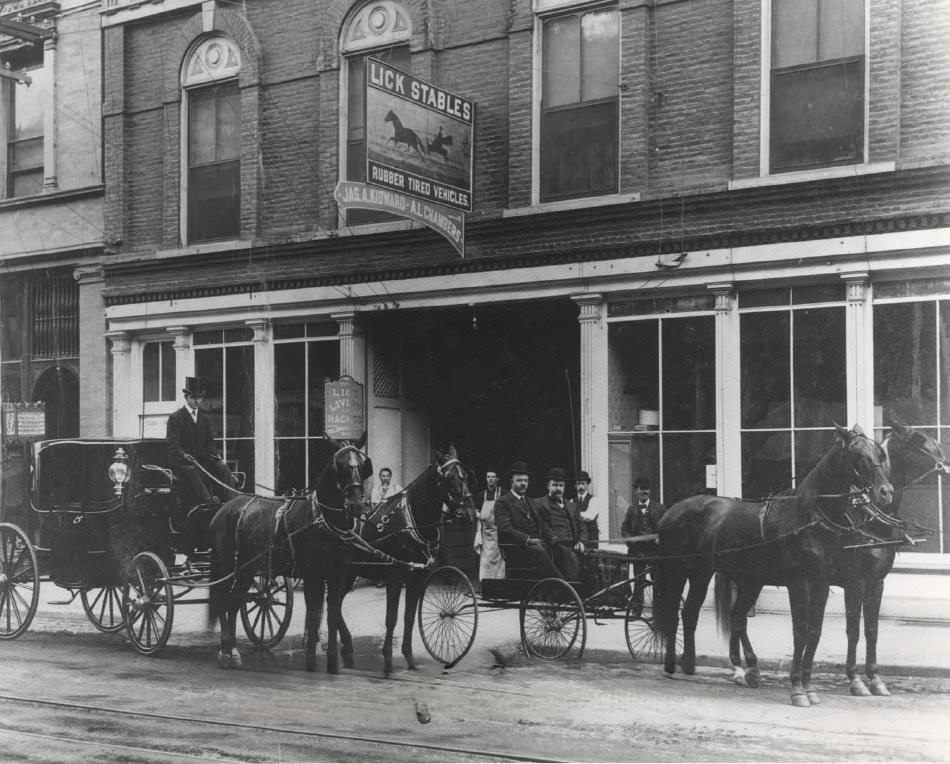
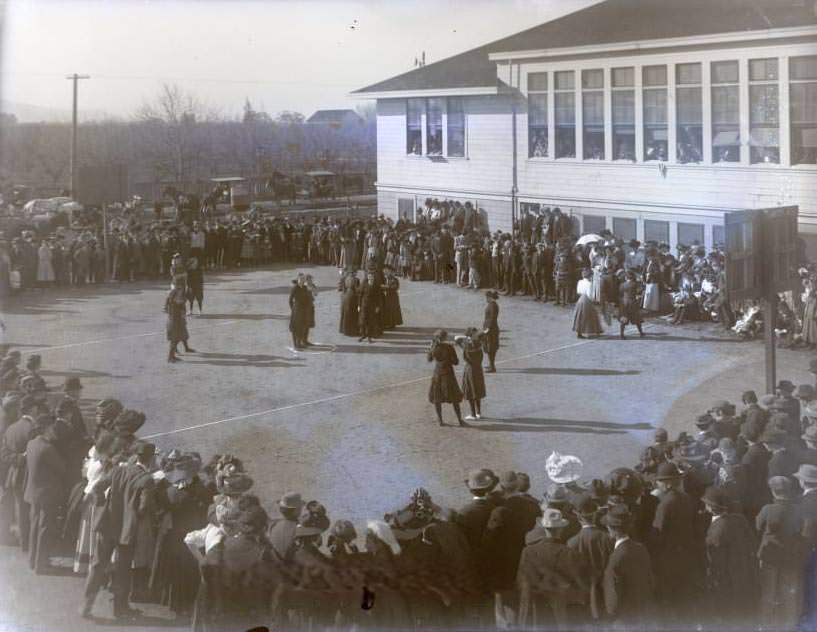
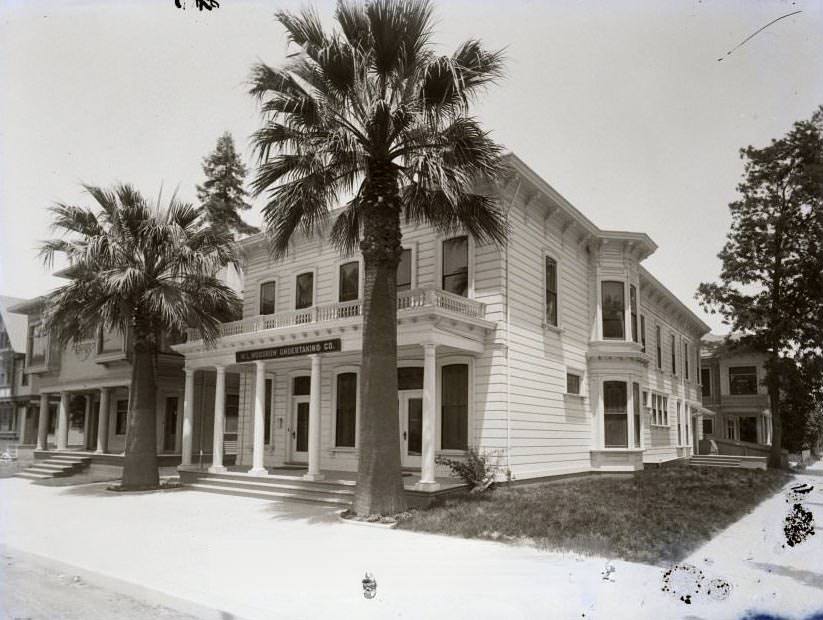
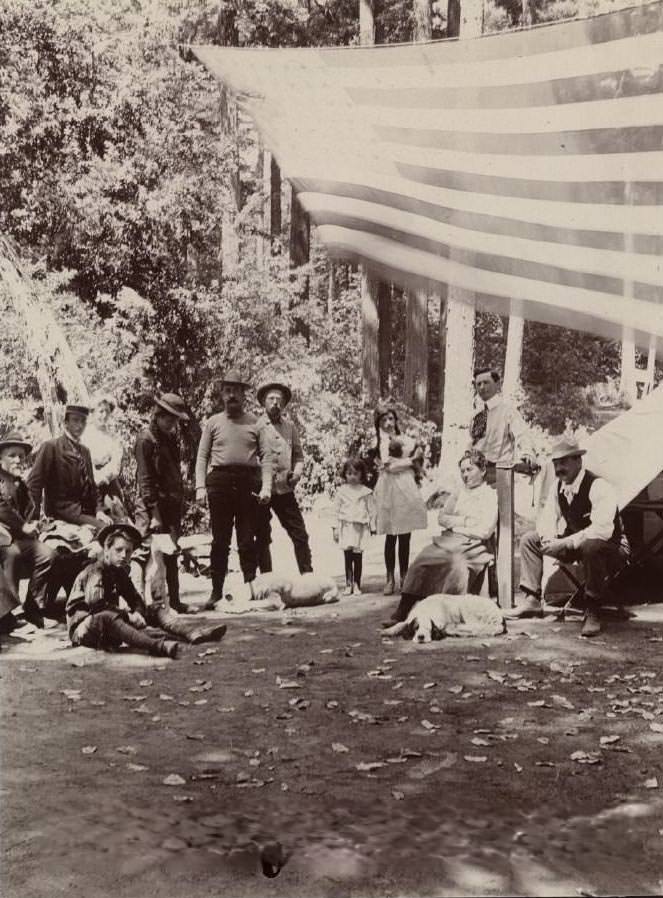
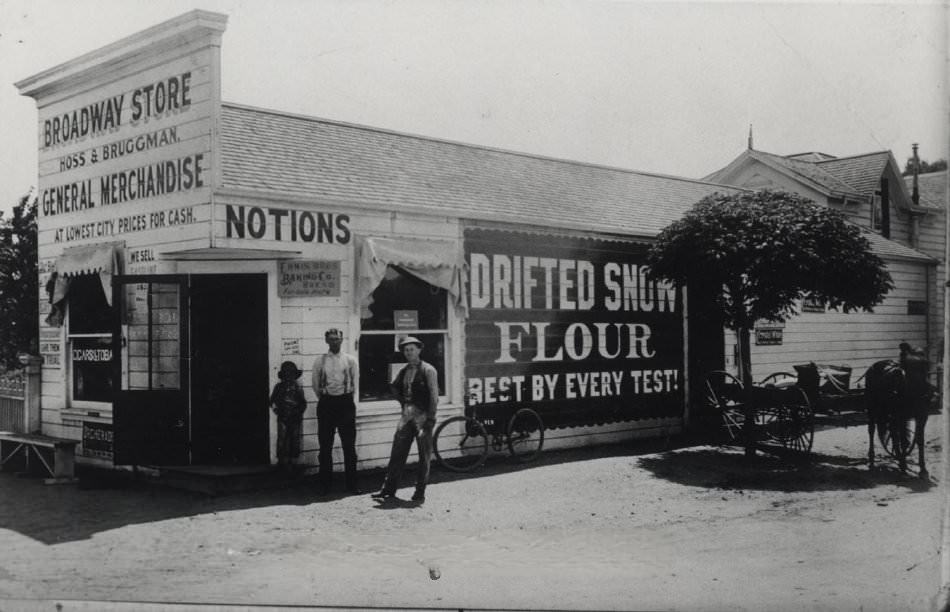
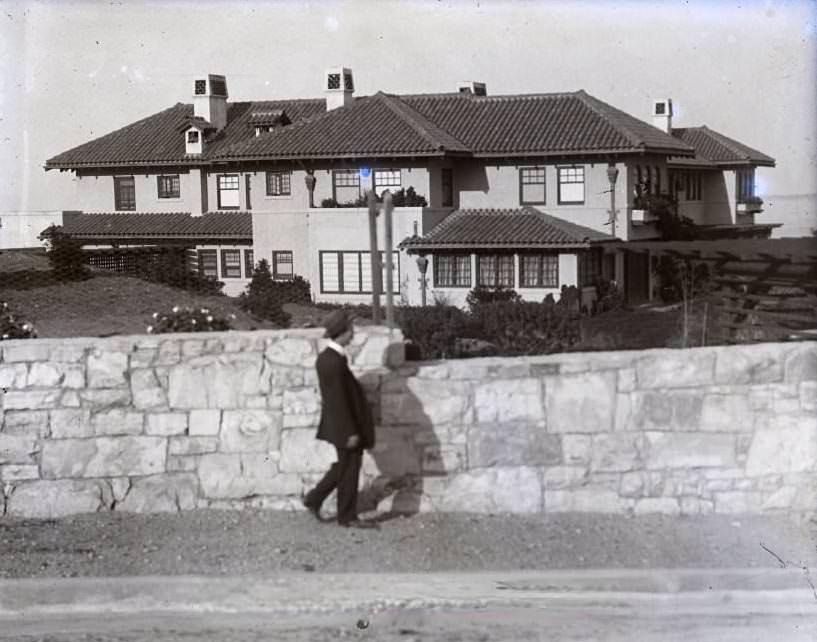
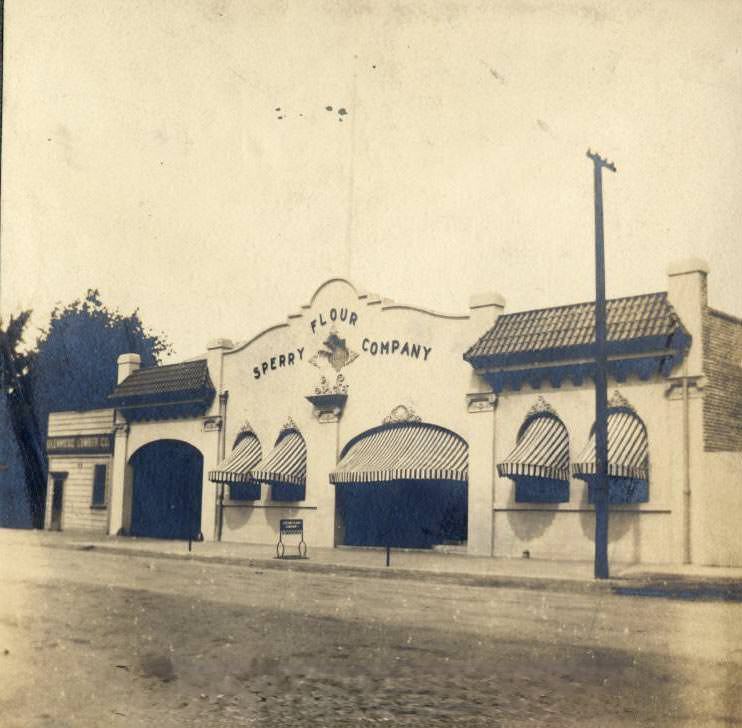
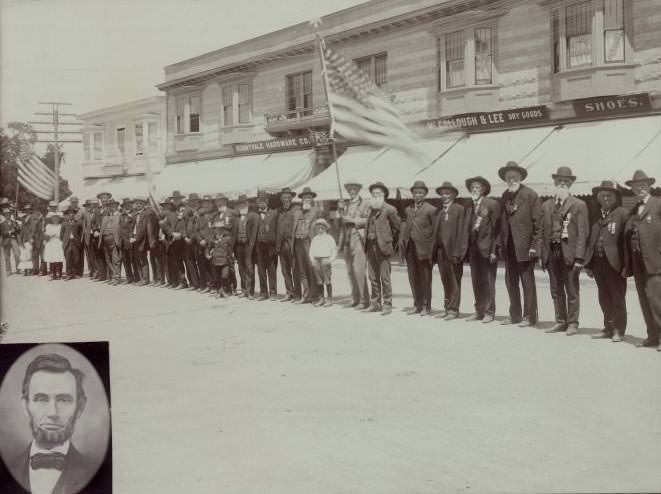
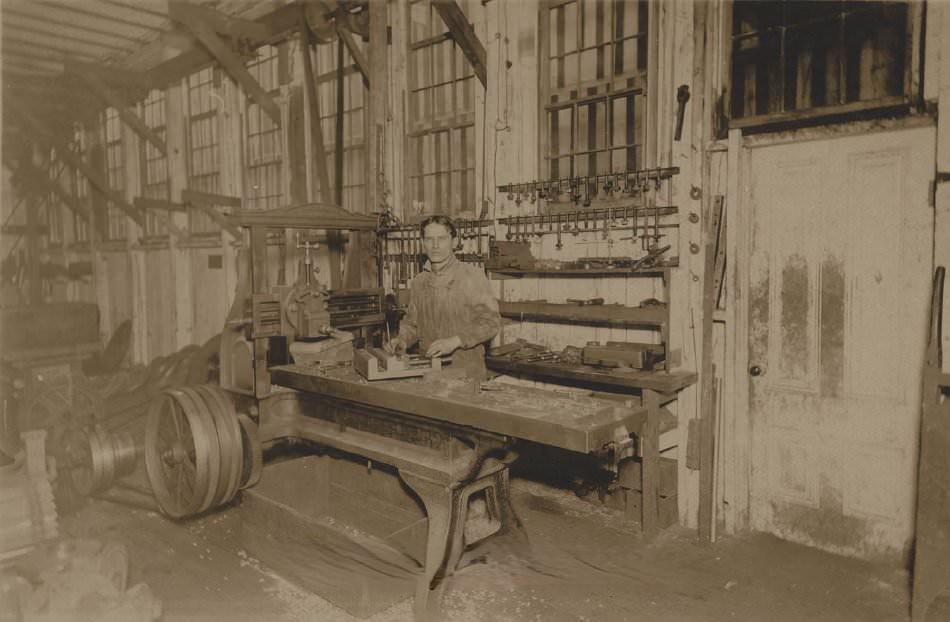
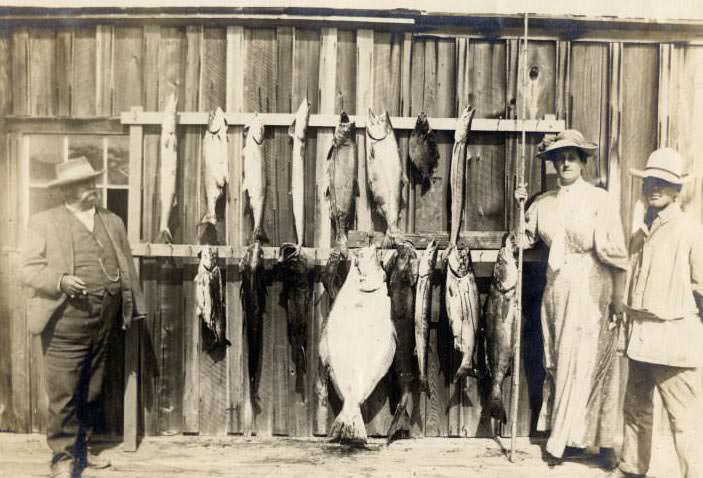
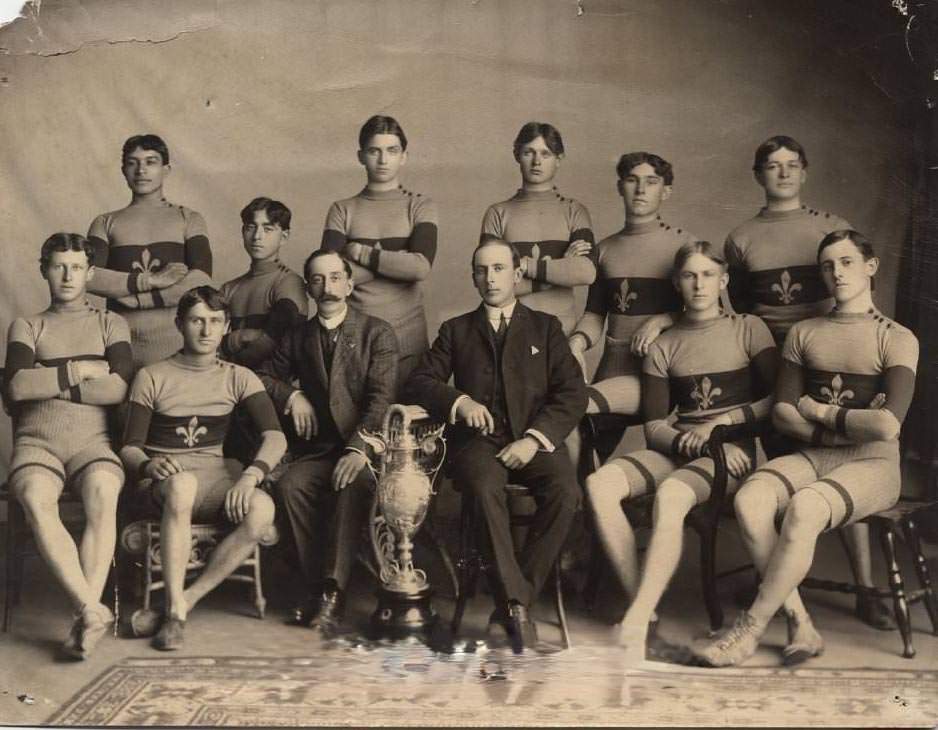
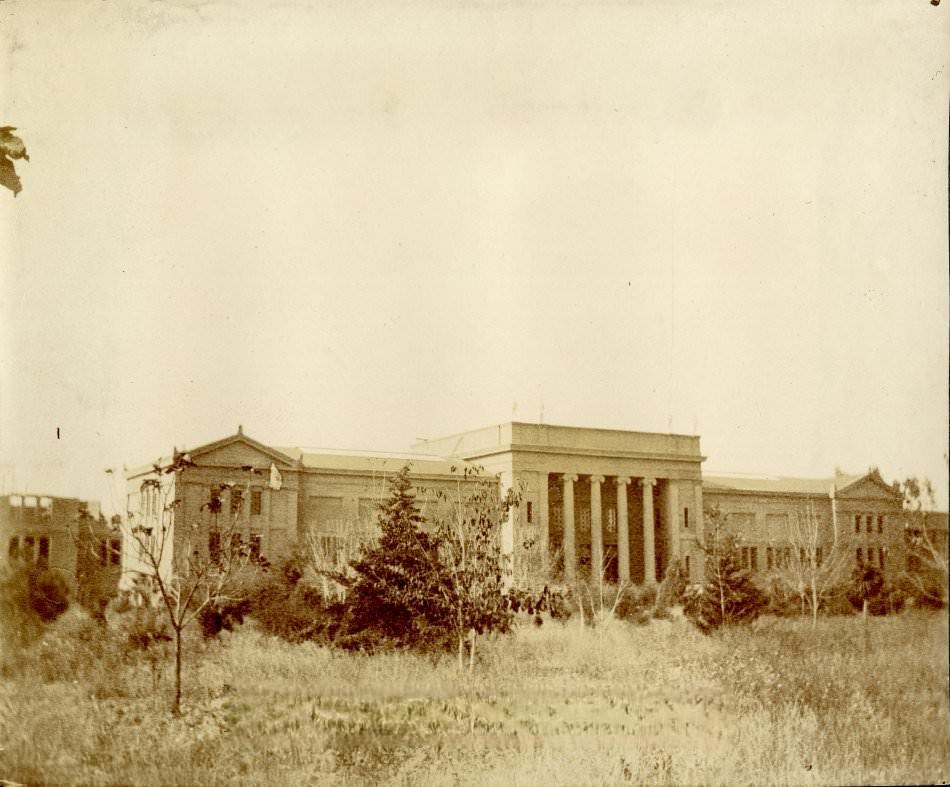
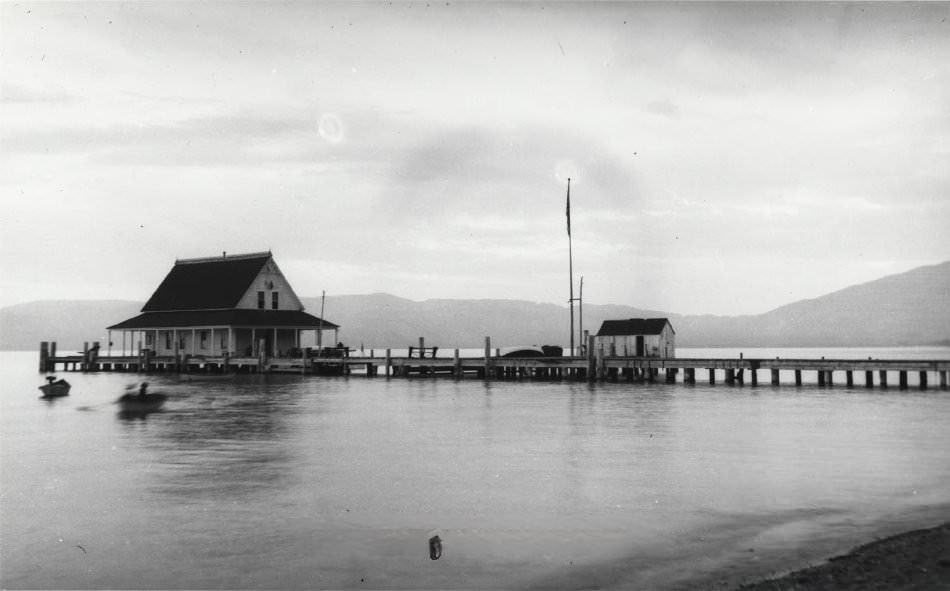
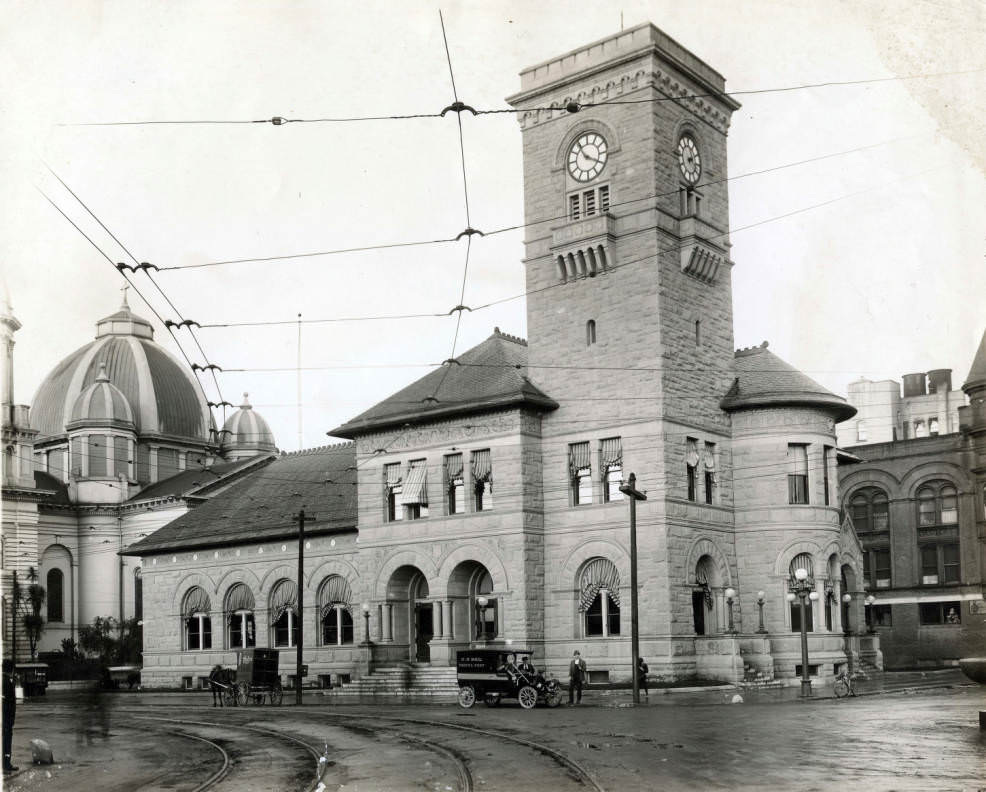
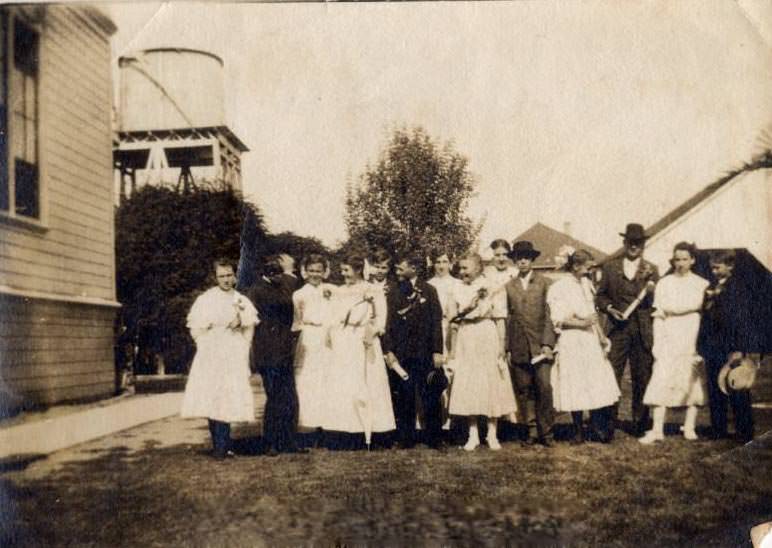
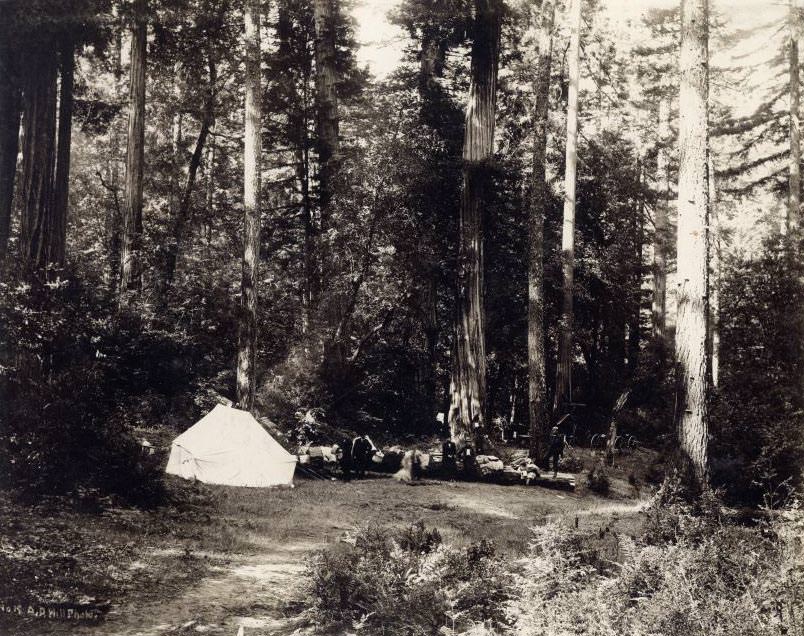
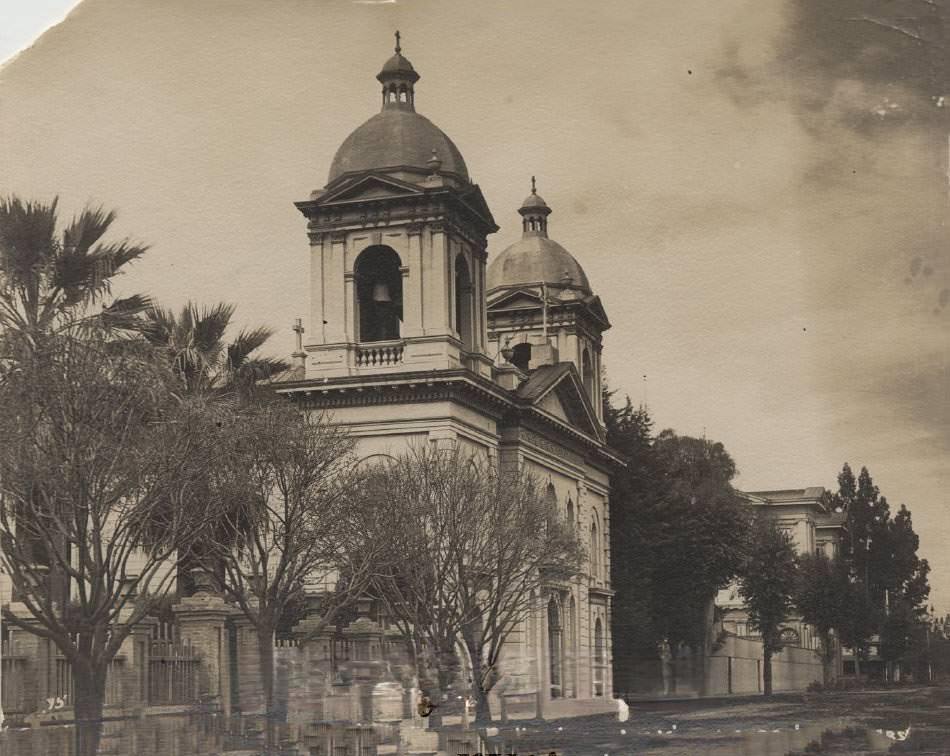
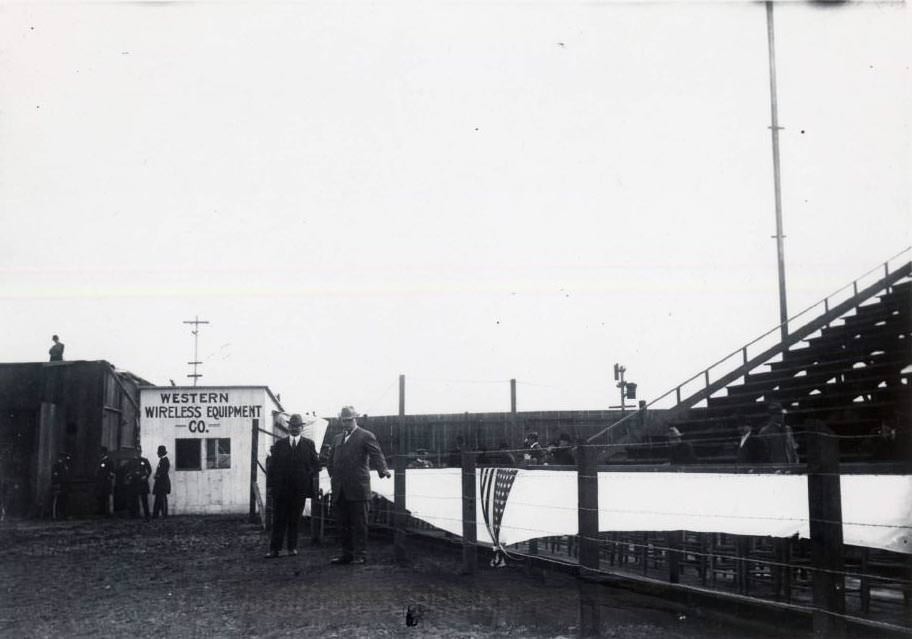
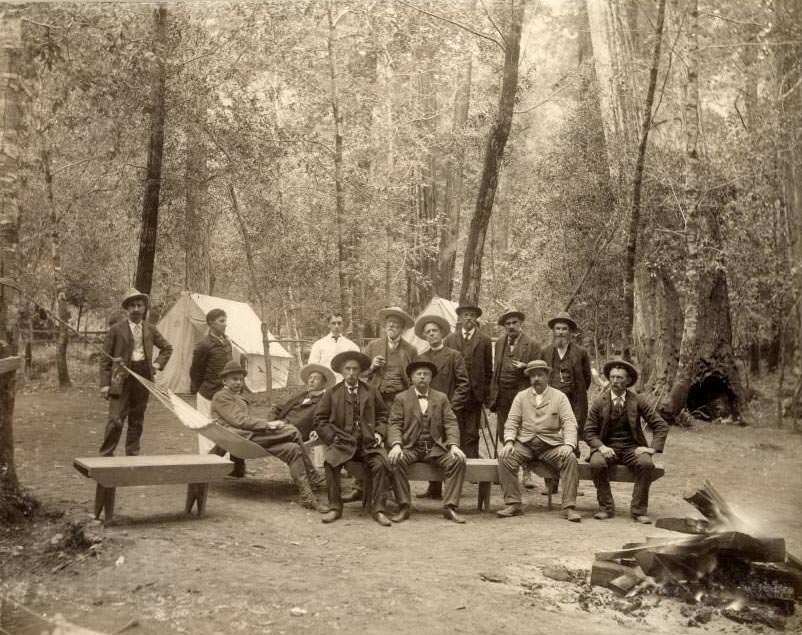
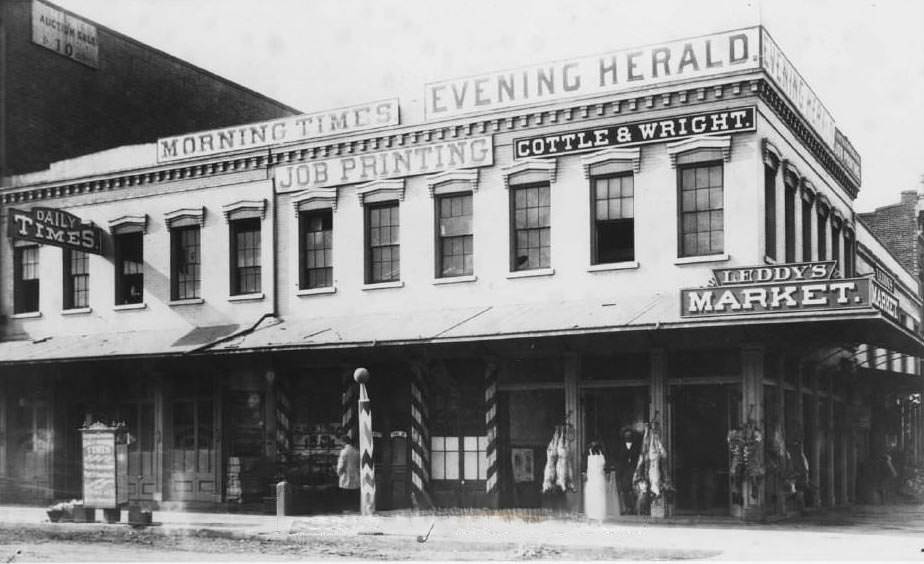
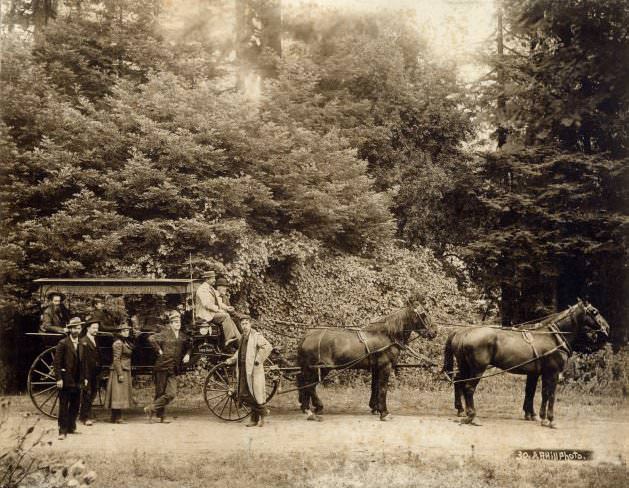
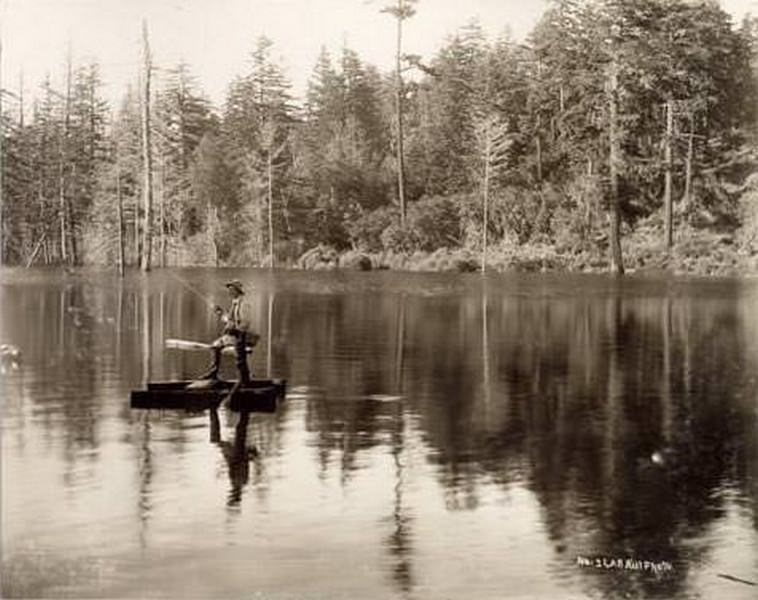
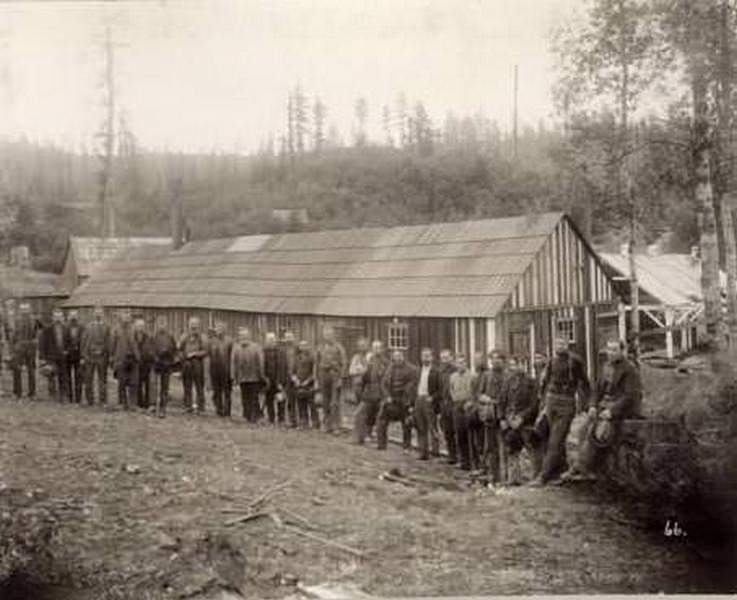
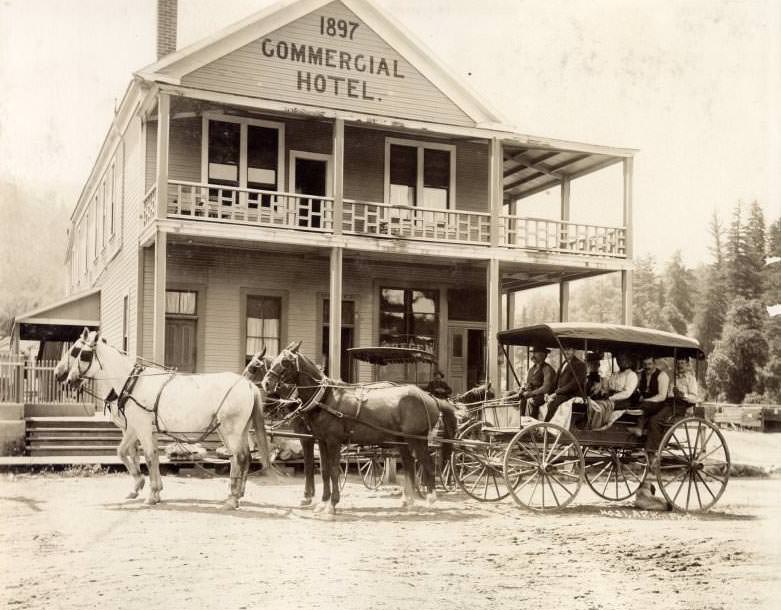
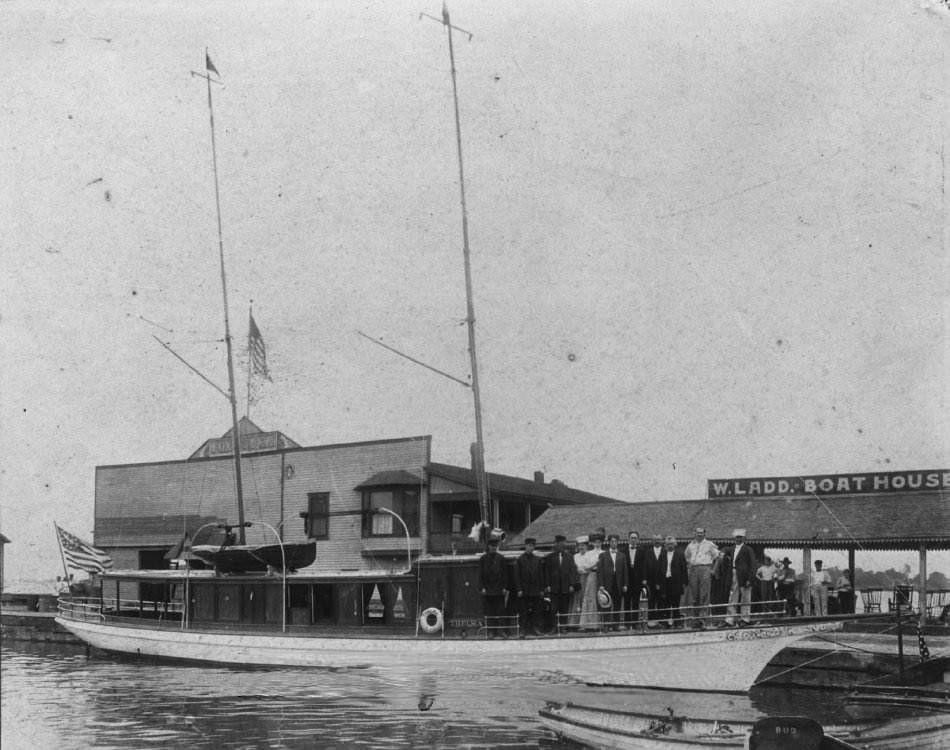
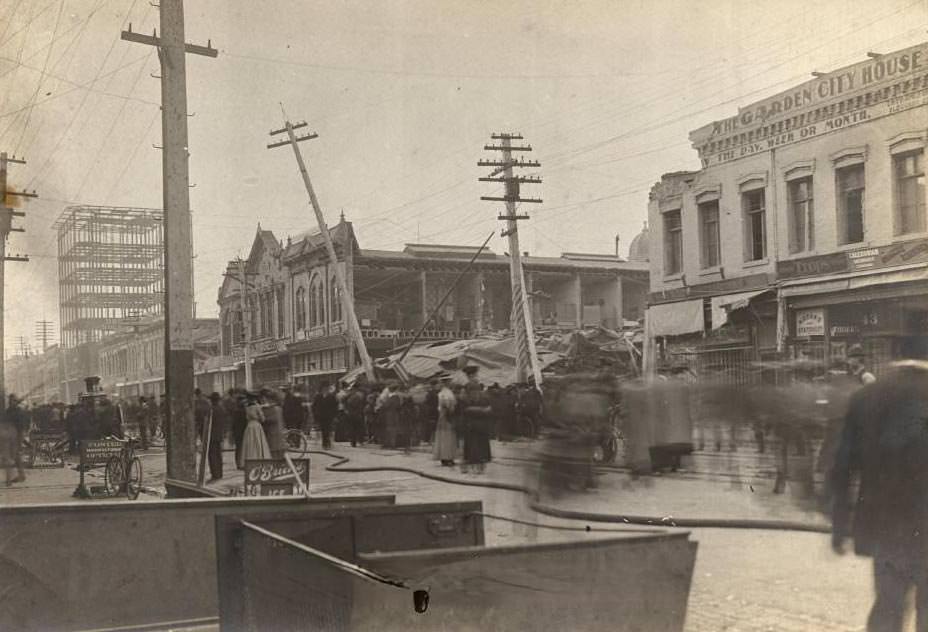
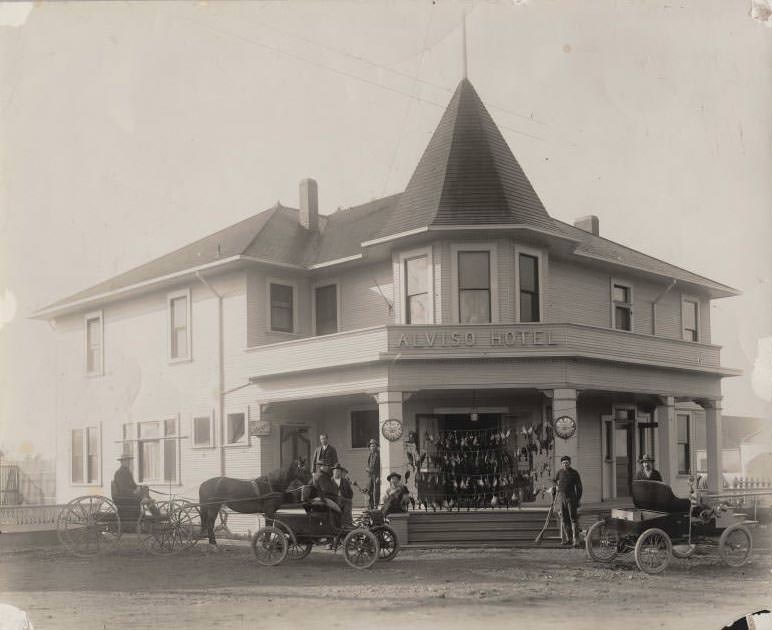
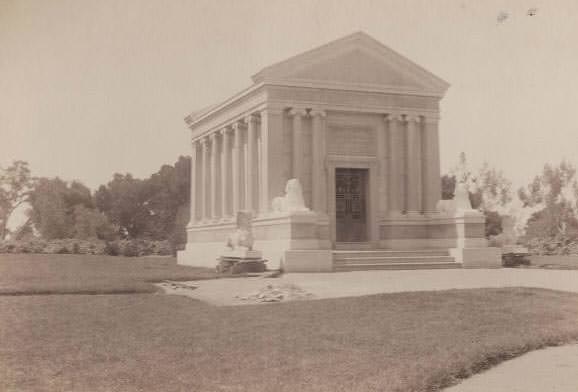
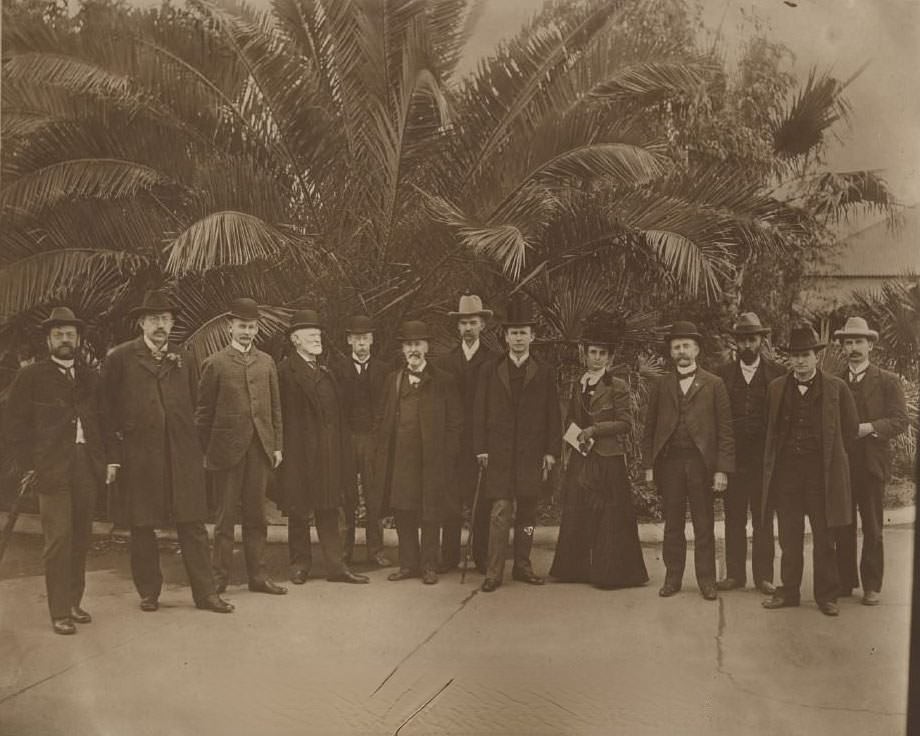
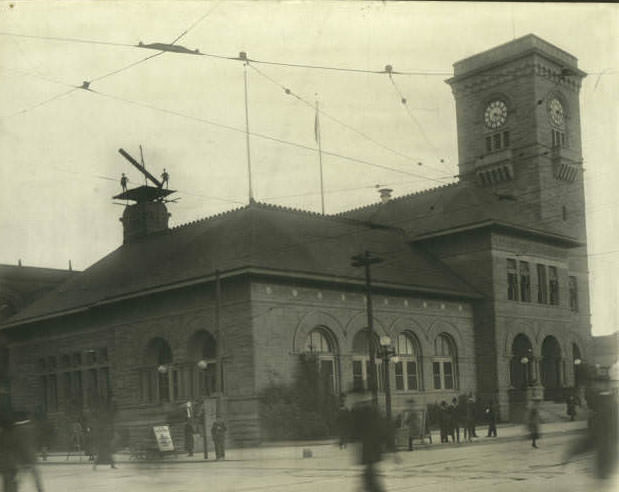
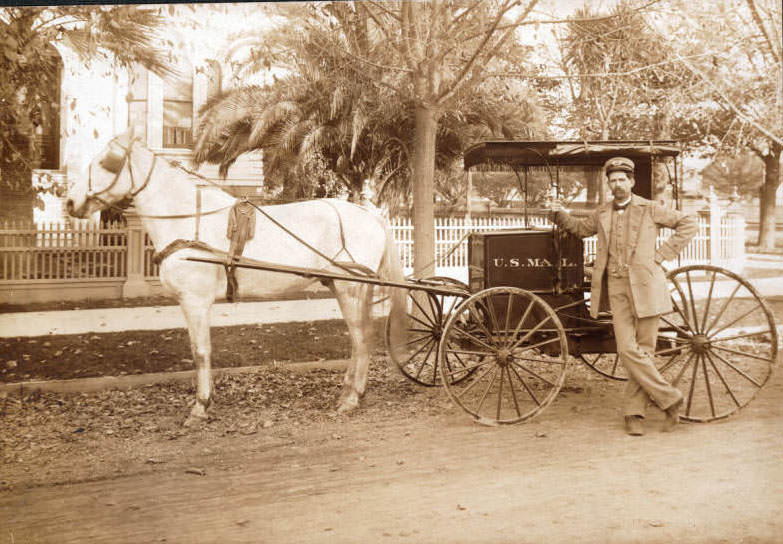
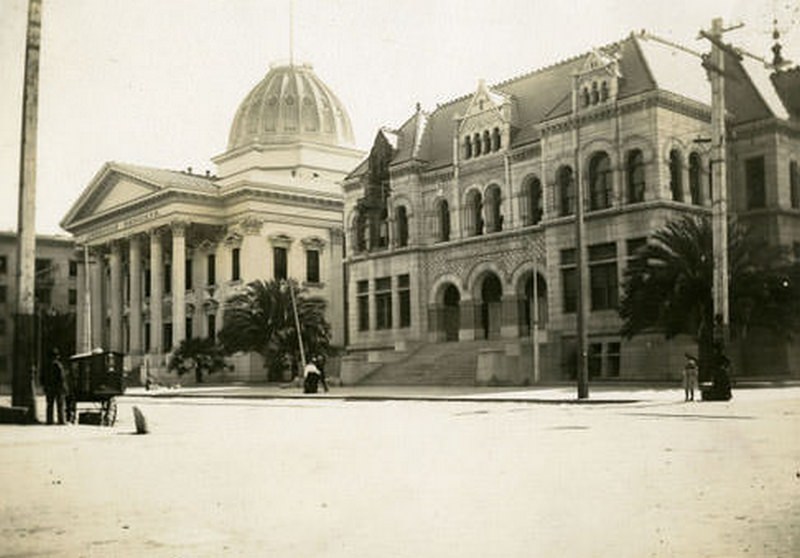
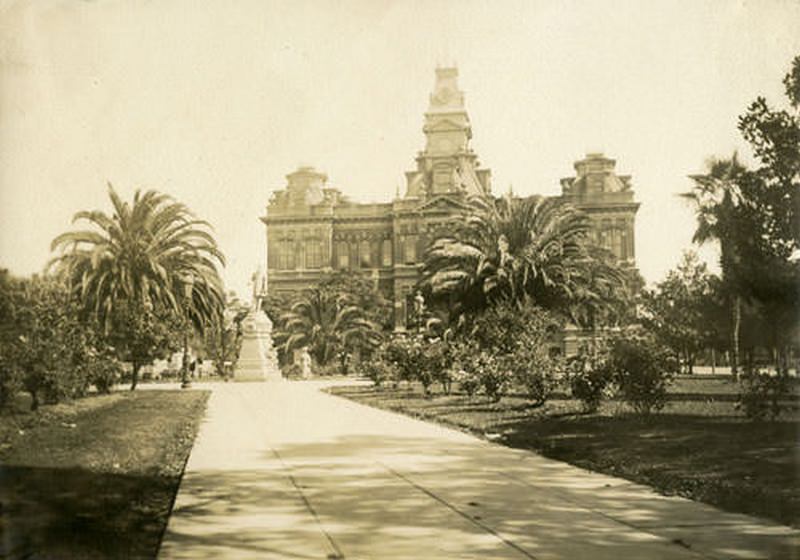
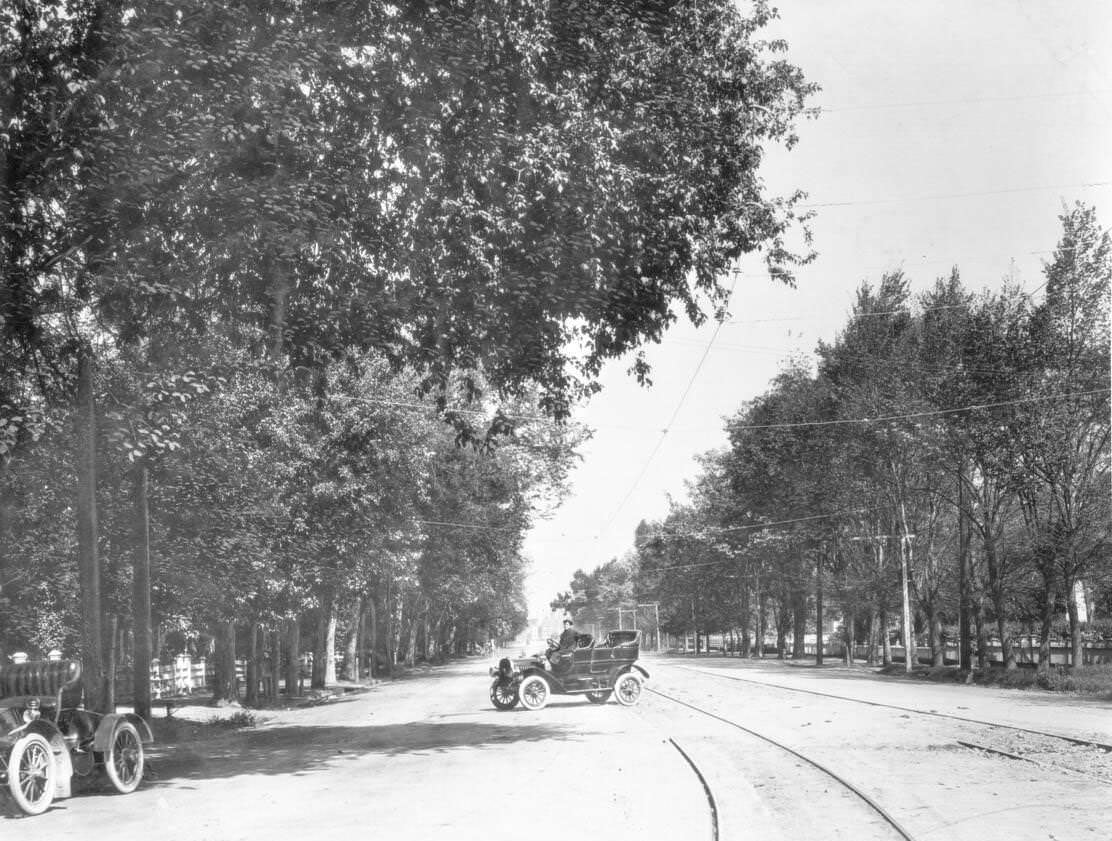
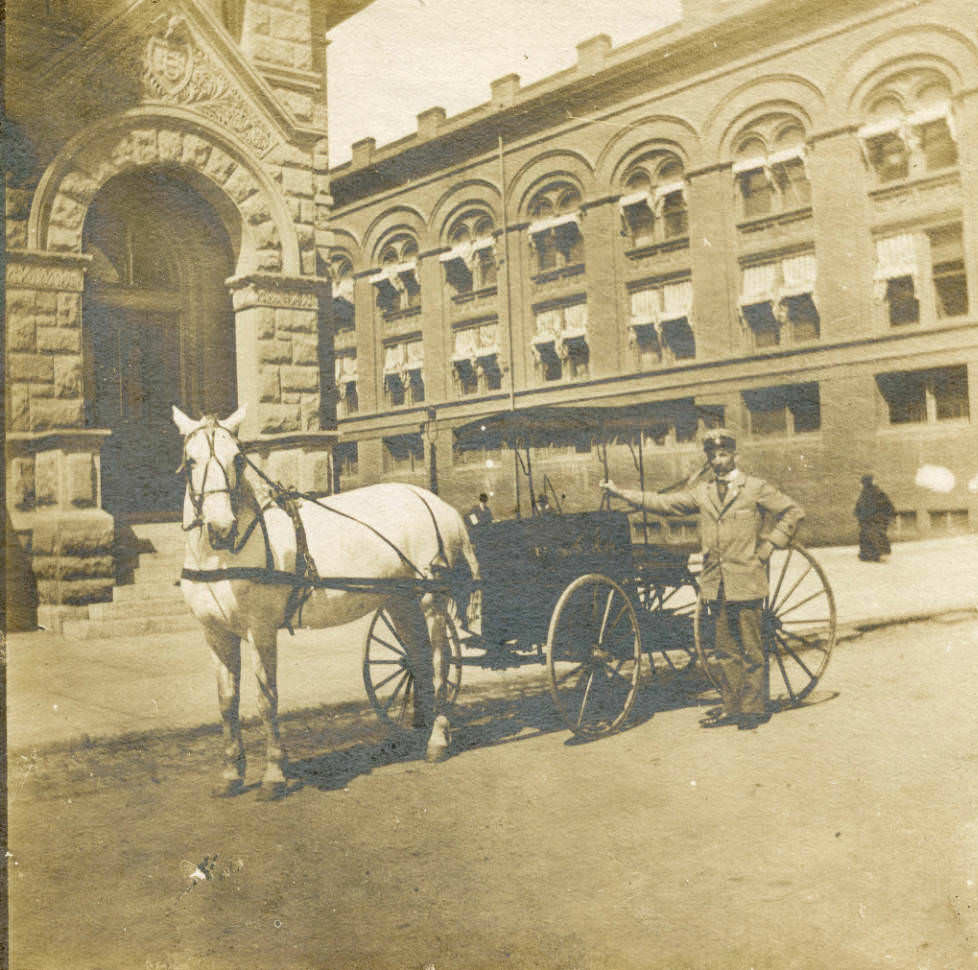
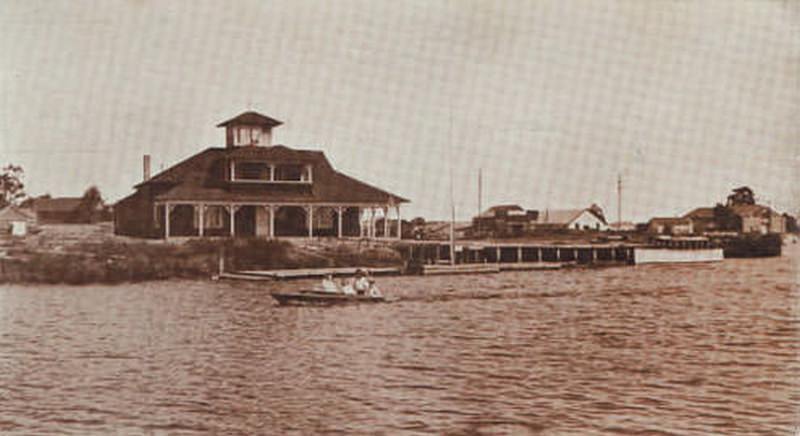
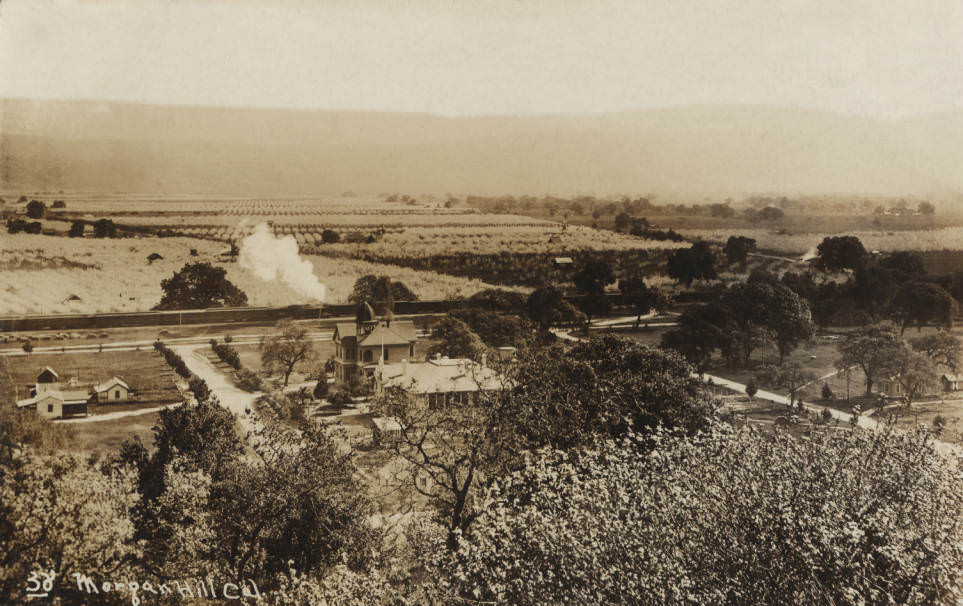
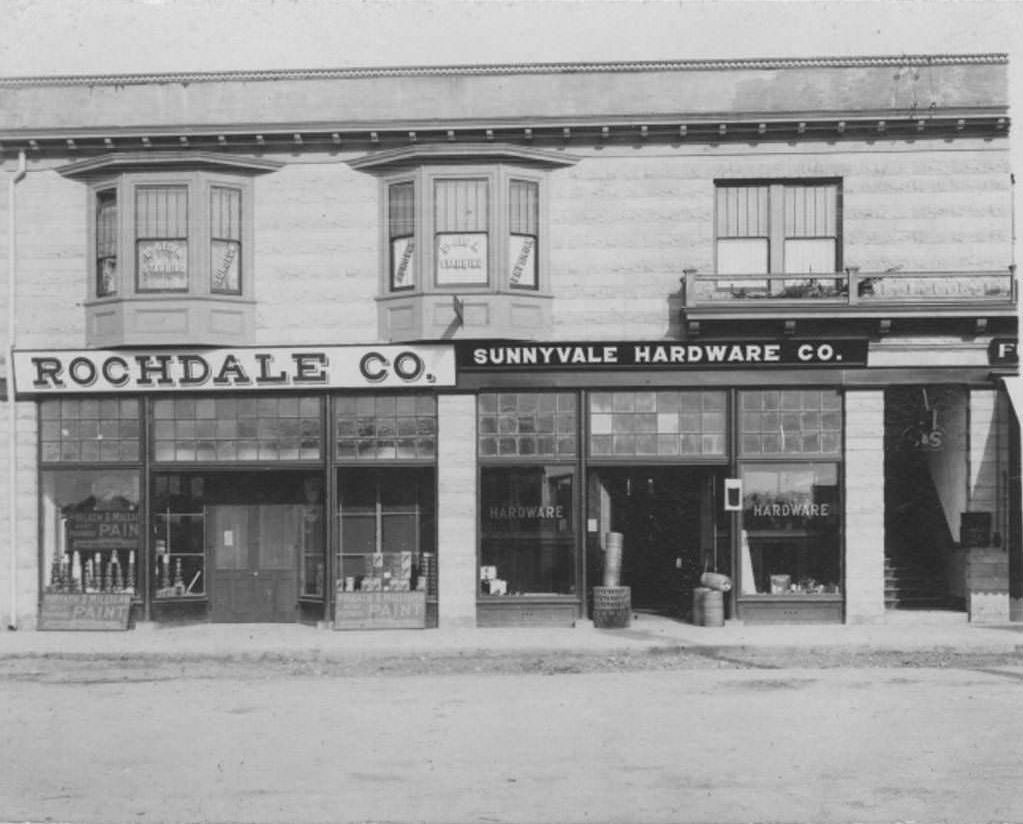
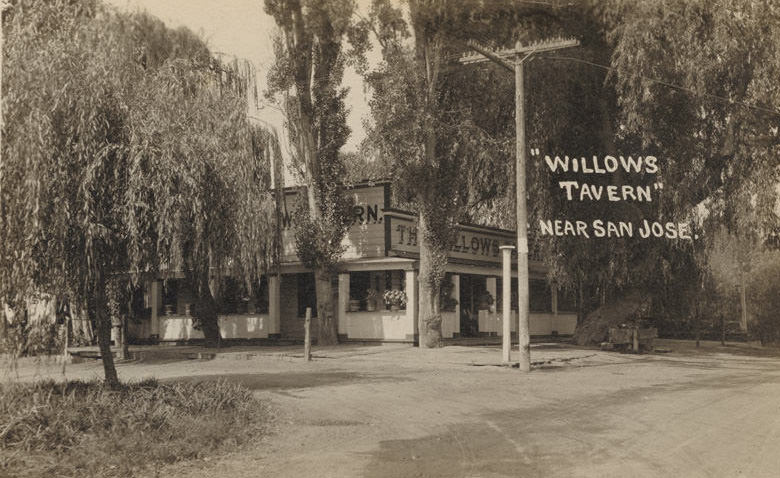
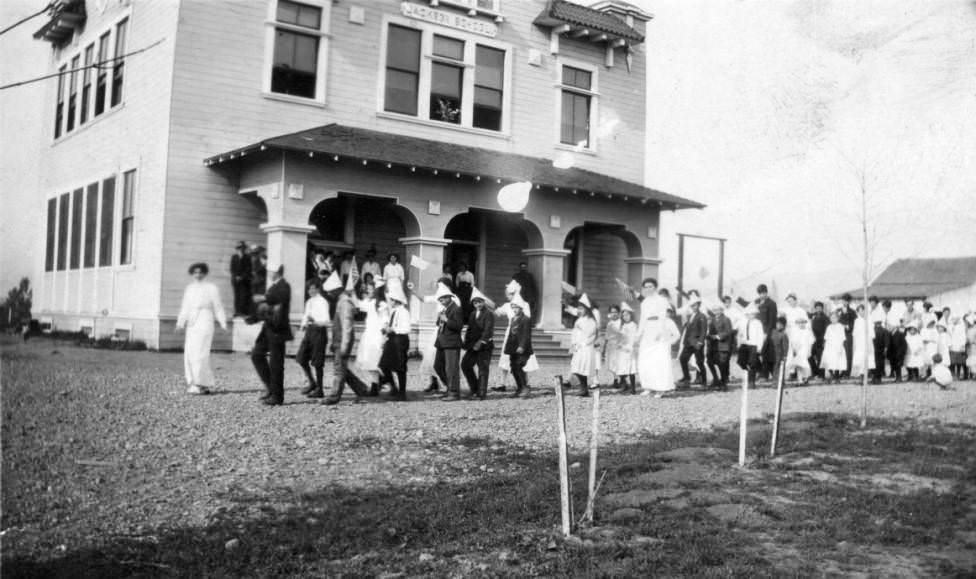
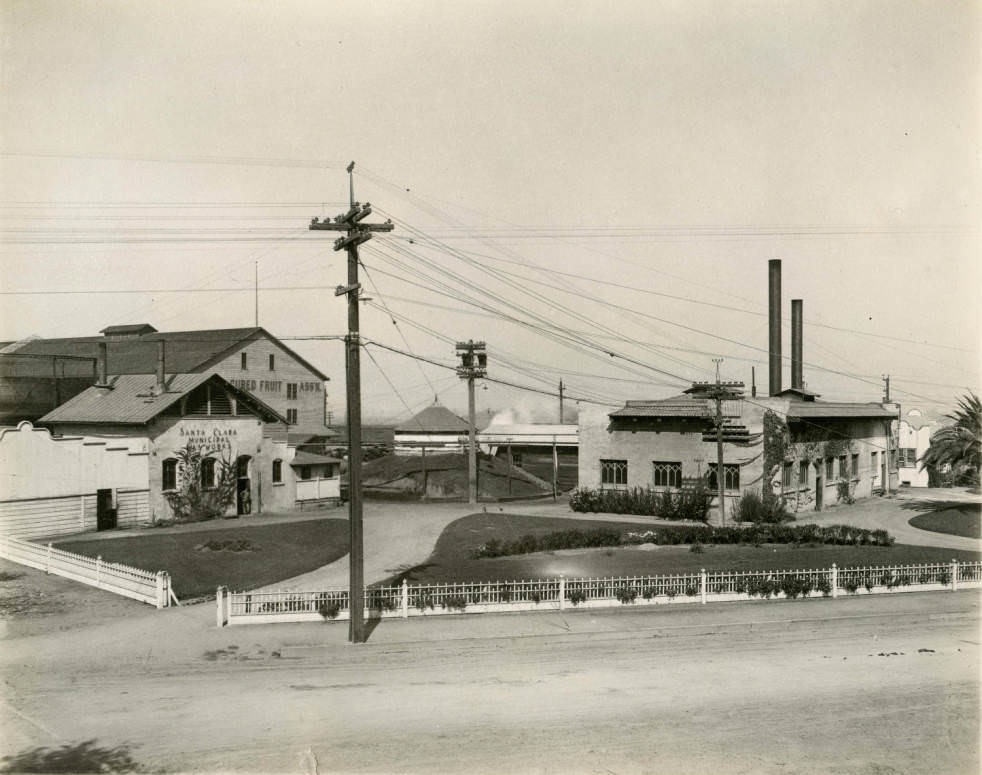
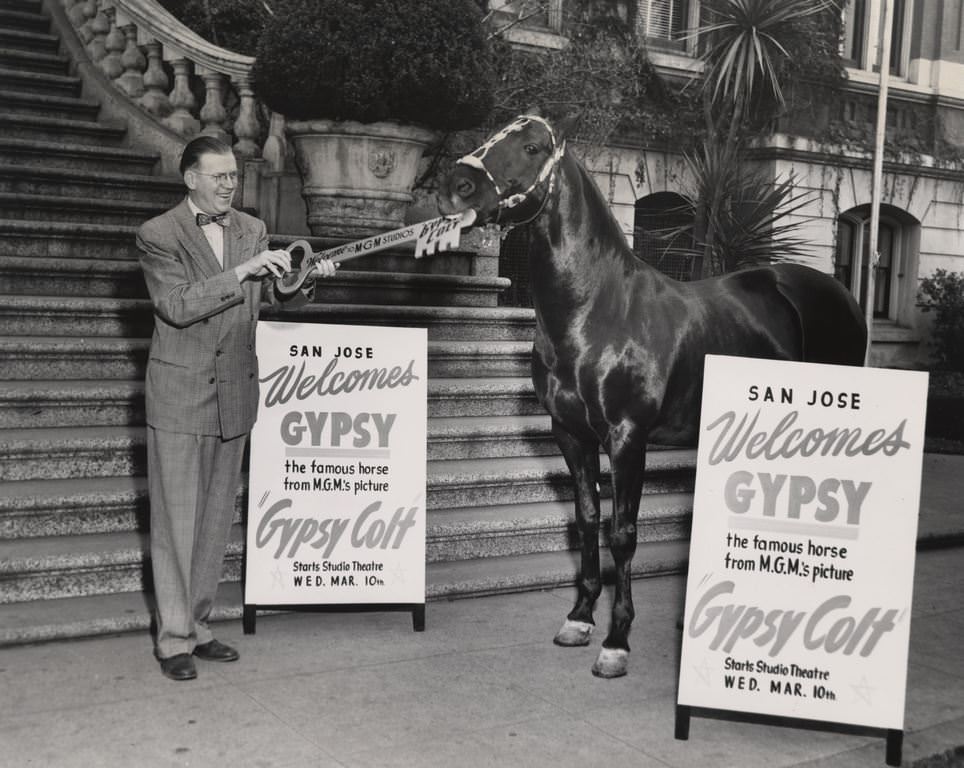
Court House and Hall of Records, San Jose, 1903San Francisco From Fairmont Hotel, 1908First Street, San Jose, 1907Postcard of the Driveway of the Garden City Sanitarium, San Jose, 1900sHotel Vendome, San Jose Calif, 1900St. James Hotel, Park & McKinley Monument, San Jose, 1909Rose Carnival 1901, Florence Cunningham San Jose State Normal School Float (ca) Market & Santa Clara Streets, 1901New Cars of the San Jose and Los Gatos Interurban R. R., 1900sBranding Claves near San Jose and Los Gatos Interurban R. R., 1905Phelan Building, 1906Lick Stables, 1900People on the Street After the Devastation, 1906Native Sons Hall, 1906Lord & Westlake’s Stables, 1900Rail Tracks Cleared, 1906Toward State Normal School, 1900Old City Hall, Cogswell monument, 1906Stanford Campus, 1906Horace Mann School, 1909Two story building with cupola, possibly a school, 1905Southern Pacific Railroad depot in Santa Clara, 1900Adults and children at Campbell Union High School event, 1900s4th of July Parade, 1909Woodrow Undertaking Co, 1900sLick Observatory buildings on top of Mount Hamilton, 1900West Hall, University of Pacific (Emory Street near Elm), 1902Asa Adam’s House, San Jose, 1902Santa Clara Municipal Gas Works, 1905Bicycle Race, Agricultural Park, 1905David Umbarger House, 1909Regal Shoes, 1900sView of Los Gatos, 1904Large family in front of house, 1900sOld Glory and Some of Its Children, 1900sCharles Doerr Home at 226 South Second Street, 1909Second Street, Eilers Music Co. and Lyric Theater, 1900sHall of Justice, 1906Presbyterian Church, 1906Power House, Stanford University, 1906Broadway Store on the southeast corner of Broadway and Coe Avenue, 1903Man walking in front of grand house, 1900sMan looking at photographer while standing on brick rubble, second story of brick, 1906Floral Parade, 1900The Modern School of Business, 72-78 North Second Street; Roley S. Kooser, Plumbers and Tinners, 46 North Second Street, 1906Sperry Flour Company Building.1900Cottage 16-West Side, Agnews Mental Hospital, 1906Sunnyvale Civil War Veterans, 1907Lipe, R. M. Foundry, Caton’s Foundry, 1904Tillie’s Catch one day at Capitola, 1906Train at Station Los Gatos, 1905Auto race on Alum Rock Hill, 1906Cyclists with Trophy, 1905Rose Carnival Parade, 1901Market Street Depot, 1905Armory-California National Guard, 240 North Second Street, 1900sElk’s Hall & Meyer Bros. Clothing, 1906Saint Claire Club on Saint James and Second Street, 1905Boys with drums, marching, 1904Hotel Vendome and Grounds, 1905State Normal School, 1900Santa Clara County Almshouse, formerly O’Toole Farm, 1905Damage to Main Fire Station, 1906Horse-drawn vehicles and employees outside the Kelley Laundry building, 1900sGymnasium, Stanford, 1906Lick Observatory buildings on Mount Hamilton, 1901The building that now houses the Cantor Arts Center at Stanford University, 1900sCasino and Wharf at Lake Tahoe, 1908California Nursery at Niles, 1900Hare family home, 1075 Madison Street, 1907Phelan Building, Hobson’s Store, San Jose, 1906San Jose Normal School, 1900San Jose High School, 1908San Jose State Normal School, 1906First Presbyterian Church, North Second Street, 1906Rebuilding Fredericksburg Malt House, May 22, 1903Children looking into a fountain, Saint James Park, San Jose, 1904Market Street Summer Celebration, June 1906San Jose High School, 1906San Jose High School, 1906San Jose Transfer and Storage Company, 1906San Jose, CA branch of AP Giannini’s Bank of Italy, 1907Workmen on the Line of The Interurban Road, 1903A drying ground west side district near line of S. J. &, 1903Sixty-five Post Street was the saloon of P. H. Sullivan in 1905.Fredericksburg Brewery – Malt House Fire, 1902Between Los Gatos and Saratoga on the Line of the S.J.L.G. and Saratoga Interurban Road, 1903Japanese Cottage at Nippon Mura, on line of the S.J. & Los Gatos Interurban R.R., 1903Drying grounds of Prof. Childs showing the partial crop of prunes of a farm, 1903Brass band at Hotel Vendome, 1900Residence of Geo. E. Hyde, Interurban Road, 1903Los Gatos on line of S.J. & Los Gatos Interurban R.R.., 1903U.S. Post Office, San Jose, 1906Trinity Episcopal Church, San Jose, 1900Peacock Stables, Hansen & Poulsen, 1908San Jose Post Office, 1906Castro Street, Mountain View, 1907Osen Hunter Auto Co., First & Saint James Street, 1908San Jose post office, 1905San Jose City Hall, 1900San Jose City Hall, 1901View looking straight down The Alameda which is lined with tall trees. A horse drawn trolley stands on the right, 1900The Alameda, 1900Gardner School Graduates, 1907First Street, 1903Street Scene- Saratoga Ave. & Stevens Creek Road, 1907Agnews Asylum Ruins, 1906Monastery at Mission San Jose, Alameda County, 1902San Jose, Alum Rock jail, 1900Sainte Claire Club, 1905Naglee House, 1902St Joseph’s Cathedral, 1905Plaza, Market Street from City Hall, 1900Lawrence Station, 1900Native Daughters of the Golden West Parade, 1907Sainte Claire Club, 1900Portrait of two young children outside stone house, 1900sSempervirens Camp, May 1900Santa Clara Mission in the old belfry, bells given by King of Spain, 1904Western Wireless Equipment Co., 1905Park Commissioners in Big Basin, September 1901Morning Times and Evening Herald. 65 South Market Street, 1900Driving Around the Big Basin: La Honda, near Pescadero, June 1900Trolling with a Wilson Spoon for Trout, Big Creek Dam, 1901Mill Hands on H. L. Middleton’s Property Edge of Big Basin, 1901Hotel at Boulder Creek, 1901Commodore Huntington’s Yacht Thelma, 1907Garden City House, 1906Alviso Hotel, 1905Stanford Family Mausoleum, 1900San Jose High School, 1906Establishing Big Basin State Park, 1900State Normal School Main Entrance, 1909San Jose Post Office, 1908Portrait of Gerhardus DeWit, 1900San Jose Court House, 1905City Hall San Jose, 1905Native Daughters of the Golden West parade, 1907View of a street near the Alameda between Santa Clara Street and San Jose Street, 1900Longfellow Grammar School, 1907Gerhardus De Wit who served as one of San Jose’s first mail carriers stands in front of his horse drawn carriage, 1900Parade on Market Street, 1909Exterior view of the Carnegie Library, San Jose’s main public library, 1903Carnegie Library, 1903Street scene, San Jose, 1906First Street Looking South, 1908Grauman’s Unique Theatre, 1903Rose Carnival Parade, 1901Rose Carnival Parade, 1901Hotel Saint James, 1900Railroad car entering the tunnel on the way to Alum Rock Park in San Jose, 1900Postcard of West Main Street in Los Gatos, 1900Club house of the South Bay Yacht Club, Alviso, 1903View of Morgan Hill, 1900Franklin Street and Main Street, 1900Victorian house with barn, 1900Grant Grammar School, Empire Street, San Jose, 1906St. James Annex, St. John’s St. San Jose, 1906Hall of Justice, Market and St. James Street, San Jose, 1906S. Second Street, Ruins after the Fire. San Jose, 1906Post Office. San Jose, 1906View of San Jose Post Office from Plaza Park, 1907Four children posing in the courtyard in front of the San Jose City Hall, 1907Alum Rock Mineral Springs in San Jose, 1900Exterior view of Saint James Hotel and park in San Jose, 1900Exterior view of the Cathedral Basilica of Saint Joseph in San Jose, 1900Exterior view of an unidentified residence in Garden City, San Jose, 1900Exterior view of an unidentified residence in San Jose, 1900Exterior view of Hotel Vendome in San Jose, 1900Exterior view of San Jose College, 1900The Bank of San Jose, 1900First Presbyterian Church in San Jose, 1900Trinity Church from a park in San Jose, 1900The Hotel Vendome in San Jose, 1900Exterior view of St. Clair Club, San Jose, 1900The second Normal School Building (completed in 1881) in San Jose, 1901Santa Clara Street, San Jose, 1907Santa Clara County court house and Hall of Records, San Jose, 1905Auditorium Rink, San Jose, 1900St. James Park William McKinley monument, 1903Wreck of Overland Limited near San Jose, 1906Wreck of Overland Limited near San Jose, 1906Postcard of Main Street, Santa Clara,1900Businesses on Murphy Avenue in Sunnyvale, 1906Willows Tavern near San Jose, 1907President Theodore Roosevelt in San Jose, 1903Jackson School, Morgan Hill, 1909Summit of Mount Hamilton, 1900Sunnyvale, Butcher’s corner, Bicycle racers, 1900Santa Clara County Municipal Gas Works, 1900Swiss Hotel, Market Street, 1900Beach and Porter buildings, San Jose, 1905.Looking south on Market Street, 1905Garden City Bank, 1908Mounted policemen on Market Street, 1907Post Office on the Plaza, 1906Parade float entered by San José Schools in the Carnival of the Roses, 1905Post Street after the 1906 earthquakeMayor Hathaway presents horse “Gypsy” with key to San Jose, 1905Bicyclists riding past St. James Park, 1900
Just go look at the Winchester Mystery House and imagine everything around it looked similar to that, just not as big obviously. It looks so starkly different compared to Santana Row and everything else just a few yards from it.

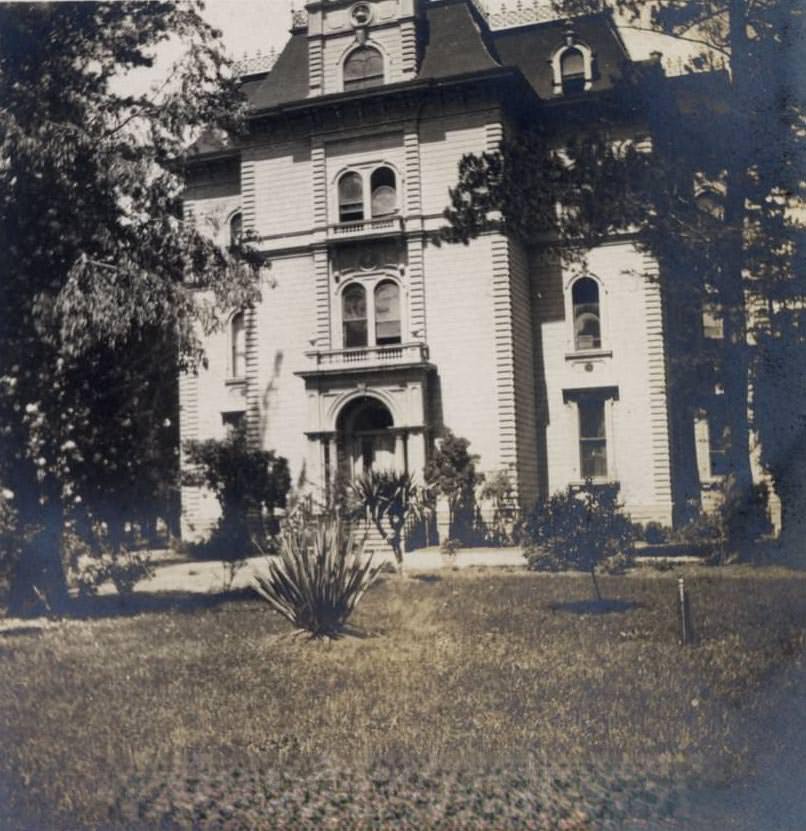
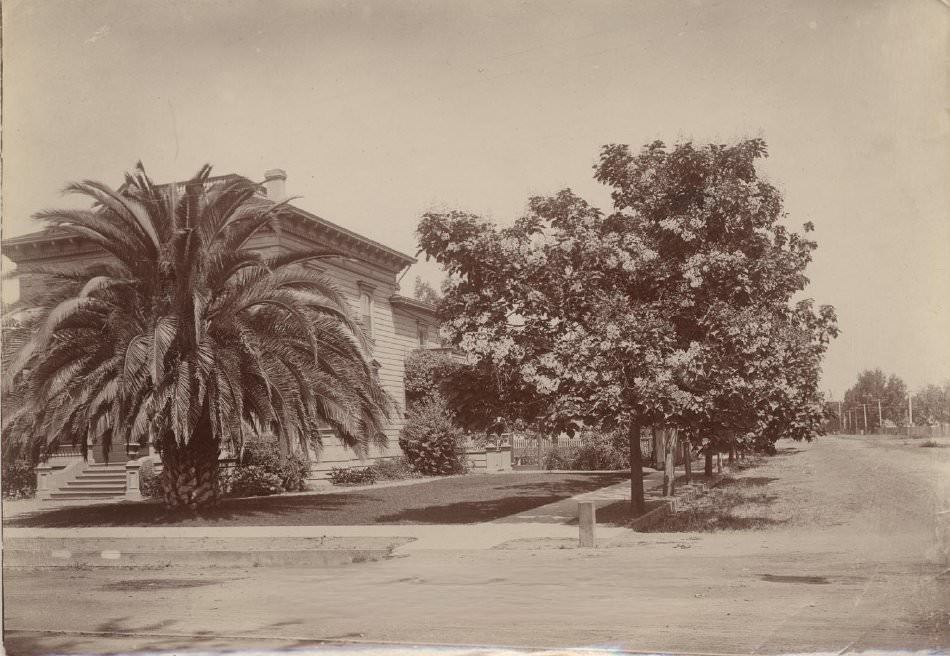
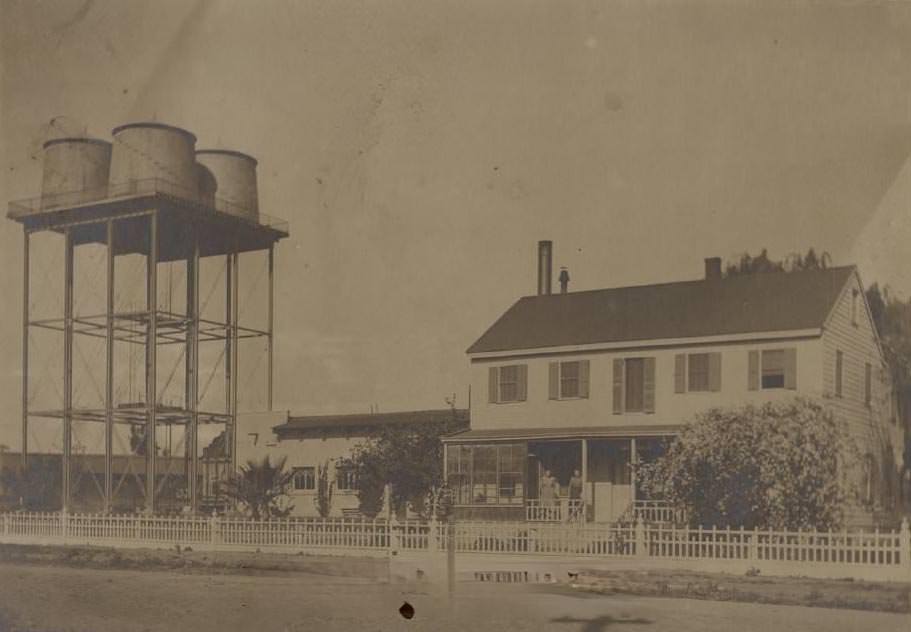
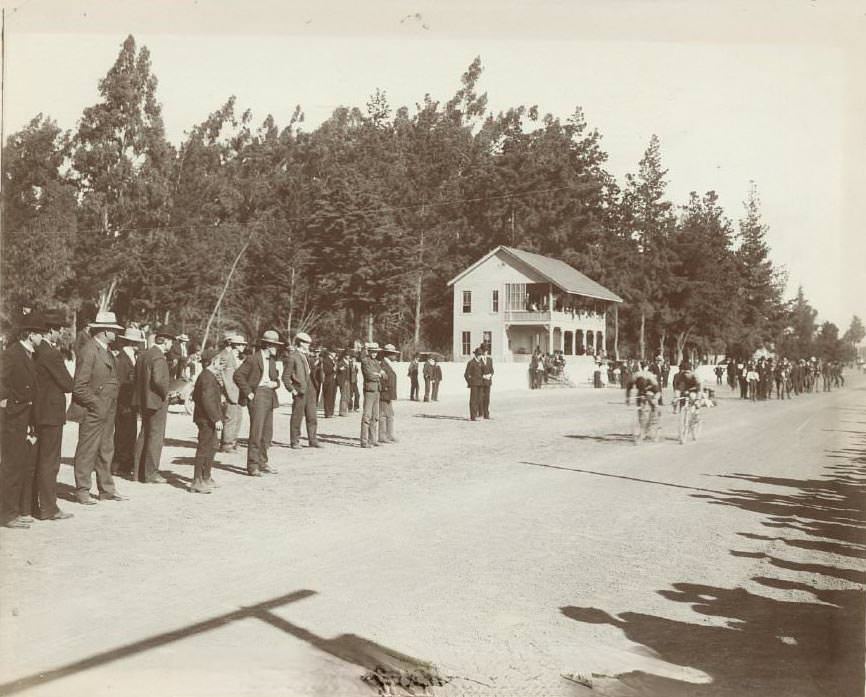
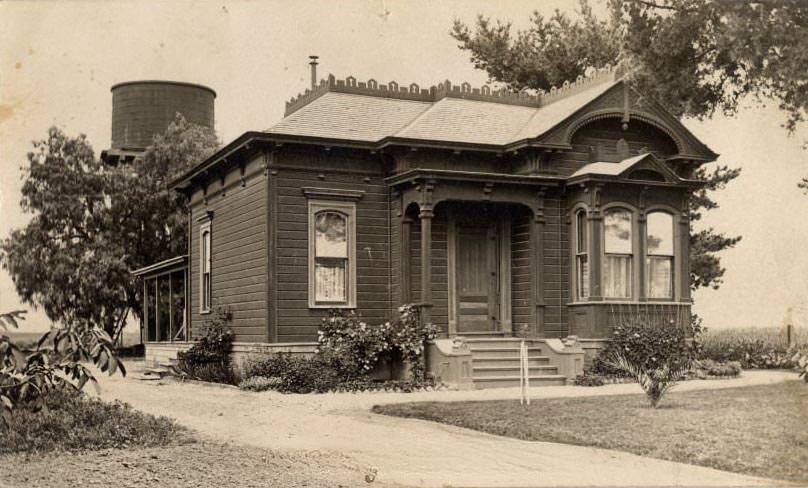





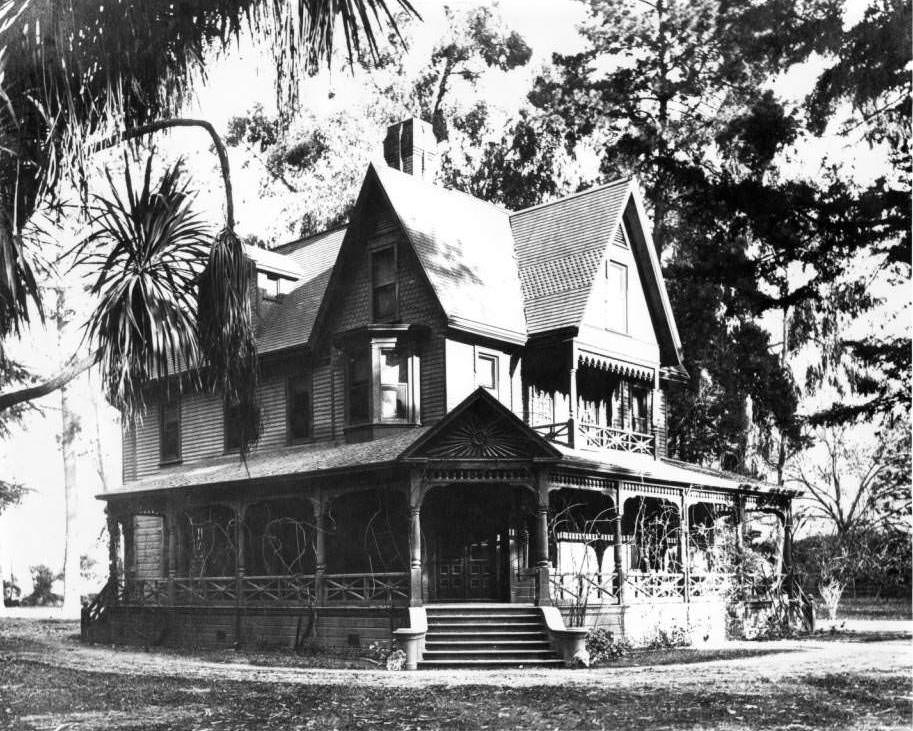


















Just go look at the Winchester Mystery House and imagine everything around it looked similar to that, just not as big obviously. It looks so starkly different compared to Santana Row and everything else just a few yards from it.
Santana row was orchards. The house really stood out compared to the local landscape.
I thought history was racist?