

San Jose in the 1870s was a city finding its footing. With a population of around ten thousand, it was no frontier outpost — it was a working, growing city with brick buildings, churches, schools, hotels, and a full commercial district. Streets like Santa Clara and First were lined with storefronts, and neighborhoods were spreading outward. The photos below freeze that moment in time with remarkable clarity.
Agriculture was the backbone of the regional economy. The surrounding Santa Clara Valley was enormously productive, and San Jose was the hub where that produce was processed and shipped. Canneries and food-processing operations dotted the city, supplying markets across the country. At the same time, large manufacturing plants operated alongside these food industries, giving the city a dual economic identity — both industrial and agricultural.
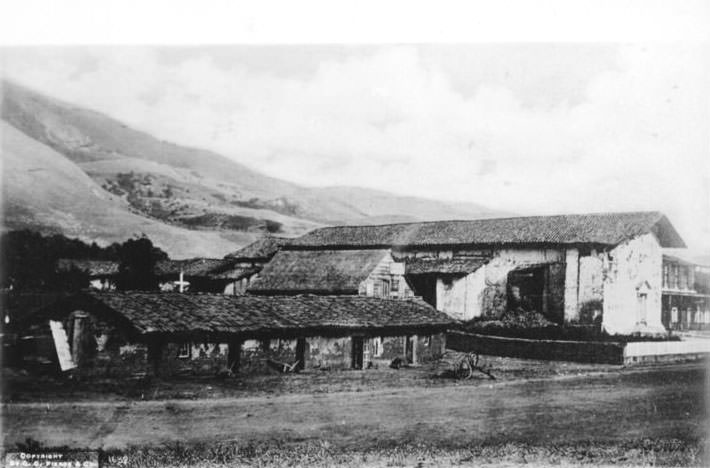
One of the most historically significant landmarks in the area was Mission San Jose de Guadalupe, whose origins stretched back to the Spanish colonial period. By the 1870s, the mission complex was aging but still standing, a quiet reminder of California’s earlier chapter.
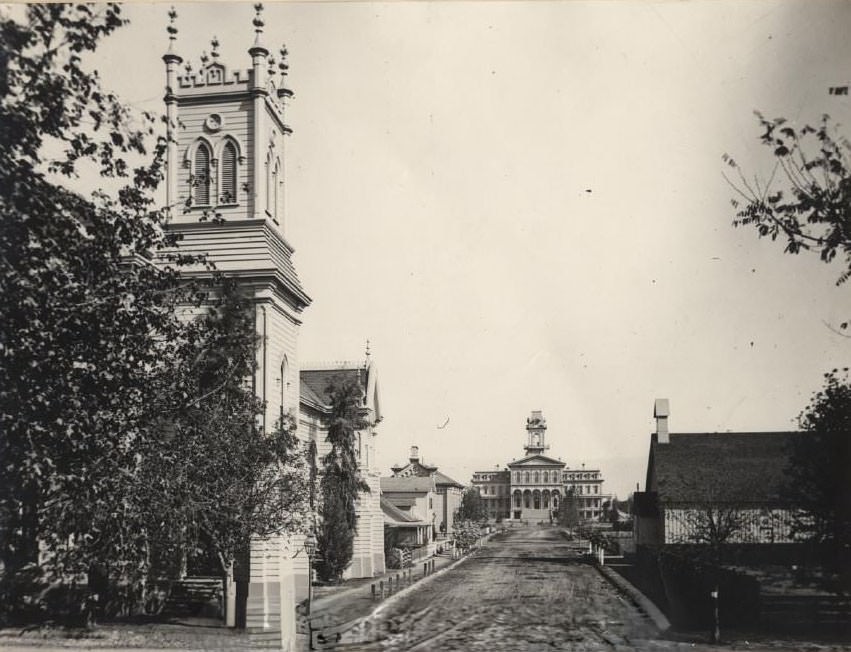
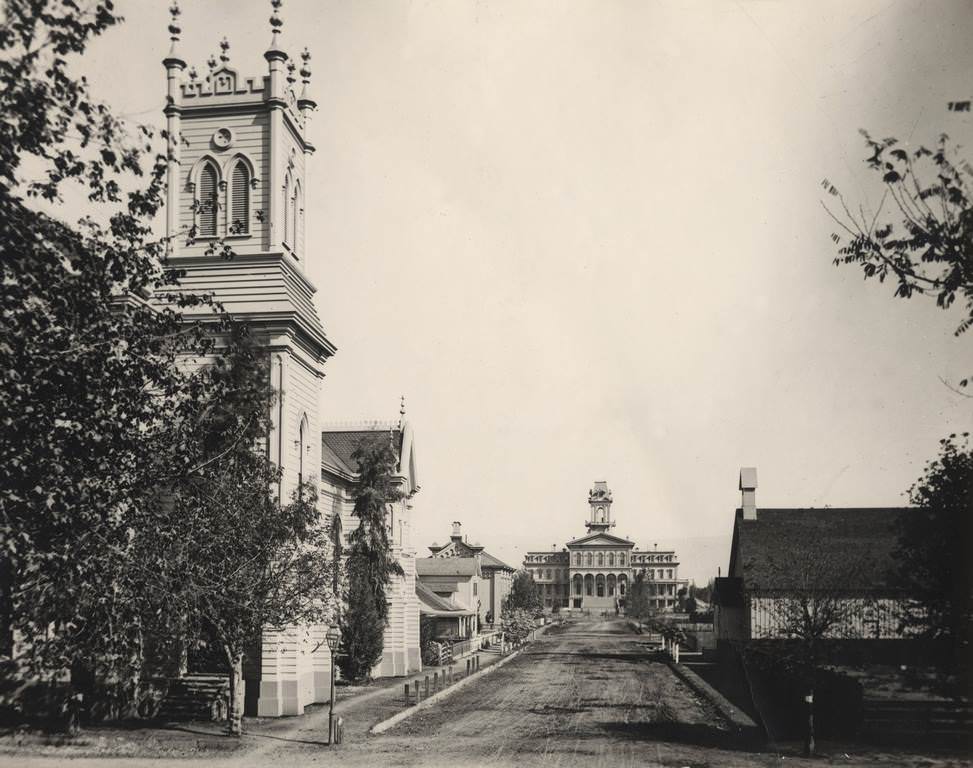
Downtown San Jose had a distinctive character by the mid-1870s. Streets that had once been little more than dirt tracks were now framed by substantial buildings — churches, schools, and commercial blocks rising side by side. San Antonio Street offered one of the most telling views of how densely the city’s institutions had clustered together.
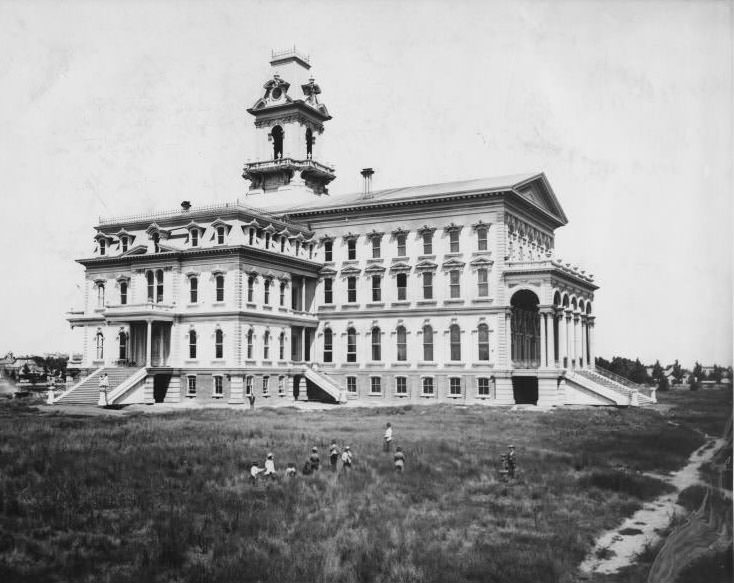
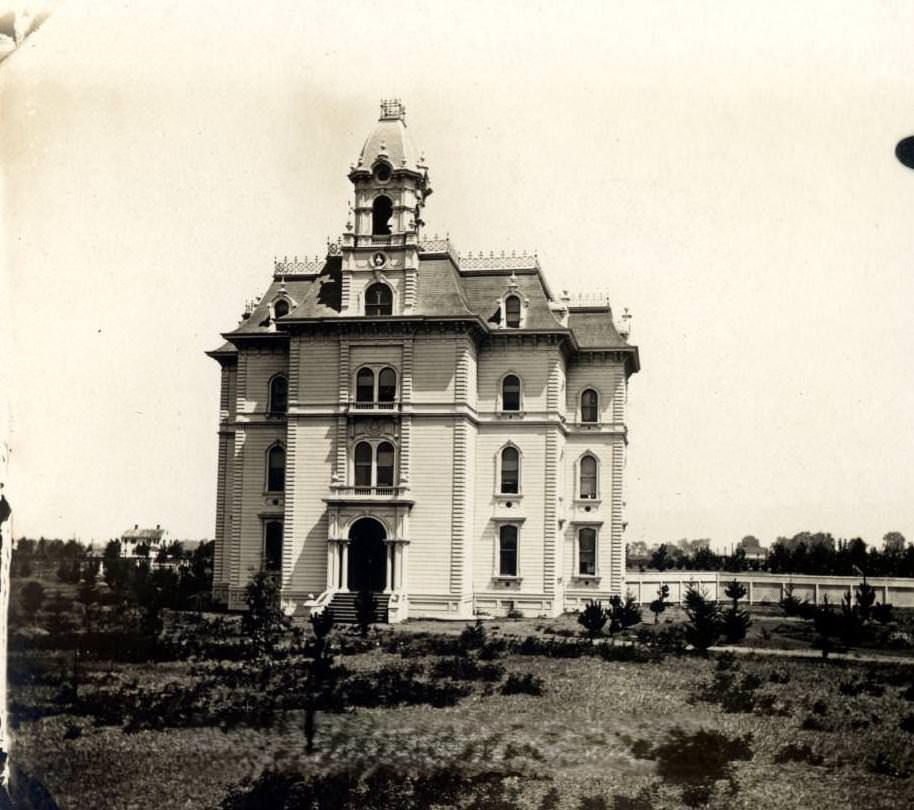
Education was a major part of San Jose’s identity during this decade. The California State Normal School — later to become San Jose State University — relocated to the city and quickly became a defining institution. Its original building stood as a proud symbol of civic ambition before fire consumed it in 1880.
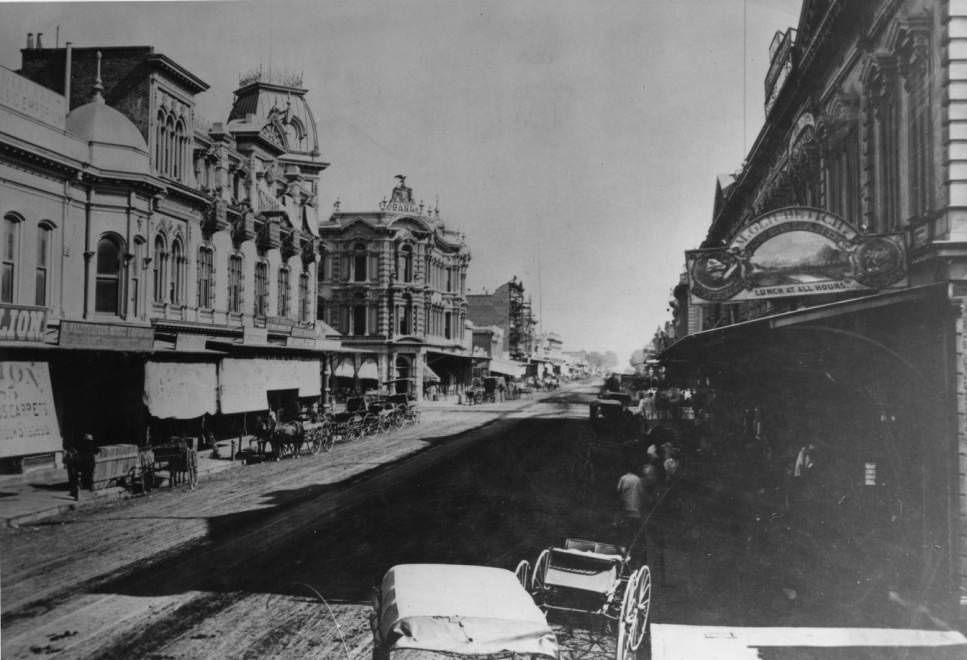
The commercial heart of the city pulsed along Santa Clara Street. Between First and Market Streets, shops, banks, and businesses competed for space. Horse-drawn vehicles moved goods and people through streets that were busy from early morning until dusk.
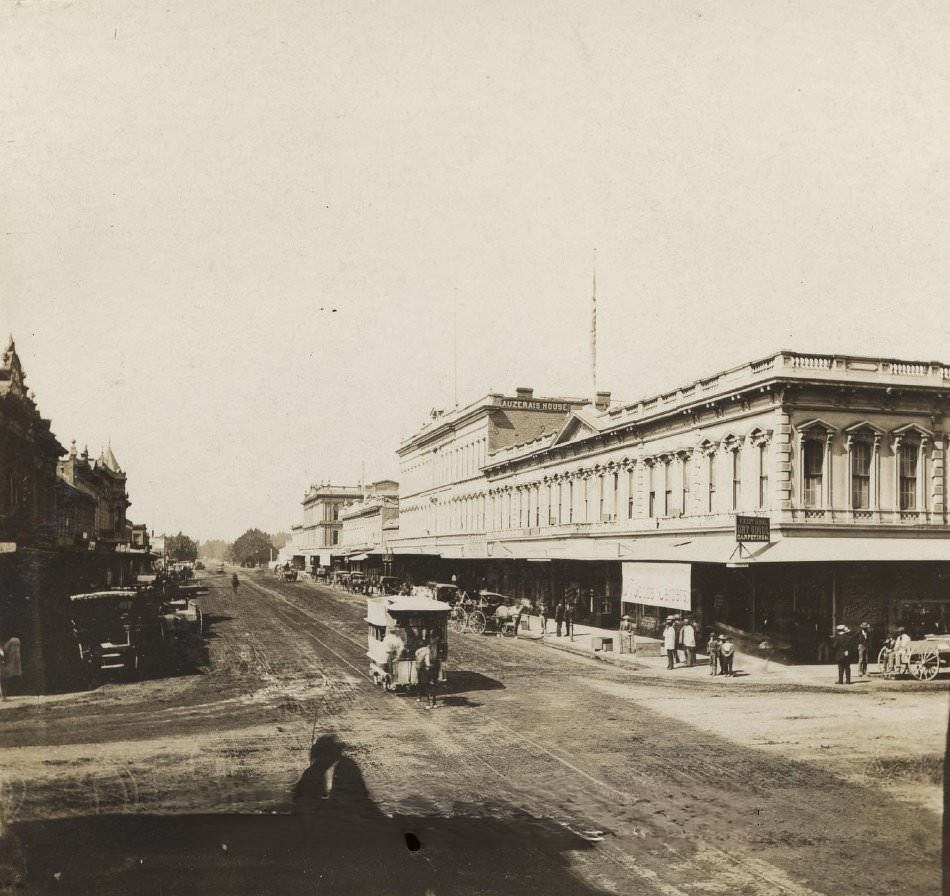
Hotels in 1870s San Jose were more than just places to sleep. They were social centers, meeting points for merchants and travelers, and symbols of a city confident enough to welcome outsiders. The Auzerais House was one of the more prominent establishments, situated to catch the eye of anyone heading into the city center.
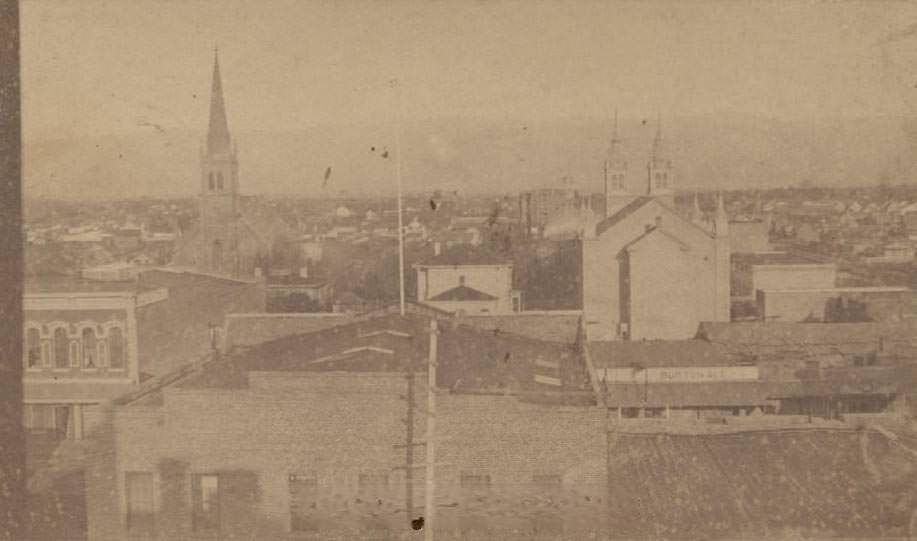
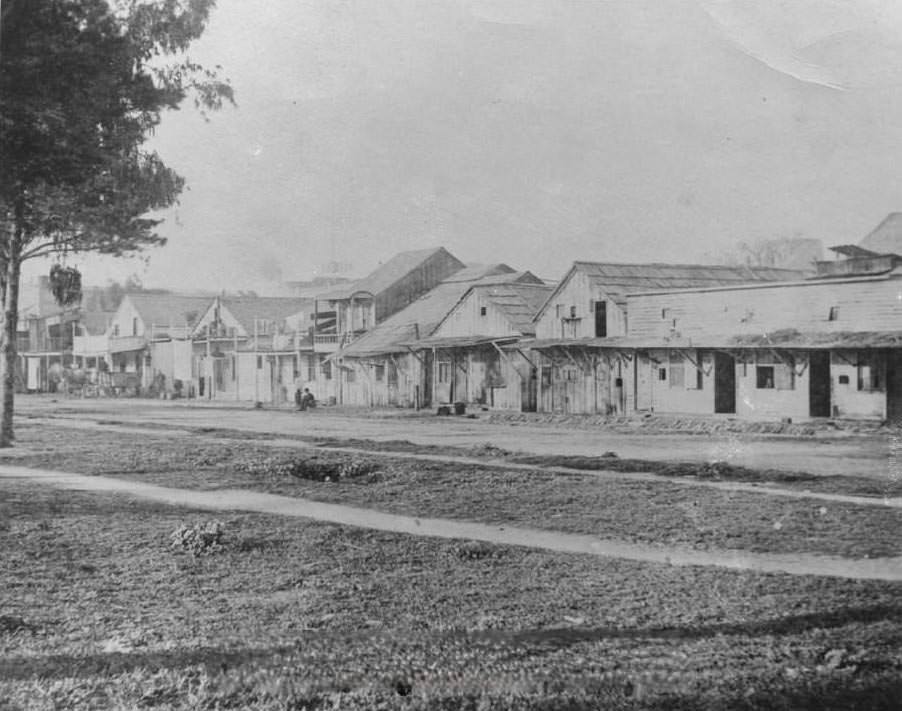
San Jose’s Chinatown on Market Street was a thriving community by the early 1870s. Chinese immigrants had come to California in large numbers during the Gold Rush and railroad construction era, and many had settled in San Jose, establishing businesses, laundries, restaurants, and social organizations within a tight-knit urban neighborhood.
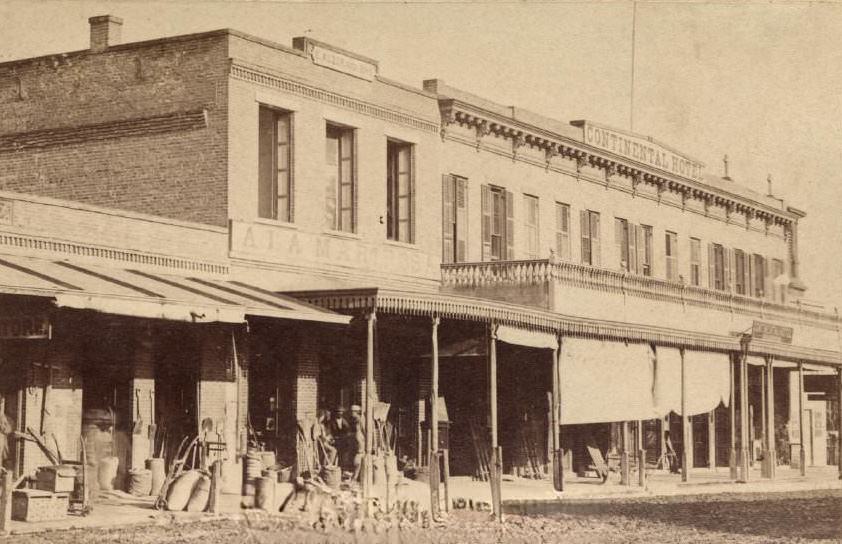
The Continental Hotel was another fixture of the city’s hospitality landscape. Standing in 1870, it reflected the growing demand for quality accommodations as San Jose attracted more business travelers, settlers, and visitors from across the state.
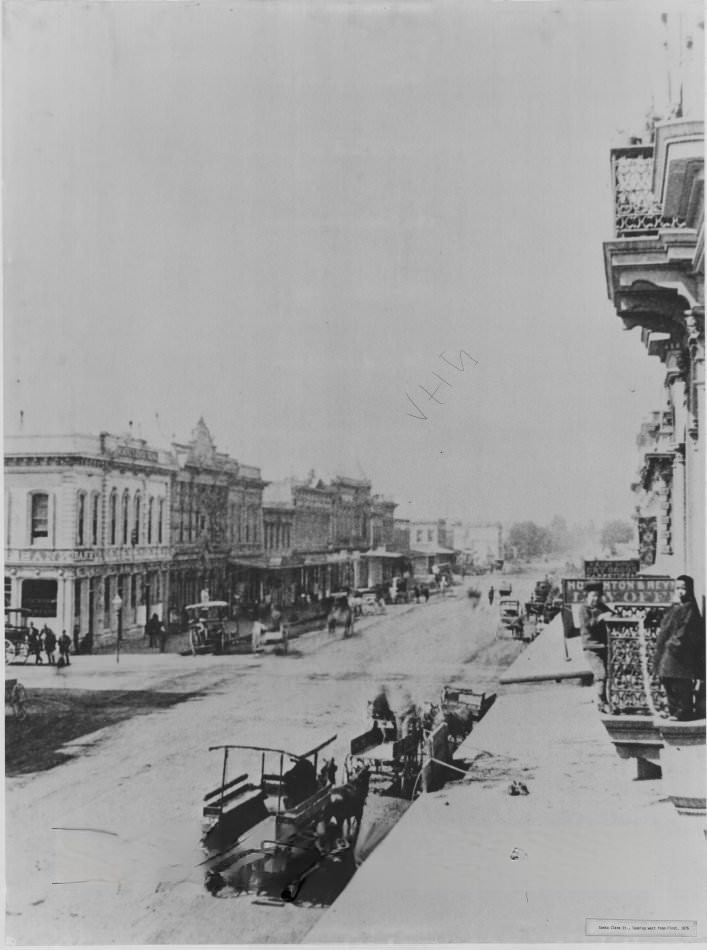
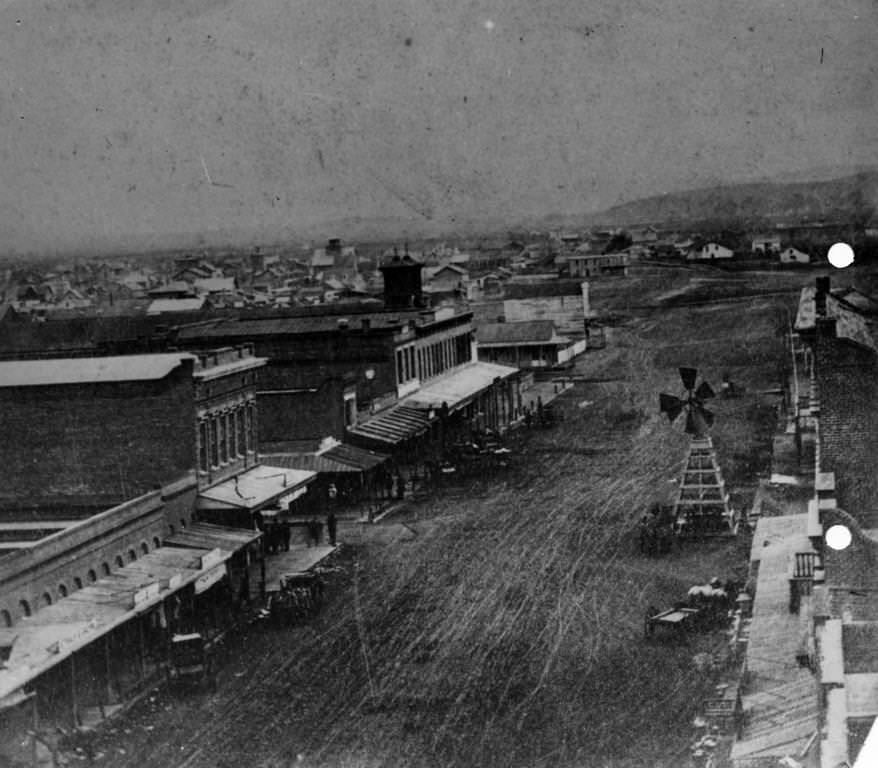
Looking west along Santa Clara Street from First, the city revealed just how much it had developed. Storefronts extended down both sides of the road, and the street itself — wide and unpaved — carried the constant movement of wagons, pedestrians, and commerce.
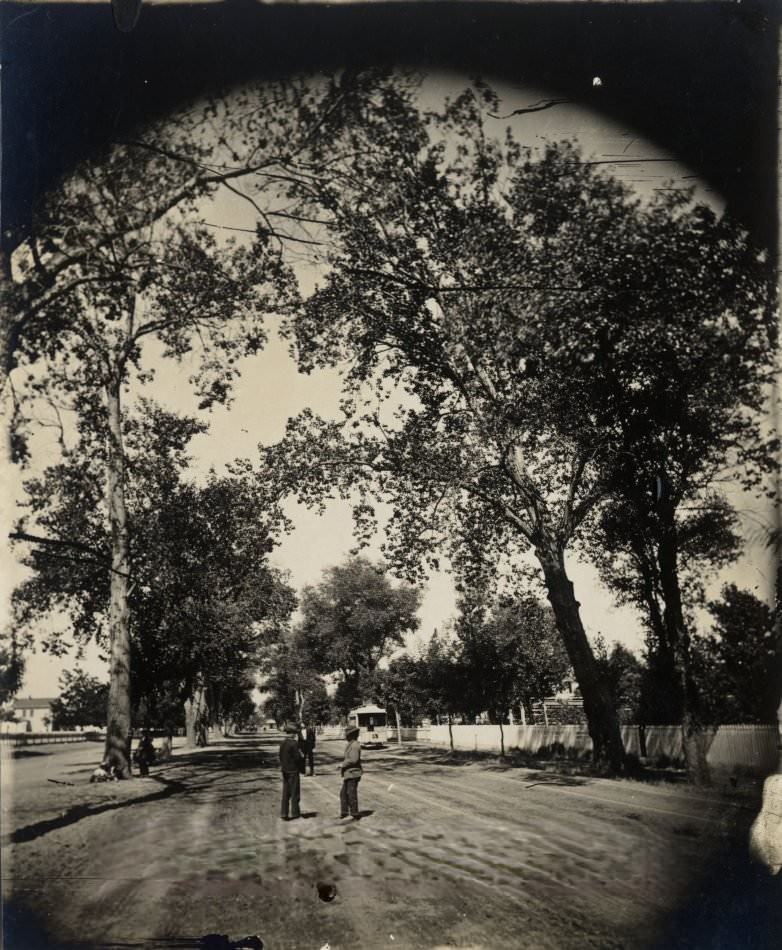
The Alameda was one of San Jose’s oldest roads, originally a tree-lined path connecting the city to the Mission Santa Clara. By the 1870s, a trolley line ran along it, but the road itself was still unpaved dirt. Men standing in the middle of it give a sense of how much open space still existed just beyond the city’s densest blocks.
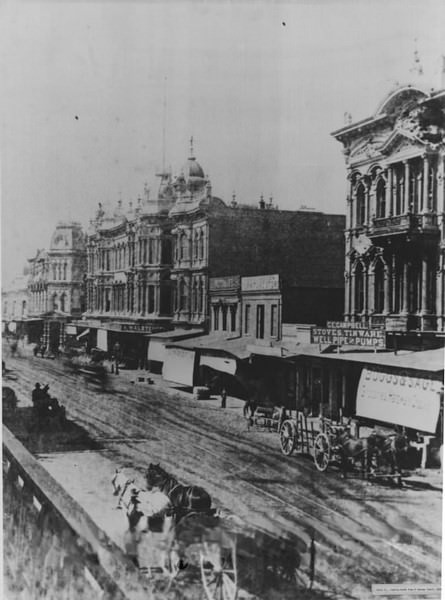
First Street heading north from El Dorado — later renamed Post Street — was one of the main commercial corridors in the city. By 1875, the buildings lining it were mostly two and three-story brick structures, a far cry from the adobe and wood-frame buildings that had defined the city two decades earlier.
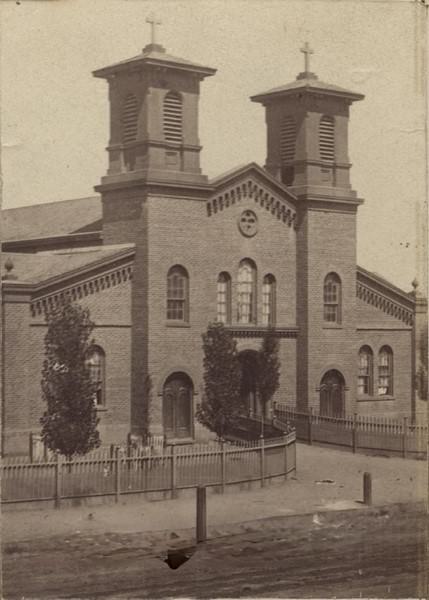
Religion played a central role in public life in 1870s San Jose. Catholic, Protestant, and Jewish congregations all had an active presence in the city, and their buildings were among the most architecturally ambitious structures in town. St. Joseph’s Church was one of the most recognizable.
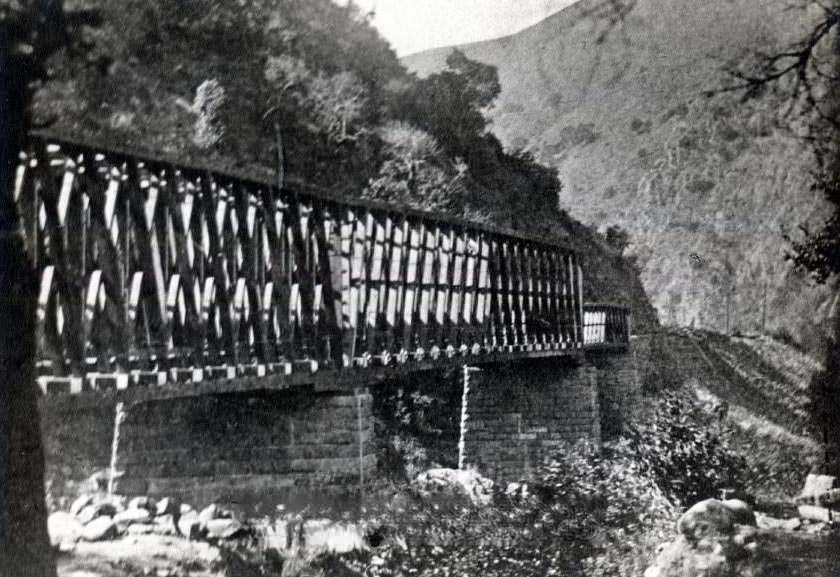
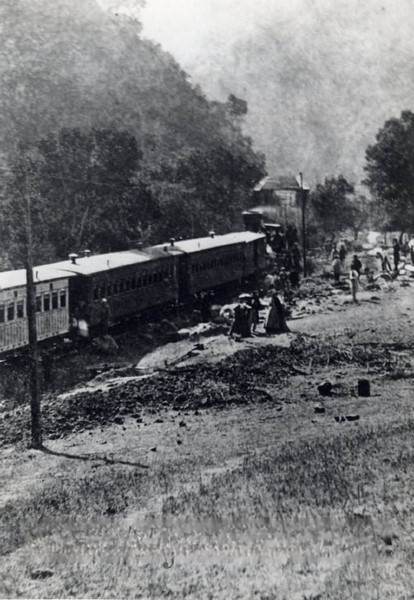
San Jose’s connection to the wider world depended heavily on the railroad. The Central Pacific Railroad ran through Niles Canyon — a dramatic cut through the hills east of the Bay — linking San Jose to the transcontinental rail network. The canyon route was an engineering challenge that shaped the region’s commerce and growth.
The University of the Pacific also relocated to San Jose during the 1870s, adding to the city’s growing academic reputation. West Hall was one of its main buildings, a stately structure that anchored the campus and housed students and classrooms during those formative years.
Niles Canyon was not just a railroad corridor — it was a gateway. Trains running through it carried passengers, freight, and mail, knitting San Jose into California’s broader economic network. The depot at Niles was the point where travelers transferred between lines and local goods moved on to distant markets.
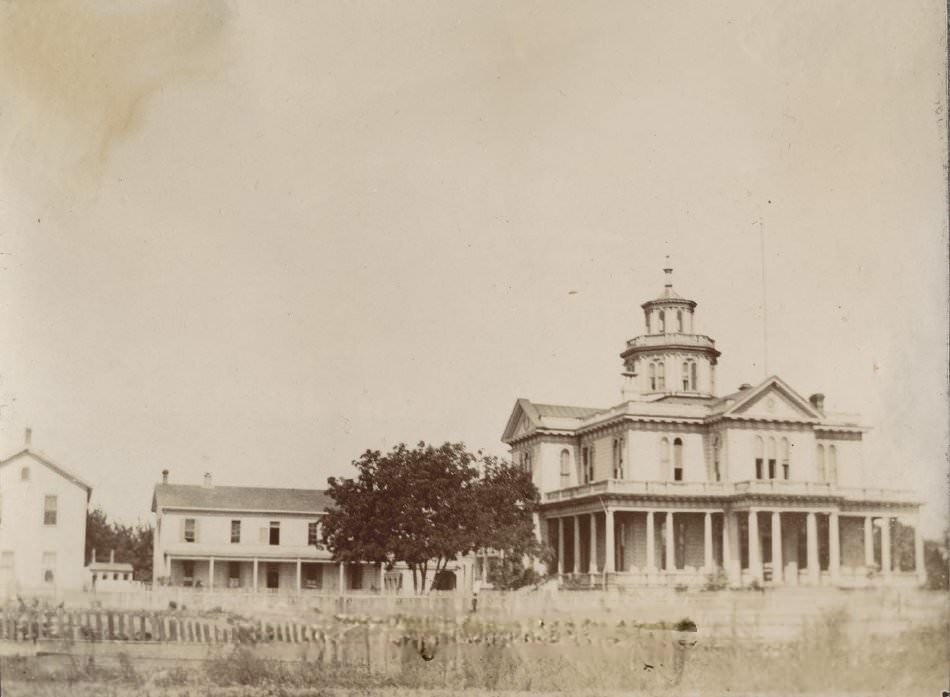
Not everyone in 1870s San Jose shared in its prosperity. The Santa Clara County Almshouse, built on the former O’Toole Farm, served the county’s poorest residents — those who had no other means of support. It was a standard institution of the era, providing basic shelter and care for the destitute and elderly.
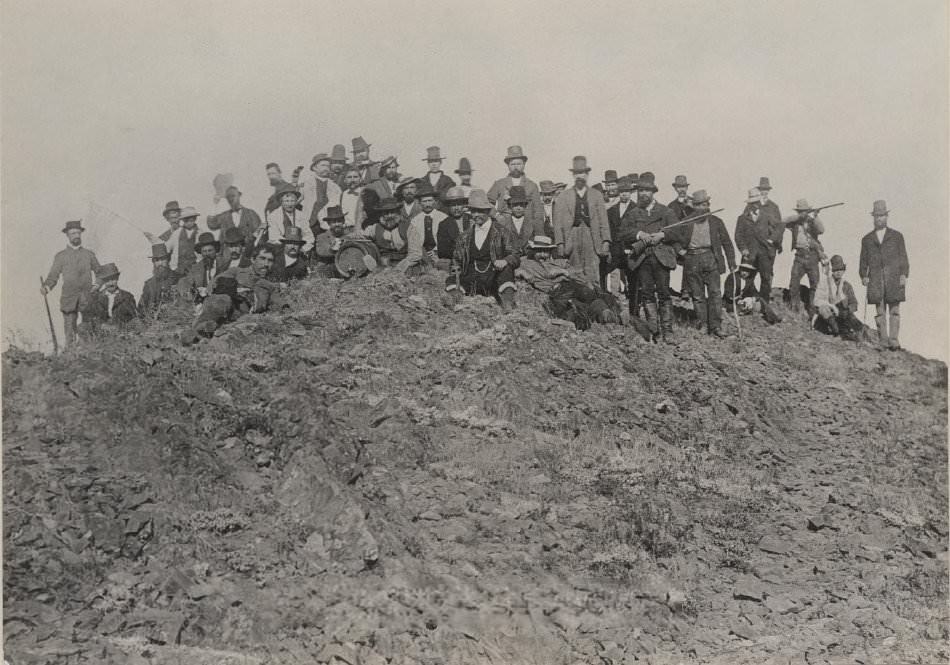
Mount Hamilton, rising east of San Jose, became the subject of a notable dispute in the mid-1870s over the construction of a road to its summit. The effort to build that road — later called the Battle of Mount Hamilton — was part of the push to establish what would become Lick Observatory, one of the first mountaintop observatories in the United States.
New Almaden, located south of San Jose, was one of the most productive mercury mines in North America. By 1879, it had been operating for decades and was still a major industrial site. Mercury from New Almaden was essential to the gold and silver mining industry, making it a critical piece of California’s broader economy.
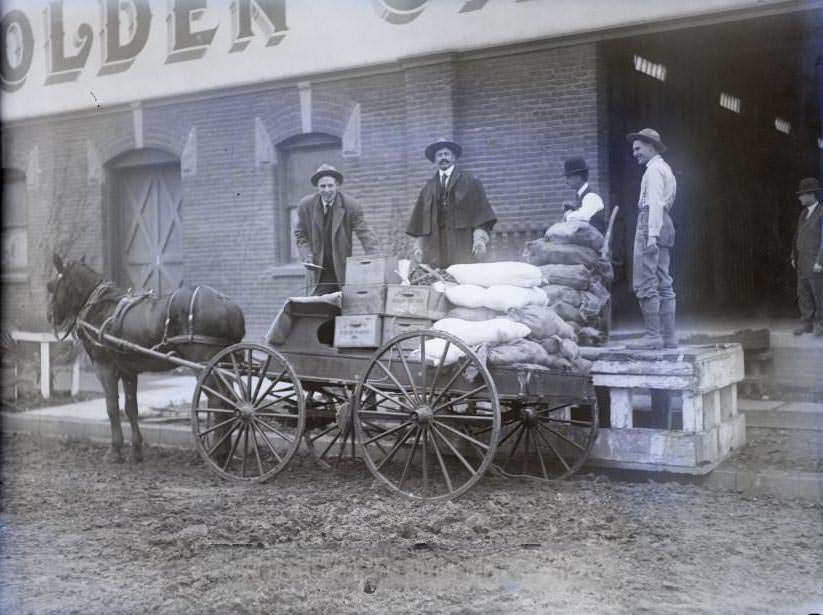
The daily movement of goods through San Jose relied entirely on horse-drawn wagons. Teams of horses pulled heavy loads to and from warehouses, docks, and stores. Loading and unloading was physical, time-consuming work done by hand in front of the city’s brick commercial buildings.
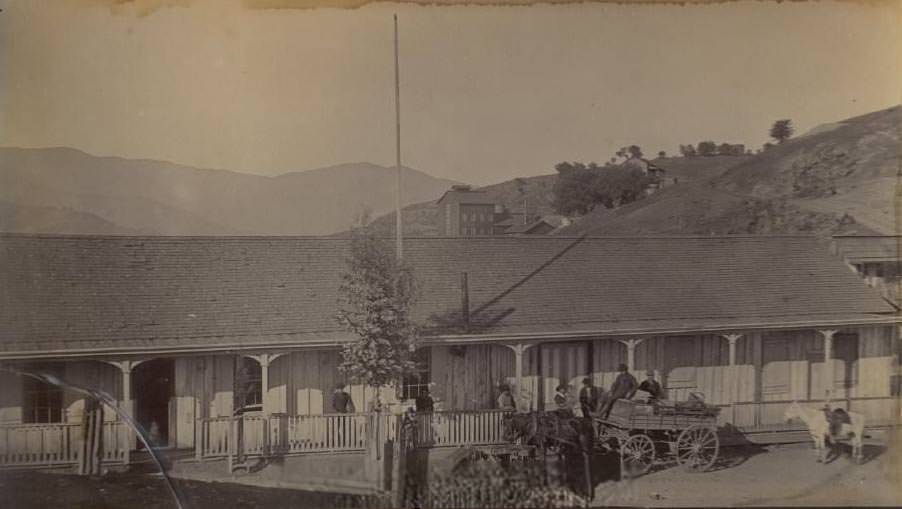
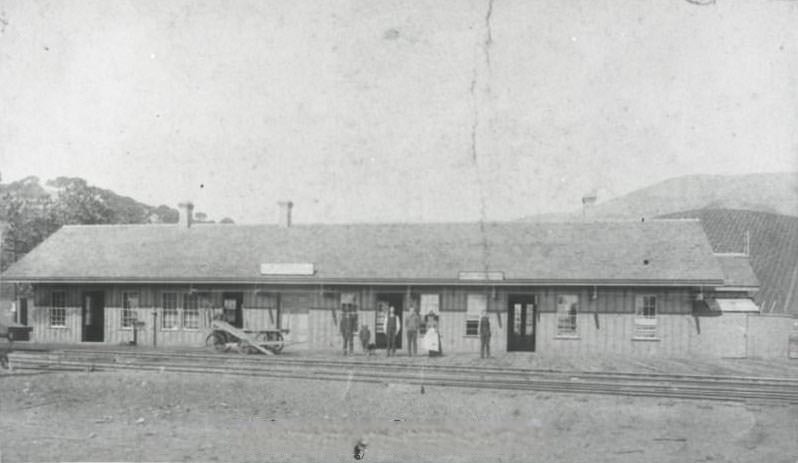
The Niles Depot of the Central Pacific Railroad was the physical point where the railroad met the community. Passengers arrived and departed here, and the depot’s activity was a reliable measure of the region’s economic pulse. Its presence shaped the town of Niles just as much as any other institution.
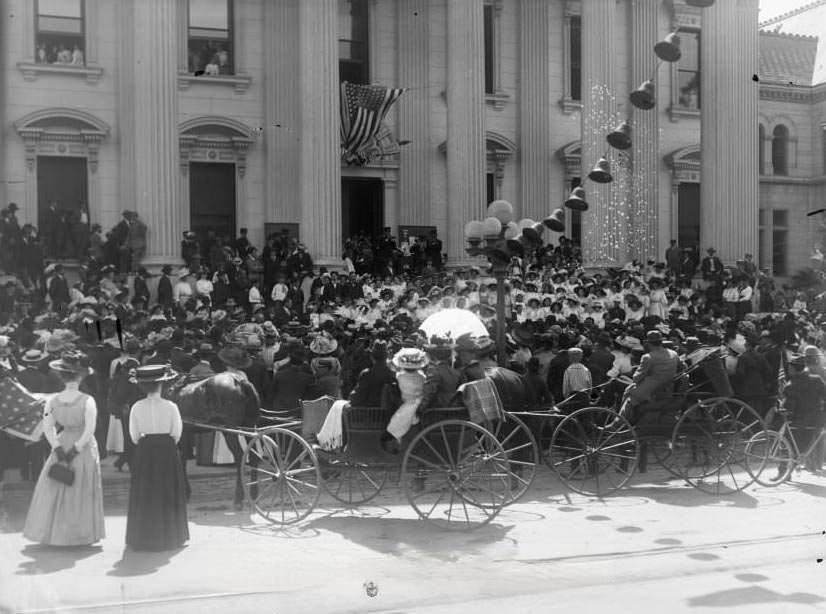
Public events in front of the Old Court House drew crowds and gave residents a shared civic space. The building itself was one of the city’s most familiar landmarks, a place where legal proceedings, civic ceremonies, and public gatherings all took place within the same walls.
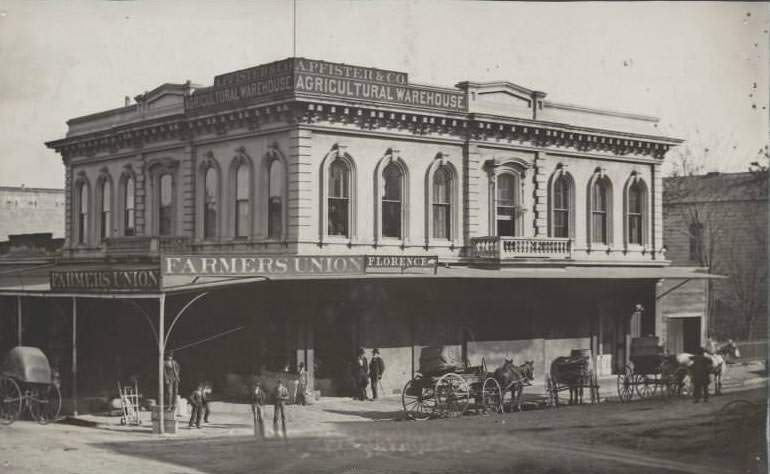
The Farmers Union, operating out of the A. Pfister & Co. Building, was a key node in San Jose’s agricultural economy. Farmers from across the Santa Clara Valley came here to buy supplies, sell produce, and conduct the business that kept their operations running from season to season.
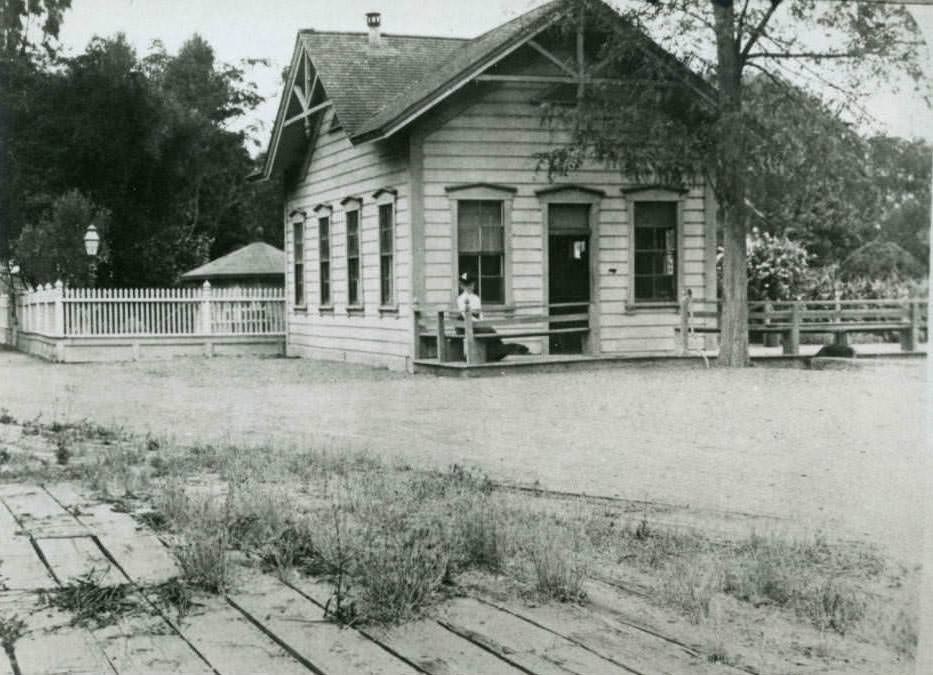
The Lick Mill office stood as a reminder of James Lick’s significant presence in the region. Lick, a wealthy landowner and philanthropist, owned considerable property in and around San Jose. His mill operations were part of a larger business empire that also funded Lick Observatory on Mount Hamilton.
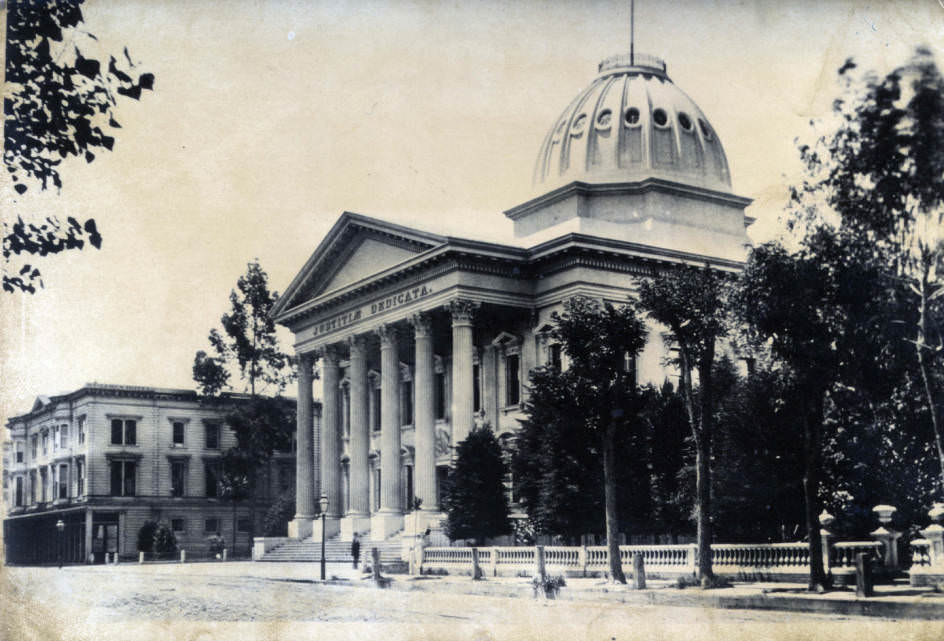
The Santa Clara County Courthouse was a focal point of civic authority in San Jose. By 1875, the county was well established, and the courthouse was the center of its legal and administrative life. Disputes over land, contracts, and criminal matters all passed through its chambers.
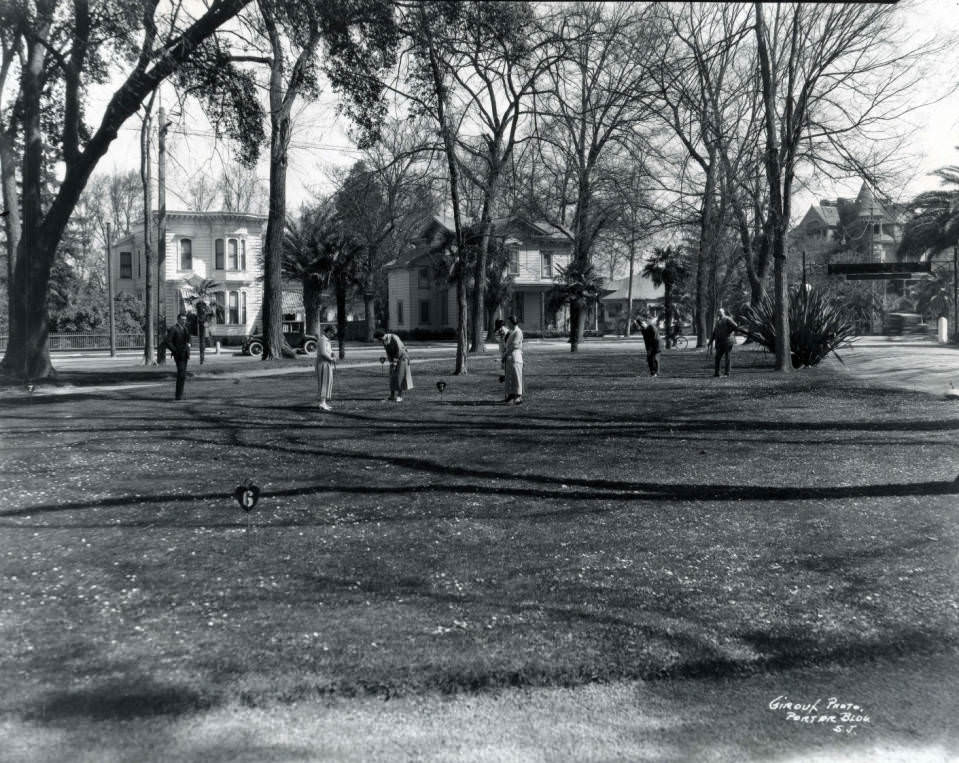
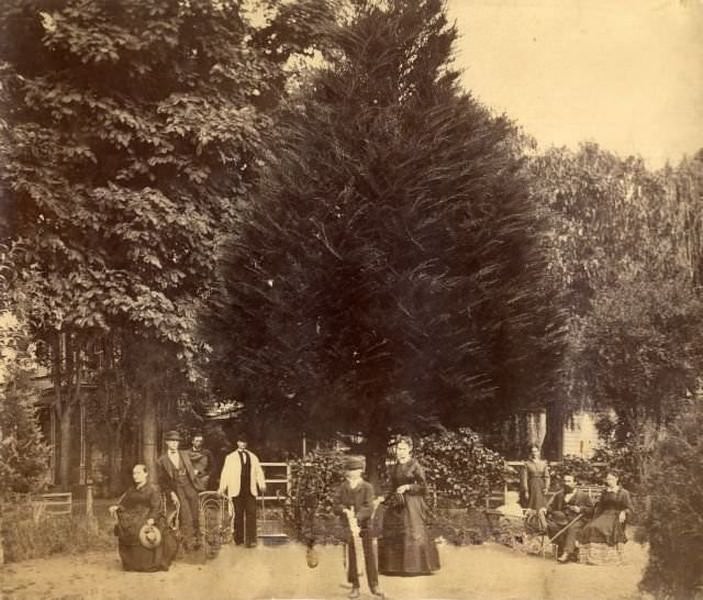
The Vendome Hotel was one of San Jose’s more refined establishments. In 1871, its lawn served as a croquet ground where men and women gathered for leisure — a scene that speaks to the genteel social life that existed alongside the city’s industrial and commercial activity.
South First Street gave a clear picture of how San Jose’s built environment was maturing. By 1875, the street was lined with solid commercial buildings, sidewalks were in use, and the visual impression was of a city that had moved well past its frontier origins.
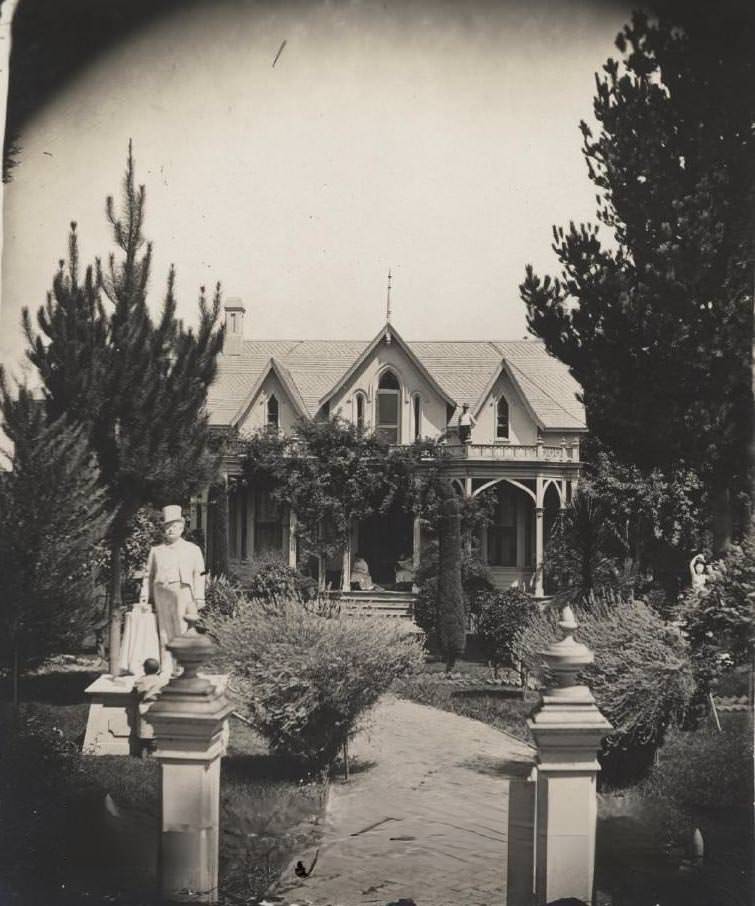
Residential life in 1870s San Jose ranged widely in scale and comfort. Prominent citizens built large, well-appointed homes on sizeable lots. The Samuel A. Bishop home, photographed in 1870, represented the upper tier of San Jose’s residential architecture — a statement of wealth and social standing.
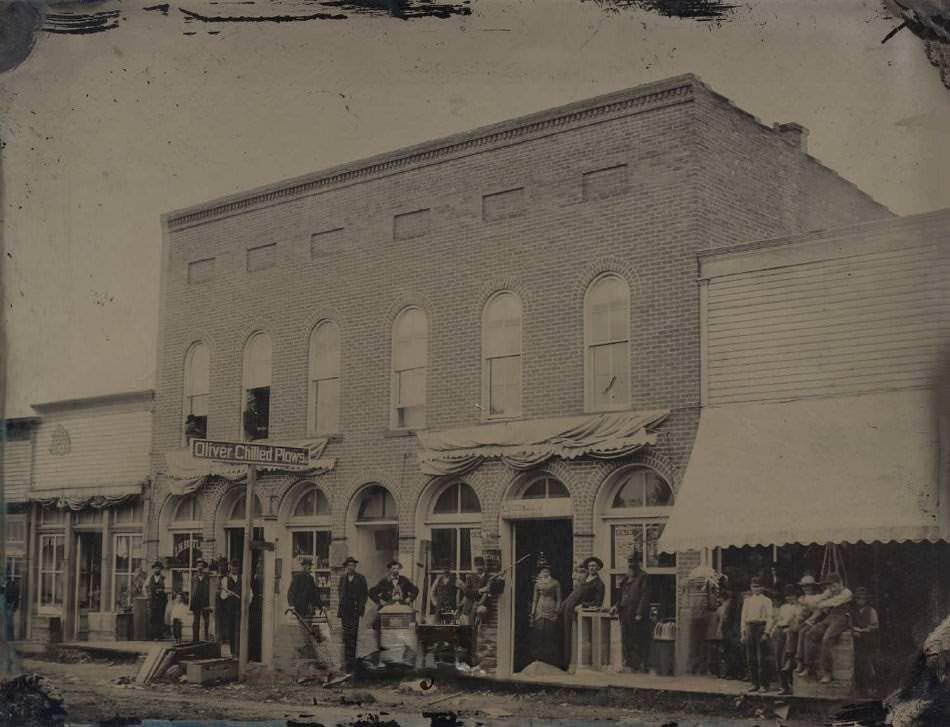
Farm equipment dealers were essential businesses in a city surrounded by productive agricultural land. Oliver Chilled Plows — a nationally recognized brand — had a presence in San Jose, supplying the valley’s farmers with the tools they needed to break and cultivate the rich Santa Clara soil.
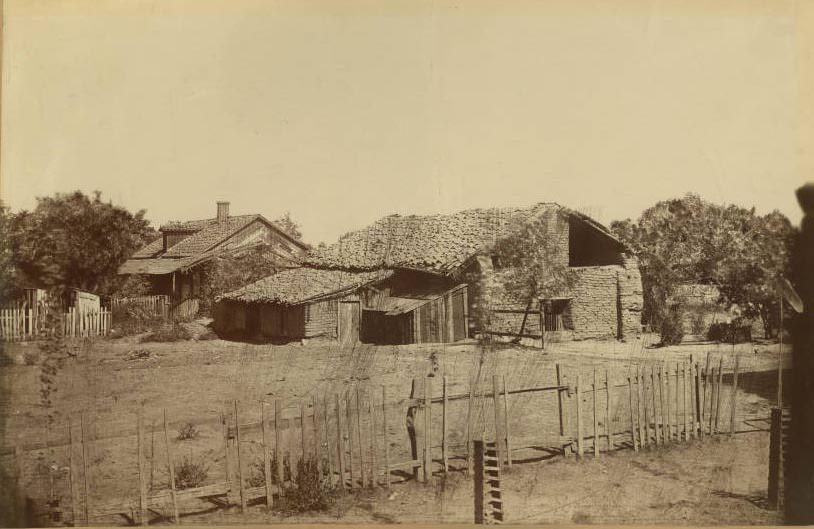
Adobe construction, common throughout Spanish and Mexican California, was still visible in San Jose in the 1870s. These older structures stood alongside newer brick and wood-frame buildings, creating a streetscape that layered different eras of the city’s history on top of each other.
The road to Mount Hamilton required significant labor to build. Construction crews set up working camps along the route, with Smith Creek serving as one of the headquarters for the effort. The work was hard and the terrain demanding, but the road was essential to reaching the summit where the observatory would eventually be built.
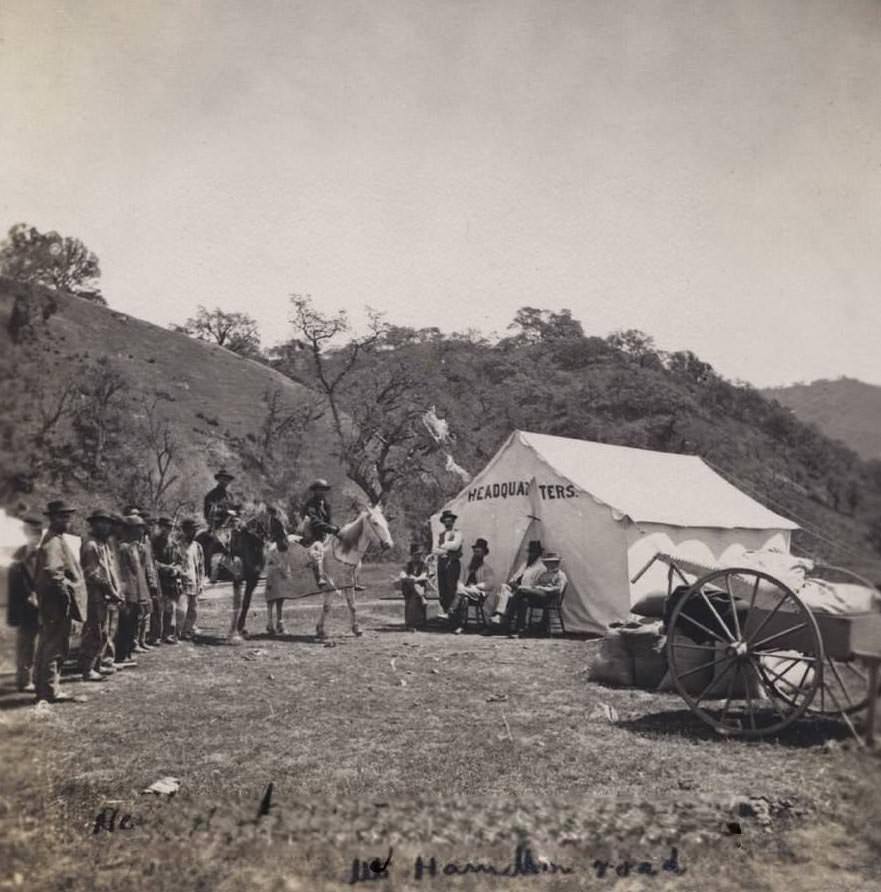
Outside the city center, families like the Brays at Roseland on Scott Lane lived a more rural life. Their 1872 photograph captures a domestic scene that was typical of the semi-rural outskirts of San Jose — large properties, open land, and a pace of life defined by the seasons.
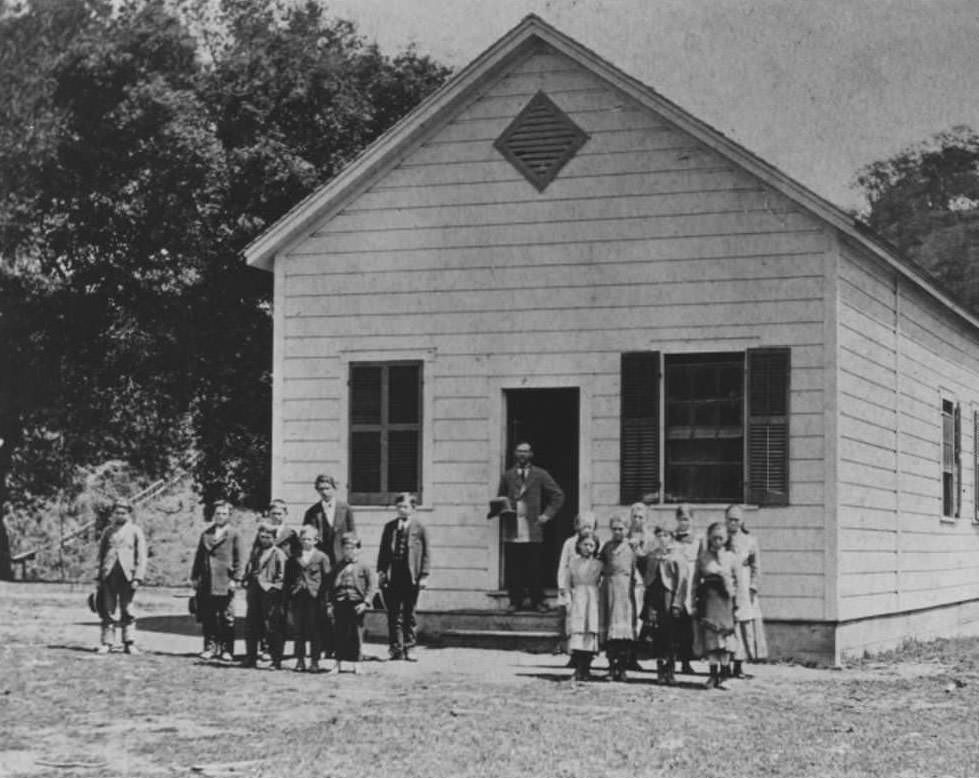
Public education expanded steadily through the 1870s. Schools like Highland School served growing neighborhoods, and their teachers were central figures in the community. School photographs from this era typically showed students arranged in formal rows — a reflection of the discipline and order that defined classroom life.
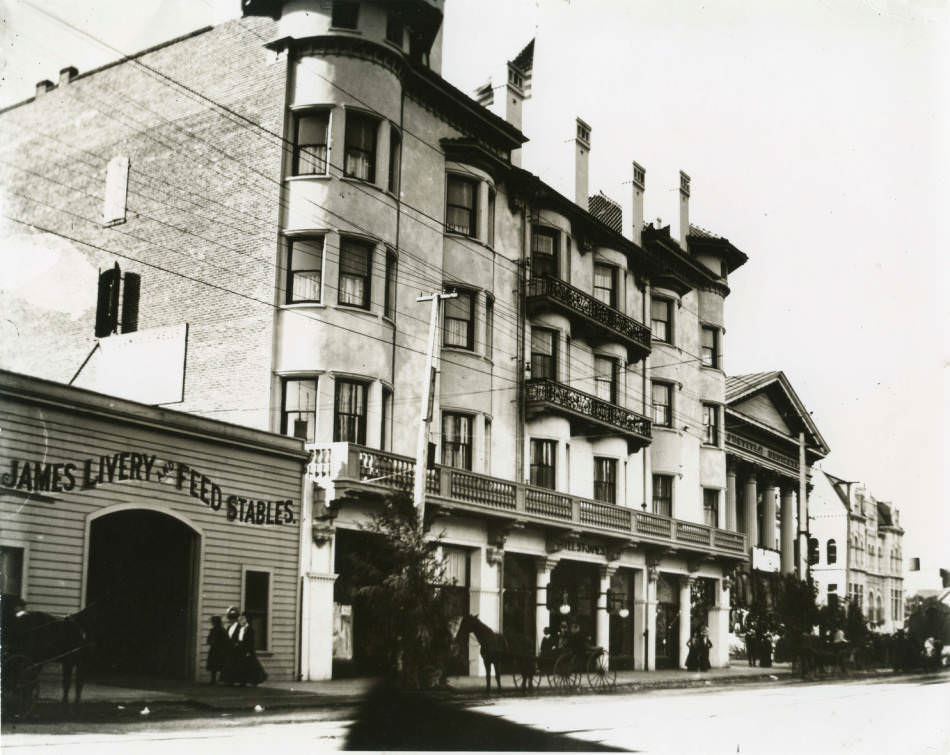
St. James Park was one of San Jose’s most important public spaces, and the St. James Hotel on First Street stood directly across from it. The hotel attracted the city’s business visitors and offered a prime location for anyone who wanted to be at the center of civic activity.
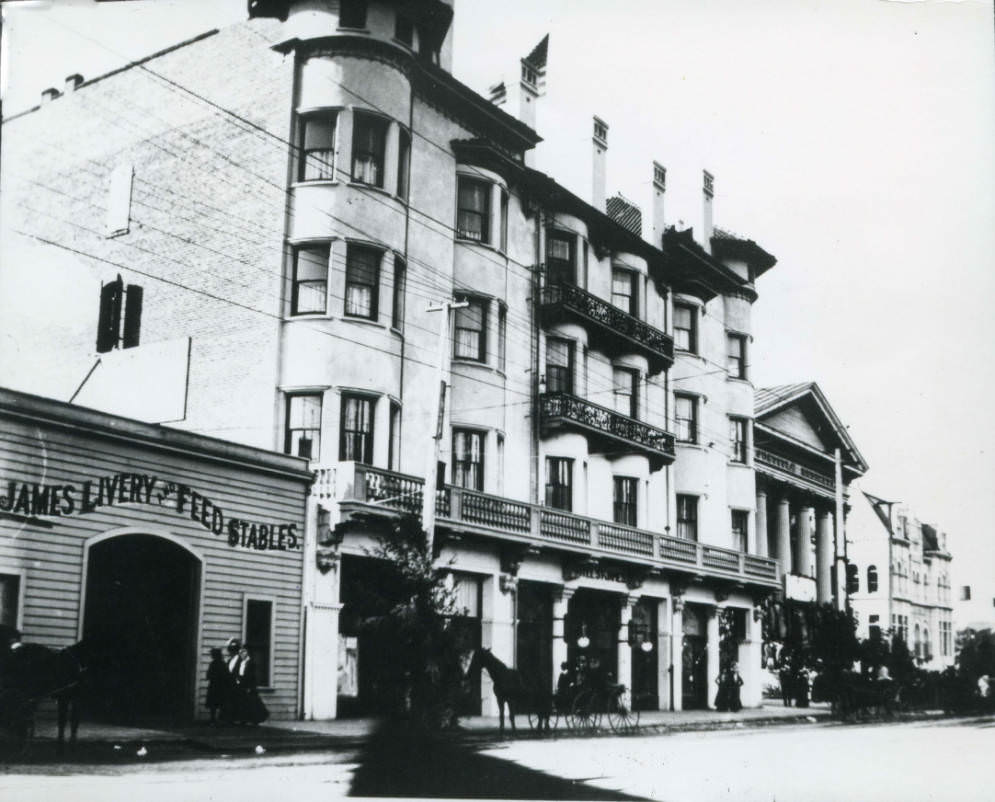
Brewing was a significant local industry. The Fredericksburg Brewery, operating in 1871, was part of a network of German immigrant-owned businesses that brought European brewing traditions to California. The brewery supplied San Jose and the surrounding region with lager beer, a product in constant demand.
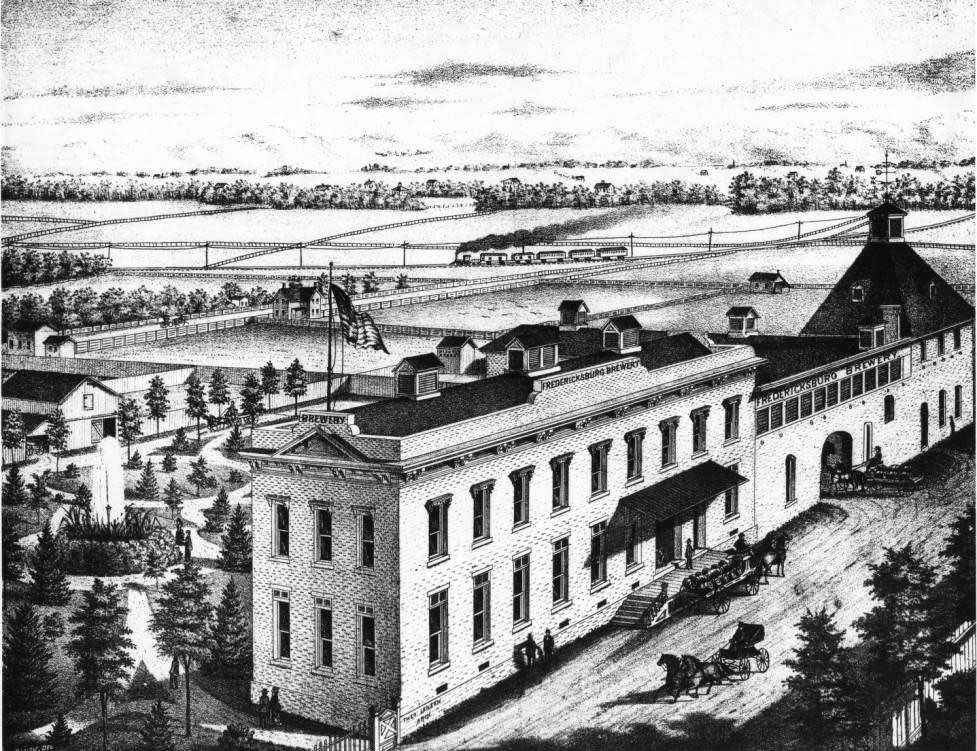
The Fourth Ward School, built in 1874 on the southeast corner of Auzerais Avenue and Orchard Street — now Almaden Boulevard — was a product of the city’s investment in public education. The building served students for nearly two decades before being renamed Lincoln School in 1892.
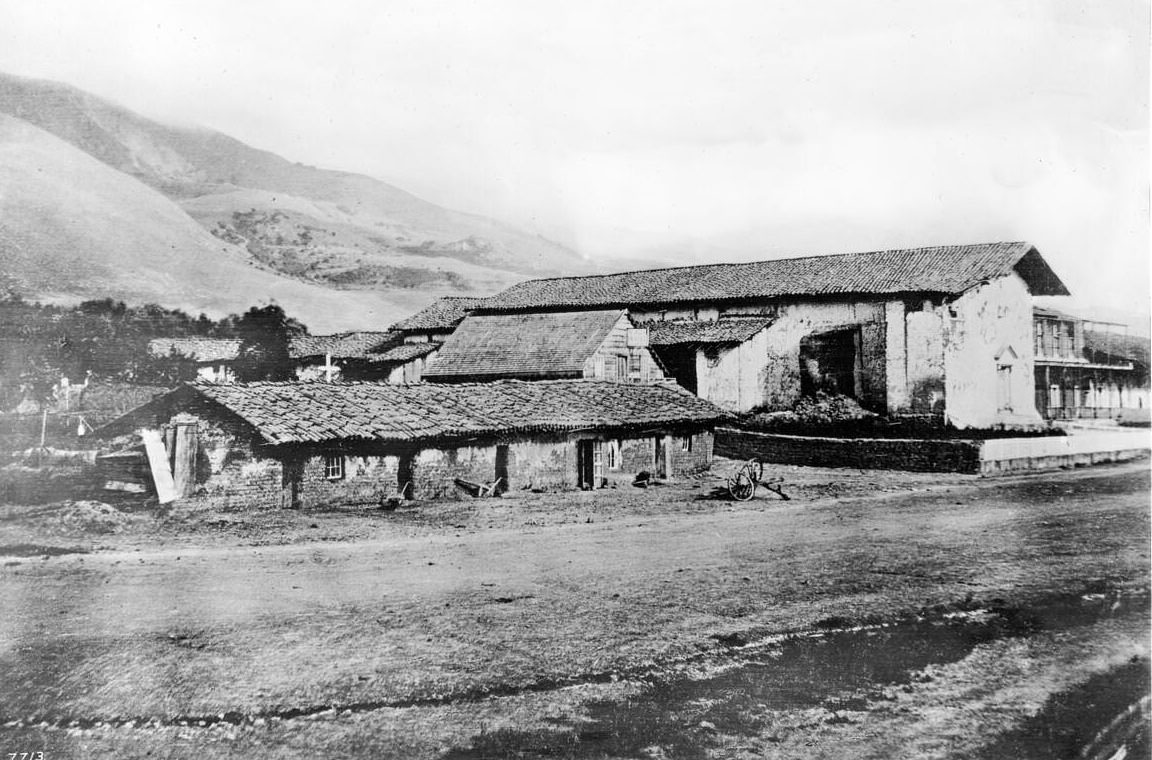
Mission San Jose de Guadalupe had a long and complex history before the 1870s arrived. Founded during the Spanish colonial period, it had survived earthquakes, secularization, and decades of neglect. By 1870, what remained of the original complex was a shadow of its former scale, but it was still a recognized historical and religious site.
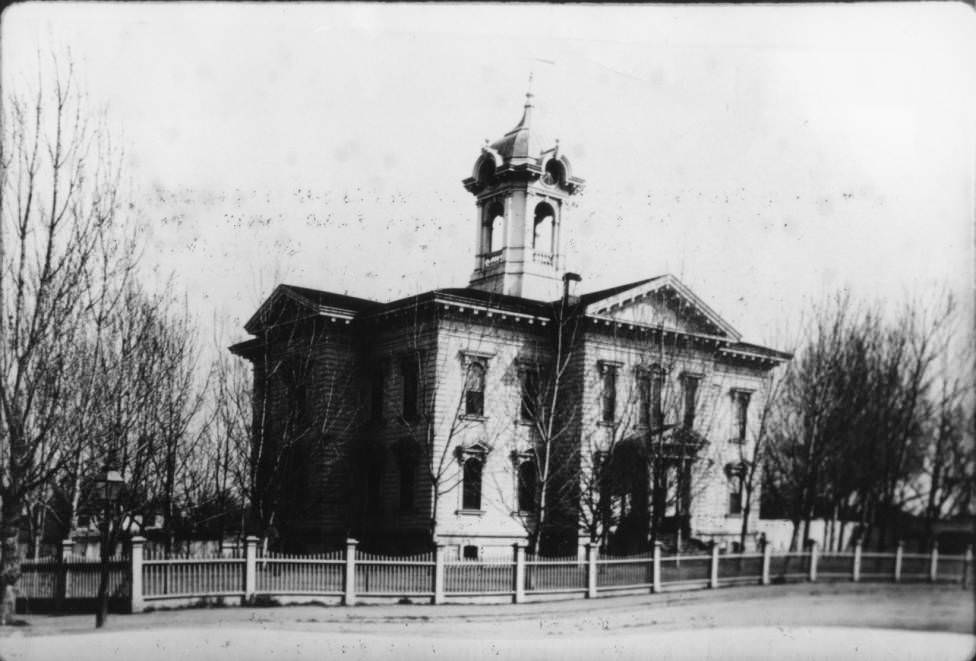
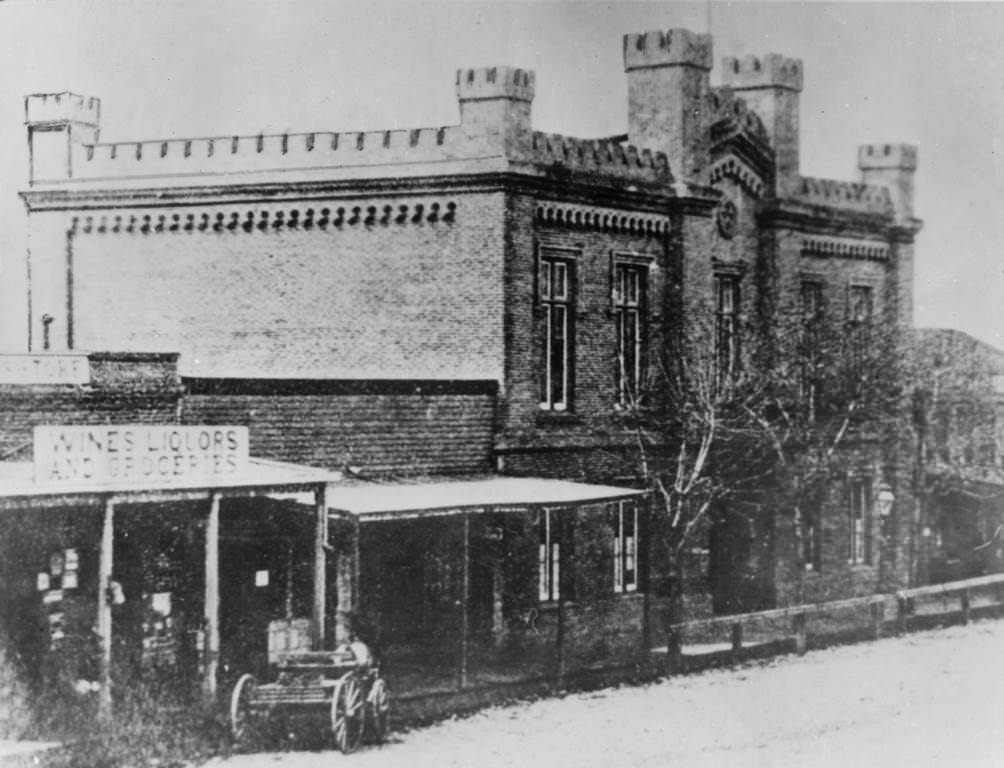
San Jose’s Old City Hall, designed by Levi Goodrich and constructed in 1855 at what became 35 North Market Street, was already fifteen years old by the time the 1870s arrived. The two-story brick building had council chambers on the ground floor and an assembly hall upstairs. The county had once leased its second floor as a courtroom, but that arrangement ended in 1862. The building served the city until the 1890s, when it was converted into a fire station — and the decorative castellations along its roofline were removed in the process.
A westward view of downtown San Jose in 1870 captured several layers of the city’s history in a single frame. The home of Captain Thomas Fallon — who raised the American flag over San José in 1846 — stood at the center. To its left was the Peralta Adobe, the only pre-1800 structure still standing in the city. To the right, the Louis Pellier home and City Gardens Nursery occupied the site of what is now Pellier Park.
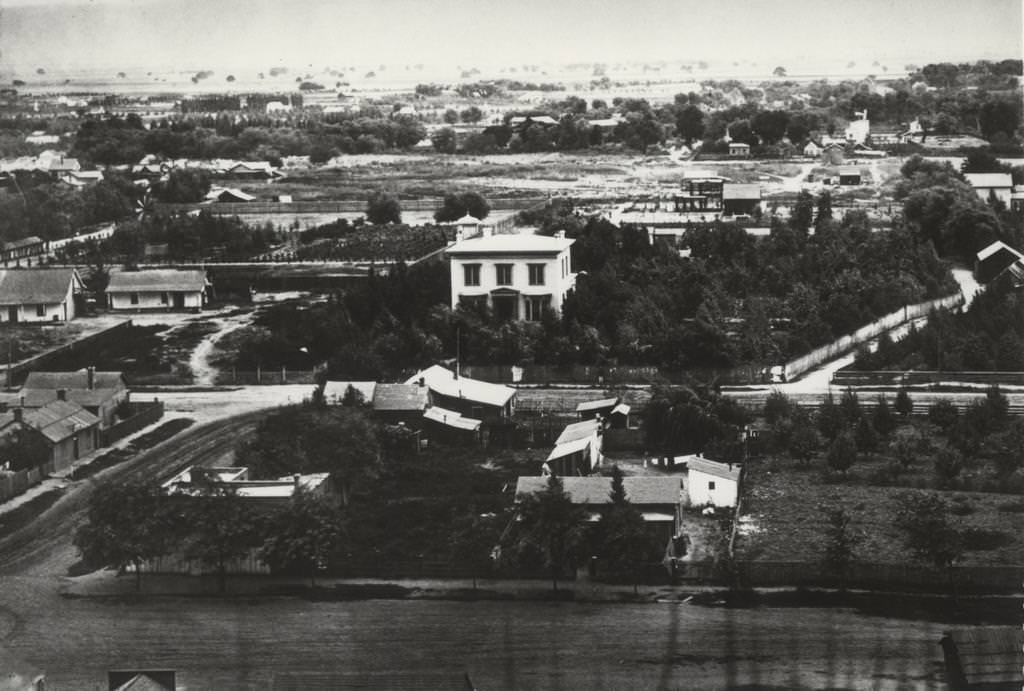
From the roof of City Hall, a photographer looking northeast in 1870 would have seen a city of mixed rooftops, church steeples, and open lots — a snapshot of San Jose at a moment of transition between its early rough-hewn character and the more urban form it was rapidly taking on.
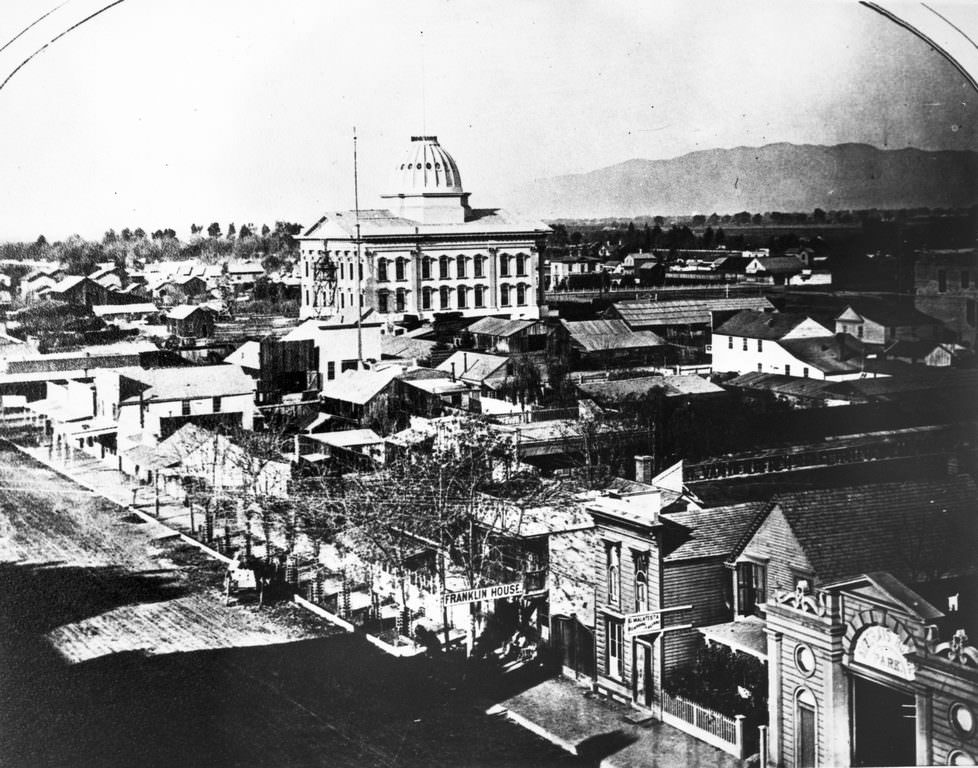
San Antonio Street appeared in multiple photographs from 1876, each capturing a slightly different angle on the same busy block. The concentration of religious buildings — Baptist, Jewish, and Congregational — along this single stretch showed just how much spiritual life was woven into the physical fabric of the city.
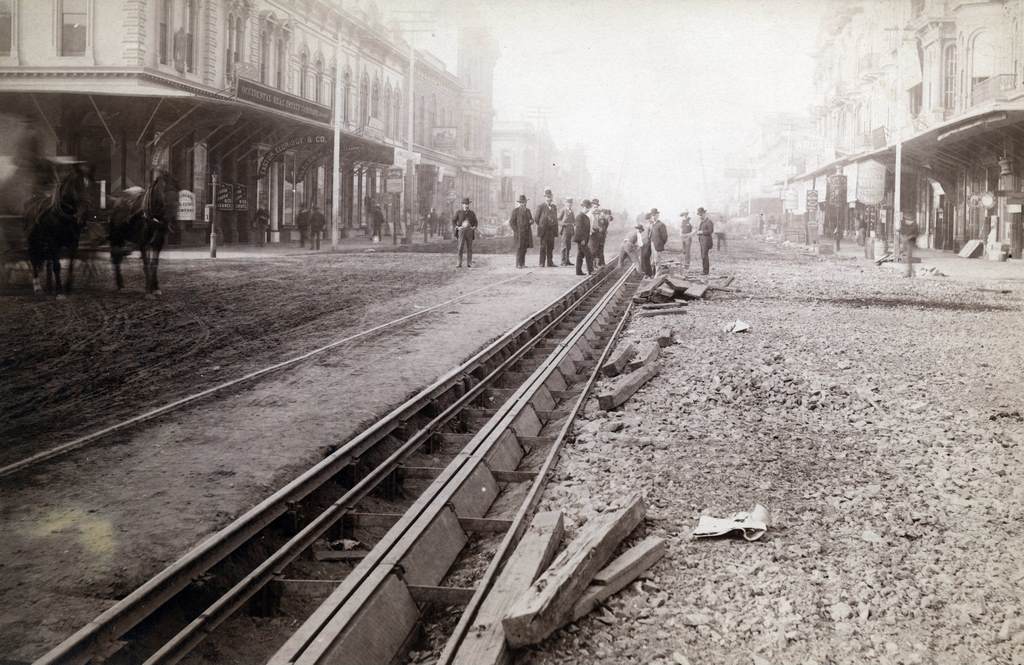
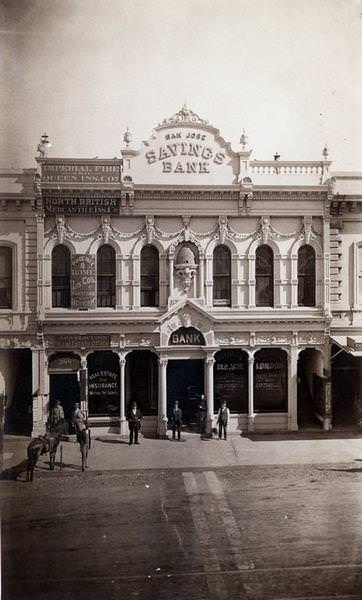
The San Jose Savings Bank, located on West Santa Clara Street between First and Market, was one of the financial anchors of the city’s commercial district. In 1874, it stood as a sign that San Jose’s economy was stable enough to support formal banking institutions serving ordinary depositors.
St. Joseph’s Church towers were landmarks visible from many parts of the city. The Plaza in front of the church served as a gathering point, and the church itself was central to the lives of San Jose’s large Catholic community — many of whom traced their roots to California’s Spanish and Mexican eras.
St. James Park was bordered on its south side by three of San Jose’s major Protestant congregations. Standing left to right were the First Presbyterian, Trinity Episcopal, and First Methodist churches — a line of institutional religious architecture that gave the park’s southern edge a formal, almost ceremonial character.
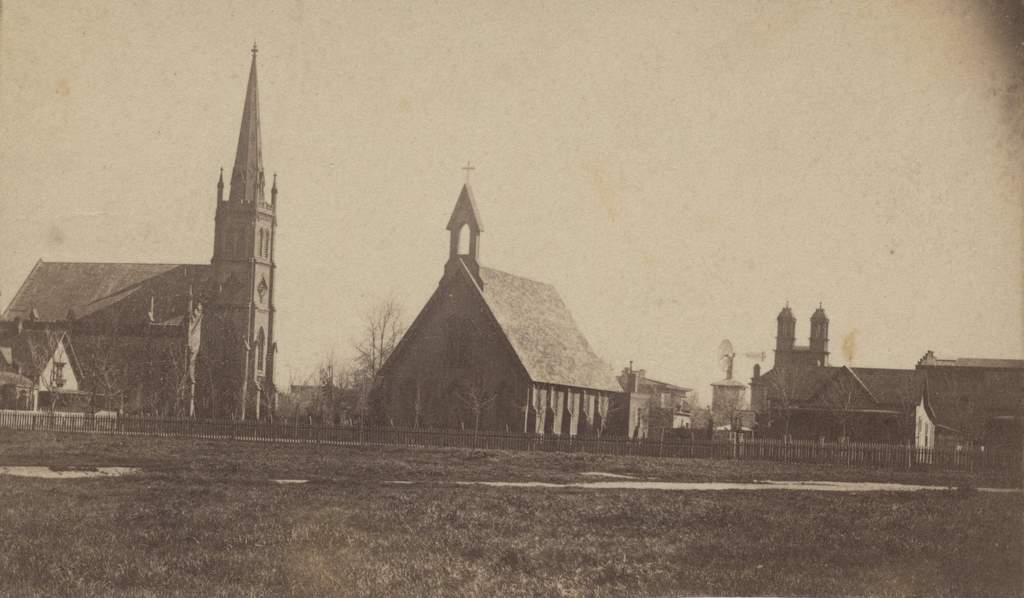
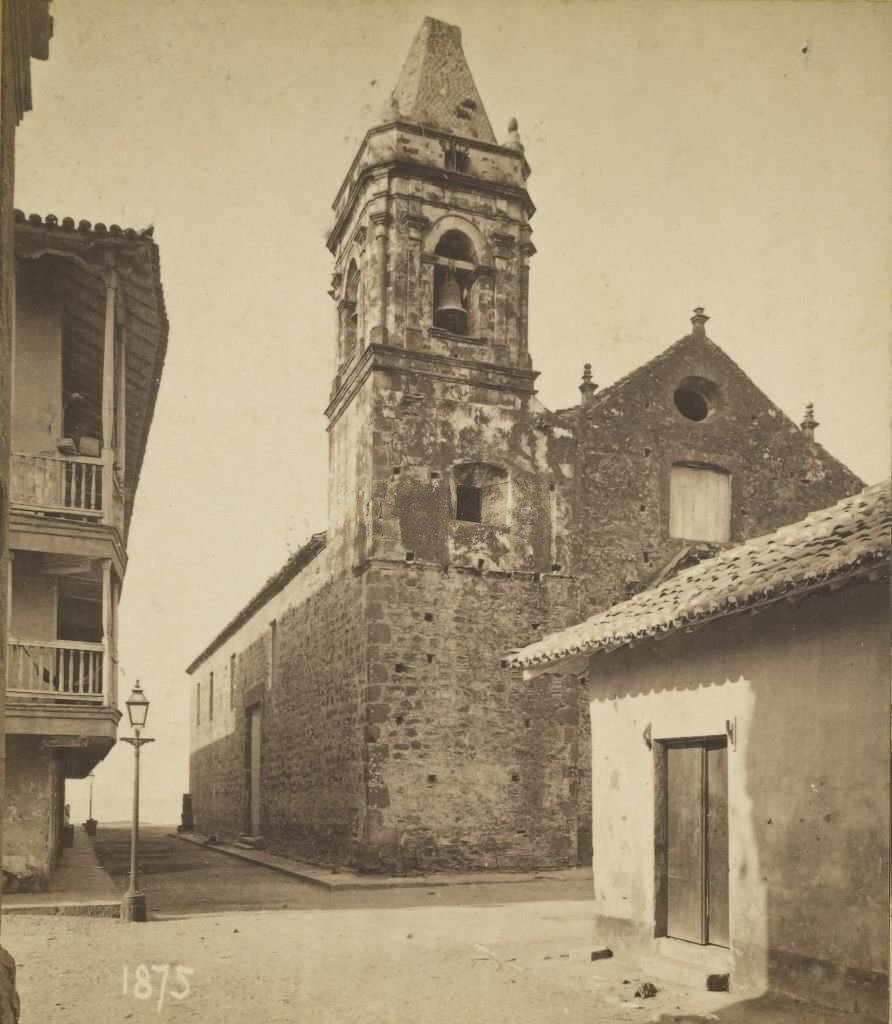
The Church of San Jose, photographed in 1875, represented the enduring Catholic presence in a city that had grown up in the shadow of Spanish mission culture. Whether attending mass, marking life milestones, or gathering after Sunday services, San Jose’s Catholic residents remained deeply connected to this institution throughout the decade.

Stunning, one neat trick.