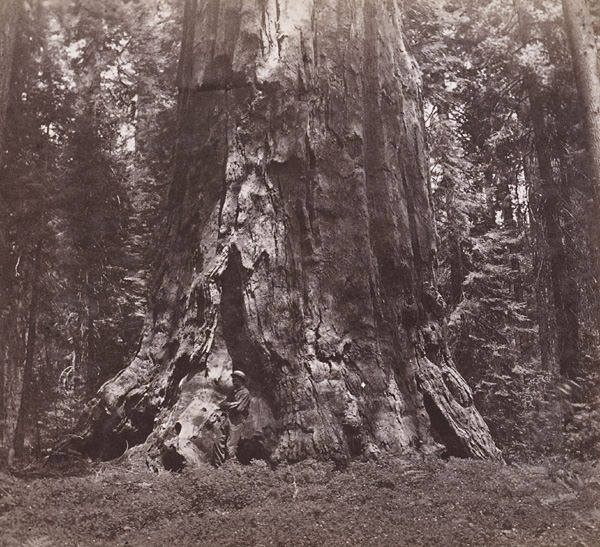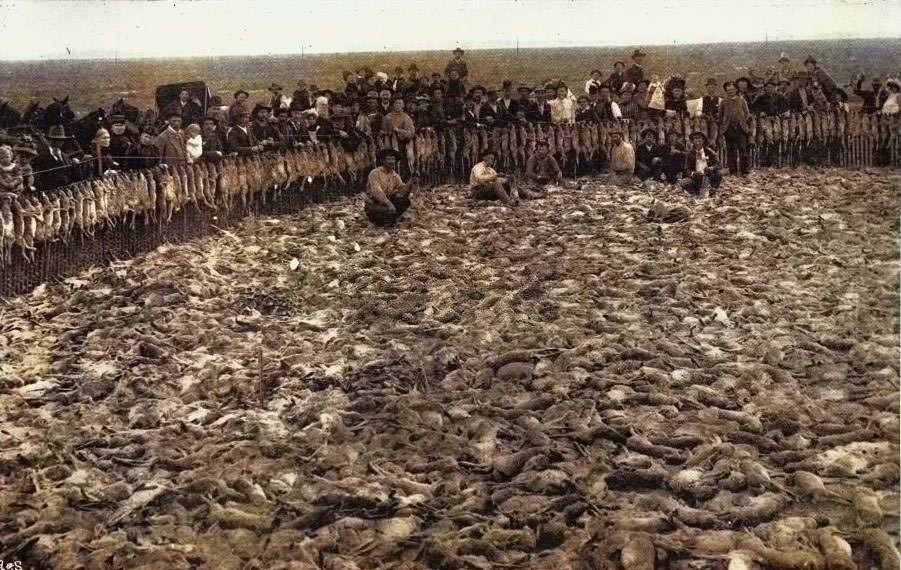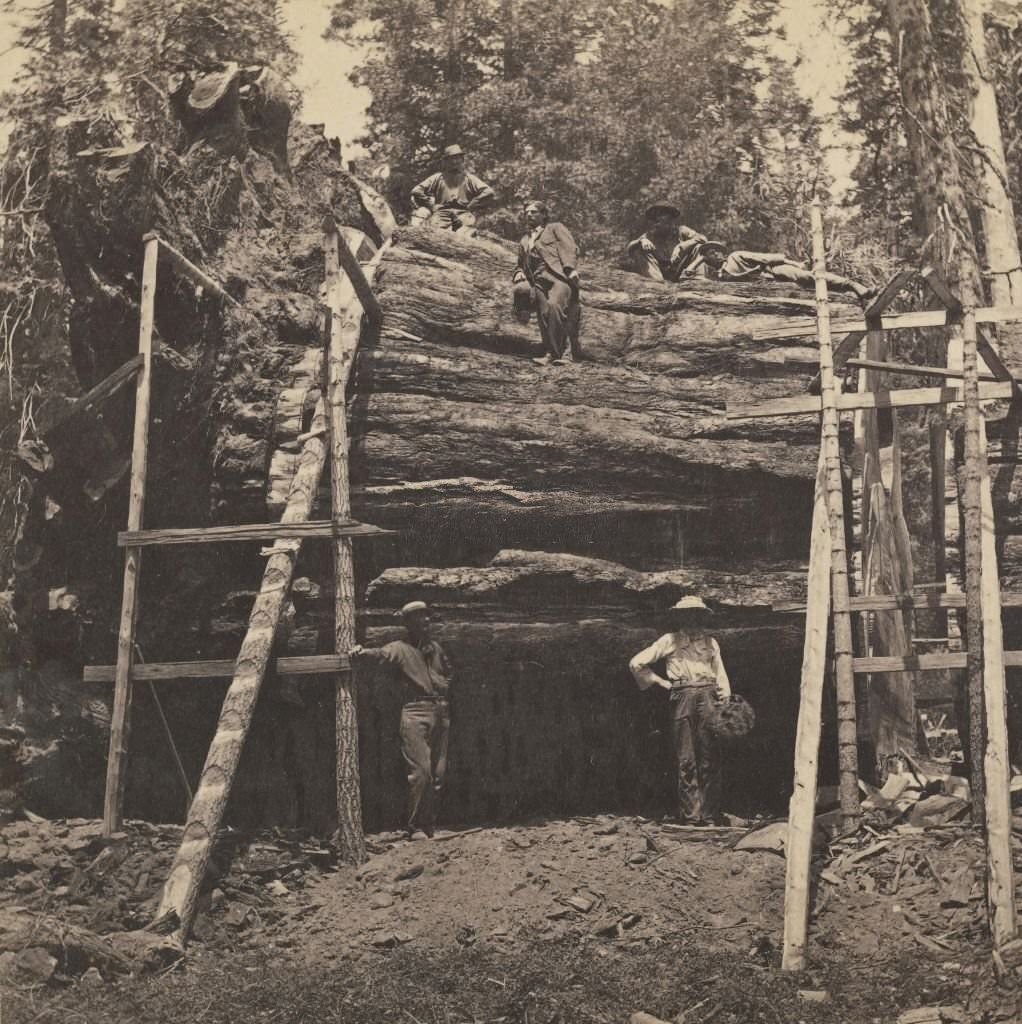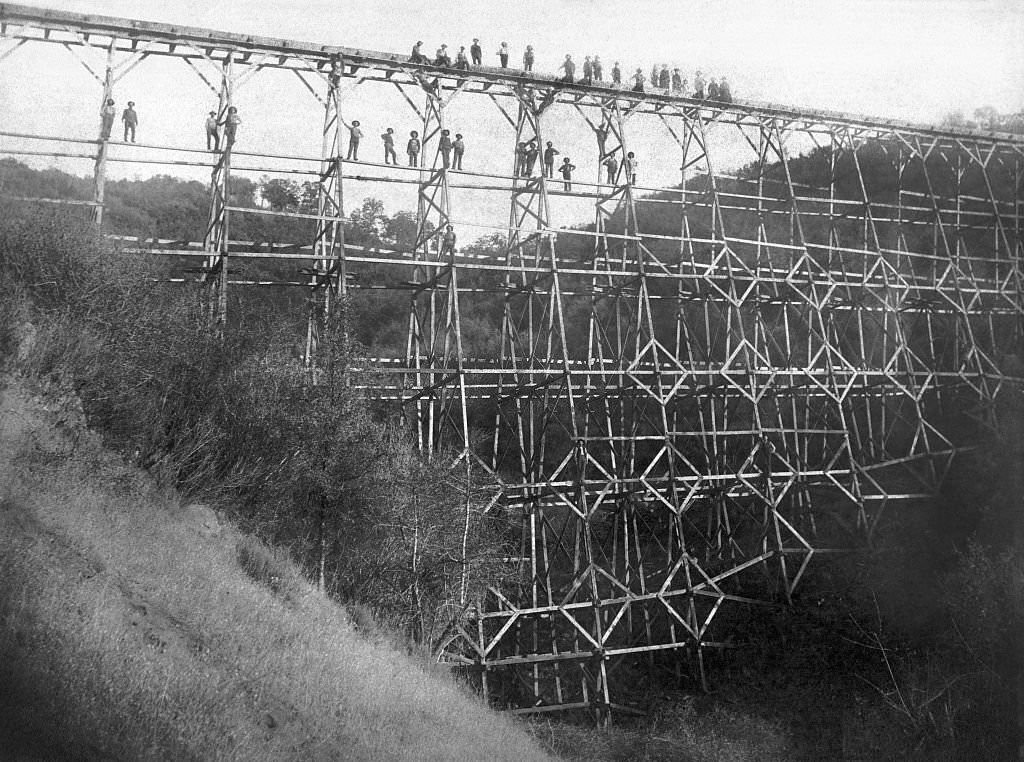
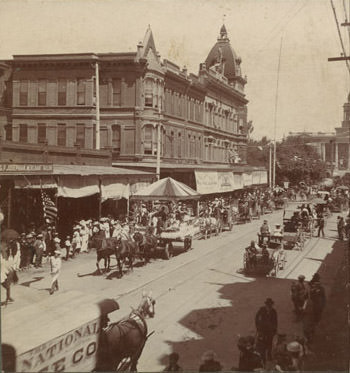
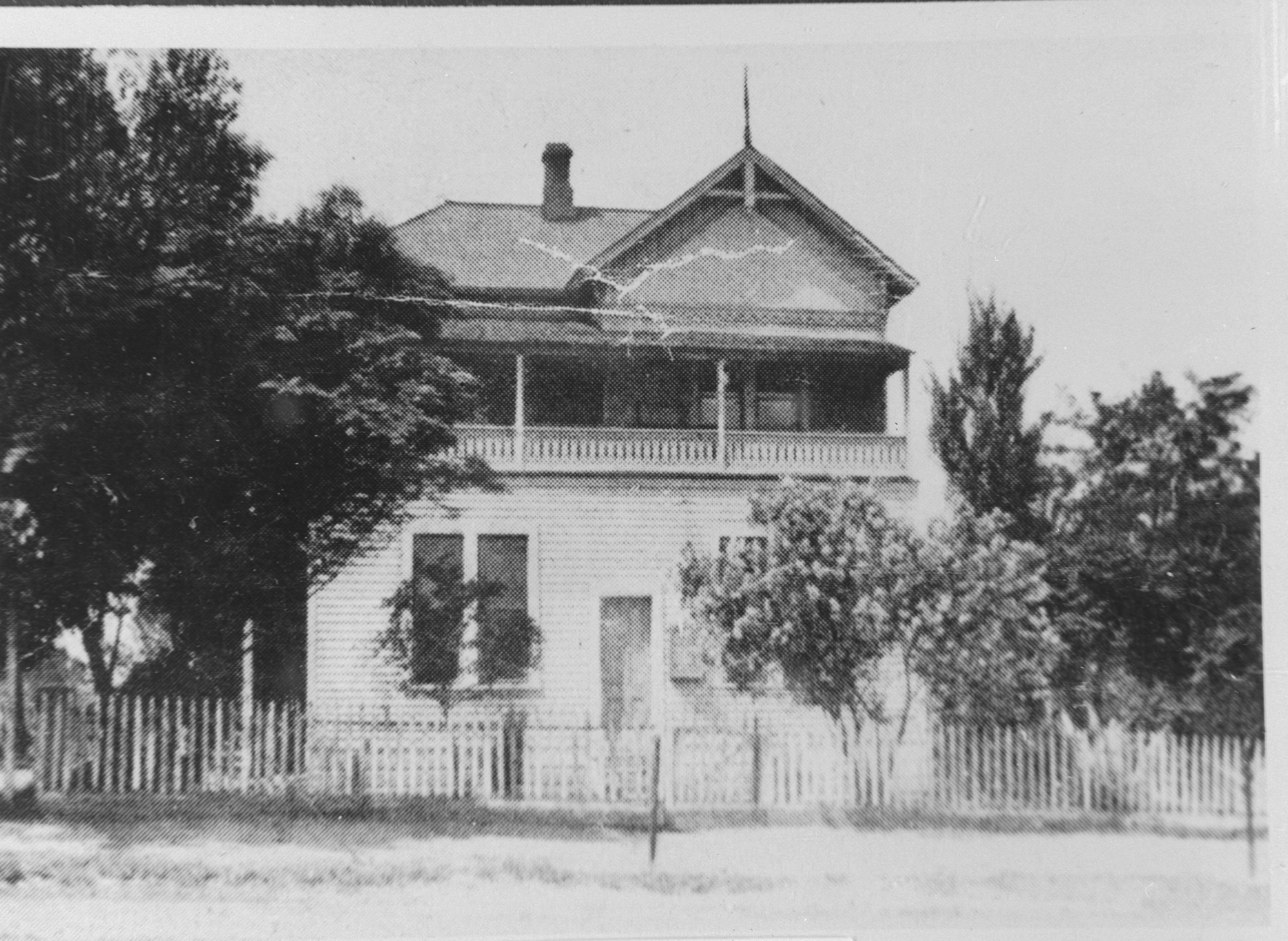
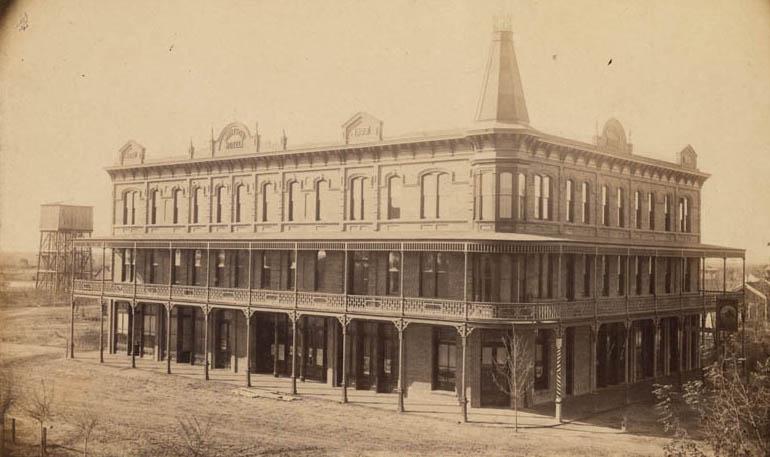
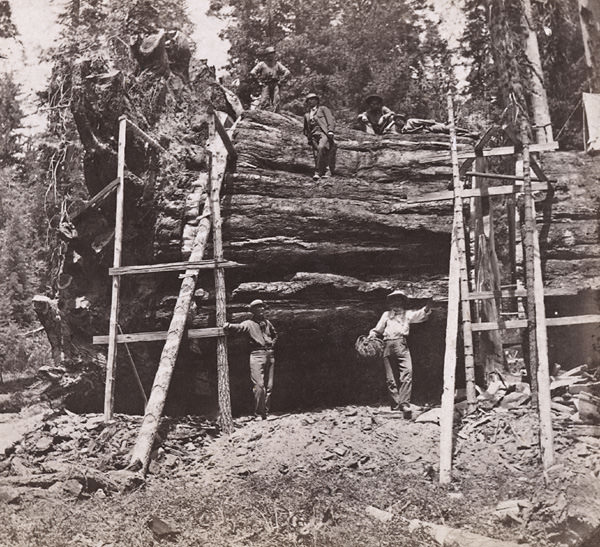
Fresno, California was originally home to the Yokuts people, who irrigated the land and farmed it long before outside settlers arrived. The California Gold Rush of 1848 brought a surge of new residents, and Fresno was not incorporated as a city until 1872. The name Fresno comes from the Spanish word for ash tree, reflecting the white ash trees that once filled the area. The photos below capture Fresno and its surrounding region from the 1850s through the 1890s.
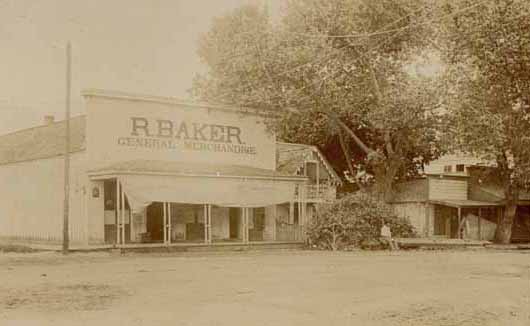
Located on the southeast corner of Main and Mill Streets in Porterville. A canvas awning hangs across the porch on the front of the one-story wooden building. Other wooden buildings stand to the right with large trees in front. A man sits on wood near tree trimmings in front of the store.
Harry Ashland Greene was born in San Francisco in 1852. He worked in San Francisco as a broker on the stock exchange. In 1886 he moved to Monterey, where he was active in real estate and owned several hotels, including Hotel San Carlos and Hotel Monterey. He was also active in the Monterey and Fresno Railroad, the Monterey and Pacific Grove Street Railroad, and the Bank of Monterey.
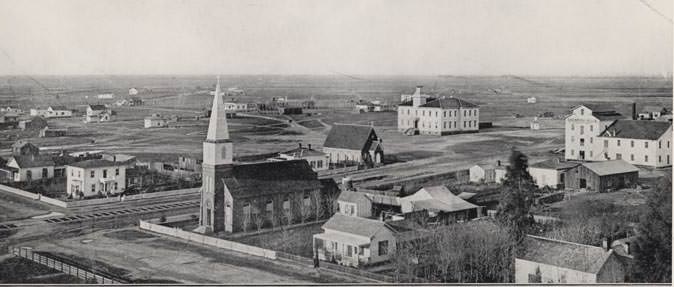
Visible in the picture is the old flour mill on the extreme right. Hawthorne School, Fresno’s second schoolhouse, is directly opposite. A church is in the center.
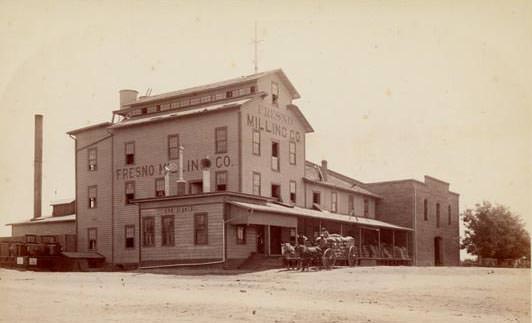
View of the wooden and brick mill building with an office to the right. A horse-drawn wagon loaded with sacks stands in front, and additional sacks are visible on the covered porch. A brick building stands to the right.
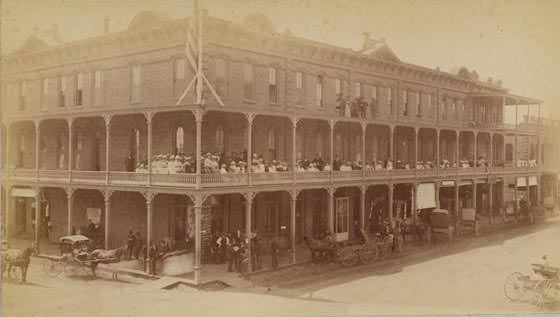
View of the hotel from the corner. Women in light-colored clothing are seated along the entire length of one side of the second balcony, with a scattering of men. Two women and three men stand on the roof over the second balcony. Horse-drawn buggies are on the street, and men stand along the street-level porch.