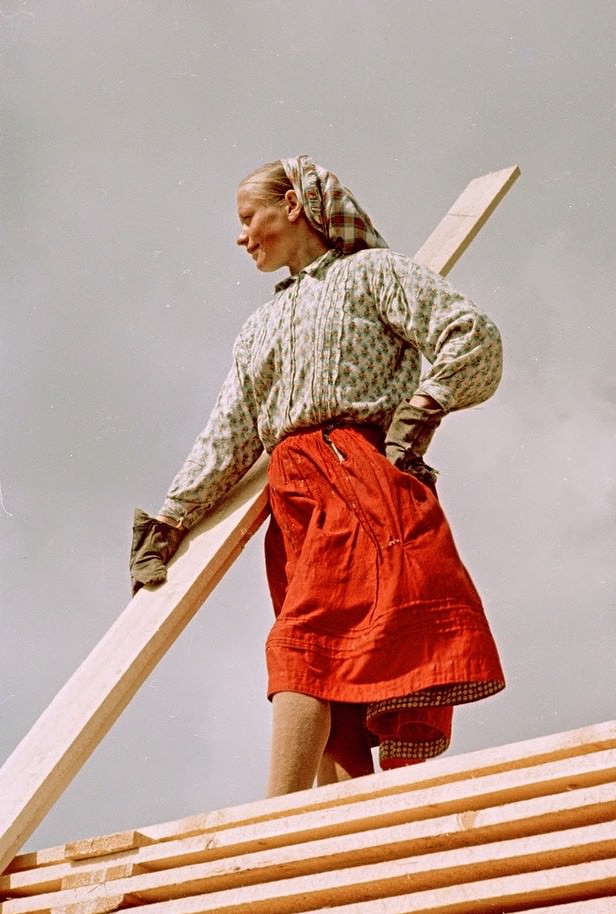
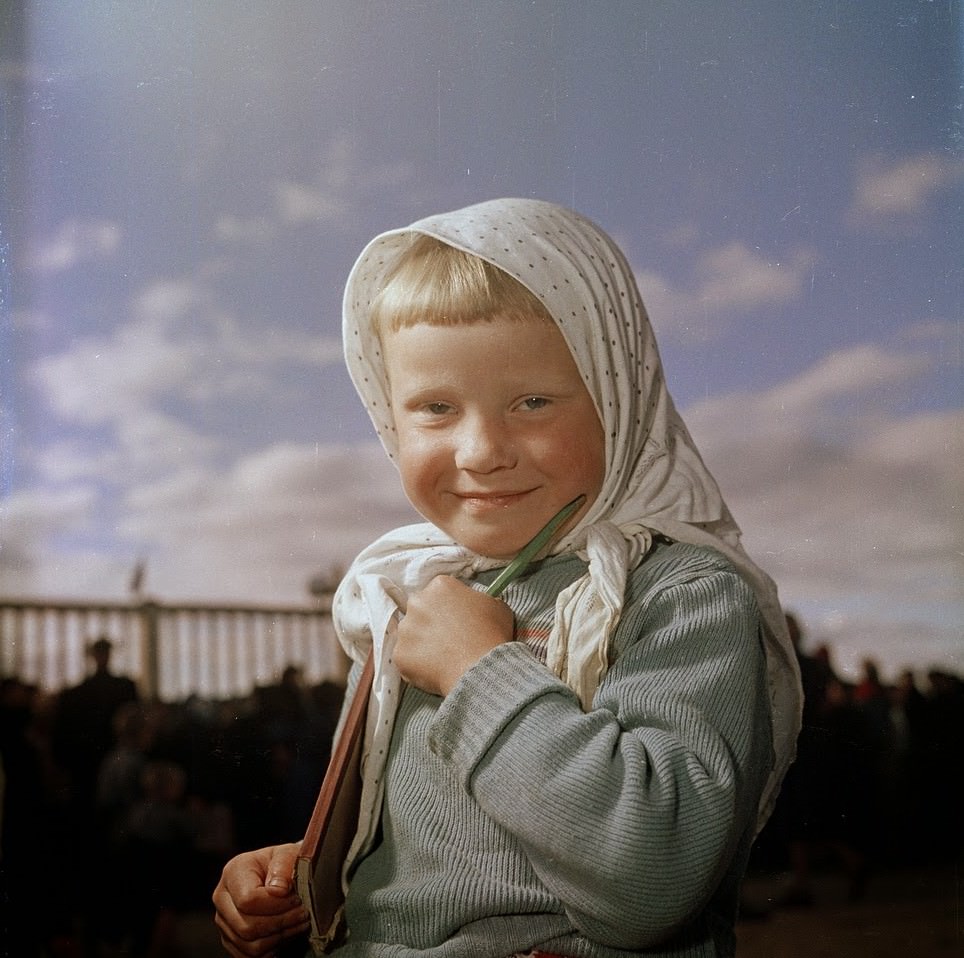
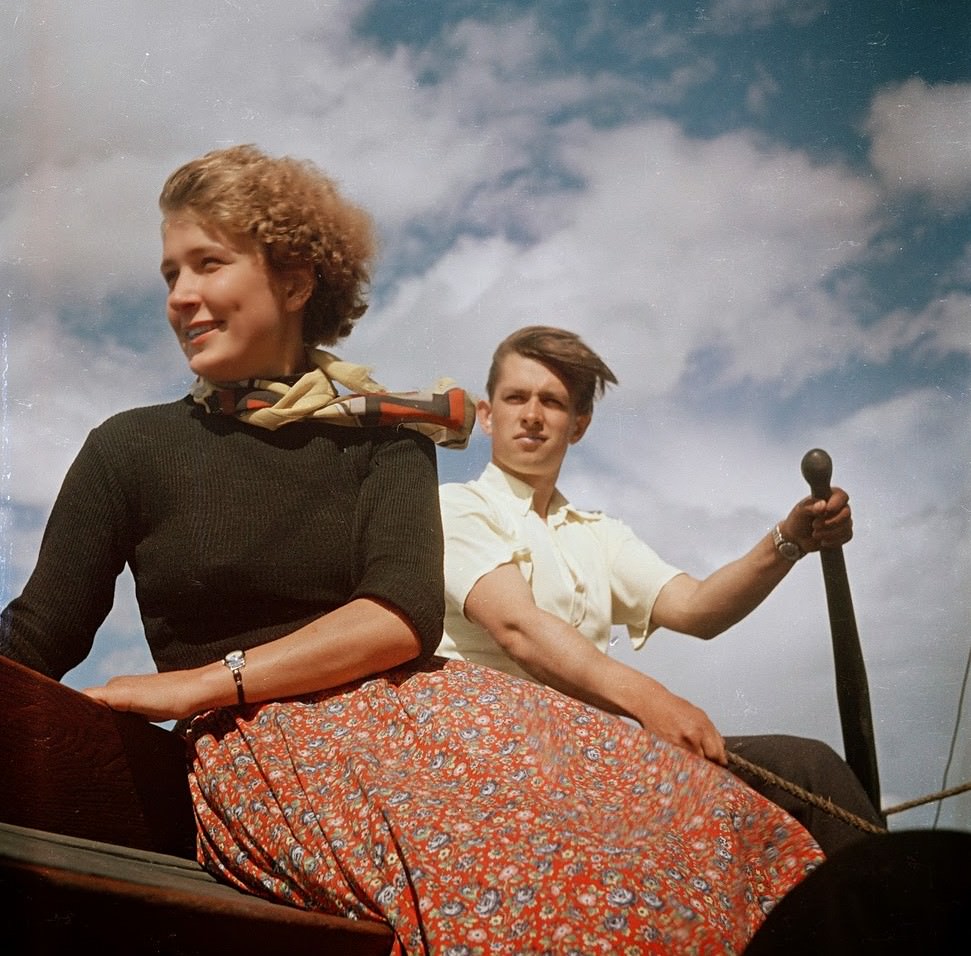
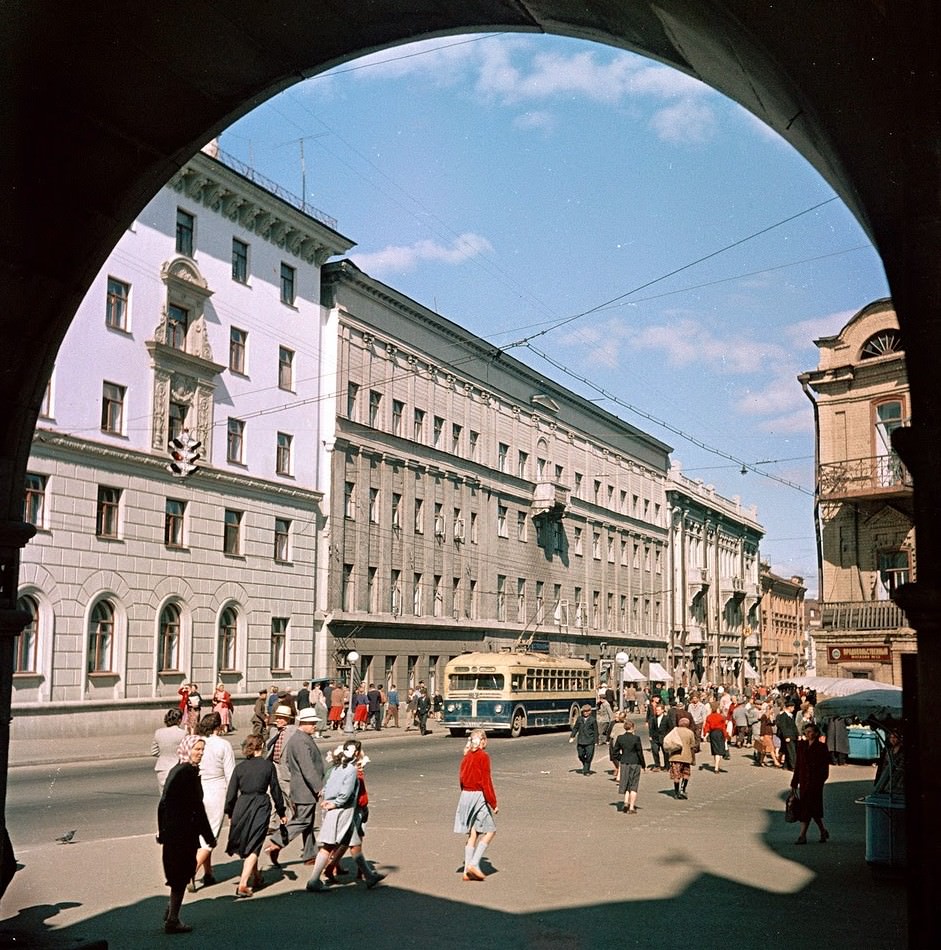
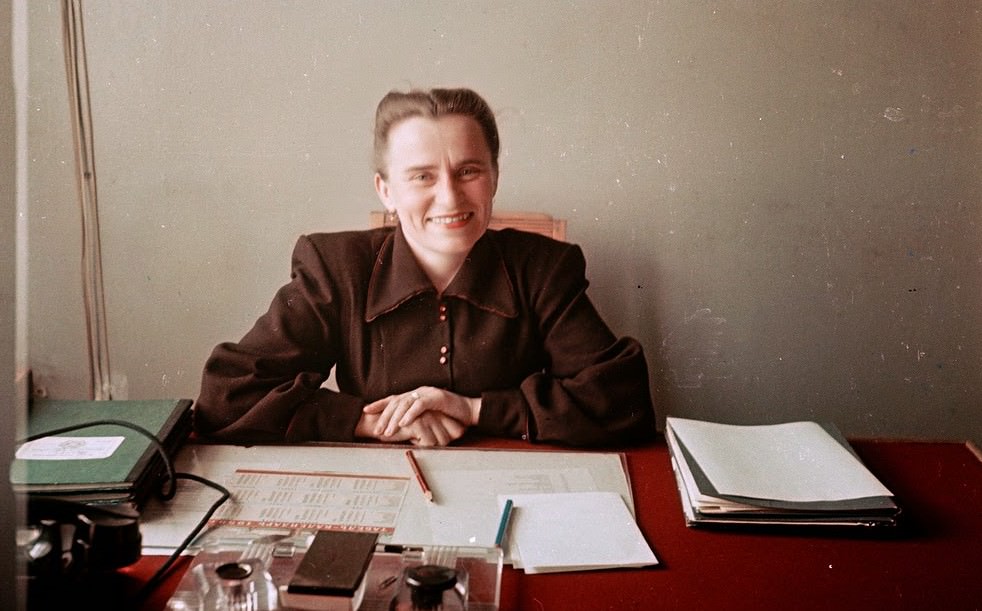
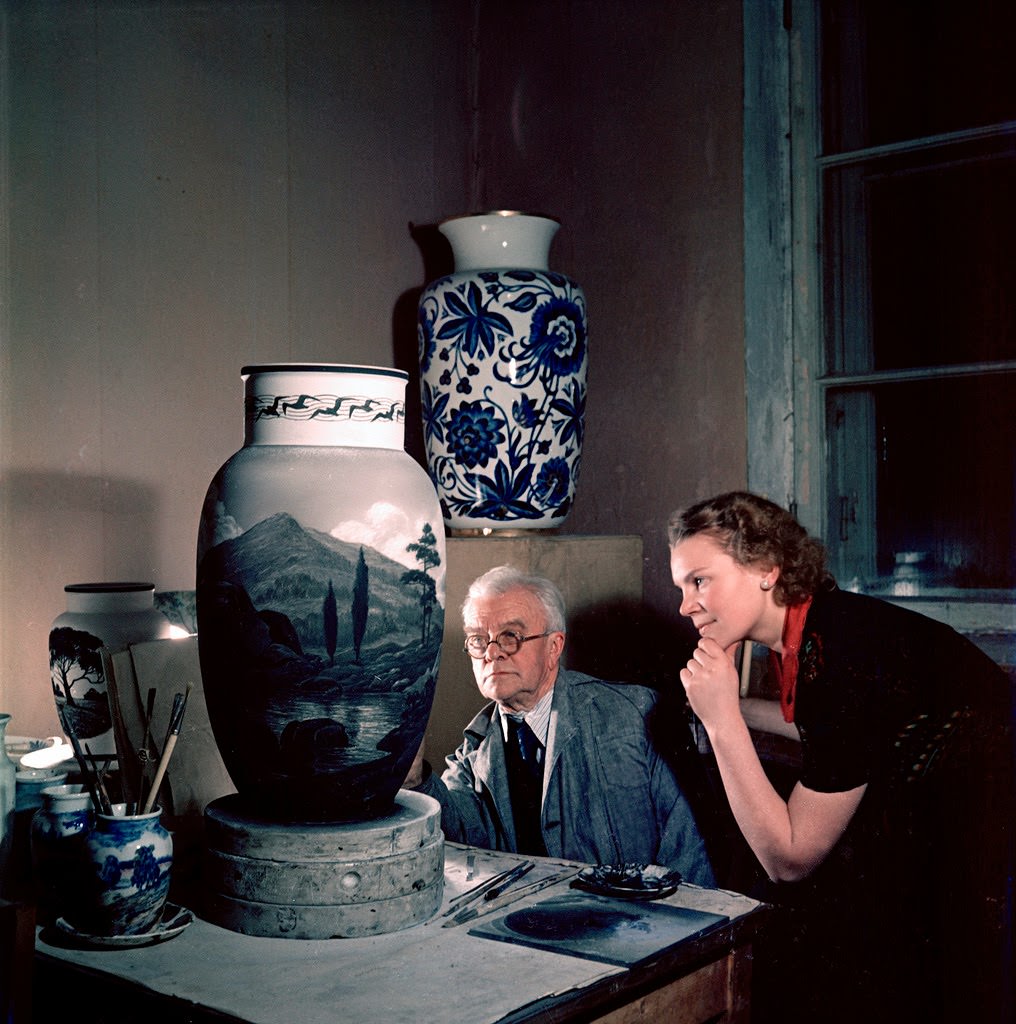
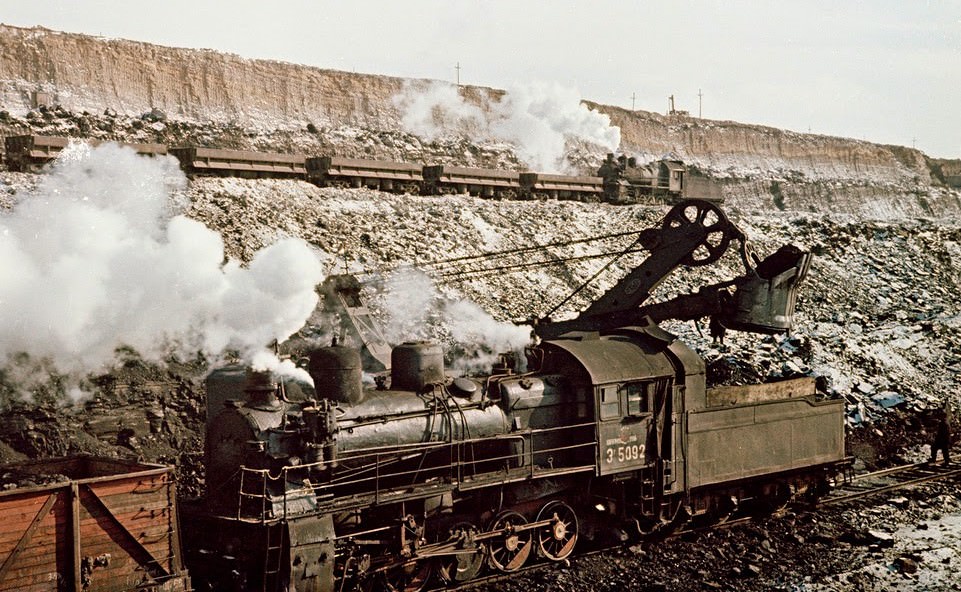
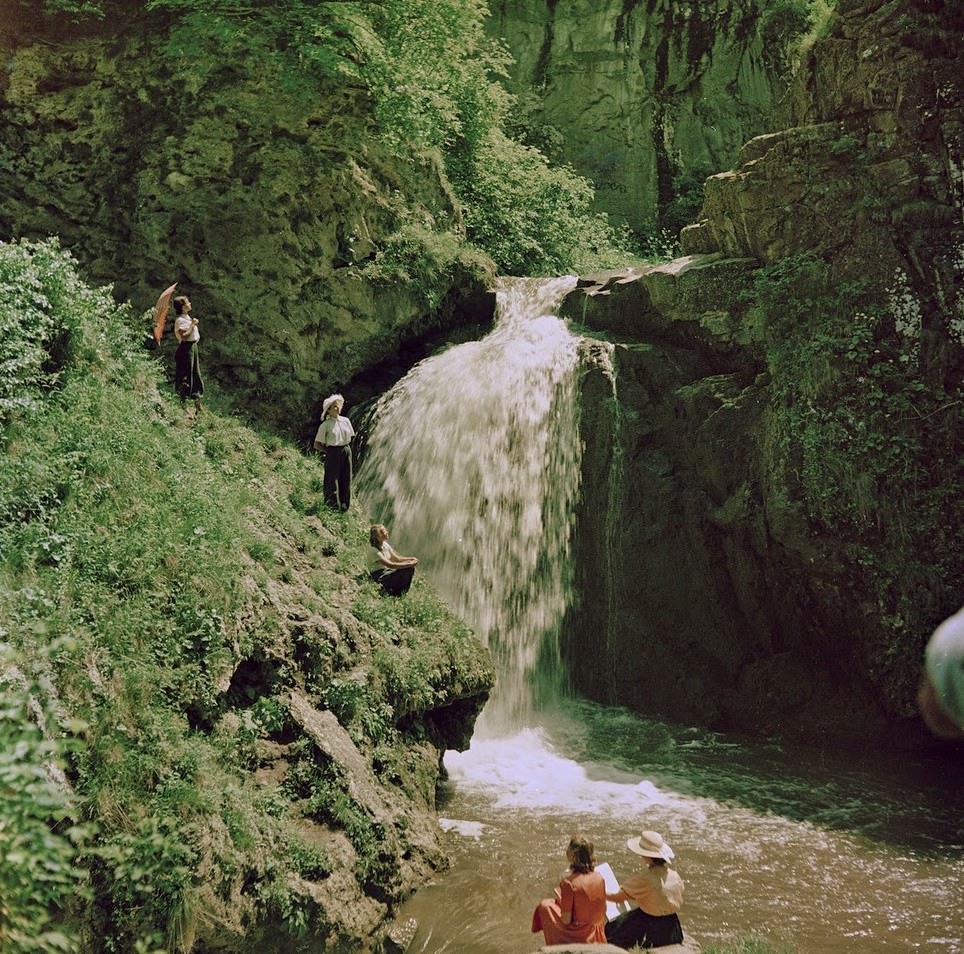
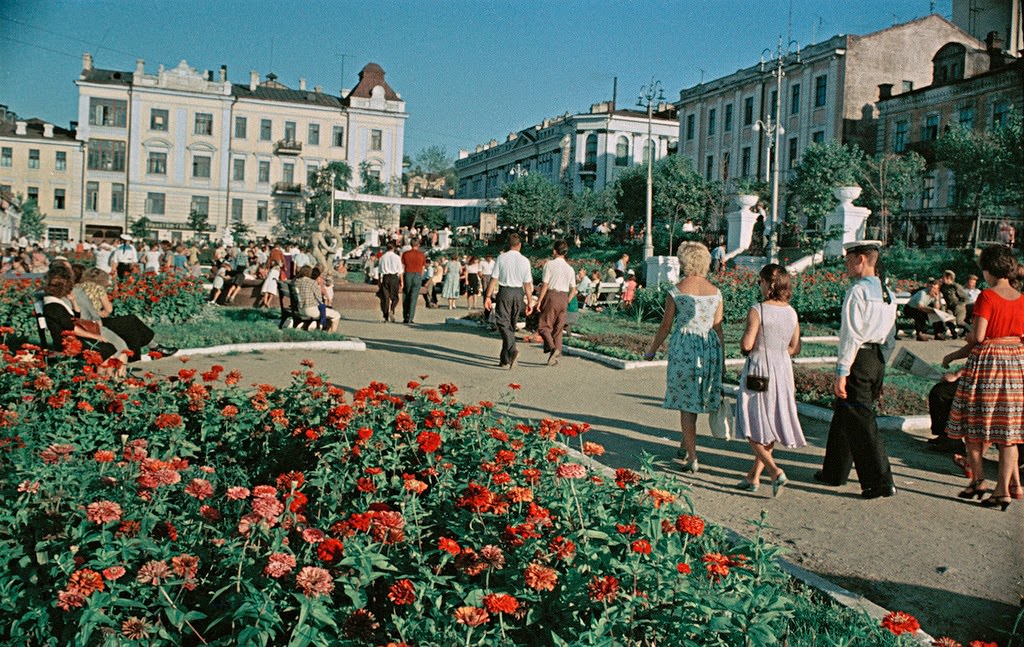
Semyon Fridland captured the Soviet Union in vivid color during a time when black and white photography was the standard. As a photographer for Ogonyok magazine, he traveled thousands of miles to document the diverse landscapes and cultures of the USSR in the 1950s. His use of high-quality color film preserved the visual texture of the era, from the fabric of clothing to the paint on the automobiles. The images offer a rare, high-definition window into the daily aesthetics of the time.
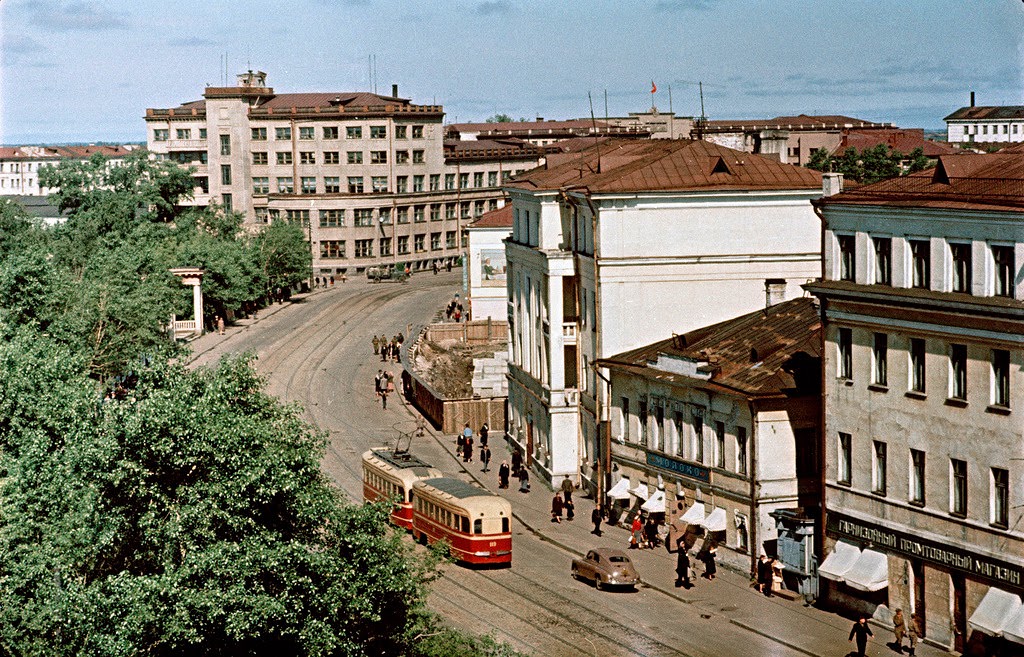
The streets of Moscow in his collection are filled with classic Soviet vehicles like the Pobeda and the ZIM limousine. These cars, often painted in beige, grey, or black, drive down wide avenues lined with massive Empire-style architecture. Pedestrians fill the sidewalks, showcasing the specific fashion of the decade. Men wear wide-legged trousers and flat caps, while women appear in floral print dresses and colorful headscarves. The red banners hanging from the stone buildings provide a sharp, bright contrast against the urban backdrop.
Read more
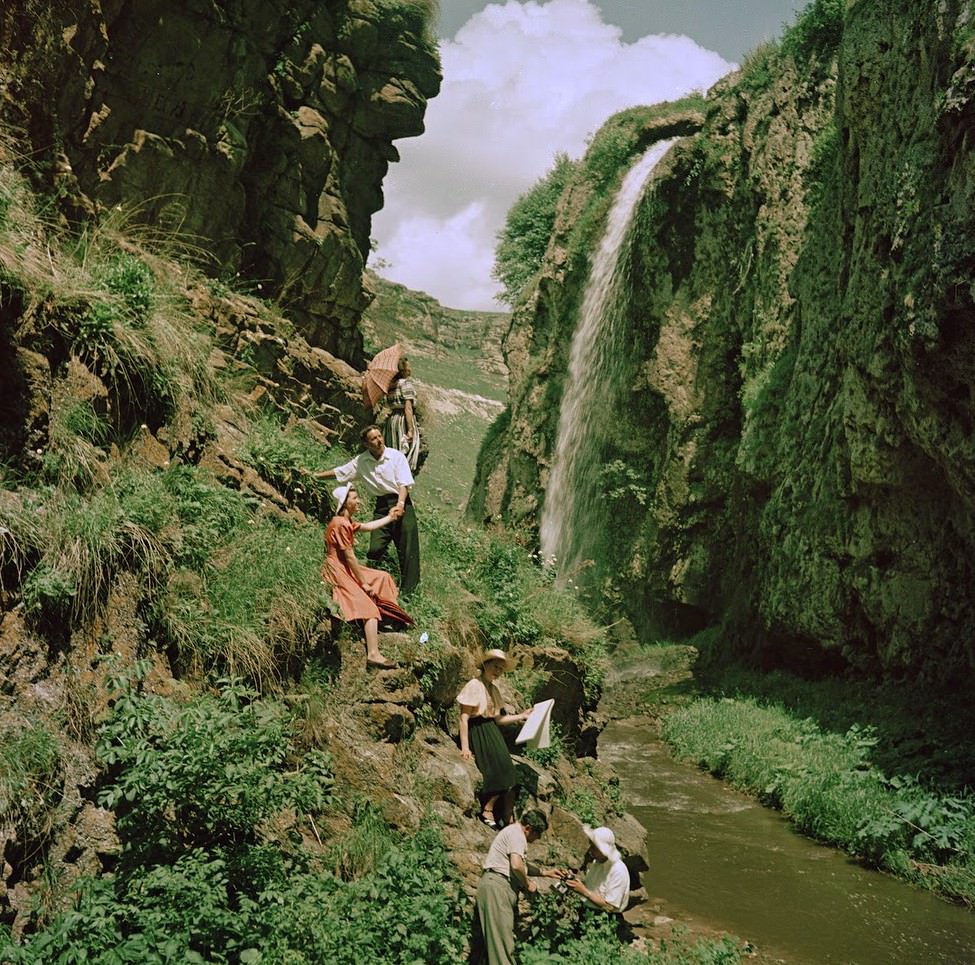
Fridland’s assignments took him far beyond the capital to the remote southern republics. In the Caucasus region, he photographed shepherds guiding flocks of sheep across green mountain passes. These men wear traditional heavy wool cloaks and fur hats, standing against a backdrop of jagged, snow-covered peaks. In the coastal towns of the Crimea, the scenes shift to leisure. Holidaymakers walk along white stone promenades next to the Black Sea. The water in these photos is a deep turquoise, dotted with white steamships and small sailing vessels.
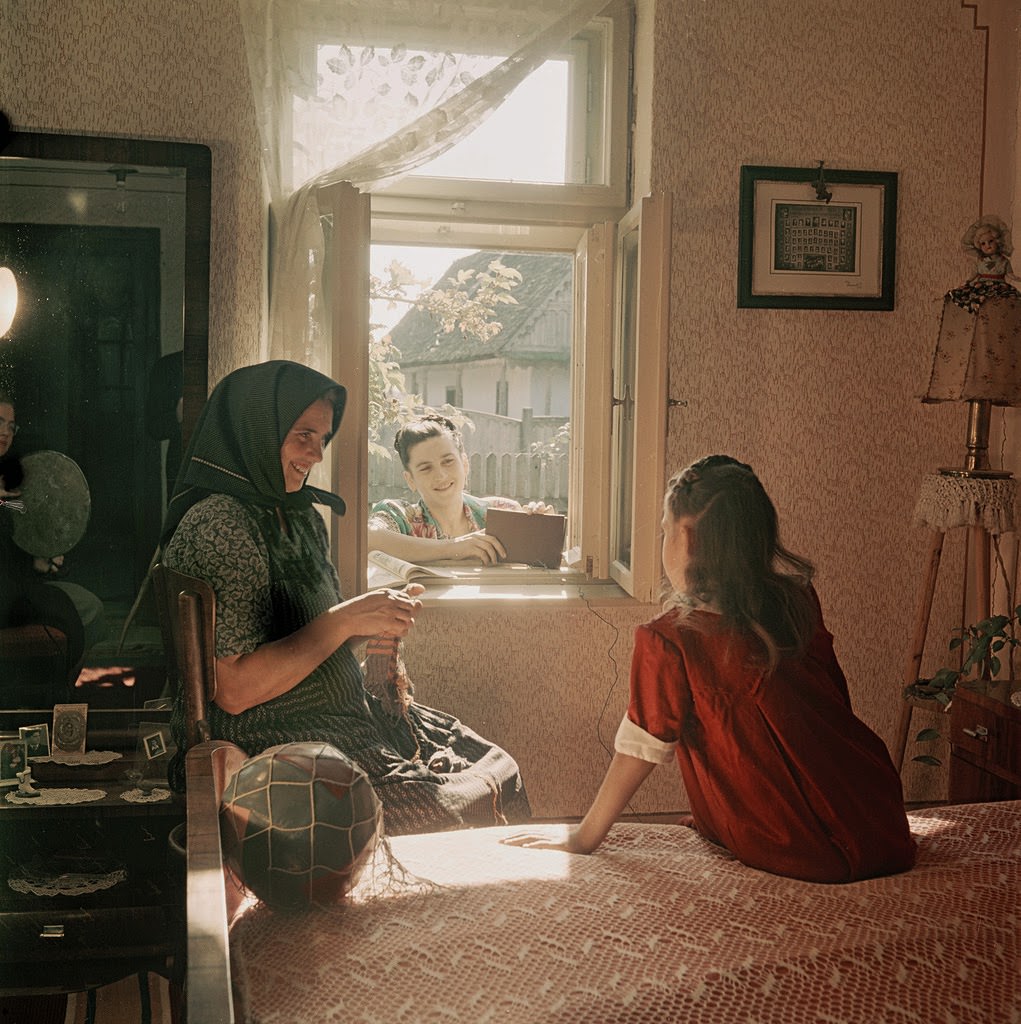
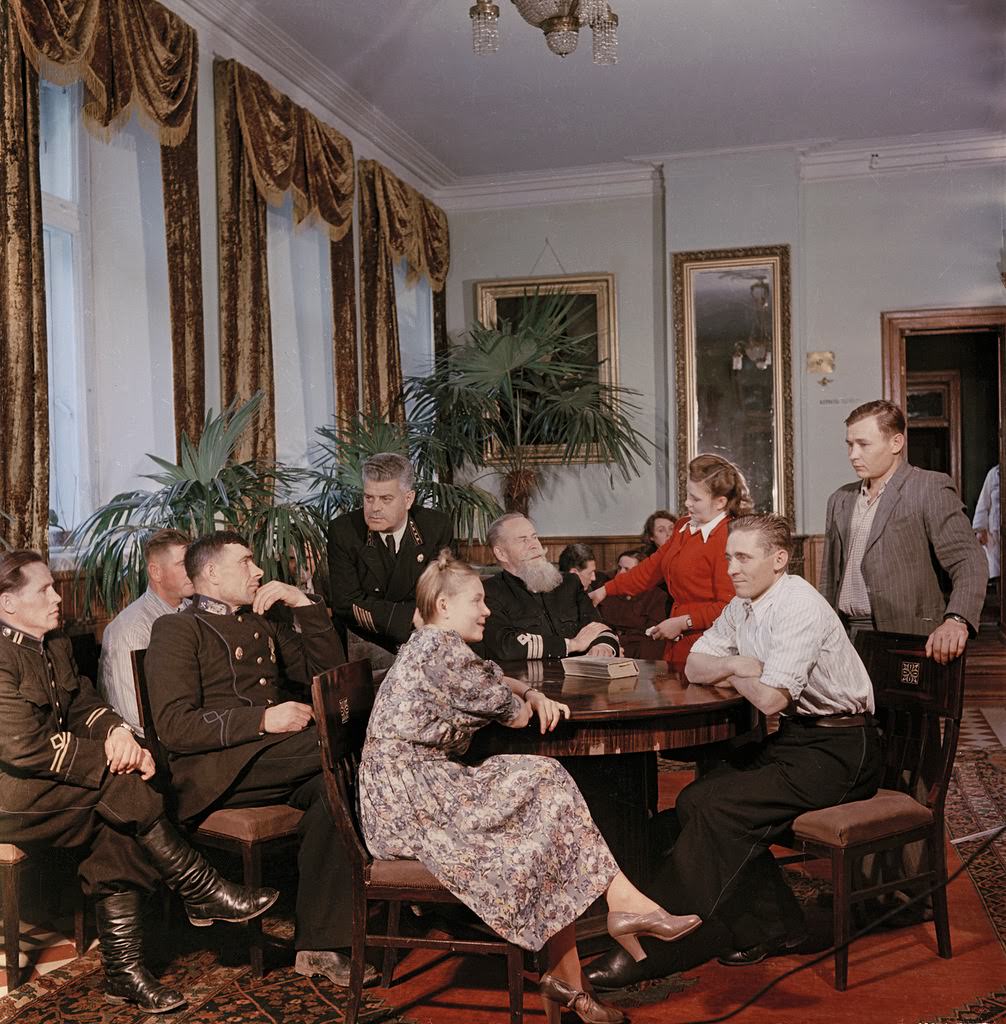
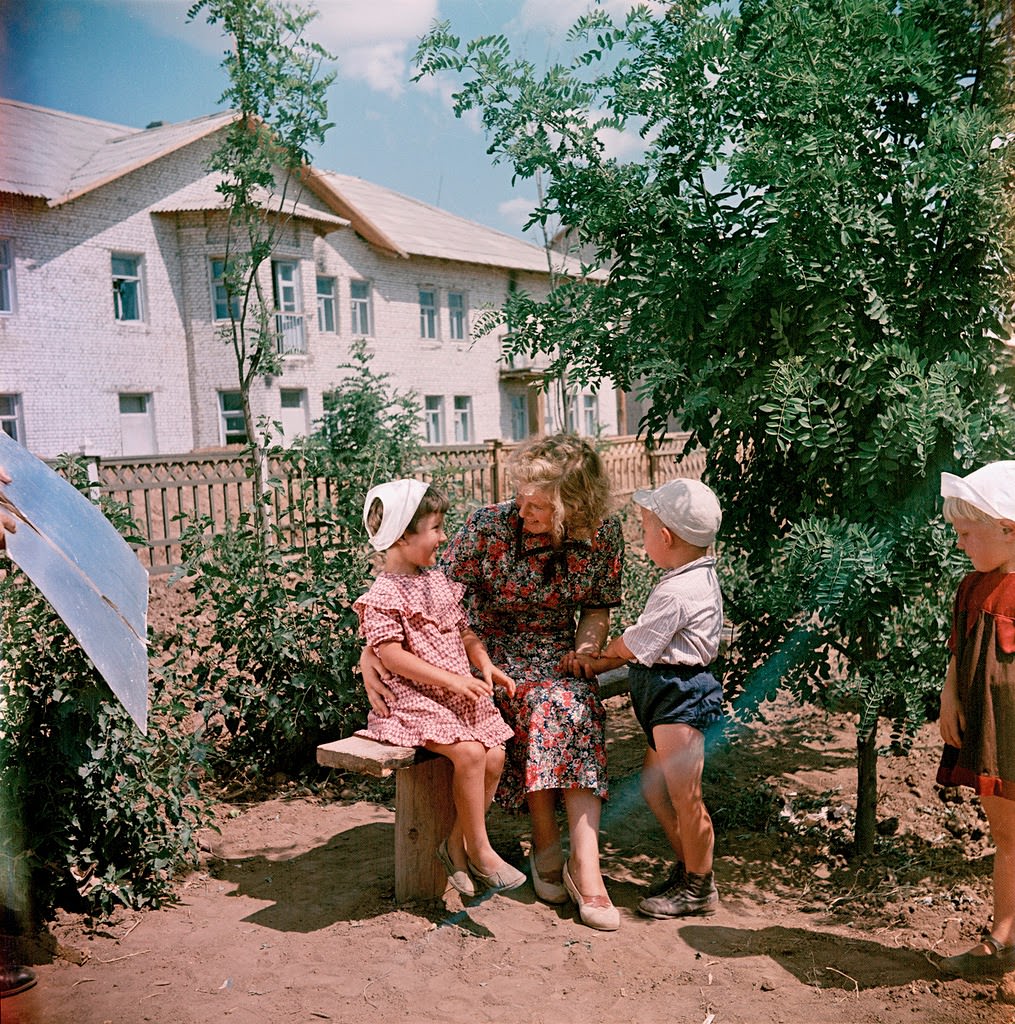
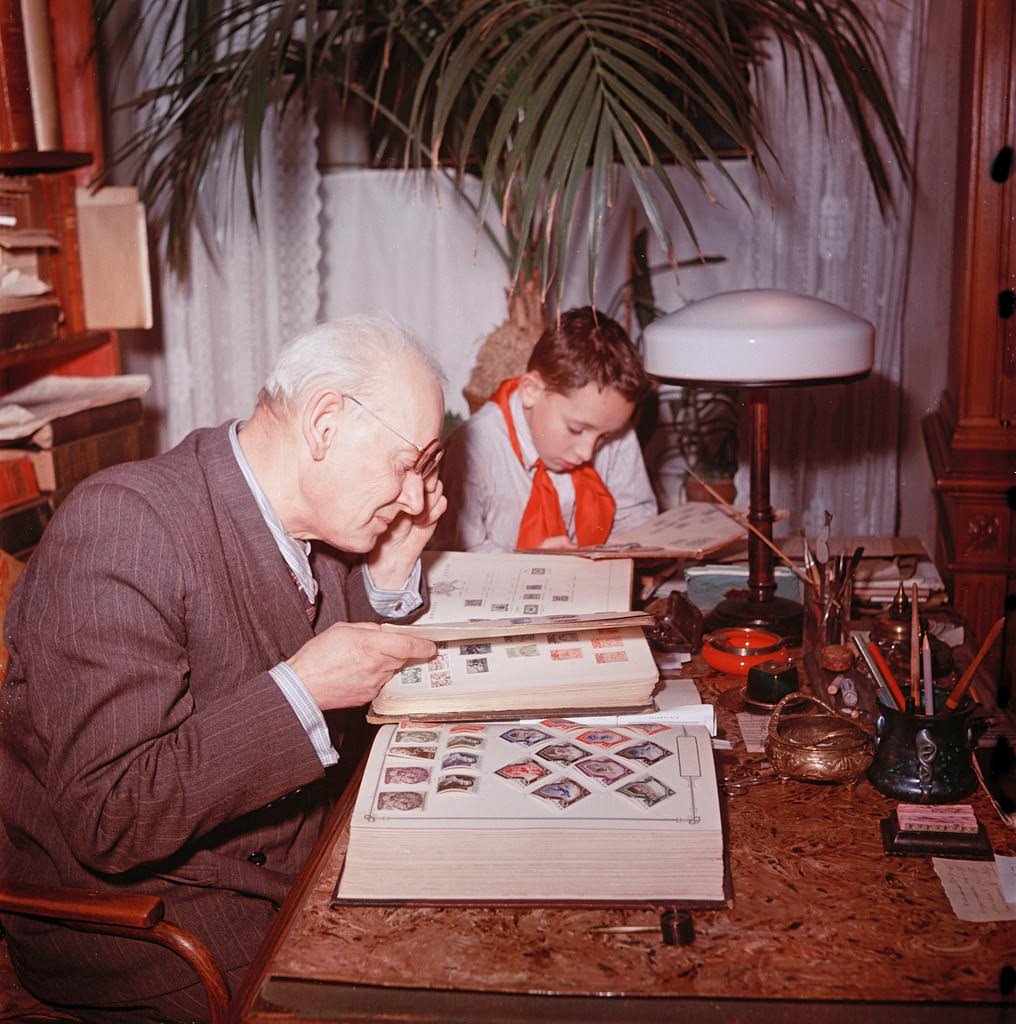
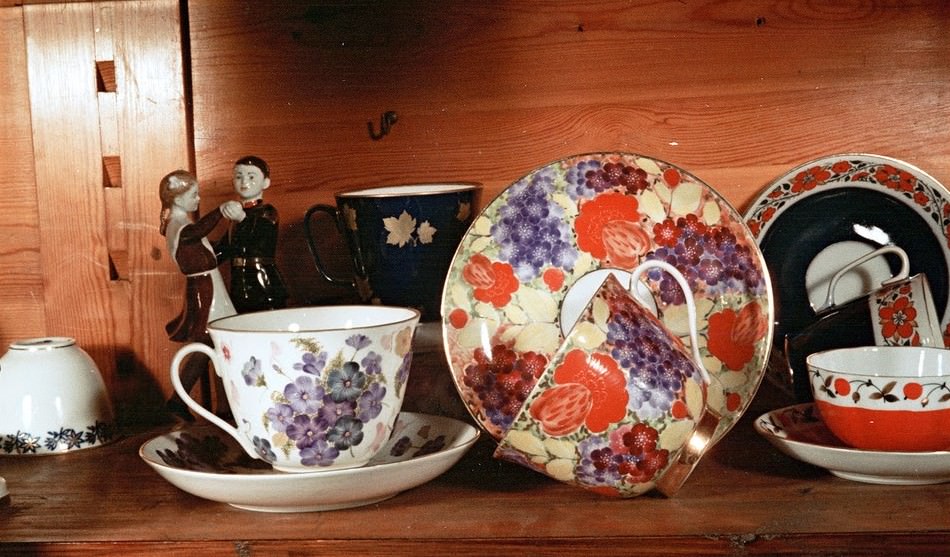
Interior shots reveal the design and atmosphere of public spaces. University libraries feature heavy wooden tables and green reading lamps. Students sit in rows, writing in notebooks with fountain pens, surrounded by tall shelves of books. In the nurseries and schools, the walls are painted in soft pastel colors. Children play with wooden toys and dolls, wearing crisp white aprons and uniforms. The color film captures small details often lost in monochrome, such as the pattern on a tea set or the grain of the wood paneling.