

In the early 1900s, visiting a dentist meant sitting in a chair with no reliable pain relief and hoping for the best. Local anesthesia wasn’t yet widely available, and tooth extractions were as brutal as they sound. Into this world stepped Edgar R.R. Parker — a man who turned street-corner dentistry into a full-blown circus act, complete with brass bands, showgirls, and a necklace strung with human teeth.
Parker was born in 1872 in St. Martins, New Brunswick, Canada. He trained at the Philadelphia Dental College, which later became the School of Dentistry at Temple University. By his own admission — and by the accounts of those around him — he was the weakest student in his class. He only earned his diploma after personally pleading with the dean to let him graduate.
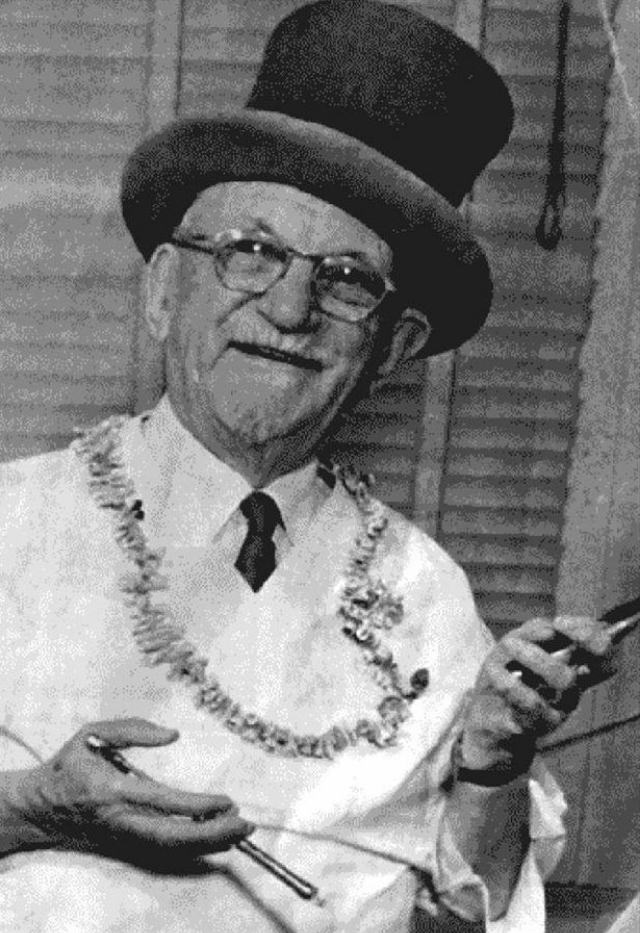
After graduating, Parker returned to Canada to set up a dental practice. Six weeks passed and he hadn’t seen a single patient. The professional rules of the era forbade dentists from openly advertising their services, but Parker had no intention of letting ethics stand in the way of a paying clientele. He struck a deal with a sign maker, trading a set of dentures for a sign that read “Painless Parker.” That name would define the rest of his life.
His early method involved injecting patients with a watered-down cocaine solution before pulling their teeth. The extraction cost 50 cents — but if the patient felt pain, Parker charged them $5 instead. It was a gamble, and the cocaine solution didn’t always work. Sometimes Parker simply squirted it into the mouth cavity rather than injecting it, which worked even less reliably. Pain was common. What was less common was anyone hearing it.
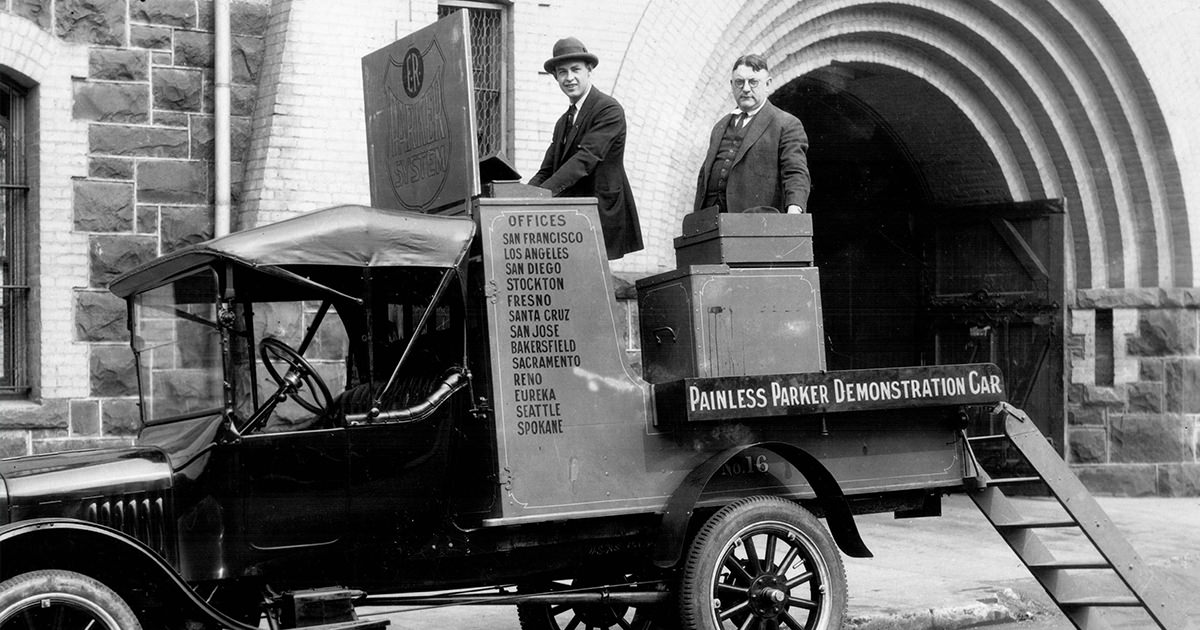
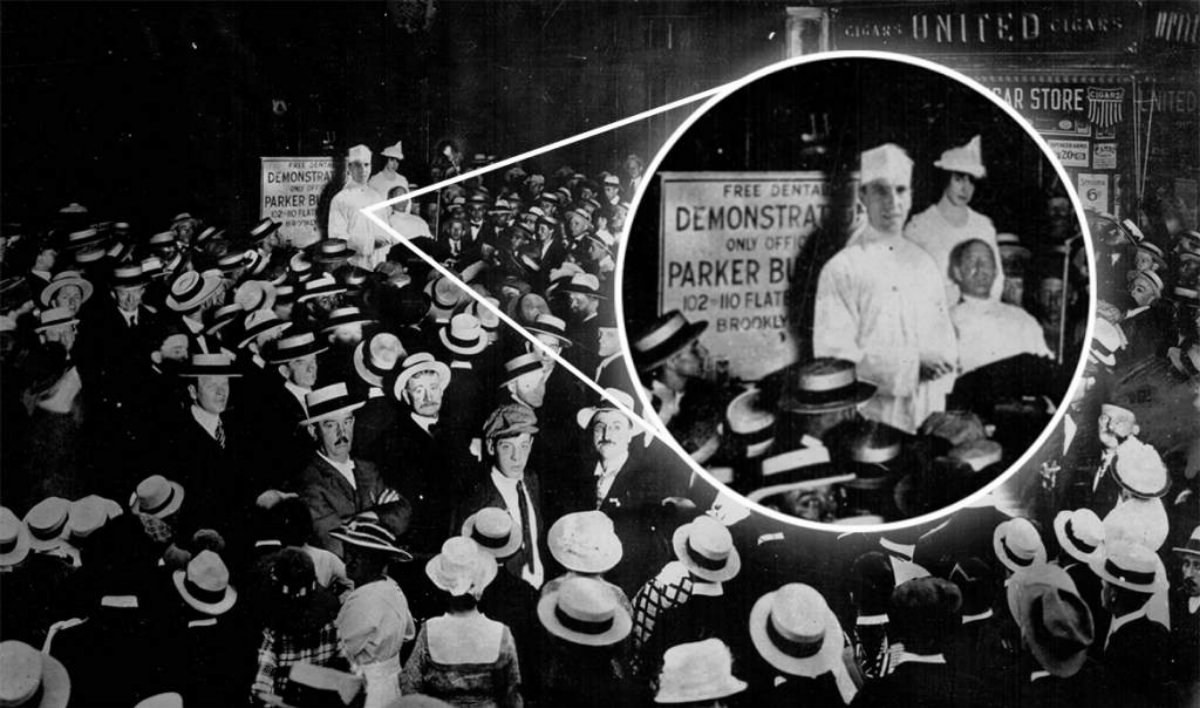
Parker’s solution to screaming patients was deceptively simple: make more noise than they could. He hired a brass band to play loudly while he worked, drowning out the cries of whoever was in the chair. He also tapped his foot rhythmically on the ground as he yanked a tooth, giving patients something to brace against. Onlookers, unable to hear any moaning over the music, assumed the procedure was genuinely painless.
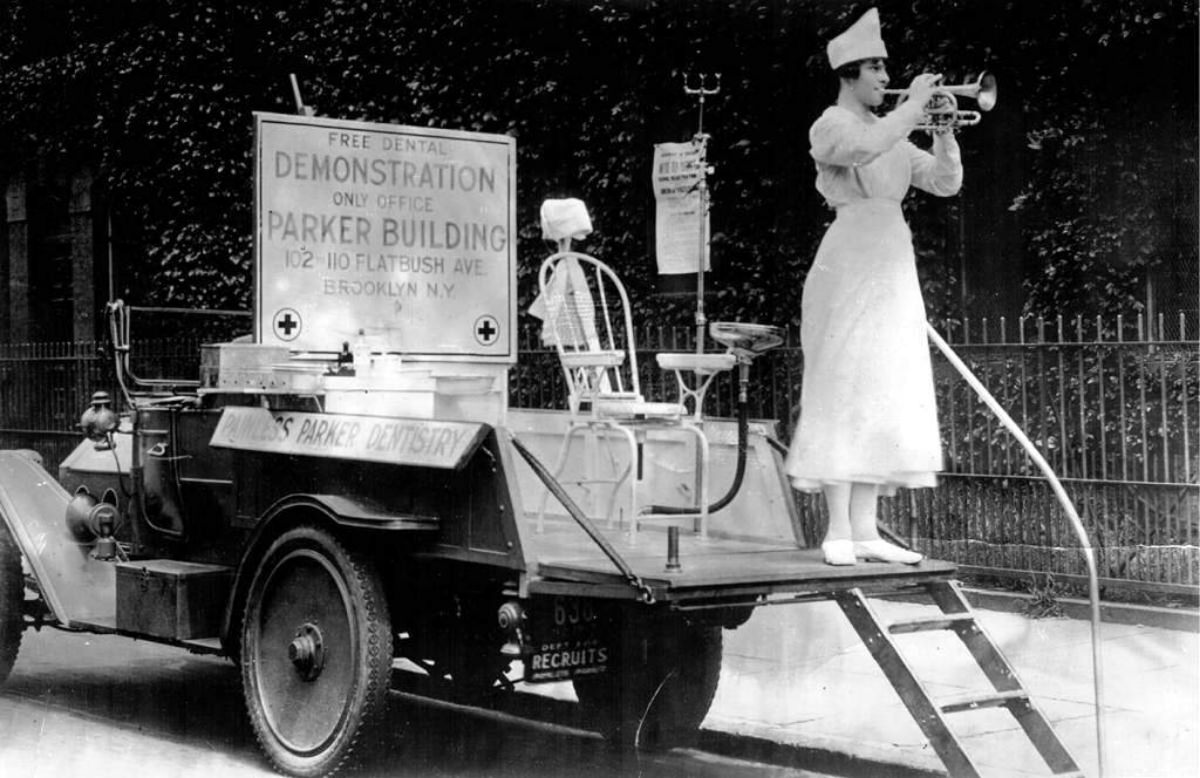
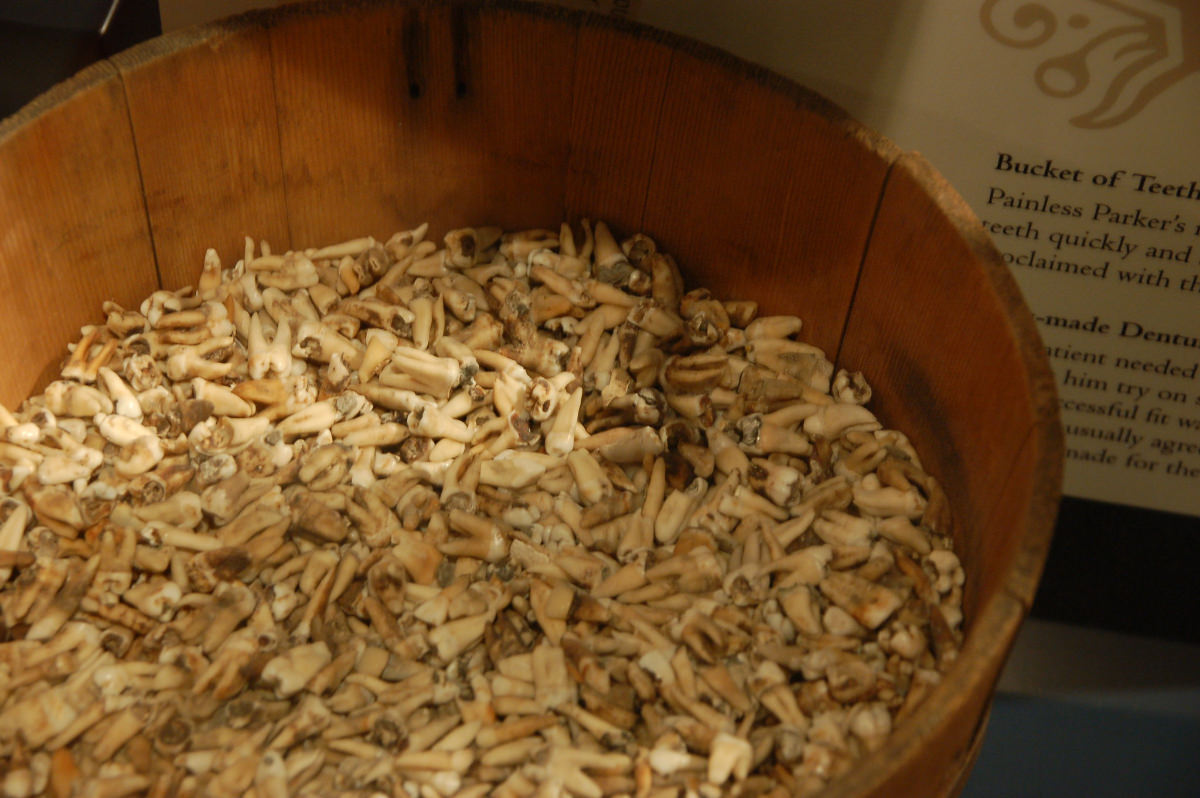
The street theater worked. Parker hired a former manager from P.T. Barnum’s operation and launched the Parker Dental Circus, which toured across Canada and the United States. Showgirls, live music, and crowd lectures on dental hygiene became standard features of the act. Parker would stand in front of the crowd with a bucket of extracted teeth at his feet, delivering a pitch on the importance of oral health before inviting the next patient into the chair.
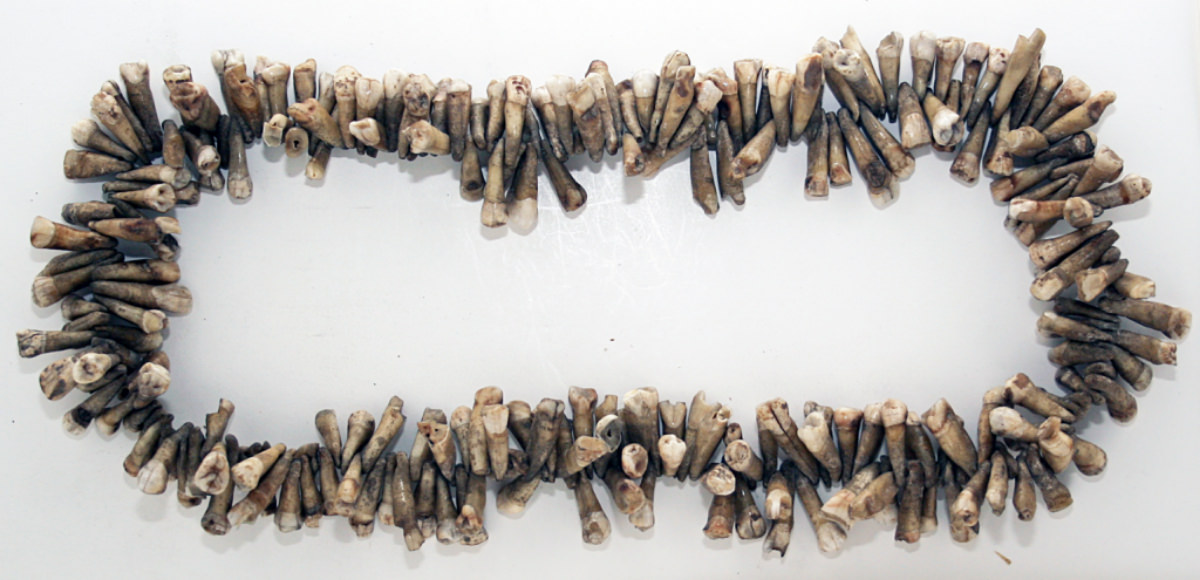
On one particularly remarkable — and heavily promoted — day, Parker claimed to have pulled 357 teeth. He threaded each one onto a necklace and wore it as proof. That necklace, along with a large wooden bucket overflowing with extracted teeth, is still on display at the Historical Dental Museum at Temple University’s School of Dentistry.
Not everyone was amused. Established dentists in New York called Parker “a menace to the dignity of the profession” and effectively drove him out of the city. He relocated to San Francisco in 1912, where he soon faced a false advertising lawsuit over the “Painless” name. Parker’s legal workaround was audacious: he legally changed his first name to “Painless,” making Edgar Painless Parker his official name. Technically, the advertising was no longer false.
As his reputation spread along the West Coast, Parker scaled his operation dramatically. He hired assistants, opened multiple locations, and built what amounted to one of the first dental chains in American history. By the peak of his career, he owned 28 dental offices on the West Coast, employed more than 70 dentists, and earned $3 million per year.
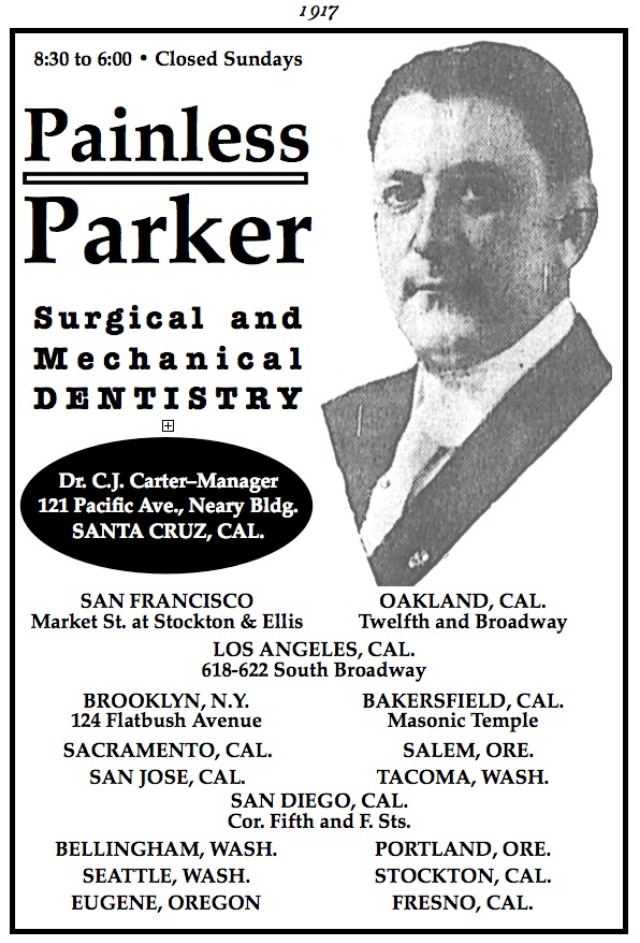
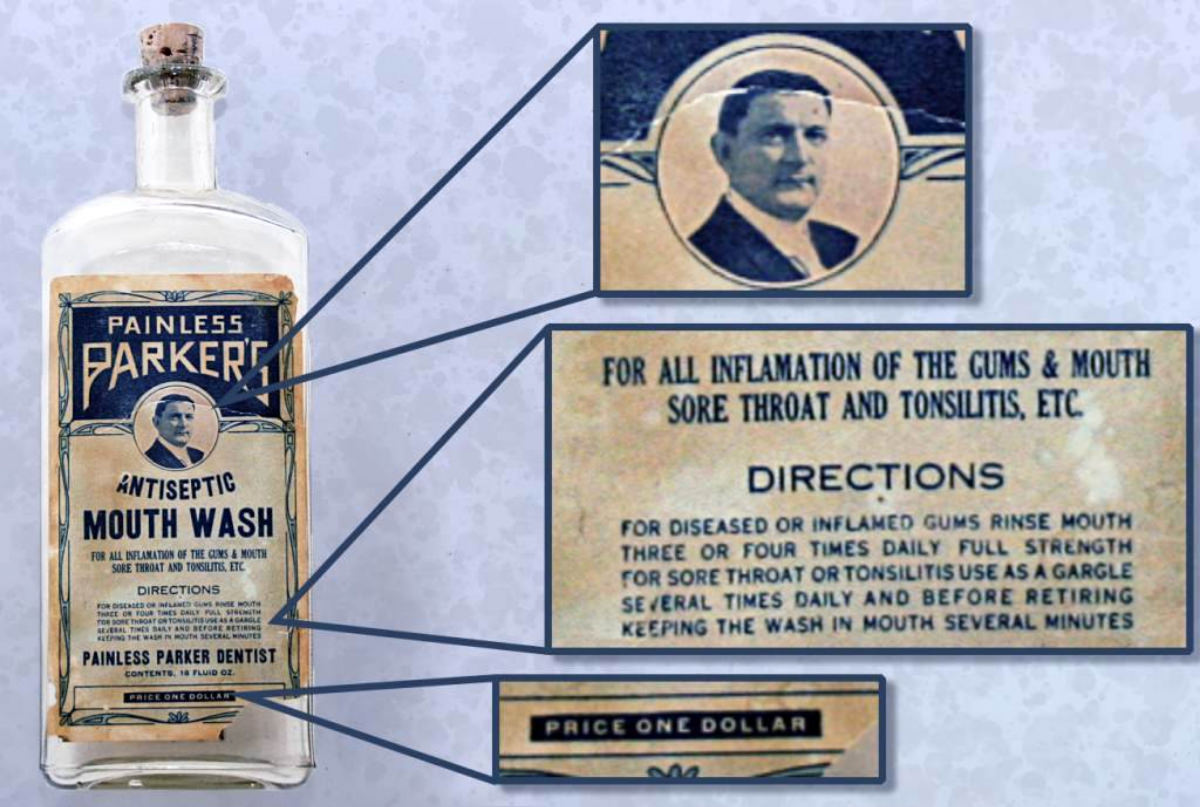
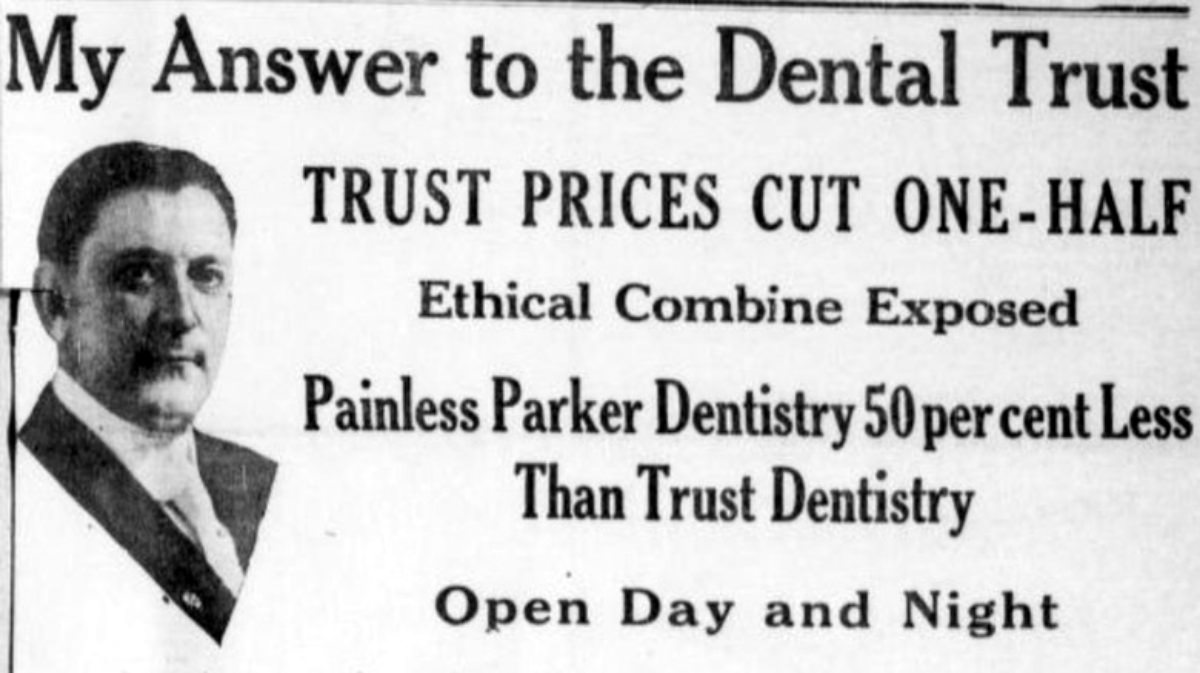
Parker understood marketing long before the word was common in business. His advertisements were bold and direct, promoting affordable dental care to working-class people who would otherwise avoid the dentist entirely. He sold branded products, placed ads in major publications, and kept his name in front of the public at every turn.
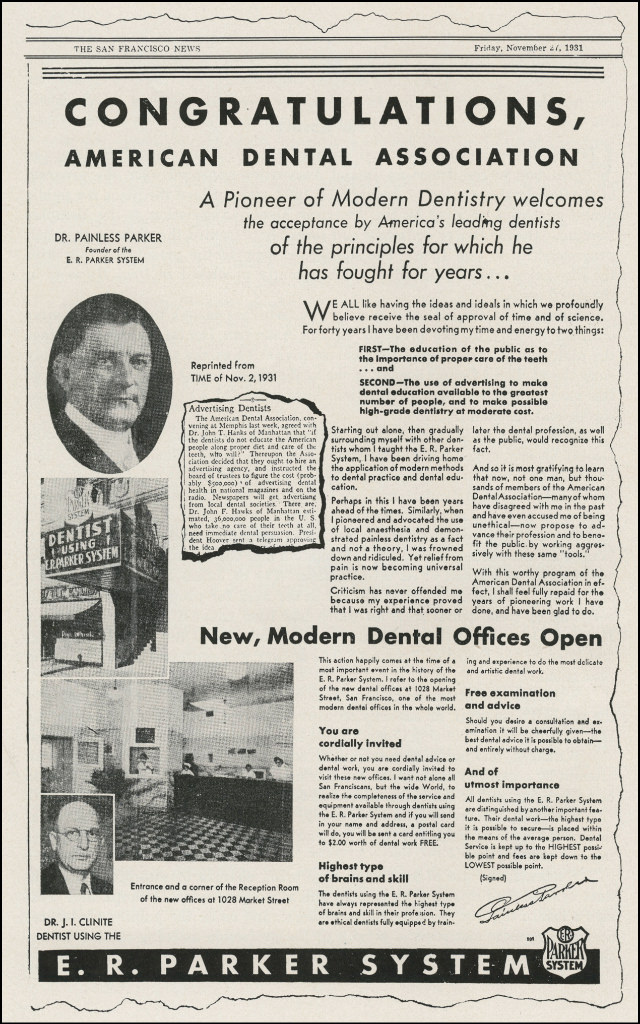
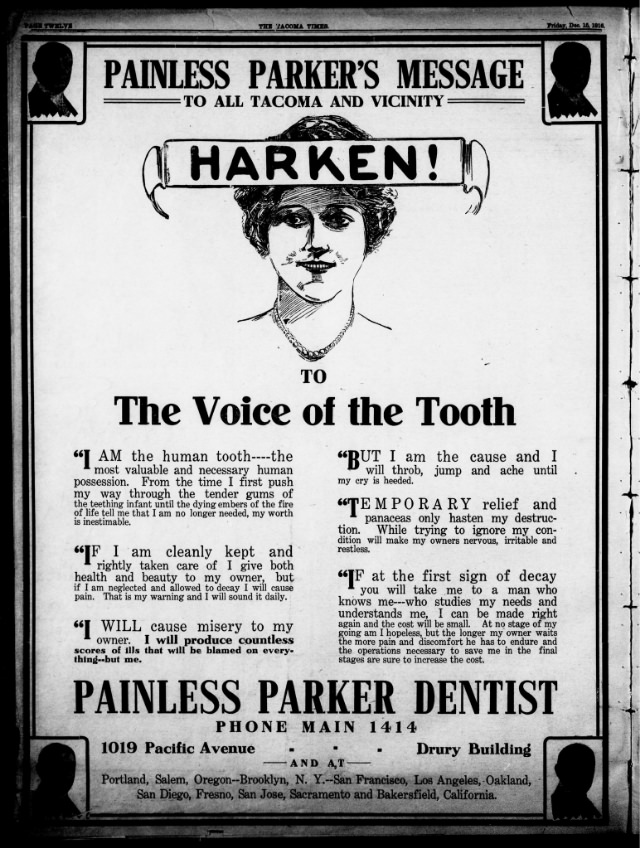
Parker held onto his legally changed name — and the brand that came with it — until he died in 1952. The musician Don Van Vliet later referenced him in the song “Orange Claw Hammer,” cementing Parker’s place in American folk memory. He was, depending on who you asked, either a brilliant populist or a dangerous fraud. What he wasn’t was boring.

A dentist who thinks he has everything right and everyone else is wrong even though they all agree? Let him cook, I think he’s onto something