Victorian physical culture manuals of the 1890s set a strict standard: a gentleman could build strength, but he could never let it show on his face. Grimacing during exercise was considered a mark of weakness and poor breeding. Trainers even coined the term “gymnast’s face” to describe the ugly contortions lifters made under strain.
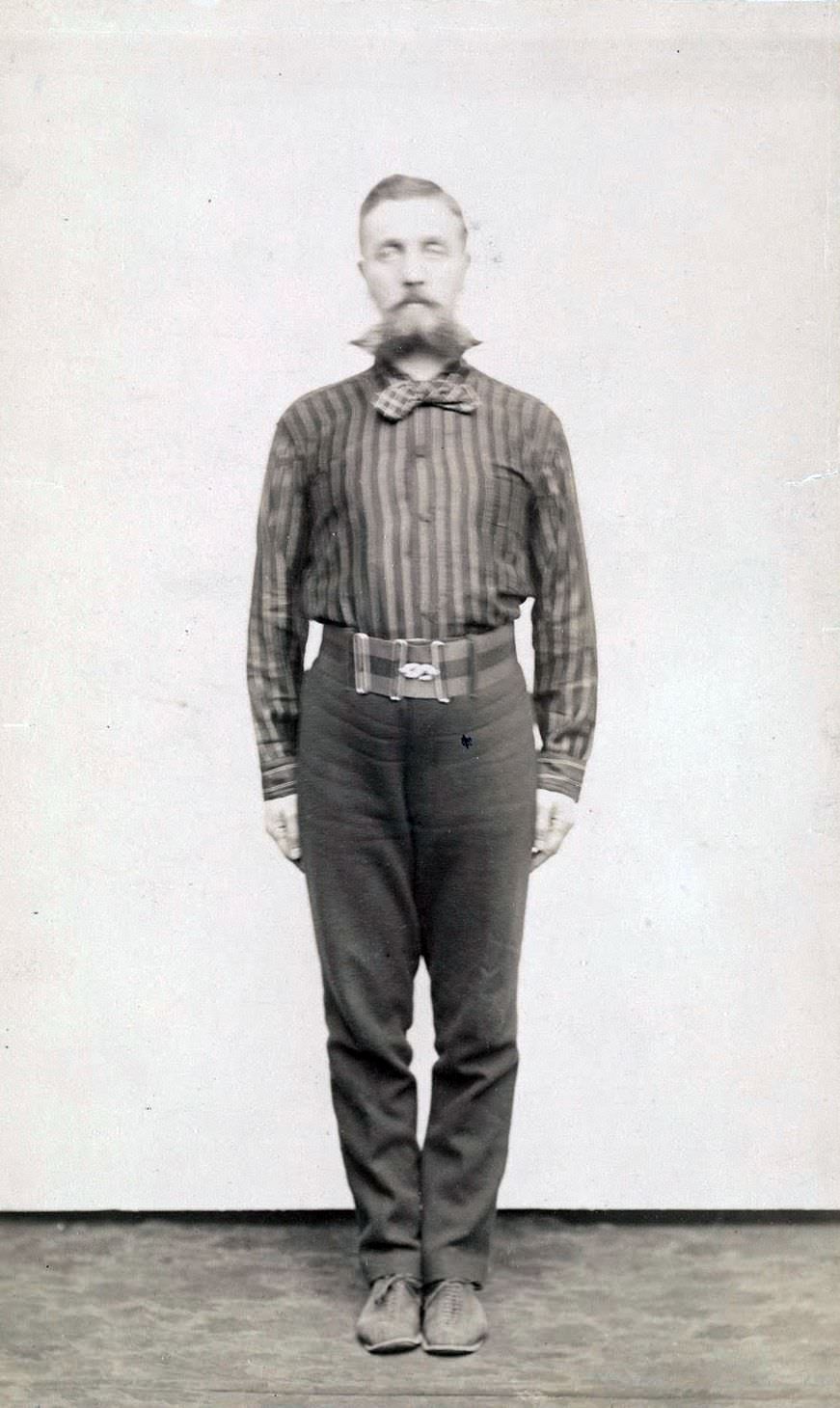
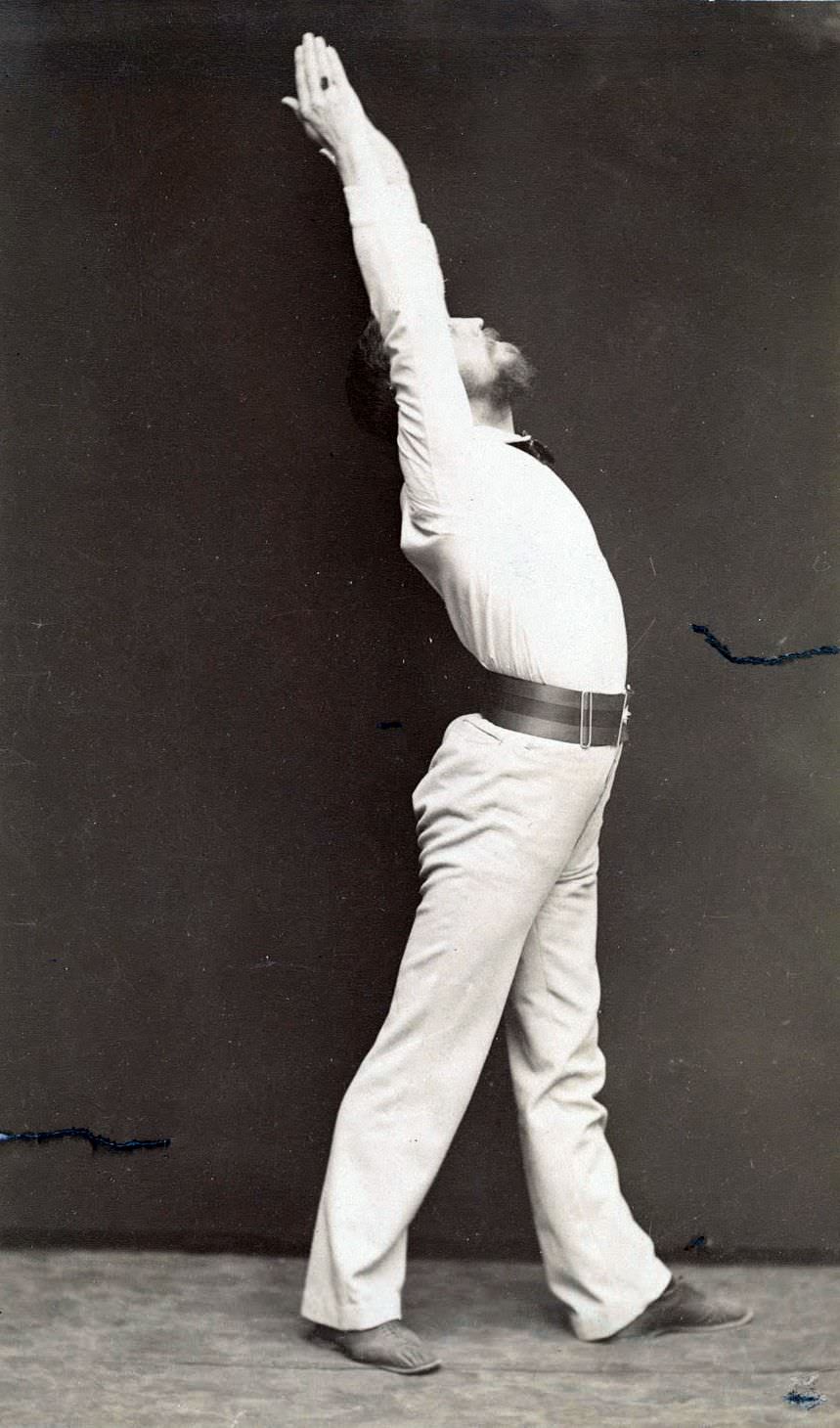
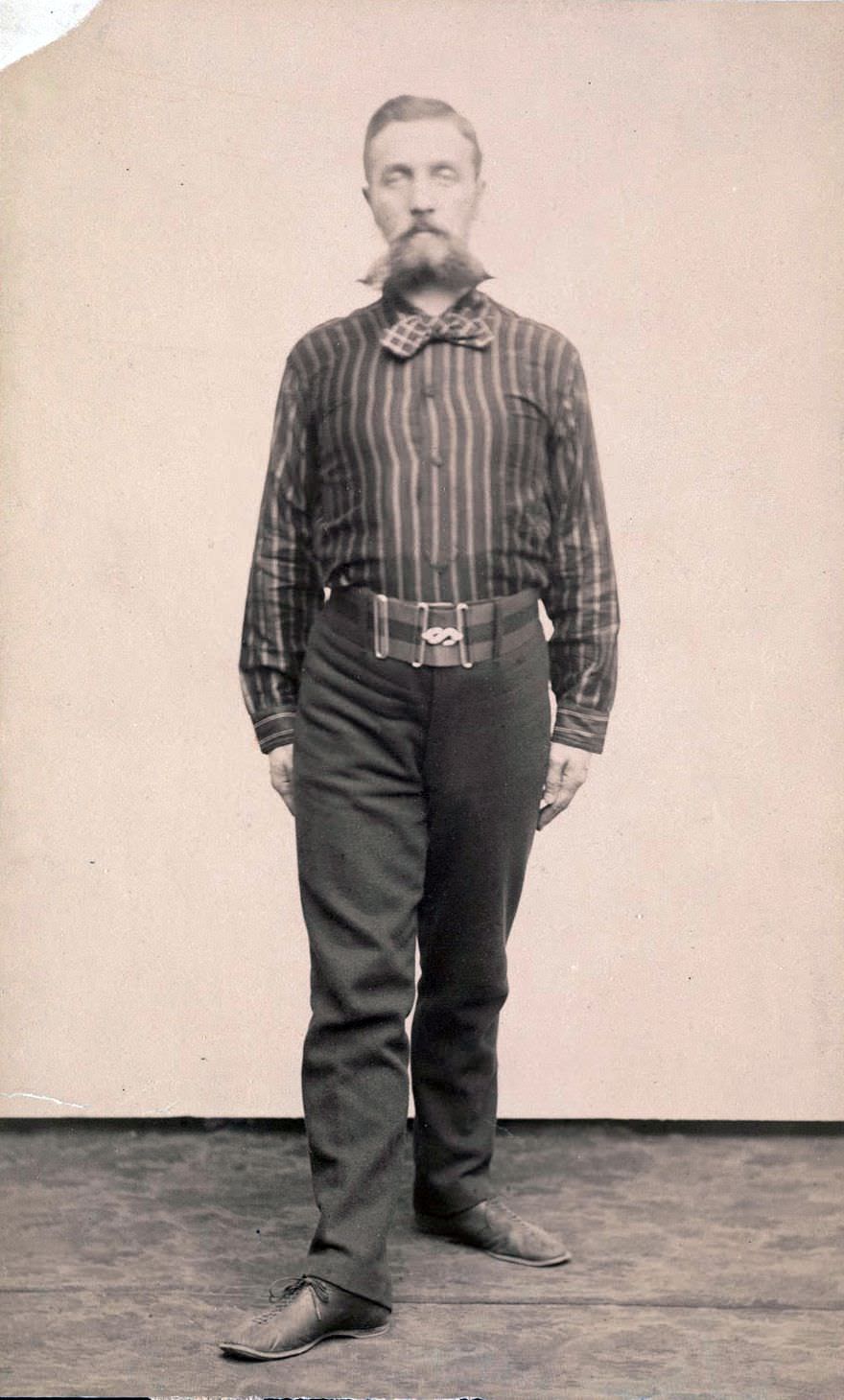
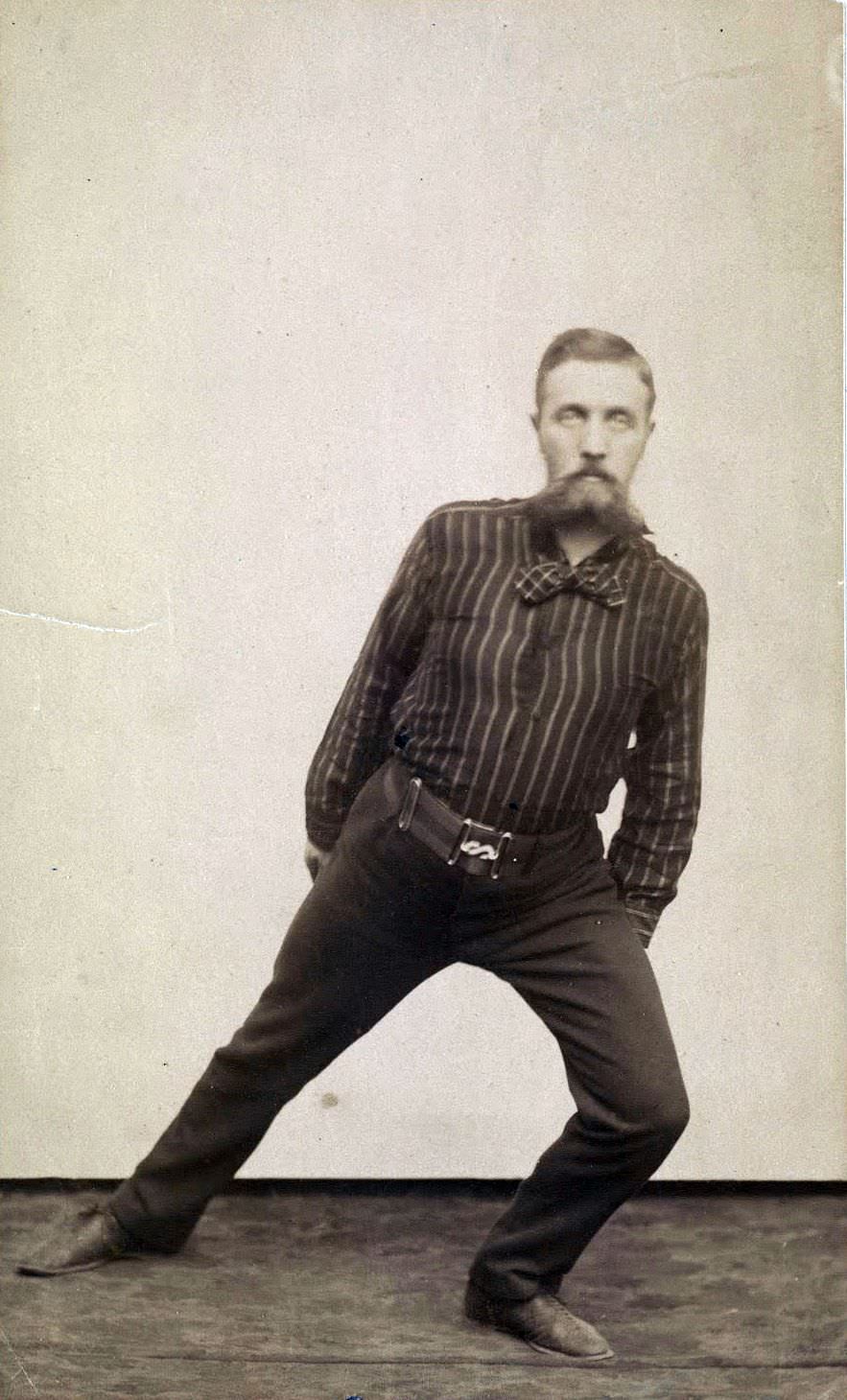
A specific series of photographs from this era captures this rule in practice. A man with a thick, well-groomed beard and mustache performs heavy lifts while staring directly into the camera with a completely deadpan expression. His face does not move. His brow stays smooth. His jaw stays loose.
The core idea was the separation of muscle action from facial reaction. Trainers believed that grimacing caused premature wrinkles. Tension had to stay locked in the biceps and shoulders, never traveling up to the jaw or forehead.
Breathing control was essential to keeping this calm mask in place. The subject breathed deeply through his nose with his mouth shut. Puffing the cheeks or gritting the teeth was seen as amateurish and unsightly.
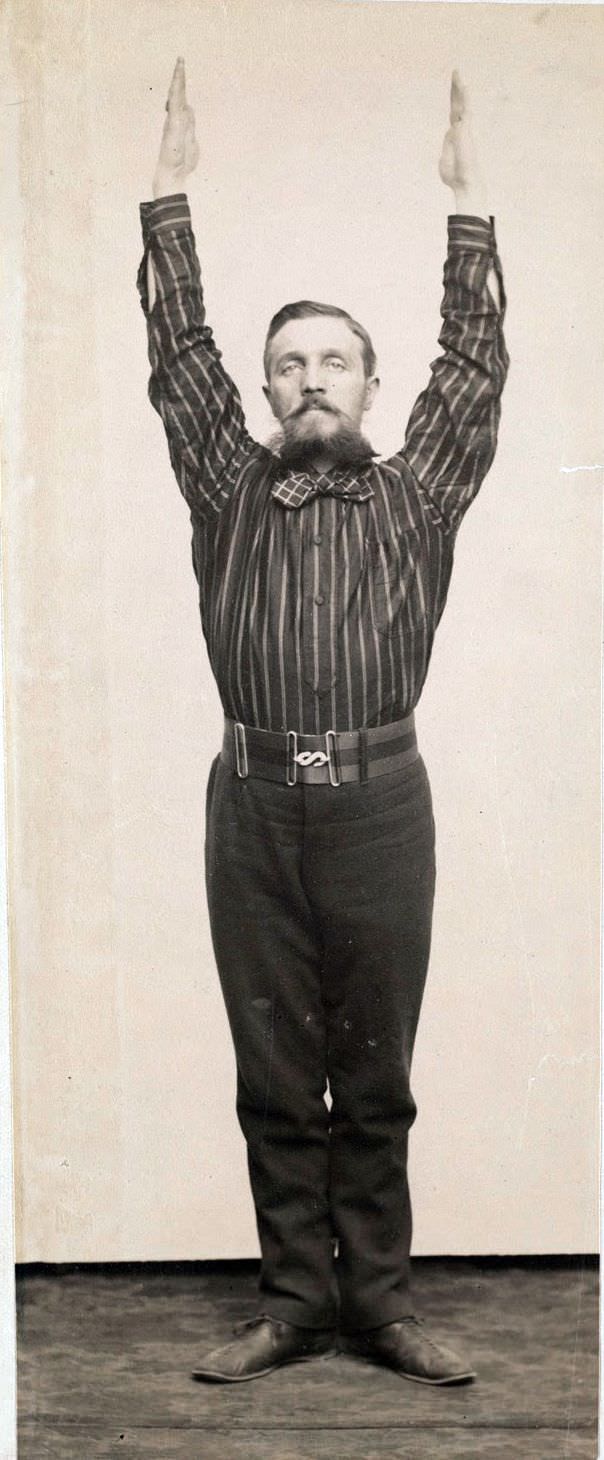
In one pose, the man holds a heavy weight out at arm’s length. The muscles in his arm are visibly straining against the load, yet his eyes stay wide and his expression remains flat. This was treated as proof that the mind could overpower the body’s natural urge to wince.
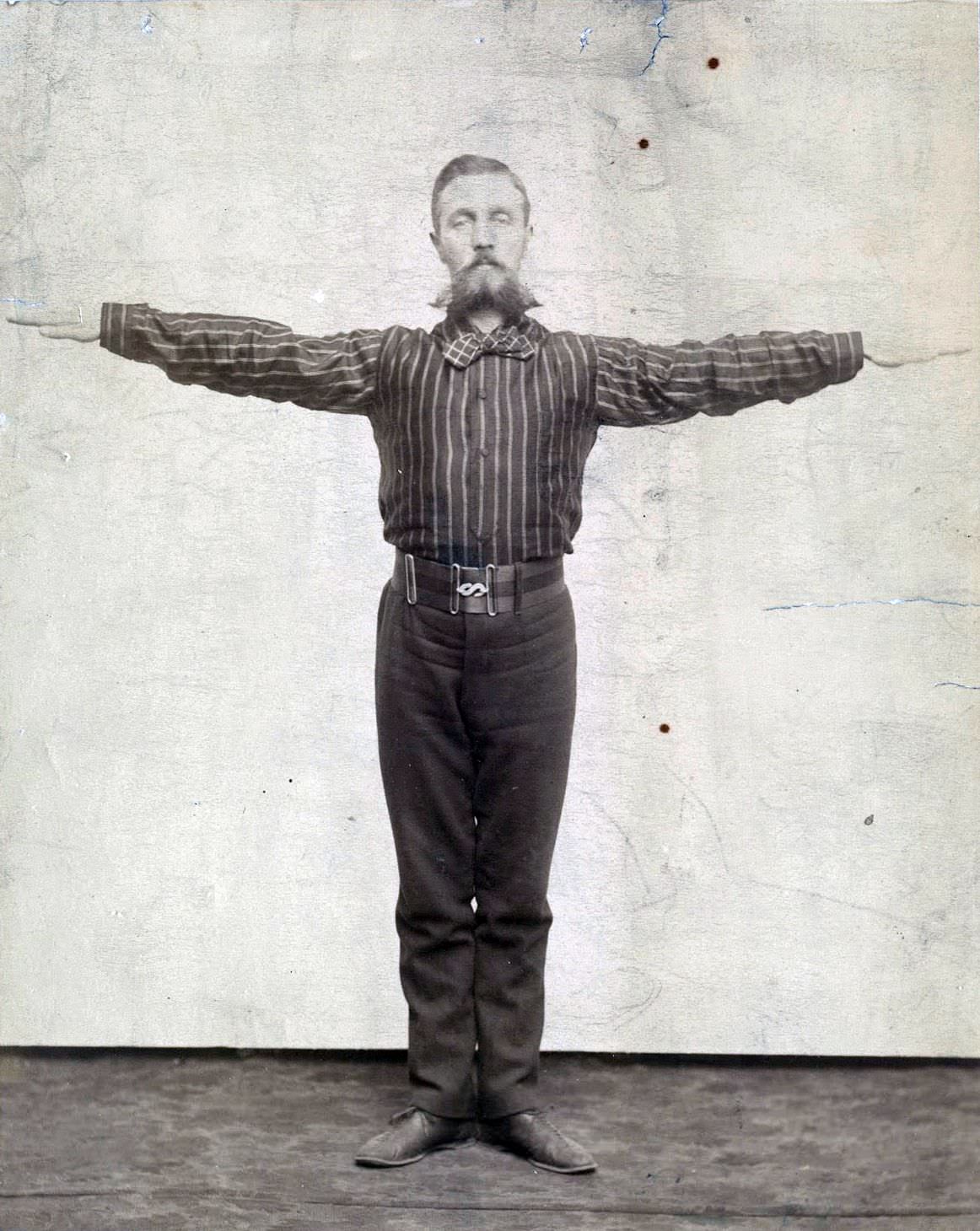
The lifts were performed with a slow, deliberate tempo. Speed and momentum were discouraged because they invited involuntary facial responses. A controlled, measured repetition kept the exertion entirely internal.
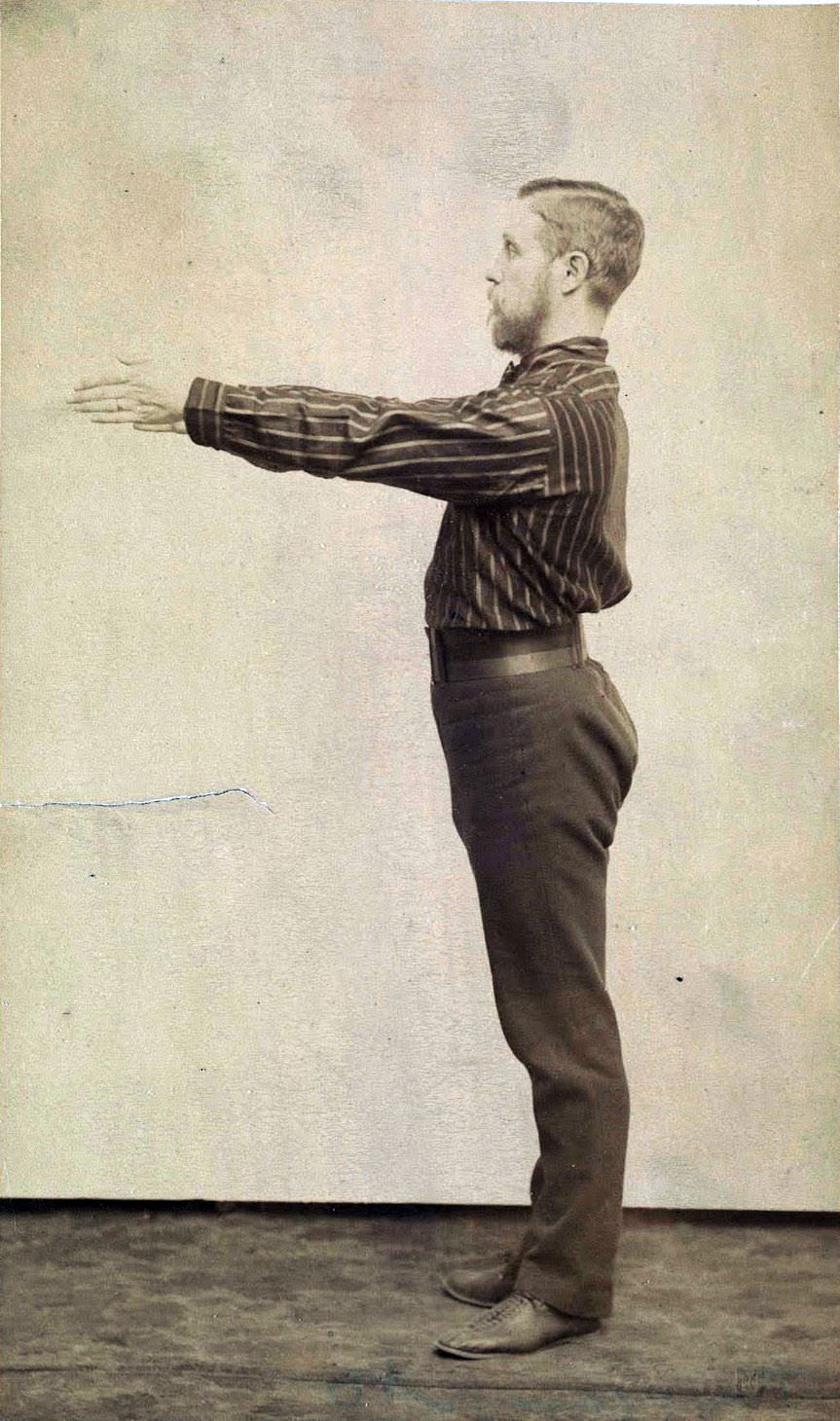
The attire matched the seriousness of the practice. The model performed these exercises in formal trousers and a fitted shirt, or stripped to the waist to display the muscle groups clearly. Comfort was never the priority.
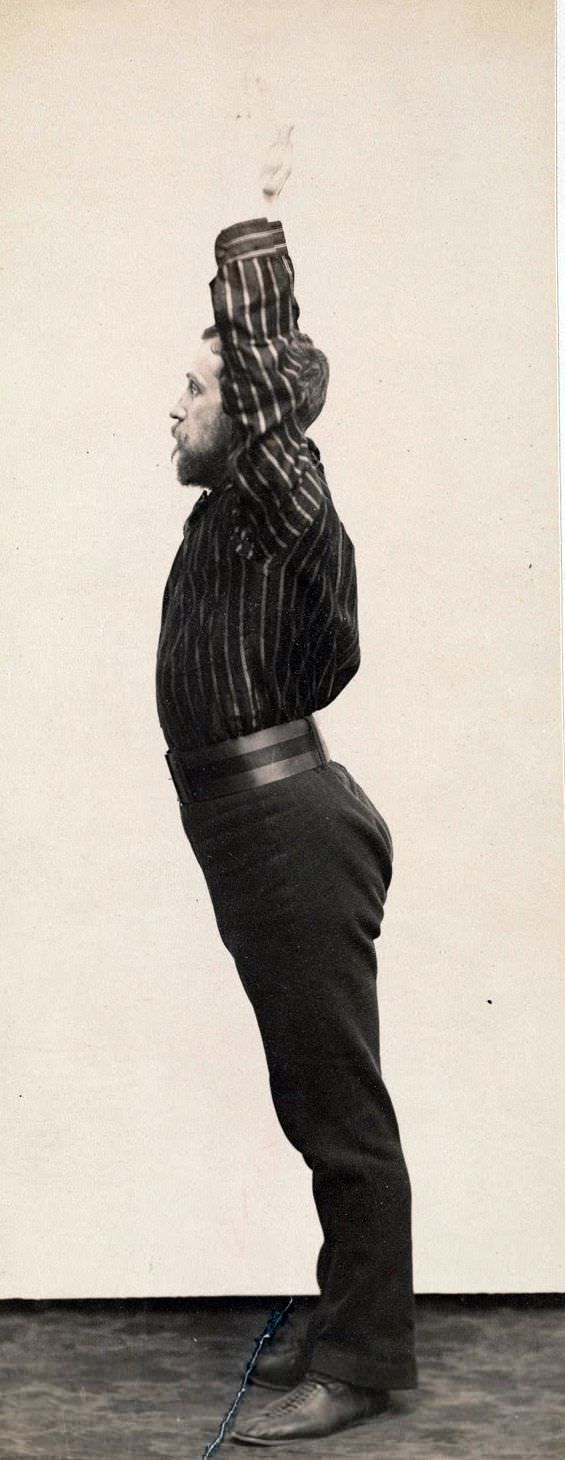
No redness or sweat appears on the model’s face throughout the series. He paused frequently between repetitions to fully compose himself before the next effort. Each set was as much a mental reset as a physical one.
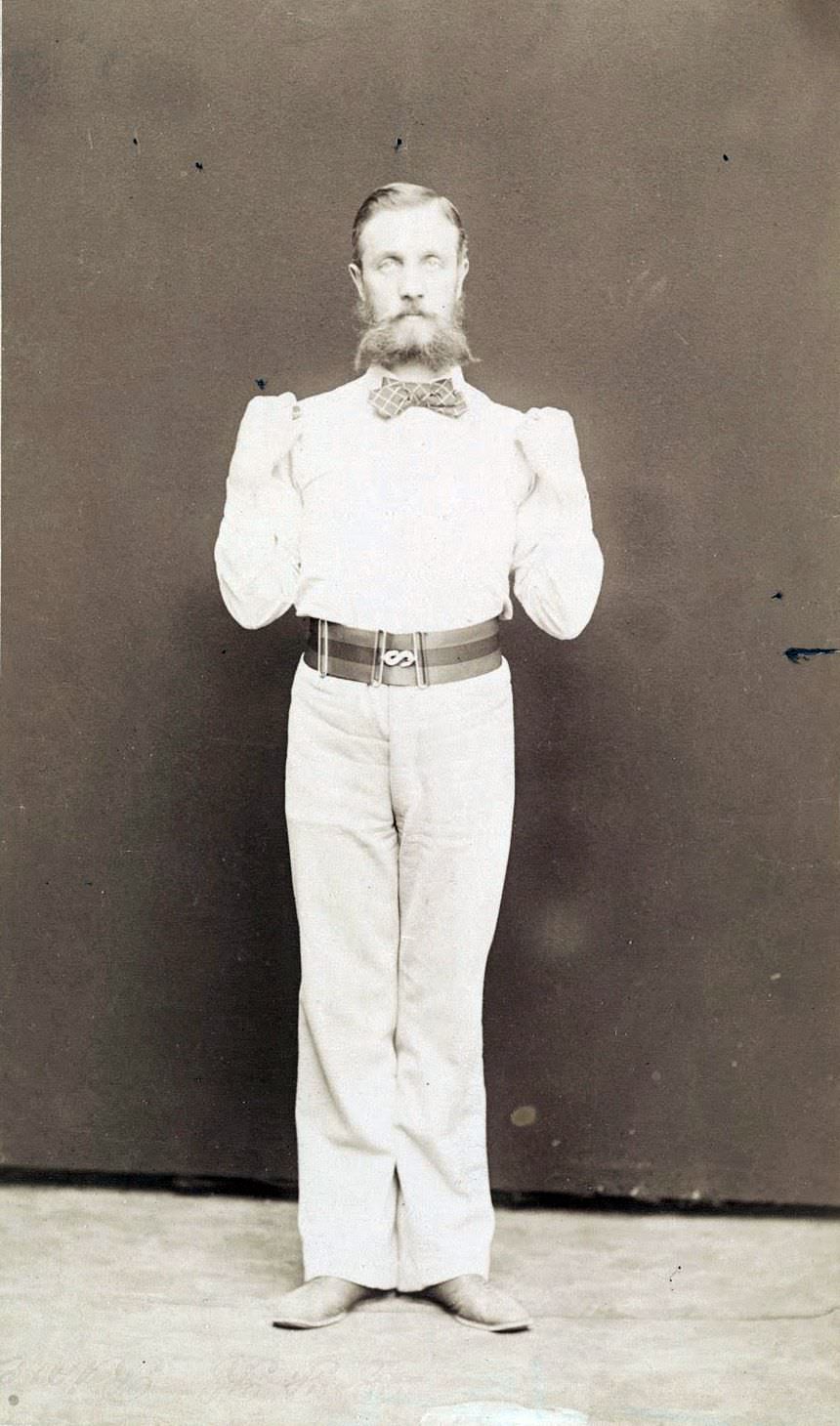
Every repetition was treated as a performance of willpower. The photographs served as instructional proof that a powerful physique and an unshakable expression were not just compatible — they were required together.