
Niagara Falls has drawn visitors for well over two centuries, but the images most people know come from the modern era — wide-angle shots, tourist boats, and neon-lit nights on the Canadian side. The photographs collected here tell a different story. Shot between the 1850s and the early 1950s, they capture the Falls during a time when the surrounding landscape was raw, the winters were brutal, and the sheer scale of the place was still something people traveled days to witness. These are not polished tourism shots. They are working records of one of North America’s most powerful natural landmarks.
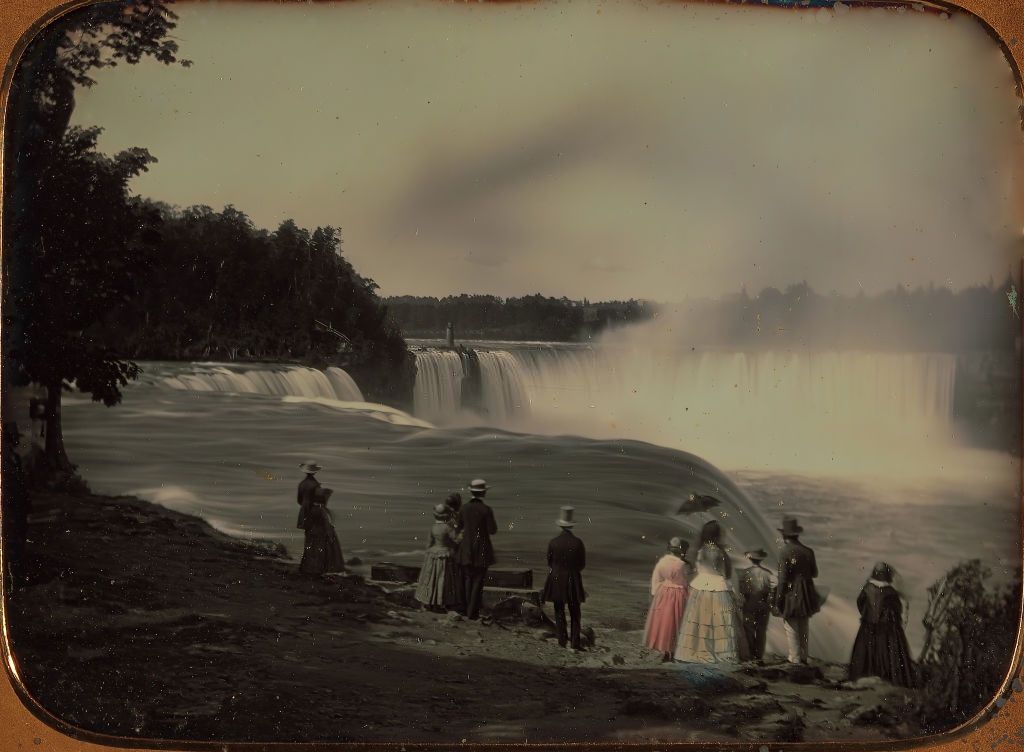
Photography was still in its early years when the first cameras were pointed at Niagara Falls. The images from the 1850s required long exposure times and heavy equipment, which meant photographers had to set up carefully and hold completely still. Despite those limitations, the results were striking. The falls had been a subject of paintings and engravings for decades before the camera arrived, but photography brought a new kind of proof — this place was exactly as dramatic as people had claimed.
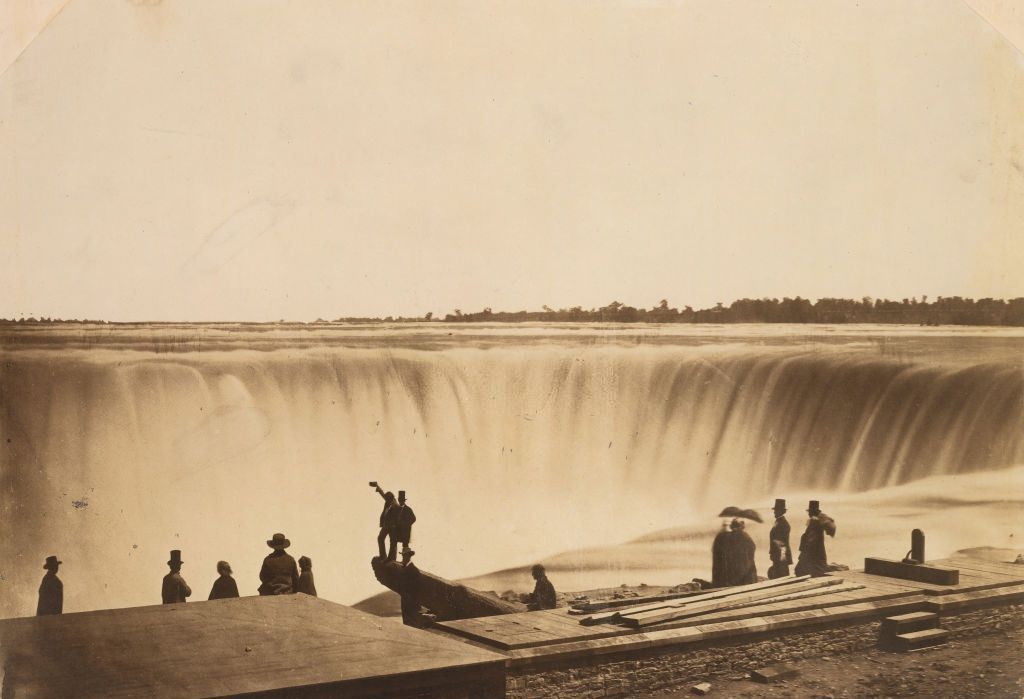
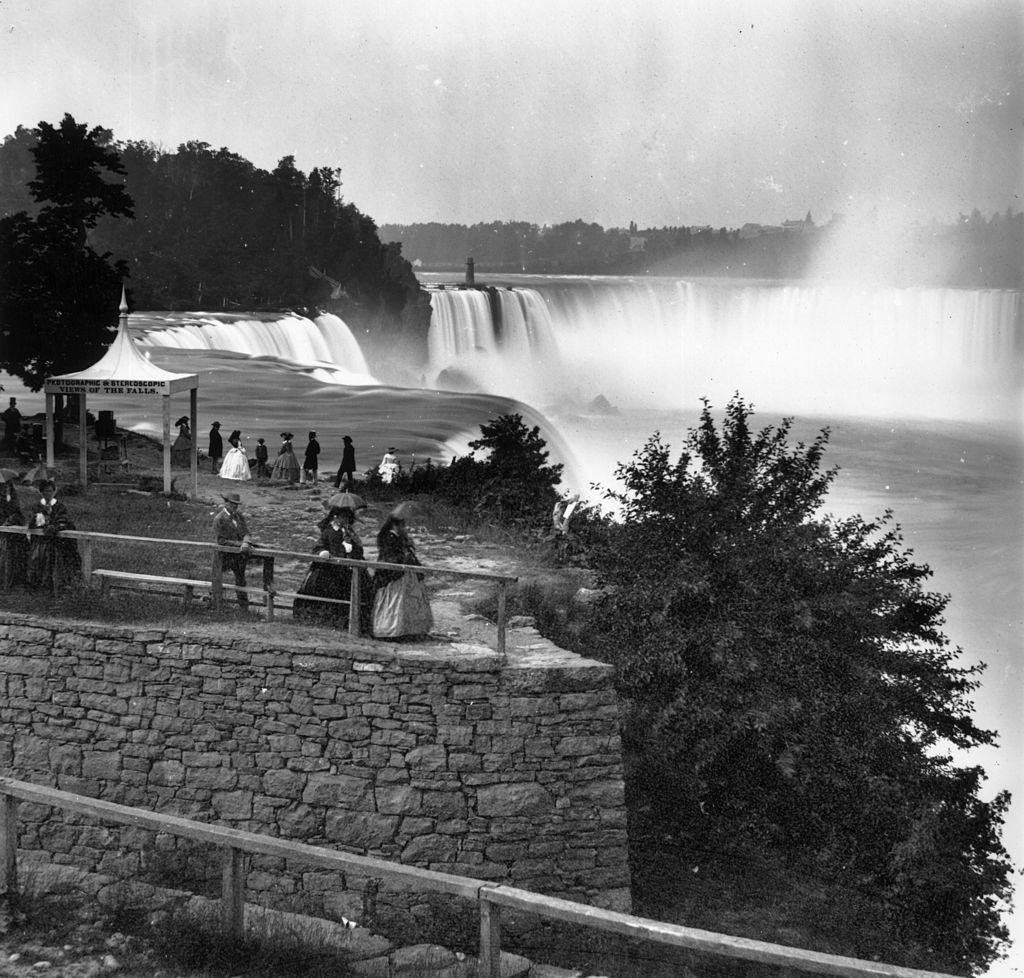
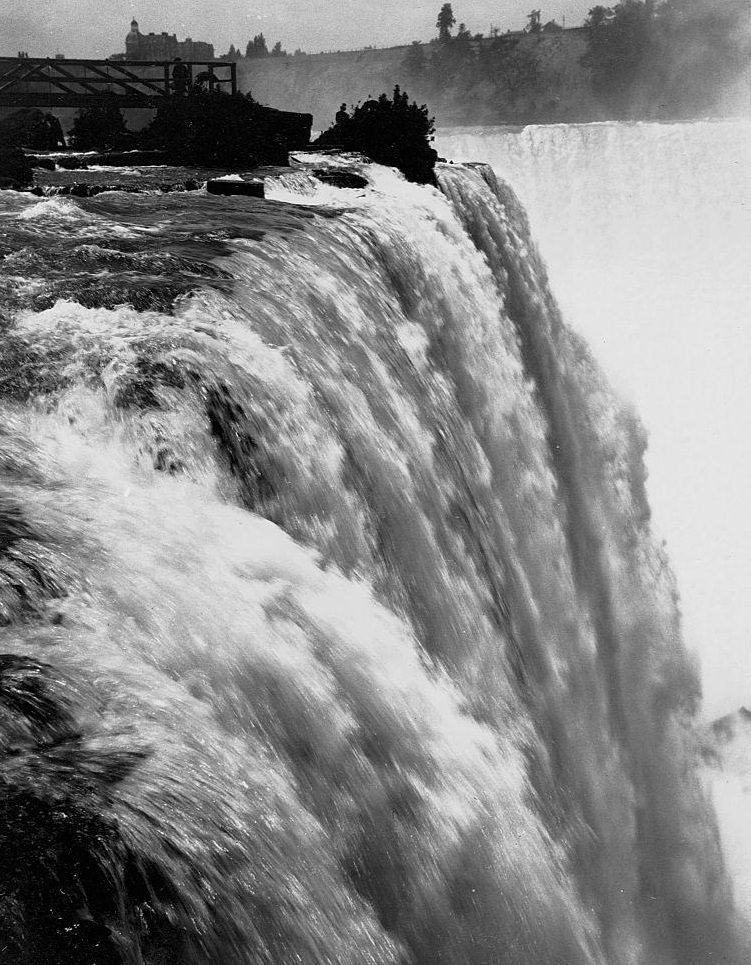
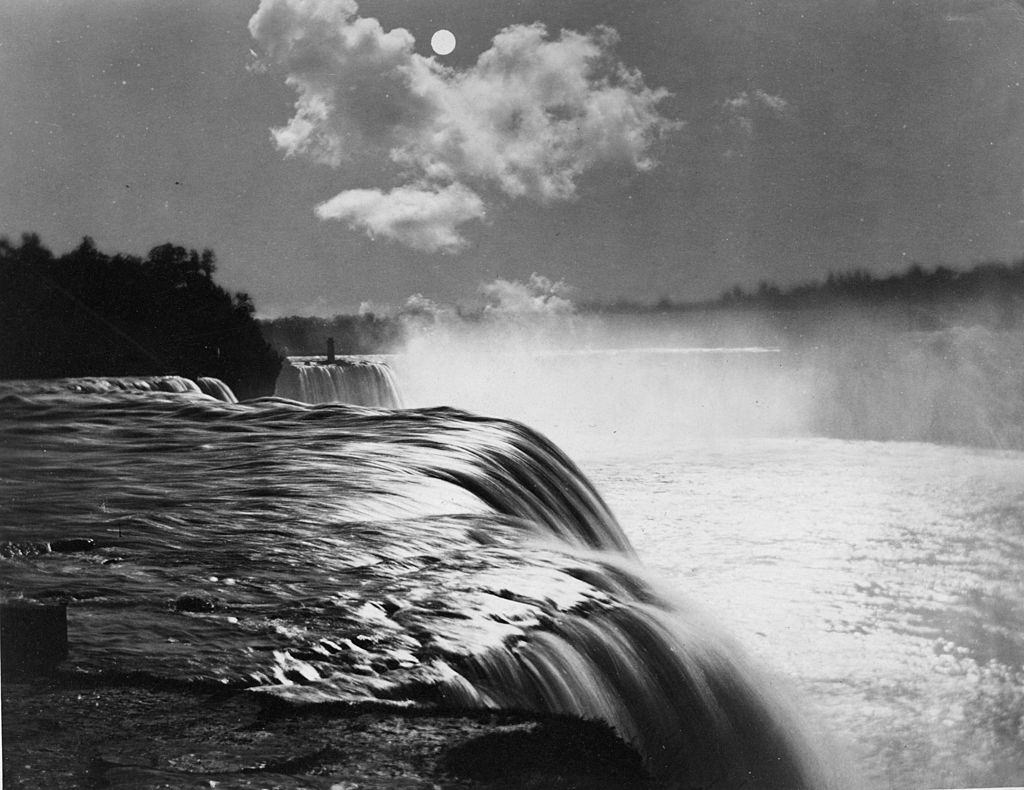
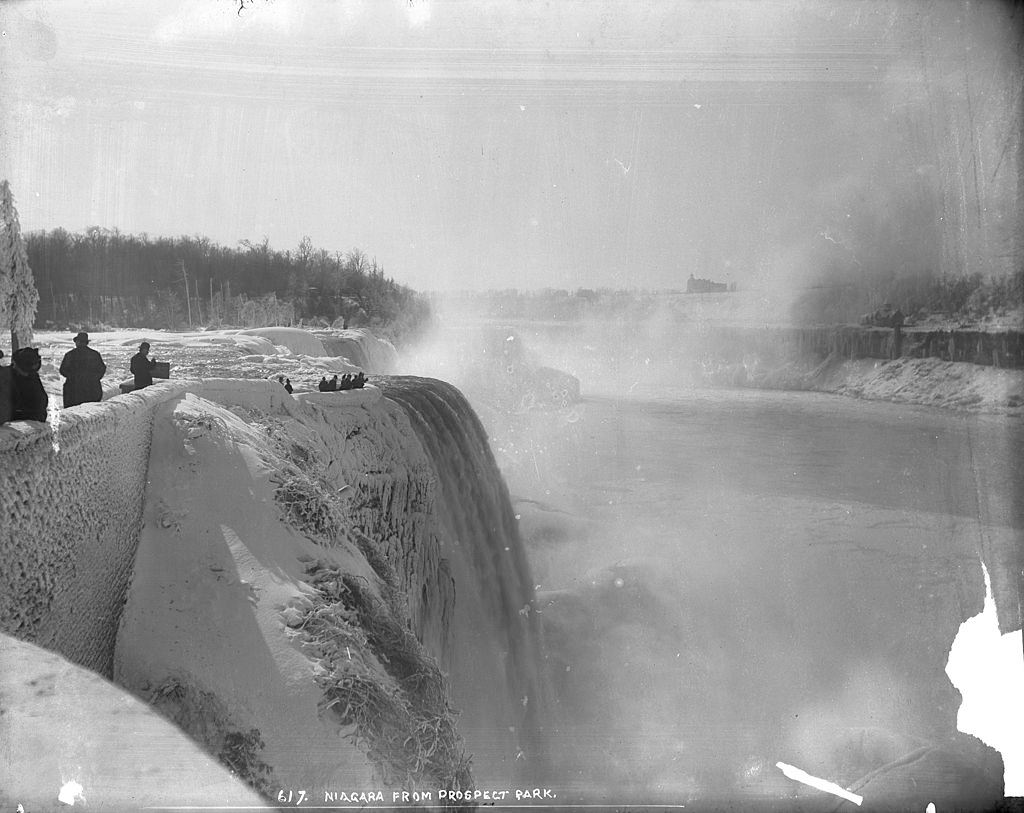
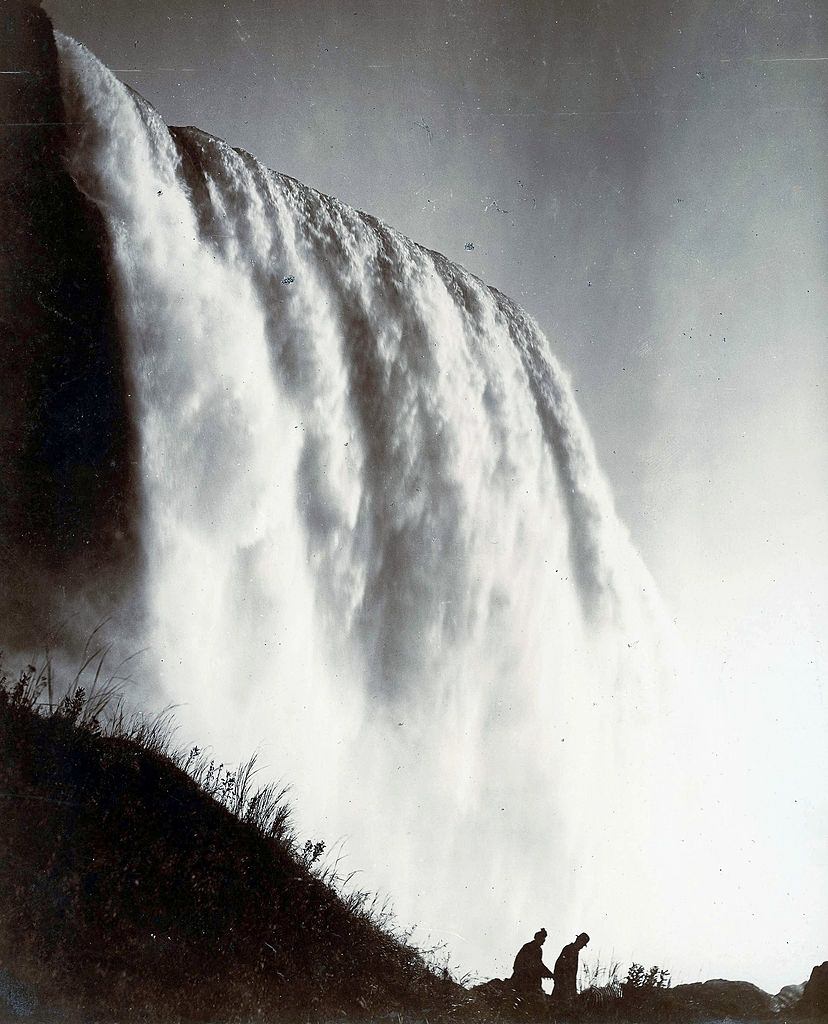
Prospect Point on the American side became one of the most popular viewing spots in the mid-1800s. Standing at the edge, visitors looked directly down into the gorge as millions of gallons of water thundered past. The Niagara River drains four of the five Great Lakes — Superior, Michigan, Huron, and Erie — before plunging over the escarpment into Lake Ontario. At peak flow, more than 168,000 cubic meters of water pass over the falls every minute. Even in photographs, the scale is difficult to fully absorb.
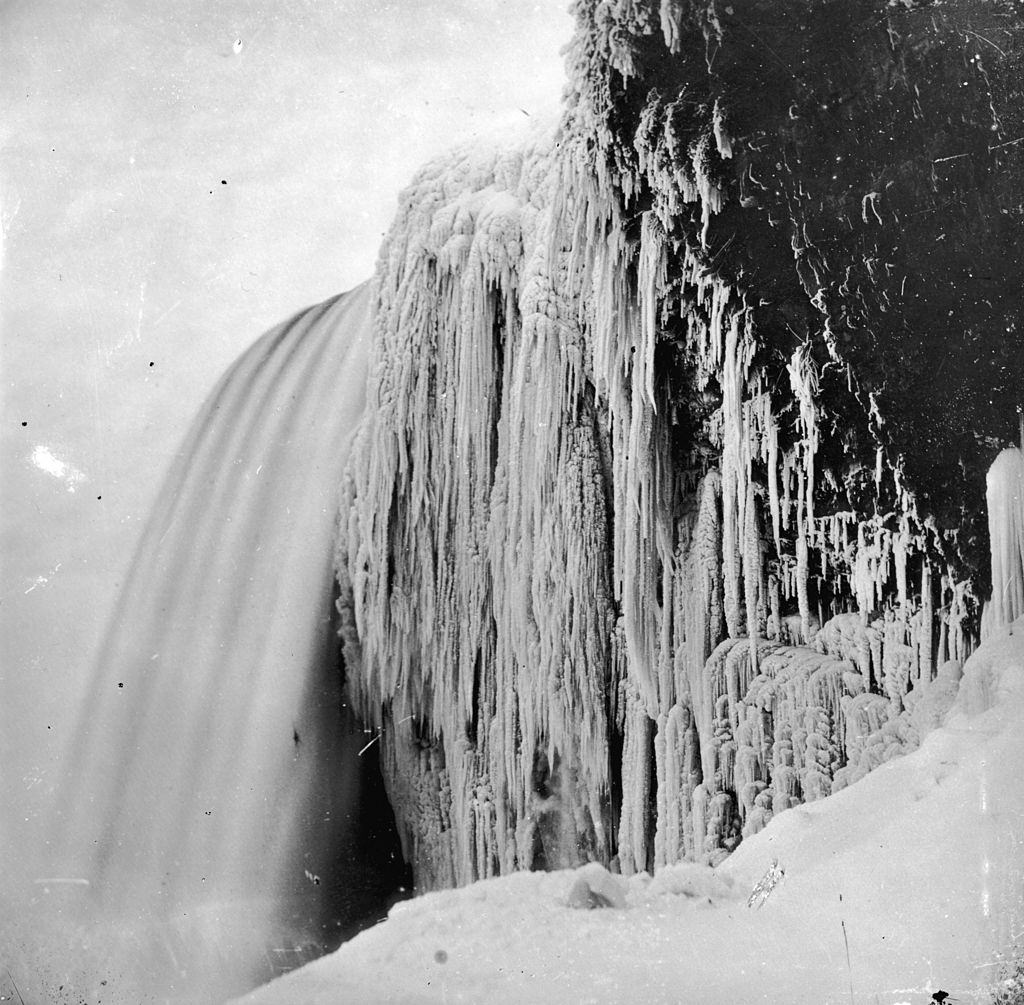
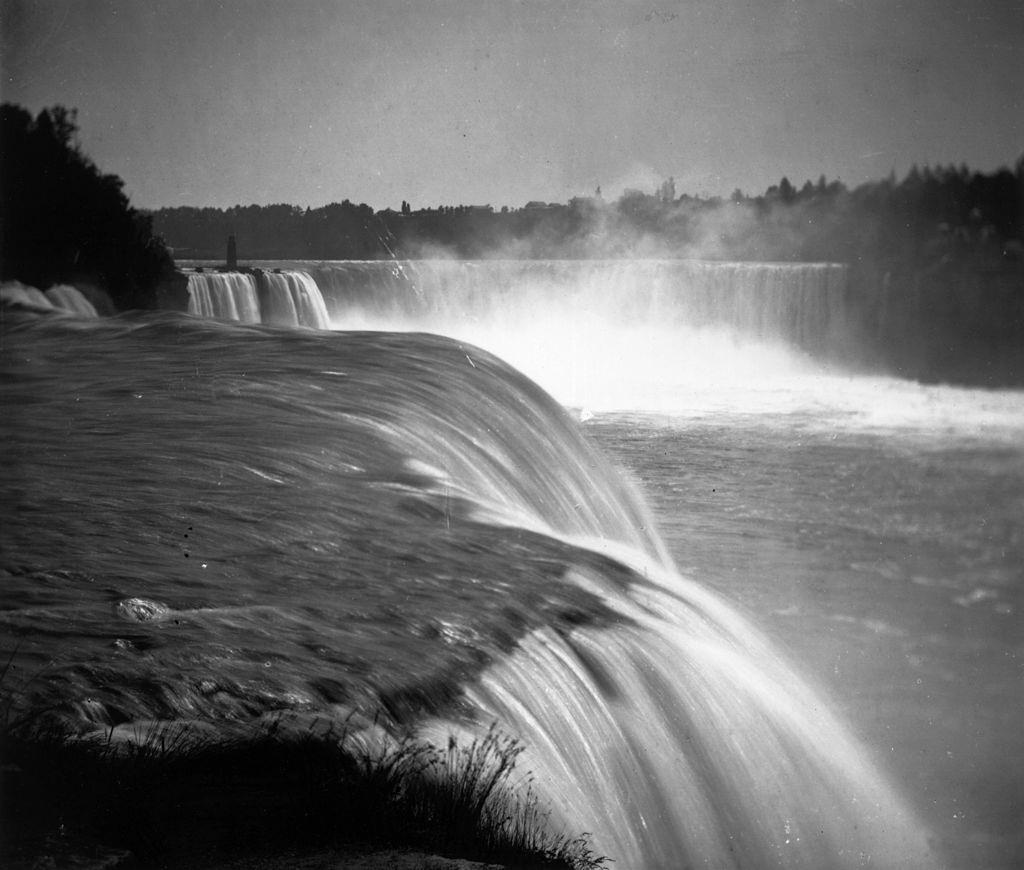
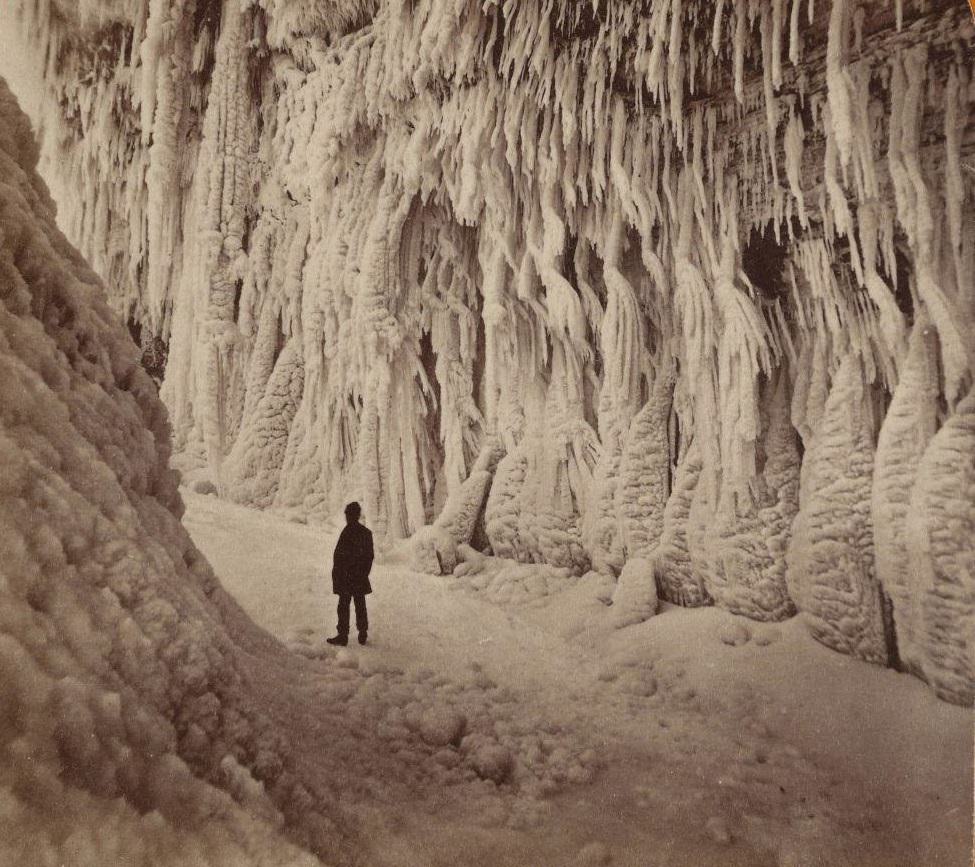
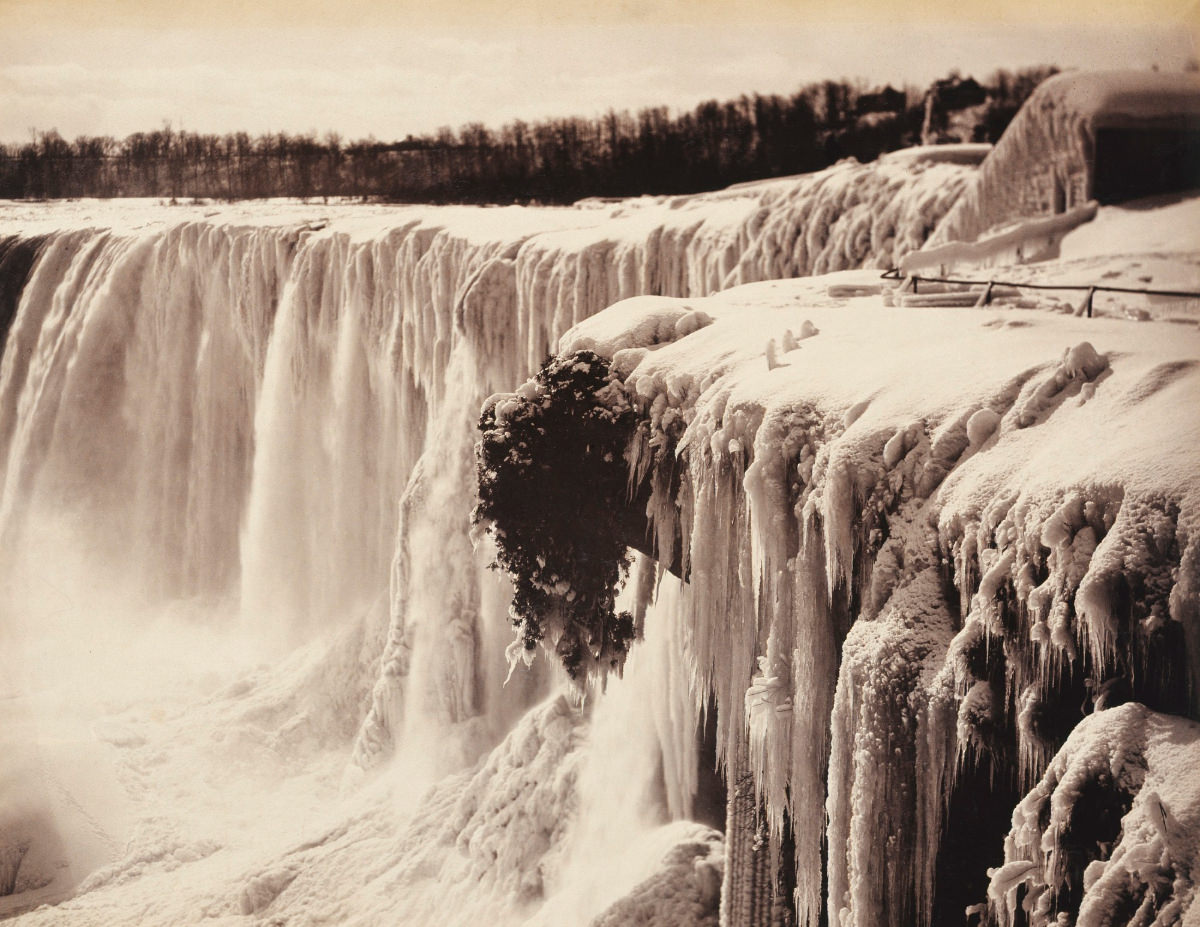
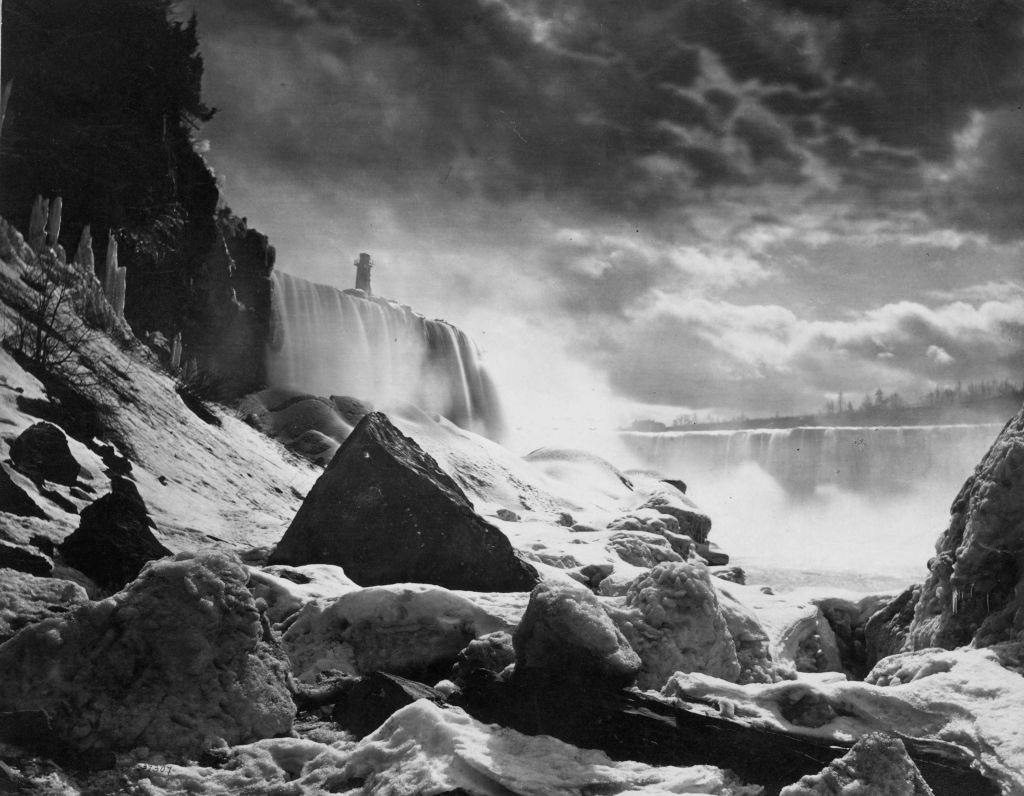
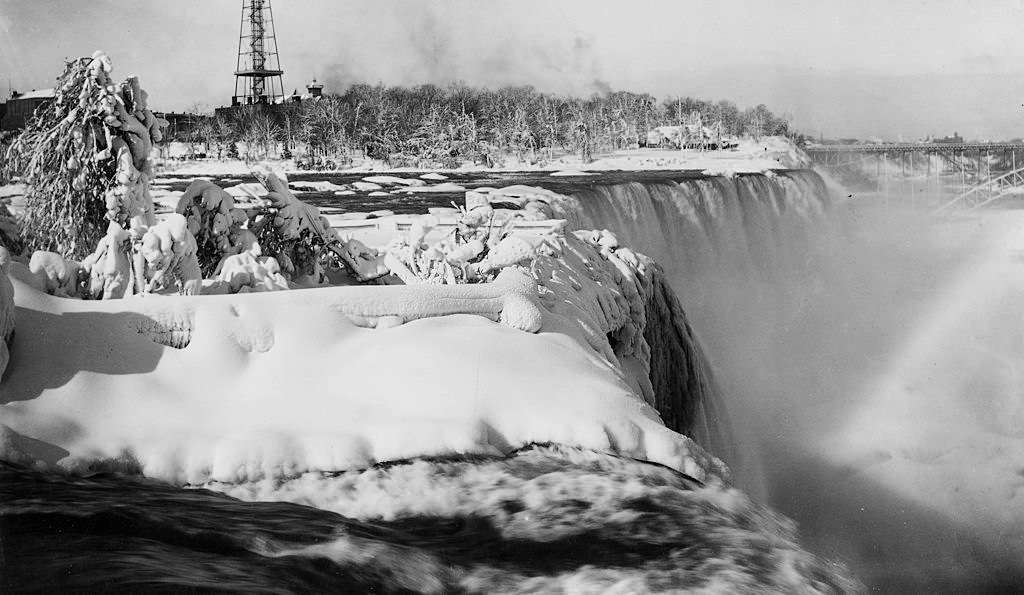
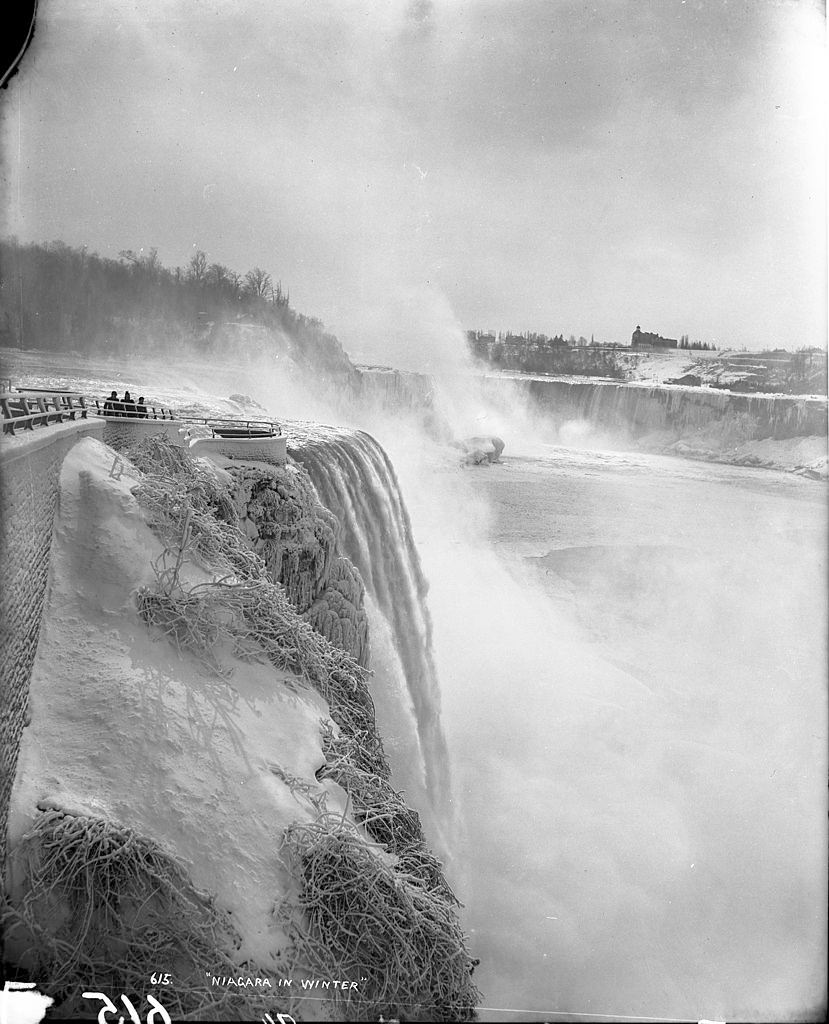
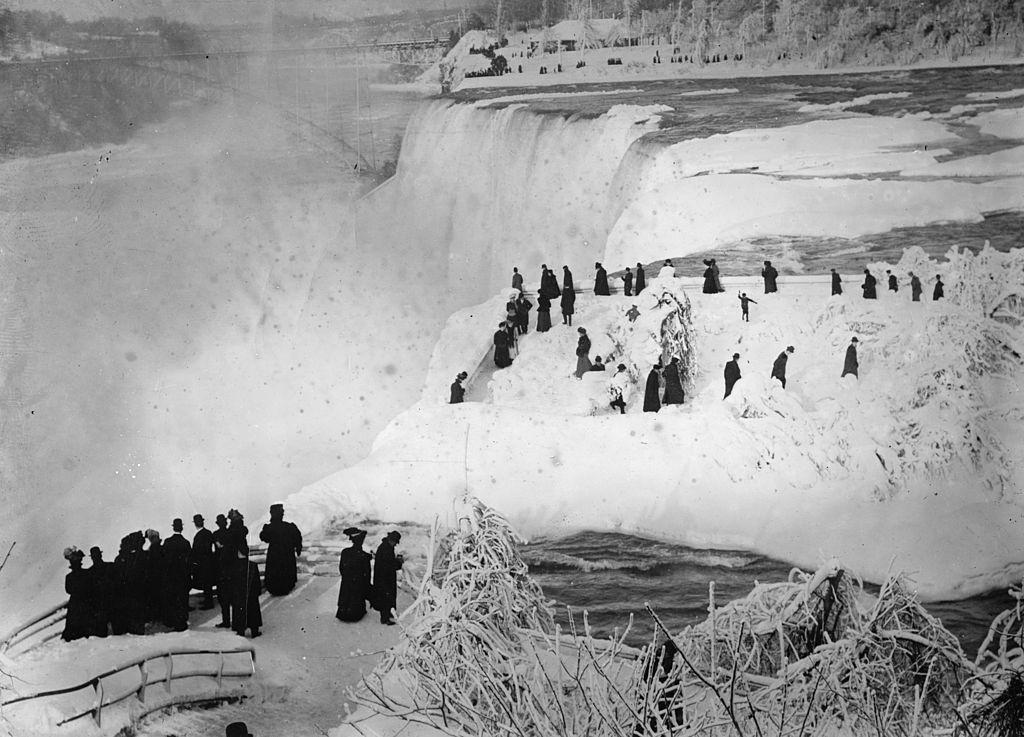
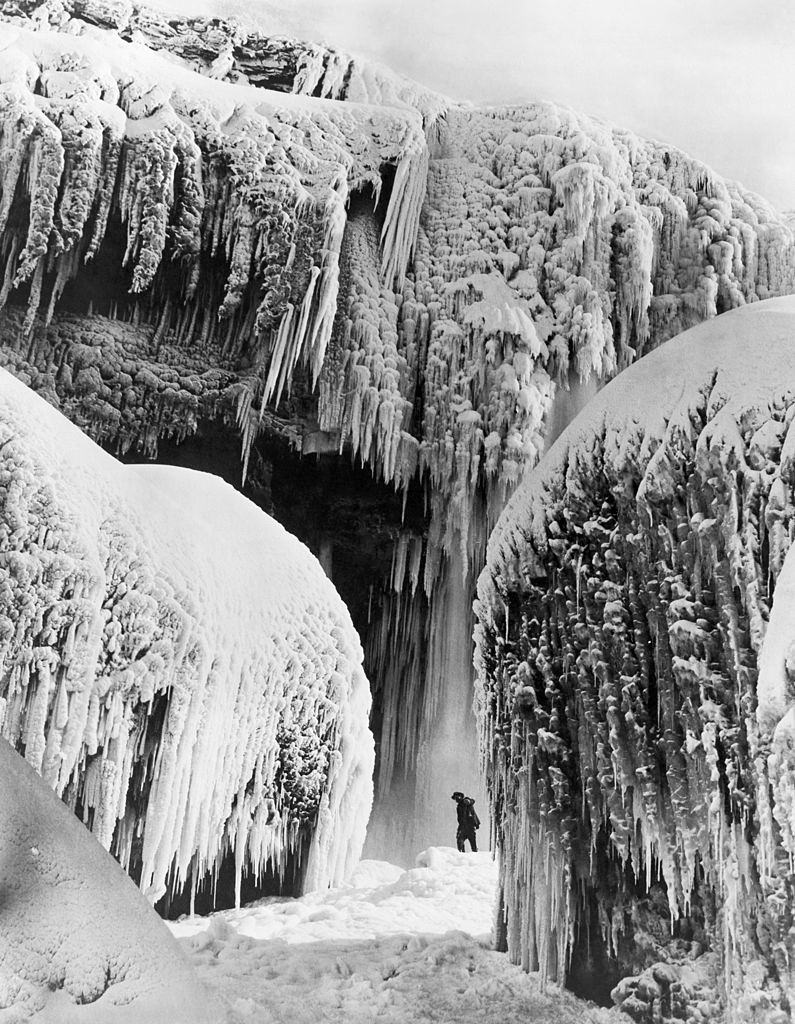
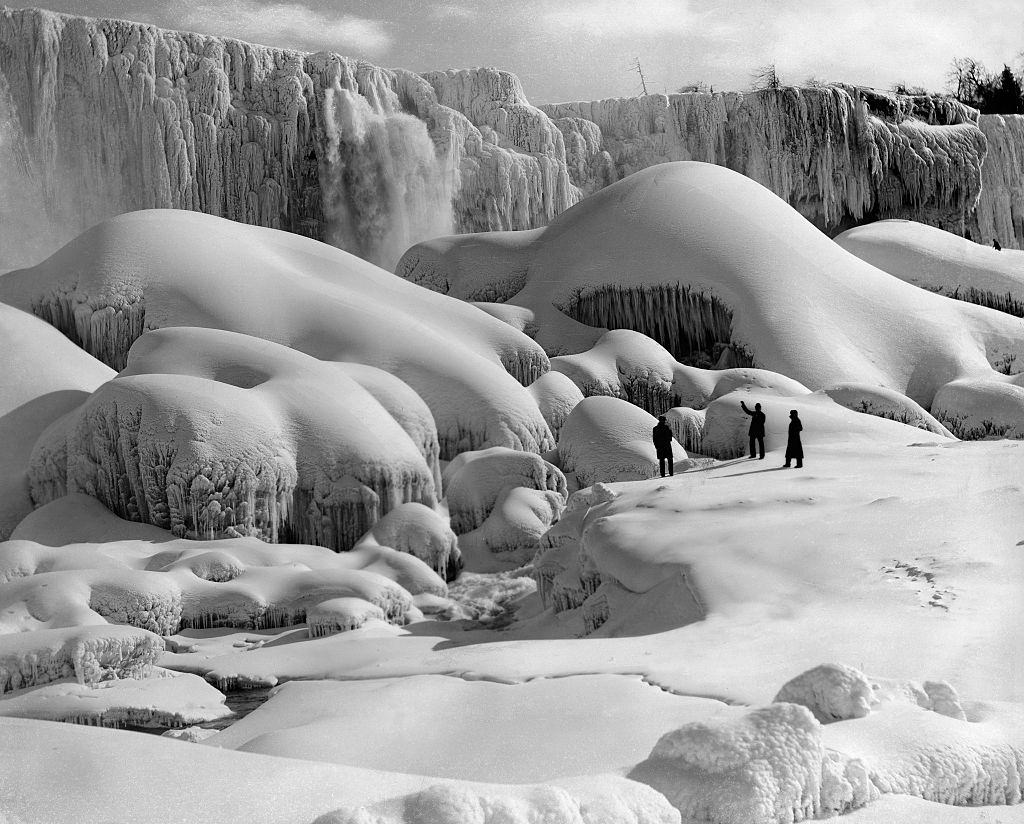
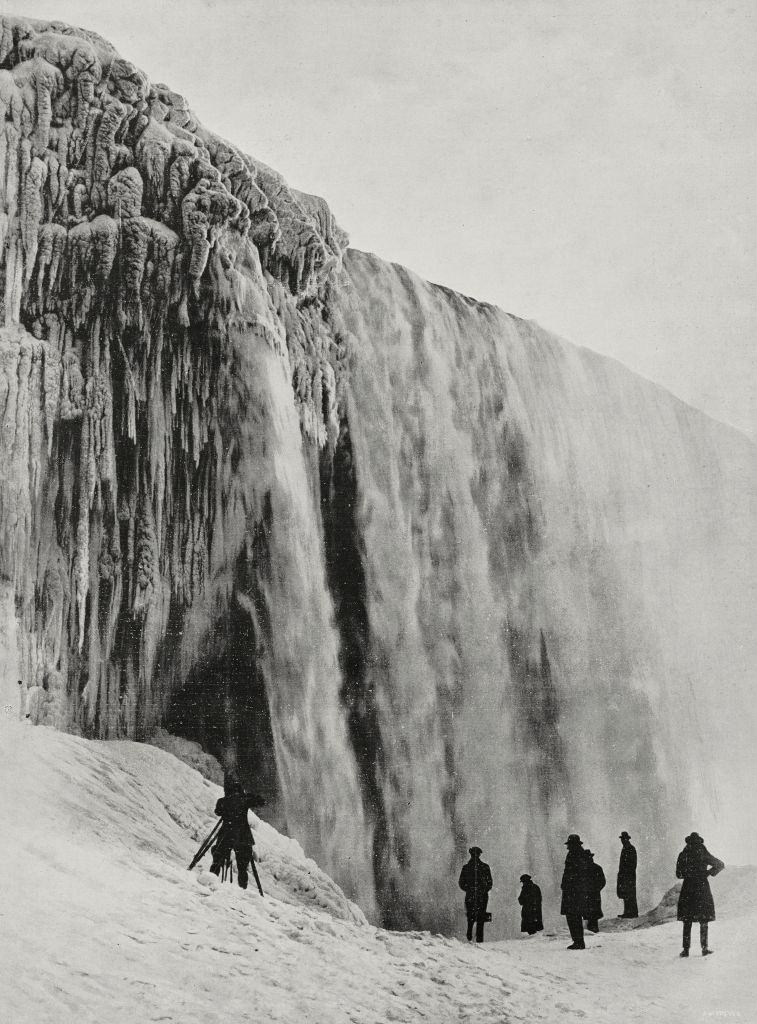
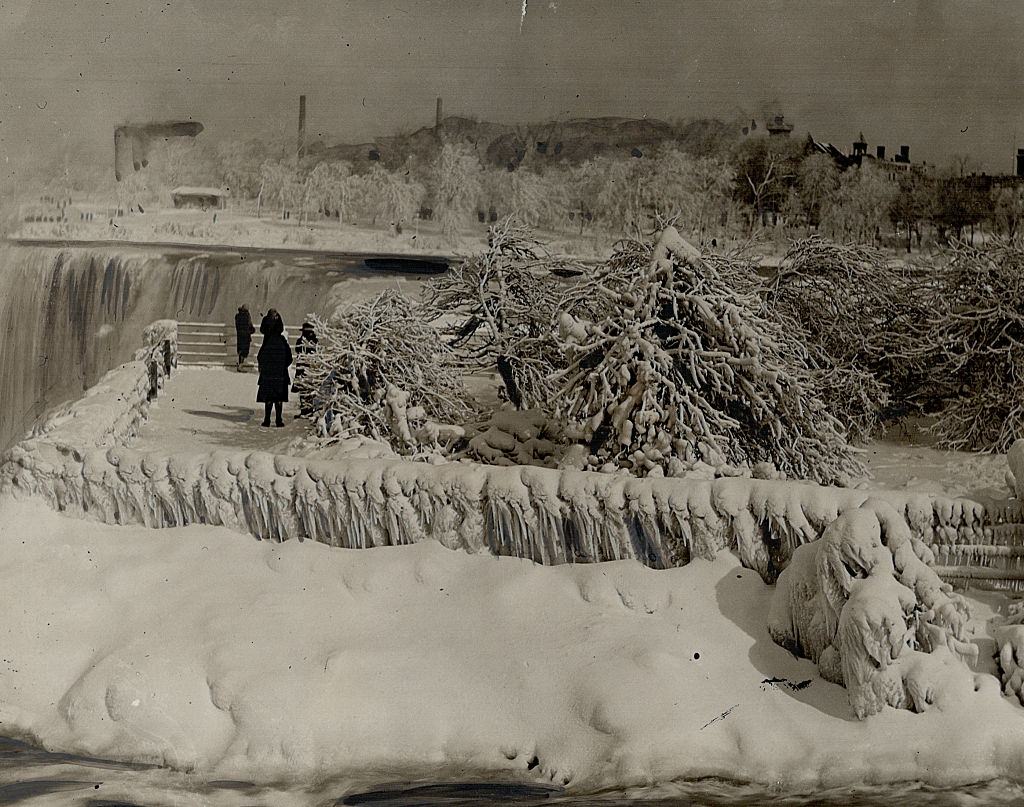
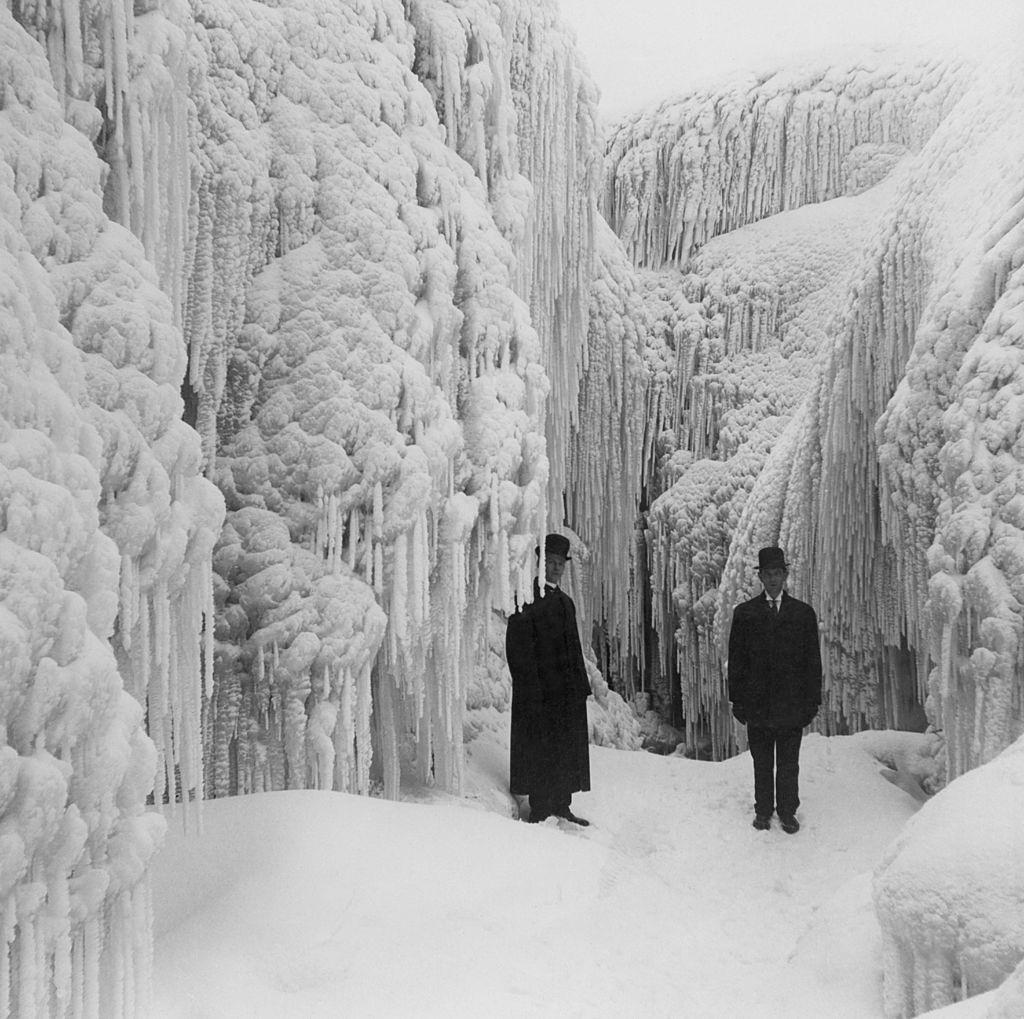
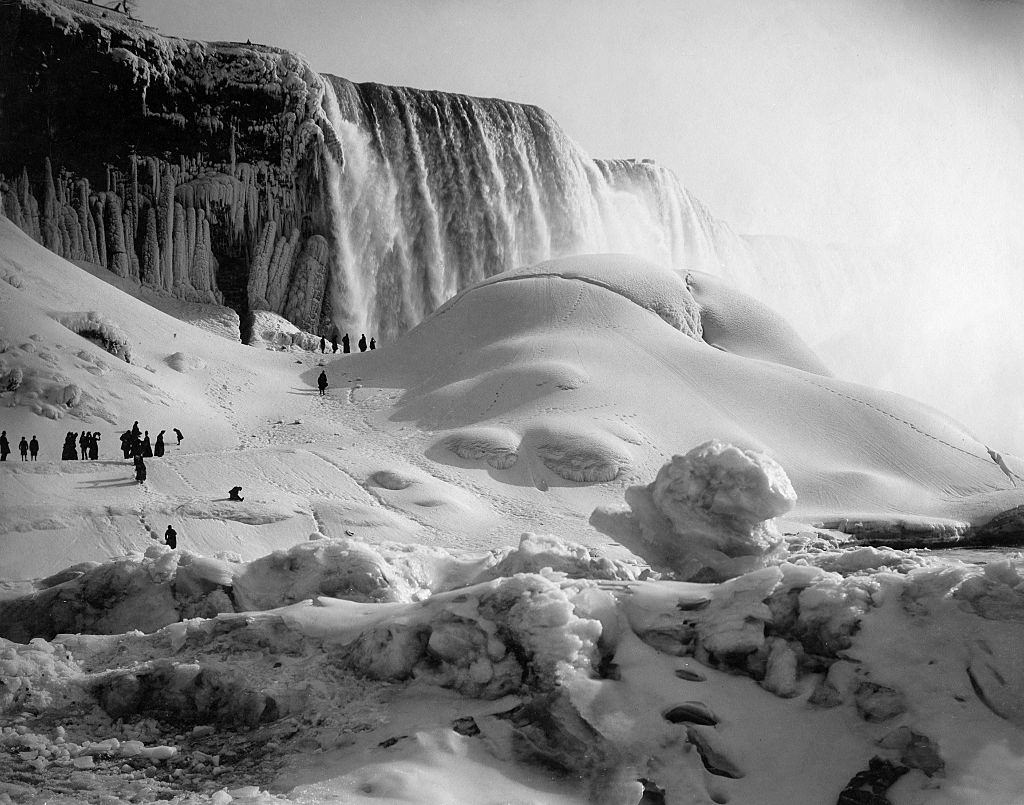
Winter transformed Niagara Falls into something almost unrecognizable. The mist thrown up by the falling water froze on every surface it touched — rocks, railings, trees, and buildings near the gorge. Enormous icicles formed along the cliff faces, and the riverbanks below built up into jagged ice mountains that could rise several stories high. When temperatures dropped far enough, the ice floes in the river packed together so tightly that people could walk across them from the American shore to the Canadian side. This was not an organized or official crossing. Entrepreneurs set up temporary stands on the ice, selling food and hot drinks to tourists willing to make the walk between two countries on a frozen river.
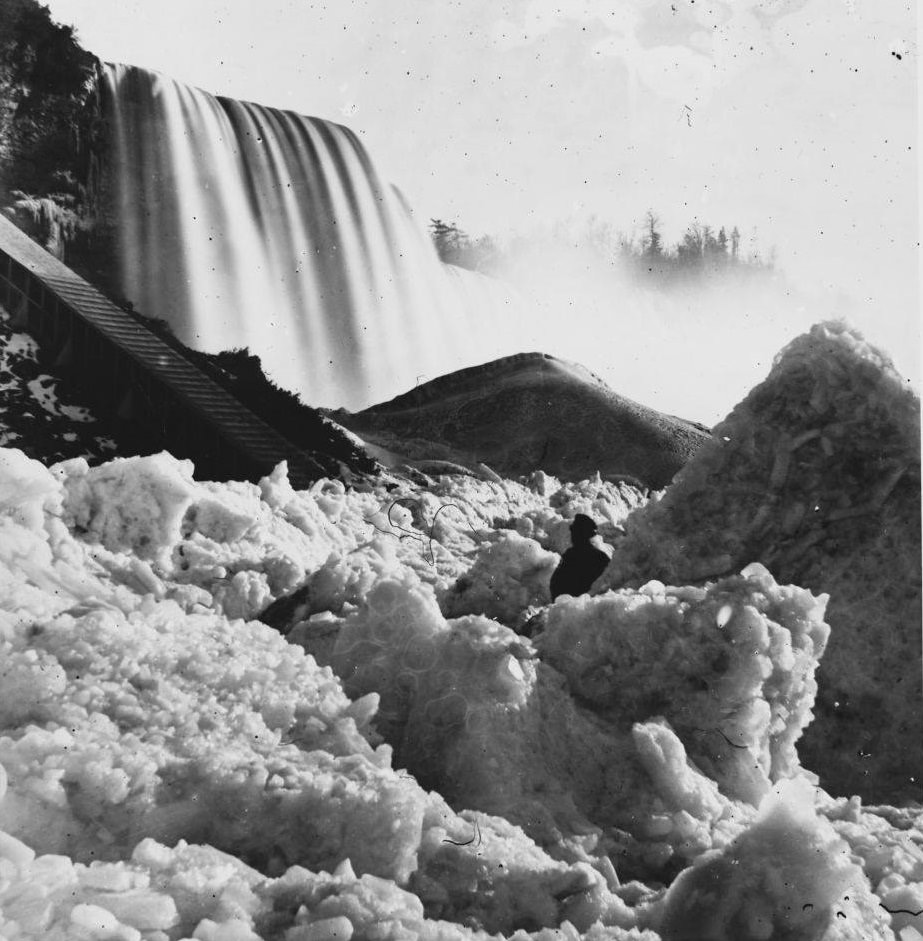
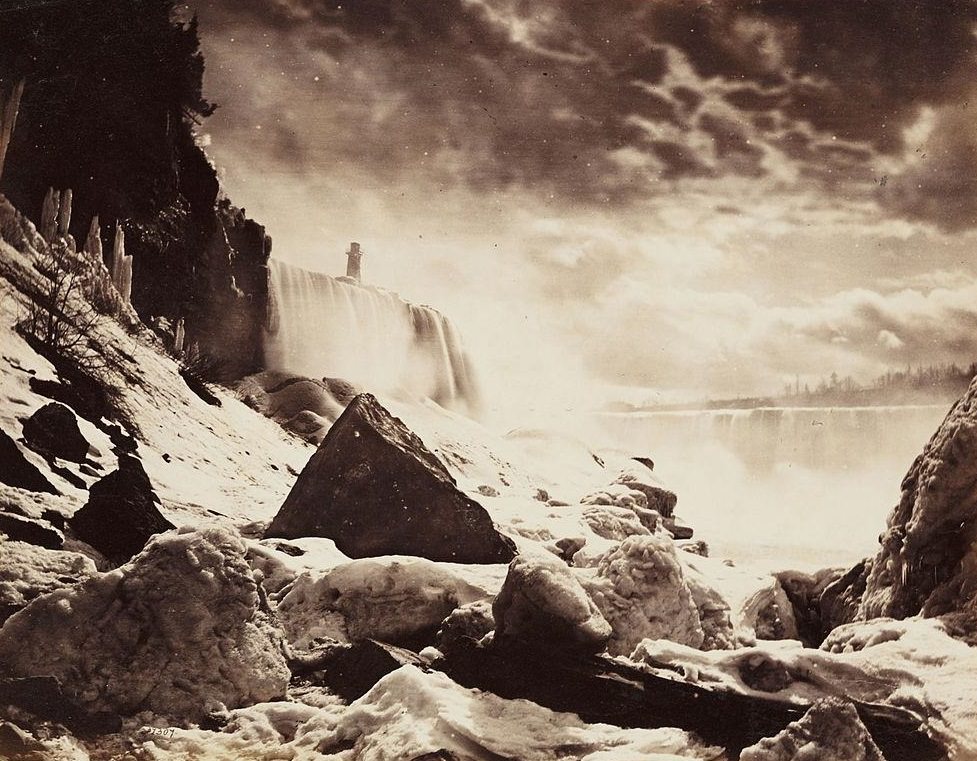
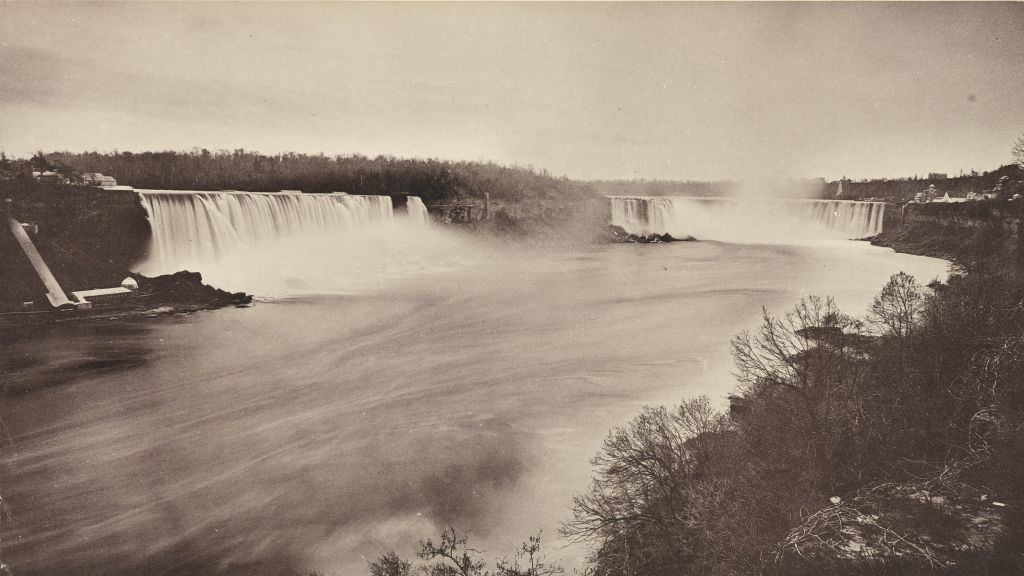
The Horseshoe Falls on the Canadian side is the largest of the three waterfalls that make up Niagara Falls, stretching roughly 790 meters wide and dropping about 57 meters. The American Falls and Bridal Veil Falls sit on the New York side, separated from Horseshoe Falls by Goat Island. Together, the three cataracts form one of the most visited natural attractions in the world. In the 1860s, photographers captured each of them from multiple angles as camera technology slowly improved and exposure times shortened.
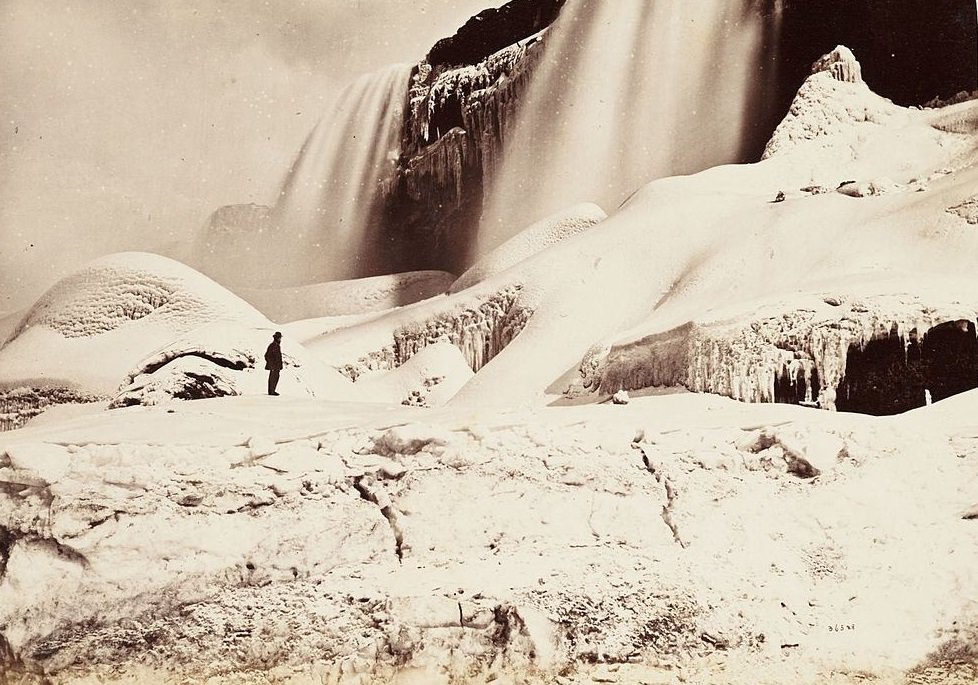
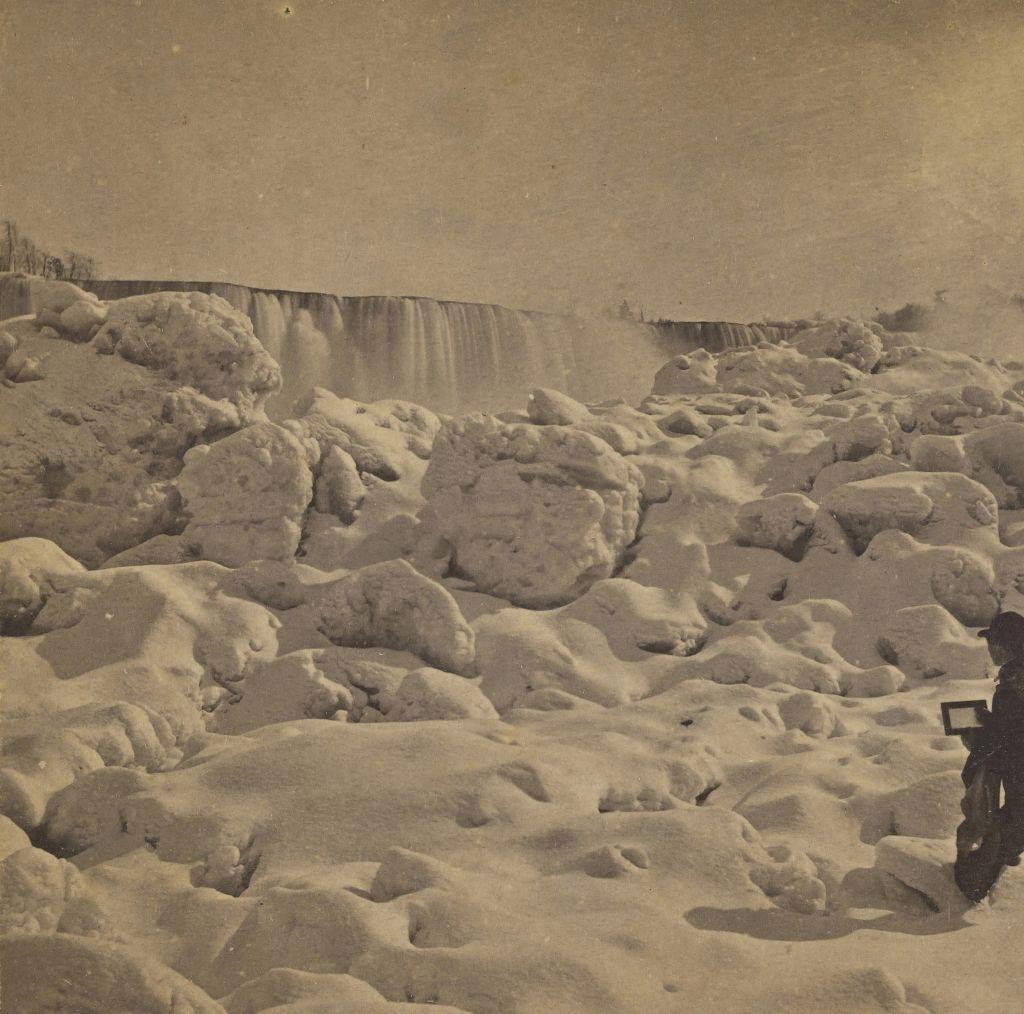
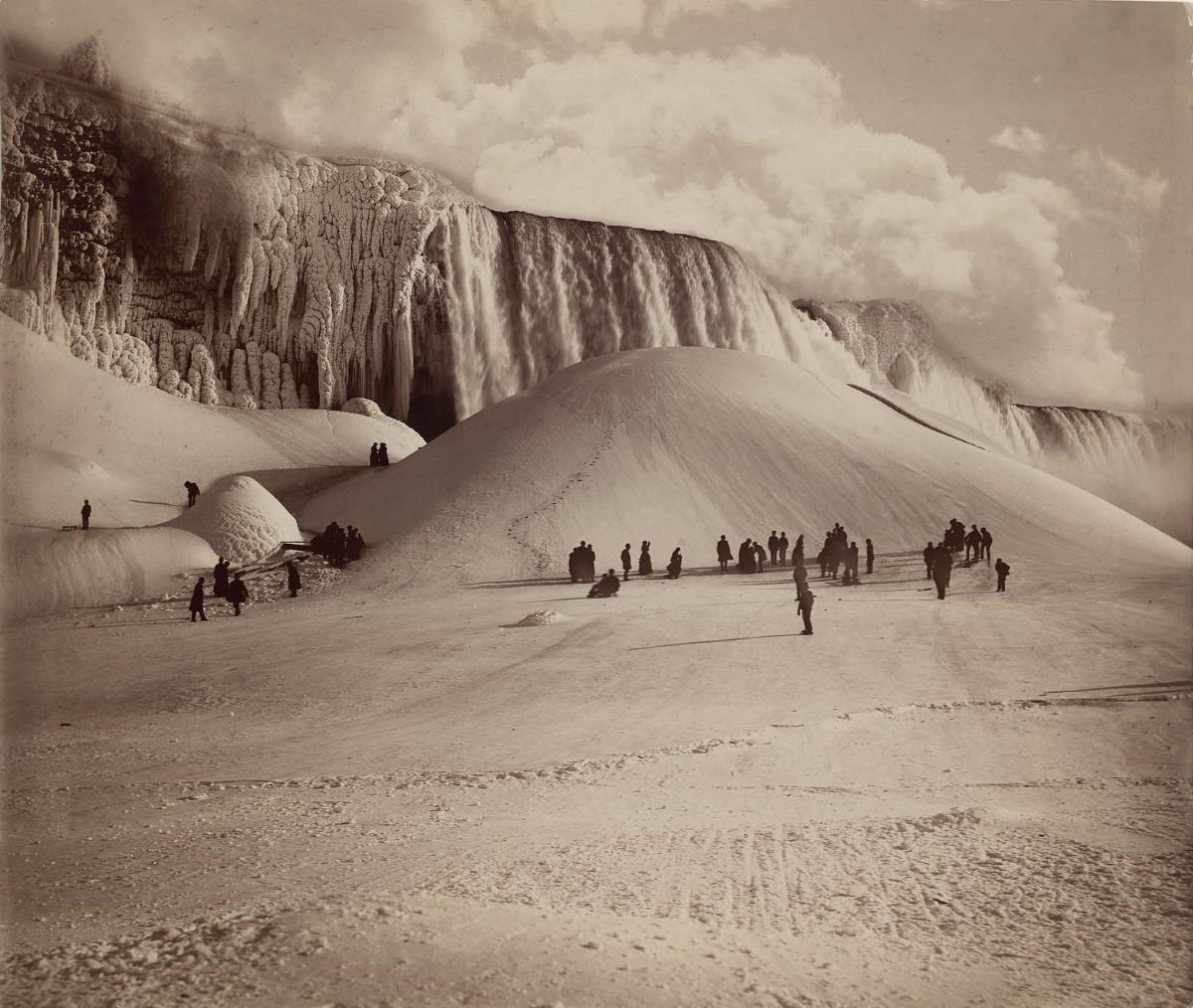
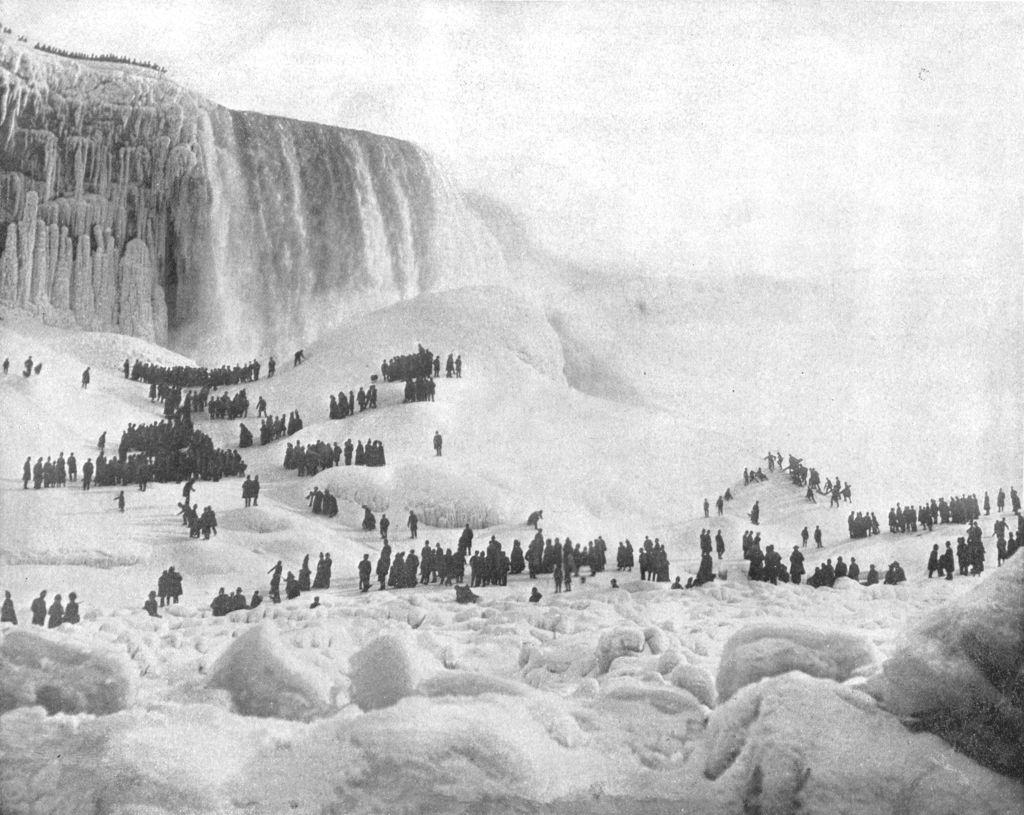
The ice bridge that formed each winter below the falls was a seasonal attraction in its own right. Thick slabs of ice piled on top of each other, creating a frozen landscape that drew the adventurous and the curious in equal numbers. People walked out onto the ice, posed for photographs, and explored the tunnels and caverns that formed beneath the overhanging sheets. The ice bridge attracted visitors consistently through the late 1800s. That changed in February 1912, when the ice unexpectedly broke apart, killing three people who were caught on it. After that, authorities banned foot traffic on the ice bridge entirely.
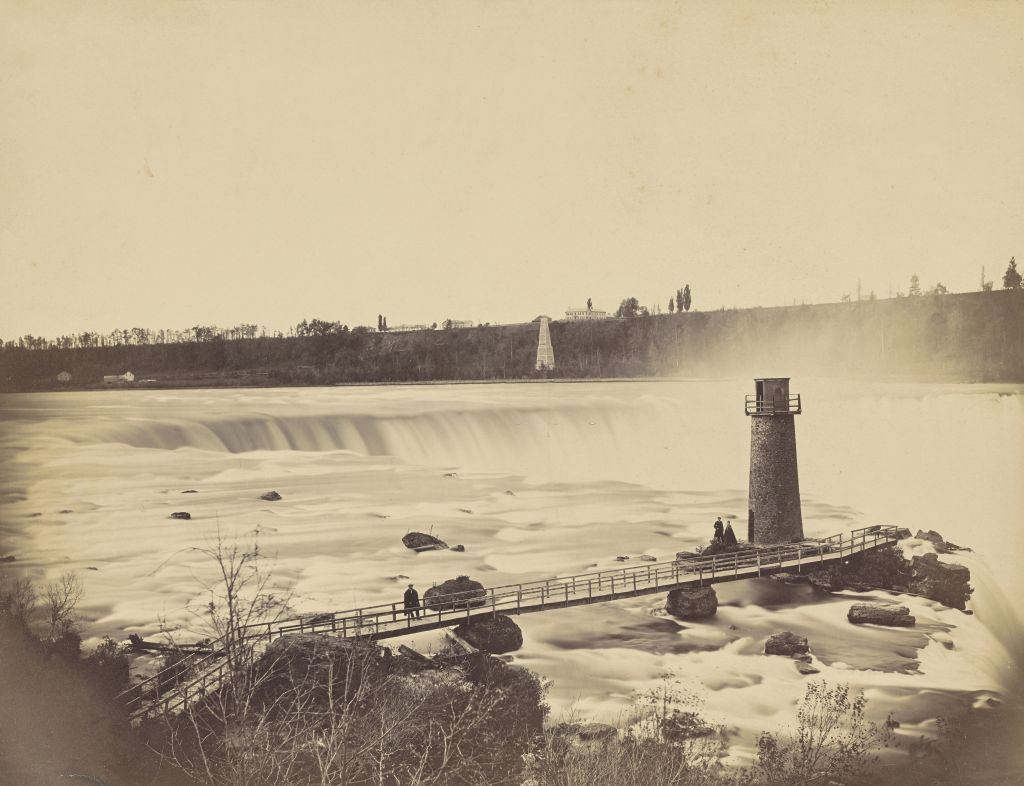
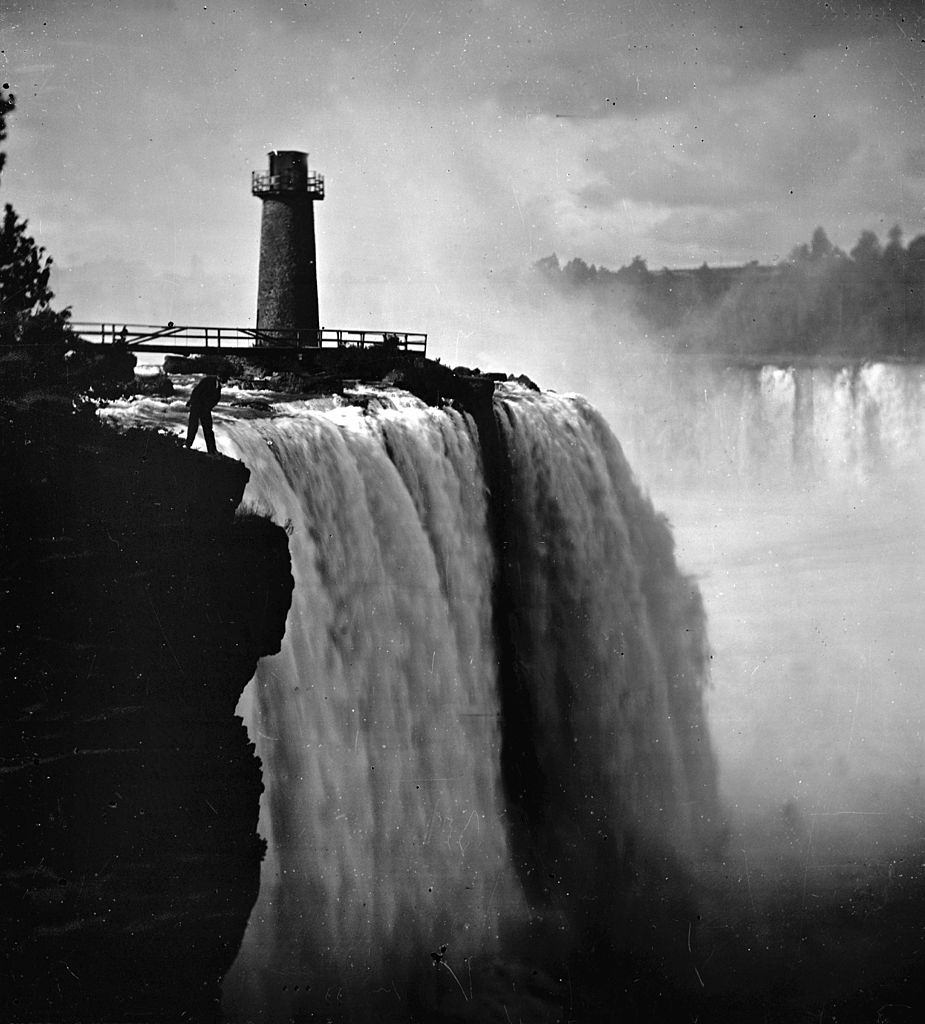
Terrapin Tower stood on the very edge of the Horseshoe Falls on a small outcropping of rock called Terrapin Rocks. Built in 1833, it gave visitors a view directly above the plunging water on three sides. The tower was demolished in 1873 after engineers determined it was undermining the stability of the rock beneath it. Photographs from the 1860s and early 1870s show it still standing, a small stone structure perched at one of the most exposed points imaginable, with the full force of the Canadian Falls dropping away just feet from its base.
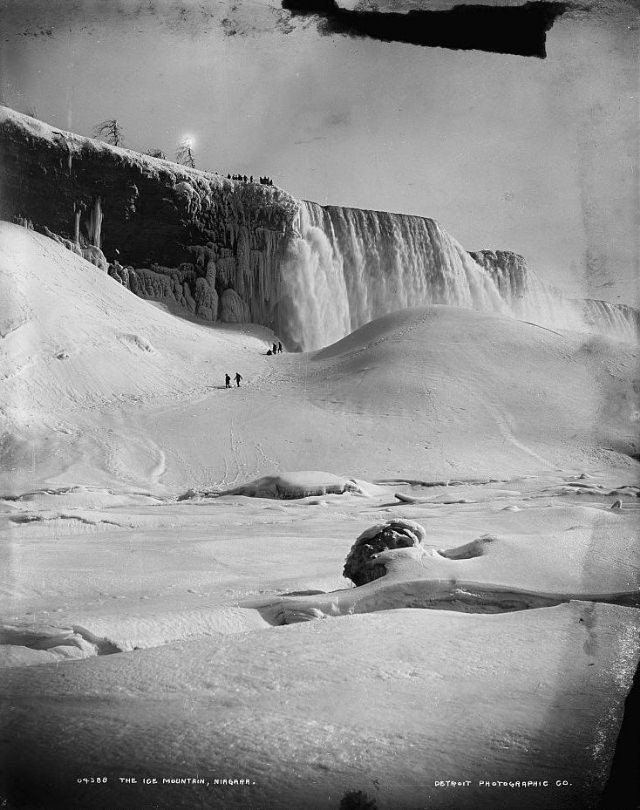
By the 1880s, the area around Niagara Falls had grown considerably. Hotels, mills, and small industries had crowded the riverbanks on both sides, and the commercial exploitation of the site was drawing sharp criticism from conservationists. Frederick Law Olmsted, who had designed Central Park in New York, led a campaign to remove the private developments and create a protected public reserve. In 1885, the Niagara Reservation — the oldest state park in the United States — was established on the New York side. Ontario created Queen Victoria Park on the Canadian side the same year.
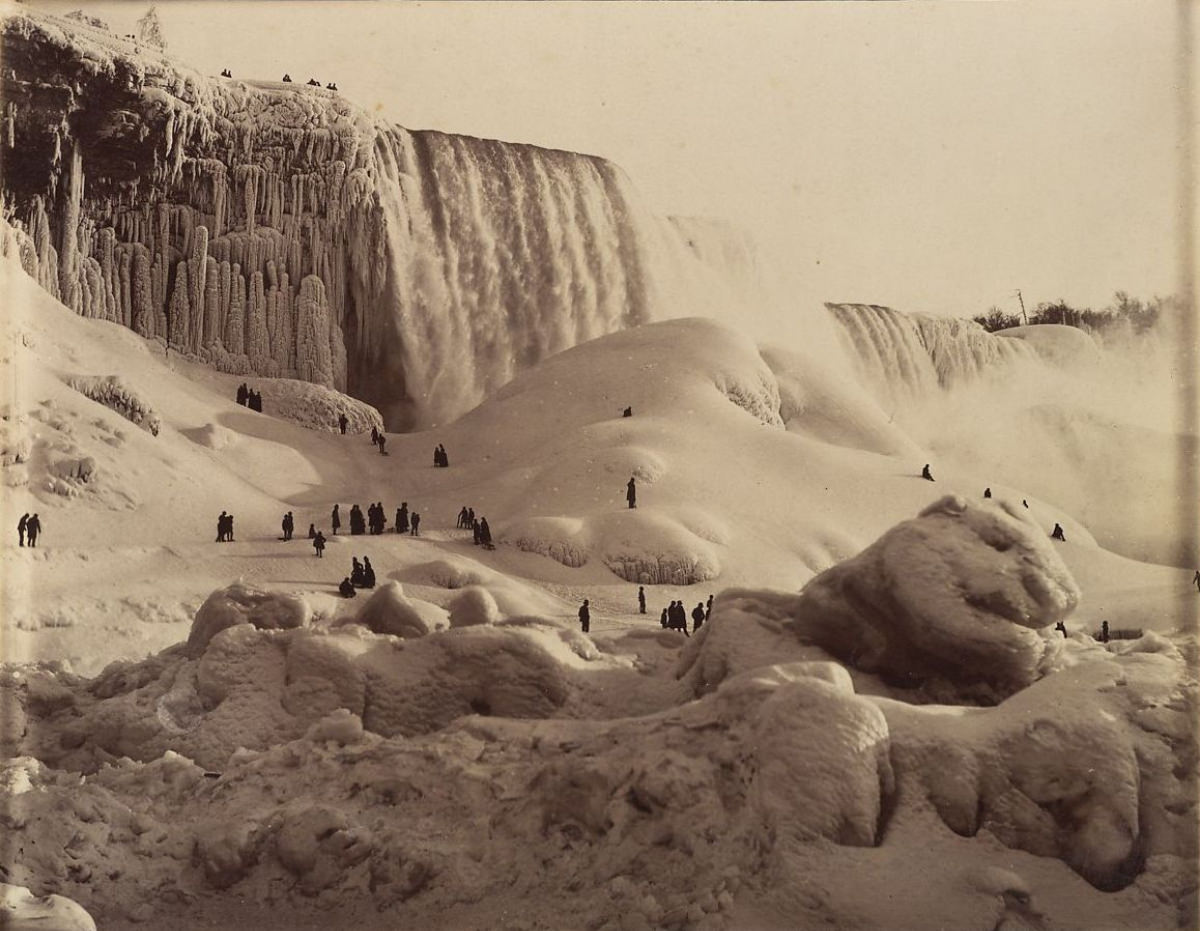
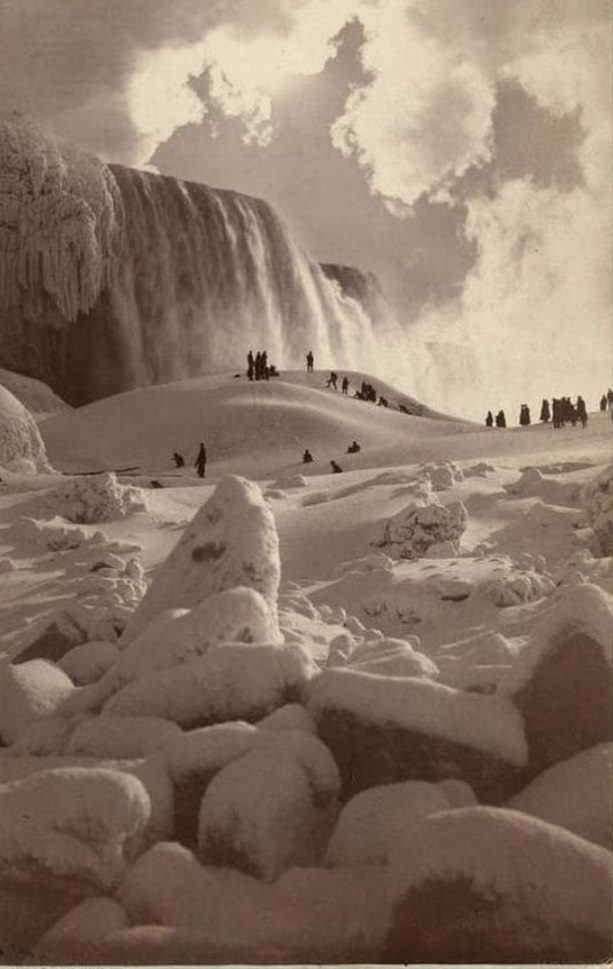
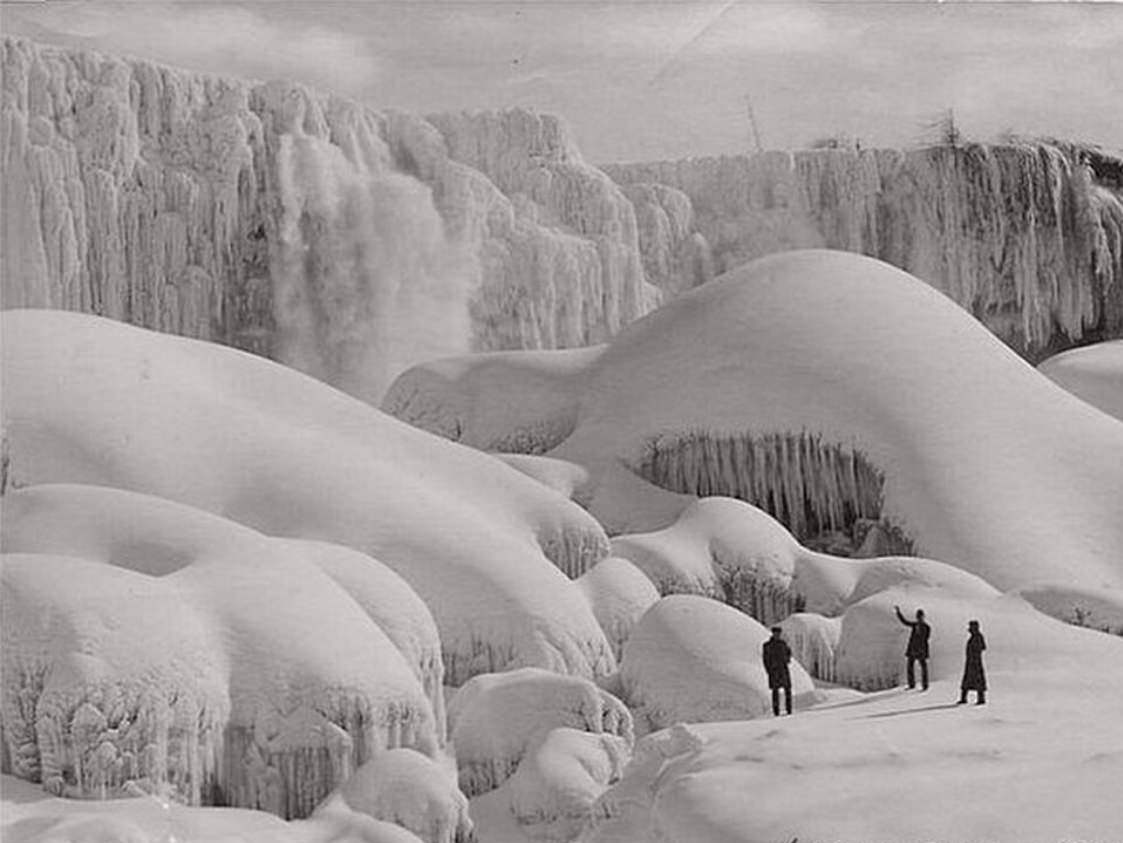
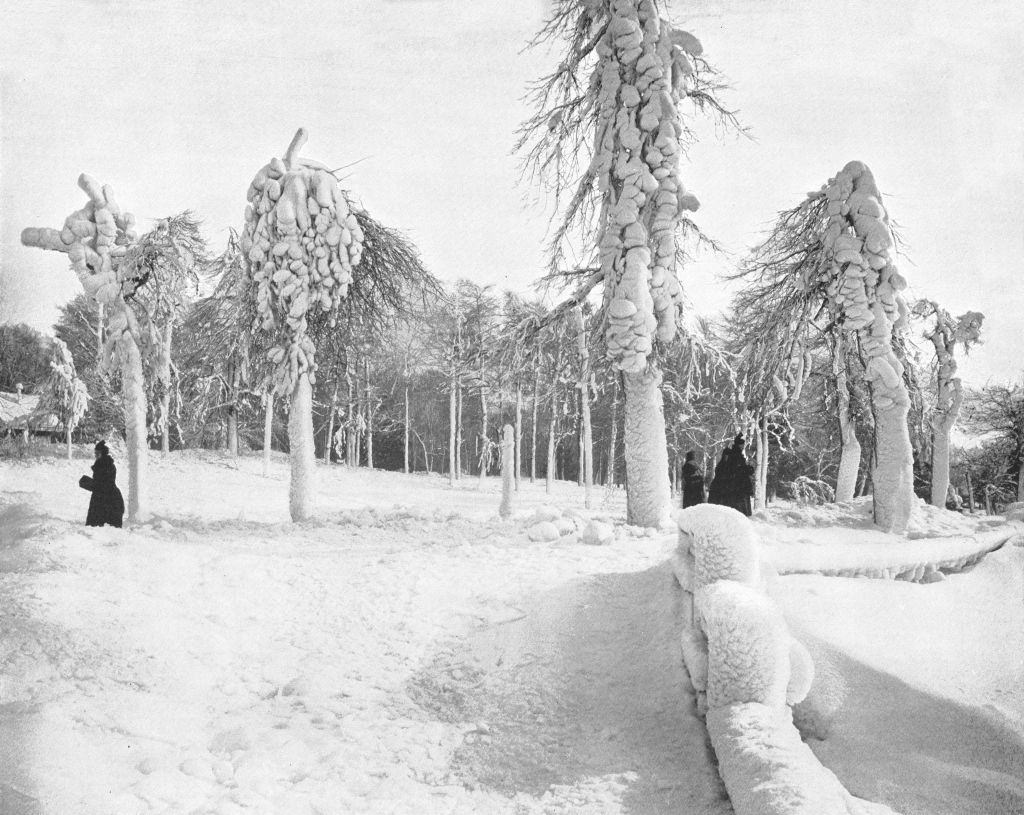
Goat Island sits in the middle of the Niagara River, dividing the American and Horseshoe Falls. It was one of the few points from which a visitor could stand between the two cataracts and see both at once. The island was connected to the American mainland by a bridge, making it accessible to foot traffic throughout the year. In winter, the spray from both falls coated the island’s trees in thick ice, creating a landscape that photographers returned to repeatedly across several decades.
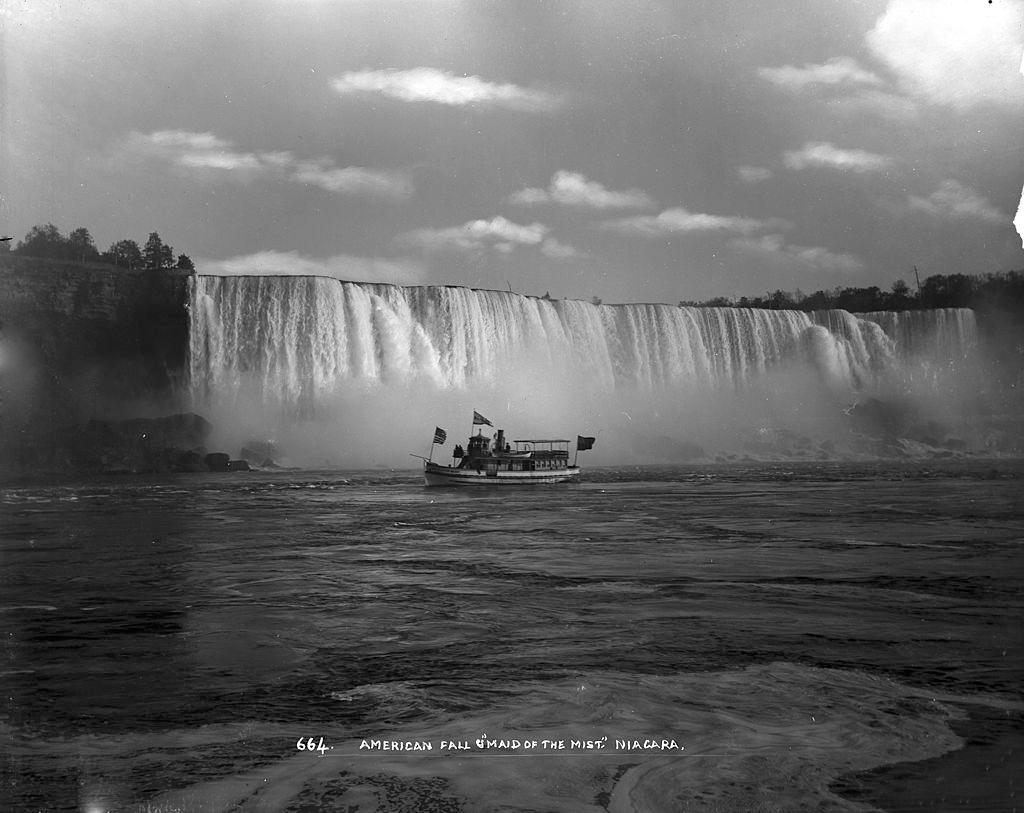
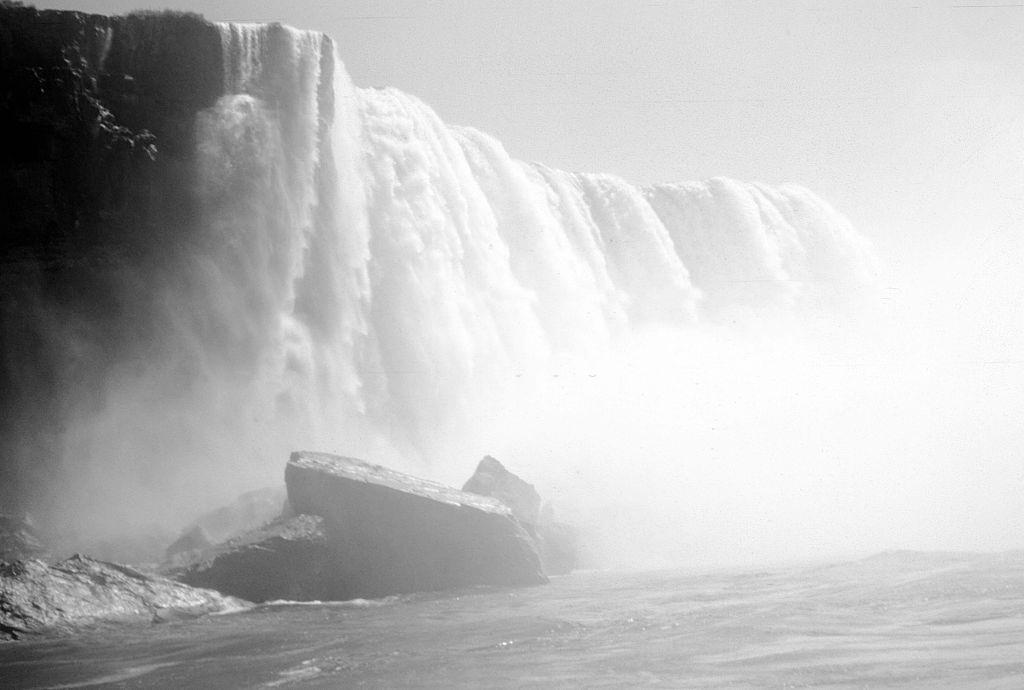
The Maid of the Mist boat tours began operating in 1846, ferrying passengers to the base of the falls and into the heavy spray thrown off by the Horseshoe Falls. By the 1890s, the boats had become one of the signature experiences at Niagara. Passengers were given rubber ponchos before boarding, though those offered limited protection from the wall of mist at the closest approach. Photographs from the decade show the boats dwarfed by the falling water, a sharp reminder of just how much force is contained in the river.
The turn of the century brought new industries to the region. Nikola Tesla and George Westinghouse had built the world’s first large-scale alternating current power station at Niagara Falls in 1895, using the river’s flow to generate electricity that powered Buffalo, New York. The success of that project proved that hydroelectric power could work at scale, and Niagara Falls became a model for power generation worldwide. By the early 1900s, the industrial transformation of the surrounding towns was well underway, though the falls themselves remained the region’s defining feature.
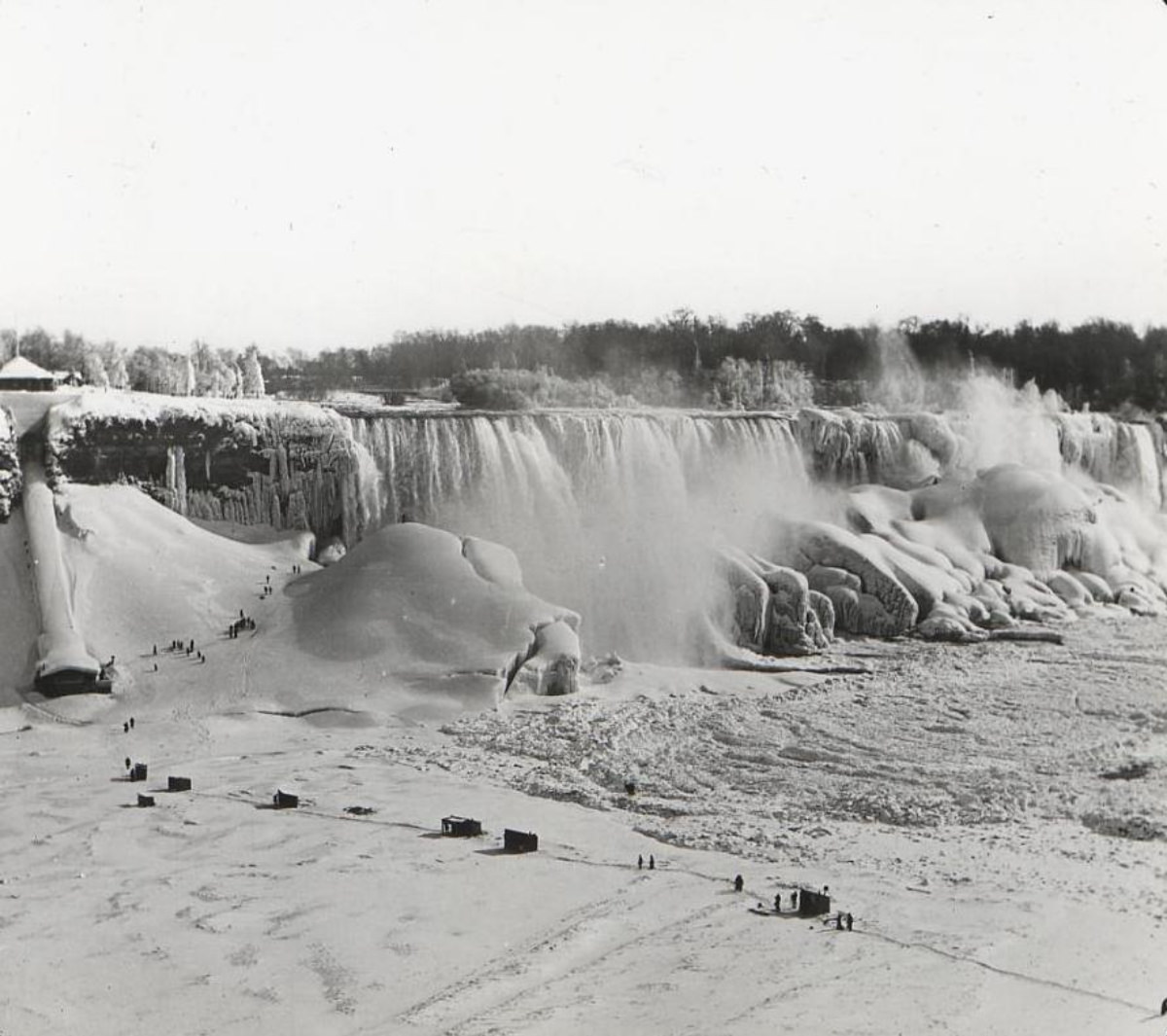
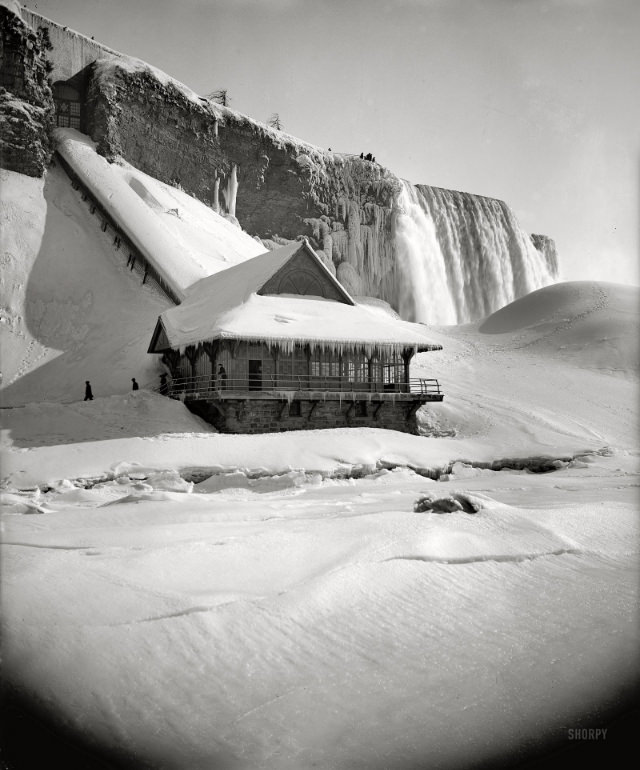
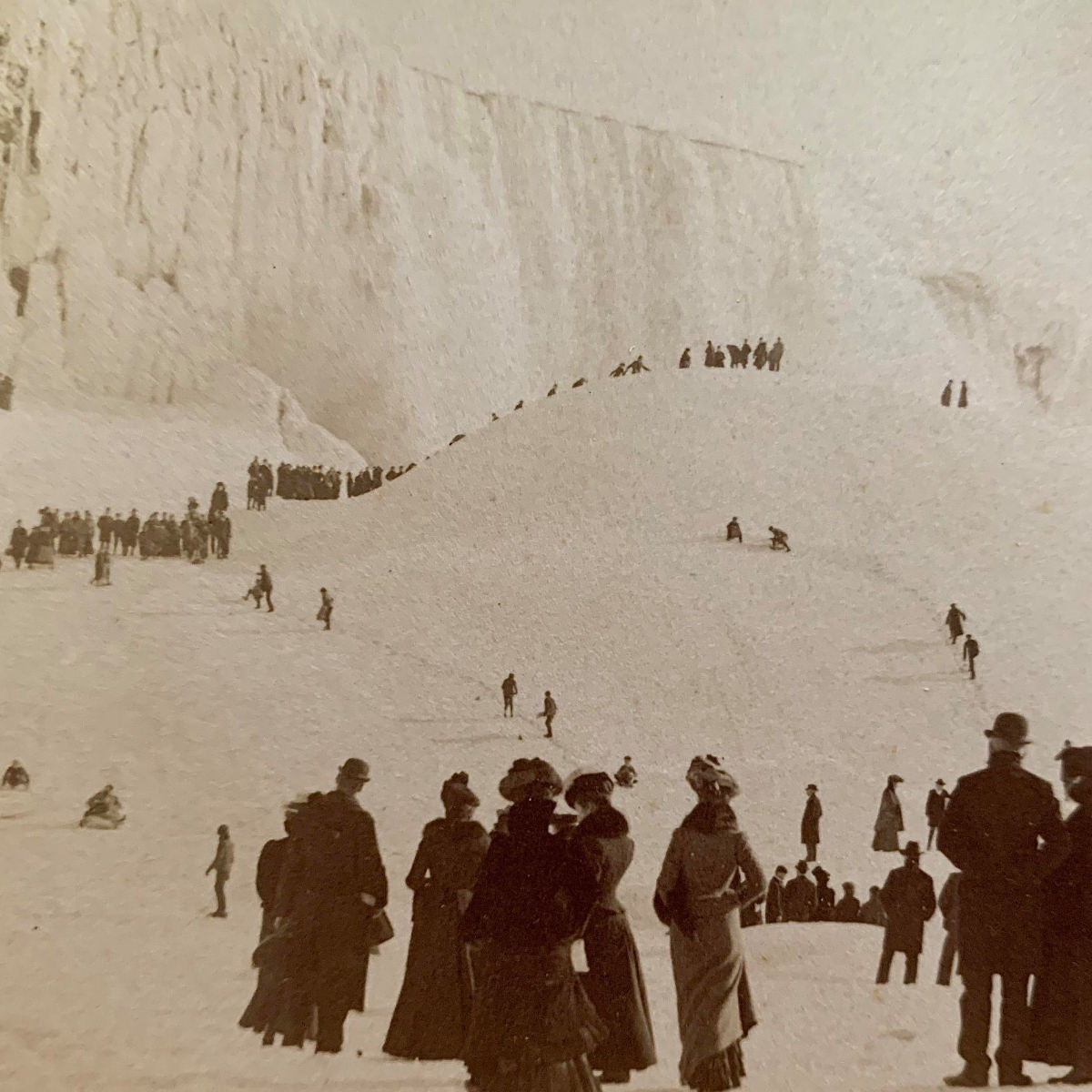
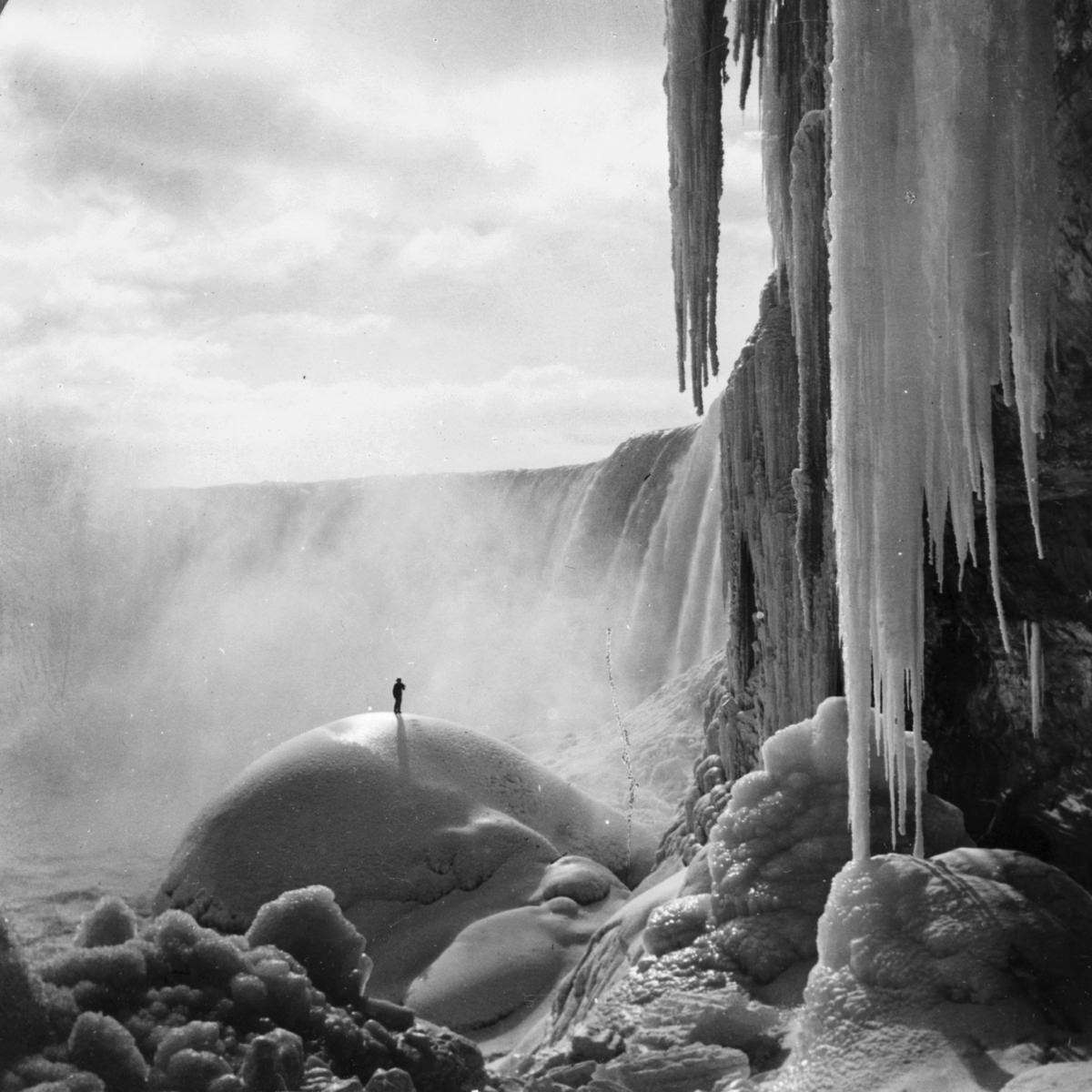
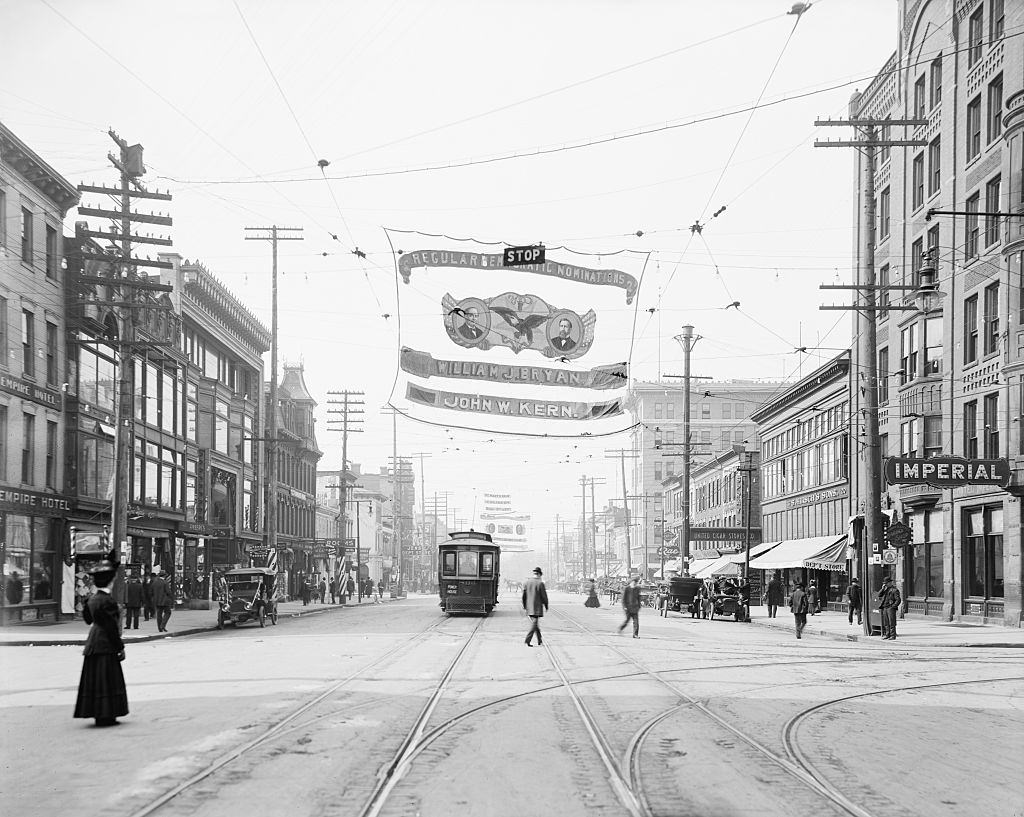
In January 1912, the ice bridge below the falls broke apart without warning. Two American tourists and one Canadian were stranded on the moving ice. All three died. The accident ended the era of public access to the ice bridge, which had been a fixture of winter tourism for generations. The 1912 and 1913 photographs below show what that environment looked like — vast, frozen, and deceptively solid in appearance.
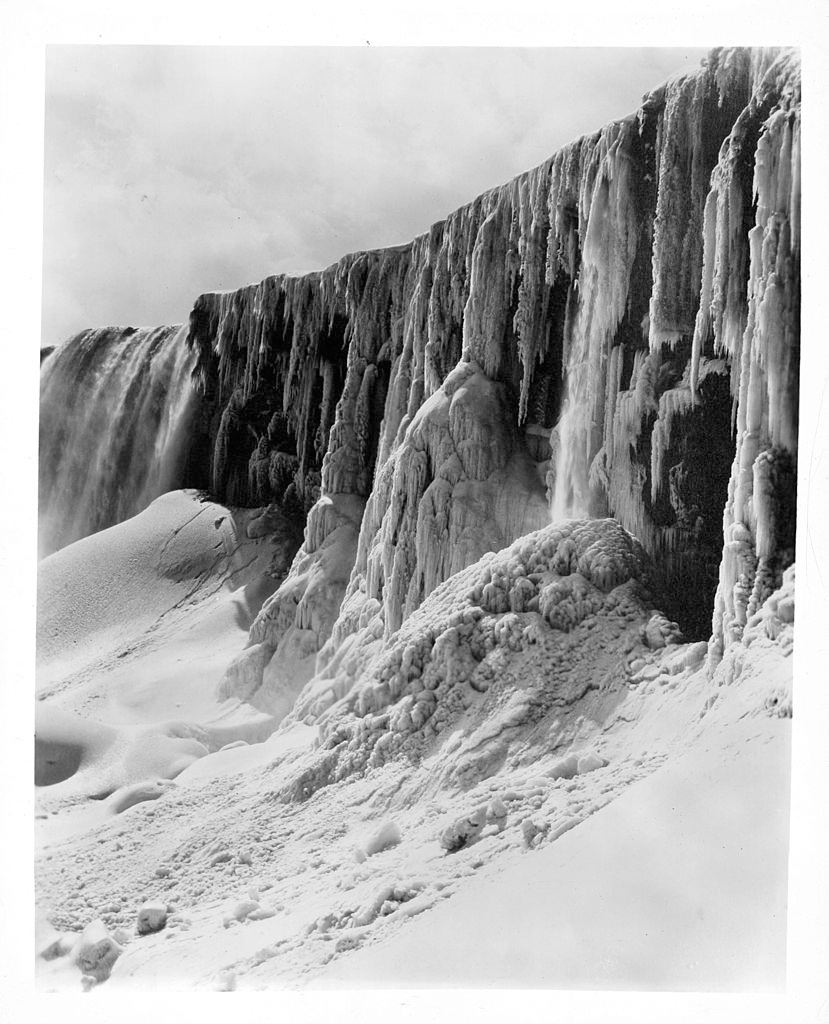
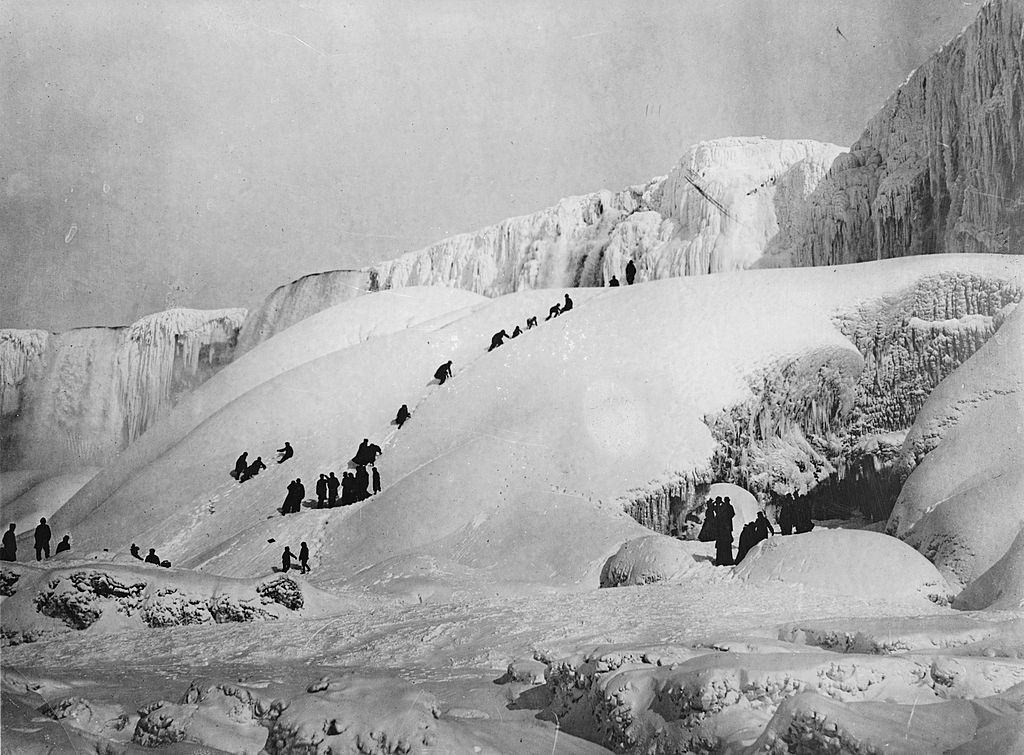
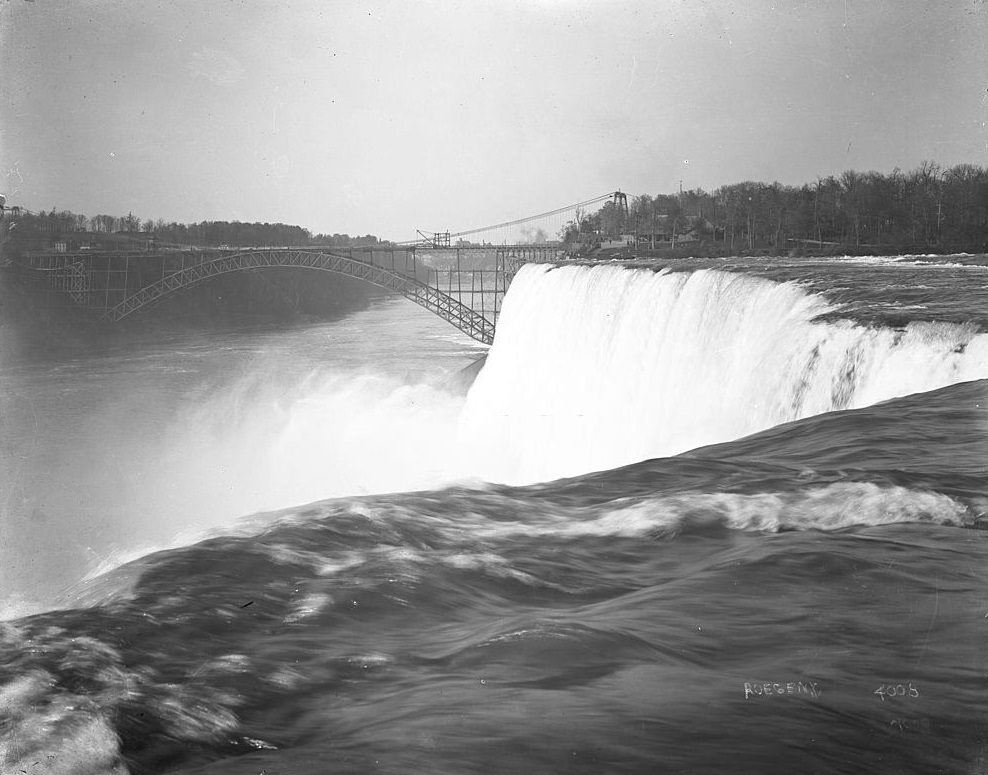
In January 1938, the Falls View Bridge — a steel suspension bridge connecting the American and Canadian sides near the Horseshoe Falls — collapsed into the gorge. Heavy ice from the river had jammed against the bridge’s supports until the structure gave way. Thousands of people gathered on both sides of the border to watch as sections of the bridge fell. No one was on it at the time. The bridge was replaced by the Rainbow Bridge, which opened in 1941 and is still in use today.
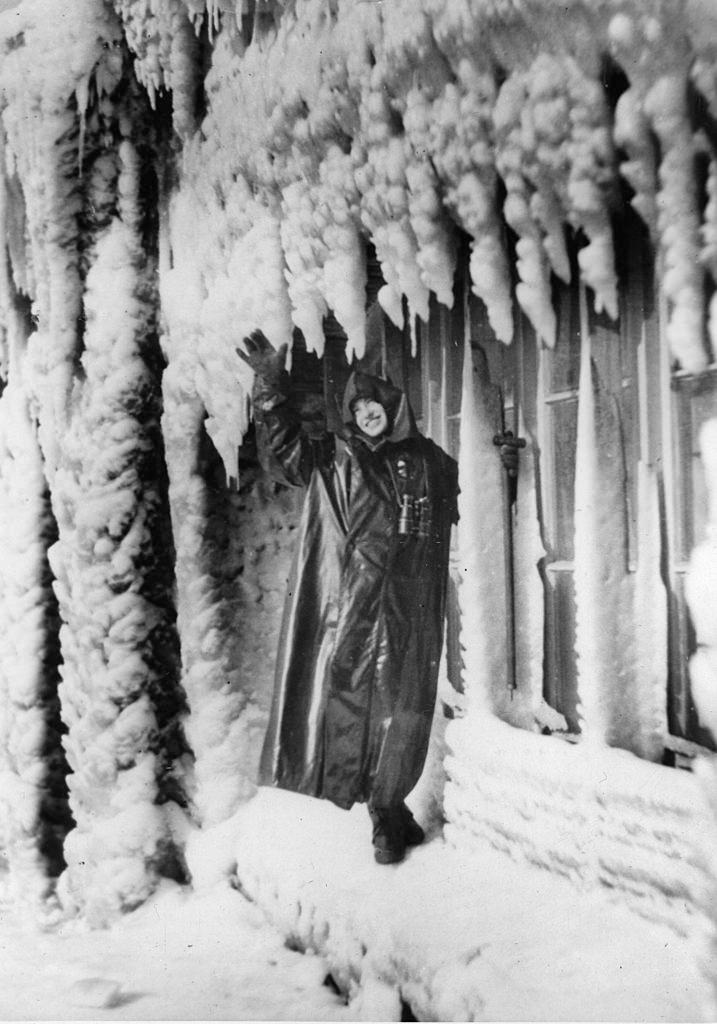
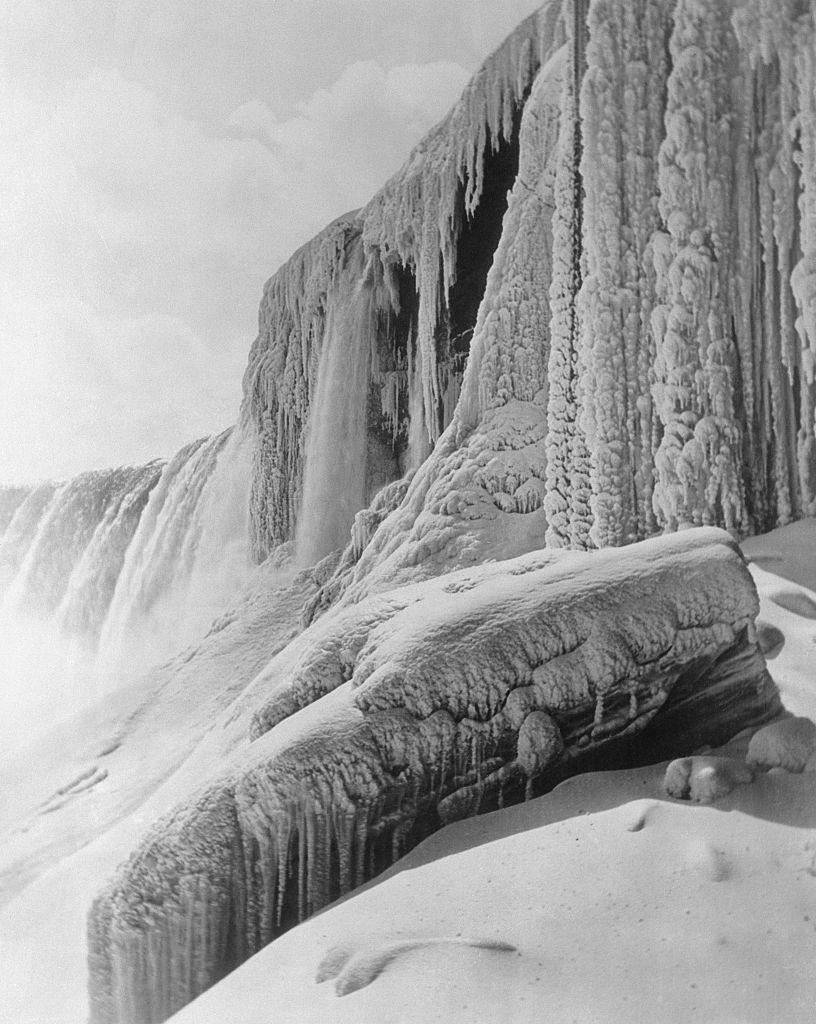
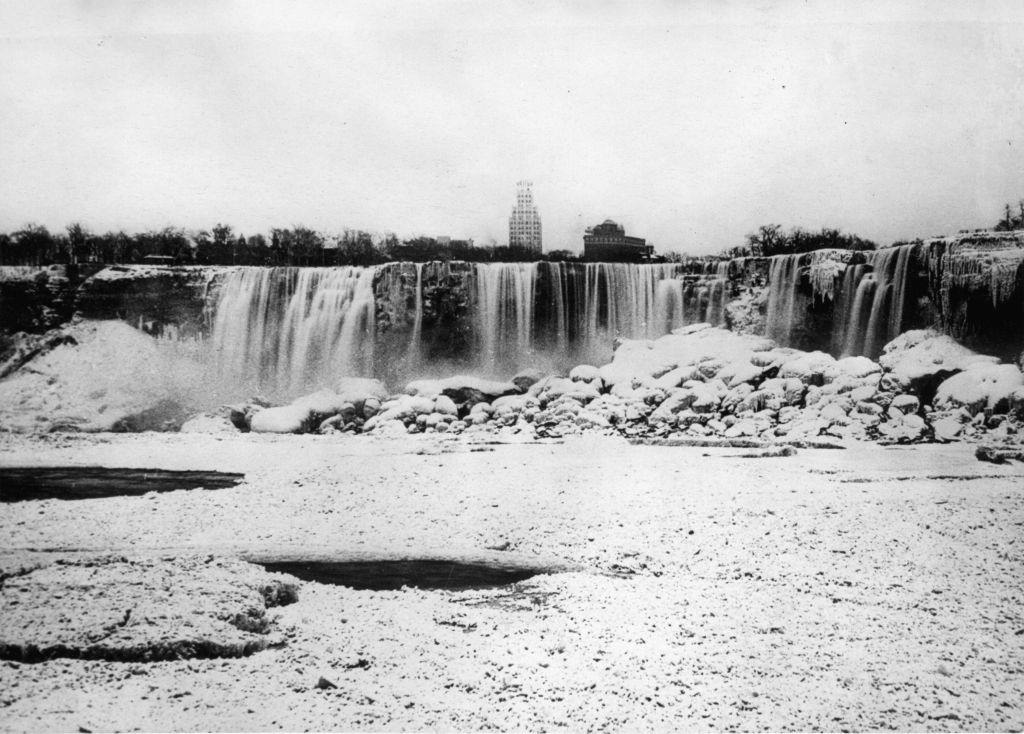
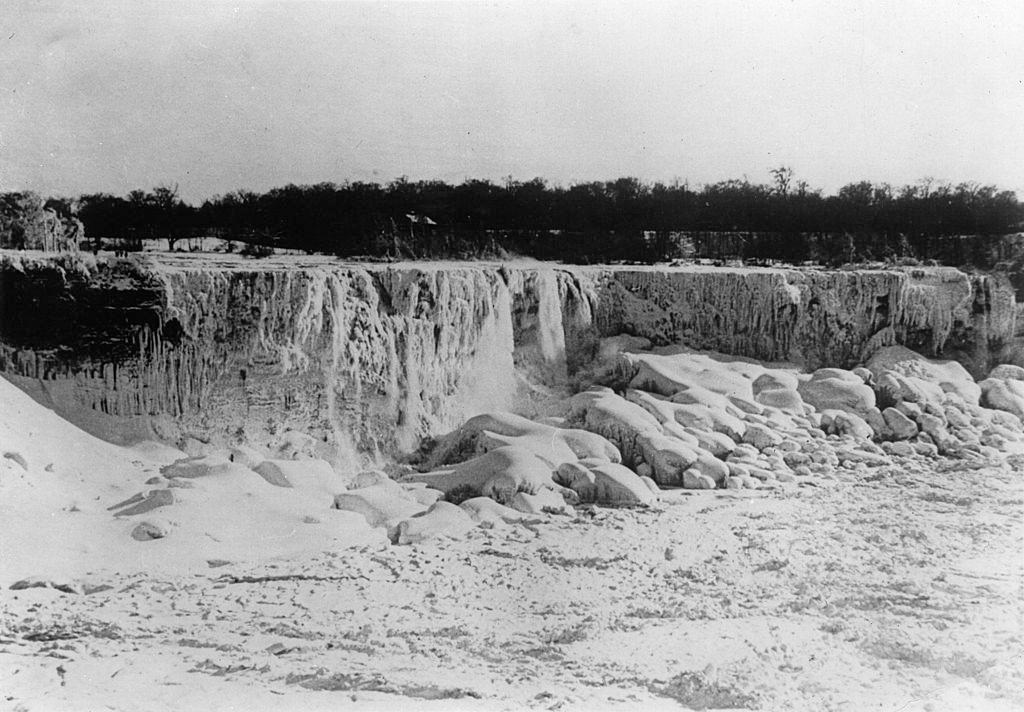
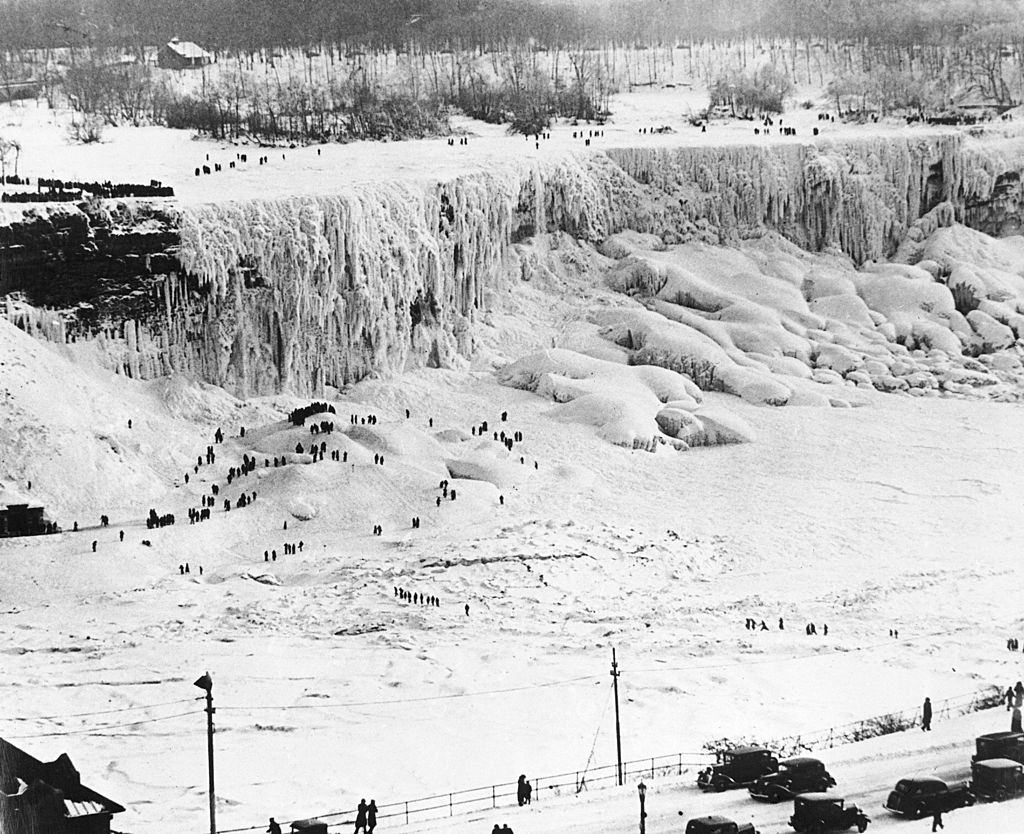
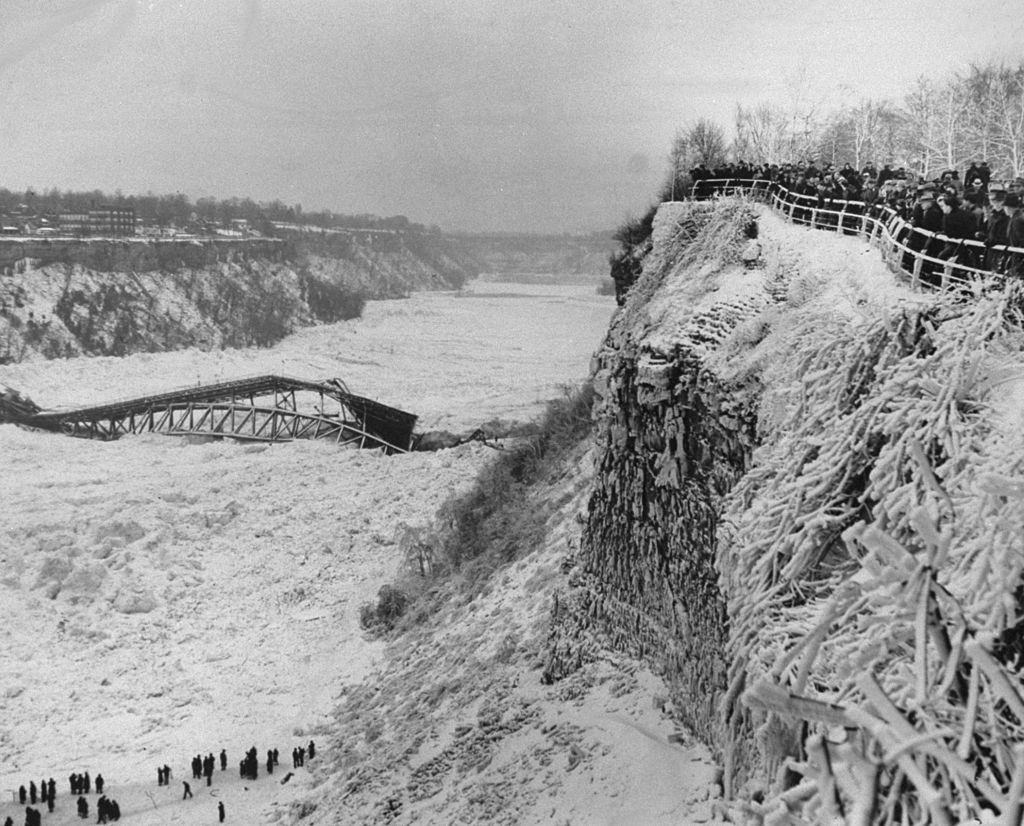
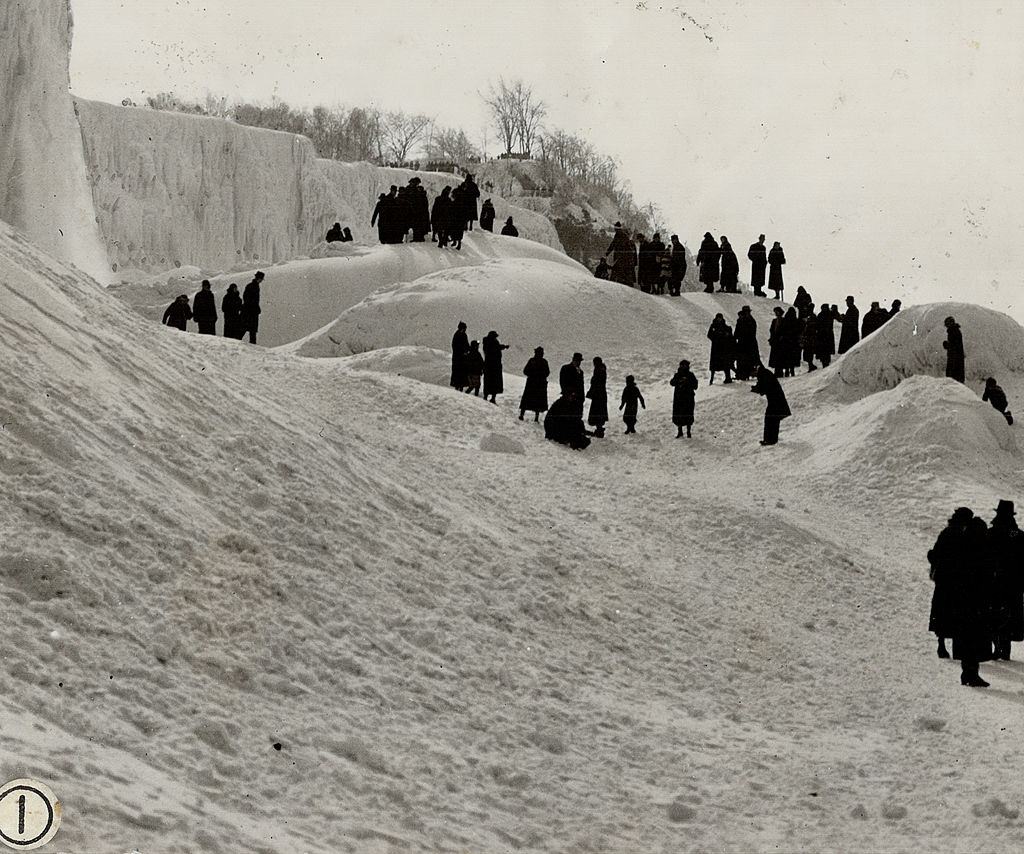
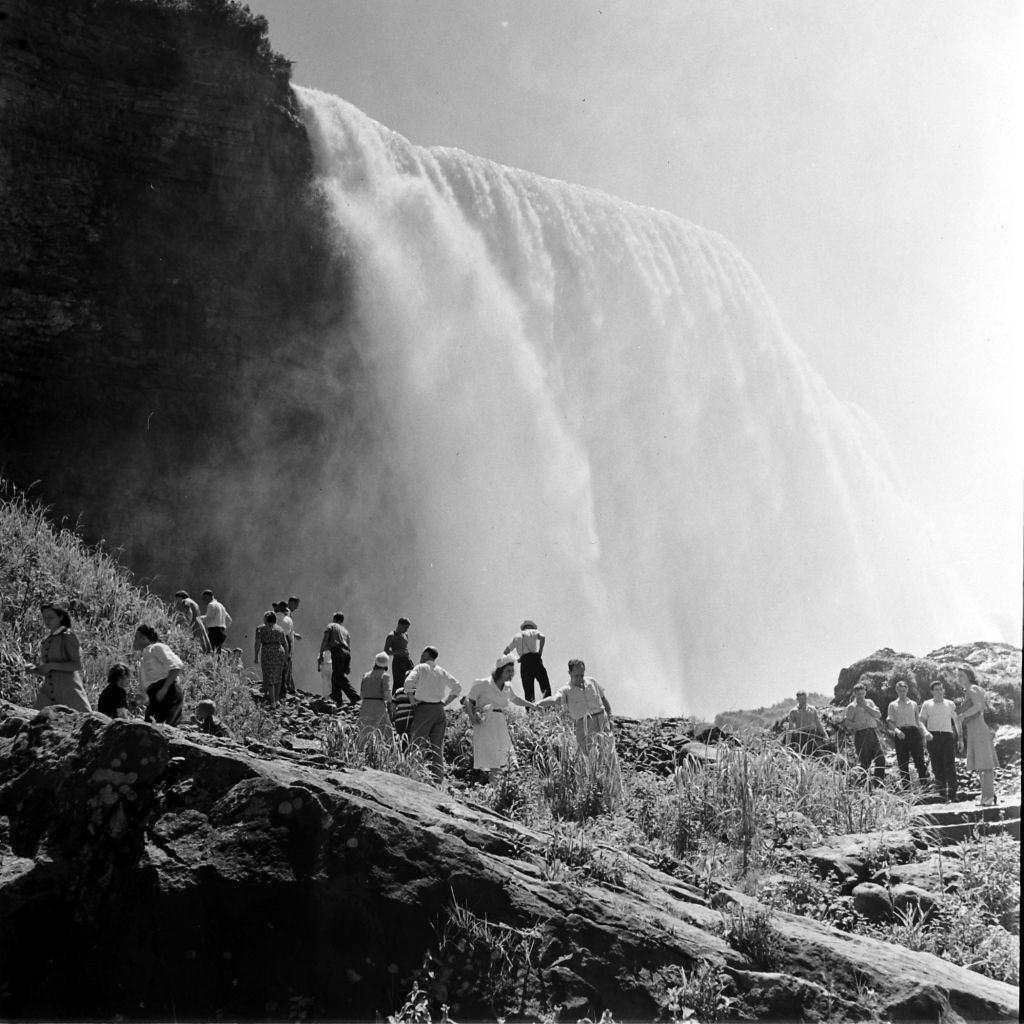
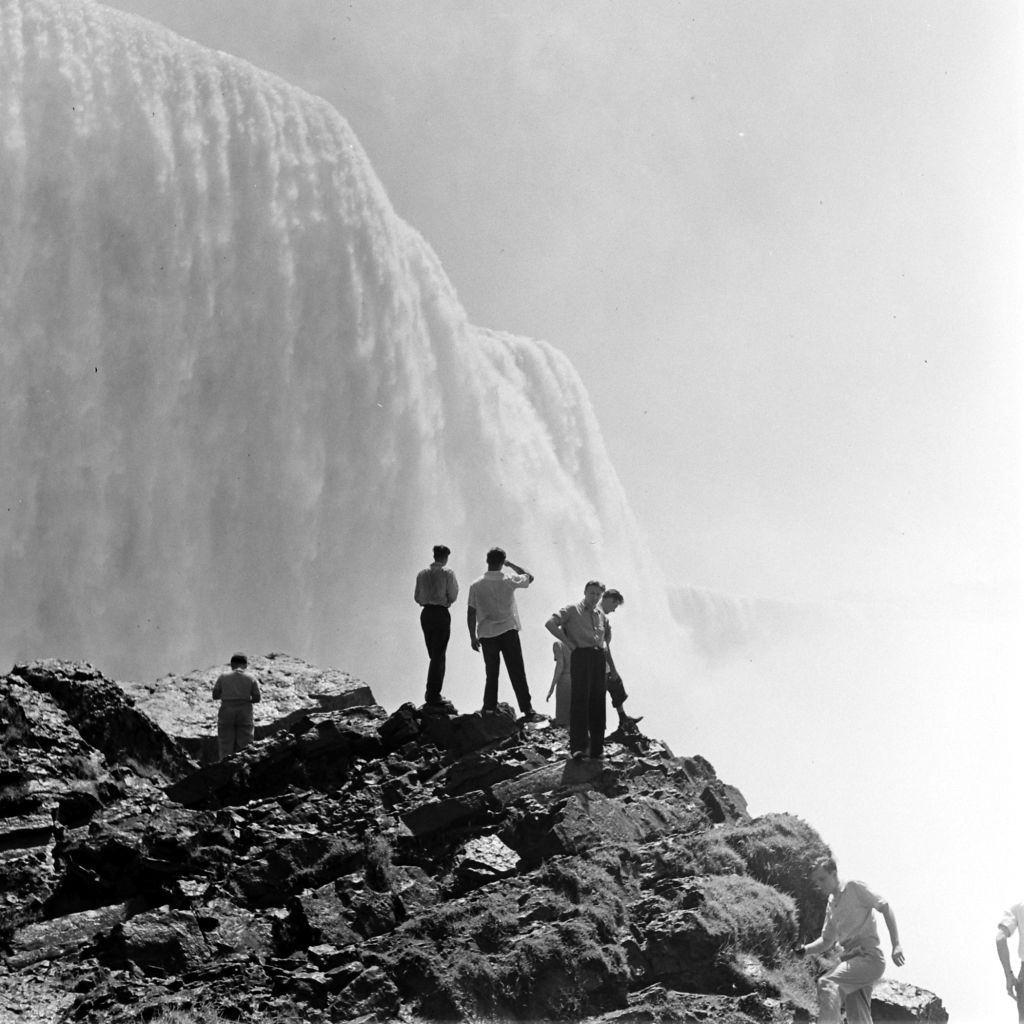
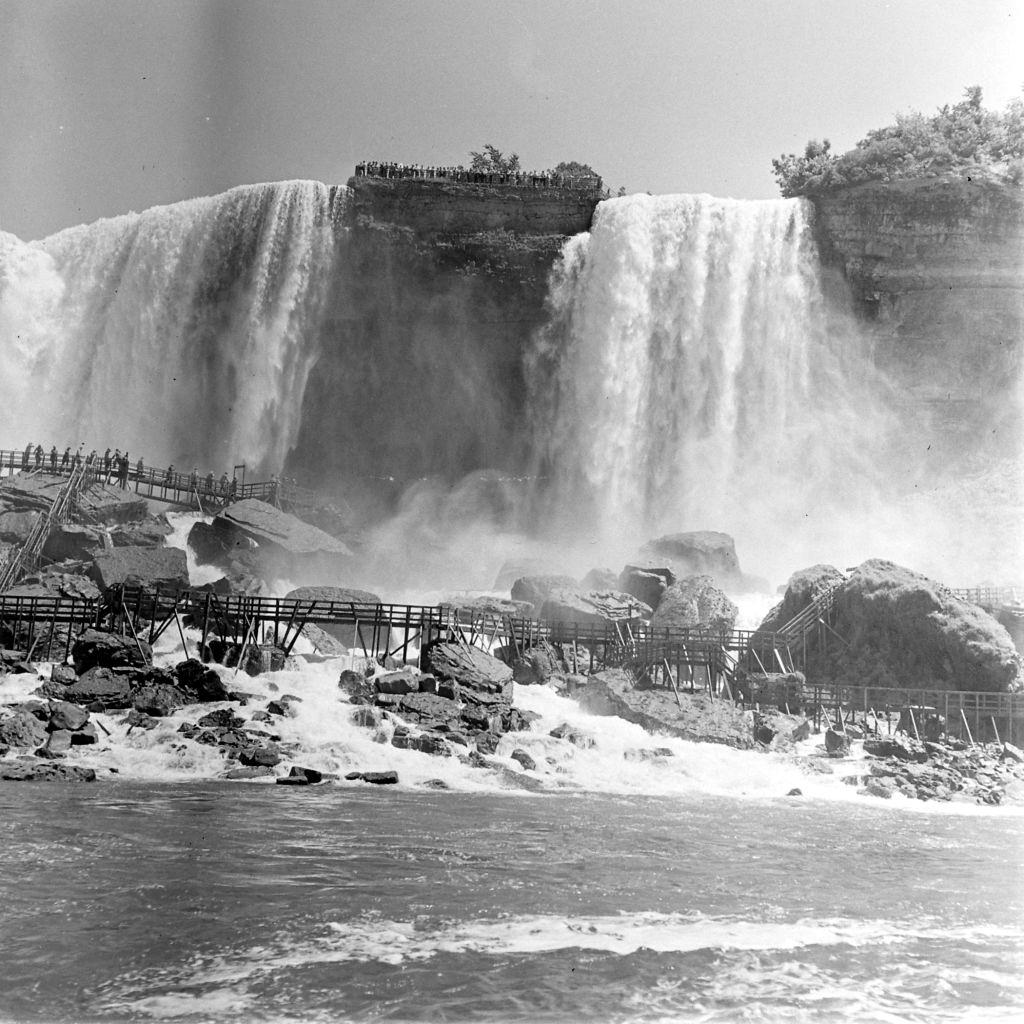
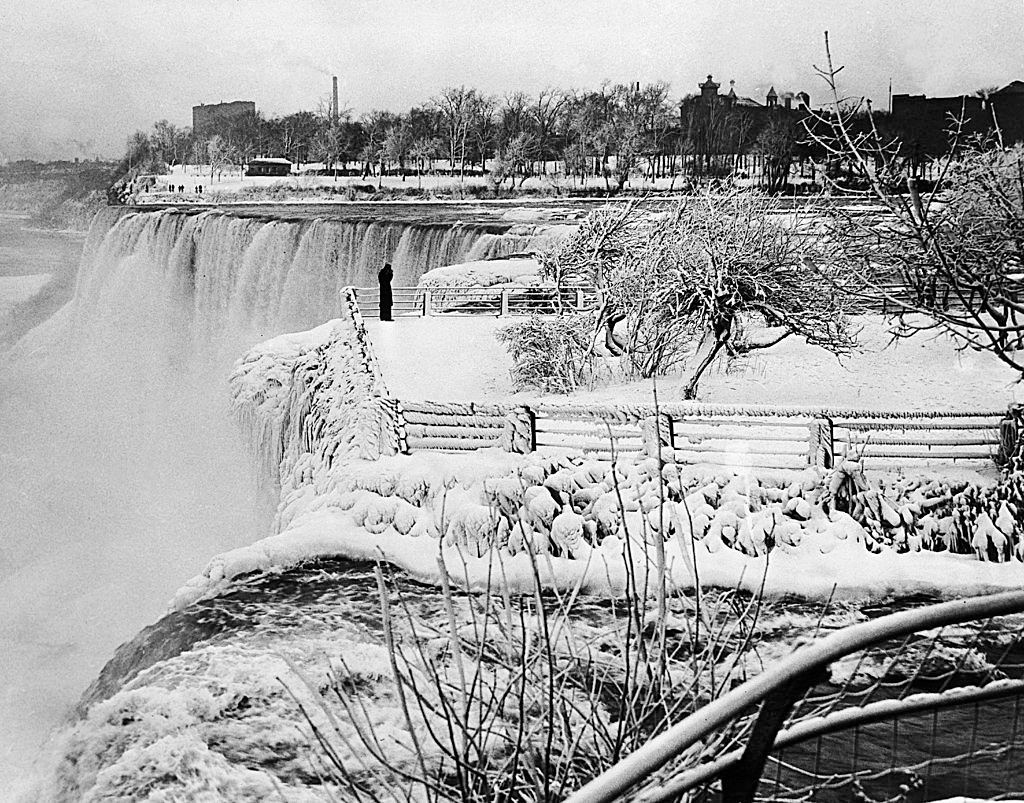
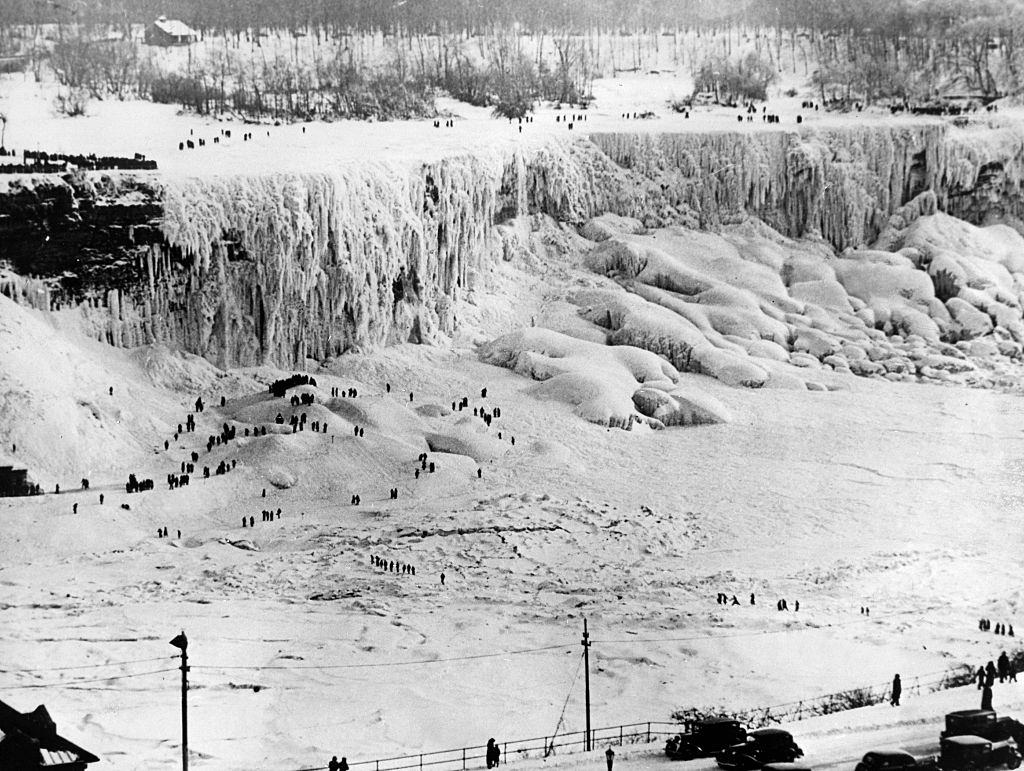
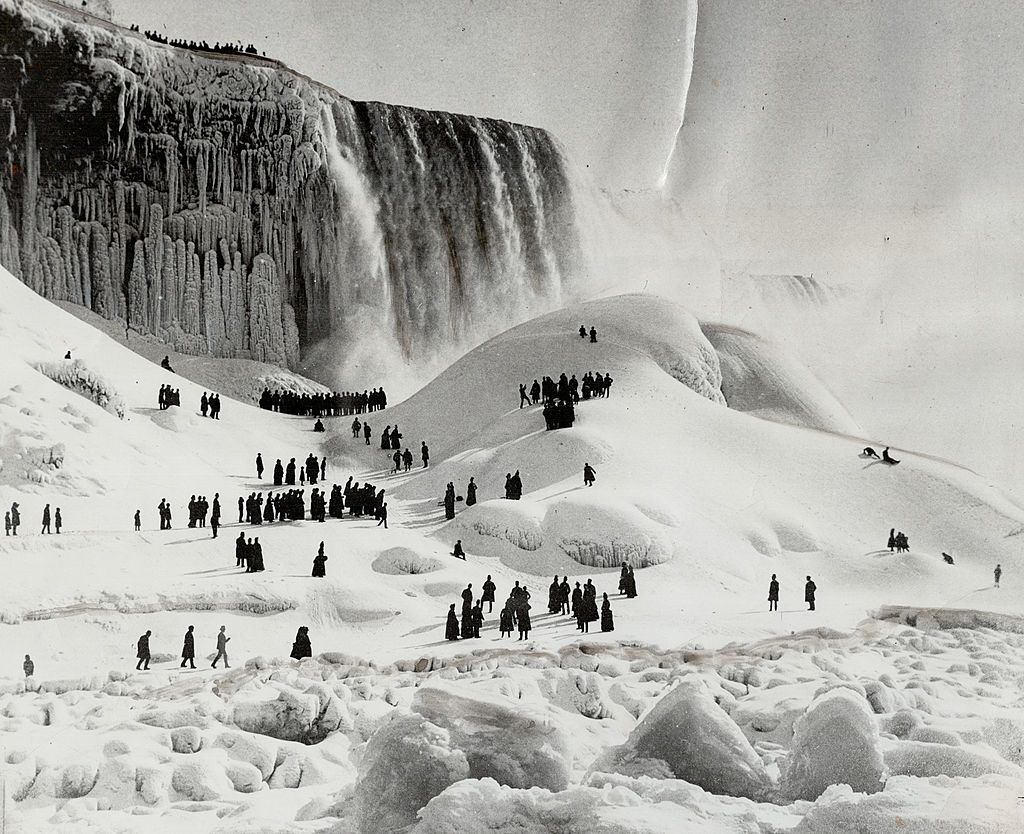
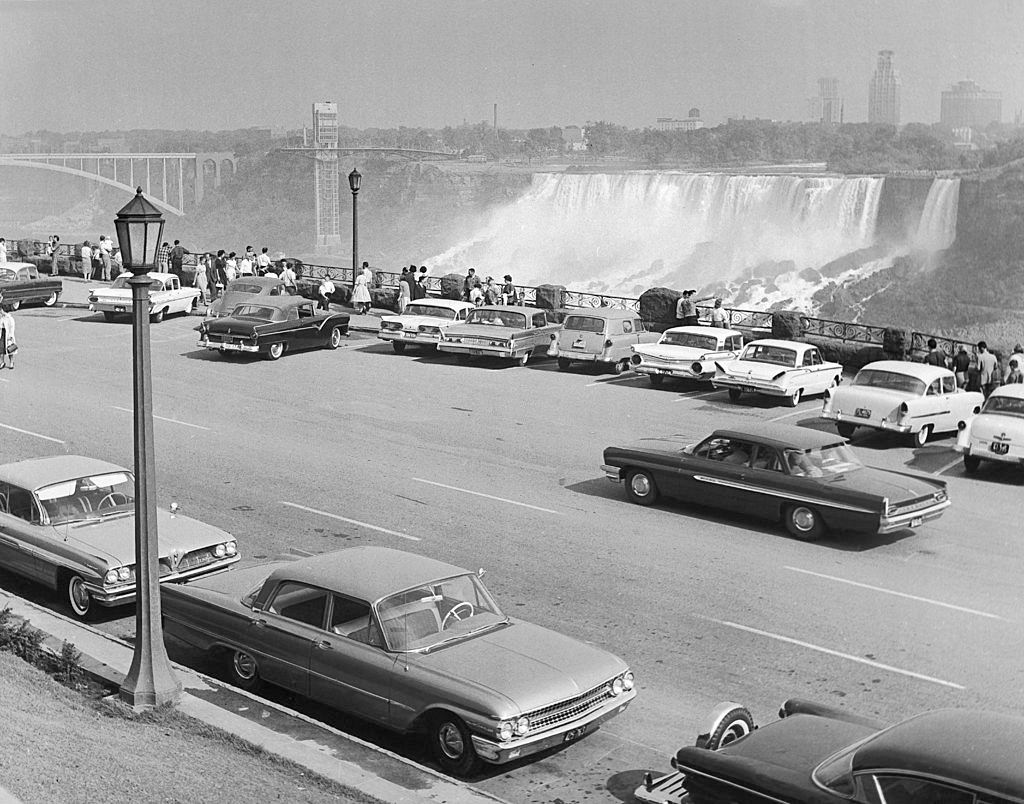
By 1950, the falls were drawing millions of visitors annually, and the infrastructure around them had grown to match. Hotels lined the Canadian shore. Observation towers were in development. The Rainbow Bridge carried a steady stream of cross-border traffic. Yet photographs from the early 1950s show that the falls themselves were still producing the same extraordinary ice formations in winter — towers and walls of frozen spray that had defined the site since the earliest photographs were taken a century before.
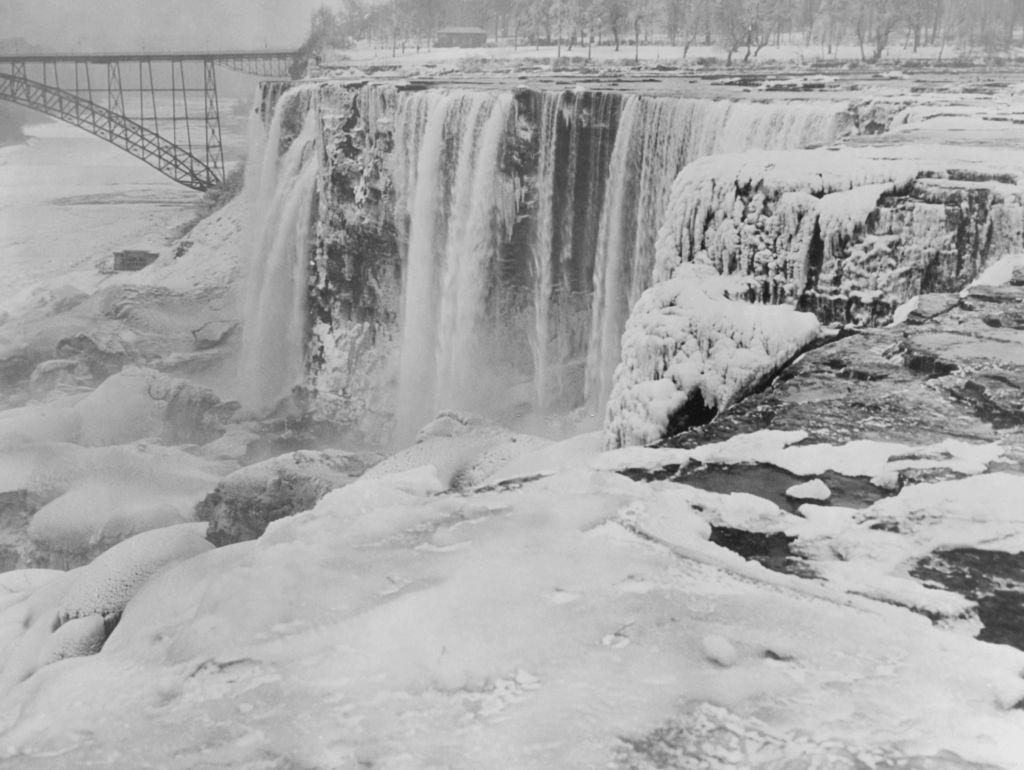
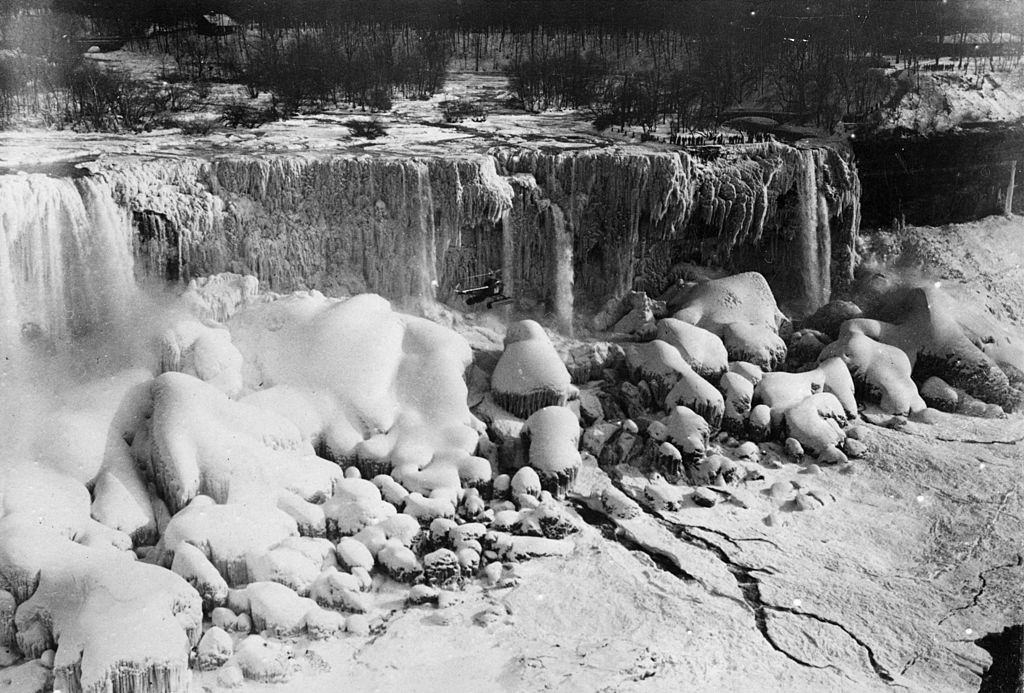
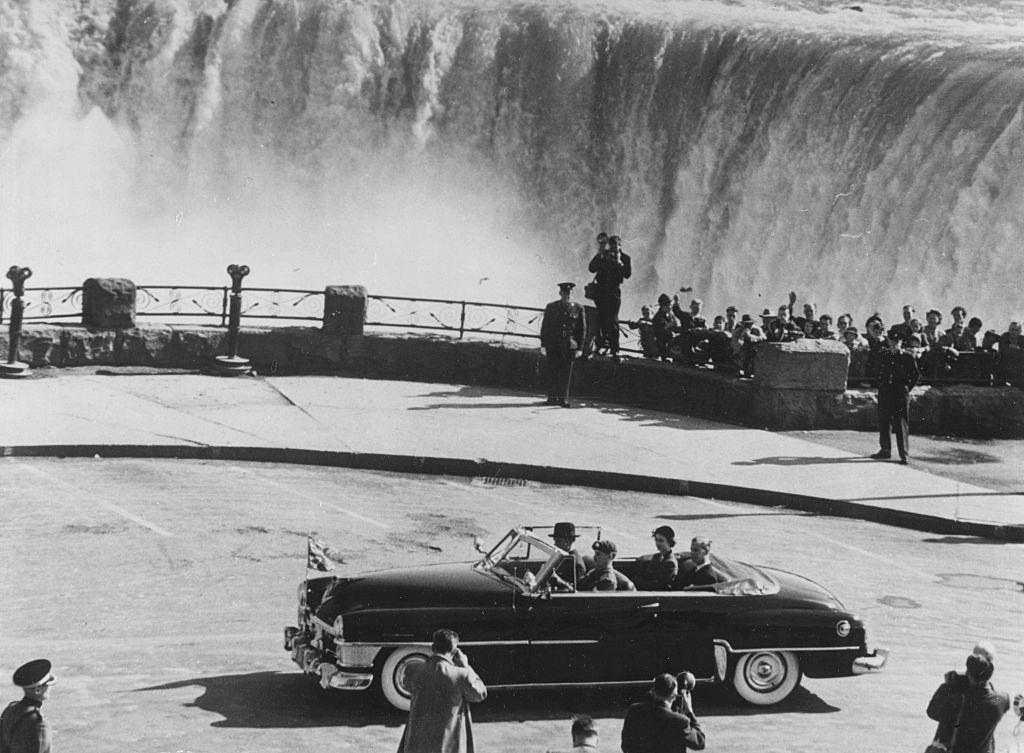
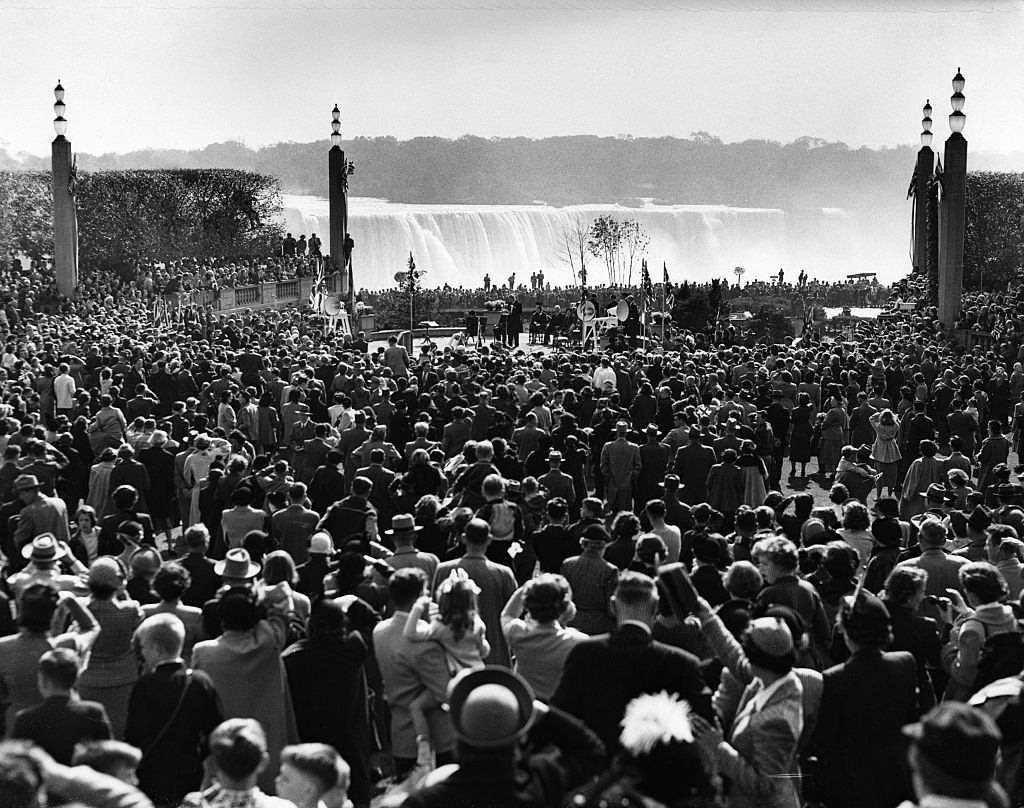
In October 1951, Princess Elizabeth and Prince Philip visited Niagara Falls during a royal tour of Canada. Elizabeth was not yet queen — that would come after her father King George VI’s death in February 1952. The couple viewed the falls from both the Canadian and American sides. A Bell Aircraft helicopter was also photographed that year flying close to the nearly frozen falls, with only a thin trickle of water still moving over the ice-covered rock face — one of the more dramatic images of winter at Niagara from the entire photographic record.





Our lives were better when we had cold winters and when people weren’t morons and were trusted to go into fun areas.
When was the last time the falls completely froze over?
It was either 2017 or 2018 when we experienced that fierce cold snap. During the winter of 2019, we shared another cold snap harder than in 2017, but not as long as the one in 2017.
With the hydro generation plant in place, it is easier for the falls to freeze over – a lot of water is diverted to the generators and enters the river farther down. Natural erosion has also been reduced.
Can someone confirm that the lady is Princess Elizabeth or Queen Elizabeth
She was crowned in 1953 so she would have been Princess at the time.
Some pretty cool photos there. Thanks
So glad they added color to the Falls later on. Looks much better
Does Niagara Falls still freeze entirely?