At the turn of the 20th century, Newport News, Virginia, was a city in the middle of a dramatic transformation. Situated on the north shore of the James River, at the southwestern tip of the Virginia Peninsula, the city’s waterfront stretched for miles along Hampton Roads harbor. Not long before, much of this land had been farms and undeveloped stretches of the old Warwick County — one of Virginia’s eight original shires, established by King Charles I back in 1634. By 1900, that quiet agricultural past was giving way to something far louder and more industrial.
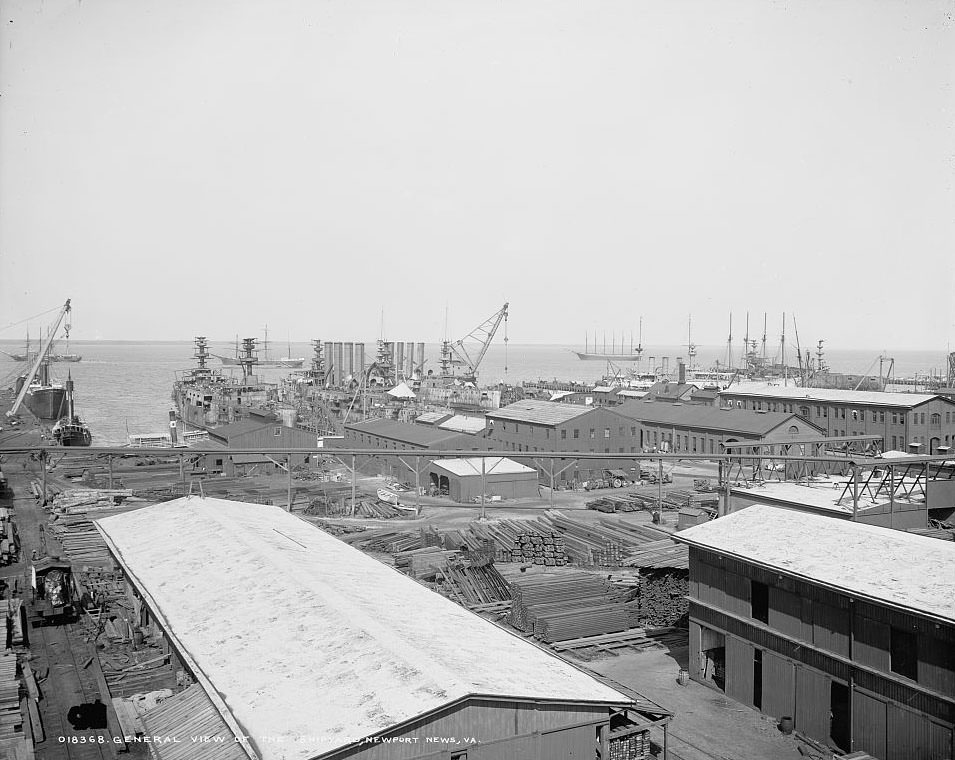
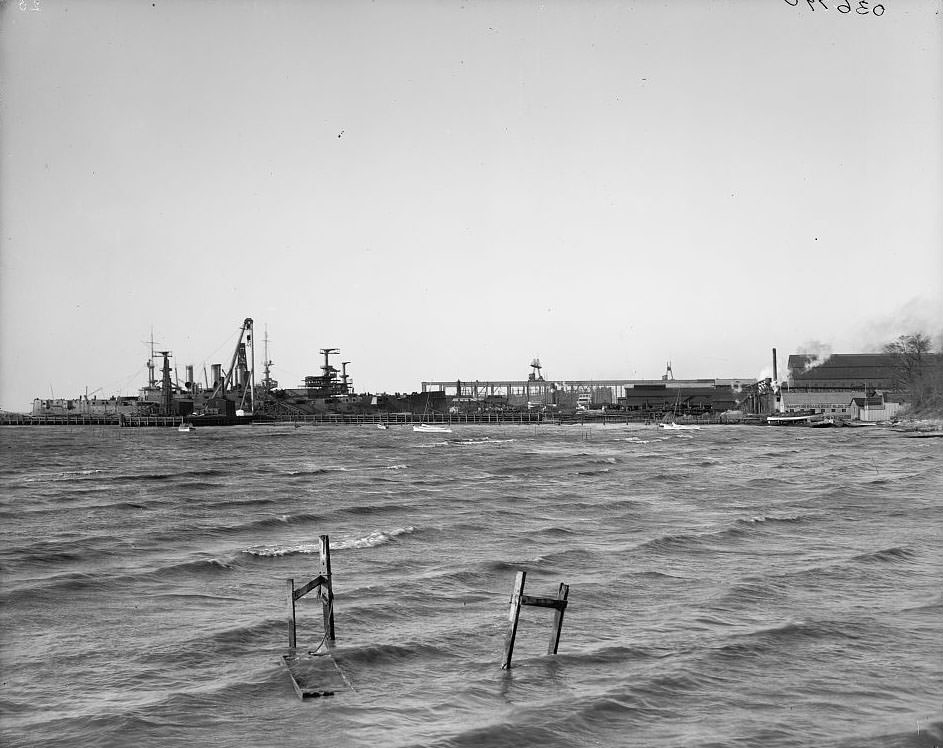
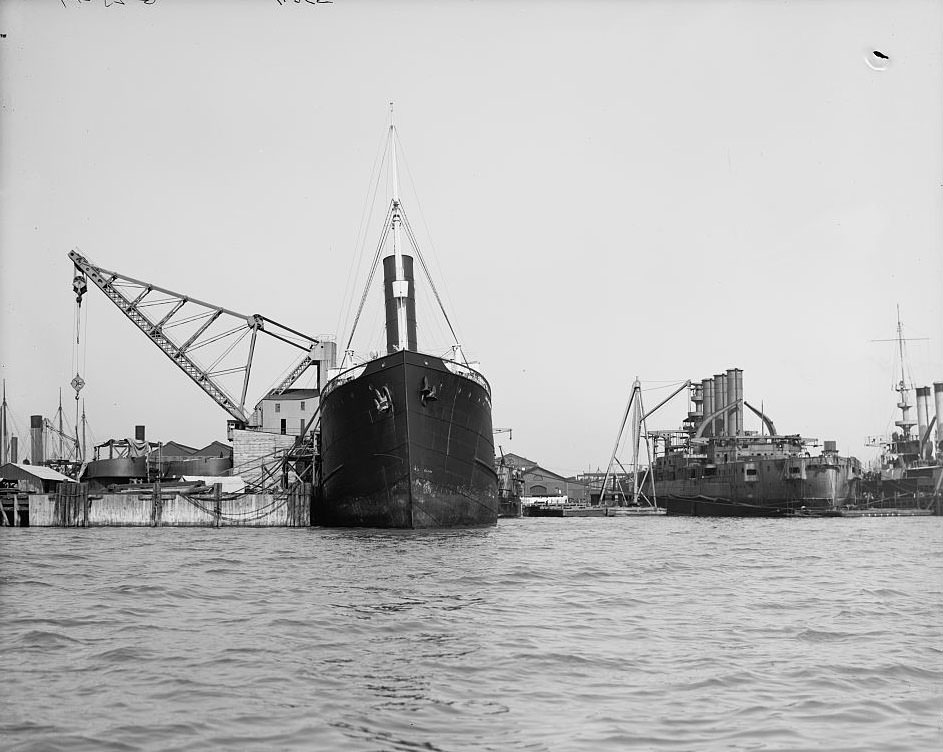
The Newport News Shipbuilding and Dry Dock Company sat at the heart of everything. Its yards along the James River were among the most active on the entire East Coast, drawing workers, commerce, and investment into the city at a rapid pace. The shipyard wasn’t just an employer — it was the engine that drove the city’s identity.
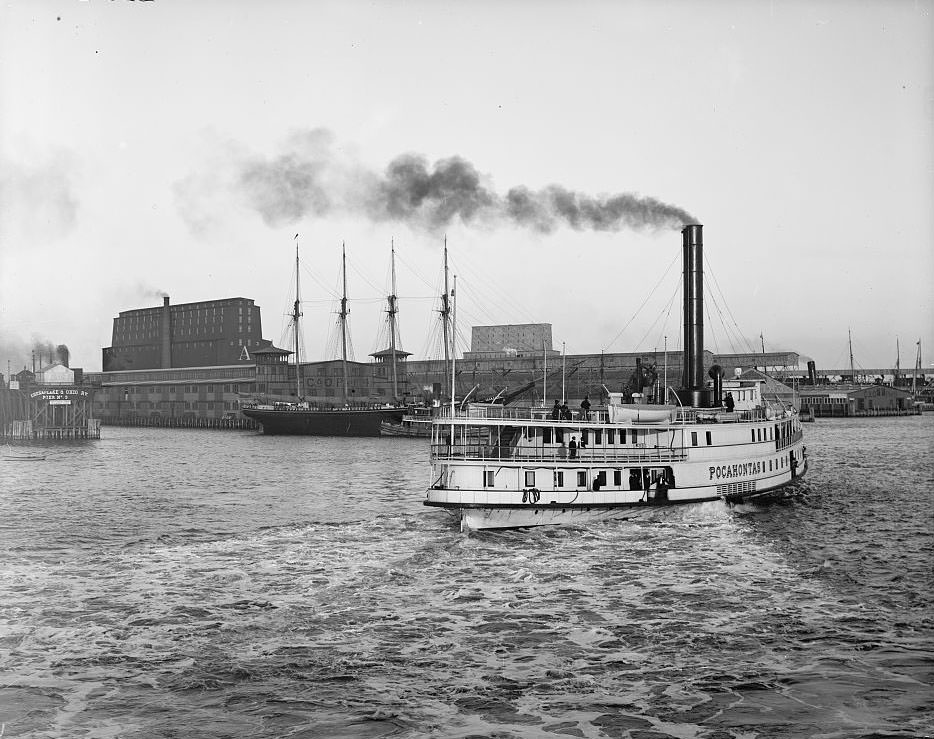
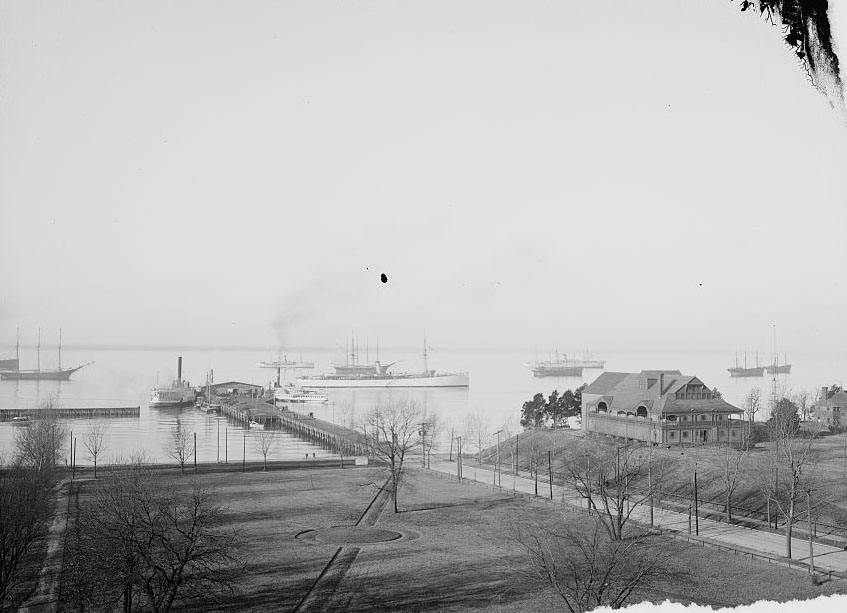
The waterfront was just as busy away from the shipyard. Parks and docking facilities lined the harbor, giving the city both a working edge and a public face along the water.
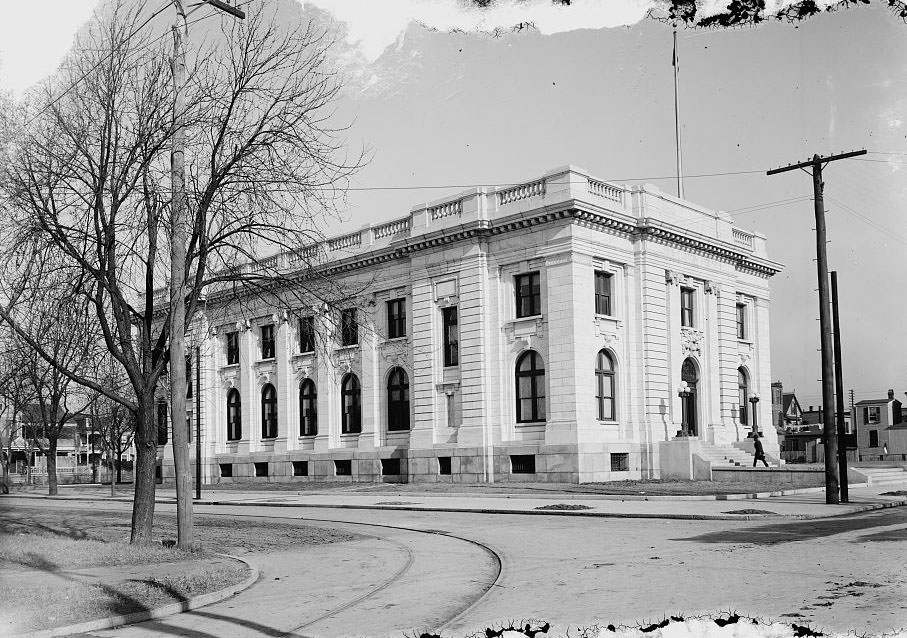
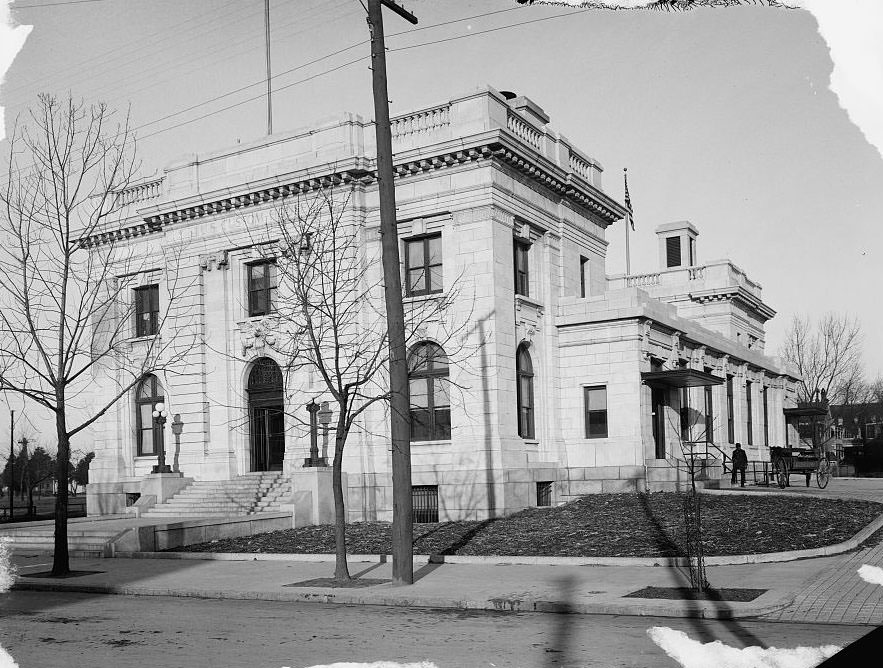
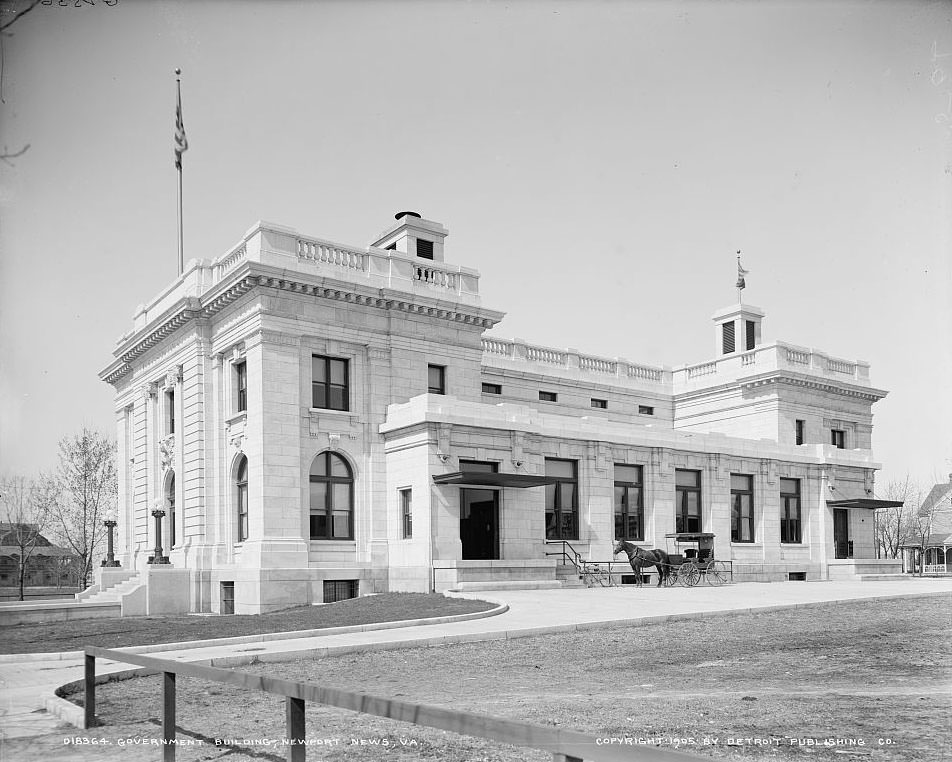
As the city grew, so did its civic infrastructure. A custom house and post office gave Newport News the look of a proper American city — a place where federal business was conducted and mail moved in and out for thousands of residents and workers.
The city’s leaders and its shipyard were closely linked from the very beginning. Walter A. Post was the first mayor of the newly incorporated city, elected in 1898 after being initially appointed by the state legislature. He had originally come to Newport News as one of the builders of the Chesapeake and Ohio Railway’s terminals — the very infrastructure that helped the city grow. In 1911, Post became president of the shipyard itself, though he died on February 12, 1912, just months into that role. His life was a near-perfect reflection of how tightly bound city leadership and industrial power were in Newport News during this era.
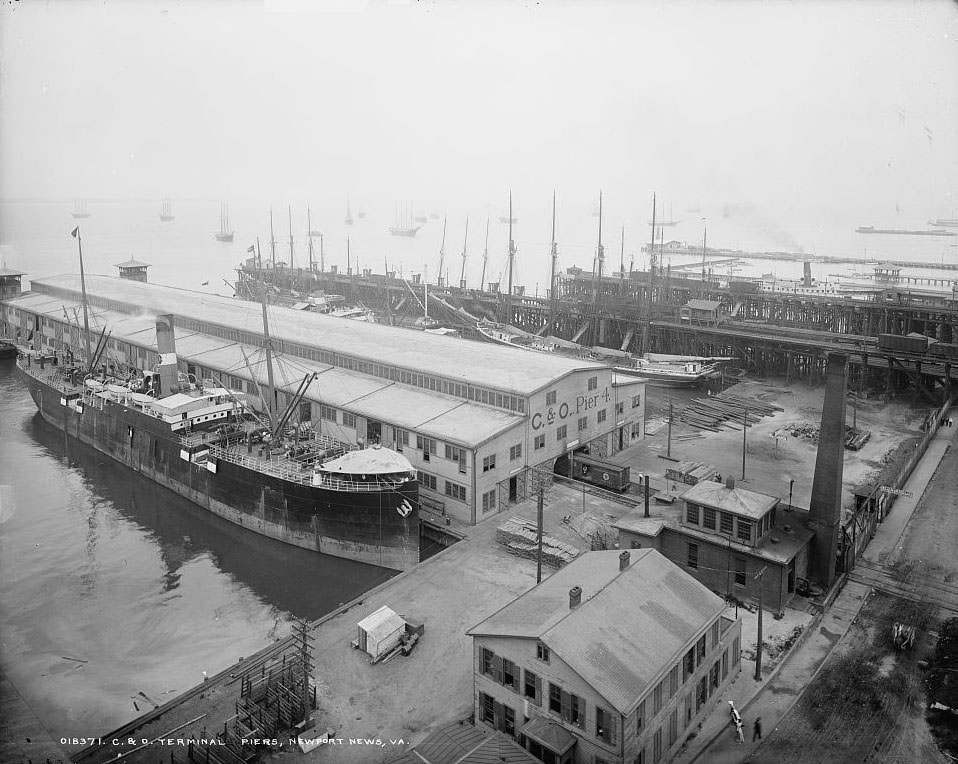
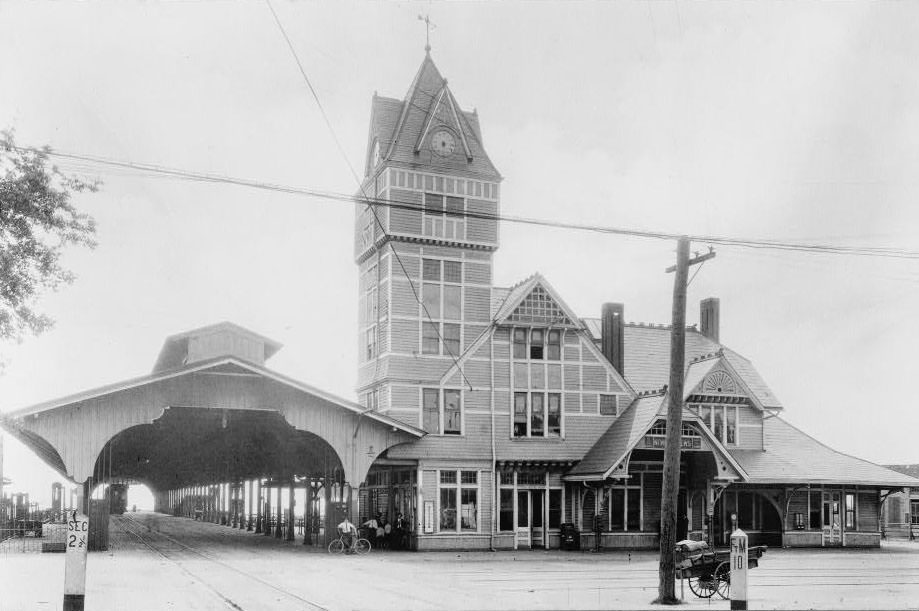
The Chesapeake and Ohio Railway was one of the defining forces behind Newport News’s rise. Its terminal facilities turned the city into a major transfer point for goods — especially coal — moving between the American interior and the Atlantic coast. The C&O station was a constant hub of activity, connecting Newport News to the broader national economy.
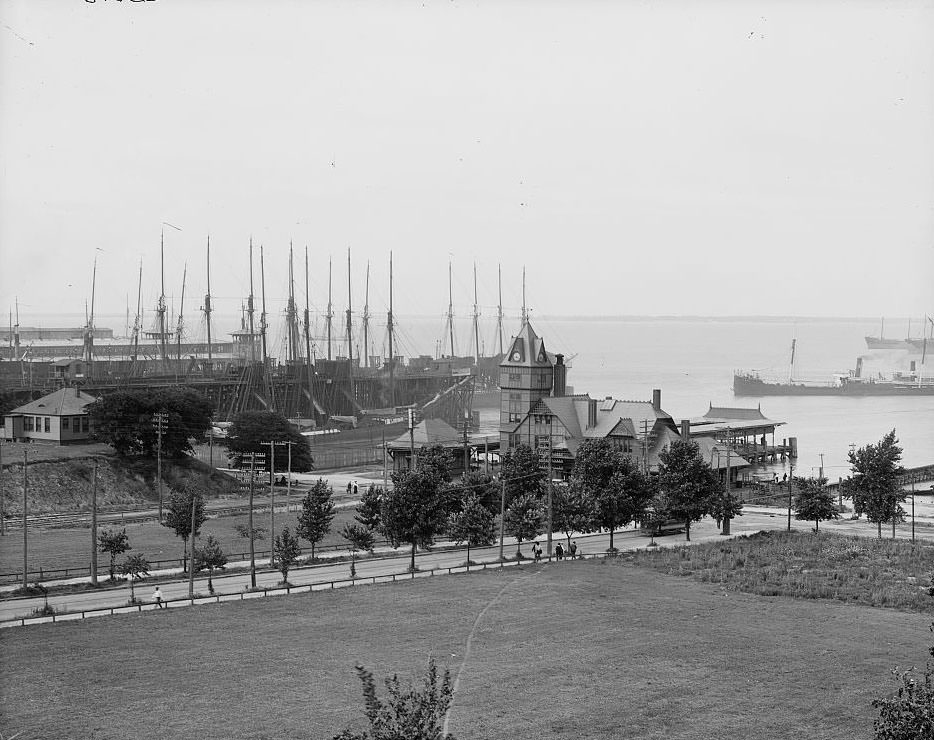
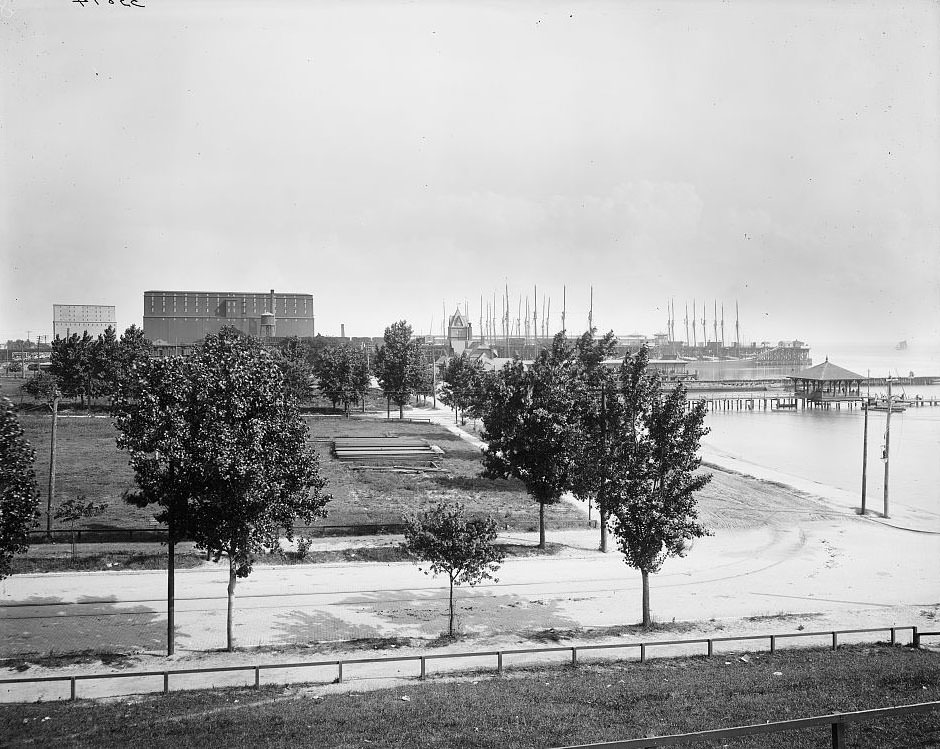
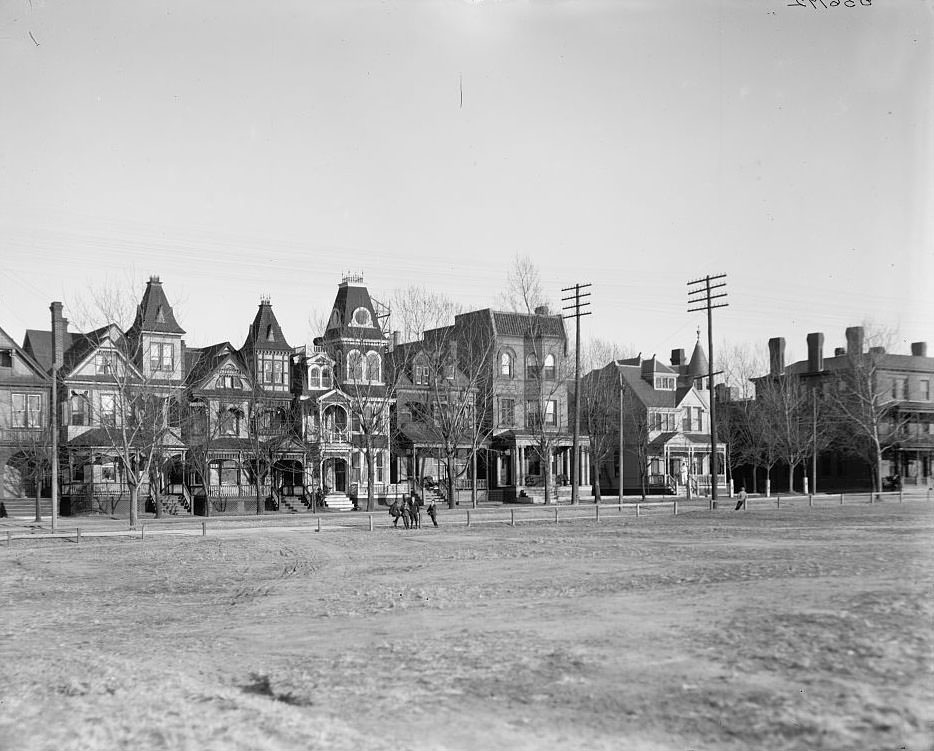
Away from the industrial waterfront, residential streets were taking shape. West Avenue showed the kind of solid, comfortable homes being built for the families who had put down roots in Newport News — a city that was becoming more than just a work camp for laborers and rail hands.
Back at the shipyard, the scale of operations kept expanding through the decade. By 1909, the yards were a sprawling industrial landscape that few American cities could match, pushing out naval vessels and commercial ships that served customers around the world.
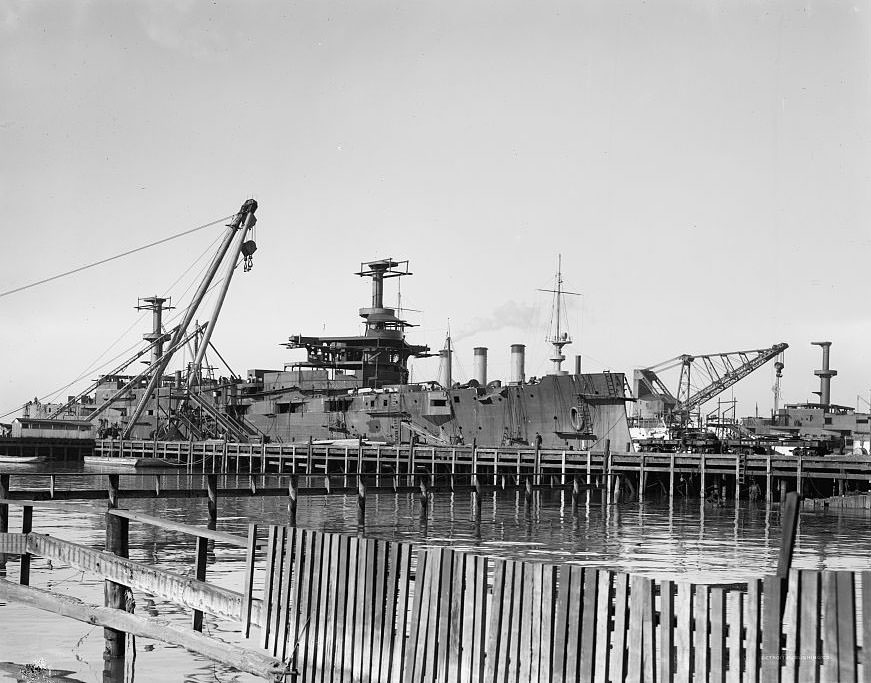
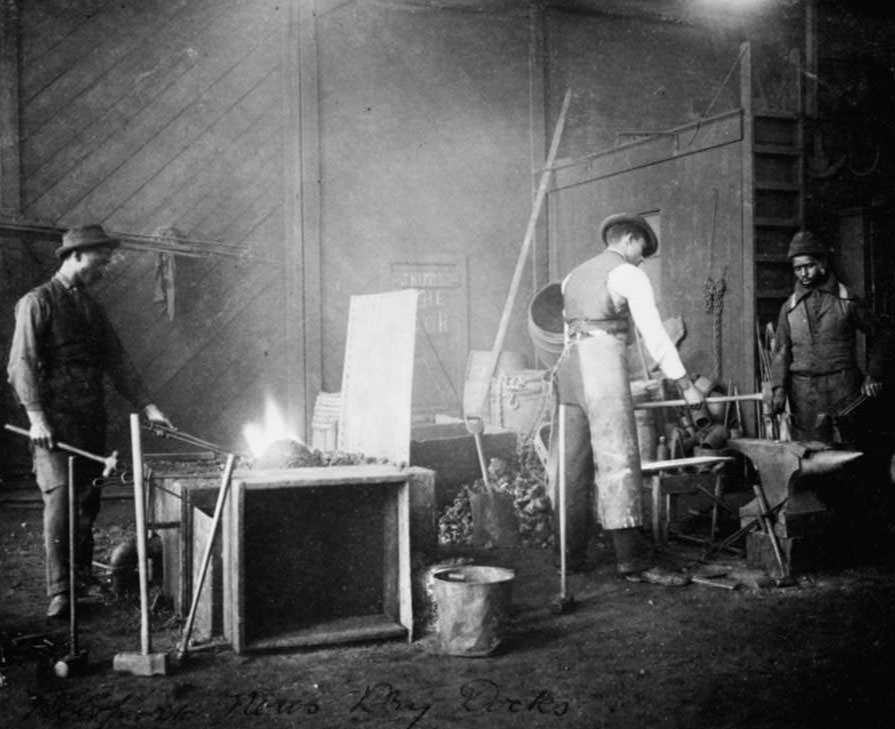
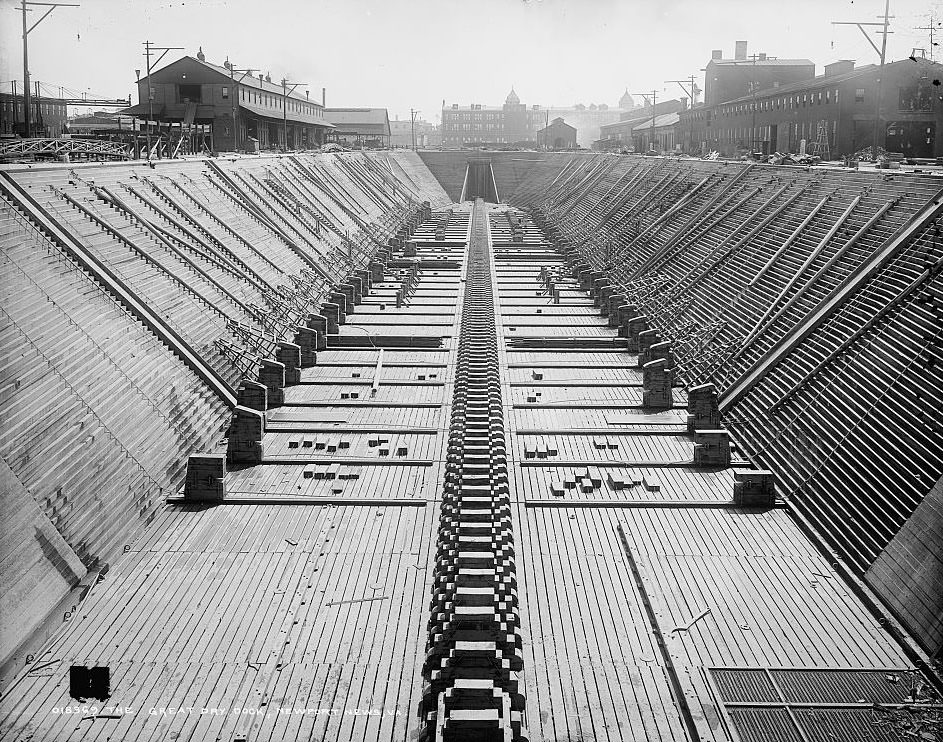
The dry docks were a key part of this industrial capacity. They allowed large vessels to be brought in for repair, inspection, and outfitting — work that required precision and a large, skilled workforce operating around the clock.
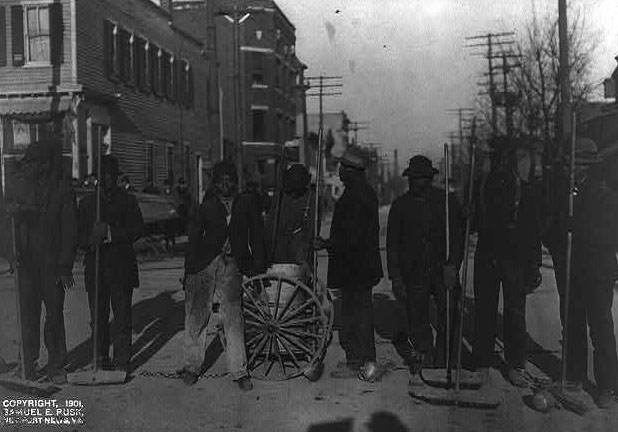
Not all the labor in Newport News at this time was paid. Chain gangs were a common sight in the early 1900s South, and Newport News was no exception. Prisoners were used for public work under conditions that reflected the harsh realities of Southern criminal justice in the Jim Crow era.
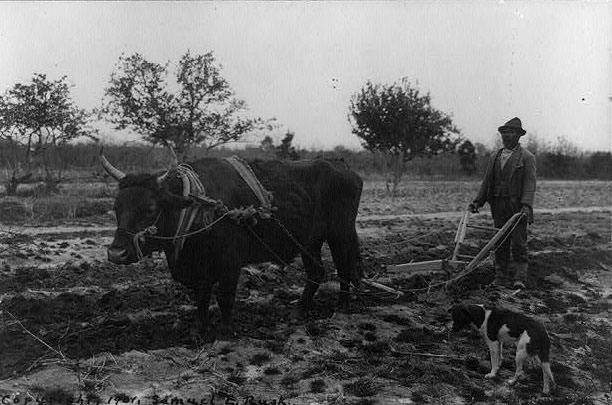
Despite the rapid industrialization, traces of the area’s older agricultural character survived just outside the city’s busiest zones. Farming remained part of life in the broader region, a reminder of what Warwick County had looked like for most of its history.
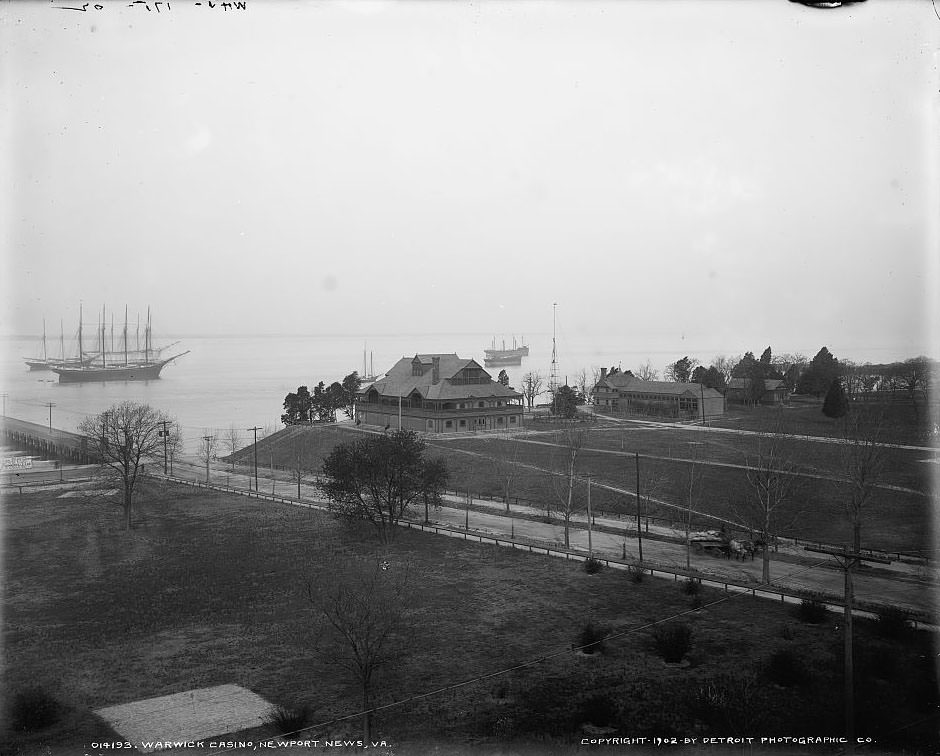
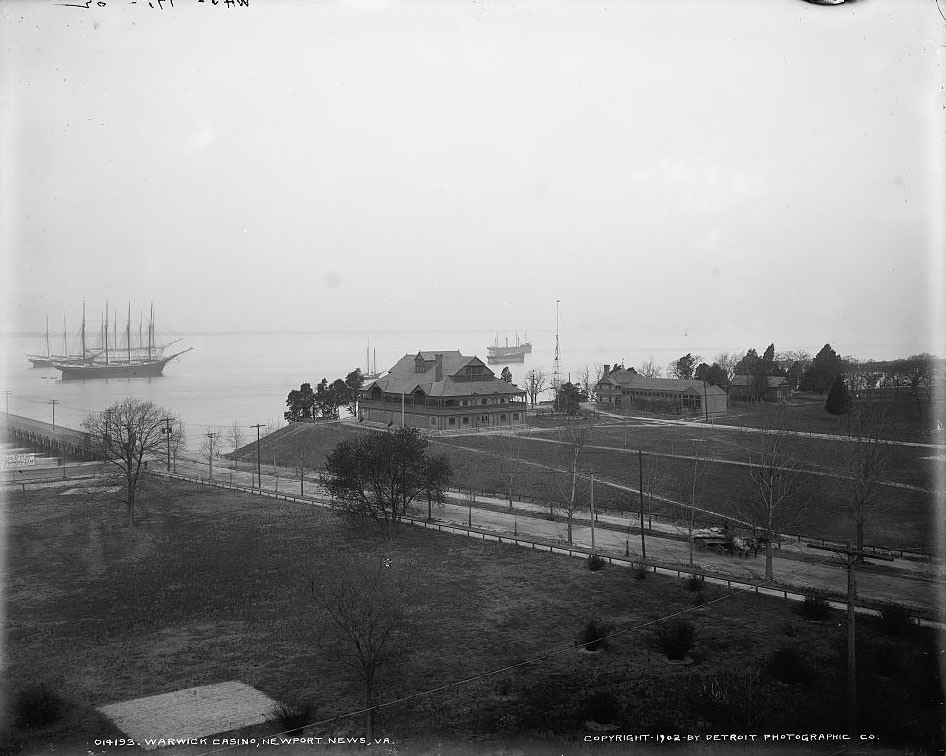
The Warwick Casino offered residents a place for leisure and social gathering. In the early 1900s, a “casino” didn’t necessarily mean gambling — it referred more broadly to a social club or entertainment venue. Newport News was building a social scene to match its industrial ambitions.
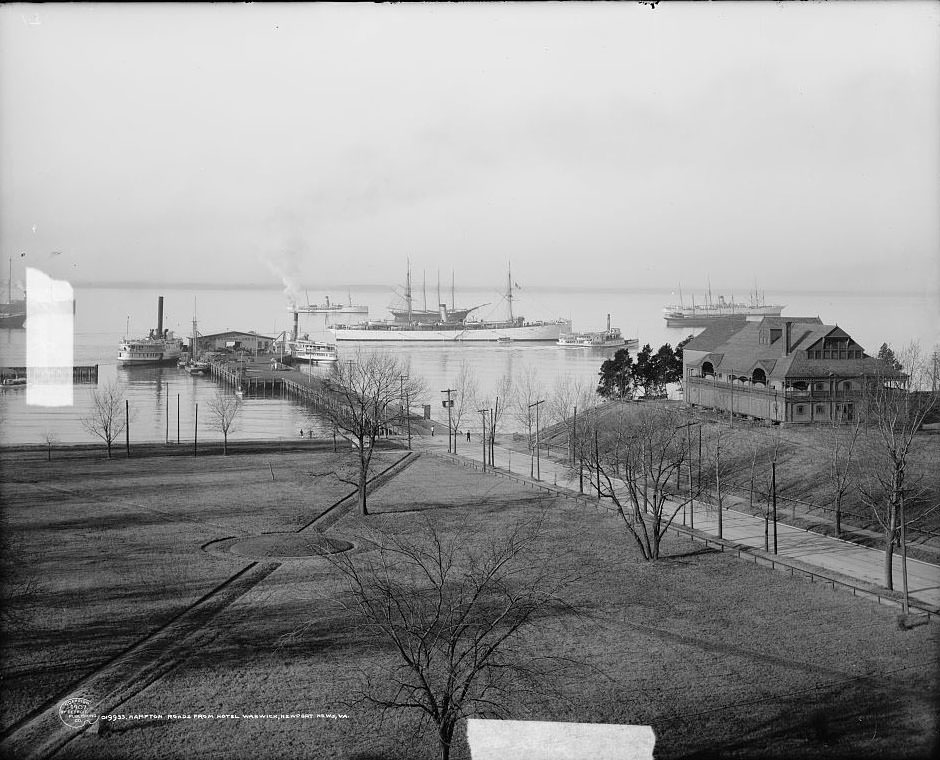
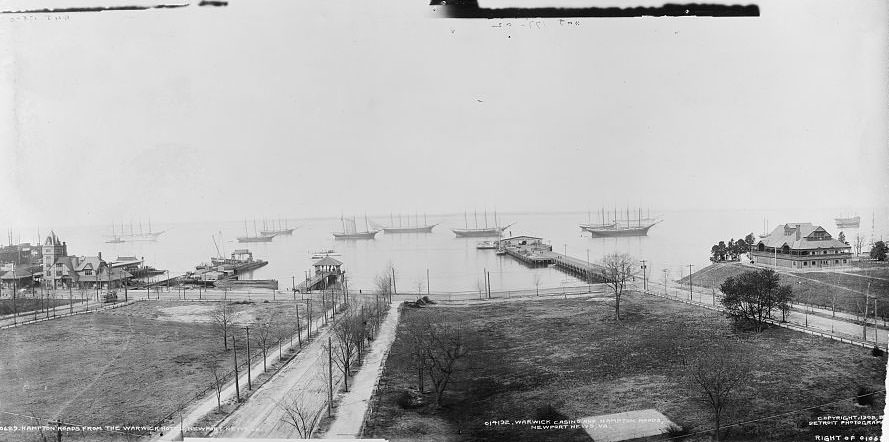
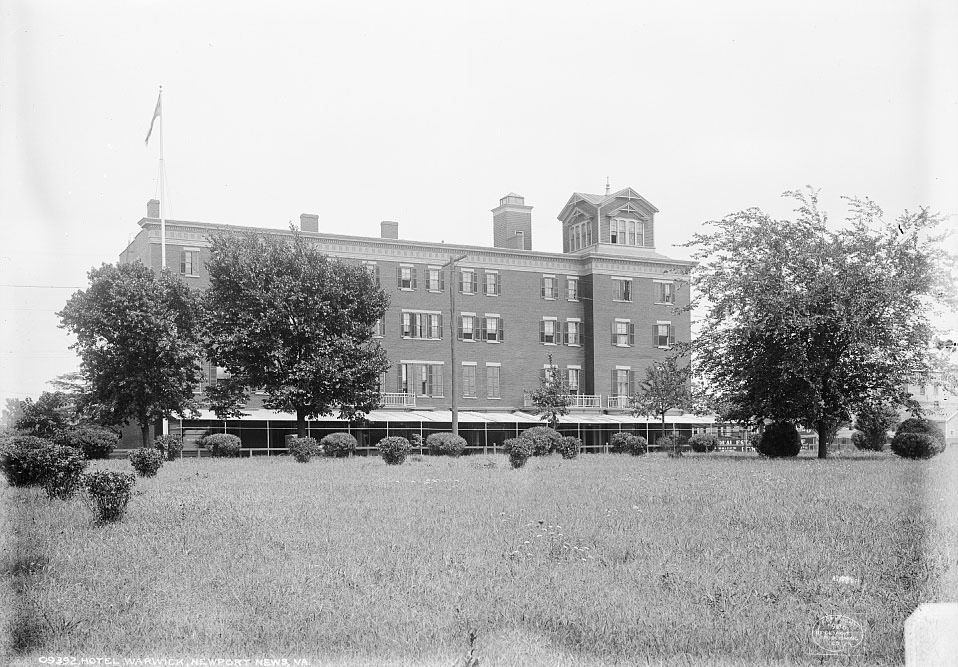
From the upper floors of the Hotel Warwick, guests had a sweeping view of Hampton Roads, one of the world’s great natural harbors. The harbor was never quiet — ships of all kinds moved through its waters day and night, connecting Newport News to ports up and down the Atlantic seaboard and beyond.
A general view of the shipyard in 1902 captures the breadth of operations already underway. Cranes, scaffolding, and half-built hulls crowded the waterfront, making it clear that Newport News was punching well above its weight for a city of its size.
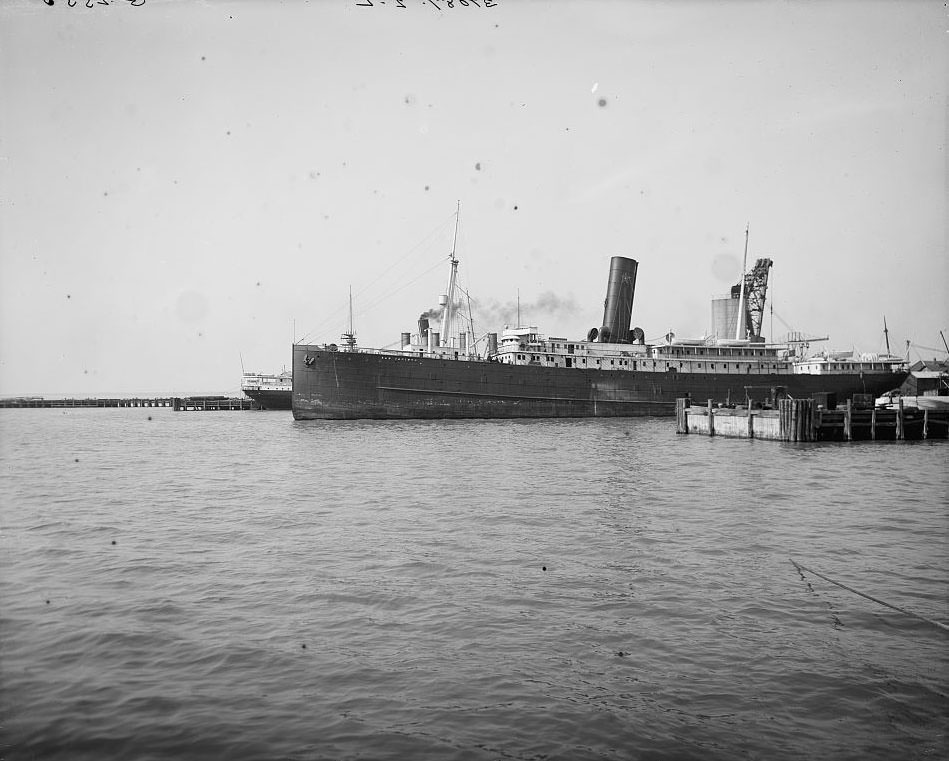
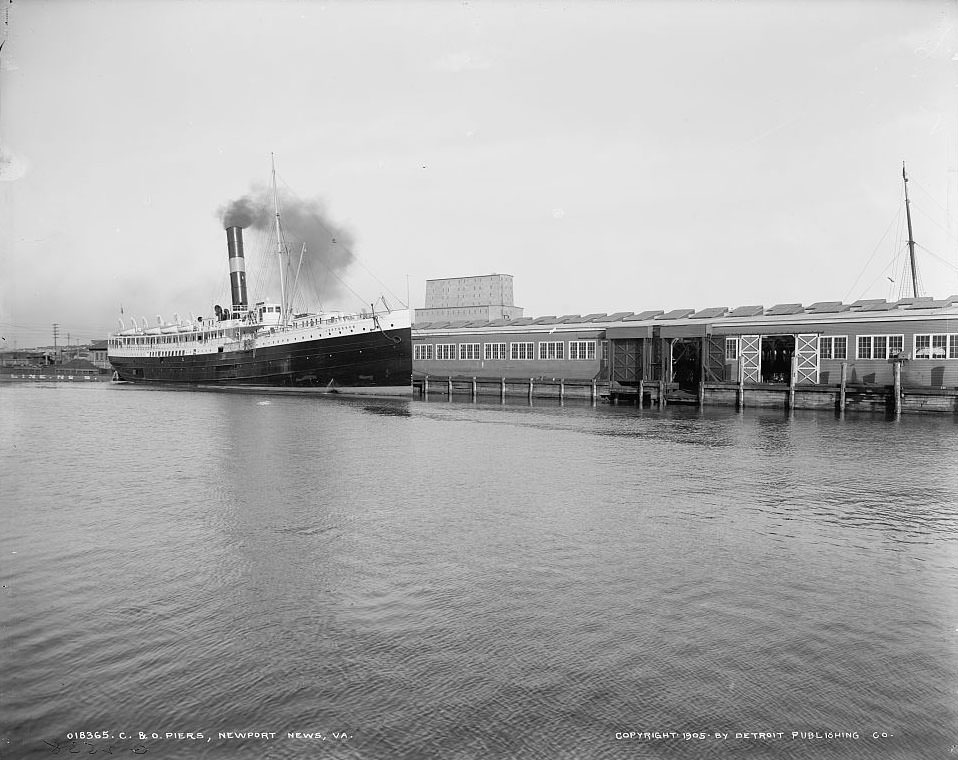
The C&O piers were where massive quantities of cargo changed hands. Coal from the Appalachian interior arrived by rail and was transferred onto ships bound for markets up the coast and across the Atlantic. These piers were arguably the most economically important piece of real estate in the entire city.
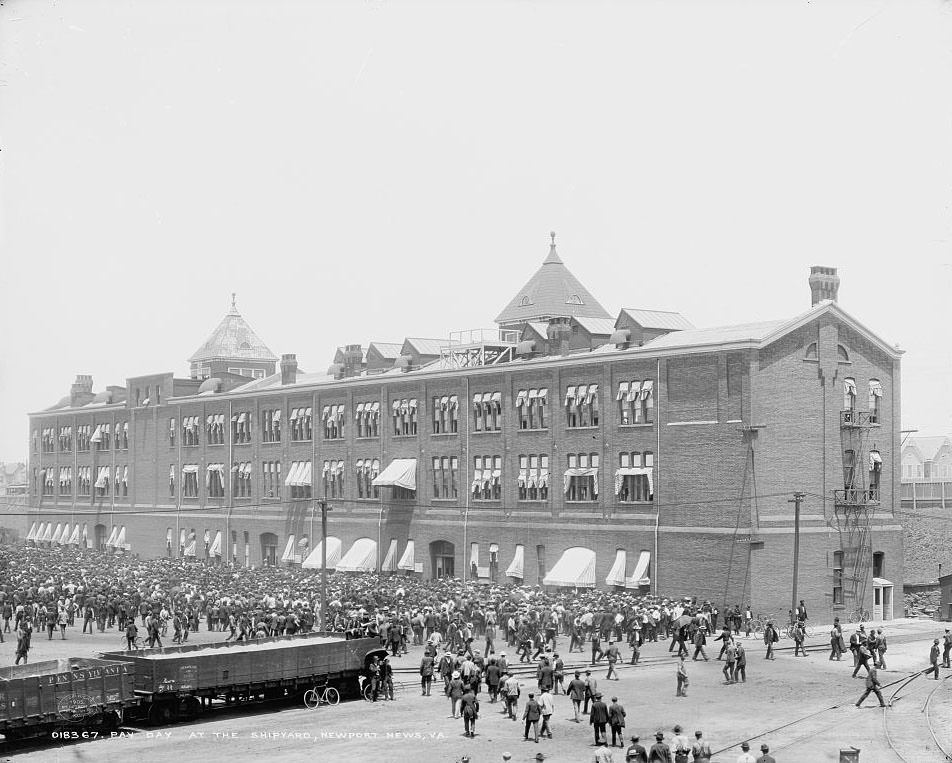
Payday at the shipyard was a significant event. The workforce was enormous, and the wages paid out each week rippled through local businesses, shops, and homes across Newport News. The shipyard didn’t just build ships — it sustained an entire city’s economy.
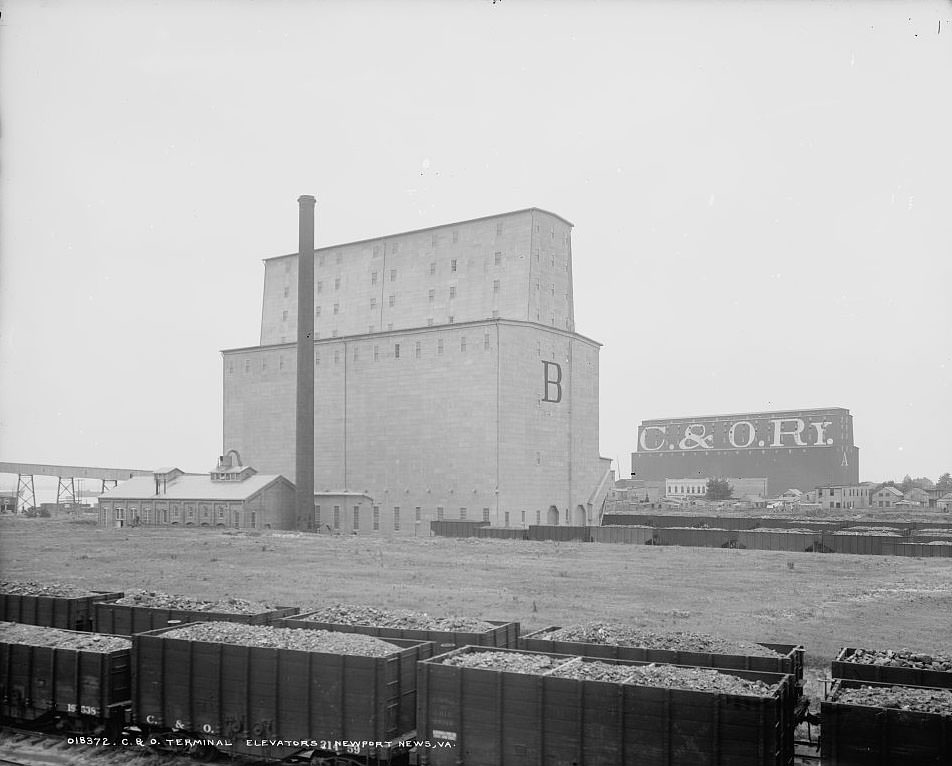
The C&O terminal elevators were massive grain and cargo-handling structures that made the transfer of bulk goods efficient on a large scale. They were as much a symbol of industrial Newport News as the ship hulls rising from the dry docks.
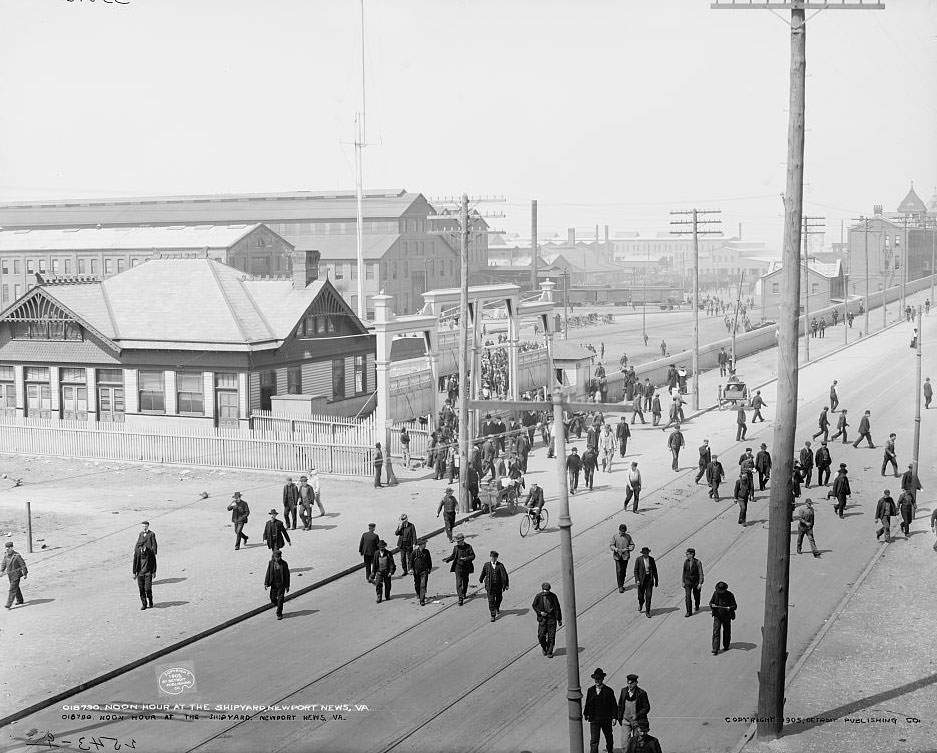
At noon, the shipyard workers broke from their labor and the yards filled with men eating, resting, and moving about. The noon hour was one of the few moments in the workday when the human scale of the operation became visible — hundreds of workers briefly visible against the massive steel structures rising around them.
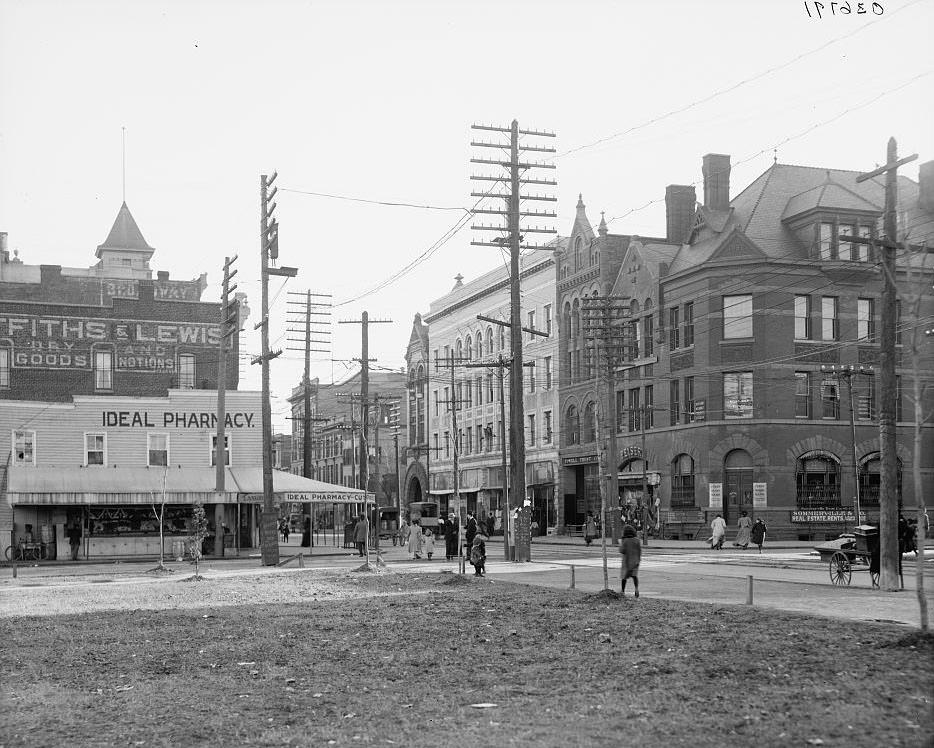
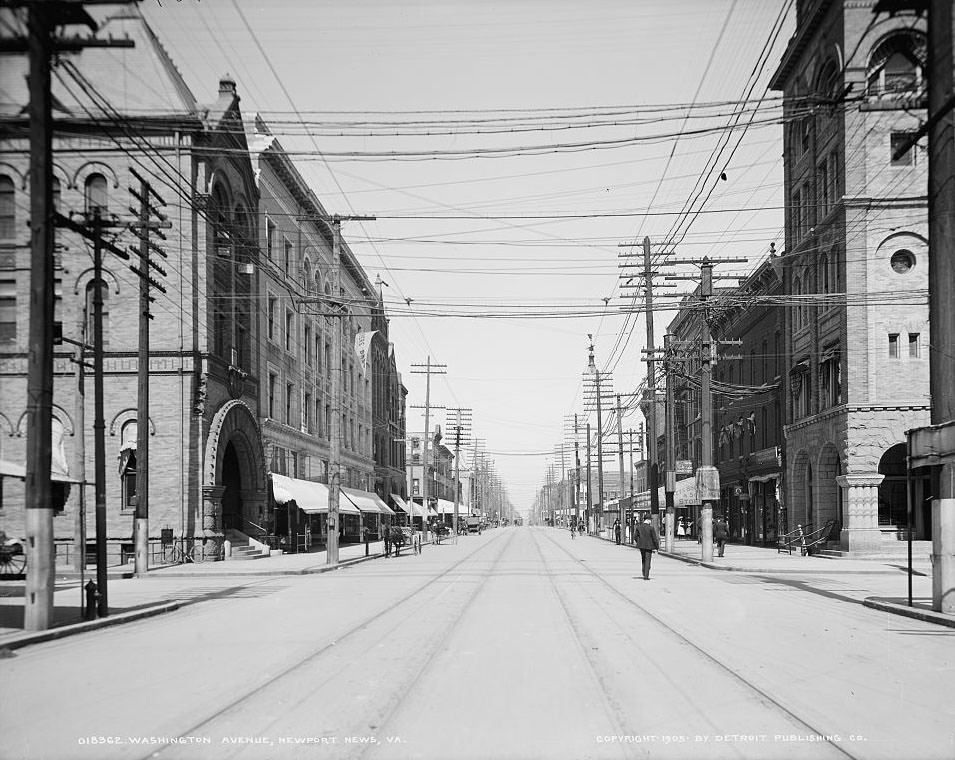
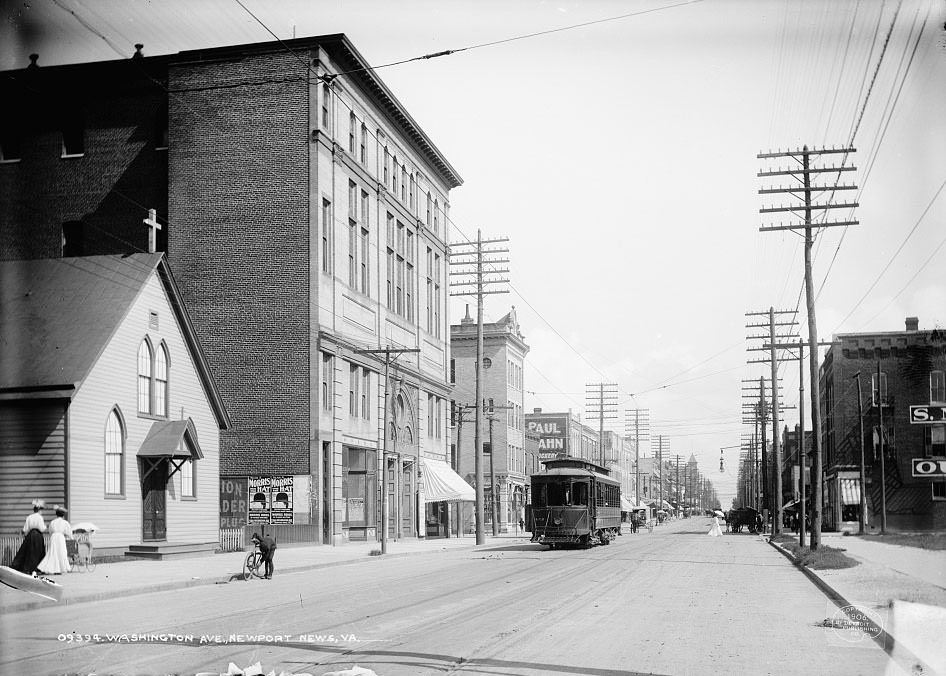
Washington Avenue was the commercial spine of the city. Its storefronts, pedestrians, and street activity reflected a city with real civic momentum — not just a rough industrial outpost, but a place where people lived, shopped, and built ordinary lives.
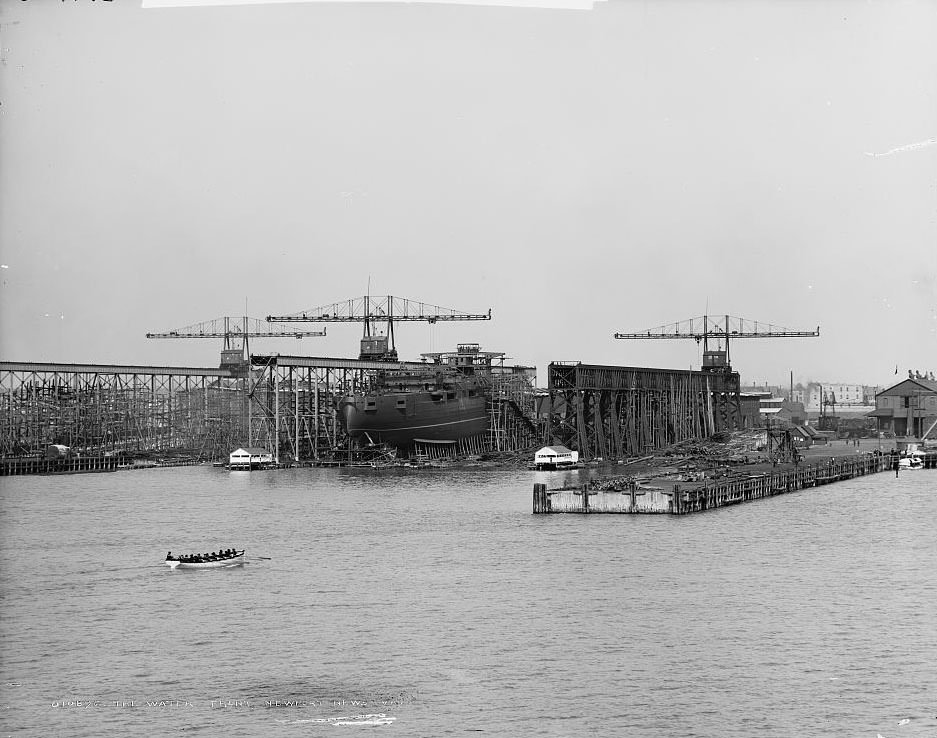
Along the slips — the narrow channels between piers where vessels were docked — workers moved cargo, repaired equipment, and kept the waterfront running. The slips were a constant scene of organized activity, essential to everything the city produced and exported.
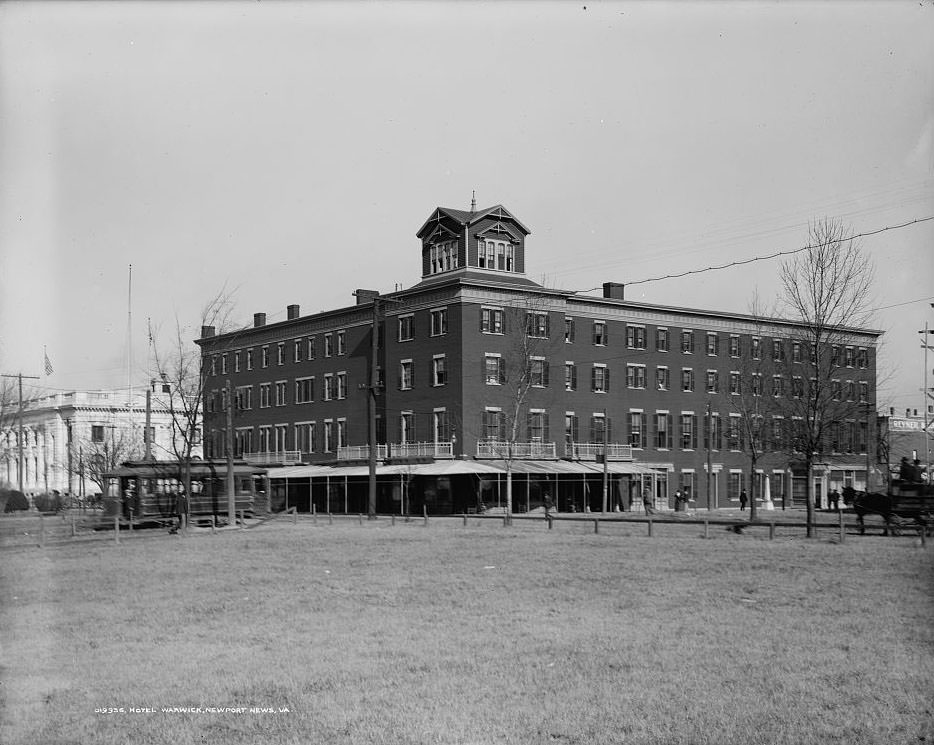
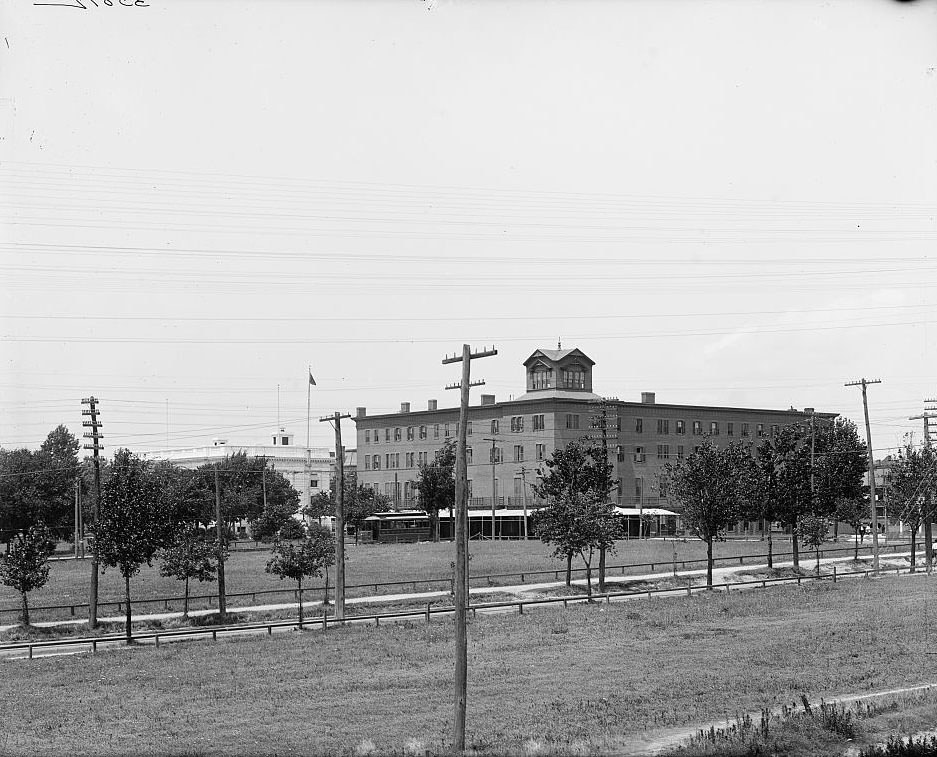
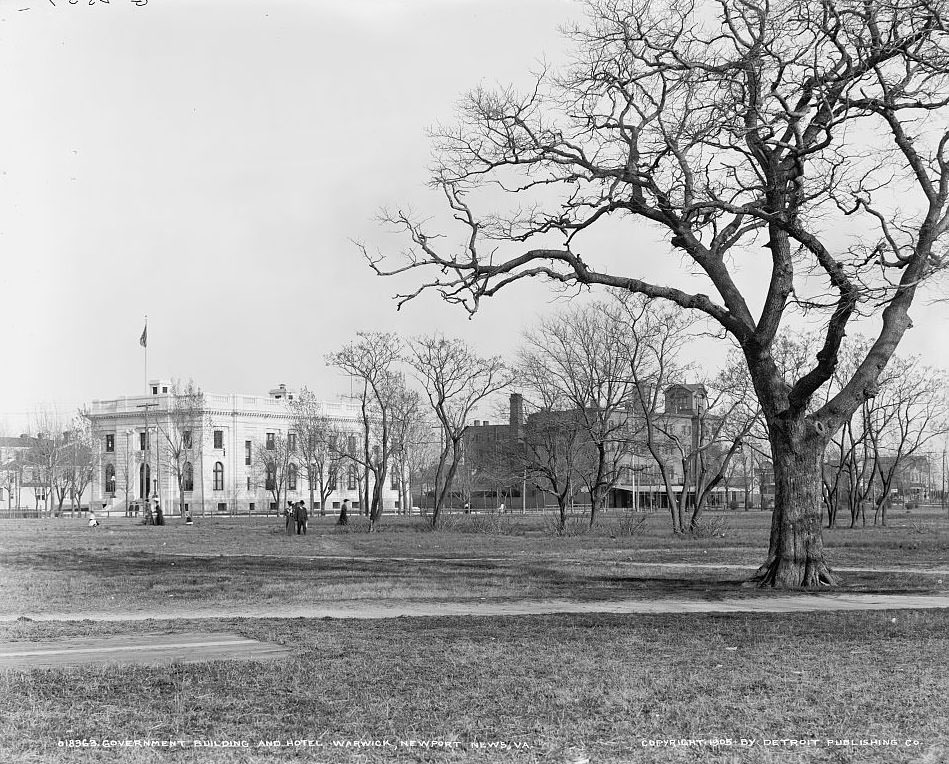
The Government Building and Hotel Warwick stood as two of the most prominent structures in early 20th-century Newport News. Together they represented the city’s dual ambitions — to function as a serious seat of civic authority and to offer the comforts expected of a growing urban center.
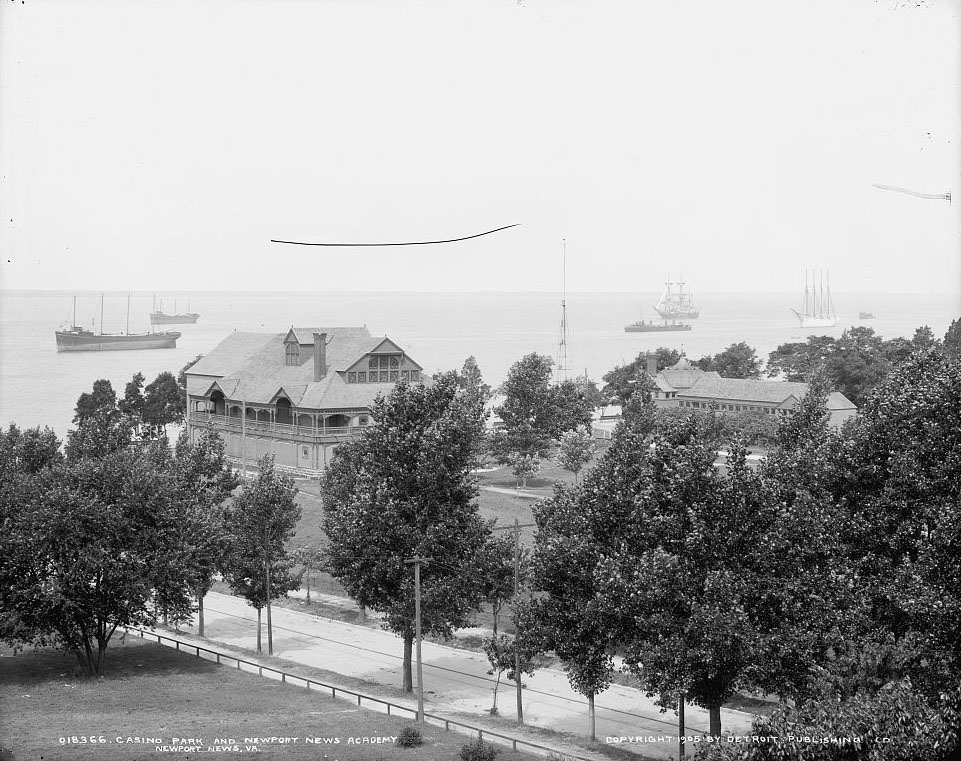
Casino Park and the Newport News Academy offered residents a glimpse of the cultural and educational life growing alongside the city’s industrial base. Schools, parks, and public spaces were being built to serve a population that was growing fast and putting down permanent roots.
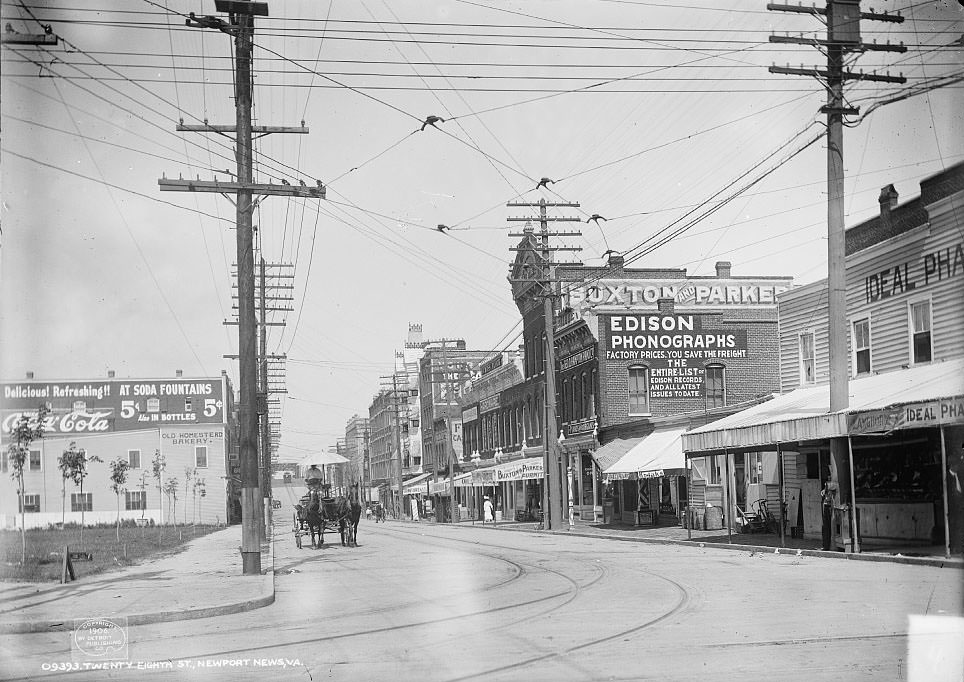
Twenty-eighth Street shows the residential side of Newport News in 1906 — tree-lined, quieter than the shipyard or the commercial avenues, and built for the working and middle-class families who made up the backbone of the city. Streets like these filled in steadily as Newport News’s population climbed through the decade.
Looking out over Hampton Roads from the Hotel Warwick in 1907, the view captured everything that made Newport News what it was — a working harbor, a rail terminus, a shipbuilding powerhouse, and a city still in the process of defining itself.