Most people picture mid-century New York City through black-and-white photographs — stark, shadowy, and distant. Charles W. Cushman saw it differently. A passionate amateur photographer and frequent traveler, Cushman shot the city repeatedly between the 1940s and 1960s using Kodachrome slide film, which rendered color with a warmth and accuracy that most photographers of his era never attempted. The result is one of the most vivid amateur records of New York City ever assembled.
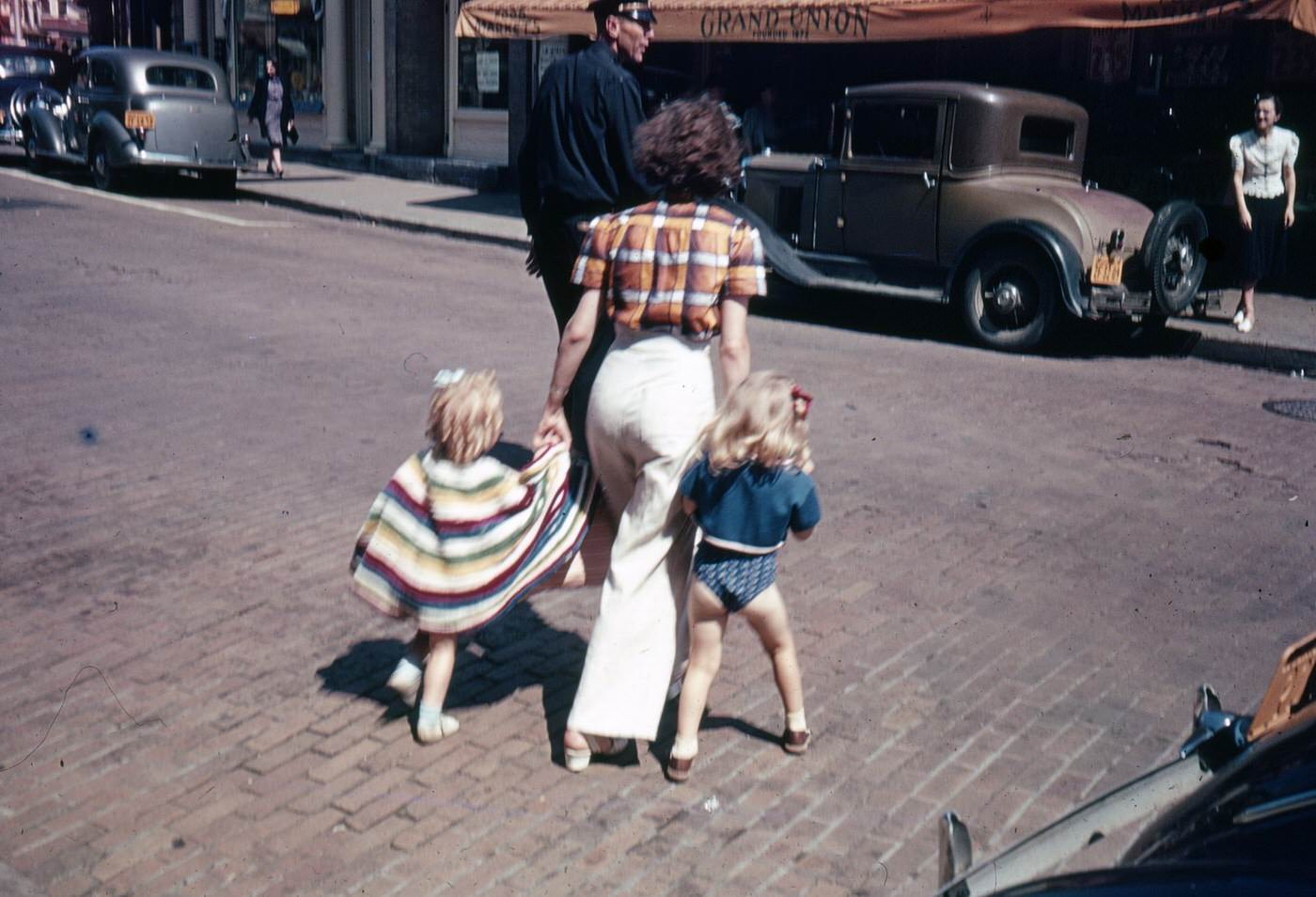
Cushman arrived in New York as the city hummed with pre-war energy. Streets were packed with wide-fendered automobiles, and the sidewalks belonged to pedestrians dressed in sharp, era-specific style. His early slides from 1941 show a city still rooted in the 1930s aesthetic — heavy chrome bumpers, fedoras, and storefronts with hand-painted lettering.
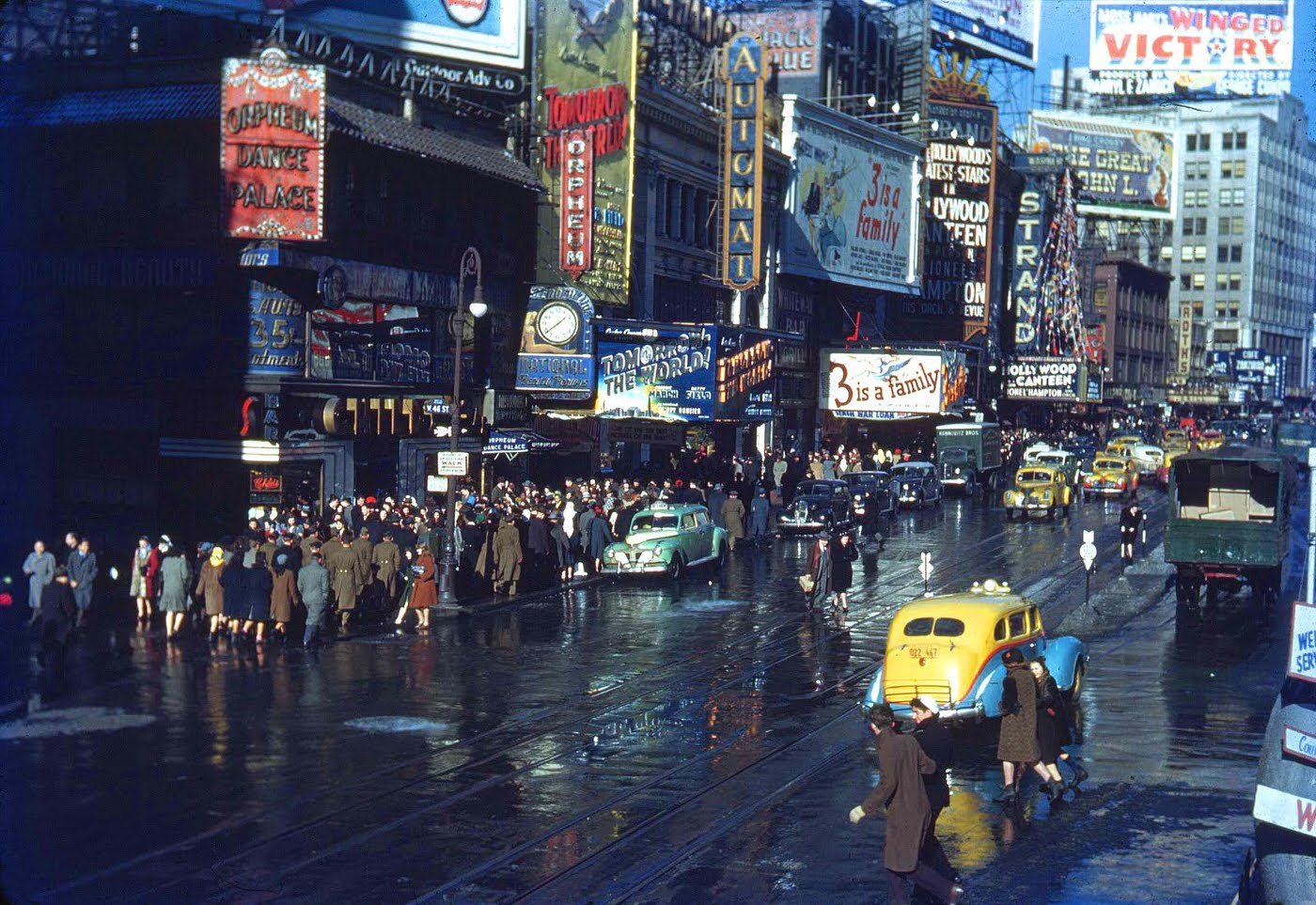
By the mid-1940s, the theater district was operating at full tilt despite wartime rationing. Marquees blazed with productions and film titles, drawing crowds from across the five boroughs. Cushman documented these signs with precision, framing them against the surrounding architecture so that the full street environment is preserved in each shot.
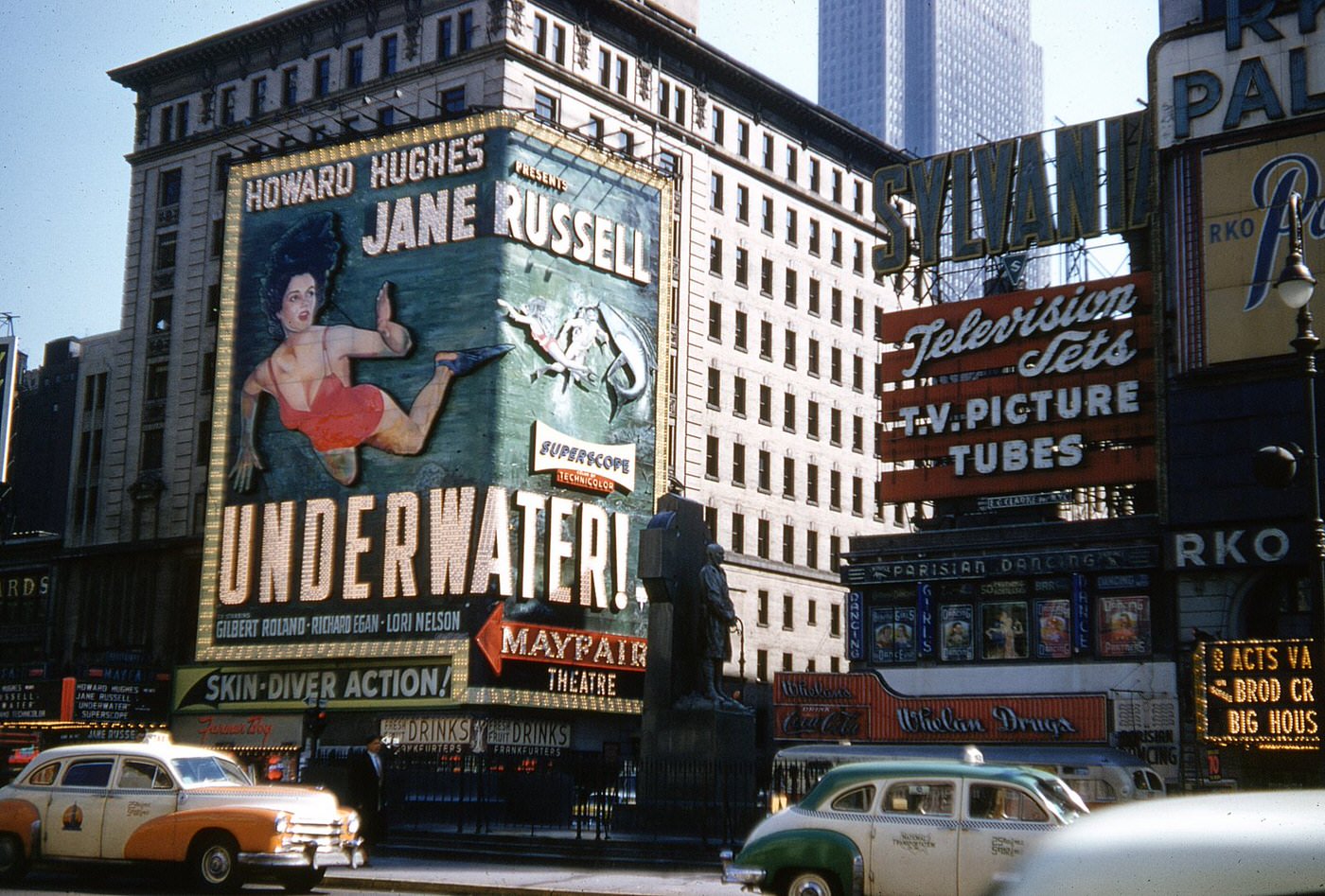
The 1950s brought a new scale of advertising to New York. Movie studios promoted their releases with massive outdoor displays, and Times Square became a battleground for attention. Howard Hughes’s promotional push for his 1955 film featured Jane Russell prominently across the district’s signage, a reflection of how Hollywood muscle shaped the city’s visual landscape.
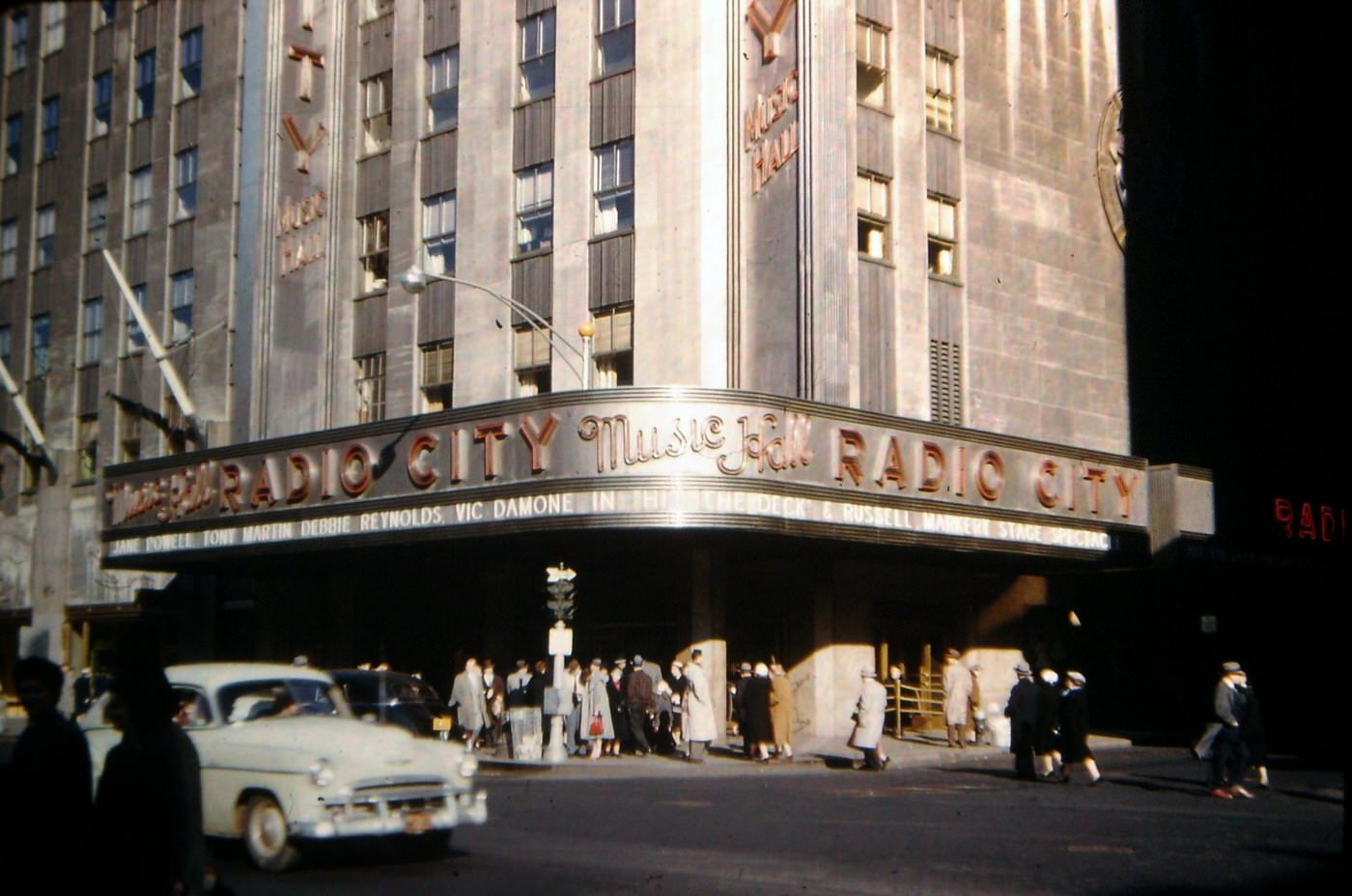
Radio City Music Hall was a centerpiece of midtown by 1955, and Cushman photographed it with the same attention he gave to street-level details. The building’s Art Deco facade held its grandeur against an increasingly commercial skyline. Nearby, at Broadway and 49th Street, the intersection buzzed with foot traffic and competing storefronts.
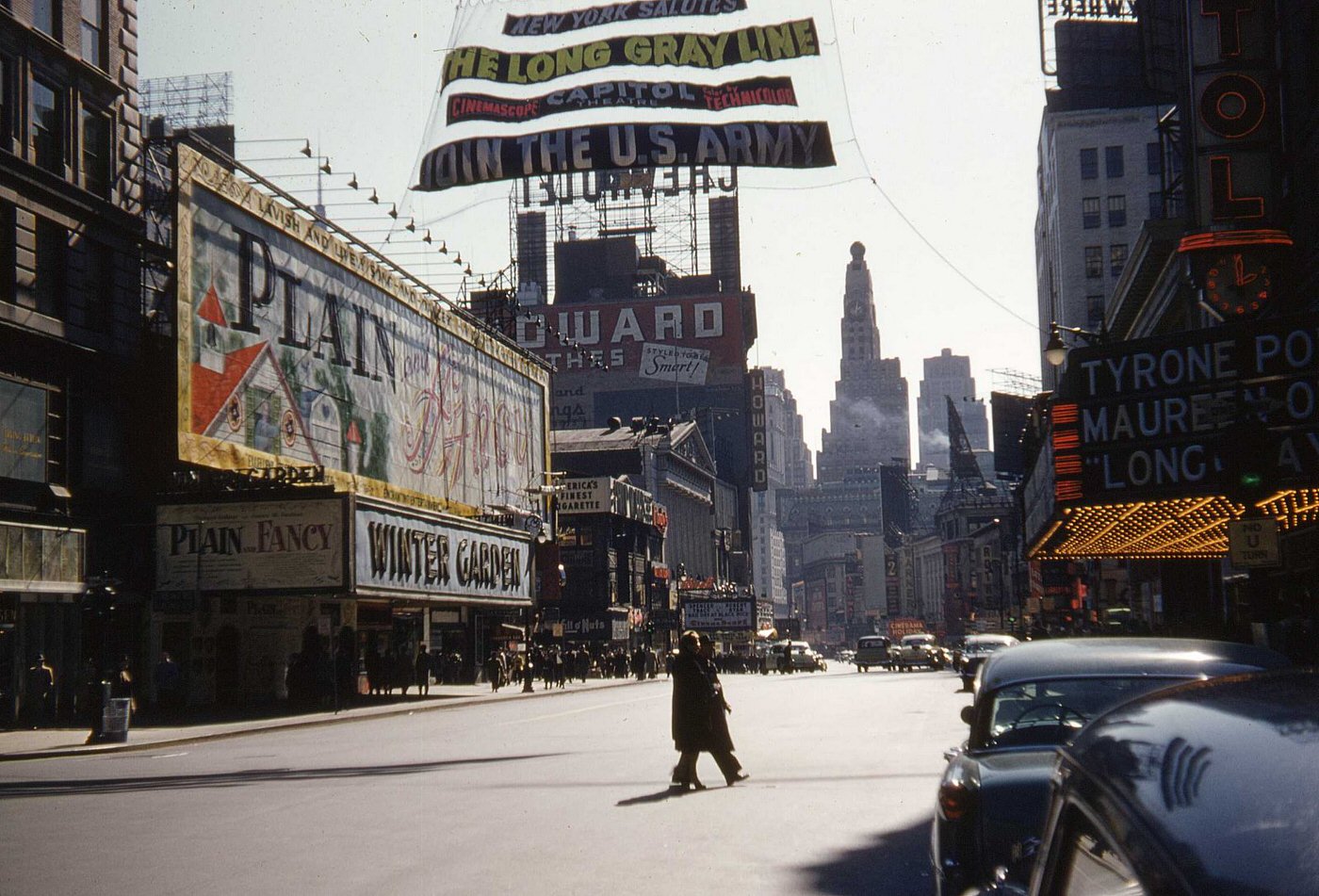
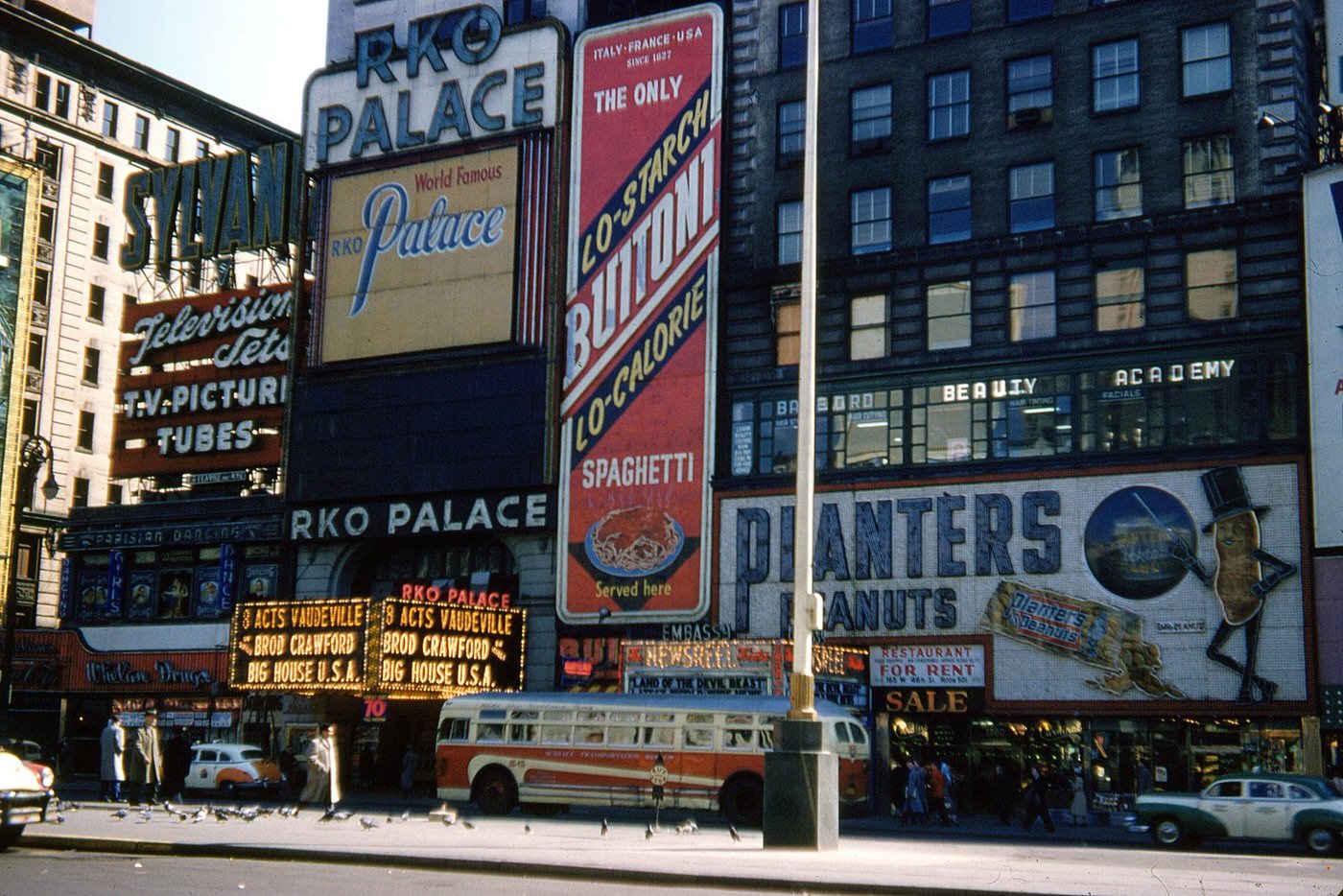
The convergence of 7th Avenue and Broadway was one of the most photographed corners in the world, yet Cushman’s color slides make it feel freshly observed. The yellows, reds, and greens that fill his frames were real — not colorized or enhanced. Kodachrome simply captured what was there.
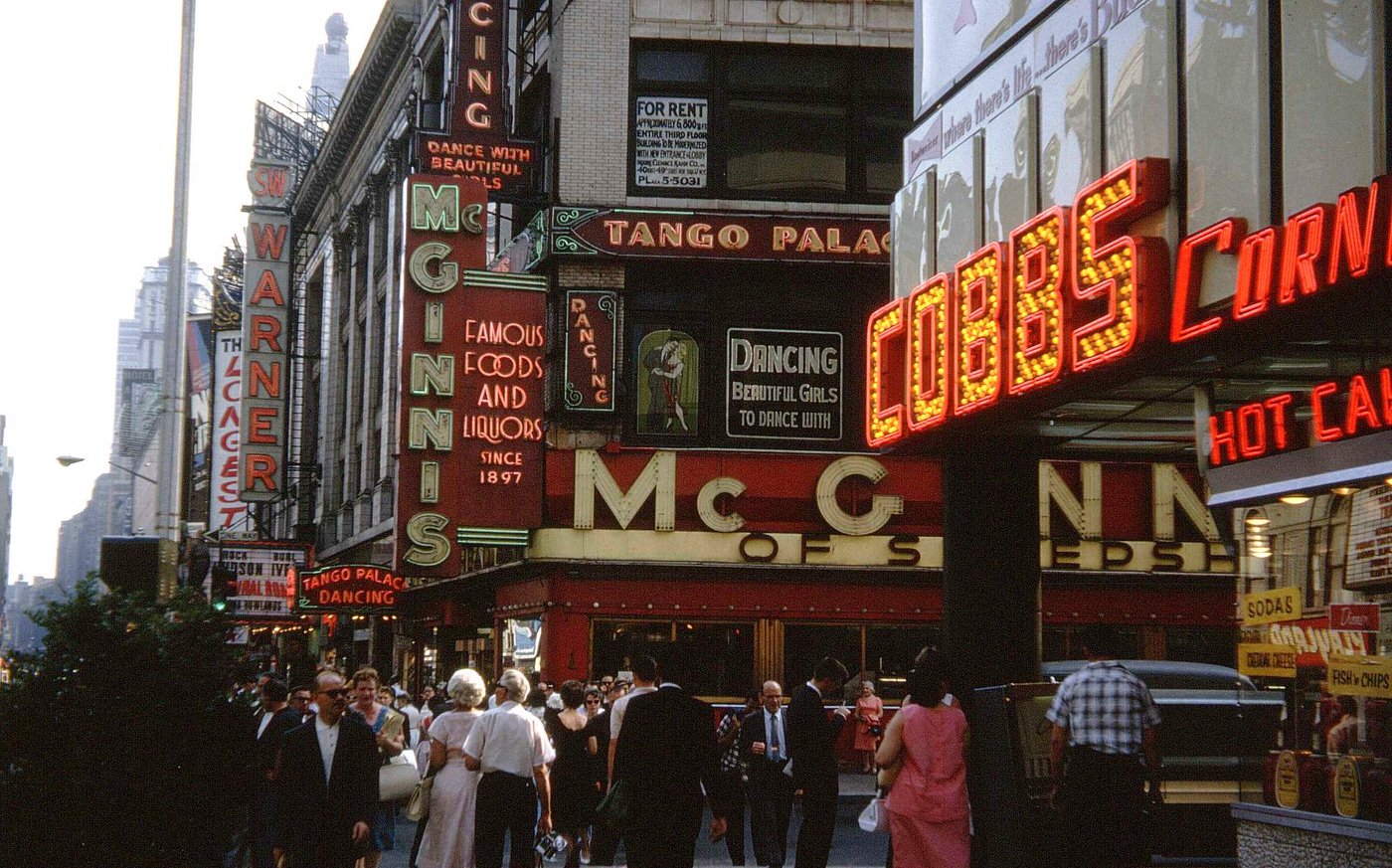
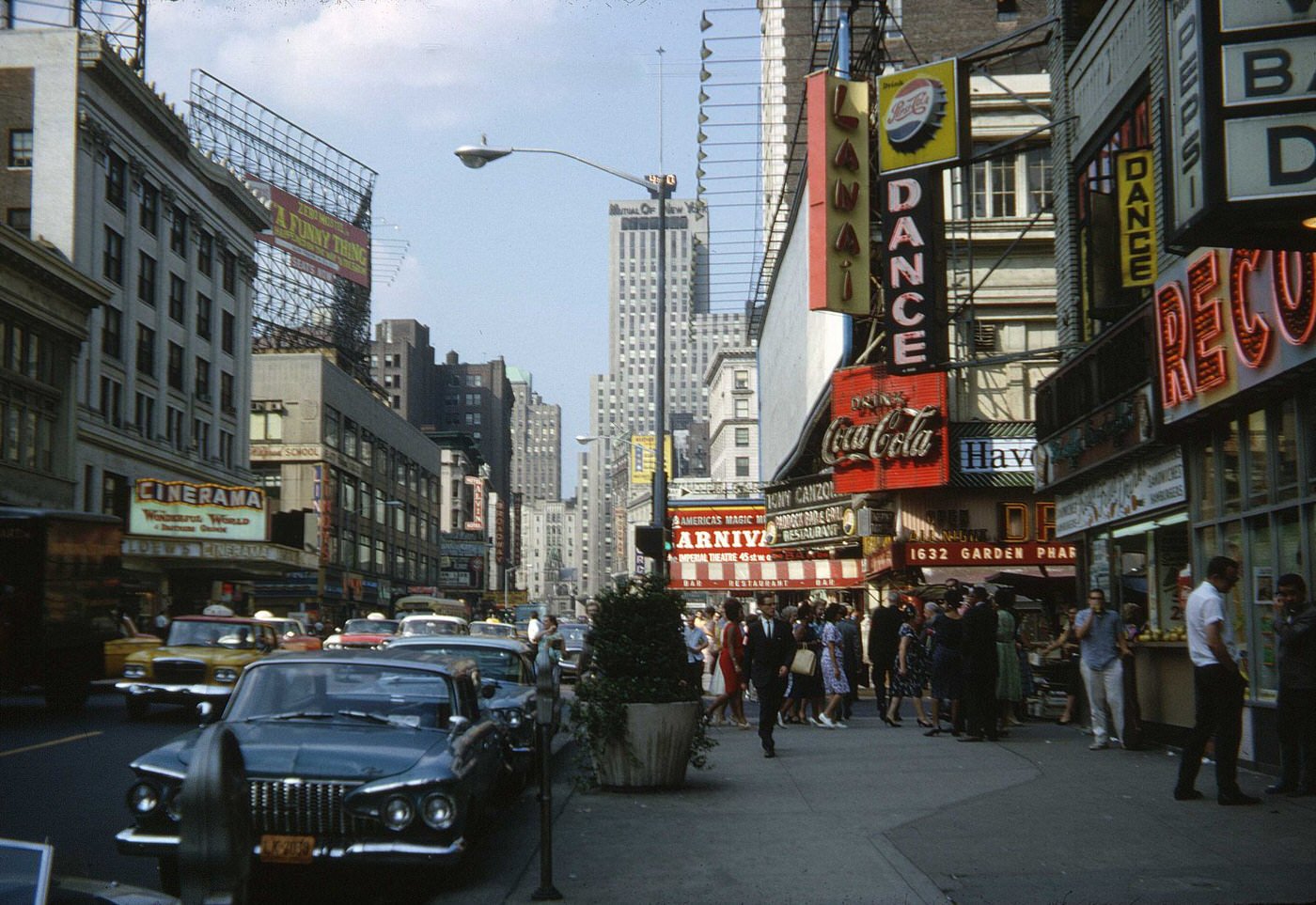
Into the 1960s, Cushman kept returning. The neighborhoods around 48th Street held a layered mix of restaurants, dance halls, and retail shops that catered to a wide range of New Yorkers. His 1962 shots capture signage and storefronts that were gone within a decade, replaced by urban renewal projects and commercial redevelopment.
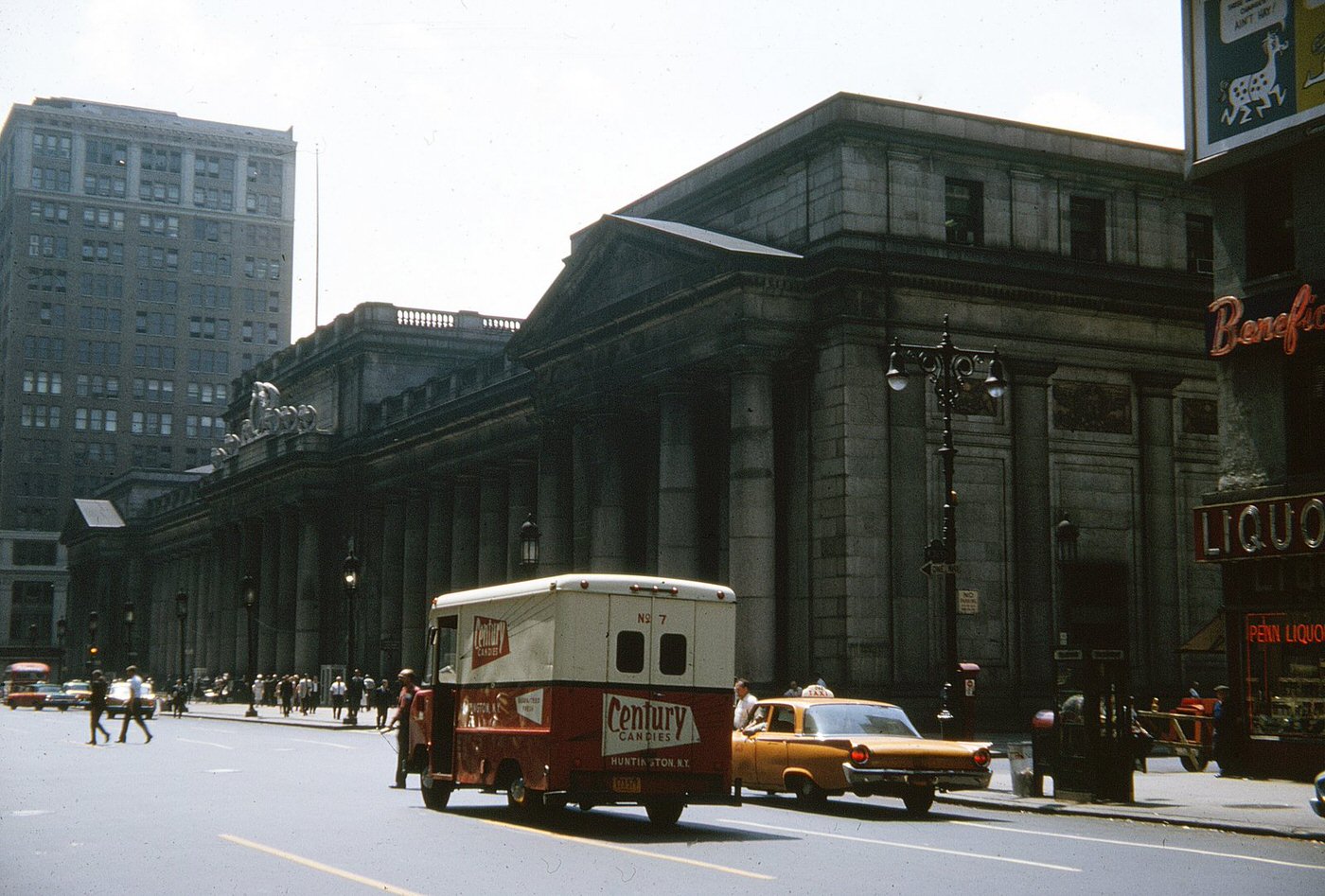
Pennsylvania Station was still standing in 1962, and Cushman photographed it alongside the working vehicles of the city — delivery trucks, taxis, and buses that formed the circulatory system of daily commerce. The station would be demolished the following year, making images like this one an accidental act of preservation.
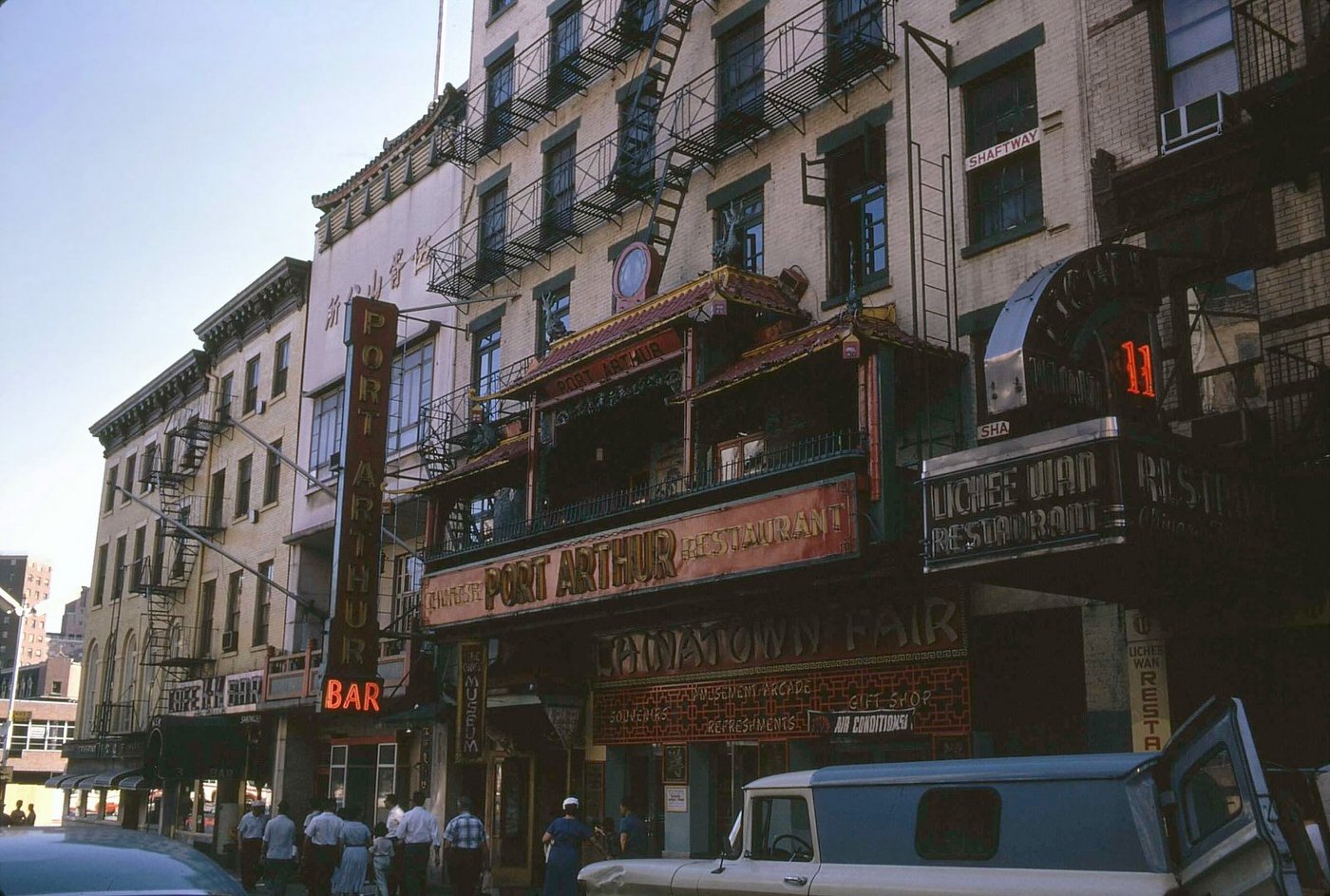
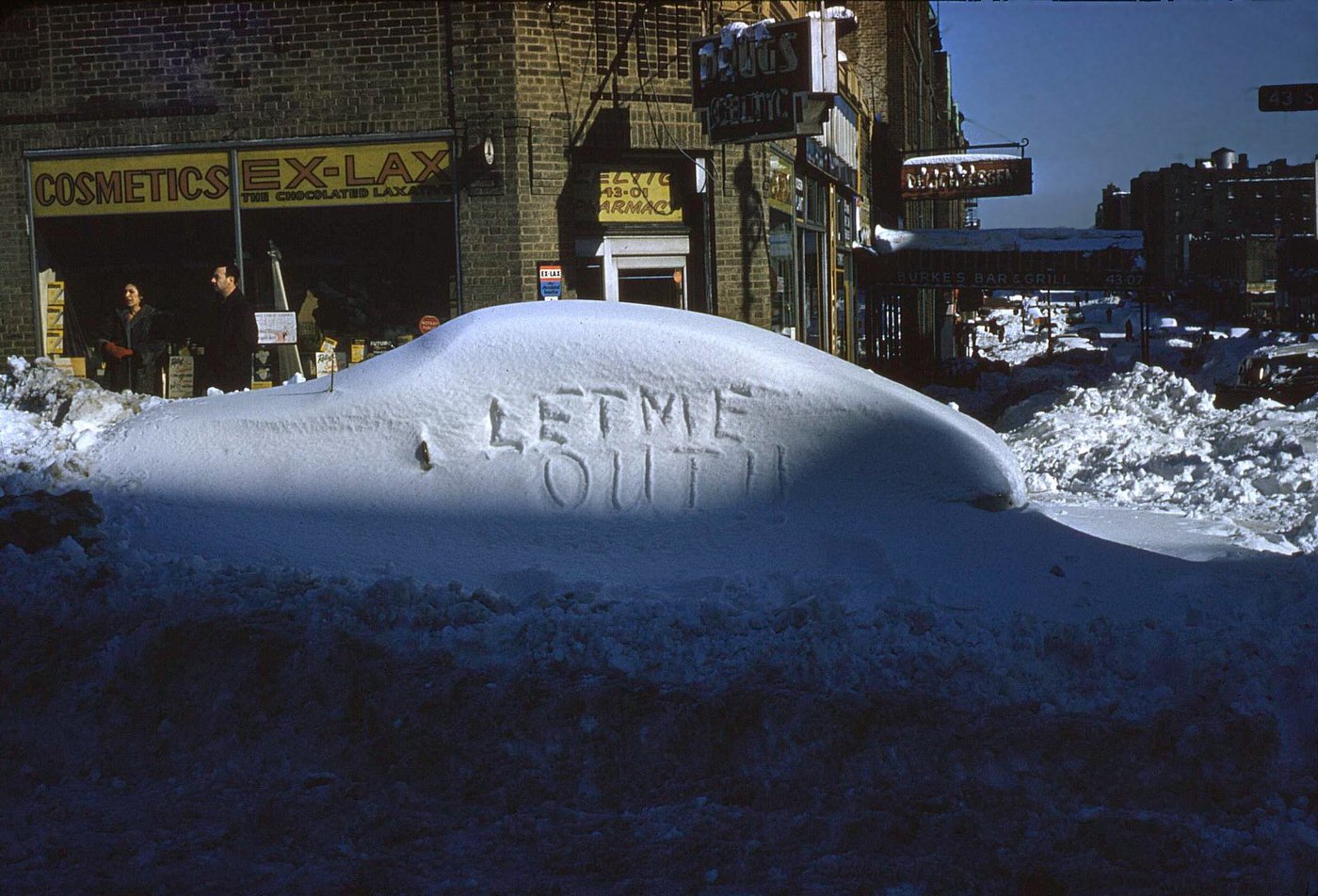
Cushman’s lens didn’t stay fixed on Manhattan. A 1961 Queens drugstore buried under fresh snow reminds viewers that New York extended far beyond the famous skyline. These outer-borough shots document the quieter, residential texture of the city — corner stores, parked cars, and neighborhood streets unchanged by tourism.
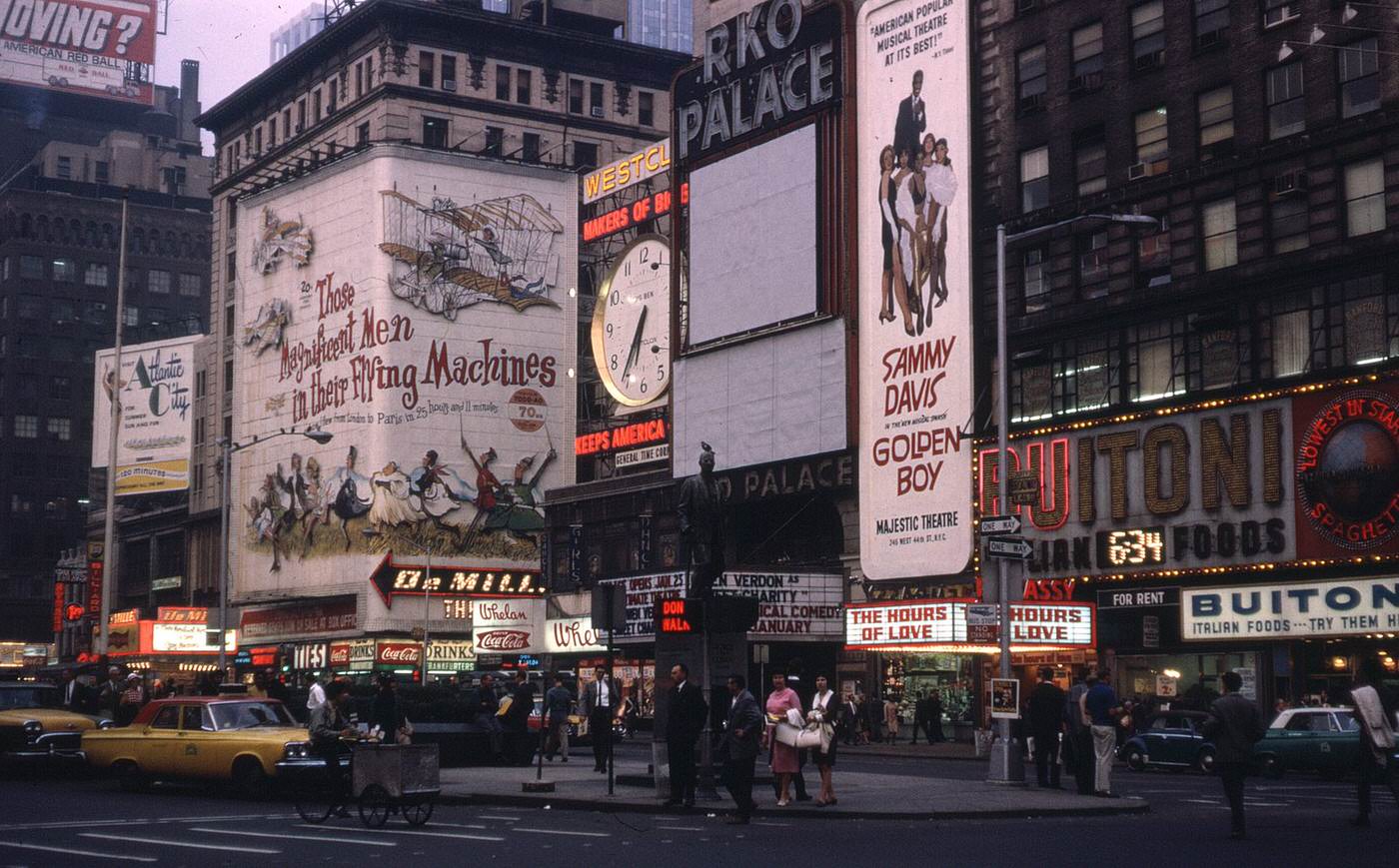
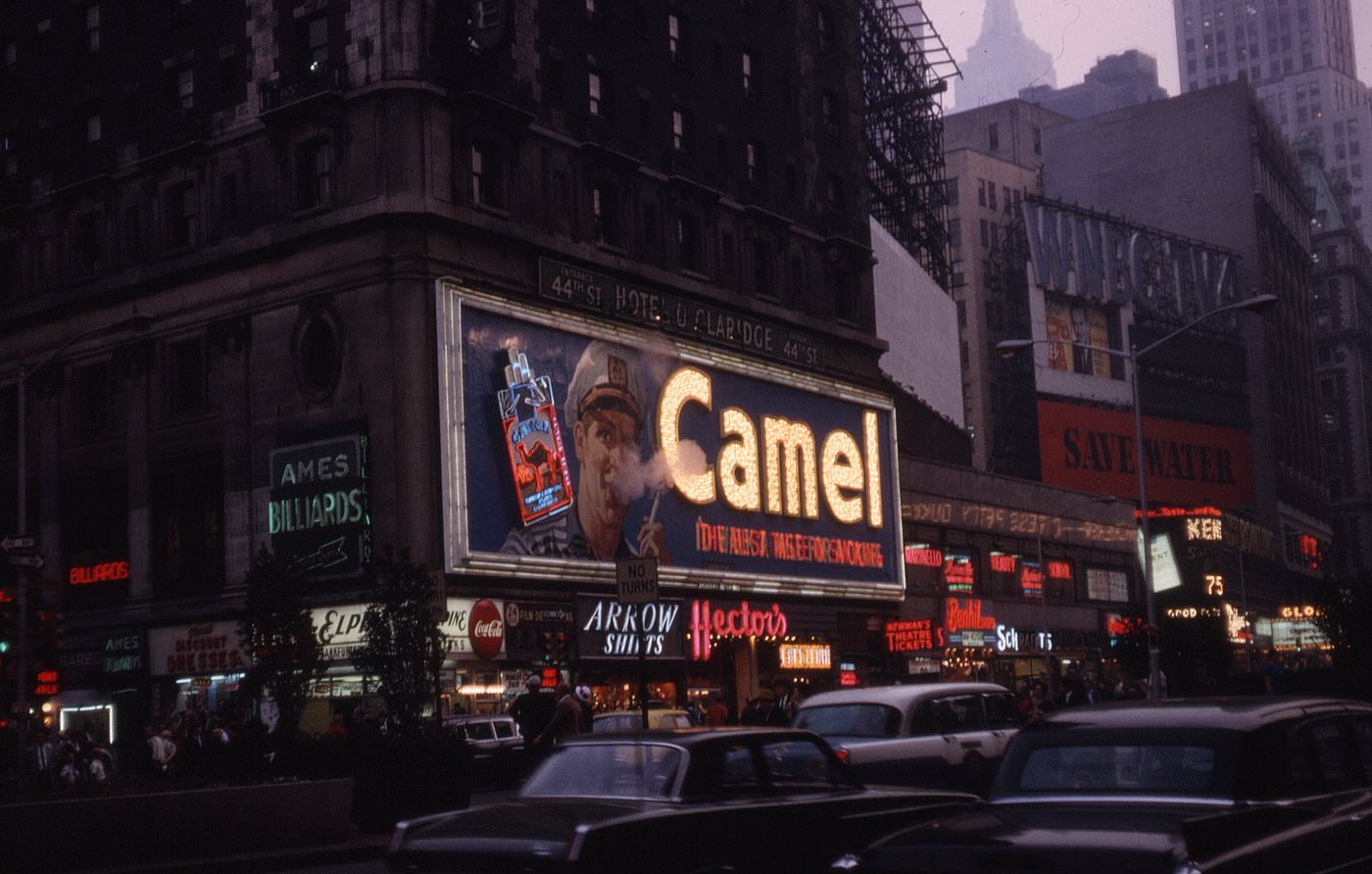
By 1965, the giant Camel cigarette billboard near Times Square was a cultural landmark in its own right — a steam-puffing fixture that generations of New Yorkers accepted as part of the skyline. The RKO Palace marquee down the block kept the entertainment district alive with film premieres and live shows, even as television was pulling audiences away.
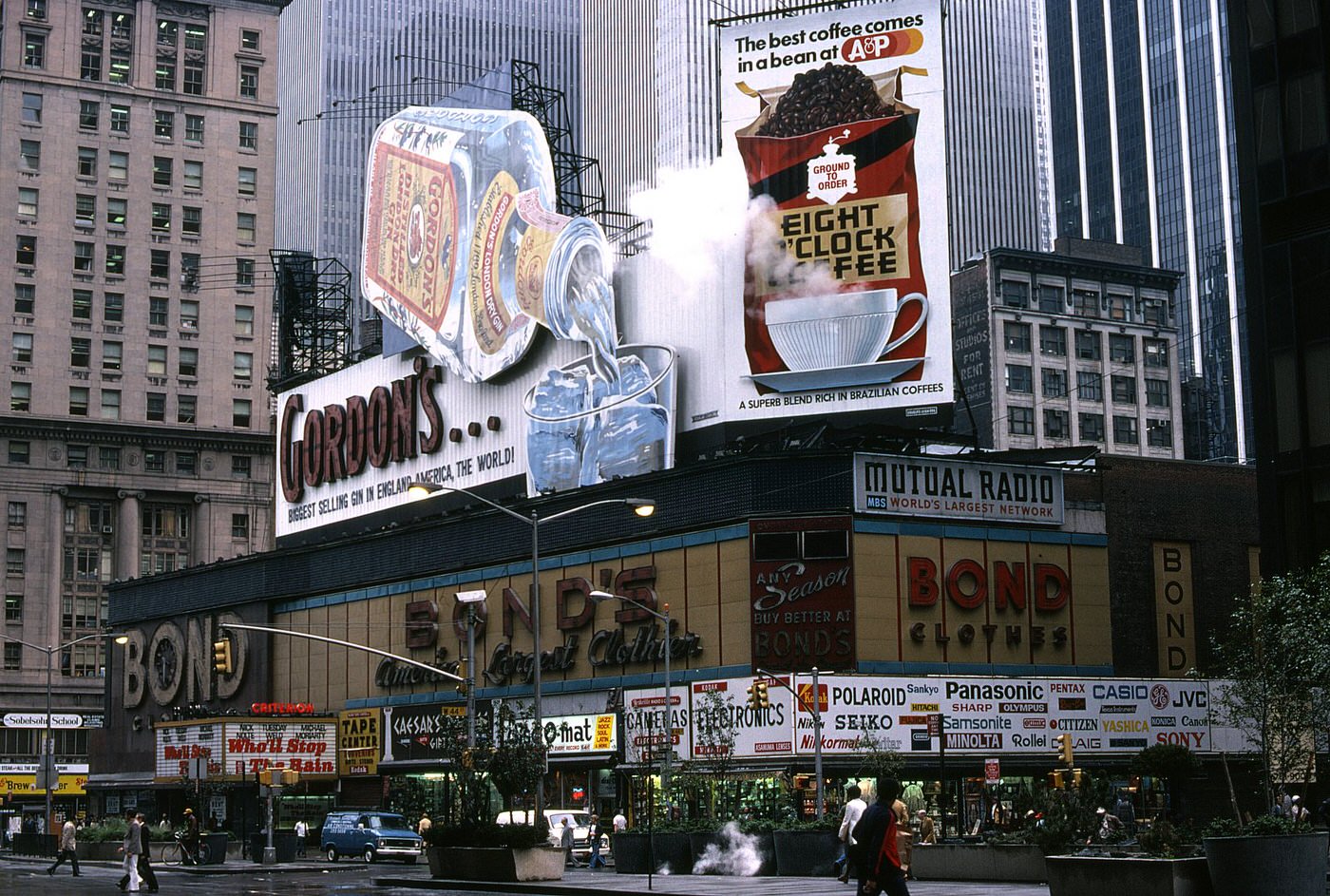
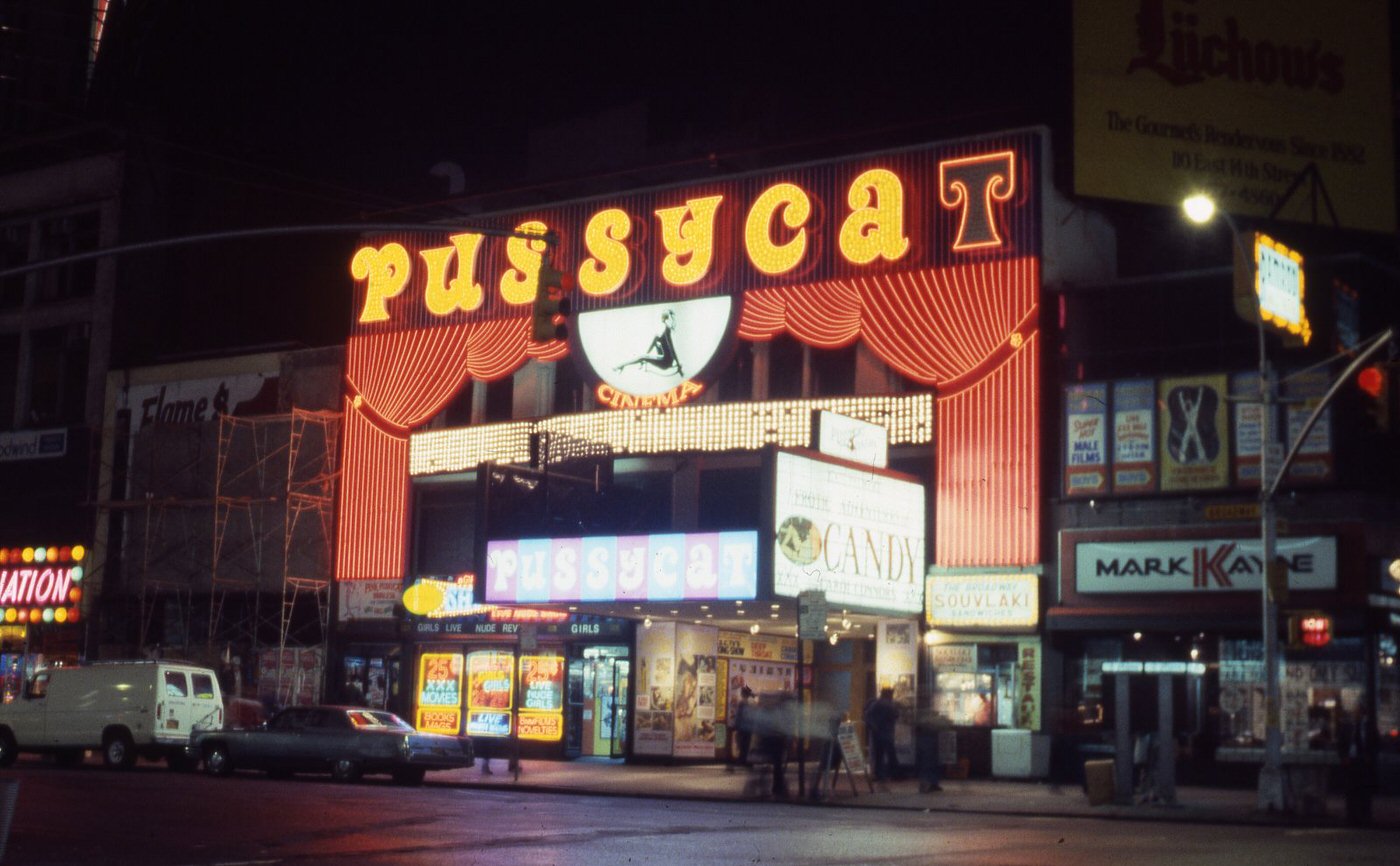
Cushman’s archive extends into the 1970s, when Times Square had shifted dramatically. The adult theaters that replaced legitimate venues reflected a city under serious financial strain. The Bonds Building and the Pussycat Theater mark the far end of his New York documentation — a stark visual contrast to the gleaming 1940s streetscapes where his project began.
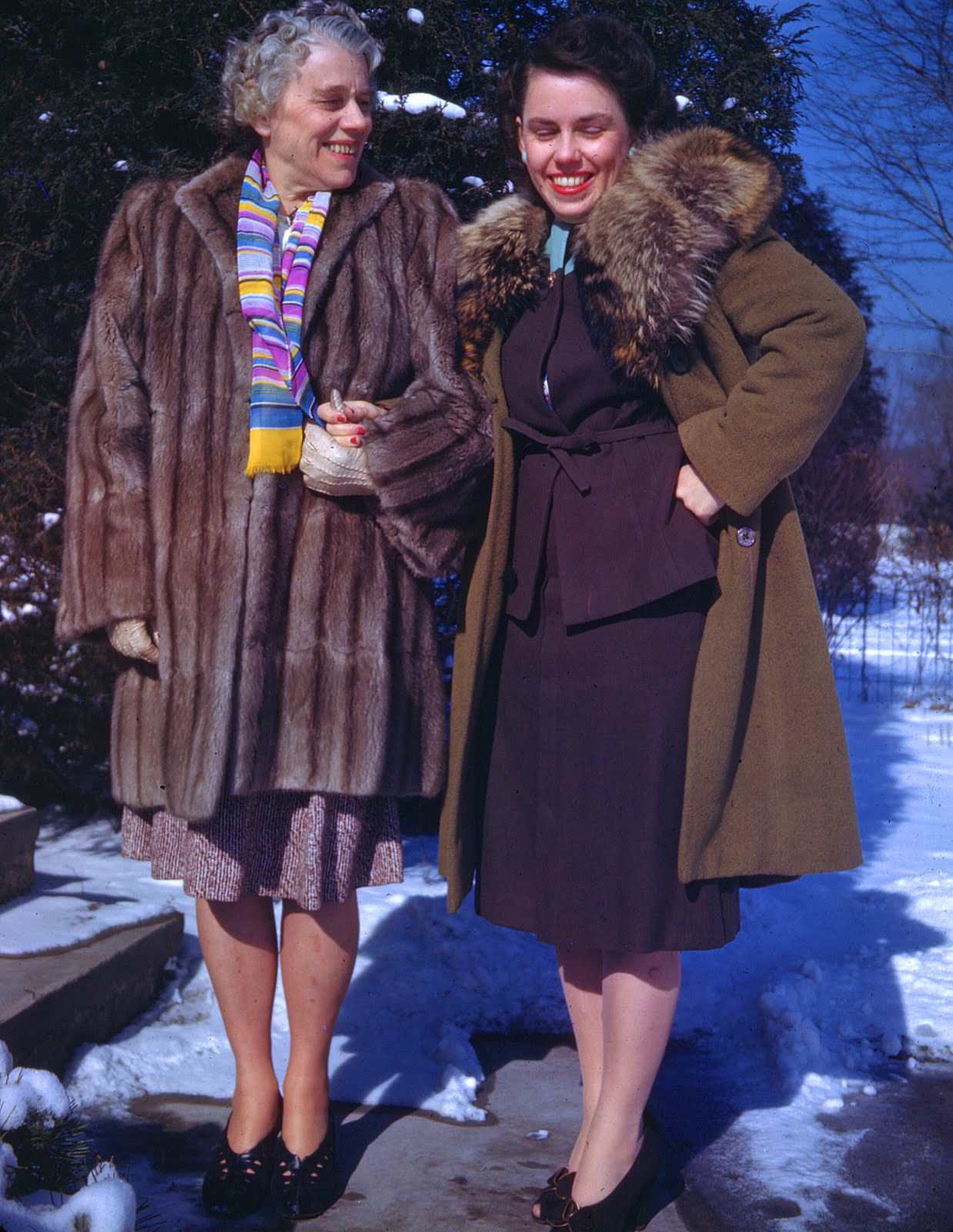
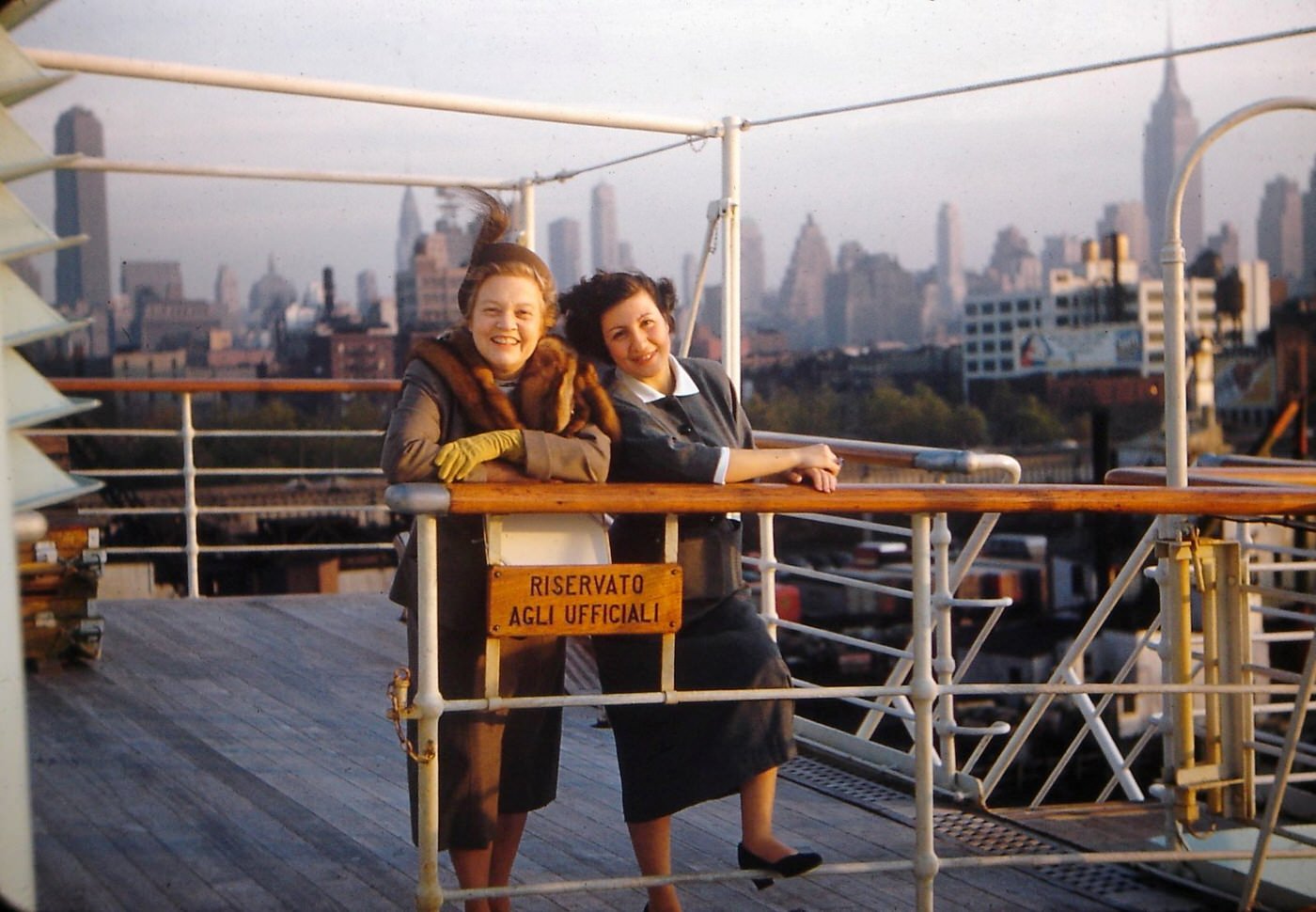
Throughout his decades of shooting, Cushman consistently turned his camera toward the people on the street. A 1940s shot of women in fur coats captures fashion, class, and urban confidence in a single frame. These candid portraits, taken without studio lighting or formal arrangement, are often the most telling documents in his entire collection.