Tucked away in Natick, Massachusetts, one of the U.S. Army’s most important research facilities spent decades quietly solving problems that soldiers face every day — heat, cold, bullets, and bad terrain. The Natick Soldier Systems Center (NSSC), now known as the Combat Capabilities Development Command Soldier Center (CCDC), was established in 1962. Its mission was direct: develop better equipment, clothing, food, shelters, and airdrop systems for the modern American soldier. The results were enormous. MOLLE gear, Interceptor body armor, PALS webbing, and MREs all came out of this facility. So did some of the stranger, lesser-known experiments that the center’s photographers captured on large-format film over two decades.
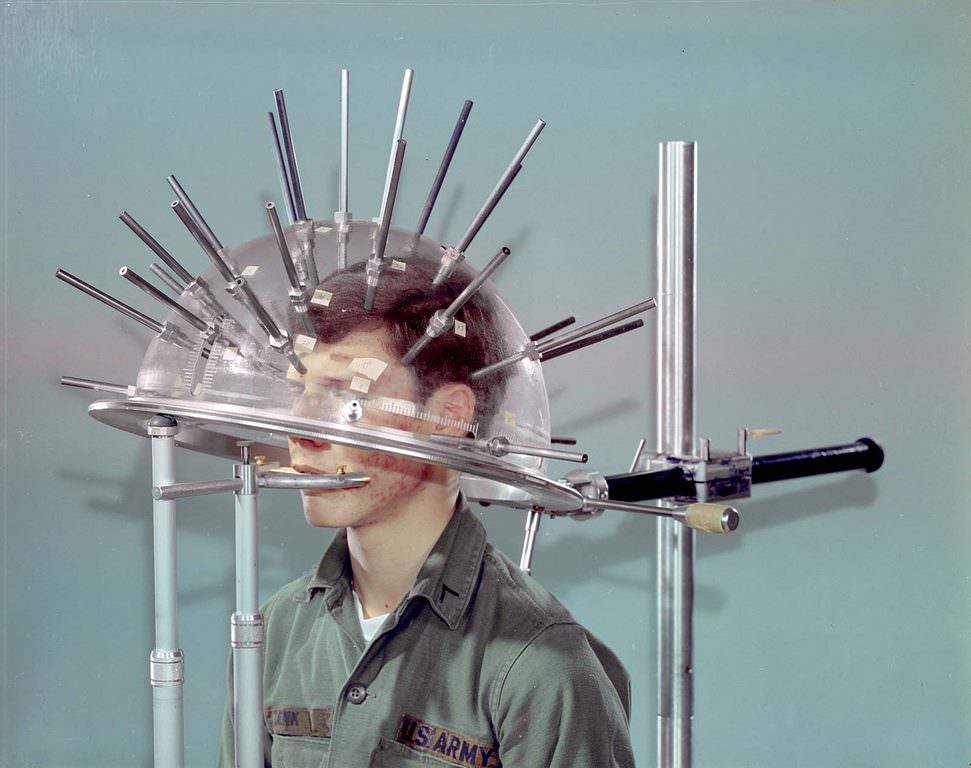
The photographic collection from NSSC is remarkably precise. Large-format film captures fine detail, and the researchers working there were nothing if not meticulous. Every prototype, every test subject, every piece of gear was documented. The images span from the early 1970s through the early 1990s and offer a window into a world where scientists and engineers treated the human body as a system to be optimized — measured, cooled, armored, and camouflaged. One of the earliest problems the center tackled was helmet fit. Getting a helmet to properly protect a soldier meant first understanding the exact shape of the human head.

Helmet geometry was only one part of the protection equation. The 1970s saw a major push to bring ballistic protection into everyday military gear. Kevlar, which DuPont had developed in 1965, became a key material for Natick’s researchers. By 1974, the center was exploring how ballistic protection could be integrated into clothing that soldiers might actually wear beyond a traditional flak jacket.

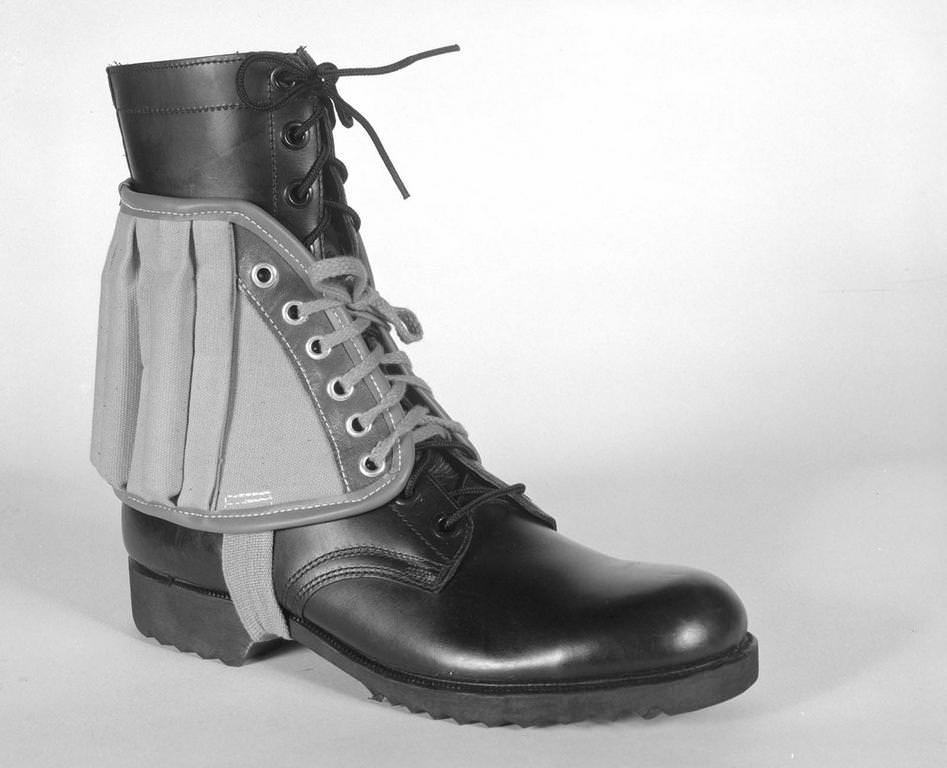
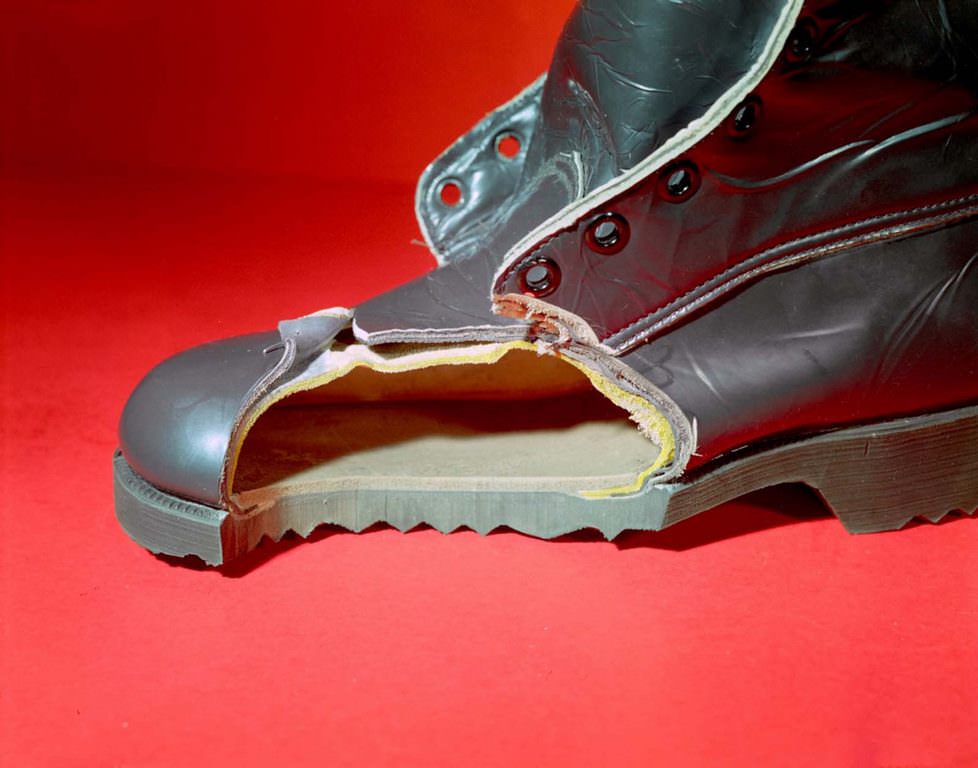
Protection wasn’t limited to torso armor. Footwear was a constant area of focus, and Natick researchers examined combat boots from multiple angles — literally. A 1974 cut-away study exposed the internal construction of a combat boot, showing layer by layer how the boot was built and where it could be improved. Three years later, a different kind of boot experiment was underway: a weighted spat worn over the boot to study how added mass at the ankle and foot affected soldier movement and fatigue.


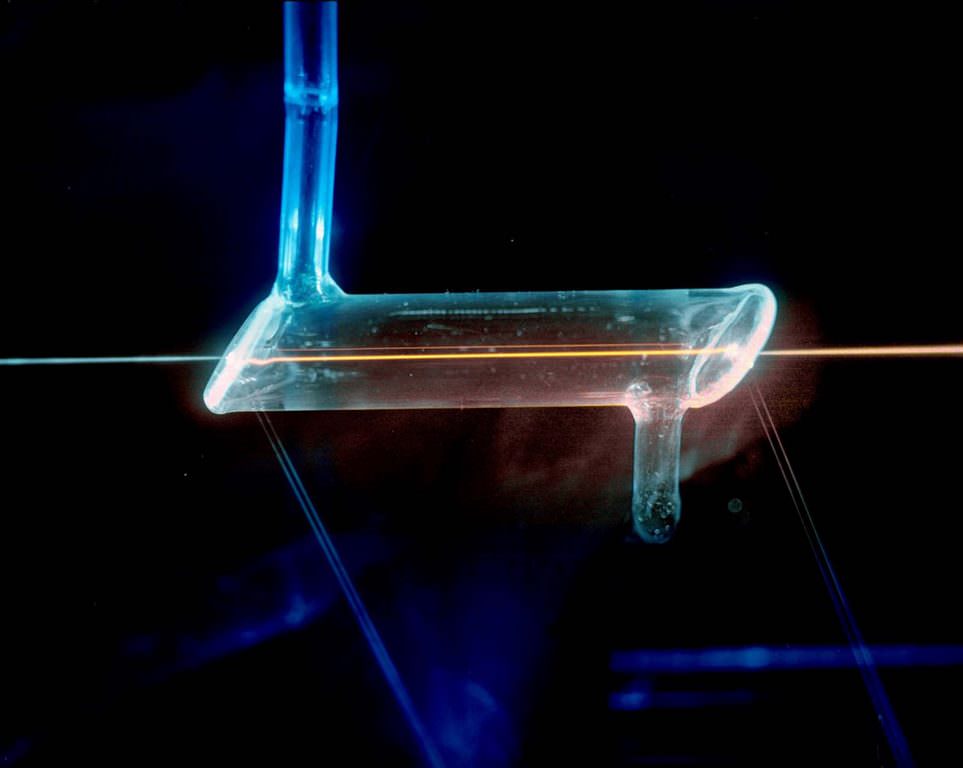
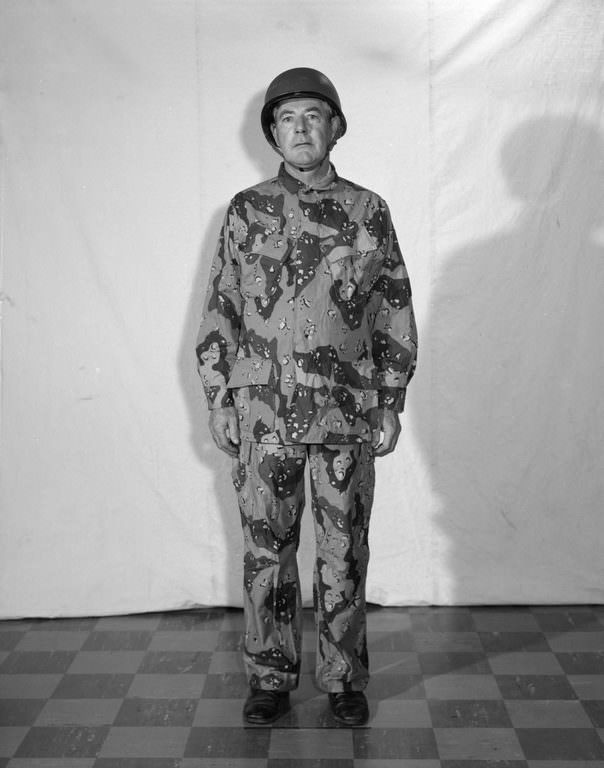
Camouflage research ran in parallel with gear development throughout the 1970s. In 1973, two very different approaches were being studied simultaneously. One involved desert-specific fatigues designed to break up a soldier’s outline in arid, open terrain. The other used laser technology to test the effectiveness of dyes used in camouflage fabric — a laser beam passed through a bottle of dye to analyze its light-scattering properties and how well it would help clothing blend into the background.


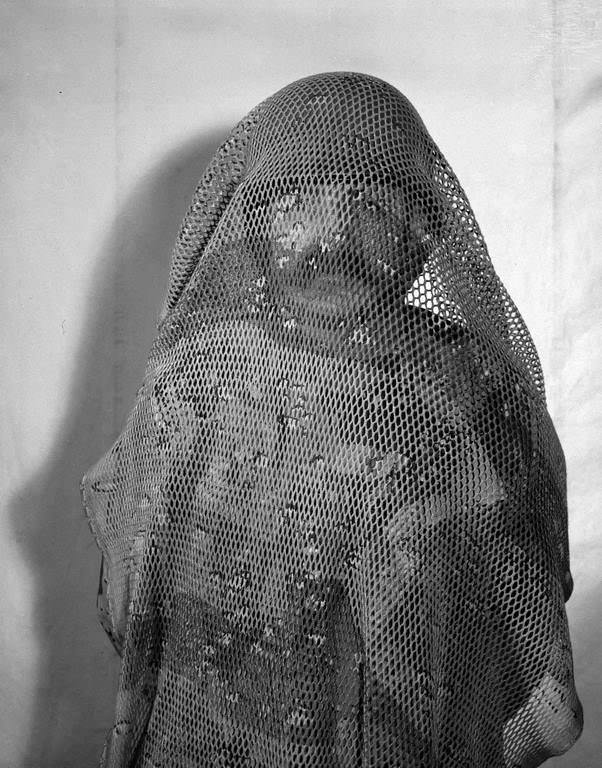
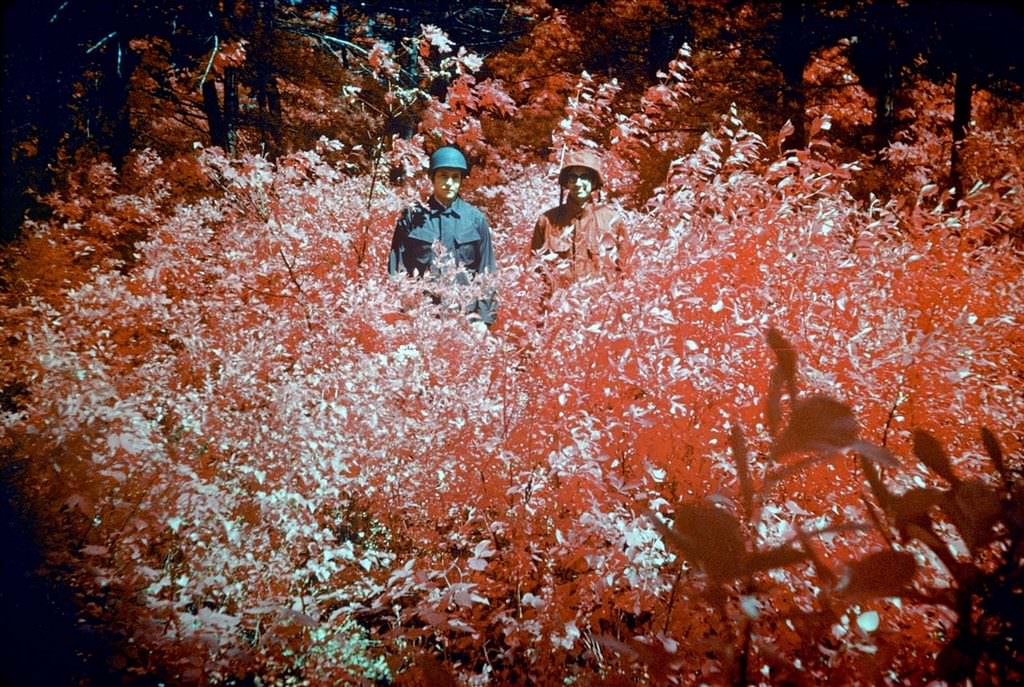
Desert camouflage also extended to personal concealment beyond the uniform itself. Head netting designed for desert environments was tested in 1973, offering soldiers a way to break up the recognizable silhouette of the human head and face in open, sun-bleached landscapes. The following year, infrared camouflage became its own area of study — because by 1974, the Army understood that hiding from human eyes was no longer enough. Thermal and infrared detection systems were increasingly common on the modern battlefield, and a soldier’s clothing needed to defeat those sensors too.


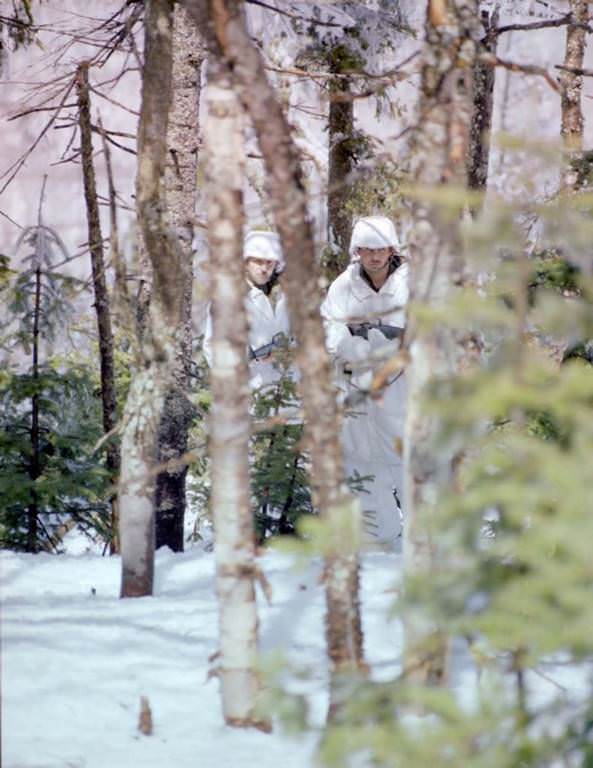
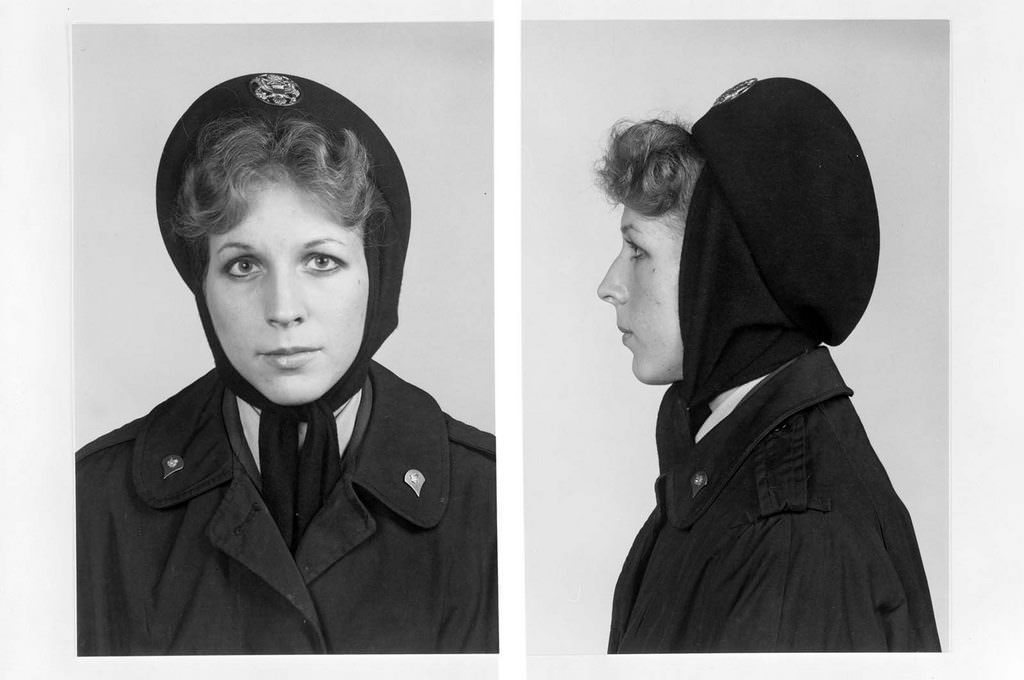
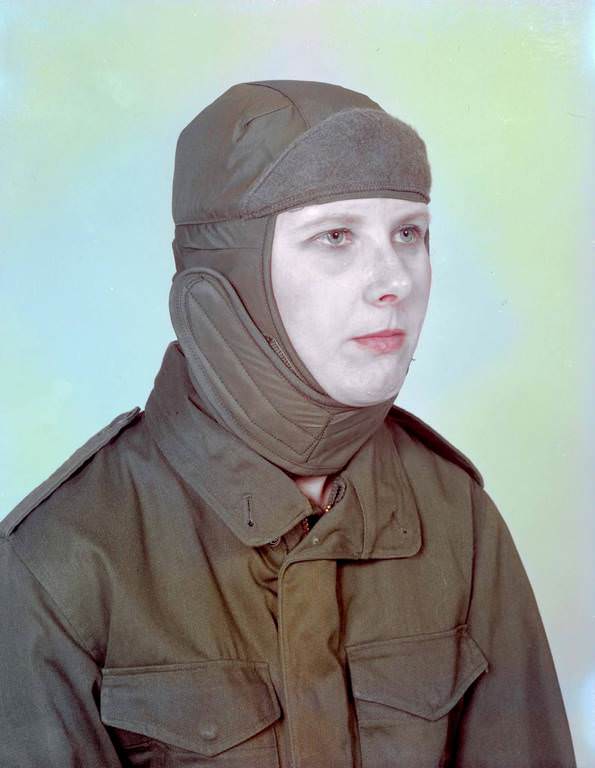
Cold-weather gear was just as critical as desert equipment, particularly during the Cold War era when conflict in northern Europe or Korea remained a constant planning scenario. Natick developed camouflage snow suits — tested sometime between 1981 and 1984 — that allowed soldiers to blend into winter terrain. Winter headgear received its own dedicated testing. Both a female winter hat from 1980 and a women’s hat photographed from front and side angles in 1982 show that the center was actively developing gender-specific gear long before the broader military conversation about women in combat roles fully matured.


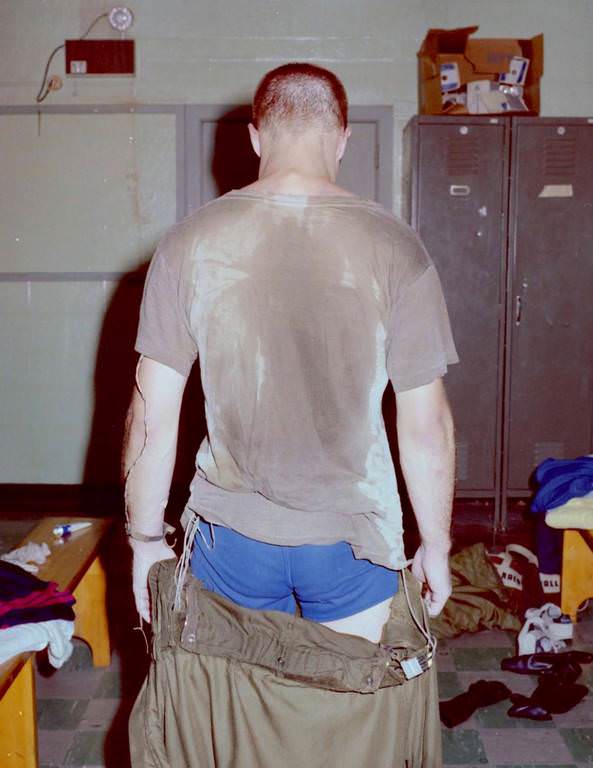
Managing body temperature in extreme heat was another major research thread. A tropic chambers micro-cooling study in 1985 placed test subjects in controlled hot environments to measure how the body responds and where cooling interventions are most effective. This research connected directly to the cooling vest tests conducted in 1983, where soldiers wore specially designed vests intended to lower core body temperature during high-heat operations. By 1992, that research had evolved into a full thermal suit, a more comprehensive garment designed to regulate heat exposure across the entire body.


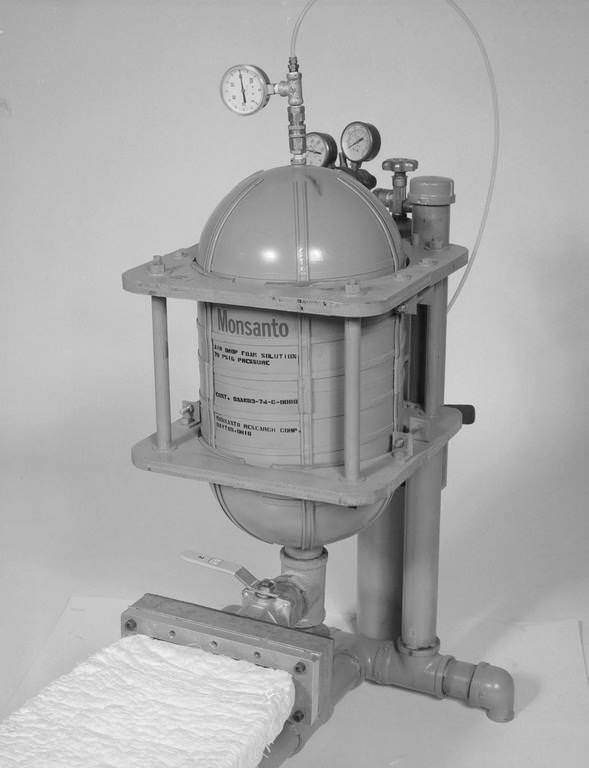
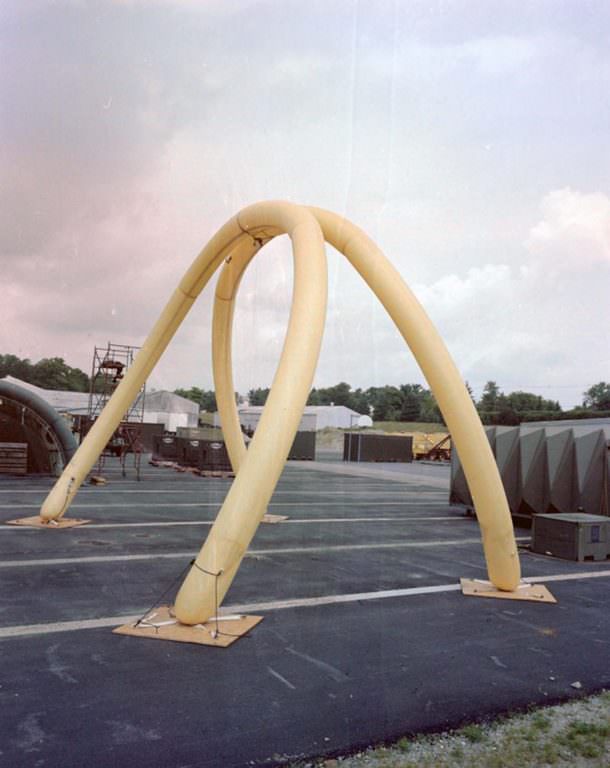
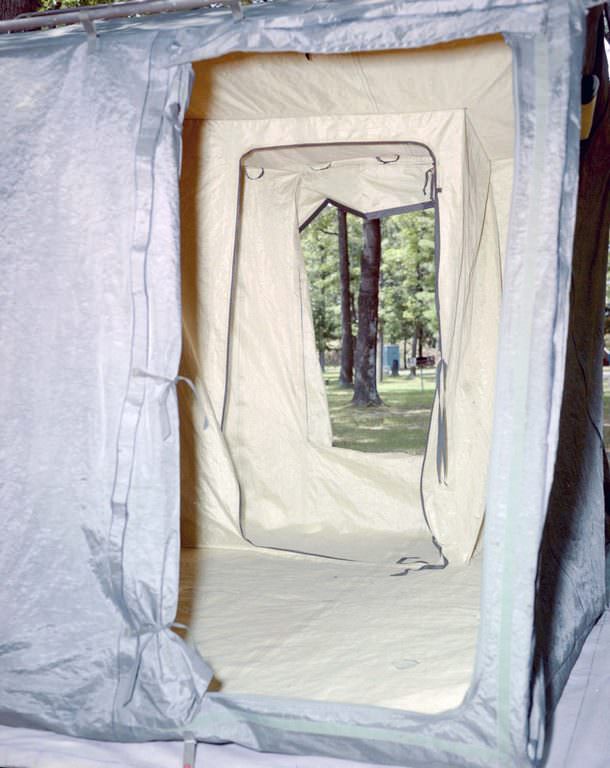
Shelter was another core focus. In 1979, Natick researchers photographed inflatable arches designed to form the skeleton of temporary military structures — quick to deploy, quick to pack down. By 1985, a full demo tent had been developed and photographed, showing how field shelter design had progressed into a more complete system. Foam generation technology also received attention: a 1976 prototype aero-mechanical foam generator was documented, likely in connection with insulation, decontamination, or fire suppression research.


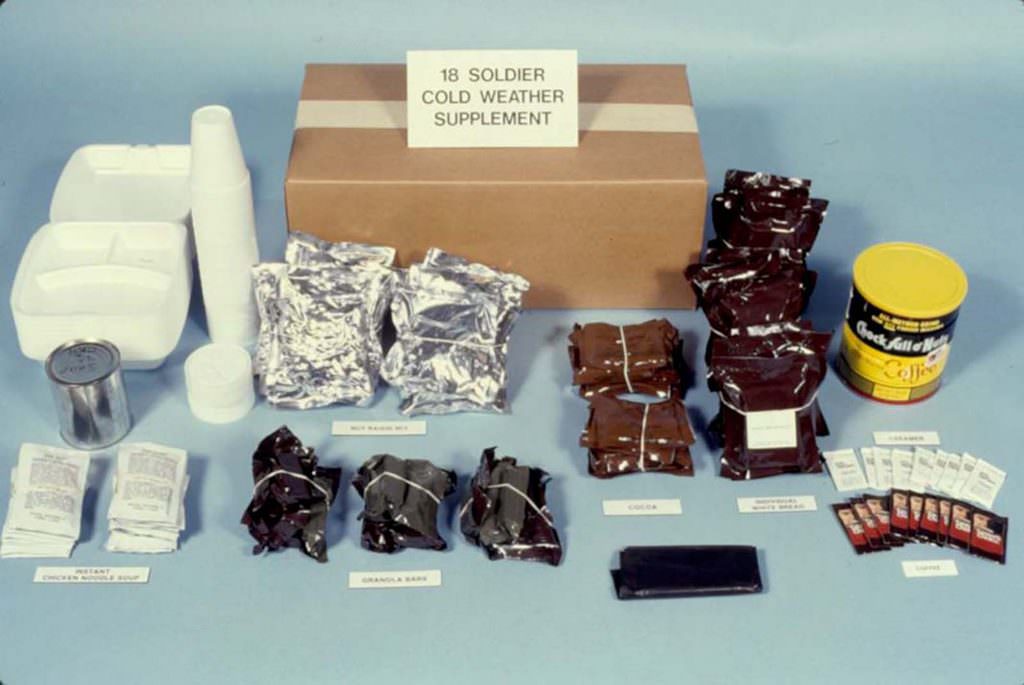
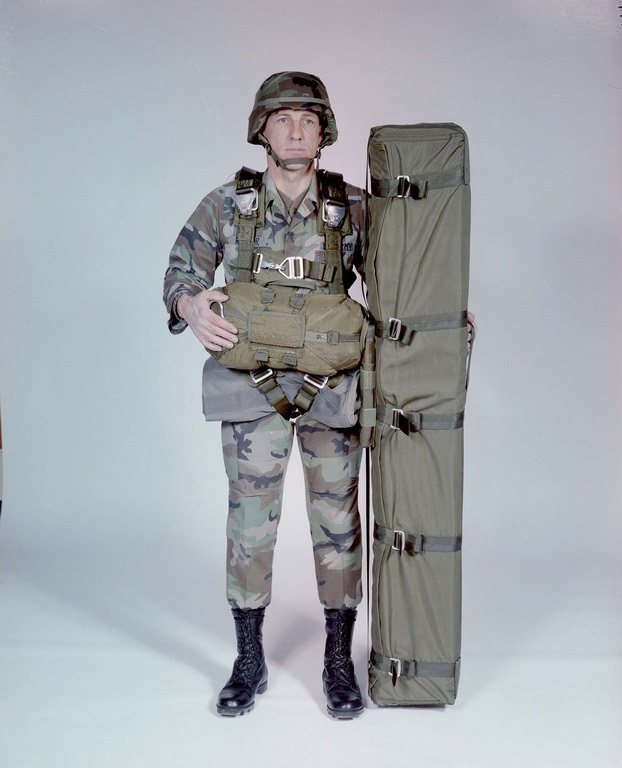
Weapons systems integration made its way into the collection as well. The ADEL (also referenced as AMEL) Stinger missile jump pack represented the center’s work on how a soldier could carry and deploy a surface-to-air missile system in an airborne operation. Cold weather supplemental rations were documented for a group of 18 soldiers, reflecting Natick’s ongoing responsibility for feeding troops in the field under the harshest possible conditions. Food research at Natick also extended to controlled eating studies — a 1978 photograph of an eating chamber with test subjects shows researchers monitoring exactly how, what, and how much soldiers consumed under experimental conditions.


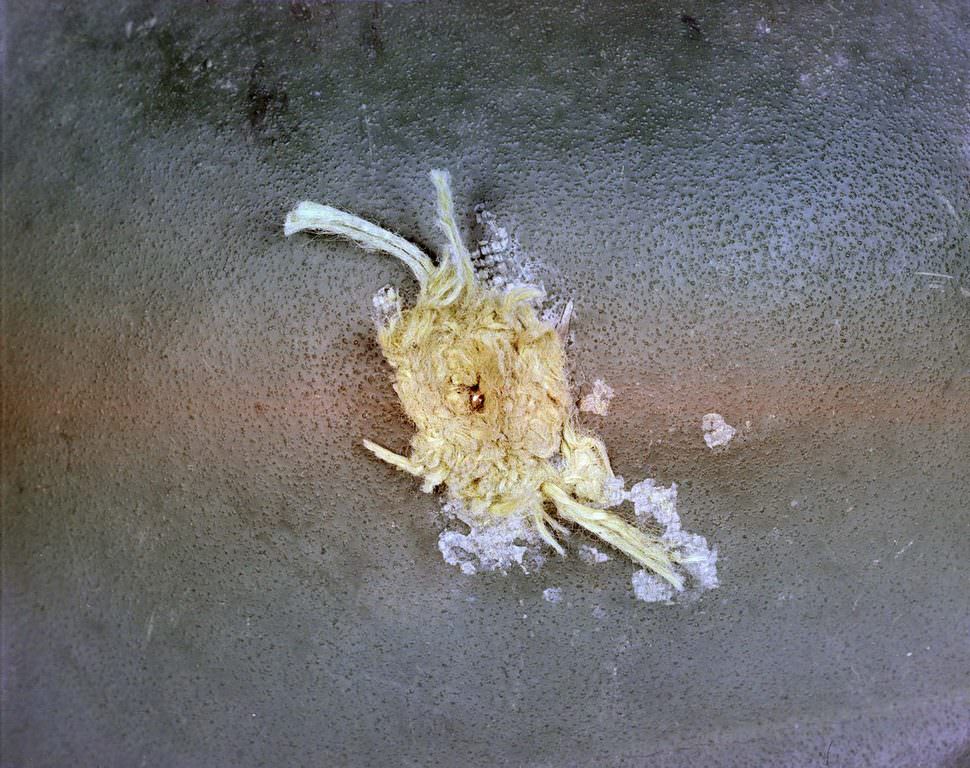
The PASGT helmet, one of Natick’s most significant contributions to soldier protection, appears in the collection in a particularly striking way. A helmet photographed after the 1983 invasion of Grenada shows real combat damage — a record of the helmet tested not in a lab, but in an actual firefight. The PASGT replaced the steel M1 helmet that American soldiers had worn since World War II and used Kevlar to offer dramatically better ballistic protection. Seeing it post-Grenada, battered and scarred, closes the loop between the careful laboratory work shown throughout the rest of the collection and the brutal reality that research was always designed to address.