

Doctor Who launched on British television in November 1963, and it didn’t take long for the show to produce a villain that would define it for decades. Just a few weeks into its first run, the series introduced the Daleks — alien creatures encased in armored shells, driven by a single purpose: extermination. Nothing quite like them had appeared on television before, and audiences noticed immediately.
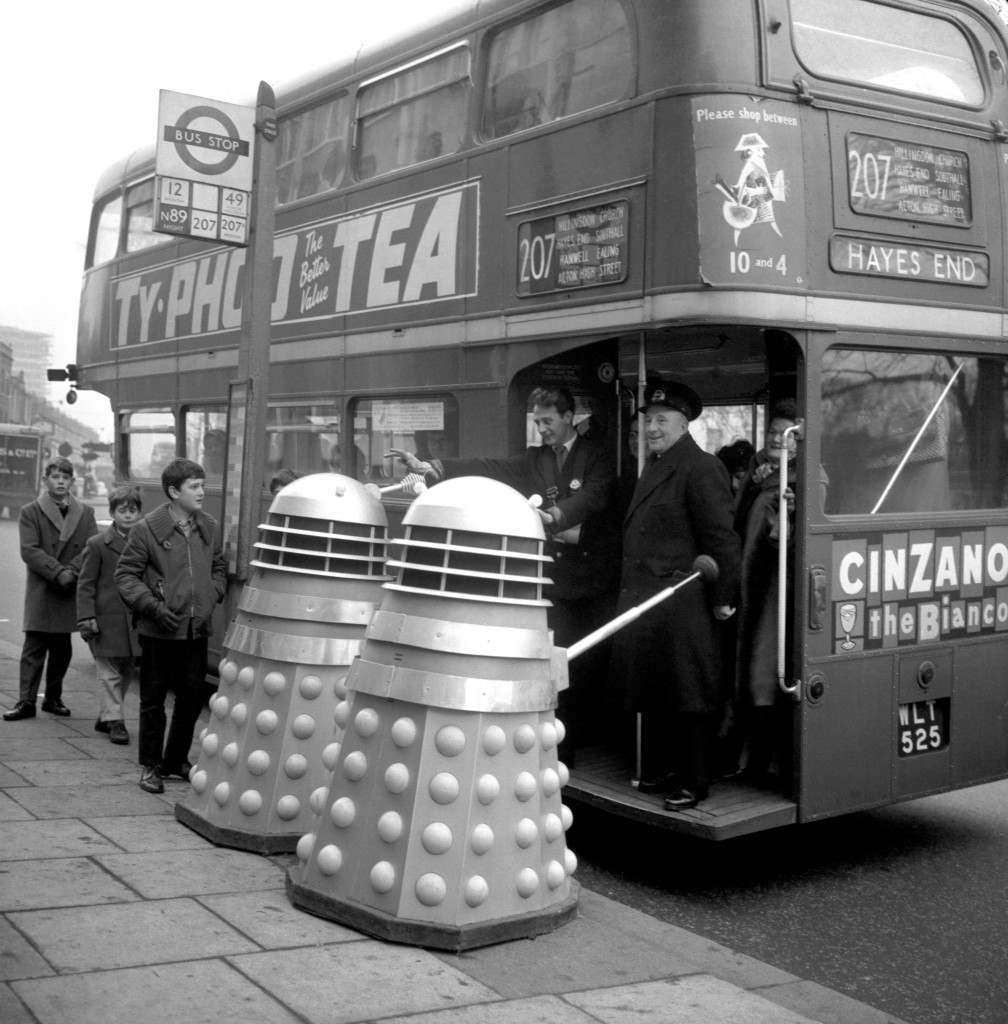
The Daleks first appeared in the show’s second serial, simply titled “The Daleks,” which aired between December 1963 and February 1964. The story introduced their home planet, Skaro, and established them as cold, emotionless beings consumed by hatred for anything that wasn’t a Dalek. Their goal was straightforward: destroy all other life. That clarity of purpose made them deeply unsettling — there was nothing to negotiate with, nothing to appeal to.

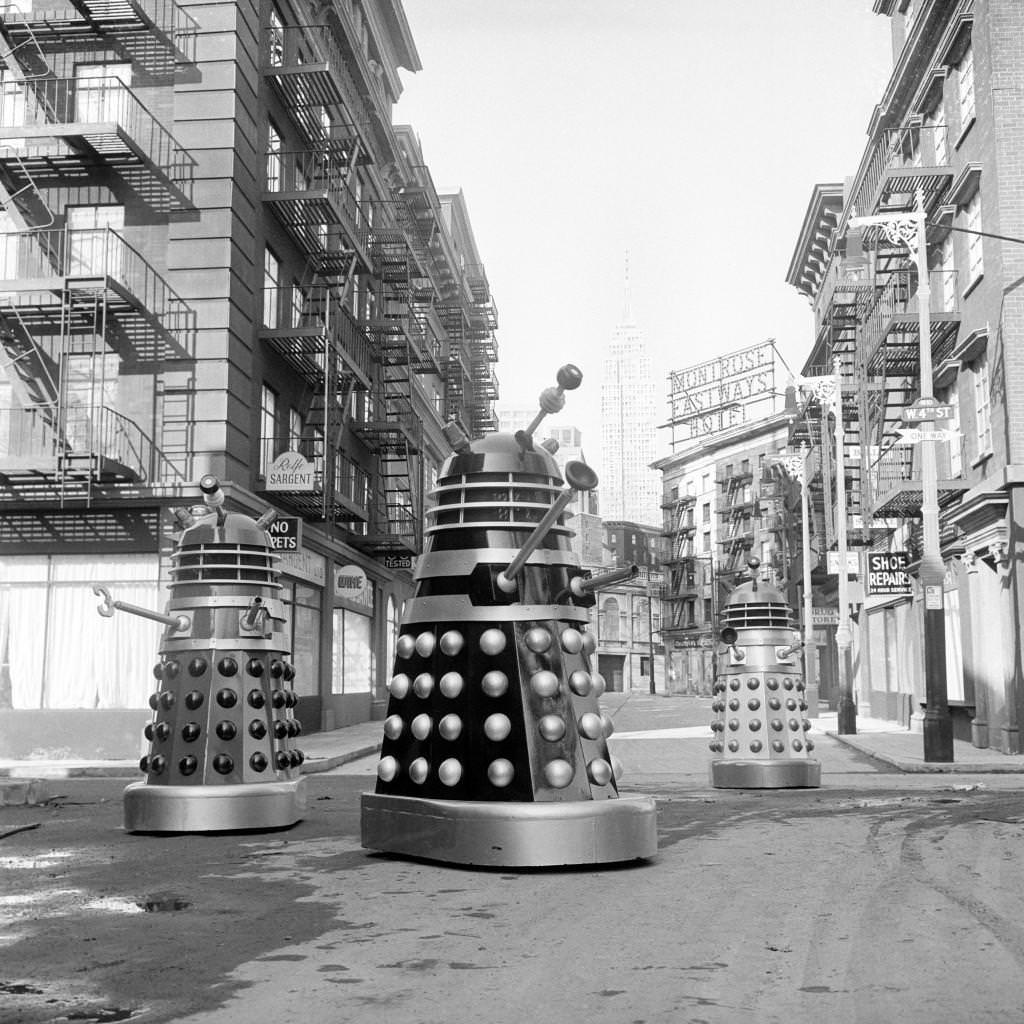
The physical design of a Dalek was striking and strange. Each one had a rounded base, a mid-section covered in a mesh-like grille, and a rotating dome on top. Protruding from the front were three attachments: a flexible eye stalk for vision, a plunger-arm used for gripping and manipulating objects, and a weapon arm resembling a whisk. The whole structure moved by gliding, seemingly without effort, which made the creatures feel both mechanical and alive at the same time. Viewers often compared their silhouette to an oversized salt shaker.
Inside those metal casings was a mystery. The show revealed very little about what the actual creature looked like, and that unknown quality added to the fear. Their voice was just as unnerving — a flat, electronic monotone that delivered short, sharp sentences. The word they became known for, screamed with mechanical fury, was “Exterminate!” That single word, delivered in that metallic rasp, became one of the most recognized sounds in British pop culture.
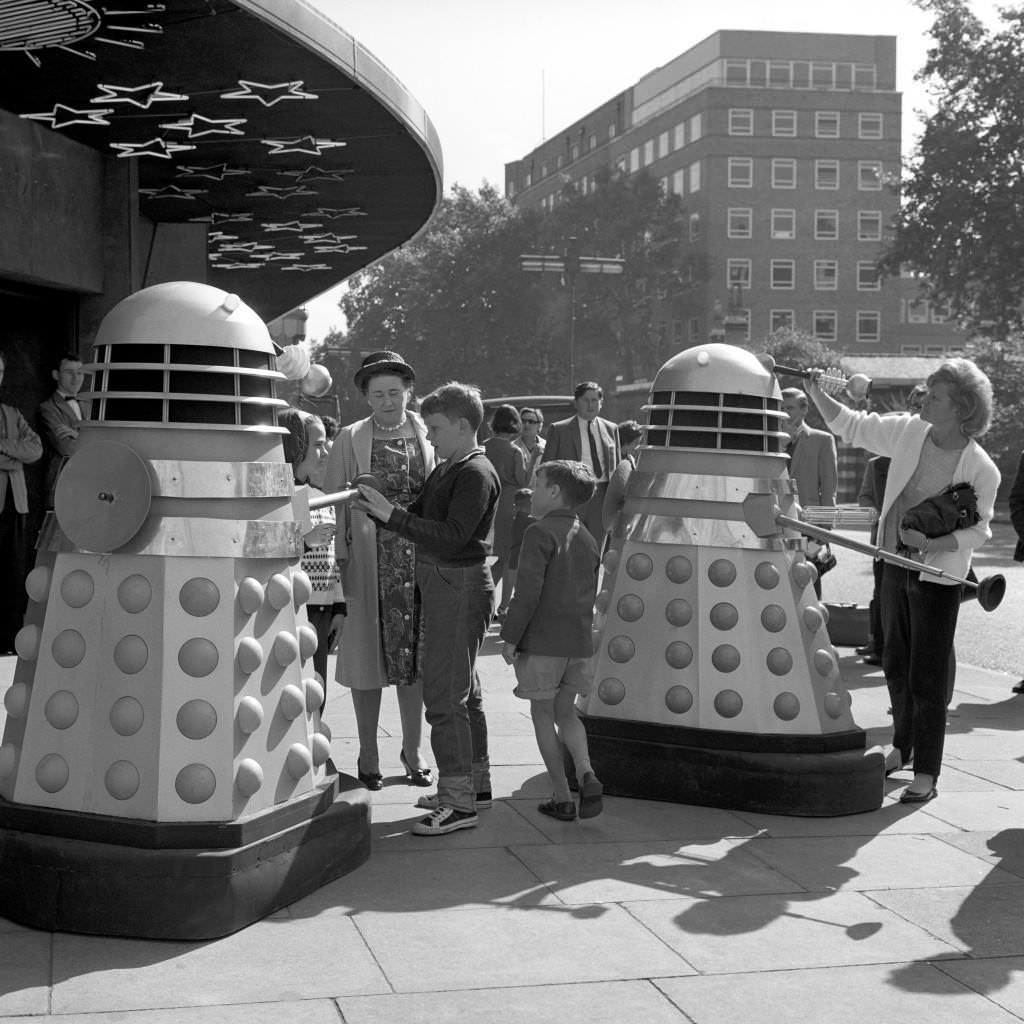
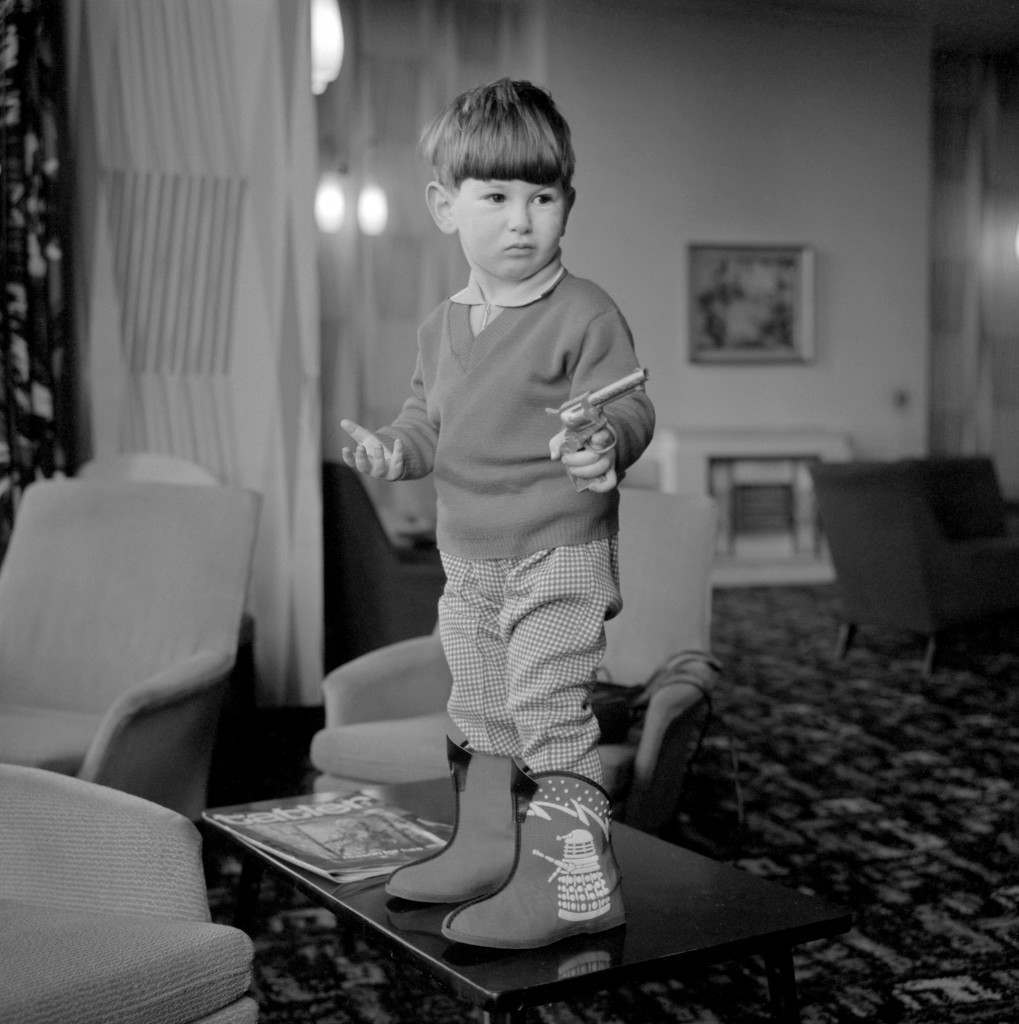
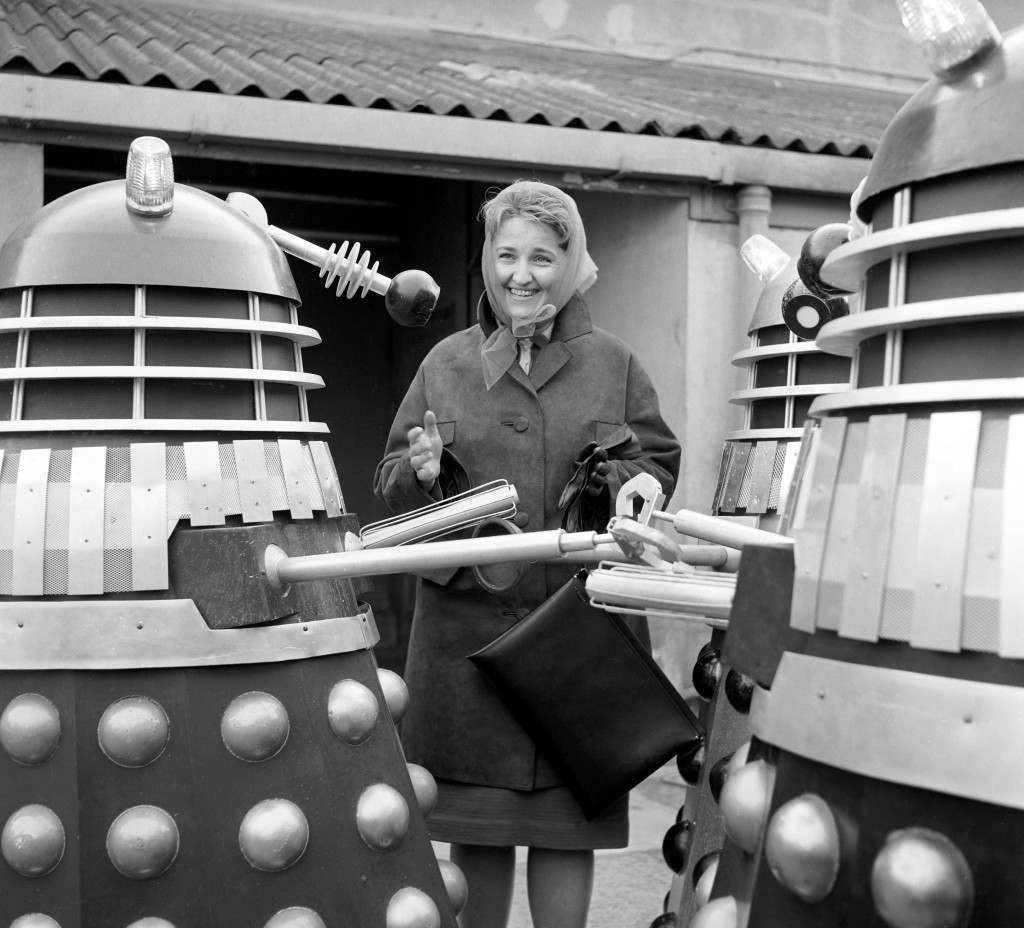
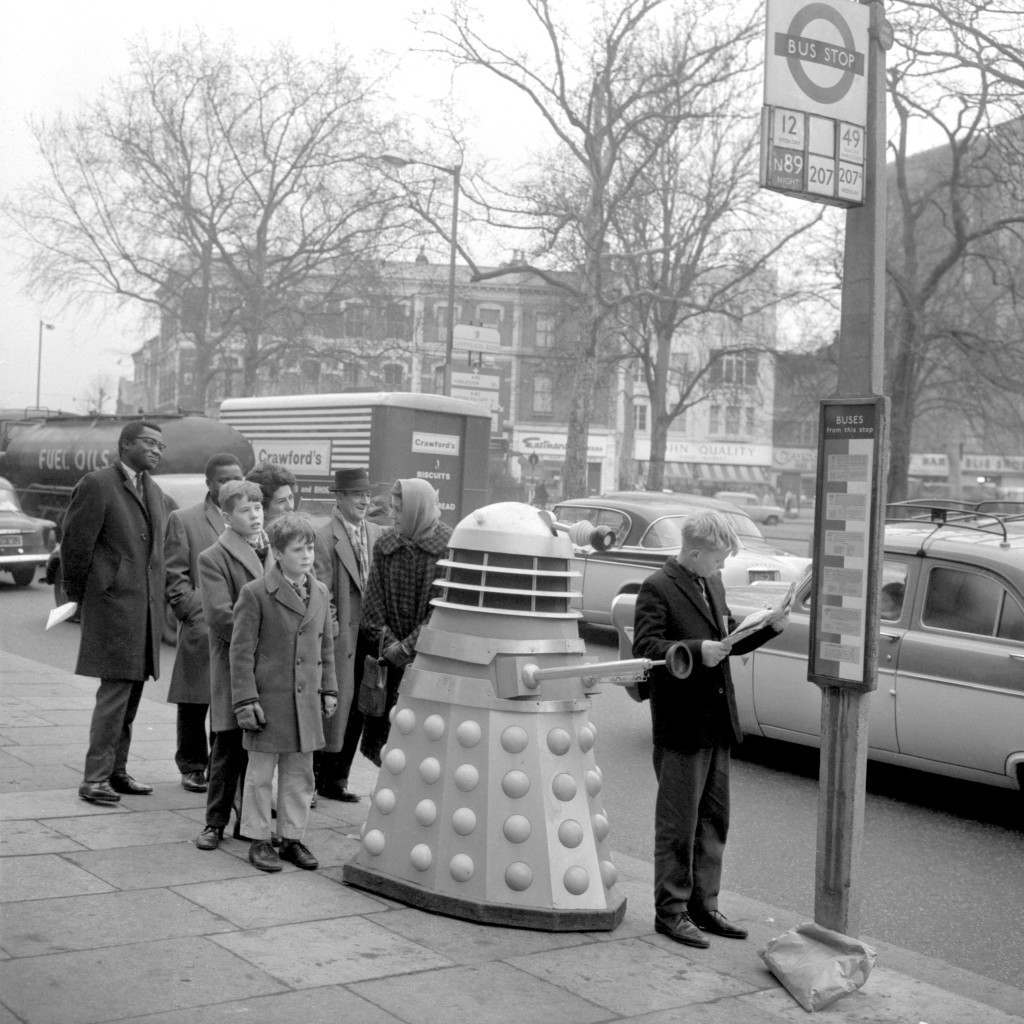
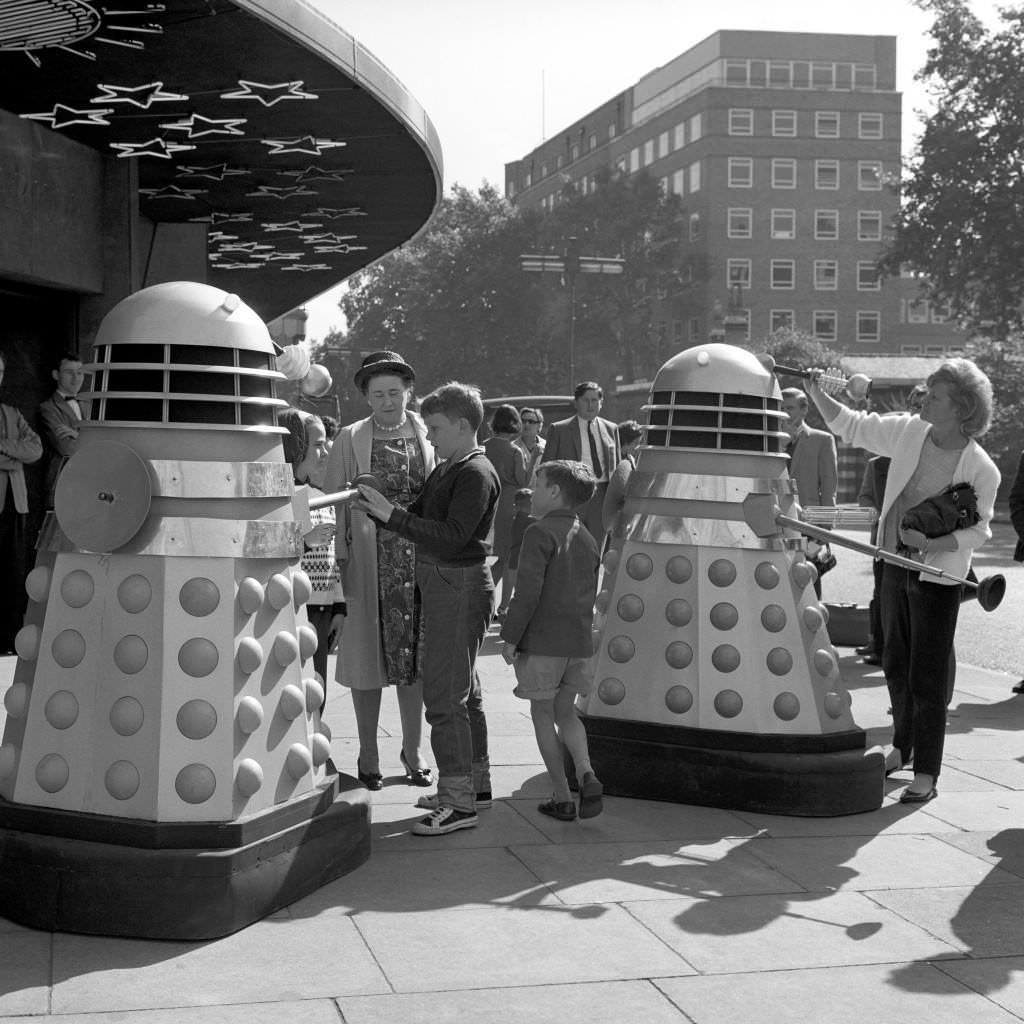
The Dalek craze spread fast. By 1964, they were appearing at public events, meeting children outside London landmarks, and starring in their own merchandise. Toy Daleks, books, and novelty items flooded shops, showing how quickly the monsters had crossed from television screen into everyday life.

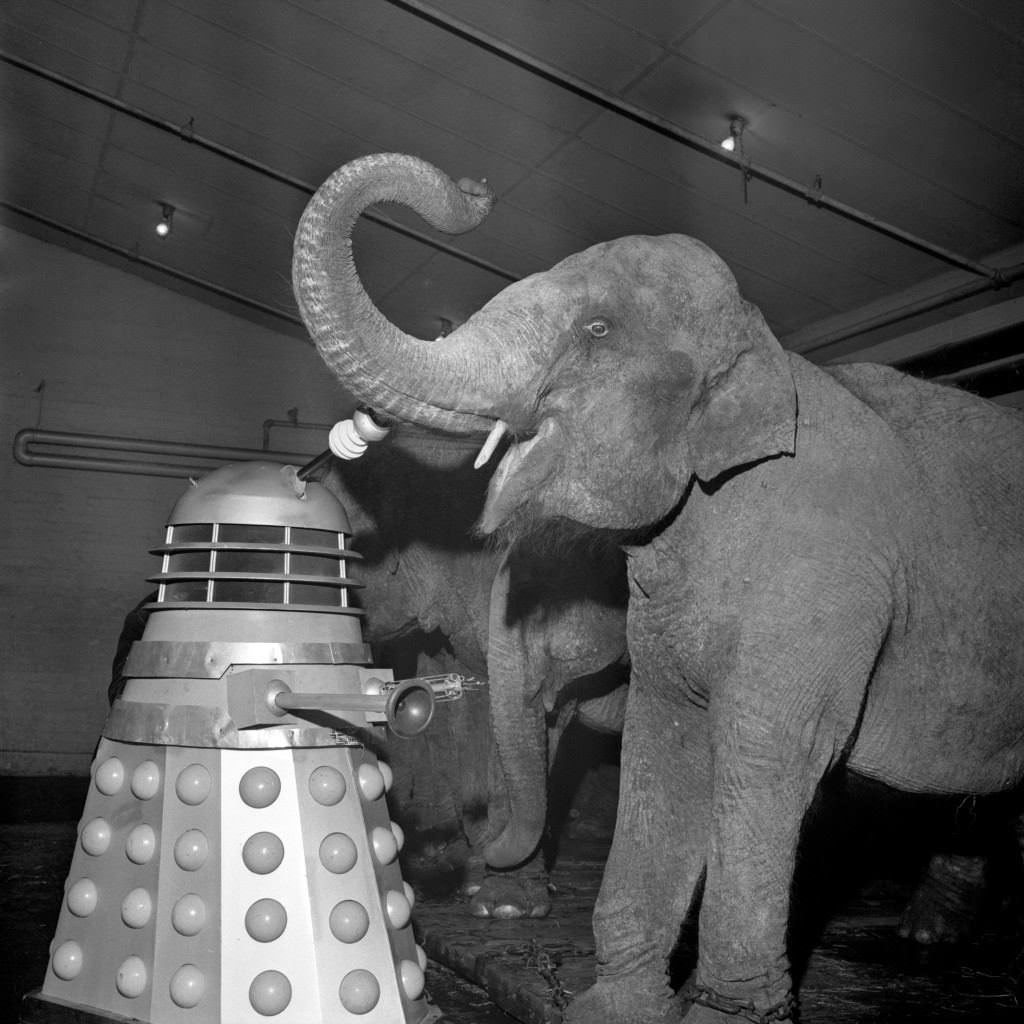
By 1965, the Daleks were prominent enough to be featured at live events far removed from television studios. They appeared alongside elephants at Belle Vue circus in Manchester and were sent to the Cannes Film Festival to promote a new big-screen production. That film, “Dr. Who and the Daleks,” brought the creatures to cinema audiences in full colour for the first time.
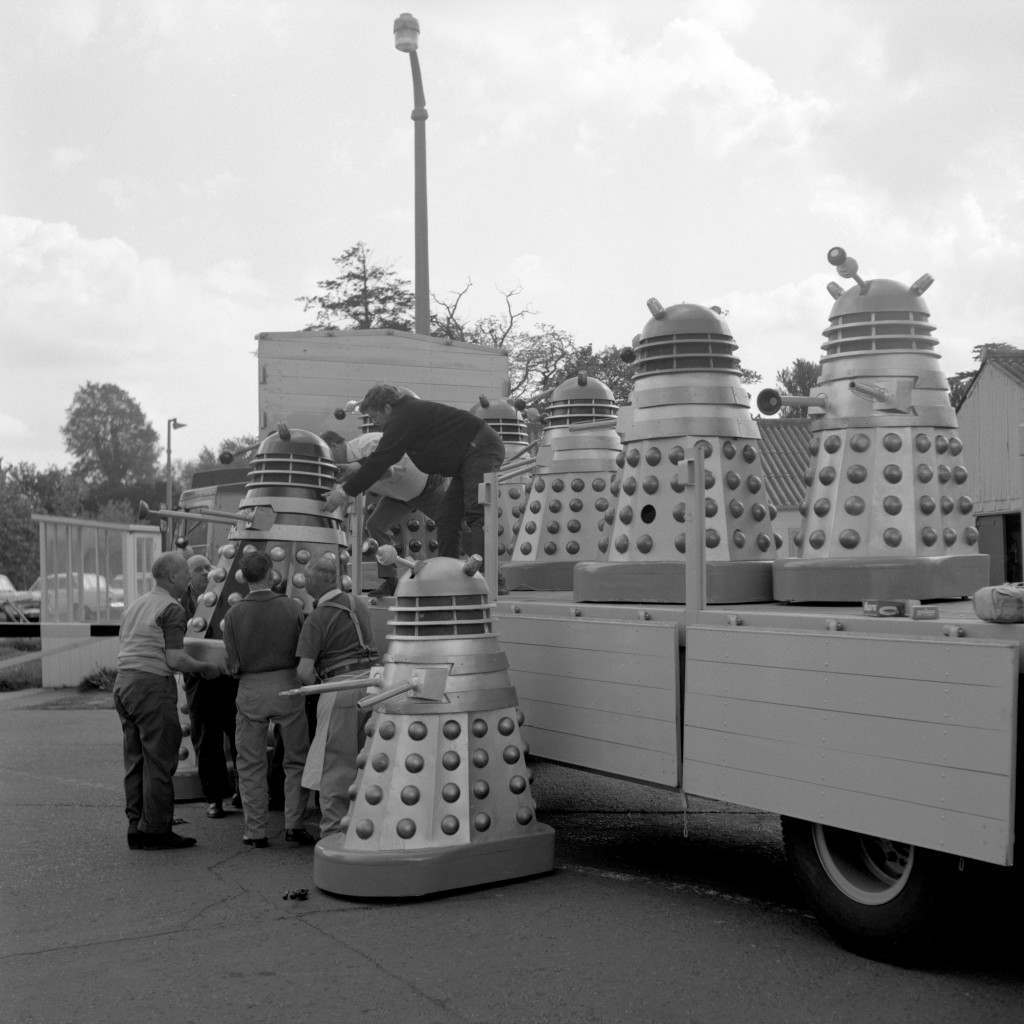
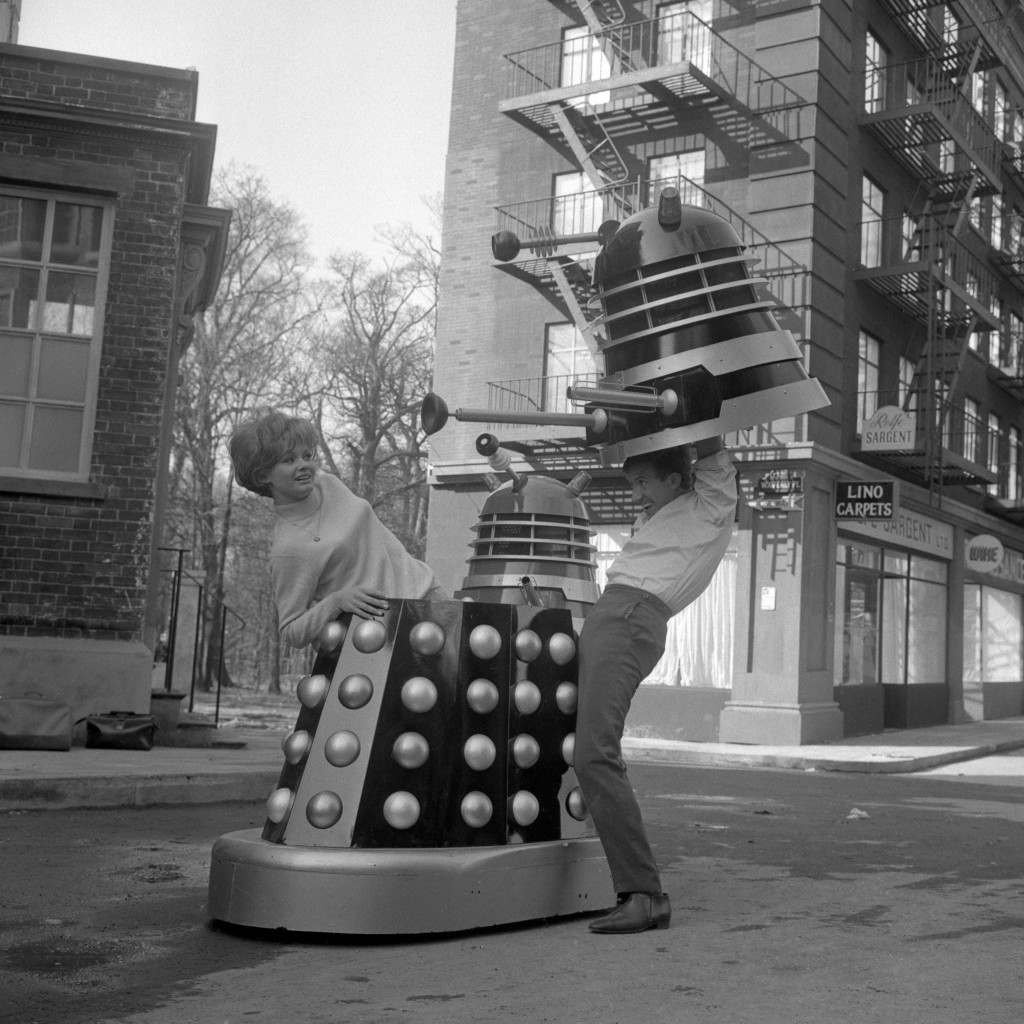
Shepperton Studios became a busy location for Dalek productions through the mid-1960s. The first film was followed in 1966 by “Daleks Invade the Earth 2150 AD,” a second theatrical feature that continued the storyline. Cast and crew worked alongside the full-scale prop Daleks on set, and behind-the-scenes photographs from this period capture how elaborate and hands-on the productions were.
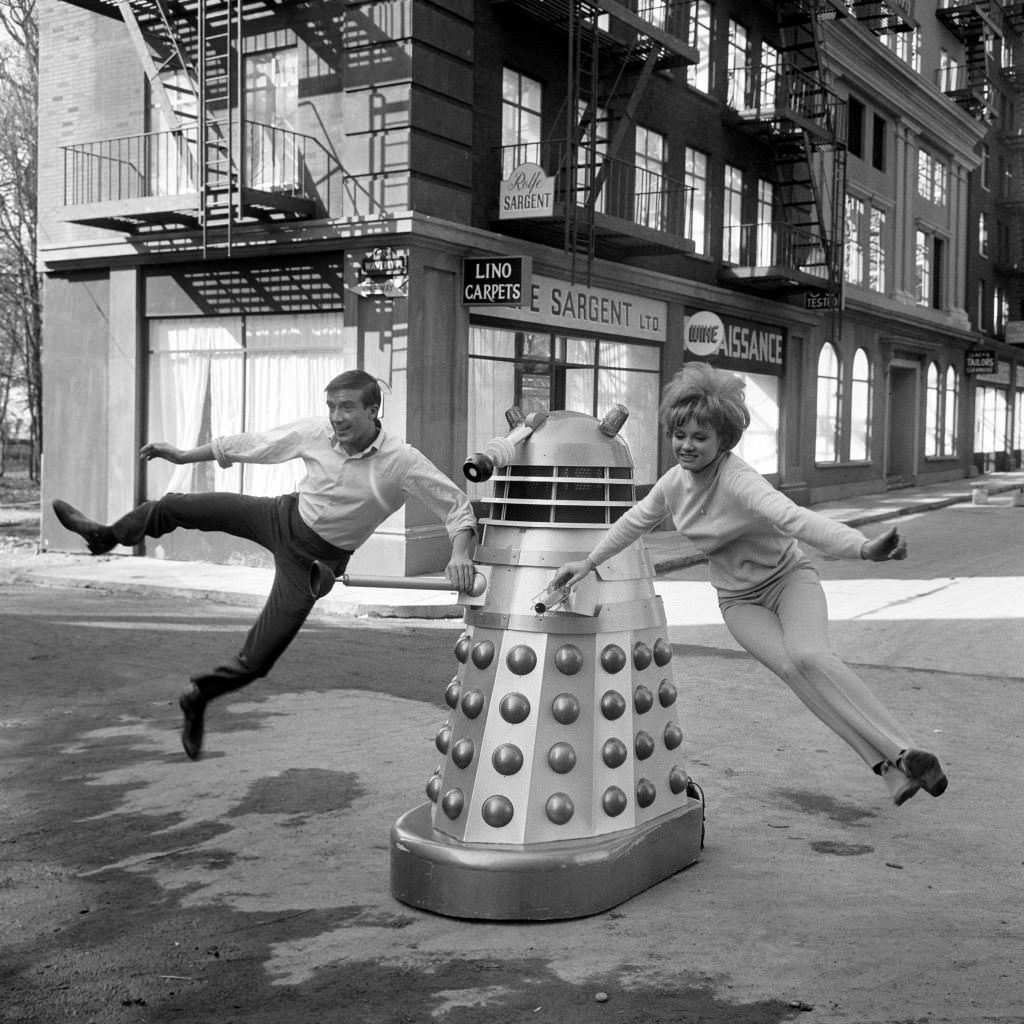
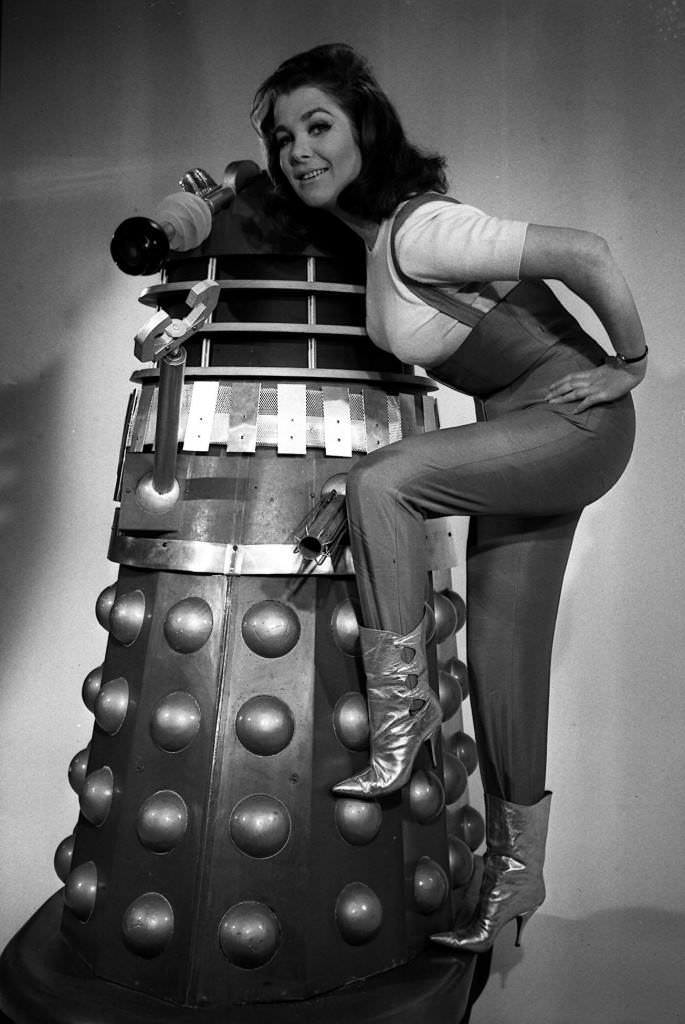
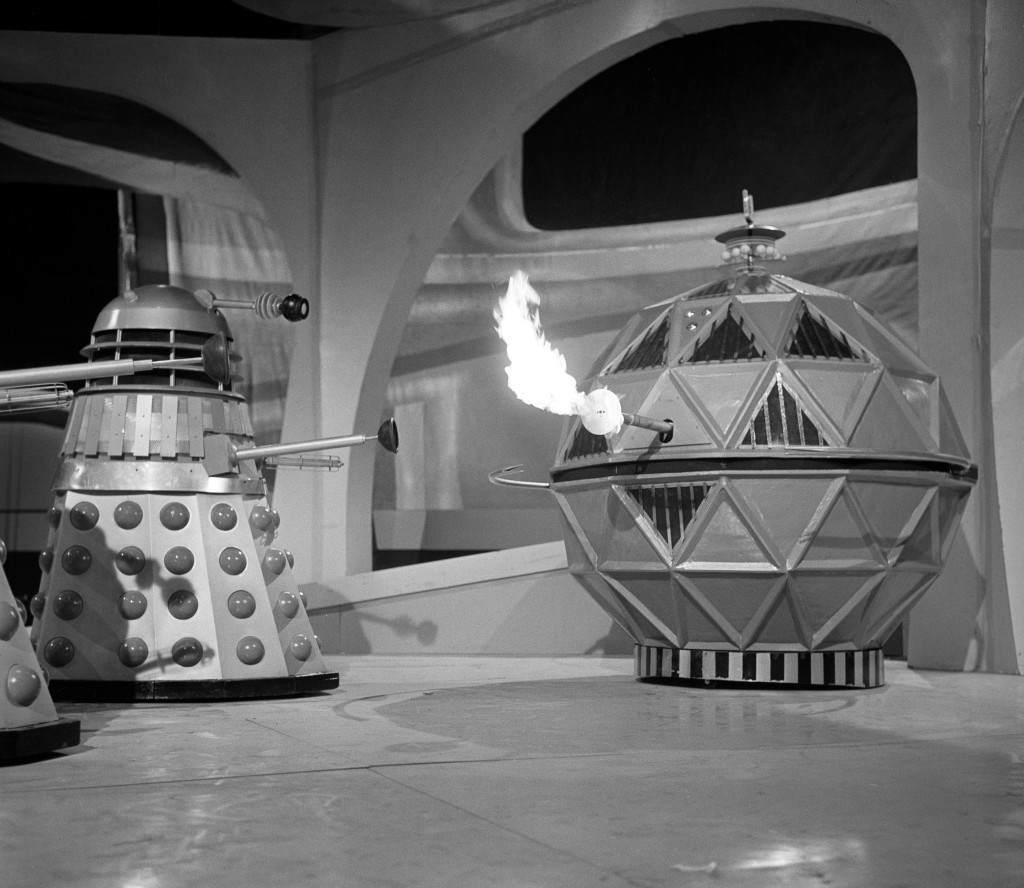
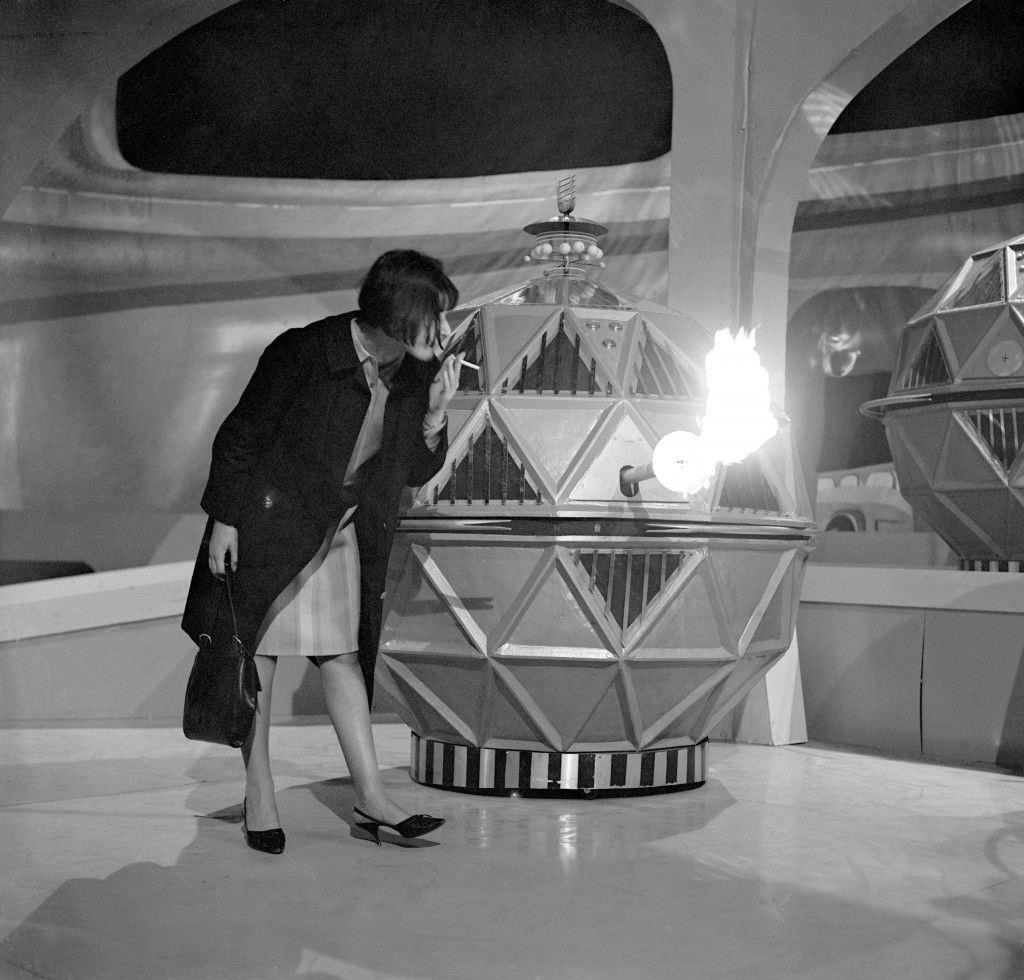
Back on the BBC series, the production team continued developing the Daleks’ on-screen enemies and environments. In one 1965 episode, a Dalek was filmed squaring off against a Mechanoid — a flame-throwing robot — at Ealing Studios. Verity Lambert, the show’s founding producer, was photographed that same year handling one of the Mechanoid flame guns herself, a sign of just how closely she was involved in the show’s creative work.
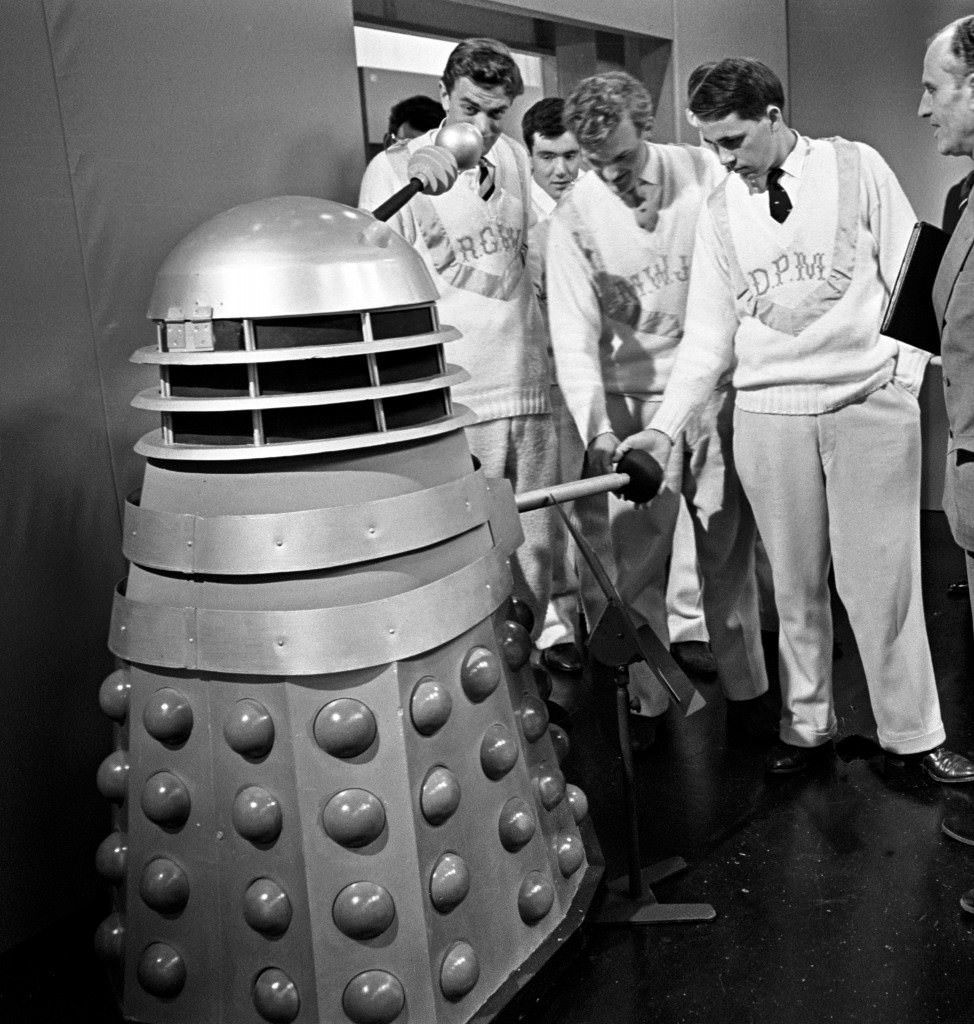
The BBC Television Centre also opened its doors to visitors during this period, giving groups a rare close-up look at the props. Cambridge rowing crew members were photographed inspecting a Dalek in 1965 — a reminder that the monsters had become a genuine cultural fixture, recognized far beyond the show’s regular audience.
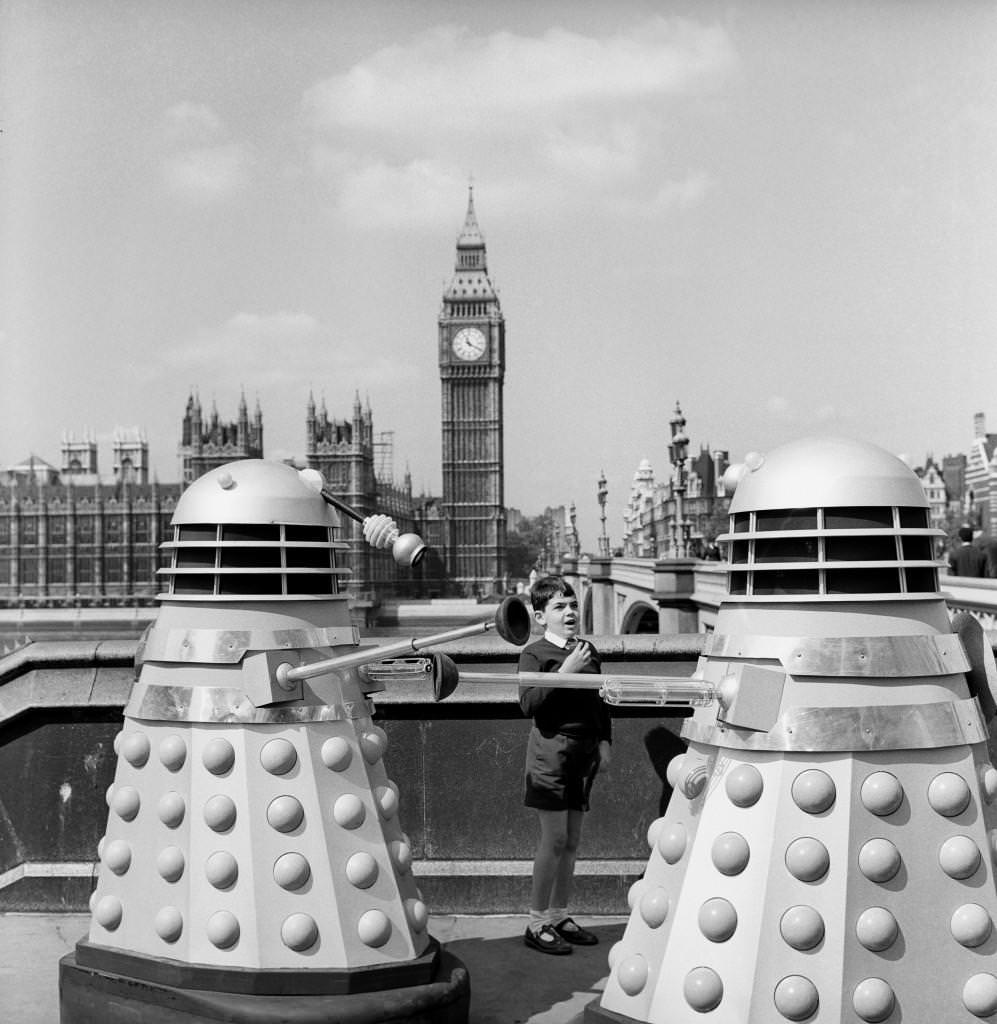
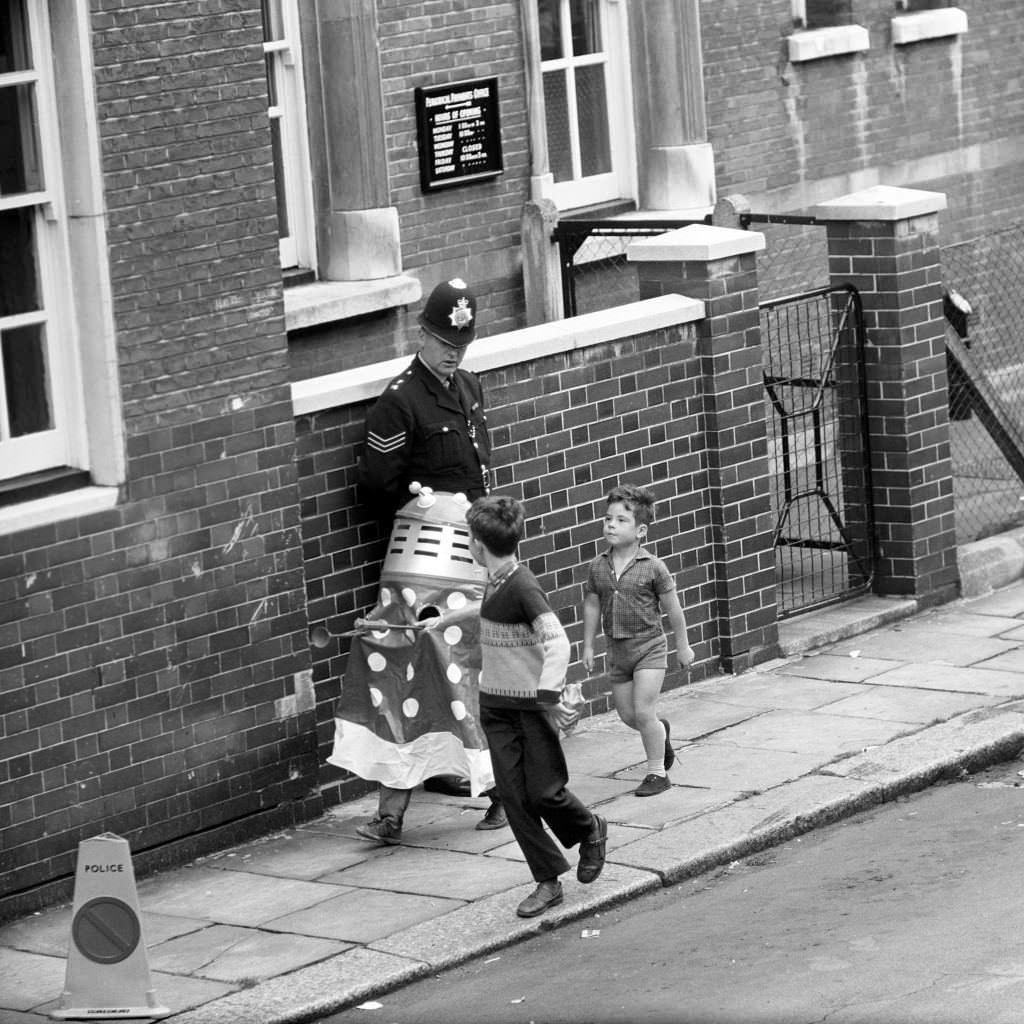
The Dalek phenomenon even found its way into unexpected corners of 1960s life. In one bizarre 1966 incident outside West London Magistrate’s Court, a boy was found hiding inside a Dalek suit while another individual was escorted from the building. And on Westminster Bridge, a young child posed with two full-scale Daleks for press photographs promoting the BBC series — a reminder of how normalized these alien conquerors had become on British streets.

There’s a lot of photos in that article that I’ve never seen before – thanks!
A bland article but the pictures were fantastic!