The story of the London Underground begins not with a grand ceremony, but with a practical problem. By the 1830s, London’s streets were choked with horse-drawn traffic, and getting across the city was slow, costly, and unreliable. Planners began floating the idea of an underground transit system as early as that decade. Permission to build was finally granted in 1854, and a test tunnel was constructed the following year in Kibblesworth, running for two years before the real work began. What followed was one of the most ambitious engineering projects the Victorian world had ever attempted — digging a working railway beneath one of the most densely built cities on Earth.
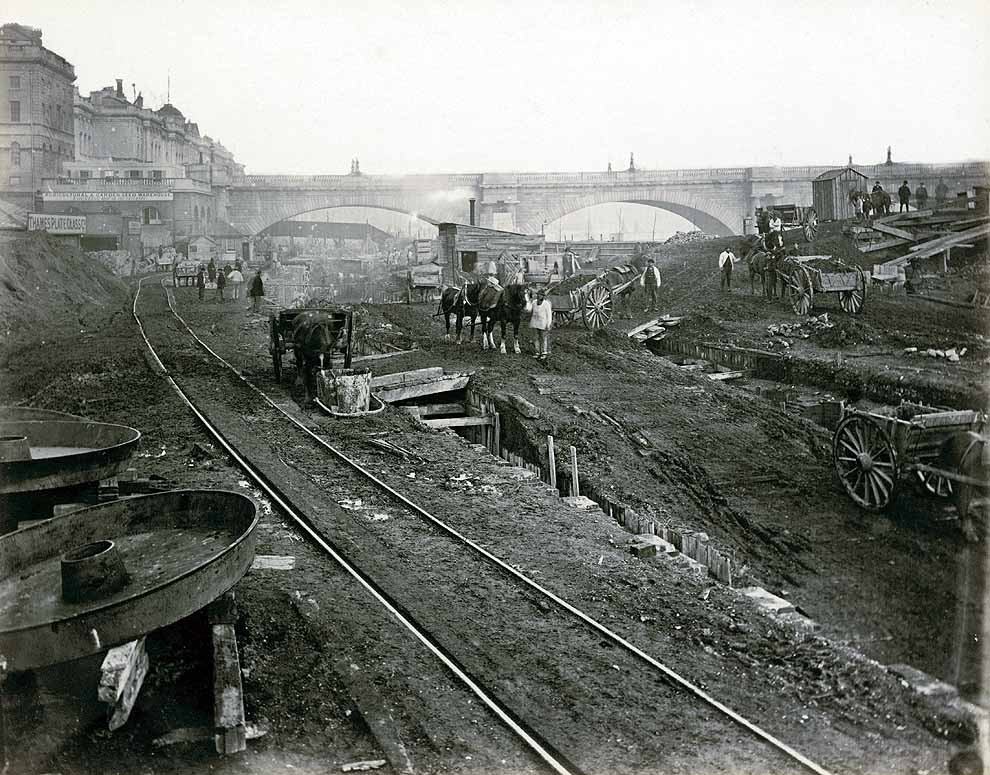
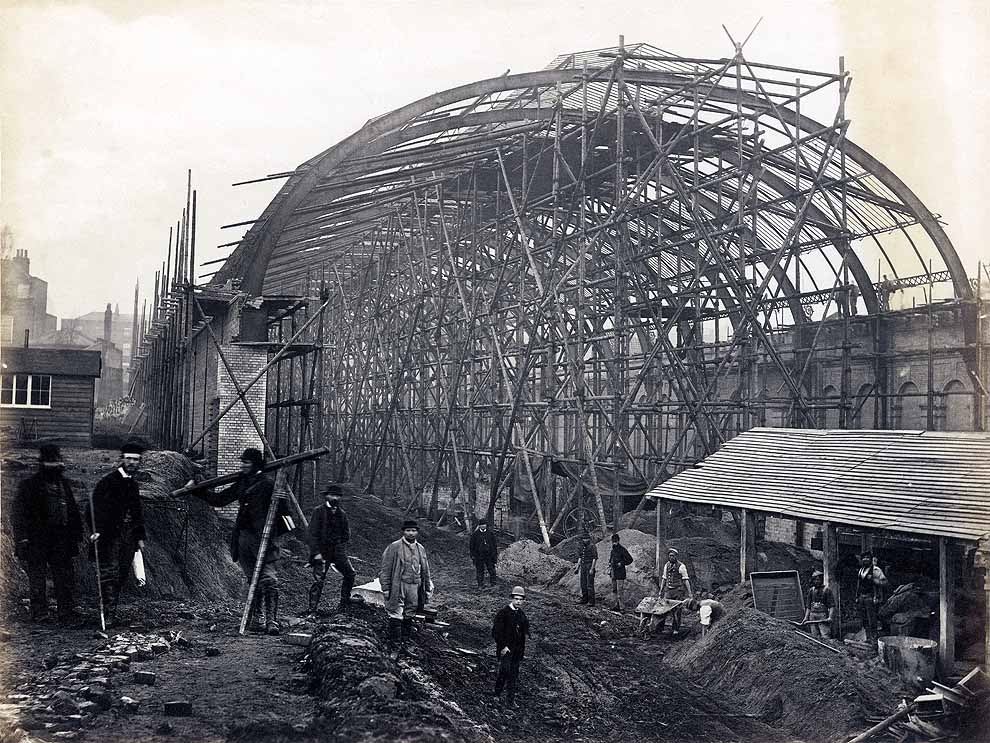
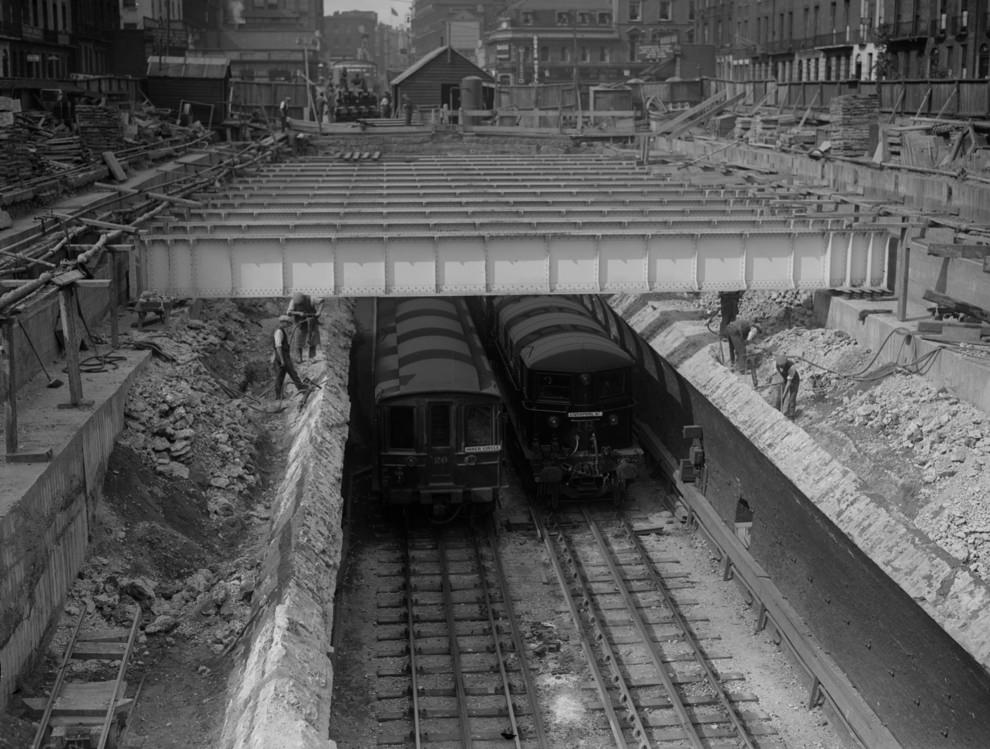
The method used in those early years was called cut-and-cover. Workers dug enormous open trenches along city streets, laid the track and brick tunnel linings inside, then covered the whole thing back over. It was loud, disruptive, and dangerous. Entire stretches of road were ripped up, buildings undermined, and gas mains ruptured. The work drew crowds of onlookers as much as it drew complaints from residents.
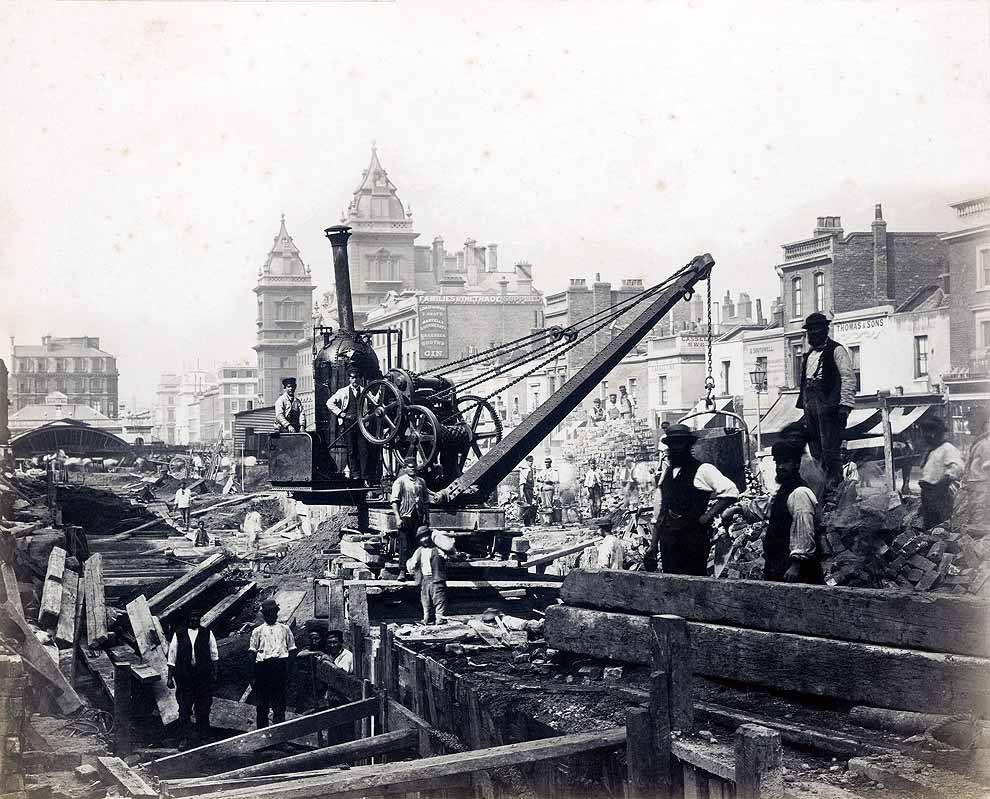
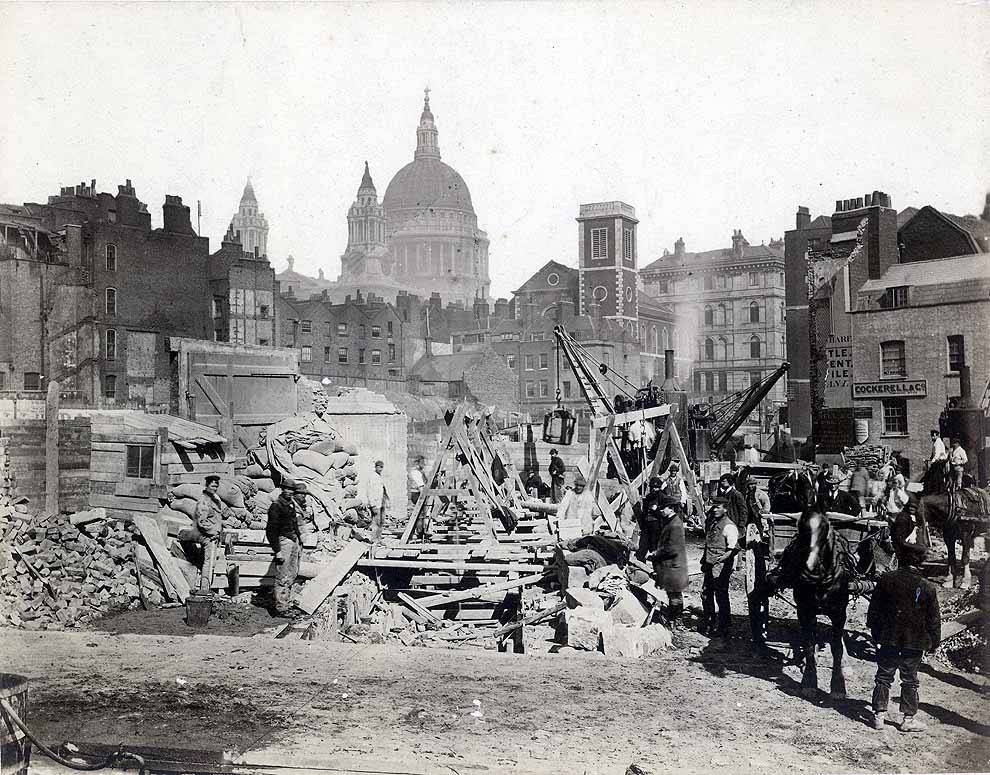
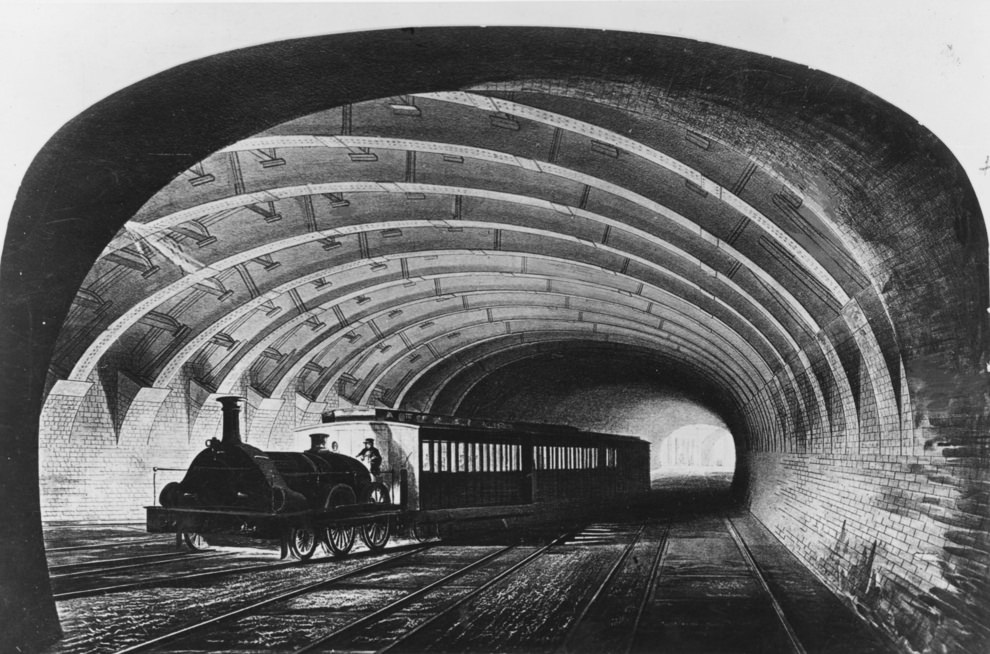
On 10 January 1863, the world’s first underground passenger railway opened between Paddington and Farringdon Street. Trains ran on steam locomotives and hauled gas-lit wooden carriages through brick tunnels. The opening day drew 38,000 passengers — a number that stunned even the line’s most optimistic supporters. The Metropolitan Railway had proven that Londoners would happily descend below street level to travel faster.
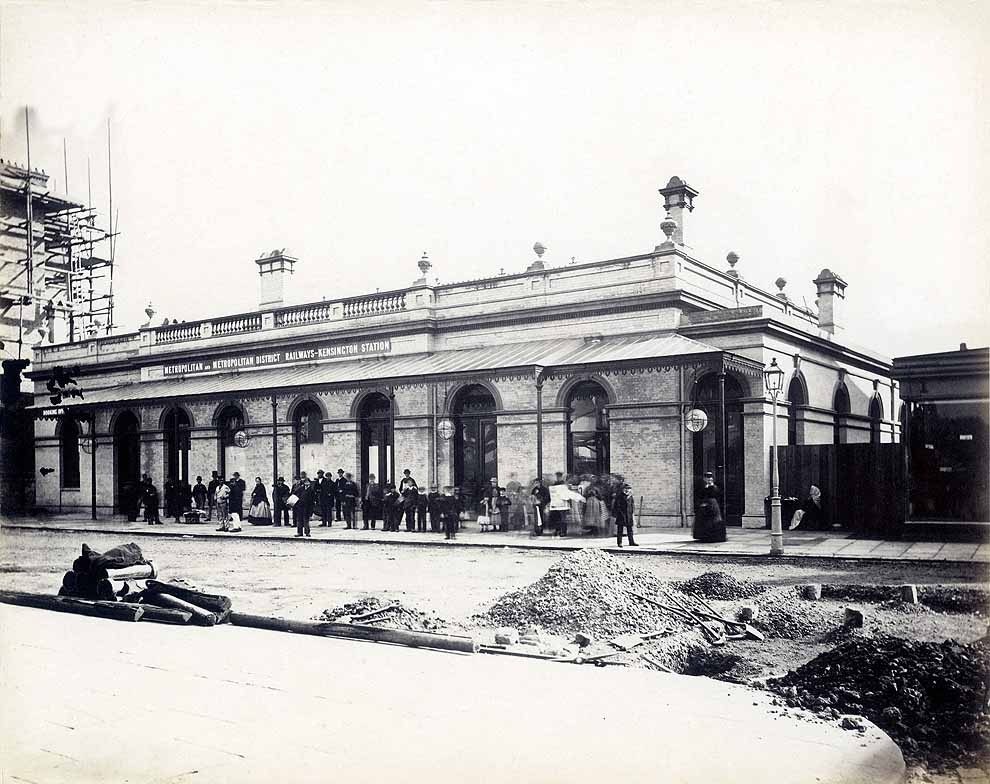
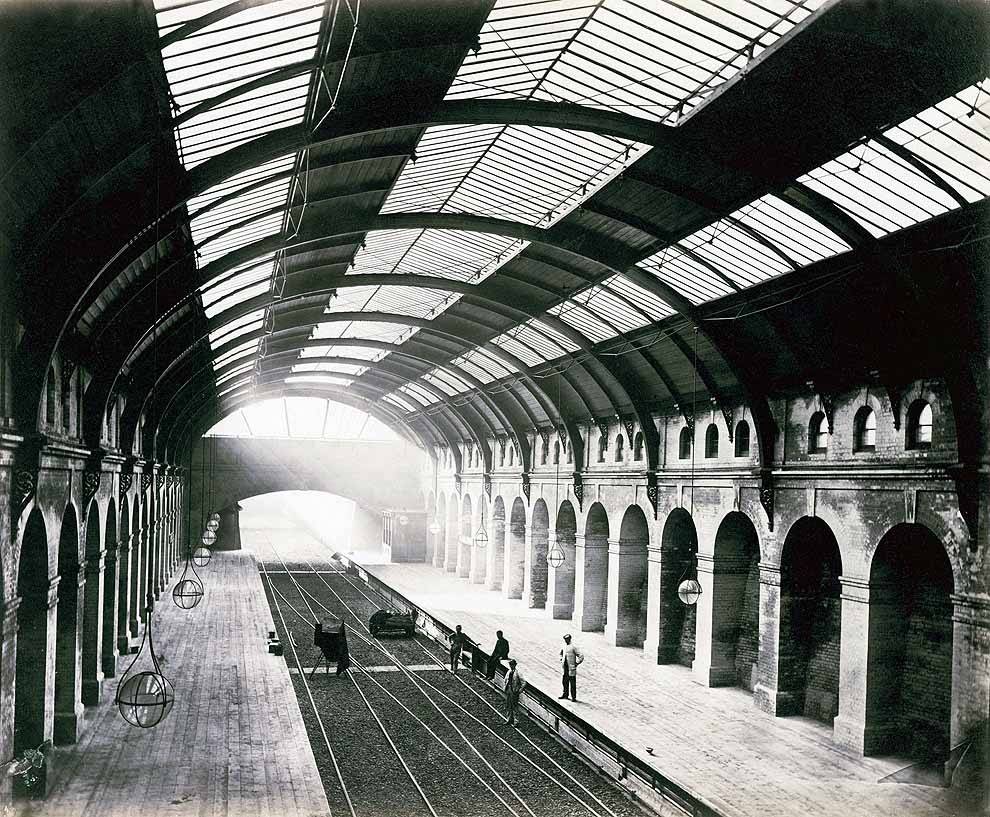
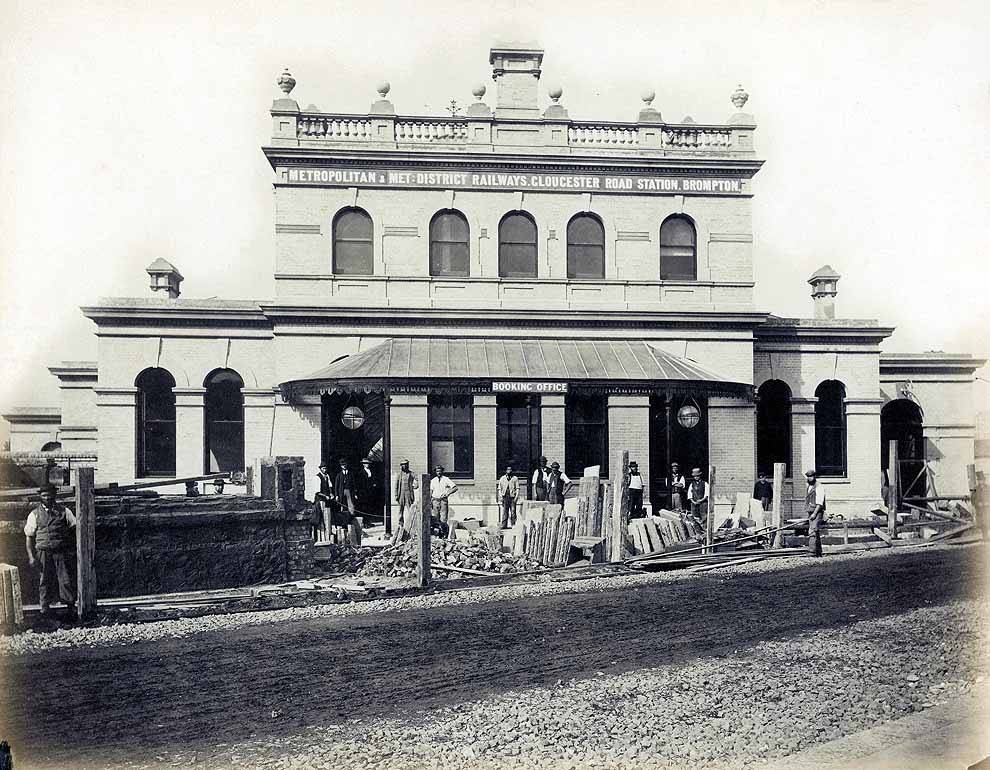
Construction of new lines and stations continued at pace through the 1860s. Stations like Gloucester Road, Notting Hill Gate, and High Street Kensington were carved out of the ground using the same cut-and-cover method. Photographs from this period capture the raw scale of the work — exposed ironwork, unfinished brick arches, and gangs of laborers working in open pits that cut right through the heart of the city’s neighborhoods.
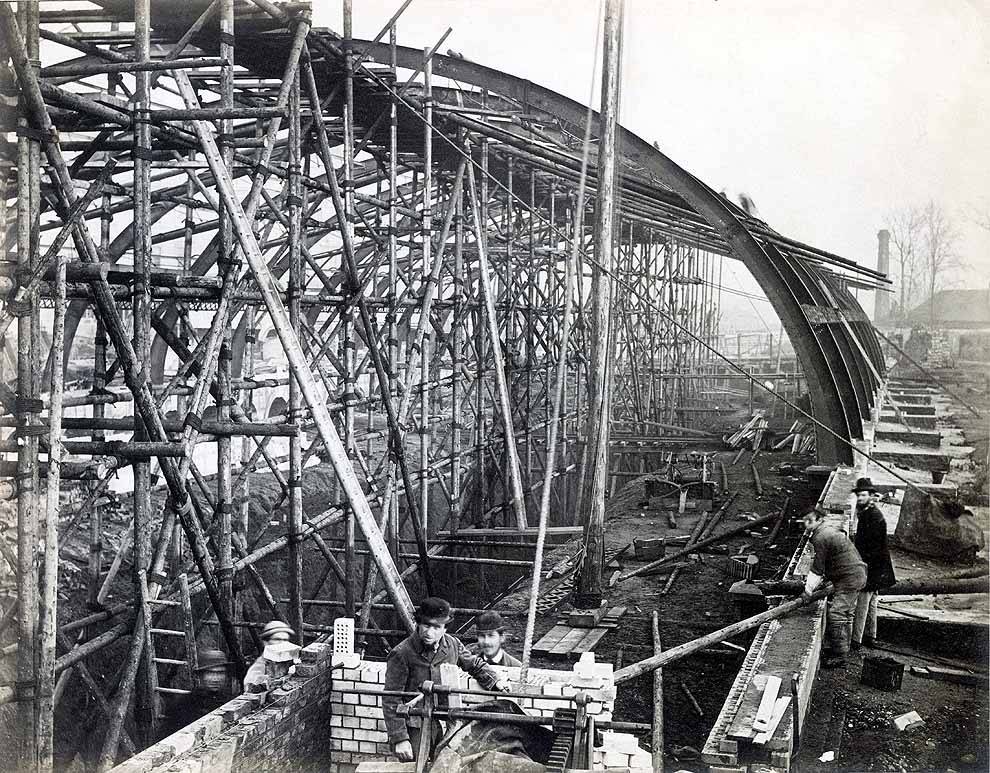
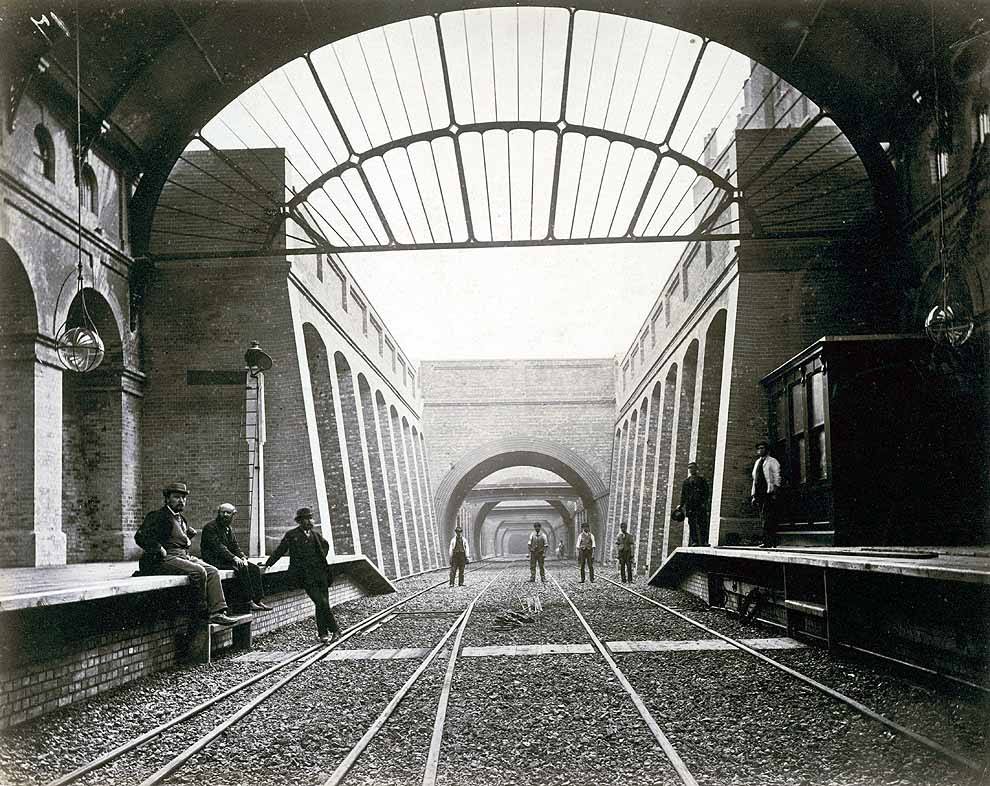
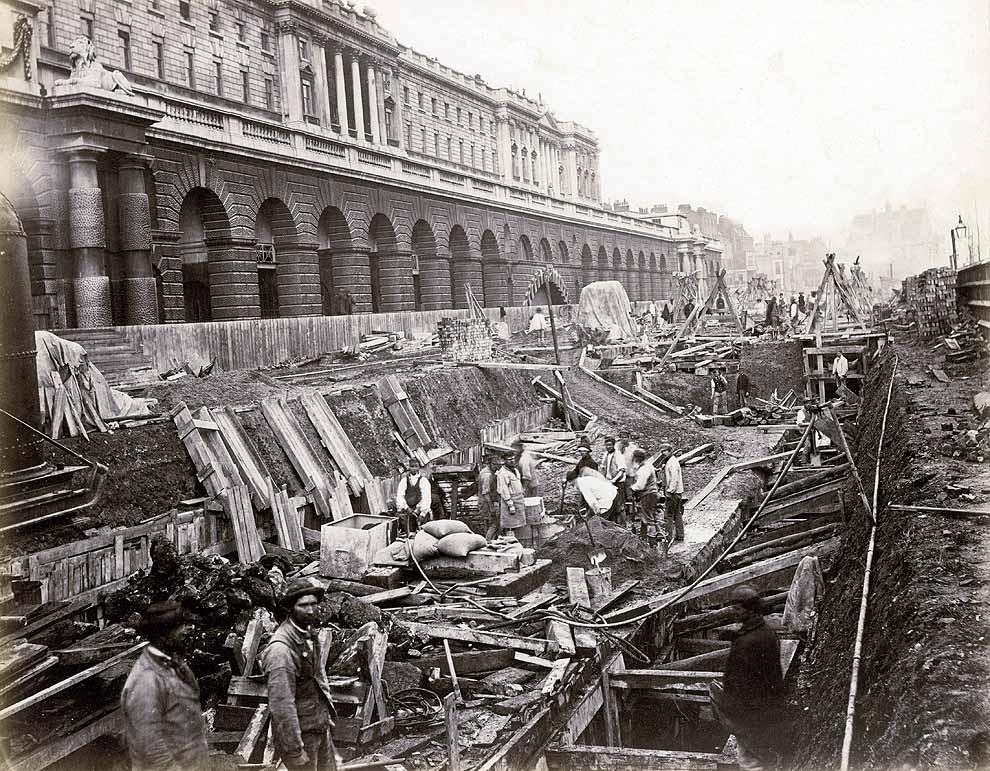
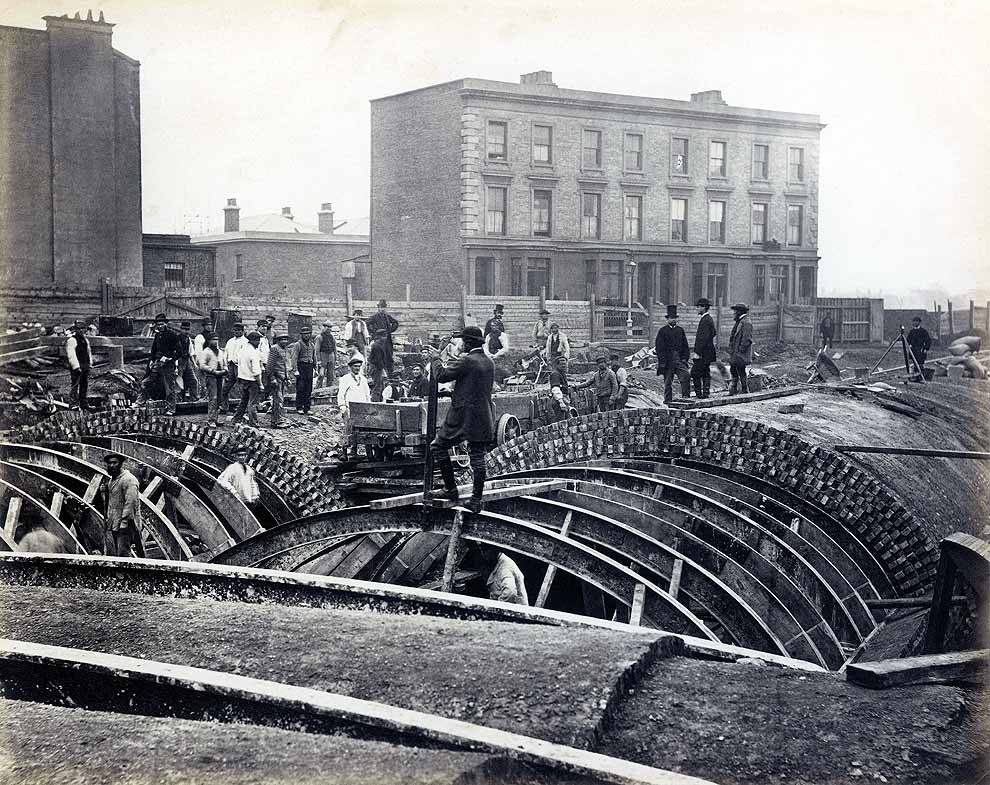
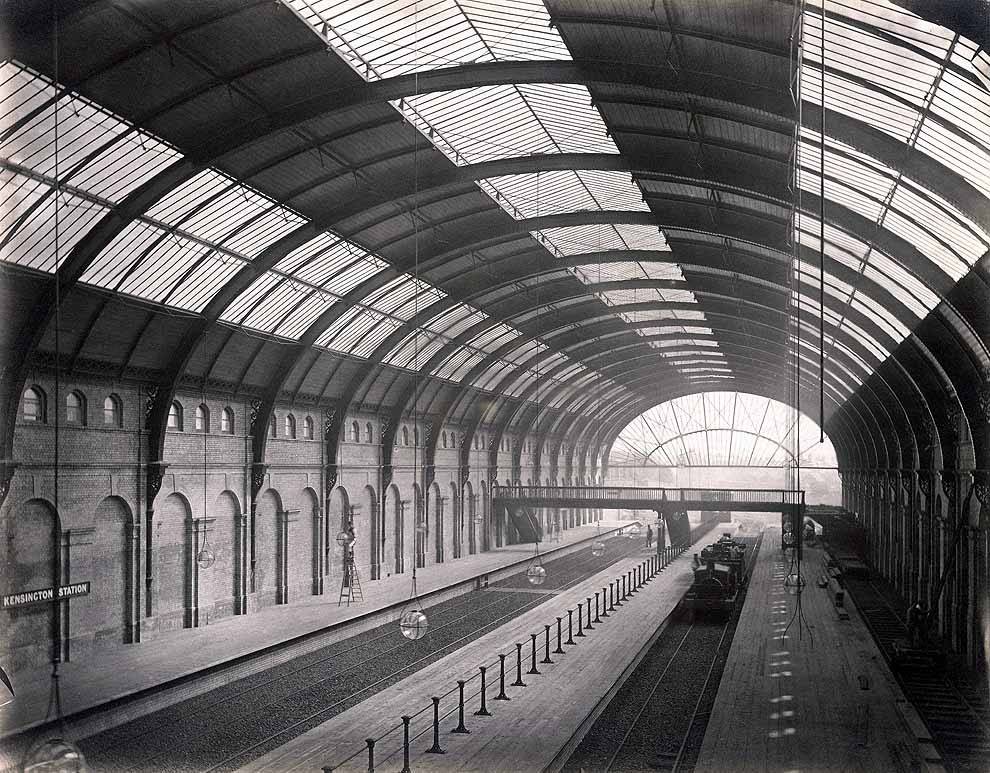
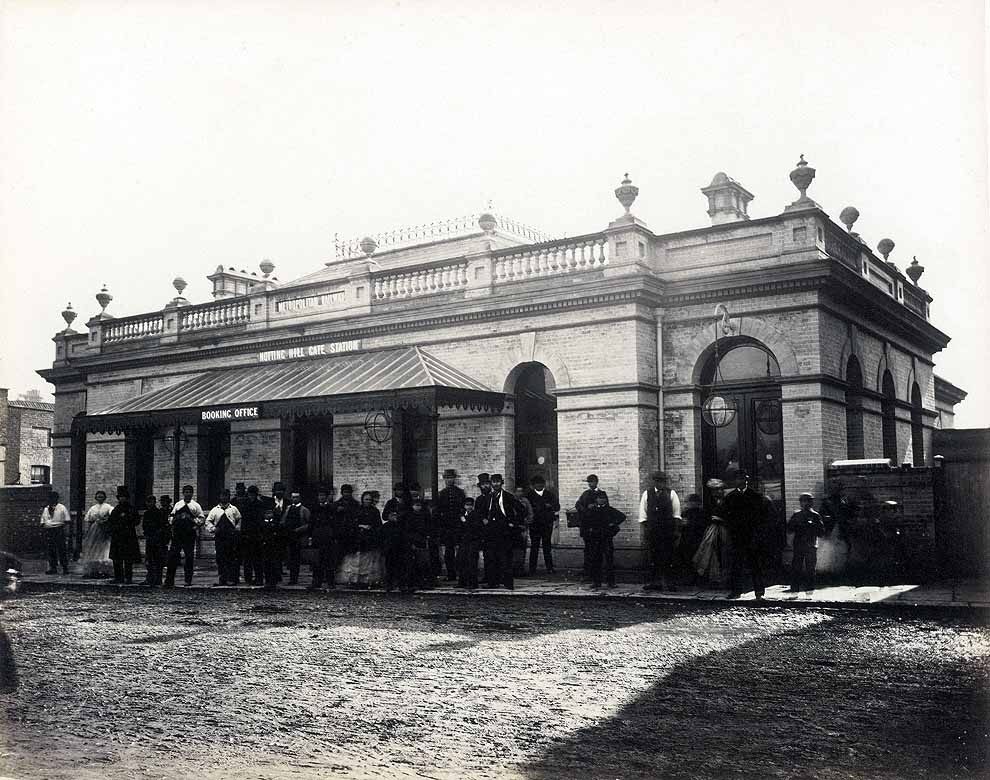
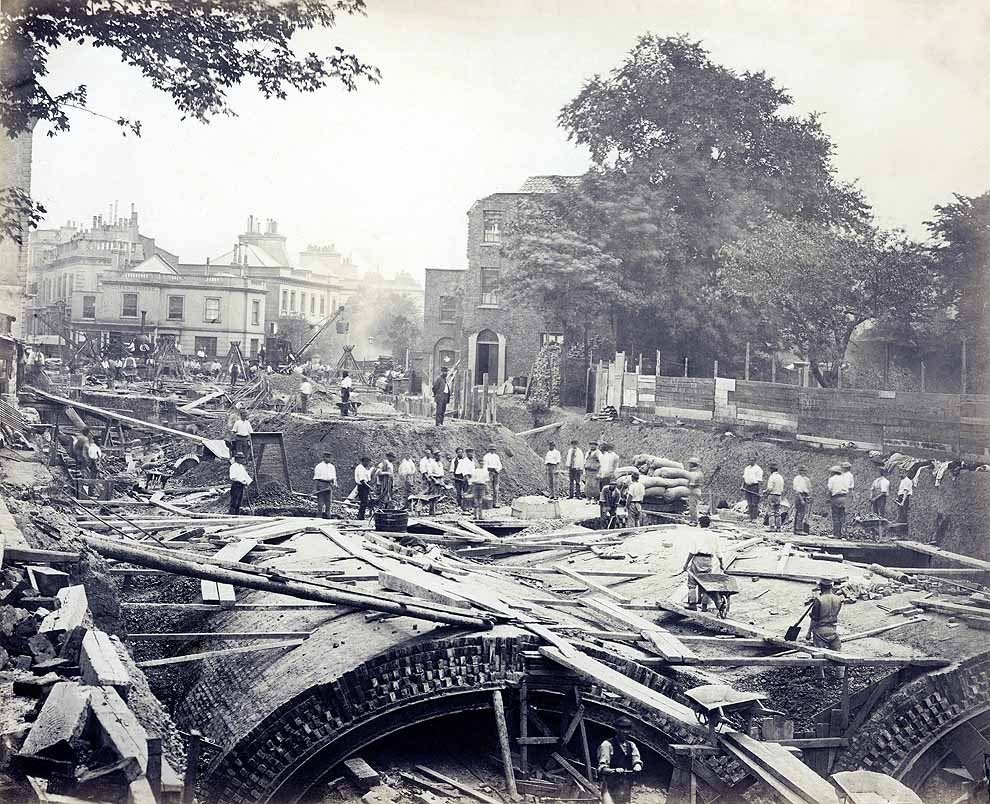
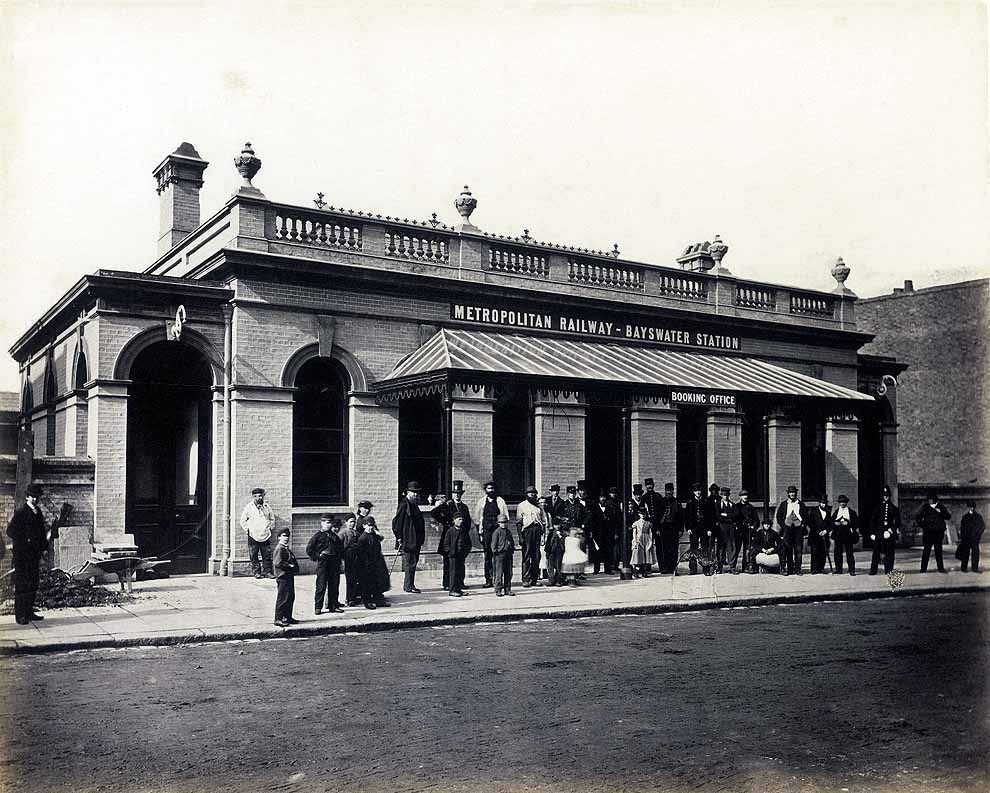
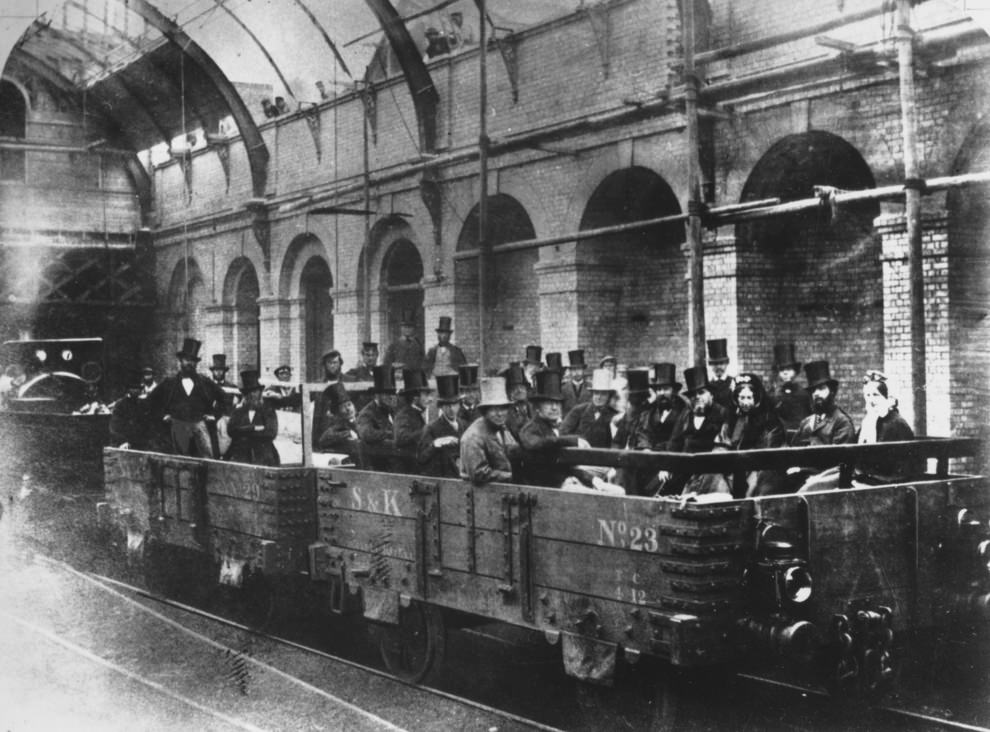
Before the line even officially opened to the public, it had already attracted political attention. In May 1862, Chancellor William Ewart Gladstone boarded a train for an inspection tour of the world’s first underground railway. He rode in an open carriage through the new tunnels, surveying the engineering achievement firsthand. It was a clear signal that the Underground was not just a transport experiment — it was a matter of national interest.
By the 1890s, the network had expanded well beyond its original stretch. Liverpool Street station became a major hub, serving both surface rail and underground passengers. The introduction of electric traction in the early 1900s ended the era of steam locomotives underground — a change that made the tunnels cleaner and far more comfortable to ride in.
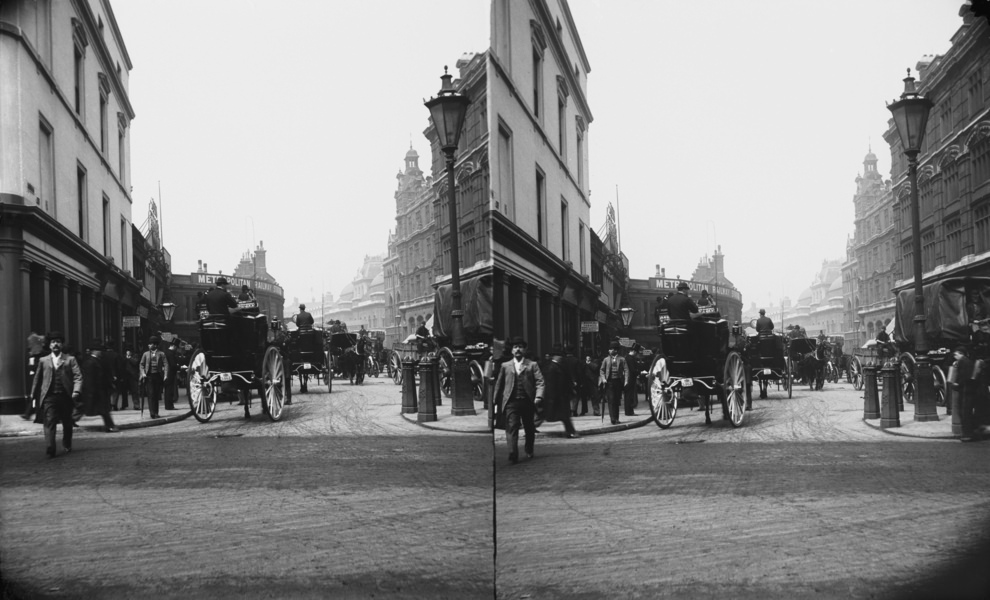
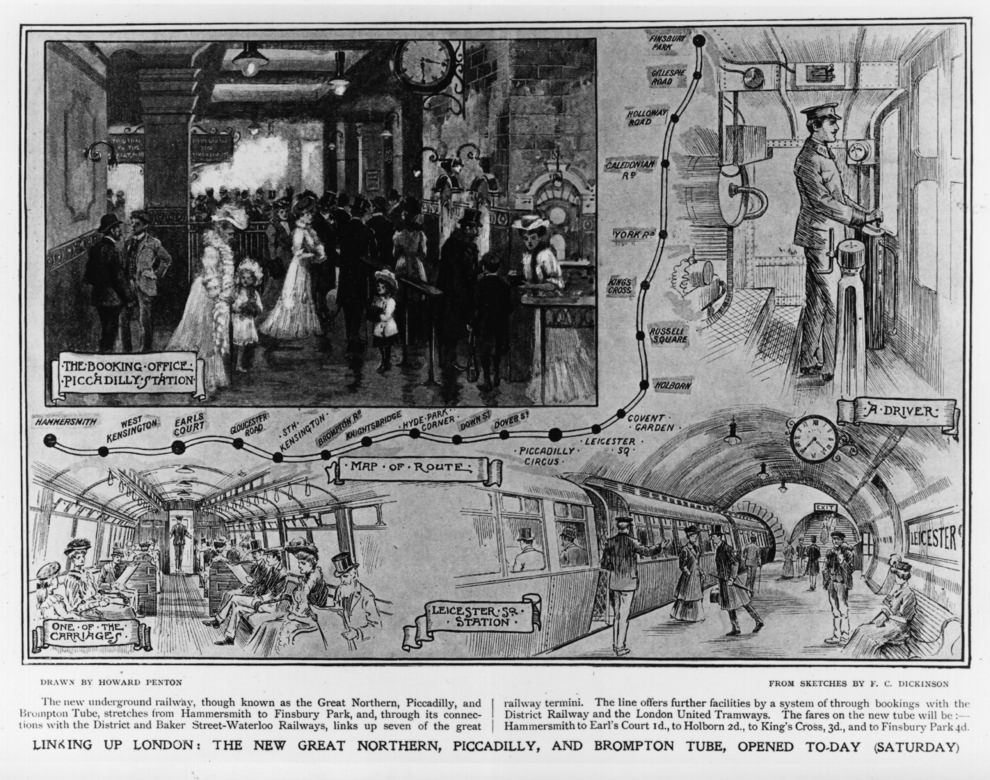
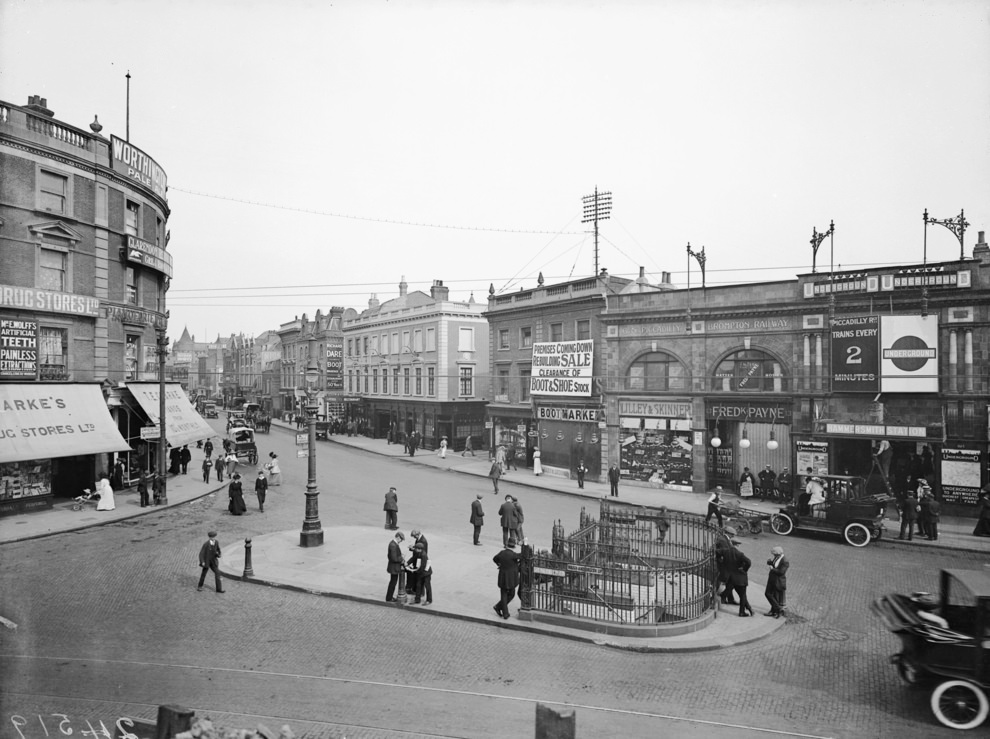
The deepest station on the network, Hampstead, opened in 1907, sitting roughly 192 feet below street level. That same period saw the development of new deep-level tube lines using circular bored tunnels rather than the cut-and-cover approach of the earlier decades. A 1906 map and illustration set shows the planned Great Northern, Piccadilly and Brompton route — a line that would link Hammersmith to Finsbury Park and pass through the city’s busiest areas.
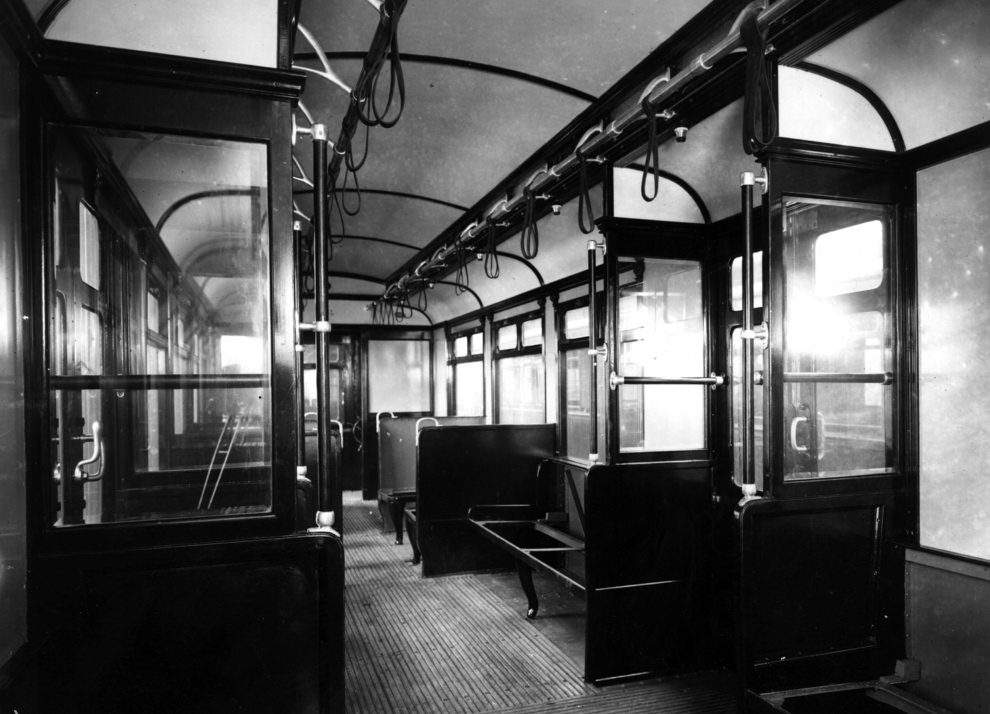
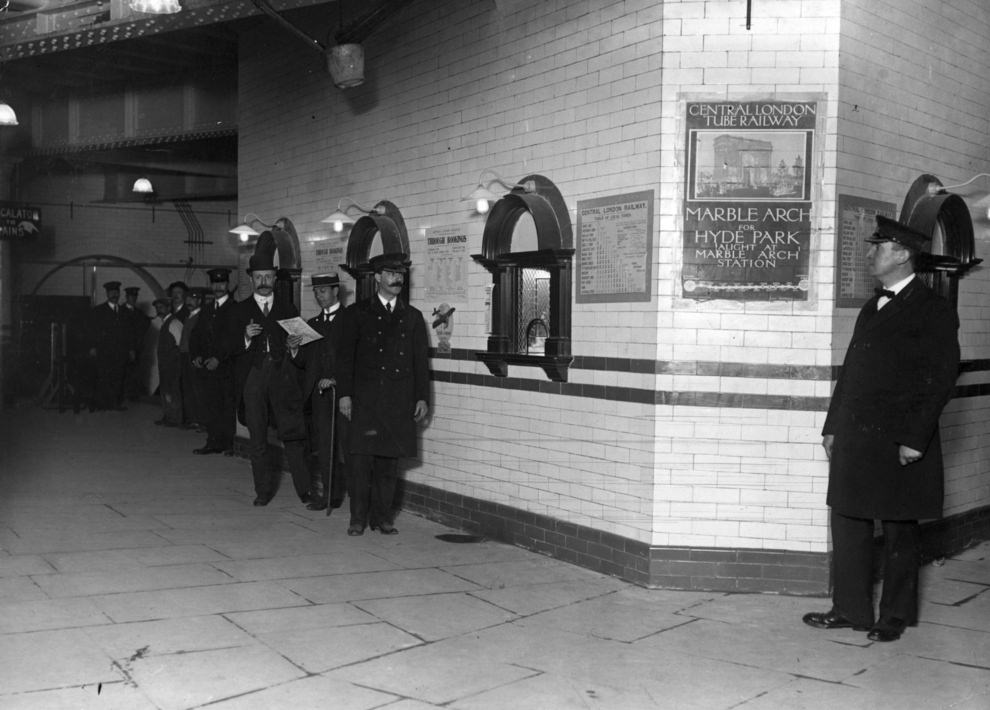
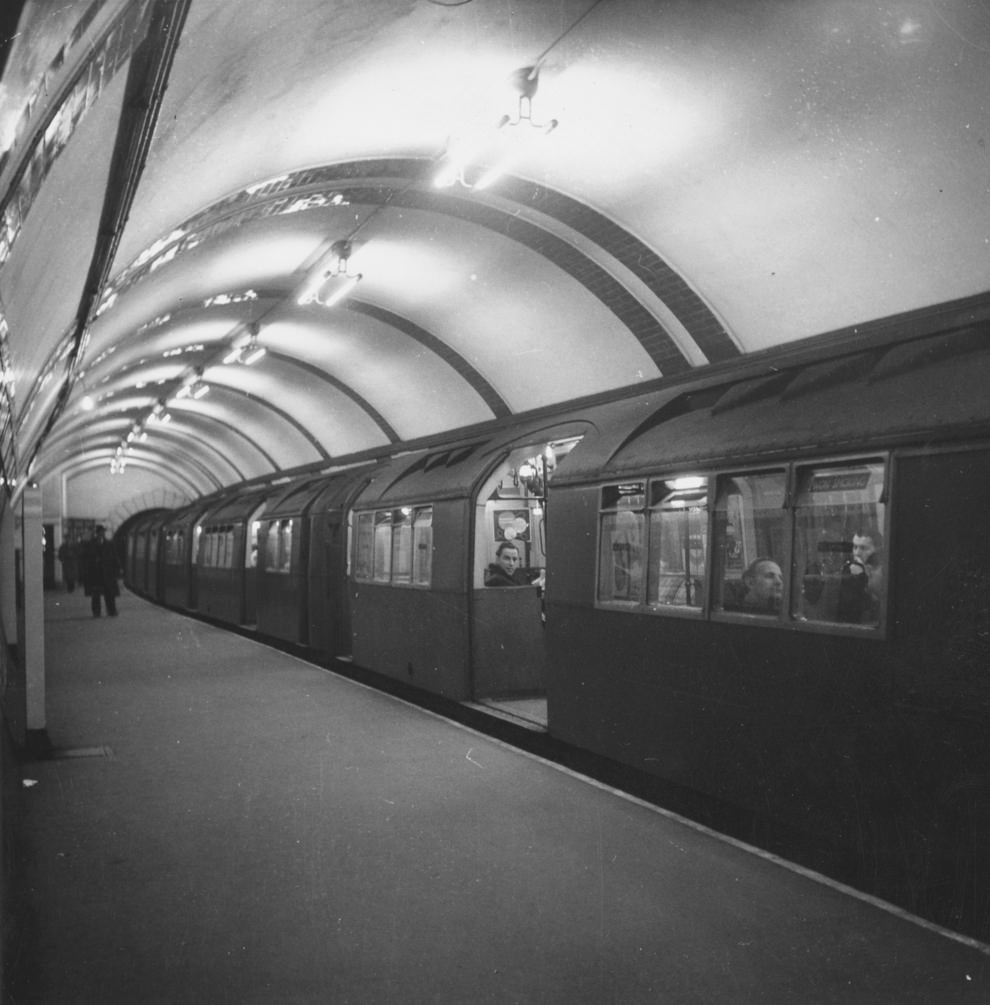
Inside the carriages, the early 1910s saw modest but real improvements in passenger comfort. District Line cars photographed in 1911 show upholstered bench seating and overhead lighting, a far cry from the gas-lit wooden compartments of 1863. Stations, too, were beginning to modernize. The ticket hall at Liverpool Street, photographed in 1912, shows a busy but organized space, with passengers moving through a system that was becoming more familiar with each passing year.
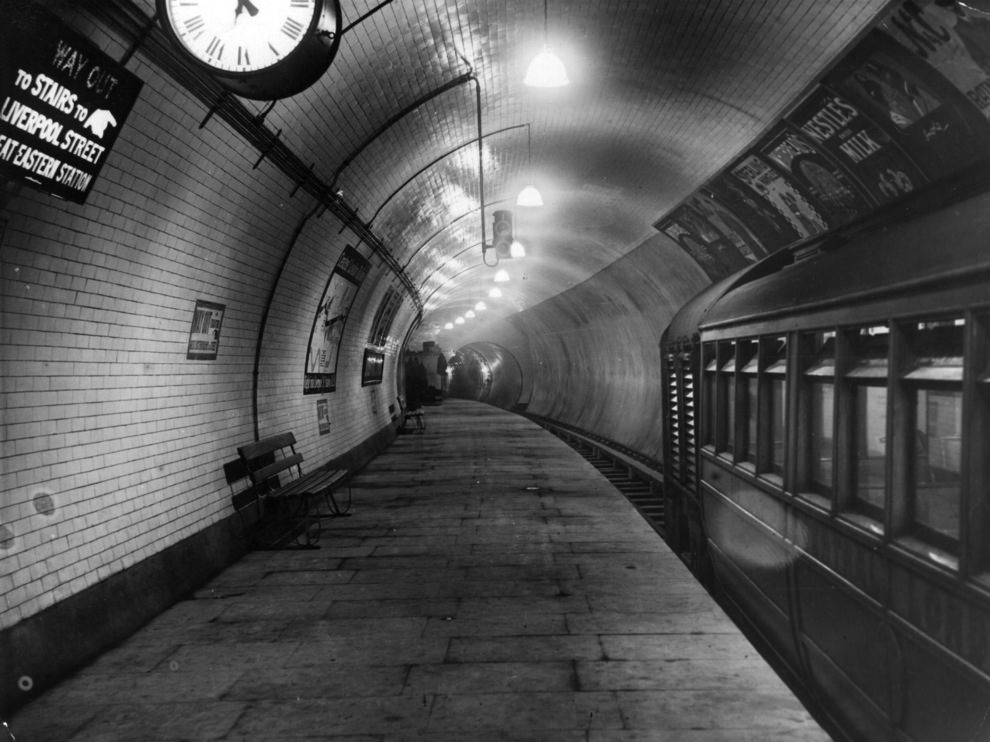
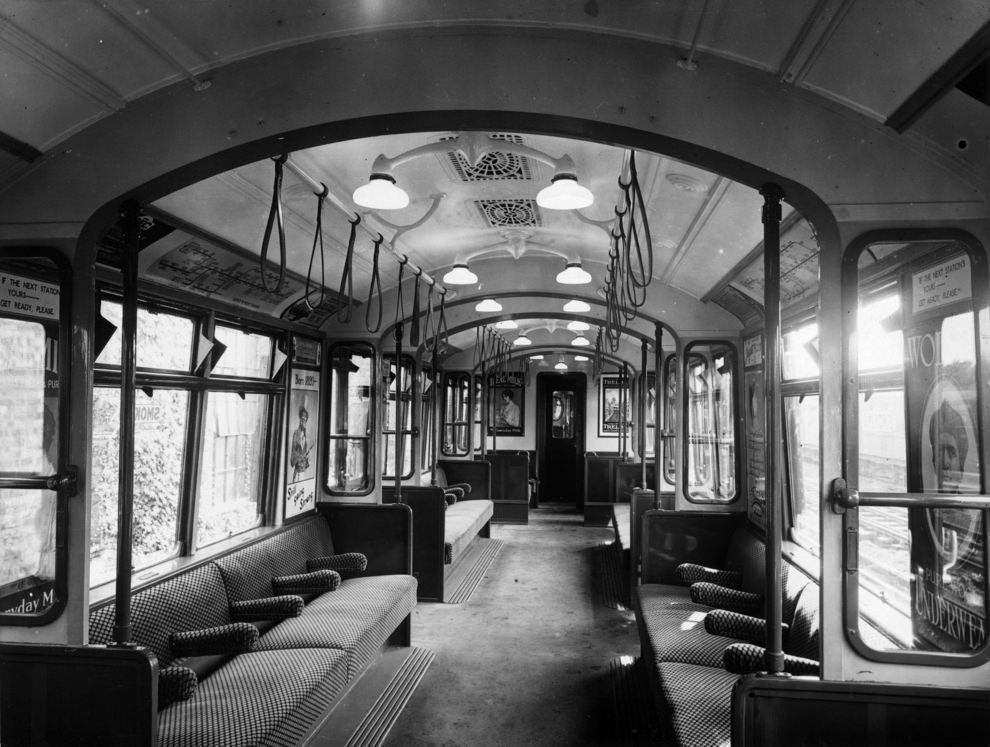
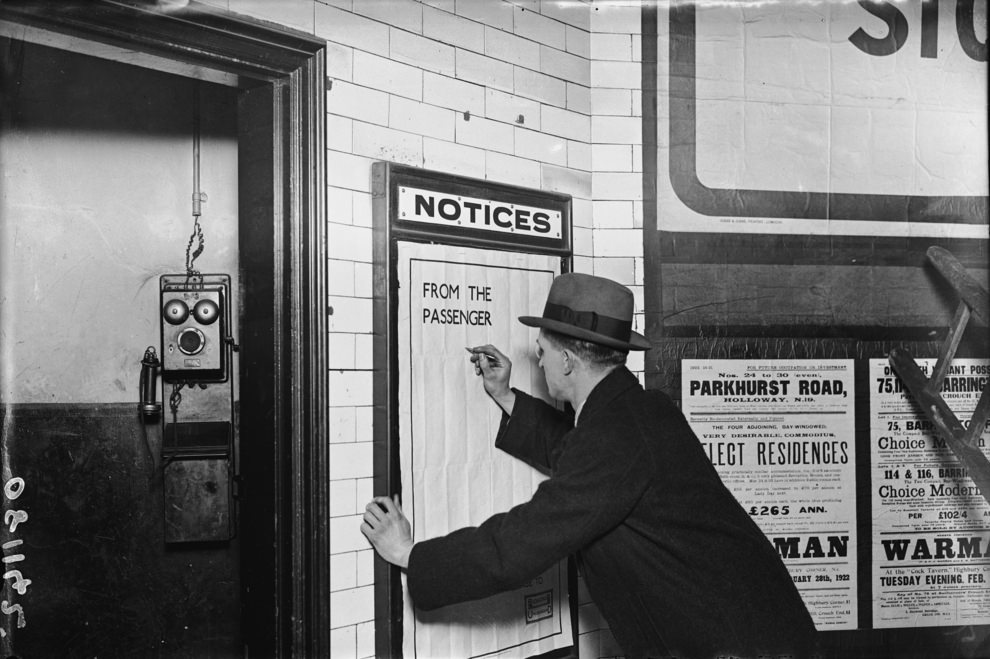
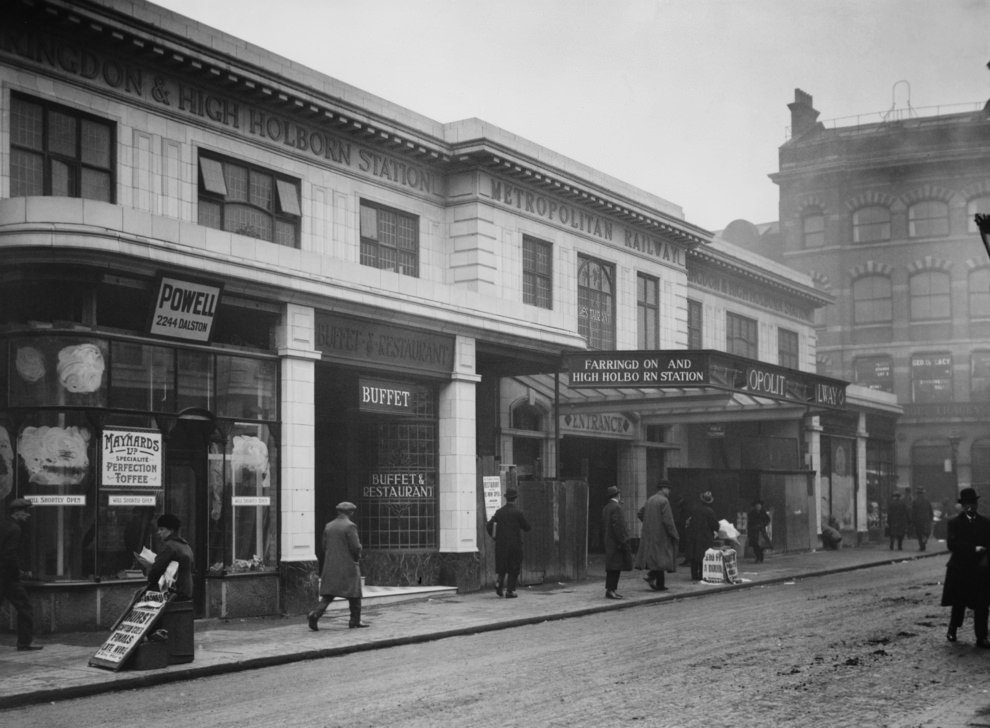
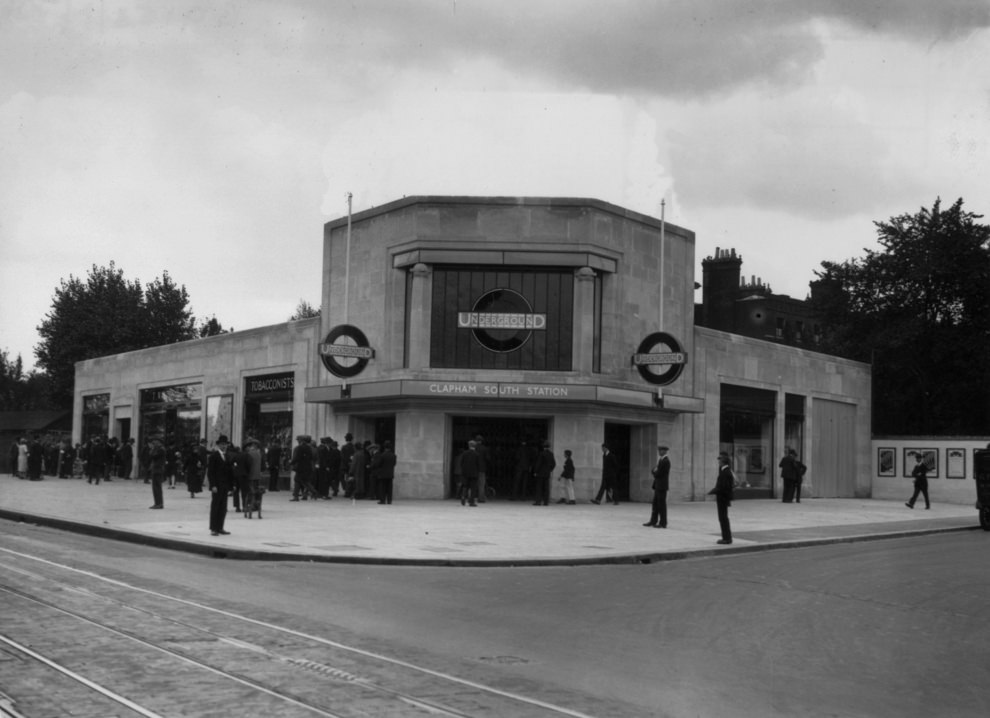
The 1920s brought a mix of upgrades and frustrations. All-steel train cars replaced the older wooden stock, offering a sturdier and more fire-resistant ride. But passengers were not always satisfied. A 1922 photograph captures a man writing on a complaints poster at a station — evidence that even then, Londoners had no shortage of grievances about their daily commute. Stations like Farringdon, Clapham South, and Blackfriars were photographed during this period, each showing the distinct architectural style of their construction era.
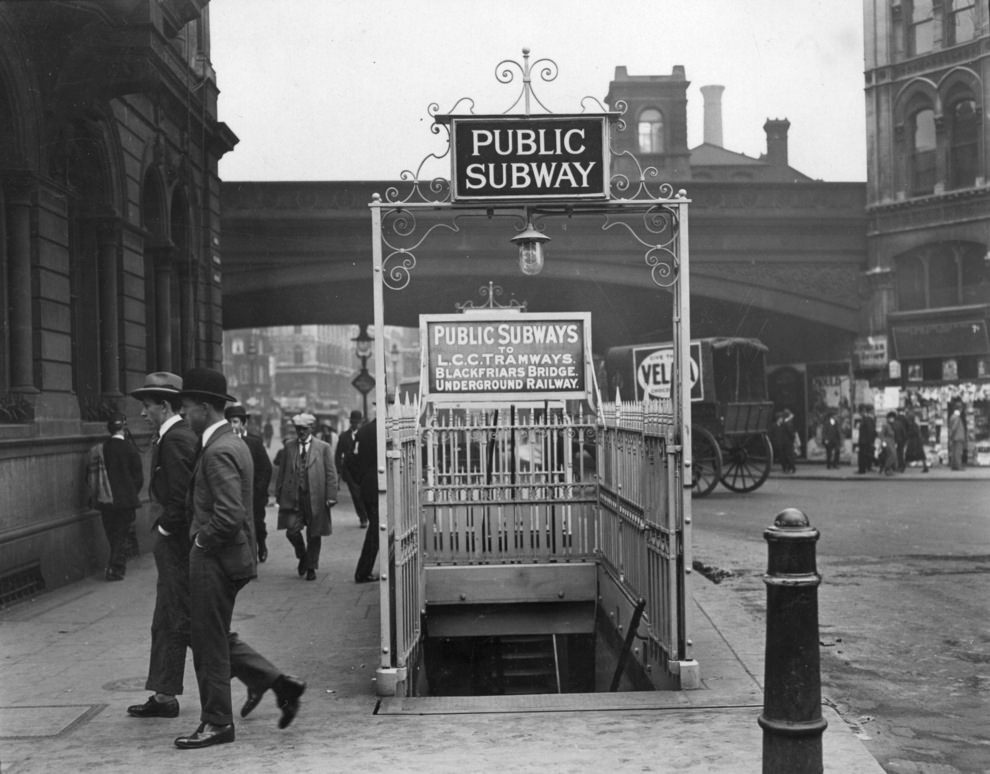
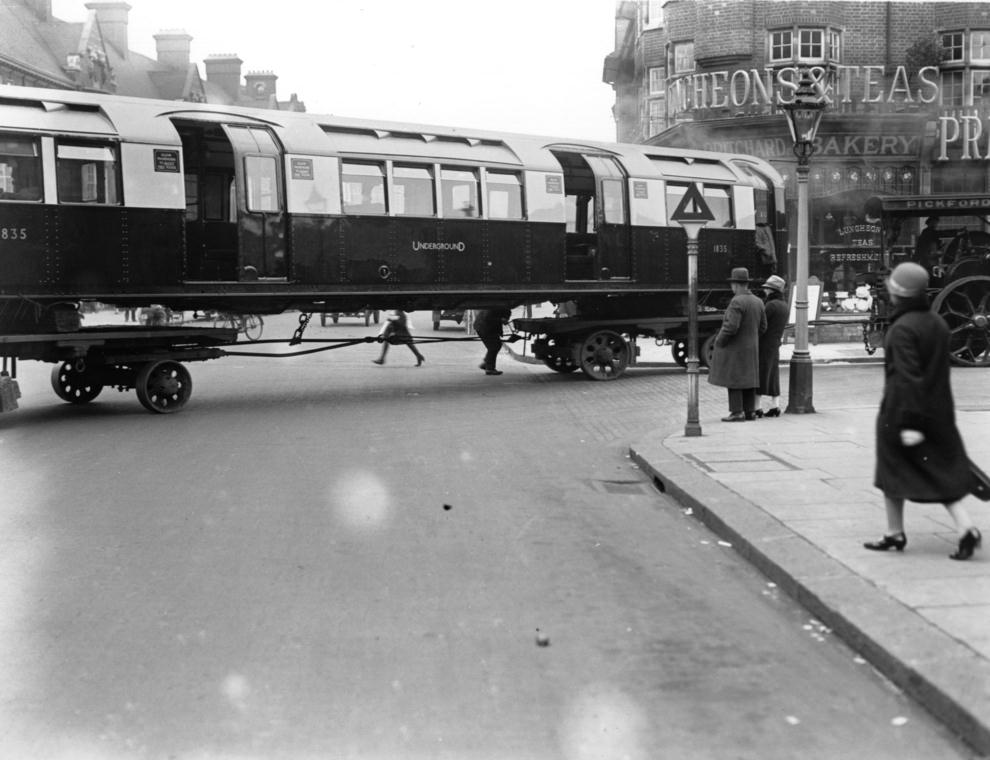
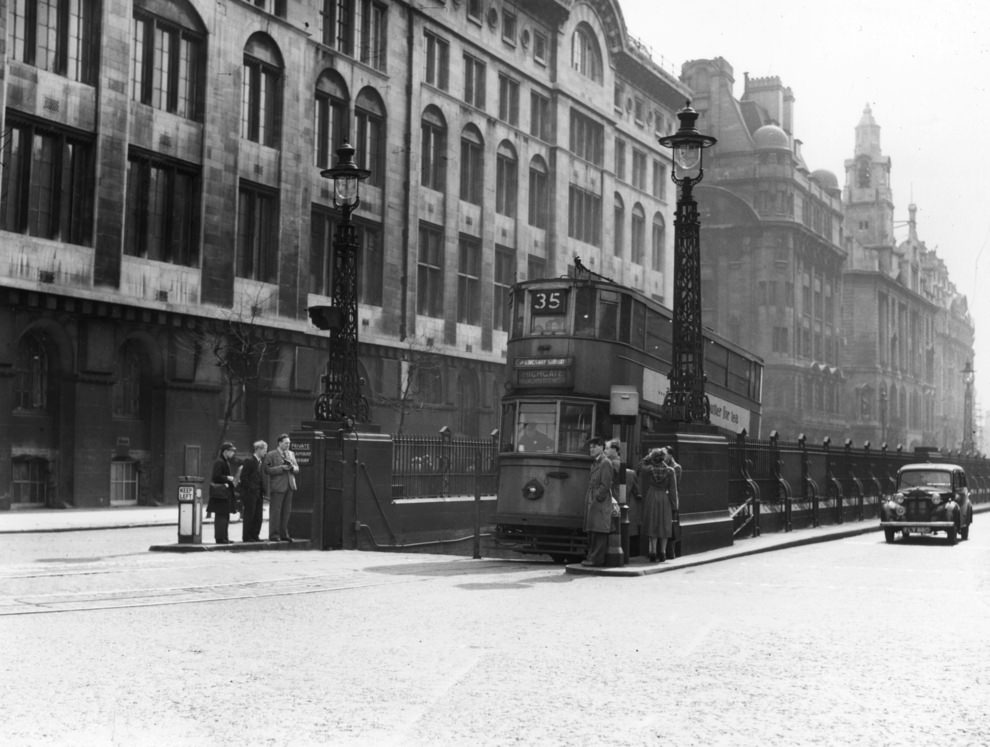
The Kingsway tram subway served as an unusual hybrid — a below-ground route for trams rather than trains. In 1926, tram workers lined up in its tunnels to collect their wages, a scene that illustrates the variety of underground transport systems operating beneath London’s streets at the time. That same year, a remarkable photograph shows a full Underground train car being moved on wheels through the streets above ground, a logistical challenge that required careful planning and a good deal of public curiosity.
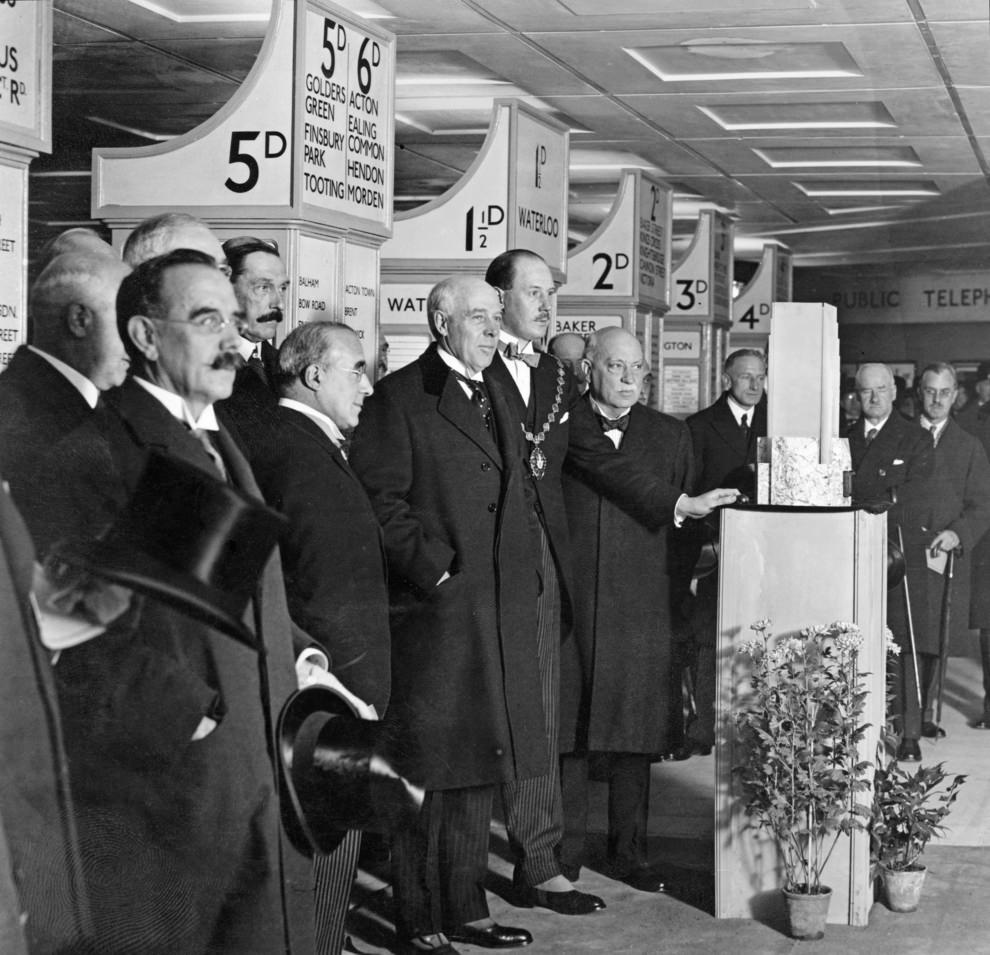
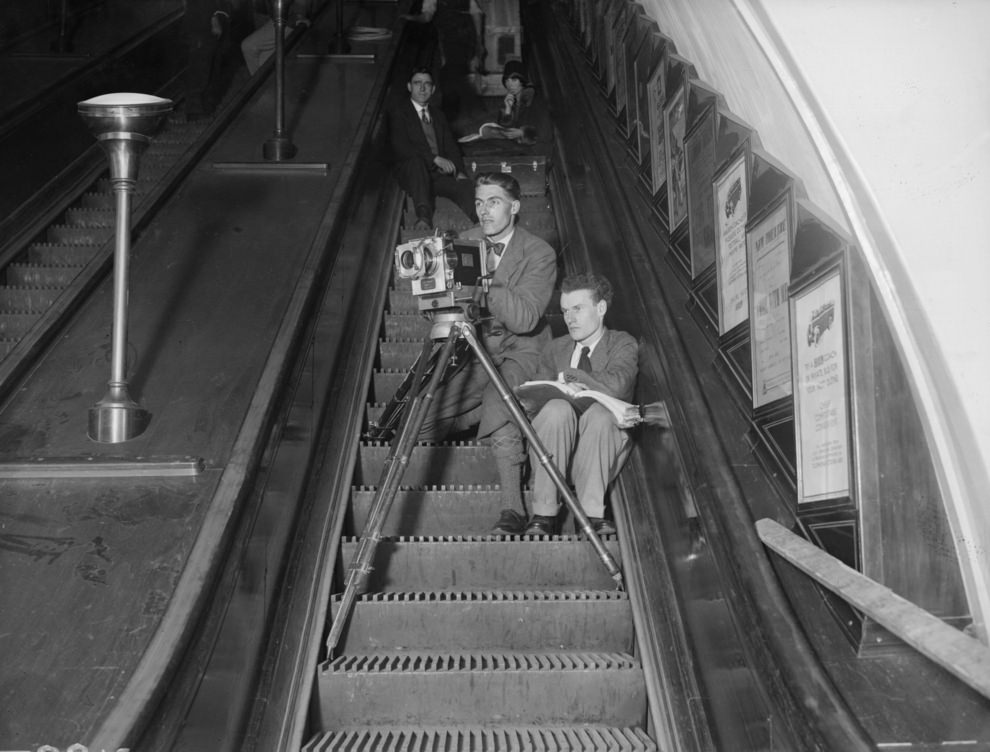
The late 1920s saw Piccadilly Circus station undergo a major rebuild. In 1928, the Mayor of Westminster officially switched on the new escalators — a mechanical feature that was still novel enough to draw a formal ceremony. That same year, British film director Anthony Asquith used the station’s escalators and platforms as a filming location for his movie simply titled Underground, capturing commuters going about their ordinary routines as dramatic backdrop.
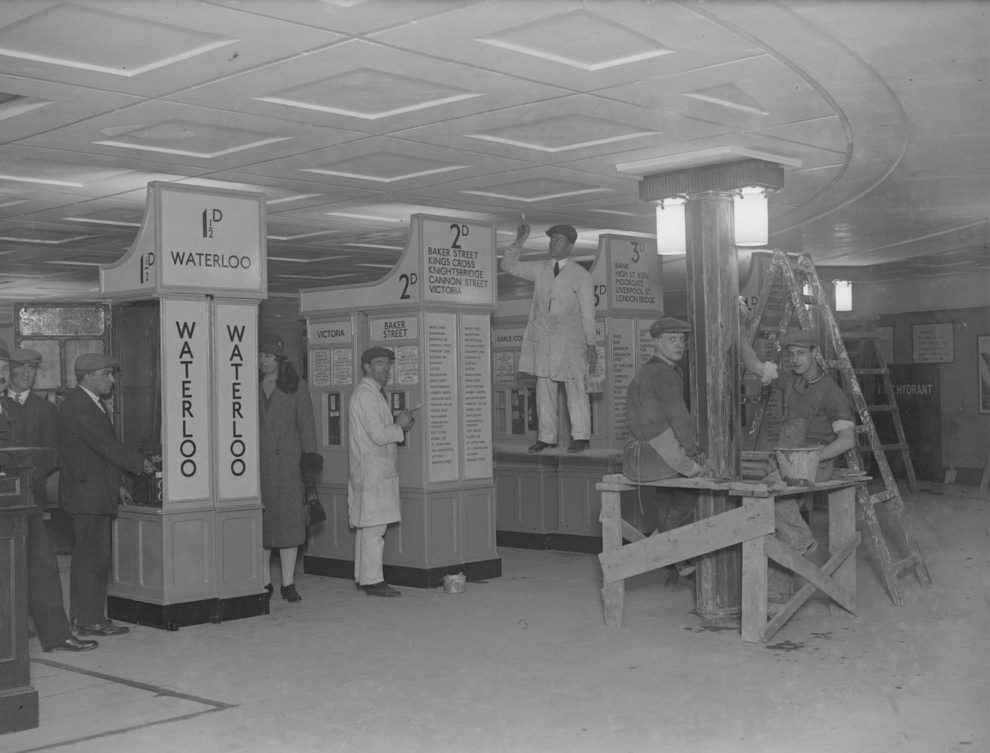
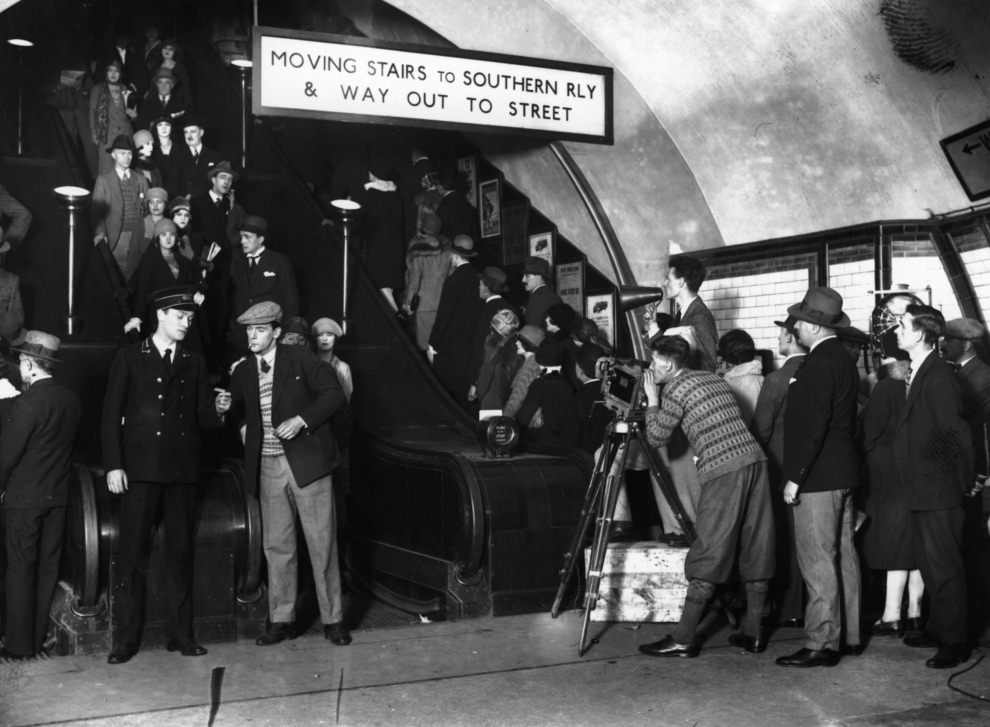
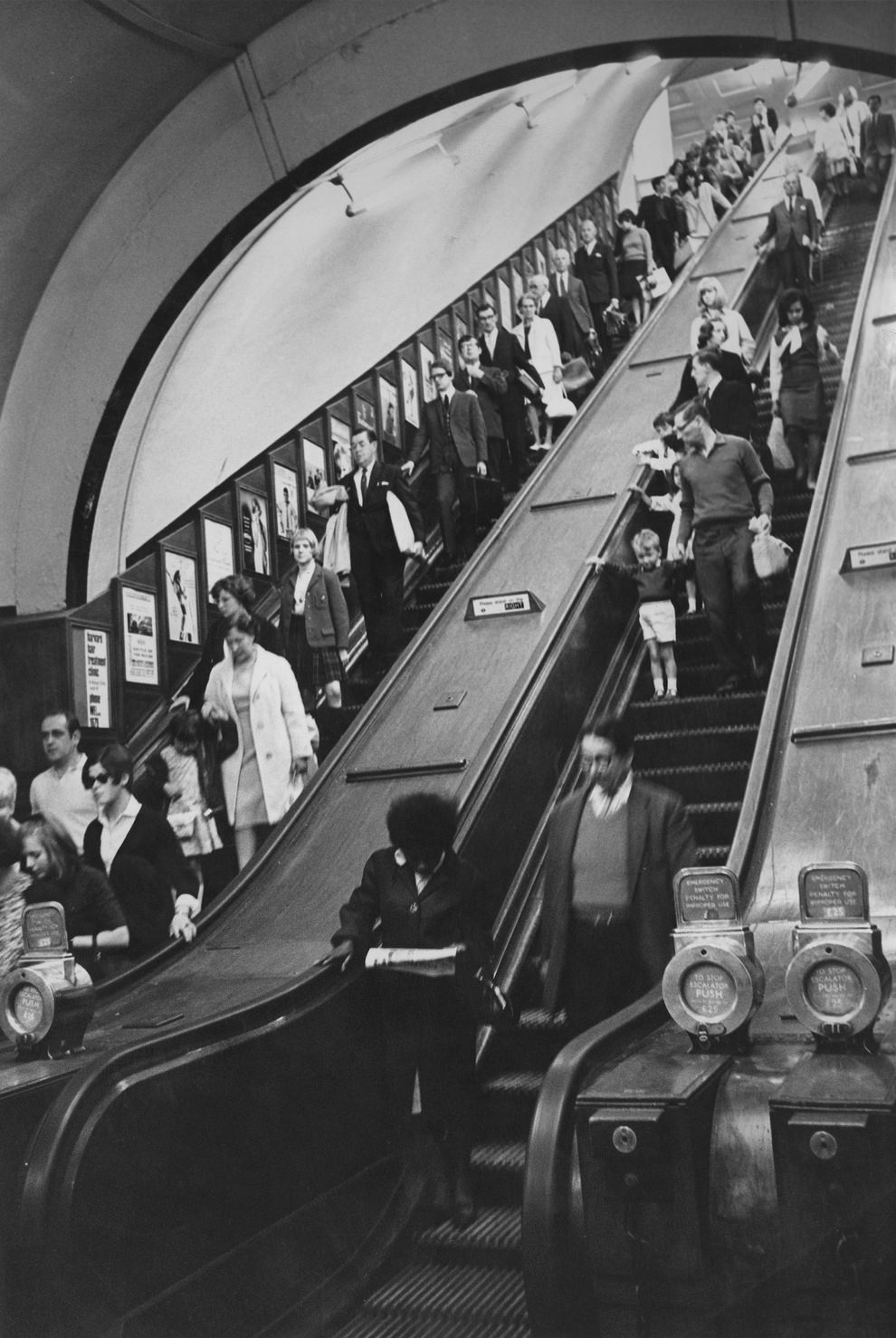
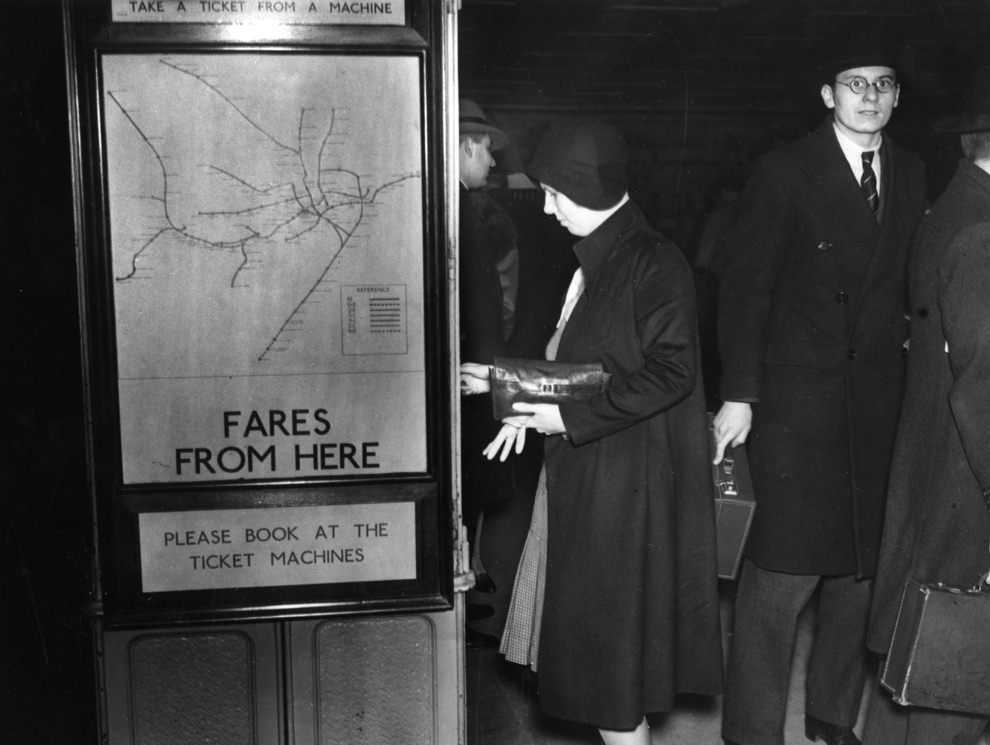
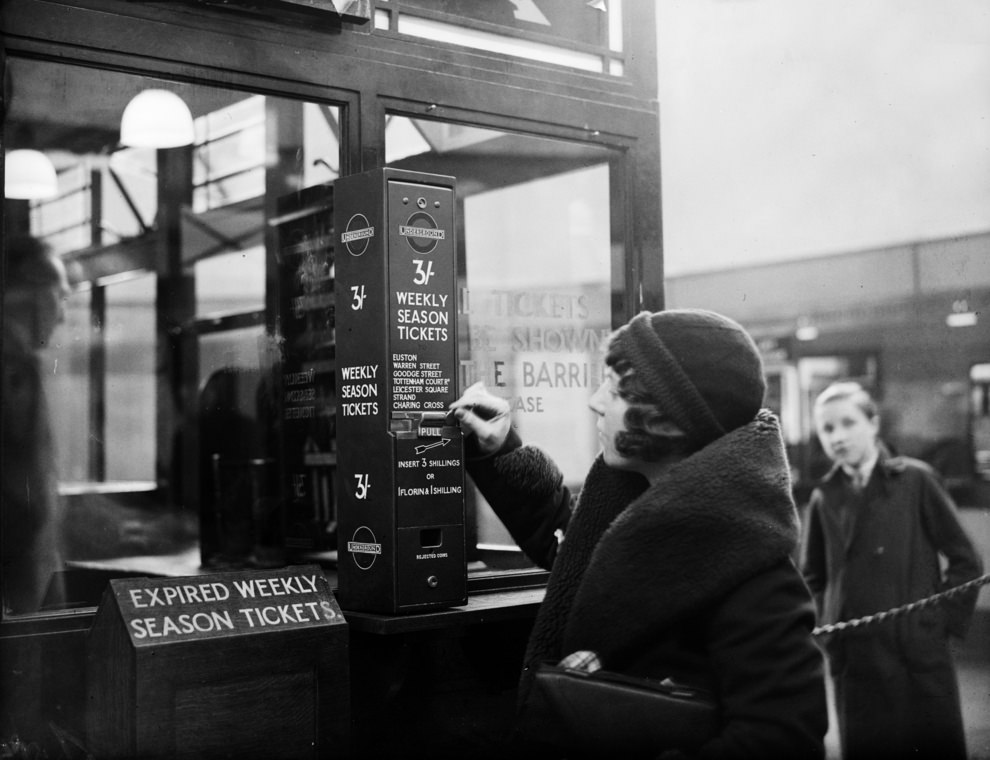
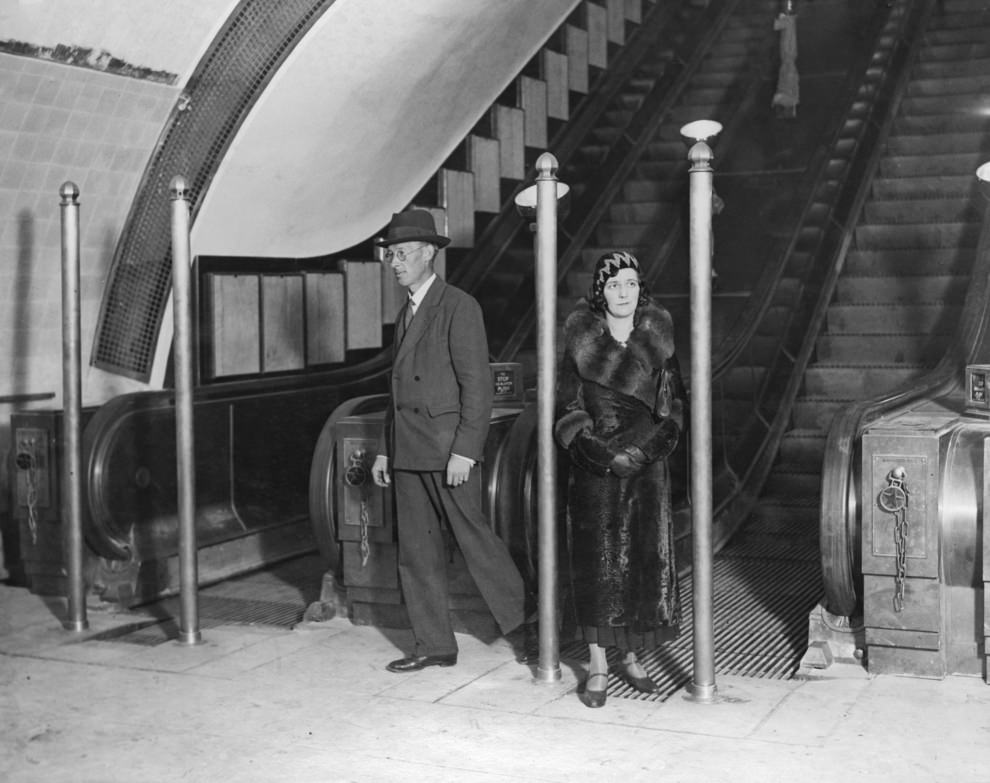
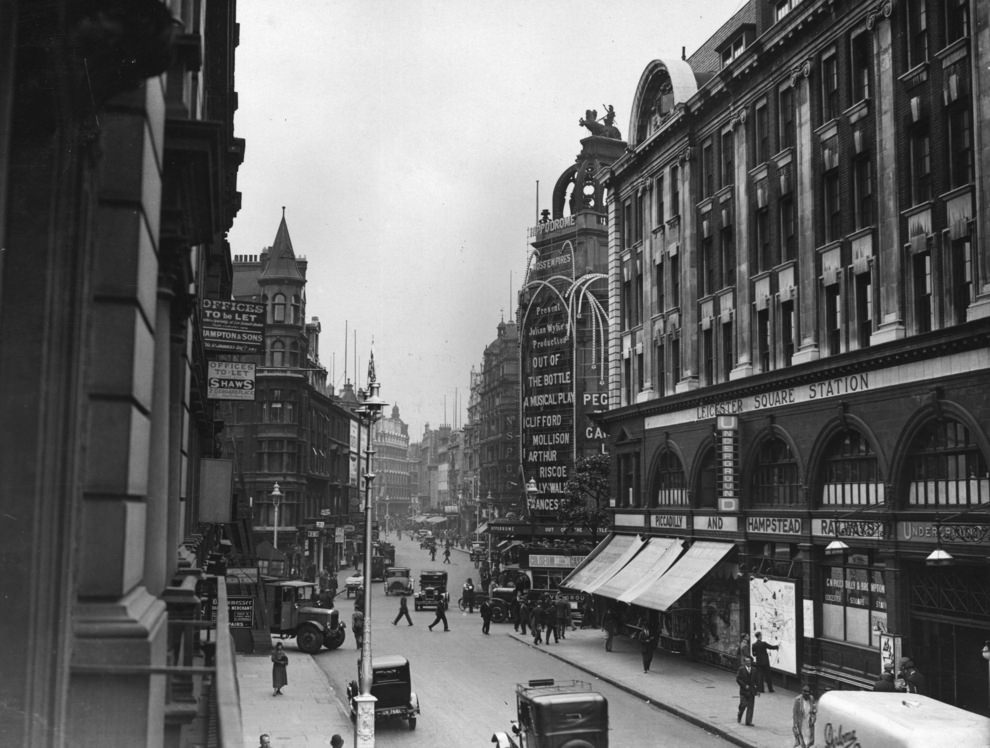
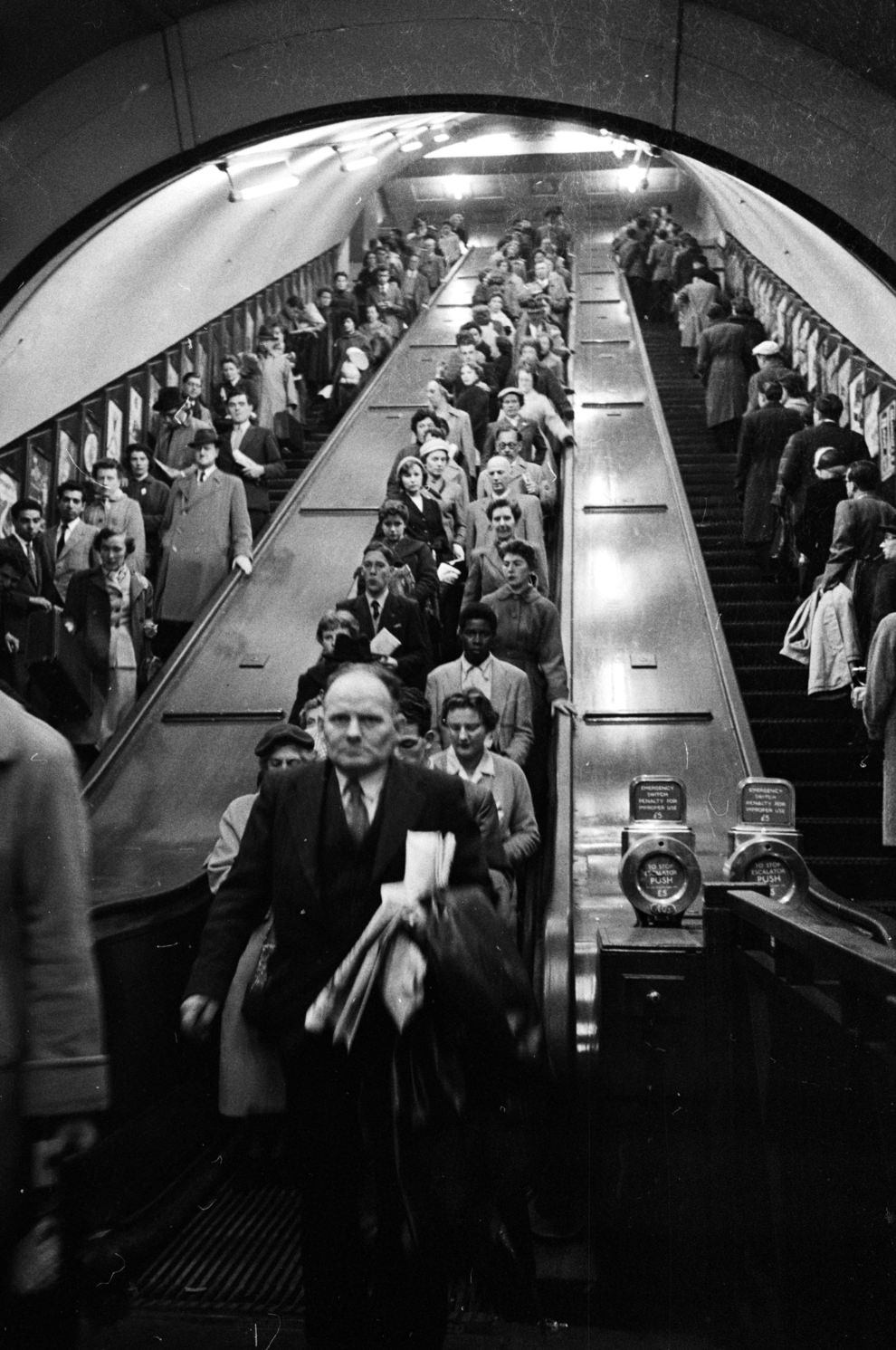
The 1930s brought further modernization. Platform extensions at Euston Square in 1930 accommodated longer trains. Ticket vending machines appeared at stations including Piccadilly Circus and Highgate, reducing the queues at staffed windows. Escalators became standard features, and by 1932, crowd-control posts had been installed on them to prevent dangerous crushing during rush hours. Leicester Square station, photographed in 1933, shows a system that by then felt thoroughly embedded in city life.
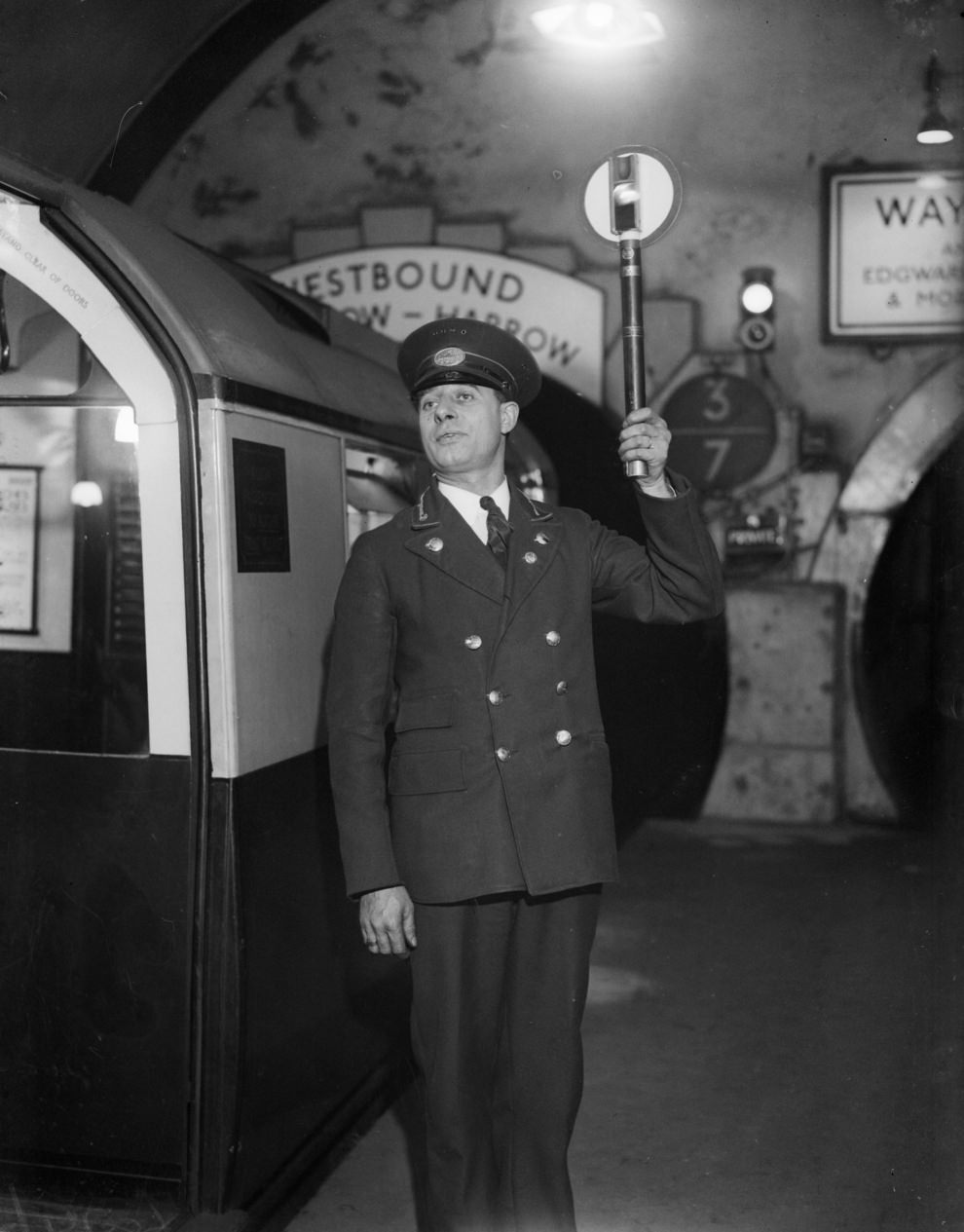
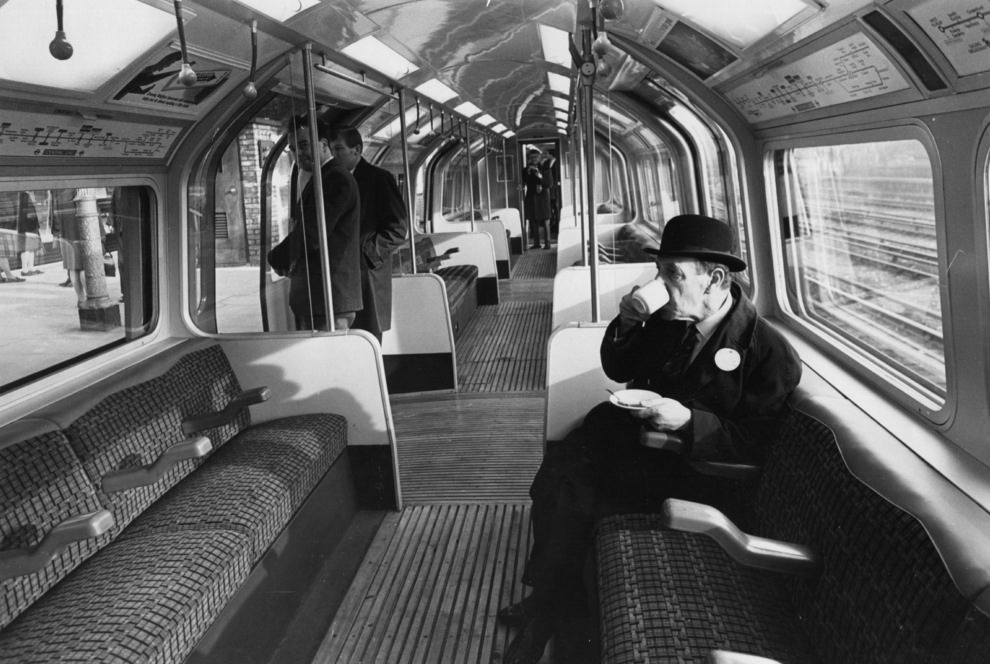
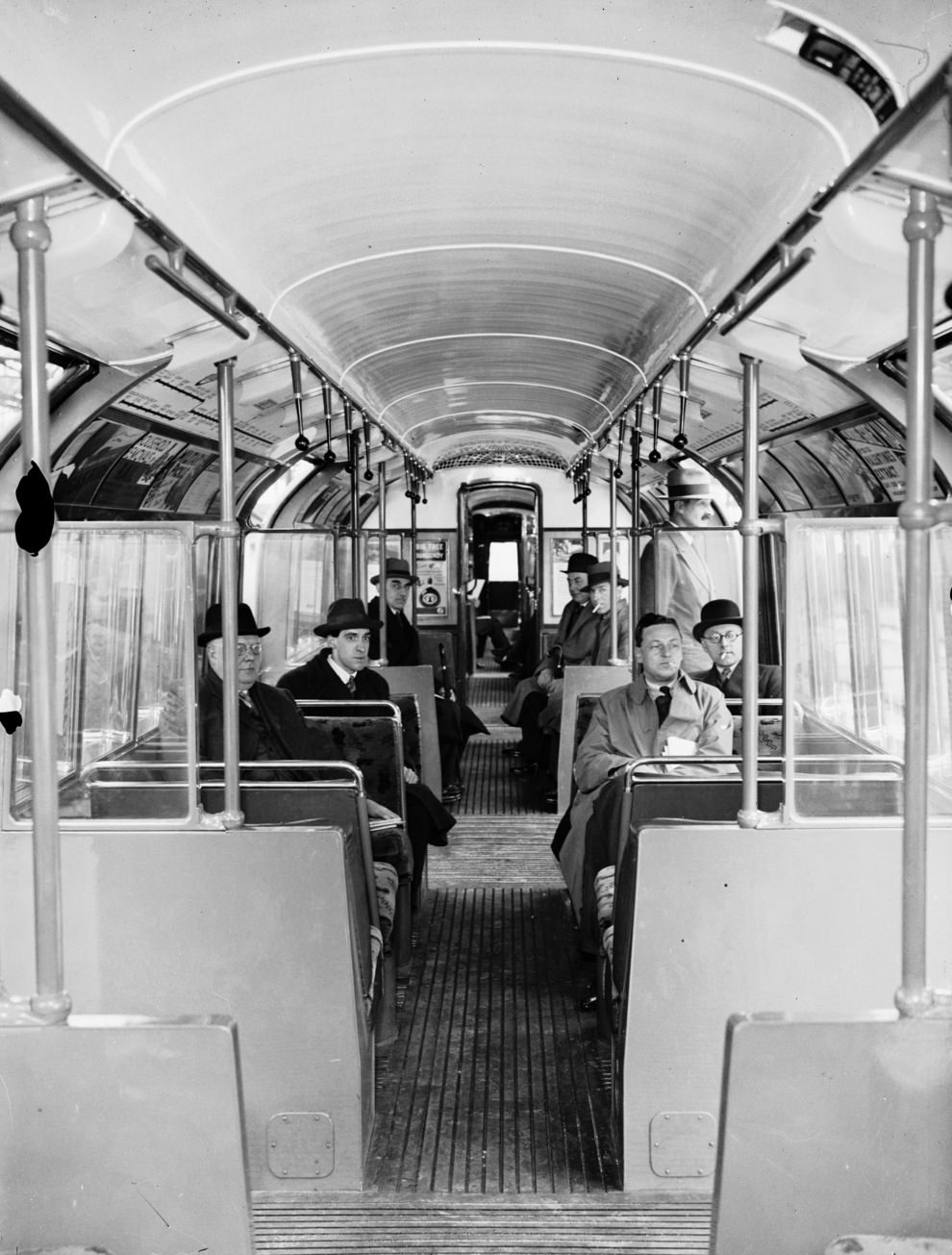
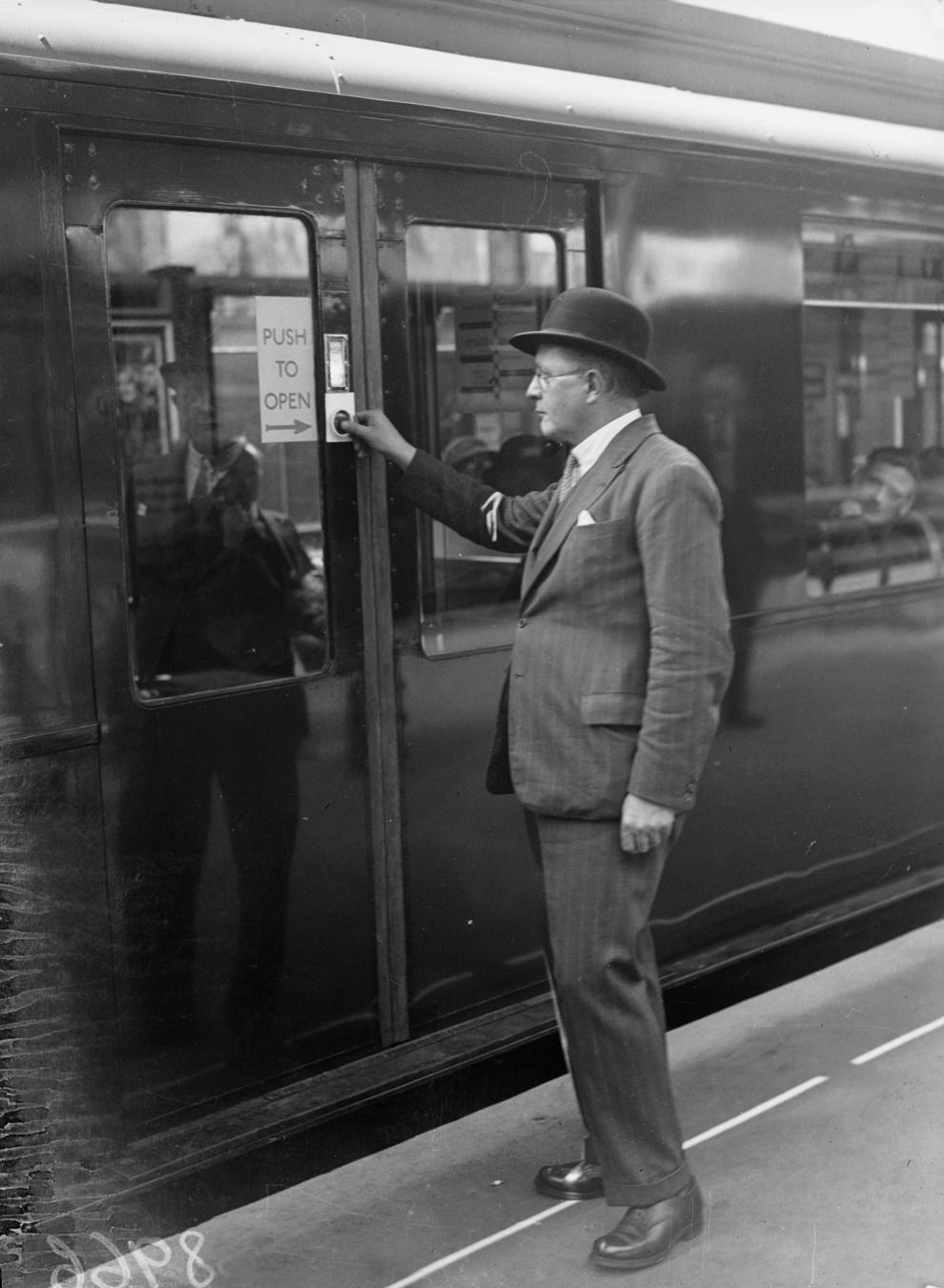
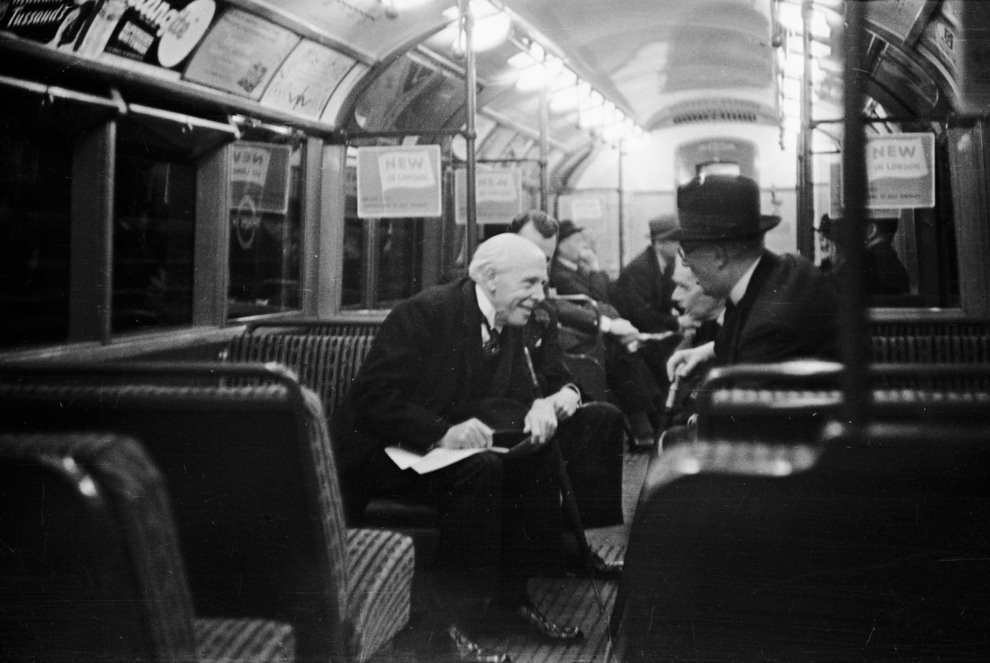
By 1936, the Underground’s rolling stock had received a thorough interior redesign. New cars offered more seating, improved ventilation, better lighting, and a cleaner, more streamlined shape. On the Hammersmith and City Line, carriages were fitted with push-button door controls, allowing passengers to open and close doors themselves — a small but meaningful shift in how people interacted with the system.
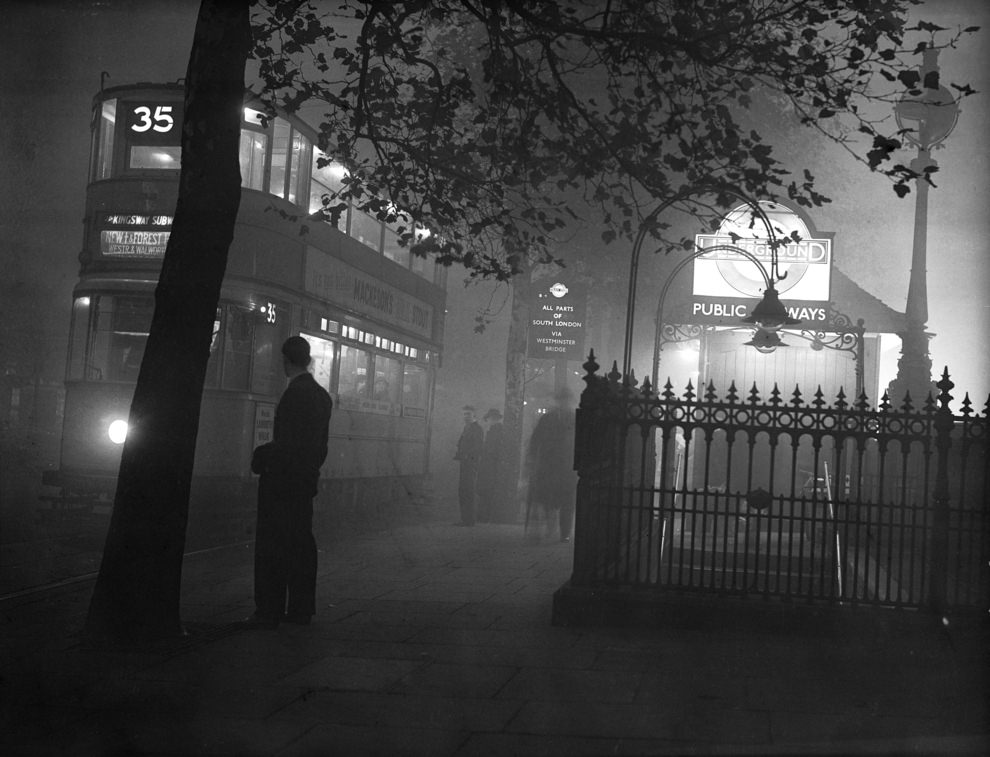
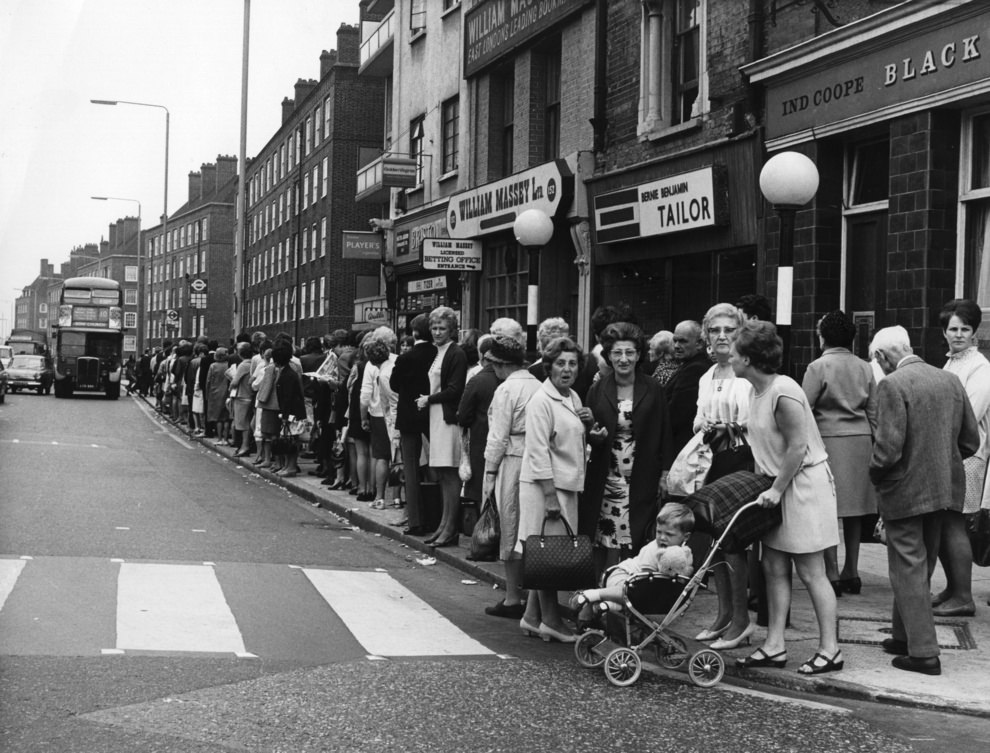
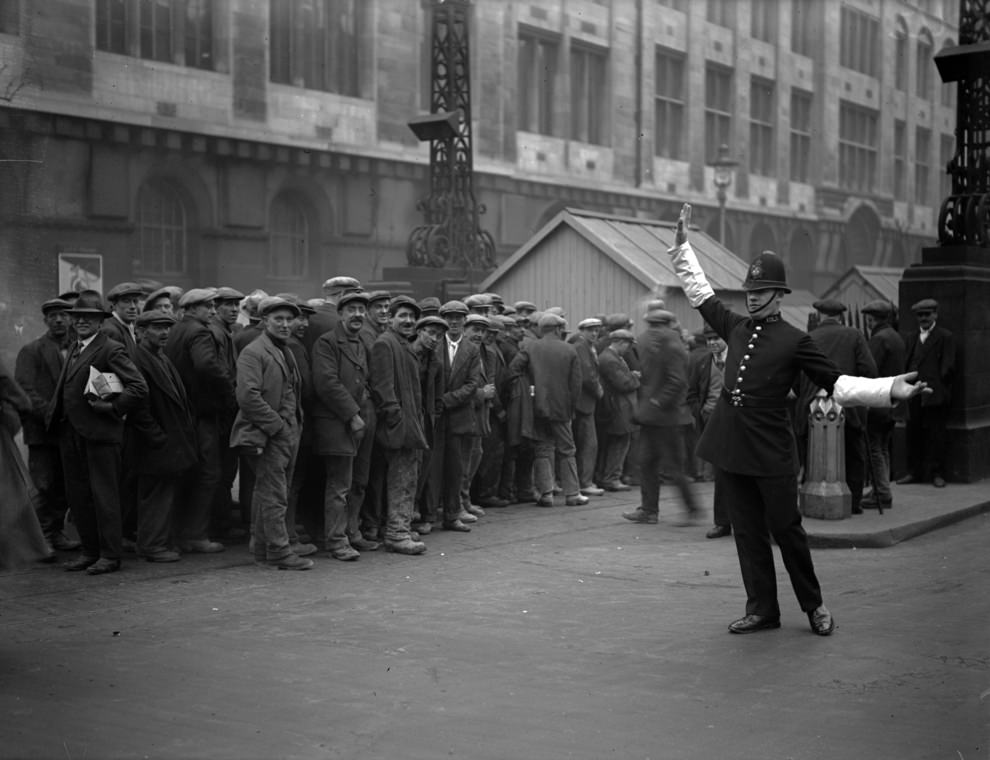
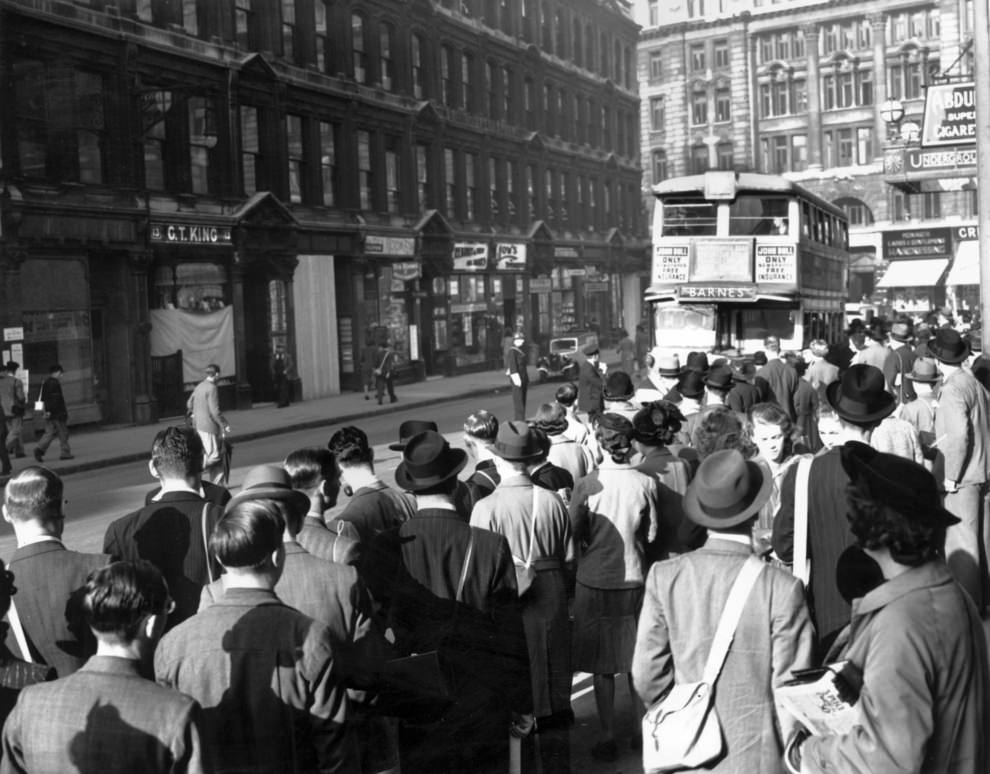
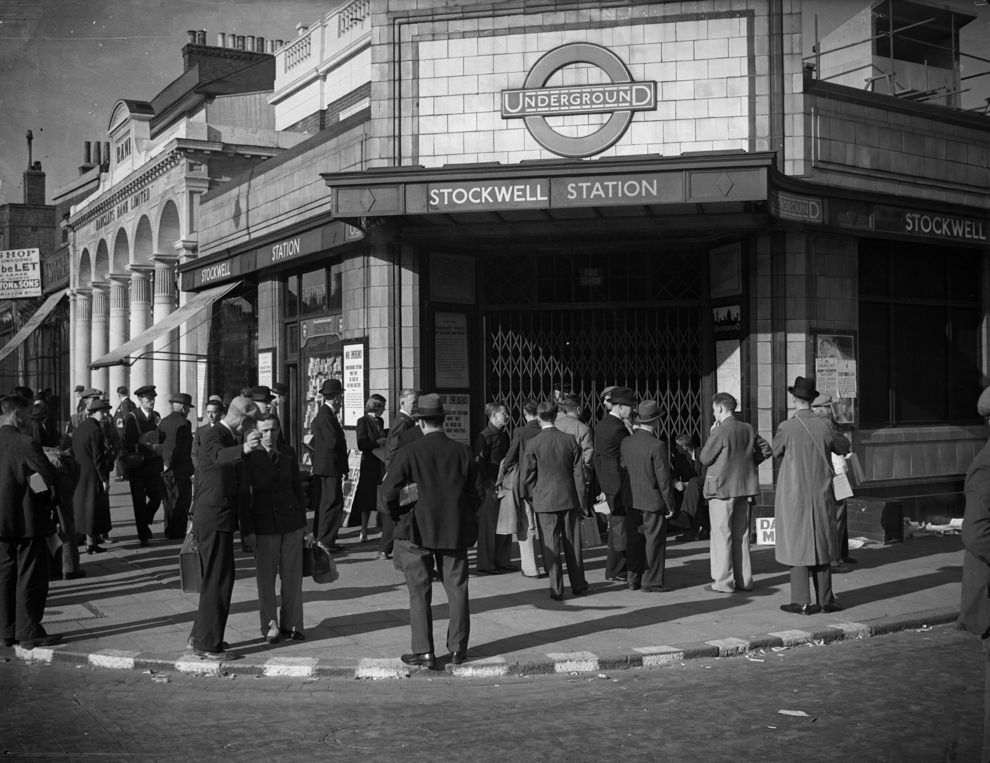
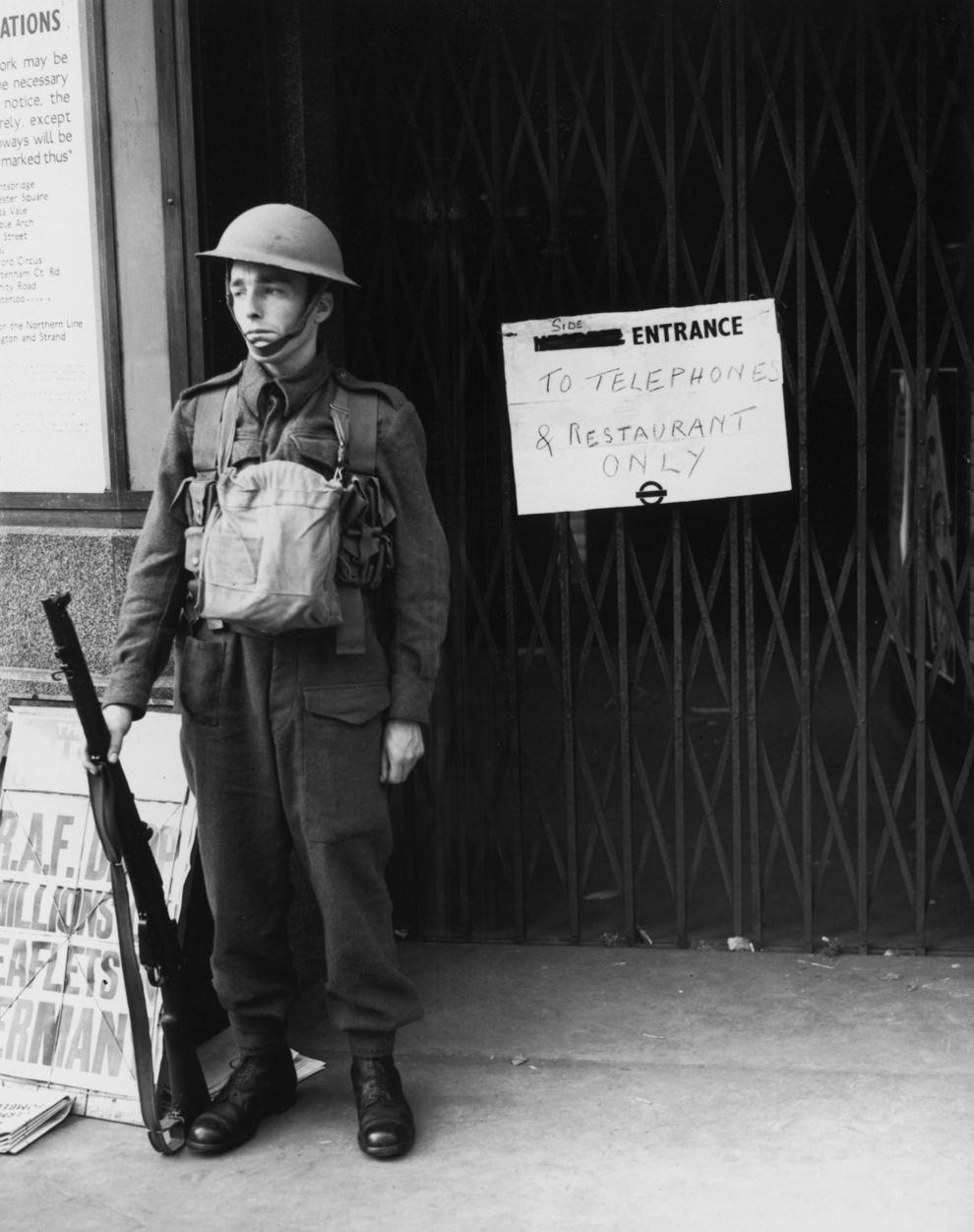
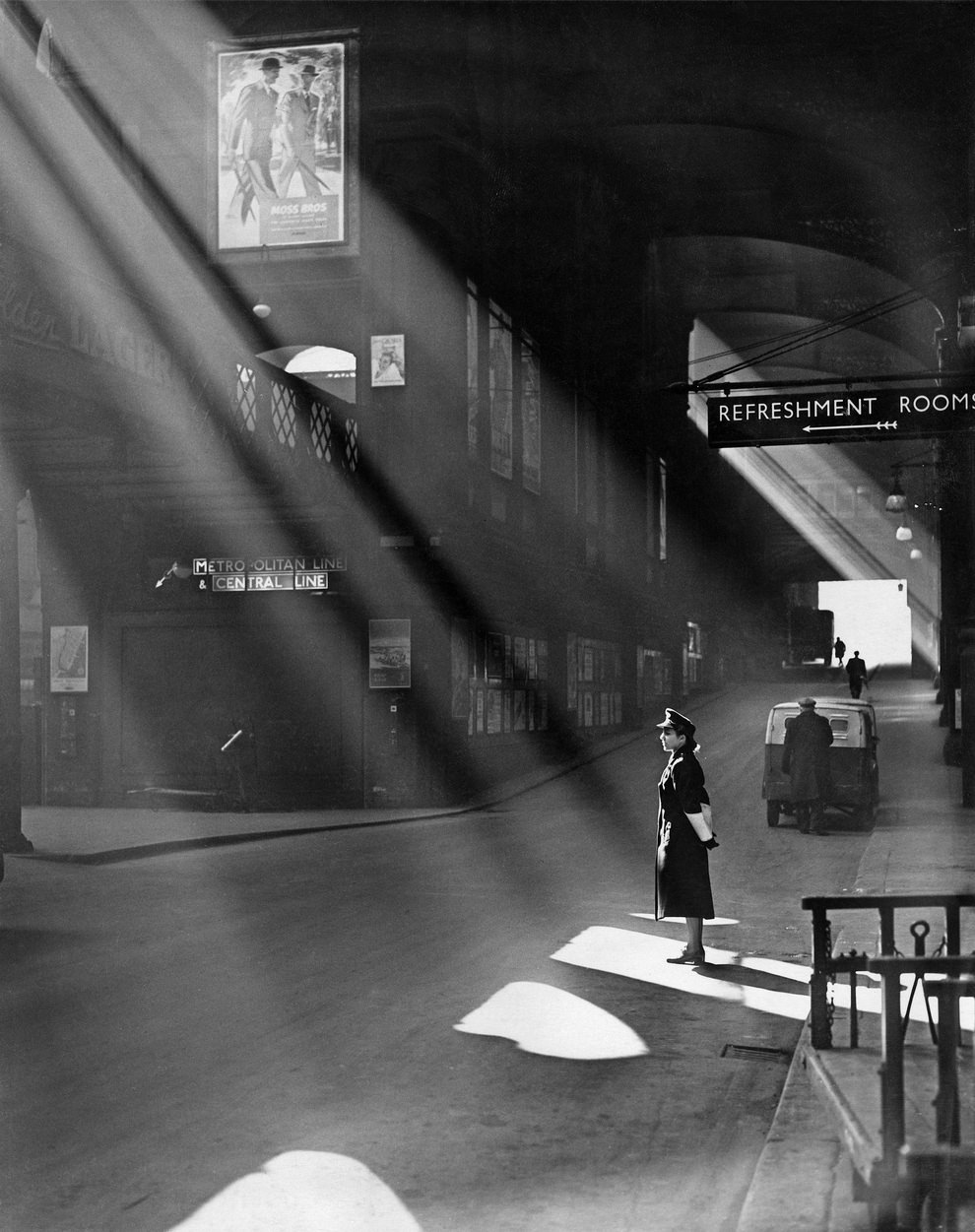
As war approached in 1939, the Underground felt the pressure. A strike that year forced huge queues to form at bus stops outside Liverpool Street, with commuters stranded above ground. When Britain declared war on Germany on 3 September 1939, several stations were temporarily closed to the public. A photograph taken two days later shows an armed guard standing outside one such station — a stark image of a city bracing for what was coming.
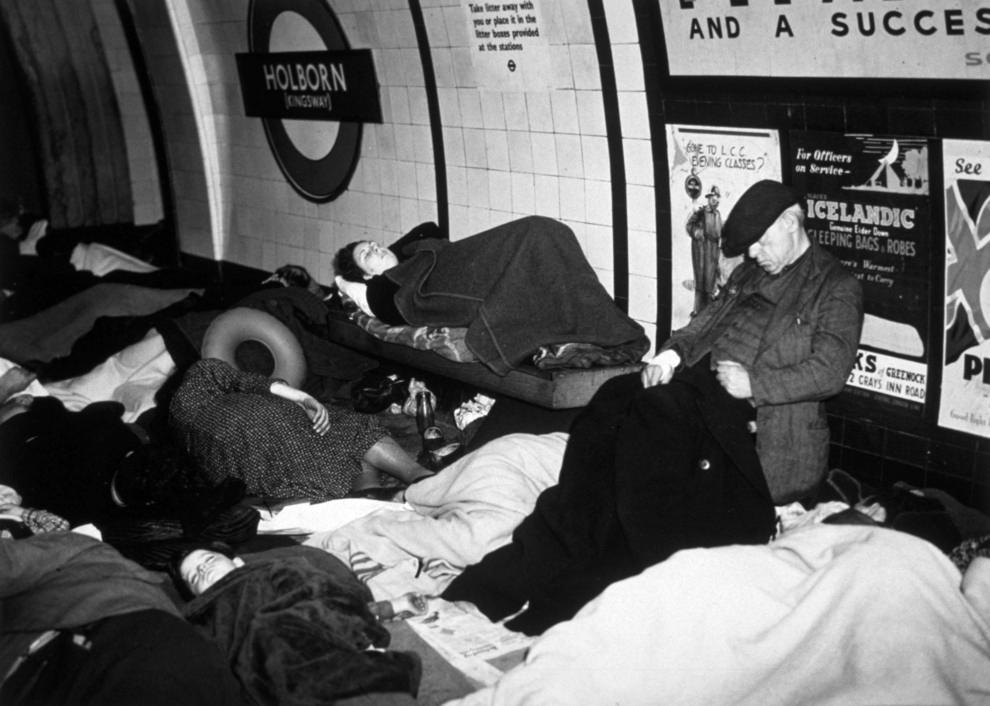
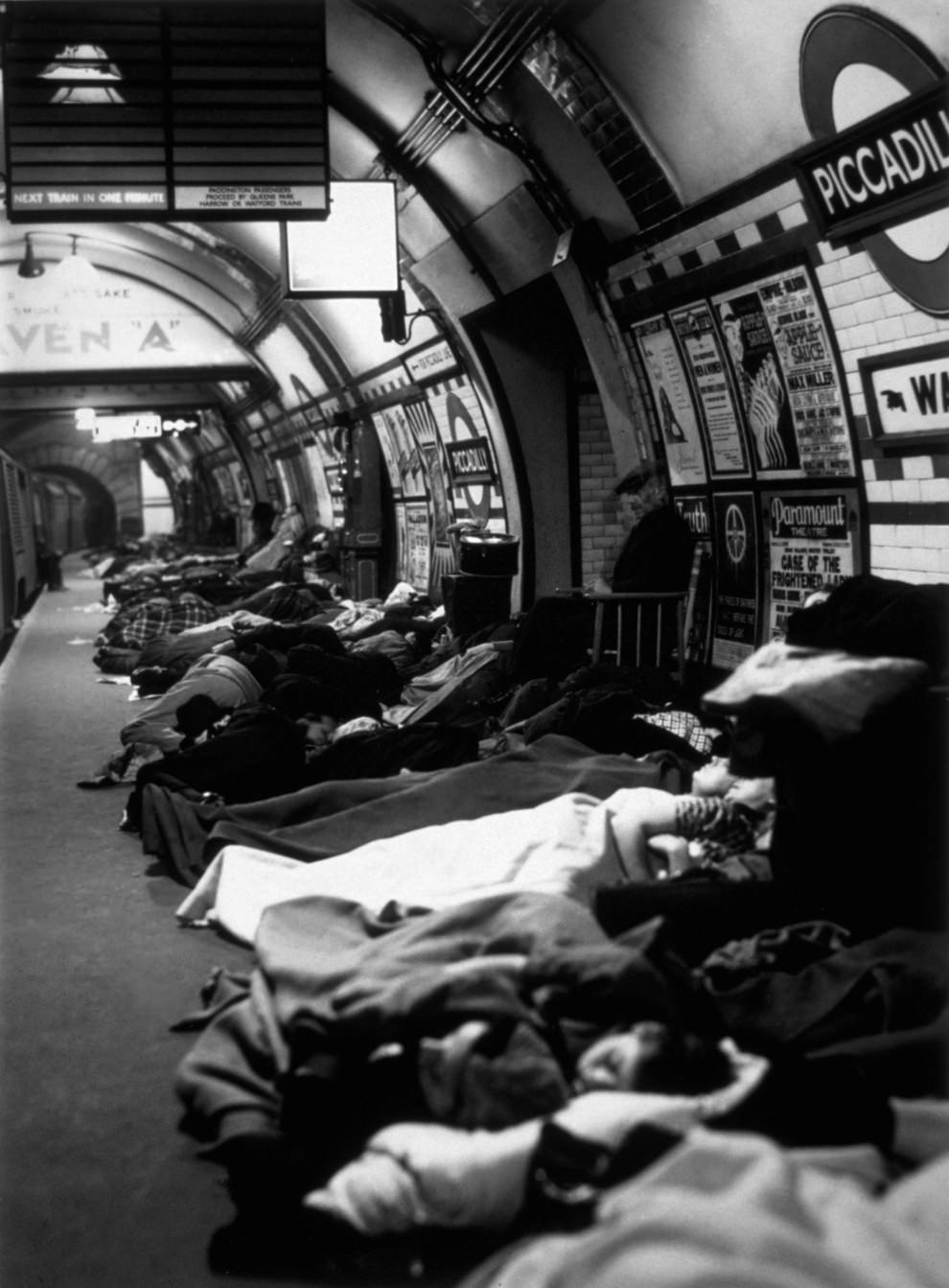
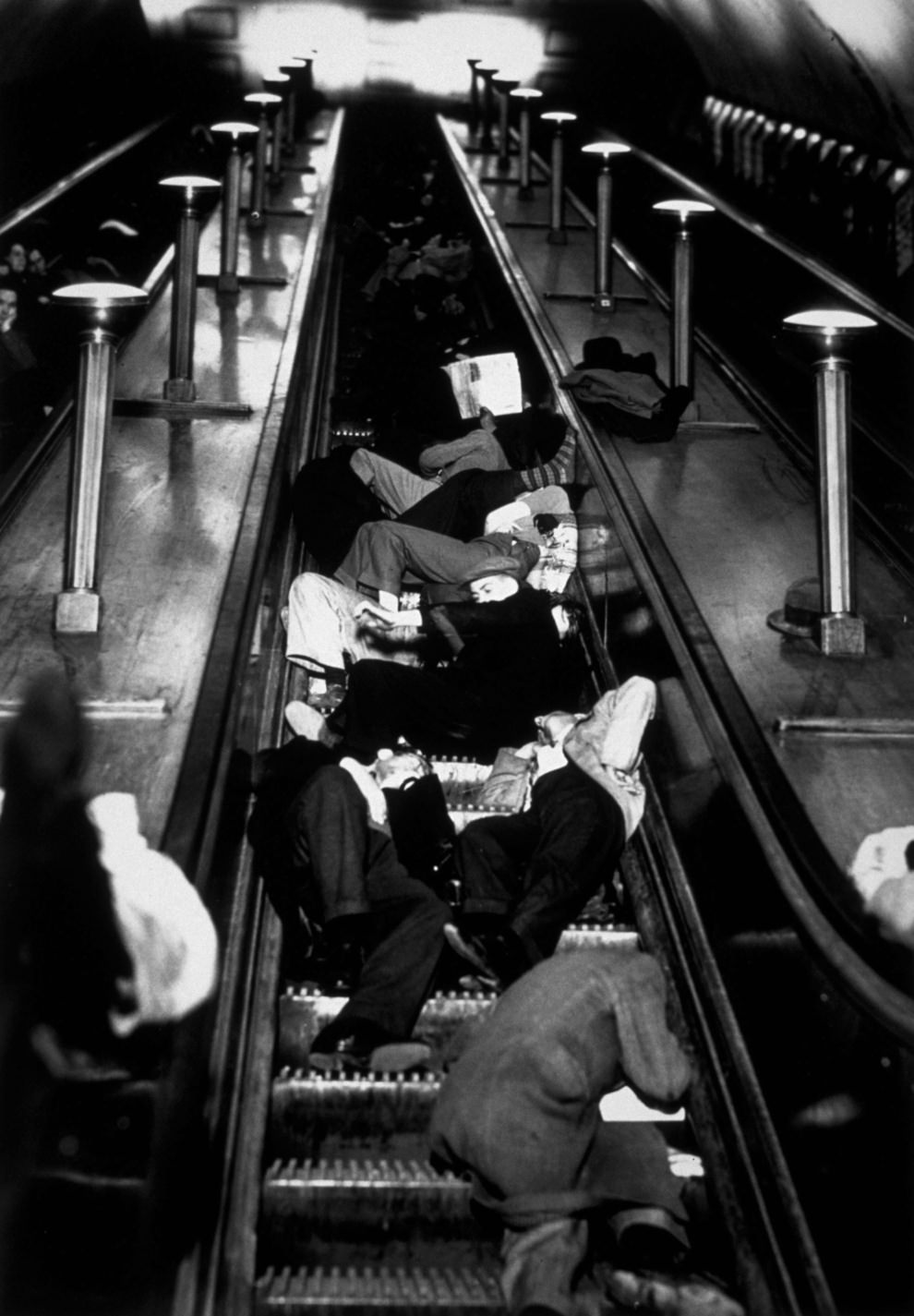
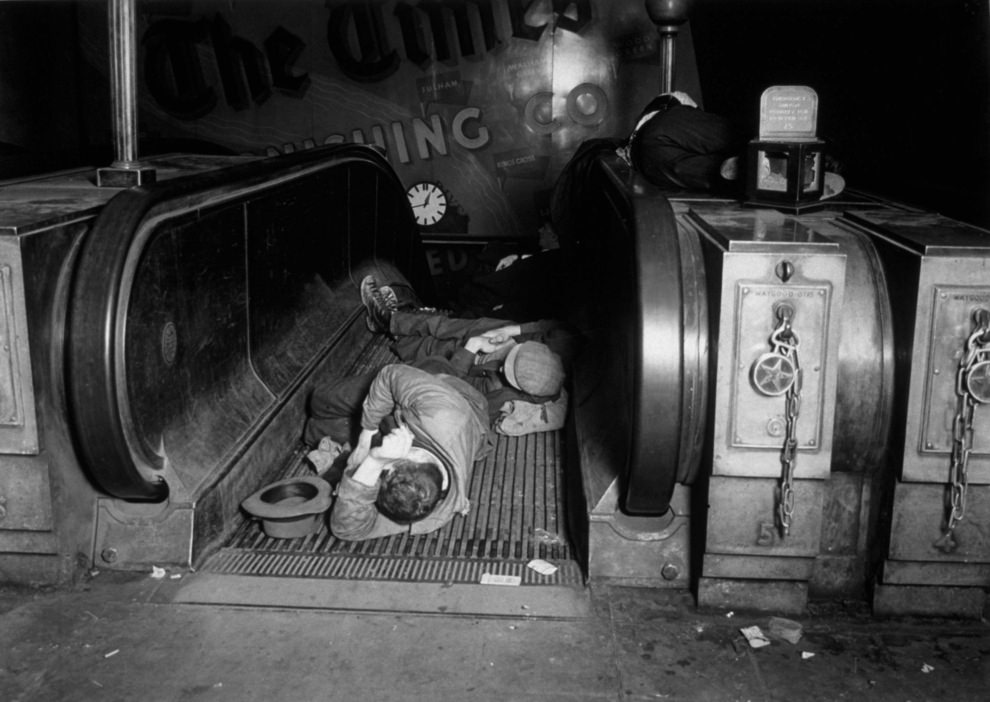
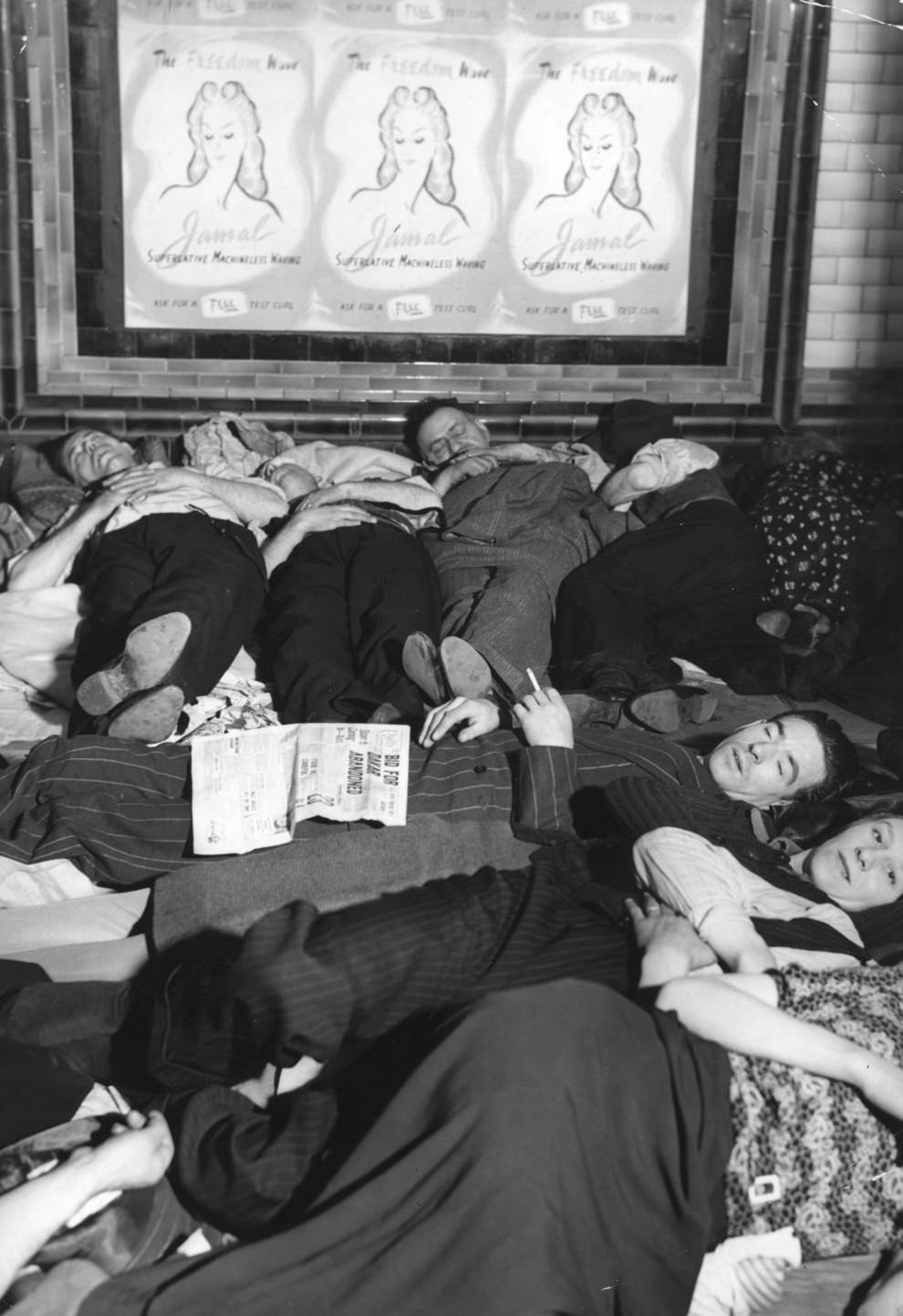
During the Blitz of 1940, the Underground’s deep stations became shelters for thousands of Londoners fleeing German bombing raids. Platforms at Holborn and Piccadilly were packed with men, women, and children lying on the bare concrete, trying to sleep through the noise of anti-aircraft guns and exploding bombs above. Some people slept directly on the escalator steps. The stations were not officially designated as shelters at first, but the public simply moved in, and the authorities eventually accepted it.
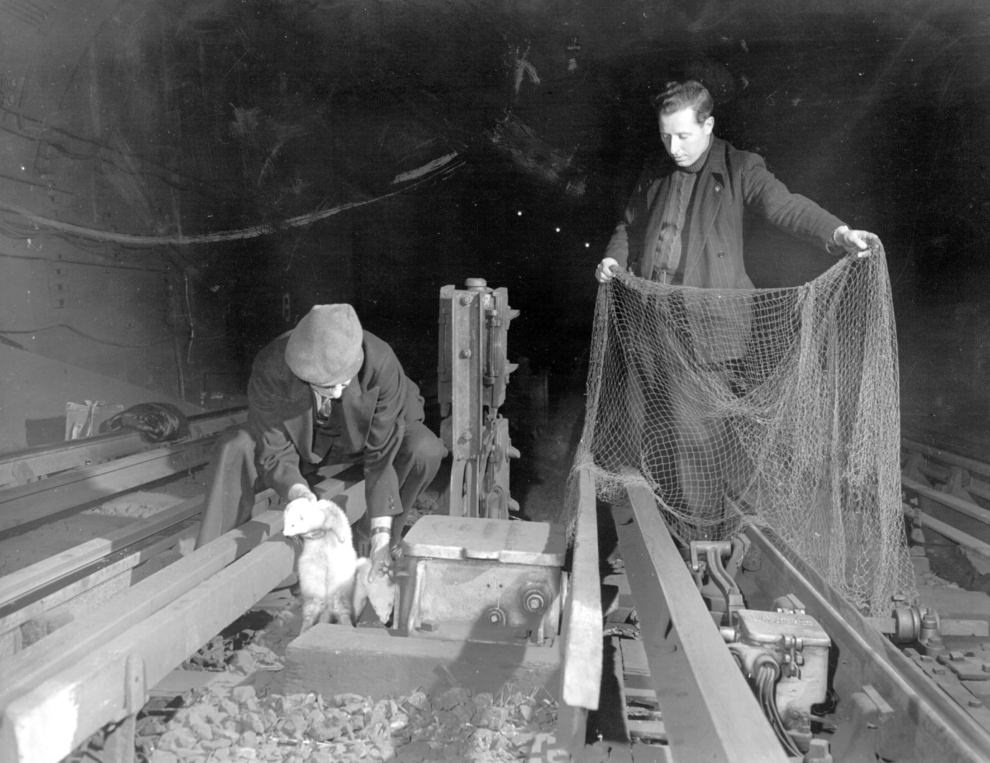
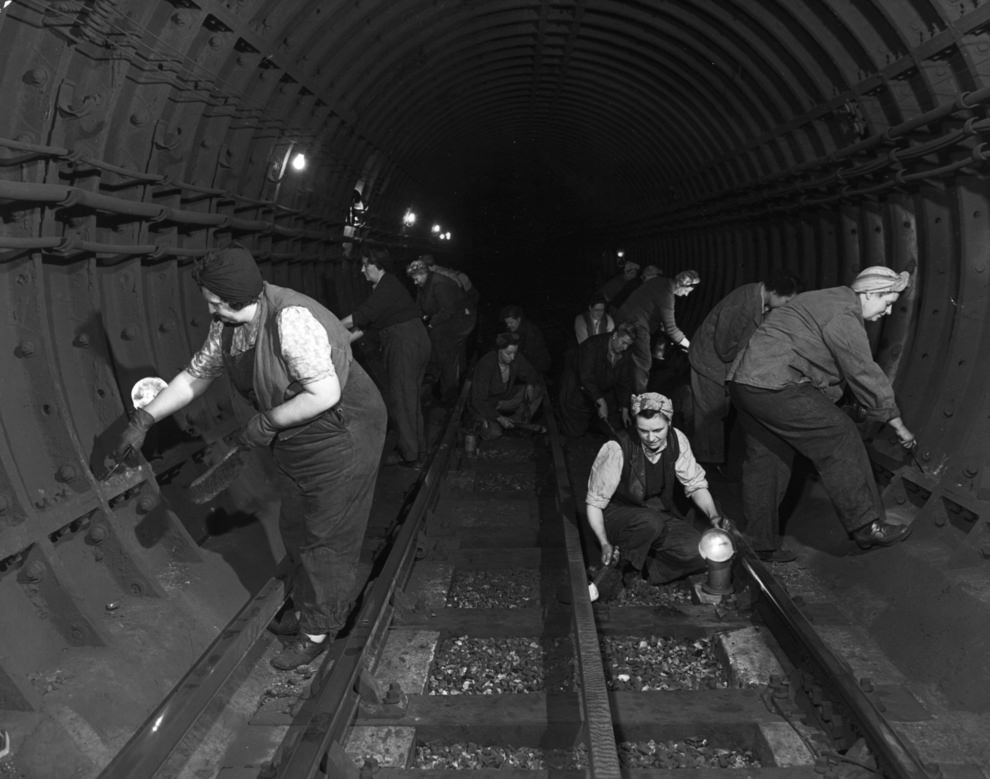
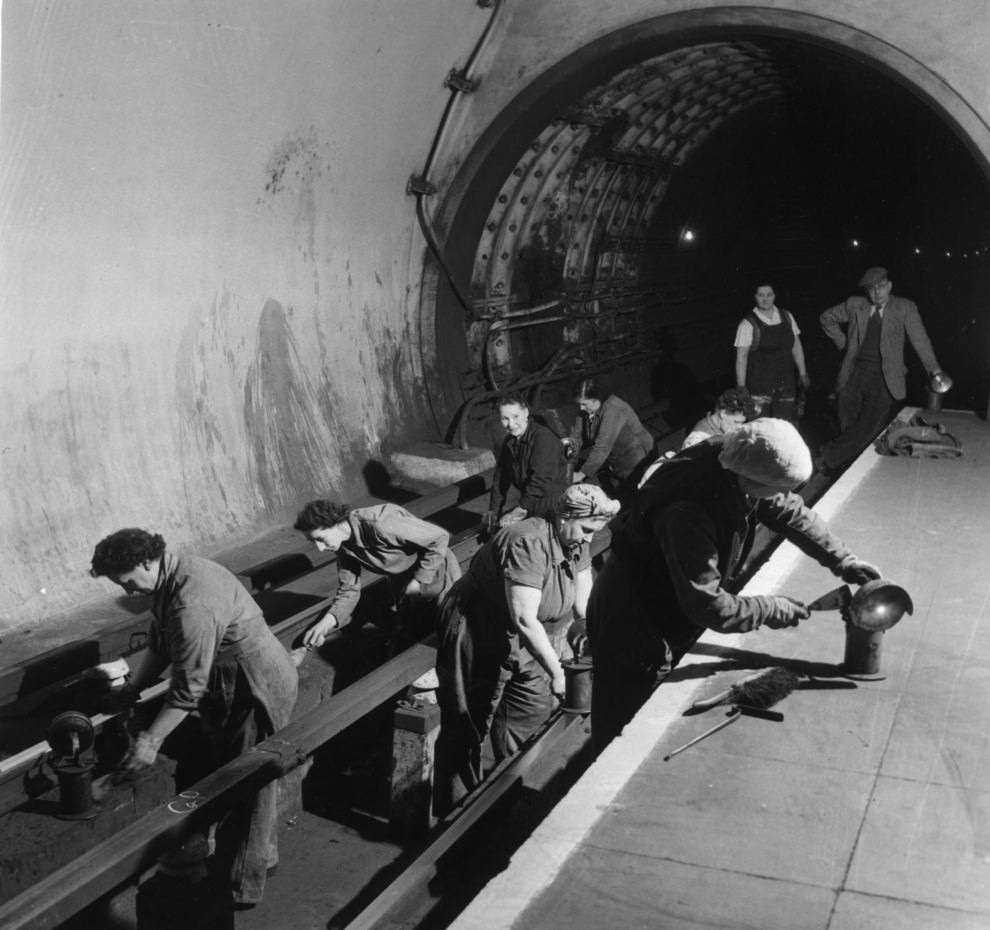
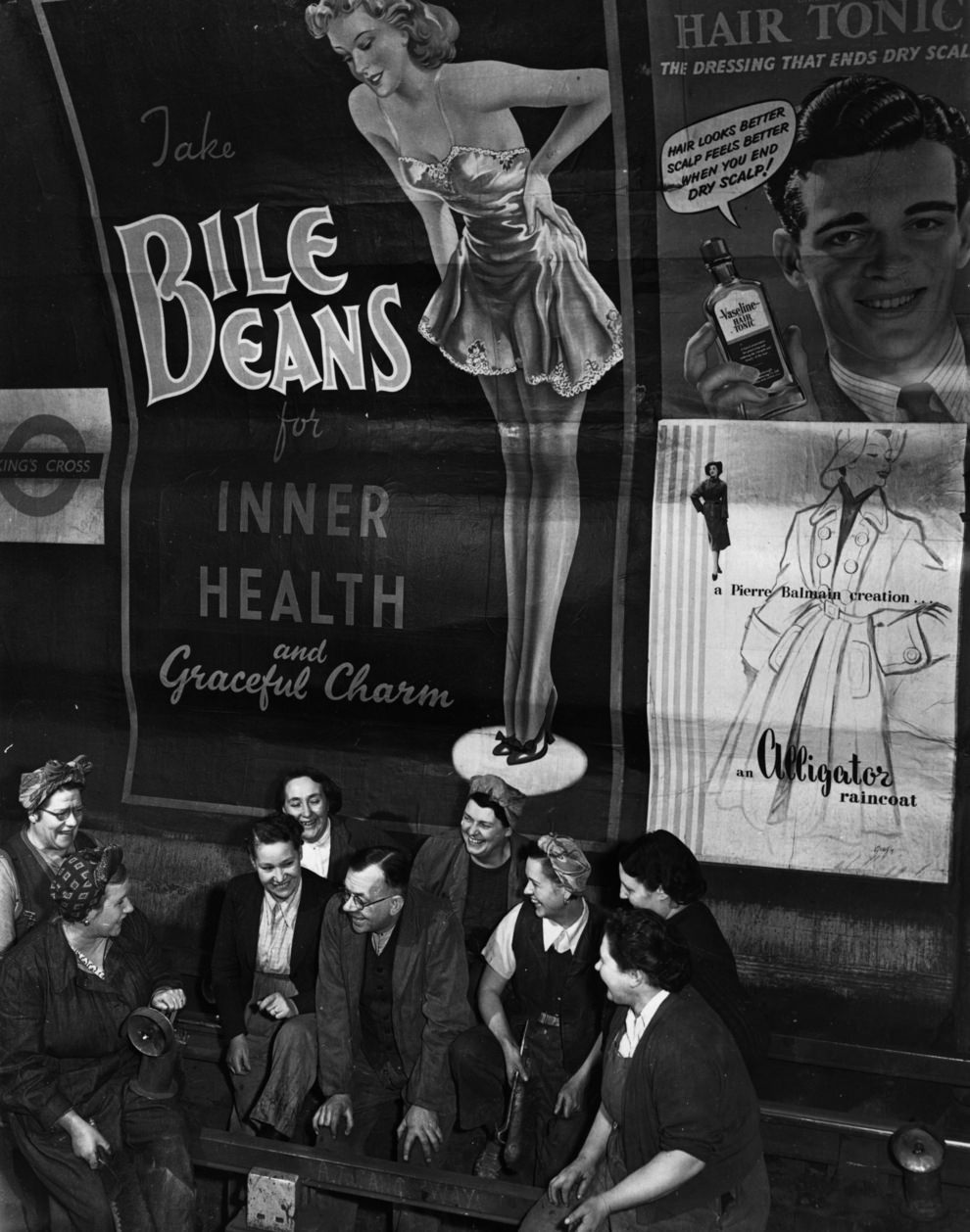
The postwar years brought the system back to civilian routine — but running a vast underground network came with unglamorous realities. Around 1950, rat-catchers employed by London Underground patrolled the tunnels with nets and ferrets, keeping the rodent population under control in the tunnels below millions of daily passengers. Tunnel cleaning crews, often made up of women, worked through the night scrubbing the walls and tracks of lines that never fully shut down.
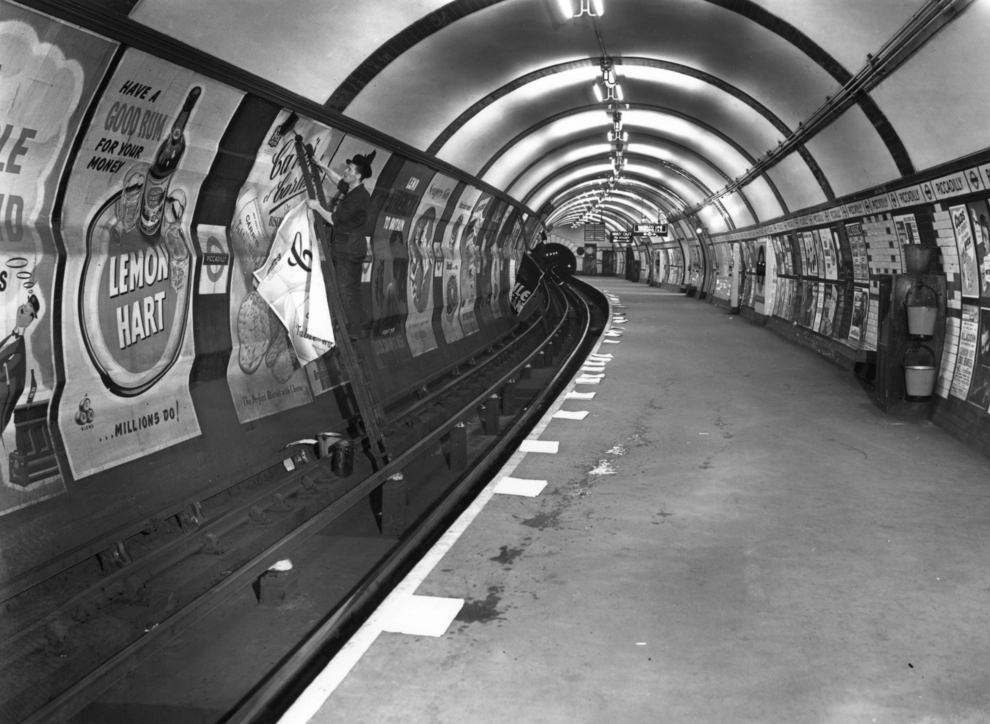
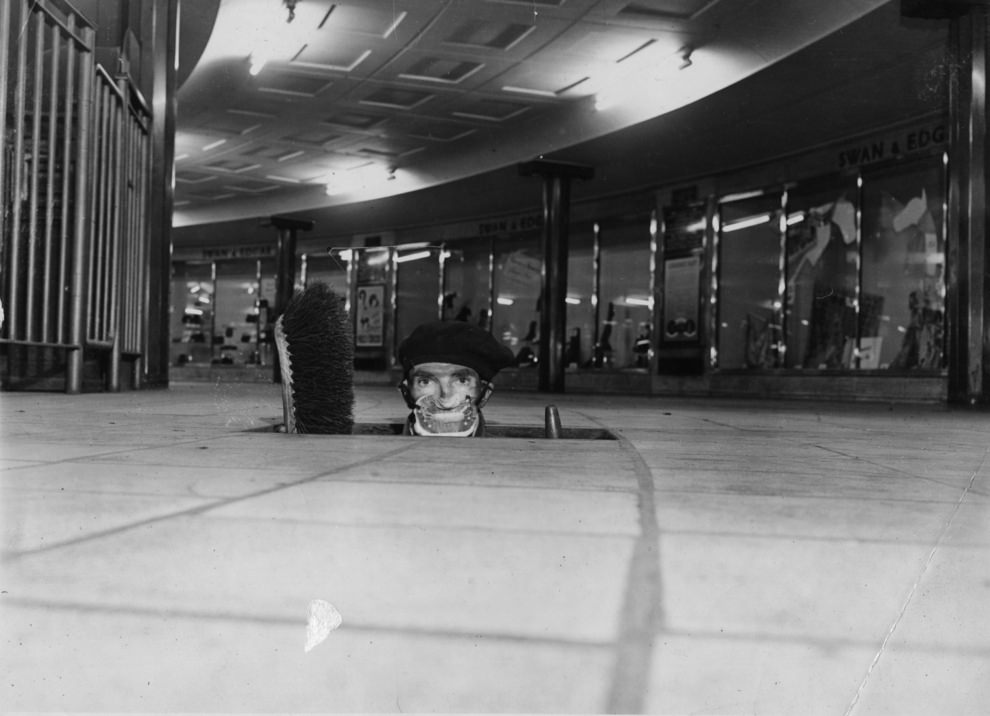
A specific category of Underground worker known as a ‘fluffer’ had the job of clearing accumulated dust, hair, and debris from the tunnel floors — material that built up quickly and posed a fire risk. Photographed in 1954, these workers carried out their shifts in the small hours when trains were not running. By 1955, life on the Underground had taken on a rhythm of its own, with vendors, musicians, and late-night revelers all passing through its corridors.
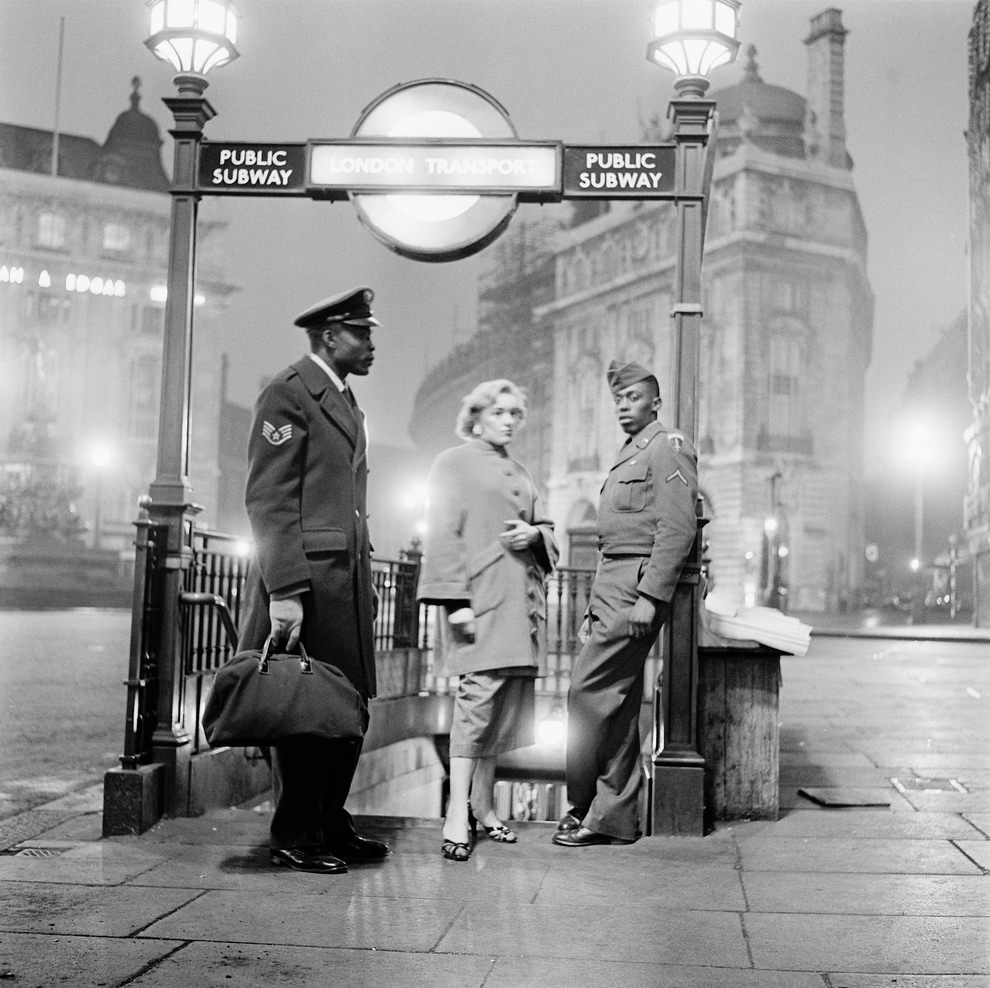
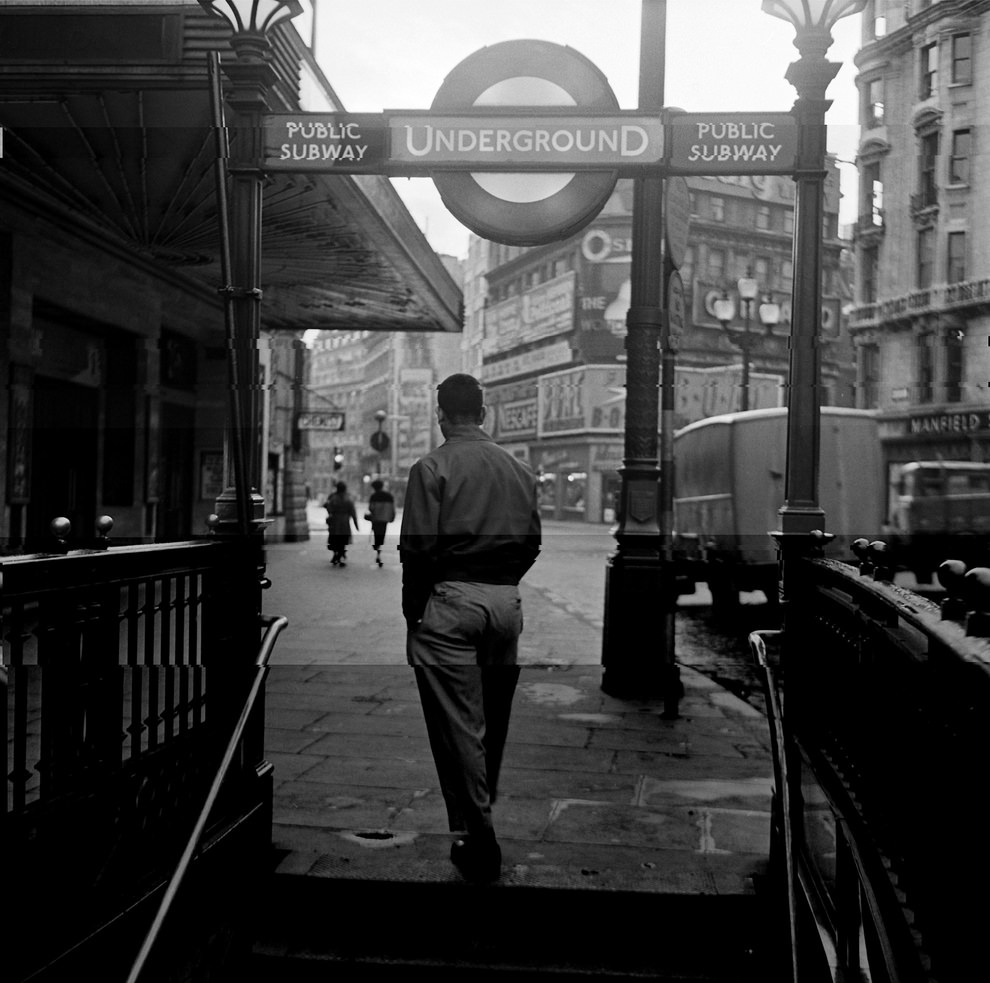
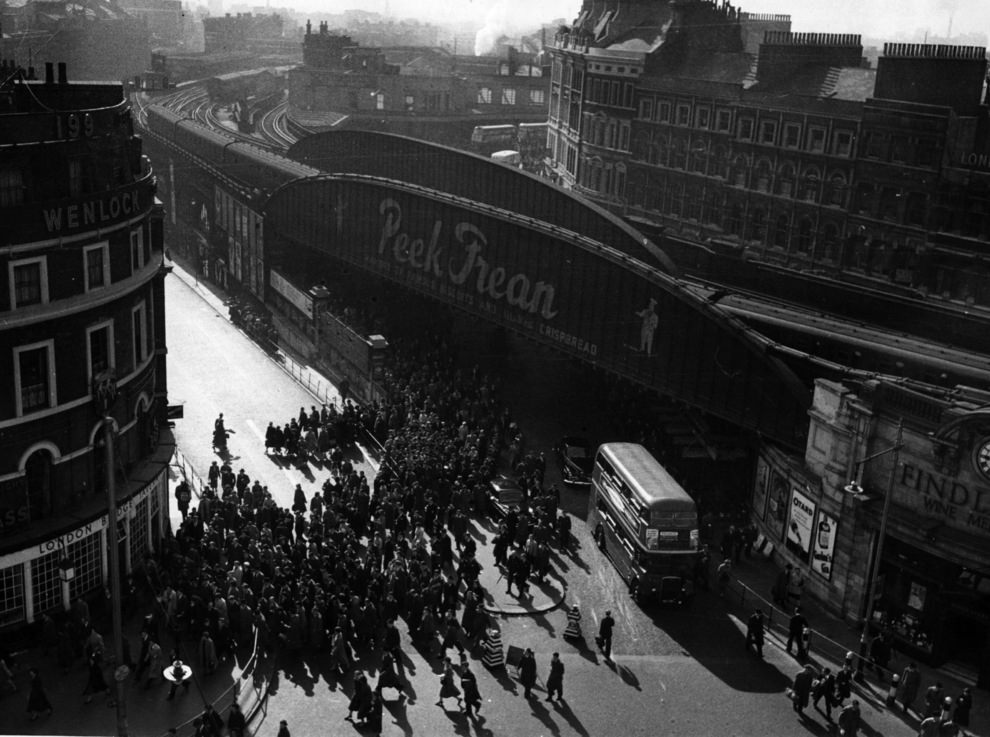
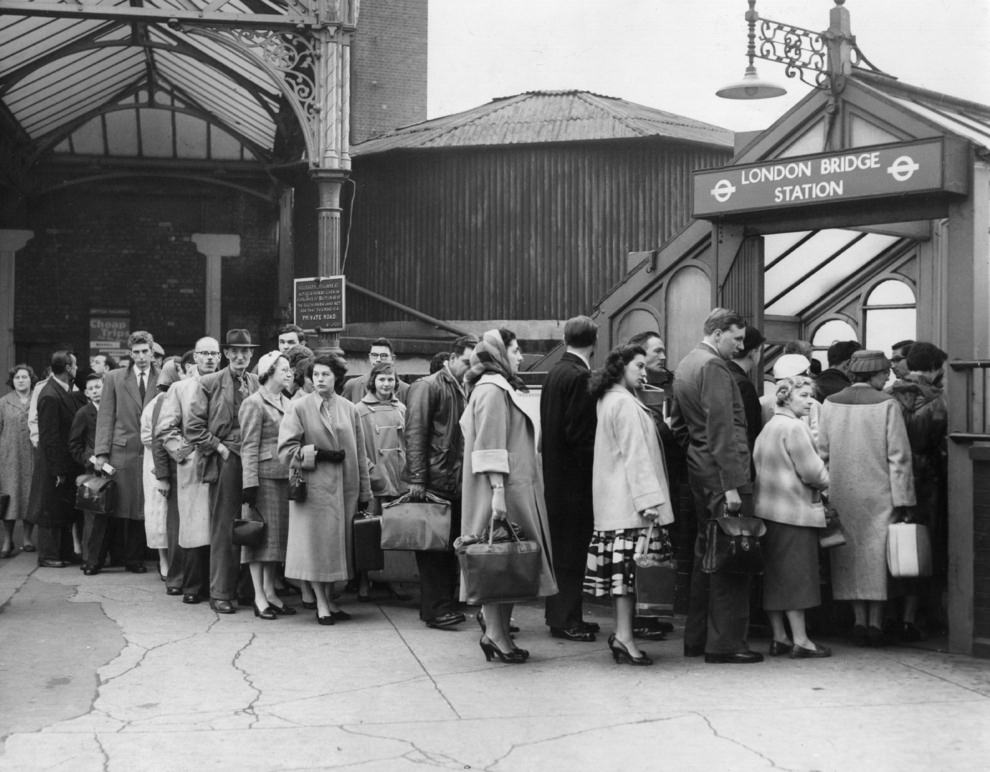
The mid-1950s rush hour was a physical experience. At Piccadilly Circus and London Bridge, platforms filled wall to wall with commuters pushing toward train doors. A 1956 photograph of the rush hour crowd at London Bridge captures the sheer density of daily passenger movement — thousands of people funneled through stations that were designed for a smaller city and a slower era.
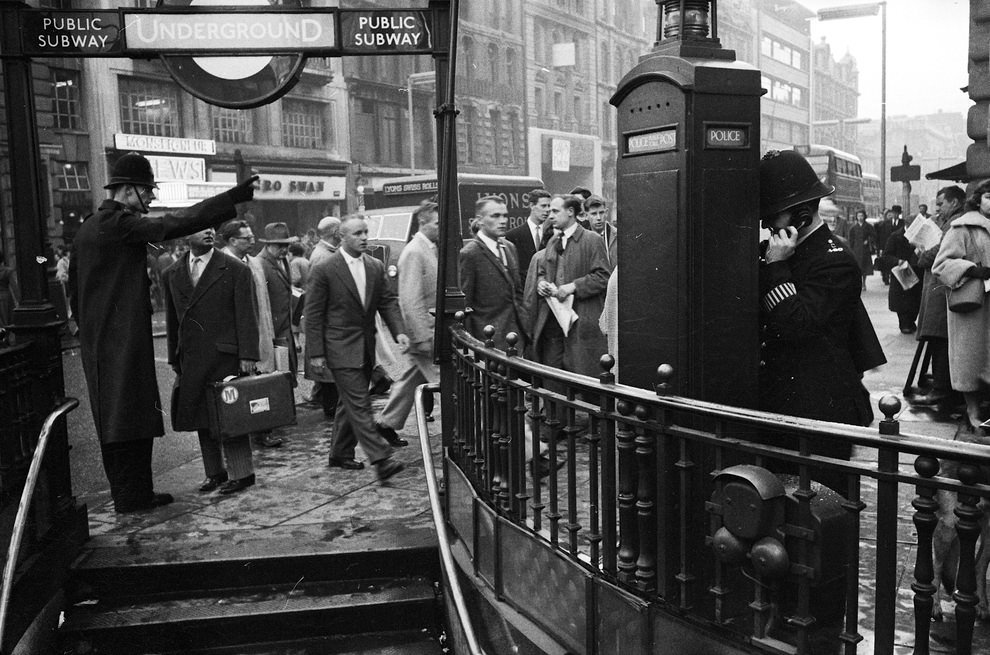
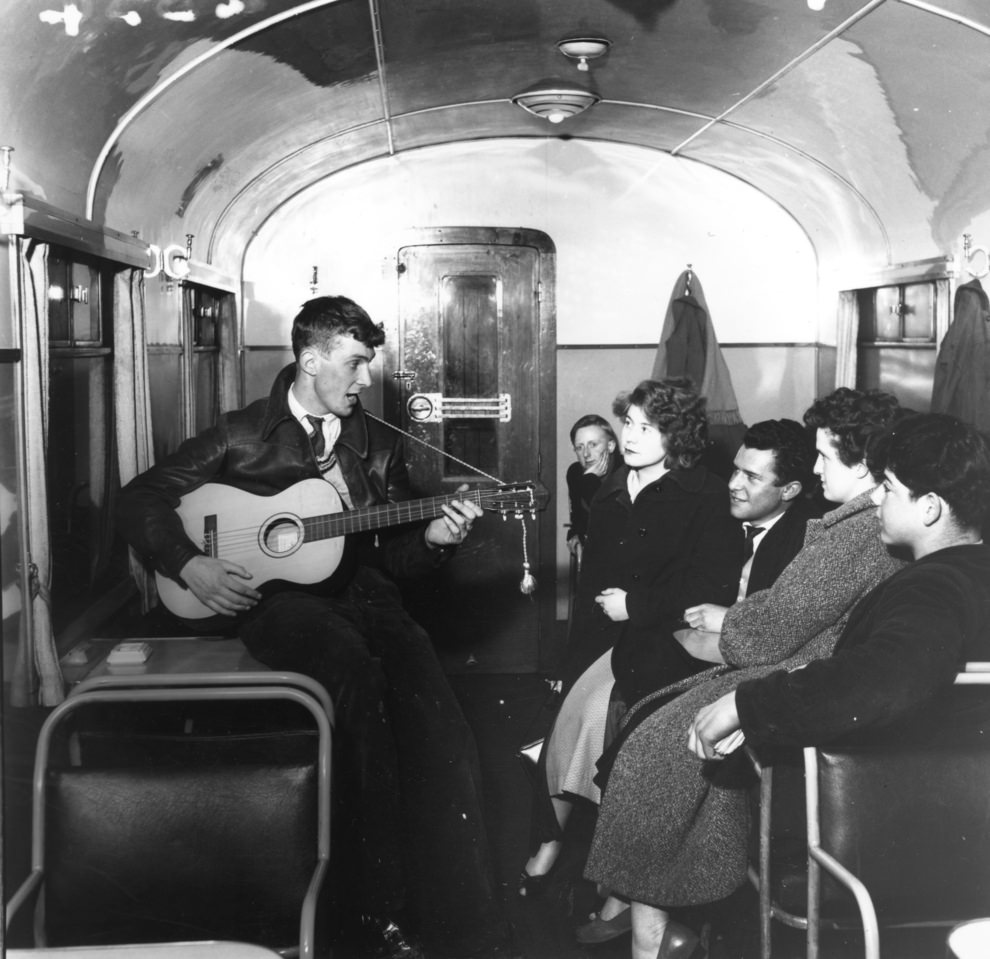
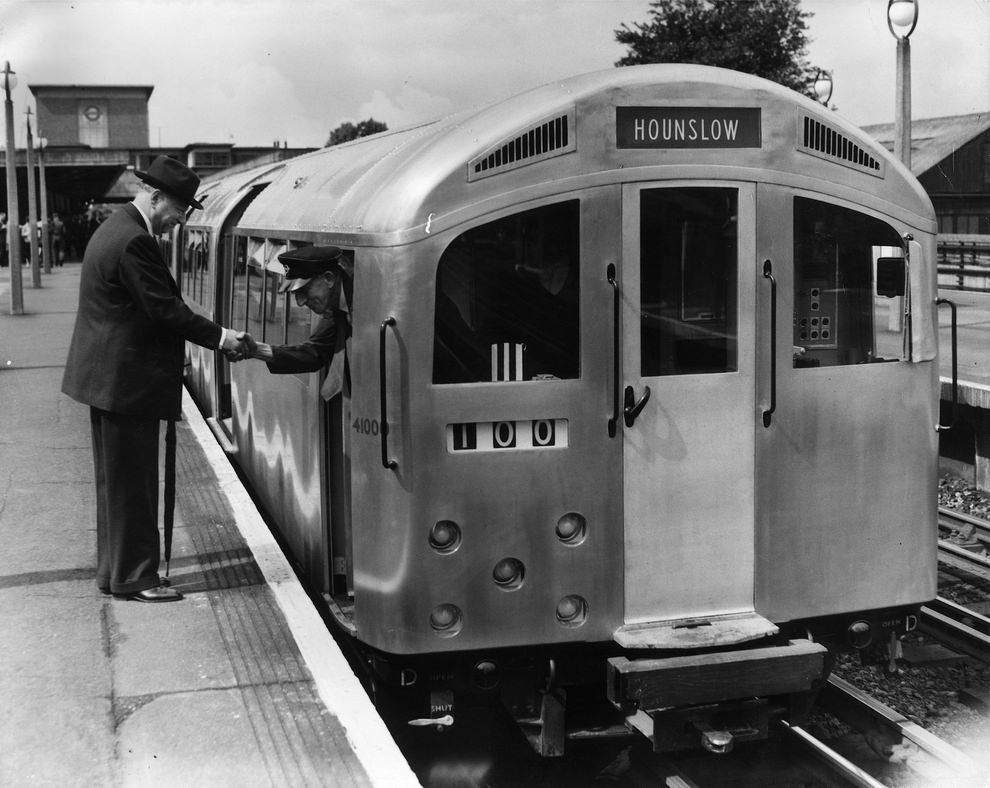
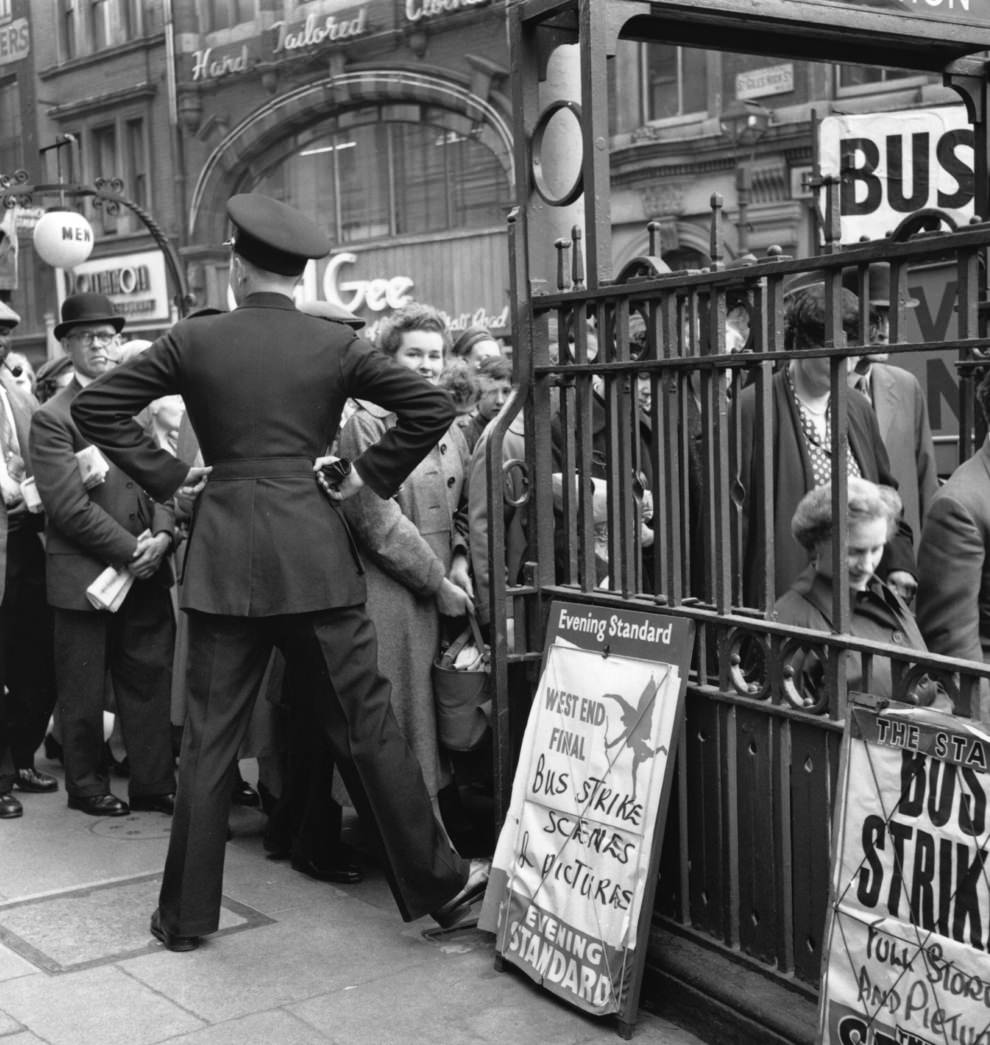
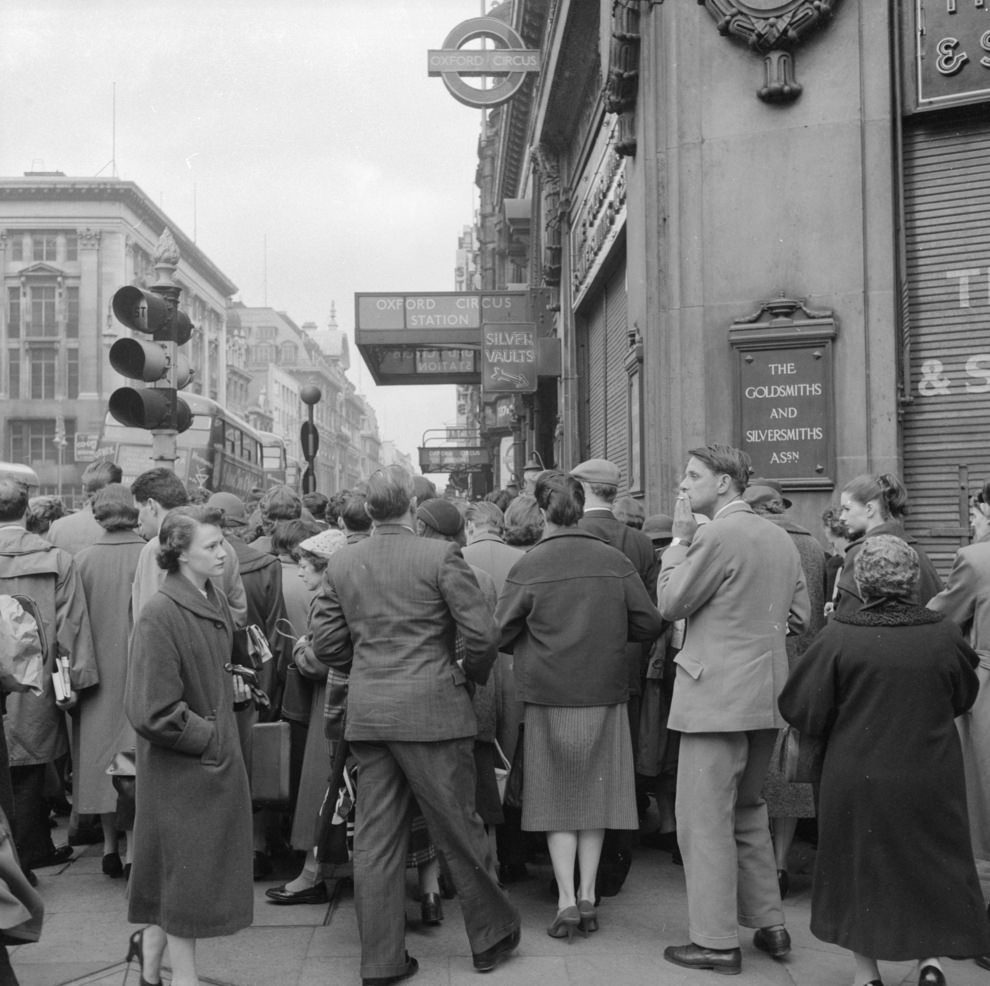
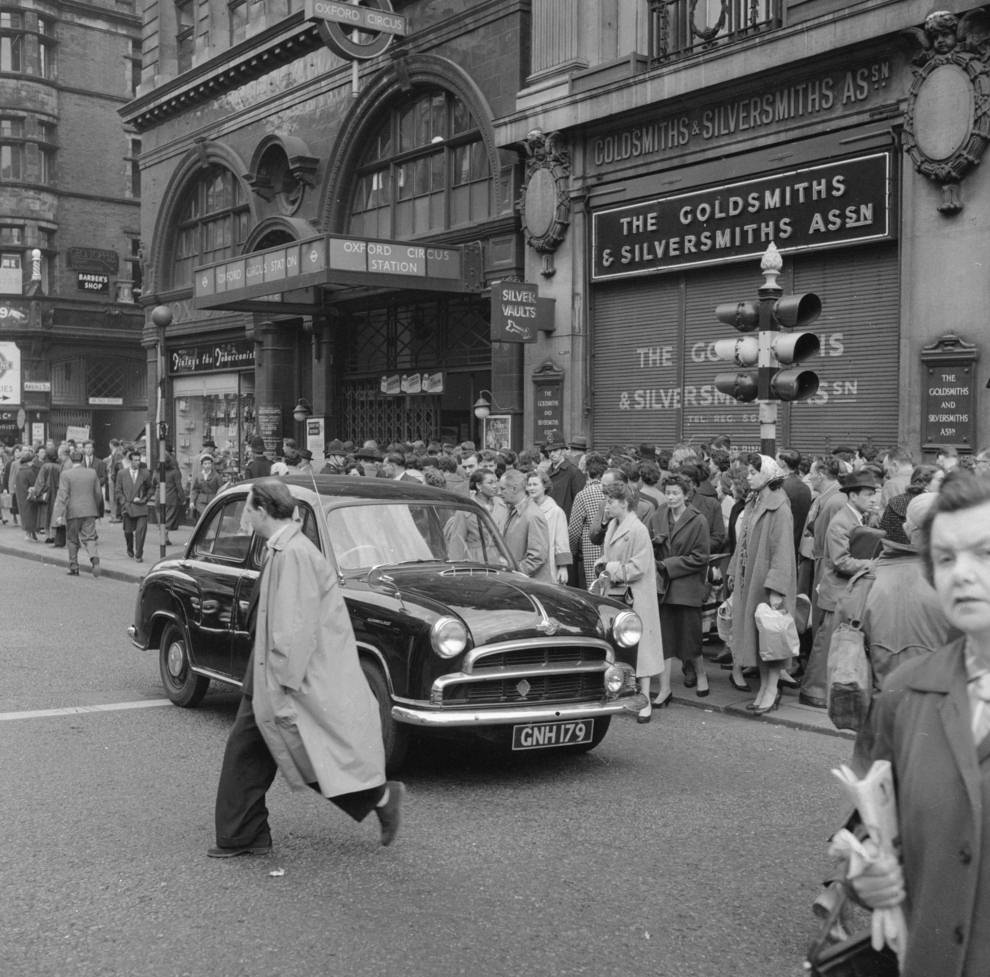
By 1957, new silver-painted train cars were being introduced on some lines, a visible sign of ongoing fleet renewal. Musicians had begun appearing in stations and on platforms, playing for passengers during their wait — an informal practice that stations tolerated rather than officially organized. A 1958 bus strike pushed even larger crowds onto the Underground, overwhelming stations at Oxford Circus and elsewhere.
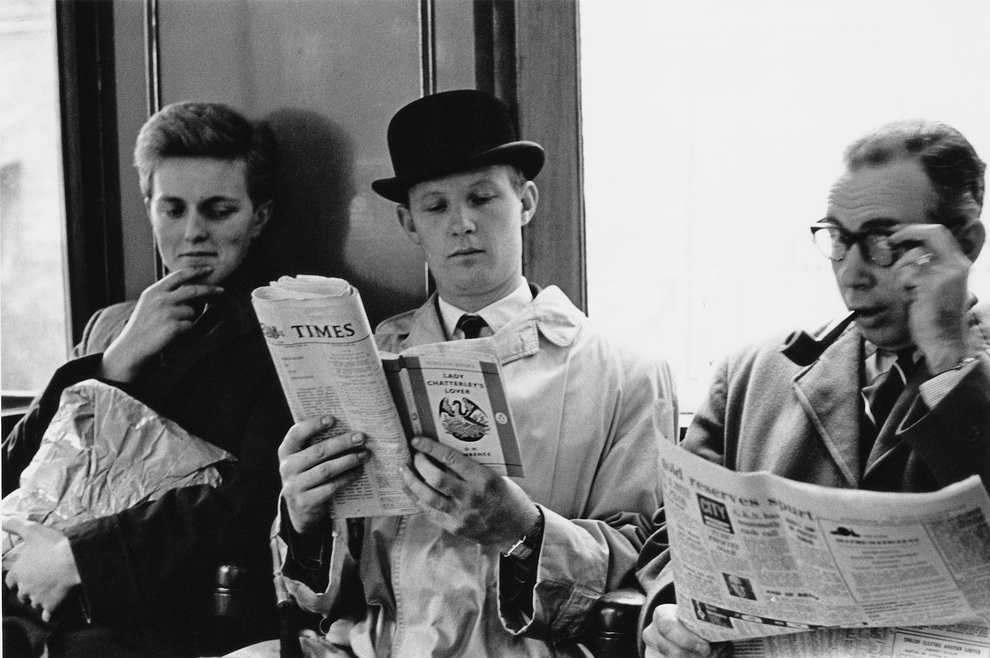
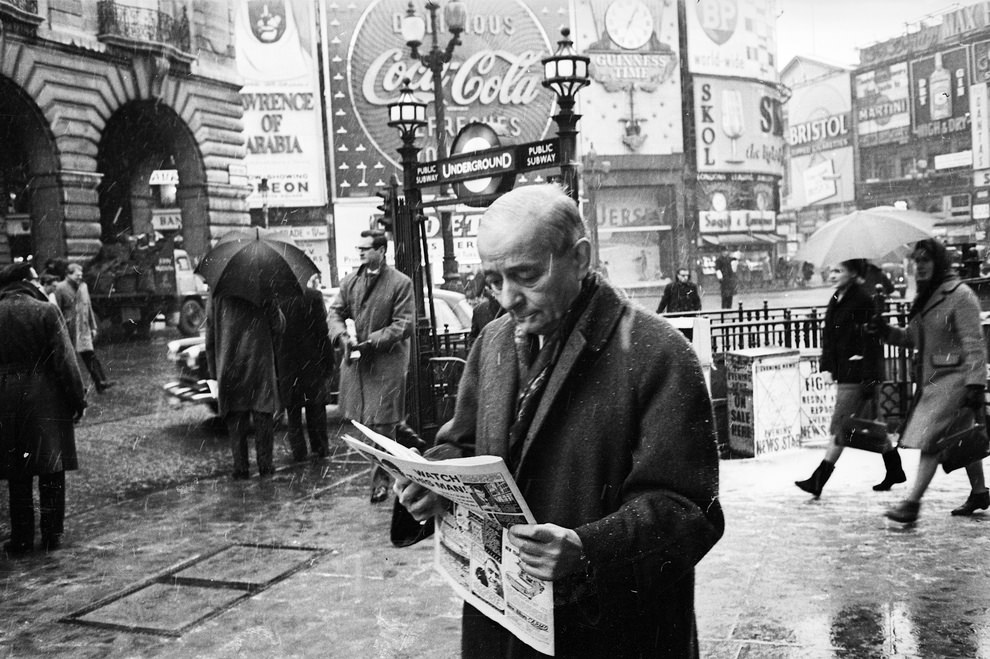
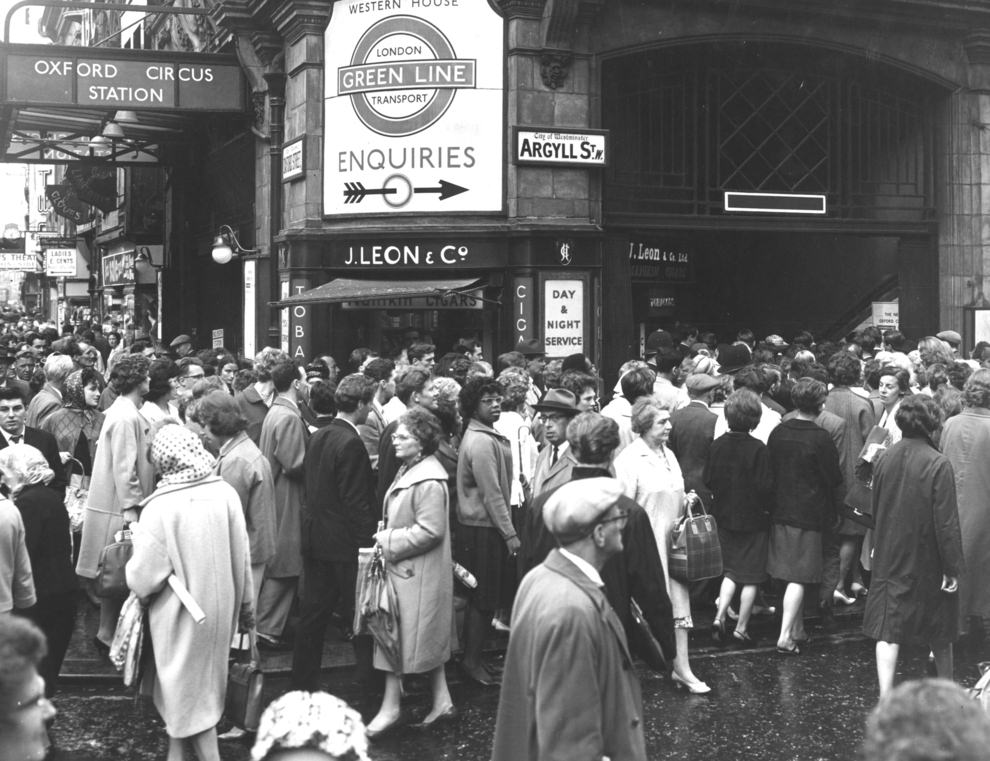
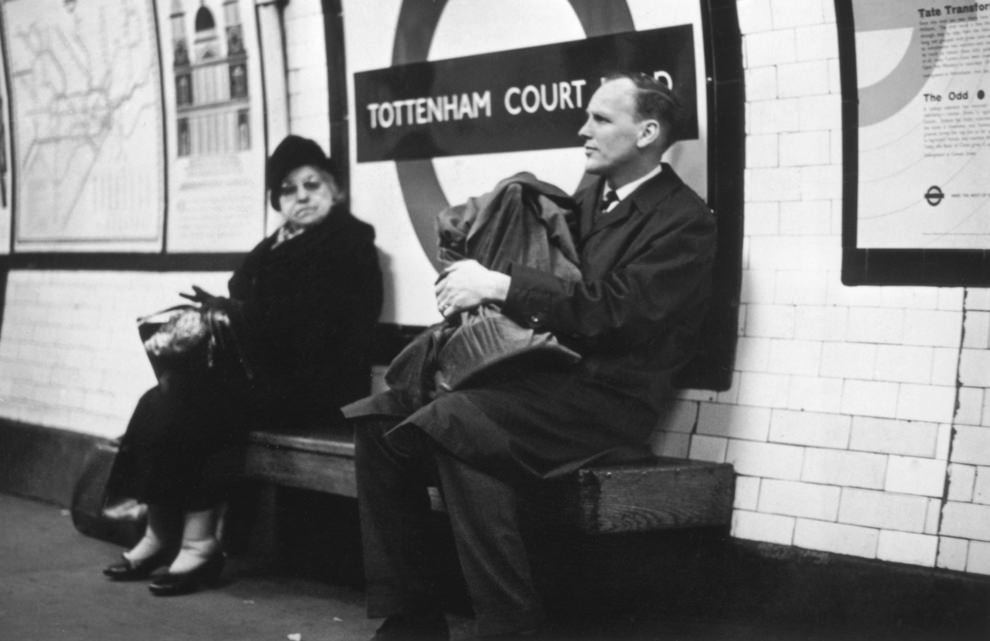
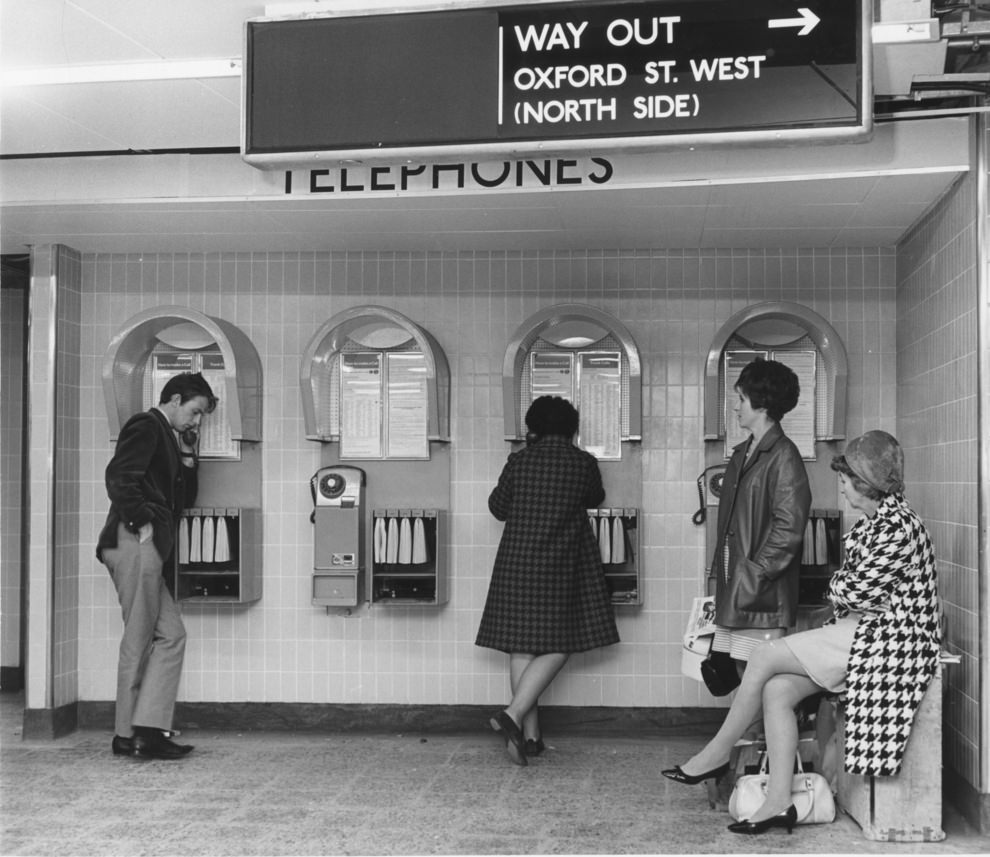
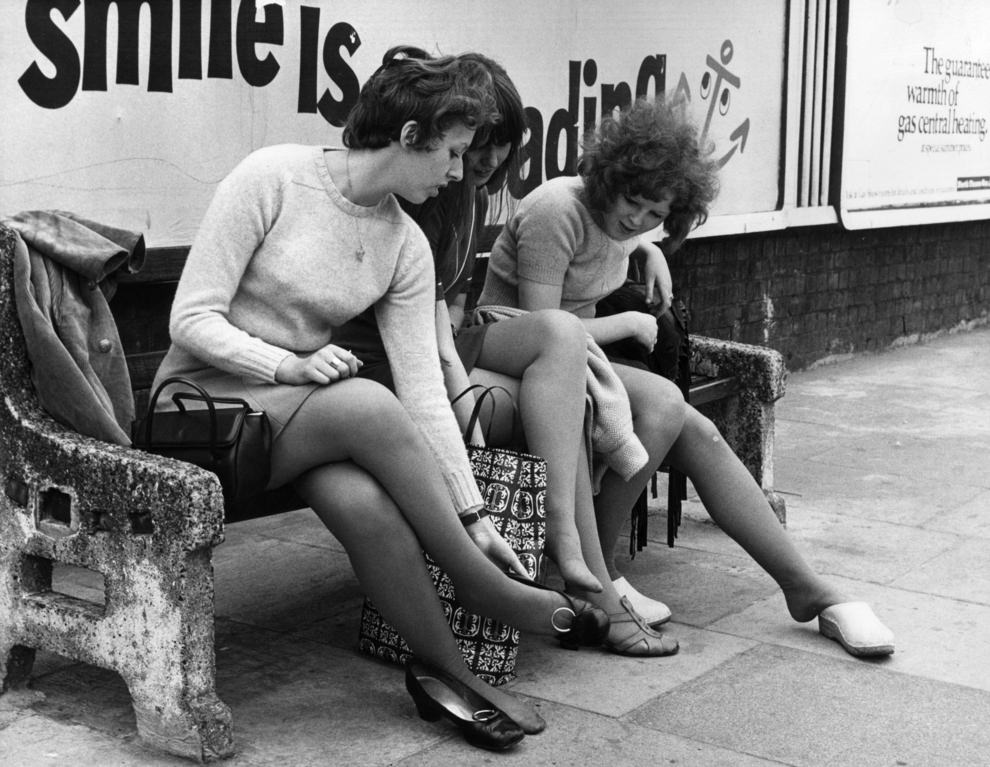
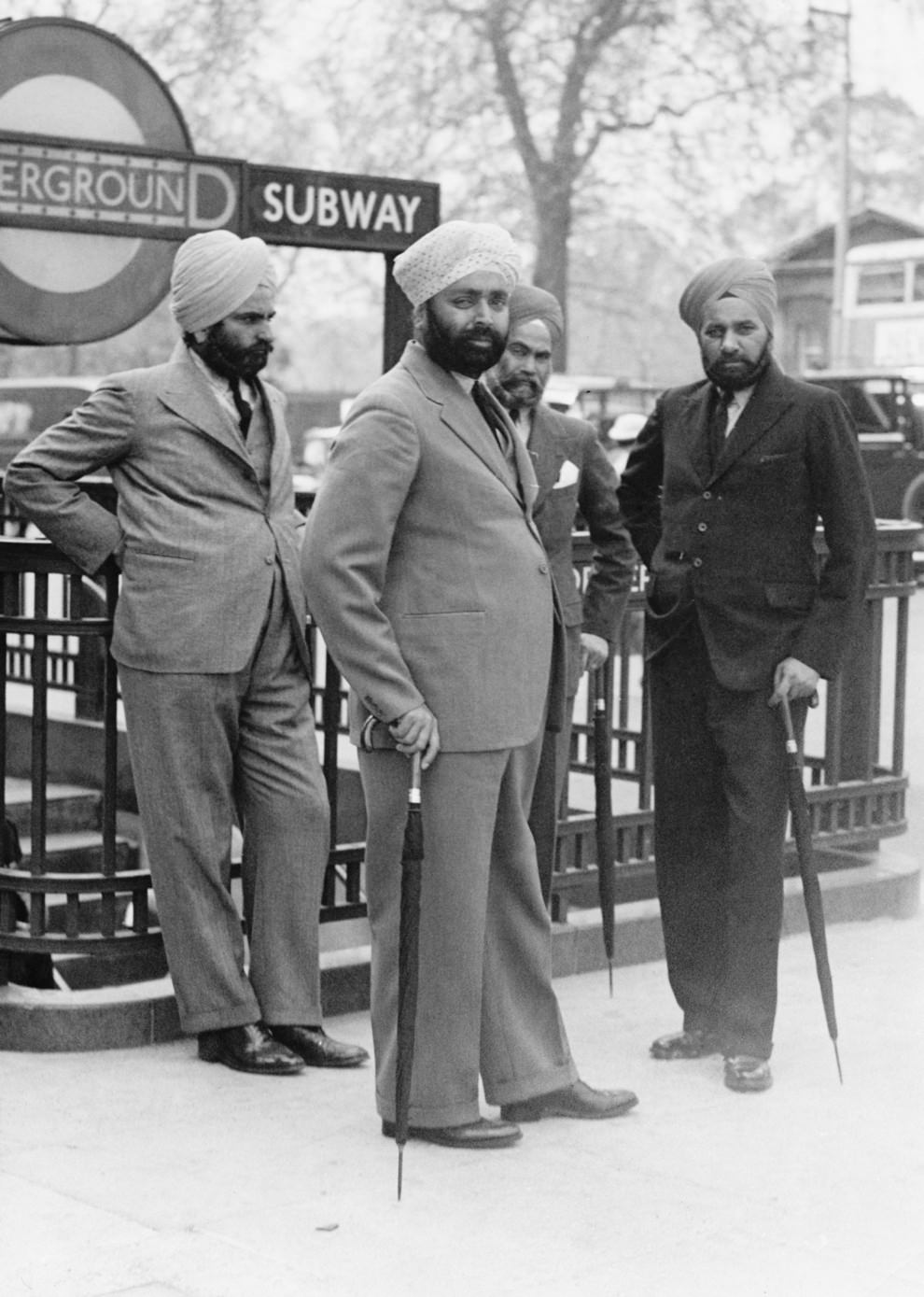
The 1960s brought a different kind of energy to the Underground. London was changing fast — culturally, demographically, and socially — and the Tube reflected all of it. Photographs from Oxford Circus in 1963 and Piccadilly Circus in 1966 show a mix of passengers that would have looked entirely unfamiliar to the Victorian engineers who built the tunnels beneath them. The system that began as a solution to horse-drawn traffic jams had become the central artery of a modern world city.