Hey There! Before You Go. 😧
Get the best vintage content straight into your inbox!

Don't worry, we don't spam

What Swimming Lessons Looked Like a Century Ago (Spoiler: No Swim Goggles)

A century ago, swimming lessons had none of the gear we take for granted today. No goggles, no lane lines, no lightweight suits. Many people learned in open water — lakes, rivers, and shorelines — because public pools were rare. Drowning was a leading cause of death, and teaching water safety became a public health priority across cities and towns.
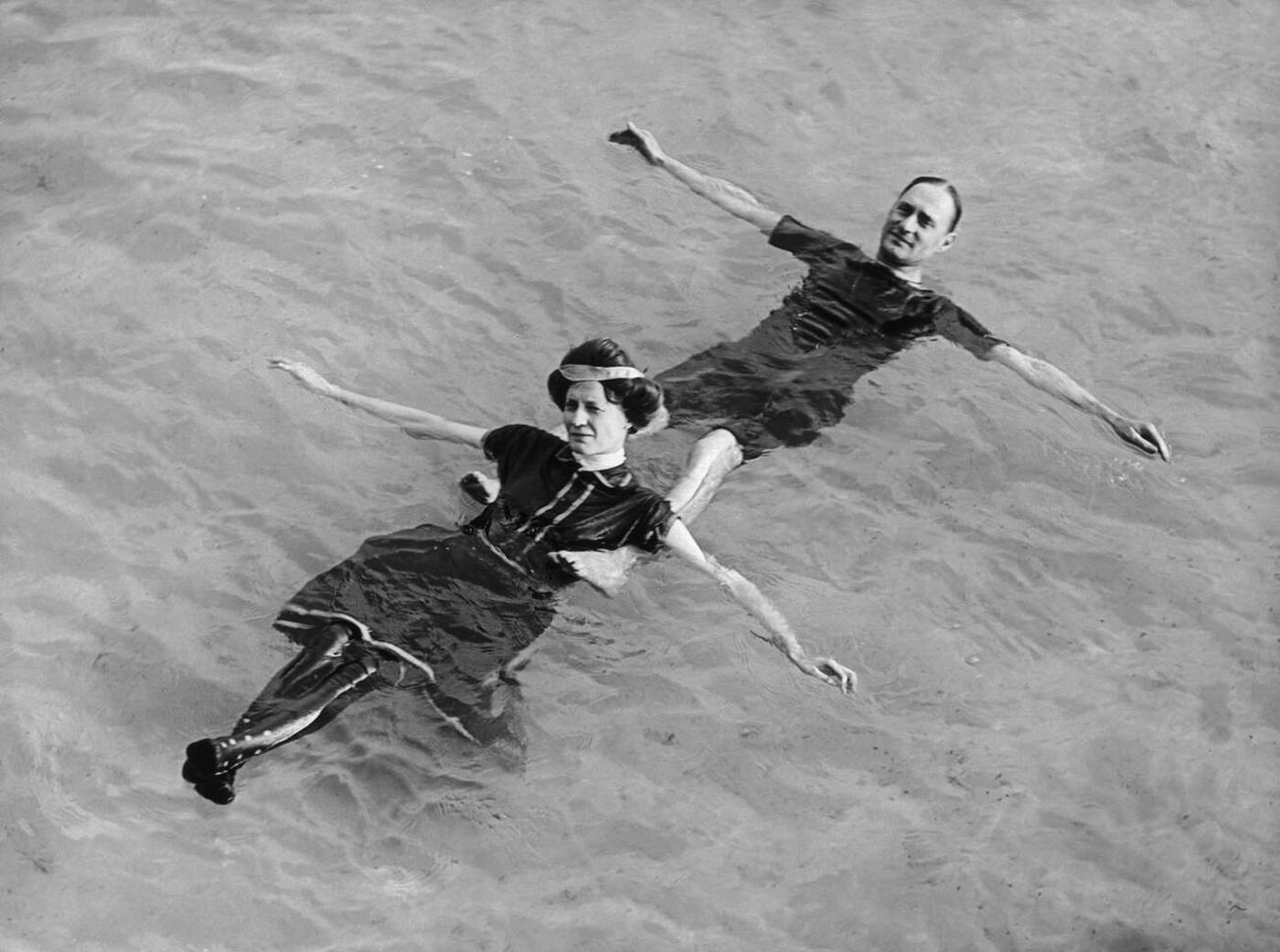
Man and woman floating on their backs in water, 1900s.

Swimwear in the early 1900s was heavy and modest. Wool suits were standard, and they absorbed water quickly, making every kick and stroke harder. Students weren’t just learning to swim — they were doing it while weighed down by soaked fabric.
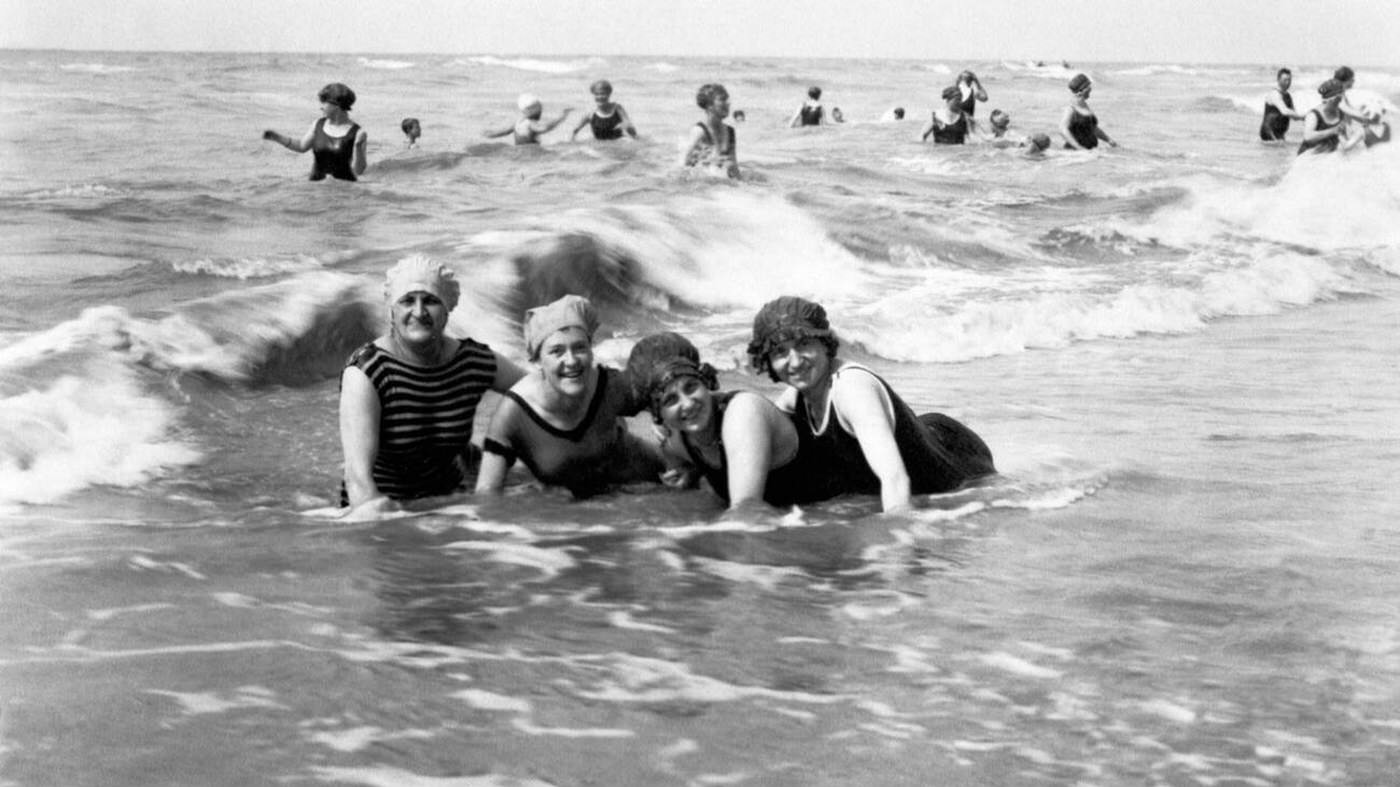
Bathing women at the beach of Noordwijk an Zee, Holland, 1920.

One of the most striking early teaching methods involved ropes and poles. Instructors held beginners above the water using long poles with ropes attached, letting students practice their strokes without sinking. It looked more like fishing than swimming instruction.
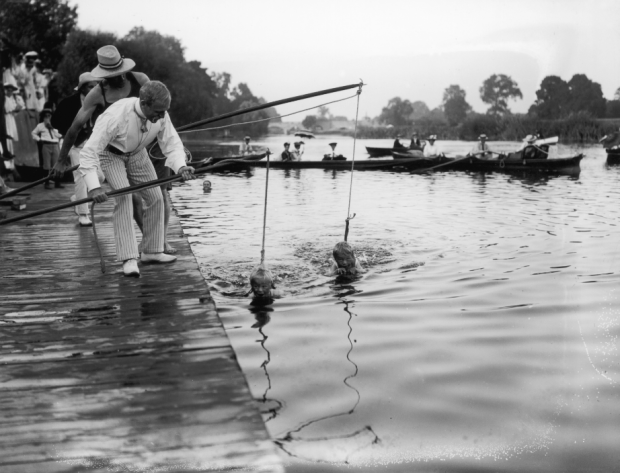
In 1906, the preferred method of teaching kids to swim looked a lot like fishing. These children are in the River Thames at Wallingford, kept afloat by ropes attached to poles.

Before anyone entered the water, lessons often started on dry land. Students practiced arm strokes and flutter kicks on the poolside or beach. Getting the motions right on solid ground meant less flailing once they were actually in the water.
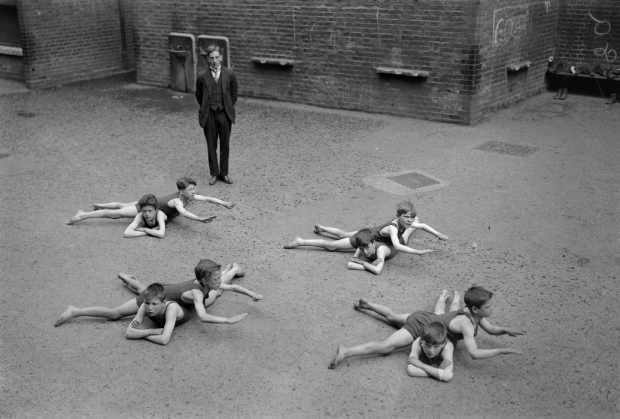
Fast forward to 1923, when schoolboys had to master their swimming strokes on dry land—and their buddies—before getting anywhere near the water.
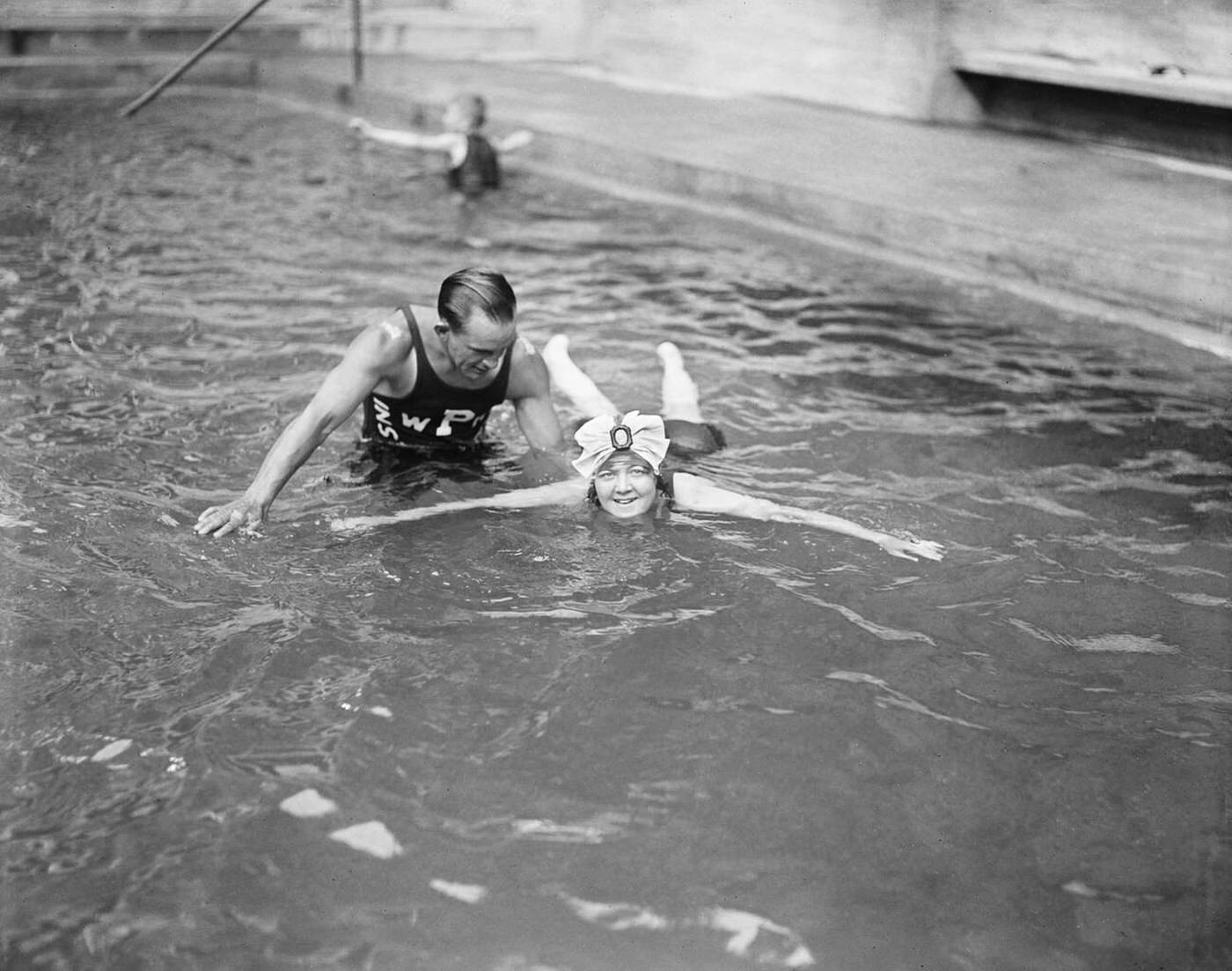
Learning to swim at the Wardman Park Hotel, Washington DC, 1922.

Organizations like the YMCA played a big role in expanding access to formal instruction. They built indoor pools in cities where open water wasn’t an option, allowing year-round training. Schools also adopted swim programs, recognizing that water safety was as essential as any other life skill.
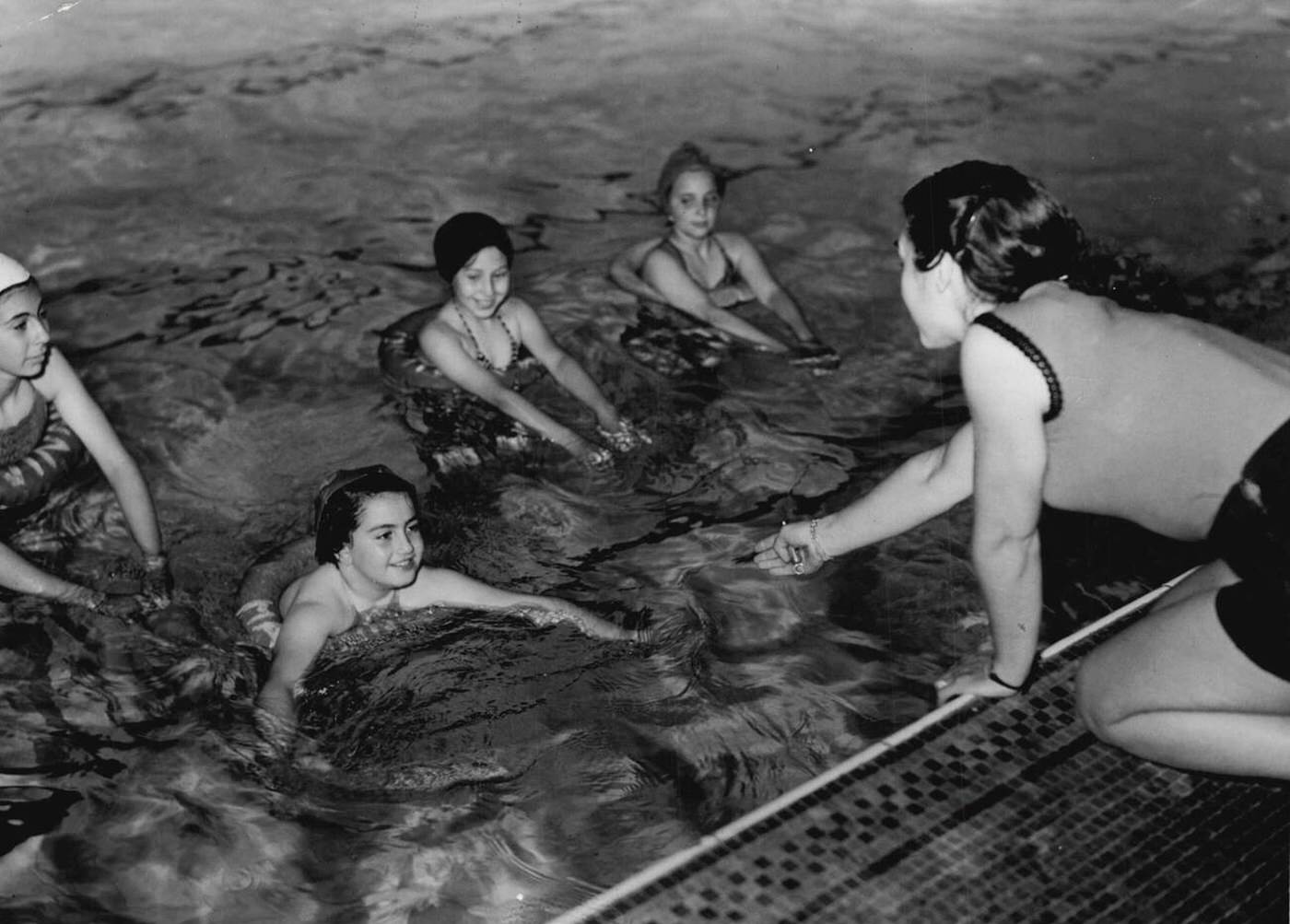
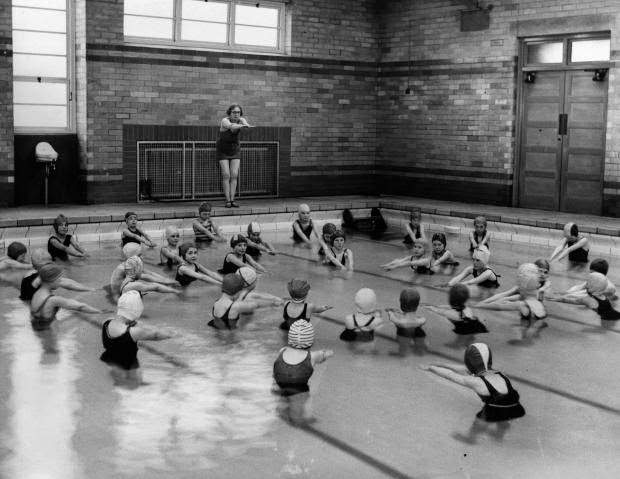
Swimming classes at the Marshall street swimming baths, All Soul's School, London; pictured left to right: Sybil Jacobvitch; Androulla Savva (Cypriot); Mary coutsarou (Cypriot); Betty Healey, 1952.
Swimming classes at the Marshall street swimming baths, All Soul’s School, London; pictured left to right: Sybil Jacobvitch; Androulla Savva (Cypriot); Mary coutsarou (Cypriot); Betty Healey, 1952.
Students from Woodthorpe Council School celebrate their new pool taking a swimming lesson in February 1938.

In coastal communities, fishermen and lifeguards often stepped in as informal teachers, passing on survival techniques rather than competitive strokes. For them, swimming was purely practical — staying alive in rough water mattered far more than form.
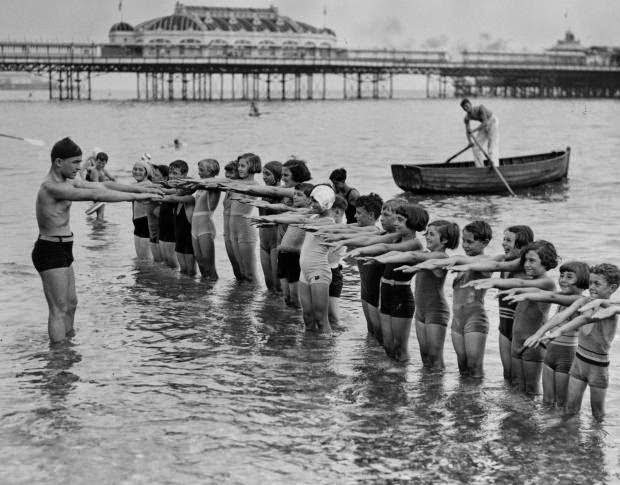
Youngsters at Brighton get their feet wet while learning proper form on August 20, 1934.
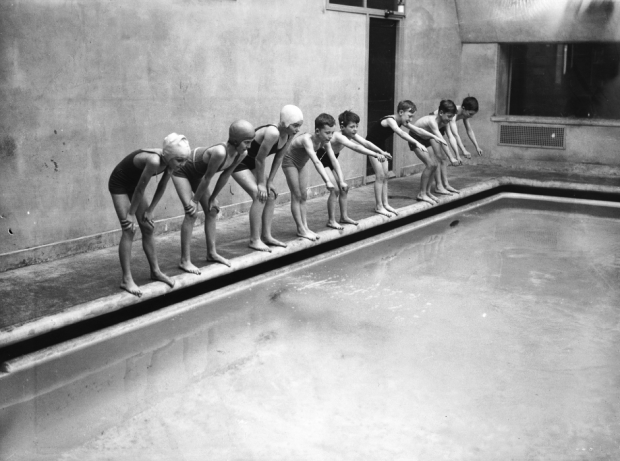
Members of the Pioneer Health Centre in Peckham, south London, learn how to swim on November 19, 1935.

Military swim training was serious and structured. Marines and soldiers drilled strokes on land before entering the water, mirroring the same dry-land methods used in civilian schools.
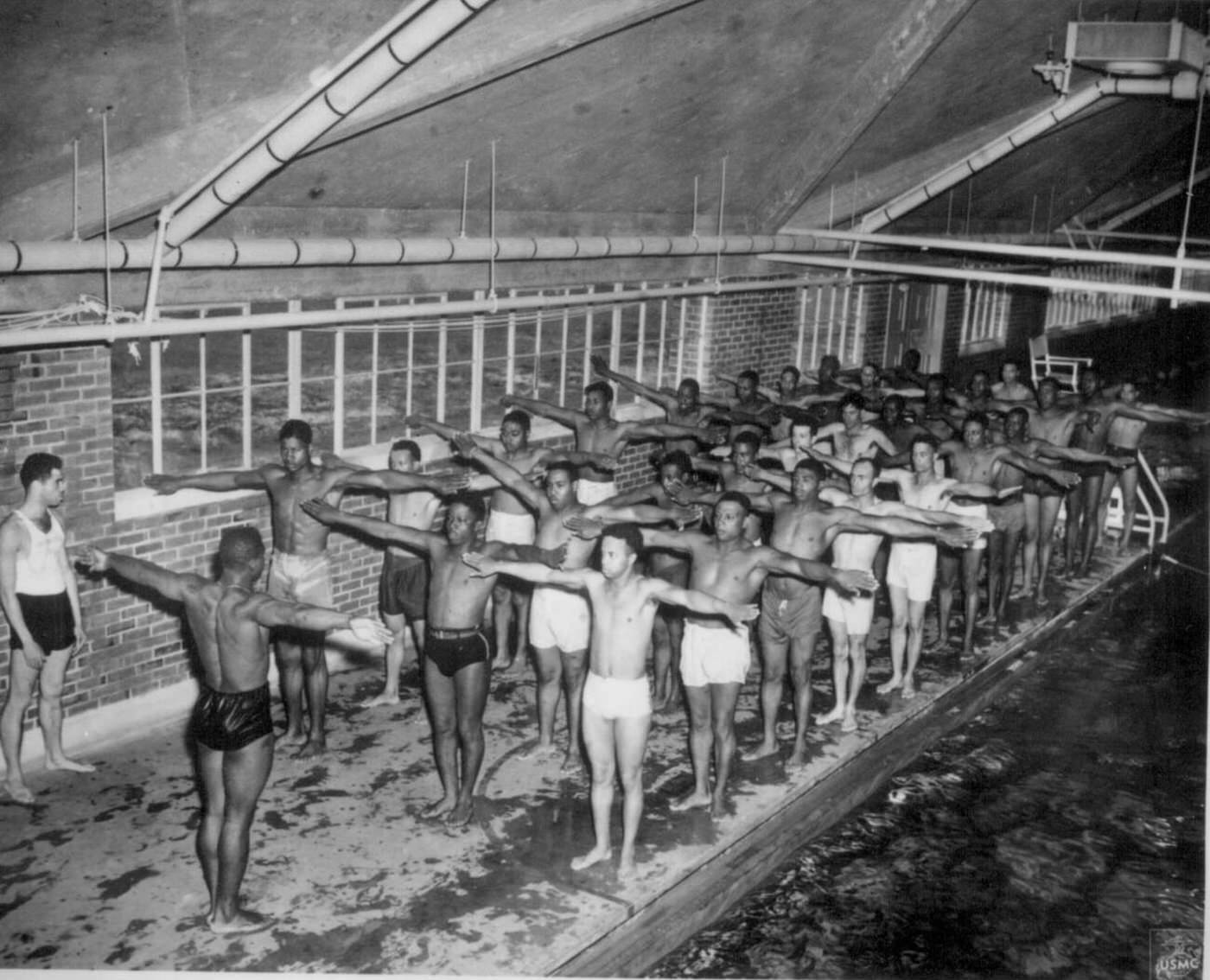
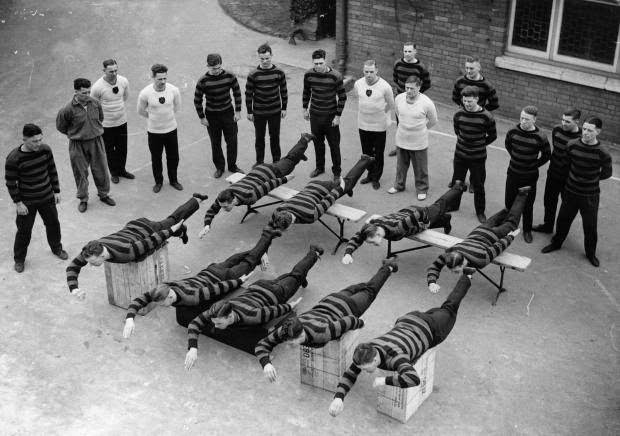
Marine Pfc. Paul Tolliver instructs leathernecks on the correct movements for the breaststroke at Montford Point, Camp Lejeune, N.C., 1944.
Soldiers training at Aldershot on March 26, 1936.

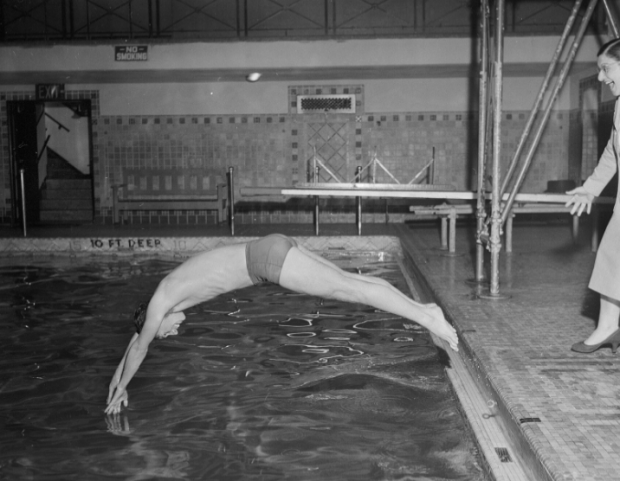
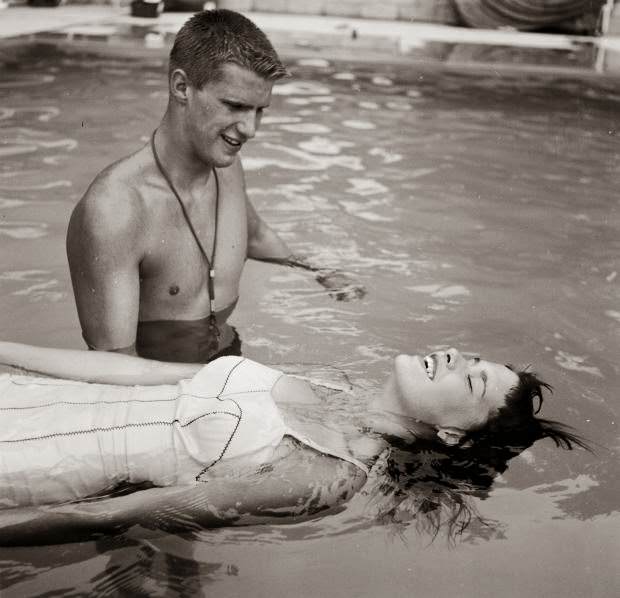
Proper form was emphasized at every level. Dive technique, floating, and basic strokes all received focused instruction from early on — whether students were at an indoor pool or on an open beach.
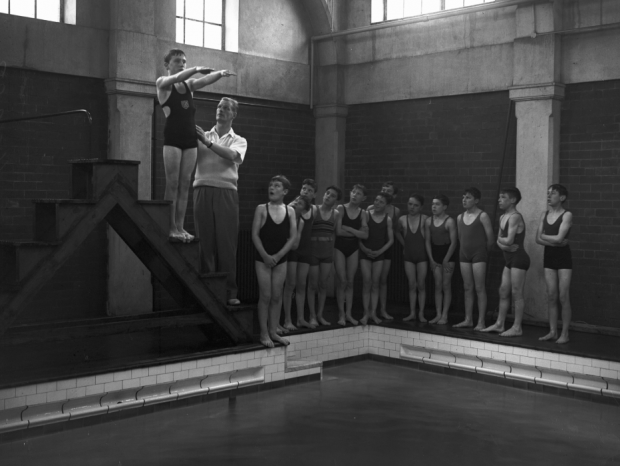
This novice swimmer is instructed on the proper form for a dive during his 1955 lesson.
This woman learned how to float in 1955.
This student, taking a swimming lesson at Falkirk Technical School on November 1, 1935.

Children’s swim programs ran through summer camps and community groups. Wall-kicking drills — where students gripped the pool edge and practiced their kicks — were a staple of early group lessons, much as they still are today.
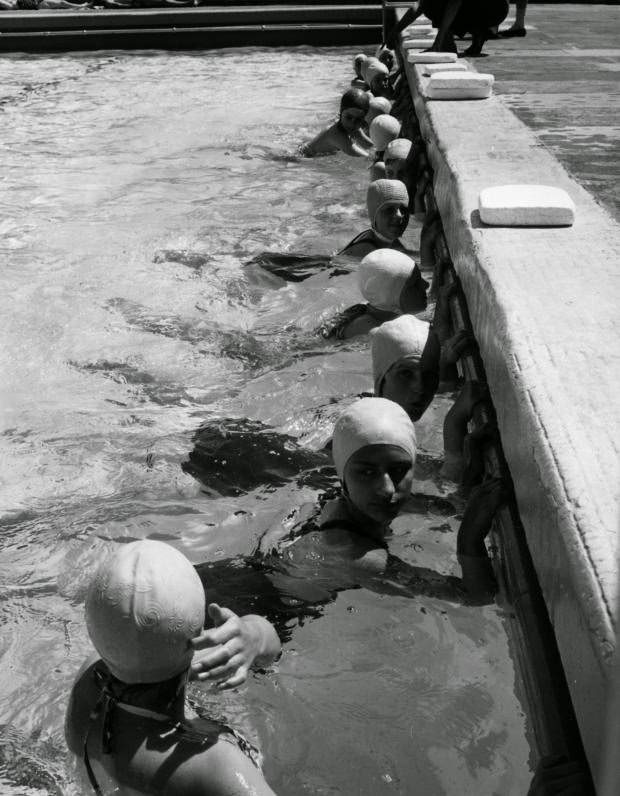
These schoolgirls are clinging to the pool wall, kicking furiously, during a swimming lesson on June 19, 1962.
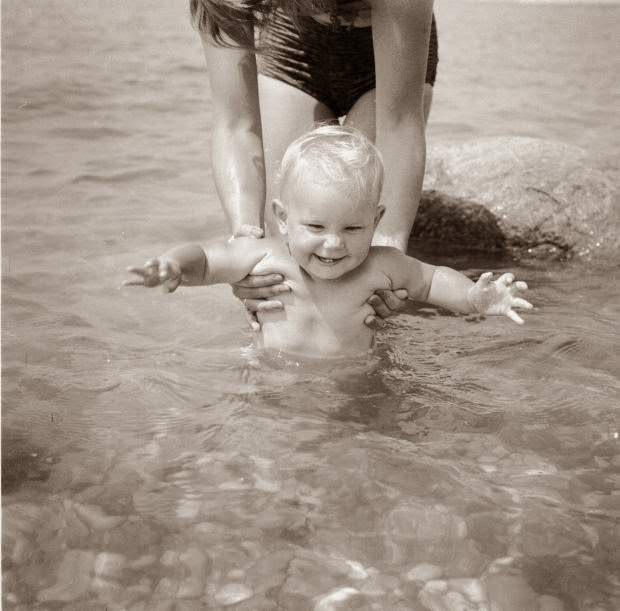
In this photo, circa 1955, little Cecelia Novel sure looks like she's enjoying her first swimming lesson in the ocean.
In this photo, circa 1955, little Cecelia Novel sure looks like she’s enjoying her first swimming lesson in the ocean.

Even infants were introduced to the water in some programs. By the mid-20th century, baby swim classes were being offered in several countries, with parents guiding their youngest children through early water exposure.
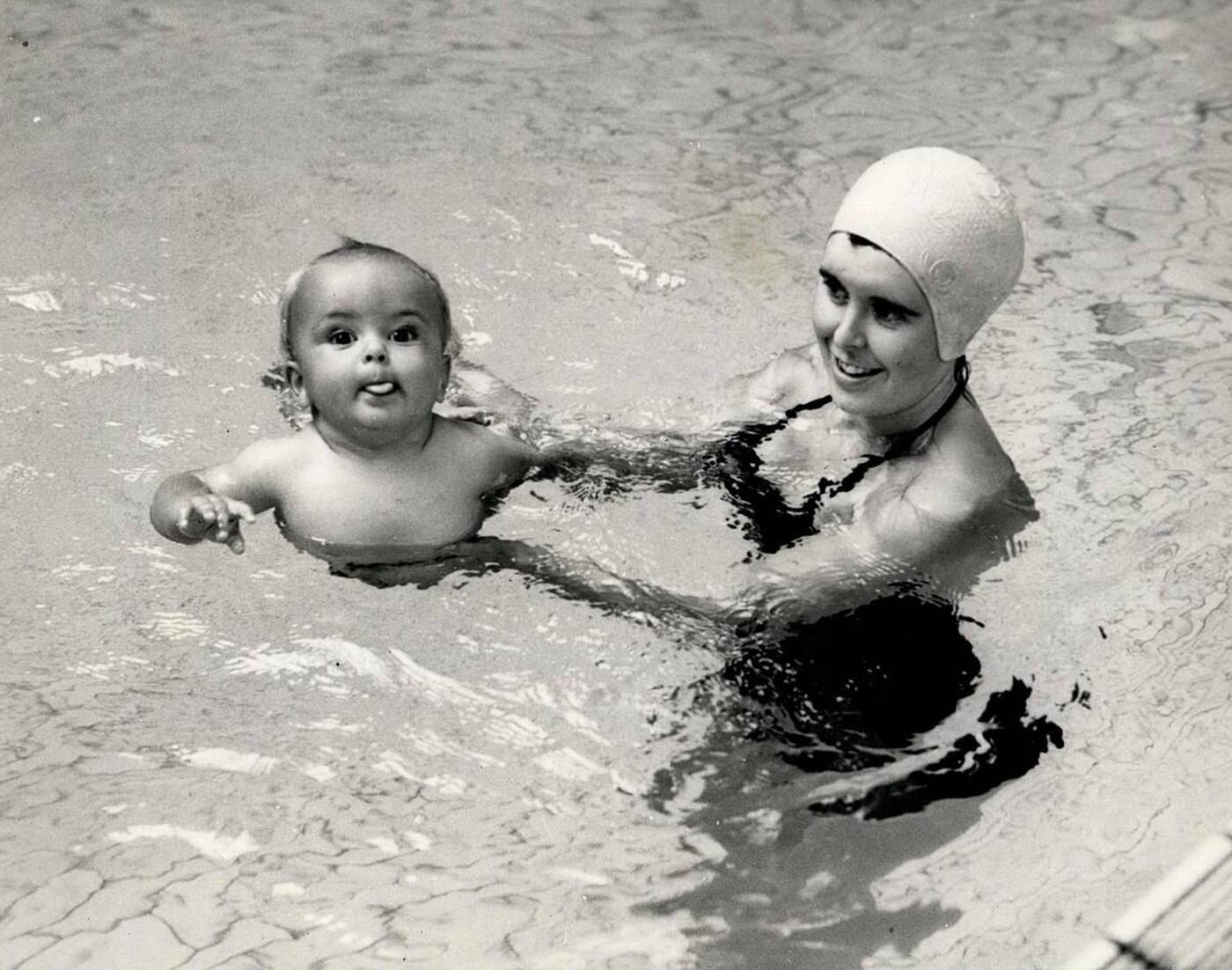
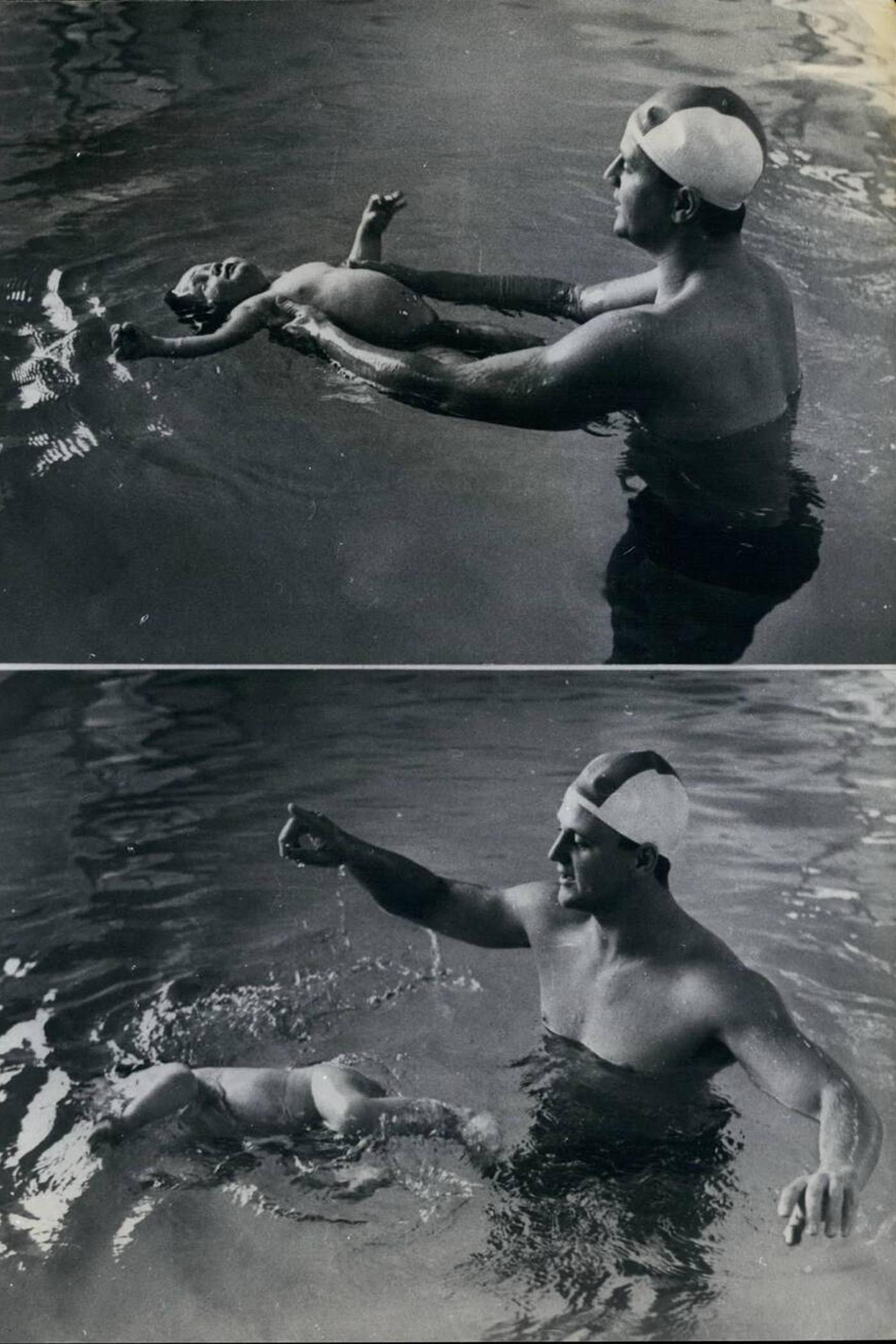
Bobbie, a nine-month-old son of a P.T. instructor, is supported by his mother as he tries a few strokes in the Royal Marine Swimming Bath at Deal, Kent, 1960.
Babies learn to swim before they can walk in Germany, 1967.

Life-saving skills were built into swim education from an early stage. Instructors demonstrated resuscitation techniques — like the “kiss of life” — to junior swimmers, ensuring that water safety extended beyond just staying afloat.
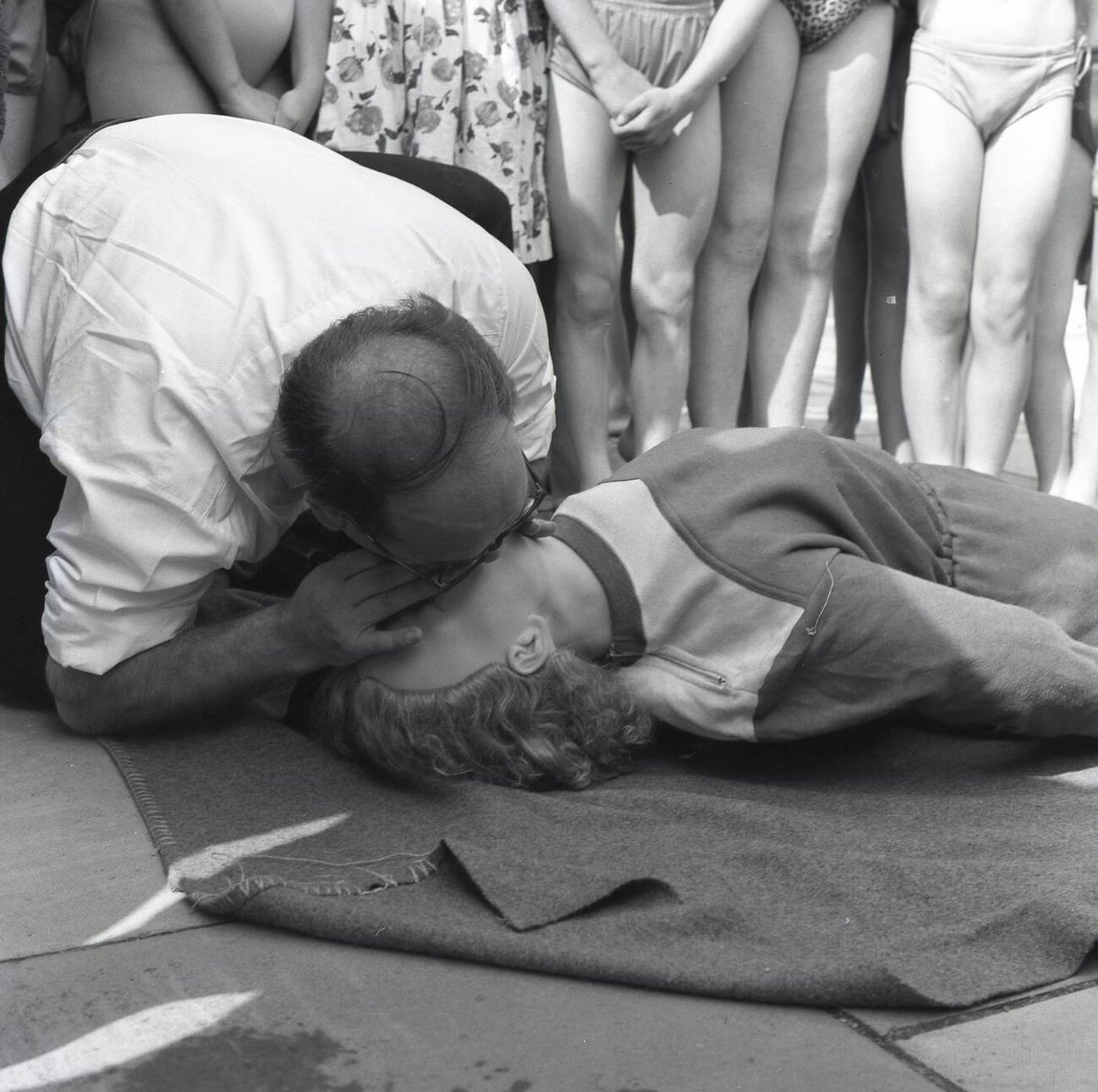
An instructor demonstrates the 'kiss of life' to a training dummy as part of a life-saving demonstration for junior swimmers at Vale Pool, an open-air swimming pool in Aylesbury, Bucks, England, 1964.
An instructor demonstrates the ‘kiss of life’ to a training dummy as part of a life-saving demonstration for junior swimmers at Vale Pool, an open-air swimming pool in Aylesbury, Bucks, England, 1964.
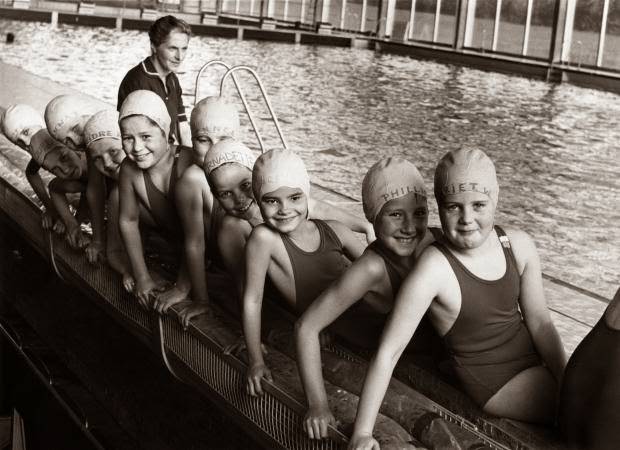
These girls—pupils at the Virgo Fidelis Convent School—are having a swimming lesson at Crystal Palace Recreation Centre on October 2, 1967.

As public beaches became more accessible and swim clubs grew in popularity, swimming shifted from a survival skill into a recreational one. Cruise ship pools, open-water races, and beach outings all became part of everyday life for those who had learned the basics.
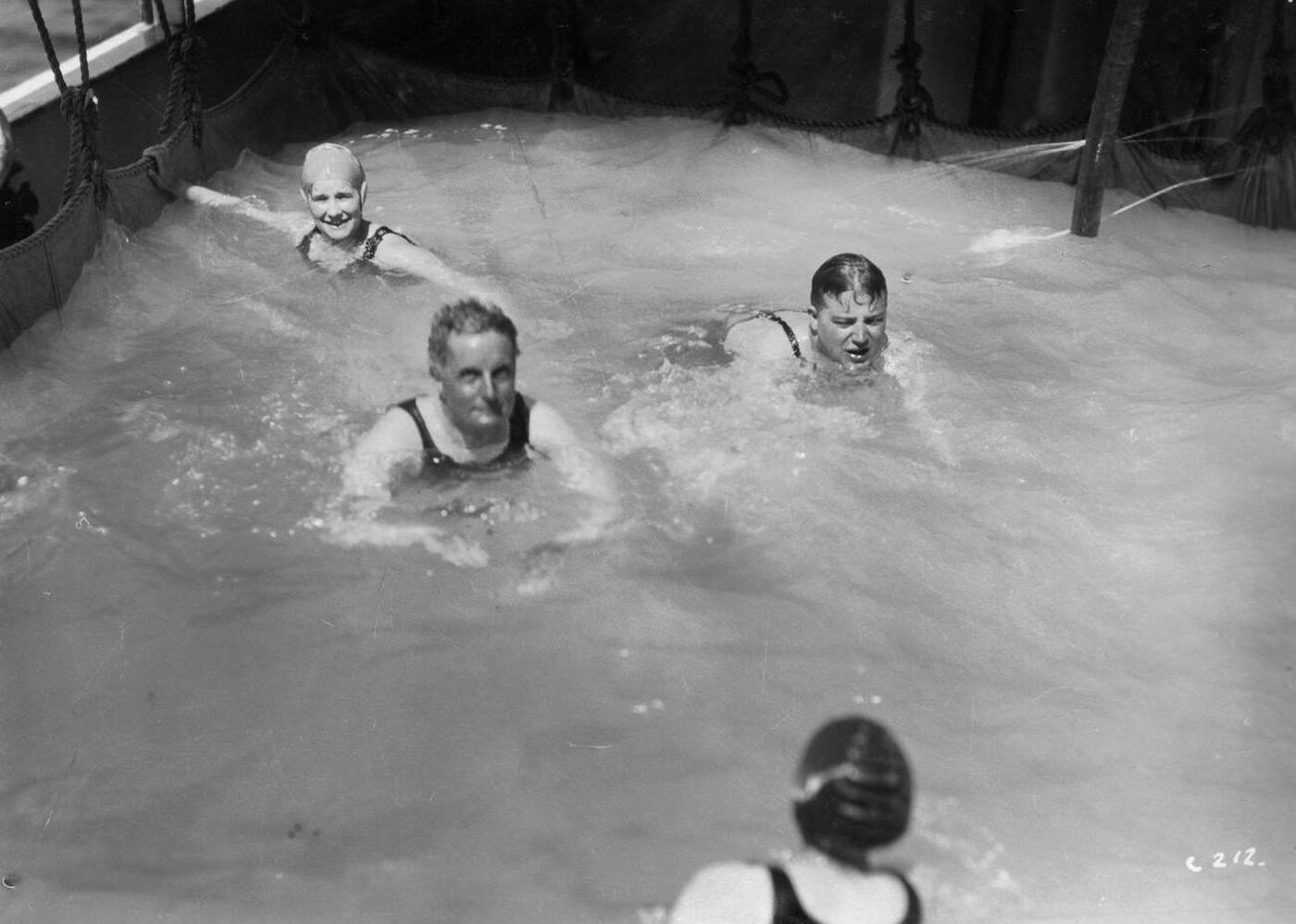
Passengers in the swimming pool on board a cruise ship, 1920s-1930s.
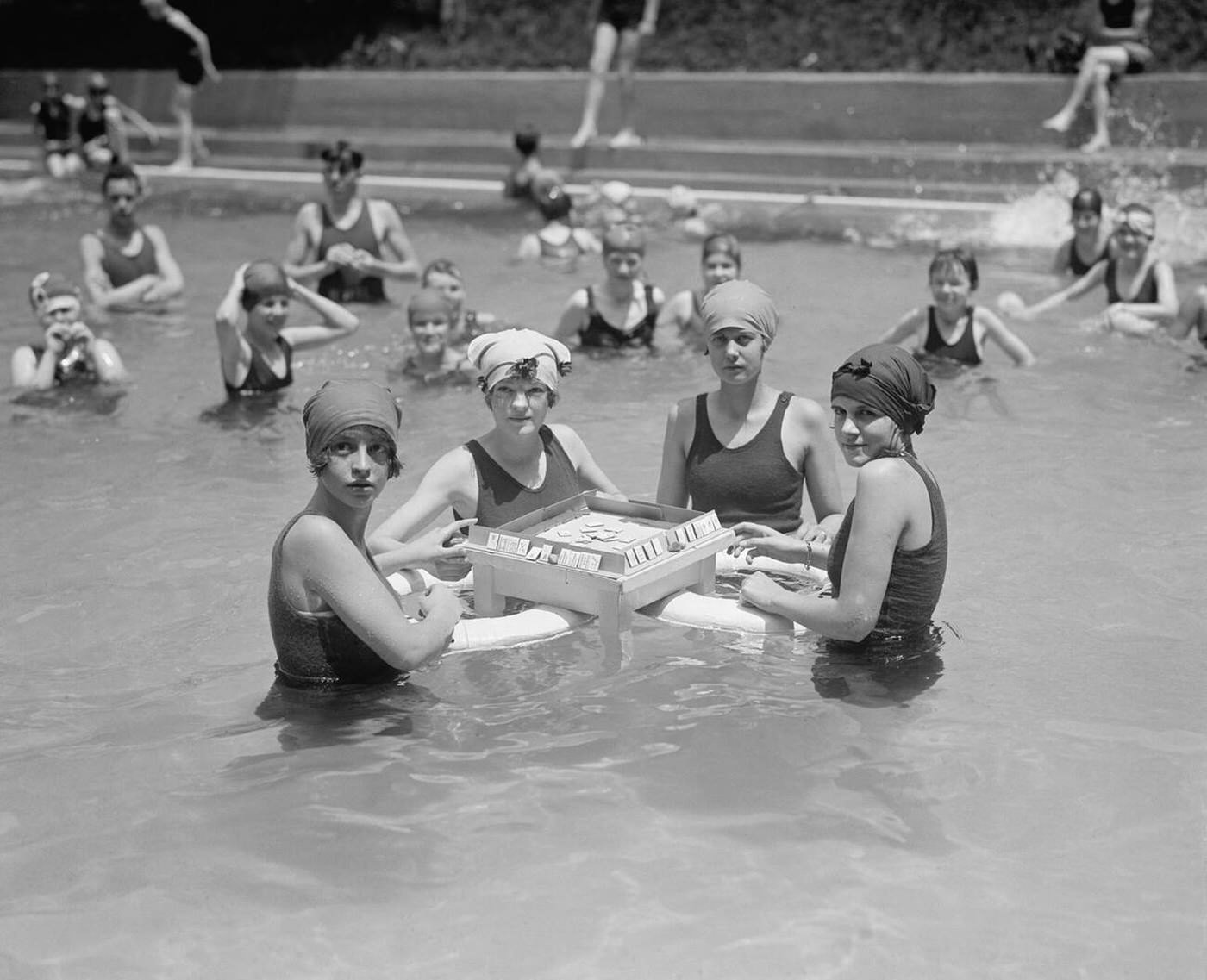
Four women playing mah-jong in water at a bathing beach, Washington DC, 1924.
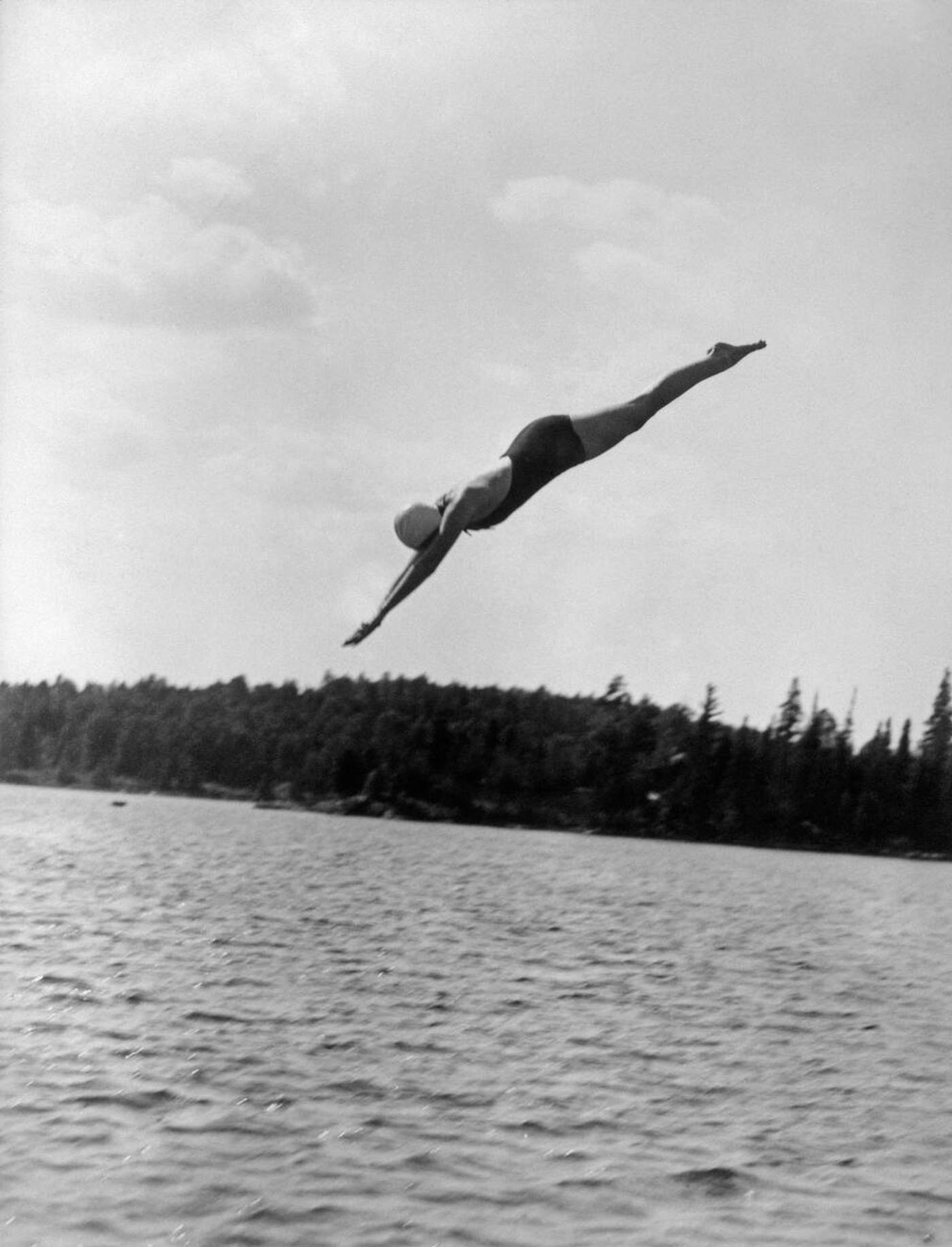
Woman diving into a lake, 1930s.
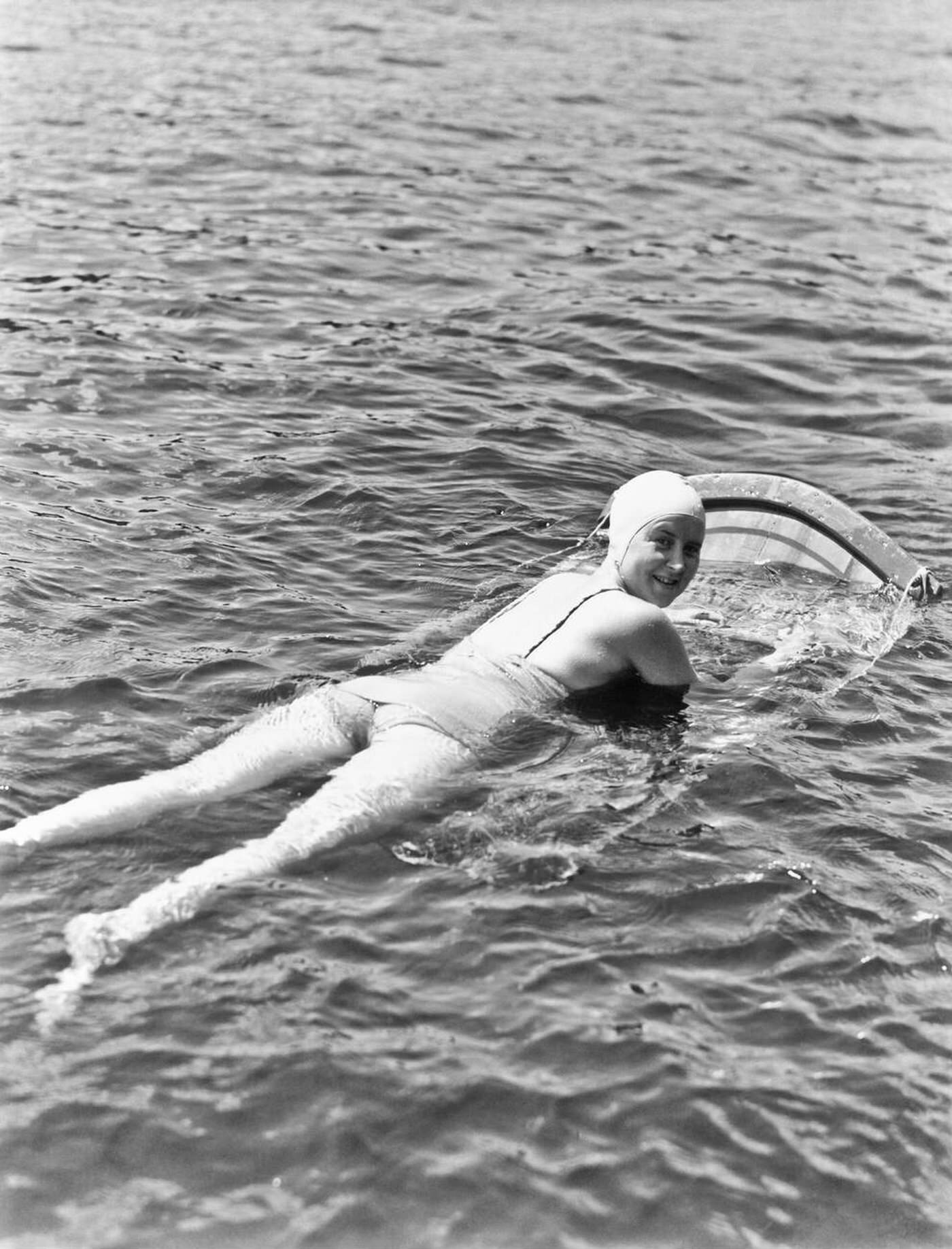
Woman wearing a bathing cap and one-piece suit lying on an aqua ski board looking at the camera over her shoulder at Muskoka Lake, Canada, 1935.
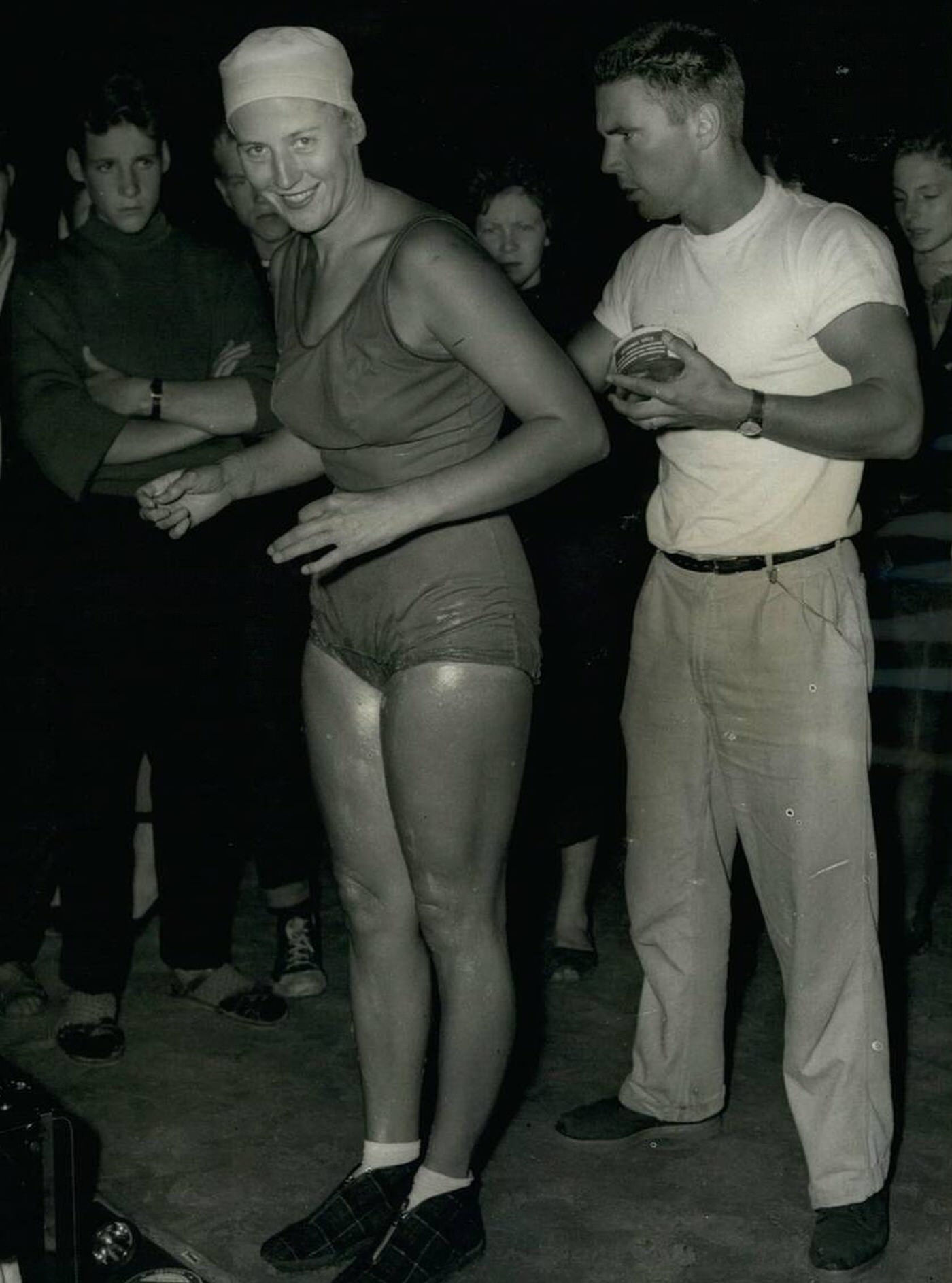
Greta Anderson is greased by her husband P.T. Instructor John Sonnichsen before she entered the water to win the International Cross Channel Swimming race, 1958.
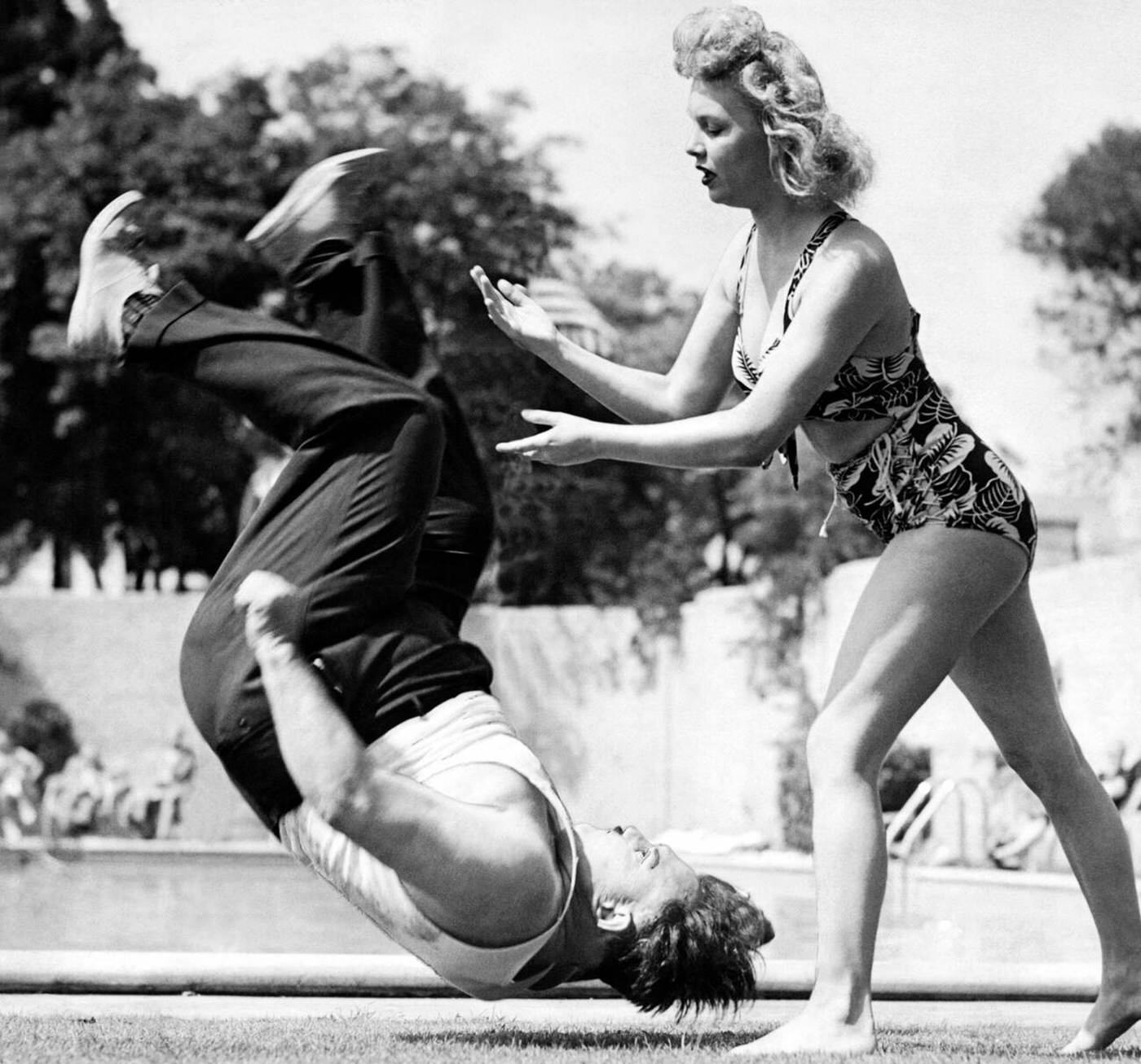
A woman judo instructor demonstrates how to flip a man on an LA high school teacher, Los Angeles, California, 1944.
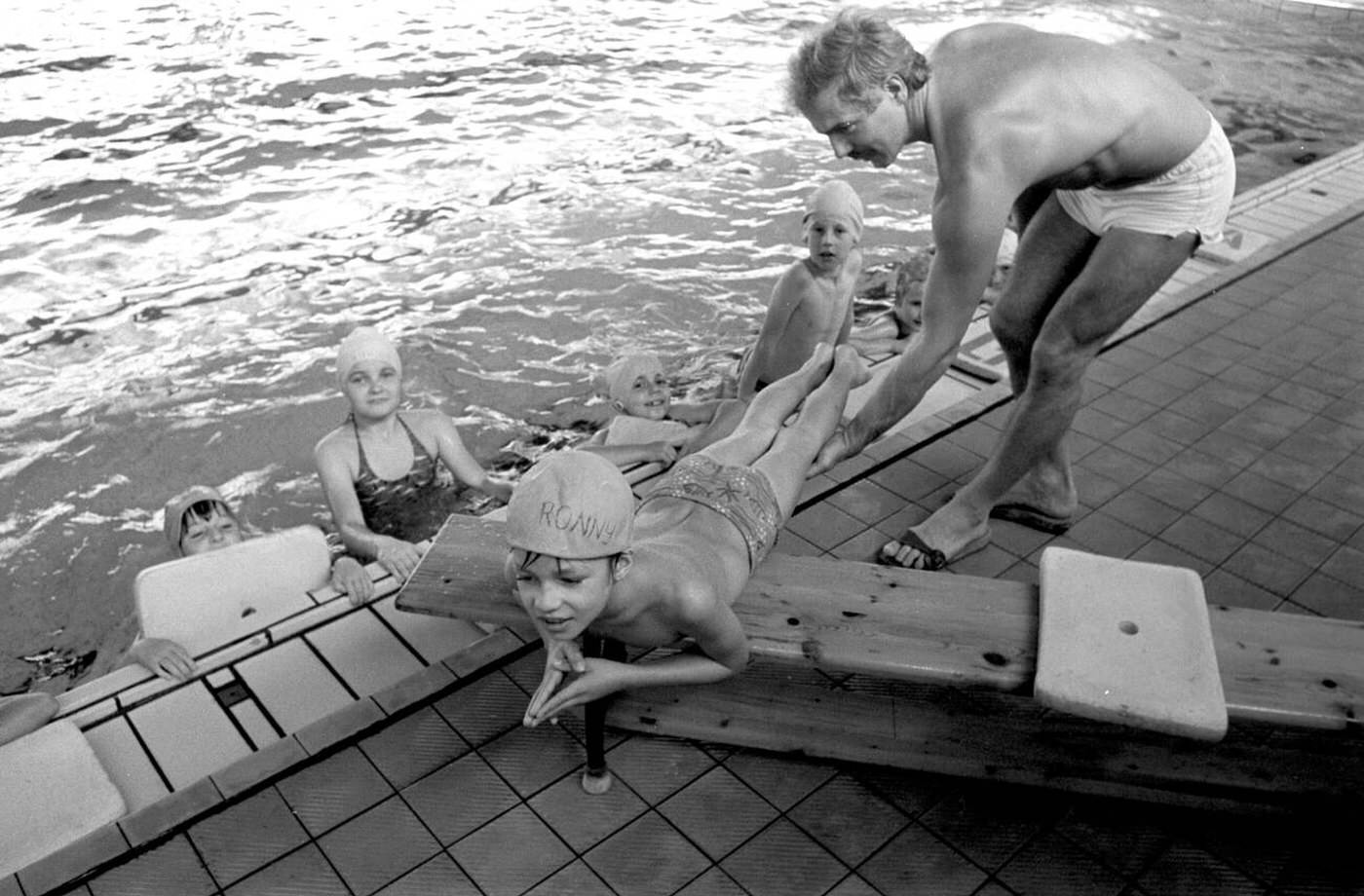
Swimming lessons for pupils take place in an Eilenburg public swimming hall, 1983.
Enjoyed this post? Get new ones in your inbox.

Leave a Comment

Your email address will not be published. Required fields are marked *

Share this Post 🥺

Please take a moment to share this content. Your support is greatly appreciated! 🙌🙏

Share this Post 🥺

Please take a moment to share this content. Your support is greatly appreciated! 🙌🙏
Scroll to Top
 
Hey Friend, Before You Go.. Please like & follow for more interesting content