
In January 1972, U.S. Air Force veteran John Beach was on his way back to his duty station in Iceland when severe winter weather grounded him in Luxembourg City. Storms in Denmark and Iceland made travel impossible, and Beach found himself stuck in the city for three days with less than $20 to his name. What he did have was a Nikon F camera and several rolls of film. He used both to their fullest.
Beach spent each day on foot, walking through the old quarters and fortified districts of one of Europe’s most historically layered cities. The cold kept most residents indoors. Streets that would normally bustle were nearly empty, save for the occasional child passing through. That quiet turned out to be a gift — it let Beach frame the city’s ancient architecture without crowds, capturing scenes that feel frozen not just in winter, but in time itself.
He began his wanderings near Fort Thüngen, one of Luxembourg City’s most recognizable historic fortifications. Known locally as the “Three Acorns,” the fort dates back centuries and stands as a symbol of the city’s long military history. In 1972, it sat largely untouched. It wasn’t until the 1990s that the site was fully reconstructed, alongside the construction of the Mudam — Luxembourg’s modern art museum.
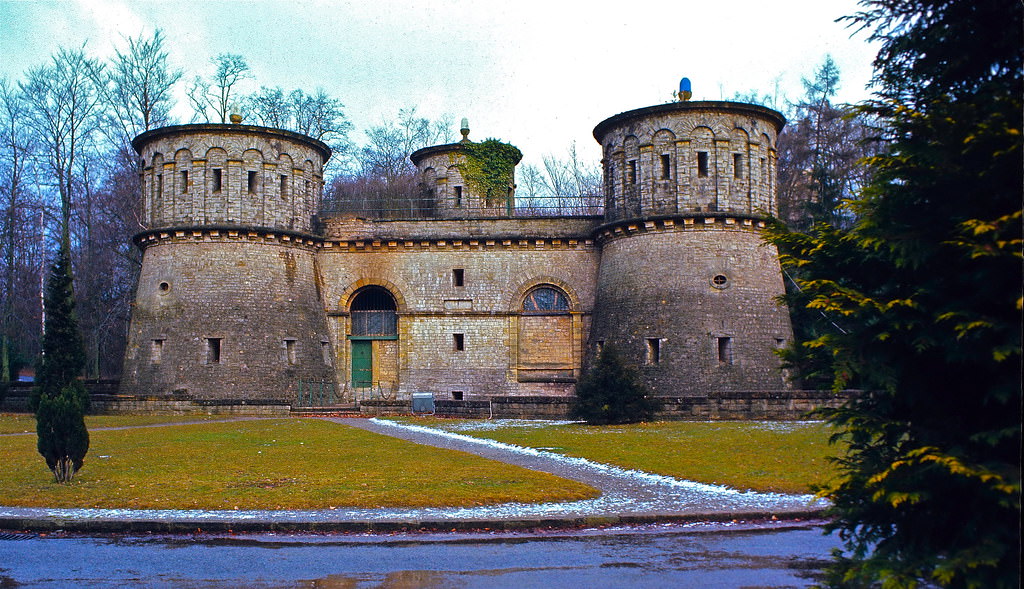
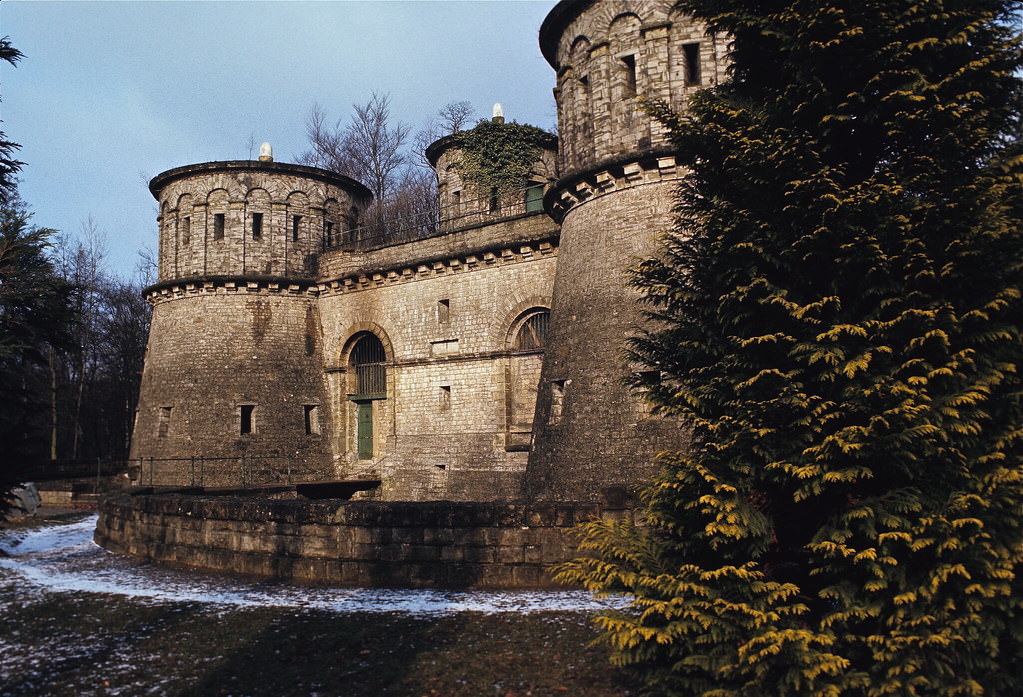
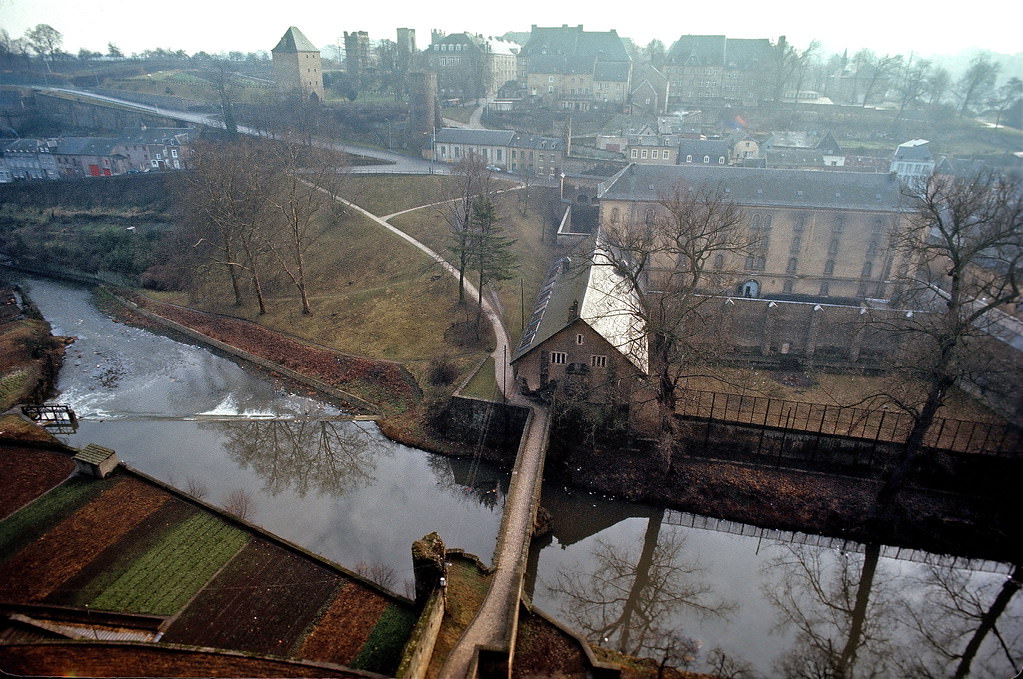
Not far from the fort, the Parc des Trois Glands offered another layered view of the city’s past. A building within the park, constructed in 1733 during the period of Austrian domination, once served as a supply depot for the army — storing flour and other provisions. By 1972, it had been repurposed as a storage depot for the National Museum of History and Art.
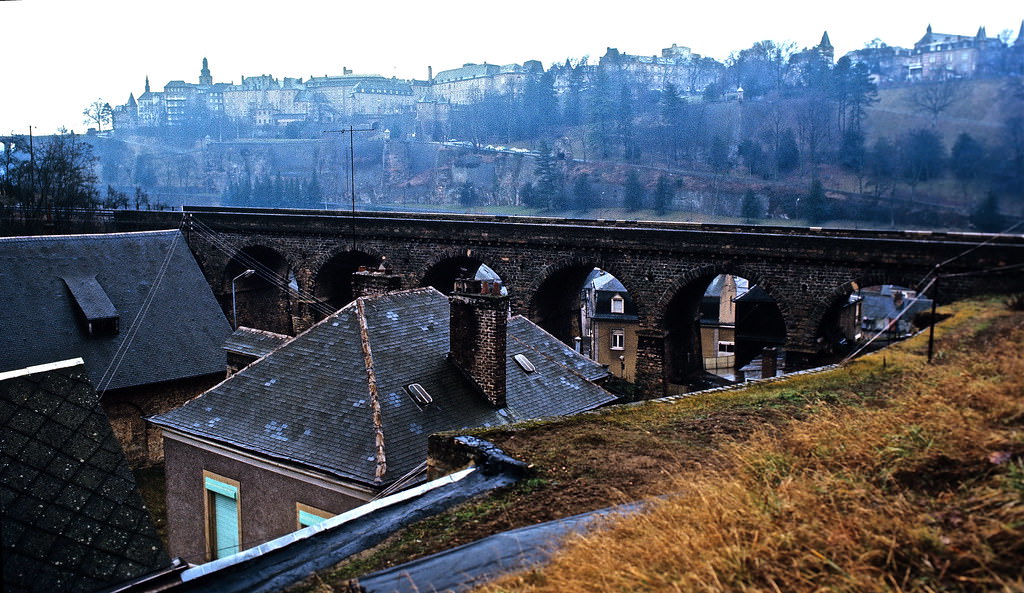
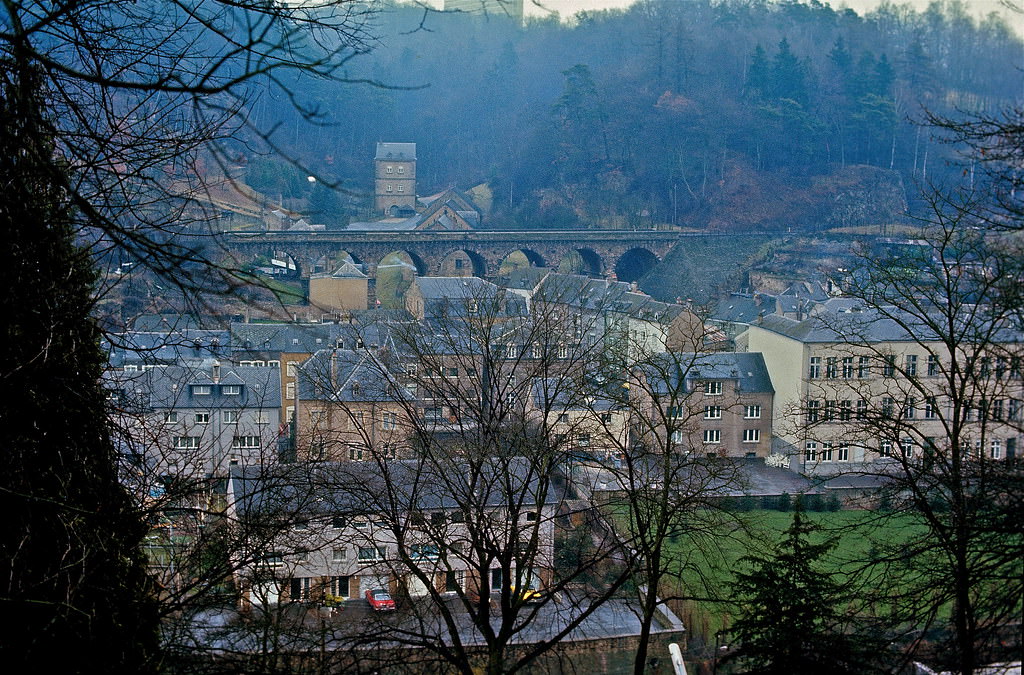
Luxembourg City is built on dramatic terrain — a plateau cut through by river valleys, with the old upper city towering above the lower districts. The rail viaduct that arches over the old city is one of the most striking features of the skyline, and Beach photographed it from below, showing the scale of 19th-century engineering set against the medieval rooftops of Pfaffenthal.
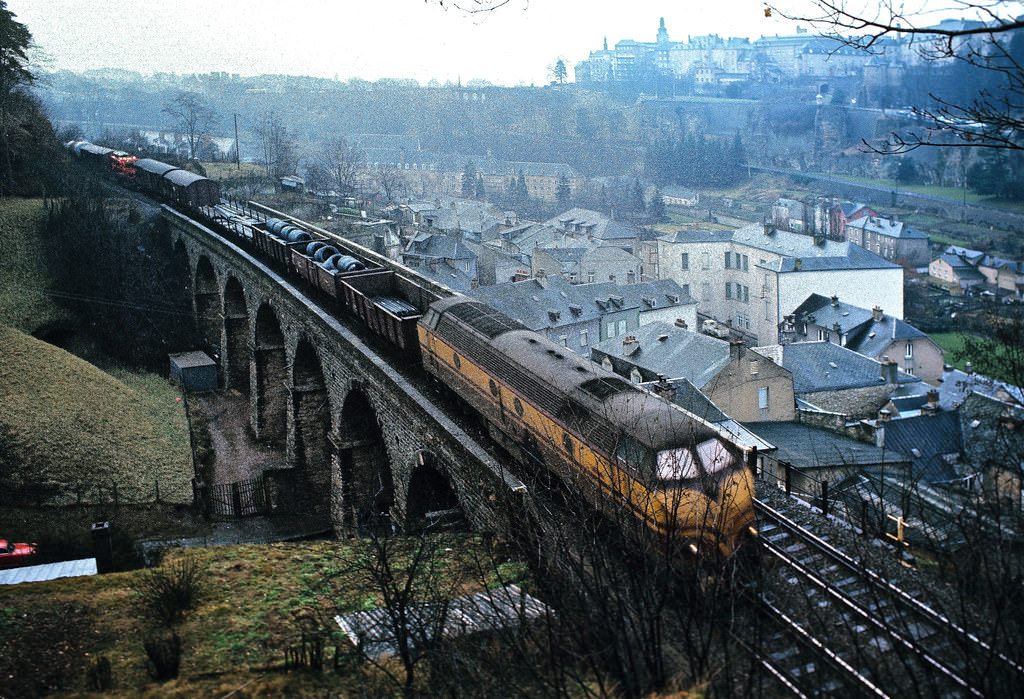
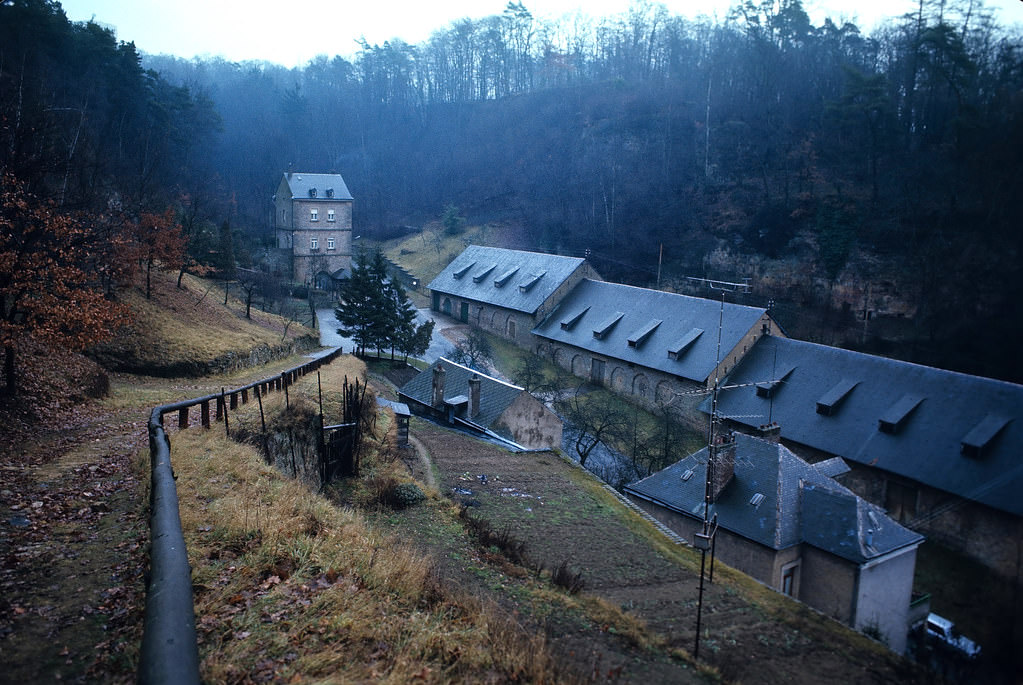
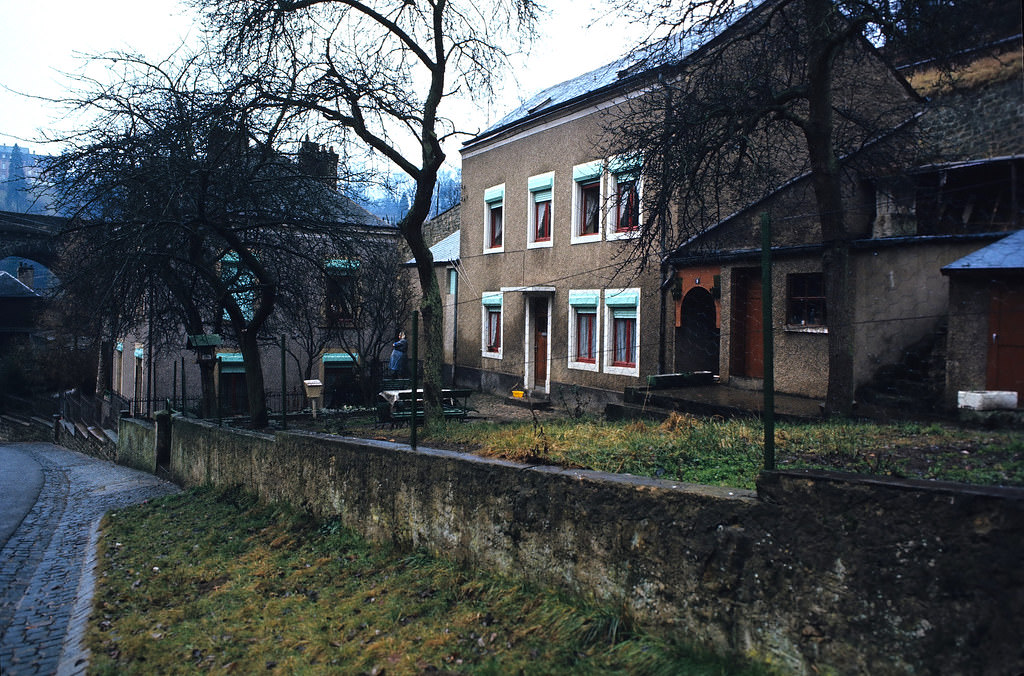
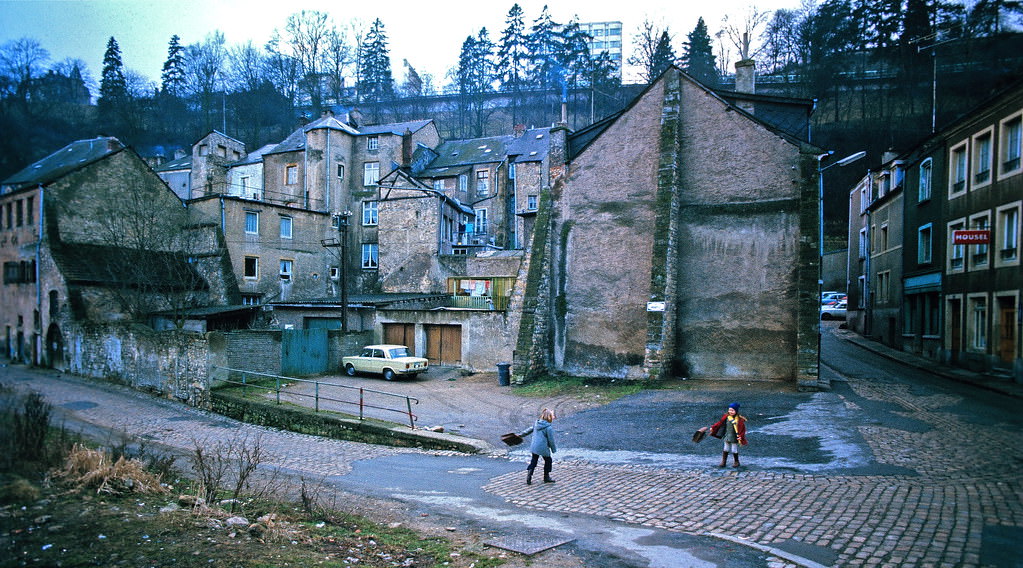
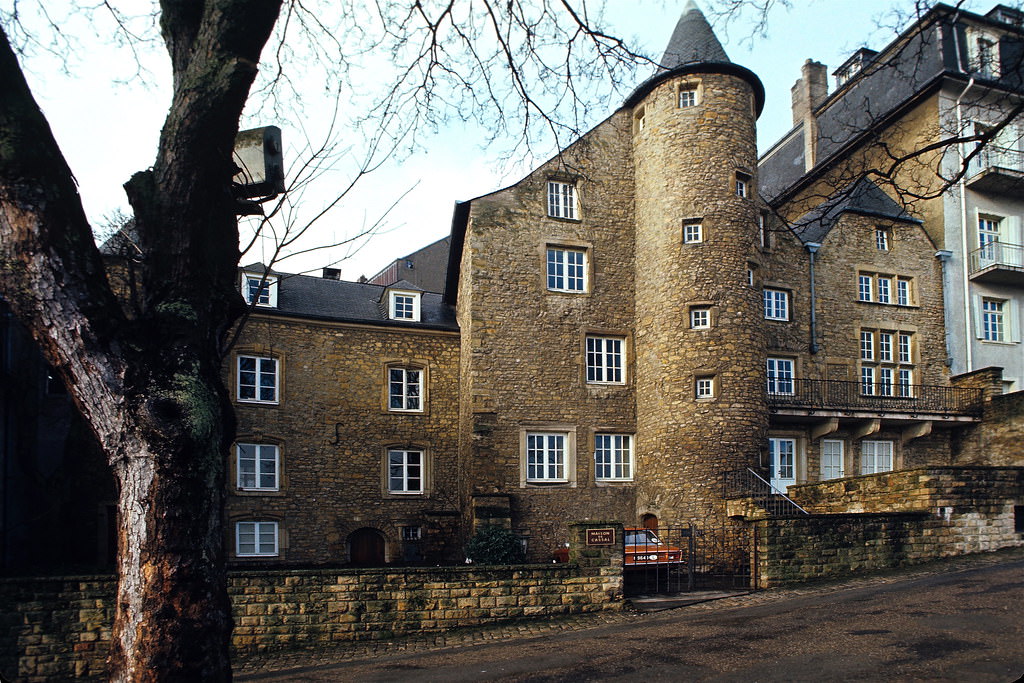
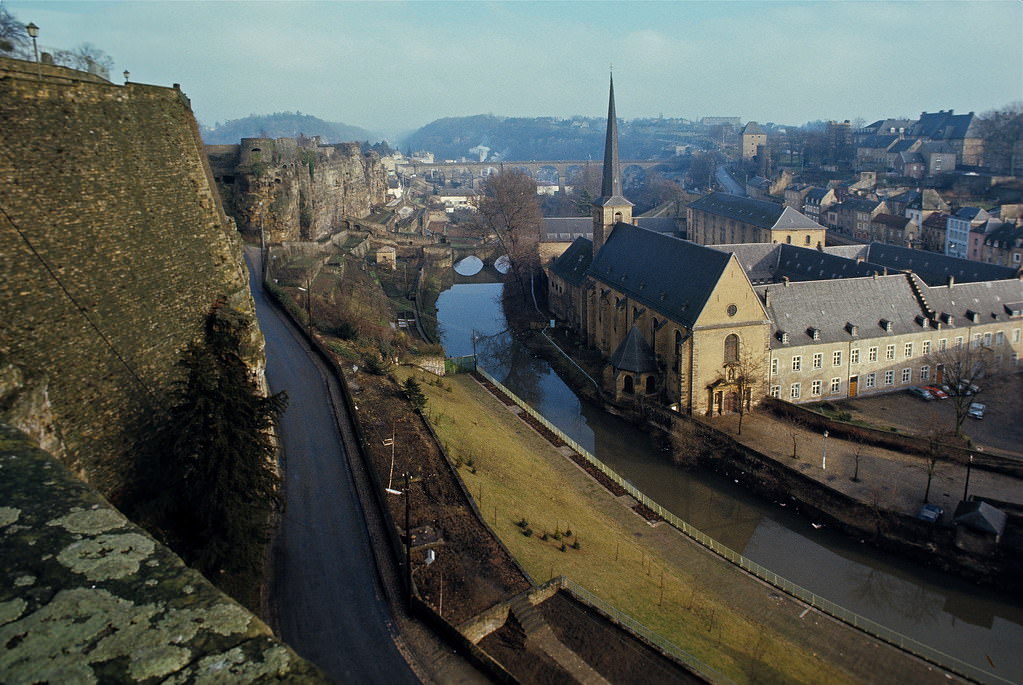
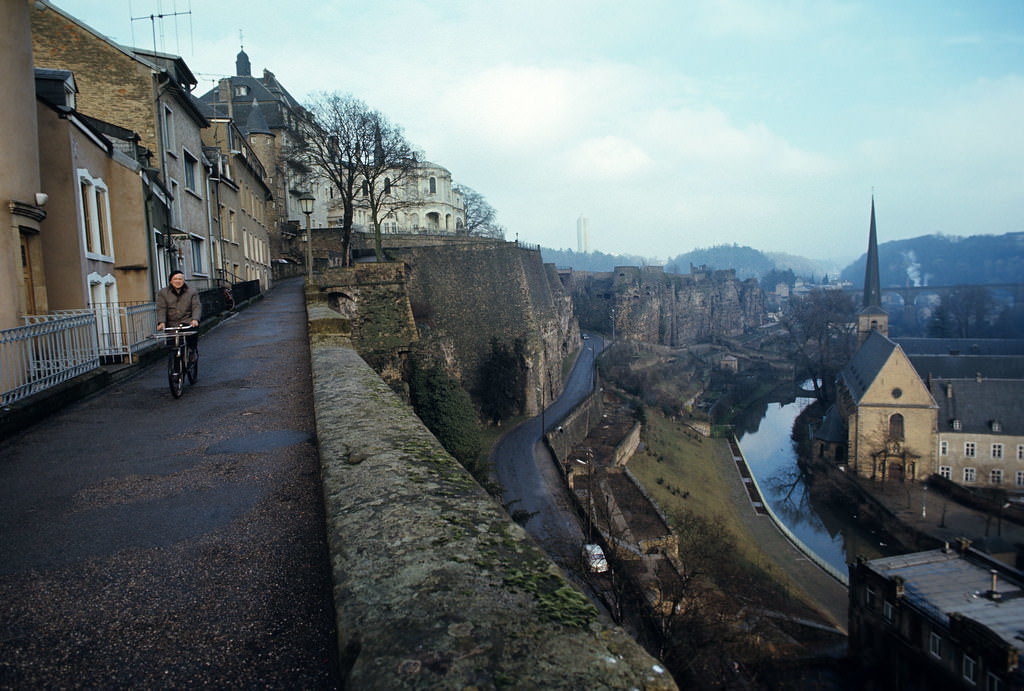
The old quarter of Pfaffenthal drew Beach back repeatedly. This lower district sits deep in the Alzette Valley, hemmed in by the high city walls above and the river below. Its narrow streets, cobblestones, and densely packed stone buildings had changed little over generations. Walking through it in January, with frost on the ground and smoke rising from chimneys, it looked much as it had for centuries.
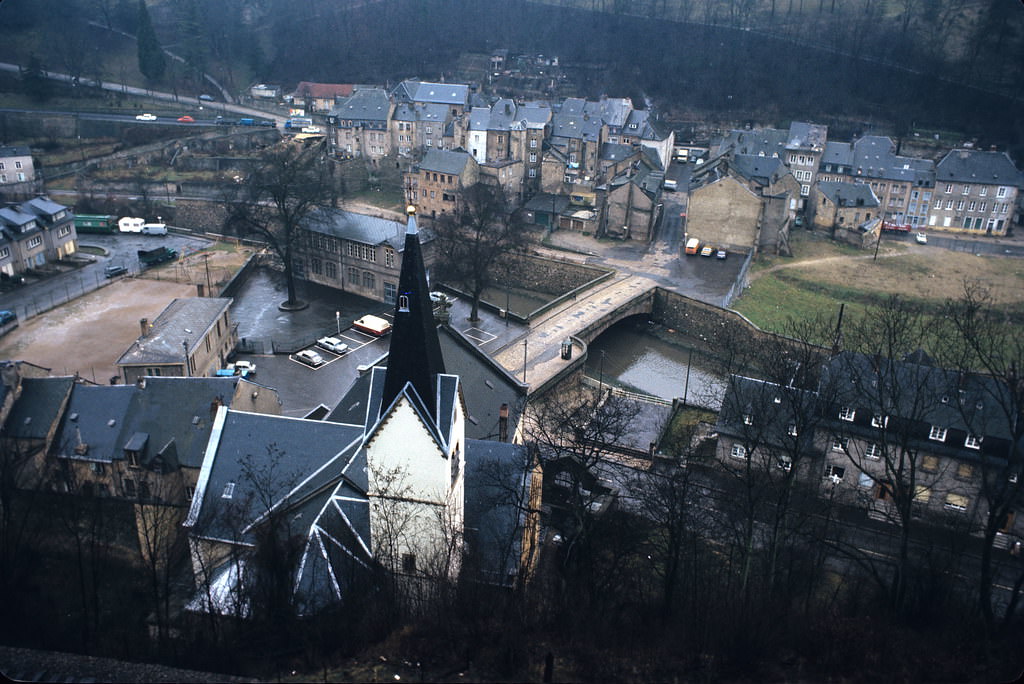
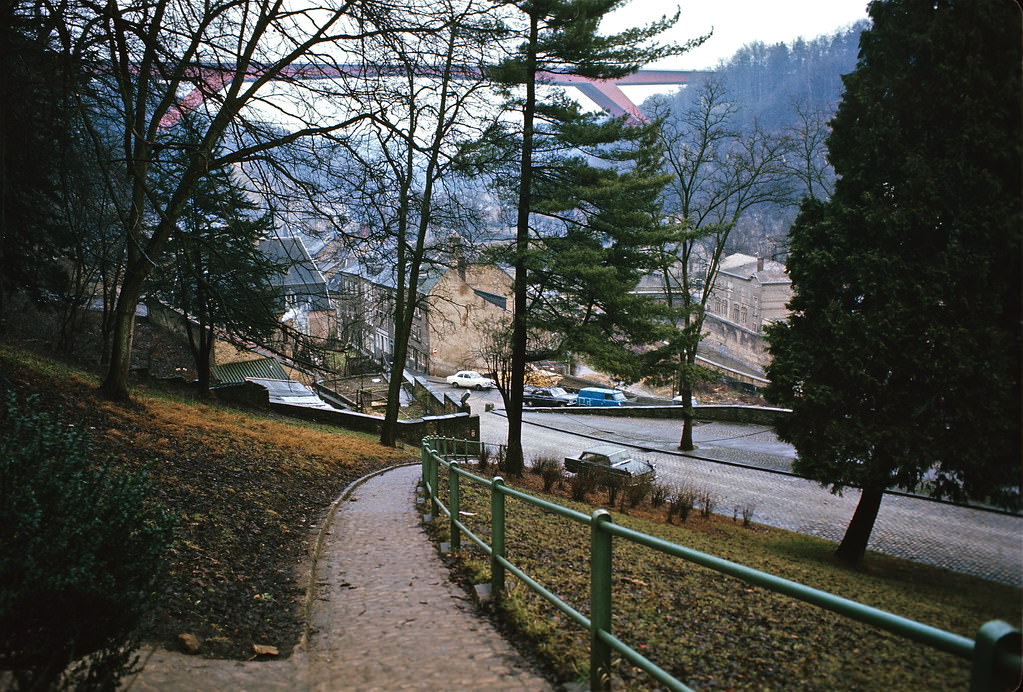
The Rue du Pont bridge offered sweeping views across the valley. From its railing, Beach could look out toward the Grand Duchess Charlotte Bridge, completed in 1966, which stretched high above the Alzette Valley. The older Vauban Tower toward Siechenhof was visible in the same frame — centuries of construction visible from a single vantage point.
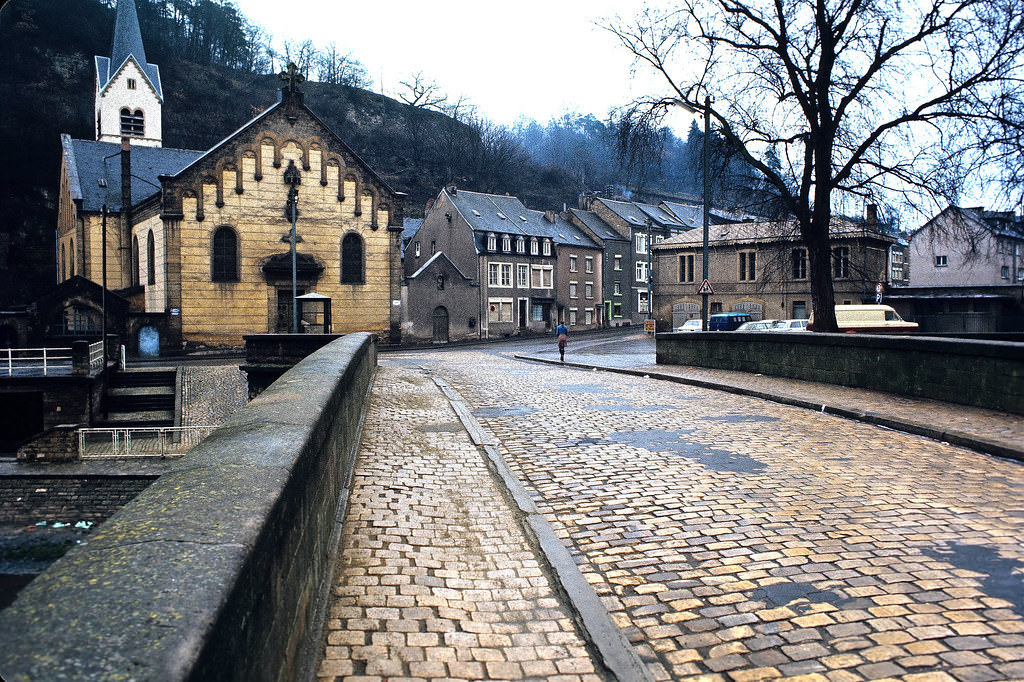
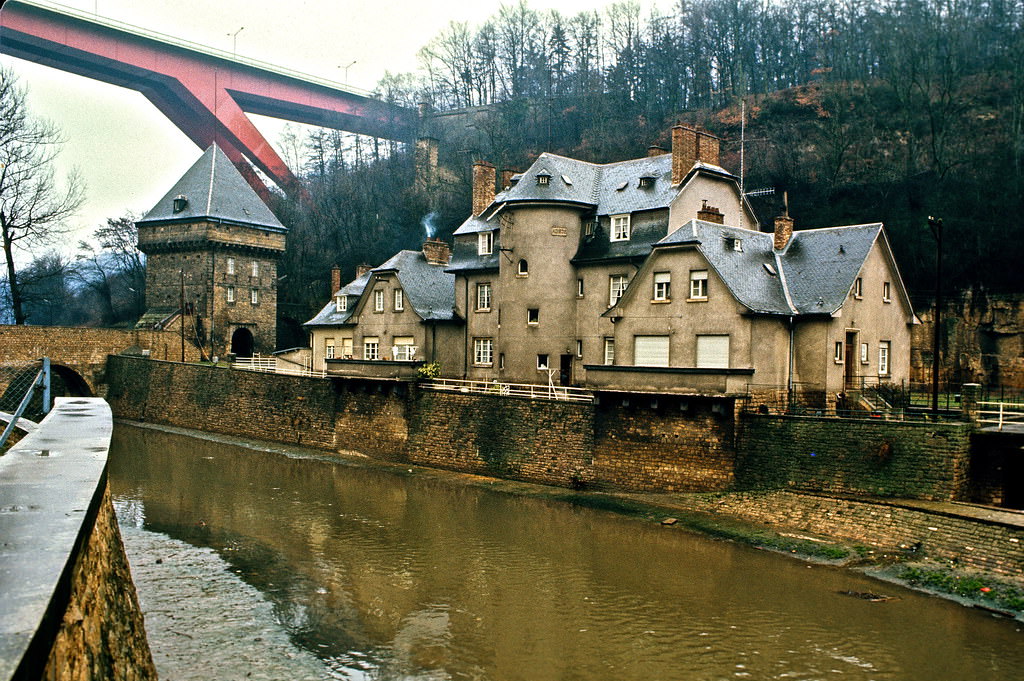
Along the Alzette riverfront, the quiet was almost complete. The water ran cold and low, flanked by old stone buildings that backed right up to the bank. Beach photographed the riverside and the bridge that pointed toward Saint Matthew Church, a modest but striking structure in the lower district.
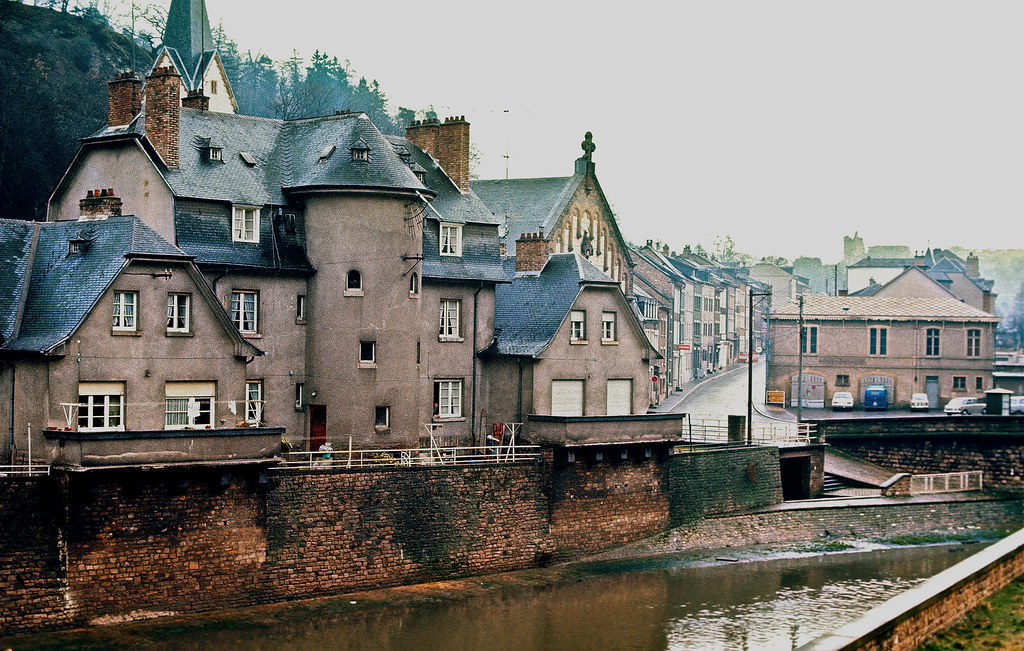
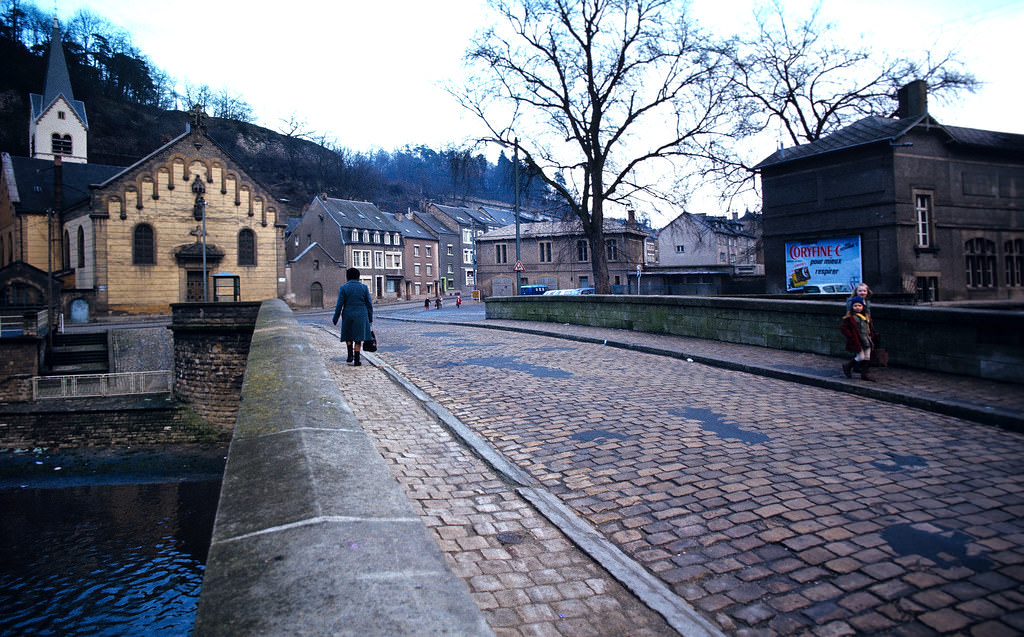
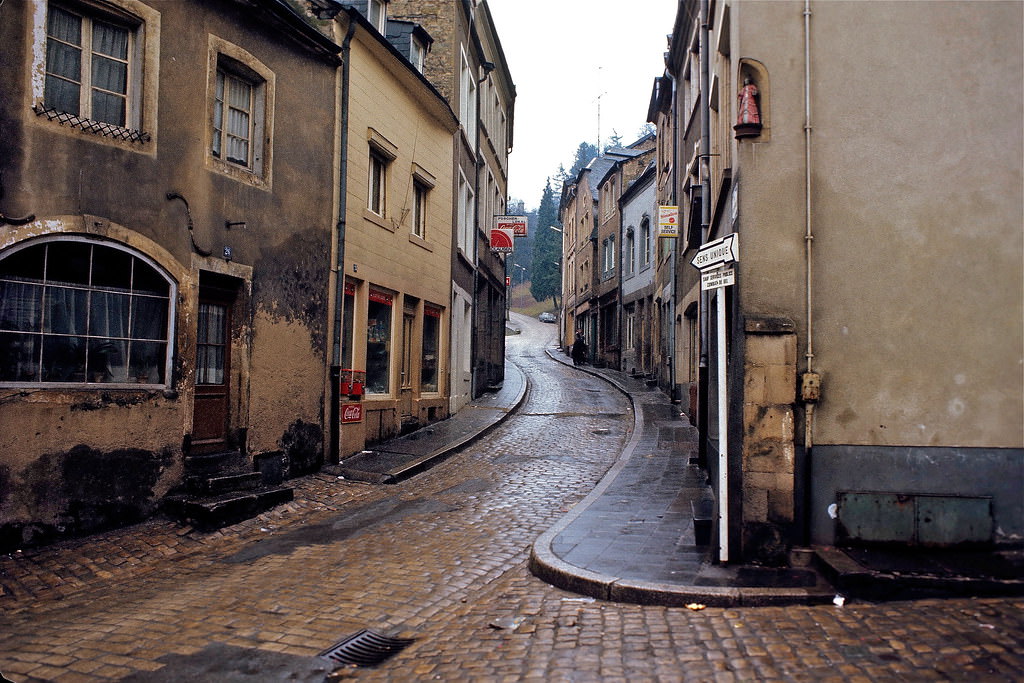
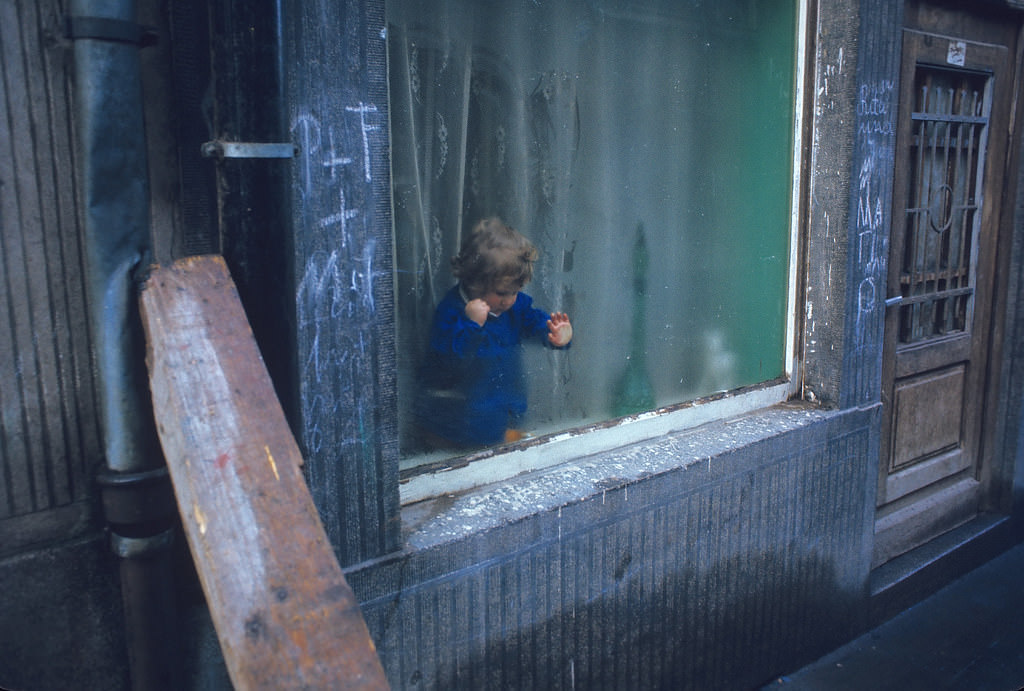
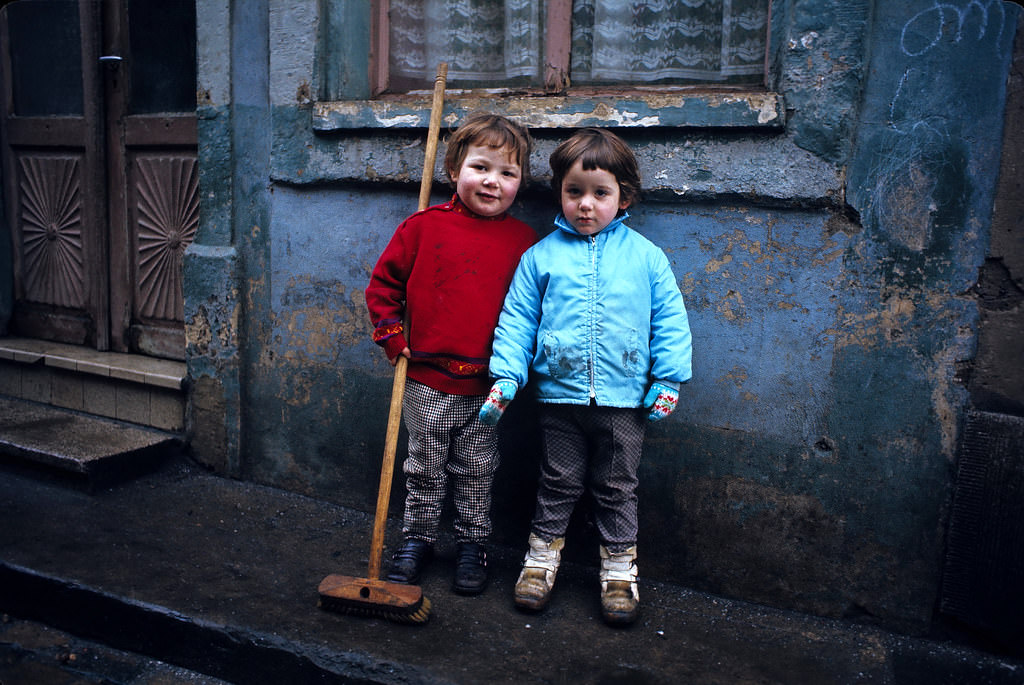
The few people Beach encountered became subjects in their own right. On Laurent Menager Street, he photographed a grandfather with his young granddaughter — one of the rare moments of human warmth in an otherwise empty winter city. On Rue du Pont, a lone figure strolled through the old quarter. A young boy on Rue Mohrfels prepared to cross the street, unbothered by the cold.
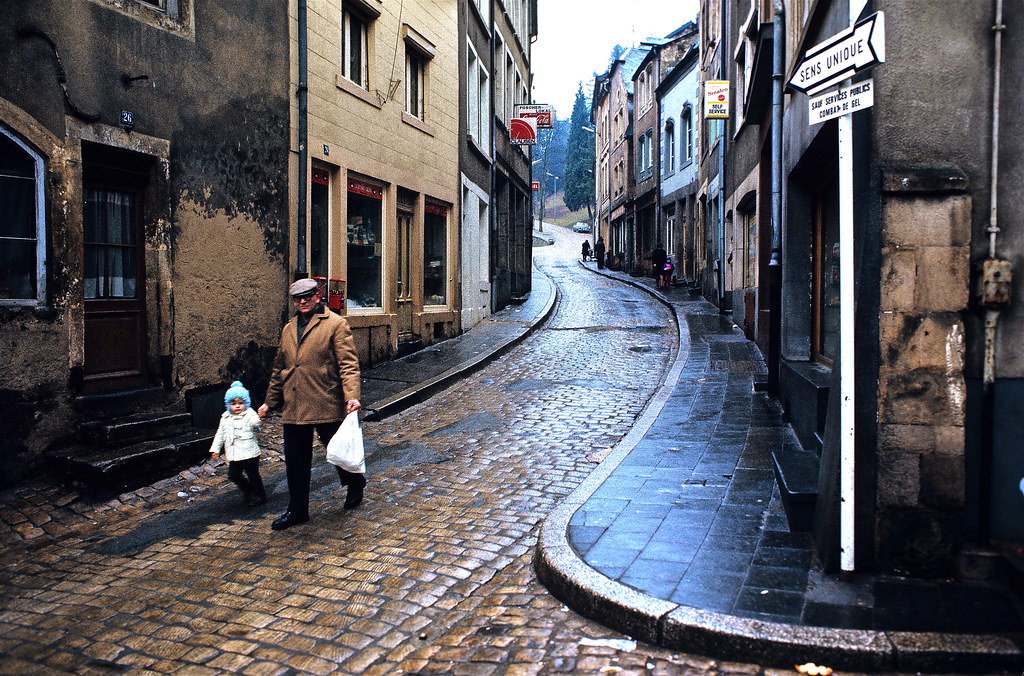
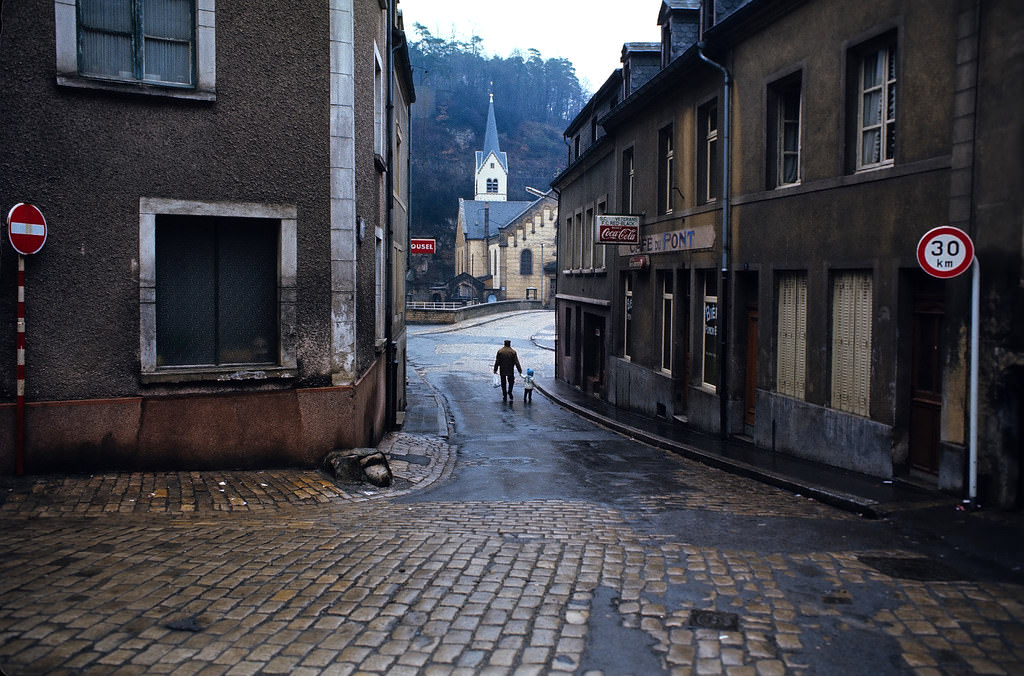
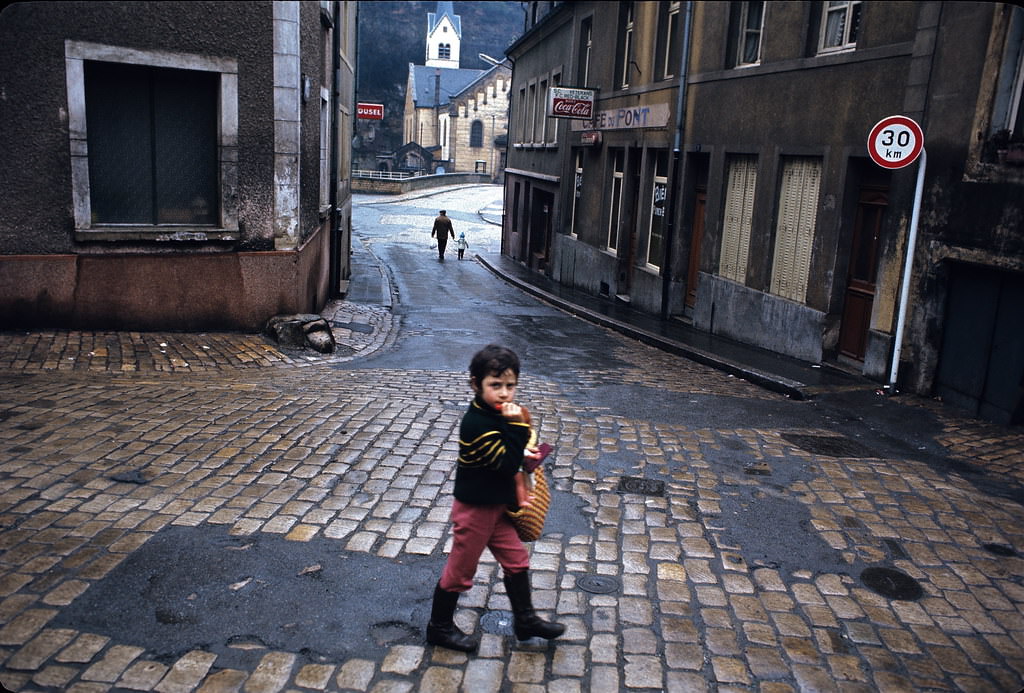
Beyond Pfaffenthal, Beach explored the broader old city. He photographed its winding streets, thick stone walls, and the remnants of Fortress Luxembourg — a defensive network with roots going back to 936 A.D. The fortifications had been built and rebuilt over centuries by successive powers: the Habsburgs, the Spanish, the French, and the Prussians all left their mark on the walls.
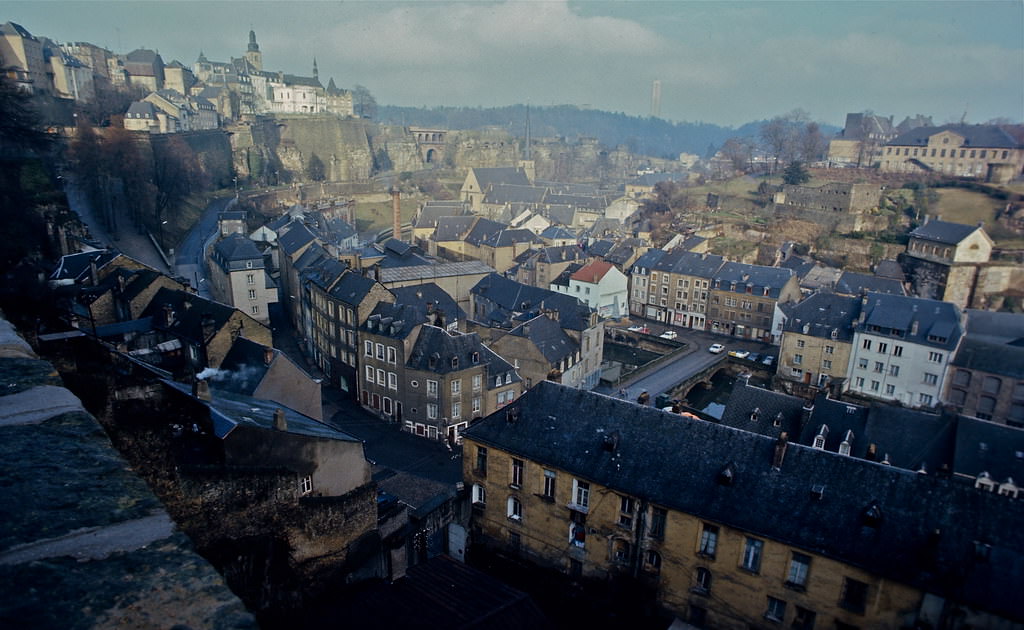
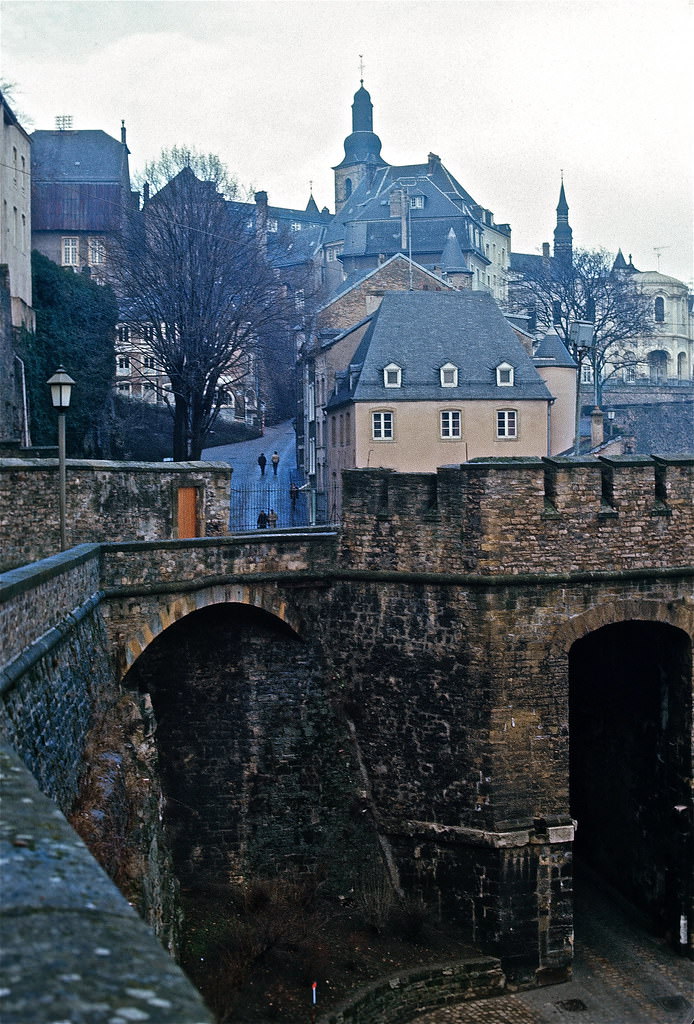
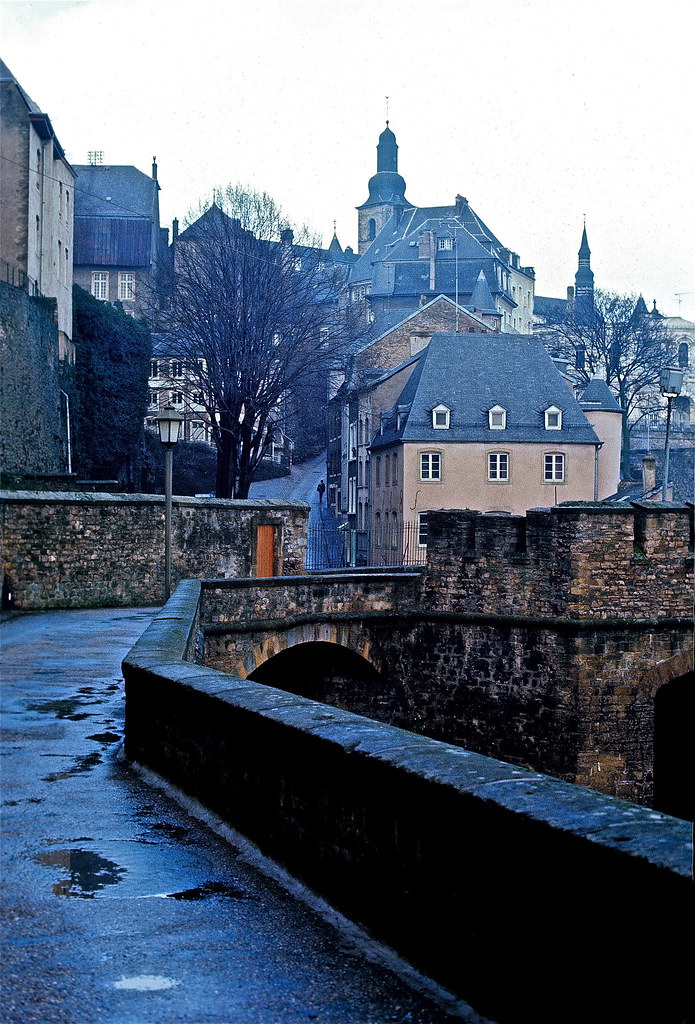
The lower district known as Grund gave Beach another set of views into the city’s layered geography. From above, the tightly packed rooftops and narrow alleys of Grund looked almost like a model of a medieval town. From street level, the scale felt entirely different — tall walls rising on either side, the upper city invisible overhead.
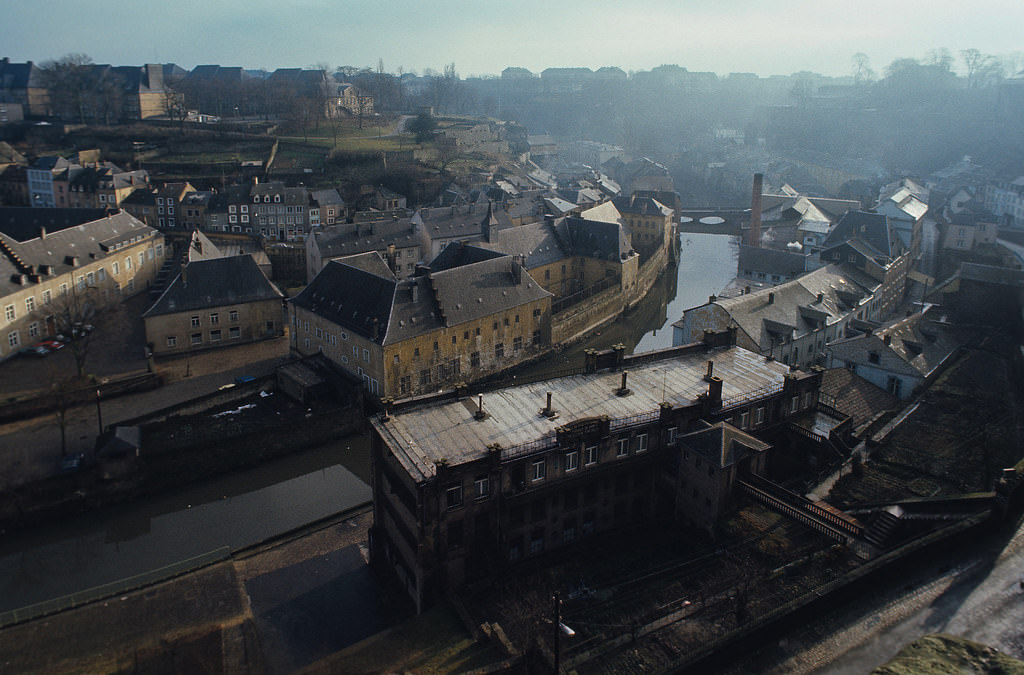
One of Beach’s photographs captured a building that no longer exists. The structure was a riding arena that formed part of the military barracks compound on the Plateau du Saint-Esprit. It stood intact in 1972 but was demolished in 2002 when the plateau was redeveloped to house a new court of justice. Beach’s photograph is now one of the few visual records of it.
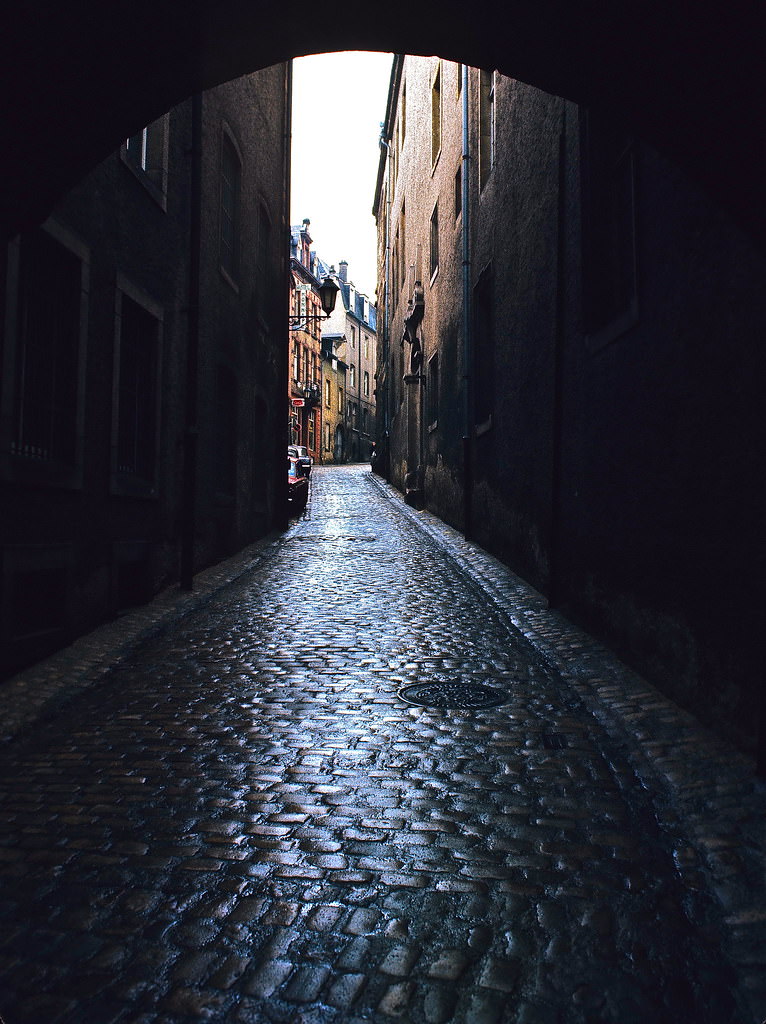
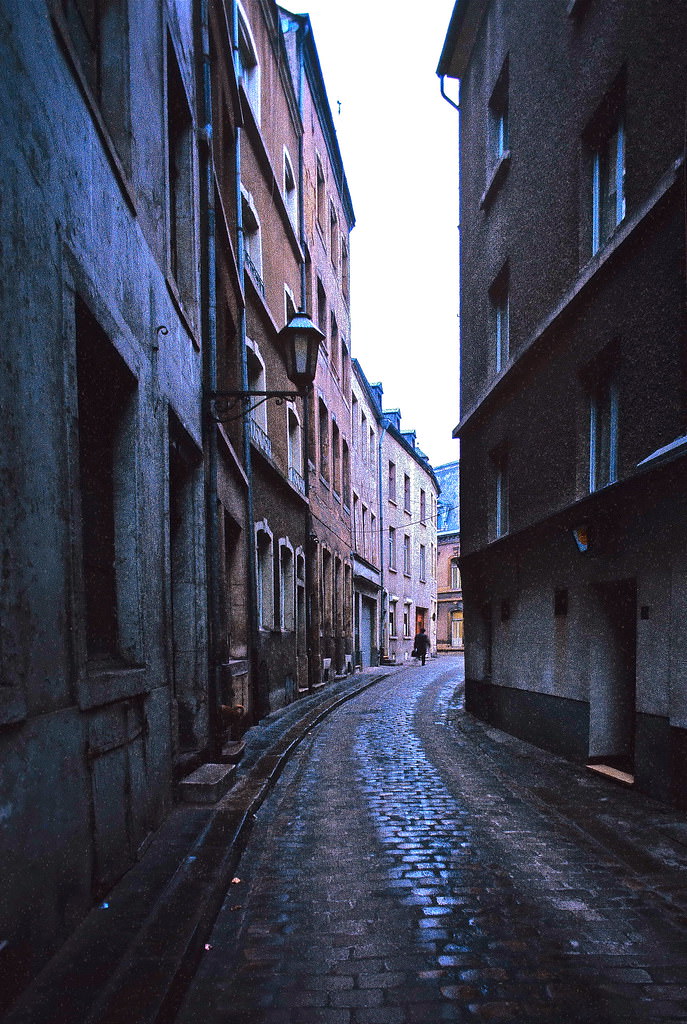
The cobblestone streets of Pfaffenthal were a recurring subject. Their uneven, rounded stones had been laid long before any car would ever drive over them, and in the winter light they caught a wet gleam that Beach’s Nikon rendered in sharp detail. The back streets twisted unpredictably, with small doorways and shuttered windows marking each building.
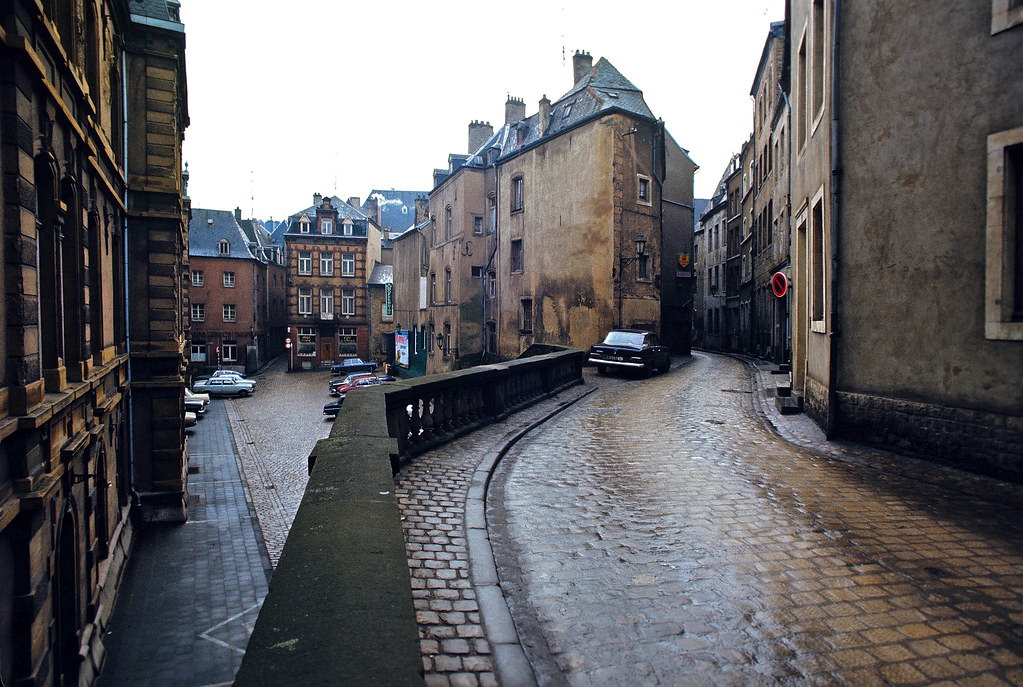
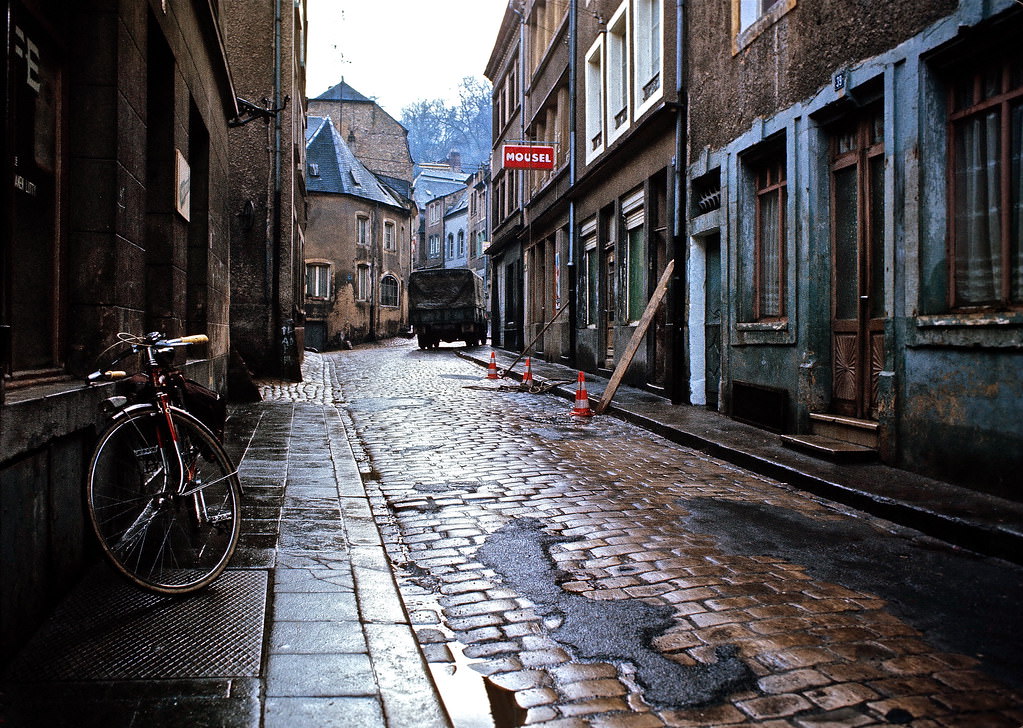
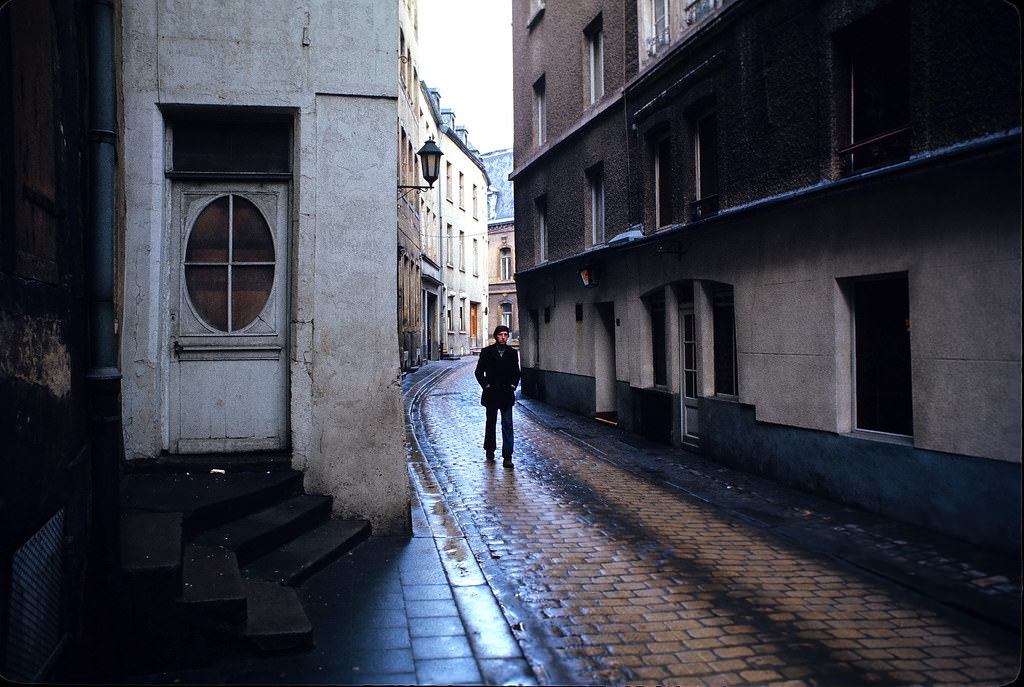
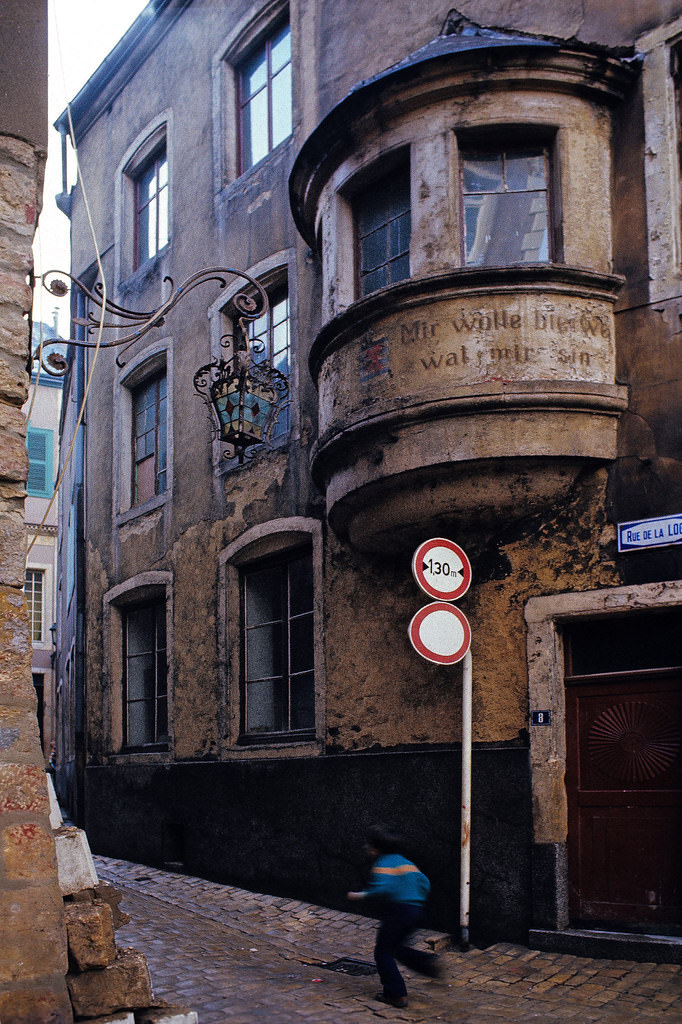
At the Fëschmaart — the old fish market — Beach found one of the city’s most iconic inscriptions. Carved into the stonework was Luxembourg’s national motto: “Mir wëlle bleiwe wat mir sinn” — “We want to remain what we are.” The phrase dates to the 19th century and captures the small nation’s fierce sense of identity despite centuries of foreign rule.
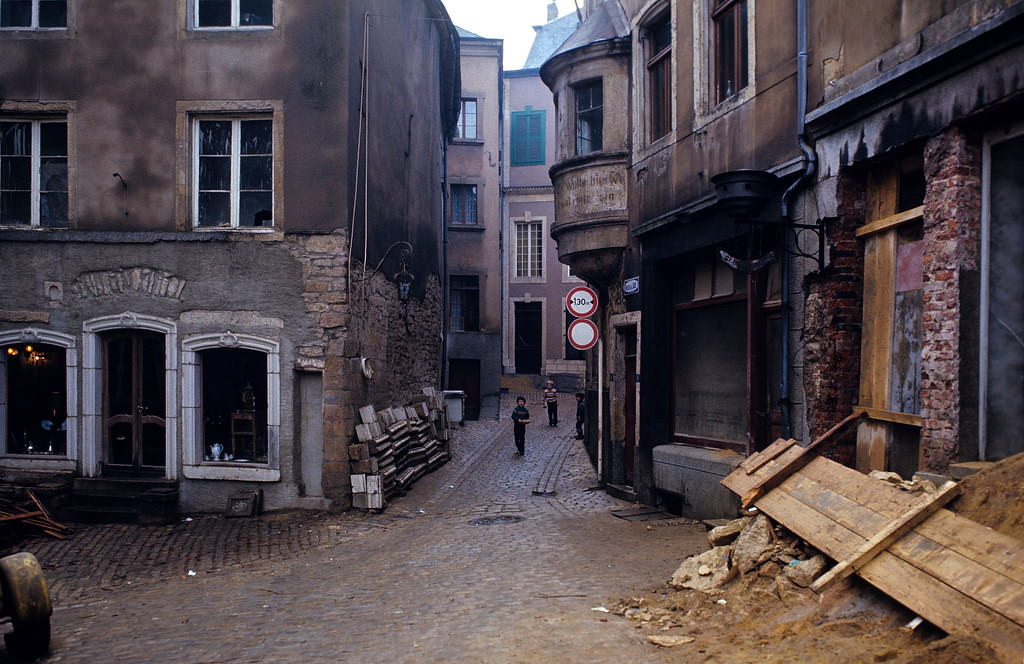
Beach also turned his camera toward the city’s skyline and its older defensive structures. A castle, the broad panoramic views of the Pfaffenthal valley with the Grand Duchess Charlotte Bridge, and the descent from the upper city to the lower districts all made their way onto film. The Hiel valley, tucked into the lower district, showed the Hiel gate, the railway bridge, and the primary school — everyday infrastructure woven between fortifications.
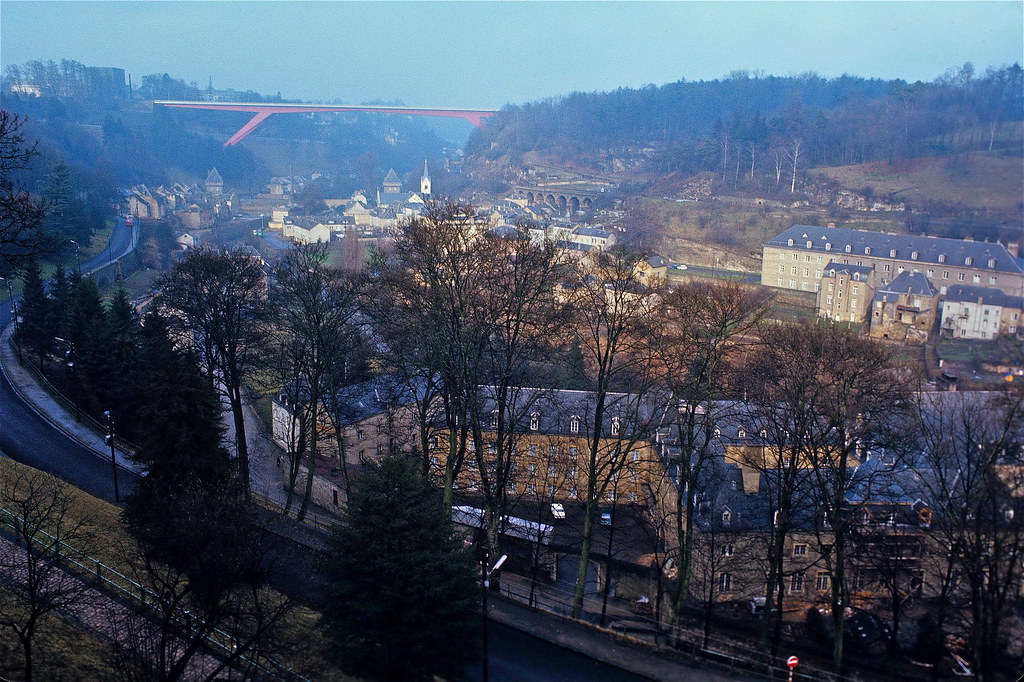
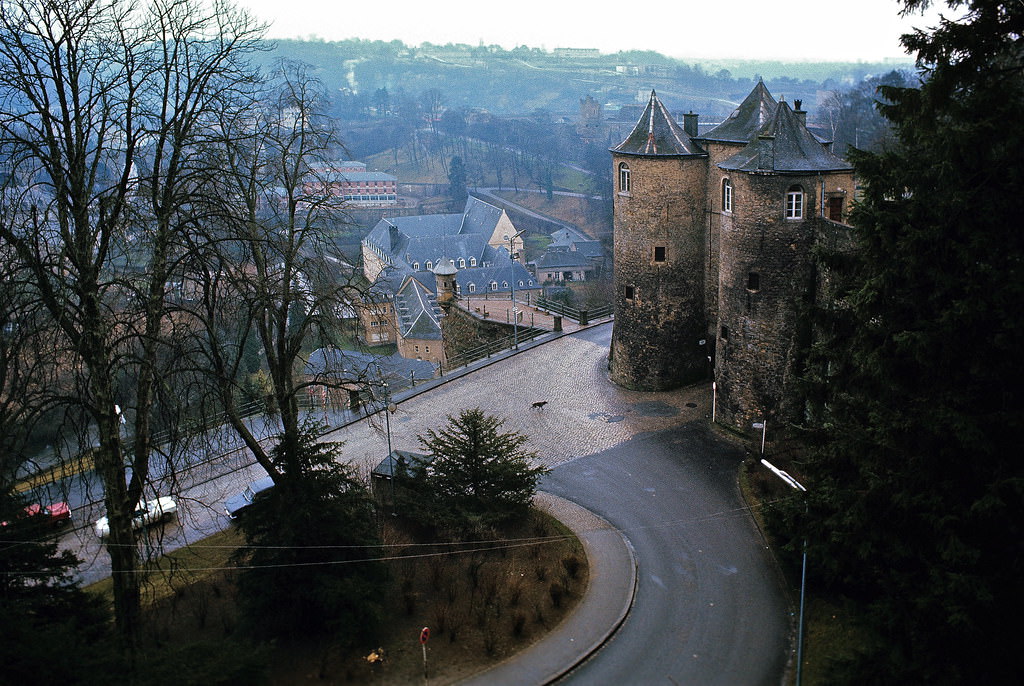
The towers of the Porte du Pfaffenthal — the fortified gate into the city built in 1685 — formed part of the second fortification wall around Luxembourg City. Three towers stood together, with the Civil Hospital visible in the valley below and the Youth Hostel nearby. From above, Beach photographed the city in a sweeping bird’s-eye view that laid out the full complexity of its geography.
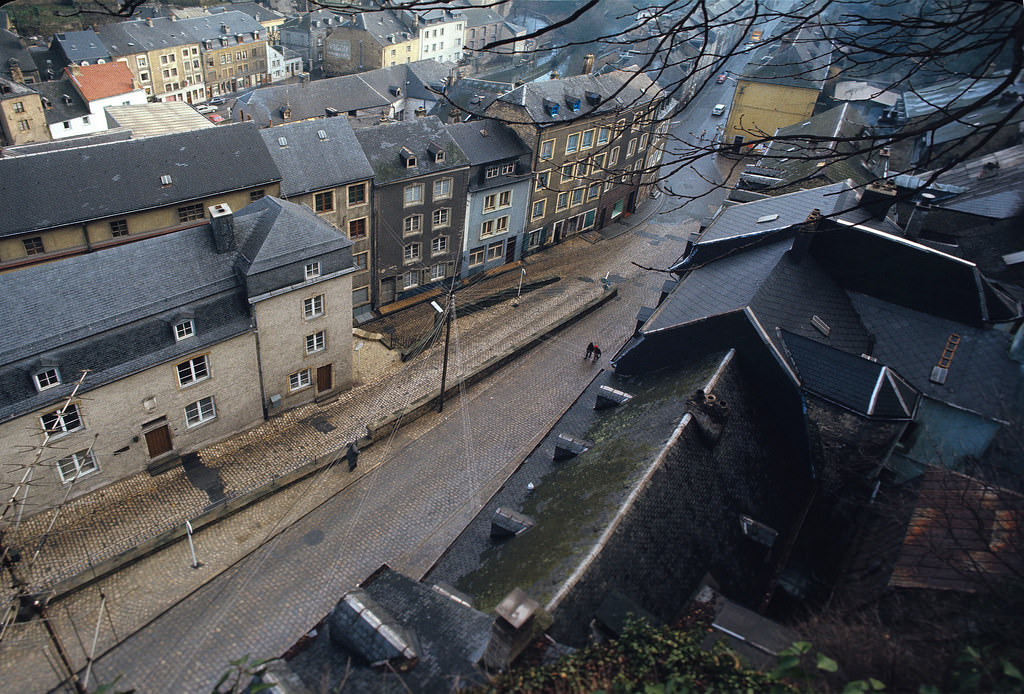
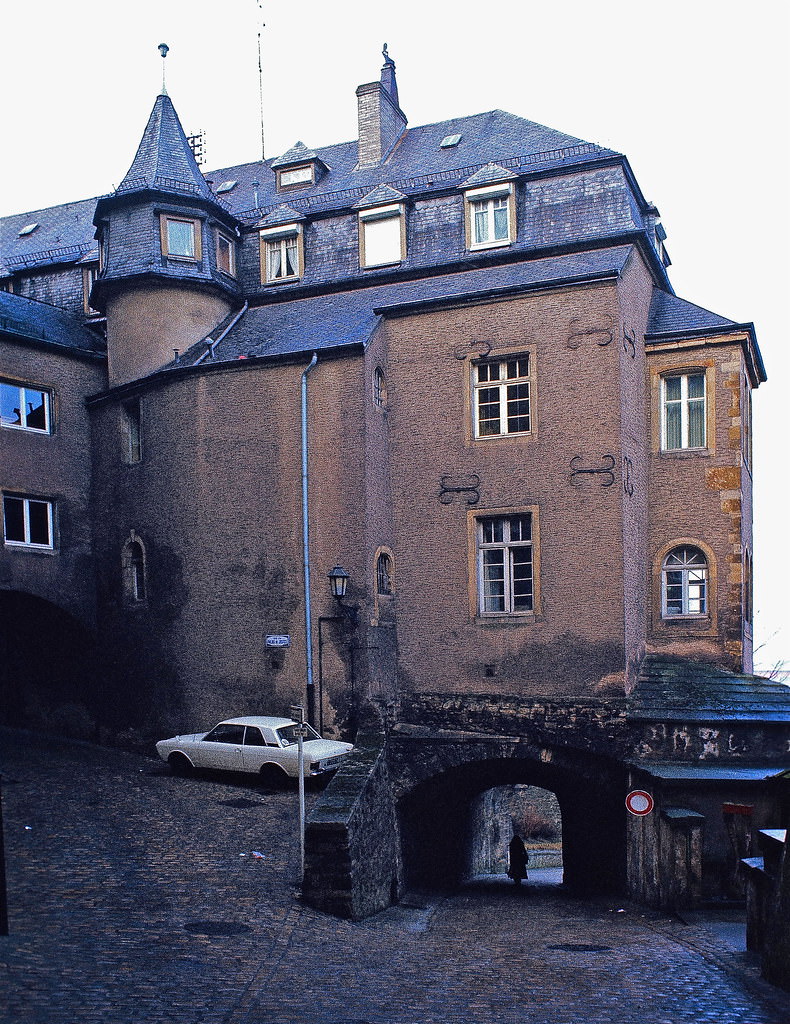
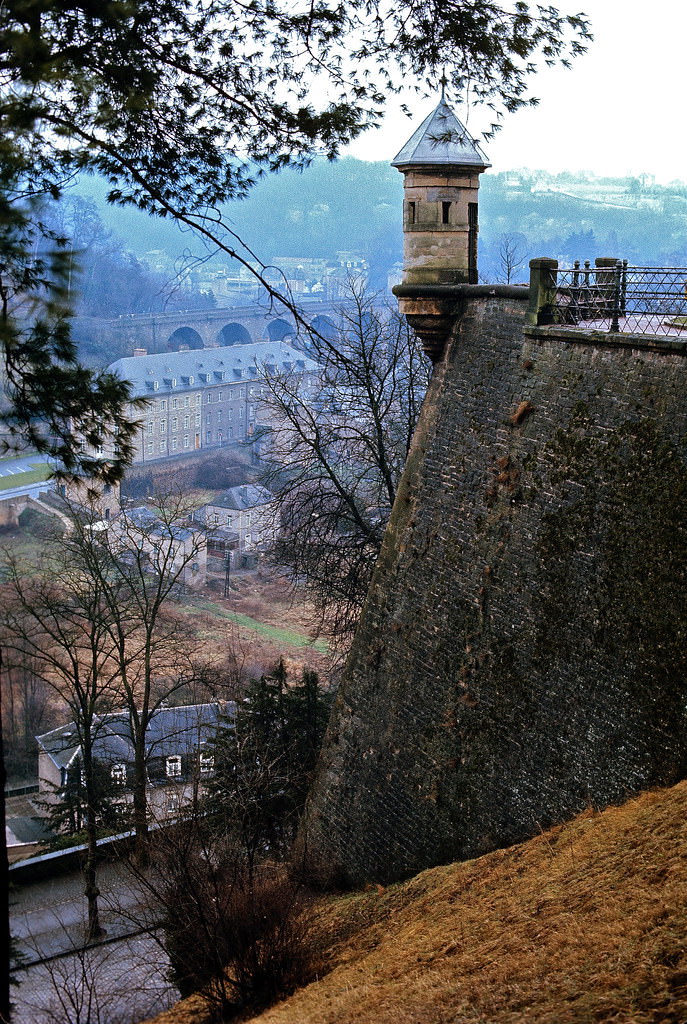
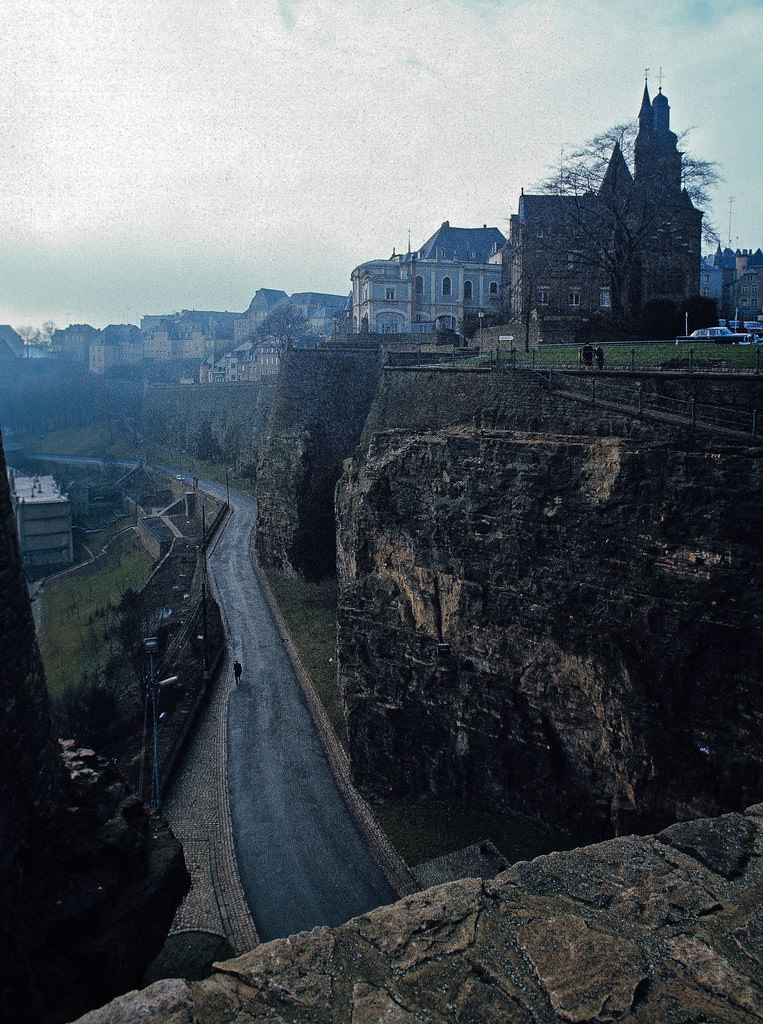
The road up to the citadel — once part of Fortress Luxembourg, with origins dating to 936 A.D. — gave Beach a long, steep view of the city climbing its own hillside. A Spanish turret overlooked the valley from above, its long adjoining building tracing back to the French military engineer Vauban, who designed it in 1686 for military use.
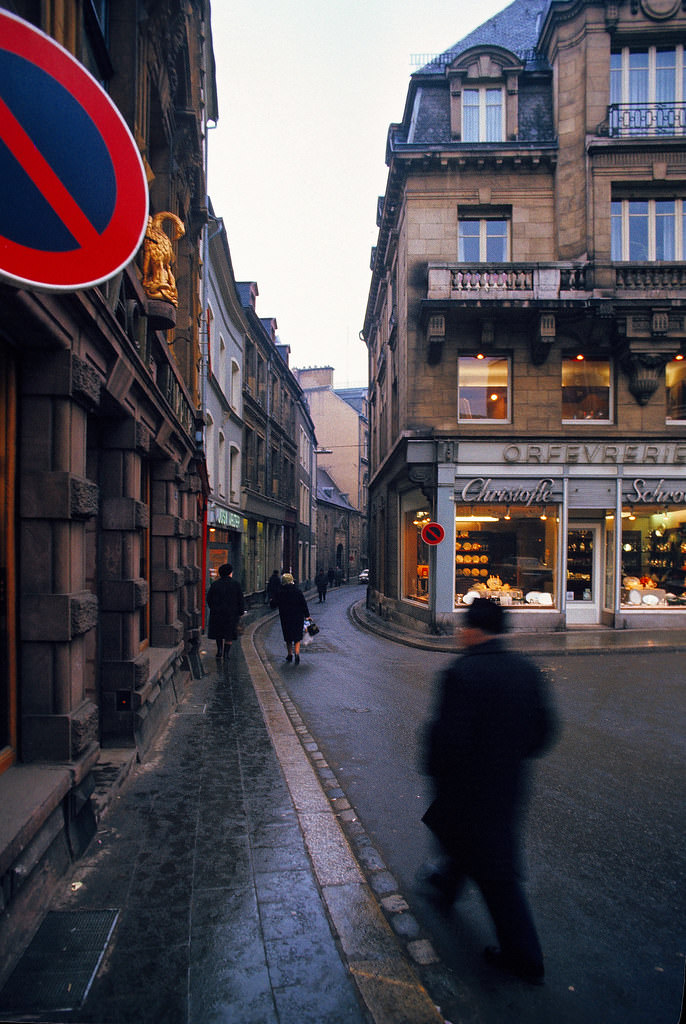
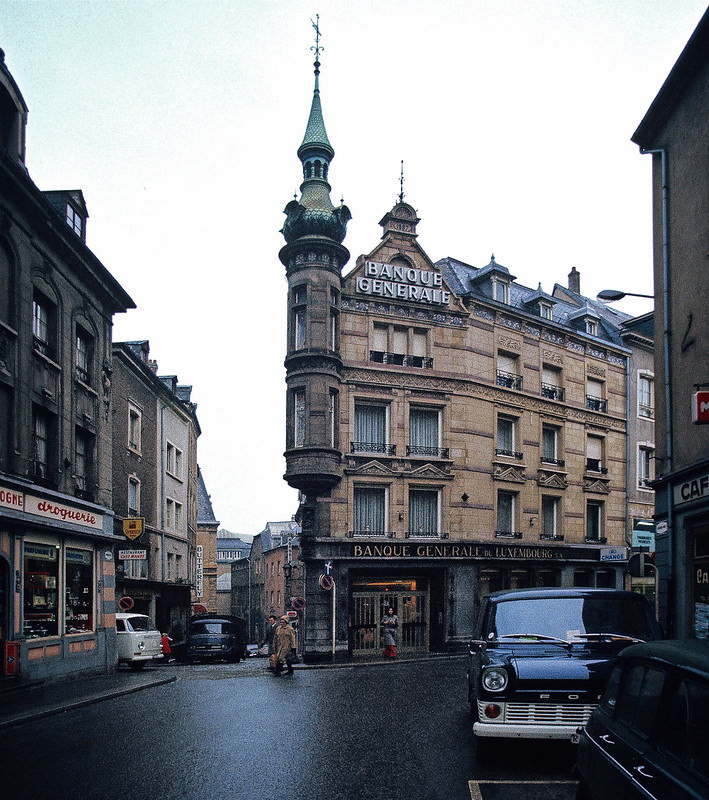
Beach also walked through the old business district, where shop fronts and street-level commerce gave the city a different character than the quiet residential lanes of Pfaffenthal. The streets were wider here, the buildings more uniform in their 19th-century commercial style.
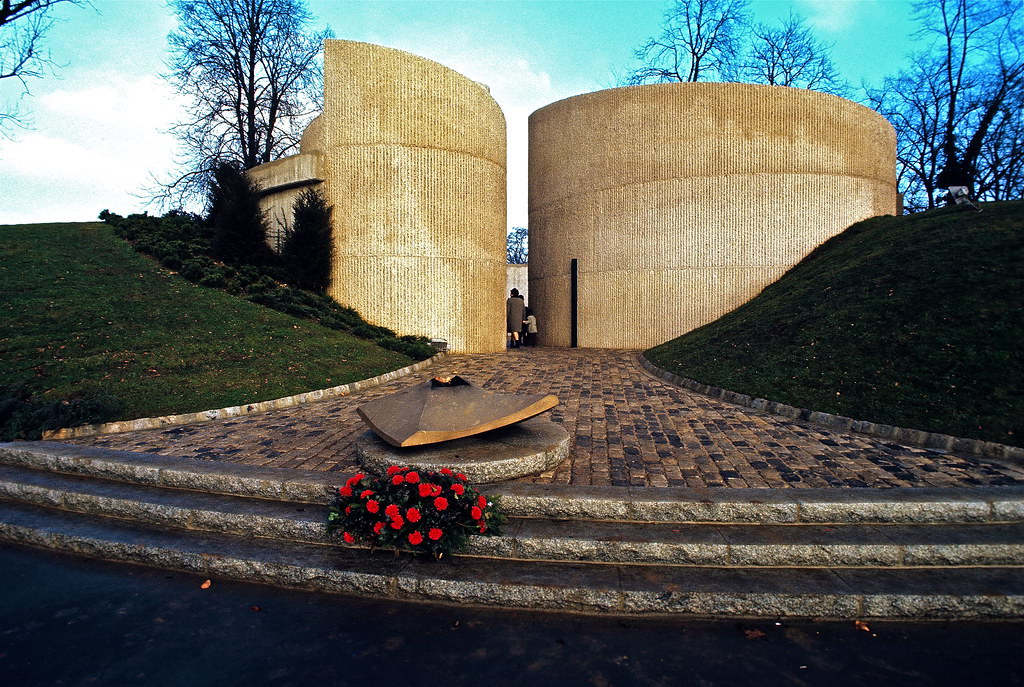
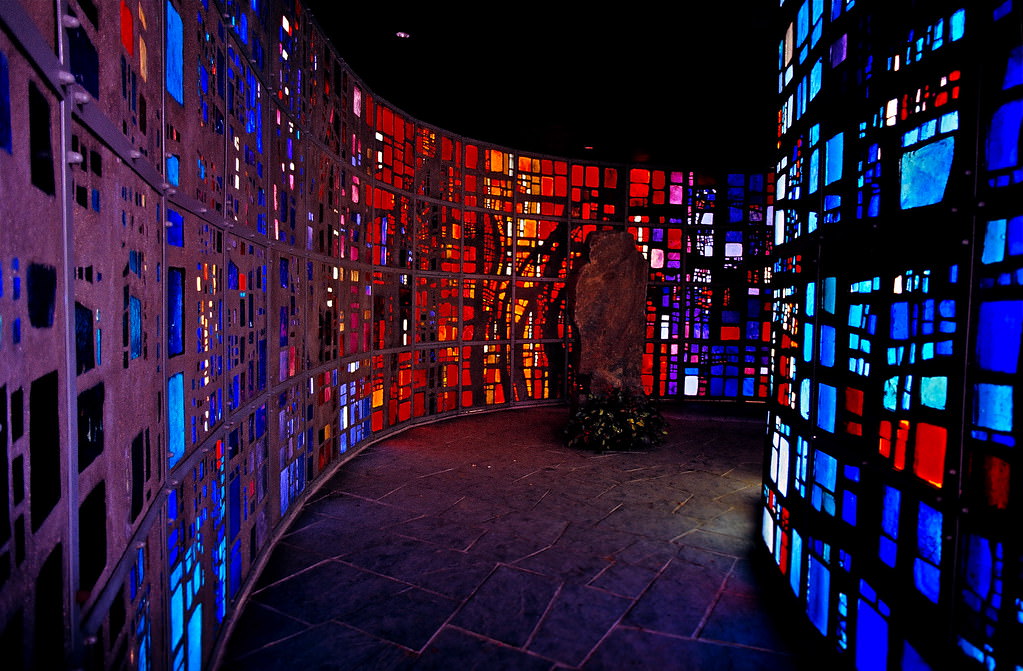
Among the most significant sites Beach documented was the National Monument to Luxembourg Solidarity. The monument commemorates the dead of World War II and honors the resistance of the Luxembourg people during the Nazi occupation. Its paved inner courtyard represents prisons, concentration camps, and barracks. A plain, chiseled stone marks the war victims. An eternal flame burns in front of it — still burning when Beach stood there in January 1972.
By the time Beach’s three days in Luxembourg City came to an end, he had used every roll of film he carried. The State Savings Bank, the final streets of the old city, and a few last views of the winter skyline rounded out his collection before the weather cleared enough for him to resume travel to Iceland.





Honestly, I see the same buildings today, but they have been restored and are much more beautiful. I would prefer the city 2020 to winter 1972 – except for the pandemic, of course. 😉
Lux city was so calm and peaceful that I almost forgot about it. I hope the Gare construction is completed soon.
Stunning photos. I loved it.
It looked so much better when Luxembourg was still ‘gritty’ and had more old buildings. It was not this sterile artificial polished city.
The preservation of our architecture here is horrendous. You can demolish almost any building here, but anywhere else in Europe, it would be unthinkable.
Cool pics; I hope the “Phototeque” of the city has the originals.
Beautiful. I miss Luxembourg
As a resident of a country where architectural heritage is destroyed to make way for “modernism”, it is lovely to see photos from half a century ago and recognize every spot as it is (almost) identical today. Luxembourg is one of the reasons I love it.
interesting how the abbey area looked like in Grund. Does anyone have more related pics? Thanks
The lack of cars and the general charm of the place makes me want to go back in time.
Honestly these photos make me appreciate how good the city center looks nowadays. Everything looks so run down here.