

Kyiv, today the capital and largest city of Ukraine, was already a thriving metropolis by the time the 1910s arrived. Its rise had been swift and driven by hard economic forces. In the late 19th century, Ukraine’s grain exports made it one of the most commercially important regions in the Russian Empire, and Kyiv sat at the center of that activity. By 1900, the city held a population of 250,000 and had earned its place as a major industrial hub.
Industry in Kyiv had deep roots. The Arsenal, established in the 18th century, was the city’s first major factory. Over time, lumber milling and rivercraft construction were added. Agriculture-driven industries followed — leather making, tobacco processing, distilling, brewing, and textile production all took hold. A railway connection to Moscow, completed in the late 1860s, accelerated Kyiv’s role as a center of commerce and government. Then in 1892, the city made history by launching the first electric tram line in the Russian Empire — only the third in the entire world at that time.
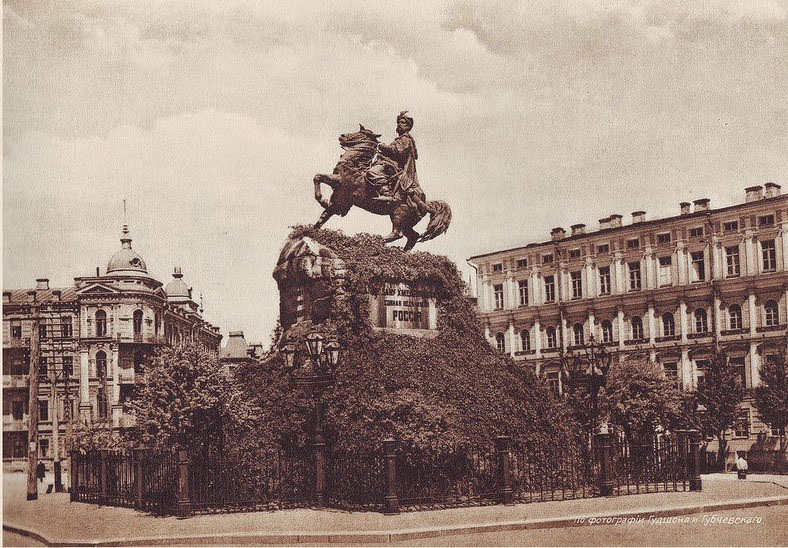
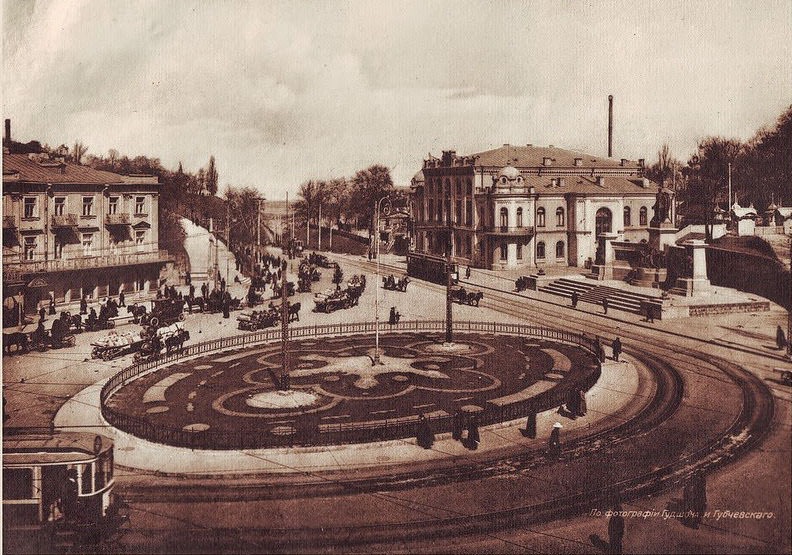
By the 1910s, the city’s streets were lined with grand monuments, public institutions, churches, and commercial buildings that reflected its growing wealth and ambitions. One of the most recognizable landmarks was the monument to Bohdan Khmelnytsky, the Cossack hetman who shaped Ukrainian history in the 17th century.
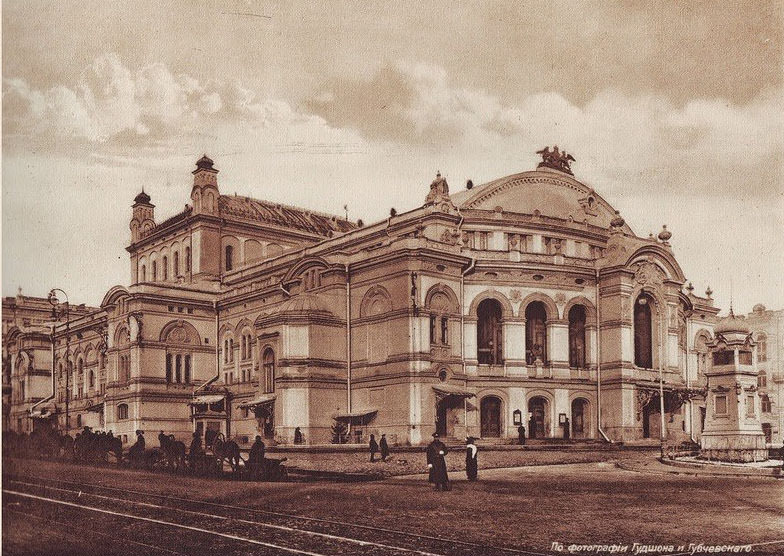
Kyiv’s cultural scene matched its commercial energy. The city opera house stood as a symbol of the city’s European ambitions, staging performances for its growing educated class.
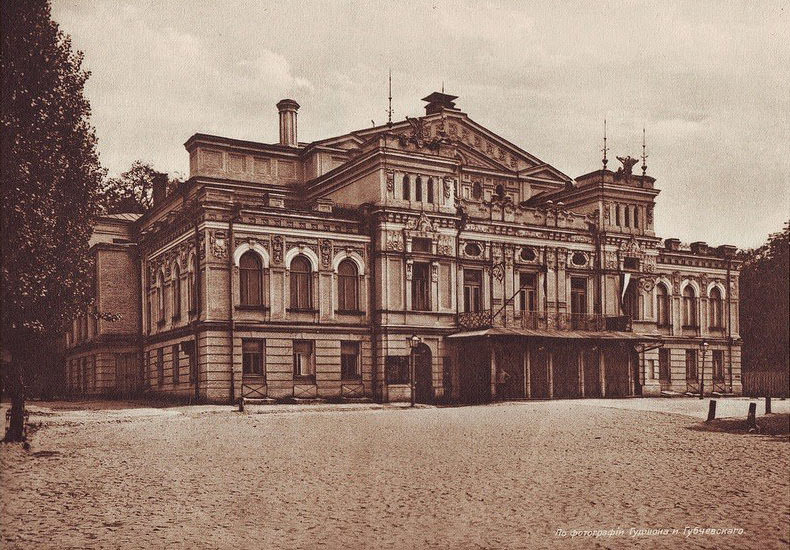
Theater was another pillar of city life. The Drama Theater “Kolovtsov” catered to Kyiv’s appetite for the arts, drawing audiences from across the social spectrum.
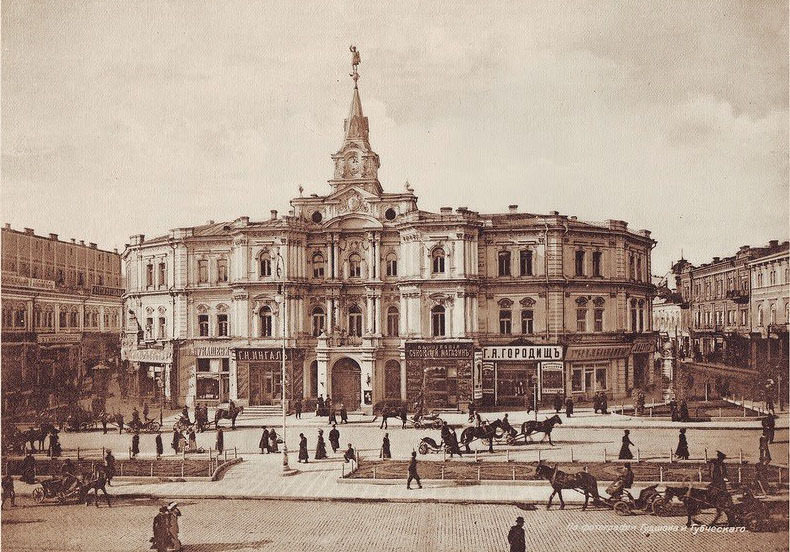
Civic administration also left a strong architectural mark on the city. City Hall served as the seat of municipal government, an imposing structure that reflected Kyiv’s stature as a major imperial city.
Finance and commerce demanded their own grand spaces. The State Bank building was one of the most authoritative structures in the city, handling the economic transactions of a region whose grain and industrial output touched markets across Europe.
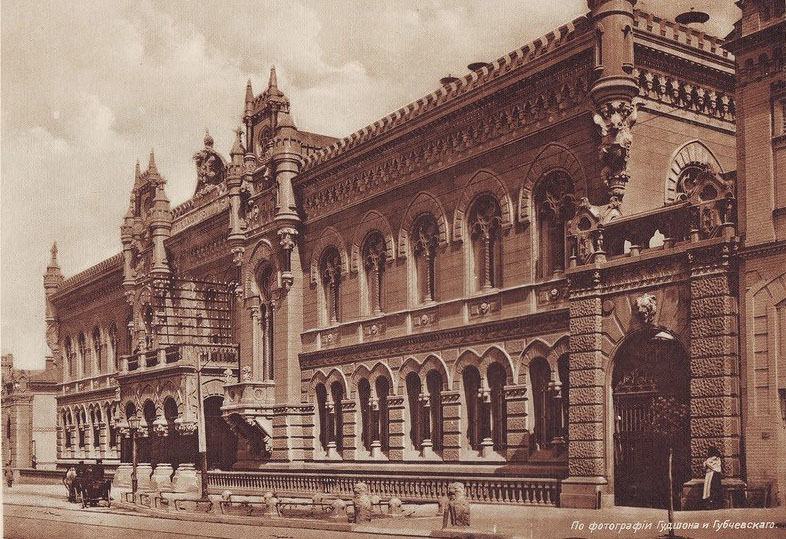
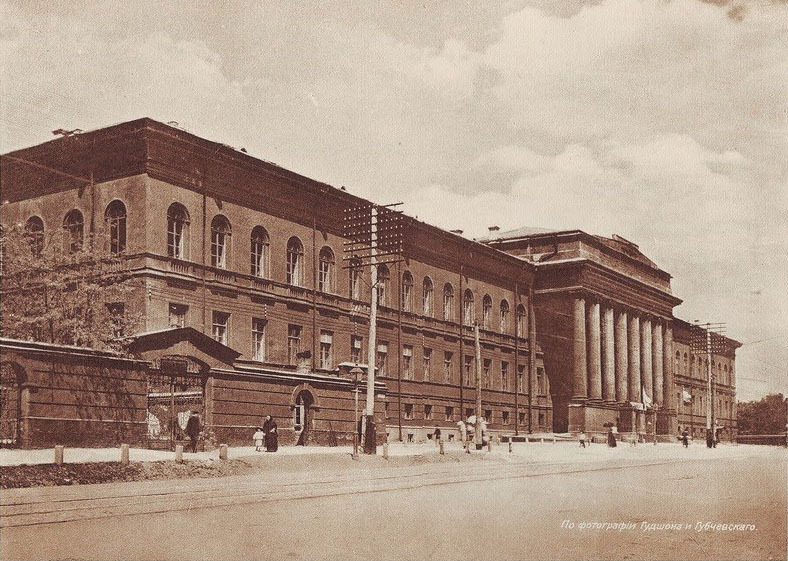
Education was a key part of Kyiv’s identity as well. The Imperial University of St. Vladimir, founded in 1834, was one of the premier academic institutions in the Russian Empire. It trained generations of scholars, doctors, lawyers, and scientists.
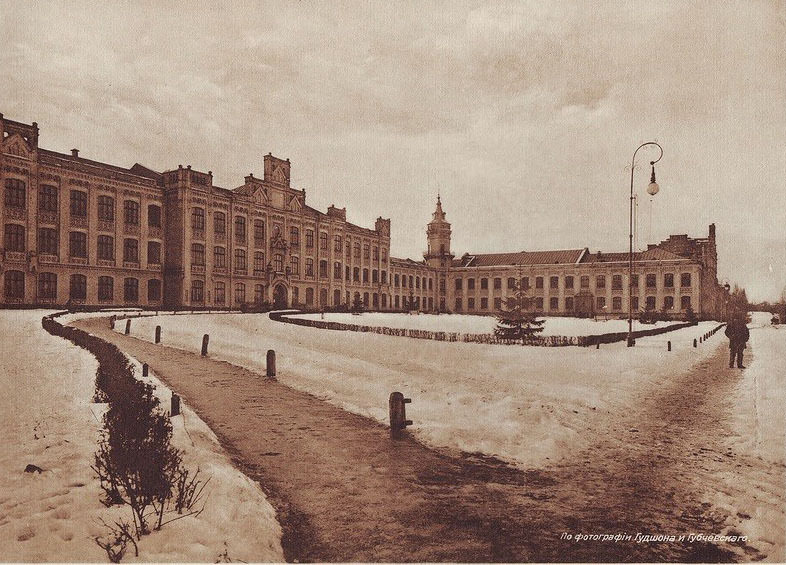
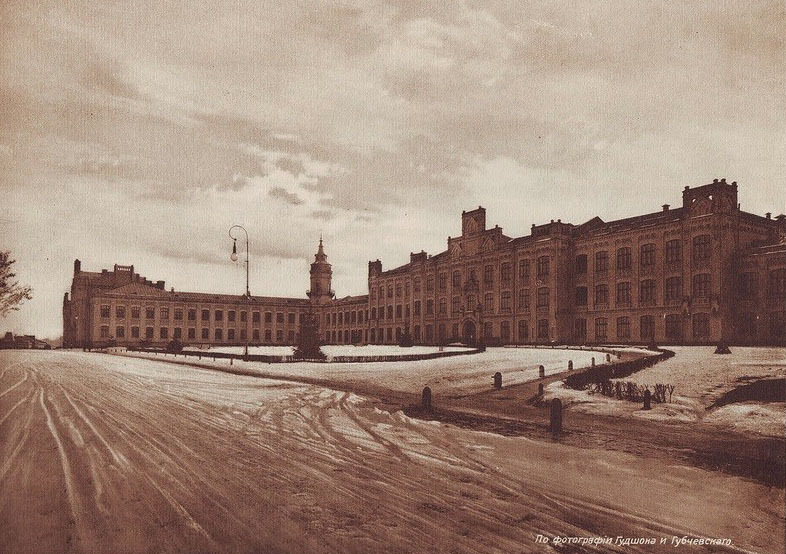
Technical education also expanded during this era. The Polytechnic Institute of Emperor Alexander II prepared students for careers in engineering and applied sciences, meeting the demands of an industrializing society.
Music and the arts had dedicated institutions of their own. The Conservatory trained musicians and performers who contributed to Kyiv’s vibrant cultural output throughout the early 20th century.
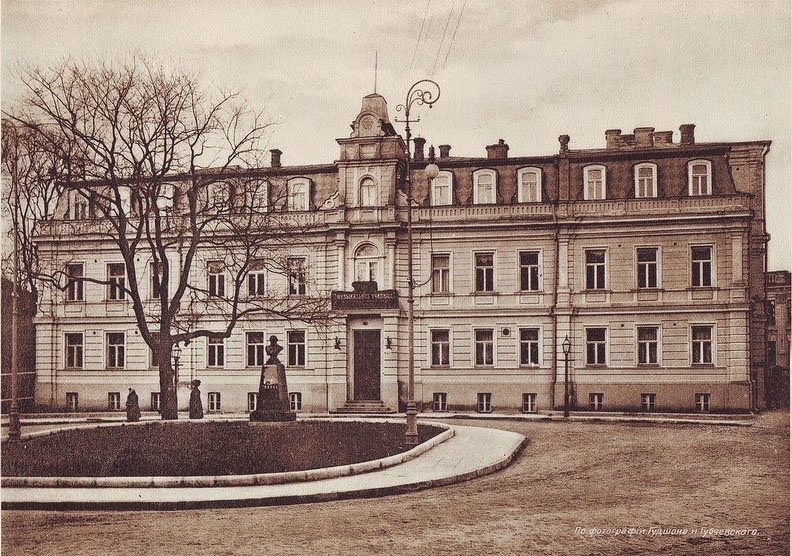
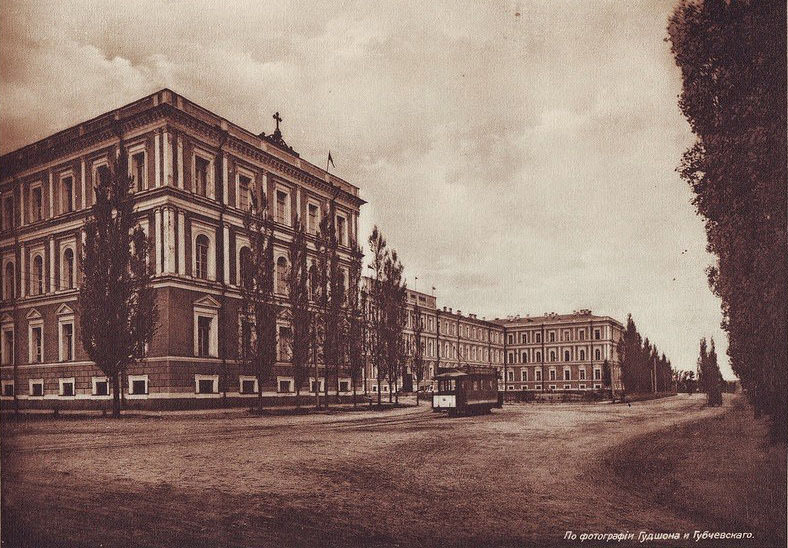
Military education also had a strong presence in the city. The Cadet Vladimirskiy Corps trained young men for careers in the imperial military, part of a broader network of military schools across the Russian Empire.
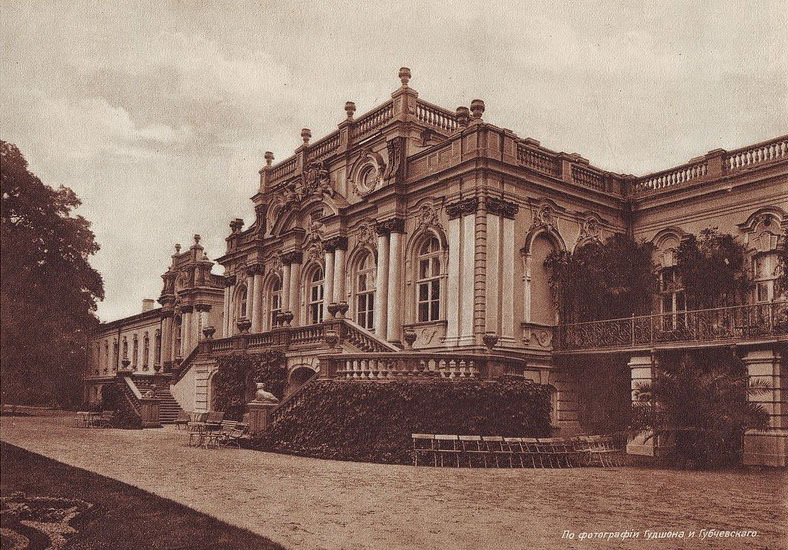
The royal palace in Kyiv served as an official imperial residence during state visits, a visible reminder of the city’s direct ties to the Romanov dynasty and Russian imperial power.
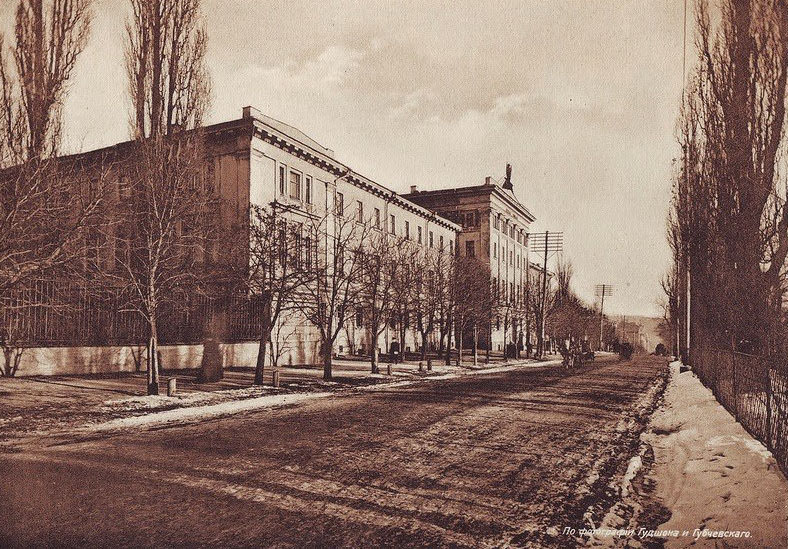
Among the city’s educational institutions, the Imperial Alexander Gymnasium provided a classical secondary education, forming the academic foundation for students who would go on to the university or professional life.
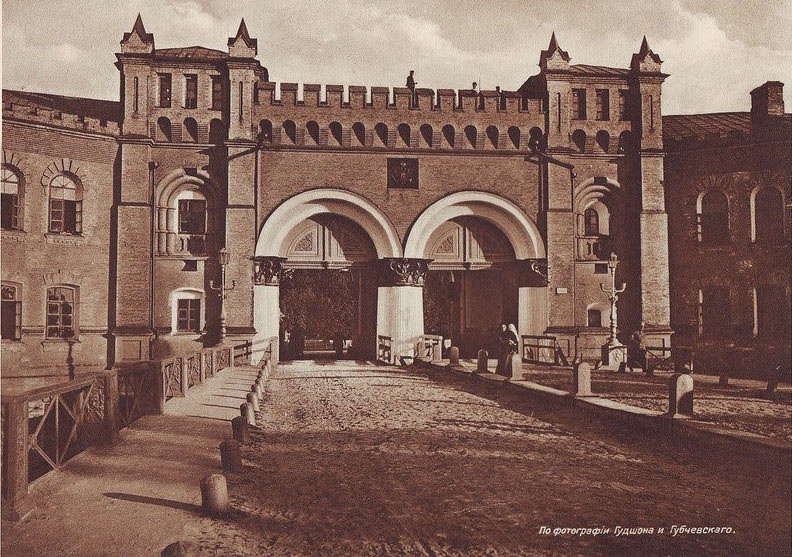
The city’s historic fortifications were also preserved as landmarks. The Nikolskie border gates stood as a remnant of Kyiv’s older defensive past, now surrounded by the modern streets of a 20th-century city.
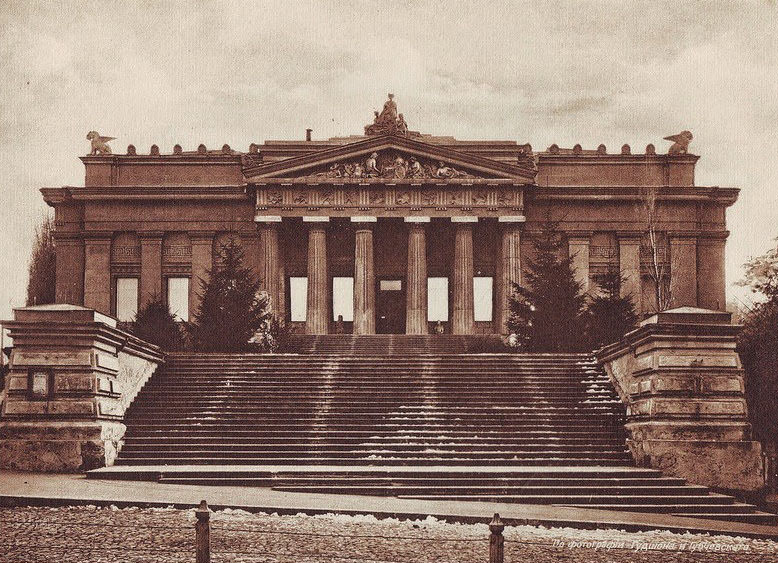
Public institutions dedicated to knowledge and culture were spread across the city. The City Museum housed collections that told the story of Kyiv’s long and layered history.
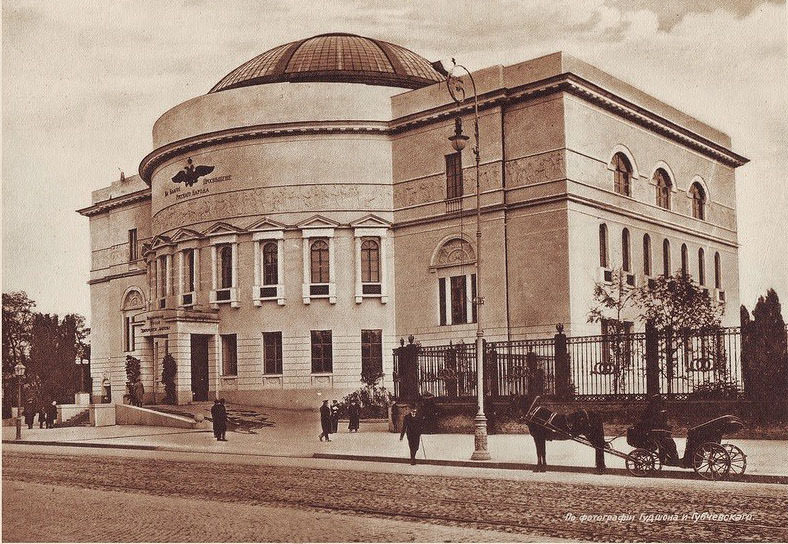
The Pedagogical Museum of Tsarevich Alexey was another important institution, dedicated to educational materials and methods — a reflection of the empire’s growing investment in organized schooling.
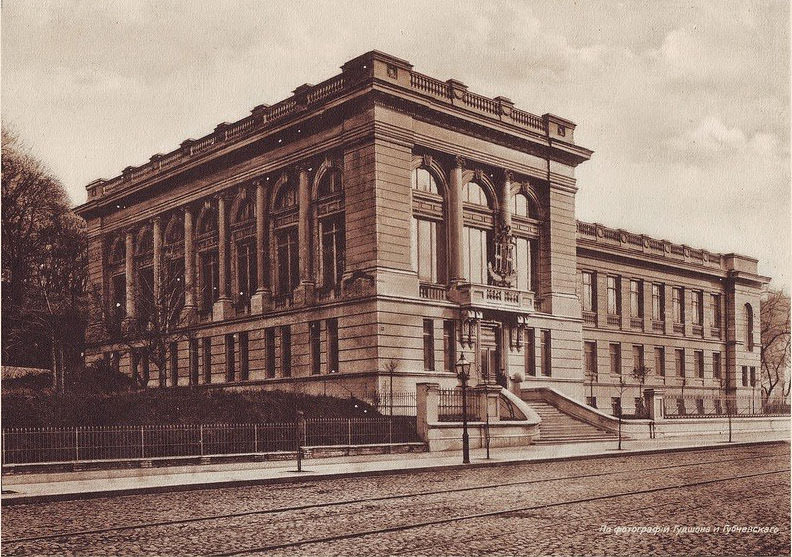
Public literacy and access to books were taken seriously in early 20th-century Kyiv. The City Public Library gave residents access to literature, newspapers, and academic works that would otherwise be out of reach for many.
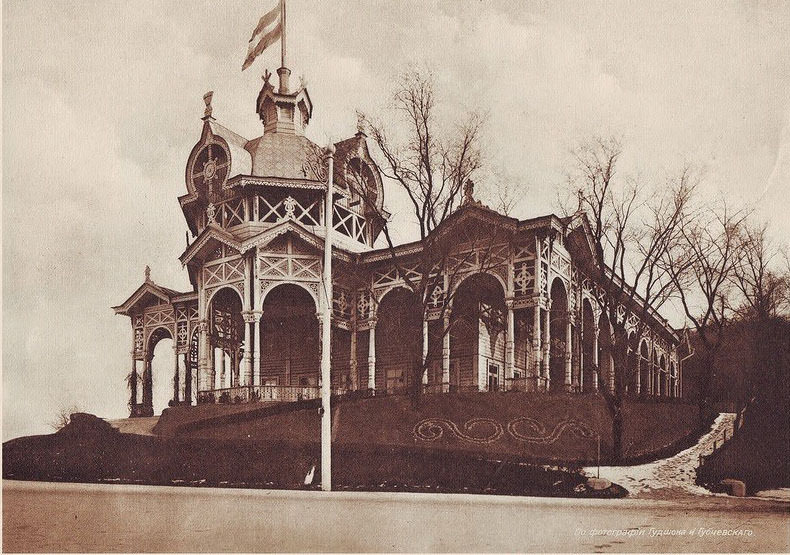
Commerce and social life intertwined in spaces like the Russian Merchant Assembly, which provided its members with a comfortable venue for meetings, entertainment, and networking. Its summer room was a particularly popular gathering spot.
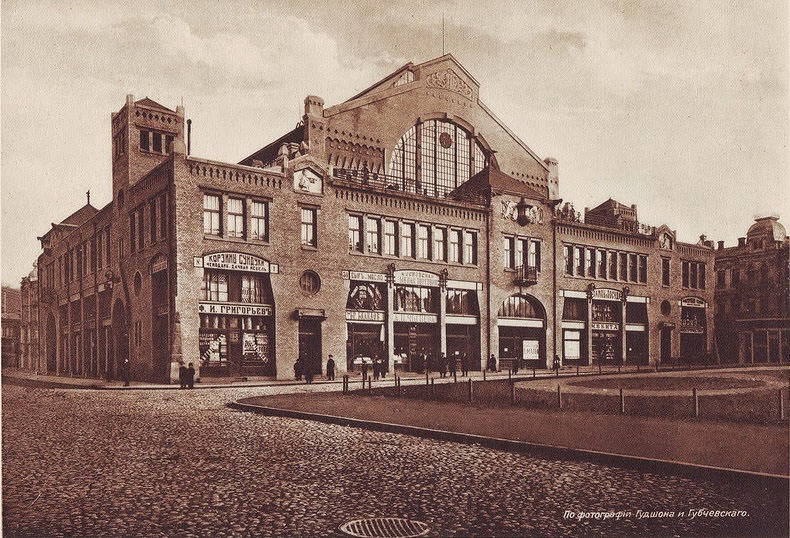
For everyday trade, the city indoor market was the beating heart of commercial activity. Residents from all walks of life came here to buy and sell goods, making it one of the most lively spaces in the city.
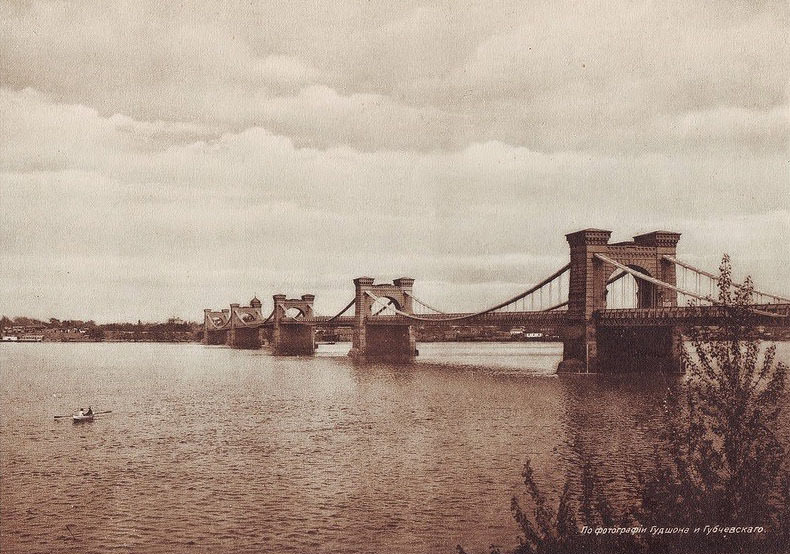
The Nikolaevsky central bridge was one of Kyiv’s most important infrastructure links, spanning the Dnipro River and connecting different parts of the city and its surrounding areas.
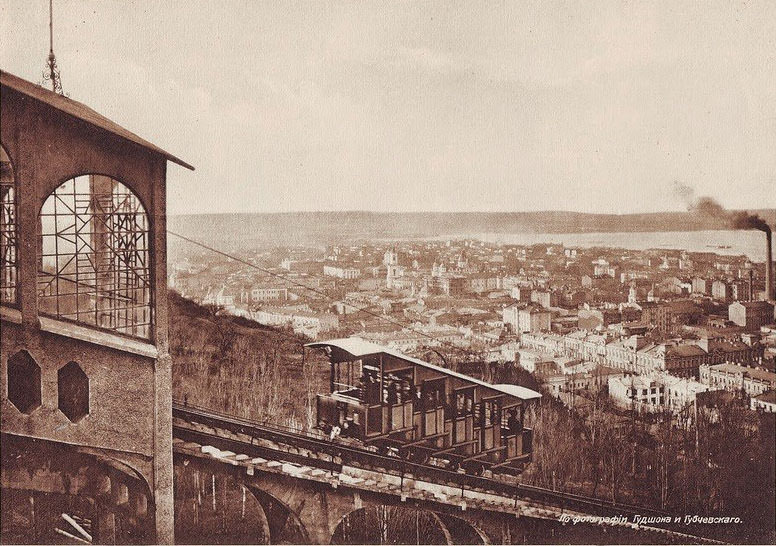
Kyiv’s geography — built on a series of hills above the Dnipro — gave it spectacular views. From Volodymyrskaya Mountain, the Podil district stretched out below, showing a dense neighborhood of trade, craft, and riverside activity.
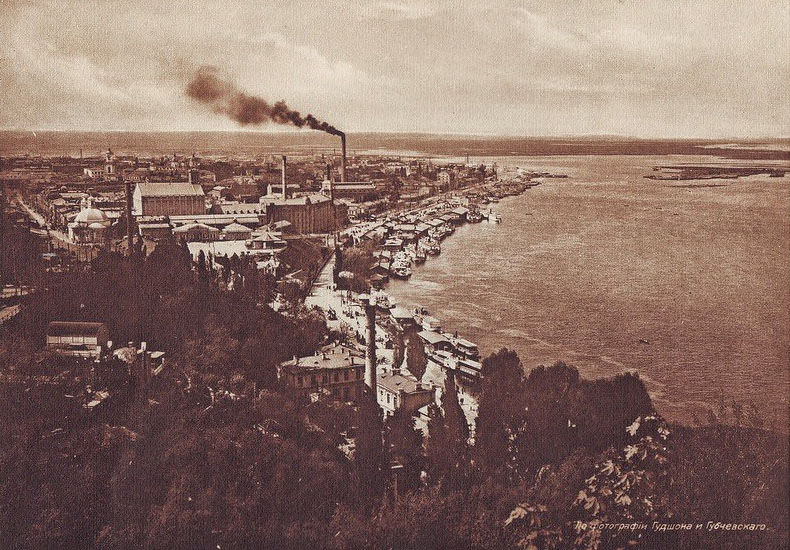
The descent known as Mikhailovsky Podyem offered another commanding view of Podil, one of Kyiv’s oldest commercial districts, nestled along the riverbank beneath the city’s upper hills.
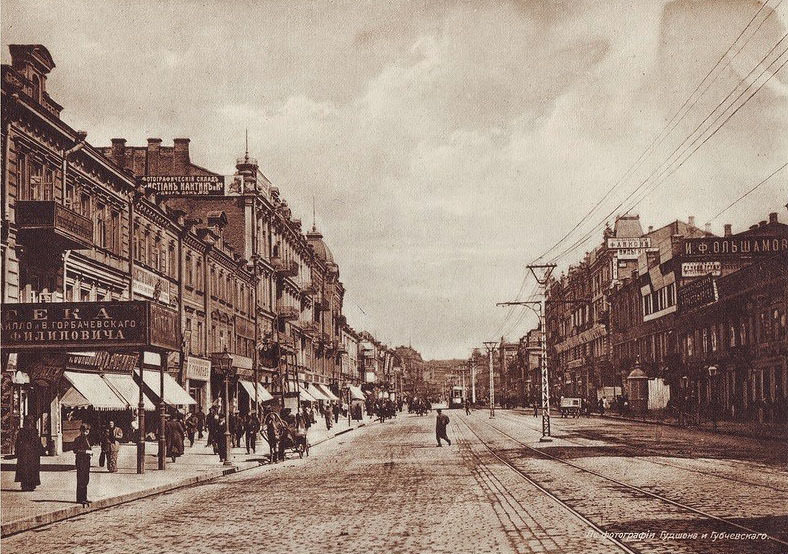
Khreshchatyk was — and still is — Kyiv’s central boulevard. In the 1910s, it was lined with shops, hotels, and offices, and it served as the main artery of modern city life, busy with pedestrians and the city’s famous electric trams.
Religion shaped the city’s skyline more than almost anything else. The Bratsk Monastery and Theological Academy was a center of Orthodox Christian scholarship, playing an important role in the religious and intellectual life of the region.
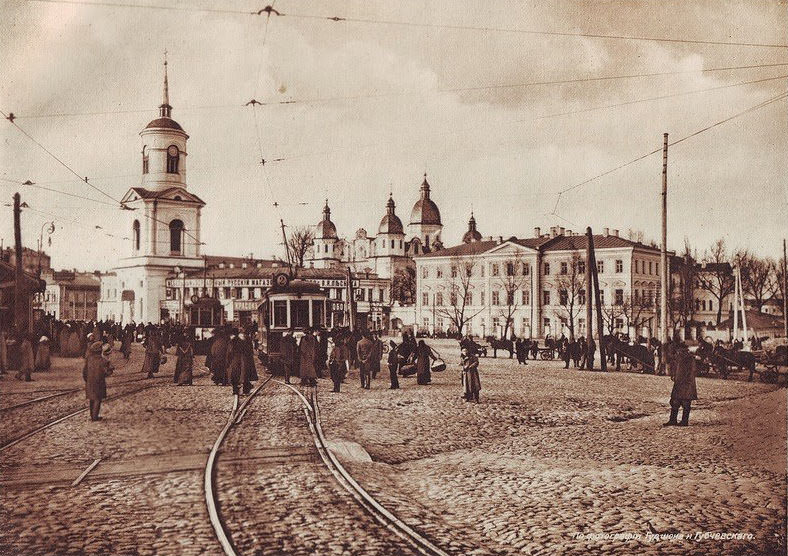
Tsarskaya Square was one of the city’s grand open spaces, designed to reflect the power and order of imperial governance. Its panoramic views revealed just how much the city had grown by the early 1900s.
Few sites in Kyiv carry as much religious significance as the Kiev Pechersk Lavra — the Monastery of the Caves. Founded in the 11th century, it remained one of the most sacred sites in all of Eastern Orthodox Christianity. Its grounds held churches, bell towers, and a network of underground caves used by monks as dwellings and burial sites.
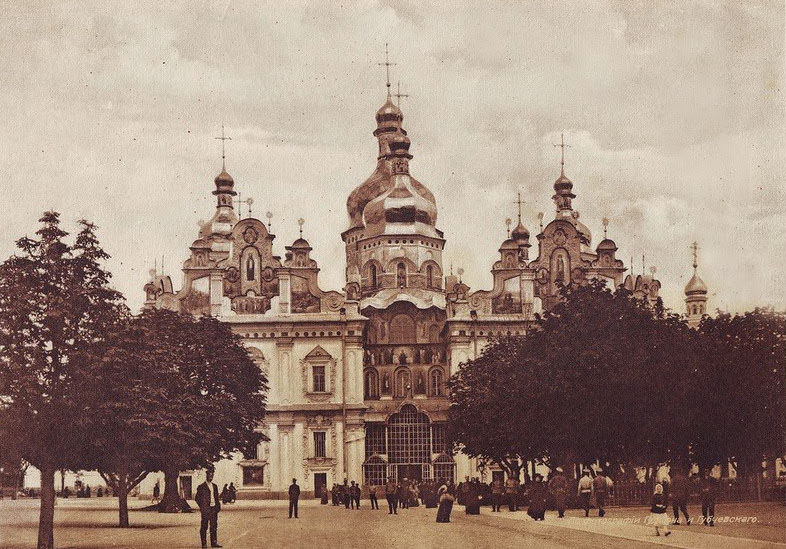
The Holy Gate served as the main entrance to the Lavra complex. Pilgrims traveled from across the empire to pass through it, beginning their visit to one of Ukraine’s most revered religious destinations.
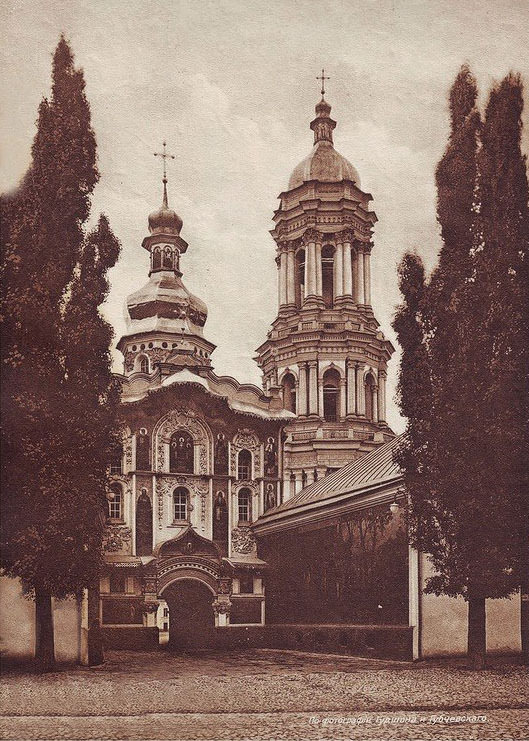
Sofievskiy Cathedral — Saint Sophia — dates back to the 11th century and is one of the oldest standing structures in Kyiv. Built under Yaroslav the Wise, it served as the seat of the Metropolitan of Kyiv for centuries and remained a defining feature of the city’s religious landscape in the 1910s.
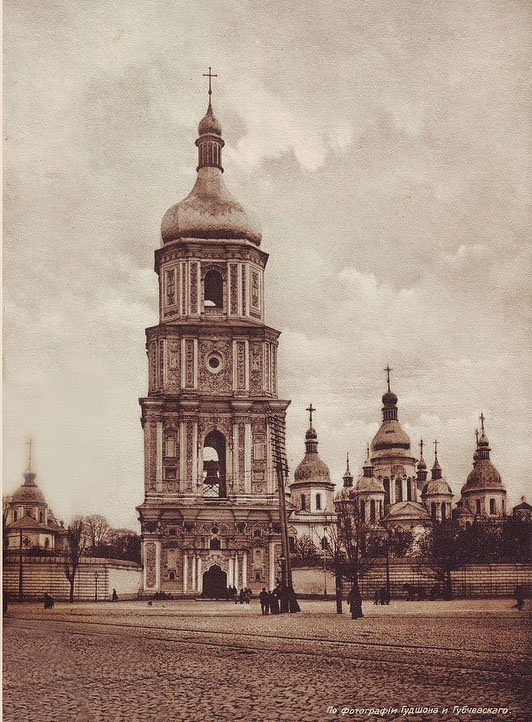
Mikhailovsky Monastery, with its brilliant golden domes, was another of Kyiv’s most photographed landmarks. Its striking exterior made it one of the most recognizable buildings in the city.
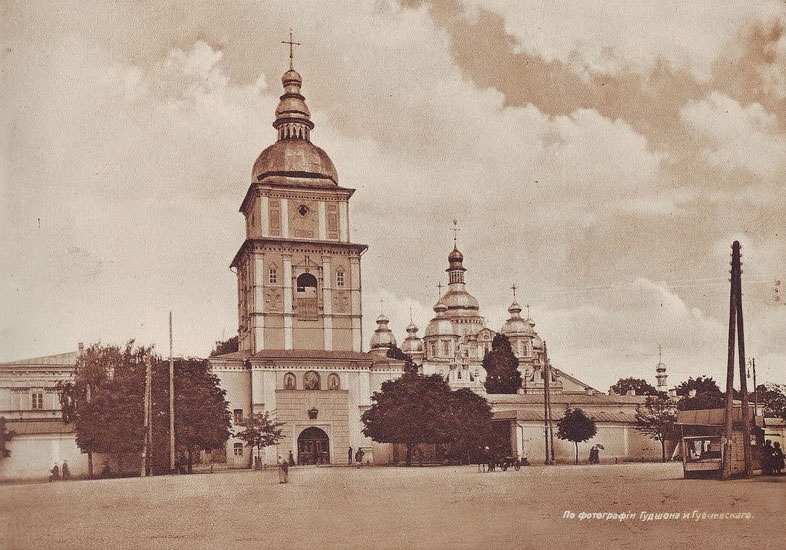
The Church of St. Andrew the First-Called sits dramatically at the top of Andriyivsky Descent, one of Kyiv’s steepest and most historic streets. Designed by Italian architect Bartolomeo Rastrelli and built in the mid-18th century, it remains one of the finest examples of Baroque architecture in Eastern Europe.
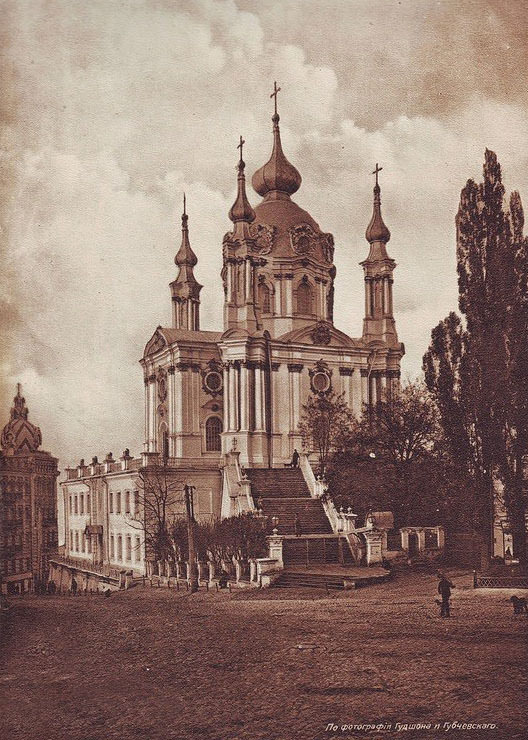
The Church of the Tithes holds a special place in Kyiv’s history as the city’s first stone church, originally built in the 10th century. By the 1910s, a 19th-century reconstruction stood on the original site, continuing the legacy of the ancient structure.
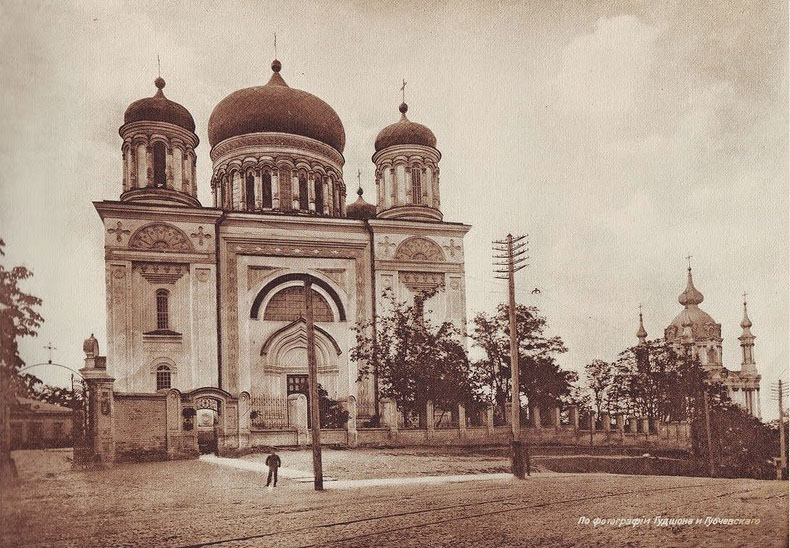
Military and religious life often overlapped in imperial Russia. The Nikolsky Military Cathedral served the spiritual needs of the city’s military community, maintaining a dedicated space for worship within the armed forces.
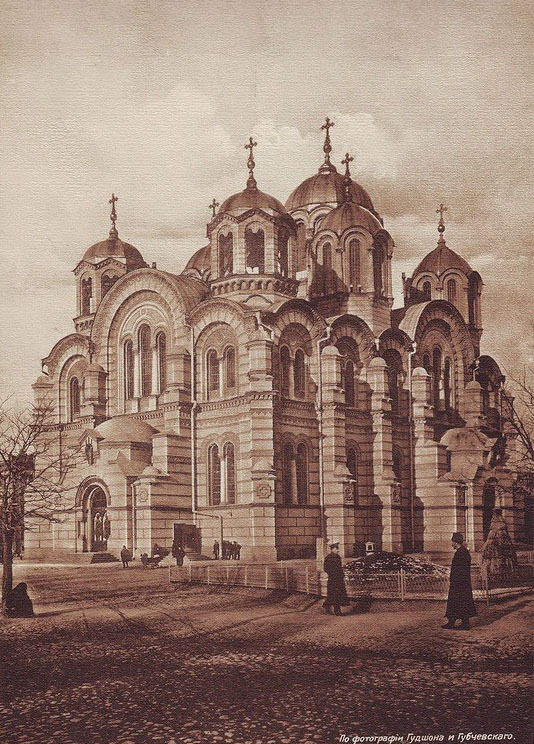
The Cathedral of St. Prince Vladimir, completed in 1896, was one of the newest major churches in Kyiv by the 1910s. Its interior, decorated by artists including Mikhail Vrubel and Viktor Vasnetsov, was considered among the most beautiful in the Orthodox world.
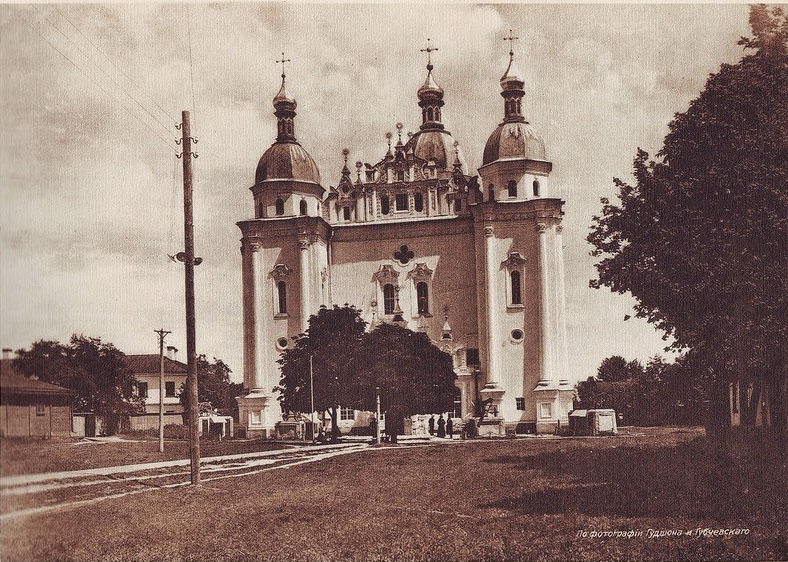
The Intercession Women’s Monastery was home to a religious community of nuns and was an active center of worship and charitable work in the city. Its main temple anchored the monastery’s complex of buildings.
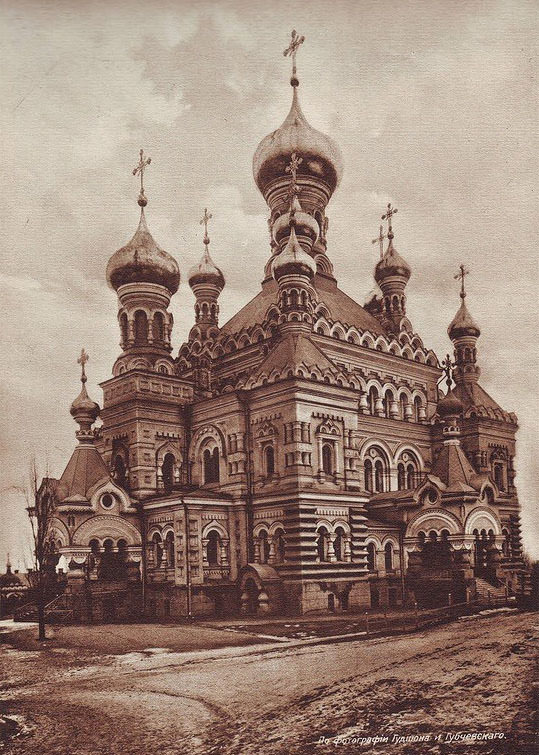
The Church of St. Alexandra was one of several prominent churches that served Kyiv’s growing population. Its presence reflected both the deep religiosity of the city’s residents and the continued investment in sacred architecture.
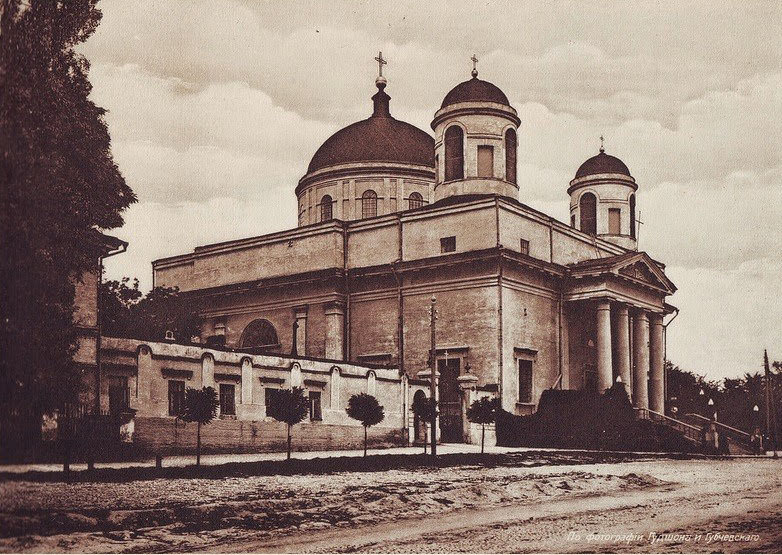
The Church of St. Nicholas added to the city’s already remarkable collection of religious buildings, each denomination and congregation contributing to a skyline dominated by domes and bell towers.
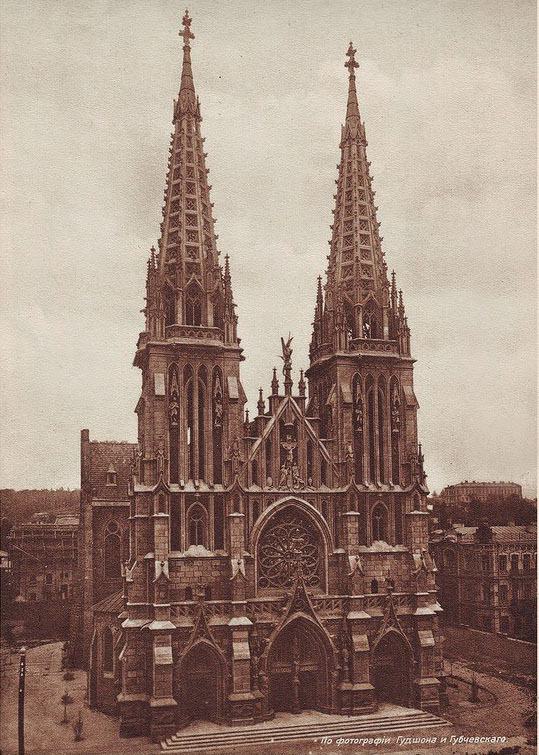
Kyiv was not an exclusively Orthodox city. The Lutheran Church served the city’s German-speaking Protestant community, part of a broader diversity of faiths that characterized Kyiv as a multi-ethnic imperial center.
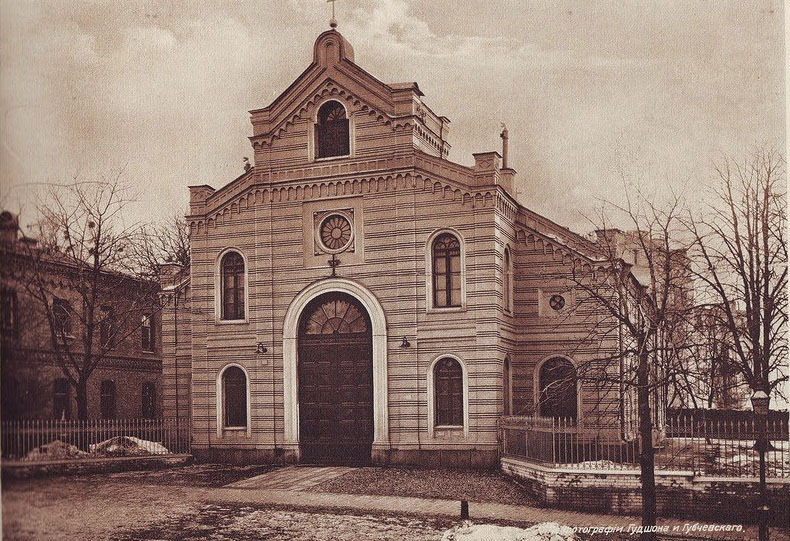
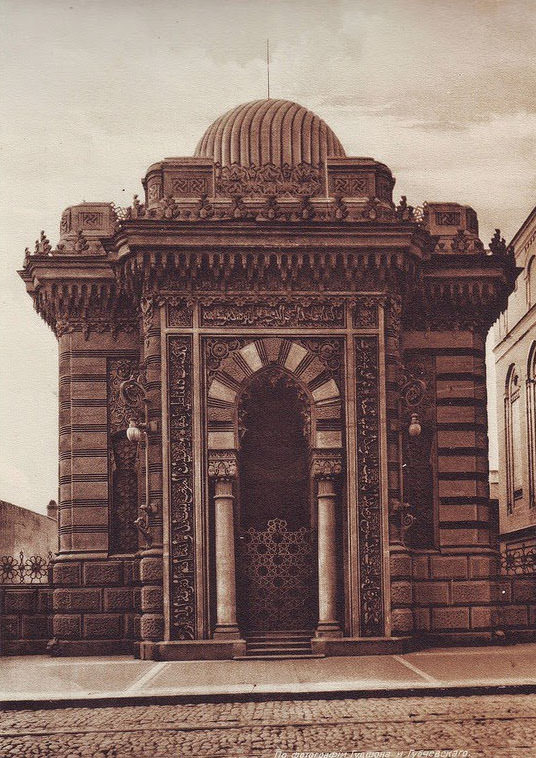
The Karaimskaya Kenas was the house of worship for Kyiv’s Karaite community, a small but distinct religious group with roots in Crimea and the surrounding region. Its presence in the city reflected Kyiv’s role as a gathering point for many different peoples.
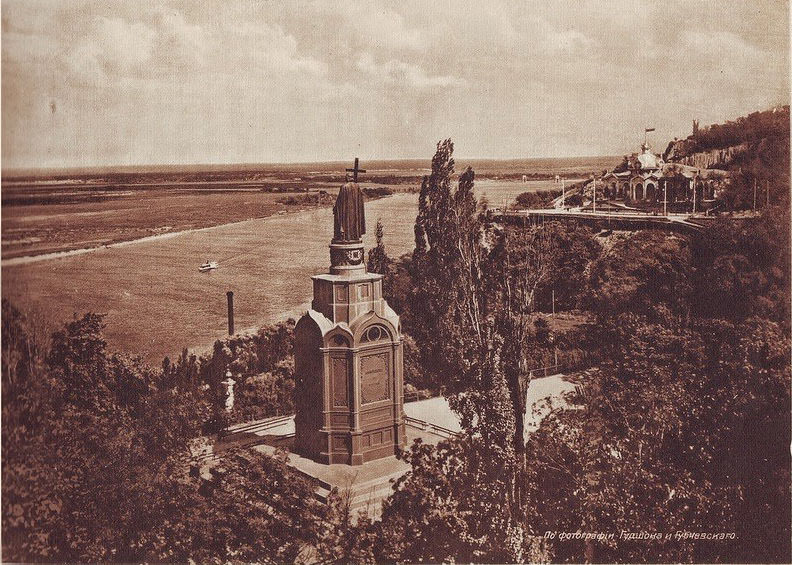
Among Kyiv’s monuments, the statue of St. Vladimir stands on a high bluff above the Dnipro River, visible from far across the city. Vladimir the Great, who Christianized Kievan Rus in 988, is remembered as one of the most consequential figures in Eastern European history.
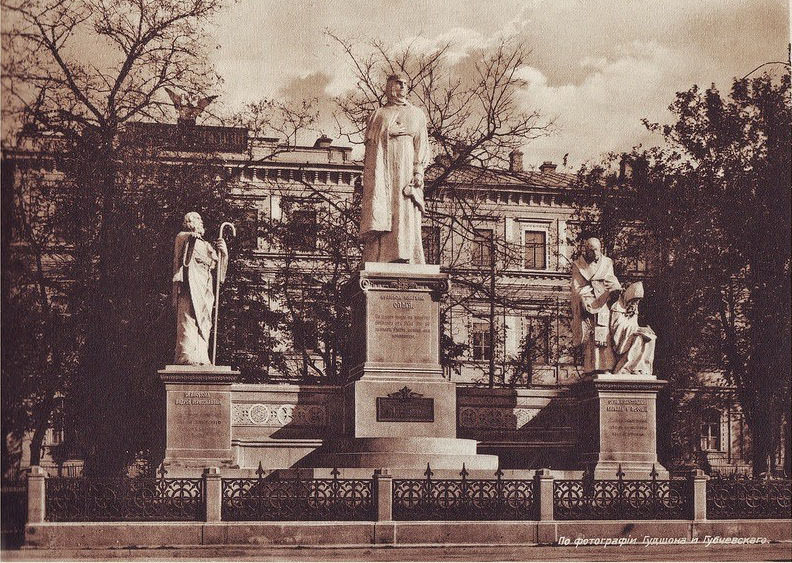
Near St. Vladimir’s monument stood the statue of Princess St. Olga, Vladimir’s grandmother, who converted to Christianity before her grandson and played a decisive role in shaping the religious future of the region.
The Baptismal Monument of Russia commemorated the mass baptism of Rus in 988, the event through which Orthodox Christianity became the dominant faith across Kievan Rus and its successor states.
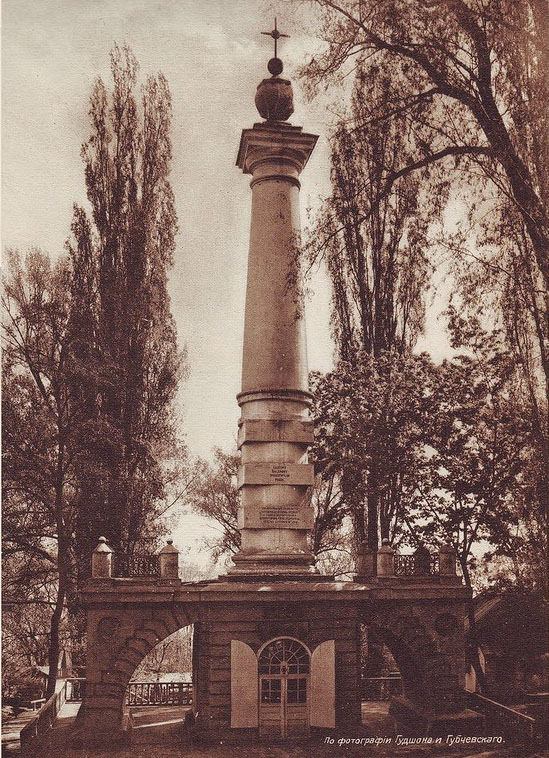
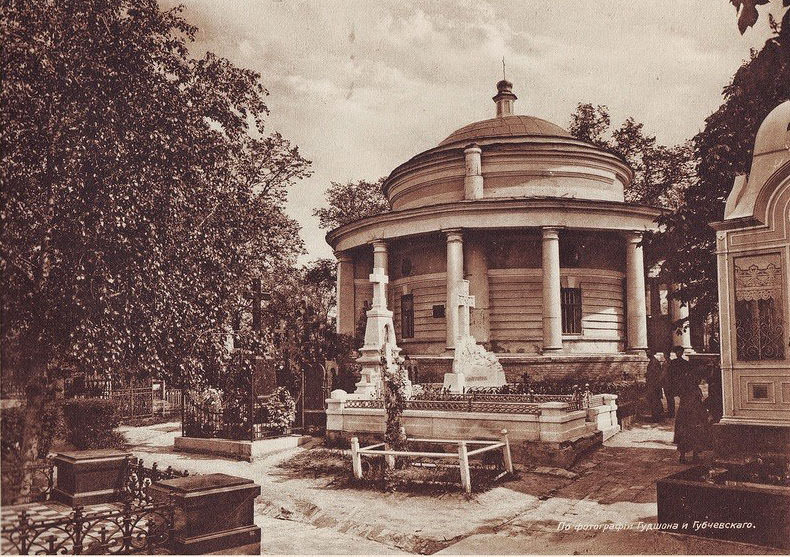
The Tomb of Askold marks the burial site of Askold, one of Kyiv’s early rulers from the 9th century. It is one of the oldest historically significant sites in the city, maintained as a place of remembrance through the centuries.
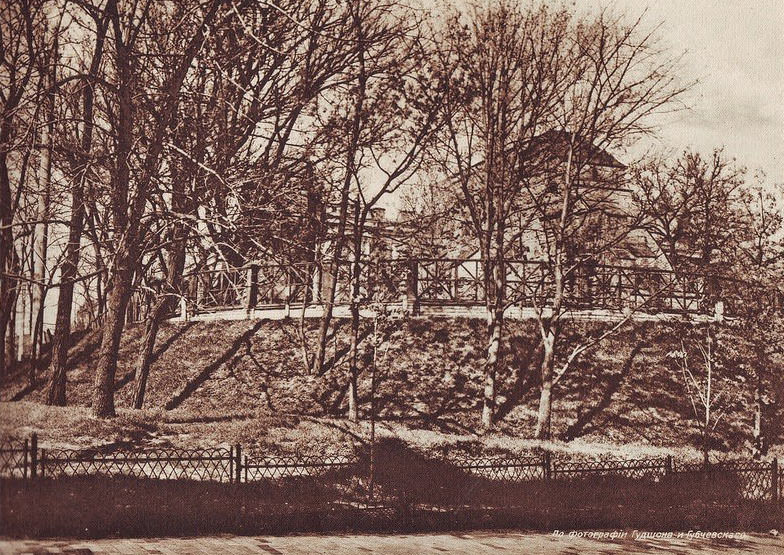
The Golden Gate is a remnant of the ancient city walls built by Yaroslav the Wise in the 11th century. Originally modeled on the Golden Gate of Constantinople, it served as the main ceremonial entrance to medieval Kyiv.
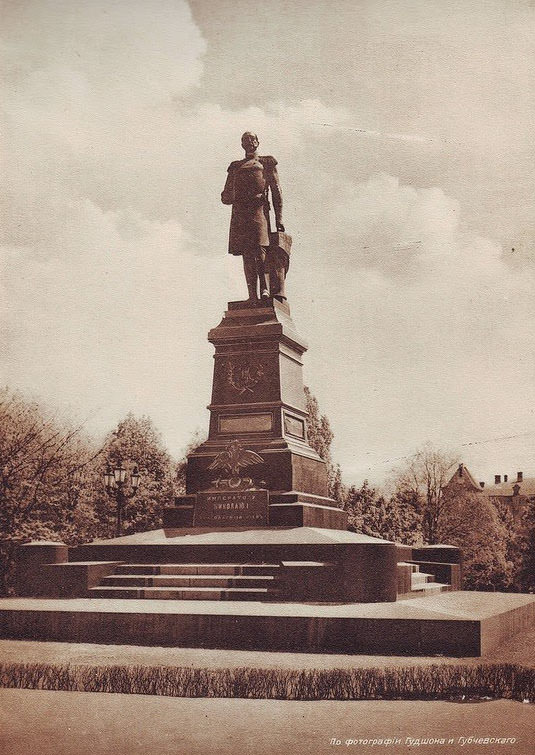
Imperial monuments were also prominent throughout the city. The Monument of Emperor Nicholas I reflected Kyiv’s status as a key city within the Russian Empire, with public tributes to the Romanov rulers placed in highly visible locations.
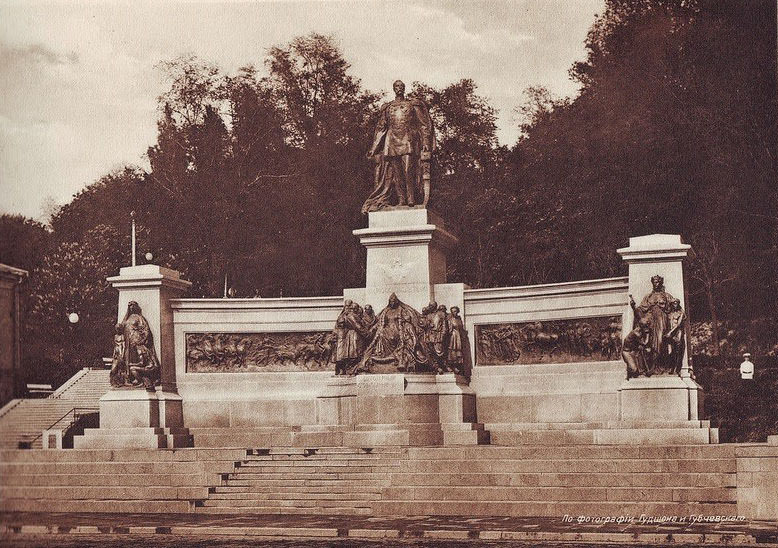
The final monument in this collection honors Tsar Alexander II, known as the Liberator for his 1861 emancipation of the serfs. His statue stood in Kyiv as a tribute to one of the most debated reform-minded rulers in Russian imperial history — a city defined by both its ancient roots and the rapidly changing world of the early 20th century.

… and then Soviet monumentalism arrived. Tragic.
Finally, “byzness” to cap it all off.