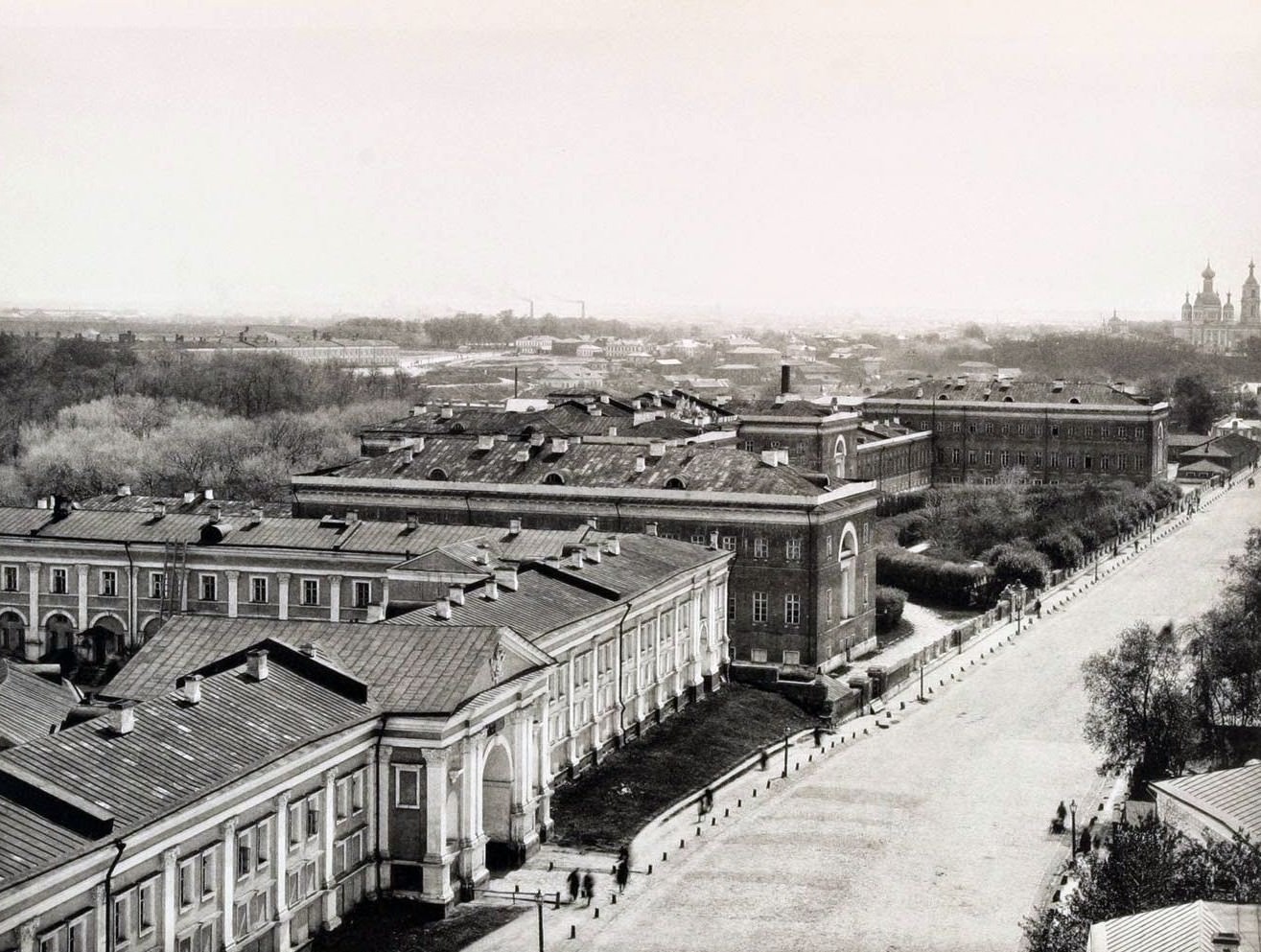
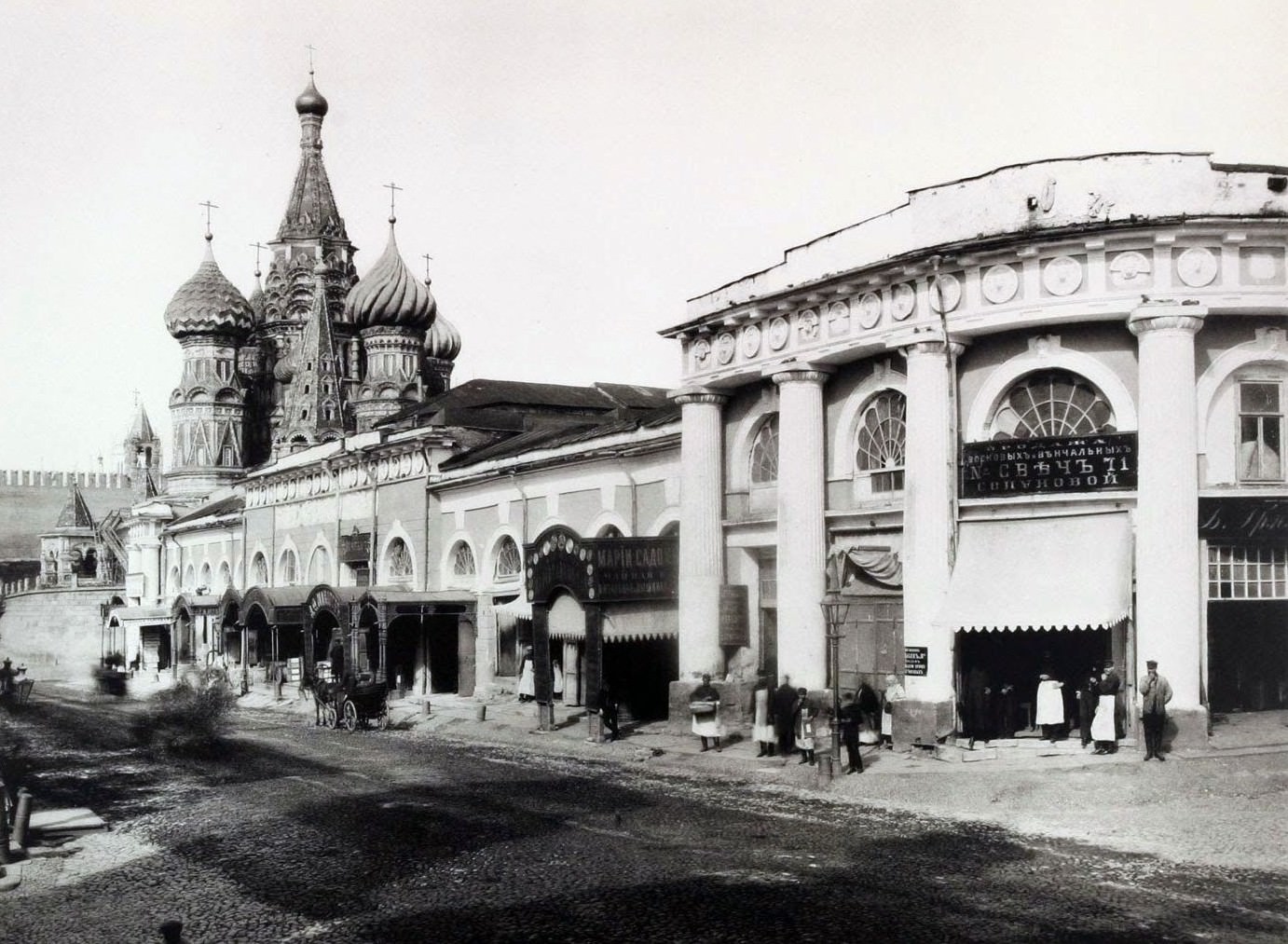
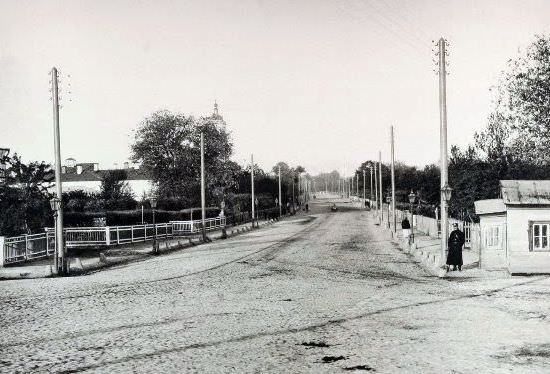
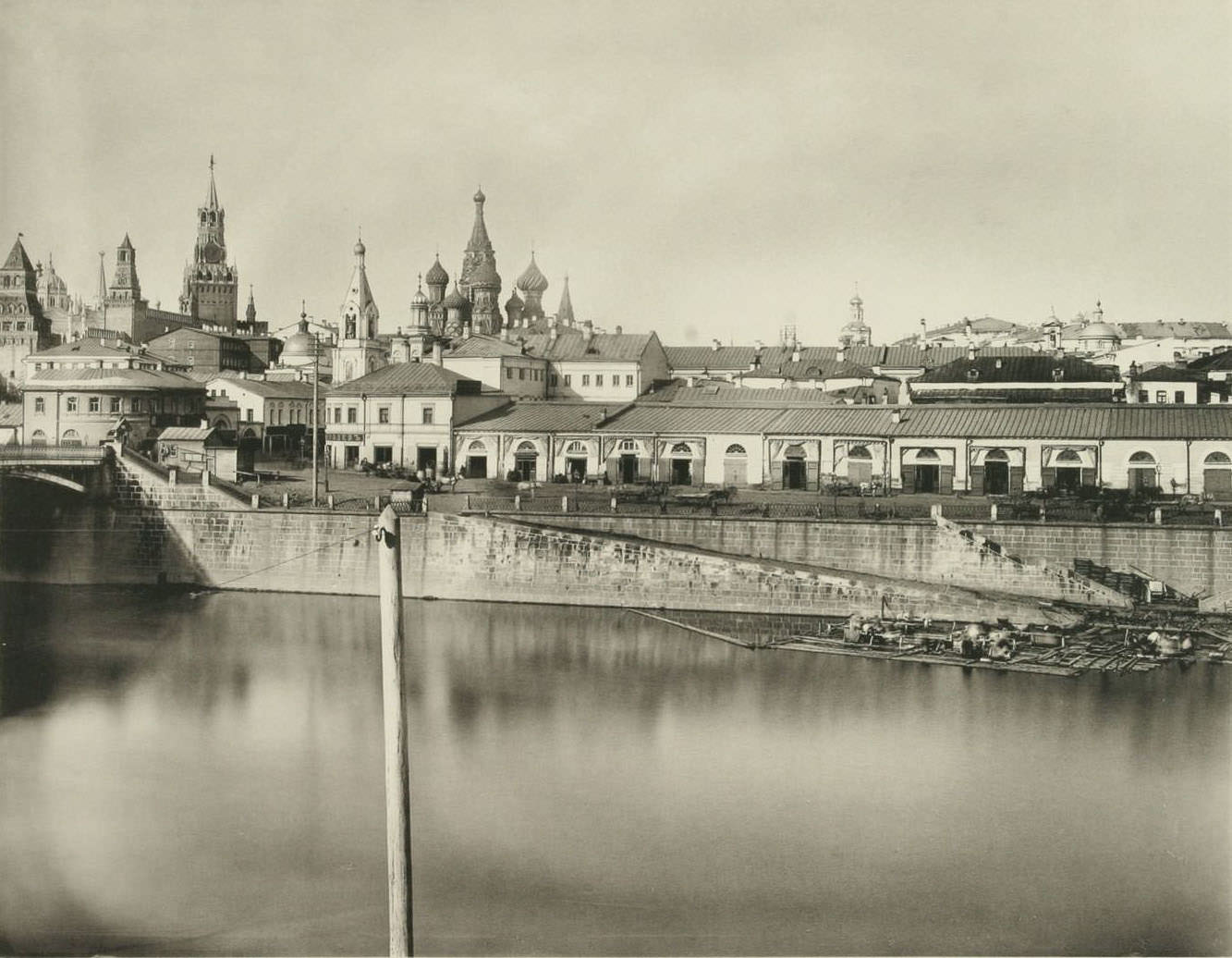
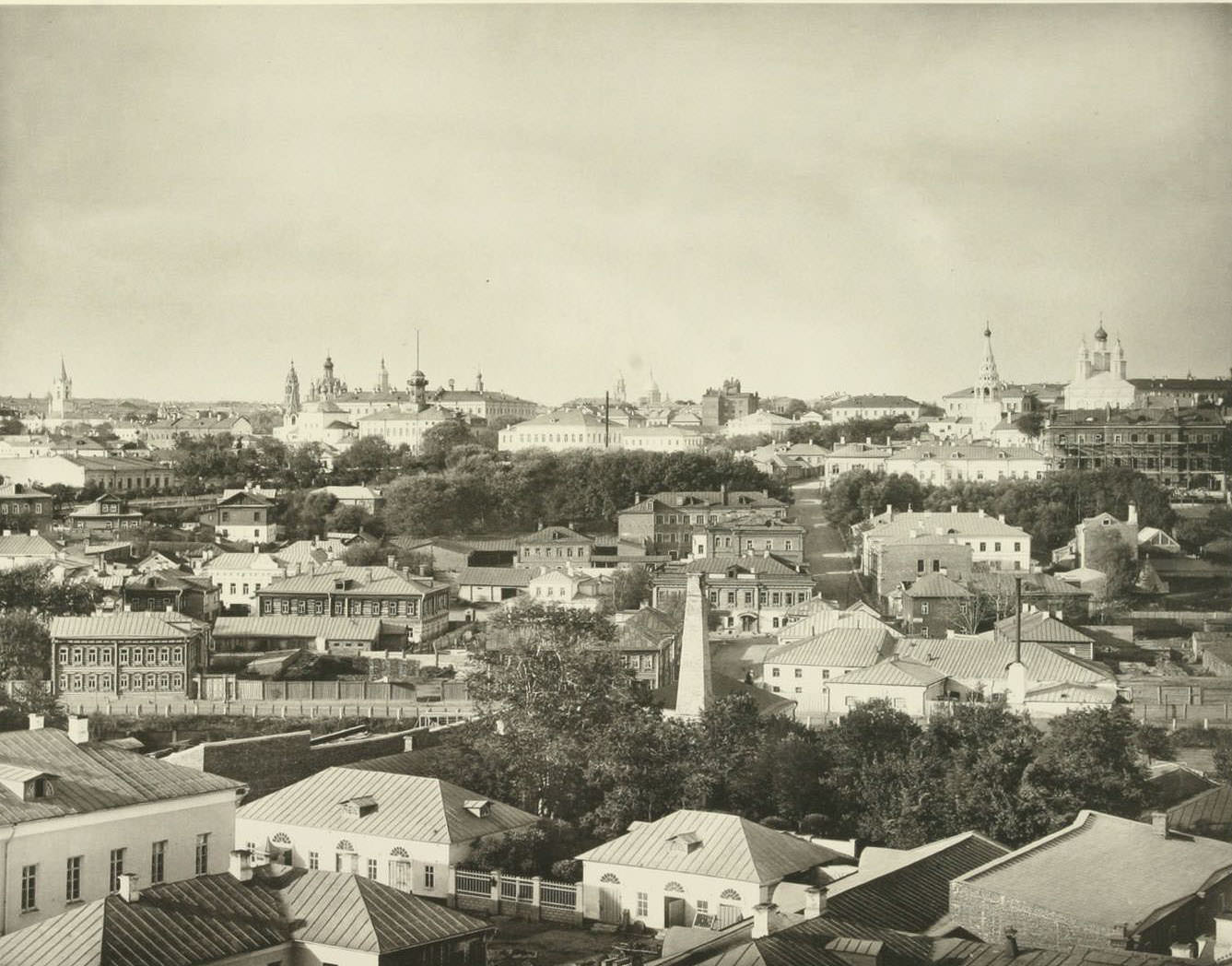
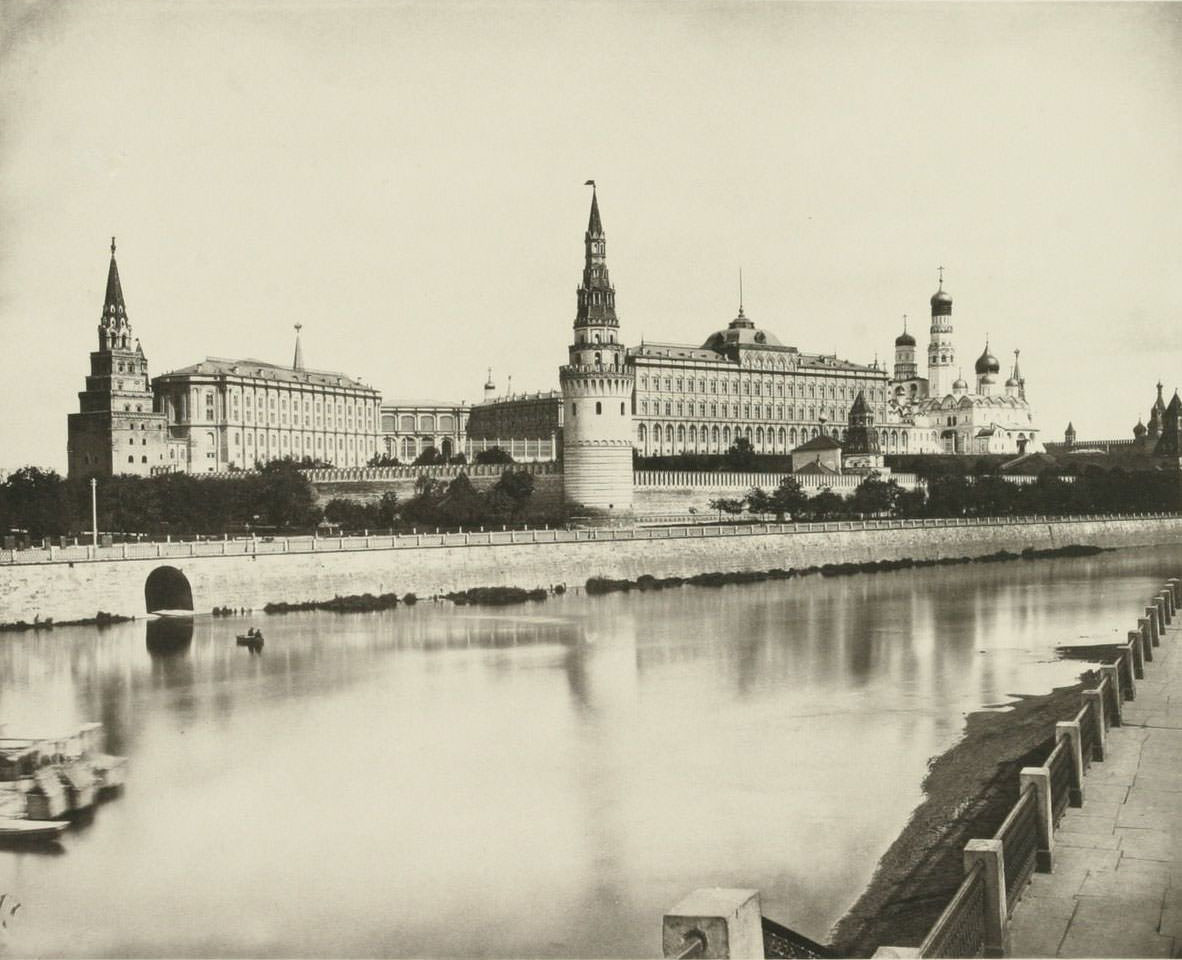
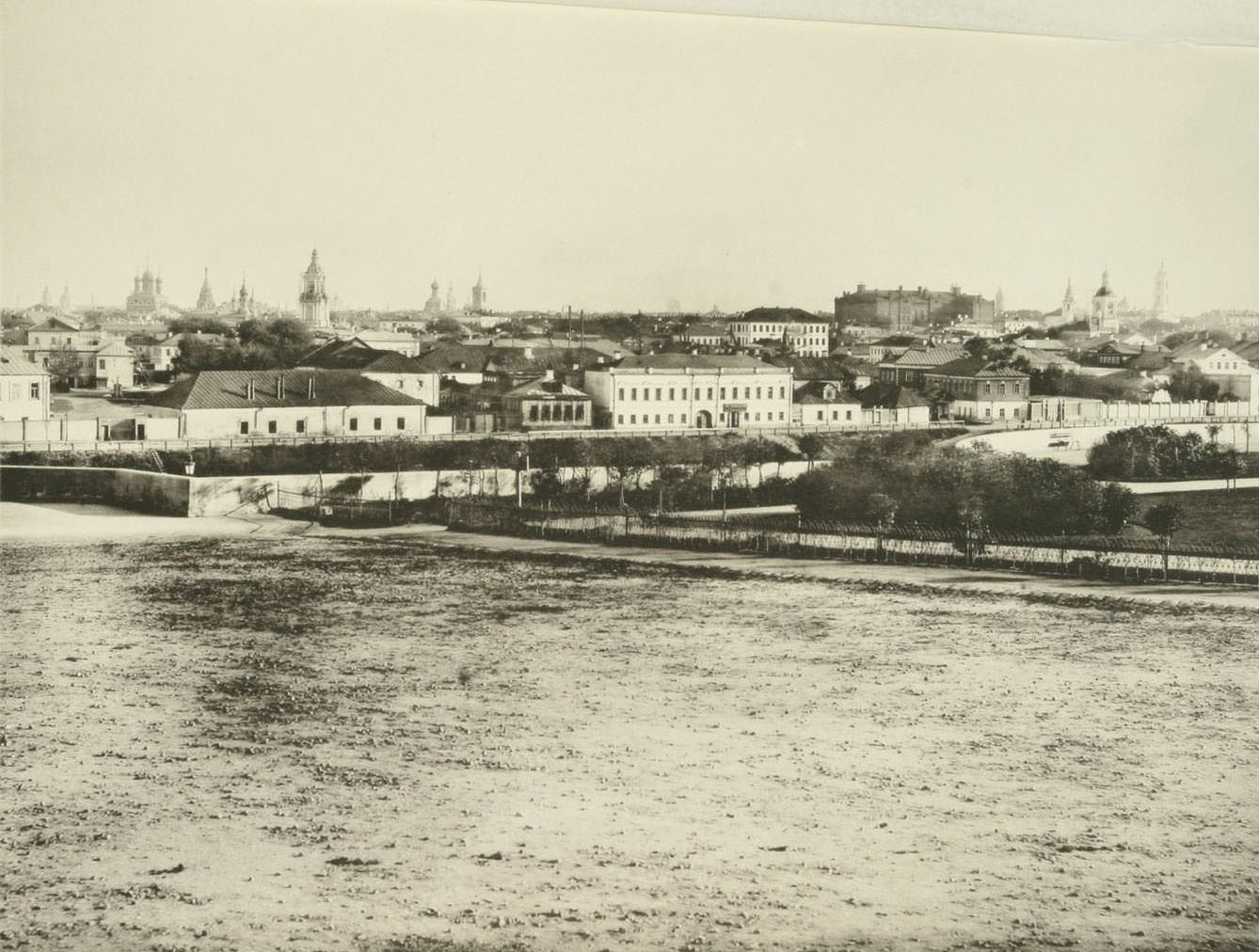
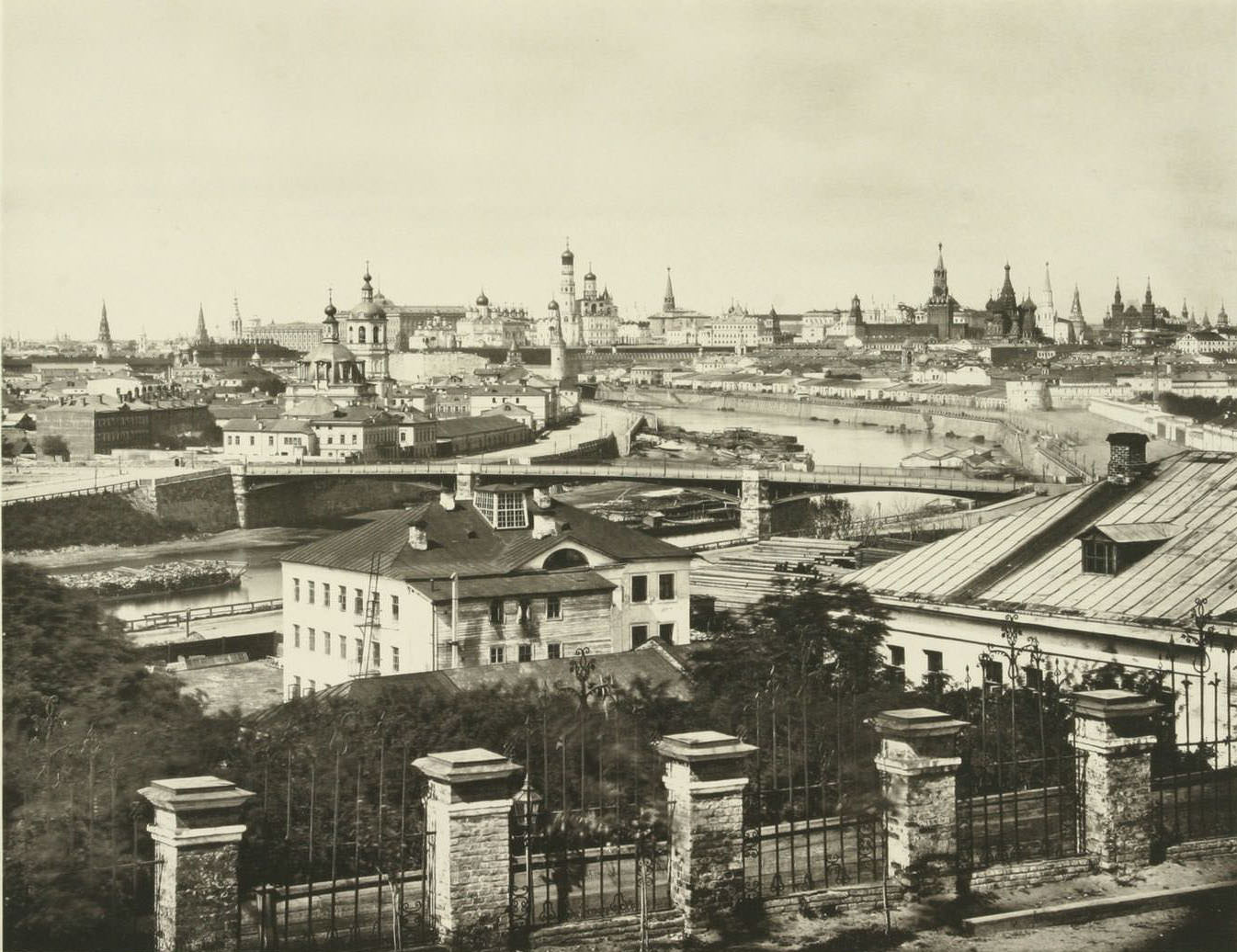
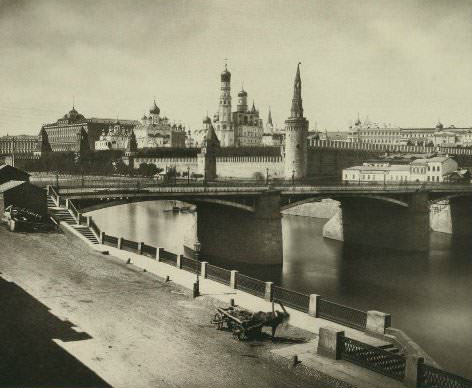
In the 1880s, Moscow was a city of sharp contrasts. It held 753,469 people — nobles in French-speaking households, merchants behind iron gates, factory workers packed into basement rooms, and peasants newly arrived from the countryside. The Kremlin anchored everything, rising above the Moskva River as it had for centuries. Around it, a city of 450 churches, rumbling textile mills, open-air markets, and horse-drawn trams was pushing itself into a new era.
The decade opened under Tsar Alexander II, whose reform era had loosened some of the empire’s grip on public life. That changed abruptly in March 1881 when he was assassinated. His son, Alexander III, took the throne and reversed course — tightening censorship, cracking down on political gatherings, and putting Moscow’s governor-general in charge of monitoring public life. The Okhrana, the tsar’s secret police, built networks of informers across all social classes. Suspects were arrested quietly and sent to Siberian exile.
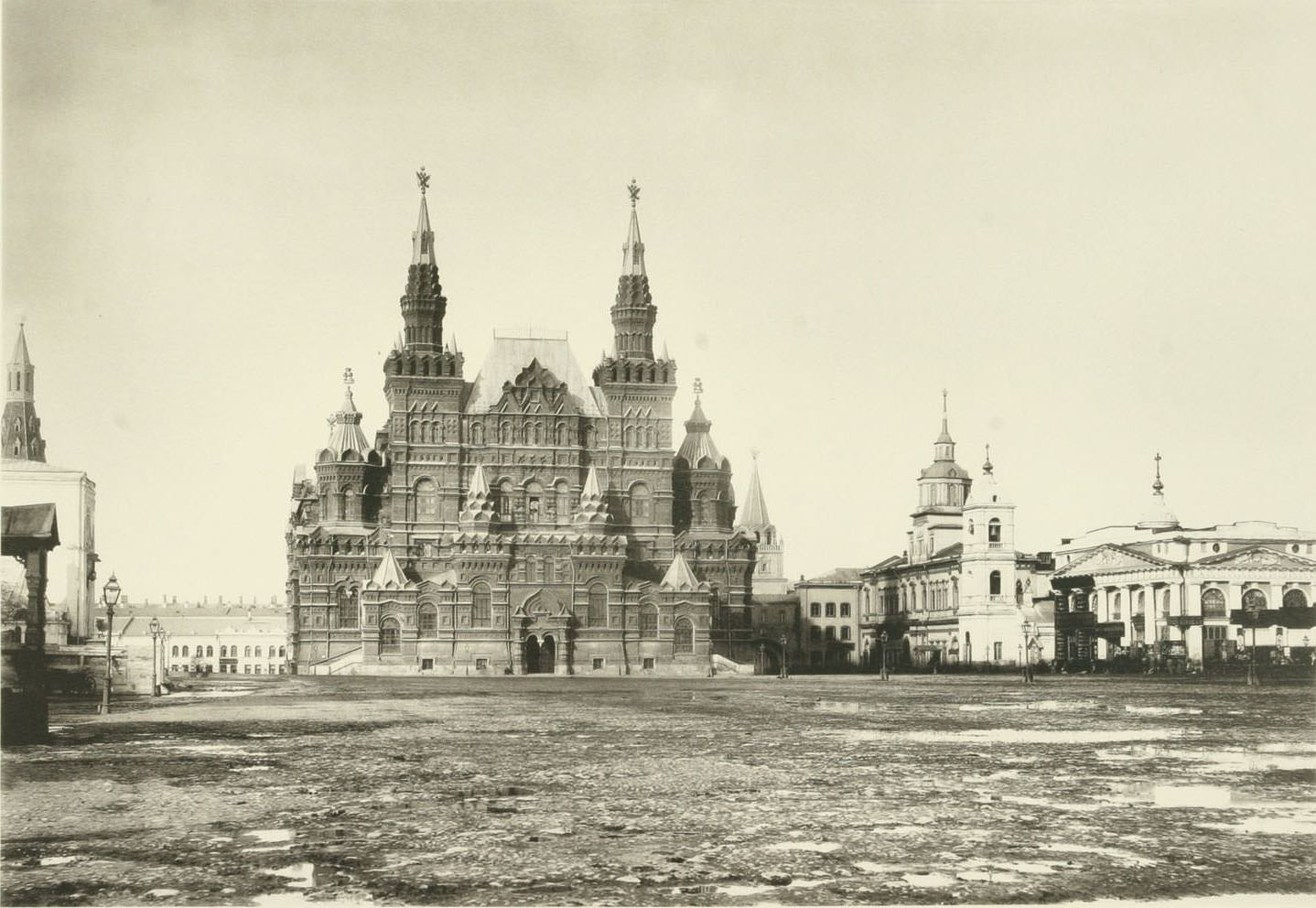
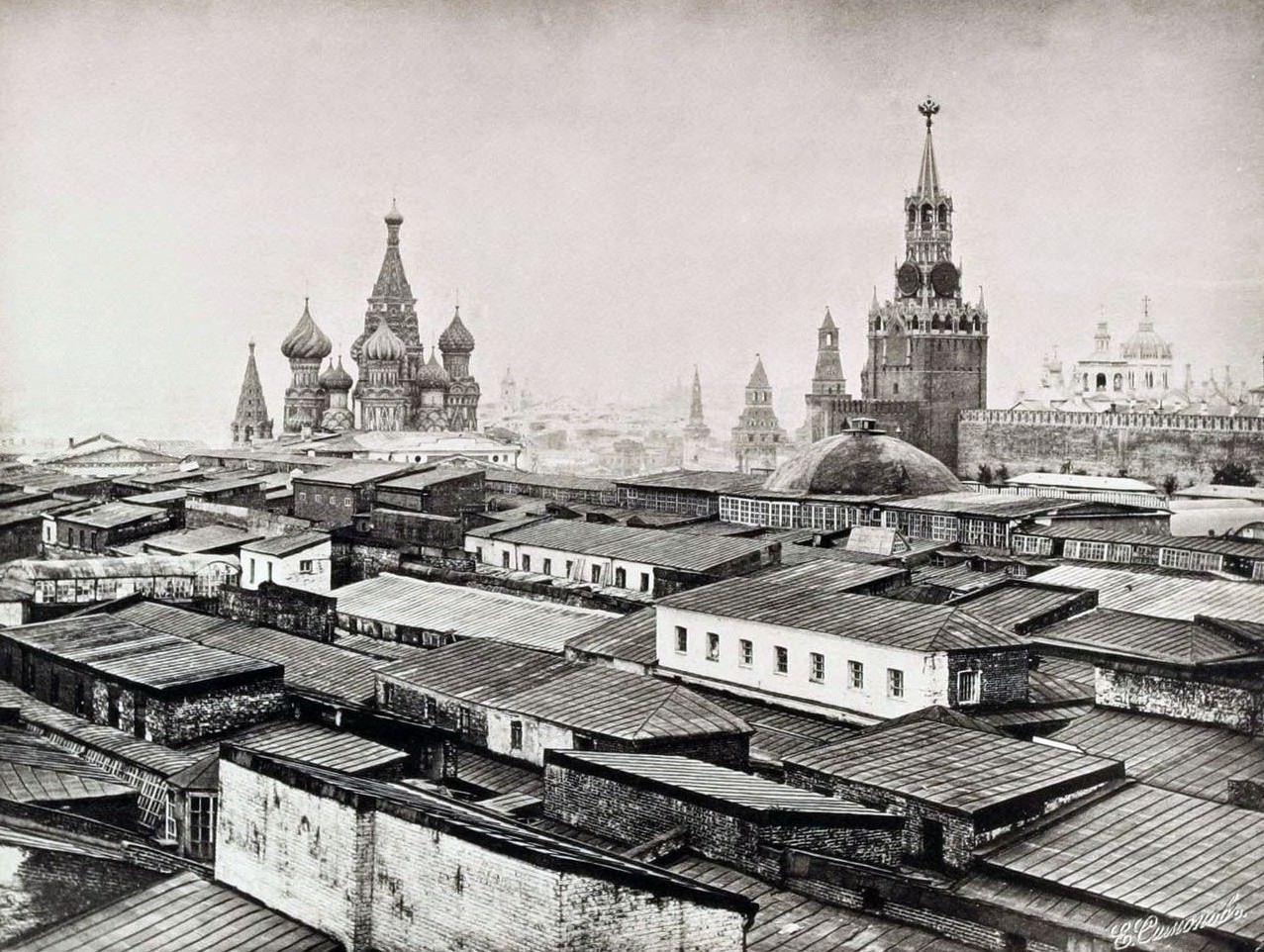
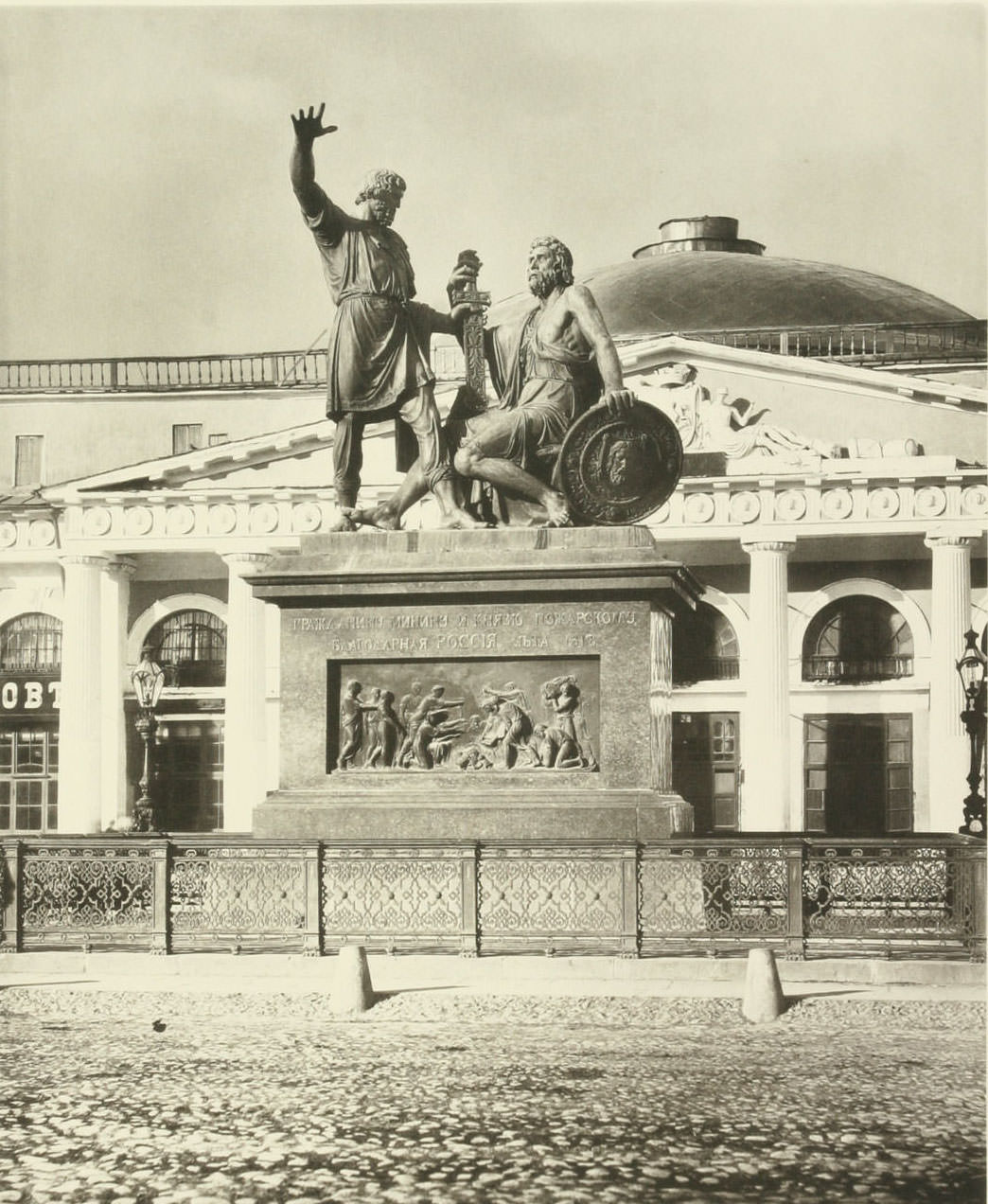
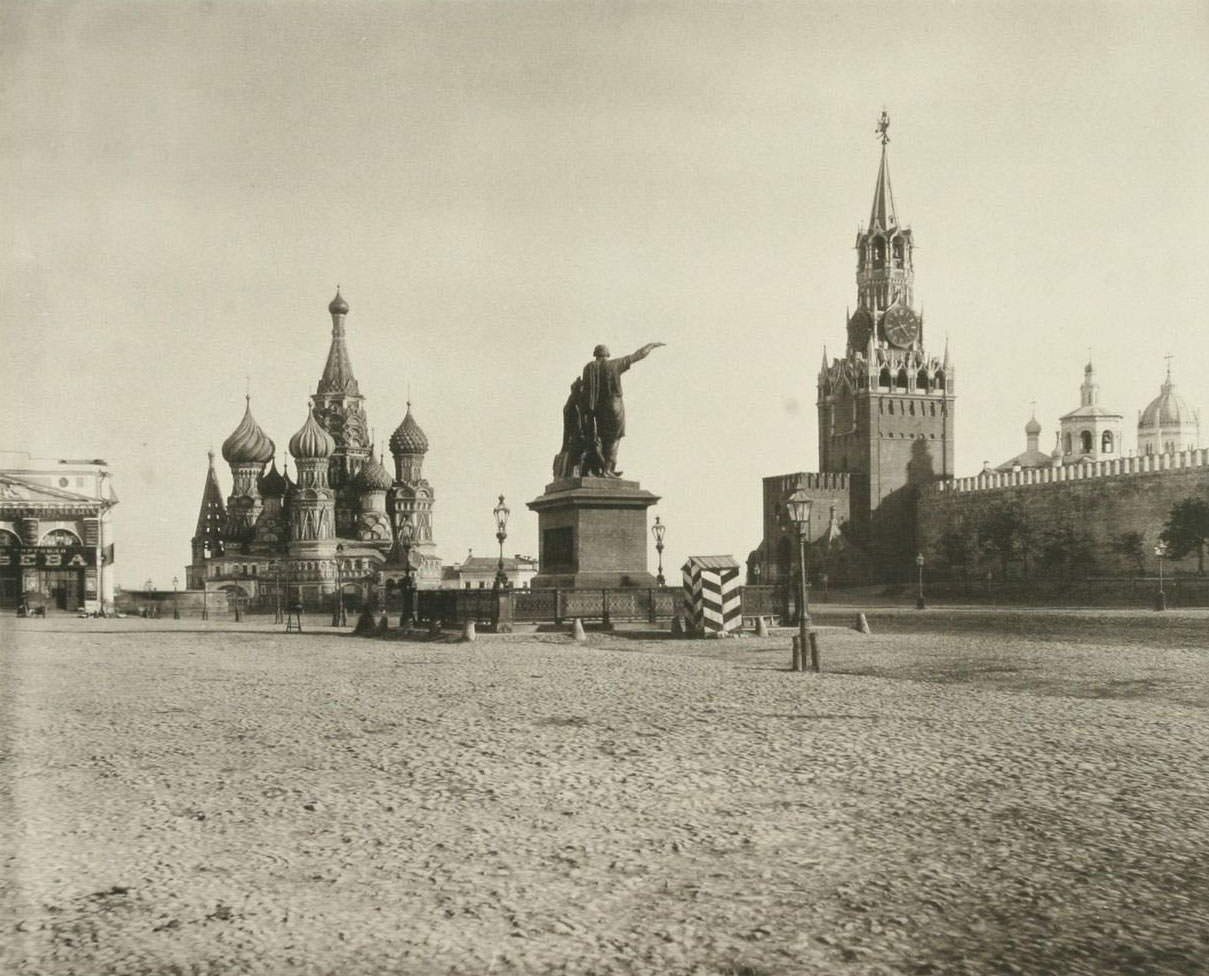
Red Square was the city’s central pulse. St. Basil’s Cathedral stood at one end with its painted onion domes. The square served as marketplace, gathering ground, and the symbolic heart of Russian identity. The Historical Museum, completed during this period, added an imposing red-brick presence to the square’s northern edge.
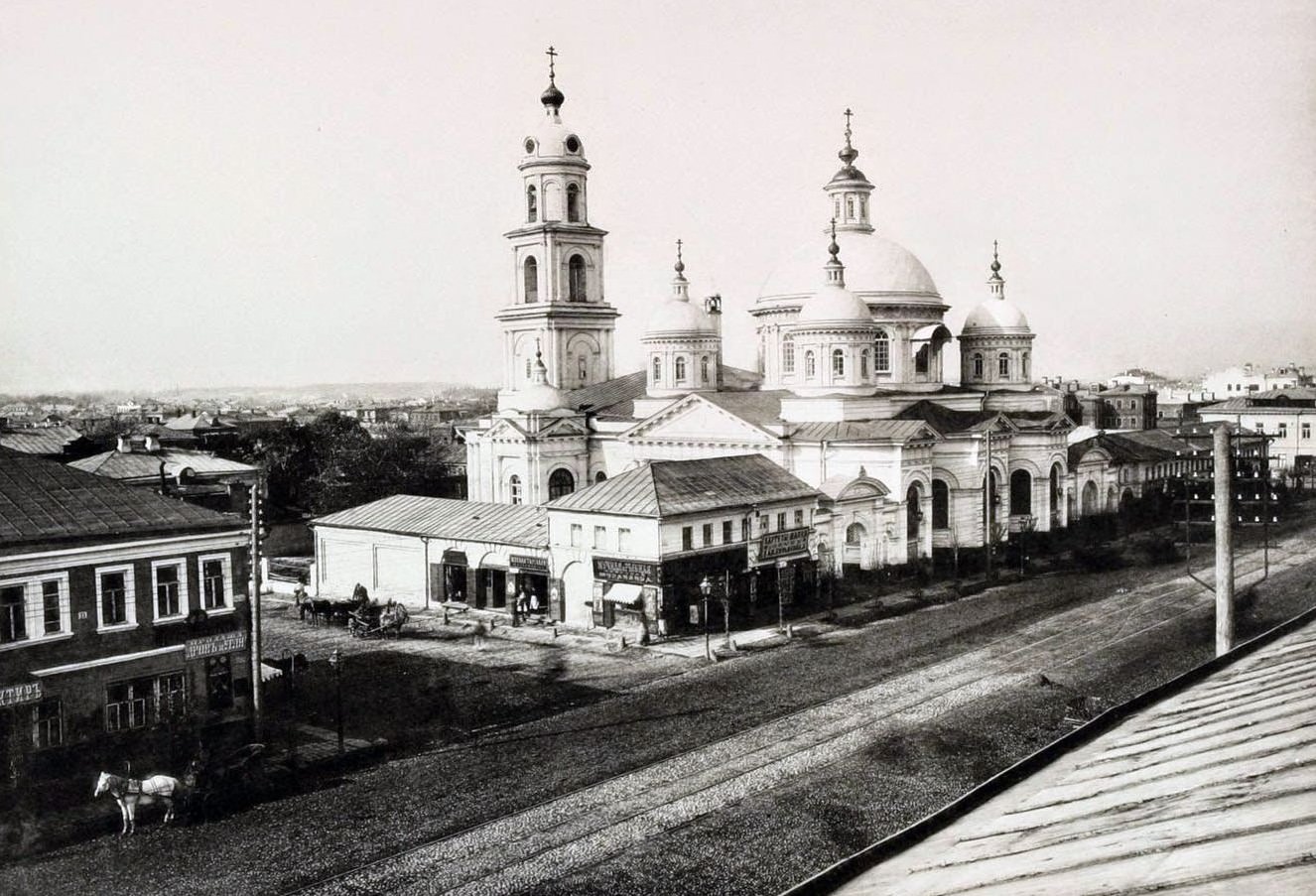
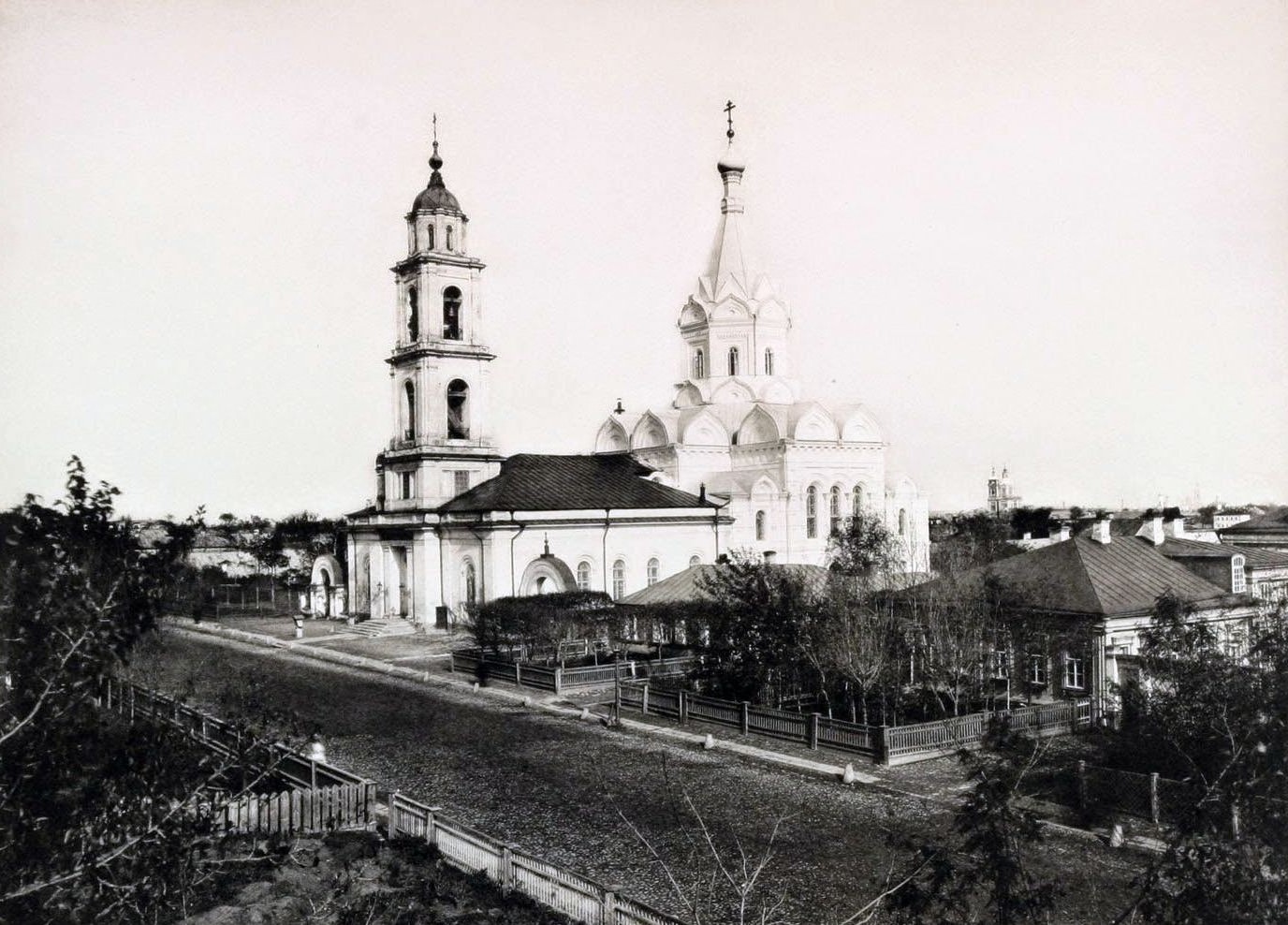
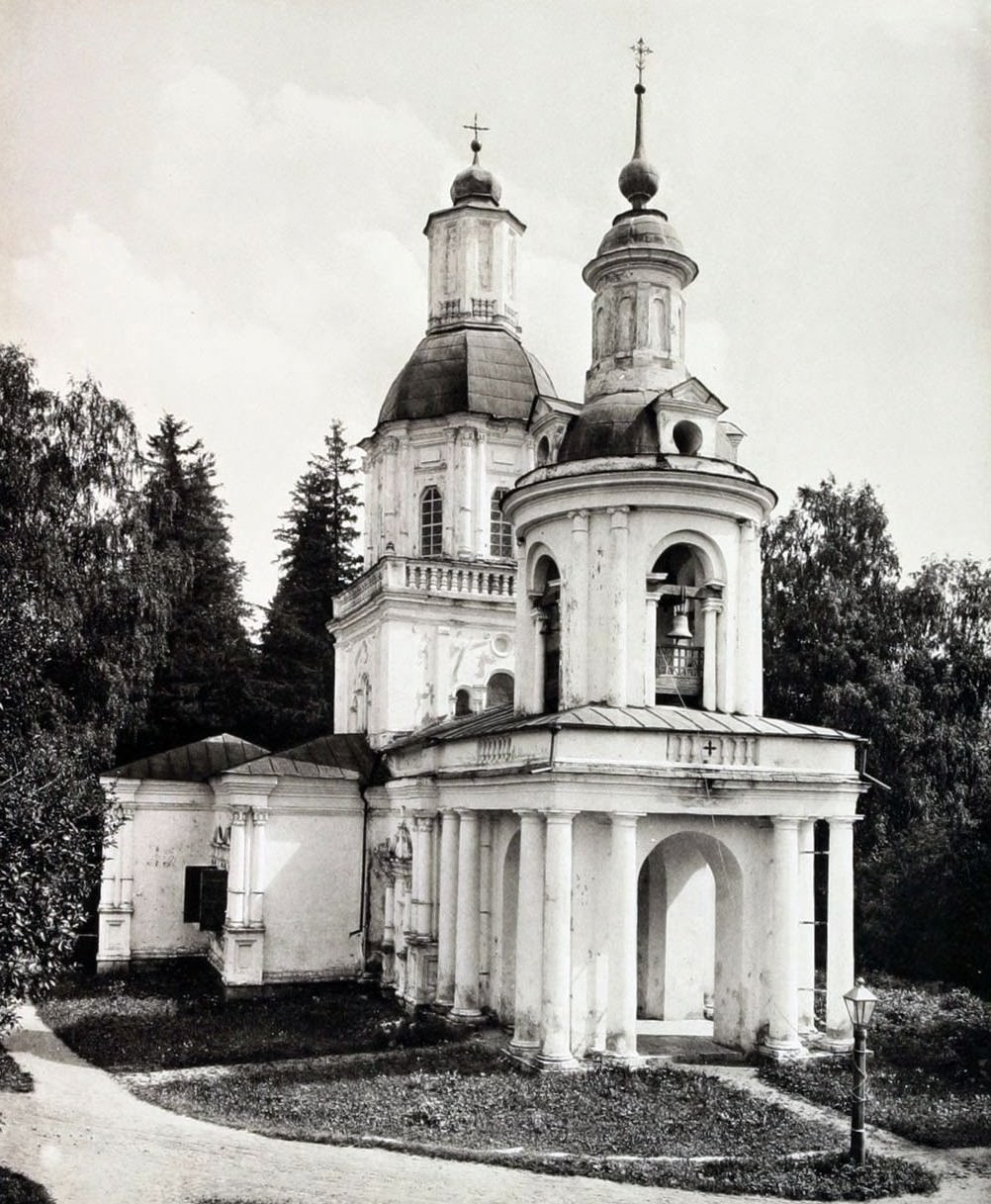
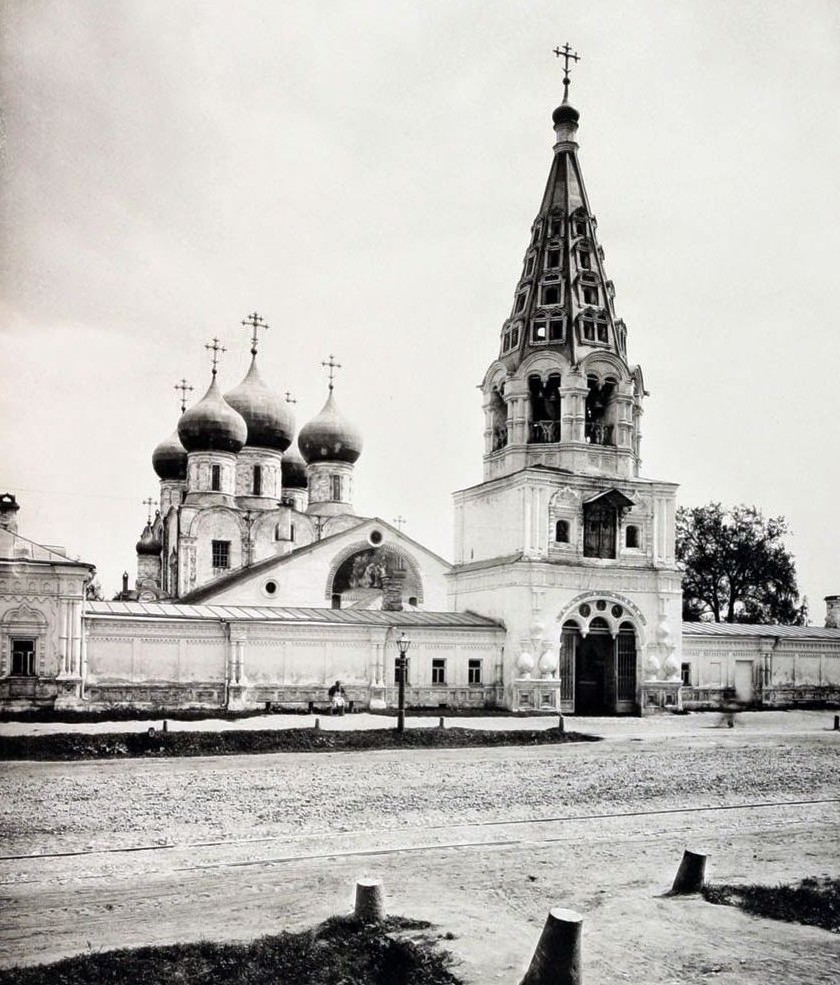
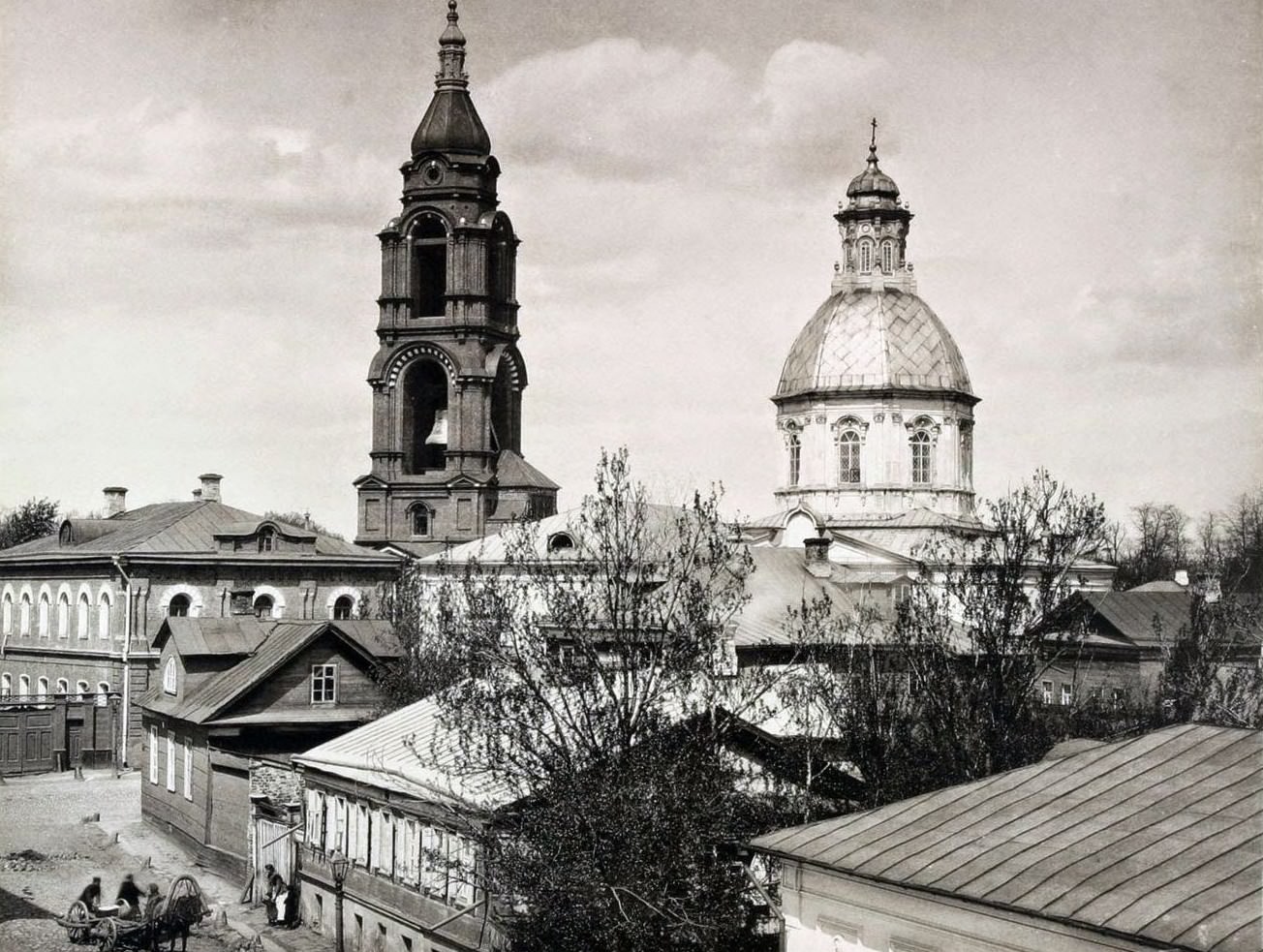
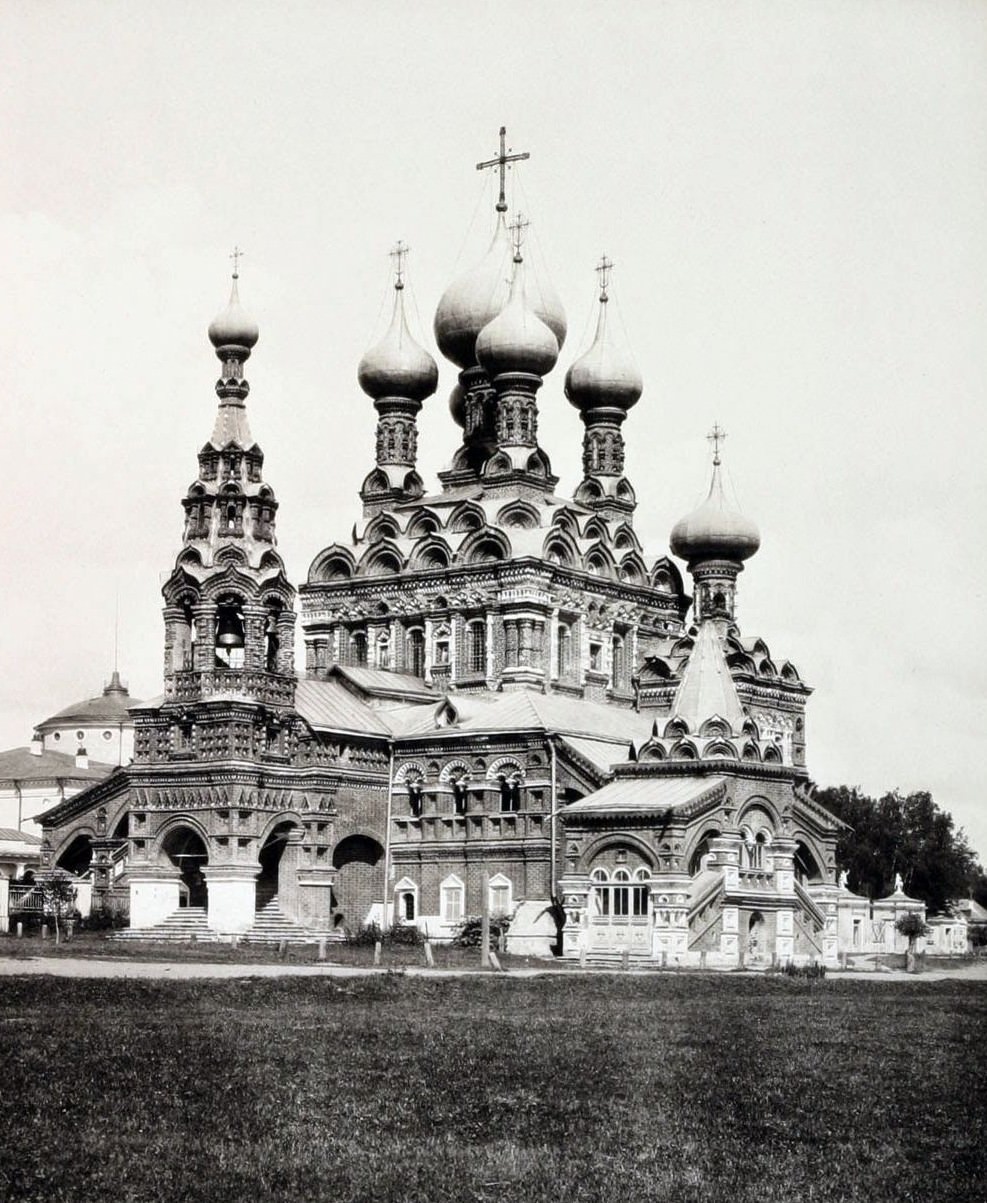
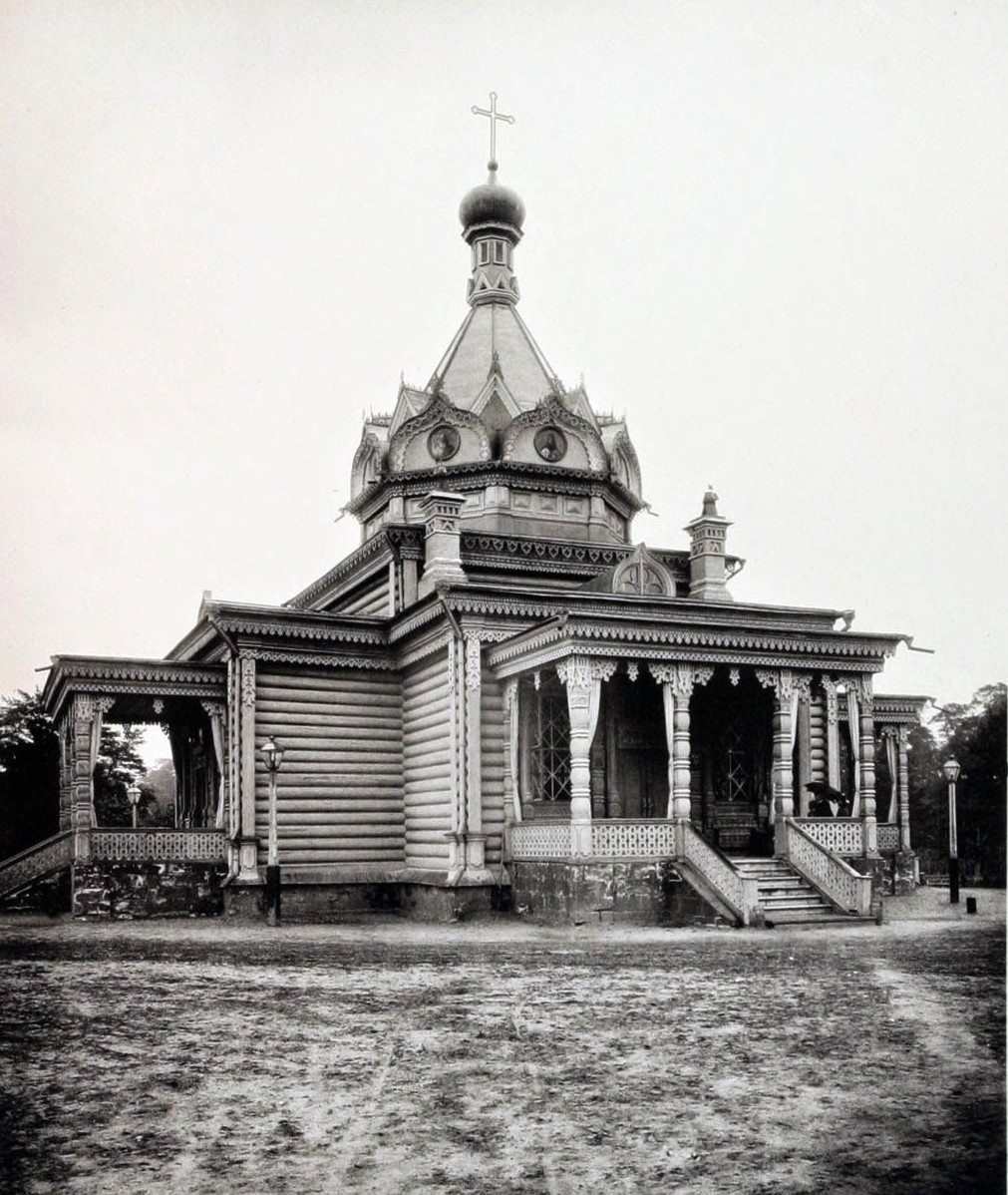
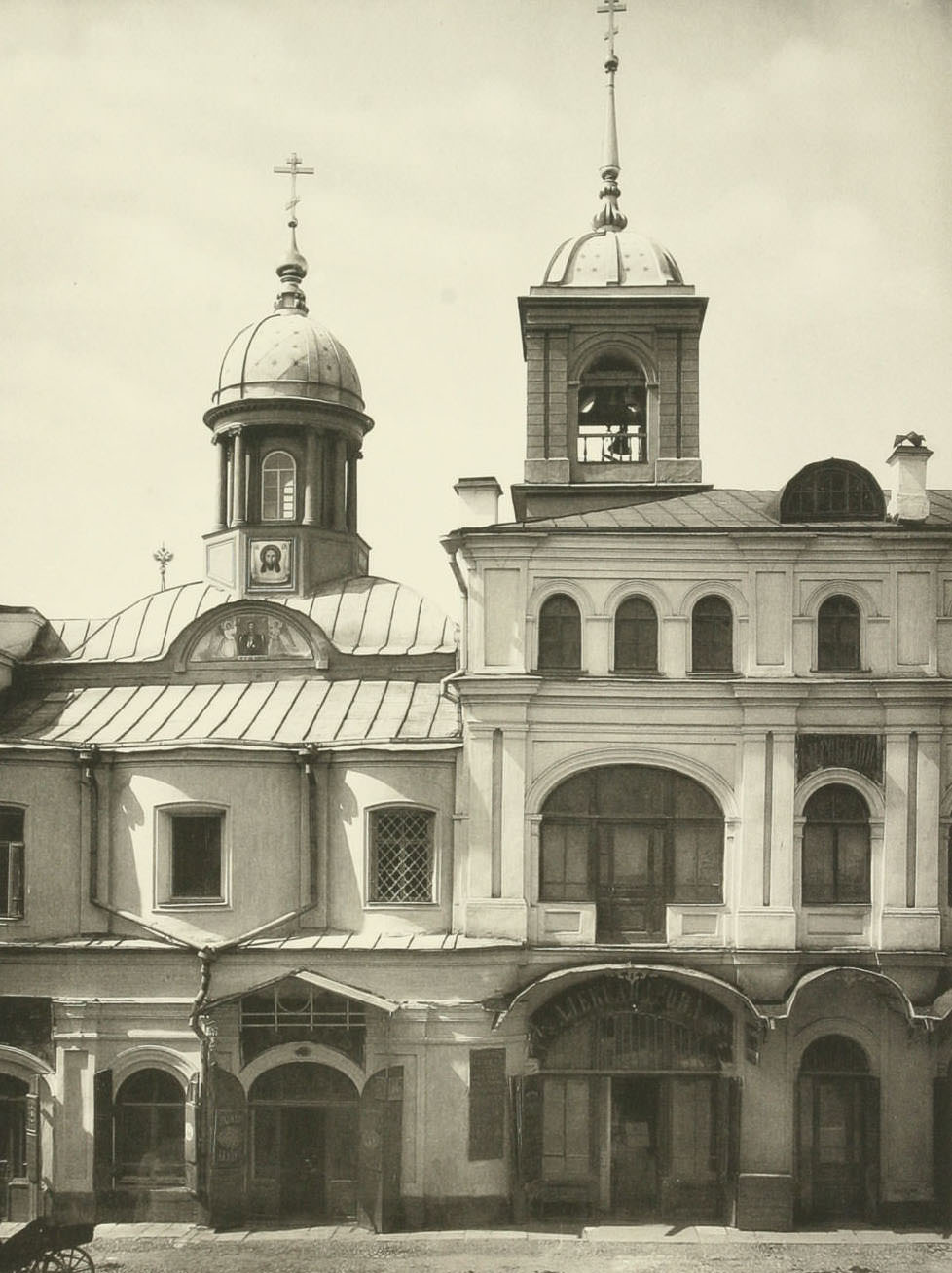
Orthodox Christianity was woven into every corner of Moscow life. Church bells rang throughout the day. The Cathedral of Christ the Savior, completed in 1883, stood as a massive statement of Russian devotion. Icons hung in bedroom corners with oil lamps burning before them. Easter brought midnight services and feasts that ended the long Lenten fast, while priests blessed homes during Epiphany by sprinkling holy water through every room.
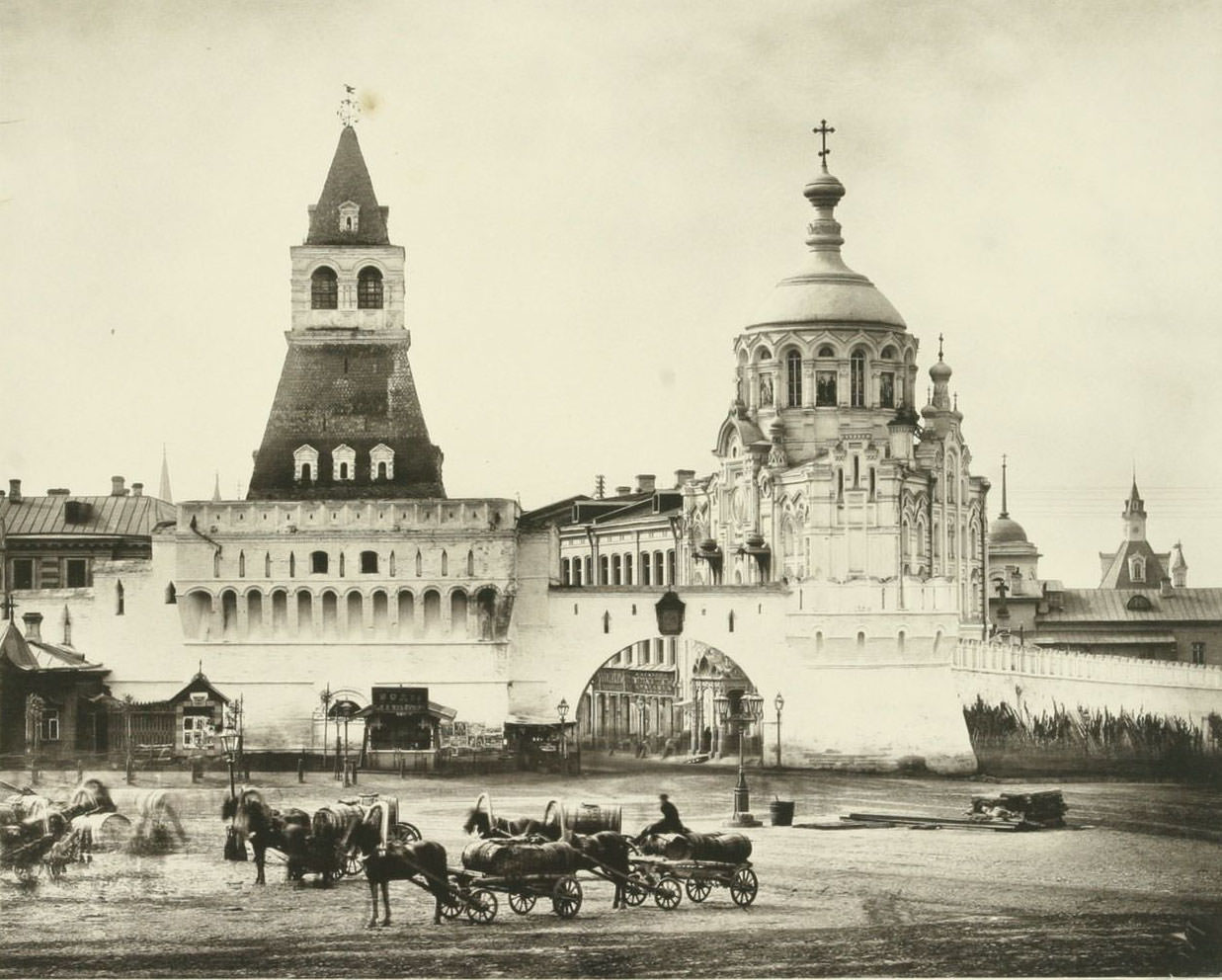
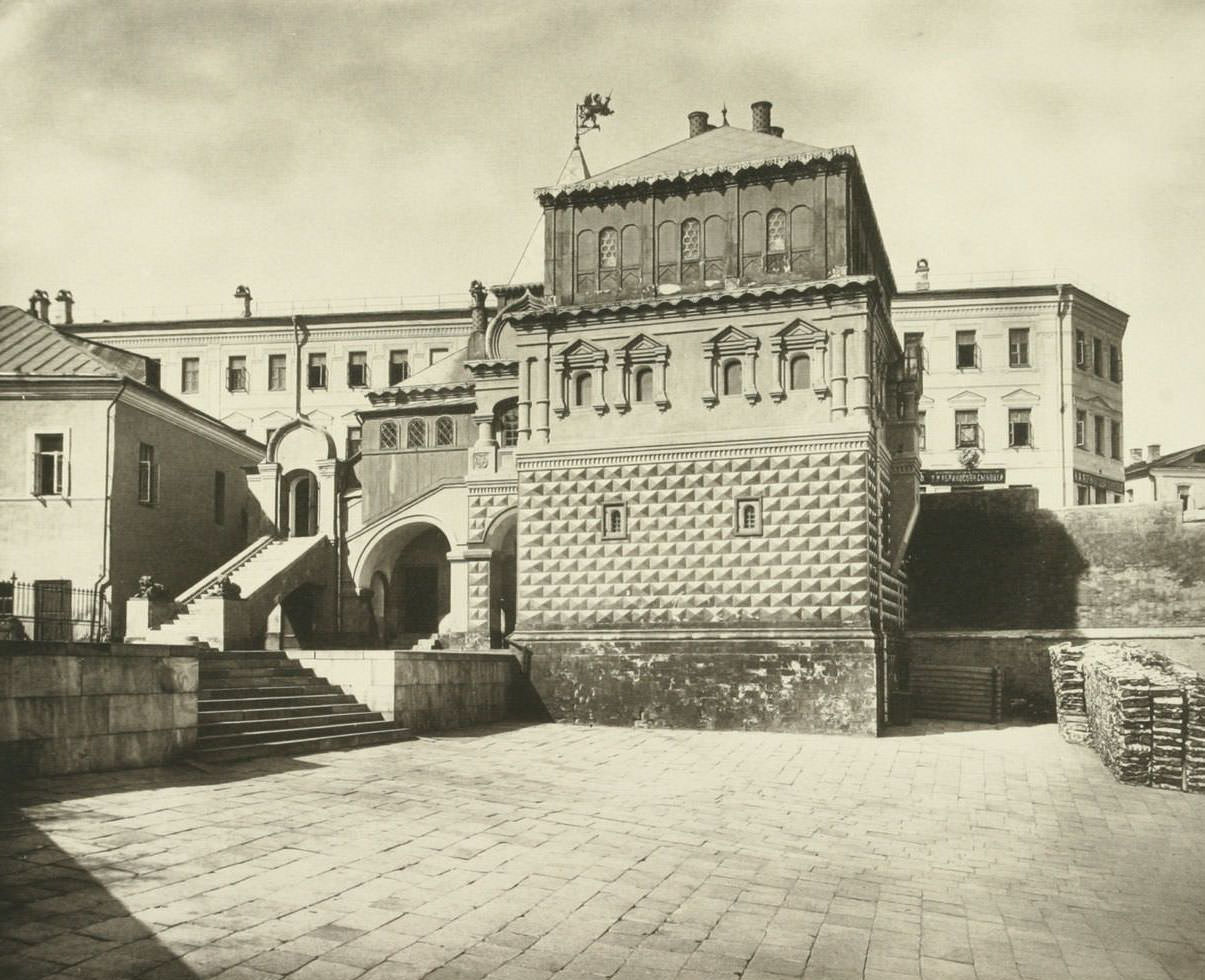
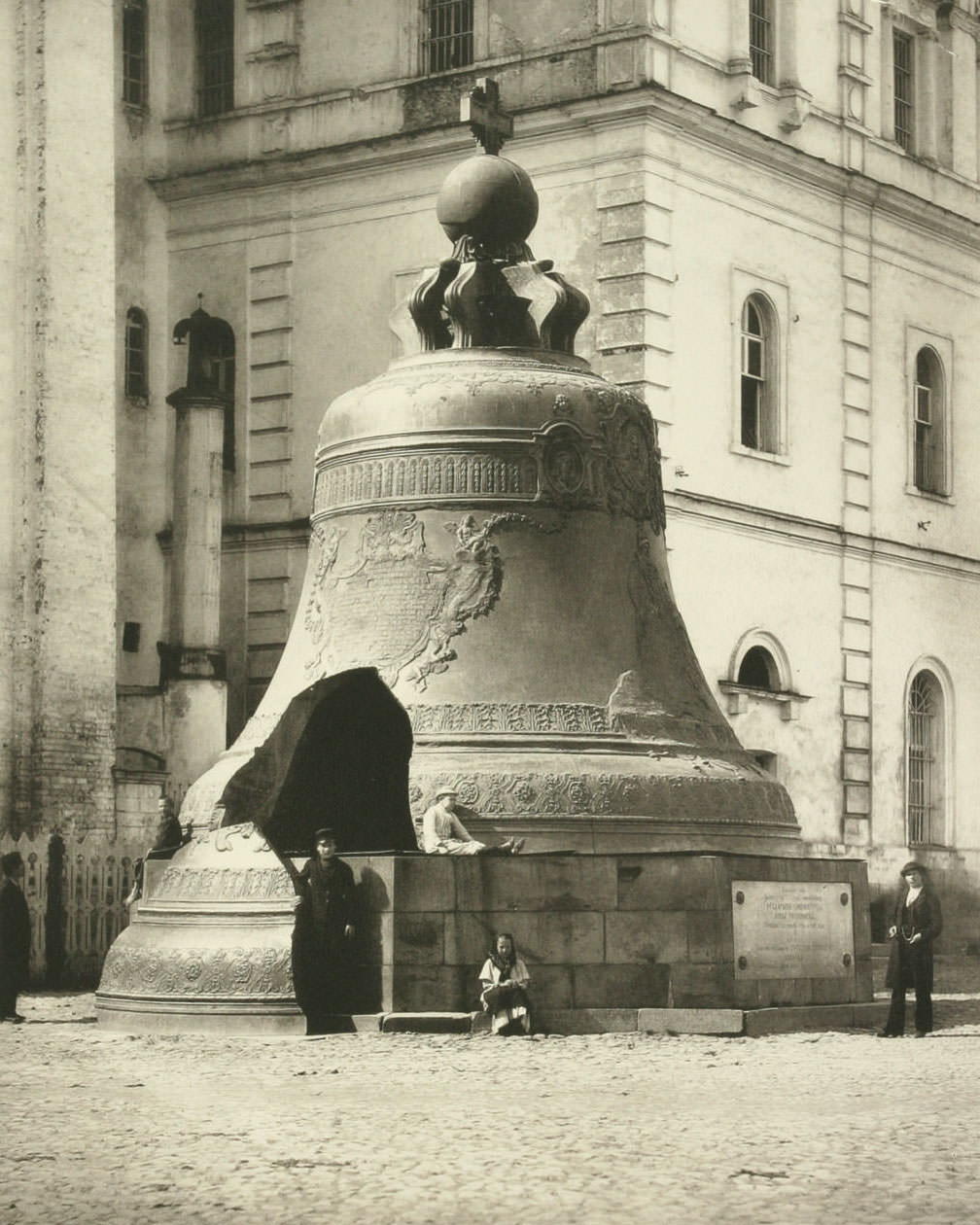
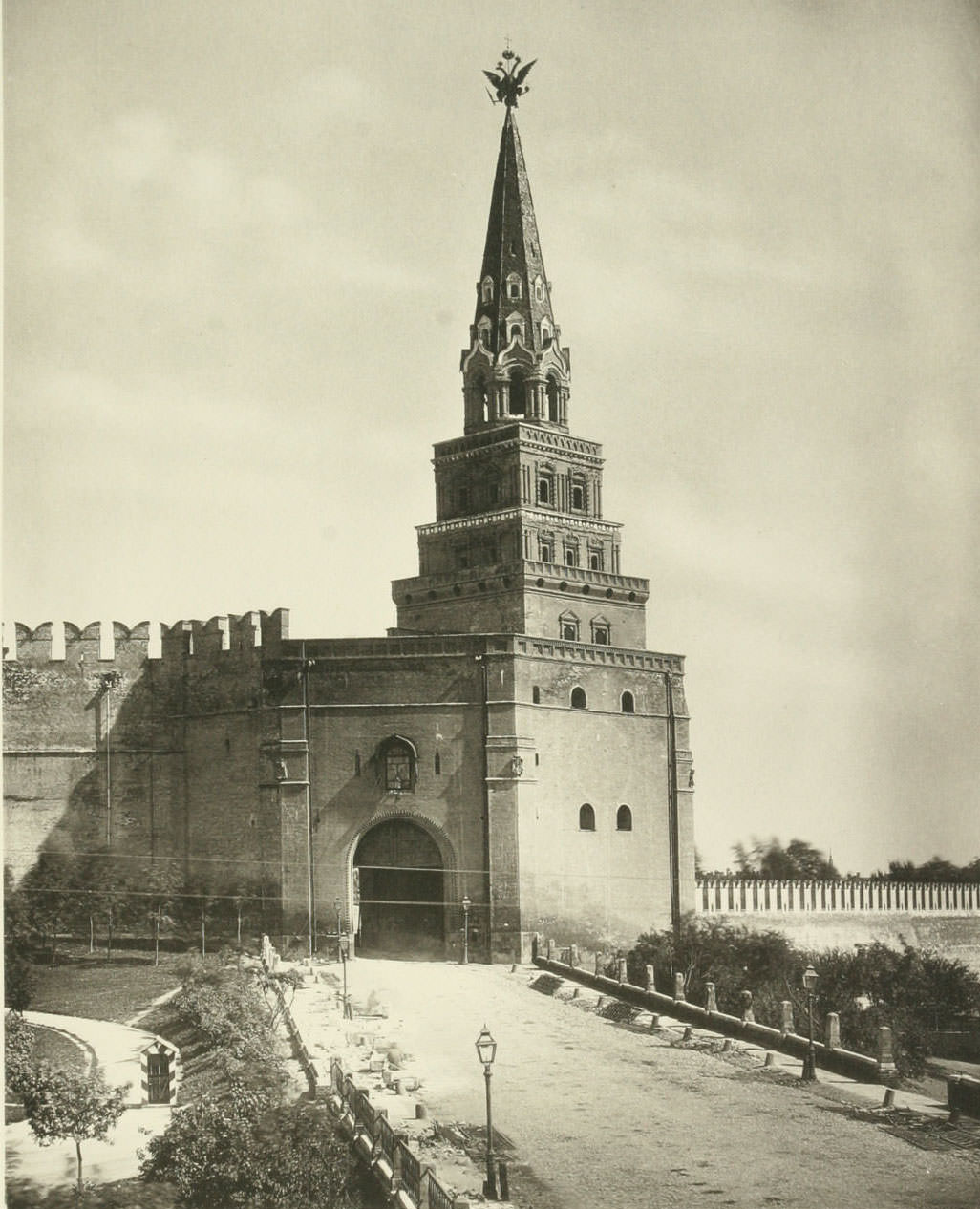
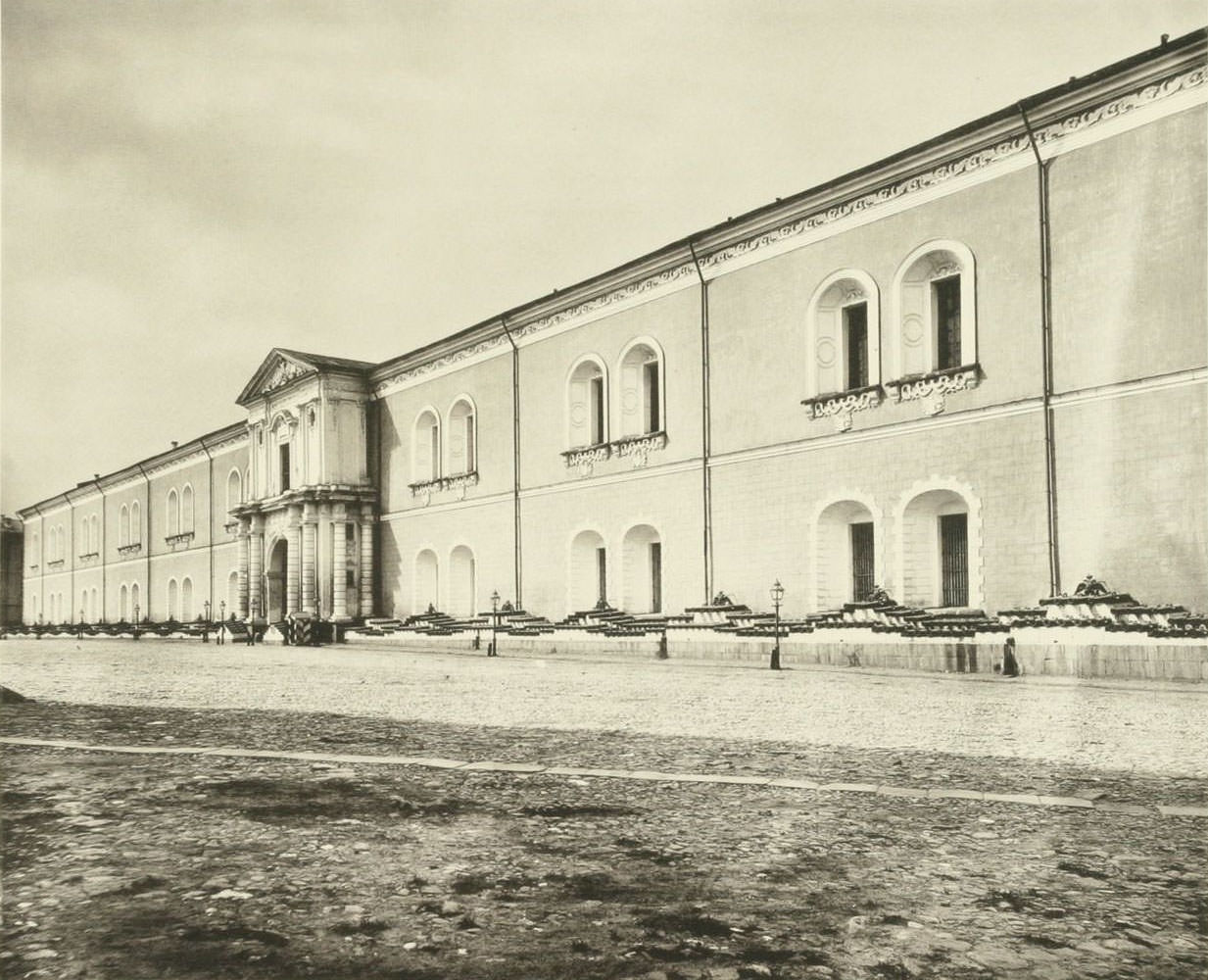
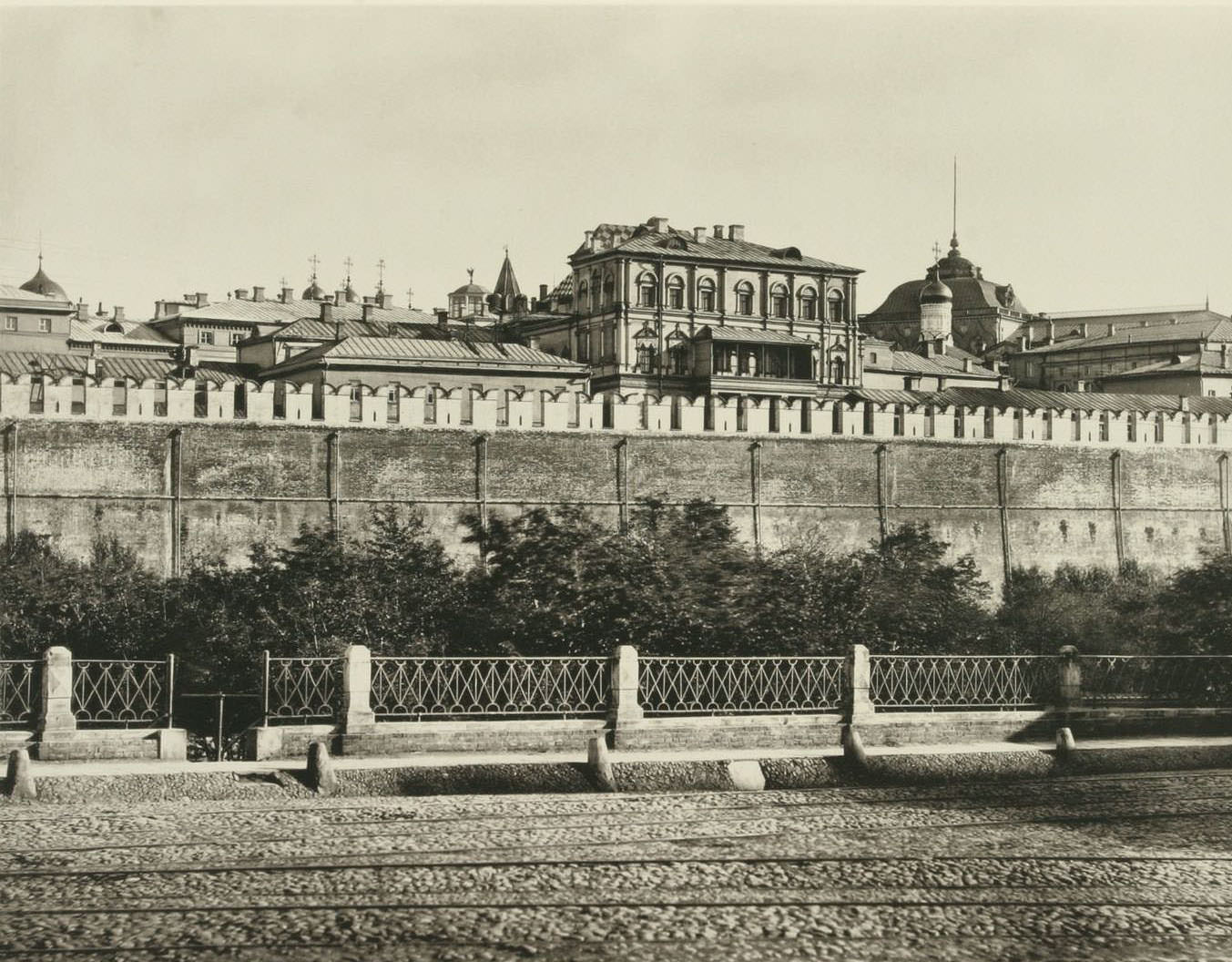
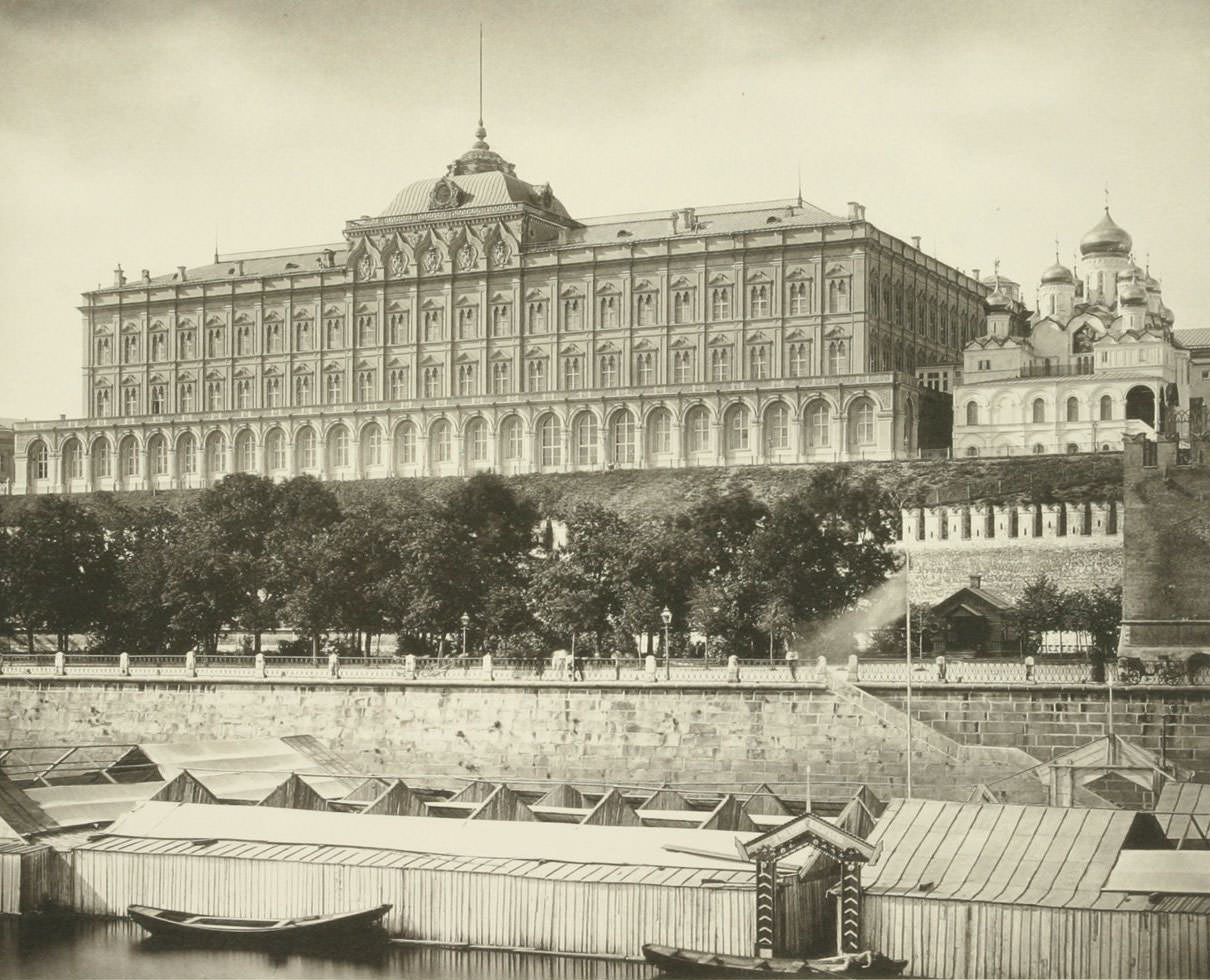
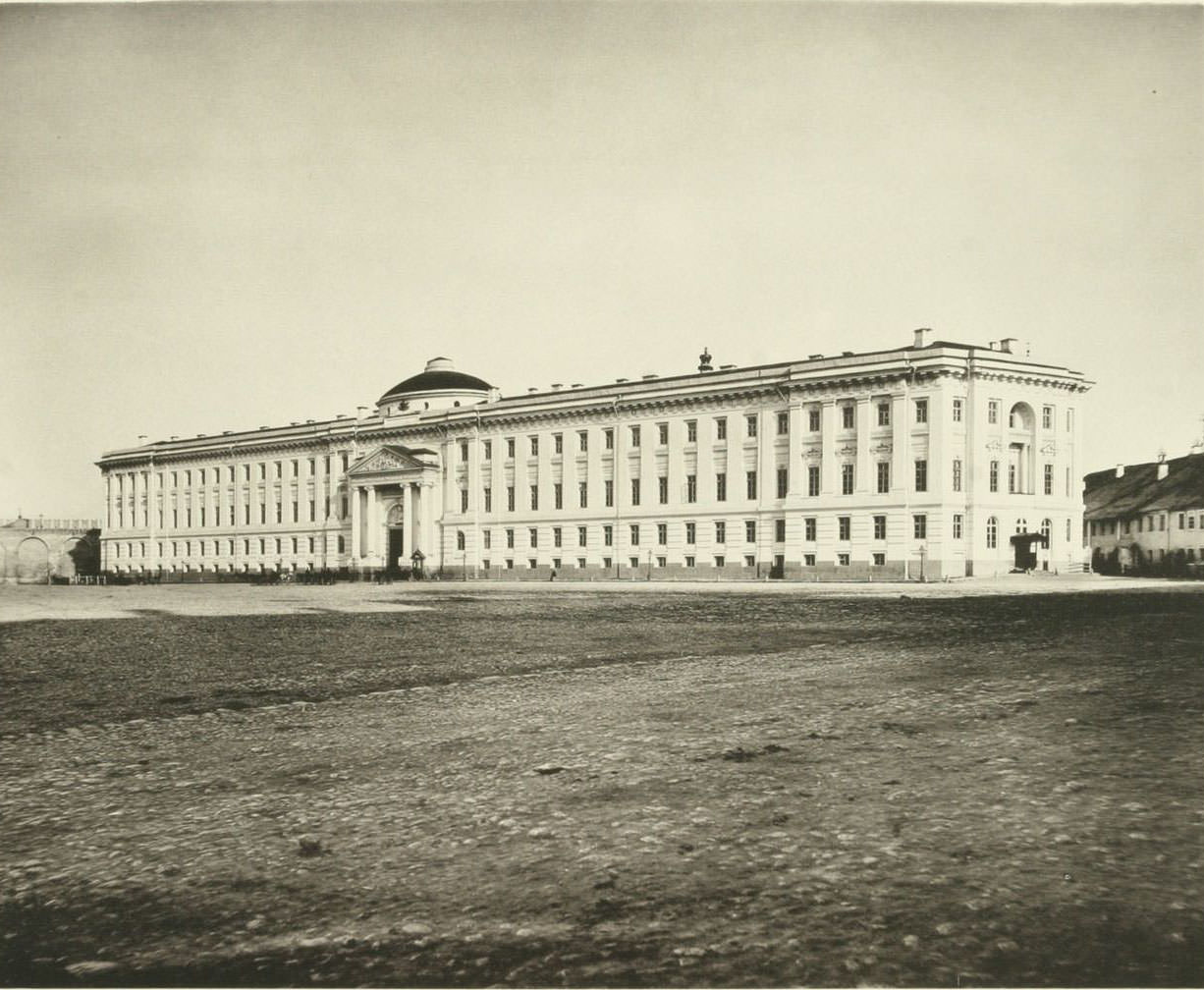
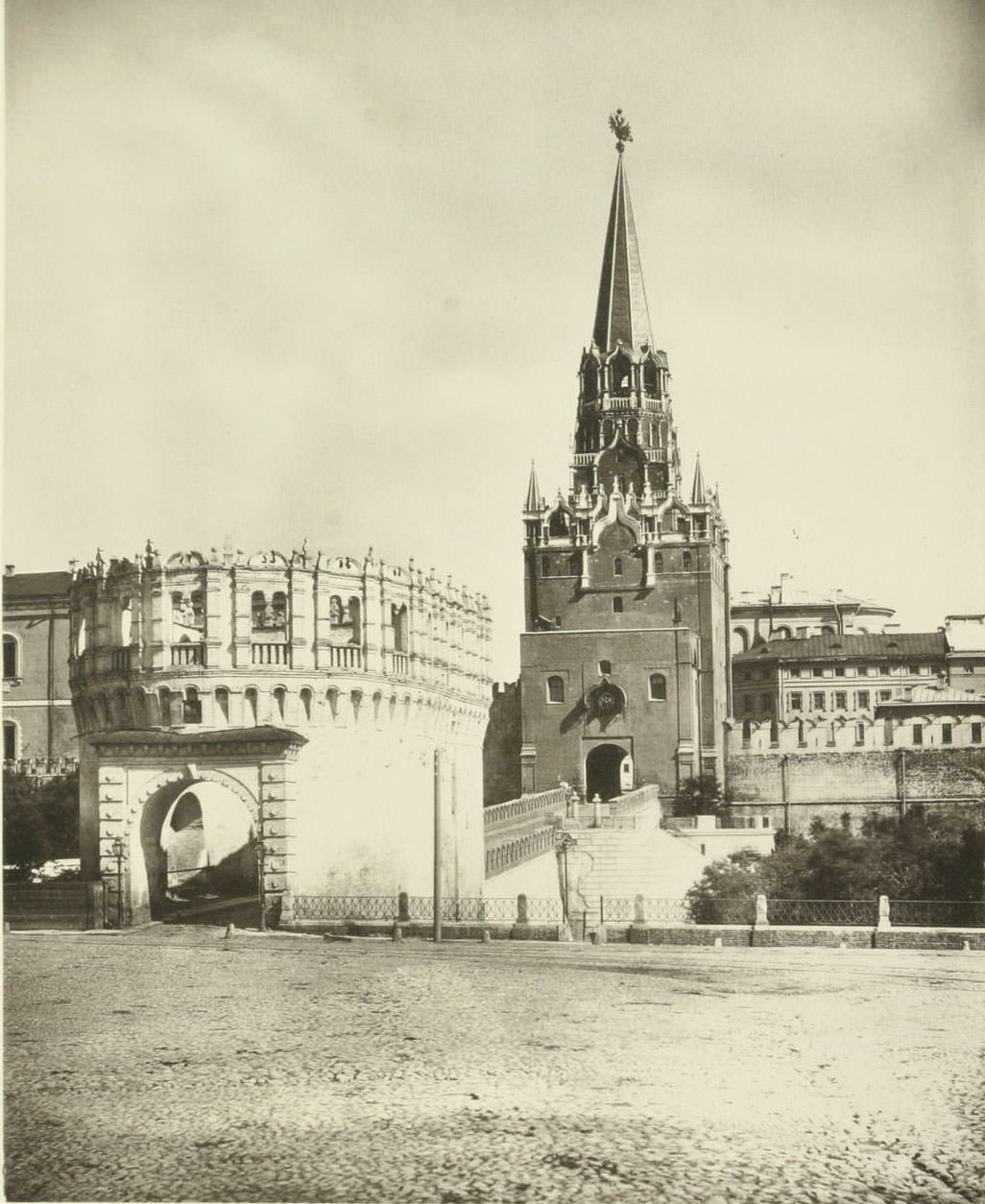
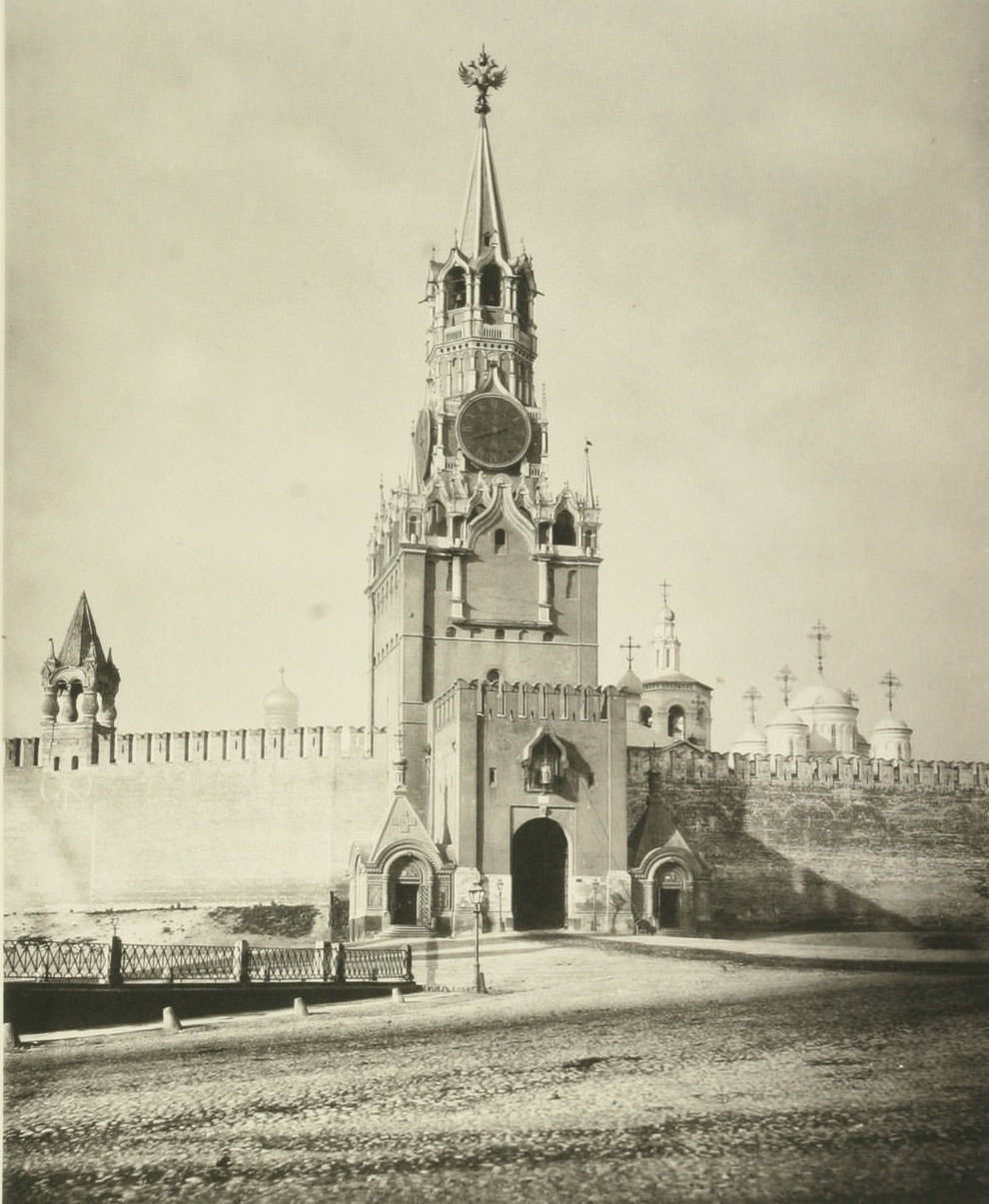
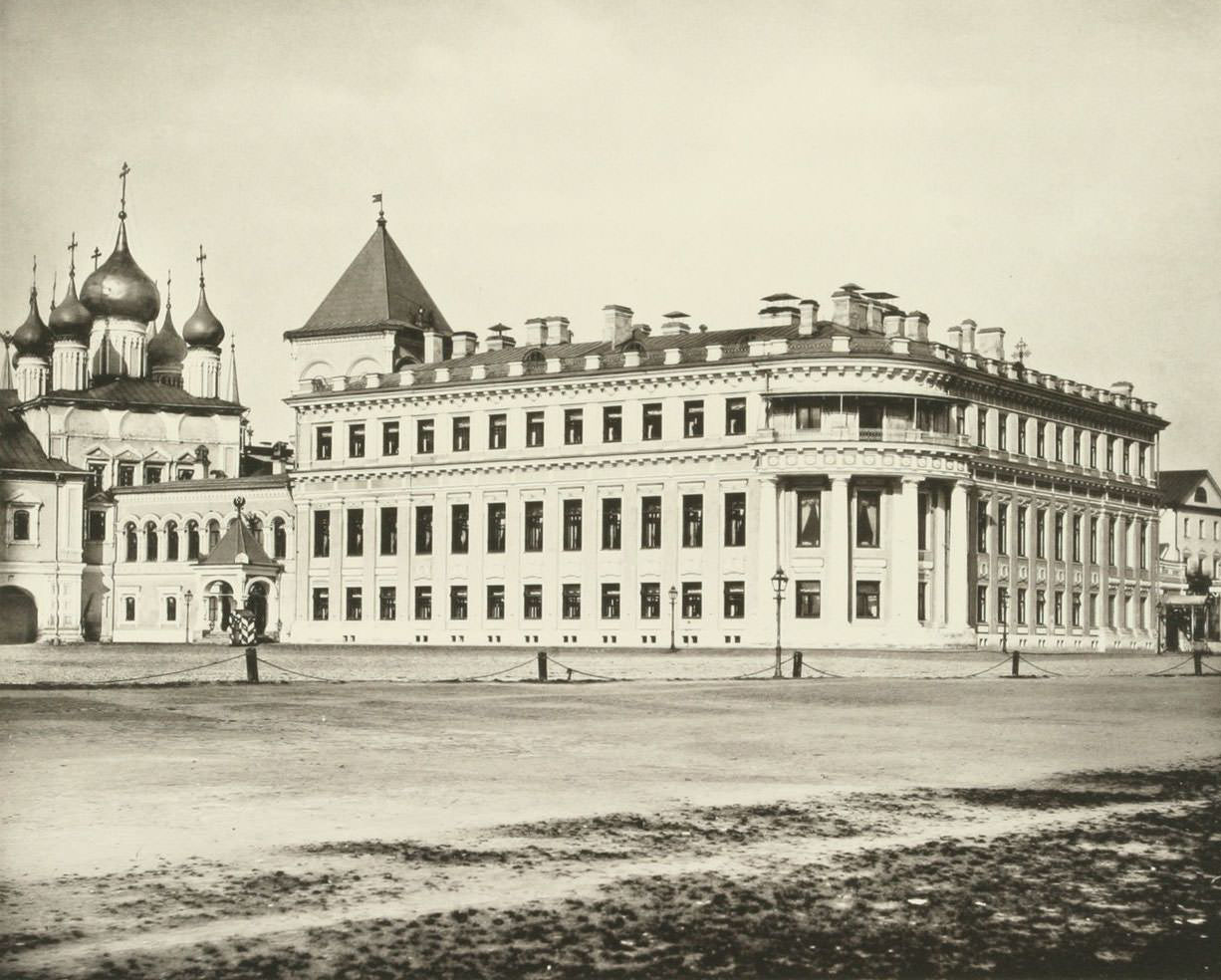
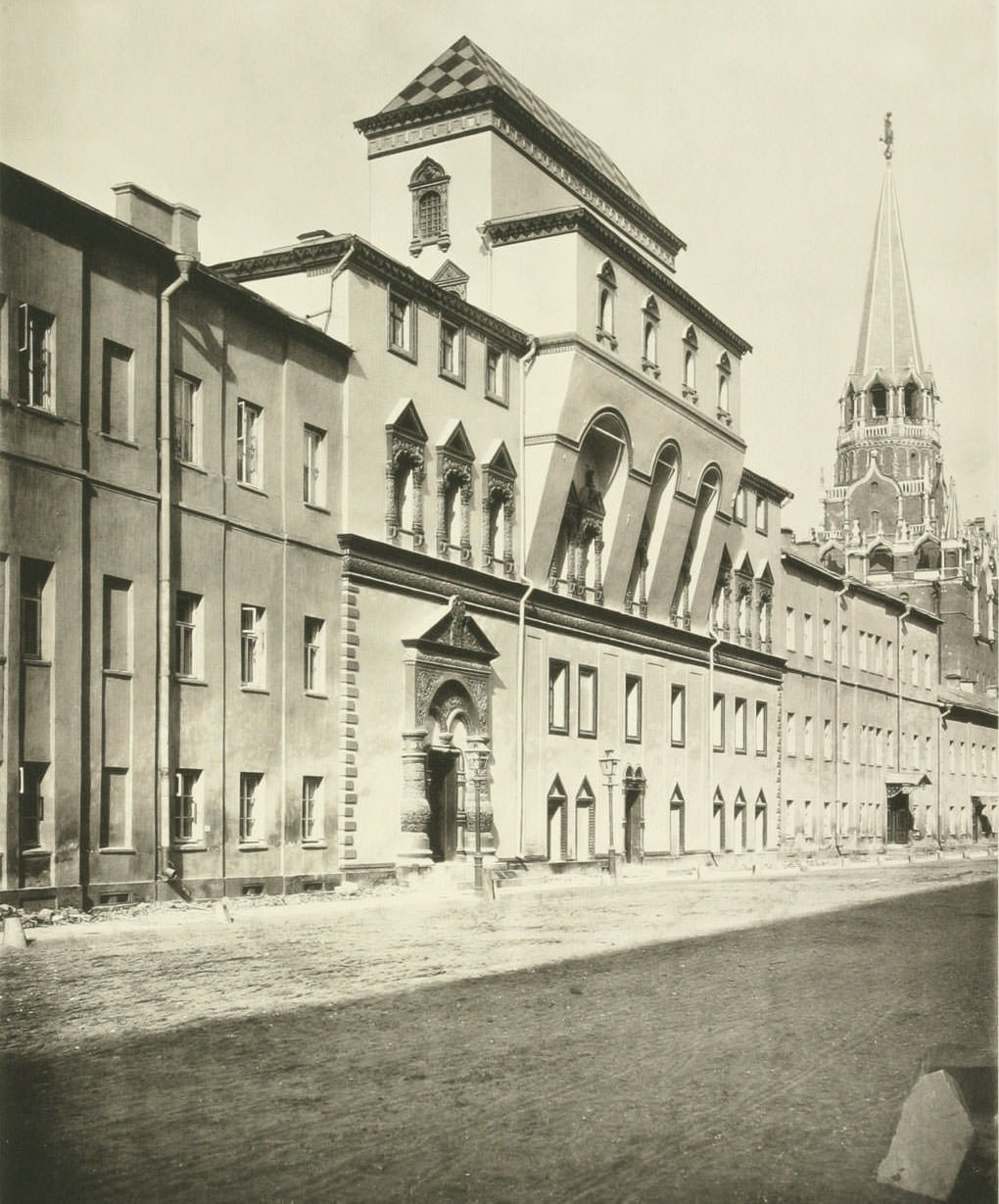
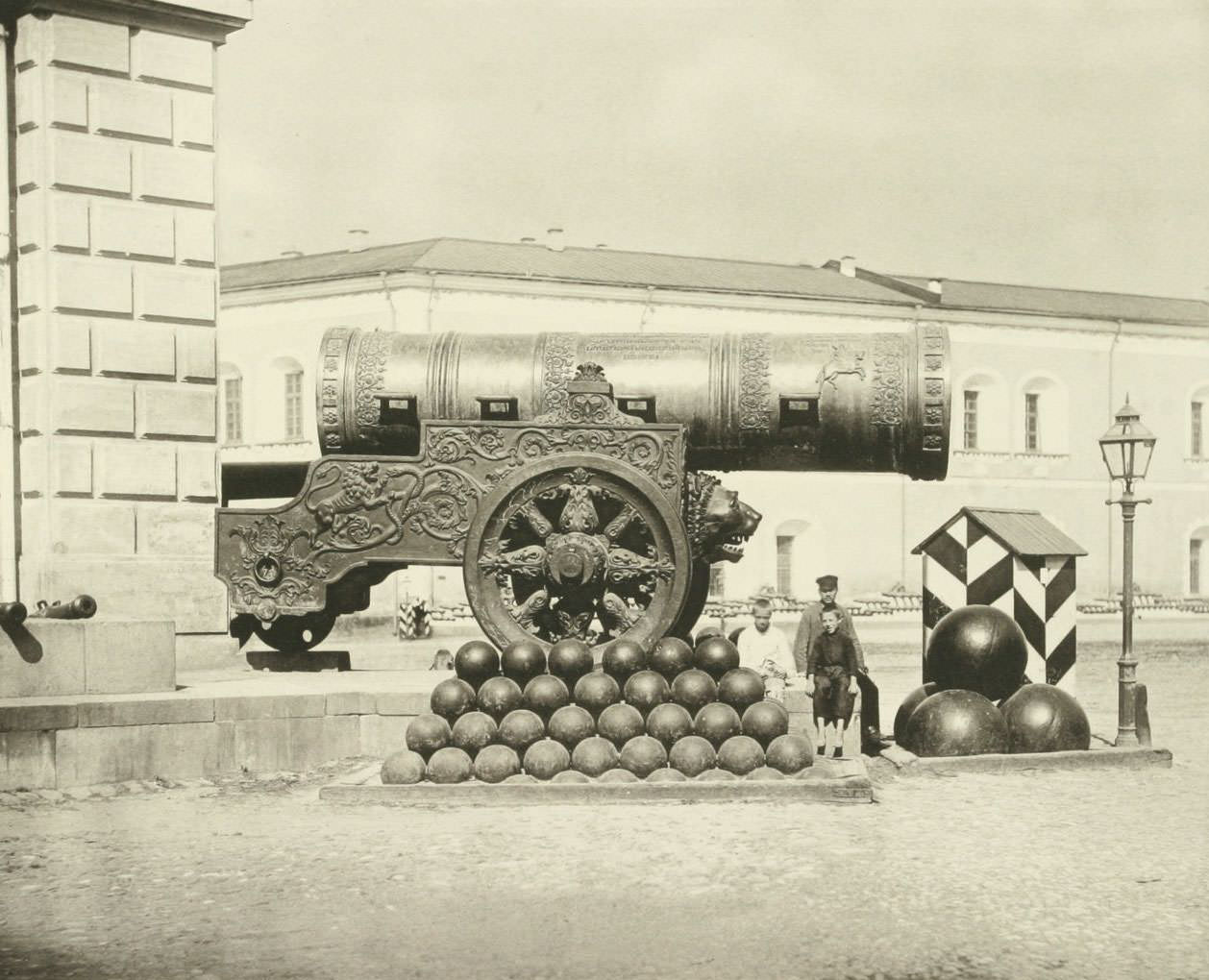
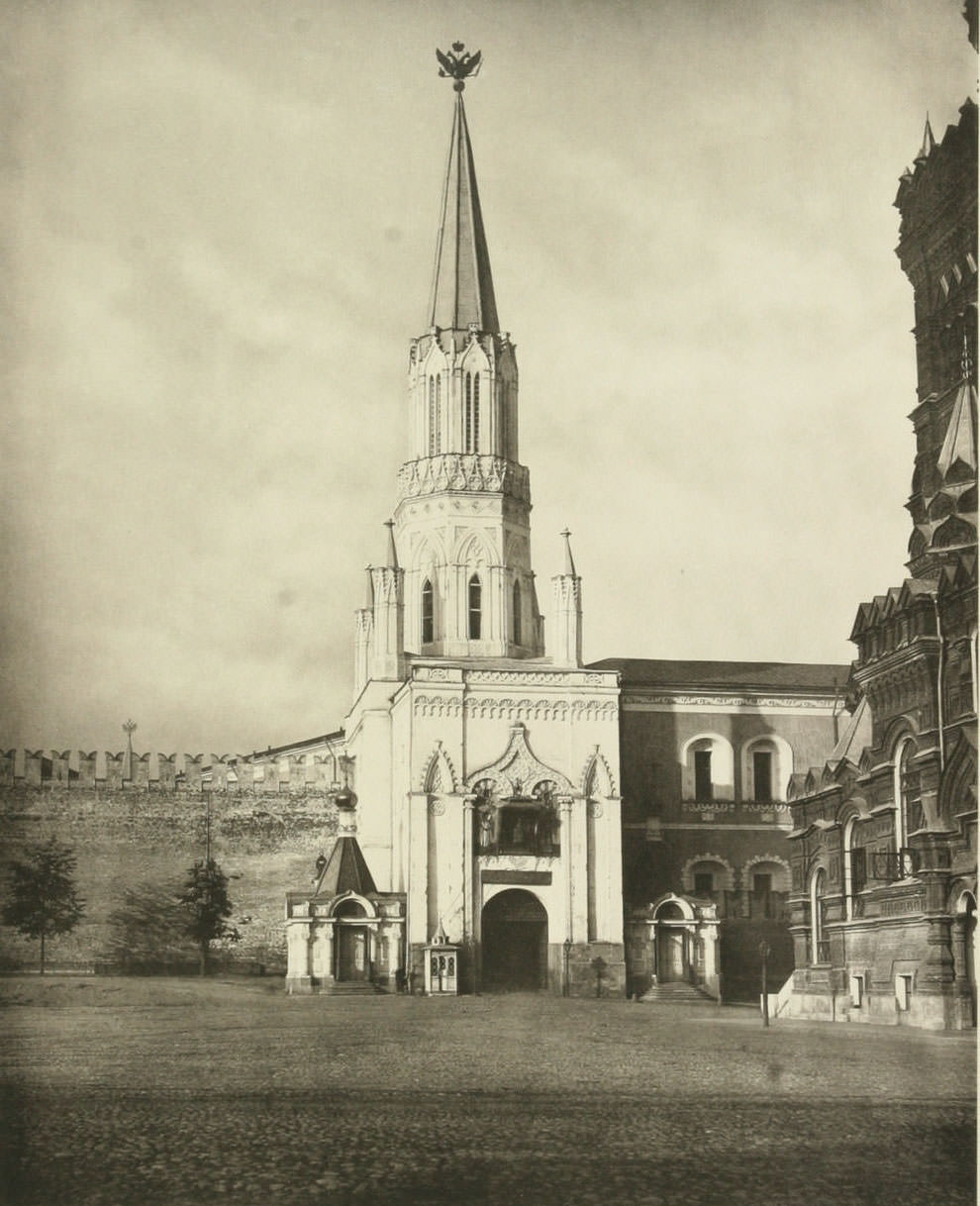
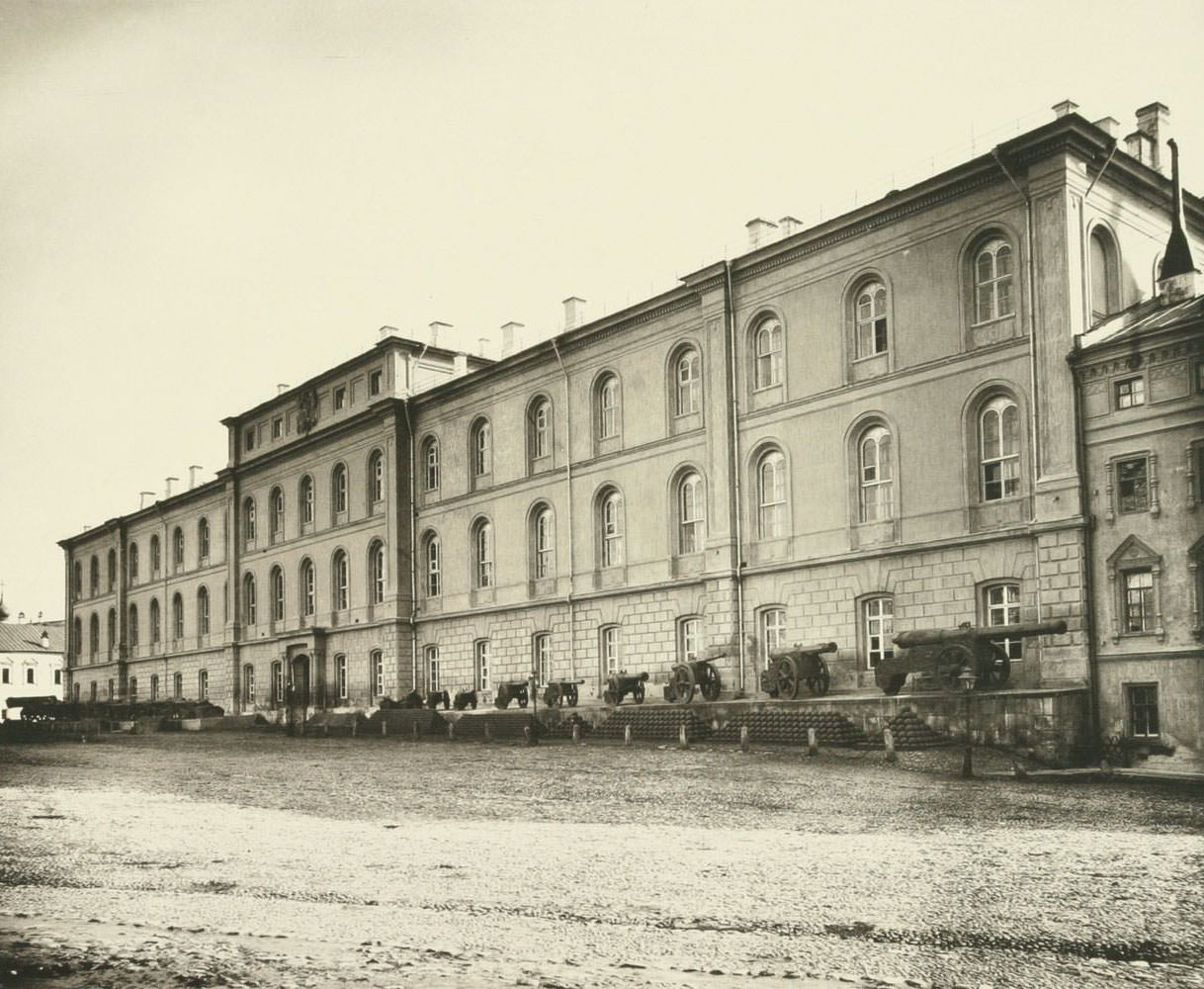
The Kremlin complex contained far more than government buildings. Its yards held arsenals, palaces, cathedrals, and ceremonial spaces that had accumulated over five centuries. The Arsenal, the Tsar Cannon, and the King Bell — a massive bronze bell that cracked before it ever rang — were landmarks that drew visitors and locals alike.
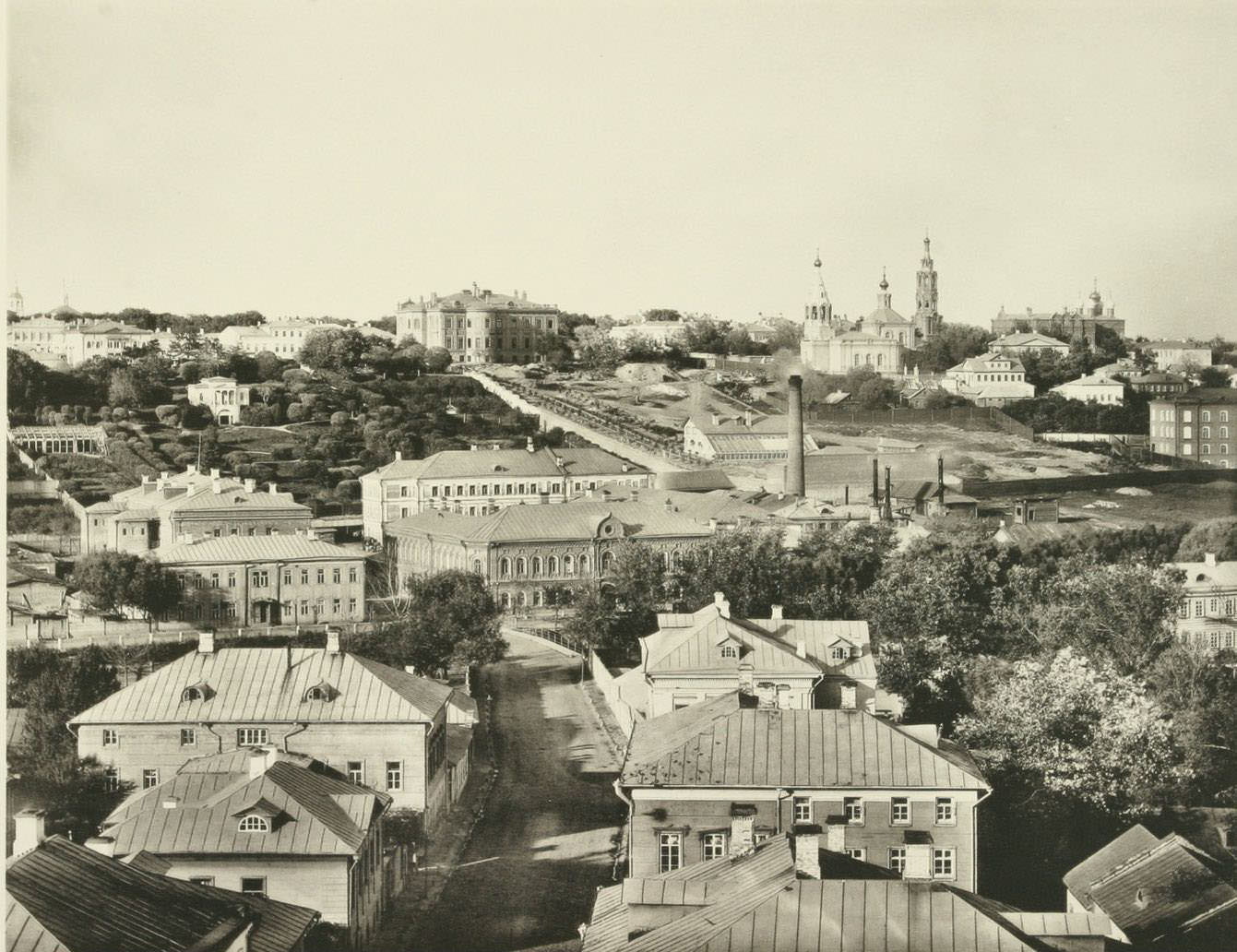
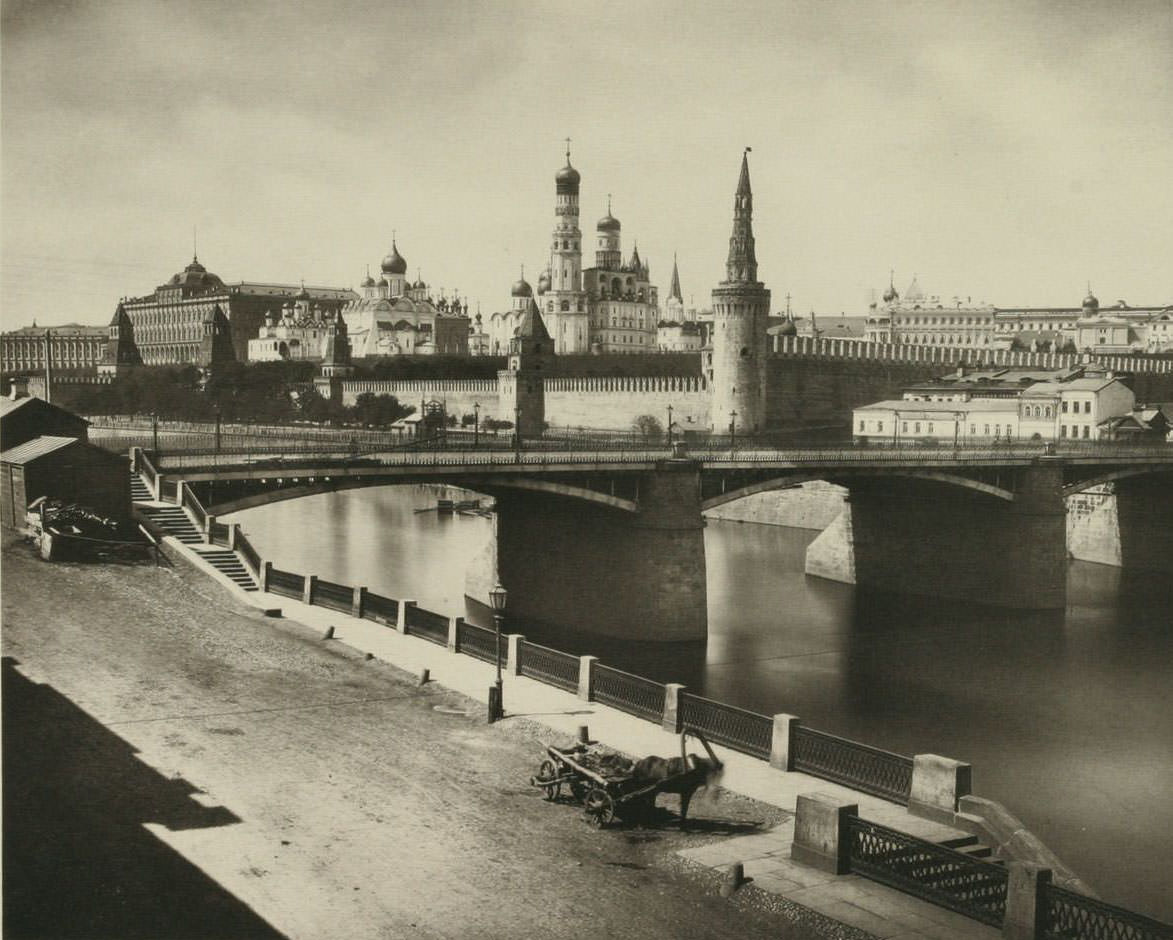
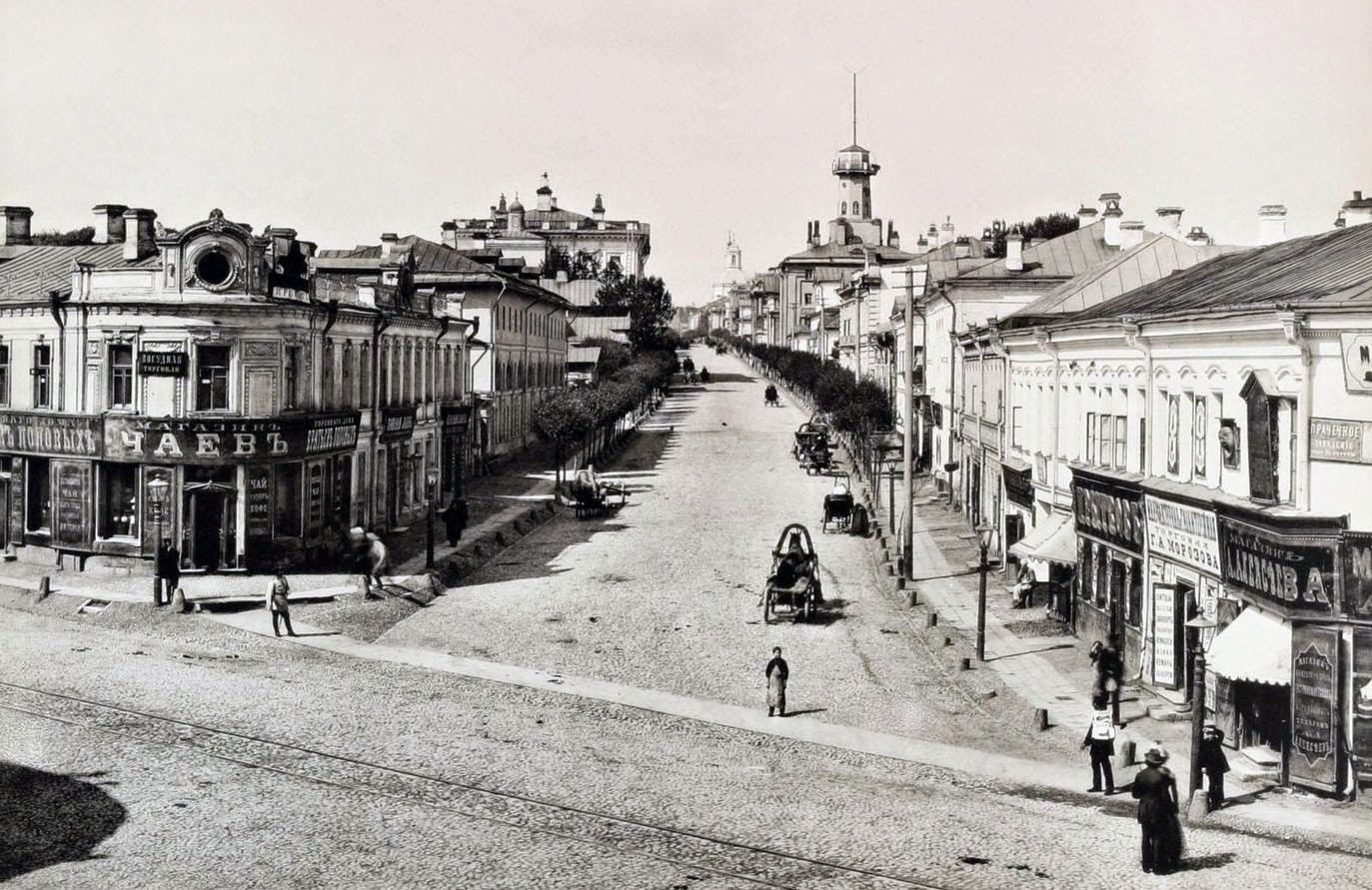
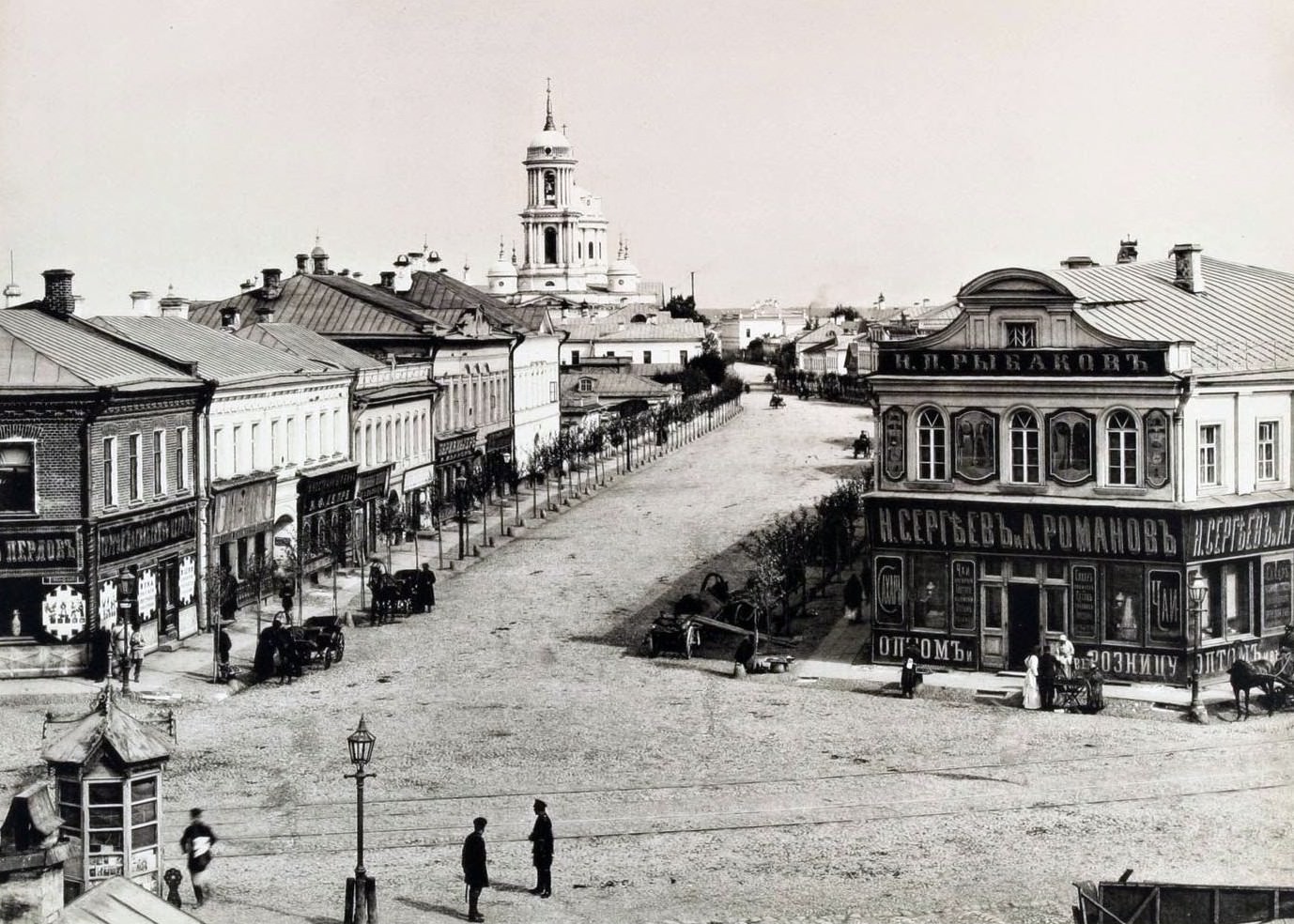
Moscow’s main thoroughfare, Tverskaya Street, ran north from the Kremlin. Wealthy merchants and nobles built three-story mansions along it, with shops filling the ground floors. Gas lamps lit this street at night, though most of the city still relied on oil lanterns. The Arbat district, a short distance away, housed writers, artists, and university professors in narrow lanes of wooden houses — where police informers regularly attended intellectual gatherings.
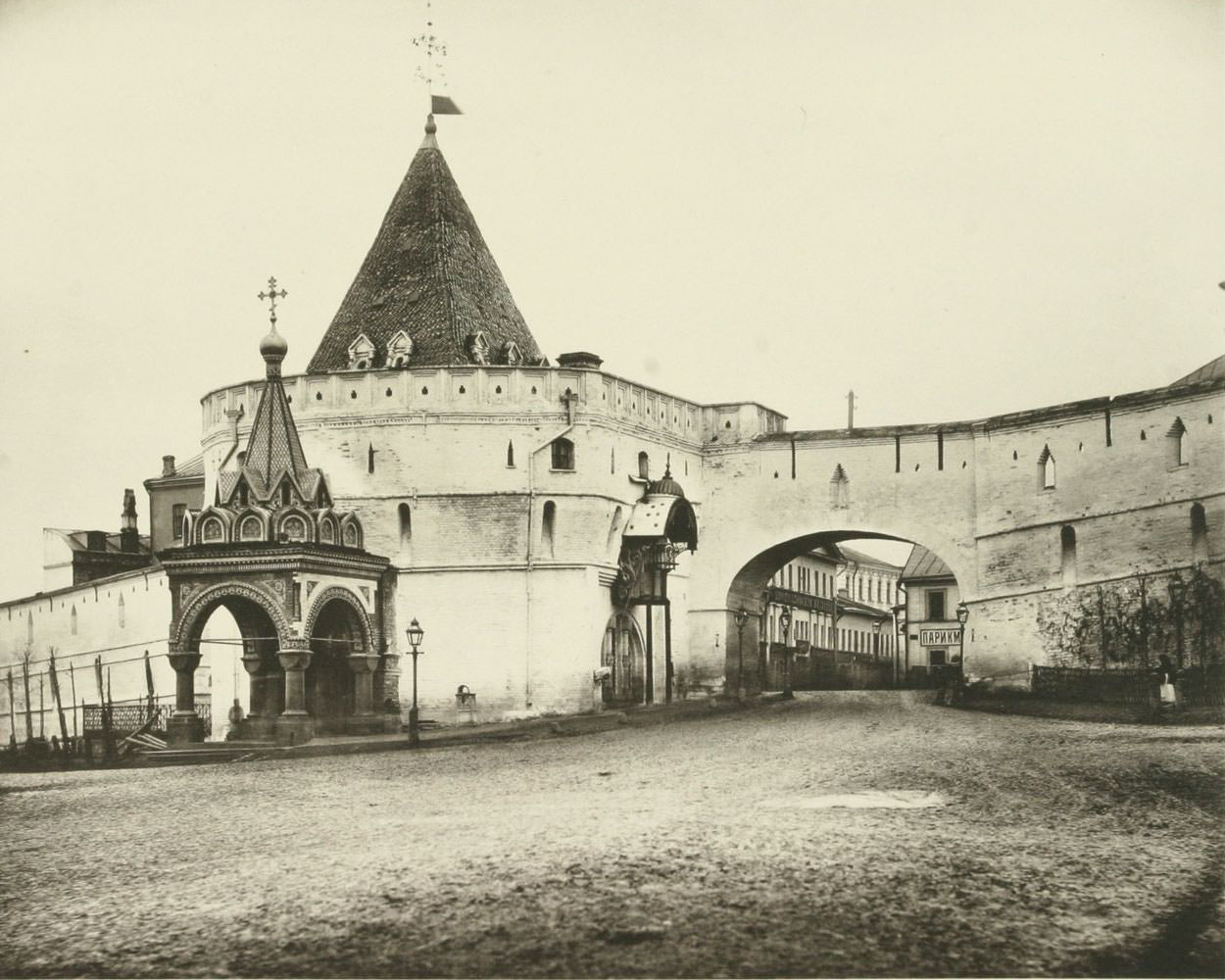
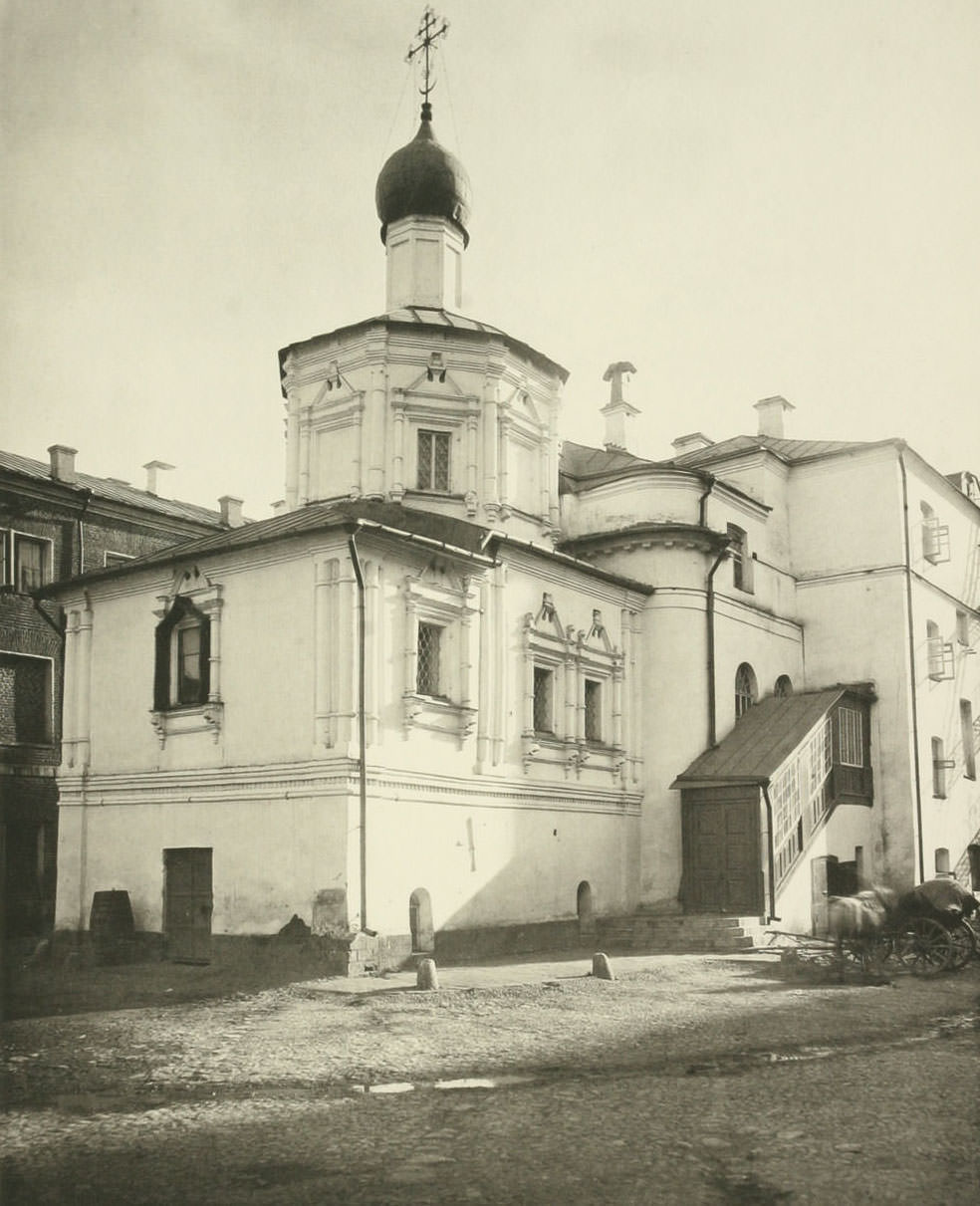
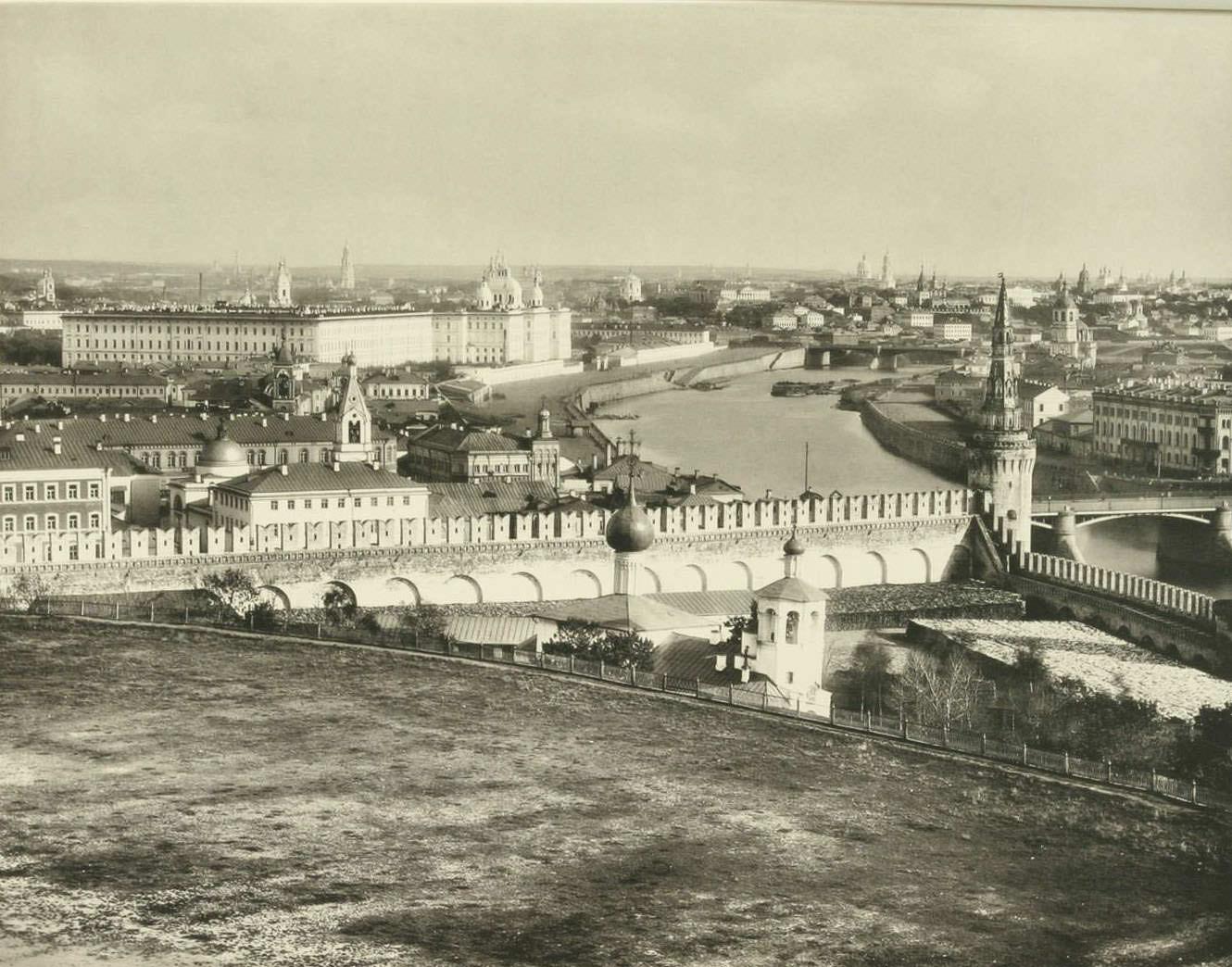
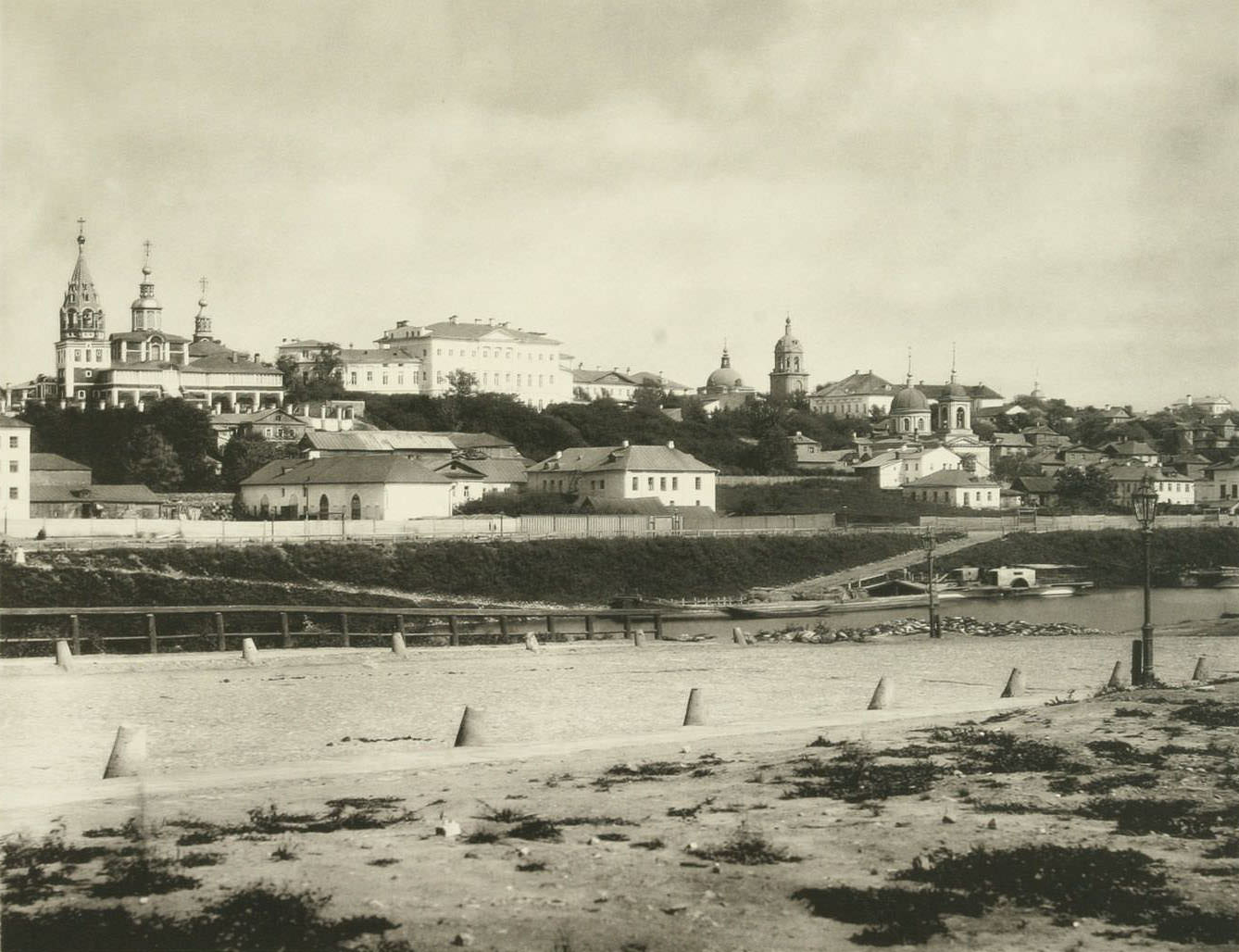
South of the river, Zamoskvorechye belonged to the merchant class. Two-story stone houses displayed carved wooden shutters and iron gates, with vegetable gardens and fruit trees behind them. It was a prosperous but insular world, organized around guild membership and Orthodox faith. First-guild merchants traded internationally and served on city councils. They built churches as public expressions of both piety and status.
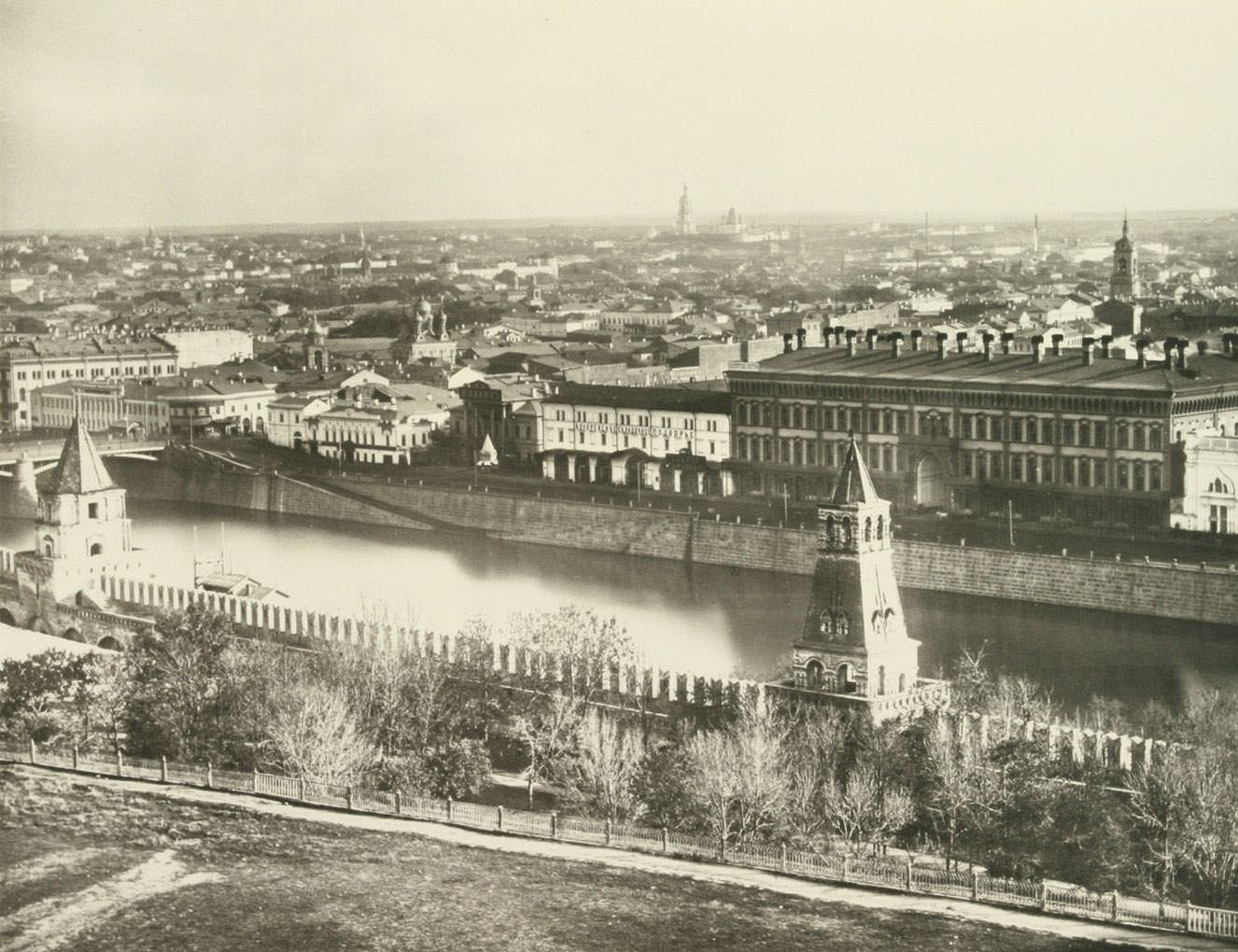
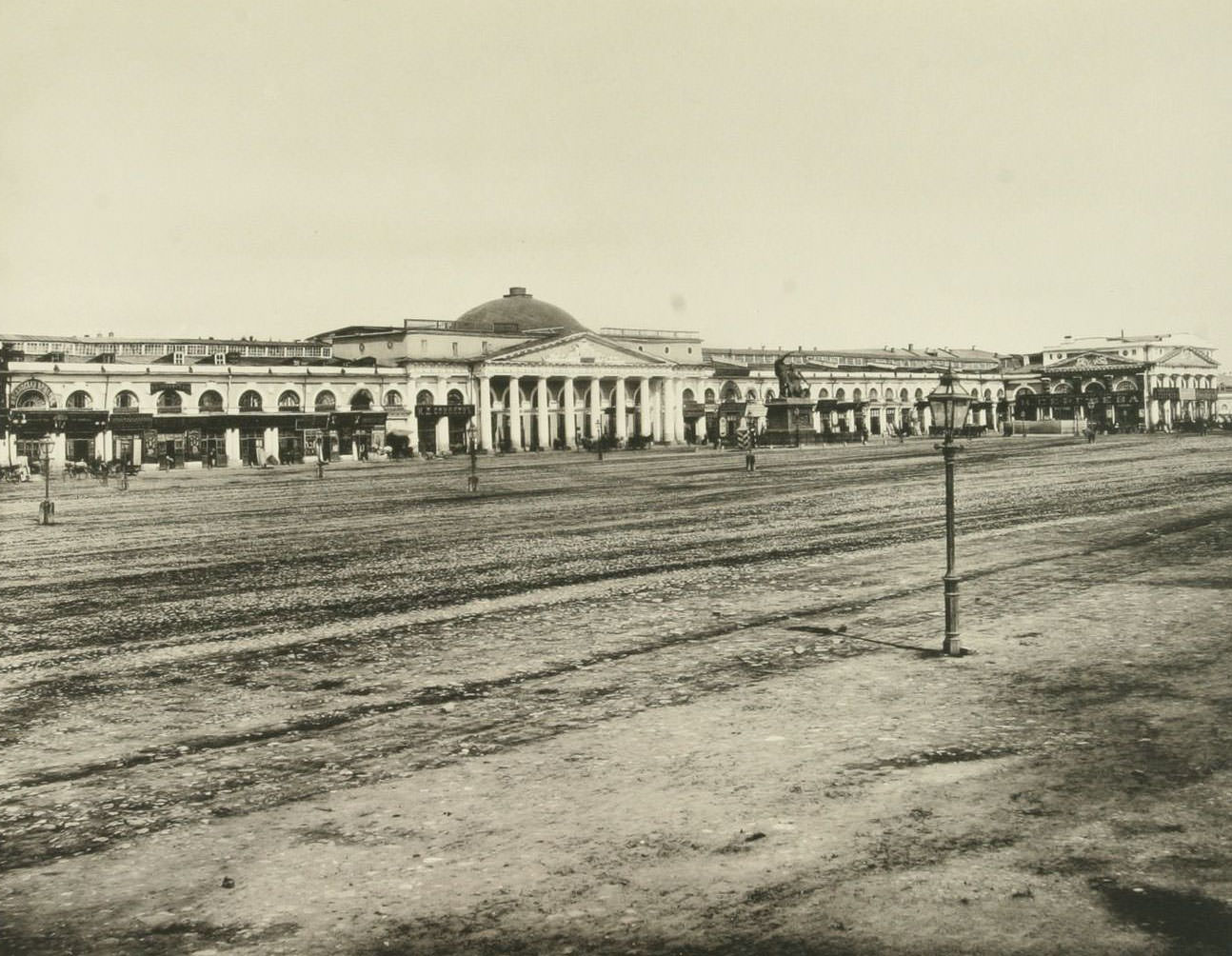
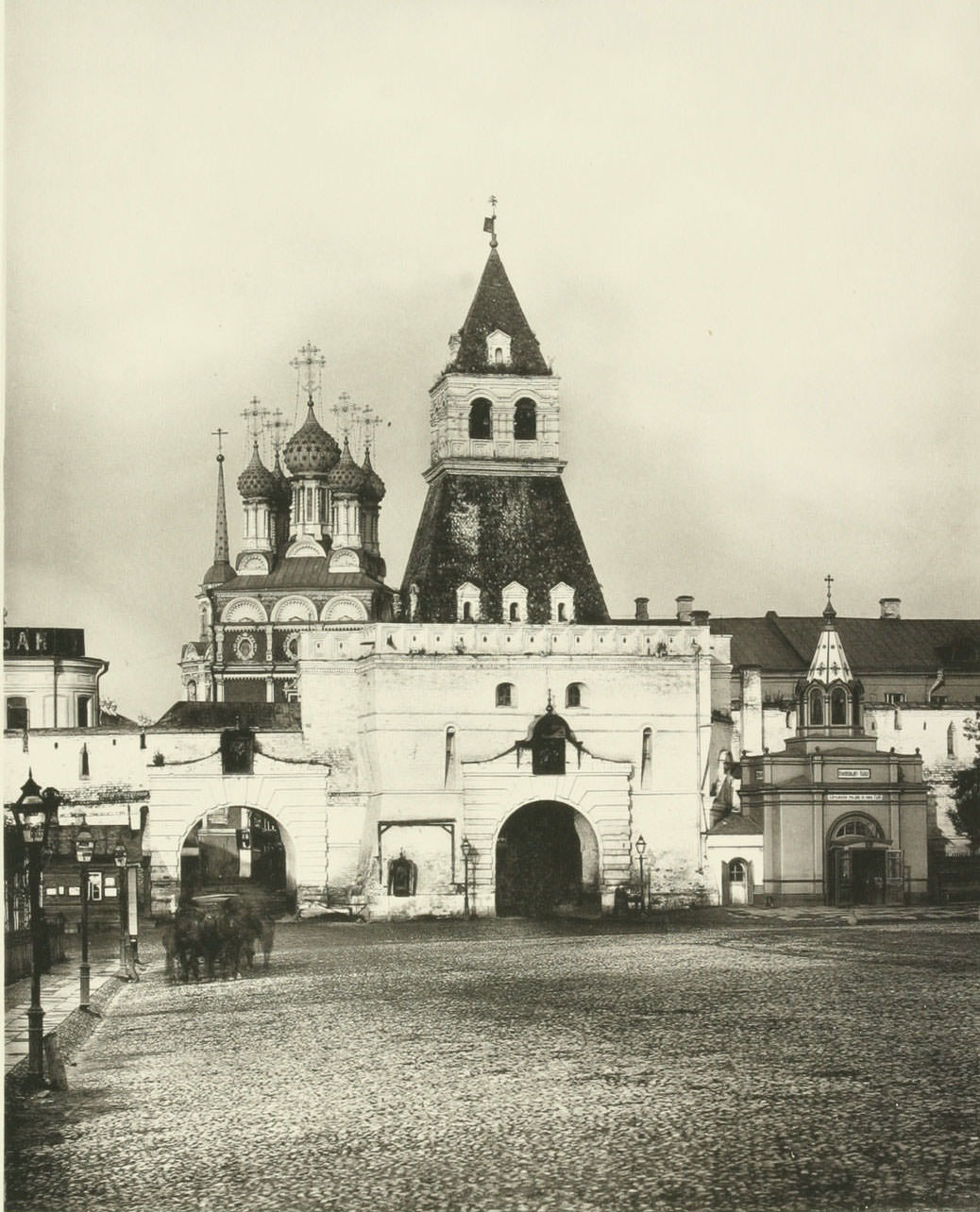
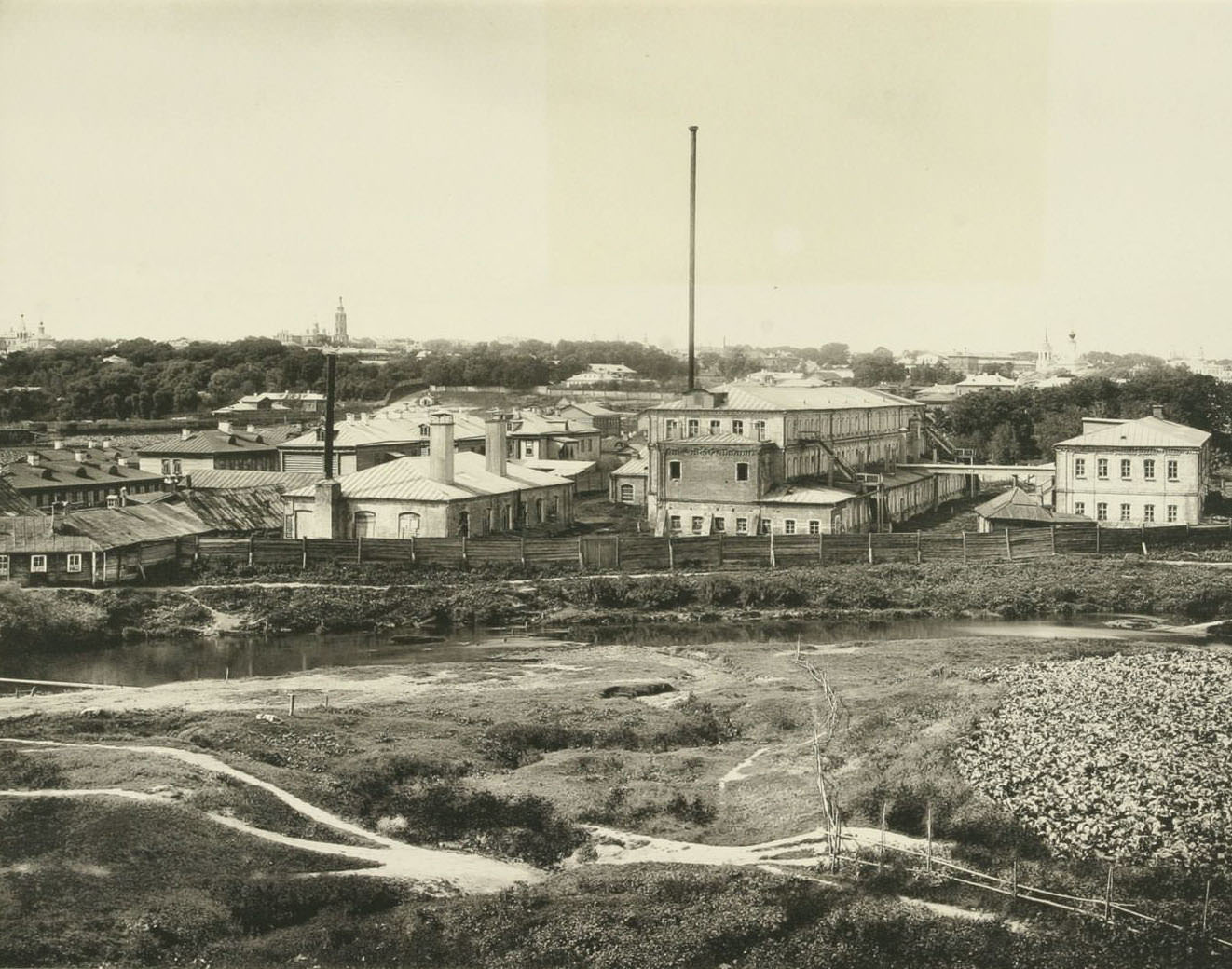
Factory whistles pulled workers out of bed at 5 AM. The Prokhorov textile mill alone employed 8,000 people — mostly women and children running spinning machines and looms for 12 to 14-hour shifts in poorly ventilated buildings. Monthly wages ran 15 to 20 rubles, barely enough to rent a corner of a basement room. At the Goujon metalworks, skilled workers earned more but faced weekly accidents with no compensation for injuries.
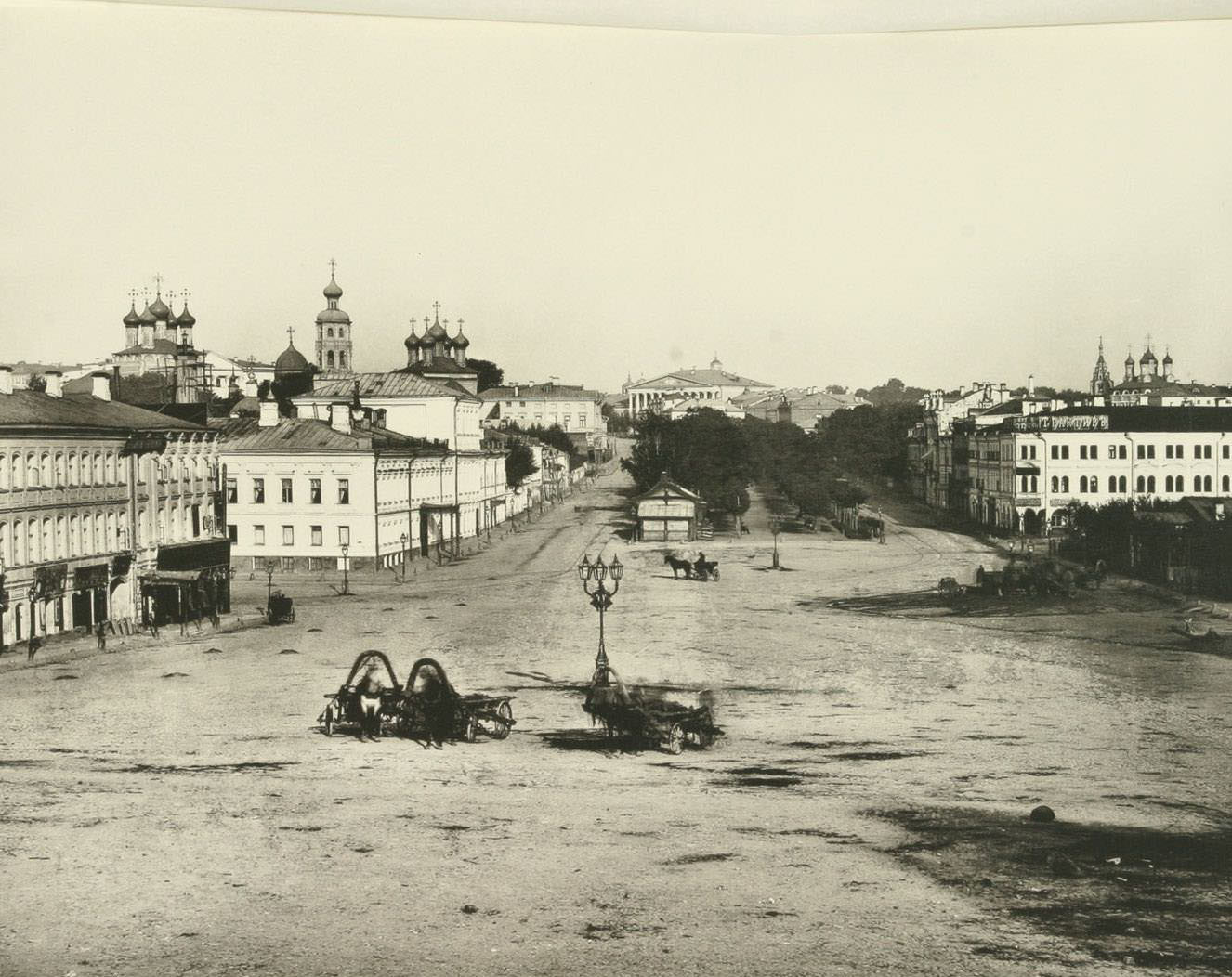
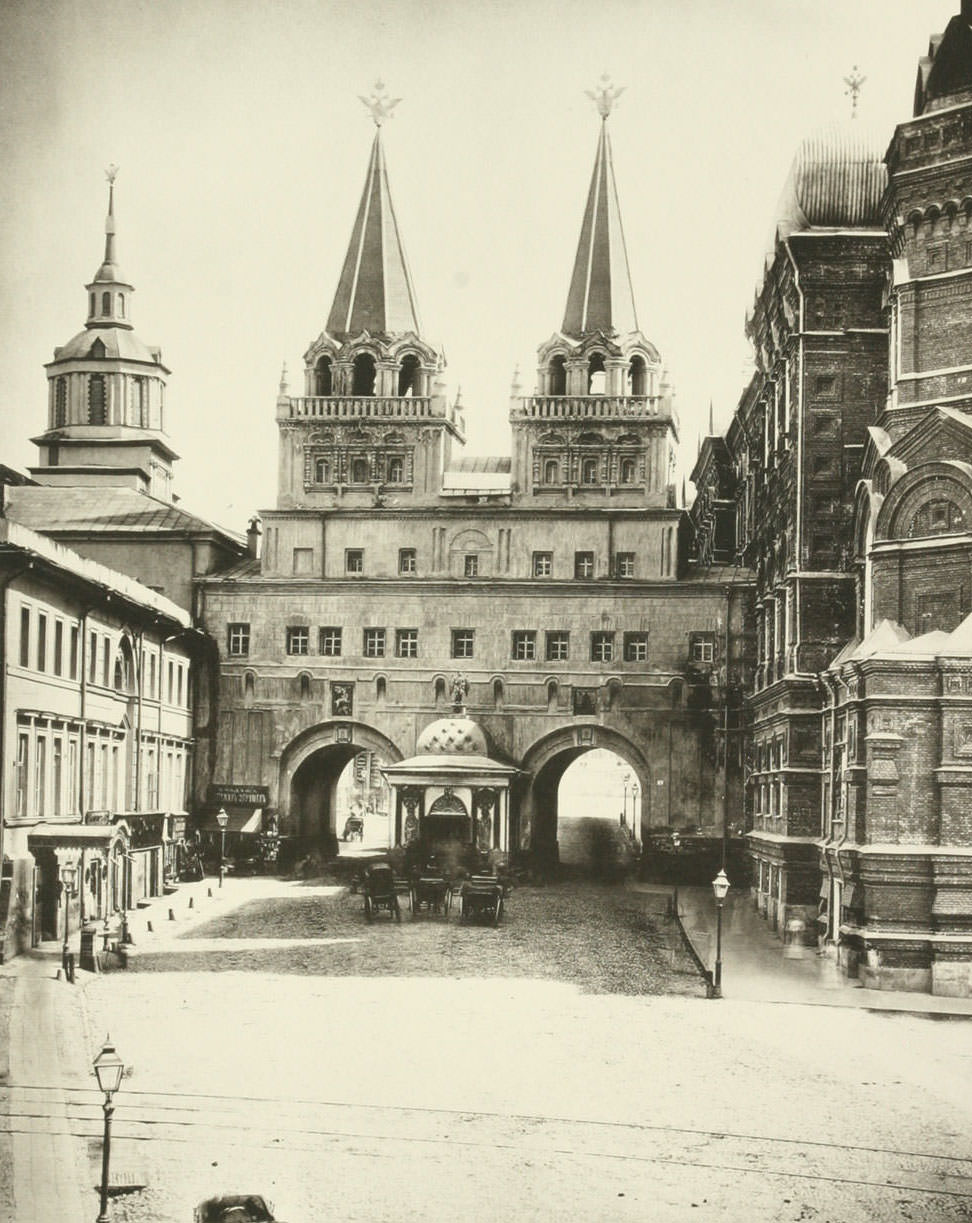
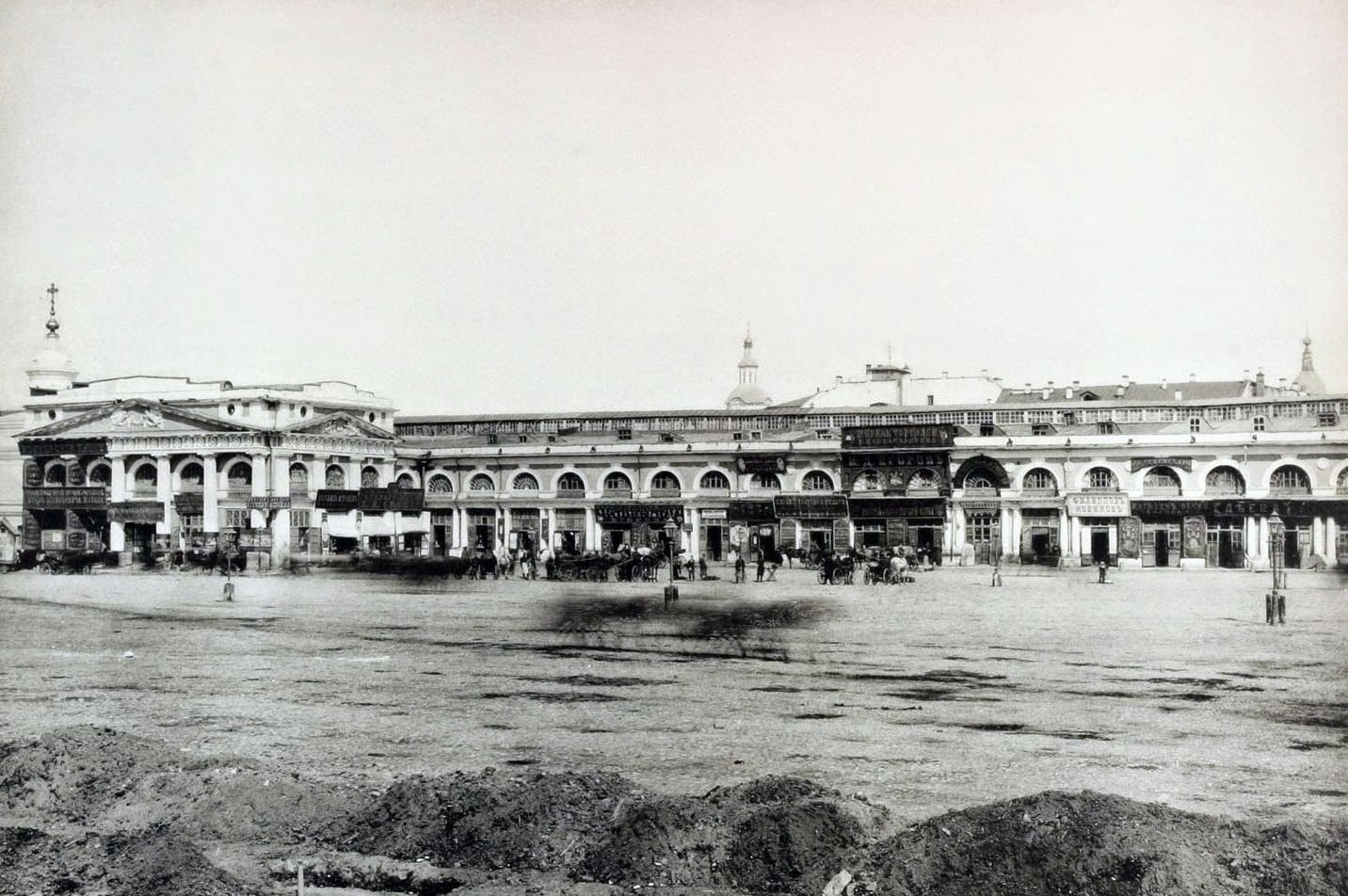
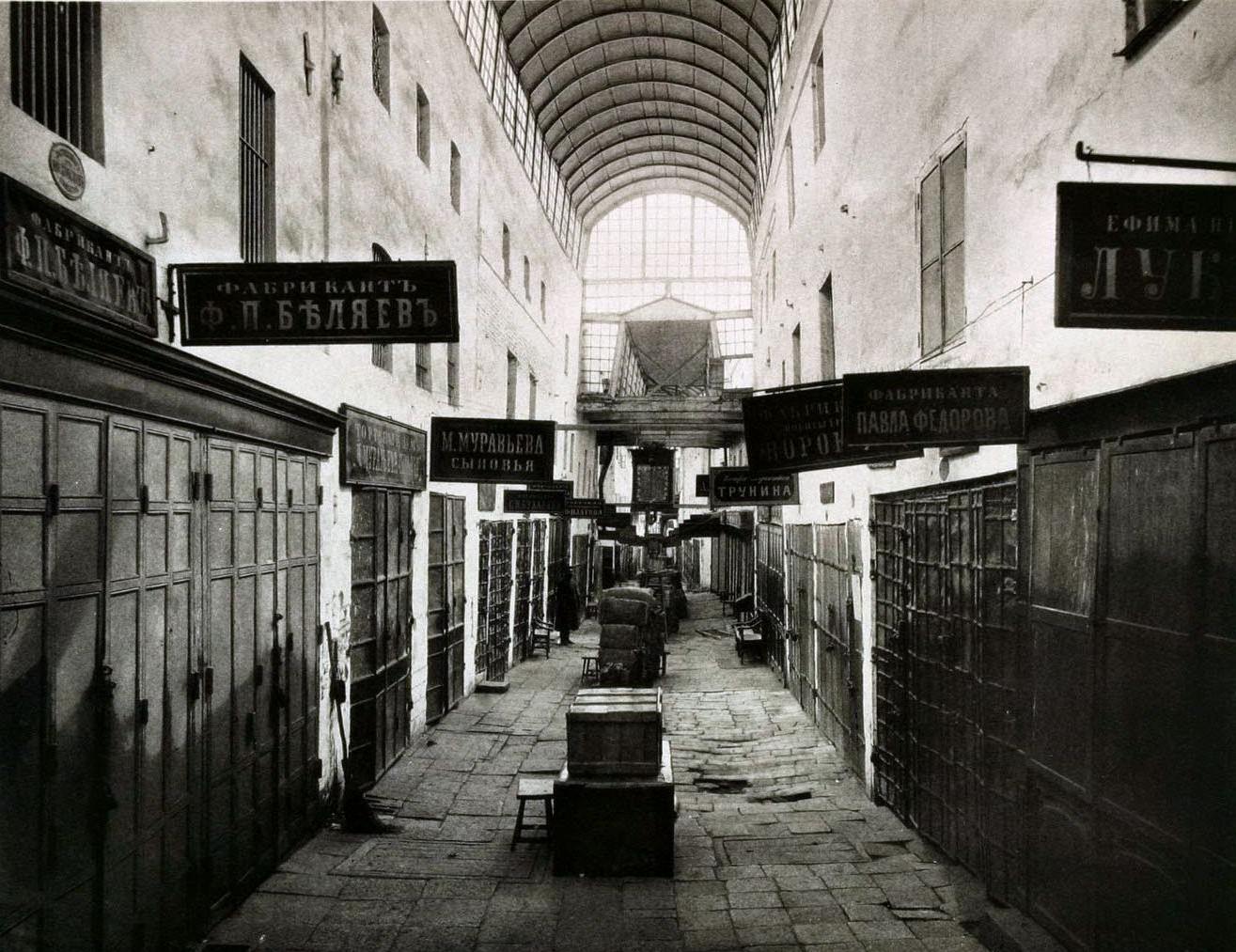
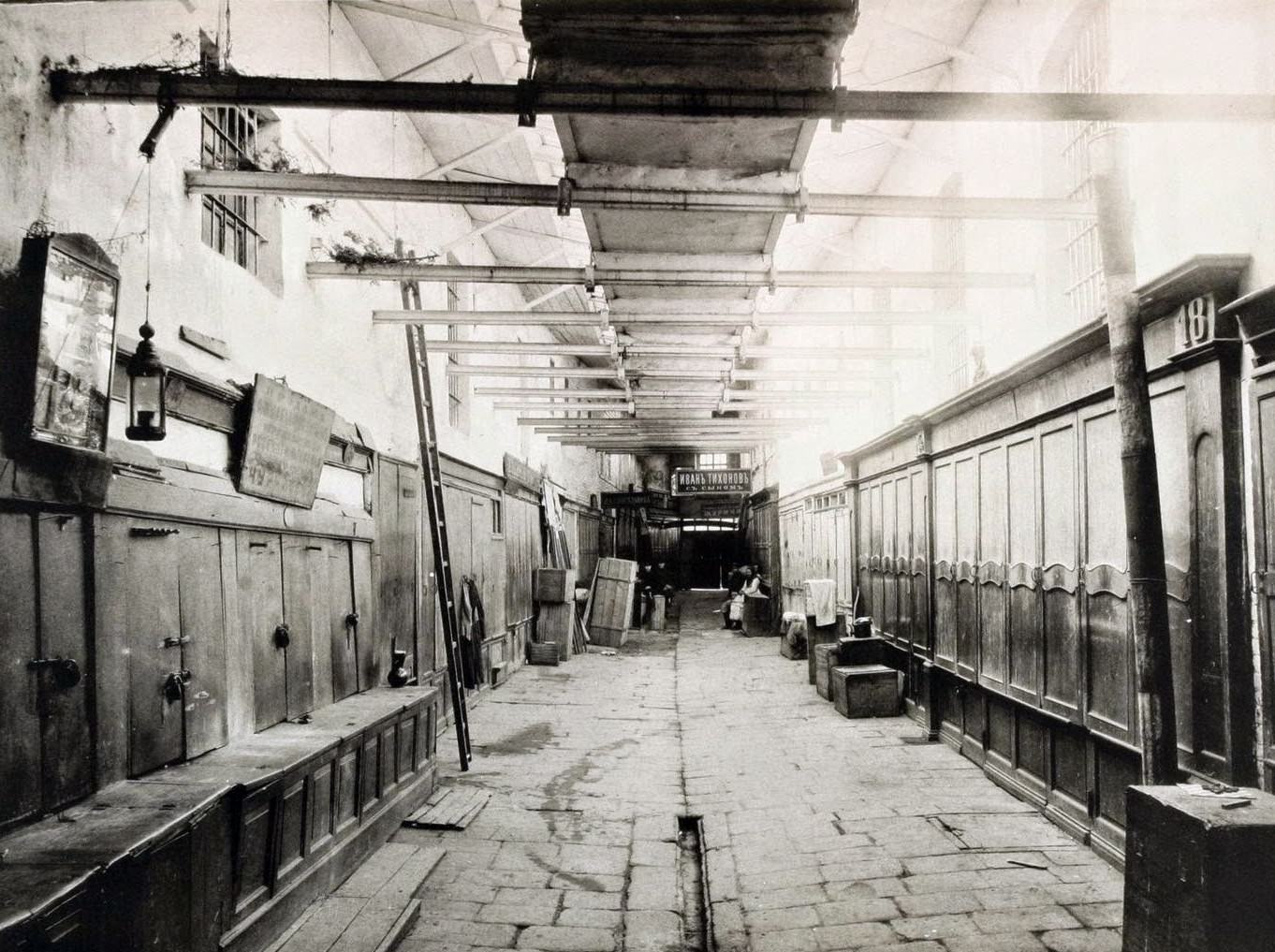
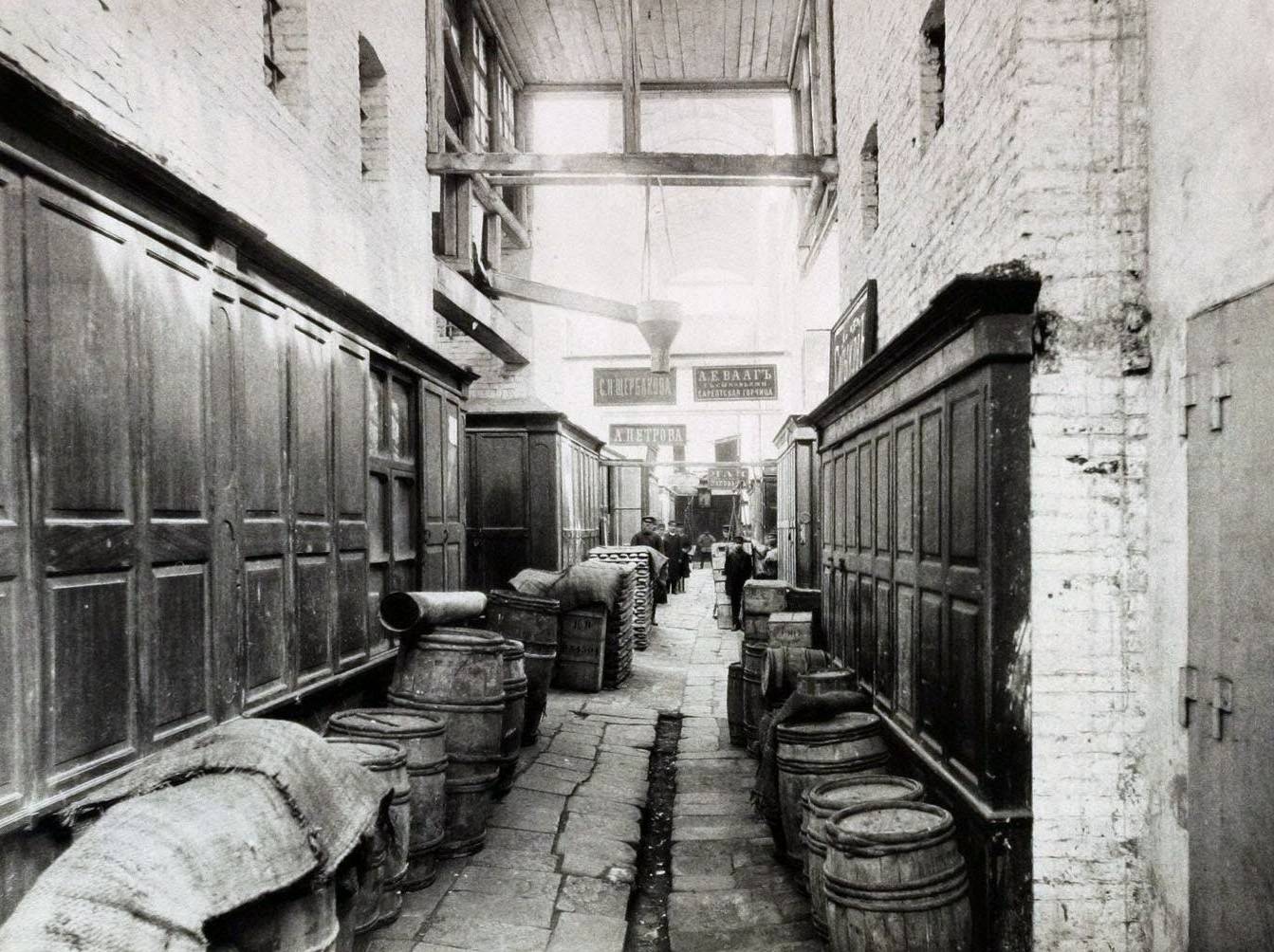
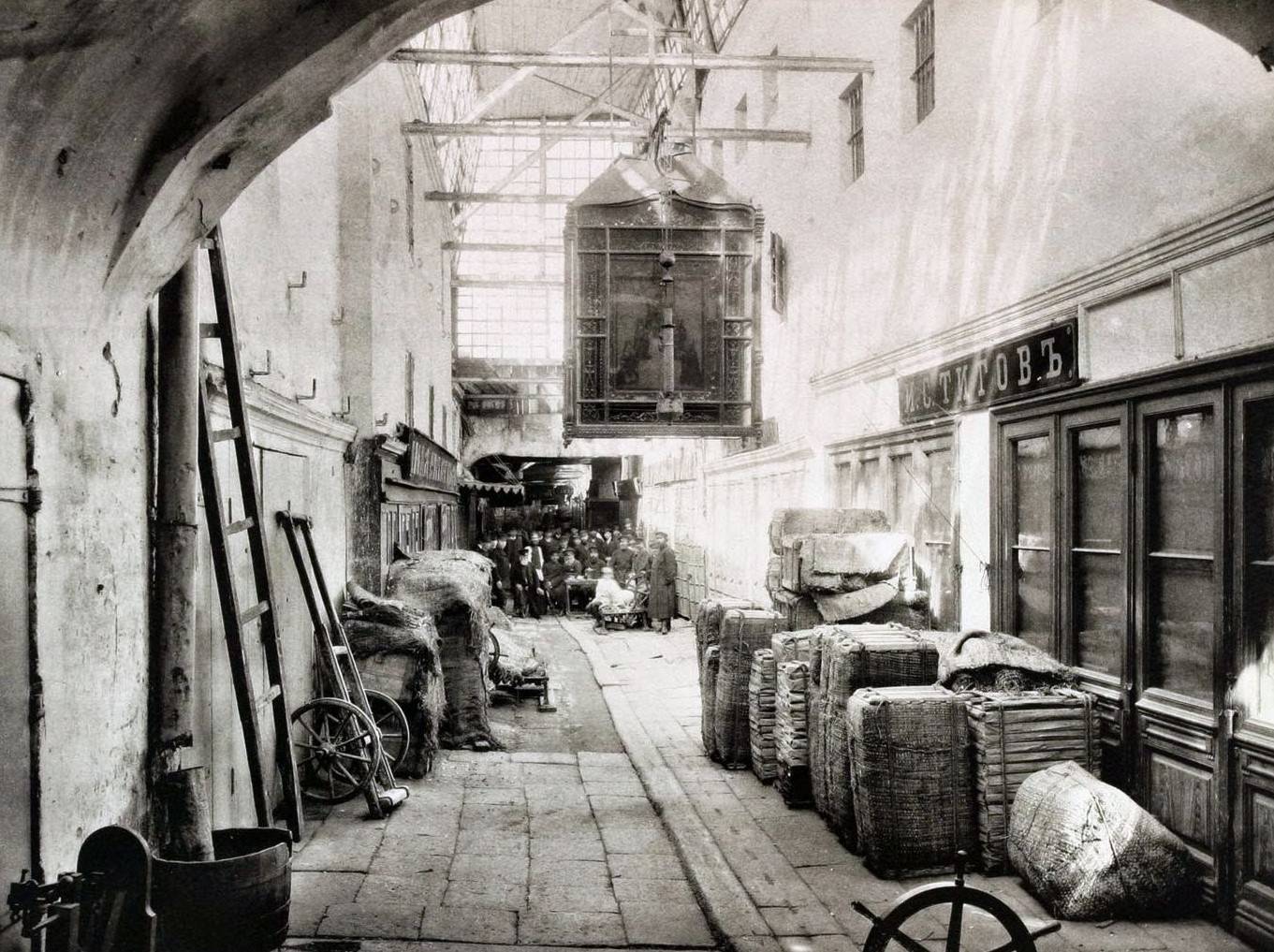
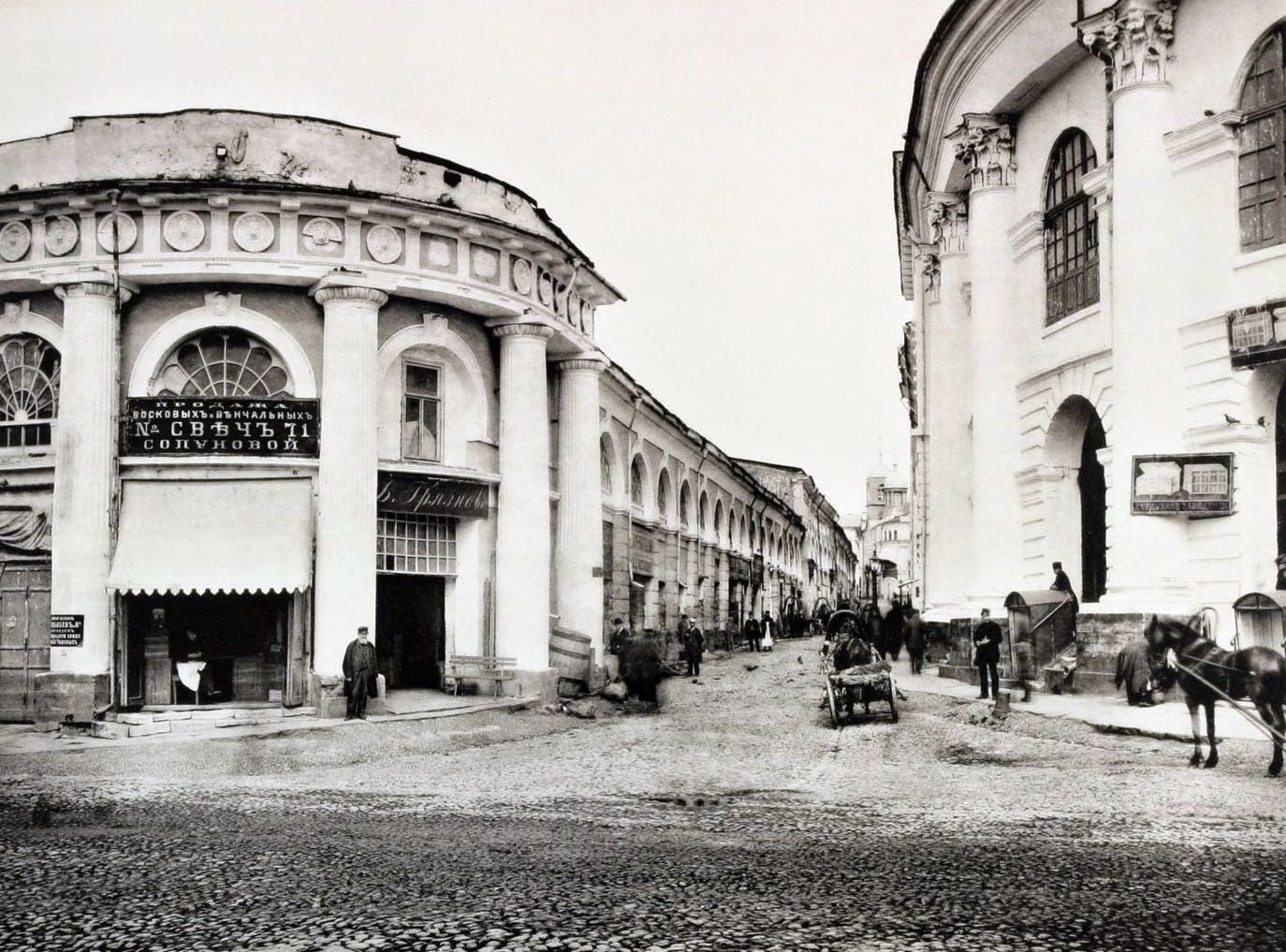
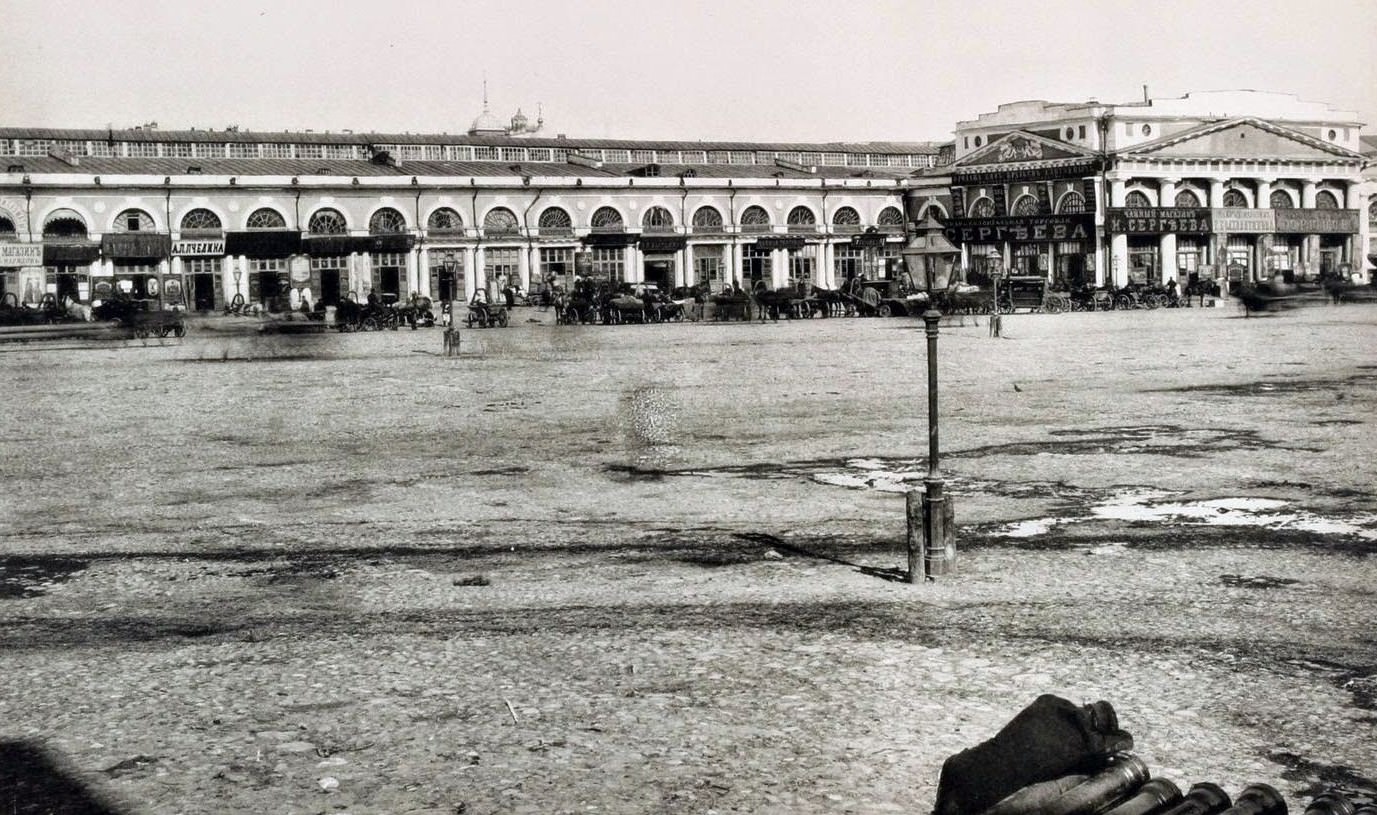
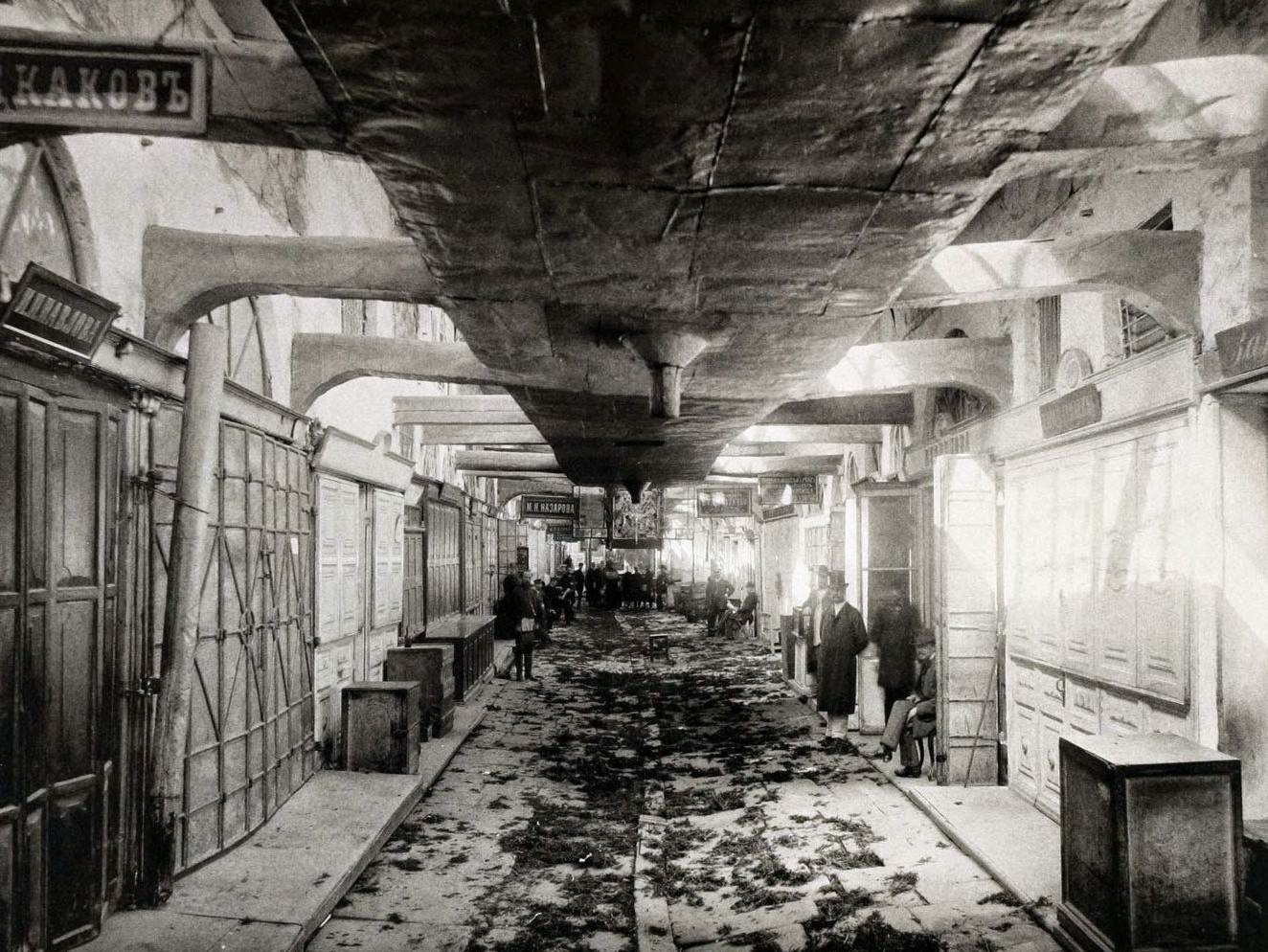
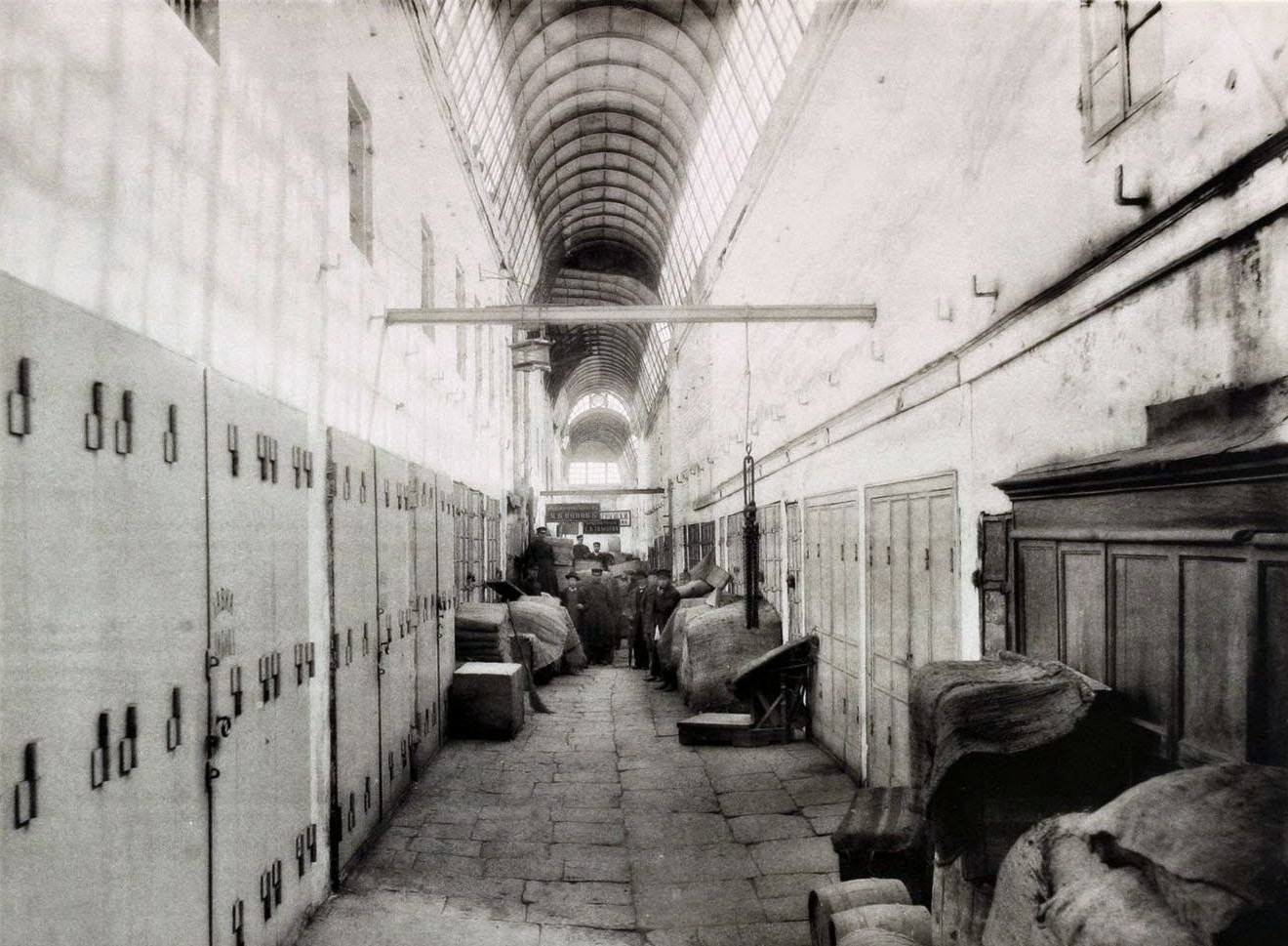
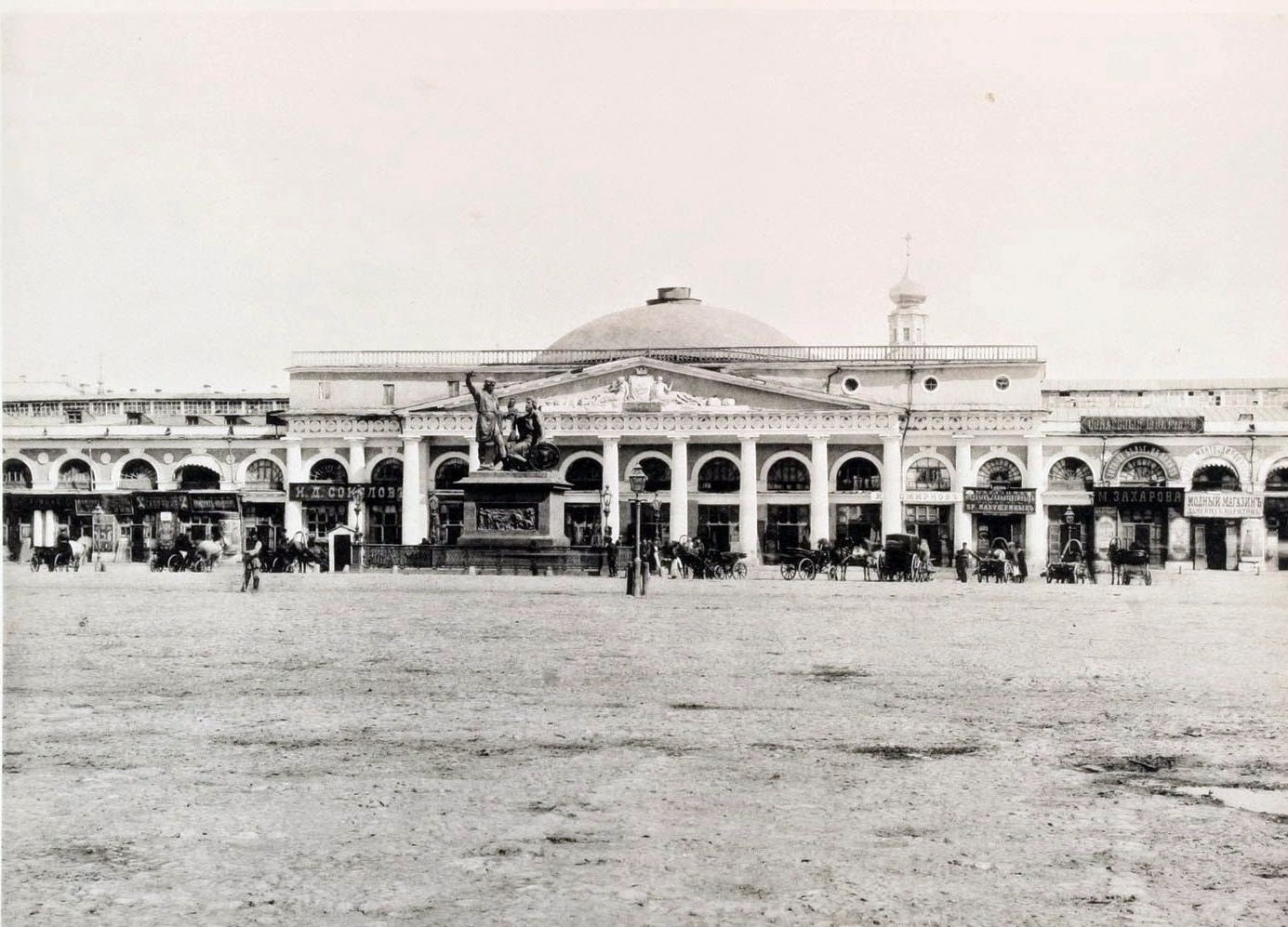
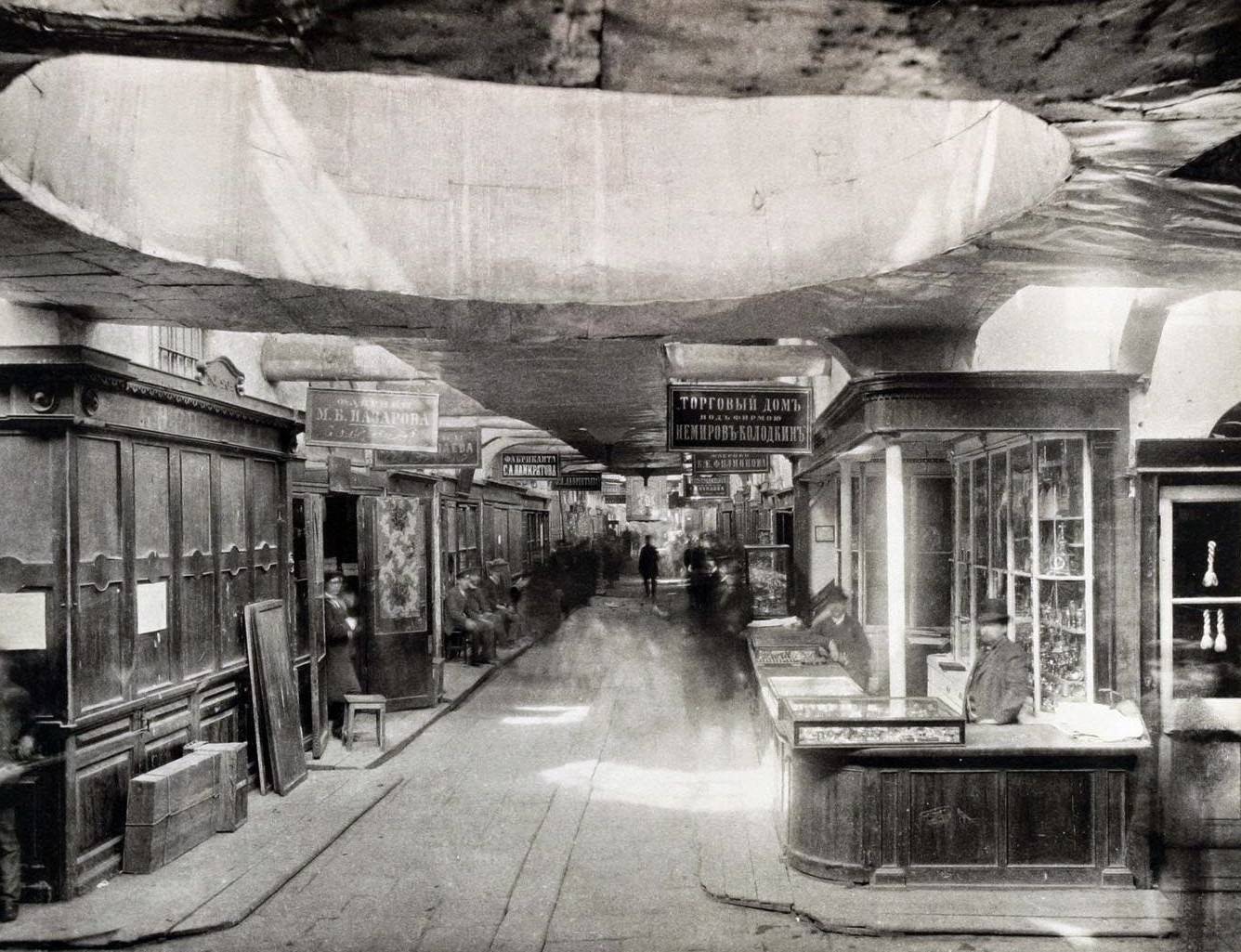
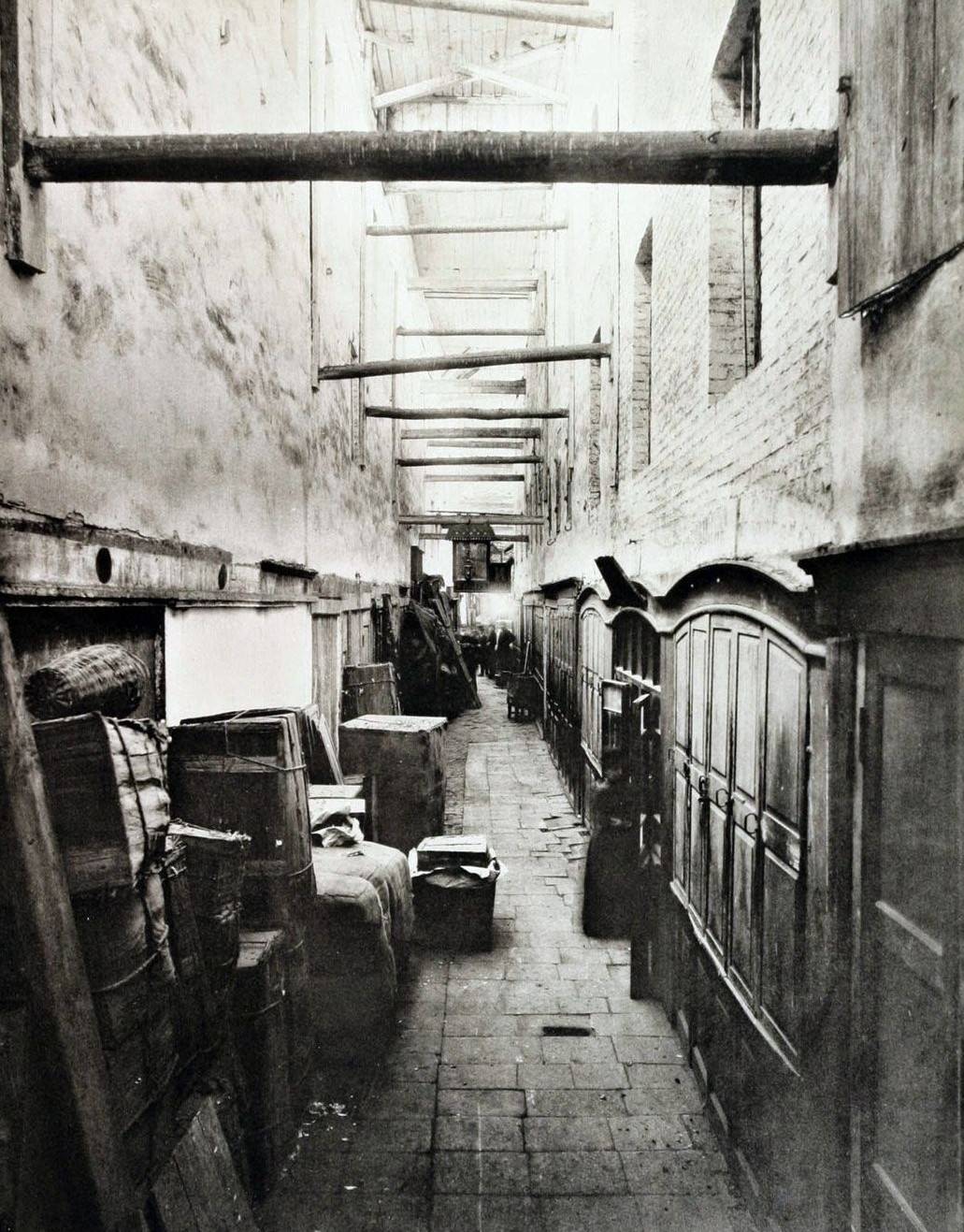
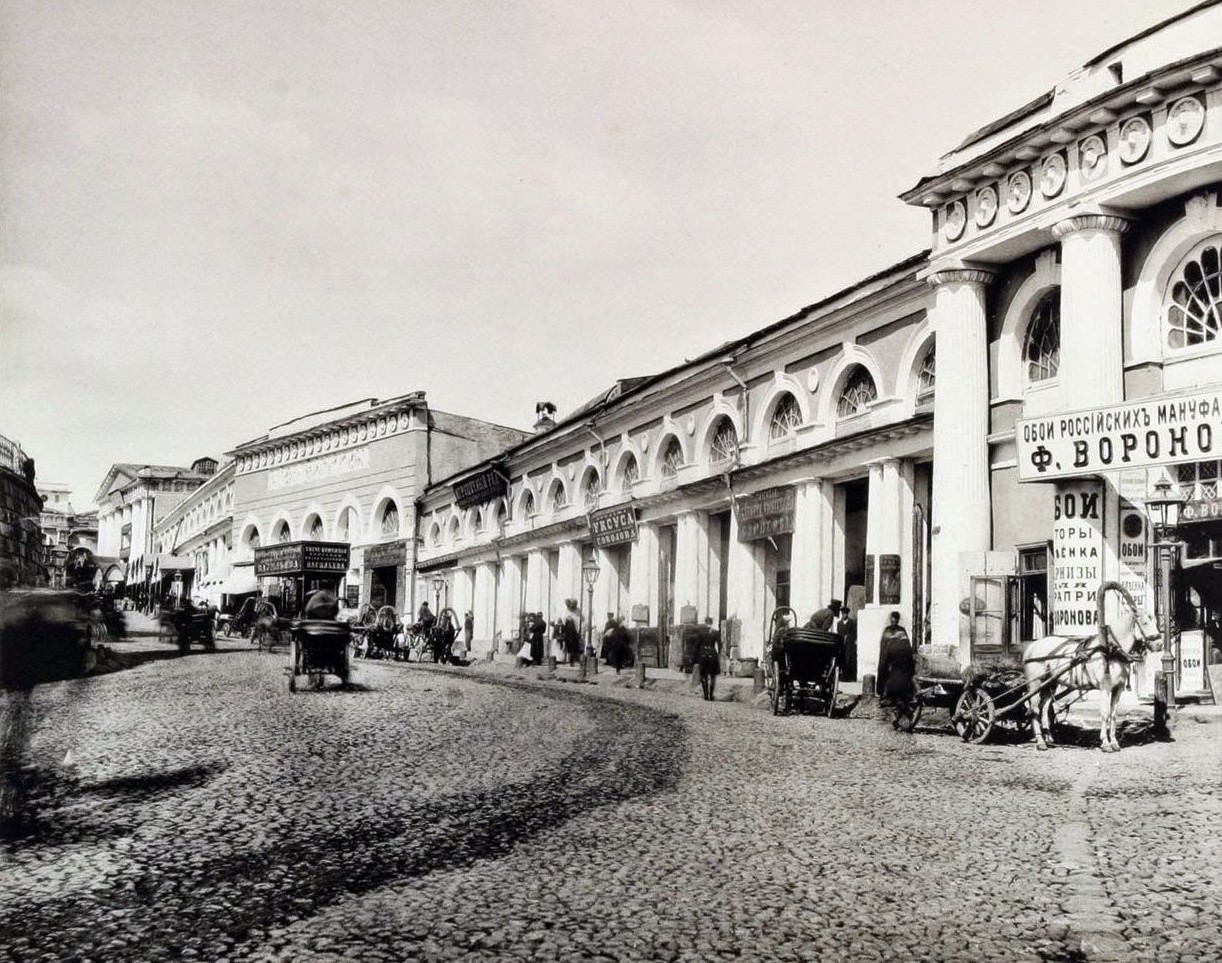
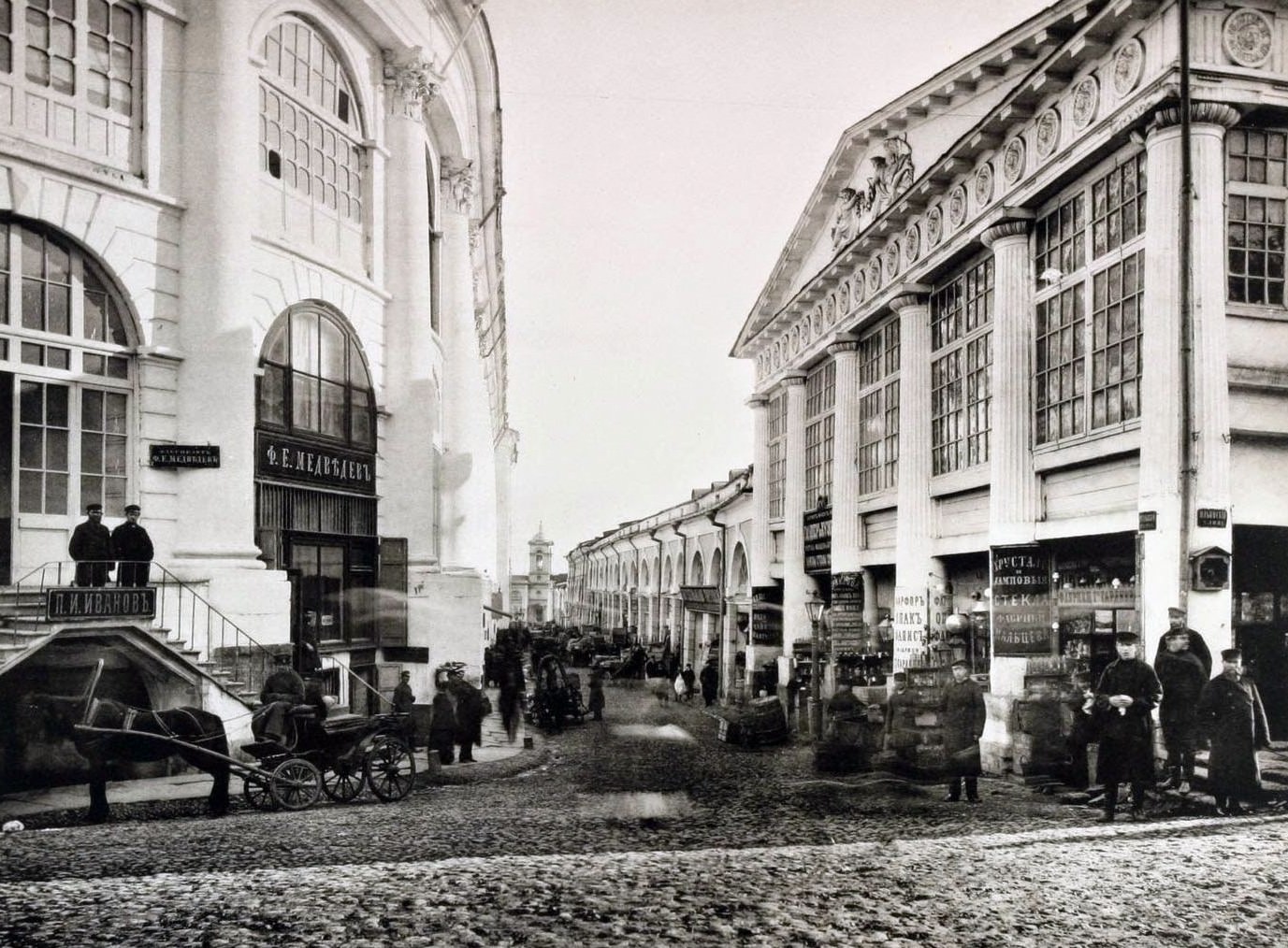
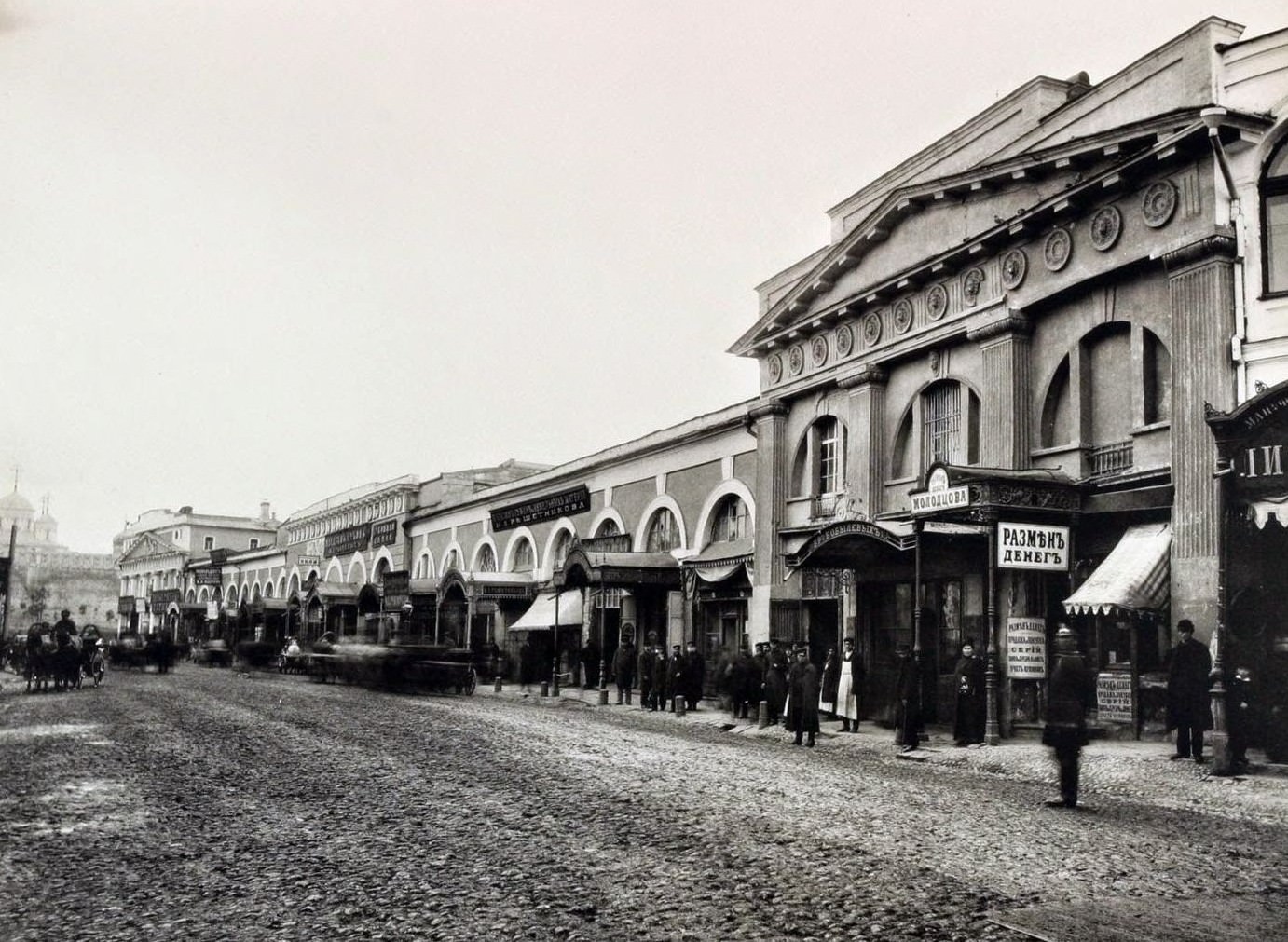
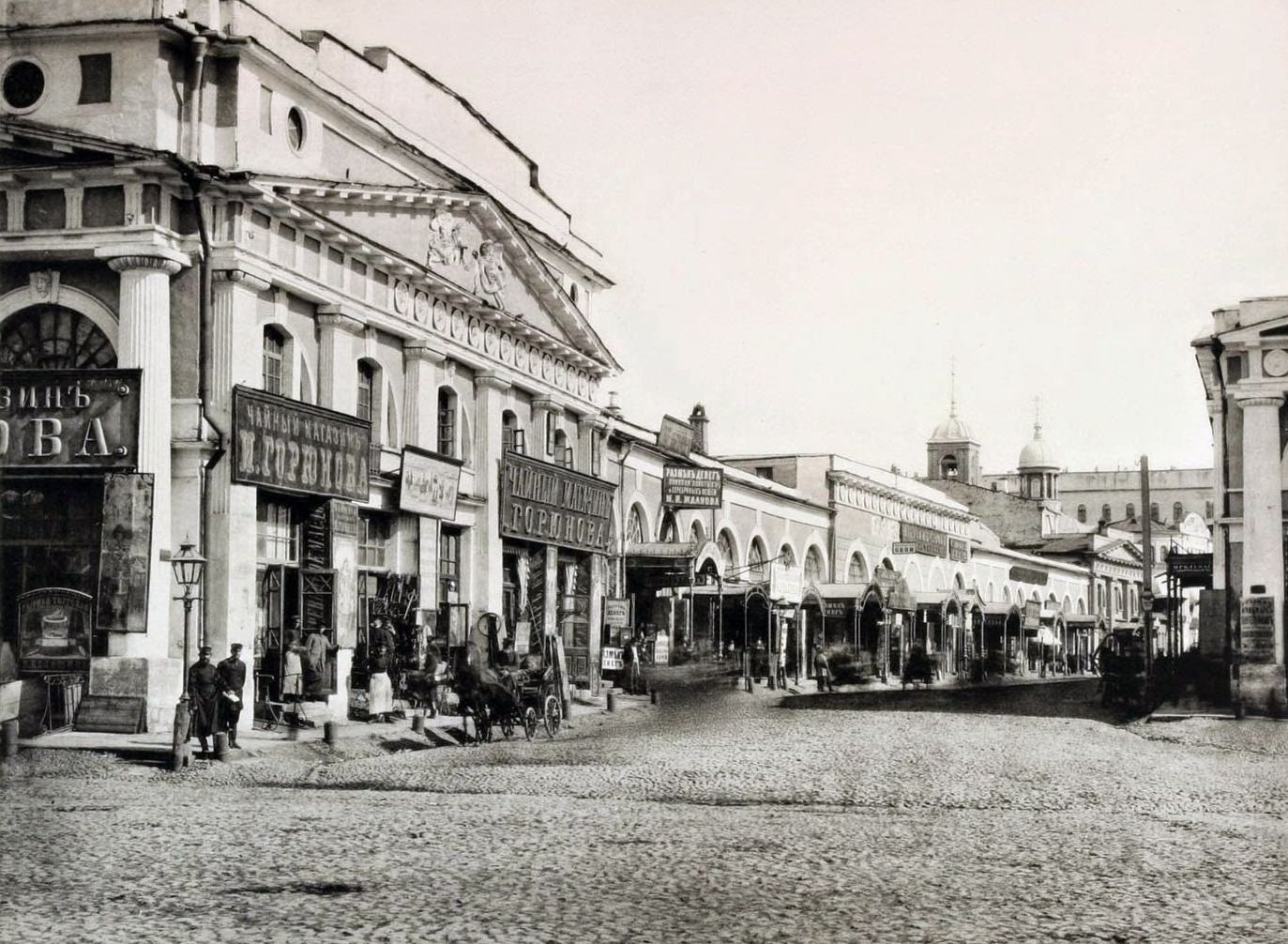
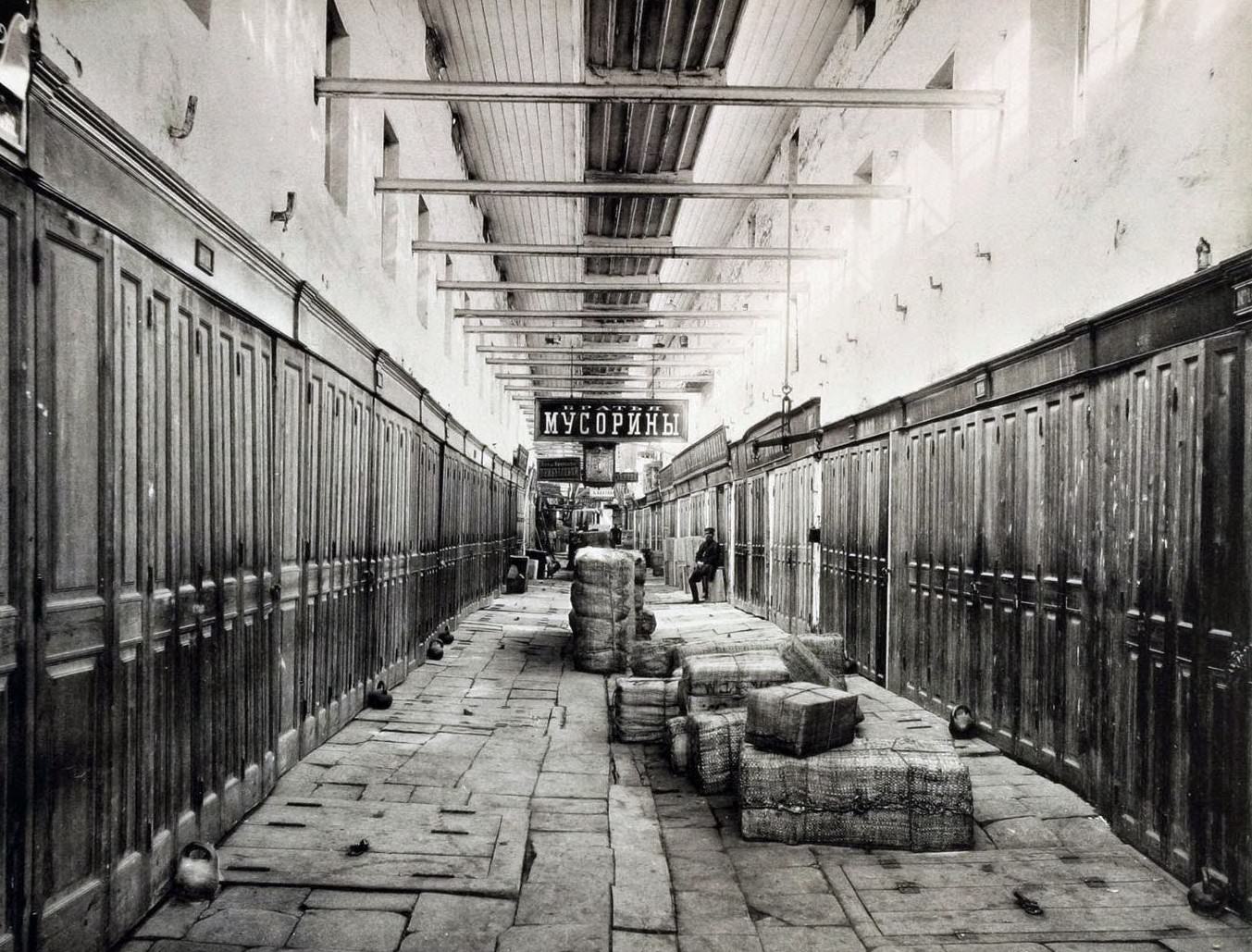
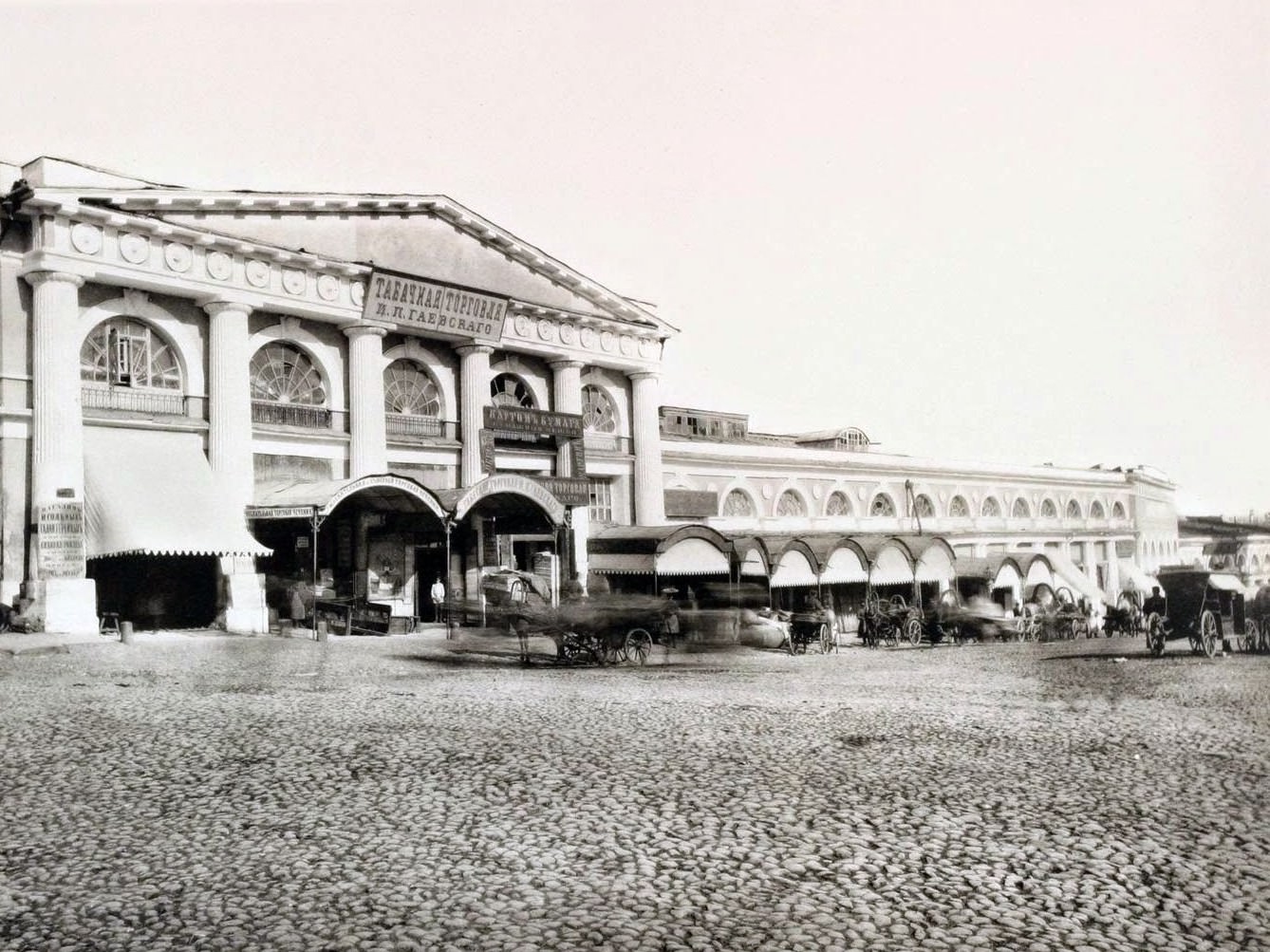
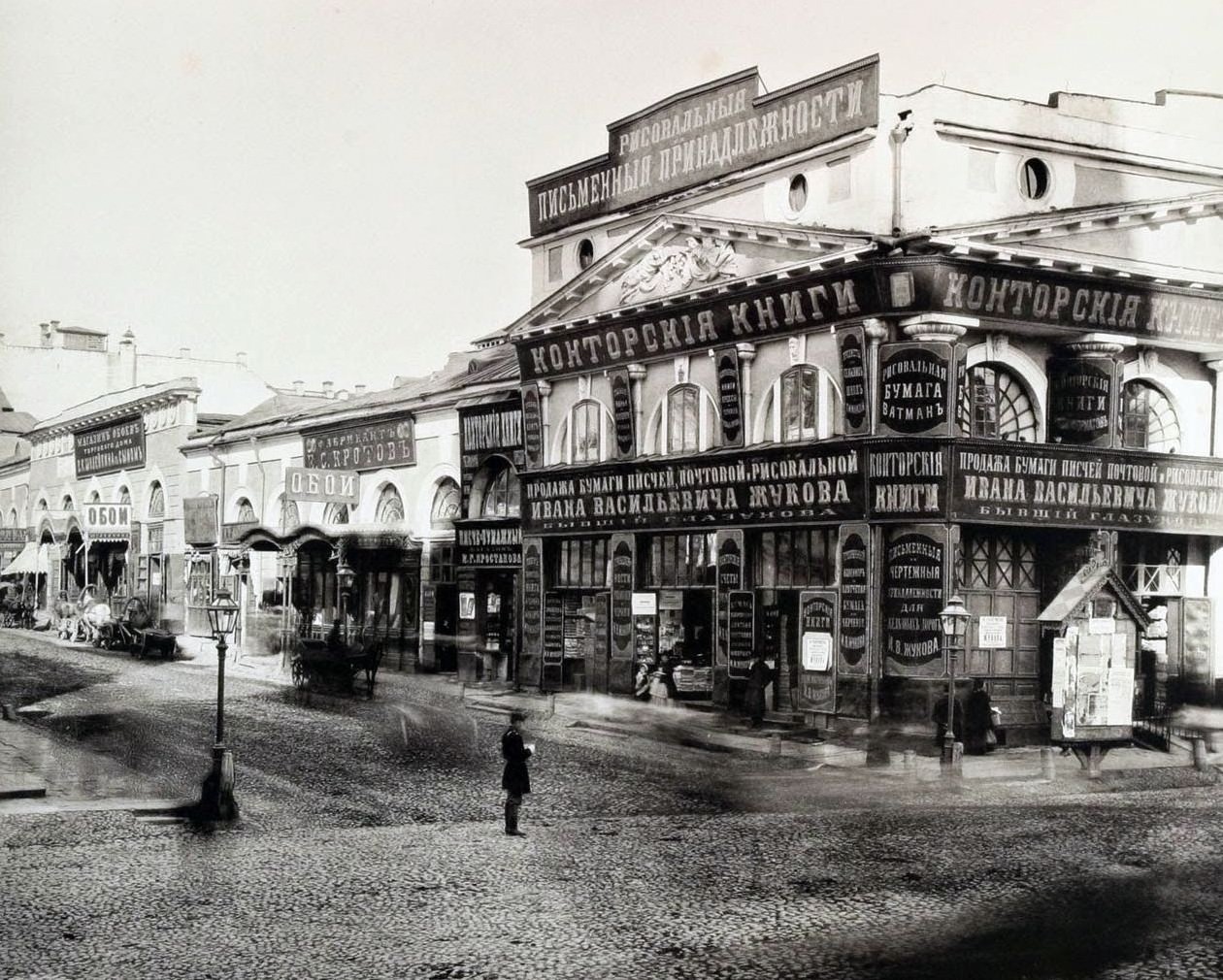
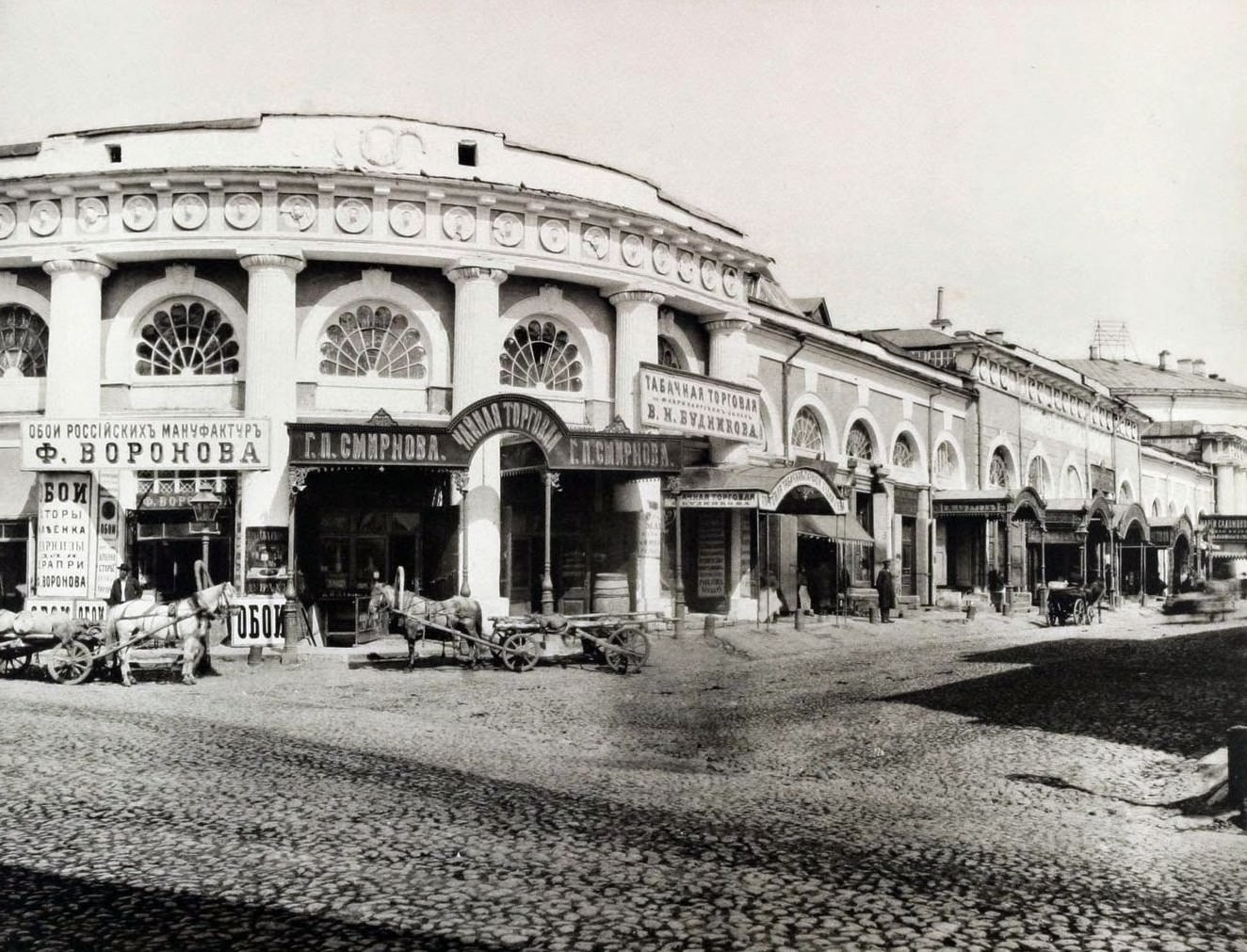
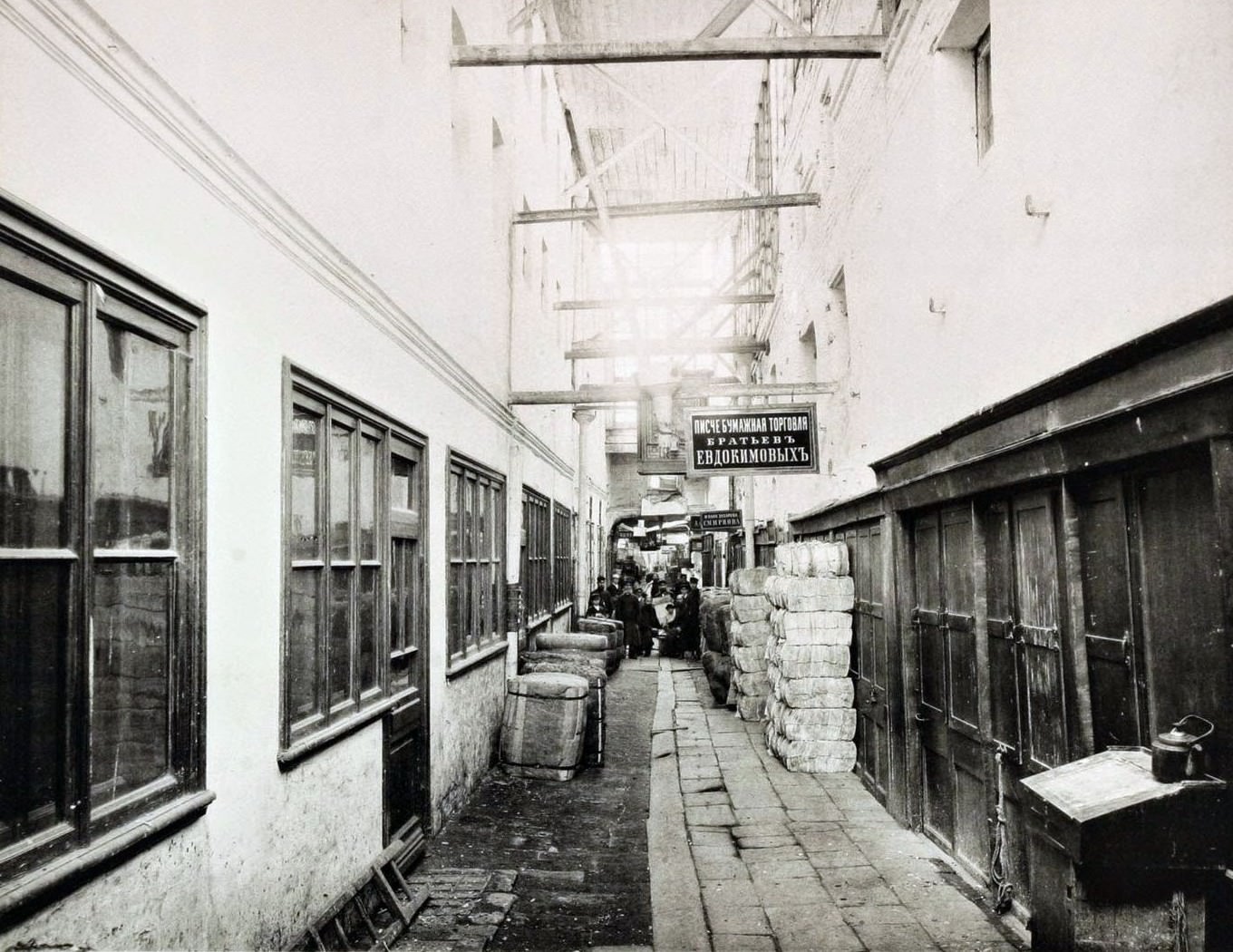
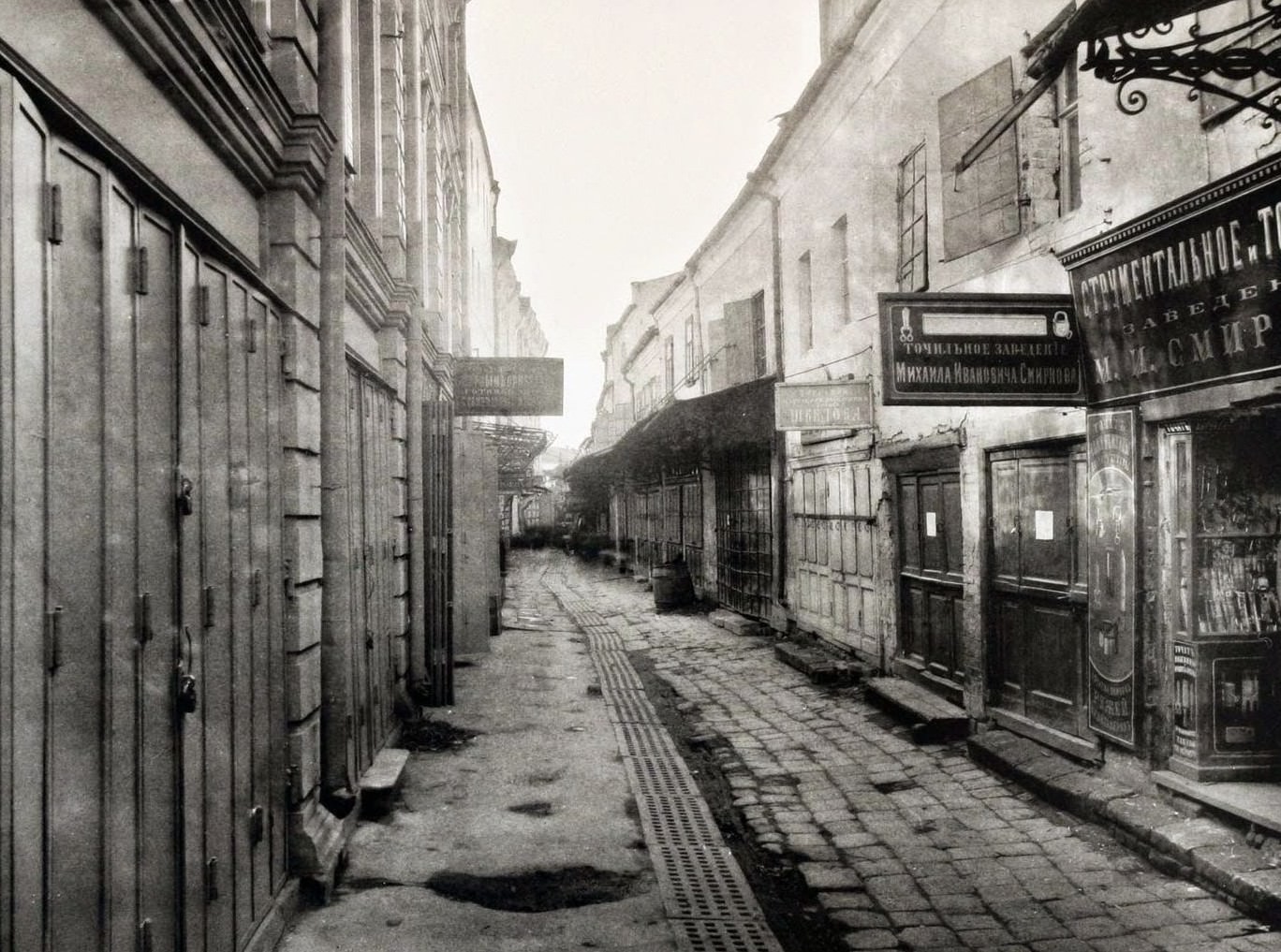
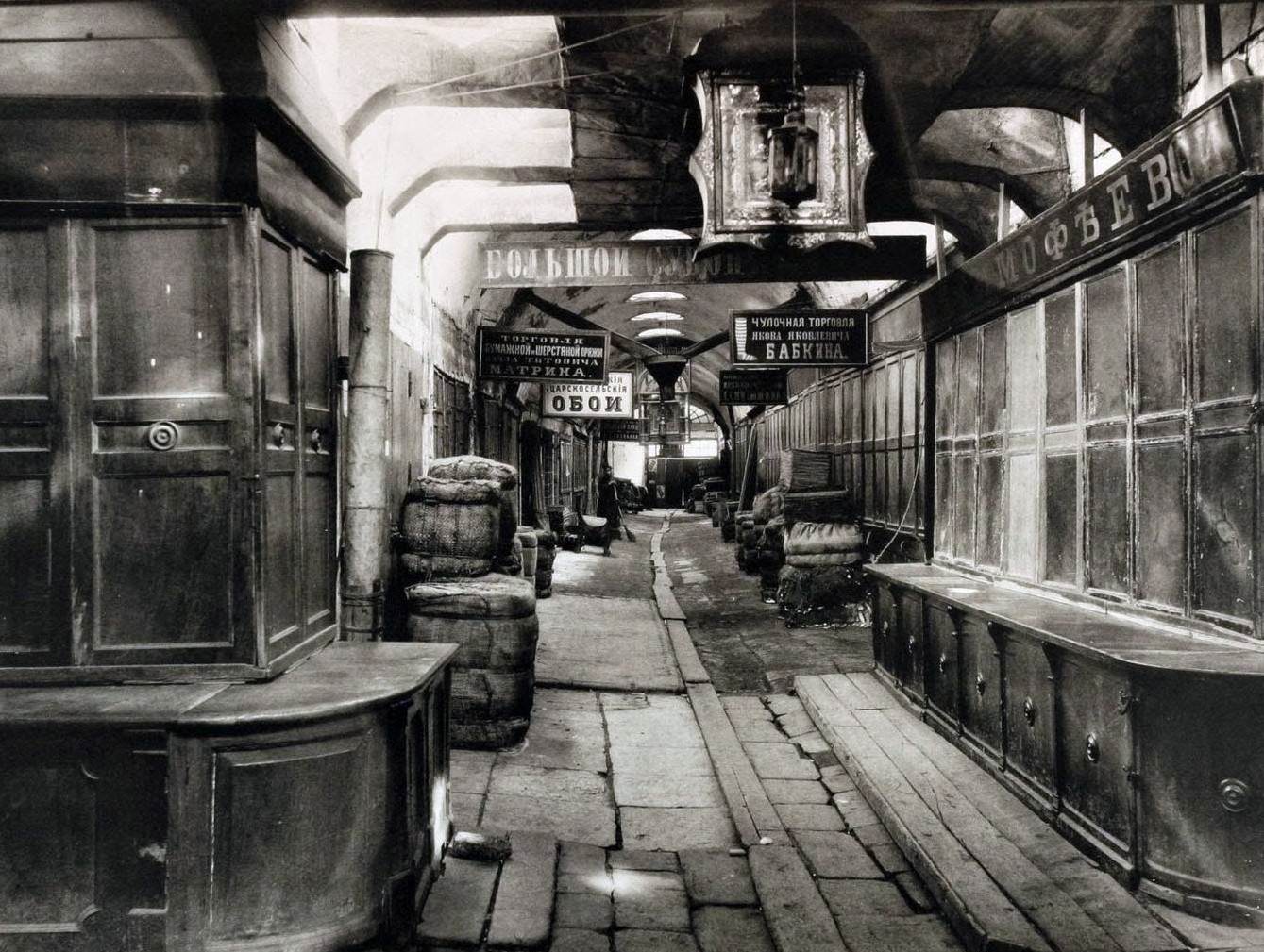
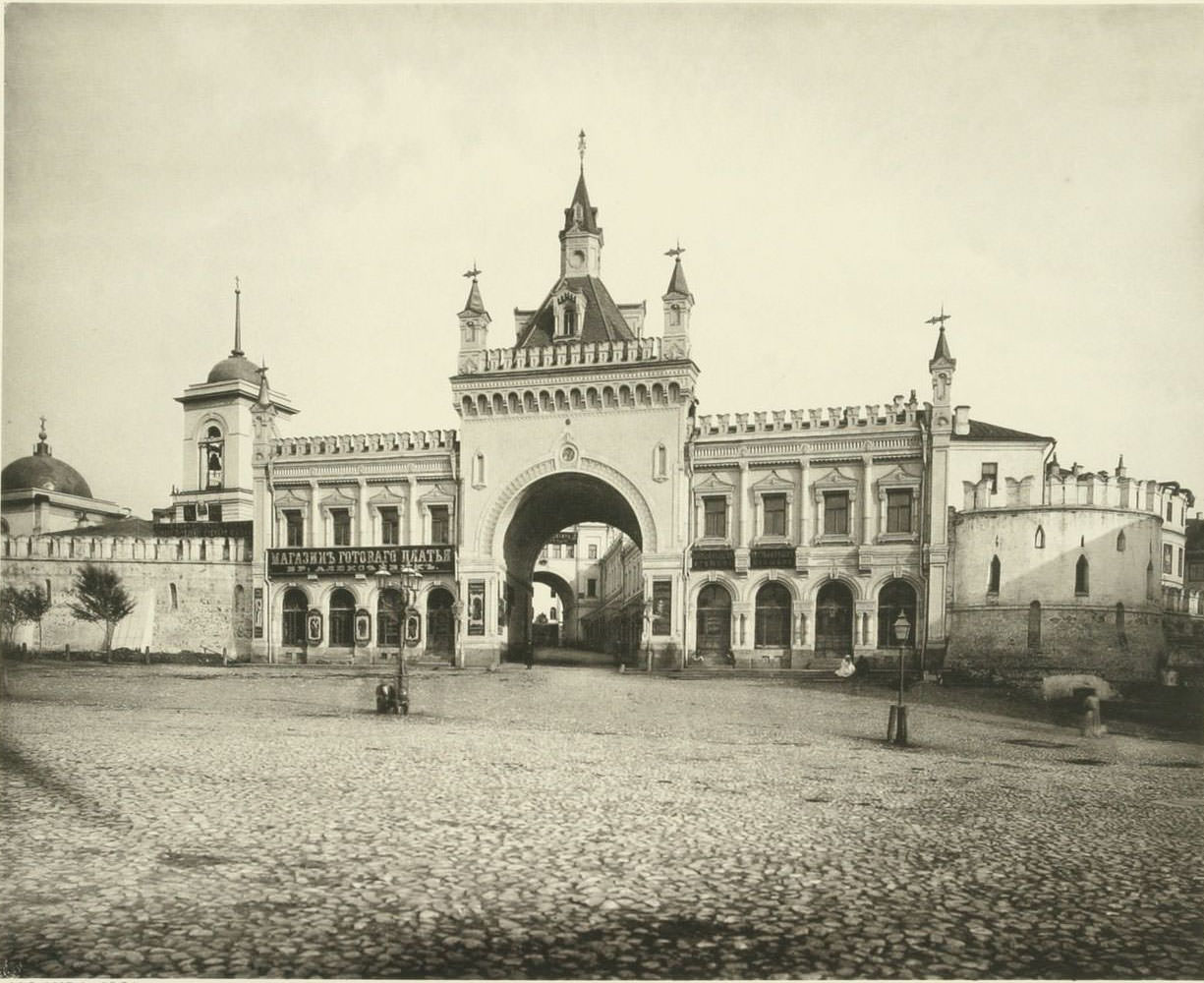
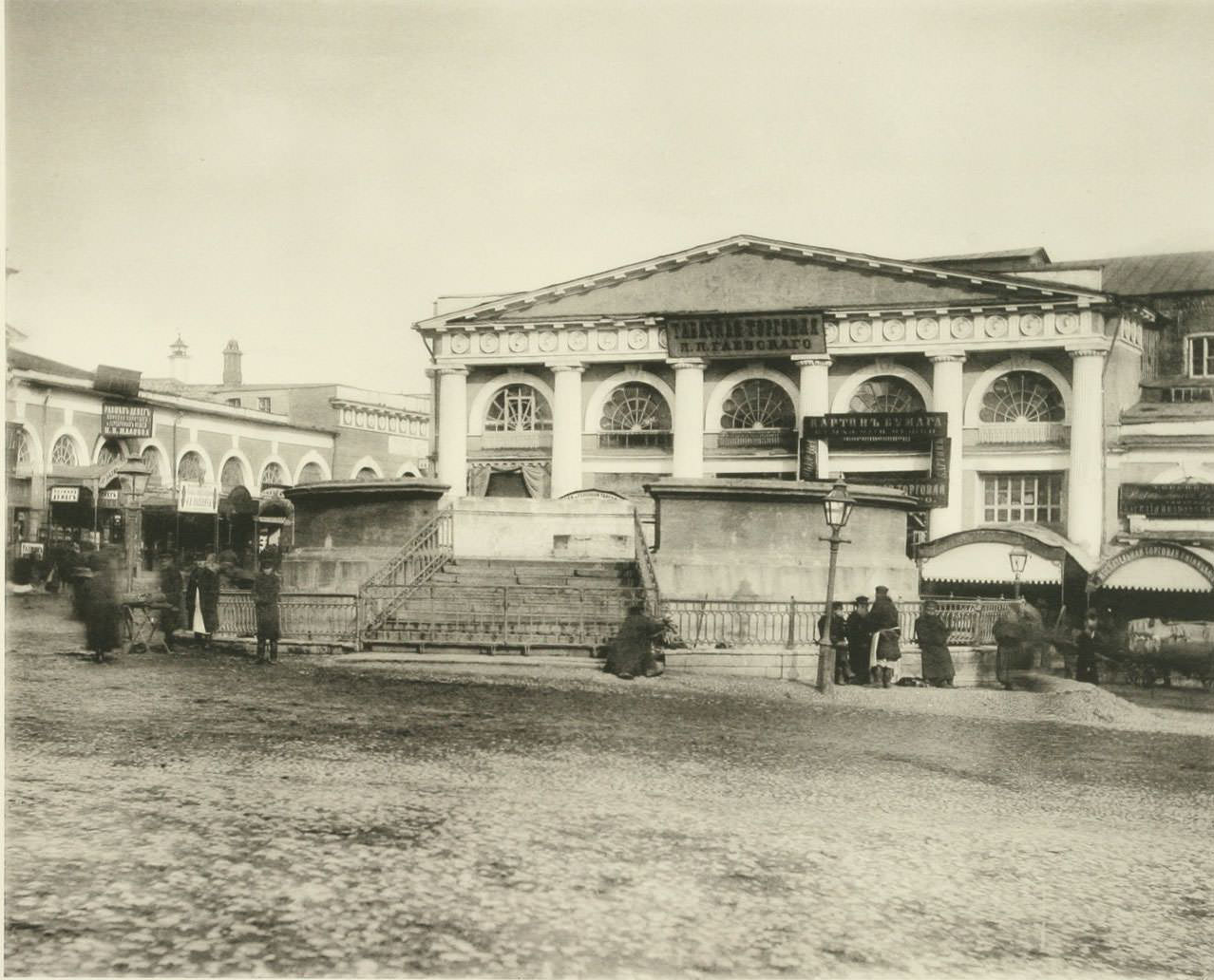
The city’s trading life centered on several major hubs. The Okhotny Ryad market near Red Square sprawled across multiple blocks, where vendors sold fish packed in ice, vegetables from nearby farms, and imported goods like coffee and spices. Every price was haggled. The Gostiny Dvor, a massive trading arcade, handled wholesale deals — Persian rugs, Chinese silk, and European machinery passing through its halls. Tea merchants dominated import trade, bringing millions of pounds annually through Siberian caravan routes.
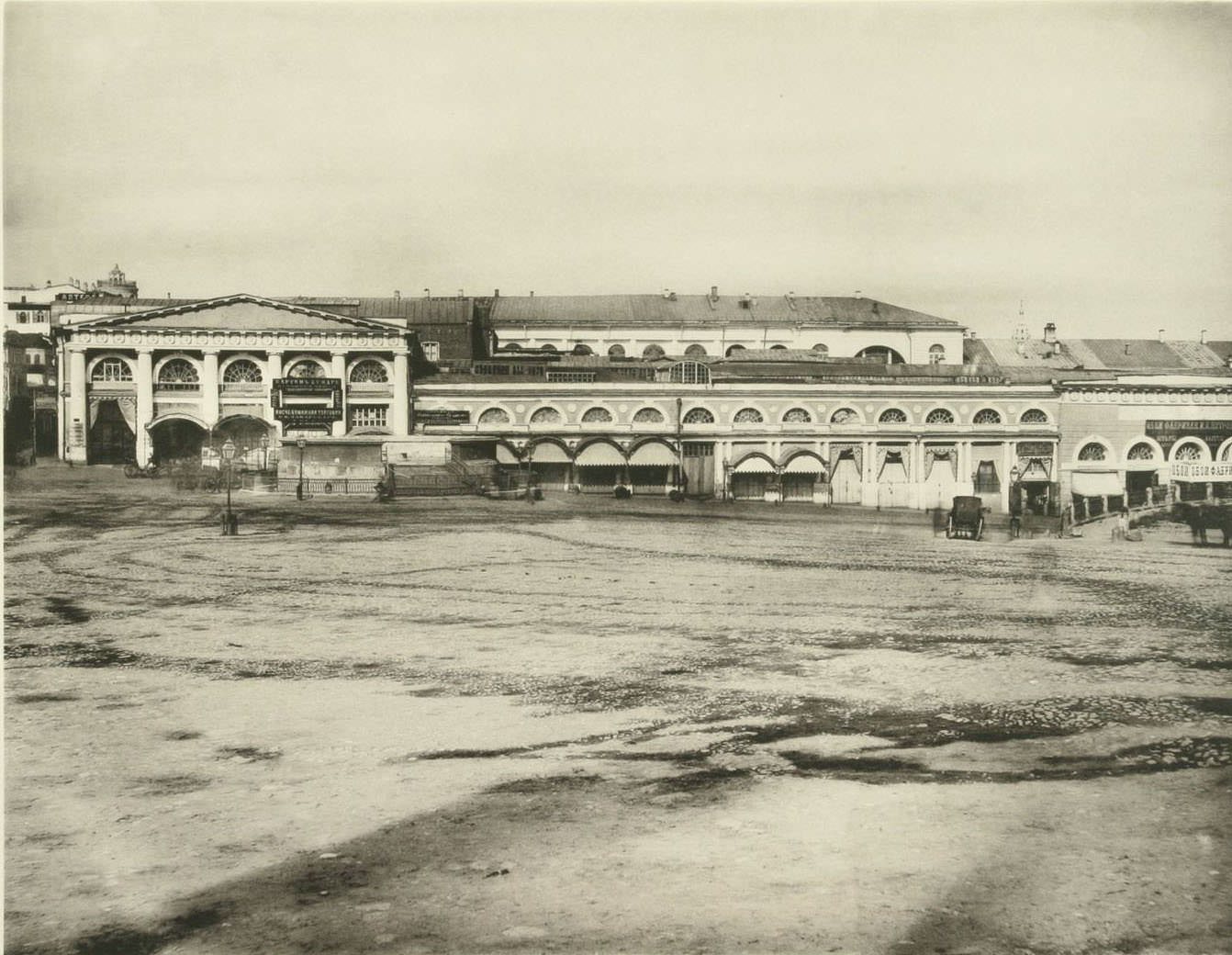
Street peddlers moved through Moscow’s neighborhoods calling out their wares in sing-song voices. They carried trays of pirozhki (stuffed pastries), pickled cucumbers, and sunflower seeds. In cold months, hot sbiten — a honey-based drink — sold steadily to pedestrians. These informal vendors filled the gaps between the formal markets, reaching customers in every alley and courtyard.
Horse-drawn trams began running in 1882 on rails through the main streets. A single ride cost 5 kopecks — manageable for middle-class residents but a real expense for factory workers. Wealthy families kept private carriages with coachmen and stables. Izvozchiki (cab drivers) waited at designated stands across the city, charging by distance with fares haggled at the curb. In winter, sleighs replaced carriages, gliding over packed snow with bells warning pedestrians to clear the way.
The Nicholas Railway linked Moscow to St. Petersburg in eight hours. Second-class carriages carried merchants and officials while third-class wagons packed in peasants traveling to find work. Steam locomotives hauled 20-car trains at 30 miles per hour. Rail expansion during this decade was reshaping Russia’s economy, and Moscow sat at the center of it — a growing hub connecting the empire’s cities, factories, and frontier regions.
Moscow lacked modern sewers and a clean water supply. Residents drew water from the Moskva River or from wells, both of which were contaminated by waste. Typhoid and cholera struck the city regularly, killing thousands. The 1883 cholera epidemic forced authorities to establish isolation hospitals and begin planning water treatment facilities. City hospitals treated poor patients in crowded wards. Private physicians served wealthy households. Medical students at Moscow University gained clinical experience treating charity cases.
Khitrov Market held Moscow’s darkest reputation. Thieves, beggars, and prostitutes lived in doss-houses there that charged 5 kopecks per night. Police entered only in large groups. The 3,000-strong Moscow police force, in dark green uniforms with sabers, divided the city into districts. Night watchmen supplemented regular patrols, calling out the hours and checking door locks. Above the regular police, the Okhrana operated invisibly — recruiting informers, monitoring political activity, and arranging quiet arrests.
Cultural life ran on strict class lines. The Bolshoi Theatre staged Italian operas and French ballets to packed audiences — a box seat cost 25 rubles, a full month’s wage for most workers. The Maly Theatre drew a different crowd with Russian dramas by Alexander Ostrovsky about merchant life. Moscow University enrolled 4,000 students across five faculties. Political discussions on campus led to periodic closures ordered by authorities.
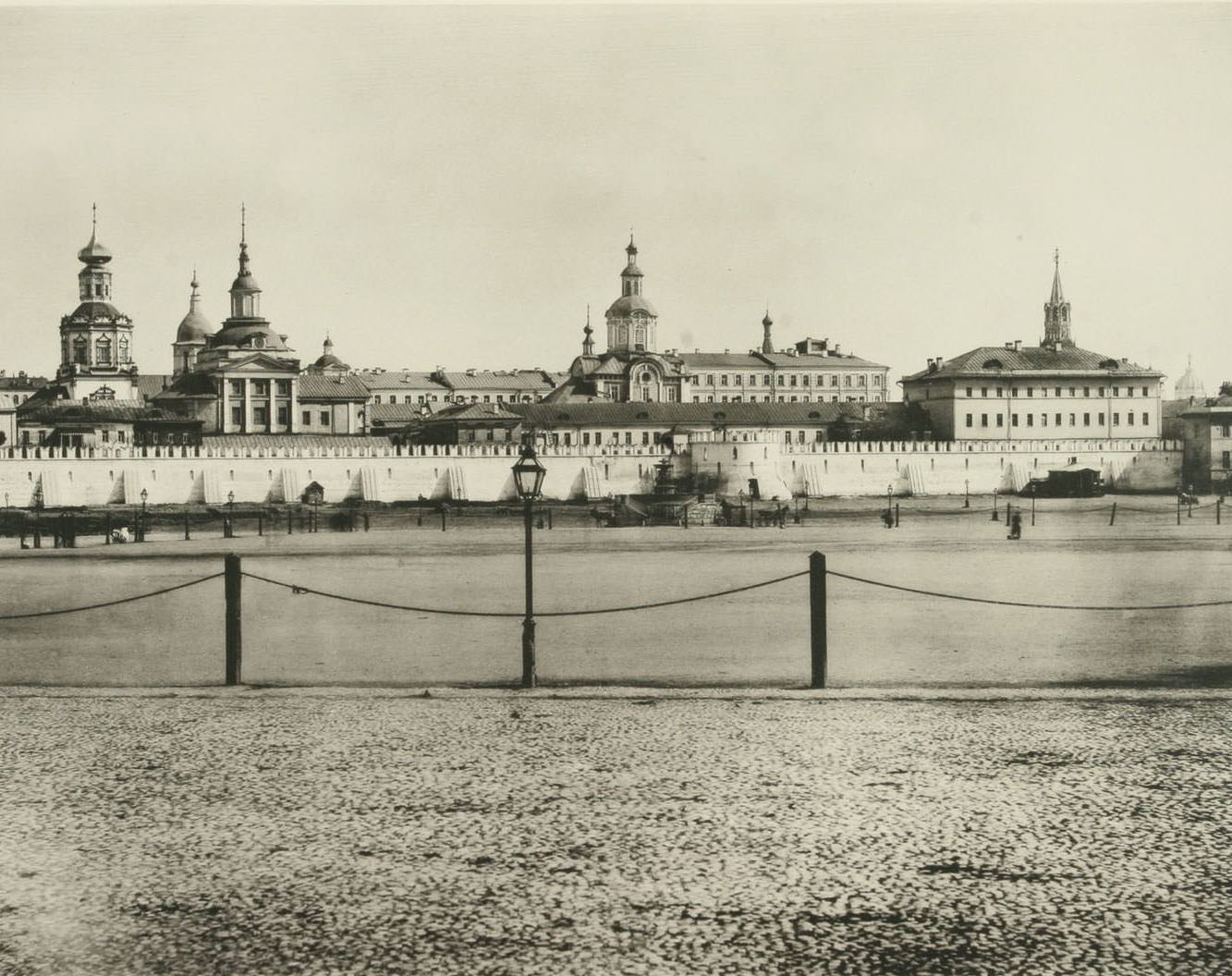
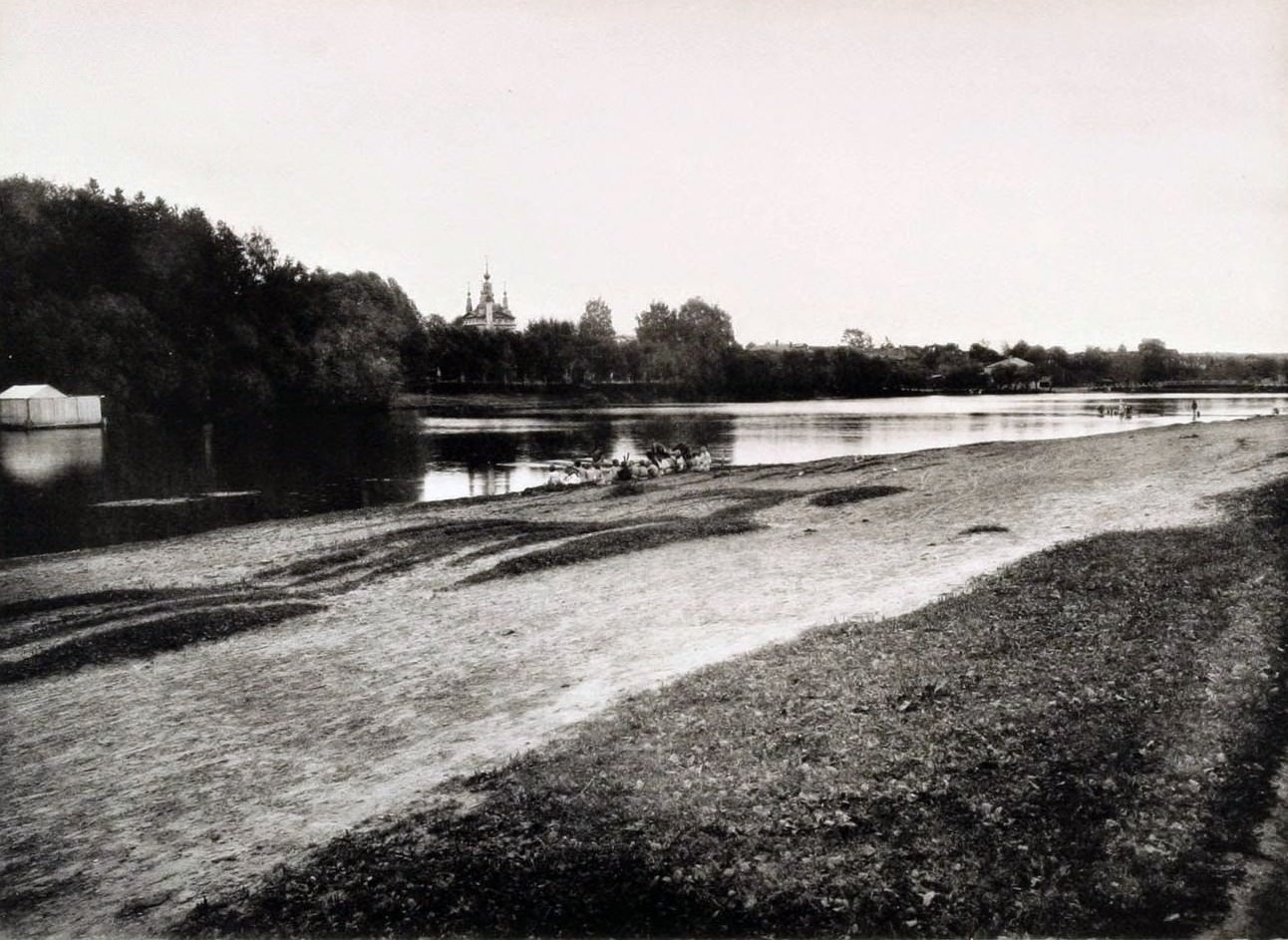
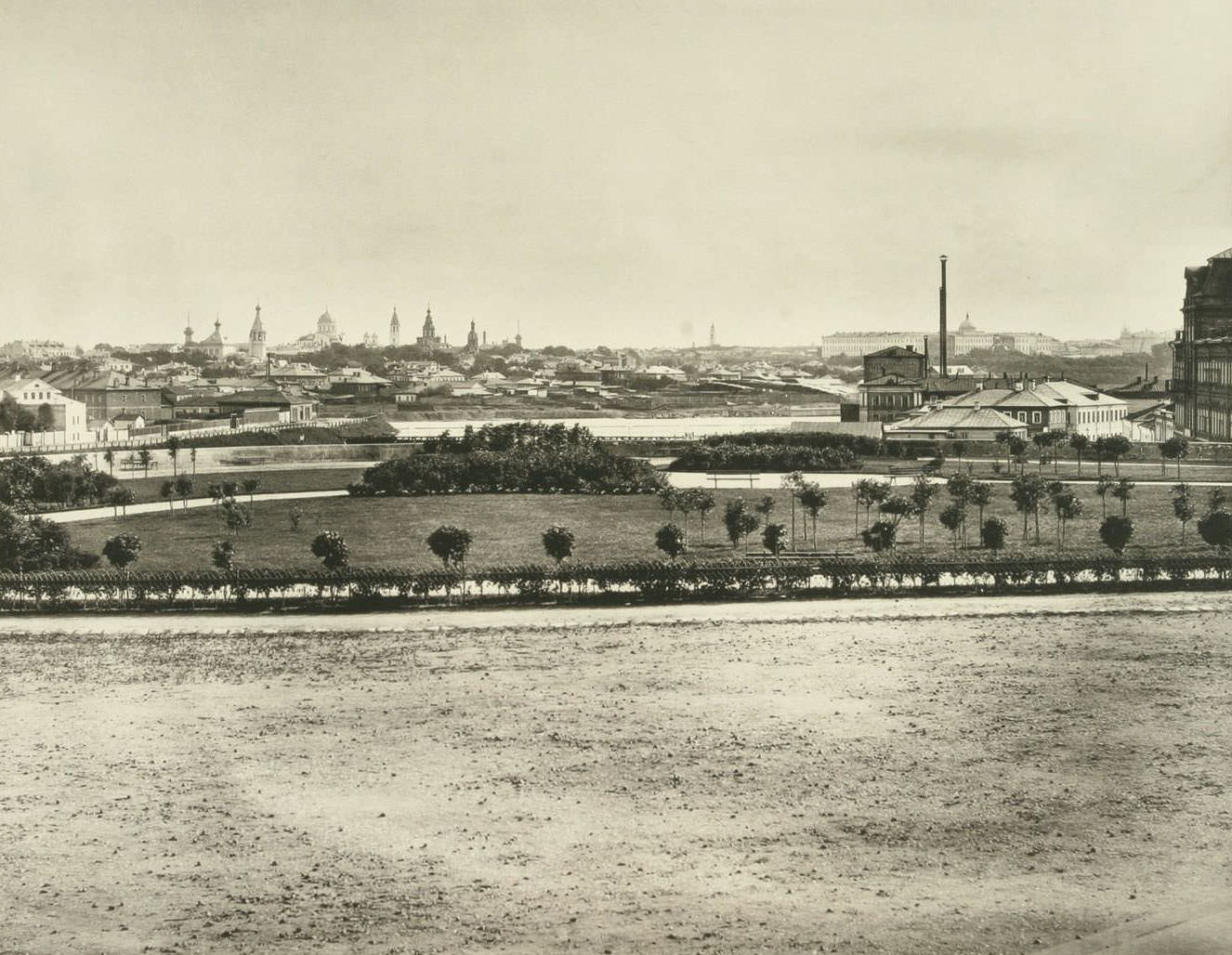
Moscow winters ran from November to March with temperatures dropping to -20°C, freezing the river solid. Double windows with salt packed between the panes kept homes from frosting over. Fur coats, felt boots, and sheepskin hats were not optional — they were survival gear. Spring brought mud season as melting snow turned streets into quagmires. Wooden planks served as walkways over the worst sections. Summer drove the wealthy to dachas outside the city, while those who stayed sought relief in public gardens along the river.
The Sandunovsky Baths offered marble pools and steam rooms for the city’s wealthy. Neighborhood bathhouses gave workers a weekly wash and a place to talk. Business deals and gossip moved through the steam in equal measure. The Hermitage Garden offered outdoor theater, restaurants, and walking paths with orchestras playing waltzes under gas lamps — at 30 kopecks admission, a treat for the middle class. The Nikitin Circus drew every social class under its canvas, and eventually moved into a permanent building for year-round shows.
Peasants flooded into Moscow throughout the 1880s seeking factory work. They kept ties to their home villages, returning for harvests when they could. In the city, many lived in artels — communal groups that shared rent, food costs, and care for sick members. The meshchane, or petty bourgeoisie — shopkeepers, clerks, and skilled tradespeople — clung to respectability in rented apartments. For their children, schooling was the only real path upward. Primary schools expanded district by district across the decade, teaching reading, arithmetic, and religion in separate classes for boys and girls.
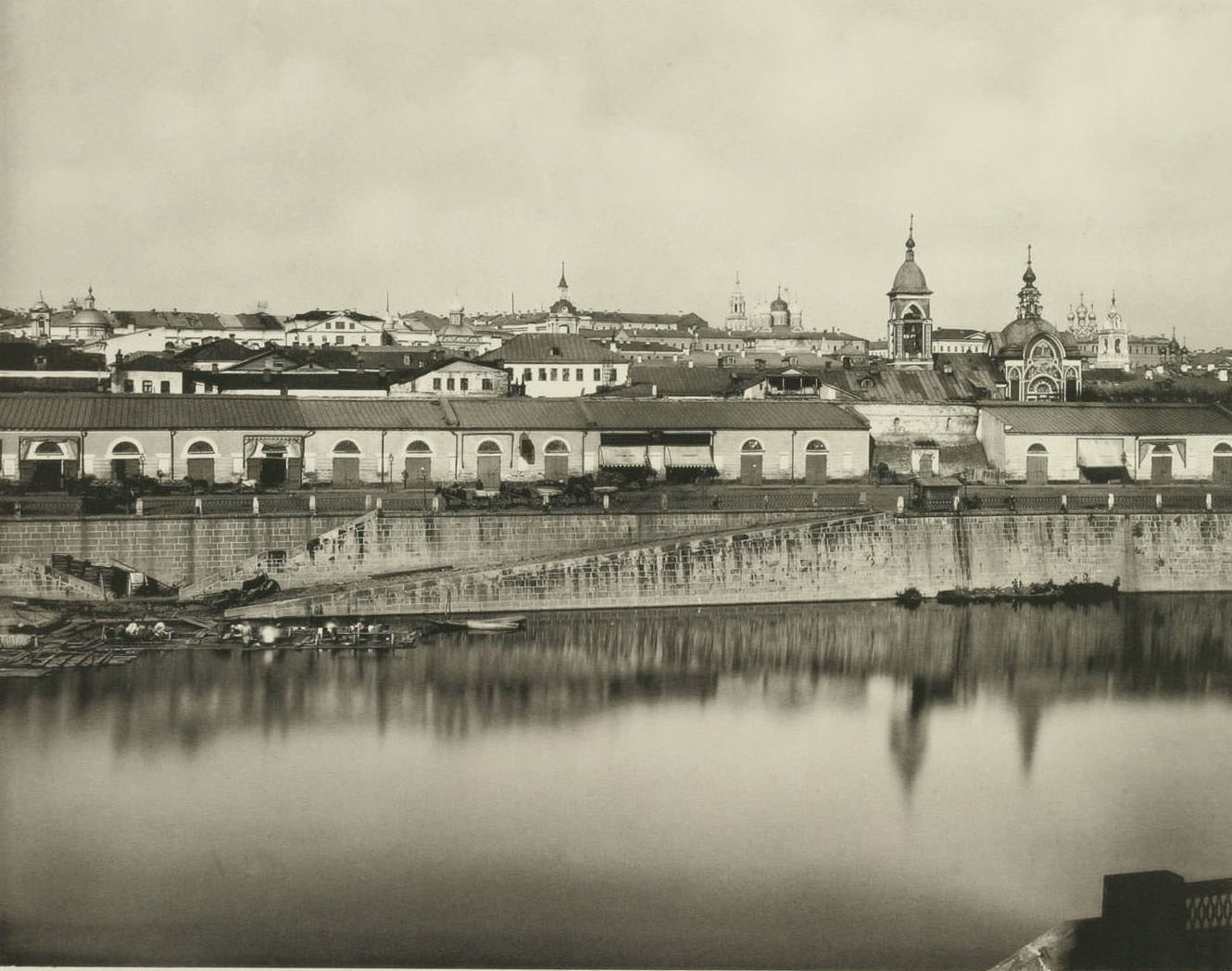
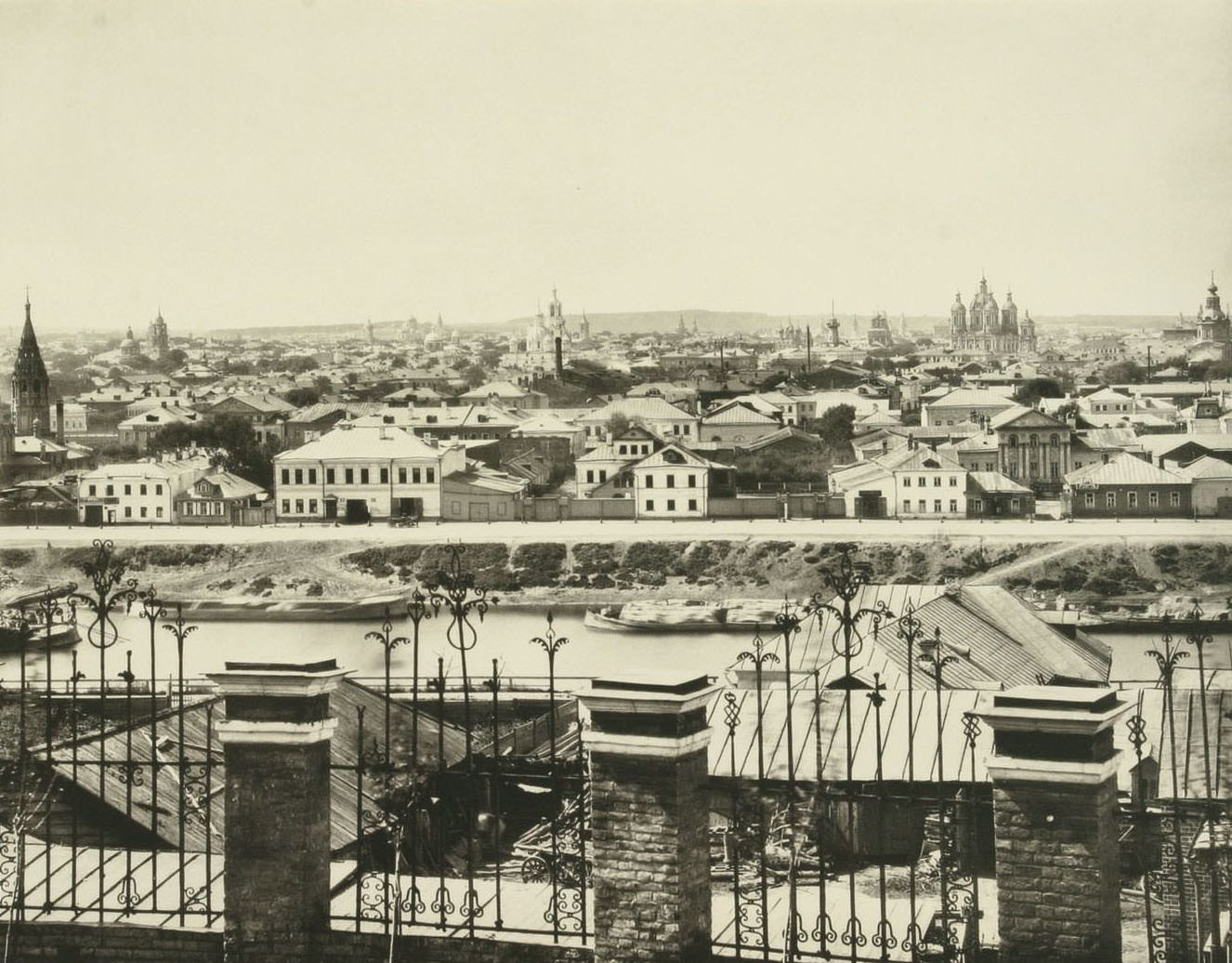
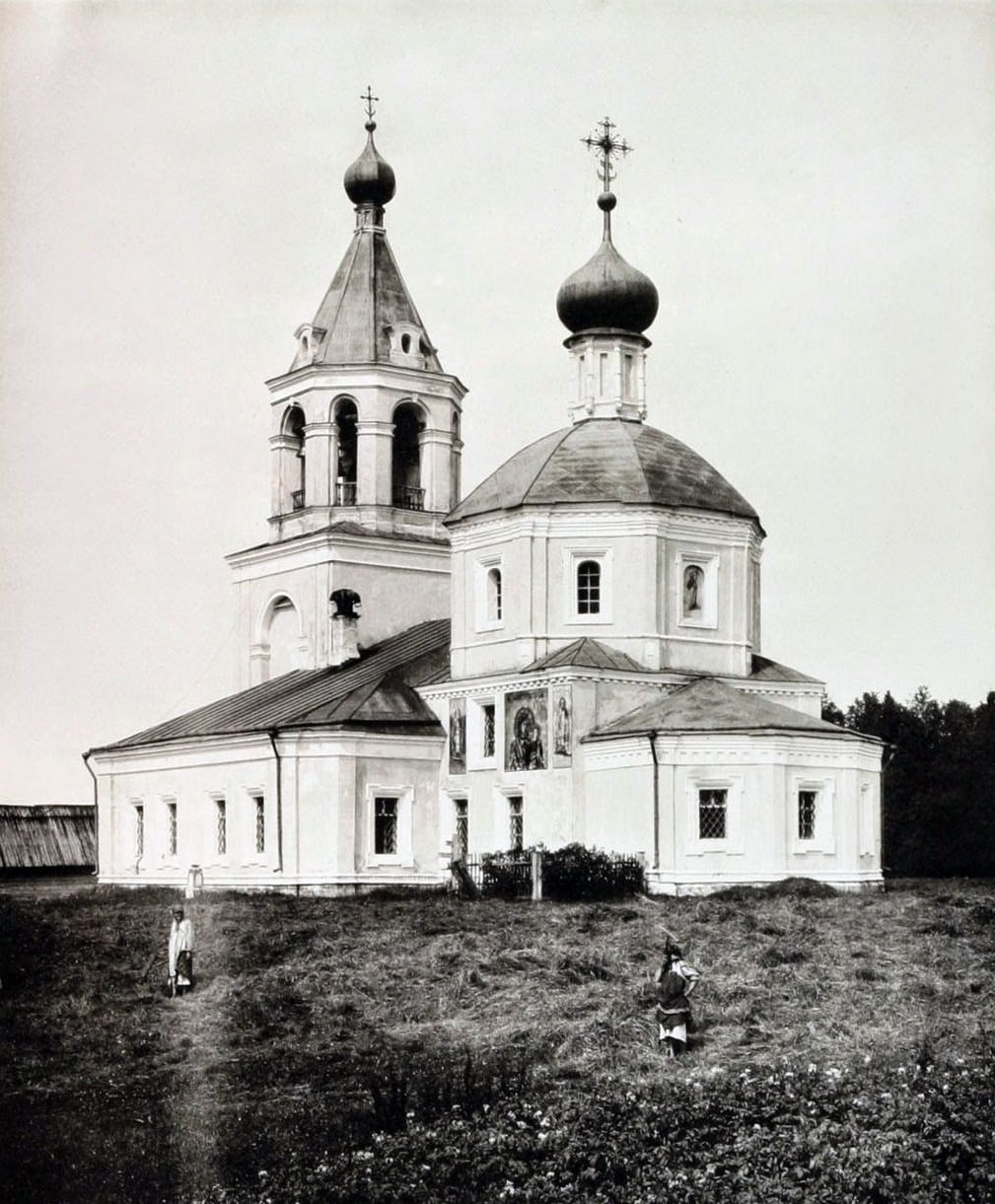
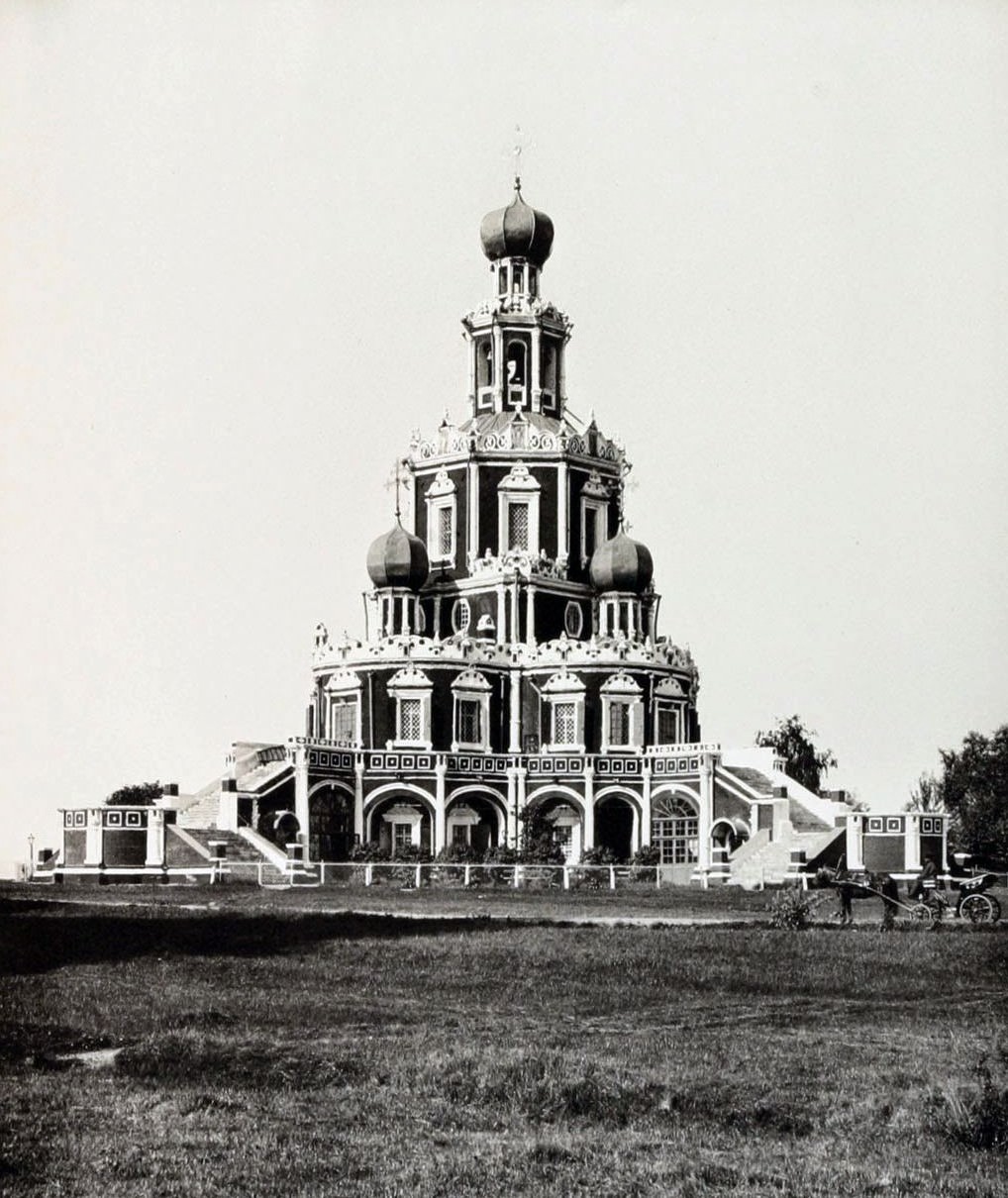
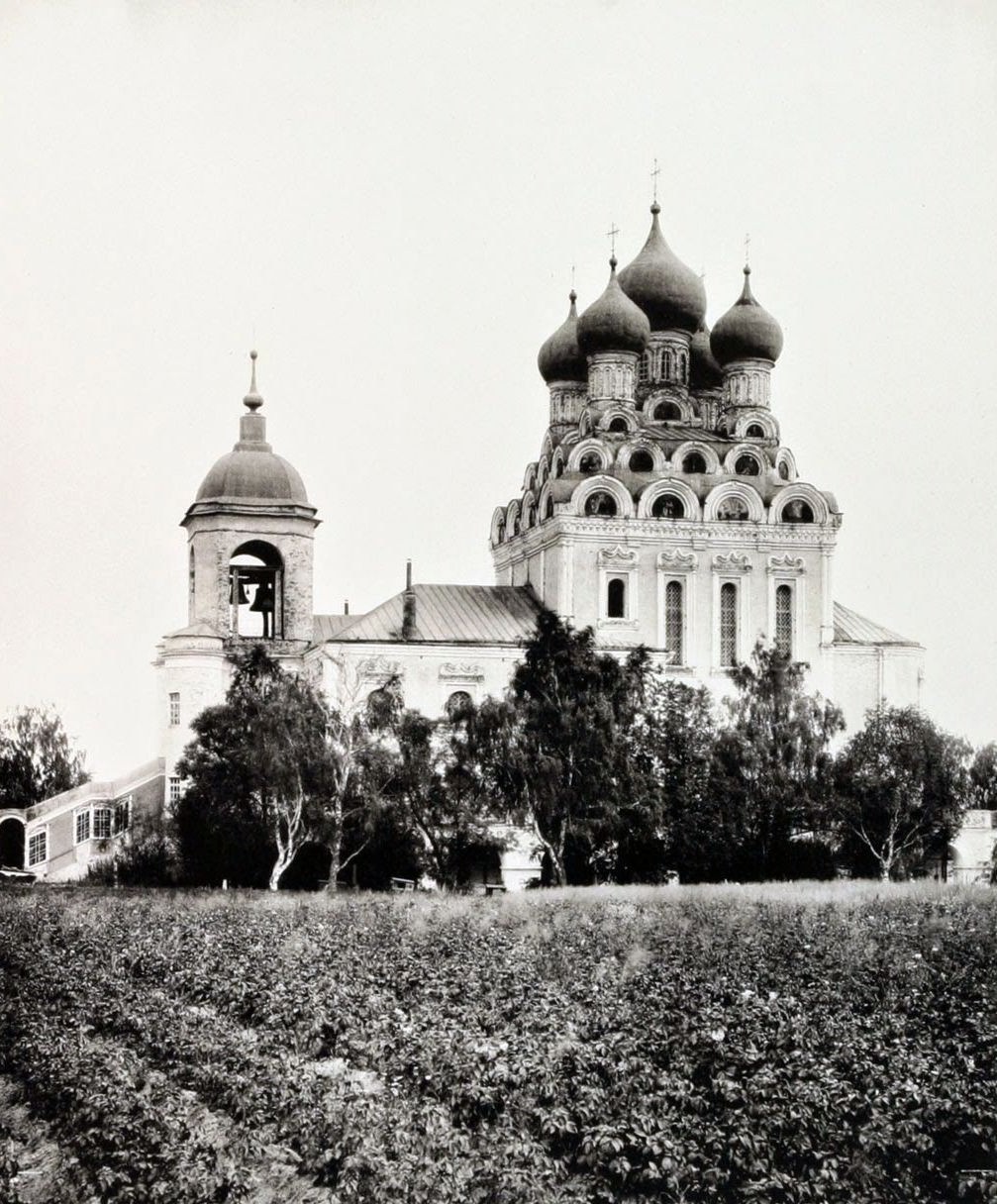
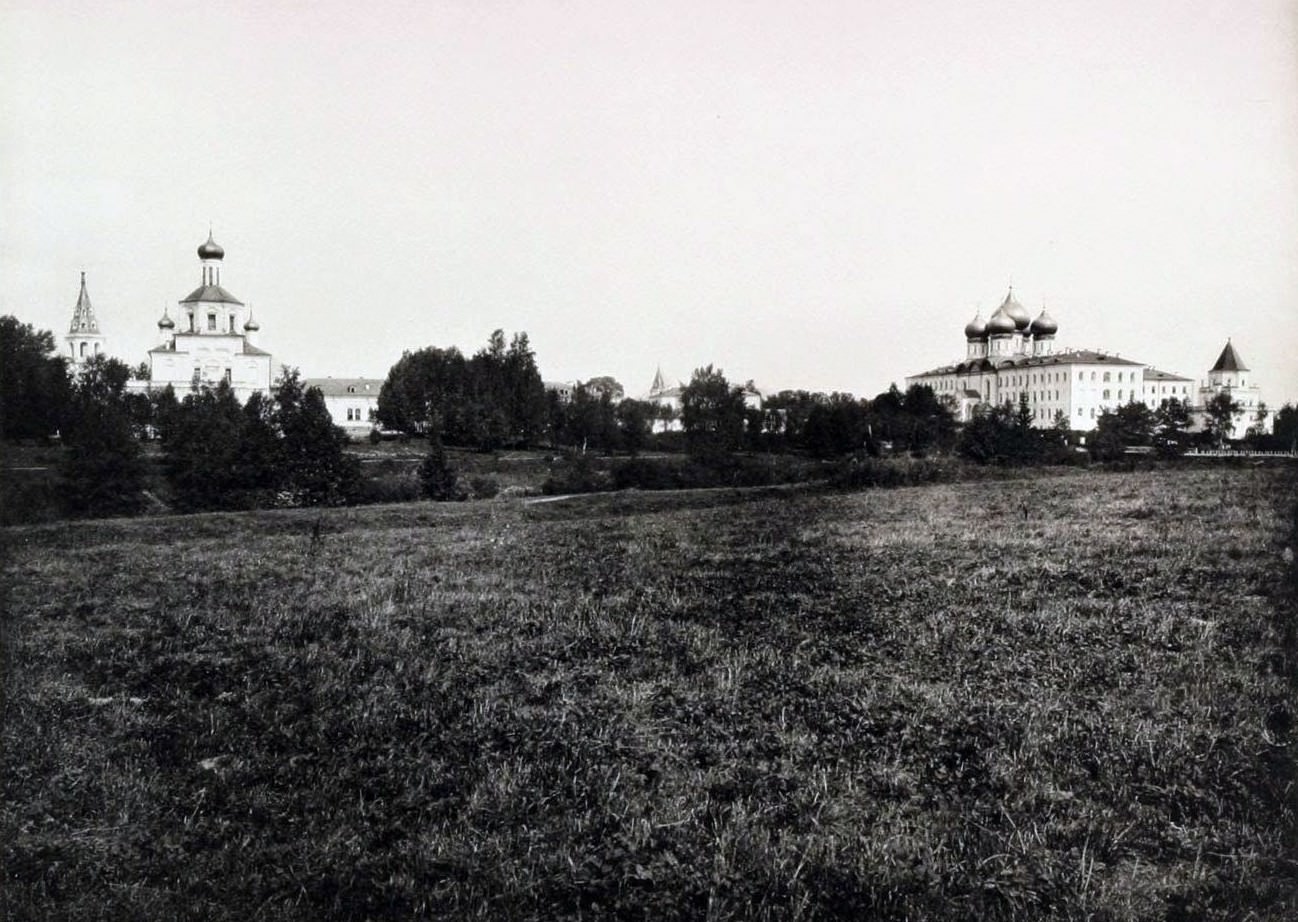
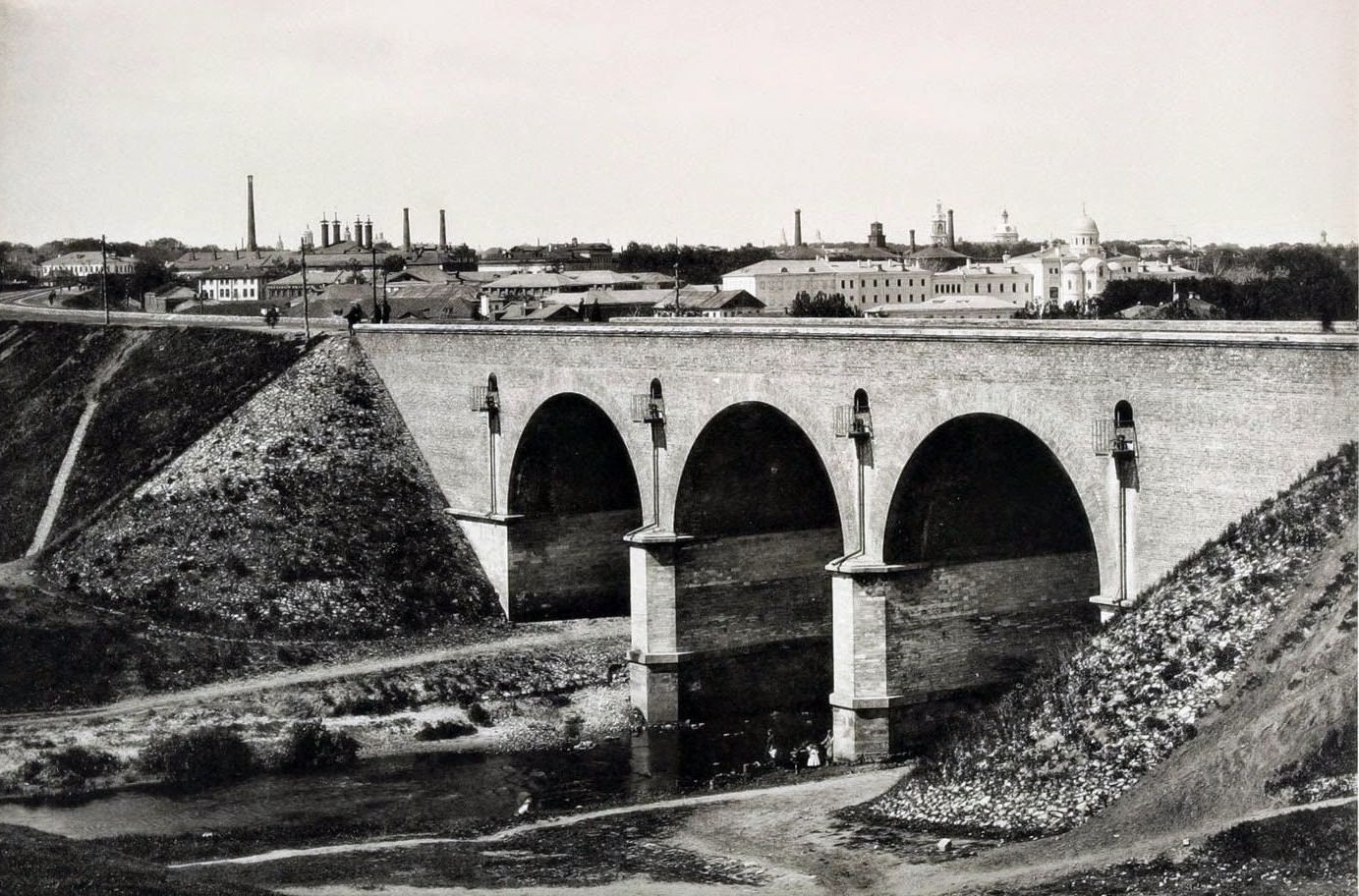
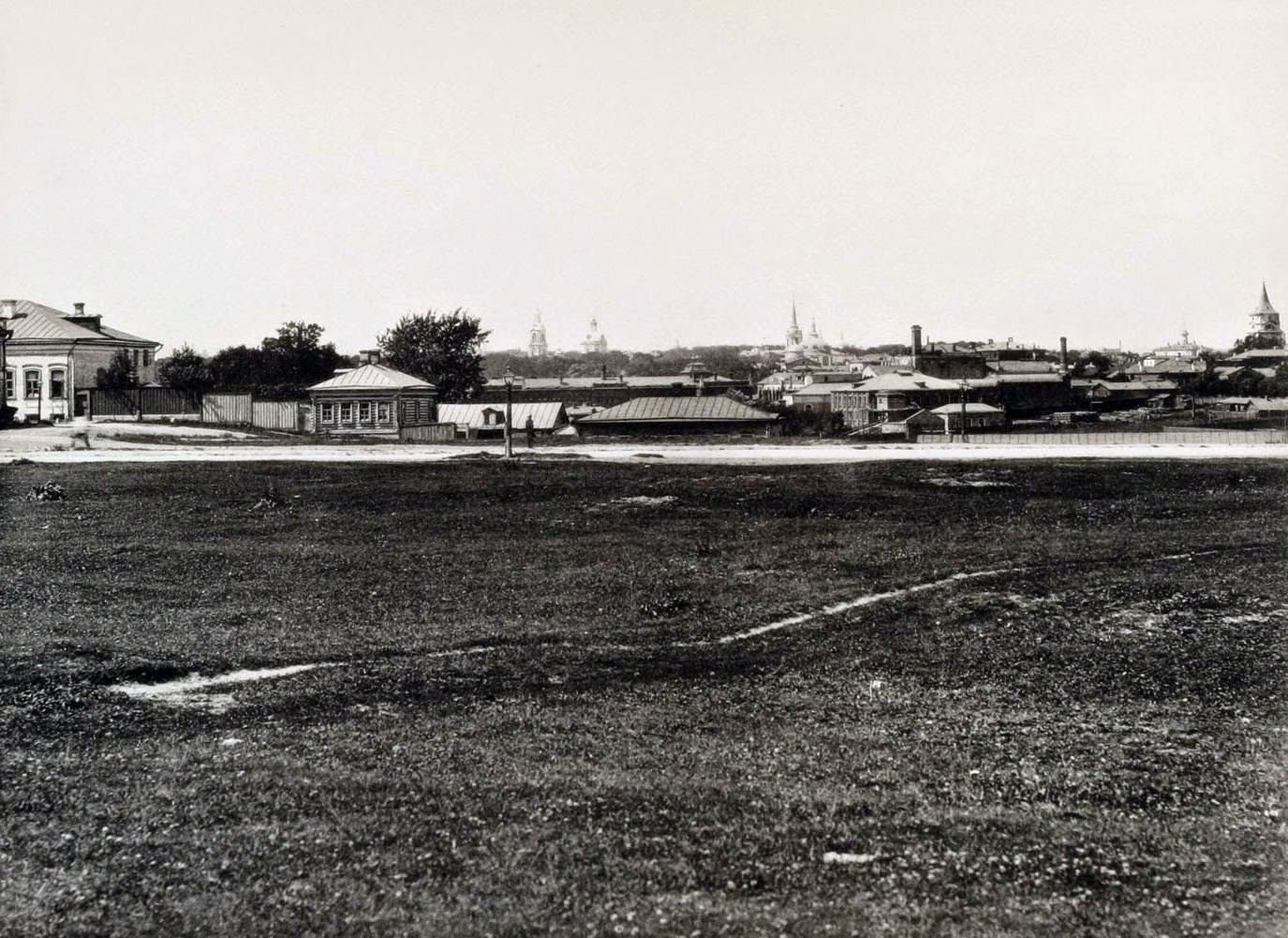
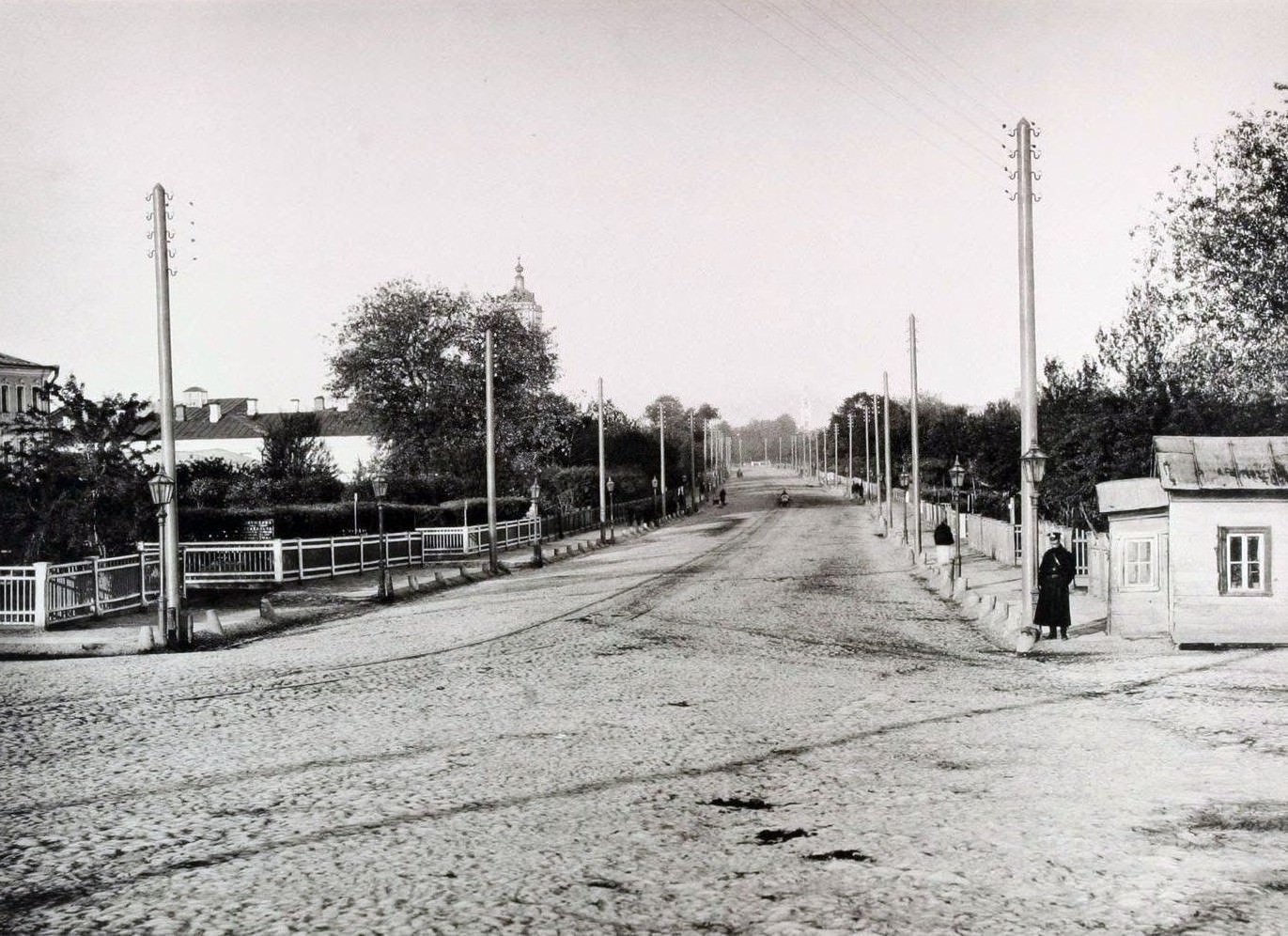
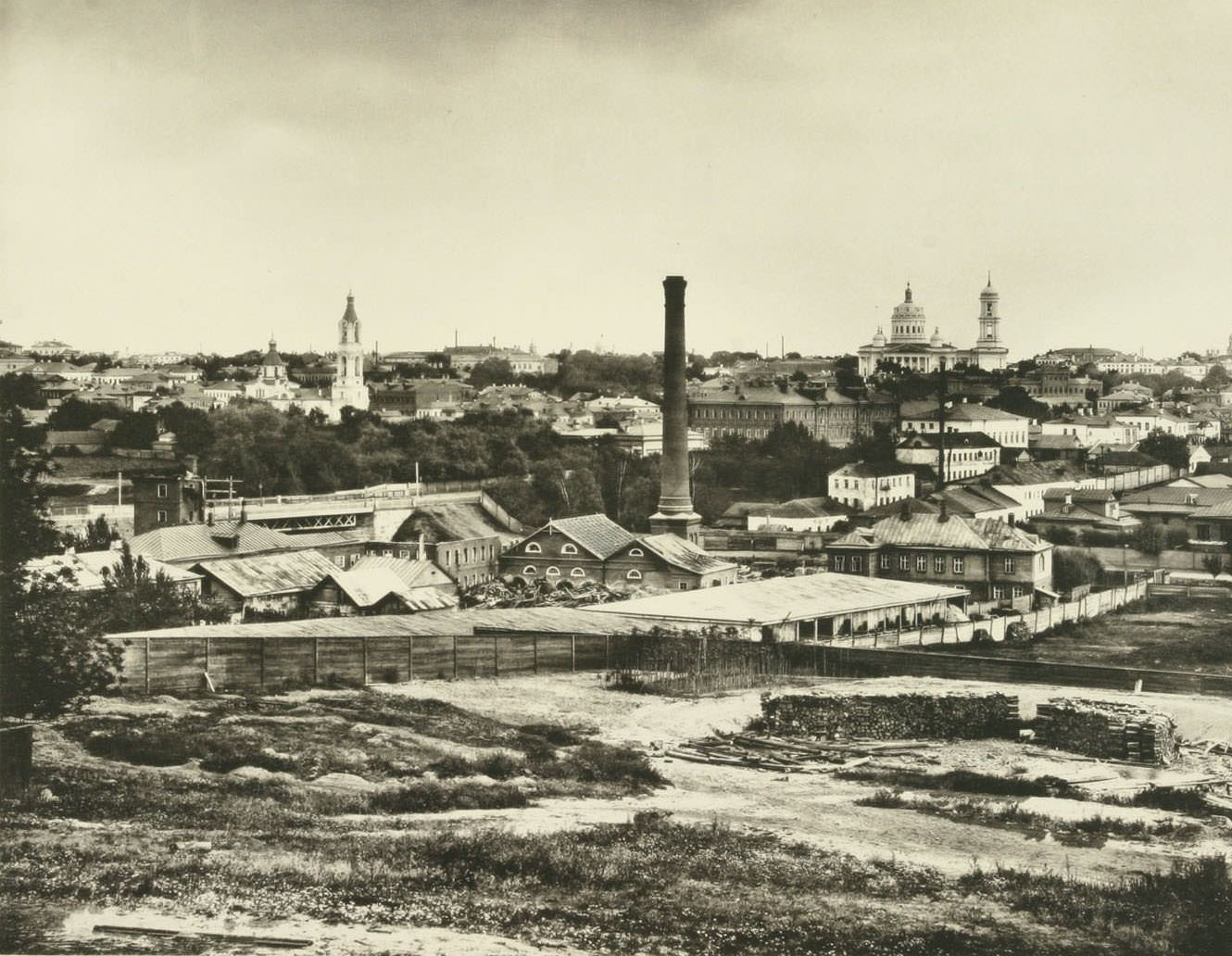
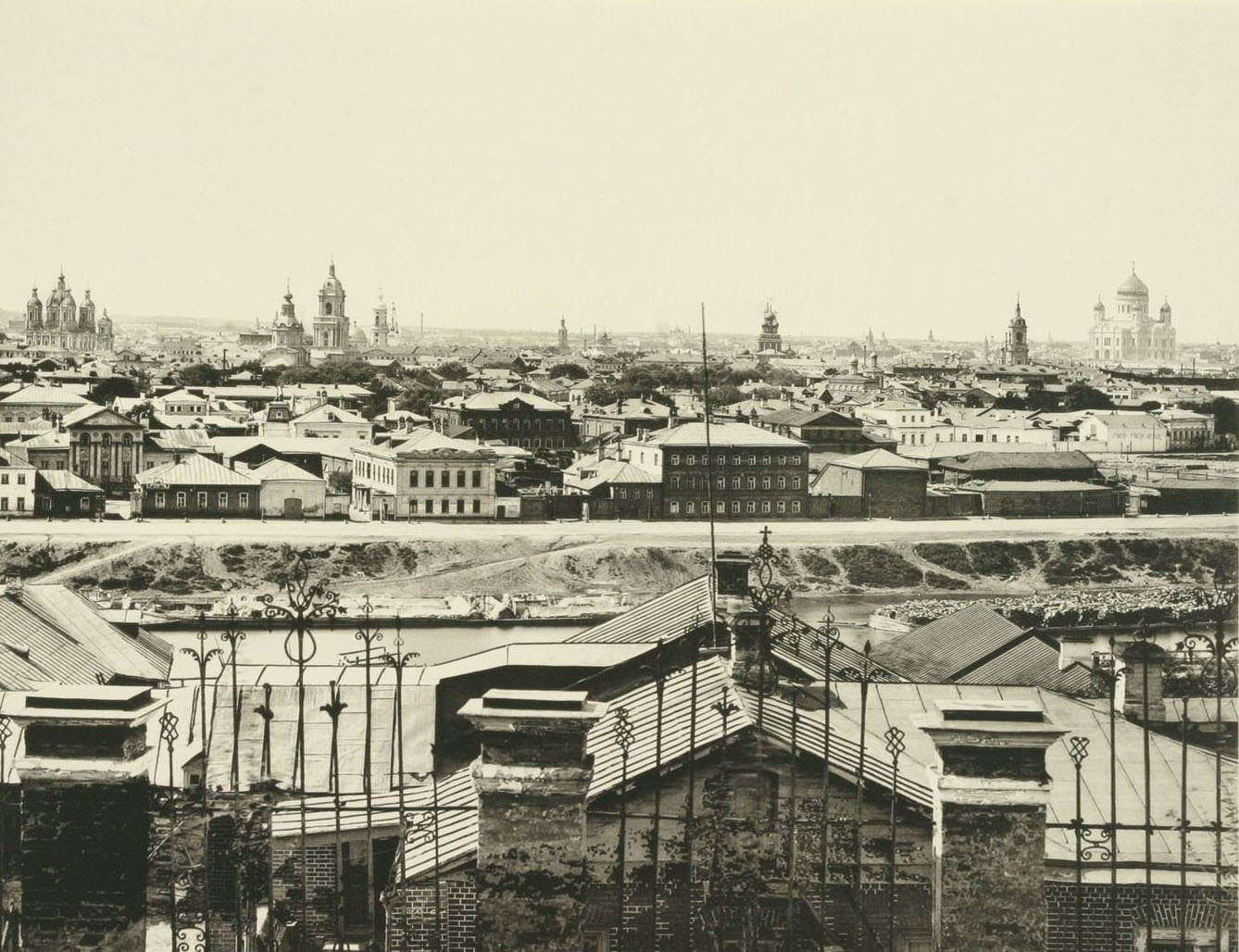
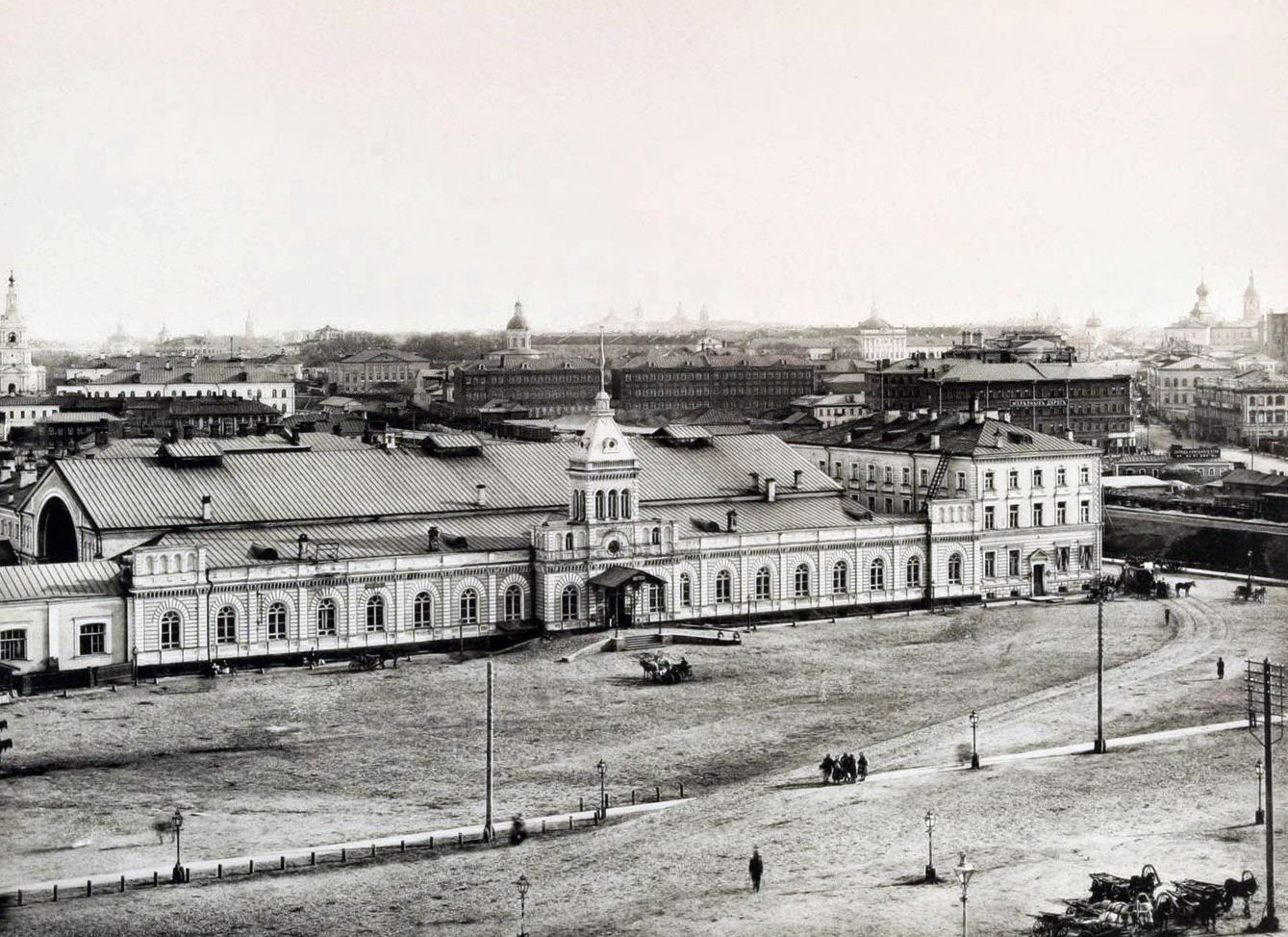
Beyond the central districts, Moscow’s surrounding villages had their own rhythms. Izmailovo, Cherkizovo, Ostankino, and other settlements near the city retained rural characteristics — village churches, open fields, and slower-paced lives — even as the expanding city began to absorb them. The railway bridge near Andronikov Monastery and the Moscow-Ryazan Railway station marked where the industrial age was physically reshaping the city’s edges.
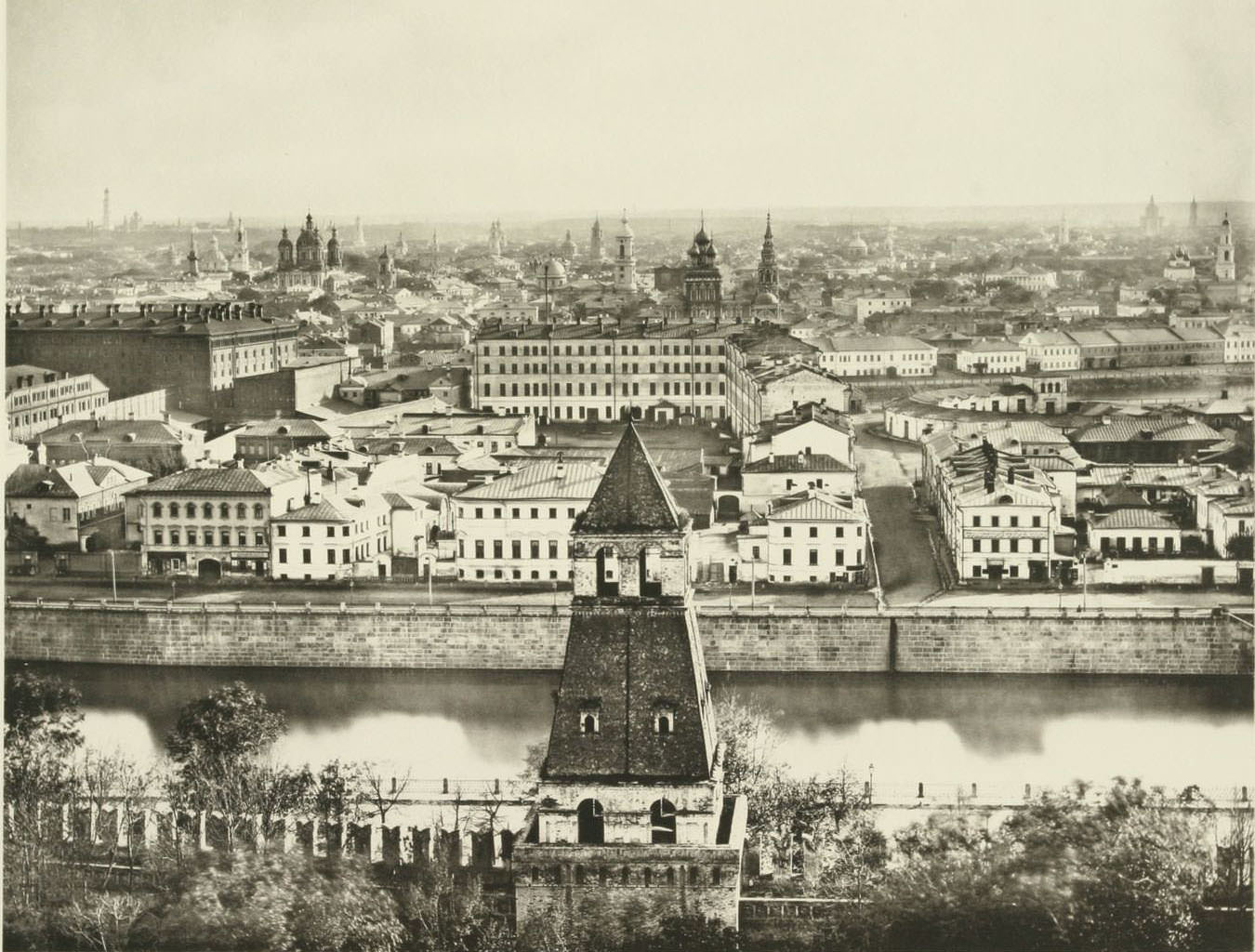
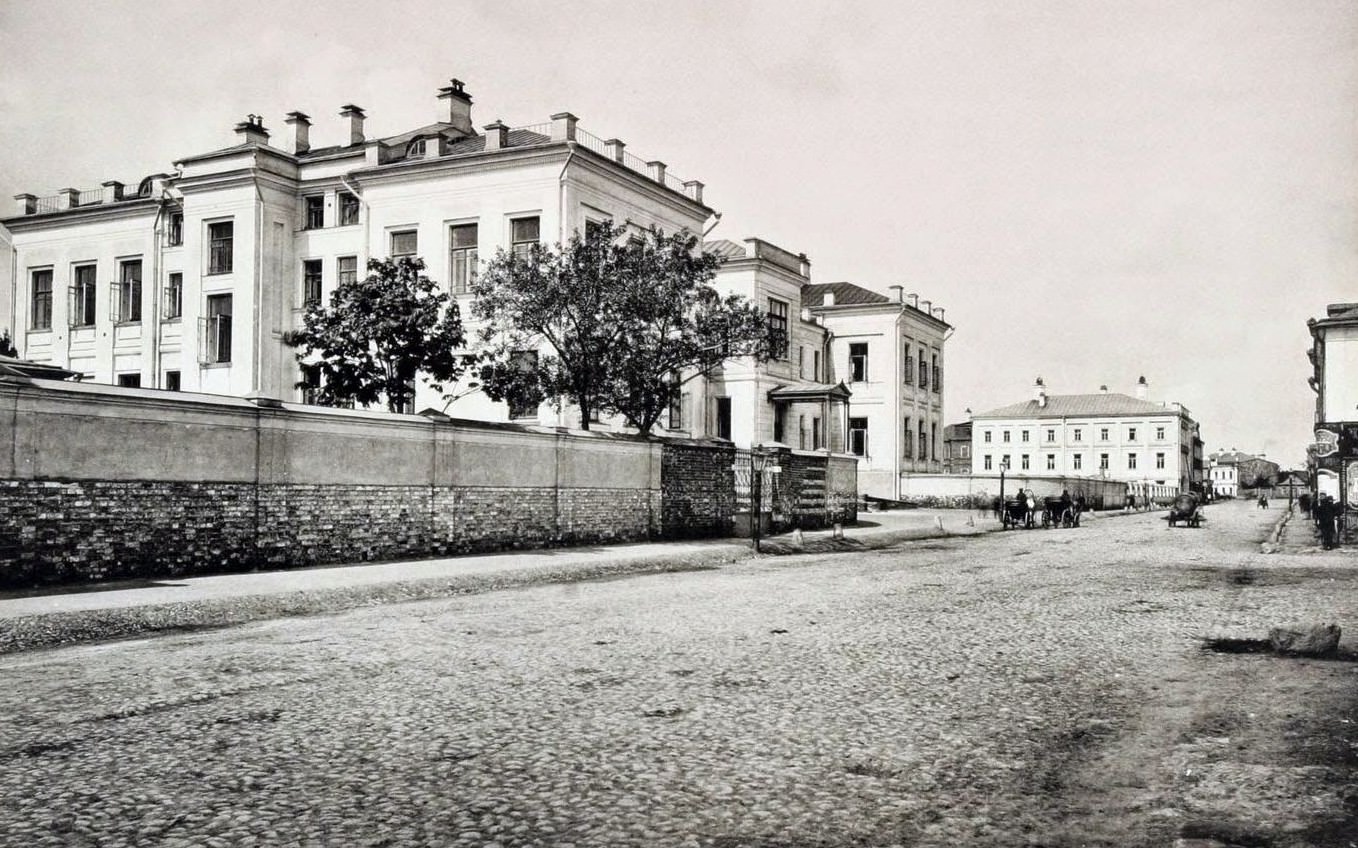
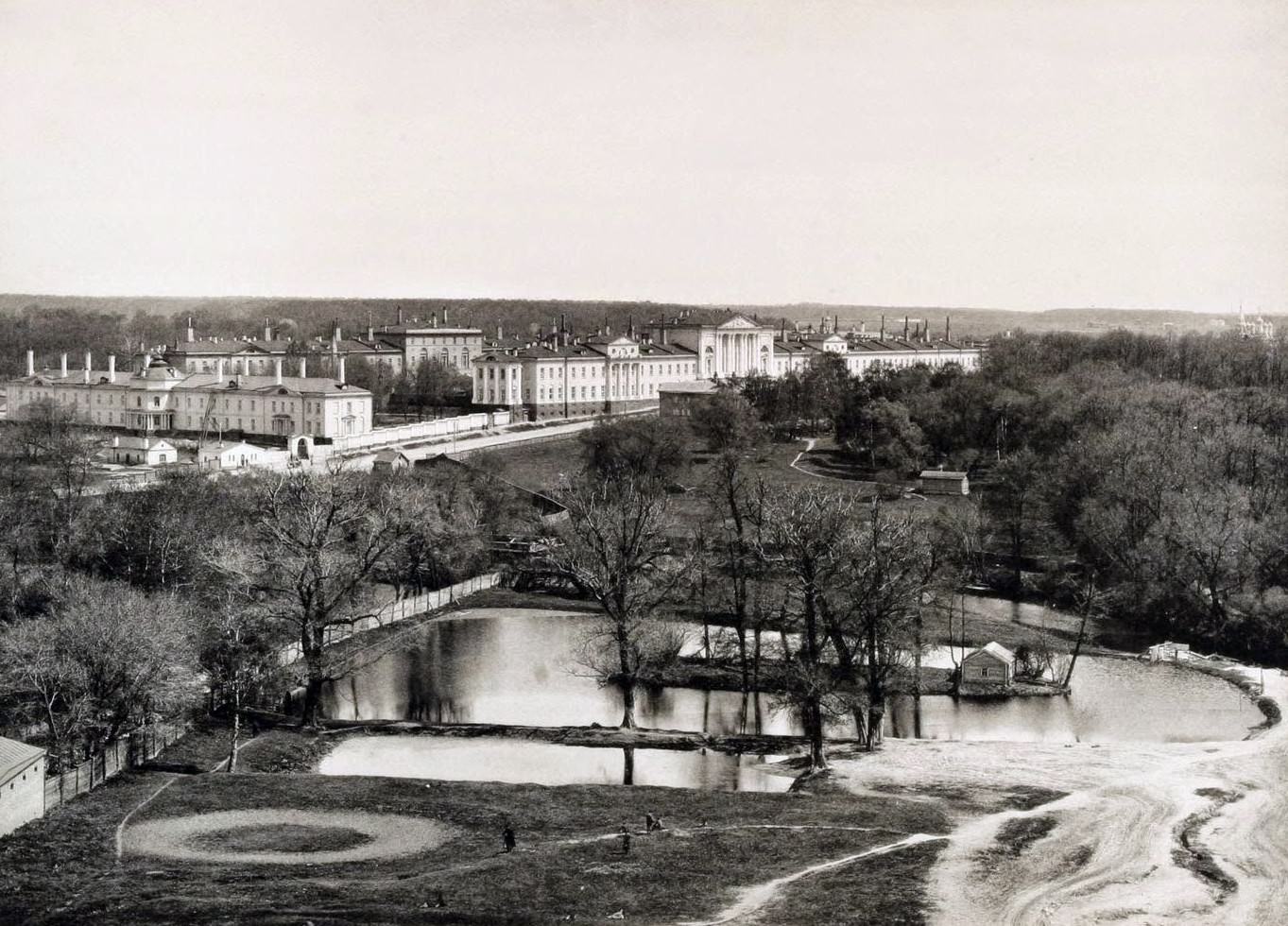
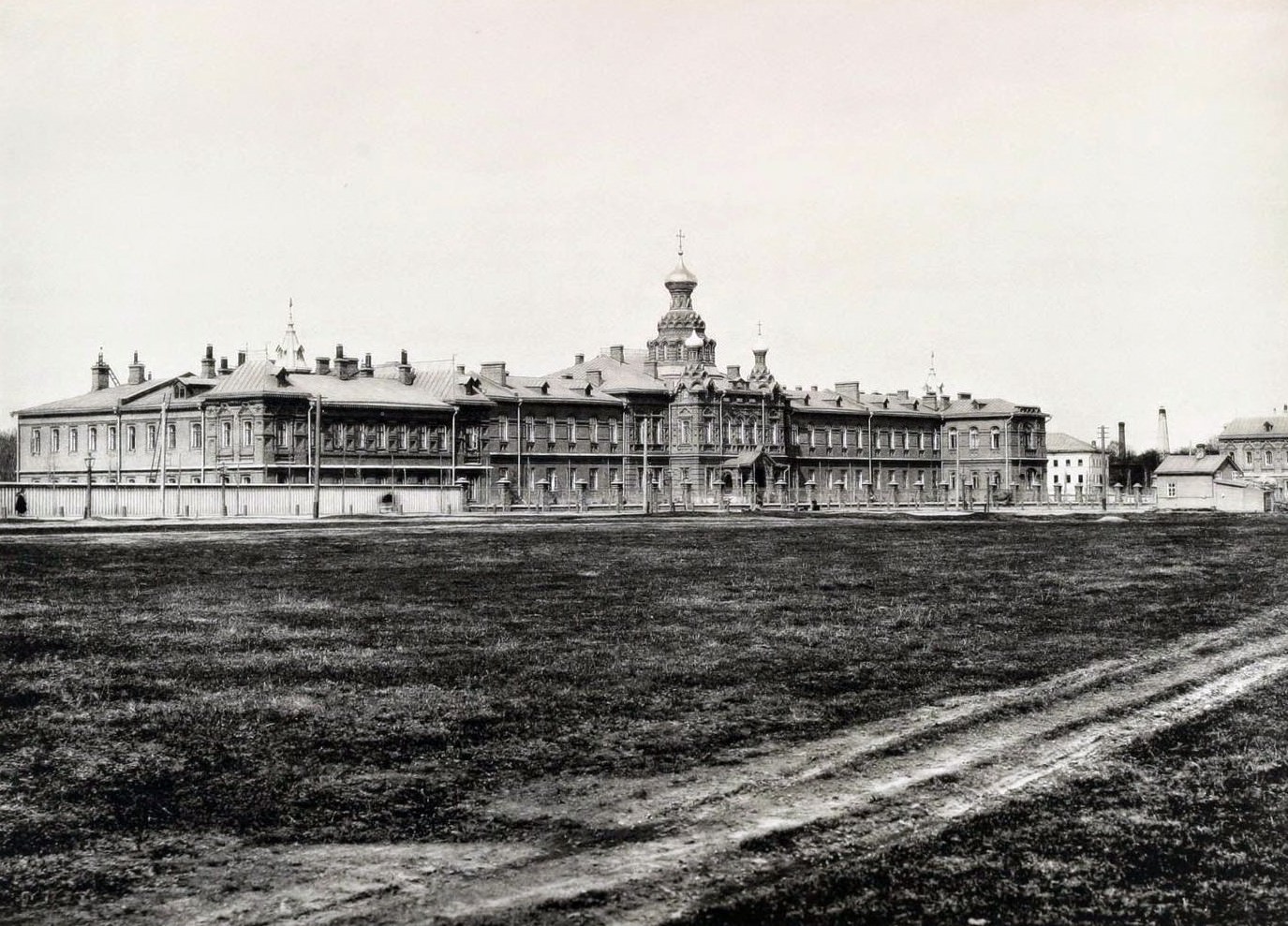
Medical institutions dotted the city and its outskirts. The Bakhrushins Brothers Hospital in Sokolnichye Pole and the Alexandrovskaya Hospital were among the facilities handling Moscow’s sick and injured. The military hospital served soldiers stationed in the city. These were not well-funded institutions — city hospitals treated the poor in crowded wards where medical students trained. But their growing presence reflected the city’s acknowledgment that disease, particularly after the 1883 cholera epidemic, was a problem too large to ignore.
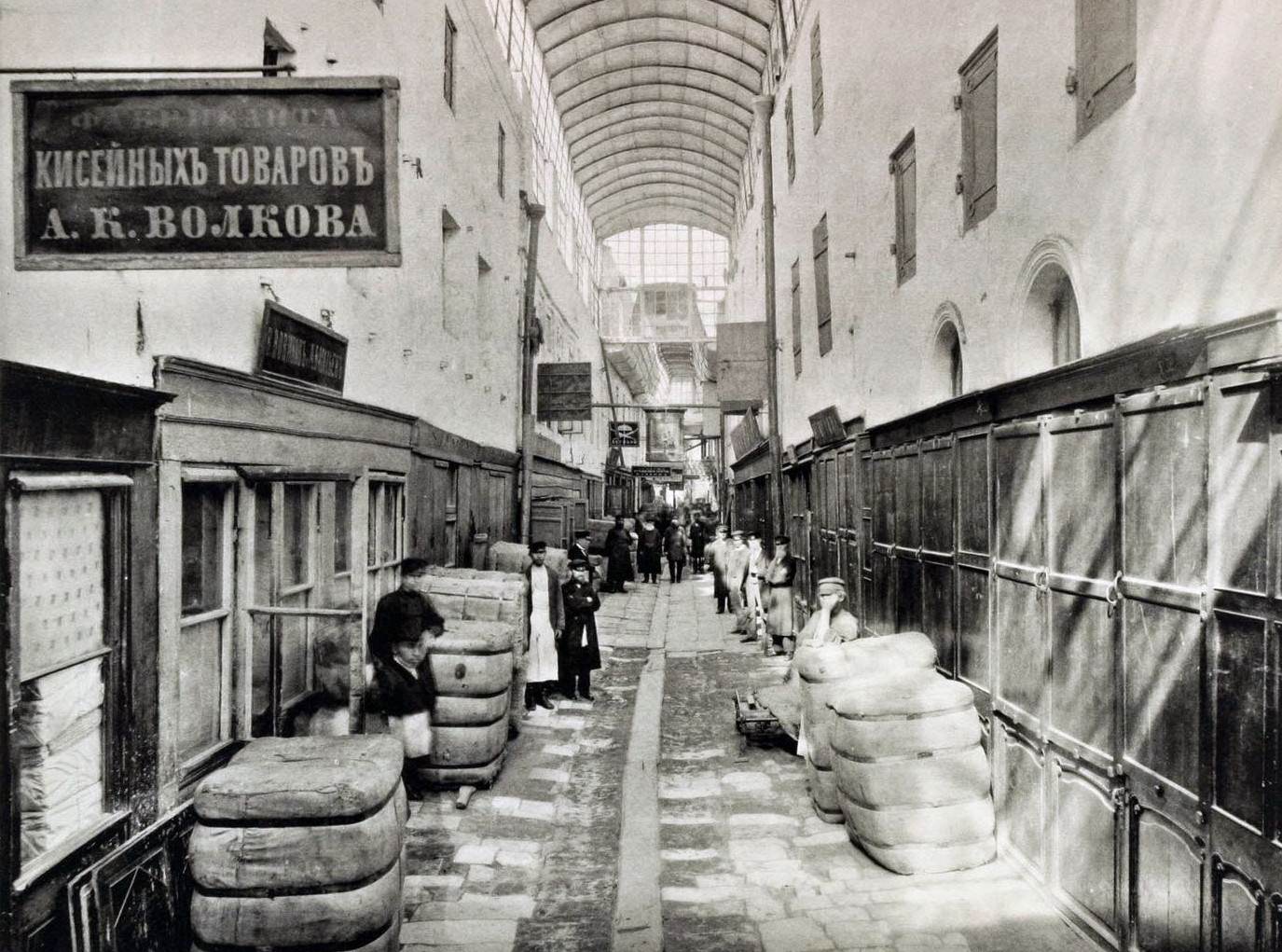
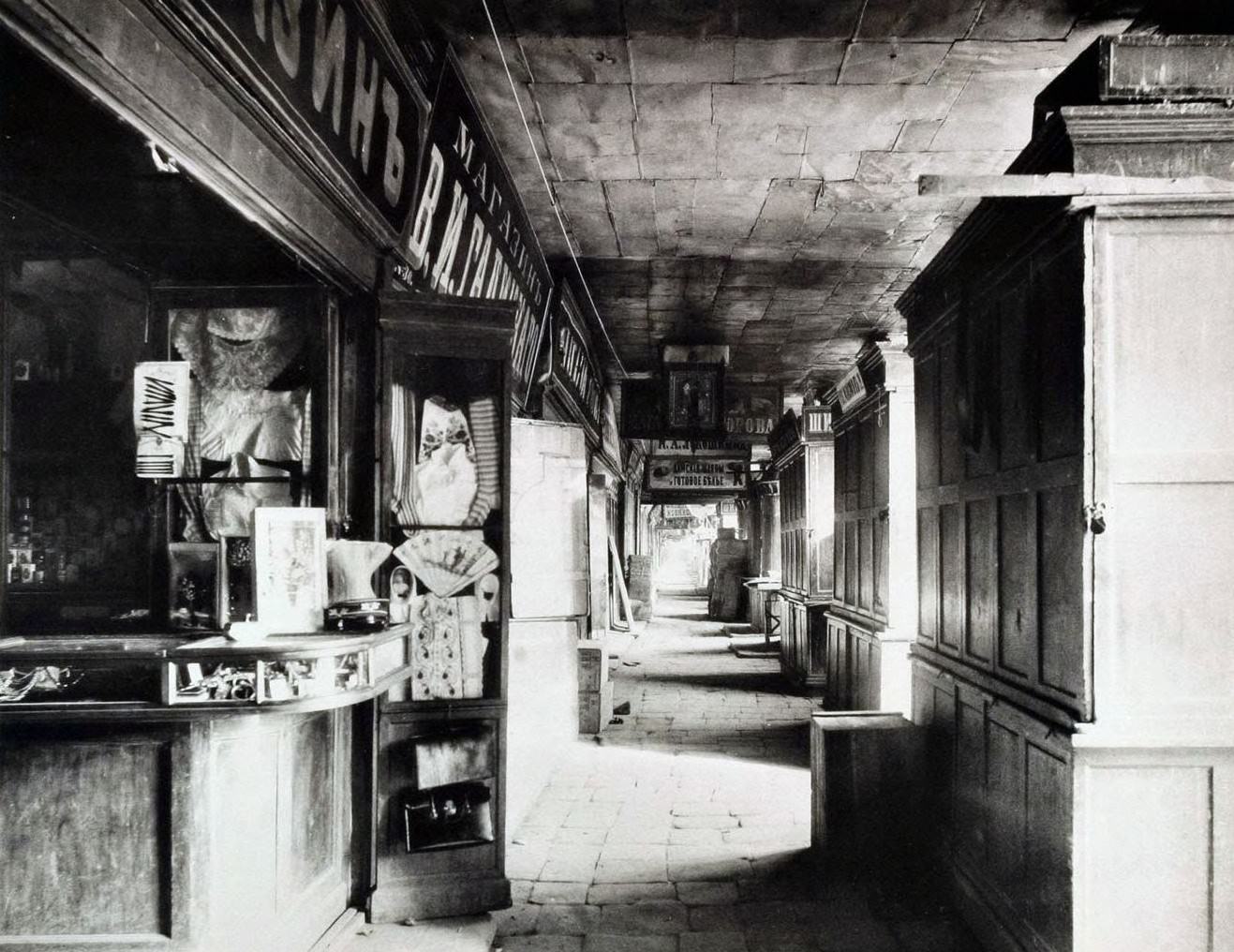
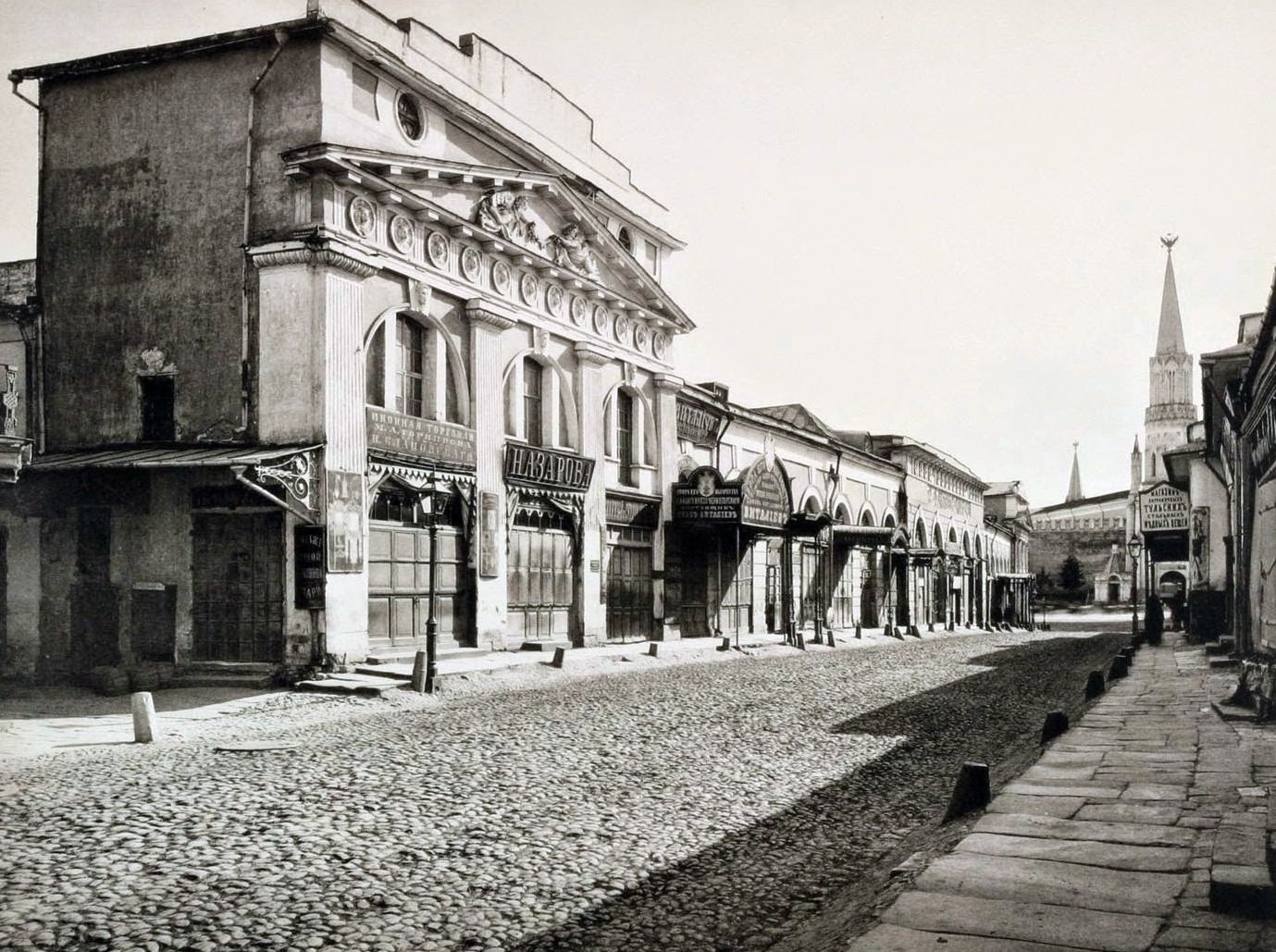
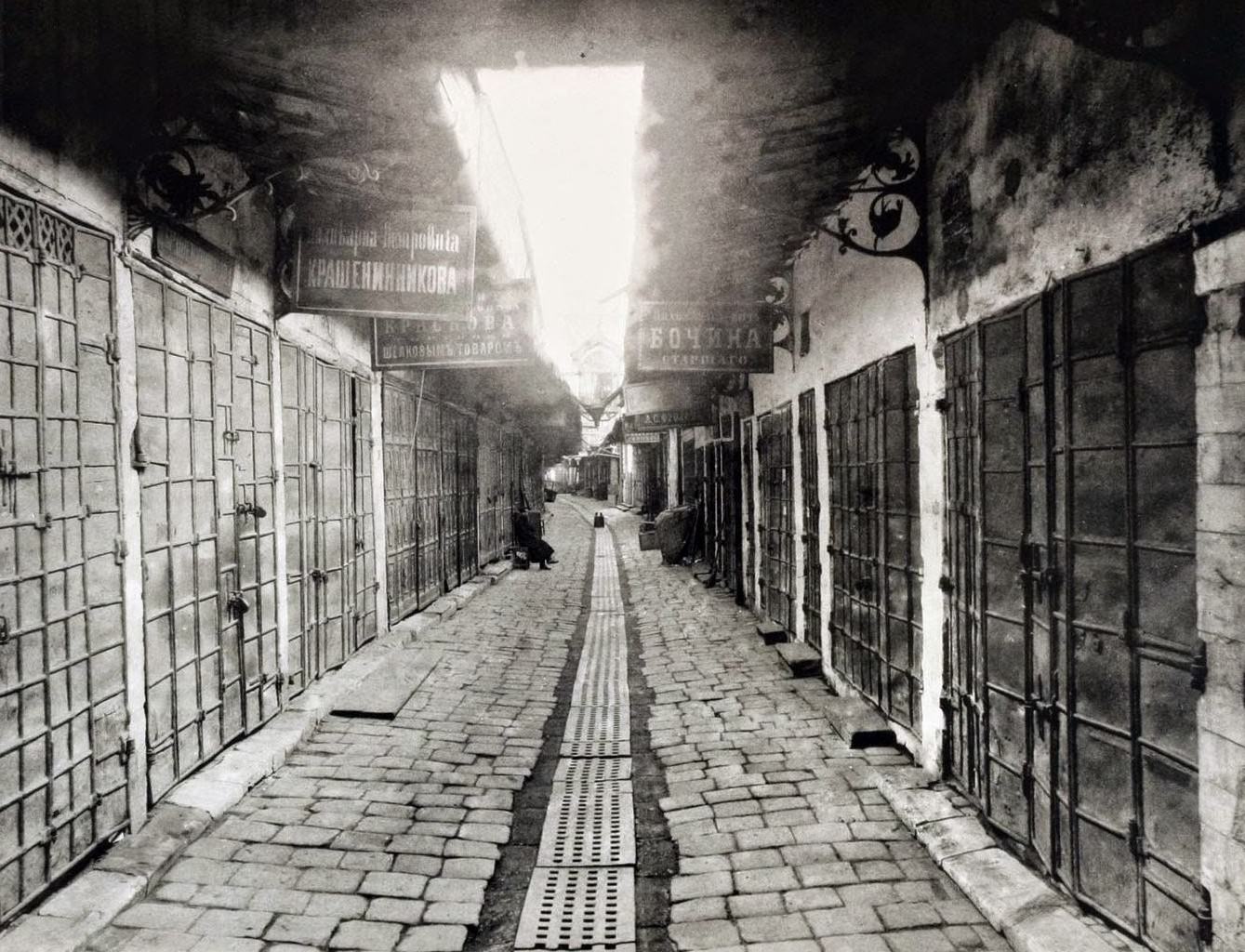
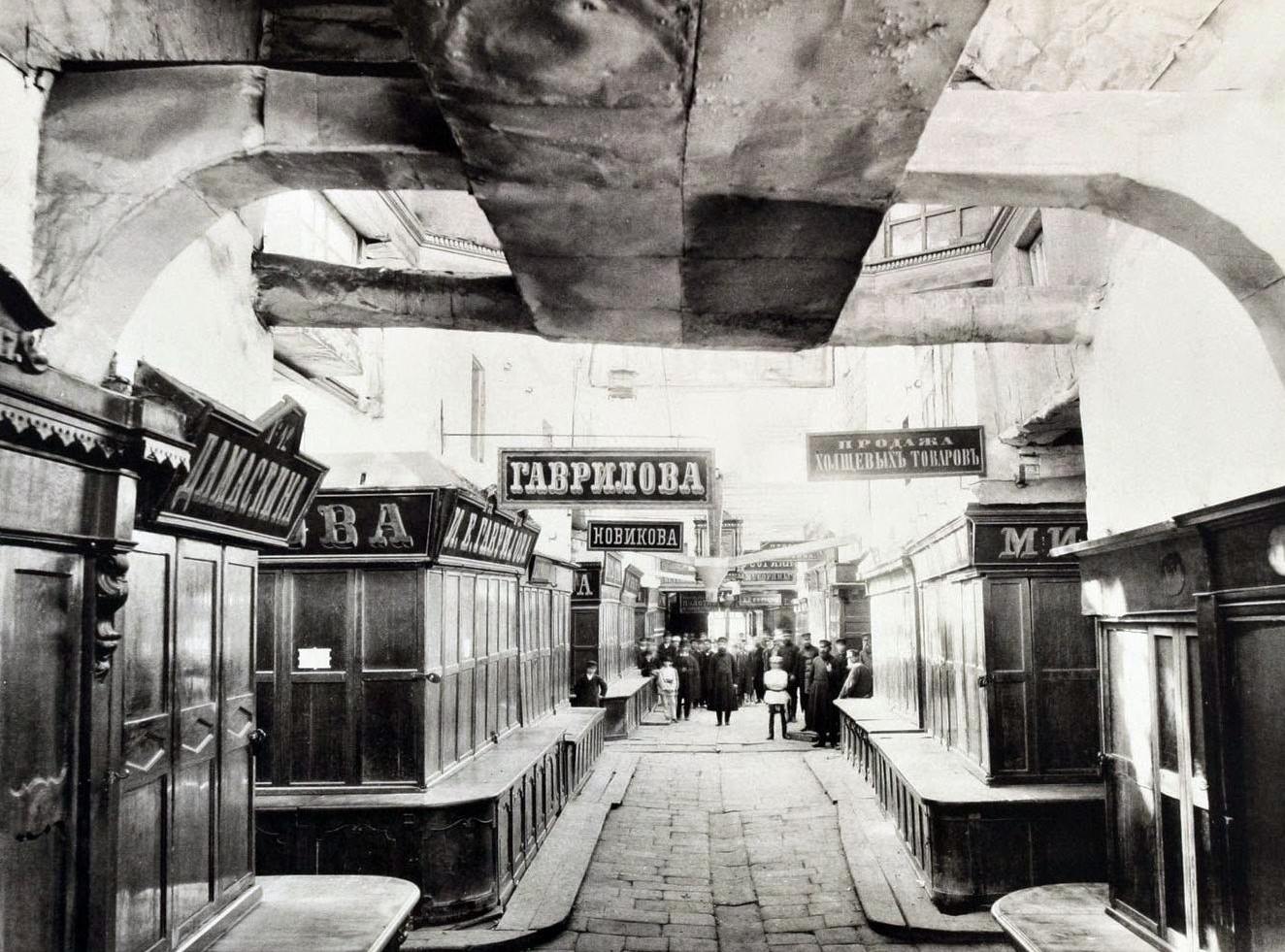
The trading rows near Red Square formed a dense commercial zone unlike anything else in the city. Specific rows specialized in single goods — mirrors, silver goods, knives, cloth, vegetables, icons, lapti (bast shoes). Merchants occupied fixed stalls, and customers navigated the rows by product type. The Bolshoy Icon Row and Zerkalny Ryad, the Serebryany Ryad and Nizhny Ovoshchny Ryad — each row had its own character, its own clientele, its own noise.