
Most people recognize Joseph Stalin as the hard-faced, mustachioed dictator who ruled the Soviet Union for nearly three decades. But long before he held that power, he was a young man with a criminal file and a growing obsession with revolution. A series of police mugshots taken between 1902 and 1911 capture that lesser-known version of Stalin—young, sharp-eyed, and already well acquainted with arrest.
Stalin was born Josef Dzhugashvili in 1879 in Gori, a small town in Georgia. His mother pushed him toward the church, and he enrolled in a Russian Orthodox seminary in Tiflis. There, instead of theology, he found Karl Marx. By his late teens, he had abandoned any plans for priesthood and thrown himself into underground revolutionary politics. He joined the Bolshevik movement and began organizing workers, distributing illegal pamphlets, and planning strikes across the Caucasus region.
His first recorded arrest came in 1902, when the tsarist police in Batumi detained him for organizing a labor demonstration. That arrest produced his first known mugshot—a document that would be followed by many more.
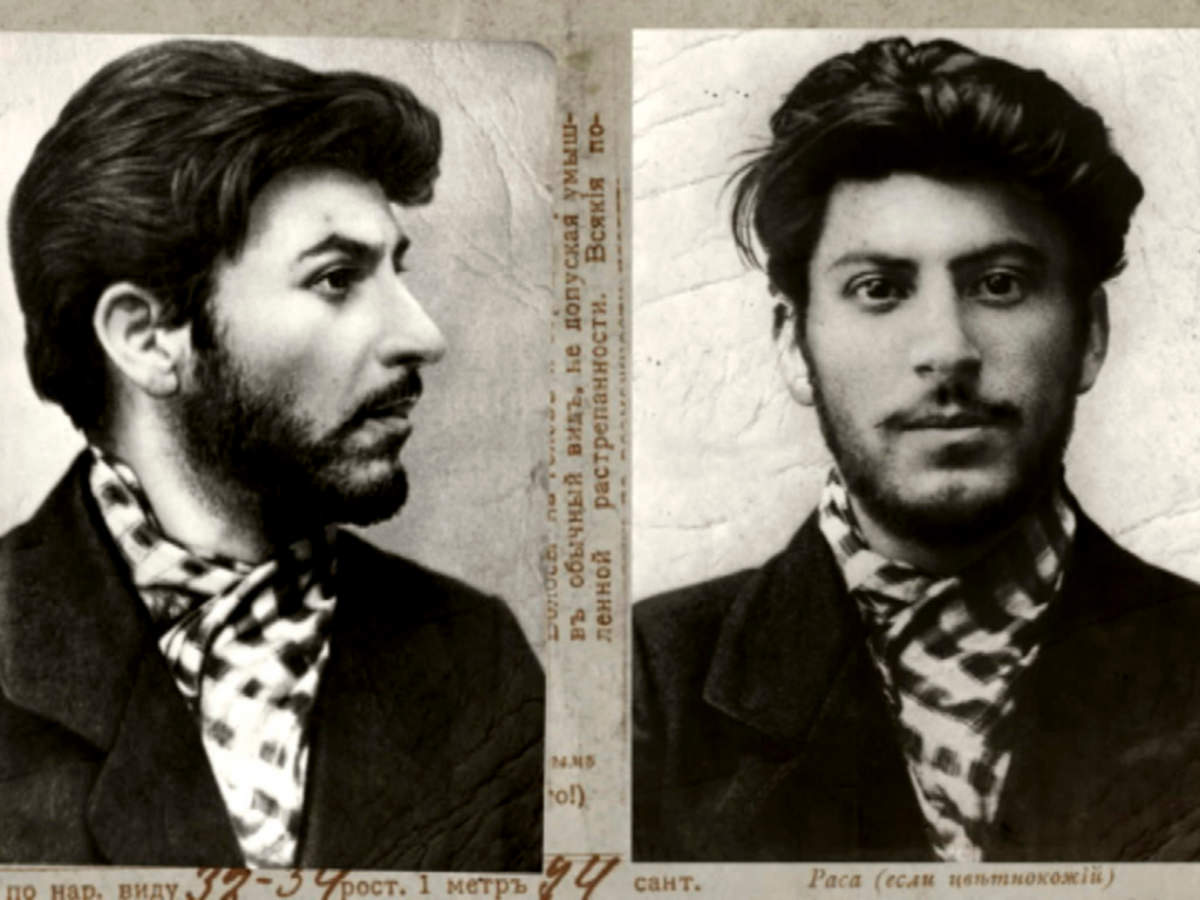
Between 1902 and 1913, Stalin was arrested eight times. Each arrest meant interrogation, imprisonment, and usually exile to Siberia. He escaped from Siberian exile seven times—a record that speaks to both his resourcefulness and his refusal to be sidelined. The tsarist system, vast and brutal as it was, repeatedly failed to hold him. Each escape brought him back to the revolutionary underground, where he resumed organizing and took on increasingly serious roles within the Bolshevik Party.
By 1908, he was operating in Baku, the oil-rich capital of Azerbaijan, coordinating Bolshevik activities and raising funds—often through bank robberies and extortion. The police caught up with him again that year.
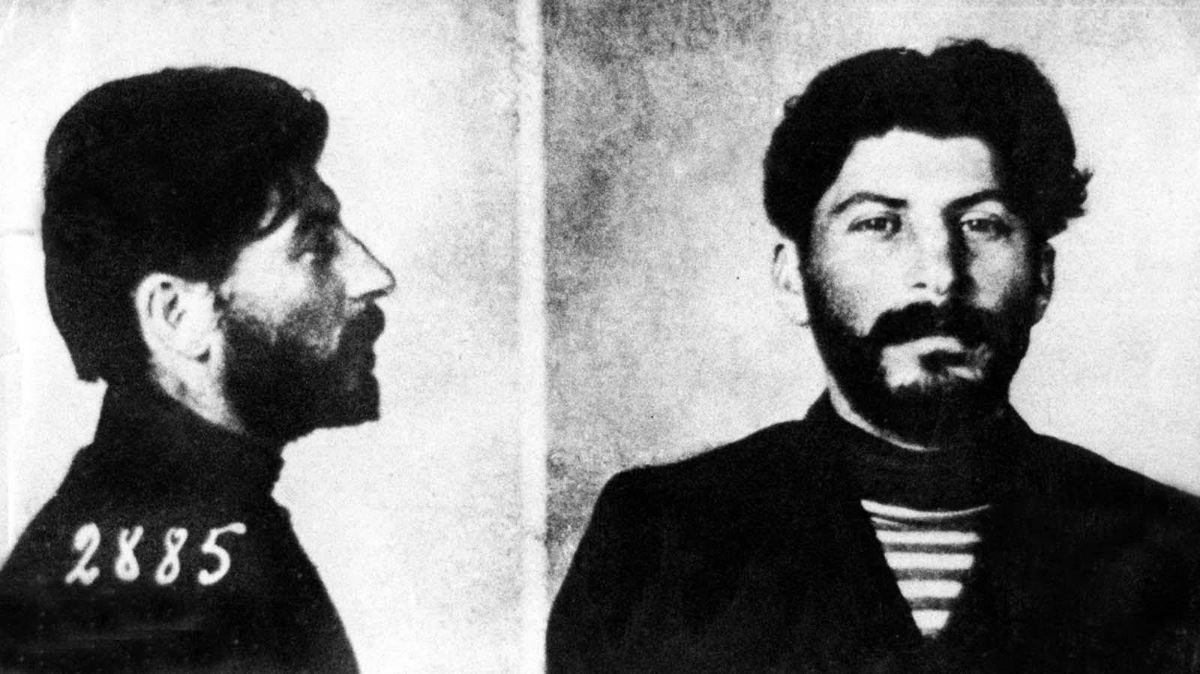
The 1908 arrest led to another stint in Siberian exile, from which he again escaped. He returned to Baku and continued his work until 1910, when he was arrested once more—this time with his file growing considerably thicker in the hands of the Okhrana, the tsar’s secret police.
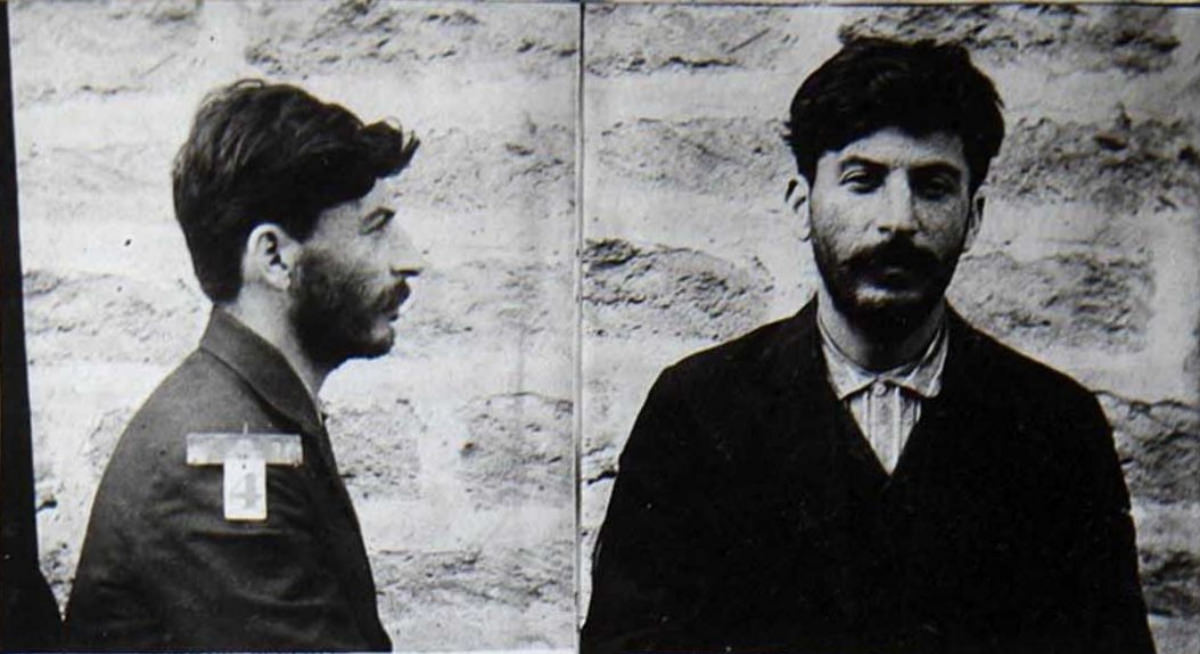
By 1911, the Okhrana had transferred his records to their offices in St. Petersburg. Stalin was now a known and tracked revolutionary, flagged at the highest levels of imperial law enforcement. The photographs from this period show a man who had spent nearly a decade cycling through prisons, exile camps, and underground safe houses—yet his expression in each frame is composed and direct.
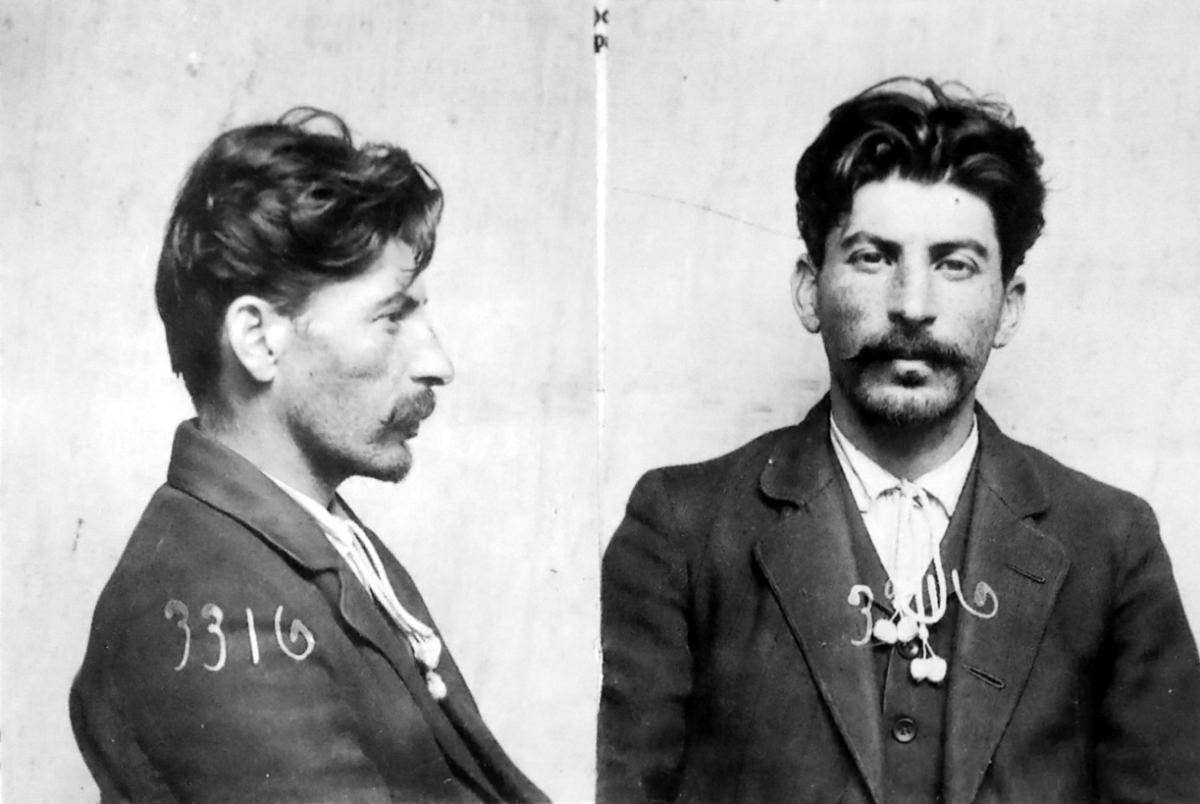
Vladimir Lenin took notice of Stalin during these years. Stalin’s willingness to carry out dangerous operations and his effectiveness as an organizer earned him a place in the Bolshevik inner circle. Lenin reportedly called him “the wonderful Georgian” in a 1913 letter. At that point, Stalin had spent more time in prisons and exile than in any stable political office—yet he had built a reputation that would outlast the tsarist empire that kept arresting him.
The Russian Revolution of 1917 collapsed that empire entirely. Stalin emerged from the chaos not as its most prominent figure—that was Lenin—but as a reliable and calculating operator within the new Bolshevik government. He took on administrative roles that others considered unglamorous, and used them to build a network of loyalty and control. When Lenin died in 1924, Stalin was already positioned to consolidate power, outmaneuvering rivals like Trotsky who underestimated him.
The mugshots from 1902 to 1911 predate all of that. They are straight police documents—front and profile shots taken to track a repeat offender. What makes them remarkable is context. The young man staring into the tsarist camera went on to command one of the largest nations on earth, oversee the industrialization of the Soviet Union, and direct a system of political terror that sent millions to the Gulag or to their deaths. The paper files the Okhrana built on him were eventually swallowed by the very revolution he helped make.