
In July 1970, French photographer Philippe Guillot traveled across Poland and captured the country in striking detail. His photographs document a nation at a complicated moment — ordinary people going about their daily lives while serious political tensions simmered beneath the surface. That same year, Polish workers began protesting against sudden, sharp increases in food prices and the cost of everyday goods. The government of Władysław Gomułka was also navigating a major diplomatic shift, having signed a treaty with West Germany that formally recognized the Oder-Neisse line as Poland’s western border. Guillot’s camera caught all of this — the quiet routines, the grand architecture, the religious devotion, the natural beauty, and the lingering scars of history.
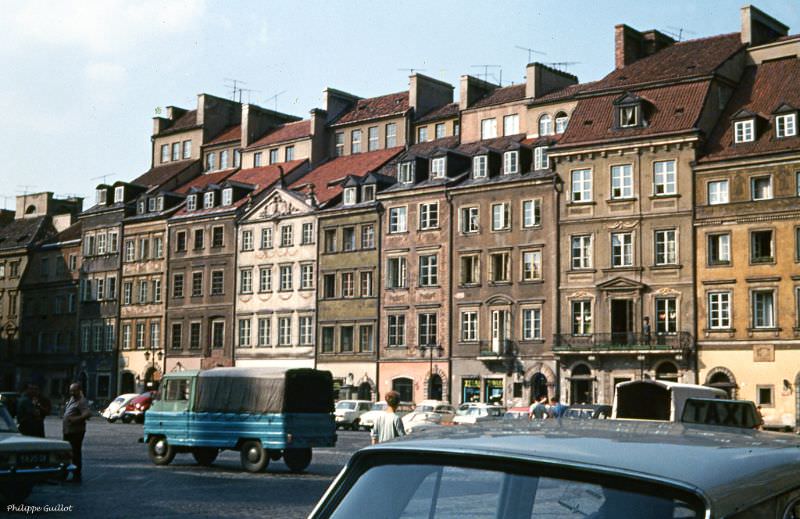
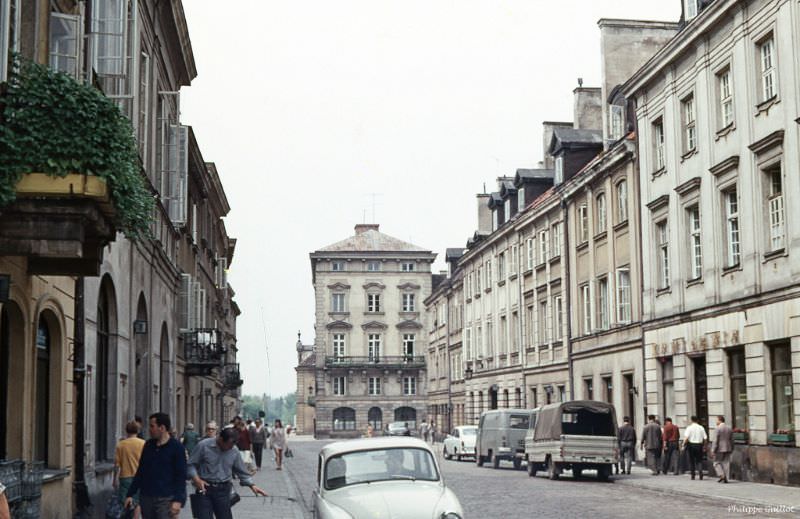
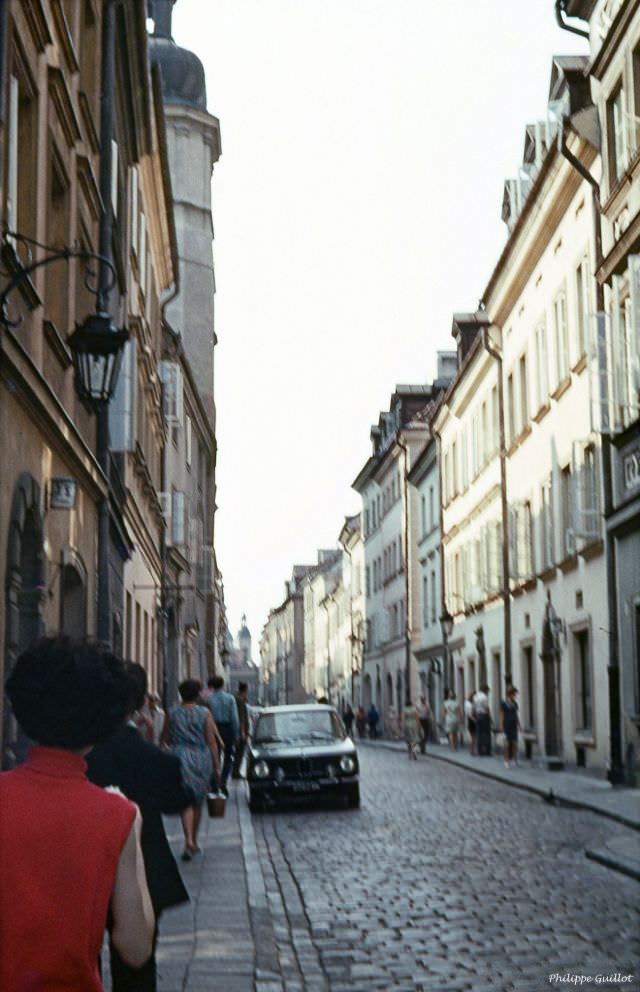
Warsaw in July was warm, and Guillot spent considerable time photographing the capital. The city, almost entirely destroyed during World War II and painstakingly rebuilt in the postwar decades, presented a striking mix of reconstructed historic buildings and hulking communist-era structures. On the hottest days, residents found ways to cool off.
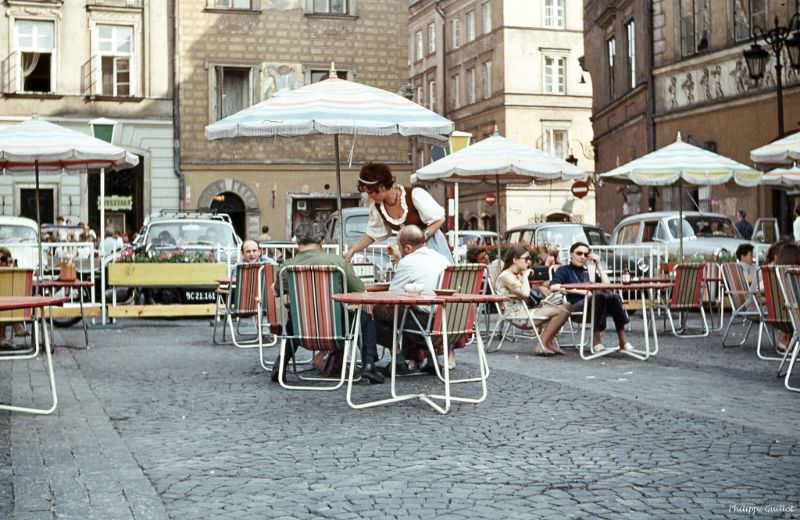
Life on the streets of Warsaw moved at a relaxed pace during the summer months. Café terraces filled with people, and outdoor seating was a common sight in the city center.
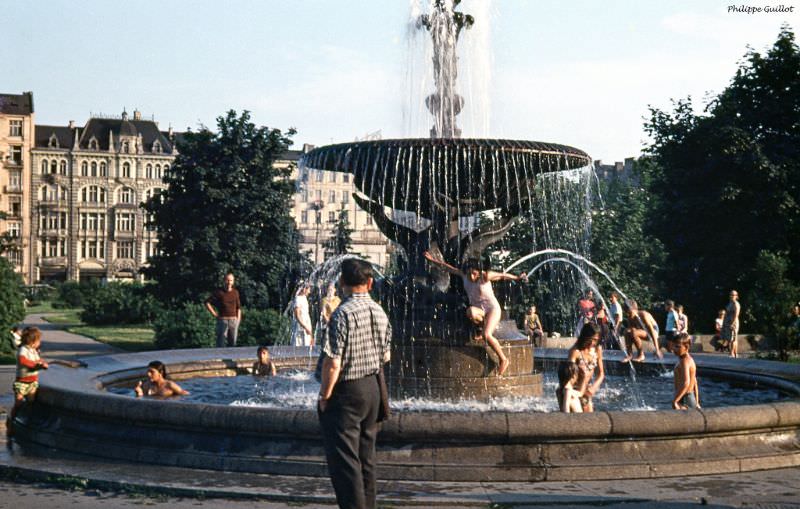
Children were a constant presence in public spaces. Fountains, in particular, became gathering points during the heat of summer.
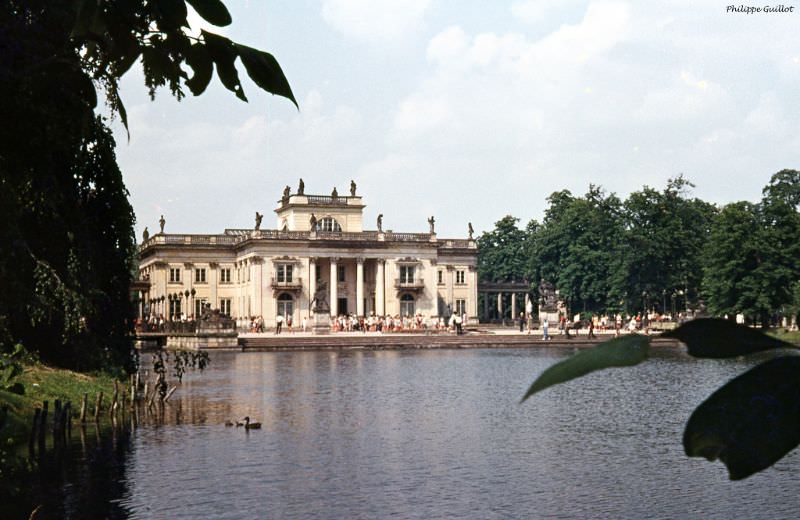
Beyond the city streets, Warsaw’s parks offered calm and greenery. Łazienki Królewskie — the Royal Baths Park — was one of the most visited green spaces in the capital, featuring a neoclassical palace set on an island in the middle of an artificial lake.
The Old Town of Warsaw was a remarkable feat of postwar reconstruction. After being almost completely leveled by Nazi forces following the 1944 Warsaw Uprising, the district was rebuilt almost brick by brick, using old paintings, photographs, and architectural records as guides. By 1970, it had been fully restored and was once again the historic heart of the city.
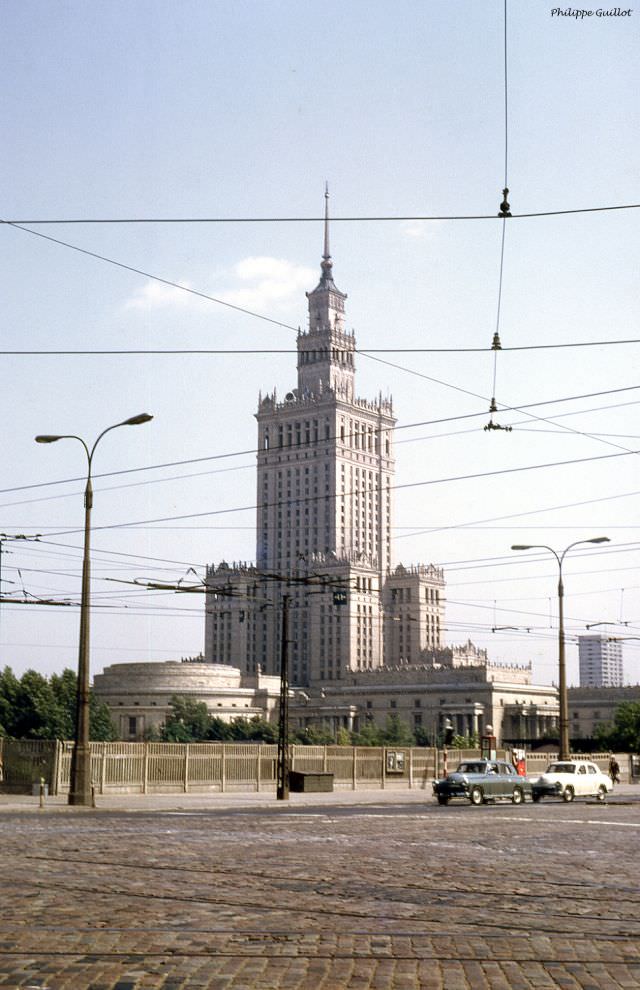
One structure that could not be missed in the Warsaw skyline was the Palace of Culture and Science, a massive Stalinist-style skyscraper gifted by the Soviet Union in 1955. Standing over 230 meters tall, it dominated the city center and served as one of the most visible symbols of Soviet influence over postwar Poland.
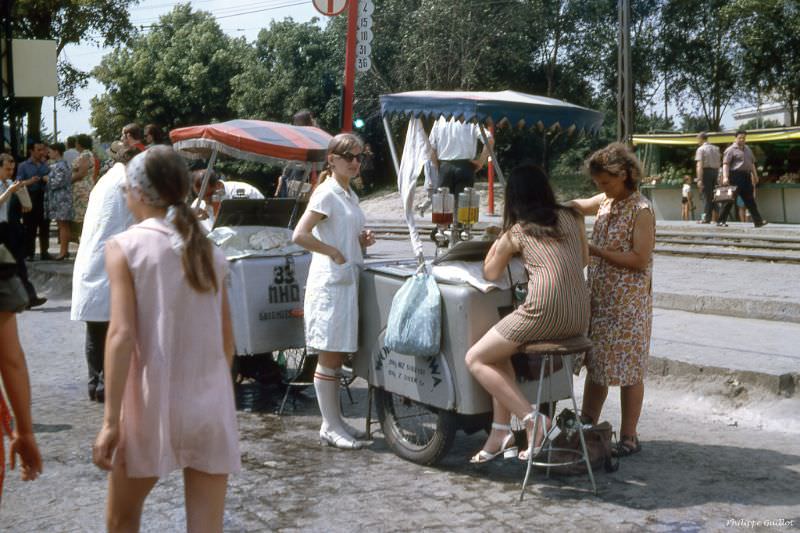
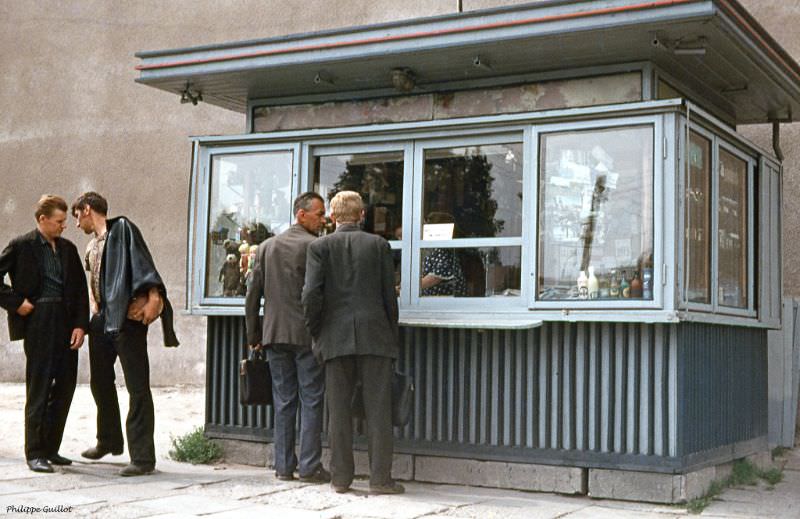
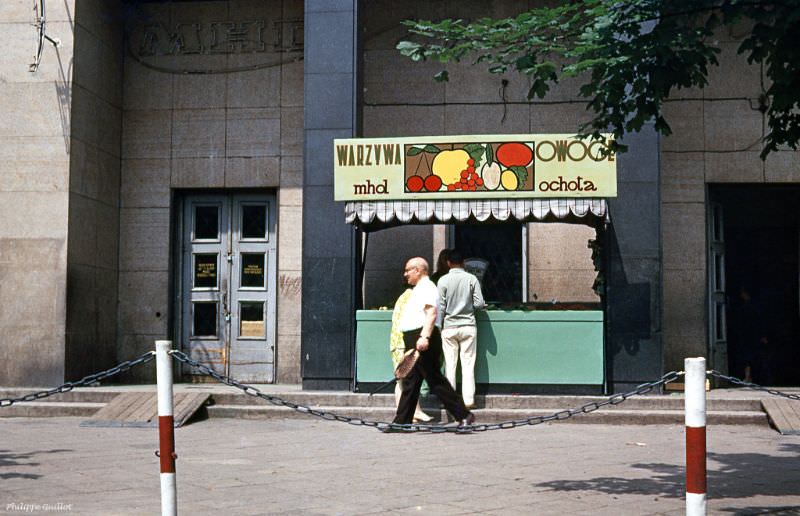
Street commerce was a part of daily life. Open-air stalls sold everything from produce to small goods, and queuing was a routine experience for Warsaw residents in the era of centrally planned shortages.
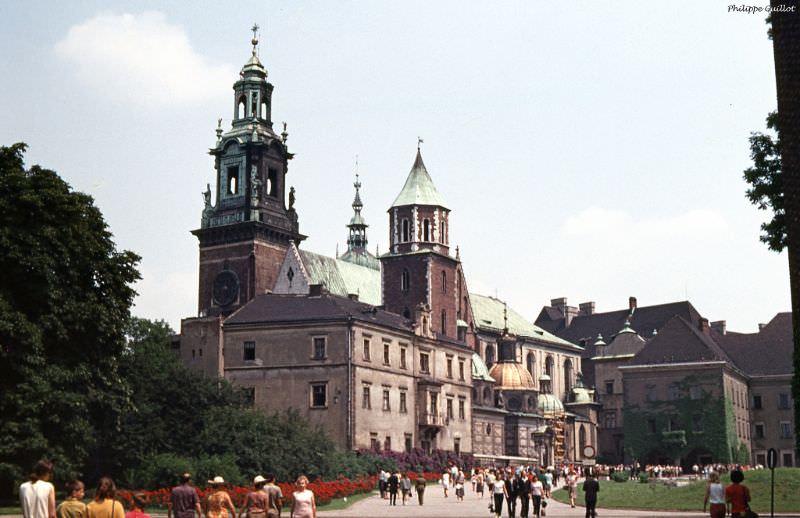
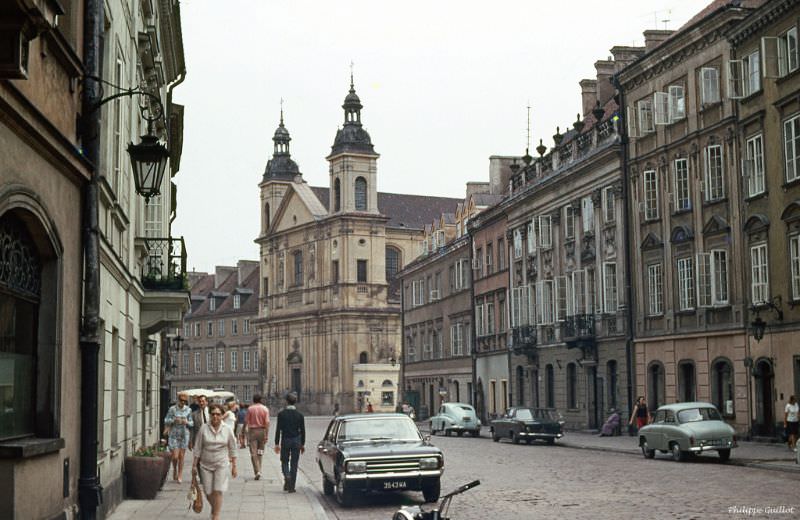
Religion remained deeply embedded in Polish life despite decades of communist rule that officially discouraged church attendance. Sacred landmarks like the St. Stanislaus and Wenceslas Cathedral and the Church of the Holy Spirit stood as anchors of faith and community.
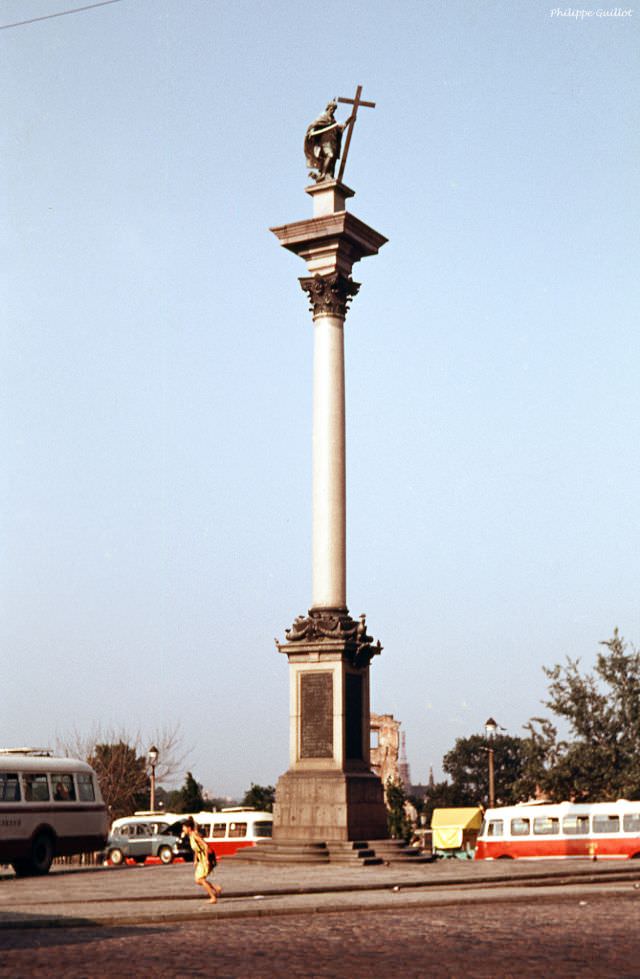
At the entrance to the Old Town stood the Column of Sigismund III, one of Warsaw’s most iconic monuments. Erected in 1644, the column honors the king who moved Poland’s capital from Kraków to Warsaw. Nearby, at Zamkowy Square, daily life unfolded in the shadow of centuries of history.
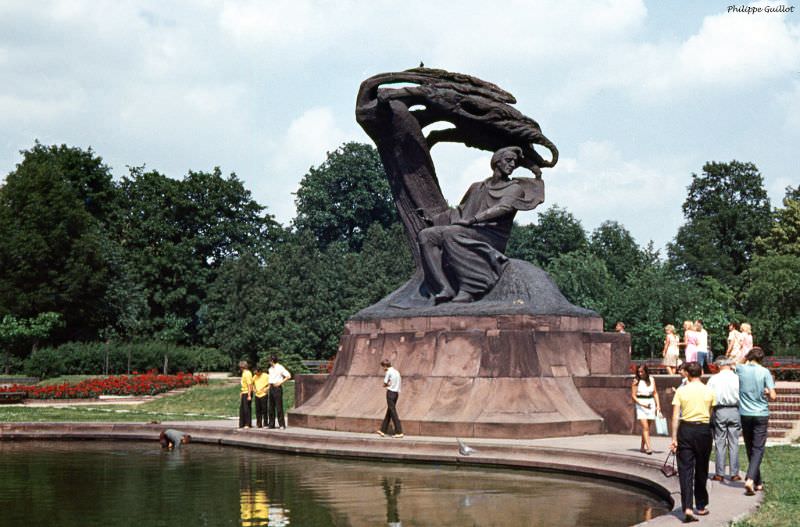
The monument to Frédéric Chopin in Łazienki Park was another landmark Guillot documented. The bronze sculpture, depicting the composer beneath a wind-swept willow tree, had been destroyed by the Nazis in 1940 and rebuilt after the war. By 1970, it had again become a place of cultural pride for Poles.
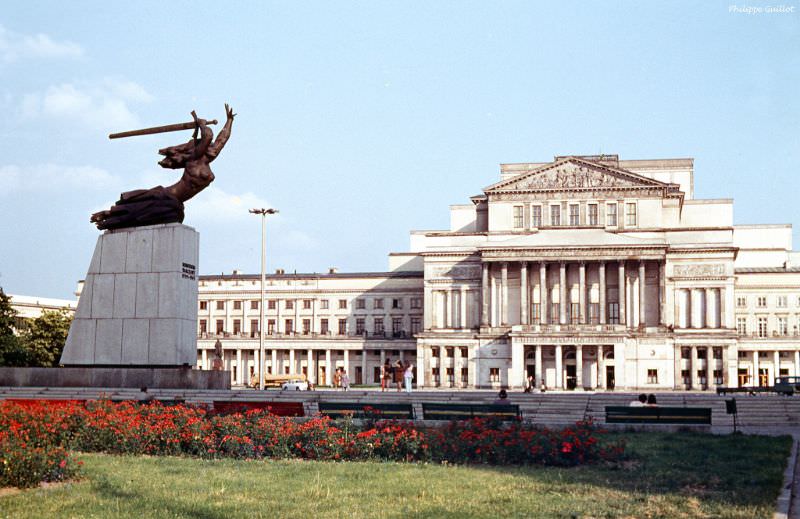
The food price increases that year made everyday shopping more difficult for working families. Long waiting lines outside shops were not unusual, and Guillot captured this reality without filter.
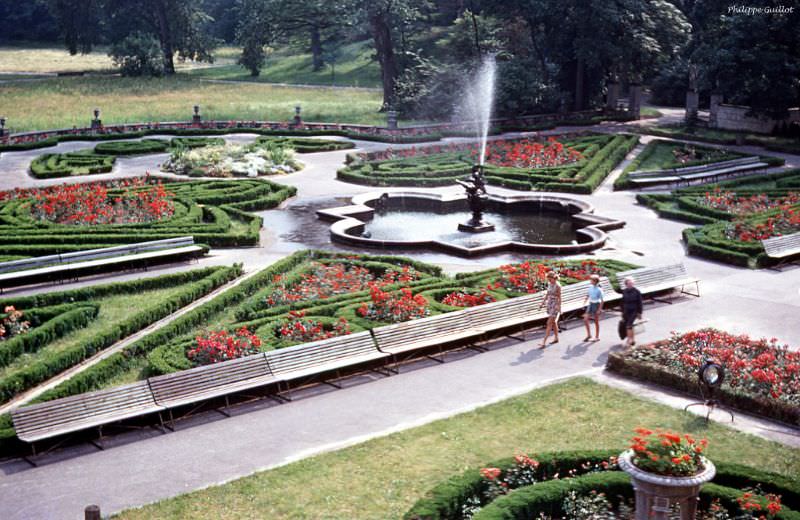
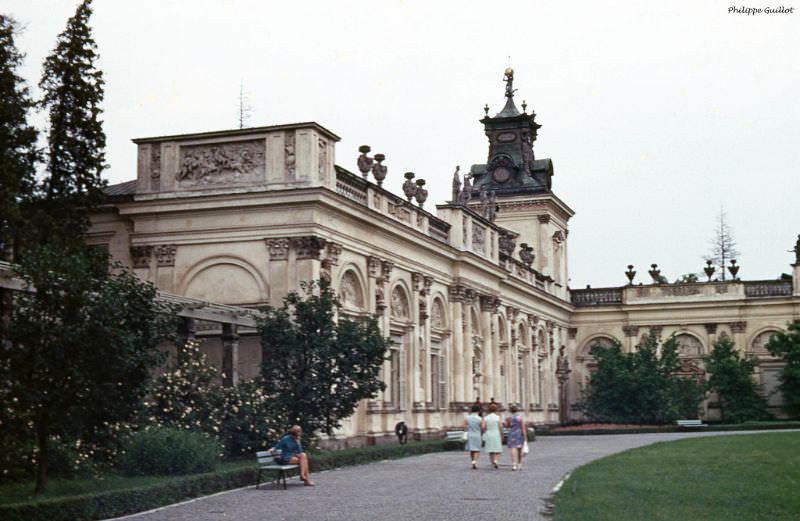
Outside Warsaw, Guillot visited Wilanów Palace, a baroque royal residence on the southern outskirts of the capital. Built in the late 17th century for King John III Sobieski, the palace and its surrounding park were a popular destination for locals seeking a break from the city.
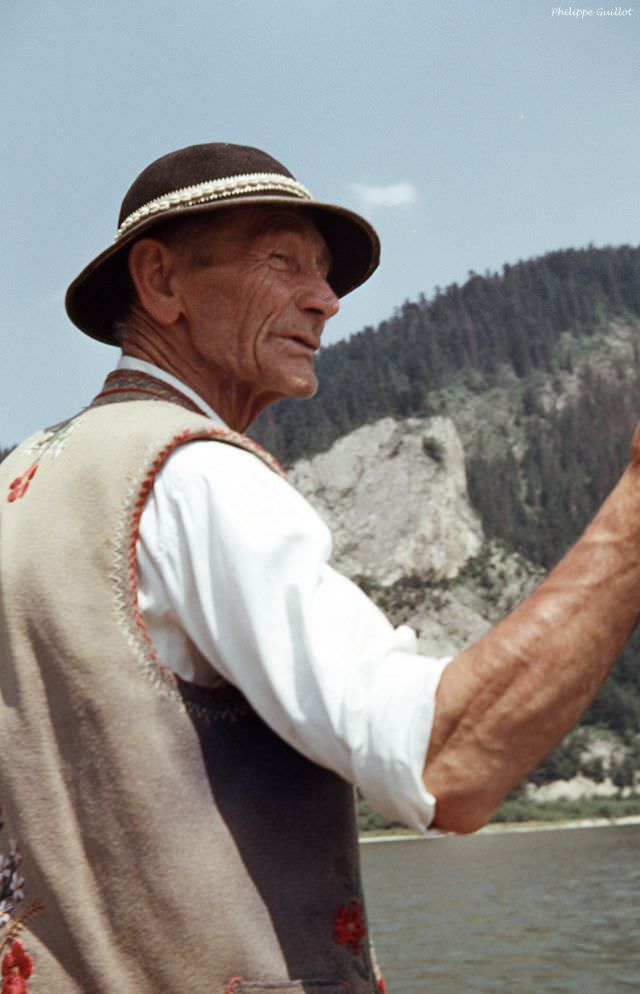
Guillot’s trip took him well beyond the capital. In southern Poland, along the Dunajec River, traditional raftsmen — known as flisacy — navigated the river through the Pieniny mountains using long wooden poles. This was a tradition stretching back centuries, and it remained alive in 1970.
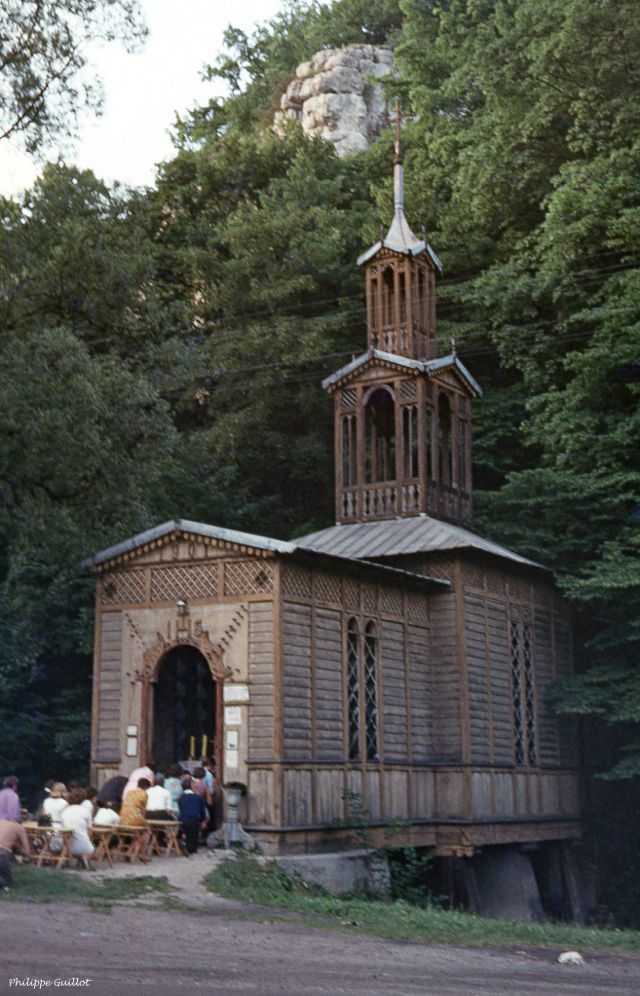
In the region of Lesser Poland, Catholic devotion was on full display. Rural chapels drew congregations that spilled out beyond their walls, with worshippers standing outside when there was no room left inside.
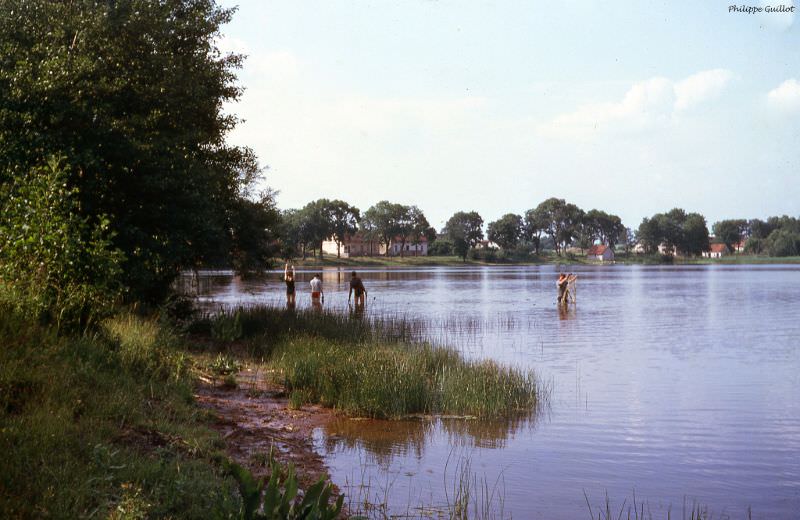
In the Masurian Lake District in northeastern Poland, the landscape shifted entirely. Hundreds of interconnected lakes spread across the region, drawing fishermen and summer visitors alike. The area had only been part of Poland since 1945, transferred from Germany following World War II.
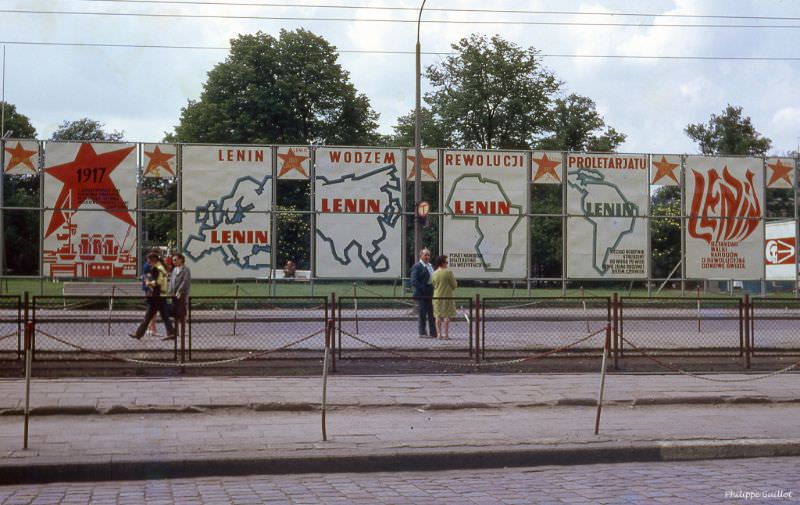
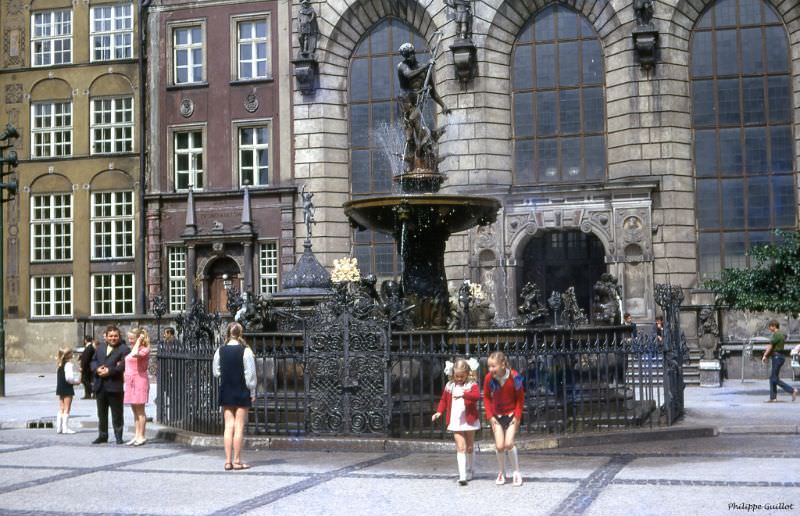
Guillot also traveled to Gdańsk, the Baltic port city with a long and turbulent history. In December 1970 — just months after these photographs were taken — shipyard workers in Gdańsk would erupt in mass protests against rising food prices, demonstrations that ended with security forces killing dozens of workers. In July, however, the city presented its public face: monuments, historic squares, and the imagery of the communist state.
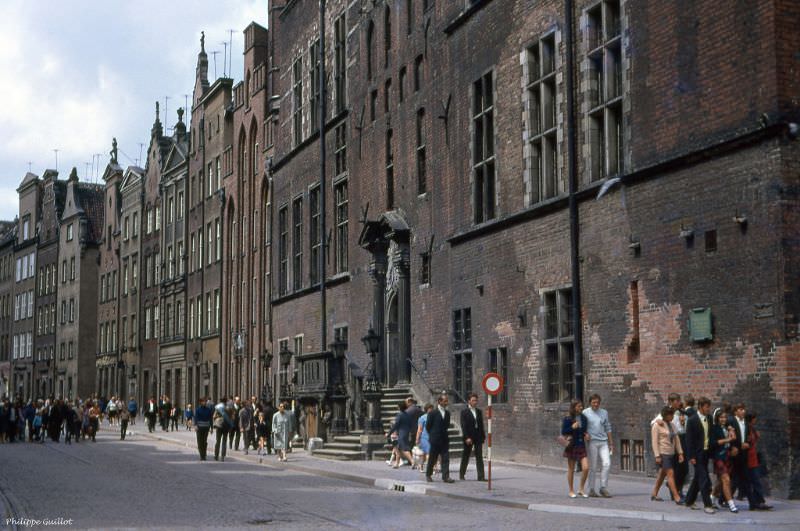
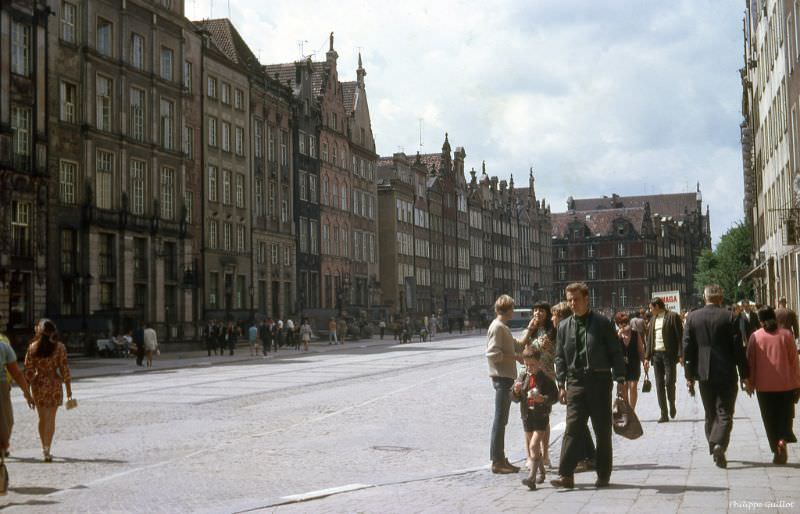
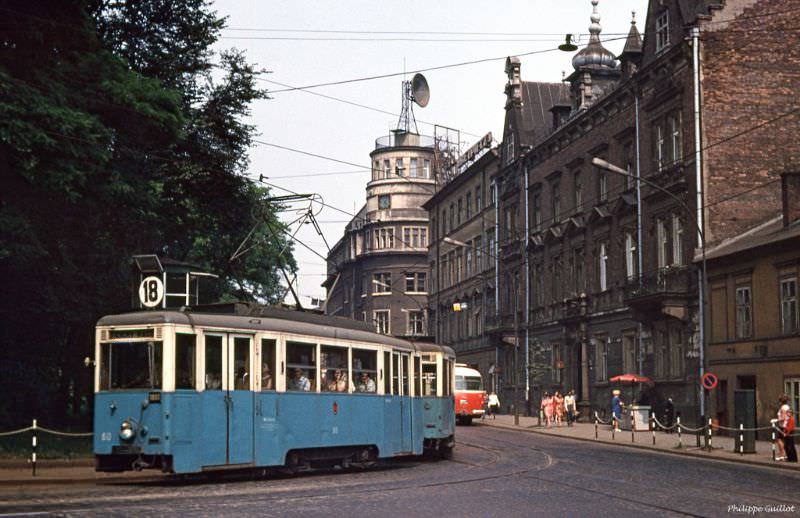
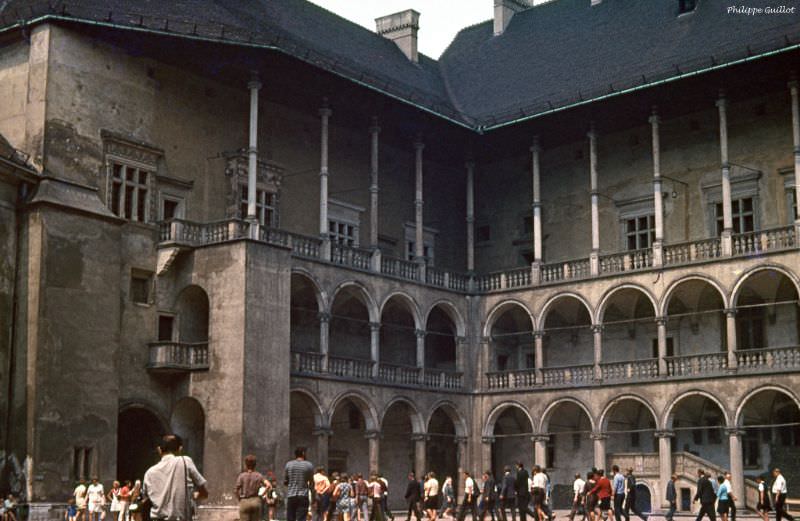
Kraków, Poland’s historic royal city, gave Guillot some of his most visually rich material. Unlike Warsaw, Kraków had survived World War II largely intact, meaning its medieval streets, churches, and squares were genuine originals rather than reconstructions. Street vendors, trams, and tourists all shared the same ancient spaces.
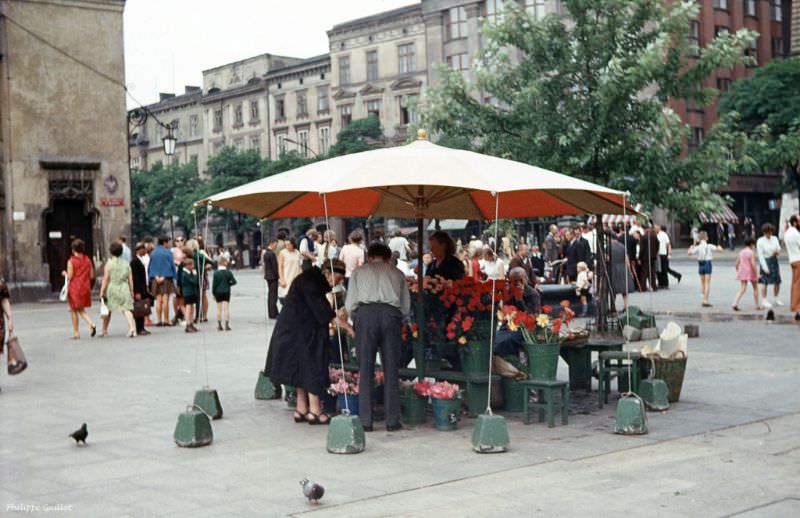
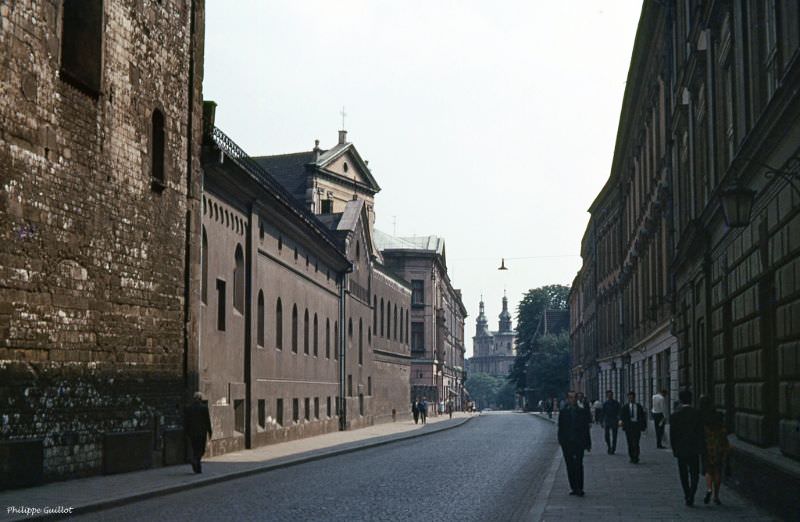
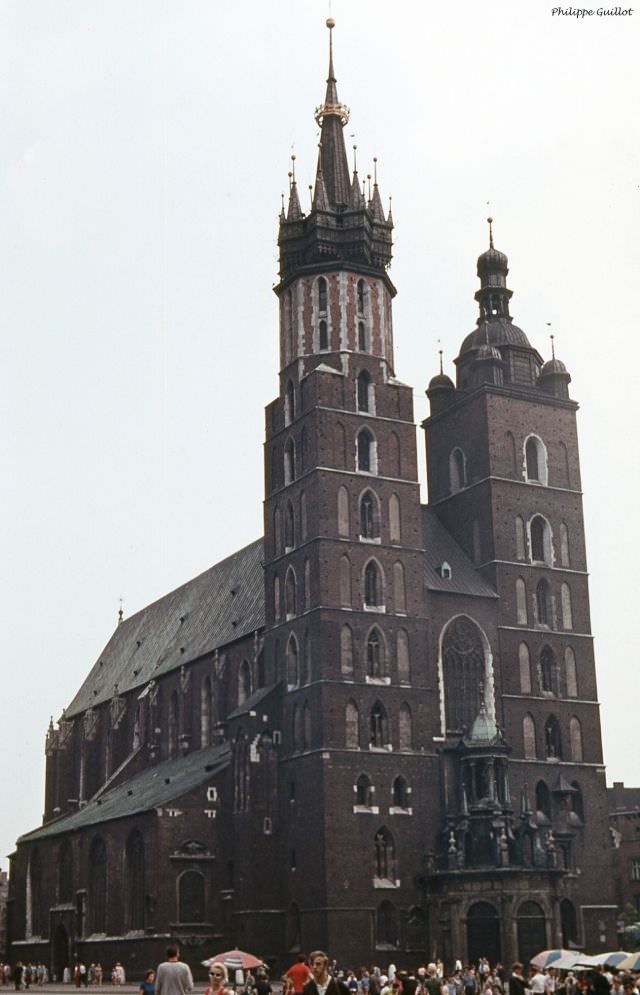
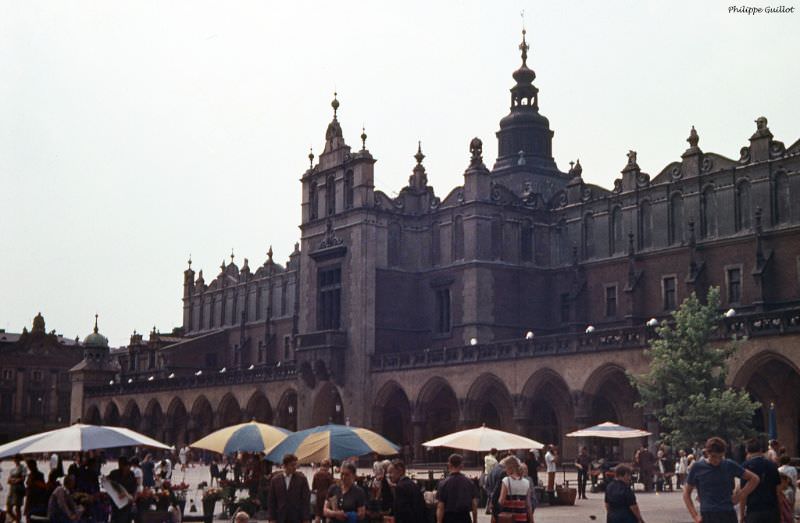
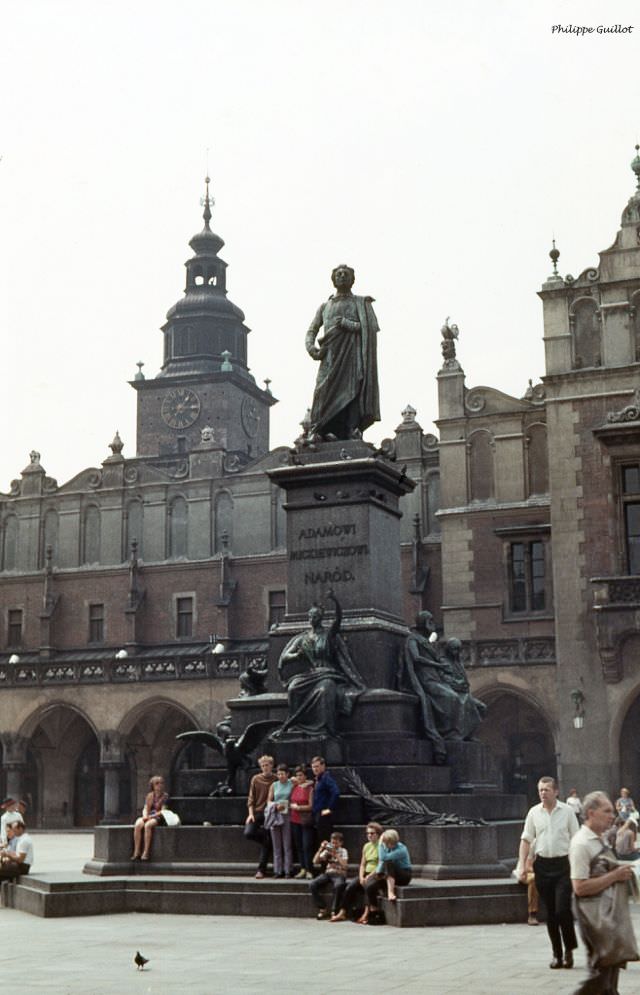
The Main Market Square in Kraków was home to some of the most recognized monuments in Poland. St. Mary’s Basilica, with its two unequal towers rising above the square, dated back to the 14th century. The Cloth Hall, a long Renaissance trading hall in the center of the square, had been a commercial hub for centuries. The statue of Adam Mickiewicz — Poland’s most celebrated Romantic poet — stood nearby as a gathering point for locals.
Along the Baltic coast, Guillot photographed the Hel Peninsula — a narrow strip of land stretching roughly 35 kilometers into the Baltic Sea. Its beaches and coastal scenery attracted visitors in the summer months.
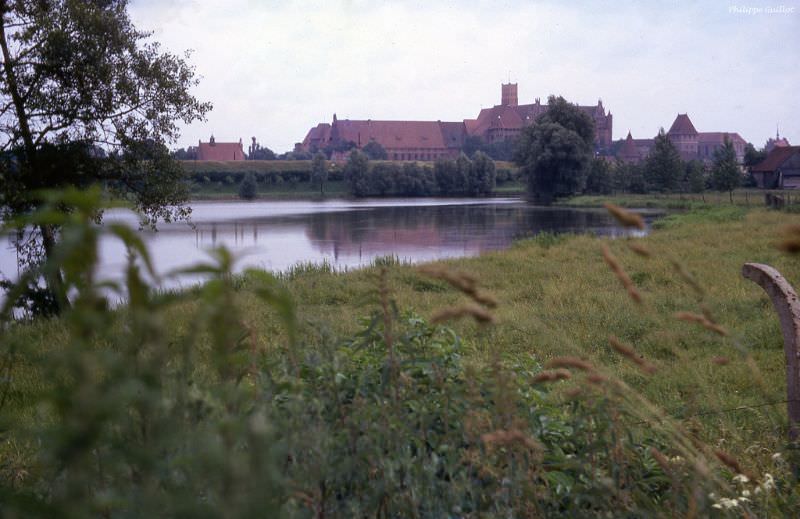
In Malbork, in northern Poland, the massive Teutonic fortress stood as one of the largest brick castles in the world. Originally built by the Teutonic Knights in the 13th century, it had passed through many hands over the centuries and by 1970 was being restored as a museum and historic monument.
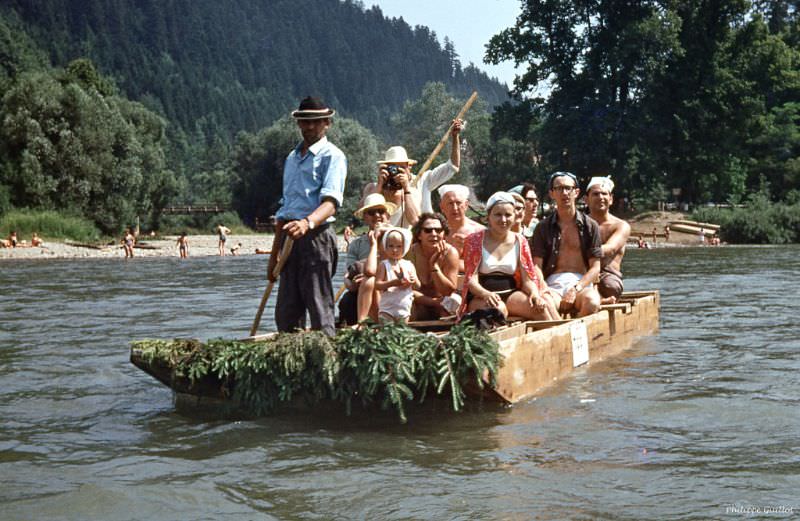
Back in the Pieniny mountains, raft trips along the Dunajec River wound through steep limestone gorges. The scenery was dramatic, and the tradition of river rafting here drew visitors from across Poland.
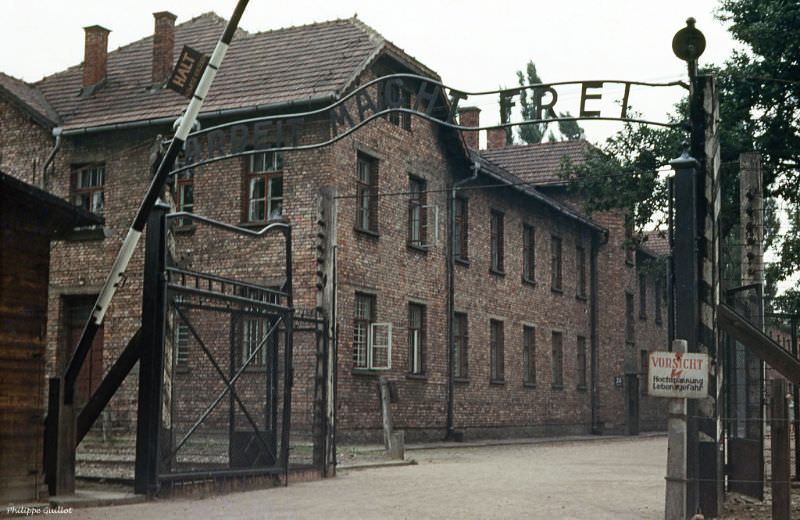
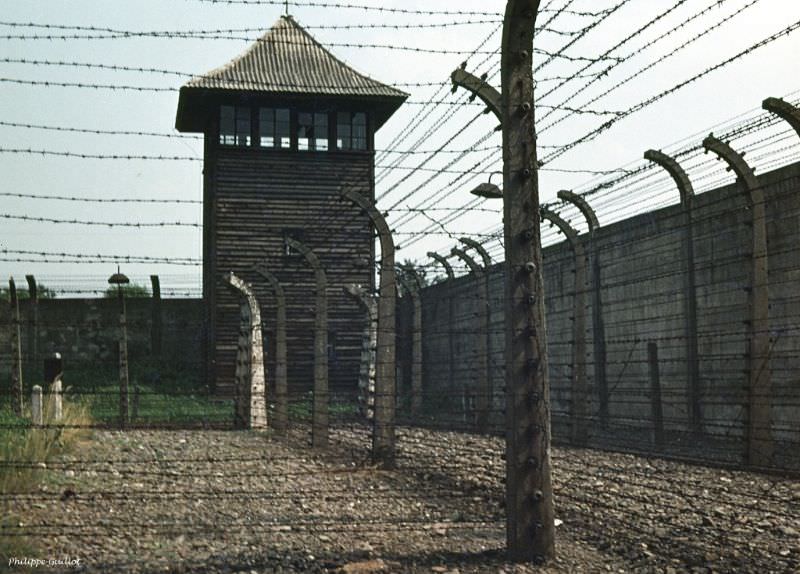
Among the most sobering stops on Guillot’s journey was Oświęcim — the site of the Auschwitz concentration camp, where the Nazi German regime had murdered over a million people, the vast majority of them Jewish, between 1940 and 1945. By 1970, Auschwitz had been operating as a state museum and memorial for over two decades. Its barracks, watchtowers, barbed wire fences, and gas chambers remained standing as testimony to the scale of the crimes committed there.
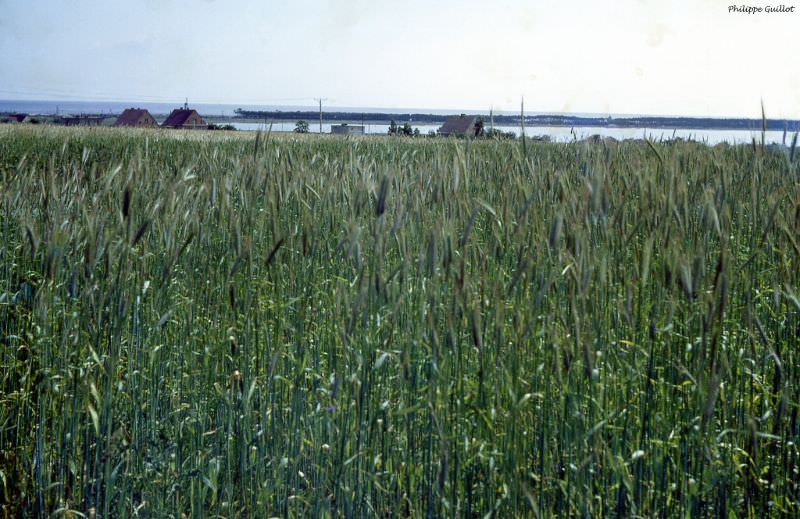
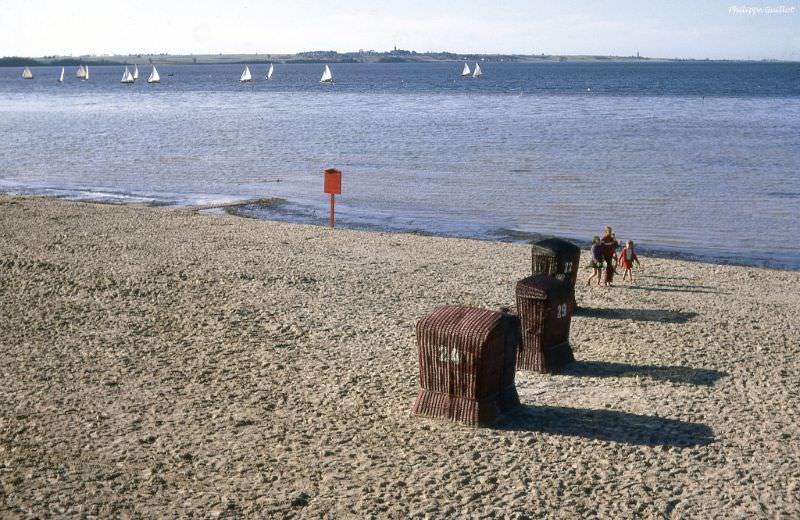
The Baltic coastline offered some of the most visually peaceful images in Guillot’s collection. Aerial and elevated views of the Hel Peninsula revealed the narrow spit of land separating the open Baltic Sea from the calmer Puck Bay.
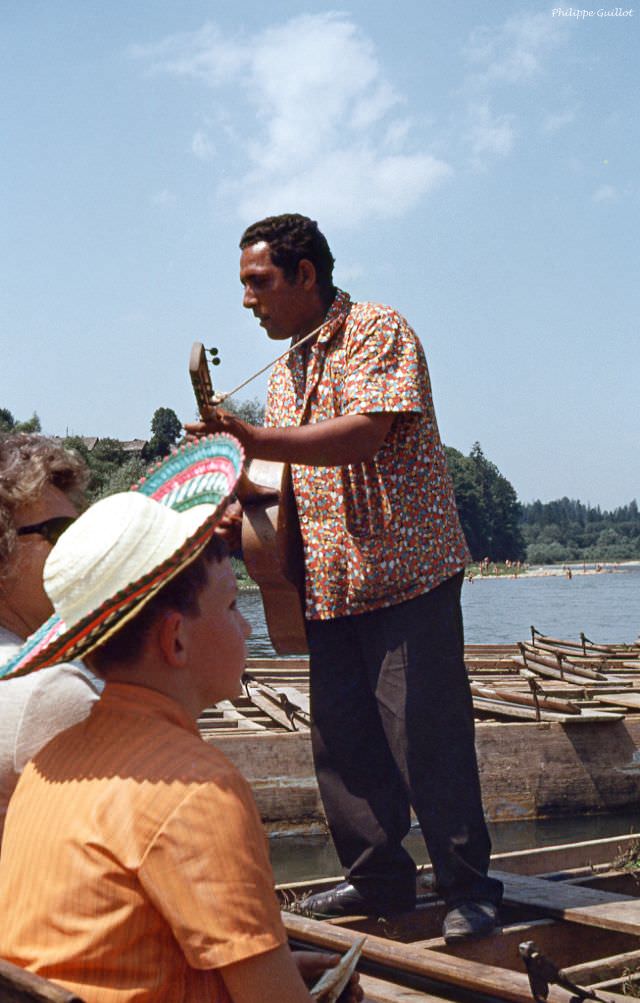
In the village of Sromowce Wyżne, along the Dunajec, mornings on the river began early. Rafts setting out at dawn carried both goods and passengers through the mist-covered water.
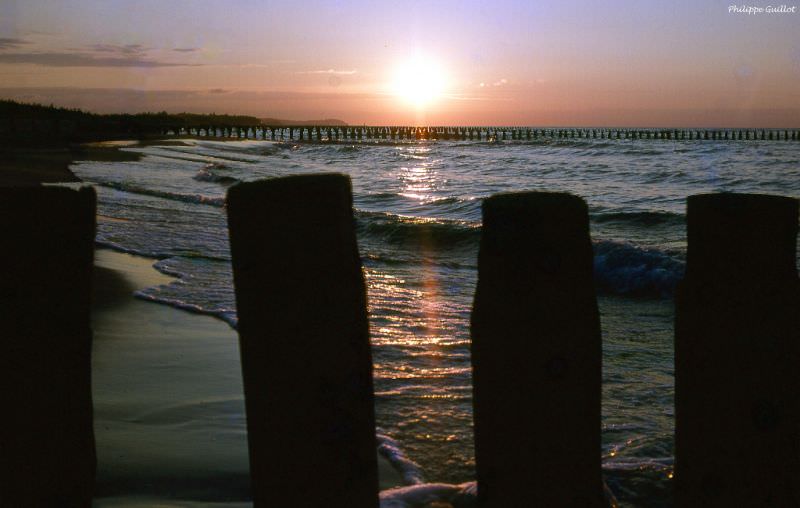
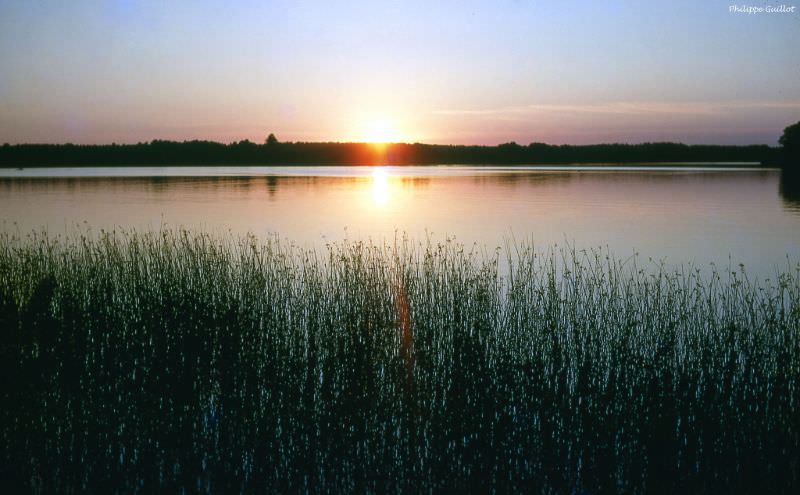
Guillot ended many of his days on the road with the natural light of the Polish summer. The sunsets along the Baltic Sea and over the Masurian Lakes produced some of the most memorable images from the entire trip.
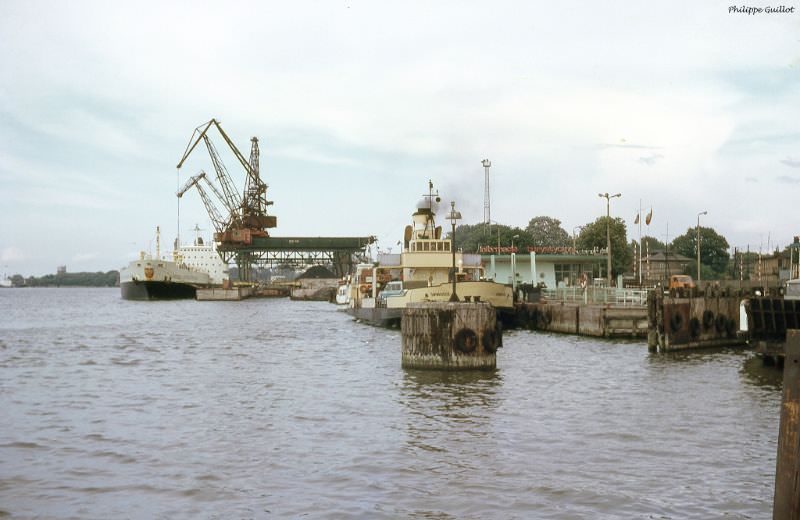
The port city of Świnoujście, located on the estuary of the Świna river along the western Baltic coast, showed Poland’s maritime and industrial character. The city’s port was an active hub for shipping and commerce.
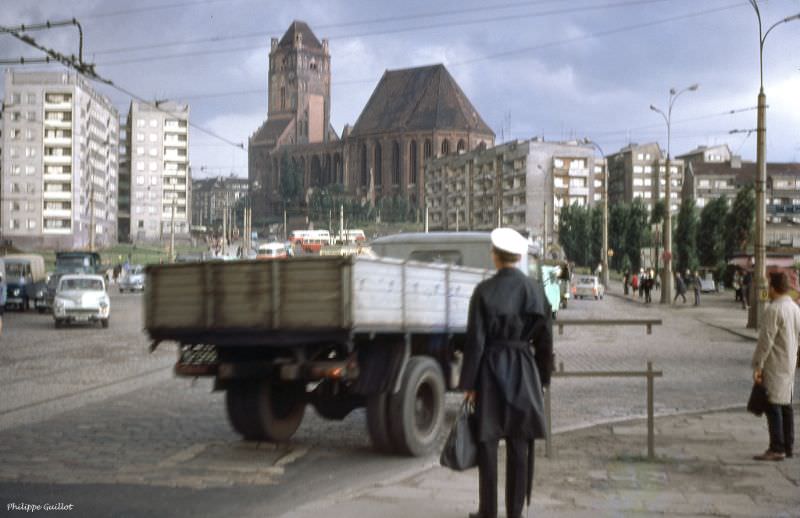
Szczecin — known as Stettin under German rule before 1945 — was another major northwestern city that Guillot photographed. Like much of western and northern Poland, Szczecin had only been part of the Polish state since the end of World War II, making it part of the same contested territories that Gomułka’s 1970 treaty with West Germany had formally settled.
In Mrągowo — a town in the Masurian region that had been called Sensburg under German administration — older modes of transport were still in use. Horse-drawn carriages moved through streets alongside motor vehicles, a reminder that modernization had reached different parts of Poland at very different speeds.
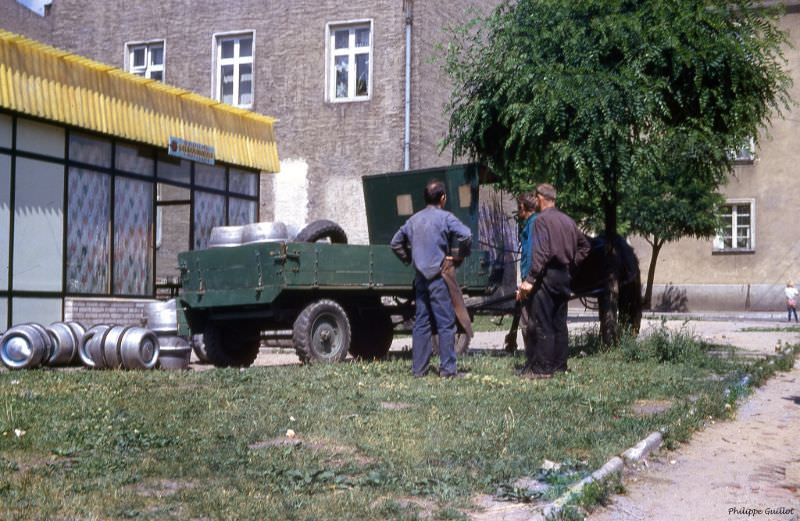





Photo #42 shows Świnoujście city ferry nicknamed “Czajnik”/Kettle (steam powered, thus nick) and partially visible behind – “Fafik”. Red truck on the right is Star-20 and blue on the Czajnik’s board – Żuk truck.
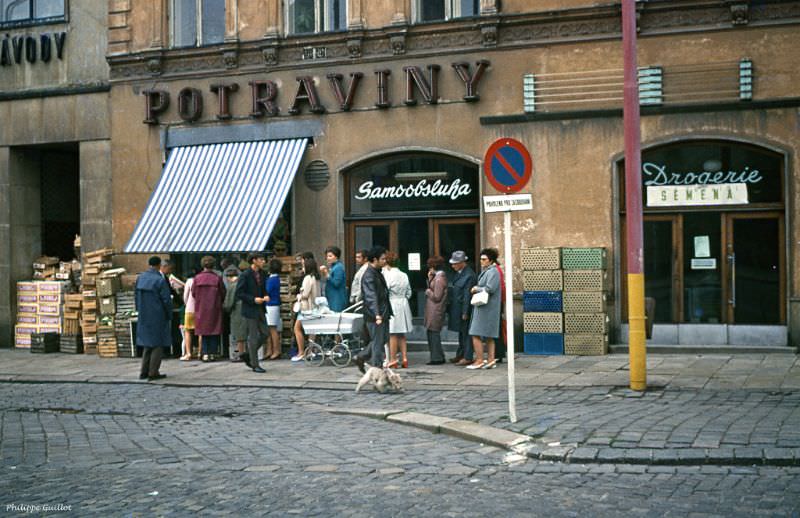
Some photos are mislabelled and 1 is from Czechoslovakia while being labelled from Warsaw.