Warsaw entered World War II as one of Central Europe’s great cities. It left the war as a ruin. German forces bombed it from the very first days of the conflict, and by the end of the war, the destruction was staggering. During the Siege of Warsaw in 1939 alone, more than 10,000 residents were killed and over 50,000 wounded before a lack of food, water, and ammunition forced the city to surrender. What followed over the next several years of occupation and uprising reduced entire neighborhoods — including the historic Old Town and the Royal Castle — to rubble.
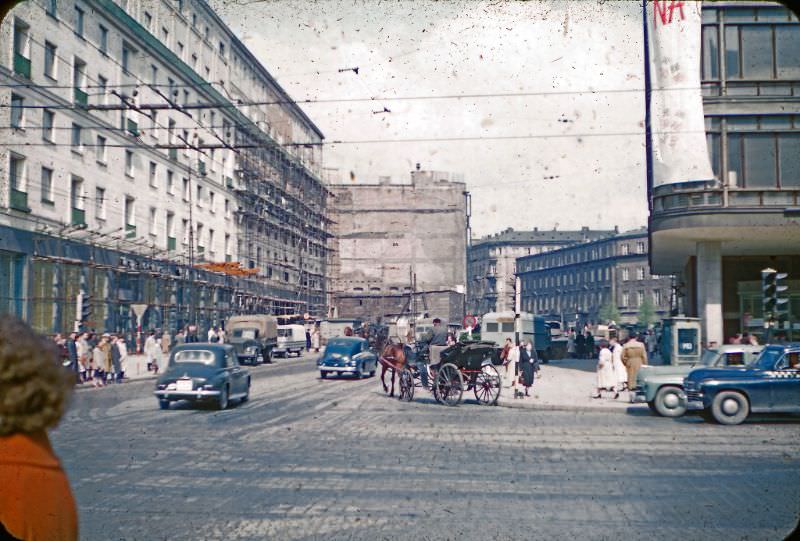
In February 1945, Poland designated Warsaw as its capital once more, and an office for urban reconstruction was established almost immediately. The task was enormous. Planners and workers had to decide what to restore, what to redesign, and what to build from scratch. Many historic streets, churches, and buildings were painstakingly restored to match their original appearance. The rebuilt Old Town, recreated largely from old paintings and architectural records, is one of the most remarkable examples of post-war urban restoration anywhere in the world.
Not all decisions were driven purely by preservation. The communist government that ruled Poland after the war launched a broad housing campaign that prioritized speed and scale. Large prefabricated housing blocks went up across the city under what became known as the ‘Bricks for Warsaw’ campaign. New buildings were designed to replace old ones, and entire districts were replanned to fit the political and social ideals of the new regime.
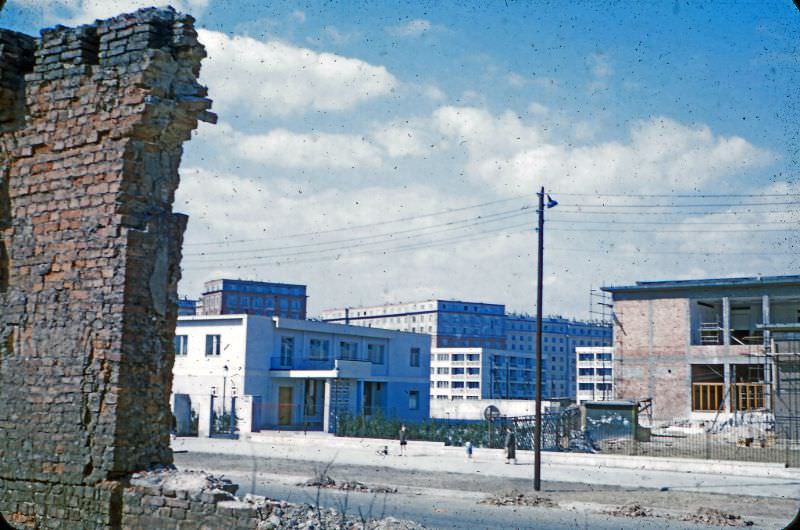
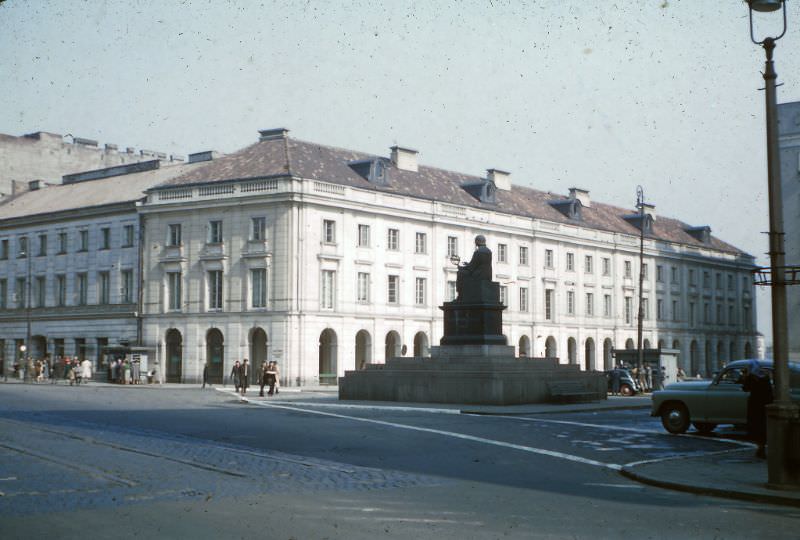
Some buildings that had survived the war in a repairable state were demolished anyway during the 1950s and 1960s. The Kronenberg Palace is one well-known example — a 19th-century structure torn down not by bombs, but by postwar planning decisions. This mix of restoration and deliberate demolition gave mid-1950s Warsaw a distinctive character: some streets looked almost exactly as they had before the war, while others were entirely transformed.
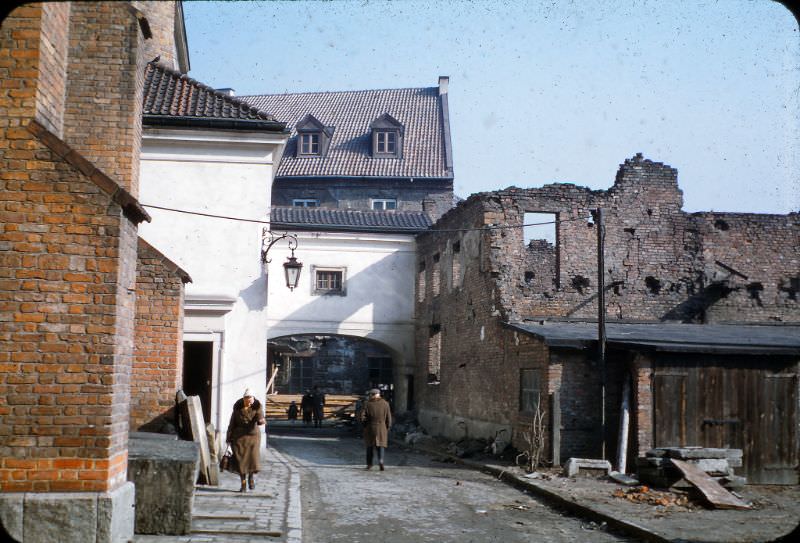
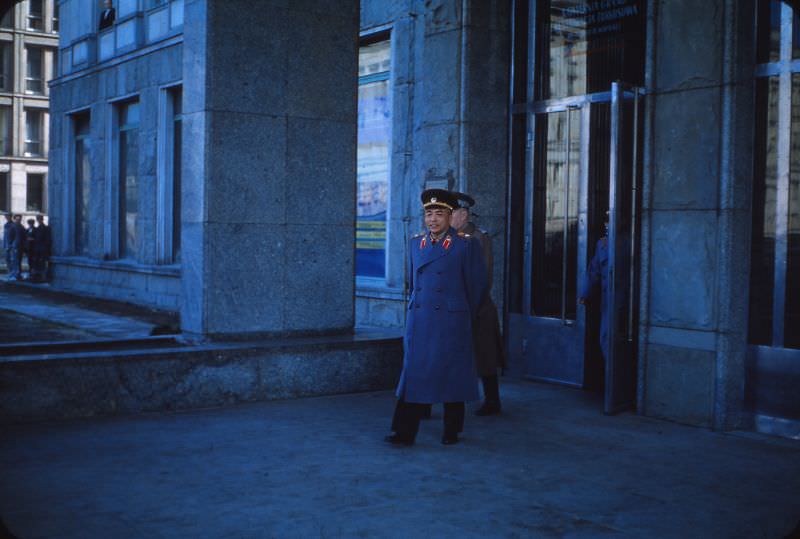
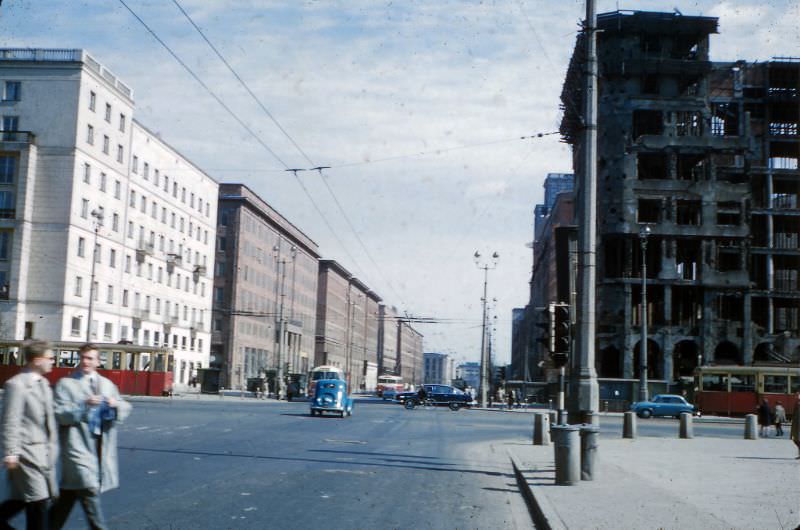
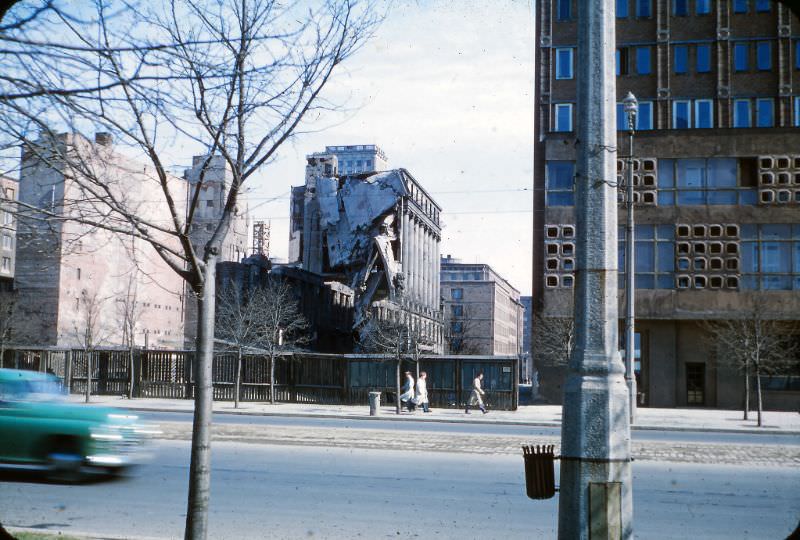
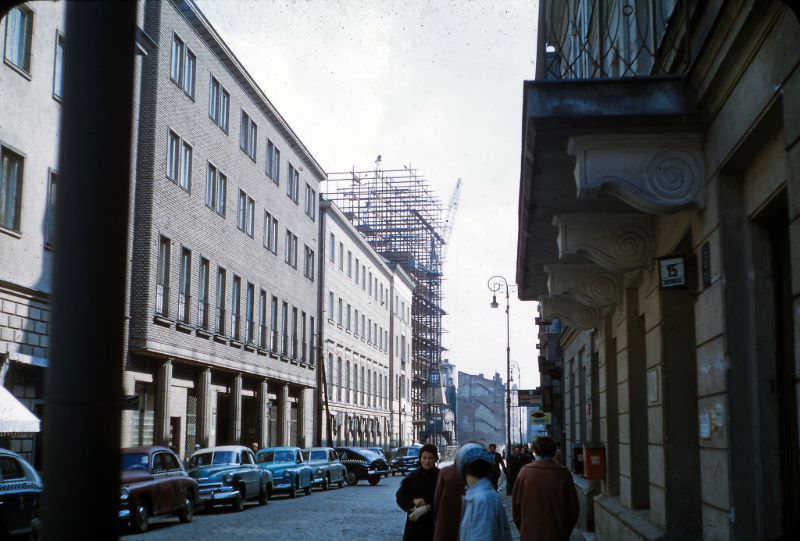
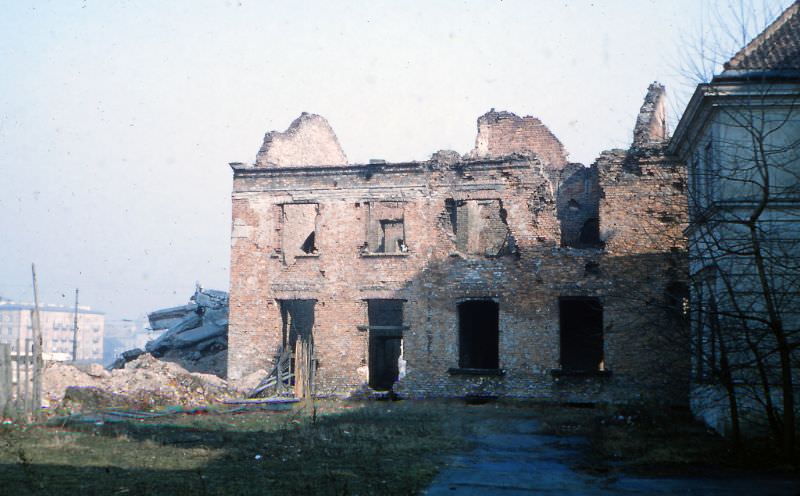
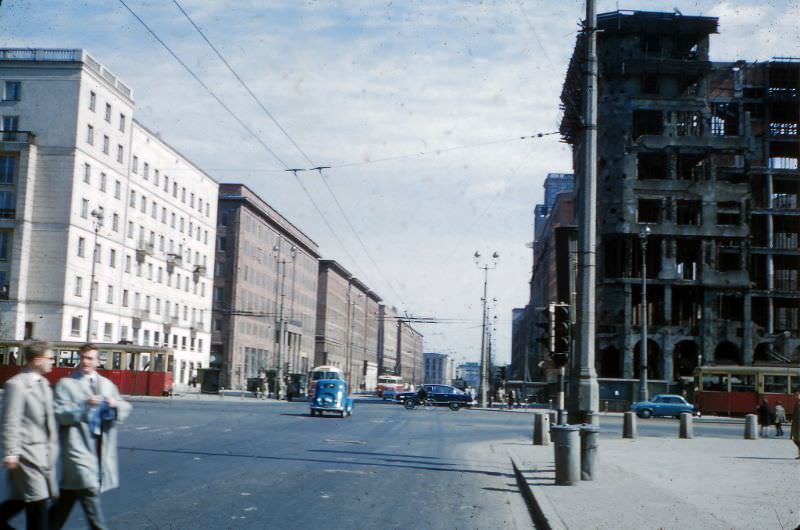
Marszałkowska Street was one of the city’s main arteries, and photographs from the period show it in a state of uneven recovery. In some frames, modern trams and pedestrians move past freshly plastered facades. In others, the skeleton of a bombed-out building still stands in full view — a reminder that reconstruction, though rapid, was far from complete by the mid-1950s.
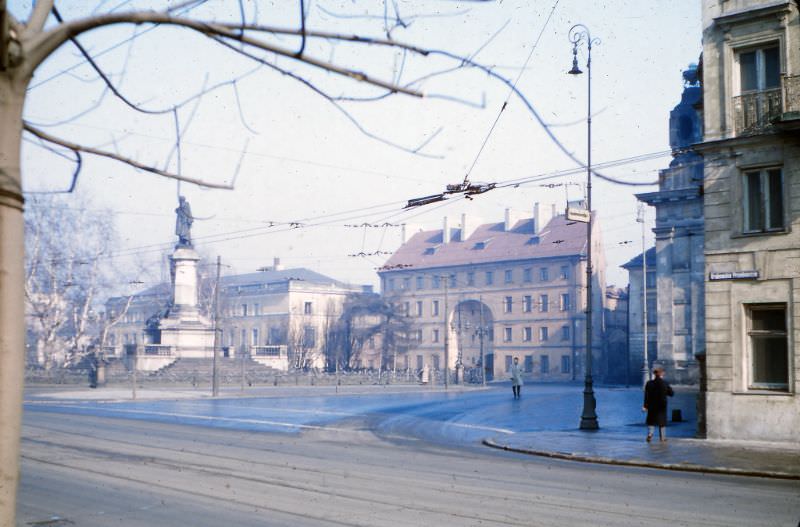
Cultural monuments were treated with special care. Statues of national heroes like the astronomer Nicolaus Copernicus and the poet Adam Mickiewicz, both located along Krakowskie Przedmieście — one of Warsaw’s most prestigious boulevards — were restored and returned to their pedestals. These landmarks served as powerful symbols of national continuity in a city that had been almost entirely erased.
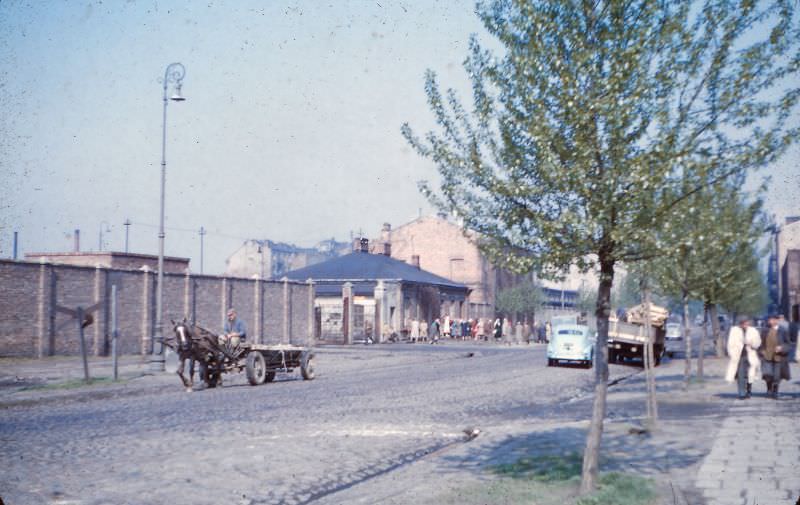
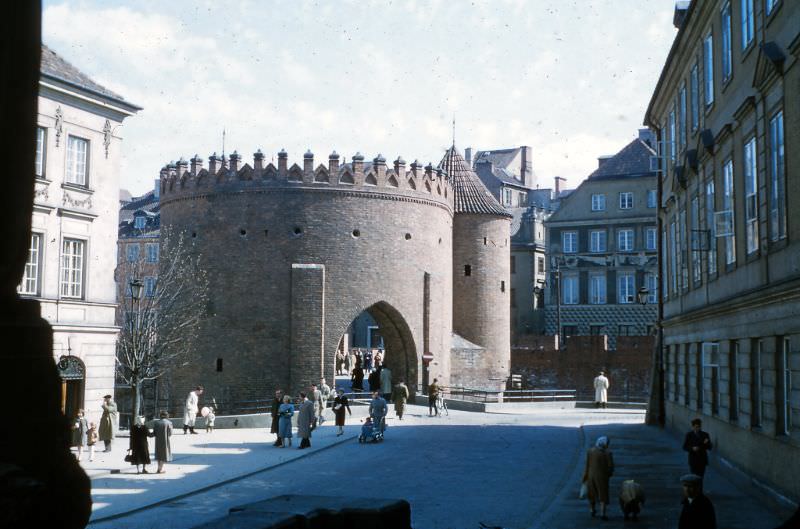
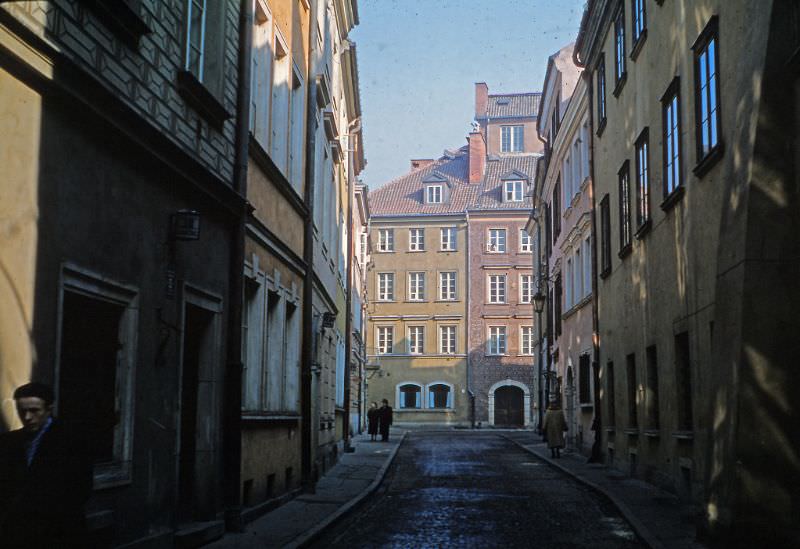
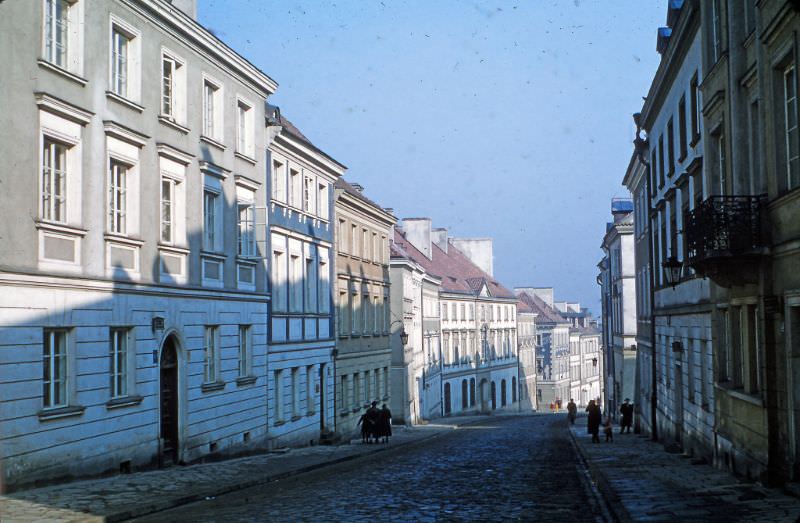
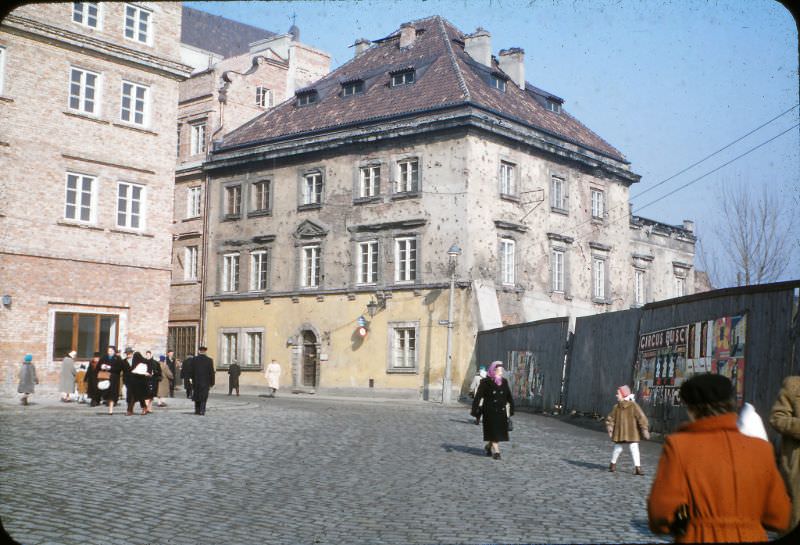
The Old Town district received some of the most intensive restoration work. Streets like Krzywe Koło and Mostowa were rebuilt brick by brick, their narrow medieval layouts preserved even as the facades around them were entirely new construction. The district’s cobblestone character was maintained deliberately, giving it an appearance that matched pre-war photographs almost exactly.
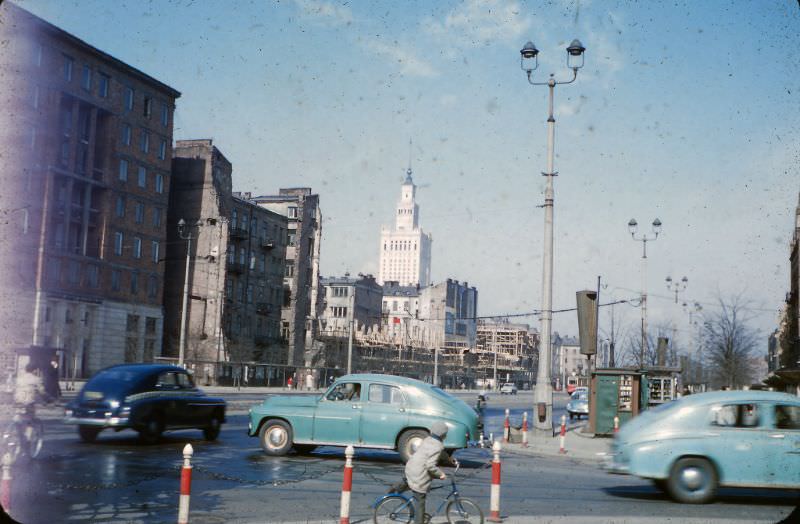
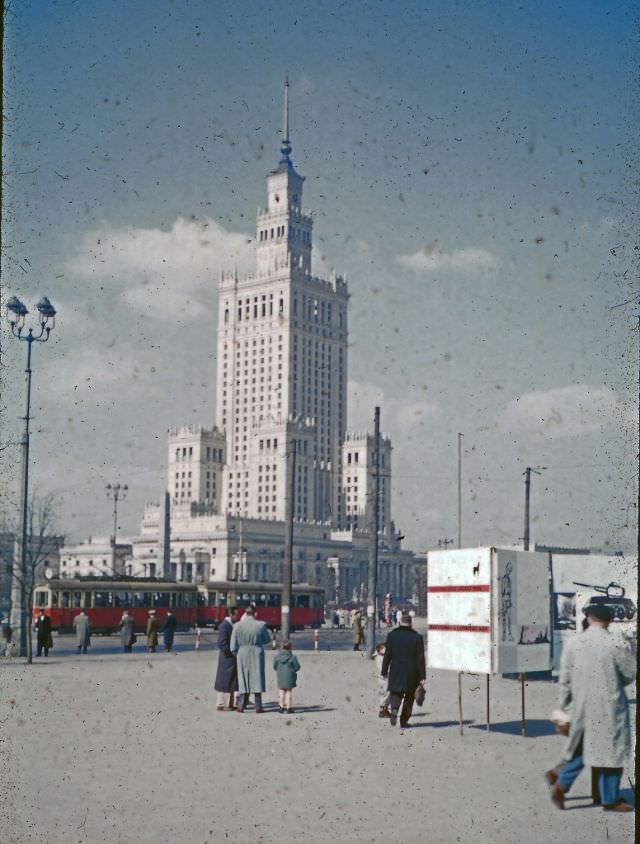
The most visually dominant addition to Warsaw’s skyline in this period was the Palace of Culture and Science, a massive Stalinist skyscraper gifted by the Soviet Union and completed in 1955. Standing over 230 meters tall, it towered above every other building in the city and was impossible to ignore from almost any street corner. For many Varsovians, it represented the political realities of the era as much as any policy or law.
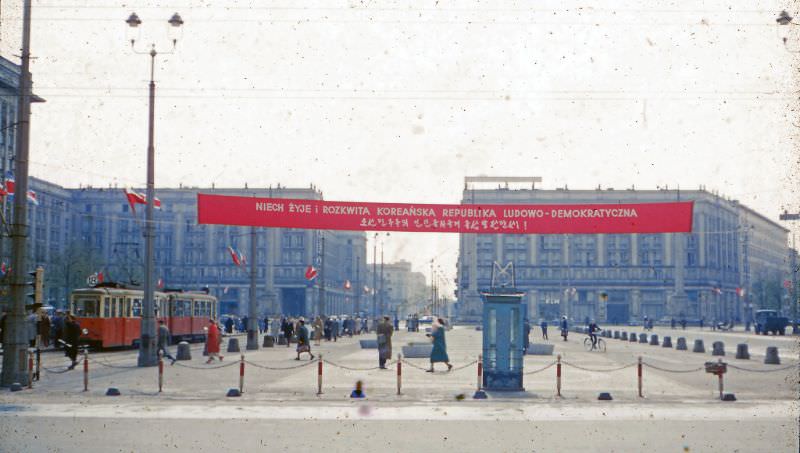
Plac Konstytucji — Constitution Square — was another centerpiece of the postwar communist urban vision. Completed in 1952, it was surrounded by socialist realist architecture: wide, ornate facades with detailed stonework and grand proportions, built to project state power and order. The square was designed as a showpiece, and photographs from the mid-1950s show it as a busy, functioning urban space.
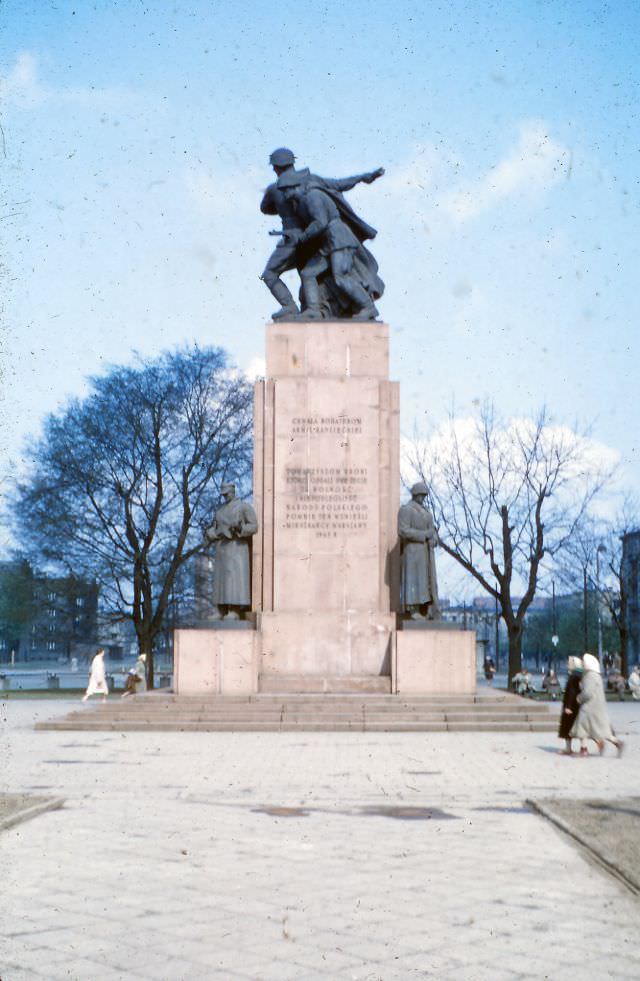
Not every corner of the city had been transformed by the mid-1950s. Photographs from this period still show heavily damaged buildings standing amid otherwise rebuilt blocks. These weren’t overlooked — they were simply next in a reconstruction queue that stretched for years. Warsaw’s population had grown beyond its prewar size by this point, which created constant pressure to build faster and house more people.
Castle Square, once the ceremonial heart of the city and home to the Royal Castle, sat largely empty in the mid-1950s. The castle itself had been systematically demolished by the Nazis after the 1944 Warsaw Uprising, and its reconstruction was not completed until 1984. In the 1950s, the square’s open space was a visible gap — the most prominent wound the war had left in the city’s center.
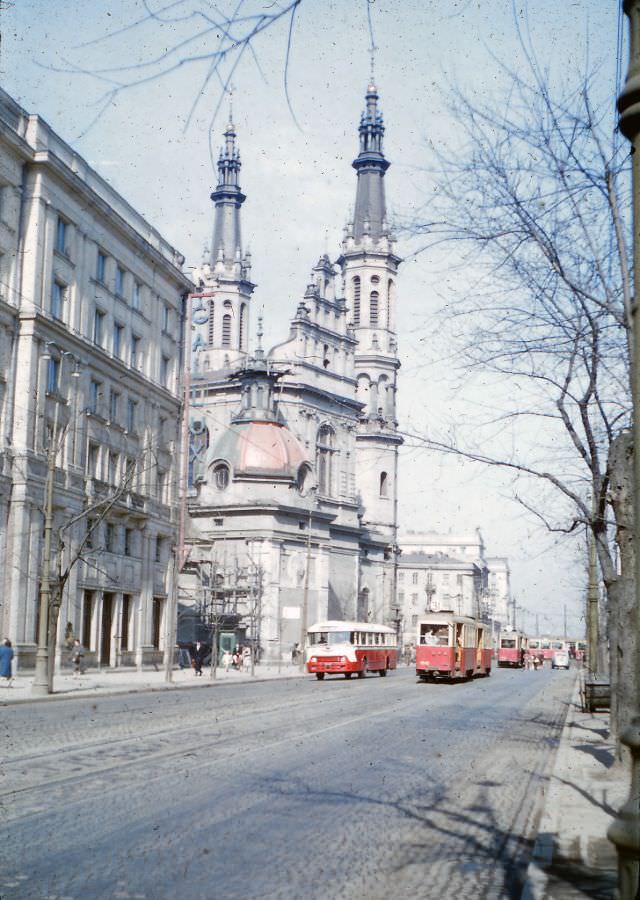
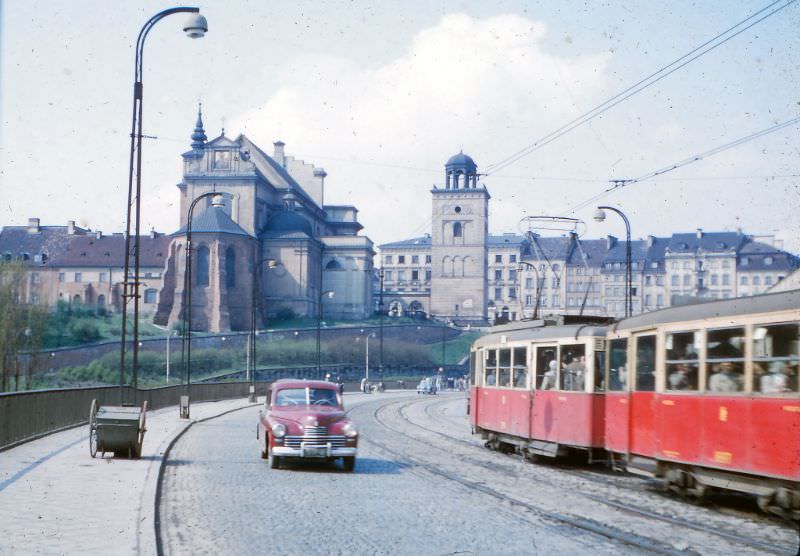
Religious buildings across the city were also rebuilt during this period, despite the officially atheist stance of the communist government. Churches like the Church of the Holy Cross (Zbawiciela) on Zbawiciela Square and St. Anne’s Church near the Old Town were restored and returned to use. These buildings were as much architectural landmarks as they were places of worship, and their restoration was part of the broader effort to give Warsaw back its historical identity.