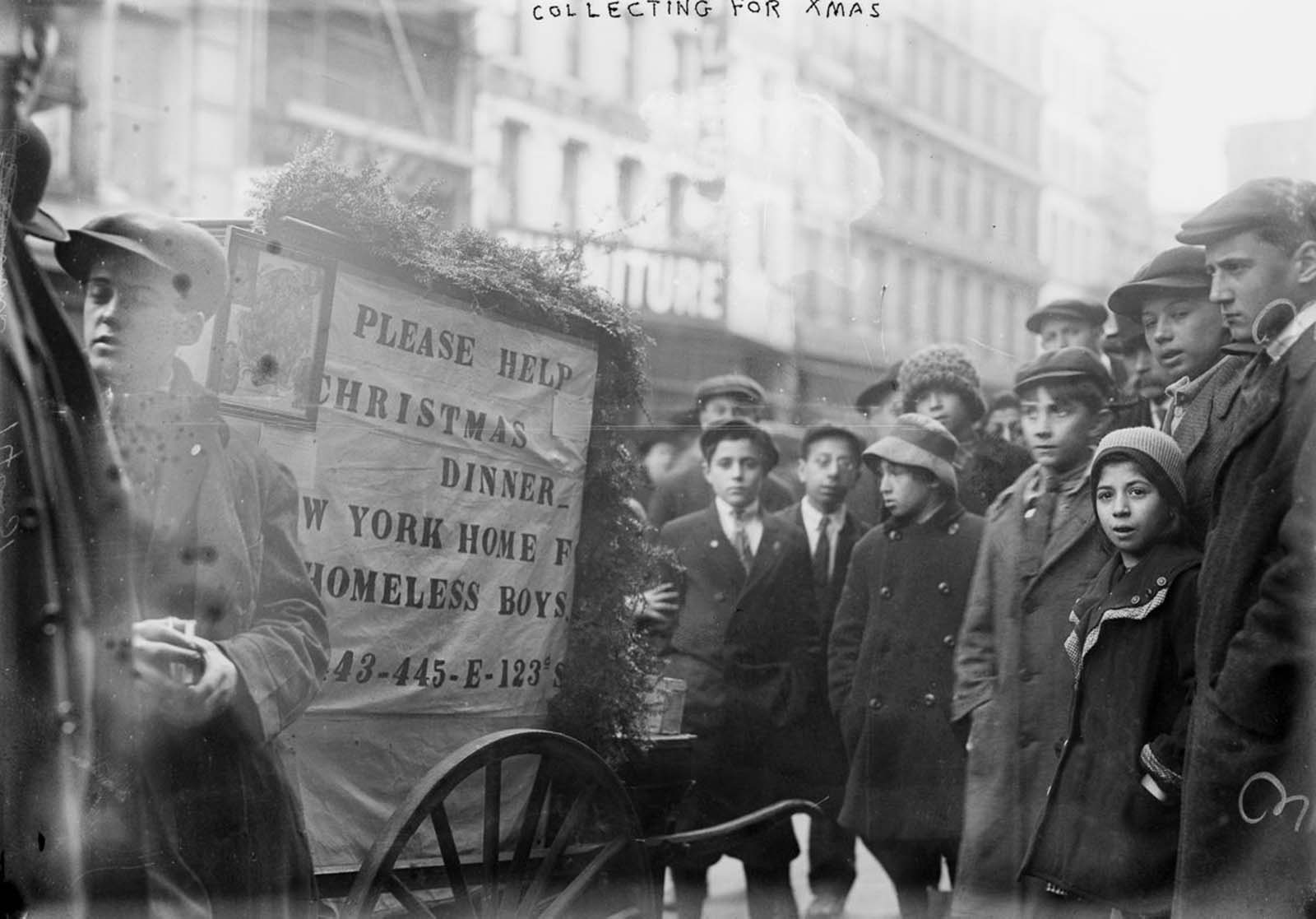
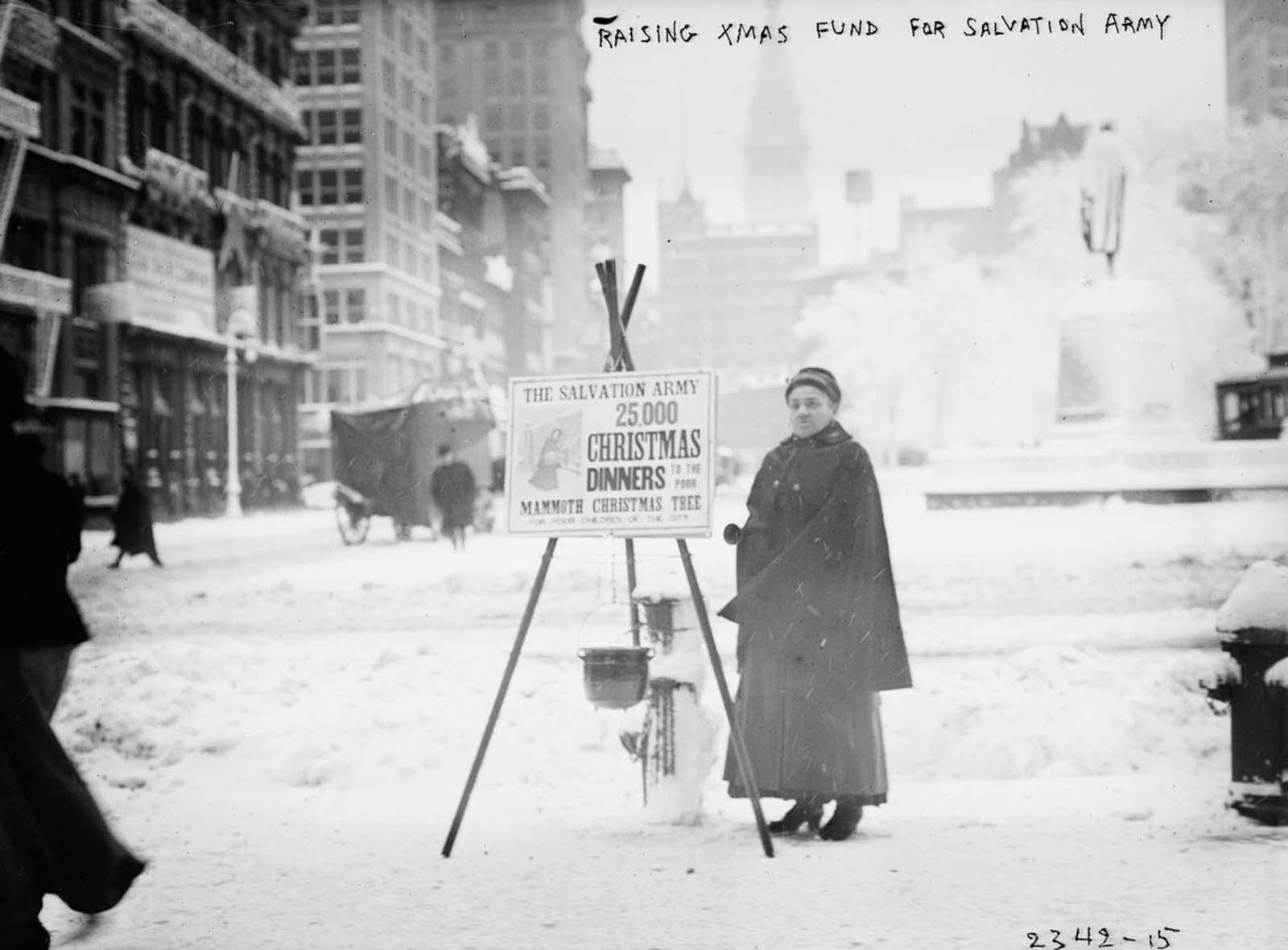
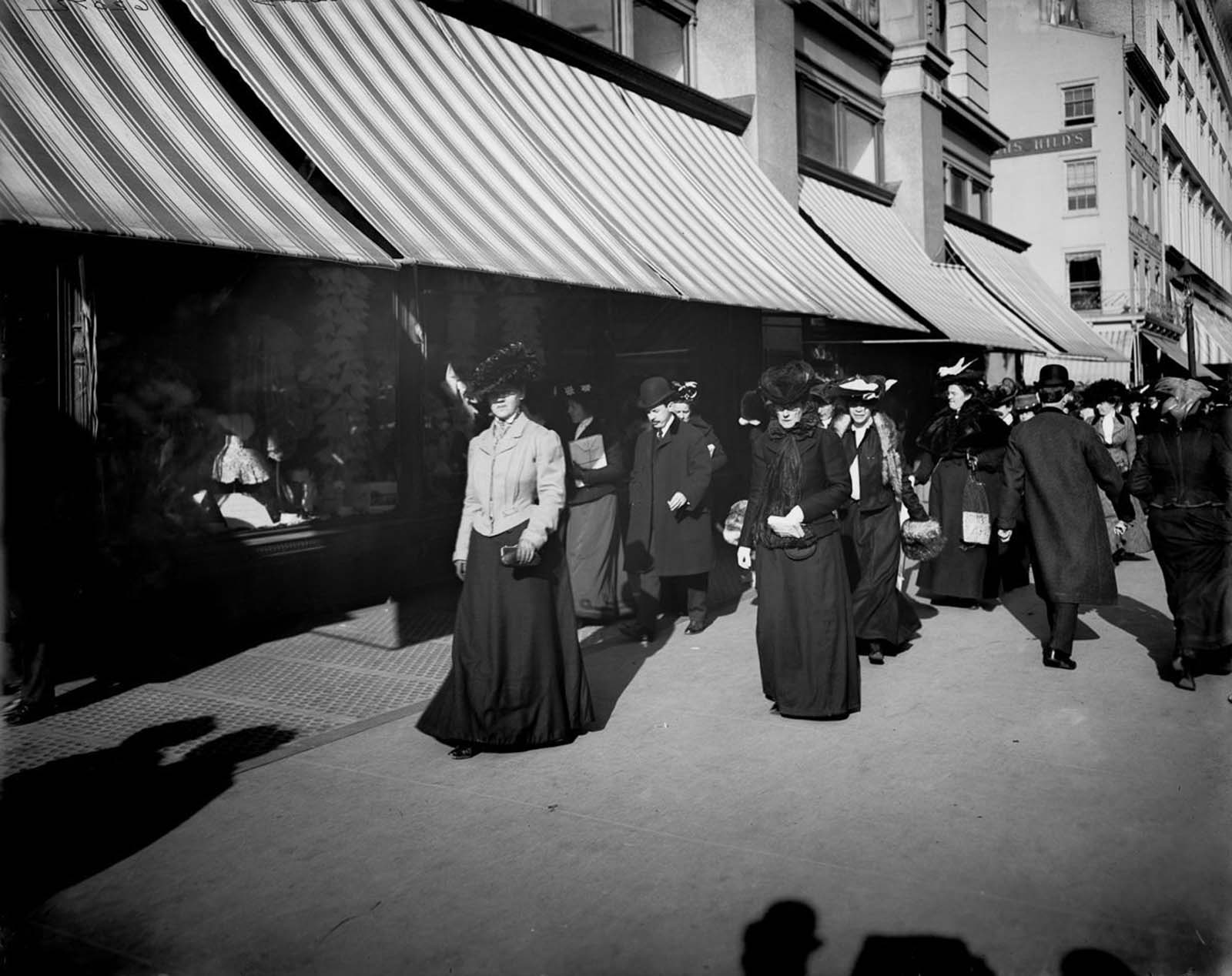
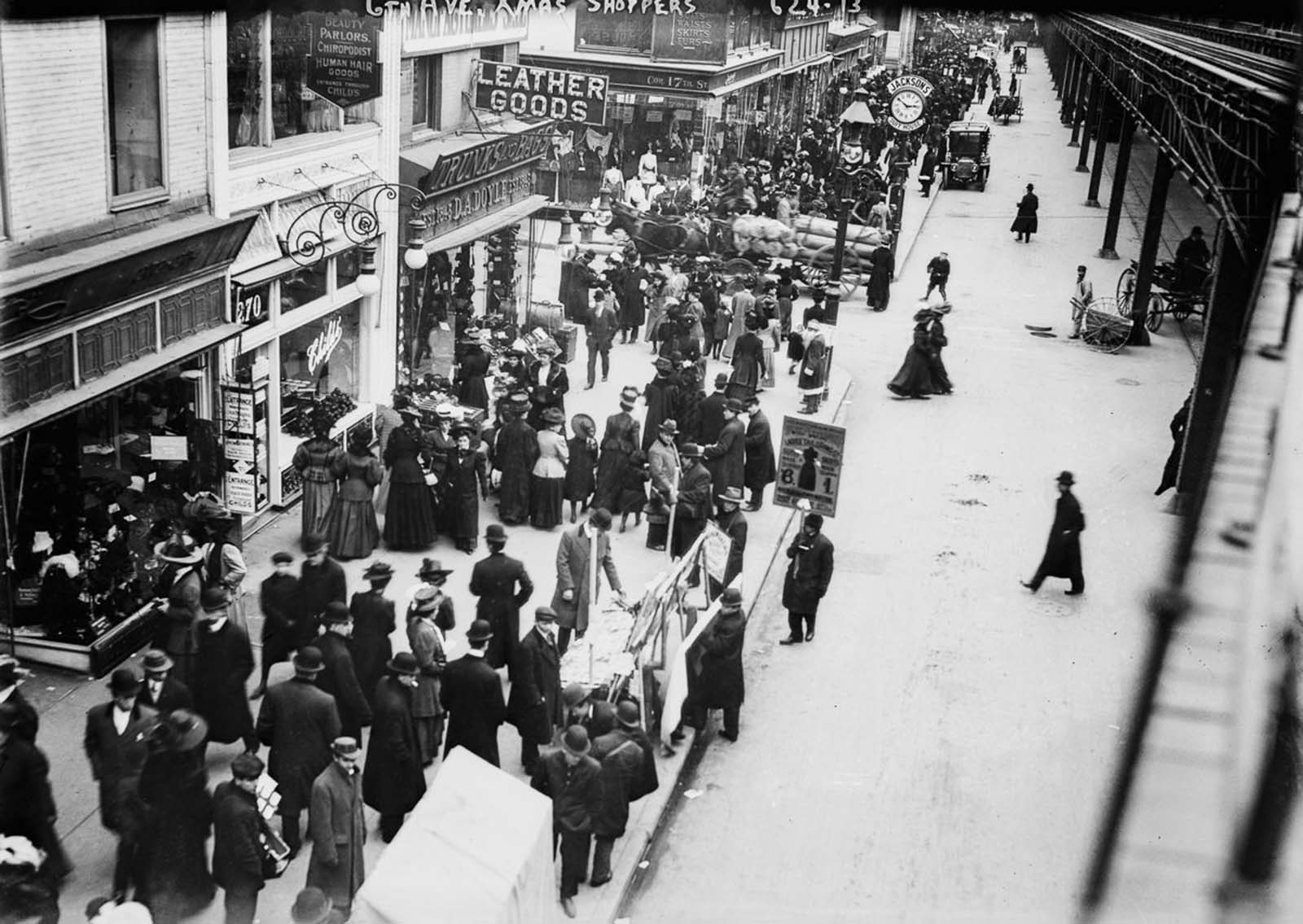
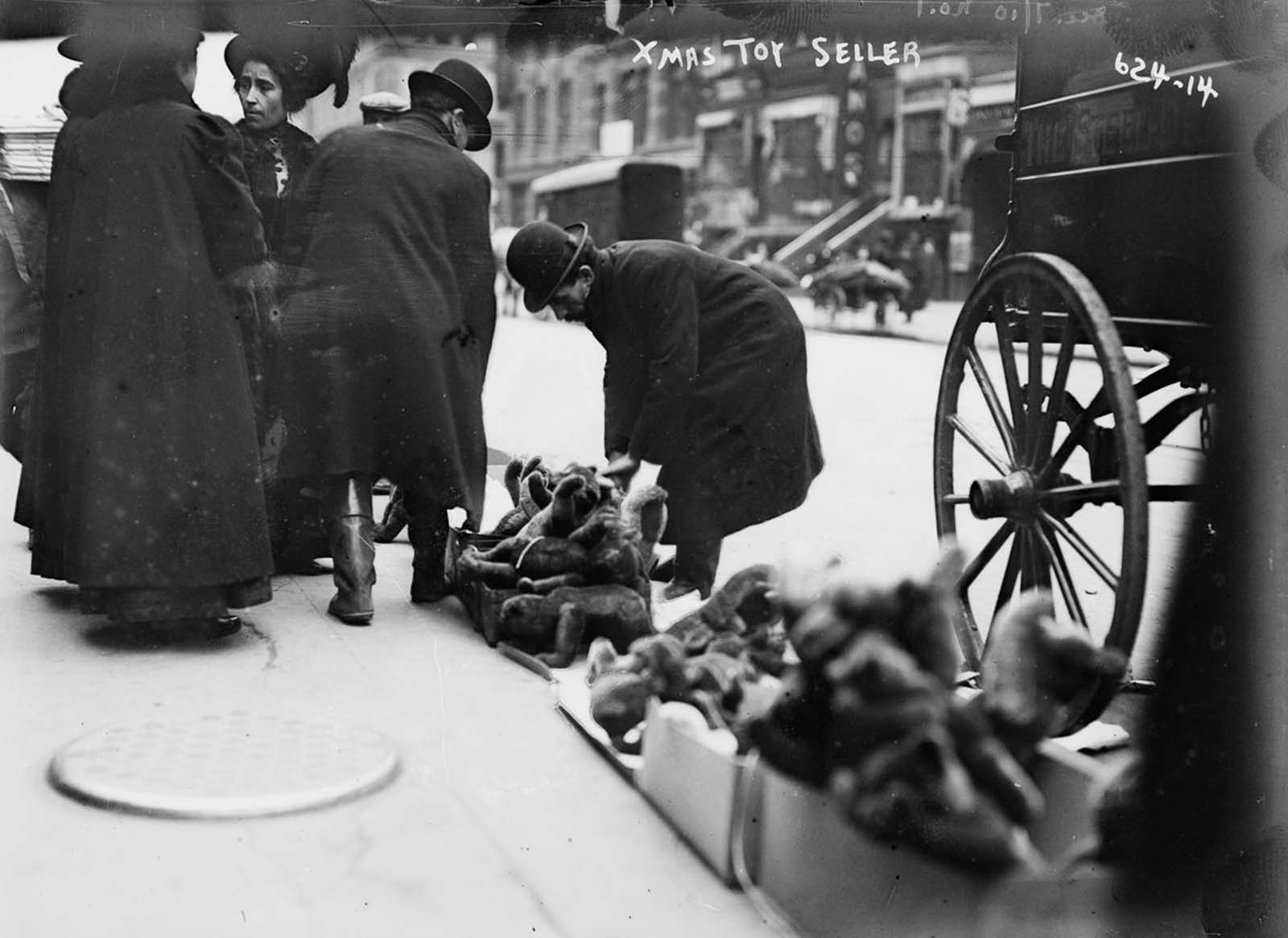
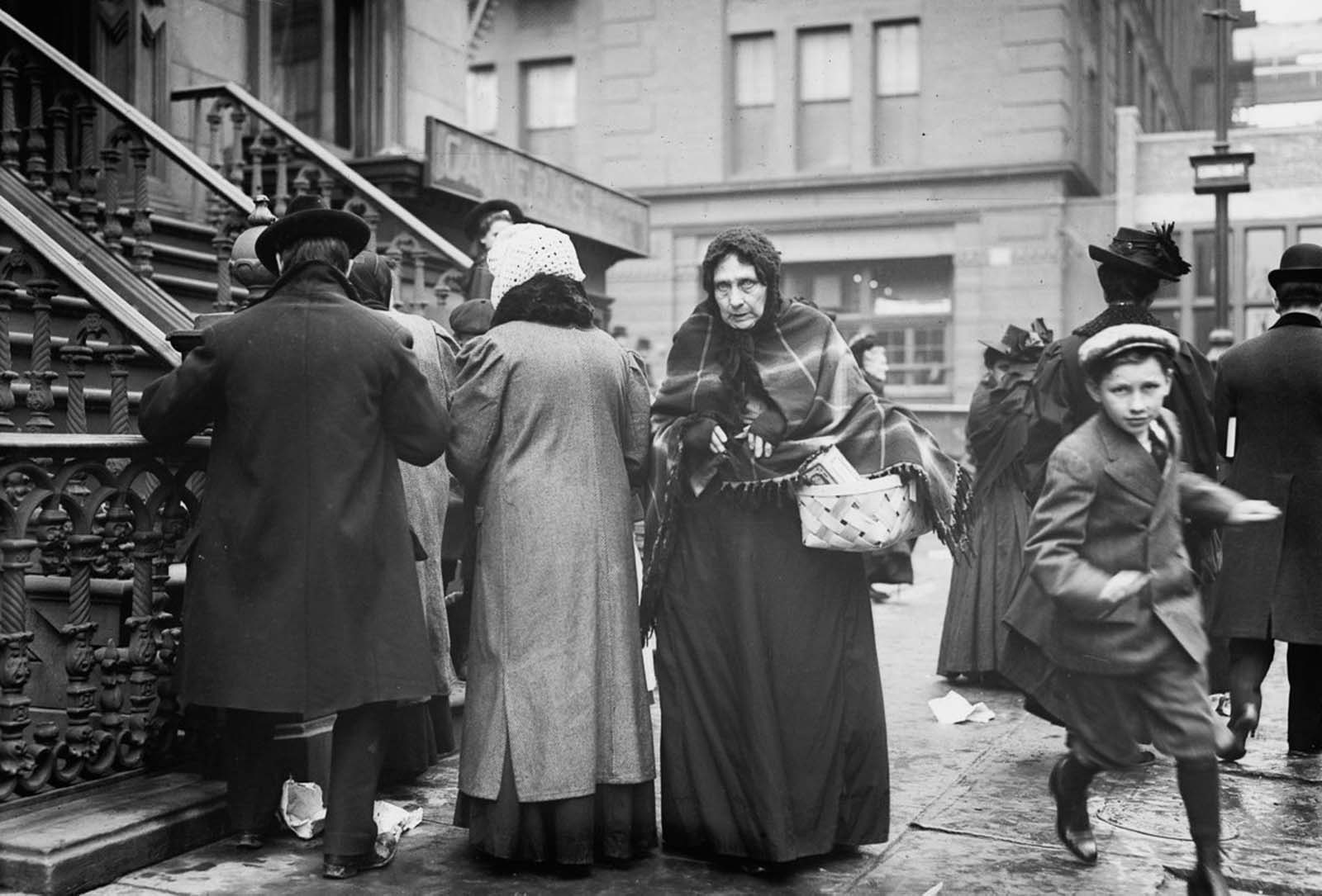
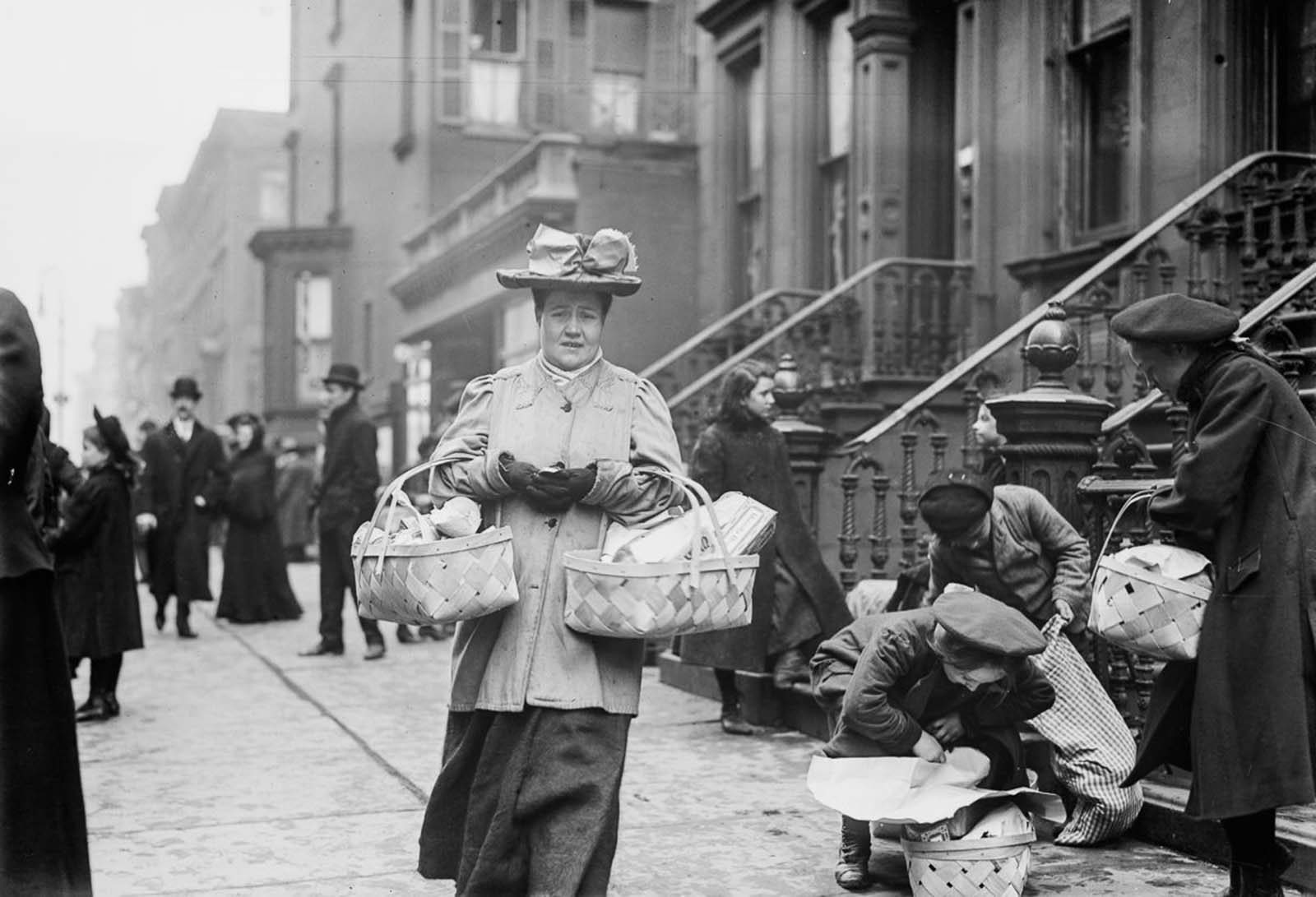
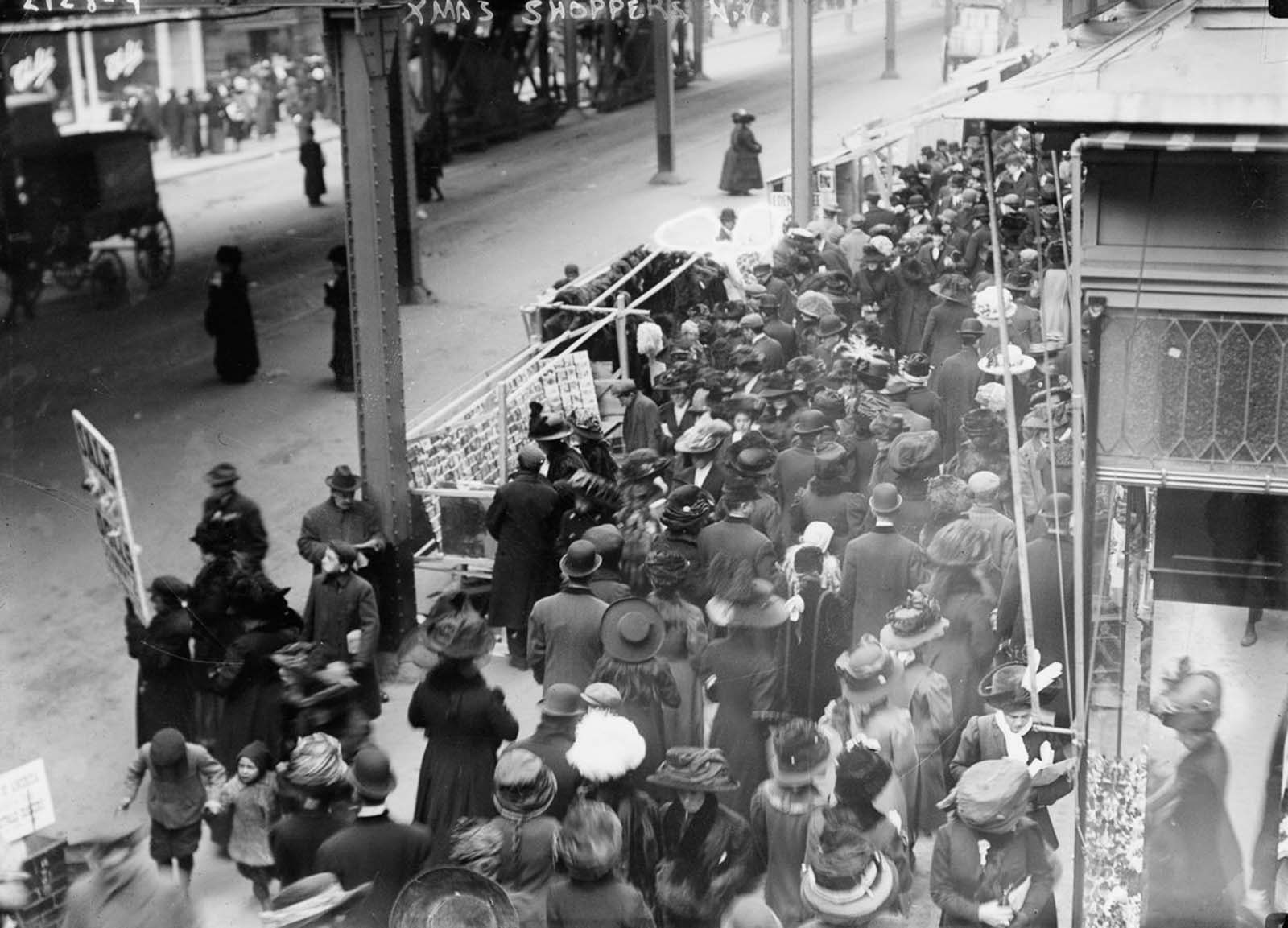
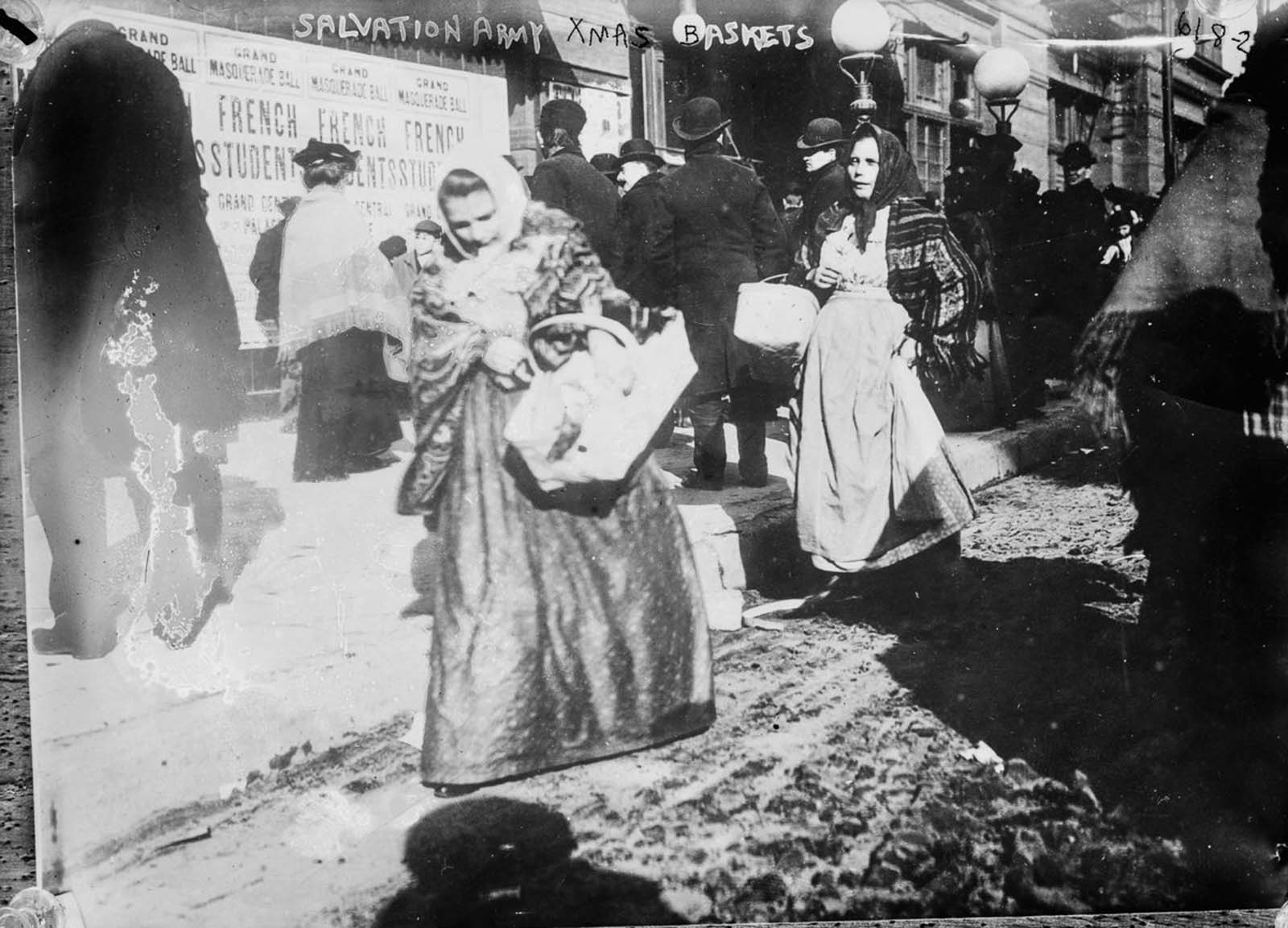
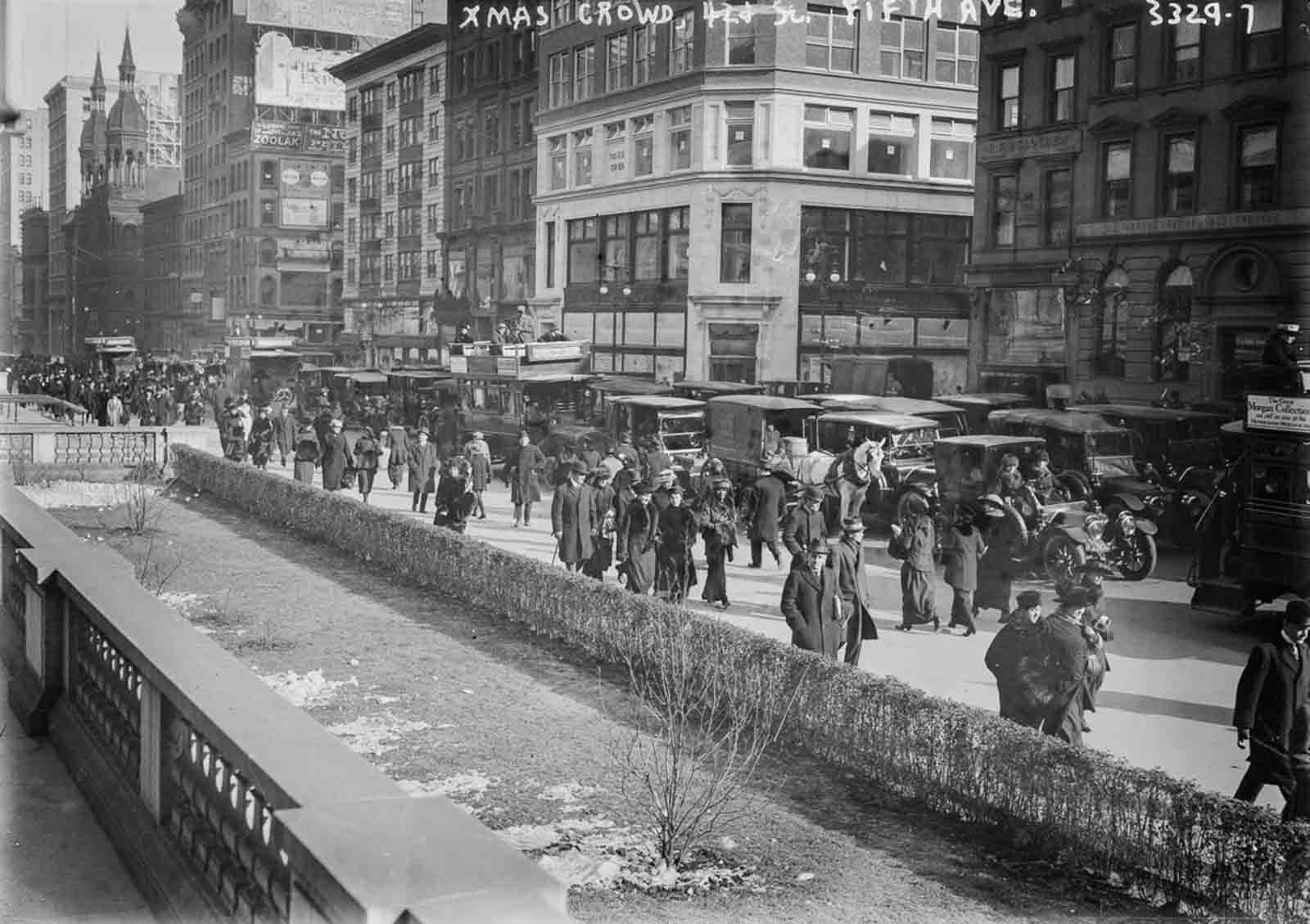
New York City in the 1910s was a place of rapid change, and nowhere was that more visible than during the holiday season. Department stores across the city pulled out all the stops to attract shoppers, and the results were spectacular. Streets buzzed with crowds, shop windows glowed, and the act of shopping itself had become something much bigger than simply buying goods.
The story of the modern holiday window display actually begins decades earlier. The practice of placing goods in shop windows for passersby to admire dates back to the mid-19th century. It was Harry Gordon Selfridge — the Chicago-based retail pioneer behind Marshall Field’s department store and later London’s famous Selfridges — who first recognized the true power of a large, eye-catching window display. He understood that a well-staged window did more than show products. It told a story and drew people in.
For a time, other retailers were slow to catch on. Store owners did not immediately see the value in dedicating prime window space to anything beyond stacking merchandise. But once the concept proved its worth, window displays grew rapidly in size, creativity, and ambition.
The economic boom that swept the United States beginning in the 1870s and running through roughly 1900 played a direct role in making all of this possible. Industrialization increased both the production of goods and the spending power of city residents. As more products flooded the market and more people had money to spend, retailers needed new ways to compete for attention. The window display became one of their most effective tools.
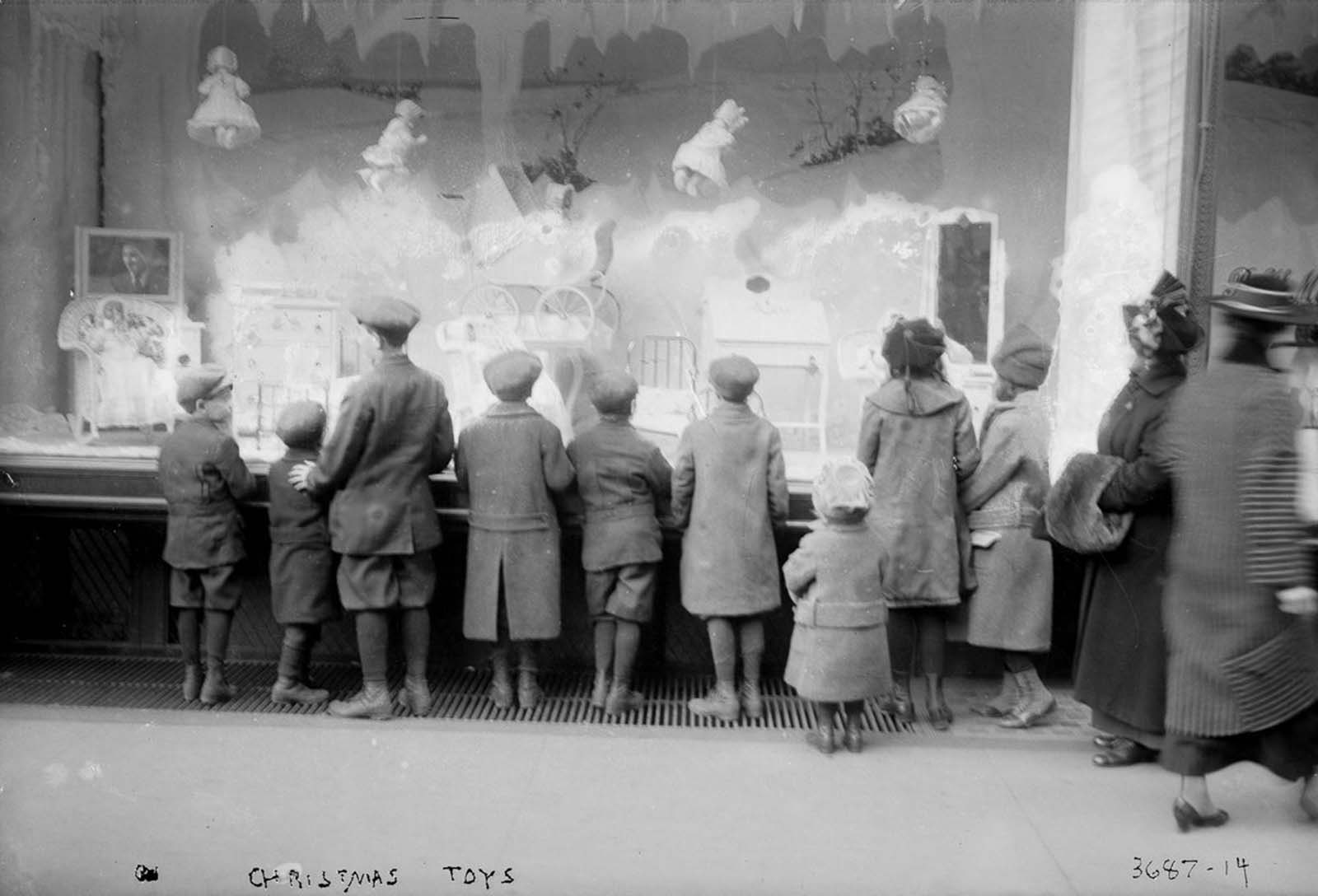
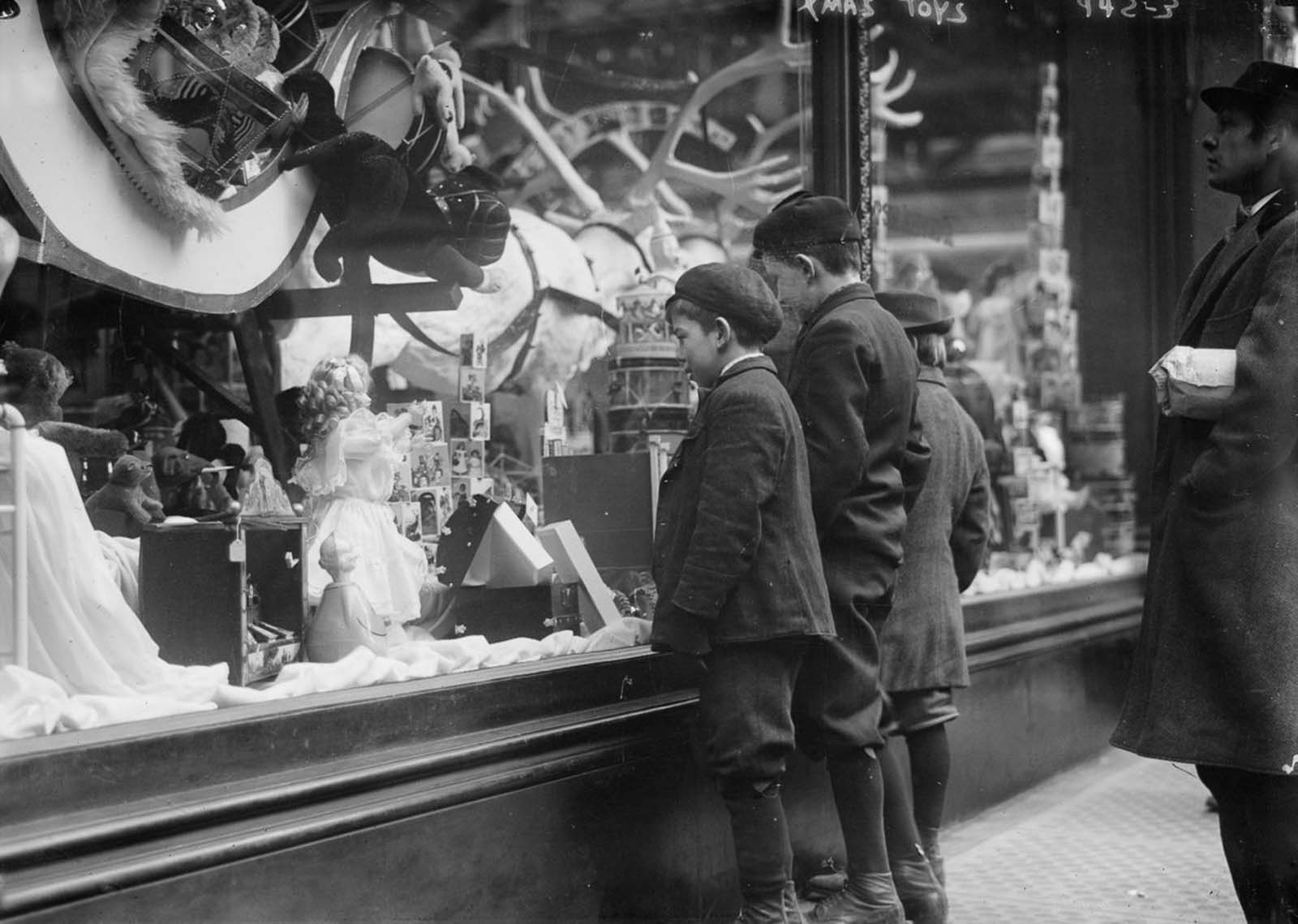
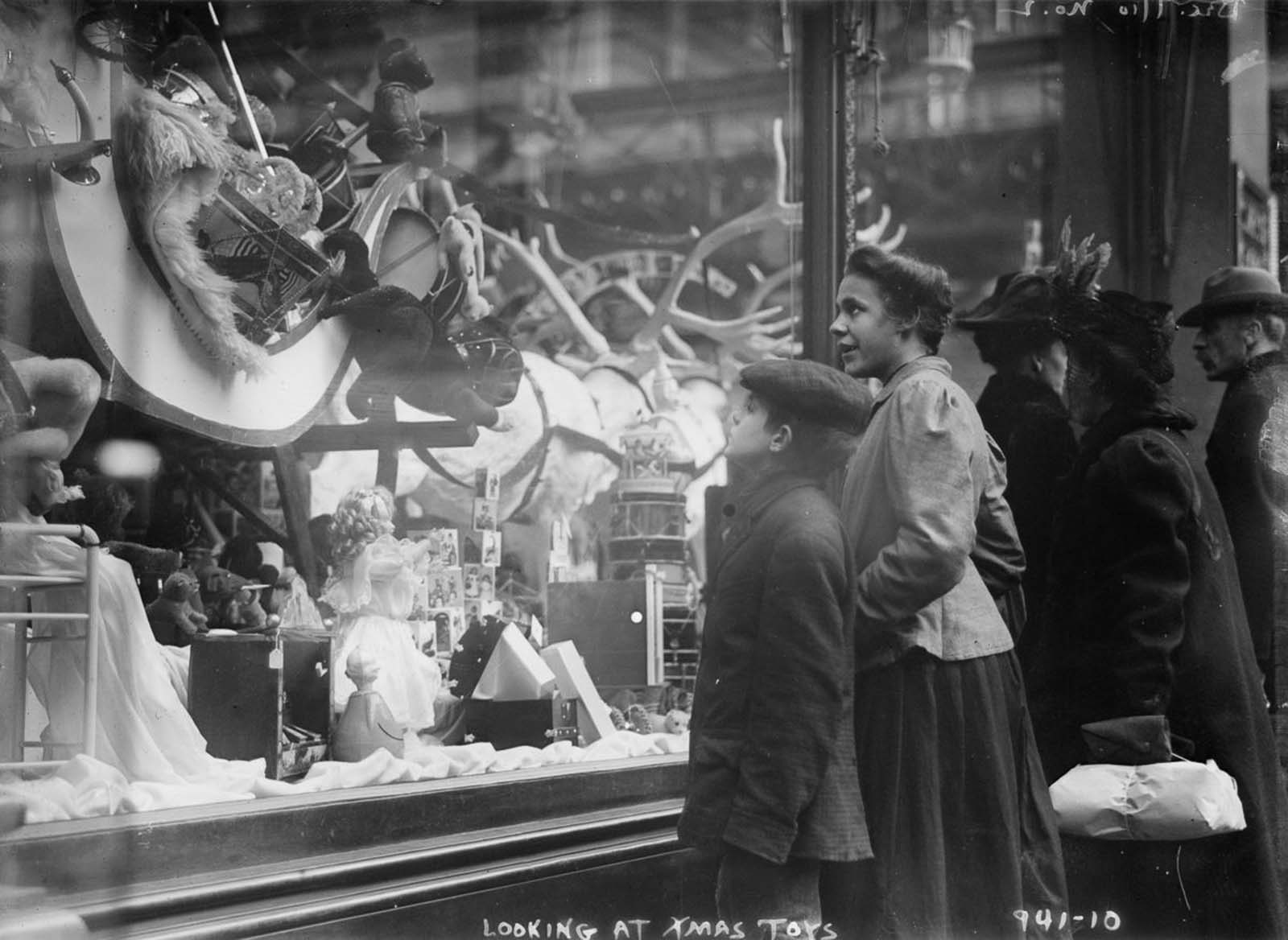
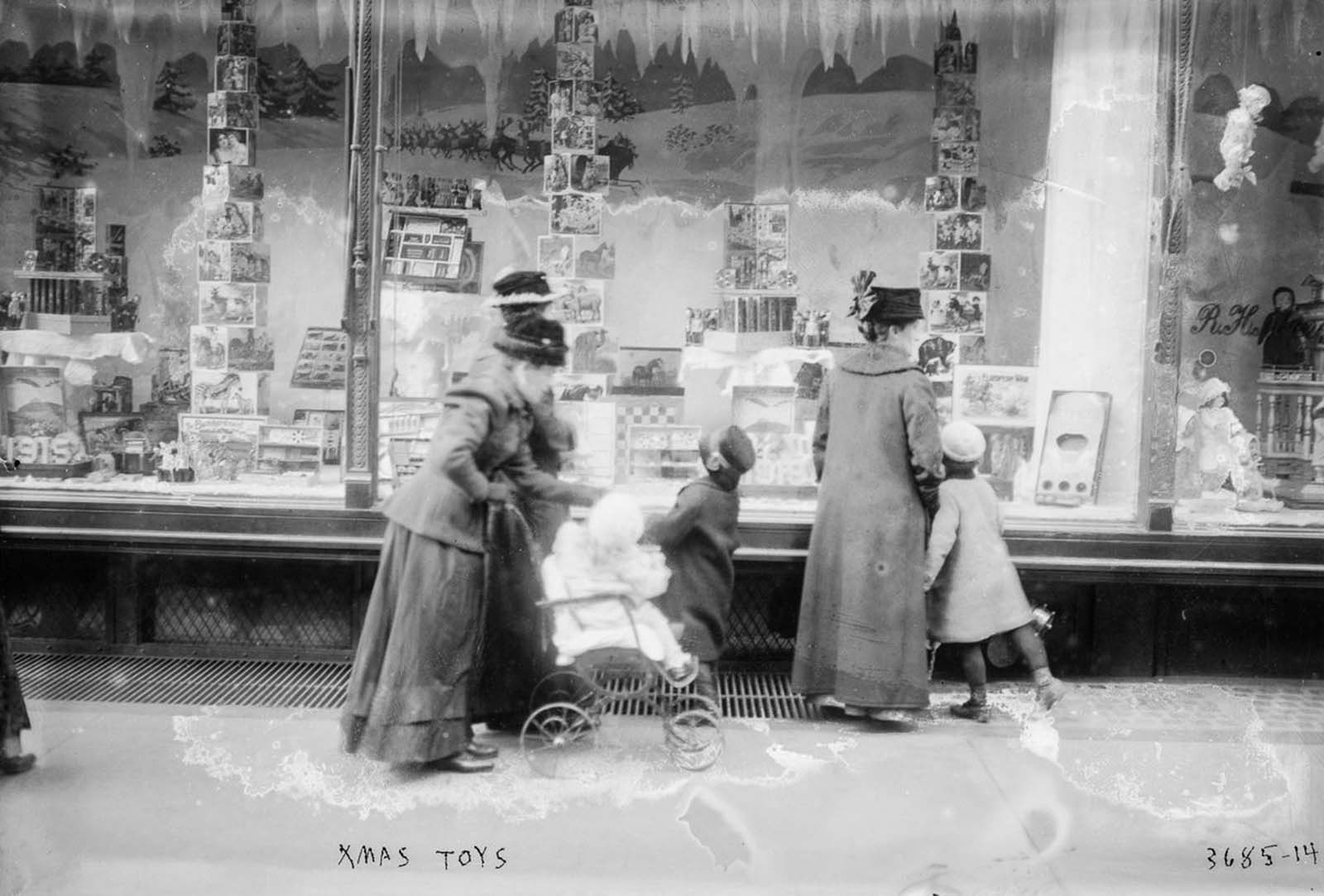
By the 1910s, holiday windows in New York City had evolved far beyond simple product arrangements. Stores transformed their street-facing windows into elaborate, decorative installations. These displays were no longer purely about advertising a specific item. They were theatrical scenes designed to delight anyone who passed by, whether they planned to shop or not.
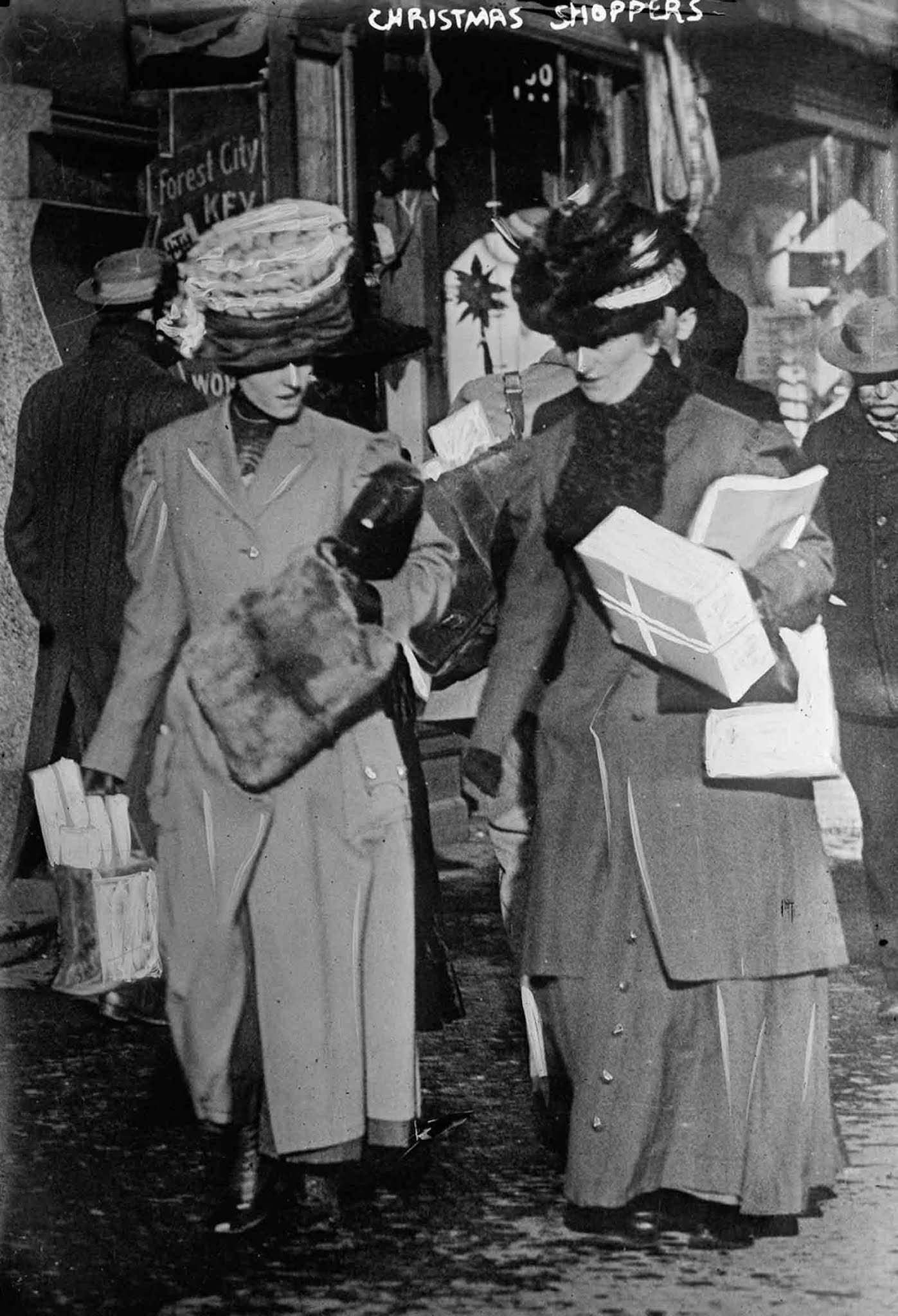
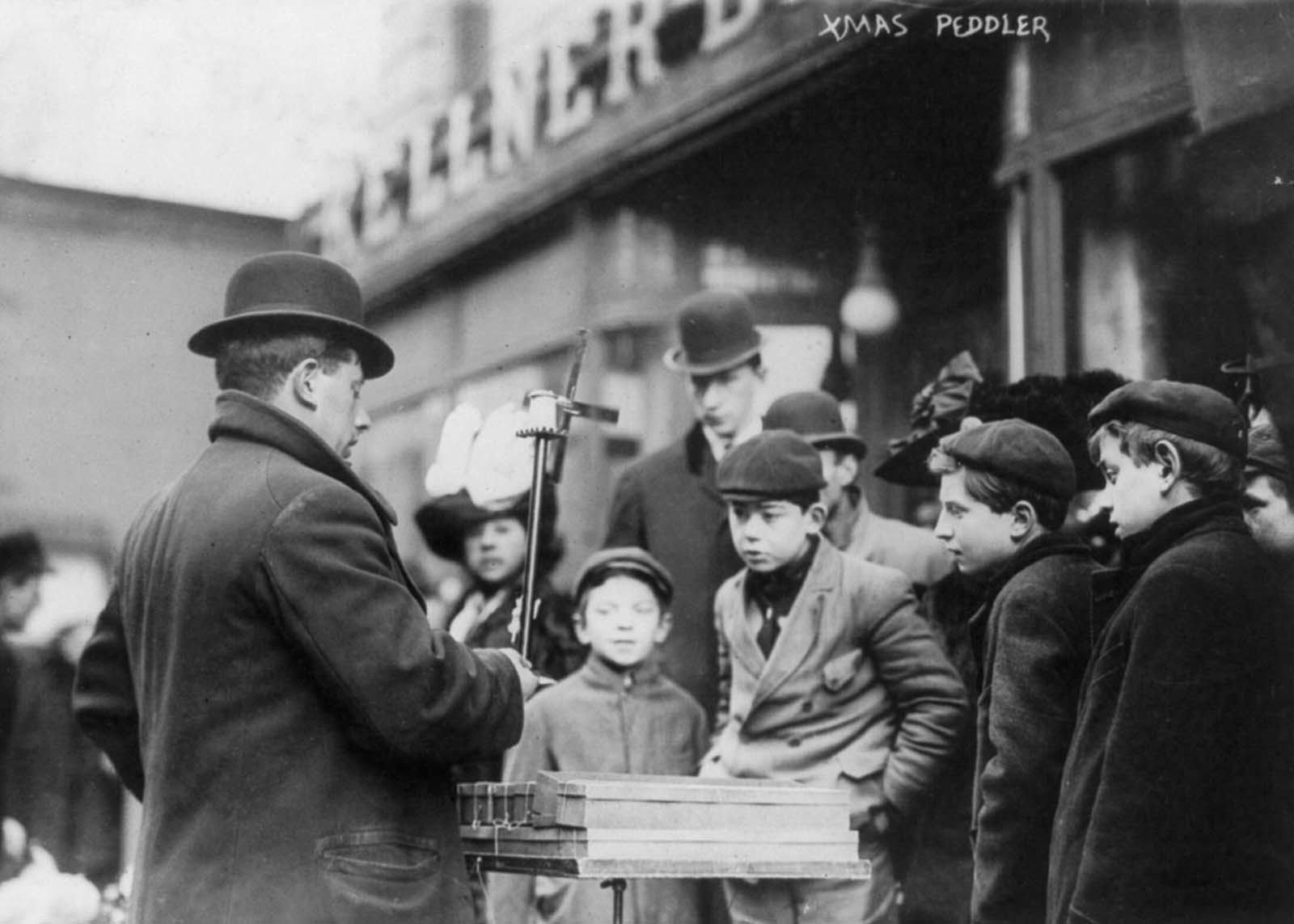
Inside the stores, the experience was just as carefully crafted. New York’s major department stores offered far more than merchandise. They included lounges, restrooms, and full restaurants, giving shoppers every reason to linger. For women in particular — both from the city itself and from surrounding suburbs — these spaces offered something genuinely new.
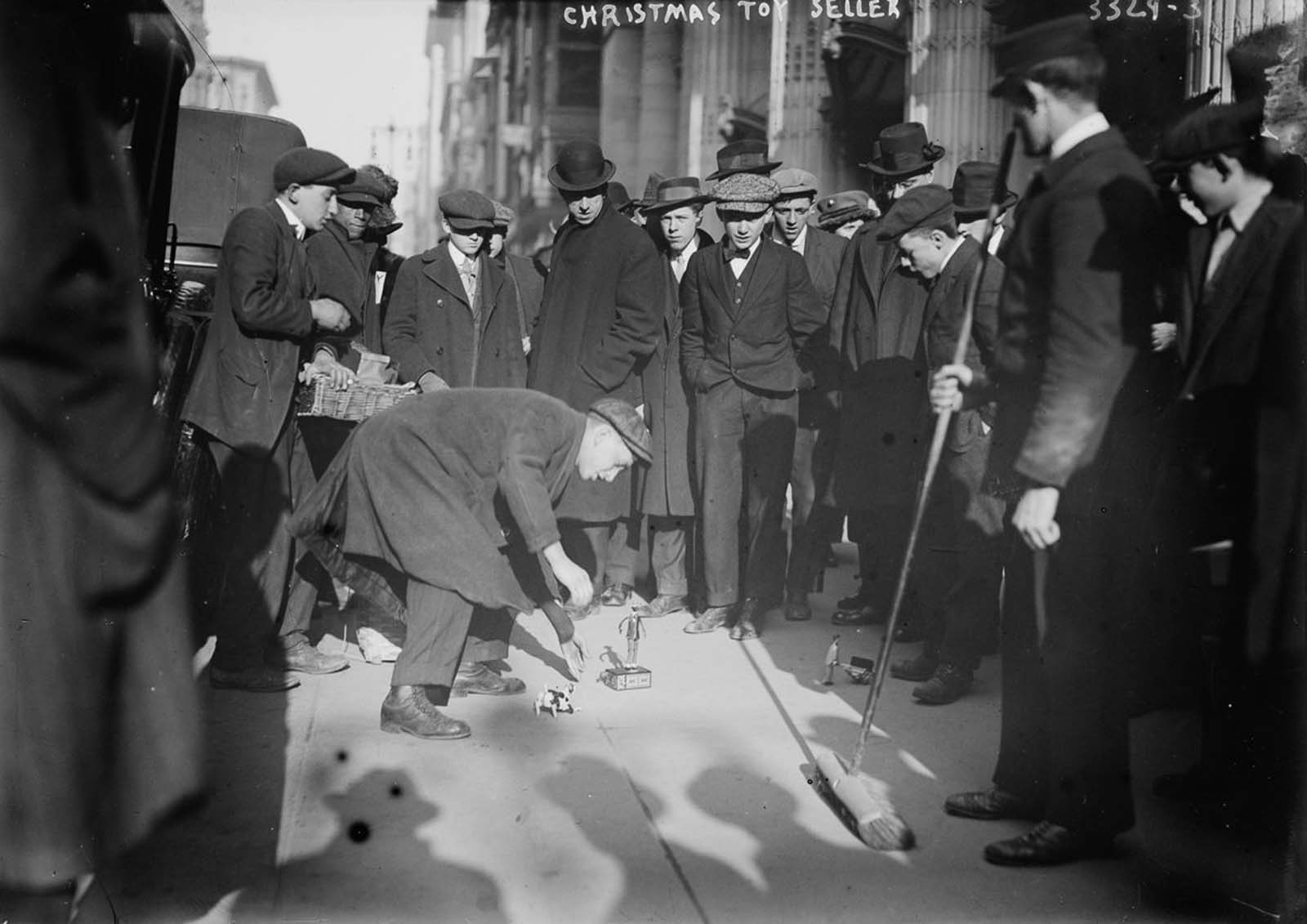
Shopping at a department store gave women a socially acceptable reason to spend time in public without a chaperone. In a period when women’s independence outside the home was still limited in many respects, the department store offered a rare kind of freedom. A woman could spend an afternoon browsing, dining, and moving through a grand public space entirely on her own terms.
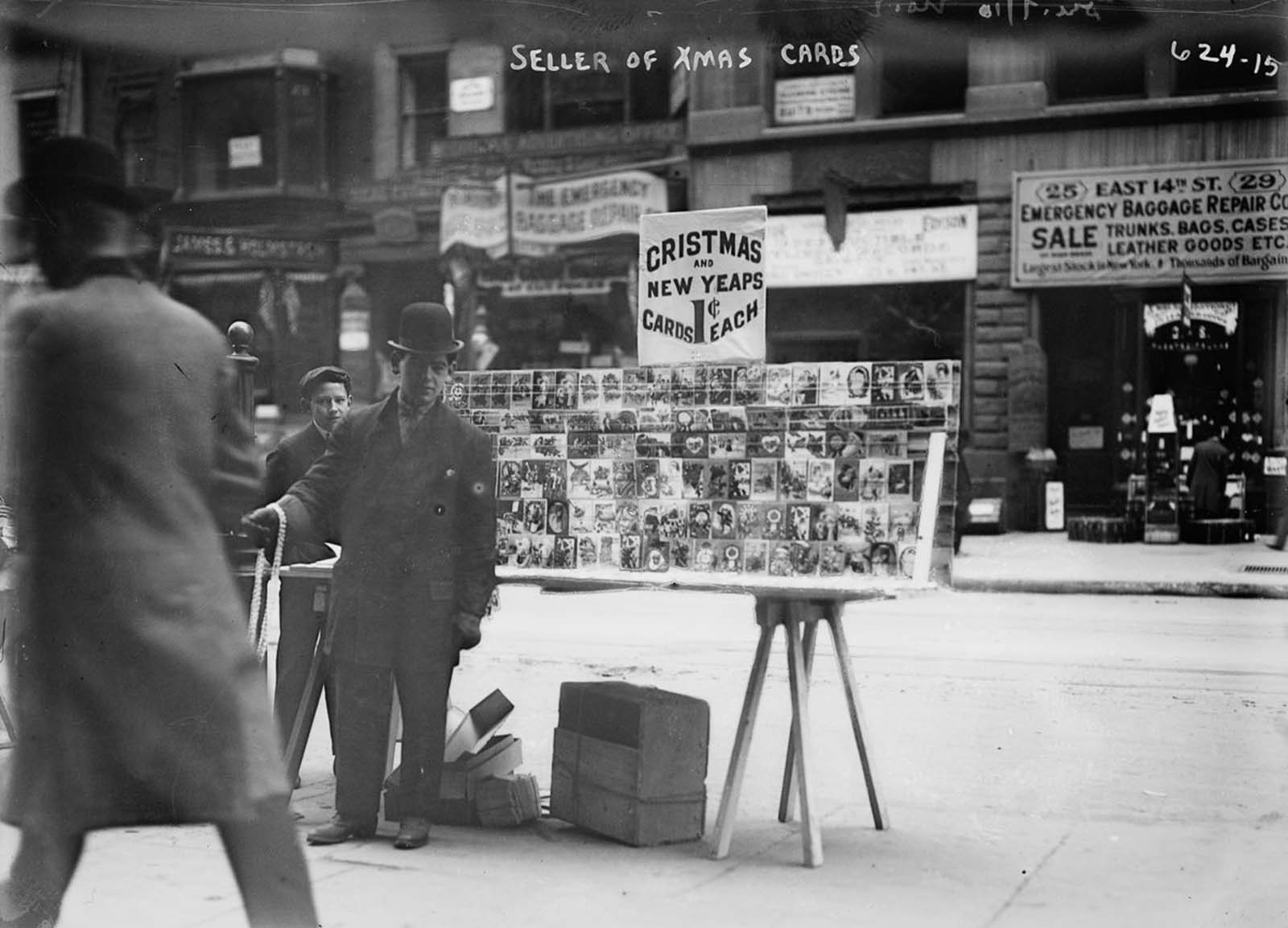
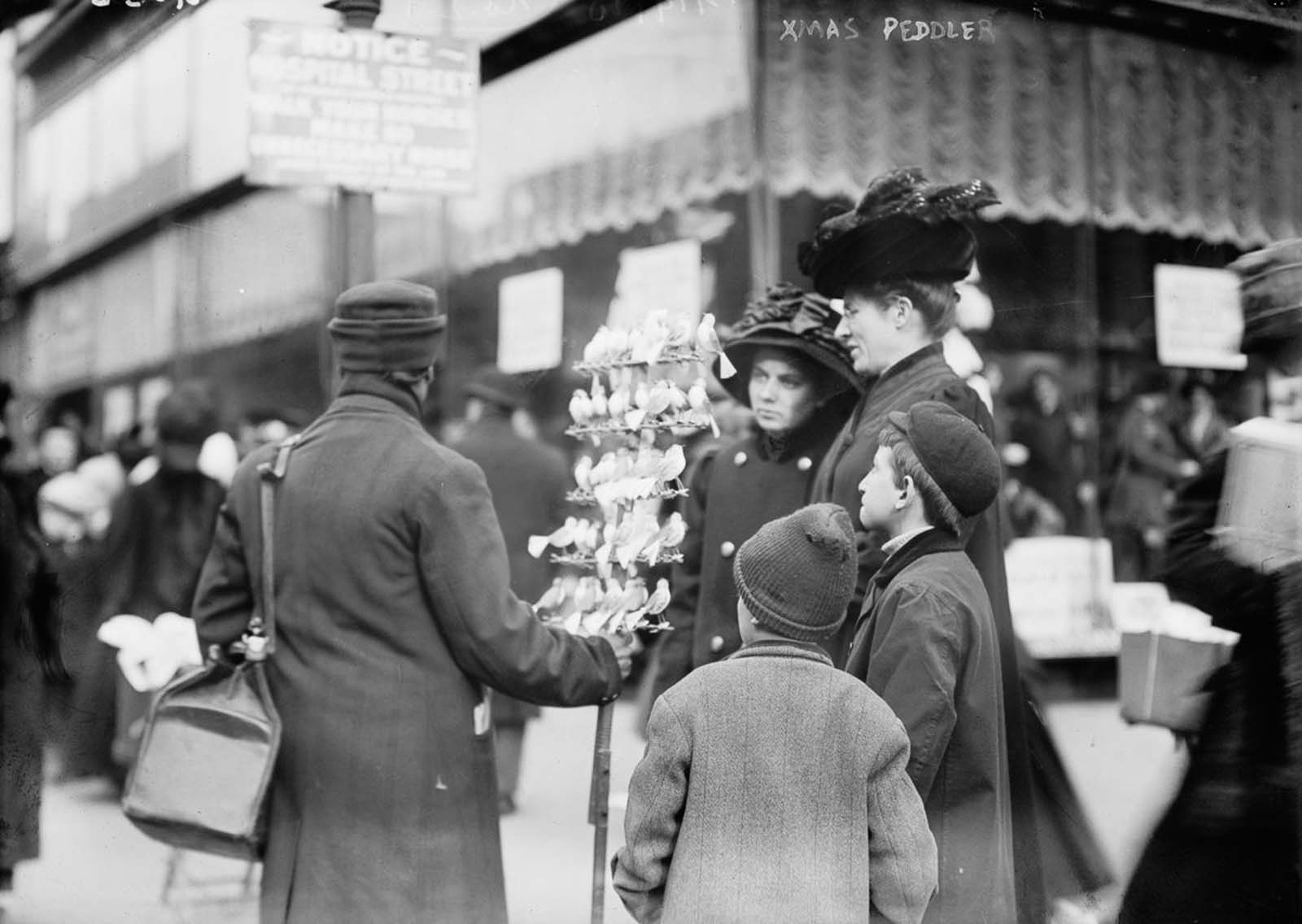
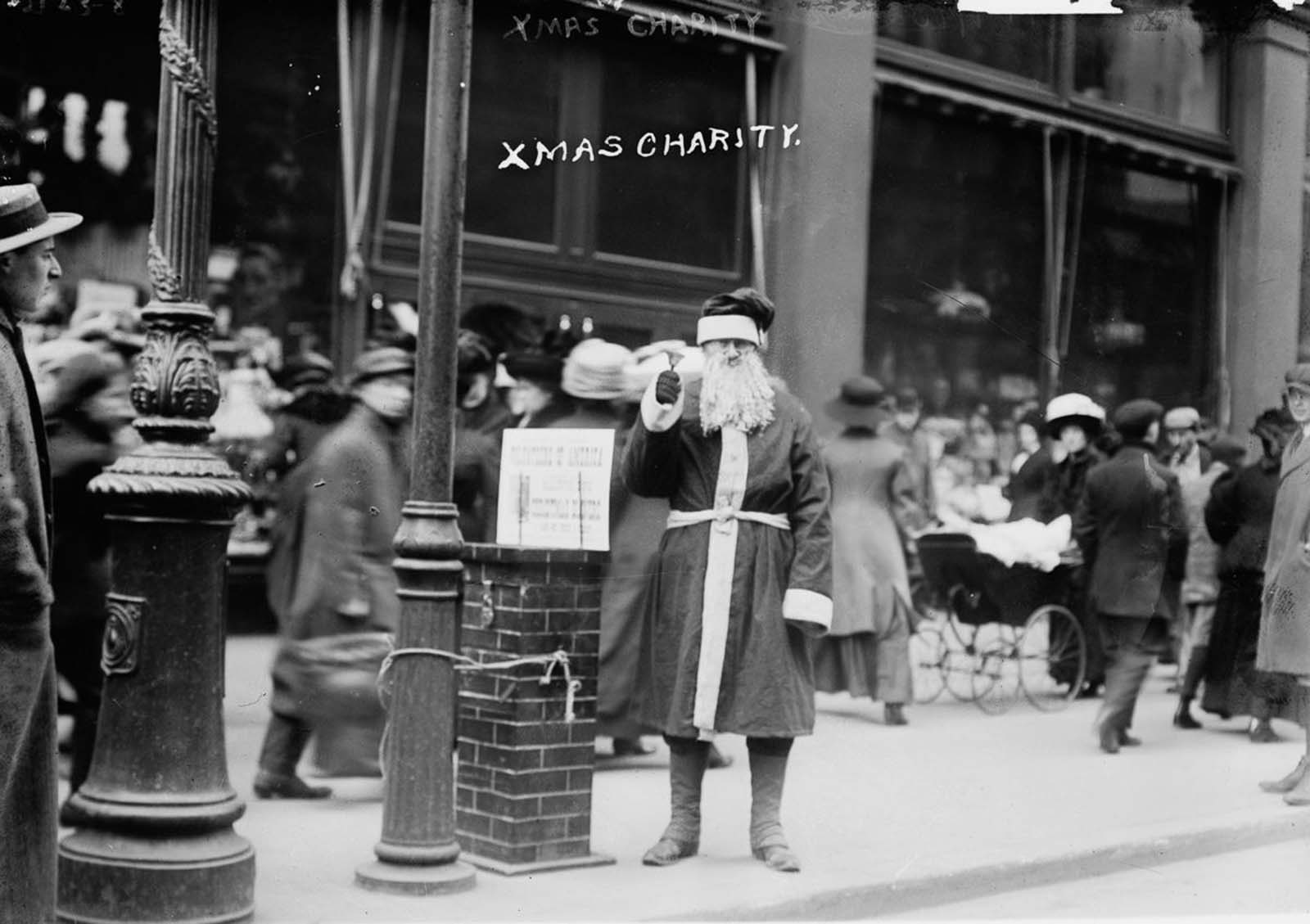
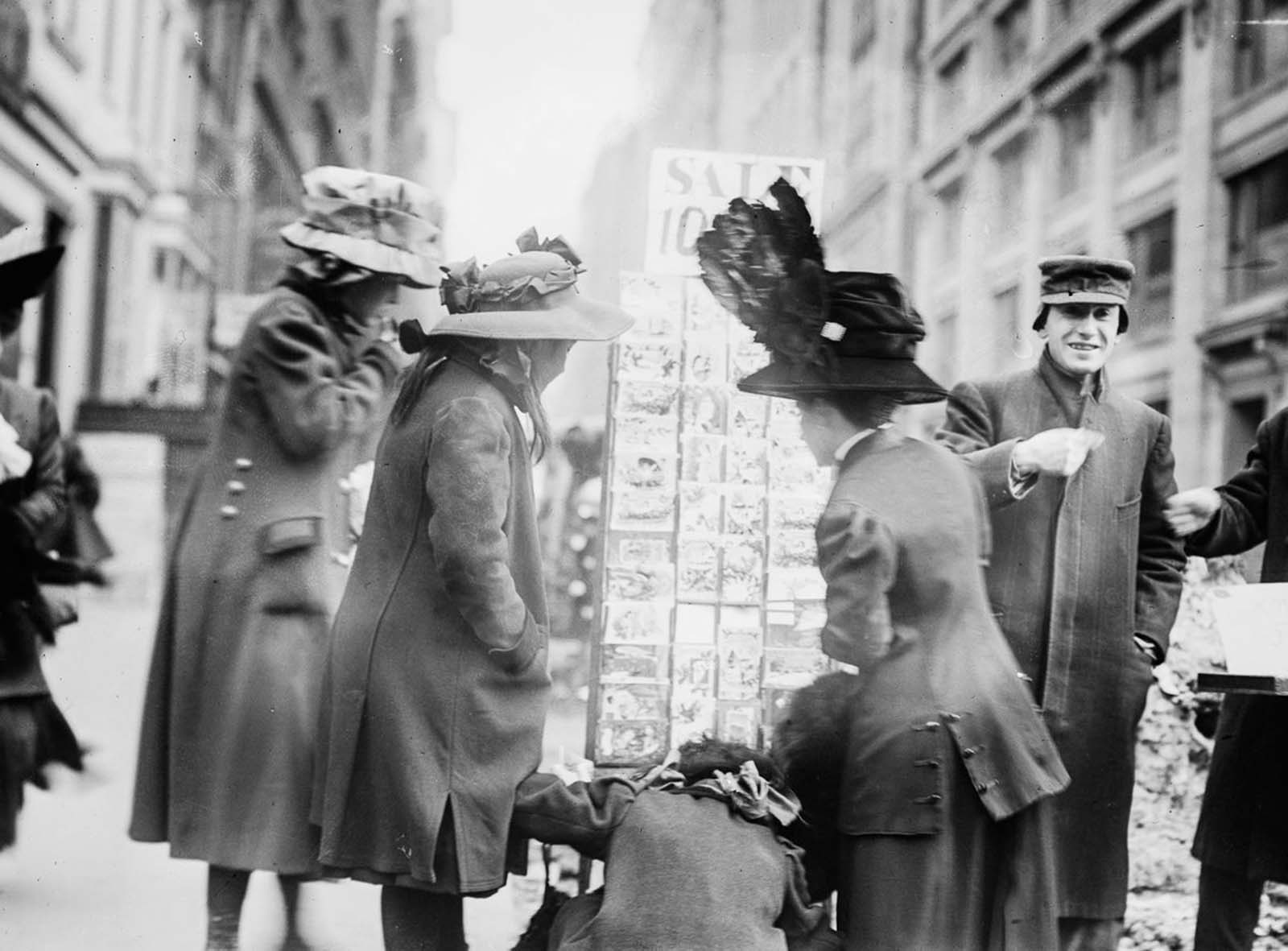
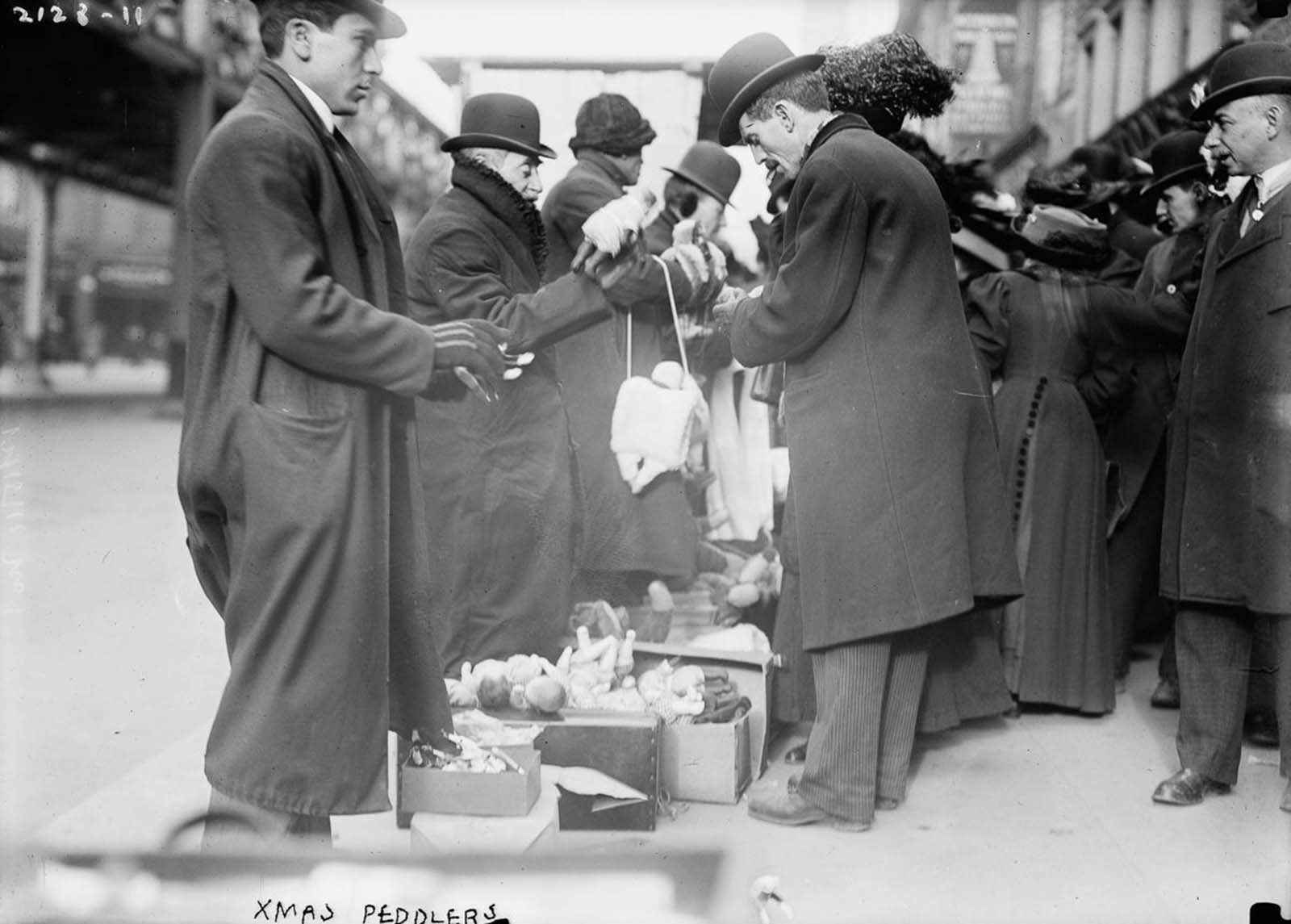
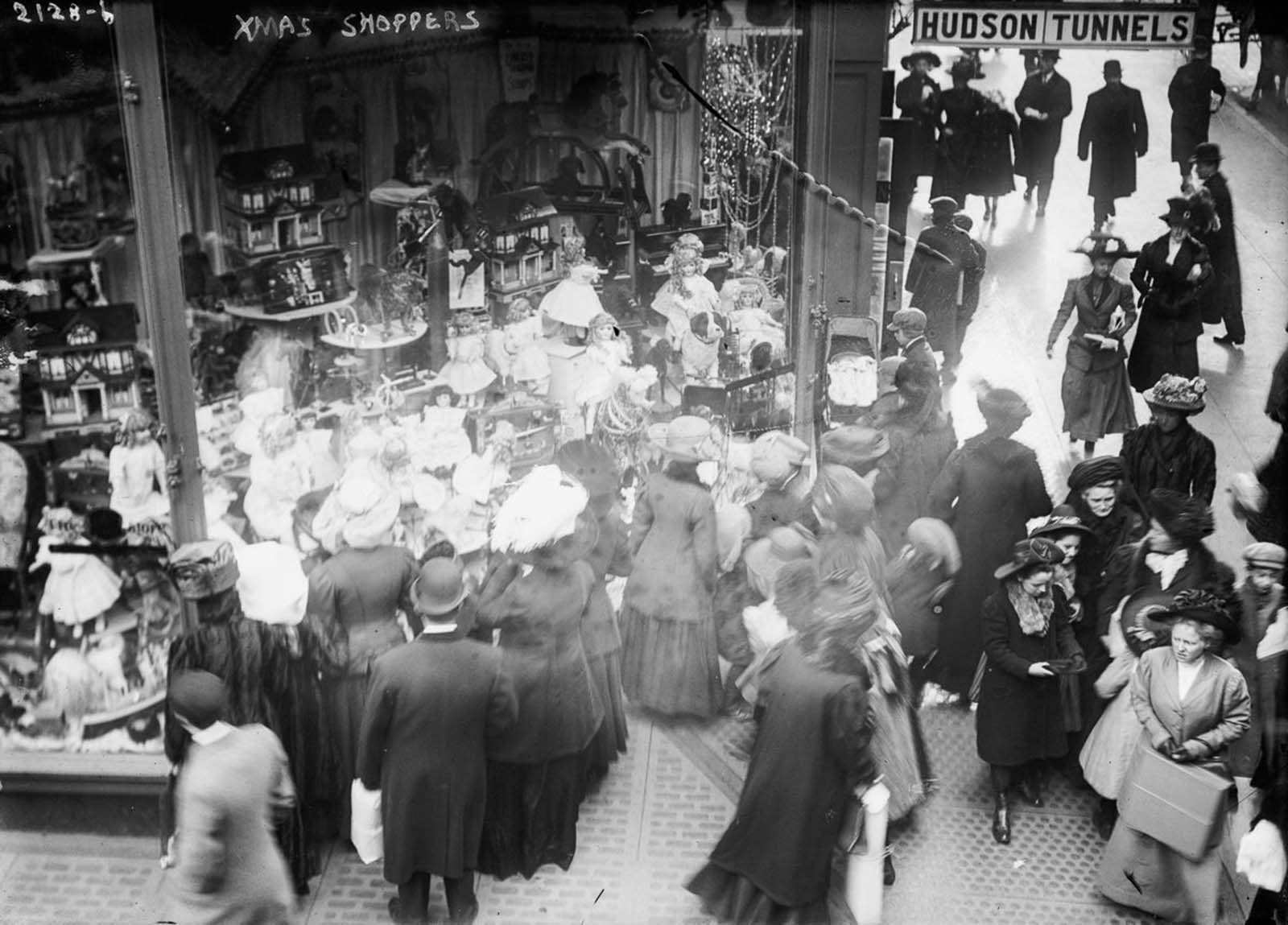
The holiday season pushed all of this to its peak. Store owners knew that the weeks leading up to Christmas were the most important shopping period of the year. Competition between stores was fierce, and window displays became a major battleground. The more stunning the window, the larger the crowd it could draw.
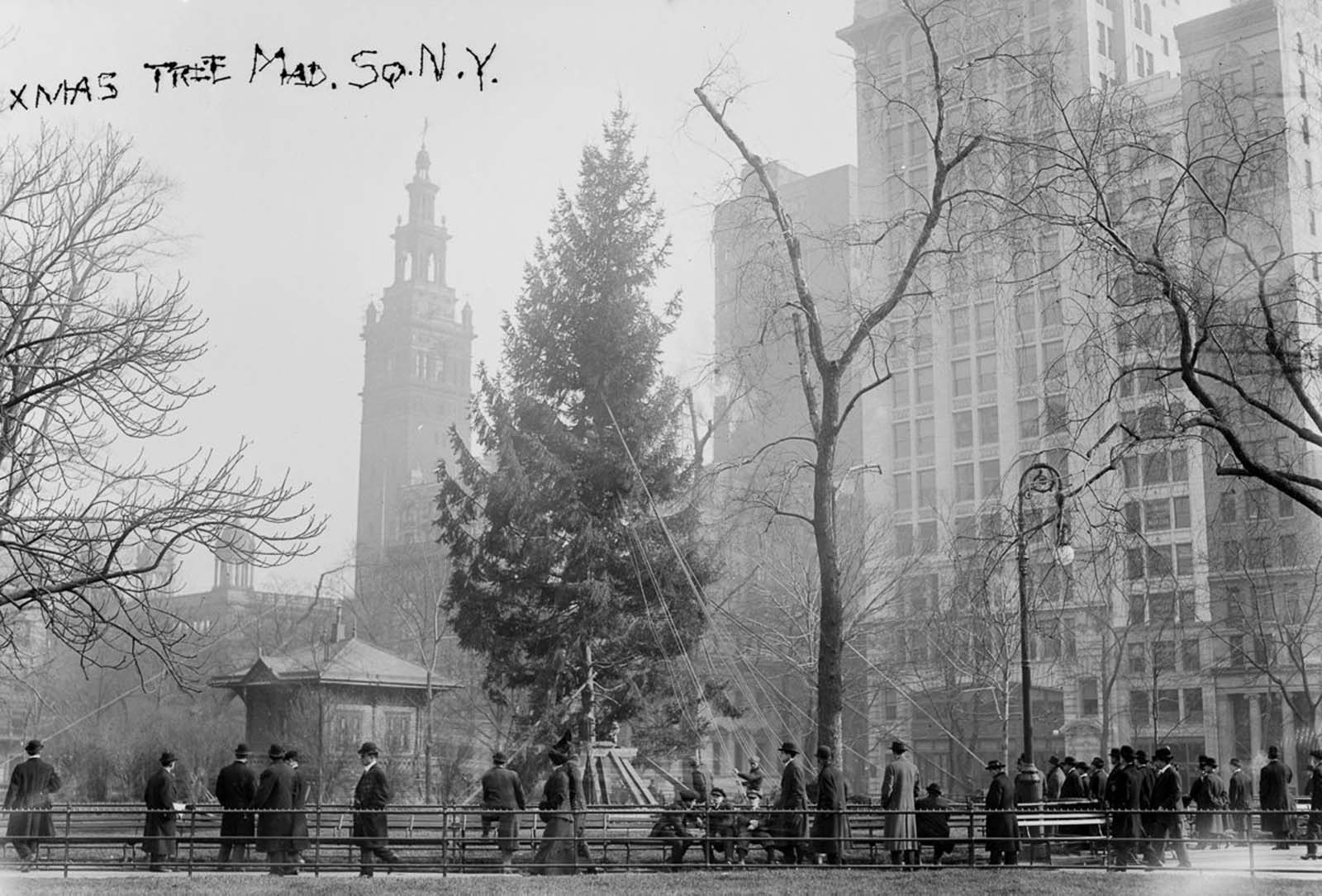
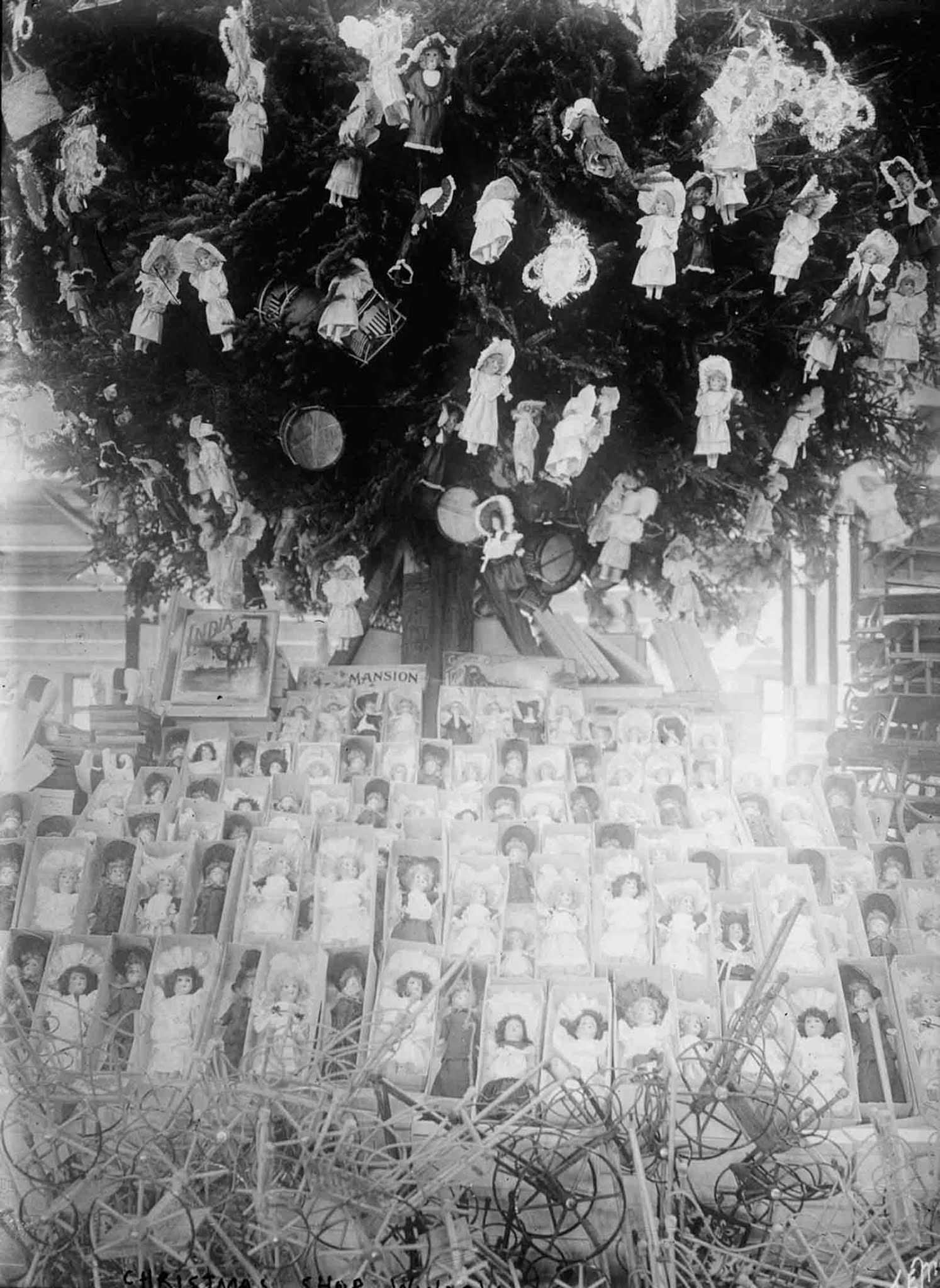
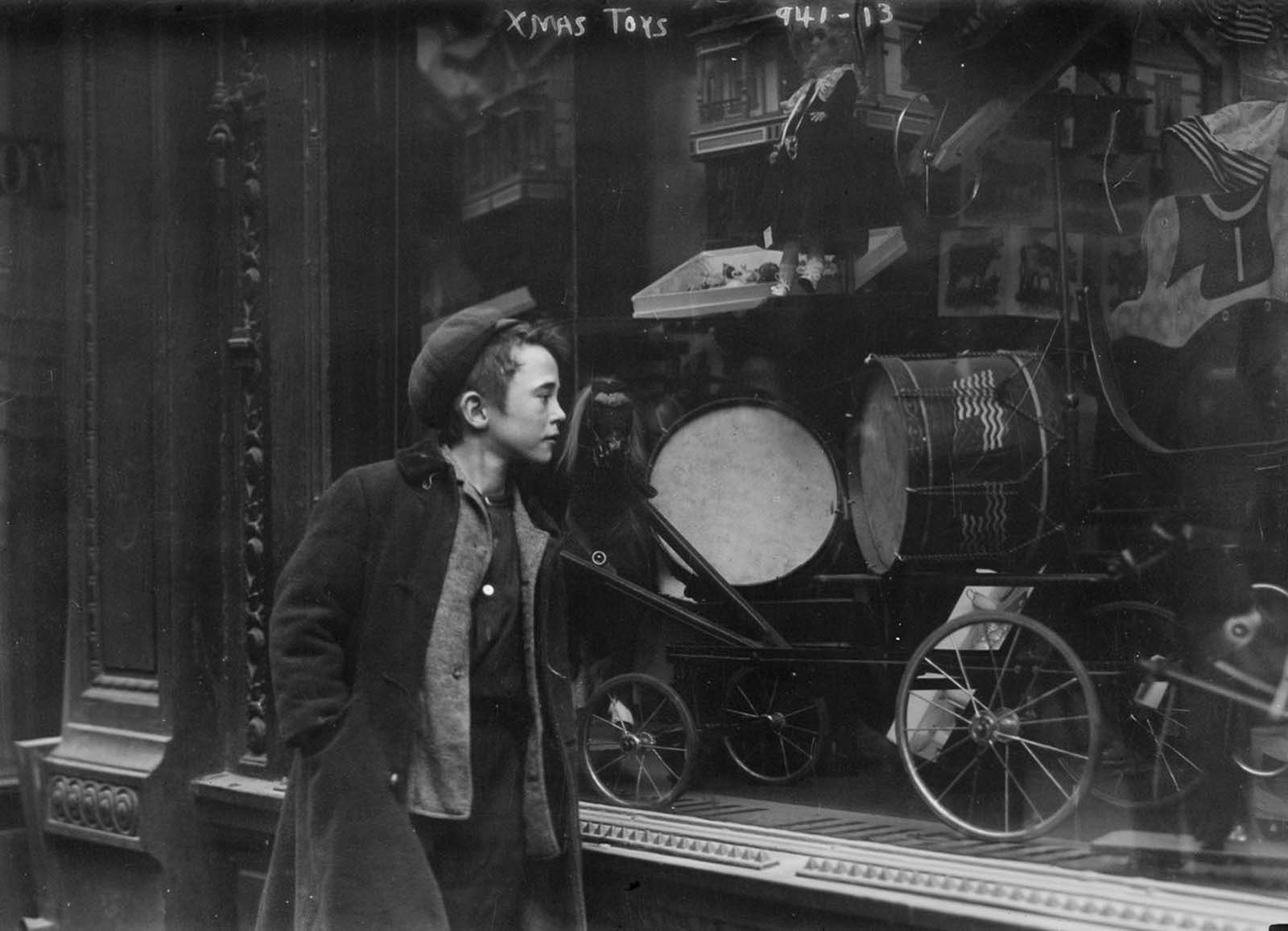
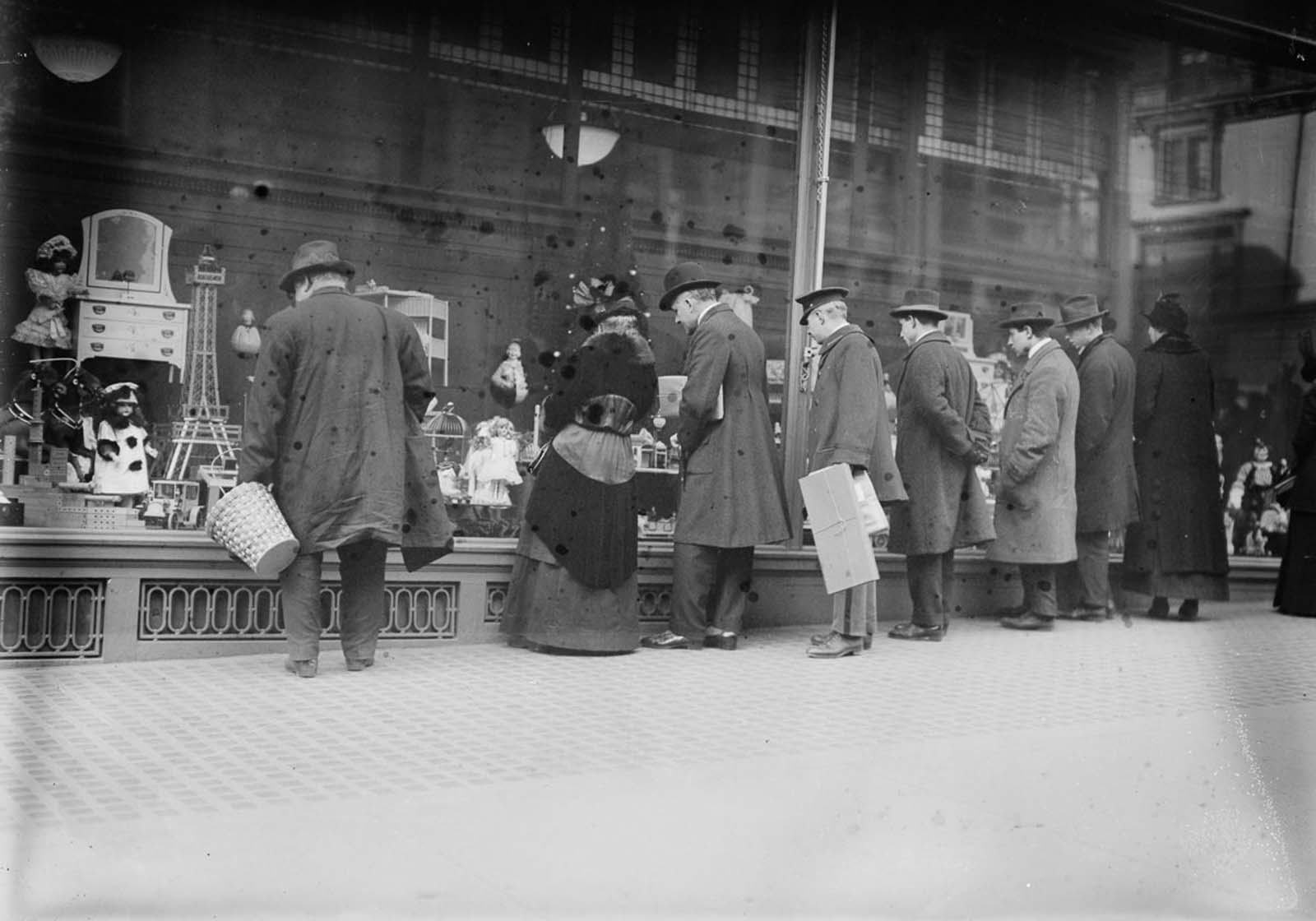
Families made outings specifically to walk the streets and take in the displays. Children pressed their faces against the glass. Adults stopped mid-stride to stare. The window display had become a form of public entertainment, free to anyone willing to brave the winter streets of New York City.
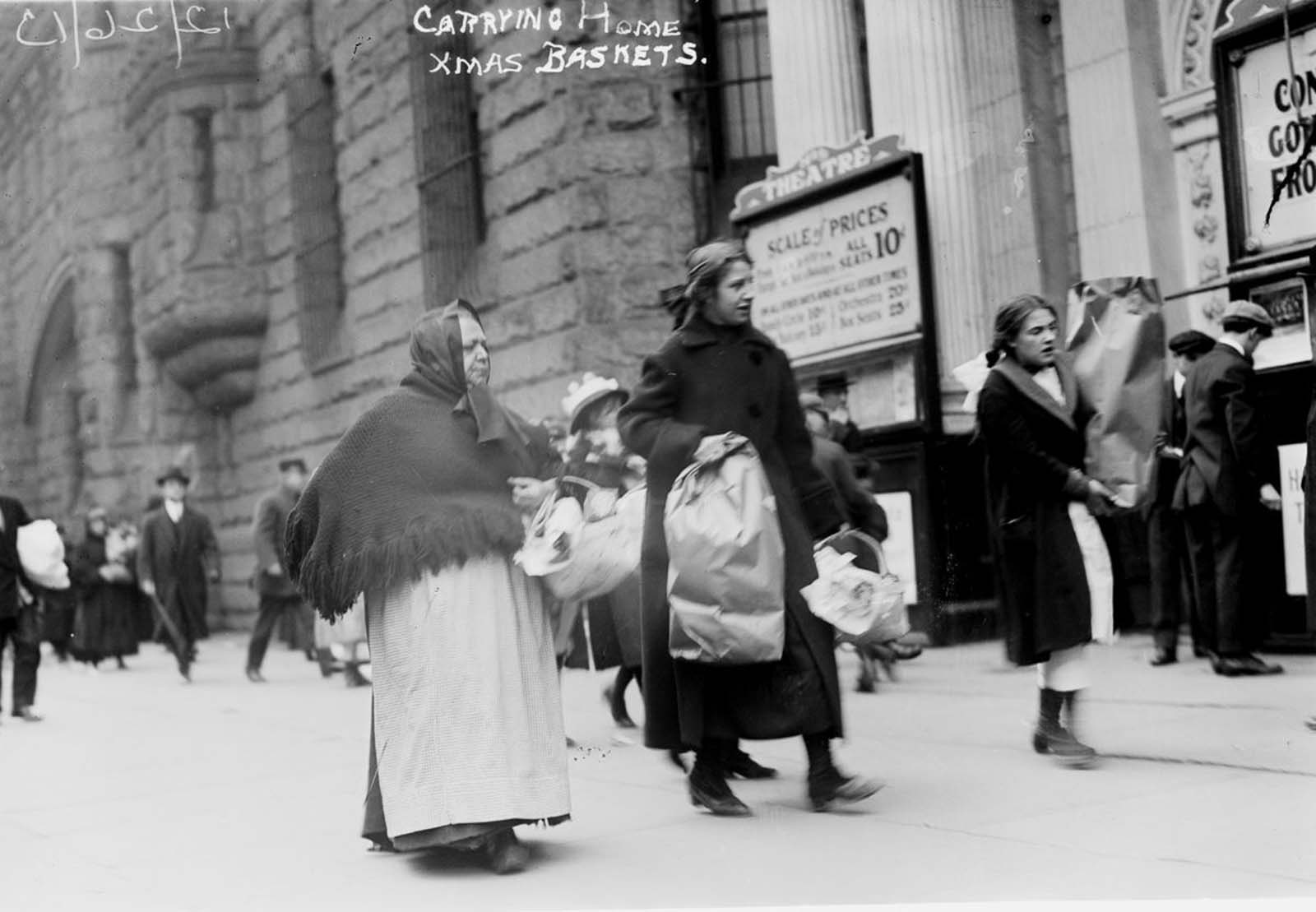
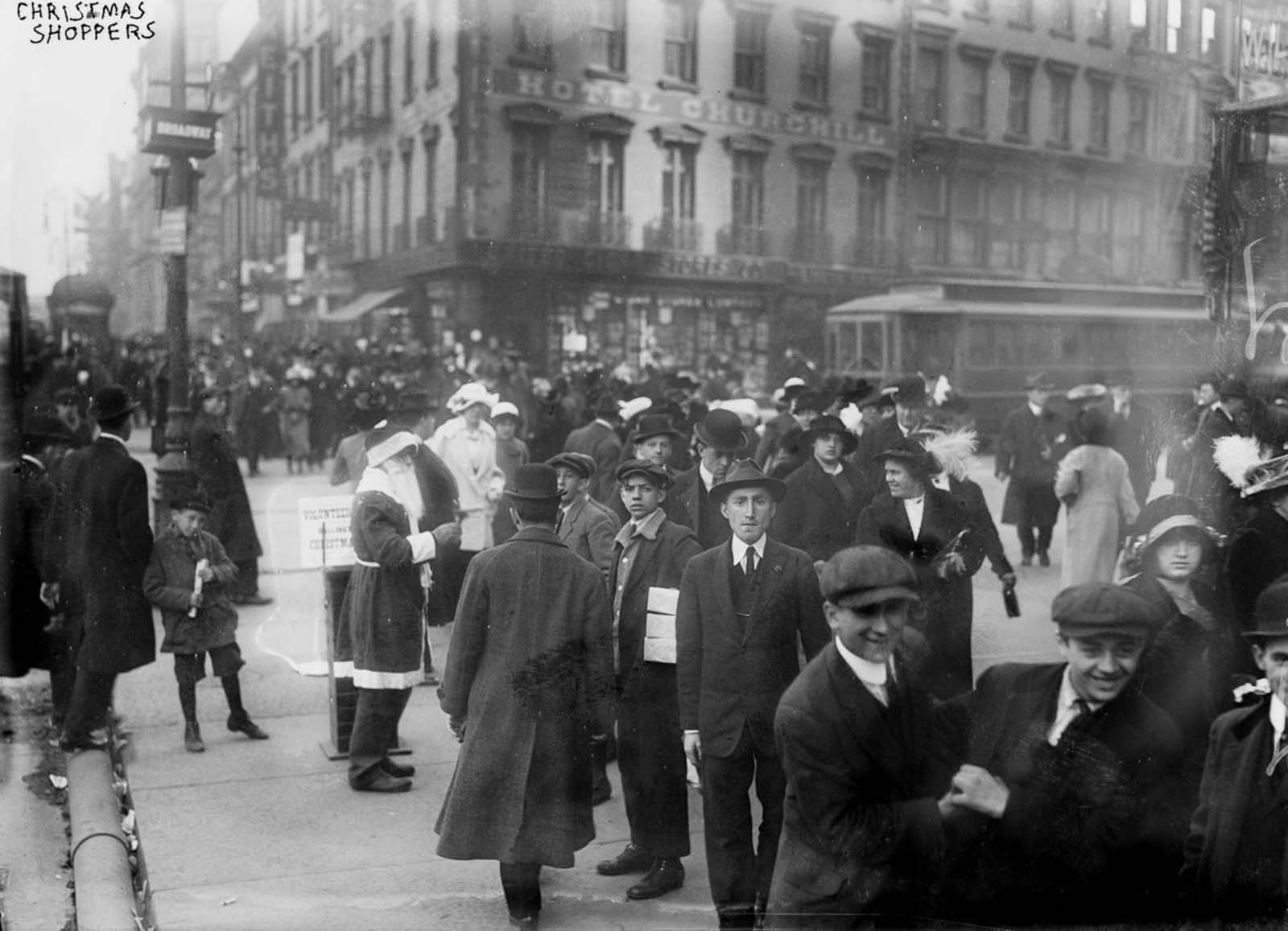
These photos from the 1910s capture a city and a retail culture at a turning point. Shopping was no longer a chore to be completed quickly. It had become a full experience, shaped by design, spectacle, and the growing power of consumer culture in urban American life.