
Harold Cazneaux (1878–1953) was born in Wellington, New Zealand, but it was Australia that became the subject of his life’s work. As a photographer, he spent decades walking the streets of Sydney and beyond, turning everyday scenes into art. He joined the Sydney Camera Circle when it was founded in 1916 and regularly showed his work in national and international exhibitions. His photographs from the 1900s through the 1930s form one of the most detailed visual records of Australian life ever assembled. The images below are drawn from that body of work — a street-level look at a country in the middle of rapid change.
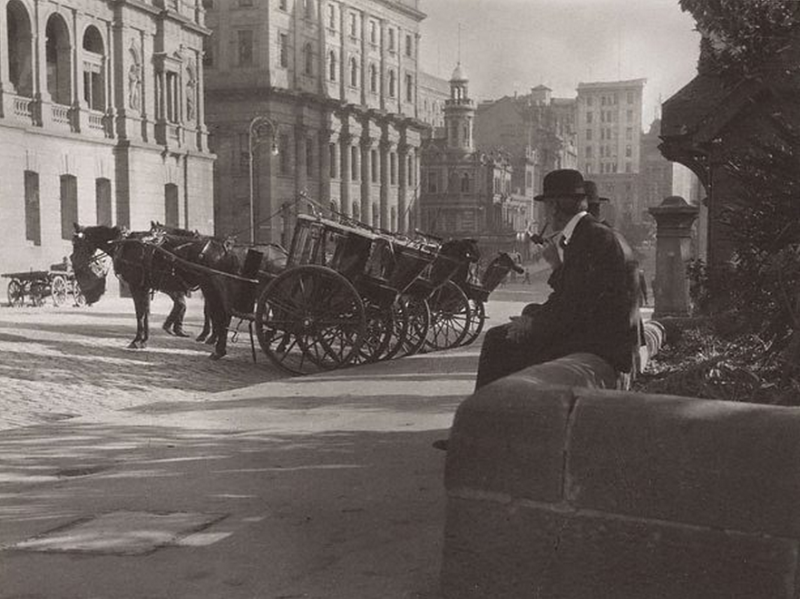
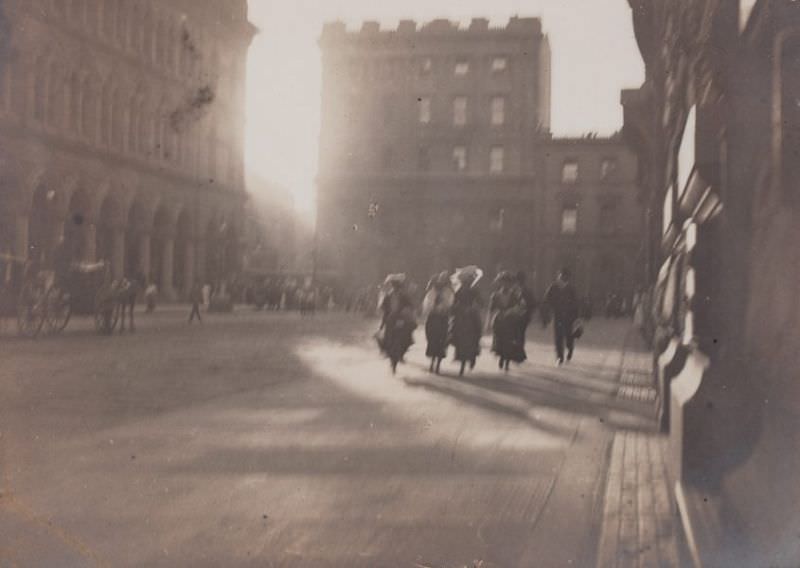
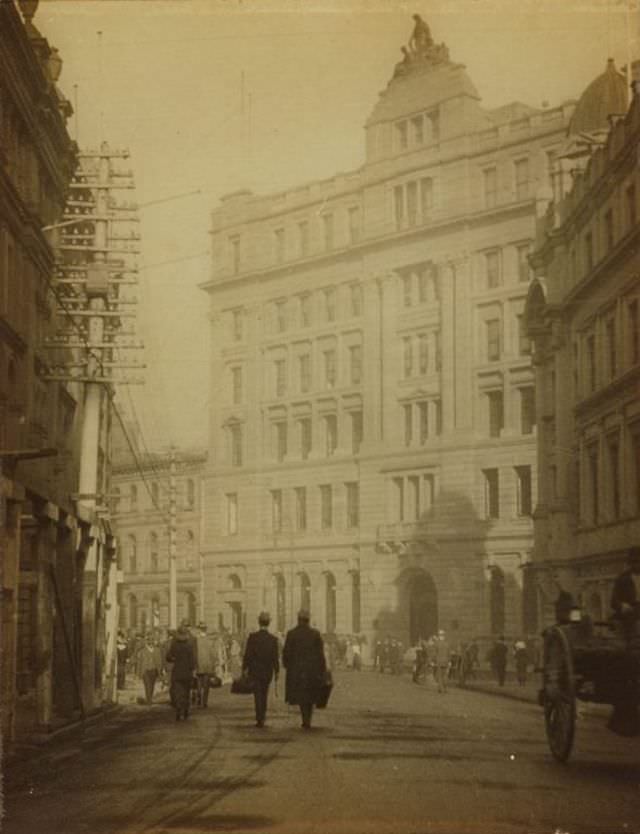
Sydney’s streets in the early 1900s were alive with workers, traders, and commuters. Horse-drawn cabs lined the city’s main roads, and pedestrians hurried through open plazas in all kinds of weather. Cazneaux captured all of it.
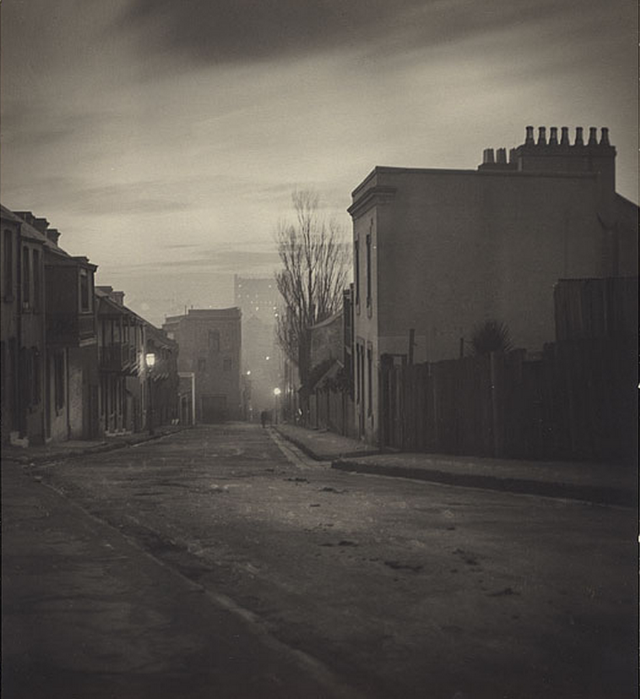
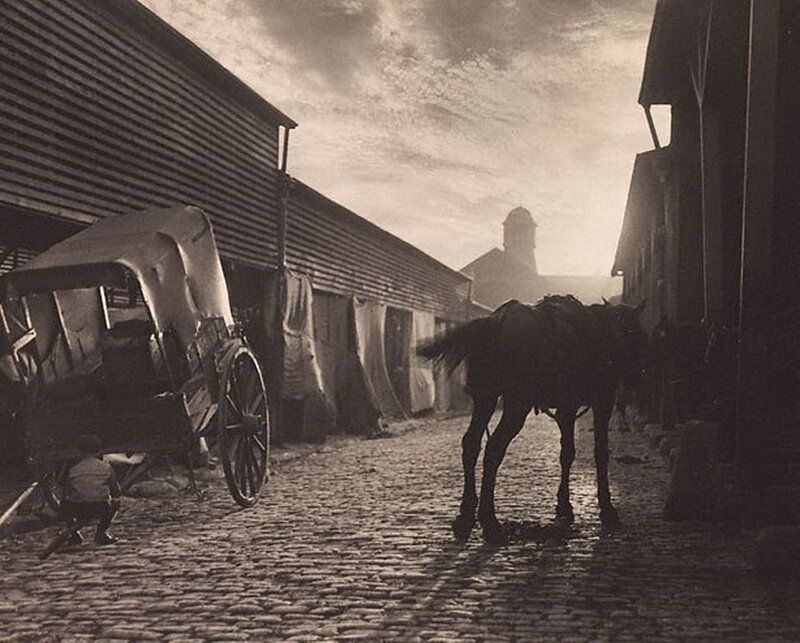
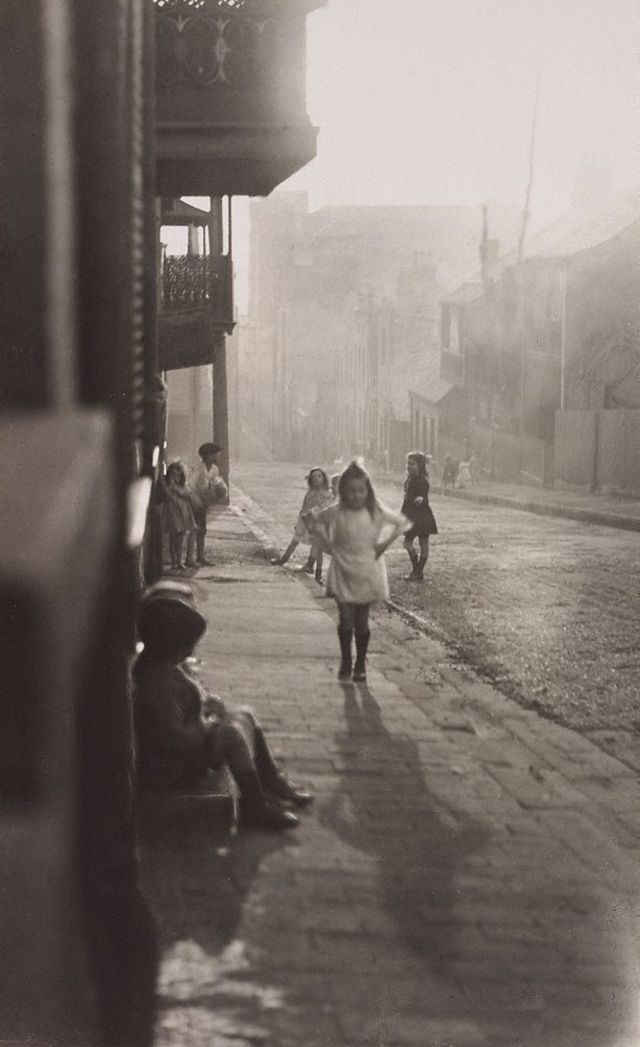
Working-class neighbourhoods like Surry Hills gave Cazneaux some of his most candid material. In 1906, he photographed a man lighting up on Albion Street — a small, unhurried moment that tells you everything about the pace of life in those back streets. That same year, he turned his lens on Paddy’s Market, one of Sydney’s oldest and busiest trading spots.
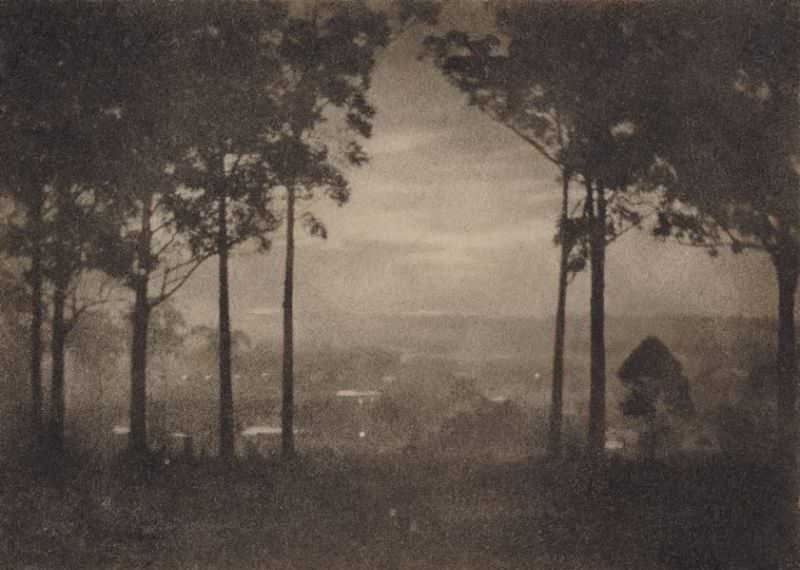
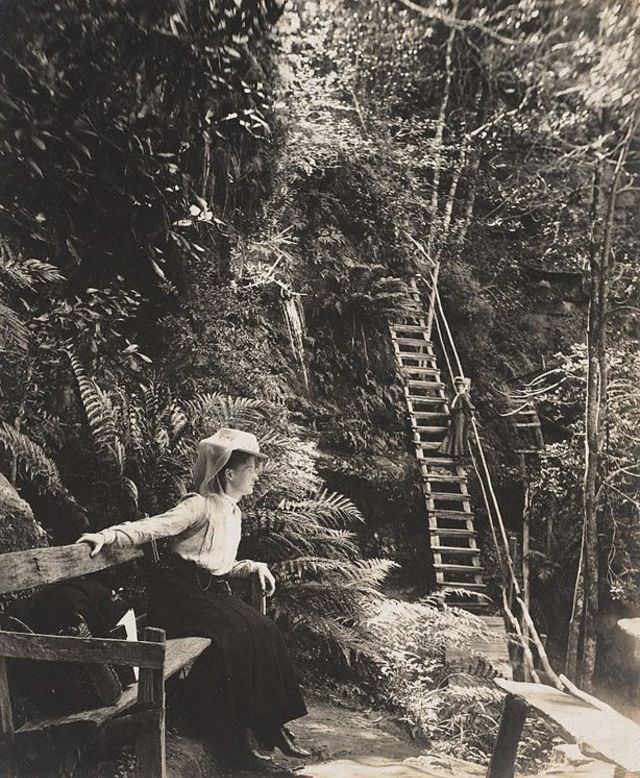
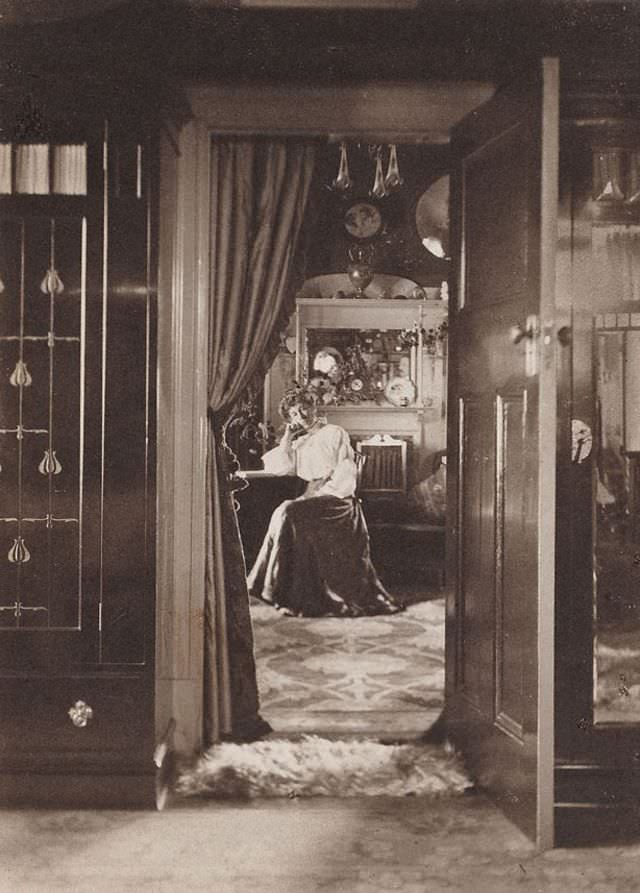
By 1908, Cazneaux was exploring both the city and the countryside. He travelled to Katoomba in the Blue Mountains, capturing the dramatic landscape that attracted visitors from across New South Wales. Back in Sydney, he photographed domestic interiors — quiet rooms with seated women, soft light, and the stillness of private life.
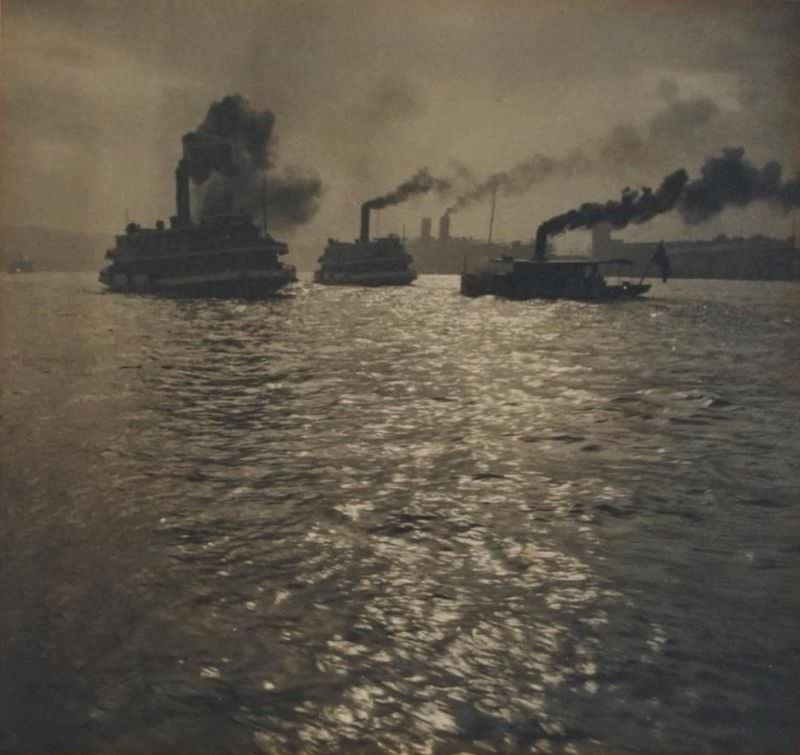
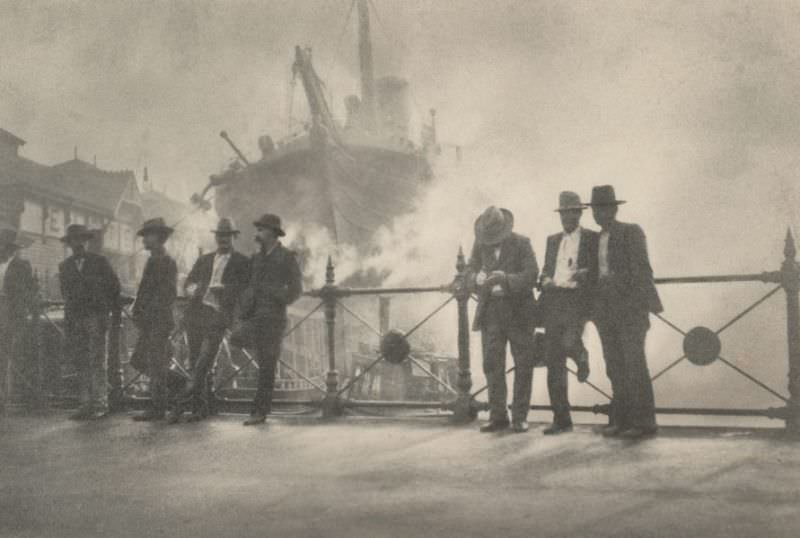
Circular Quay was a constant draw for Cazneaux. The harbour was the commercial and social heart of Sydney — ships came and went, dock workers loaded cargo, and the light off the water shifted dramatically at dusk. He photographed it repeatedly over several years, each time catching a different mood.
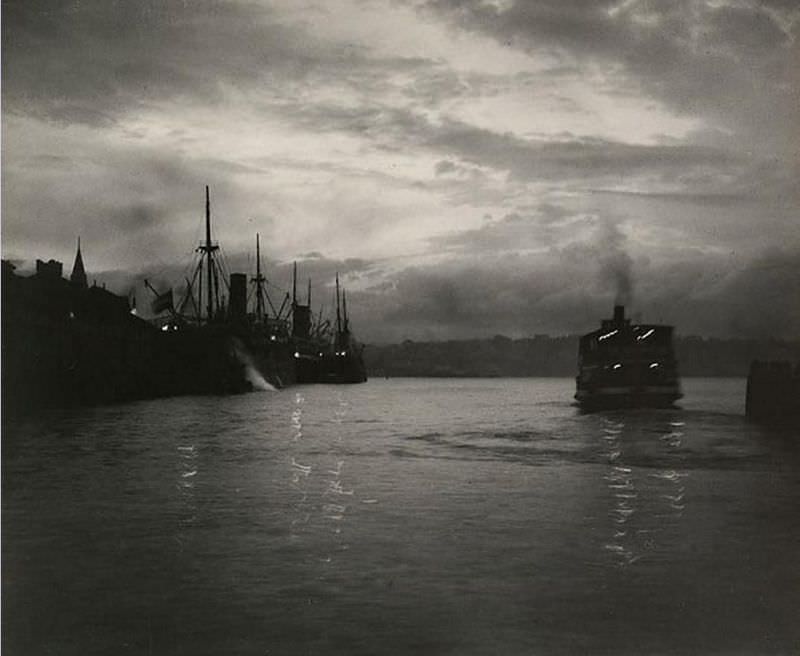
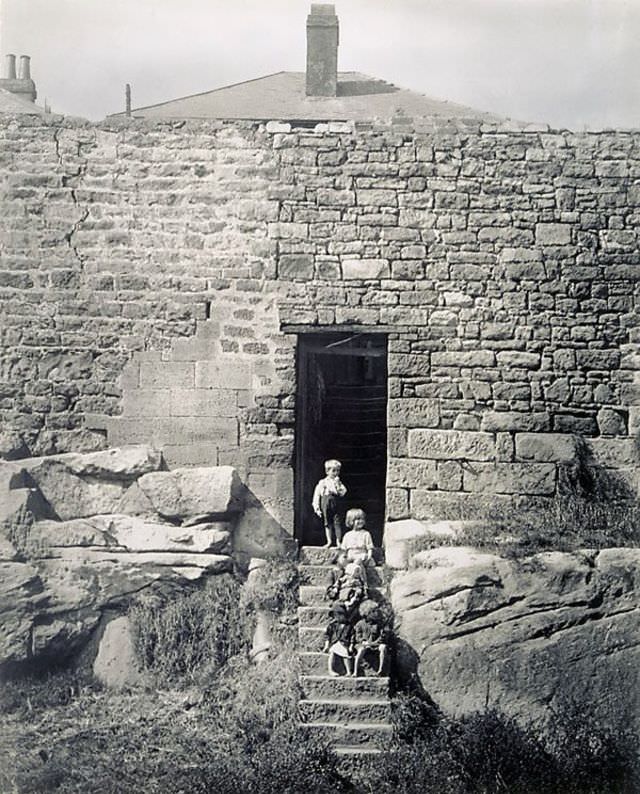
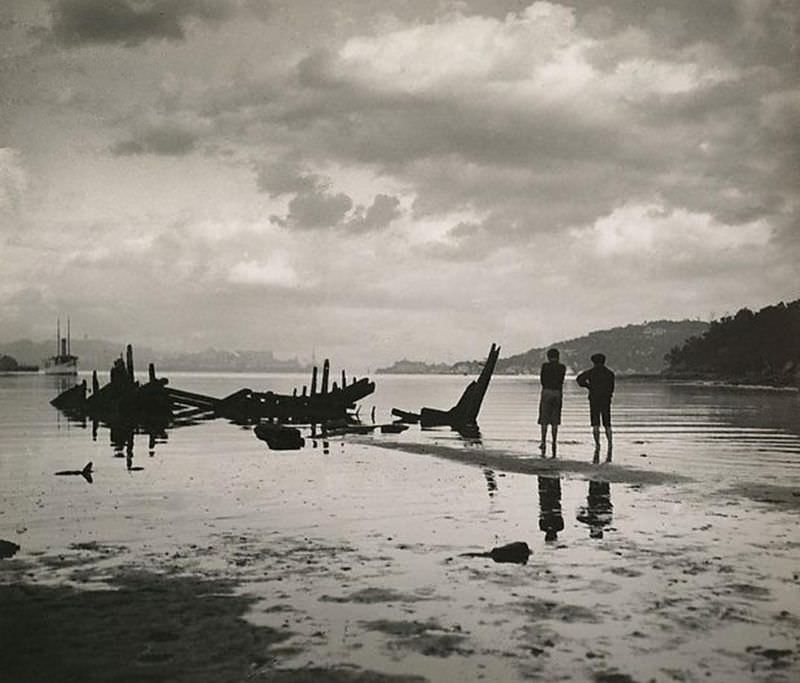
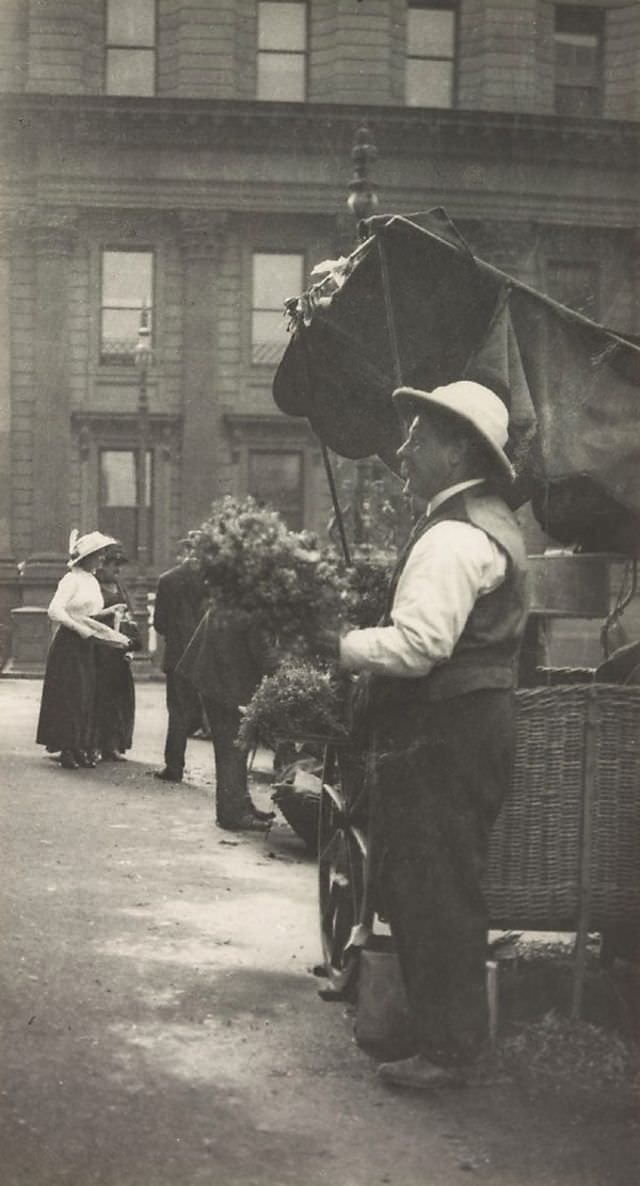
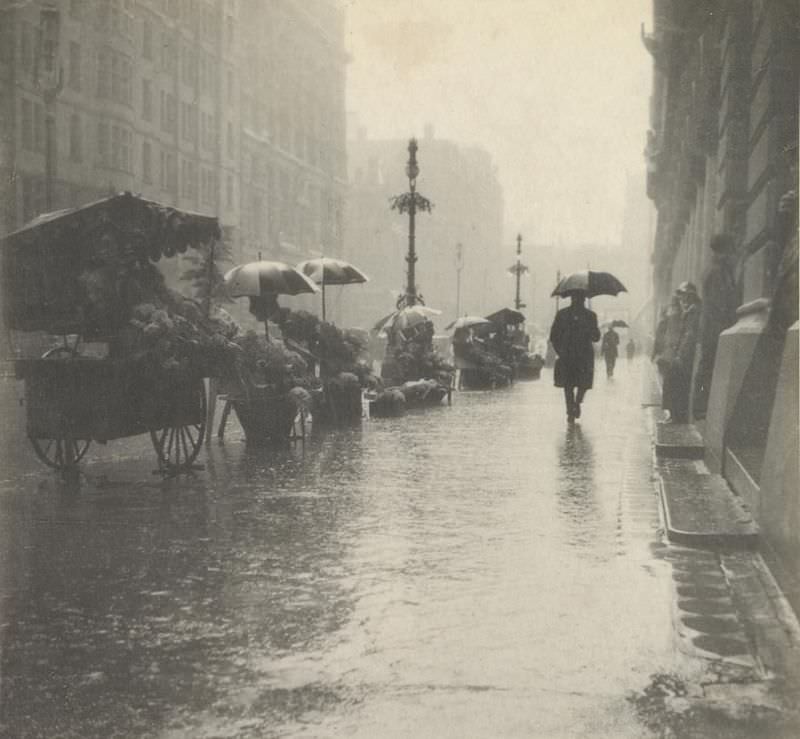
Around 1910, Cazneaux documented the working waterfront and the city’s commercial streets. Wharfies laboured at Circular Quay while ships moved in and out of the harbour. Nearby, a flower seller set up at Macquarie Place, and pedestrians navigated Spring Street in the shadow of Pitt Street’s buildings.
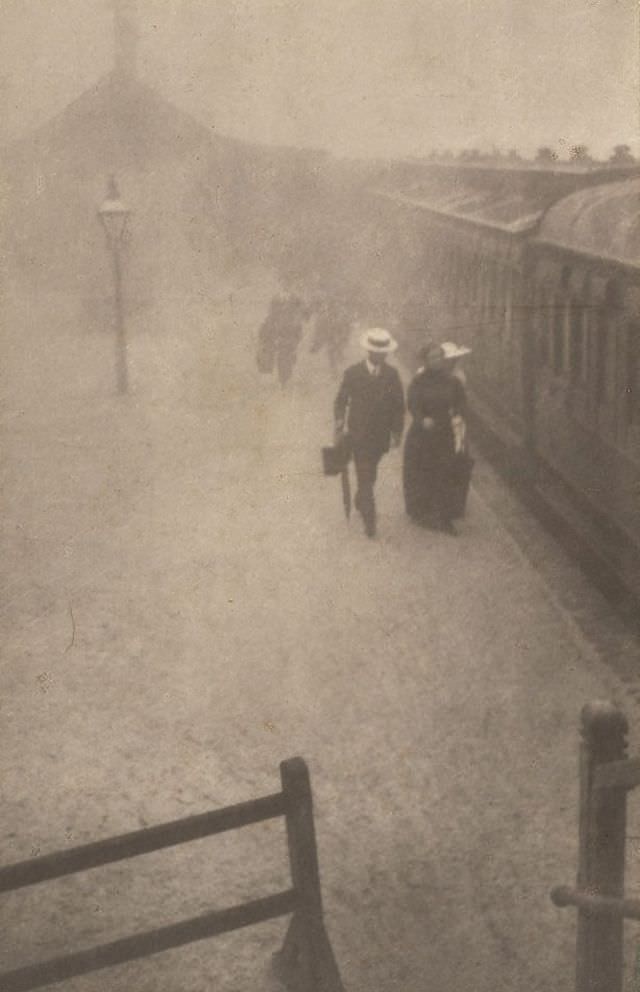
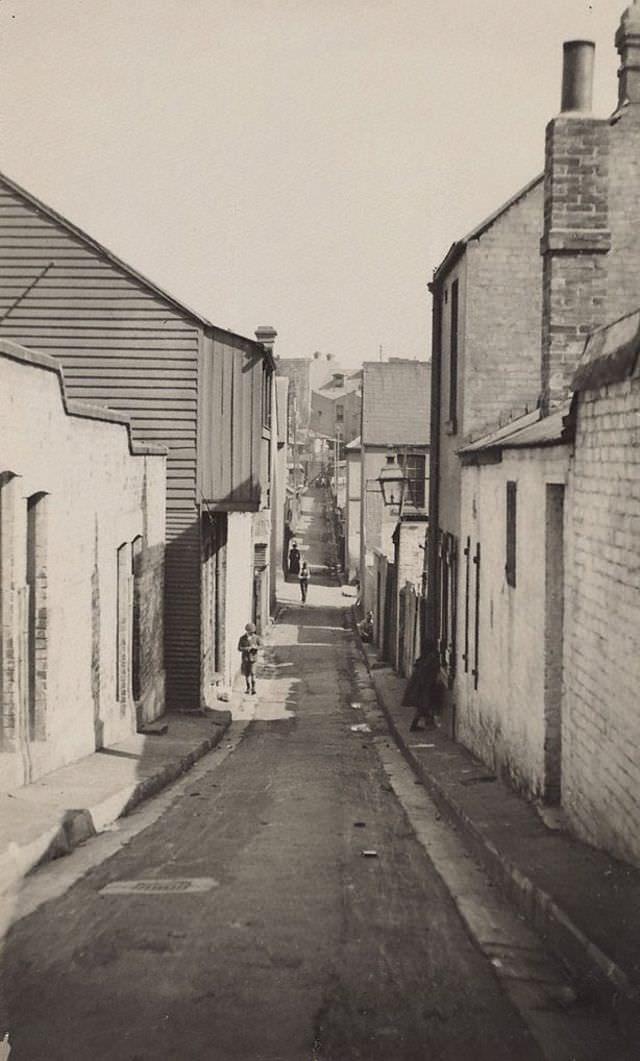
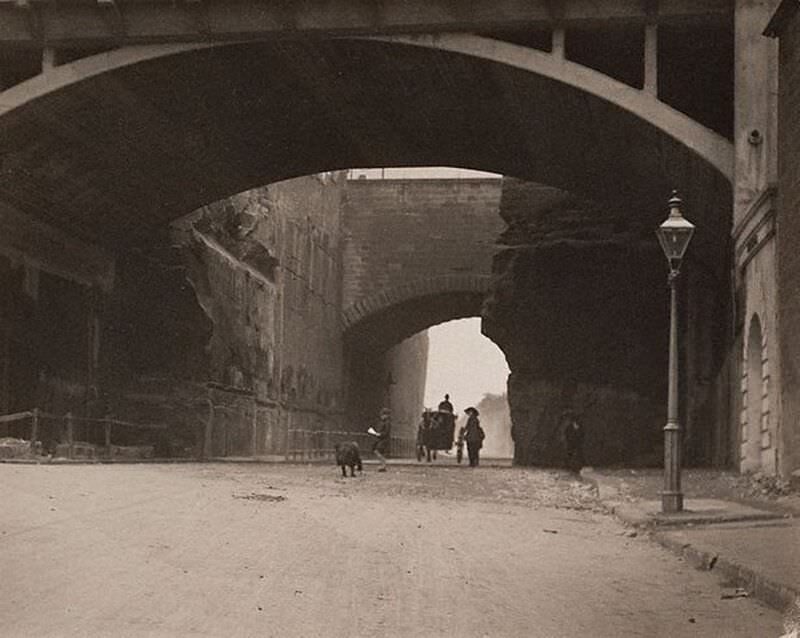
Sydney’s older architecture still dominated the skyline in the early 1910s. Cazneaux photographed the Old Treasury building and the narrow Argyle Cut — a road carved through sandstone rock in The Rocks district — preserving structures that were already beginning to disappear as the city modernised. Meanwhile, in suburbs like Surry Hills, life played out in alleyways and on terraced streets.
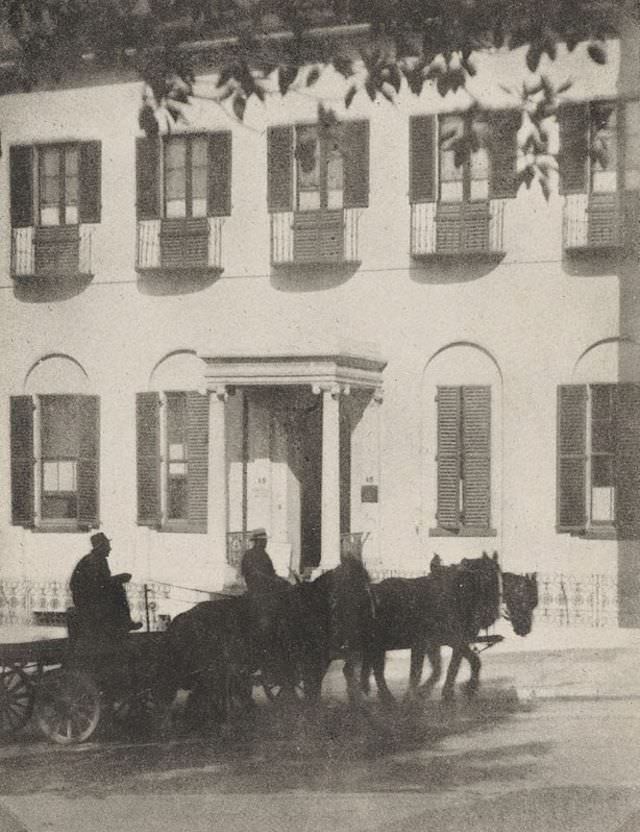
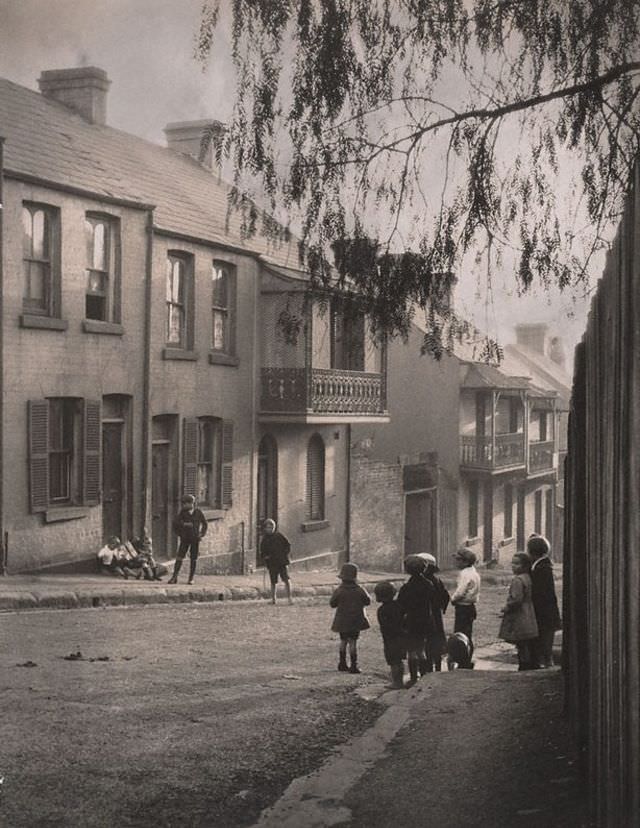
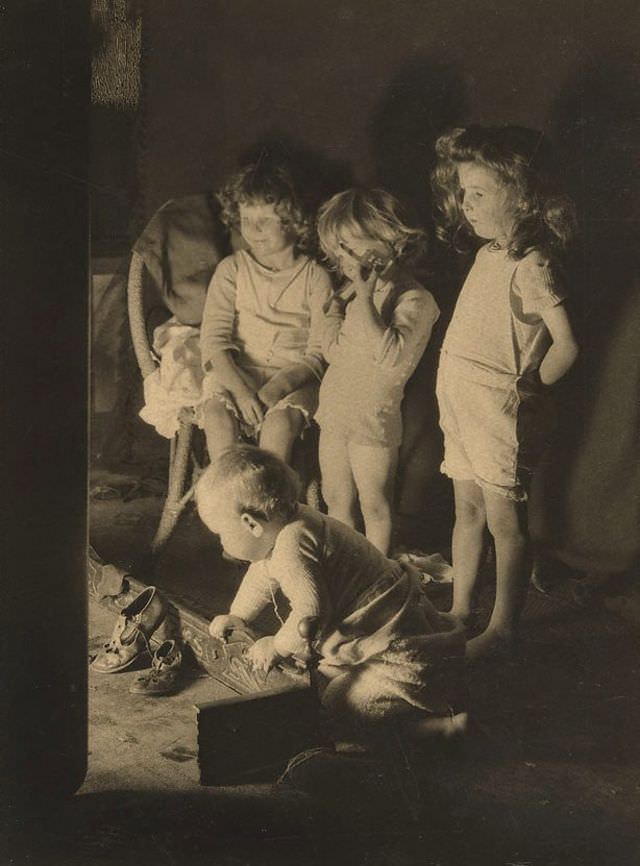
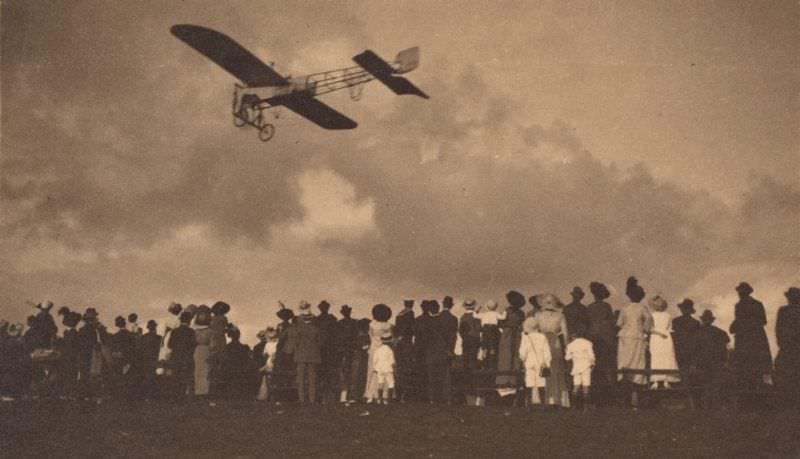
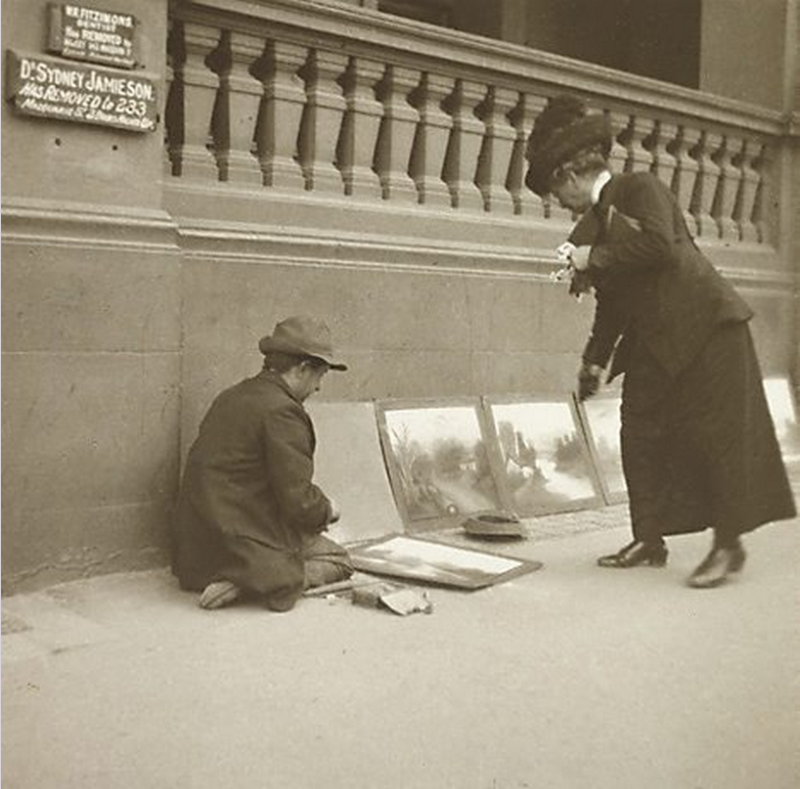
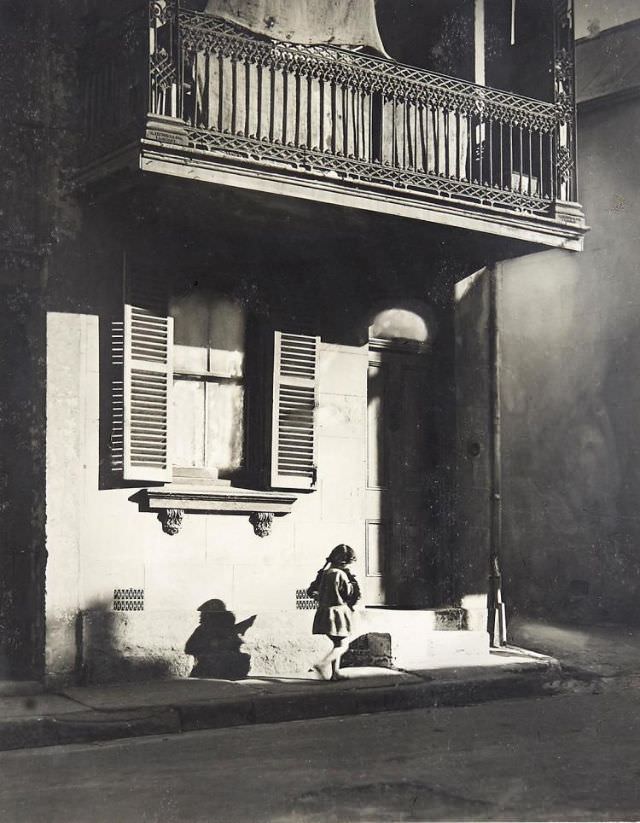
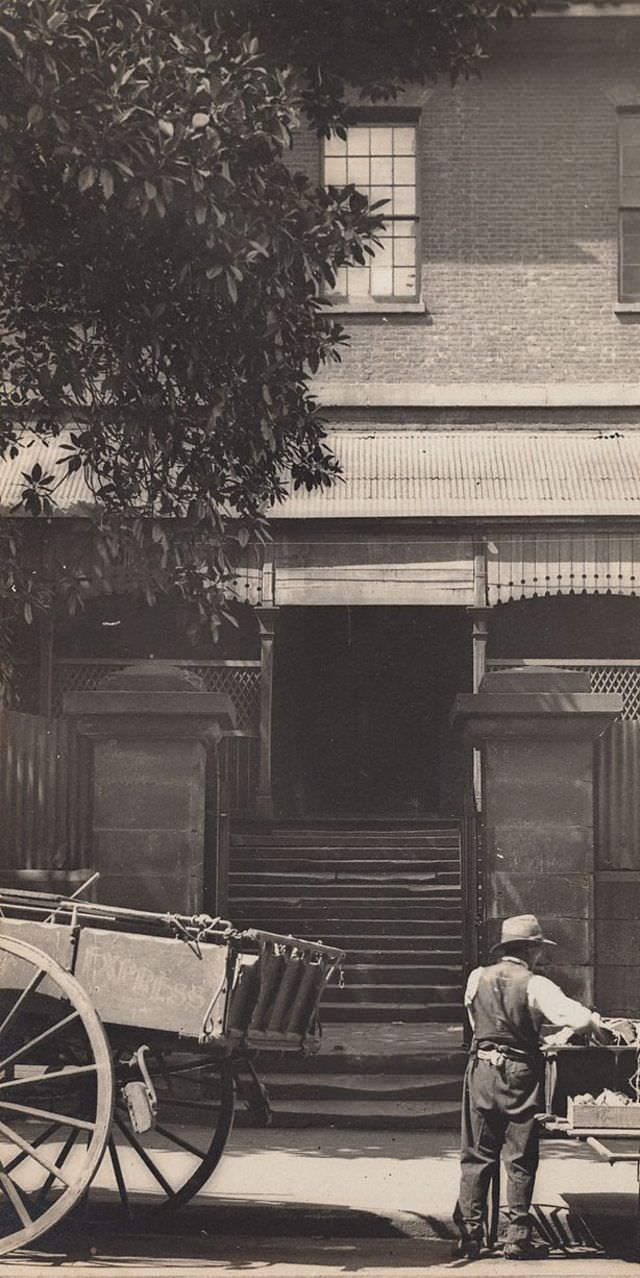
In 1914, Cazneaux captured one of Australia’s most talked-about events — aviator Joseph Joel Guillaux’s flight over Sydney. Guillaux, a French pilot, made the first airmail flight in Australia that year, and Cazneaux was there to photograph the aircraft in the sky. That same year, he also documented more ordinary scenes: a pavement artist at work, a child being readied for bed, and the busy streets of Surry Hills.
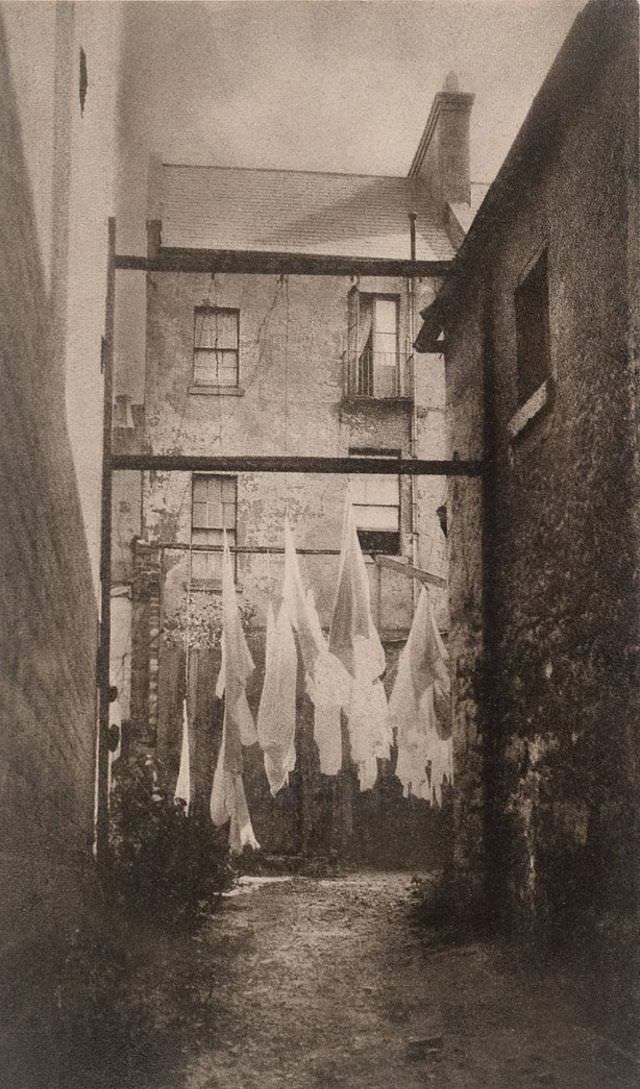
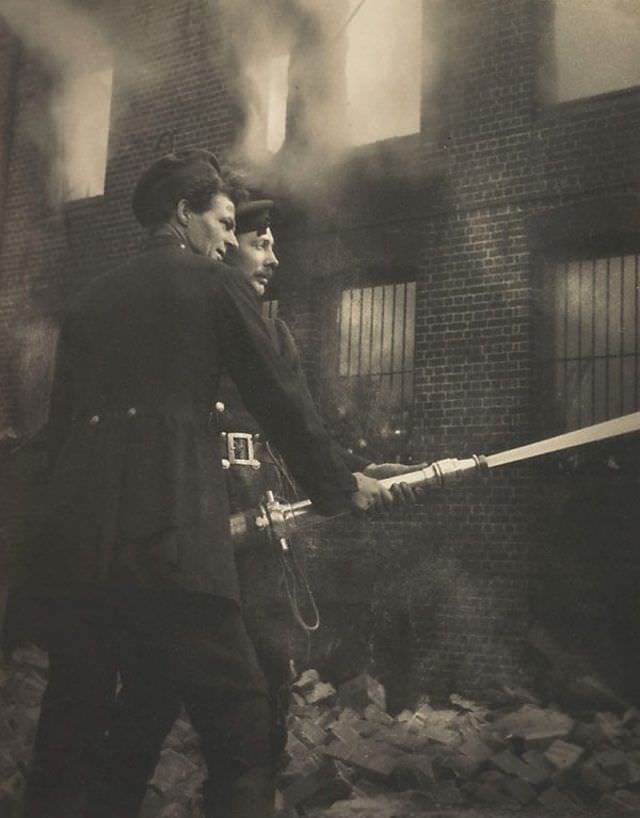
Washing lines strung between houses in Woolloomooloo became one of Cazneaux’s most striking compositions. The geometric patterns formed by hanging laundry across narrow laneways showed his eye for finding visual structure in everyday working-class life. In 1919, he photographed something far less routine — a fire at Redfern, with boys watching a hose being directed at the blaze.
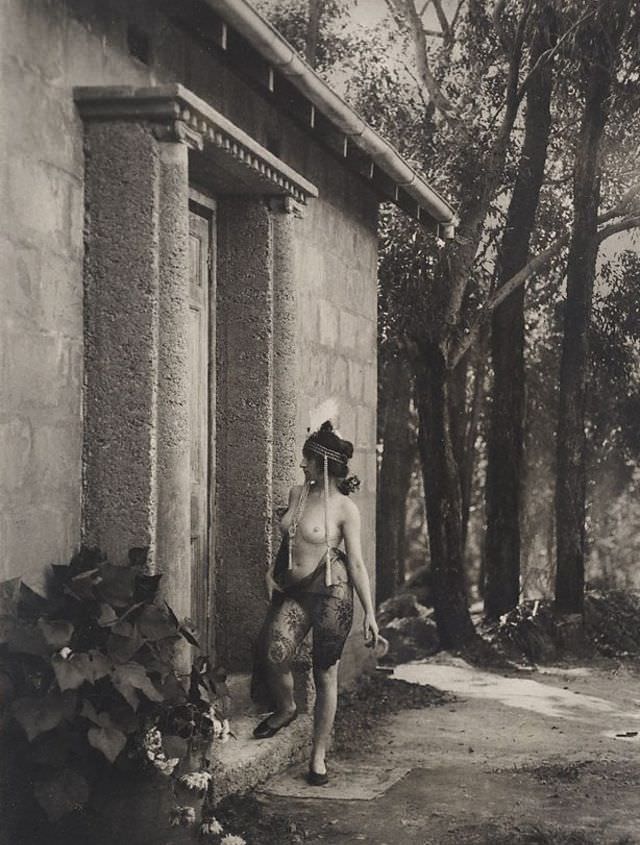
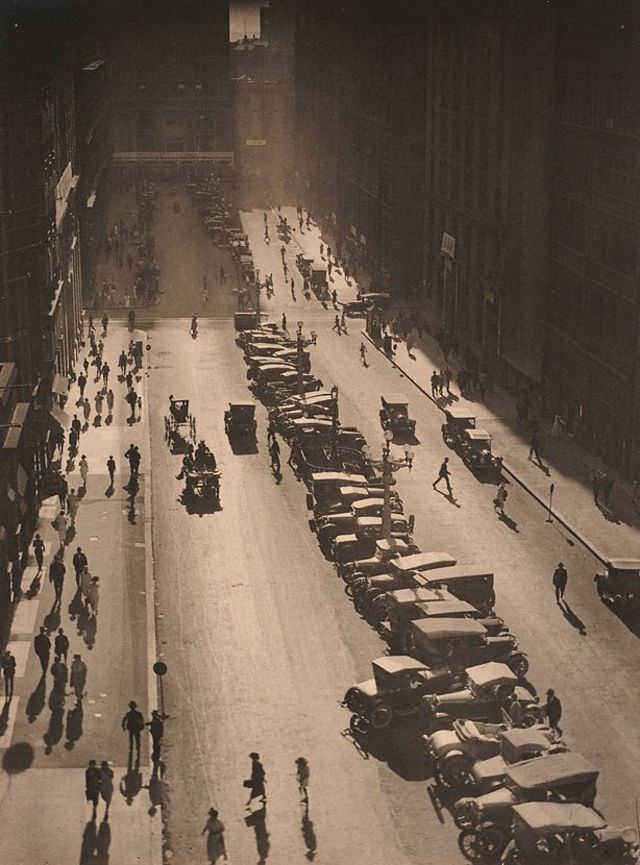
The 1920s brought new subjects. Cazneaux photographed a model at a studio door in Springwood, the old high school on Castlereagh Street, and Woolloomooloo Bay from the waterfront. In 1925, he shot Martin Place from a high vantage point, framing the deep corridor of buildings as a canyon of stone and shadow.
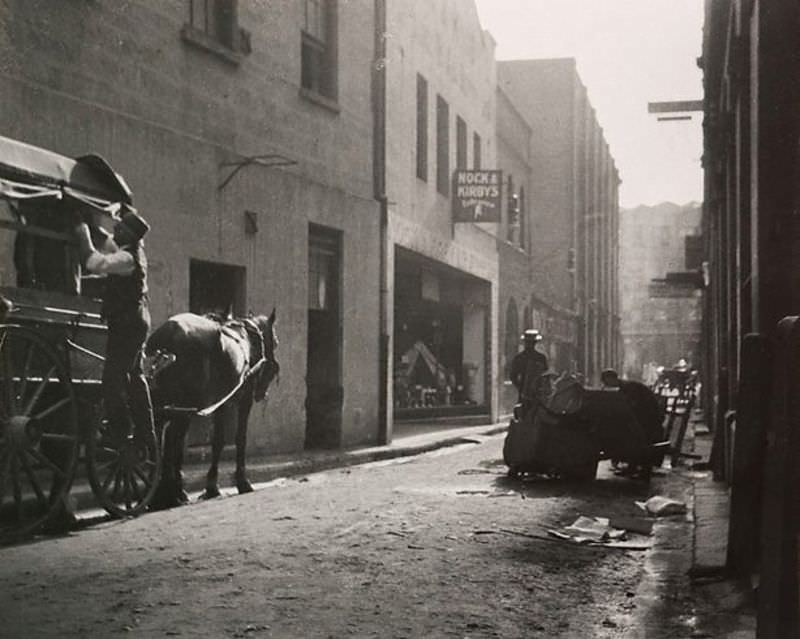
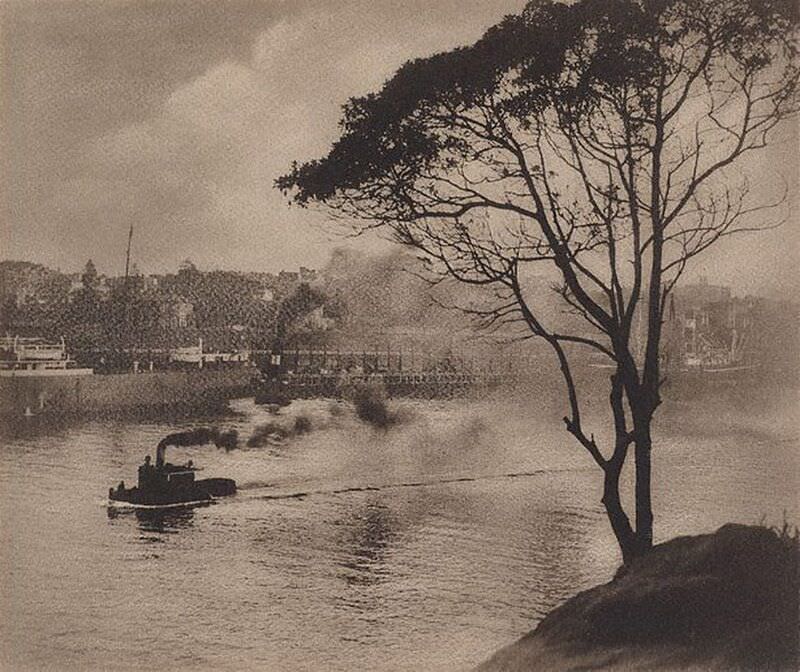
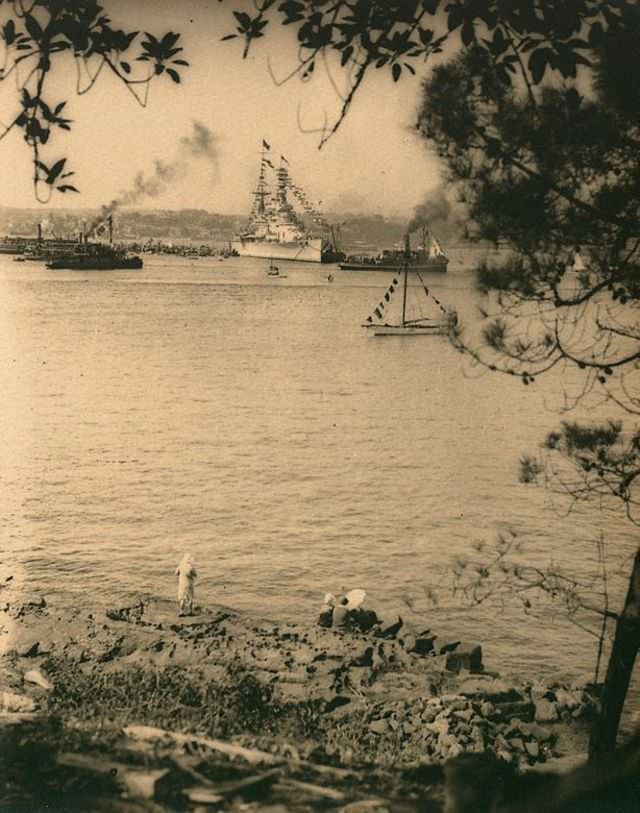
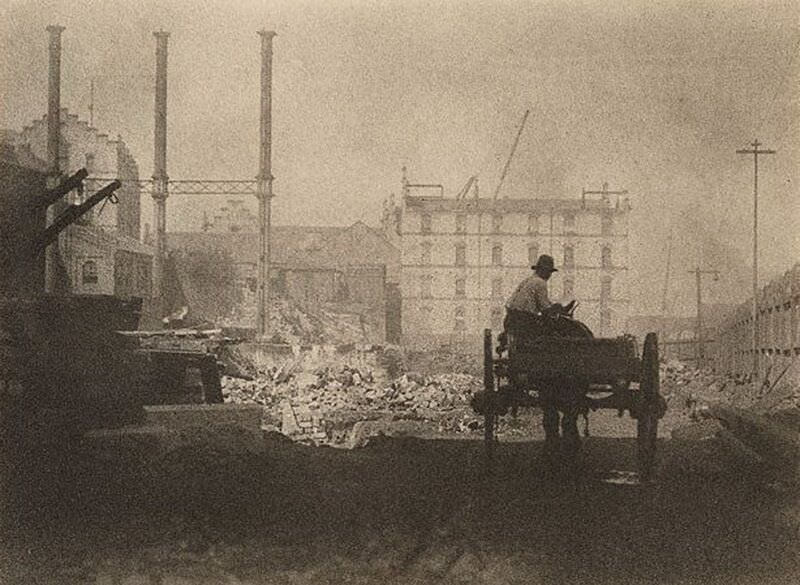
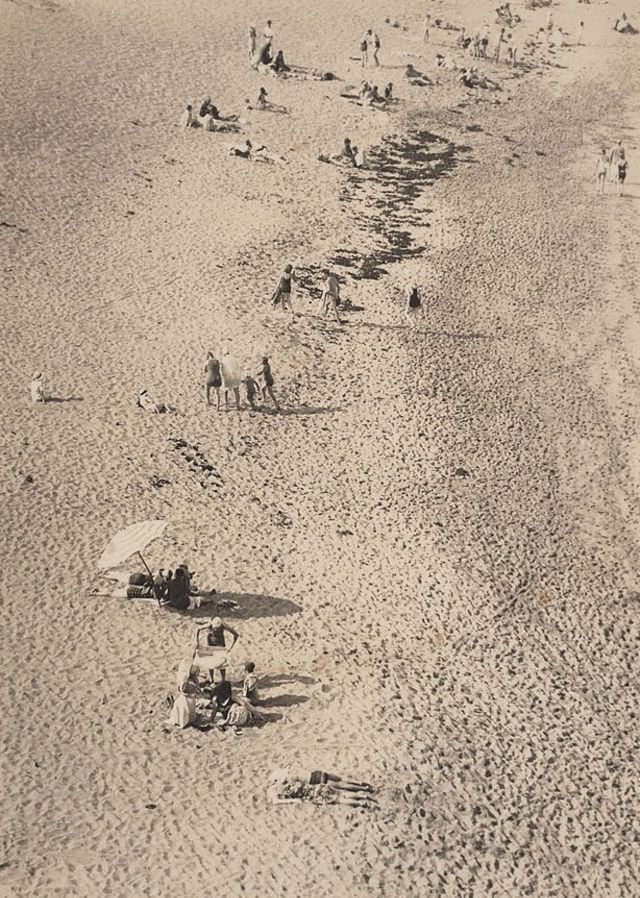
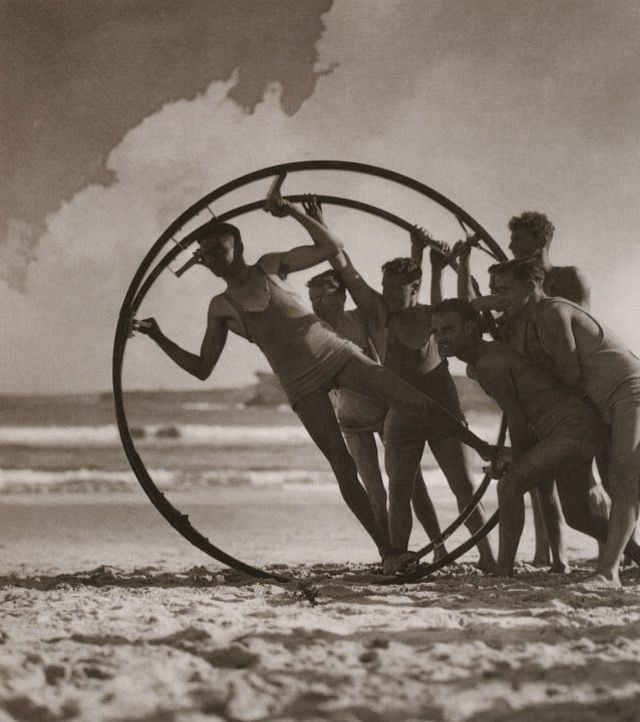
In 1927, the Duke and Duchess of York visited Sydney, and Cazneaux photographed the HMS Renown from Kurraba Point as the royal ship sat in Sydney Harbour. A year later, he turned his camera on demolition work — a reminder that the city was constantly tearing down and rebuilding. By the late 1920s, Bondi Beach had become a popular gathering place, and Cazneaux captured both the crowds and the surf.
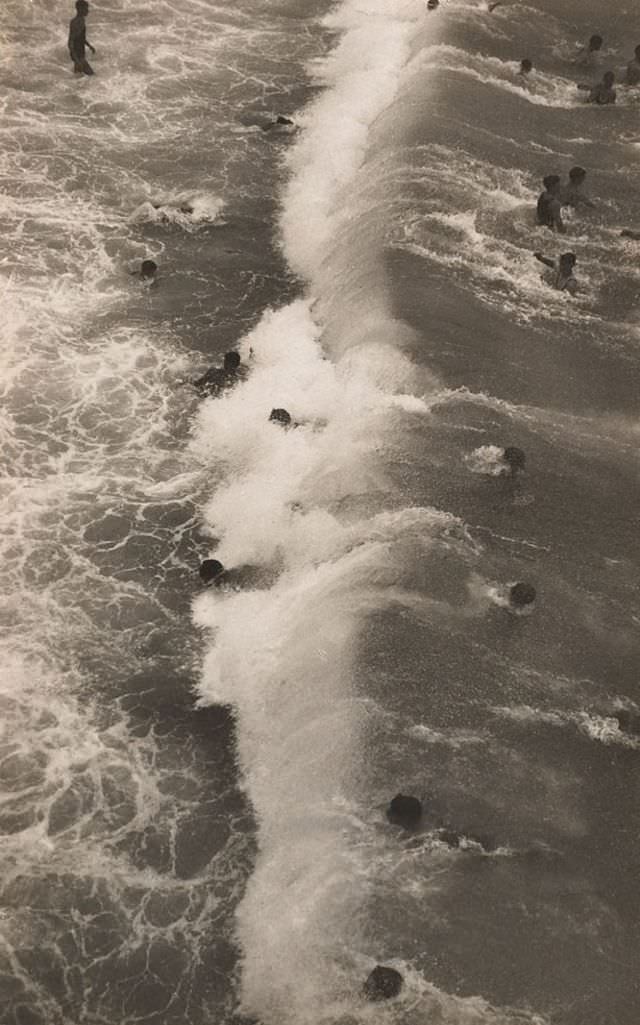
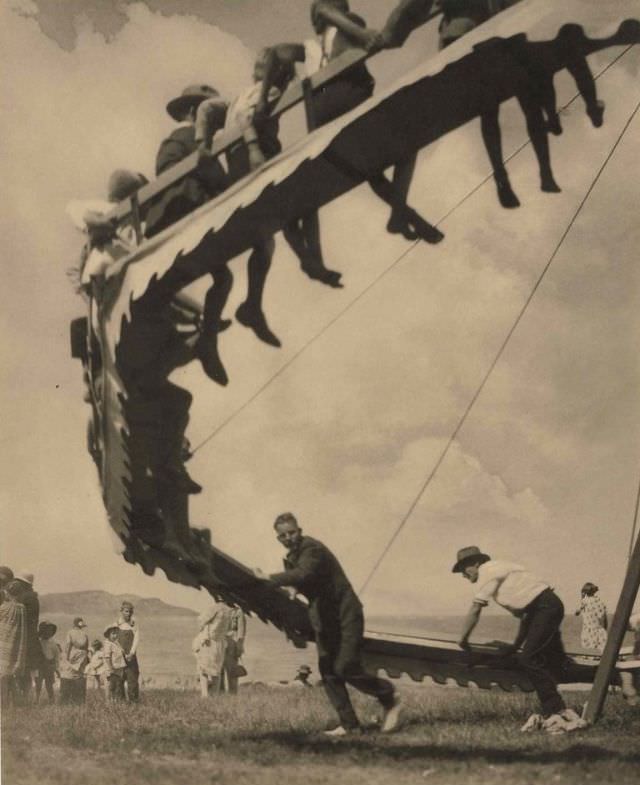
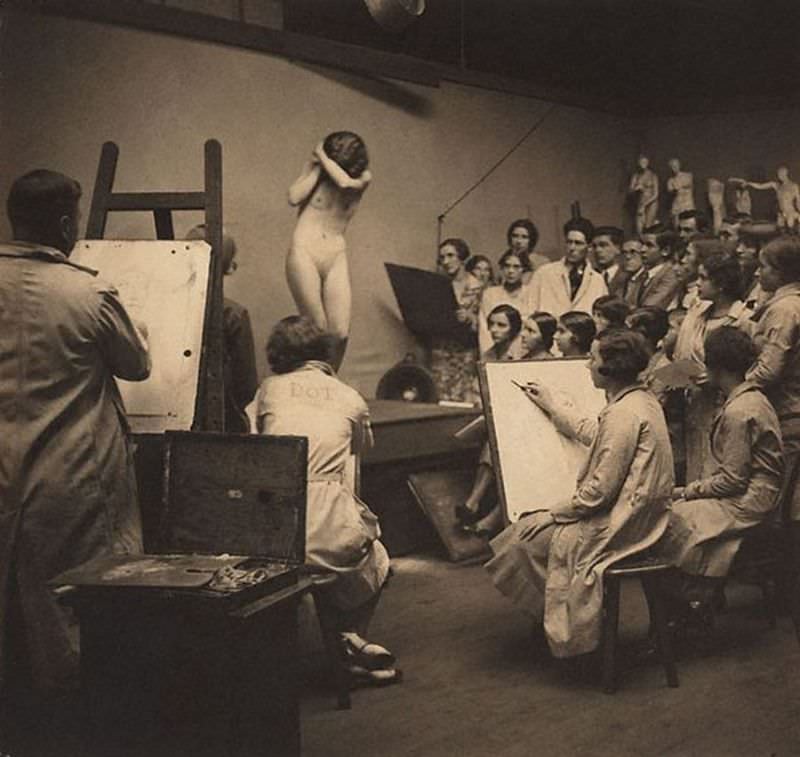
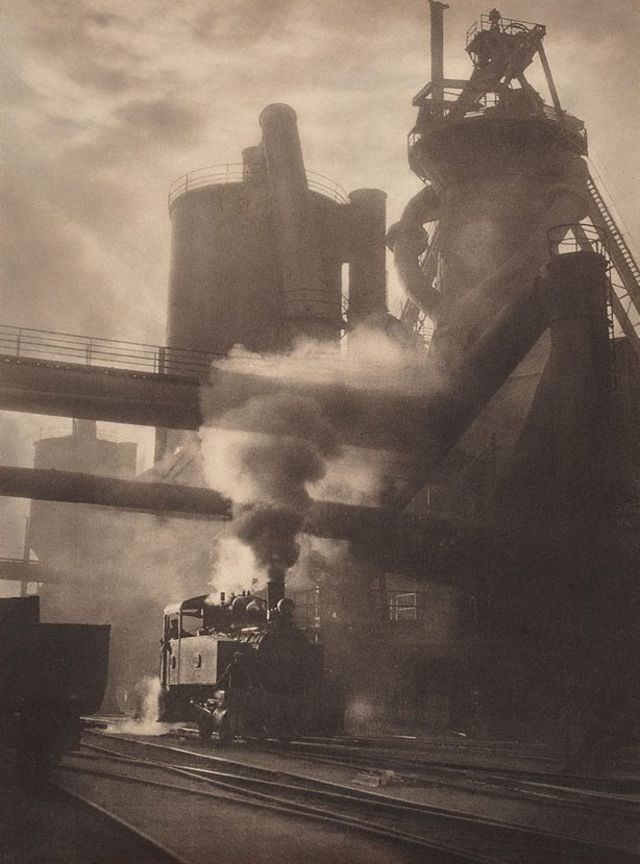
Into the 1930s, Cazneaux kept widening his range. He photographed a life drawing class at the Sydney Art School in 1931, surfers in the water, mail being sorted or delivered, and the everyday rhythm of Darlinghurst Road. He also travelled to Newcastle, where he photographed the BHP steelworks — massive industrial machinery wreathed in steam under bright sunlight.
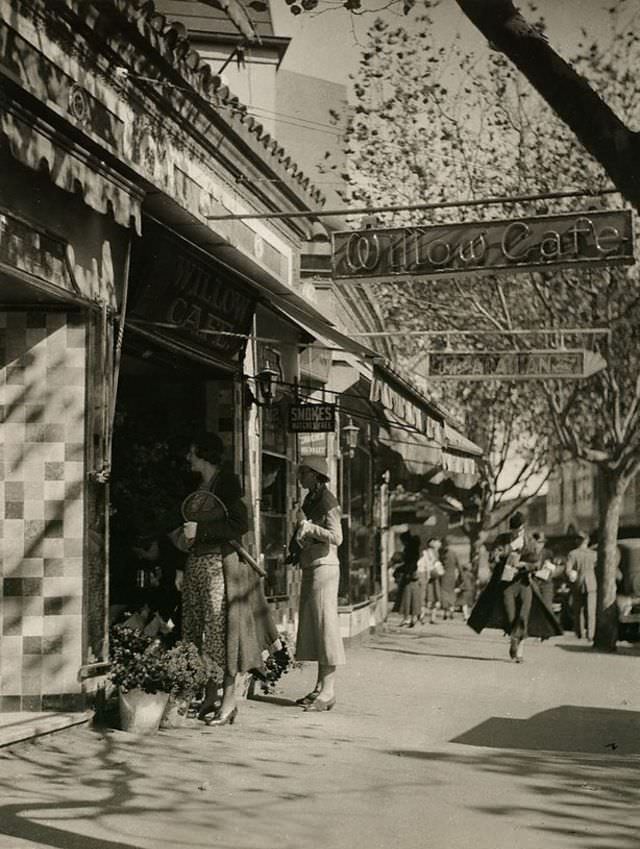
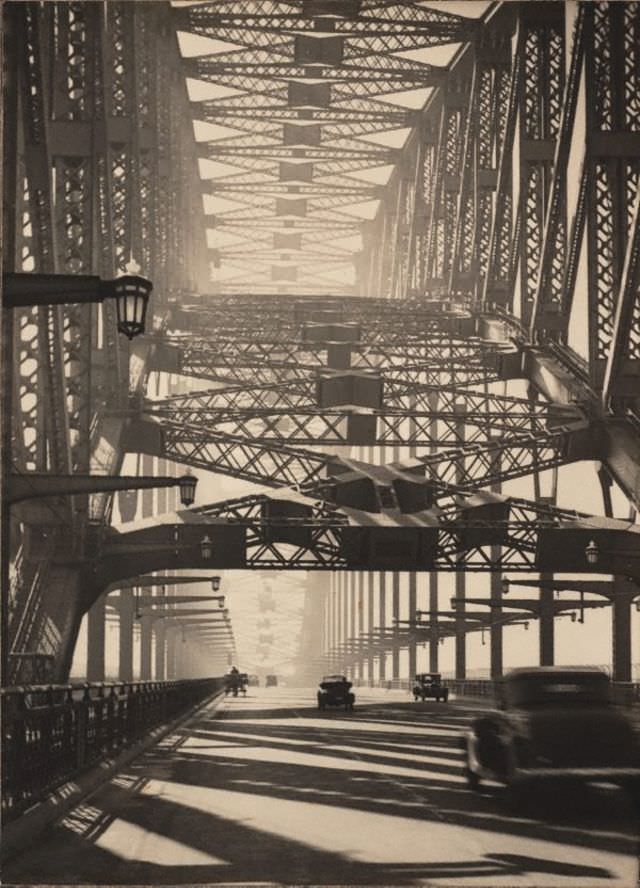
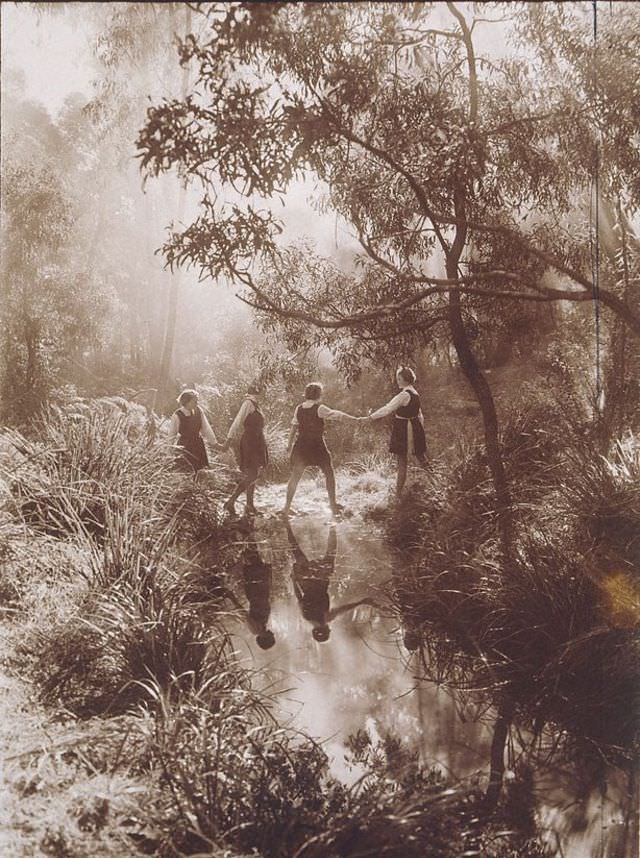
By 1934, the Sydney Harbour Bridge — completed in 1932 — had become a landmark worth photographing from every angle. Cazneaux also documented schoolgirls crossing a path at Frensham School in Mittagong, a quiet rural scene far removed from the noise and steel of the city. Across three decades, his camera moved between the industrial and the intimate, the public and the private, building a record of Australian life that no other photographer of his era matched.





Title should be changed to Life of Sydney in the Early 20th Century
There’s some really great photos there.
These are bloody amazing shots !
Wow. I can see Roie and Darcy In Surrey Hills and all of Ruth Parks characters. I can see the Sydney Push at the cut. And from the outside of Norma Lindsay’s studio I imagine the cranky pudding.
These photos of Sydney are amazing.
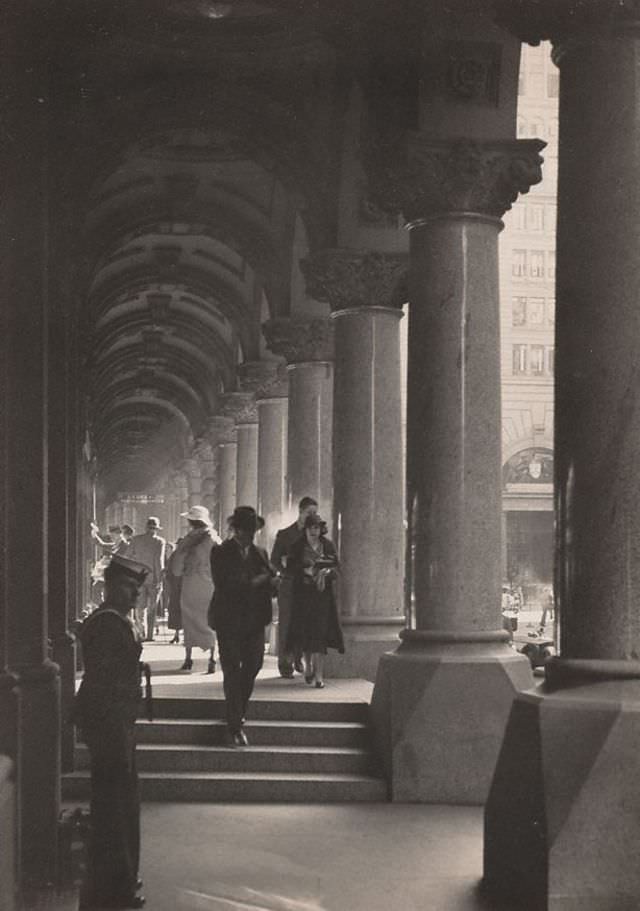
I think the first photo is somewhat mislabelled. It says Bridge St but I believe it is George St looking towards the GPO.