Geisha and maiko have been central figures in Japanese culture for centuries. They are professional entertainers trained in traditional arts — dance, music, conversation, and the careful ritual of pouring tea or sake. Their world is one of discipline and elegance, defined by elaborate kimono, white oshiro makeup, and accessories like paper fans and silk umbrellas. What these colorized photographs reveal, however, is a far less formal side of that world.
These images were taken during Japan’s Meiji era, which ran from 1868 to 1912. It was a period of rapid change. Japan was opening its doors to Western trade and ideas after centuries of isolation. Photography itself was a new technology, and studio portraits of geisha became popular both as souvenirs for foreign visitors and as commercial art sold within Japan.
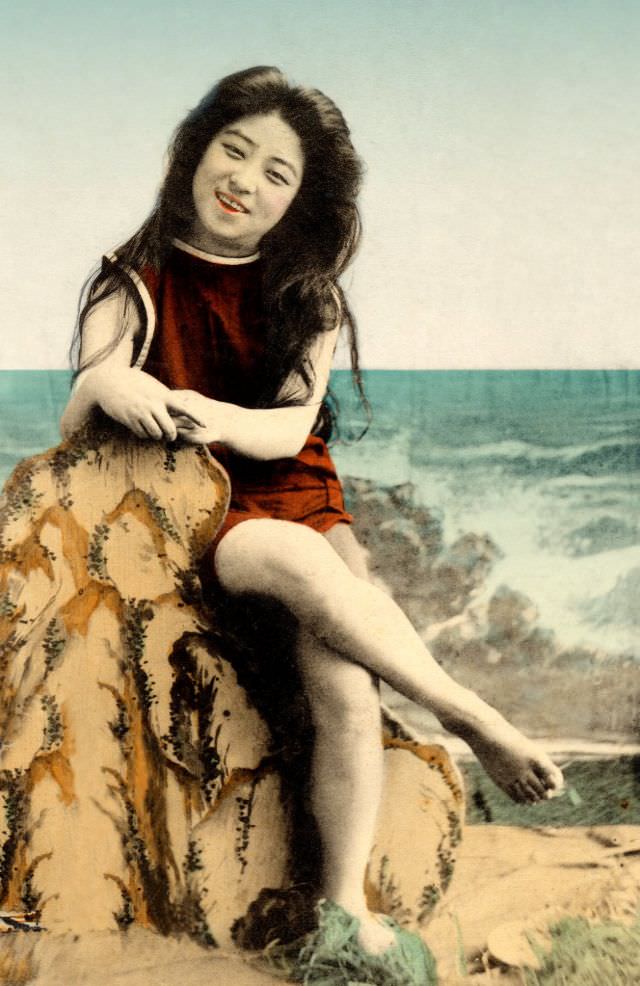
The difference between a geisha and a maiko is worth understanding before looking through these photos. A maiko is an apprentice geisha, typically a young woman still in training. Maiko wear brightly colored, heavily patterned kimono with long, trailing sleeves. Their hair is styled in their own natural locks, pinned and decorated with seasonal ornaments. Geisha, by contrast, wear more subdued kimono and often use wigs rather than their natural hair. The makeup and accessories also differ in subtle but meaningful ways.
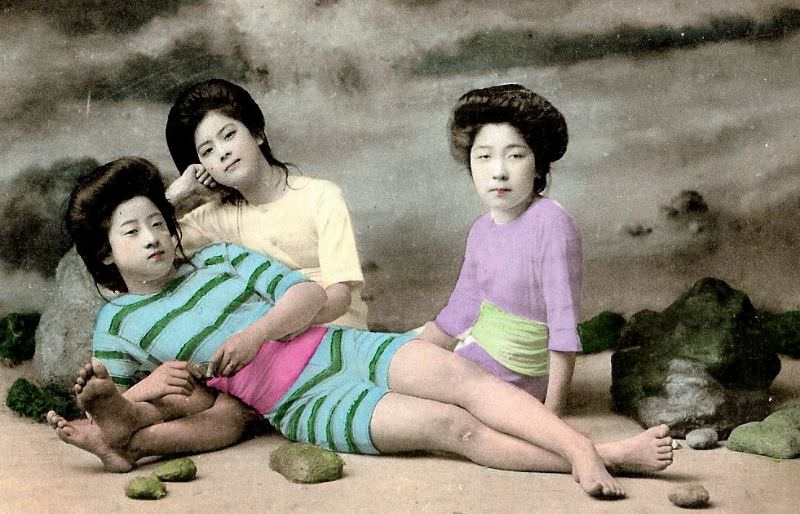
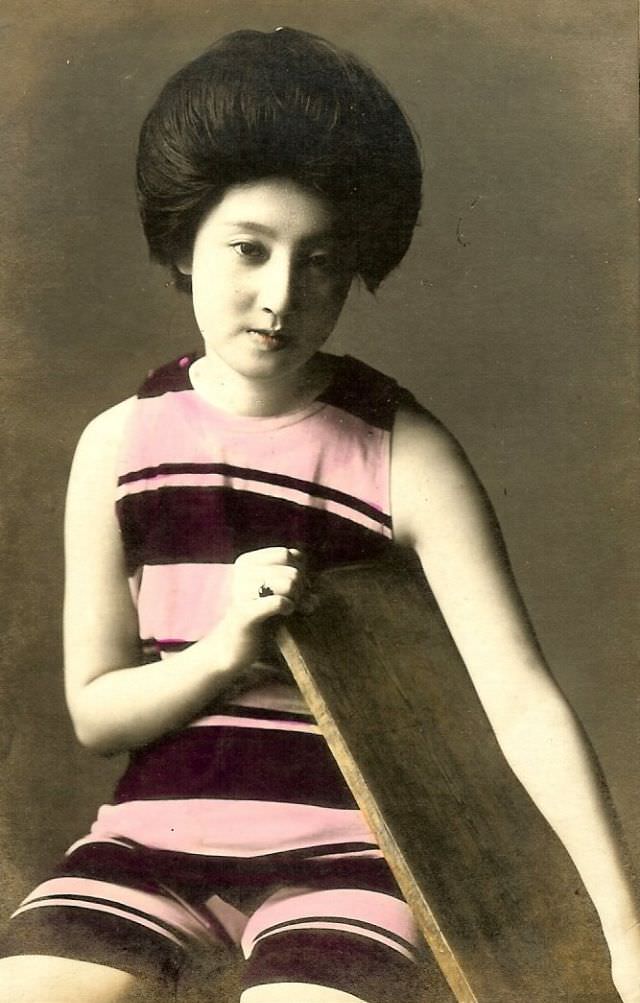
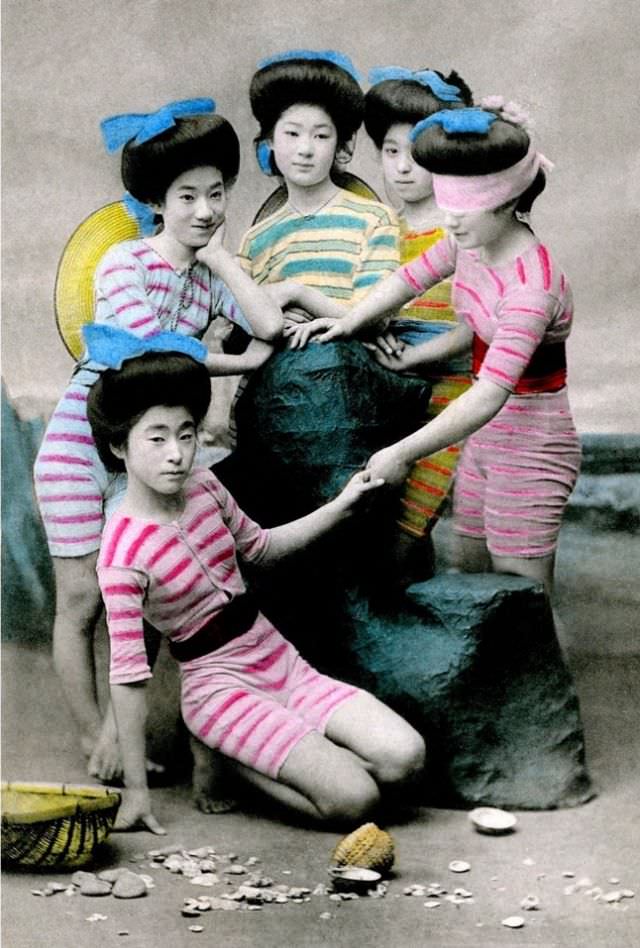
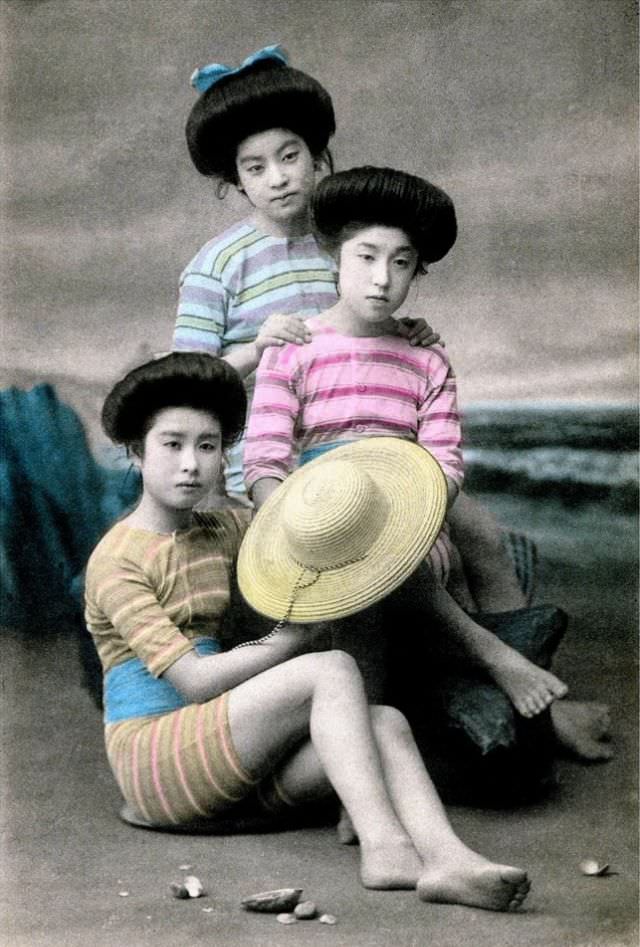
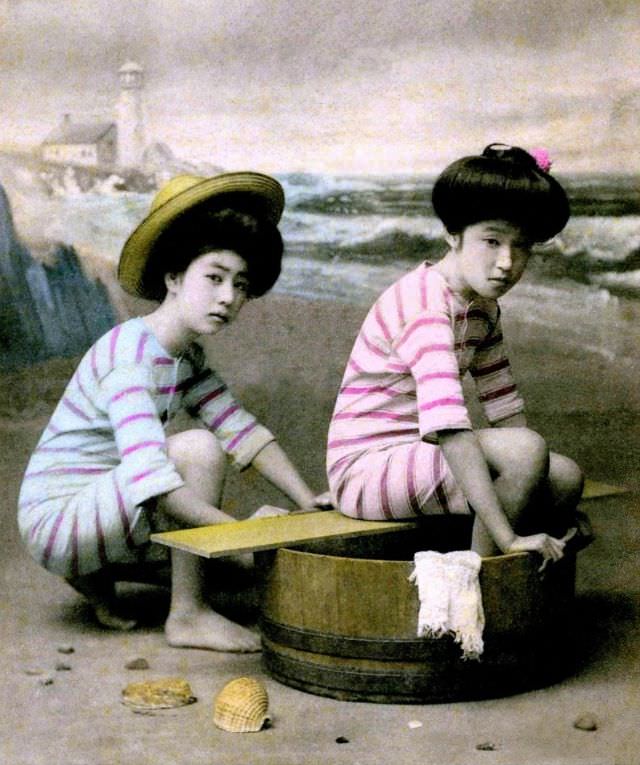
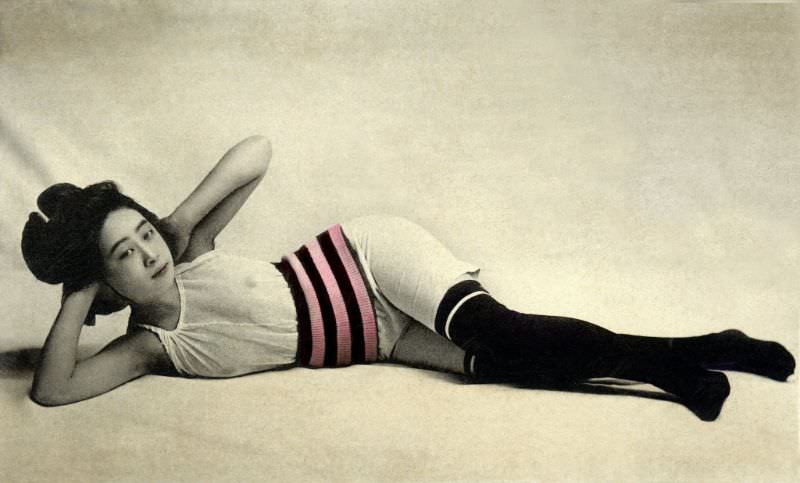
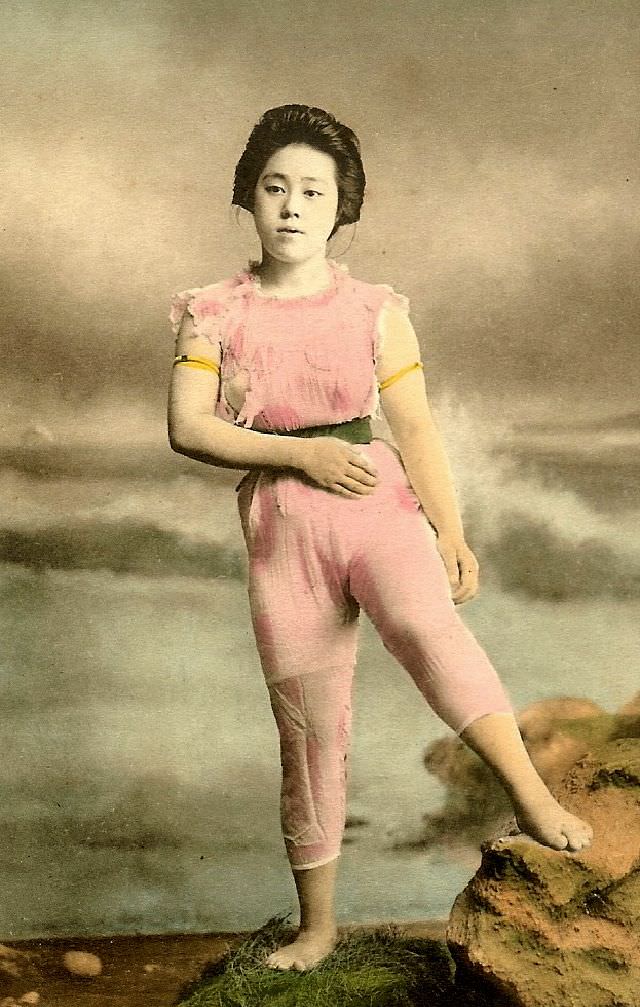
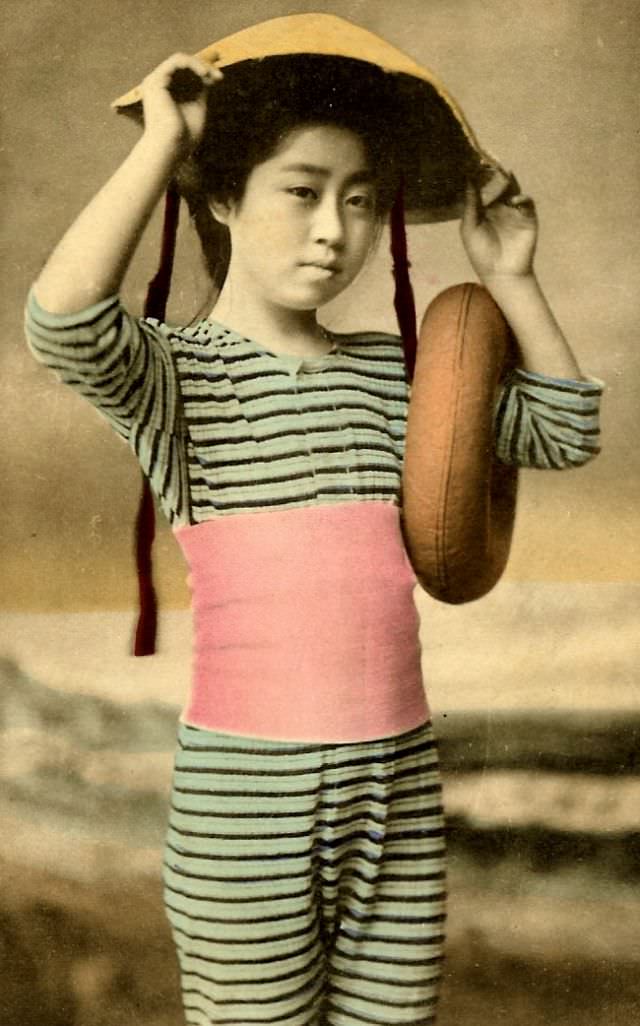
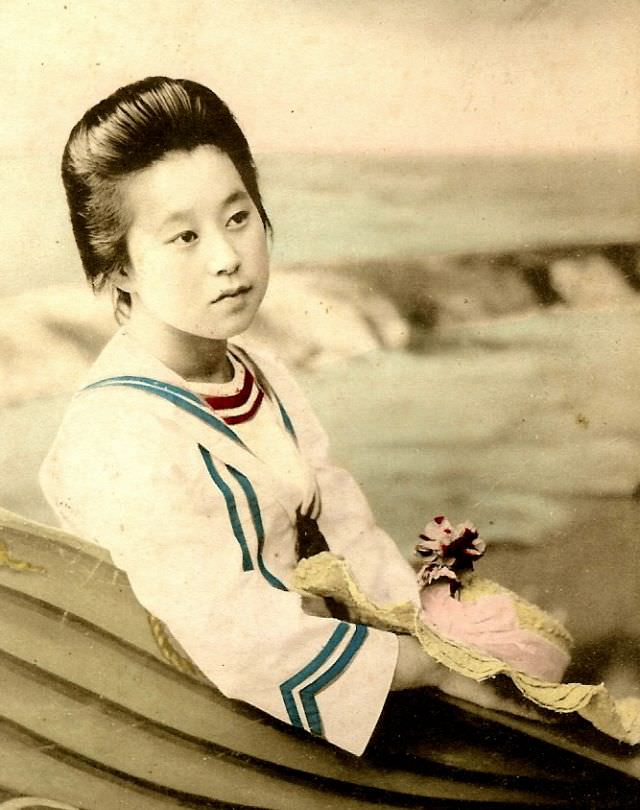
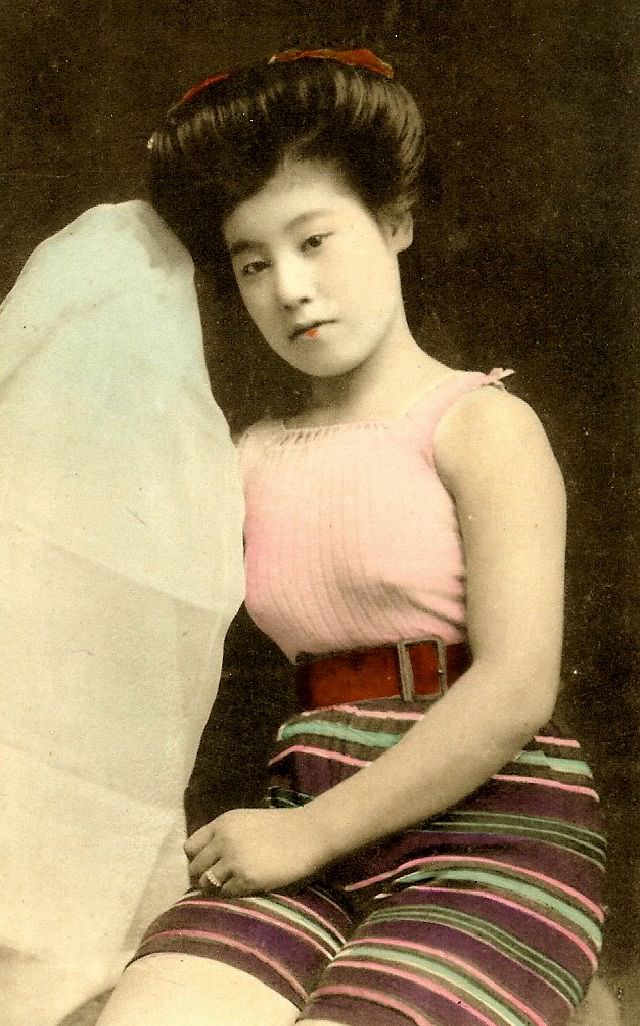
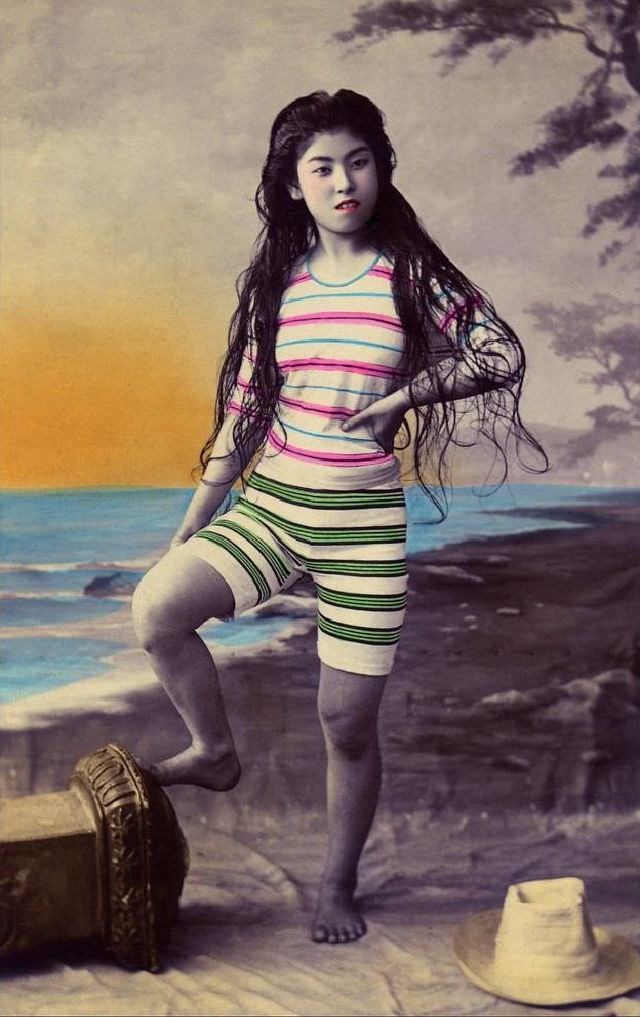
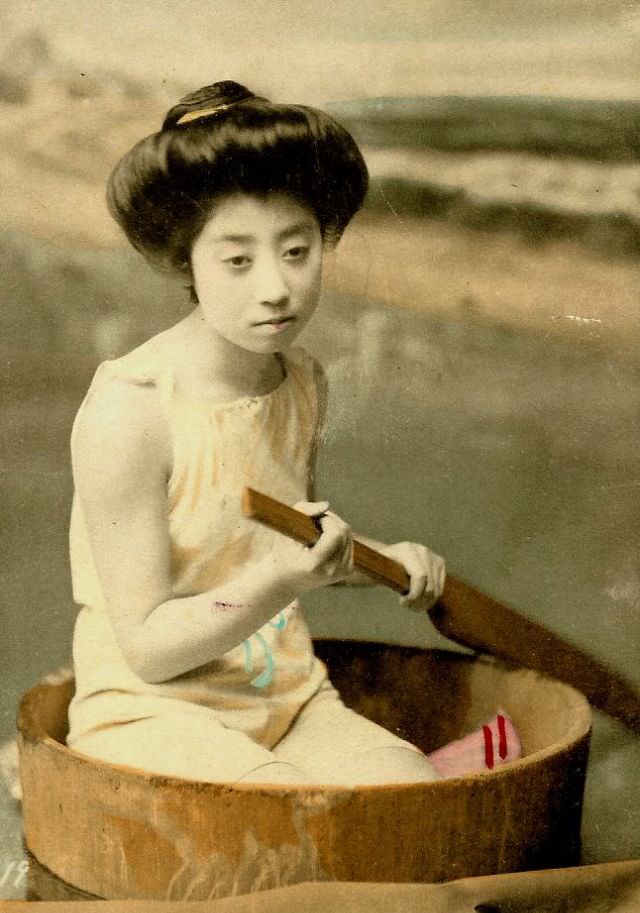
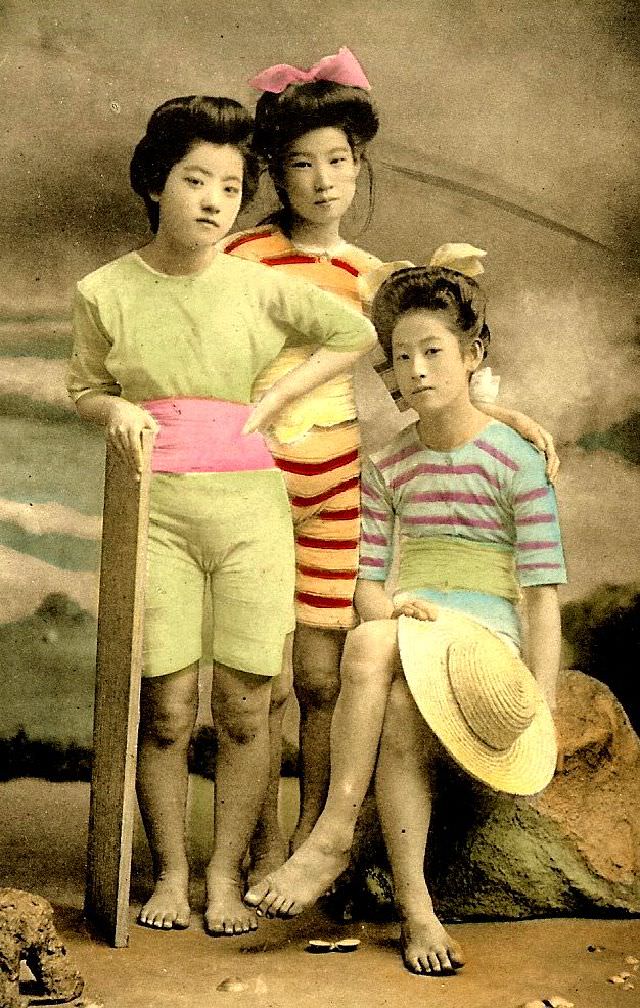
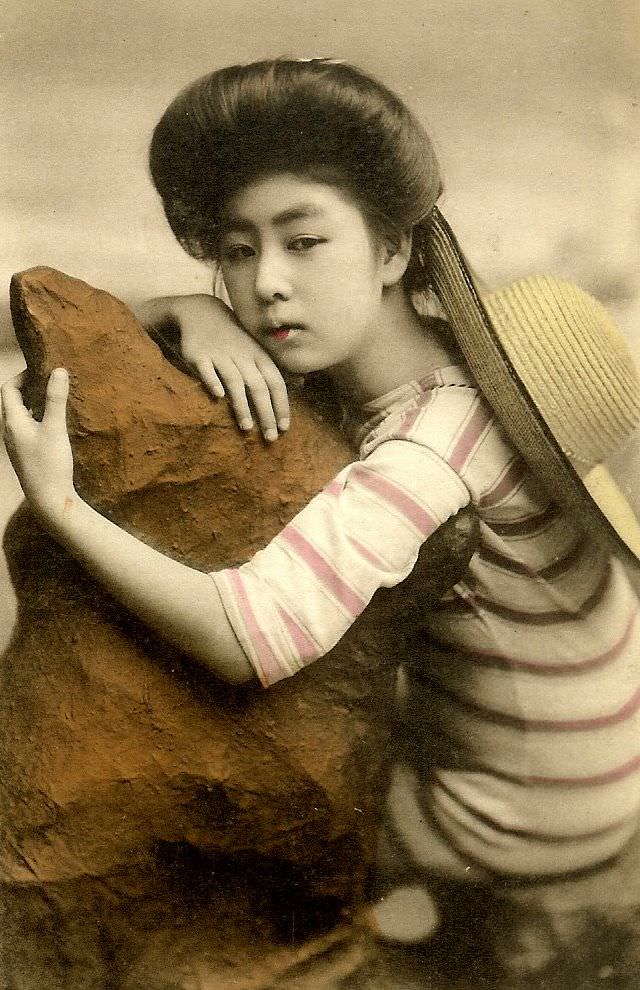
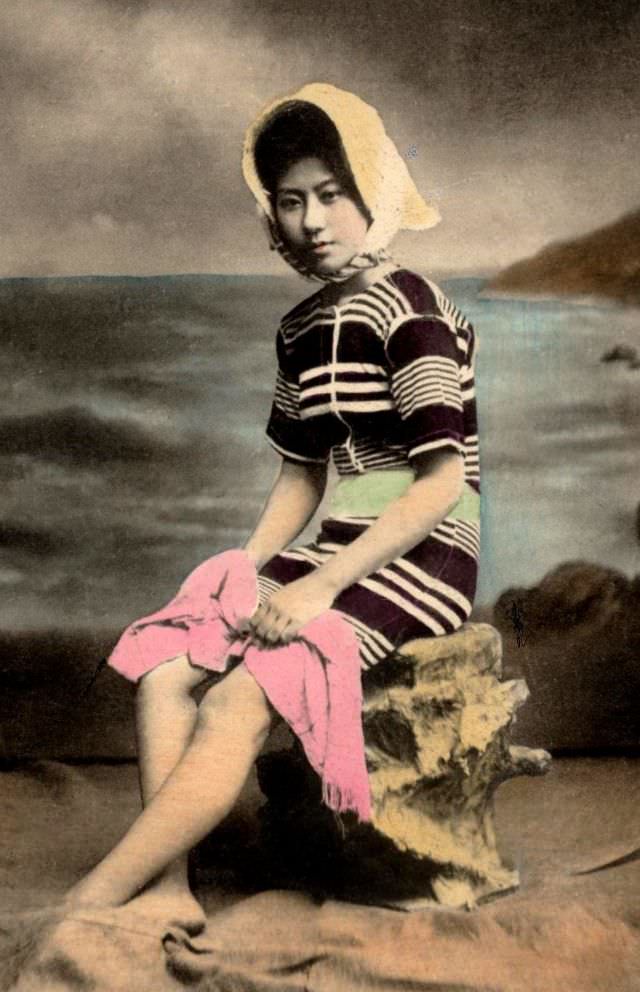
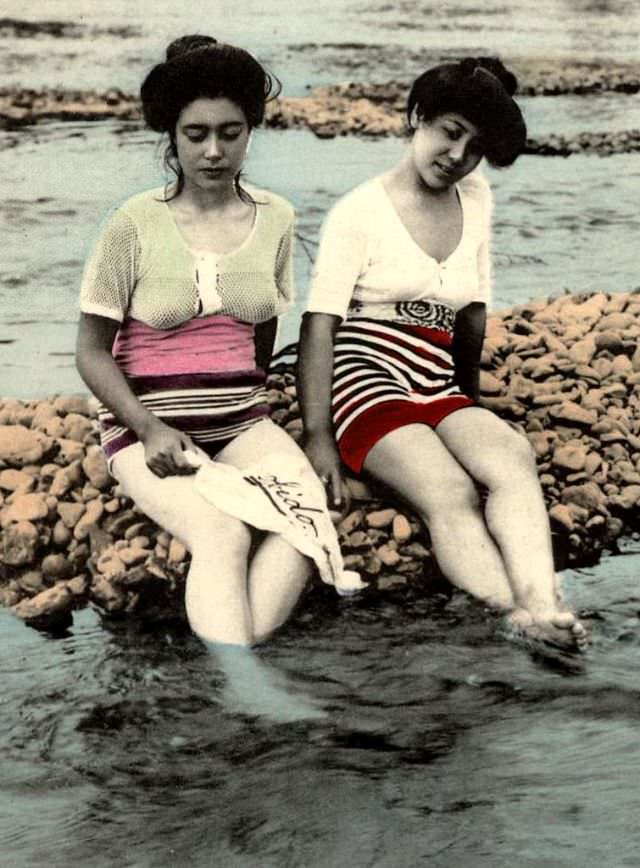
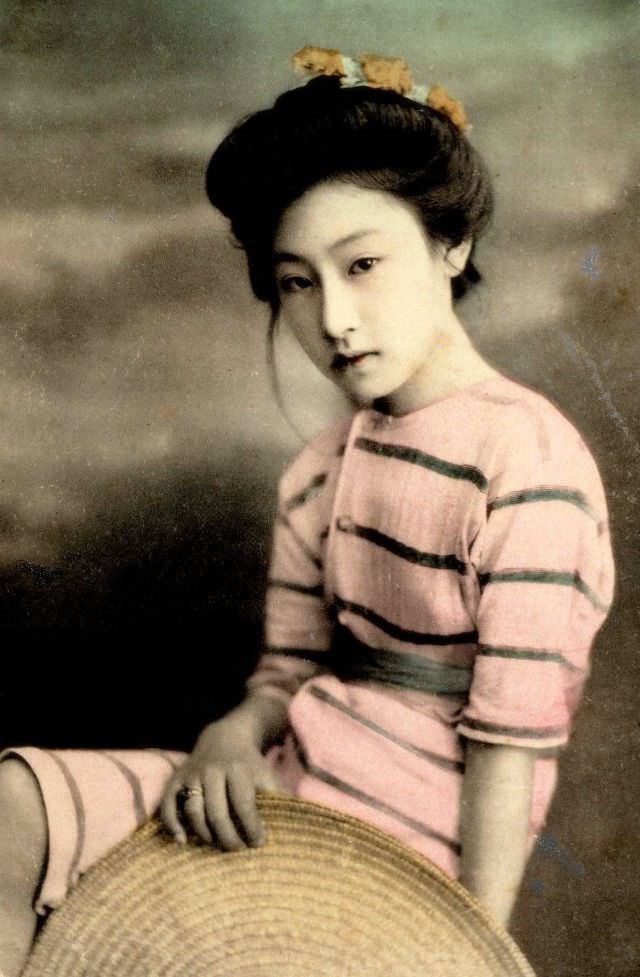
Seeing geisha and maiko in bathing suits rather than kimono is genuinely rare. These photographs step outside the carefully staged world of the teahouse and the formal studio portrait. The women are relaxed, posed near water, and dressed in a way that was entirely outside their professional identity.
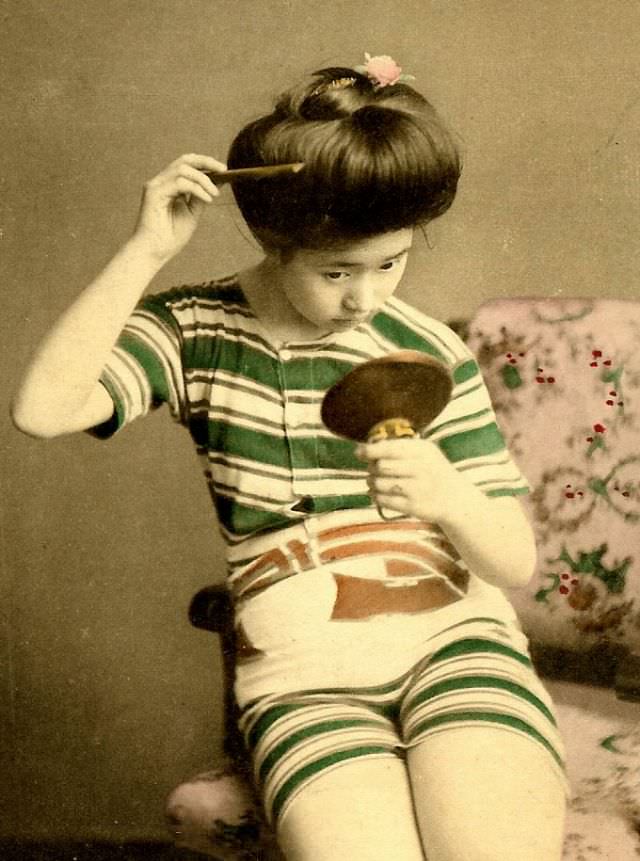
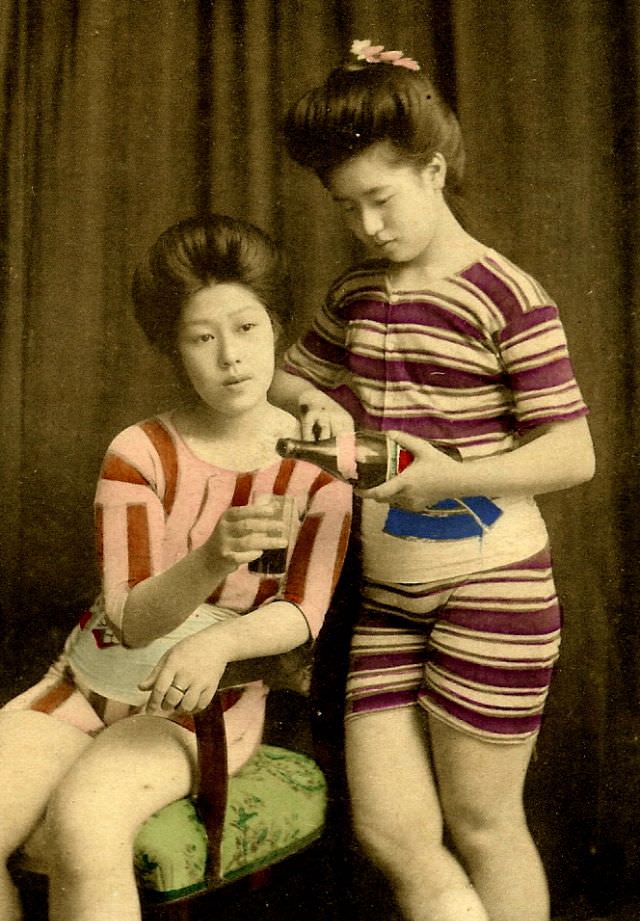
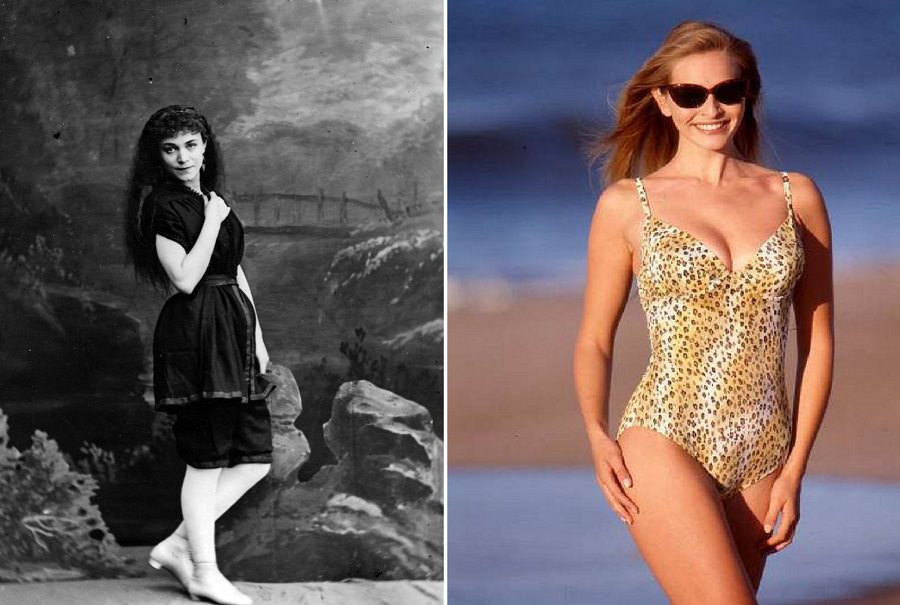
The bathing suits visible in these photos reflect the era. They are modest by any modern standard — full-coverage garments that were common across much of the world in the late 19th and early 20th centuries. The style shows how Western fashion was beginning to filter into Japan even in casual settings.
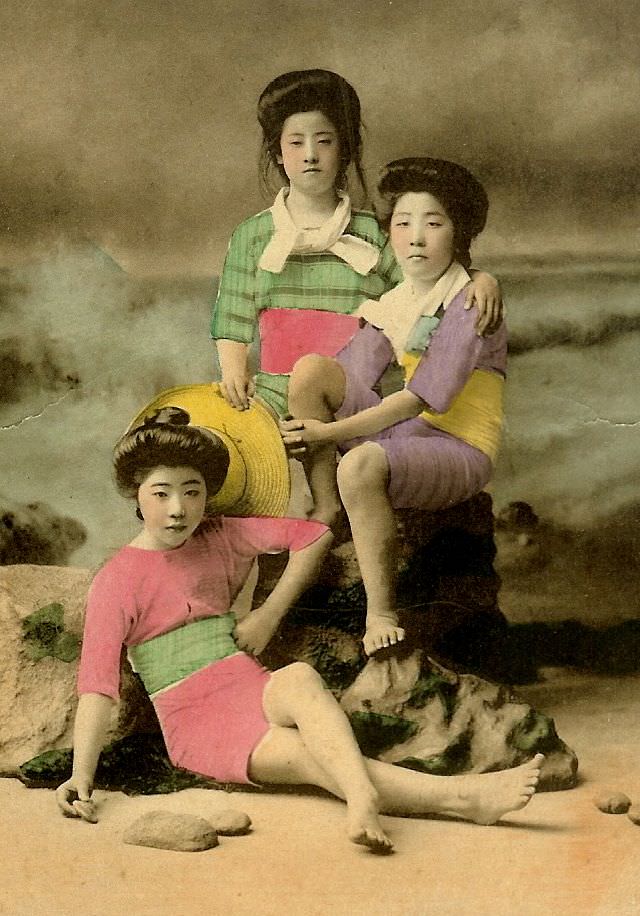
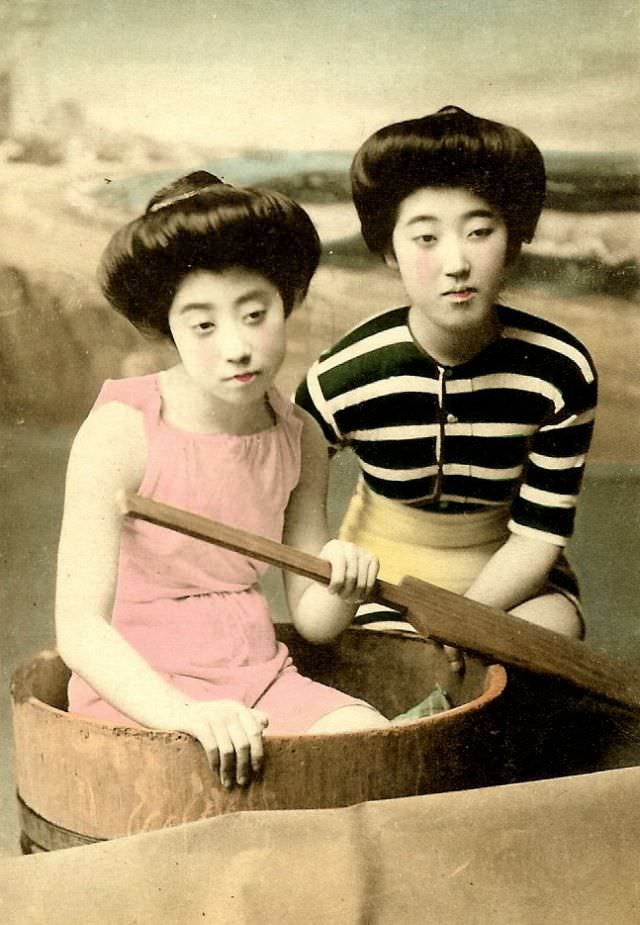
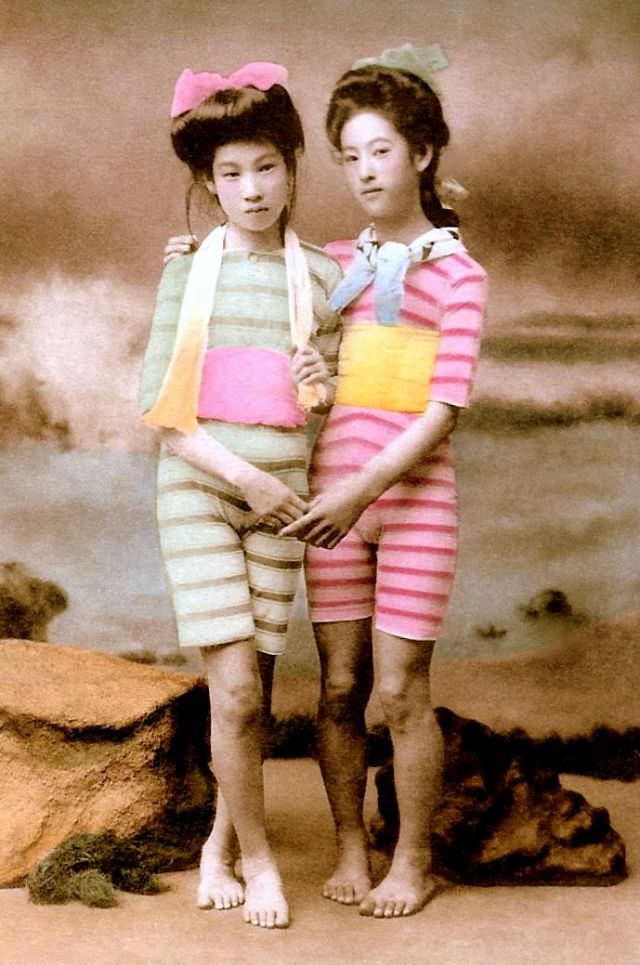
Colorization brings these images to life in a way that black-and-white originals simply cannot. The Meiji era was rich with color — in fabric, in nature, and in the carefully chosen pigments of traditional Japanese art. When color is restored to these photographs, the women in them become far more present and human.
Geisha communities were centered in specific districts called hanamachi, meaning “flower towns.” The most famous of these were in Kyoto, where the traditions were oldest and most strictly maintained. Others existed in Tokyo, Osaka, and port cities like Yokohama — places where foreign visitors were more common and where the demand for entertainment was high.
Training to become a geisha began young. A maiko entered the system as a teenager, sometimes as young as fifteen. She spent years learning dance forms like nihon buyo, classical music instruments such as the shamisen, and the art of conversation — how to put guests at ease, how to tell a joke, how to gracefully steer a room. The training was long and demanding.
The kimono worn by maiko during this period were particularly striking. Long furisode sleeves, bold patterns in red and gold, and elaborate obi sashes tied in the large, decorative darari style set them apart immediately from fully trained geisha. The clothing itself communicated status and stage of training to anyone who knew the codes.
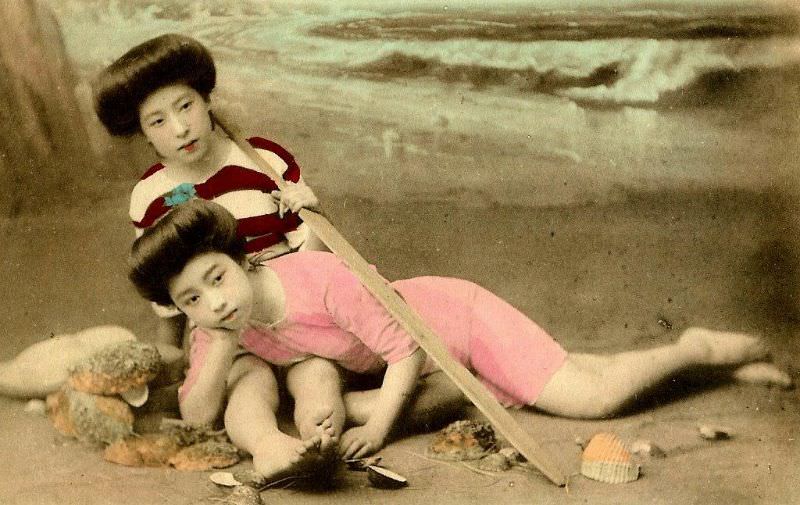
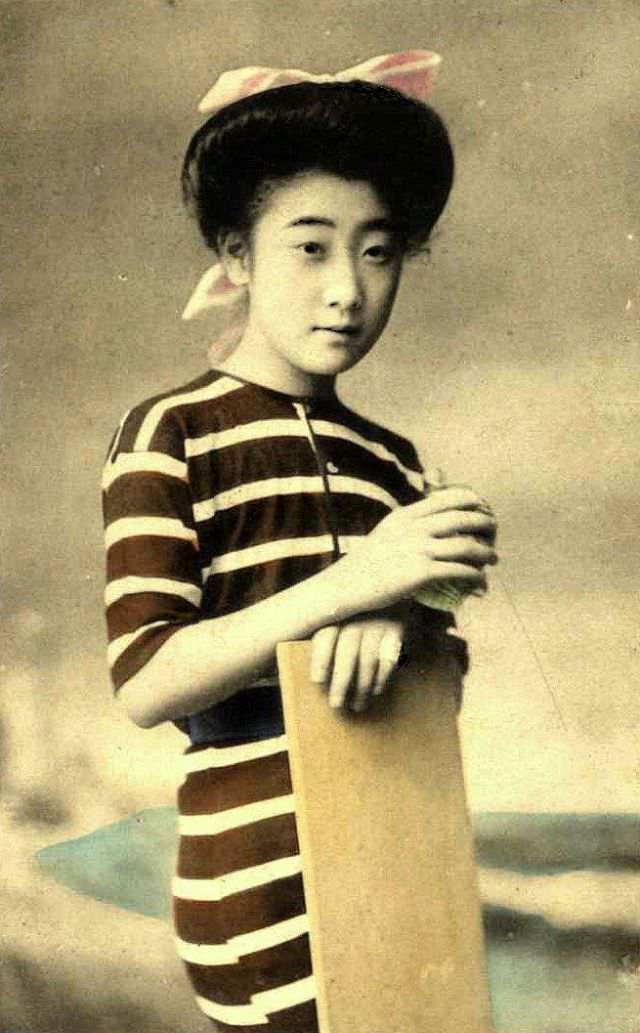
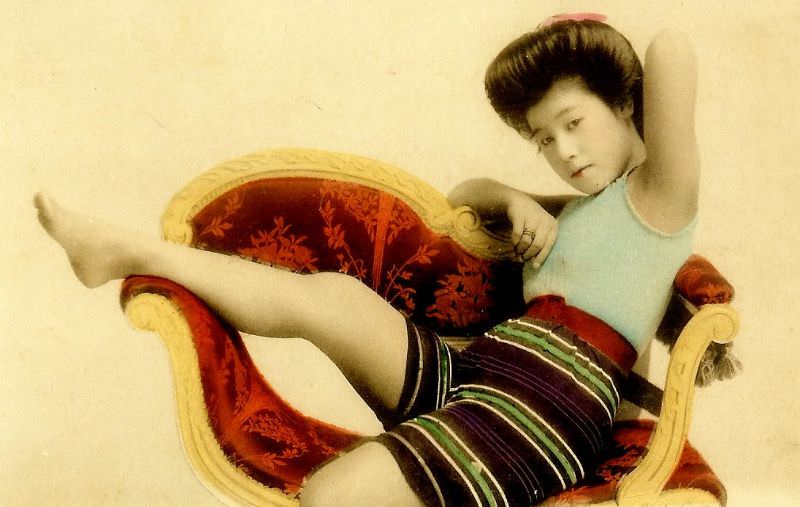
Photography studios in the Meiji era often produced hand-colored prints for export. Skilled artists applied watercolor pigments directly to albumen prints — an early photographic process — to create the warm, painted look that collectors prized. These colorized digital versions use the same spirit, applying modern techniques to restore what the original photographers saw when they looked through the lens.
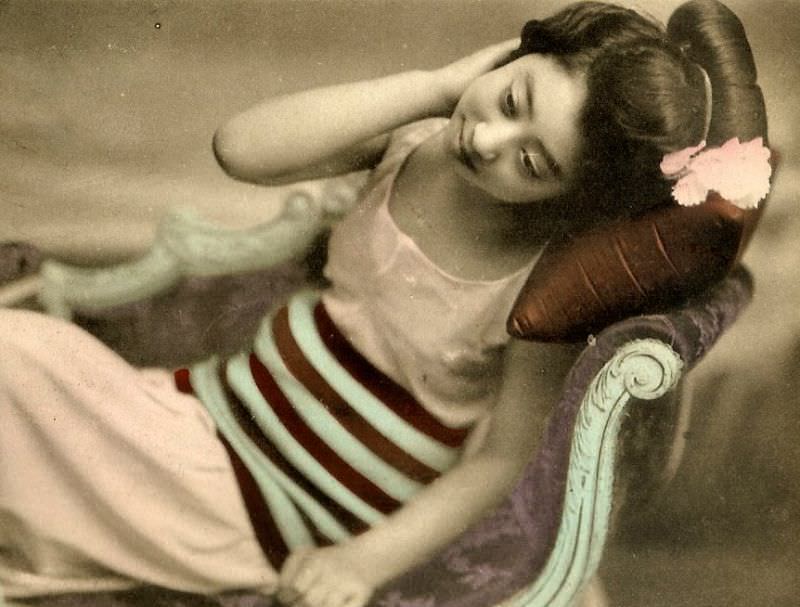
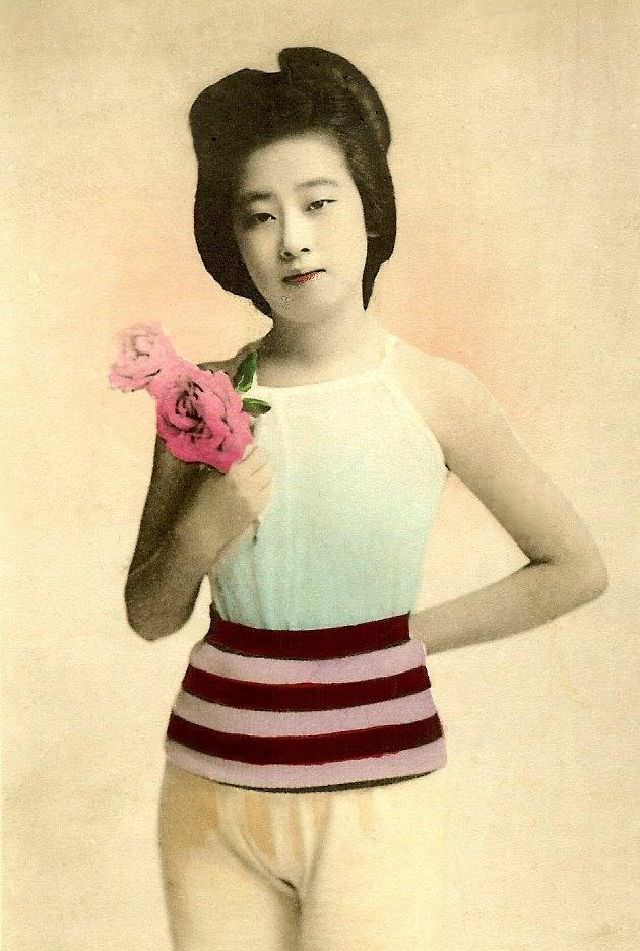
Foreign demand for geisha imagery was enormous during this period. Western tourists and diplomats who visited Japan brought home souvenir albums packed with studio photographs. Geisha were among the most photographed subjects of the era, partly because they were visually striking and partly because they were accessible — willing to pose professionally in ways that ordinary Japanese women would not.
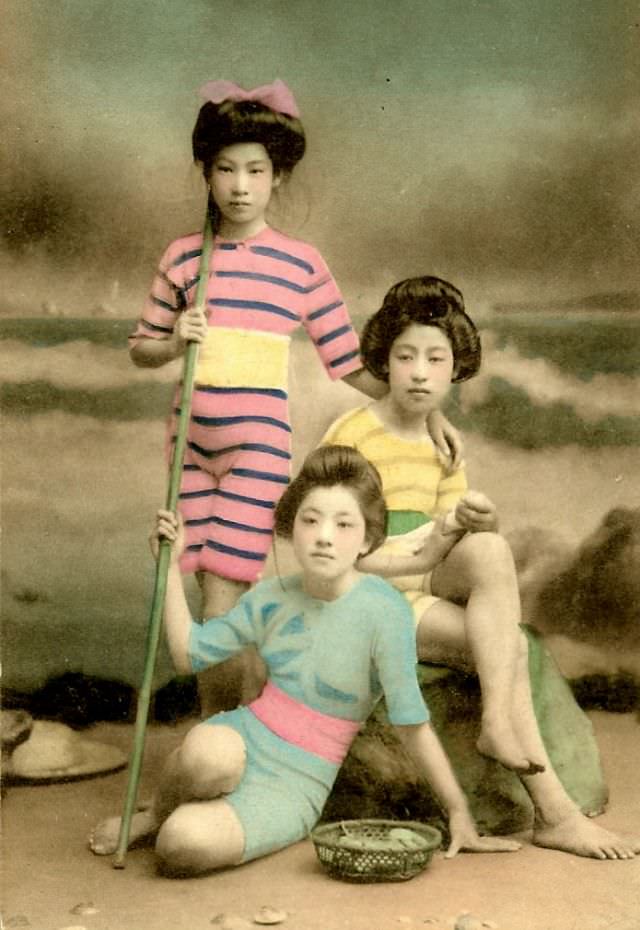
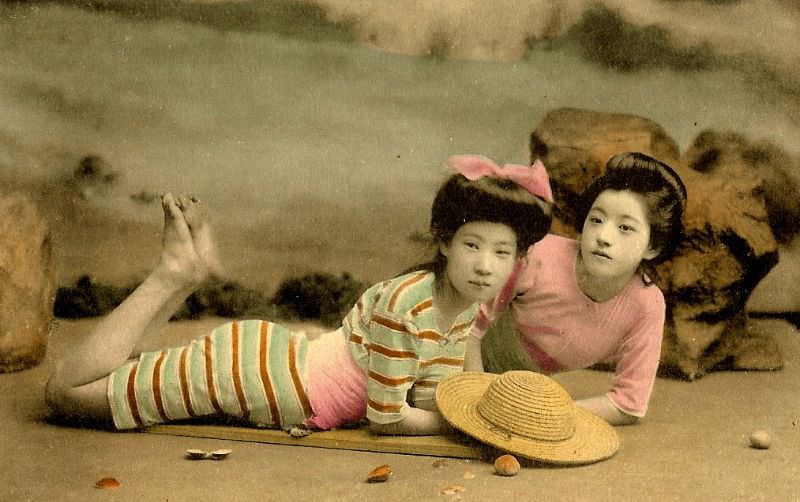
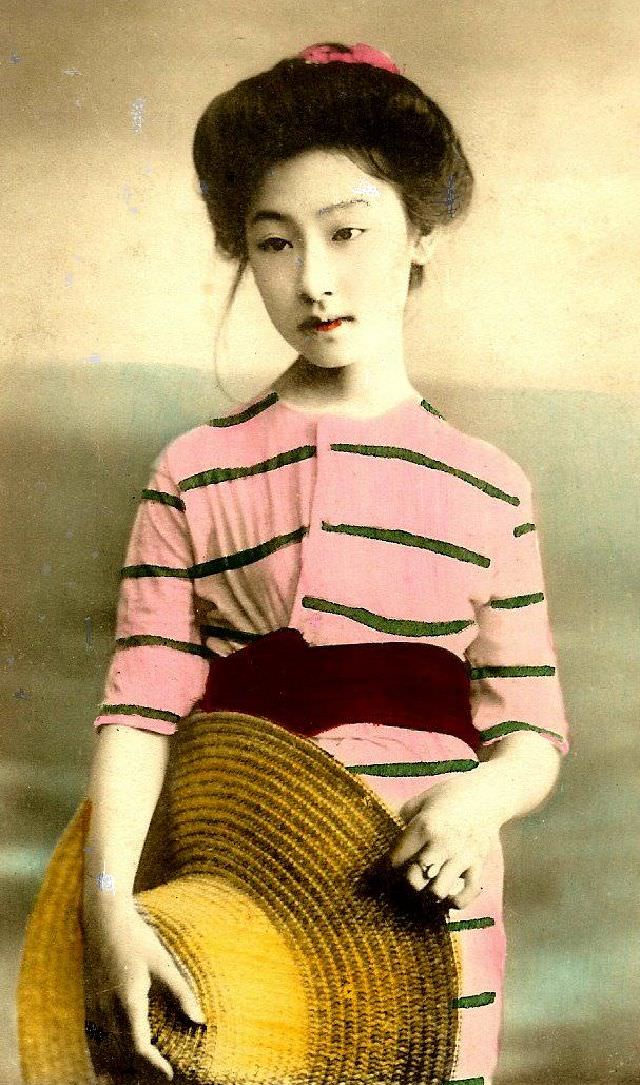
The Meiji government itself encouraged the photographing and showcasing of traditional arts like the geisha culture as part of Japan’s effort to present itself as a sophisticated civilization to the Western world. At the same time, the government was rapidly modernizing the military, legal system, and economy. Traditional culture and rapid modernization existed side by side throughout this period.
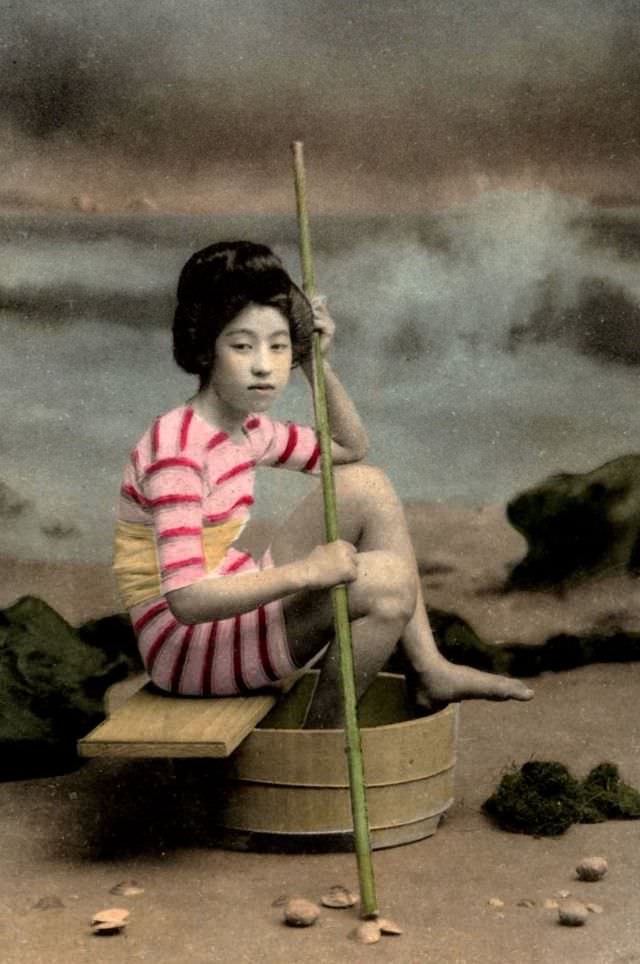
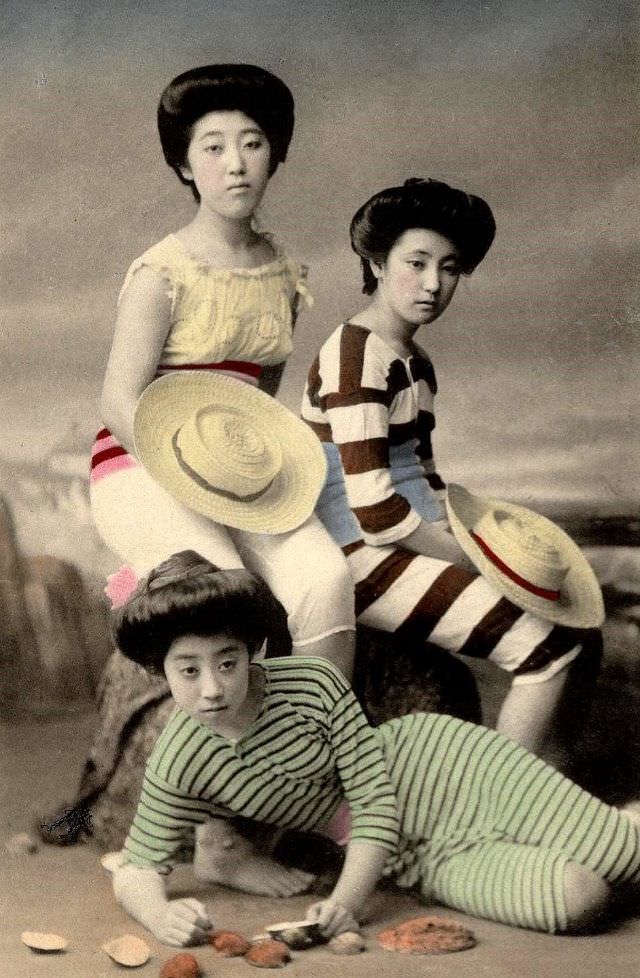
The bathing suit photographs in this collection sit at an interesting crossroads of those two forces. The women in them belong to one of Japan’s oldest professional traditions, yet they are dressed in a way that reflects the Western world beginning to shape everyday Japanese life. That tension is visible in a single frame.
Not all geisha lived in comfort. While the most celebrated geisha in elite teahouses earned well and lived in fine okiya (geisha houses), many others worked in smaller establishments with far less pay and far fewer protections. The life was glamorous from the outside and far more complicated from within.
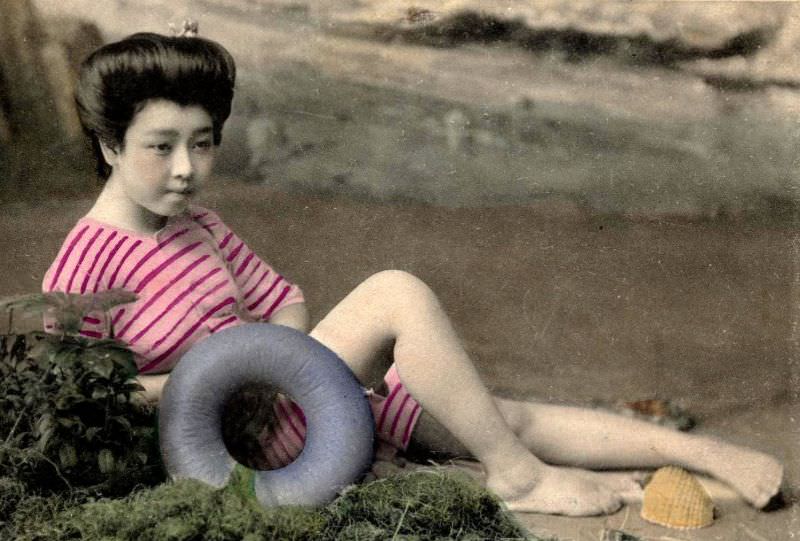
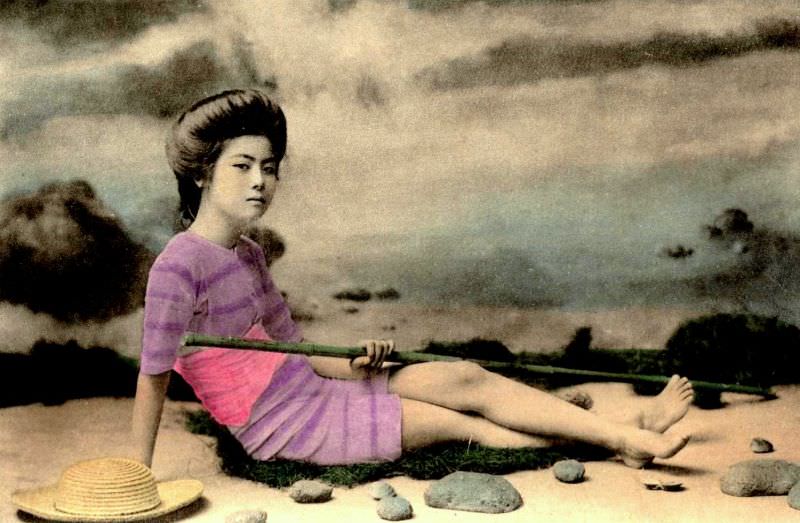
Each photograph here captures a moment of leisure that was unusual for these women. The formal demands of geisha life — the hours of rehearsal, the long evenings of entertainment, the strict codes of appearance — left little room for casual scenes like these. That is part of what makes them so striking.
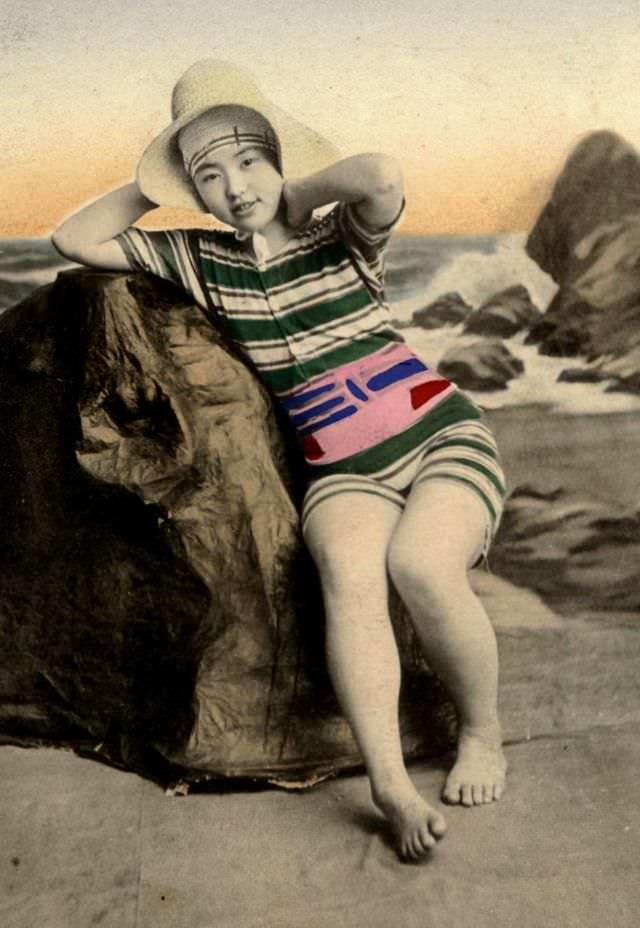
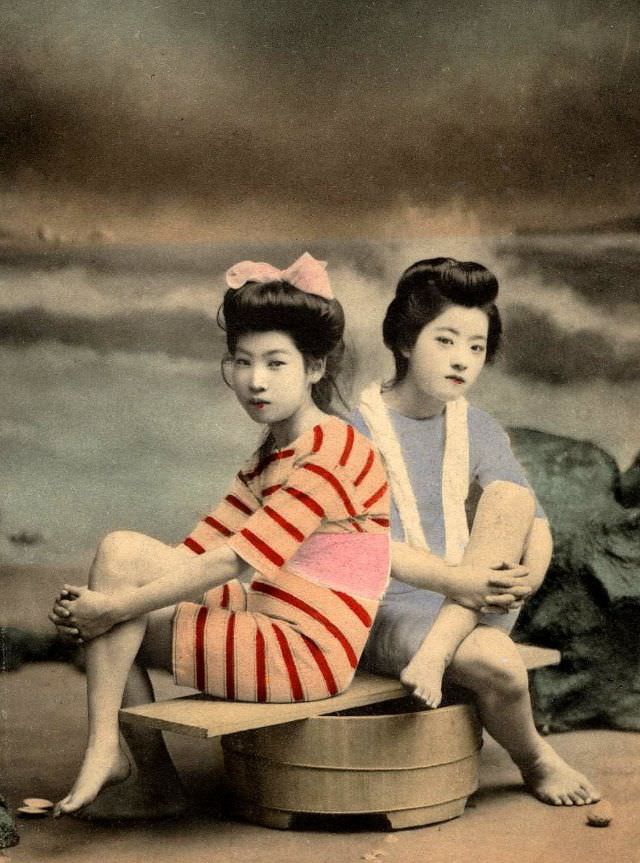
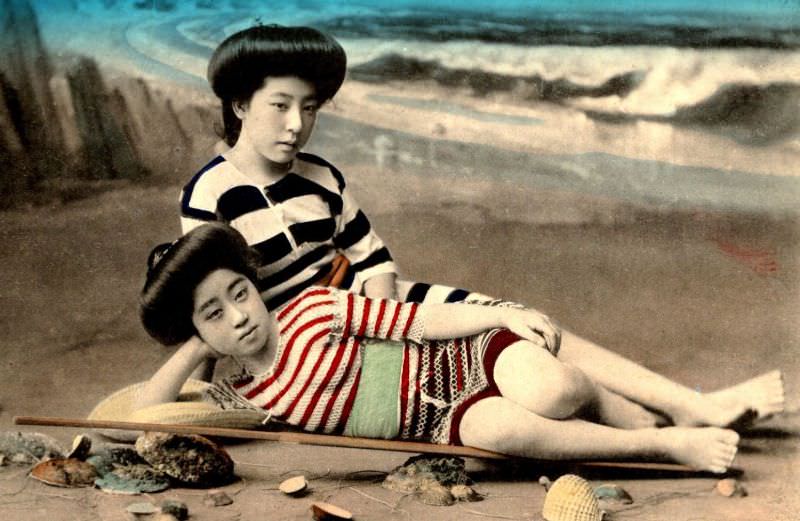
The poses in these photographs vary. Some women stand confidently, facing the camera directly. Others sit at the water’s edge or lean against natural backdrops. The photographers — many of them working out of studios in Yokohama or Tokyo — understood how to compose a shot that would appeal to both Japanese and foreign buyers.
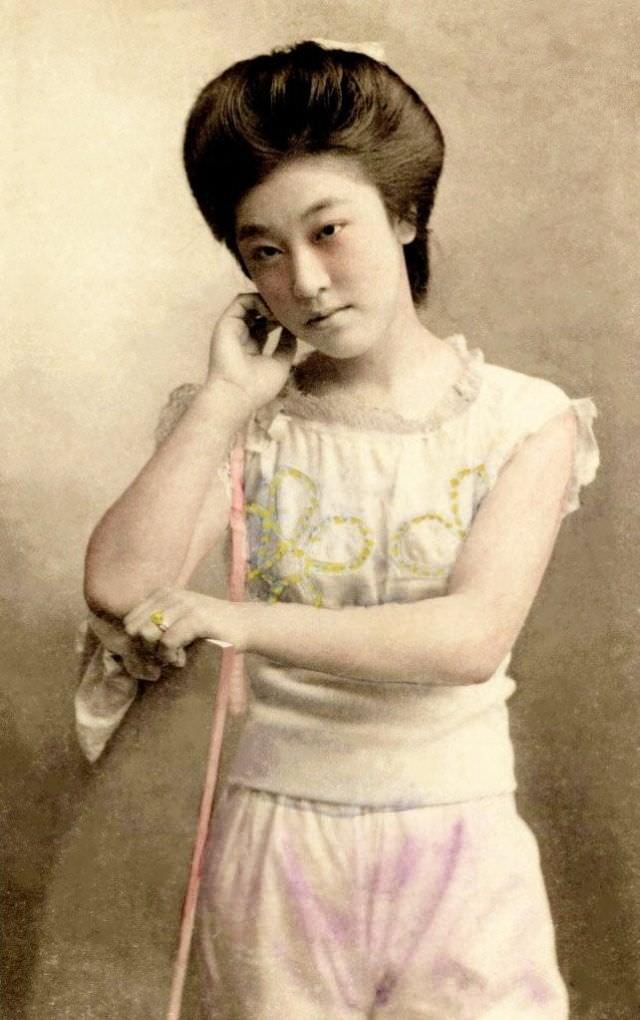
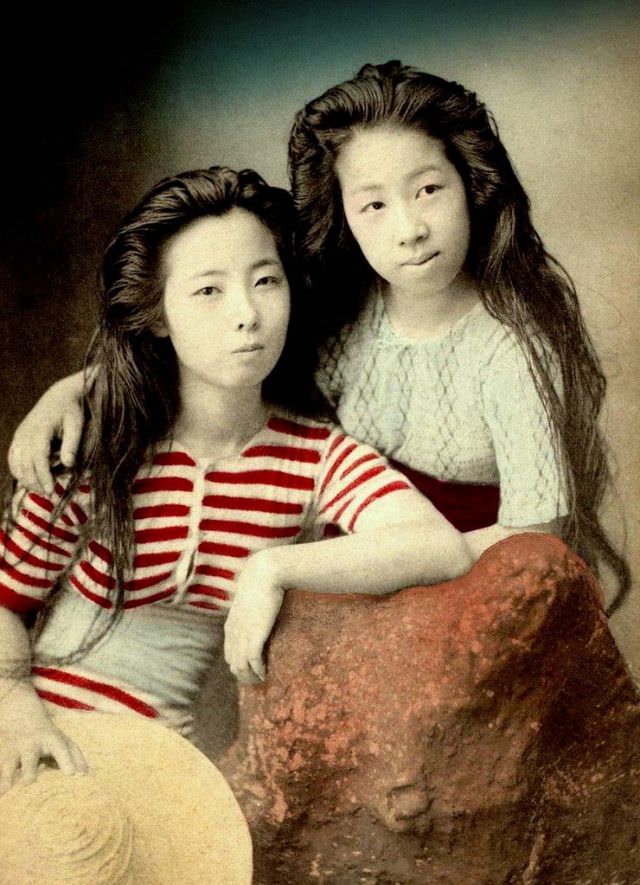
Taken together, these forty images form a rare visual record of geisha and maiko during one of Japan’s most transformative periods. The Meiji era remade the country from the ground up — its politics, its infrastructure, its relationship with the outside world. These women lived through all of it, maintaining ancient traditions while standing in front of a very modern camera.