Geisha are among the most recognized figures in Japanese cultural history. They are professional female performers trained in traditional arts — shamisen playing, classical dance, singing, and tea ceremony. They belong to official geisha associations and entertain at private banquets called ozashiki, which are typically hosted for wealthy clients. Japan’s government has recognized many geisha as “living national treasures,” the highest artistic honor the country awards. Their appearance is just as deliberate as their skill set: classic pinned hairstyles and oshiro white face makeup define the look most people associate with them.
Before a woman becomes a geisha, she spends years training as a maiko — an apprentice geisha. Maiko are found primarily in Kyoto and western Japan, and they typically range in age from 17 to 20. During their apprenticeship, they learn traditional dance, practice the shamisen, and study kouta, a form of short Japanese song. A maiko lives in an okiya, the geisha lodging house, alongside her okami-san, the house mother who oversees her training and conduct. This period lasts anywhere from a few months to a couple of years depending on the individual’s progress.
The visual differences between a maiko and a full geisha are easy to spot. Maiko wear brightly colored kimonos with long, trailing hems and distinctive red collars. Their look is more elaborate and youthful. Geisha, on the other hand, dress in more subdued, refined kimonos and are generally older — often over 50 — with years of polished social skill behind them. A maiko is expected to be quieter and more reserved, while a full geisha is confident in hosting conversations and guiding the atmosphere of a gathering.
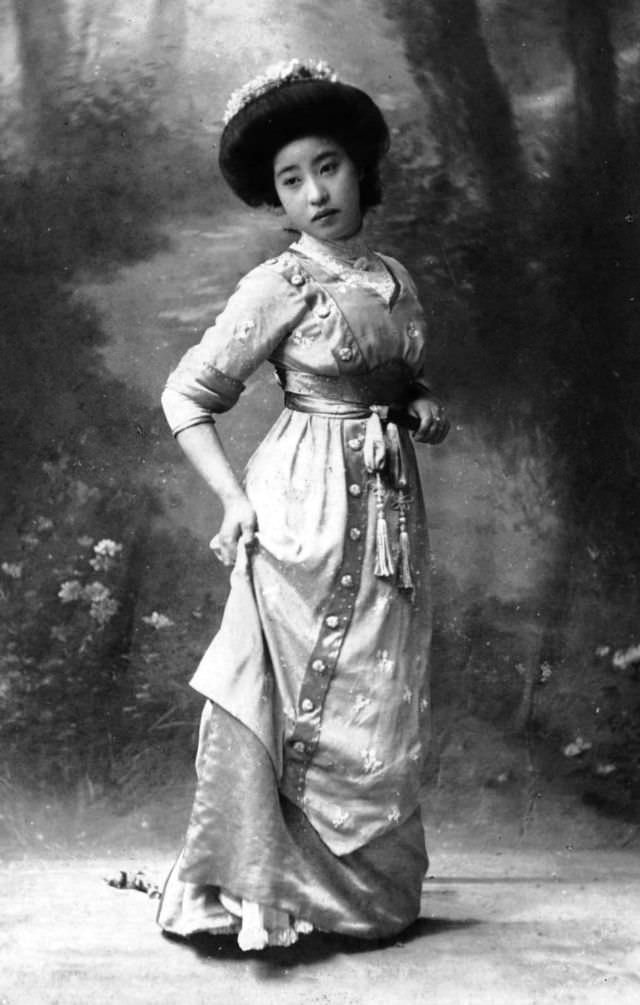
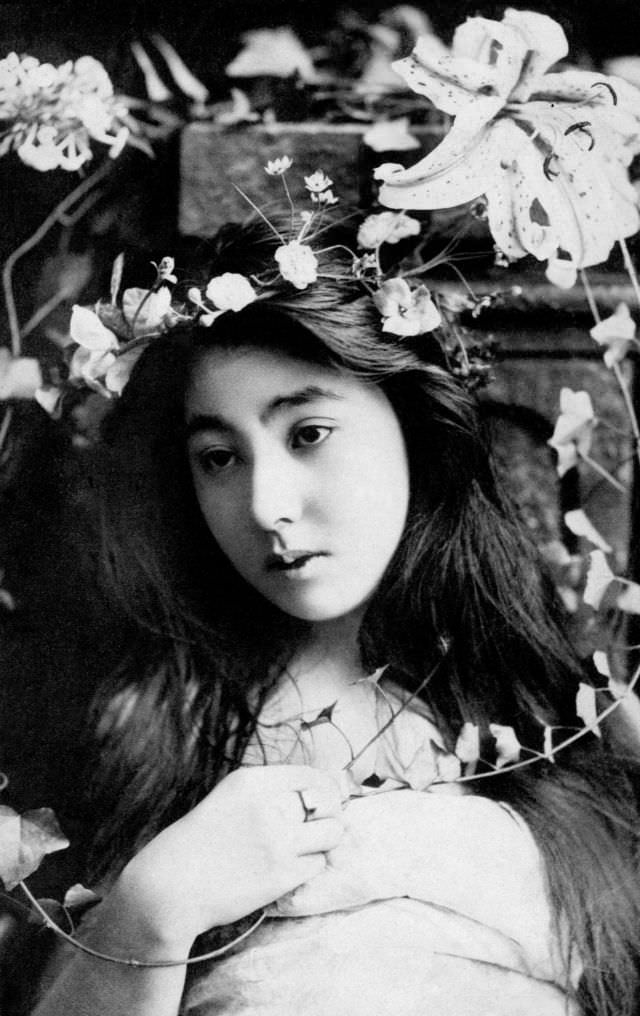
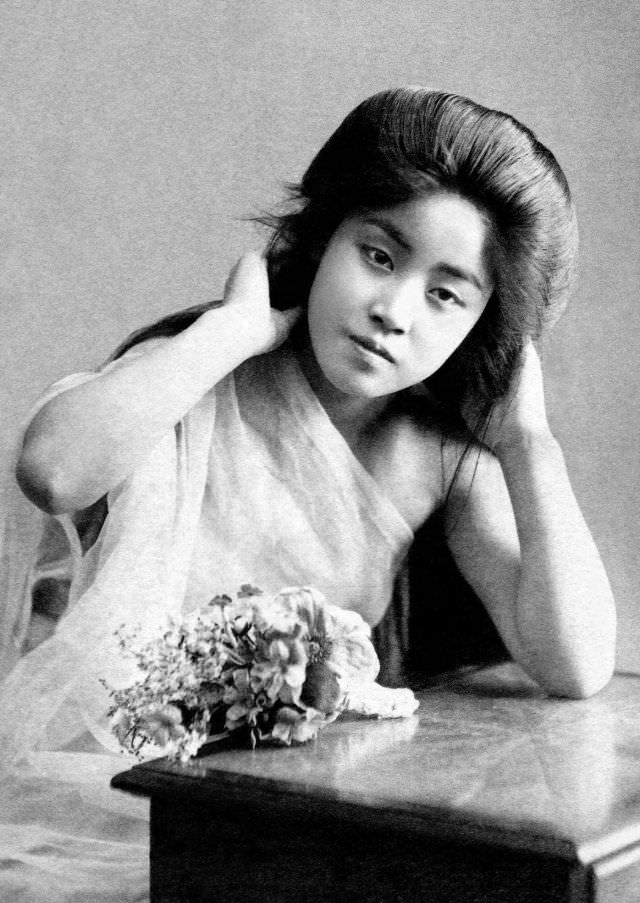
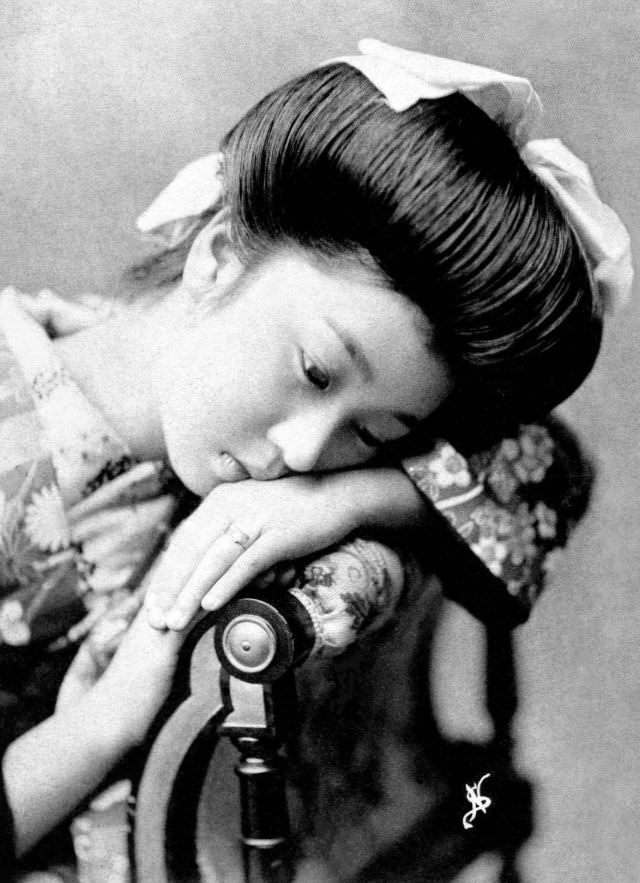
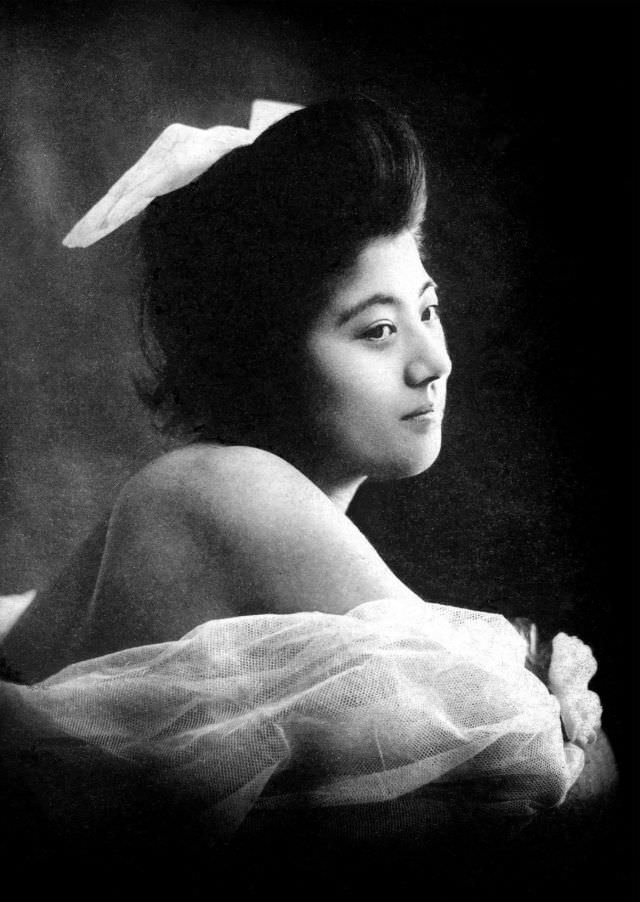
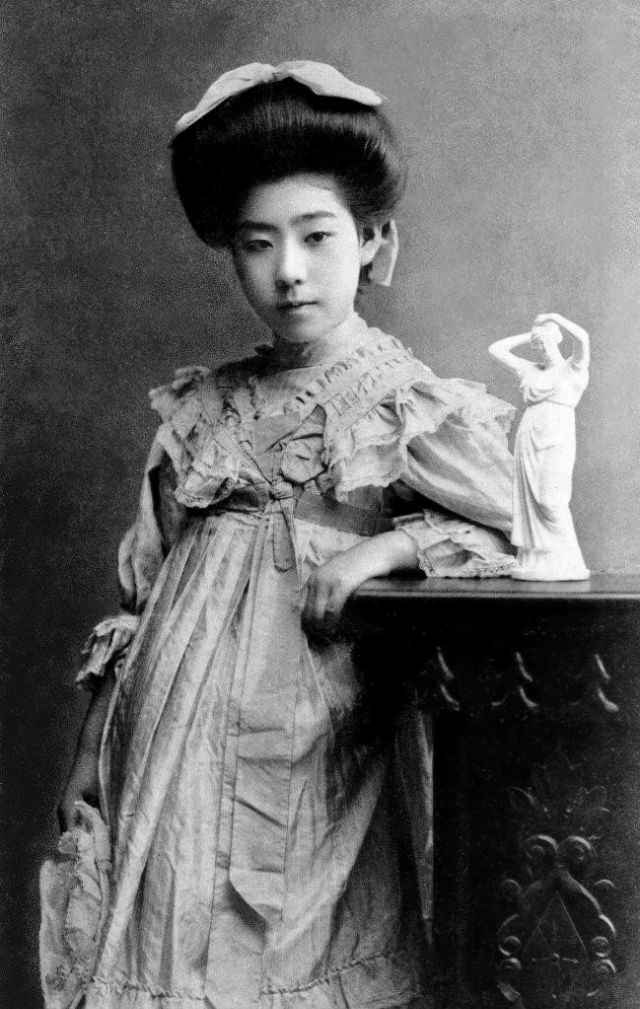
What most people never see is what geisha and maiko looked like outside of their formal dress. The photographs collected here, sourced from the Okinawa Soba archive, were taken in the early 1900s during the Meiji Era — a period of rapid change in Japan when Western influence was beginning to reshape daily life, fashion, and culture. These images show geisha photographed without their kimonos, dressed instead in Western-style clothing, nightgowns, bathing suits, and lace — garments that would have been completely foreign to Japan just decades earlier.
Photography itself was still a relatively new technology in Japan during this era, and sitting for a portrait was a notable occasion. The candid quality of some of these images — a geisha waiting between poses, another gathering her hair — suggests that photographers were capturing moments of genuine downtime, not just the polished, formal presentation these women were trained to project.
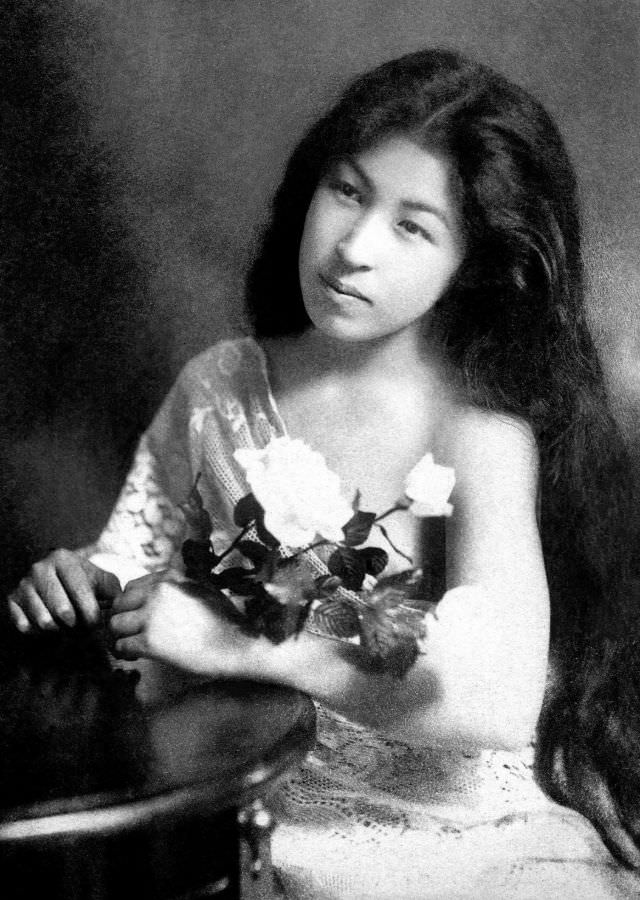
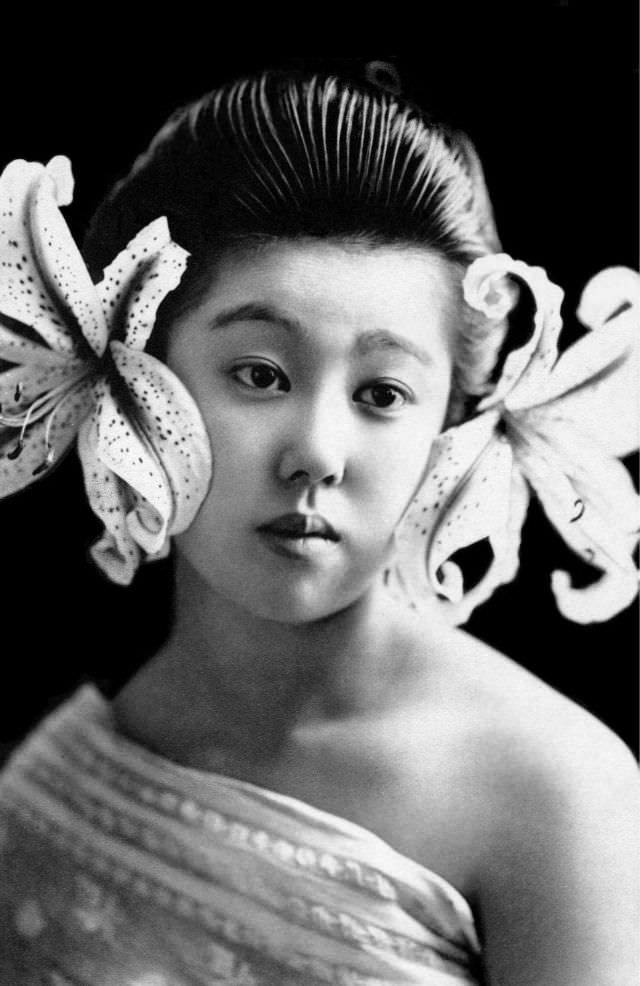
Flowers appear throughout many of these portraits — lilies, roses, and blossoms held or arranged near the subject. Flowers carried deep symbolic meaning in Japanese culture, and their use in these photographs reflects a visual language that photographers and subjects both understood. The pairing of traditional Japanese women with Western props like flowers, lace, and mirrors created a kind of cultural overlap that defined much of the Meiji period’s artistic output.
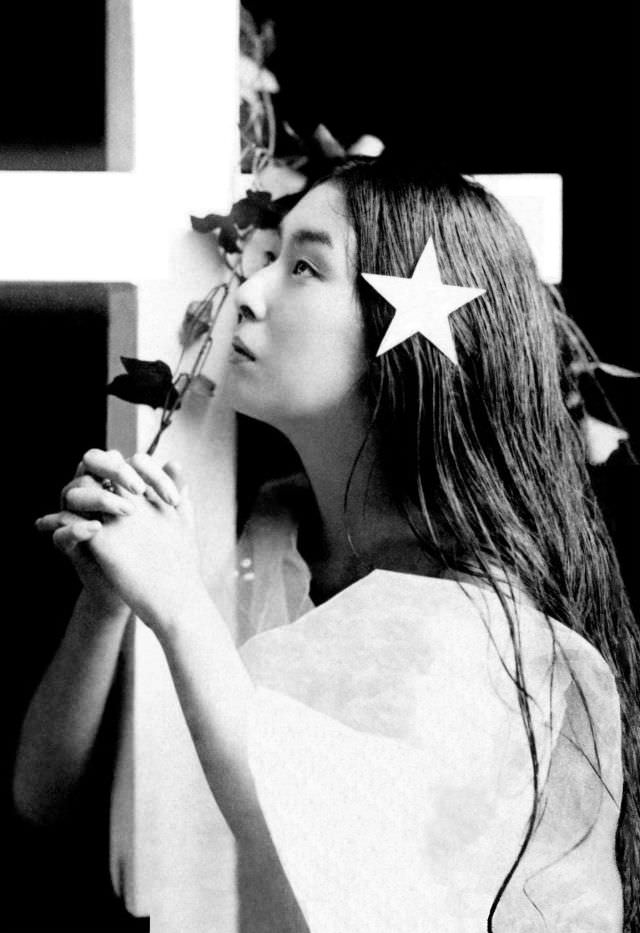
Not all of these photographs were taken by Japanese photographers. Some were captured by Western missionaries and travelers who documented Japan during their time there. These outsiders were often drawn to geisha as subjects — they represented an aspect of Japanese life that seemed exotic and unfamiliar. The caption “captured by missionaries” reflects the different motivations behind these images: some were artistic commissions, others were documentary records made by foreign observers.
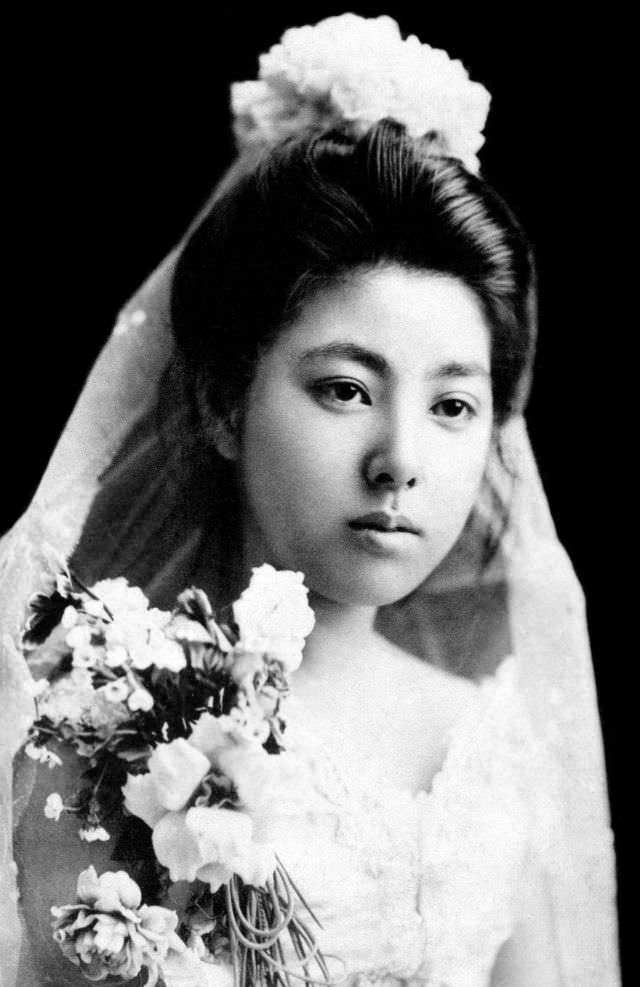
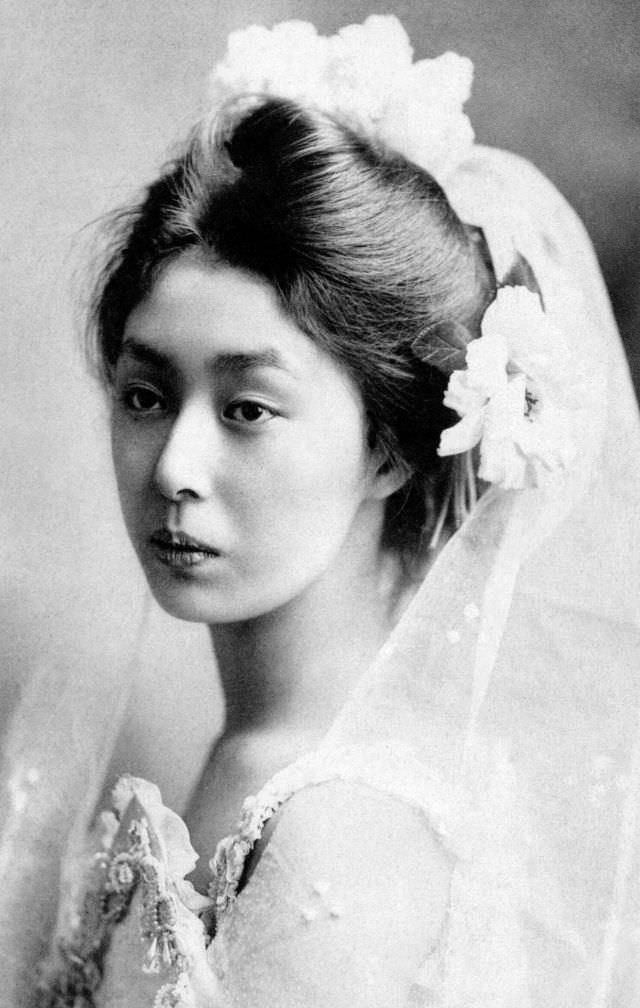
Some of the photographs appear to have been staged with specific themes in mind. Wedding-adjacent imagery — veils, white gowns, formal poses — appears in several shots, hinting at a blending of Western bridal aesthetics with Japanese subjects. The Meiji Era saw Japanese women increasingly exposed to European fashion through trade, publications, and direct contact with foreigners, and these photographs show that influence taking root in real and tangible ways.
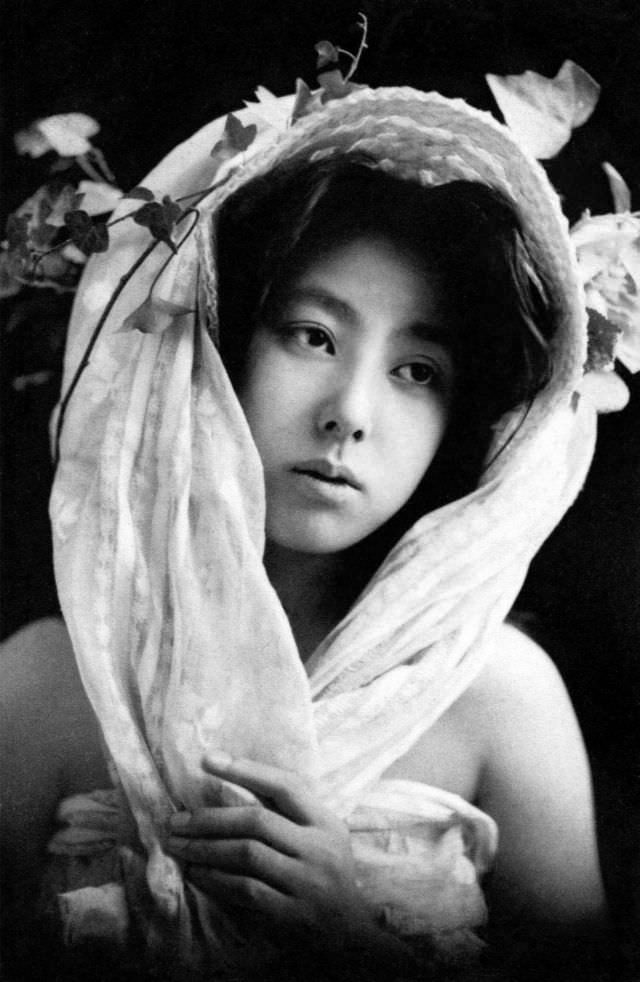
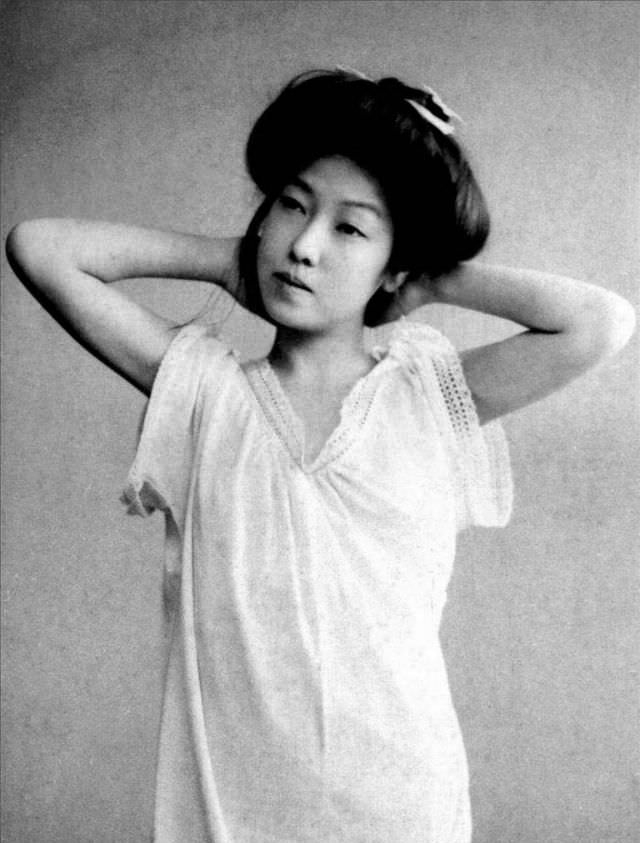
Lace was a particularly prominent element in Meiji-era fashion crossover. Imported from Europe, it was expensive, fashionable, and deeply associated with Western femininity. Seeing geisha photographed wearing lace nightgowns or lace-trimmed dresses underscores how quickly foreign textiles and styles entered even the most traditionally trained segments of Japanese society. These women, whose professional identities were built entirely around Japanese classical arts, were also engaging with a rapidly globalizing world.
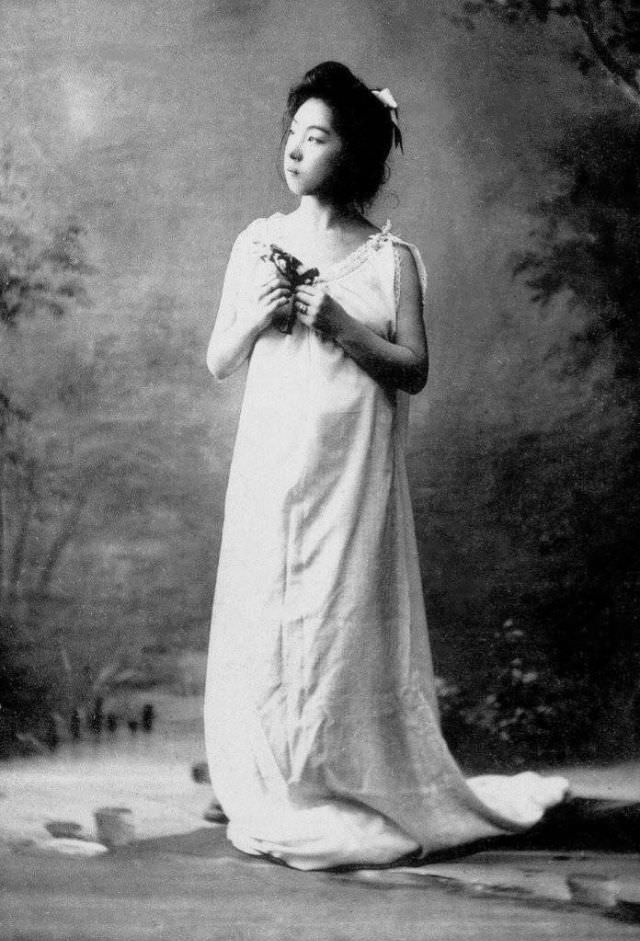
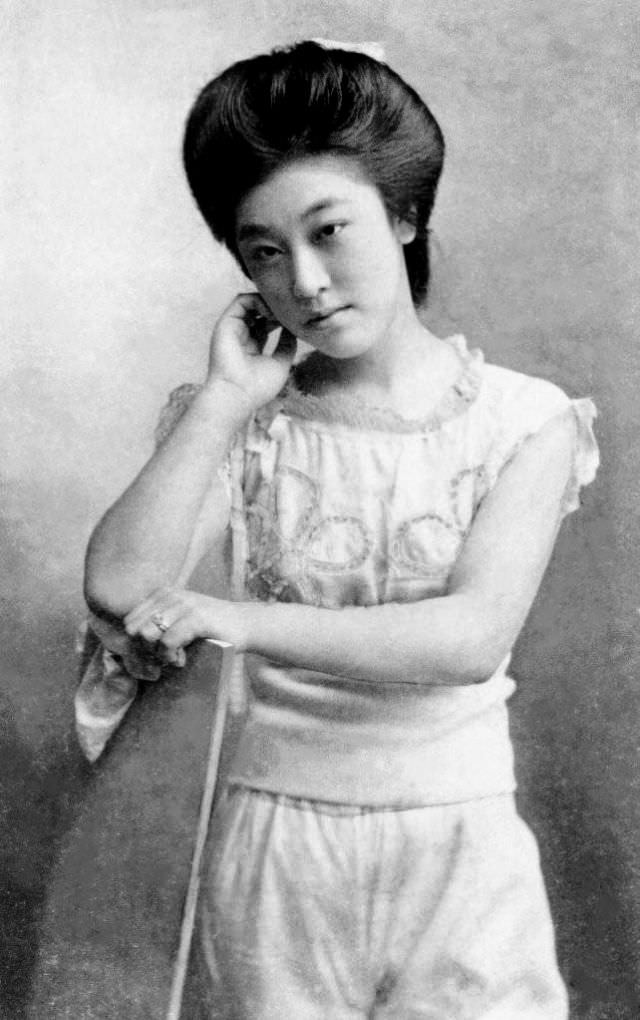
The bathing suit photograph stands out as particularly rare. Public bathing attire was almost unheard of for Japanese women at the time, making this image a striking record of how Western recreational culture was beginning to filter into Japan. Whether this was a staged studio shot or a genuine recreational image, it captures a moment of cultural experimentation that few photographs from this era document so directly.
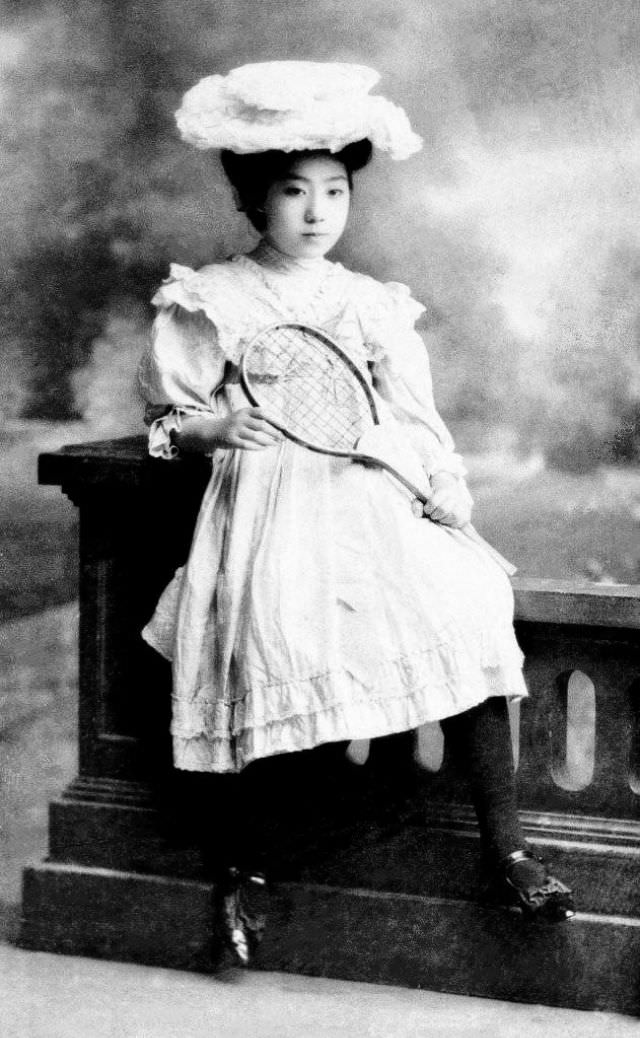
Tennis was introduced to Japan in the 1870s and quickly became fashionable among the upper classes. A geisha photographed holding a tennis racket reflects the same trend seen in the bathing suit image — Western leisure activities being adopted and incorporated into the lives of women who were otherwise deeply rooted in traditional Japanese practice. These were not isolated incidents. They were part of a broader cultural shift happening across Japan at every level of society.
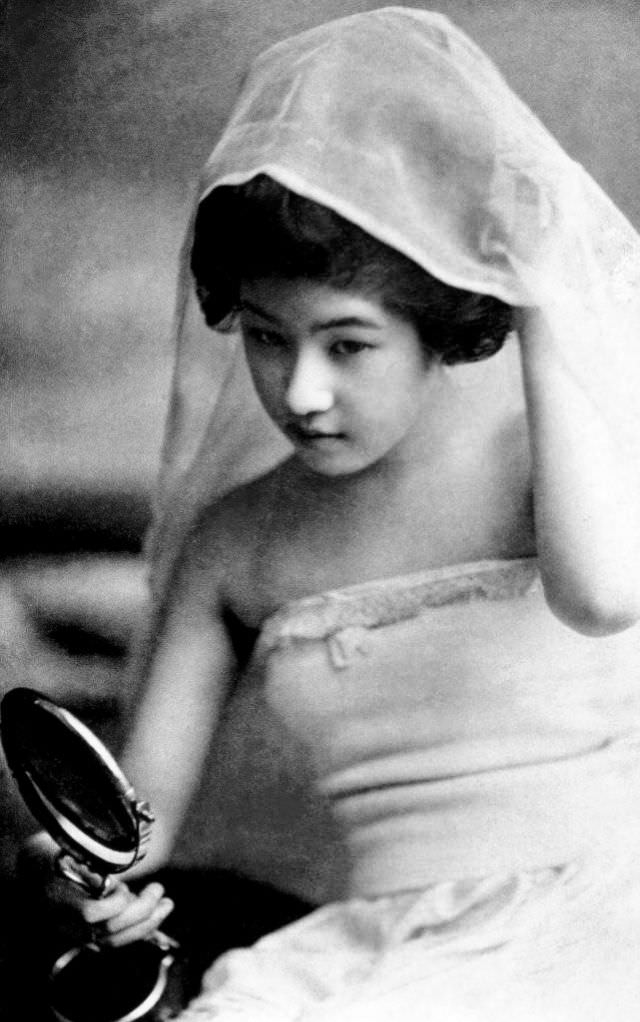
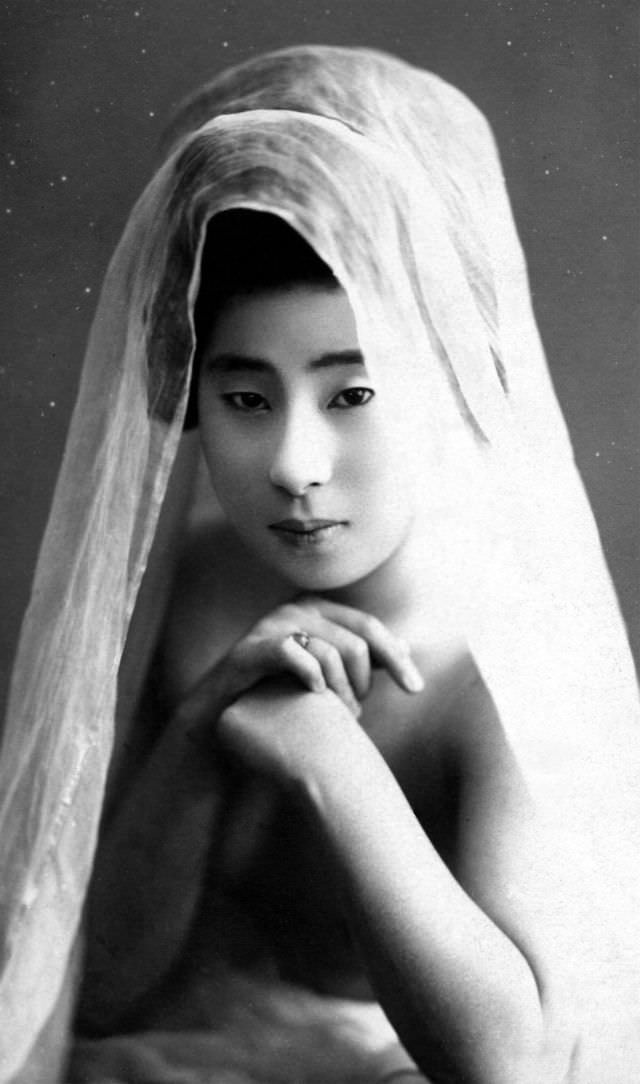
Light and shadow play a significant role in many of these portraits. Photographers used natural window light and careful positioning to create dramatic, painterly effects. The resulting images have a quality closer to fine art portraiture than simple documentary photography. Given that geisha were themselves trained performers with a strong sense of presentation and aesthetics, it is likely that the subjects had a hand in shaping how these photographs looked.
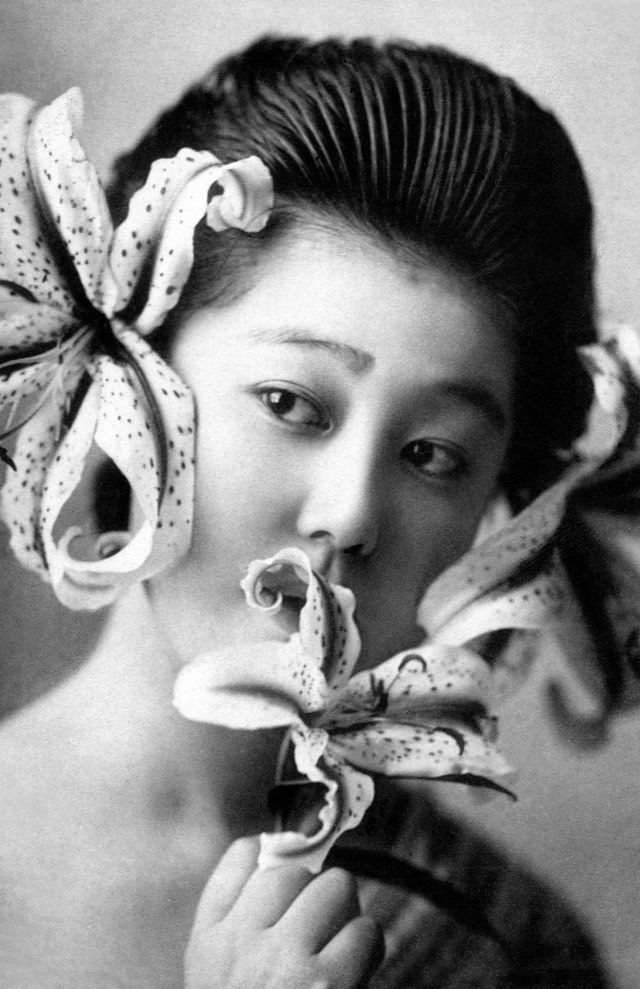
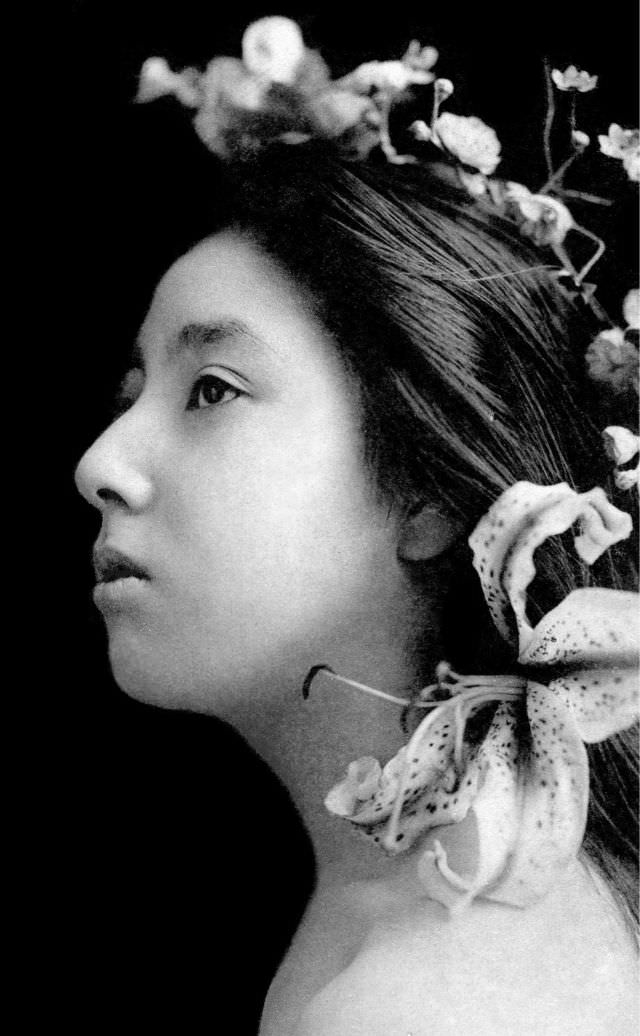
The expressions in these photographs are worth noting. Geisha were trained to control their appearance and behavior at all times in professional settings. Yet here, several subjects appear relaxed, distracted, or caught in an unguarded moment. A distant gaze, an unhurried posture, a slight turn of the head — these details suggest that at least some of these photographs were taken in an informal context where the subject felt less pressure to perform.
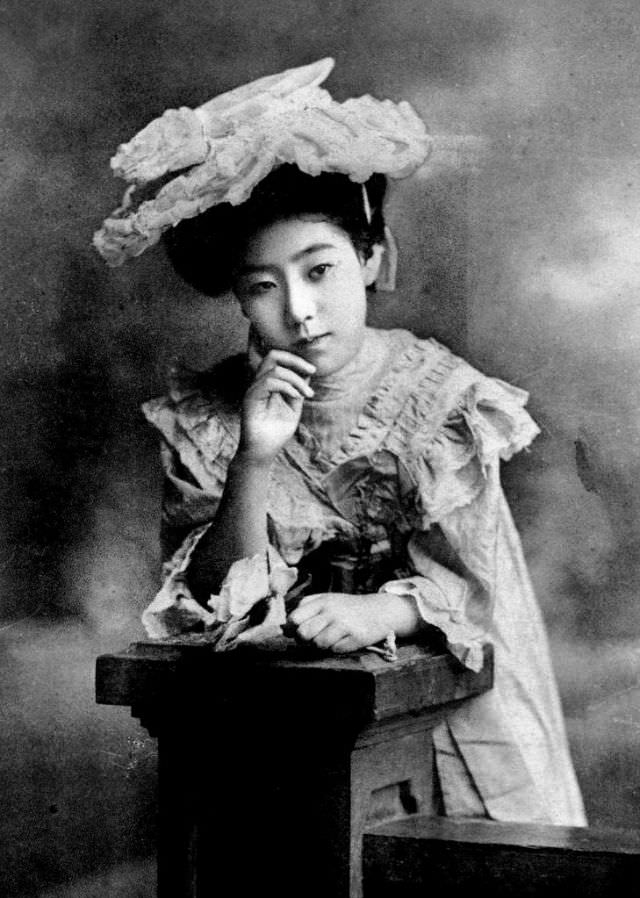
Parisian fashion was the height of global style in the early 1900s, and its influence reached Japan through magazines, trade relationships, and the Meiji government’s active push to modernize the country along Western lines. A geisha photographed in French-inspired clothing is a direct visual record of that modernization reaching even the most traditionally structured corners of Japanese society.
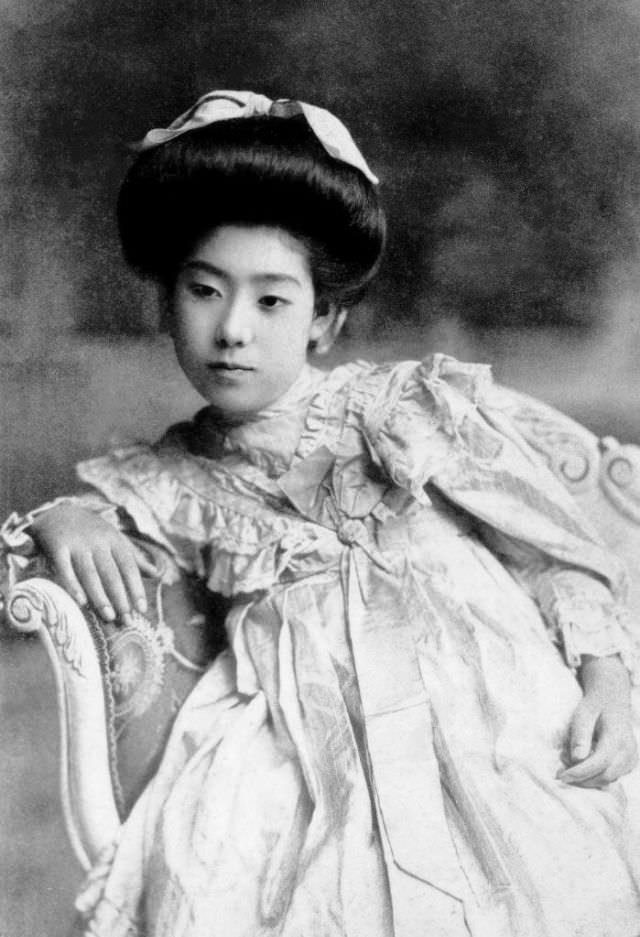
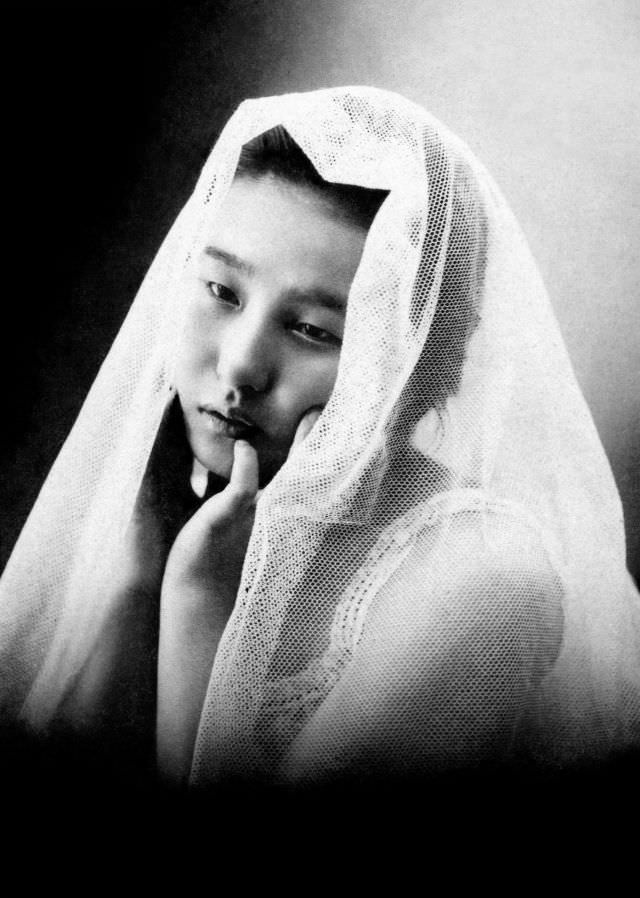
Seated portraits were a common format in Meiji-era photography. The long exposure times required by early cameras made seated or still poses a practical necessity. Photographers arranged their subjects carefully — positioning hands, adjusting props, controlling the fall of light — to get a sharp, composed image within the technical limits of the equipment. The formality of these seated shots contrasts sharply with the informality of the clothing the subjects are wearing.
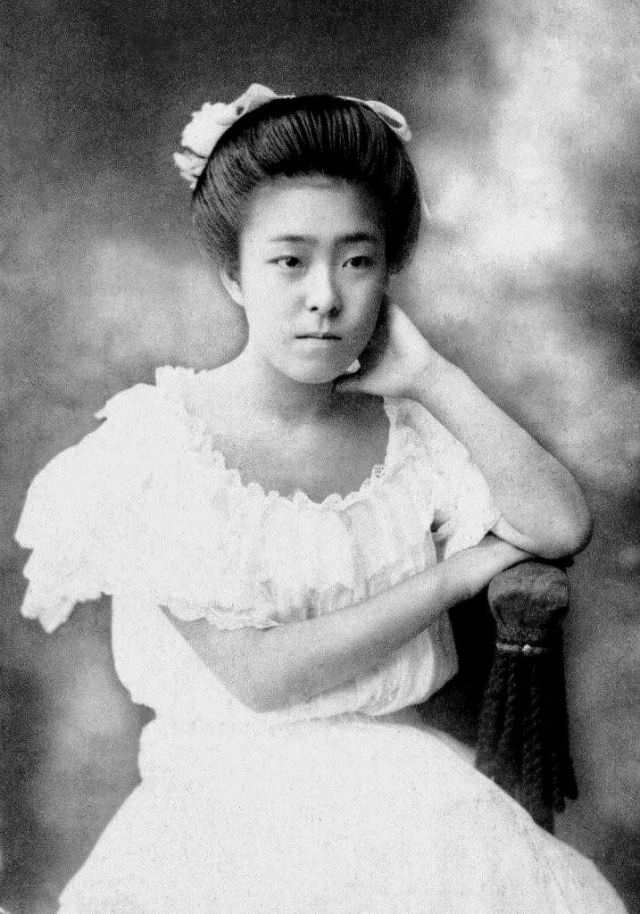
White clothing appears frequently across these photographs, likely chosen for its contrast against darker studio backgrounds and its clean appearance on early photographic film. White also held associations with purity and occasion in both Japanese and Western cultural contexts, making it a natural choice for portrait sessions that were meant to be preserved and shared.
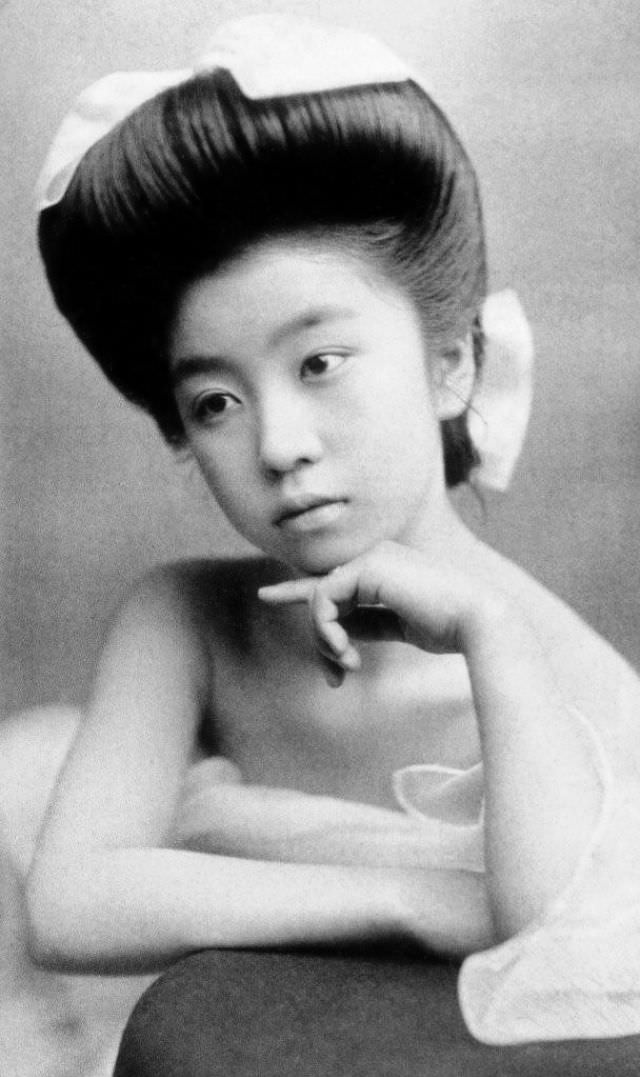
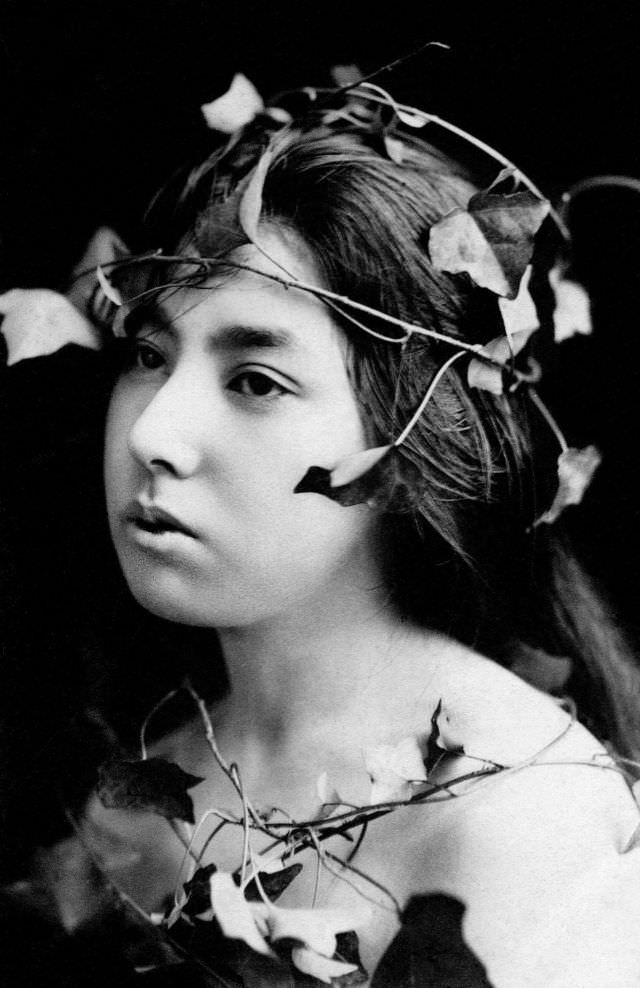
Natural elements — twigs, leaves, flowers — appear in several of these portraits, reinforcing a connection to the natural world that runs through much of classical Japanese art. Even when the clothing is entirely Western, these botanical details ground the image in a Japanese visual tradition. The photographers, whether Japanese or foreign, seemed to understand the importance of these elements in framing their subjects.
Group photographs are rarer in this collection, but when two subjects appear together, the dynamic shifts. The pairing creates a sense of companionship and gives the viewer a chance to compare poses, expressions, and styling choices. Within geisha communities, relationships between women — between a maiko and her senior geisha mentor, or between two fully trained geisha — were central to daily life and professional development.
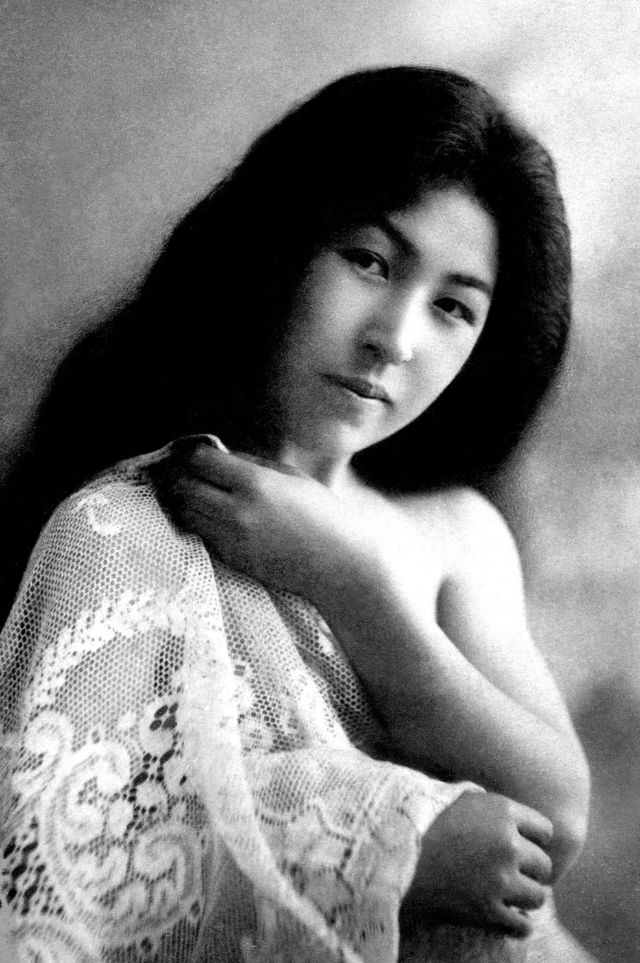
Window light was the primary light source in most studio photography of the early 1900s. Photographers positioned their subjects to catch the soft, directional glow coming through a single large window, producing the kind of gentle contrast seen throughout this collection. The result is a set of photographs that feel both intimate and carefully crafted — a fitting record of women who were themselves trained to balance discipline with artistry.