
In the late 19th and early 20th centuries, the streets of London were filled with thousands of homeless people struggling to survive. Cold nights, little food, and no safe place to sleep made life brutal for the city’s poorest residents. Into this crisis stepped the Salvation Army, which operated a tiered system of overnight shelters designed to give people some form of relief — each level costing a little more and offering a little more comfort. At the top of this system sat the four-penny coffin house, one of the earliest dedicated homeless shelters in the city.
The system started at its most basic level with the penny sit-up. For a single penny, a person could come in from the cold, receive some food, and sit on a wooden bench for the entire night. There was one strict condition: no sleeping. Attendants would watch over the room to make sure no one nodded off. It was a hard bargain, but for someone with almost nothing, a penny and a warm room was better than a frozen street.
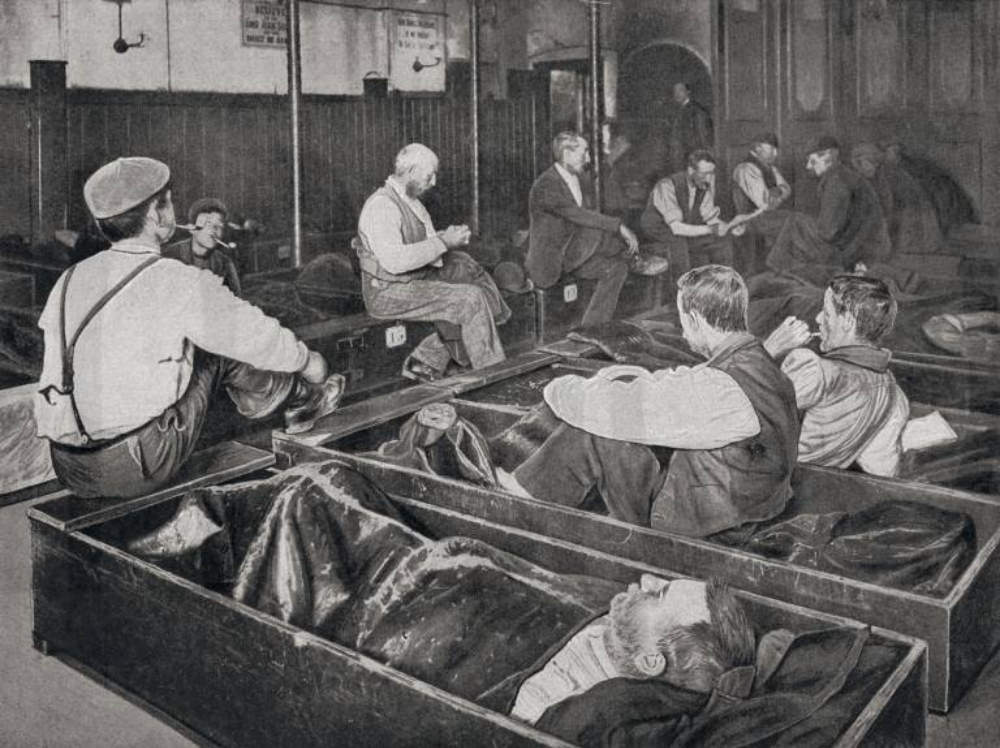
For two pennies, clients could access what was known as the “two-penny hangover.” This shelter worked much like the penny sit-up, but with one important difference. A rope was strung in front of the benches, and clients could lean forward over it and actually sleep. It was far from comfortable, but it allowed exhausted people to get real rest without paying for a full bed. The name itself came from the image of bodies draped over the rope through the night.
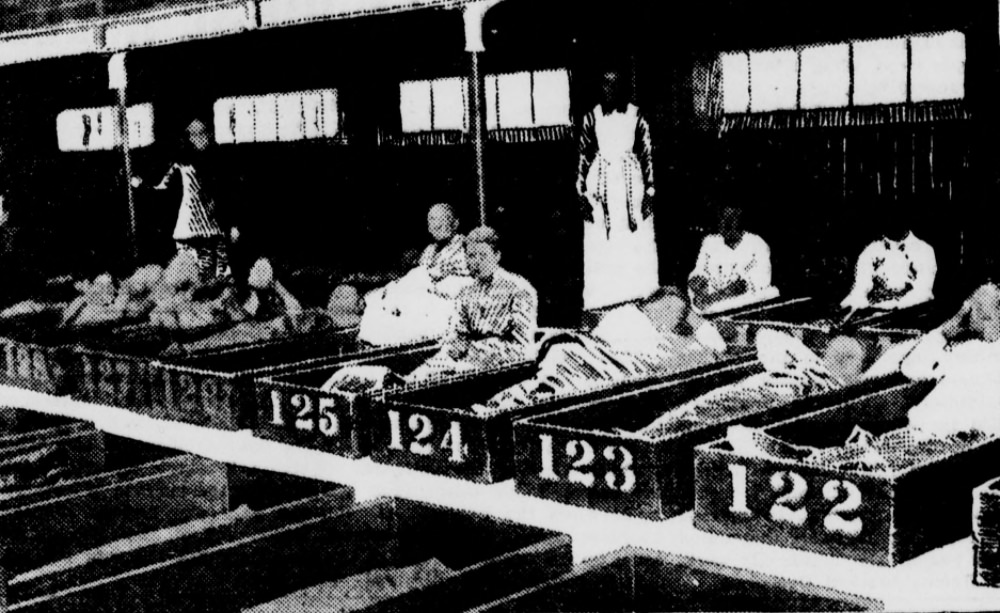
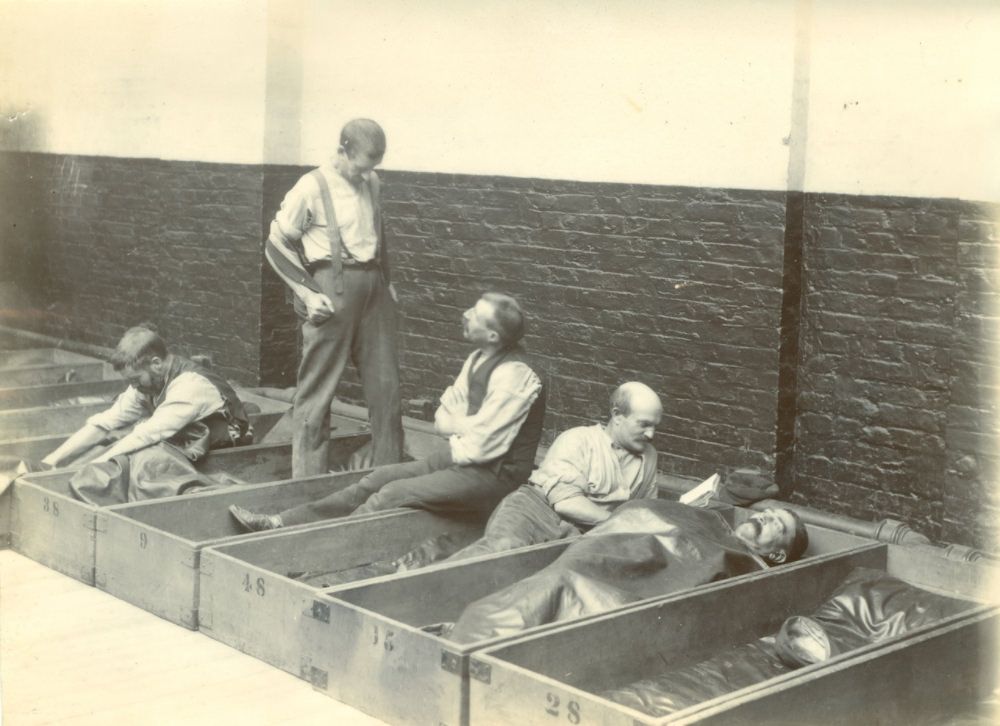
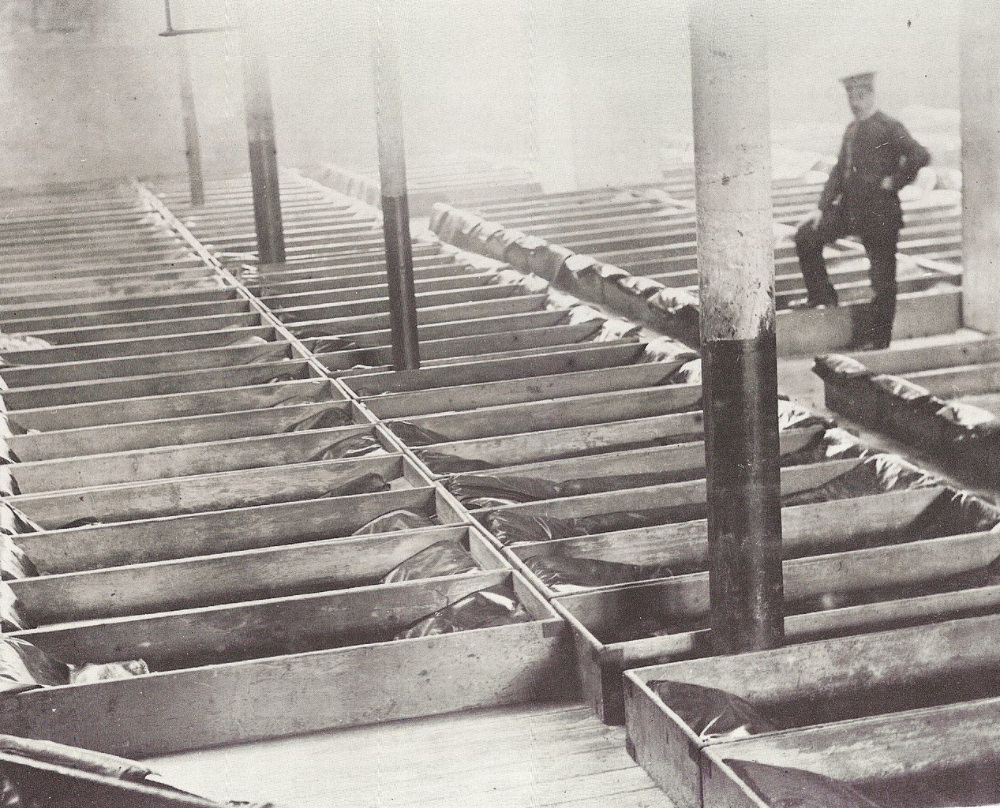
The four-penny coffin was the most complete option in this system. For four pennies, a client received food, shelter, and a place to sleep — lying flat on his back inside a coffin-shaped wooden box. A tarp was draped over the top as a cover. These narrow wooden enclosures lined the shelter floors in rows and gave the houses their striking name. They were the cheapest full overnight accommodation available in London at the time.
The Salvation Army ran these shelters with a dual purpose in mind. The first was purely practical — providing food and a safe place to sleep to men who had no other options. The second was religious. The organization believed that drawing people into its shelters also brought them closer to Christianity, and the shelters served as a point of contact for missionary outreach alongside humanitarian aid. Both goals worked hand in hand in how these spaces were managed.
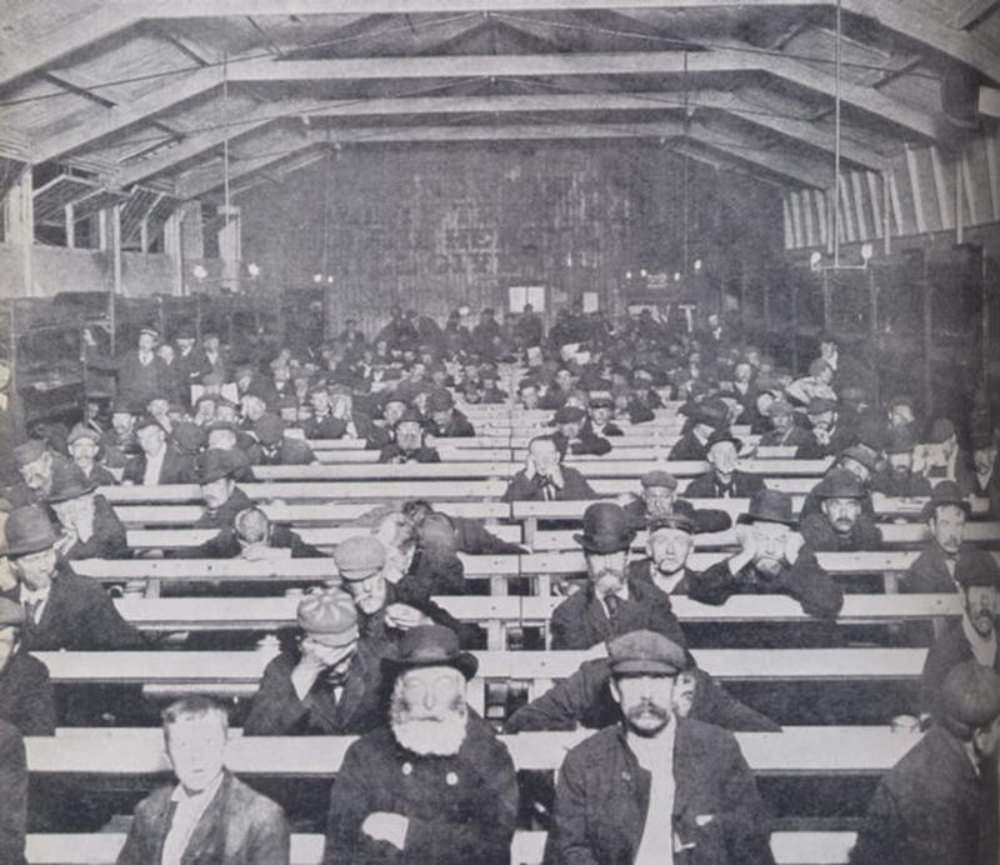
Coffin houses became well known across the city because they filled a gap that no other institution was addressing as directly. Workhouses existed but came with strict rules, loss of freedom, and a level of stigma that drove many homeless people away. The coffin houses, by contrast, were accessible, affordable, and relatively straightforward. A man could walk in with four pennies and walk out the next morning having slept and eaten.
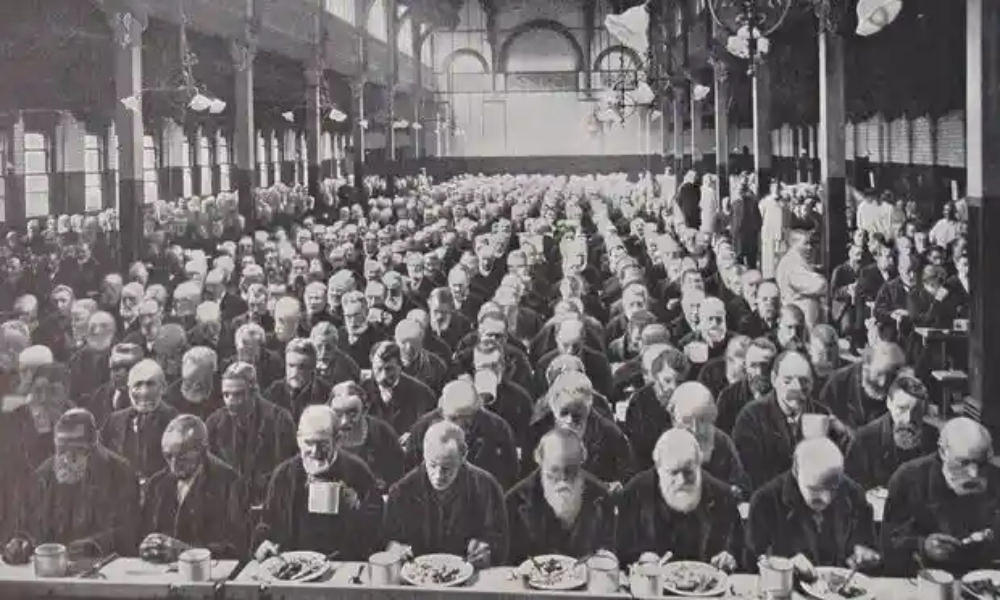
By modern standards, a wooden box with a tarp for a cover falls far short of acceptable shelter conditions. But in Victorian London, where the alternative was a freezing pavement or a dangerous street corner, the four-penny coffin house represented something real and concrete: a structured response to homelessness at a time when the city had very few answers to offer its most vulnerable people.




