in

Rising Waters: A Century of Flooding in Missouri and How It Shaped Cities, Farms, and Daily Life

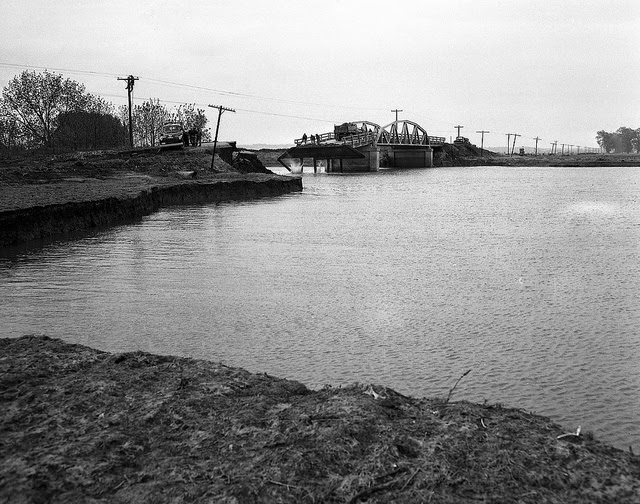
Missouri experienced multiple major floods during the 20th century. These floods were caused by heavy rainfall, snowmelt, and the overflowing of the Mississippi and Missouri Rivers. Cities, towns, and farmland were frequently affected, creating damage to homes, roads, and bridges.

The 1915 flood hit the Missouri River Valley with severe force. Water levels rose quickly, washing away riverbanks and inundating towns along the river. Many families were forced to evacuate, and livestock drowned in low-lying areas. Emergency services struggled to respond because communication systems were limited at the time.

In 1927, Missouri was affected by the larger Mississippi River flood. Levees broke in several areas, causing widespread destruction. Railroads were submerged, cutting off transportation and supply routes. Farmers lost entire crops, which caused food shortages and economic strain.

Flood control measures began after these early disasters. Levees were reinforced, and dams were constructed to manage river flow. Despite these improvements, the 1951 Missouri River flood caused extensive damage. Kansas City and surrounding communities faced rising waters, forcing evacuations and emergency sandbagging operations.

Read more

The 1973 flood was another major event in Missouri. Rainfall over several days caused tributaries of the Missouri River to overflow. Cities like Jefferson City and Columbia saw streets under several feet of water. Bridges were closed, schools were canceled, and emergency shelters were set up in gymnasiums and community centers.

In 1993, Missouri faced one of the worst floods in its history. Heavy rains over the Midwest caused both the Mississippi and Missouri Rivers to overflow simultaneously. Entire counties were declared disaster areas. Roads were washed out, towns were isolated, and thousands of homes were damaged. The flood affected agriculture, with millions of acres of crops destroyed.

Flooding often prompted state and federal responses. The Army Corps of Engineers worked to reinforce levees, clear debris, and build floodways. Local governments coordinated evacuations and provided temporary shelters. Community volunteers contributed by filling sandbags, rescuing stranded residents, and distributing supplies.

Missouri’s geography made it especially vulnerable. The combination of large rivers, rolling plains, and low-lying floodplains allowed water to spread quickly during heavy rainfall. Towns built near riverbanks were particularly at risk, and bridges and roads were often damaged or washed away.

Throughout the 20th century, flooding shaped the development of Missouri’s infrastructure. Levees, dams, and floodwalls were strengthened after major events. Emergency response plans were updated, and new technologies for monitoring river levels were implemented. Flood insurance programs were introduced to help residents recover financially.

Floods in Missouri also affected daily life. Families had to move possessions to higher ground, schools and businesses were closed, and travel became difficult. Livelihoods, especially farming, were disrupted for weeks or months. Local newspapers regularly reported on water levels, road closures, and evacuation orders.
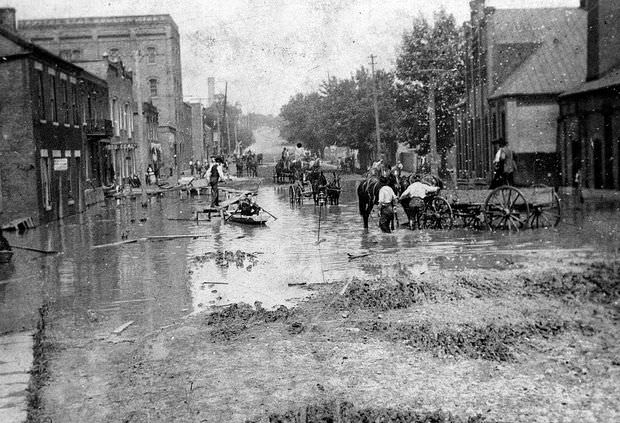
#1 Men in boats or horse-drawn wagons navigate a flooded area of Jefferson City, Missouri, 1903

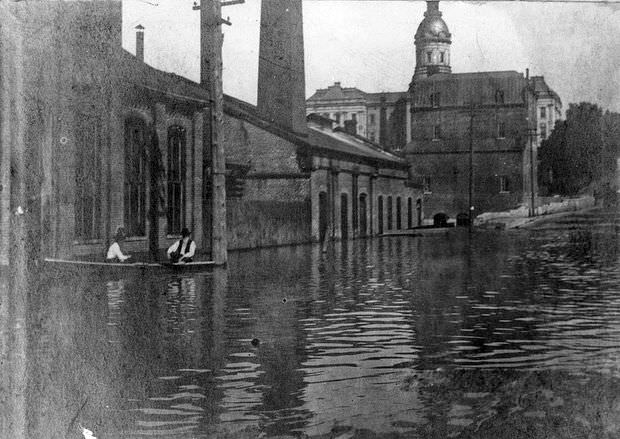
#2 Two men float in a boat along a flooded street in Jefferson City, Missouri, with the old State Capitol building in the background, 1903

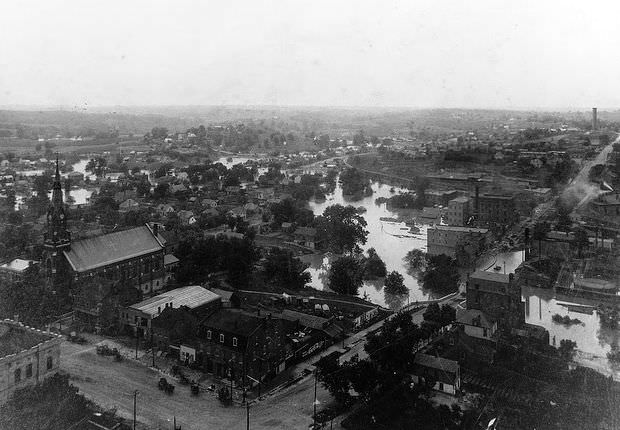
#3 View of Jefferson City from atop the old State Capitol building shows flooding below St. Peter’s Church, 1903

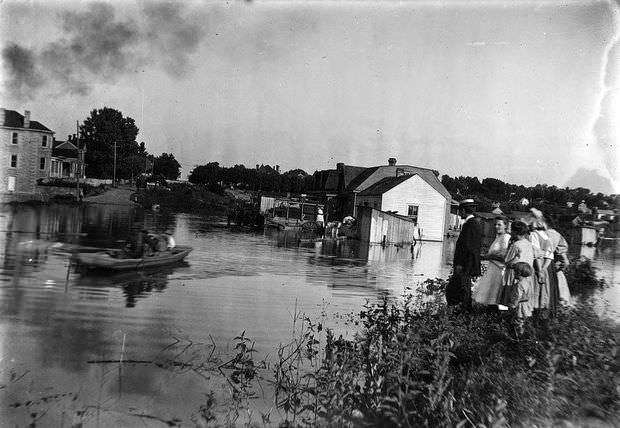
#4 A group stands on dry land as a boat navigates a flooded area in Jefferson City, Missouri, 1906

A group stands on dry land as a boat navigates a flooded area in Jefferson City, Missouri, 1906

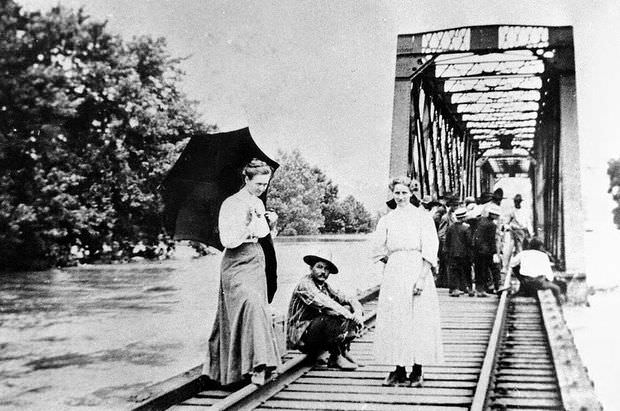
#5 Two women and a man stand on a flooded railroad bridge, with a large group of people gathered behind them, 1909

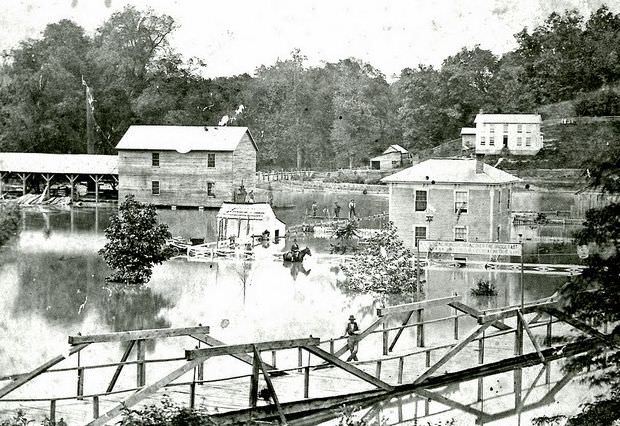
#6 View of flooding in Tuscumbia, Missouri, with a bridge in the foreground and buildings in the back; several men, including one on horseback, survey the damage, 1926

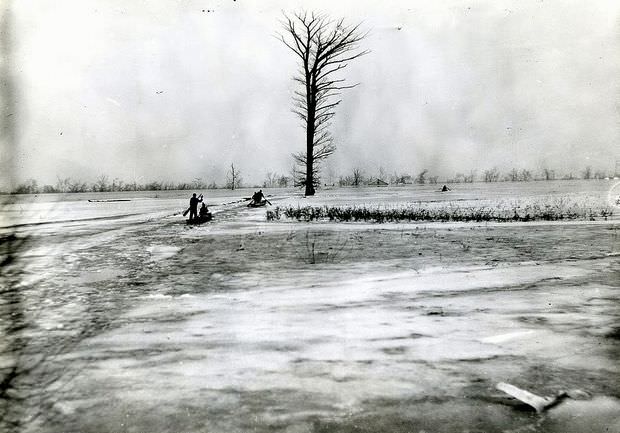
#7 People in boats row through a flooded plain in Southeast Missouri, 1935

People in boats row through a flooded plain in Southeast Missouri, 1935

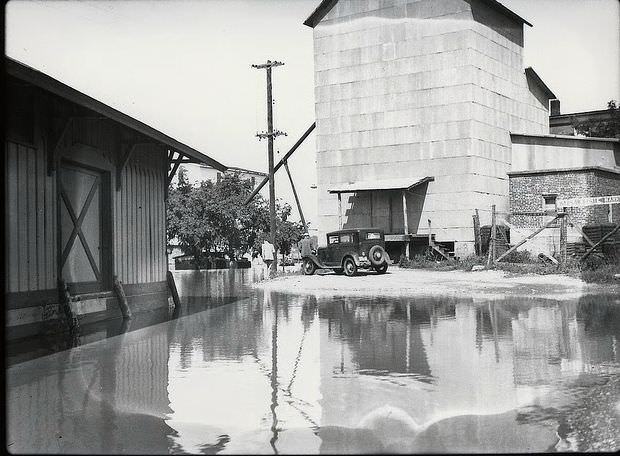
#8 Car sits on an island created by flood waters between buildings near the Osage River in Warsaw, Missouri, 1935

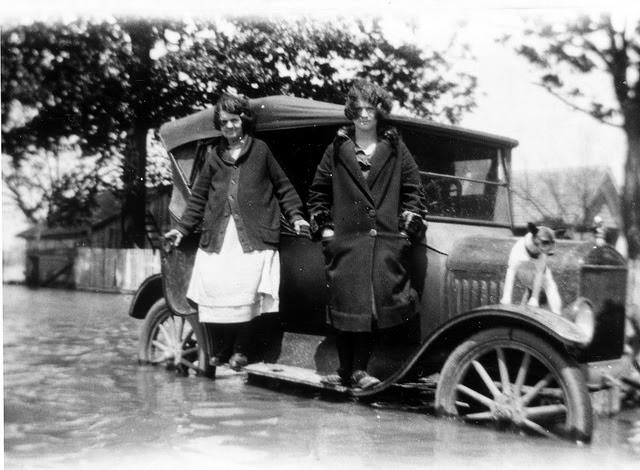
#9 Two women and a dog stand atop an automobile mostly submerged in flood waters, 1937

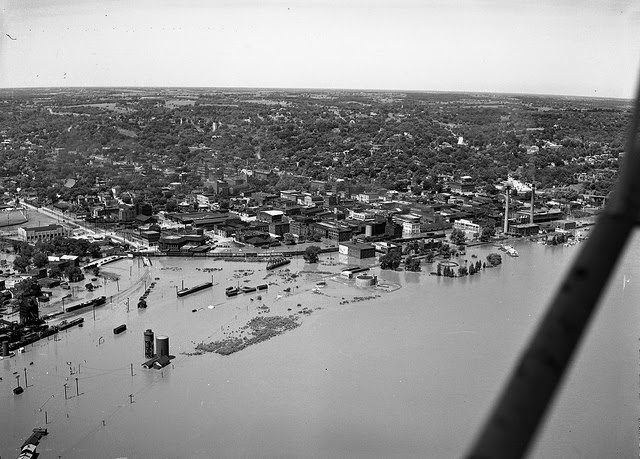
#10 View of flooded riverfront in Hannibal, Missouri, 1947

View of flooded riverfront in Hannibal, Missouri, 1947

#11 View of flooded riverfront in Hannibal, Missouri, 1947

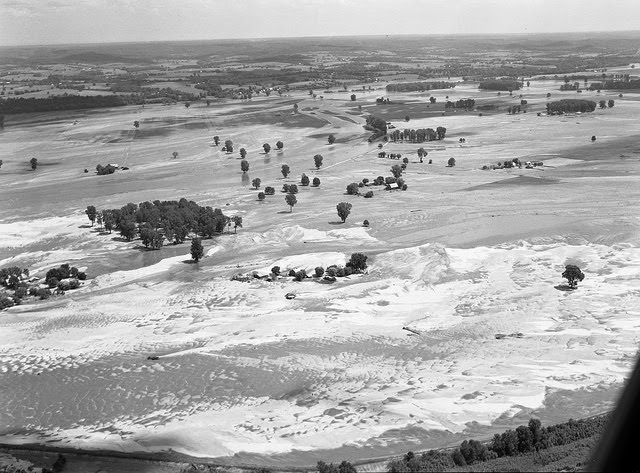
#12 Aerial view of land covered with sand from receding flood waters, 1950

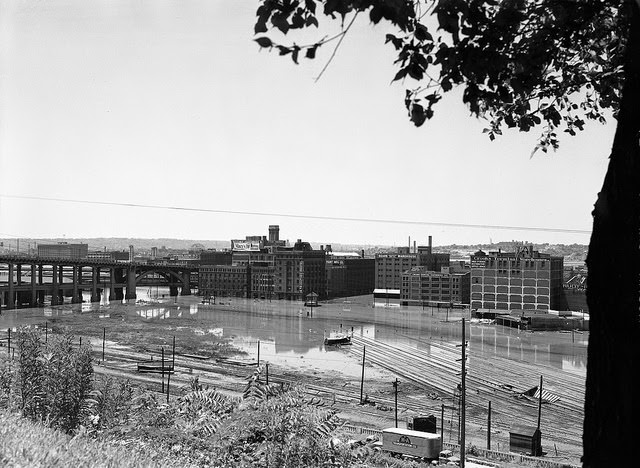
#13 View of brick buildings and railroad tracks submerged in flood waters, 1951

View of brick buildings and railroad tracks submerged in flood waters, 1951

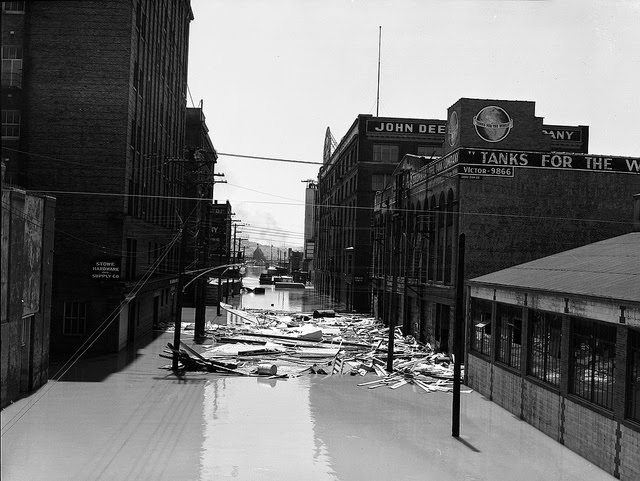
#14 View of Hardware Company, John Deere, and other buildings on a flooded street; a large pile of debris floats in the water, 1951

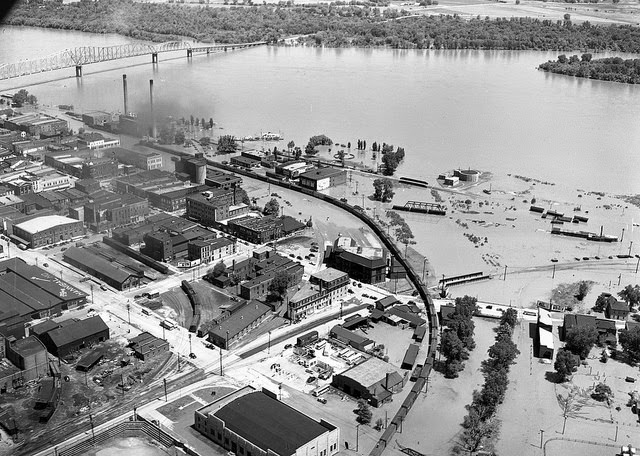
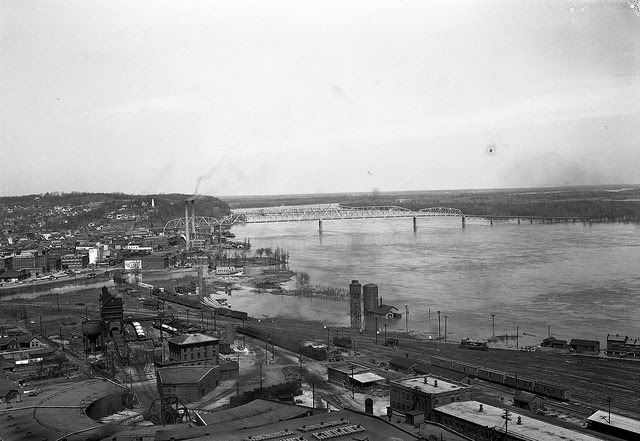
#15 View of riverfront in Hannibal, Missouri, showing flooding and a bridge in the background, 1951

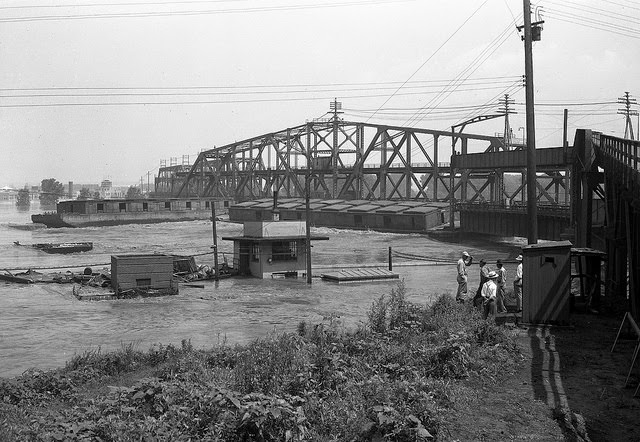
#16 Two barges slam into a bridge due to high water on the Mississippi River as a group of men watch from shore, 1951

Two barges slam into a bridge due to high water on the Mississippi River as a group of men watch from shore, 1951

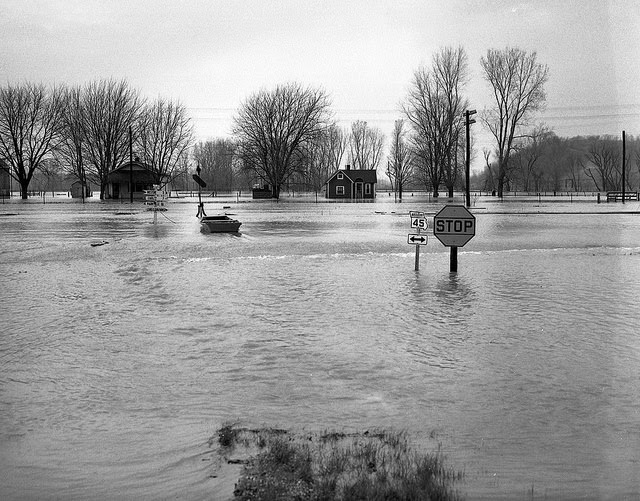
#17 Flooded intersection shows road signs partially submerged, 1951

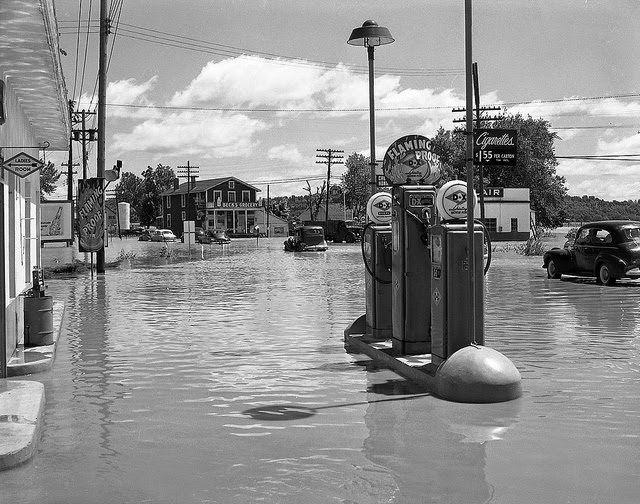
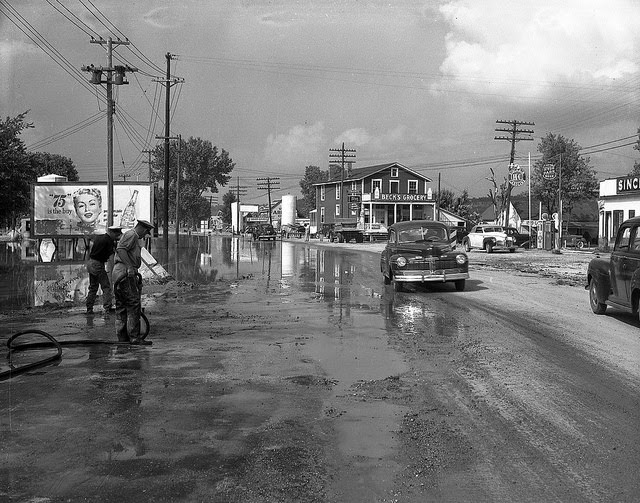
#18 Flooding on a busy street with a gas station in the foreground, Beck’s Grocery in the background, and several cars attempting to drive through water, 1951

#19 Flood damage on Rt. 63-54 shows receded water on a busy street in Cedar City, with Beck’s Grocery store in the background, 1951

Flood damage on Rt. 63-54 shows receded water on a busy street in Cedar City, with Beck's Grocery store in the background, 1951

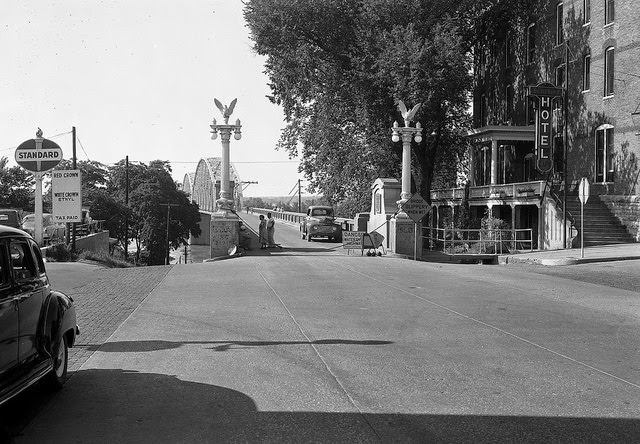
#20 Bridge blocked off with signs indicating “Danger Water Over Highway,” 1951

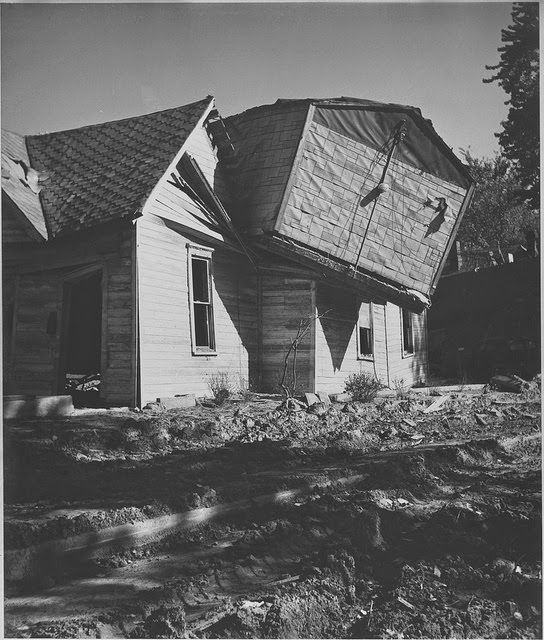
#21 Aftermath of Kansas City flood shows one house deposited atop another house, 1951

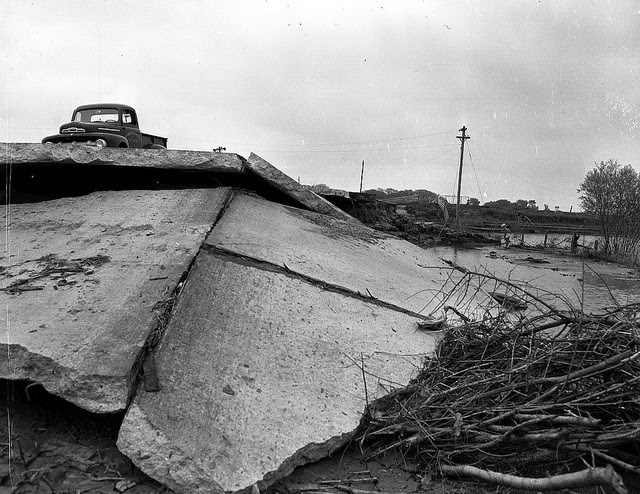
#22 Truck parked atop road concrete warped and damaged by flood waters, 1952

Truck parked atop road concrete warped and damaged by flood waters, 1952

#23 Bridge washed out by flood waters collapses as people observe, 1952

Avatar of Kevin Clark

Written by Kevin Clark

Kevin Clark is a historian and writer who is passionate about sharing the stories and significance behind historical photos. He loves to explore hidden histories and cultural contexts behind the images, providing a unique insight into the past.

Leave a Reply

Your email address will not be published. Required fields are marked *