Hey There! Before You Go. 😧
Get the best vintage content straight into your inbox!

Don't worry, we don't spam

A Look Back Through Old Photos of U.S. Presidential Phone Calls

The telephone arrived at the White House in 1877, during the administration of Rutherford B. Hayes. It was placed in the Telegraph Room and was assigned the phone number “1.” Hayes placed his first call to Alexander Graham Bell himself, who was just 13 miles away. For years after, few presidents gave the device much thought. William McKinley had a secretary handle every call on his behalf. The phone was a novelty, not a necessity.

That changed in 1929, when Herbert Hoover had a telephone line installed directly on his Oval Office desk. Before then, a phone had to be carried to the president whenever he needed one. Hoover’s desk phone turned the telephone from a staff tool into a personal instrument of the presidency. Early presidents like Taft and Wilson had used the phone sparingly, but their willingness to pick up the receiver at all signaled a shift in how the office communicated.
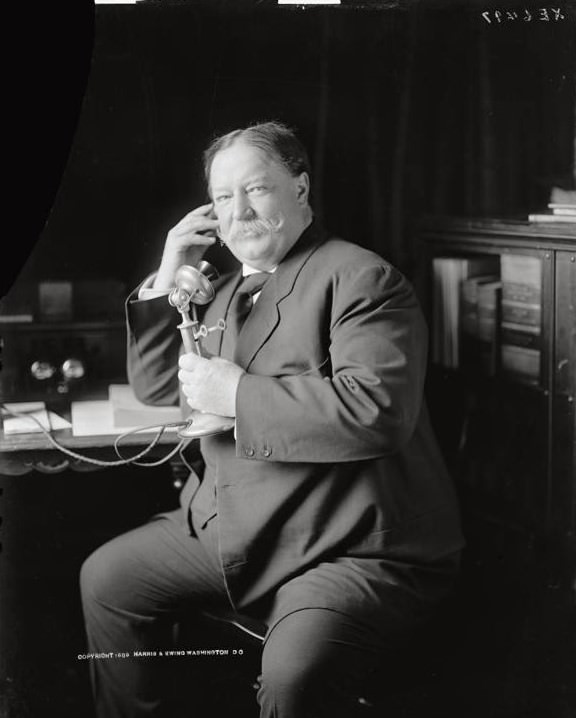
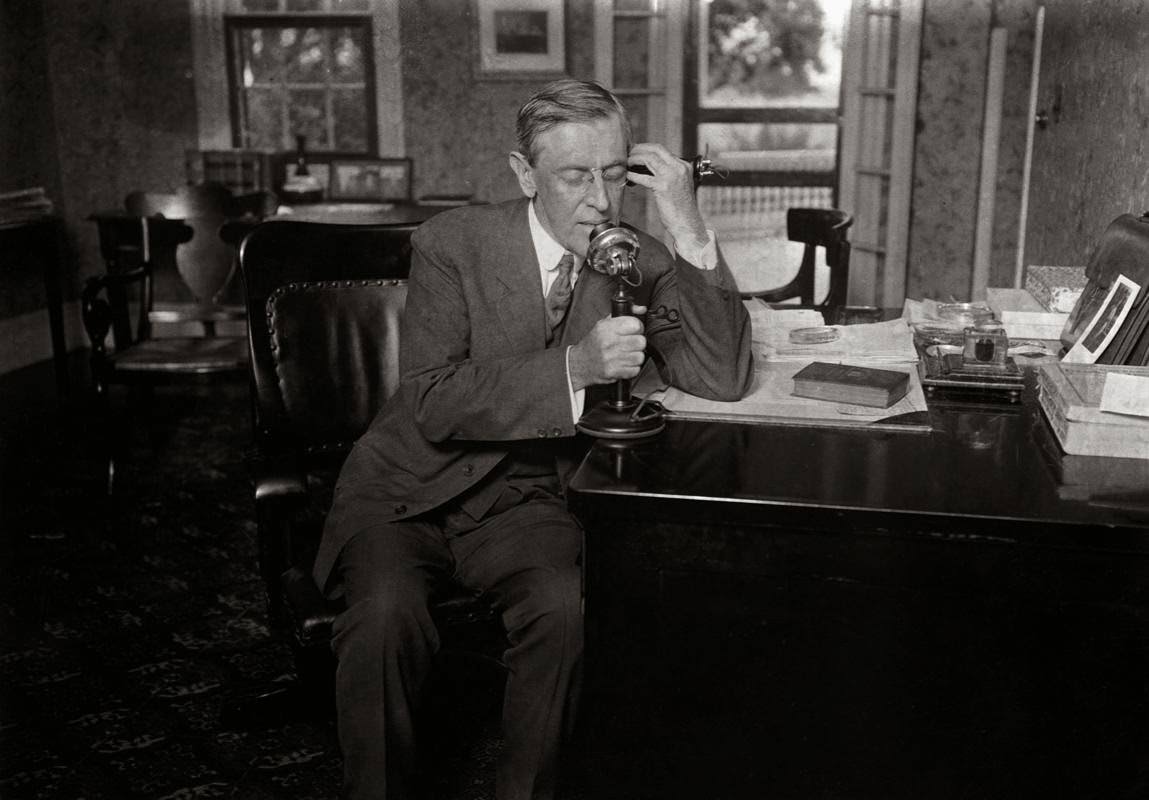
President William Howard Taft on the phone.
President Woodrow Wilson speaks on the telephone.

By the late 1920s, the telephone was becoming a regular fixture in presidential life. Calvin Coolidge, known for being a man of few words, still recognized its practical value in managing the business of government.
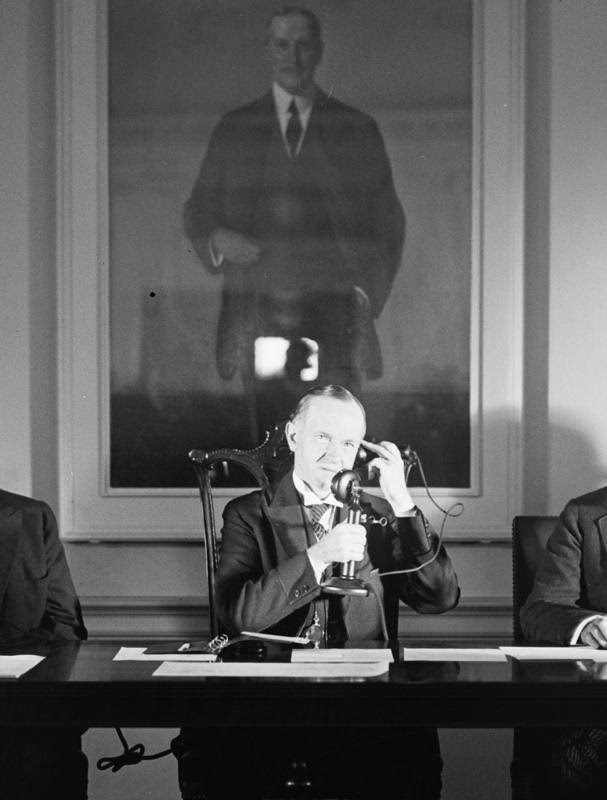
President Calvin Coolidge speaks on the telephone, 1928.

Franklin D. Roosevelt transformed the phone into a governing tool. He had multiple lines installed on his desk, including secure lines used during World War II. He spoke regularly with advisors, congressional leaders, and heads of state. He also attached a recording device to his phone in the White House Map Room, preserving conversations for the historical record. Harry Truman carried on that practice, using the phone for direct, no-nonsense exchanges during the opening years of the Cold War.
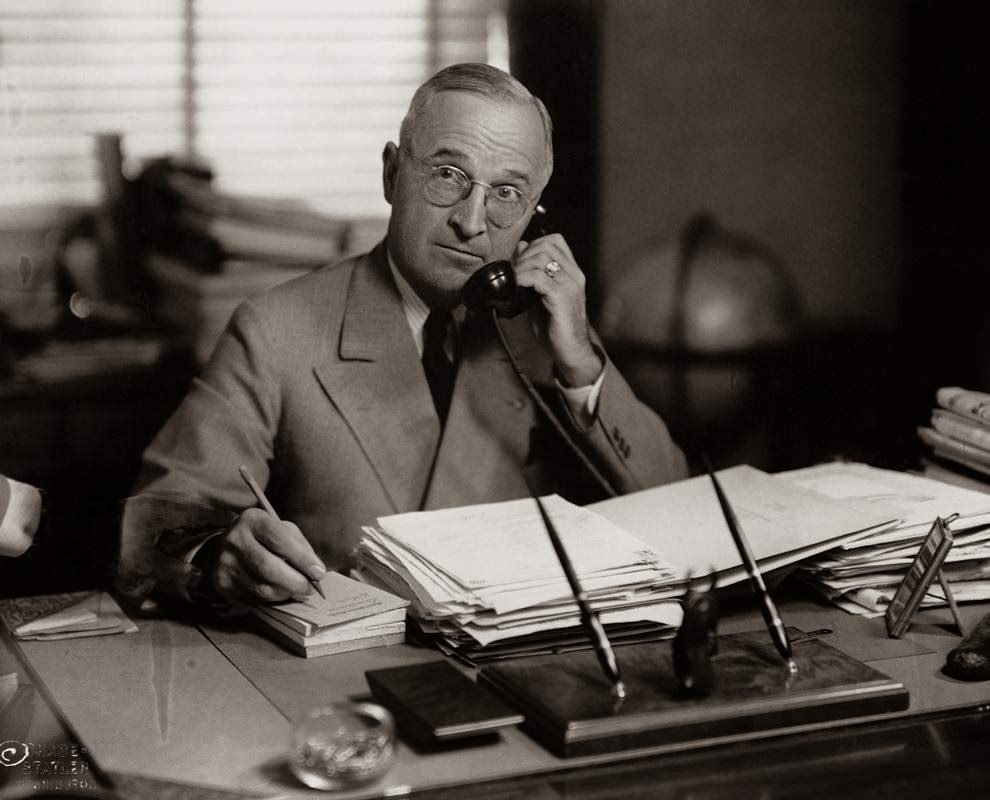
President Harry Truman talks on the telephone in his office in Washington, D.C., 1945.

Dwight Eisenhower kept a disciplined approach to the phone, using it as a steady management tool throughout his two terms. The image of a president at his desk, receiver in hand, was becoming the standard portrait of executive authority.
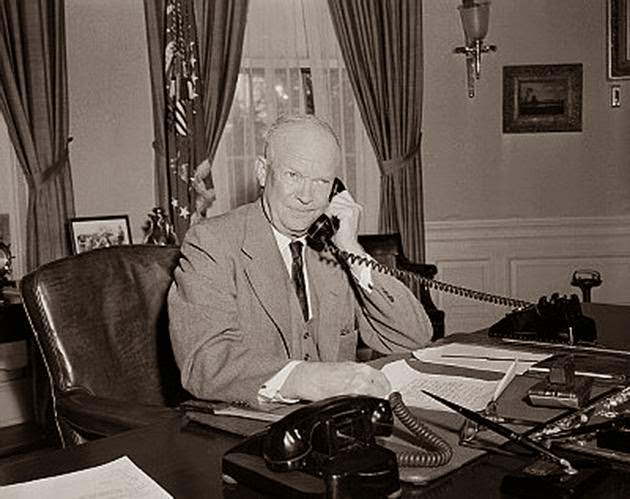
President Dwight Eisenhower conversing by phone at his desk, circa 1954.

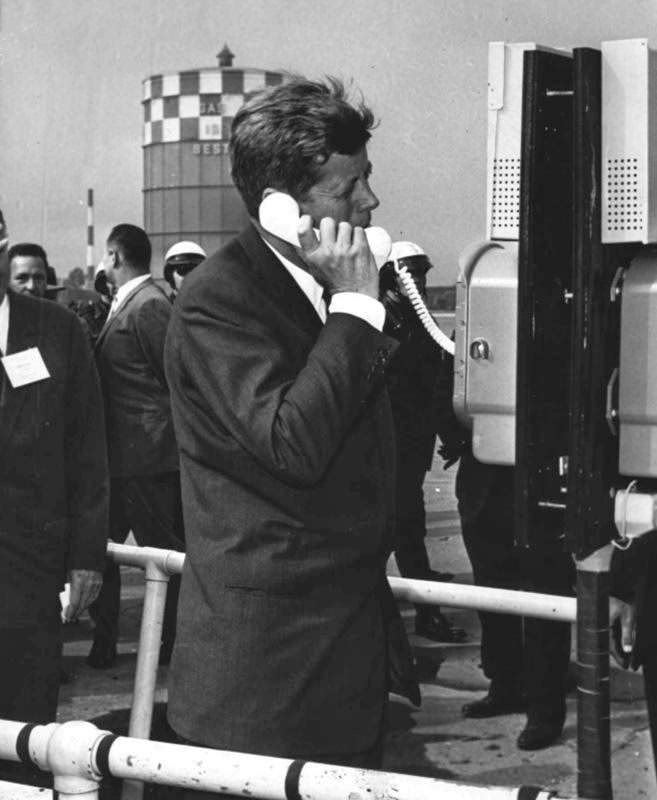
John F. Kennedy relied on the telephone more heavily than almost any predecessor. During the Cuban Missile Crisis in October 1962, he was in constant contact with his advisors in the Executive Committee, known as ExComm, as well as military leaders and diplomats navigating the standoff with the Soviet Union. Kennedy also secretly recorded many of his calls and meetings to aid future historians. The phone went with him everywhere — from the Oval Office to airport tarmacs.
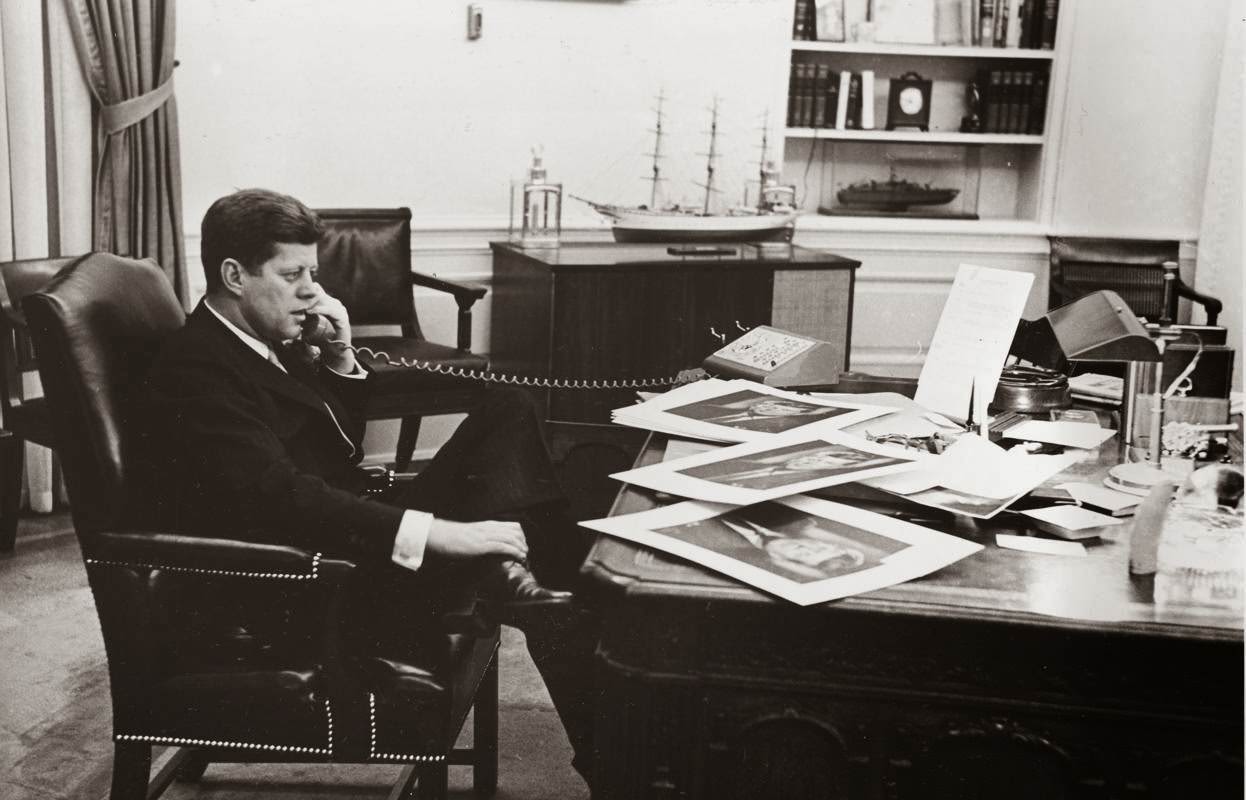
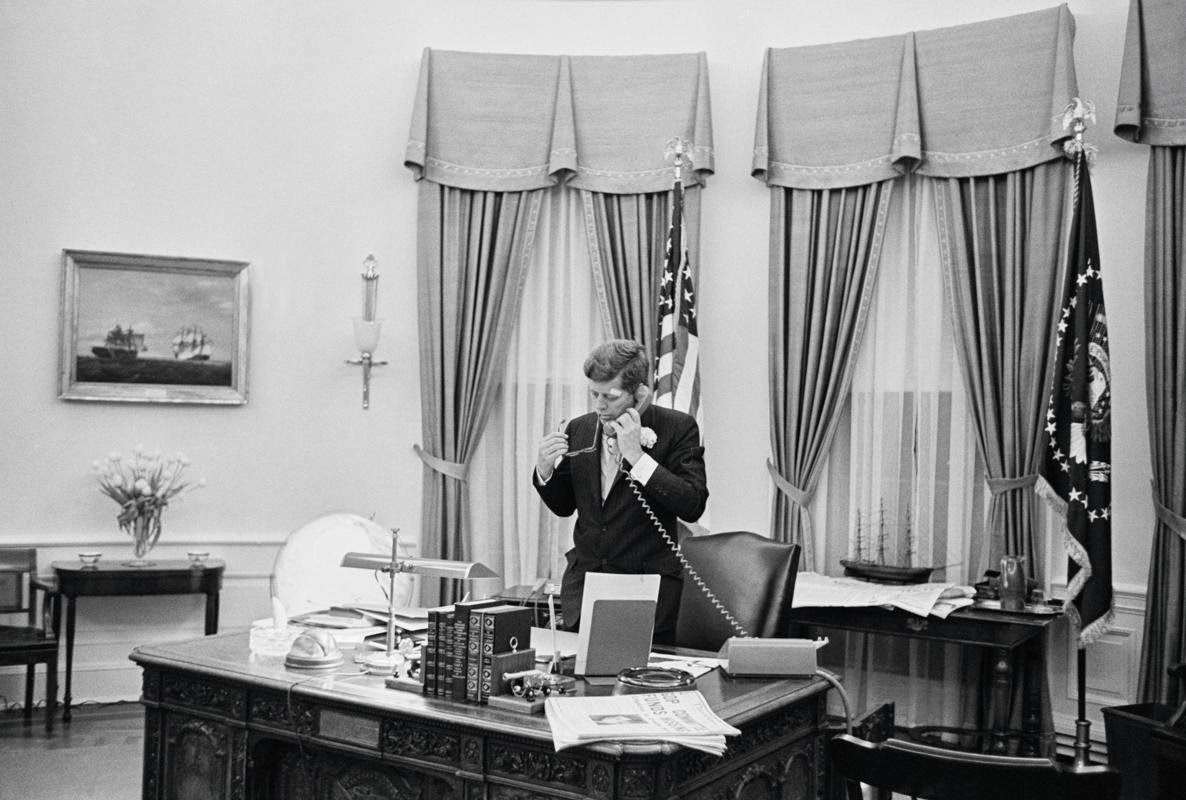
President John F. Kennedy ends his official day with a final phone call to his press secretary from his Oval Office desk at the White House in Washington, D.C., 1961.
President John F. Kennedy talks on the telephone in the Oval Office, 1961.
President John F. Kennedy takes a telephone call at a special installation at Detroit's City Airport, 1962.
President John F. Kennedy takes a telephone call at a special installation at Detroit’s City Airport, 1962.

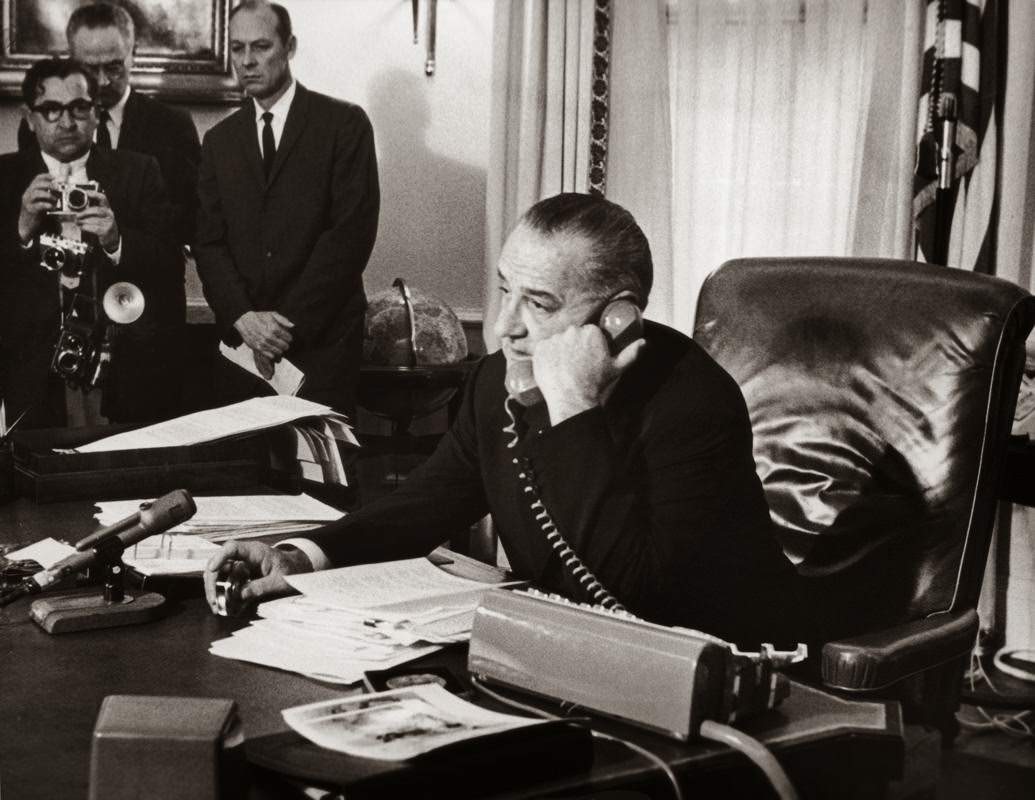
Lyndon B. Johnson took presidential phone use to an extreme. He had phones installed throughout the White House, on his boat, and even in the bathroom. Johnson used the phone as his primary weapon for political persuasion. His recorded calls reveal a president who cajoled, flattered, and pressured members of Congress into supporting his Great Society legislation. He called world leaders, NASA astronauts, and lawmakers with equal intensity.
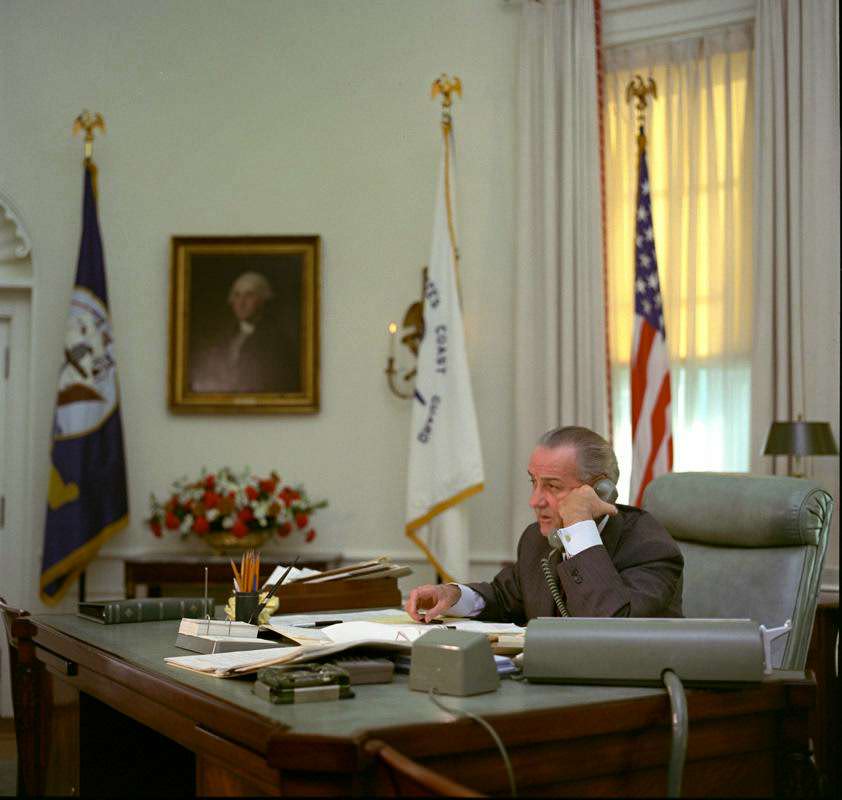
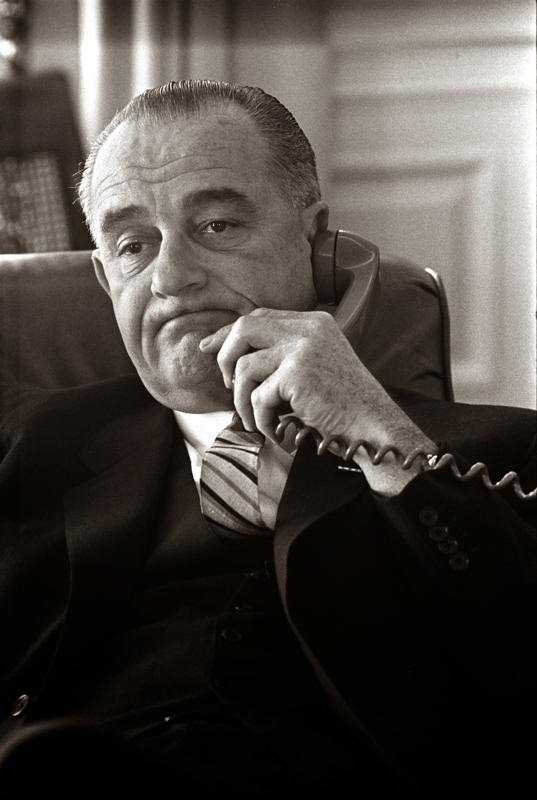
President Lyndon Johnson talks on the telephone at the White House in Washington, D.C.
President Lyndon Johnson talks on the telephone from the Oval Office, 1964.
President Lyndon B. Johnson congratulates astronauts Virgil Grissom and John Young after their triple orbit of the Earth, 1965.

Richard Nixon made one of the most famous presidential calls in history in July 1969, speaking to astronauts Neil Armstrong and Buzz Aldrin on the surface of the Moon. Nixon also used the phone extensively for diplomatic outreach, including during the sensitive negotiations that defined his foreign policy.
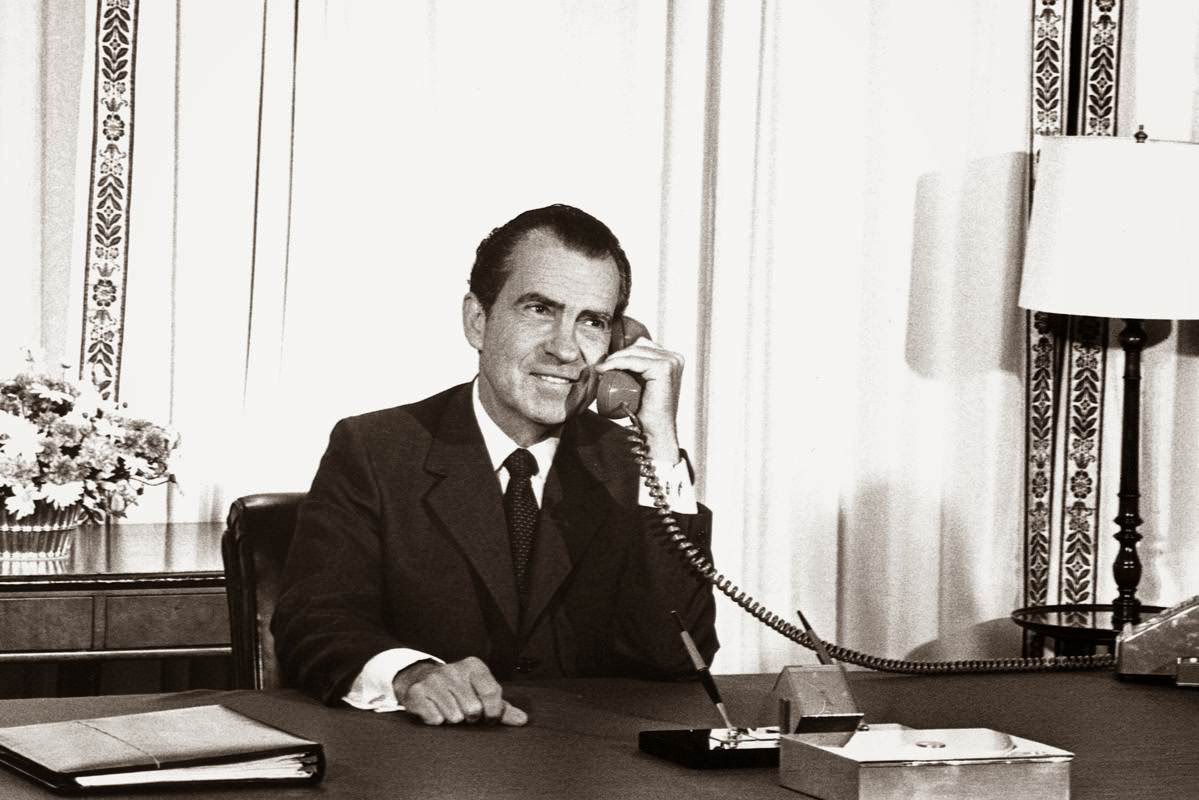
President Richard Nixon speaks to astronauts on the Moon, 1969.
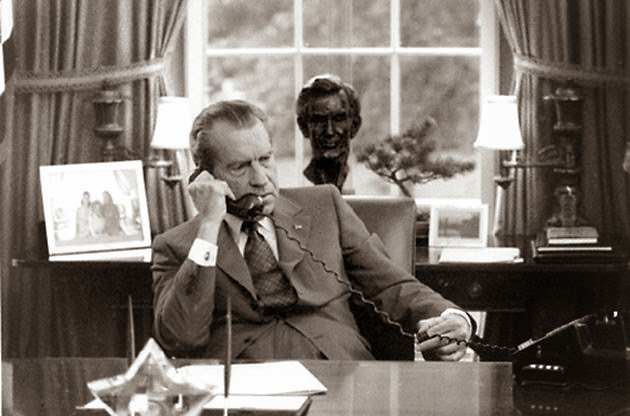
President Richard Nixon on the telephone at his Oval Office desk.

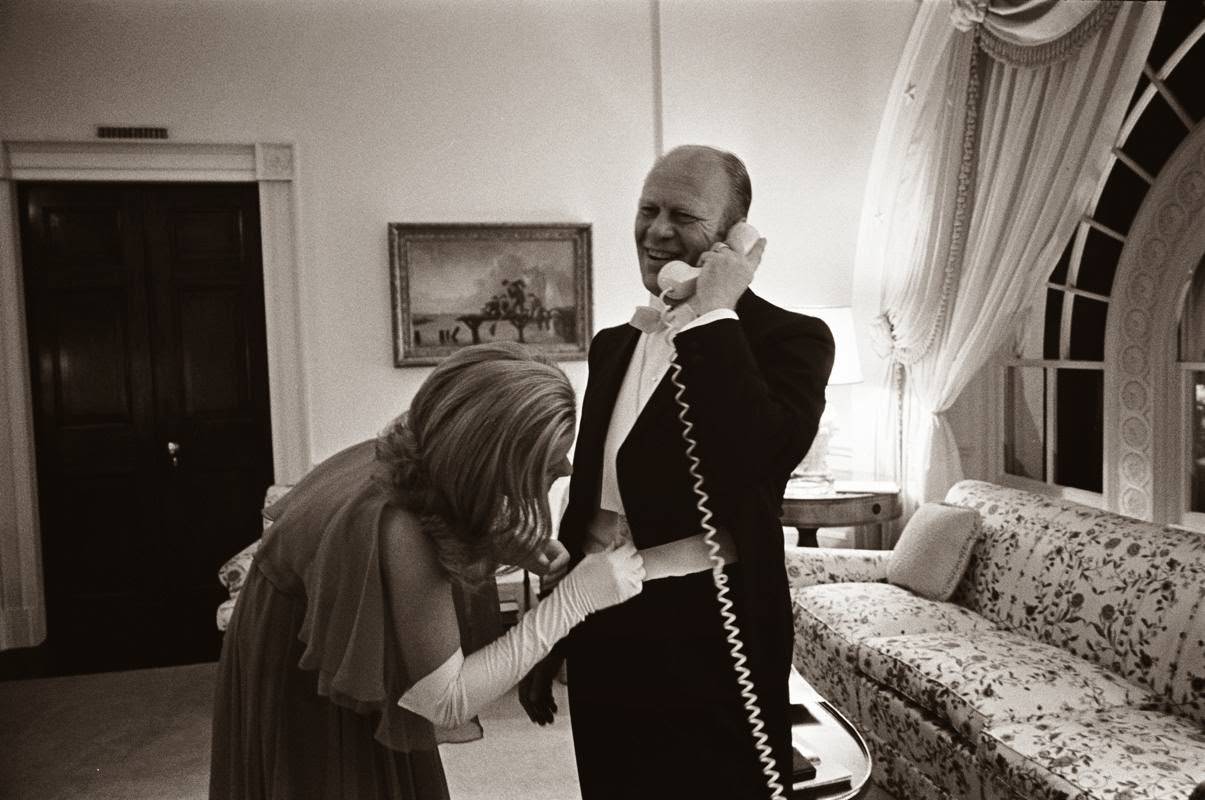
Gerald Ford kept the phone close through some of the most turbulent moments of his brief presidency. Whether coordinating Middle East diplomacy with Henry Kissinger or handling the day-to-day demands of the office, the telephone was never far from reach — even on formal occasions.
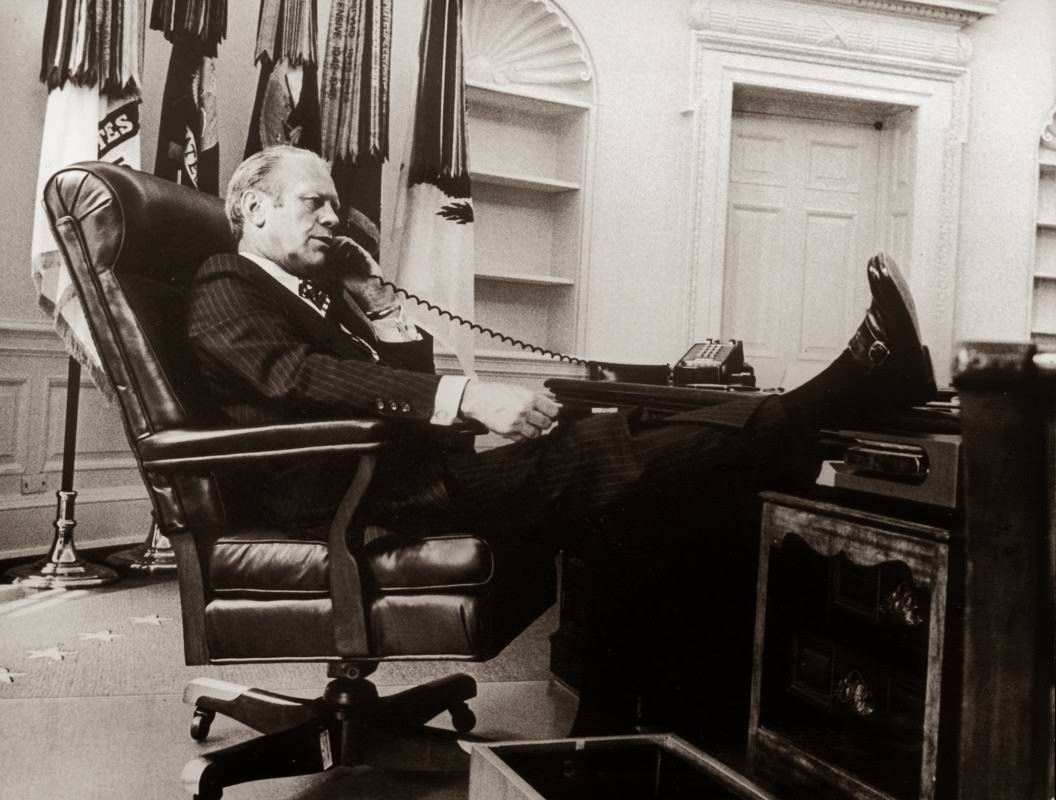
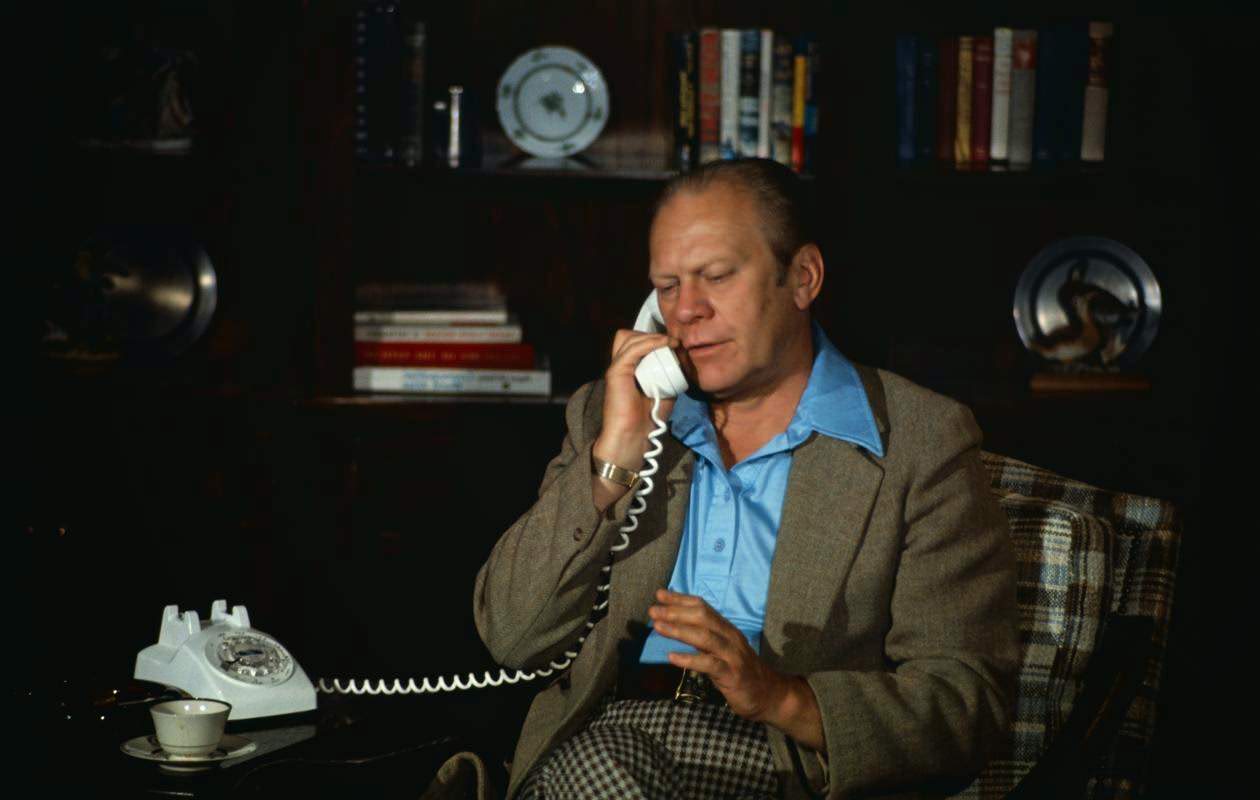
President Gerald Ford, seated in an armchair with his foot on the desk, talking on the telephone in the oval office, Washington, D.C. circa 1974.
President Gerald Ford speaks by phone to Henry Kissinger on Middle East agreement at Camp David, MD, 1975.
President Gerald R. Ford takes a phone call while his daughter Susan Ford adjusts her father's cummerbund before a white tie diplomatic reception in Washington, D.C., 1974.
President Gerald R. Ford takes a phone call while his daughter Susan Ford adjusts her father’s cummerbund before a white tie diplomatic reception in Washington, D.C., 1974.

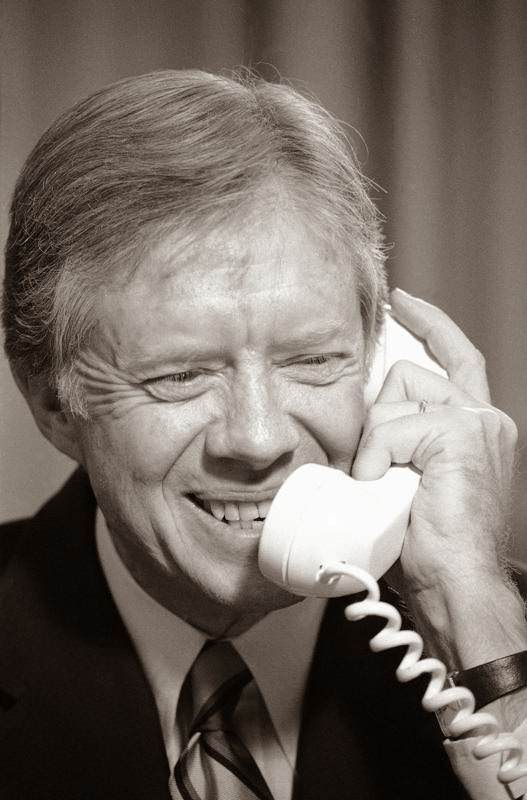
Jimmy Carter used the telephone to build diplomatic relationships across the globe. Even before he was sworn in, Carter was on the phone with foreign leaders. As president-elect, he spoke with British Prime Minister James Callaghan from Blair House. In office, he continued that pattern, handling calls from the Oval Office with leaders including Canadian Prime Minister Joe Clark.
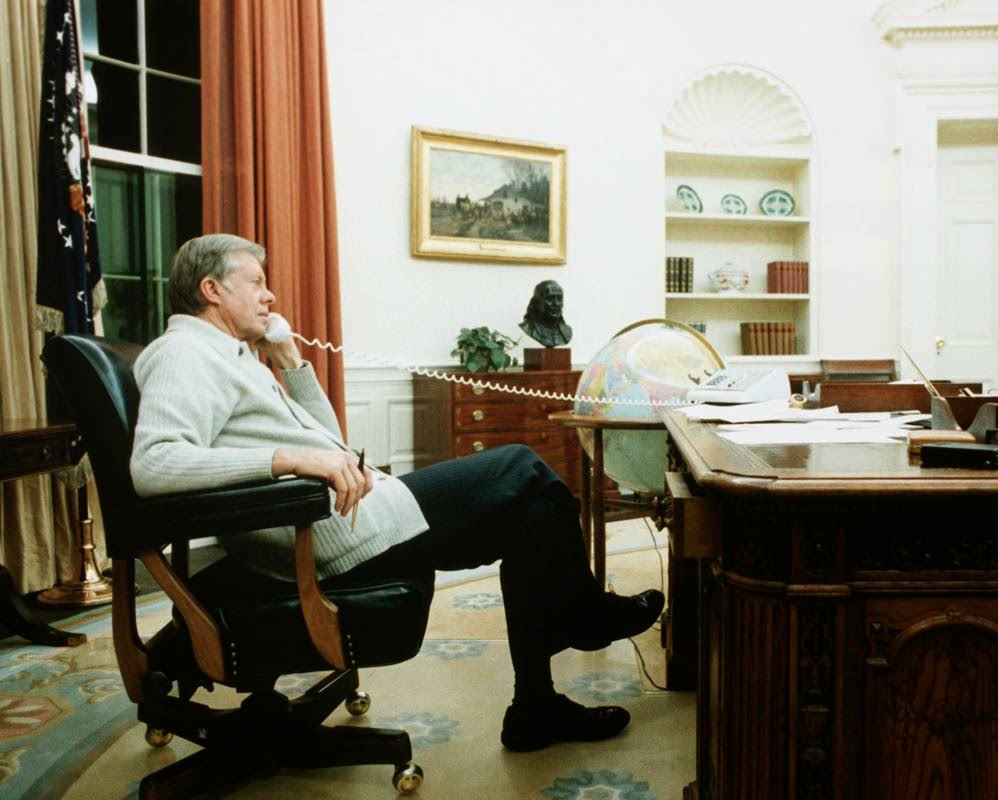
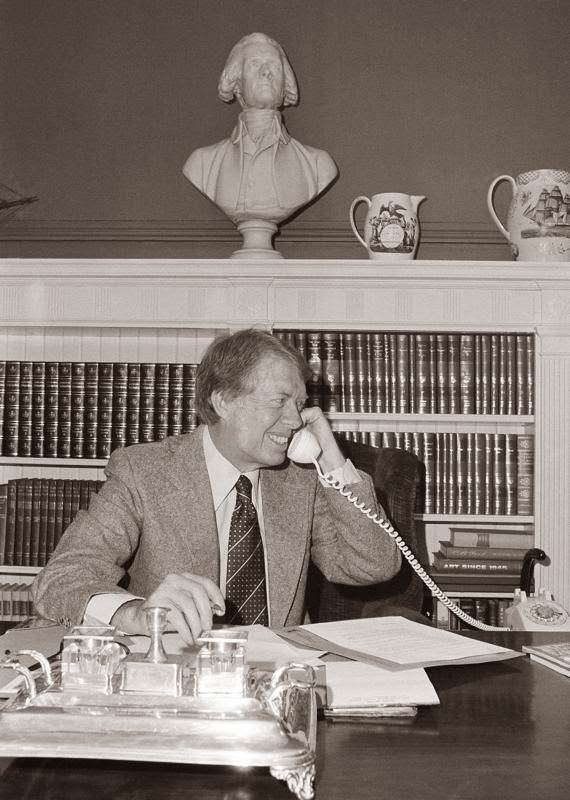
President Jimmy Carter speaks on the phone in the Oval Office in Washington, DC.
President-elect Jimmy Carter talks by telephone with British Prime Minister James Callaghan in London at Blair House in Washington, 1977.
President Jimmy Carter thanks Canadian Prime Minister Joe Clark from the Oval Office of the White House, Washington, 1980.

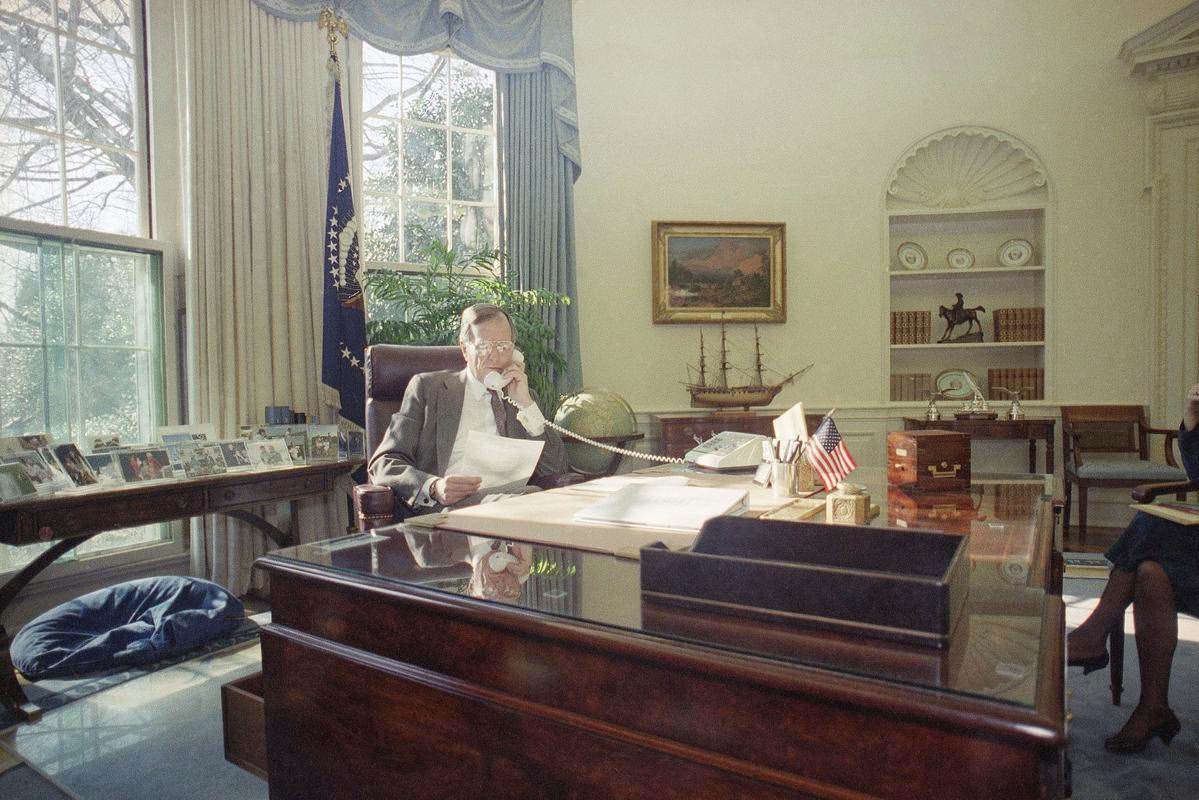
Ronald Reagan used the phone to manage fast-moving crises, including the 1983 U.S. invasion of Grenada. George H. W. Bush, who followed Reagan, relied on it just as heavily — calling astronauts in orbit, addressing rallies via phone from the Oval Office, and coordinating international affairs through direct leader-to-leader calls.
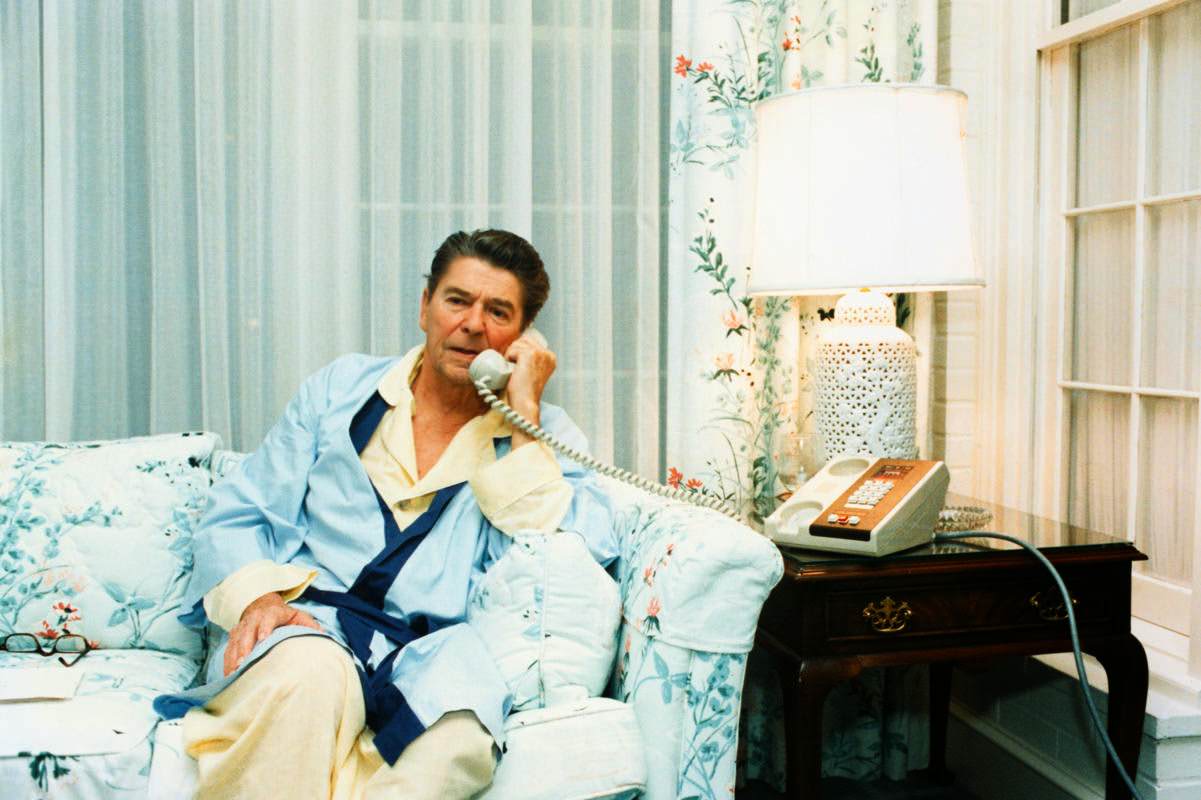
President Ronald Reagan telephones Vice President Bush regarding the Grenada situation from the White House, Washington, DC, 1983.
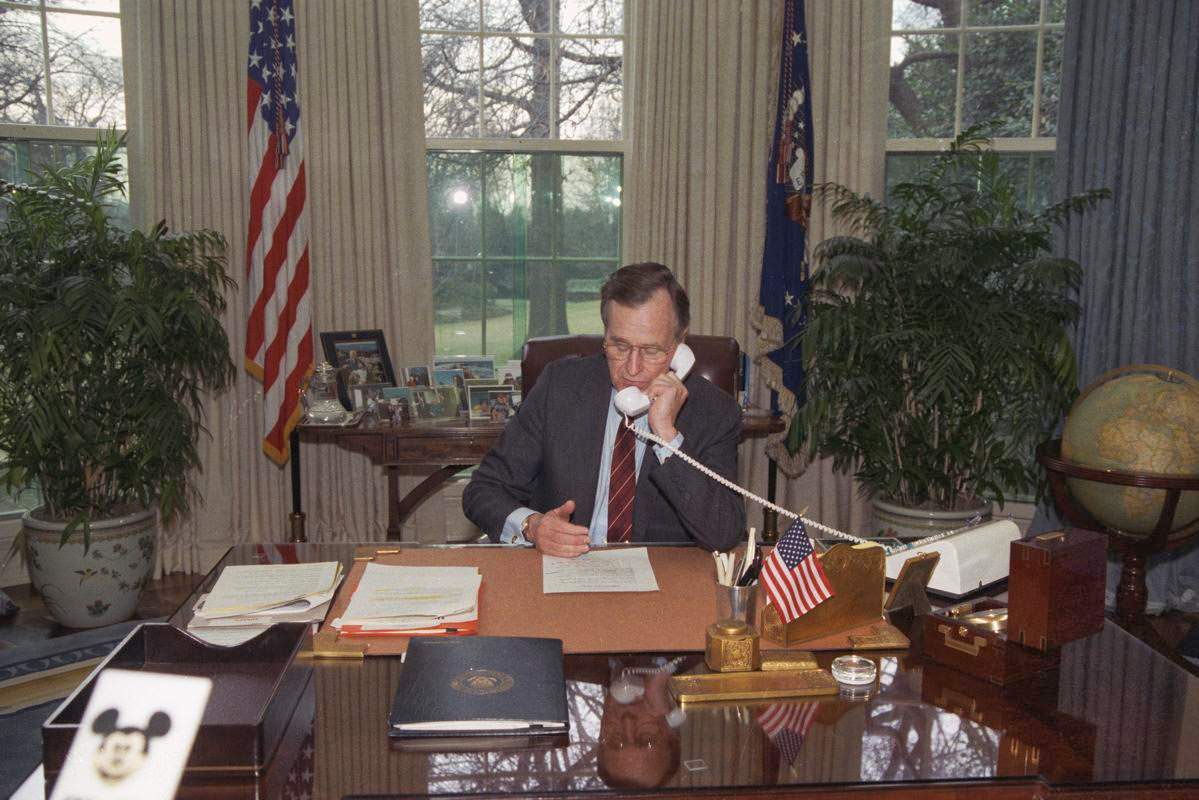
President George H. W. Bush speaks by telephone from the Oval Office of the White House to the "March for Life" rally in Washington, 1991.
President George H. W. Bush speaks by telephone from the Oval Office of the White House to the “March for Life” rally in Washington, 1991.
President George H. W. Bush addresses demonstrators gathered on the Ellipse behind the White House, 1990.
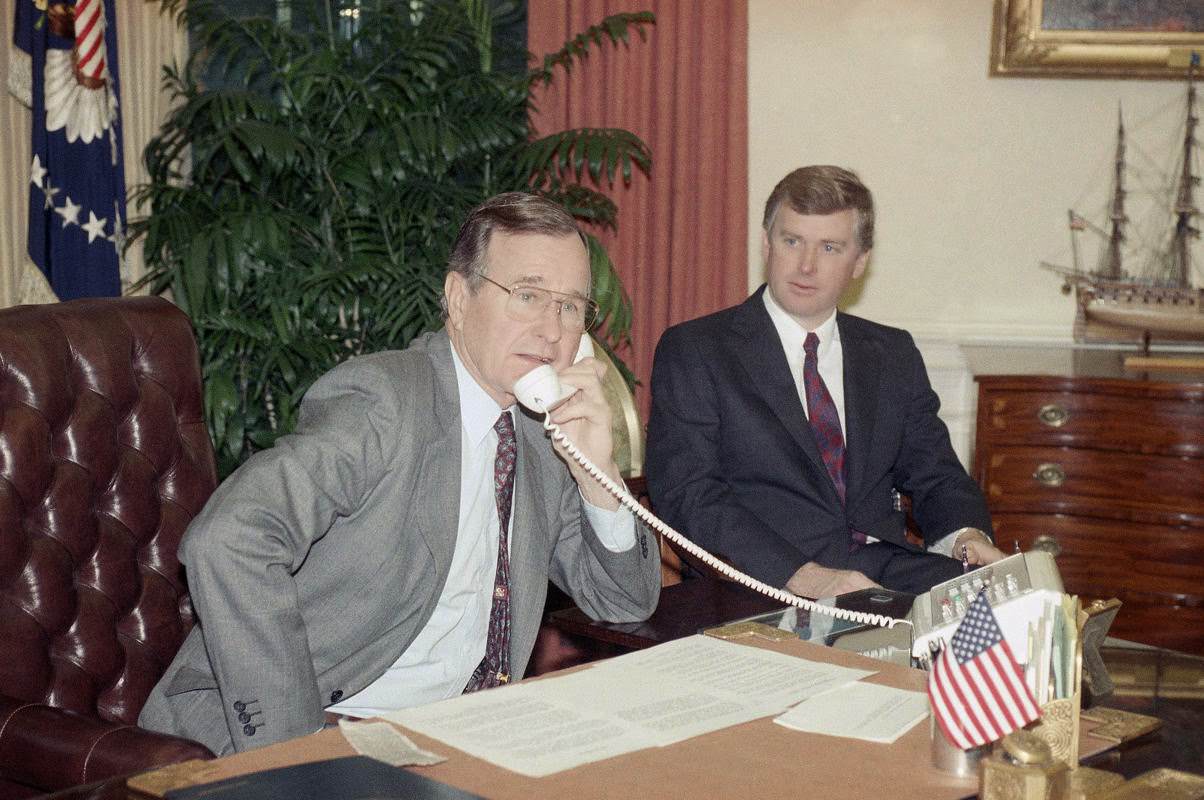
President George H. W. Bush speaks to the orbiting Columbia astronauts with Vice President Dan Quayle from the Oval Office, Washington, D.C., 1989.

Bill Clinton’s presidency saw the phone remain a constant presence in the Oval Office through the 1990s. He called Russian President Boris Yeltsin from his vacation home in Martha’s Vineyard in 1998, underscoring that presidential communication carried no off switch. Whether working the phones on domestic legislation or managing overseas relationships, Clinton kept the line open.
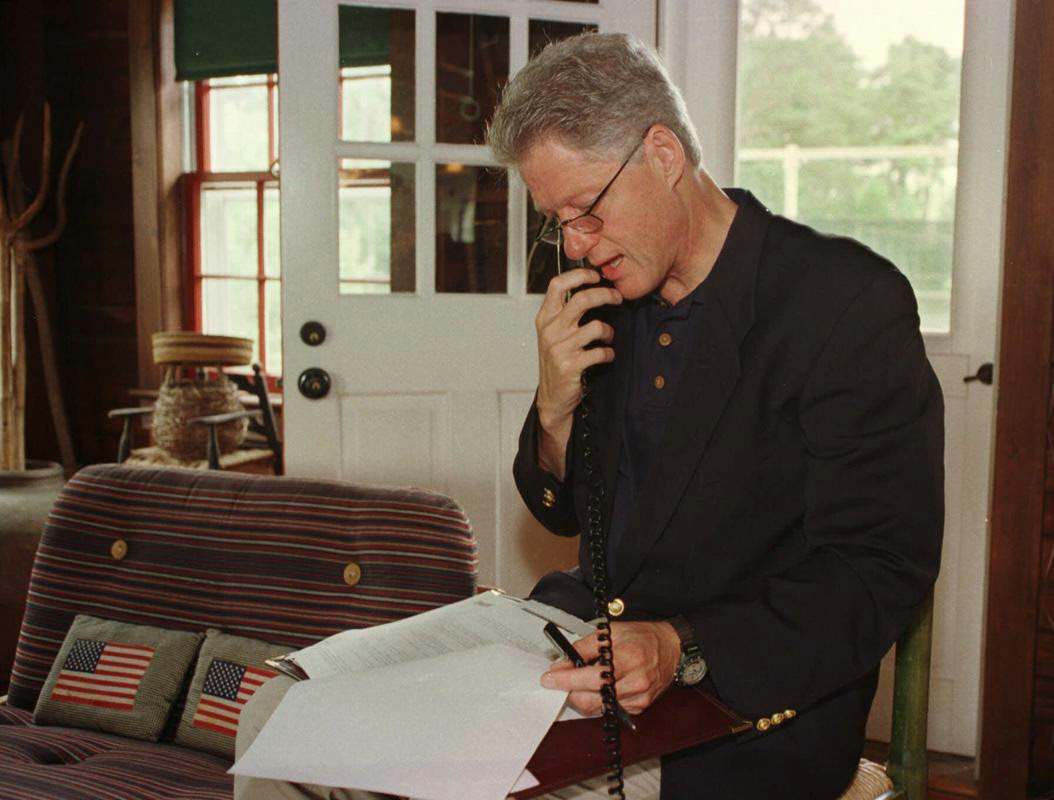
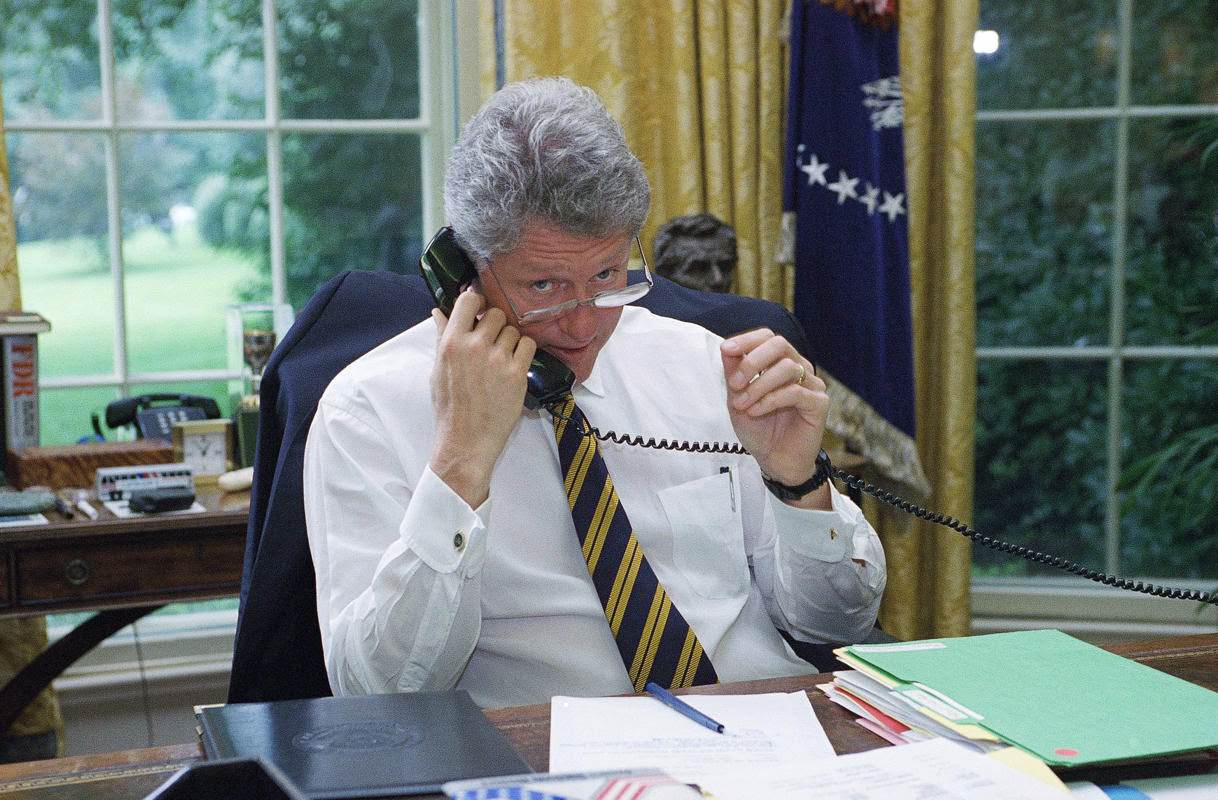
President Bill Clinton talks on the phone to Russian President Boris Yeltsin from his vacation home on Martha's Vineyard in Massachusetts, 1998.
President Bill Clinton talks on the phone to Russian President Boris Yeltsin from his vacation home on Martha’s Vineyard in Massachusetts, 1998.
President Bill Clinton speaks via telephone from the Oval Office of the White House to an unidentified member of the House in Washington, 1994.
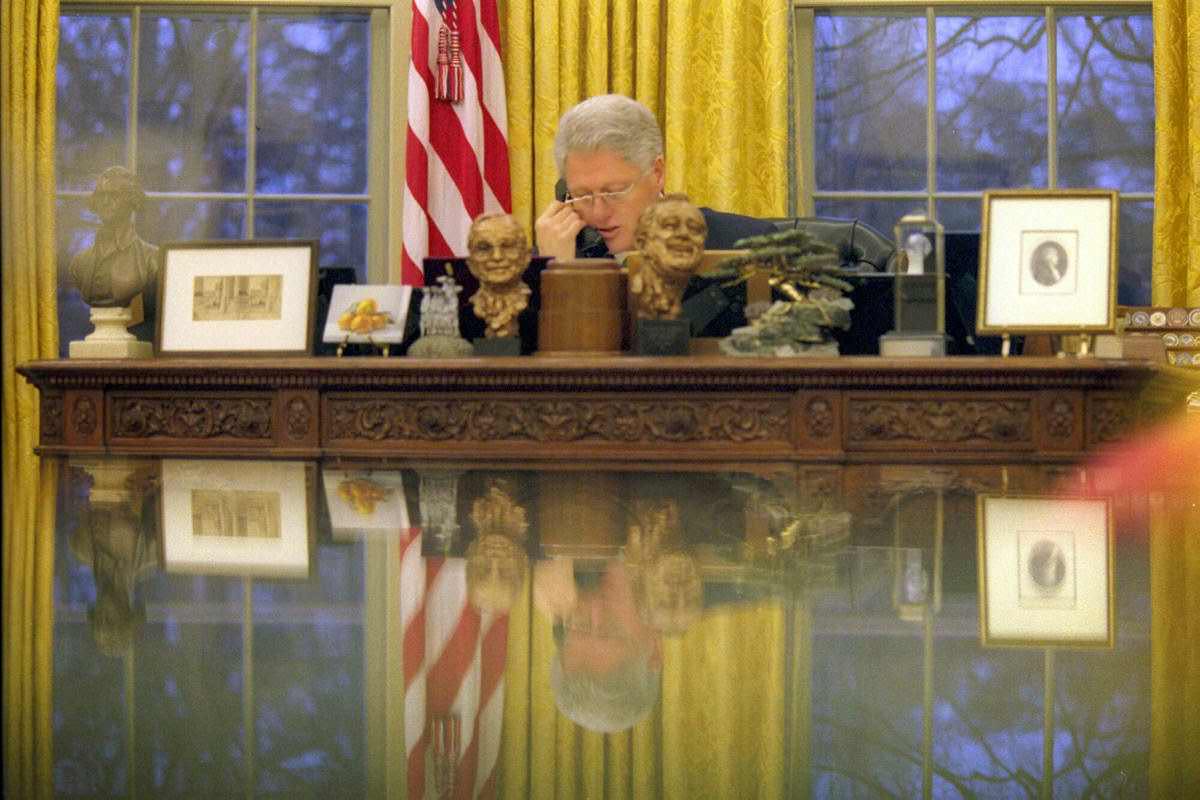
President Bill Clinton talks on the telephone in the Oval Office in the White House in Washington, 2000.
Enjoyed this post? Get new ones in your inbox.

Leave a Comment

Your email address will not be published. Required fields are marked *

Share this Post 🥺

Please take a moment to share this content. Your support is greatly appreciated! 🙌🙏

Share this Post 🥺

Please take a moment to share this content. Your support is greatly appreciated! 🙌🙏
Scroll to Top
 
Hey Friend, Before You Go.. Please like & follow for more interesting content