Before the Oscar, before the royal roles, and before her name became one of the most respected in the business, Helen Mirren was a young actress making her mark with raw talent and striking presence. Born Ilyena Vasilievna Miroffe on July 26, 1945, in Chiswick, London, she grew up in a household that valued culture and the arts. Her Russian-born father had anglicized the family name to Mirren, and it was under that name that she would eventually become one of Britain’s greatest performers.

Mirren began her acting career on the stage, not the screen. She joined the National Youth Theatre as a teenager and quickly stood out. By the mid-1960s, she had earned a place with the Royal Shakespeare Company, one of the most prestigious theater groups in the world. Working alongside some of Britain’s finest actors, she sharpened her skills in classical roles that demanded both discipline and emotional depth.


Her stage work during the late 1960s earned her strong reviews and a growing reputation. She played major Shakespearean roles, including Cleopatra and Lady Macbeth, both of which are considered among the most demanding parts in all of theater. Critics took notice. Audiences did too. She wasn’t simply a pretty face — she brought real weight to every role she took on.


In 1969, Mirren landed her first major film role in Age of Consent, an Australian production directed by Michael Powell and starring James Mason. She played Cora, a free-spirited young woman living on the Great Barrier Reef. The film was bold for its time, and Mirren’s performance was confident and uninhibited. It announced her arrival on the international film scene.


Throughout the early 1970s, she continued splitting her time between stage and screen. She appeared in several films that pushed against the conservative norms of British cinema, taking on complex, sometimes controversial characters. She was never interested in playing safe, conventional roles. That willingness to take risks set her apart from many of her contemporaries.


One of her standout early film appearances came in Savage Messiah (1972), directed by Ken Russell. She played Gosh Smith-Boyle, a bohemian socialite in pre-World War I Paris. Russell was known for his intense, visually extravagant style, and Mirren held her own in a film packed with big personalities. The role showed her range extended well beyond Shakespeare.


In 1972, she also appeared in O Lucky Man!, Lindsay Anderson’s ambitious and satirical epic. The film featured an ensemble cast and ran nearly three hours. Mirren played multiple roles, demonstrating exactly the kind of versatility that would define her career. It was the sort of project that only actors fully committed to their craft would take on.


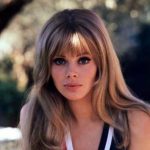
Her looks during this era were impossible to ignore. With high cheekbones, sharp eyes, and a natural confidence in front of the camera, she was a photographer’s subject as much as an actor’s actor. Portrait sessions from the 1960s and 1970s show a young woman completely at ease with her image — poised, but never stiff.


In 1974, she starred in the British gangster film Callan alongside Edward Woodward. Though a supporting role, it added another layer to her growing filmography. She was building a body of work that covered Shakespeare, art-house cinema, and mainstream British film — a rare combination for any actor in their late twenties.


By the mid-1970s, Mirren was firmly established as one of Britain’s most exciting actresses. She returned repeatedly to the Royal Shakespeare Company and continued to challenge herself on stage. Her theatrical training gave her a technical foundation that many film actors of the era simply didn’t have. It showed in the precision and detail she brought to every screen performance.


She appeared in the 1979 film Caligula, a controversial Roman historical epic produced by Bob Guccione. The film’s explicit content and turbulent production became the stuff of Hollywood legend. Mirren later spoke openly about the experience, but at the time, it placed her in front of a massive international audience. Her name was now recognized far beyond Britain’s borders.


During this same period, she was also doing serious television work. British television in the 1970s was producing some of the most ambitious drama in the world, and Mirren was part of it. She appeared in several high-profile productions that brought her work directly into British living rooms, expanding her audience well beyond theater and art-house cinema crowds.


What stands out most when looking back at Helen Mirren’s early career is how deliberately she built it. She didn’t chase blockbusters or play it safe with easy, likable roles. She worked with demanding directors, took on difficult material, and prioritized artistic credibility over mainstream popularity. That approach took longer to pay off commercially, but it built a reputation that proved unshakable.


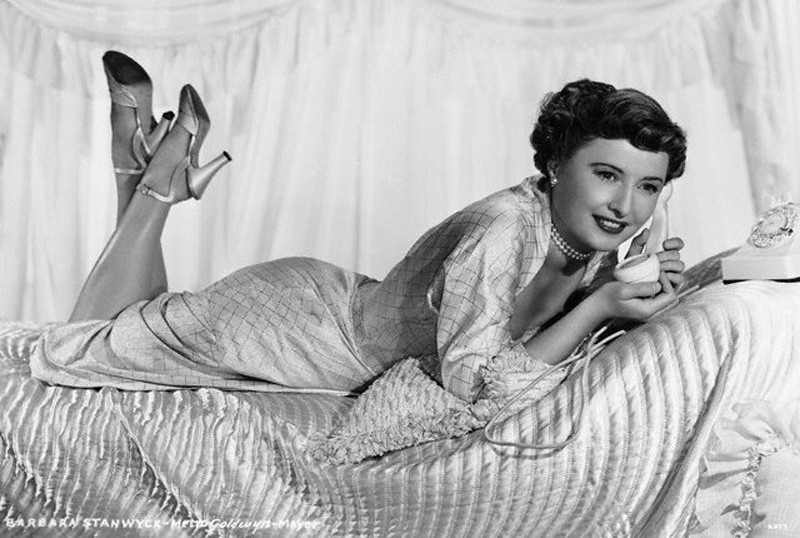
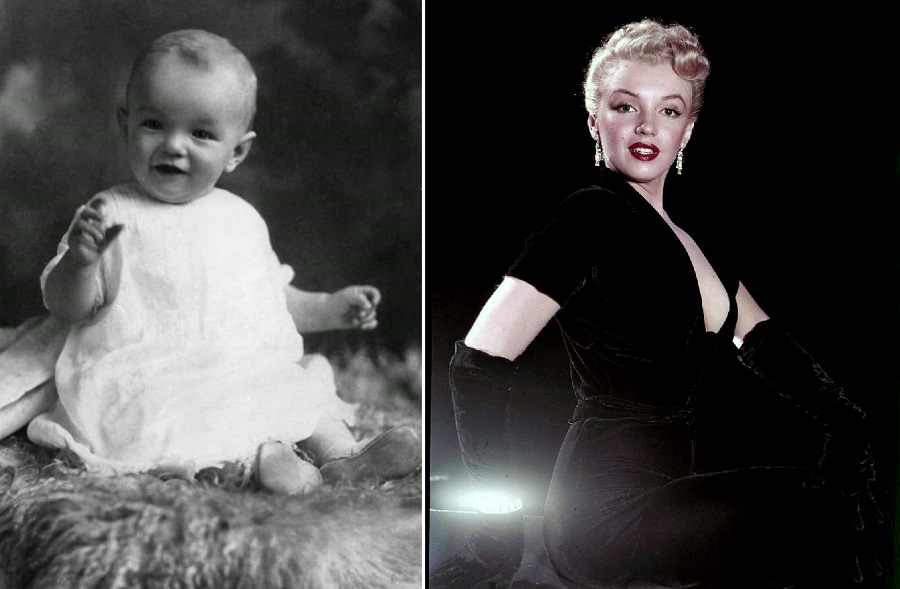
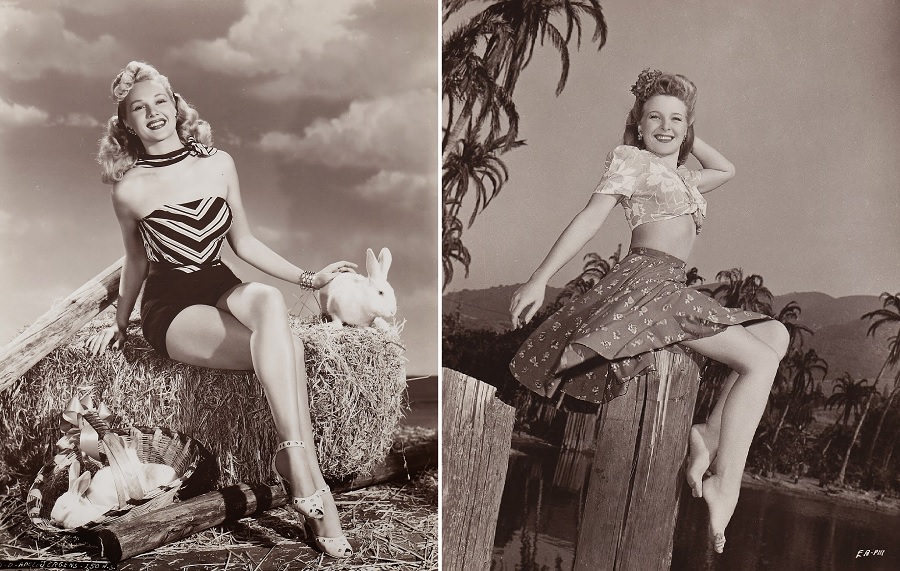
The photos from this era capture someone who was fully in command of her own image. Whether in formal portrait settings or candid behind-the-scenes shots, Mirren projected a kind of self-assurance that was unusual for such a young actress. There was nothing tentative about her — on screen or off it.


Her personal style in the 1960s and 1970s reflected the times. She wore the bold patterns, heavy eye makeup, and flowing silhouettes that defined the era’s fashion. But she wore them with her own particular energy — more artistically inclined than fashion-obsessed, more interested in character than trend. The photos from this period are a vivid record of both the decade and the woman.


Mirren is one of the very few performers to have achieved what is known as the Triple Crown of Acting — winning an Academy Award, a Tony Award, and an Emmy Award. All three are considered the top prizes in their respective fields: film, theater, and television. Achieving all three is a mark of truly exceptional range, and Mirren earned each one on her own terms.


Her Oscar win came in 2007, when she took home the Academy Award for Best Actress for her portrayal of Queen Elizabeth II in The Queen (2006). The film, directed by Stephen Frears, depicted the royal family’s private response to the death of Princess Diana in 1997. Mirren’s performance was measured, precise, and deeply human — widely regarded as one of the finest lead performances of that decade.


Long before that Oscar, however, she had already become a household name in Britain through the television series Prime Suspect, which first aired in 1991. She played Detective Chief Inspector Jane Tennison, a hard-edged senior detective navigating a male-dominated police force while solving serious crimes. The show ran for seven installments over 15 years, and Mirren’s performance won her multiple BAFTA and Emmy awards.


But all of that came later. In the 1960s and 1970s, she was still building the foundation. Every stage role, every film, every photograph from that era was part of a longer story that was still being written. Looking at the portraits from those decades, it’s easy to see a performer who already knew exactly who she was.


The sheer variety of her early work speaks to an actor who refused to be boxed in. Classical theater, European art cinema, mainstream British film, and ambitious television — she moved between all of them with ease. Very few actors of her generation managed that kind of range while still in their twenties and thirties.


The glamour captured in these photographs was never manufactured. It came from a woman who was genuinely magnetic — someone whose confidence and talent translated just as powerfully in a still image as it did on stage or screen. These portraits from the 1960s and 1970s are a direct window into the early years of one of acting’s true greats.