Queen Victoria is remembered as one of Britain’s longest-reigning monarchs, but far fewer people know that she was also a dedicated amateur artist. From childhood through to her later years, she picked up a pencil, pen, or brush whenever time allowed. Her subjects ranged from the natural world around her to the faces of the people she loved most.
Victoria never received formal art training. She was largely self-taught, developing her skills through observation and practice. Despite that, her work earned genuine praise from art critics during her lifetime. Several of her pieces were exhibited at the Royal Academy in London, and some were sold to private collectors — no small achievement for someone who painted purely out of personal interest.
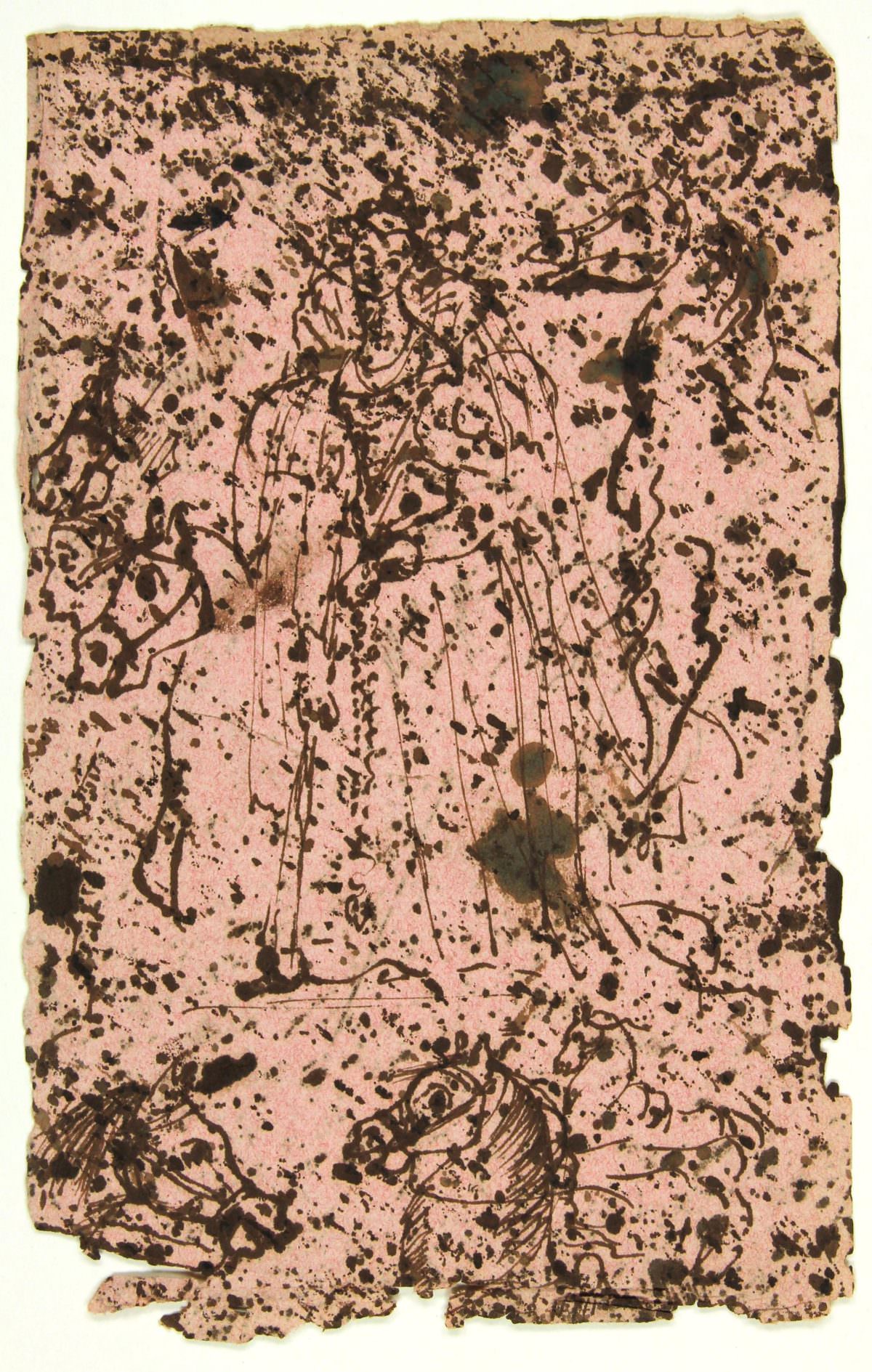
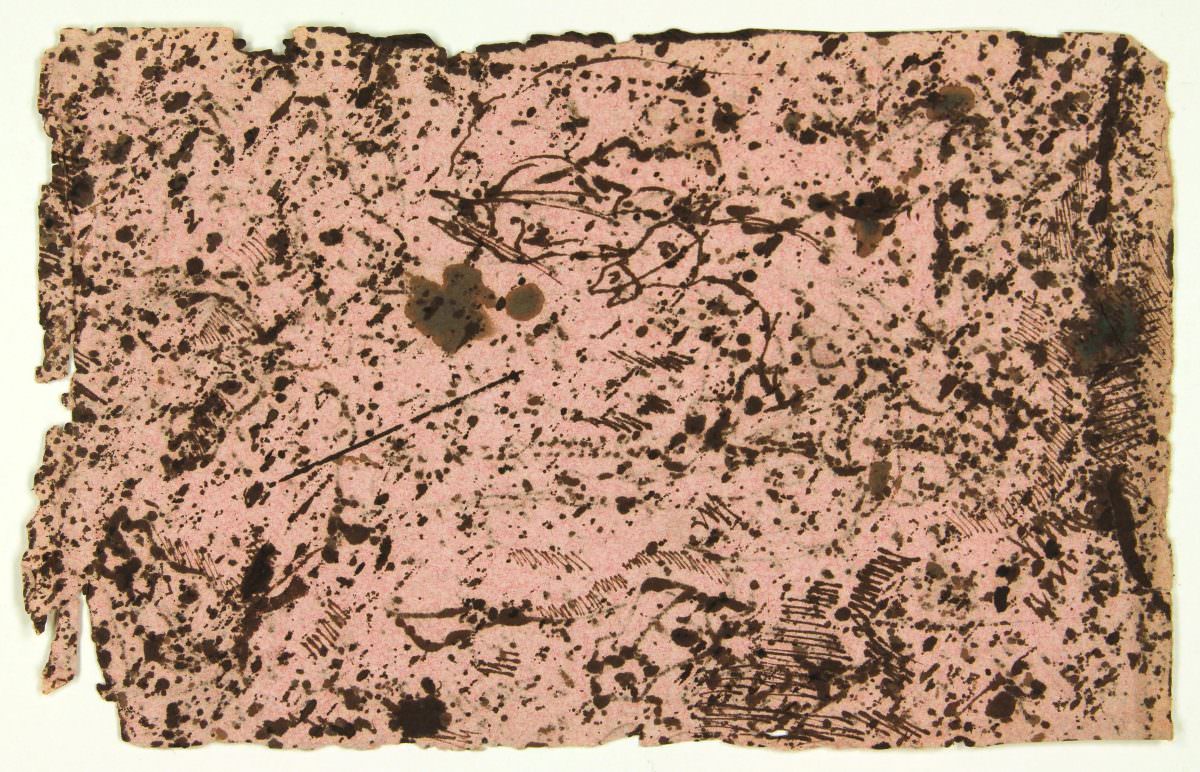
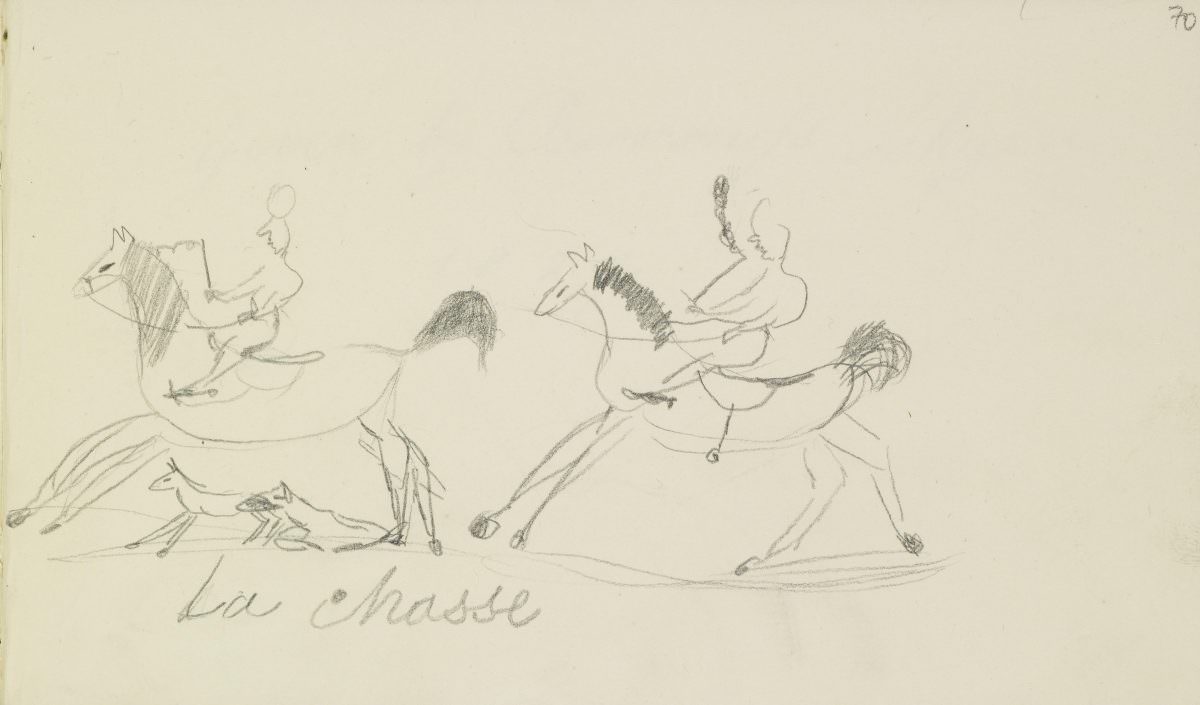
Even as a young princess, Victoria showed a natural instinct for capturing subjects quickly and confidently. These early sketches on blotting paper, drawn at just thirteen years old, show her practicing figures and animals side by side. Horses appeared frequently in her early work — a subject that suited her precise, observational style.
Animals were a recurring theme throughout her artistic life. Long before she became Queen, the young princess sketched her favourite dog in careful pencil detail. These drawings are intimate and affectionate — less about technical perfection and more about recording something she genuinely cared about.
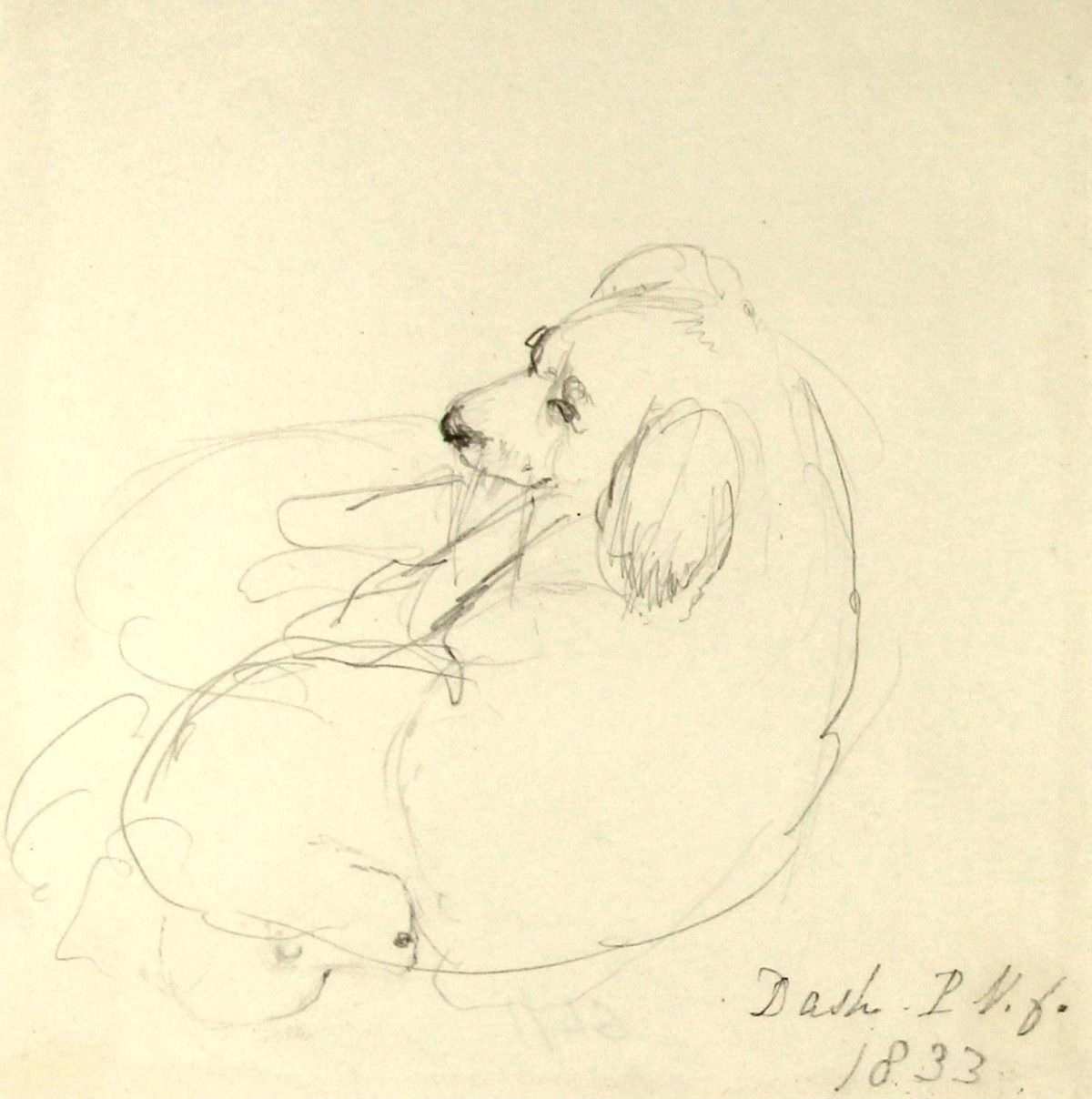
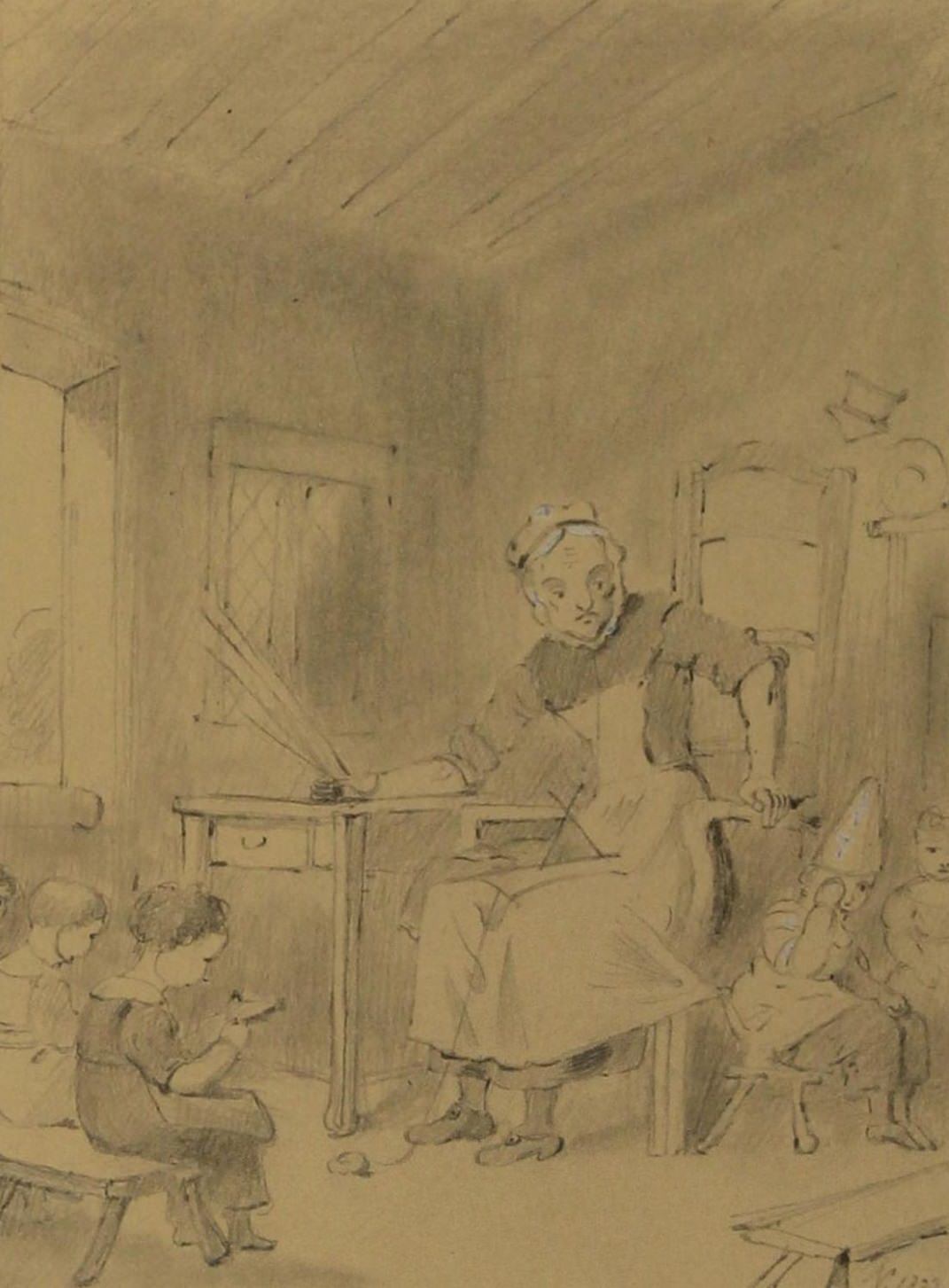
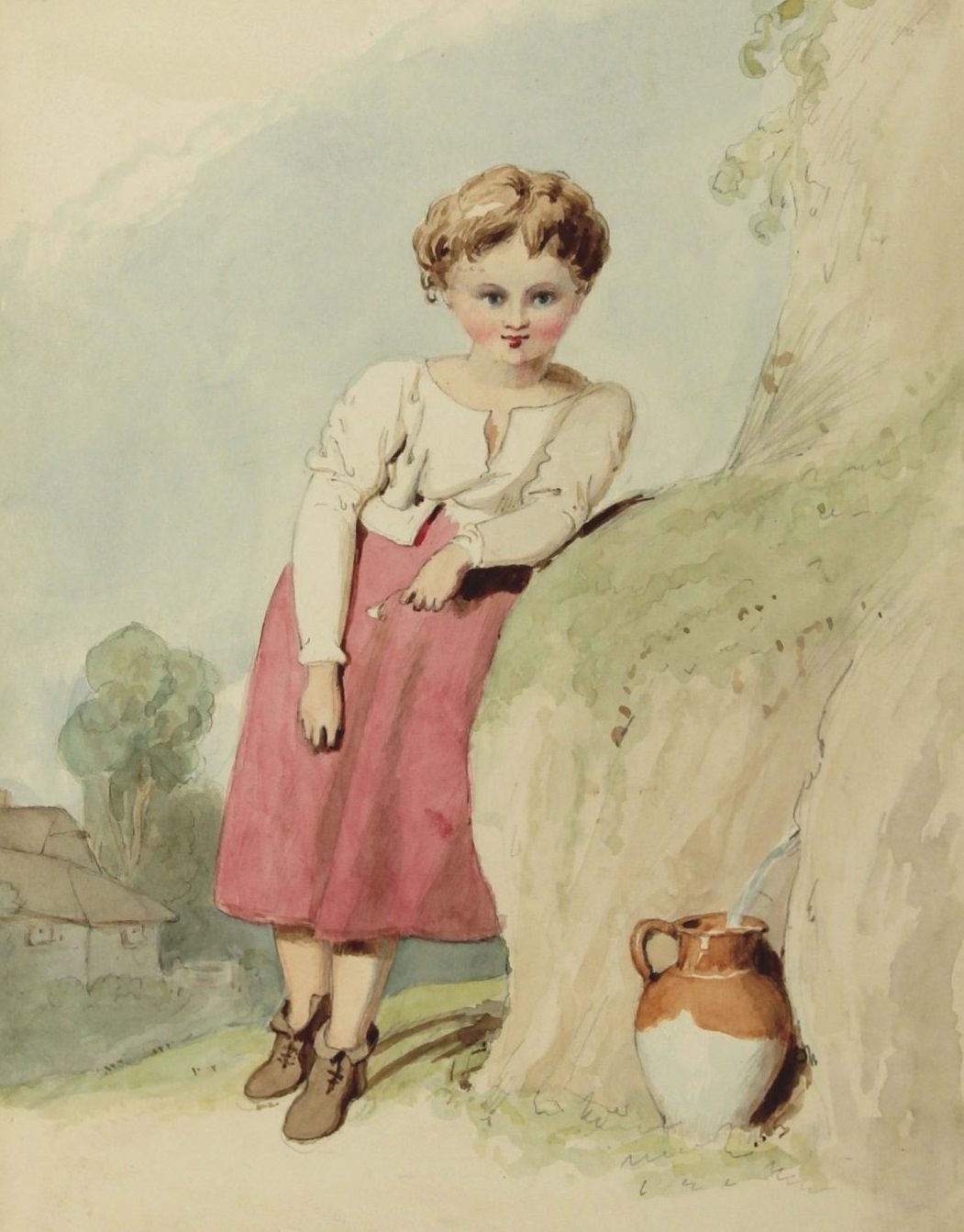
Beyond animals, the young princess also worked in watercolour, sometimes copying compositions by established artists. One early watercolour was produced after the work of Richard Westall, a painter who had actually served as her drawing tutor for a period. It shows a careful, studied approach — soft in tone, with clear attention paid to figure and setting.
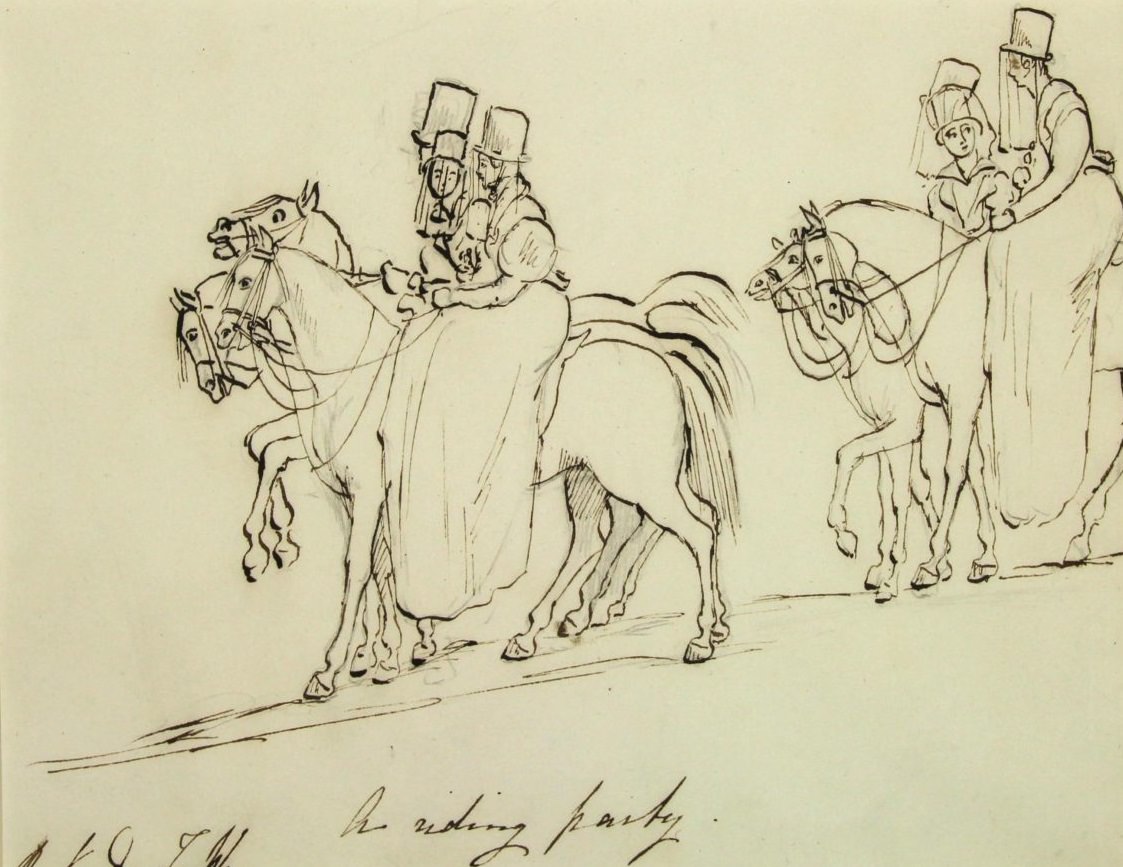
By her teenage years, Victoria was producing more ambitious compositions. A riding party sketch from 1834, made when she was fifteen, captures a group of figures on horseback with energy and movement. Hunting scenes also appeared in her sketchbooks around this time.
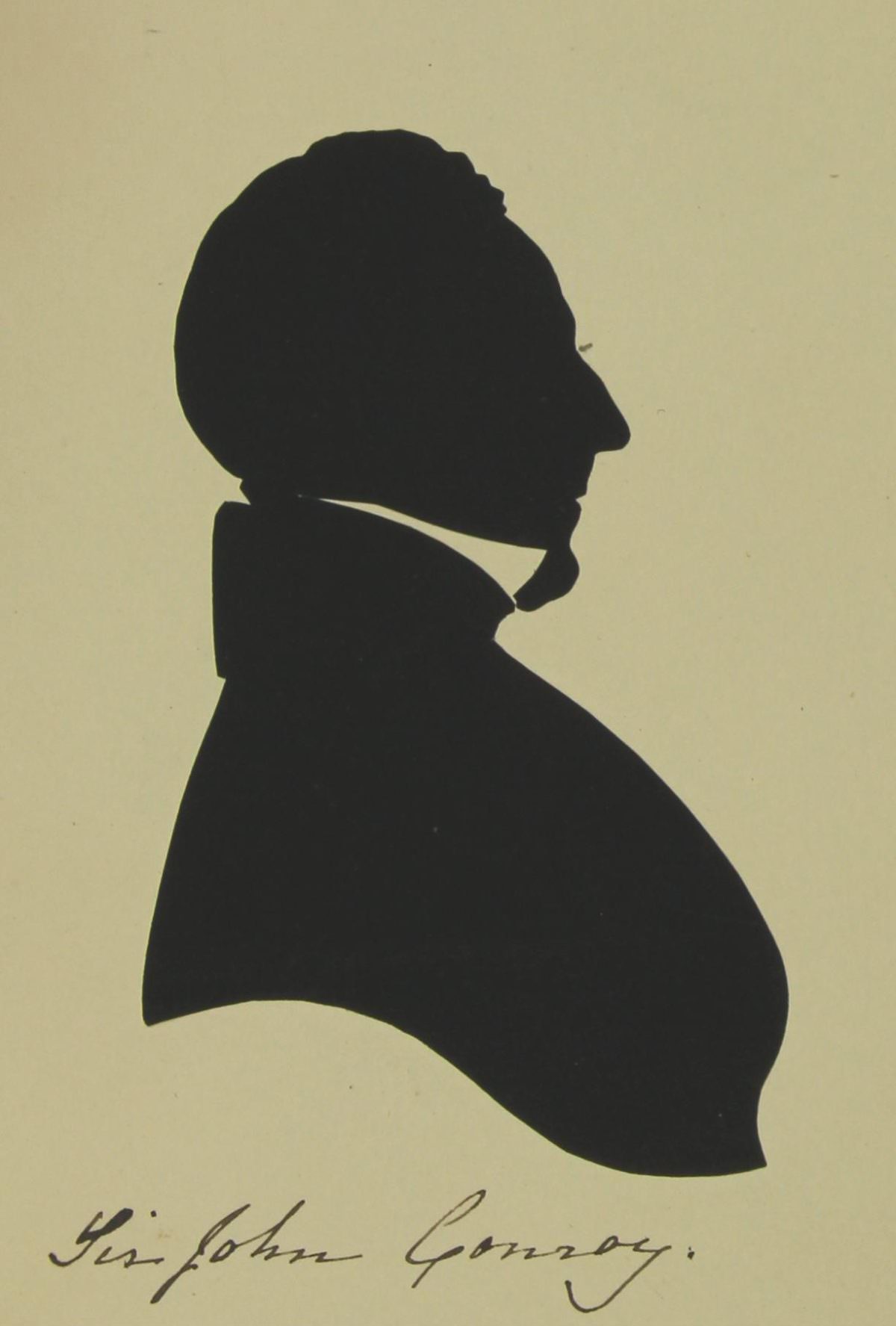
Victoria also kept a ‘Book of Shades’ — a collection of cut silhouettes featuring people from her circle. The silhouette of Sir John Conroy, a powerful and controversial figure in her early life, sits among them. It was made by an unknown artist, but Victoria chose to keep it, making it part of her personal archive.
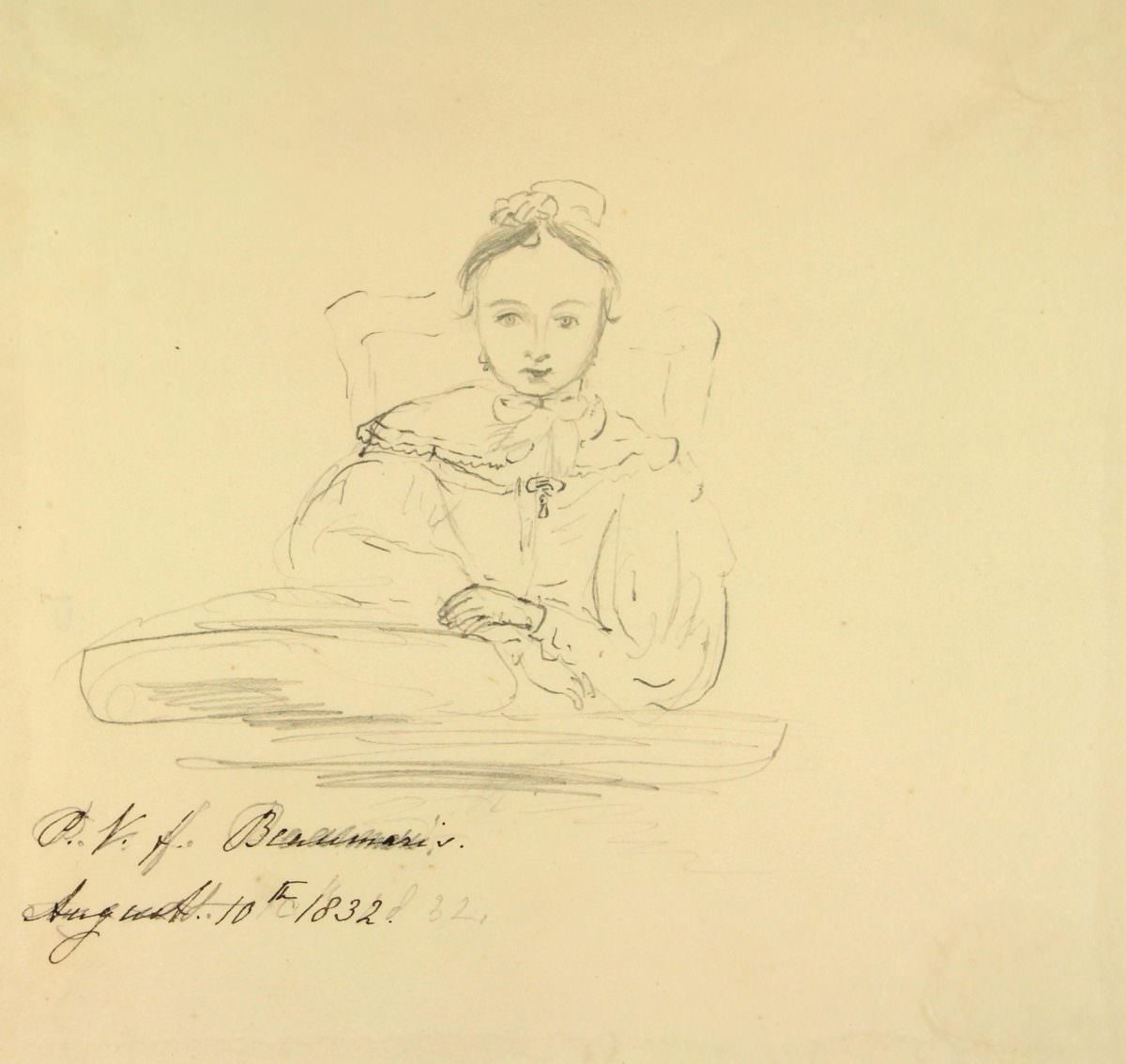
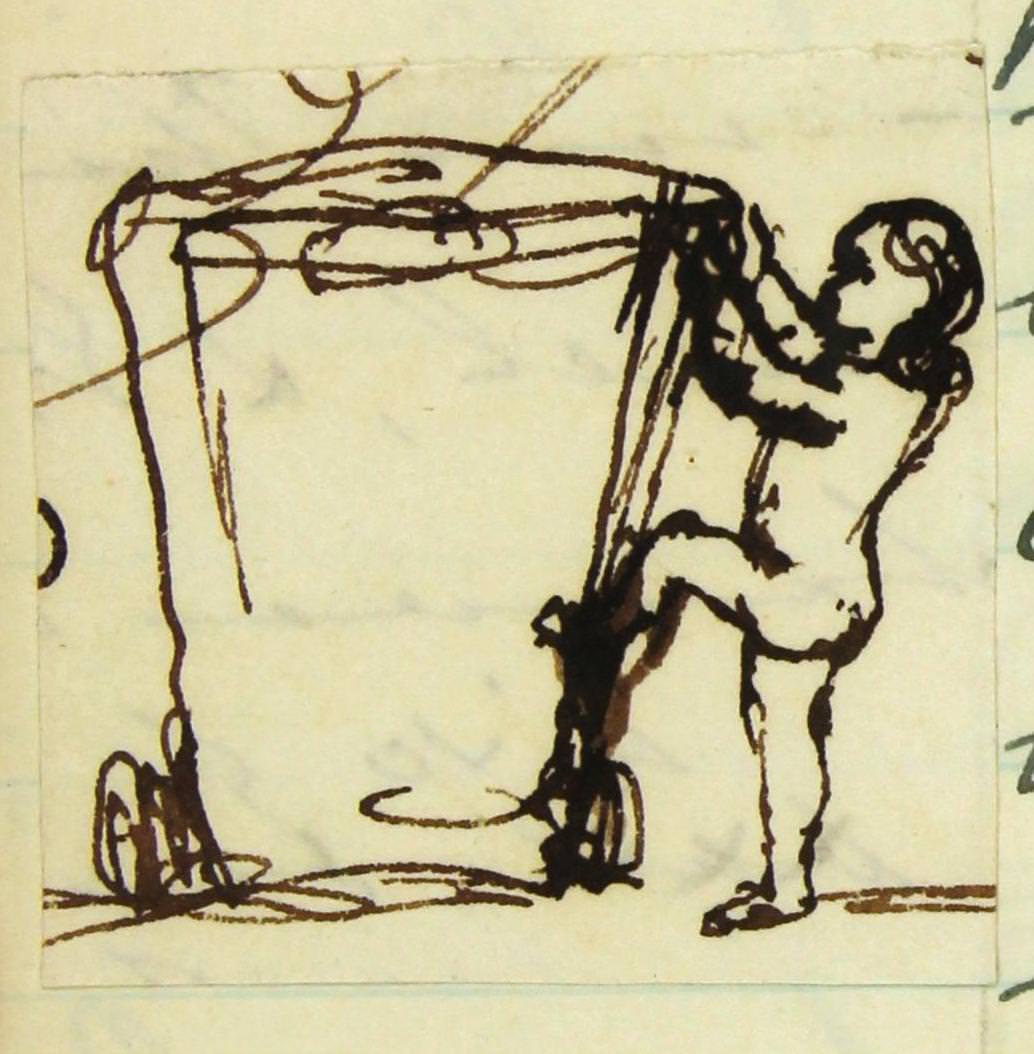
After becoming Queen and later a wife and mother, Victoria’s subjects shifted closer to home. Her children appeared in her sketchbooks regularly — sometimes posed, sometimes caught in unguarded moments. A 1842 sketch of Victoria, Princess Royal, as a toddler trying to climb into a bath is entirely candid, with no attempt at formality.
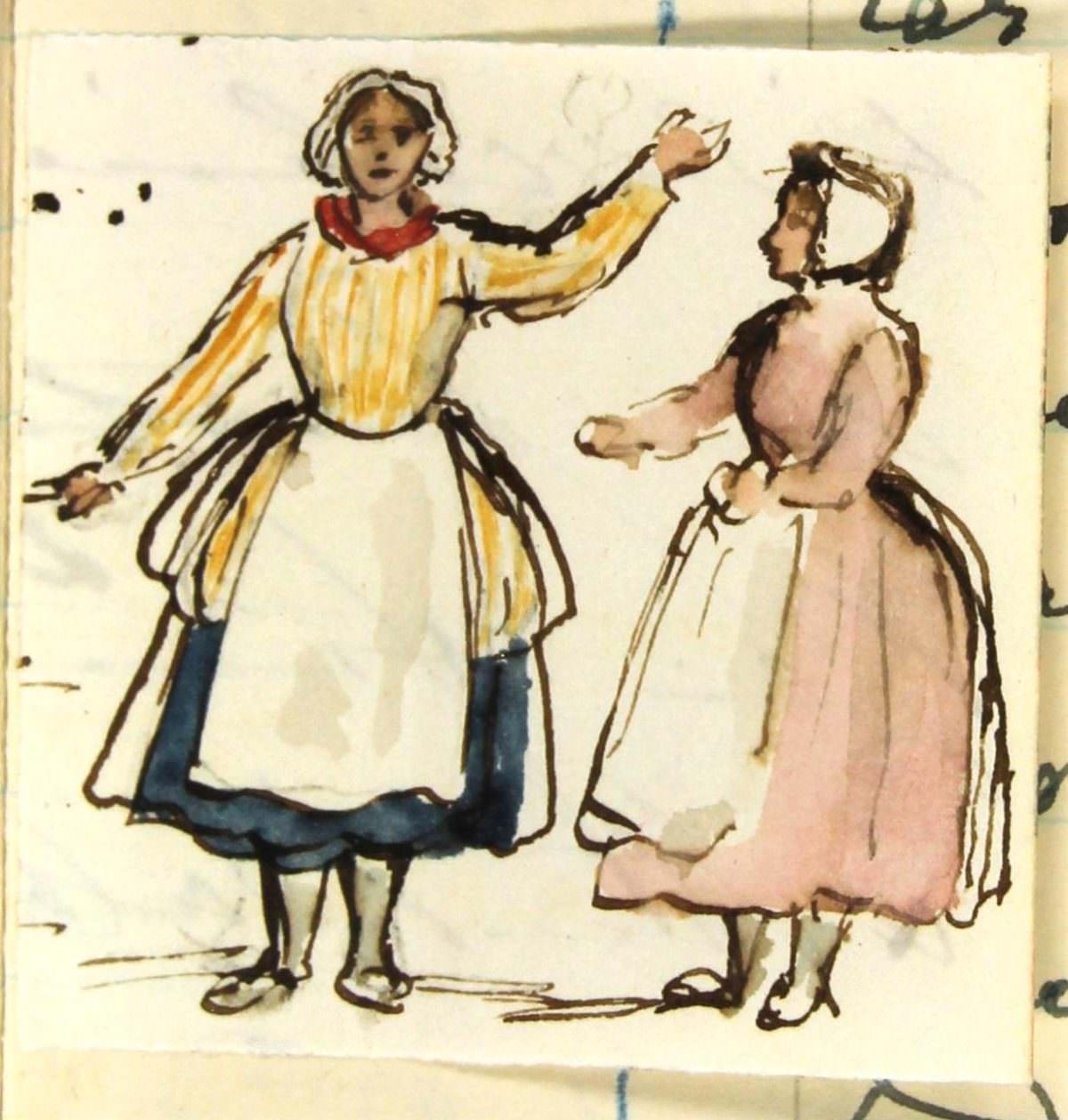
Her visits to Scotland also fed directly into her artwork. During an 1842 trip, she sketched Scottish fisherwomen with watercolour washes over pen and ink linework. The women are rendered with quiet dignity, their working dress noted with the same care she applied to her royal subjects.
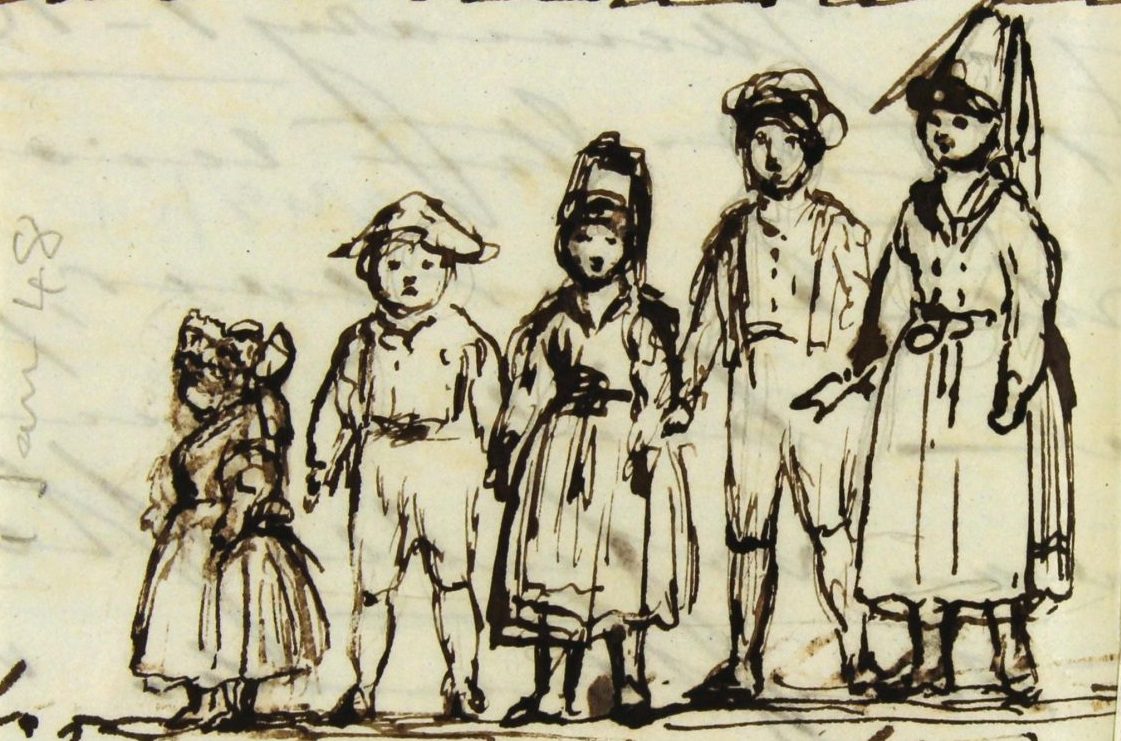
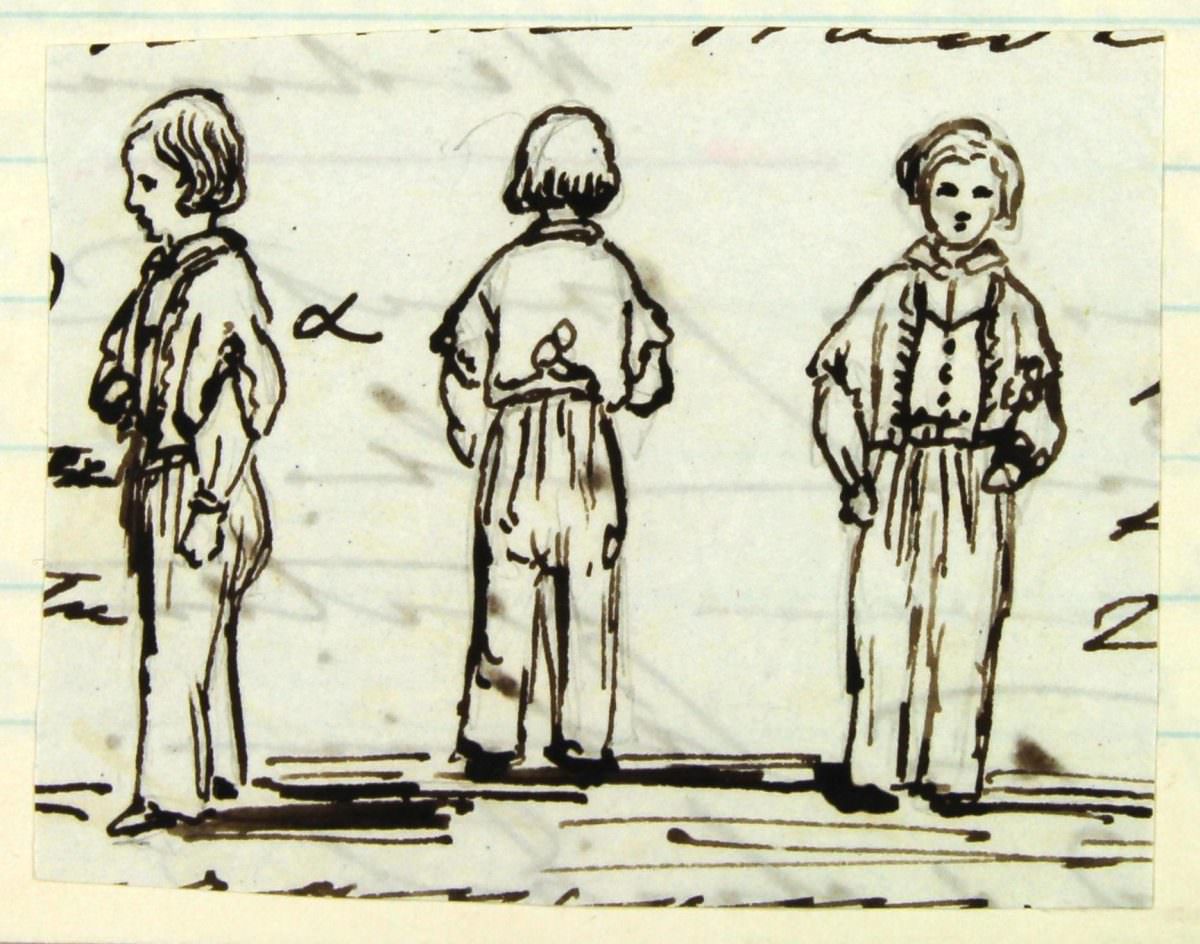
Royal family occasions gave Victoria rich material. A 1848 New Year’s Day sketch shows five of her children dressed as Coburg and Thüringen peasants — a nod to Prince Albert’s German heritage. Three views of the young Prince of Wales, drawn in the same year, show her studying her son’s form from multiple angles in a single sitting.
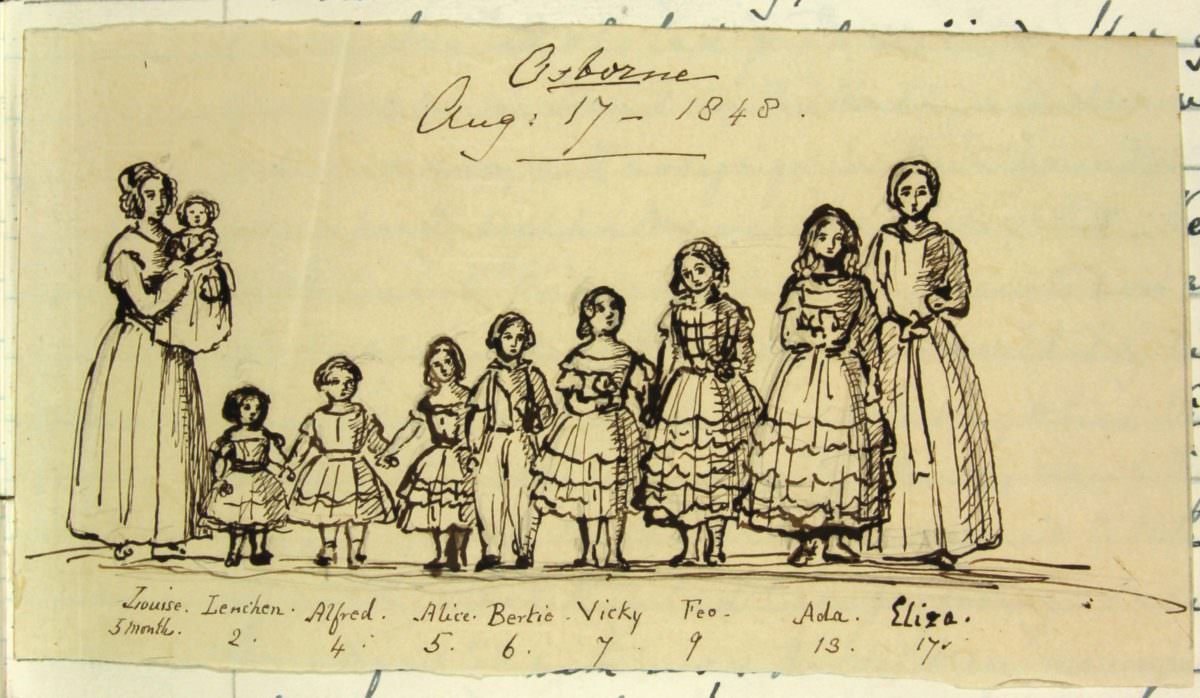
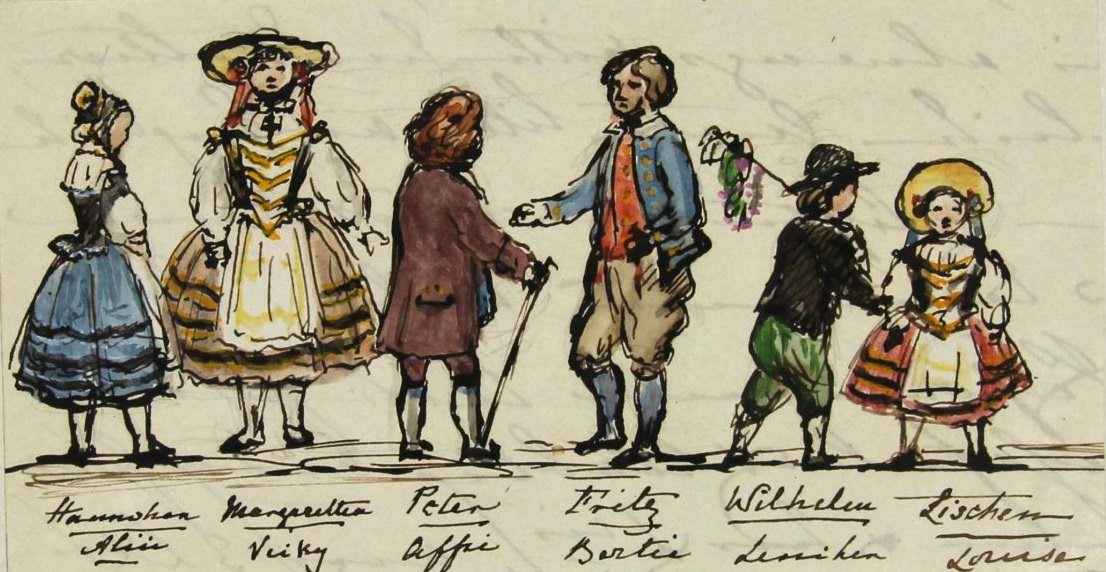
Victoria did not only sketch her children — she also painted Prince Albert, the person she was closest to. A 1848 sketch recorded nine of the grandchildren of the Duchess of Kent, capturing the extended royal family in a single intimate composition. Three years later, she documented the whole family dressed in costume for a Twelfth Night performance.
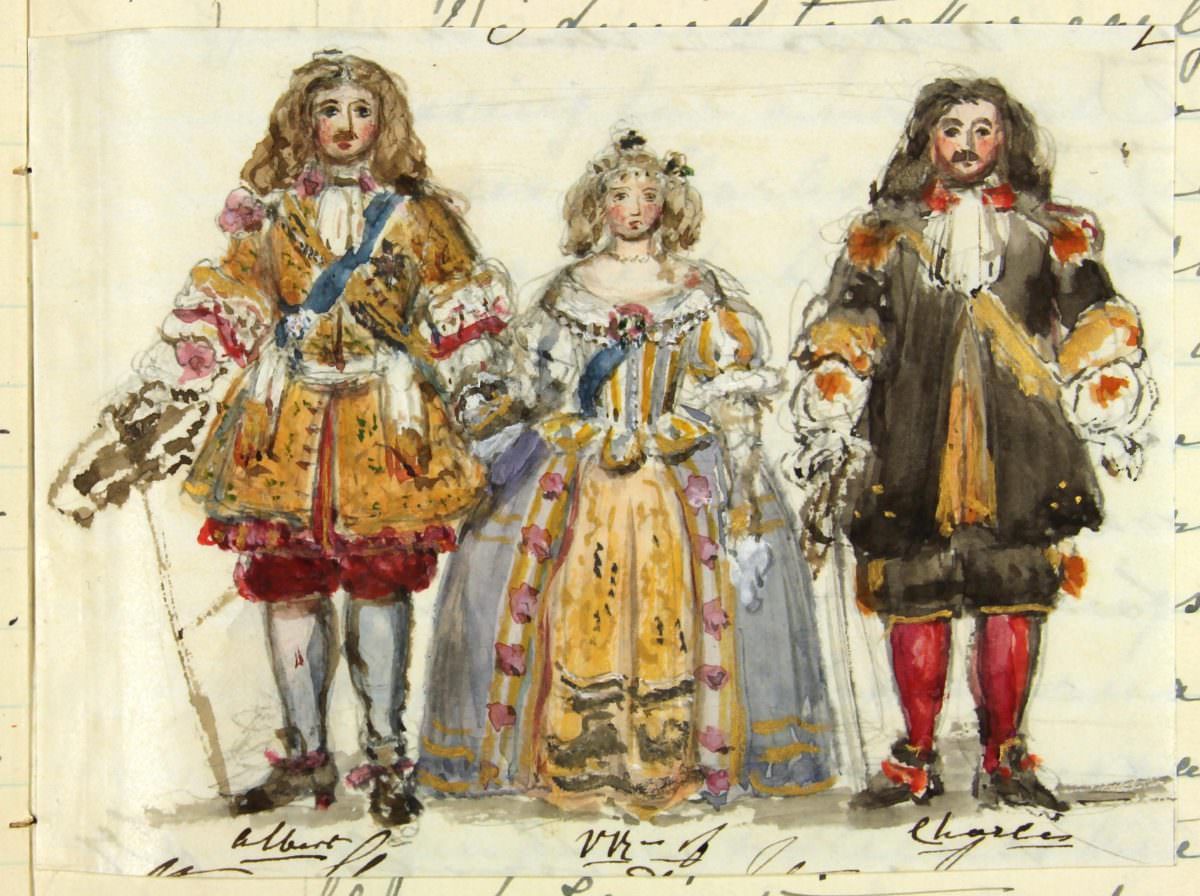
One of her most polished watercolours shows Queen Victoria, Prince Albert, and Prince Charles of Leiningen dressed for the Stuart Ball of 1851. The level of detail in the costumes is striking — lace, embroidery, and fabric textures are all carefully rendered. It is a strong example of how far her technique had developed from those early blotting paper sketches two decades before.
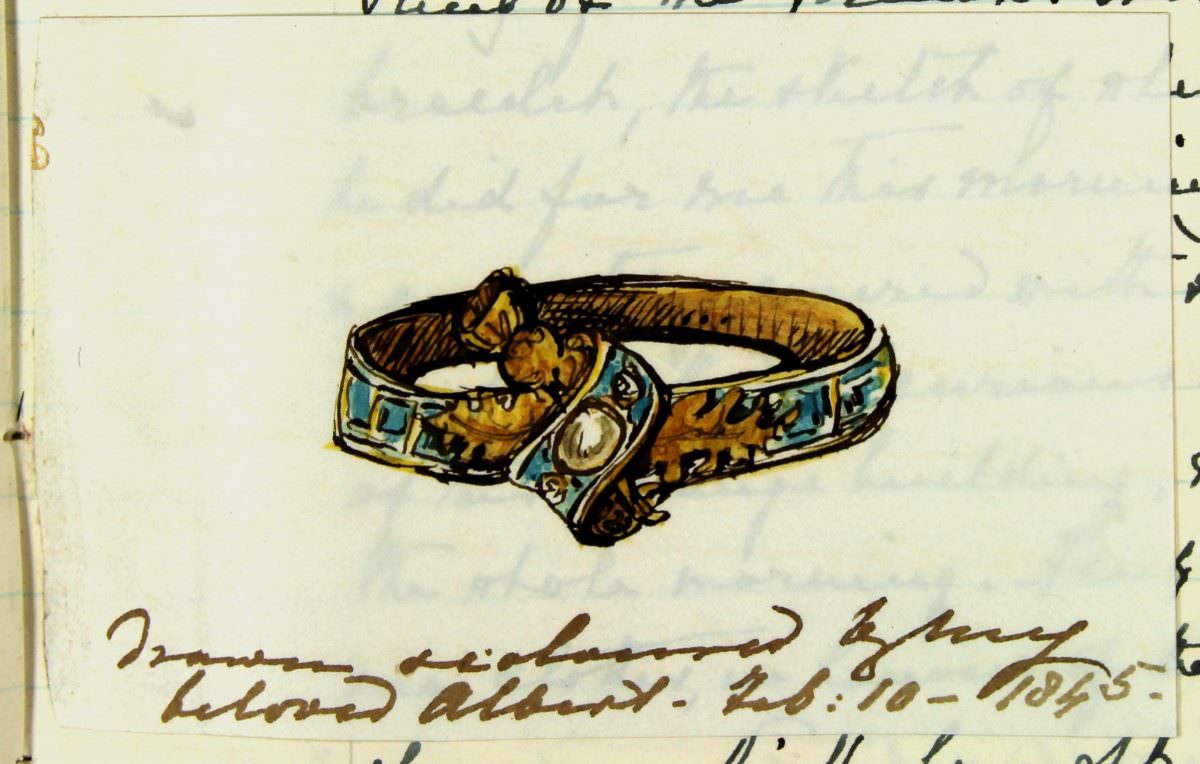
Art was also something Victoria shared with Albert. A watercolour sketch of a bracelet he gave her in 1845 was made by Albert himself, not Victoria — a rare surviving example of his own artistic output within her personal collection. Victoria kept it alongside her own work, treating it as something to be preserved.
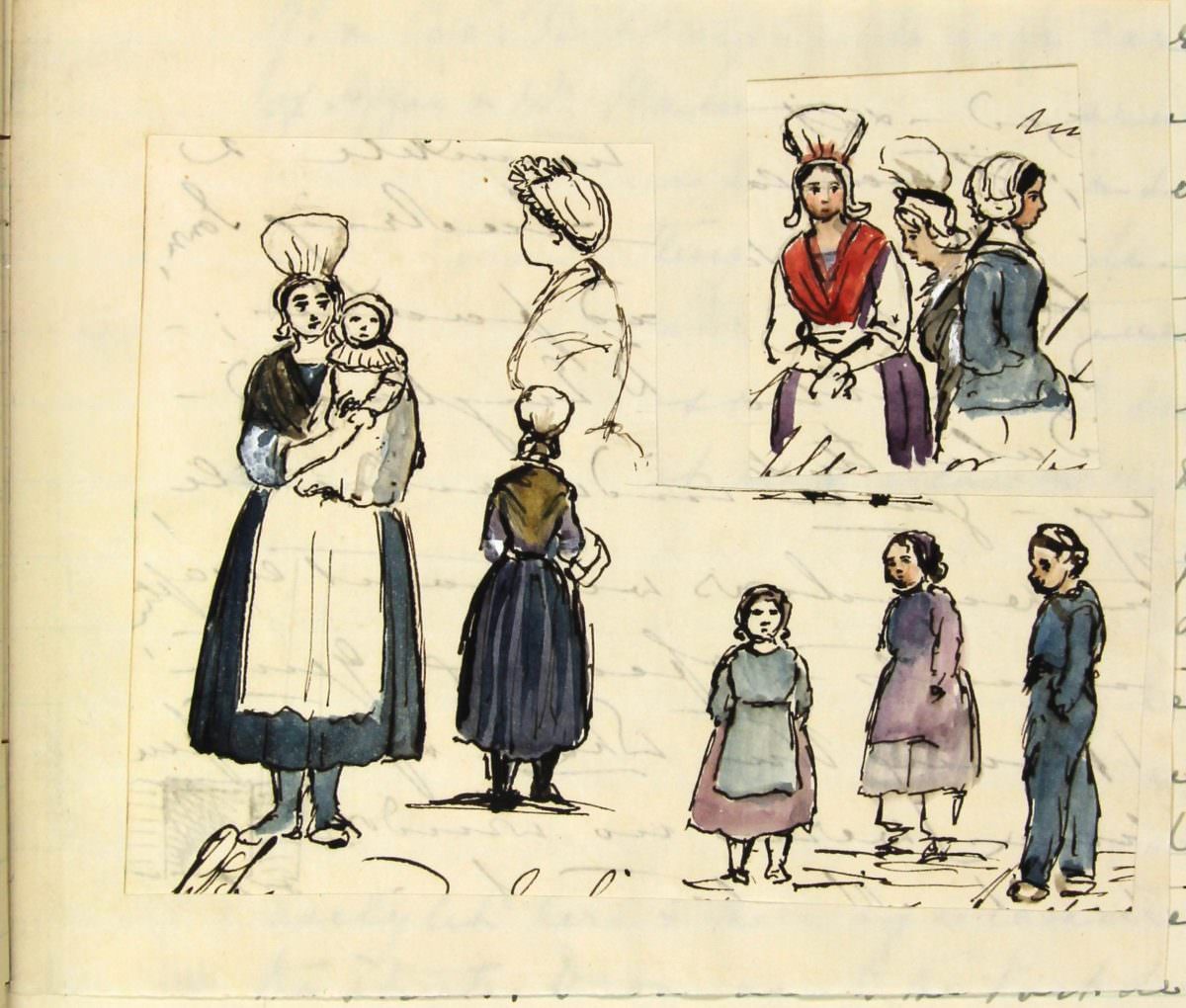
Travel continued to inspire Victoria throughout her reign. A visit to Cherbourg in 1857 produced pen and ink sketches with watercolour washes of the women and children she observed there. As always, she recorded what she saw directly — no idealisation, just careful, personal documentation.