Felix Nussbaum was born in 1904 in Osnabrück, Germany, into a Jewish family. He studied art in Hamburg and later in Brussels, Belgium, developing a style that was intensely expressive and deeply personal. His paintings didn’t chase beauty for its own sake — they captured fear, displacement, and the weight of survival. By the time the world had heard of the Holocaust, Nussbaum had already been painting it from the inside.
When the Nazi party rose to power in Germany in 1933, Nussbaum and his wife Felka Platek — herself a skilled painter — fled to Belgium. They joined thousands of other Jewish refugees living in hiding, constantly moving, constantly afraid. That instability became the fuel for Nussbaum’s art. He painted what he lived: surveillance, imprisonment, loss, and the stripping away of identity.
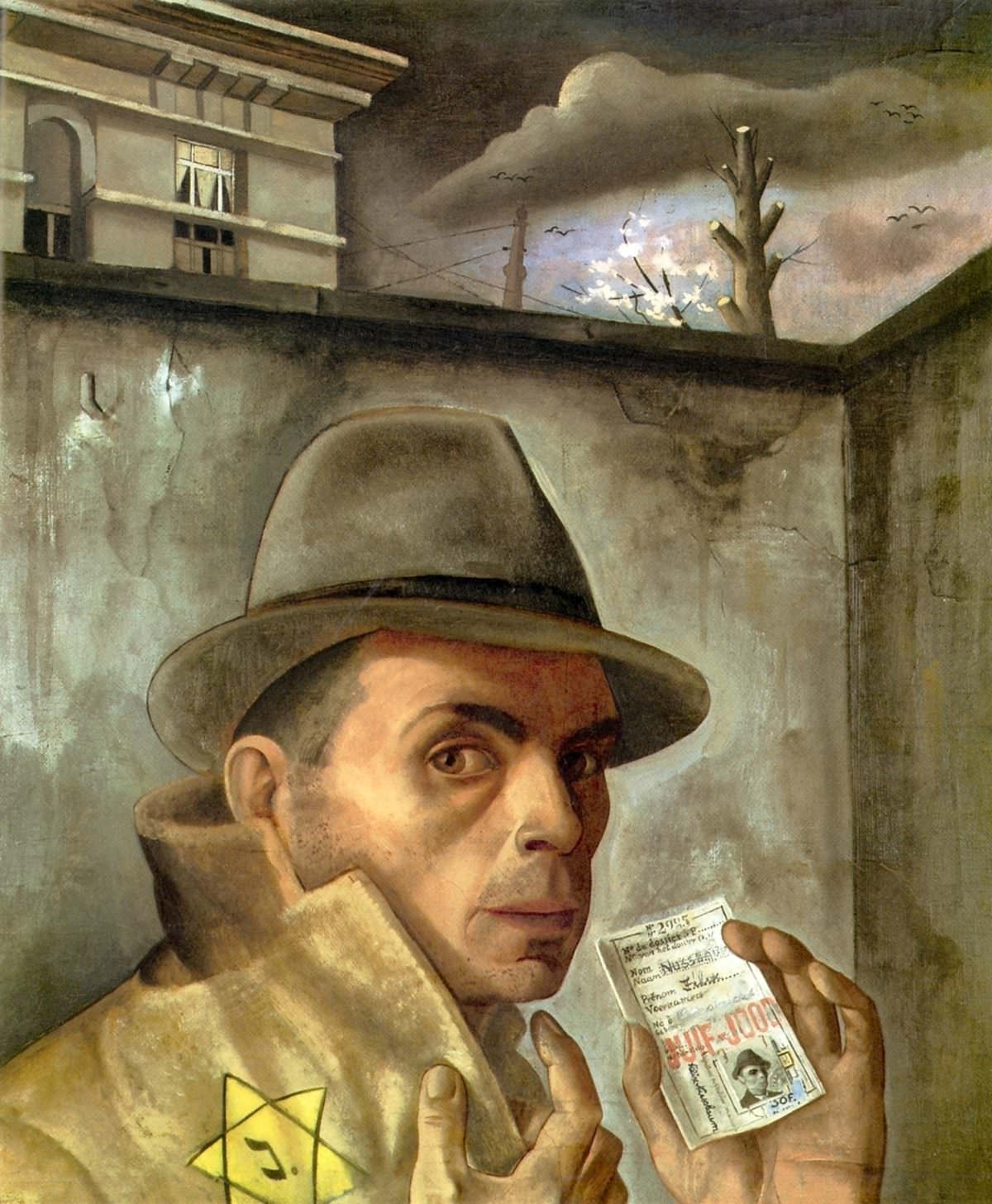
One of his most striking works shows Nussbaum holding up his Jewish identity card — a document the Nazi regime used to mark and track Jewish people. His face is tense, his eyes direct. The card is not just a prop; it is a threat made visible. He painted this not as a symbol but as a lived reality. The Nazi state had reduced a human being to a number on a card, and Nussbaum refused to let that go unrecorded.
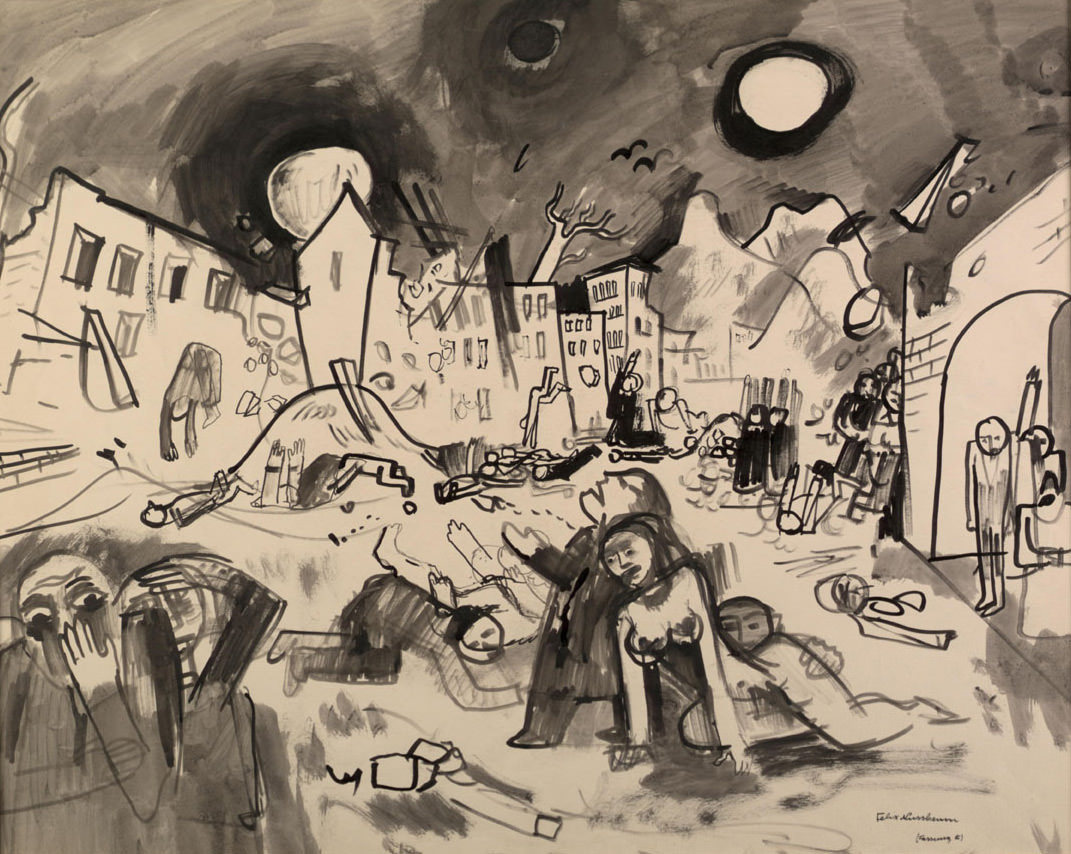
By 1939, the sense of catastrophe that had been building across Europe broke open. “The Great Disaster” reflects that moment — a world coming apart, chaos replacing order. Nussbaum’s work from this period carries a heaviness that goes beyond personal anxiety. He was painting collective dread, the feeling shared by Jewish communities across Europe who watched their rights, homes, and futures disappear.
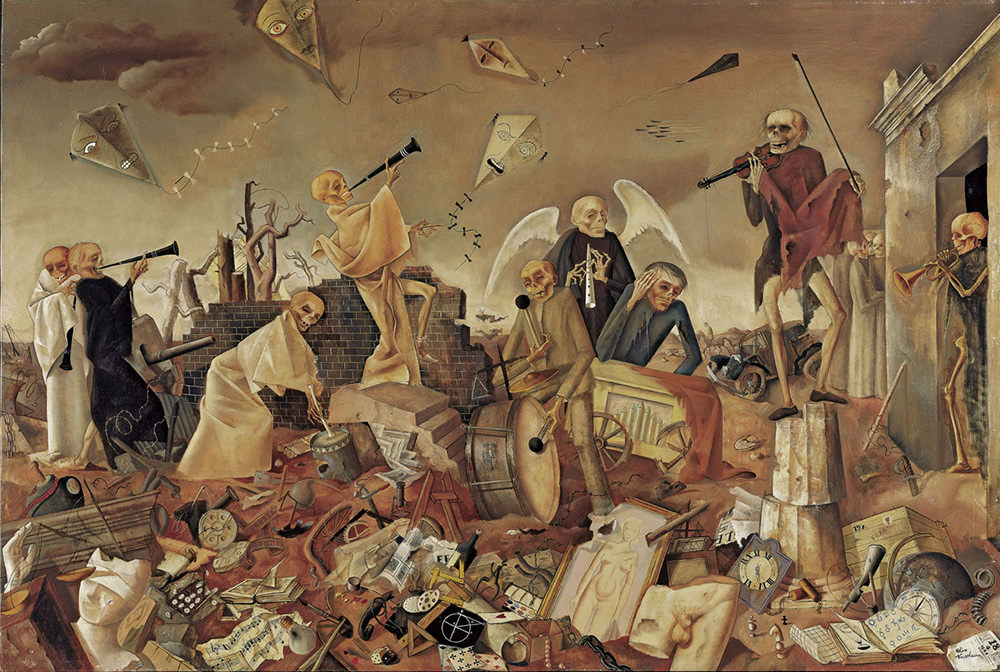
Death was a recurring presence in Nussbaum’s work, but he never treated it as abstract. In “The Skeletons Play for a Dance,” the imagery is macabre and deliberate — skeletons at play, as if mocking the living. This was not fantasy. It was a direct response to the world Nussbaum saw collapsing around him. The dancing figures feel less like myth and more like prophecy.
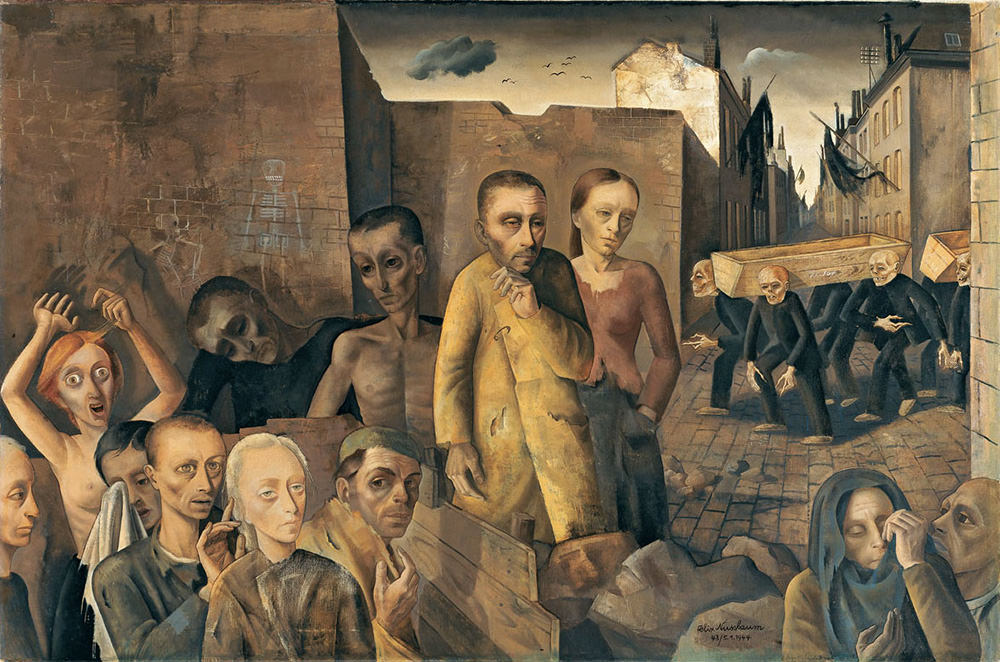
“The Damned” is among his most emotionally raw canvases. The figures are trapped, condemned, surrounded by darkness. Nussbaum painted people who had no escape — because that was the truth. Jewish refugees in Nazi-occupied Europe were hunted across borders, stripped of legal protections, and denied asylum by country after country. His brush documented what policy papers sanitized.
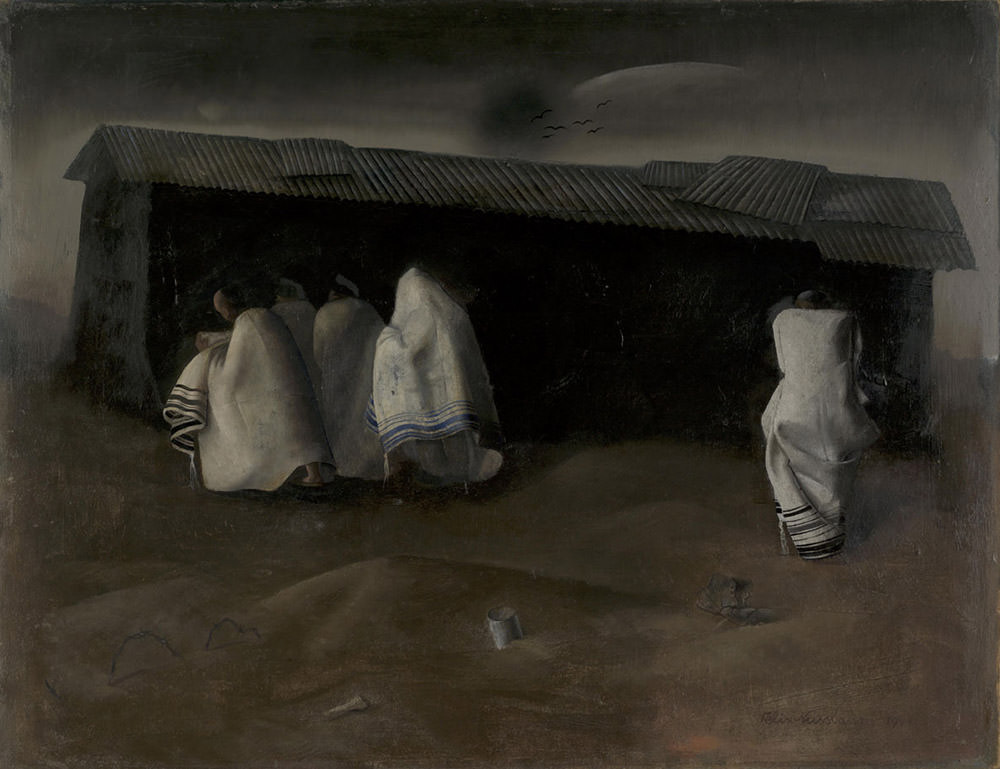
In 1940, Nussbaum was interned at the Saint-Cyprien camp in southern France, where Jewish men were held under harsh conditions. Even there, he painted. “Camp Synagogue” from 1941 shows Jewish prisoners gathering to worship — an act of resistance and communal identity in a place designed to erase both. The painting holds a quiet defiance. Faith persisted where everything else had been taken.
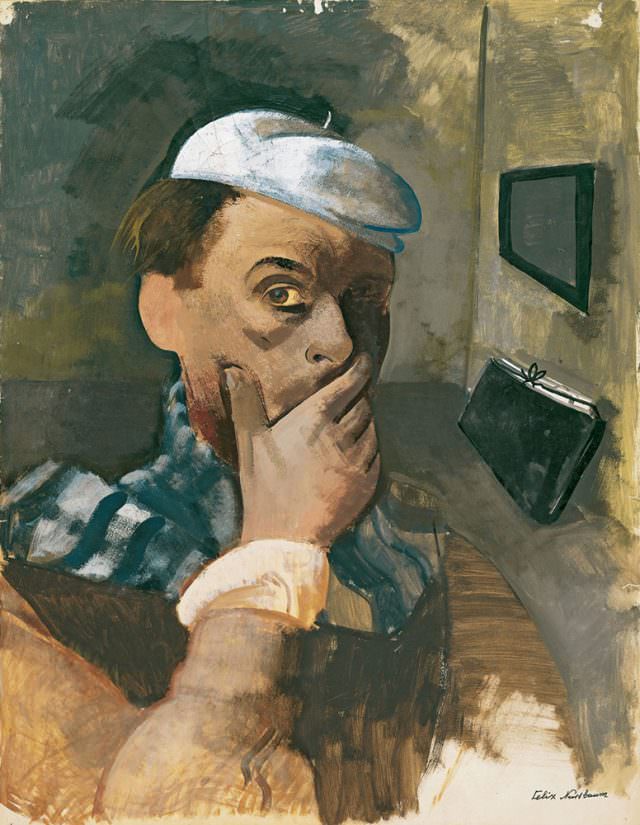
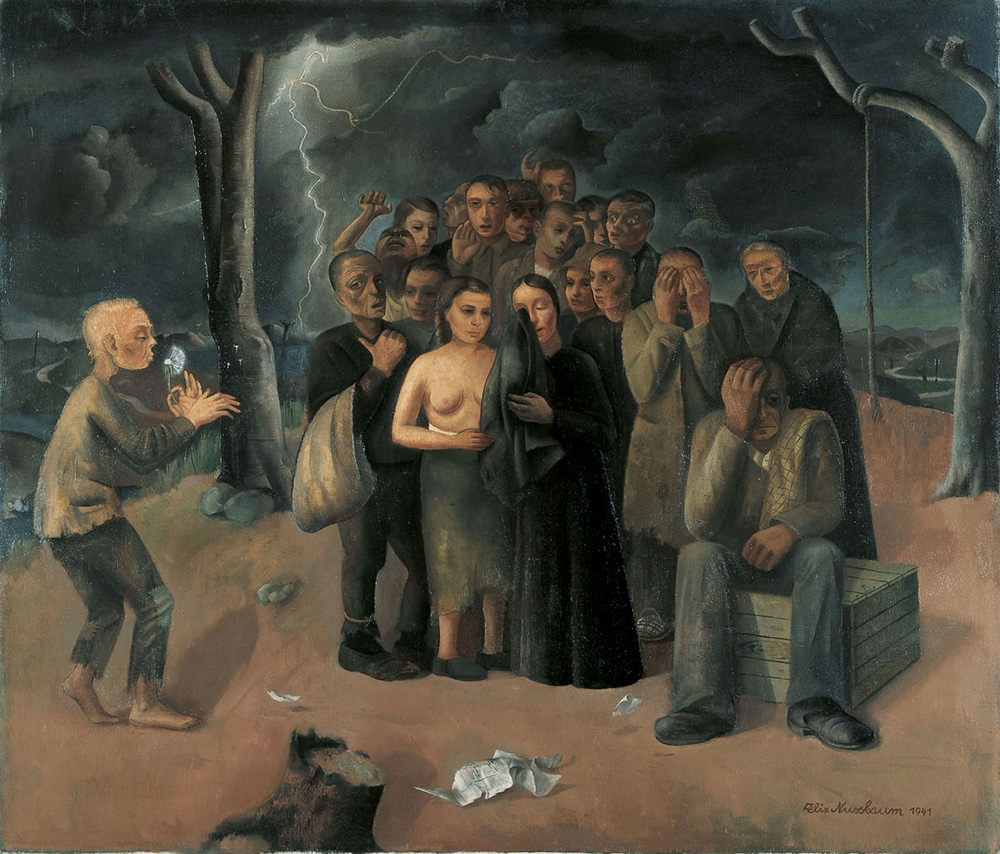
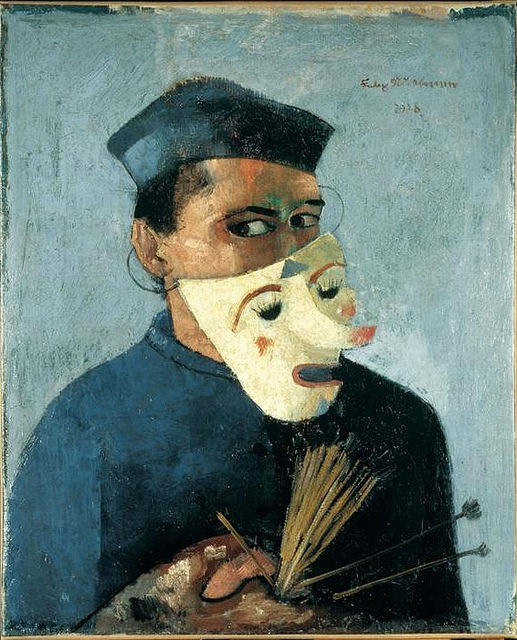
Nussbaum’s self-portraits from this period track a visible transformation. The man in the 1938 work still carries traces of the trained artist, poised and observant. By 1941, the wear of years in hiding is etched into the image. These weren’t vanity portraits — they were records. He painted himself as evidence that he had existed, that he had witnessed, that he had survived this far.
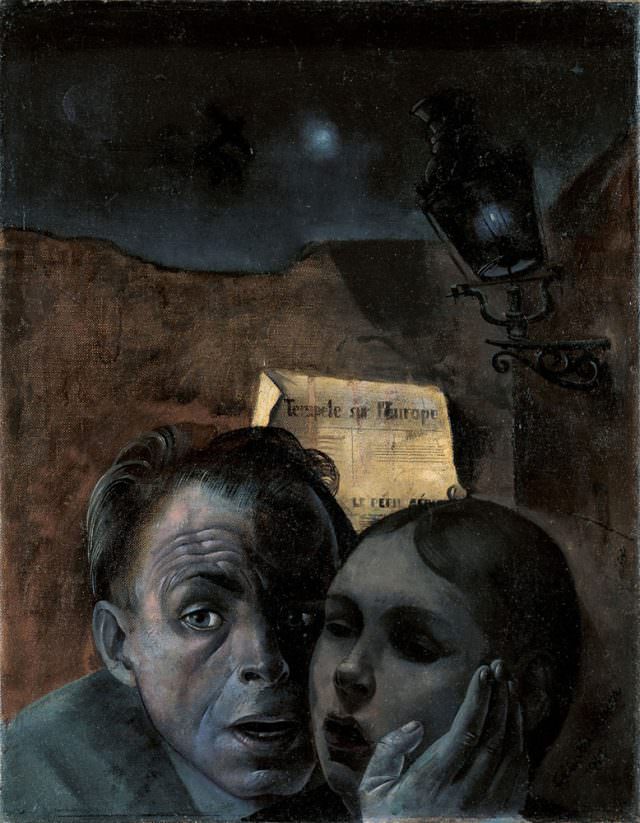
“Angst” — the German word for fear or dread — is exactly what the 1941 painting of Nussbaum and his niece communicates without a single word. The two figures are pressed close together, their expressions tight with anxiety. Children appear in Nussbaum’s work not as symbols of innocence but as people already marked by danger. His niece would not survive the war.
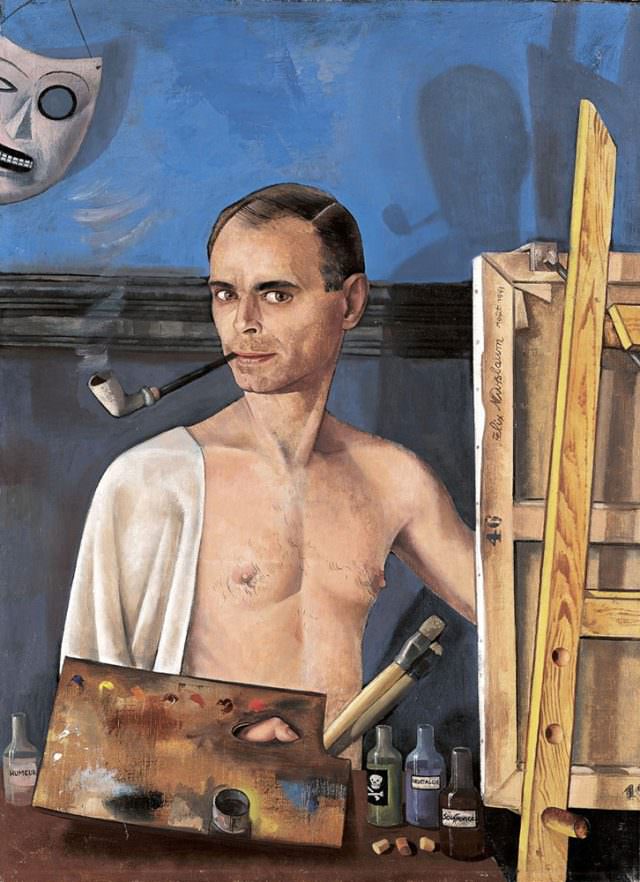
By 1943, Nussbaum and Felka were living in a cramped hiding place in Brussels, sheltered by non-Jewish Belgians who risked their own lives. His self-portrait from that year shows a man fully aware of how little time remains. The expression is not despair — it is clarity. He kept painting through that year with urgency, as if he knew the canvases would outlast him.
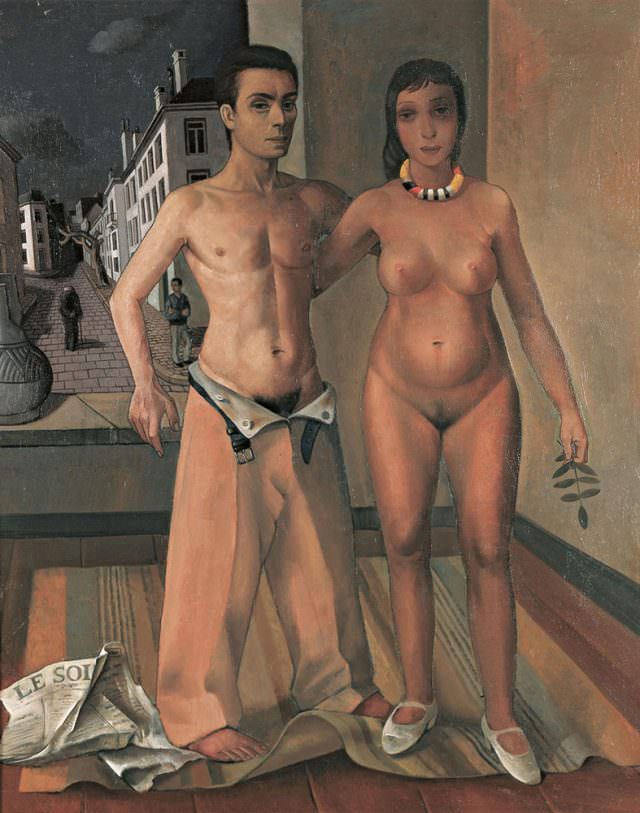
Felka Platek appears throughout Nussbaum’s work, and in their 1943 double portrait, the two are shown together as partners and witnesses to the same ordeal. Felka was a painter in her own right, and the pair had been inseparable since their early years together in Europe. In 1944, both were arrested by the Gestapo and deported to Auschwitz, where they were killed.
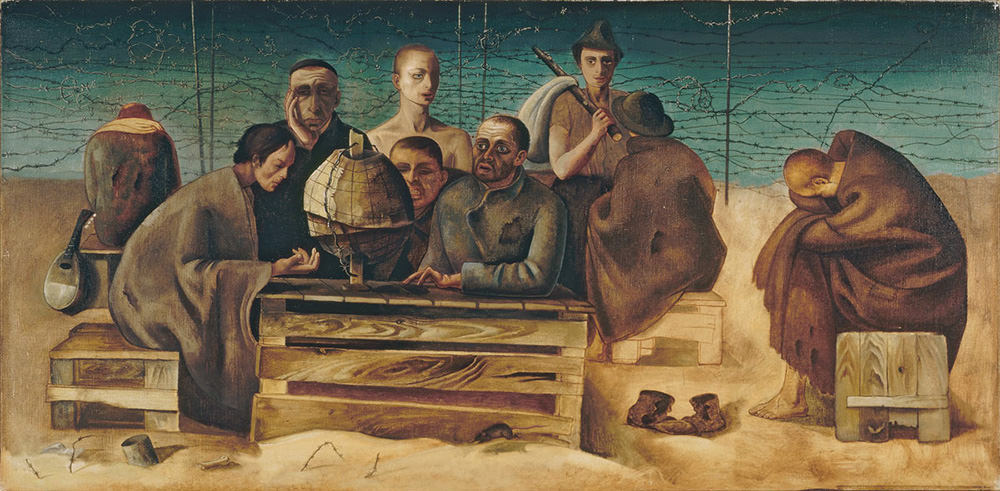
Saint-Cyprien, the internment camp where Nussbaum was held in 1940, continued to appear in his work years later. The 1942 painting revisits that experience — crowded barracks, stripped of comfort or privacy, men reduced to their bare circumstances. Nussbaum’s ability to return to these scenes through painting transformed personal trauma into documented history.
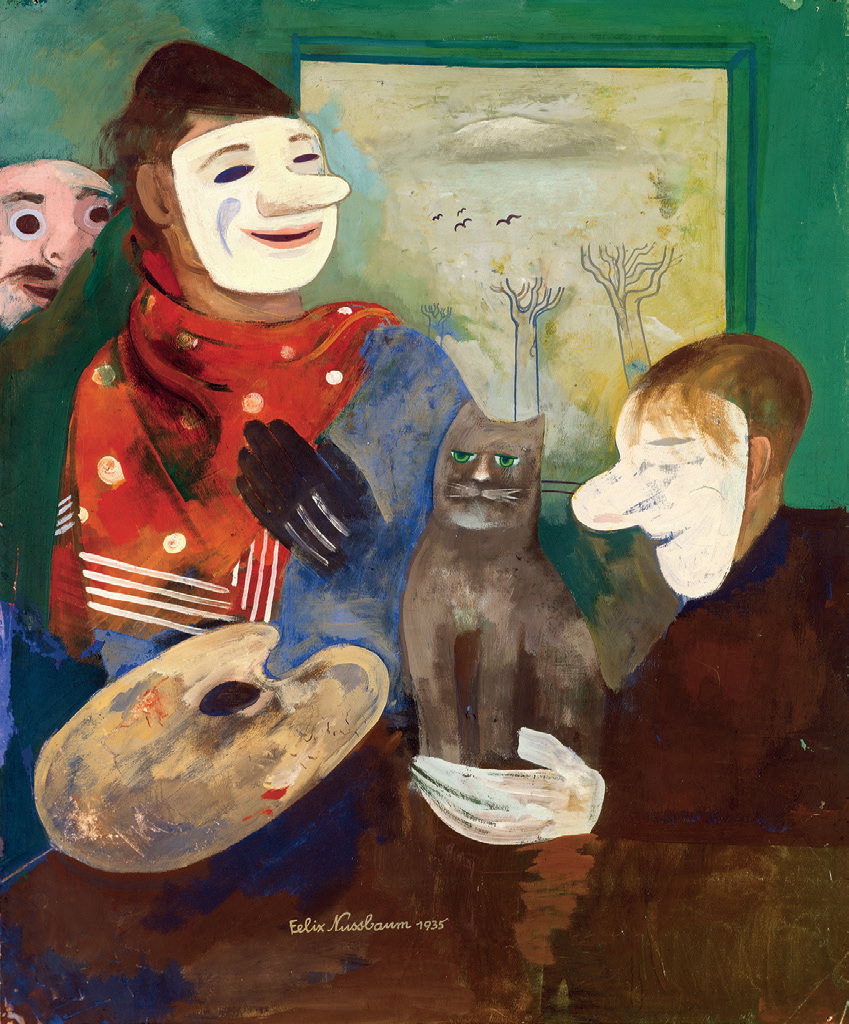
Before his arrest, Nussbaum reportedly said: “If I go under, don’t let my paintings die.” He left behind over 160 works — paintings and drawings that survived the war in hidden caches. They were recovered and preserved, eventually becoming part of permanent collections at institutions including the Jewish Museum Berlin and the United States Holocaust Memorial Museum.
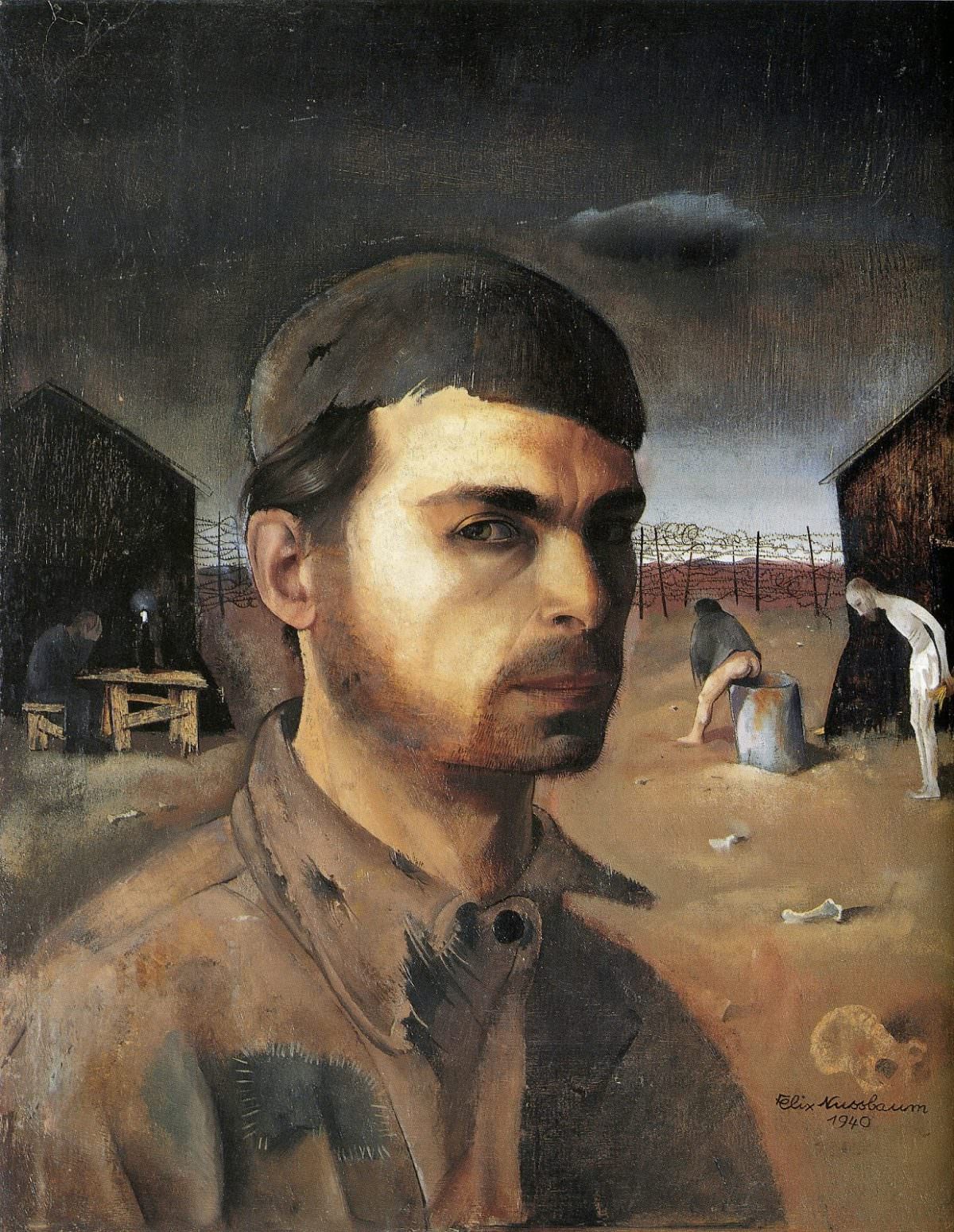
“Self Portrait in the Camp” from 1940 is one of the earliest records of Nussbaum’s internment experience. He stands in the frame as both artist and subject — watching himself be watched, documenting his own captivity. It is a painting about powerlessness, made by a man who refused to stop making art. Every canvas he completed was an act of witness, a refusal to disappear quietly into the silence the Nazi regime intended for its victims.