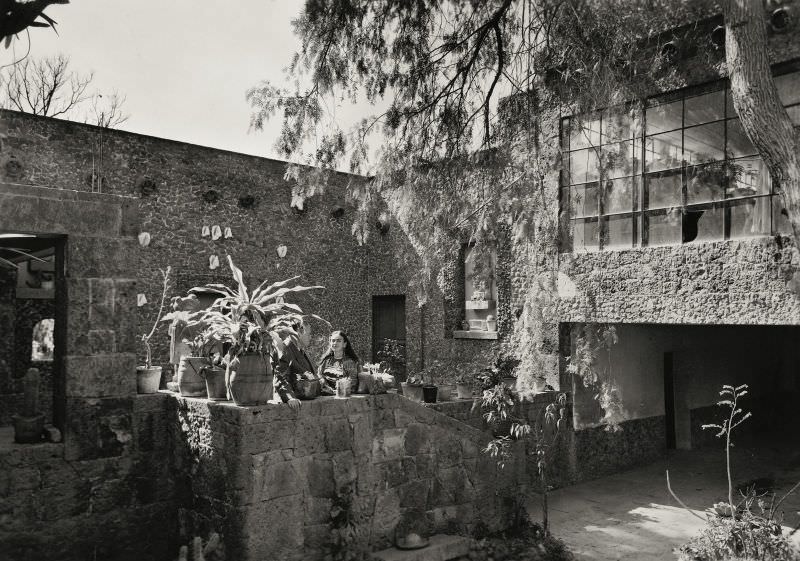
Frida Kahlo was born in 1907 inside a cobalt-blue house on the outskirts of Mexico City, and she never truly left it. The house, known as La Casa Azul — the Blue House — was painted that deep, vivid blue both inside and out. Kahlo called it her “intimate universe,” and the name fits. It was the place where she grew up, made art, suffered, recovered, and died in 1954. Before her death, she expressed her wish that the house become a museum. Today, it stands as one of Mexico’s most cherished cultural landmarks.
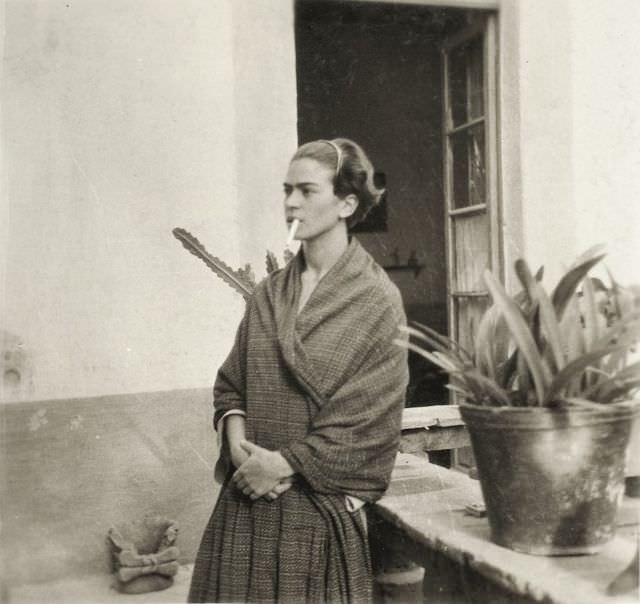
The Blue House was more than a home — it was a refuge built around Kahlo’s physical reality. Her body endured enormous trauma throughout her life. As a child, she contracted polio, which left her right leg thinner than her left. Then, at 18, she was riding a bus in Mexico City when it collided with a streetcar. The crash broke her spinal column in three places, shattered her collarbone, and fractured her pelvis, right leg, and foot. She spent months in bed recovering, and the injuries never fully healed. She underwent more than 30 surgeries over the course of her life.
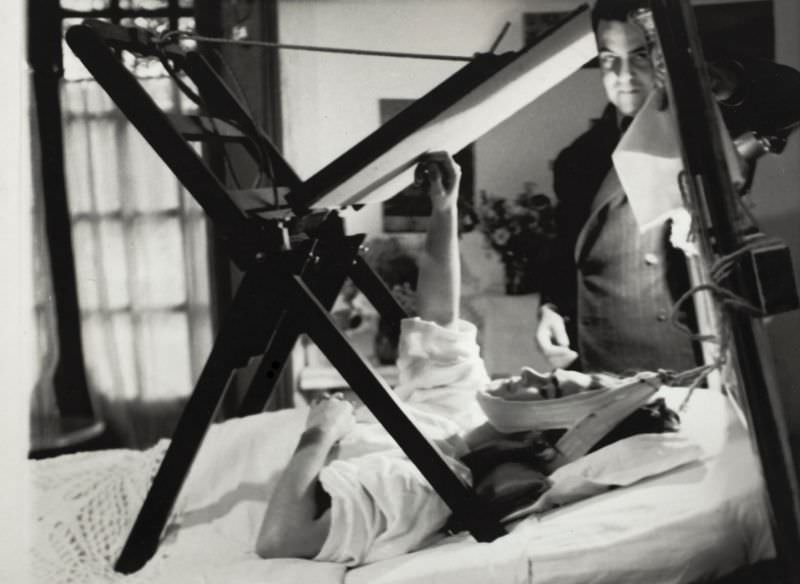
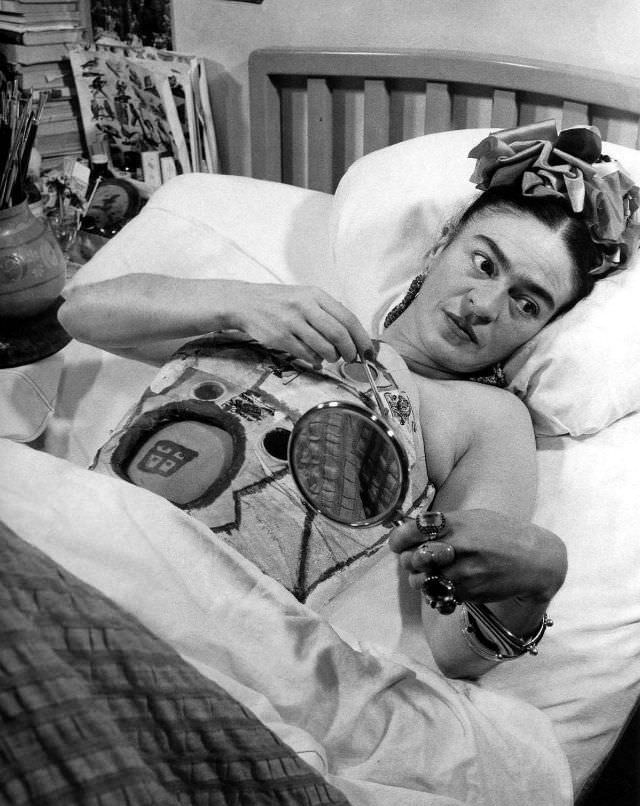
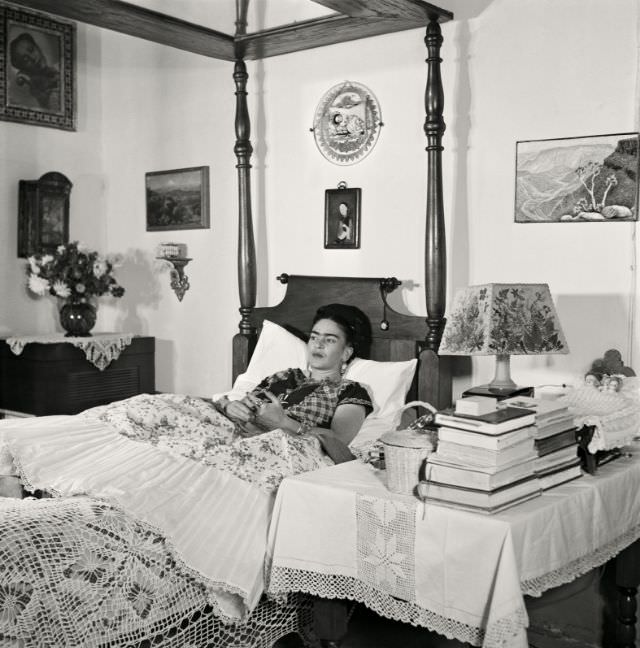
Kahlo wore medical corsets for much of her adult life to keep her spine supported. She had a special easel built so she could paint lying flat in bed, and a mirror was mounted above her mattress so she could use herself as a subject — which explains why so many of her paintings are self-portraits. The Blue House held the tools and conditions that made her work possible, even when her body made everything difficult.
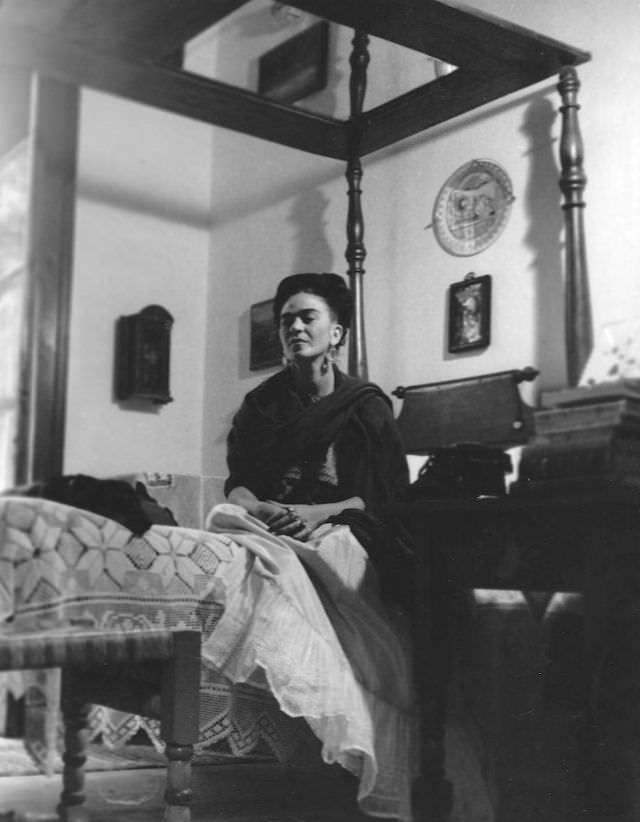
Biographer Rauda Jamis described Kahlo plainly: “She was a formidable being, but in great distress … not only because of the physical pain due to her terrible tram accident but because she was a deeply conflicted being.” That conflict showed up everywhere in her life — in her turbulent marriage to muralist Diego Rivera, in the miscarriages she suffered at Casa Azul, and in the tension between her fierce public persona and her private suffering.
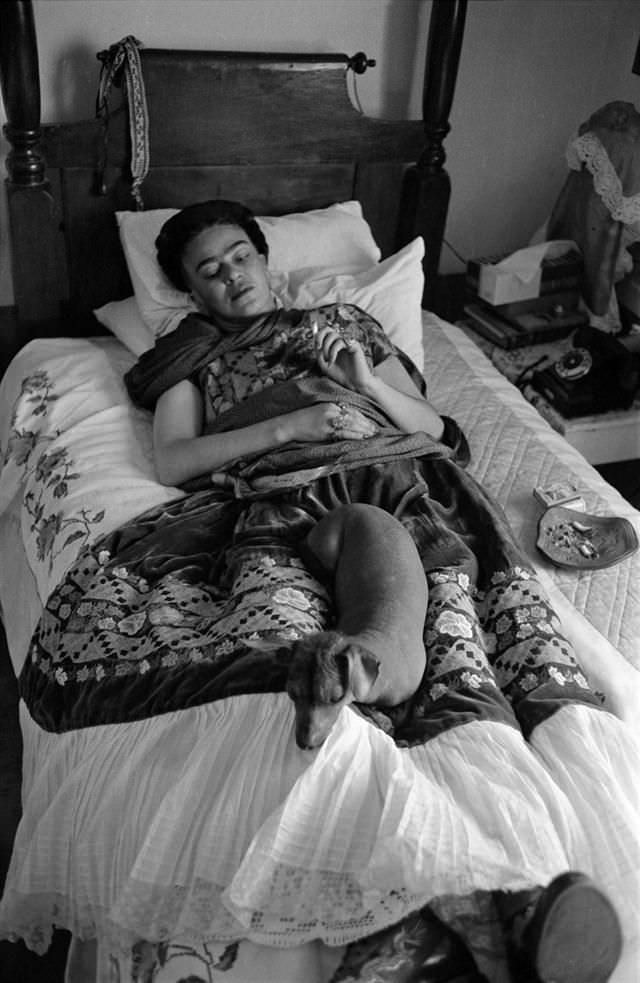
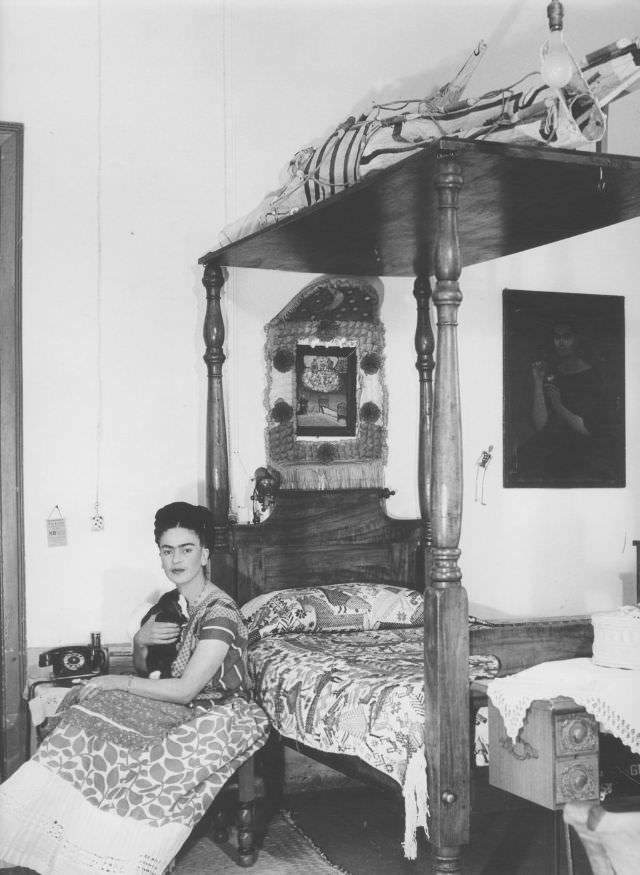
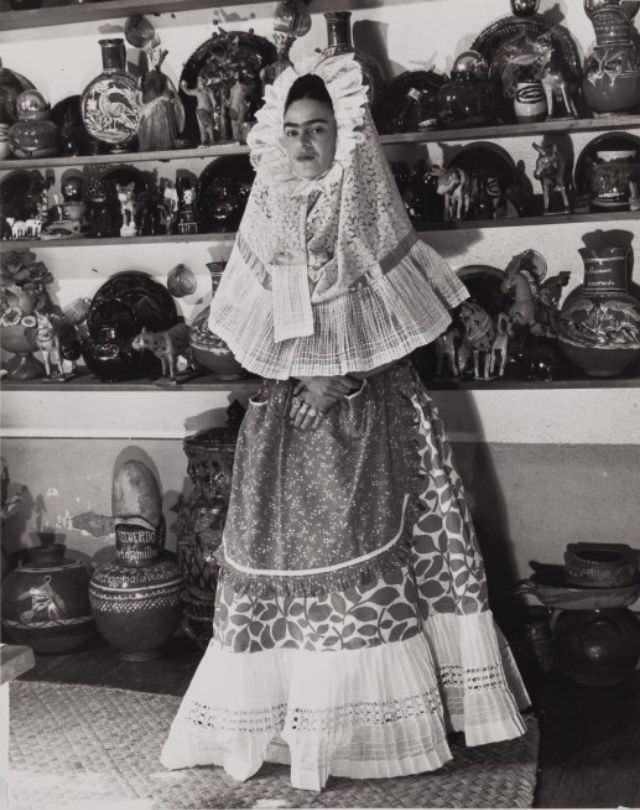
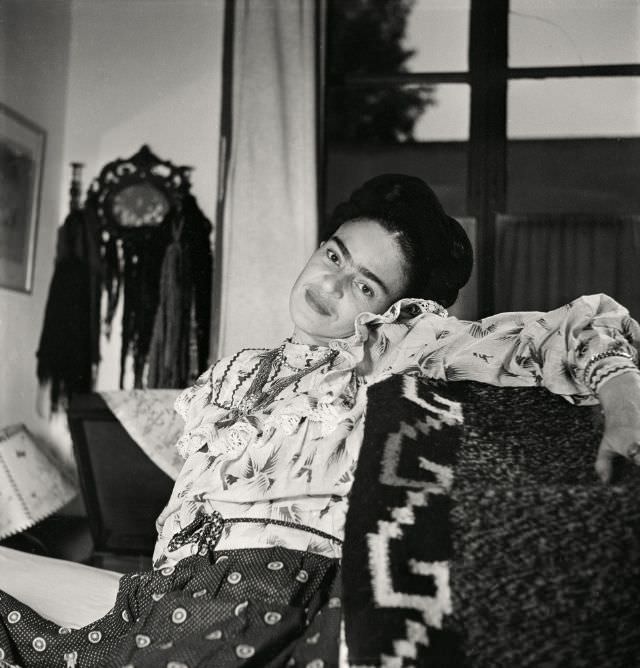
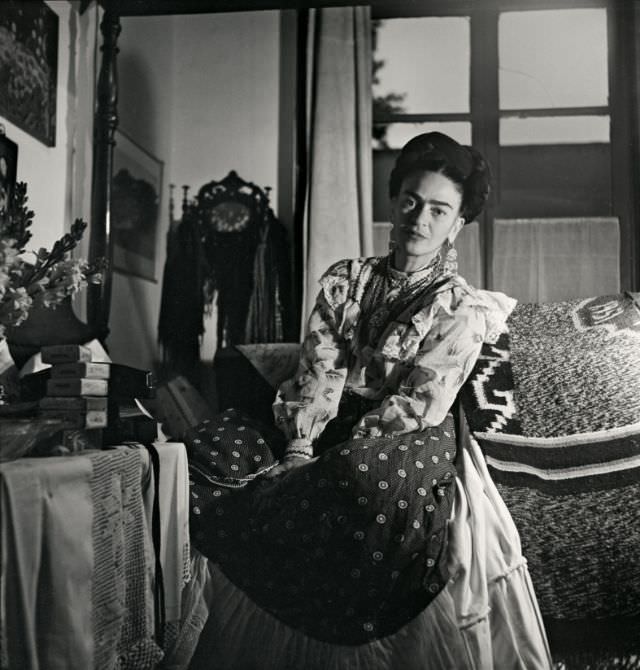
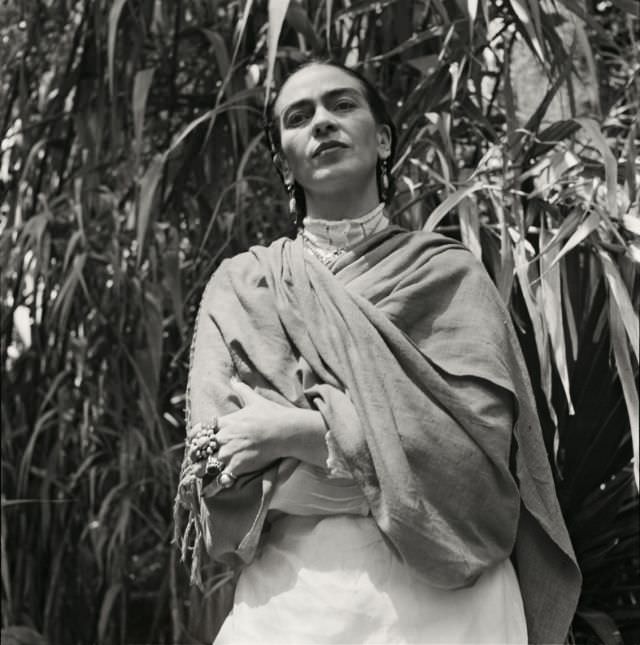
Kahlo’s personal style was itself a kind of statement. She dressed in traditional Tehuana clothing — long skirts, embroidered blouses, and elaborate headdresses — in part to celebrate her Mexican and indigenous heritage, and in part to hide her physical condition. When her right leg was amputated below the knee in 1953, she ordered red leather boots adorned with bells to fit her prosthetic, so it would match her other foot. The boots were characteristically Frida: defiant and decorative at once.
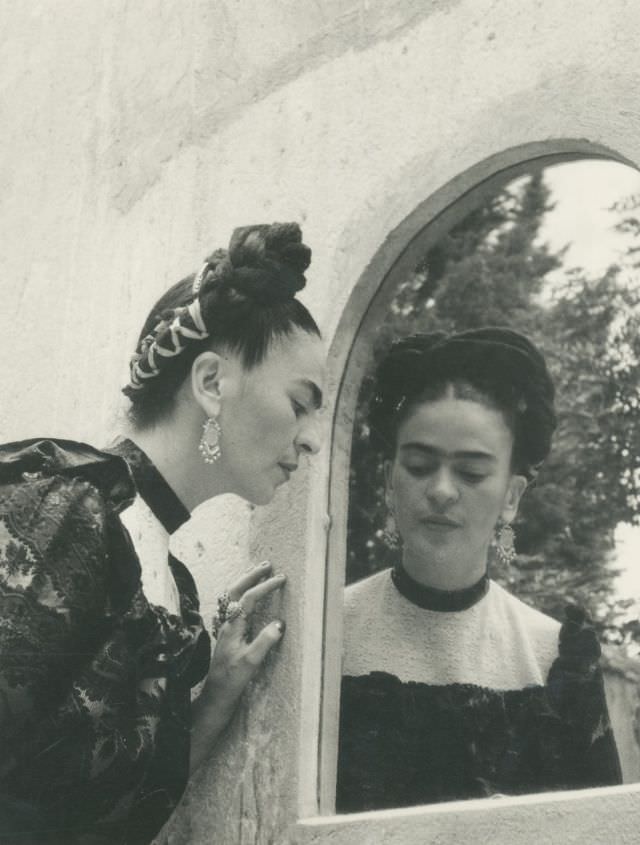
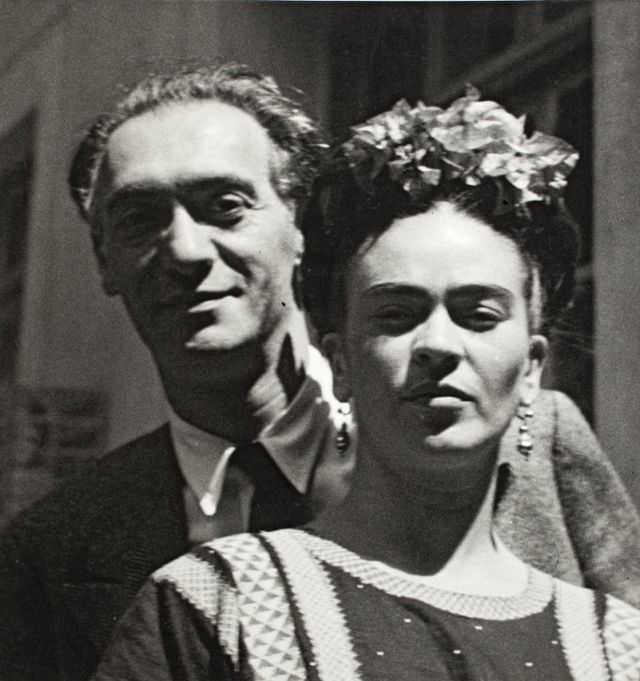
Many of the most intimate photographs of Kahlo were taken inside or around Casa Azul. American photographer Nickolas Muray, who was also one of her close friends, captured some of the most well-known images of her during the late 1930s. His photographs show her relaxed and at ease in ways that more formal portraits rarely did.
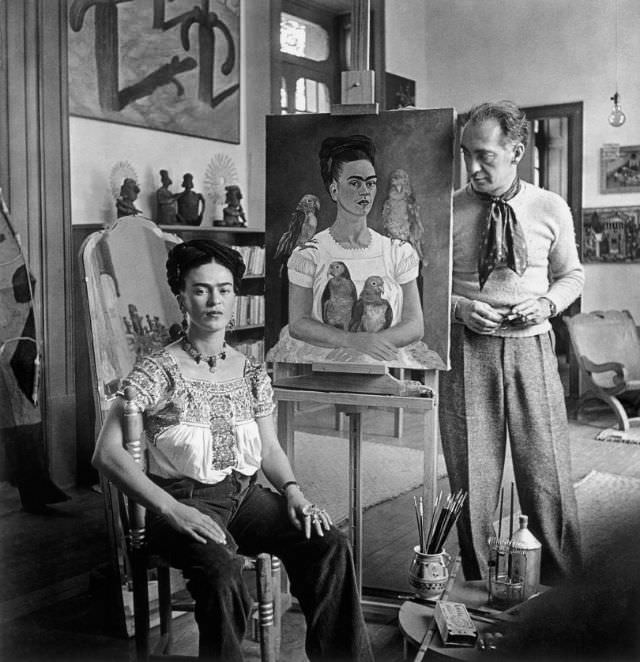
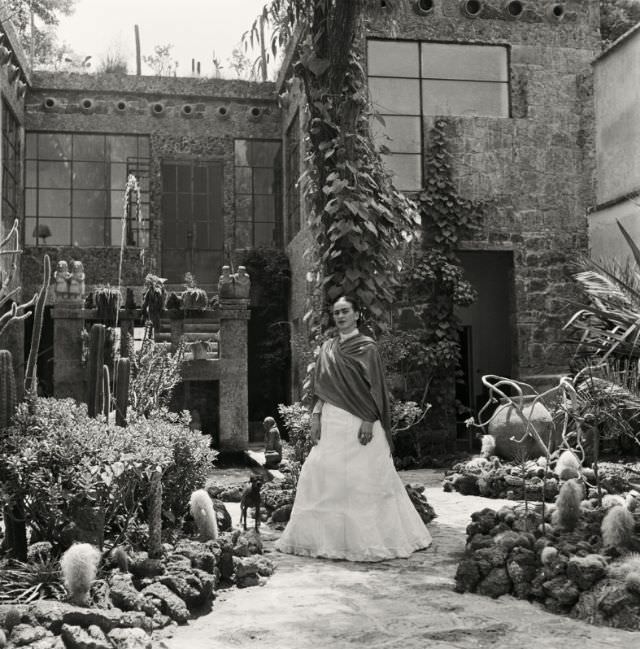
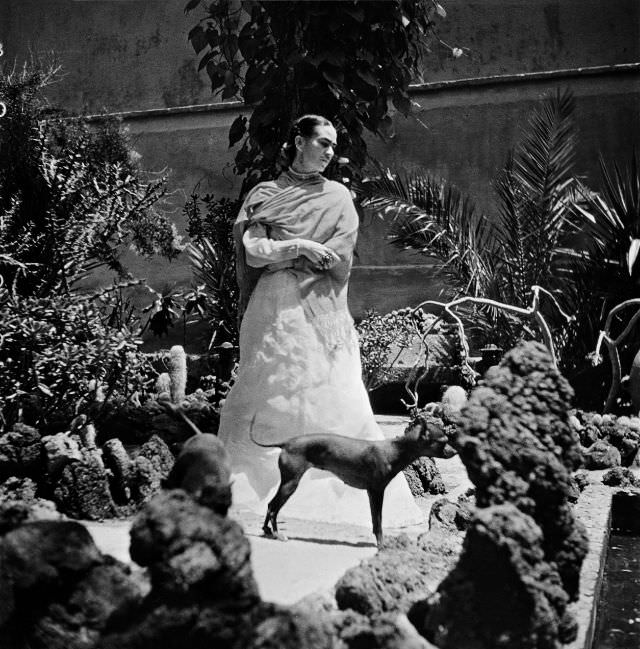
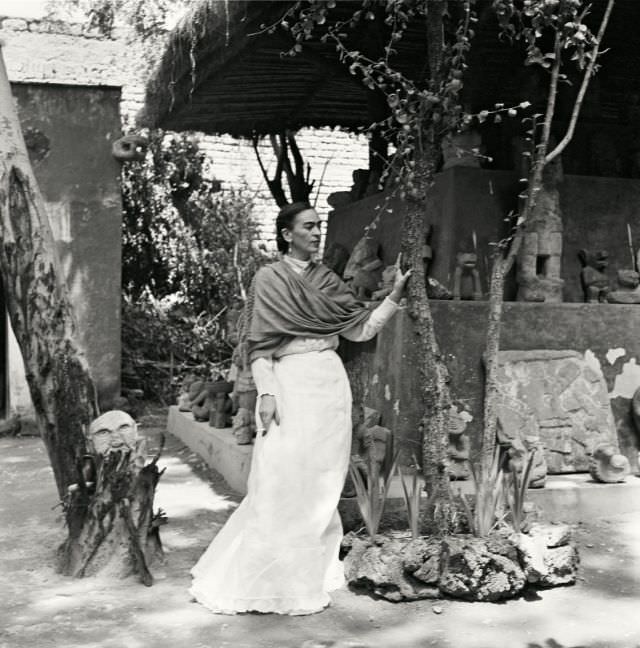
The garden of Casa Azul was one of Kahlo’s great sources of joy. She filled it with pre-Columbian sculptures, native plants, and animals — including deer, monkeys, parrots, and hairless Xoloitzcuintle dogs, a breed native to Mexico. The garden was visible from her bedroom and studio windows, and she spent time there whenever her health allowed.
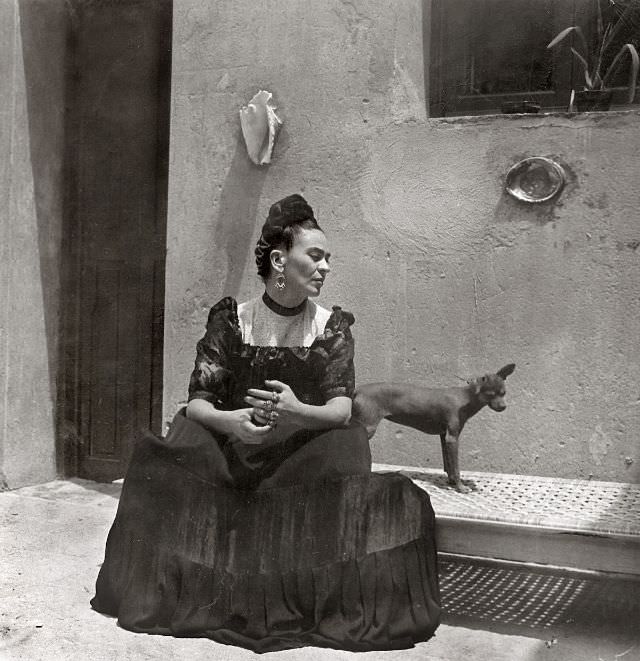
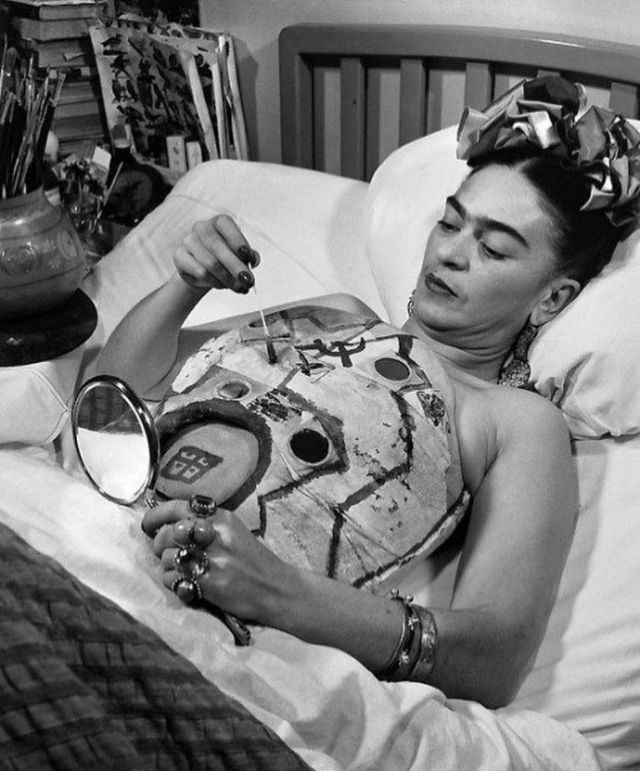
By the mid-1940s, Kahlo’s spinal condition had worsened considerably. In 1944, she began wearing a series of rigid corsets — some plaster, some steel — prescribed by her doctors. In 1946, she traveled to New York for a spinal fusion surgery on four vertebrae. The operation was grueling, and the recovery sent her back to bed at Casa Azul for extended stretches.
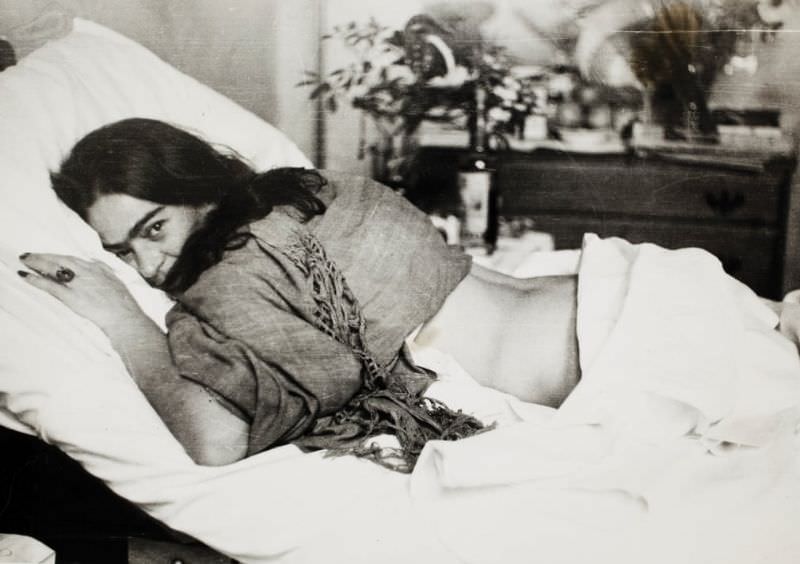
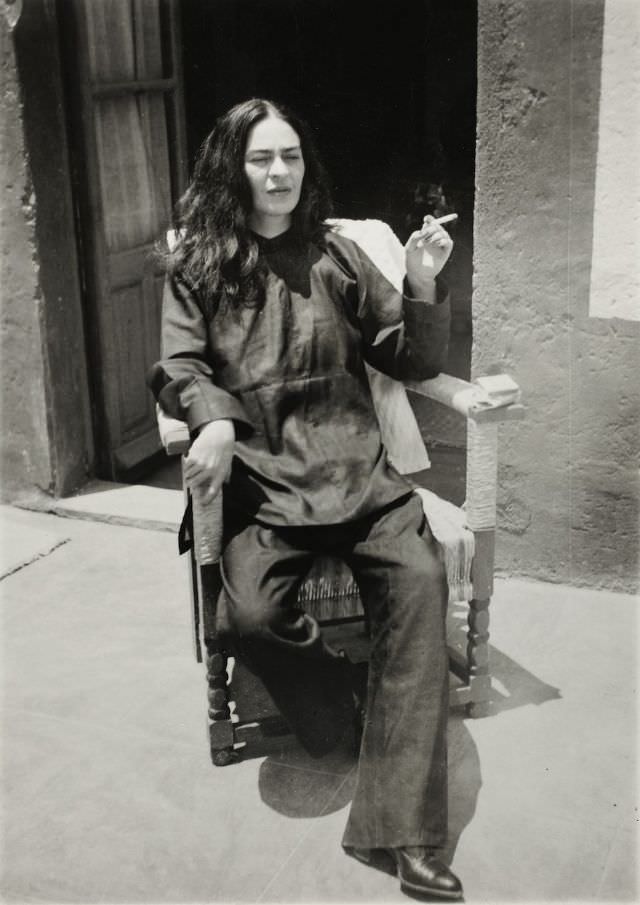
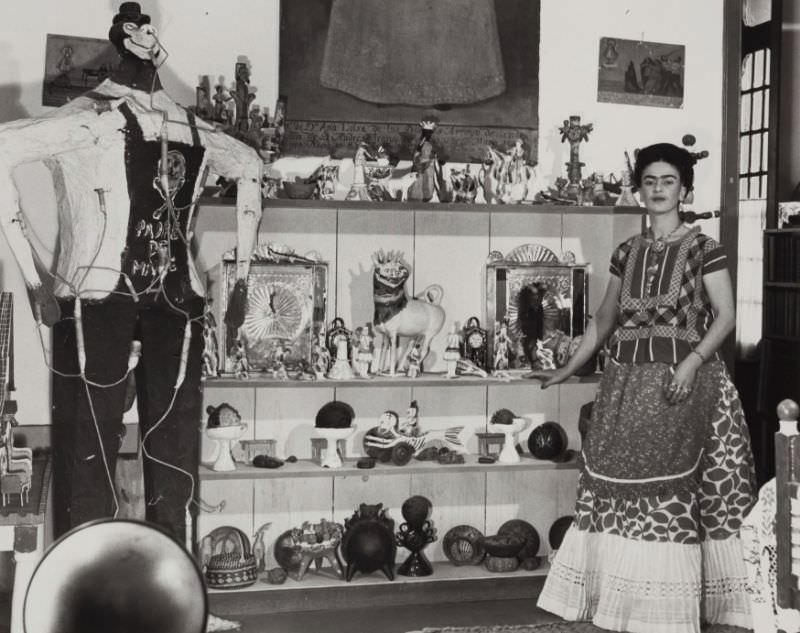
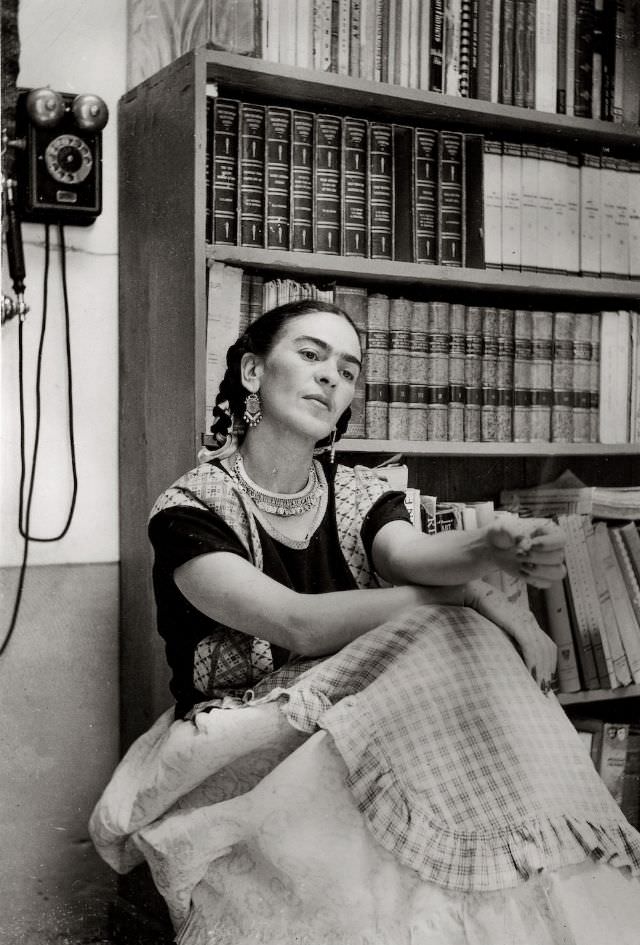
Even in her most confined moments, Kahlo remained engaged with the world around her. Photos from 1949 show her in the Blue House’s library, surrounded by books and objects she had collected over decades. The house was dense with things she loved — folk art, political imagery, ceramics, and the work of other artists she admired.
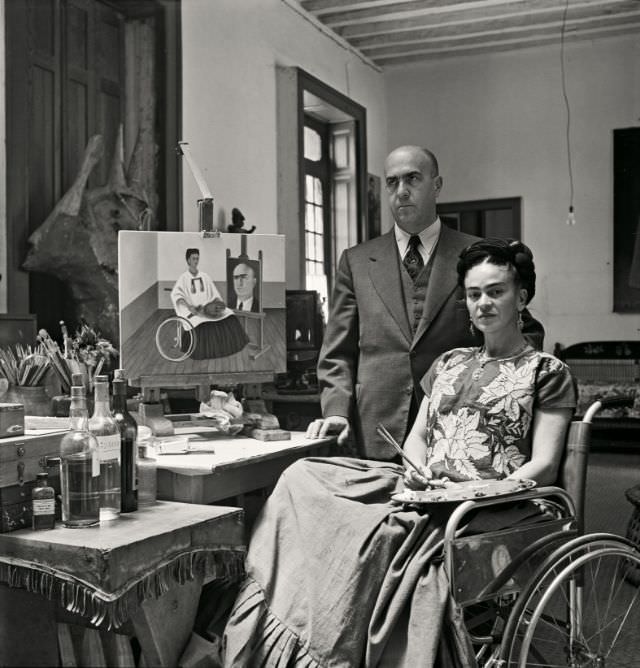
By 1951, Kahlo was spending most of her time in a wheelchair. She continued to paint, though the strong pain medications she depended on affected the quality of her work during this period. Dr. Juan Farill, her physician, became a central figure in her life during these years, and she painted a portrait of him as a tribute. Photos from 1951 show her in her garden, in bed, and with Dr. Farill — a record of a woman still present and alive in her space, even as her body failed her.
Diego Rivera, Kahlo’s husband, also lived at Casa Azul during parts of their marriage — a relationship marked by mutual admiration, repeated affairs, and a divorce and remarriage. Photos of the two of them together at the house in 1952 show them in their final years as a couple, still bound to each other and to the place they shared.