The 1920s flipped the script on what the ideal female body looked like. Out went the hourglass curves of the Victorian era. In came a slender, straight, and “boyish” silhouette — flat-chested, narrow-hipped, and lean. This new standard pushed women toward physical fitness in ways that hadn’t been seen before. Exercise was no longer just about health; it was tied directly to appearance and modern femininity.
Calisthenics were the most common form of exercise for women during this decade. These light, rhythmic routines focused on stretching, bending, and controlled movement rather than building muscle. Women followed along with instructional guides from magazines and books, either in gymnasium classes or at home. The goal was grace and a slim figure — not strength. Radio made this even more accessible. Morning broadcasts guided listeners through synchronized routines, turning daily exercise into a national habit that required nothing more than some floor space.
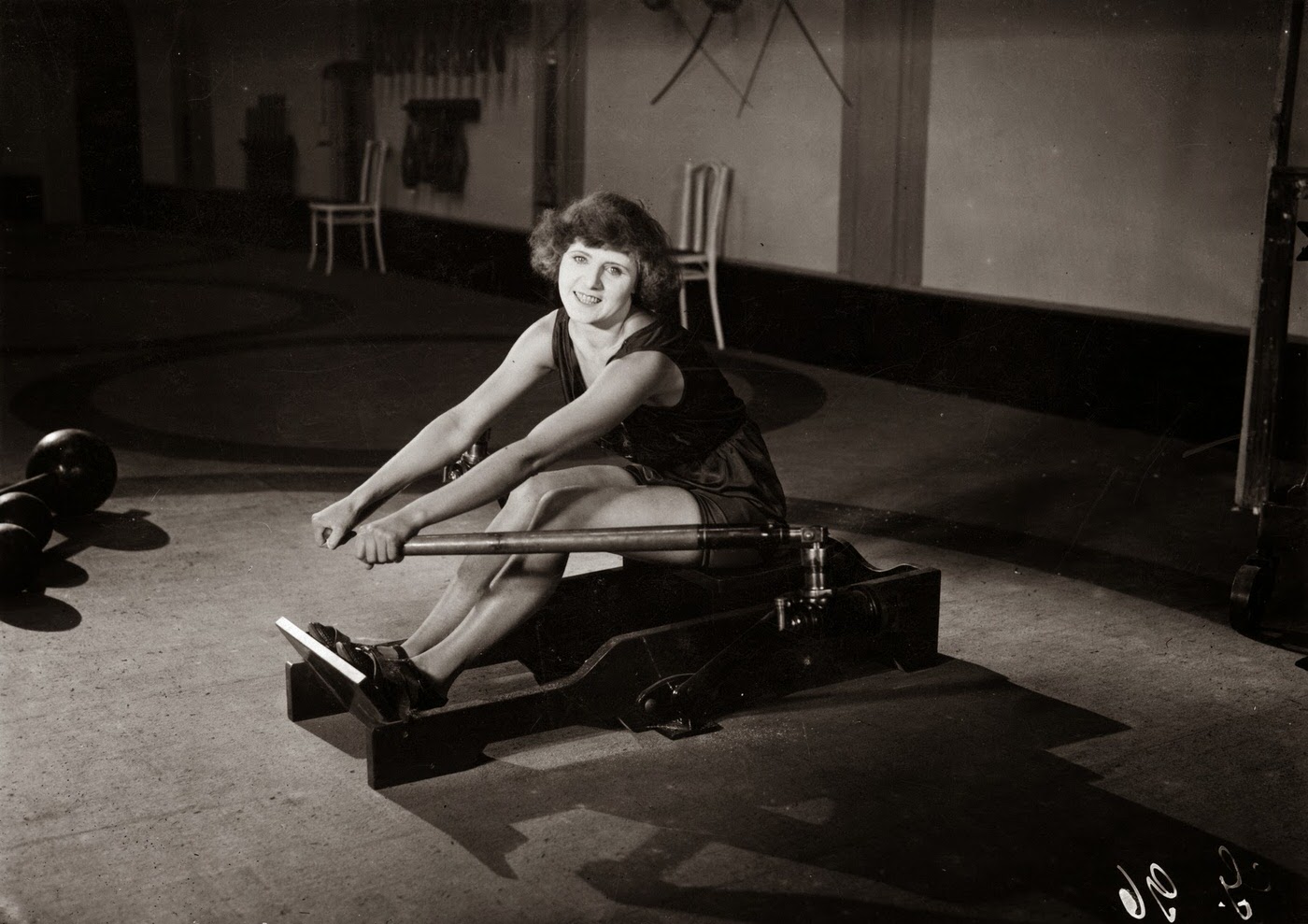
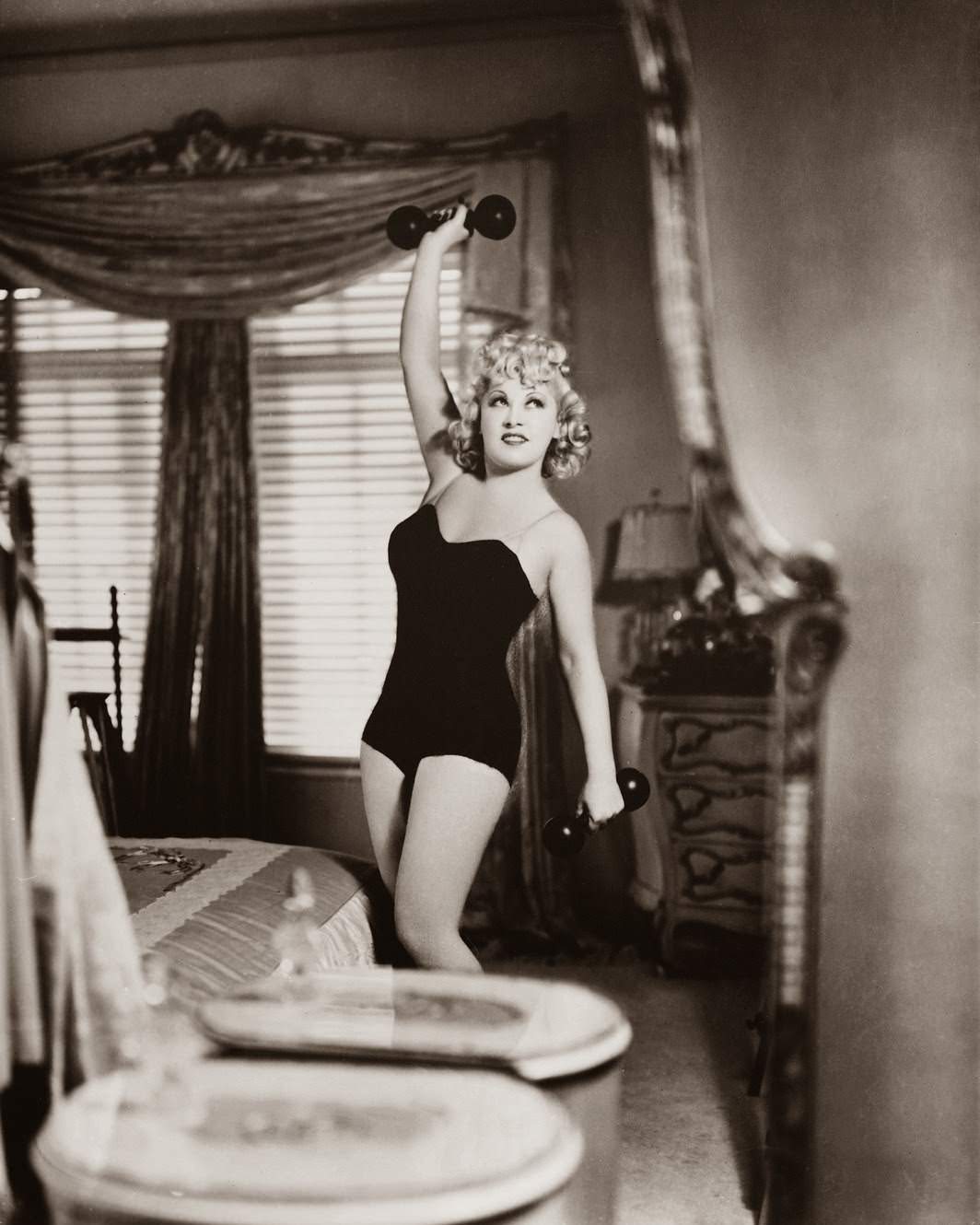
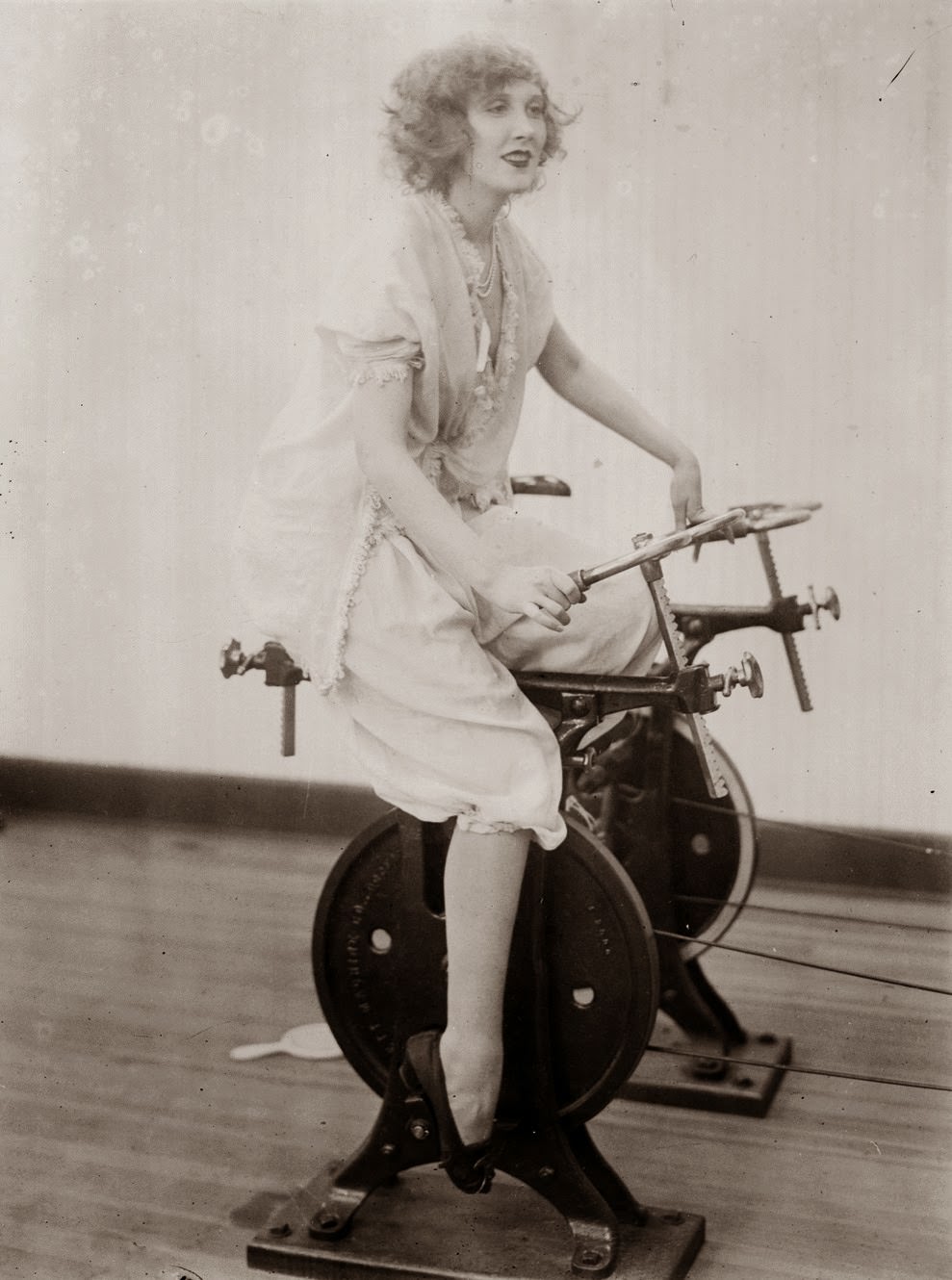
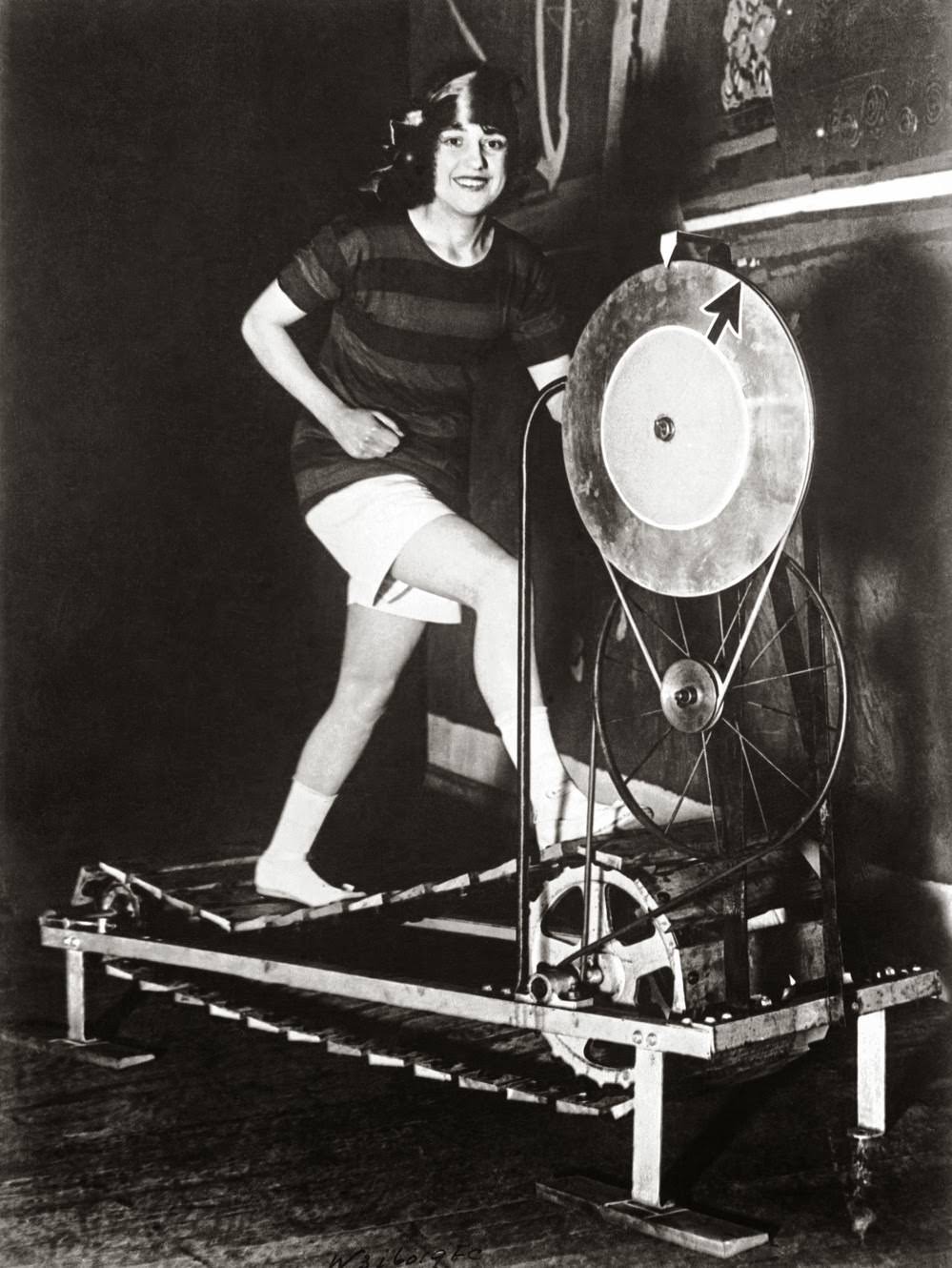
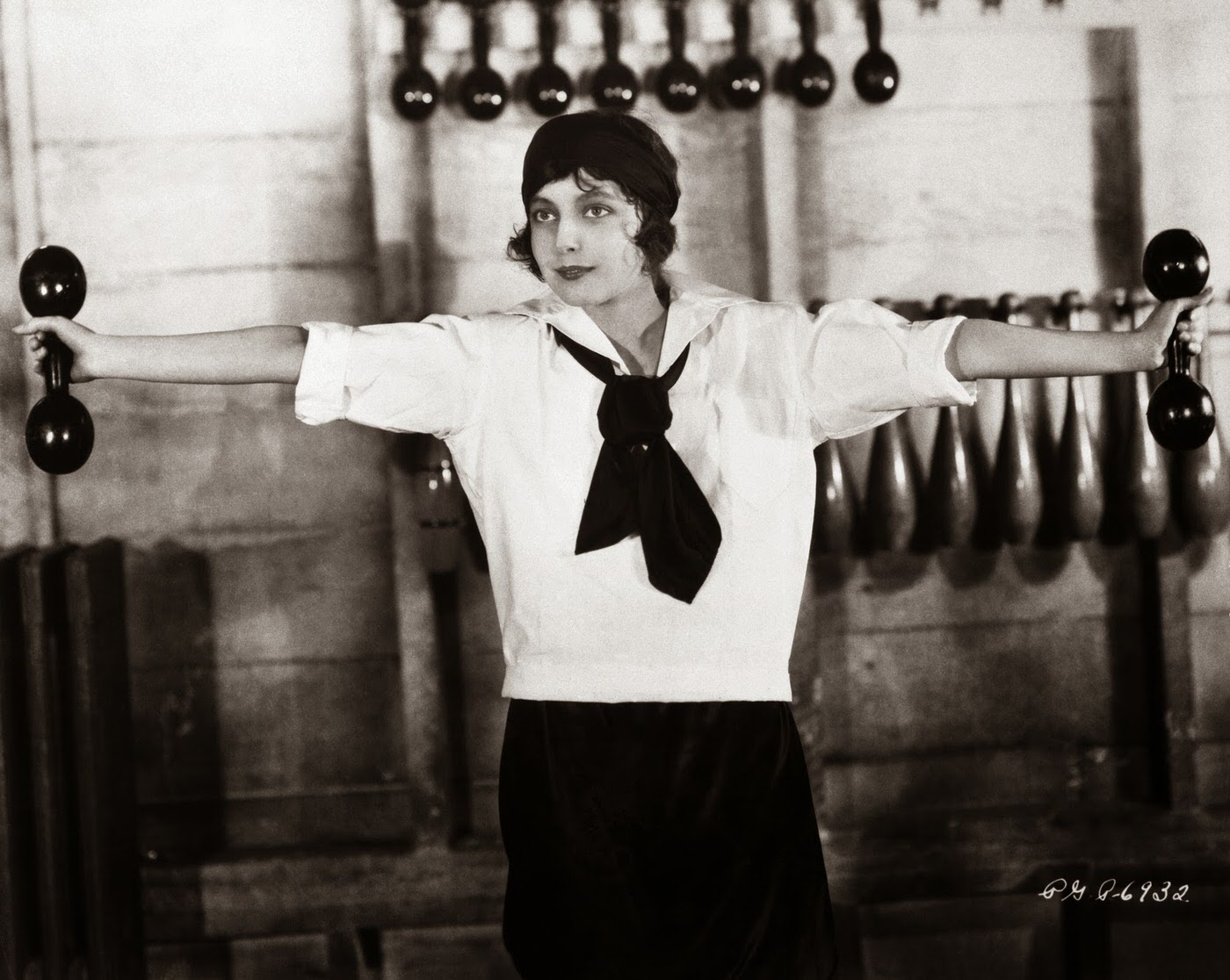
Home exercise machines became a serious market during this period. Rowing machines and stationary bicycles were popular choices for women who wanted a more vigorous workout in private. Dumbbells also made their way into domestic routines, used by everyone from everyday women to celebrities.
The stationary bicycle offered a low-impact but effective way to stay active indoors, and by 1921 it was a recognizable fixture in fitness culture.
Inventors on both sides of the Atlantic worked to meet the growing demand for fitness equipment. New contraptions appeared regularly, marketed as the next breakthrough in effortless slimming.
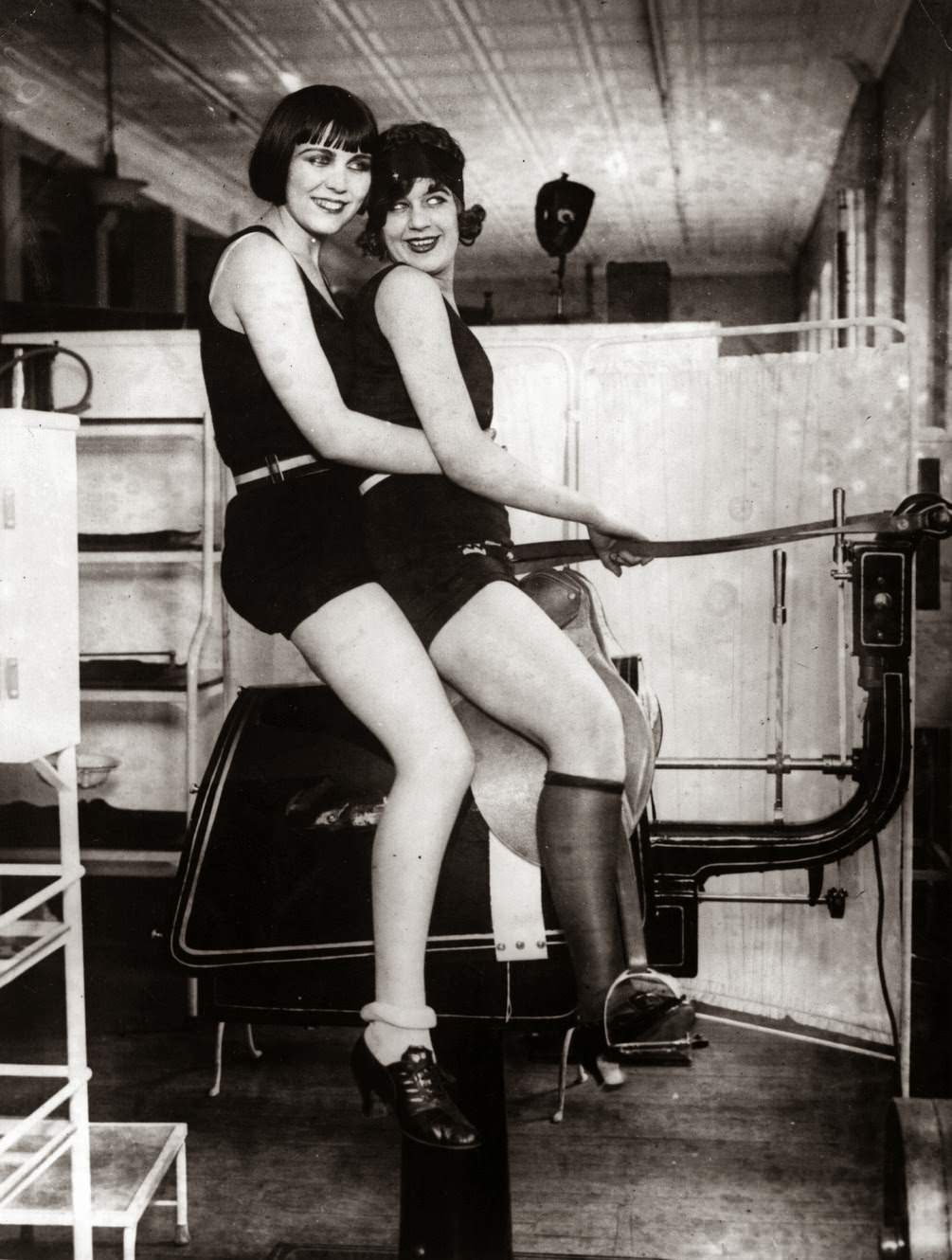
Not all machines were straightforward. The mechanical horse offered a riding simulation that was as much novelty as workout, yet it found an audience among women looking for something different.
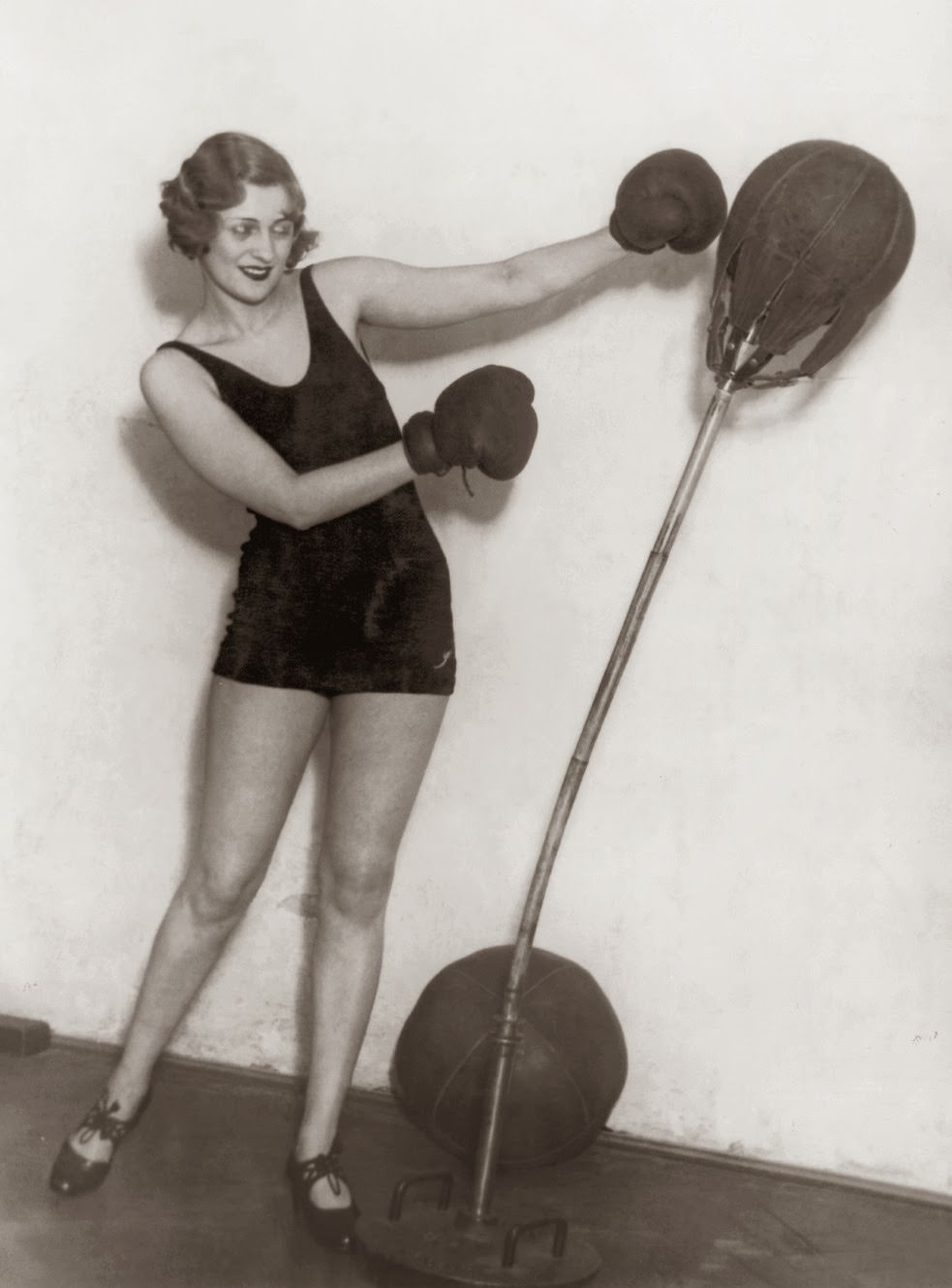
Women also stepped into more traditionally male spaces. Boxing-inspired training, including work at the punching bag, was one example of women pushing the boundaries of acceptable physical activity.
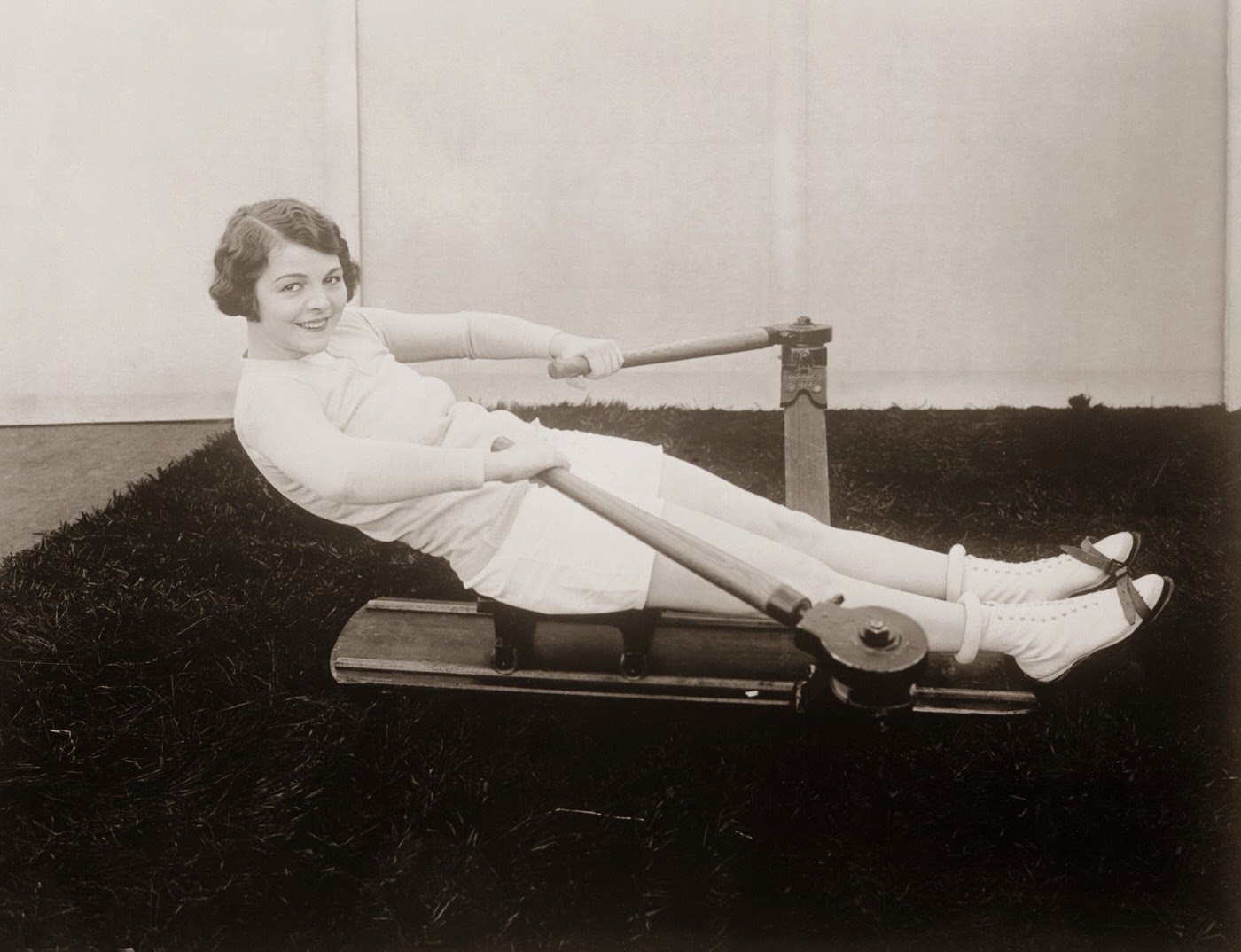
The rowing machine remained one of the more demanding pieces of home equipment available, used by both ordinary women and figures from the public eye, including film actress Helene Chadwick.
Free weights were another tool women turned to, though the exercises performed with them were still aimed at toning rather than building noticeable muscle mass.
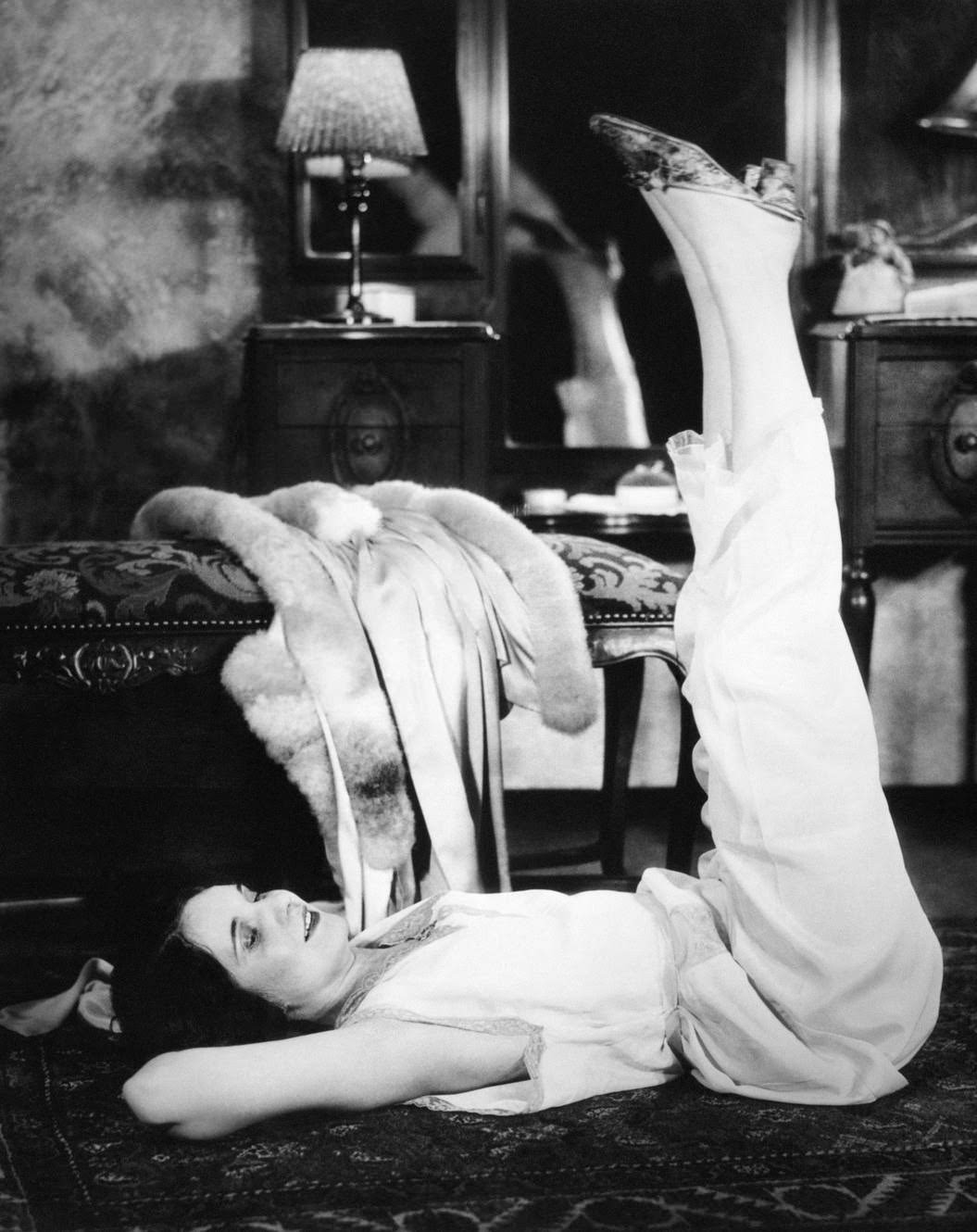
Floor exercises done at home — including leg lifts — required no equipment at all and fit neatly into a woman’s daily domestic routine.
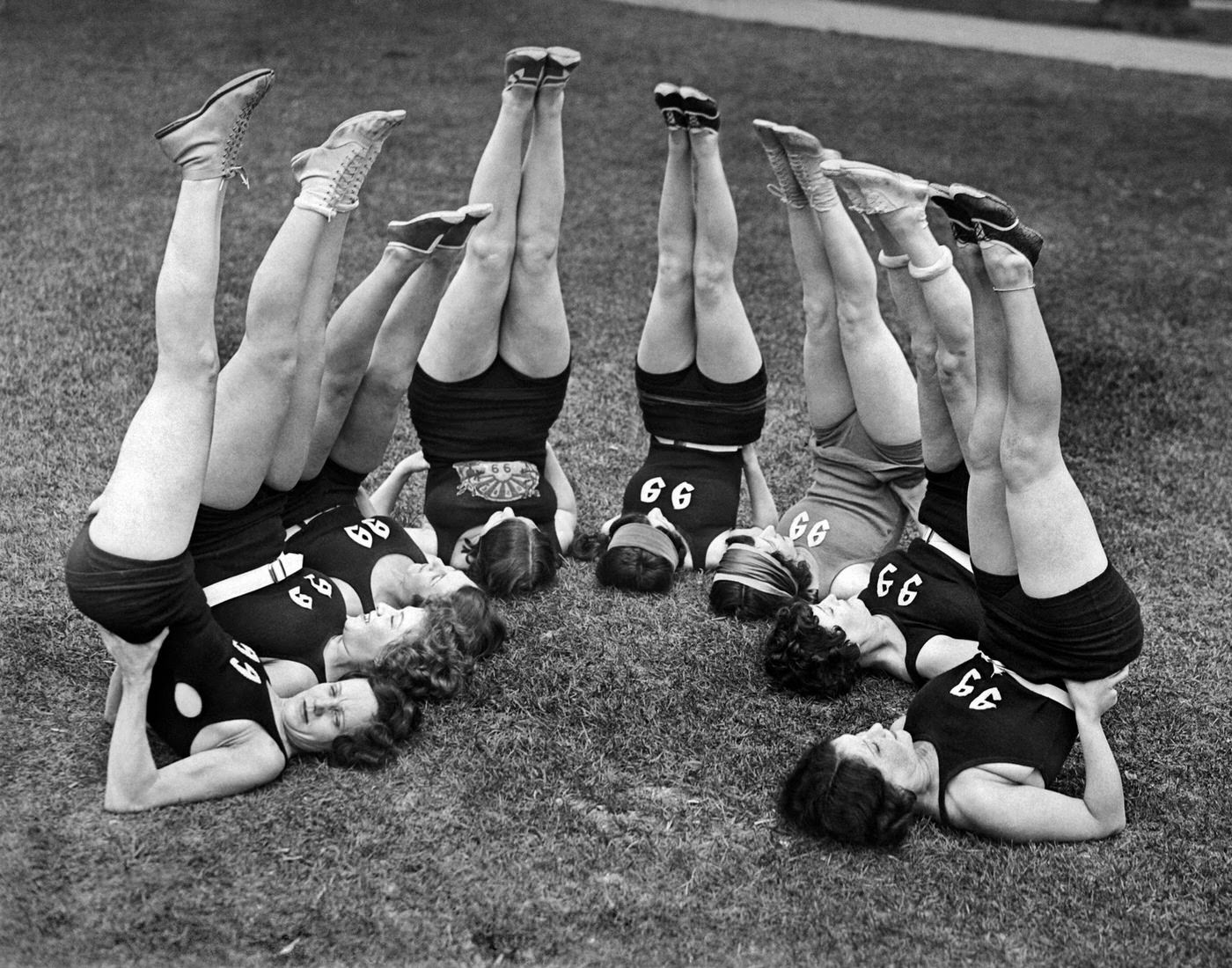
Group exercise also had its place. Women’s clubs and social organizations across the country incorporated daily exercise sessions into their activities. Groups like the “Elkettes” in Los Angeles held structured workouts together, blending fitness with community.
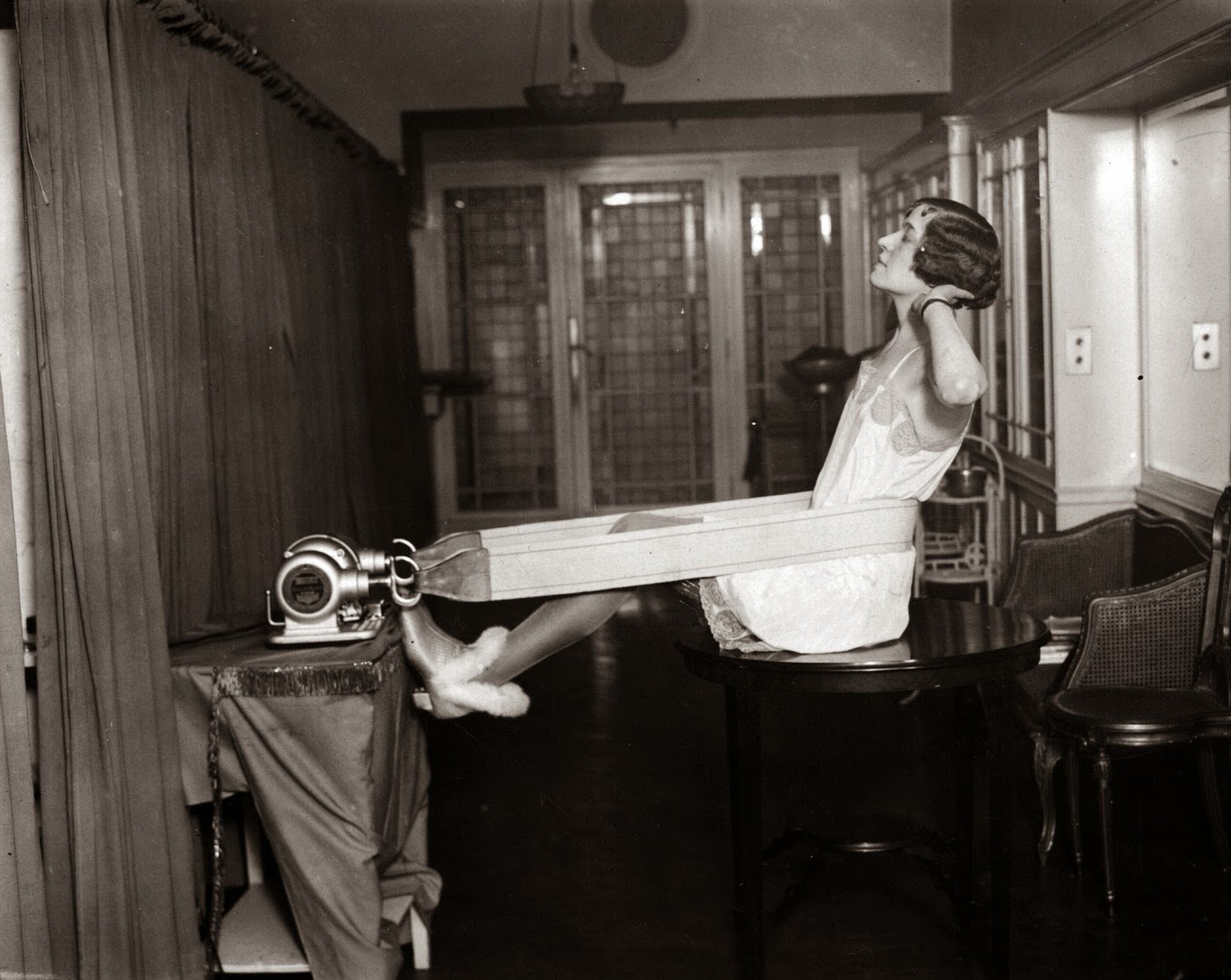
Perhaps no piece of fitness equipment better captures the era’s appetite for effortless results than the vibrating belt machine. Devices like the Vibro-Slim used an electric motor to rapidly vibrate a belt placed around the waist or hips. Manufacturers claimed the machine would shake fat away and tone the body without any effort from the user. Women simply stood still while the belt did its work.
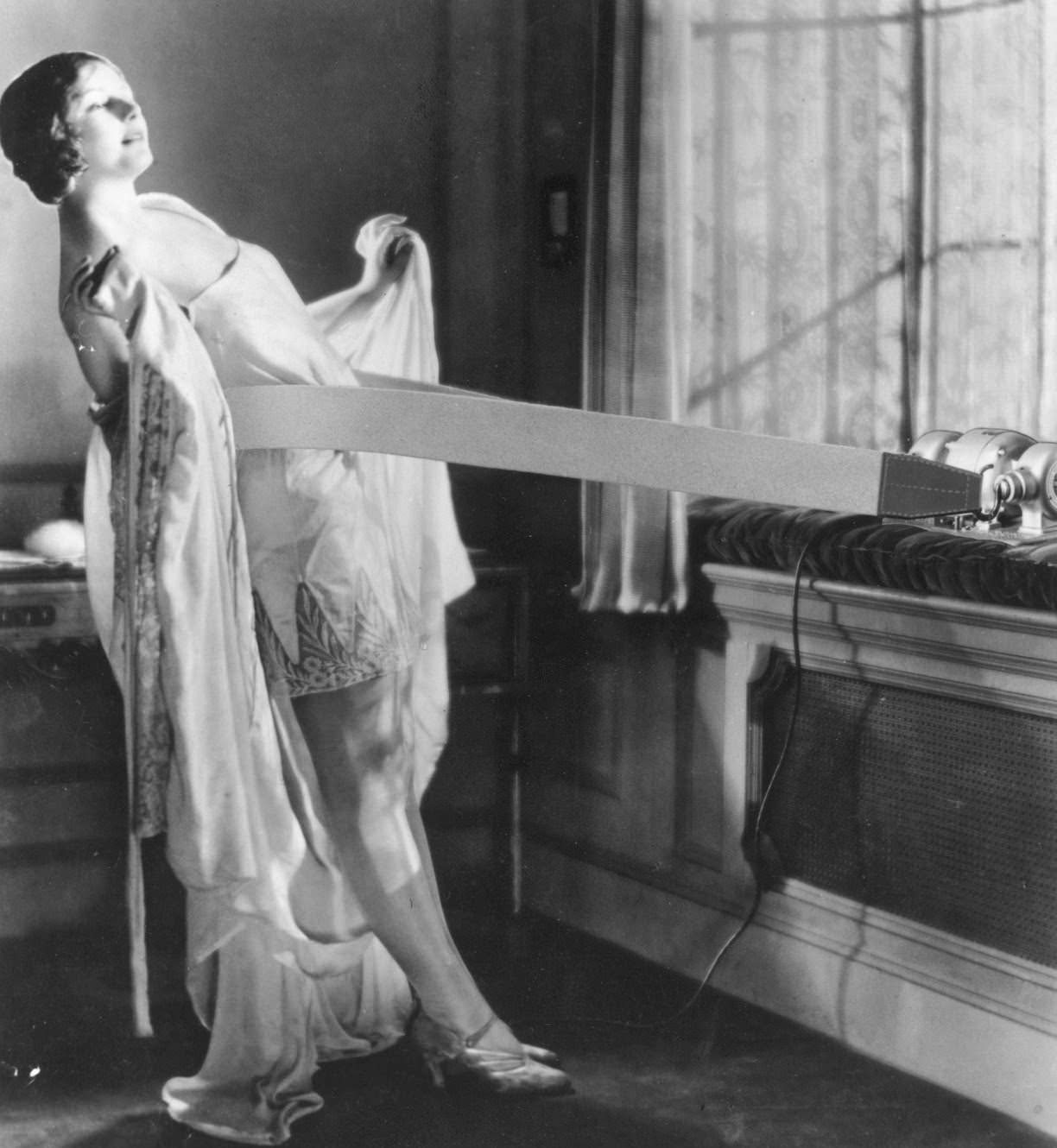
Variations on the vibrating machine appeared throughout the late 1920s, each promising the same passive path to a slimmer figure. The appeal was clear in an era when the right body shape carried real social weight.