in

Passover in Postwar Berlin: Family Seders and Synagogue Ceremonies from 1946 to the 1950s

Passover commemorates the liberation of the Israelites from slavery in Egypt over 3,300 years ago, as told in the Book of Exodus. In Berlin, from 1946 into the 1950s, Jewish survivors reclaimed this holiday with deliberate care. Families scrubbed their homes to remove chametz — leavened bread forbidden during the holiday — and set their tables with white cloths, candles, and ceremonial Seder plates.
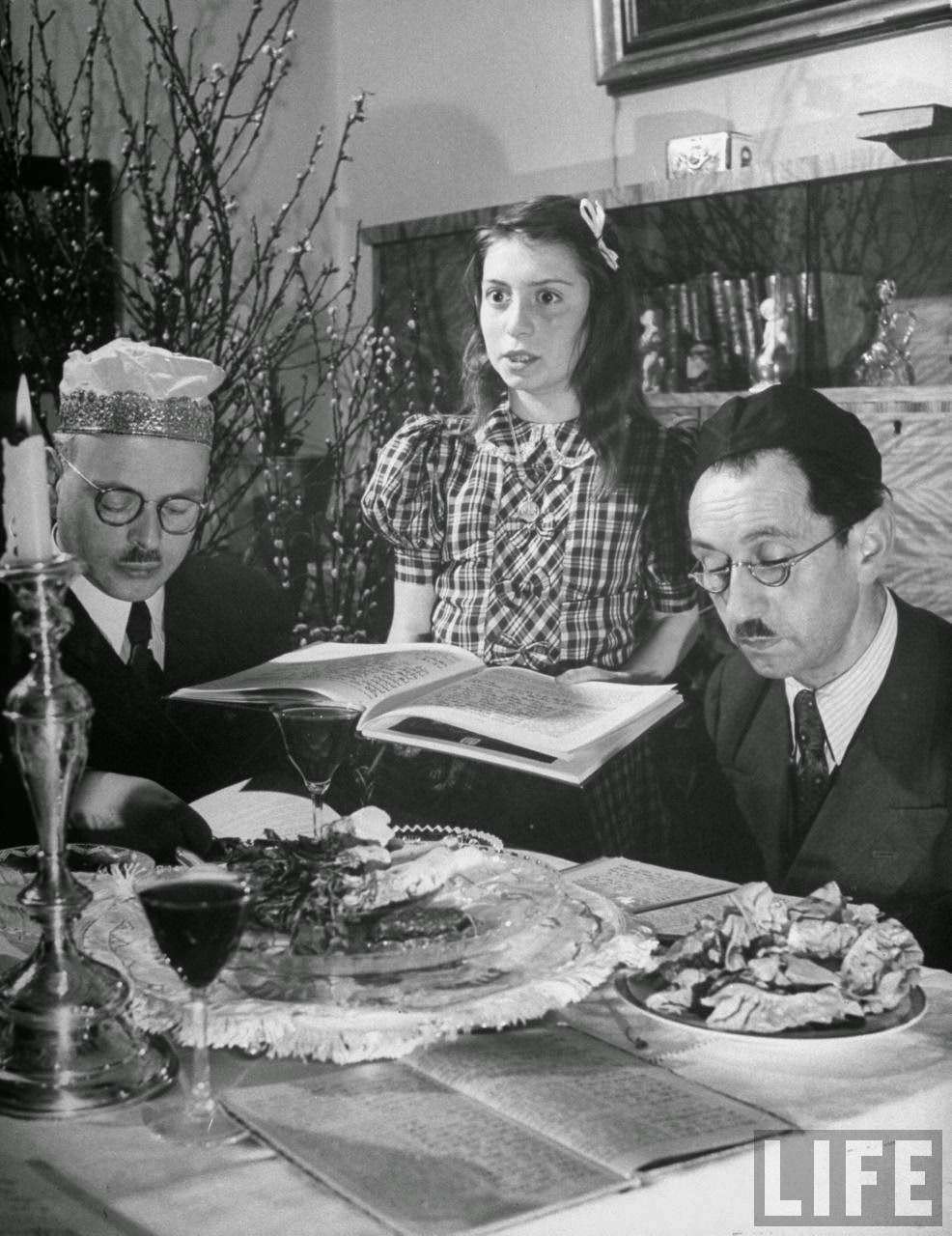
A child asking her elders ritual question during the Passover seder.

The Seder, held on the first nights of Passover, followed a precise order drawn from the Haggadah. Families recited prayers, sang traditional songs, and retold the Exodus story together. The Seder plate held matzah, bitter herbs, charoset, and a roasted lamb bone — each item carrying specific meaning. Children held a central role, reciting the Four Questions that open the evening’s telling.
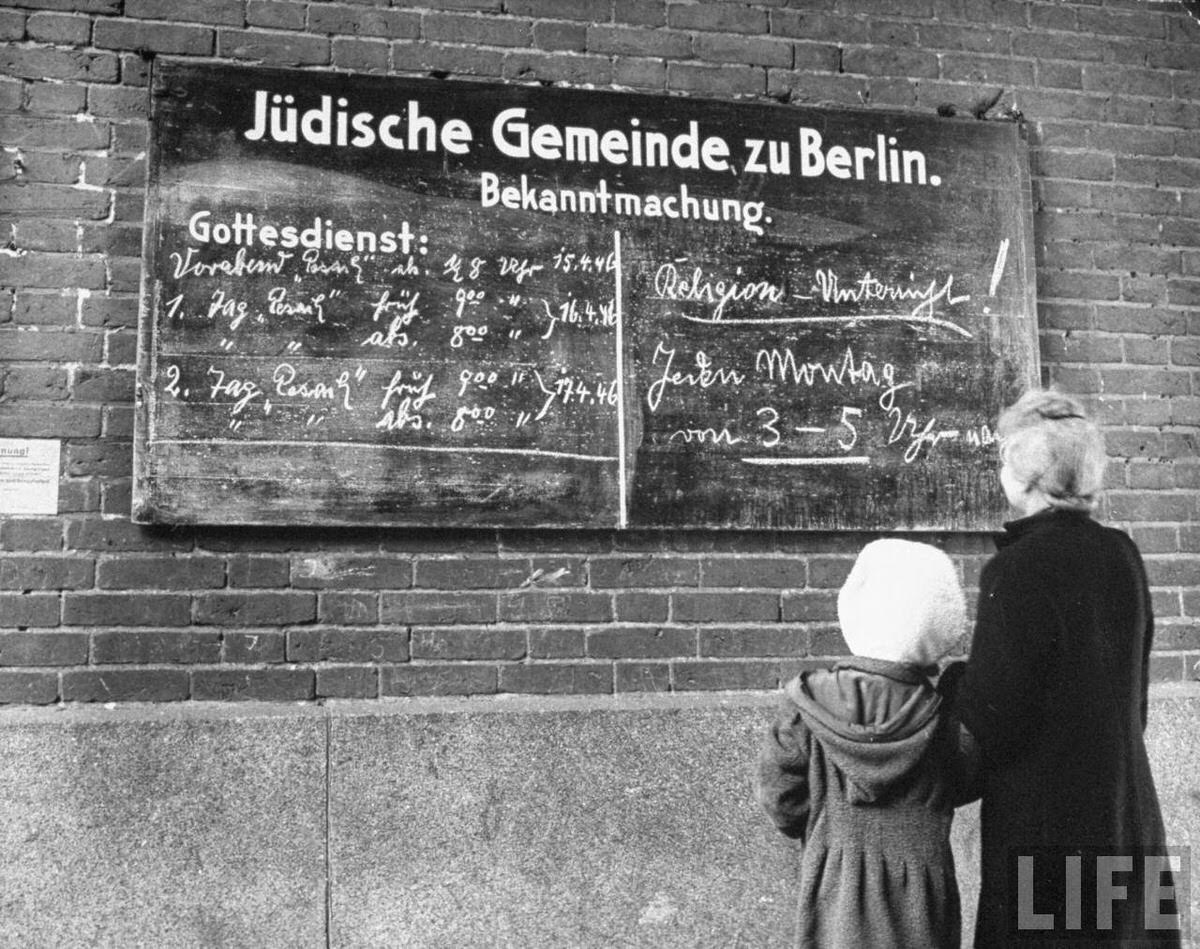
A woman and her child reading the bulletin board outside a synagouge during Passover.

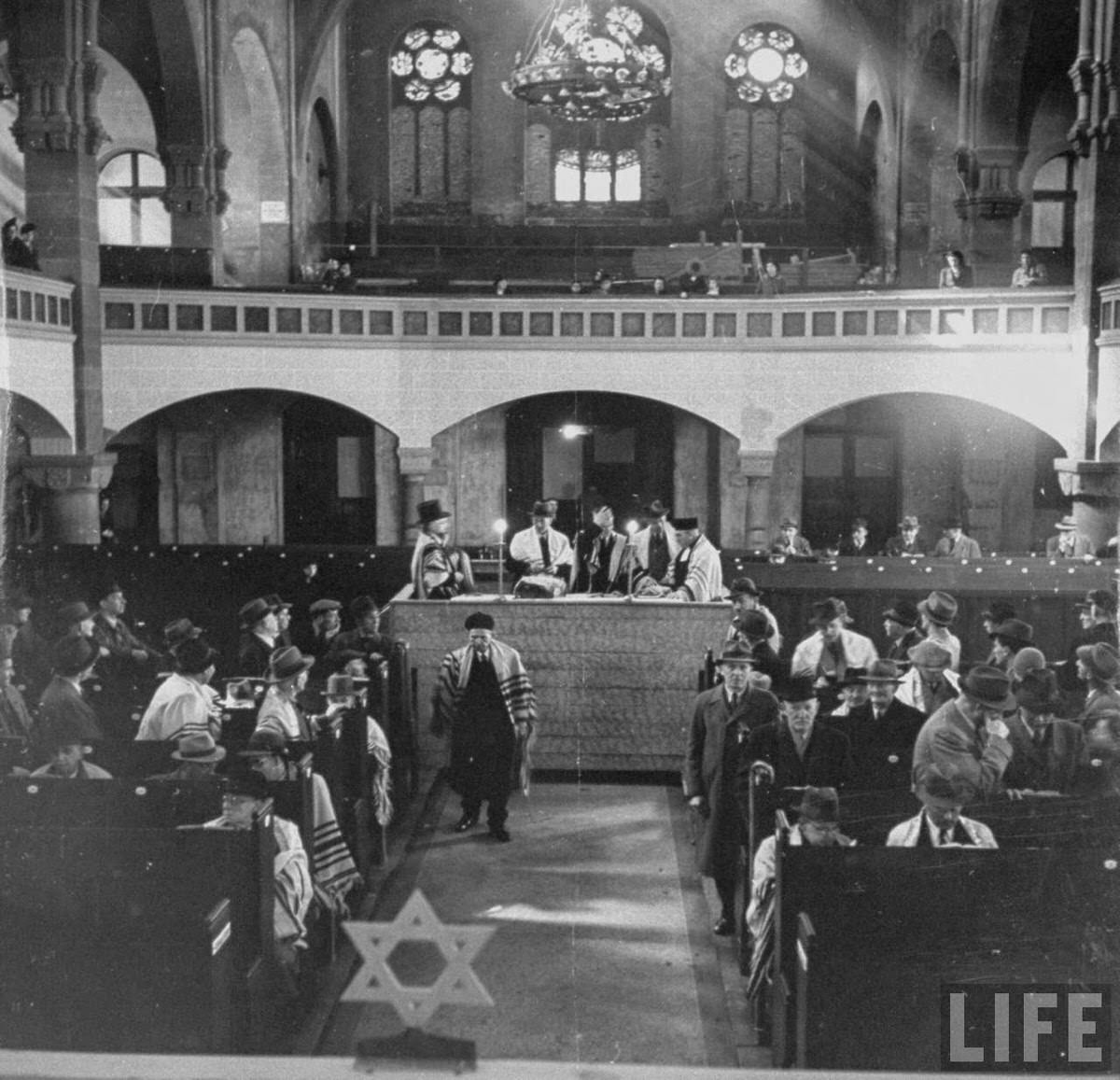
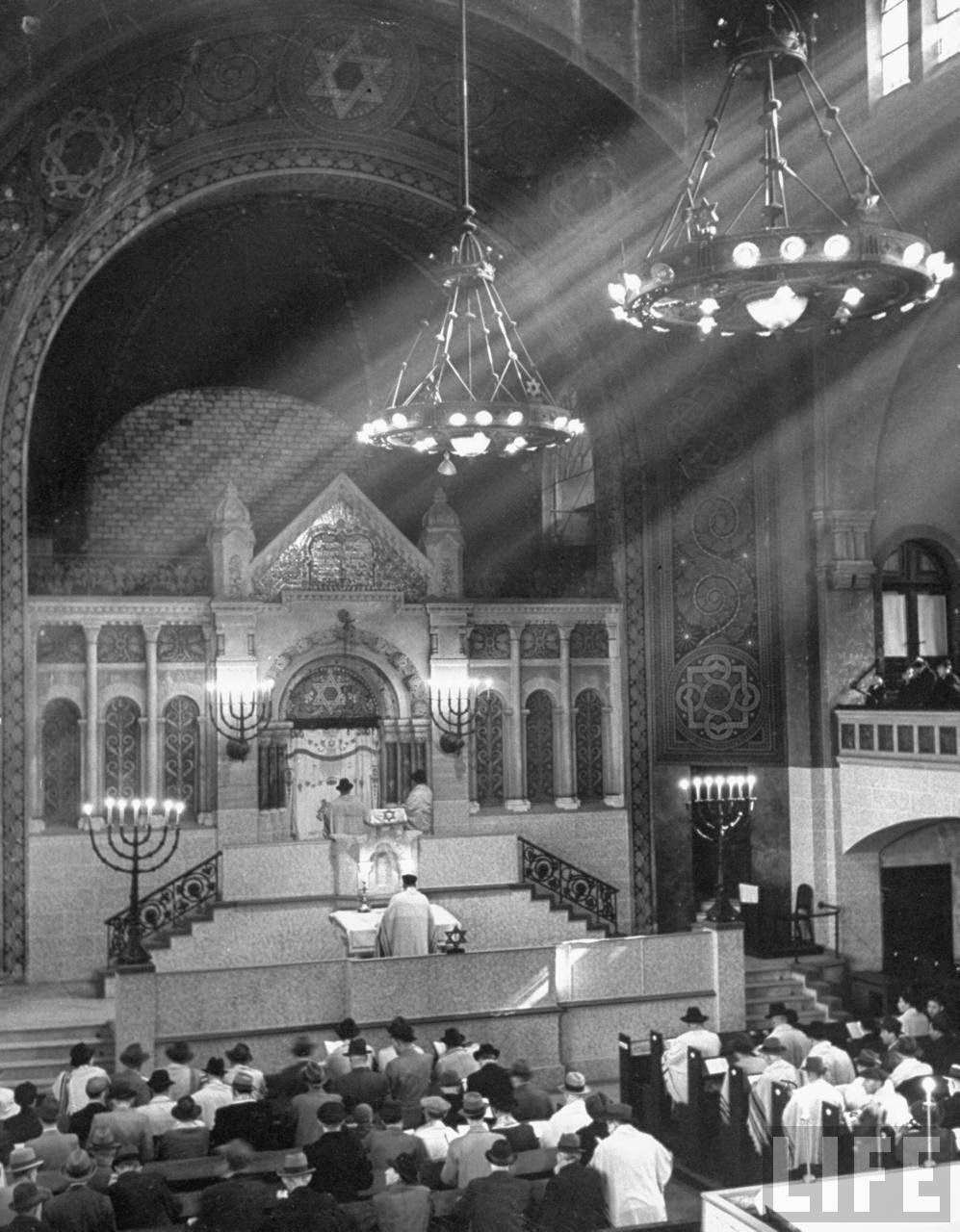
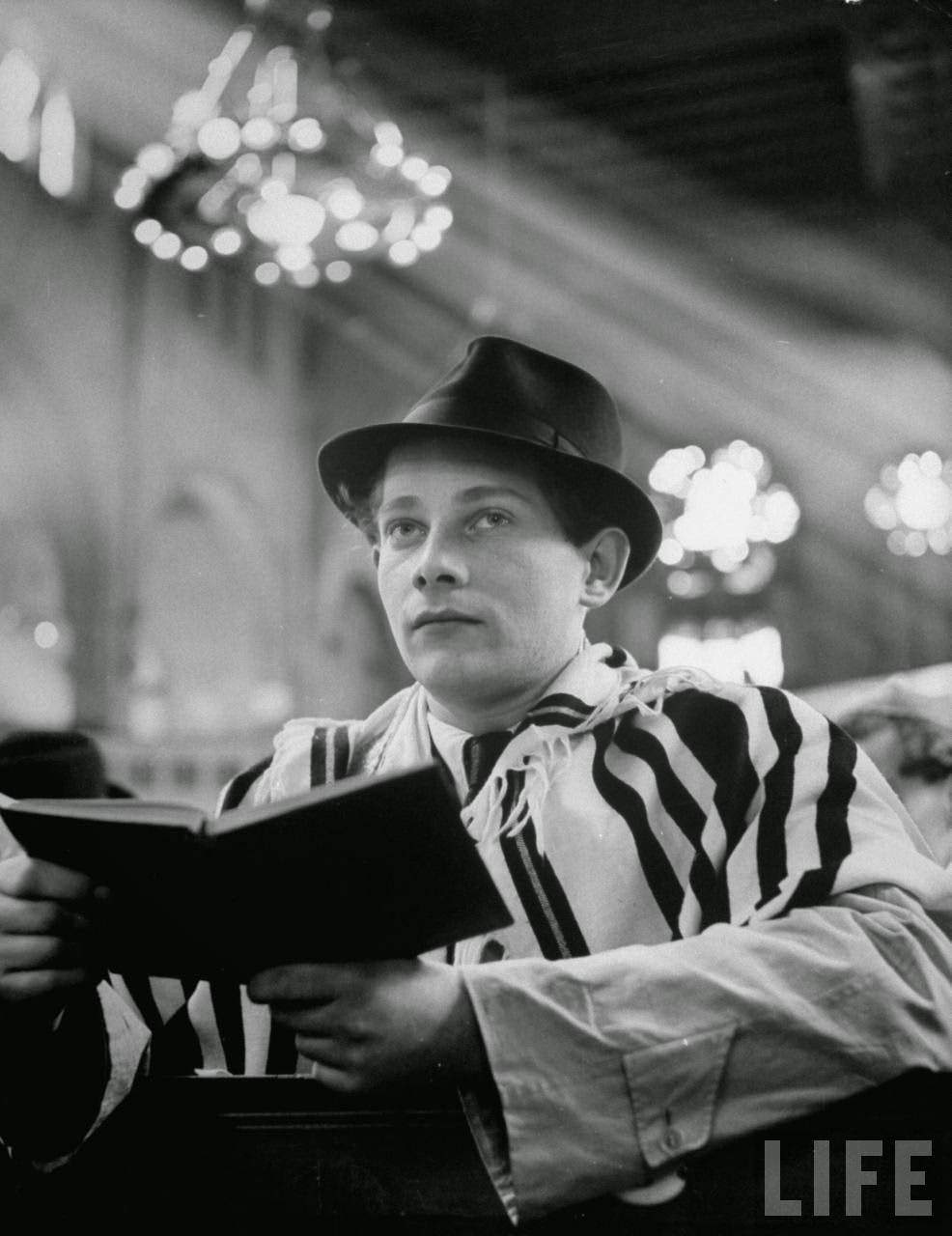
Beyond the home, synagogues across Berlin hosted Passover services that drew formal, reverent crowds. Men wore kippot or hats, and women covered their heads according to custom. Congregants dressed carefully, treating the occasion with the gravity it deserved.
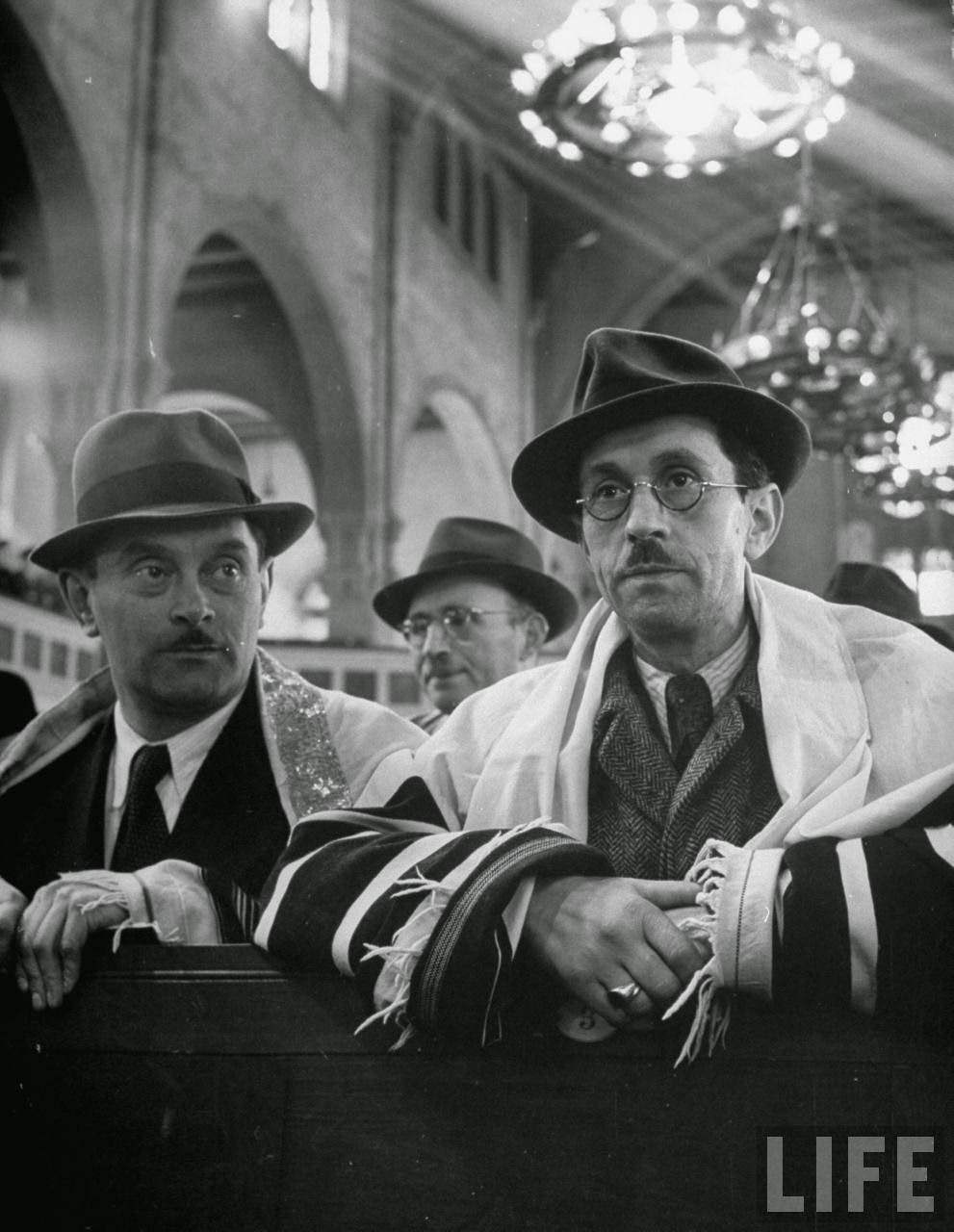
Jewish men attending the synagogue during Passover.
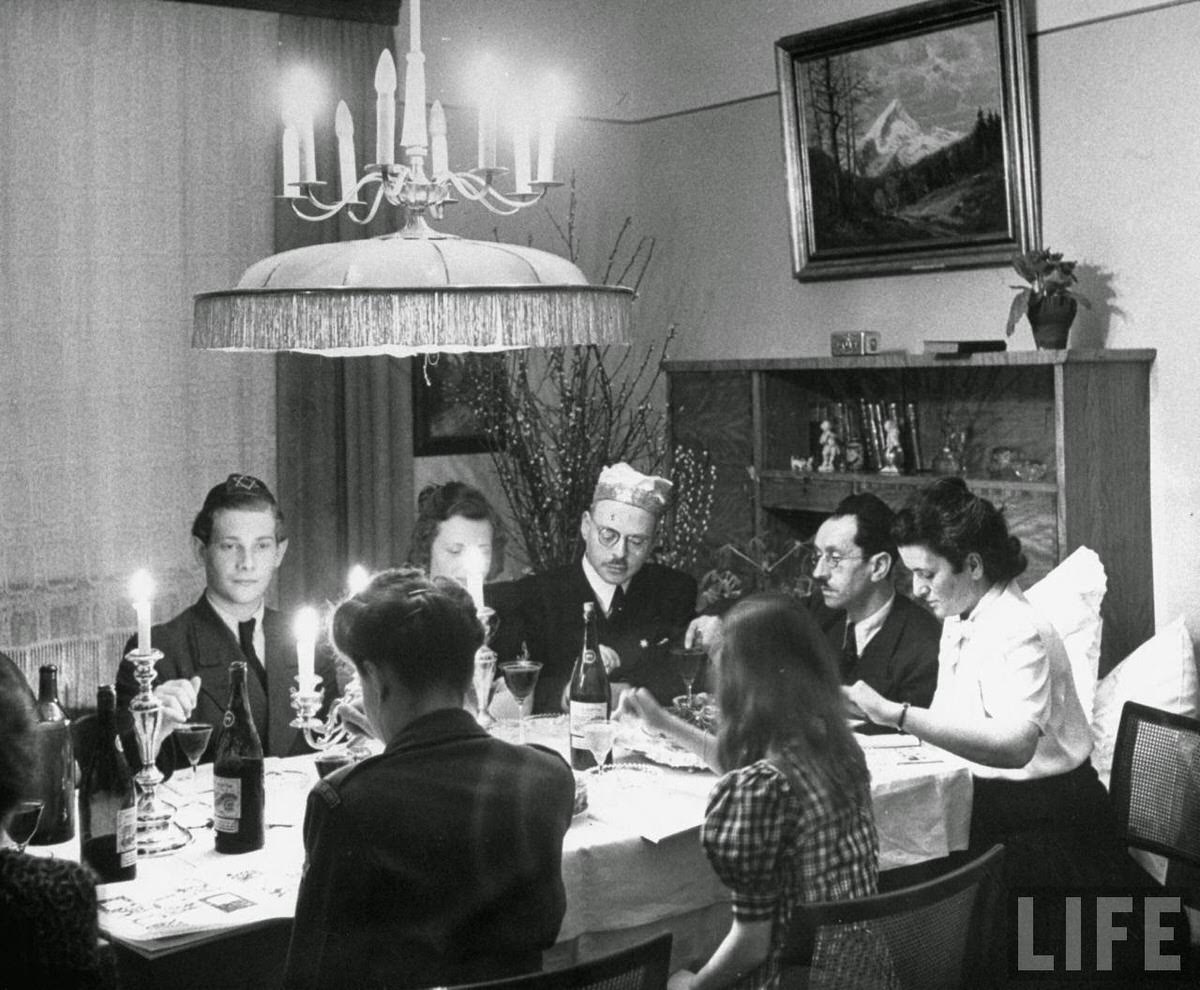
A family and their guests having Passover Eve seder.

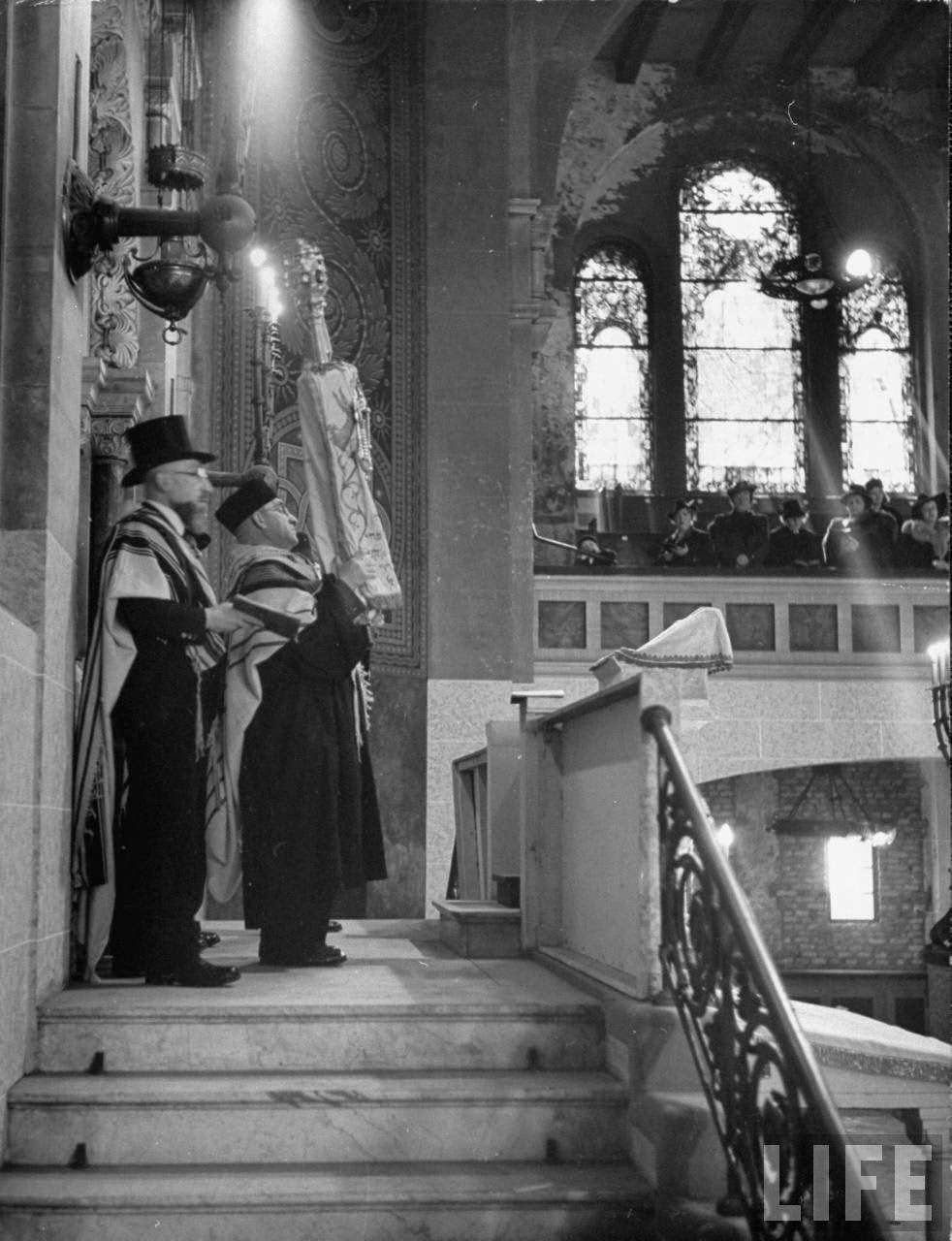
Torah readings, communal prayers, and songs filled the synagogue services. These gatherings reinforced a shared identity among survivors who had endured persecution just years before. The Torah scrolls were lifted and presented to the congregation as part of the formal rites.
Torah scrolls being read to the congregation in the synagogue during Passover.

Among those who participated, some bore the visible marks of the Nazi camps. Chief Cantor Gunter Ruschin, a concentration camp survivor whose tattoo remained on his arm, led worship and held the Torah scrolls before his congregation — a stark, direct connection between ancient stories of liberation and recent lived suffering.
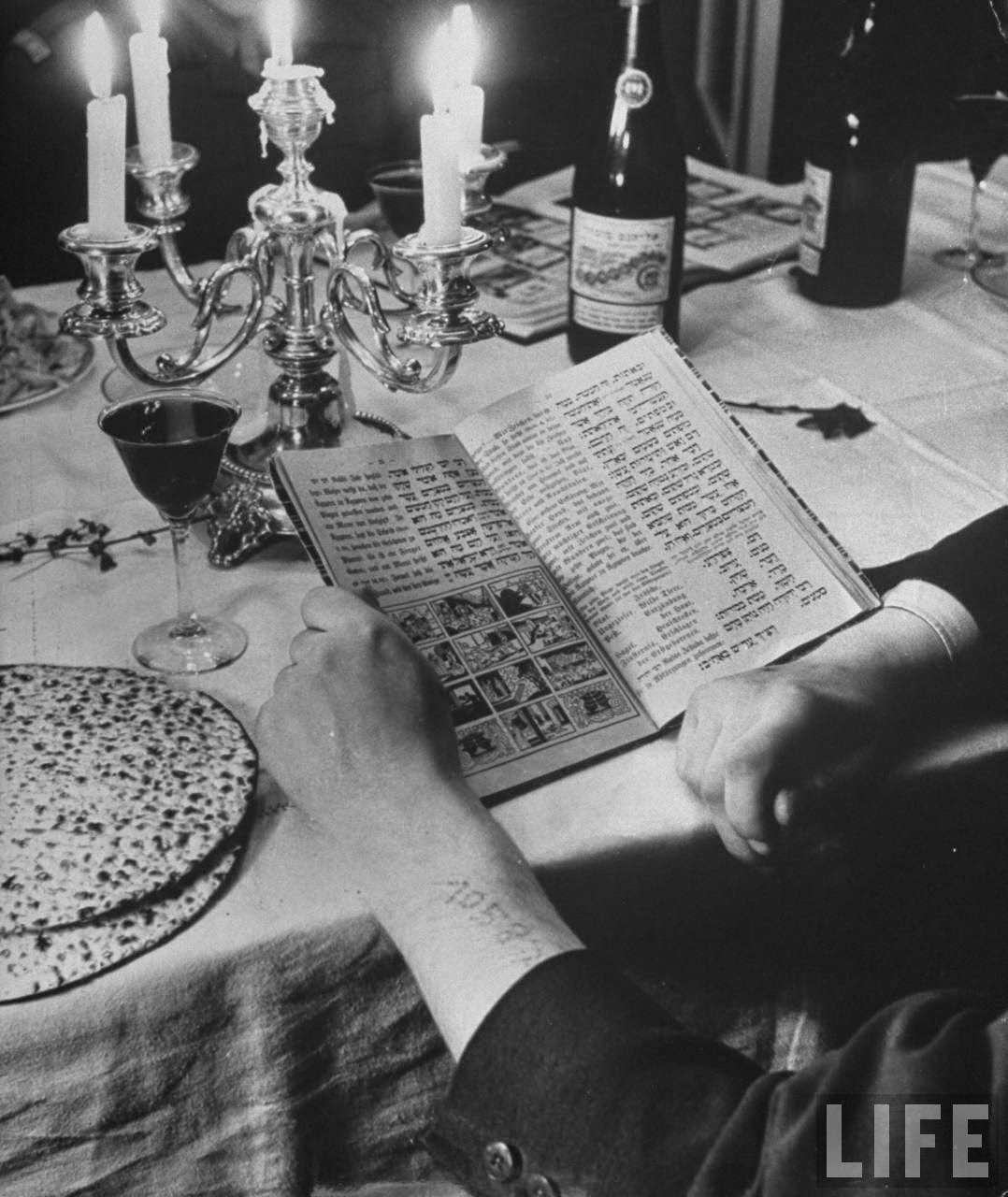
Arm of Gunter Ruschin, with visible concentration camp tattoo, holding book w. question and answers of the exodus of Jews from Egypt during Passover.
Chief Cantor Ruschin holding Torah scrolls up to the worshipers at the synagogue during Passover.

Services brought together the wider Berlin Jewish community under one roof. Congregants sat together, prayed together, and publicly affirmed their continued presence in the city.
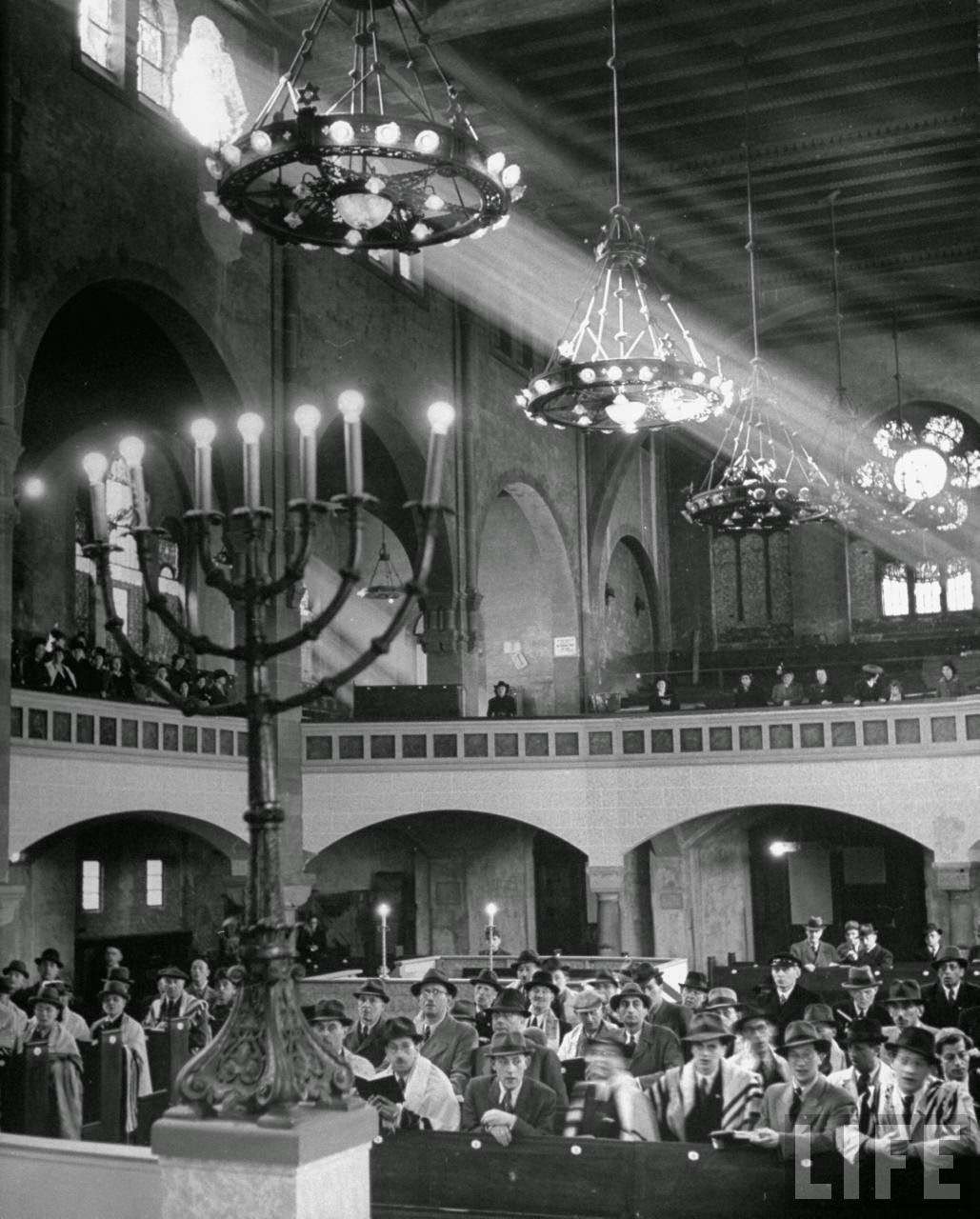
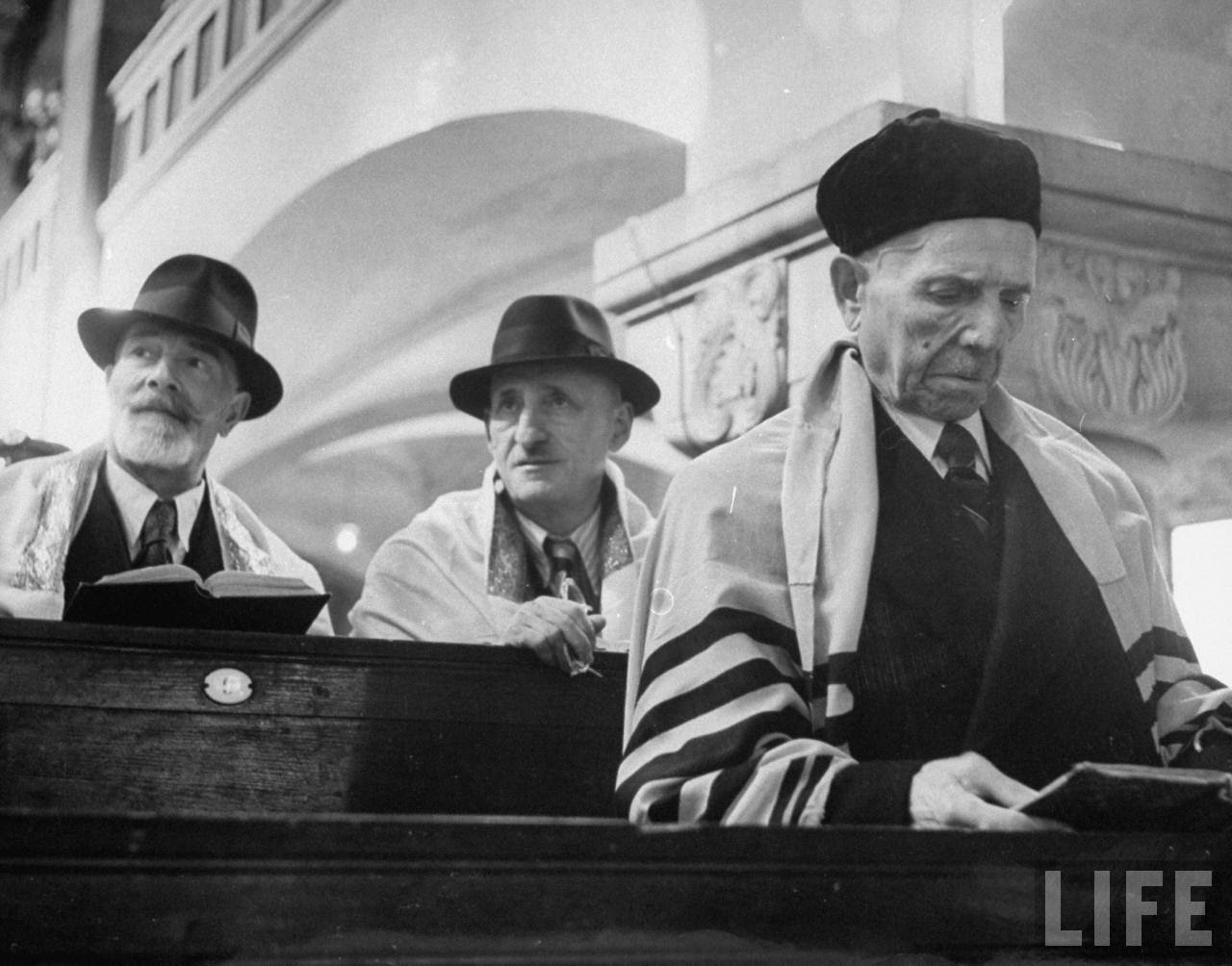
Jewish congregation observing synagouge services during Passover.
German Jews who survived concentration camps worshipping at the synagogue during Passover.

Community leaders played a visible part in these observances. Representatives of Berlin’s Jewish community stood at the front of synagogue proceedings, maintaining the organizational and spiritual structure that held the community together.
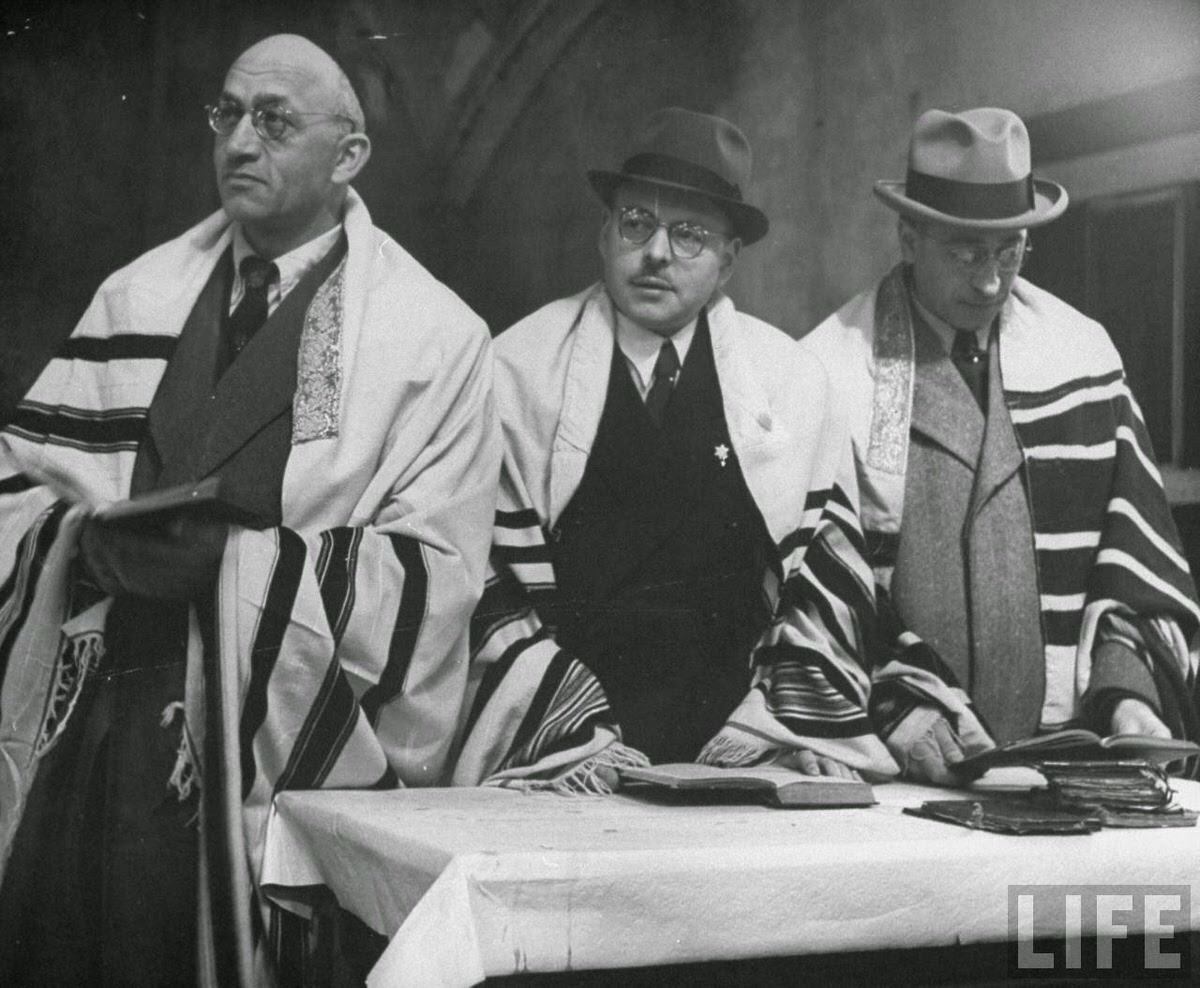
Three leading representatives of the Berlin Jewish community during Passover at the synagogue.
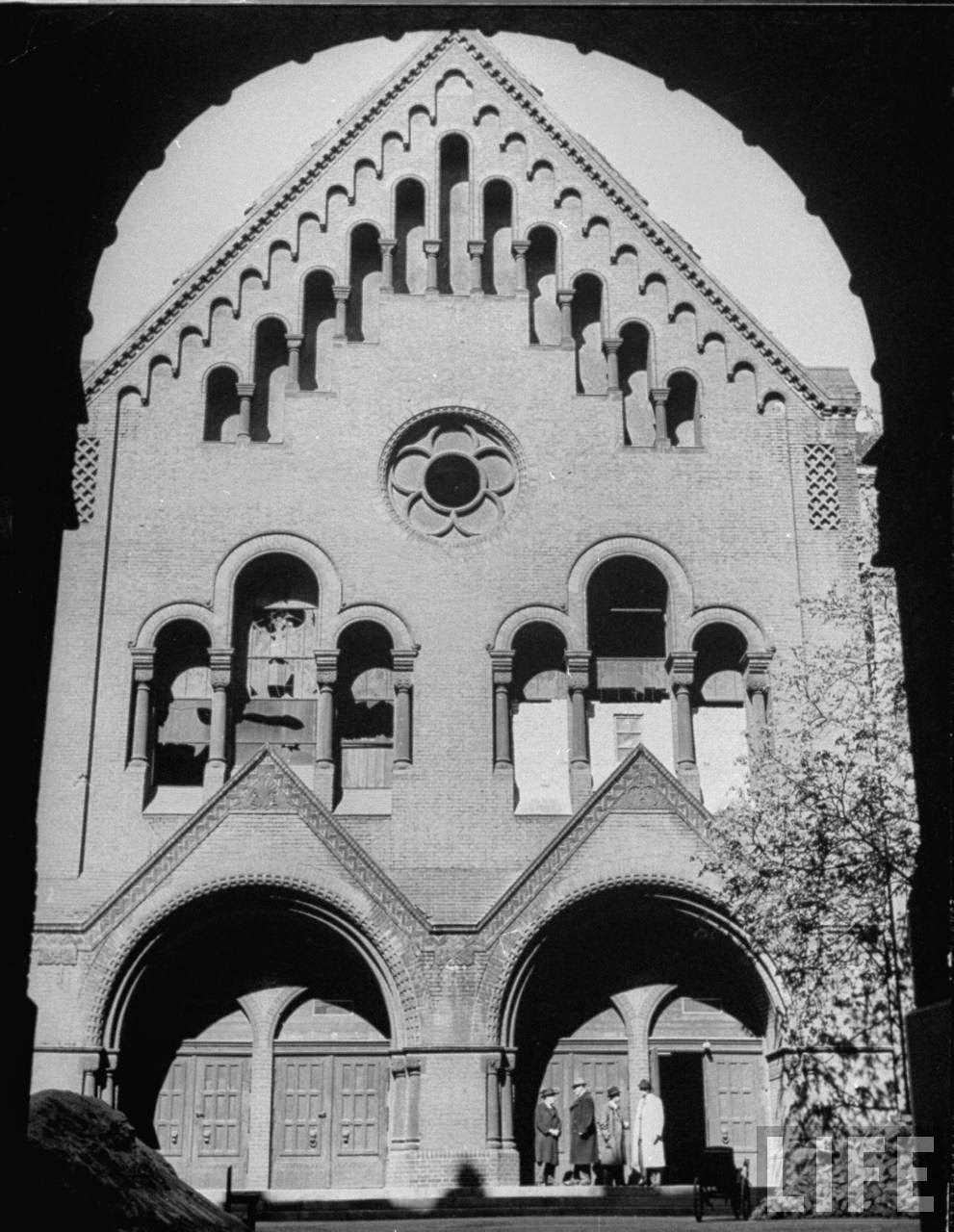
Exterior of a Berlin synagogue during Passover.

Back at the Seder table, specific foods carried weight beyond their symbolic meaning. Bitter herbs were tasted to recall the hardships of Egyptian slavery — a ritual that, for survivors, resonated with the suffering of the recent past as much as the ancient one.
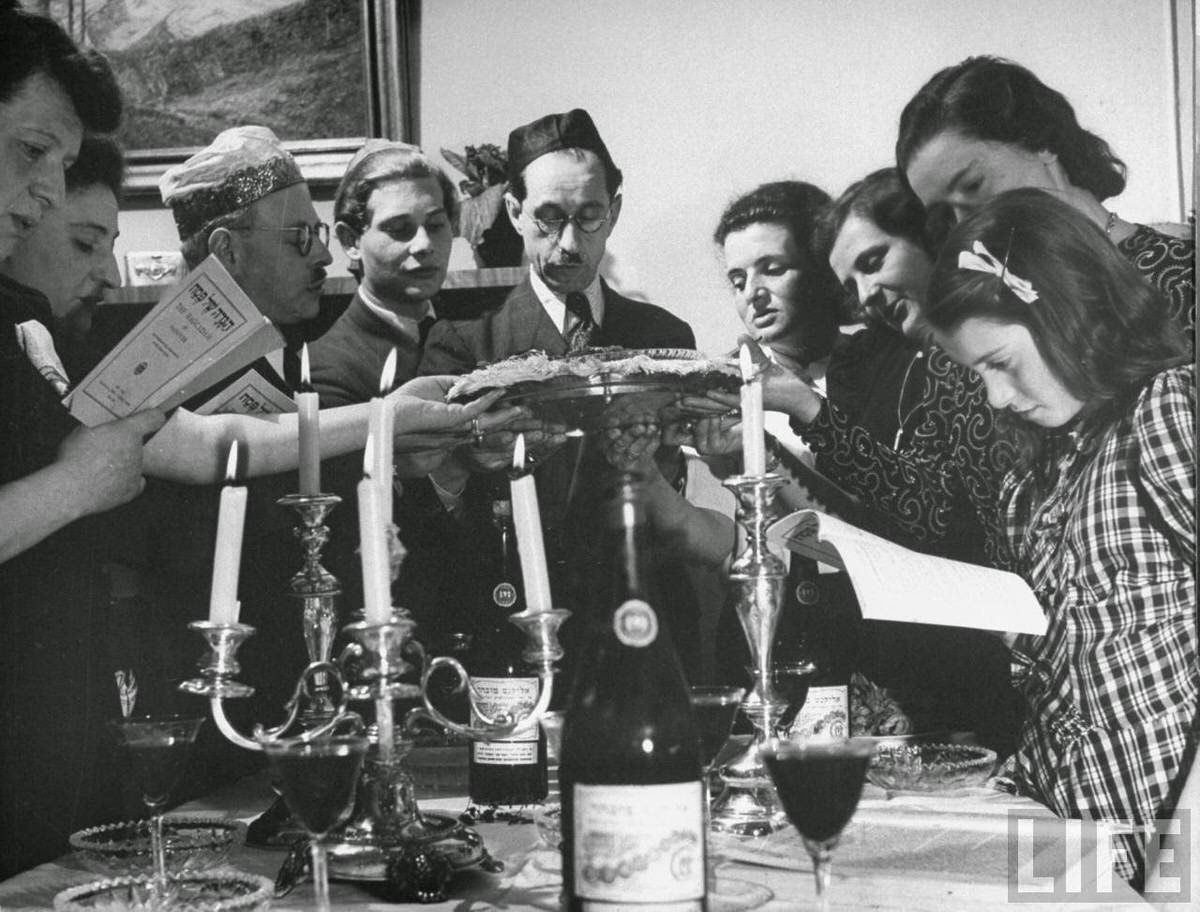
Tasting bitter herbs, symbolizing hardships of ancient Jews in Egyptian slavery, during the Passover seder.
Germans Jews praying in their synagogue during Passover.

Seder tables brought together family and guests, filling homes with the full structure of the ritual meal. Every seat held someone who had chosen to observe, to remember, and to pass the traditions forward to younger generations.
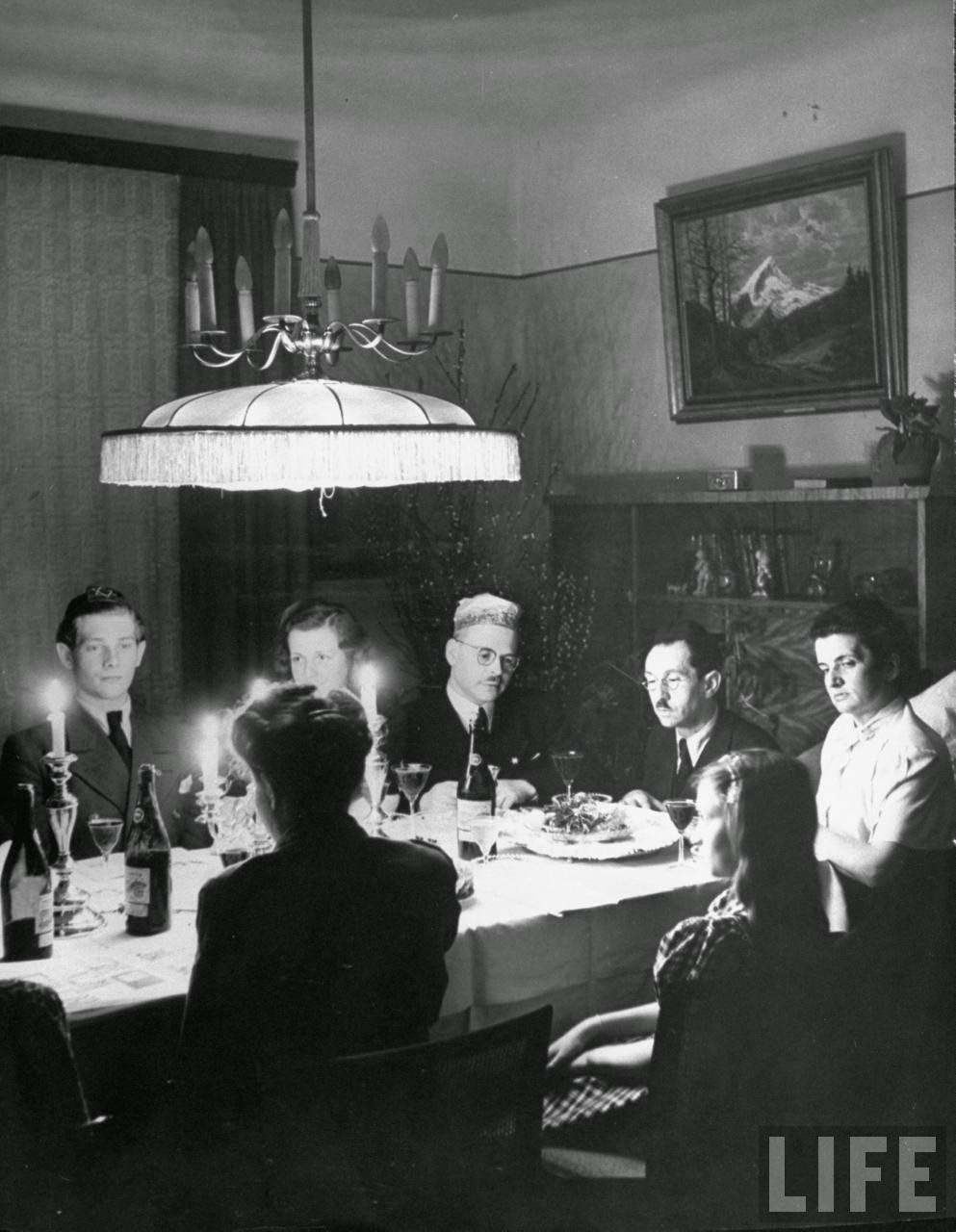
A family and their guests having Passover Eve seder.
Gunter Ruschin praying at the synagogue during Passover.
Enjoyed this post? Get new ones in your inbox.
Avatar of Kevin Clark

Written by Kevin Clark

Kevin Clark is a historian and writer who is passionate about sharing the stories and significance behind historical photos. He loves to explore hidden histories and cultural contexts behind the images, providing a unique insight into the past.

Leave a Reply

Your email address will not be published. Required fields are marked *