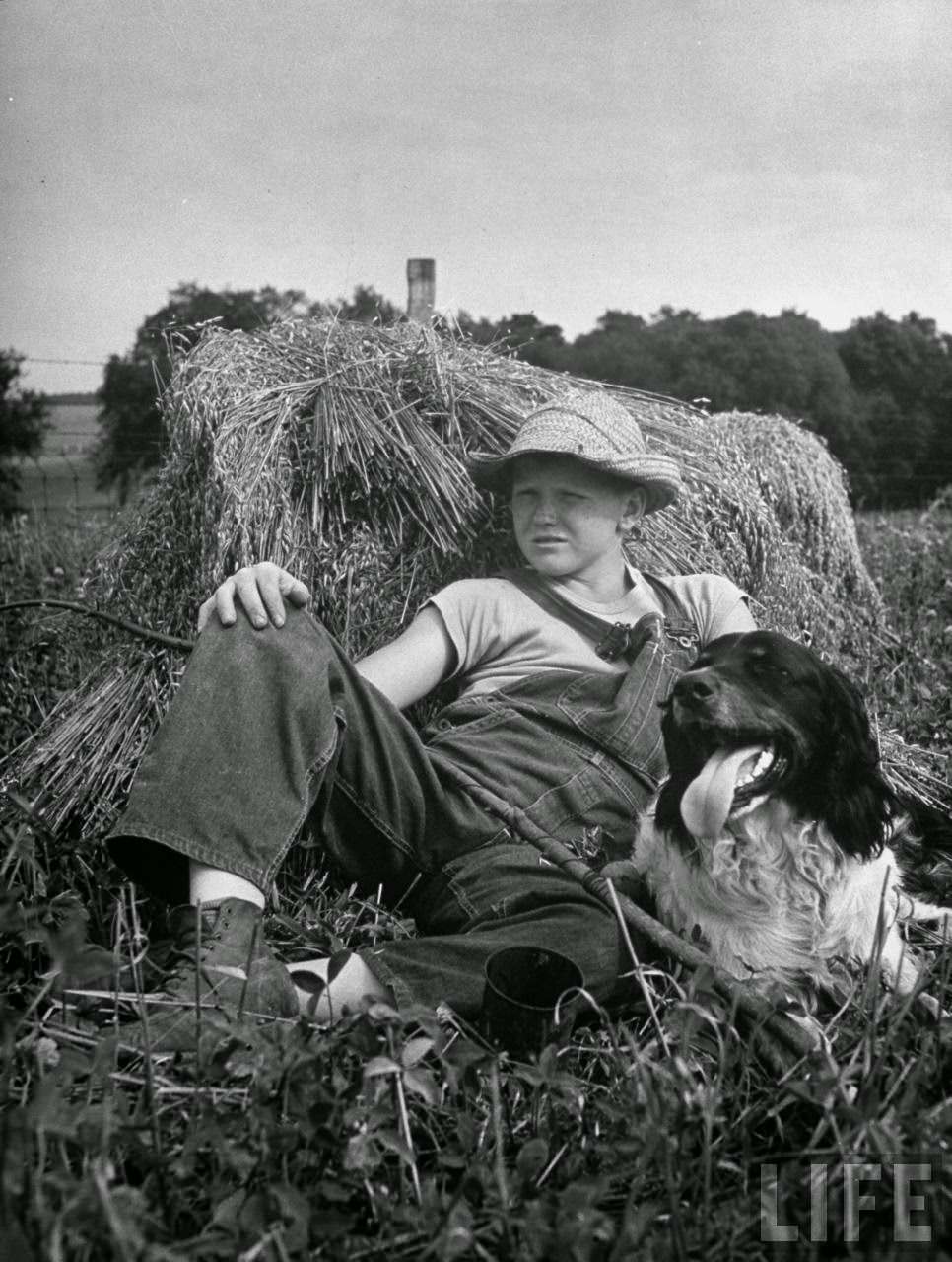
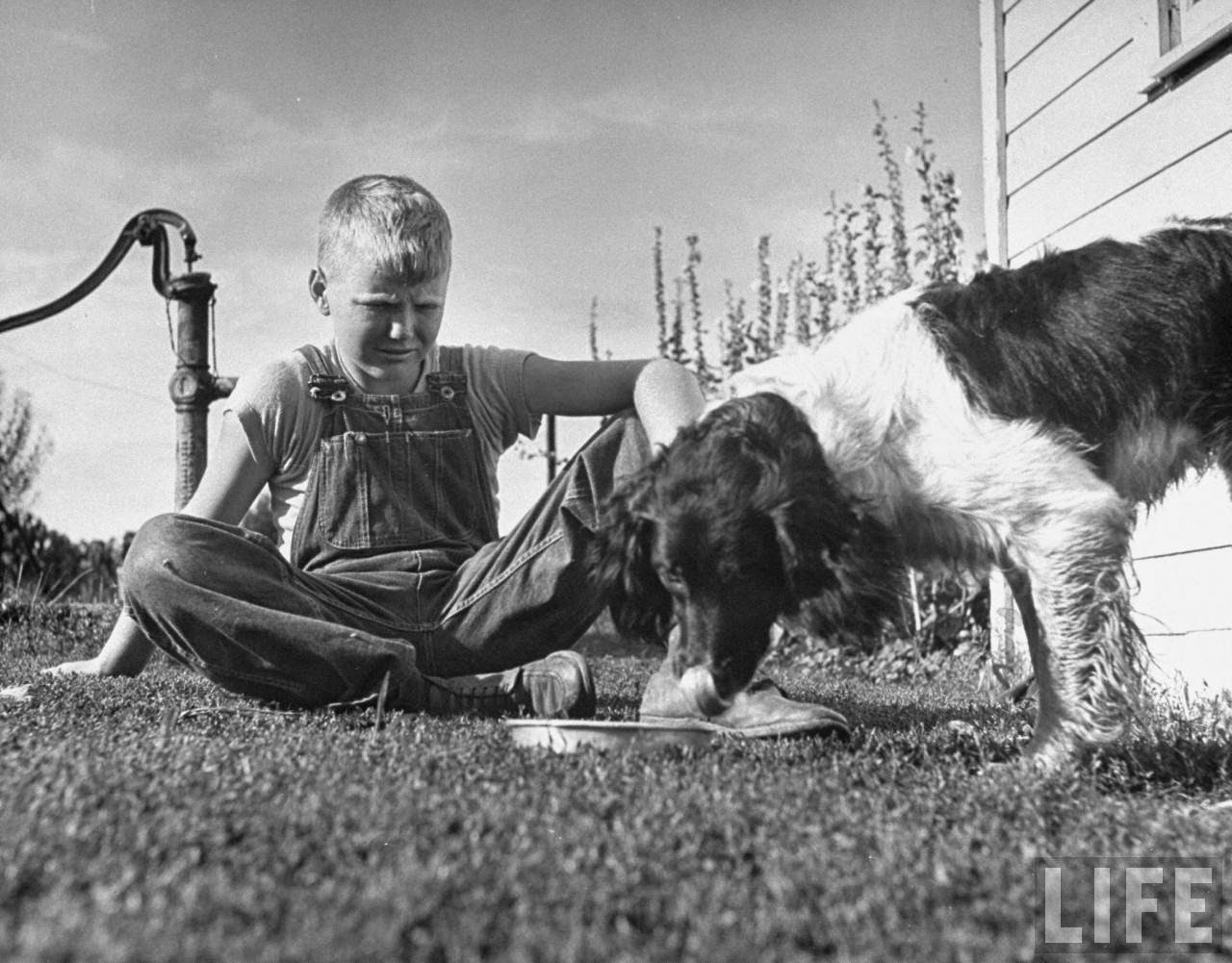
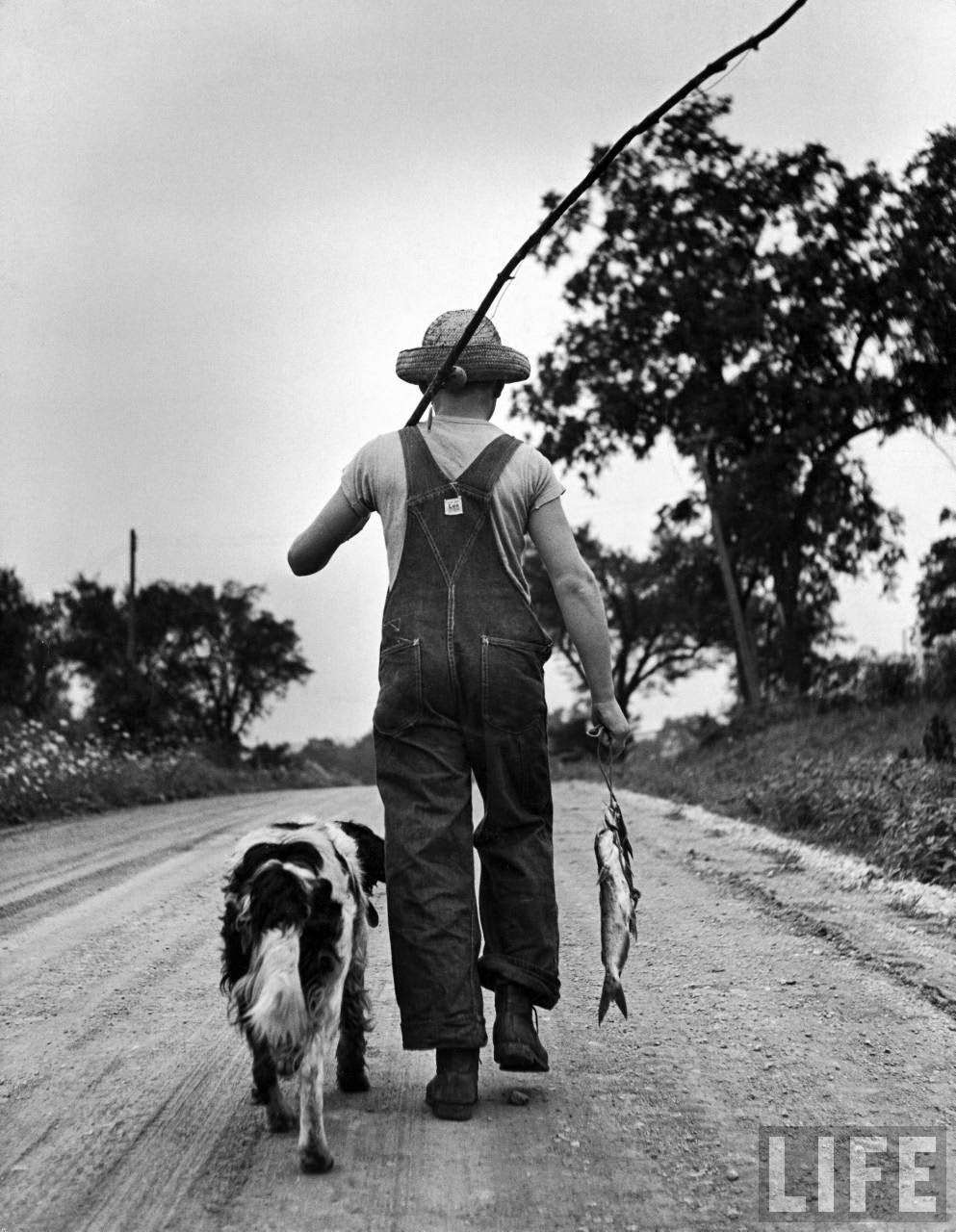
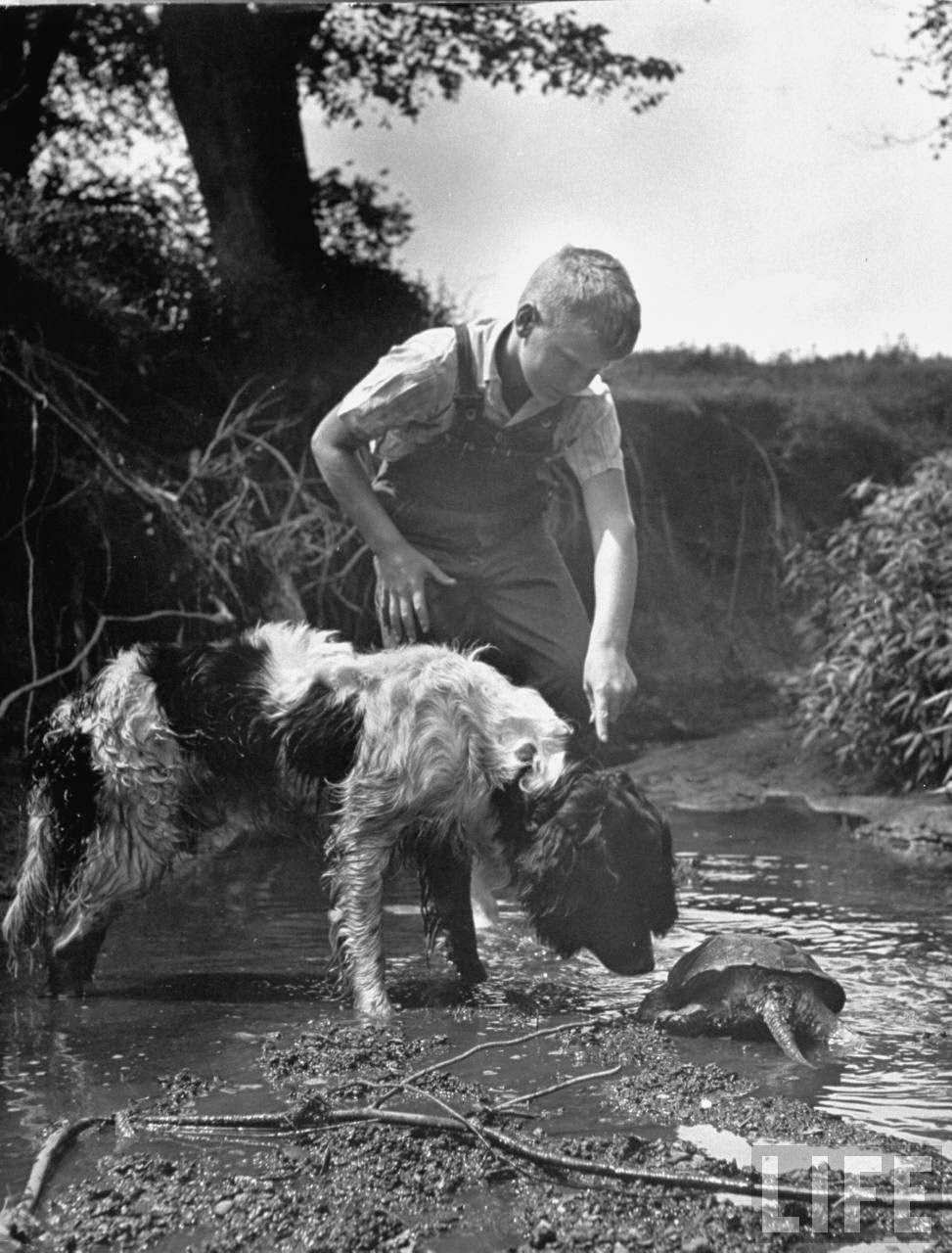
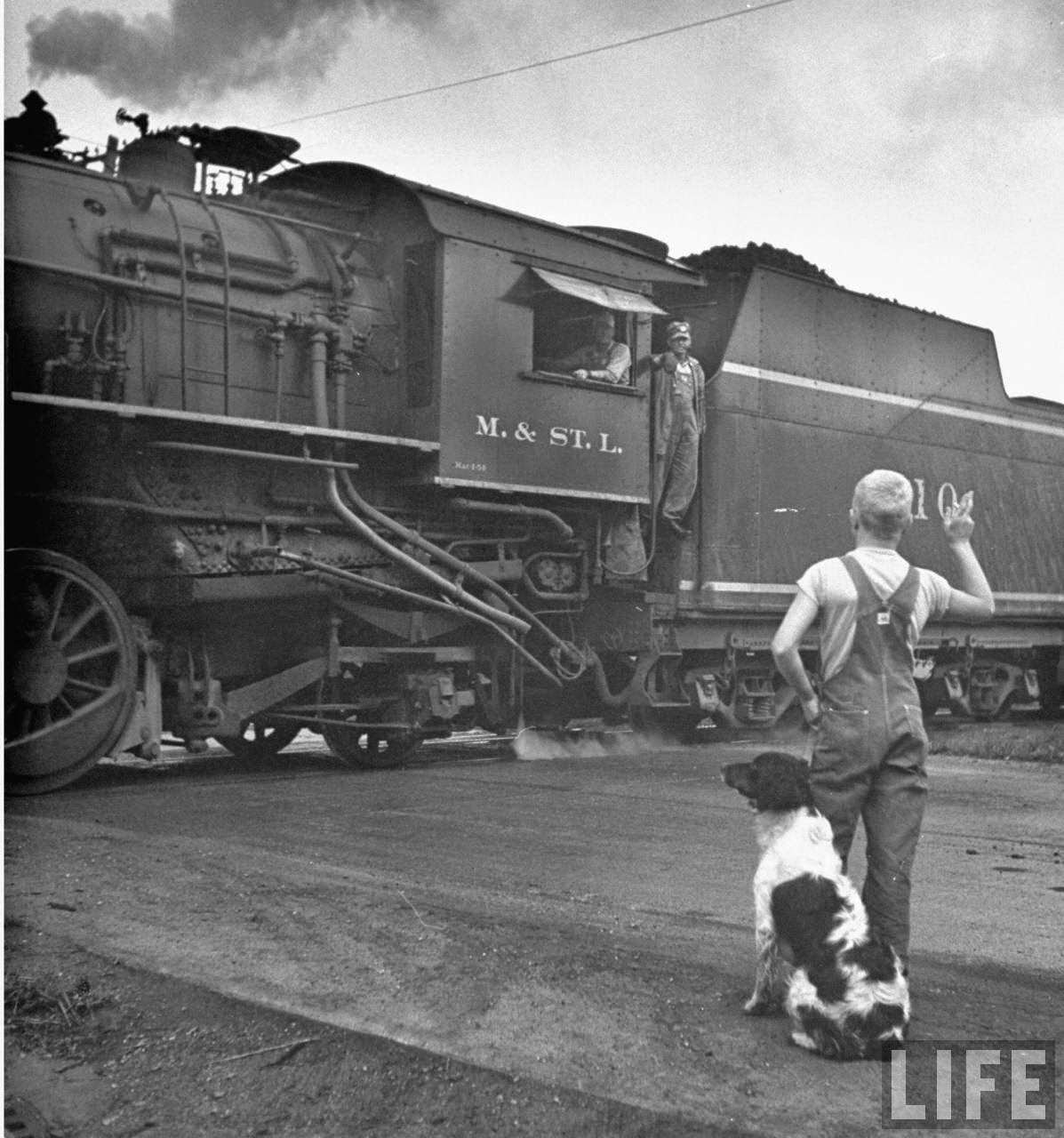
In the late summer of 1945, LIFE magazine photographer Myron Davis traveled to rural Iowa to document something quietly extraordinary — the everyday friendship between a 12-year-old boy named Larry and his 18-month-old dog, Dunk. The resulting photo series ran as a full feature, showing the pair fishing, doing chores, and roaming the fields and dirt roads of postwar Iowa.
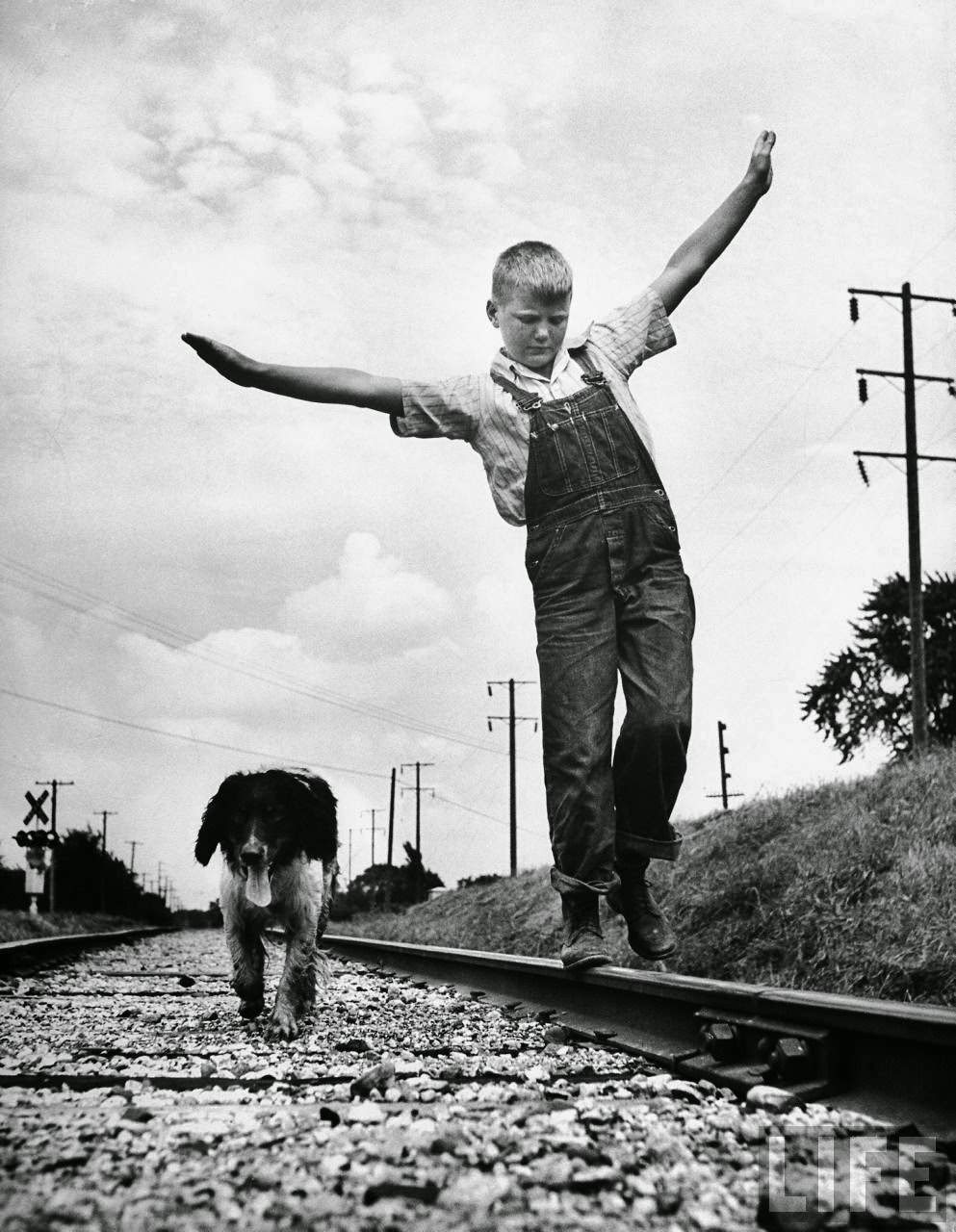
Their days had a natural rhythm. Larry fed Dunk, brushed his coat, and kept tabs on his health. Dunk, in turn, followed Larry everywhere — responding to commands, nudging his hand for attention, and matching his energy at every turn. Small habits, repeated daily, built a bond that Davis recognized as worth preserving on film.
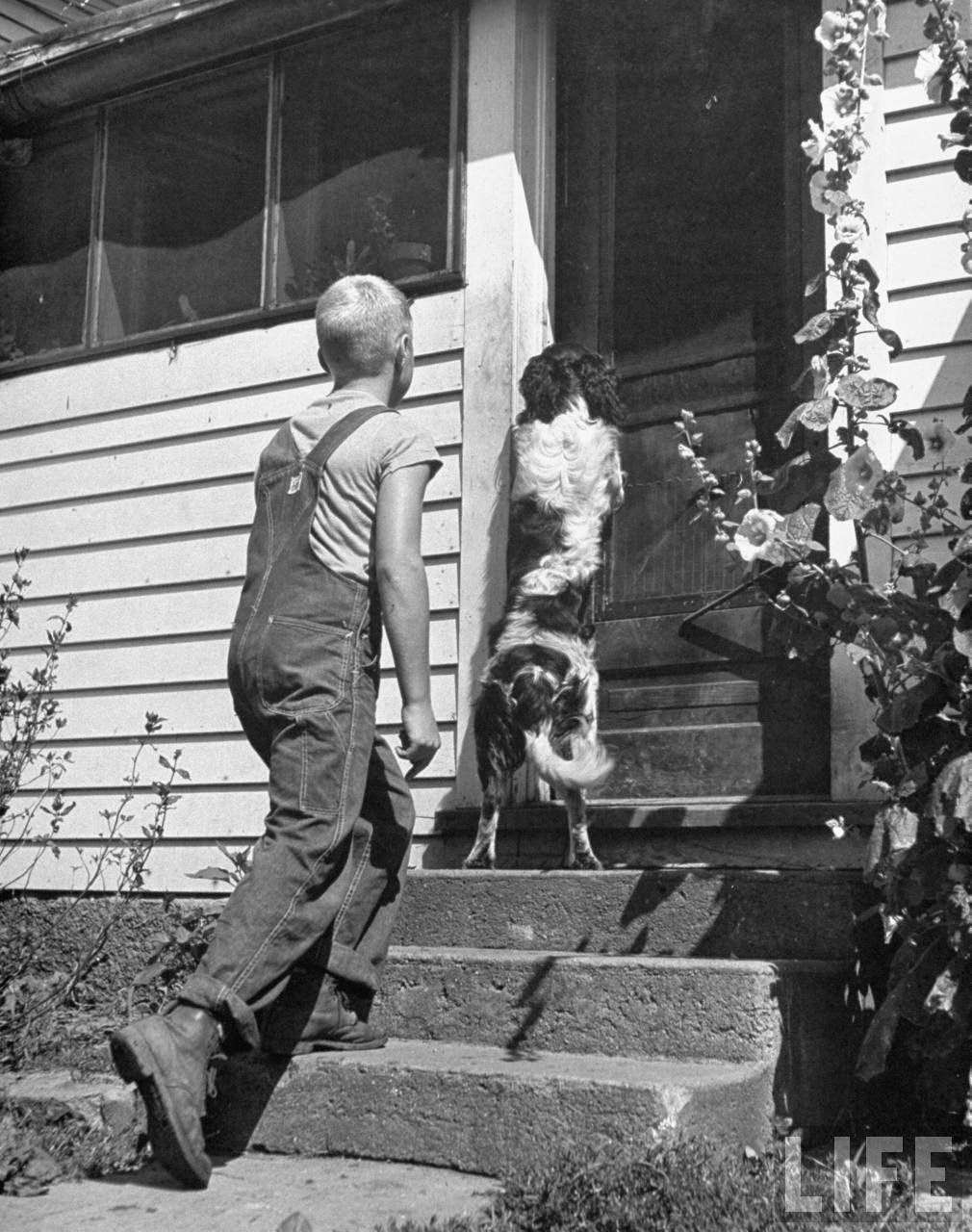
Dunk was no passive companion. He had already picked up his own tricks at just 18 months old — including learning to open a door with his nose.
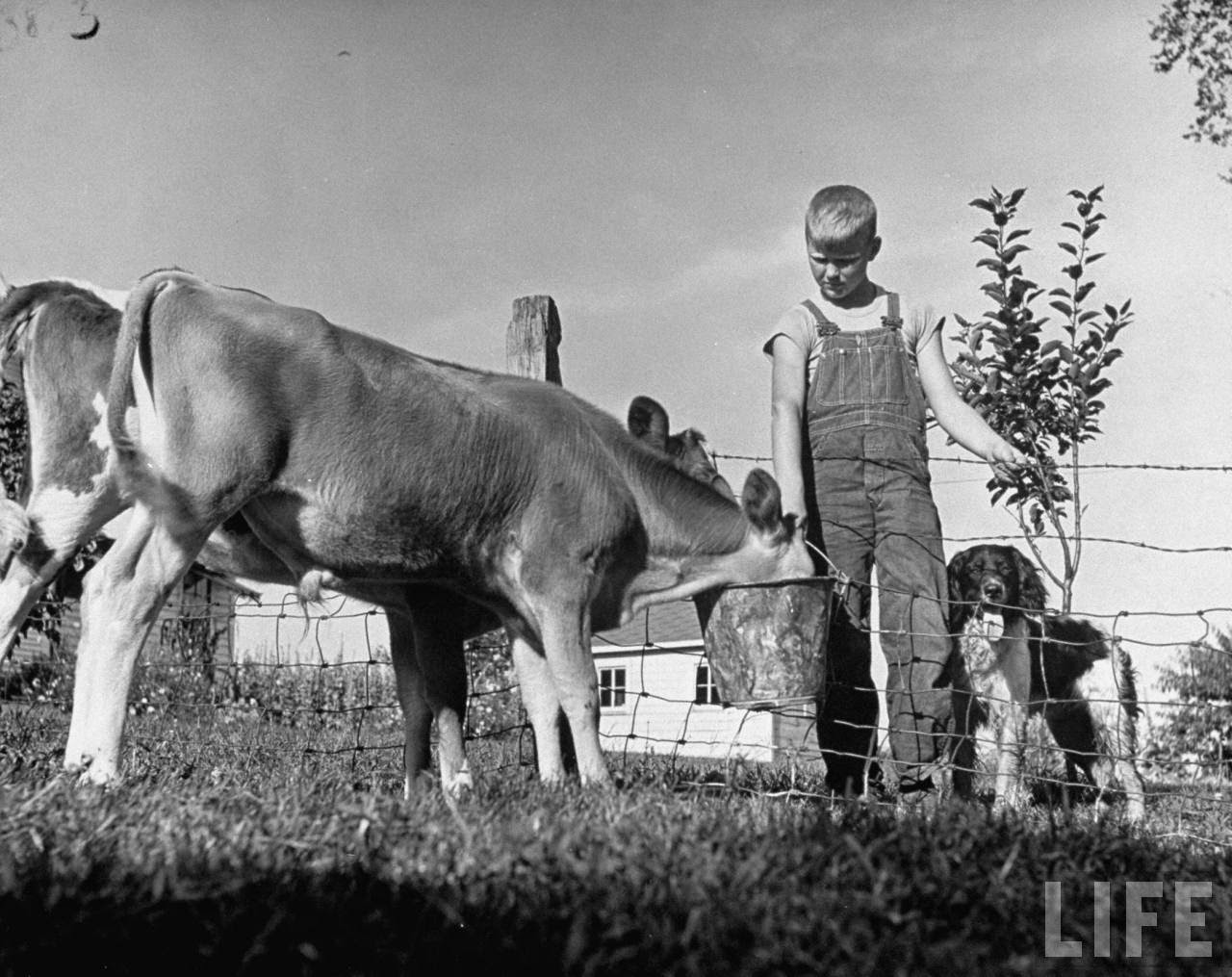
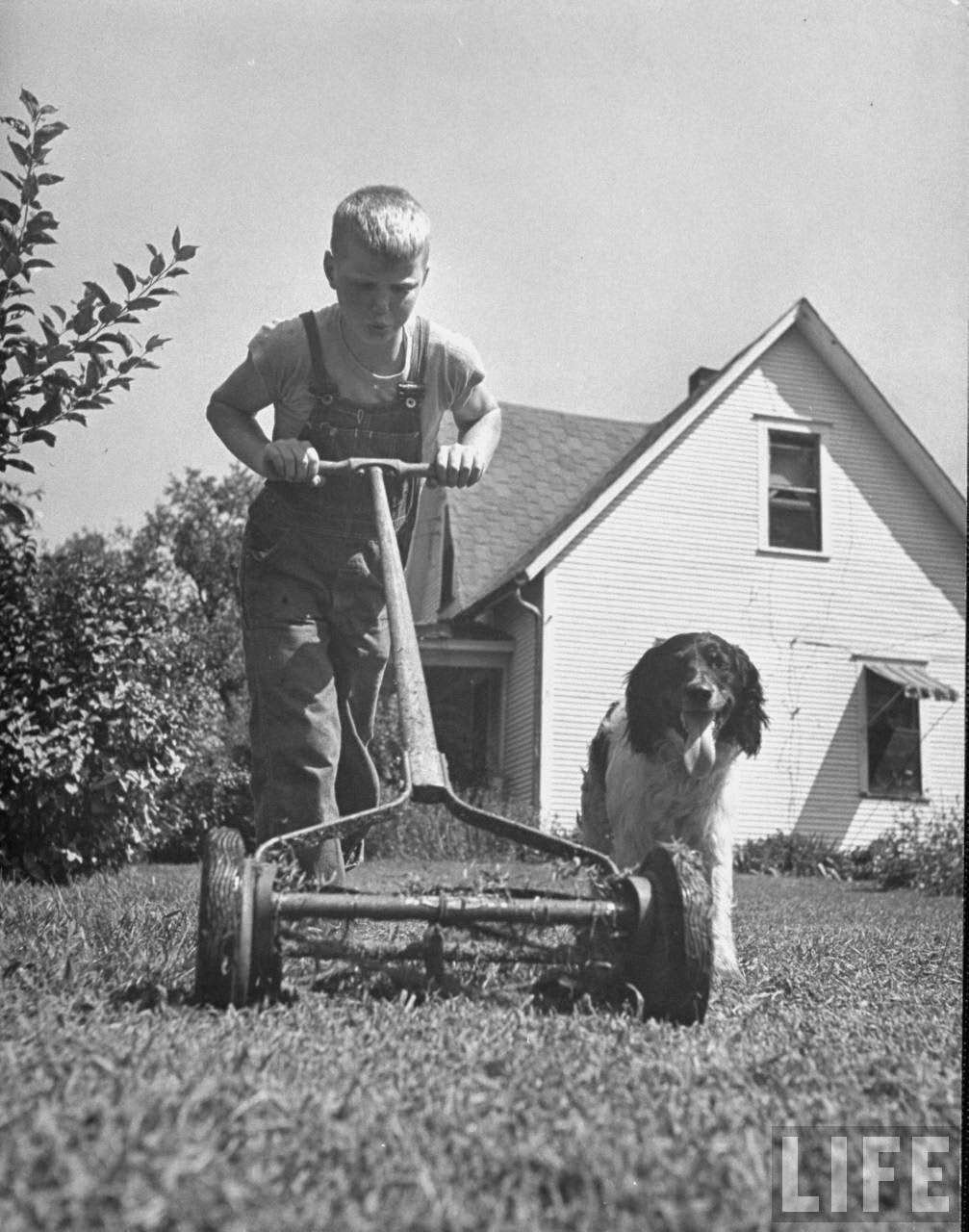
Summer chores were woven through the series. Larry tended to the farm animals while Dunk looked on, and tackled yard work with his dog close at his side. These weren’t posed moments — they were simply the texture of a working rural boyhood.
Beyond chores, the two explored freely. Streams, fields, and back roads became their territory, full of small discoveries that made any afternoon worthwhile.
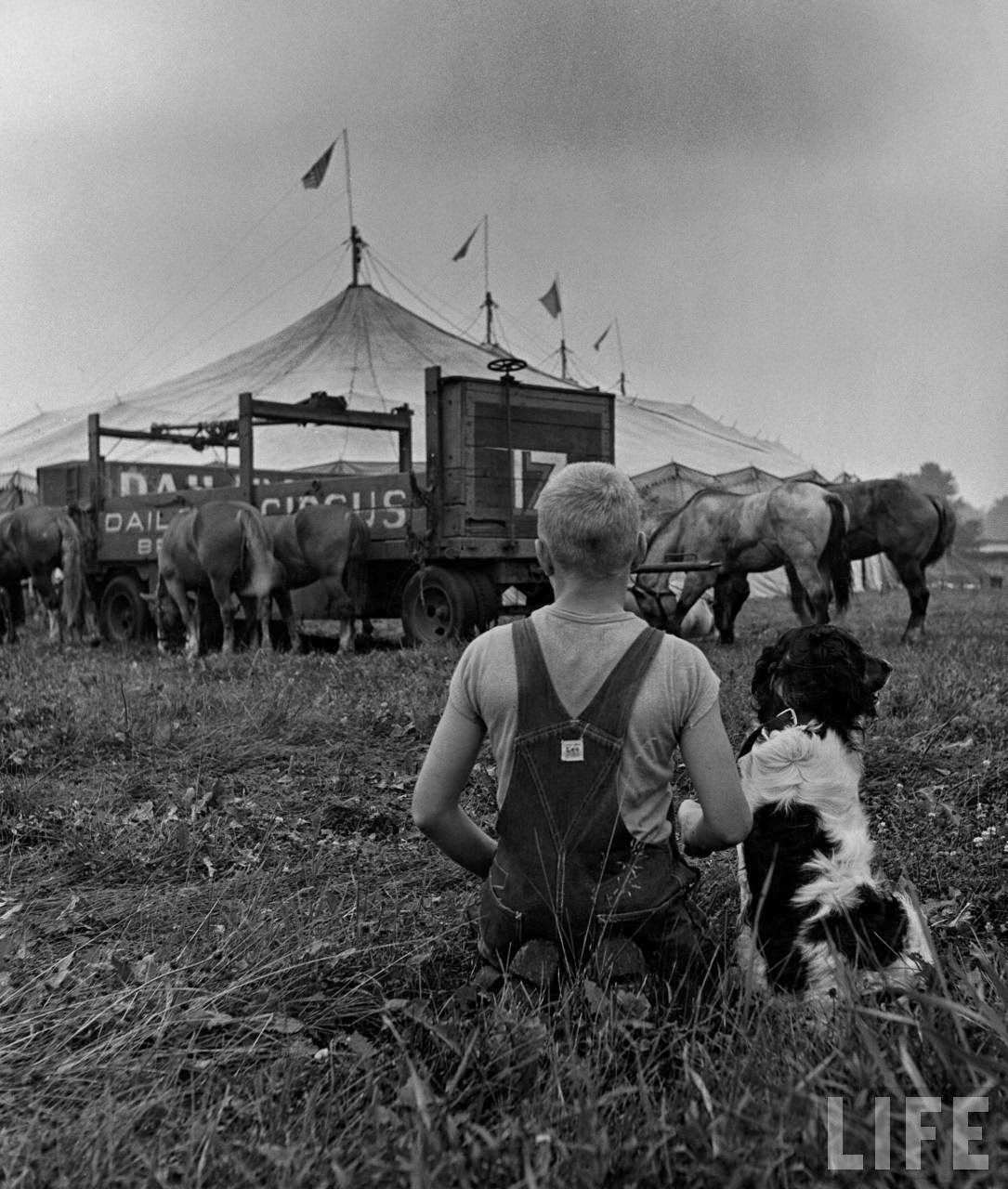
Davis also captured the quieter end-of-day moments — the ones that needed no action to say something true about companionship.