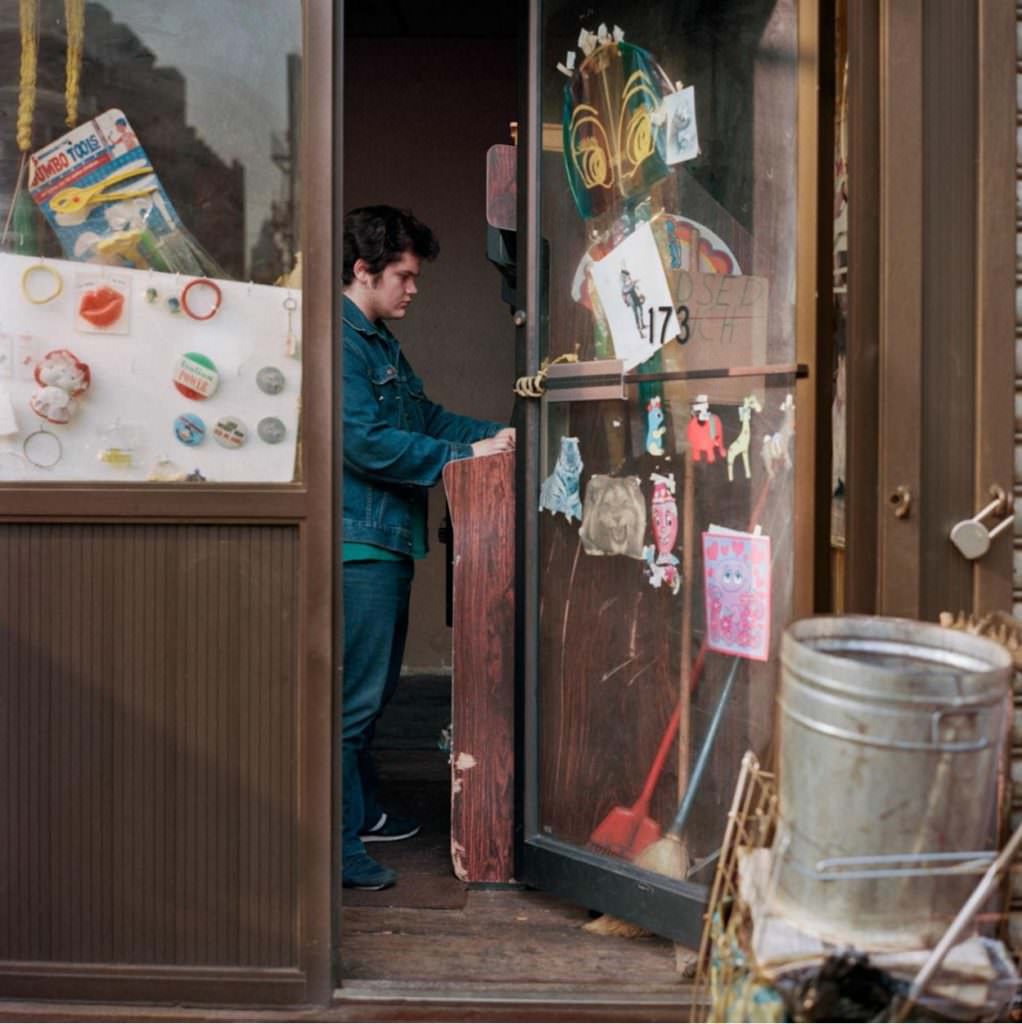
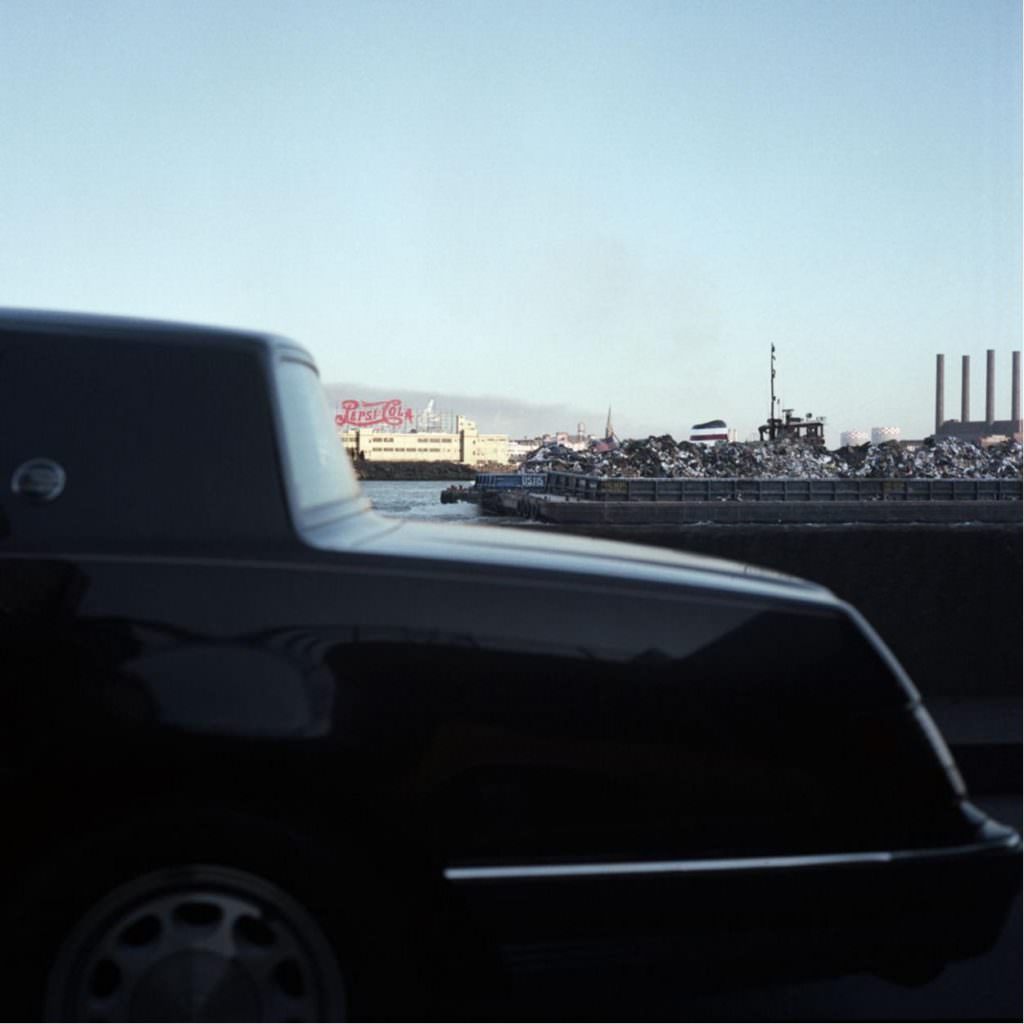
Between 1984 and 1987, photographer Janet Delaney made repeated trips from California to New York City without paying for a single flight. She worked as a courier for DHL, accompanying packages on overnight red-eye flights. She arrived at JFK in the early morning hours, tired but ready to shoot. While the city was just waking up, Delaney was already on the streets with her camera.
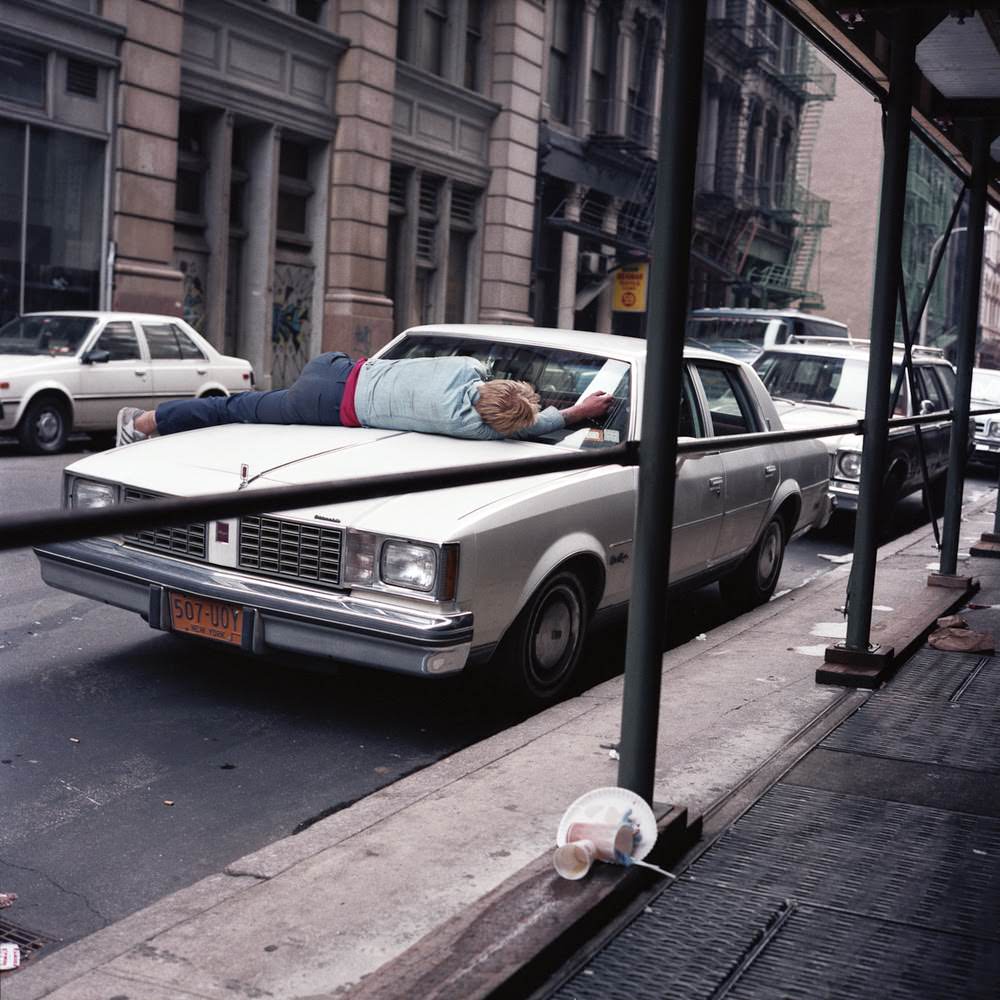
Her tool of choice was a Rolleiflex, a twin-lens camera worn around the neck. Instead of raising it to her eye, she looked down into a viewfinder on top of the camera. This waist-level style made her nearly invisible. Pedestrians rarely noticed her, which meant she could photograph unguarded, natural moments without interrupting them.
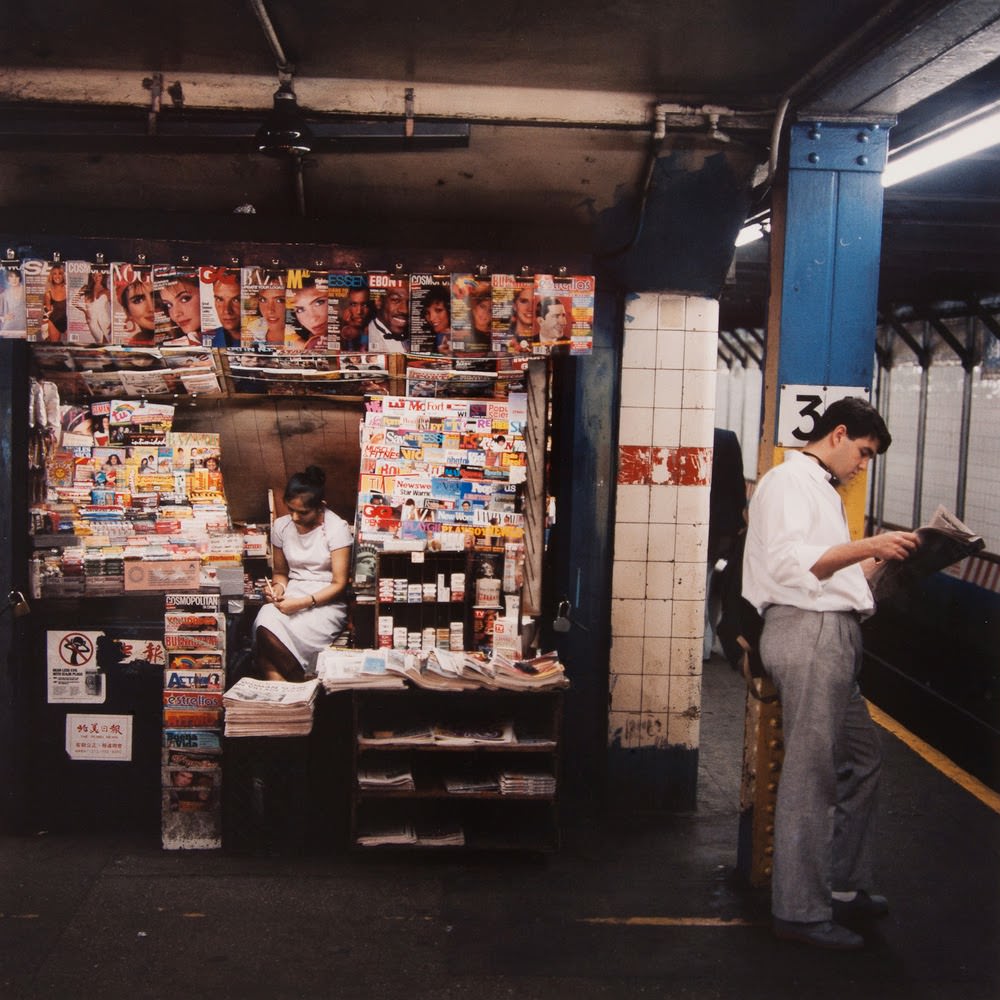
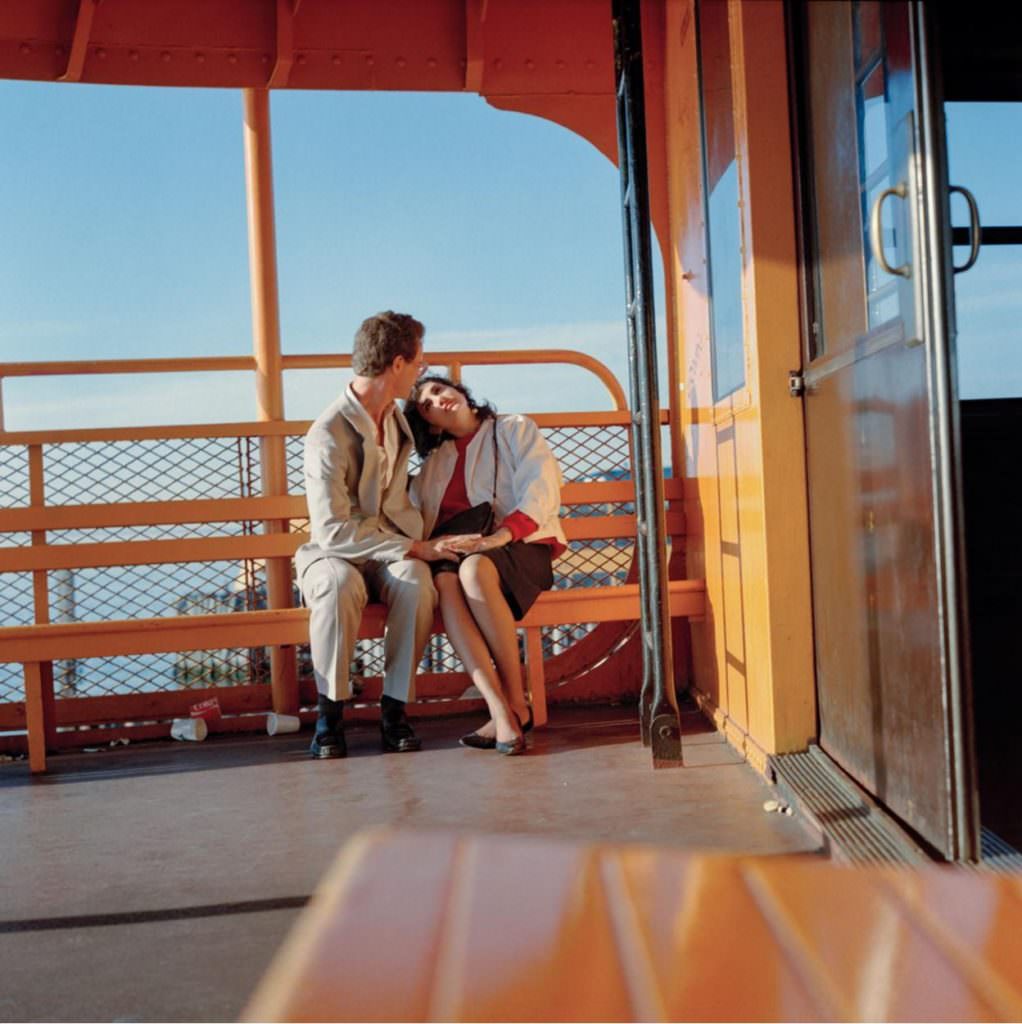
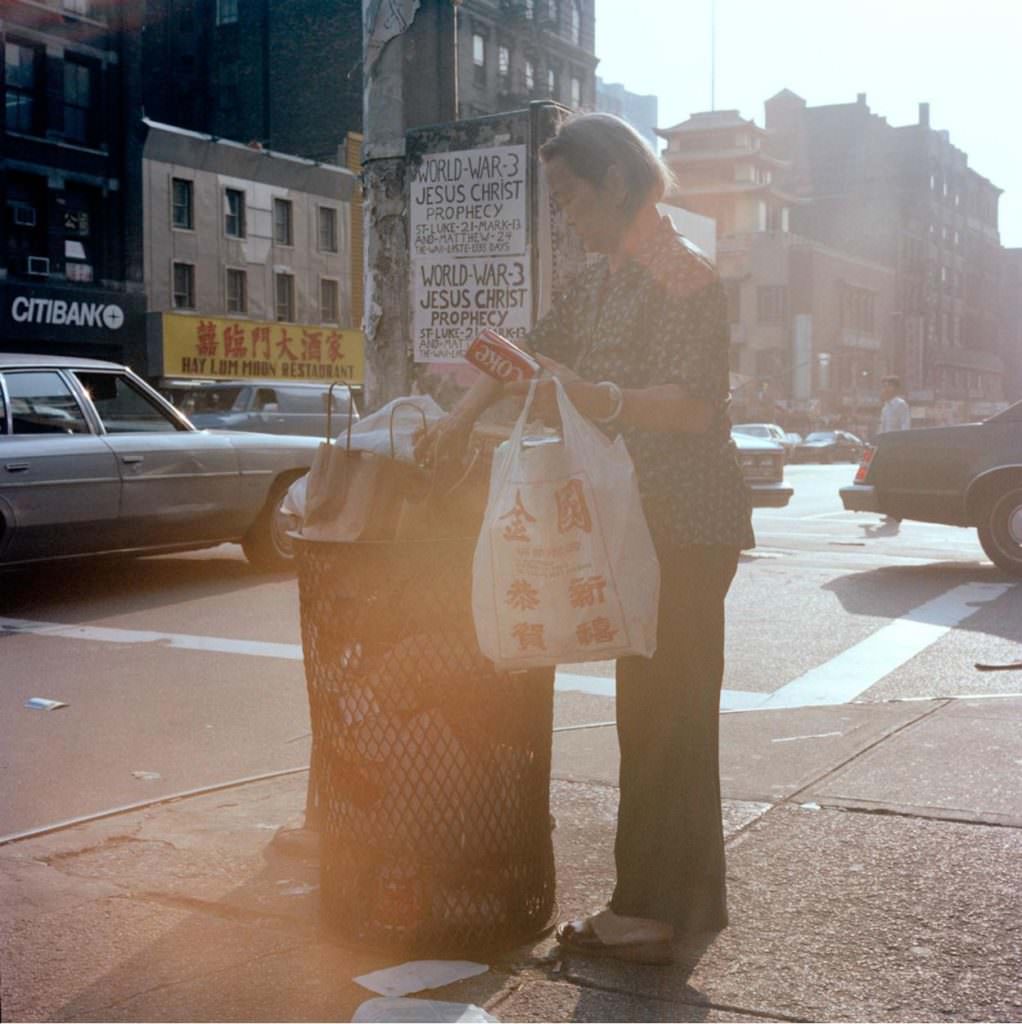
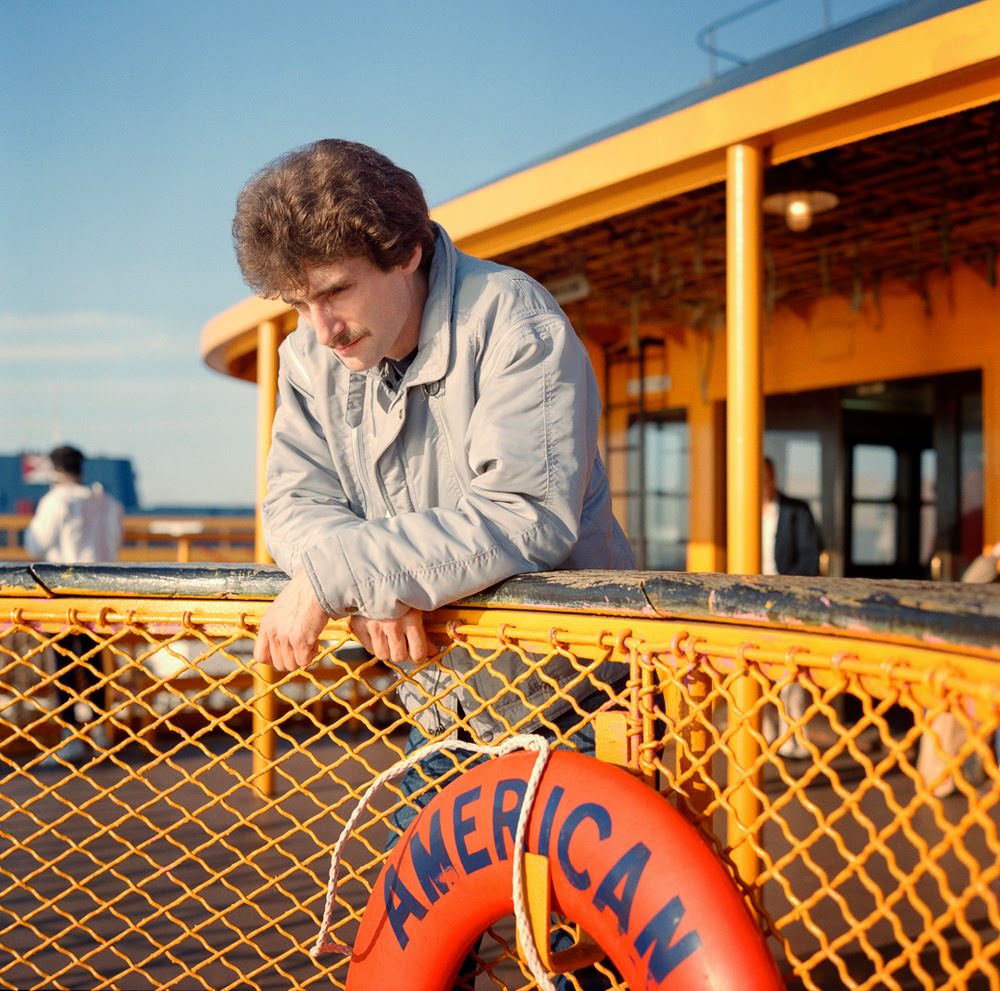
Because her flights landed at dawn, many of her images are bathed in early morning light. She photographed commuters on the Staten Island Ferry with sleep still on their faces, and steam rising from cold pavement as the sun came up. These scenes sit right at the edge between night’s quiet and the day’s noise.
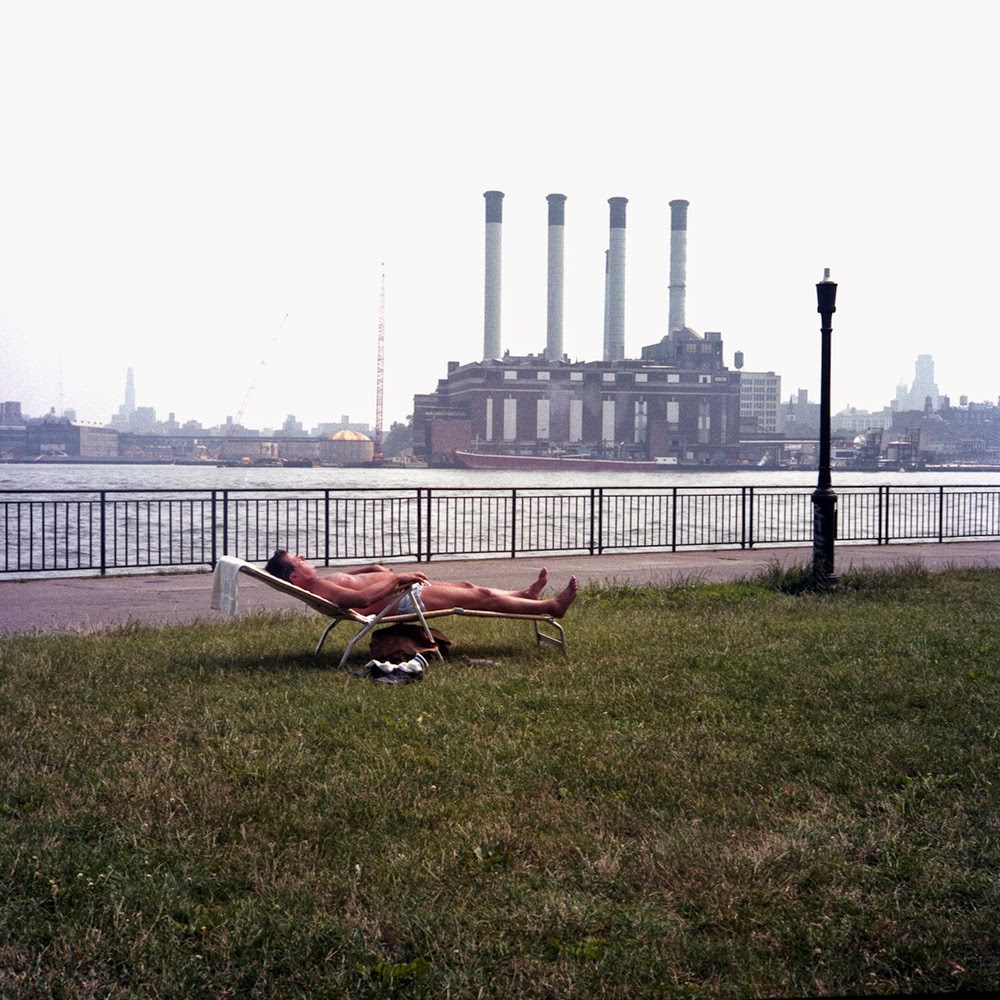
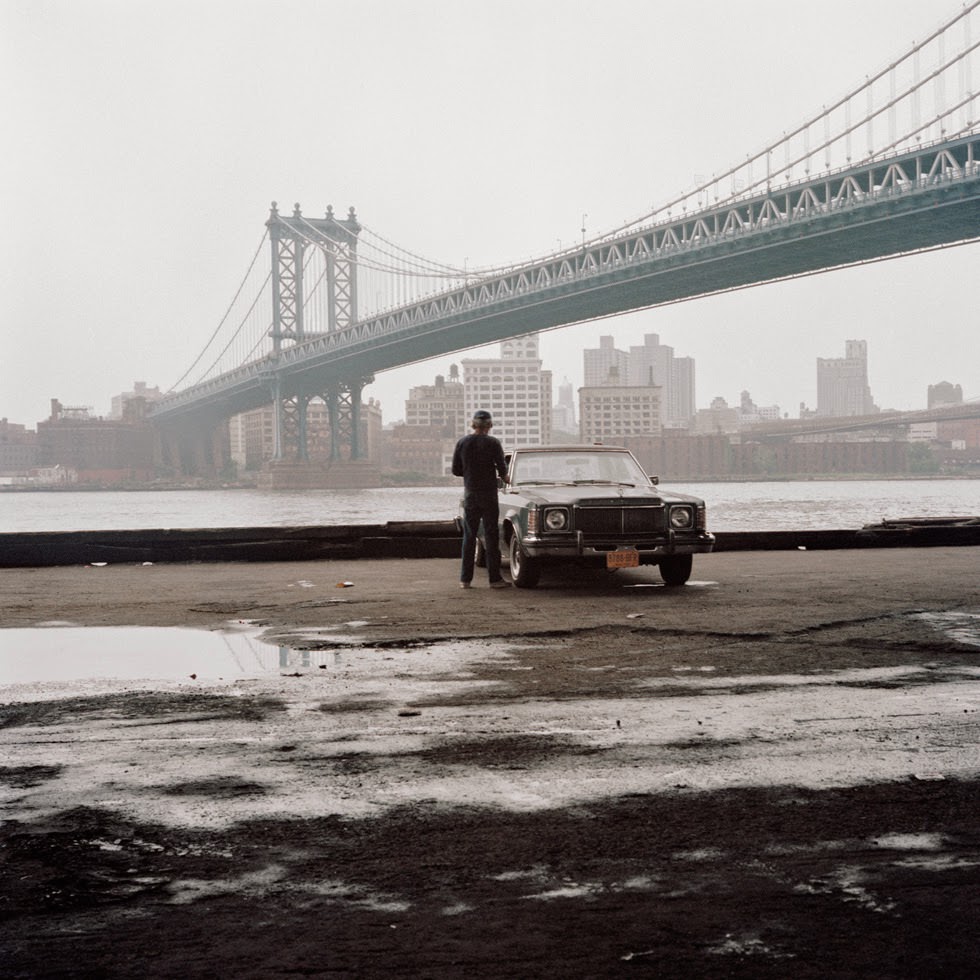
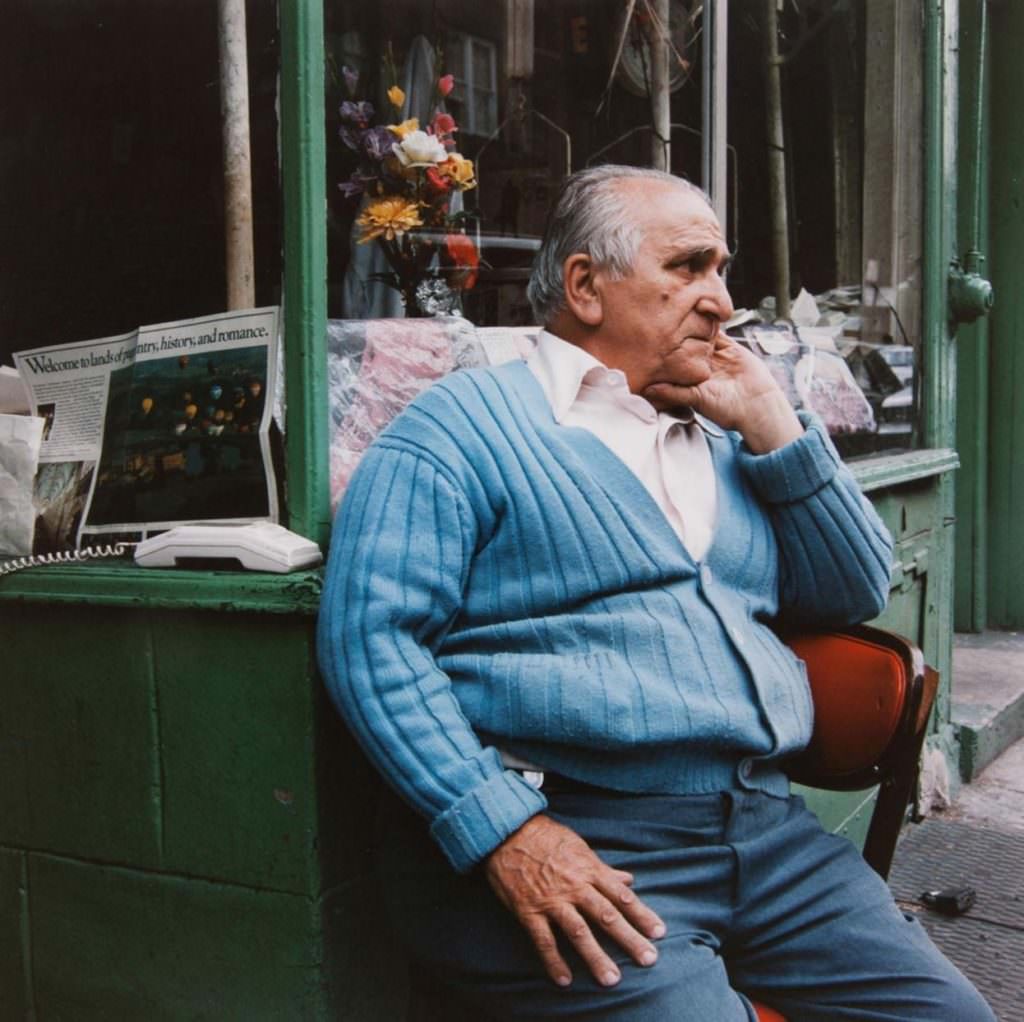
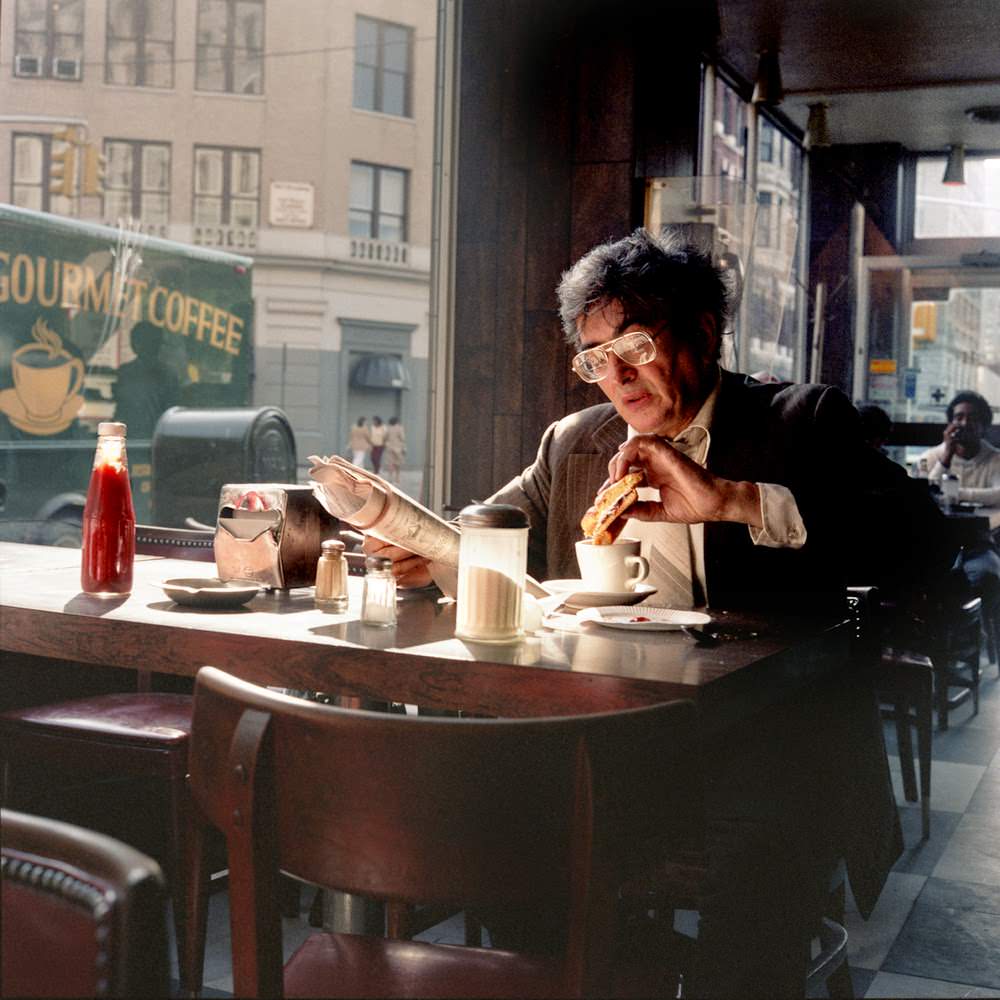
Delaney was drawn to solitude inside one of the world’s busiest cities. A lone sunbather rests near the East River, unbothered by nearby traffic. A man at a diner counter focuses entirely on his breakfast and newspaper. These images show the feeling of being completely alone in a dense crowd.
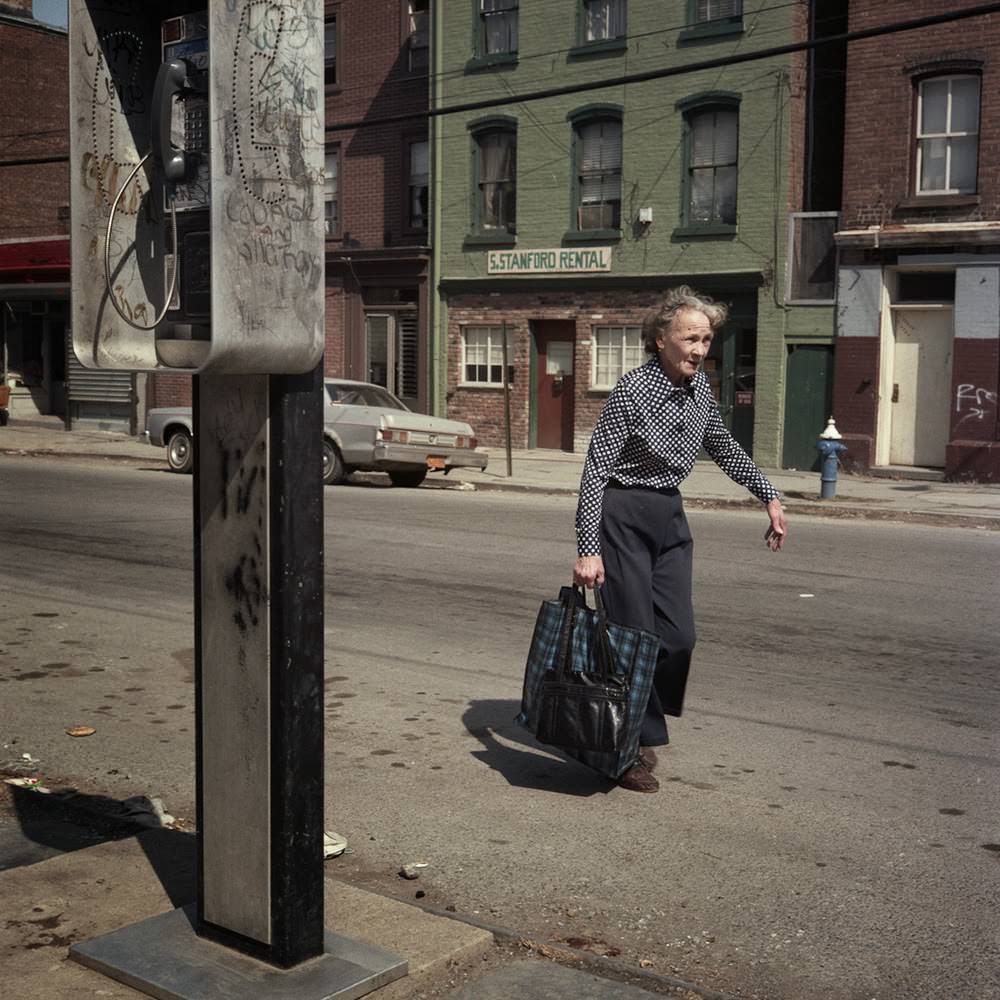
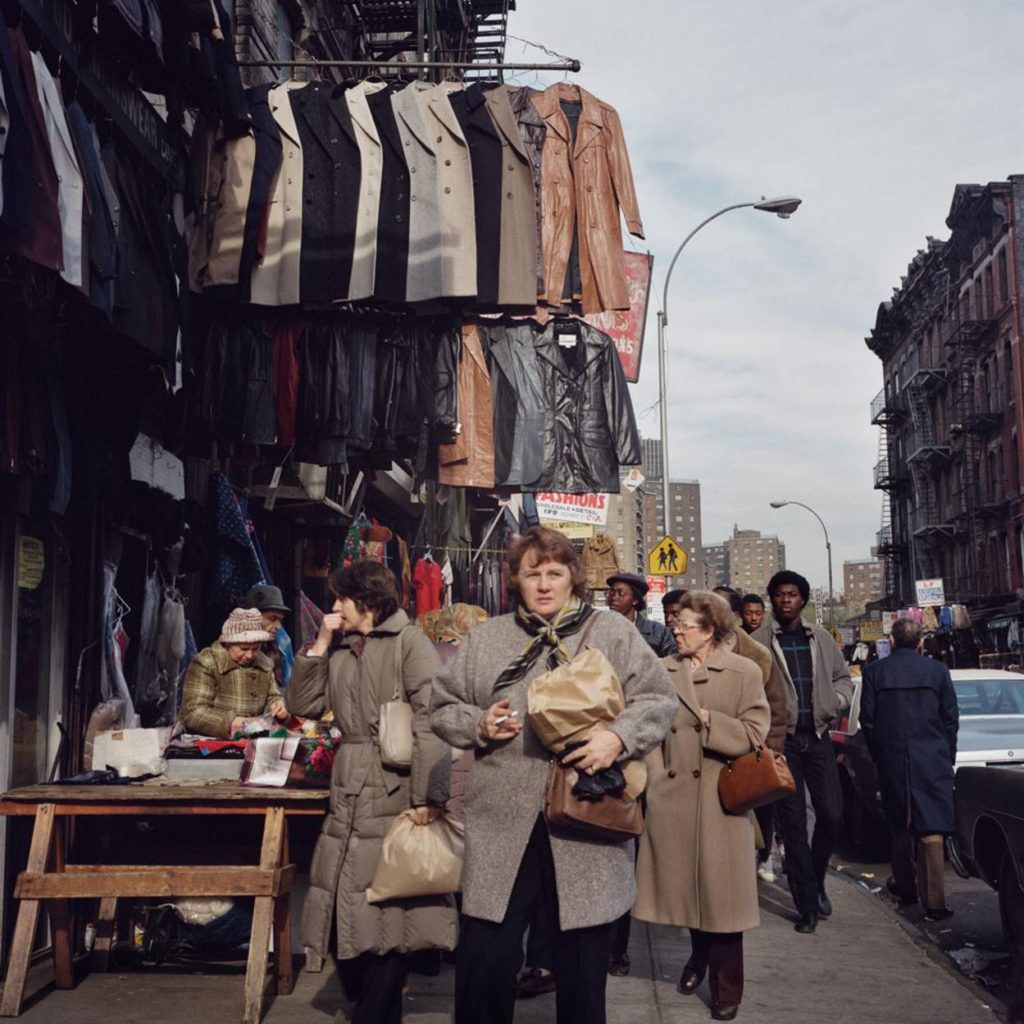
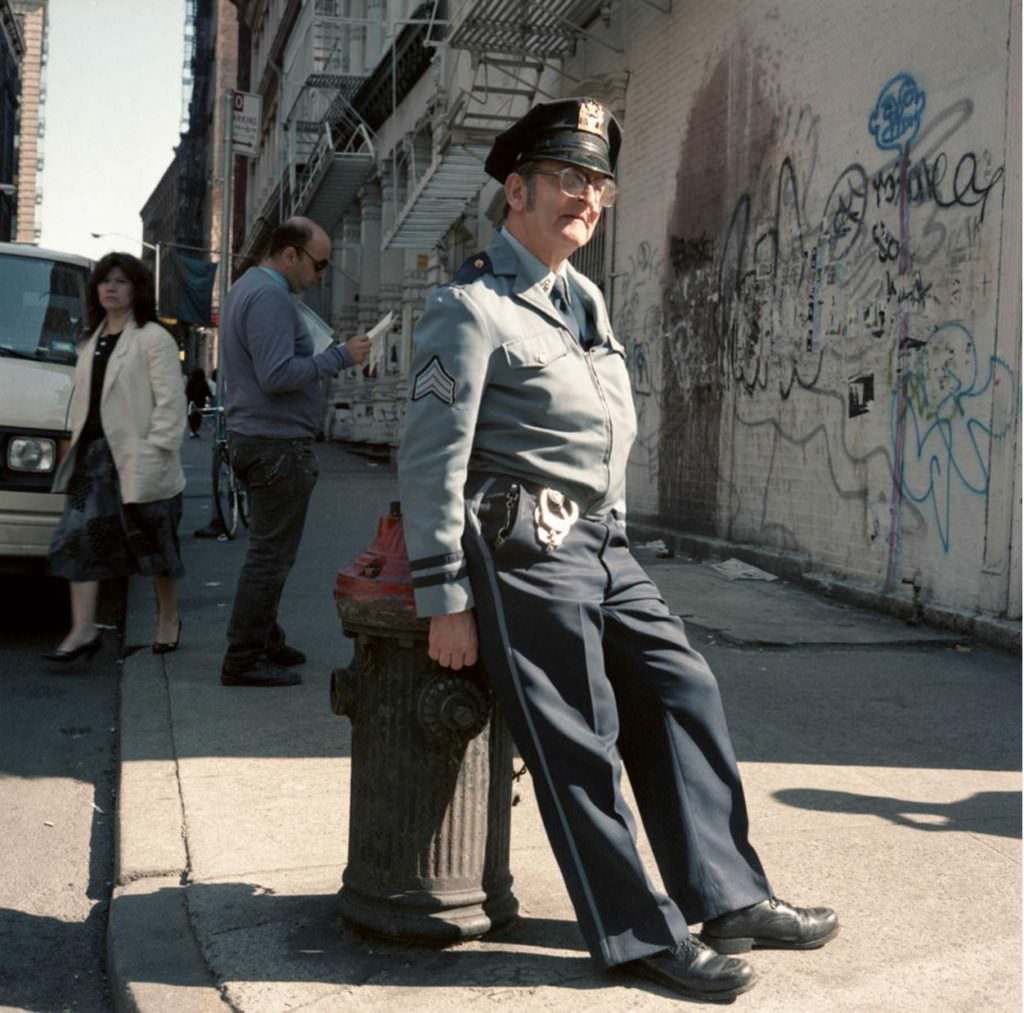
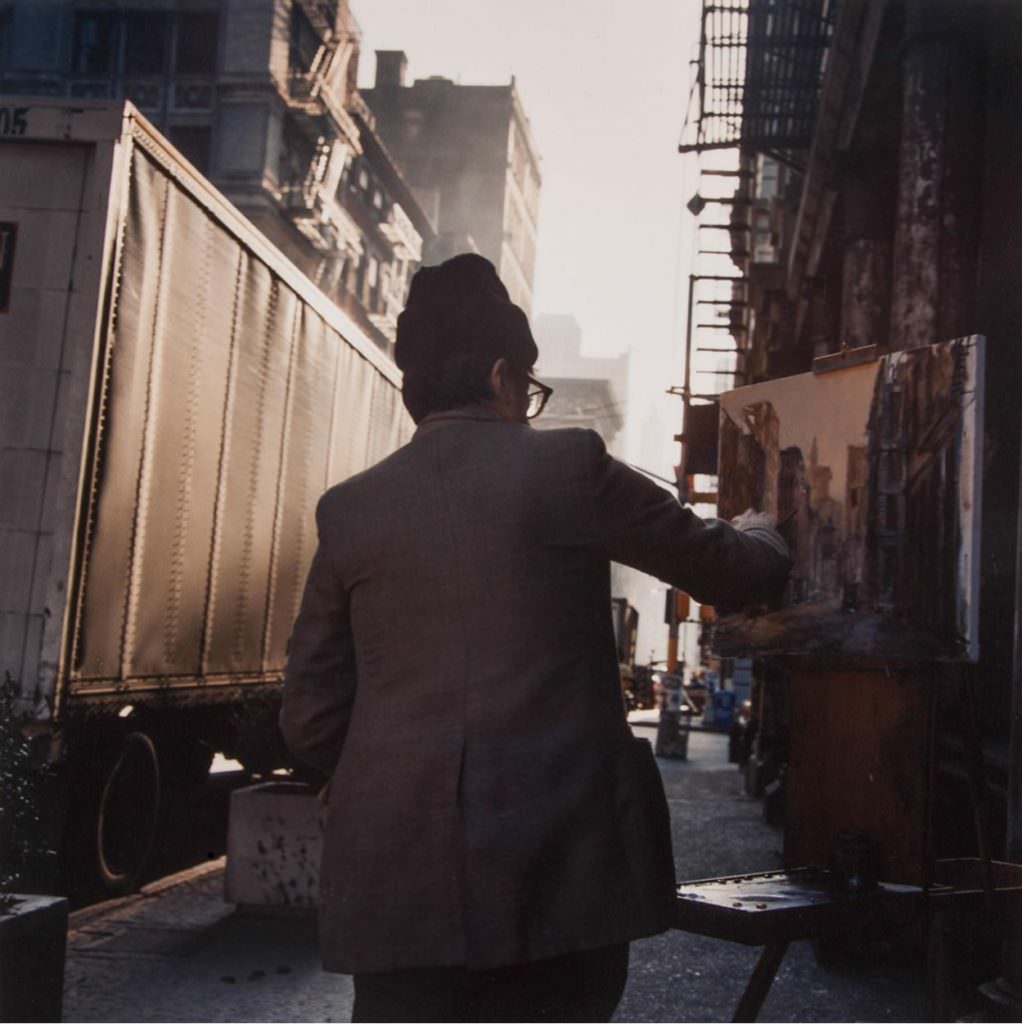
SoHo and the Lower East Side appear throughout her work. In 1984, she photographed a plein air painter set up on a grimy sidewalk, putting a romantic scene on canvas while ignoring the trash and delivery trucks right in front of him. Delaney, who came from a working-class family, also turned her lens on laborers — men pushing stacks of cardboard down the middle of the road, construction workers pausing beside steel skeletons of new buildings.
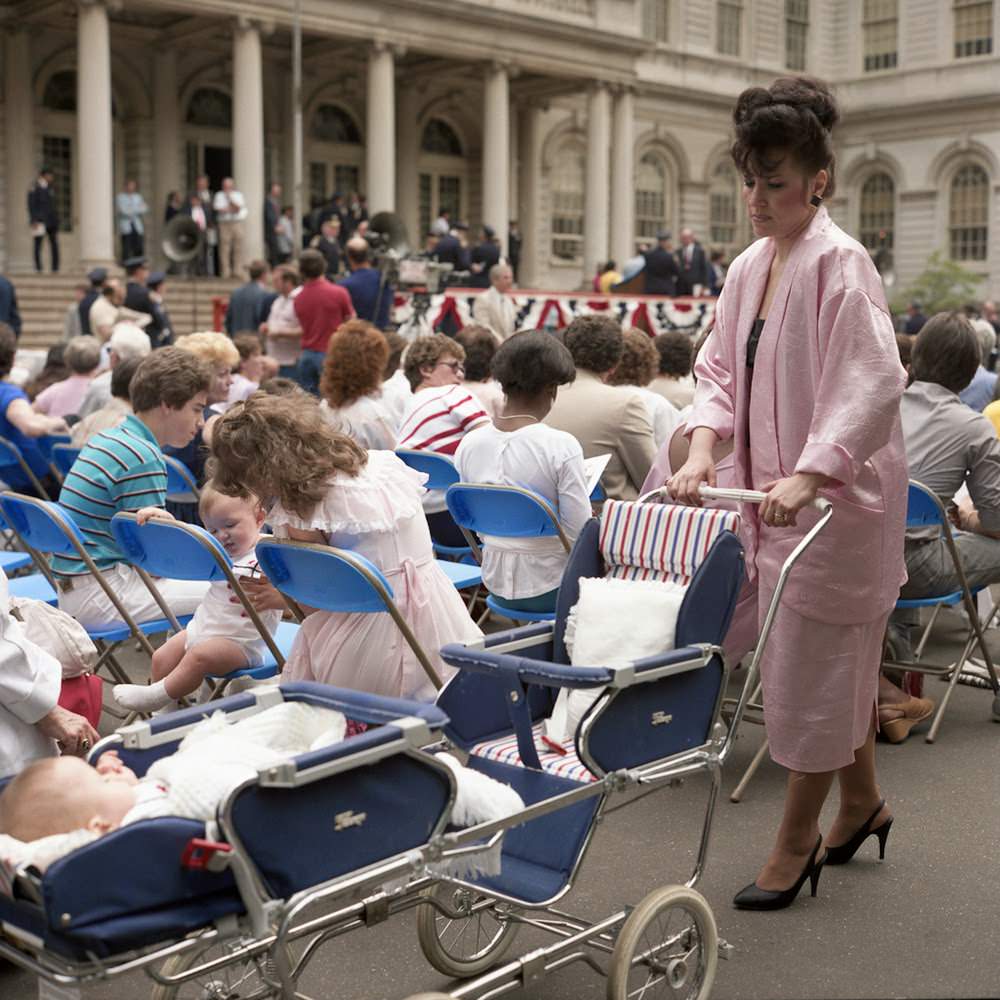
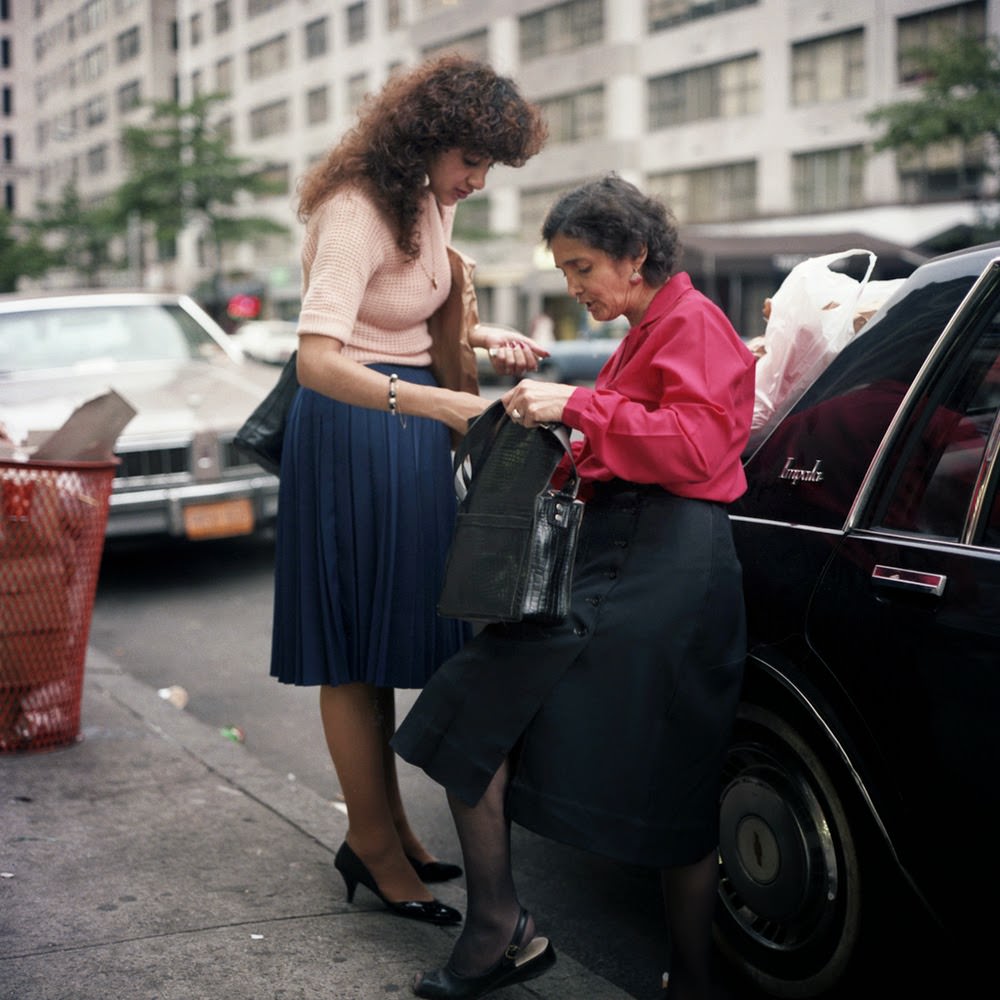
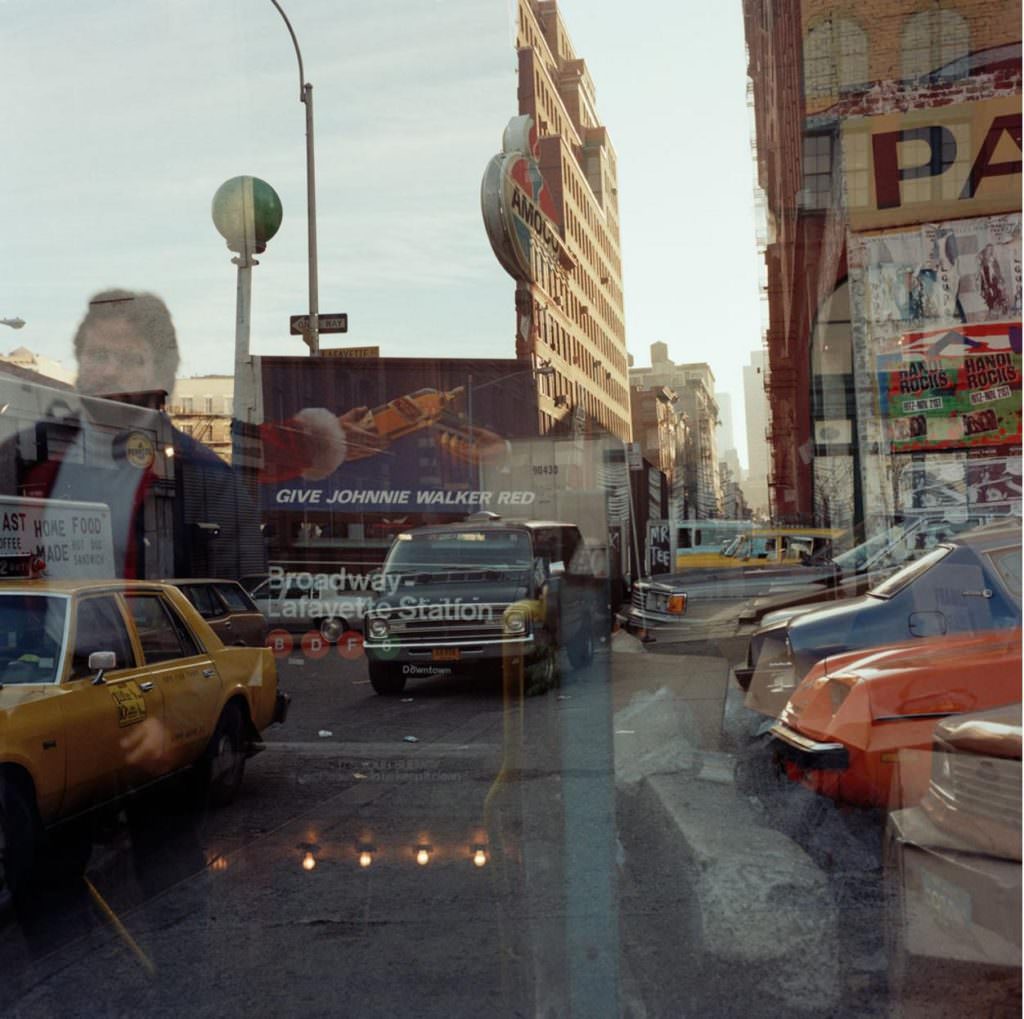
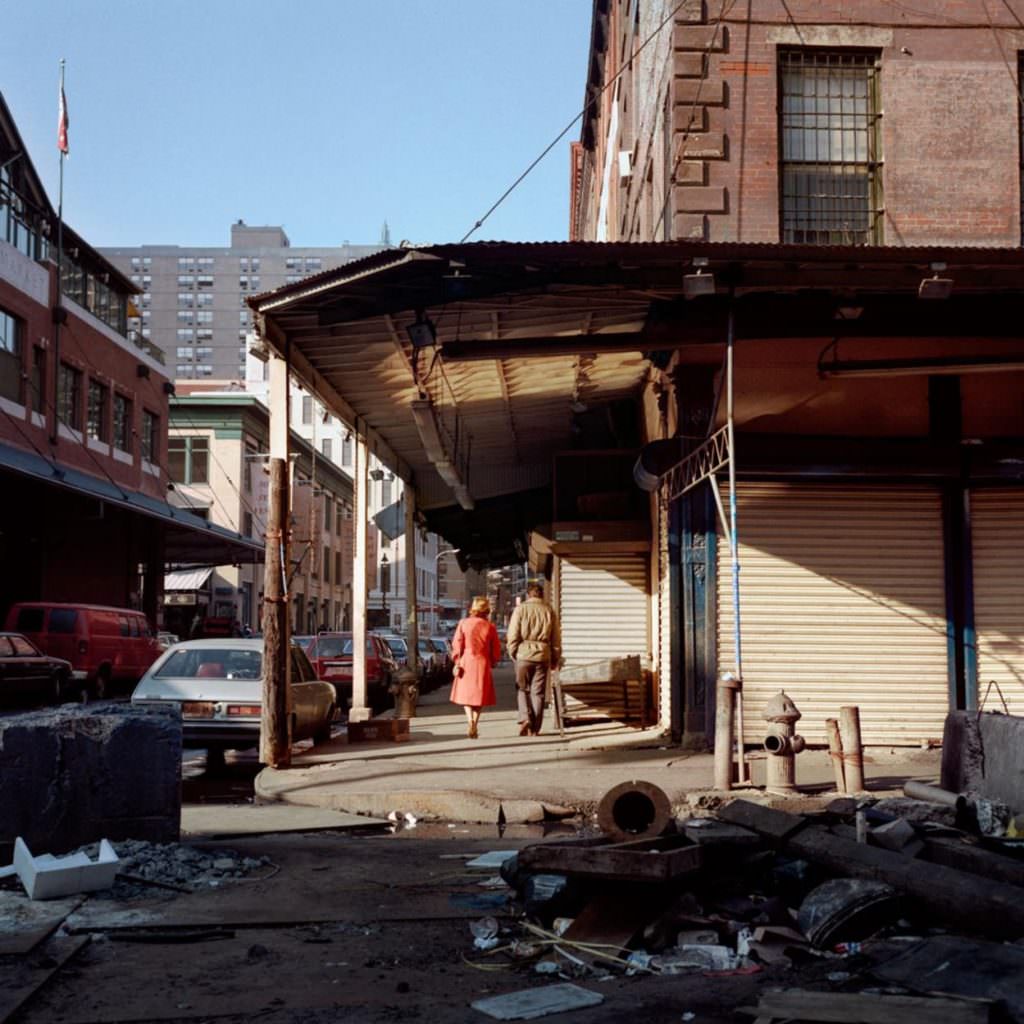
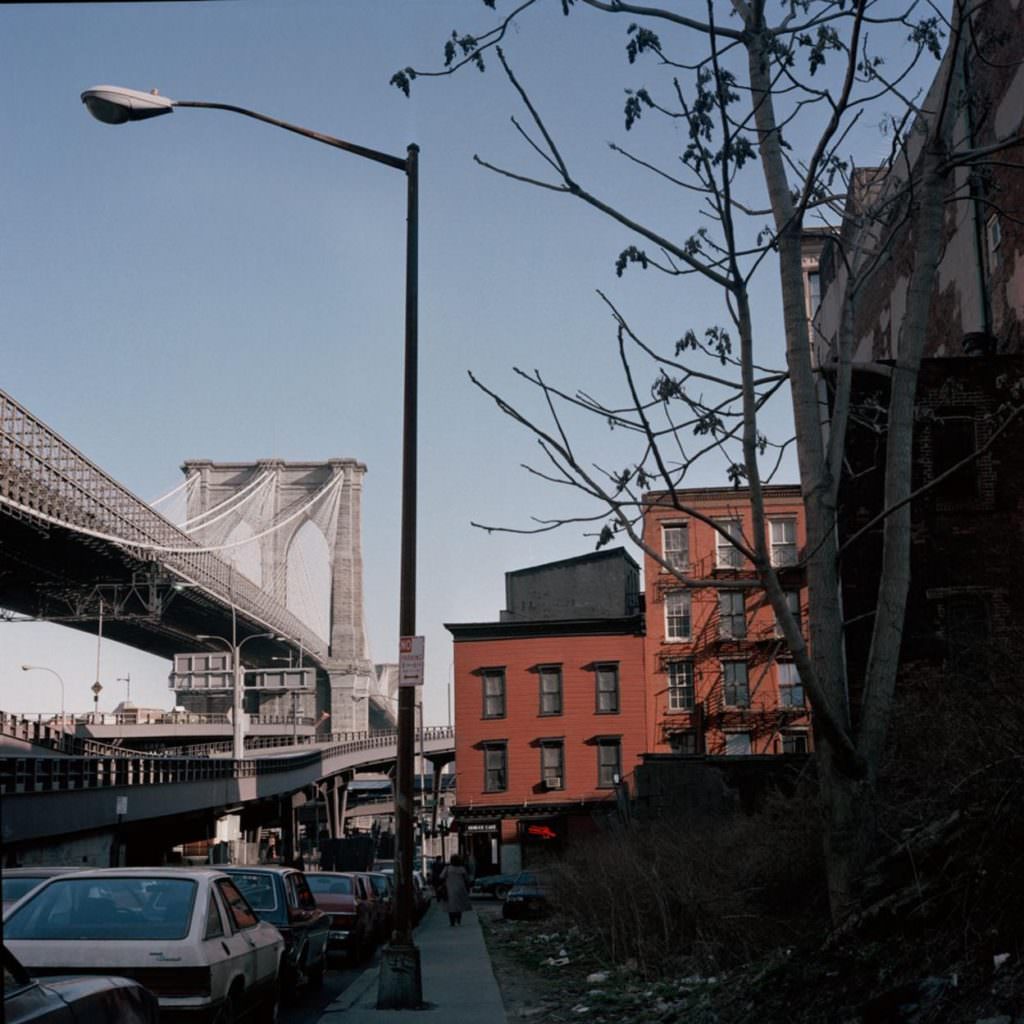
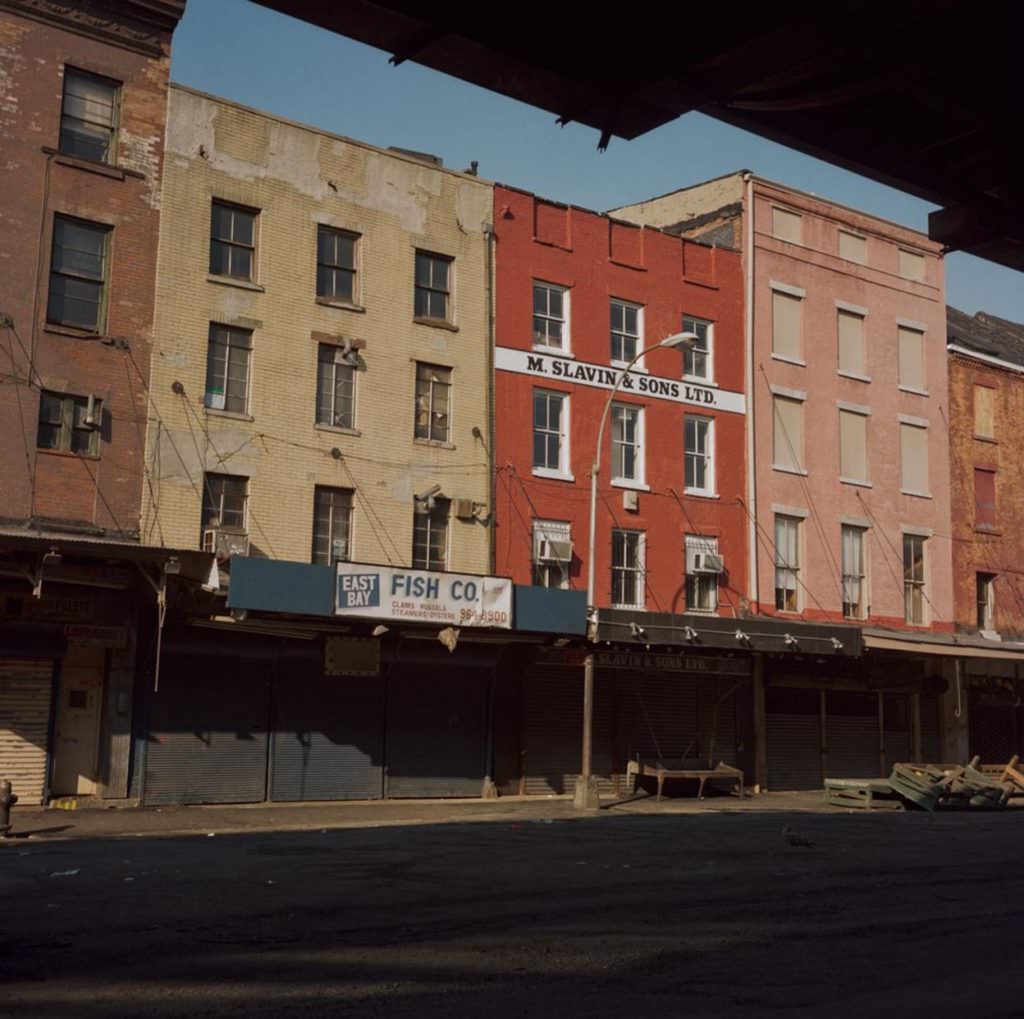
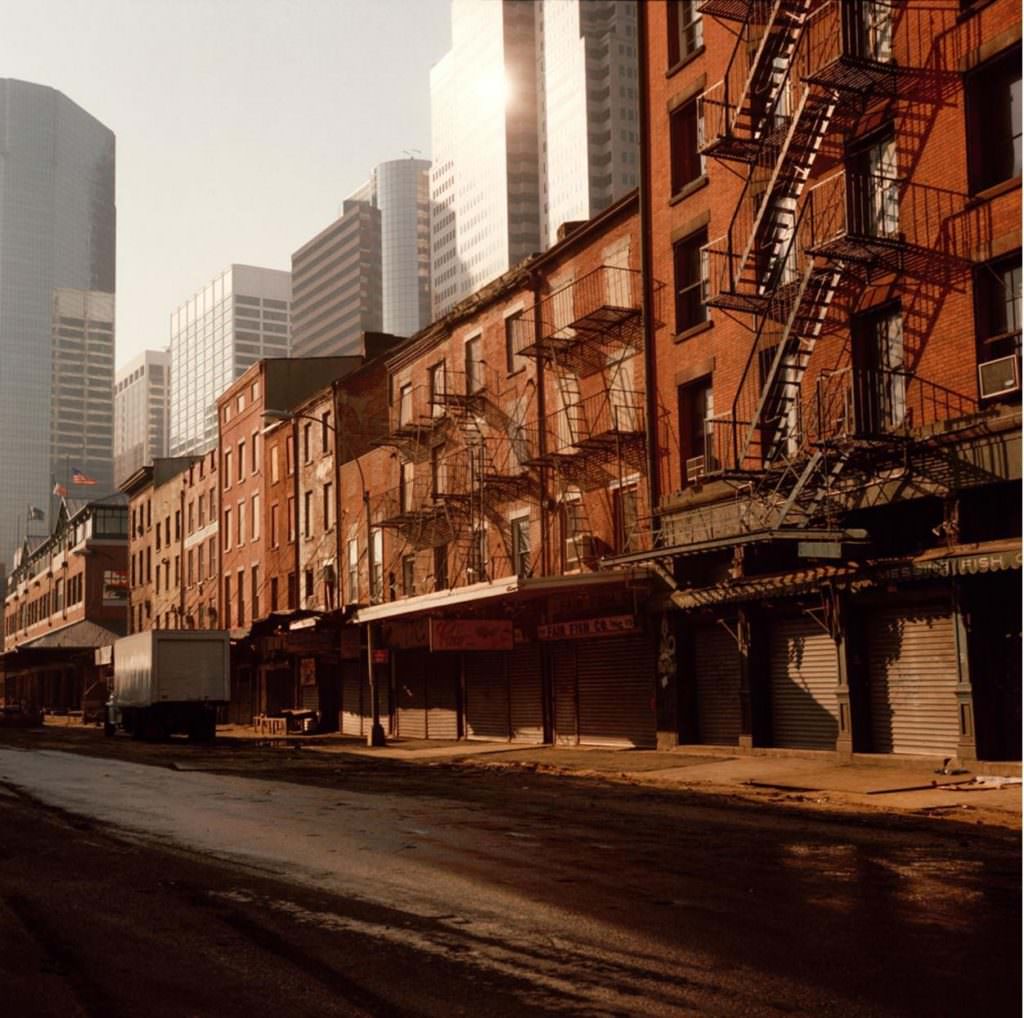
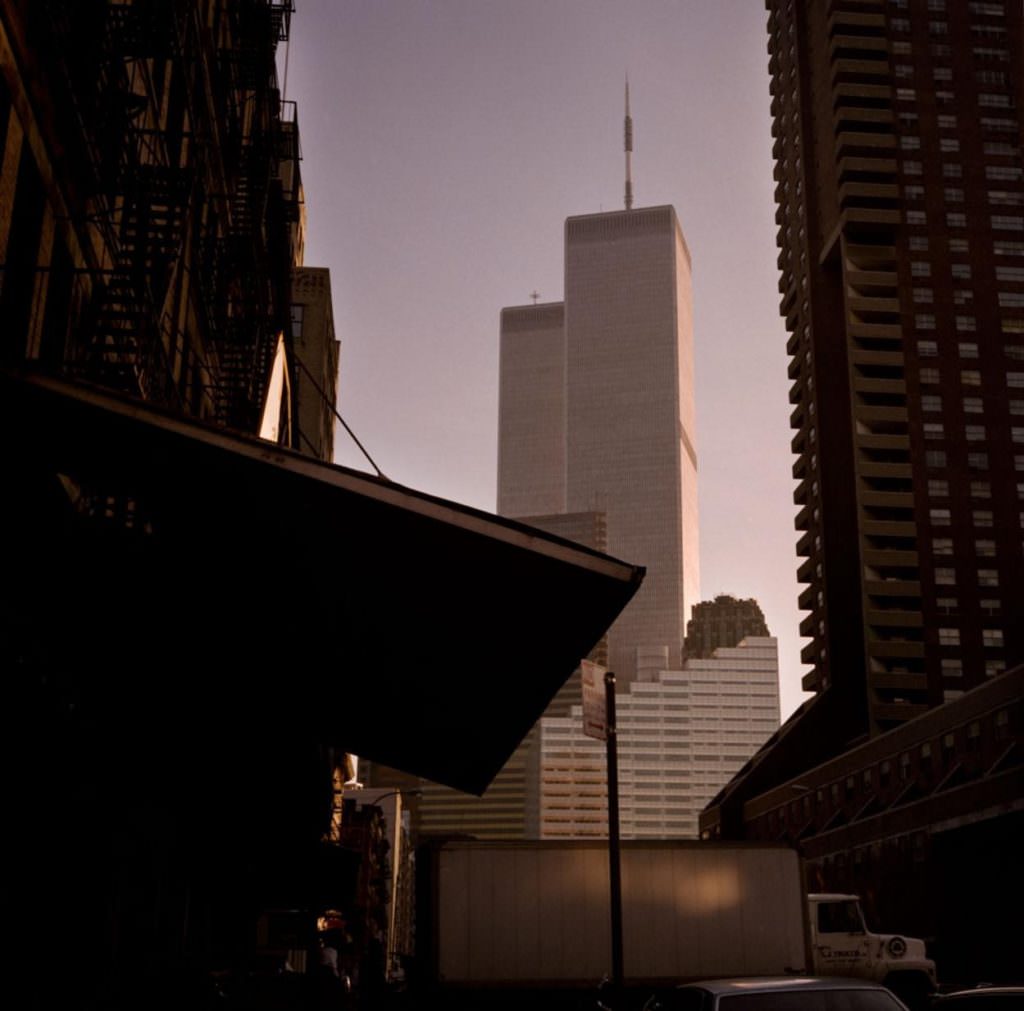
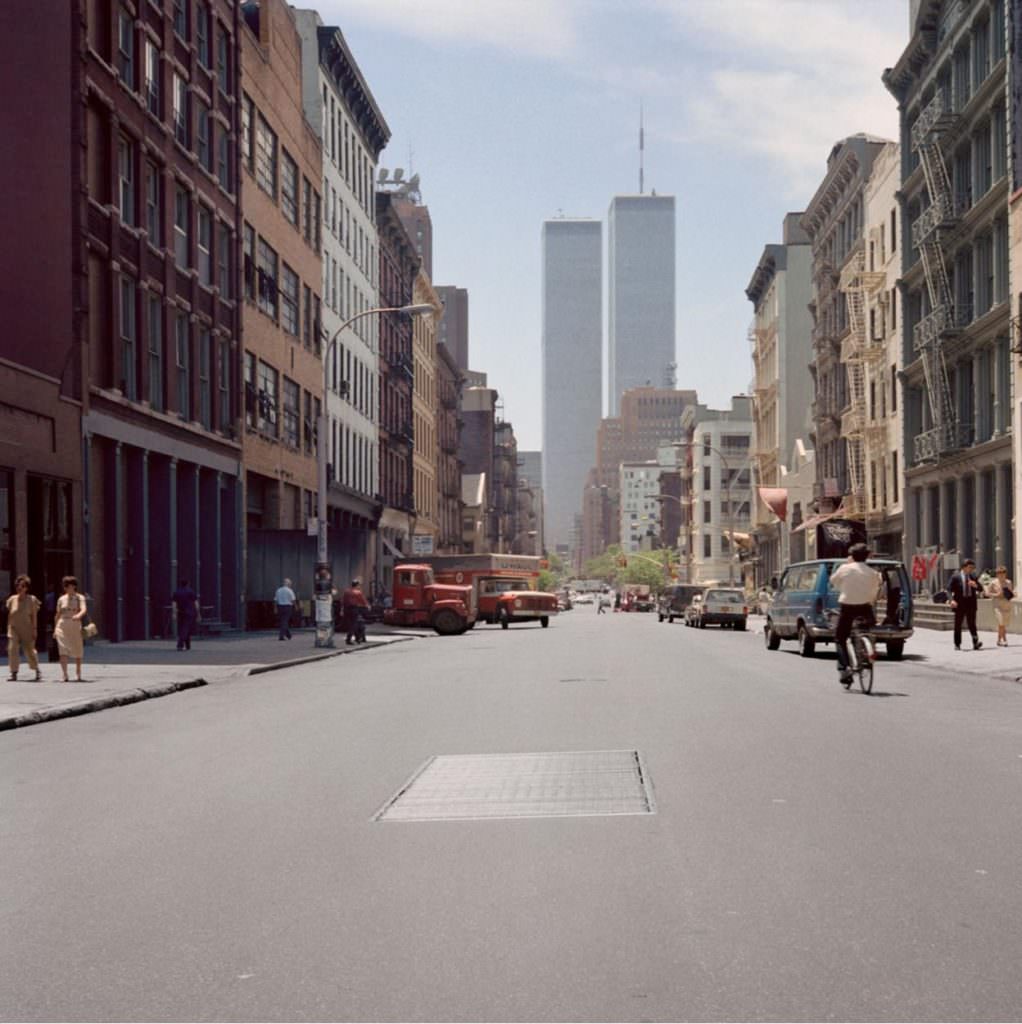
The architecture in her photographs maps a city in the middle of change. Old red-brick tenements stand beside modern glass towers. Worn subway stations packed with signage still drew patient commuters every morning. One striking image places the Twin Towers of the World Trade Center directly above a parked delivery truck — a pairing that captures both the scale and the ordinariness of the city at the time.
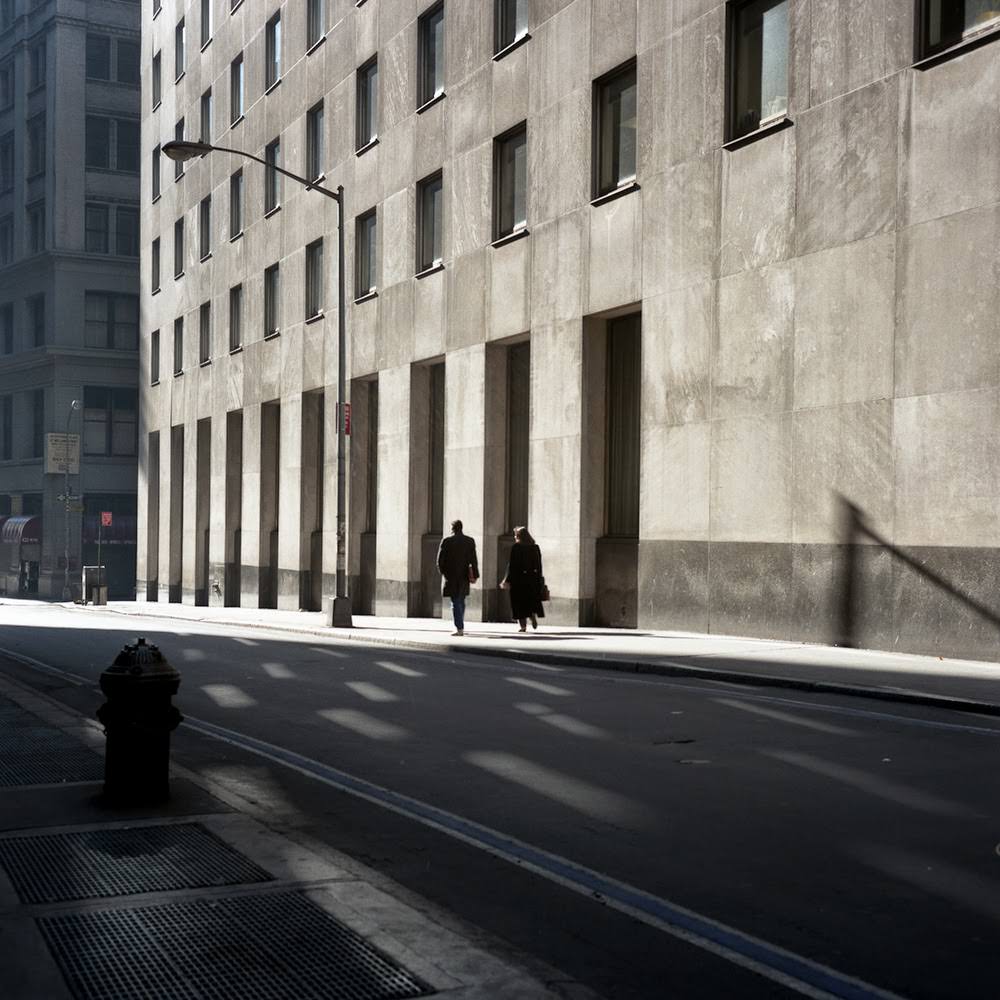
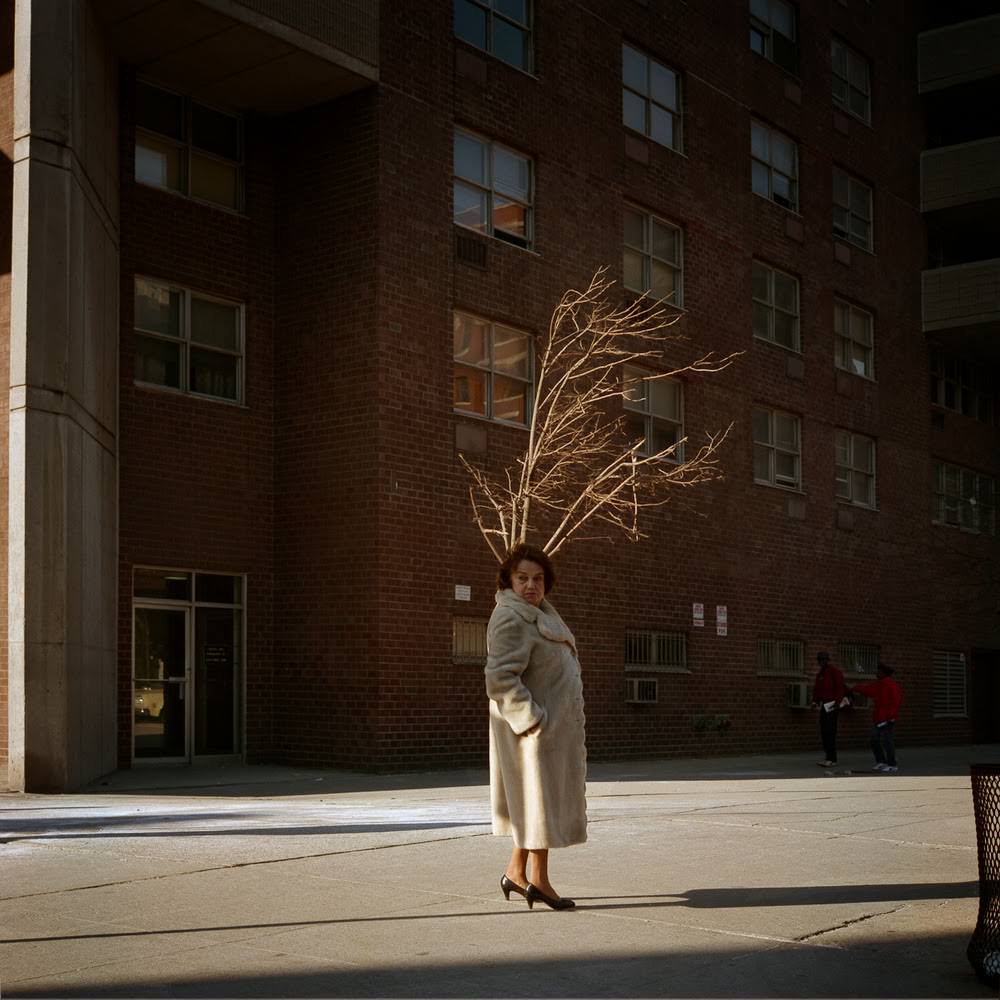
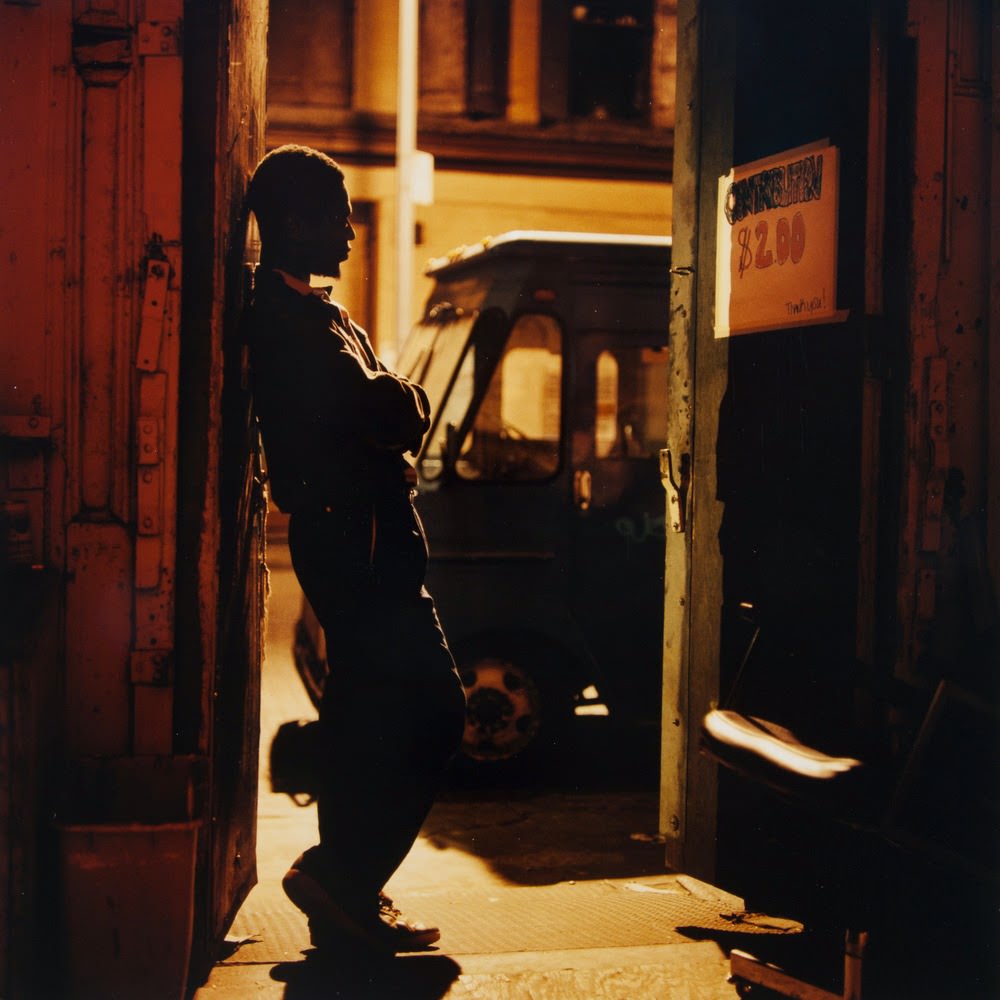
The square format of the Rolleiflex gave each image a balanced, even frame — a distinct look that suited the vertical streets of Manhattan. Every photo holds a specific slice of a city that no longer exists in the same form.