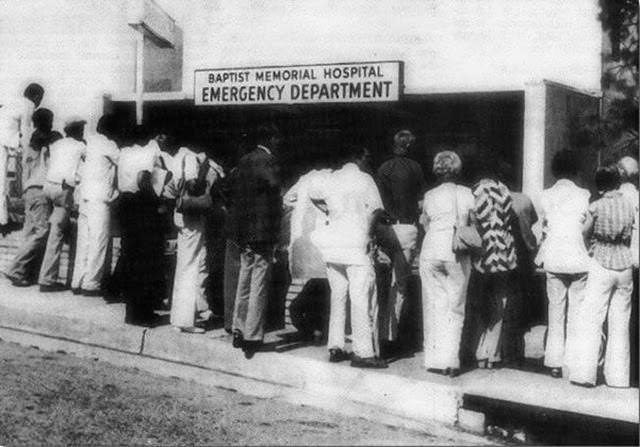
August 16, 1977 started as a routine day at Graceland, Elvis Presley’s Memphis estate. He had a concert tour on the horizon — a flight to Portland, Maine, was scheduled for that evening, with a performance set for August 17th. Around 7:00 AM, Elvis retired to his master suite to sleep before the trip. By late morning, staff members found him unresponsive. Paramedics arrived but could not revive him at the scene. They rushed the 42-year-old singer to Baptist Memorial Hospital, where doctors continued resuscitation efforts — but his heart would not restart. His personal physician, Dr. George Nichopoulos, pronounced him dead. The official cause was cardiac arrhythmia, an erratic heartbeat that proved fatal.
Word traveled fast. Radio stations across the United States cut into their regular programming the moment the bulletin hit the wire. DJs cleared their schedules and began playing Elvis records back to back. Some stations organized on-air tributes within minutes. Others simply opened their phone lines, and fans flooded in. Callers described the first time they heard his voice, recounted songs tied to specific moments in their lives, and leaned on strangers through their radios to make sense of what had just happened. The airwaves became a shared space for public grief on a scale rarely seen before.
For millions of Americans, the news arrived like a jolt. Many would later say they remembered exactly where they were when they heard — a reaction typically reserved for national tragedies like the assassination of President John F. Kennedy. Mick Fleetwood, drummer for Fleetwood Mac, was driving back from the mountains when the report came over his car radio. He had been listening to a medley of Elvis songs when the DJ cut in with the announcement. Fleetwood described the moment as hitting him “like a ton of bricks.” He was not alone in that feeling.
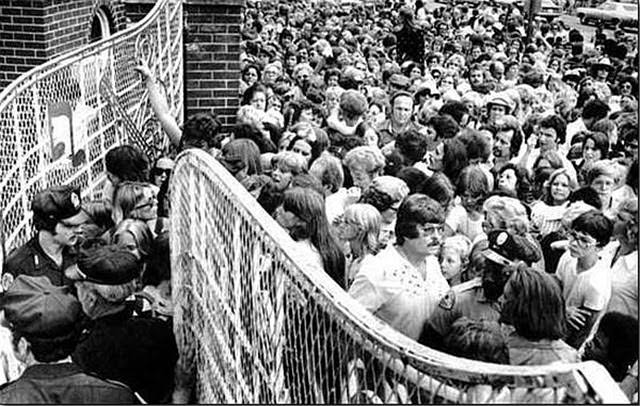
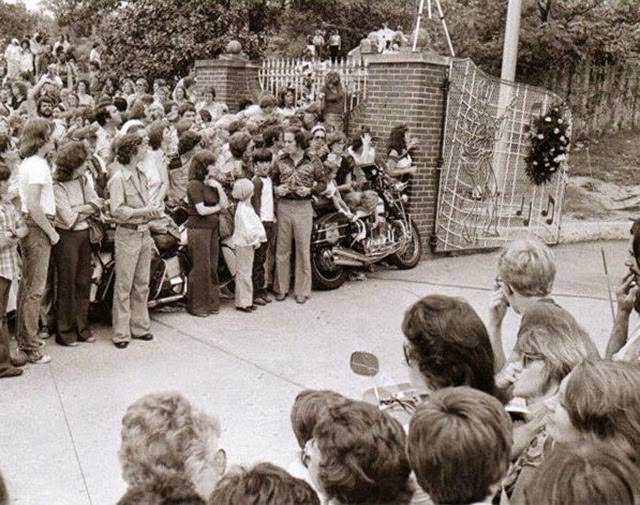
Fans did not stay home. They traveled from across the country to Memphis, converging on Graceland in numbers that overwhelmed the surrounding streets. The crowds that pushed toward the mansion gates were enormous, driven by a need to be physically present at the place most associated with Elvis’s life. For many, standing outside Graceland was the only way to make the loss feel real.
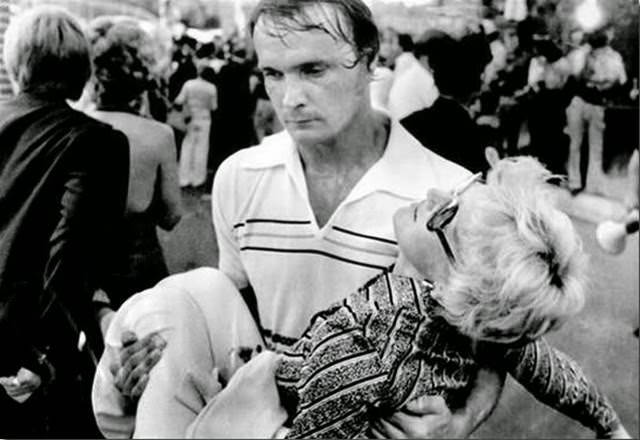
The sheer size of the crowd created a public safety crisis. The August heat in Memphis was brutal, and the density of the gathering pushed many fans to their physical limits. Emergency crews worked continuously to treat those who collapsed or fell ill while waiting.
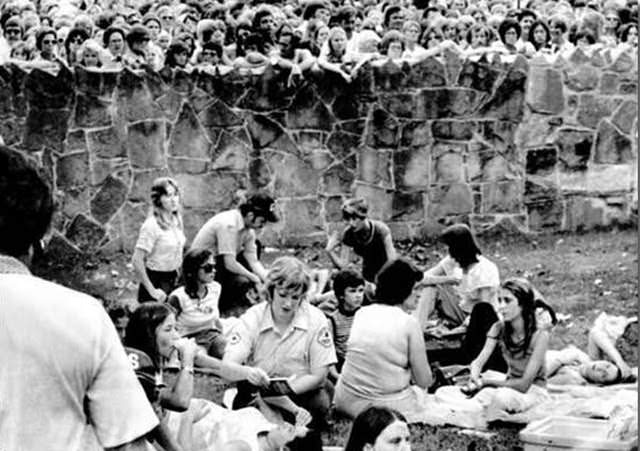
Hundreds of fans required medical attention. Shelby County emergency personnel set up first aid stations to manage the steady flow of people suffering from heat exhaustion and the physical toll of hours-long waits. The scene inside and outside the gates was chaotic, emotional, and unlike anything Memphis had handled before.
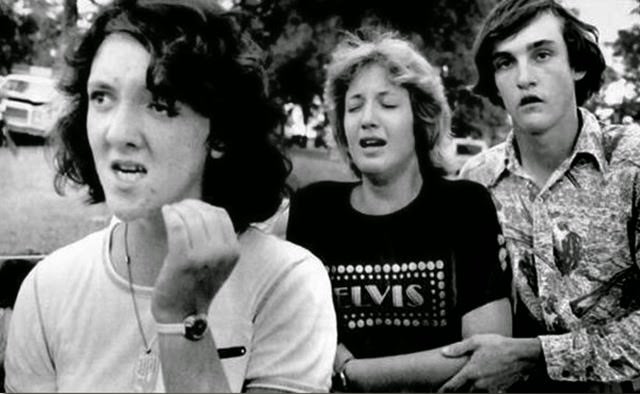
Those who did make it through the gates and viewed Elvis’s body emerged visibly shattered. The grief on display was raw and unfiltered. People wept openly, held each other, and walked away in stunned silence. For fans who had followed his career for decades, seeing him laid out in his own home made the finality undeniable.
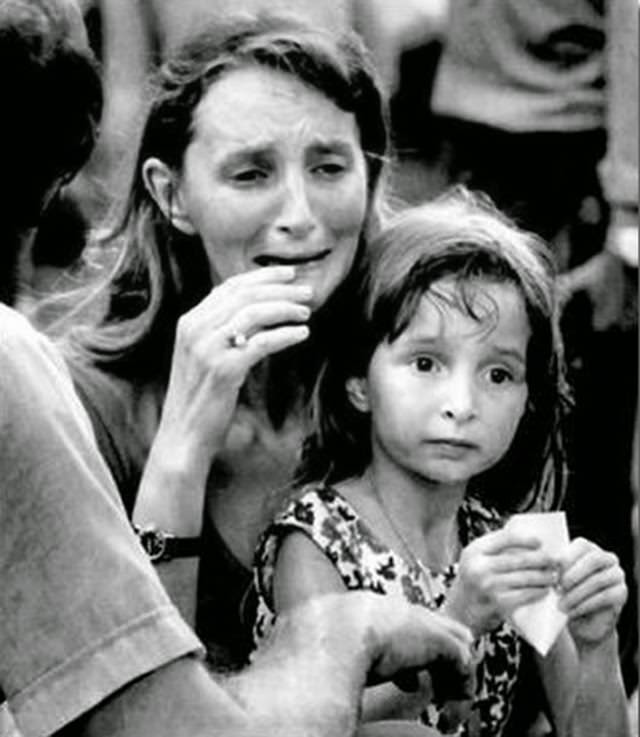
Major television networks responded the same evening by altering their scheduled programming to cover the story in full. The ratings service Arbitron recorded a sharp spike in viewership during the evening news hours. Millions of Americans turned on their televisions seeking confirmation of what they had already heard on the radio — visual proof that Elvis Presley was truly gone. The scale of the broadcast response underscored just how central he was to American culture.
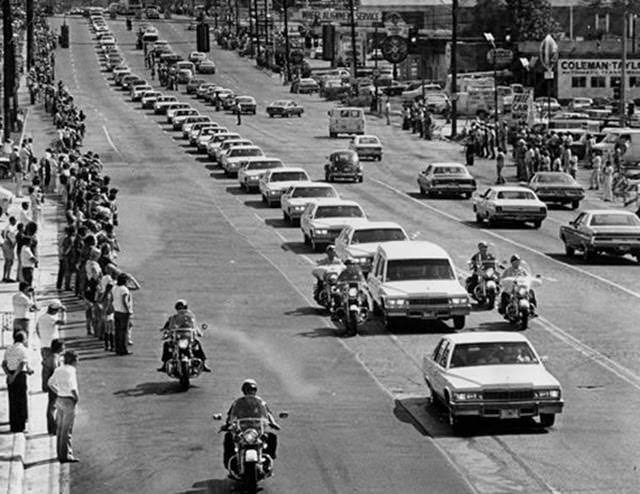
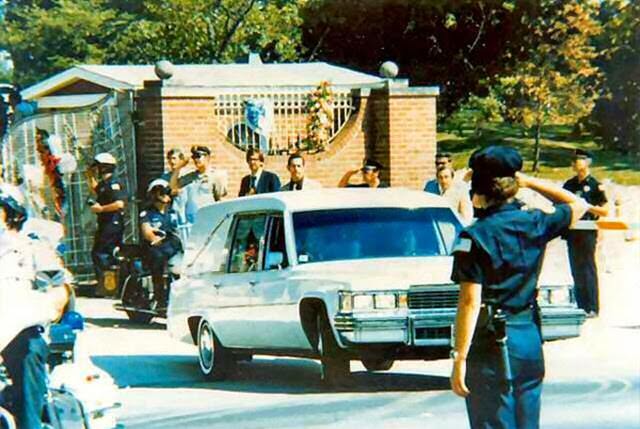
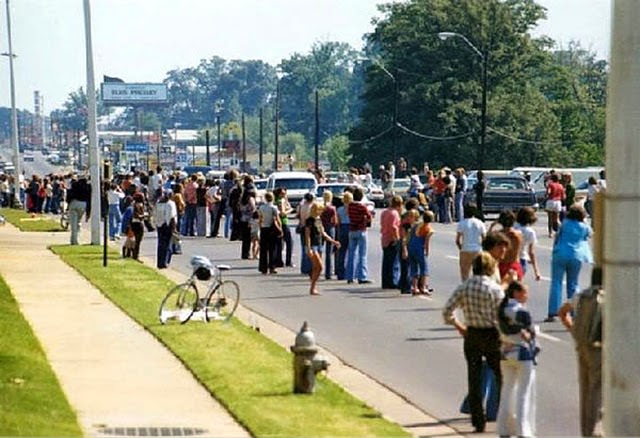
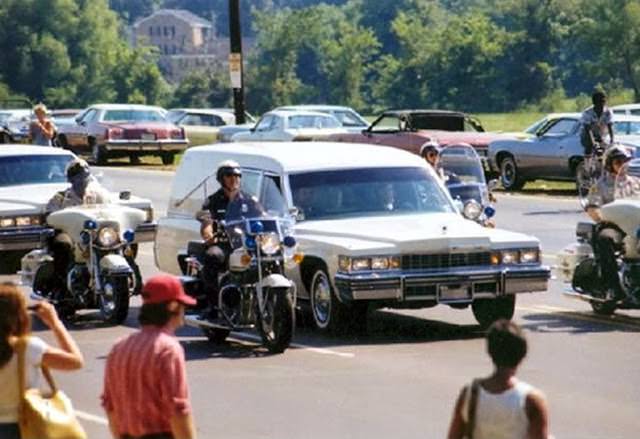
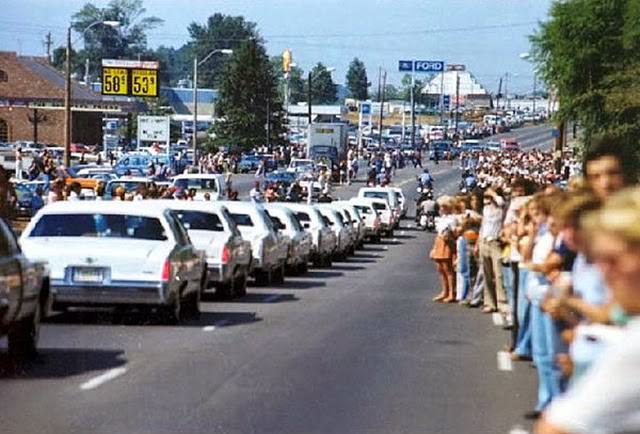
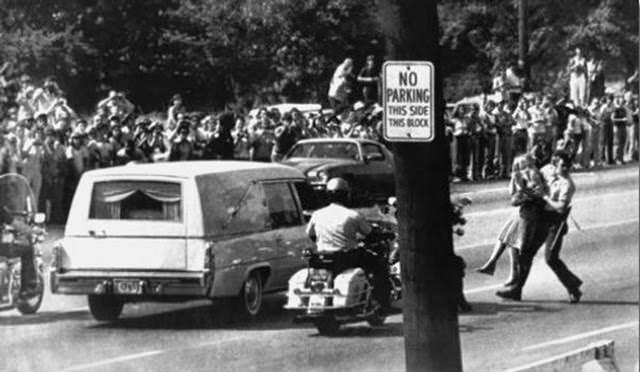
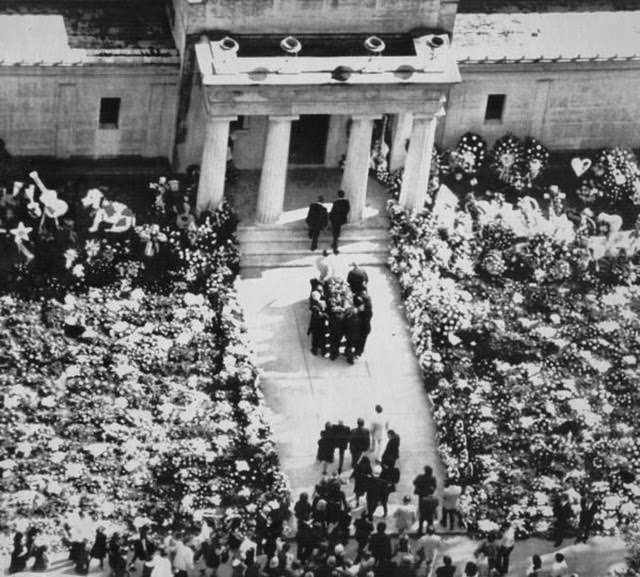
On August 19th, the funeral procession moved through Memphis. A hearse carried Elvis’s body along Elvis Presley Boulevard, followed by a long line of white Cadillacs. Thousands of people lined the route. The procession headed to Forest Hill Cemetery, where he was initially buried. The streets of Memphis, still packed with fans who had not yet left the city, fell quiet as the motorcade passed.
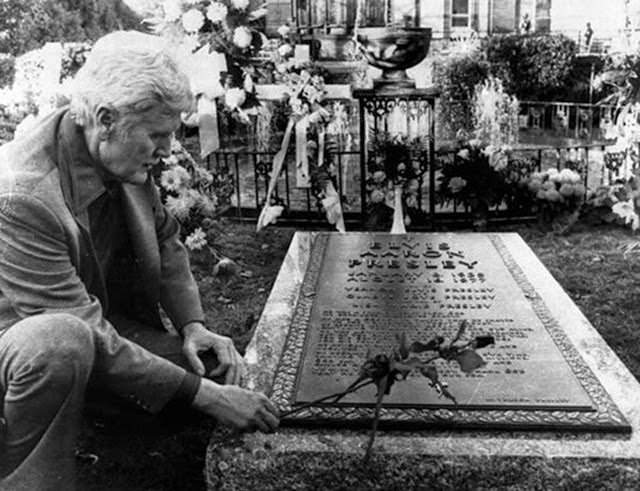
Months later, on November 24, 1977, Elvis’s father Vernon Presley placed a rose on his son’s grave as members of the press were allowed inside Graceland for the first time since the funeral. Vernon’s quiet gesture captured what the spectacle of August had not — private grief, stripped of crowds and cameras, at the grave of a son buried far too young.