In the 1880s, Mexico was a country in the middle of a dramatic transformation. President Porfirio Díaz had taken power and made modernization his top priority. The changes he pushed through touched everything — the railways, the cities, the countryside, and the economy. These historic photographs capture that world as it actually was: a nation being pulled in two directions at once, between the old and the new.
The single biggest change of the decade was the expansion of the railways. By 1884, the Mexican Central Railway had officially connected Mexico City to the U.S. border at El Paso, Texas. Crews laid thousands of miles of steel track across rugged mountains, dry deserts, and dense valleys. These lines linked remote silver mines to major ports, ending centuries of isolation for countless rural communities. Raw materials moved out of the country, and heavy machinery moved in.
Mexico City itself was being rebuilt to look like a European capital. The Paseo de la Reforma — a wide, tree-lined avenue — became the showcase of this new ambition. Wealthy families constructed mansions in the French style, complete with tall windows and ornate iron balconies. By the late 1880s, electric streetlights replaced the old gas lamps in the city center, and crews paved muddy roads with cobblestones while also improving the city’s drainage systems to reduce the spread of disease.
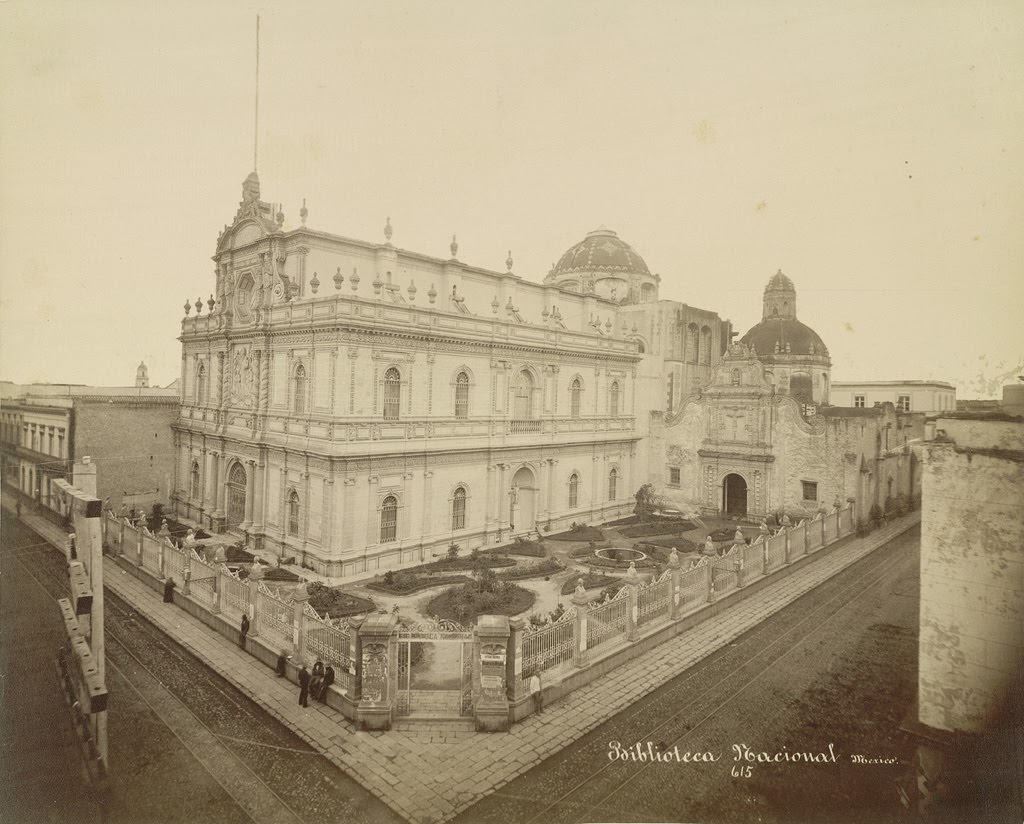
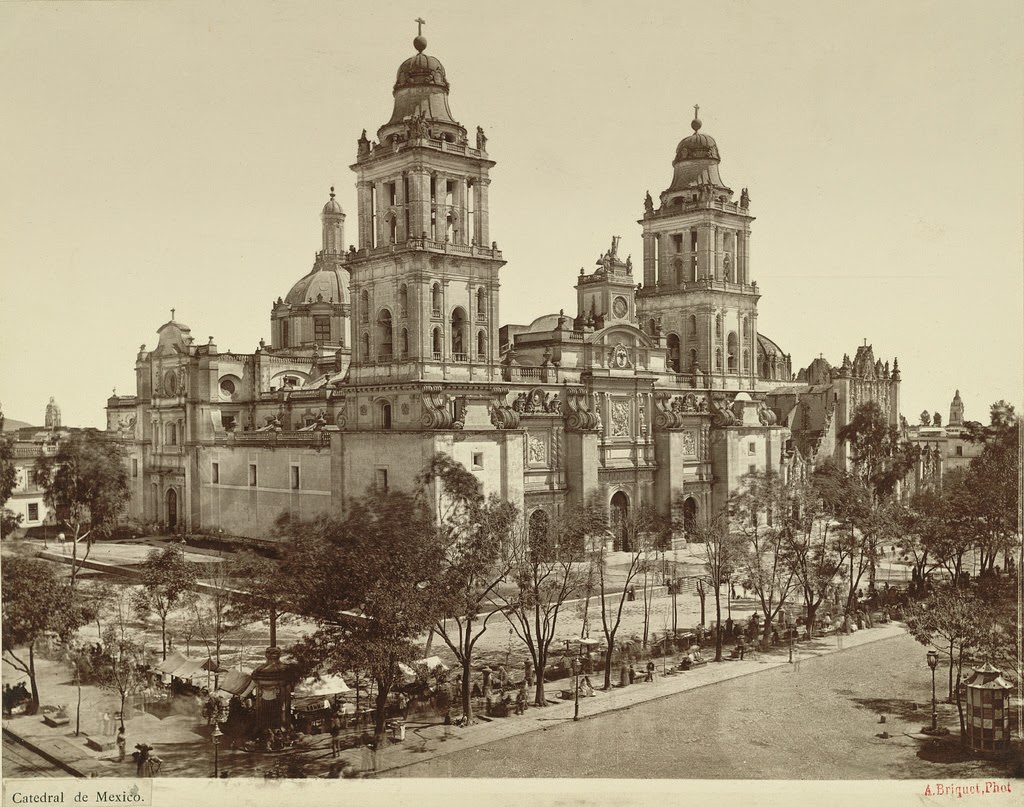
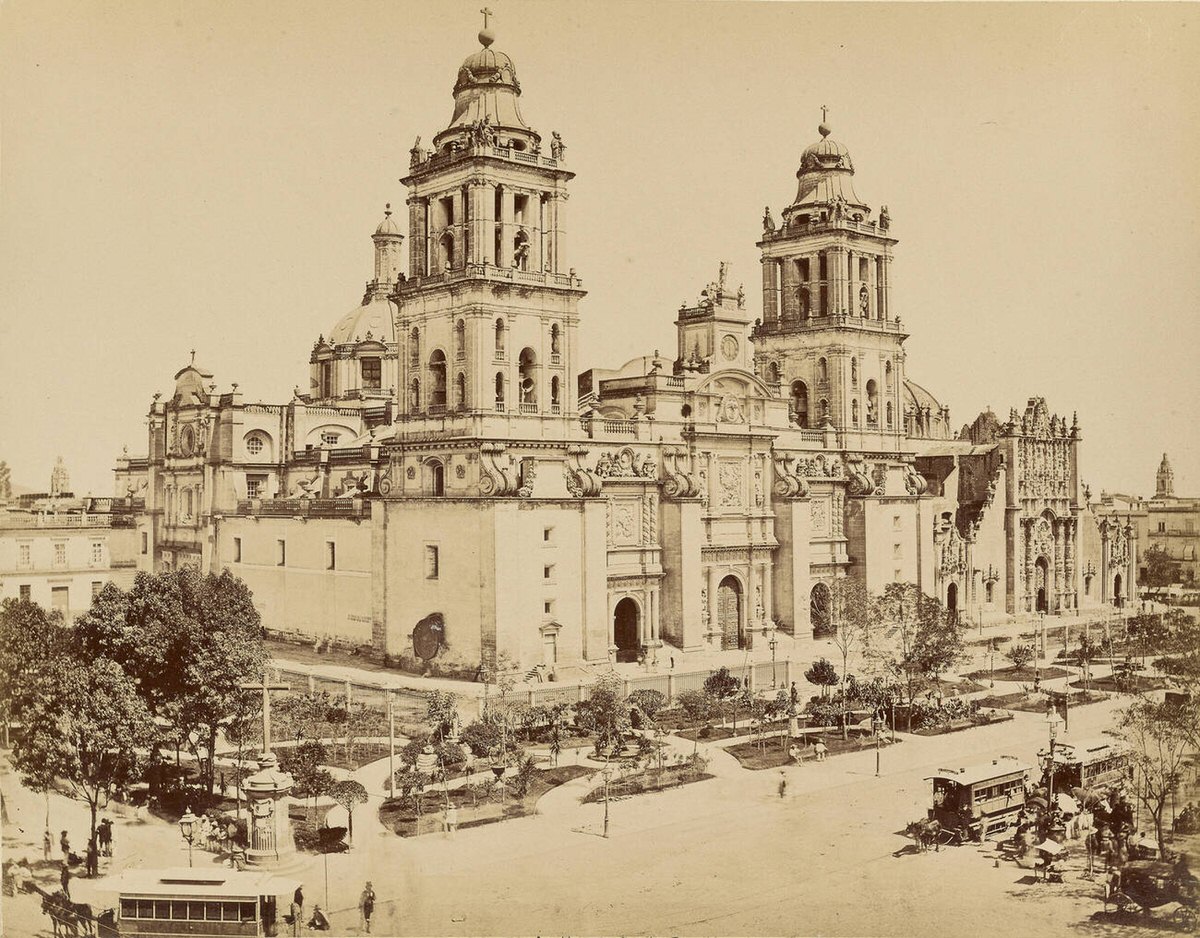
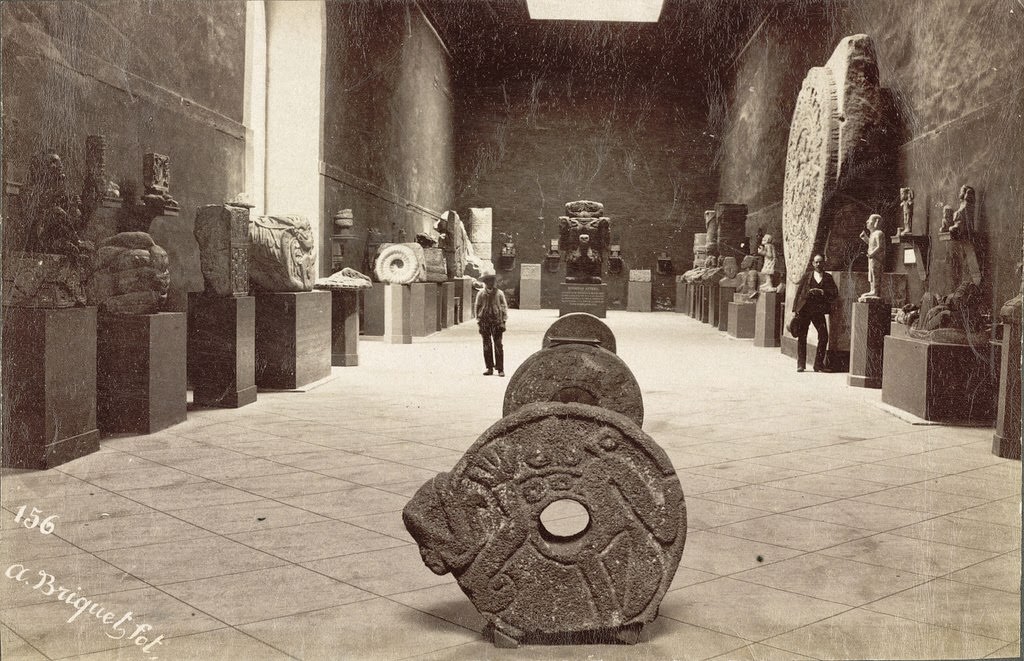
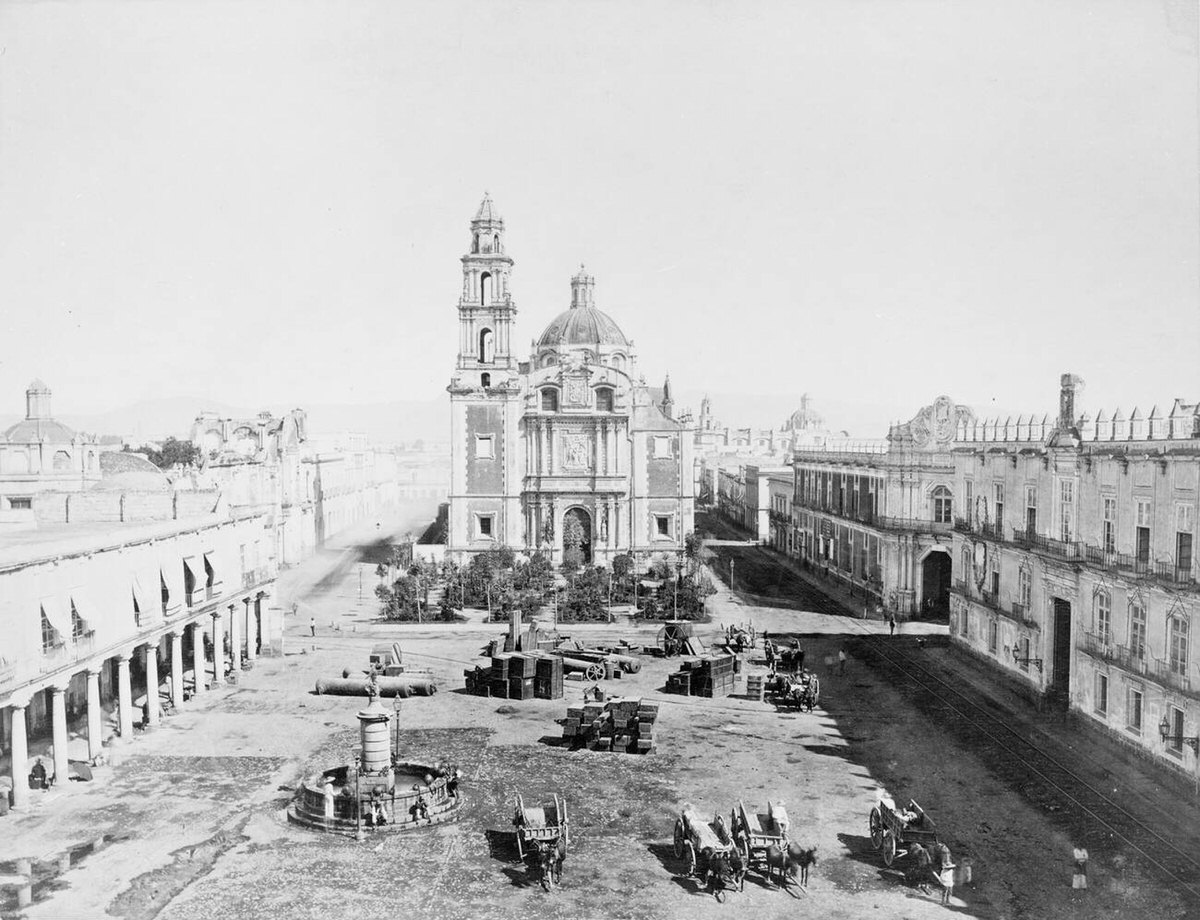
The Metropolitan Cathedral and other landmark buildings in the capital reflected centuries of Spanish colonial architecture. But institutions like the National Library — housed in the former Church of Saint Augustin — were being repurposed to serve a modernizing state. The Archaeological Museum also stood as a reminder that Mexico’s identity was being carefully curated, with the government choosing which parts of the past to display and which to move past.
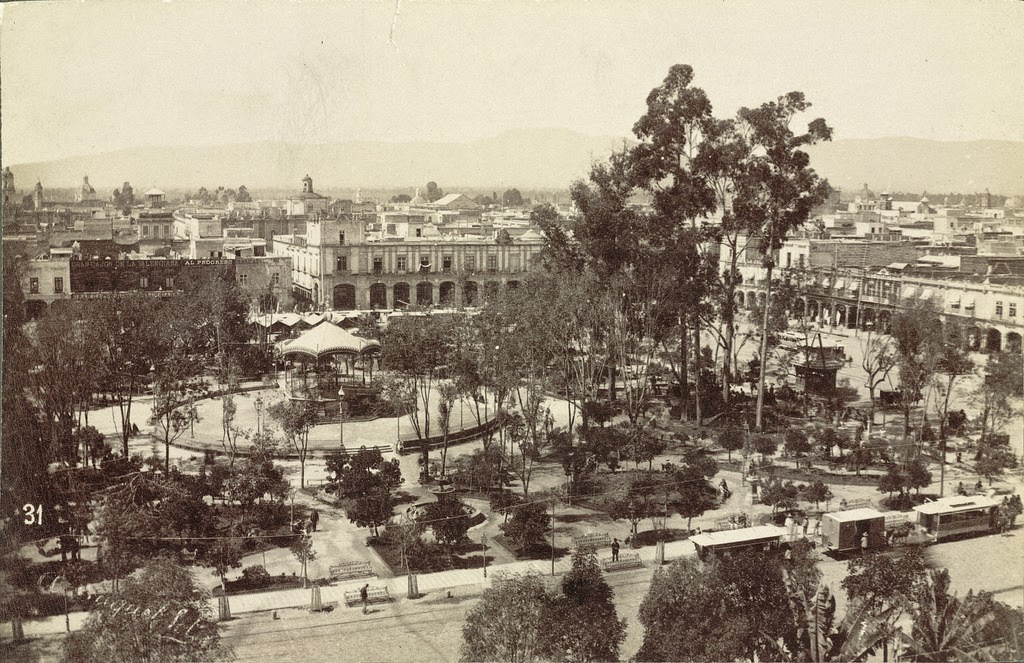
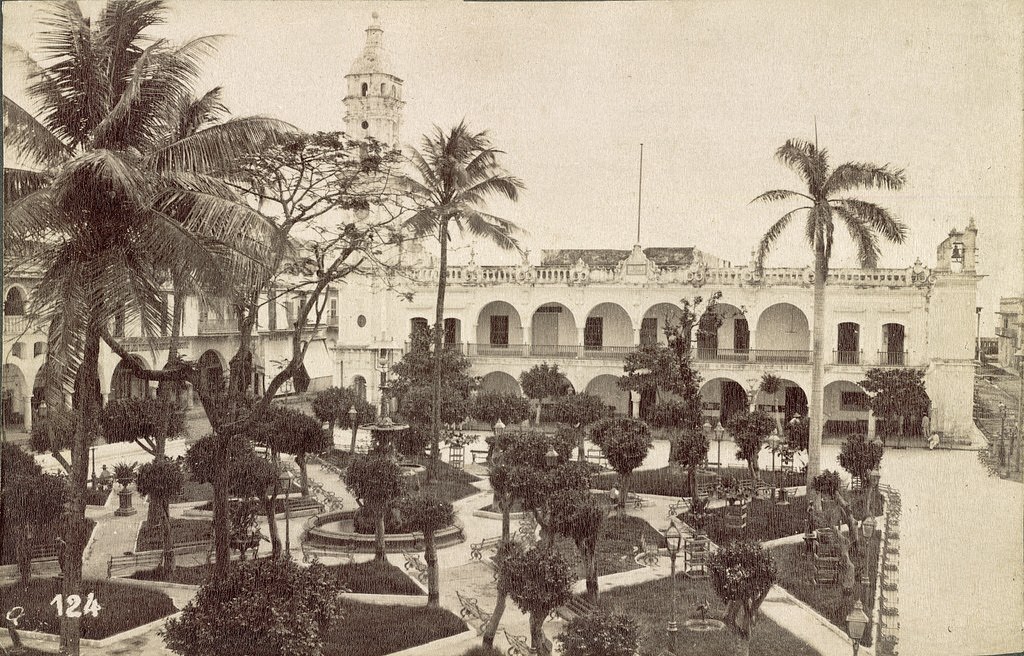
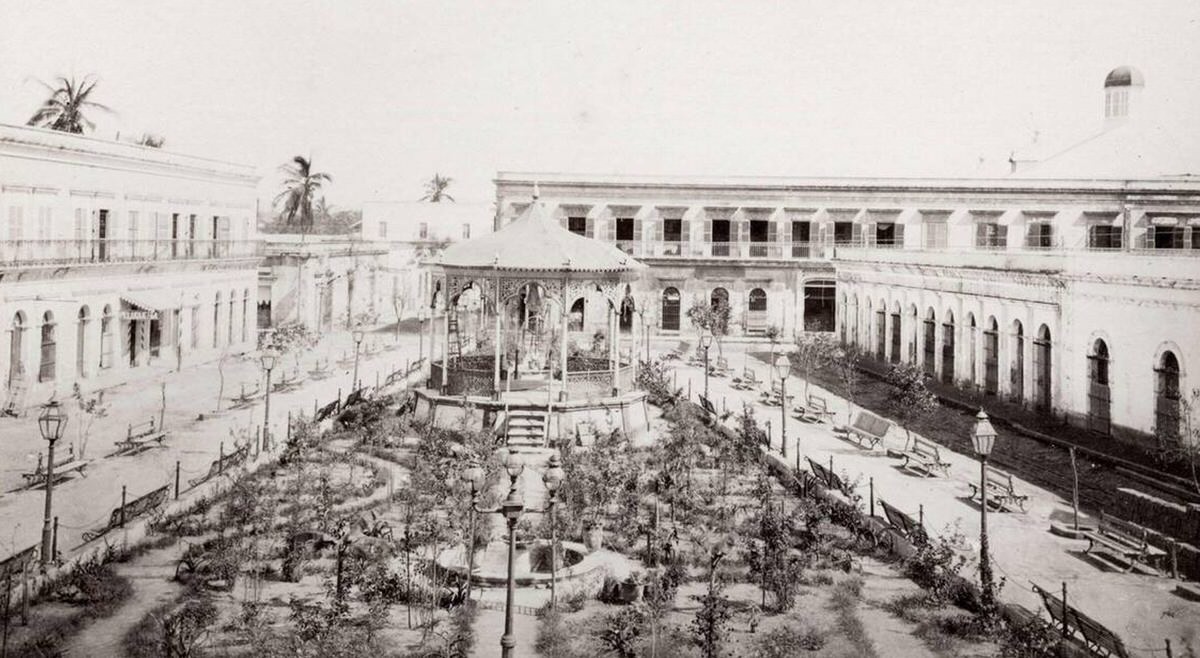
The Zócalo, Mexico City’s main plaza, remained the political and social heart of the country. Around it, daily life played out against the backdrop of grand government buildings and the cathedral. Street vendors, government officials, and ordinary residents all shared the same cobblestone space. The plaza had served as the center of Aztec Tenochtitlán centuries earlier, and it continued to hold that same central role under Díaz.
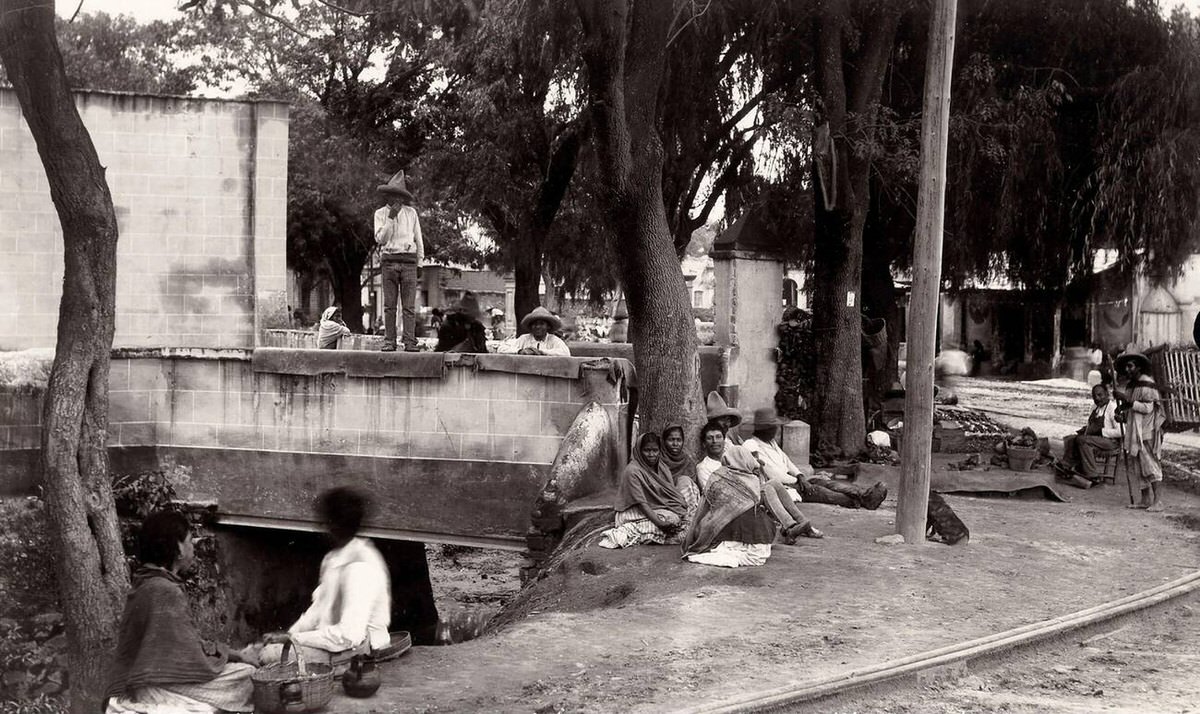
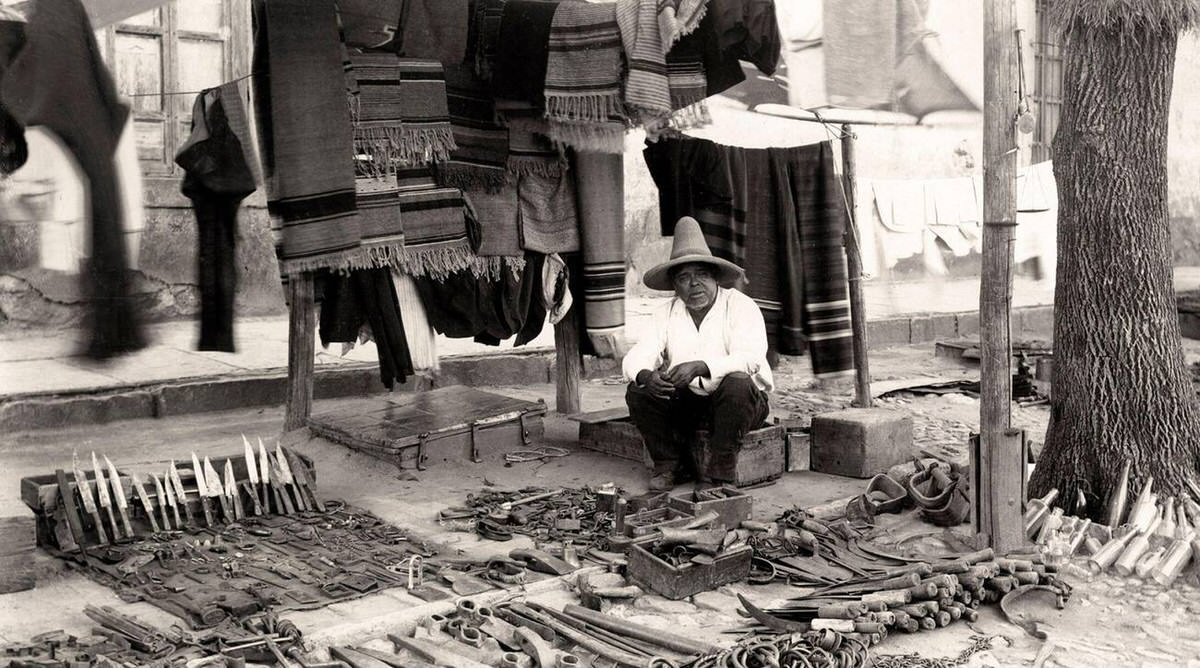
Street vendors were a constant feature of Mexican urban life in the 1880s. They sold everything from food to tools, moving through city gateways and plazas on foot or by cart. The knife and tool seller was a familiar sight in towns and villages across the country — a reminder that most commerce still happened face to face, far from any railway depot or telegraph office.
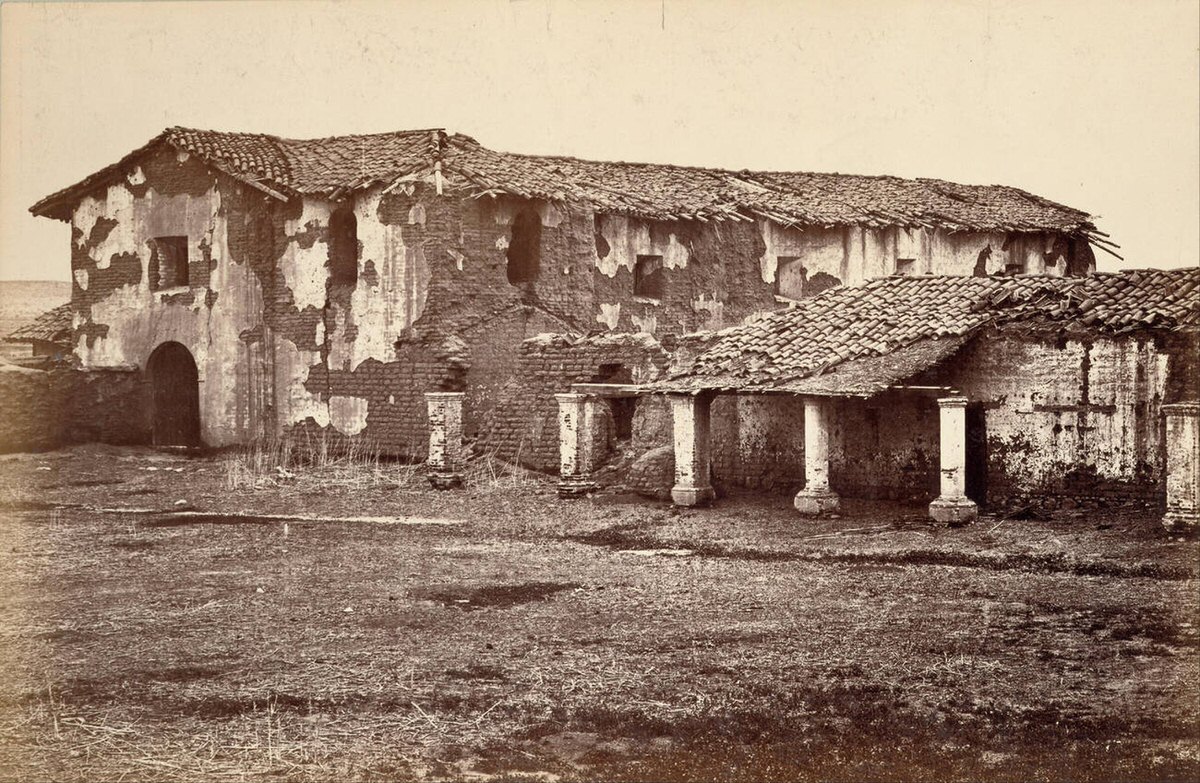
Outside the capital, life was defined by the hacienda system. These enormous estates produced sugar, henequen fiber, and cattle for export. A small group of powerful landowners controlled the majority of Mexico’s agricultural land. They lived behind high stone walls in large main houses with private chapels, while the laborers — known as peons — occupied small adobe huts at the edge of the property. Workers were kept tied to the land through debt, receiving wages in tokens that could only be spent at the tienda de raya, the landlord’s own company store.
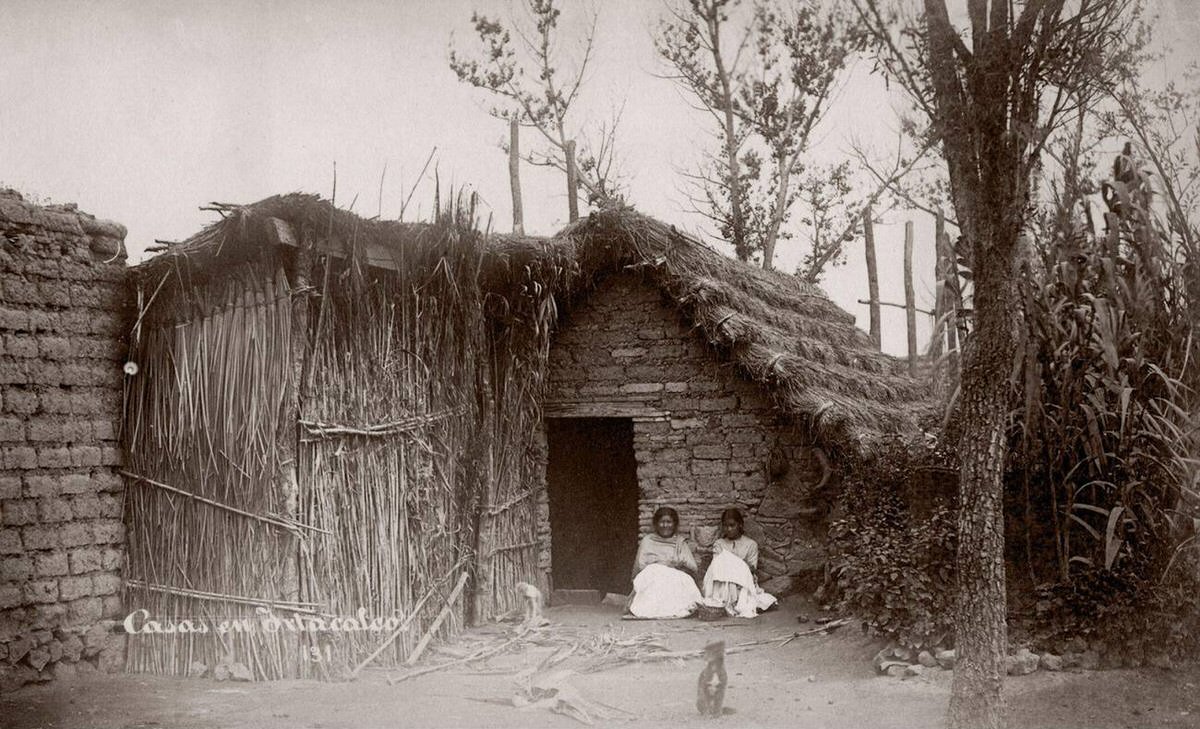
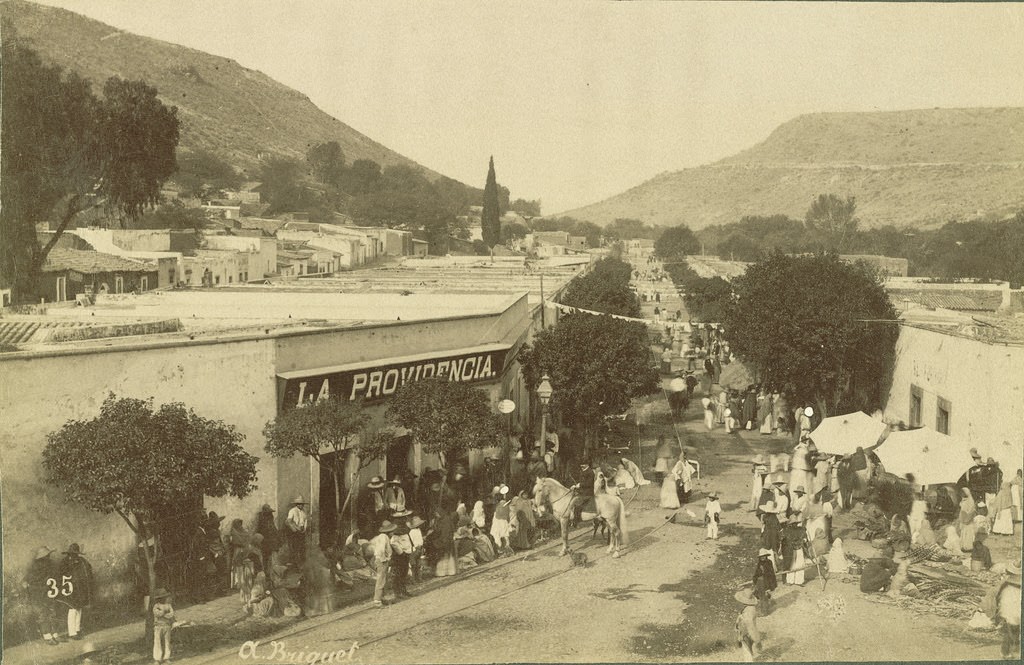
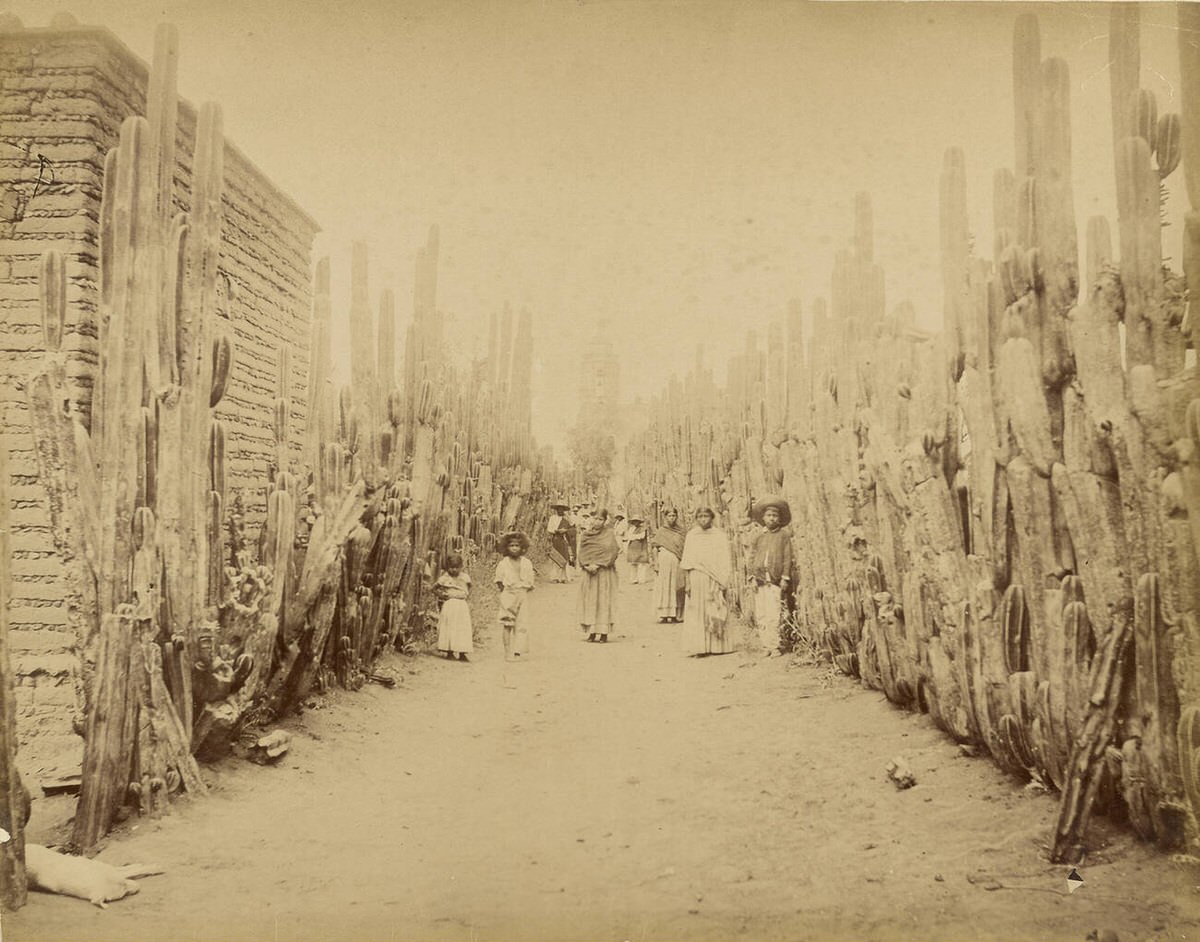
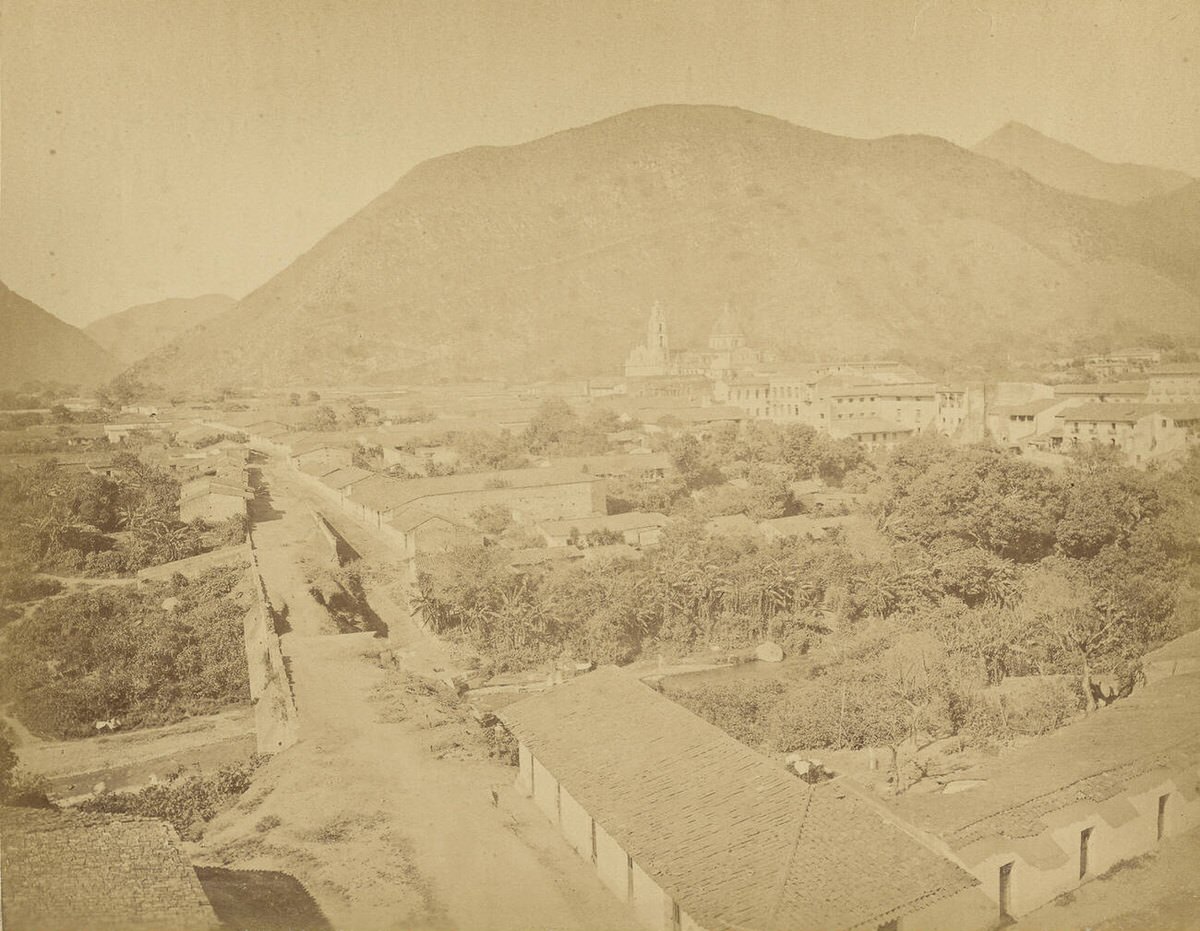
Rural villages across Mexico varied widely in size and character. Some sat in lush valleys near rivers, while others clung to hillsides in drier regions. In smaller pueblos like Chimalapa, adobe construction and dirt streets were the norm. Life in these communities moved at a pace largely unchanged by the industrial activity happening in the cities and along the rail lines.
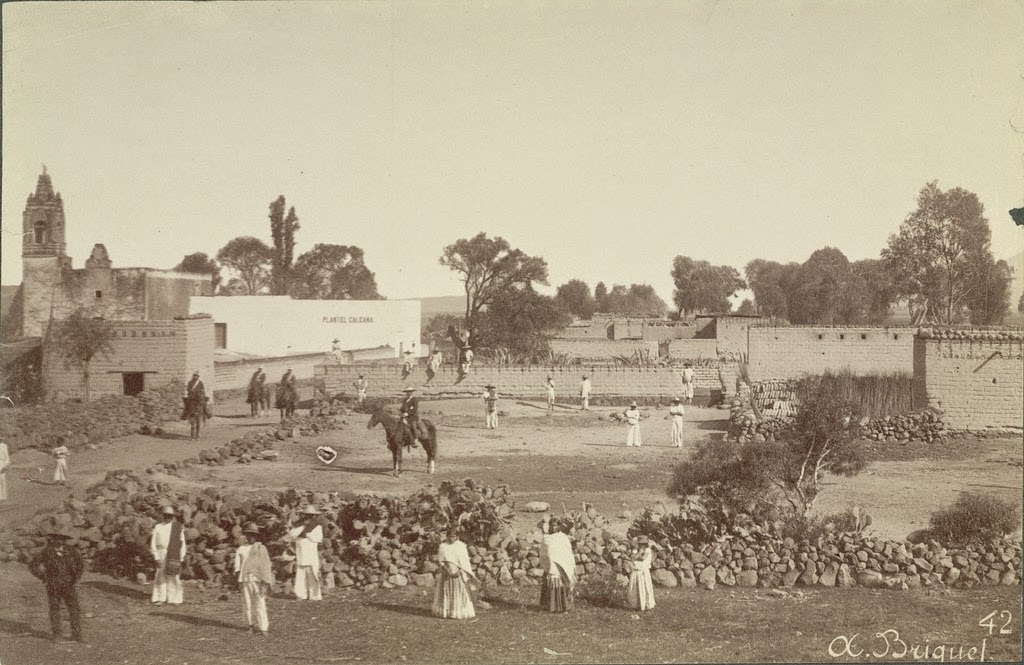
To keep the roads safe for travel and commerce, the government expanded the Rurales — a mounted police force tasked with clearing the highways of bandits. Dressed in grey uniforms with red trim and wide-brimmed sombreros, they patrolled the new railway lines and escorted gold shipments from the mines. Their presence made it possible for merchants to move goods across the country without the constant threat of robbery that had stifled trade in previous decades.
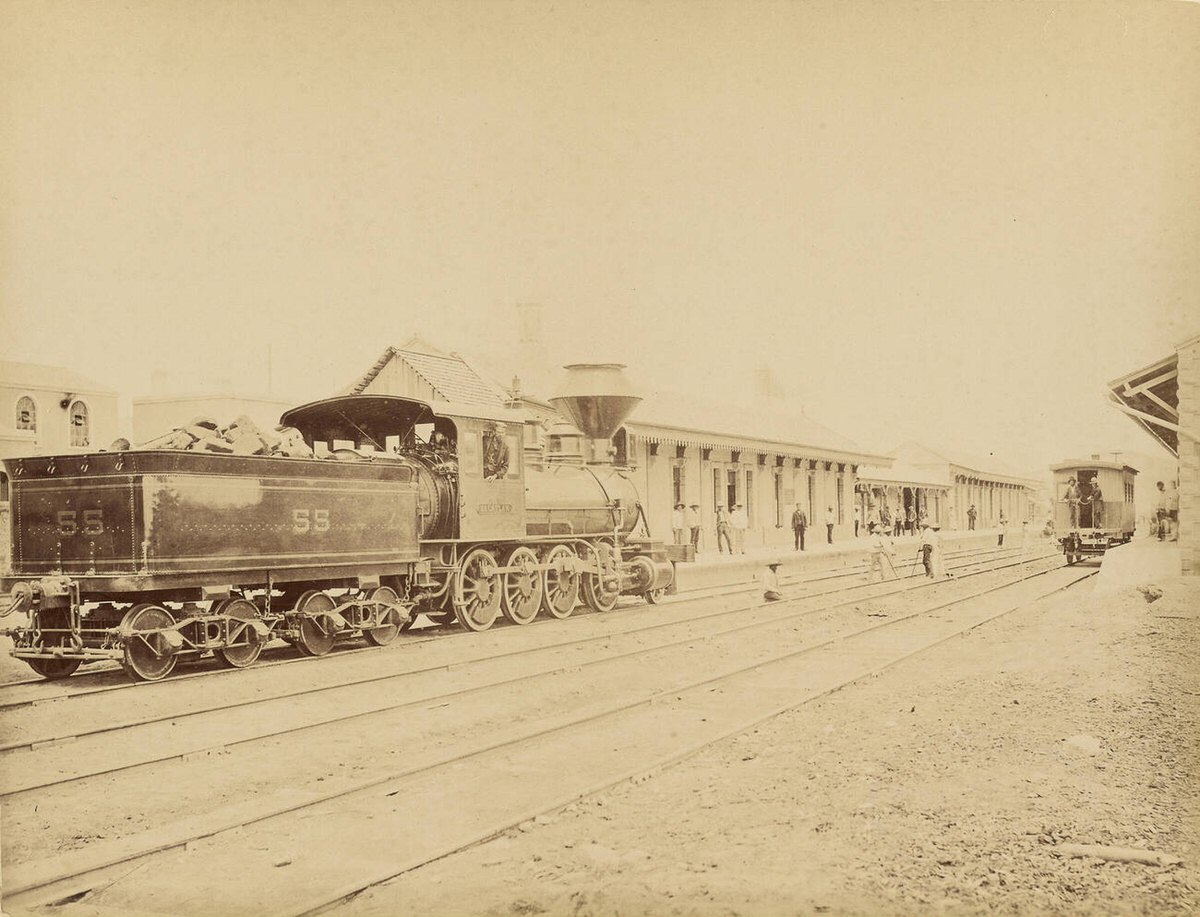
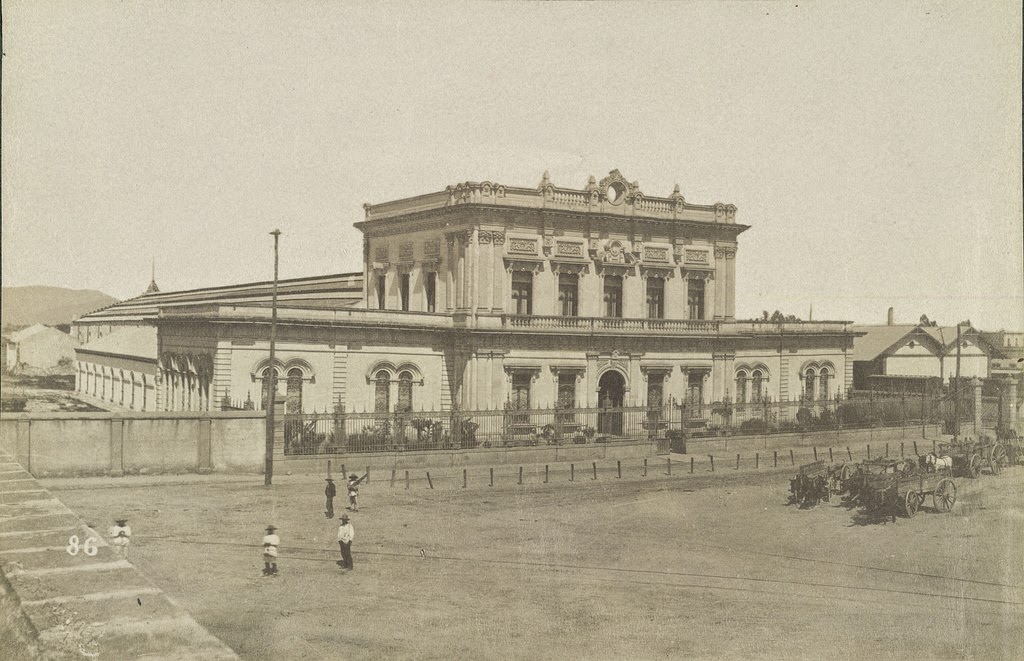
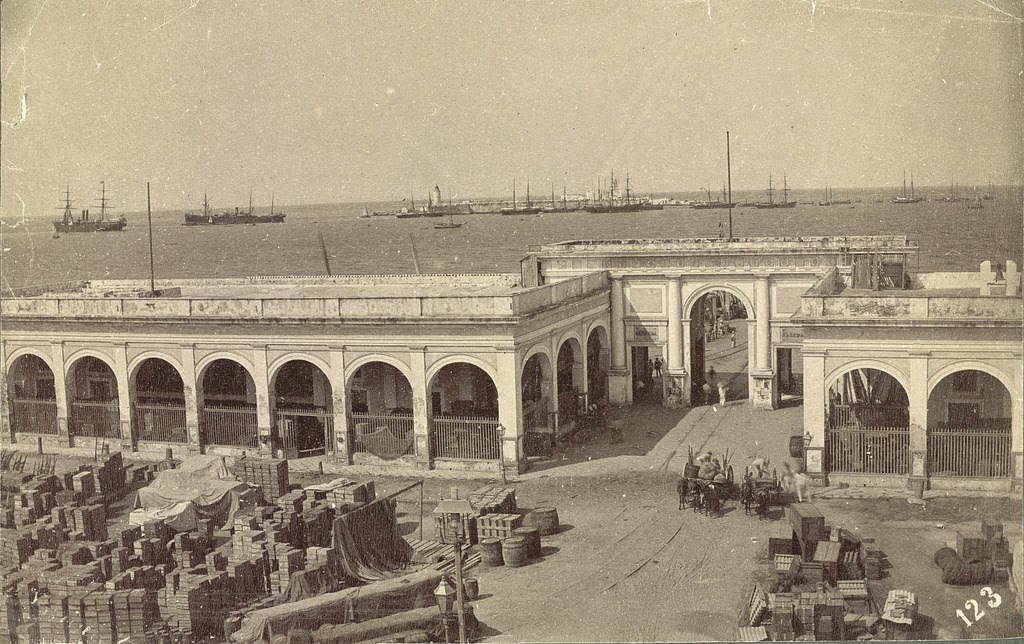
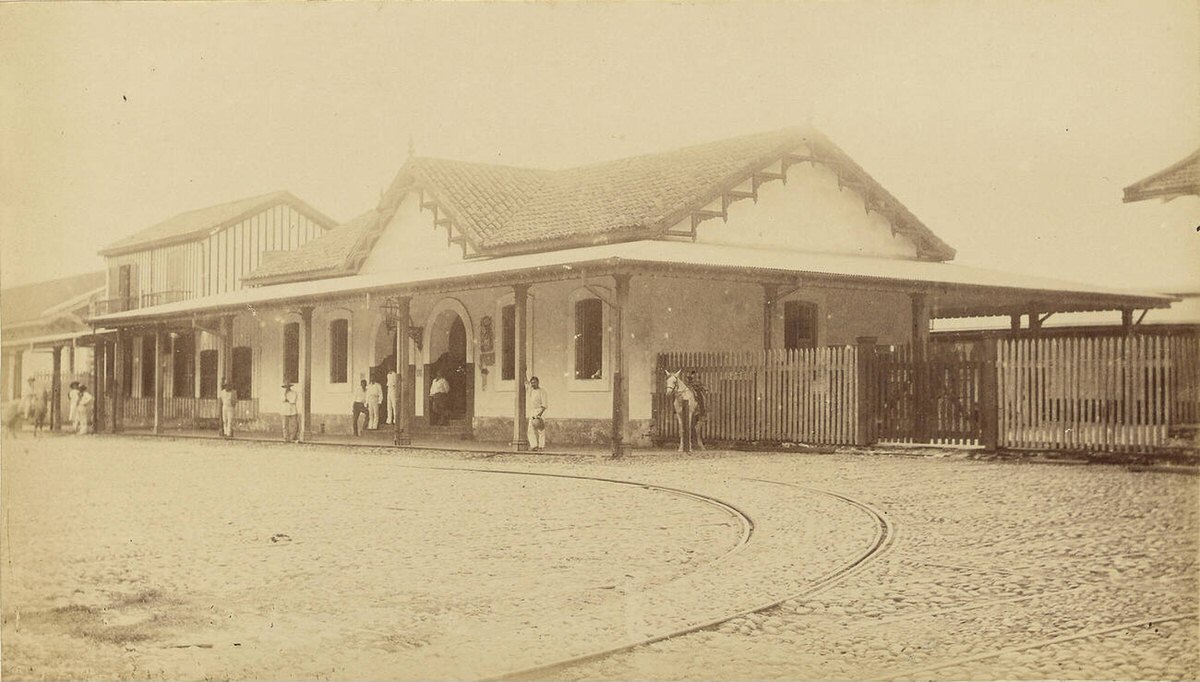
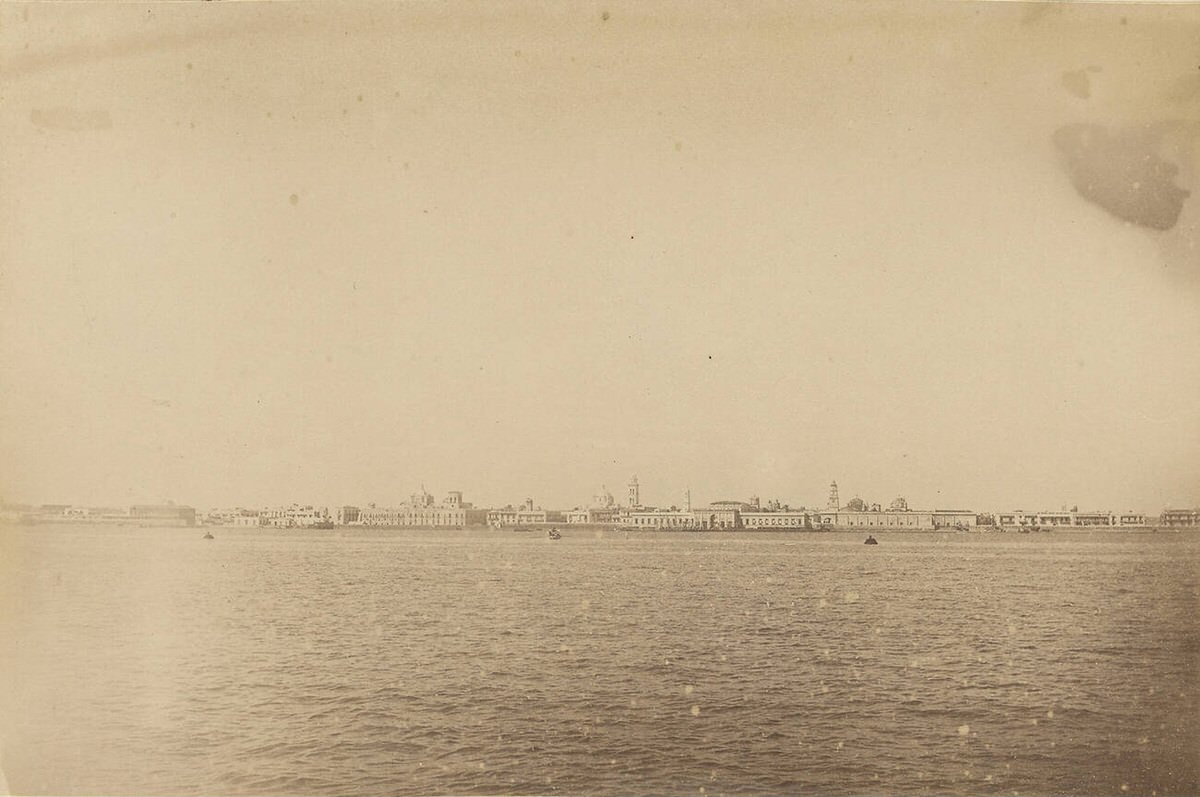
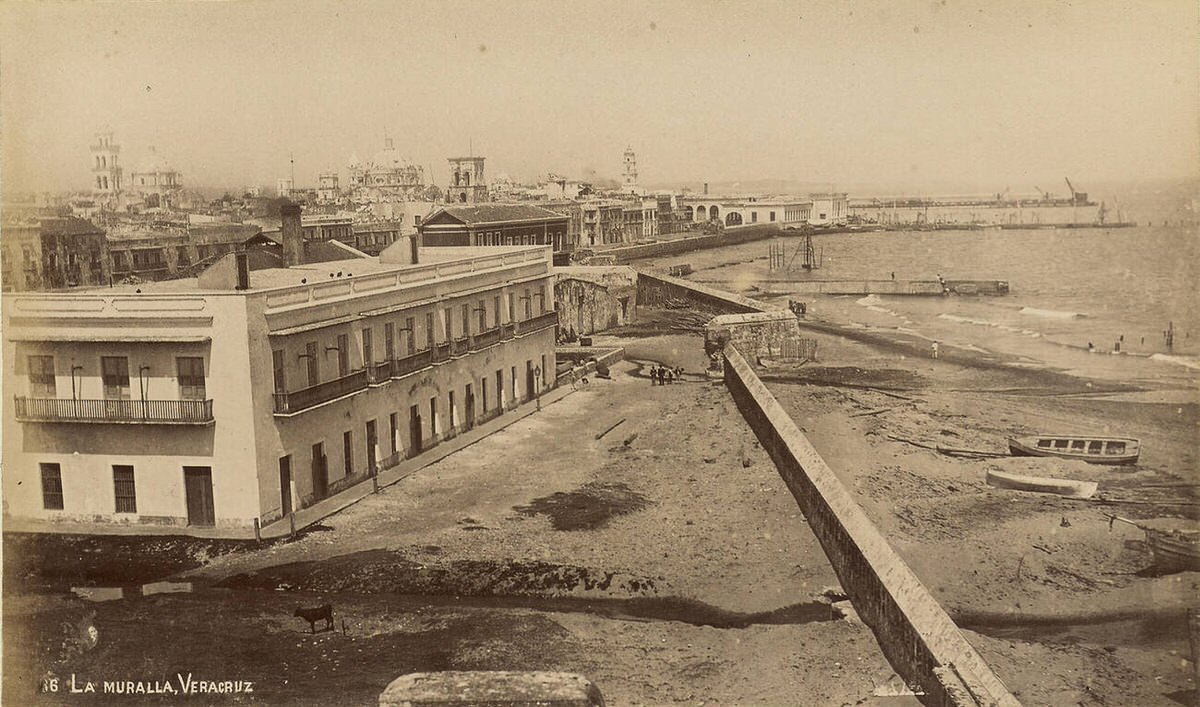
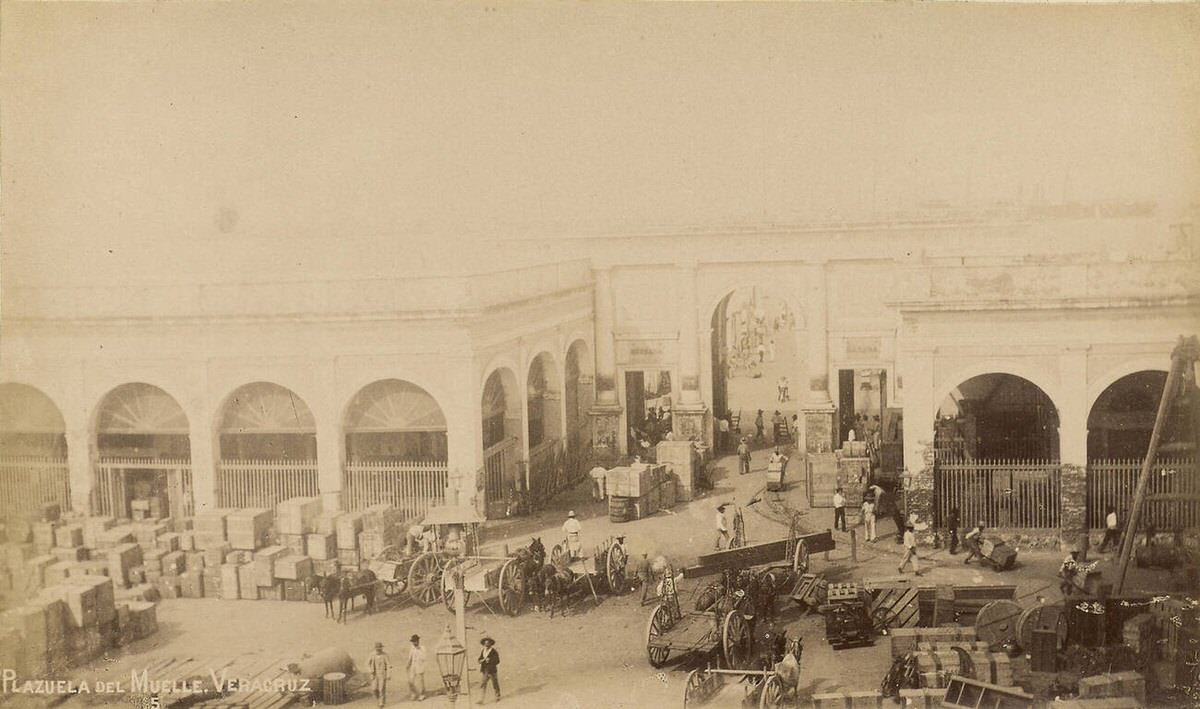
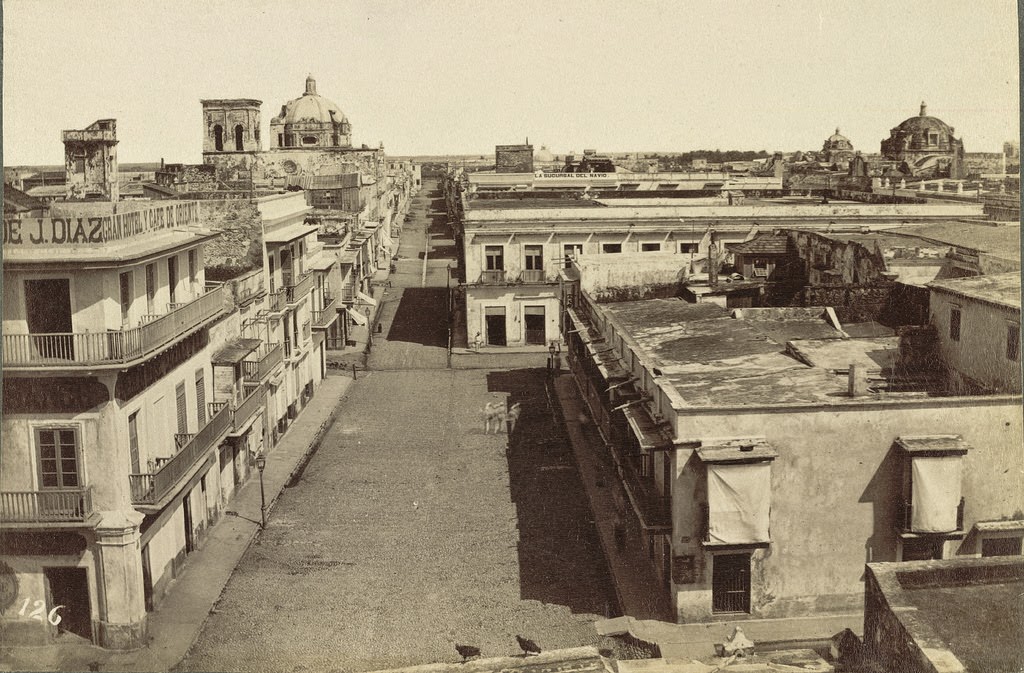
The port city of Veracruz played a central role in this new economic order. Goods flowing in and out of Mexico passed through its harbor. The railway station at Veracruz handled freight arriving from Europe and the United States, while the customs house processed the steady stream of imports. The harbor itself, visible from the sea, was one of the busiest points of entry in the entire country.
Foreign investment poured into Mexico’s mining sector throughout the 1880s. American and British companies revived old colonial silver mines in states like Guanajuato and Zacatecas, installing modern steam pumps to drain tunnels that had been flooded and abandoned for years. Telegraph lines followed the railway tracks, allowing direct communication between Mexico City and New York. The profits from this boom, however, flowed largely to overseas investors rather than to the mining communities themselves.
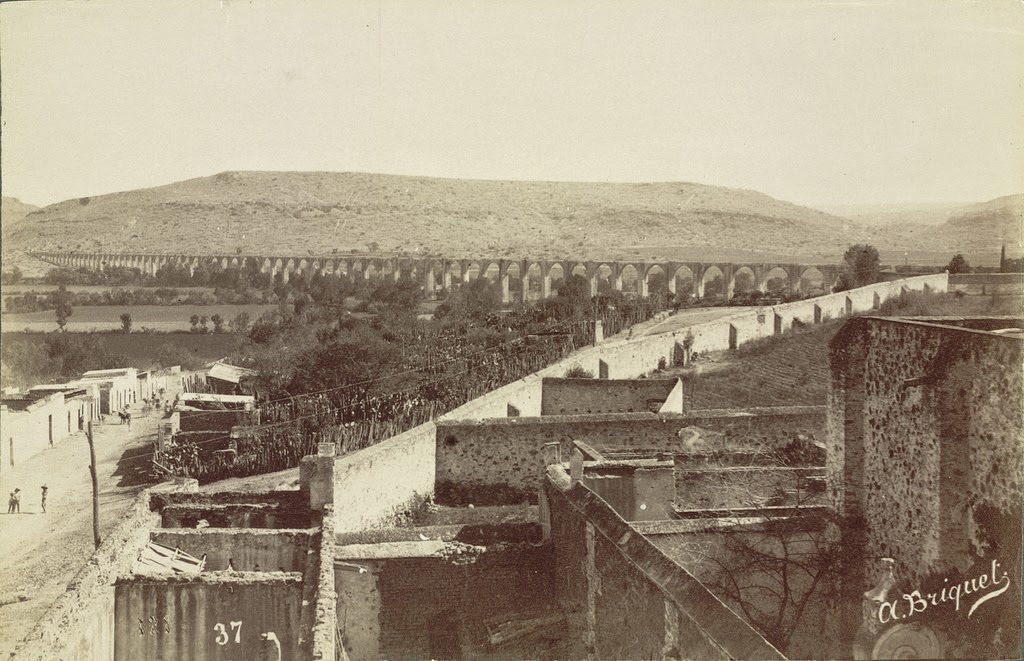
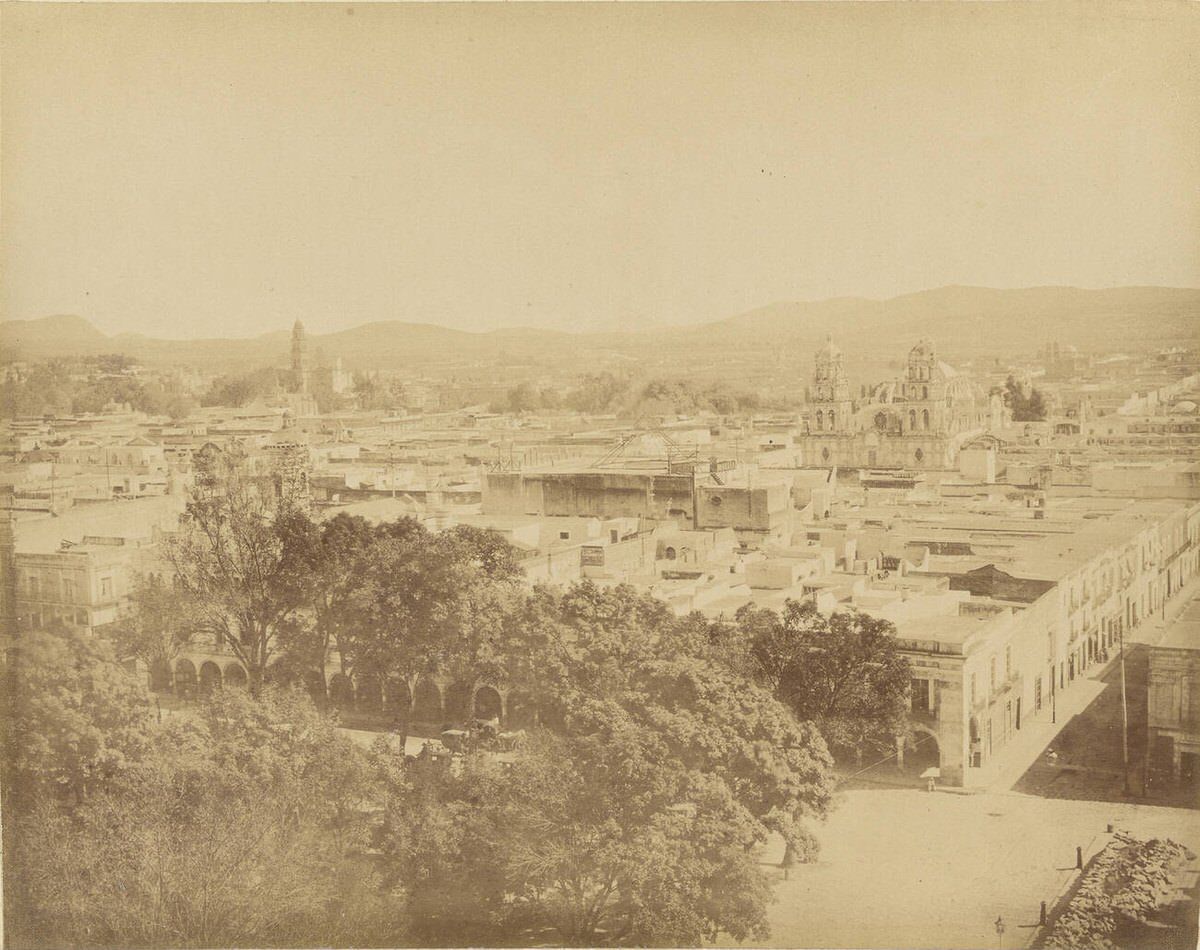
Cities like Puebla and Orizaba showed how the country’s urban centers were growing during this period. Panoramic photographs from the era reveal dense clusters of church towers, tiled rooftops, and expanding streets — all set against the backdrop of the volcanic mountains that defined central Mexico’s landscape. Mount Popocatépetl, visible from the town of Amecameca, loomed over the region as it always had, indifferent to the changes unfolding below.
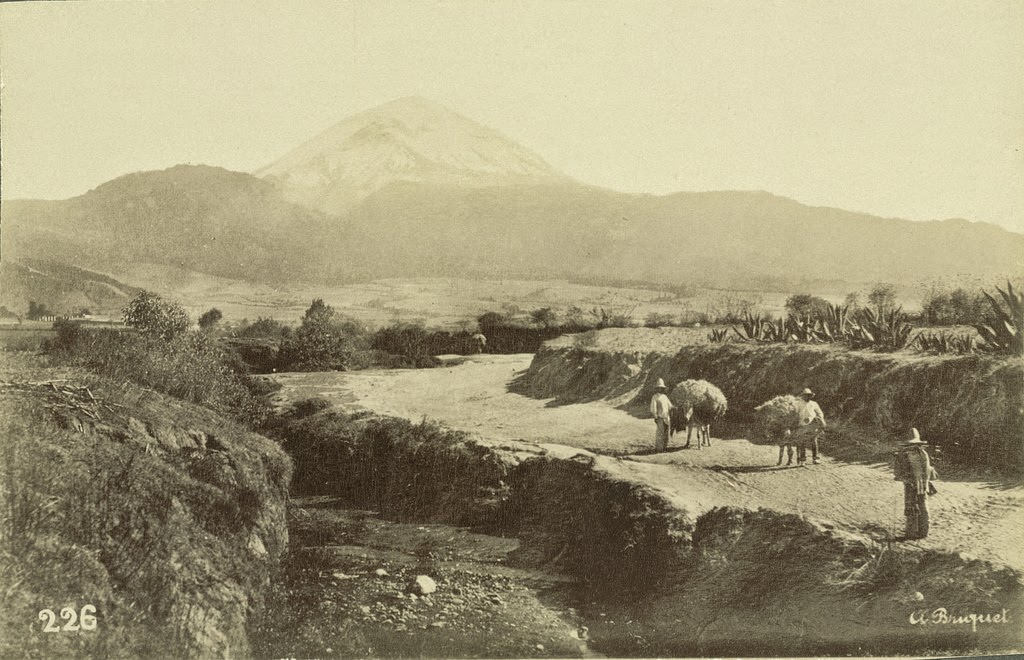
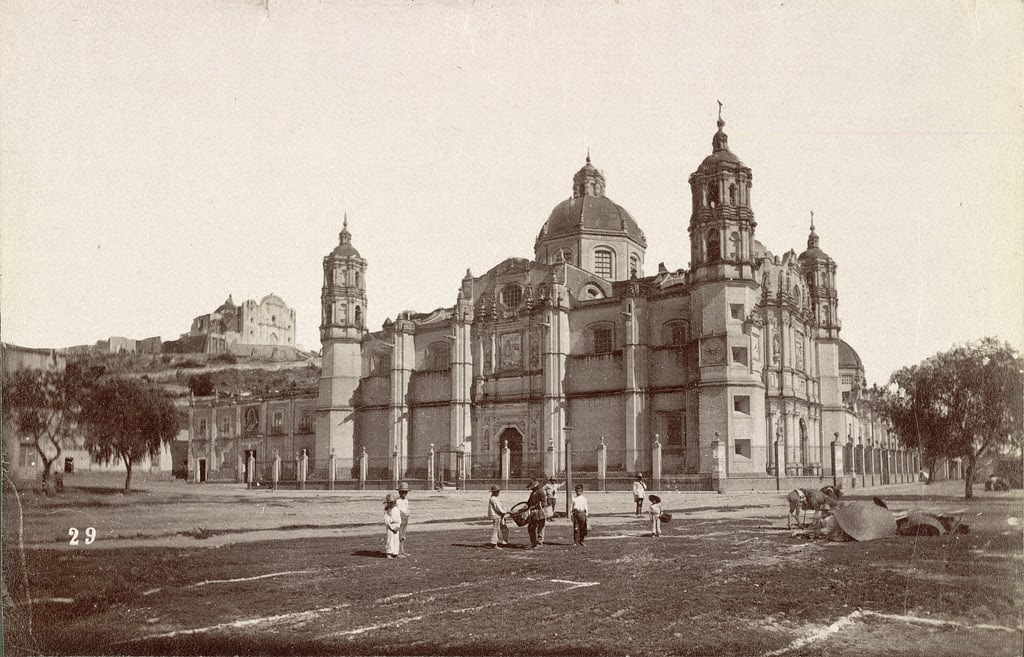
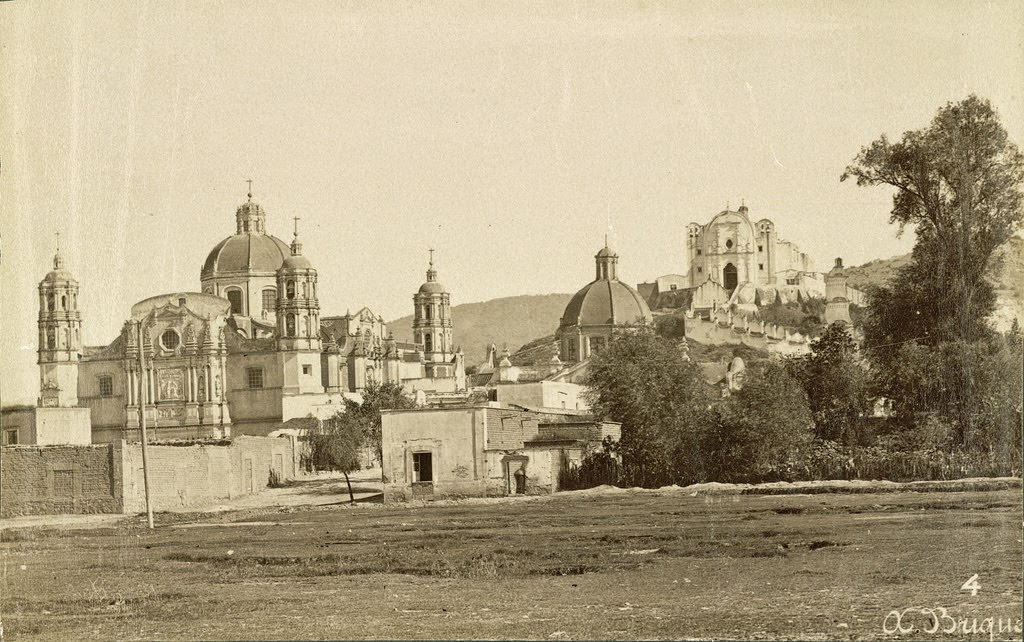
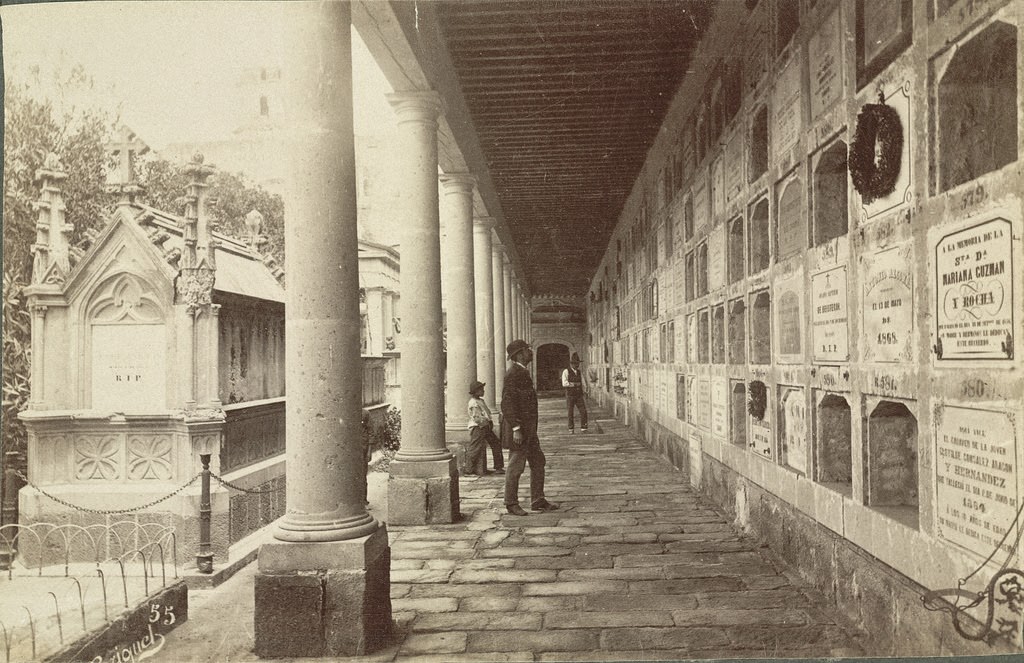
Religion remained at the center of Mexican life in the 1880s. The Basilica of Our Lady of Guadalupe drew pilgrims from across the country, and the surrounding village at the base of Tepeyac Hill was a permanent community built around that devotion. San Fernando Cemetery in Mexico City served as the resting place of some of the most prominent figures in Mexican history, including presidents and generals. The Church’s physical presence — in cathedrals, basilicas, and roadside chapels — was visible in every part of the country.
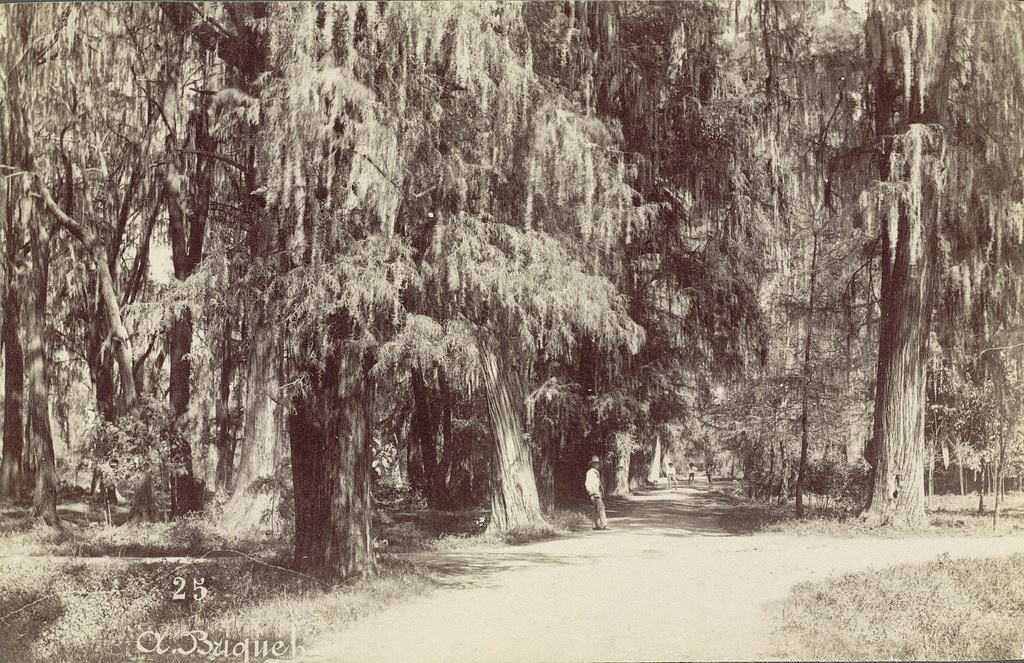
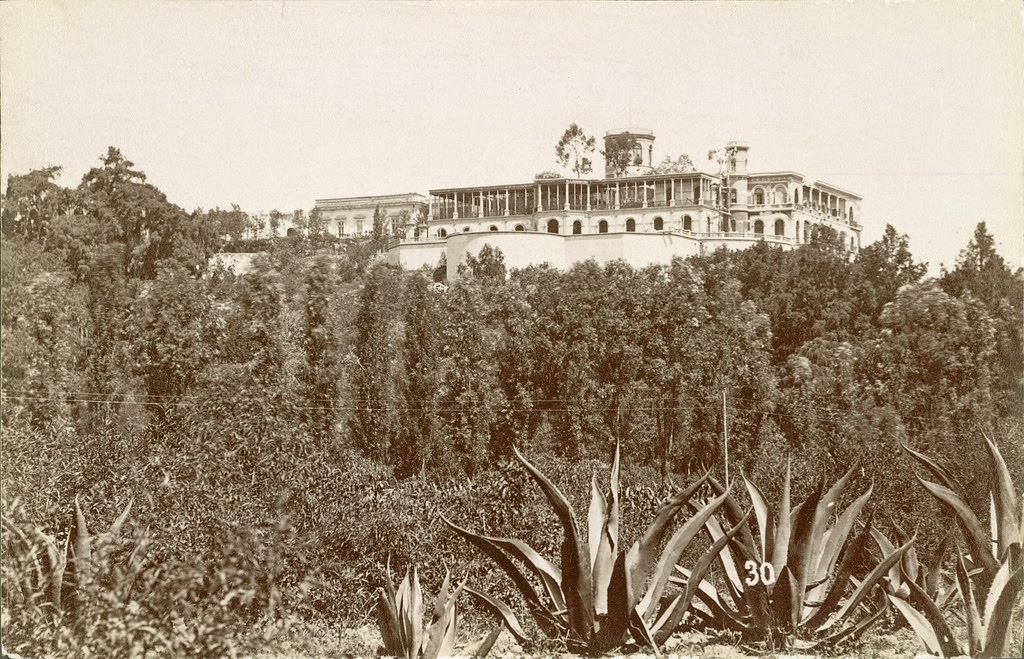
Chapultepec, on the western edge of Mexico City, combined natural beauty with political power. The ancient grove of ahuehuete trees had served as a retreat for Aztec rulers and later for Spanish viceroys. By the 1880s, the hilltop castle served as a residence and symbol of the Díaz government’s authority. The park below offered a rare public green space in a city undergoing constant construction.
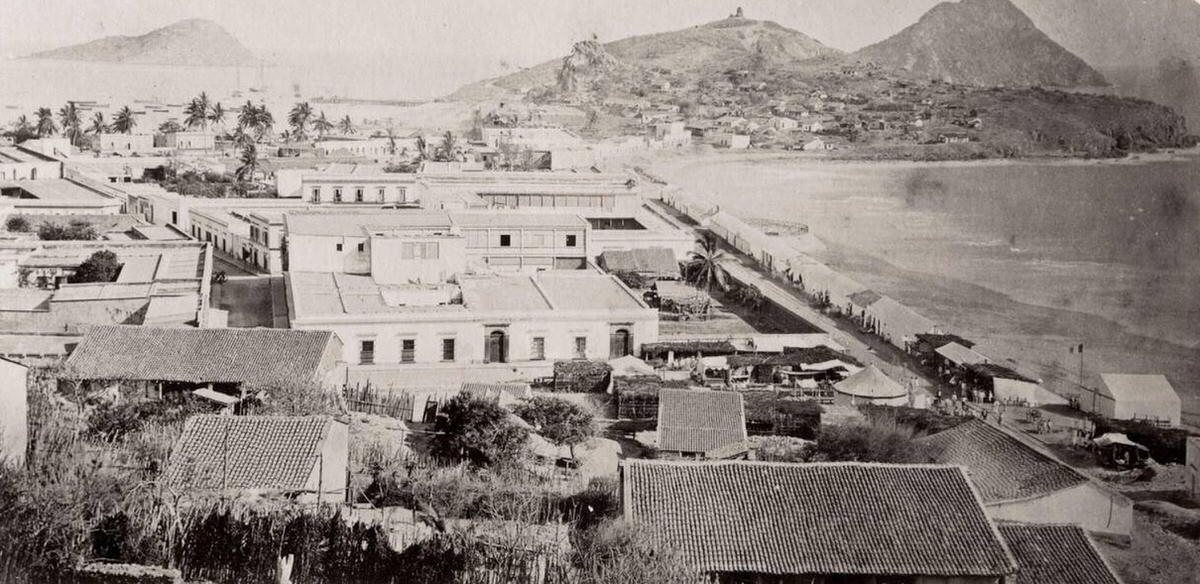
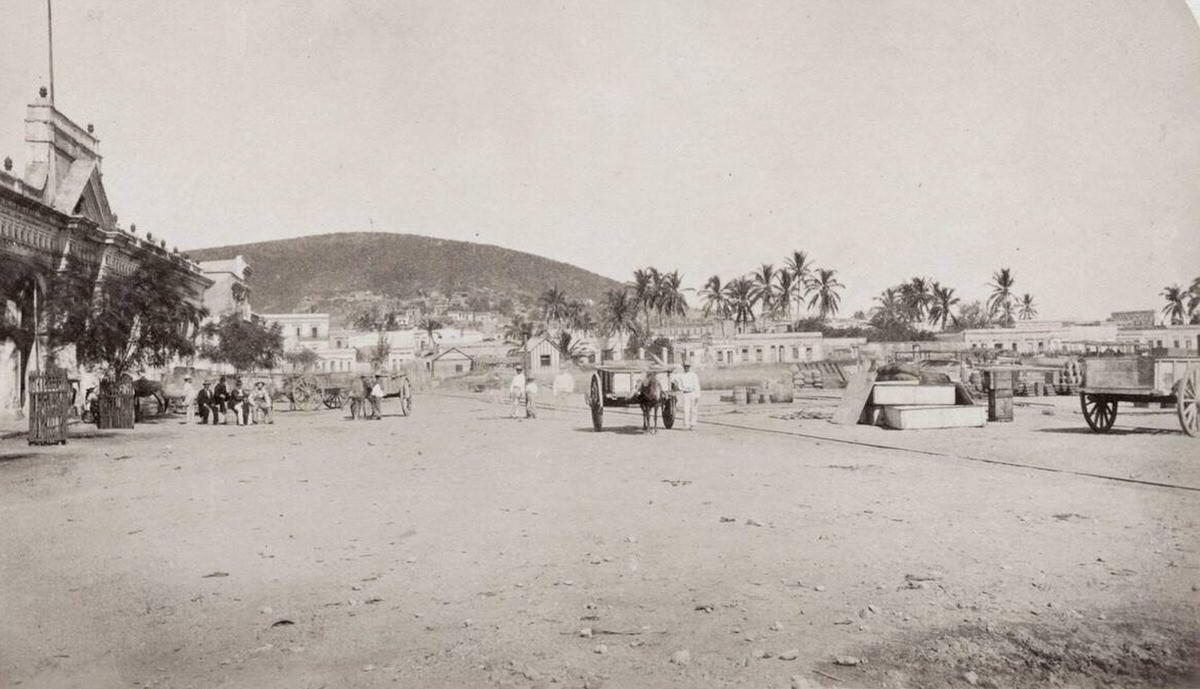
The Pacific coast port of Mazatlán was another window into Mexico’s commercial world. Its customs house processed goods moving through the harbor, and Signal Hill provided a strategic lookout point over the bay. The city’s main plaza reflected a provincial urban culture distinct from the capital — quieter, smaller, but still shaped by the same forces of trade and government authority.
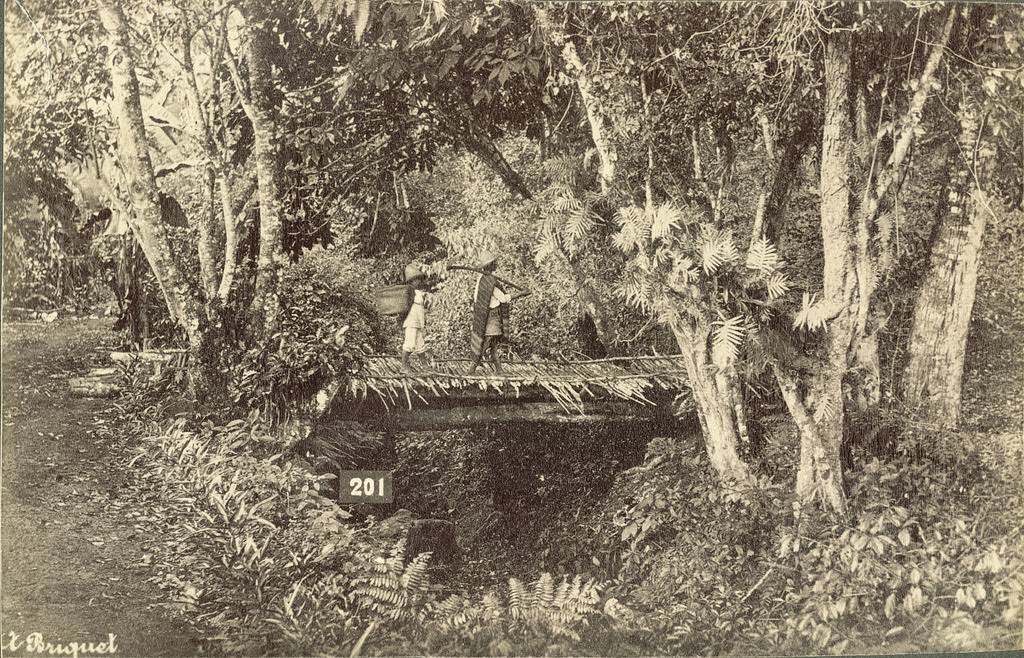
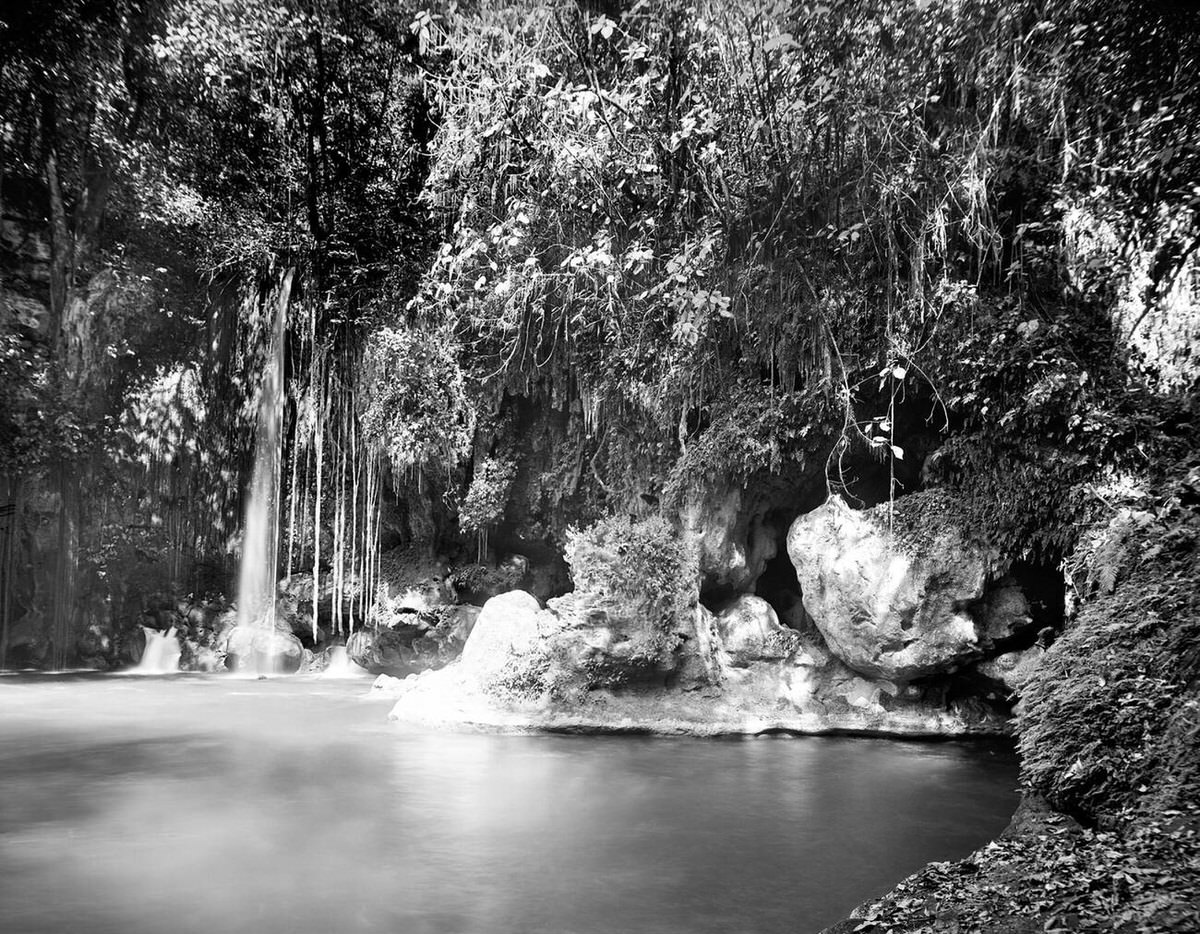
Not all of Mexico’s remarkable geography was urban. The country’s rainforests, mountain caves, and cascading rivers existed largely outside the reach of the railway or the telegraph. These landscapes were photographed by travelers and surveyors as Mexico’s interior became more accessible. The cave at El Abra, the lush tropical scenes, and the cascade fountains captured in photographs from this period show just how vast and varied the country was beyond its cities and haciendas.
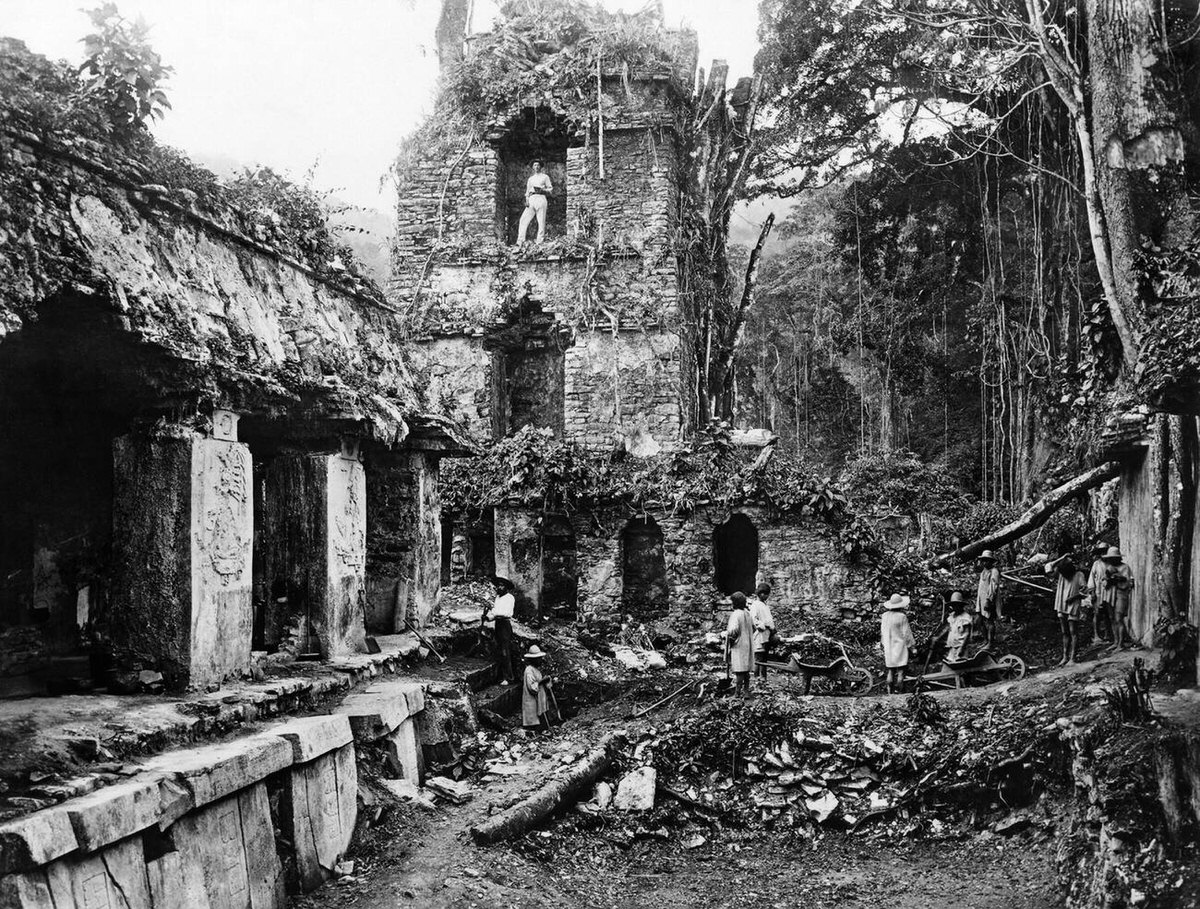
Ancient ruins drew increasing attention from archaeologists and photographers during the 1880s. The Mayan palace at Palenque, photographed in 1883, stood deep in the jungle of Chiapas — a complex of carved stone structures that had been largely reclaimed by vegetation. Explorers and early archaeologists documented these sites as interest in pre-Columbian history grew both in Mexico and abroad. The ruins served as proof of the sophisticated civilizations that had existed on this land long before the Spanish arrived.
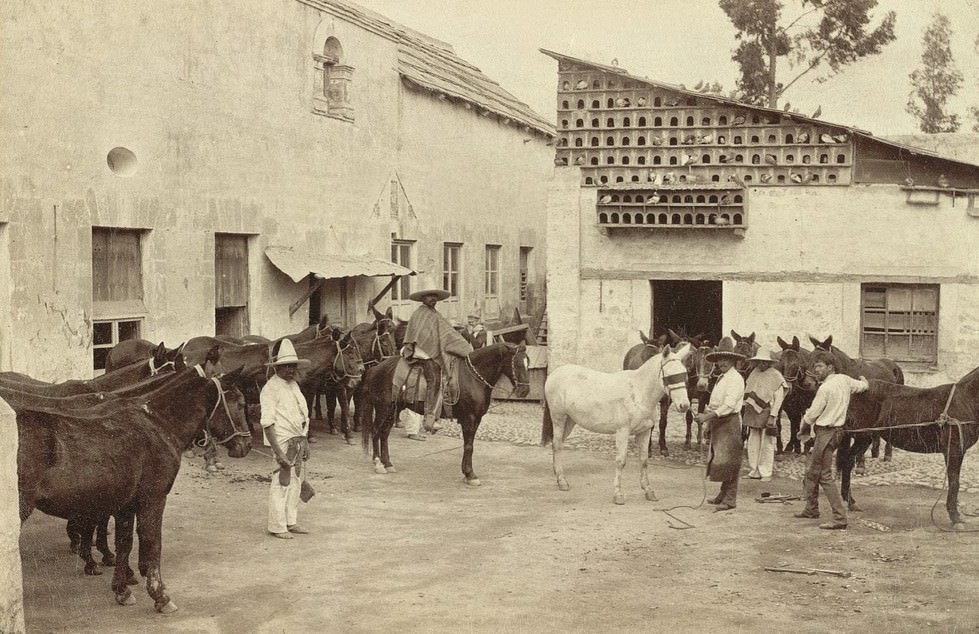
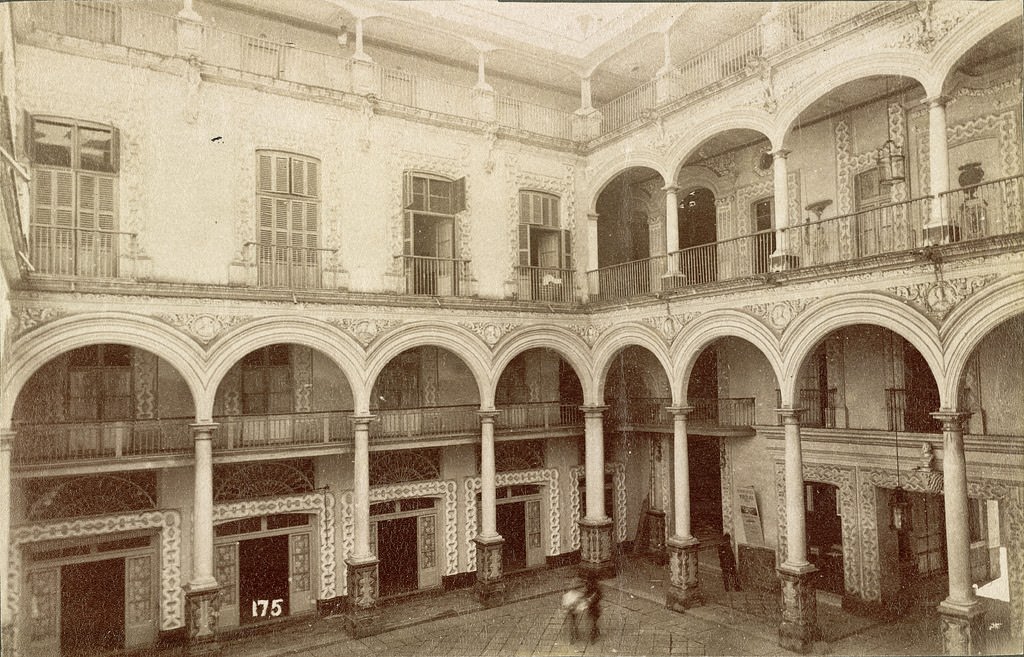
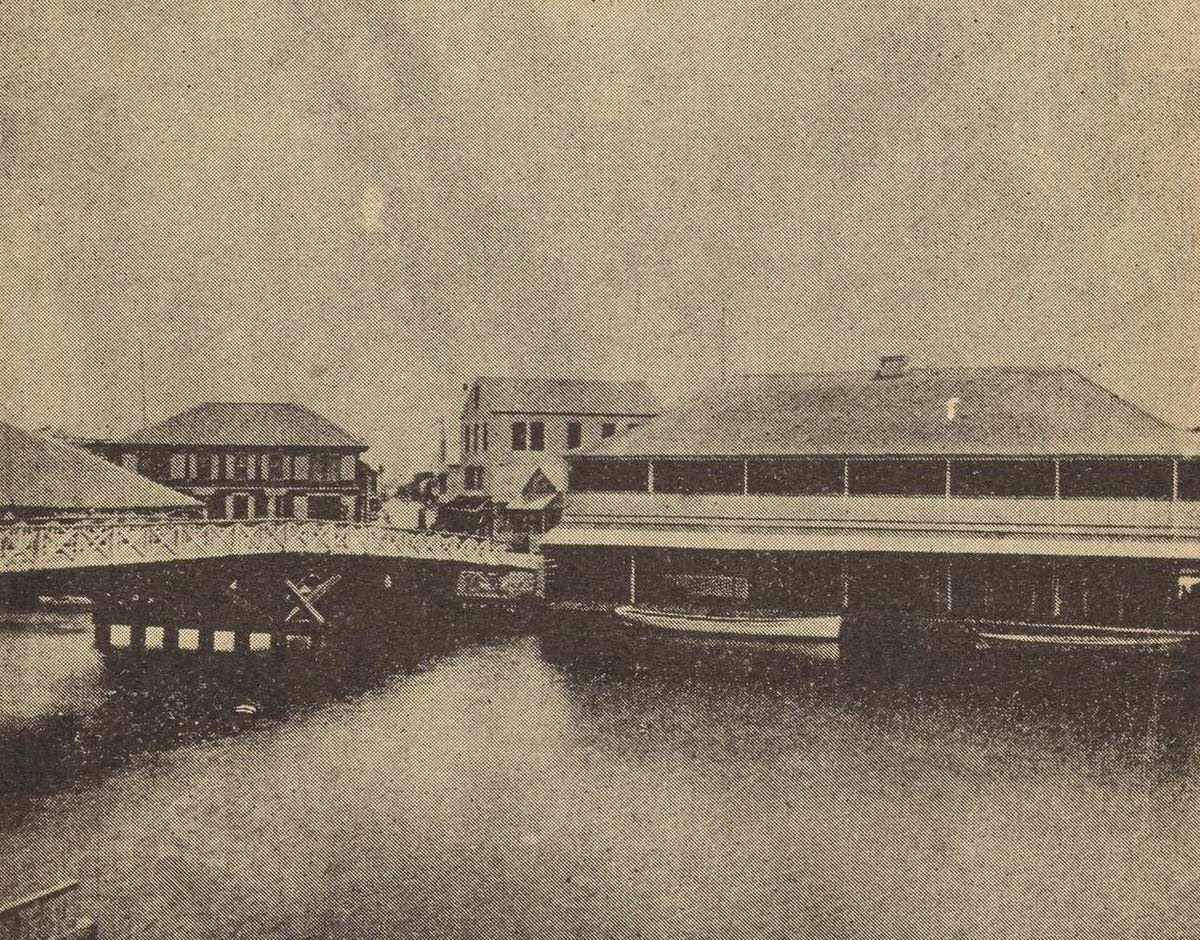
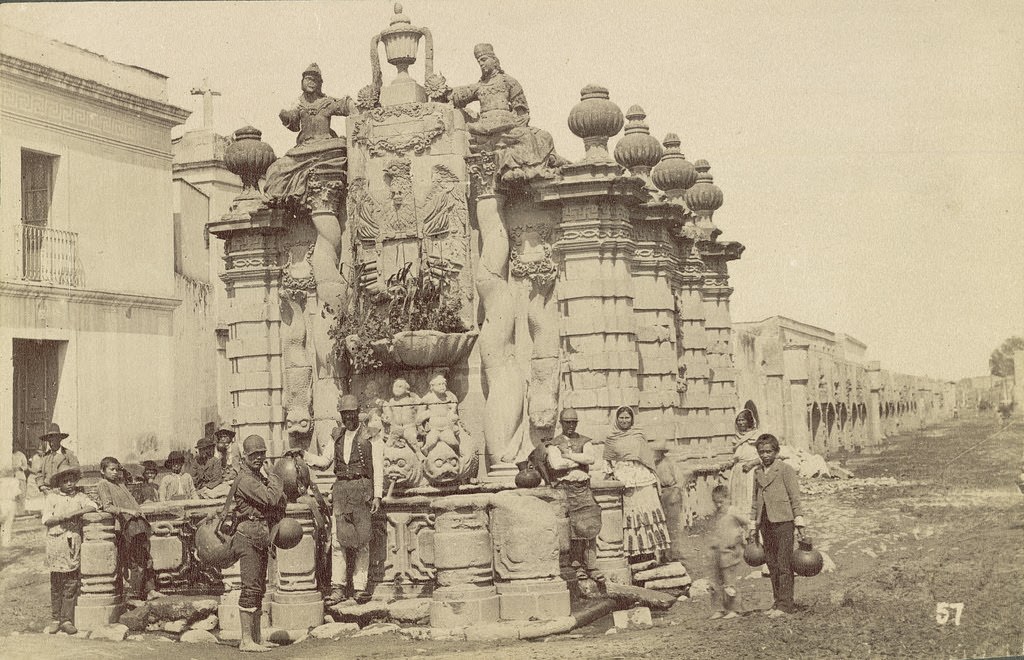
Daily life for ordinary Mexicans in the 1880s was defined by work, faith, and the rhythms of the land. In village scenes, mules were shod by hand at the roadside. Women carried goods through town markets. The Hotel Iturbide in Mexico City, built around an elegant courtyard, catered to the country’s growing class of merchants and foreign visitors. The Belize River marked the remote southeastern frontier, where jungle and river life continued on terms that had little to do with Díaz’s modernization programs.