In 1881, a family business began on the streets of Pottsville, Pennsylvania. Moses Phillips and his son Isaac sold hand-sewn shirts made by Moses’ wife Endel and their daughters. The shirts were simple, practical, and aimed at local coal miners. Word spread fast. The quality was undeniable, and the Phillips family soon moved their operation to New York City to meet growing demand.
The brand’s next big leap came in 1919, when a Dutch immigrant named John Manning van Heusen introduced a soft-folding collar. It held the sharp, structured look of a stiff collar but was far more comfortable to wear. Isaac Phillips recognized the value immediately and purchased the U.S. patent. That deal forged the Phillips-Van Heusen partnership and changed the course of the brand’s history.
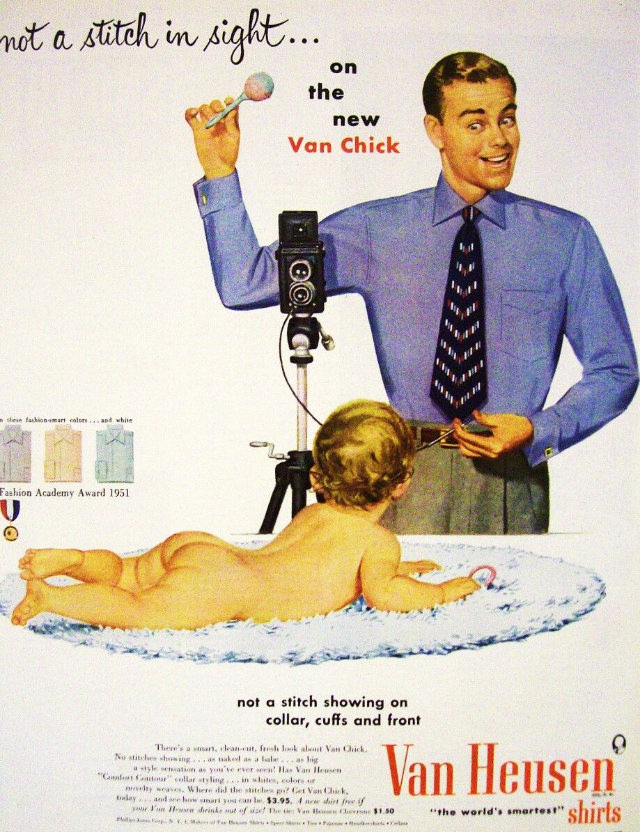
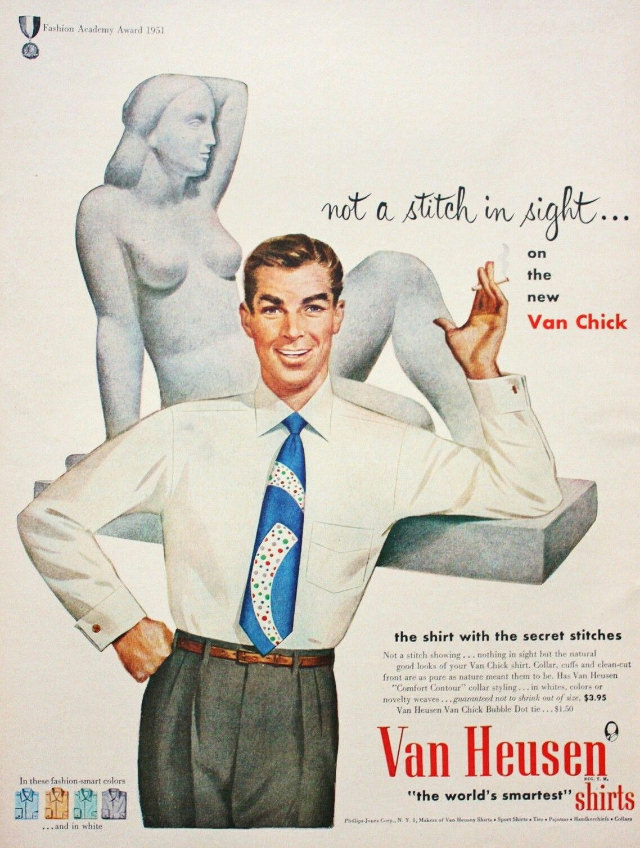
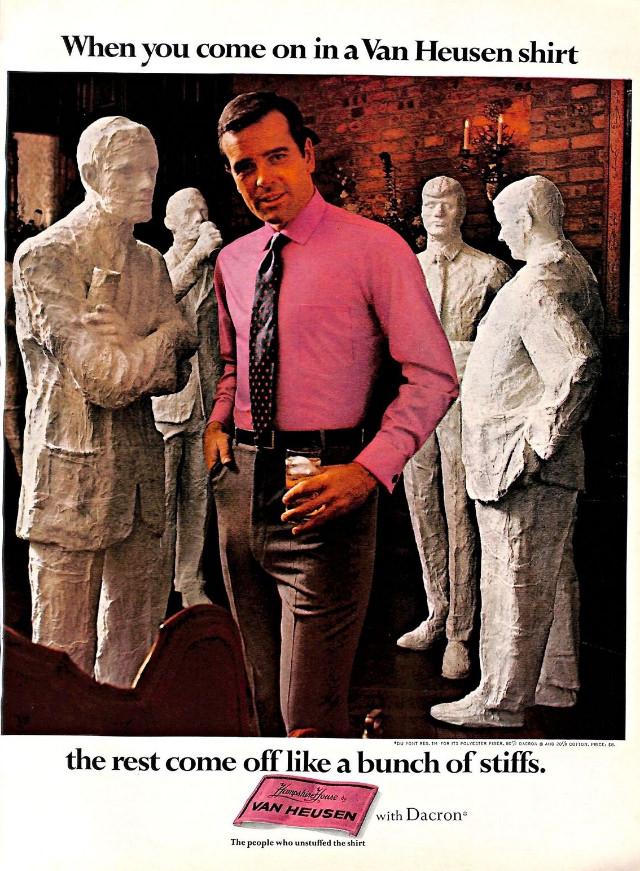
By the 1930s, Van Heusen shirts had reached Australia, and the brand had built a solid reputation across two continents. But it was the advertising campaigns of the mid-20th century that truly burned Van Heusen into public memory. These ads were aggressive, bold, and unmistakably a product of their era.
One of the most talked-about ads showed a man in a crisp Van Heusen shirt relaxing in bed while a woman knelt at his feet, serving him breakfast. The tagline read: “Show her it’s a man’s world.” The ad reflected the deeply unequal gender attitudes of the time and packaged them as aspirational. It sparked conversations — which was precisely the point.
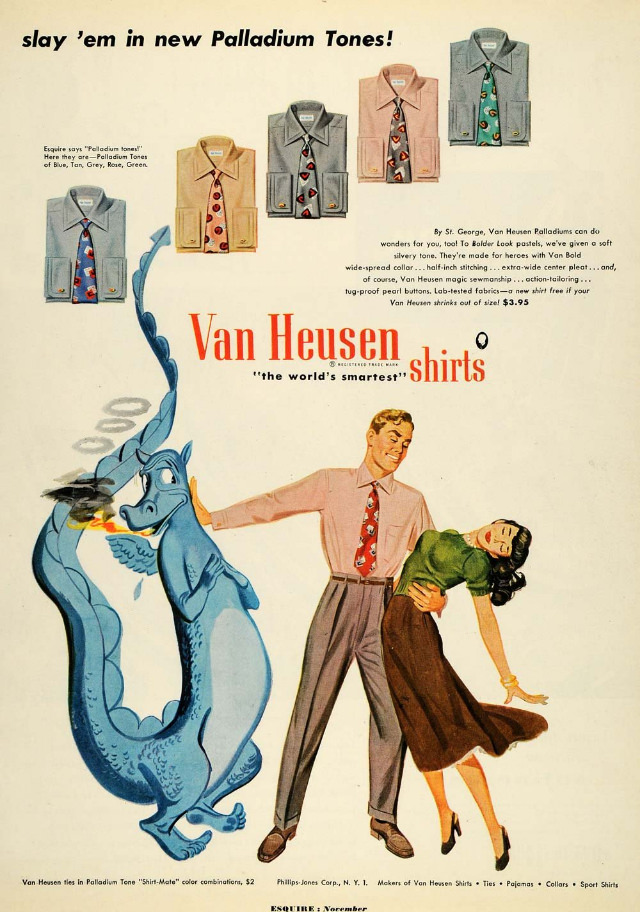
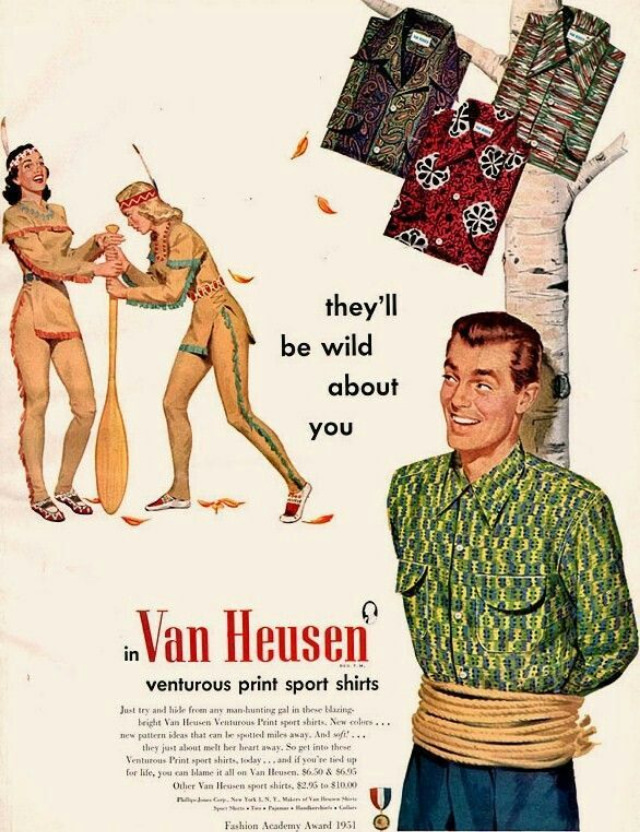
Another campaign leaned on celebrity star power. Frank Sinatra, the legendary Rat Pack entertainer, appeared in a Van Heusen ad wearing one of the brand’s shirts. The tagline — “Van Heusen for V.I.P.s” — positioned the shirt as a status symbol. If Sinatra wore it, it was for winners. The message was direct and effective.
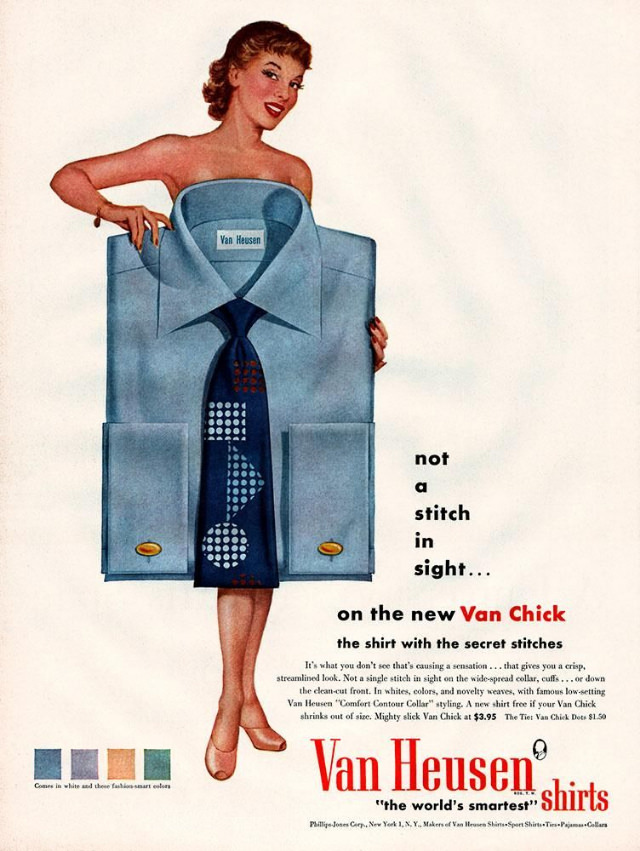
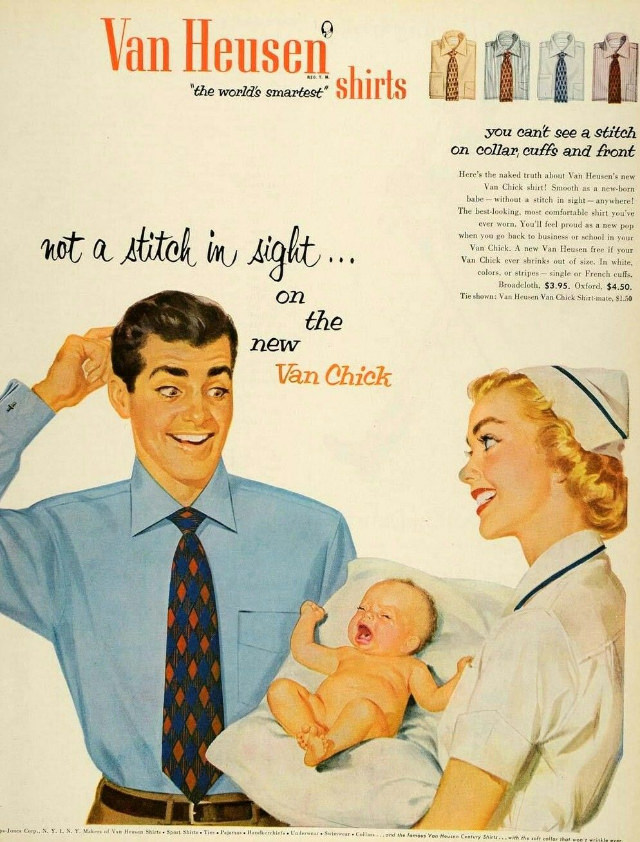
The Van Heusen campaigns of this period were part of a broader advertising culture that sold products by selling a lifestyle — specifically, a version of masculine dominance that many Americans in the 1950s and 1960s accepted without question. These ads were published in major magazines and reached millions of readers.
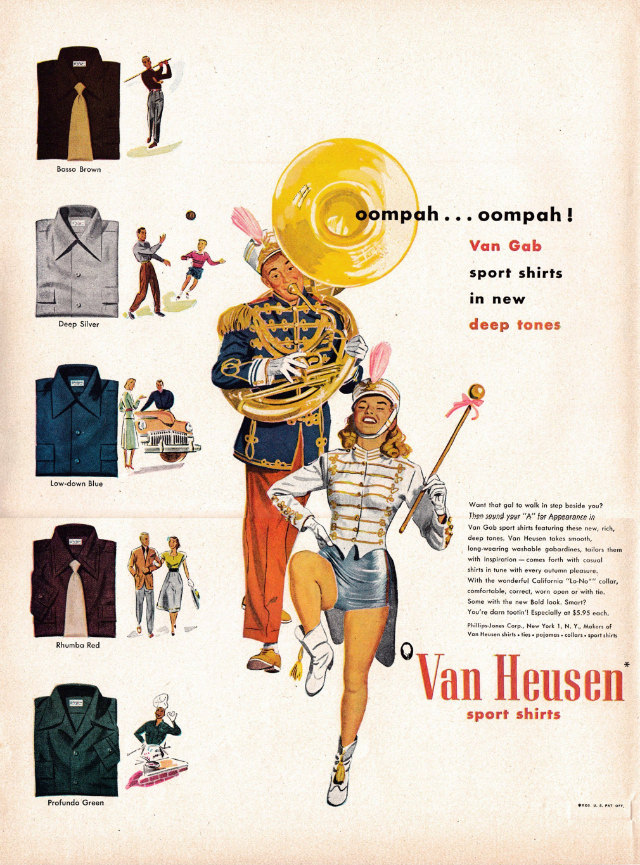
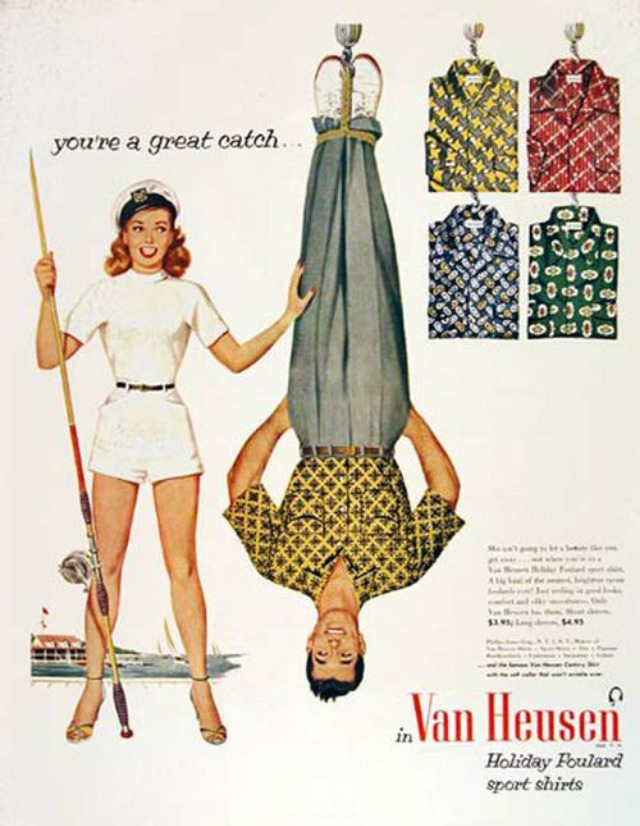
Each ad was carefully crafted to tie the shirt to a sense of power and social standing. The man in the Van Heusen shirt wasn’t just well-dressed — he was in charge. That was the consistent message, delivered across dozens of campaign variations throughout the mid-century decades.
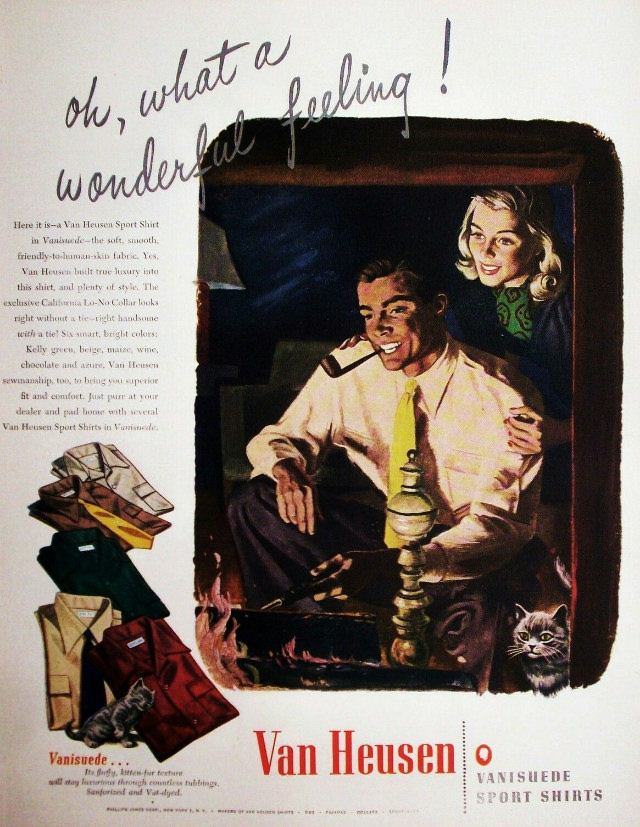
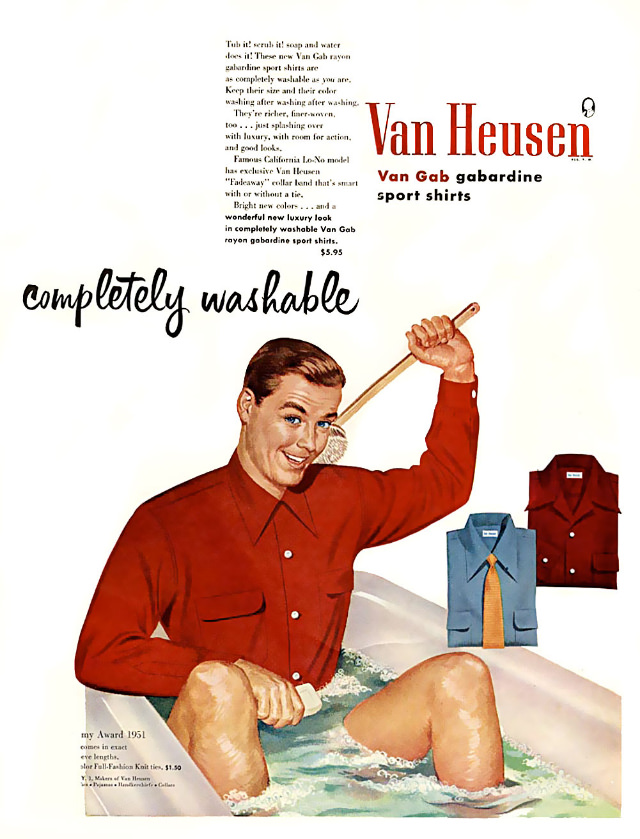
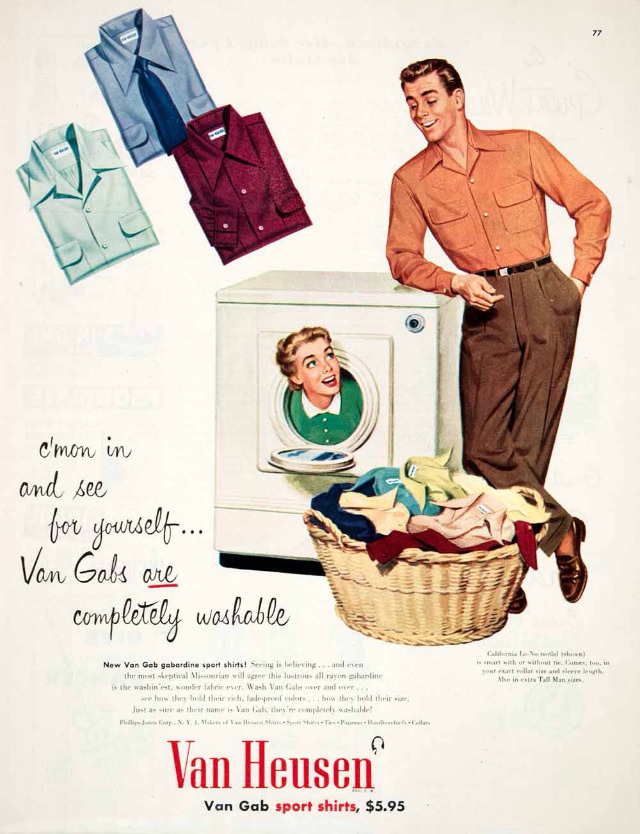
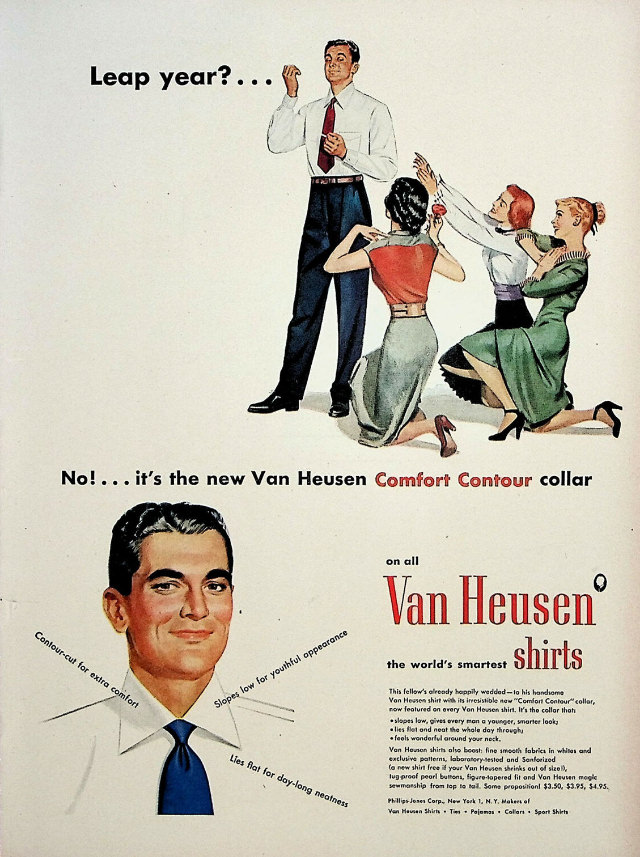
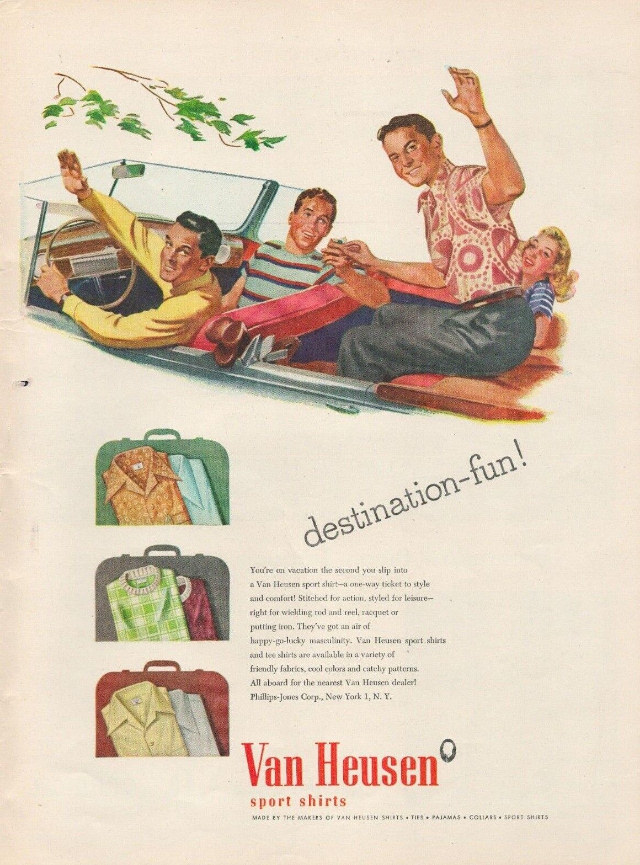
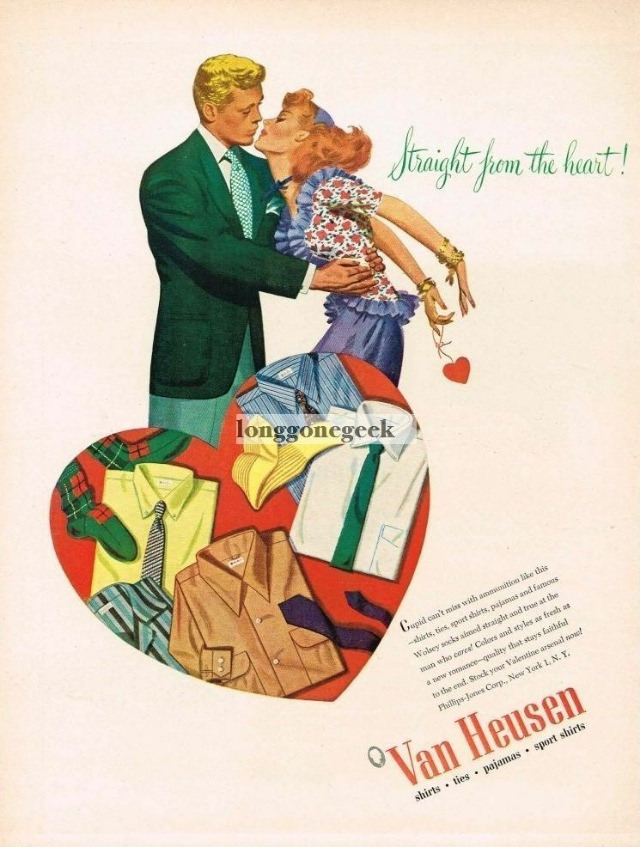
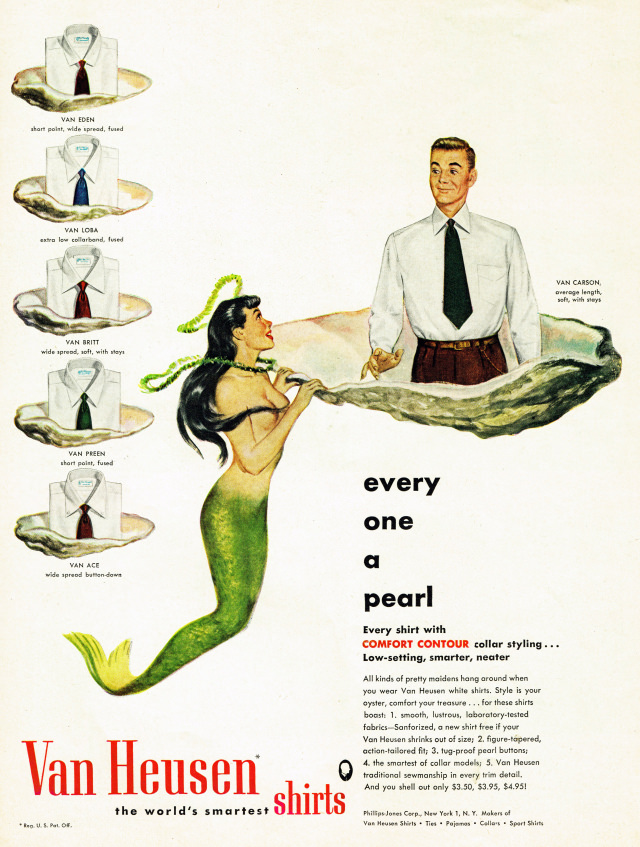
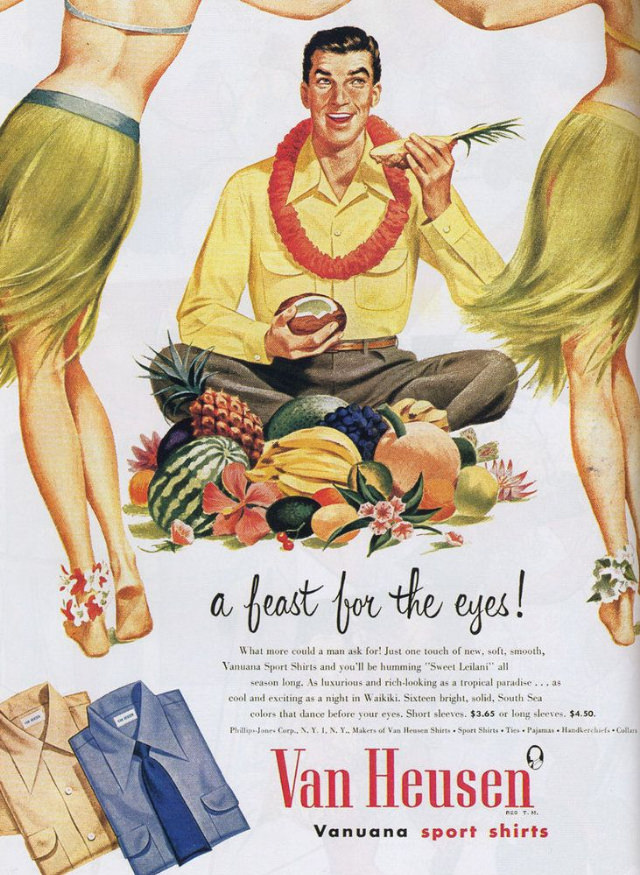
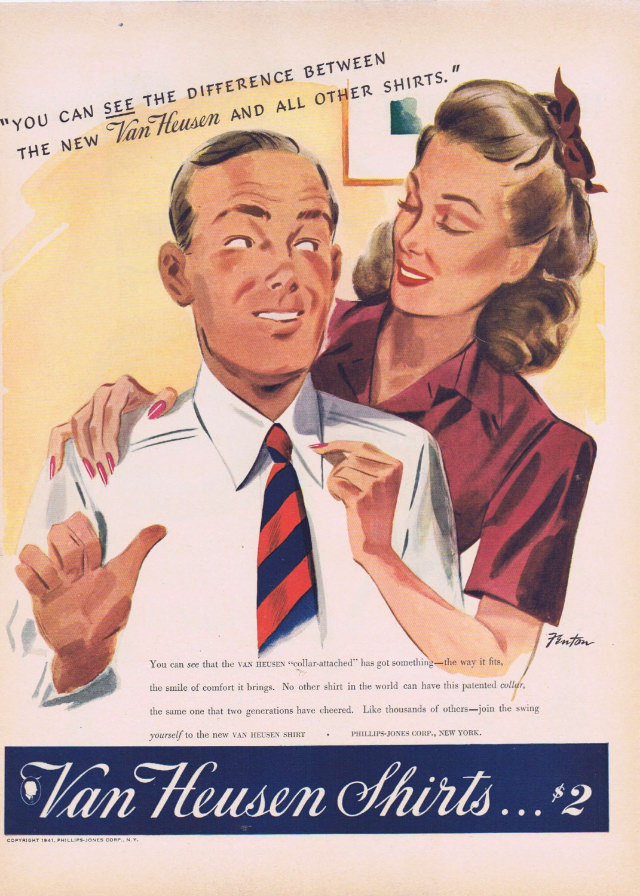
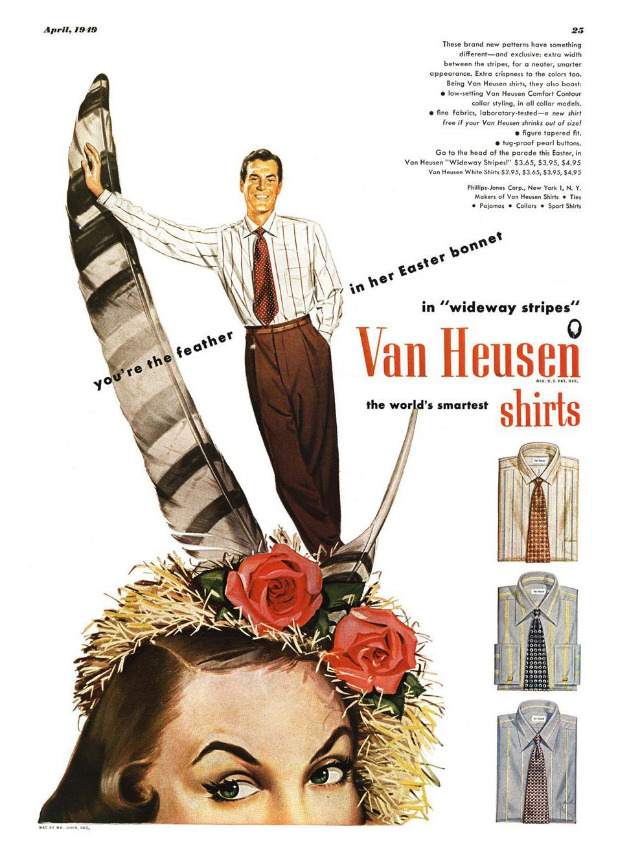
The artwork in these ads was detailed and polished. Illustrators depicted men in sharp Van Heusen collars set against scenes of leisure, success, and romance. The color palettes were rich, the clothing immaculate, and the compositions deliberate. These weren’t quick sketches — they were fully produced visual arguments for buying a Van Heusen shirt.
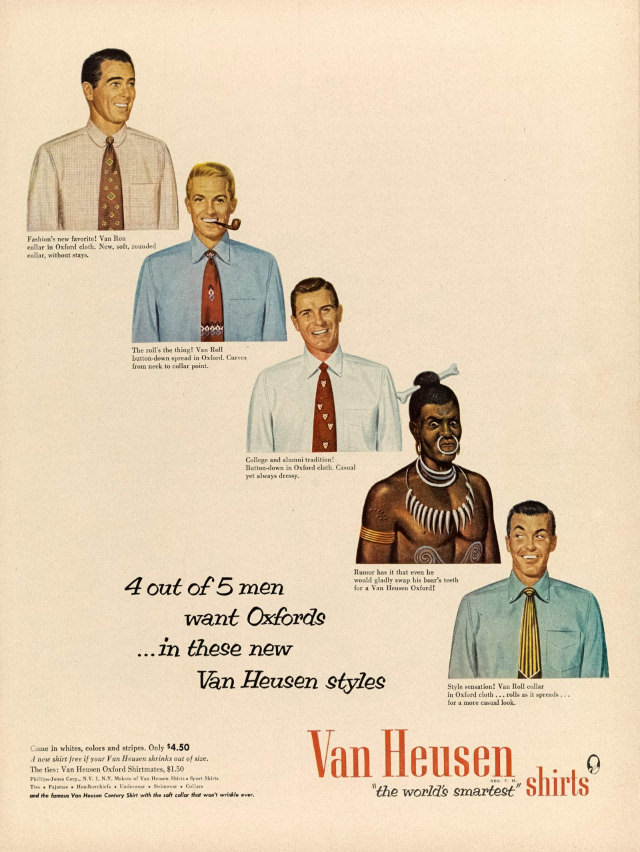
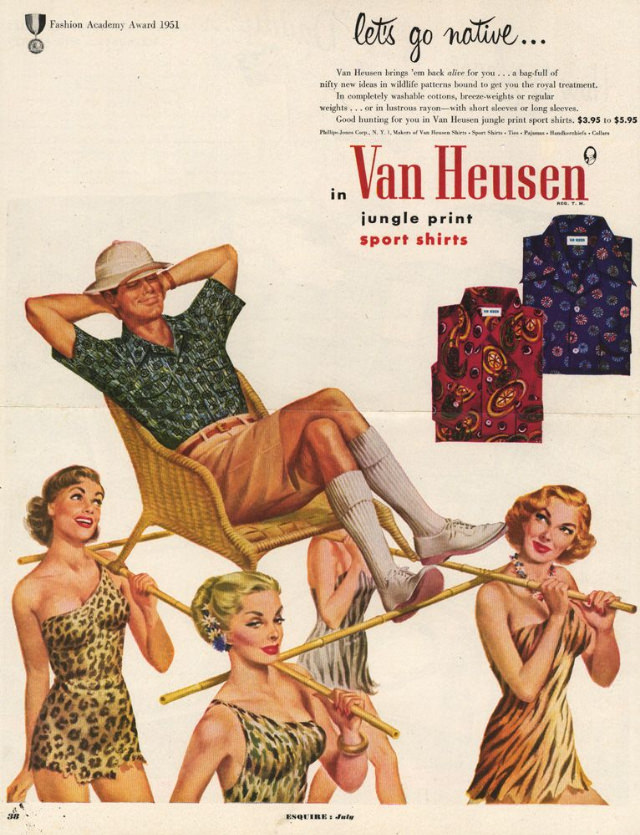
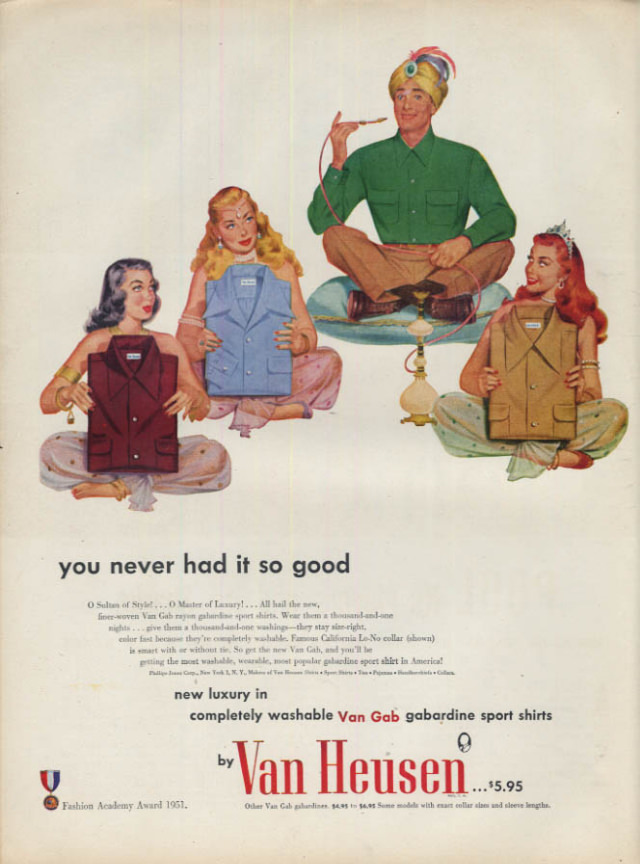
Van Heusen also leaned heavily into aspirational fantasy. Some ads placed their shirts in exotic or adventurous settings — tropical locations, elegant dinner parties, or athletic pursuits. The shirts were always spotless, the collars always perfect. The men always looked like they had just won something.
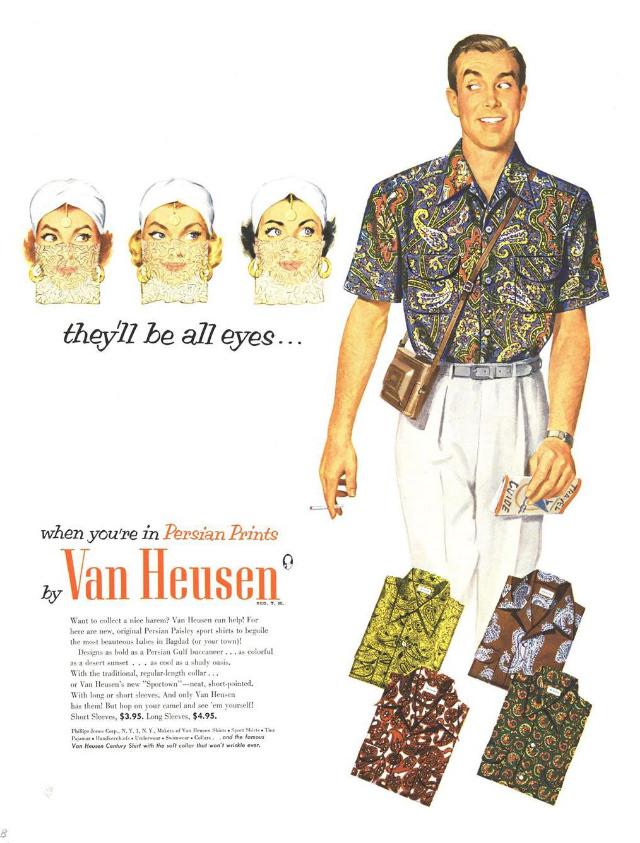
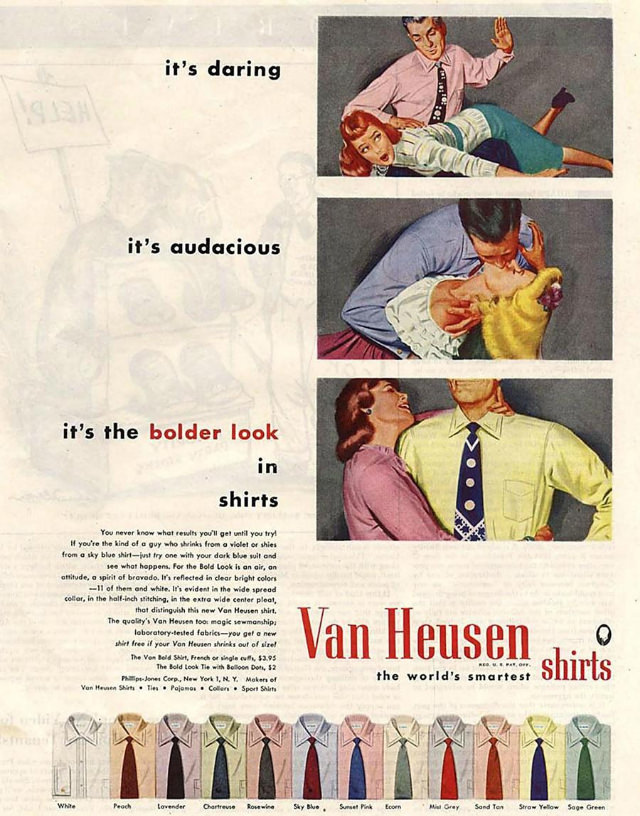
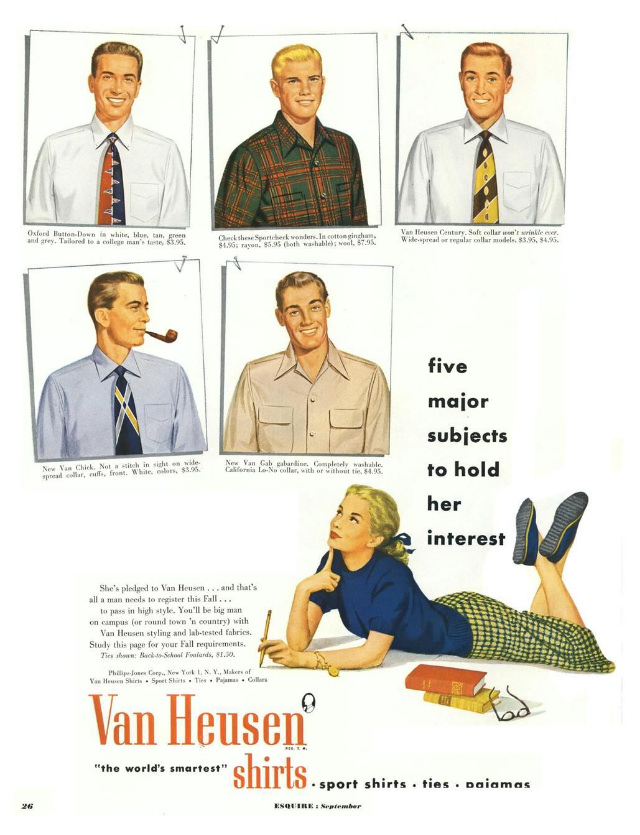
What makes these ads so historically interesting is how openly they reflected the social values of postwar America. They weren’t hidden or subtle. The gender roles, the class aspirations, the idea that a well-dressed man commanded respect — all of it was stated plainly and proudly. These ads are primary documents of a specific cultural moment.
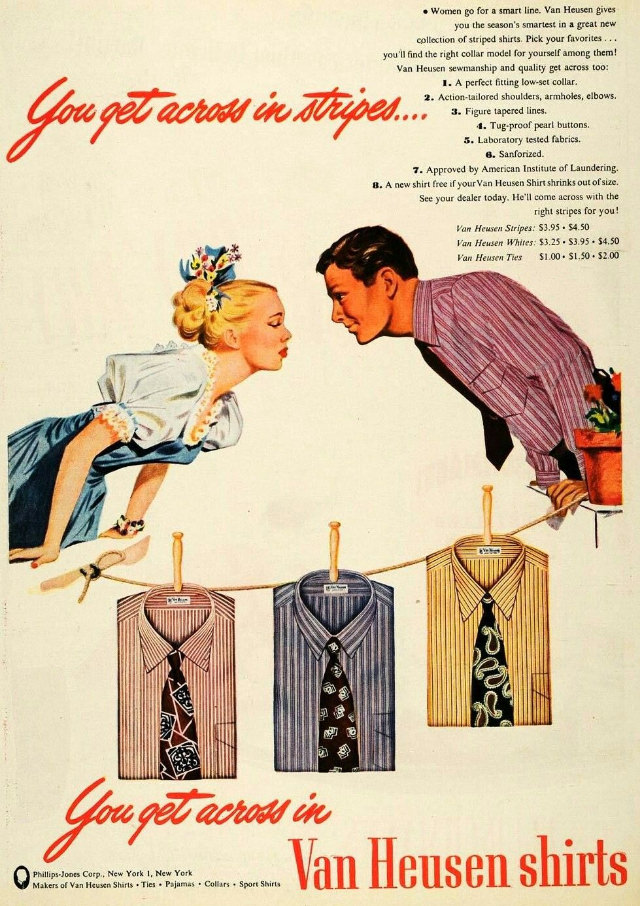
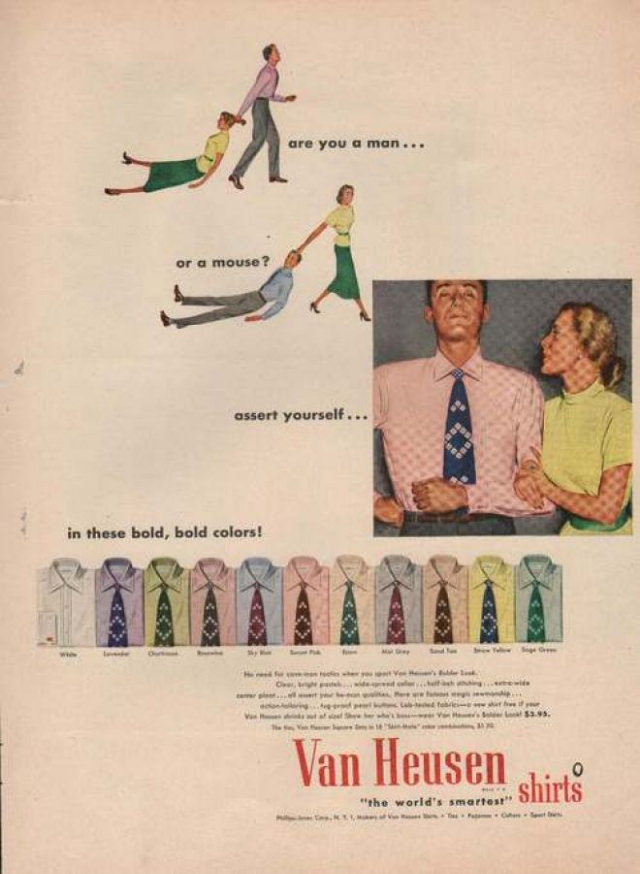
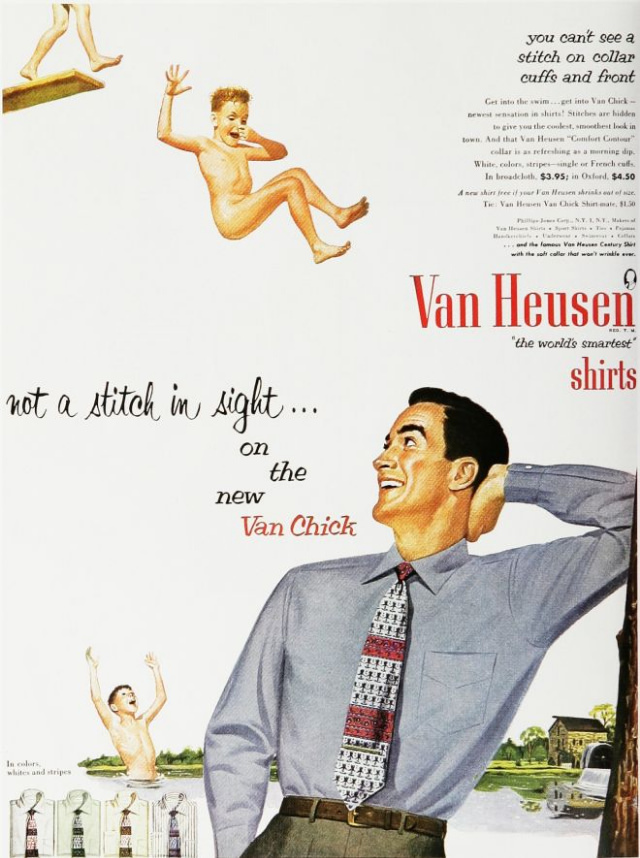
Collectors and historians today seek out these original magazine ads for exactly that reason. They capture attitudes and aesthetics that defined an era. Framed on a wall or catalogued in an archive, each one is a snapshot of how American consumer culture looked and thought at its postwar peak.
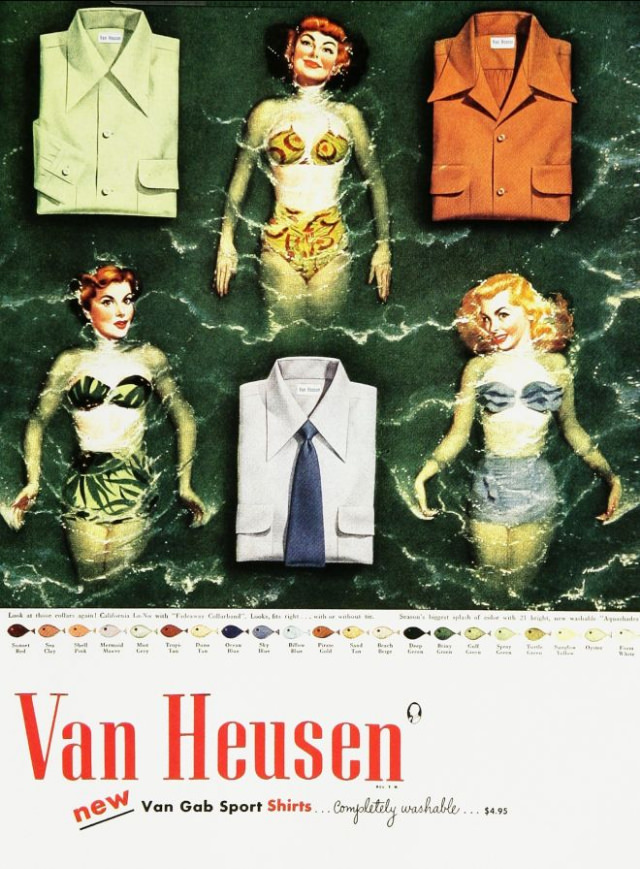
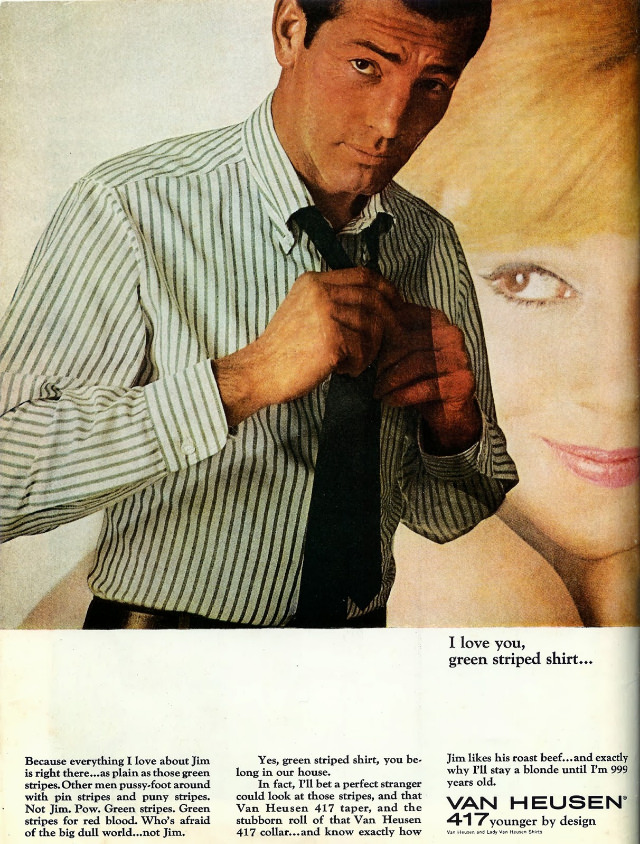
The Van Heusen soft-folding collar — the invention that started it all back in 1919 — remained central to the brand’s identity throughout this advertising era. Every bold tagline and every slick illustration came back to the same promise: this collar stays sharp, and so do you.